
Vintage-loving brides usually arrive at my chair with a clear decade in mind and a folder of film stills. That’s a good start, because retro styles are specific. Finger waves, Marcel waves and pin curls look similar in a photo and are made in completely different ways. Whether you love 1920s waves, a sky-high beehive from the 1960s, or the pin curls of classic film stars, the looks below come with the details I’d want you to know before your trial: how each is built, what hair it needs and what it asks of your veil and dress.
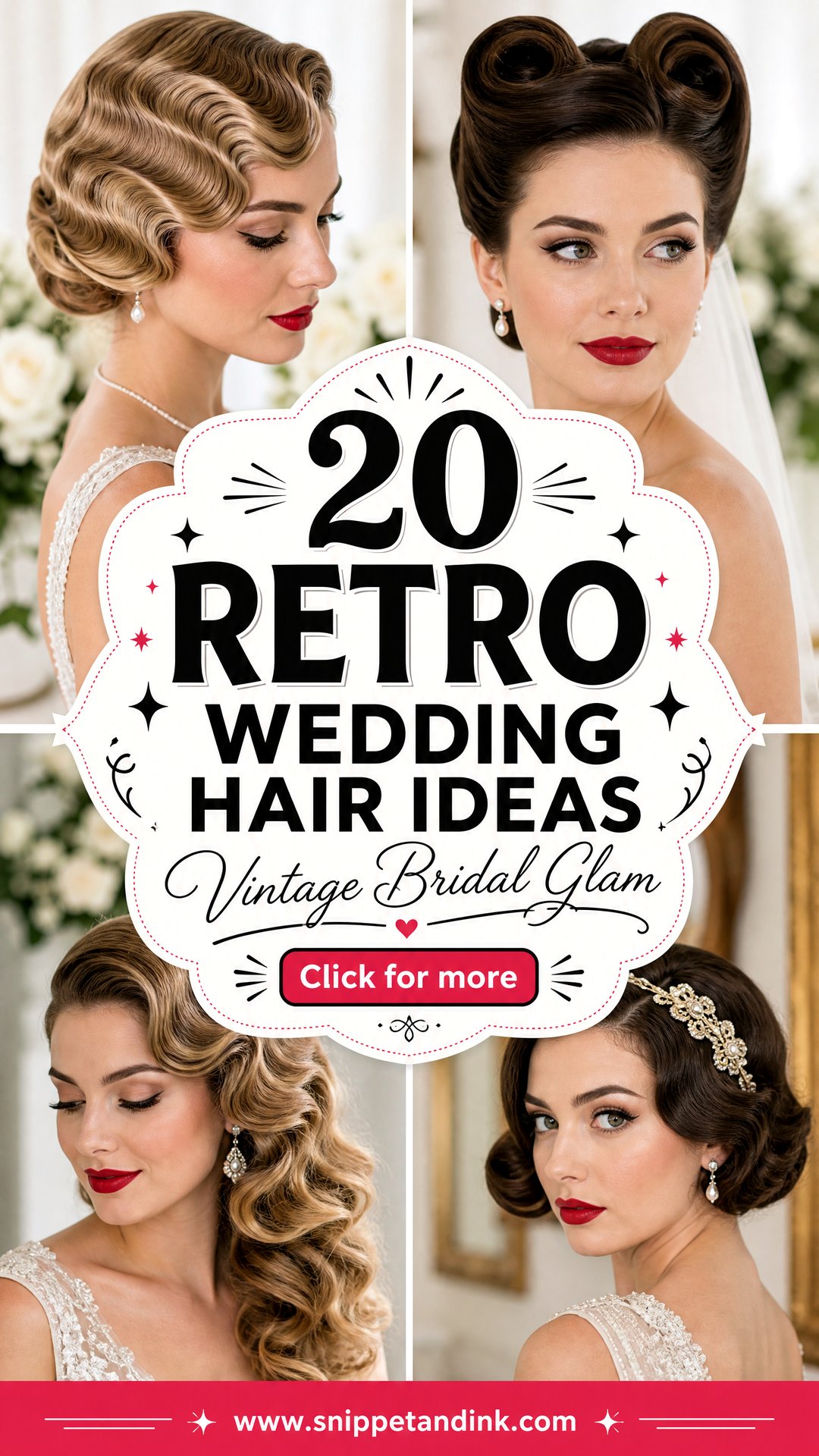
Words to Use at Your Trial So You Get the Right Decade
Brides often ask for Hollywood waves and show me a photo of finger waves, or the other way round. They look alike in a picture, but they’re built differently, so getting the words right saves time at your trial.
- Finger waves: flat ridges pressed into damp hair, close to the head. 1920s. Short to medium hair.
- Marcel waves: ridges made with a heated iron, softer and rounder. 1920s to 1930s.
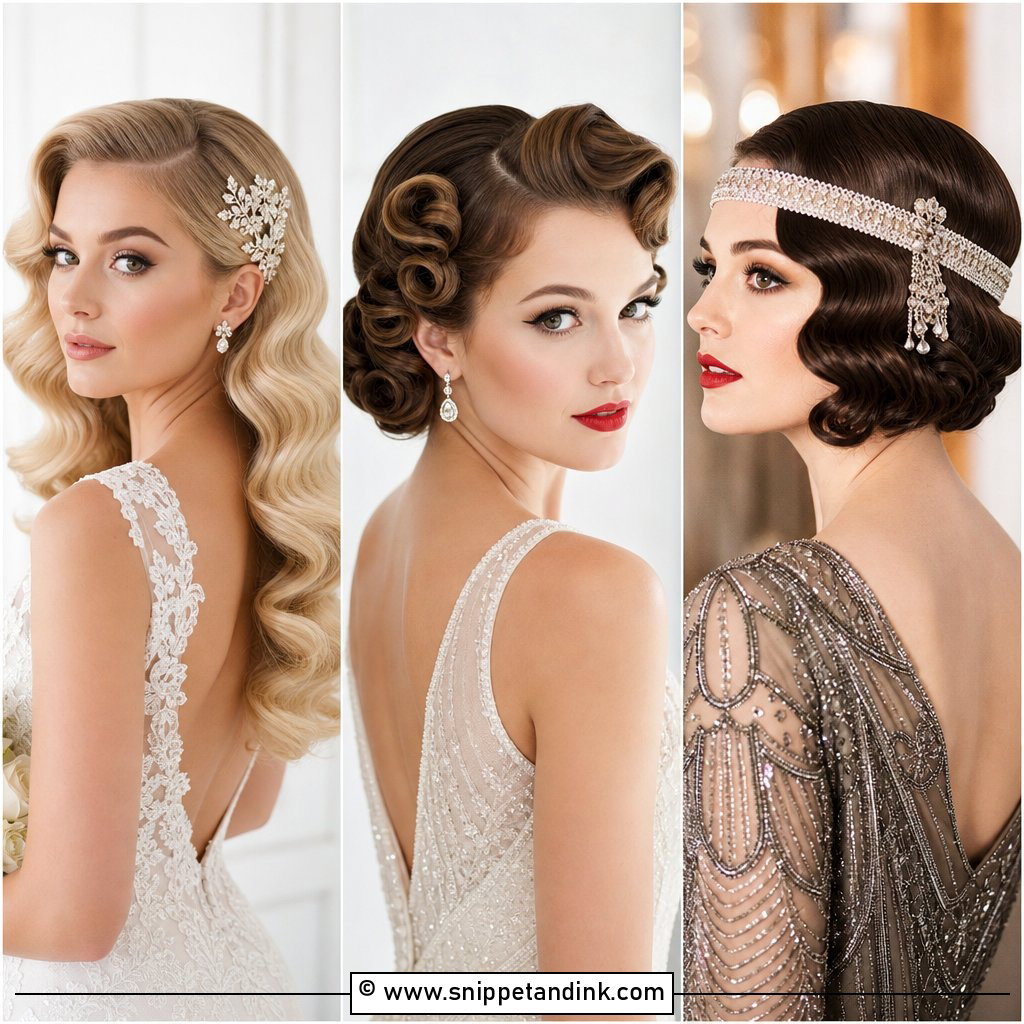
- Hollywood waves: brushed-out curls that form one large wave, usually over one shoulder. 1930s to 1940s. Long hair.
- Victory rolls: rolled, pinned sections at the front or crown. 1940s.
- Bouffant and beehive: backcombed volume at the crown, the beehive being much taller. 1960s.
Bring a photo of the back of the style too, not only the front. A wave pattern I can see from behind tells me far more about how it was set.
1. Finger Wave Wedding Hairstyle
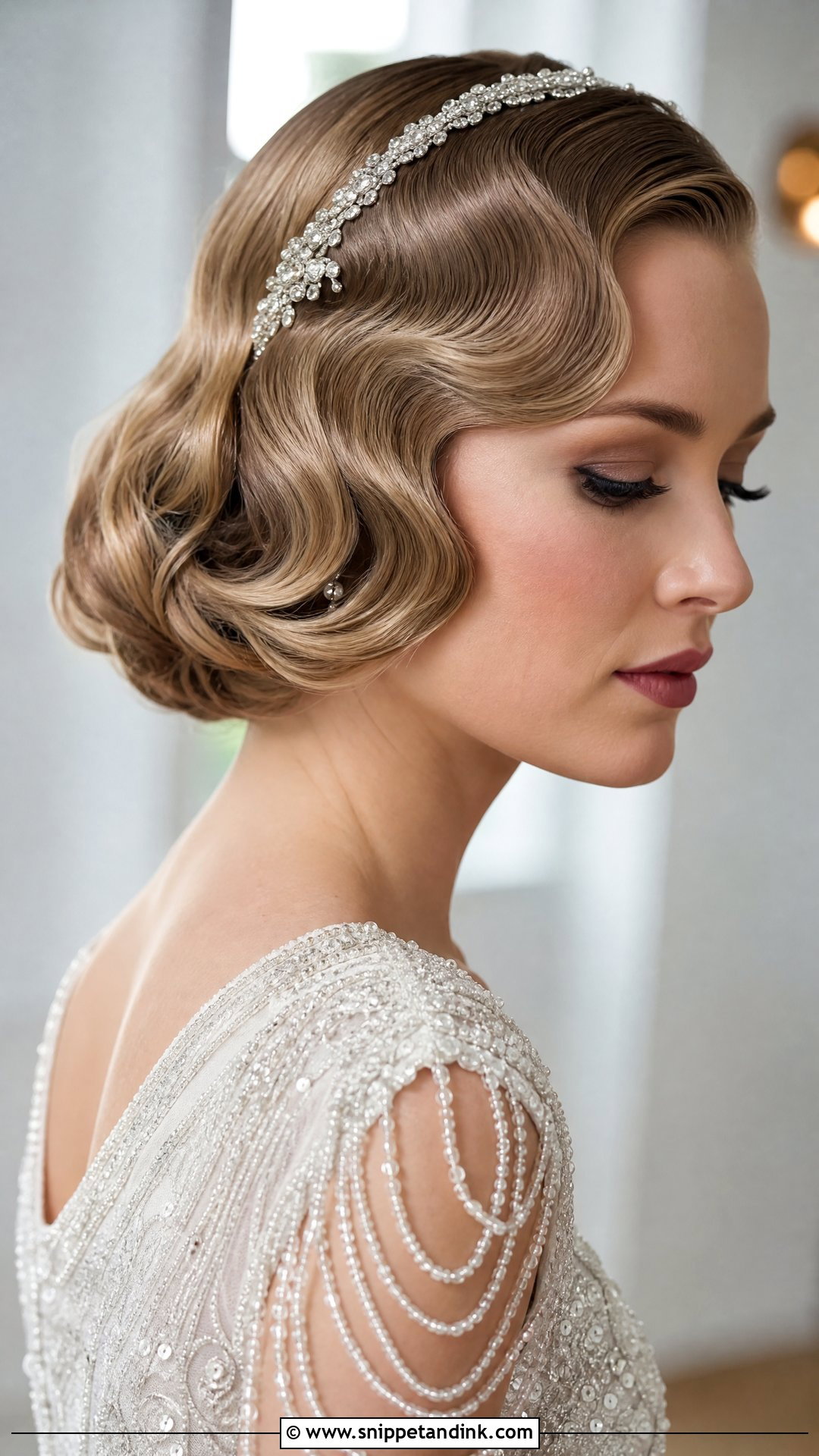
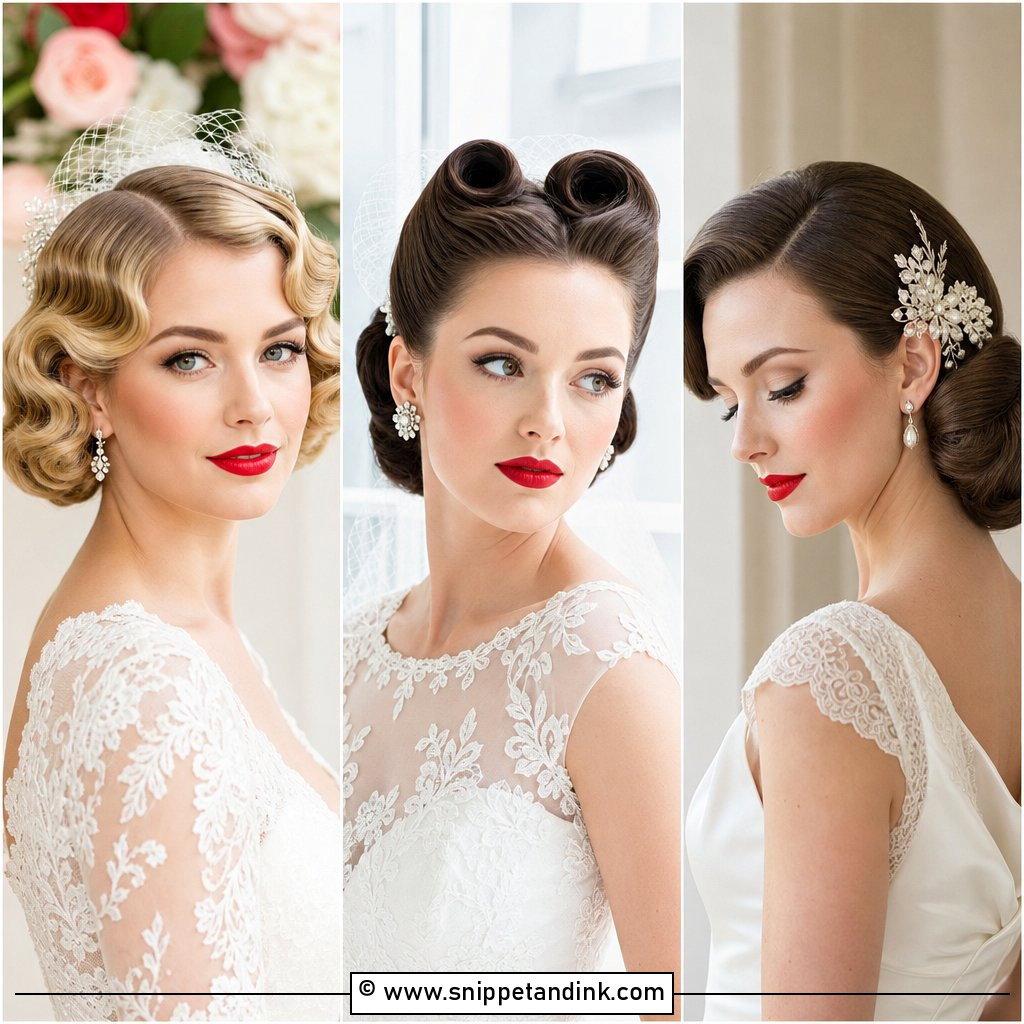
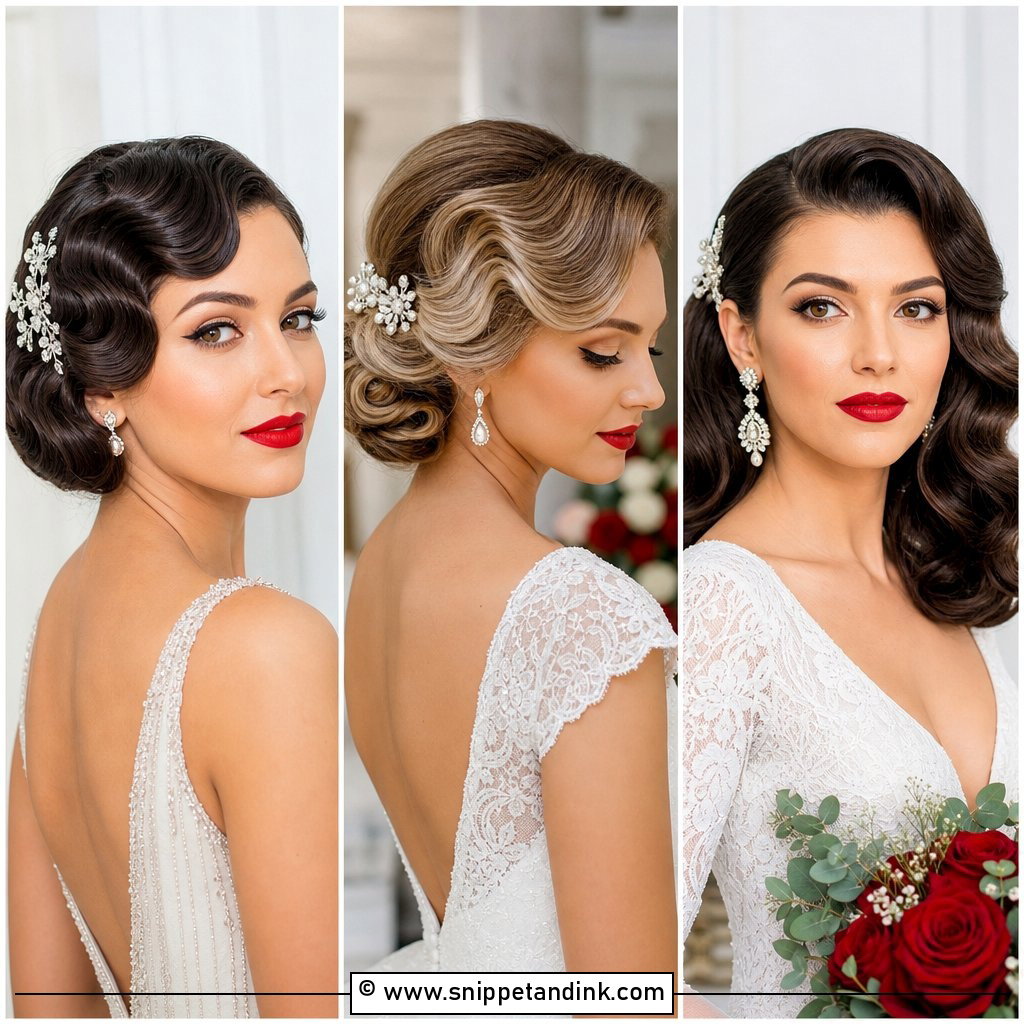
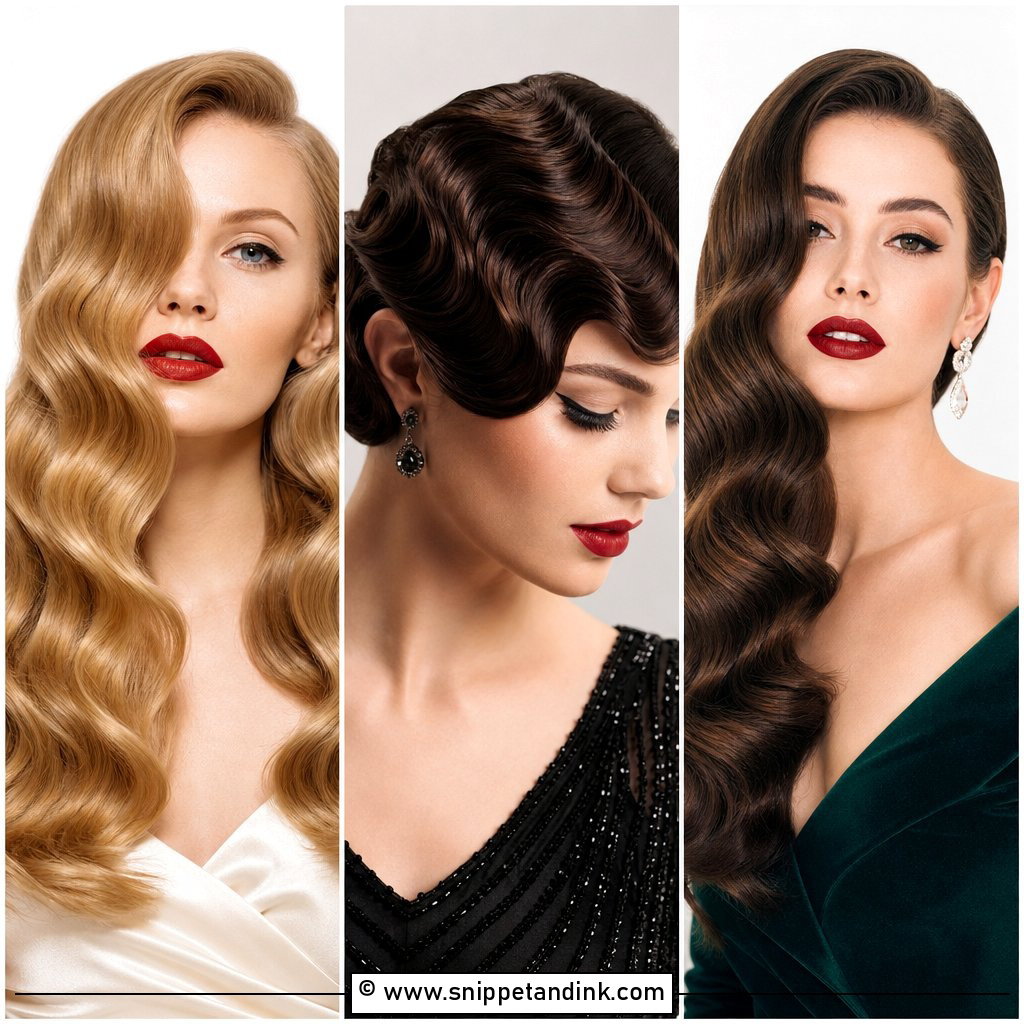
Finger waves are pushed into damp hair with a comb and fingertips, then left to dry without being touched. That’s what gives the ridges their crisp line. A deep side part sets the direction. They work best on short to medium hair, and they take longer than most people expect, so I book extra time for them. A beaded headband or jeweled clip sits along the ridge, and an art-deco theme or a vintage gown with intricate beading suits them. I use a strong-hold gel and a shine spray, because finger waves that look dull also look flat in photos.
2. Hollywood Waves Wedding Hairstyle
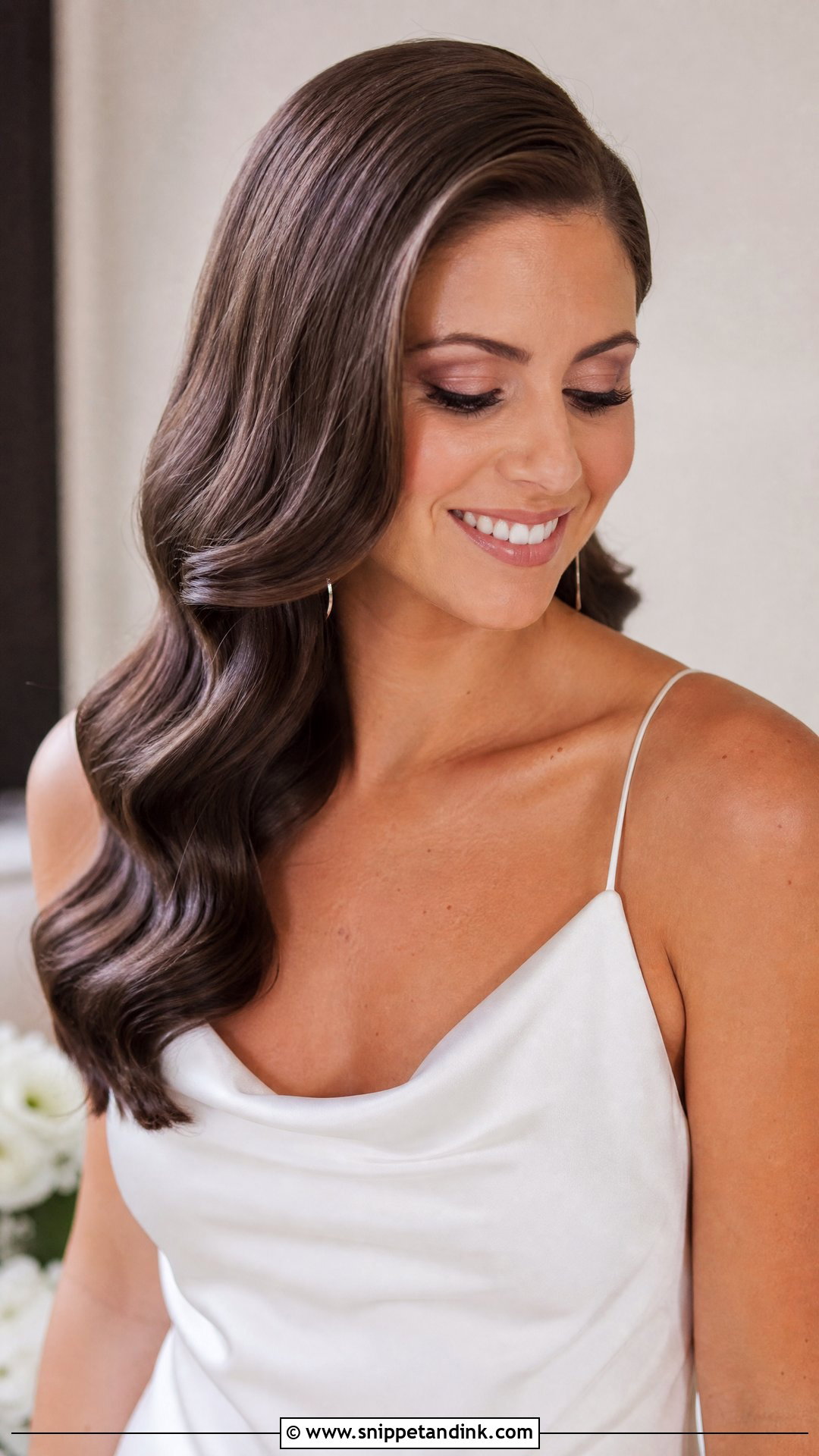
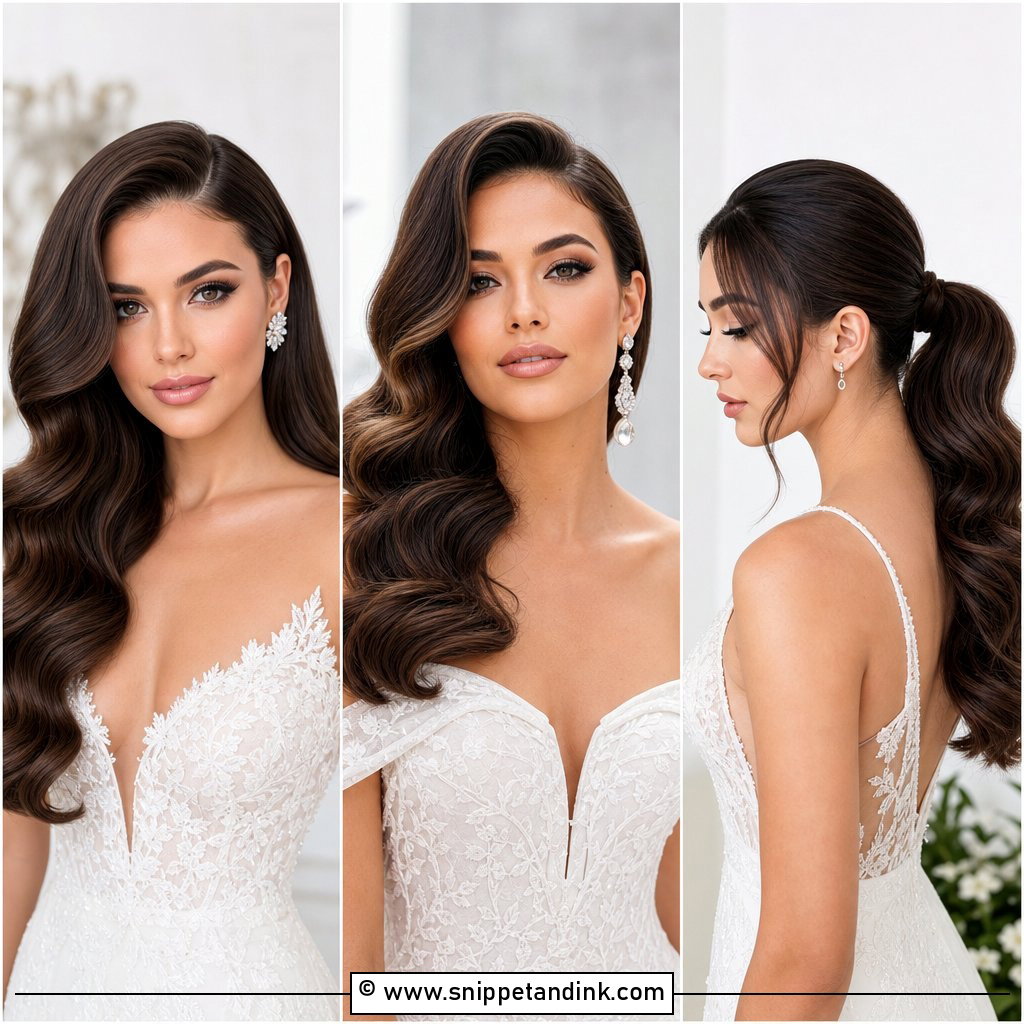
Picture a film star on a staircase, hair falling in one glossy sweep. Hollywood waves come from curls all set in the same direction, then brushed until they merge. Hot rollers are my usual route for long hair, as each roller holds its heat long enough to set the bend. Colour with some dimension catches the light along the wave. A sweetheart neckline or satin slip gown and a deep lip complete it. I finish with flexible hairspray so the waves can move without separating.
3. Vintage Low Bun Wedding Hairstyle
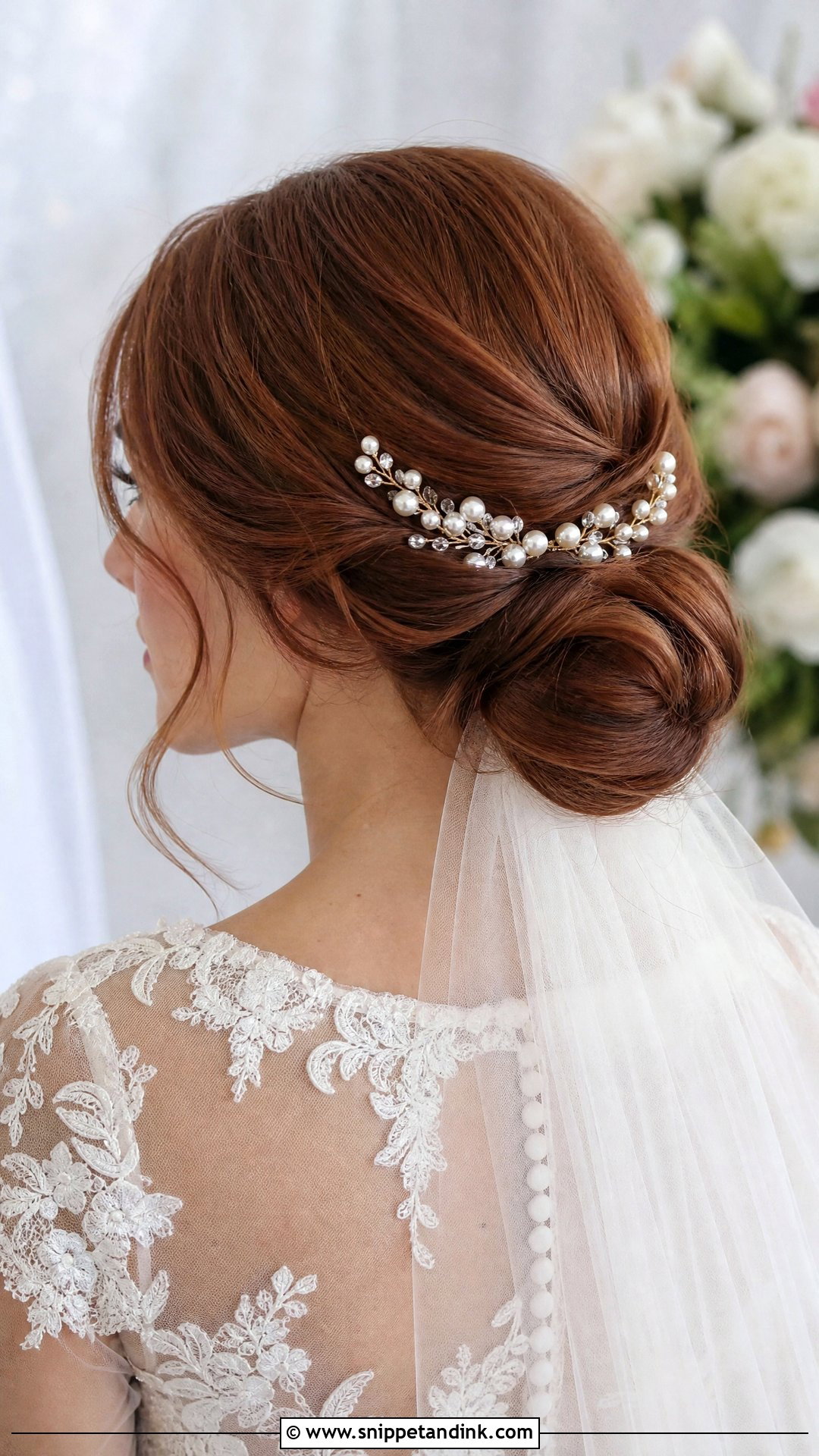
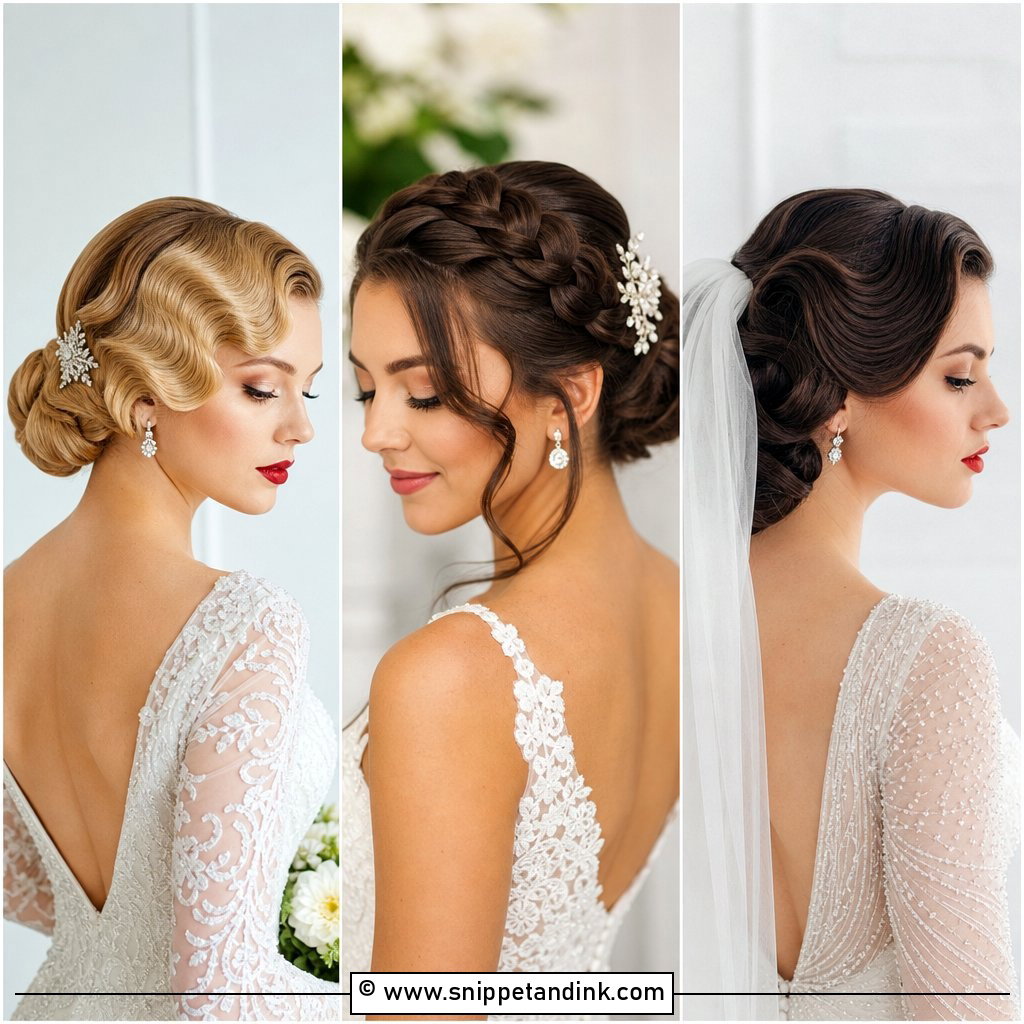
The vintage low bun adds soft volume at the crown before the hair is swept back into a smooth, rounded knot at the nape. That bit of lift is what separates it from a modern ballet bun. It sits comfortably under a cathedral veil, since the comb goes in just above the knot. Leave a few face-framing pieces for softness or keep it sleek. A pearl comb or crystal pin is plenty.
4. Victory Rolls Wedding Hairstyle
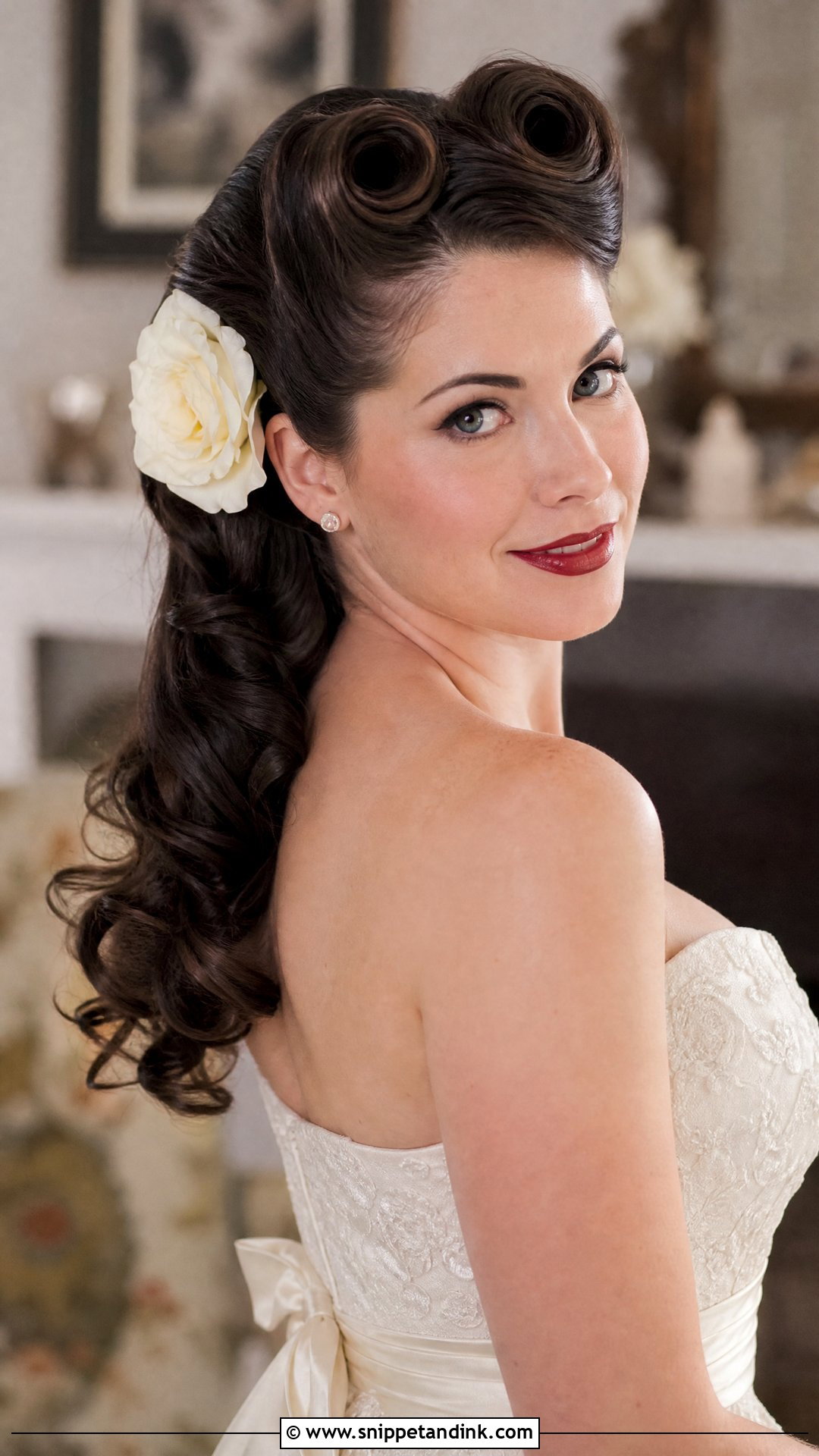
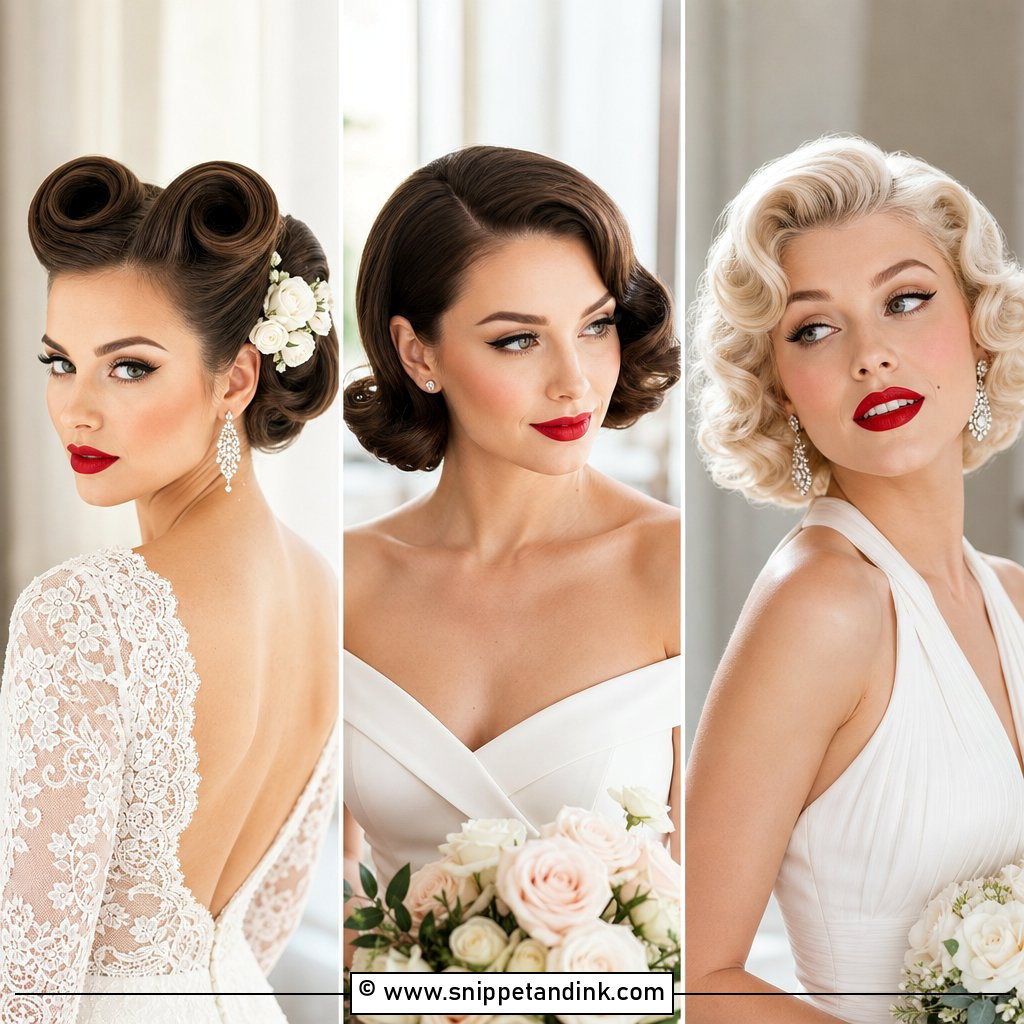
Victory rolls are pure 1940s pin-up, and they’re the style I’d talk you out of only if your hair is very short or very slippery. Each roll is teased at the root, wrapped around the fingers and pinned from the inside. Two balanced rolls with soft curls down the back look bridal; more than that starts to look like a costume. A flower behind the ear is the classic finish. Expect plenty of pins and a fair amount of hairspray; that’s how they hold their shape.
5. Beehive Wedding Hairstyle
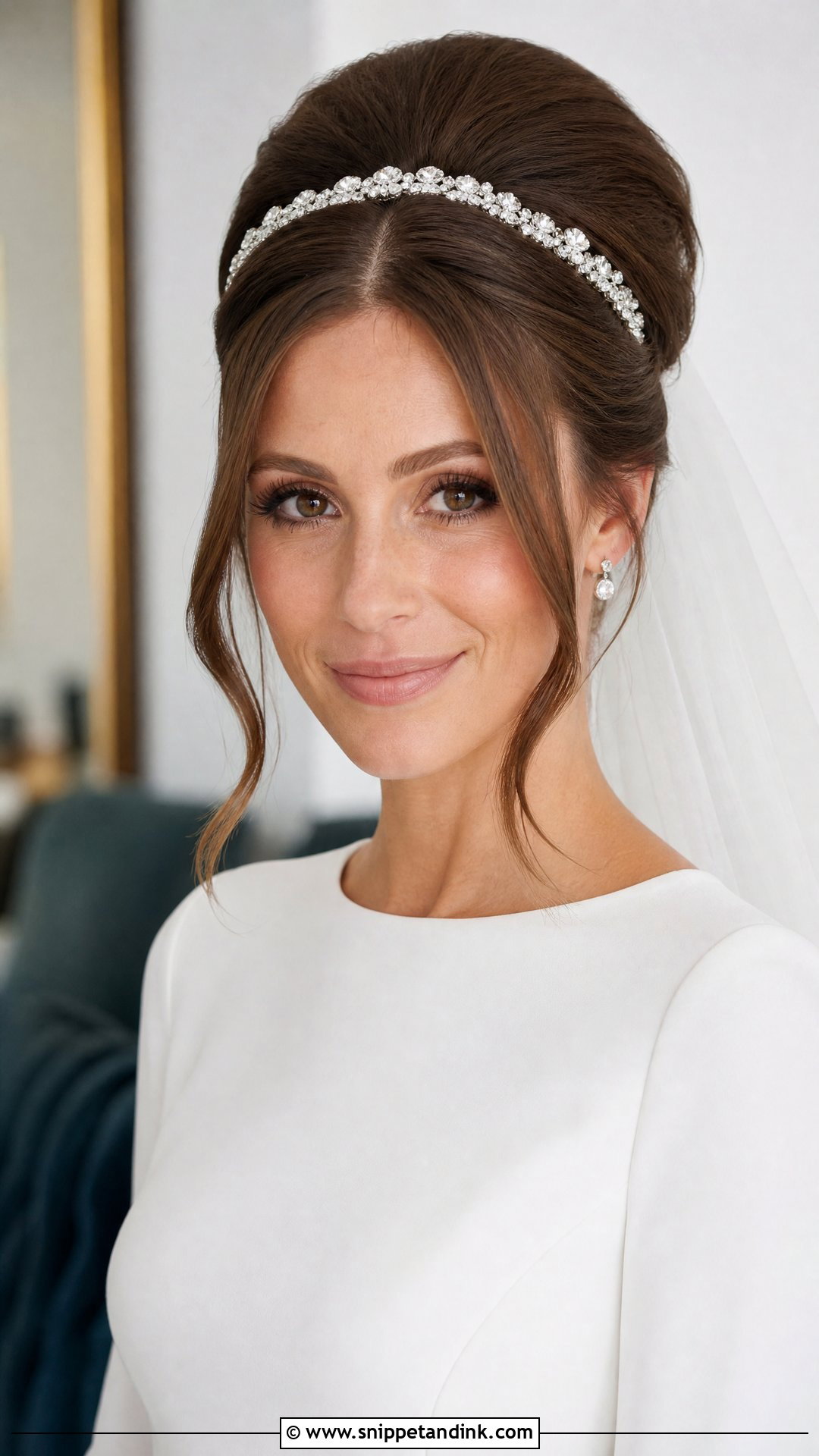
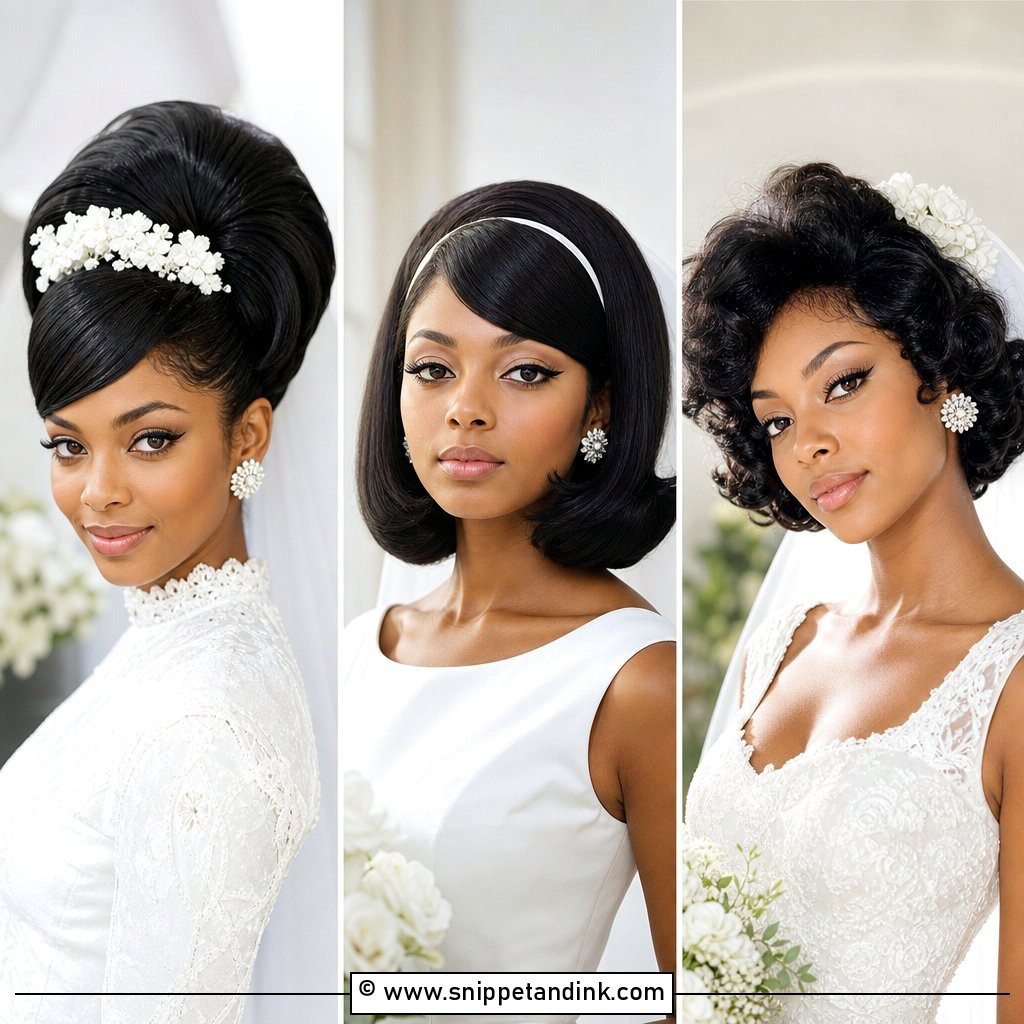
A beehive needs hair to build with. It teases the crown into a rounded tower, and long, thick hair holds it best. On fine hair I use a padding piece under the smoothed top layer so the shape is there without hours of backcombing. Leave a few tendrils loose to soften the height. A tiara or jeweled headband in front of the volume feels regal. It’s a skilled build, so check that your stylist has done one before, since it nods to mod-era elegance only when the shape is even.
6. Pin Curl Wedding Hairstyle
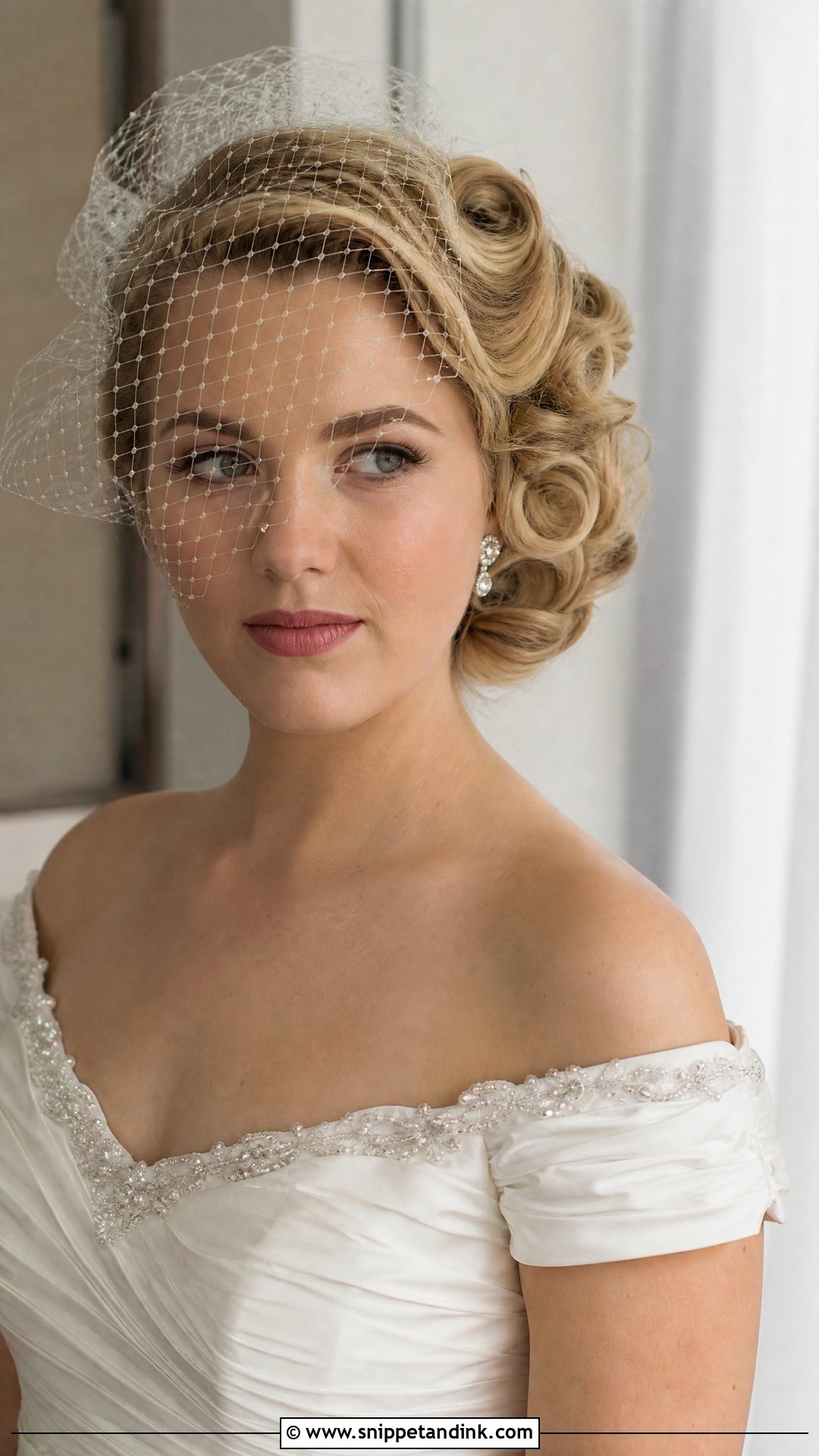
Pin curls are the base behind most retro looks, and they’re a style on their own too. Each curl is wound flat against the head, pinned and left to set, then unpinned and brushed gently into soft bounce. Short and medium hair take them well. I like them swept to one side under a birdcage veil for a 1950s mood. The set is the step you can’t rush: curls that come out warm drop within the hour.
7. Chignon Wedding Hairstyle
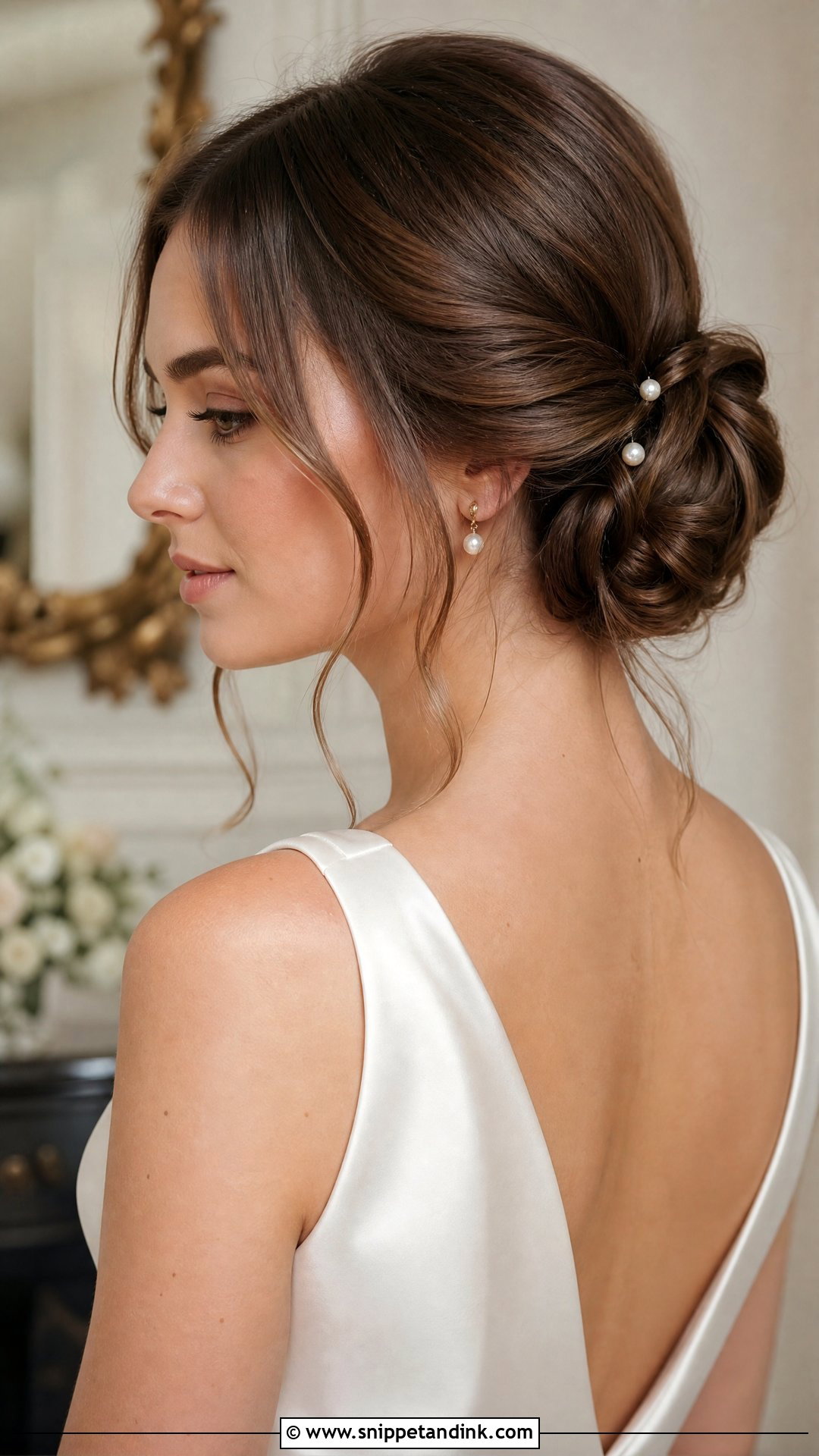
A chignon is the retro updo that hides its age best, which is why I suggest it when a bride loves vintage but has a very modern dress. It’s a twisted knot set low at the back of the head. Soft waves at the front make it lean vintage; a sleek front makes it formal. Pearl pins or an old comb dress it. It’s comfortable through hours of dancing because the weight sits low and close to the head.
8. Bouffant Wedding Hairstyle
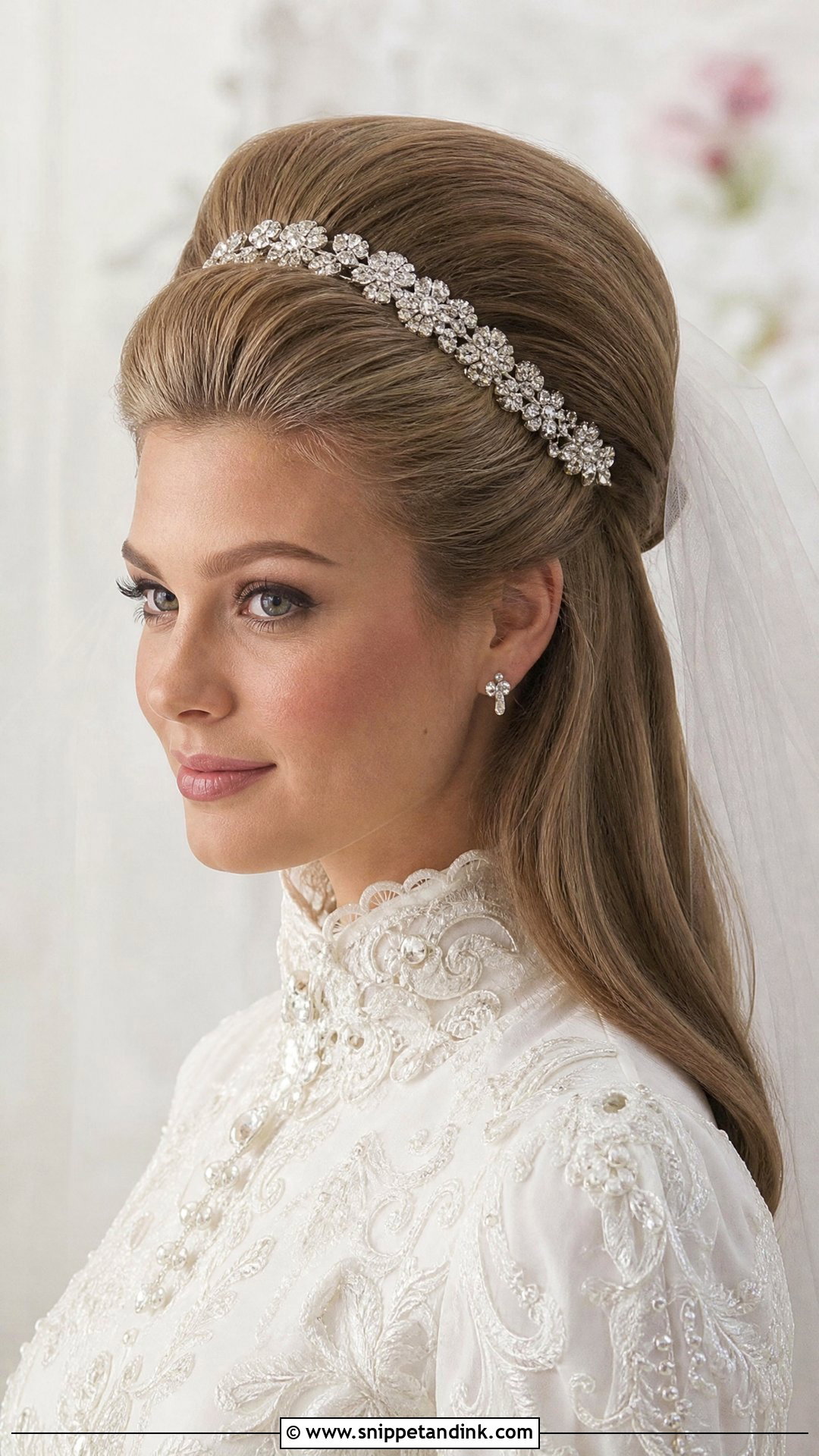
The bouffant lifts the crown into a soft, rounded shape and keeps everything else smooth. Wear it half-up, or take everything into a full updo. Thick, medium to long hair holds the height; fine hair can manage with a little padding. A jeweled headband across the front frames the volume. I backcomb only the inside layers and brush the top layer smooth over them, so the shape looks polished, not frizzy.
9. Marcel Wave Wedding Hairstyle
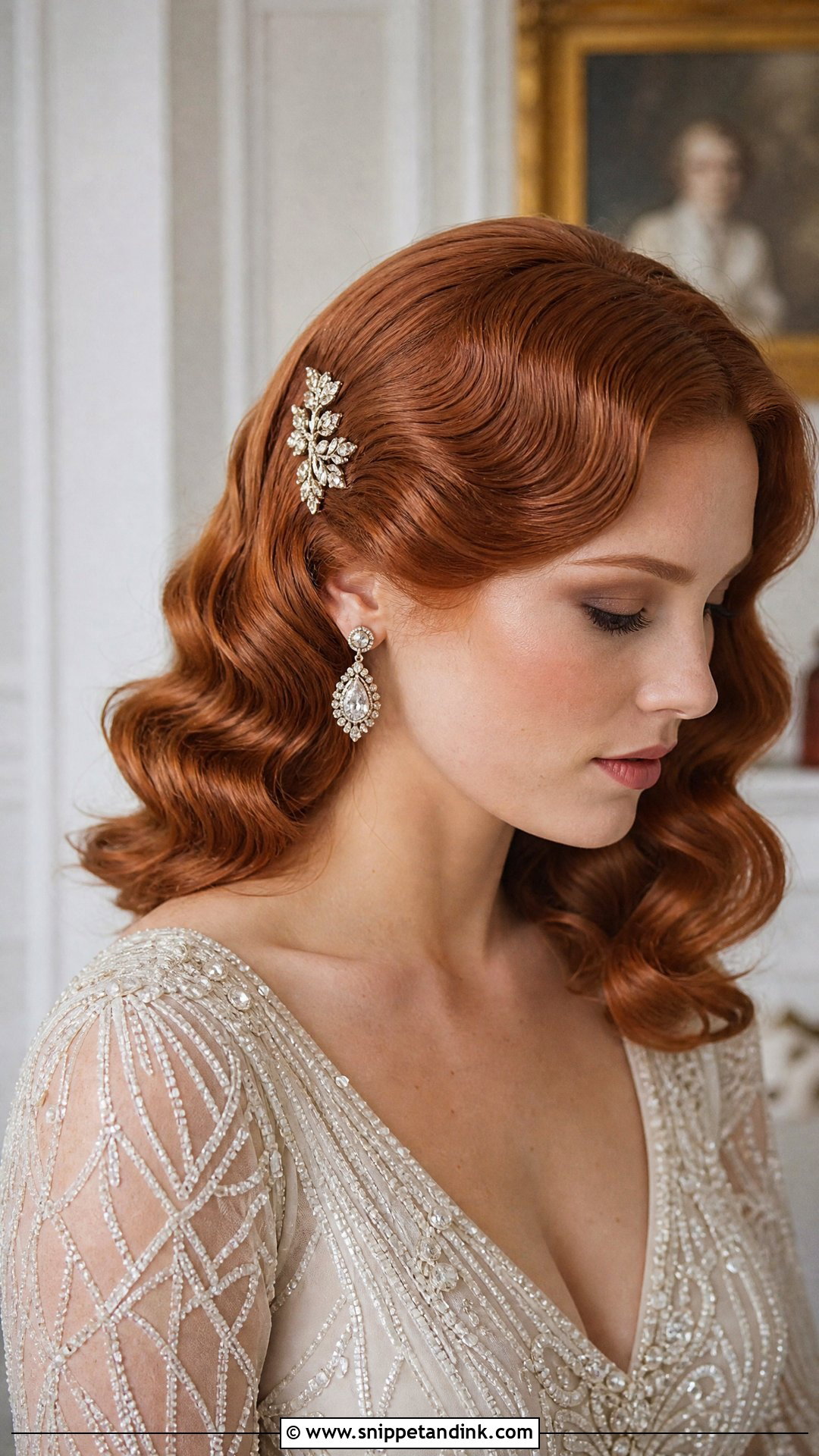
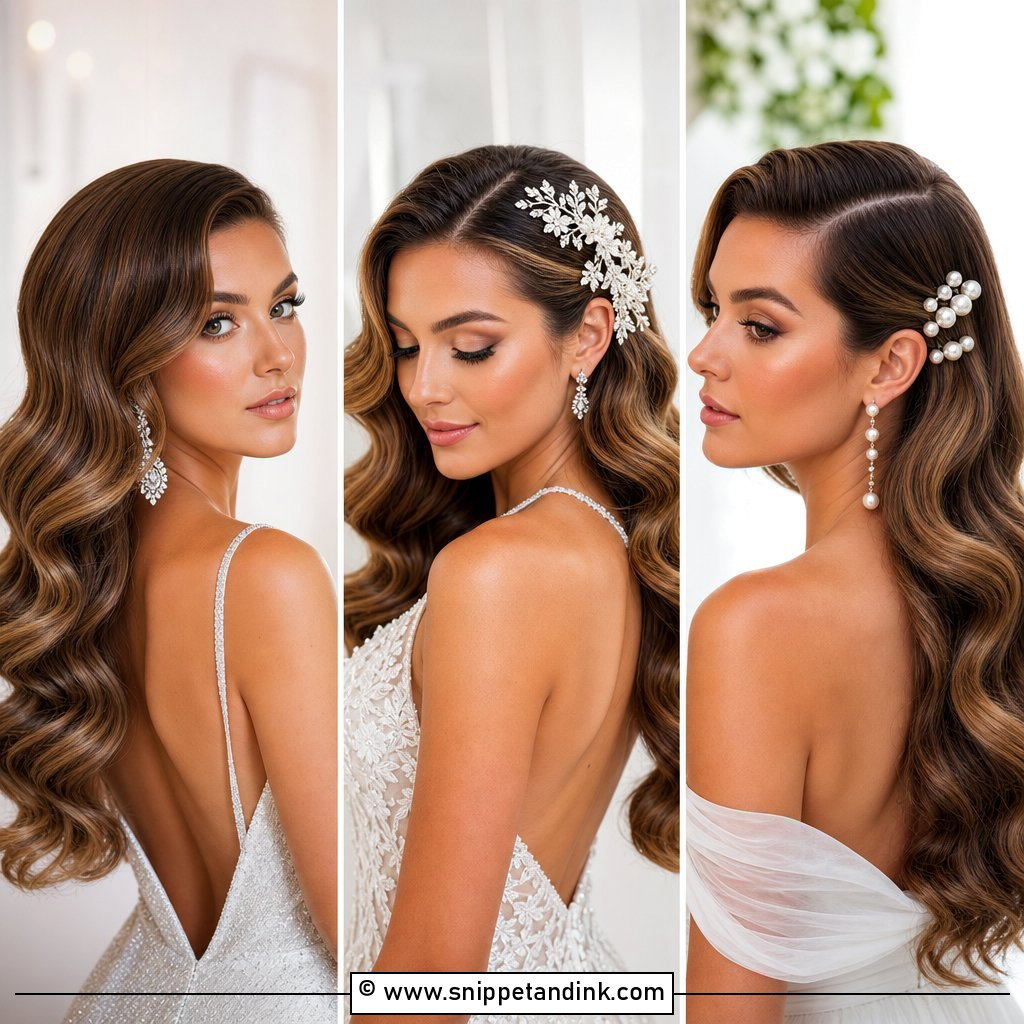
Marcel waves are older than finger waves, and they’re made with heat rather than water. The original Marcel iron is a pair of heated tongs that presses the hair into alternating ridges, which gives a softer, rounder wave than a wet set. Today I use a similar iron or a small-barrel tong. They flow over the shoulders on medium and long hair, and a deep side part with a jeweled clip on one side gives them old-world charm. Statement earrings and a vintage-inspired gown sit naturally with them.
10. Side Swept Curls Wedding Hairstyle
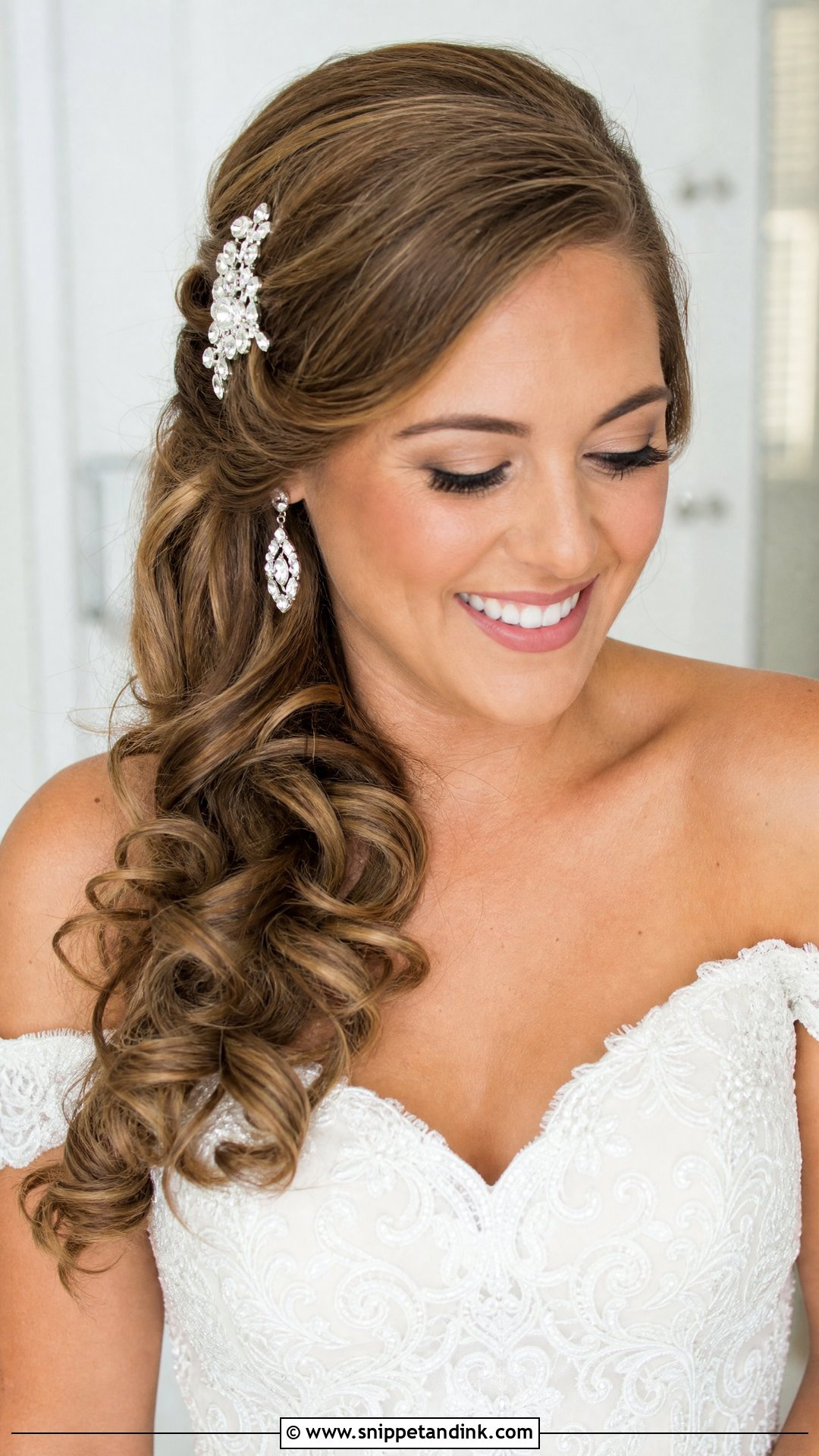
Side-swept curls gather voluminous waves over one shoulder, like a red carpet in the 1940s. The trick is the back of the head on the bare side. I pin it flat with a row of hidden pins so the hair stays where it was swept, then lay the curls over that line. A sparkling comb on the gathered side finishes it. Off-the-shoulder gowns and drop earrings suit it, and it’s a softer option than a structured updo.
11. Gibson Tuck Wedding Hairstyle
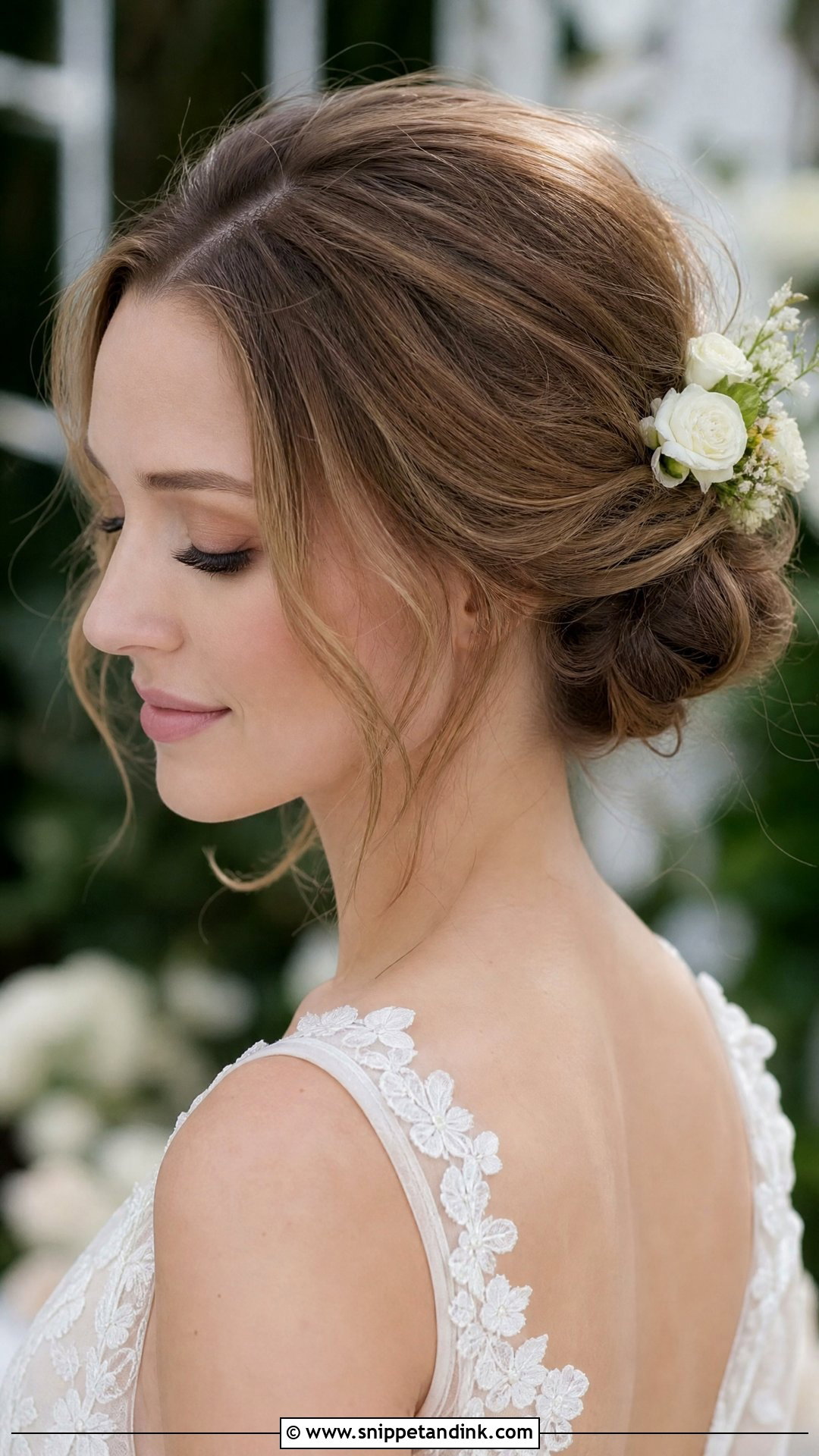
The Gibson tuck comes from the early 1900s. The hair is rolled under itself into a smooth, rounded shape at the nape, traditionally around a band. It’s a gentle updo and suits medium to long hair. Leave a few wispy pieces around the face. Fresh flowers or pearl pins sit along the roll, and it settles nicely under a veil. It’s an easy wear for a garden wedding, as long as your hair has some grip.
12. Half Up Victory Roll Wedding Hairstyle
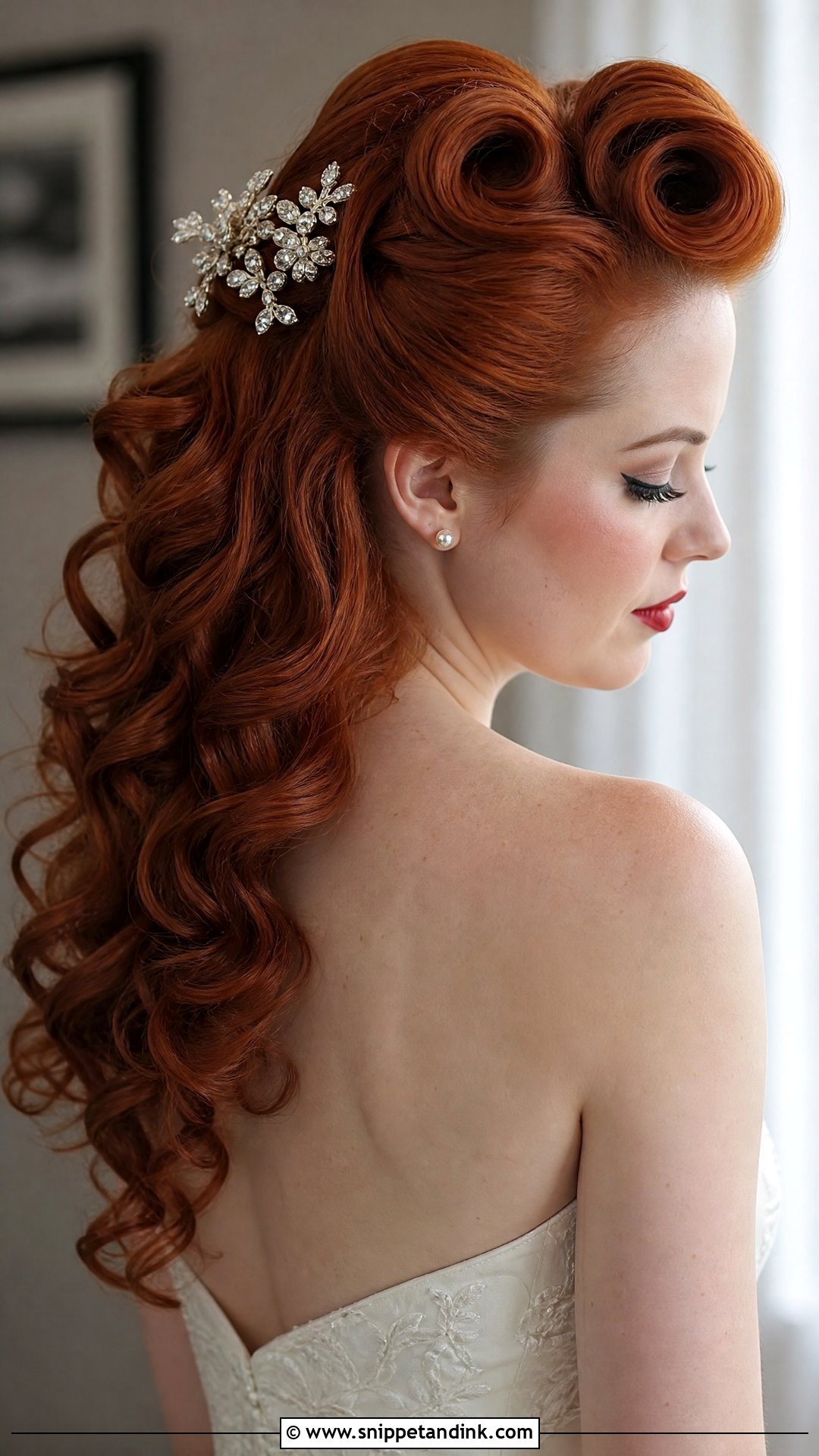
The half-up victory roll keeps the rolls at the top and leaves the rest of your length in soft waves. That’s my usual suggestion for a bride who loves 1940s hair but wants her length to show. The rolls need to be pinned through to the scalp underneath, as nothing else holds them. A flower or jeweled clip finishes the pin-up mood.
13. Faux Bob Wedding Hairstyle
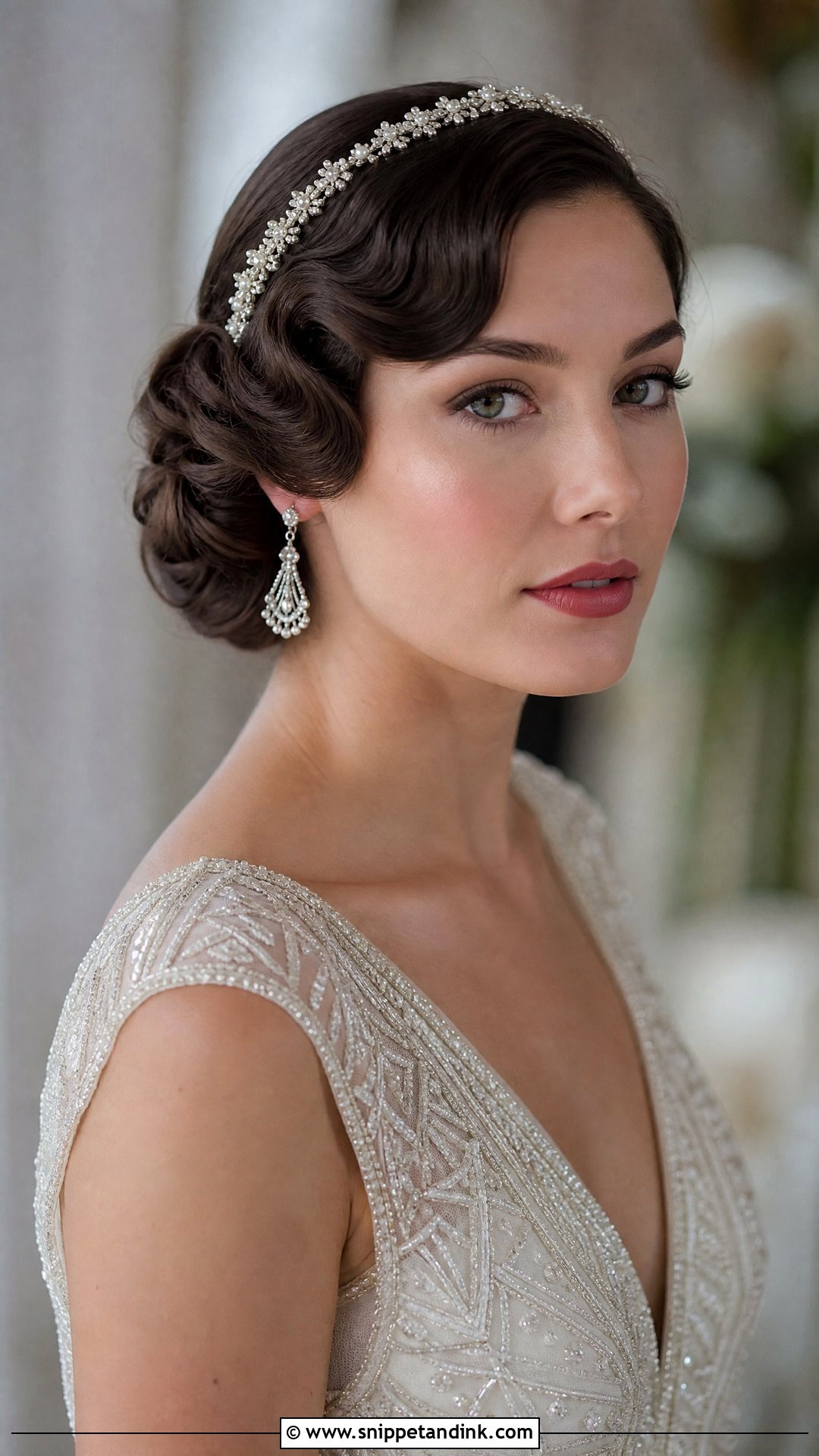
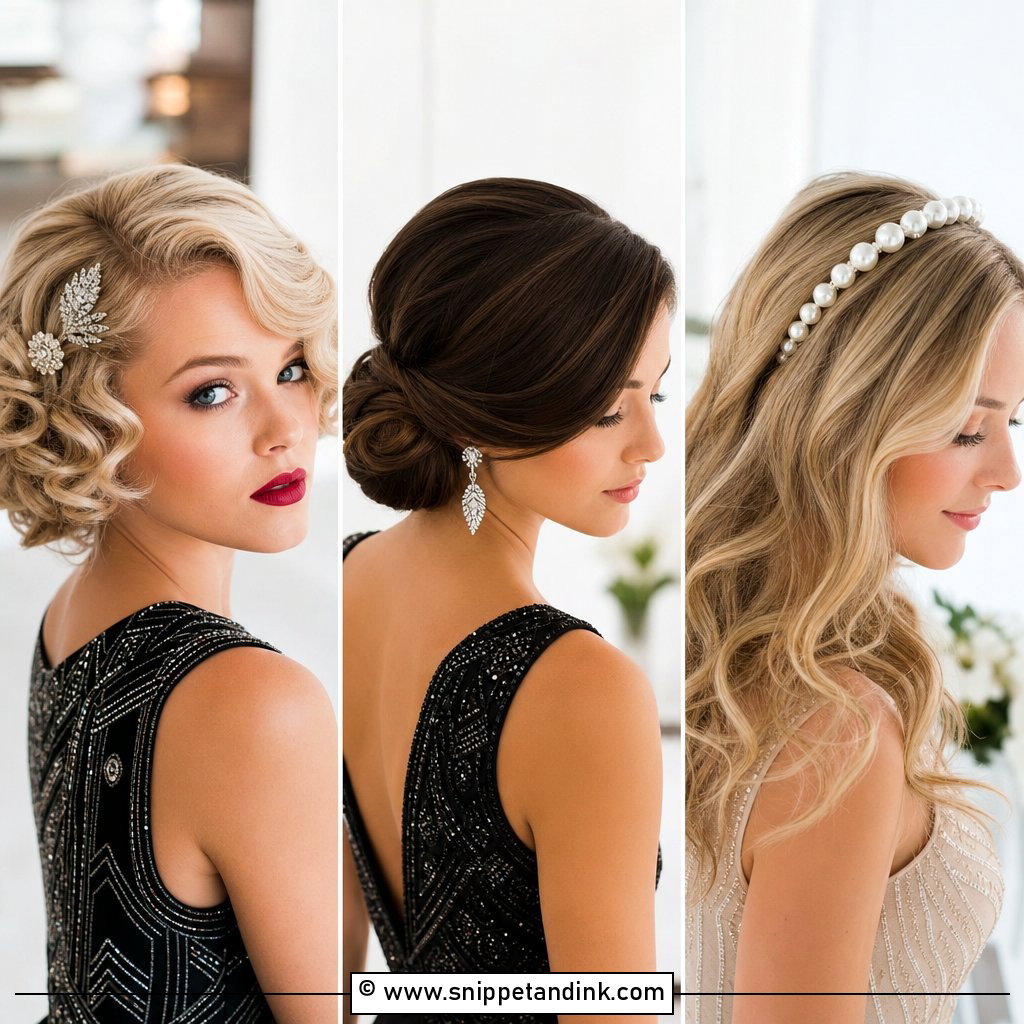
A faux bob is a long-hair trick. The length is curled, tucked under and pinned at the nape to look like a 1920s crop. It’s more convincing on fine to medium hair; very thick, long hair creates a bulky roll at the back. I style the top with finger waves or soft curls. A beaded headband completes the flapper look, and art-deco gowns and statement earrings suit it.
14. Pompadour Wedding Hairstyle
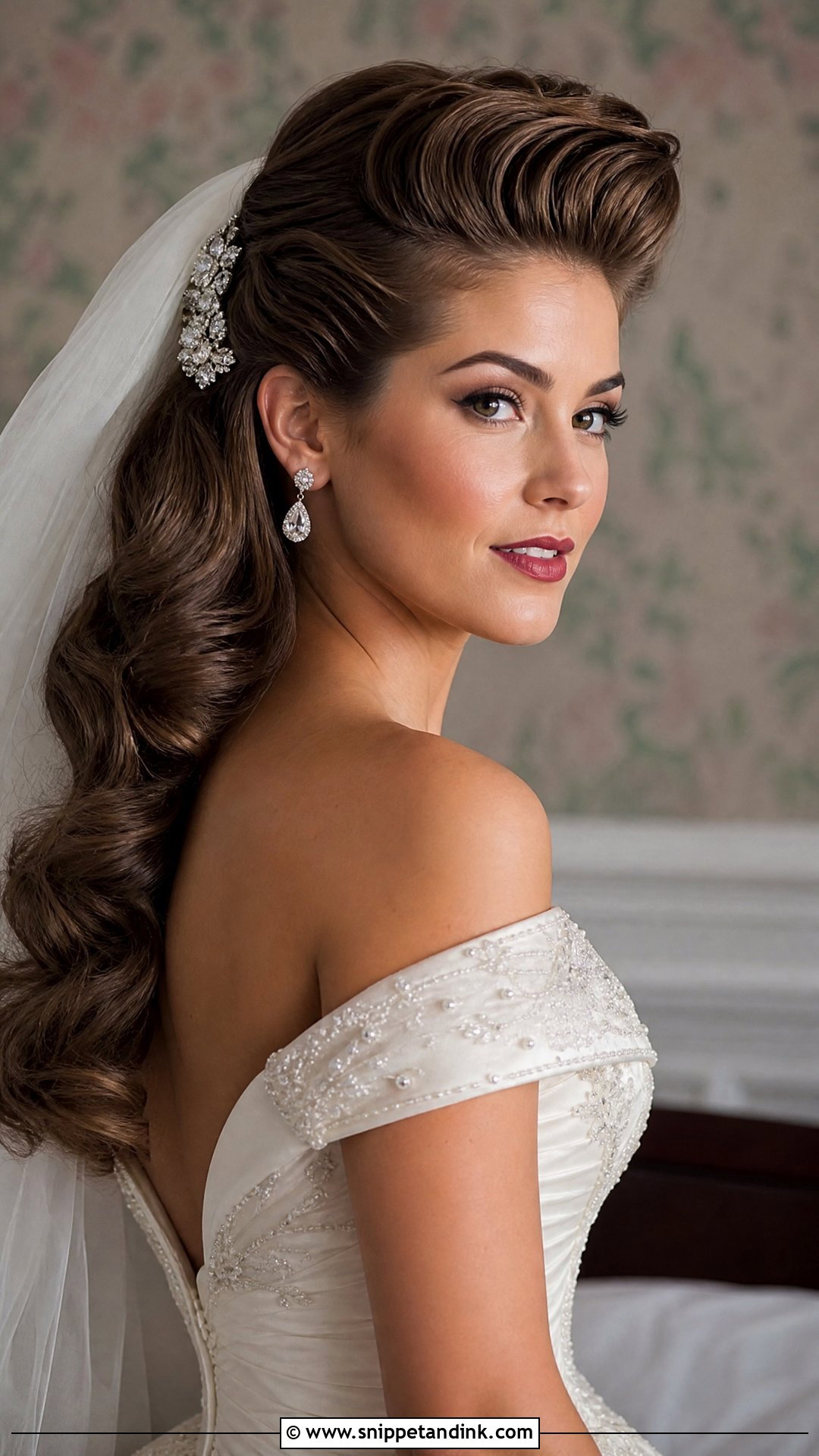
The pompadour lifts and sweeps the front up and back for real height at the crown. It’s bolder than most bridal looks. I backcomb the front section, roll it back and pin it from underneath, then either build an updo behind it or leave soft waves flowing. A sparkling comb at the base hides the pins. Medium to long hair with some body holds it best, and the look nods to 1950s glamour.
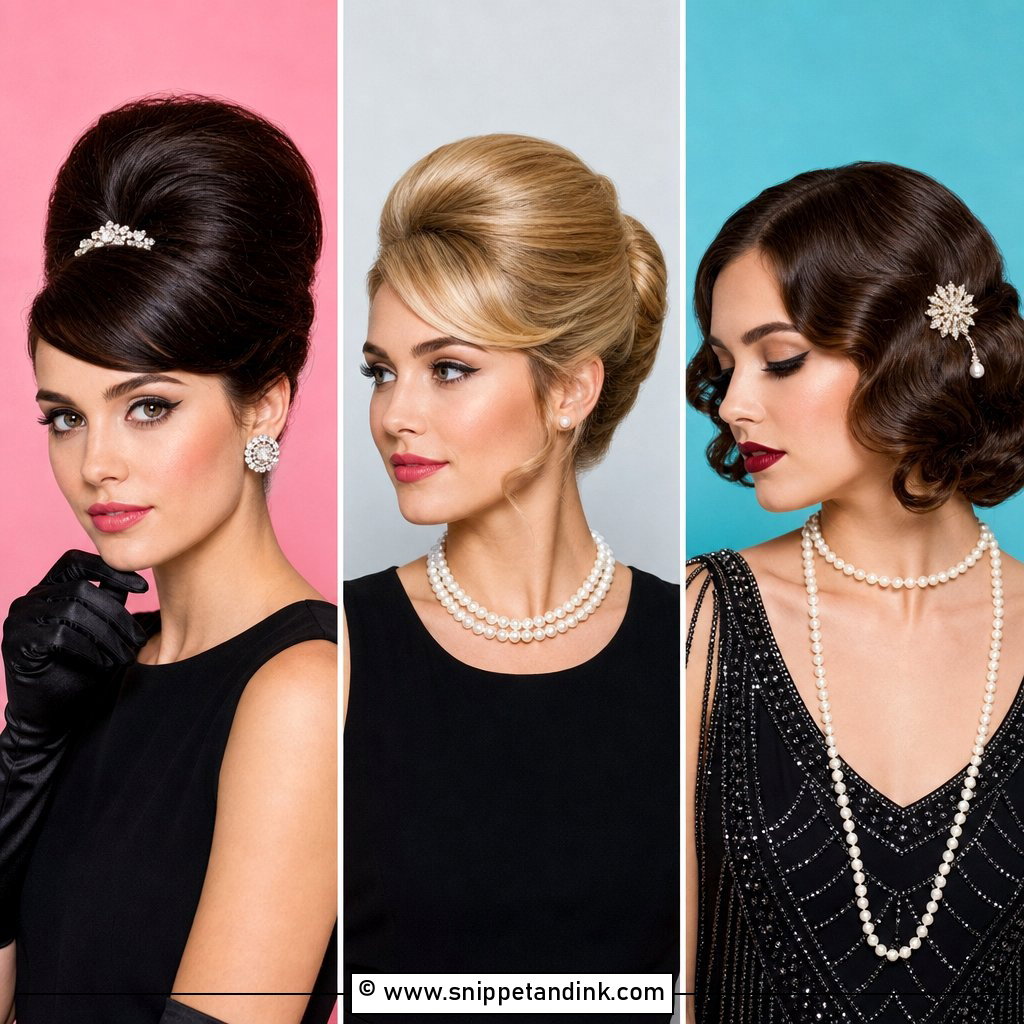
15. Sleek Vintage Updo Wedding Hairstyle
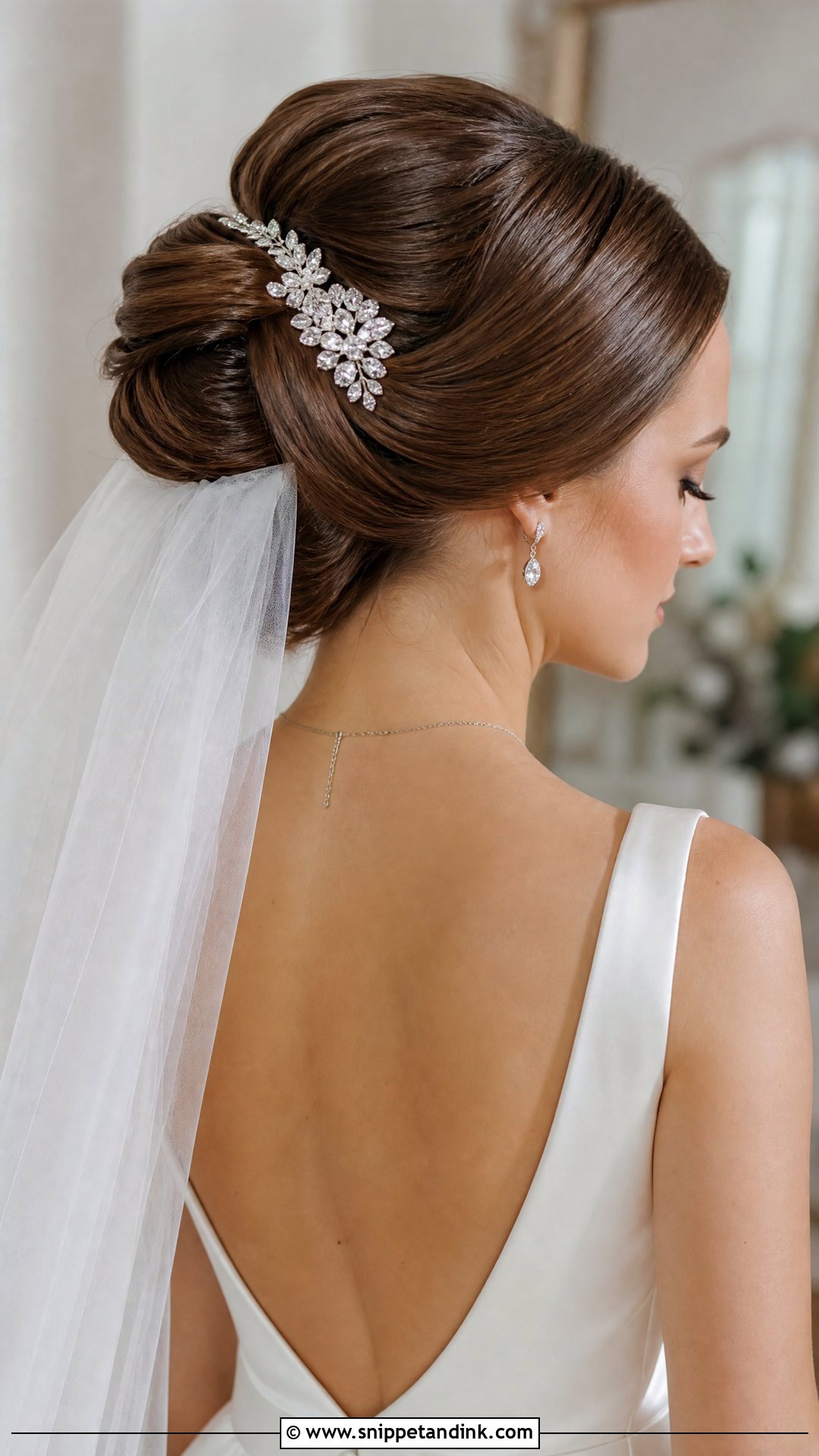
A sleek vintage updo is all surface. Every hair is smoothed back into a structured, glossy shape with no flyaways. A smoothing cream and a fine-tooth comb are the real tools here, and if your hair is curly, a blow-dry the day before makes the finish far easier to reach. Subtle waves or twists at the back add vintage interest. A crystal hairpiece or old comb gives it sparkle, and it looks very clean under a long veil.
16. Curly Bob Wedding Hairstyle
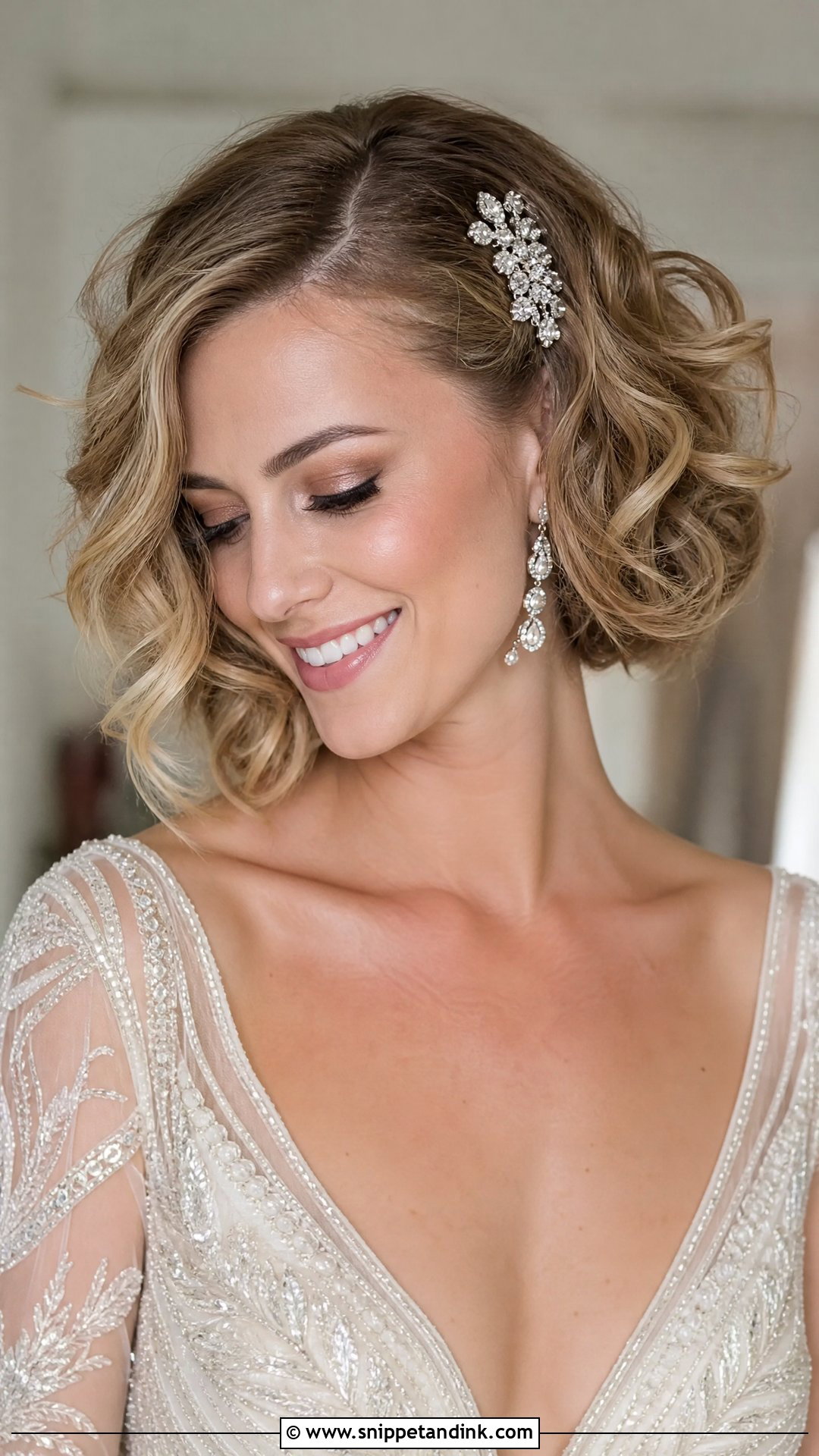
A curly bob gives shorter hair bouncy vintage texture, a nod to the bobs of the 1920s and 1930s. I curl in small sections with a small barrel and leave the curls to cool before separating them lightly. A deep side part gives it shape. A jeweled clip or beaded band adds the vintage cue. It’s low-fuss to wear, and the curls tend to stay bouncy all day on short hair.
17. Braided Crown Wedding Hairstyle
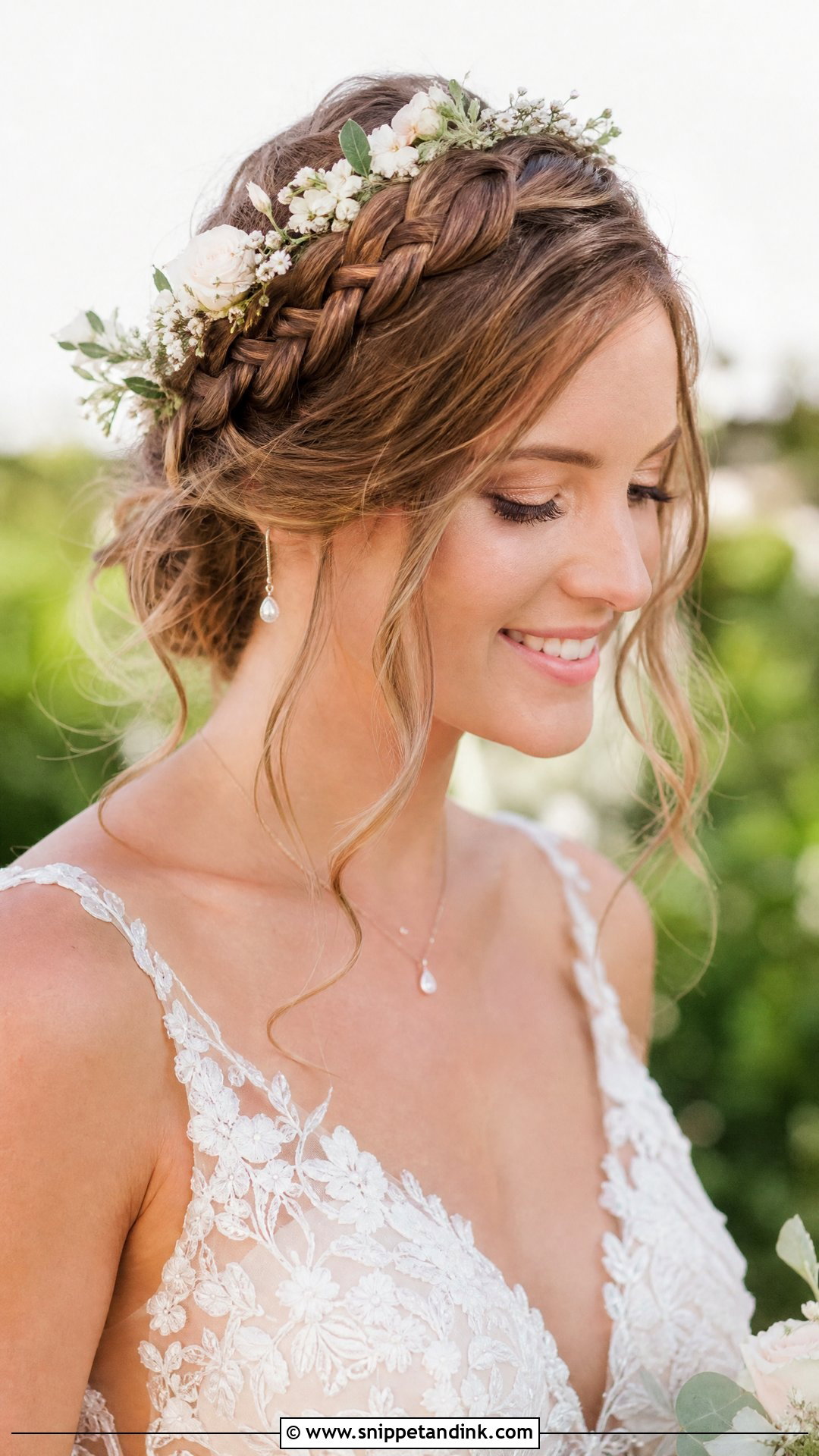
A braided crown wraps the head like a halo. It isn’t retro in the same way as finger waves, though its old-world look pairs well with a vintage lace gown. I braid it tightly, pin it along the crown and loosen the edges afterwards. Fresh flowers tuck into the gaps. It keeps hair secure all day and suits medium to long hair across many textures.
18. Twisted Updo Wedding Hairstyle
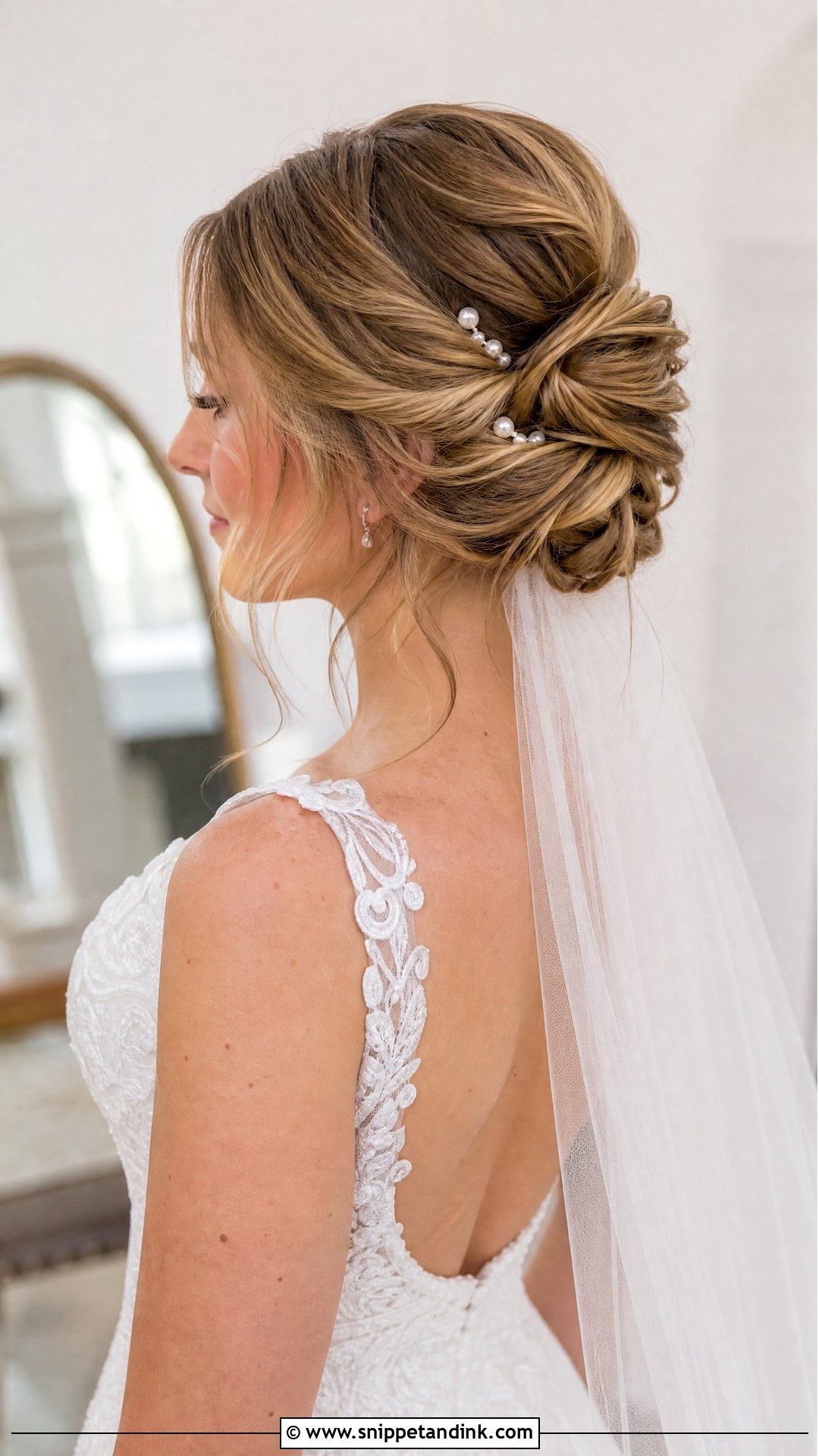
A twisted updo gathers the hair into soft twists at the back. Each twist is pinned where it lands, so the shape is built layer by layer rather than in one heavy knot. That’s why it holds well through dancing. Loose waves at the front give it a vintage softness, and pearl pins or a crystal comb finish it. It sits well beneath a veil and suits medium to long hair.
19. Retro Ponytail Wedding Hairstyle
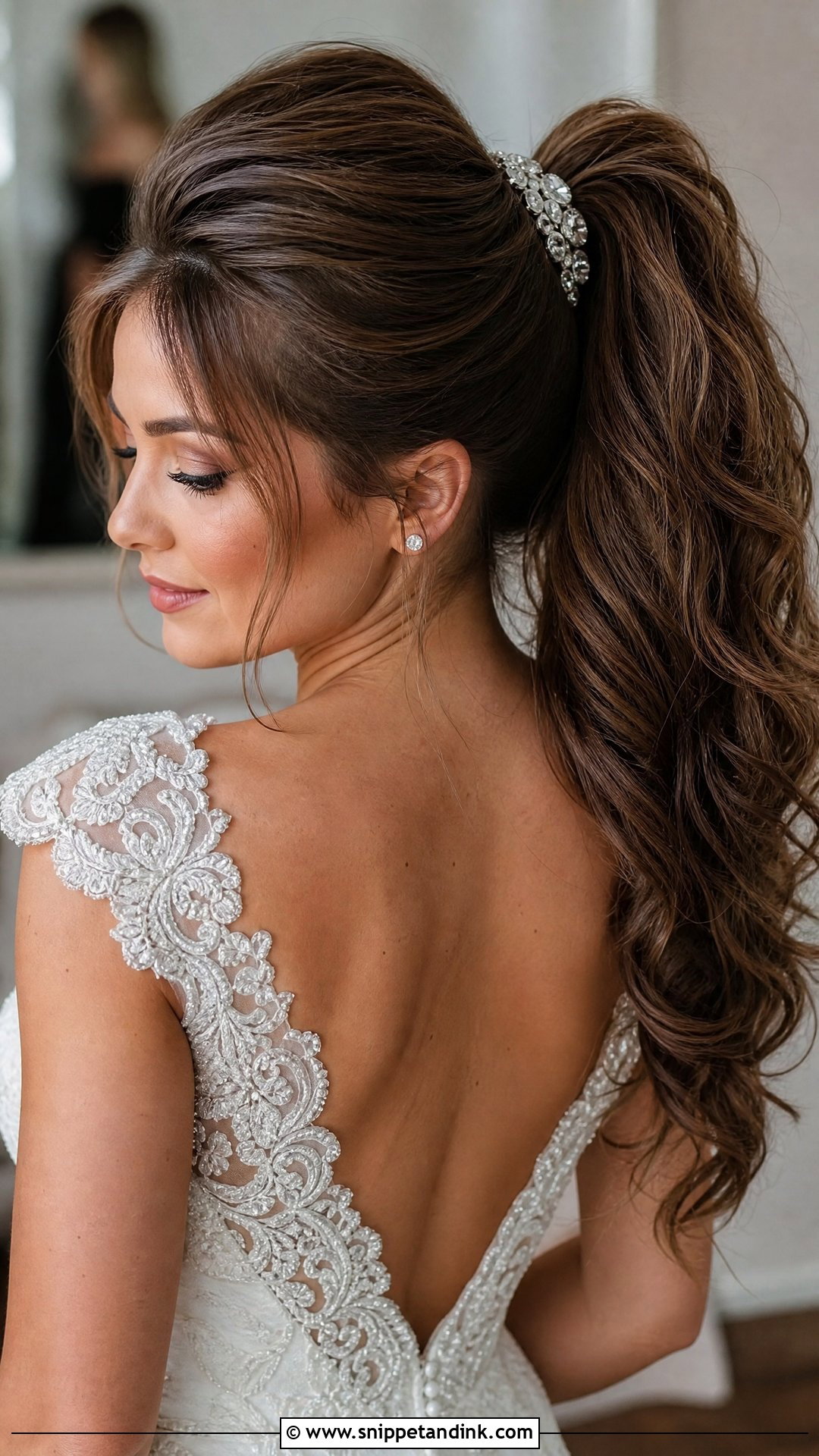
The retro ponytail is the playful end of the list. It sits high, with teased volume at the crown, and curls in the length so it swings. I wrap a section of hair around the elastic and pin it from below. A jeweled clip or ribbon gives it the 1950s cue. It suits long hair, keeps the neck cool and is easy to dance in.
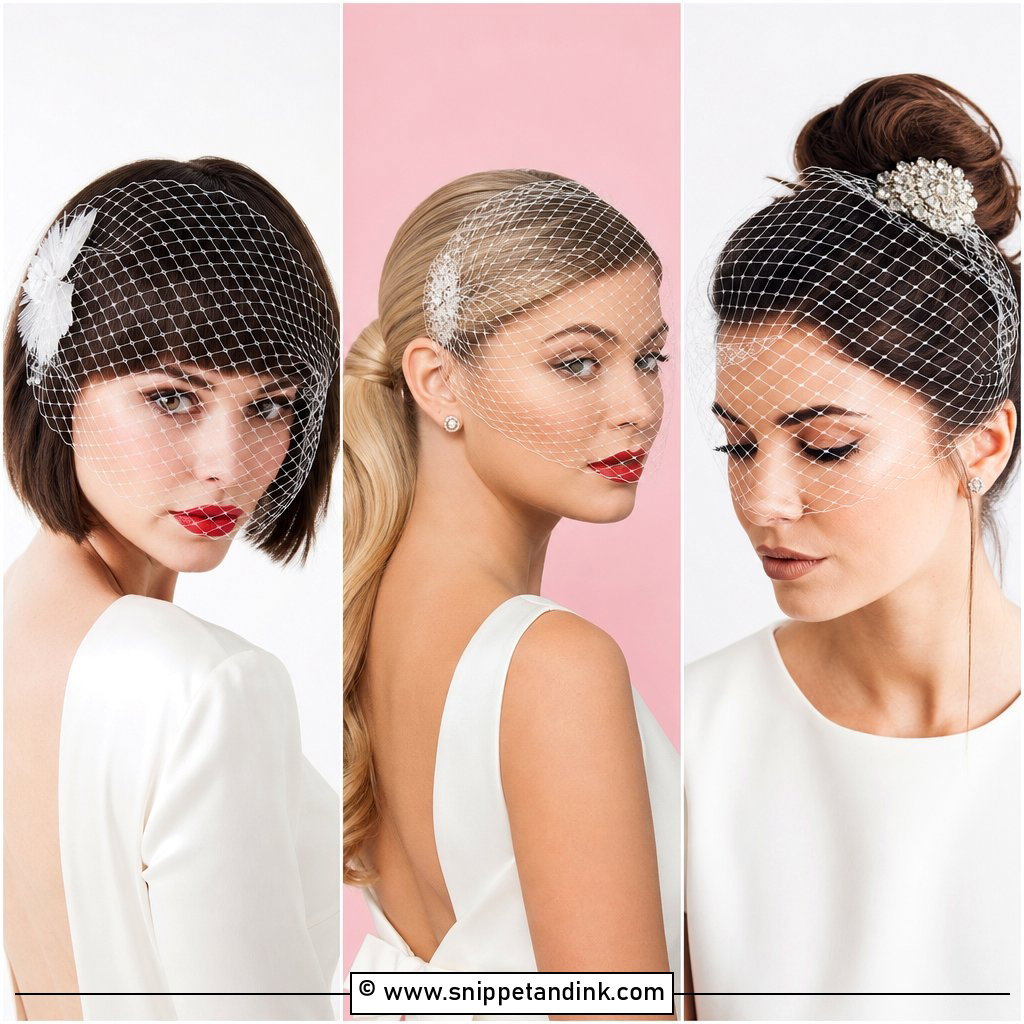
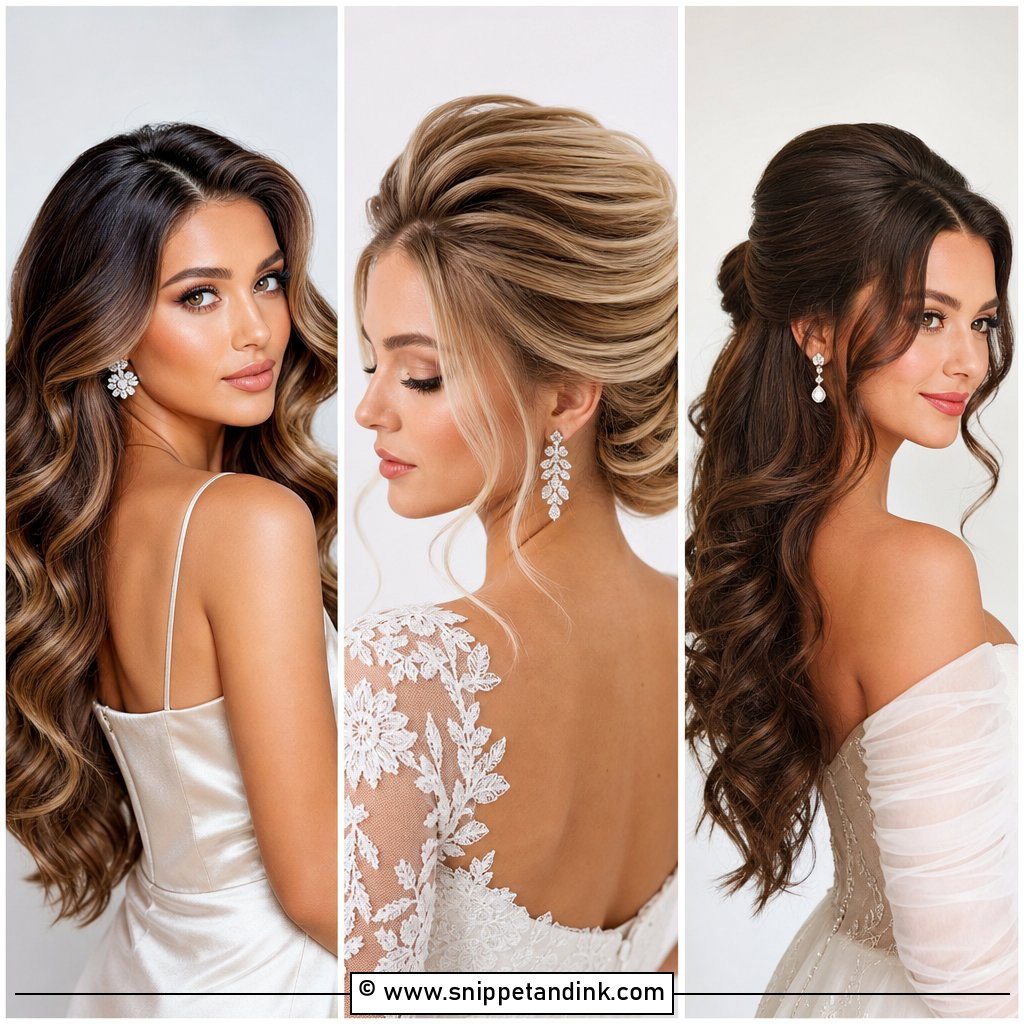
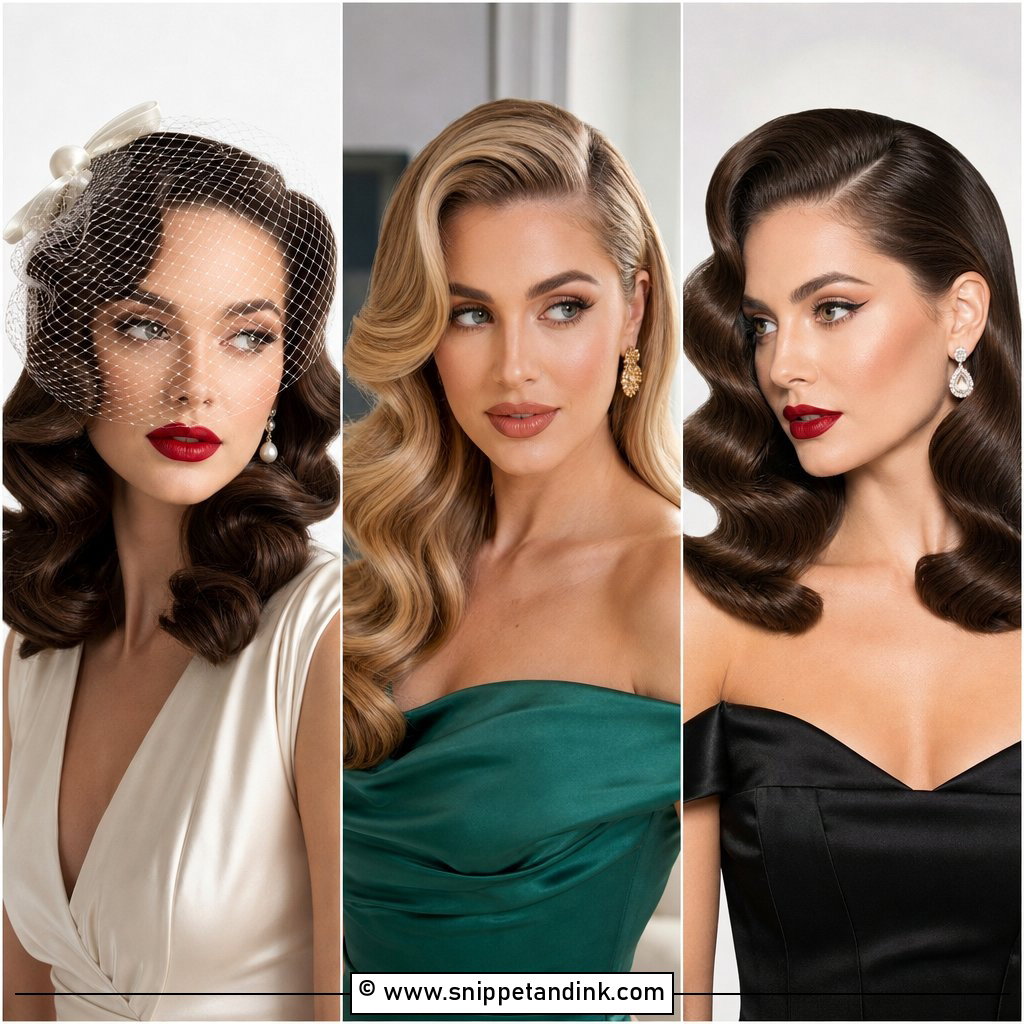
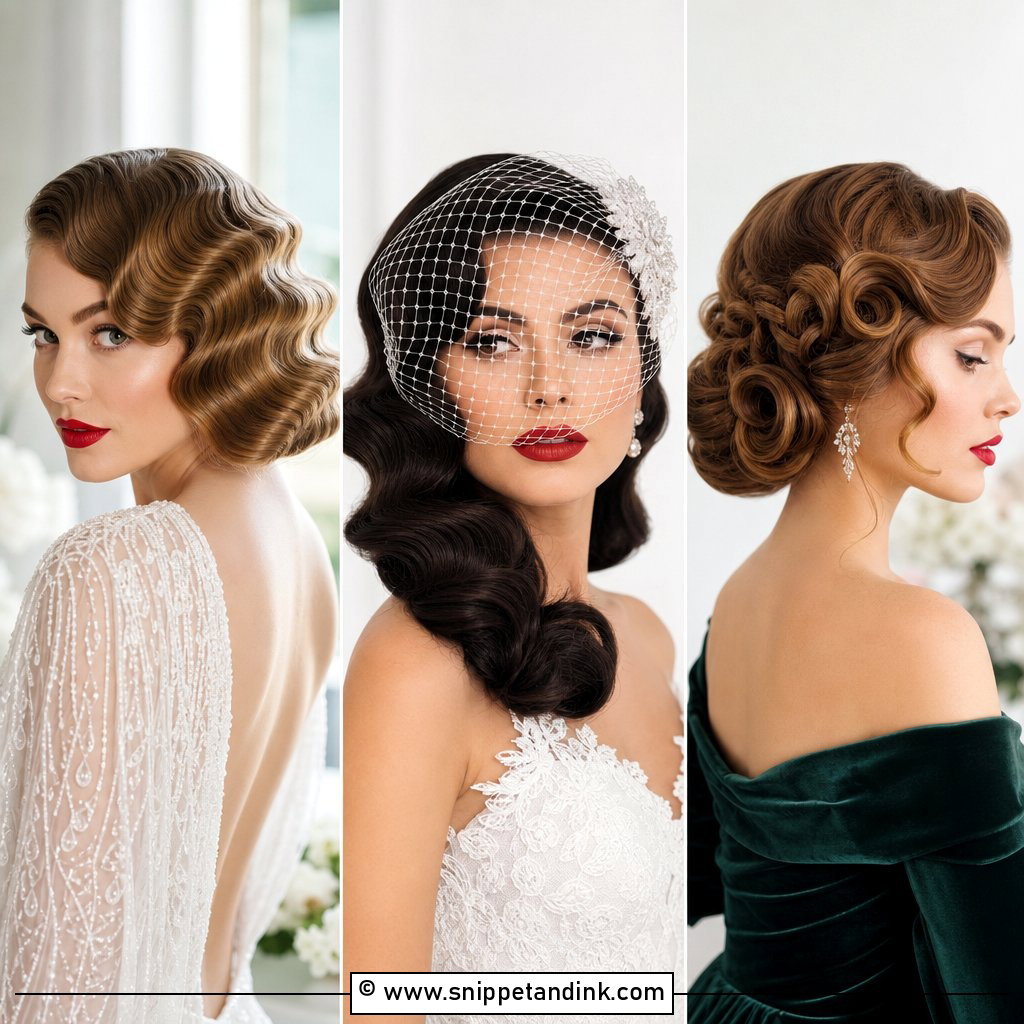
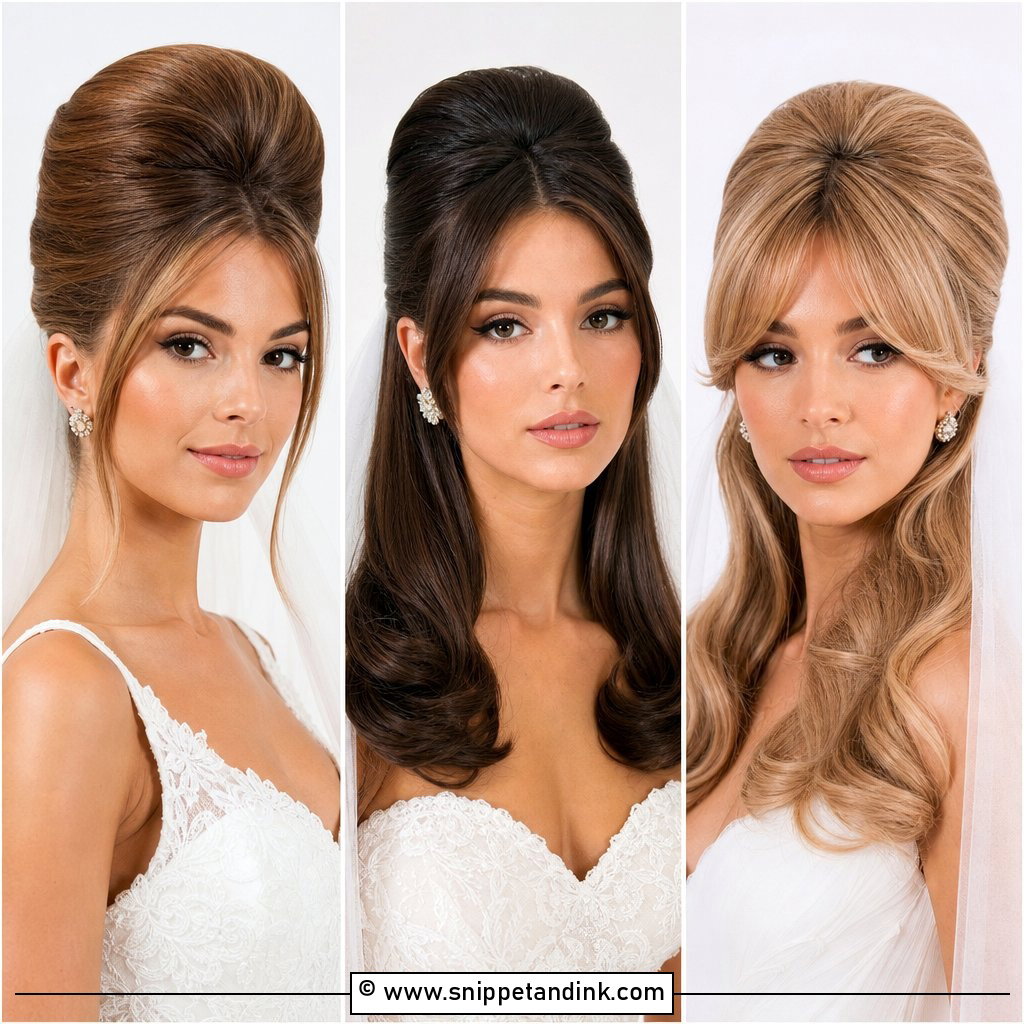
20. Birdcage Veil Wedding Hairstyle
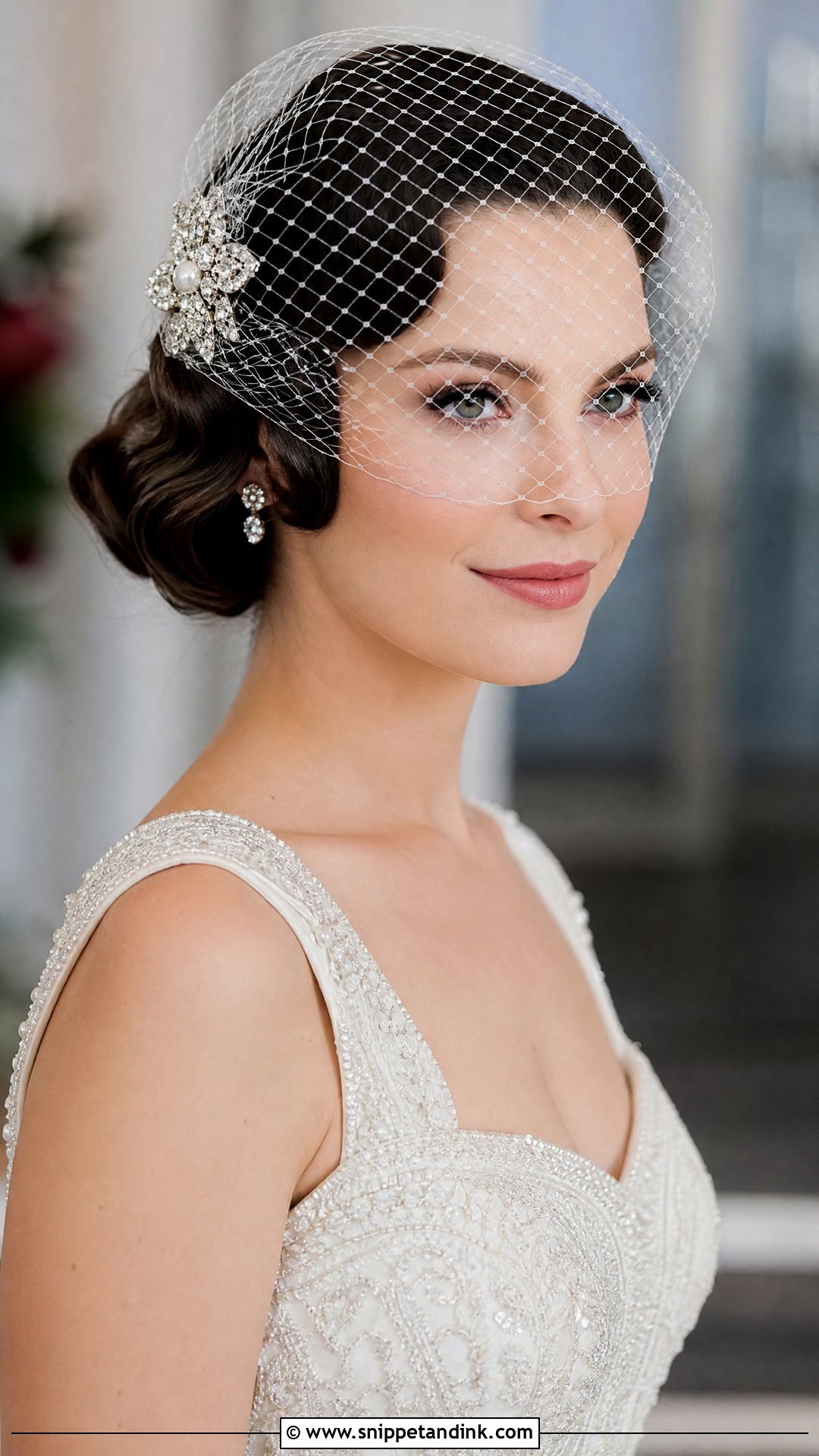
A birdcage veil is short netting that covers part of the face, usually down to the cheekbone or the chin. It pairs well with finger waves, pin curls or a sleek chignon. I pin the comb into a solid part of the style, never into loose curls, and check that the net edge doesn’t sit on your lashes. A brooch or flower can hide the comb. It’s a good choice when you want a vintage piece without a long veil.
Wearing a Grandmother’s Comb or an Original Veil
Many vintage-loving brides want to wear something that actually is vintage. That’s lovely, and it needs a little care.
- Old combs often have short or brittle teeth. I sew a few small loops of thread or a fine elastic behind the comb so I can pin through them, rather than relying on the teeth alone.
- Bring the piece to your trial. I need to build the style around its weight and size, and a heavy brooch-style comb can pull a soft updo down.
- Original veils can be fragile. Check for small tears along the comb before the wedding, and never steam old lace close up; hang it in a steamy bathroom instead.
- Metal pieces can tarnish or leave marks on light hair. A quick clean beforehand and a clear coat on the back help.
Colour and Cut Timing for Sculpted Styles
Retro styles show every line, so the condition of your hair matters more than for loose looks. I’d suggest a trim about two to three weeks before the wedding, so blunt ends have softened. If you colour, a gloss a week or so ahead adds shine that a wave pattern really benefits from. Avoid any big change in cut or colour after the trial, because the set was planned on the hair you had then.
Which Decade Feels Most Like You?
Retro hair works when the style suits both you and your dress. From finger waves and Hollywood curls to beehives and braided crowns, each look here is made a specific way, and the right one depends on your hair, your gown and how long you can sit for the set. Bring photos and your accessories to the trial, and ask your stylist how they’d build the style. Their answer tells you a lot.
You'll Like These Ideas:


Leave a Reply