
An Indian wedding asks more of hair than almost any other celebration. There are several functions, often in heat, with heavy jewelry, a dupatta pinned on top and hours of sitting, dancing and hugging. Curls handle that well because they add body that jewelry can sit into, and they hide a slipped pin far better than sleek hair does. They work with lehengas, sarees, shararas and gowns, and with dupattas, maang tikka, matha patti, fresh flowers and statement earrings. The right style depends on the event, the blouse neckline, the jewelry and your own texture. These twenty cover open curls, half up hair, juda buns, ponytails and flower-dressed looks.
Planning Hair Across Haldi, Mehndi, Sangeet and the Pheras
With several functions in a few days, I plan hair as a sequence rather than one look at a time. Curls from one night can sometimes be refreshed for the next morning, but some events make that impossible.
Haldi
Turmeric paste stains light and highlighted hair, and it gets everywhere once family starts applying it. I’d tie hair up in a loose braid or bun and skip anything that needs to survive. Wash it thoroughly afterward, then dry it fully before the next function.
Mehndi
Get your hair finished before the artist begins. Once the paste is on your hands and feet, you’ll sit for hours and won’t be able to touch your hair or fix a fallen pin. A secure half up or loose bun is far kinder than open curls that keep falling into wet henna.
Sangeet and the wedding day
Curls from the sangeet can be pinned up for a next-morning function, but I’d wash and restart for the main ceremony. Hair that has been sprayed and slept on won’t hold a fresh set under jewelry and a dupatta. Book enough time with your stylist for each event; rushed Indian bridal hair almost always shows in the pins.
1. Open Curls Hairstyle For Indian Wedding
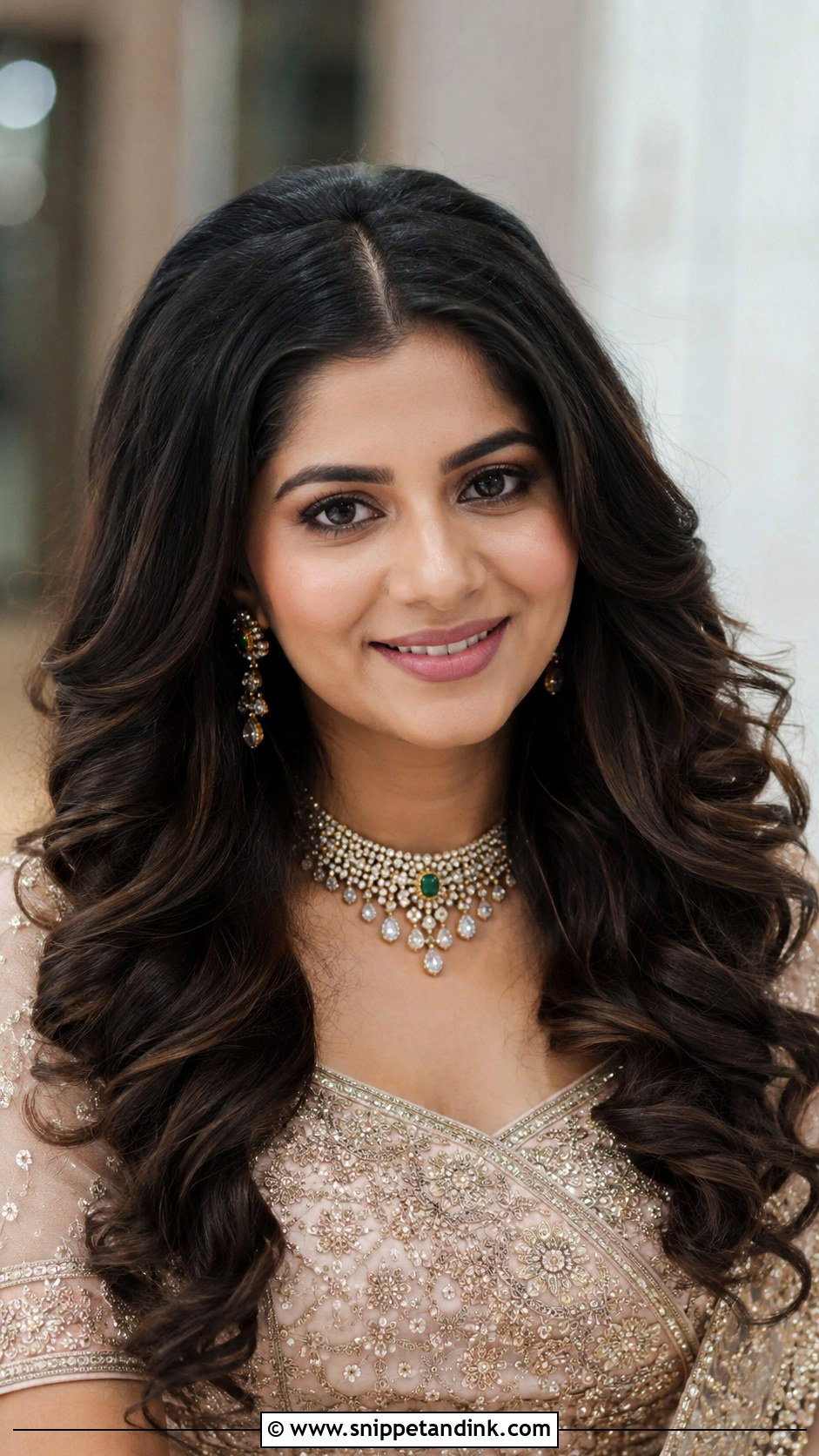
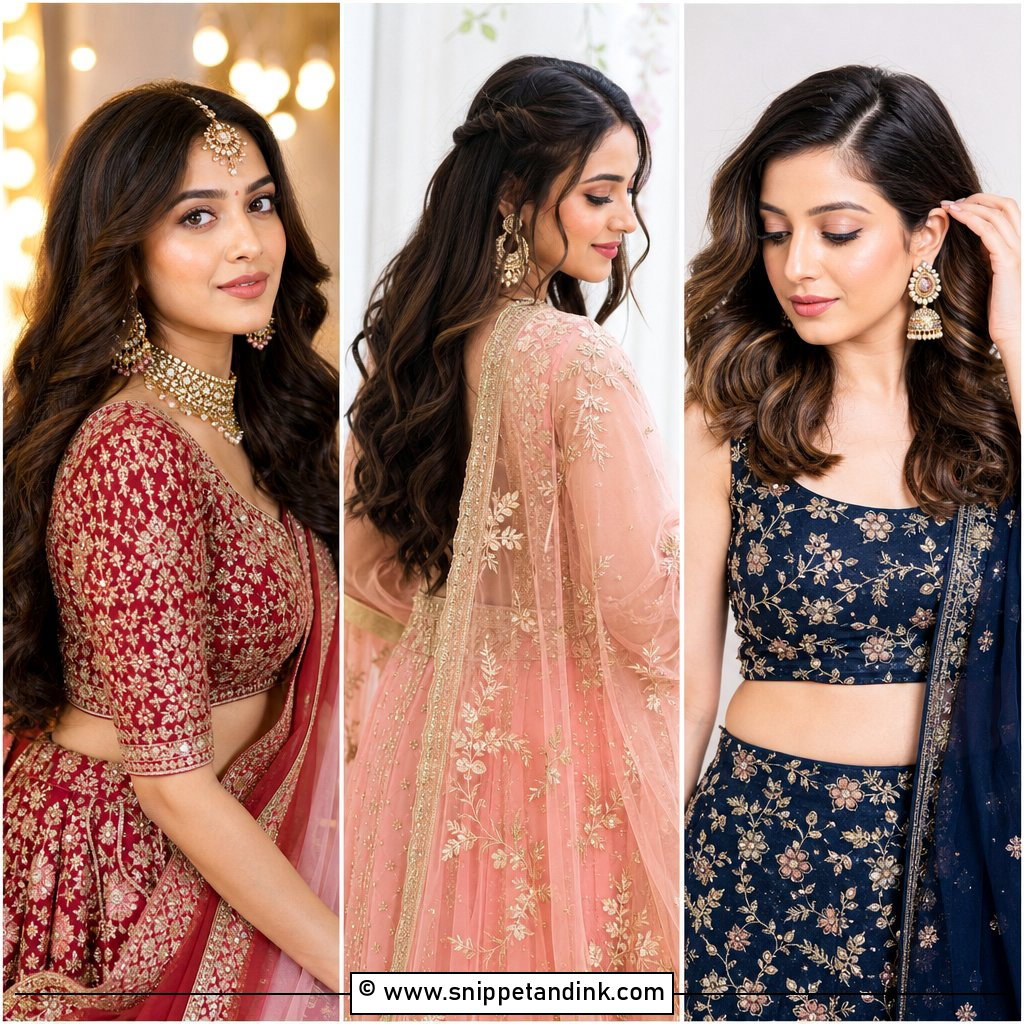
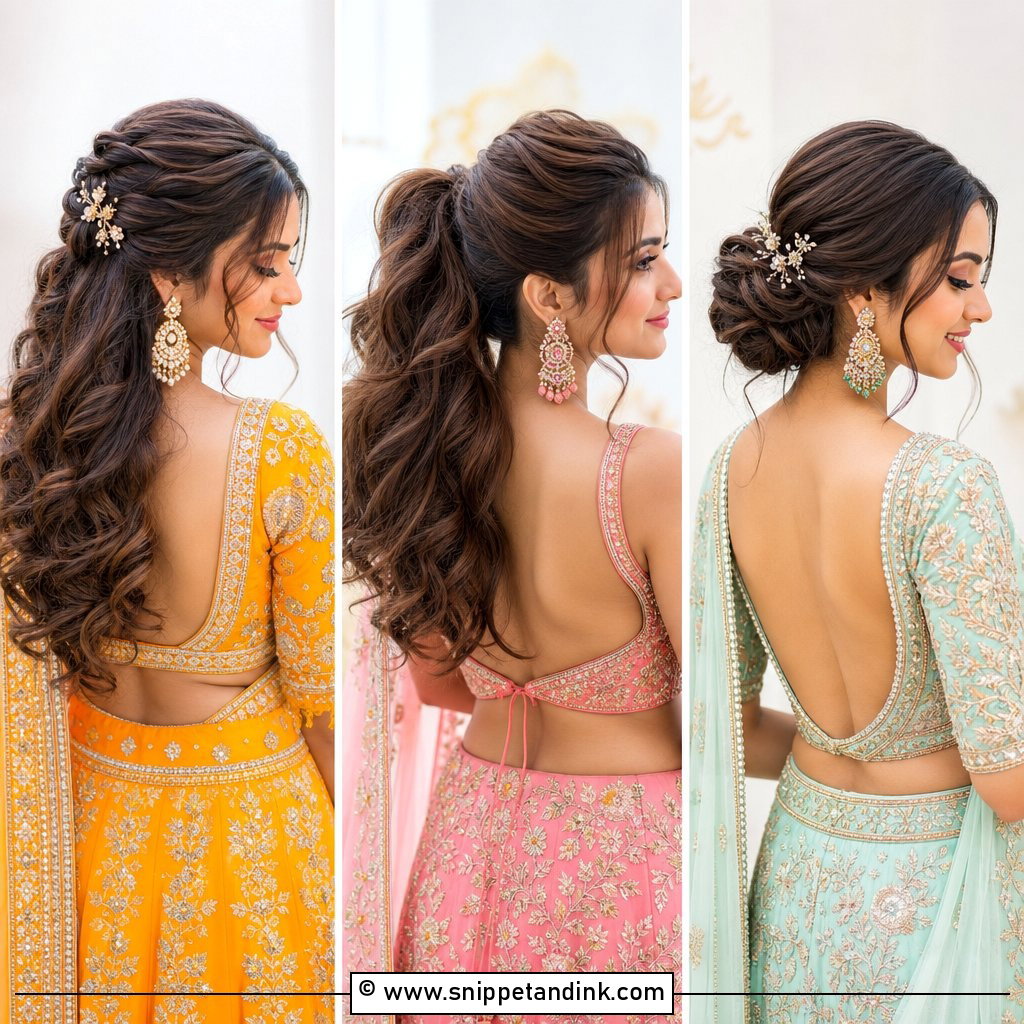
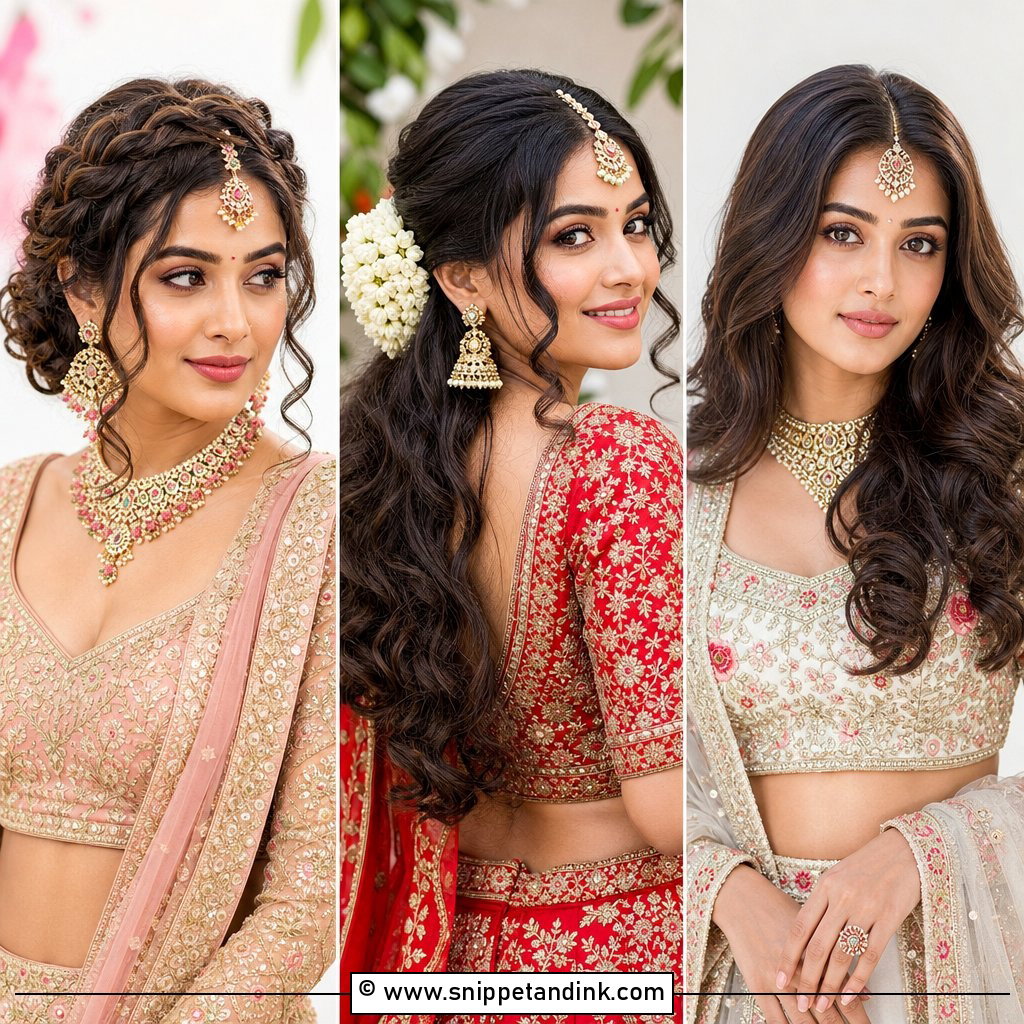
Open curls are what I suggest for receptions, engagements, cocktail evenings and sangeet nights, where movement matters more than structure. I keep the crown smooth and let the curls start lower, so the hair looks polished rather than fluffy next to embroidered fabric. A center part suits a maang tikka; a side part leans glamorous with big earrings. Defined curls hold up under stage lights. Big, brushed-out volume tends to look frizzy beside a heavy lehenga.
2. Half Up Curls Hairstyle For Indian Wedding
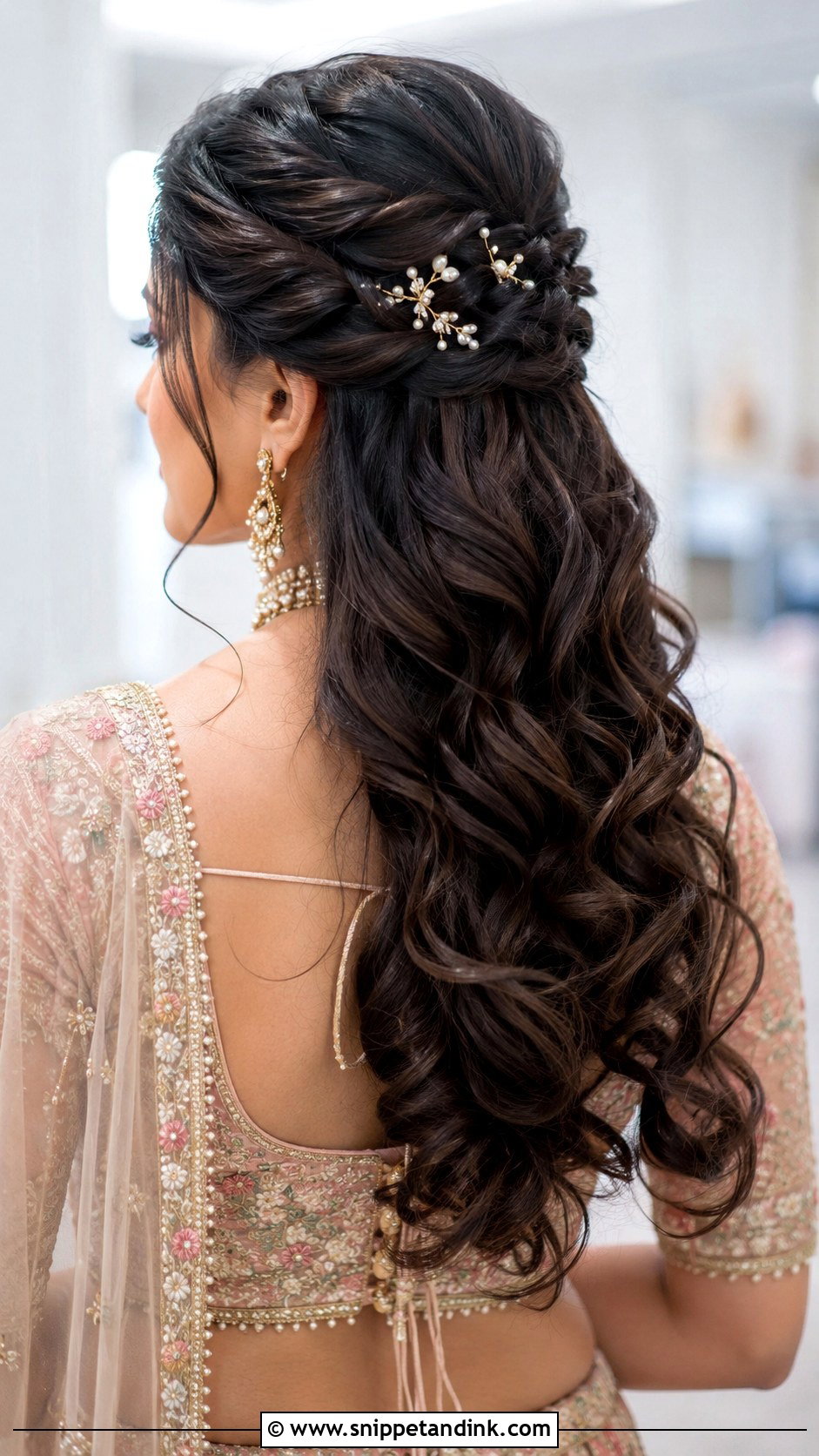
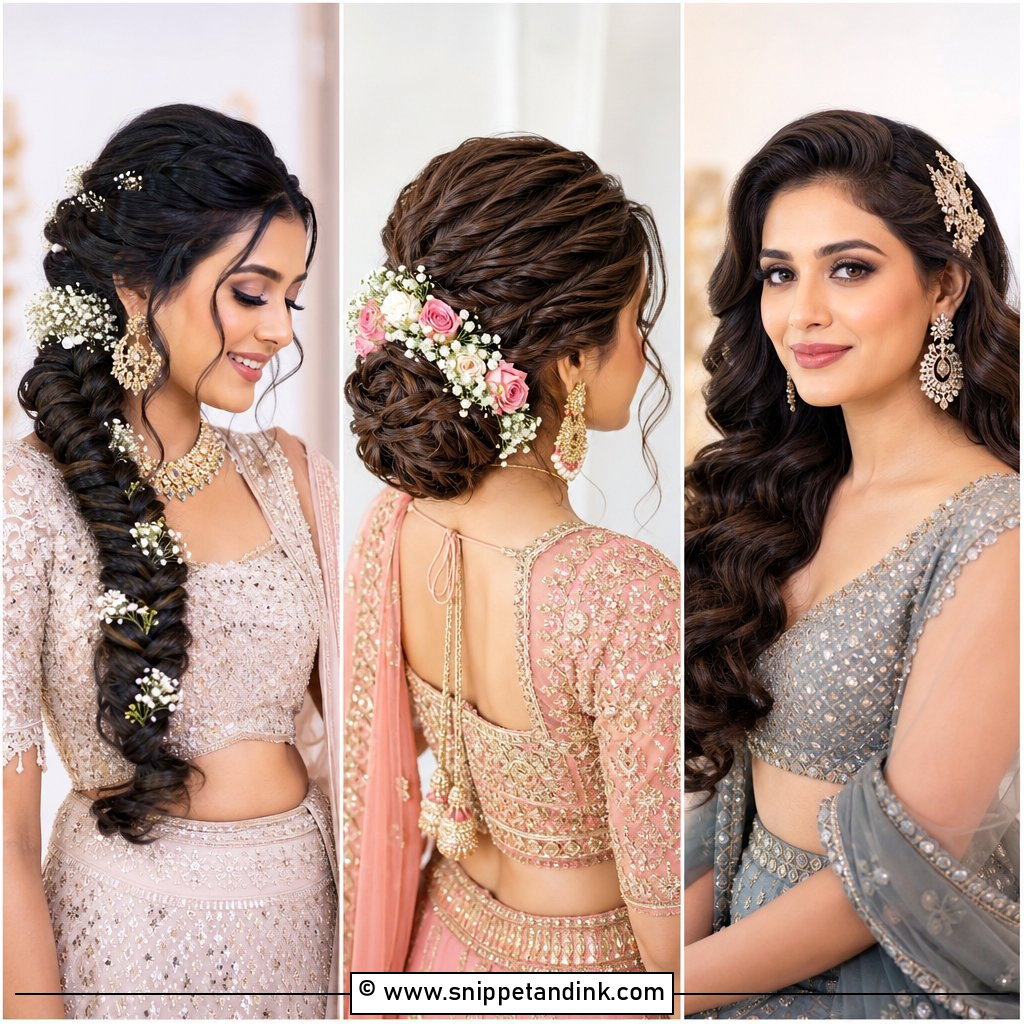
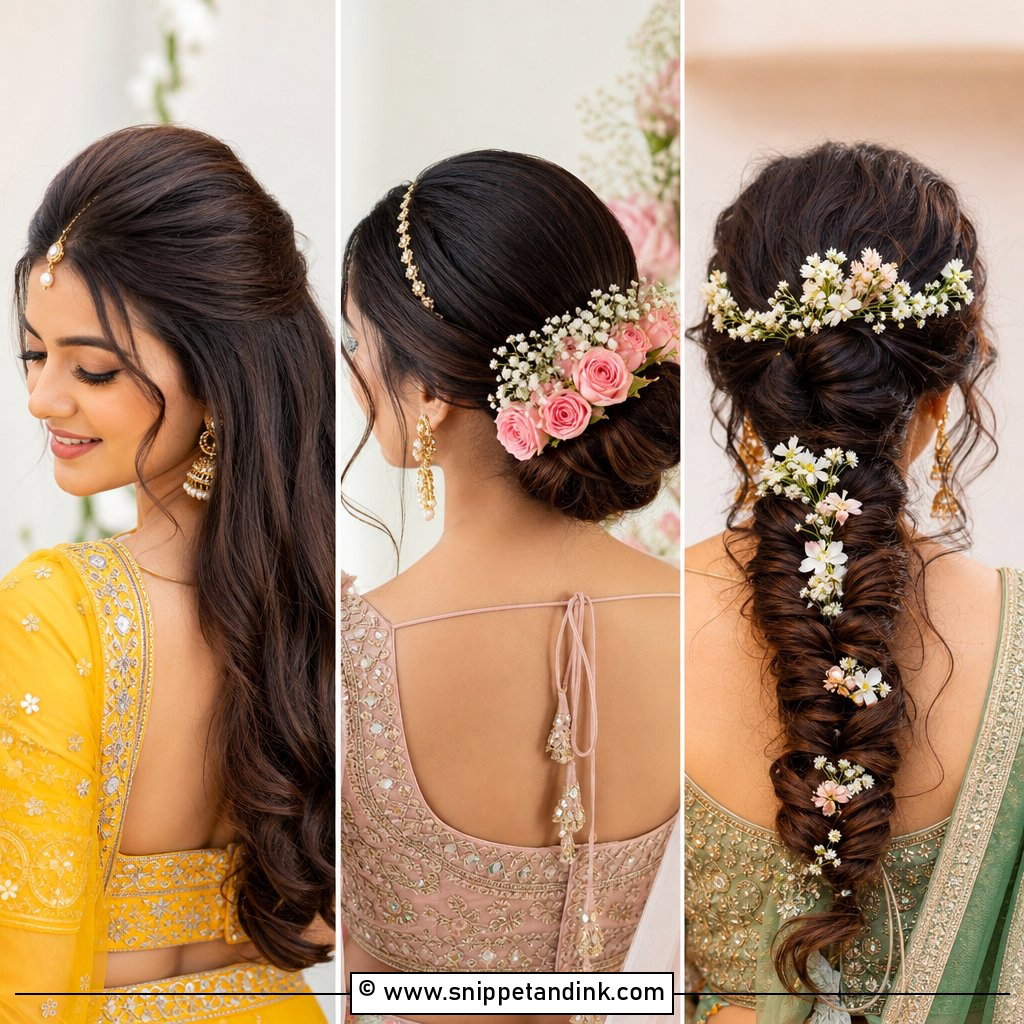
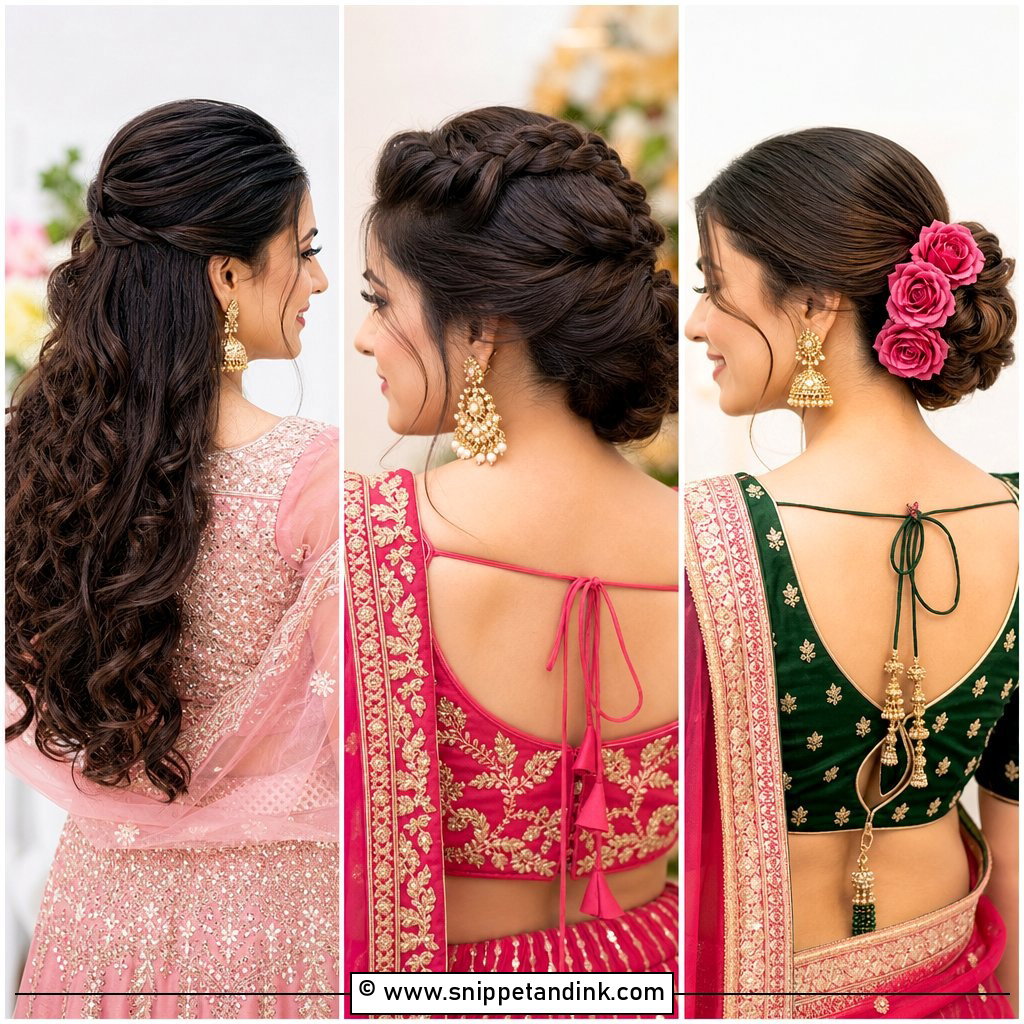
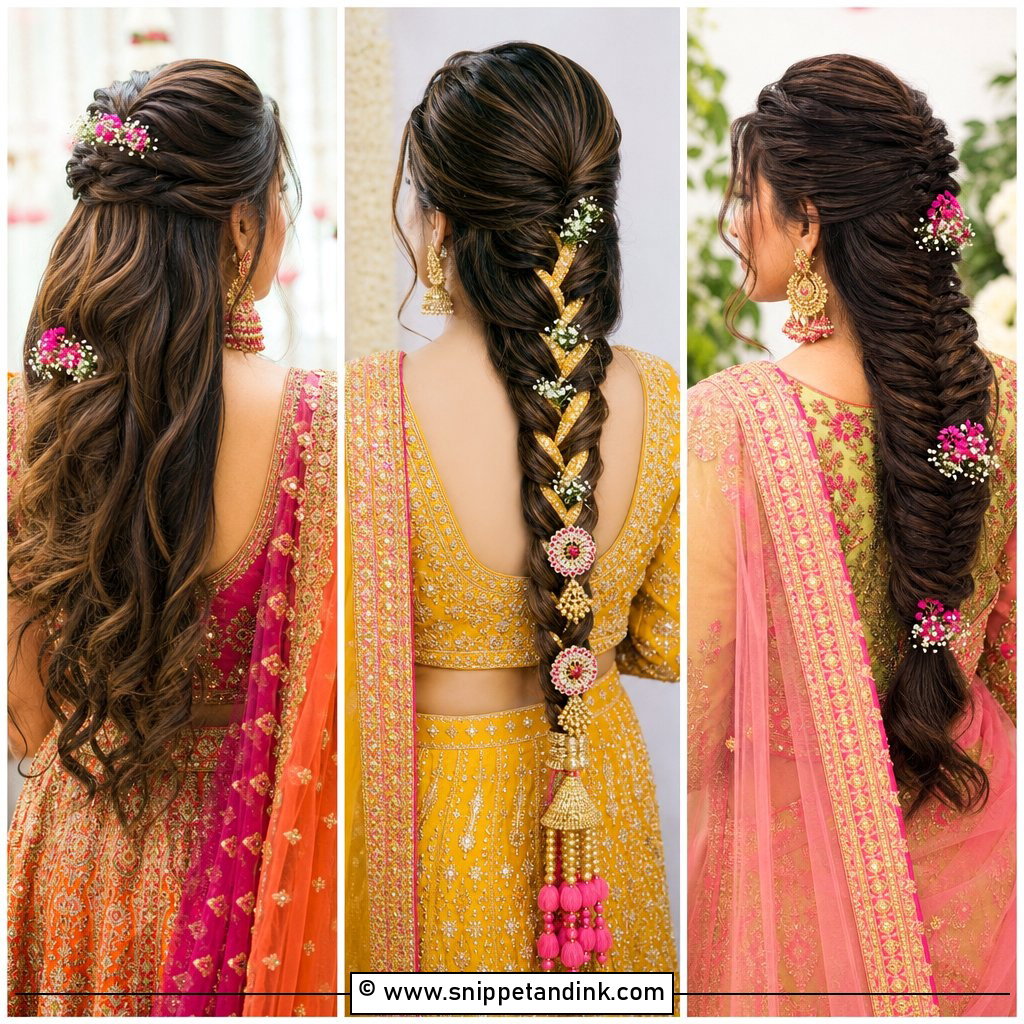
Half up curls are the compromise I offer when a bride wants open hair but faces a long event. The top can be twisted, pinned, braided or given a soft puff, and that pinned section becomes the anchor for a maang tikka, passa or floral pins. It photographs well from the front and the back, which matters at the varmala and during the pheras. I hide the pins under the top layer and use a flexible spray, because stiff, lacquered curls look dated against silk.
3. Side Swept Curls Hairstyle For Indian Wedding
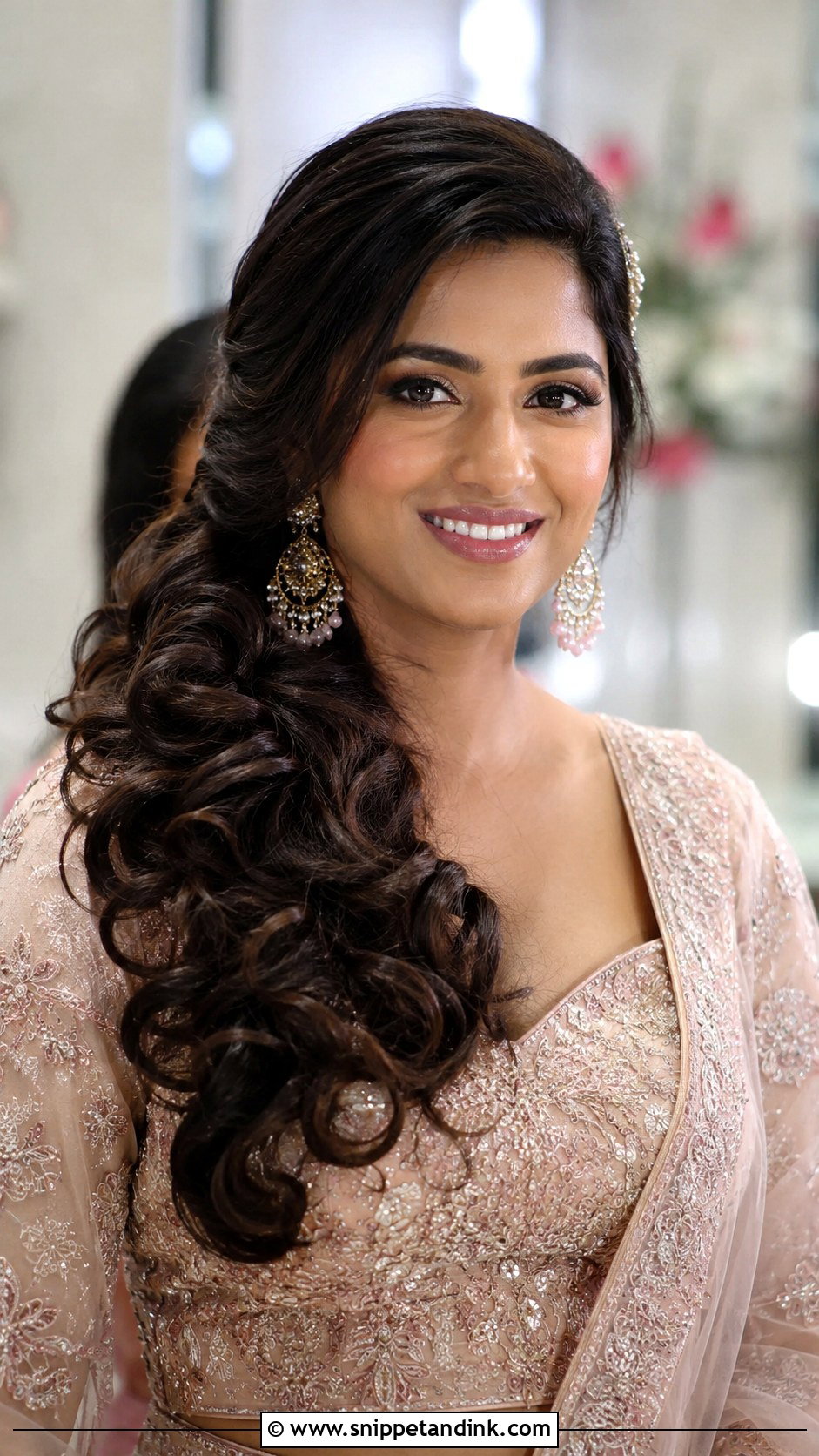
Side swept curls give drama with one-shoulder blouses, deep necklines and modern saree drapes. All the hair is moved to one side and pinned so the curls fall over the shoulder. On thick hair I place pins under the top layer and cross them, since a heavy side sweep pulls itself back toward the center. A light puff at the crown balances it. One honest caveat: if you’re wearing a dupatta pinned to that shoulder, the curls and the fabric will fight, so I’d save this for the reception or sangeet.
4. Curly Bun Hairstyle For Indian Wedding
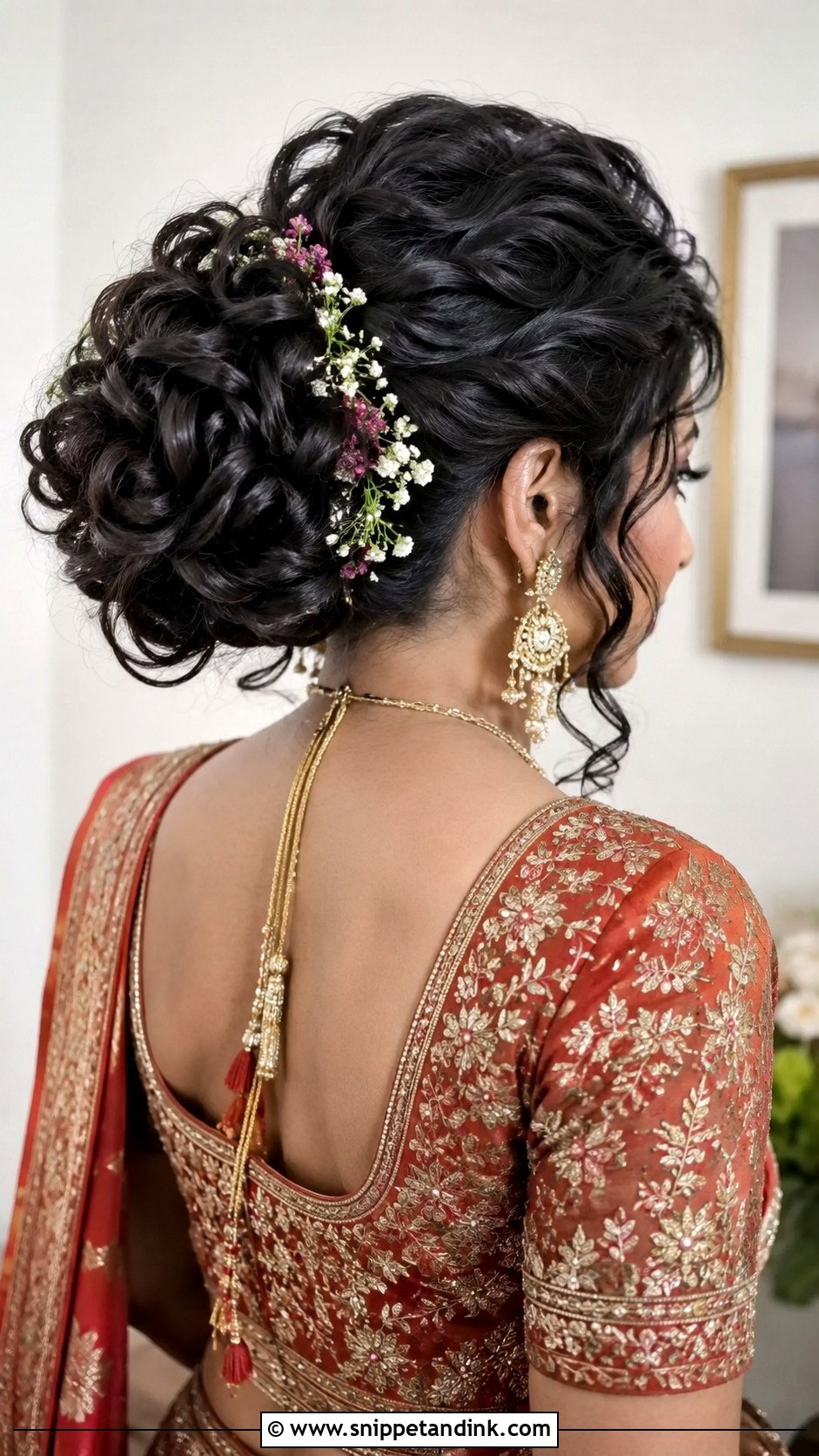
For a traditional ceremony, a curly bun keeps the neatness of an updo but with visible loops and texture. I curl first, then pin each curl into the bun rather than twisting the hair flat, which gives jasmine, roses or pearl pins something to sit into. It suits sarees, bridal lehengas, temple jewelry and heavy dupattas, and it stays lifted through long rituals. A few face-framing curls keep it from looking strict.
5. Low Curly Bun Hairstyle For Indian Wedding
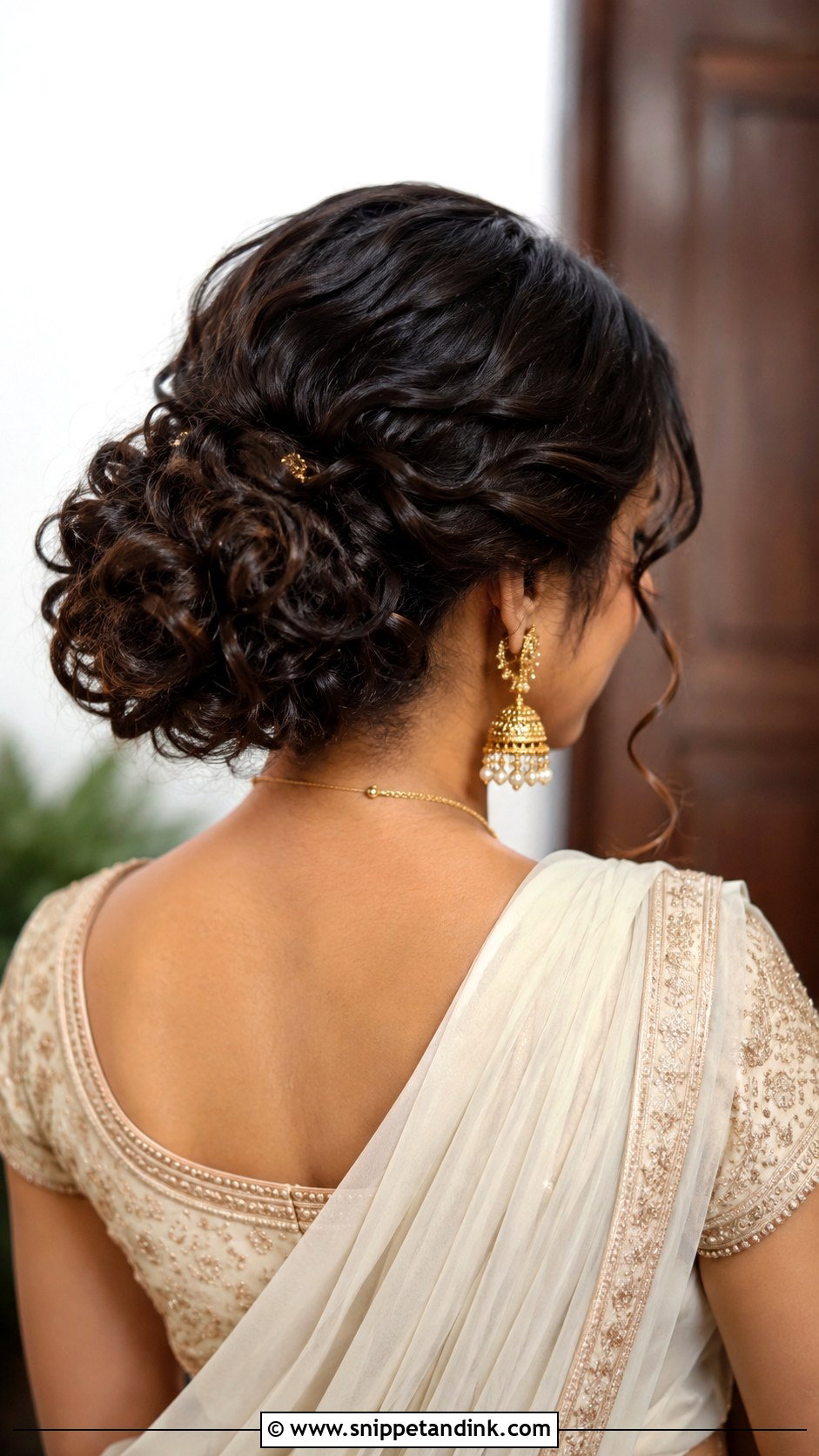
A low curly bun at the nape is the most comfortable choice for long rituals because it puts almost no tension on the scalp. That matters when you’re seated for hours with jewelry pressing down at the front. It sits well under veils and dupattas and with high-neck blouses and silk sarees. I pin the curls into a soft rounded shape rather than a tight one. Add a gajra, gold pins or small flowers around it, and choose a middle or light side part depending on your face and your tikka.
6. Messy Curly Bun Hairstyle For Indian Wedding
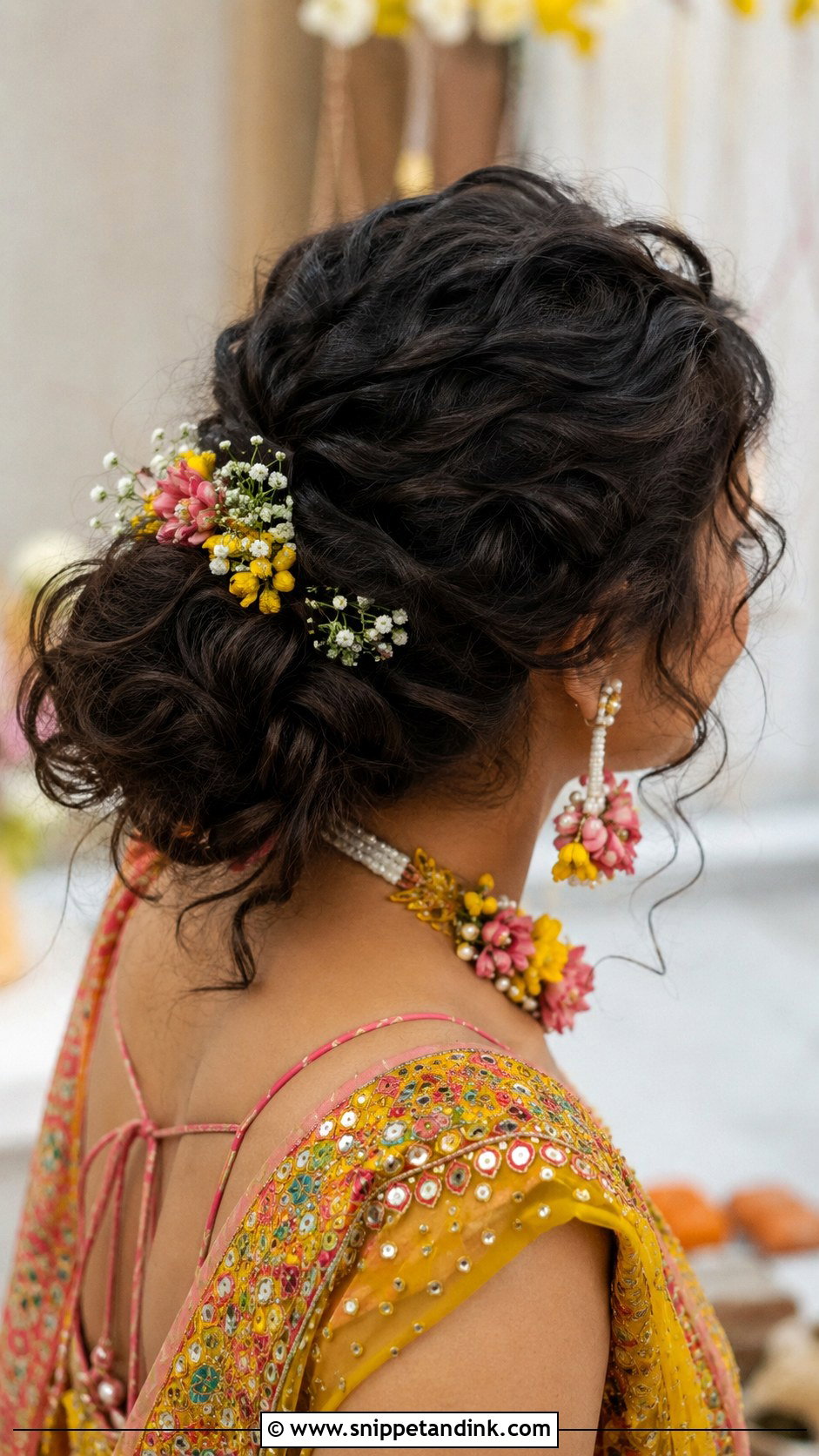
Messy doesn’t mean careless. A loose curly bun still needs a secure base underneath; I usually set a small hidden elastic or braid first, then pin curls loosely over it so the outside looks airy and the inside doesn’t move. It suits mehndi, haldi, engagement and daytime functions. Floral jewelry, pastel lehengas and mirror-work outfits pair well with it. If you’re sitting for mehndi, have this done before the application starts, because you won’t have your hands free for hours.
7. Curly Ponytail Hairstyle For Indian Wedding
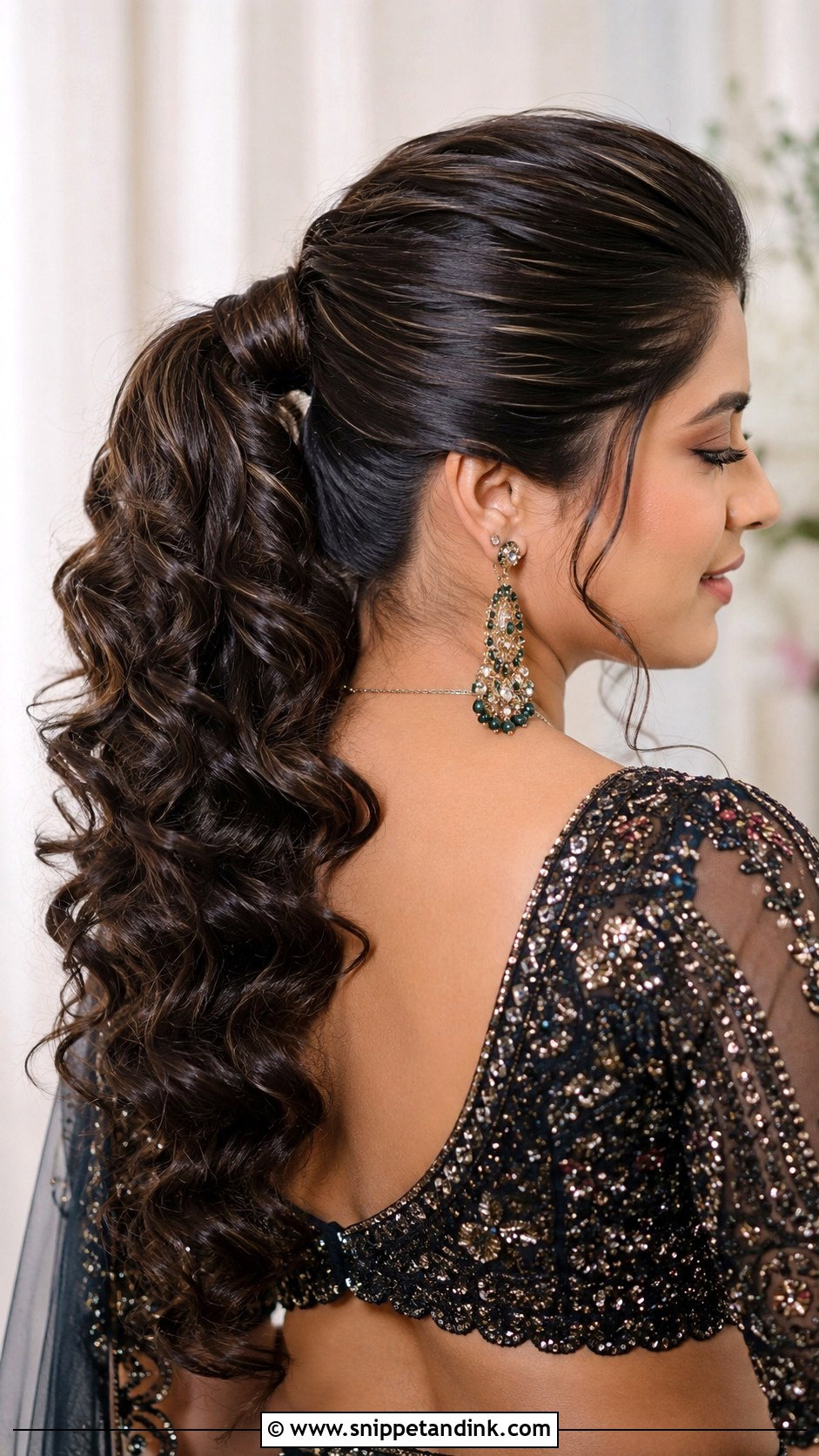
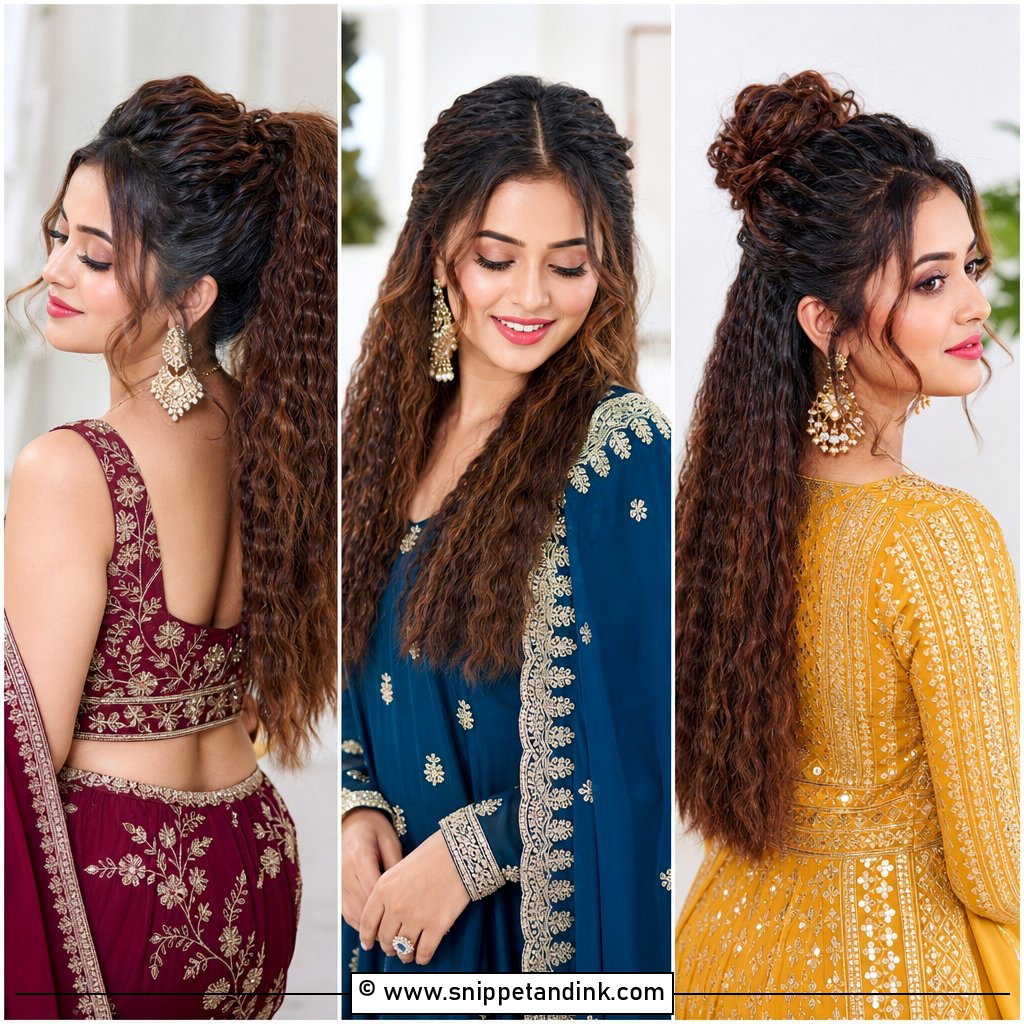
A curly ponytail is my go-to for sangeet and reception, when you’ll be dancing and want the hair off your face. The crown can be sleek, puffed, braided or twisted. It also shows the back of a lehenga blouse, which is often where the best embroidery is. I wrap a section of hair around the base and add small pins or pearls for a bridal finish. Keep the curls defined and glossy, otherwise a ponytail tips into casual.
8. High Curly Ponytail Hairstyle For Indian Wedding
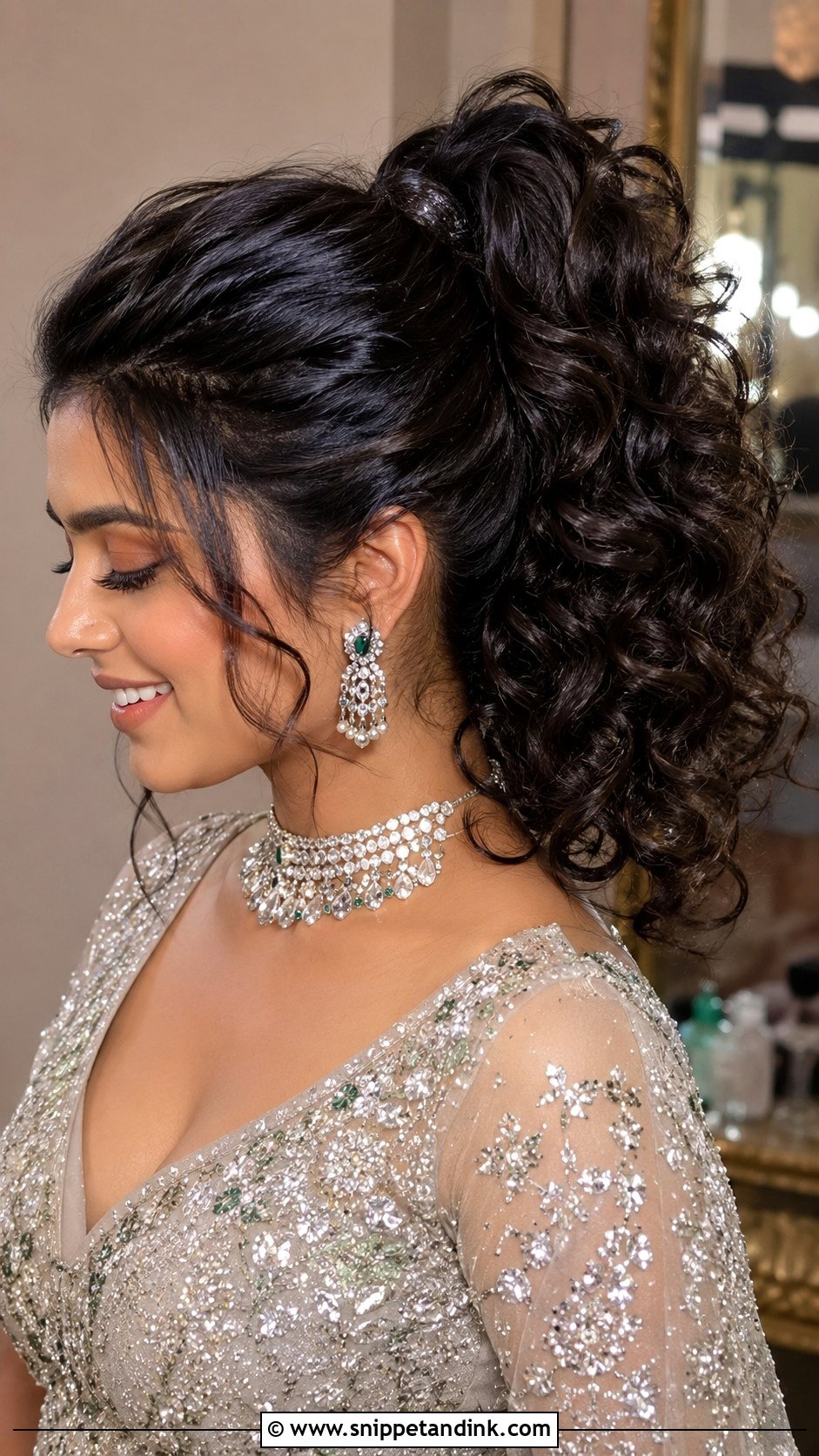
A high curly ponytail lifts the face and makes the curls look longer. The front should be smooth and tight, the ponytail full and textured. I secure the base with two elastics, or a bungee band on thick Indian hair, because one elastic slips under that much weight by midnight. A jeweled cuff or wrapped base finishes it. Use strong but flexible hold. And if you get tension headaches, a high ponytail with heavy earrings is a tough combination for a long night.
9. Braided Crown Curls Hairstyle For Indian Wedding
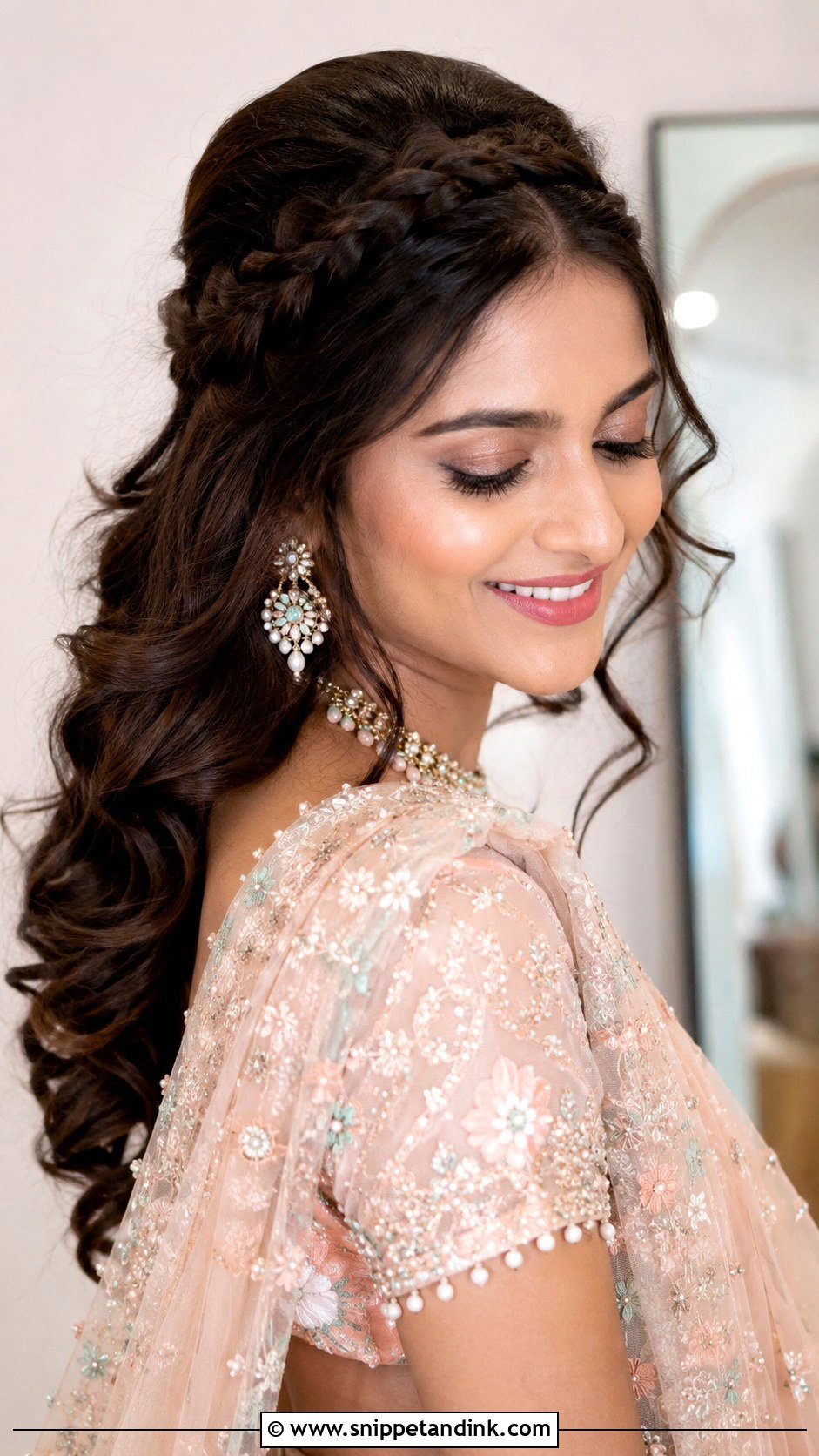
A braided crown frames the top or side of the head while the curls fall free at the back. It’s soft and traditional at once, and it suits mehndi, haldi and bridesmaids. The braid controls front pieces, which helps outdoors and in humid weather when baby hairs start to frizz. Floral pins, small pearls or a delicate maang tikka can be threaded into the braid itself. Medium to long hair works best; keep the ends of the curls defined.
10. Front Puff Curls Hairstyle For Indian Wedding
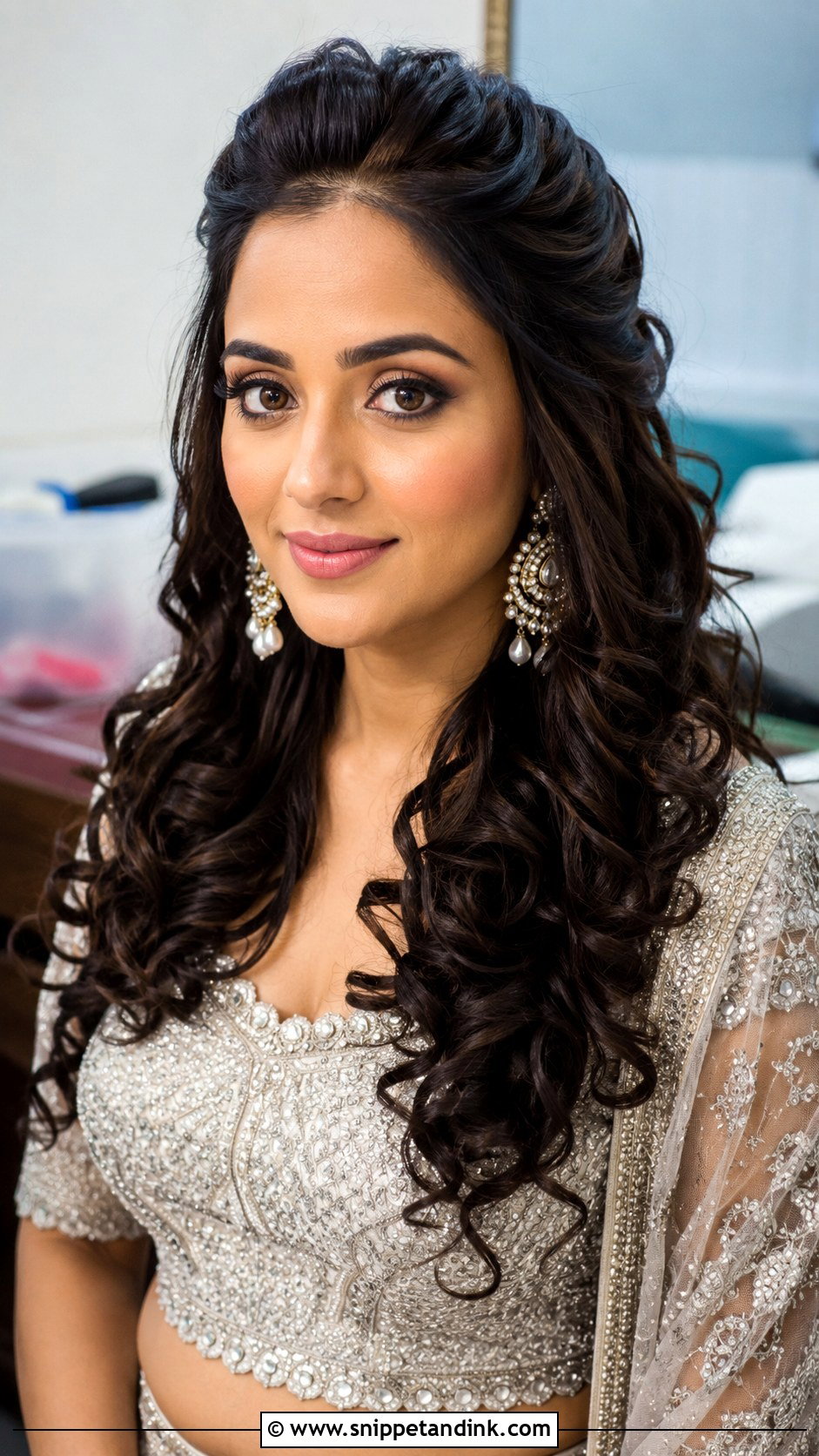
The front puff exists for a reason: heavy jewelry flattens the front of the face, and a little height balances it. I lift the front section, backcomb underneath, smooth the surface and pin it back, with the curls left open or partly gathered. It lengthens round, oval and heart-shaped faces. Keep the puff modest. An oversized puff looks stiff in photos and pushes a maang tikka chain forward, so it hangs away from the forehead.
11. Middle Part Curls Hairstyle For Indian Wedding
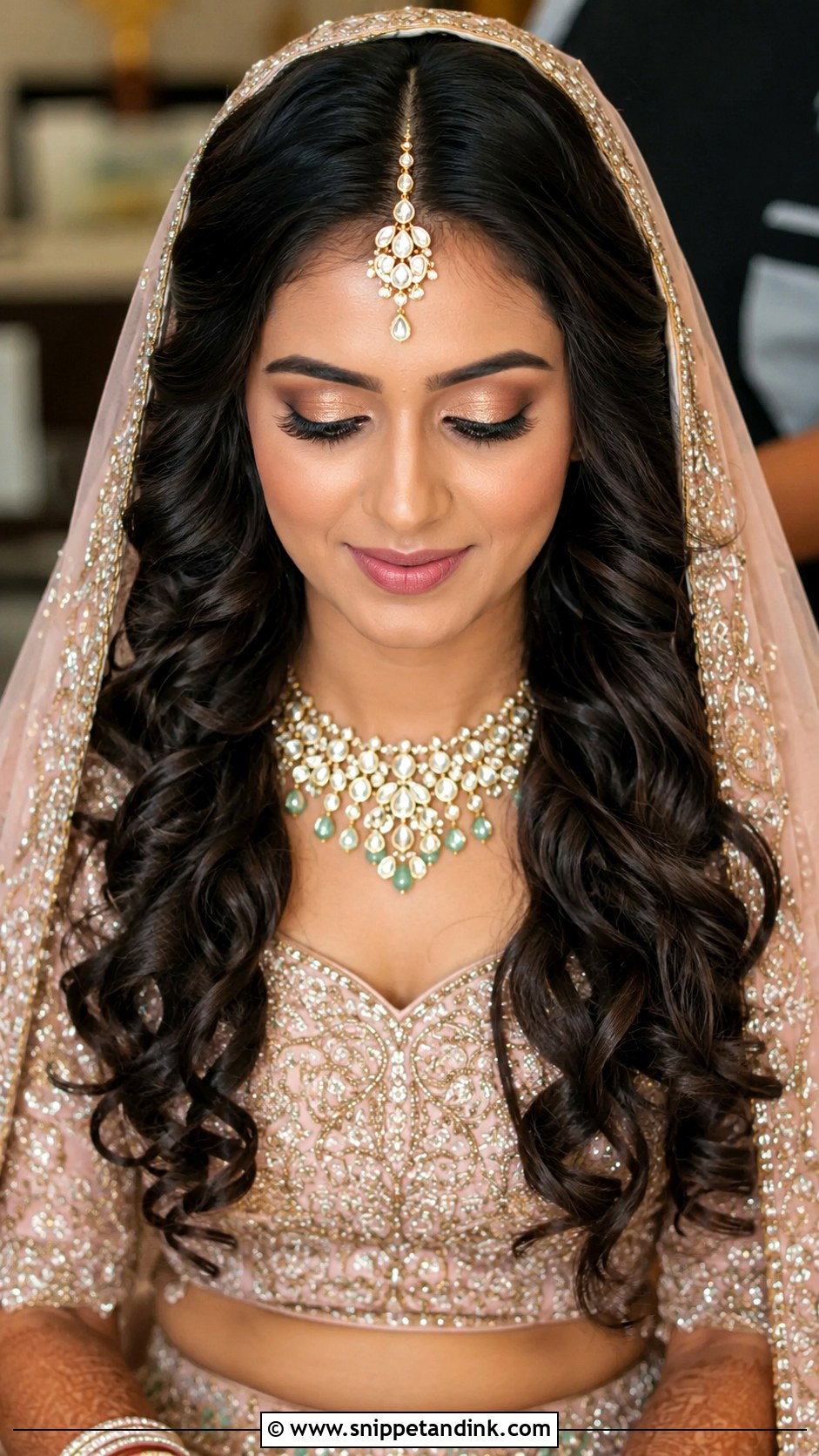
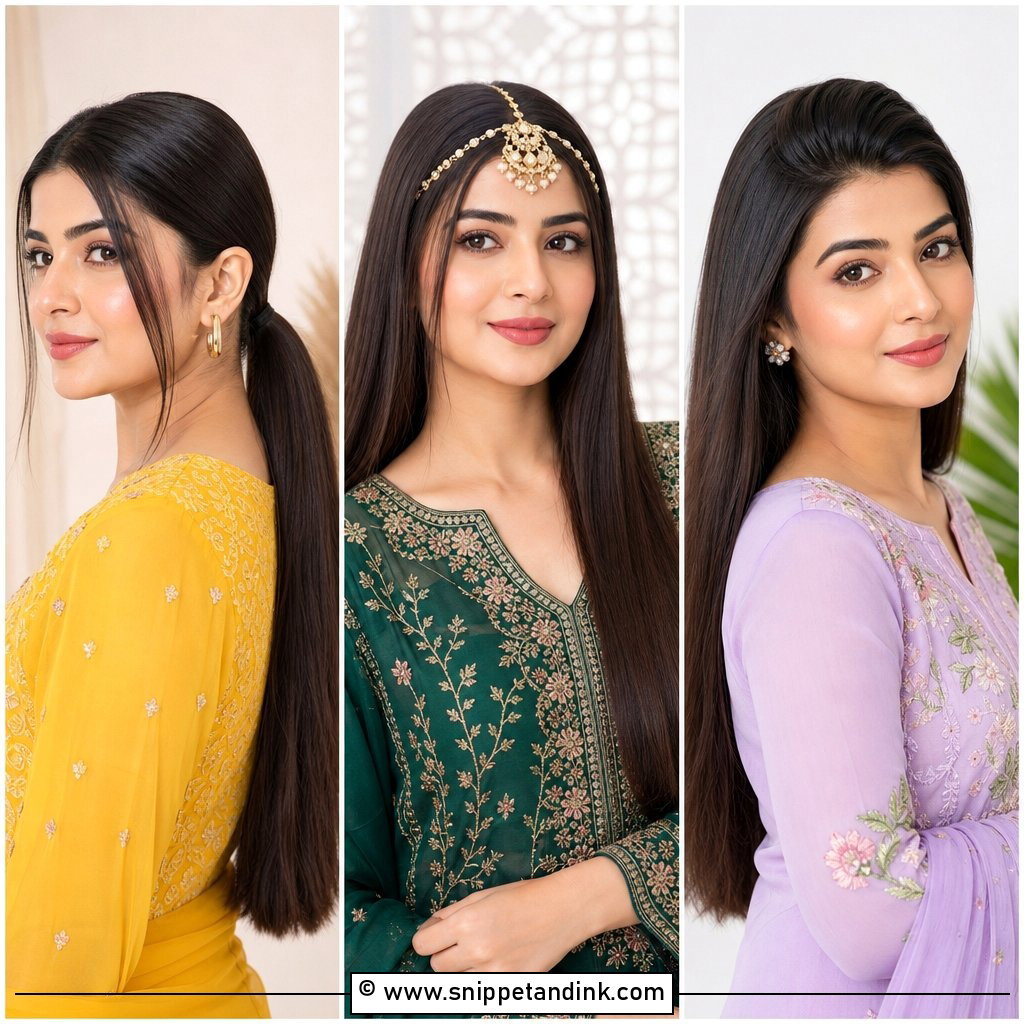
Middle part curls suit a maang tikka, a matha patti or a dupatta draped over the head, because the clean parting gives the jewelry a straight line to follow. For a traditional ceremony look, I keep the front sleek and start the curls below the cheekbones. For something softer, a few tendrils at the temples. The thing I check most is balance: if one side is fuller than the other, a center tikka looks crooked in every photo.
12. Side Part Curls Hairstyle For Indian Wedding
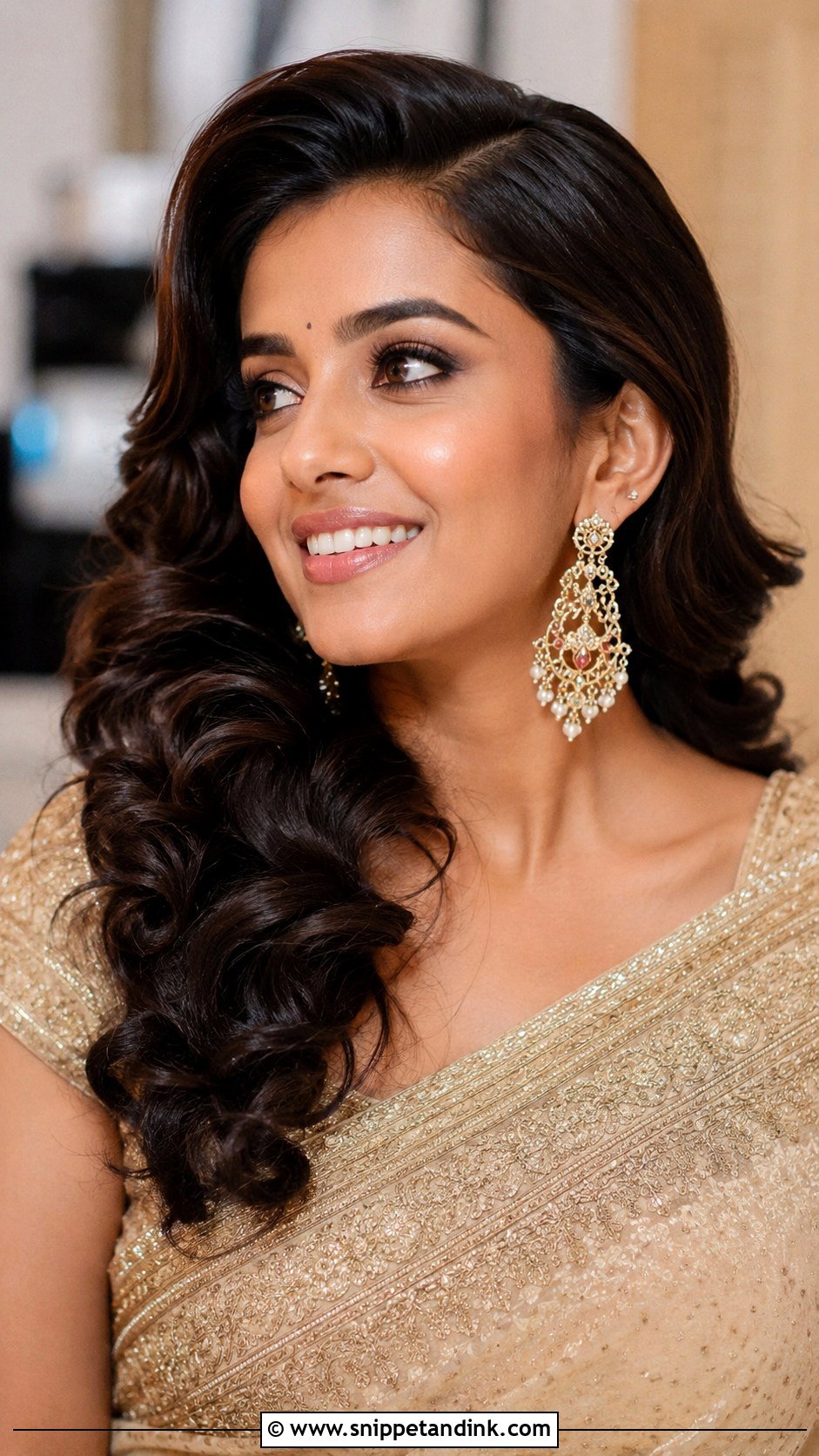
Side part curls create a face-framing shape that suits receptions, engagements and guests who want a polished finish. The deeper side gets more volume while the curls fall to the shoulders. It’s flattering if you have a broad forehead or want more lift. A passa sits best on the heavier side, where there’s more hair to hold its hooks. Keep the curls glossy and smooth so the asymmetry looks deliberate.
13. Loose Curls Hairstyle For Indian Wedding
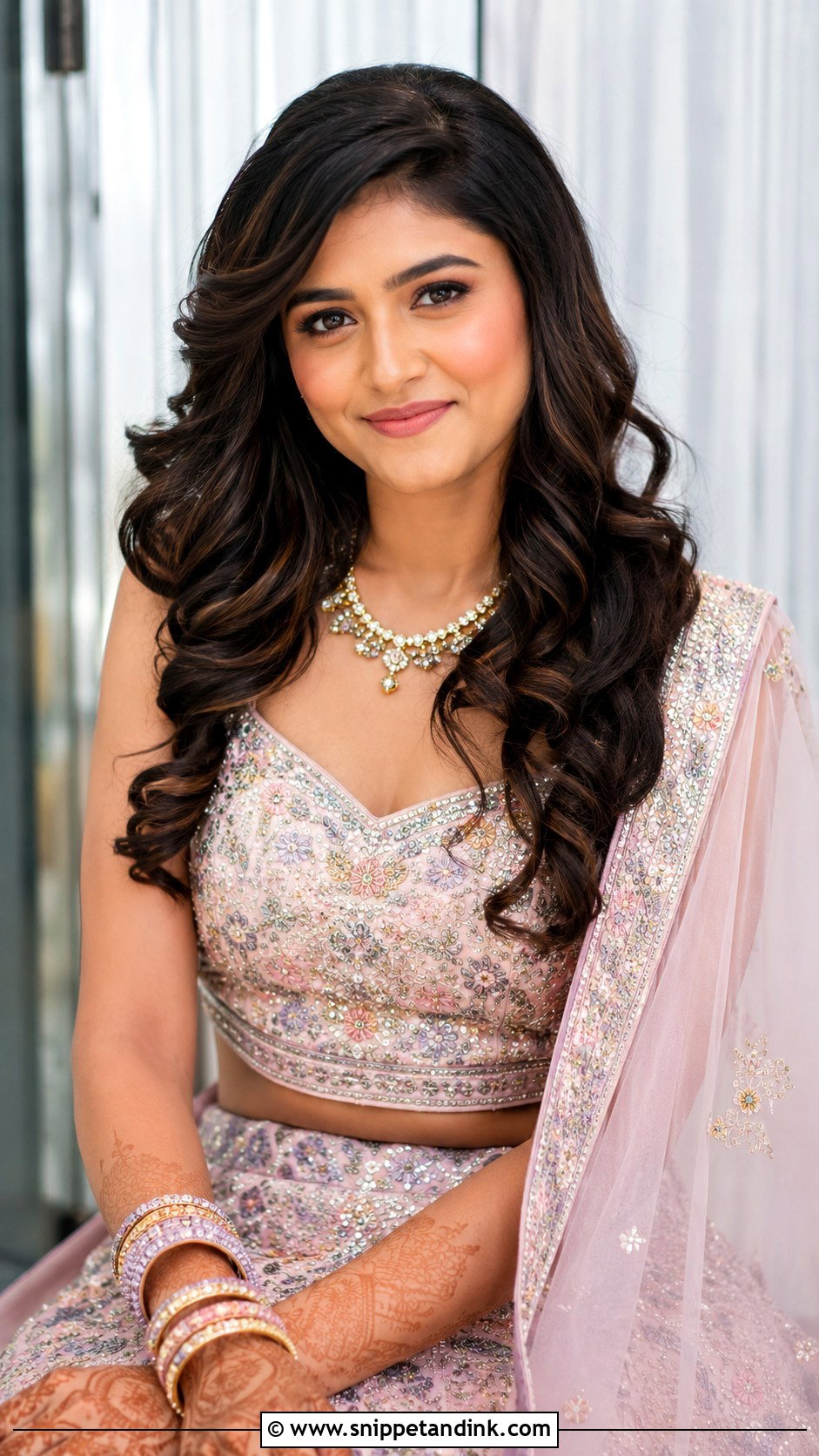
Loose curls are softer than ringlets and suit modern lehengas, pastel sarees and reception gowns on medium or long hair. Layered cuts flow nicely in them. For a more bridal finish, add a center part, some crown lift or delicate pins. I always do anti-frizz prep before the iron for outdoor functions in Indian summers, since loose curls drop fastest of anything on this list once humidity gets in.
14. Tight Curls Hairstyle For Indian Wedding
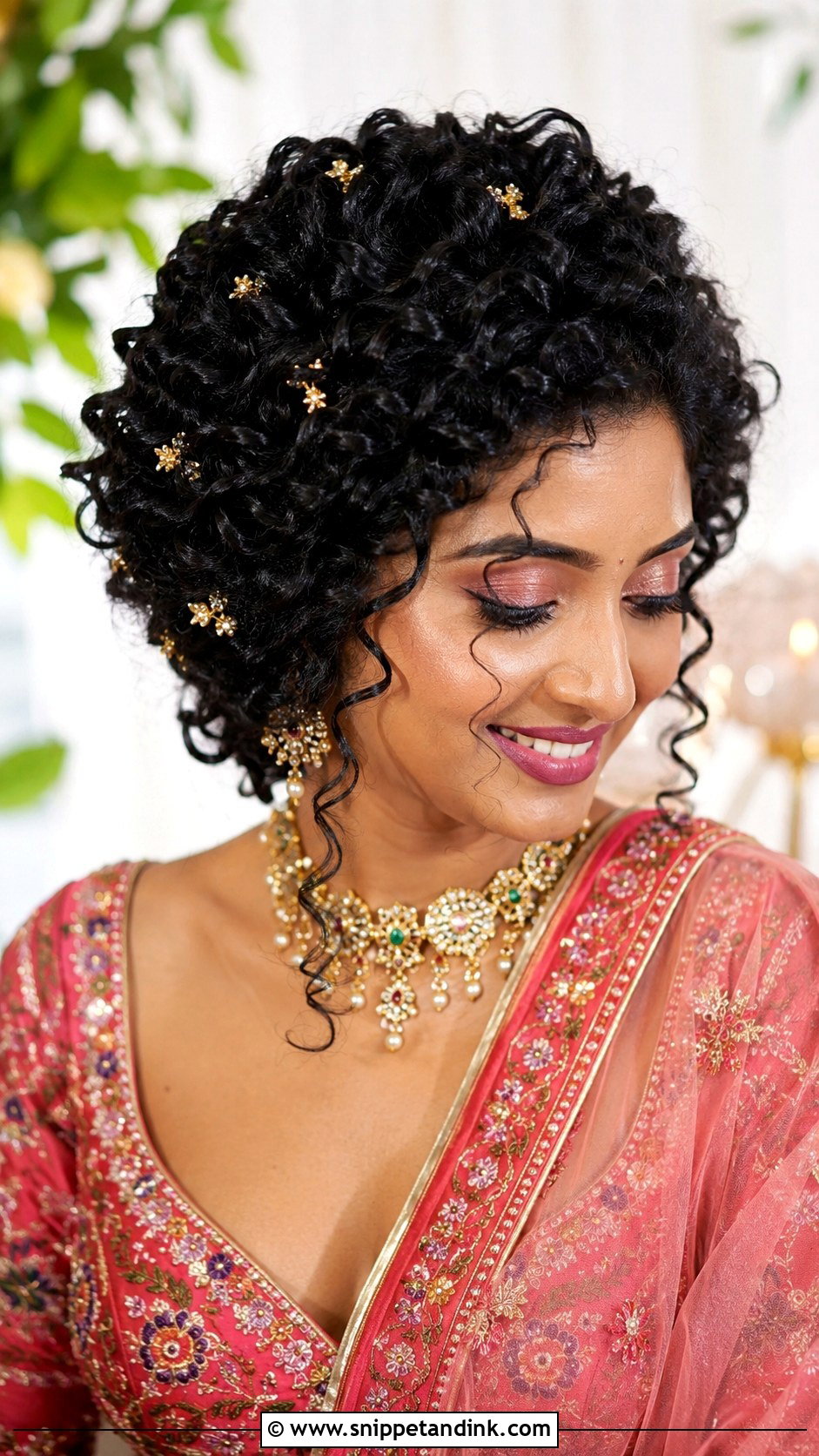
Tight natural curls are worth keeping rather than straightening for a wedding. They give volume and a rounded shape that holds up well in photos. Wear them open, half up or pinned to one side, depending on the jewelry. I define the pattern with a curl cream and gel and dry it fully, by diffusing or air-drying, before anything gets pinned. Pinning damp curls flattens them. Small flowers or pins can be added, as long as the curls stay visible.
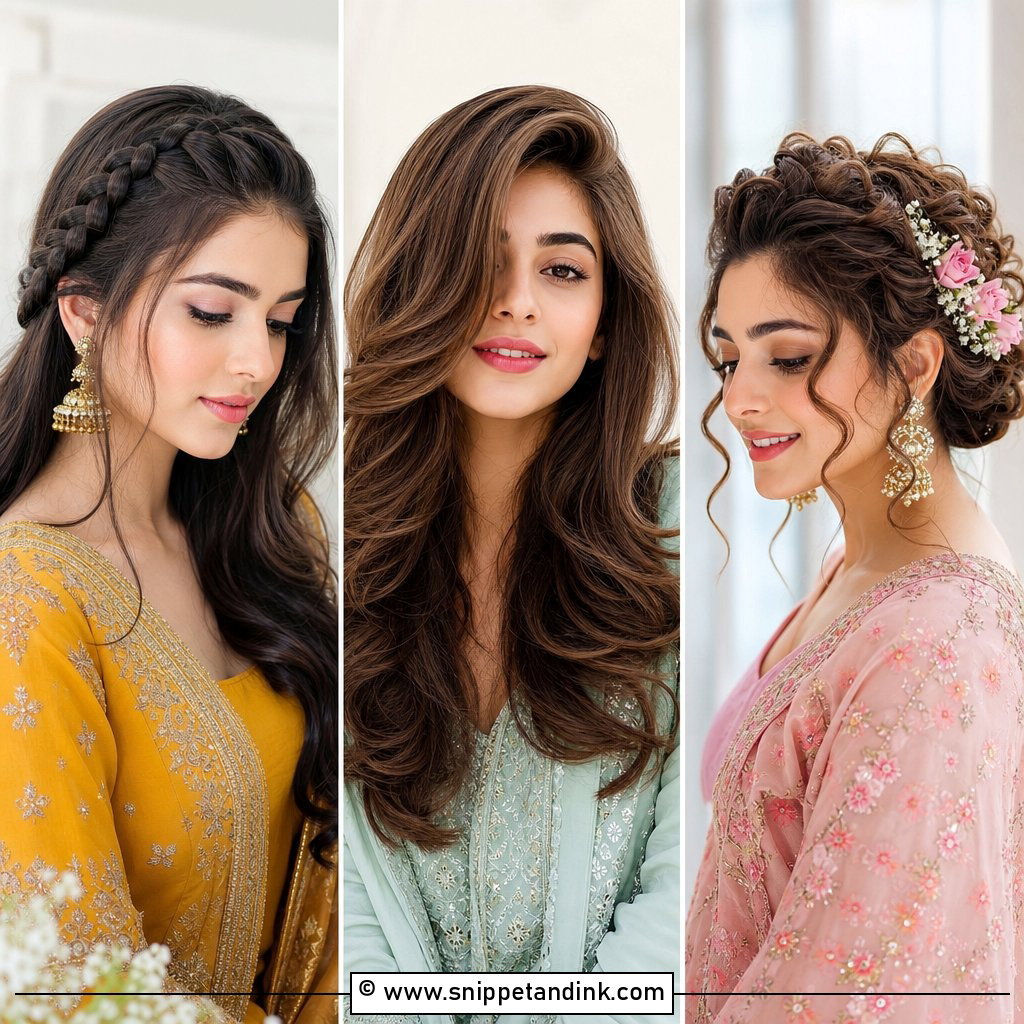
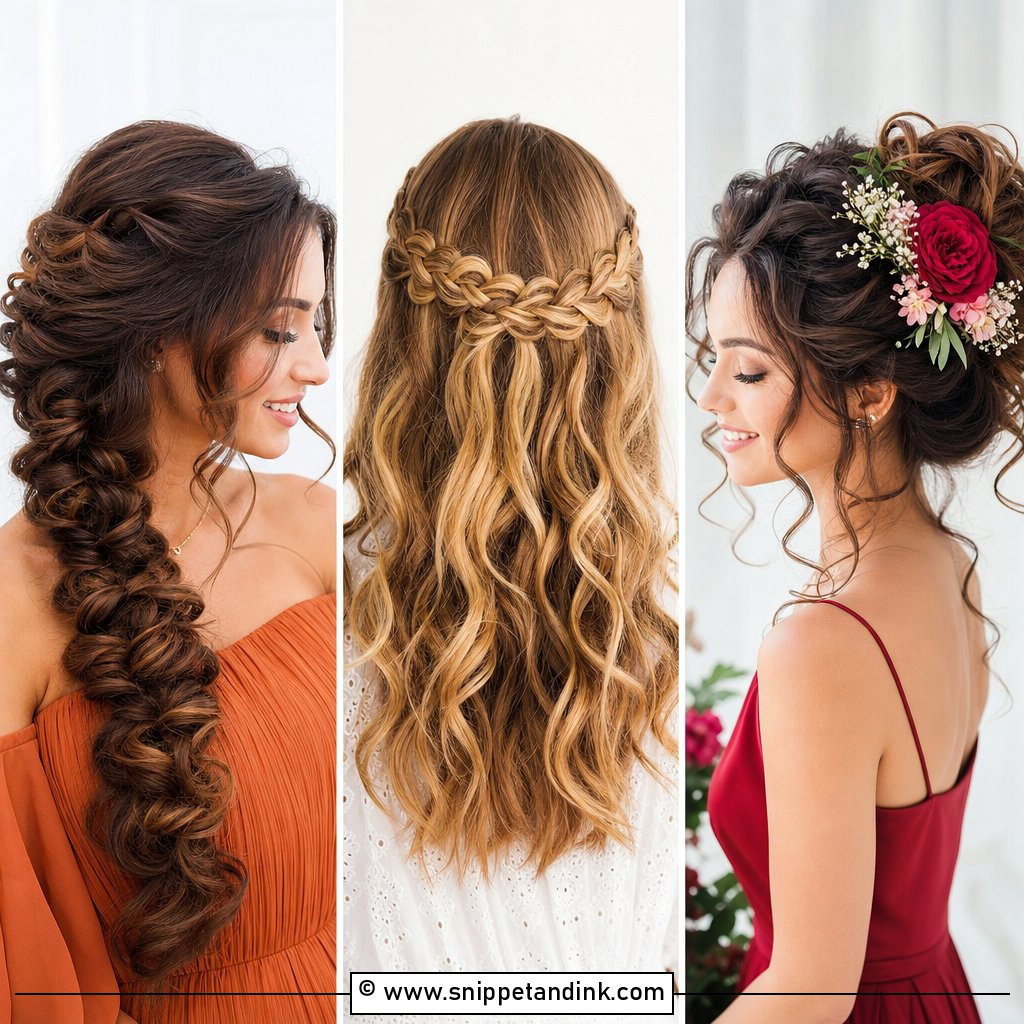
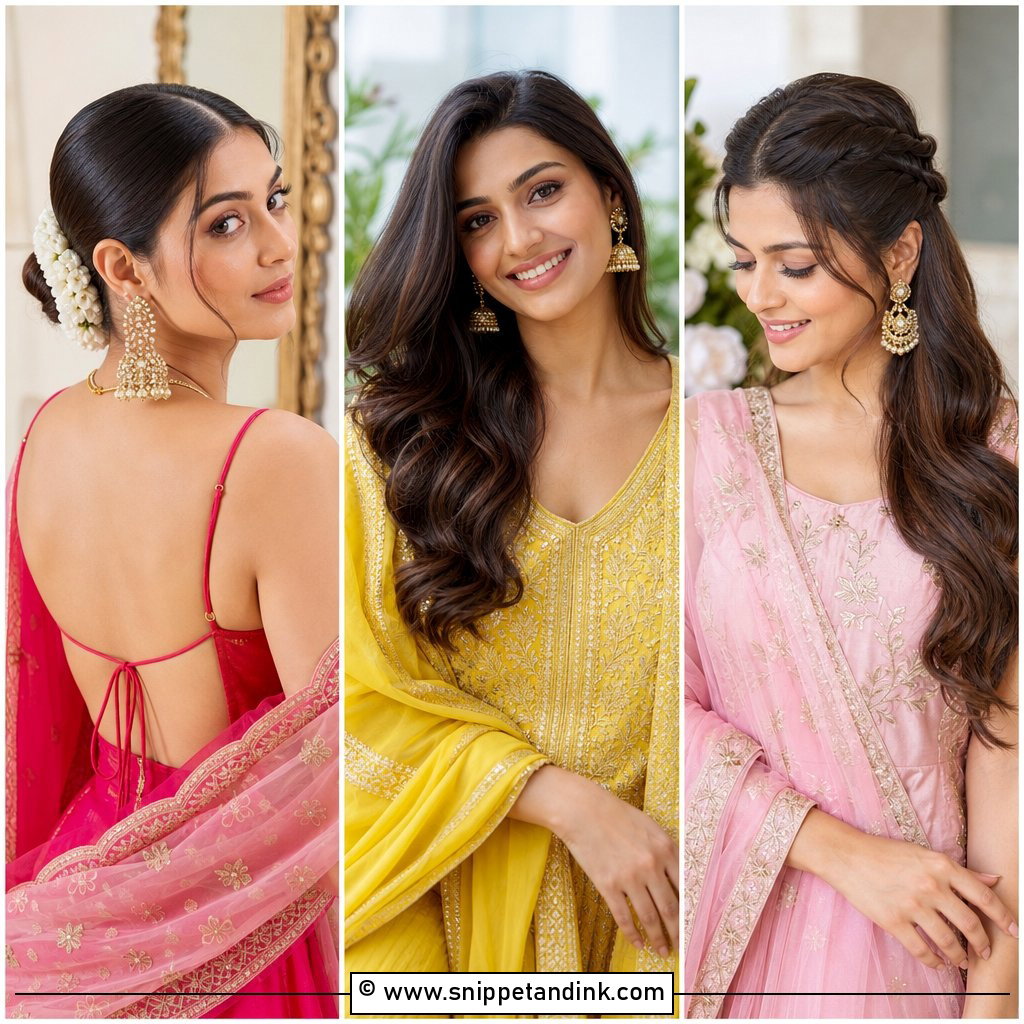
15. Curly Juda Hairstyle For Indian Wedding
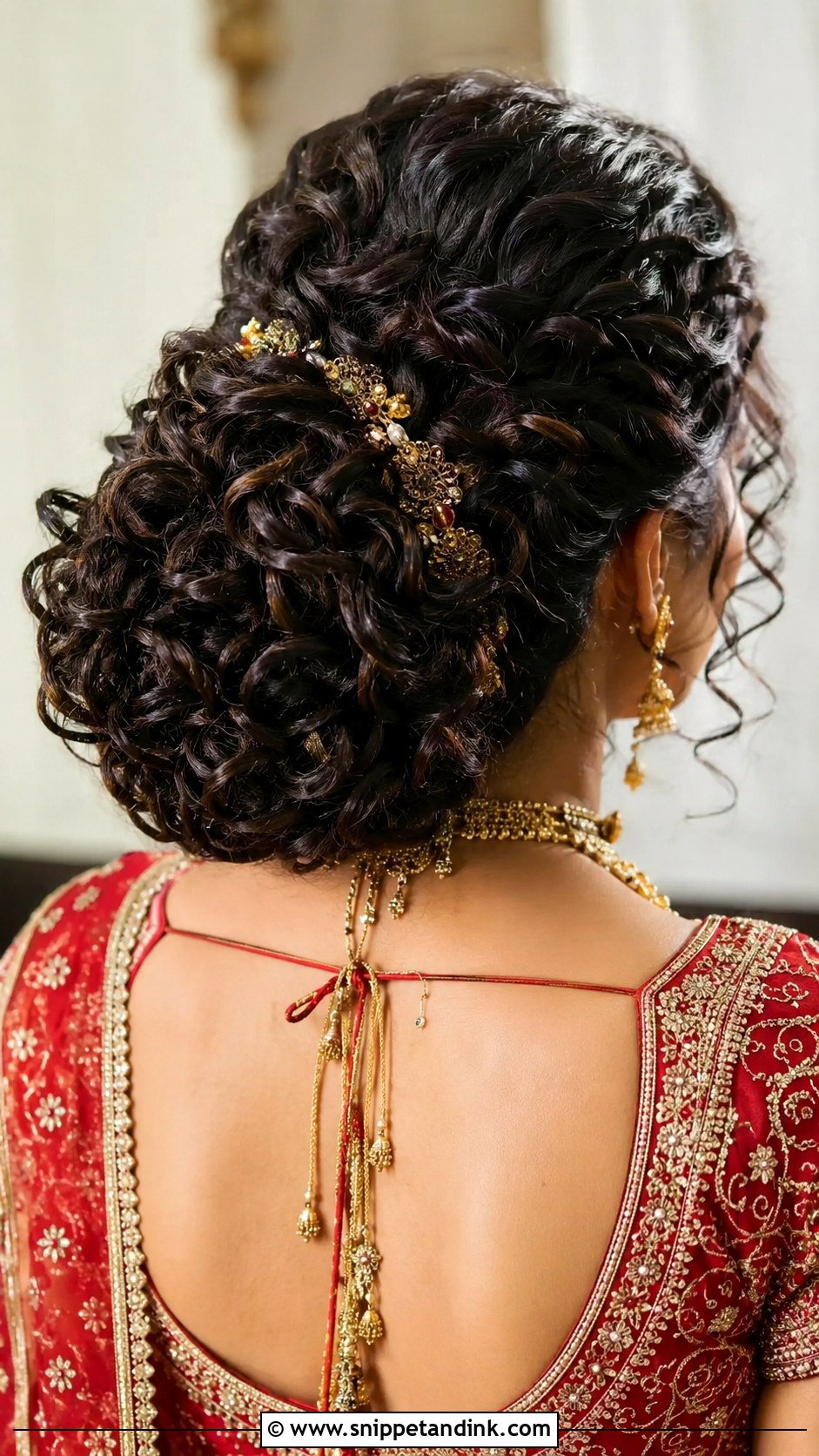
A curly juda gives the traditional bridal bun soft curl texture. The curls are shaped into a rounded juda with visible movement instead of a flat, tight coil. It’s my first suggestion for pheras, temple weddings and saree looks because it gives the dupatta a solid base to be pinned into, and there’s room for gajra, roses, gold accessories or a matha patti. Thick hair suits it best, since the volume makes the juda look full without a donut filler.
16. Gajra Curls Hairstyle For Indian Wedding
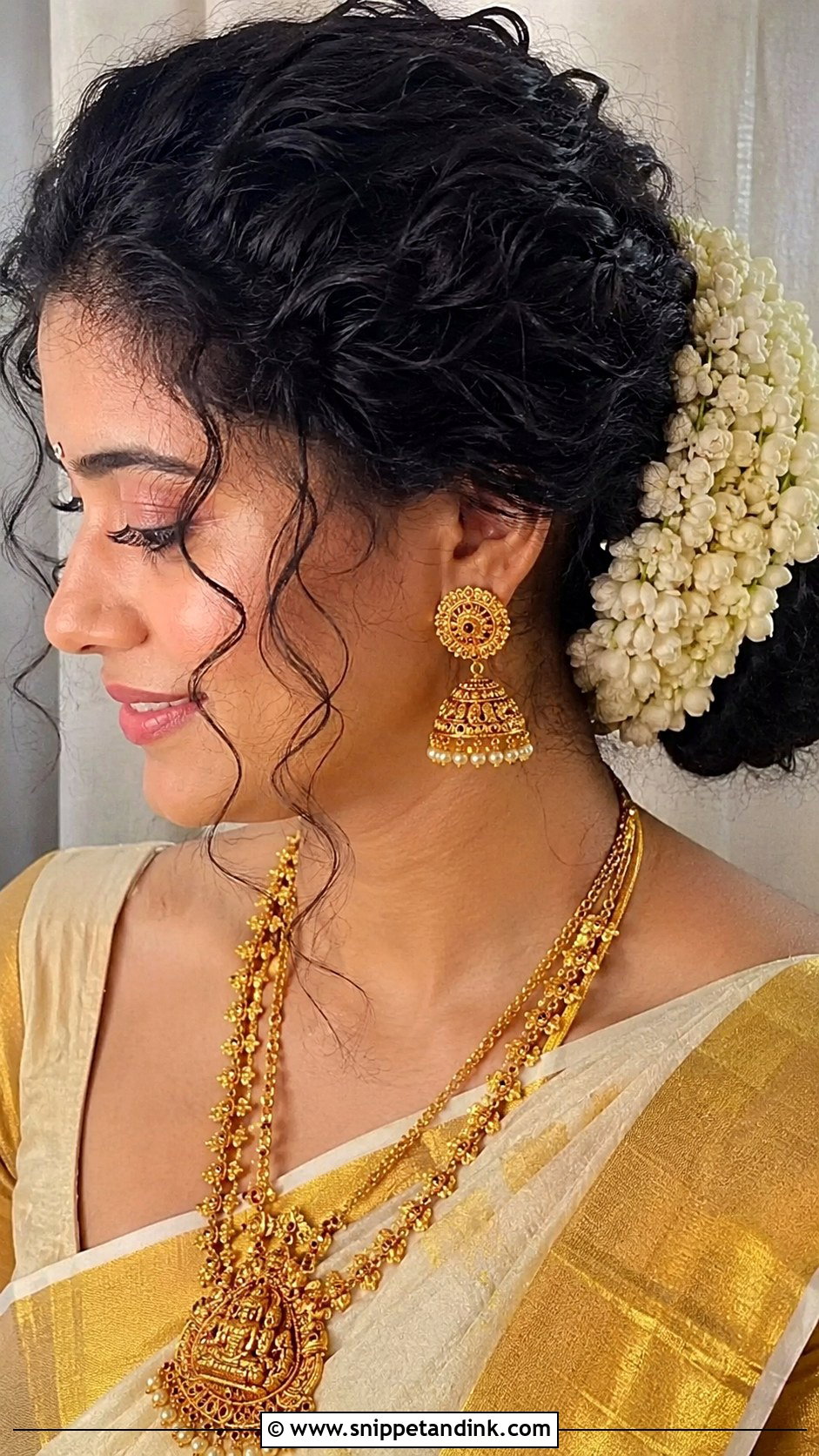
Gajra and curls are a classic pairing: the soft texture of the curls balances the neat lines of the jasmine. Pin the gajra like a half crown over open curls, or wrap it around a curly bun. It suits South Indian weddings, haldi, mehndi and morning ceremonies, with silk sarees and temple jewelry. Fresh jasmine is heavier than it looks, so I pin it in several places rather than relying on one end pin. Keep the front neat and let the curls stay visible around the flowers.
17. Floral Curls Hairstyle For Indian Wedding
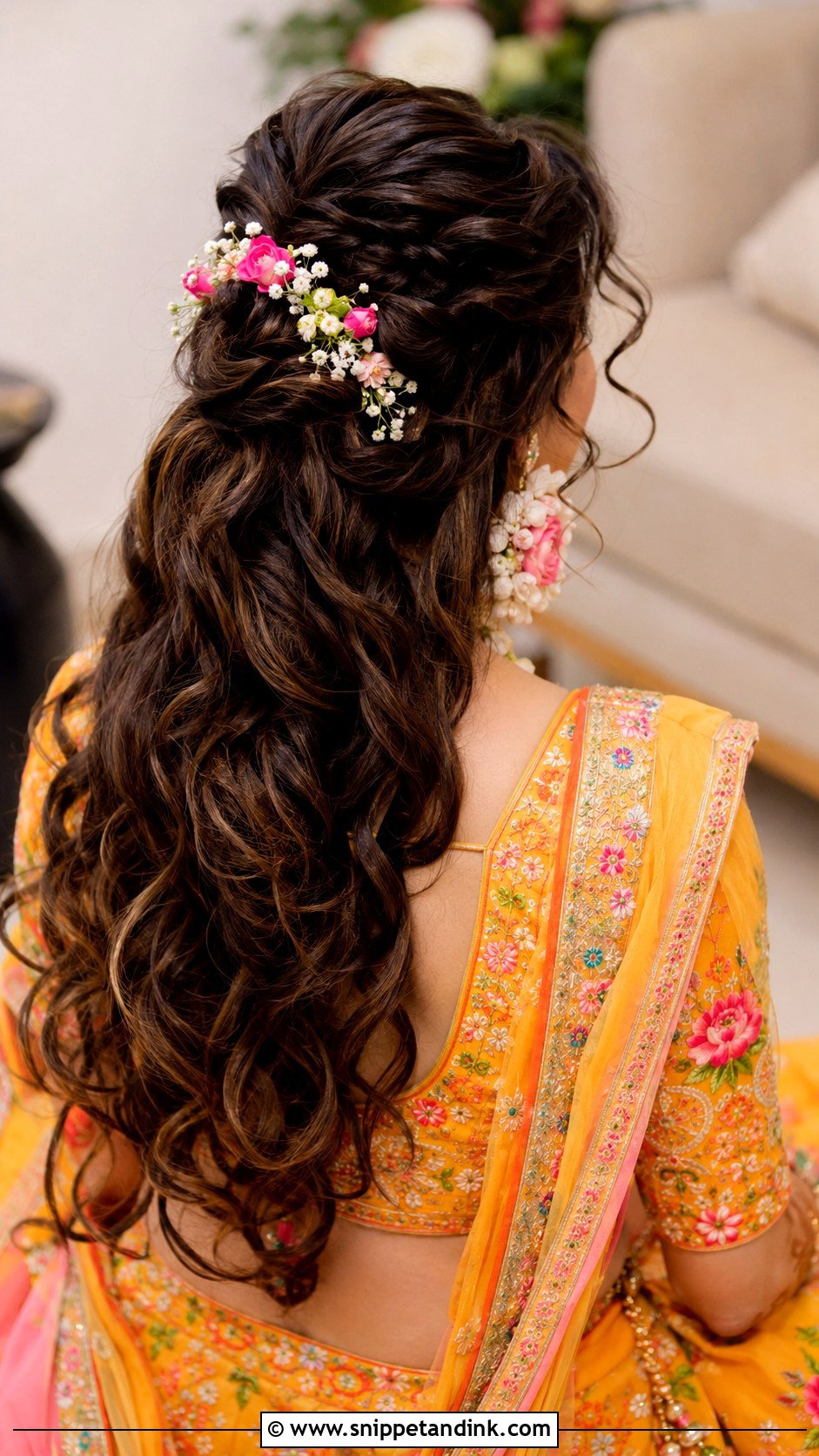
Floral curls belong at the brighter, more relaxed functions: mehndi, haldi, garden events and for bridesmaids. Flowers can be tucked into a half up style, set along a braid or scattered through open curls. Baby’s breath, roses, mogra, orchids and small marigold accents all work. I place them slightly unevenly so they look gathered rather than stamped on, and I keep enough curl showing that the flowers decorate the hair instead of covering it.
18. Matha Patti Curls Hairstyle For Indian Wedding
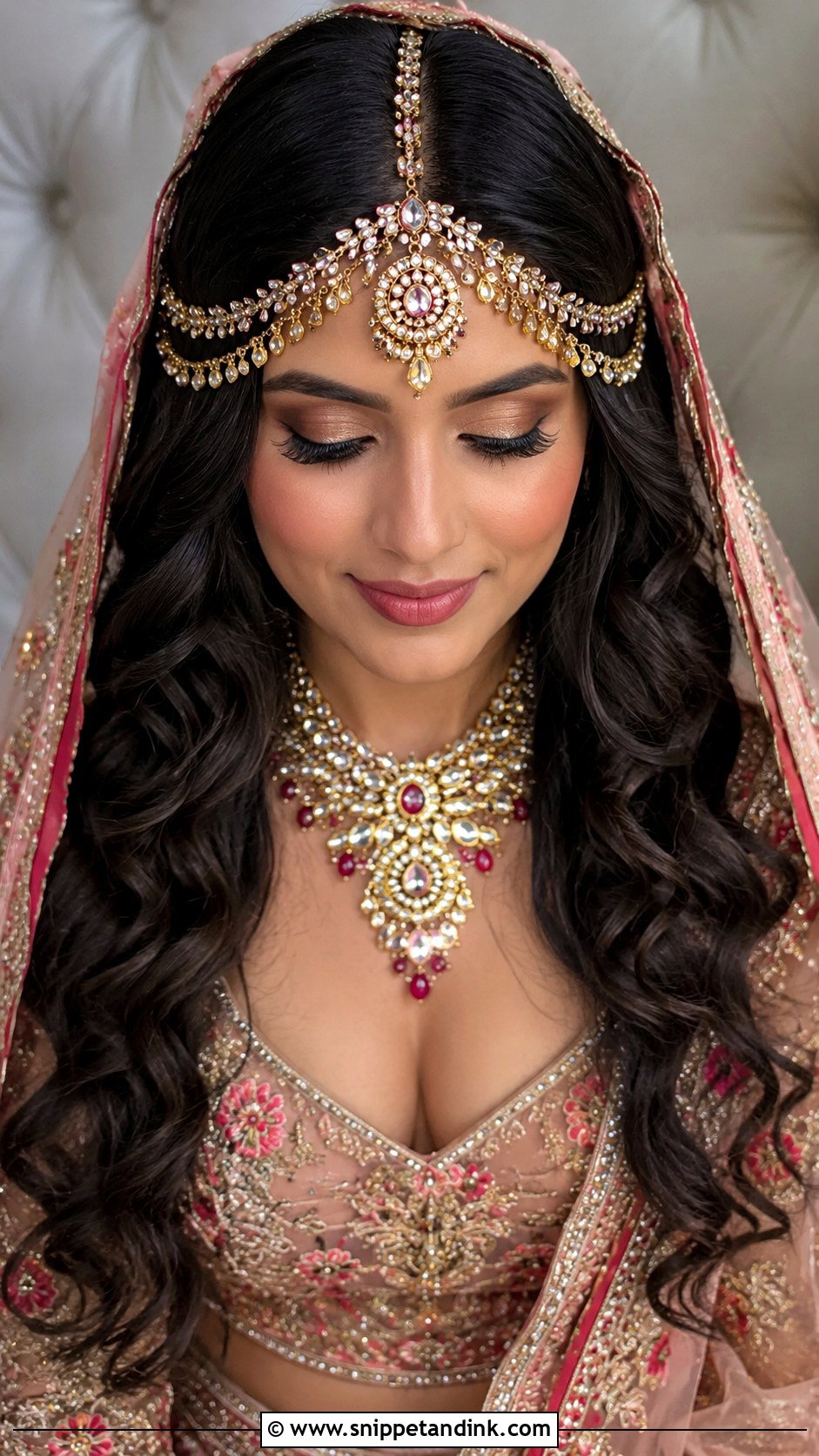
With a matha patti, the jewelry does most of the work, so the hair can stay fairly simple. A middle part keeps the piece centered. Open curls, half up curls or a low curly bun all sit well behind it for the main ceremony with a lehenga and dupatta. I control the curls near the front so they don’t tangle in the side chains. Before setting the curls, I fix the matha patti’s hooks into small pinned sections, which stops it sliding forward as you bow during the rituals.
19. Maang Tikka Curls Hairstyle For Indian Wedding
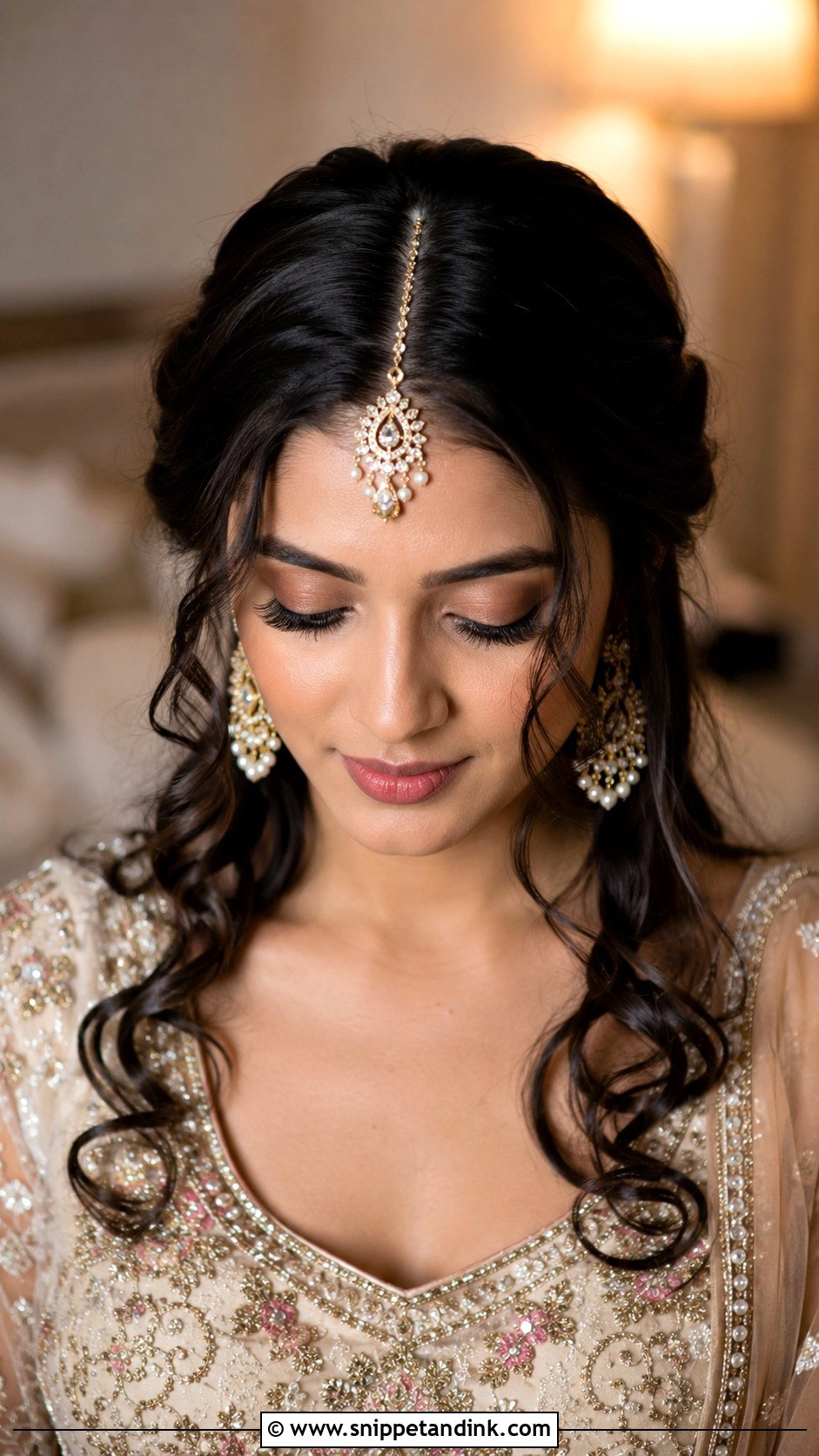
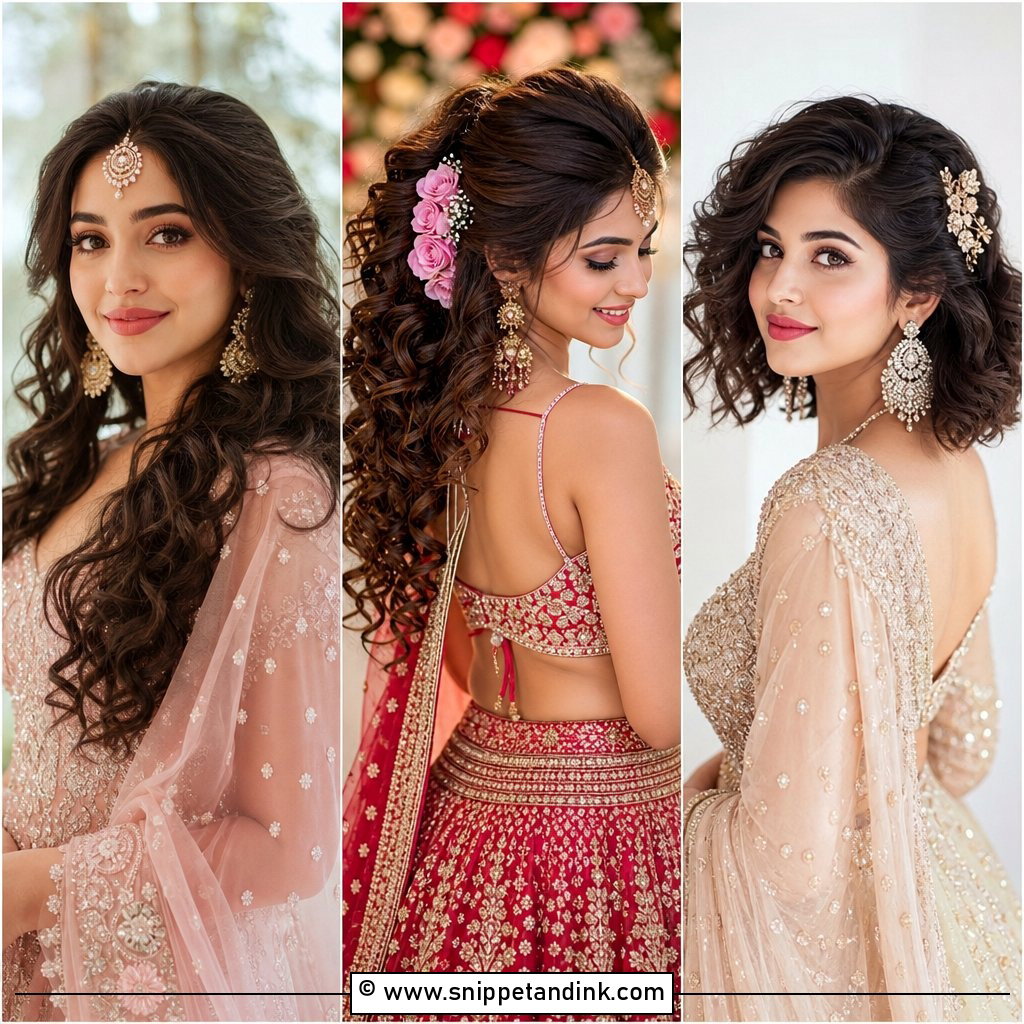
A maang tikka makes even a simple curled style feel festive, for brides, sisters and guests. A center part keeps it secure, and the curls bring softness. It suits open hair, half up hair or a loose curly bun. Round curls near the cheekbones with longer curls through the ends frame it well. I anchor the tikka’s hook into a small backcombed section with a hidden pin, so it stays centered during dancing instead of drifting to one side.
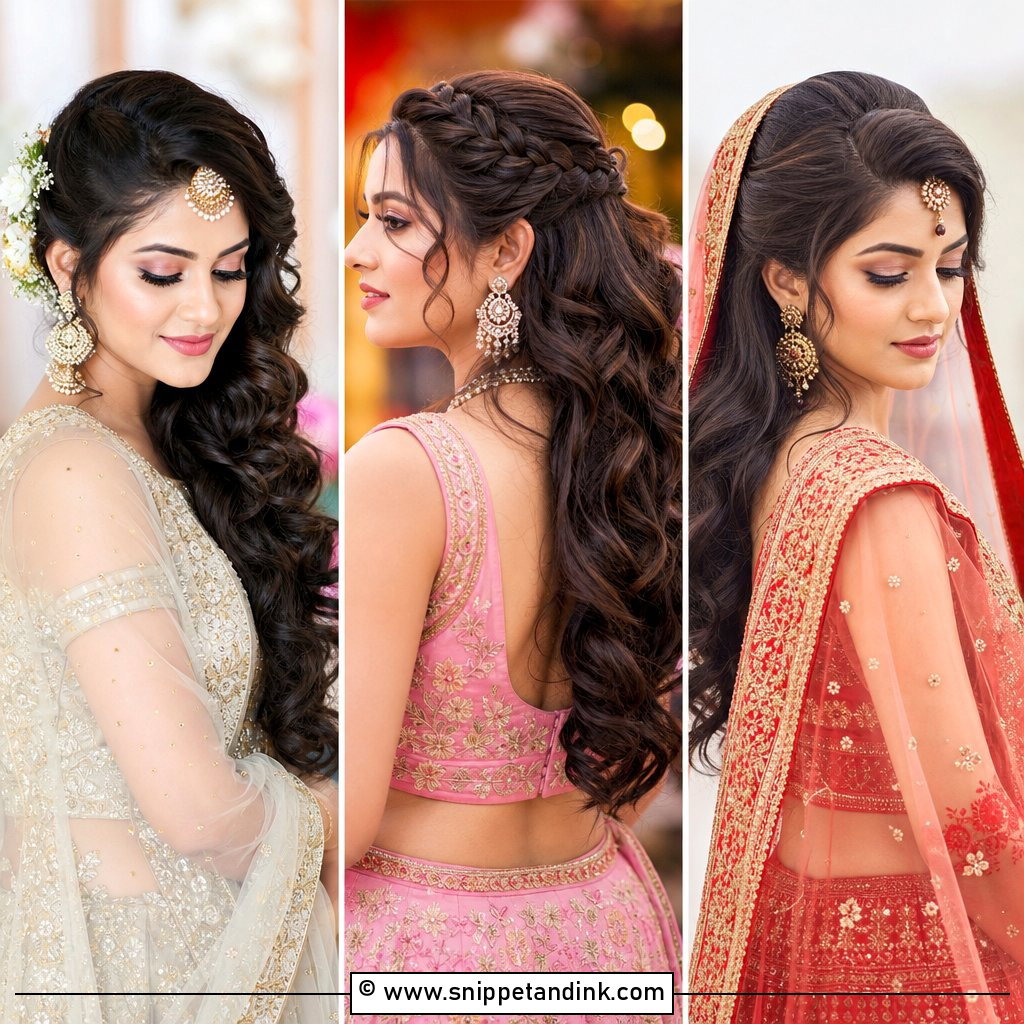
20. Reception Curls Hairstyle For Indian Wedding
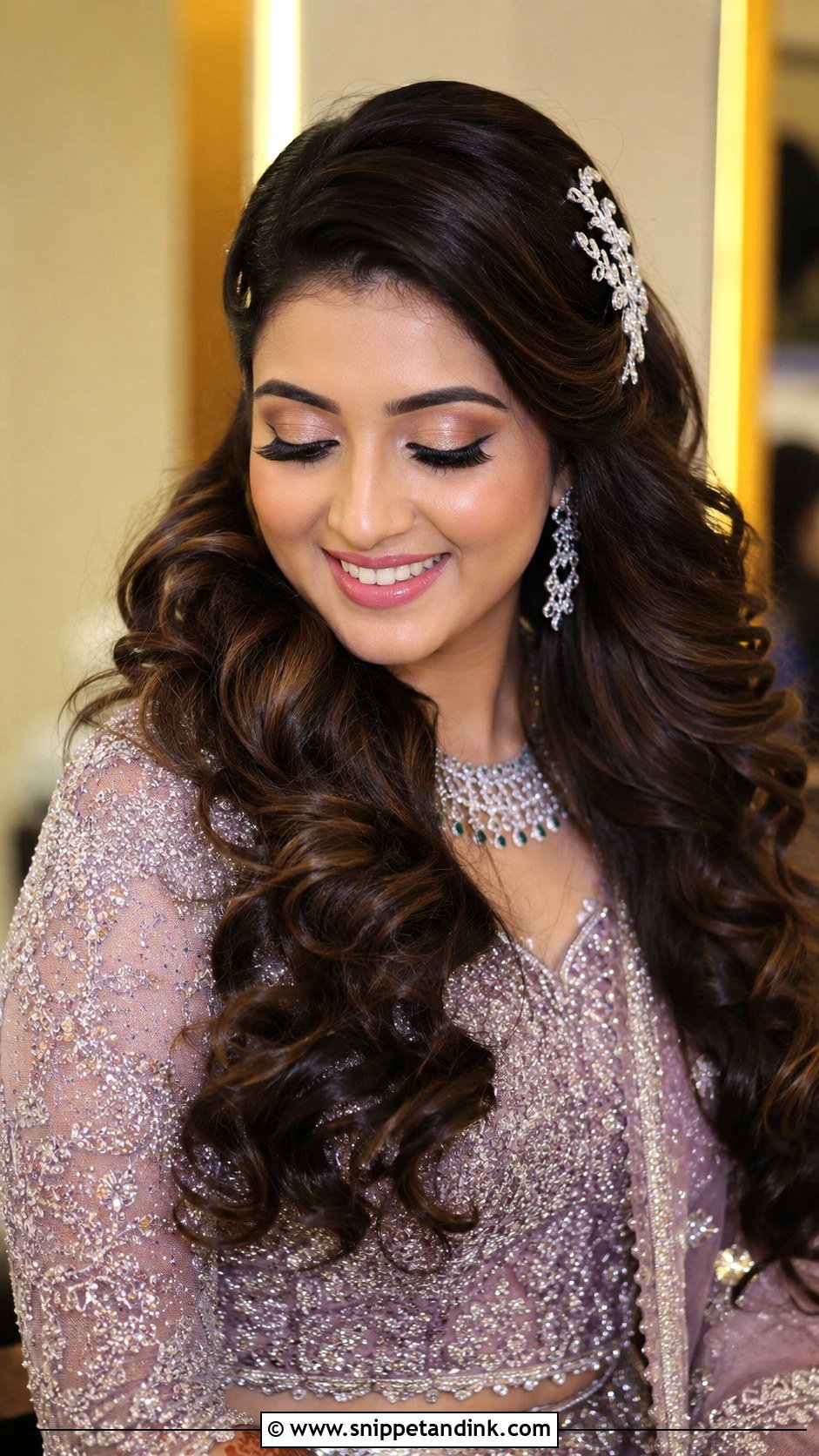
Reception hair can be glossier and more modern than the ceremony look. Glossy open curls, side swept curls, a high curly ponytail or a soft half up style all suit it. Stage photos, strong lighting and dancing mean the curls need shine and staying power, so I set them more firmly than I would for a day function. A deep side part, smooth crown or jeweled clip makes it formal. Keep face-framing pieces soft and short enough that they don’t stick to your lip color.
How a Heavy Dupatta Changes the Way I Pin Curls
An embroidered bridal dupatta can weigh far more than a Western veil, and it is pinned into the hair rather than balanced on top of it. Curls left loose under it get crushed and pulled flat. So for the ceremony I always build a hidden anchor first: a small backcombed section or a flat braid at the crown, where the dupatta pins actually go.
- Bring the actual dupatta to your trial. Its weight decides how strong the base has to be.
- U-pins hold fabric to hair better than bobby pins, and they come out without dragging the curls.
- Pin the dupatta before the last curls are arranged, so the hair falls over the fabric, not under it.
- If you’ll take it off for the reception, ask your stylist to show a family member which pins to remove and in what order.
Fresh flowers need the same thought. Jasmine gajra browns and wilts in heat, so I keep it wrapped in a damp cloth somewhere cool until the last moment. Then it goes in after the dupatta, where it won’t be crushed by the fabric.
I’ll be honest about trade-offs here. Fully open curls look romantic in photos, but under a heavy dupatta for a long ceremony they rarely survive. A half up style or a juda is what I recommend for the pheras, with open curls saved for the reception.
One Curl Pattern, Five Different Functions
From haldi and mehndi to the pheras and the reception, curls can change character with every event. Open curls read romantic, a curly juda reads bridal, ponytails are for dancing and floral curls suit the daytime functions. Accessories like gajra, maang tikka, matha patti, pearls and fresh flowers can shift the mood of the same curl pattern from one day to the next. Let the outfit, the jewelry weight and your own texture decide, and plan the hair for each function rather than repeating one look.
You'll Like These Ideas:


Leave a Reply