
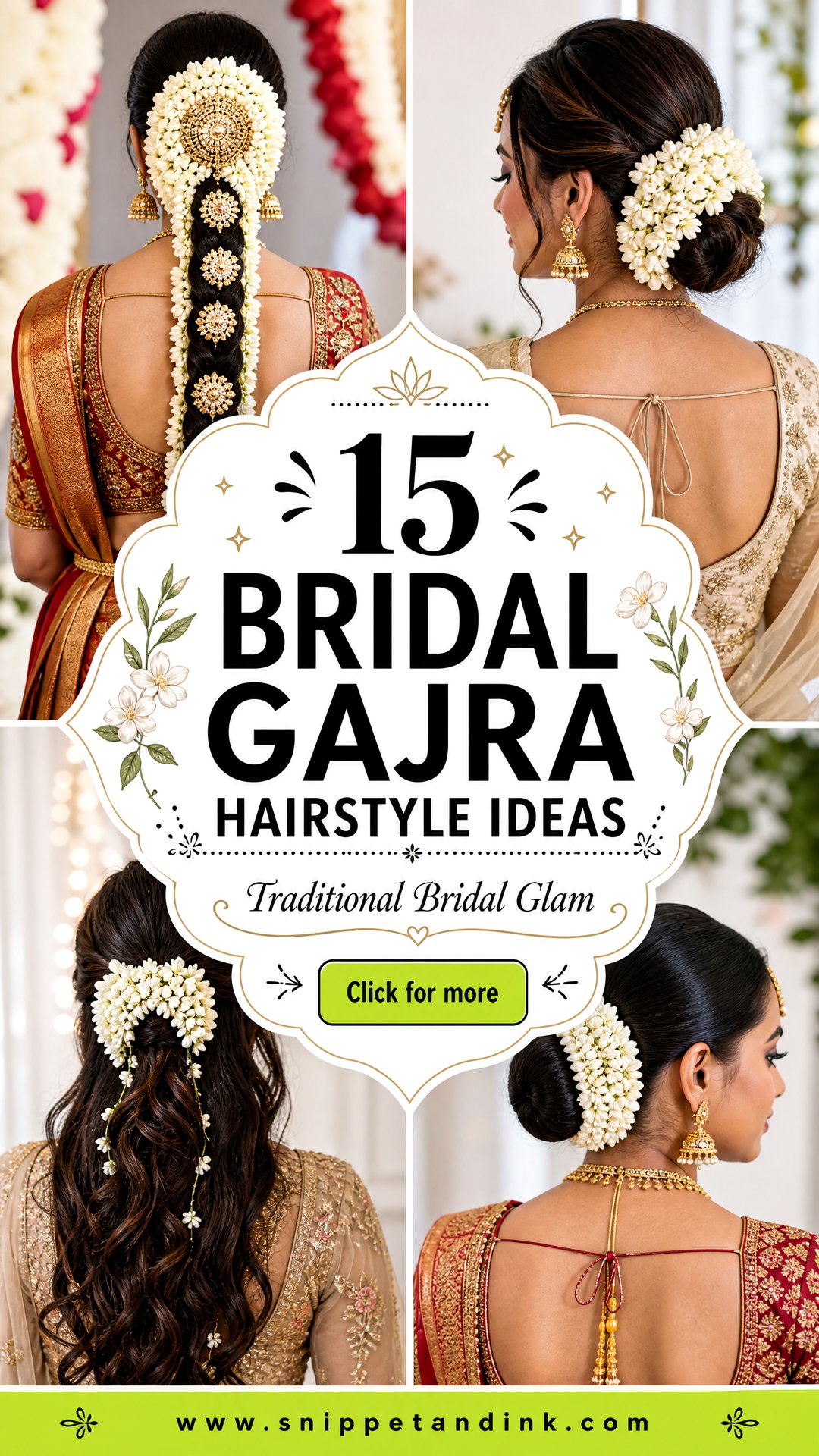
You smell the gajra before you see it. The moment the florist’s box opens in the bridal room, jasmine fills the space, and for a lot of brides that scent is the moment the wedding feels real. From my side of the chair, gajra is also more flexible than people expect. A tight jasmine-wrapped bun, a long South Indian braid and a loose modern bun with a few strings tucked in are all gajra looks, and each sits comfortably with a saree, lehenga, sharara or a simple pre-wedding outfit. You can wear one for the main ceremony, mehendi, haldi, the reception or a small temple wedding. Below are fifteen I’d happily style, from the most traditional to the most relaxed, with what each needs underneath to hold.
Jasmine Has a Season, and Your Wedding Date Matters
Mogra, the plump, intensely fragrant jasmine most people picture in a gajra, is a warm-weather flower. In the hotter months it’s plentiful and reasonably priced. For a winter wedding it can be scarce, smaller and noticeably more expensive, and a different jasmine is often substituted without anyone mentioning it.
- Mogra: round, many-petalled buds with the strongest scent. The classic choice when it’s in season.
- Kakada and other winter jasmines: longer, slimmer buds available in cooler months, with a lighter fragrance. They look neat in a tight wrap.
- Artificial or fabric gajra: no scent, but no wilting either. Useful for multi-day functions, or layered under a thinner fresh string so the volume stays even.
Ask your florist directly which flower they’ll be using in your month, and look at the actual buds rather than a portfolio photo. If a full poola jada is the plan for a December wedding, I’d have that conversation before any styling decision.
1. Bridal Gajra Bun
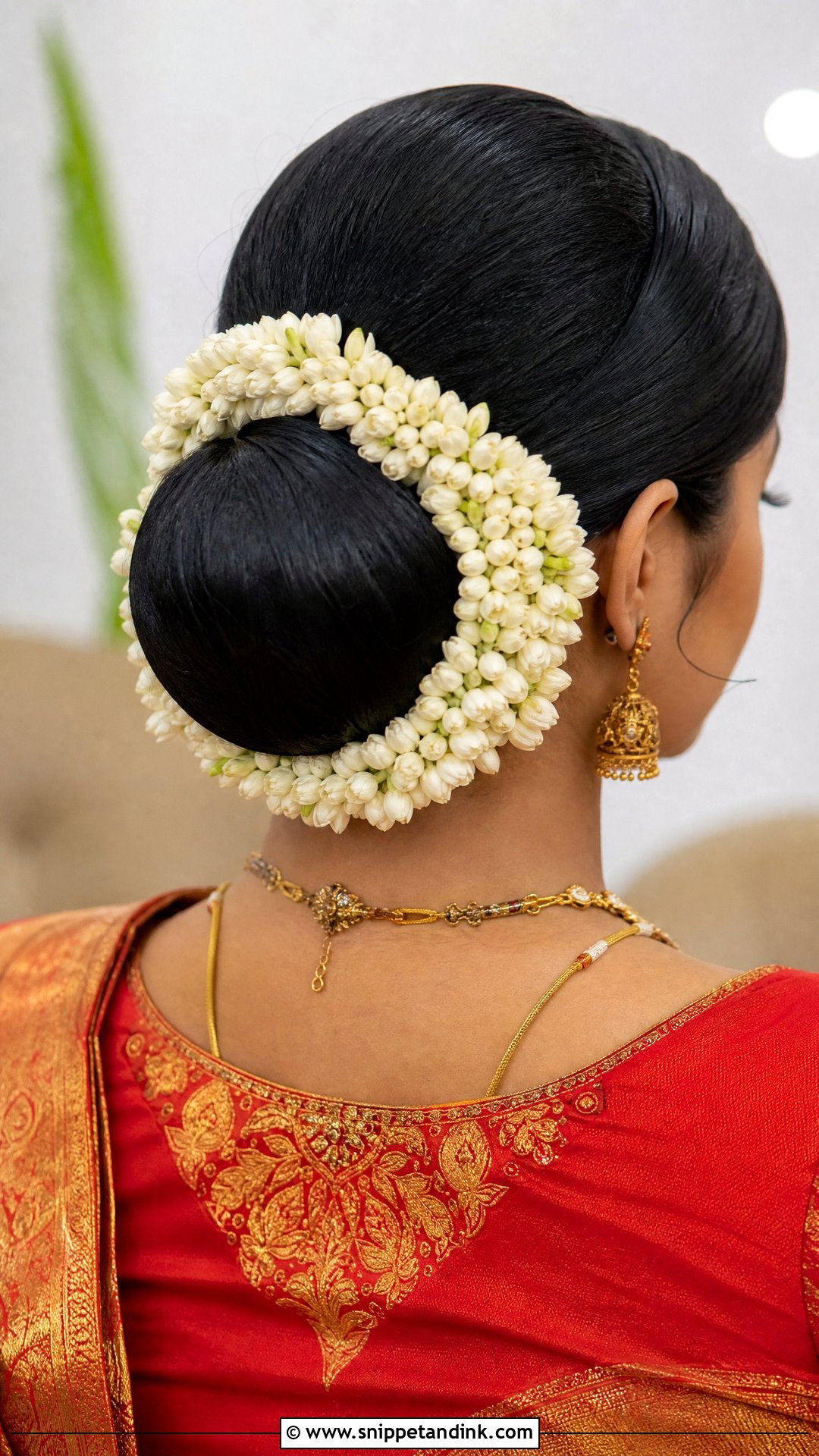
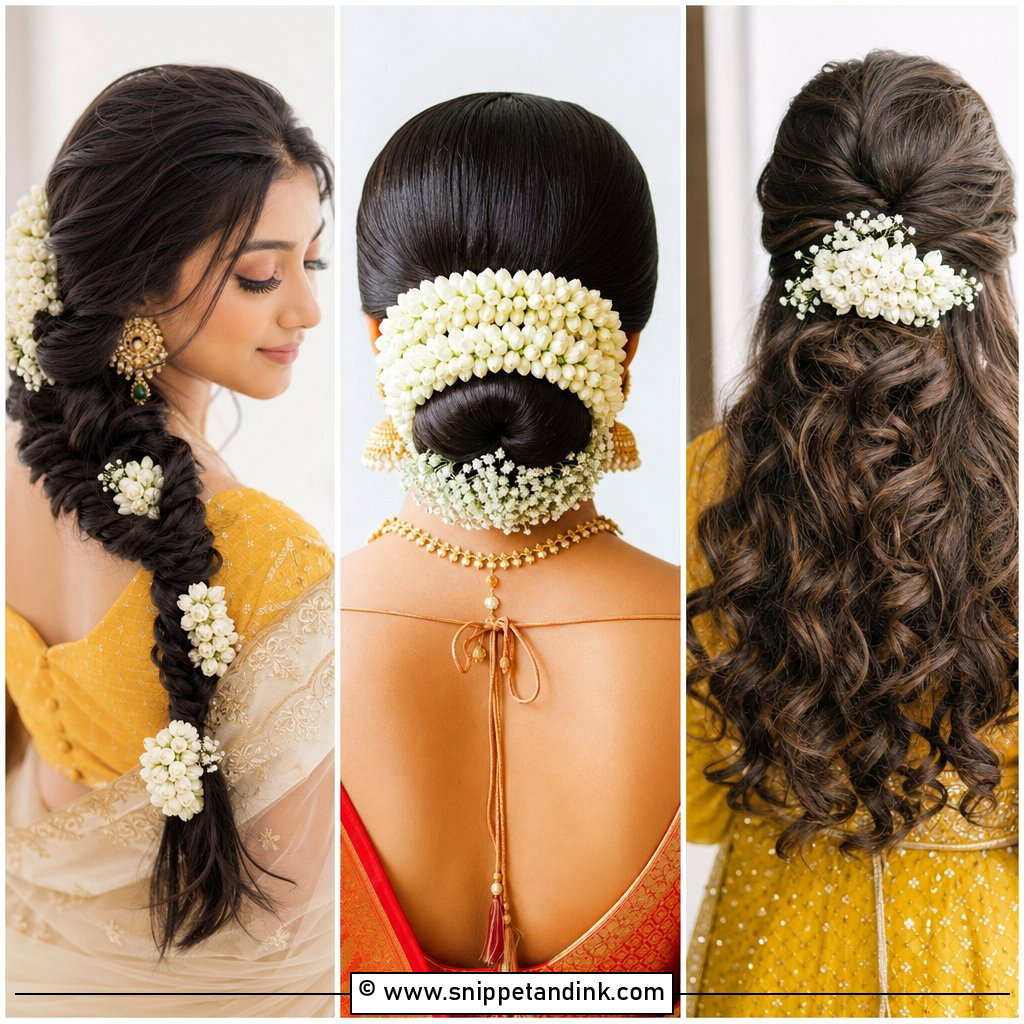
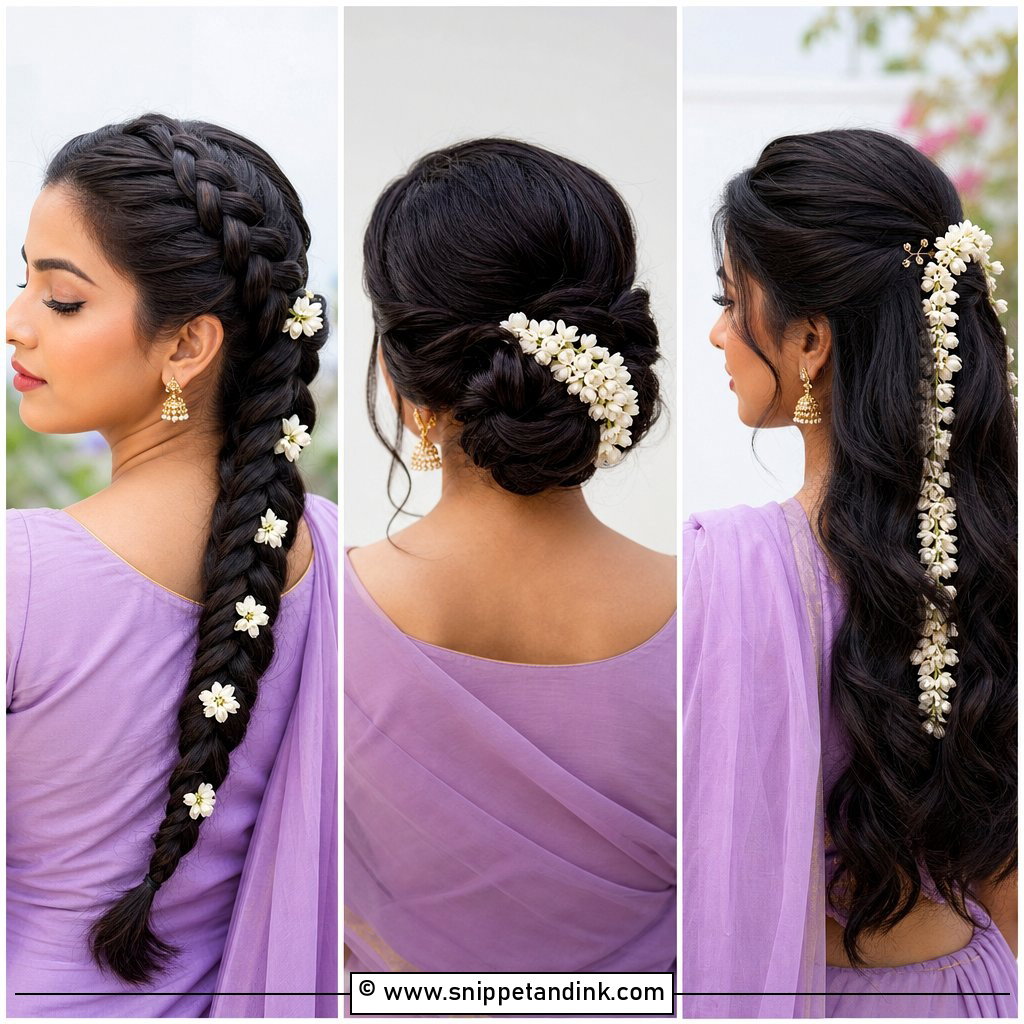
The round low bun wrapped in jasmine is the gajra look most families picture, and it’s the one I’d call the safest for a long ceremony. I part the hair in the centre, smooth it back and build the bun firmly. Fresh jasmine gajra is heavier than it looks once it’s wrapped two or three times. The strings go on last, anchored with U-pins pushed through the gajra thread into the bun itself, never just resting against the scalp. It sits well with a silk saree or heavy lehenga, and with a maang tikka or matha patti at the front.
2. South Indian Bridal Gajra Braid
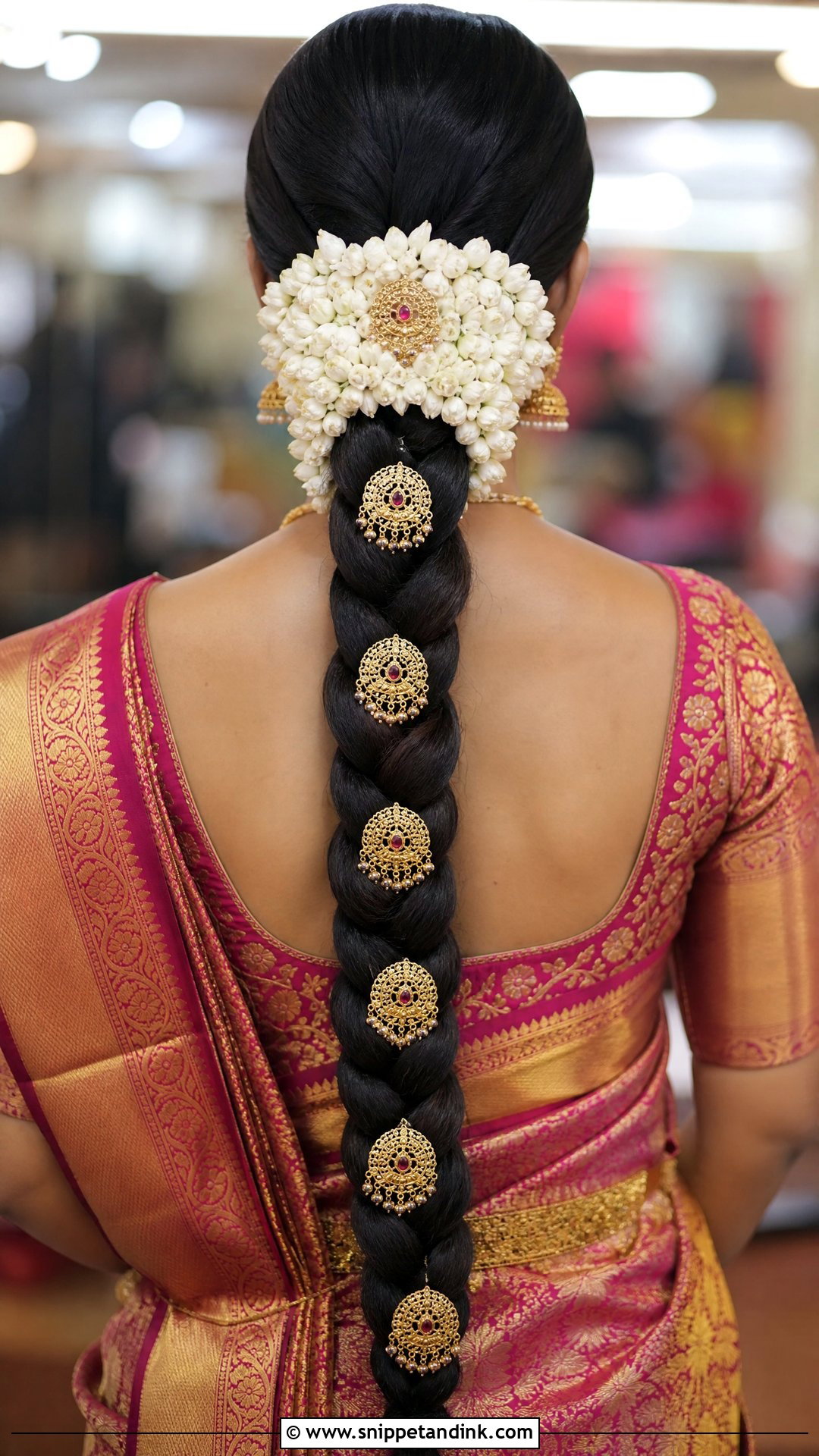
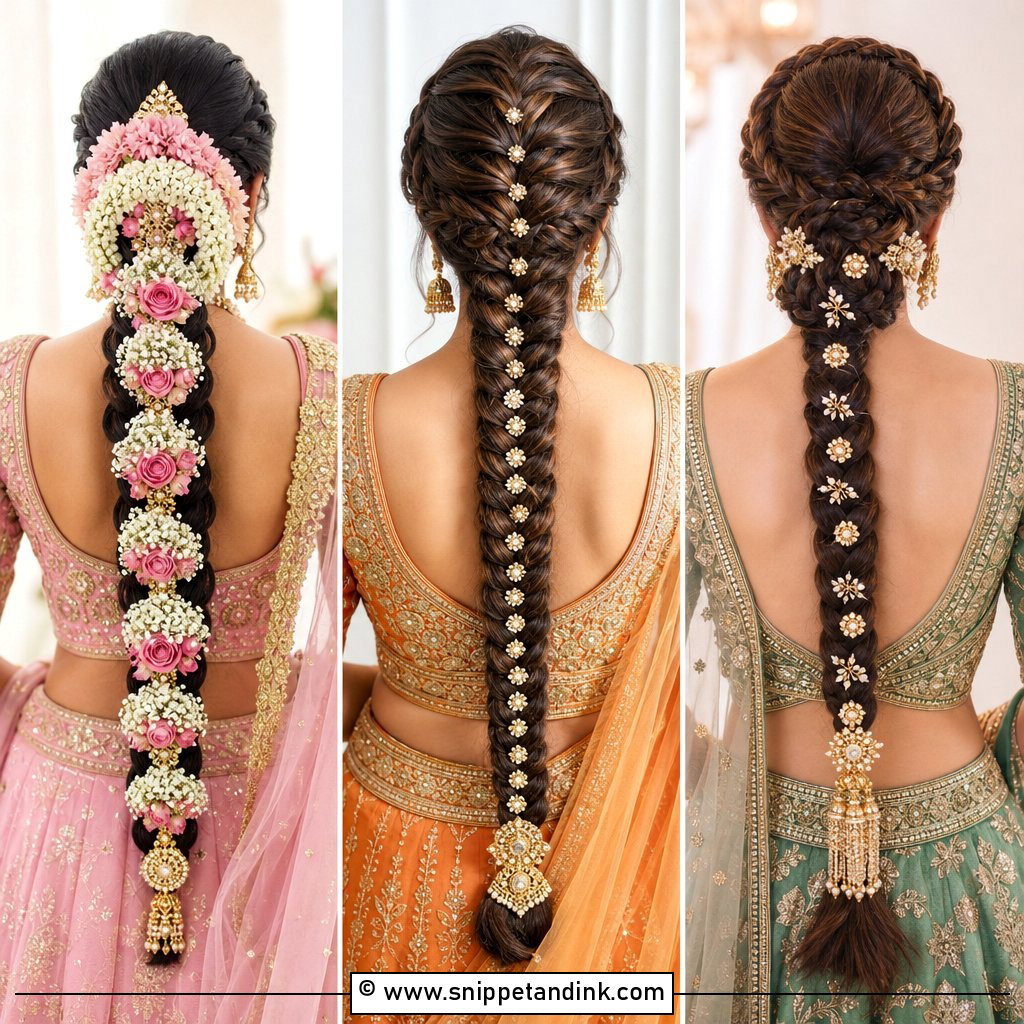
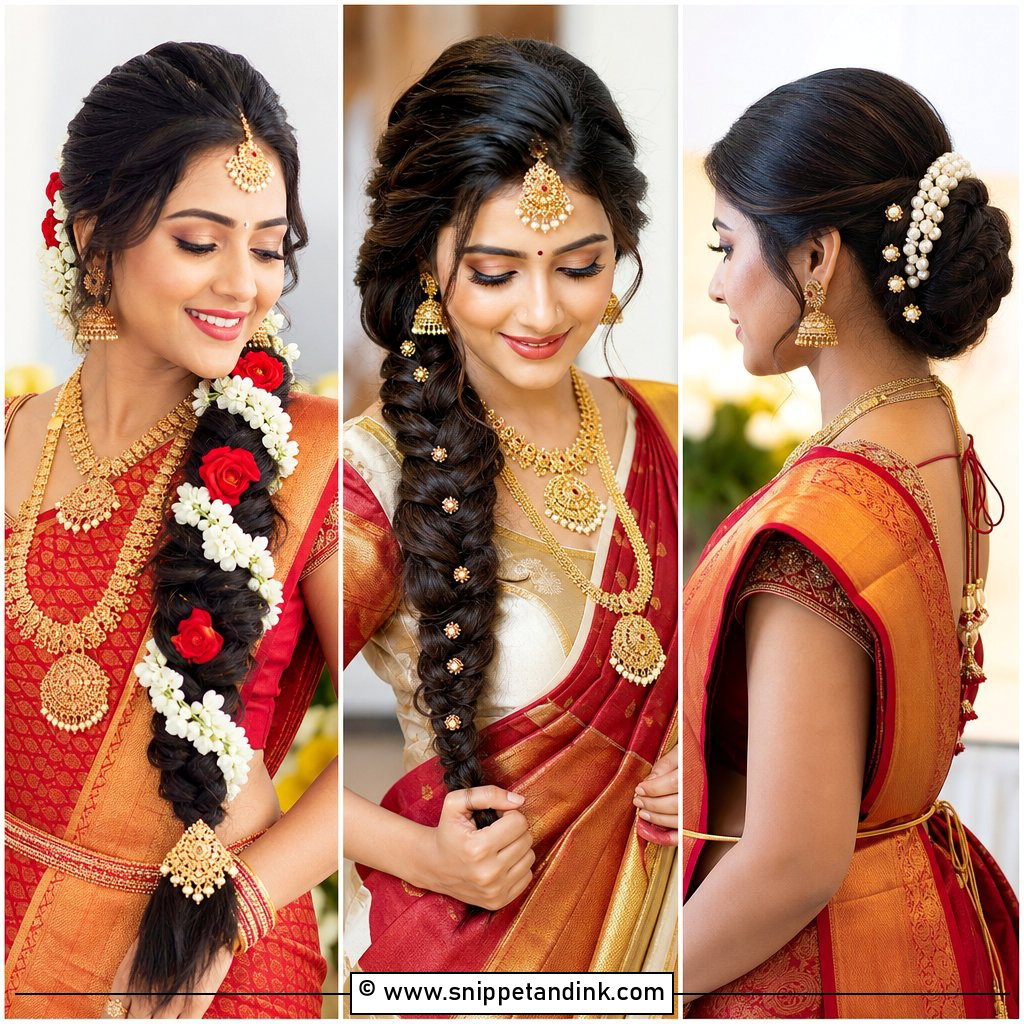
A South Indian bridal gajra braid is grand and ceremonial: long, thick and polished, with jasmine laid along its length or wrapped at the base. Gold jada ornaments, temple jewellery and fresh roses all add to it. With a Kanjeevaram saree and layered necklaces, the back view is properly regal. Most brides don’t have hip-length hair, so I add a braid extension or a padded jada base and blend it at the nape. I keep the crown sleek so nothing distracts from the braid when you turn.
3. Messy Bridal Bun With Gajra
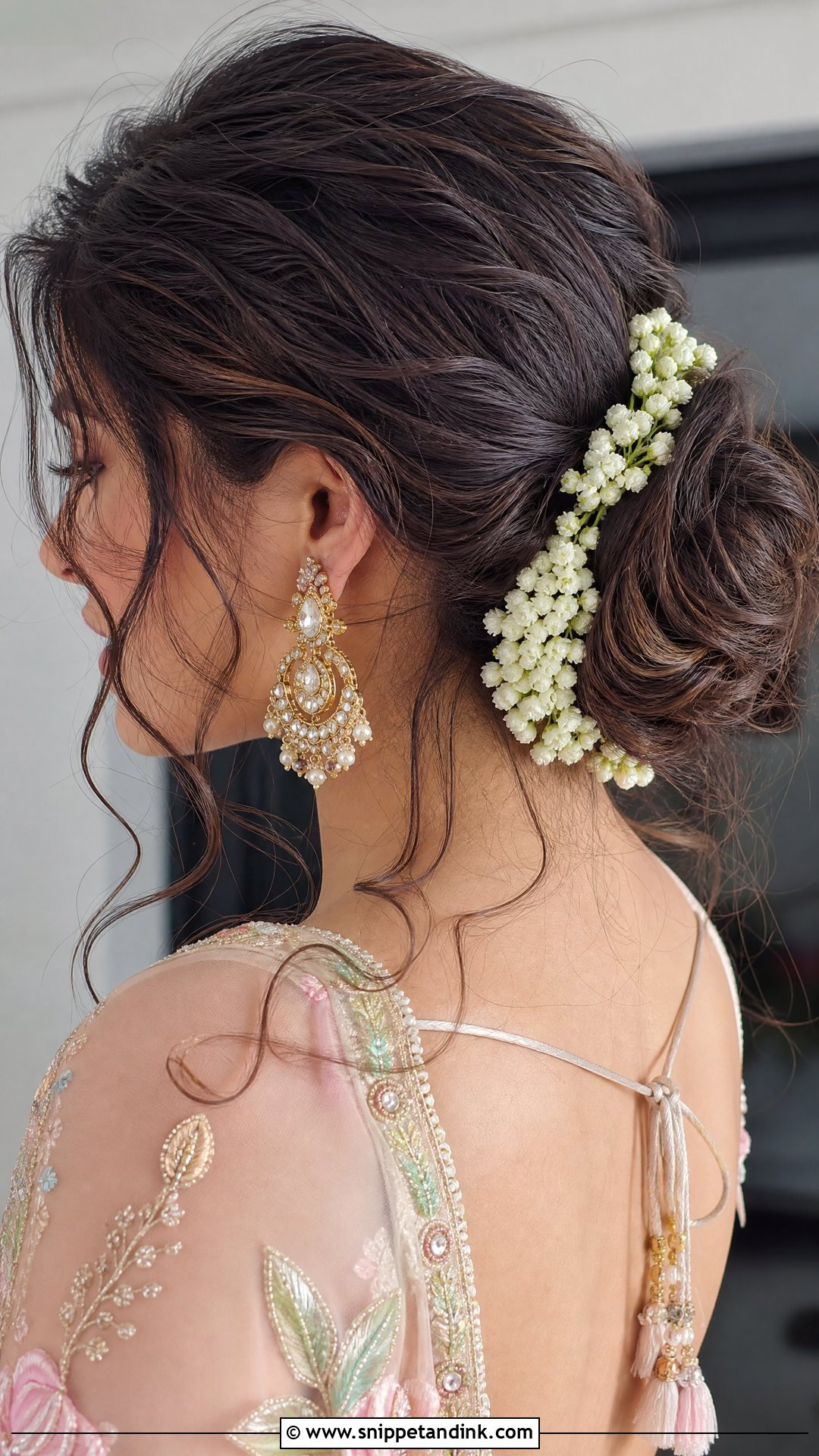
Texture softens a traditional bun without losing its roots. I lift the crown with a little backcombing, curl the lengths loosely, then build a low textured bun and leave a few face-framing pieces. It suits pastel lehengas, organza sarees and lighter, modern jewellery. My one warning: messy has to be controlled, or it just looks unfinished by the second ritual. Everything airy on the outside is pinned firmly underneath. A half circle of gajra keeps it light; a full wrap makes it more floral.
4. Low Bridal Bun With Gajra
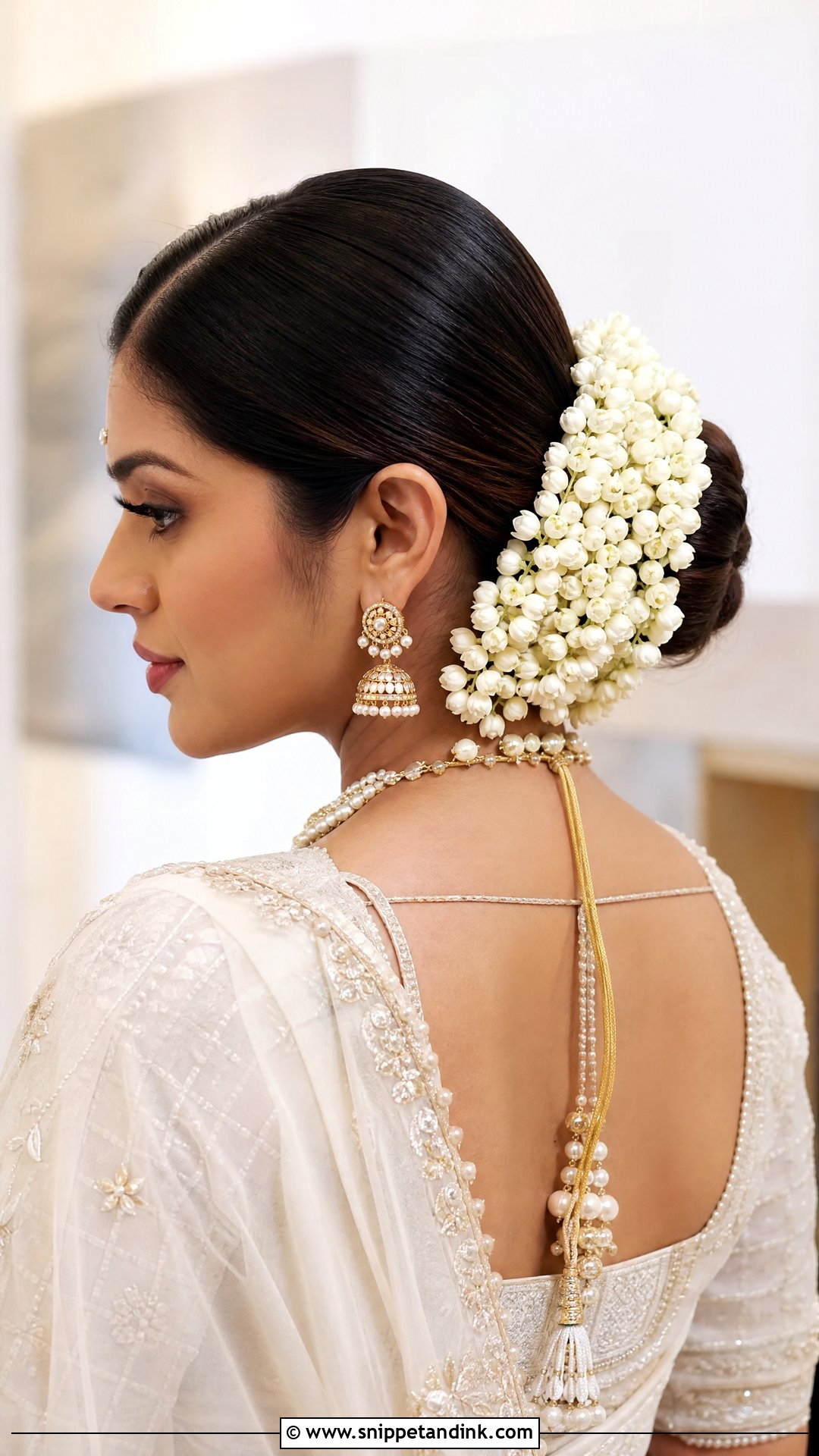
A low bridal bun with gajra sits close to the nape, and I recommend it whenever a bride is pinning a veil, dupatta or saree pallu to her head, because the bun gives that fabric a firm place to anchor. One wrap of jasmine looks minimal; two gives more volume. The low position softens the neckline and suits round, oval and heart-shaped faces alike. Finish with a clean centre part, a small tikka and smooth front sections. Short and simple, and it rarely goes wrong.
5. Bridal Juda With Gajra
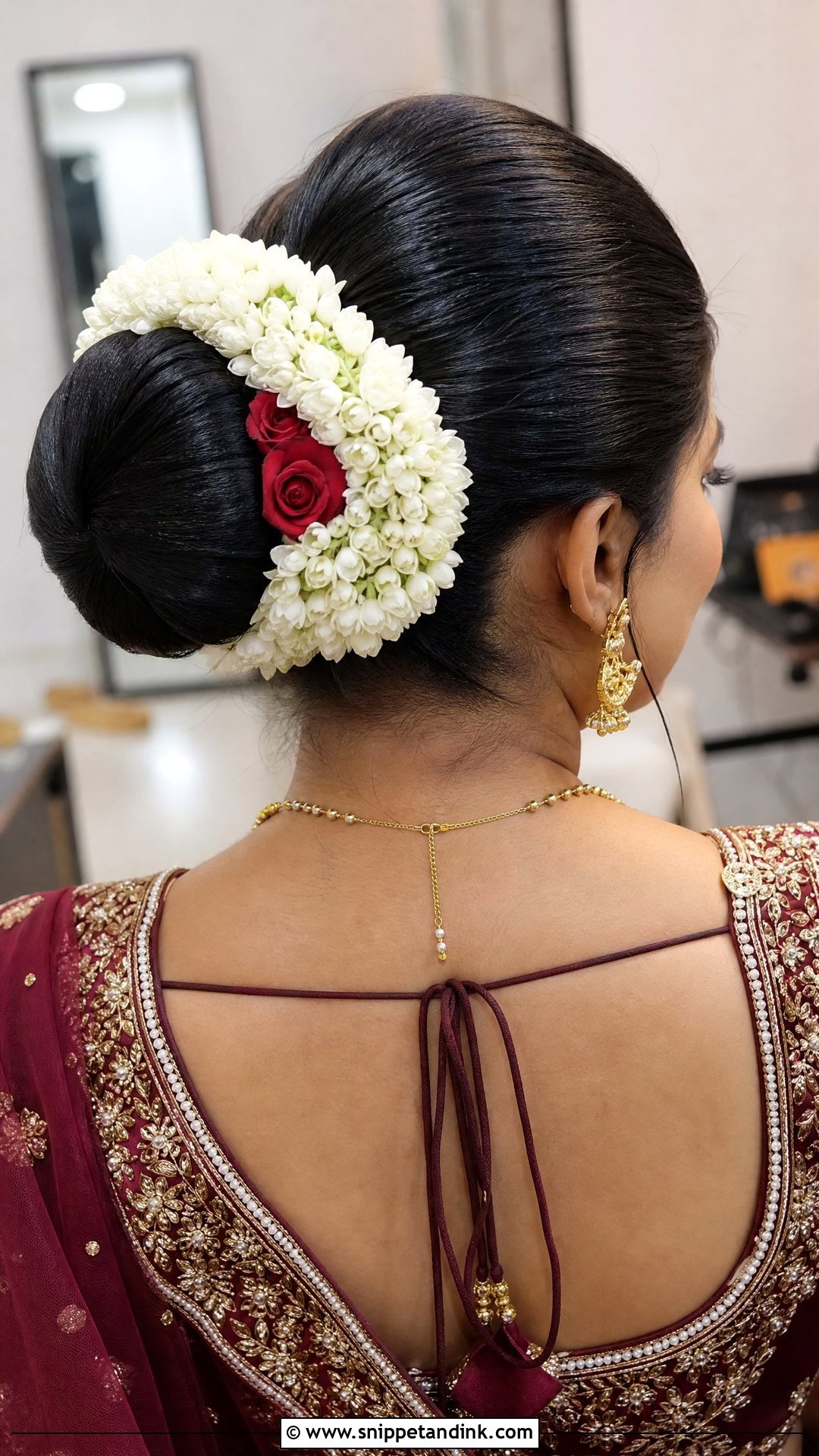
A bridal juda with gajra is the bigger, sculpted version of the classic bun, and its size is what lets it stand up to heavy outfits and statement jewellery. Very few brides have enough hair to build that volume alone, so I use a bun donut or padding underneath; it gives shape without backcombing the natural hair to the point of damage. Jasmine can wrap the outside, sit in the centre or be layered with roses for contrast. Done properly, a juda holds its shape for many hours of rituals. I keep the front sleek or add soft waves at the temples to balance the size at the back.
6. Bridal Braid With Gajra
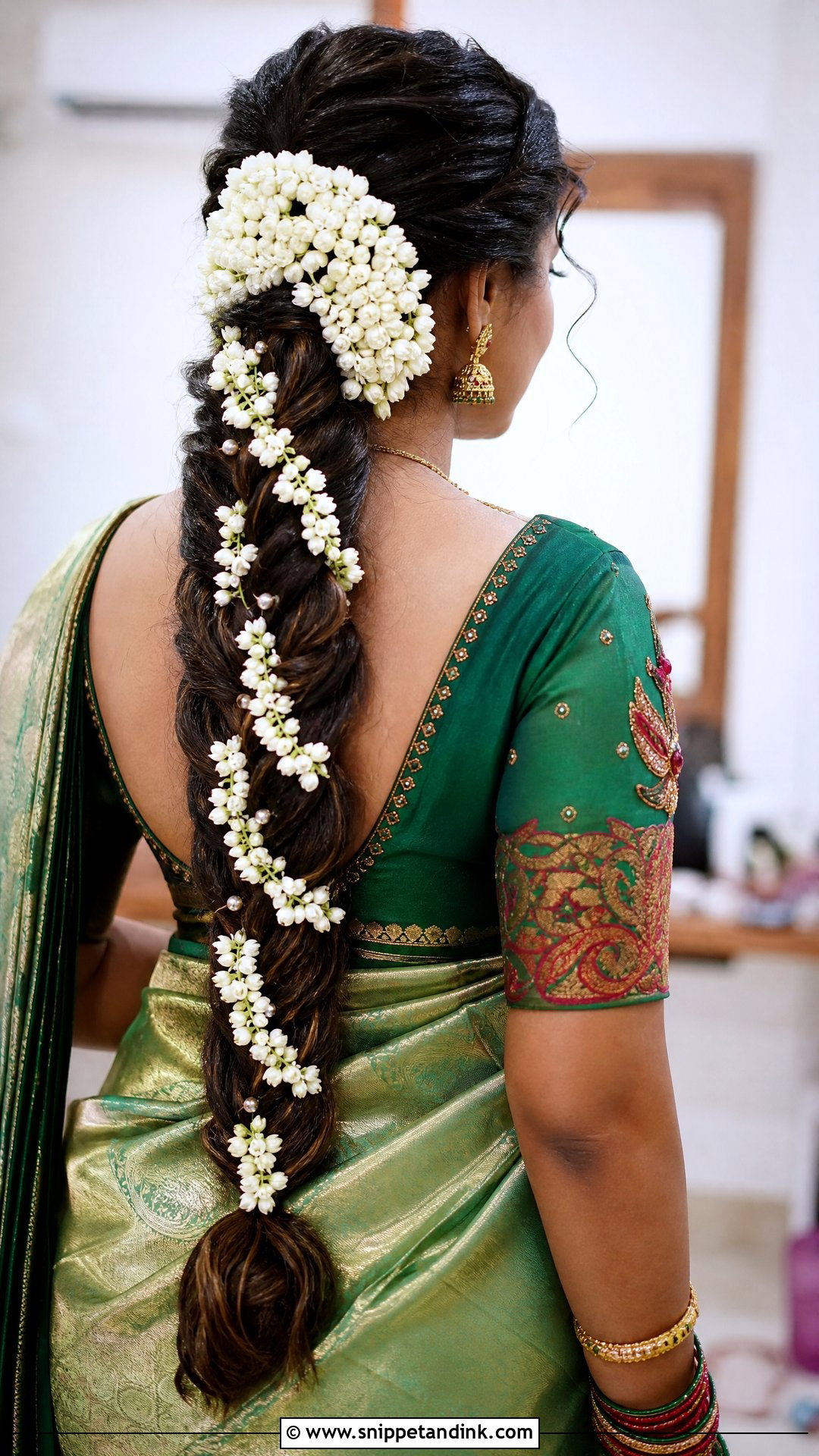
When a bride wants her hair visible from behind but doesn’t want the full weight of a jada, a simple braid with jasmine is where I start. Three-strand, fishtail or a softer textured braid all take gajra well, and the crossovers give the strings natural places to grip. It suits mehendi, haldi, the engagement or the main ceremony. Tiny pearl pins or fresh buds between sections add detail. I pull the braid gently wider before the gajra goes on, so it looks full in photos and the strings sit snugly in the grooves.
7. Open Hair With Gajra
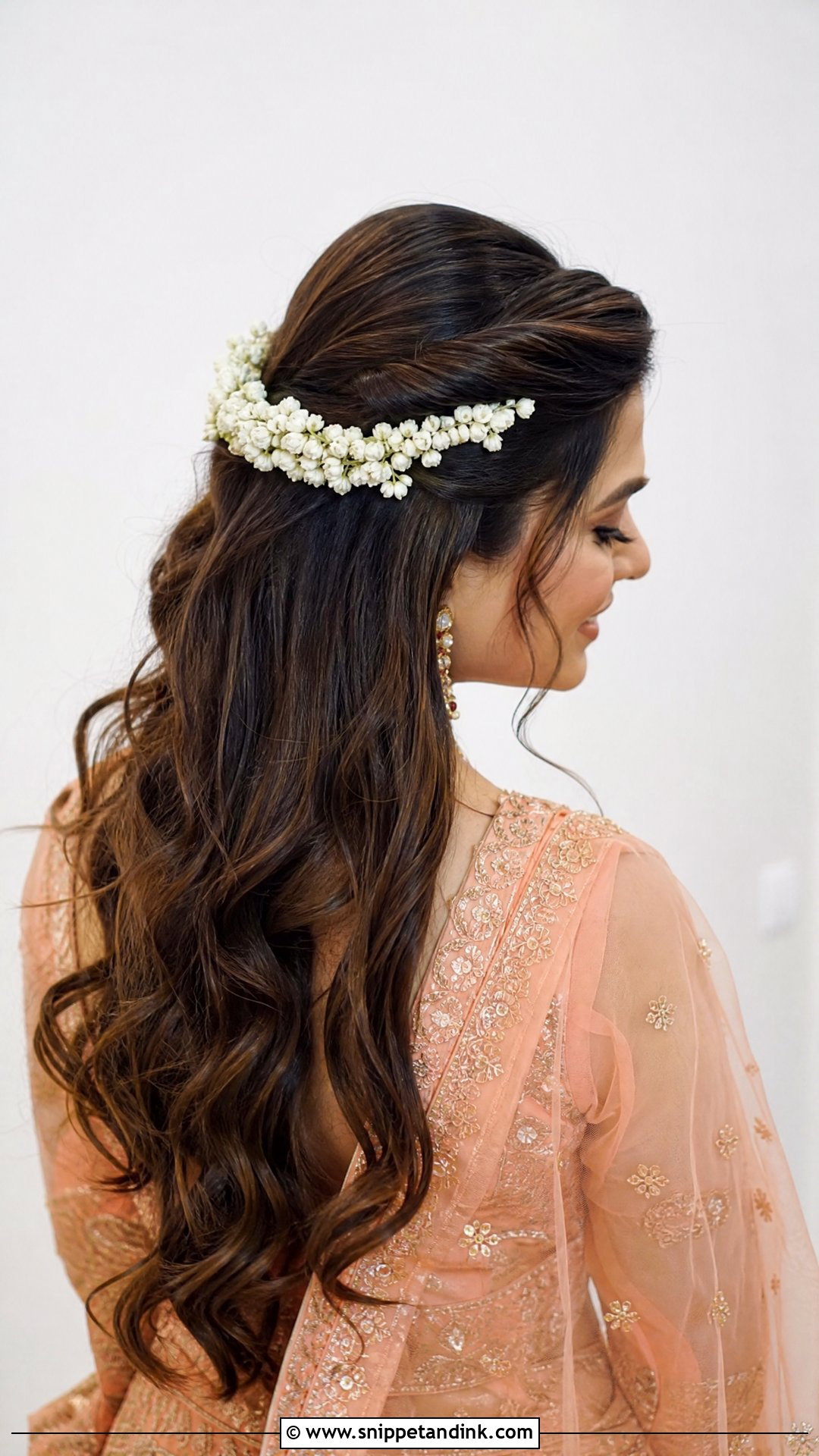
Open hair is where gajra needs the most help, because loose waves give the flowers nothing to grip. I pin the top section back first and lay the gajra over those pins like a half crown, so the weight sits on gathered hair. It’s lovely for the engagement, reception, mehendi or a relaxed daytime wedding, especially with lighter lehengas, floral sarees and minimal jewellery. Open hair also moves all evening, so I use strong pins under the gajra, a light setting spray, and smooth, defined waves that make the flowers look placed rather than dropped in.
8. Half Up Bridal Gajra Hairstyle
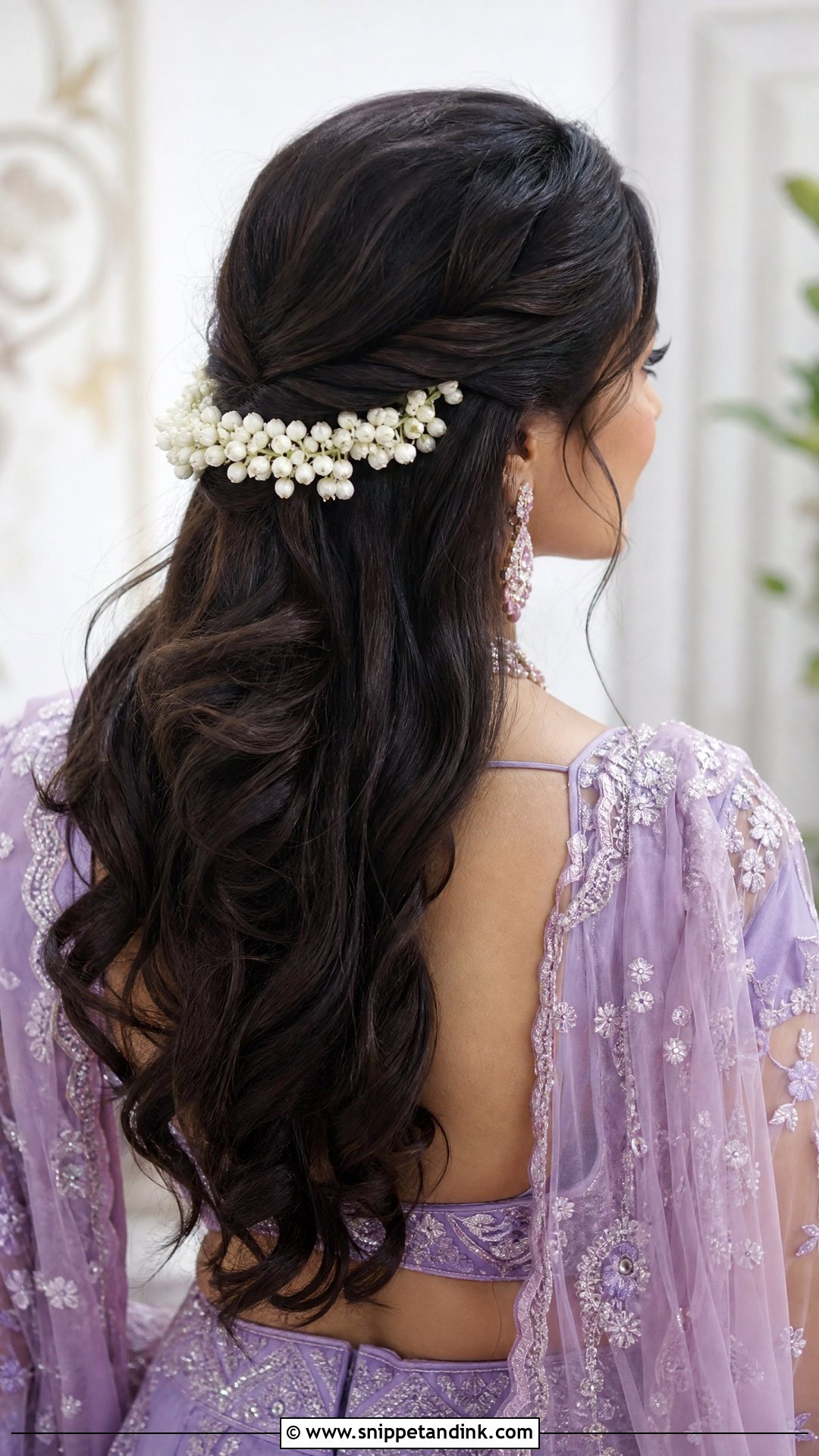
Half up sits between open hair and a bun: the top is twisted, braided or pinned at the back while the rest falls in curls or waves. That pinned section is the gajra’s base, and a small loop of jasmine around it becomes the focal point. I like it for pre-wedding events, where you’re sitting on the floor, dancing and hugging relatives and comfort counts. Scale is the thing to get right. Too much gajra buries the half-up detail; too little barely registers on camera.
9. Bridal Bun With Gajra And Roses
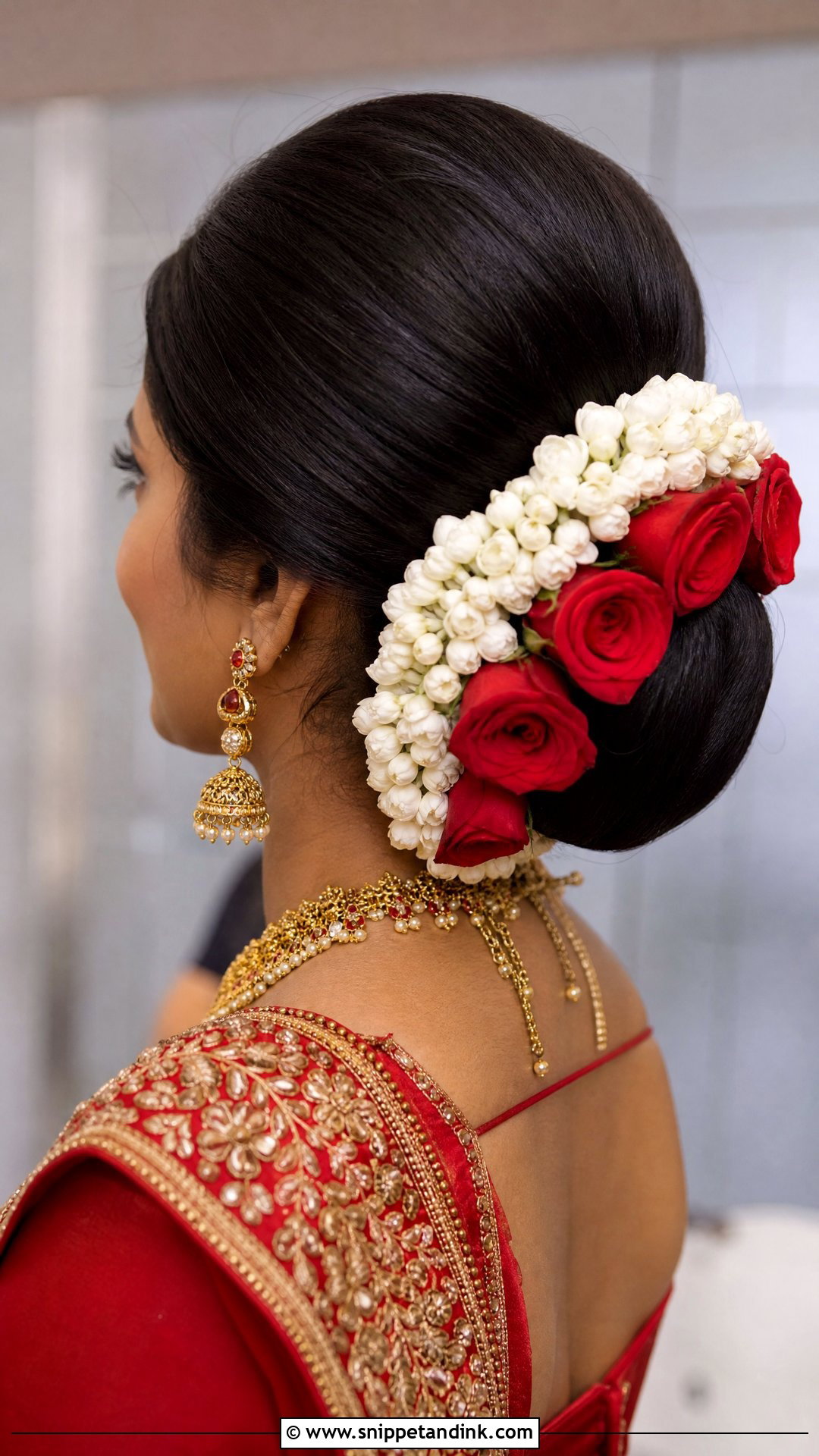
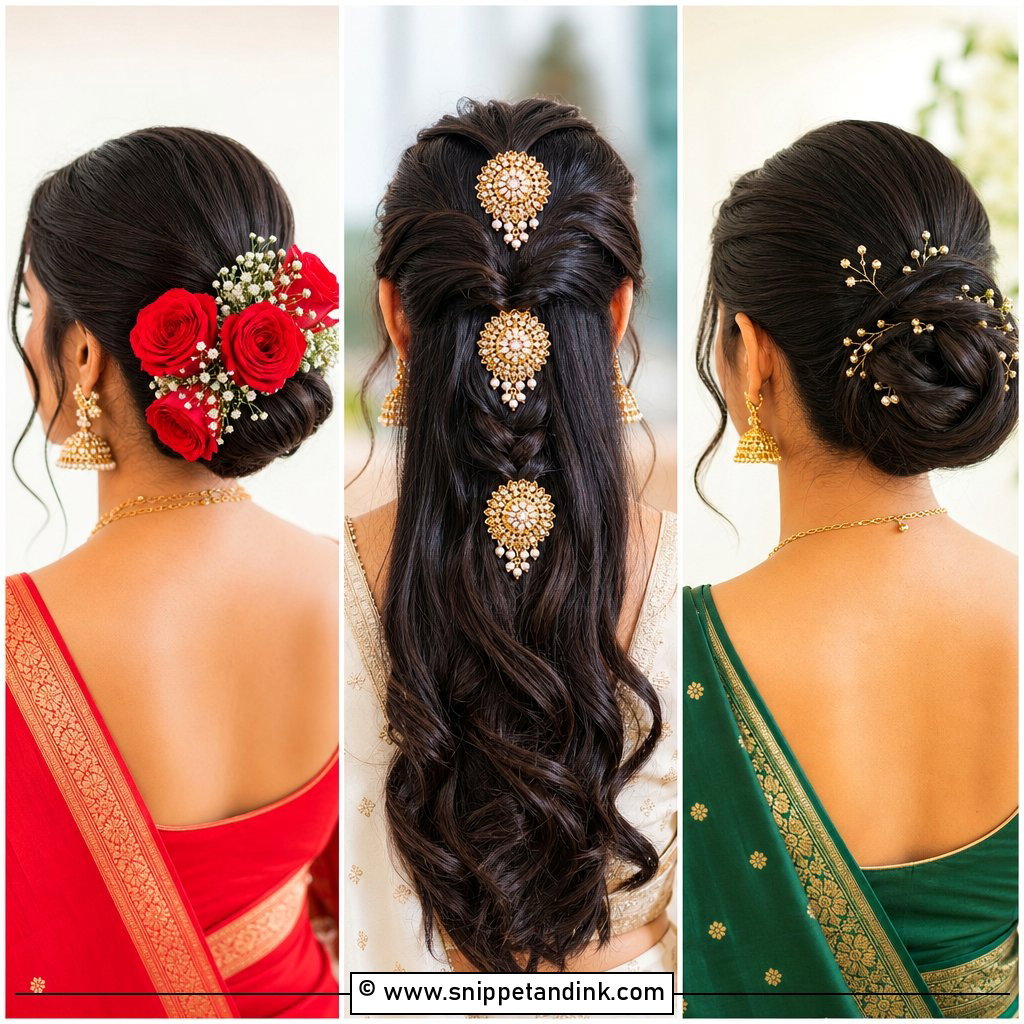
Jasmine gives the white floral base and roses bring the colour, so this bun ties your hair to your outfit. Red roses suit a classic red lehenga or saree; pink or peach sit better with pastels. The bun can be sleek, textured, low or round. The practical issue is weight. Roses are far heavier than jasmine buds, so I space them evenly around the bun and pin each one through its stem; bunching them on one side drags the bun sideways over a few hours. Firm, fresh blooms hold up much better than roses that are already fully open.
10. Sleek Bridal Bun With Gajra
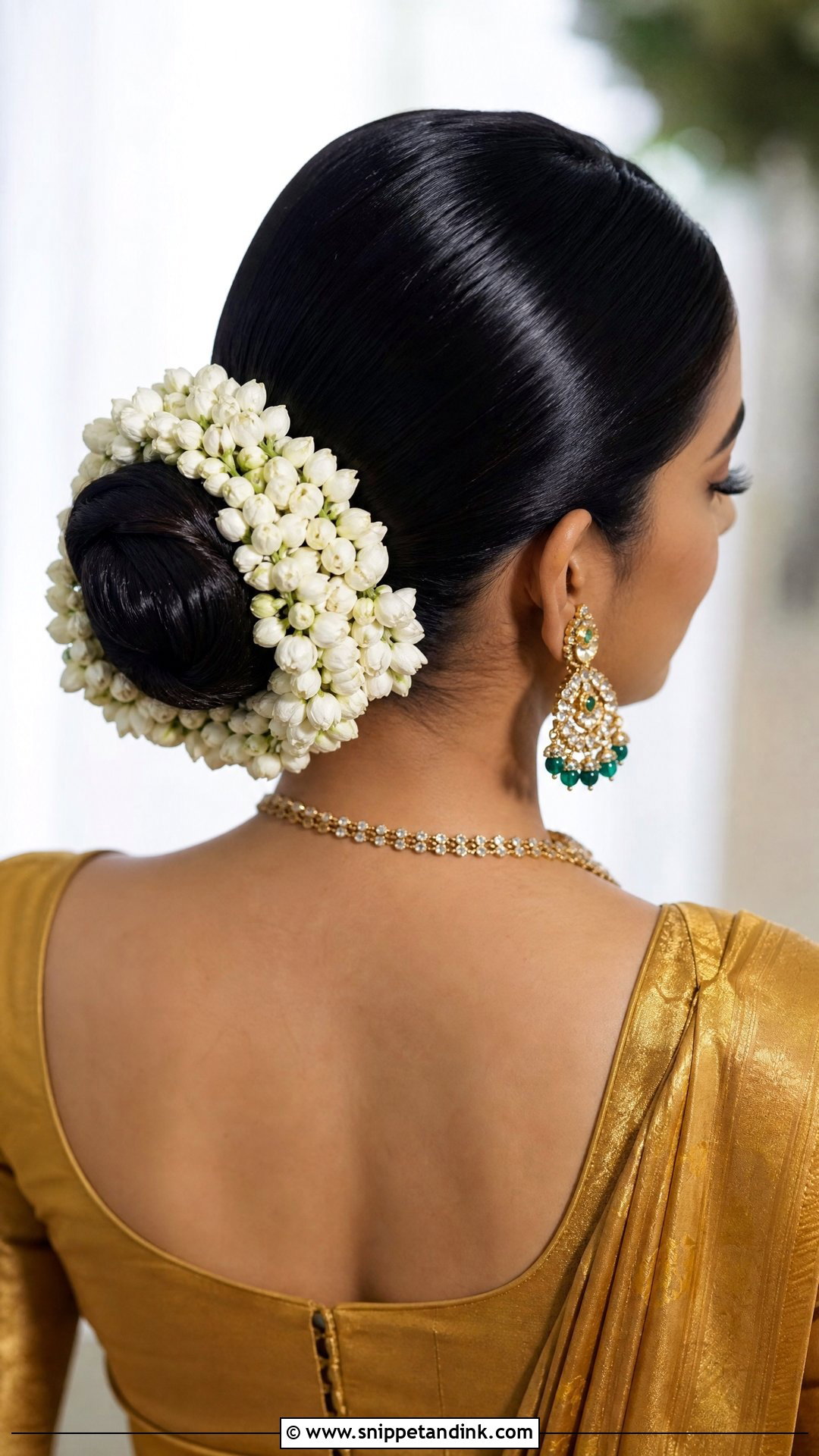
A sleek bun is the style I reach for on the most humid days. The hair is parted in the middle, smoothed with gel or serum and gathered into a neat low bun, and controlled hair like this has very little room to frizz. Jasmine wrapped around it softens what could look severe, and it holds its own beside bold eye makeup, heavy earrings and structured outfits. The skill is shine without grease. I use a small amount of lightweight product at the front and pin flyaways down rather than piling on more gel, which turns crunchy and dull under flash.
11. Bridal Gajra Hairstyle With Maang Tikka
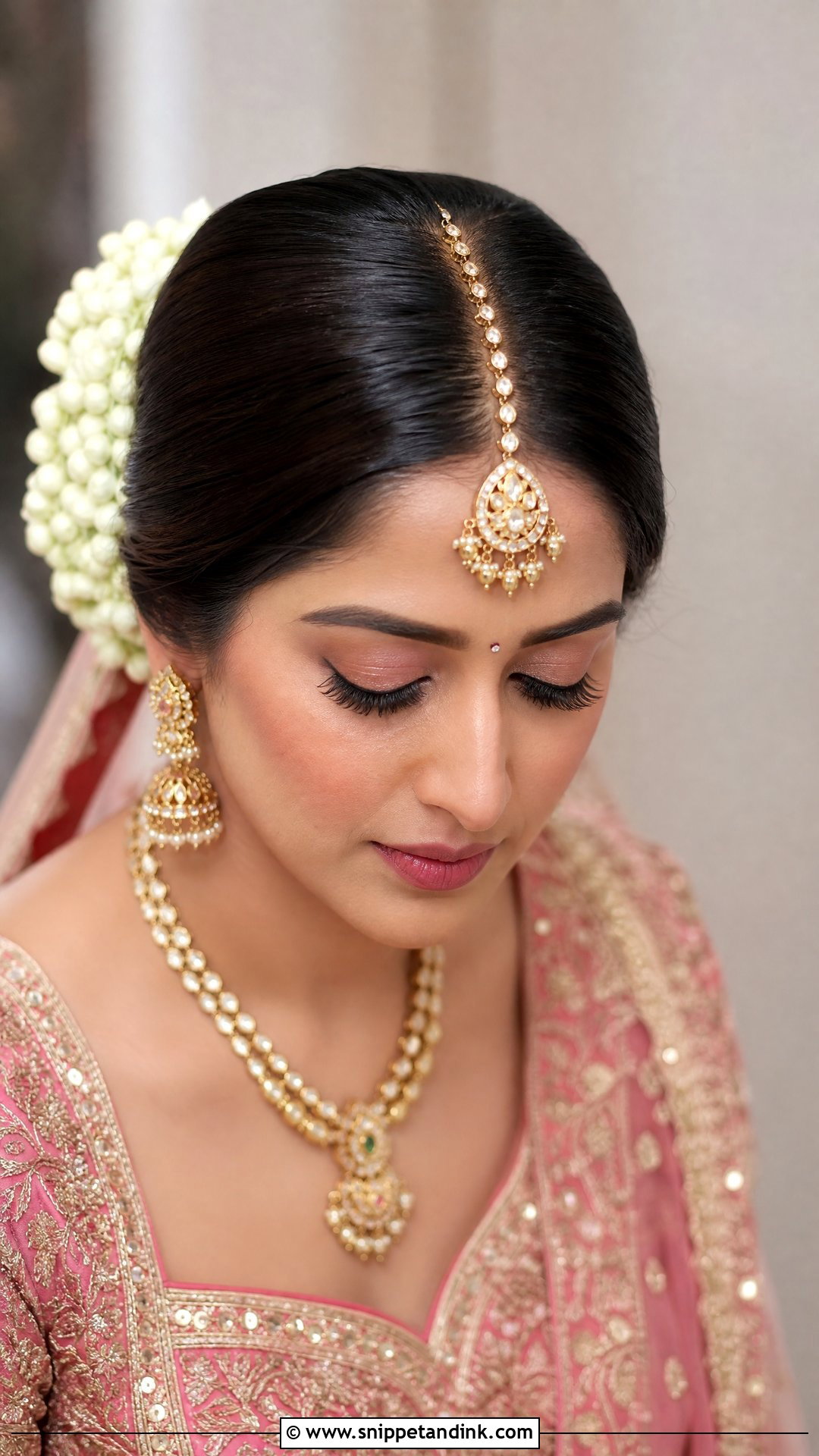
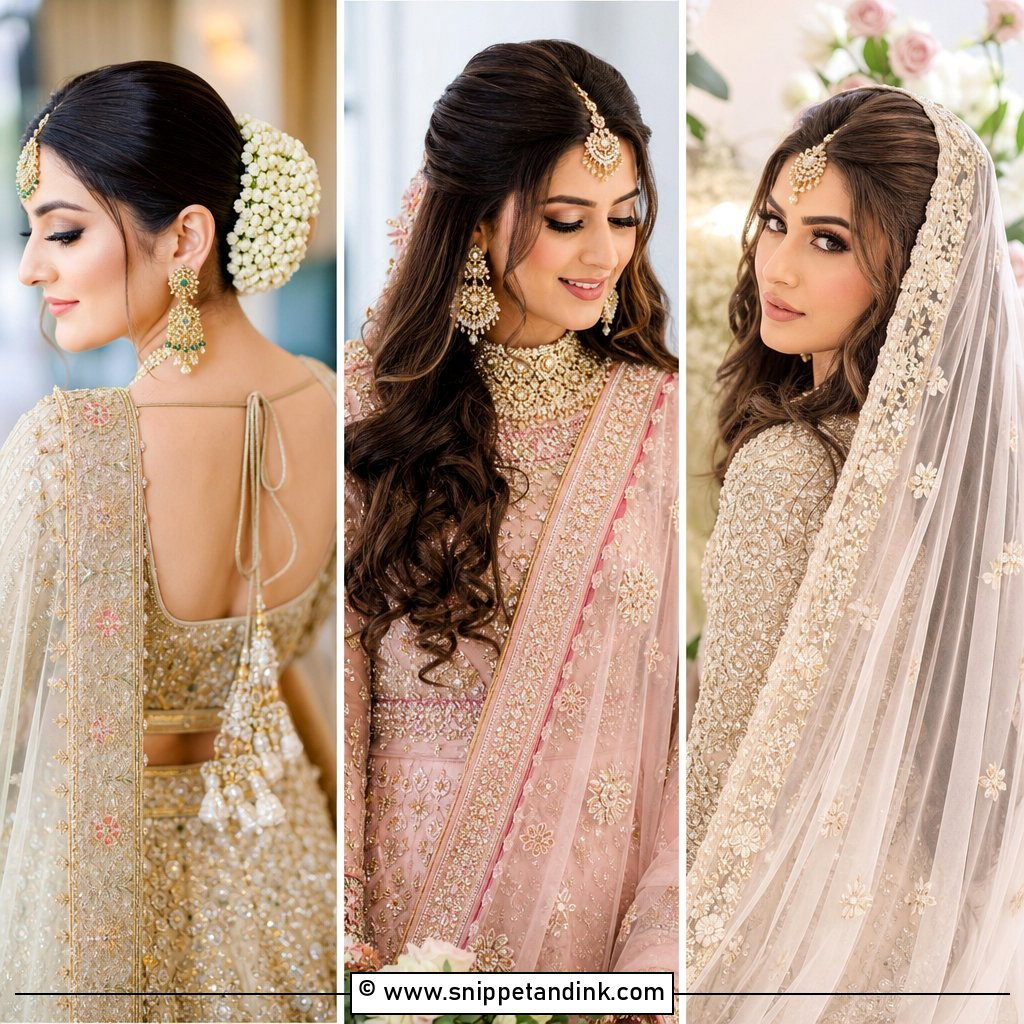
Pairing a bridal gajra hairstyle with maang tikka balances the look front to back: the tikka draws attention to the parting and forehead, the gajra finishes the bun or braid. Low buns, middle-parted buns, braided buns and long plaits all work. Before the tikka goes in, I make sure the centre part is perfectly straight, because the tikka chain sits right on it and shows every wobble. Match the gajra thickness to the jewellery. With a heavy tikka, a single simple wrap usually looks best.
12. Bridal Gajra Hairstyle With Matha Patti
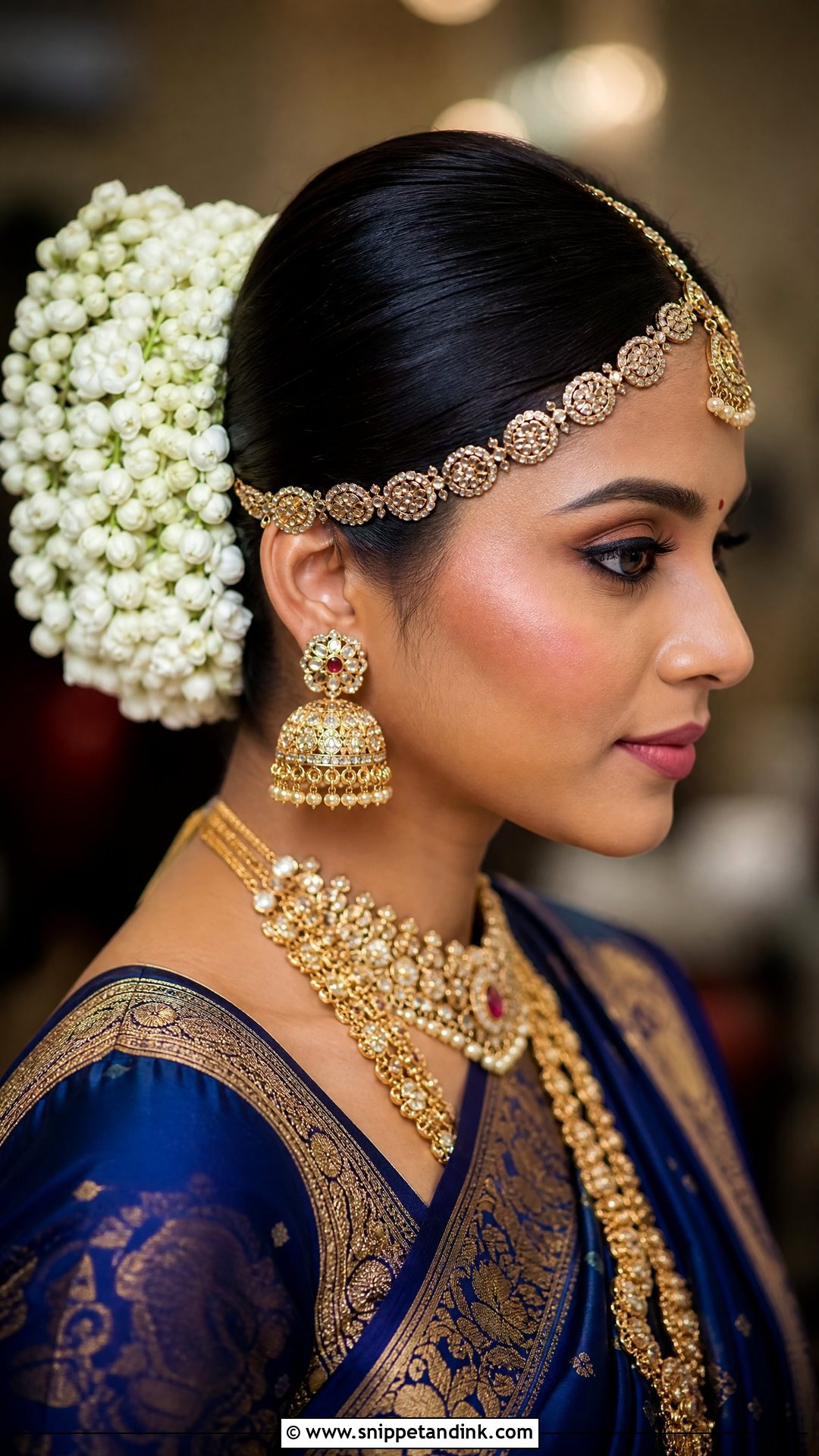
A matha patti frames the face, the gajra completes the back, and the combination reads royal. It needs a stable base, so I’d pair it with a sleek bun, a low juda or a structured braid rather than anything loose. Lehengas, silk sarees and heavily embroidered dupattas all suit it. With both headpiece and flowers adding weight, comfort is where this one can fail. I secure the matha patti on its own pins, separate from the bun pins, so the two weights never pull against each other through a long ritual.
13. Bridal Gajra Ponytail
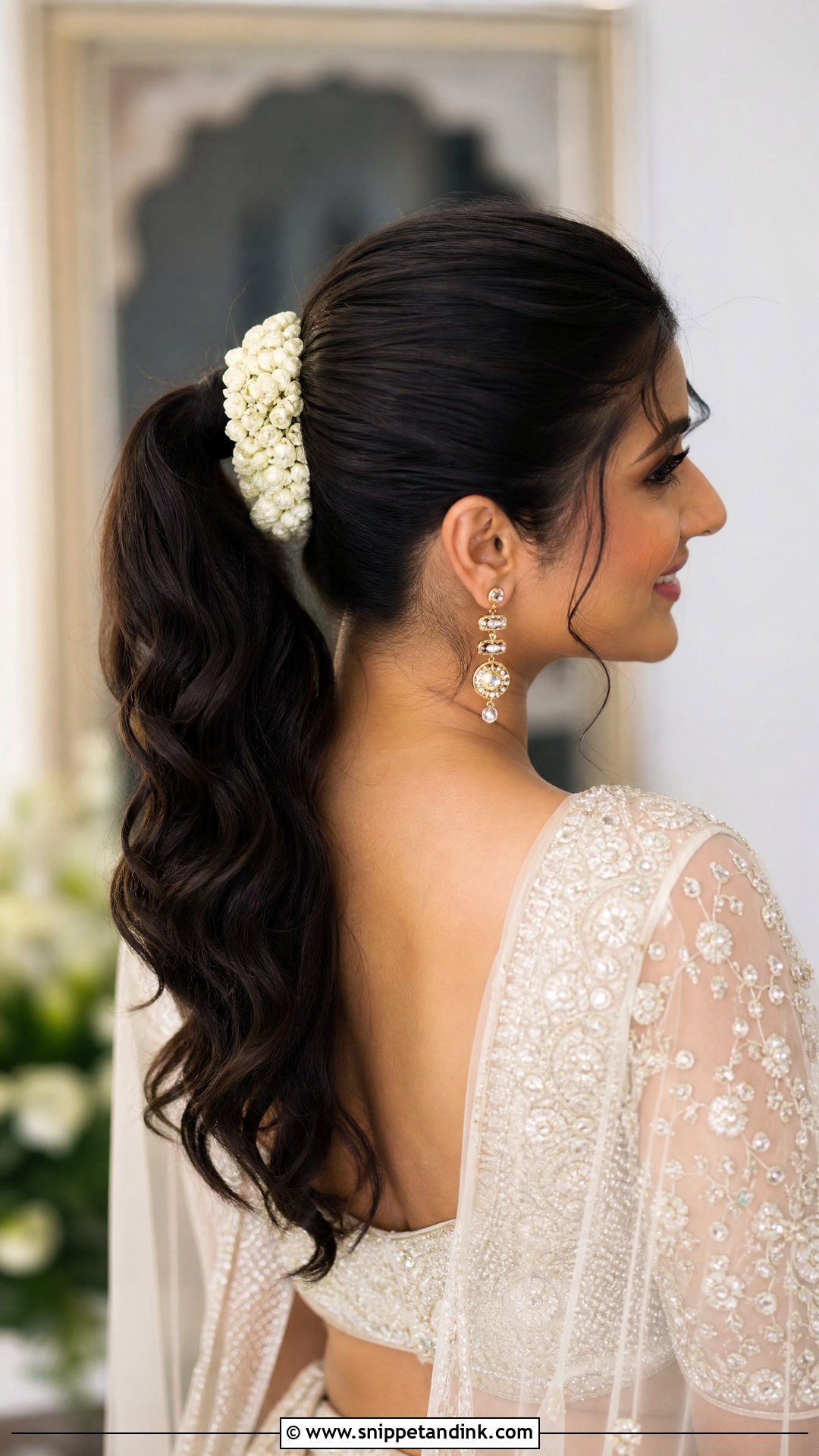
When a bride is tired of buns and braids by the sangeet, I suggest a ponytail. It suits that night, the reception or a modern outfit. Sleek or softly waved, it’s decorated with jasmine around the base, and small accents along the length make it more festive. It moves when you dance, which a bun never will. For fullness I add clip-in extensions, then wrap a small section of hair around the elastic before the gajra goes on, so the base stays clean. A long ponytail plus gajra gets heavy, so I secure it with two elastics and a pair of crossed pins underneath.
14. Bridal Side Bun With Gajra
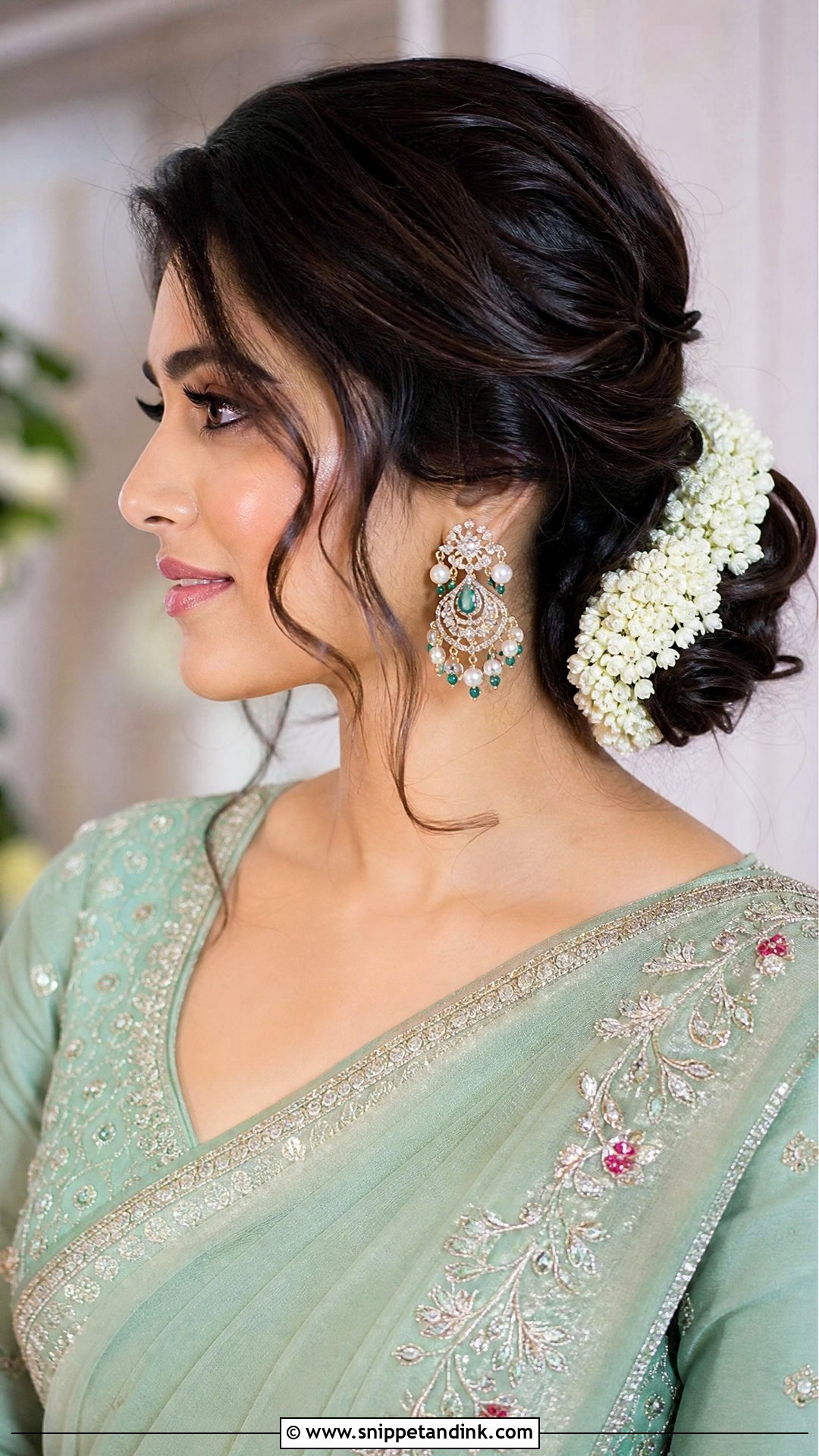
Setting the bun slightly to one side, low near the nape, gives you a graceful profile for close-up portraits. Jasmine wraps around or sits just above it. It flatters a side dupatta drape, a one-shoulder blouse detail or a statement earring on the open side. With a side part or gentle waves at the front, it’s softer than a centred bun. I keep the gajra following the curve of the bun rather than spreading across the side of the head, which quickly looks lopsided from the front.
15. Bridal Poola Jada With Gajra
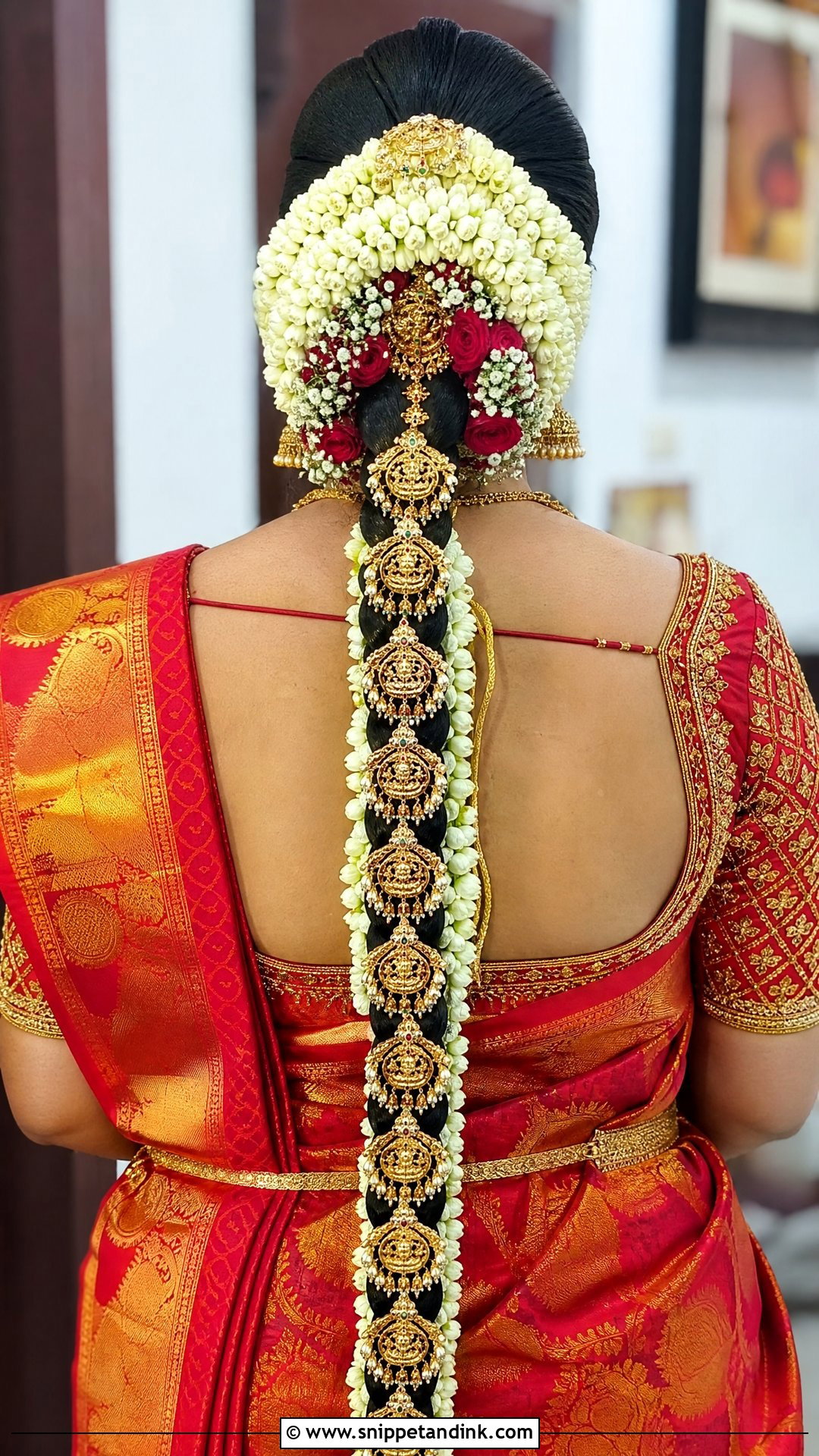
A bridal poola jada with gajra is the grandest look on this list: a long braid covered in fresh flowers and jasmine strands, sometimes finished with gold ornaments. With a silk saree and temple jewellery, the view from behind is the one guests remember. It’s heavy, though, and that’s the honest trade-off. I build it on a padded or extended braid base, sew or pin the flowers to that base rather than straight into your hair, and choose blooms with your florist that will still be fresh at the end of the muhurtham. Lightweight placement makes the difference between proud and exhausted.
Ordering the Gajra and Keeping It Fresh Overnight
Fresh gajra is strung from buds, not open flowers, and that’s deliberate. The buds open slowly over several hours, so the strings look fullest and smell strongest later in the day. That timing works for you if they’re handled properly.
- Tell the florist which hairstyle you’re doing. A wrap around a low bun needs a modest length; a braid covered from crown to tip, or a poola jada, needs a great deal more. I can estimate it for you at the trial.
- Ask for tightly closed, evenly white buds. Buds already opening, or brown at the tips, will be limp by evening.
- If the gajra arrives the night before, wrap it loosely in a damp cotton cloth, put it in a container and keep it in the fridge. Never the freezer, which turns the petals translucent.
- Take it out about half an hour before styling so condensation doesn’t drip onto your hair or blouse.
- Keep a spare string chilled for the reception if you’re changing hairstyles between events.
A Word About the Scent at Close Range
Jasmine wrapped right behind your head is a lot of fragrance for a long day. Some brides find it brings on a headache by afternoon, especially in a warm hall. If strong smells bother you, wear a fresh string at home for a short test first, skip heavy perfume on the day, and consider a thinner fresh wrap over artificial flowers. If you’ve reacted to flowers on your skin before, do that test well ahead of committing to a full braid of them.
Plan the Flowers Around Your Longest Ritual
Gajra earns its place by doing three things at once: it carries tradition, it smells wonderful, and it softens even a very structured style. A neat bun, long braid, poola jada, half-up waves or ponytail can all wear it. What decides the right one for you is less about looks than logistics: how long the ceremony runs, how heavy your jewellery is, how hot the venue gets and how much weight you can comfortably carry on your head. A heavily flowered braid looks magnificent only if it’s anchored well enough that you forget about it during the pheras. Do your trial with the extensions, dupatta and headpieces in place, and wear it for an hour before you decide.
You'll Like These Ideas:


Leave a Reply