
Most of the styles brides show me for a Hindu wedding were photographed in the first ten minutes after they were finished. What I care about is how they look after the pheras, the garland exchange and a long evening of greeting relatives. This list covers jasmine buns, the veni braid, gold-ornamented plaits and modern open hair for the sangeet and reception. With each one, I’ve written what holds it up, the hair it needs and the point where it usually gives way, so you can choose with your own hair in mind.
Why I Ask Brides to Skip the Champi This Week
Many Hindu brides grow up with a weekly hair oiling, and in the run-up to the wedding a mother or aunt often offers an extra champi. It’s good for the scalp. It’s bad for a bridal updo if it happens too late. Oil coats the hair shaft so that pins slide, curls drop and flowers won’t stay put, and one wash rarely removes all of it.
I ask brides to have their last oiling at least three days before the wedding, then wash twice with a clarifying shampoo and use conditioner on the lengths only. The best hair to pin is washed the day before, not that morning. Slightly lived-in hair has grip. Freshly washed, silky hair is the hardest thing in the world to keep in a bun.
Avoid any new treatment, colour or cut in the last two weeks. A gloss can make hair too slippery, a fresh cut may leave short layers that poke out of braids, and colour that hasn’t settled can look different under flash. If you want any of those, do them a month ahead and bring the result to your trial.
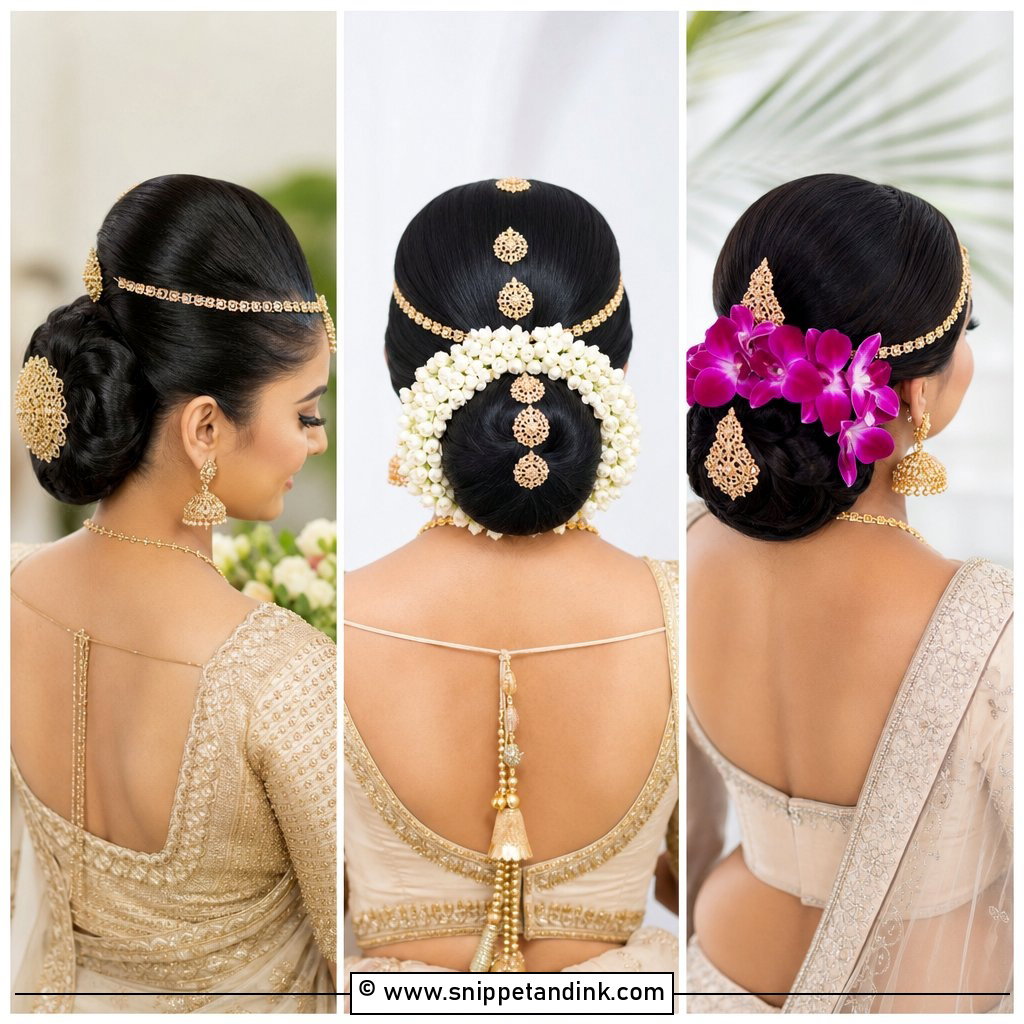
1. Traditional Jasmine Gajra Bun
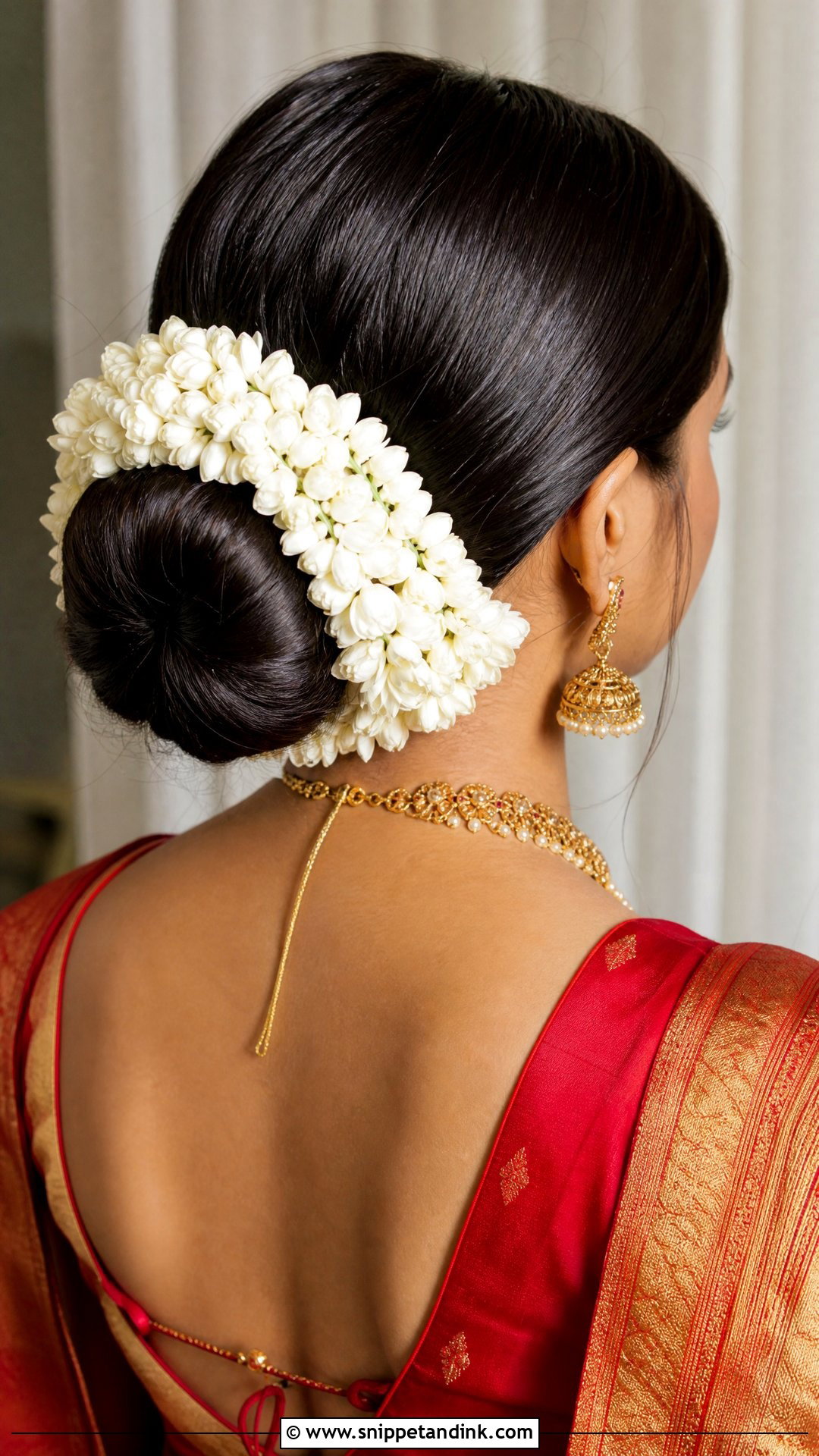
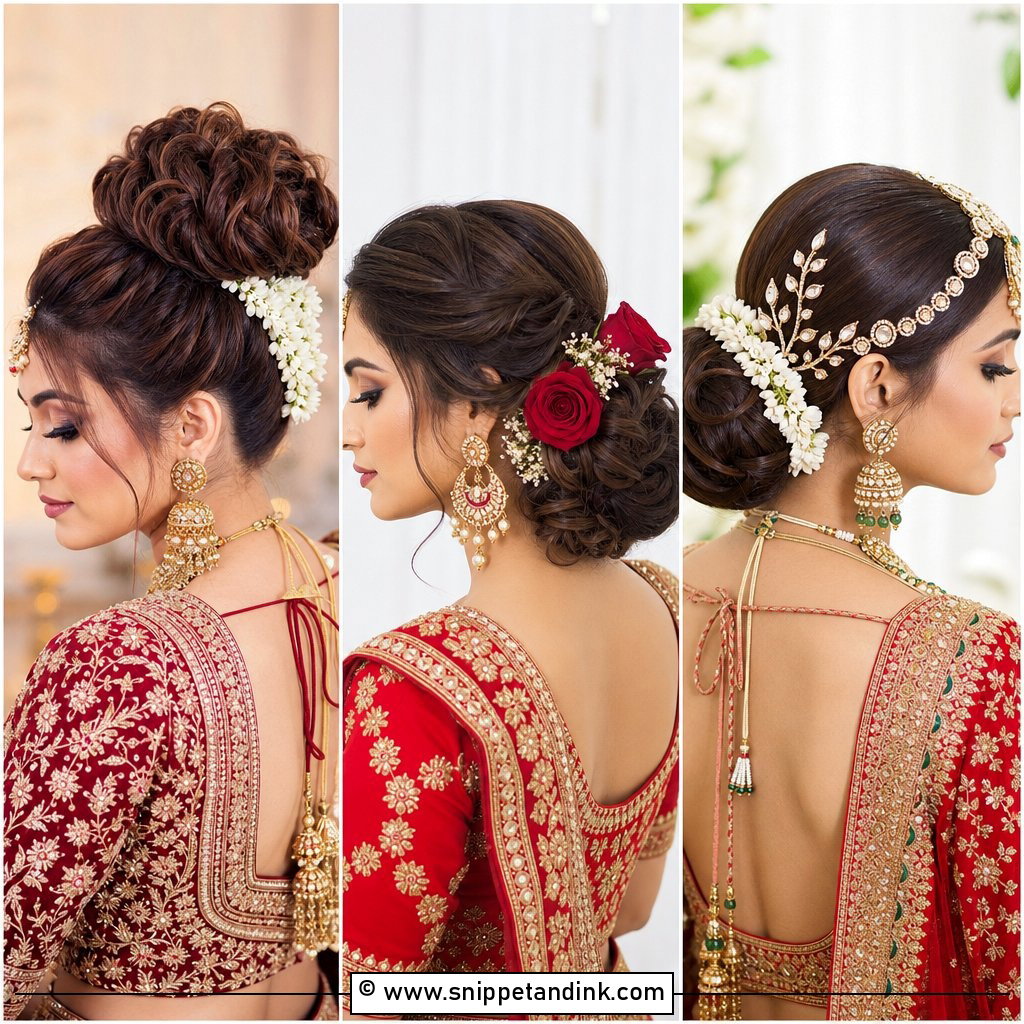
A low, sleek bun ringed with fresh white jasmine is the look I’m asked for most at Hindu ceremonies, and it rarely lets a bride down. The gajra is wound around the bun in a full circle, and for many families it stands for purity and a peaceful marriage. I smooth the hair with a little gel and a boar-bristle brush, pin the bun over a small donut so the gajra has something firm to wrap, and then pin the strings every few centimetres rather than at the ends only. Add a sparkling maang tikka and it works with any saree or lehenga. The scent lasts most of the day if the buds were bought closed.
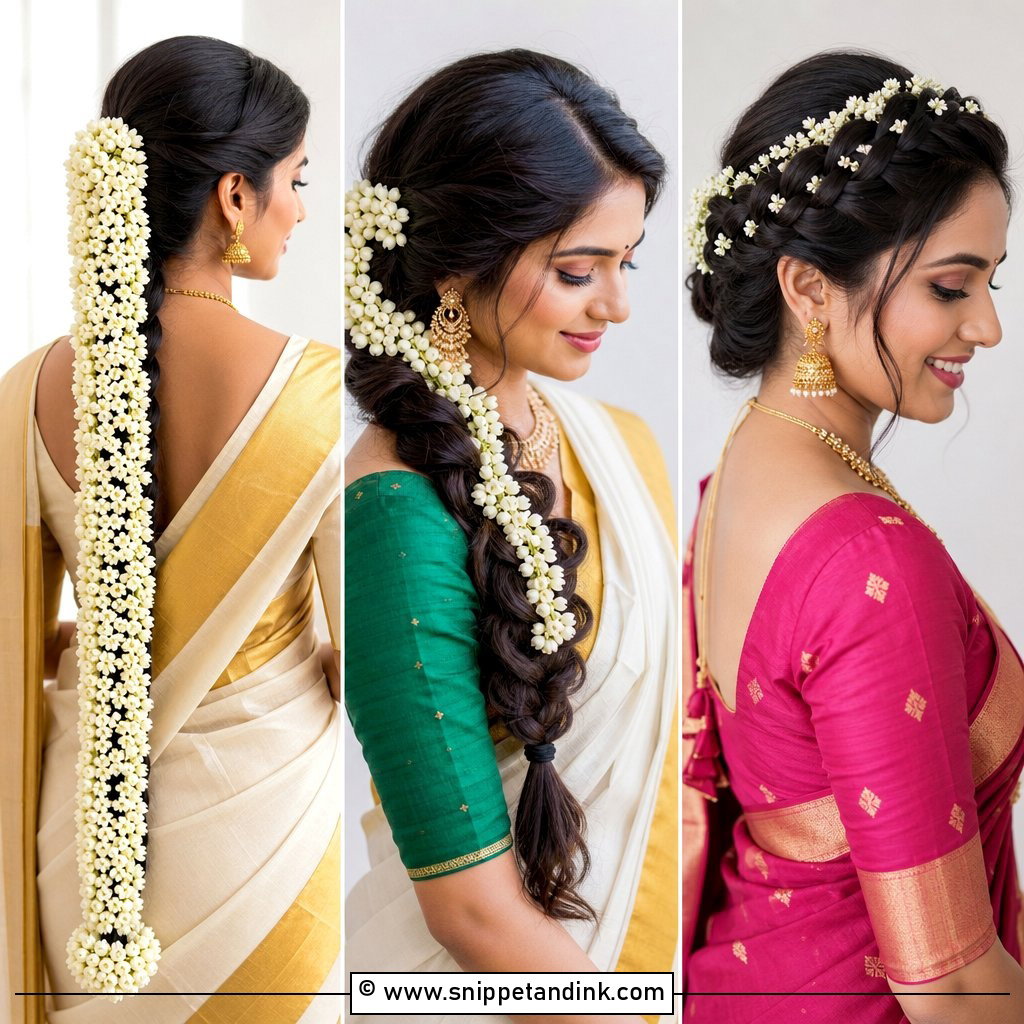
2. South Indian Veni Braid
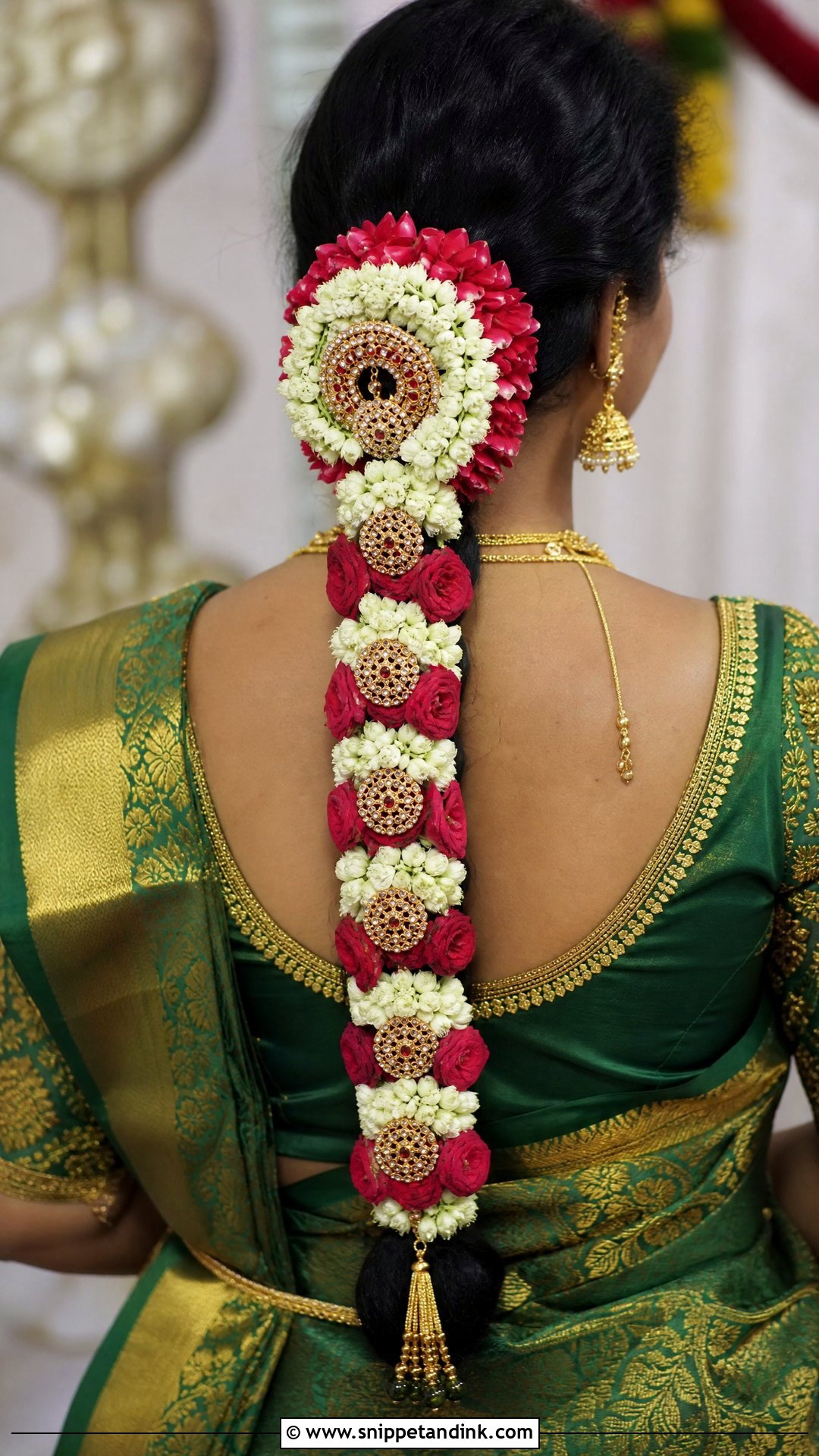
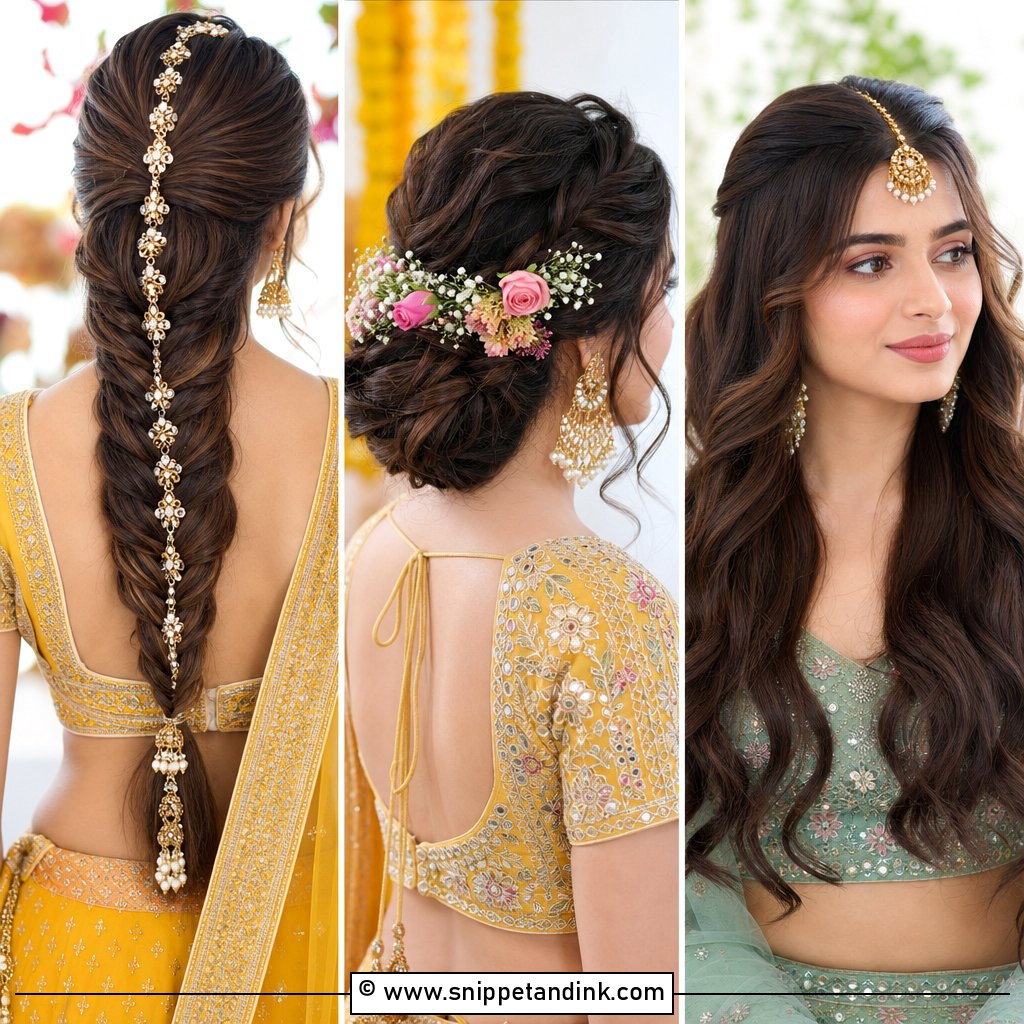
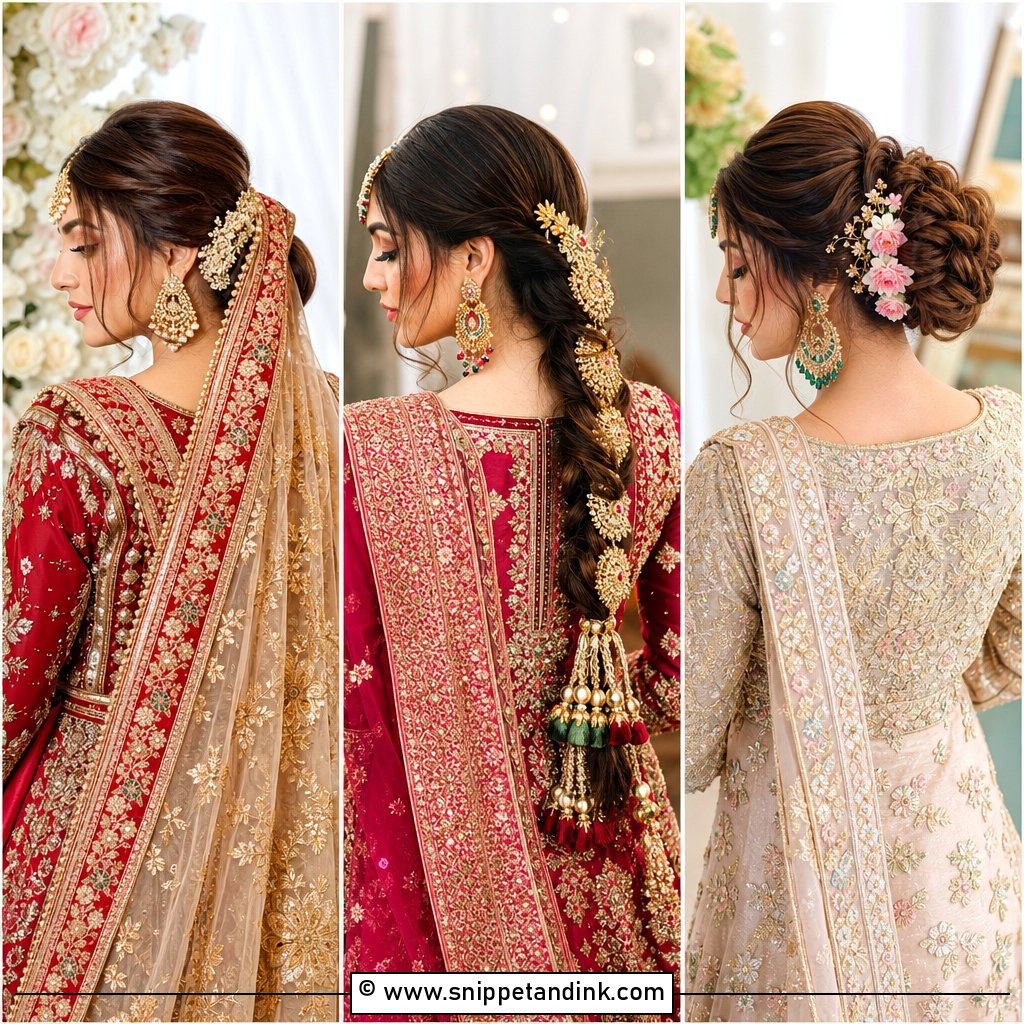
The veni braid needs length, and there’s no getting around that. Hair is plaited into one long braid, then dressed with rings of jasmine, roses and gold ornaments down its full length, often ending in a jada billa. Each ring adds weight, so I start the braid from a tight elastic at the crown and build the flowers from the top down, securing each ring to the braid, not just looping it over. With a Kanjeevaram silk and temple jewelry it carries a lot of heritage. If your hair stops at the shoulder blades, a matching braid extension is standard and nobody will see the join under the flowers.
3. Floral Donut Bun With Pins
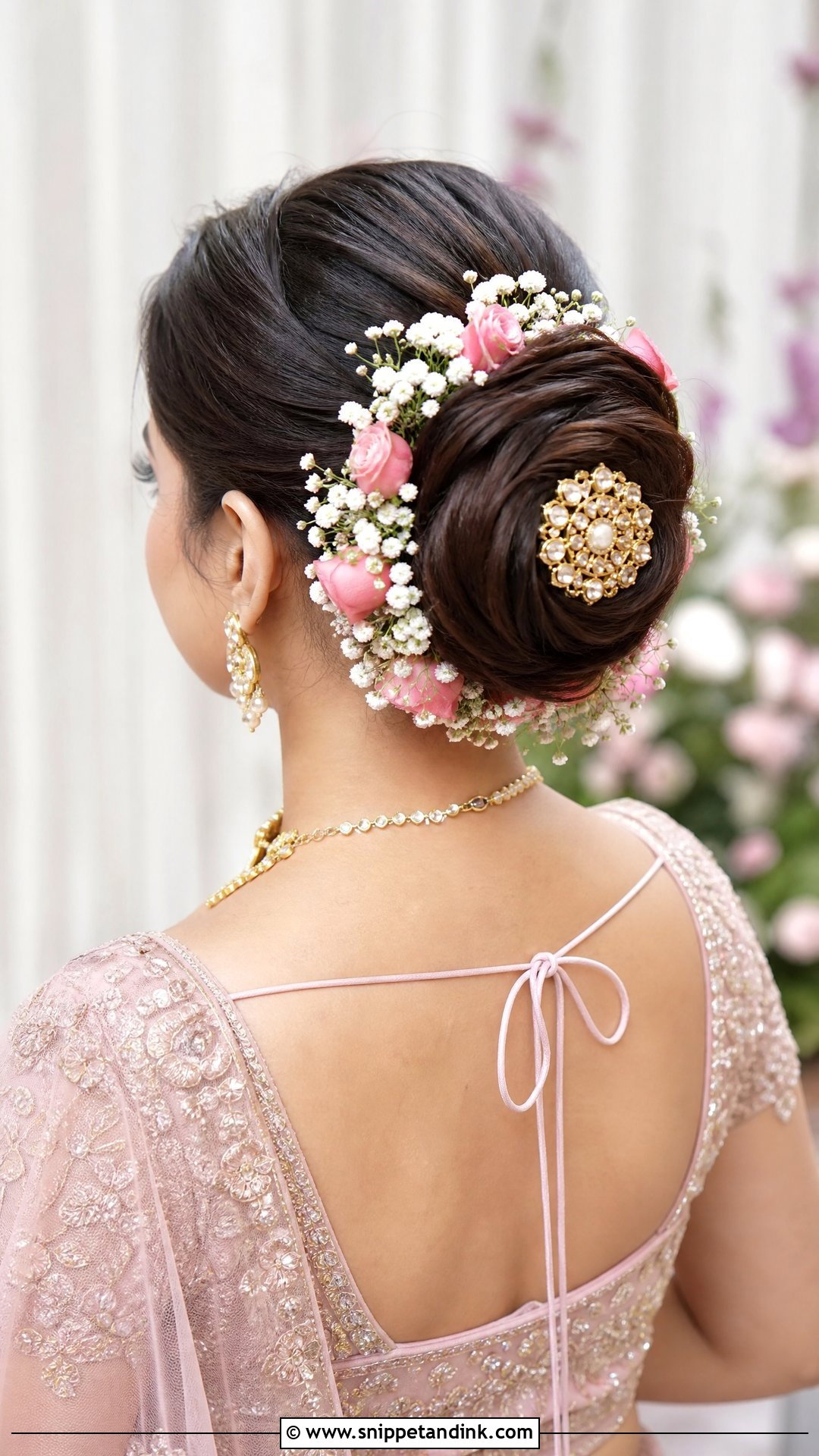
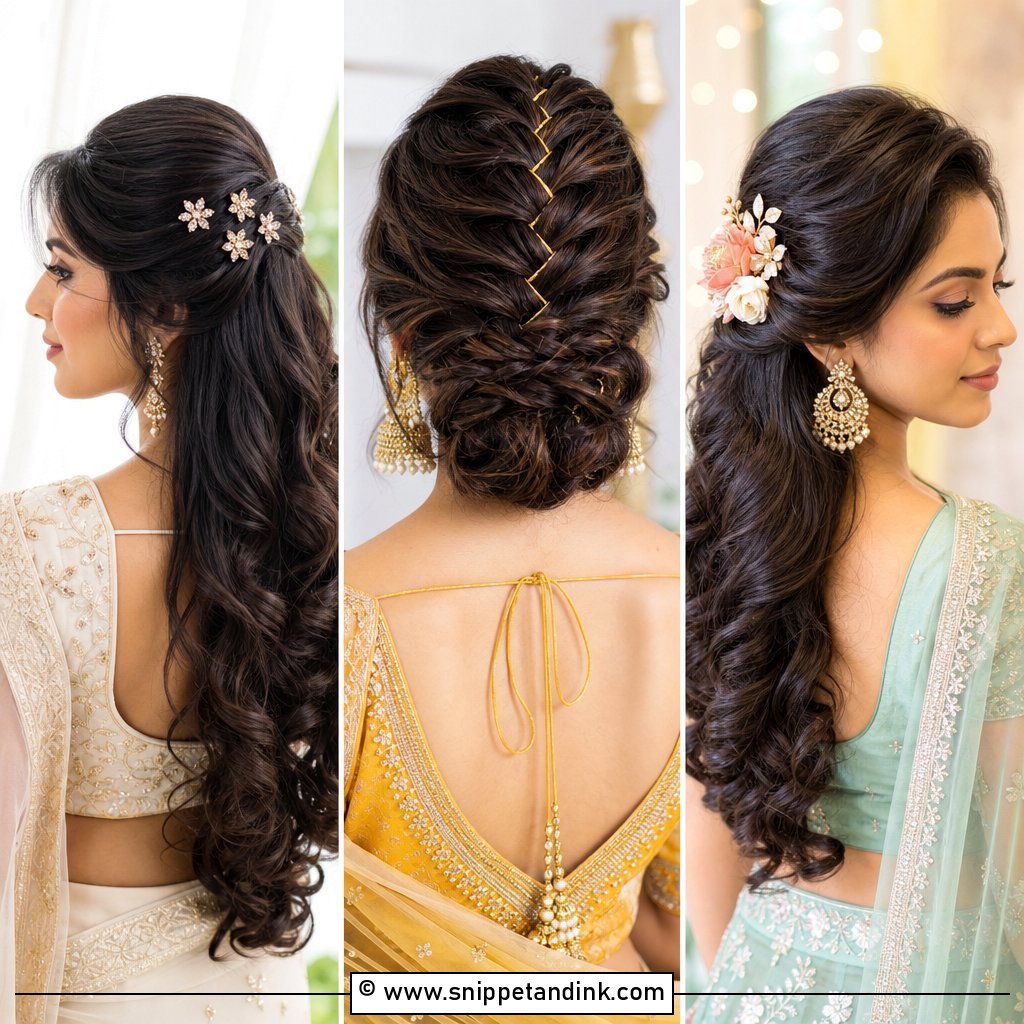
A donut base is the honest secret behind most full bridal buns, and it’s the right choice for fine hair. The hair is smoothed over a padded ring, tucked under, and finished with a circle of flowers and a statement juda pin in the centre. Because the donut gives a firm base, the shape holds through ceremonies and dancing. Match the padding colour to your hair, since dark hair over a light donut shows through at the edges. Jasmine, roses or orchids can follow your outfit, and orchids last longest in heat.
4. Half-Up Half-Down With Maang Tikka
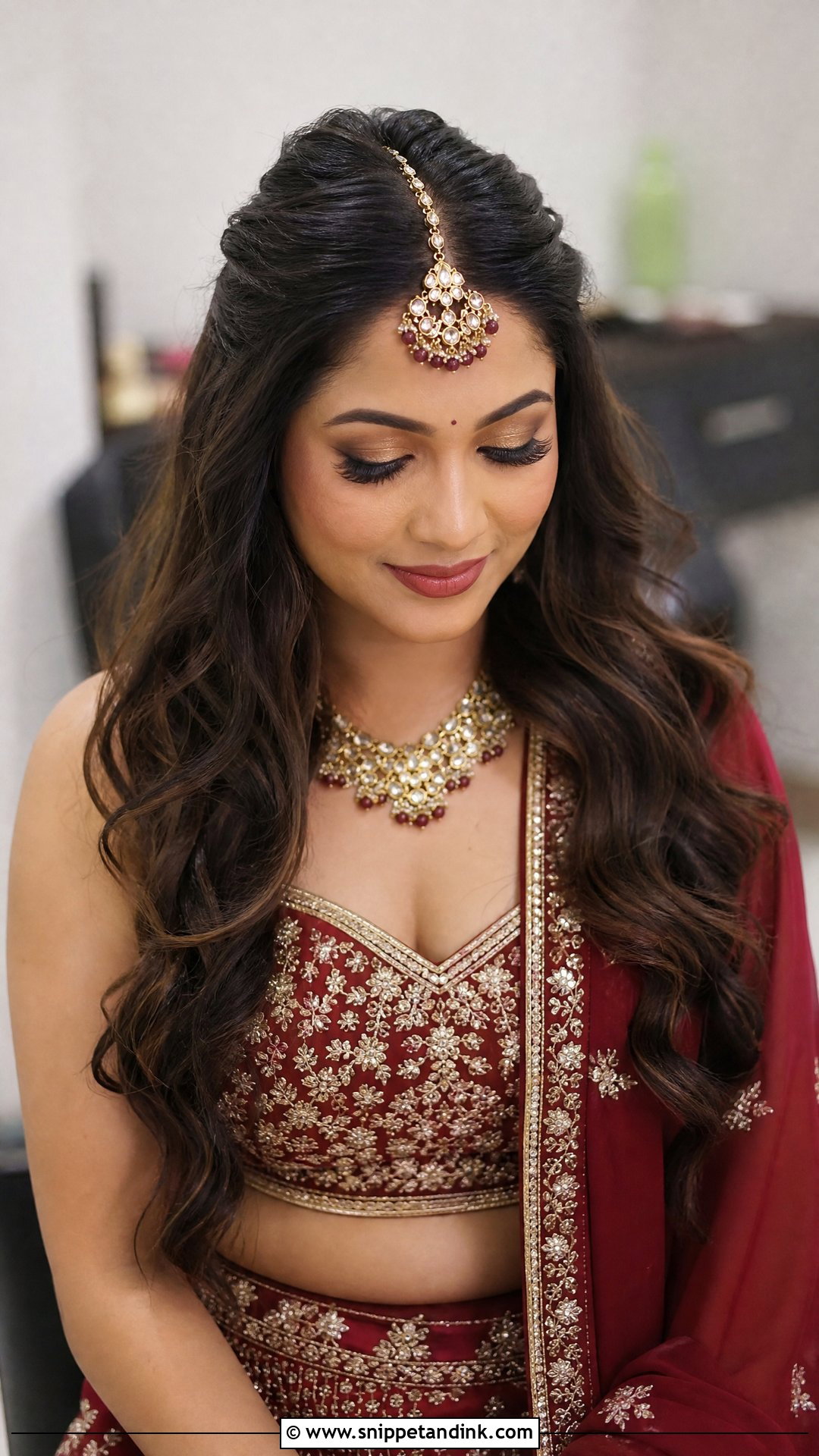
Can’t decide between an updo and open hair? Here the top section is pulled back into a small twist or bun, which also gives the maang tikka a firm place to hook in, and the rest falls in waves. That small twist is doing more work than it looks, so I build it on a hidden mini ponytail. It shows off length and keeps hair off the face. Pearl pins or a few flowers along the twist finish it. For the main ceremony under a dupatta, the curls at the back will flatten; I’d save it for the reception if the dupatta goes over your head.
5. Messy Low Bun With Baby’s Breath
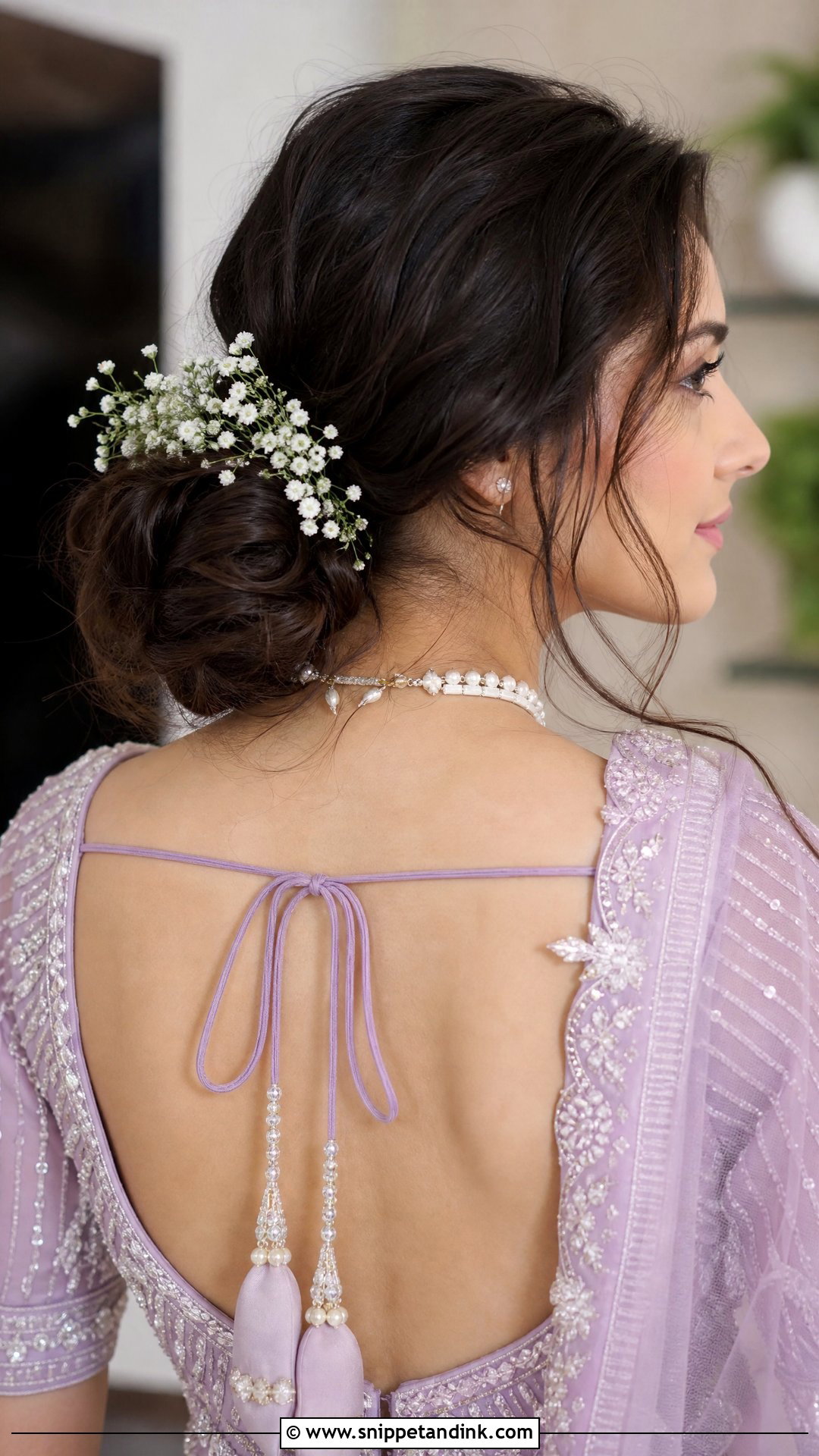
A messy low bun is softer than any other style on this list. It sits at the nape with loose texture and a few face-framing strands, with baby’s breath tucked through it. Baby’s breath is the right flower here because its tiny heads tuck easily into texture and survive being sat on. Messy doesn’t mean loose, though: I pin every section and then pull out texture with fingers at the end. It suits pastel lehengas, minimal jewelry and mehendi or a small ceremony. In a humid climate, keep the face-framing pieces short, since long ones turn frizzy first.
6. Fishtail Braid With Fresh Flowers
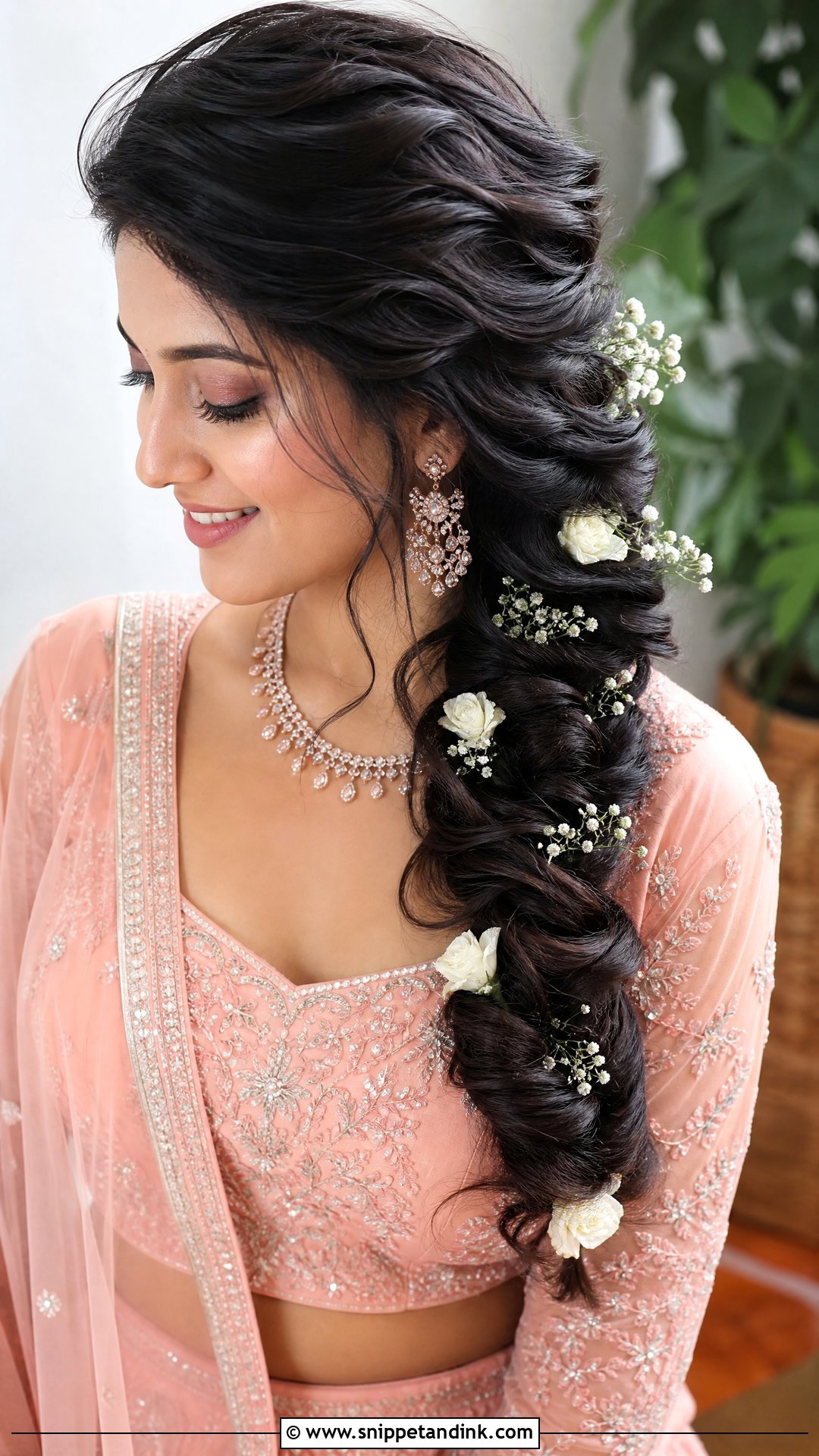
A fishtail looks harder than it is, and the trick is in the finishing. I pull the hair back loosely at the crown for lift, weave the fishtail in narrow sections, then gently tug the outer edges to widen it. Small flowers tucked into the weave sit securely because the sections are so close. Long hair, or extensions, gives a thick plait. Worn to the side with baby’s breath, it suits sangeet, mehendi and the reception. Hair with lots of short layers will poke out along the braid, so a smoothing cream before weaving helps.
7. Pearl-Lined Braided Bun
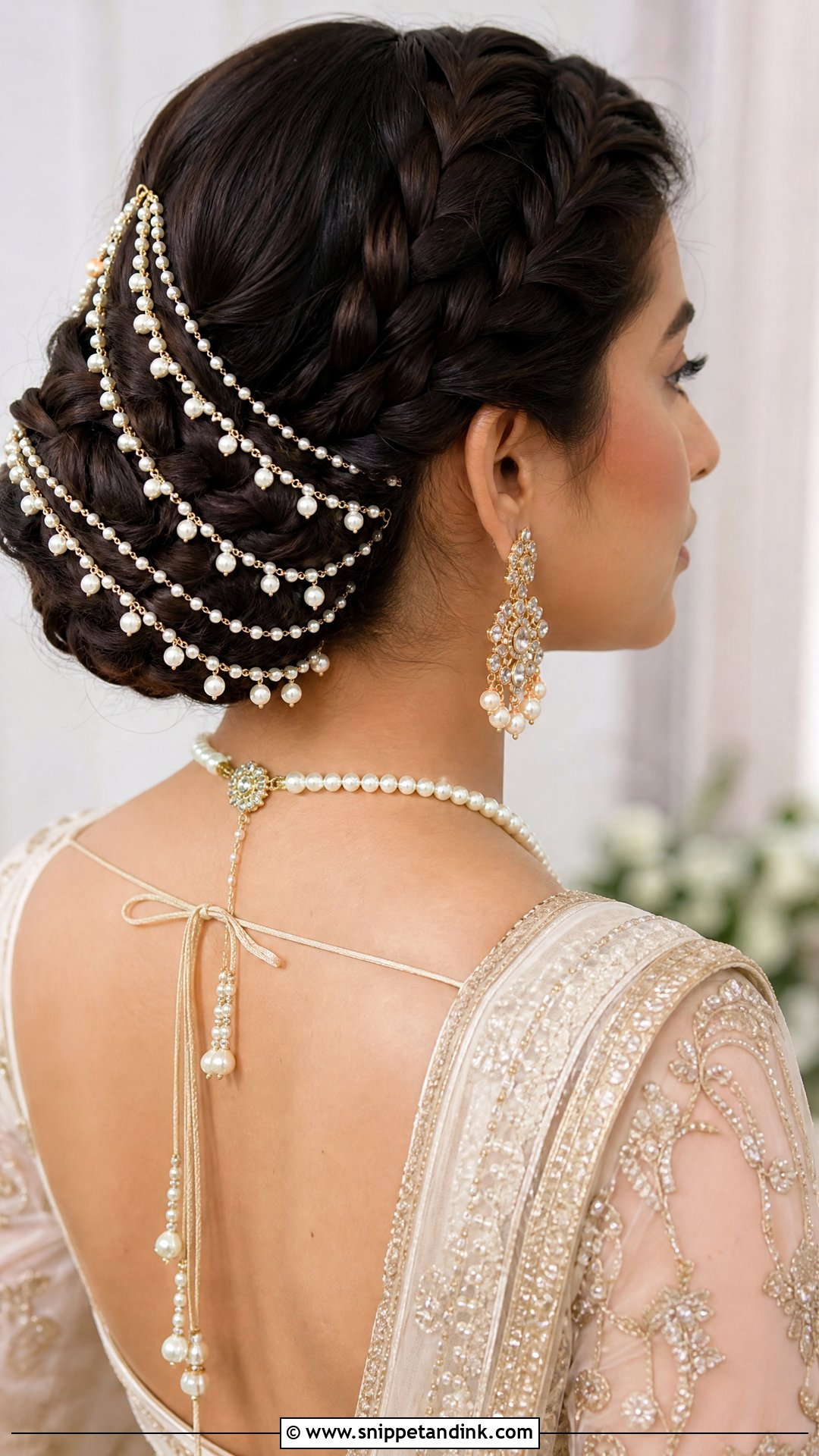
Pearls have become a common alternative to flowers, and on a braided bun they look more refined than on a plain one. The hair is braided, coiled into a bun, then draped with pearl chains around and across. I attach the pearls with small U-pins through the braid itself, because pins in the smooth surface slide. It goes with pastel or ivory outfits and pearl jewelry sets. A downside: pearl strings add weight to the back of the head, so I keep the bun close to the nape to stop it pulling forward.
8. Side-Swept Open Curls
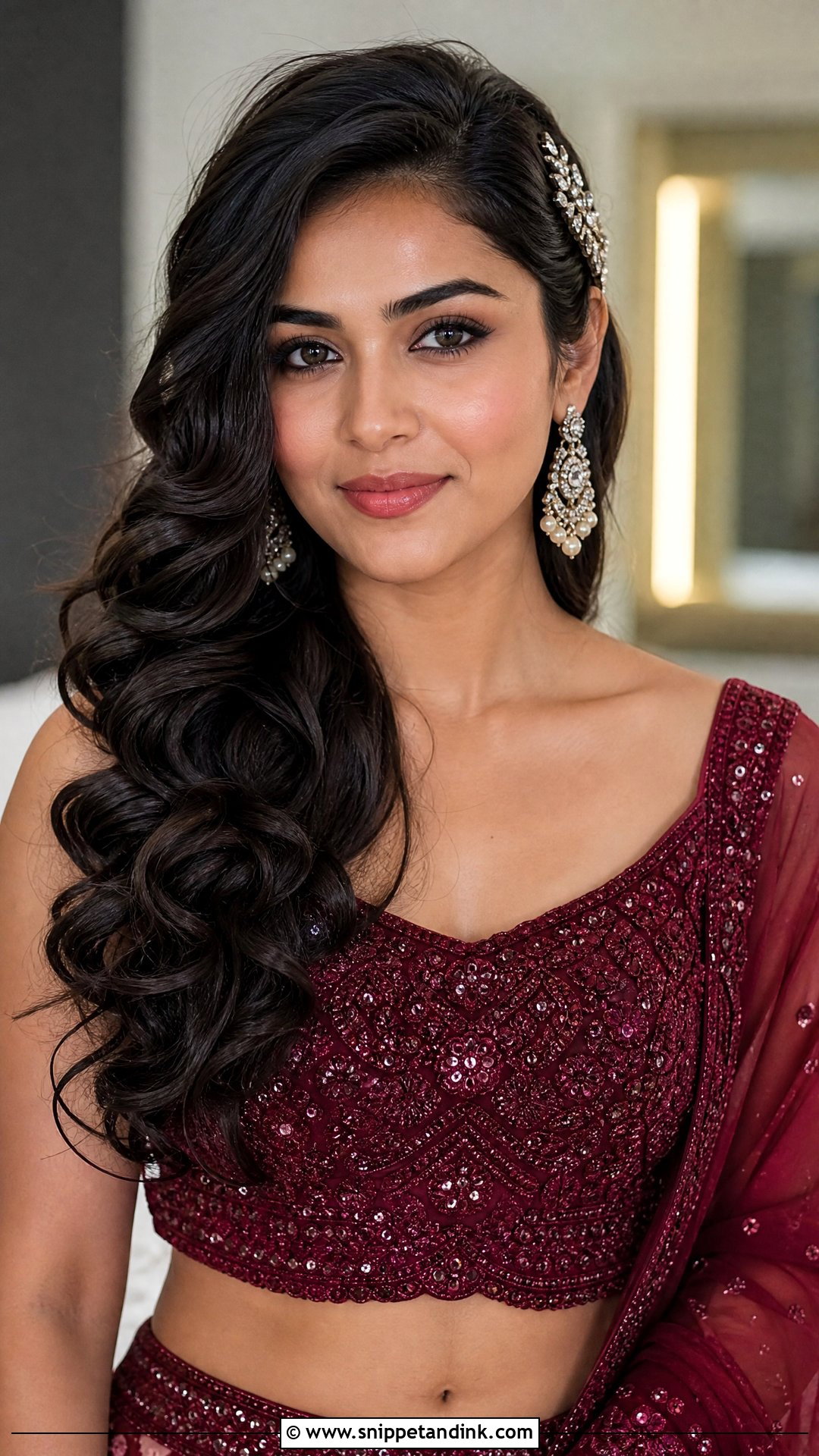
Want to show your full length without much fuss? All the hair sweeps over one shoulder in bouncy curls, held in place by hidden pins behind the far ear. This is better suited to an outdoor reception than a long ceremony, because curls drop in heat. I set them with hot rollers and let them cool completely, which makes a big difference to how long they last. A few diamond pins near the parting add shine. It suits a glamorous, Bollywood-inspired vibe and shows off a heavy lehenga.
9. Braided Mohawk Into Side Bun
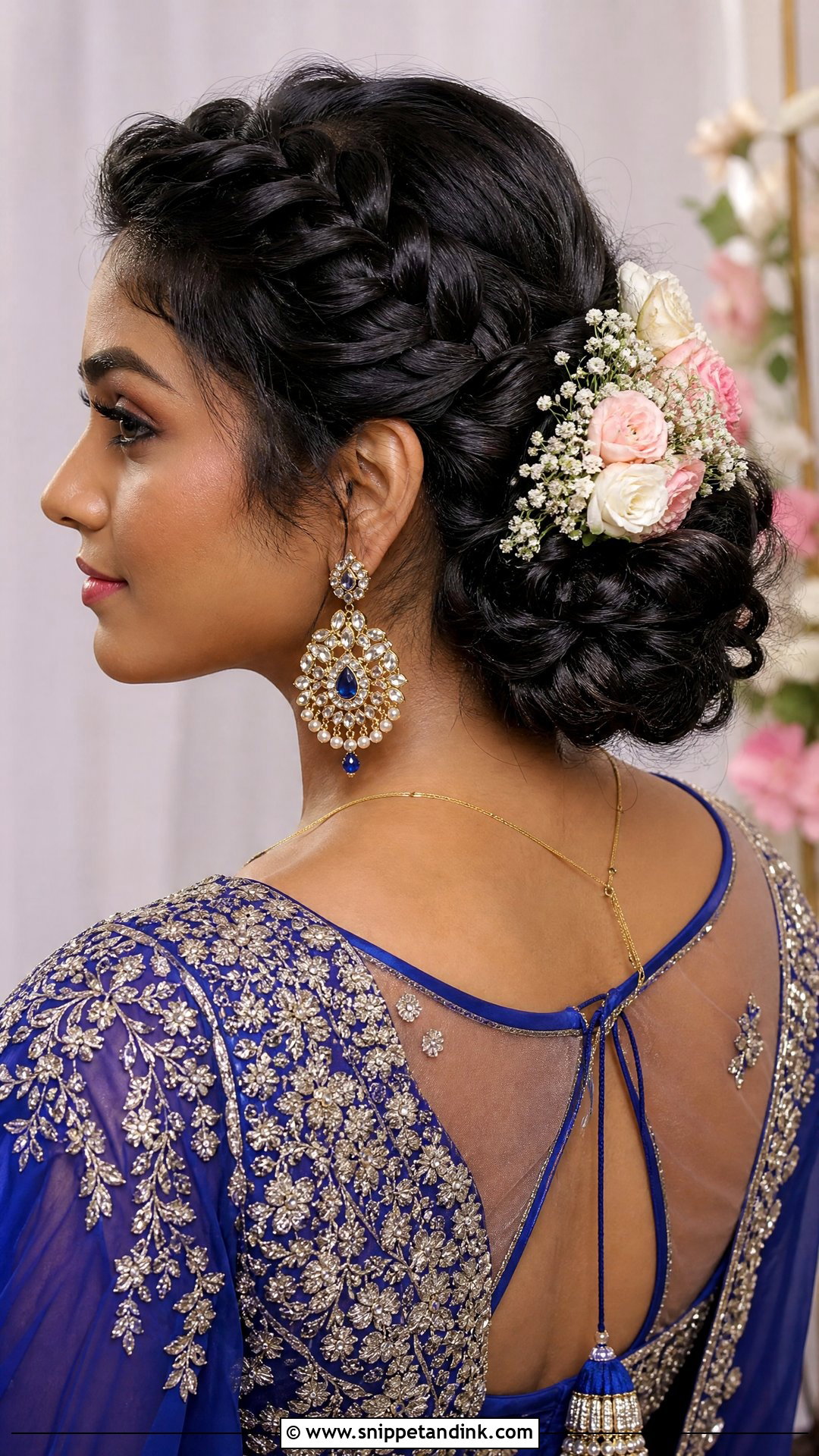
This one is for a bride who wants her hair noticed. A volumised braid runs along the centre of the crown and leads into a textured side bun, with clustered flowers or jeweled pieces on the bun. I tease the roots under the braid lightly before plaiting, so the centre stays raised. It suits grand receptions with heavy earrings and a bold outfit. Under a dupatta it doesn’t work at all, as the raised braid lifts the fabric, so keep it for the evening.
10. Classic Sleek Low Bun
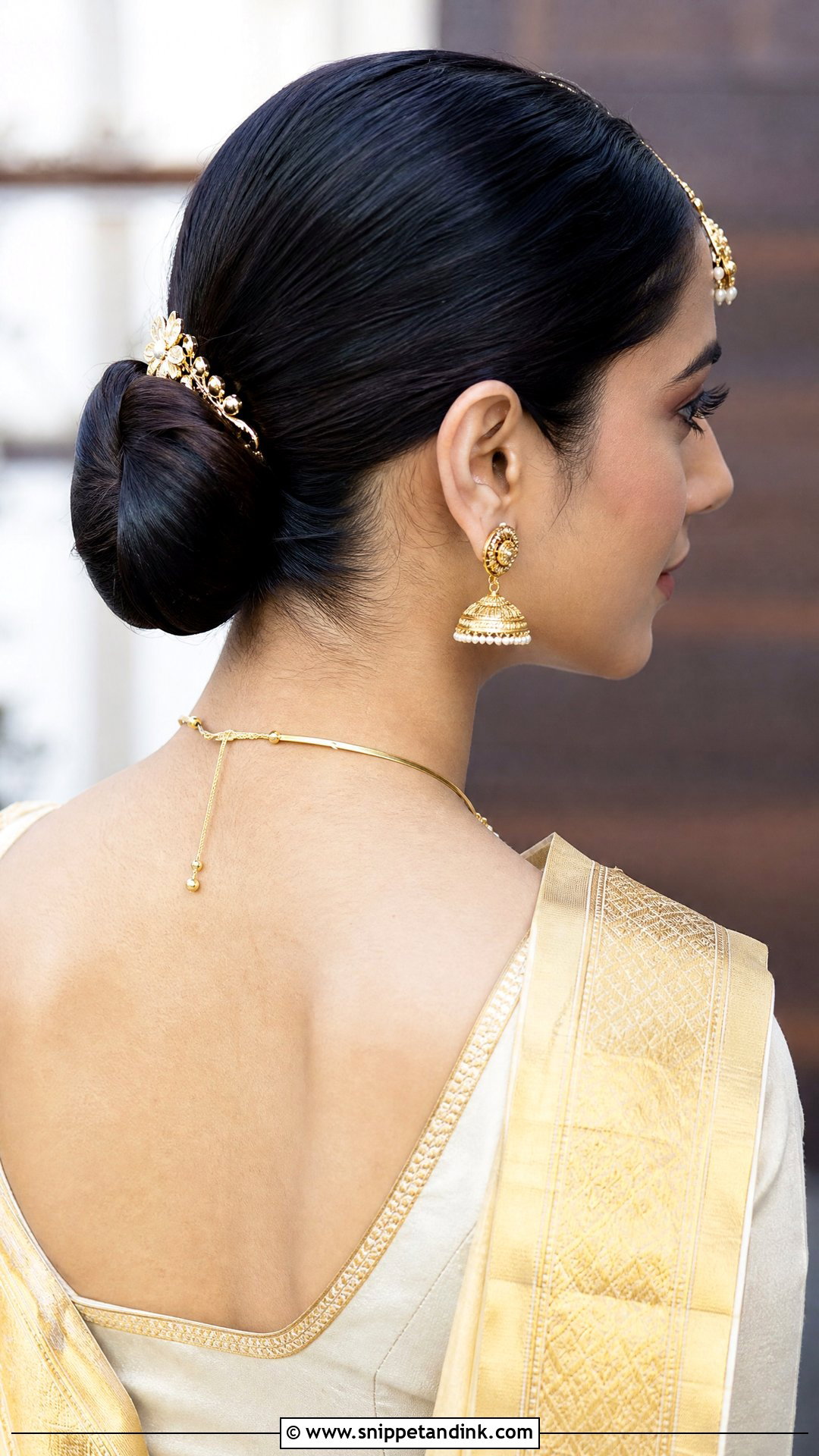
Sometimes simplicity speaks loudest. Hair is smoothed back tightly into a neat bun at the nape, so the jewelry and maang tikka take centre stage. Sleek is hard to fake: every bump shows, so I brush through in sections with a gel or pomade and a fine-tooth comb, and lock flyaways with a toothbrush and a little hairspray. A delicate hairpin or small gajra adds an accent. It sits well under any dupatta and goes with both sarees and lehengas. I’d avoid it if your hairline is very sparse at the temples, as pulling tight shows it.
11. Curly Back Bun With Gajra
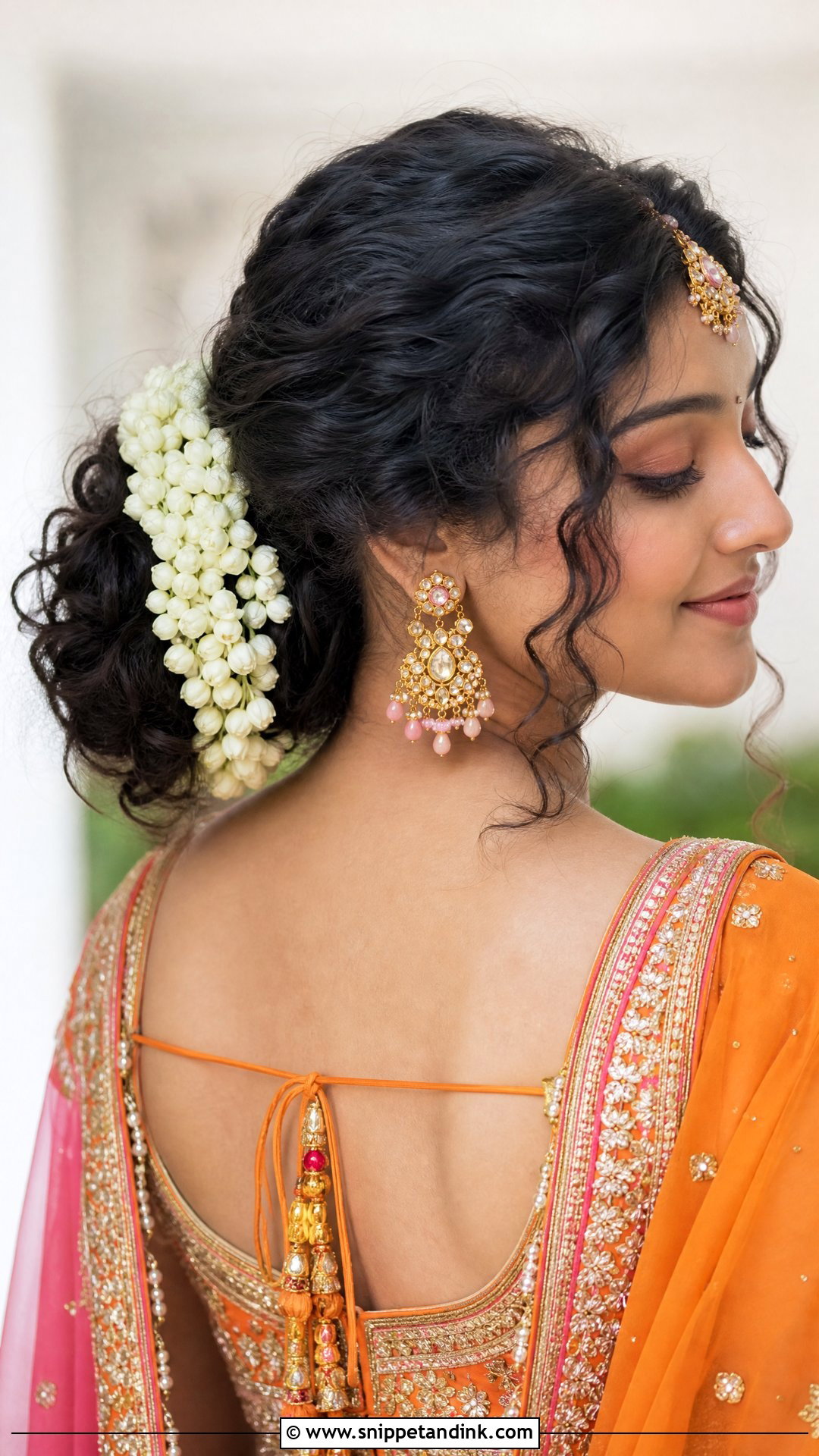
Natural curls work beautifully for a bridal bun if you let them stay curls. I gather them loosely at the back, keeping the curl pattern intact rather than brushing it out, and pin with large U-pins that slide through without breaking the curl. Wrap a fragrant jasmine gajra around the base. Curly hair holds pins better than straight hair, so this can last longer than a sleek bun. Style it on second-day hair with a curl cream rather than fresh-washed, which can puff up.
12. Bridal Bun With Diamond Accessories
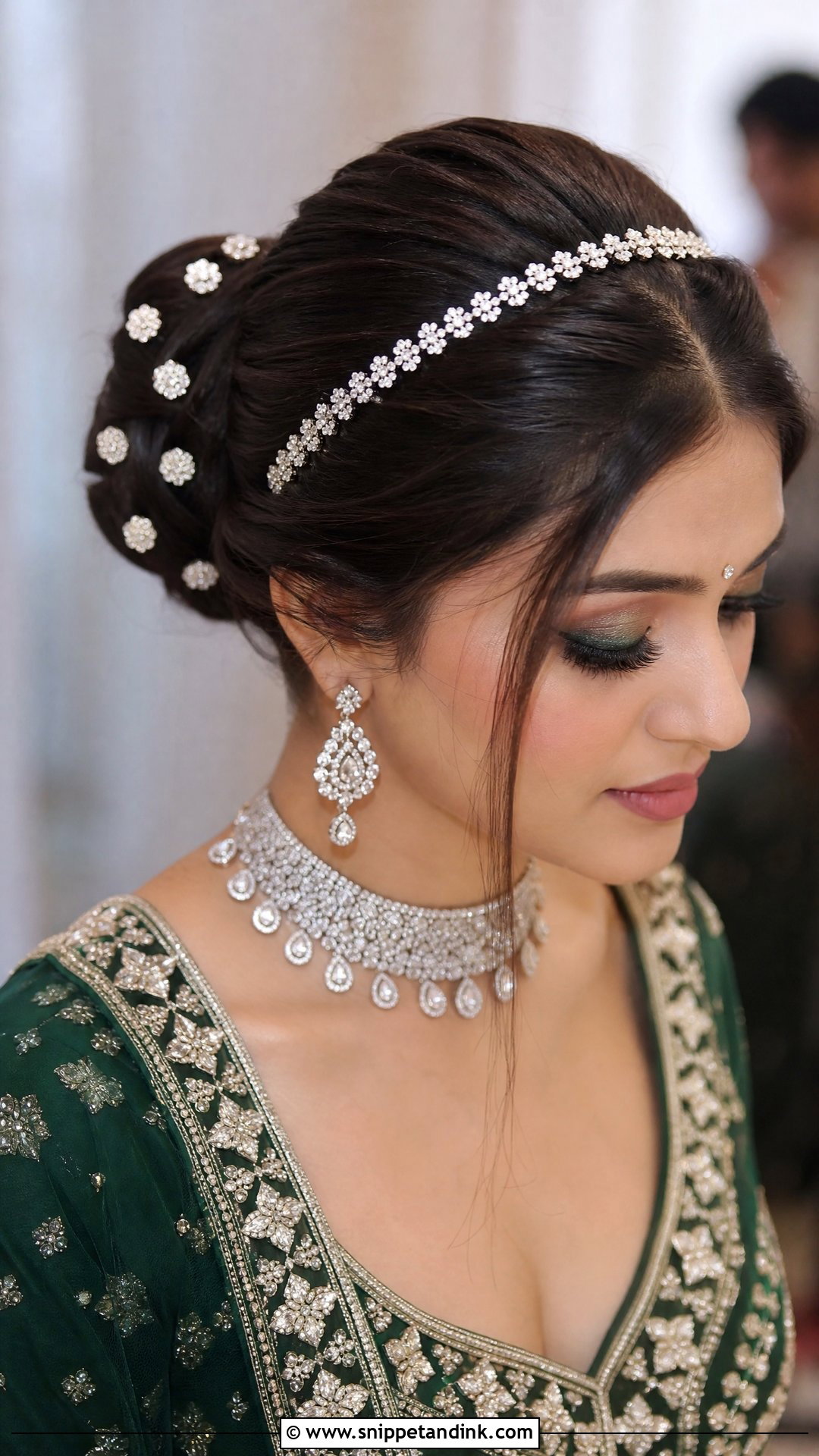
Swap flowers for sparkle: a sleek or braided bun set with crystal pins, jeweled barrettes or a diamante band. It’s a reception and evening style, and it photographs as a soft sparkle rather than glare if the pieces are spaced out rather than packed together. Pair it with diamond jewelry and a richly embroidered lehenga. Barrettes and pins need tension to stay, so I put each one into a small pinned section, not just into the smooth bun surface.
13. Loose Romantic Waves
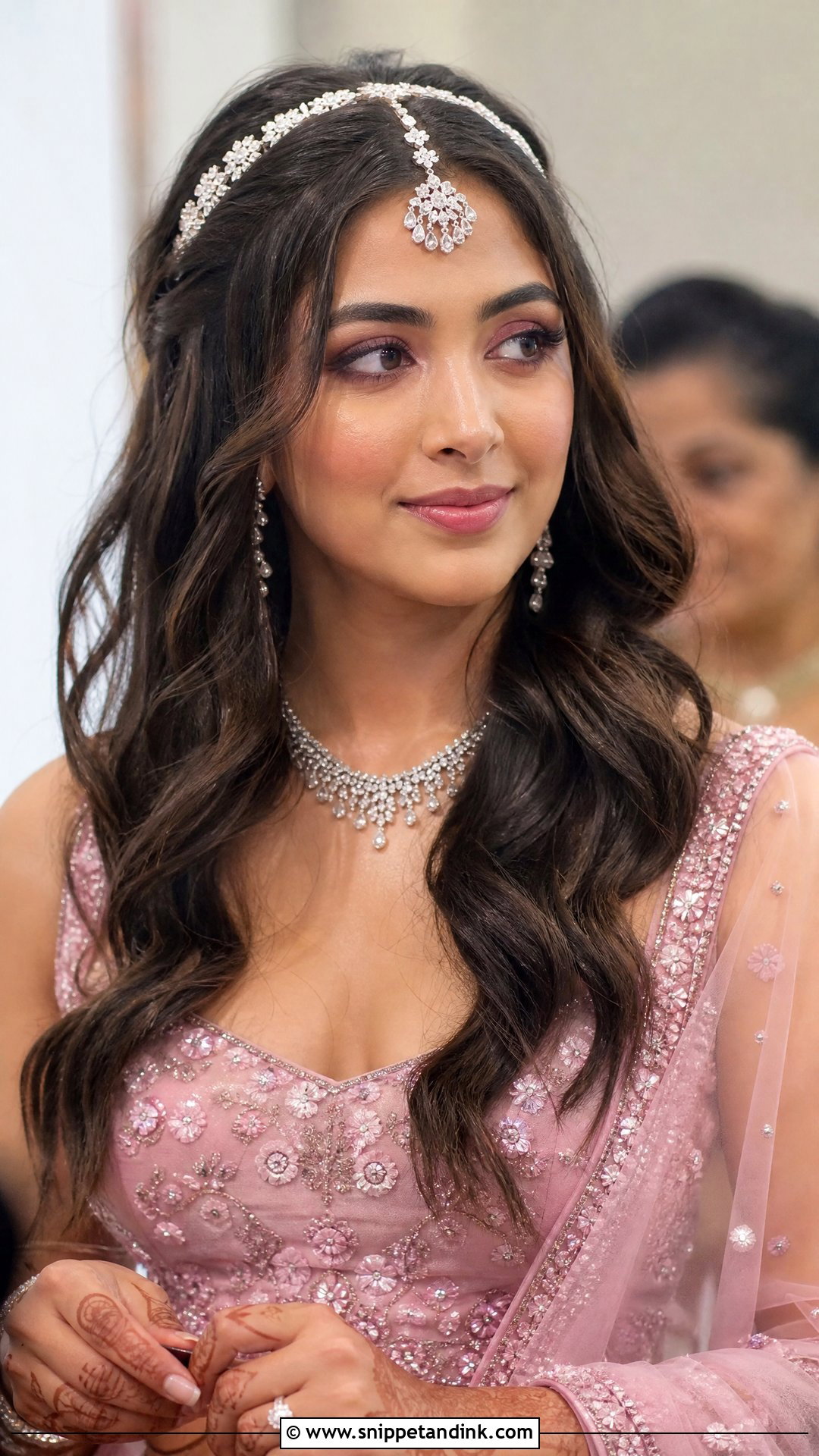
Loose waves are the gentlest option for sangeet nights, cocktail functions and modern receptions. Hair stays down in soft waves that frame the face. A headpiece, a maang tikka or a few delicate pins give it a bridal finish. Waves need a little grip to last: I prep with a heat protectant and light mousse, curl in alternating directions, and let everything cool before brushing out. They suit most lengths, although on hair shorter than the collarbone, waves can look more like a blow-dry than a bridal style.
14. Floral Crown Updo
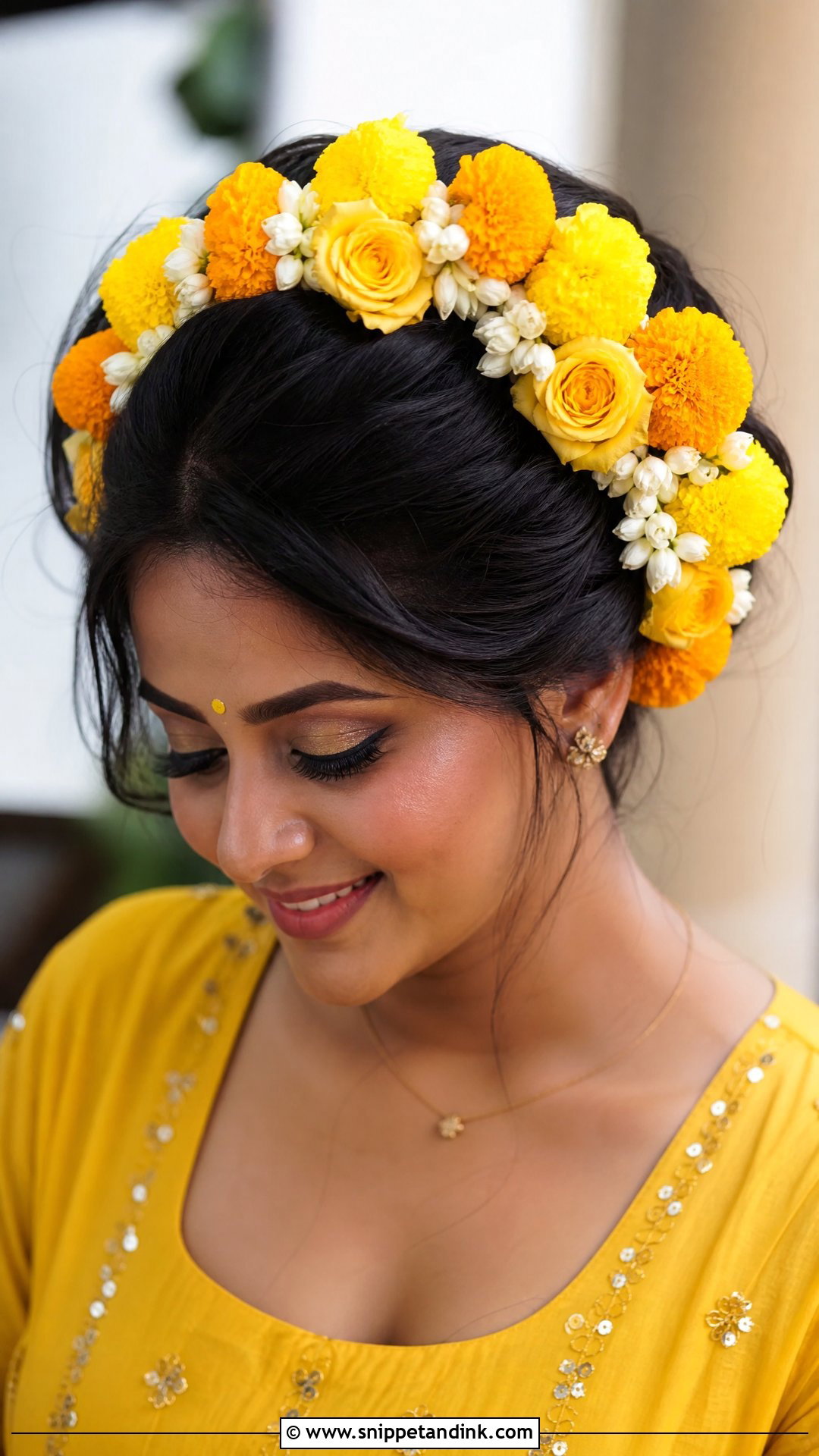
A floral crown updo sweeps the hair up and rings it with roses, marigolds and jasmine. It belongs to daytime ceremonies, haldi and mehendi, where bright flowers feel festive. For haldi, use flowers you won’t mind staining, because turmeric marks pale petals. The crown carries real weight, so I build it on a base braid circling the head and pin the flowers to the braid. Choose flowers by colour, but also by toughness: marigolds and orchids last; roses bruise after a few hours in the heat.
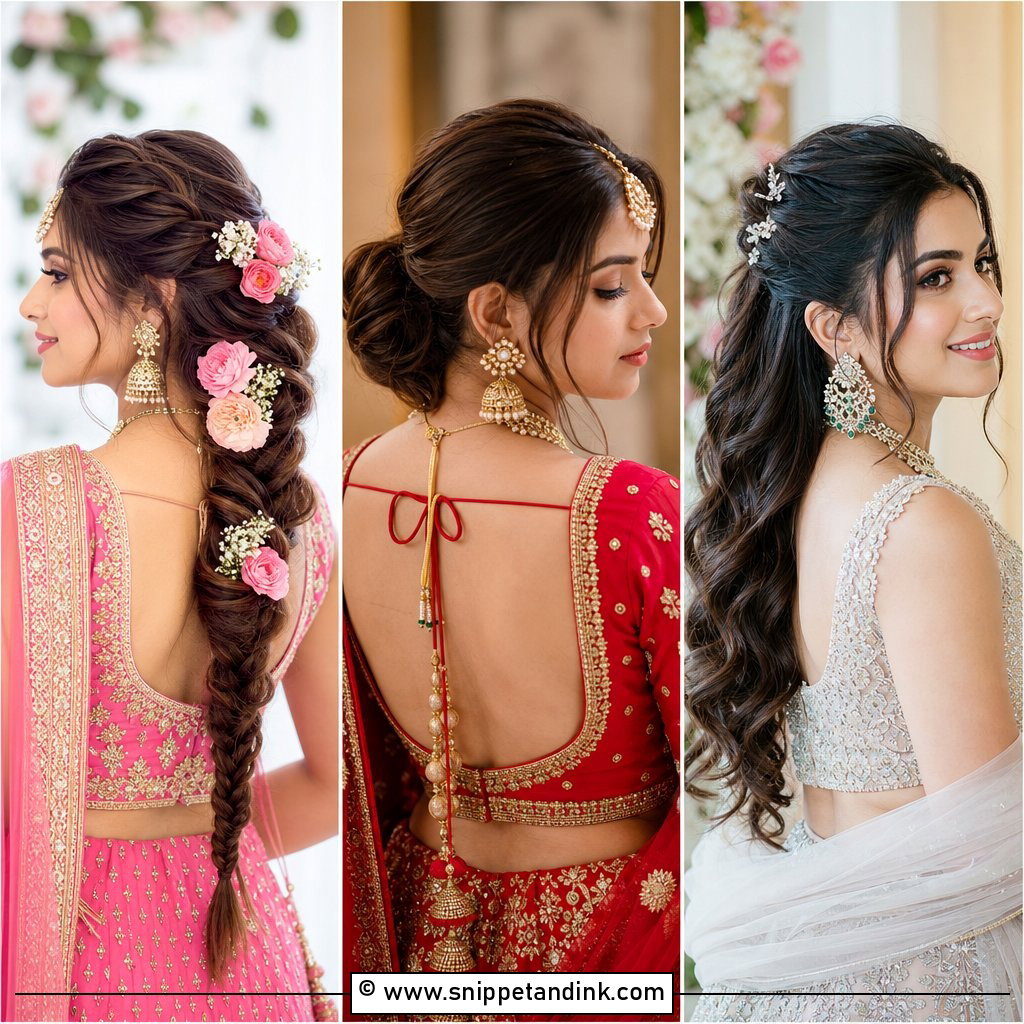

15. Twisted Bun With Maang Tikka
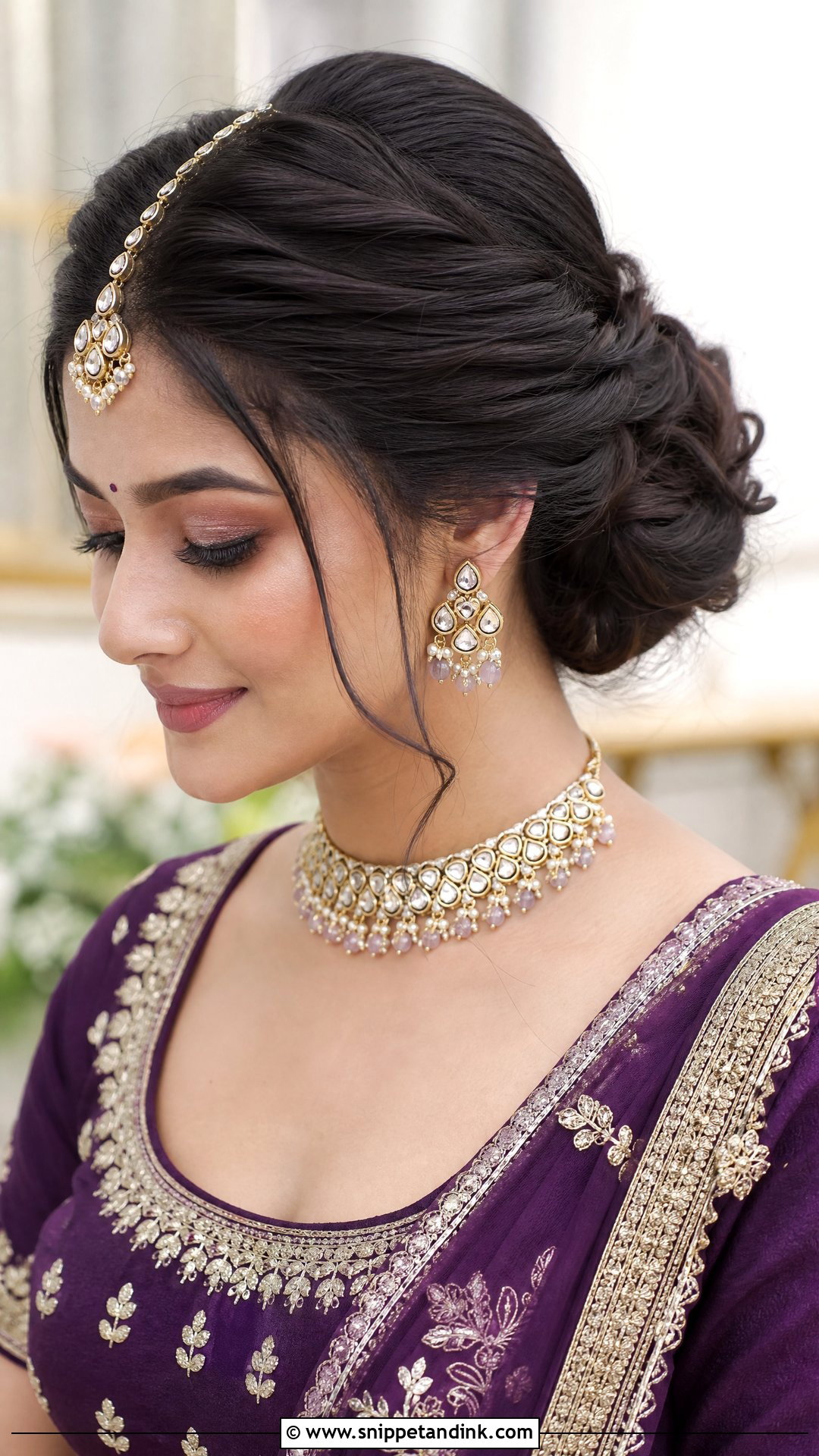
Twisted sections wrapped into a textured bun at the back or side give detail without heavy accessories. The maang tikka sits along the parting. I twist each section in the same direction, so the pattern reads evenly, and set them with a light spray before pinning. It suits medium to long hair, and small flowers or pearl pins can go between the twists. This is one of the sturdiest styles here because each twist is pinned separately; even if one loosens, the rest hold.
16. Long Braid With Gold Hair Jewelry
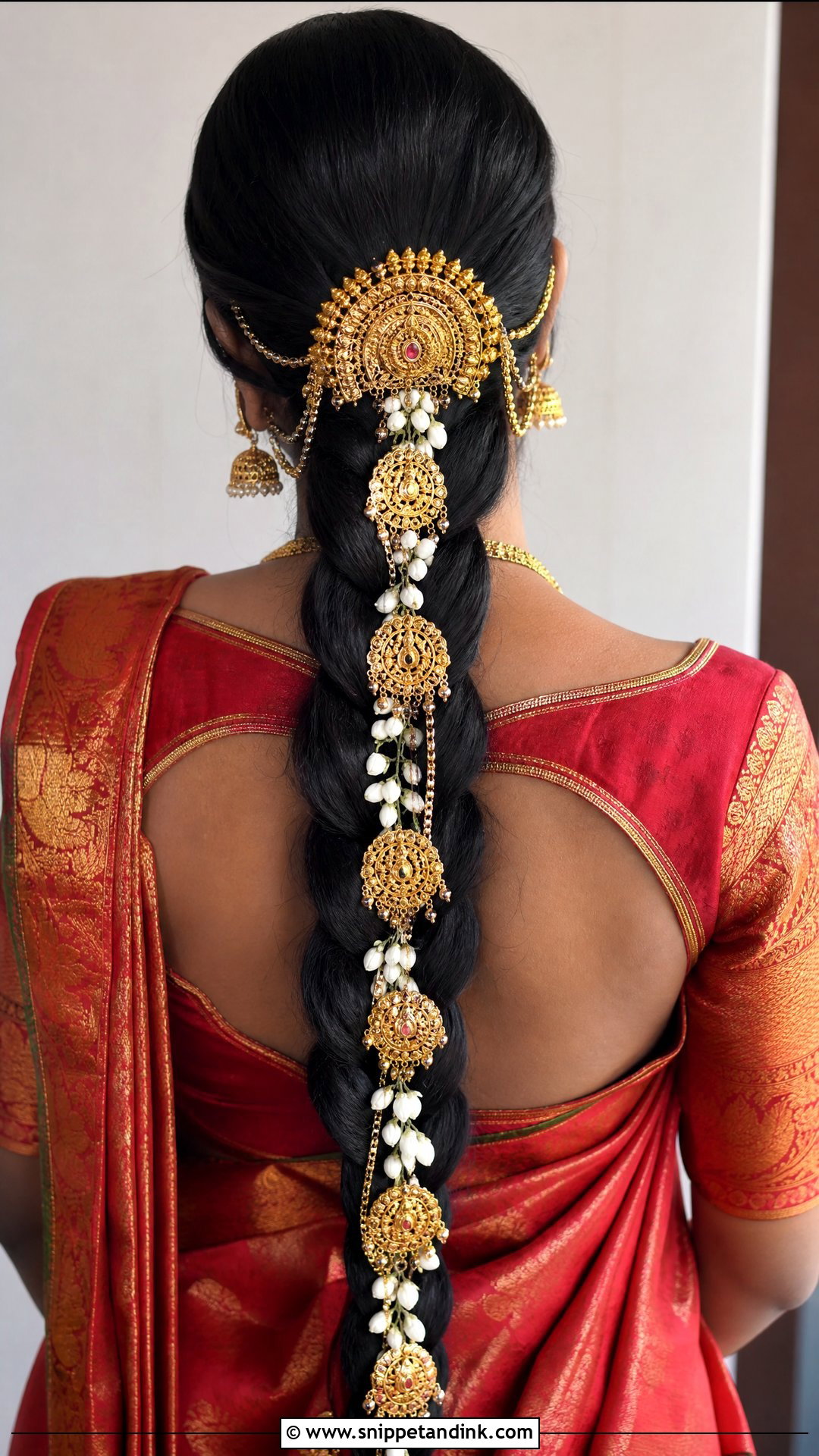
A long braid dressed with jada billa, gold hair chains and flowers down its length gives the temple-bride look of a South Indian ceremony. Gold ornaments are heavier than flowers, so the braid starts tight at the crown and each piece is hooked or stitched to the plait, never just laid on top. It goes with silk sarees and traditional gold sets. Brides with long hair carry it naturally, but a braid extension is the usual way to get the length these ornaments need without strain.
17. Bouffant Bun With Puff
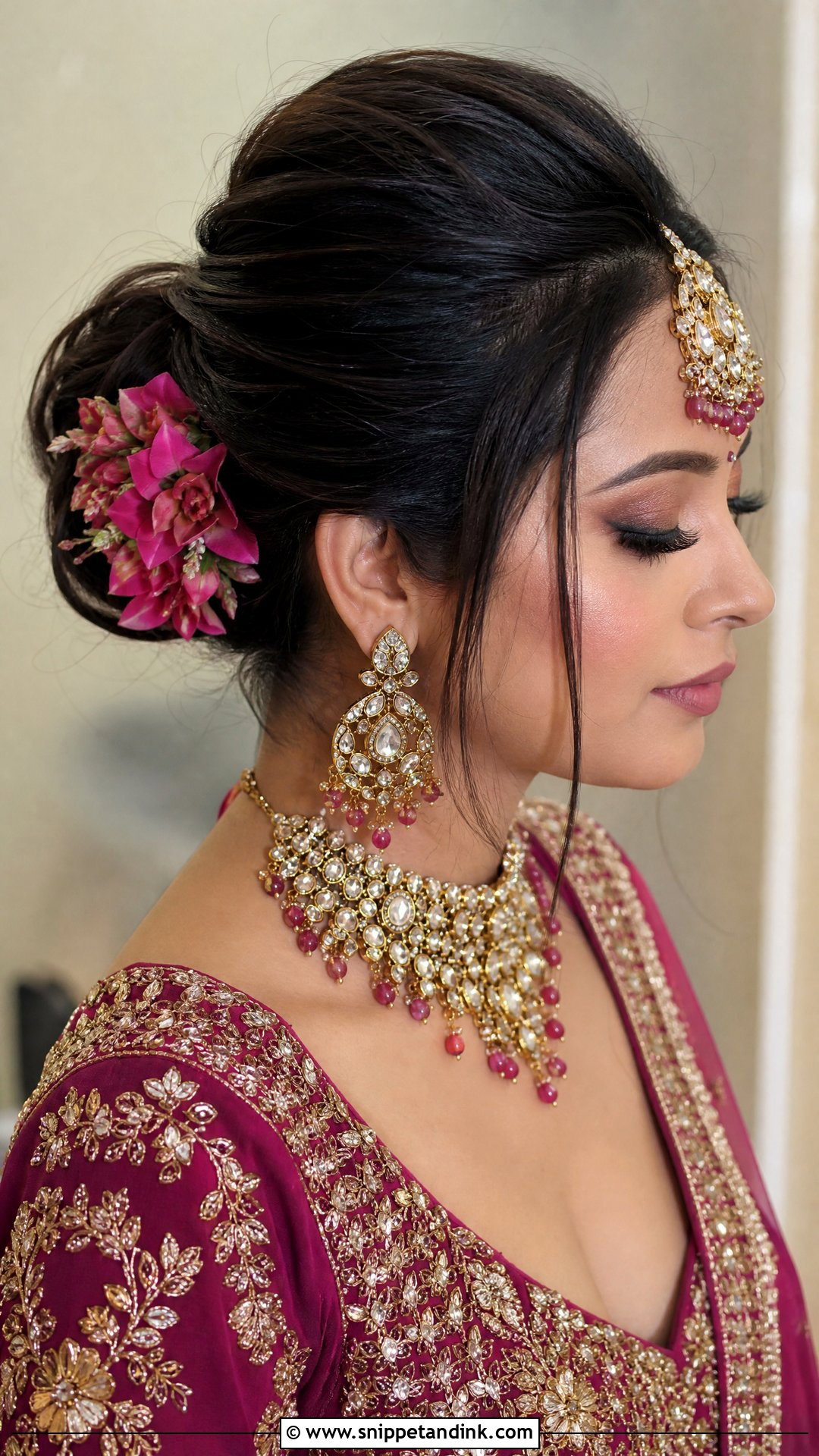
A bouffant bun adds a voluminous front puff and lifts the crown before sweeping back into a bun. The height lengthens a round face, which is why it’s often suggested for one. I back-comb in small sections at the root and smooth only the top layer, so the puff keeps its shape for hours. Flowers, pearls or jeweled pins finish the bun. Keep the puff modest if you’re wearing a heavy maang tikka, or the two compete at the hairline.
18. Side Braid With Flowers
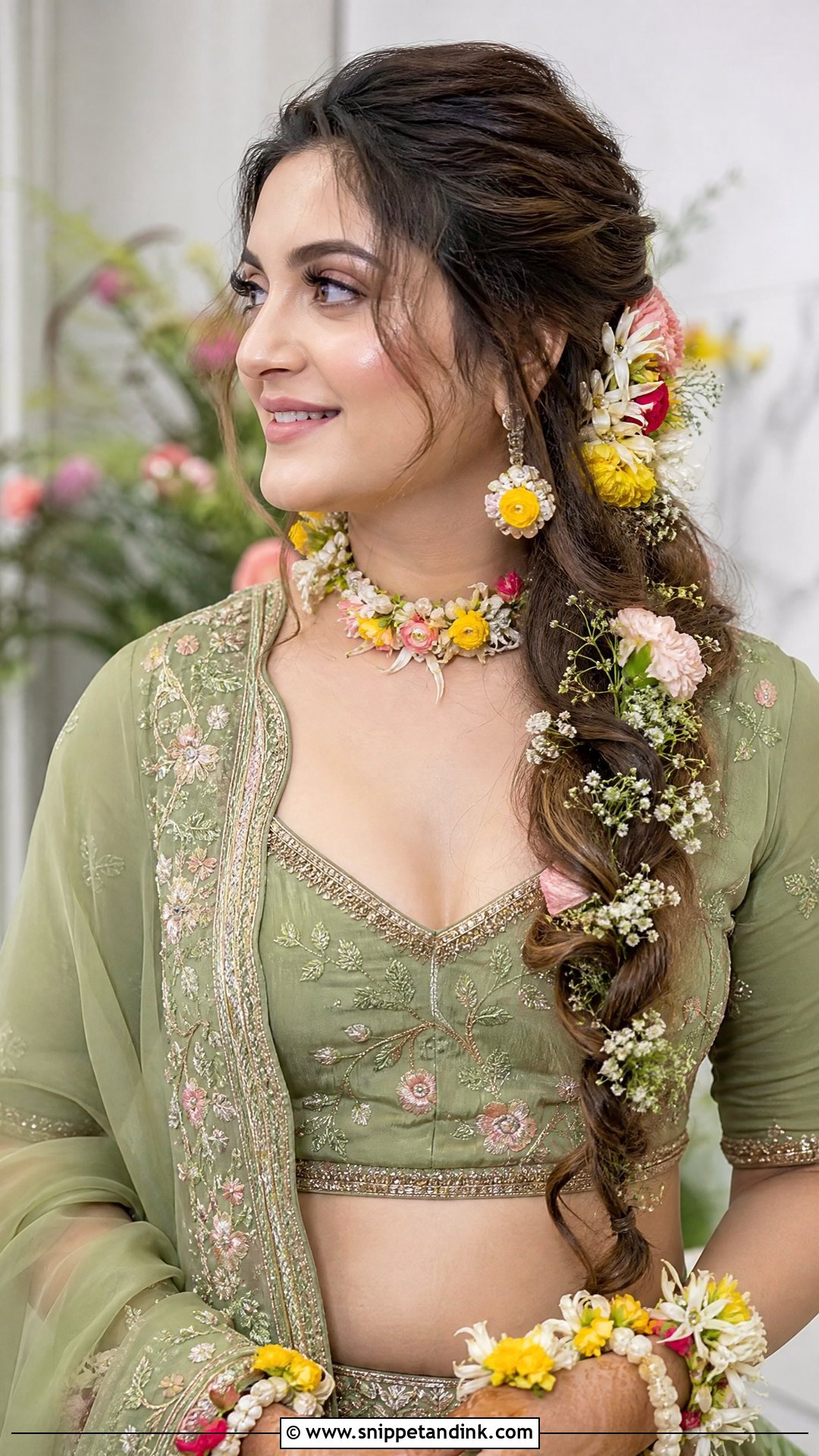
A loose side braid over one shoulder, with flowers tucked into it, is the most relaxed style on this list. It belongs to mehendi, haldi and casual pre-wedding events, when you’ll be sitting cross-legged and moving around. I braid it loosely, then pin the top of the braid behind the ear so the whole thing doesn’t swing back. Jasmine, roses or bright blooms can match the outfit. It looks best in daylight photos. It doesn’t hold up through a full wedding day, so I wouldn’t book it for the pheras.
19. Bun With Bejeweled Butterfly Accents
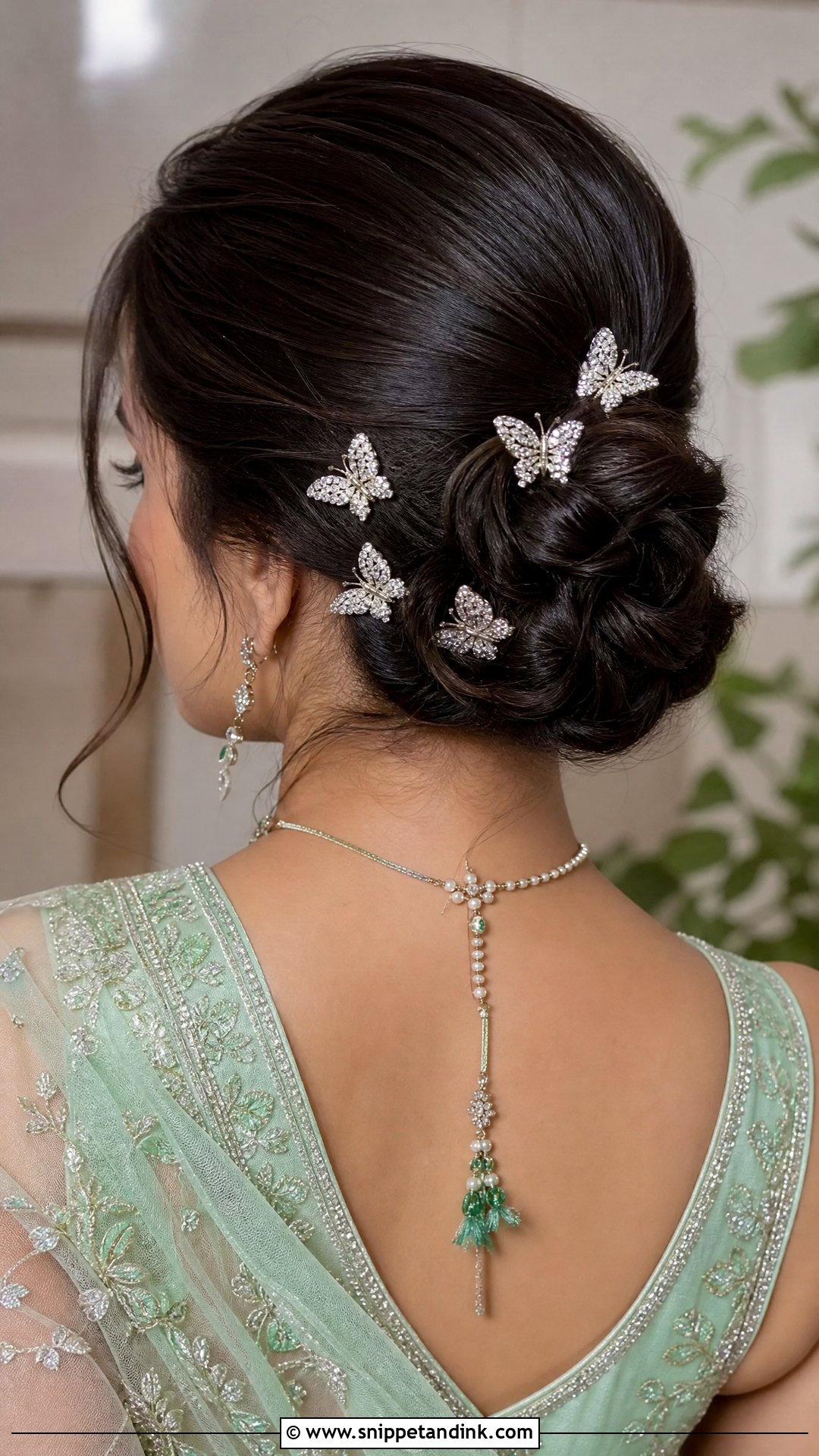
Bejeweled butterfly clips are a newer, playful touch on a sleek or braided bun, a break from traditional florals. Spread them unevenly, as if they’ve landed, rather than in a neat line. Butterfly clips grip loosely on smooth hair, so I add a hidden bobby pin crossed through each clip’s base. With delicate jewelry and a pastel outfit, it reads young and light. If your family expects a traditional ceremony look, keep this for the reception or mehendi.
20. Open Hair With Crystal Headband
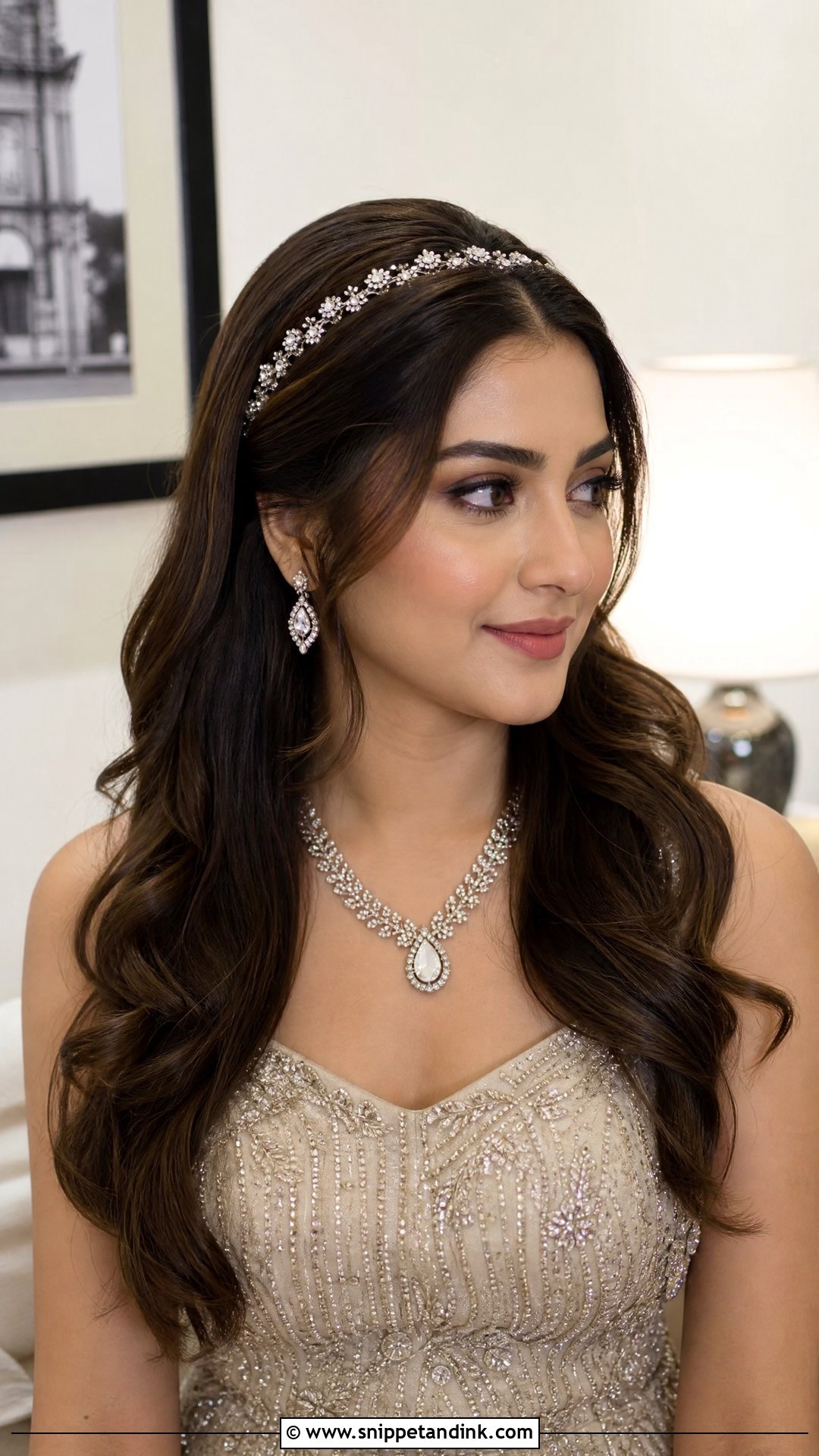
Open hair with a crystal headband is the simplest reception look here. Hair falls in soft waves or sleek lengths, and the headband holds it back from the face. Headbands press on the head behind the ears and can ache after a couple of hours, so I test the fit at the trial and pad the ends with small pieces of hair grip tape if needed. It suits most textures and glamorous evening outfits. The crystals pick up camera flash, which looks festive in reception photos.
Curly, Thick or Thinning Hair Needs Different Pins
The same style is built differently depending on the hair I’m working with. Here’s how I adjust these twenty.
- Thick, heavy hair: buns get big fast and pull backwards. I thin out the bun by braiding part of the hair first and wrapping it, and I use long, strong U-pins rather than bobby pins.
- Curly or coily hair: I avoid brushing curls straight before an updo. Defined curls hold pins well, so curly back buns, twisted buns and floral crowns work naturally. Sleek buns take more product and time.
- Fine or thinning hair: donut buns, padding and clip-in wefts are standard tools. Gold ornaments and heavy jasmine strings should be fastened to a hidden base braid, never just to the hair at the scalp.
- Short or shoulder-length hair: the veni braid and long gold-ornament braids need extensions, and that’s normal. A gajra bun or twisted bun can usually be made from your own hair with some padding.
Put the Jada Billa On at the Trial
Bring every hair ornament to your trial: the maang tikka, the matha patti, the jada billa, any juda pin and a sample of the flowers. Gold hair jewelry is heavier than it looks in a box, and the way it hangs changes the whole shape of a style. A maang tikka chain needs a firm pinned section under the parting; a matha patti needs hooks on both sides. Wearing everything for an hour at the trial tells us what aches and what slides, while there’s still time to change it.
Ask Your Stylist About the Seventh Hour, Not the First
Every style above has a place, from the jasmine gajra and veni braid to open curls and a crystal headband. What separates them on the day is how they’re built and whether they suit your hair, your outfit and each event. Think about your hair type, your dupatta and how long you’ll be sitting before you settle on a favourite. Save the ones you’re drawn to and talk them through with your stylist, including how they’ll hold several hours in. That conversation is worth more than any single photo.
You'll Like These Ideas:




Leave a Reply