
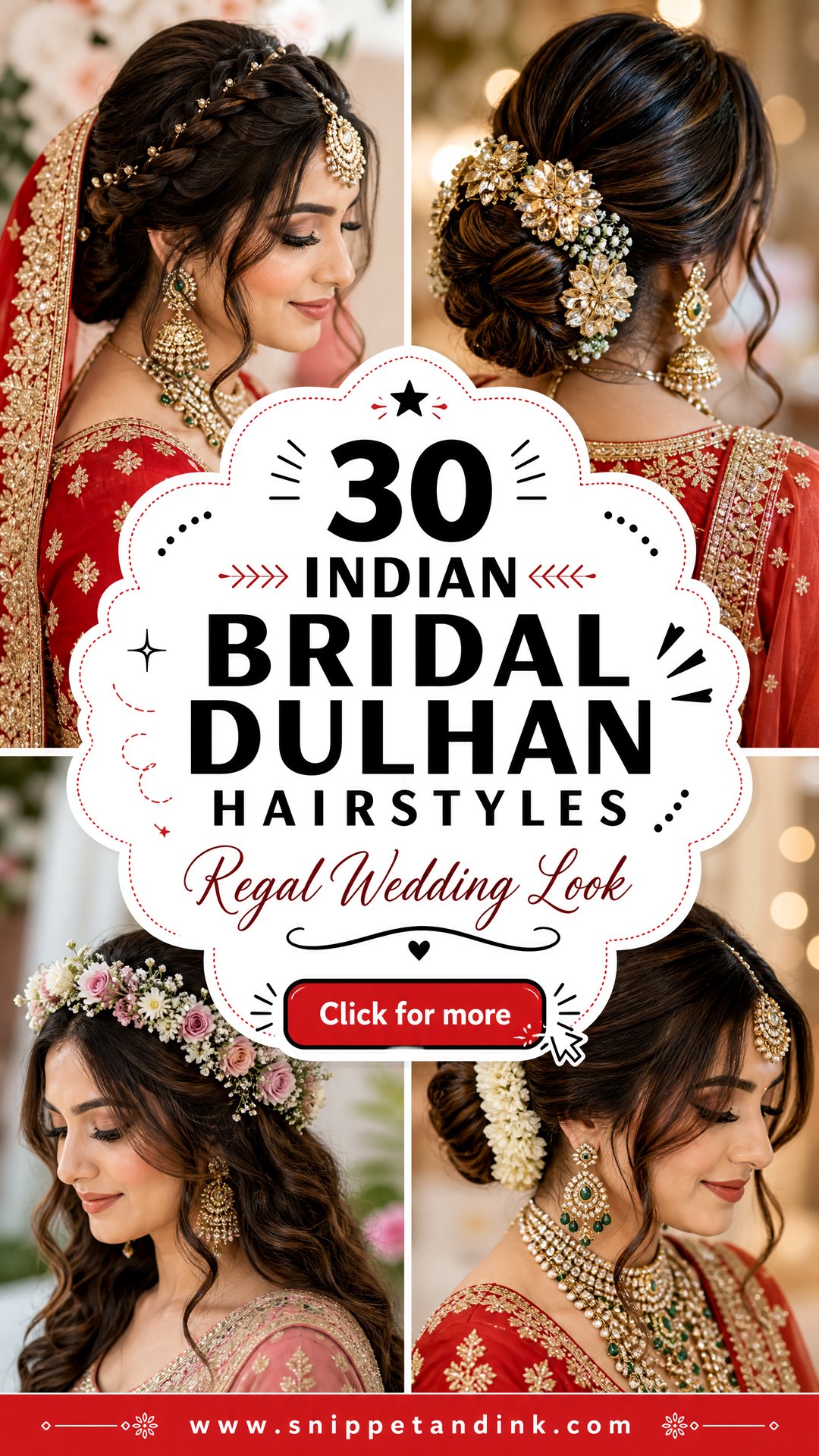
A dulhan hairstyle has a harder job than most bridal hair. It has to hold a maang tikka steady, take the pull of a pinned dupatta, sit comfortably under heavy earrings and still look tidy after hours of rituals in a warm mandap. The thirty looks below run from flower-wrapped buns to braids and open hair, and for each one I’ve added what I actually watch for when I build it: where the weight sits, which hair it suits and where it tends to fail. Take the ones you like to your stylist with those notes in mind.
Dupatta Weight, Tikka Chains and the Pinning Order
Most dulhan styles succeed or fail on weight. A heavily embroidered dupatta can pull hard on the hair over a long ceremony, and a matha patti or passa adds more at the front. Before I decide on a style, I ask which pieces you’ll wear at each event and how the dupatta will be draped, because that tells me where the bun or braid has to sit.
My order on the wedding morning is always the same: hair first, then makeup touch-ups, then jewelry, then the dupatta. If the tikka goes on before the bun is finished, its chain gets caught and the parting ends up crooked.
- Prep the day before: wash and dry the hair fully. Very clean, slippery hair is hard to pin, so I prefer it washed the evening before rather than that morning.
- Build a base: a small ponytail or braid where the bun will sit gives pins a firm grip.
- Set the tikka: pin its chain flat along the parting, then hook it at the back of the head.
- Pin the dupatta into the bun or base, never into loose hair, using several small pins rather than one large one.
If your hair is fine or shoulder length, tell your stylist at booking. Clip-in extensions or a hidden donut ring may be needed to carry the dupatta, and they need matching before the day.
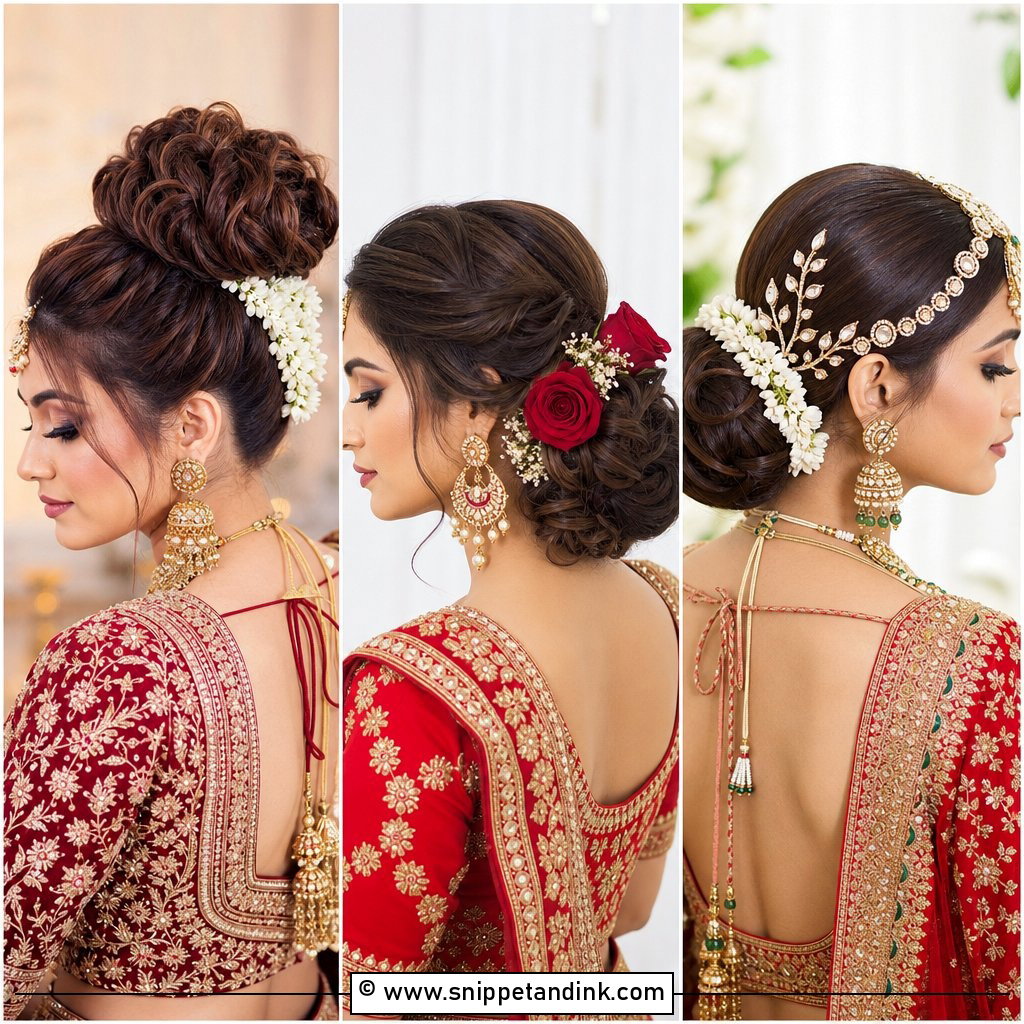
1. Floral Low Bun for Indian Bride
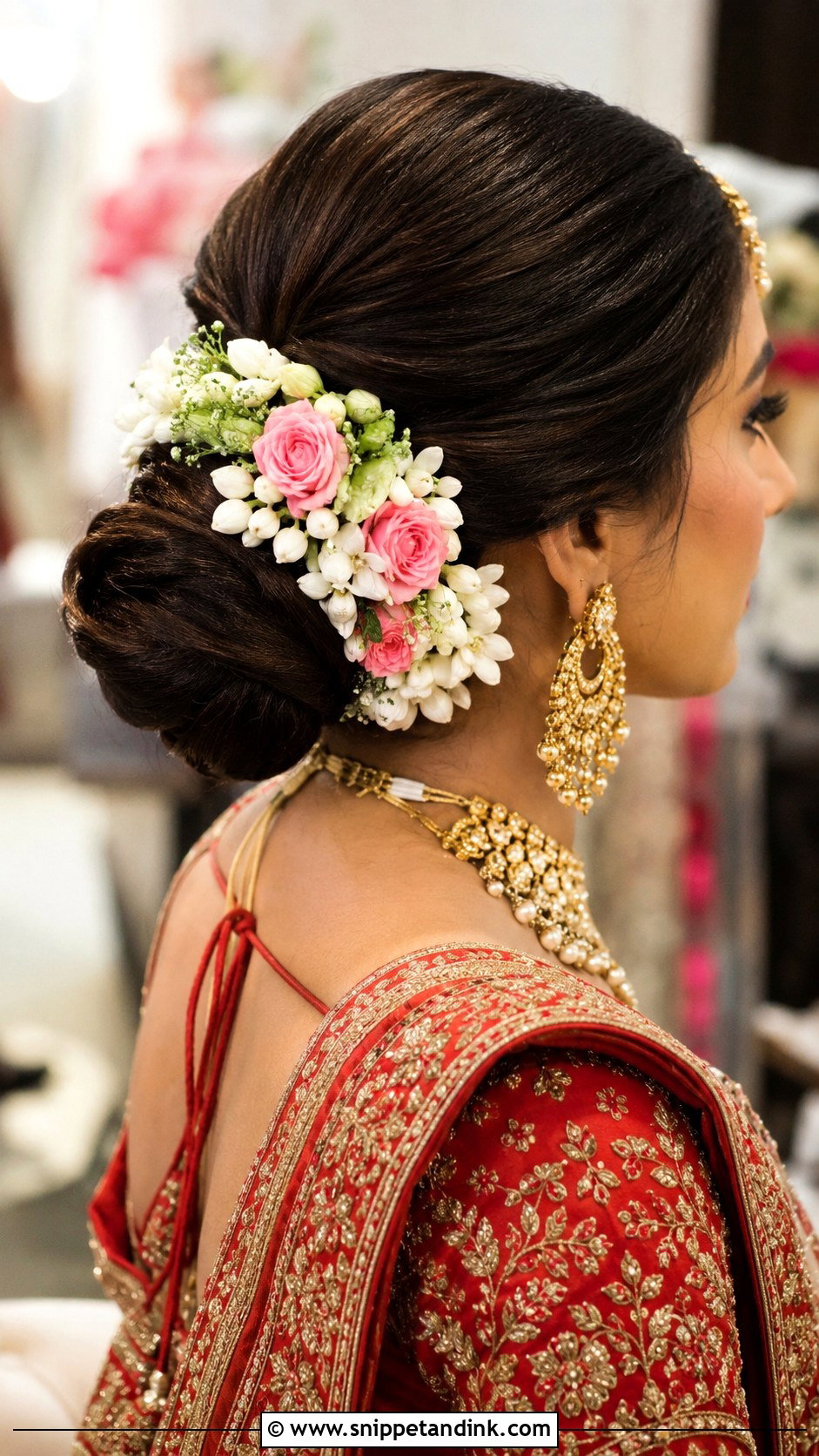
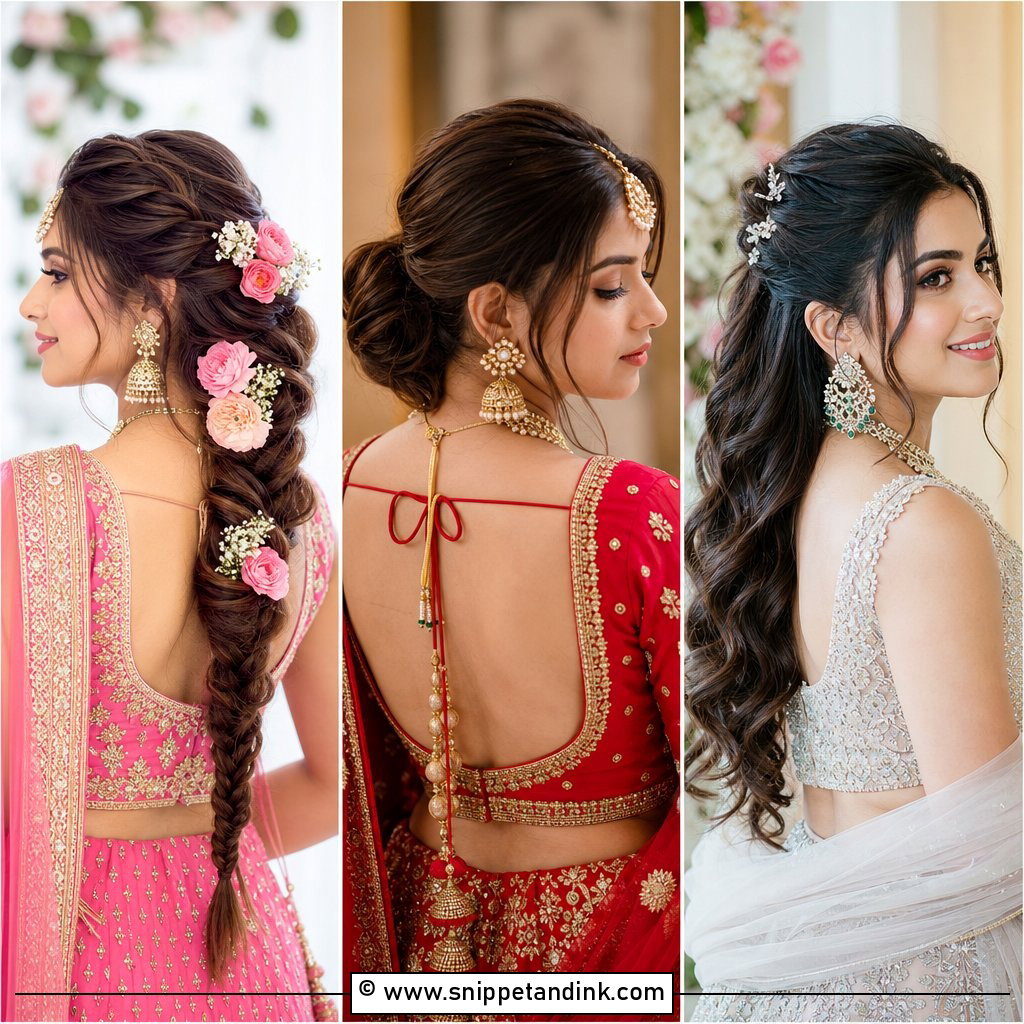
The low bun is the style I reach for most often on a wedding morning, because it sits right where a dupatta needs an anchor. I build it on a small ponytail base so the pins have something firm to grip, then work fresh roses or jasmine into the outer coils rather than the centre, where they would get crushed against a chair back. It suits most face shapes and moves easily from daytime mandap ceremonies to an evening reception. If you’re adding a matha patti, tell me early so I can leave a channel at the crown for its side chains.
2. Side Braid With Fresh Flowers
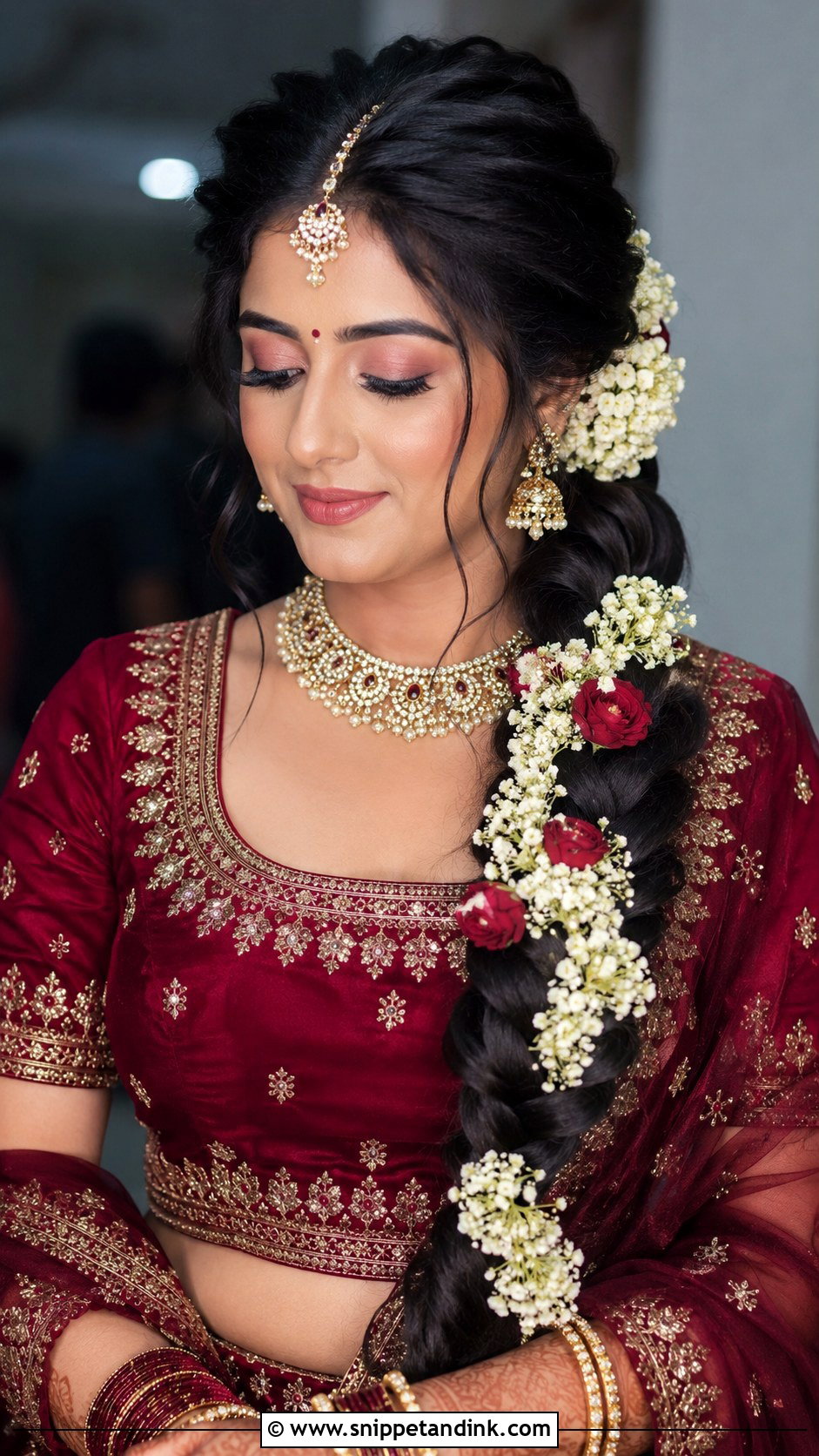
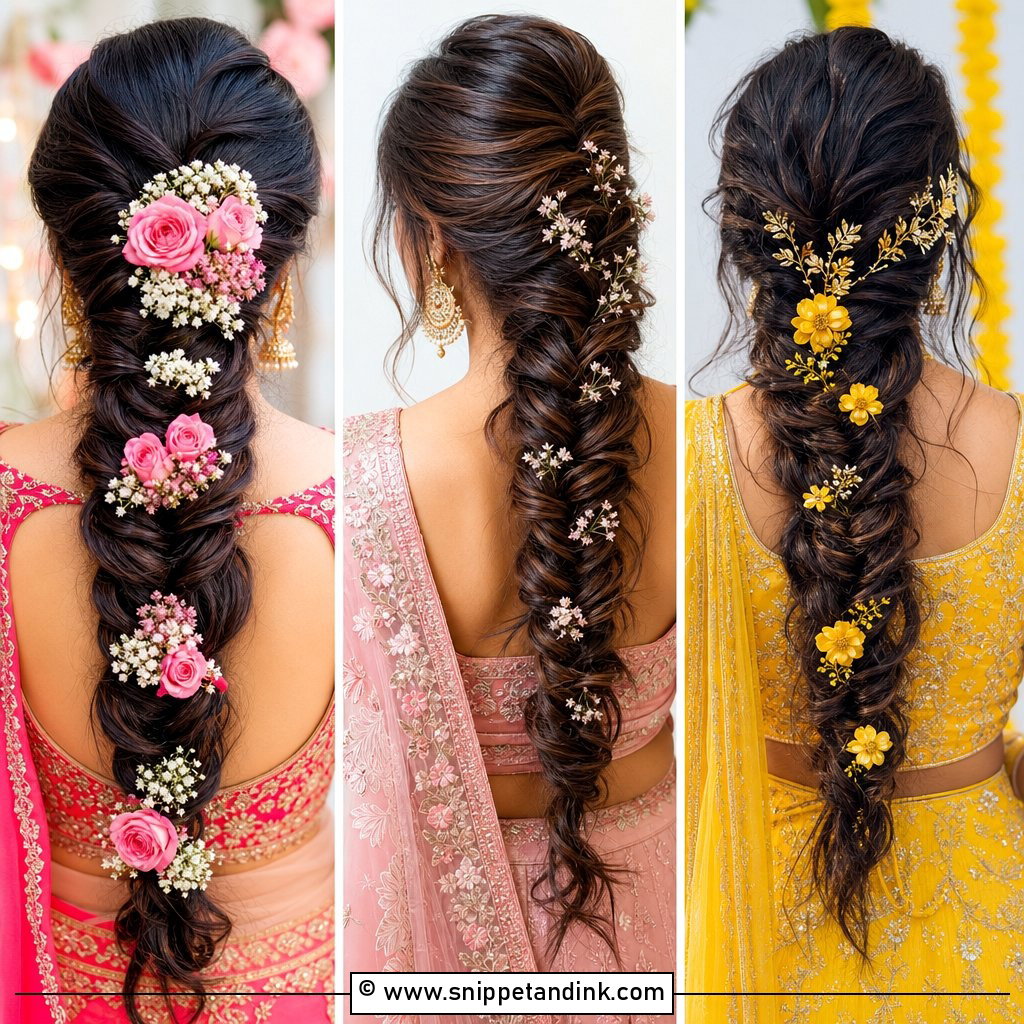
A thick side braid only looks generous if there’s real length and density behind it, so I’m honest at the trial when a bride’s hair is fine past the shoulders. In that case I either pancake the braid gently or add a matching clip-in weft before braiding. Jasmine veni sits along the braid best when it’s stitched to a thin thread and pinned under each crossover, not wrapped around the outside. I still use this style for South Indian and North Indian weddings alike, with the earrings worn heavier on the bare side to balance the weight.
3. Open Hair With Soft Curls
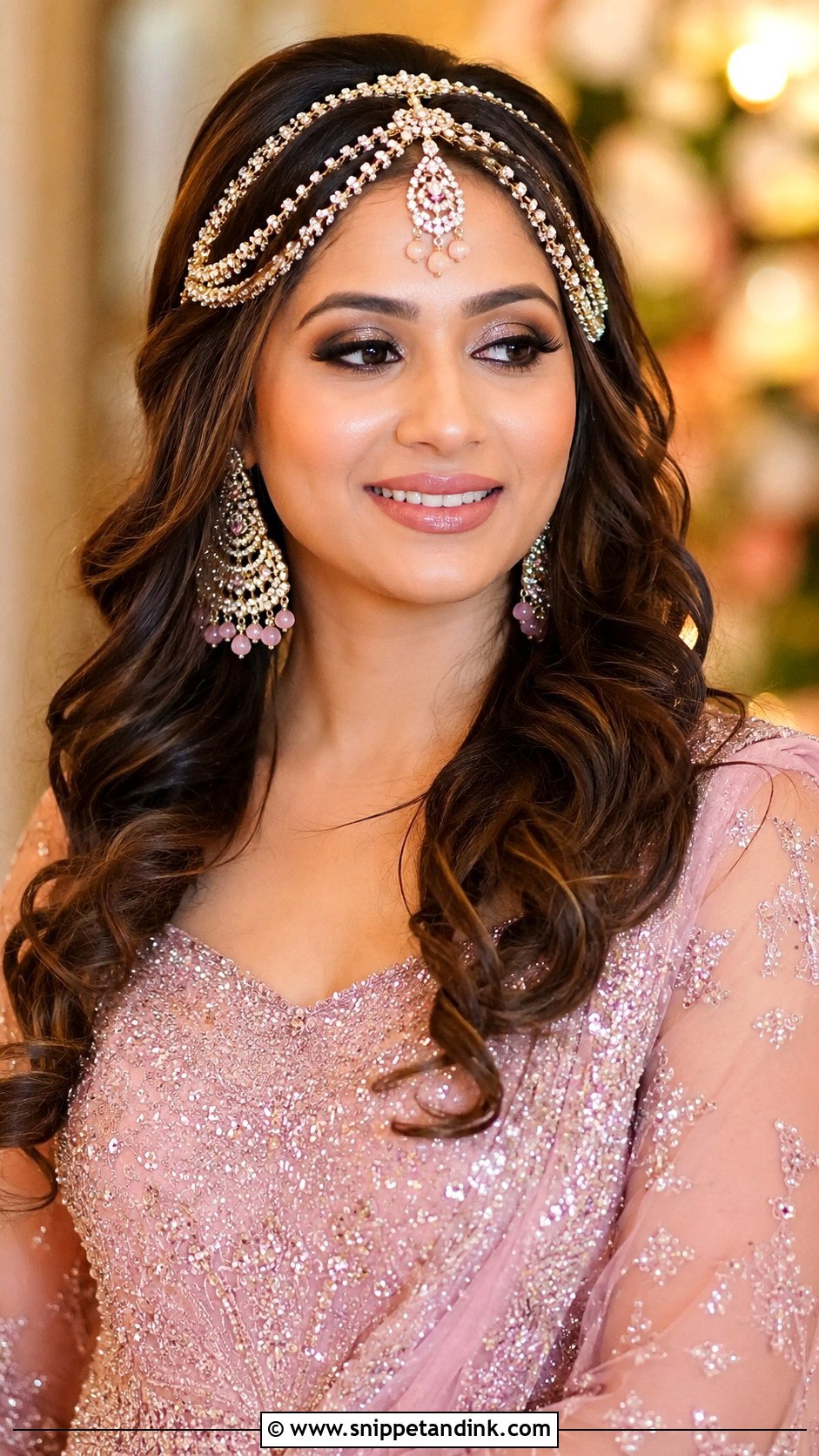
Open curls are the style most likely to fade before the reception ends. Straight Indian hair that’s heavy and long drops a curl fast, especially in a humid venue, so I set every section with heat and let it cool fully in a pin curl before brushing it out. Keep this one for the sangeet or reception rather than the pheras, where a dupatta pressing on the crown flattens it. A matha patti or a single side clip is all it needs.
4. Braided Bun With Gajra
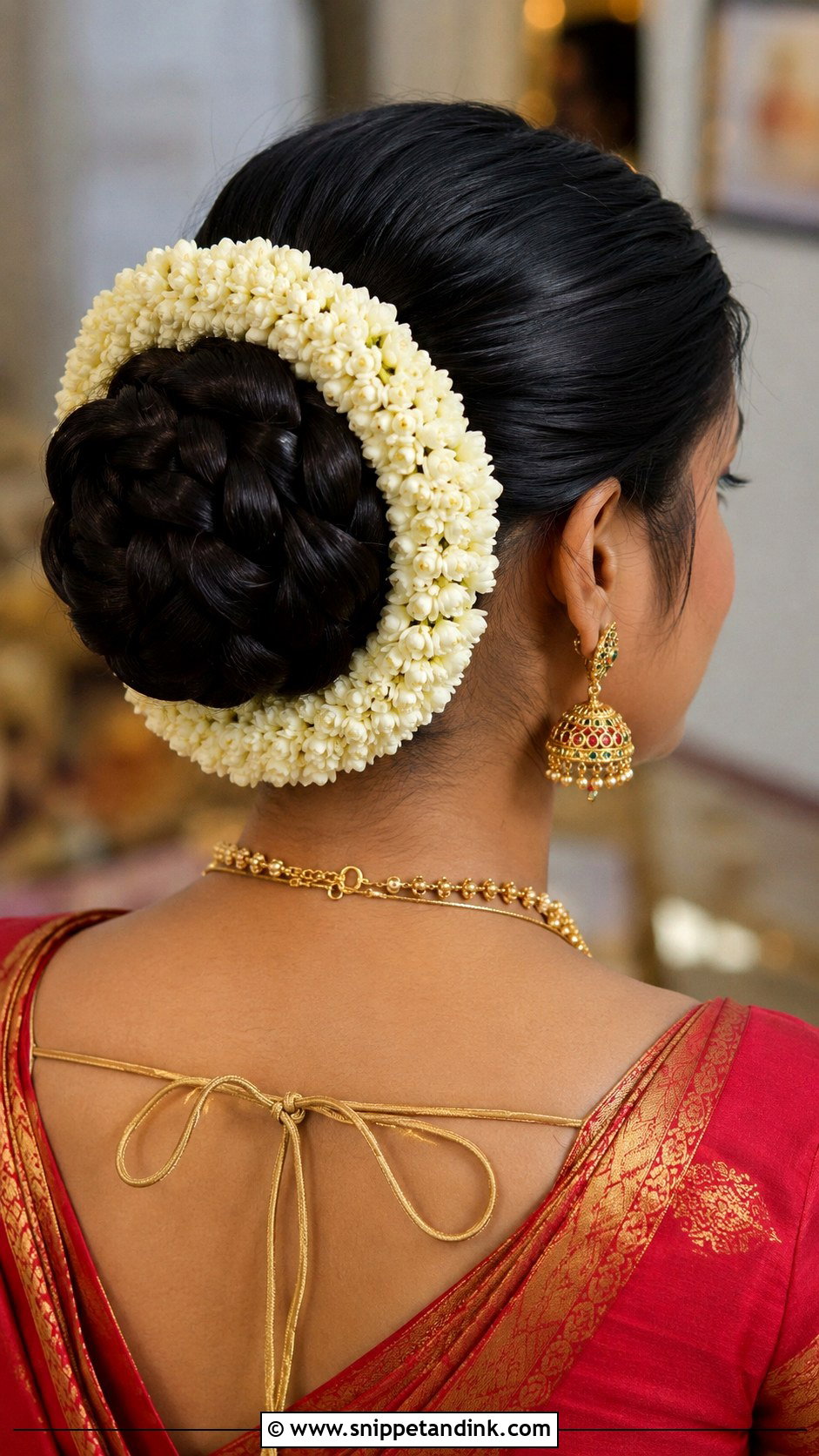
A braided bun wrapped in fragrant gajra is the most traditional look in this list, and the braid underneath is what makes it hold. Coiling a braid gives me a firm, ridged surface, so the gajra pins catch and don’t slide off in the first hour. Against red or maroon lehengas the white jasmine reads clearly in photos. My one warning is about the flowers themselves: jasmine browns at the edges after a few hours in heat, so I order a spare string for the reception.
5. Half Up Half Down Bridal Hairstyle
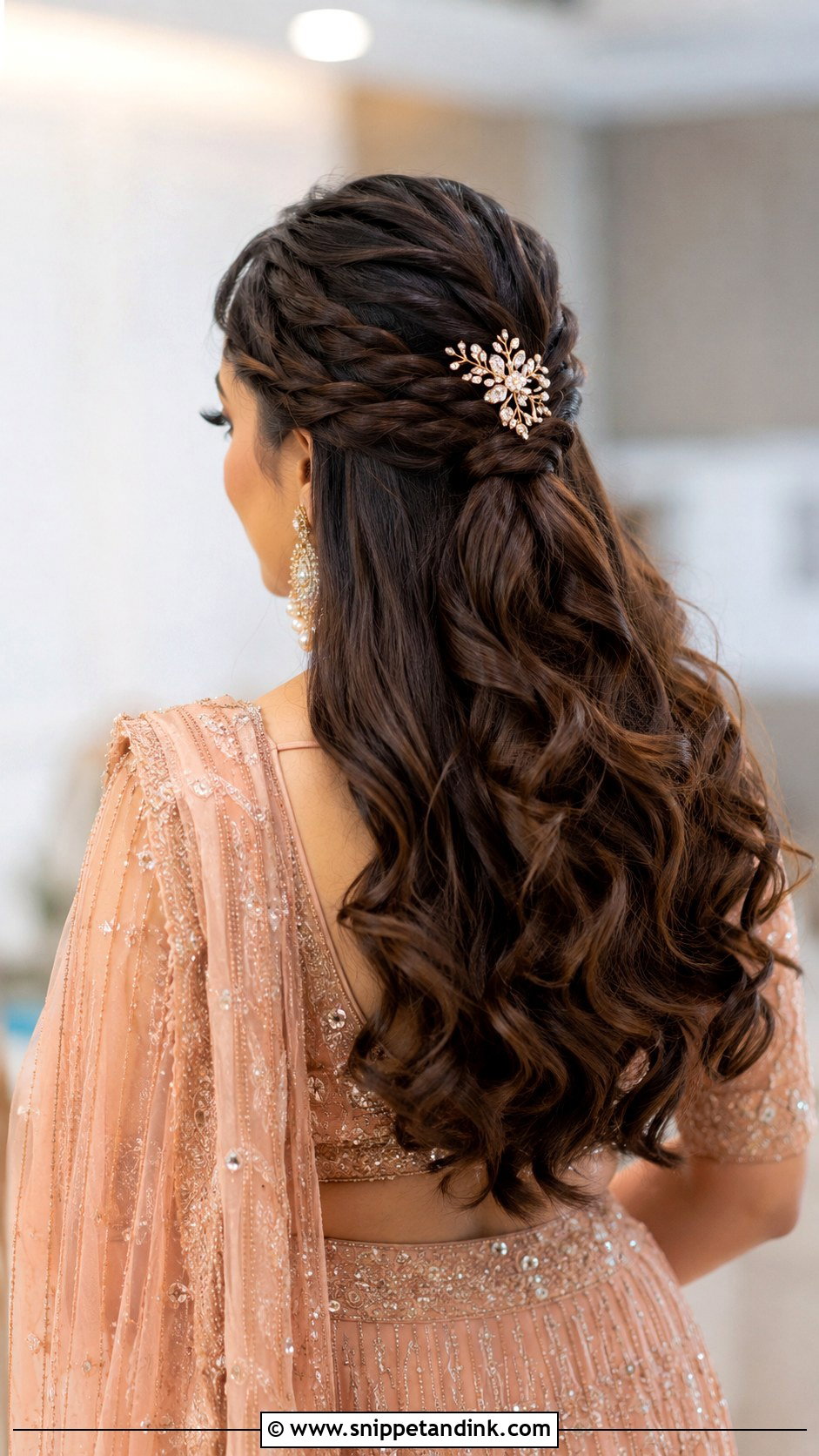
Half up, half down is the compromise I suggest when a bride can’t let go of her length but needs the hair off her face for rituals. The top section is twisted or knotted at the crown and the rest is left in waves. The catch is weight: if you plan to pin a heavy dupatta, the small top section can’t take it, so I usually save this look for the sangeet or reception. A jeweled clip at the join hides the pins neatly.
6. Sleek Chignon for Wedding Reception
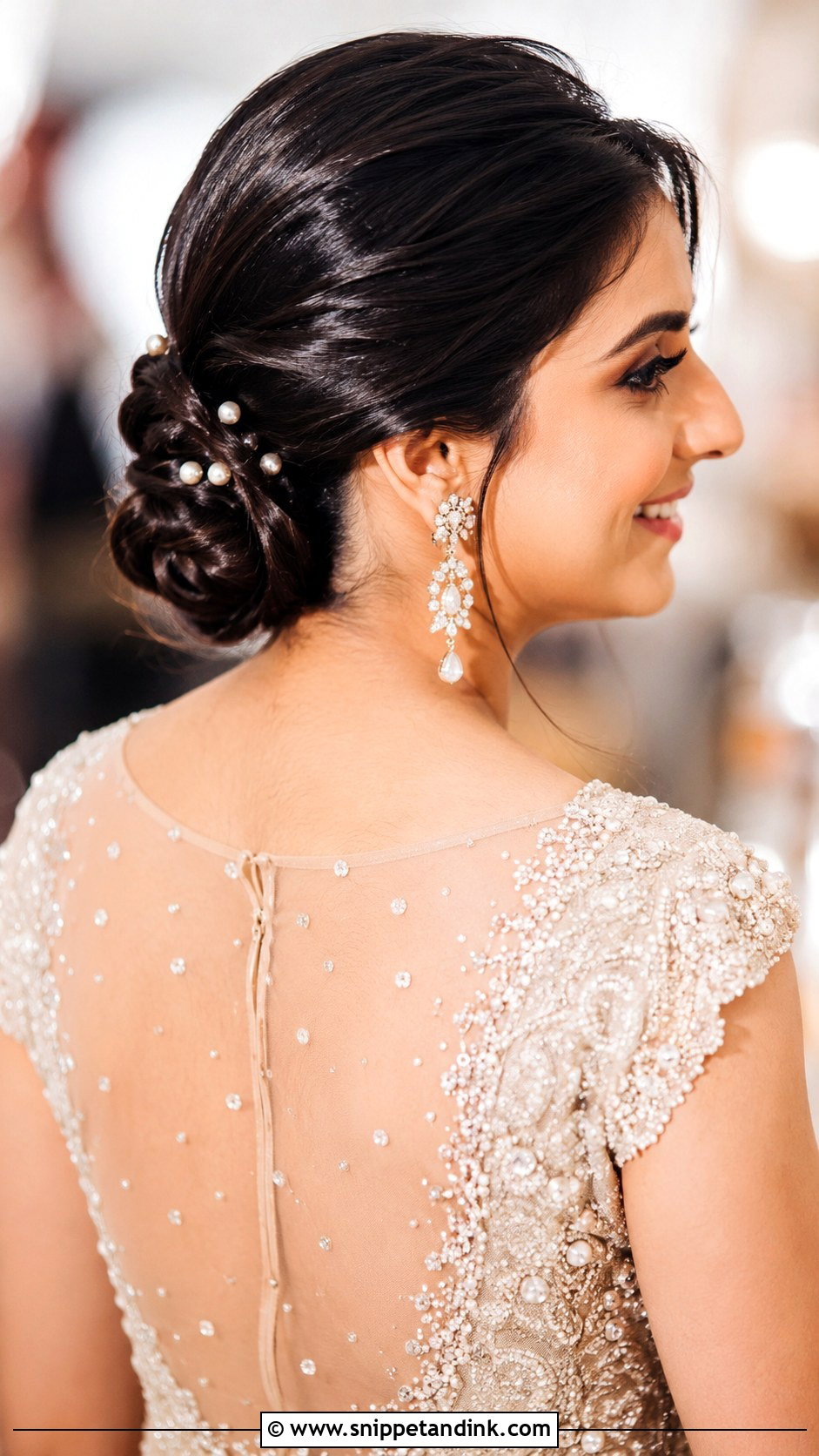
For a reception after a long ceremony day, a sleek chignon is my favourite reset. I brush the hair back with a light cream and a boar bristle brush, then roll it low at the nape so the neckline and earrings carry the look. It shows every flyaway, though, so it’s not kind to curly or freshly coloured hair unless we smooth it the day before. One crystal pin or a few pearls is plenty here.
7. Fishtail Braid With Pearls
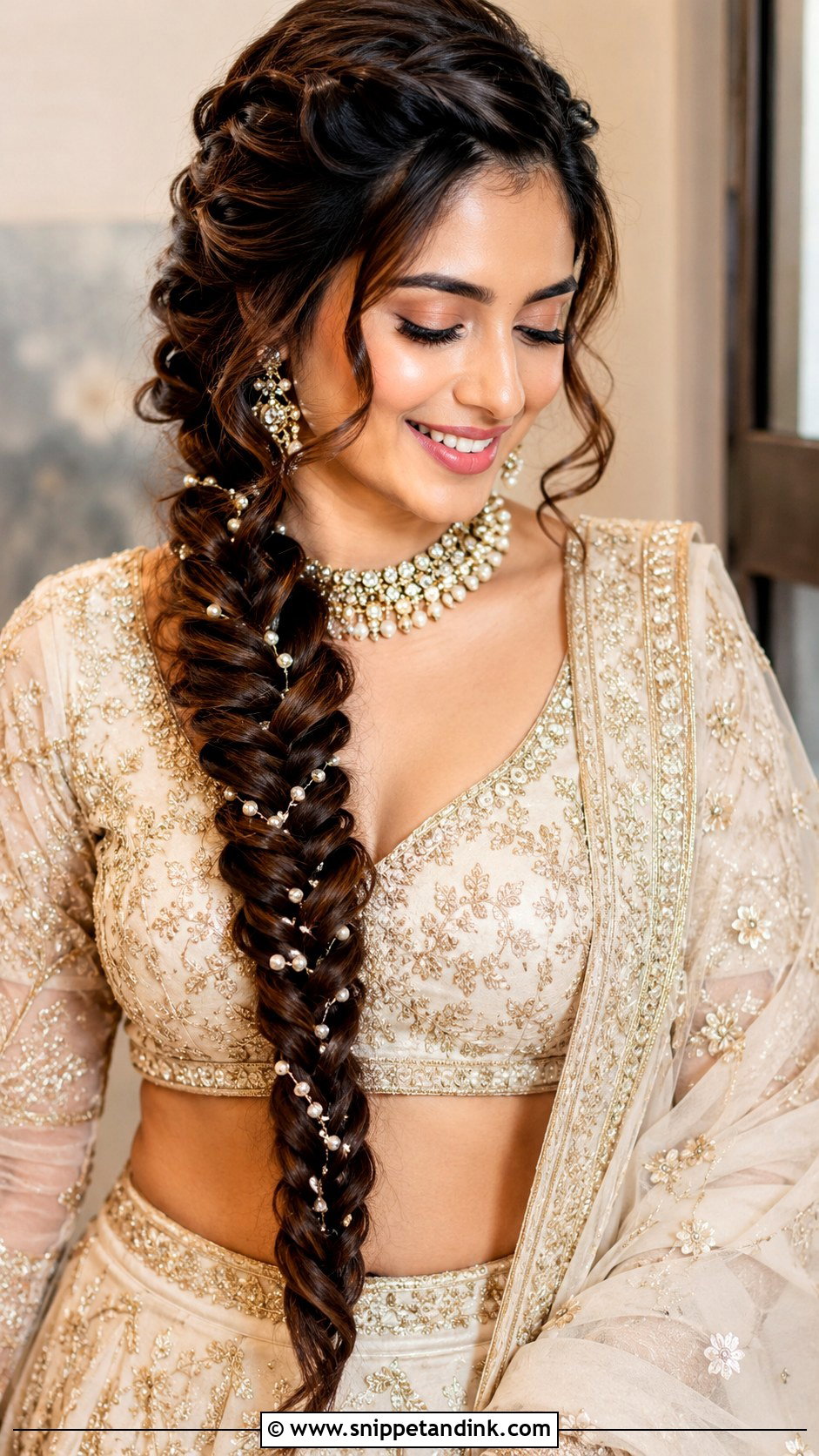
A fishtail takes about twice as long to plait as a three-strand braid, and that time matters on a tight morning schedule. Its fine weave also shows up beautifully up close, which is why I like it for brides whose photographer shoots a lot of detail frames. I add the pearls after the braid is finished, slid onto bobby pins and pushed into the weave. Pull the edges loose a little at a time; tugging too hard at the top makes the whole braid lopsided.
8. Messy Bun With Maang Tikka
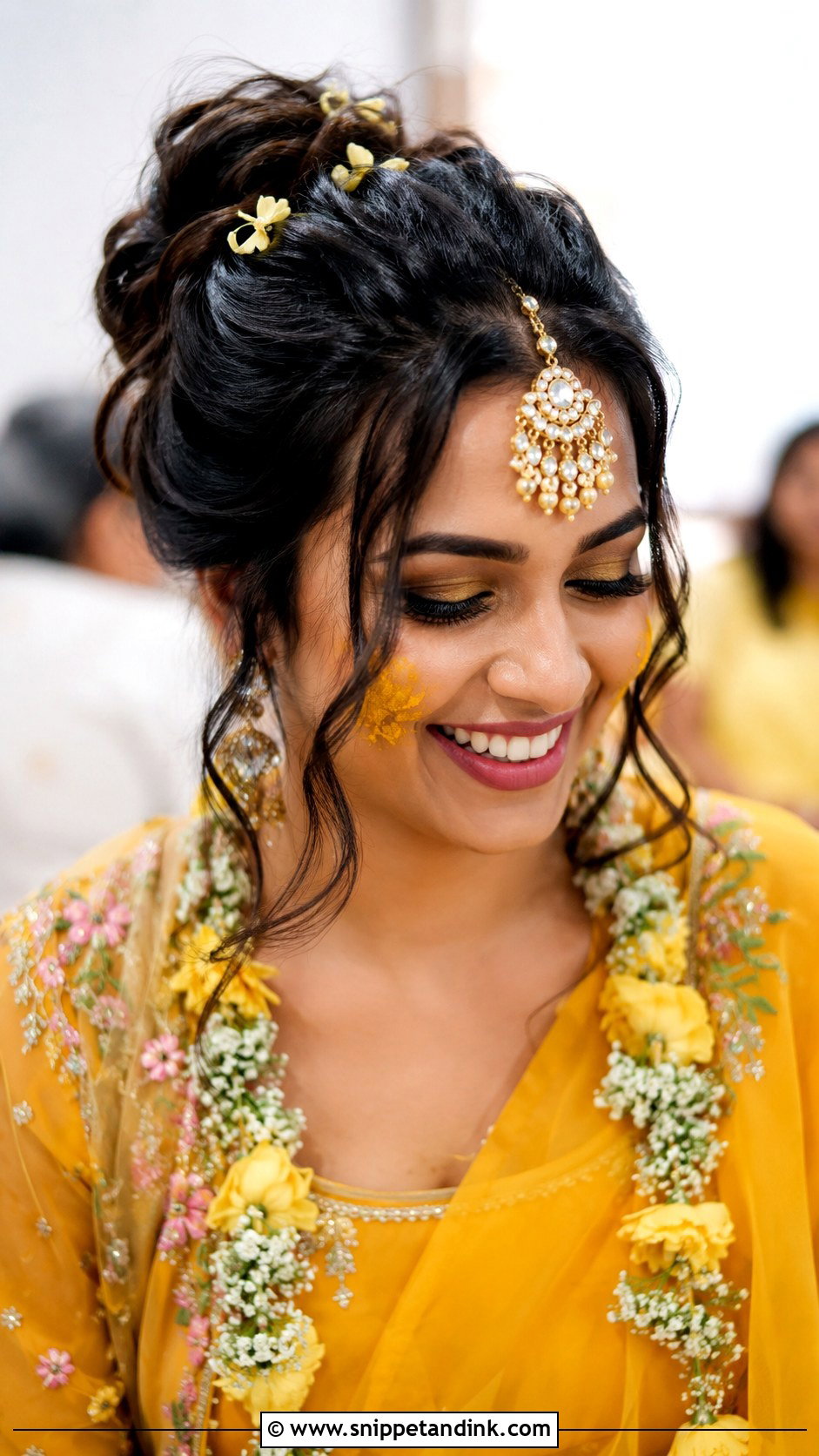
A messy bun is not as quick as it looks, because good mess has to be placed. I curl the hair first, pin the bun loosely, and pull out a few face-framing pieces at the end so they fall where the camera sees them. A bold maang tikka gives it the bridal weight it would otherwise lack. I keep this one for haldi, mehndi and smaller ceremonies; under a pinned dupatta it simply gets squashed.
9. Bridal Bun With Maang Tikka and Veil
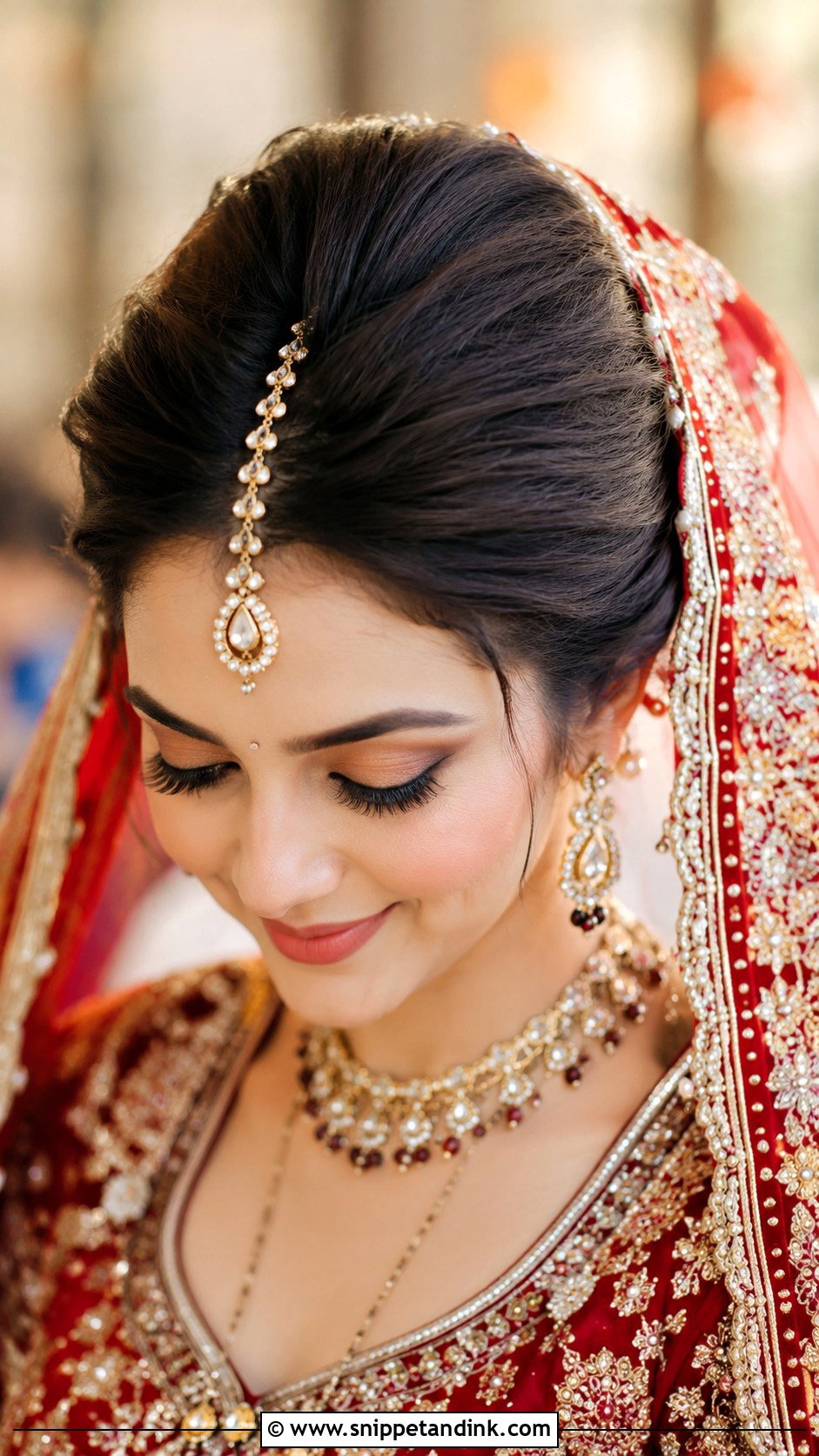
This is the bun I build specifically to carry a dupatta through the pheras. I place it slightly higher than a standard low bun, at the back of the crown, so the fabric has a ledge to sit on, and I cross the pins in an X pattern through the base for extra hold. The dupatta pins then go into the bun itself, never into loose hair, which is what usually causes the drag and headache by the end of the ceremony. Flowers or jeweled pins go around the sides where they won’t catch the fabric.
10. Twisted Bun With Fresh Roses
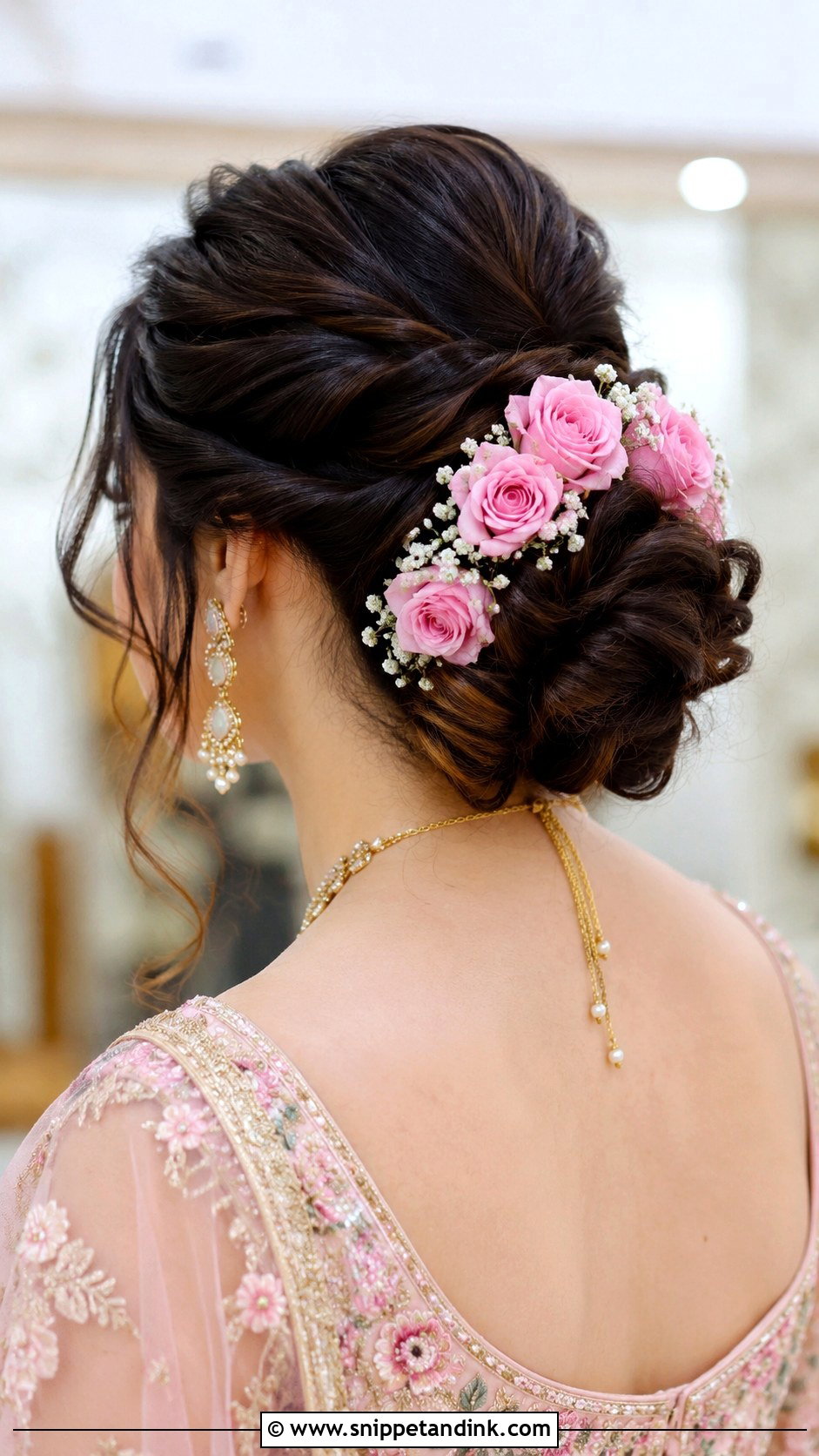
A twisted bun is softer than a braided one, and it needs fuller hair to look as rounded as the photo. I twist small sections, pin each one separately and then sit roses in the gaps. Real roses are heavier than you think, so I wire the stems short and anchor each bloom with two pins. Match the rose shade to a colour already in the lehenga rather than adding a new one.
11. Dutch Braid Crown for Bride
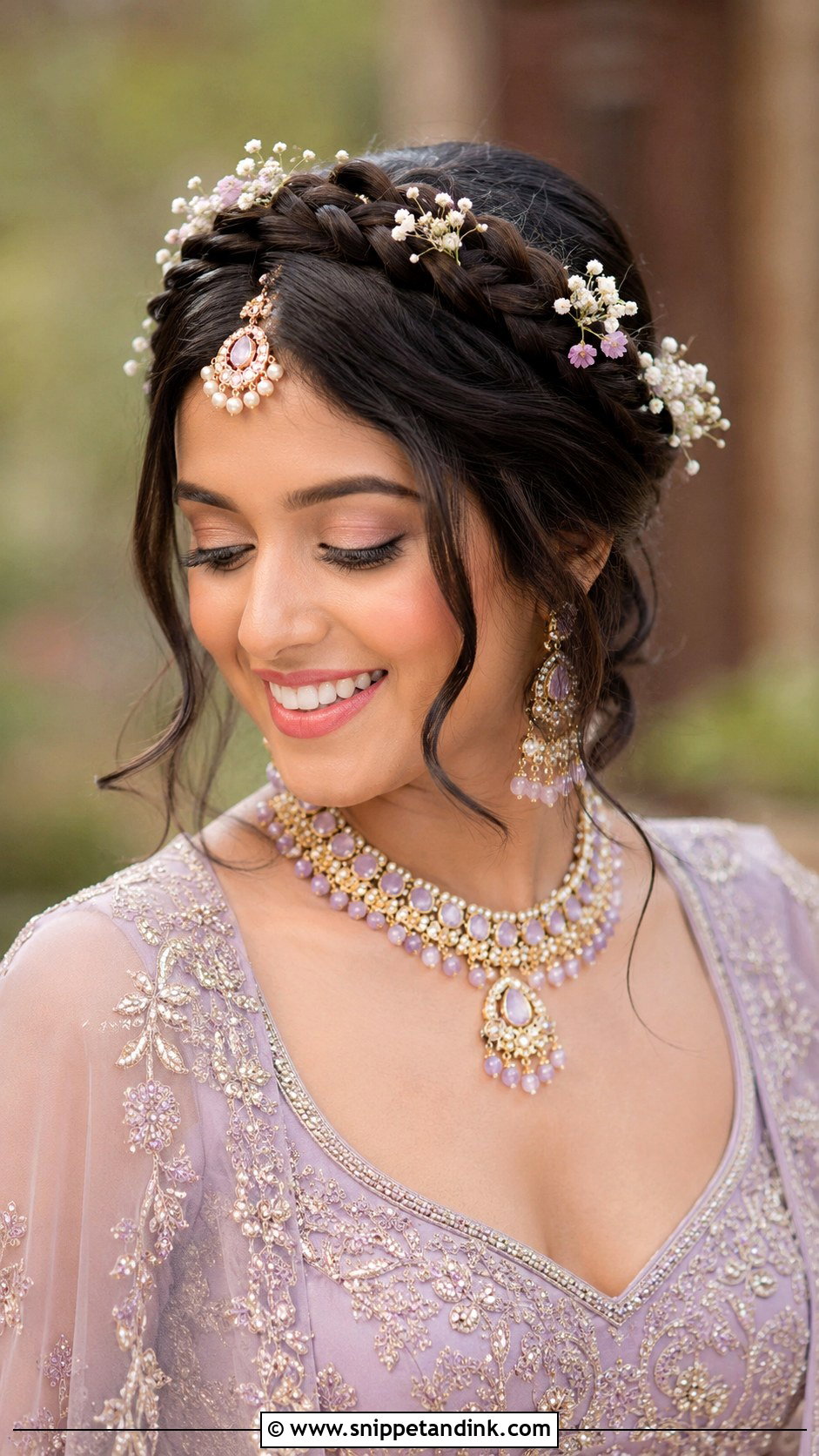
A Dutch braid crown keeps every strand off the face, which is why I suggest it for outdoor ceremonies in heat. It needs hair at least past the shoulders to wrap all the way round; on shorter lengths I braid two sections and join them at the back with hidden pins. Small flowers or pearls sit neatly in the raised plait. It’s comfortable for a long day, and it never fights with a tikka.
12. Low Bun With Gota Patti Flowers
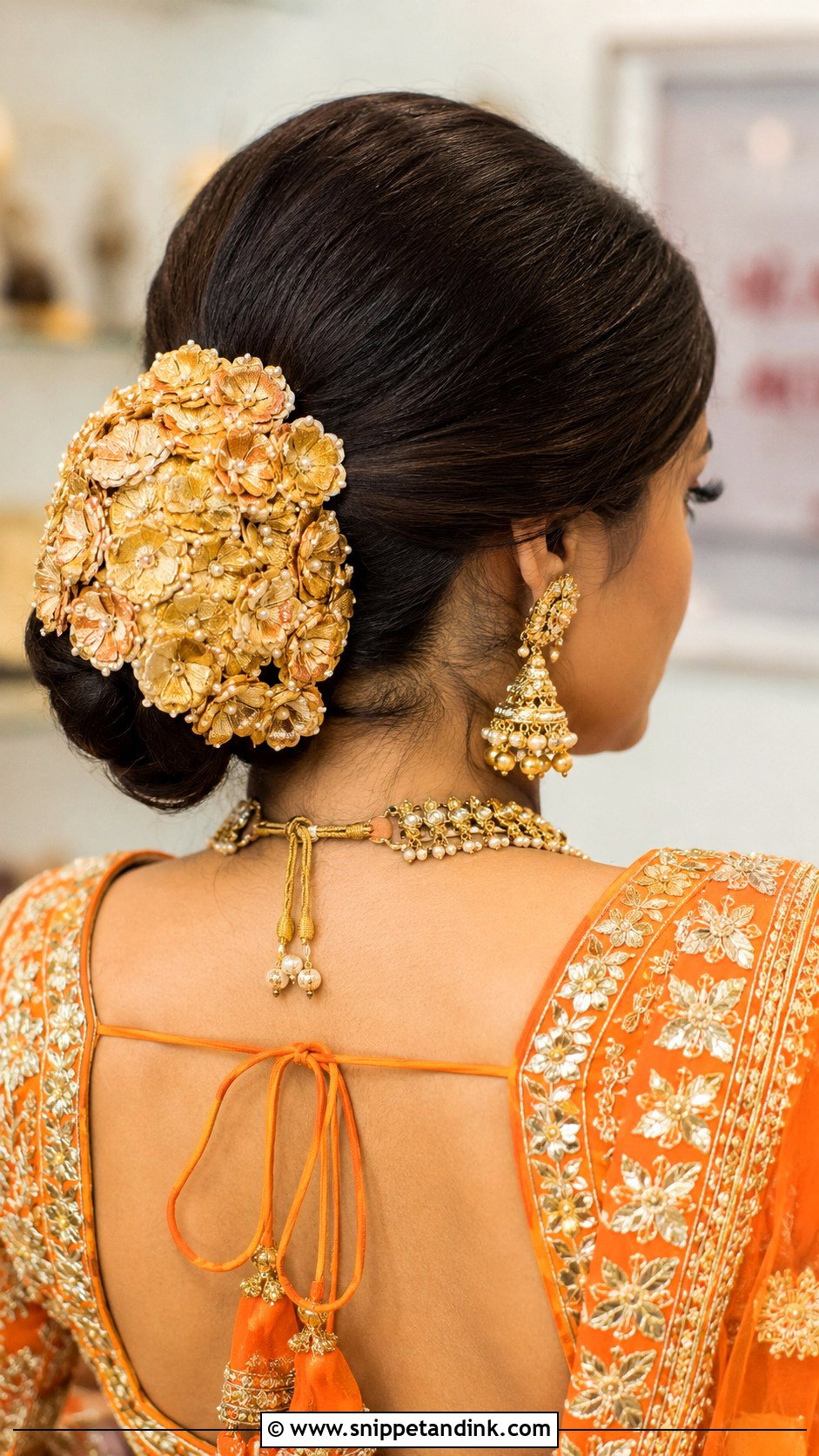
Gota patti flowers bring a Rajasthani feel without the wilt of fresh blooms, which makes them a practical pick for a long outdoor day. I attach them with U-pins through the fabric base, since standard bobby pins tend to show. The gold ribbon work sits comfortably next to heavy kundan or polki jewelry. Choose two or three shades from your outfit and repeat them, rather than a full rainbow.
13. Curly Ponytail for Indian Wedding
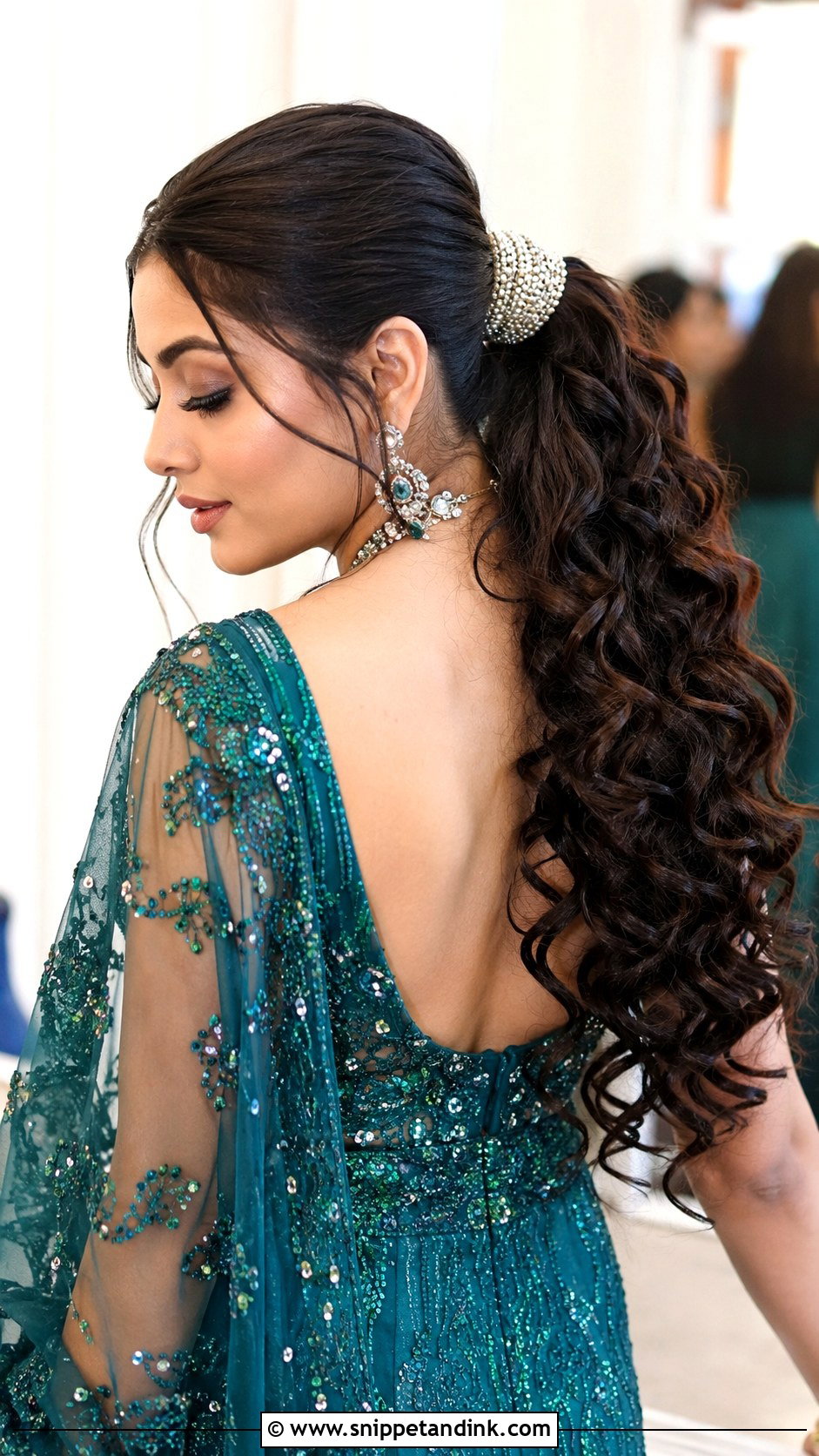
A curly ponytail is a sangeet look for me, not a ceremony one. It needs long, thick hair to bounce, and the base has to be secured with two elastics and pins so the weight doesn’t slide it down by midnight. I wrap a thin braid around the band to hide it. If you’ll be dancing all night, a low position stays put far better than a high one.
14. Bun With Matha Patti Hairstyle
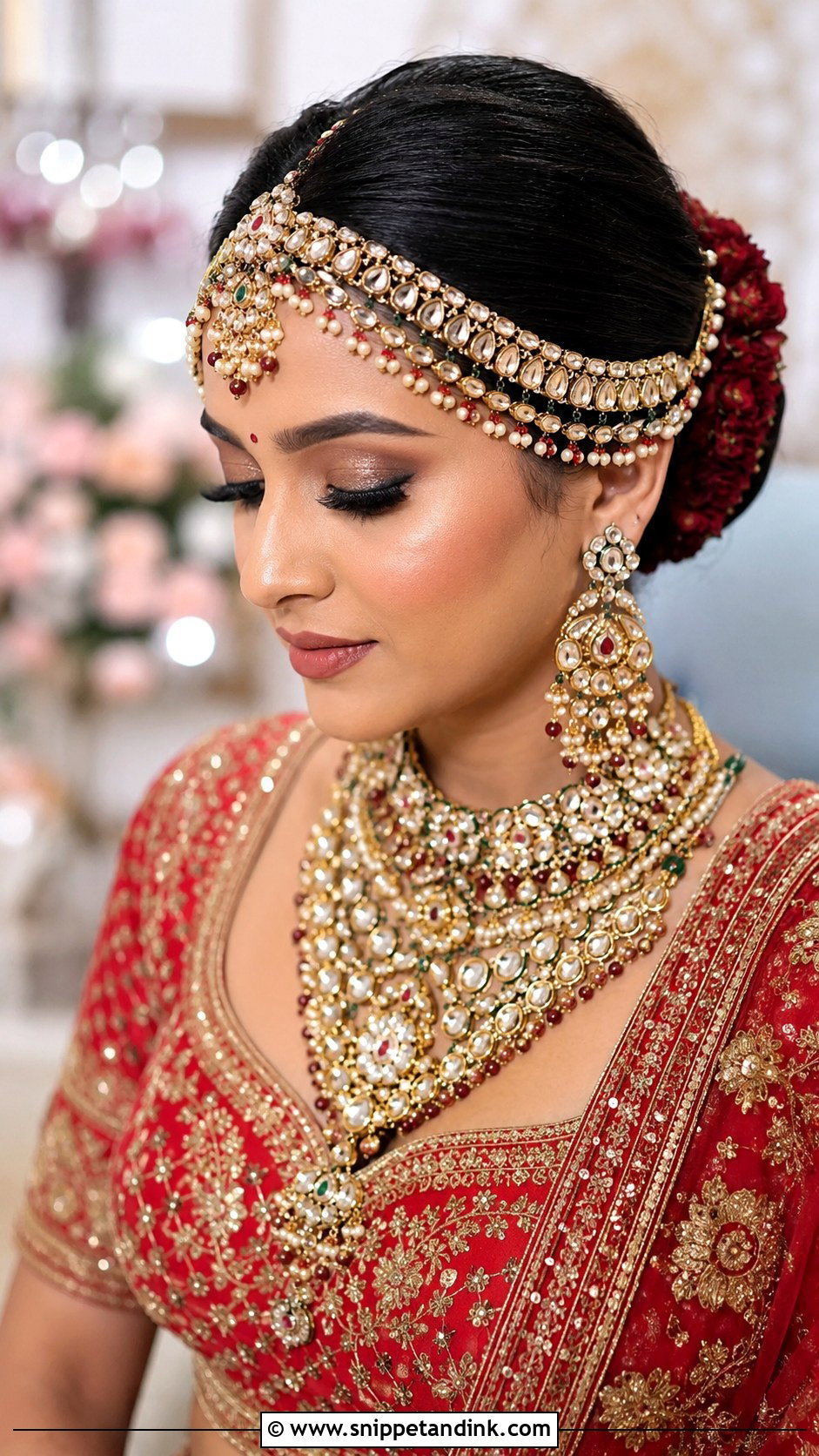
When the matha patti is the hero, the hair underneath should stay quiet. I slick the front back cleanly and set a low or mid bun so the chains lie flat against the scalp and don’t lift at the parting. That’s why a bun like this works so well with a stunning matha patti. The side chains need to be pinned behind the ears, not just hooked, or they shift every time you turn your head.
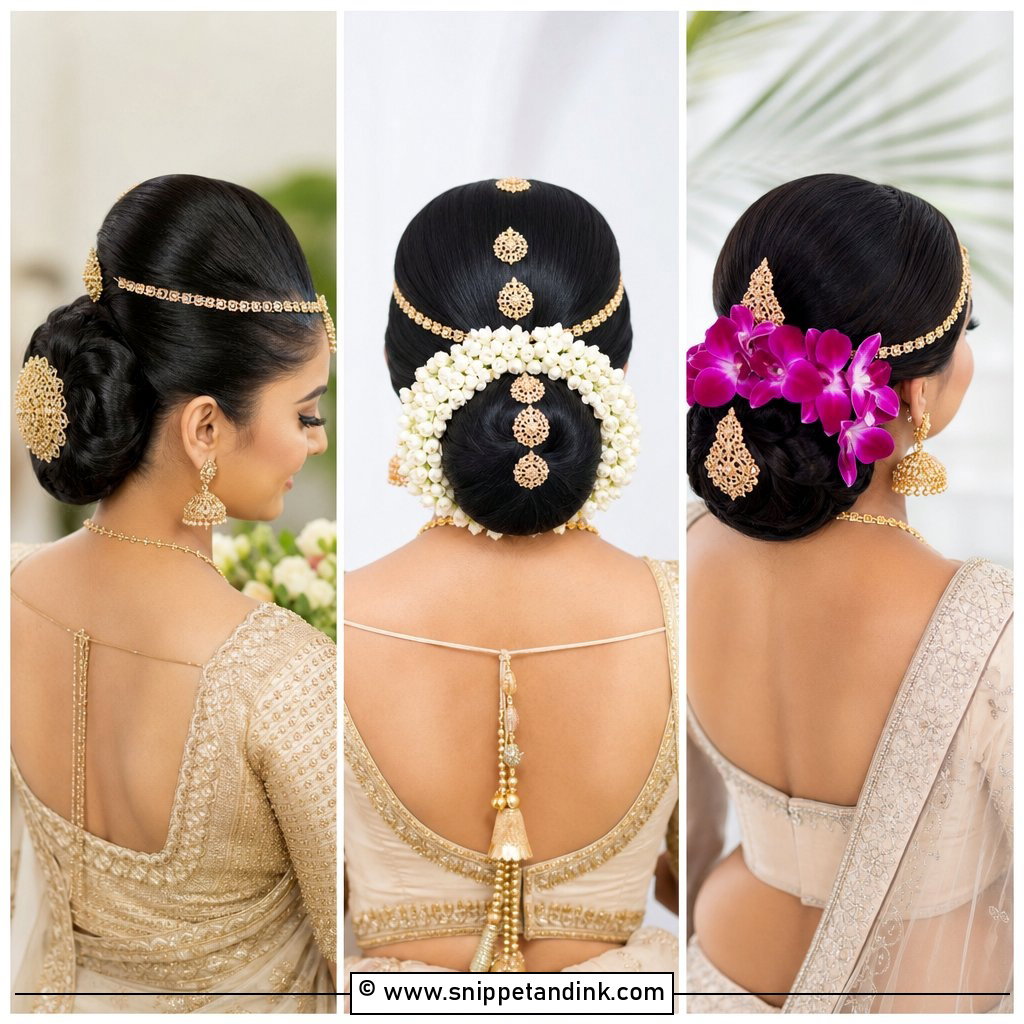
15. Loose Waves With Hair Accessories
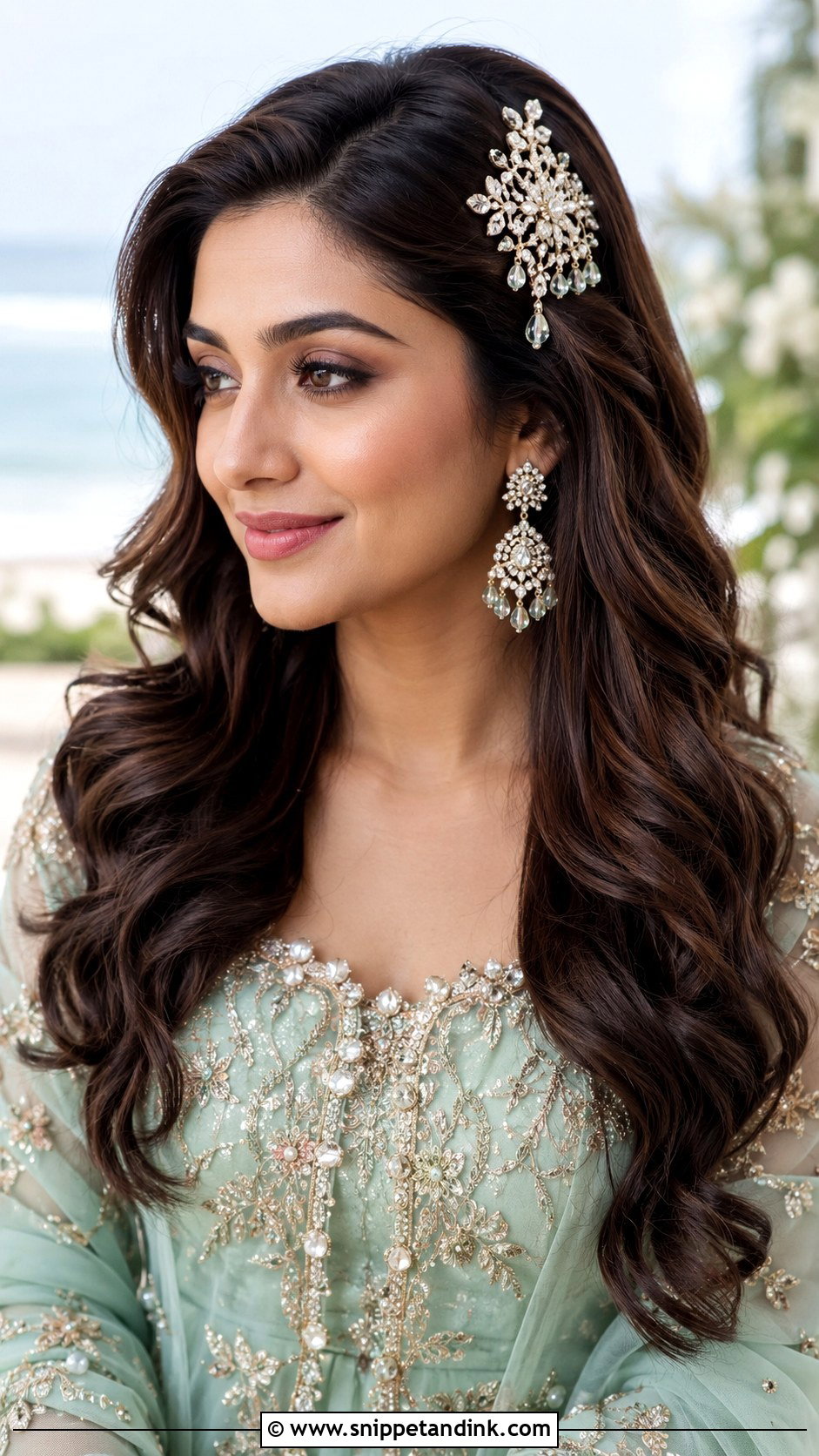
Loose waves read relaxed, but they still need a good set to last through a mehndi or sangeet. I use a larger barrel than for curls and brush the waves out once they’ve cooled, then spray from a distance. A single jeweled clip on one side gives a bridal finish. Fine hair loses this shape fastest, so I’d add a little texture spray at the roots before curling.
16. Braided Bun With Pearl Strings
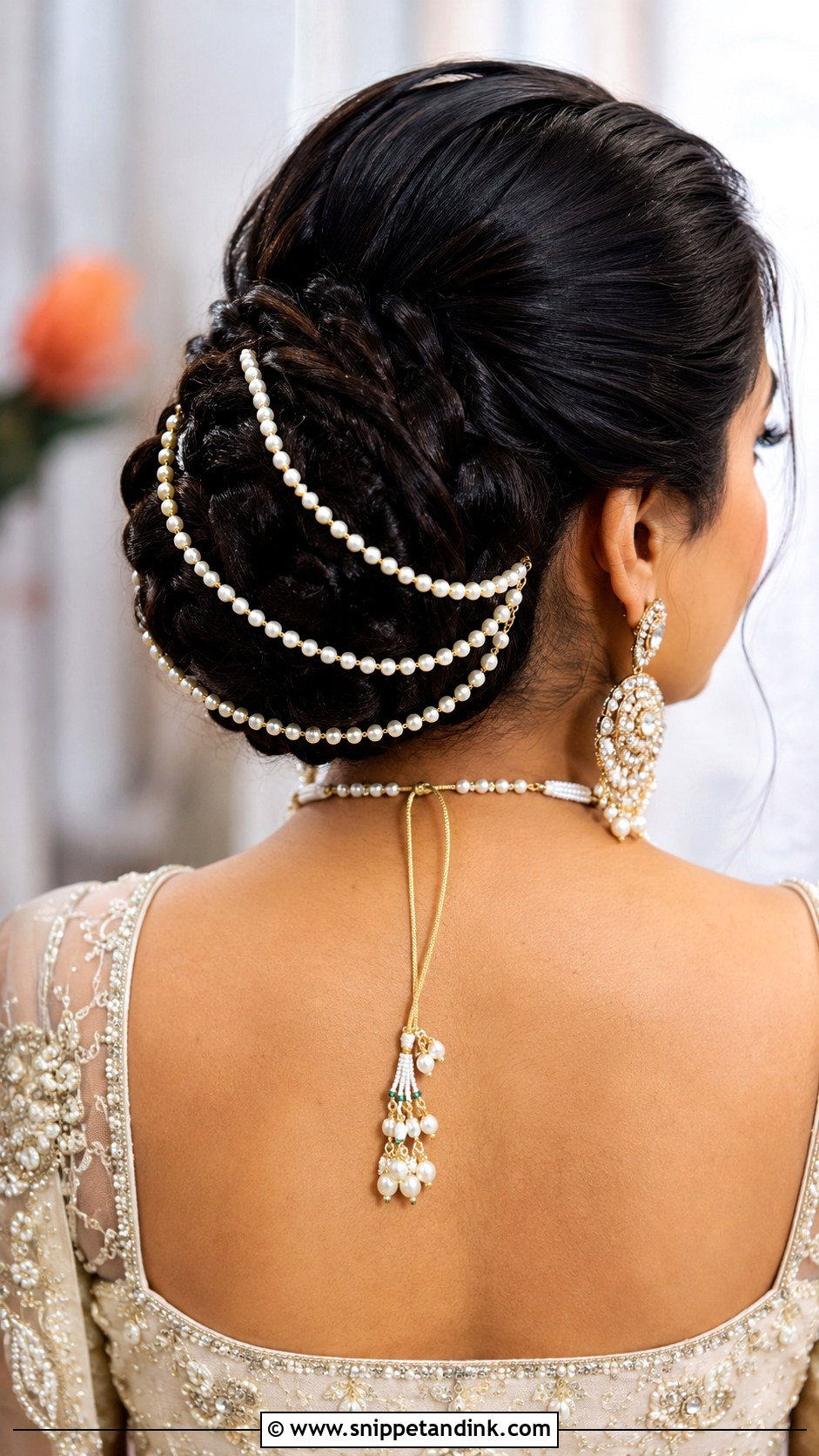
Pearl strings look delicate on a braided bun, yet they’re one of the fiddlier finishes I do. Each strand has to be pinned at both ends and once in the middle, or it swings loose when you bend to touch elders’ feet. The braid texture underneath helps the pins grip. It pairs naturally with a pearl jewelry set and holds well through long ceremonies.
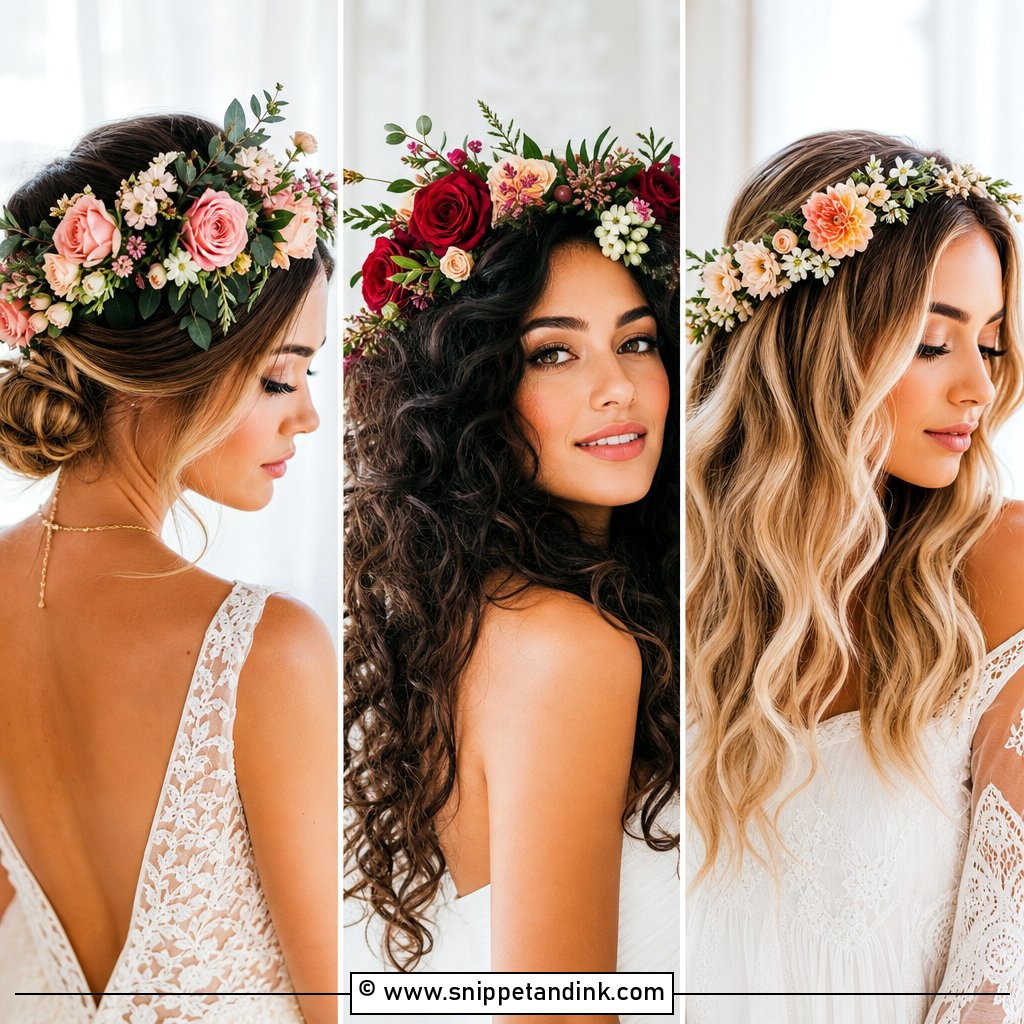
17. Flower Crown Open Hair Look
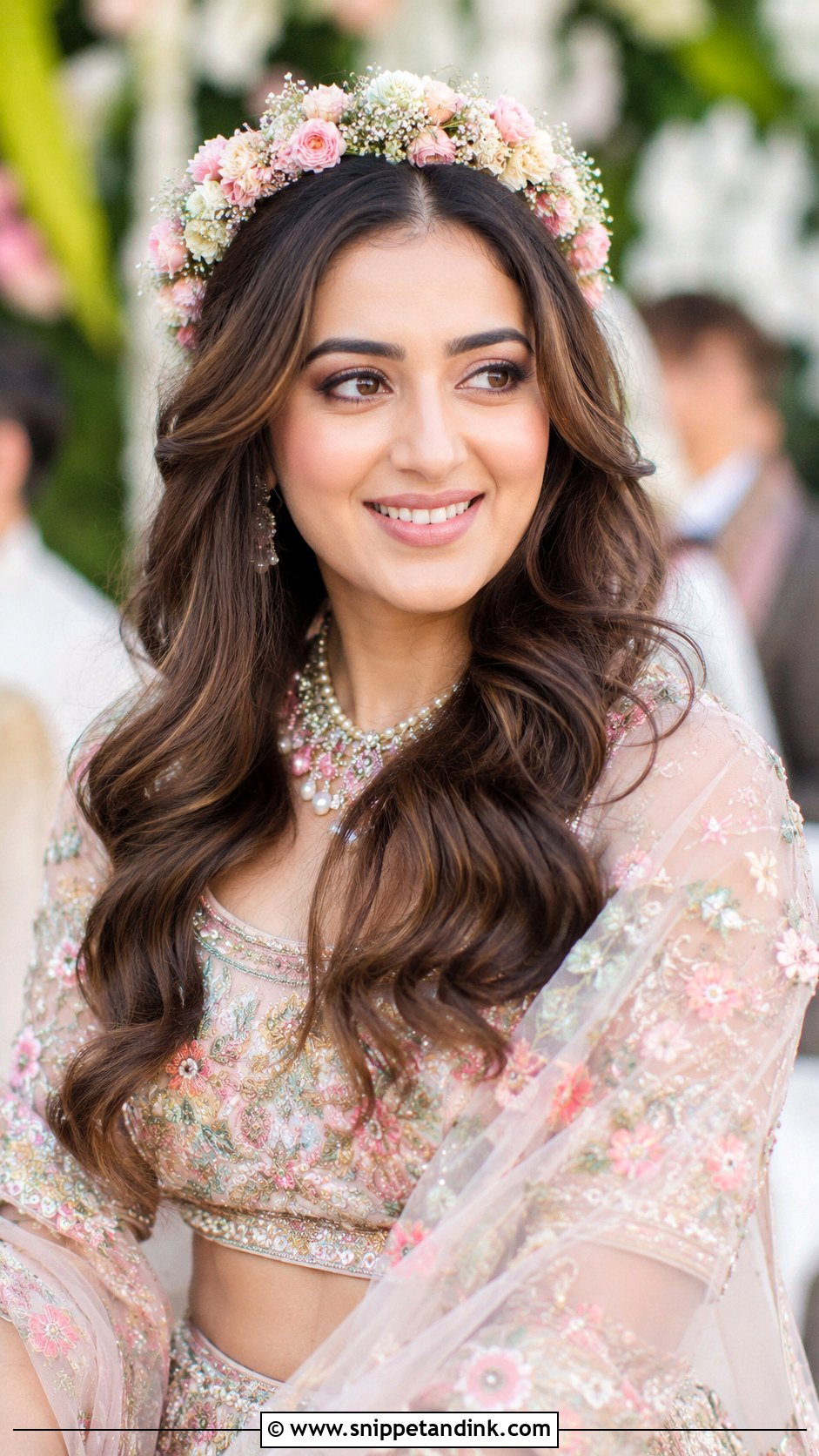
A flower crown over open hair is a daytime look, and I’d keep it for haldi or mehndi. A fresh crown is built on a wire base, so it needs pins on each side through the hair to stop it sliding back. Pick sturdy blooms like mini roses or chrysanthemums over delicate ones that droop by noon. With pastel or floral lehengas, it suits an outdoor setting.
18. Sleek Low Ponytail for Reception
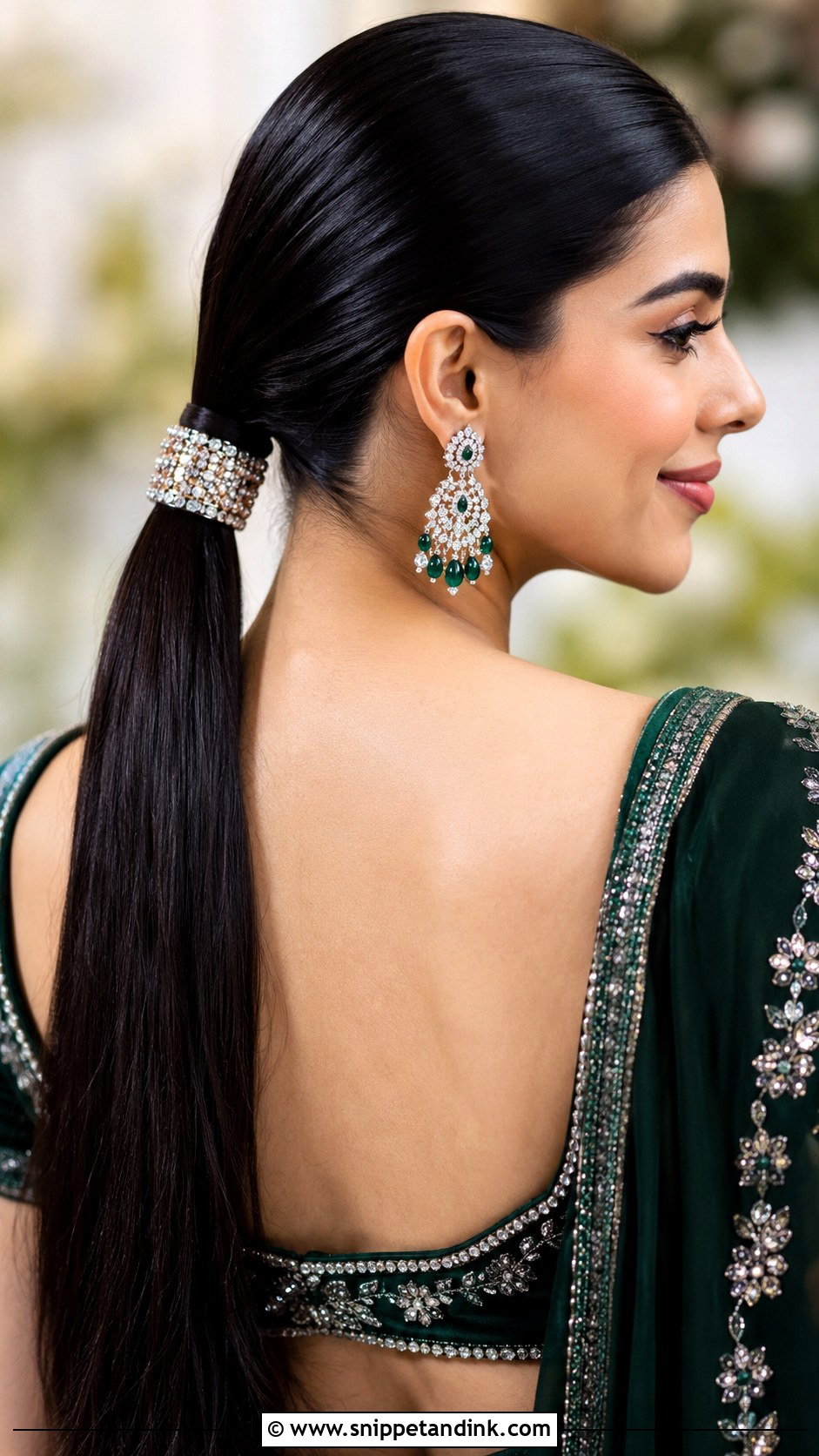
A sleek low ponytail is mostly about the brushing. I smooth the hair with a little cream, tie it at the nape, then wrap a strand around the elastic and pin it underneath. A cuff or crystal pin at the base finishes it. It’s minimal and fashion-led, so it sits best with a sleek saree or a fitted gown, and it gives your neck and earrings full attention.
19. Mermaid Braid With Flowers
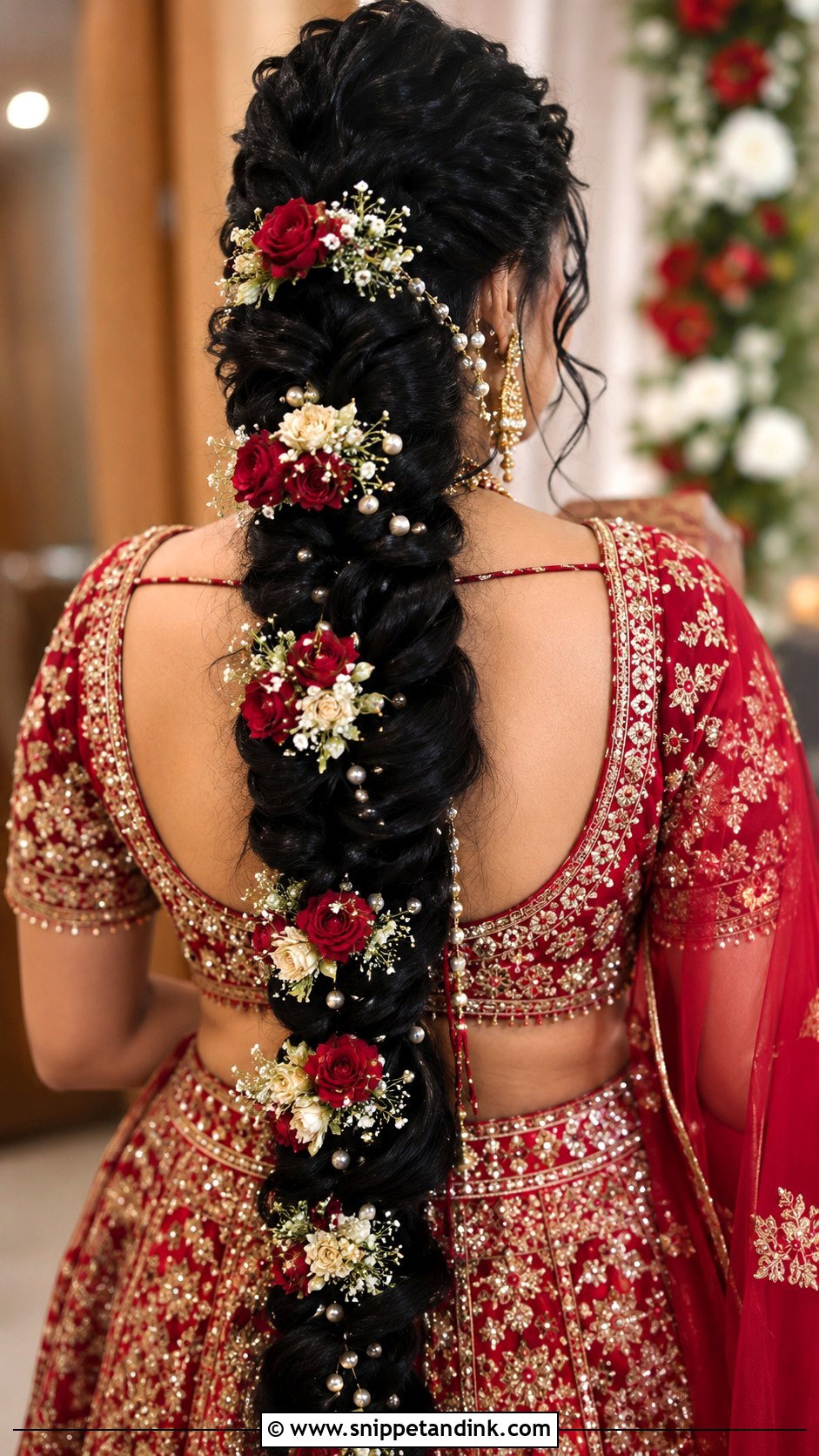
A mermaid braid is built from two outer sections pulled into the centre and stacked, so it looks thicker than a classic braid. That makes it a good fit for medium-density hair that wants to look fuller. Flowers, pearls or small butterflies get tucked into the loops after it’s finished. I pin it to the back so it doesn’t swing over the shoulder when you sit for photos.
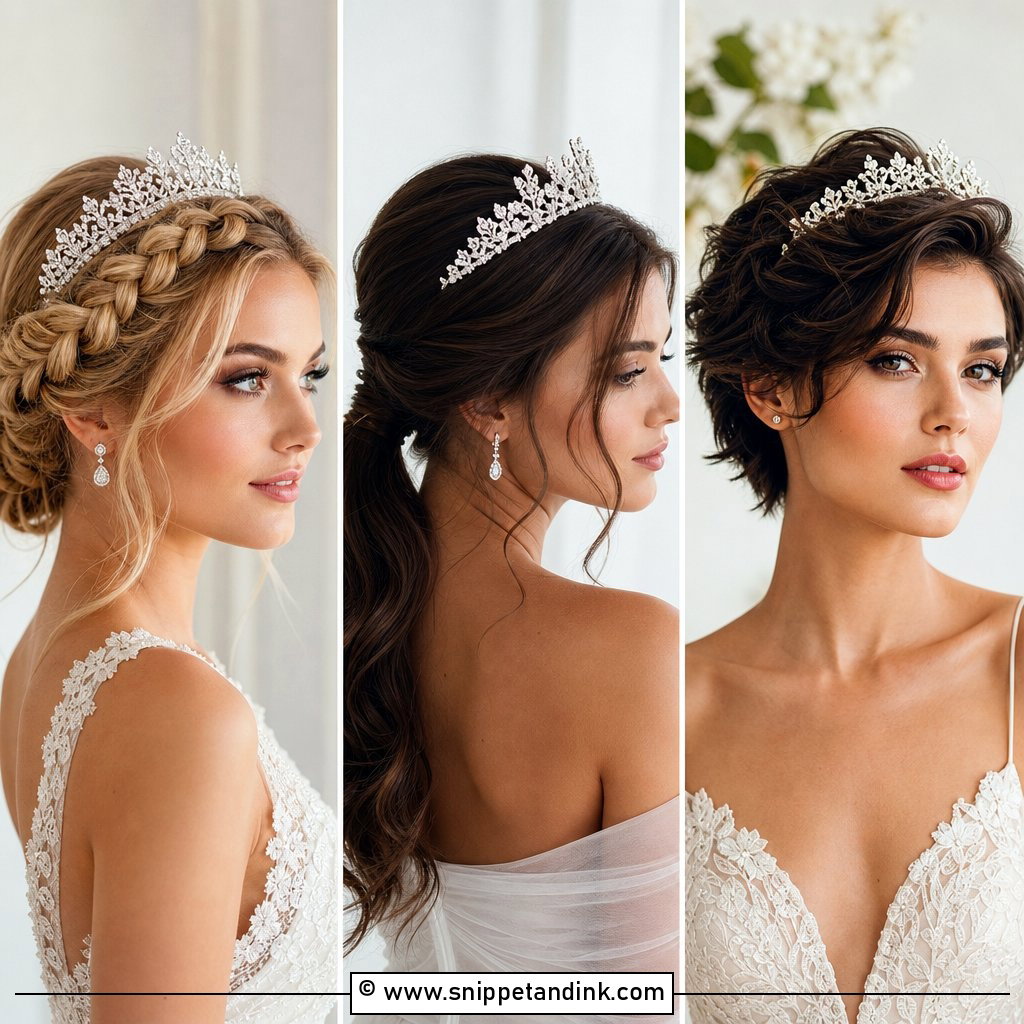

20. Bun With Jasmine Gajra for South Indian Bride
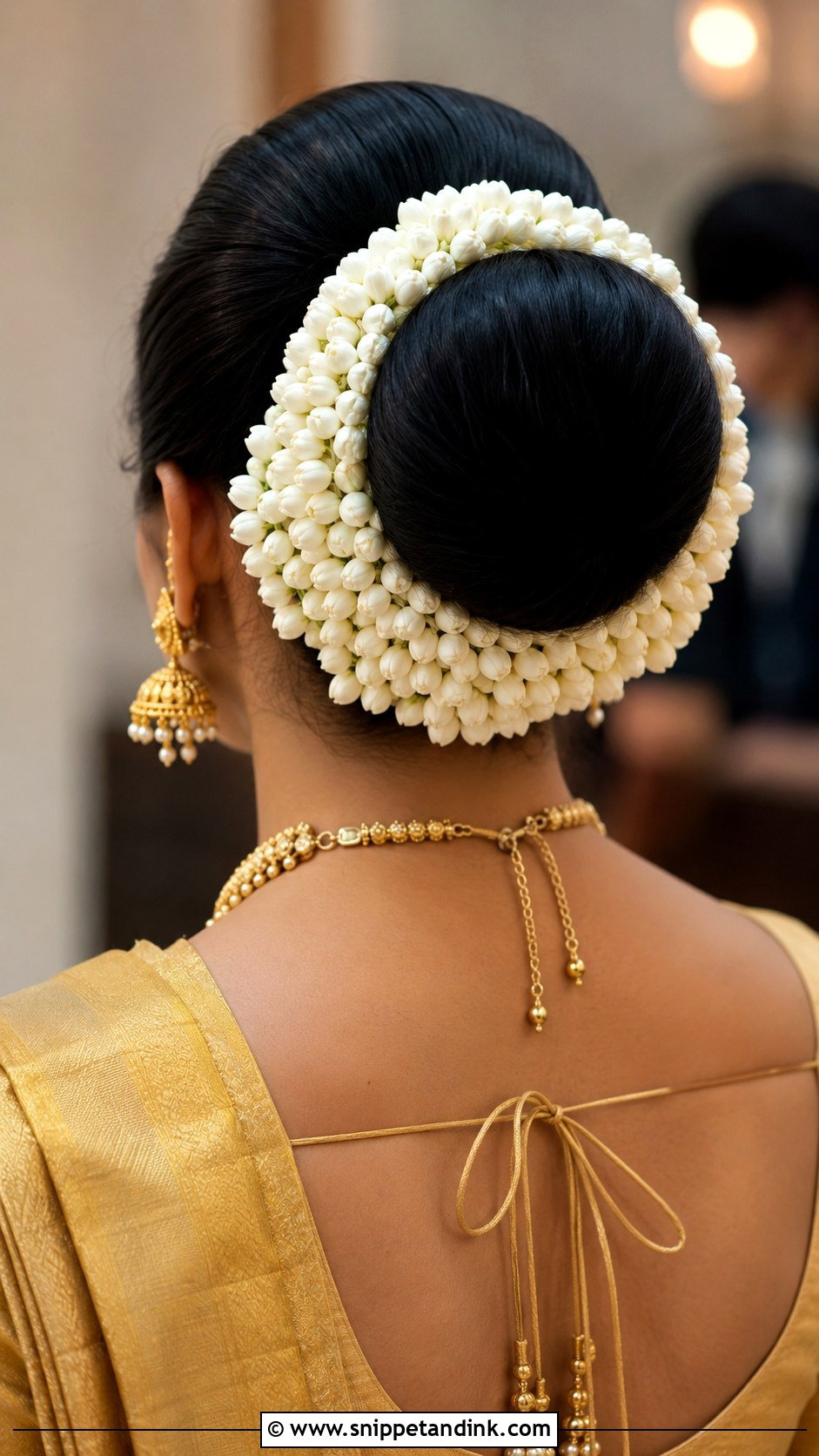
The jasmine gajra bun is the South Indian bridal staple, and I set it differently from a North Indian bun. The coil sits slightly higher, so the gajra strands can wrap around and hang down the back without dragging. Several strings are layered and pinned at the top. Fresh jasmine brings that scent through every ritual, but as with any gajra I keep a spare string ready in case the first one browns.
21. Curtain Bangs With Bridal Bun
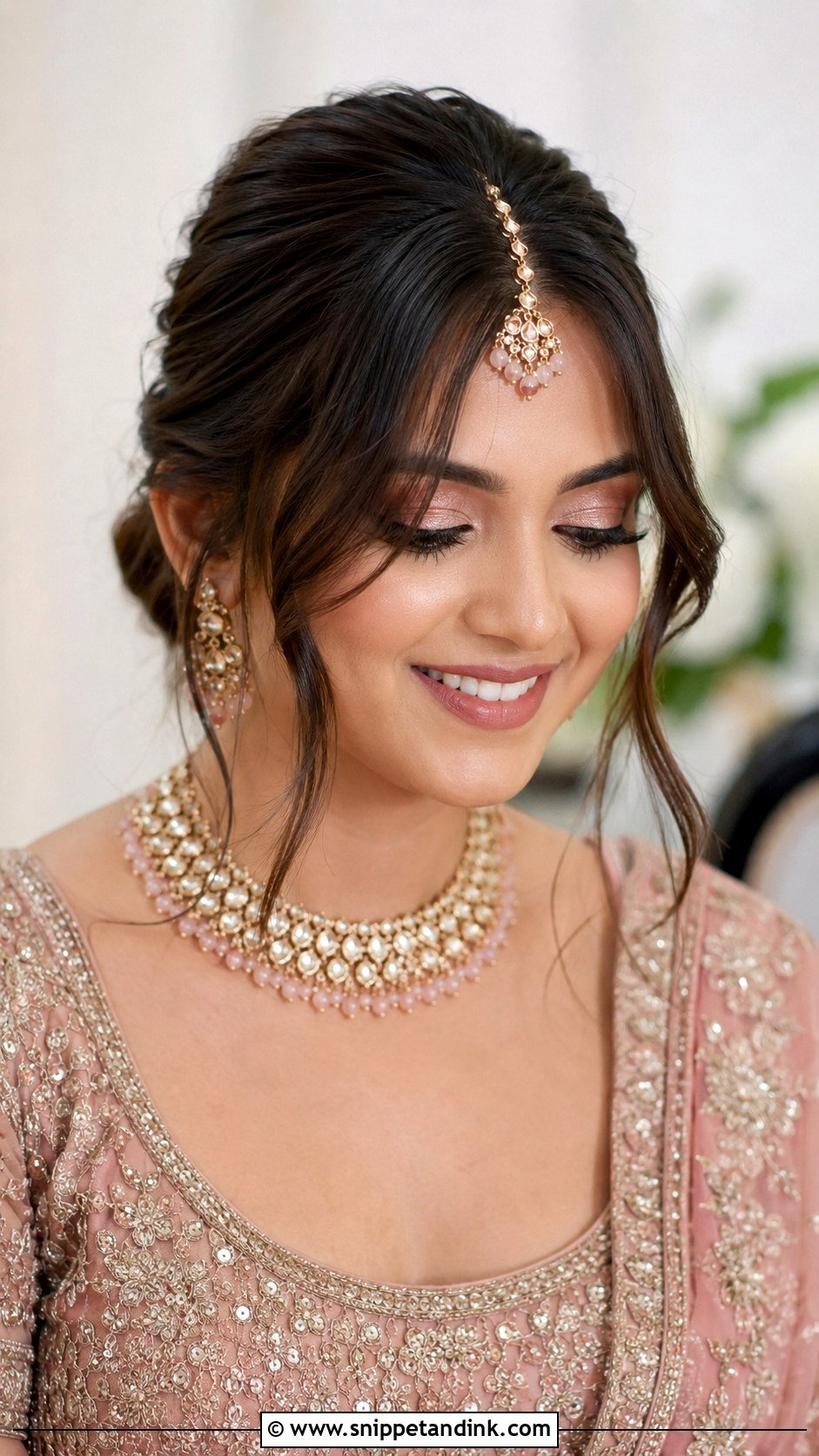
Curtain bangs only work if you already have them or cut them at least three weeks before the wedding so they settle. I’d never cut them at the trial. They soften the face and sit under a maang tikka without crowding it. Blow them out with a round brush and leave them lightly textured so they don’t stick to foundation in heat.
22. Twisted Updo With Jeweled Pins
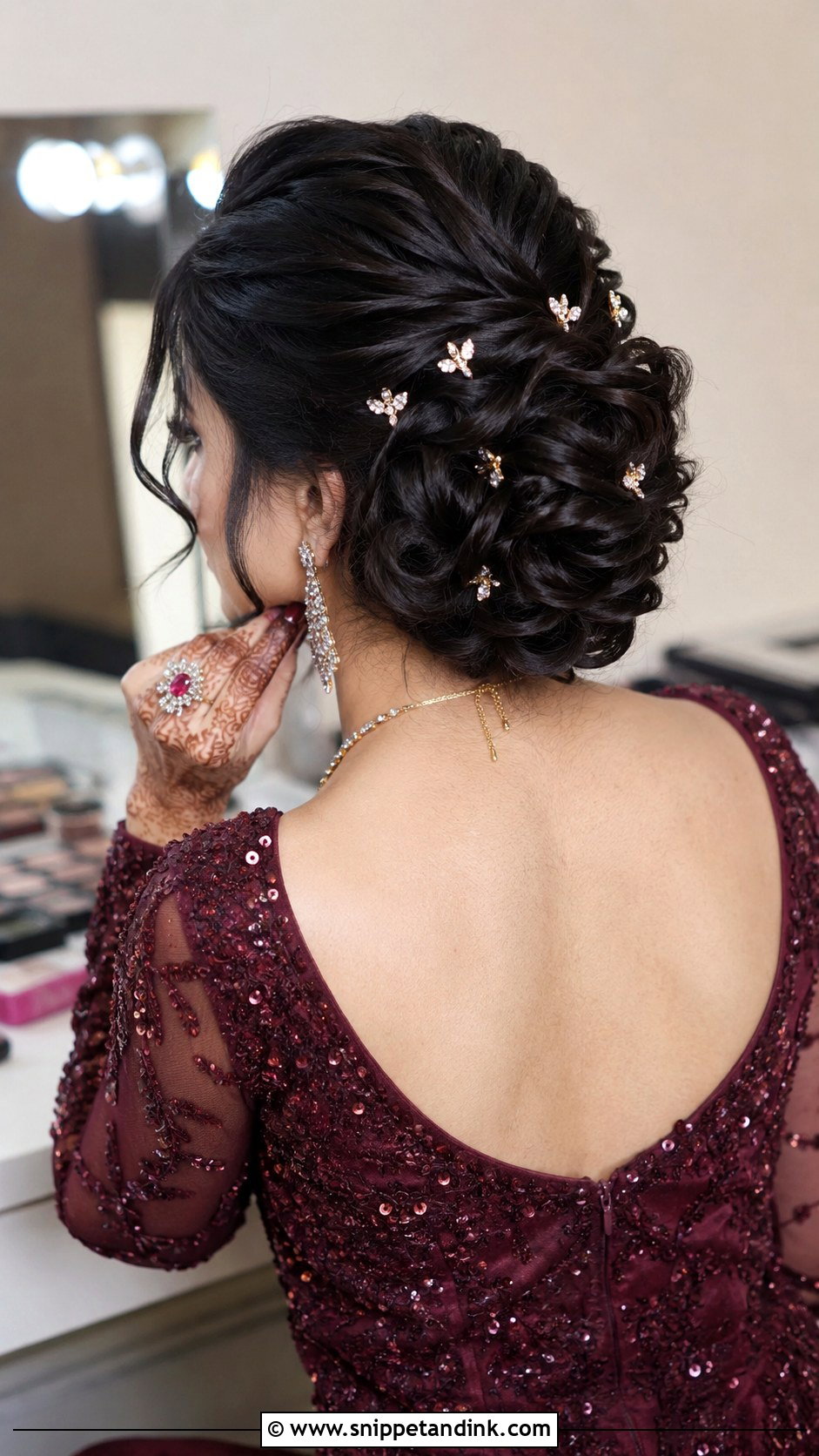
A twisted updo with jeweled pins needs a solid foundation of backcombing and pins before any decoration goes on. I twist each section, pin it, then add crystals or pearls where the light hits. It’s heavy on jewelry, so I keep the earrings simple if the pins are large. This is a reception look; it would be lost under a ceremonial dupatta.
23. Boho Braided Open Hair Style
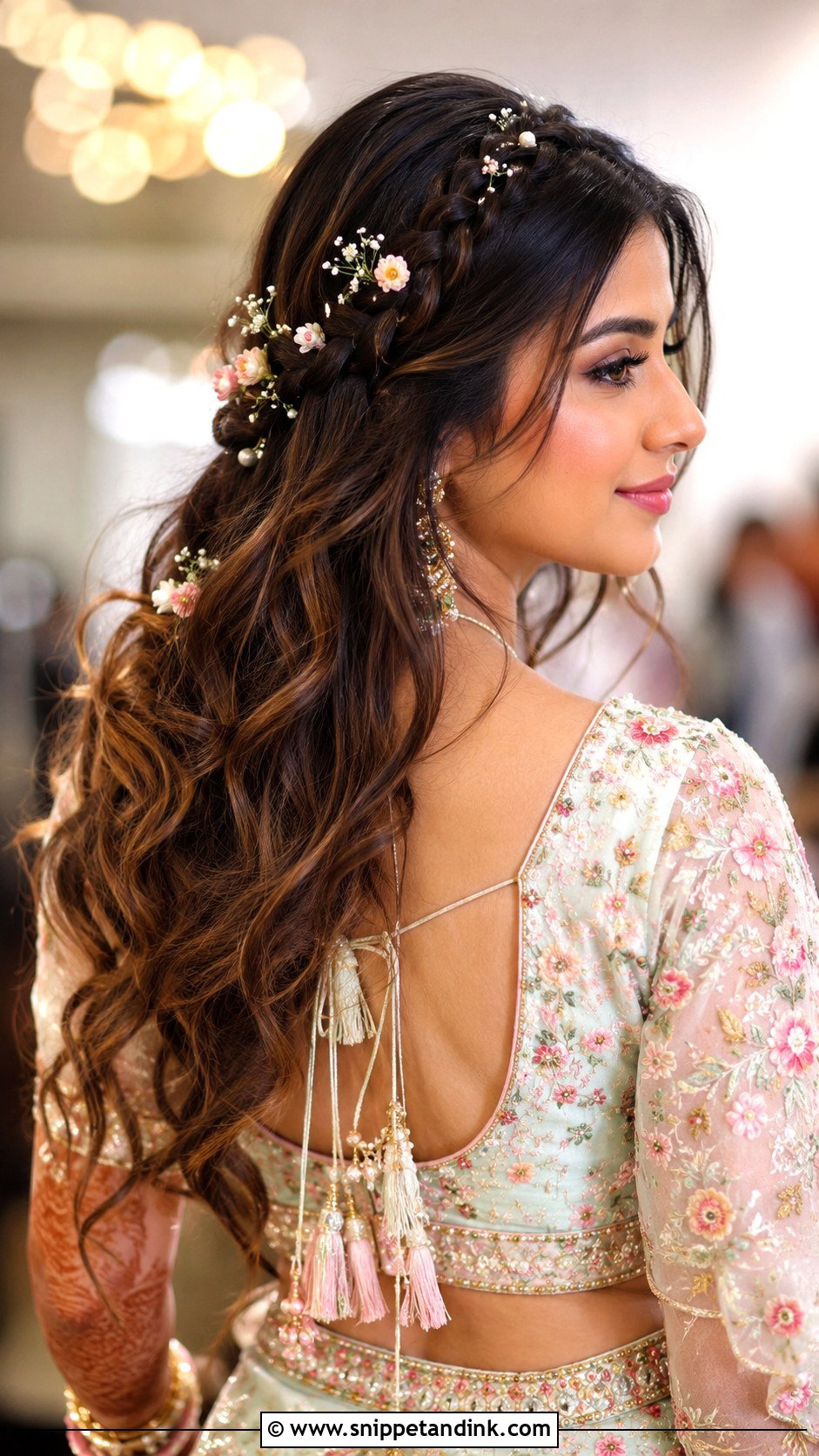
Boho braids woven through open hair suit a relaxed haldi or mehndi. I braid a few small sections at the sides or crown, then curl the rest loosely. Tiny flowers or beads tuck into the braids. Turmeric will stain light hair and fabric decorations, so for a haldi I’d skip pearls and silk flowers entirely.
24. Bridal Bun With Roses and Leaves
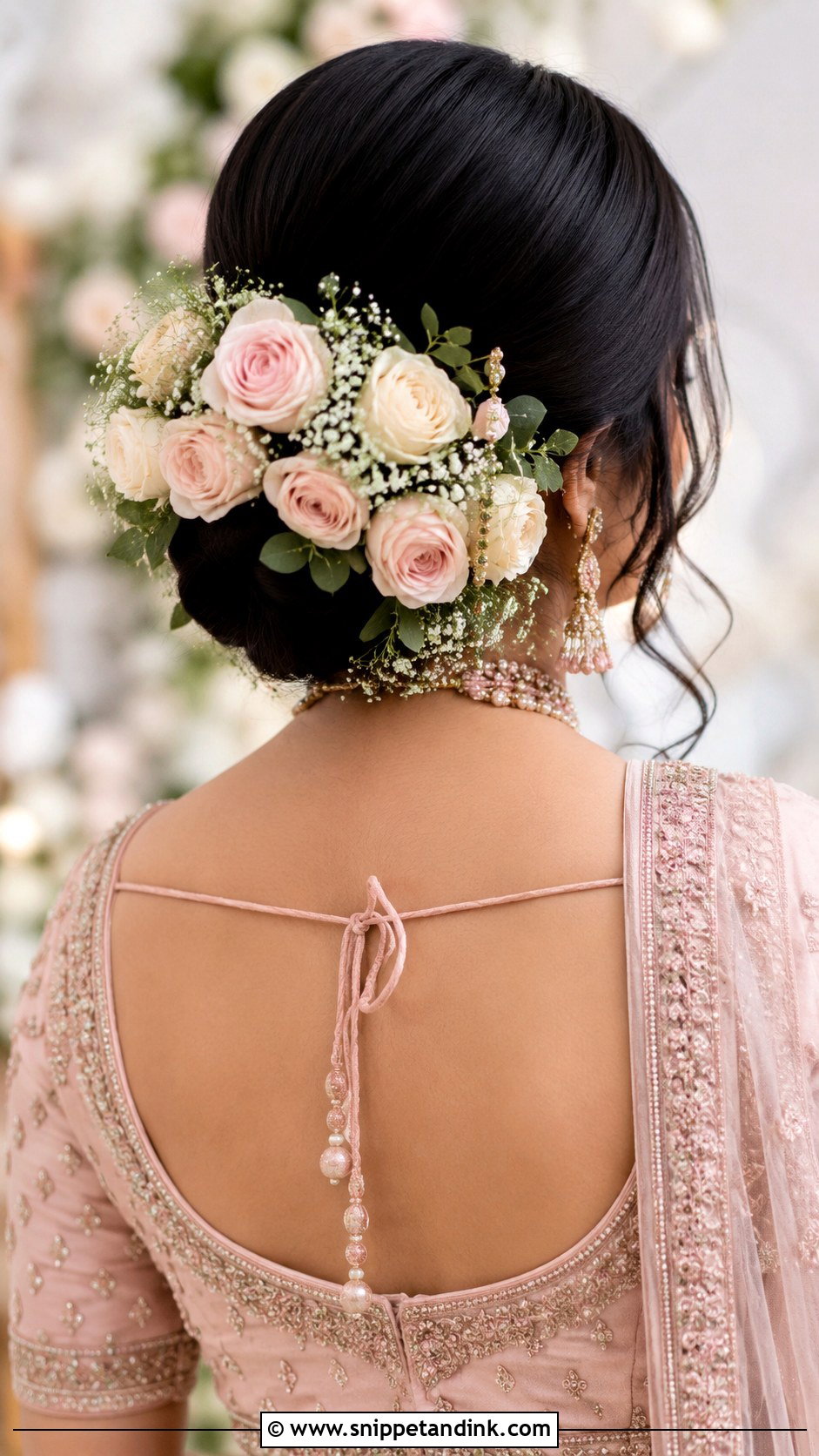
Roses and leaves on a bun give a garden feel, and the greenery is what keeps it from looking too sweet. I use sturdy leaves like eucalyptus or ruscus, since softer ones curl in heat. Roses go in first, then the leaves fill the gaps. Match the rose shade to your lehenga, and keep the arrangement to one side of the bun so you can lean back comfortably.
25. Sleek Straight Open Hair With Tikka
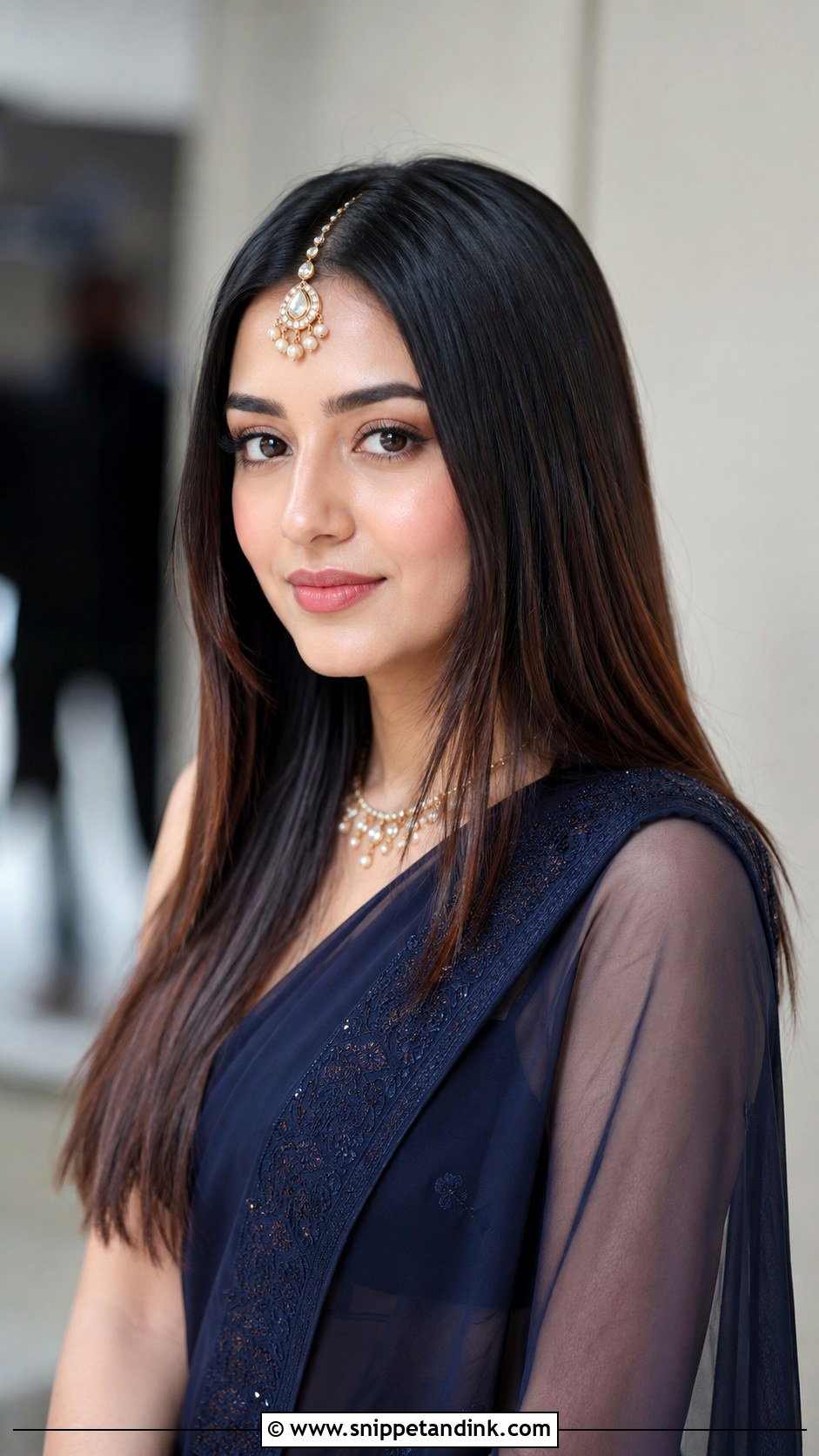
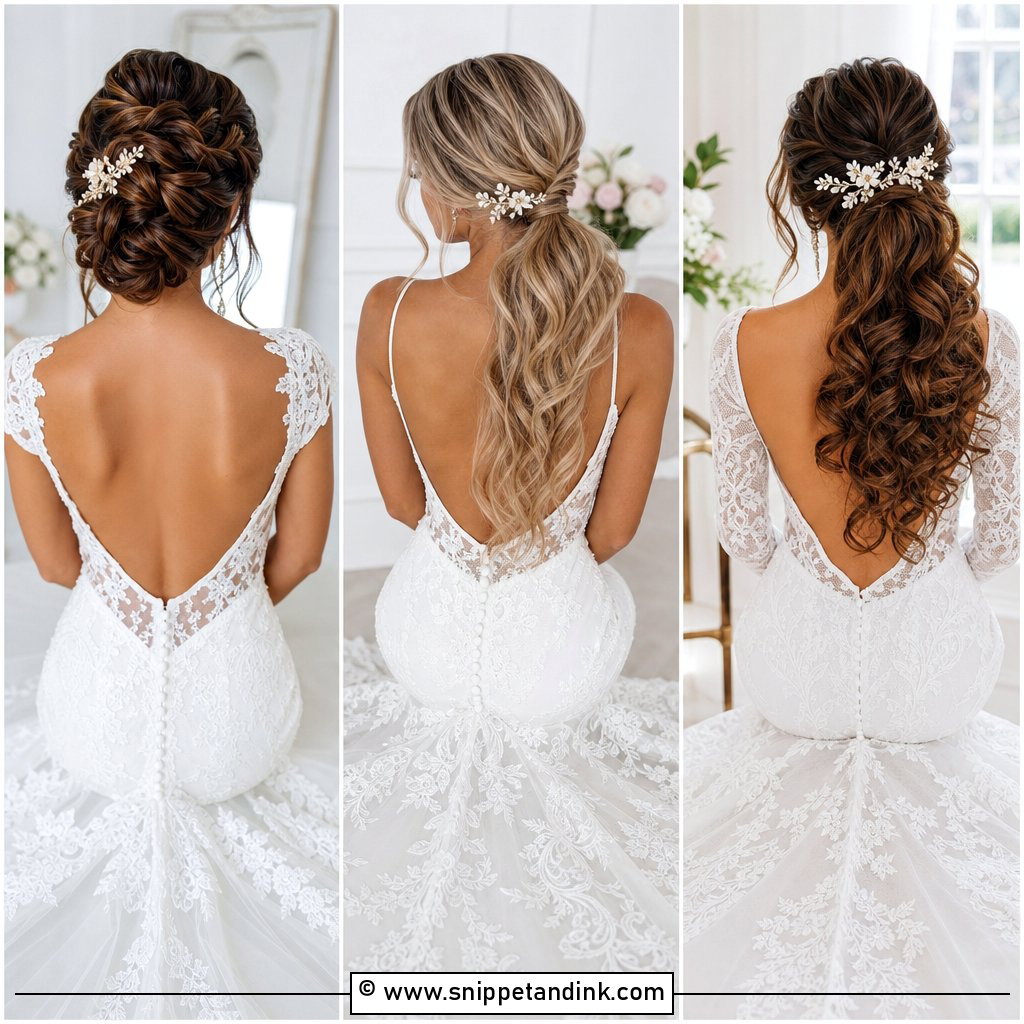
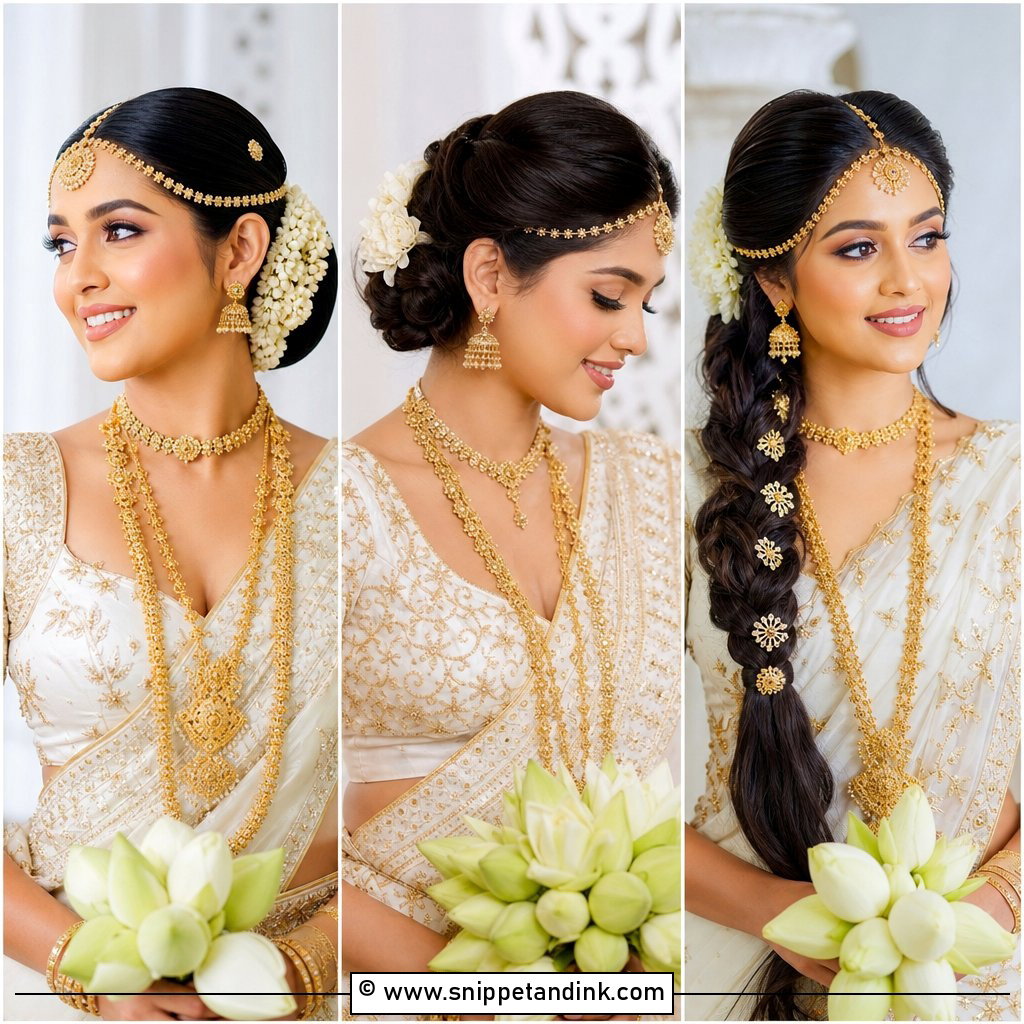
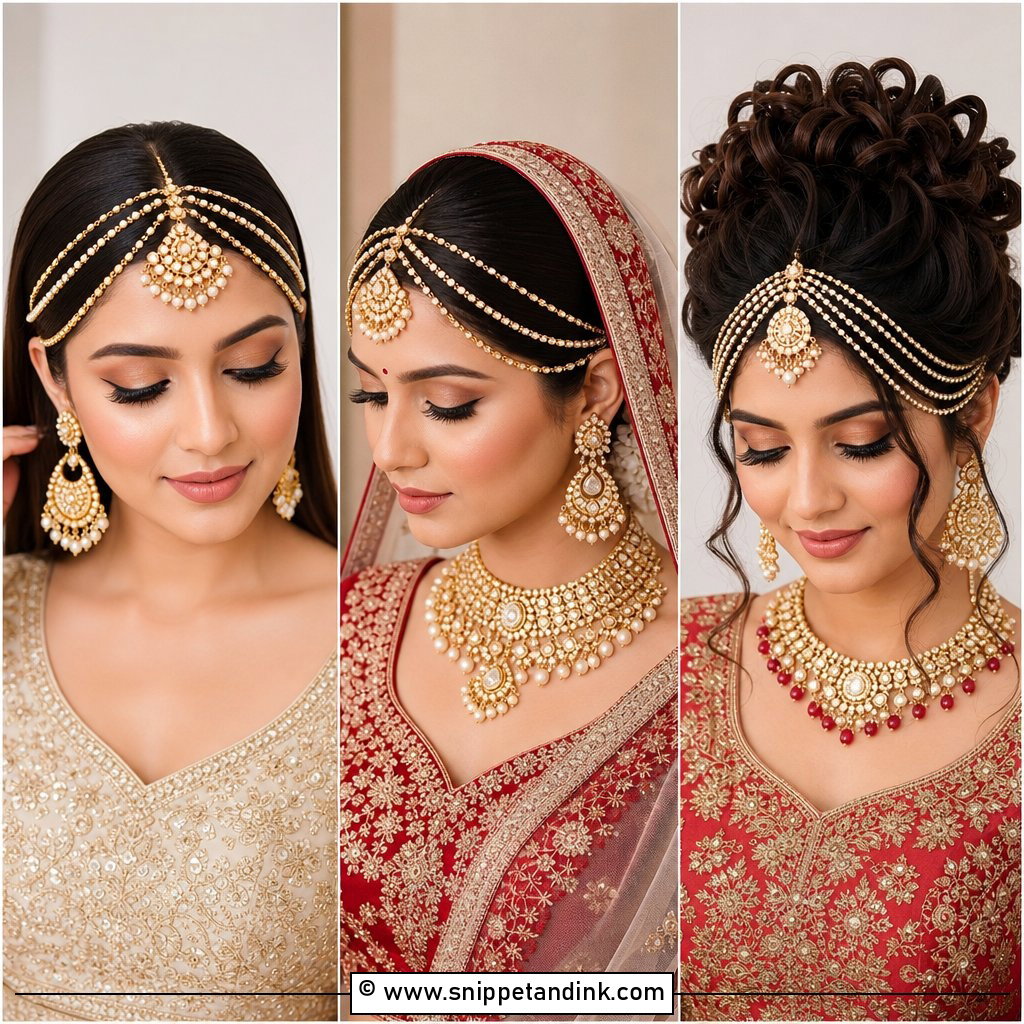
Sleek straight hair looks simple, but it’s the least forgiving style on a humid day. I straighten in small sections, then use a light serum to stop frizz without making the hair look greasy. A maang tikka adds the bridal note at the parting. Choose a centre or side parting at the trial, not on the morning, because switching it then leaves a visible kink.
26. Floral Braid Crown for Mehndi
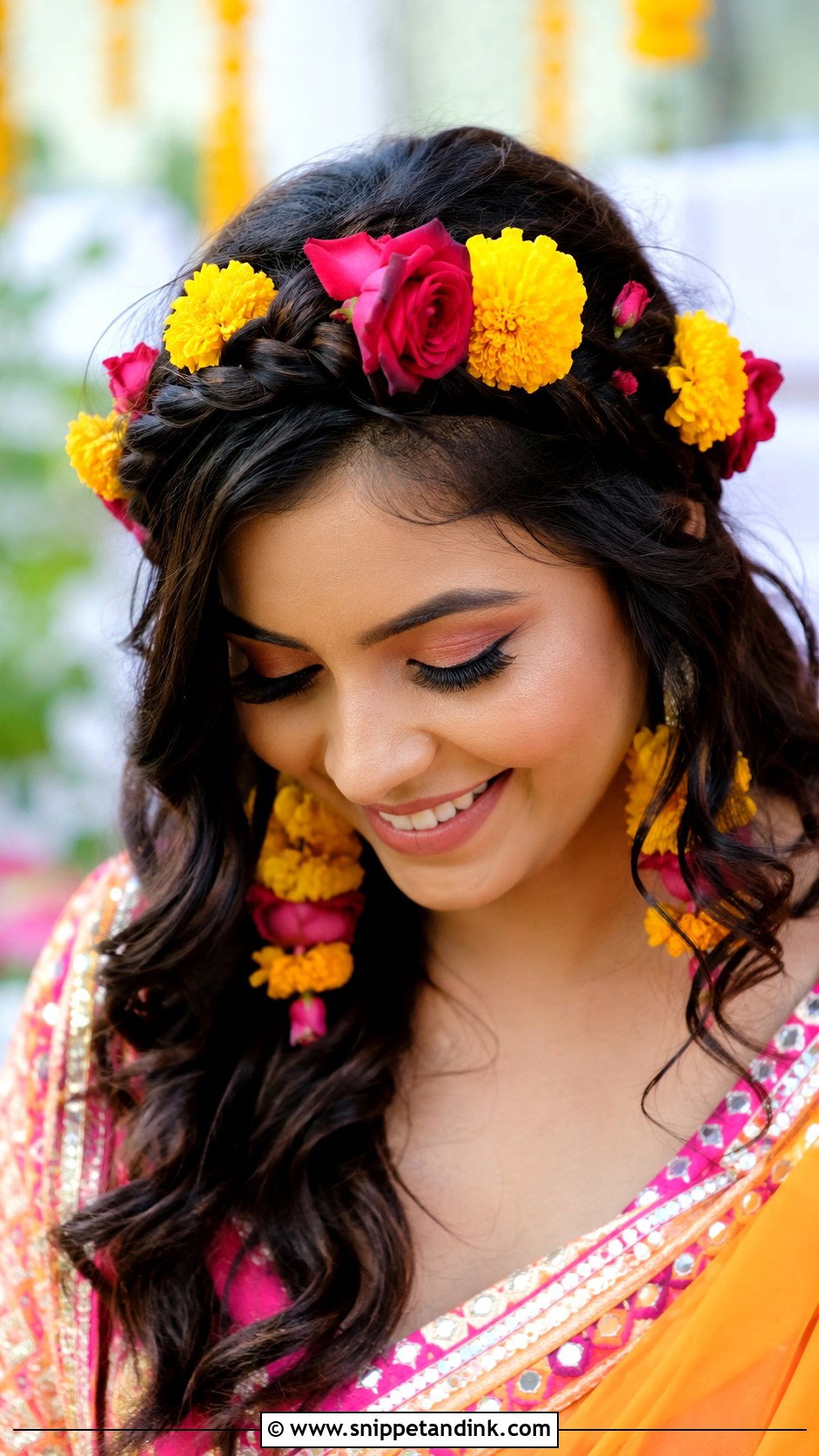
A floral braid crown is made for a mehndi, when you want your hair off your face while the henna dries on your hands. I braid it around the head, then tuck in marigolds or roses after it’s pinned so the stems don’t loosen the plait. It suits bright mehndi outfits and holds while you sit still for hours. Marigolds hold up best in heat, which is one reason they’re so common at mehndis.
27. Low Bun With Pearl Maang Tikka
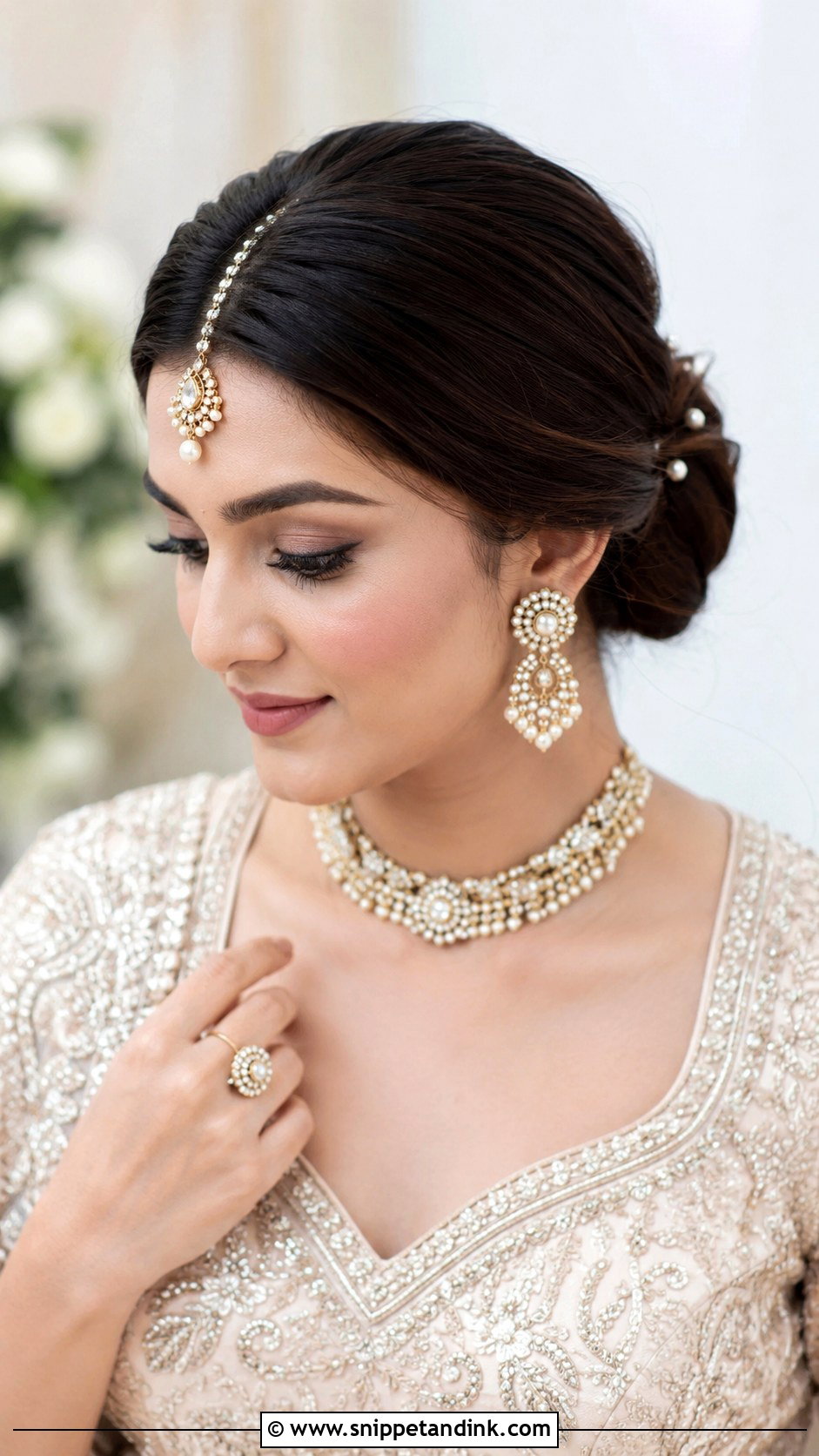
A pearl maang tikka with a low bun is the quietest look on this list, and that restraint is the point. I keep the bun smooth and add two or three pearl pins to echo the tikka. It suits ivory and pastel lehengas. If your tikka is long, I set the bun lower so the chain doesn’t bump against the hair at the back.
28. Voluminous Curls With Side Part
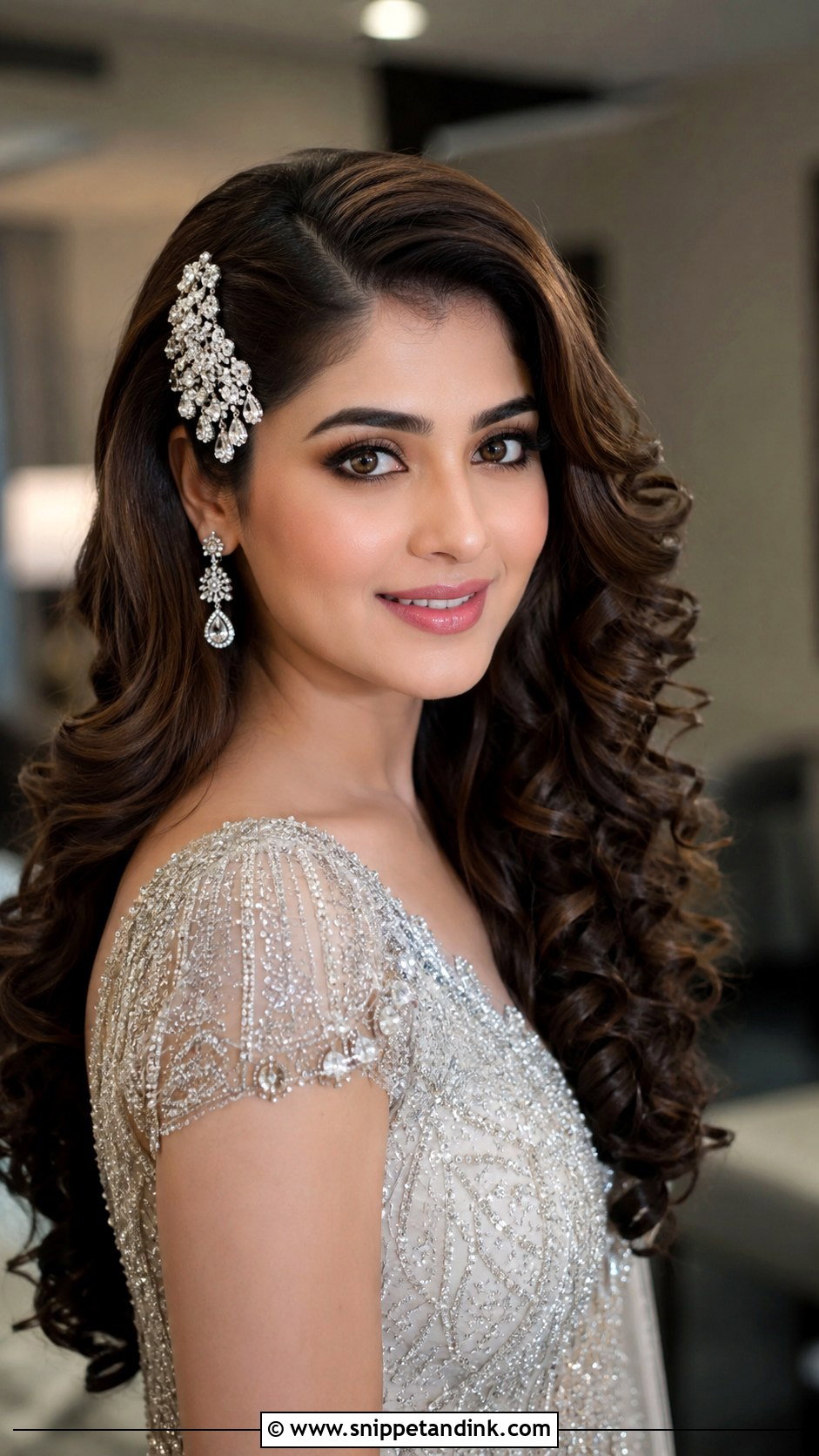
Voluminous curls with a deep side part are the most glamorous open-hair style here and also the heaviest to wear. The side part needs pinning on the full side, or the curls fall forward over the face by mid-evening. I’d pin it with a jeweled clip behind the ear. It’s a reception look for thick or medium hair; on very fine hair the volume collapses quickly.
29. Braided Low Bun With Maang Tikka
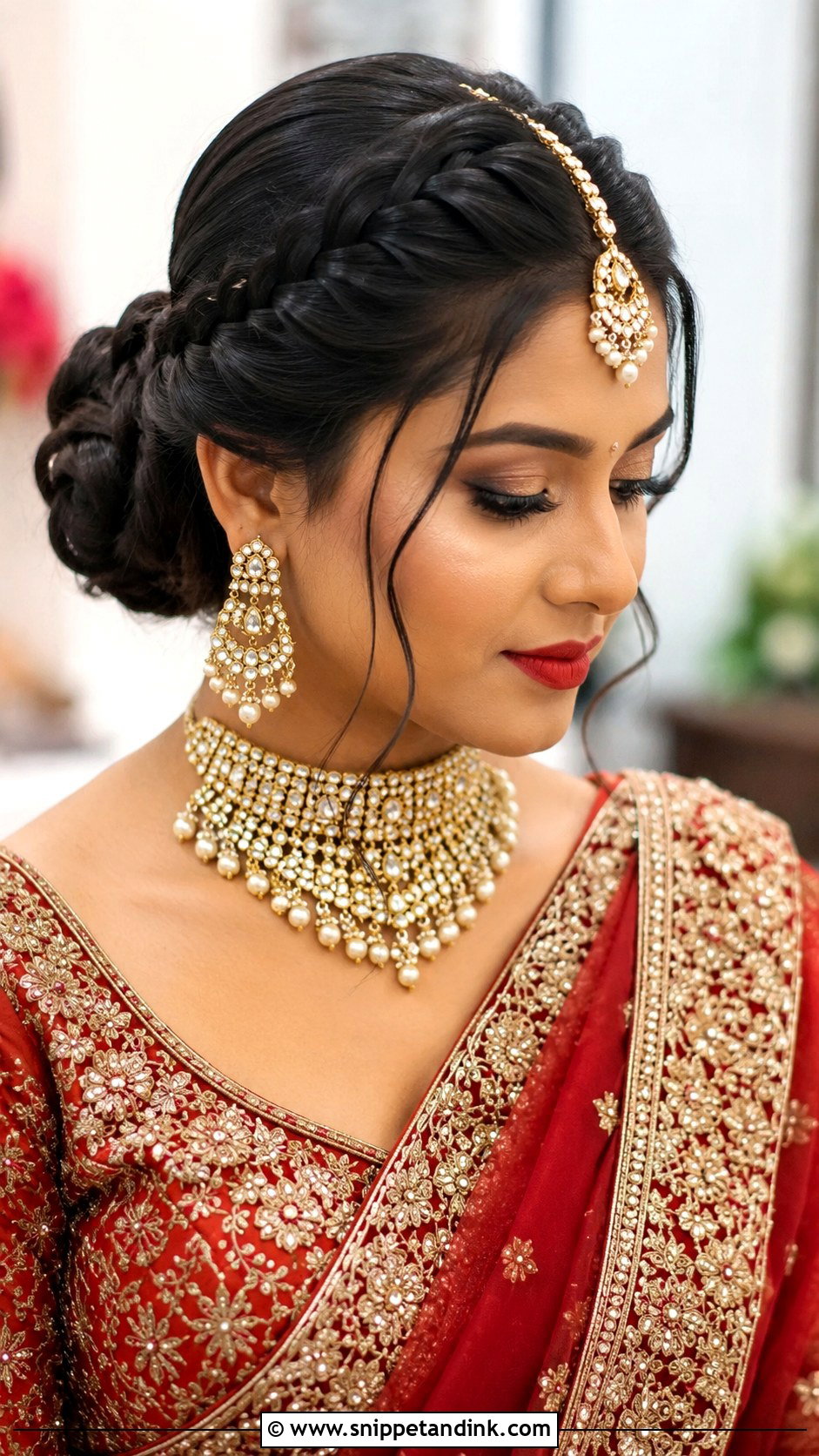
A braided low bun with a maang tikka is a staple for a reason: the braid gives the bun structure, and the tikka frames the face. I braid first, then coil and pin the braid so the texture shows on the outside. Fresh flowers or jeweled pins can go around it. It holds a heavy dupatta well, so it’s the one I suggest when a single style has to last through every ritual.
30. Open Hair With Diamond Hair Accessories
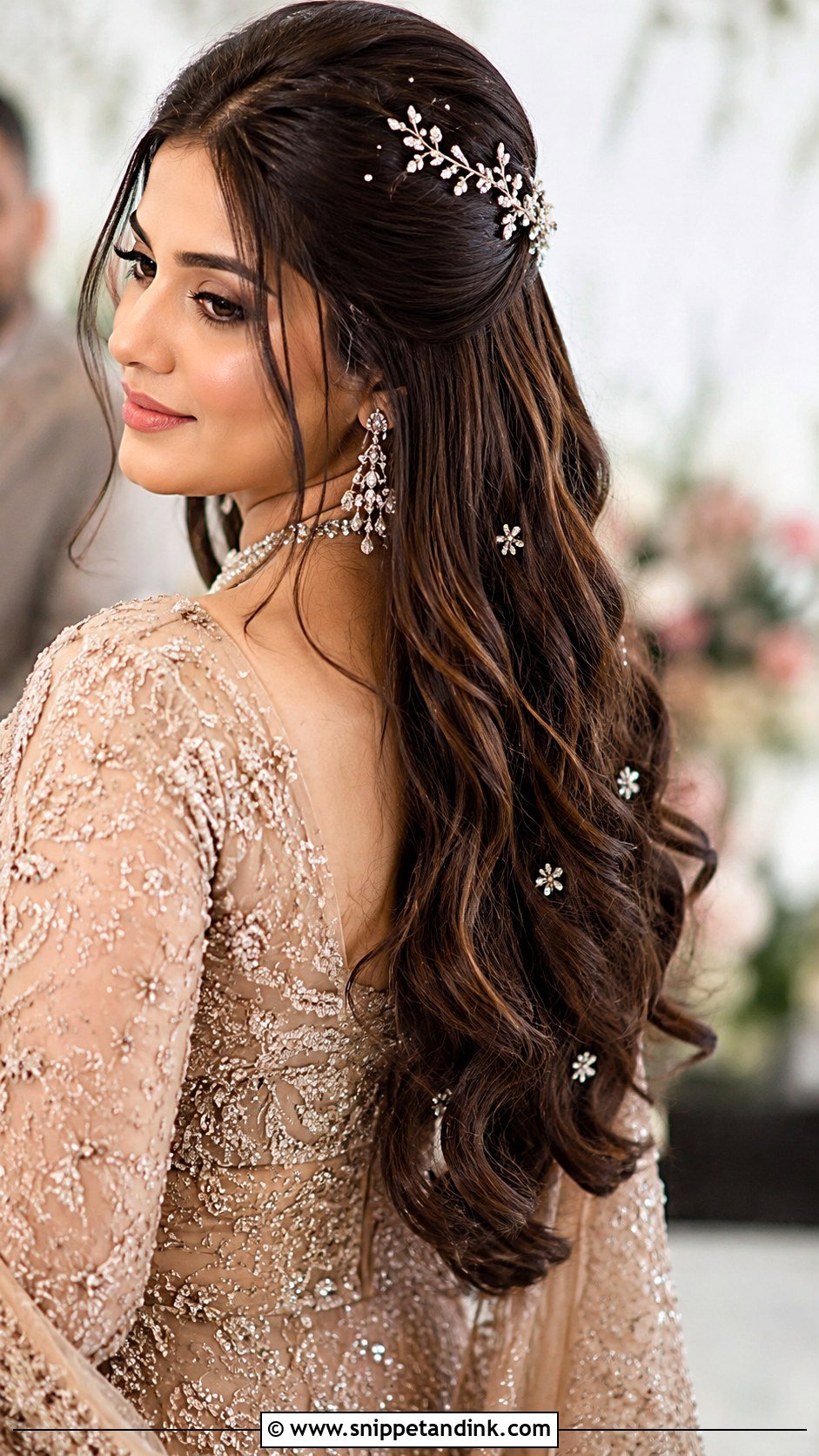
Open hair with diamond accents is my evening pick, because the pins catch the light in a dark reception hall. I wave the hair and add diamond or crystal pins, clips or vines on one side, never scattered all over. Pin each accessory into a small hidden braid so it doesn’t slip down the waves. It goes well with statement earrings and a fitted gown.
Real Jasmine, Roses and Gota: How Long Each Lasts in Your Hair
Flowers are where I see the most last-minute stress. Fresh jasmine smells wonderful but browns at the edges in heat within a few hours, so for a long day I order a second gajra for the evening. Roses hold up better but are heavy; I wire them short and pin each one twice. Marigolds are the sturdiest fresh option.
Gota patti and fabric flowers don’t wilt at all, which is why I suggest them for outdoor ceremonies in hot months. Artificial silk blooms are another backup, though they rarely look as natural up close.
Ordering flowers for the hair
- Ask your florist for gajra strung on thread, delivered the same morning and kept cool, not frozen.
- Order slightly more than you need; a couple of extra strands always gets used.
- Remove flowers carefully at night, working pin by pin, so you don’t pull the hair underneath.
Switching From Ceremony Bun to Reception Hair
If you plan to change your look between the pheras and the reception, give your stylist at least 45 minutes. Taking down a pinned bun leaves kinks, so the easiest switch is from a bun to curls or waves, which hide them. Going from open hair to a sleek chignon is harder, since the waves need brushing out and smoothing. I’d plan the reception style first and build the ceremony bun around it.
Your Dulhan Hair Across Every Wedding Event
Most Indian weddings mean more than one look, so I plan the hair as a sequence rather than a single style: something practical for the mehndi, a secure bun that can carry a dupatta for the pheras, and open hair or a sleek chignon for the reception. Bring your outfit photos, your jewelry and your dupatta to the trial, and wear the heaviest piece while I pin. Save the ideas here that match your hair type, not only the ones you like, and your stylist can build from there.
You'll Like These Ideas:








Leave a Reply