
Telugu bridal hairstyles are built around a few pieces of gold and a lot of flowers: the papidi billa across the forehead, jada billalu down the braid, jasmine almost everywhere. I treat that jewelry as the starting brief, because the hair has to hold it securely through rituals that can run deep into the night. Below are fifteen looks for the muhurtham, the pellikuthuru, the engagement and the reception, each with what I’d watch for when you actually wear it.
Planning Bridal Hair Around a Late-Night Muhurtham
Telugu muhurthams are set by the auspicious timing, not by convenience, and many fall late at night or in the small hours. That changes my whole schedule. Hair finished at six in the evening has to stay sharp until well past midnight, through warm halls, wilting flowers and long stretches of sitting.
The front: papidi billa and the part
I fit the papidi billa before I finish the front, not after. Its chain follows the hairline and hooks into the hair at both sides, so the center part has to be straight and the sides smoothed flat beneath it. Any puff at the front and the billa tilts away from the forehead. I add a hidden U-pin at each side, because the hooks alone tend to loosen.
The back: how the poola jada attaches
Most jadas are made on a base that ties or pins onto your own braid. I plait the natural hair tightly first, sometimes with a thin extension woven in, then fasten the jada at the crown and at two or three points down the length to spread the weight. Hung from the top fixing alone, a jada drags the whole hairstyle backward within an hour.
One more thing for late ceremonies: eat and drink properly before the hair goes on. A tight, heavy jada on an empty stomach near midnight is exactly when headaches begin.
1. Telugu Bridal Poola Jada
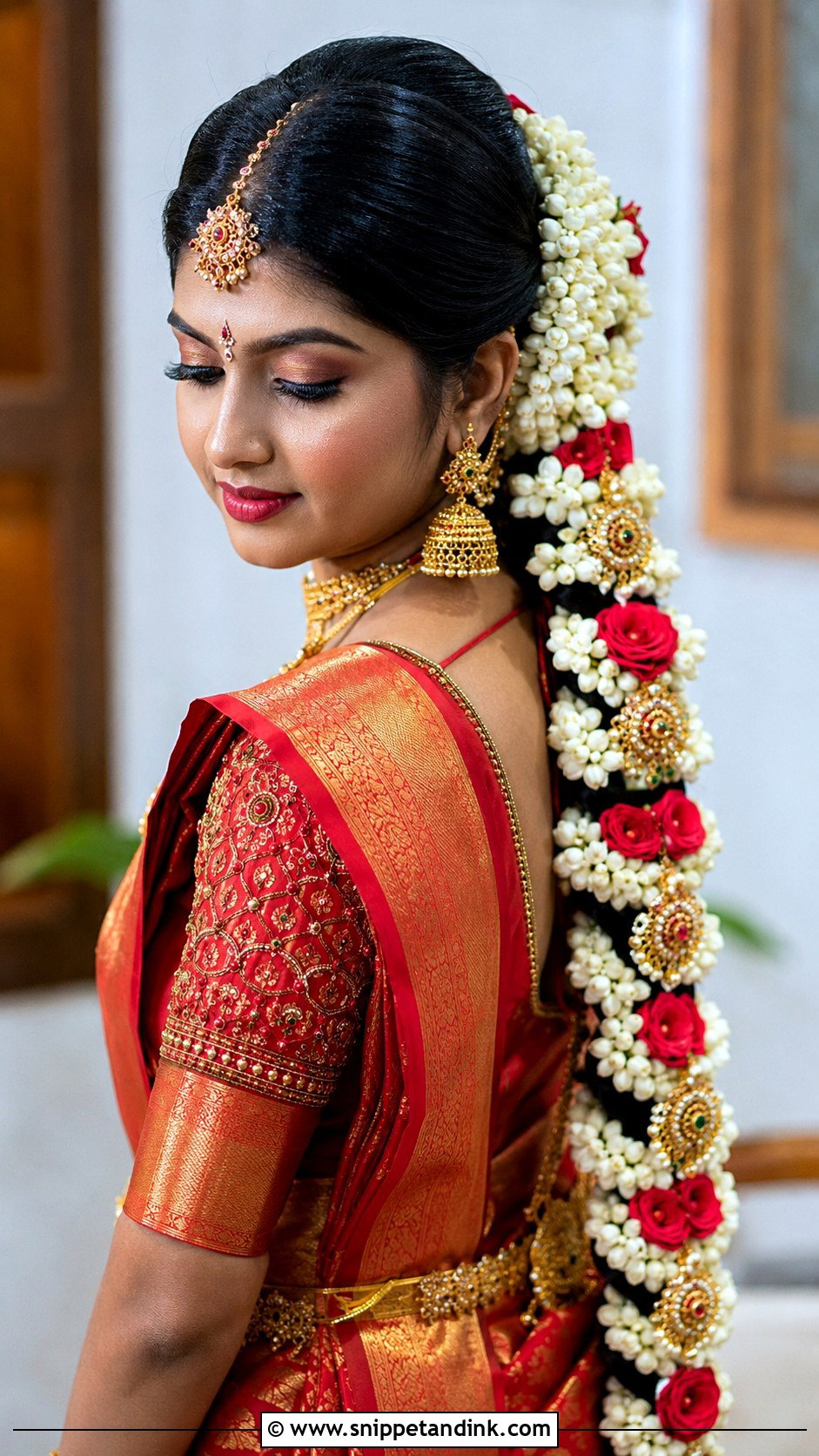
The poola jada is the centerpiece of a traditional Telugu ceremony, and in back-view photos it’s often the first thing anyone notices. Jasmine, roses, gold accents and floral discs run neatly from crown to tip. It holds its own against a Kanjivaram or Pattu saree and a grand bridal blouse because it gives the back as much weight as the front. Ready-made jadas are usually longer than natural hair, so I add an extension to carry the braid to the end of the flower piece. Keep a clean center part so the papidi billa sits level.
2. Telugu Bridal Jasmine Jada
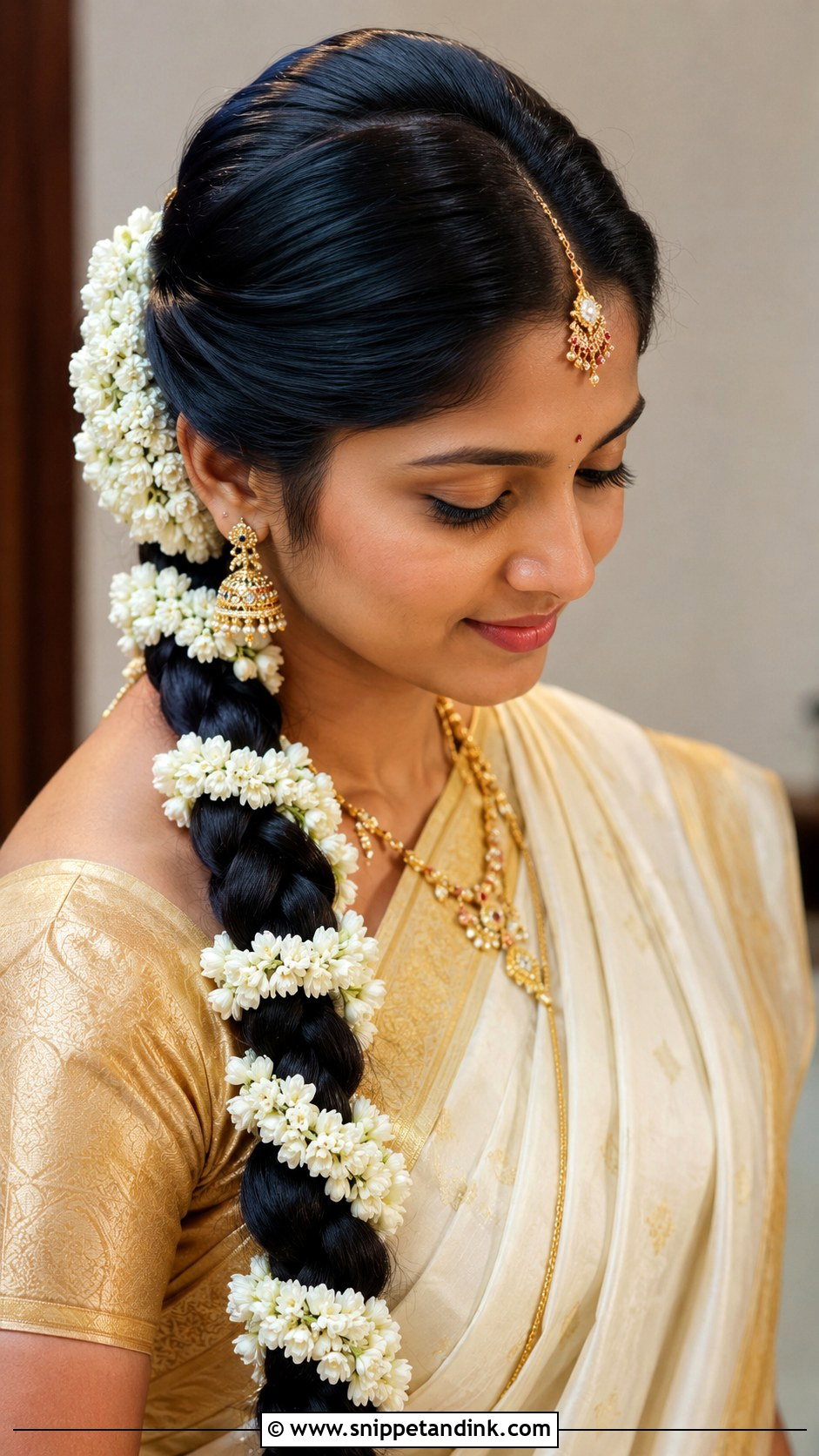
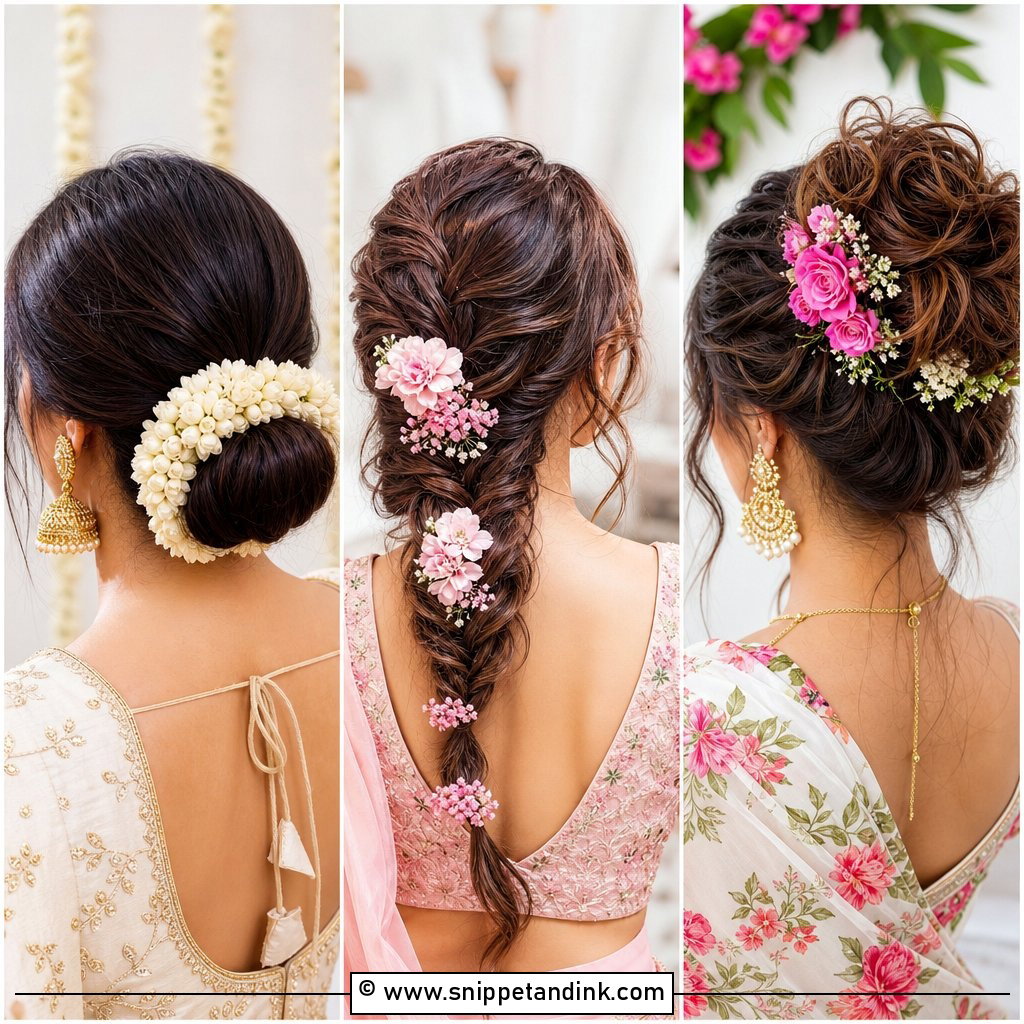
Jasmine only, no color. It’s the quietest version of the jada and the one I’d pick for a morning or temple wedding, where white flowers read fresh in daylight. Thick strings wrap the bun or run down a sleek braid in a regular pattern, and gold or pearl jewelry with a cream or red saree suits it naturally. I pin the strings through the hair every few inches rather than only at the ends. Jasmine strings stretch a little as they warm, and they sag between fixing points if you give them room.
3. Telugu Bridal Rose Poola Jada
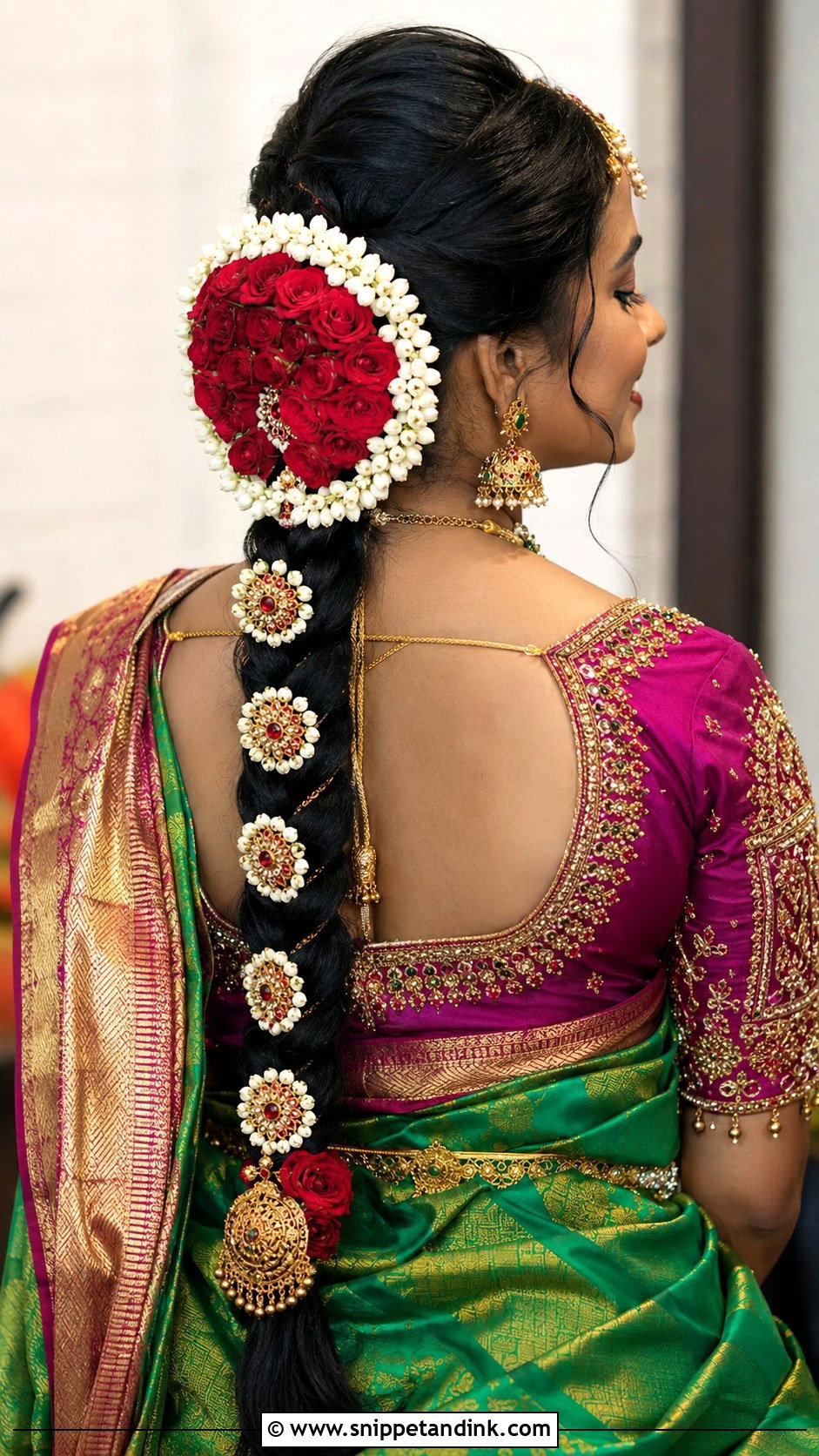
Roses bring the color, and the weight. Red, pink or deep maroon roses along the braid, edged with jasmine, look rich against red, green, gold or magenta silk. Dense placement is dramatic; spaced-out roses are gentler and, honestly, kinder to the scalp. Because roses weigh far more than jasmine, I build a firm base at the crown, use extensions if the natural braid is thin, and check comfort after an hour of wear at the trial, not after five minutes.
4. Telugu Bridal Bun With Gajra
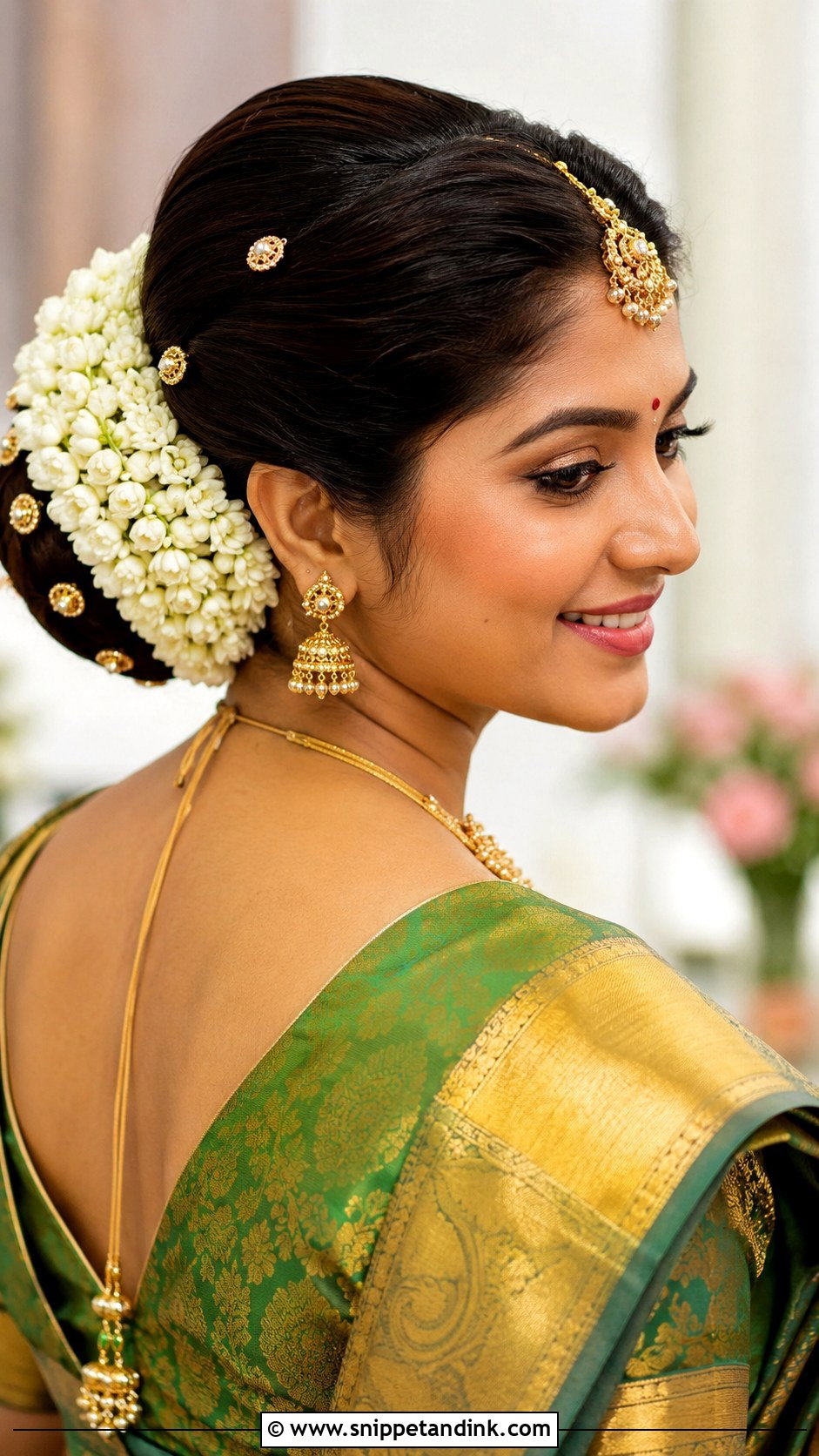
Not every bride wants a long braid, and not every bride has the length. A low or mid bun wrapped in layered jasmine gajra suits shorter hair and keeps the neck clear for temple necklaces and statement earrings. I suggest it to brides who get headaches from weight, since the gajra sits close to the head instead of hanging. A central hair ornament or a few gold pins finish it. Go sleek with heavy jewelry and slightly textured with lighter sets.
5. Telugu Bridal Low Bun
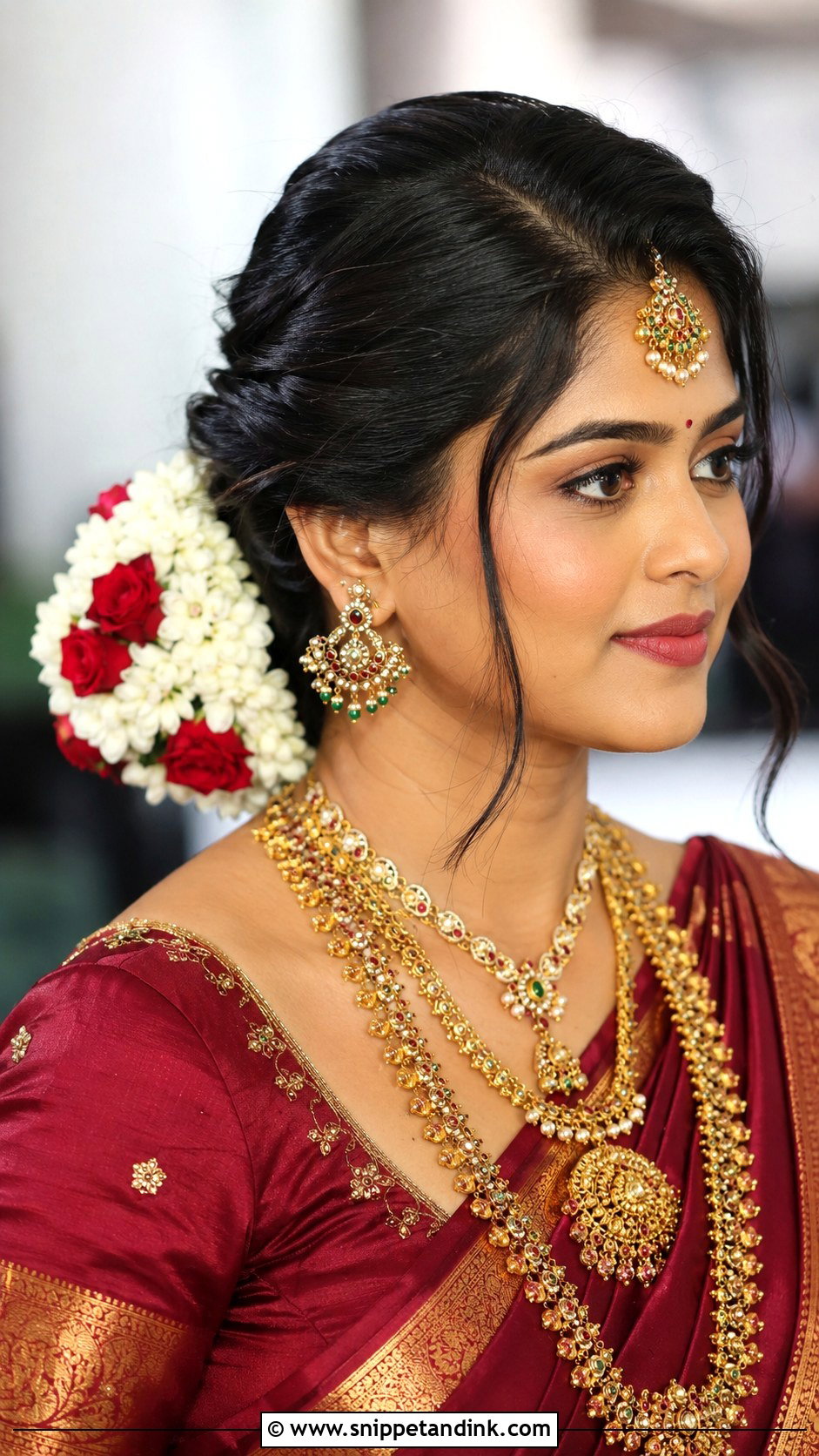
The low bun is the calm, practical option. Sitting right at the nape, it tucks under a saree pallu and doesn’t get knocked when you lean back against a cushion during the rituals. In humid weather it’s my safest recommendation, because hair drawn smoothly into a bun has little room to frizz. Keep the front to a clean center part or a soft lift at the crown, ring the bun with jasmine, roses or gold, and let the saree border and jewelry carry the look.
6. Telugu Bridal Flower Bun
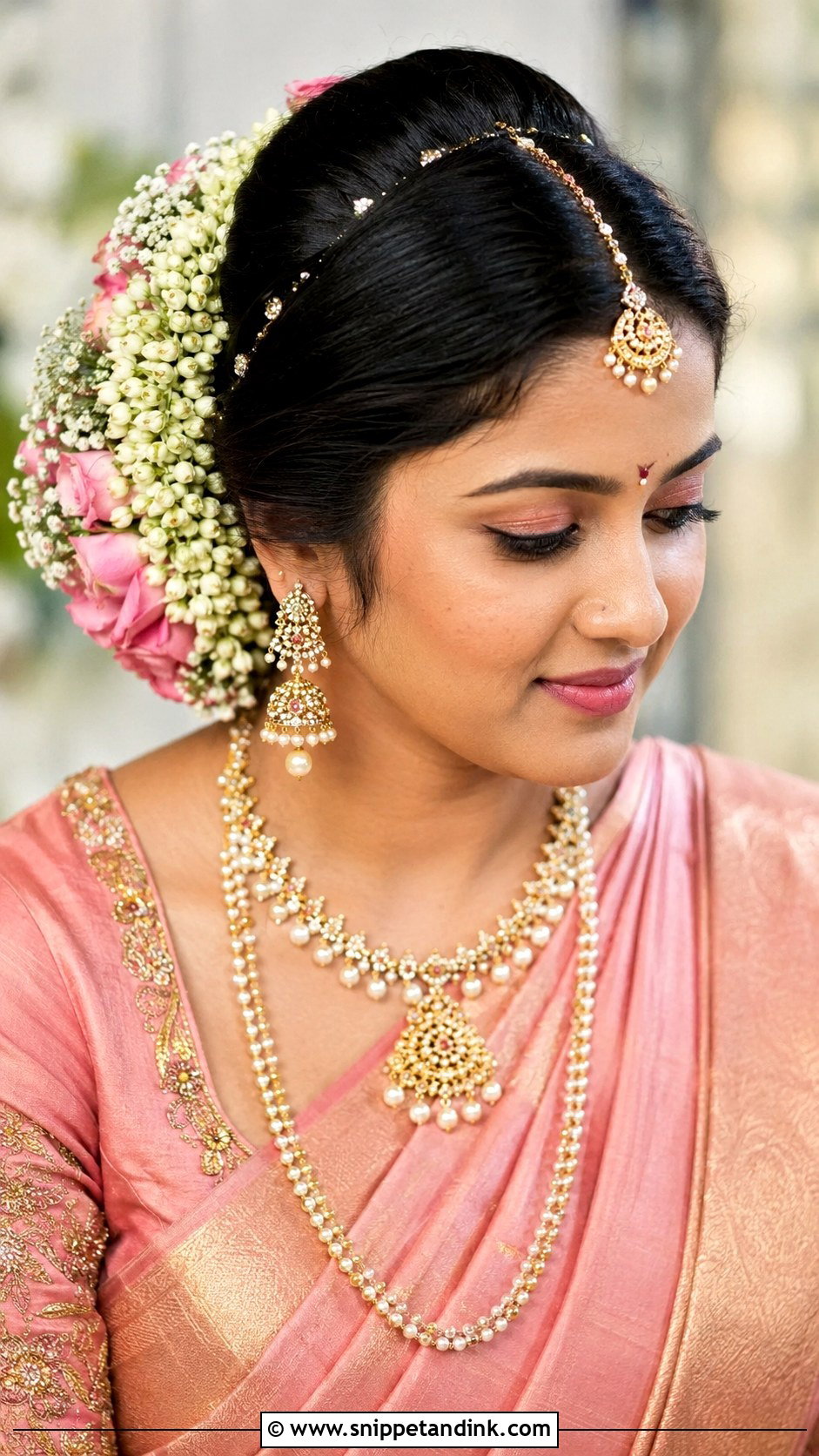
A flower bun gives you the full floral effect without a long poola jada. It can be covered in jasmine, rose petals, baby’s breath or a mix chosen to match the saree, and in close-up portraits the rounded floral shape frames the head neatly. It moves easily between engagement, pellikuthuru, reception and even the main ceremony with traditional jewelry. When the bun is heavily covered, I keep the front very plain. Two busy areas at once look crowded on camera.
7. Telugu Bridal Braid With Gold Jada Billalu
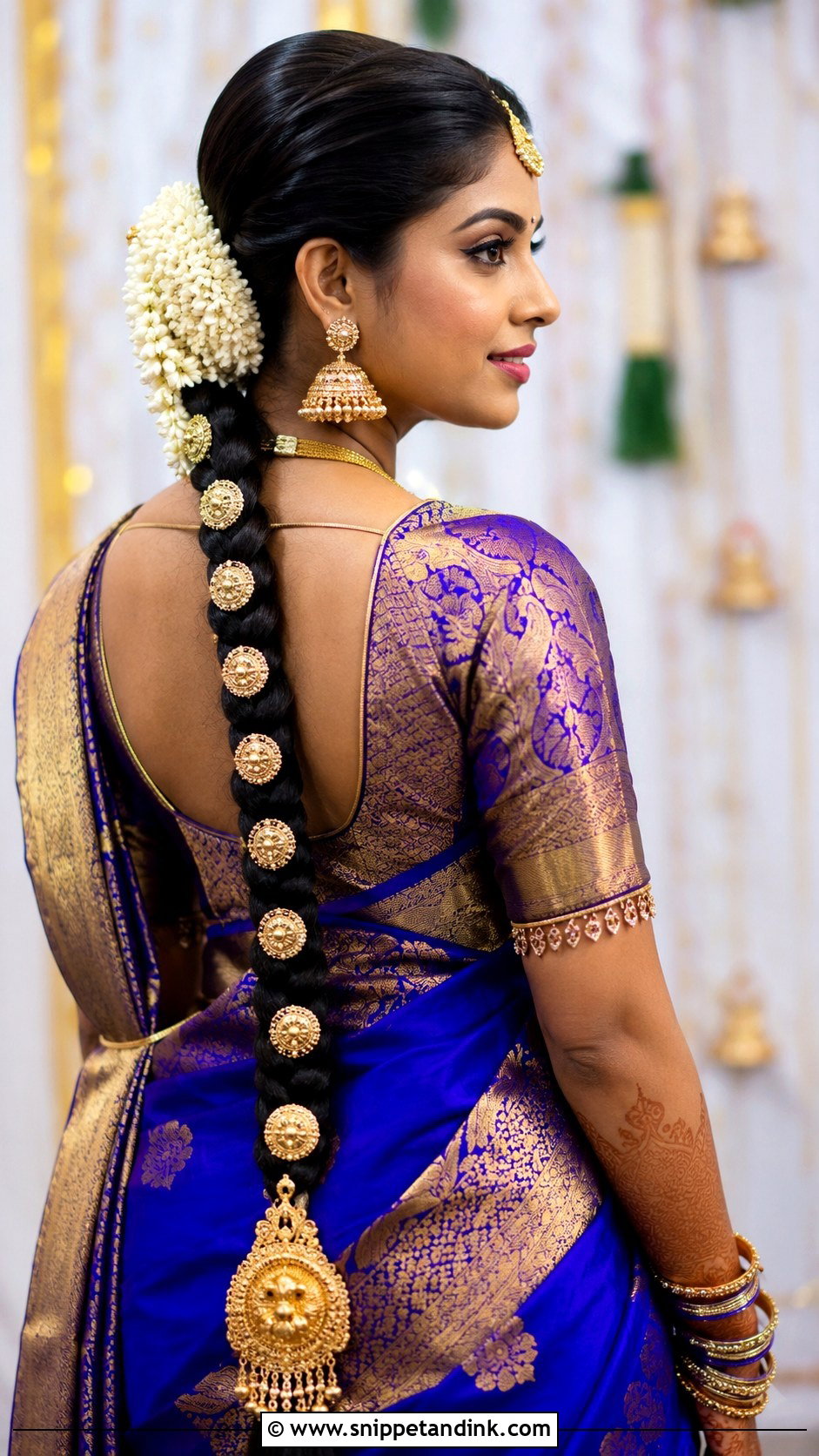
Jada billalu are the round gold ornaments placed down the braid, usually finished with jada kuchulu, the tassels at the tip. Spacing is everything here. I measure the braid and set the billalu at even intervals with the largest piece at the top, since uneven gaps show up instantly in back photos. Antique gold, a kasu mala and vanki all sit well with it. Most sets clip or tie onto the braid, so the plait has to be tight and firm; on a soft braid the pieces twist sideways.
8. Telugu Bridal Netted Poola Jada
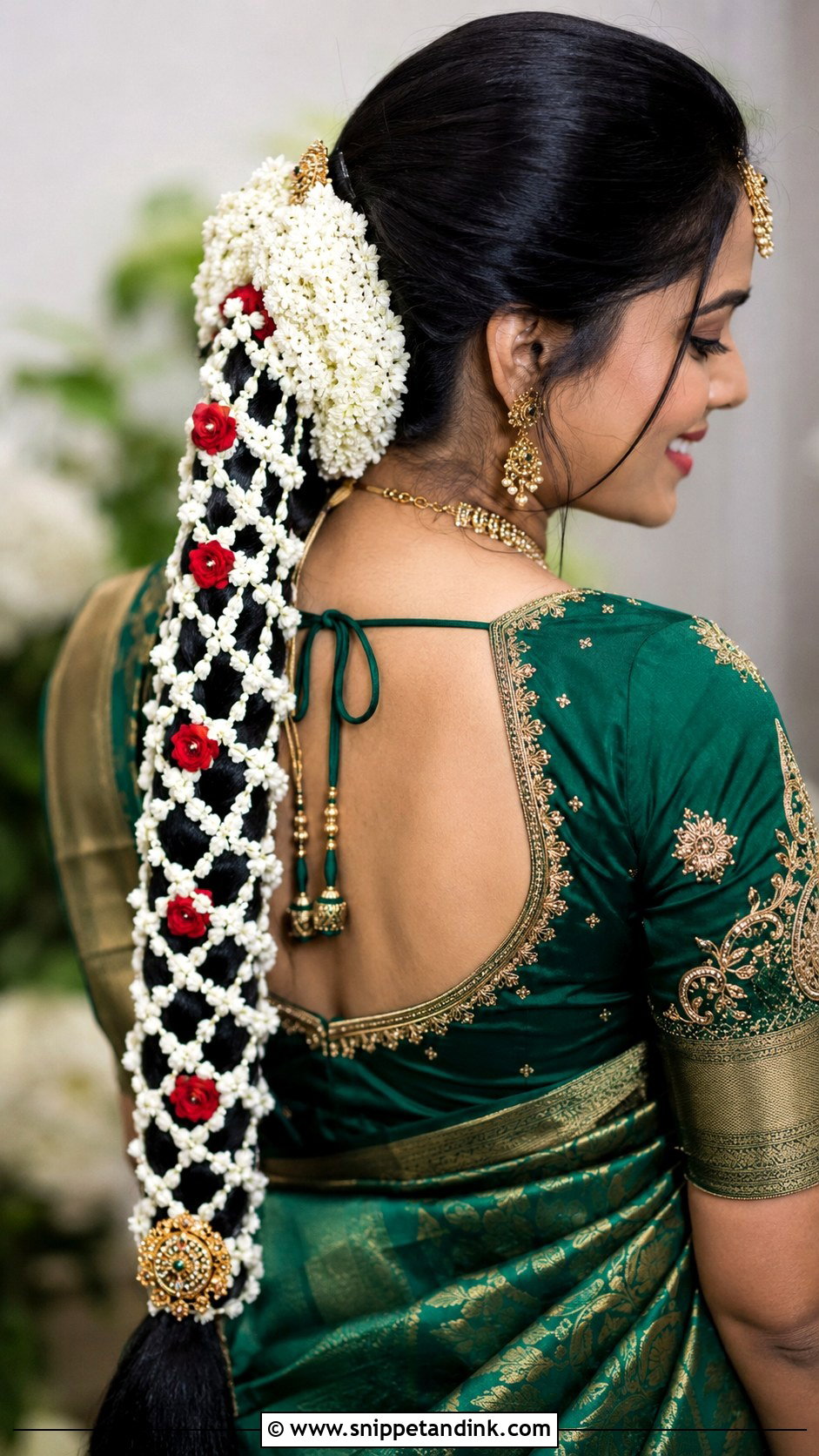
In a netted poola jada the flowers are laid in a crisscross over the braid instead of plain rows. It takes time and a florist who has made one before, and the pattern only looks crisp when the braid underneath is smooth and evenly thick. Jasmine buds net most cleanly; rose petals bruise and drift out of line. Book it early, ask to see a sample piece in person, and match the flowers to the saree rather than to a photo you saved.
9. Telugu Bridal Minimal Poola Jada
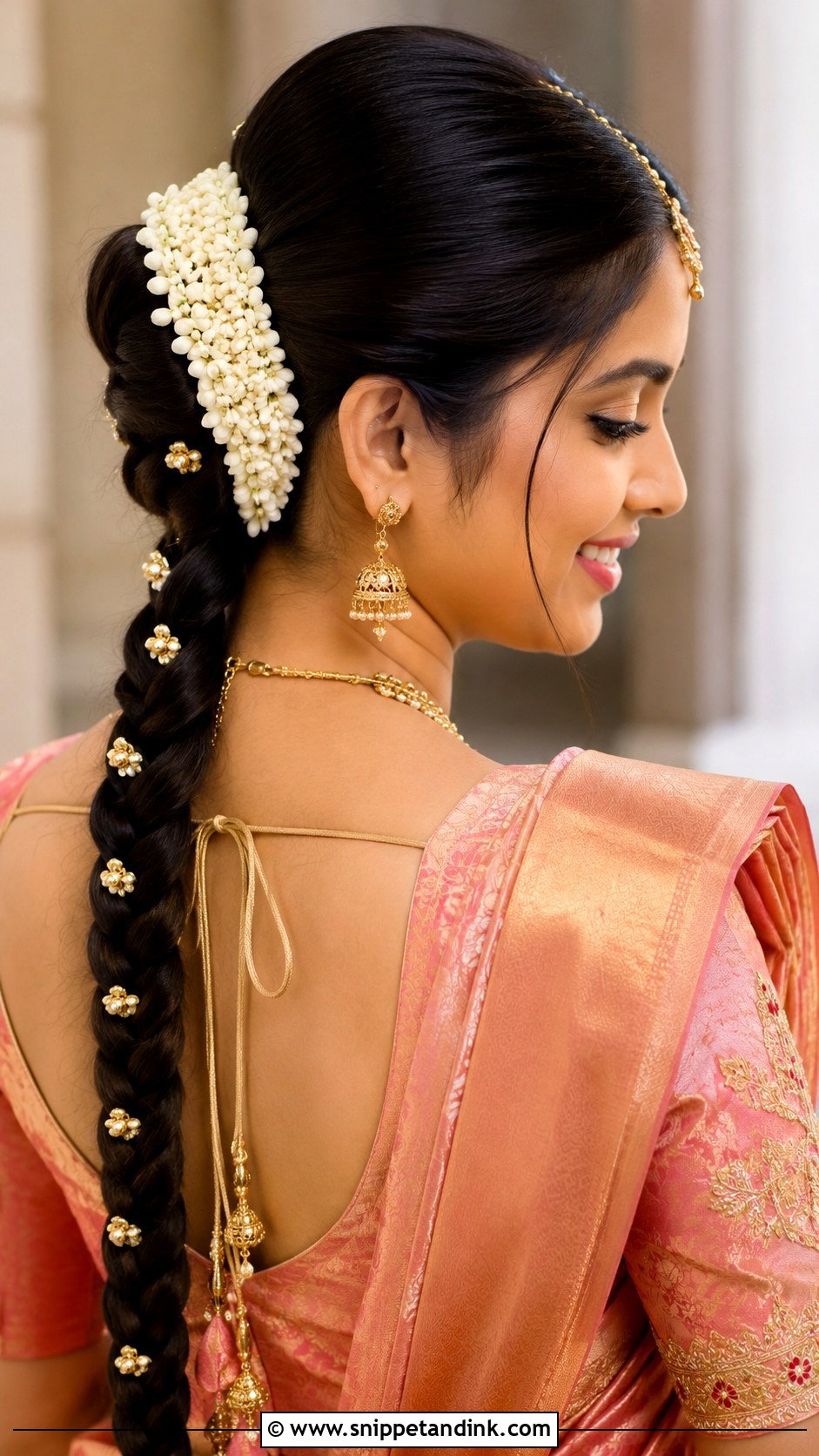
A sleek braid, light floral details, a few gold pins and perhaps a small floral half-circle near the top. That’s the minimal poola jada, and I recommend it more often than people expect. Pastel sarees, lighter silks and delicate jewelry suit it. It’s also the sensible call for fine hair or a sensitive scalp, because fine hair can’t anchor heavy flowers without tight pinning that aches by evening. Keep it neat and let one detail lead.
10. Telugu Bridal Heavy Poola Jada
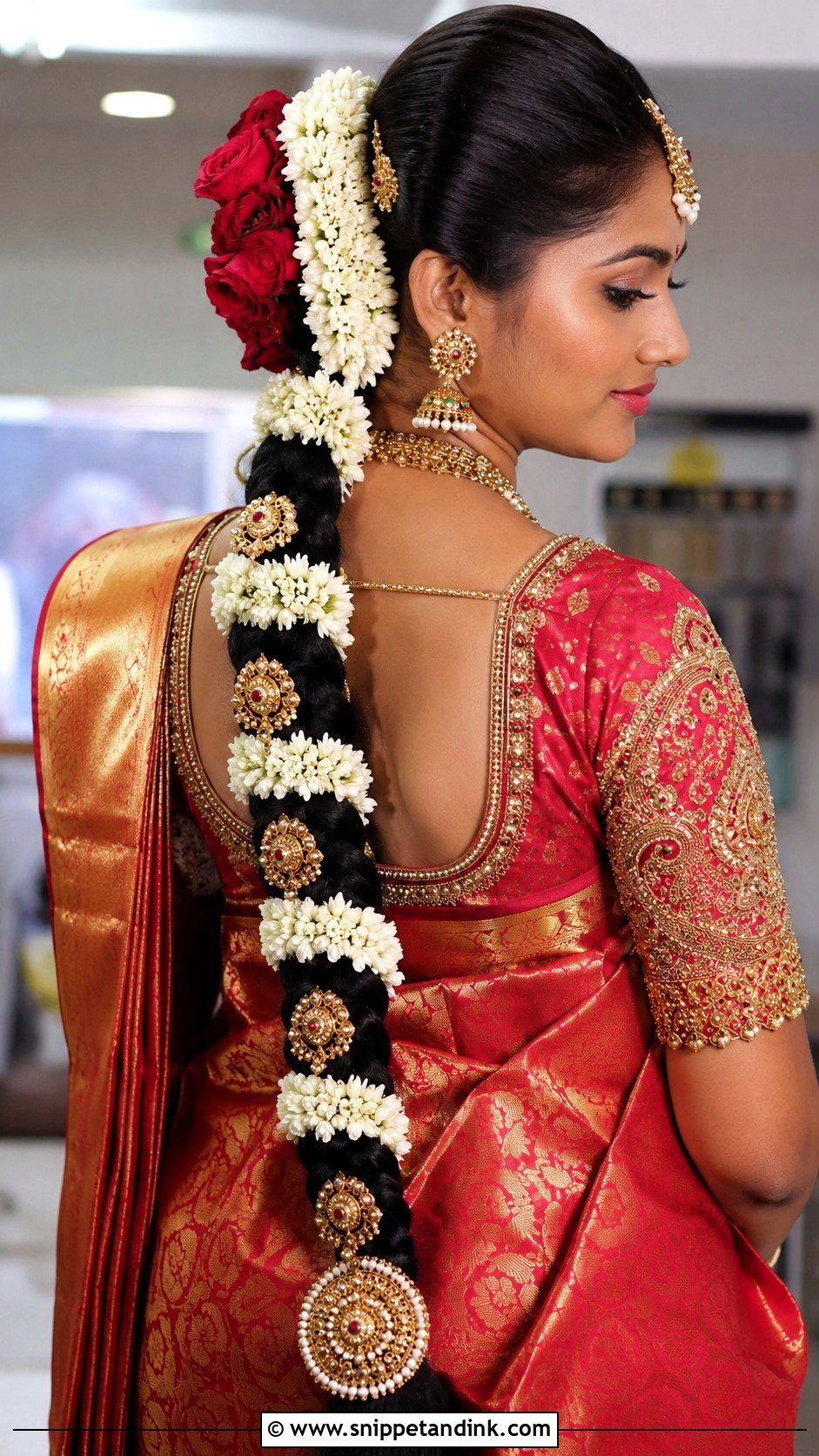
This is the full traditional statement: a long, thick braid layered with flowers, gold ornaments and a large jada end piece. It’s heavy, and I won’t pretend otherwise. I secure it in sections down the braid so no single pin takes the whole load, pad under the heaviest parts, and have the bride walk, sit and turn her head before she leaves my chair. With bold silk and temple jewelry it’s unmistakably a wedding braid. If weight worries you, plan a lighter style for the later events.
11. Telugu Bridal Side Braid
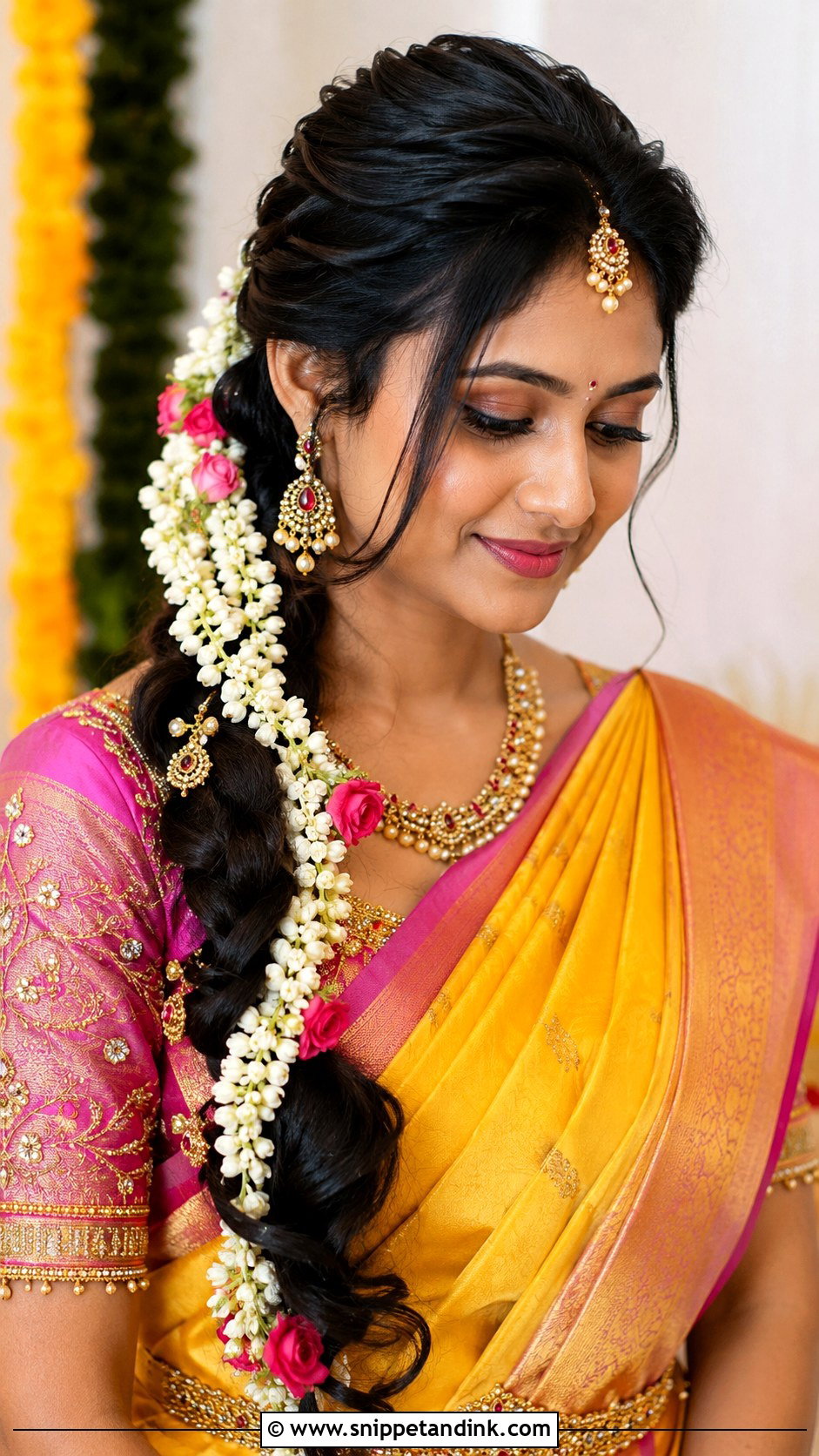
Brought over one shoulder, the braid shows its flowers and jewelry from the front, which is why I keep it for the engagement, mehendi, pellikuthuru and reception rather than the muhurtham. Jasmine strands, small roses, pearls or gold pins all work along its length, and it sits well with half sarees and lehenga-style outfits. Skip face-framing pieces if your blouse has a high neck. Strands, braid and collar together clutter the shoulder line.
12. Telugu Bridal Half Up Hairstyle
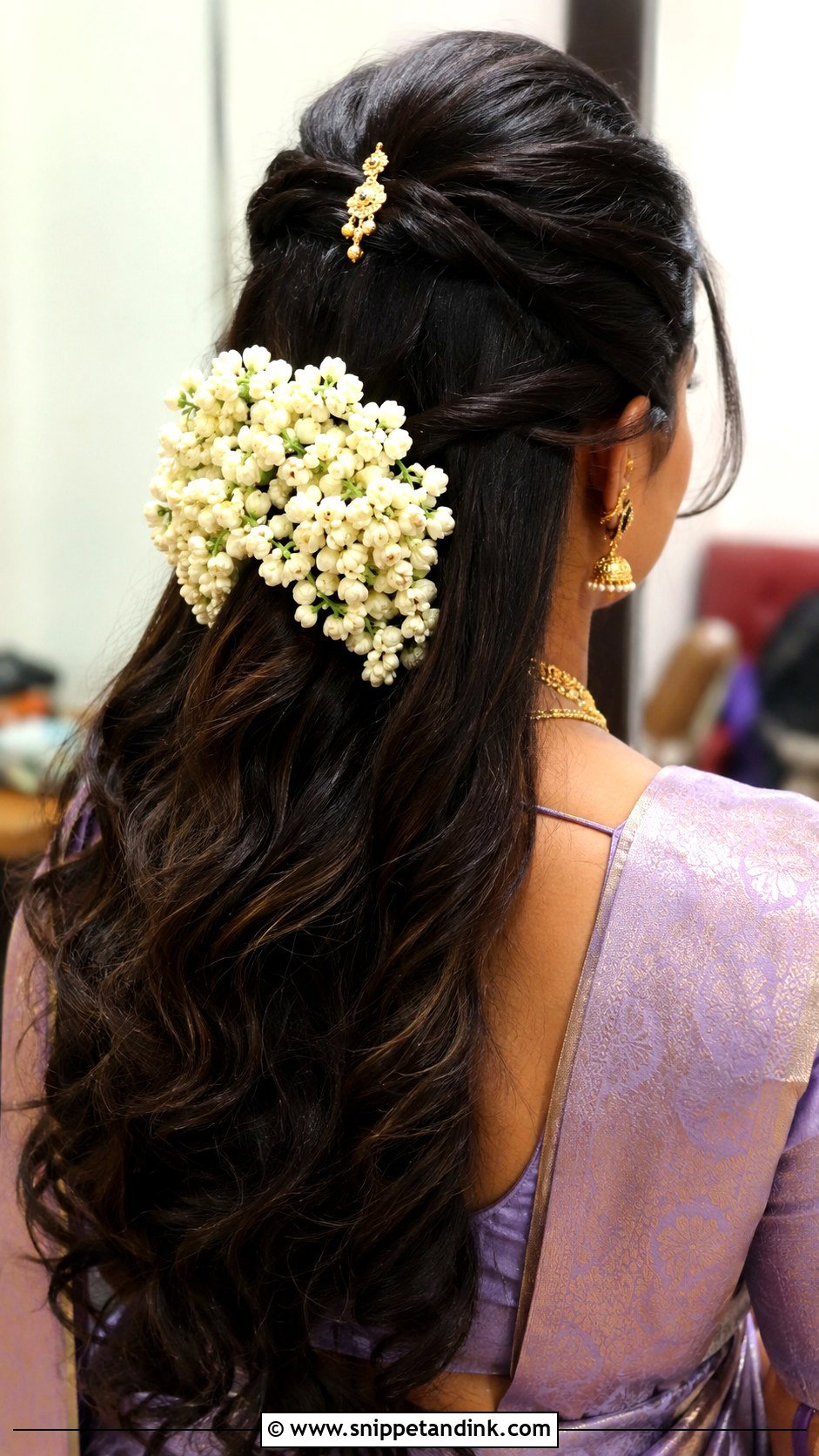
Half-up keeps your length on show while the face stays open. I build volume at the crown by backcombing at the roots, pin the top section securely, and let the rest fall in waves or a loose braid, with flowers where the pins meet at the back. It suits reception, engagement, or pellikuthuru events and weighs far less than any poola jada. Long, thick hair shows it off best. On fine hair the waves need a strong-hold spray or they flatten within a couple of hours.
13. Telugu Bridal Reception Bun
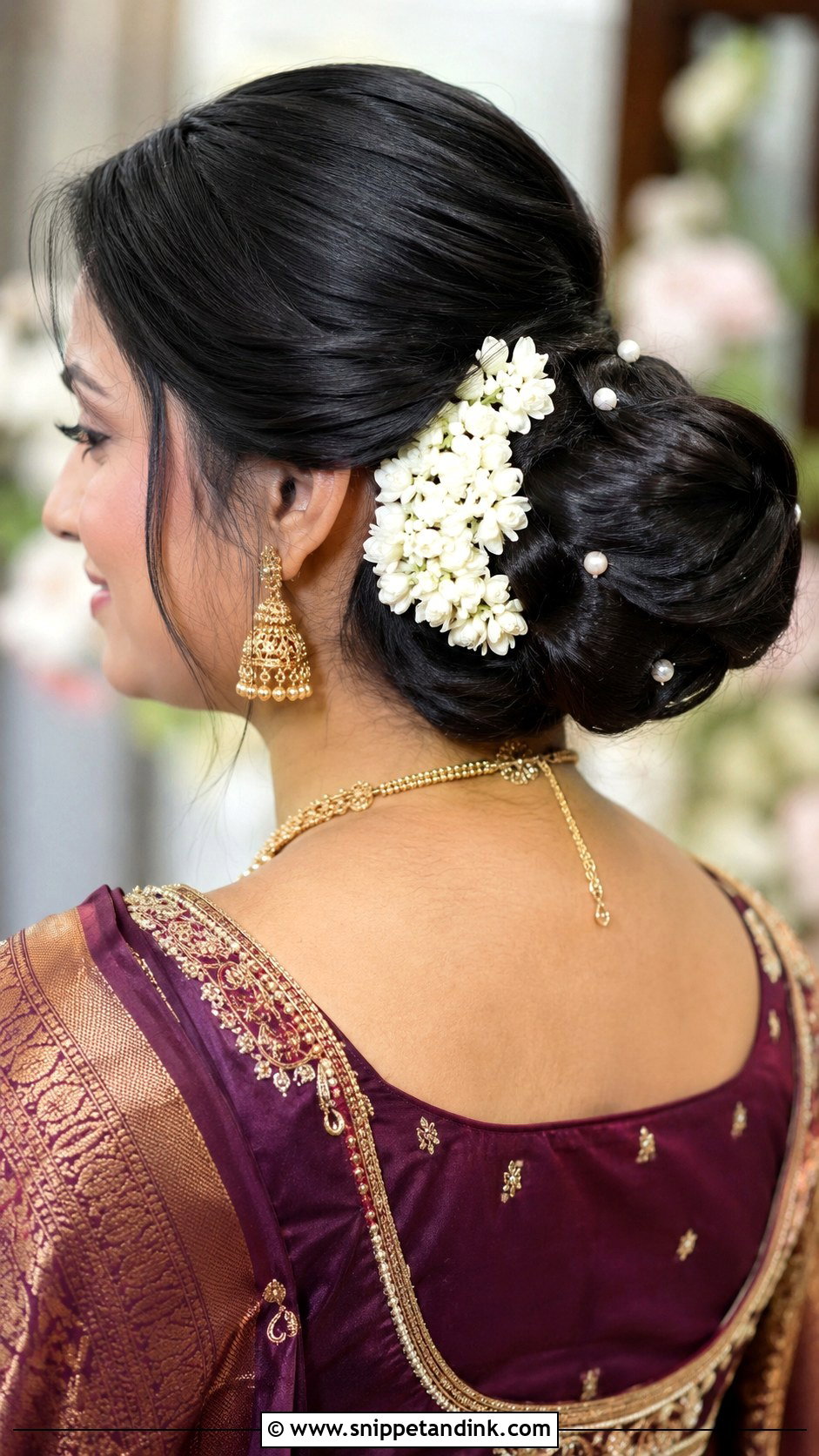
The reception bun is how I give a bride a visible change from her ceremony look without starting over. With a designer saree or reception lehenga it can be a smooth low bun, a textured one, or a soft twist with flowers set to one side. It survives the stage greetings, when guest after guest comes up for photos. Pearls or crystal pins suit the more glamorous outfits. Keep the front controlled, because flyaways catch stage lights and look frizzy in flash.
14. Telugu Bridal Pellikuthuru Hairstyle
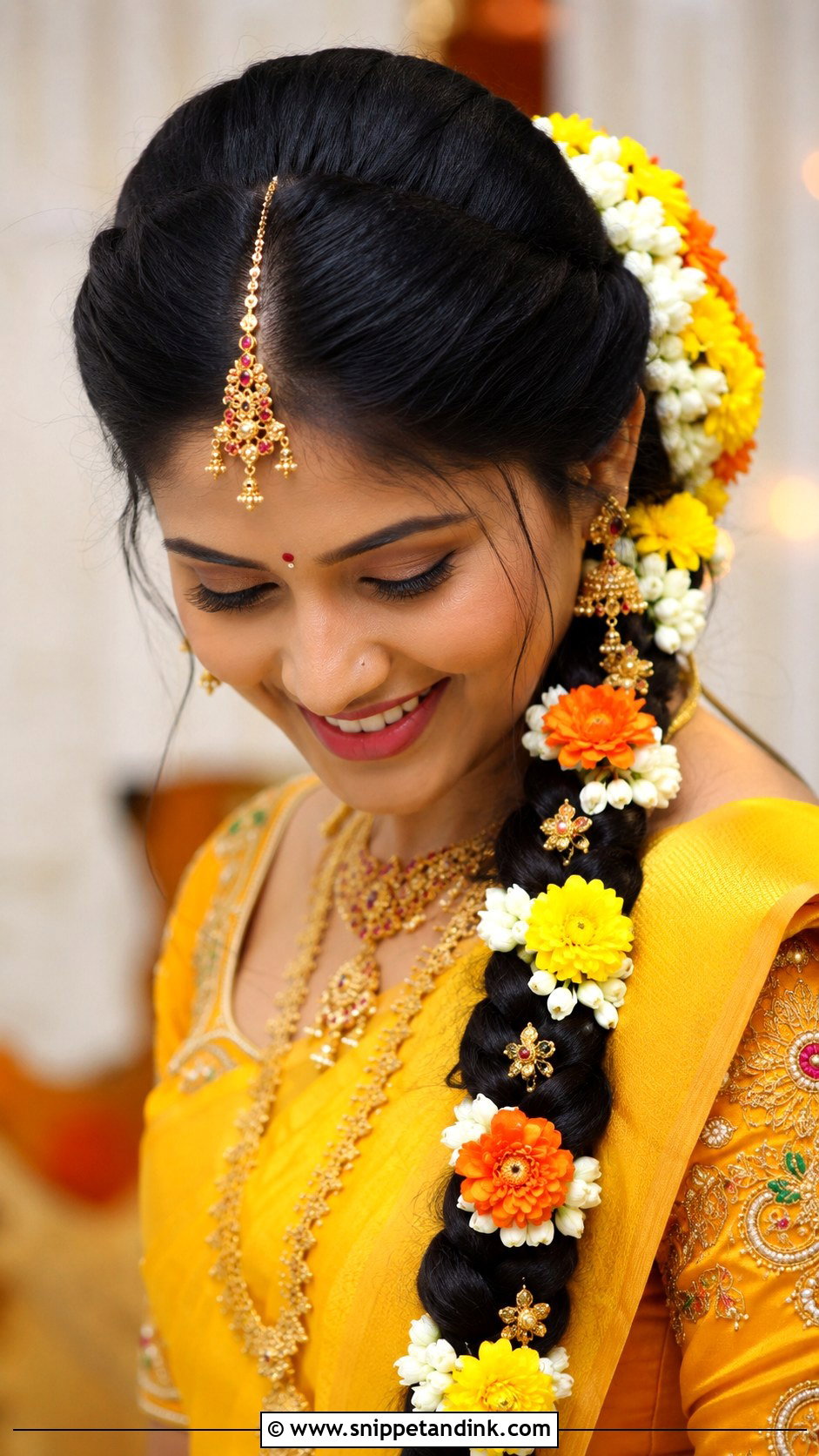
Pellikuthuru hair has to be practical first. This pre-wedding event involves turmeric paste, family rituals and plenty of photos, so I use a floral braid, a jasmine bun or a half-up braid with the front pinned firmly back. Loose strands near the cheeks collect turmeric and can stain yellow, especially on light or color-treated hair. Yellow, white, orange and pink flowers suit the outfits. Keep it simpler than the wedding look; you’ll almost certainly wash your hair afterward.
15. Telugu Bridal Short Hair Bun
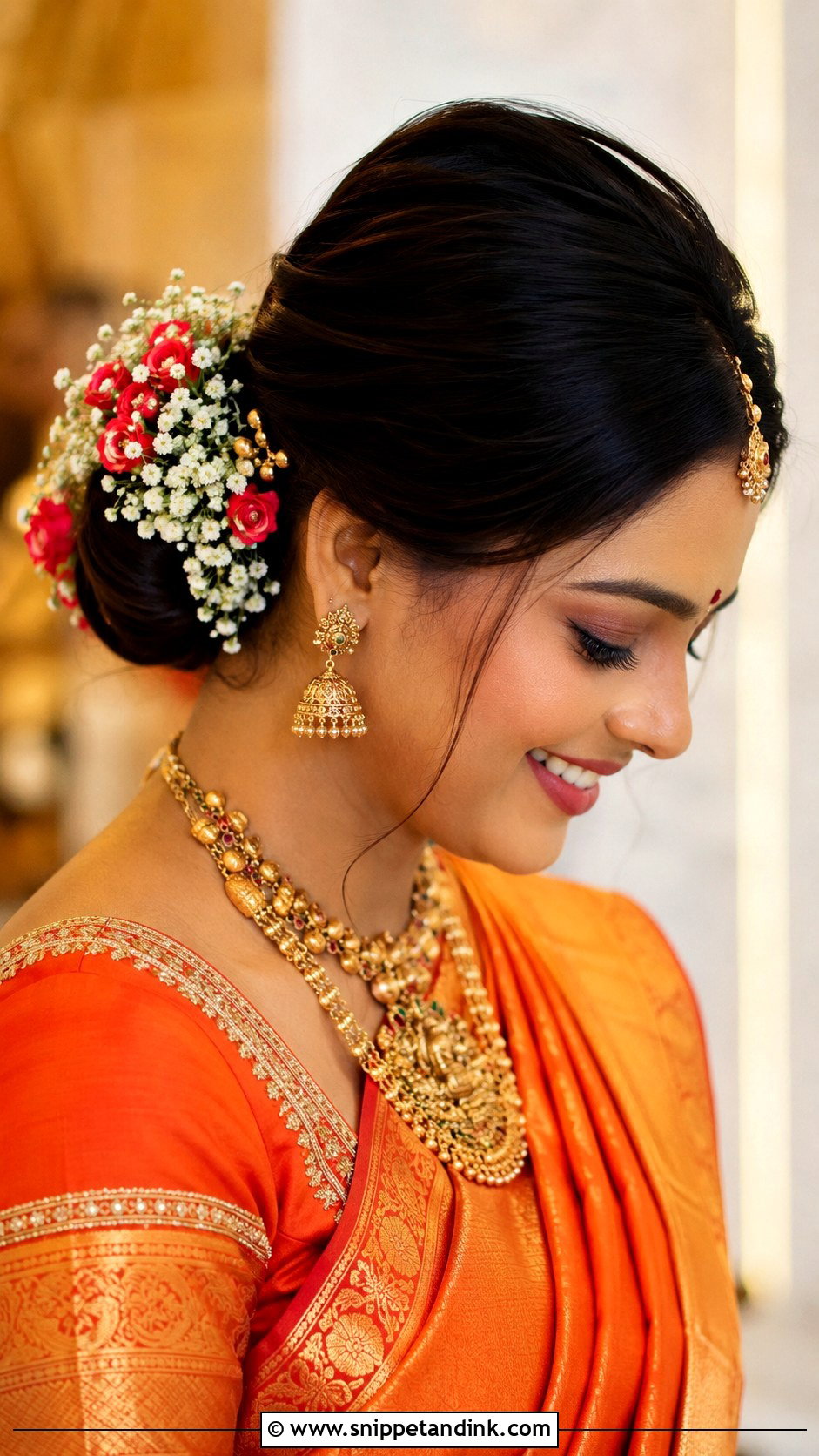
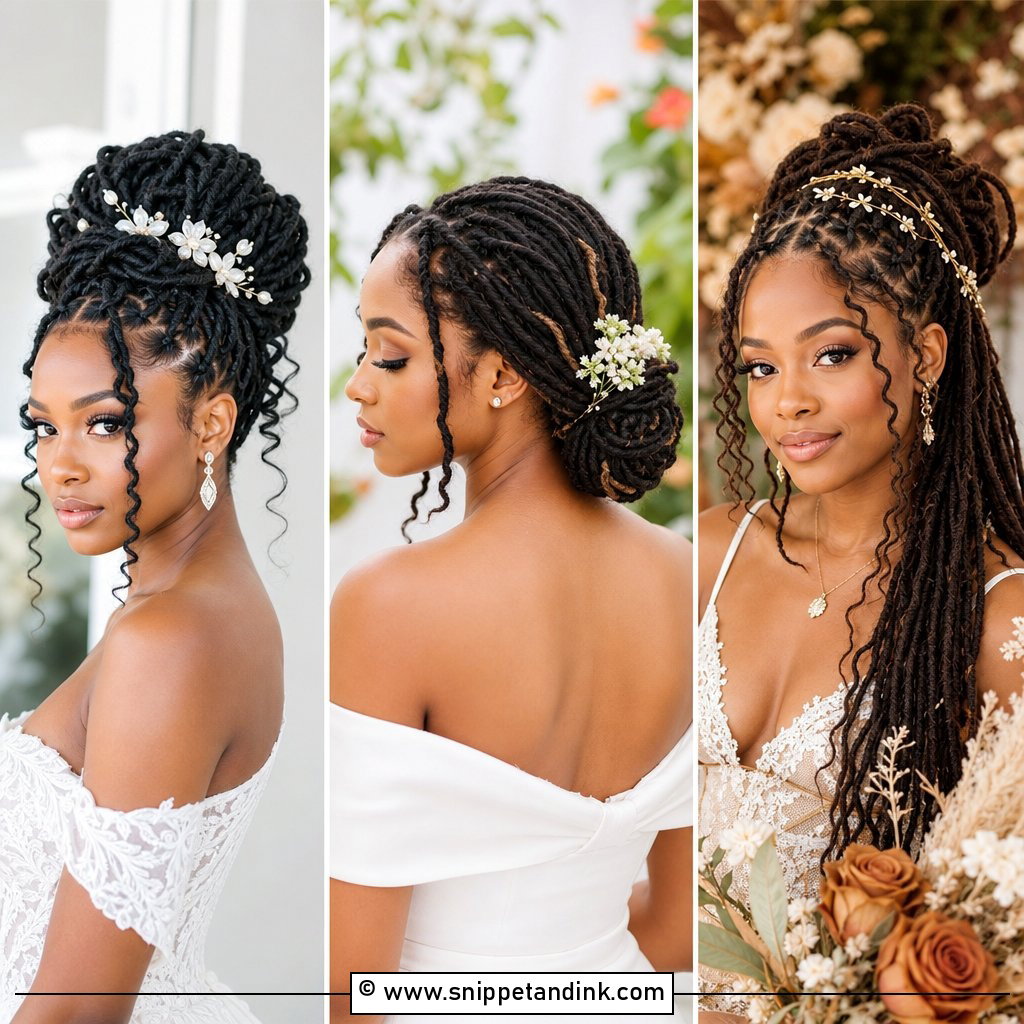
Shoulder-length or fine hair can still carry a traditional bun. I build the shape over padding or a bun maker, add clip-in pieces for fullness if needed, then dress it with jasmine gajra, roses, gold pins or a small jada accessory. The trick is anchoring the padding with crossed pins into a tight base, otherwise the bun shifts as soon as the flowers go on. Part the front for the papidi billa or give it soft volume. Done this way, nobody can tell how long your hair really is.
Talambralu Rice and Other Rituals That Test the Hair
A Telugu ceremony has a few moments that are hard on a hairstyle, and I plan for each of them at the trial.
- Jeelakarra bellam. The cumin and jaggery paste is placed on the crown, so I leave that area smooth and lightly set rather than stiff with spray. It wipes off with a damp cloth without dragging the part.
- Talambralu. Rice, often tinted with turmeric, is showered over each other’s heads, and grains lodge in the flowers and braid. Ask a cousin to hold a soft brush and a few spare jasmine strings for the photos afterward.
- The basket. In many families the bride is carried to the mandap in a bamboo basket. The jolting loosens a jada fixed at one point, which is another reason I fasten it in several places.
- Hours on cushions. Leaning back flattens a bun and pushes billalu sideways. Keep bobby pins, a travel hairspray and a fine comb within reach of whoever is helping you.
None of this calls for a heavier style. It calls for one fixed properly, and a person close by who knows how to re-pin it.
Your Saree, Your Gold and the Hour of the Muhurtham
Most Telugu brides wear a full poola jada for the ceremony, a jasmine bun for a quieter traditional mood, a reception bun for the evening and a side braid for pre-wedding events. The prettiest picture isn’t always the right pick, though. Weigh the saree, the jewelry, your hair length, the weather and how many hours you’ll be wearing it. A midnight muhurtham with a heavy jada is a very different day from a morning temple wedding in jasmine, so make your trial mimic the real timing as closely as you can.
You'll Like These Ideas:


Leave a Reply