
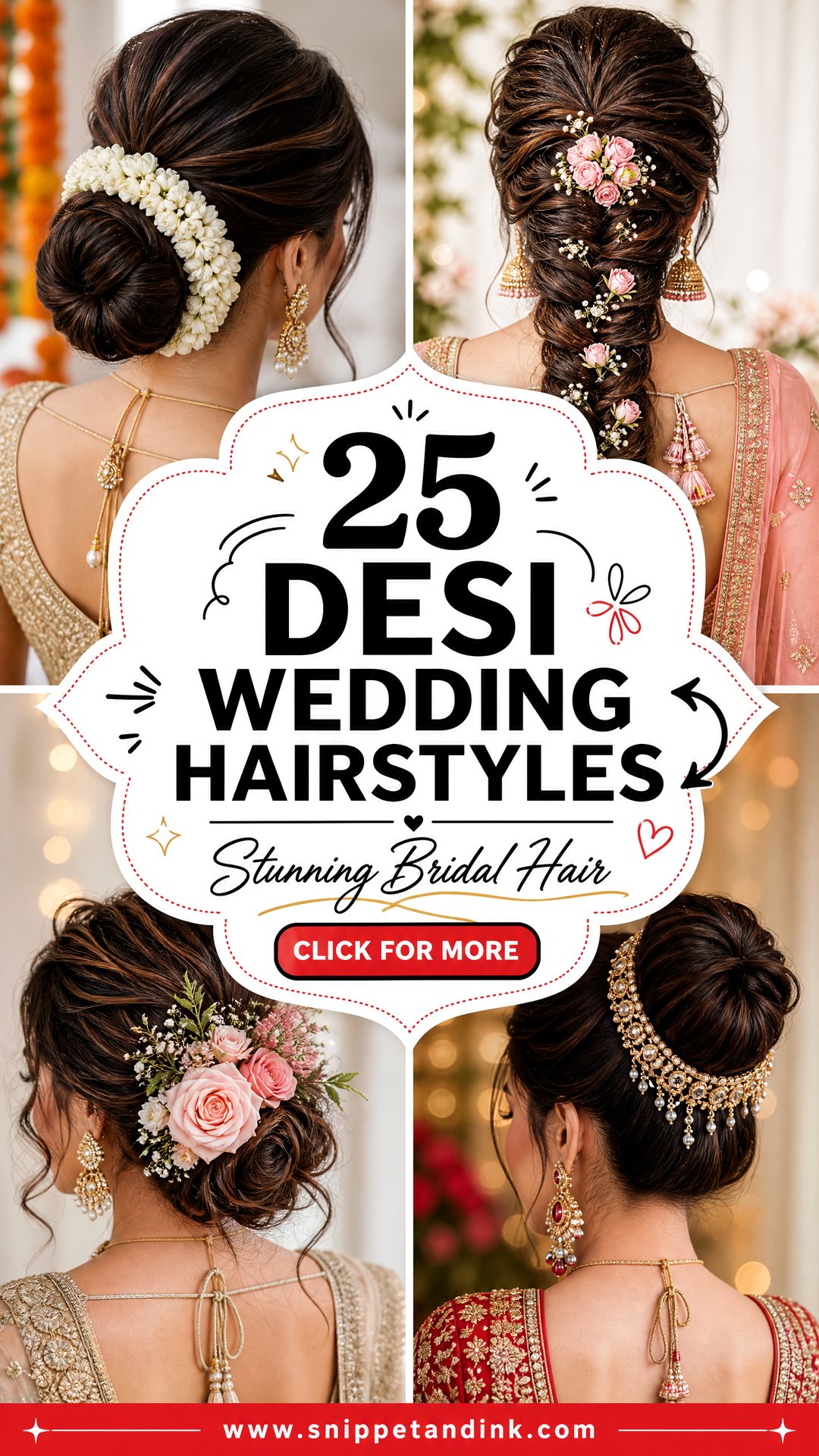
A Desi bride‘s hair has a harder job than most. It has to hold a maang tikka and sometimes a jhumar, carry a heavy dupatta pinned over the head, survive dancing at the sangeet and still look tidy at the pheras or nikkah. When I plan hair for a South Asian wedding, I ask about the jewelry and the dupatta before I look at a single reference photo, because those decide what the hair underneath can be. The styles here run from gajra-wrapped buns and pearl braids to open curls and sleek ponytails, with notes on which events and outfits each one can actually handle.
Where the Dupatta Pins Go, and Why the Bun Comes First
Most failed bridal hair I’ve seen didn’t fail because of the style. It failed because a heavy dupatta was pinned into loose hair and slowly dragged everything backwards. For a ceremony with a head dupatta, I plan the hair as a support structure first and a style second.
- Decide the dupatta before the hairstyle. A net dupatta weighs very little; a heavily embroidered velvet or silk one can pull a whole updo out of shape.
- Place the bun where the dupatta will be anchored. A bun at the crown or high on the back of the head gives the dupatta pins something solid to grip.
- Pin the dupatta into the bun or a hidden braid, never into loose curls or open hair. U-pins and crossed bobby pins hold; single pins slide.
- Set the tikka and jhumar before the dupatta, then drape and pin around them, so you’re not lifting the cloth later to fix jewelry.
Bring the actual dupatta and jewelry to your trial. A practice run with a lighter scarf tells you nothing about how the real one will sit after four hours.
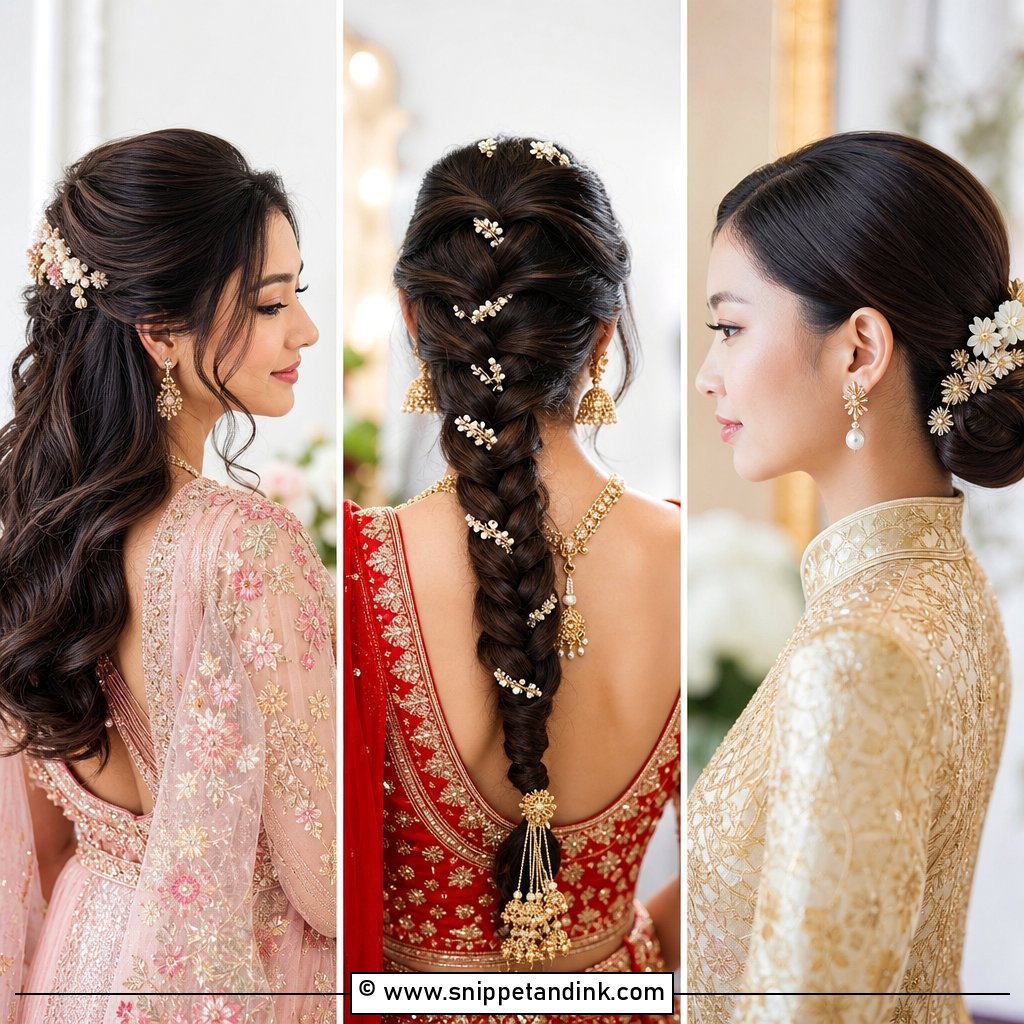
1. Low Bun With Gajra
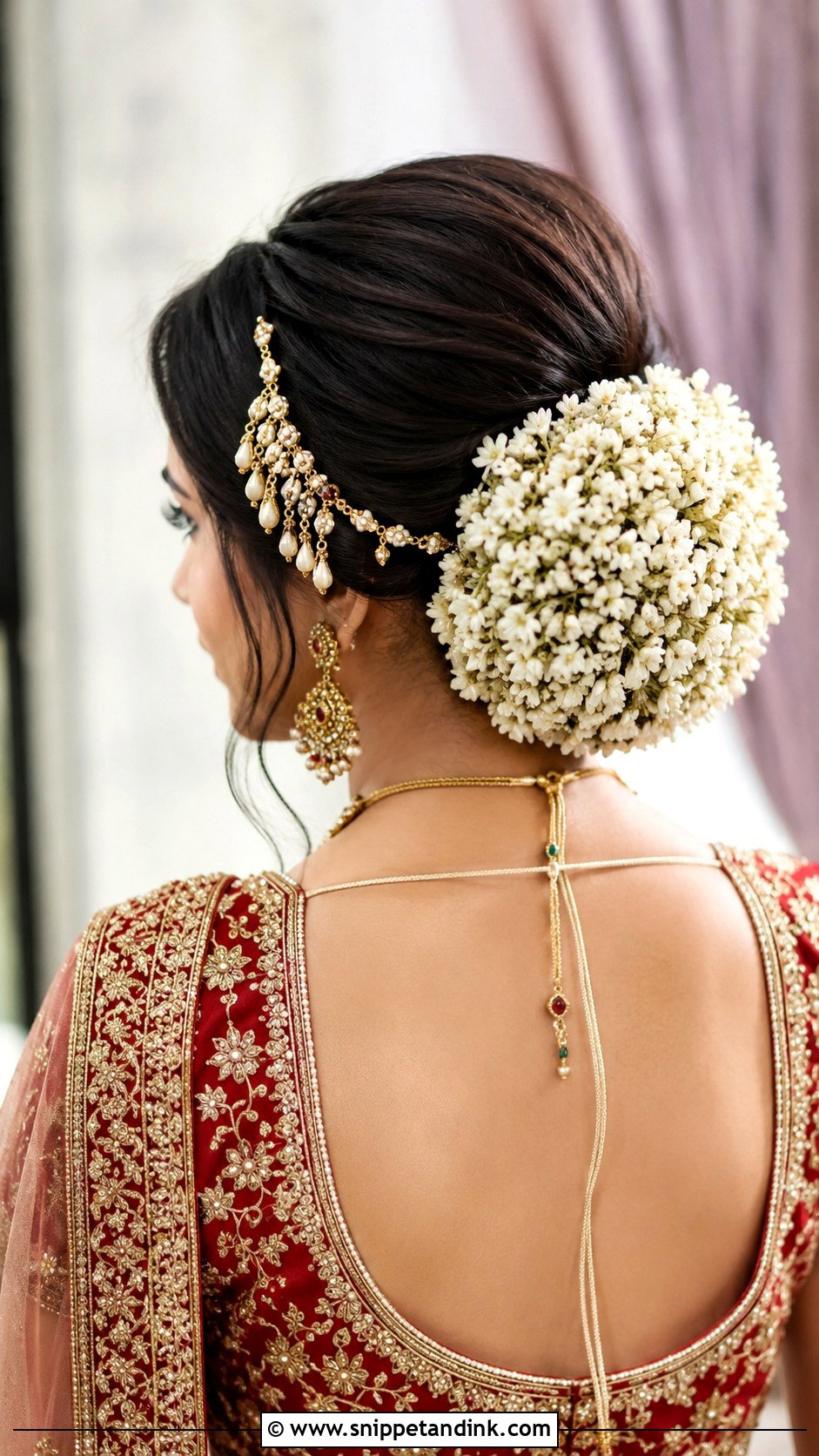
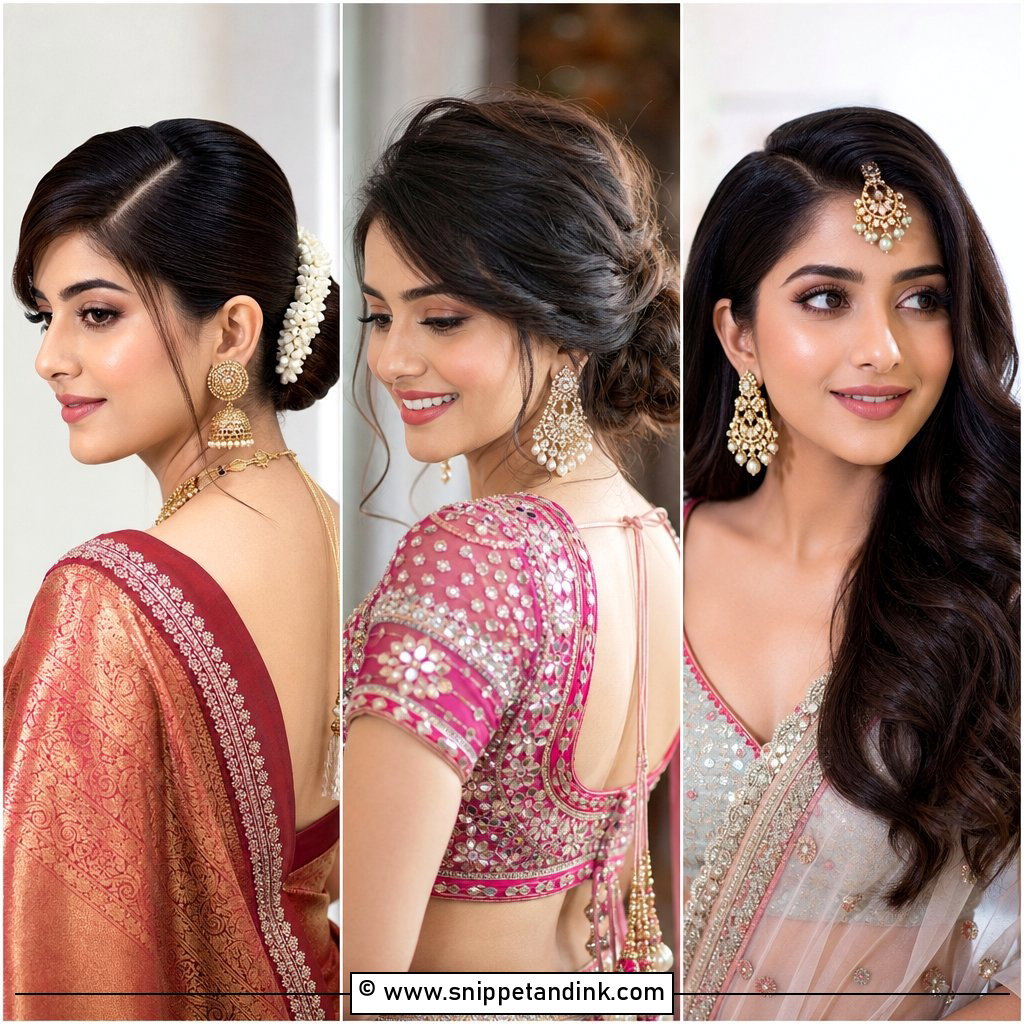
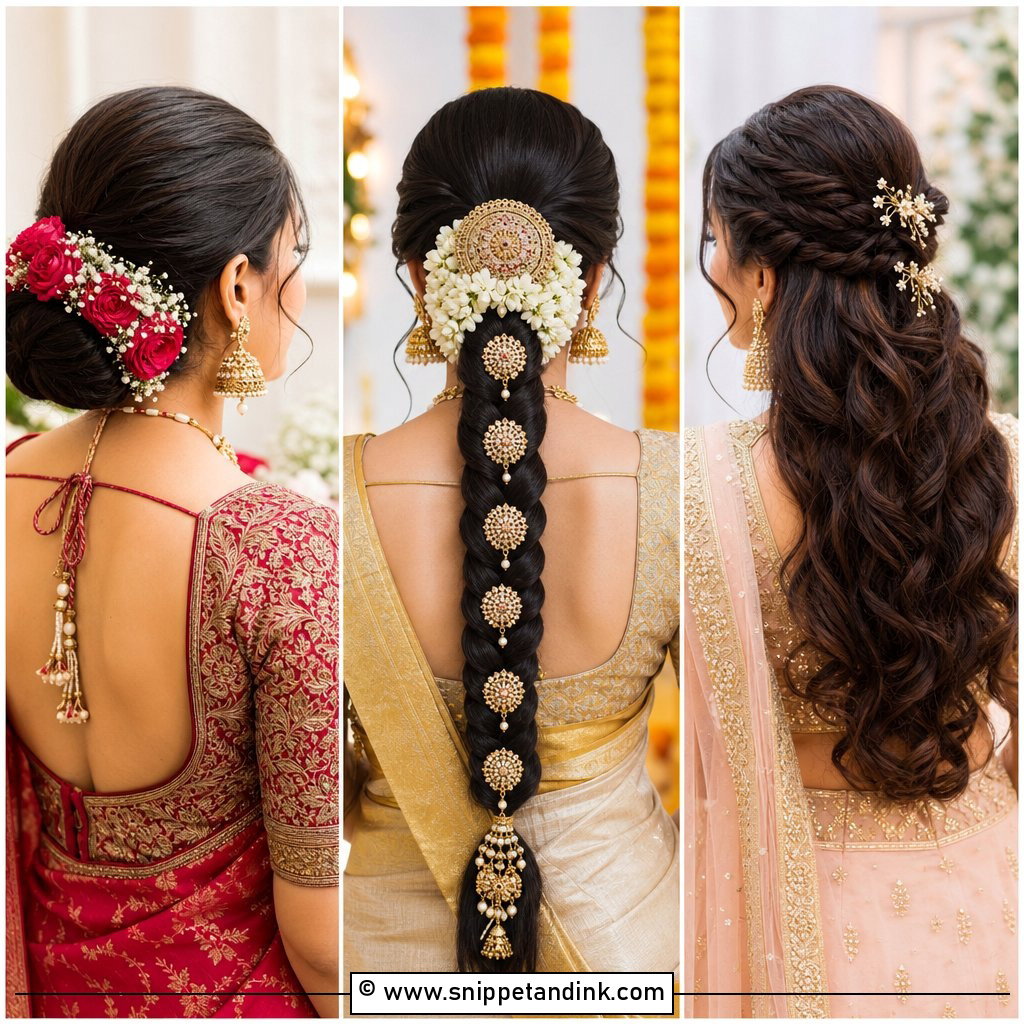
A low bun wrapped in mogra is the style I’d pick if a bride told me she wanted one look that never fails. Walking toward the mandap, it sits under a heavy dupatta without lifting it, and leaves the maang tikka and jhumar room to lie flat. I build the bun over a small padded base so the gajra has something firm to be pinned into; wrapping jasmine around a soft bun just squashes it. Round and oval faces suit the low placement especially well, and the jasmine scent lasts right through the ceremony.
2. Fishtail Braid With Flowers
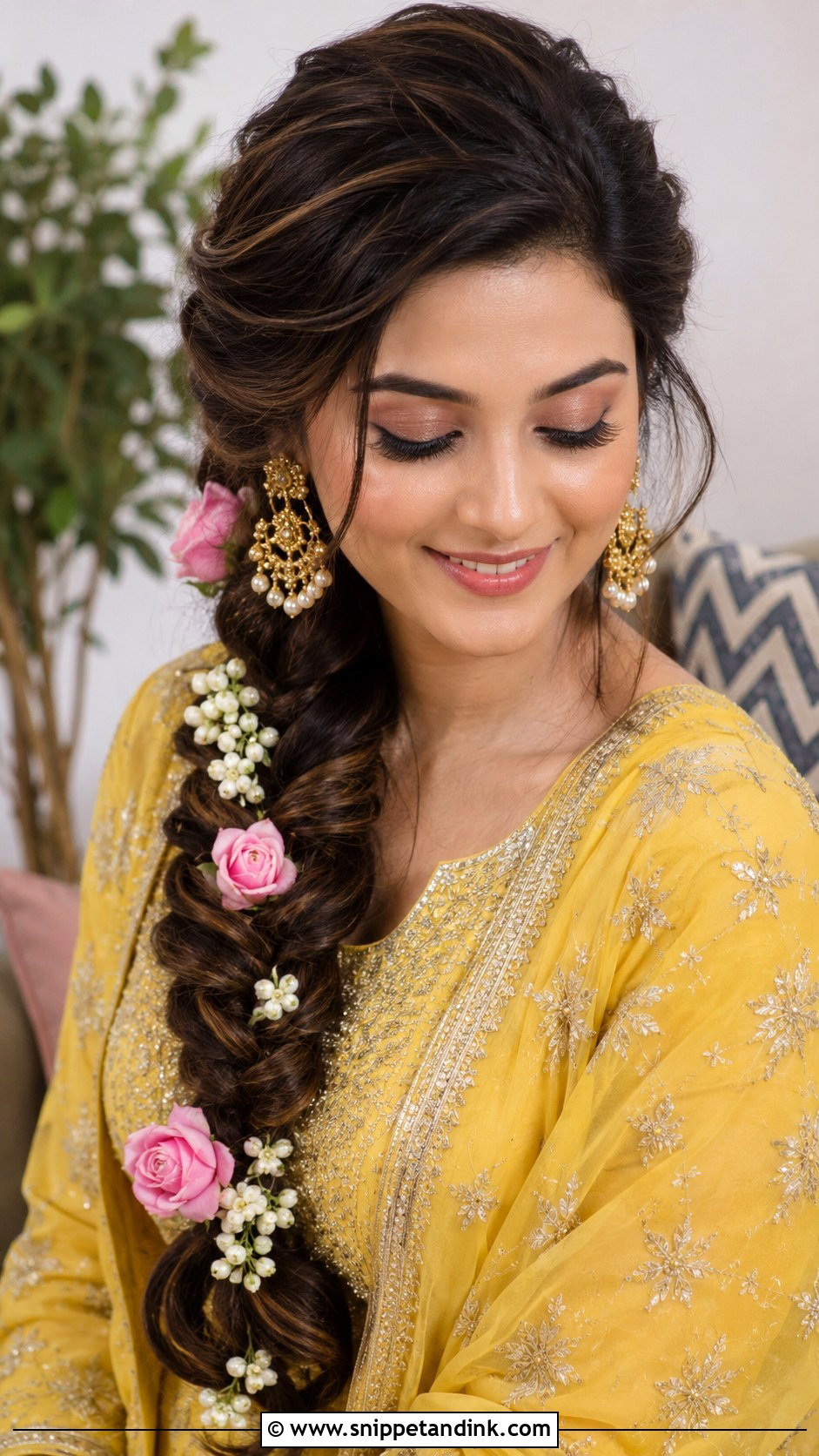
Fishtail braids look intricate but are quicker for me than a full updo, which makes them a good choice for mehendi and sangeet, when you have several events in a week. Tucking jasmine buds or tiny roses into the weave adds color and catches light along the plaits. Worn over one shoulder, it shows off earrings and the neckline and holds well through dancing. On fine hair, I pancake the braid gently, pulling each edge loose a little, so it looks fuller in photos. Leave a few face-framing pieces out if your hair has natural bend.
3. Curly Open Hair With Side Maang Tikka
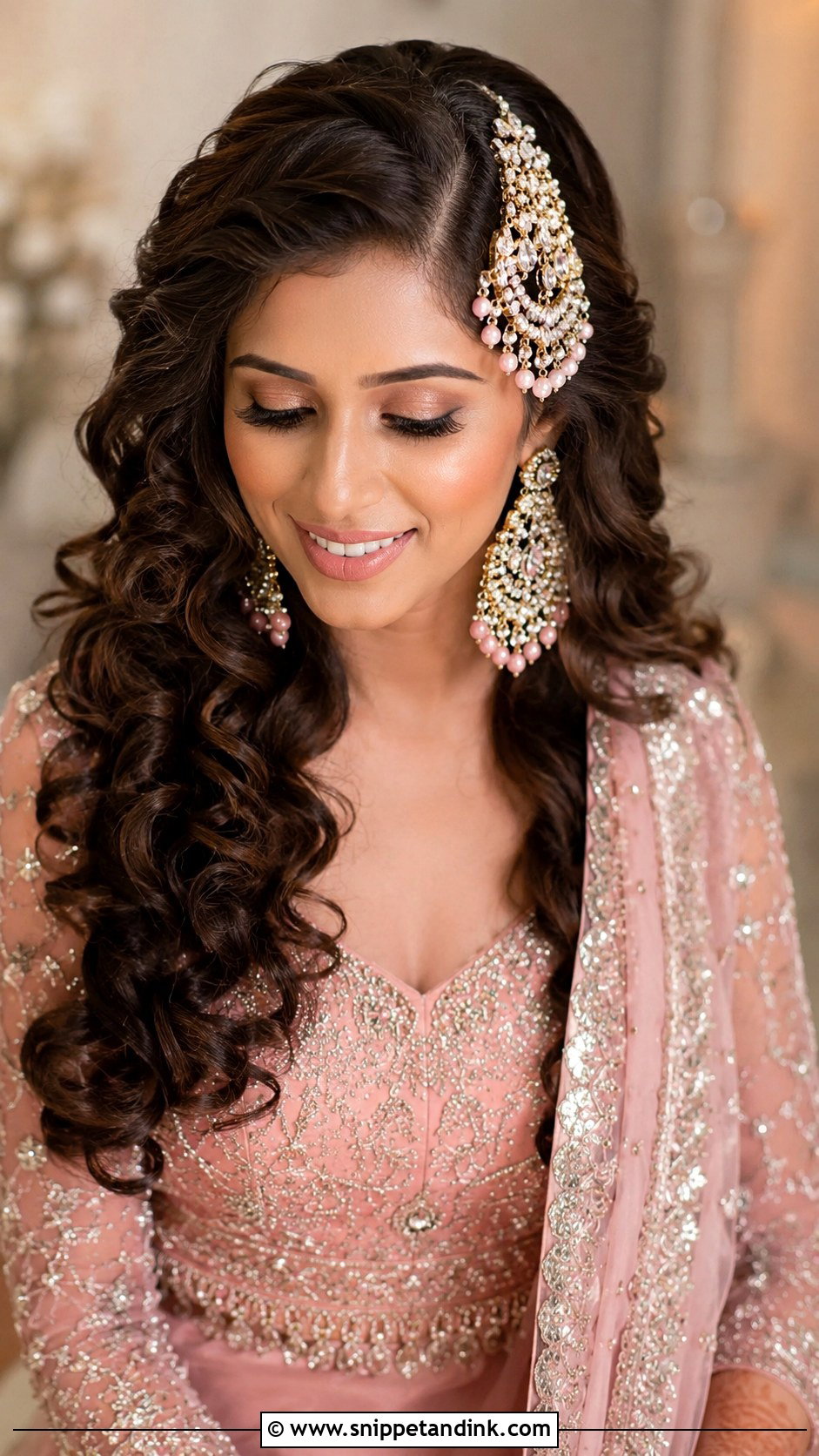
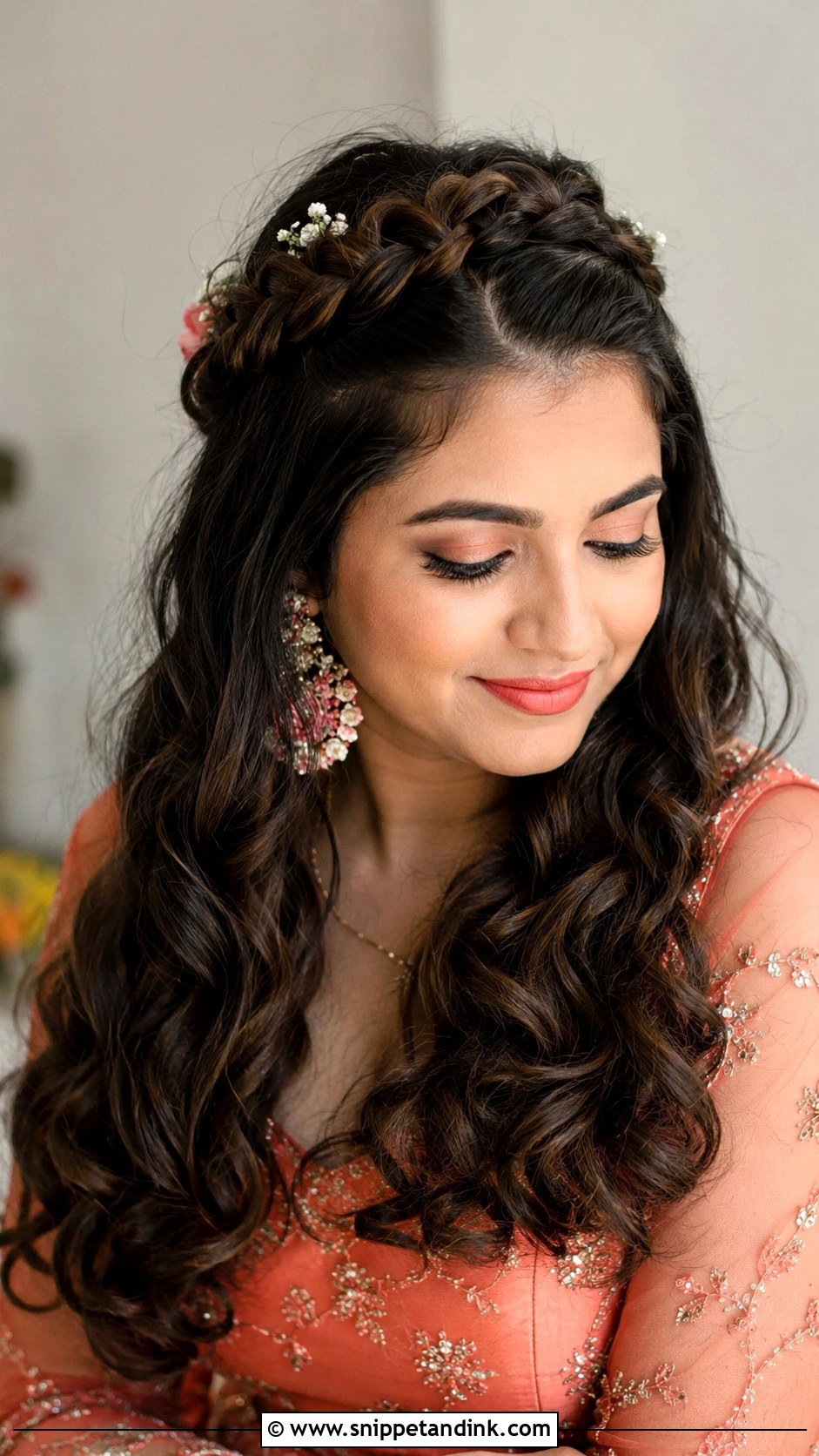
Loose, voluminous curls over the shoulders suit brides who don’t want a structured updo at all. A side maang tikka or small hair brooch keeps the look bridal. With a sheer dupatta, the curls show through and give the outfit movement. My caution is weather: curls on straight, fine hair can fall flat within a couple of hours in humidity, so I set them with heat, pin each curl while it cools and only brush out just before you dress. This suits mehendi or a daytime sangeet better than a wedding ceremony with a full head dupatta.
4. Floral Messy Bun
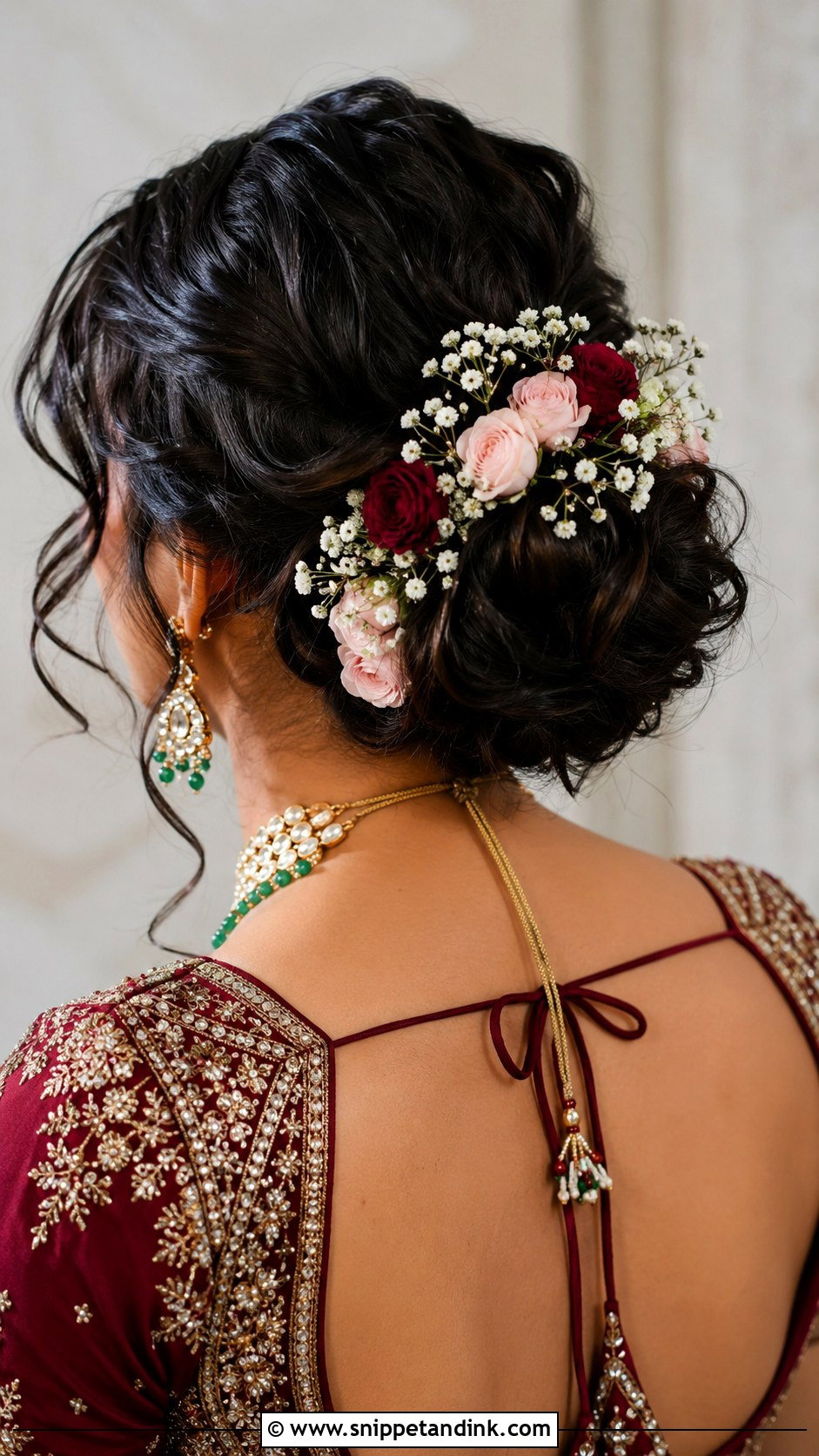
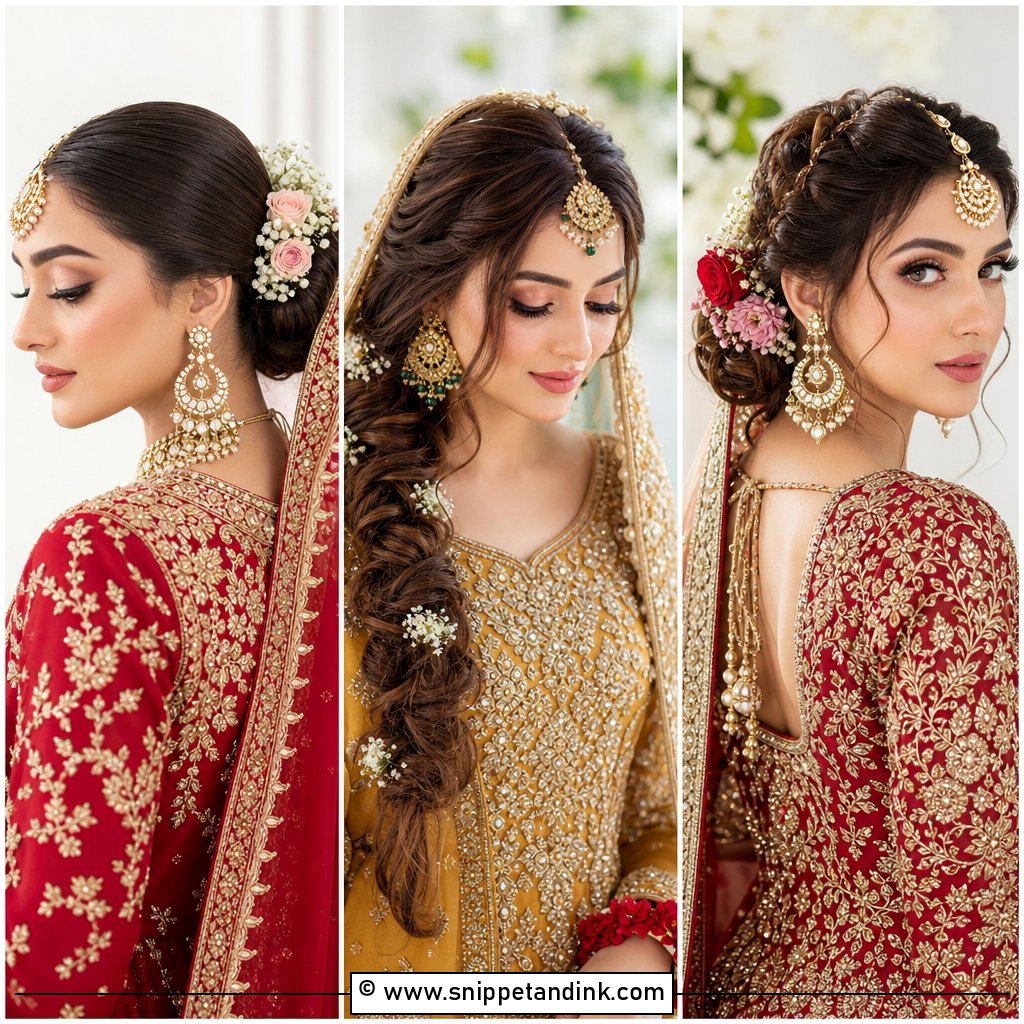
A full floral messy bun piles textured curls into an updo loaded with fresh flowers or jeweled pins. The undone finish looks young and relaxed, but it is not quick to do: every loose piece is placed and pinned so it stays loose in the right way. It carries heavy lehengas, chandelier earrings and an ornate necklace, and I keep it low or at the nape so a dupatta can still drape over it. Baby’s breath or marigolds give a garden feel. On very silky hair, I add texture spray first, or the bun slides out of shape by the reception.
5. Sleek High Ponytail
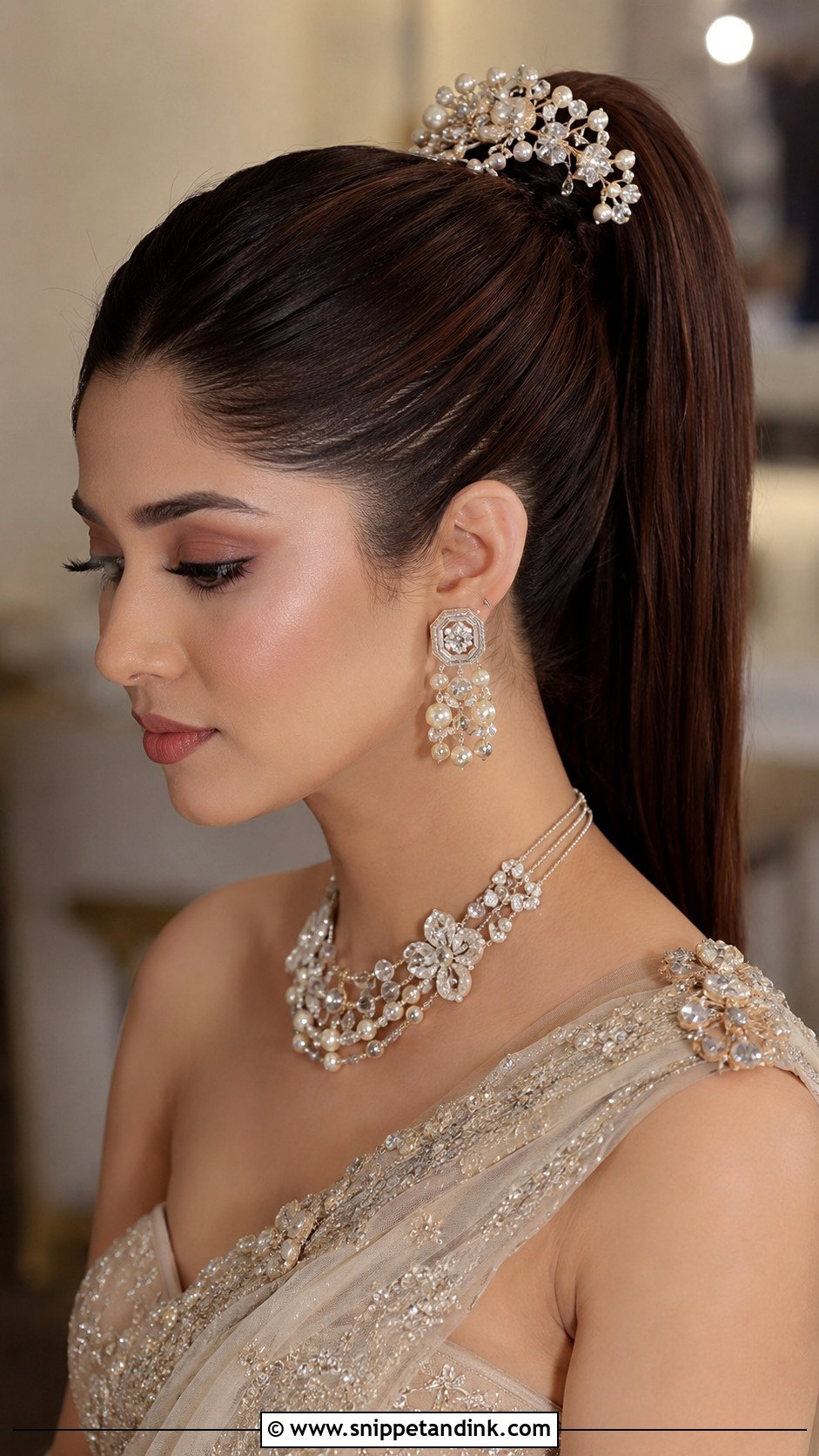
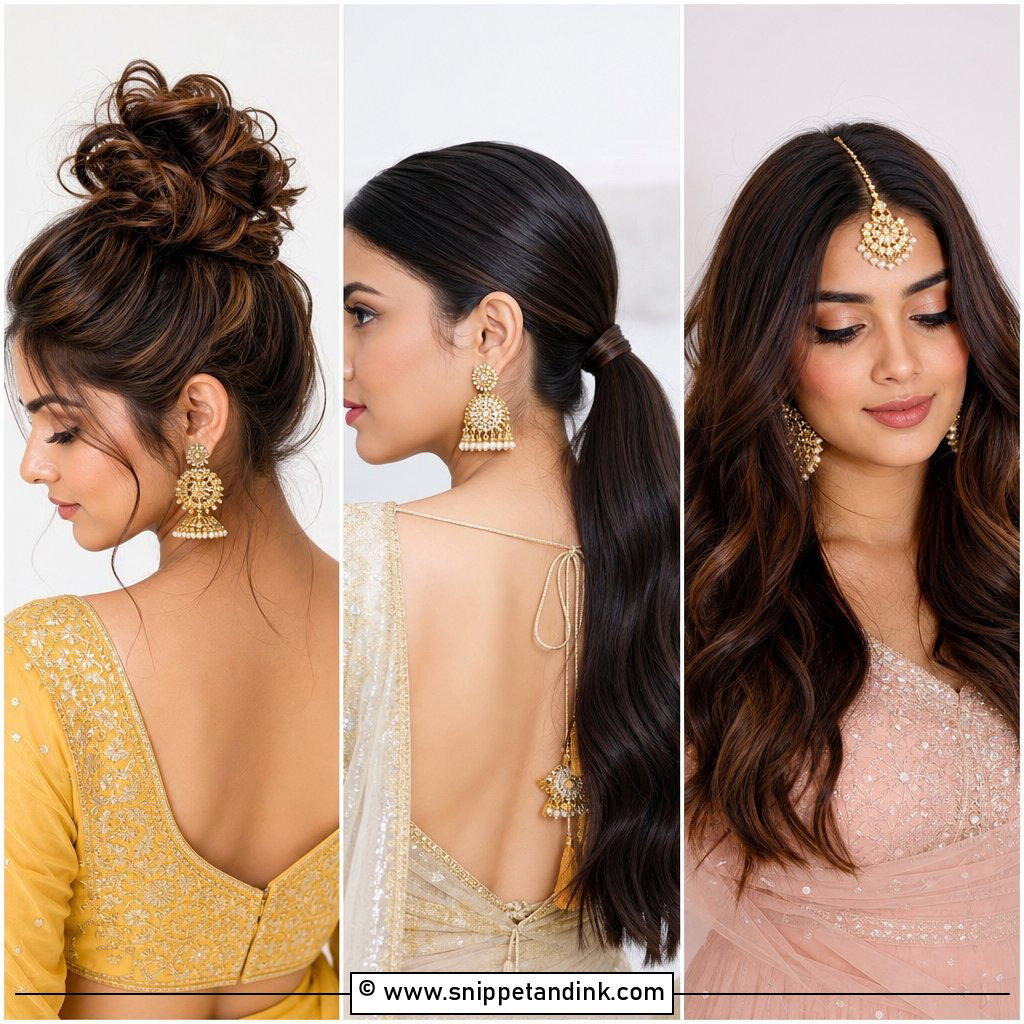
The sleek high ponytail is for the fusion bride in an Indo-Western gown, a structured outfit or a contemporary lehenga at the sangeet or reception. It shows the neckline and keeps the focus on makeup. Smooth the hair back tightly, wrap a small section around the base to hide the elastic and add pearls or crystal pins. Two warnings from experience: heavy, long hair pulls a high ponytail down and gives many brides a headache after a few hours, and it cannot sit under a head dupatta. I often anchor it with two elastics, one slightly above the other, so the weight is shared.
6. Classic Bun With Maang Tikka
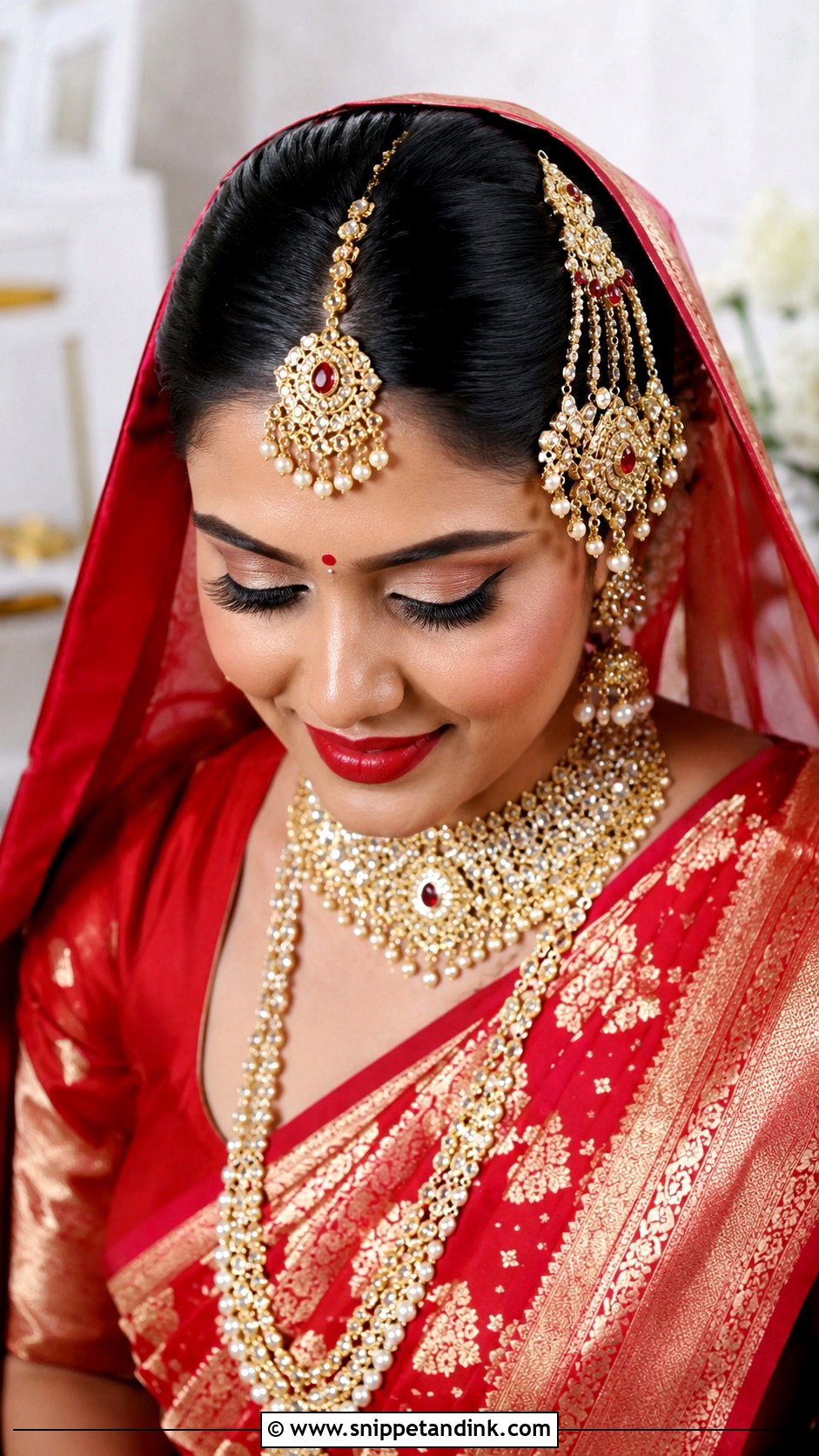
For the ceremony itself, a center-parted classic bun with a traditional hand maang tikka is the most dependable style I know. The parting gives the tikka a straight line to sit along, and the pulled-back hair stays neat through the longest rituals. A dupatta drapes over it easily, and a jhumar on one side adds richness. It suits nearly every face shape. The one thing I check at the trial is the tikka chain length; if it’s too long for your parting, it slides onto the forehead, and I’ll pin it under a small section of hair to hold it.
7. Side Swept Curls
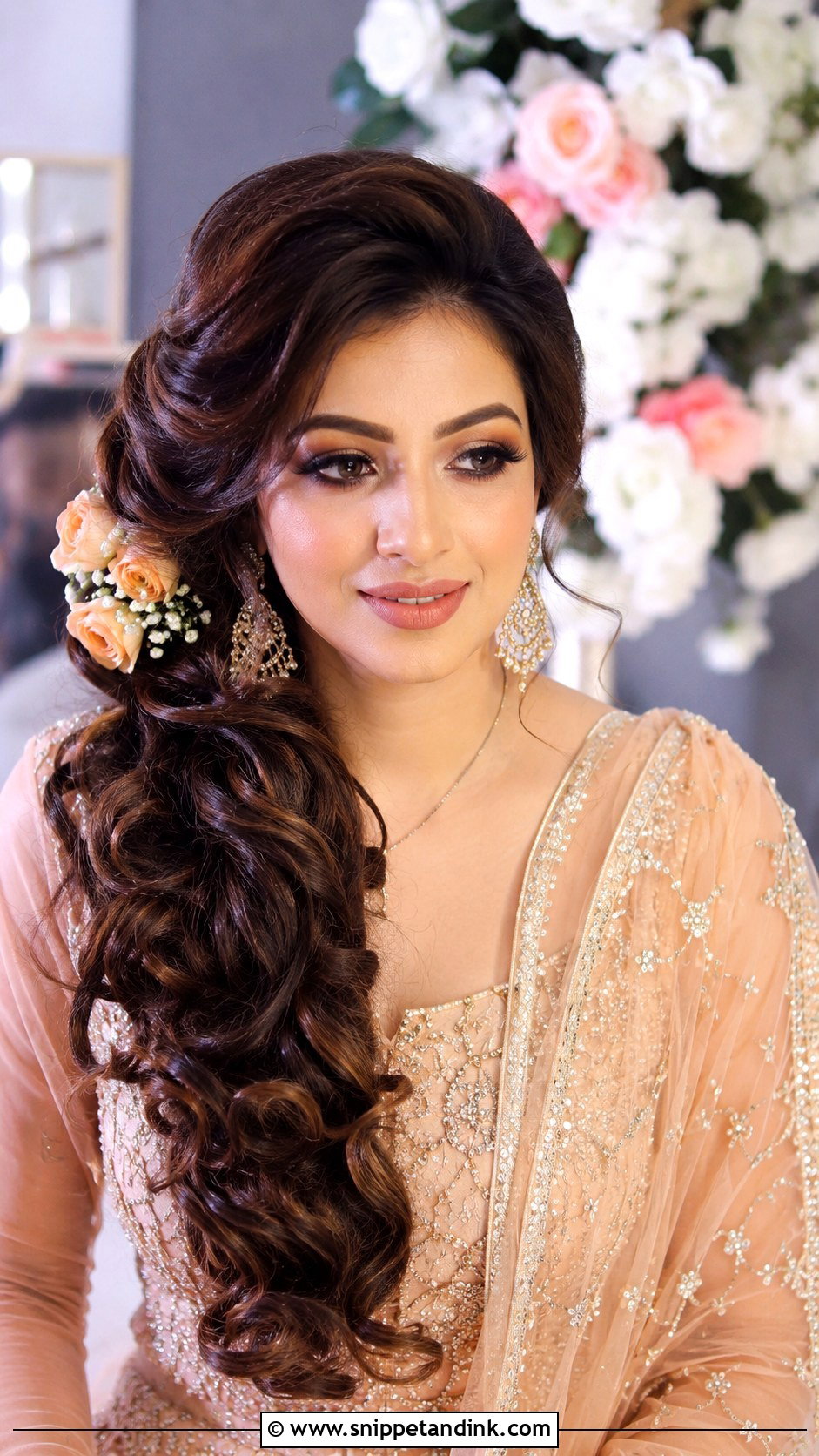
Side-swept curls gathered over one shoulder show off length while staying polished. I sweep the curls across, then pin them behind the ear on the gathered side with crossed bobby pins so they don’t creep back. A decorative clip or floral accent hides the pins. Statement earrings on the open side and a sheer dupatta suit it, at sangeet or the reception. Lots of brides find out after an hour that the weight of all the hair on one side pulls at the neck. If your hair is thick and long, I thin out the gathered section a little by pinning some underneath.
8. Pearl Embellished Braid
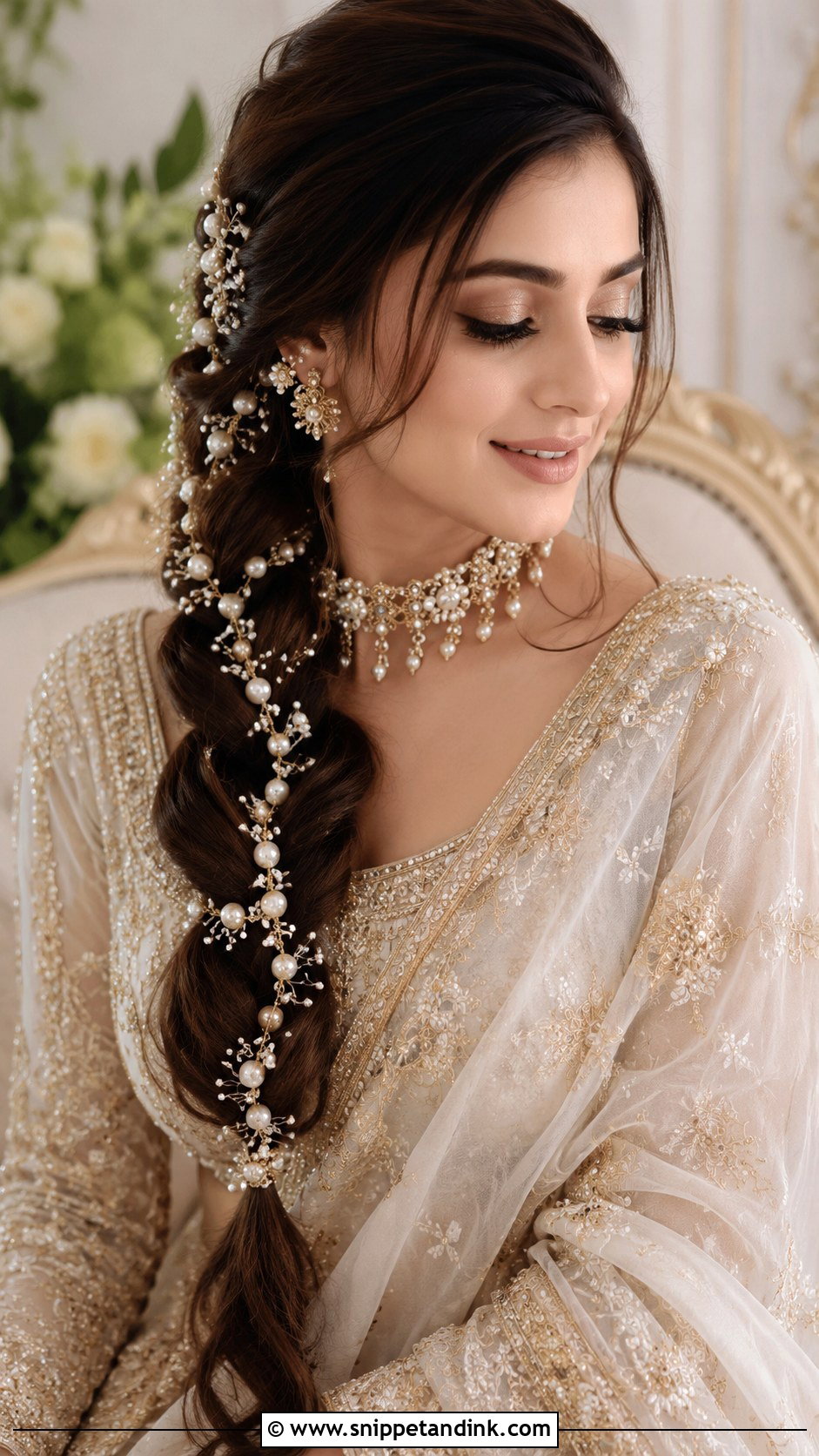
Pearls threaded through a braid read softer than florals and won’t wilt. I weave strings of pearls into a classic braid or slip pearl pins into the plaits at intervals. The pearls pick up light and suit ivory and pastel outfits, and the braid works over one shoulder for engagements, sangeet or a modern wedding day. Choose lightweight faux pearl strands; real pearl strings are heavier than they look and drag the braid open over several hours.
9. Half Up Half Down With Curls
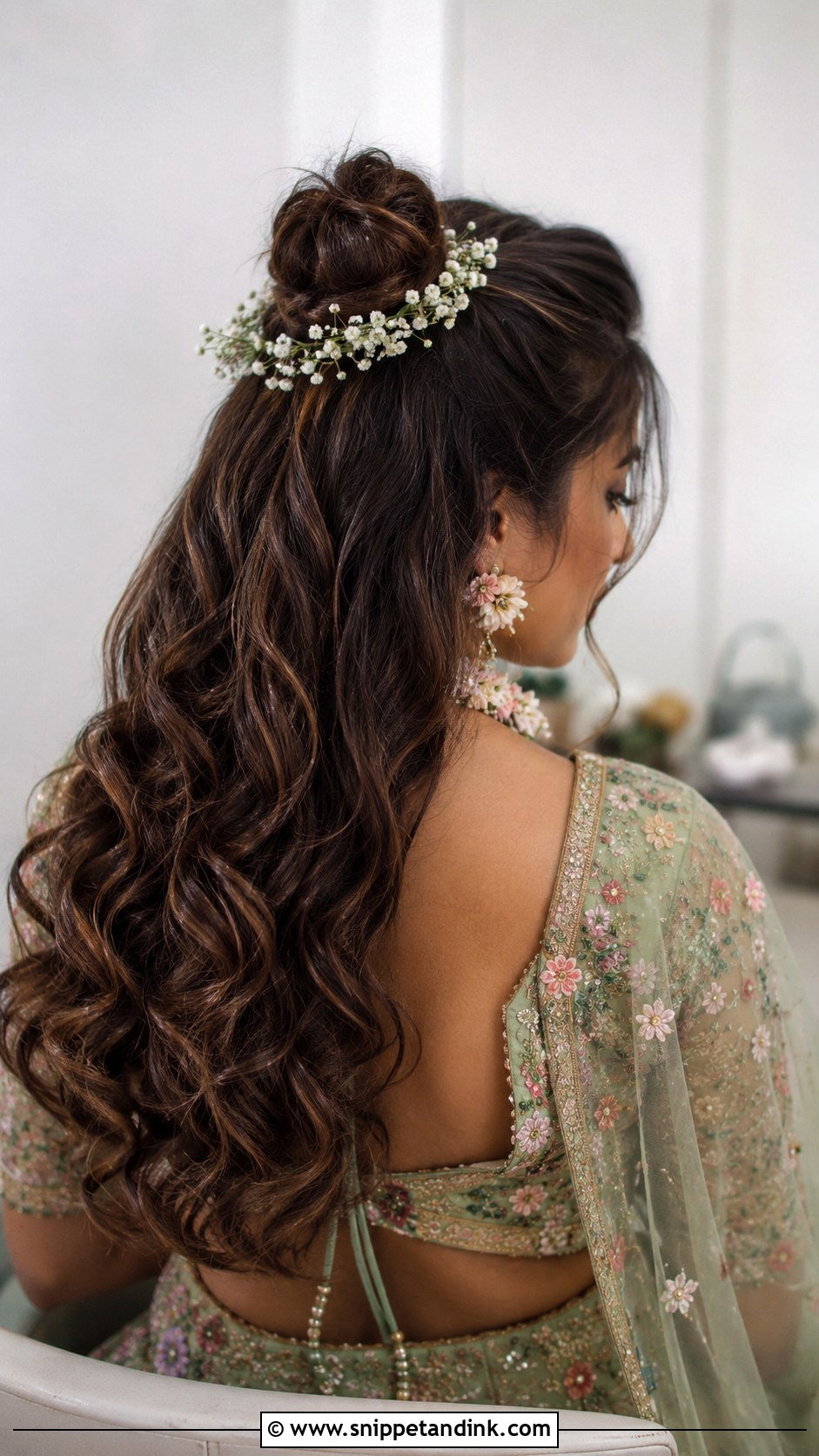
Can’t decide between open hair and an updo? Half up, half down lets you have both. I gather the top section into a small bun or twist and let waves fall below, with fresh flowers, pearl pins or baby’s breath at the crown. It suits mehendi and daytime sangeet, and both traditional and fusion outfits. The weak point is the crown section: if it isn’t backcombed and pinned with a hidden base, it sags as the curls pull on it. I set it first, then curl the hair underneath.
10. Bridal Juda With Jhumar
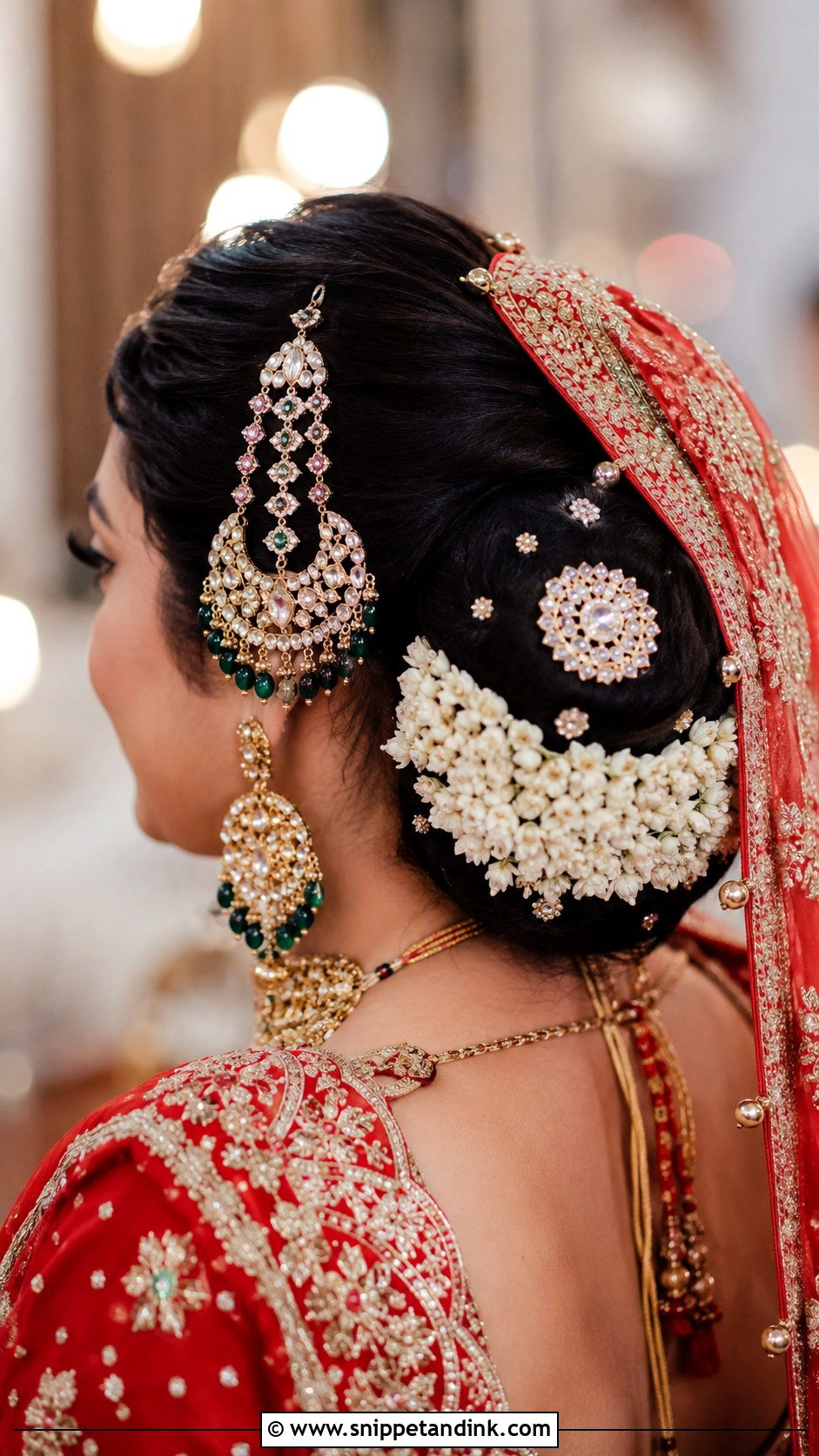
The traditional juda paired with an ornate jhumar is the closest thing to a regal look in bridal hair. The decorated bun sits at the back while the jhumar drapes along the side parting. Jeweled pins, fresh gajra or brooches add festive detail, and a head-draped dupatta sits over it well during pheras. The jhumar is heavier than it looks, so I hook it into a small braid hidden along the parting instead of into loose hair; that is what stops it slipping when you bend for rituals.
11. Long Open Hair With Soft Waves
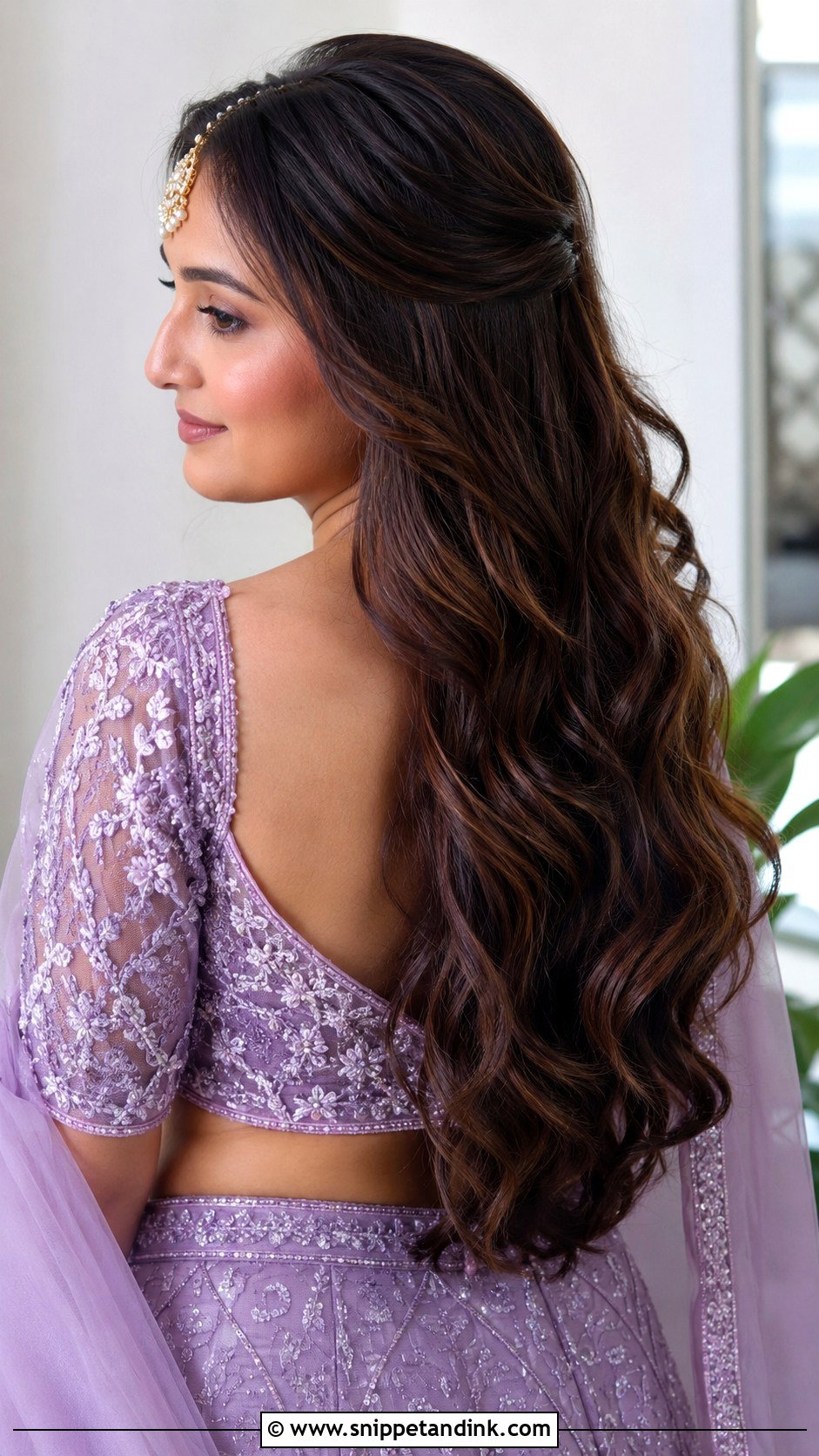
Open hair with soft waves is the minimalist’s option, and it only works on hair in good condition. Glossy waves showing your length look fresh and understated. A small maang tikka or a few floral pins keeps it bridal, for engagement, mehendi or fusion events with lehengas or Indo-Western outfits. I start prep weeks out for this style: a trim to remove split ends and regular conditioning, because open hair hides nothing. It’s the least protective style if the weather turns humid.
12. Braided Bun With Flowers
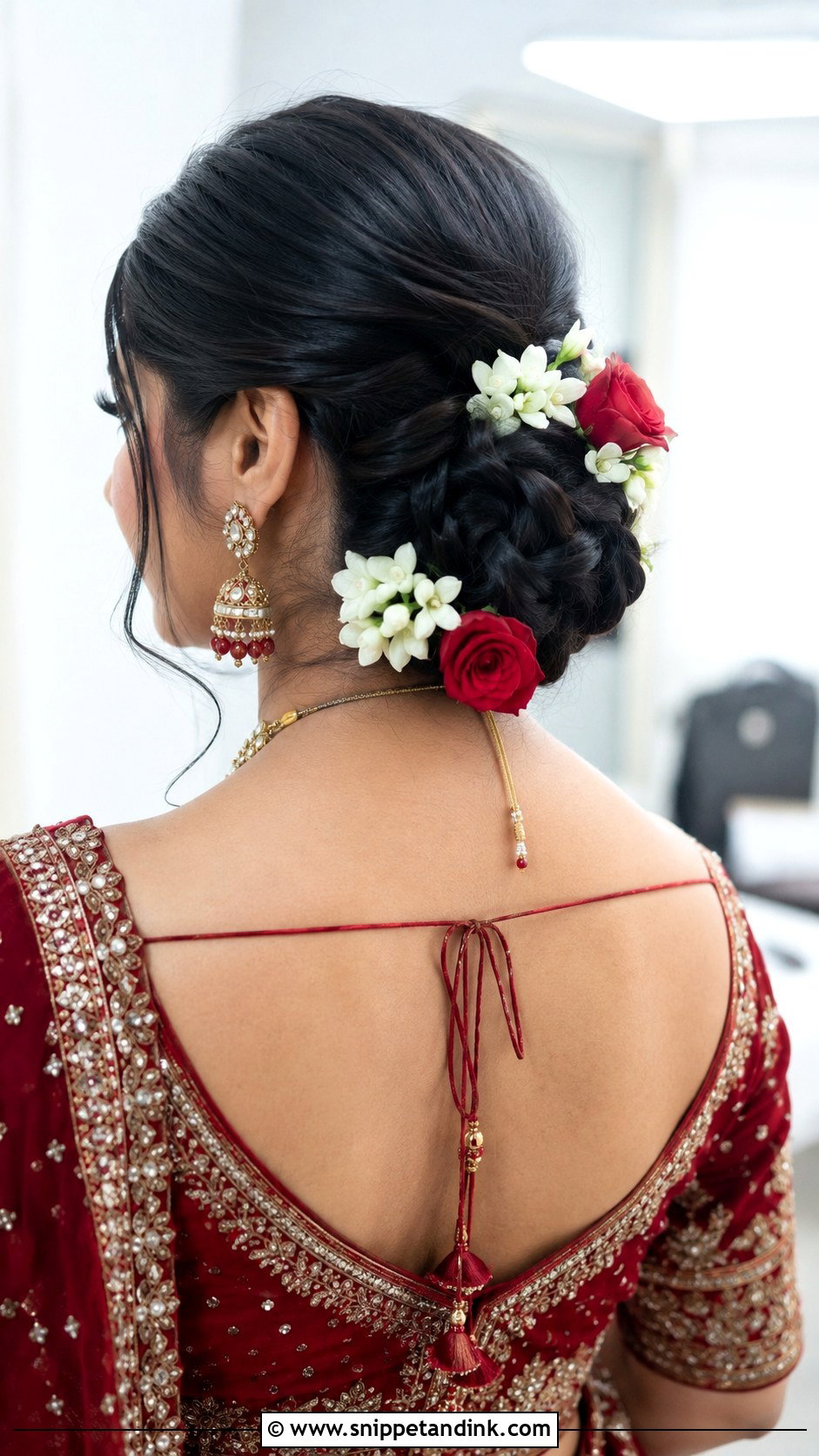
A braided bun twists a braid into a sculptural updo, then gets jasmine, roses or carnations tucked into the coils. The weave gives texture, the flowers color and scent. I place it at the nape for a traditional shape that heavy bridal wear and jewelry can sit around. Because the braid is the foundation, it holds through long ceremonies and dancing better than a smooth bun, and it is my usual suggestion for slippery or layered hair that won’t stay in a plain twist.
13. Crown Braid With Dupatta
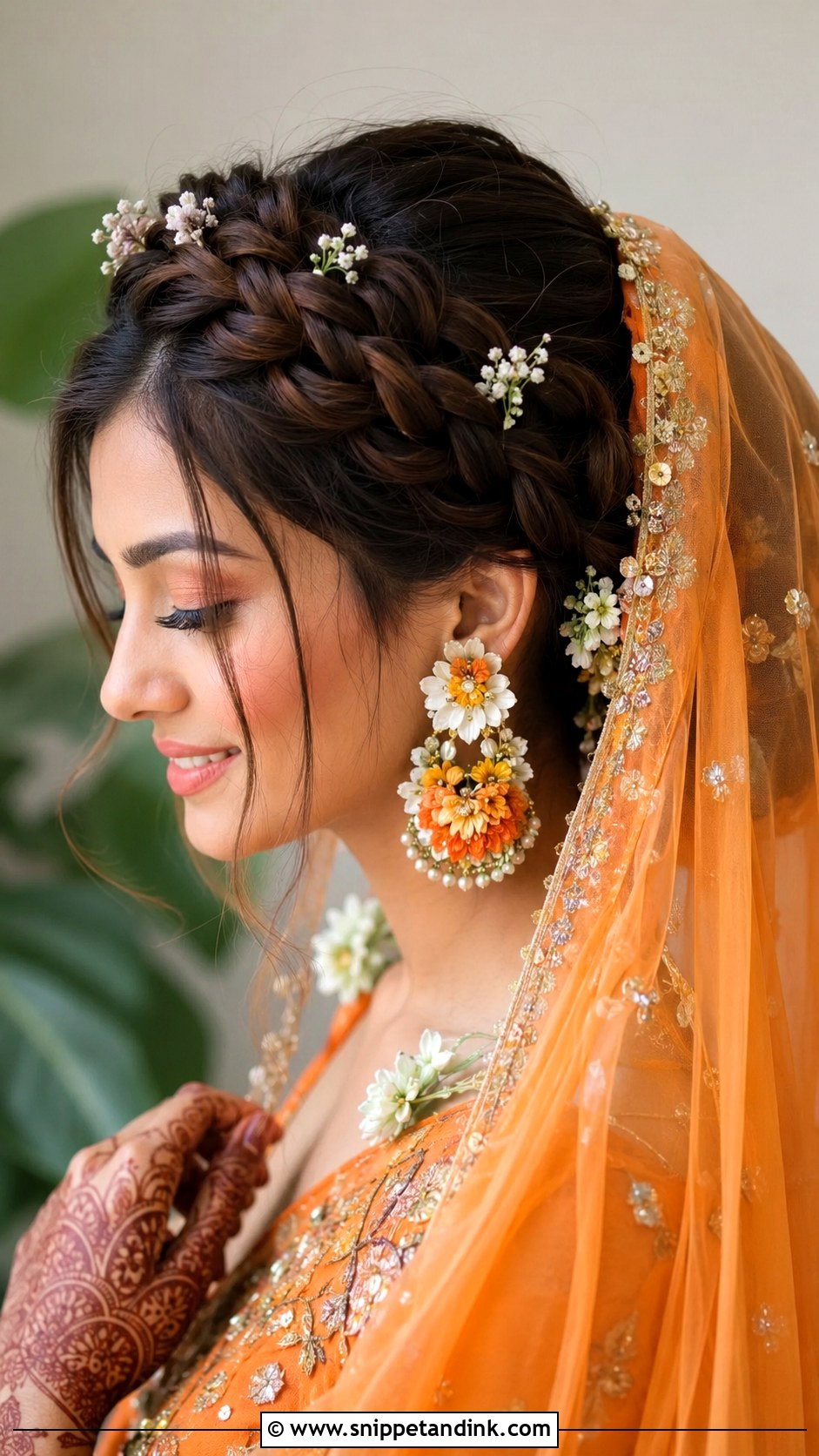
A crown braid wraps around the head like a halo and gives a dupatta a ridge to rest on. Small flowers or pearls tucked into it add detail. It keeps hair completely off the face and neck, so in hot weather I like it for mehendi or a daytime ceremony. Layered cuts are the problem: shorter layers poke out of the braid around the ears. I pin those under or work a few into a soft frame. With a dupatta draped over the back, it looks traditional and unusual at once.
14. Bubble Braid Ponytail
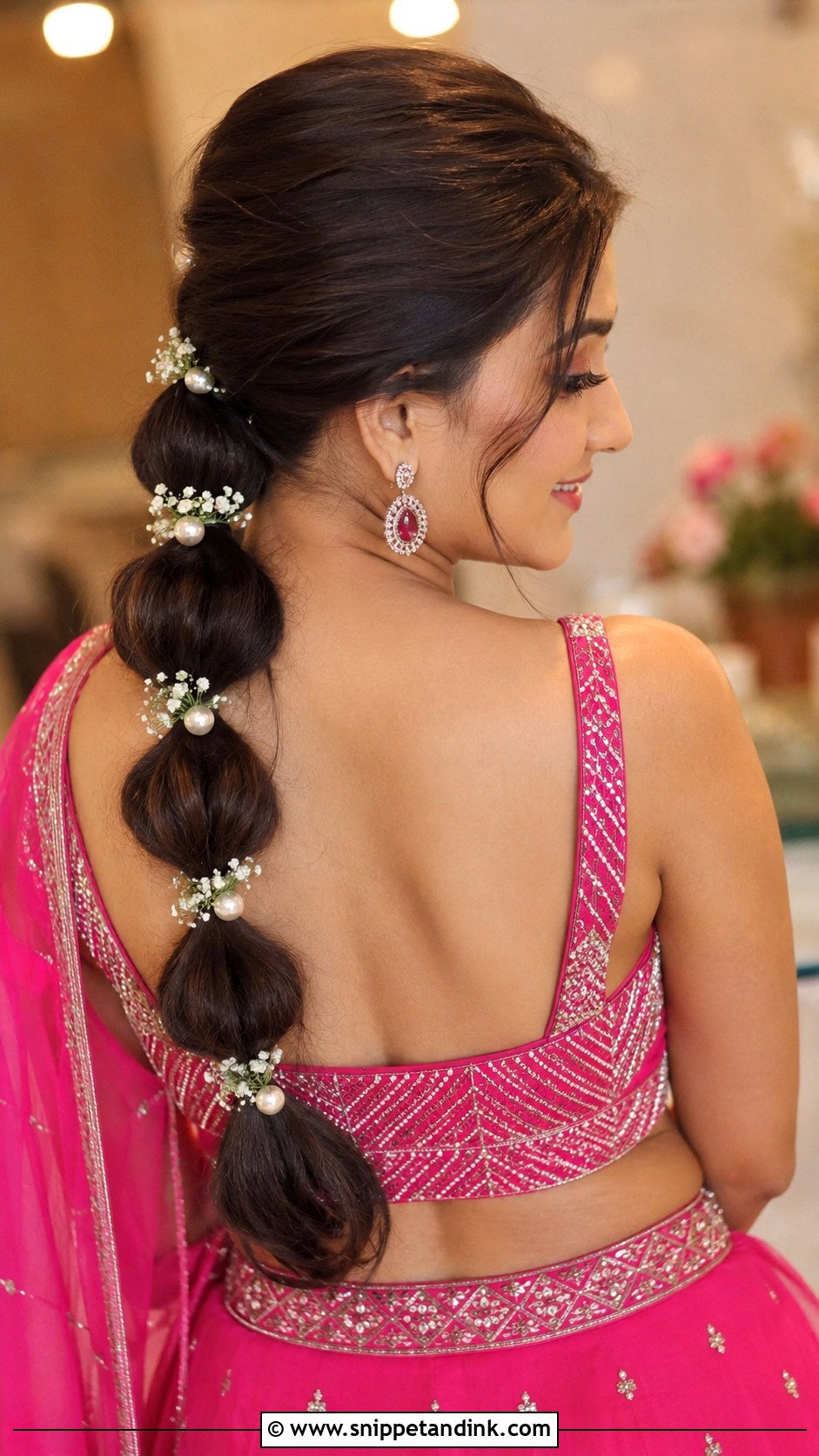
Bubble braids are a fun option for pre-wedding events. A ponytail is sectioned with small elastics into rounded “bubbles”, each one gently pulled wider. Tiny flowers or pearl pins between the bubbles make it bridal. It’s quick, stays secure while dancing and suits bright, light outfits at sangeet or mehendi. I’d keep it away from the wedding ceremony; it doesn’t fit under a dupatta and reads more festive than formal.
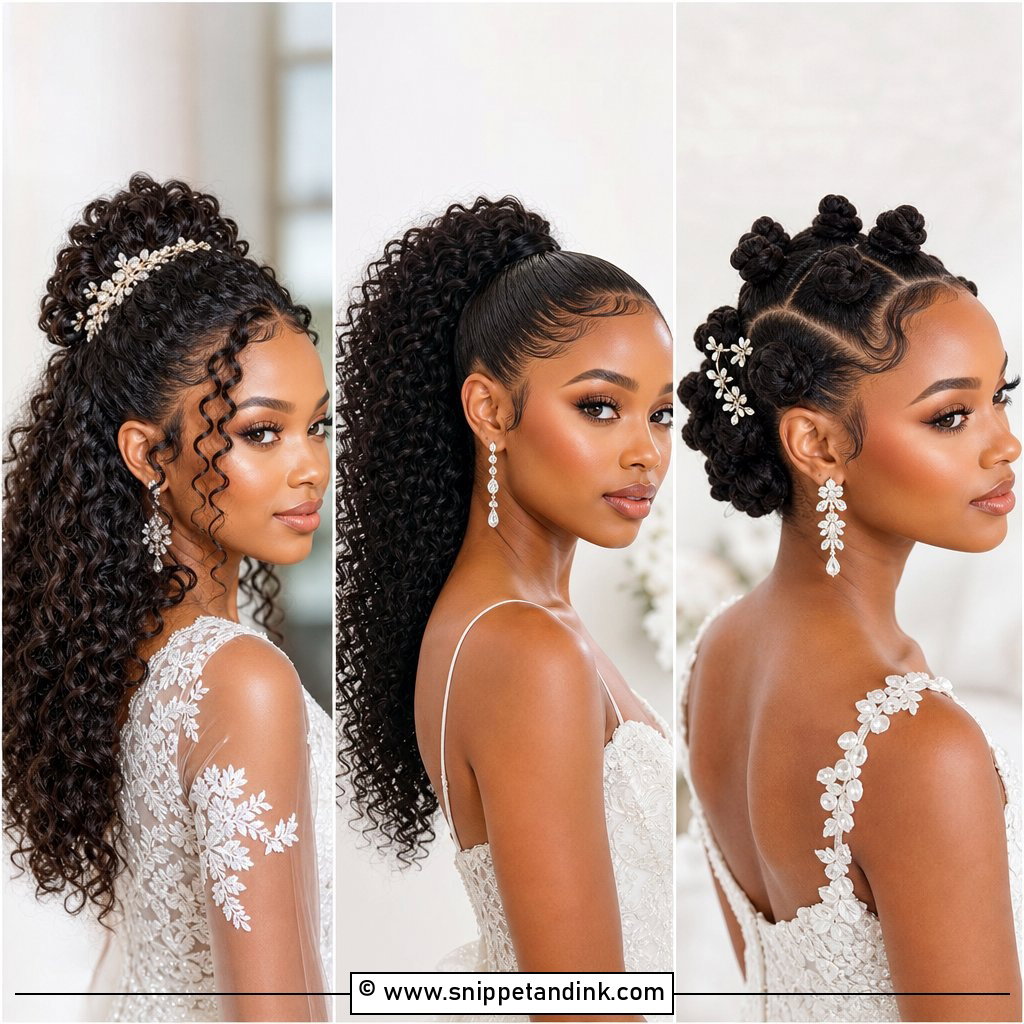
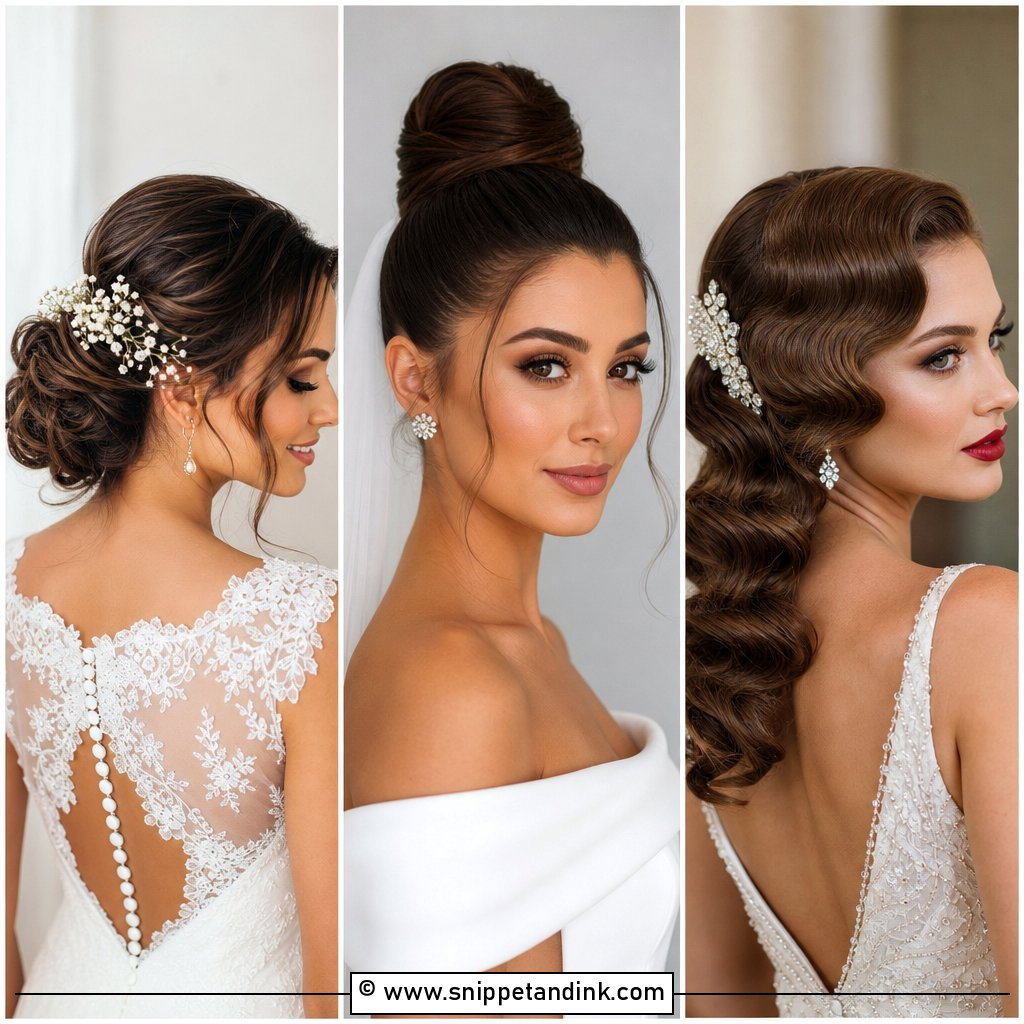
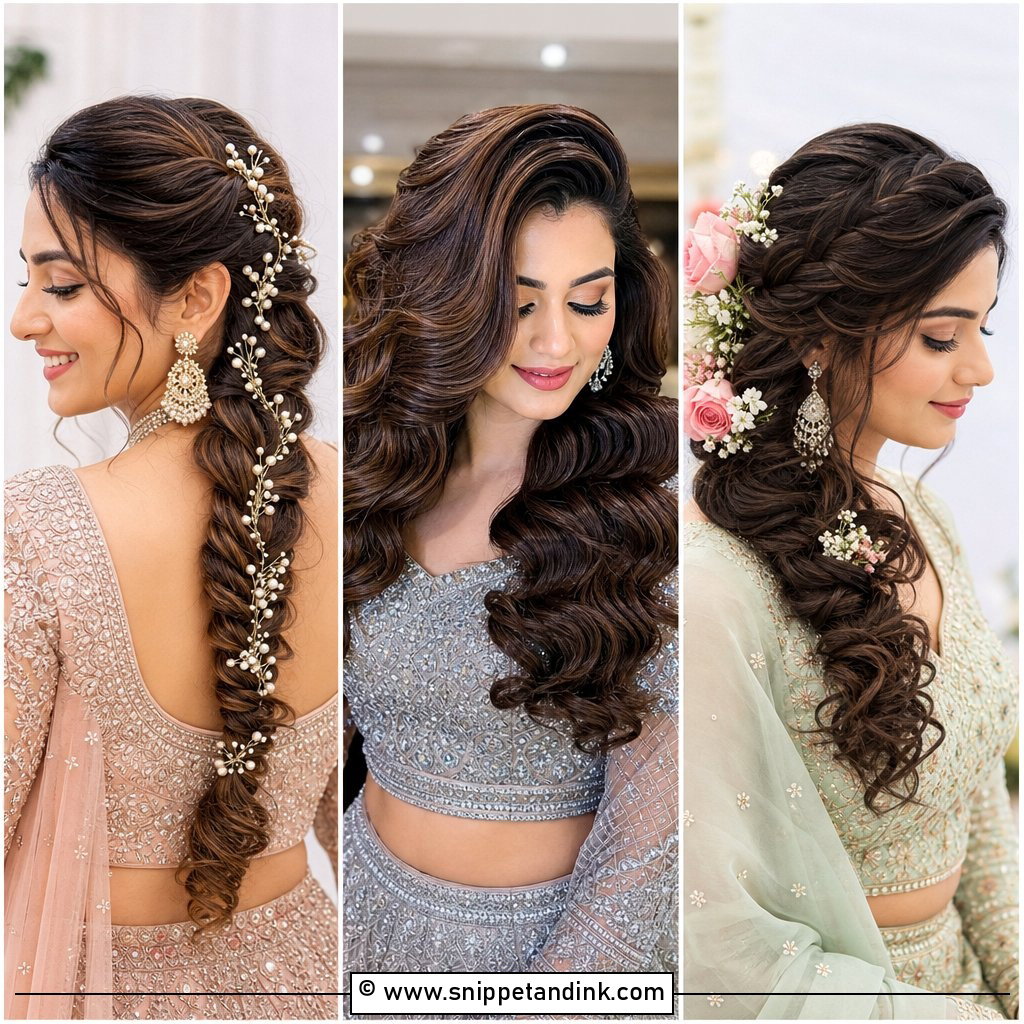
15. Vintage Bun With Maang Tikka
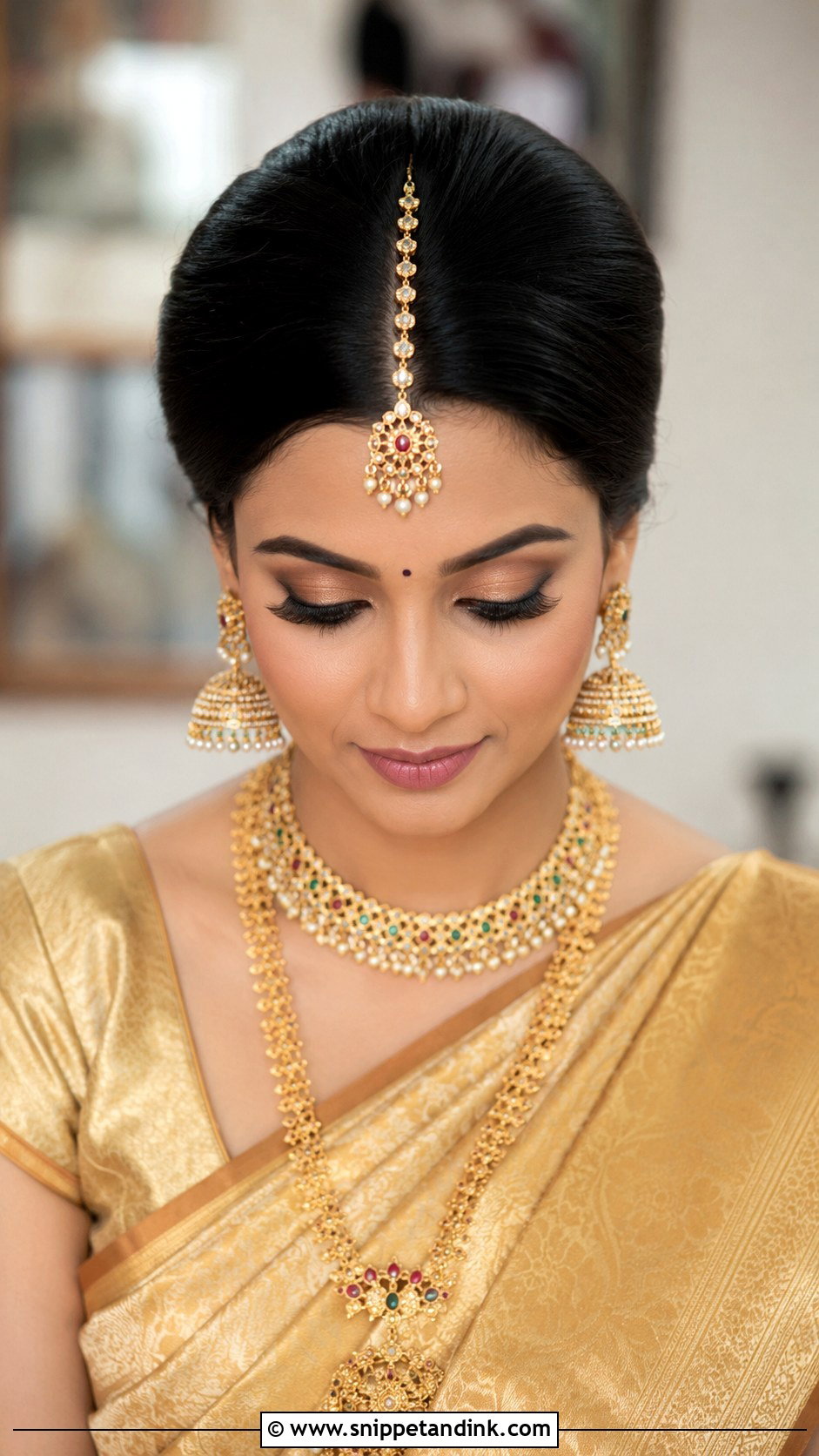
A vintage bun channels old Bollywood glamour: a slightly puffed crown and a smooth, structured bun behind, with a center-parted maang tikka framing the face. The volume at the crown comes from backcombing at the roots and a smoothing brush over the top, so the surface stays glossy. It pairs with heavy silk sarees and classic jewelry at the ceremony or a traditional reception. Small floral accents or a jeweled pin finish it. Be prepared for the brush-out afterwards; backcombed hair needs conditioner and patience.
16. Floral Tiara Updo
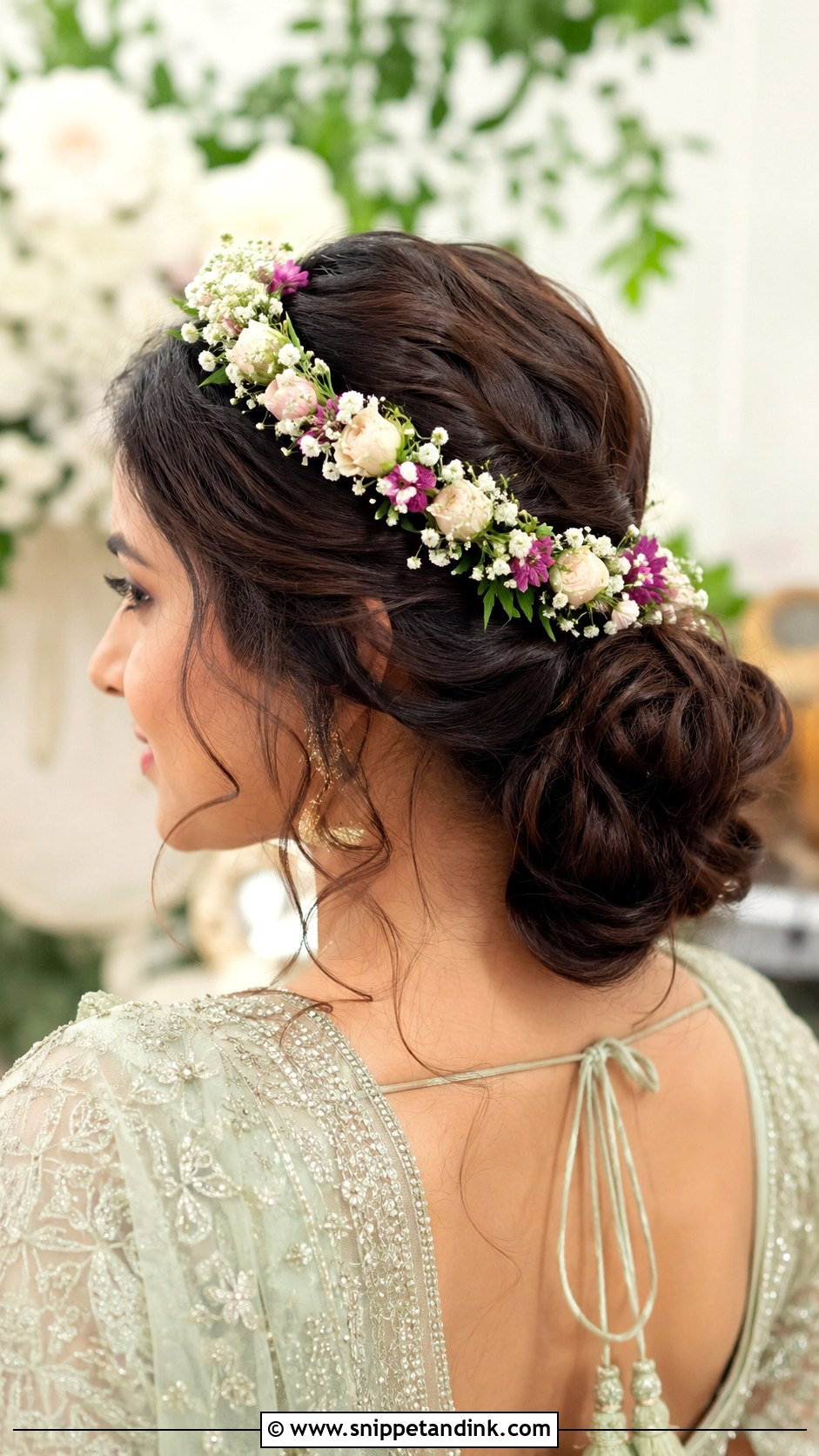
A floral tiara band across the crown with a soft updo below suits outdoor mehendi and garden events with flowing pastel outfits and light jewelry. Marigolds, roses or baby’s breath can follow your theme. I wire the flowers onto a thin band, then anchor the band with pins on both sides behind the ears so it doesn’t slide forward. Fresh flowers in direct sun will wilt in a few hours; for long outdoor afternoons, I’d mix a few good silk flowers into the band.
17. Sleek Low Bun
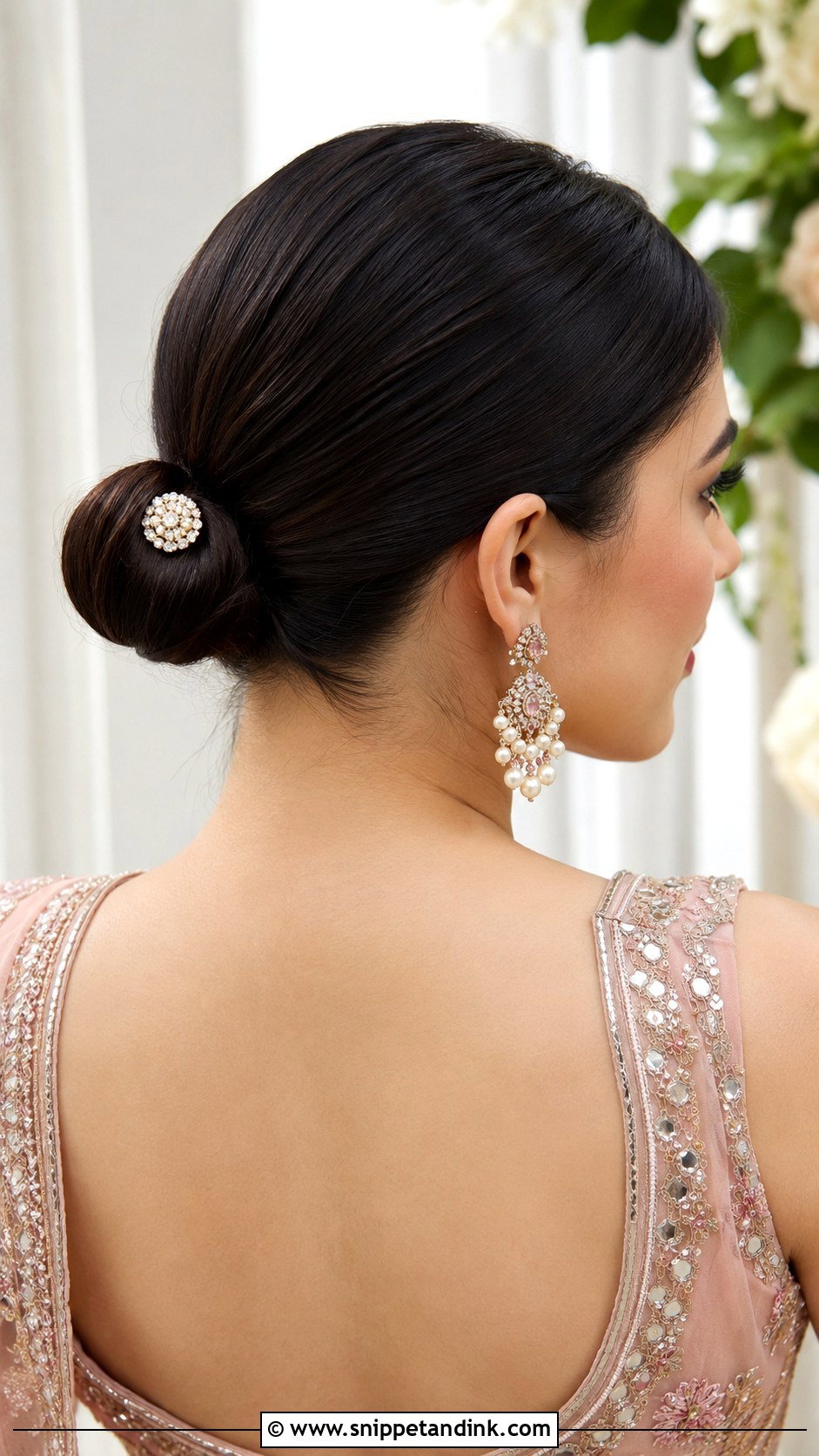
A sleek low bun smooths every strand into a tight knot at the nape. It suits fusion outfits, gowns and contemporary lehengas and puts the focus on jewelry and makeup, with a single jeweled pin or small flower for detail. Under a dupatta, it stays neat all day and shows a long neck well. Sleek styles show every flyaway, though, so I use a small amount of styling cream and a fine-tooth comb, and I always check the back in a hand mirror; baby hairs at the nape are what ruin this in photos.
18. Dutch Braid Updo
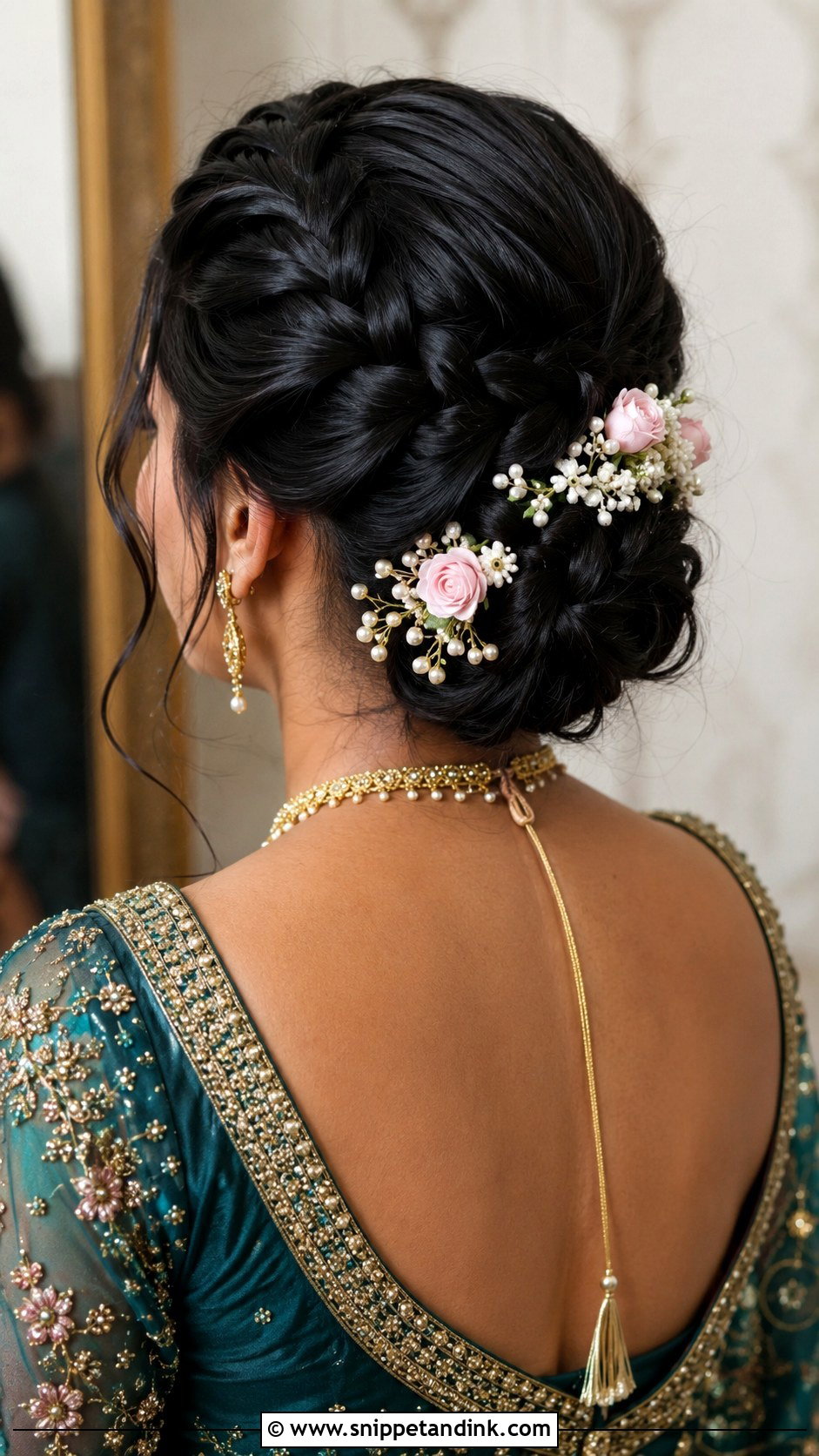
A Dutch braid sits raised on top of the hair because the strands cross under rather than over, and that 3D ridge is what gives the updo its depth. I braid tight against the scalp, then tuck the end into a textured bun or twist. Flowers, pearls or jeweled pins add festive detail for mehendi, sangeet or a modern wedding. Hair stays off the face through dance-heavy events. On very fine hair, the braid looks thin unless I gently tug each loop wider after it’s secured.
19. Open Hair With Flower Crown
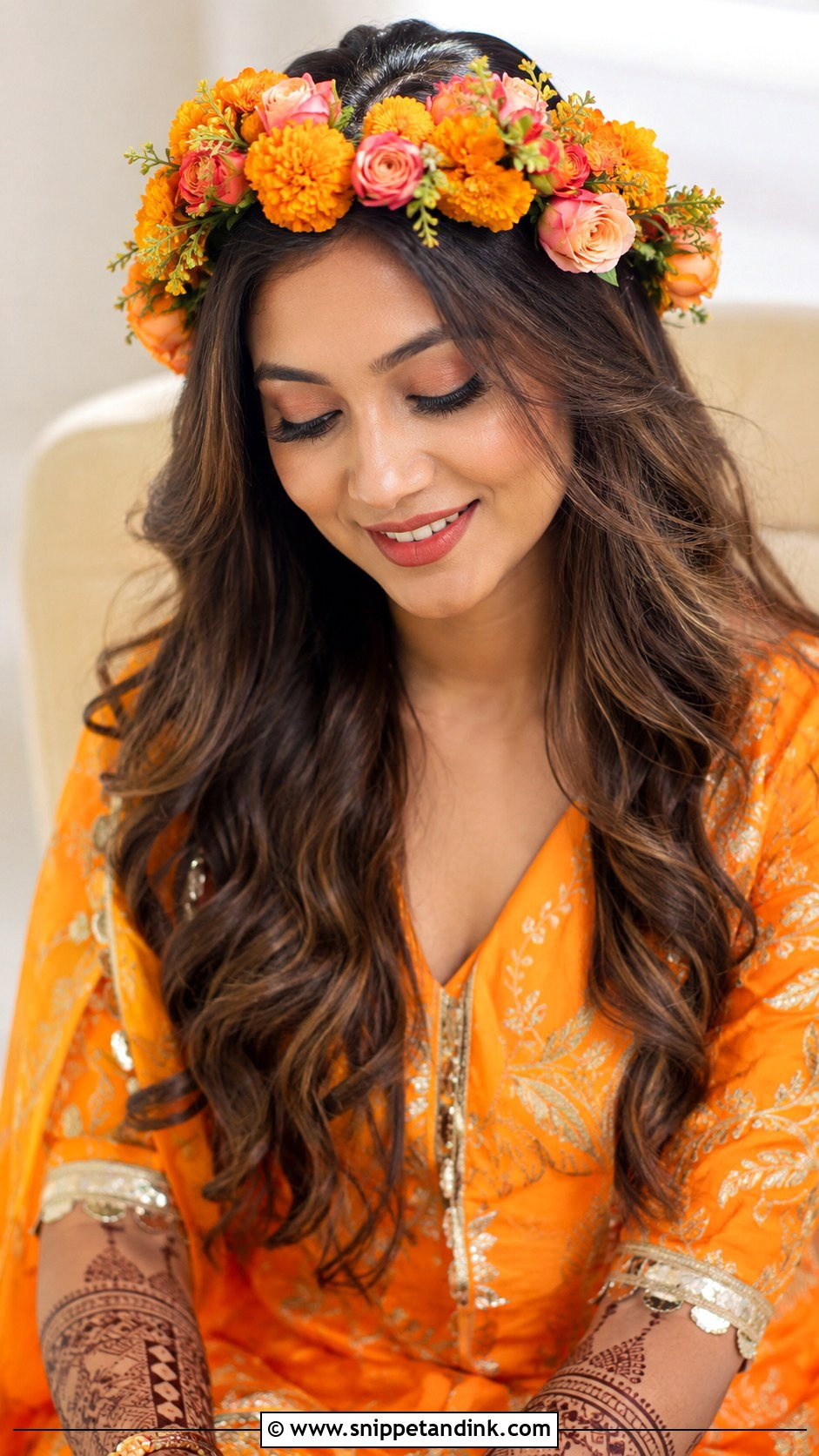
Open hair with a full flower crown is boho and youthful, best at mehendi or a daytime garden celebration. Waves fall freely while a circle of marigolds, roses or mixed florals sits on the head. Light, bright outfits and minimal jewelry let it lead. I’d steer you away from a crown that’s too wide for your face; it sits on the forehead and pushes your hair flat. Have the florist make it to your head measurement, not a standard size.
20. Twisted Side Bun
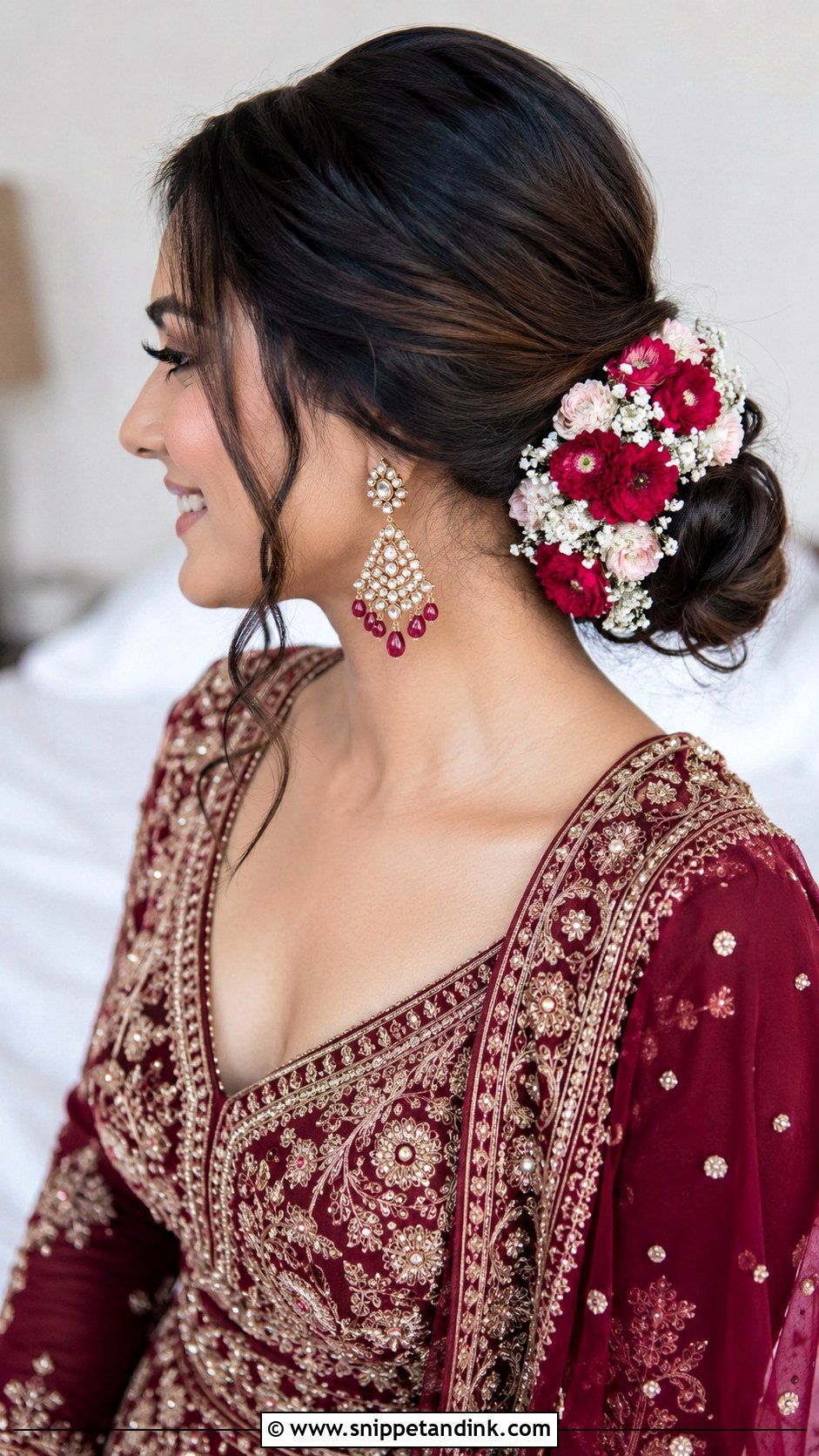
A twisted side bun gathers twisted sections into a soft knot at the side of the nape. The asymmetry is flattering and shows the neckline and statement earrings on the open side, with a dupatta draped over the other. Gajra, fresh flowers or jeweled pins finish it for the ceremony or reception. I place the bun slightly behind the ear rather than right under it, so it doesn’t get crushed when you sit back in a chair or lean your head toward your partner for photos.
21. Braided Crown With Open Curls
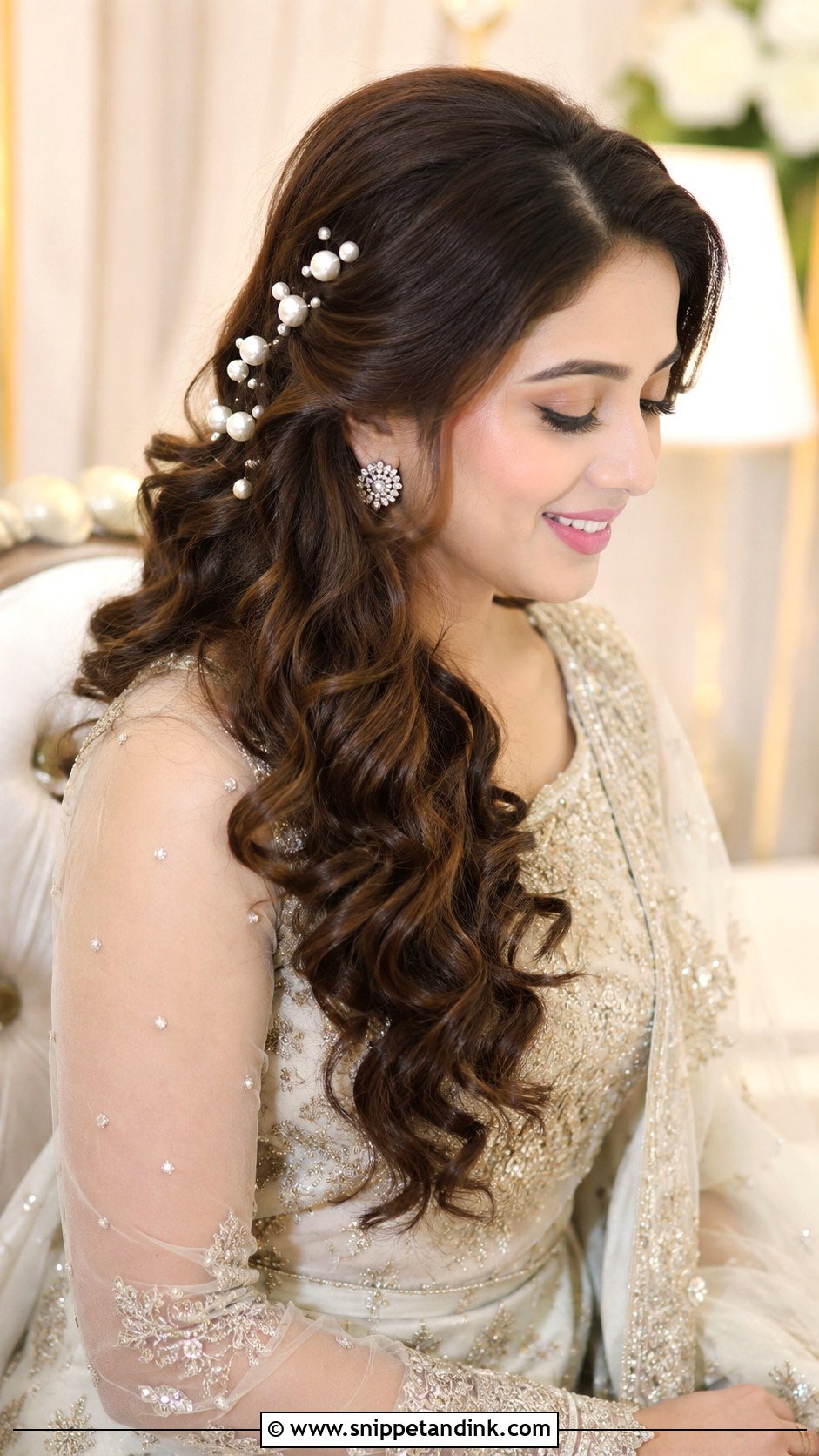
A braided crown flowing into open curls gives structure at the top and softness below. I braid the top section into a halo, then curl the rest. The braid holds hair off the face during mehendi or sangeet, and small flowers or pearls tucked into it add sparkle. It works with traditional and fusion outfits, and the mix of braid and curl looks good from the back, which is the angle your guests see most during ceremonies. It suits brides who still can’t decide between an updo and open hair.
22. Embellished High Bun
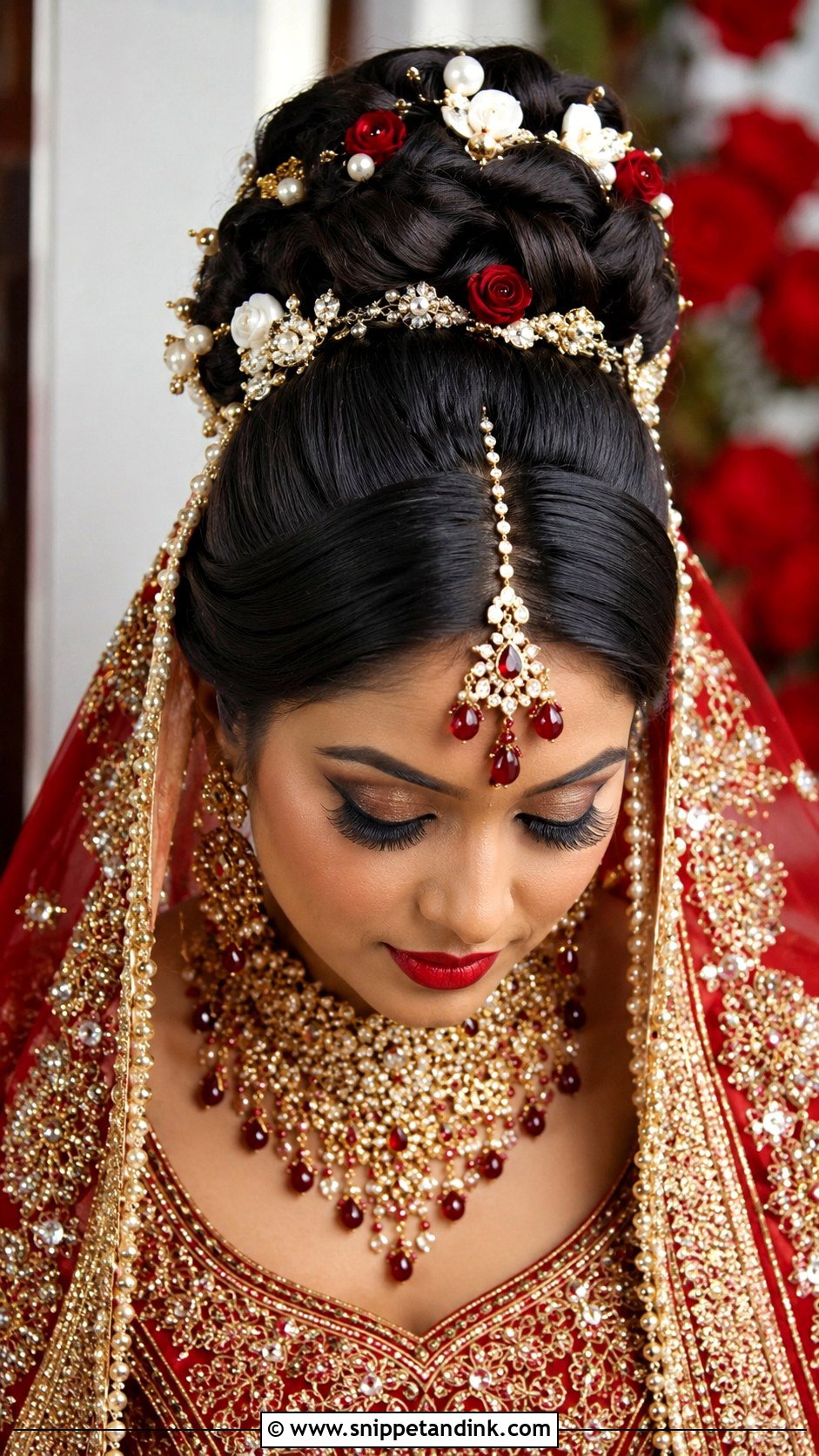
A full high bun at the crown adorned with jeweled pins, pearls or fresh flowers gives a tall, regal shape for the wedding ceremony. Under a head-draped dupatta with a statement maang tikka, it lifts the dupatta into a crown-like line. It stays secure through long celebrations and lengthens the neck. Choose embellishments in the same metal as your jewelry so the look holds together. The trade-off: a high bun under a heavy dupatta puts weight on the top of the head, so I anchor it with a padded base and plenty of crossed pins.
23. Soft Curls With Pearl Pins
Soft curls scattered with pearl pins give quiet shimmer without florals. I place the pins in a loose pattern through the waves, more toward the front so the camera picks them up. Ivory and pastel outfits suit them, at engagements, sangeet or a contemporary wedding, with sheer dupattas and statement earrings. You can wear the curls loose or swept to one side. Pearl pins grip best in curled hair that has some texture spray; on freshly washed, silky hair they slide down within an hour.
24. Rose Adorned Low Bun
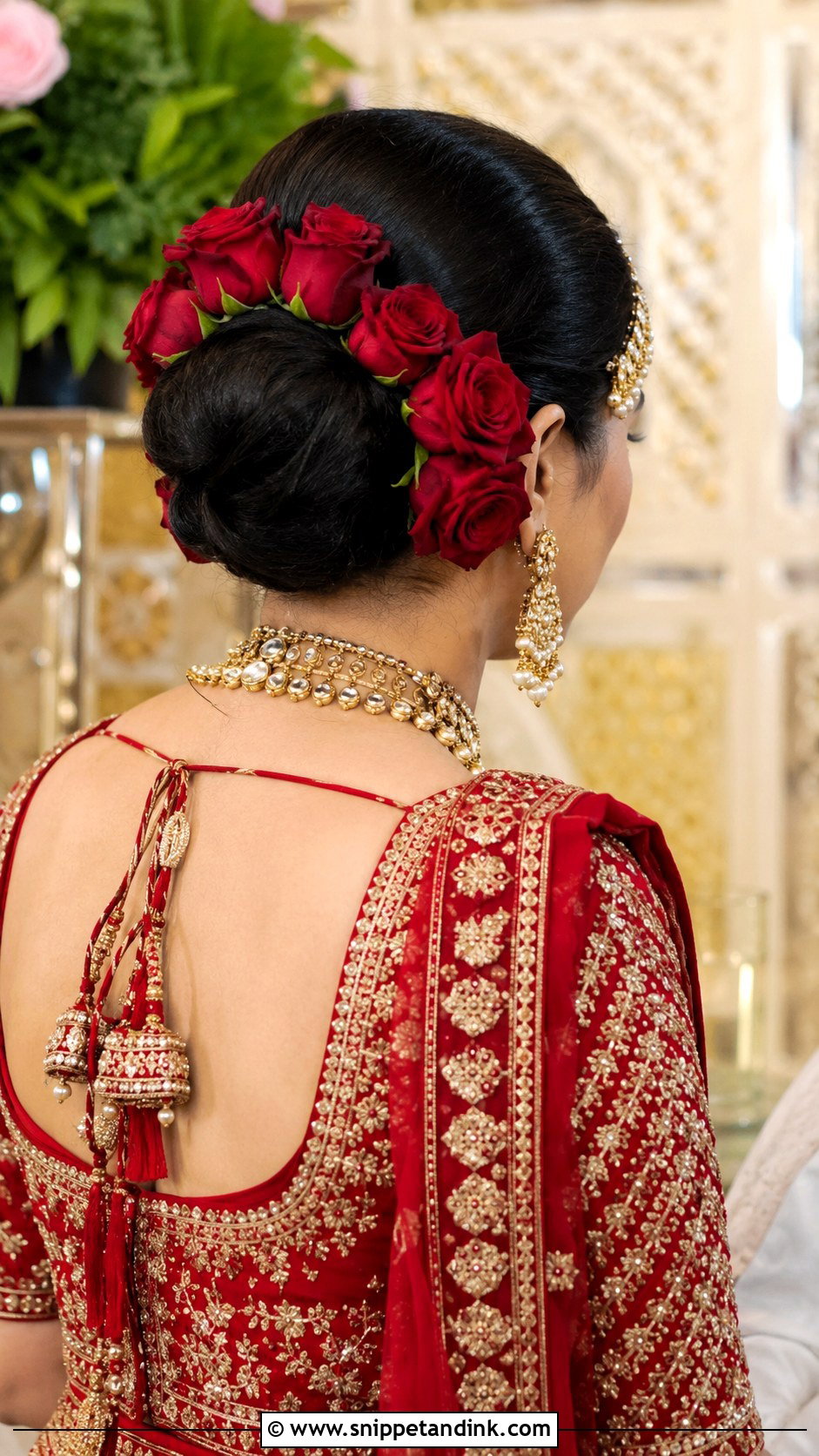
A low bun ringed with fresh red roses is pure romance. The roses add color and scent, and the low placement keeps the shape graceful under a dupatta at the ceremony, with heavy lehengas and jewelry. Deep reds look dramatic; soft pinks look sweeter. I order roses with an extra few stems as backups, because outer petals bruise when the dupatta is pinned over them. Wire each rose stem short and push it into the bun at an angle so the heads face outward.
25. Modern Straight Hair With Floral Pins
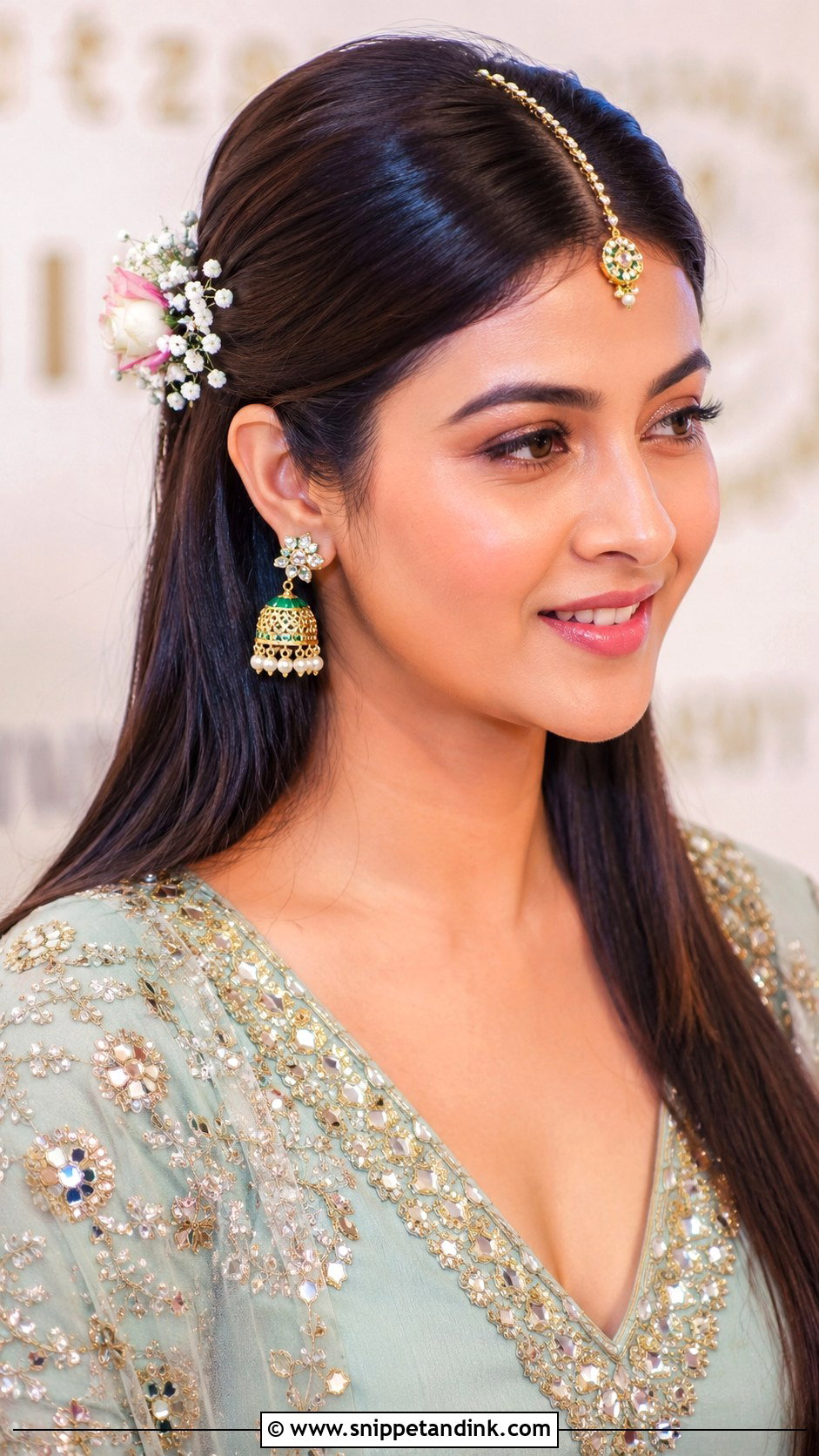
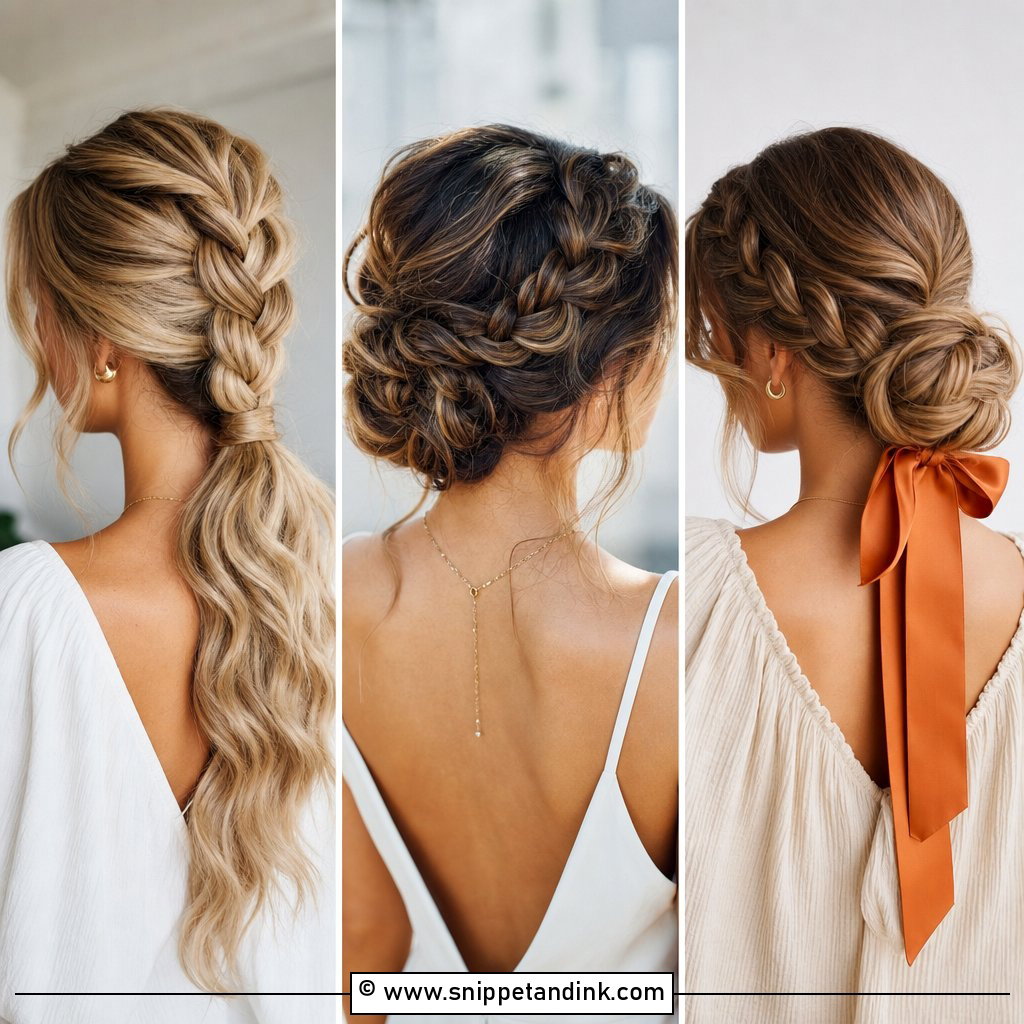
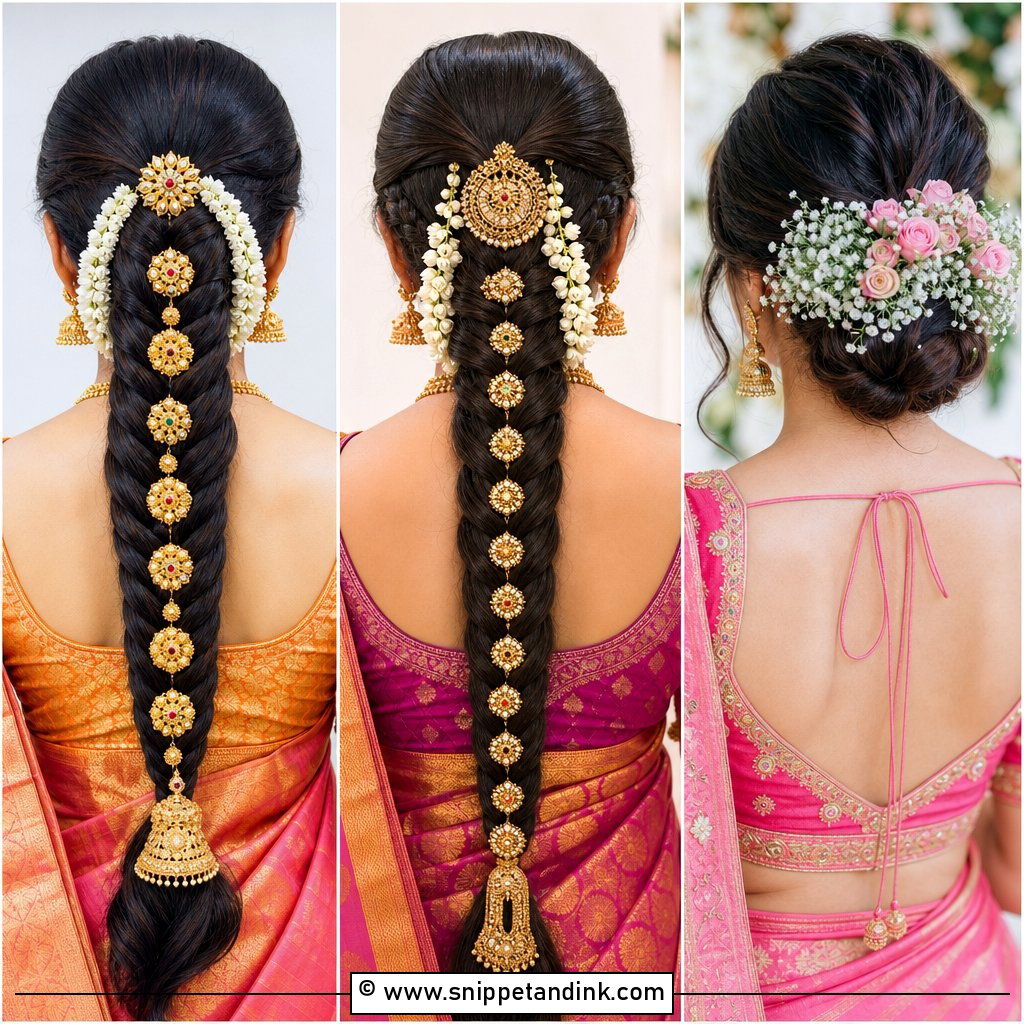
Glossy straight hair with floral pins is the sleekest modern option, ideal for fusion weddings with Indo-Western outfits or modern lehengas. I smooth the hair with a flat iron in small sections and place flower pins along one side or behind the ear, with a small maang tikka if you want it. Makeup and jewelry carry the look. Straight hair shows grease at the roots by evening, so if you have an oily scalp, I’d wash it the night before, not two days earlier, and keep a dry shampoo in the touch-up bag.
Will Jasmine and Roses Last Until the Pheras?
Real flowers are the heart of many Desi bridal styles and also the part most likely to disappoint. Jasmine buds open over a few hours and then start to brown at the edges, faster in heat and wherever they’re handled.
- Order gajra with tight, still-closed buds for an evening ceremony, so they open while you’re getting ready rather than before.
- Keep strings wrapped loosely in a damp cloth or tissue and in the fridge, not the freezer, until they go in.
- Pin the flowers in last, after hairspray. Spray on fresh petals spots and browns them.
- Pollen from lilies and some roses stains light outfits and pale hair; ask your florist to remove stamens.
Adapting the look to your hair
Fine, straight hair holds curls and volume poorly in humidity, so I’d point those brides toward braids and buns with a padded base. Very thick hair carries weight well but gets heavy in a high bun or ponytail, and may need thinning out under the style. Curly hair often holds updos beautifully when worked with its own texture rather than flat-ironed first; I’d rather shape your natural curls than fight them. If you wear extensions or a bun donut, use them at the trial too, so the shape on the day matches what you approved.
What Your Hair Needs to Survive the Whole Week
A good wedding hairstyle should be built for the event it’s going to. Gajra buns, open curls, pearl braids and sleek ponytails each have their place, from dancing at sangeet to mehendi to the walk toward the mandap. Mix tradition with something new if it feels like you. Bring your dupatta and jewelry to the trial, ask your stylist how the style holds in your weather, and pick the look that lets you forget about your hair once the day starts.
You'll Like These Ideas:



Leave a Reply