
A Hindu wedding asks more of a hairstyle than most weddings do. It has to hold a heavy dupatta, carry fresh flowers that weigh more than they look, last through hours seated by the sacred fire, and often change completely before the reception. The twenty styles below run from the South Indian poola jada and kondai to pearl chignons and loose reception curls. Under each one I’ve noted what I check before I start pinning, who it suits and where it tends to struggle, so you can take a realistic shortlist to your trial.
Let the Dupatta Decide Before the Photos Do
The first thing I ask a Hindu bride isn’t which style she likes. It’s how her dupatta or saree pallu will sit during the pheras. That answer rules out half of any list before we look at a single picture.
Dupatta pinned over the head
A heavy embroidered dupatta pinned on the crown needs a low, flat base underneath. Low buns, the kondai, the veni bun and the poola jada all work, because the fabric lies smooth over the top and the flowers stay on show at the back. A high bun can still work, but only if the dupatta is set in front of it and both are pinned together at the trial.
Dupatta on the shoulders, or no head covering
Now the back of your head is visible for the whole ceremony, and every guest behind you sees it. This is where braided crowns, fishtails and side-swept curls earn their place, since the detail is no longer hidden under fabric.
Two outfits in one day
If you’re moving from a silk saree for the muhurtham to a lehenga or gown for the reception, plan the hair in that order. A low jasmine bun can be taken down into open waves in roughly half an hour. Going the other way, from curls into a sculpted updo, takes longer and usually needs a re-curl, so tell your stylist how long the gap between events really is.
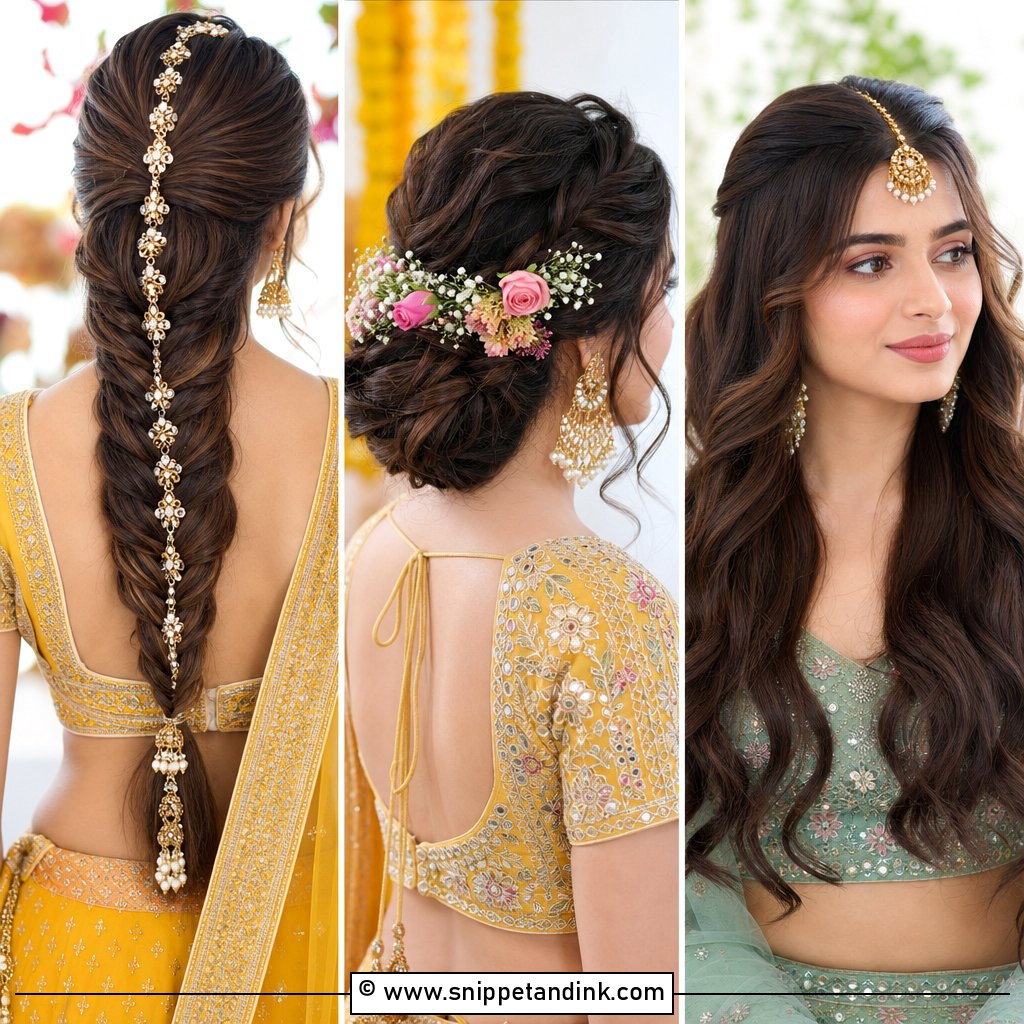
1. Jasmine Flower Side Braid
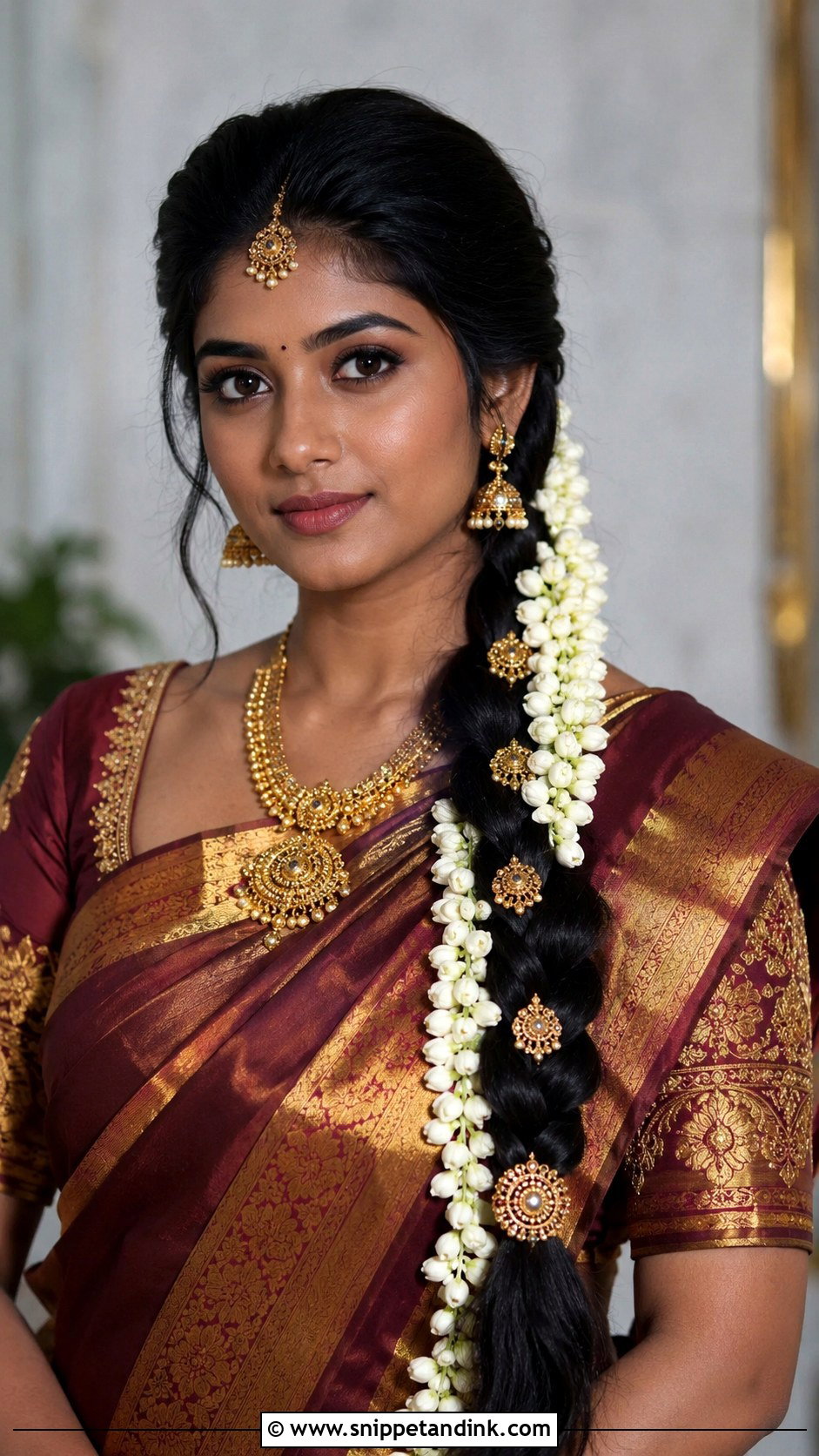
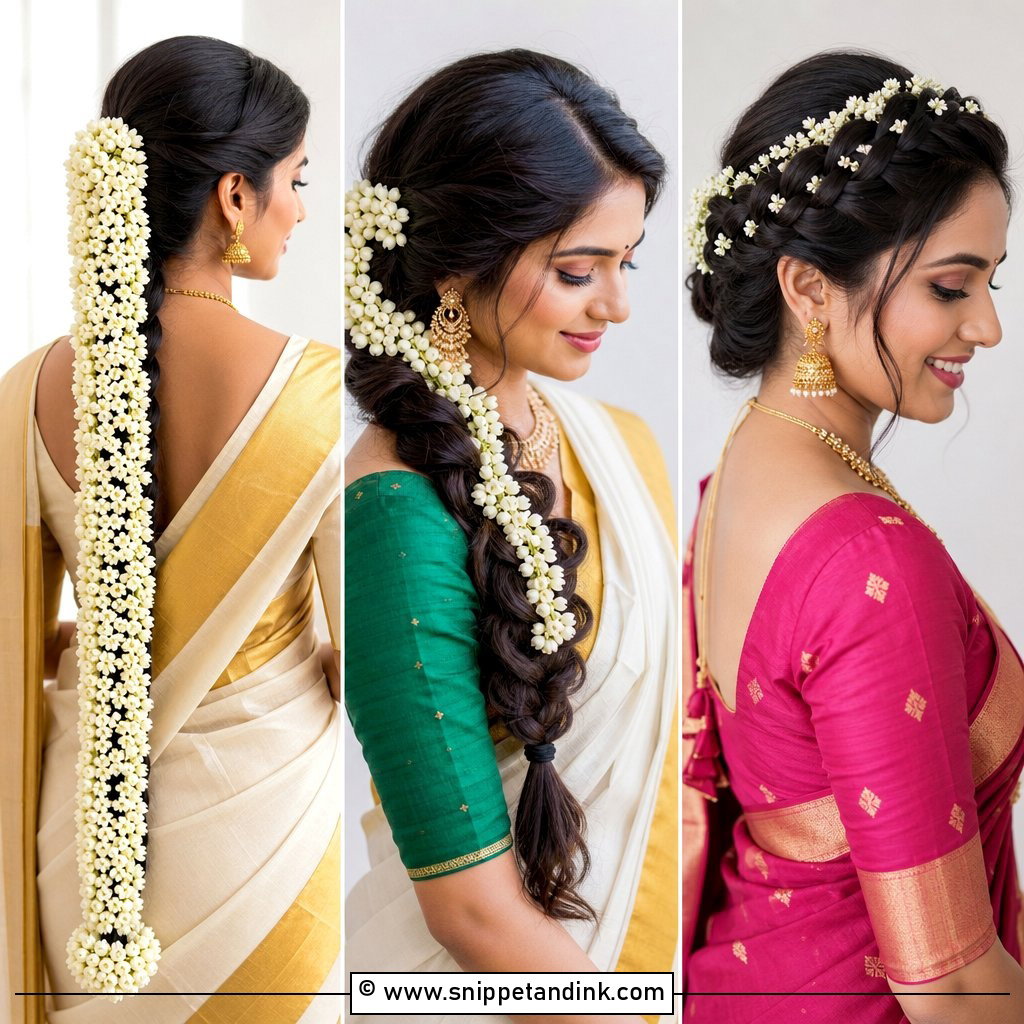
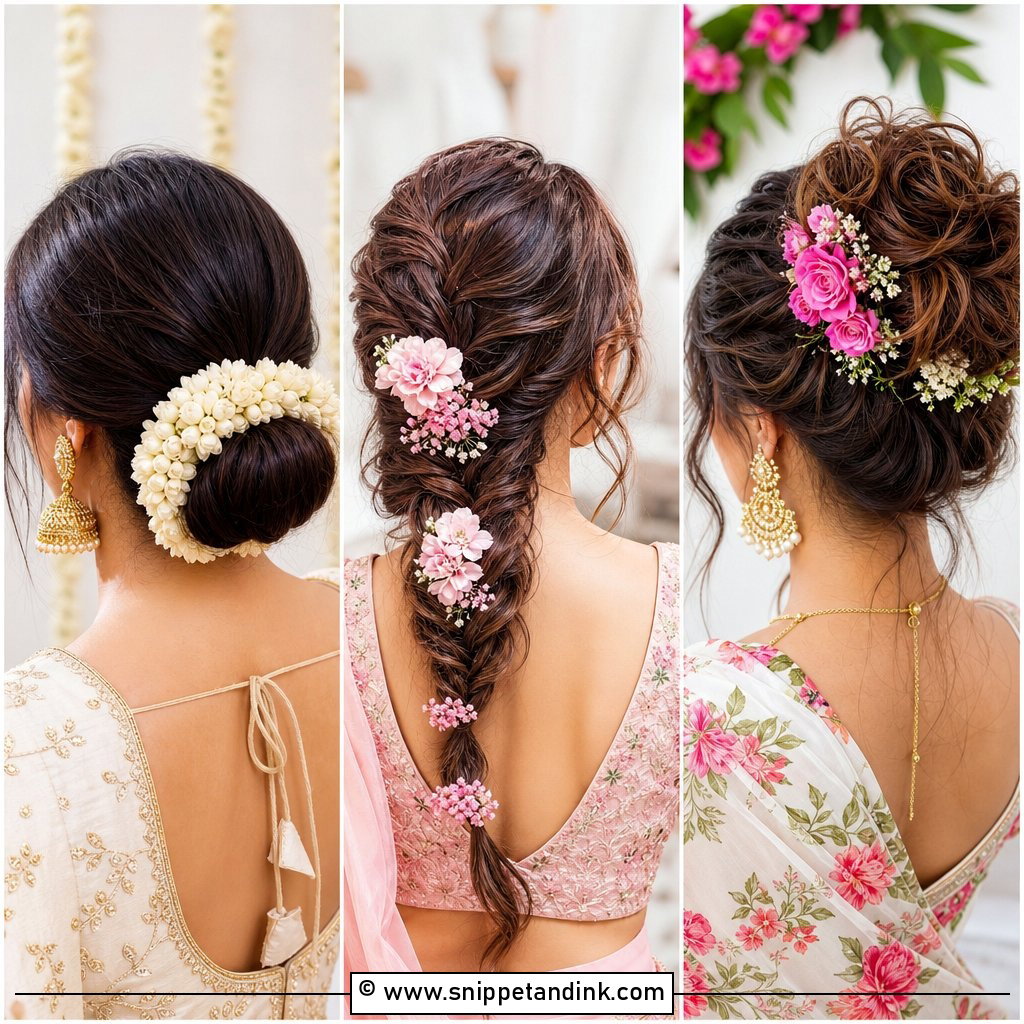
The poola jada, or jasmine side braid, is the South Indian classic: a thick braid over one shoulder, covered from top to end in strung jasmine, with gold jada billalu running down the plait. Its weight is the real issue. A full jada with gold pieces pulls hard at the base, so I anchor the braid on a firm hidden ponytail and pin the flower panel to that, never to loose hair. On fine hair I add a clip-in weft before braiding; without it the plait looks thin under the flowers and slides by the second ritual. It sits naturally with a Kanjeevaram silk and temple jewelry, and for many families it carries the meaning of a settled, prosperous marriage.
2. Low Floral Bun With Gajra
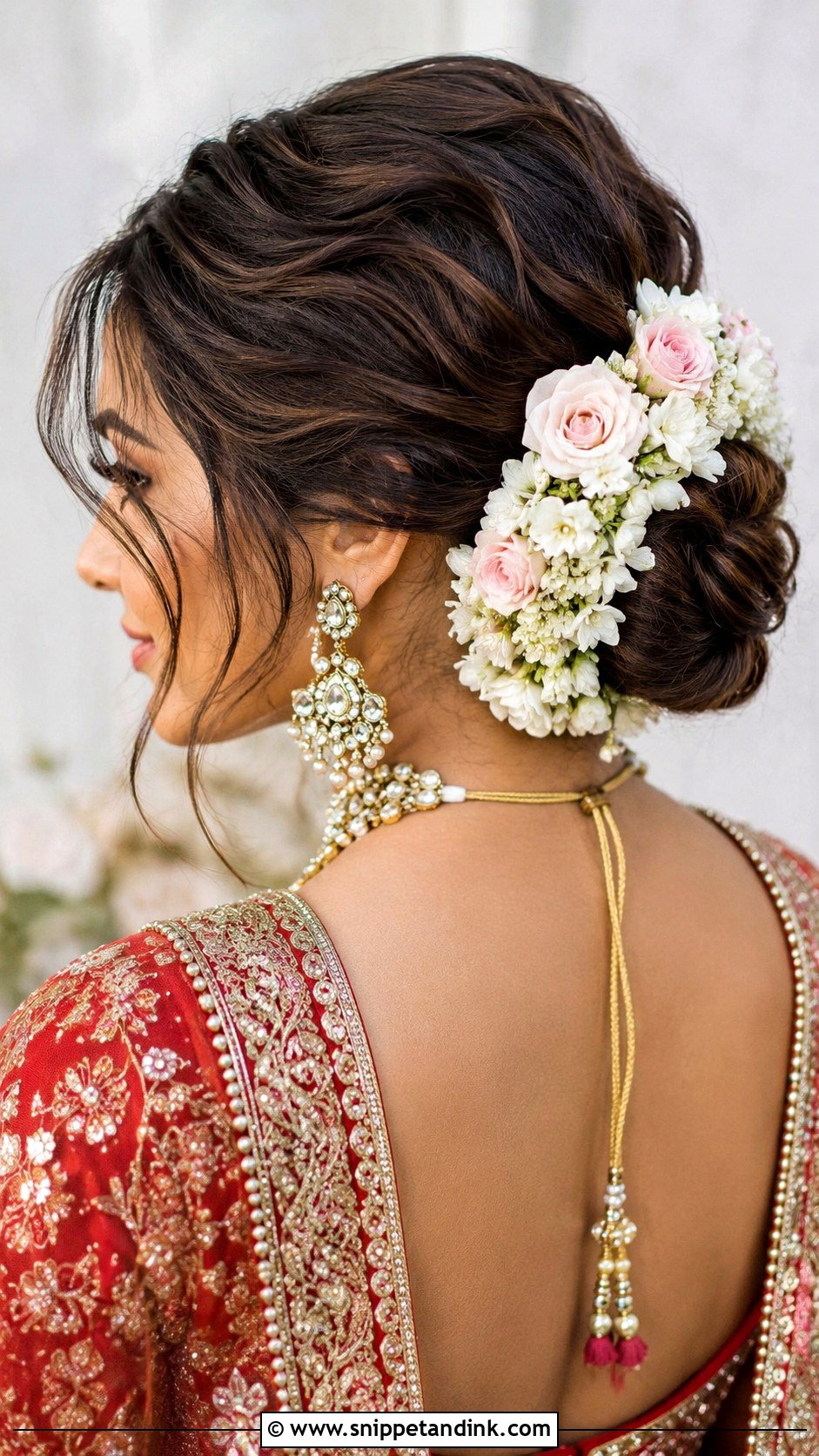
A low bun wrapped in a gajra is the style I suggest most often to a bride who can’t decide. Sitting at the nape, it leaves the crown free so the dupatta can be pinned flat, which matters through a long ceremony. I build it over a padded donut so the gajra has a firm round shape to wrap around; a bun made from hair alone flattens as the strings tighten. Marigold reads warmer and more traditional, baby’s breath lighter. Leave only two or three tendrils at the face, because more than that turns frizzy by afternoon in a humid mandap.
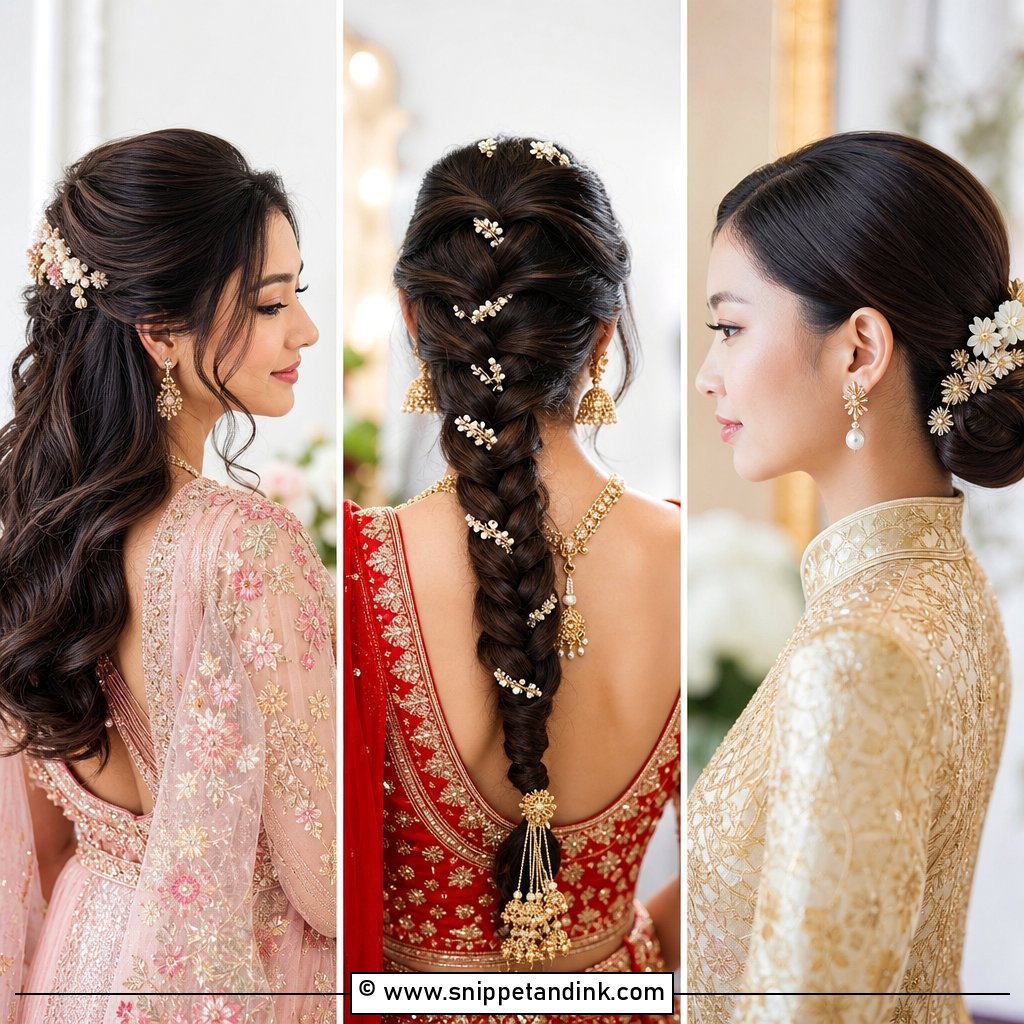
3. Pearl-Adorned Chignon
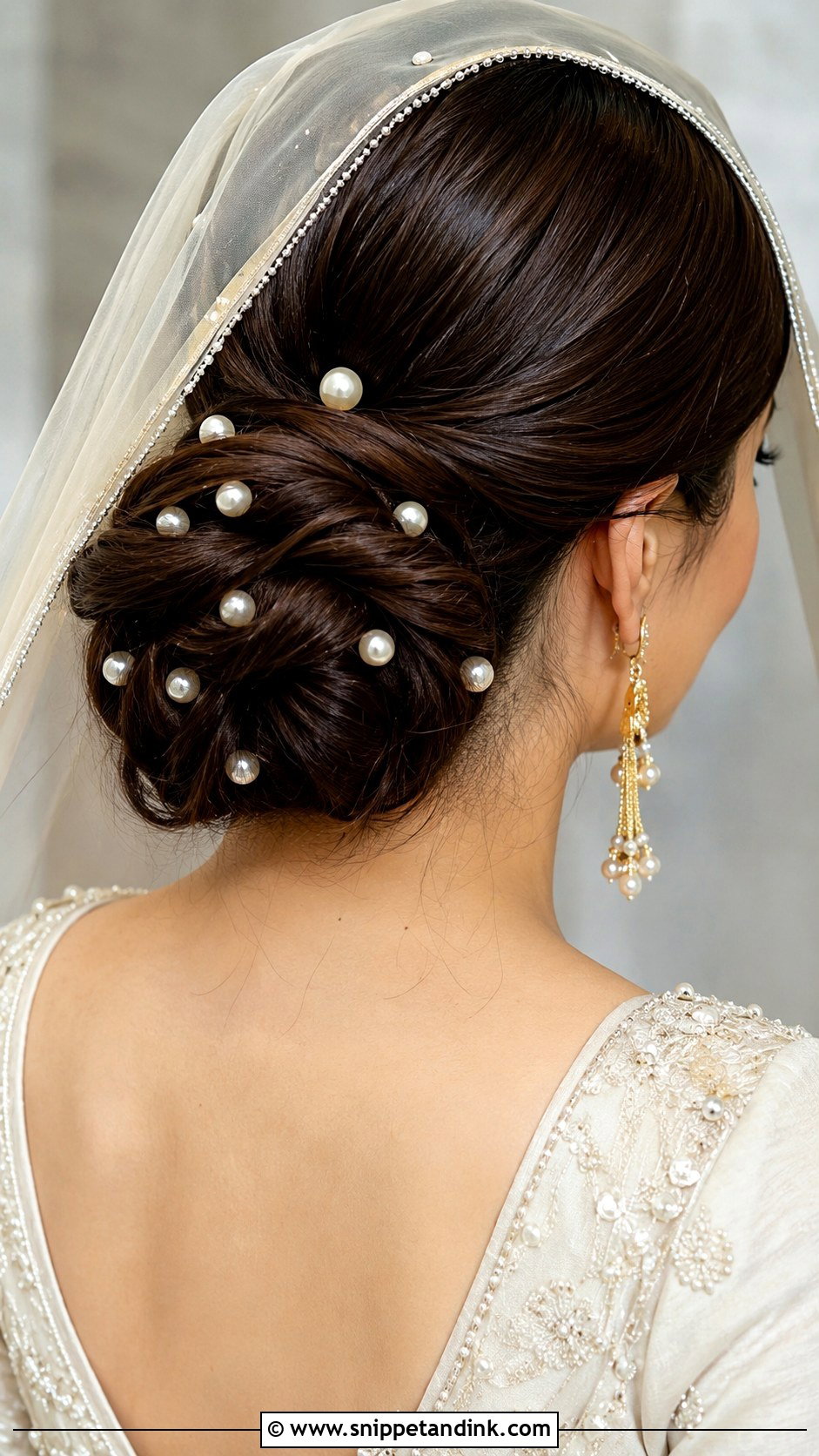
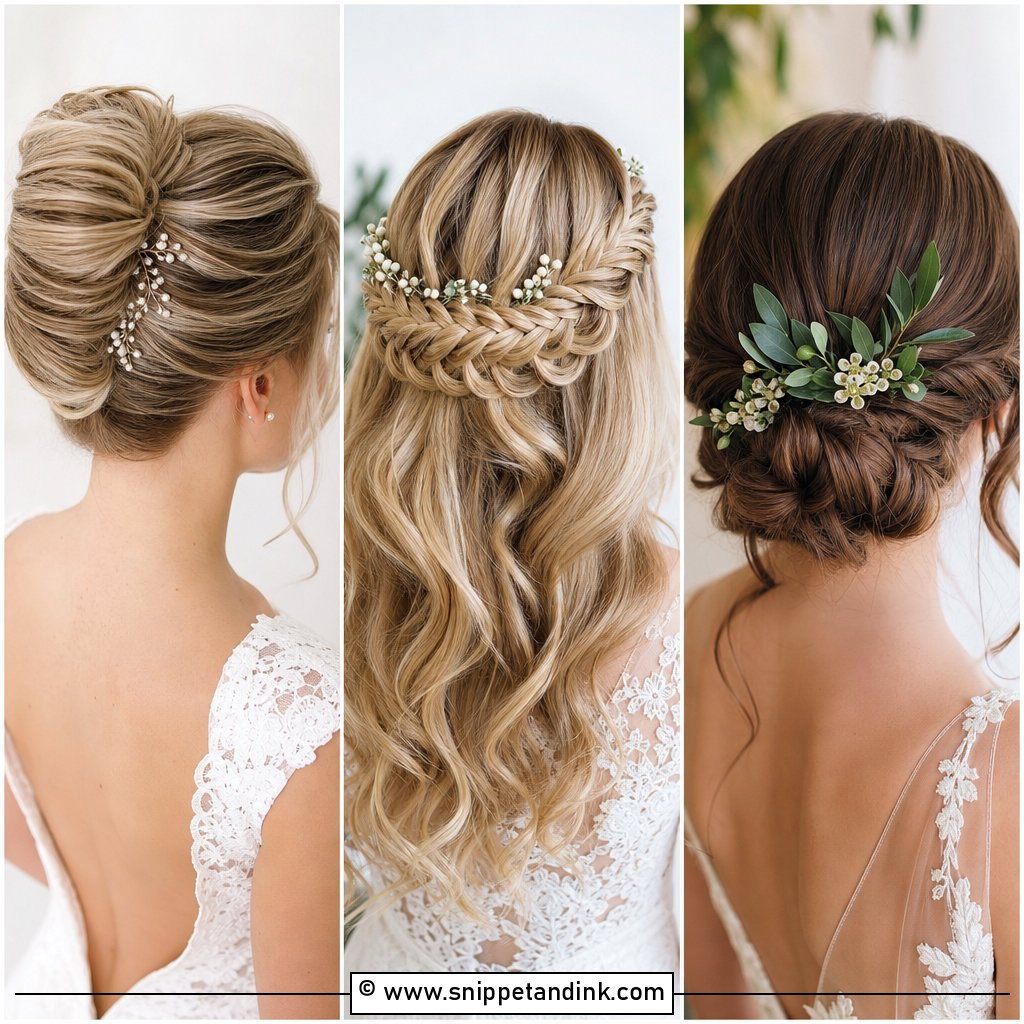
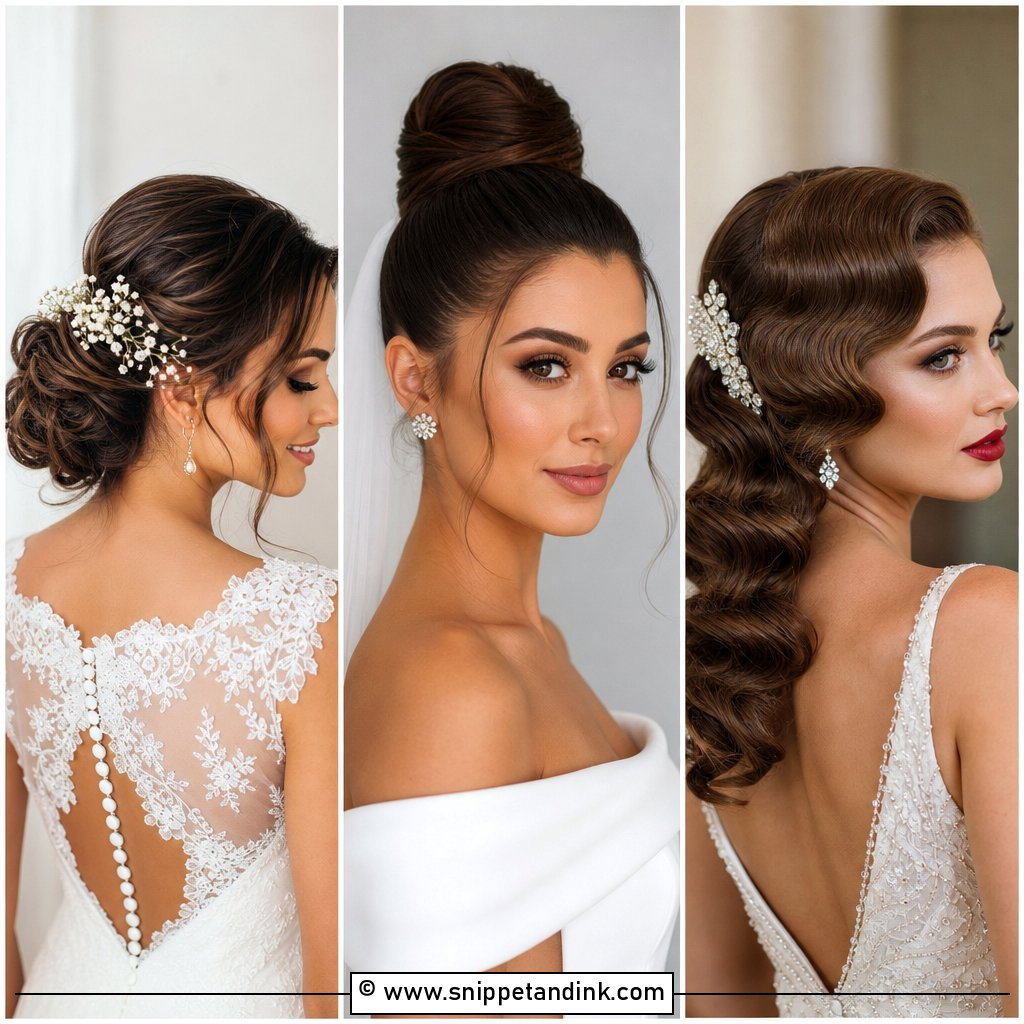
Here small pearl pins are pushed into a low twisted bun instead of flowers. It’s quieter than most styles on this list and suits reception nights and Indo-Western gowns. The pins only stay where the hair underneath has grip, so on very straight, silky hair I prep with texture spray and set the pearls into the twist rather than the smooth surface, or they work loose by dinner. If your outfit already carries heavy embroidery and a large necklace, the pearls can disappear; this one needs a cleaner neckline to show.
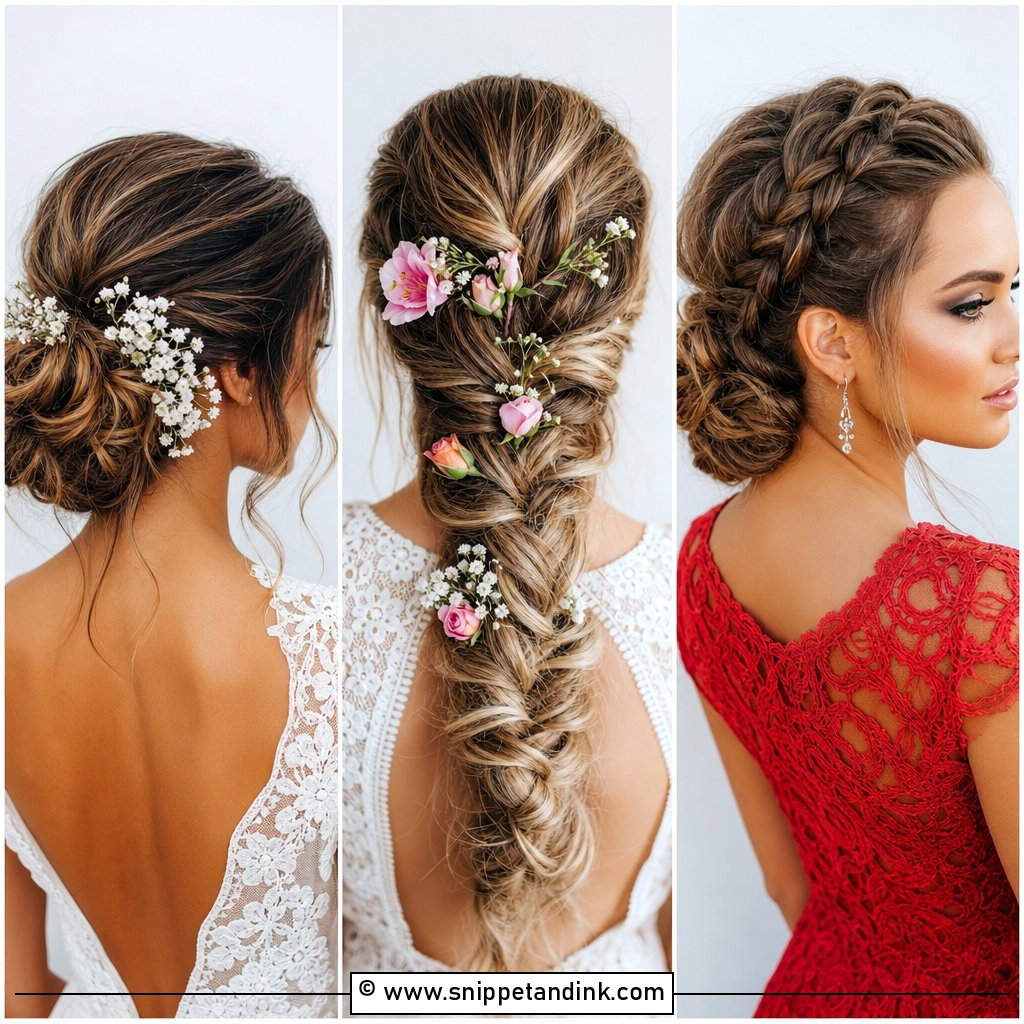
4. Braided Crown With Fresh Flowers
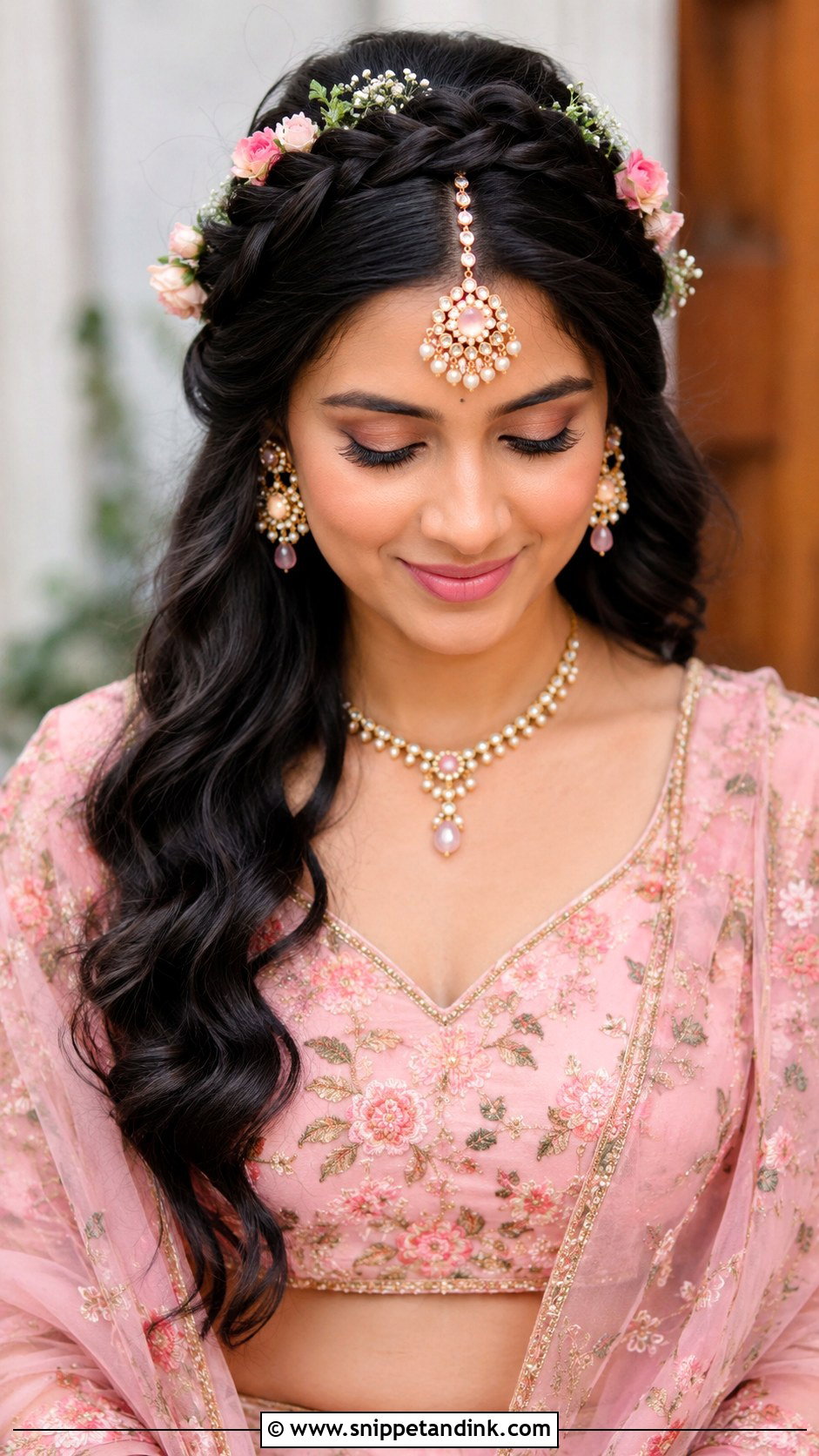
Plaits run across the top of the head like a halo, with small fresh blooms tucked into the weave. I like a crown for daytime and outdoor mandaps because nothing hangs loose to catch wind or snag on the dupatta. It needs at least shoulder-length hair; on shorter layers the ends pop out of the plait, and I’ll use a hidden braid-in piece to close the circle. Choose flowers with firm heads such as baby’s breath or small orchids, since soft petals bruise when pressed into a braid. A maang tikka sits neatly in the parting.
5. Half-Up Curls With Maang Tikka
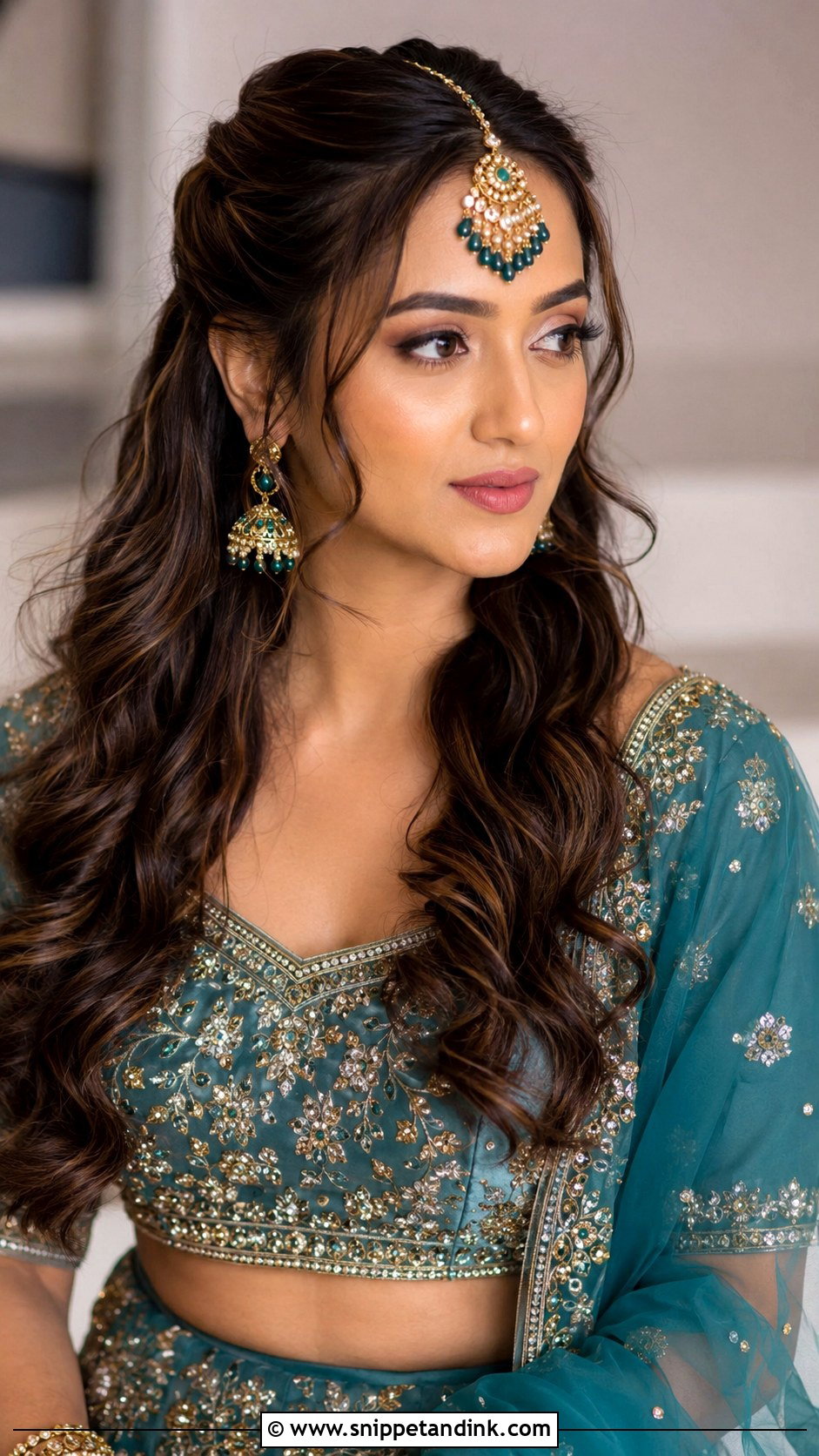
Can’t decide between an updo and open hair? This pins back the top section and lets curls fall over the shoulders. I usually suggest it for sangeet and mehndi rather than the wedding itself, because a dupatta pinned over loose curls flattens them quickly and the back gets crushed against a chair. Curls last much longer if I set them on hot rollers and let them cool completely before brushing out. A jeweled clip at the pinned section hides the grips and gives the maang tikka chain something to hold on to.
6. Veni-Style Bun With Jasmine
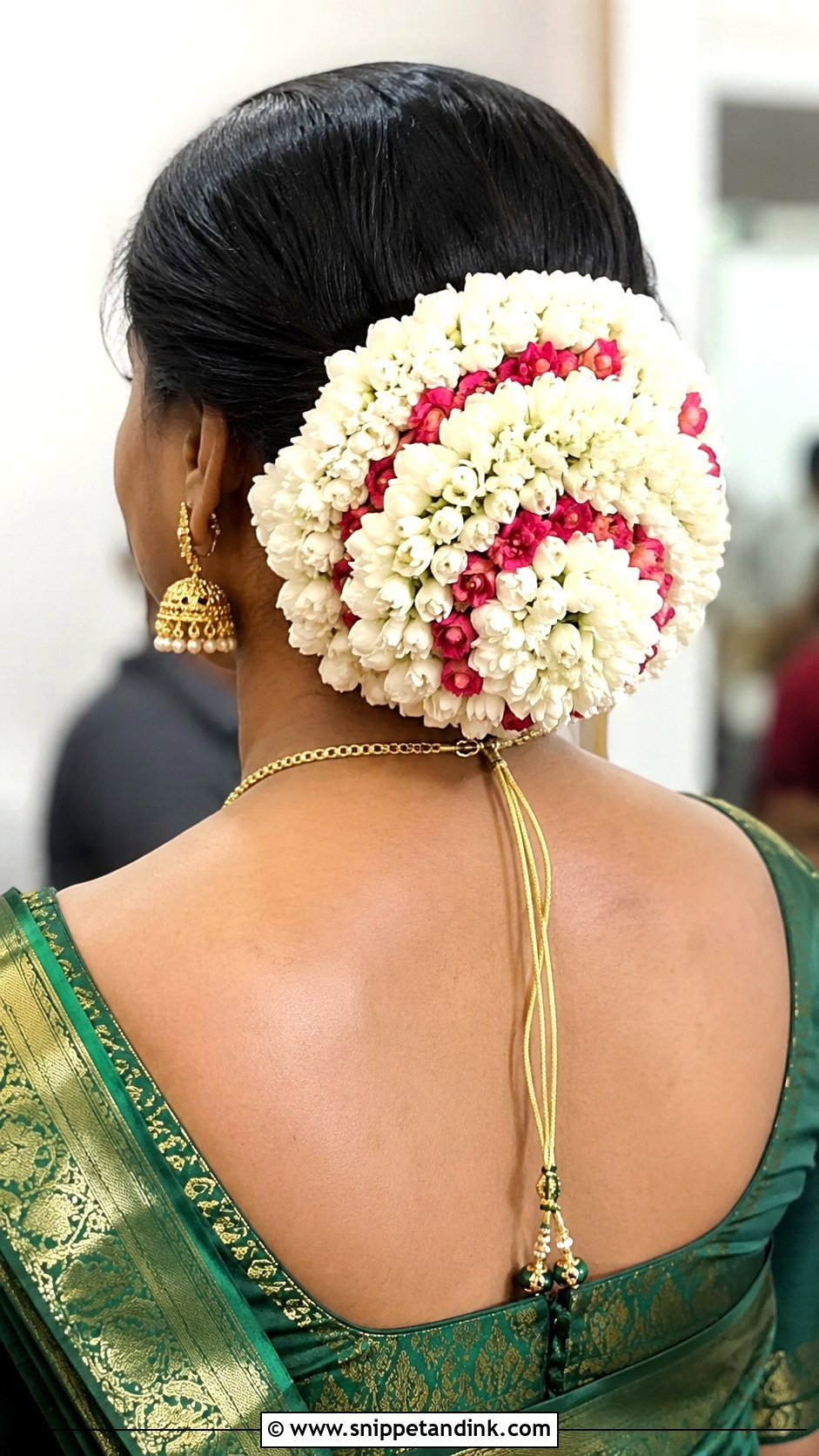
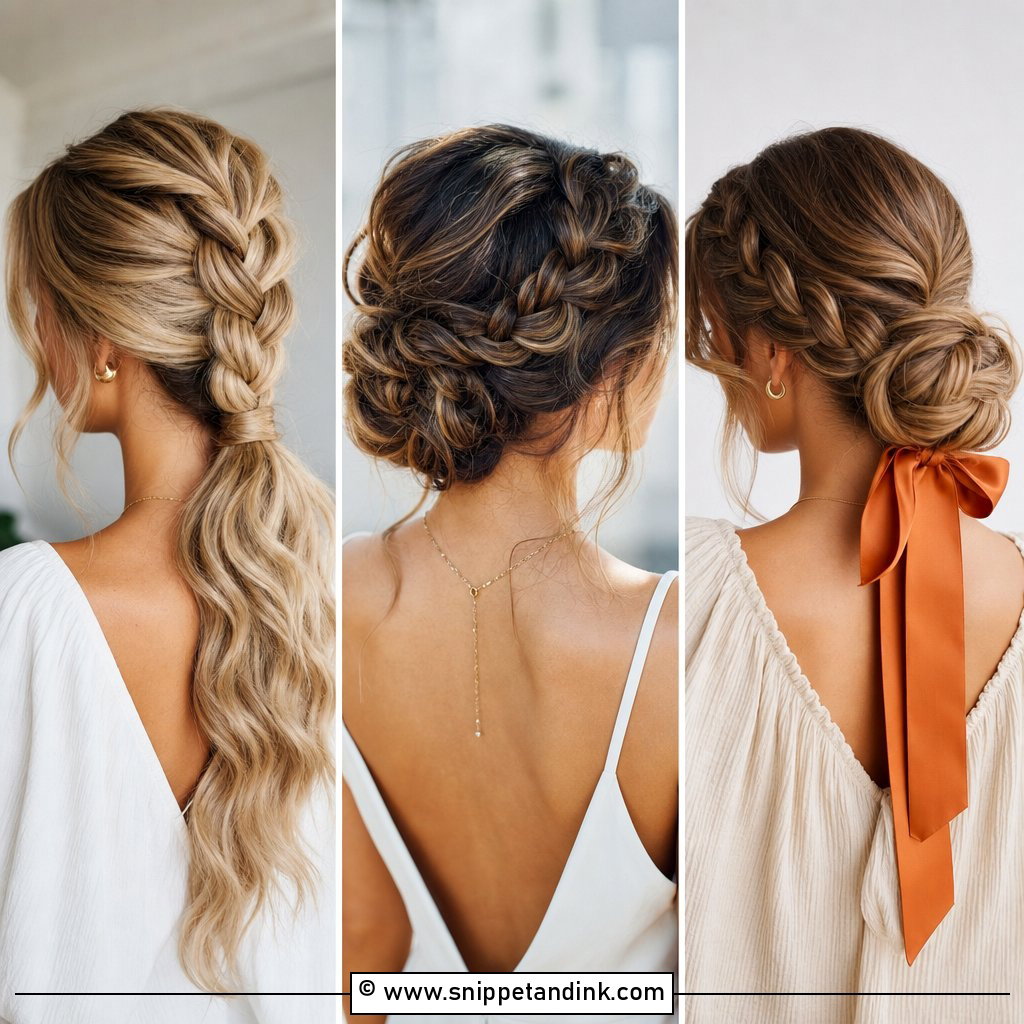
A veni-style bun is a low round bun almost fully covered by layered rows of jasmine, roses or both. It’s made for the long day: once the bun is pinned around a firm base, the veni locks it in place through hours of rituals. I pin the rows from the bottom up, each one tucked under the next, so no gaps open when the bride turns her head. Long, thick hair gives the fullest shape, and bun padding or an extension fixes the size on finer hair. Many families see the flowers as a sign of harmony in the marriage, so ask at home whether a particular flower is expected.
7. Fishtail Braid With Pearls
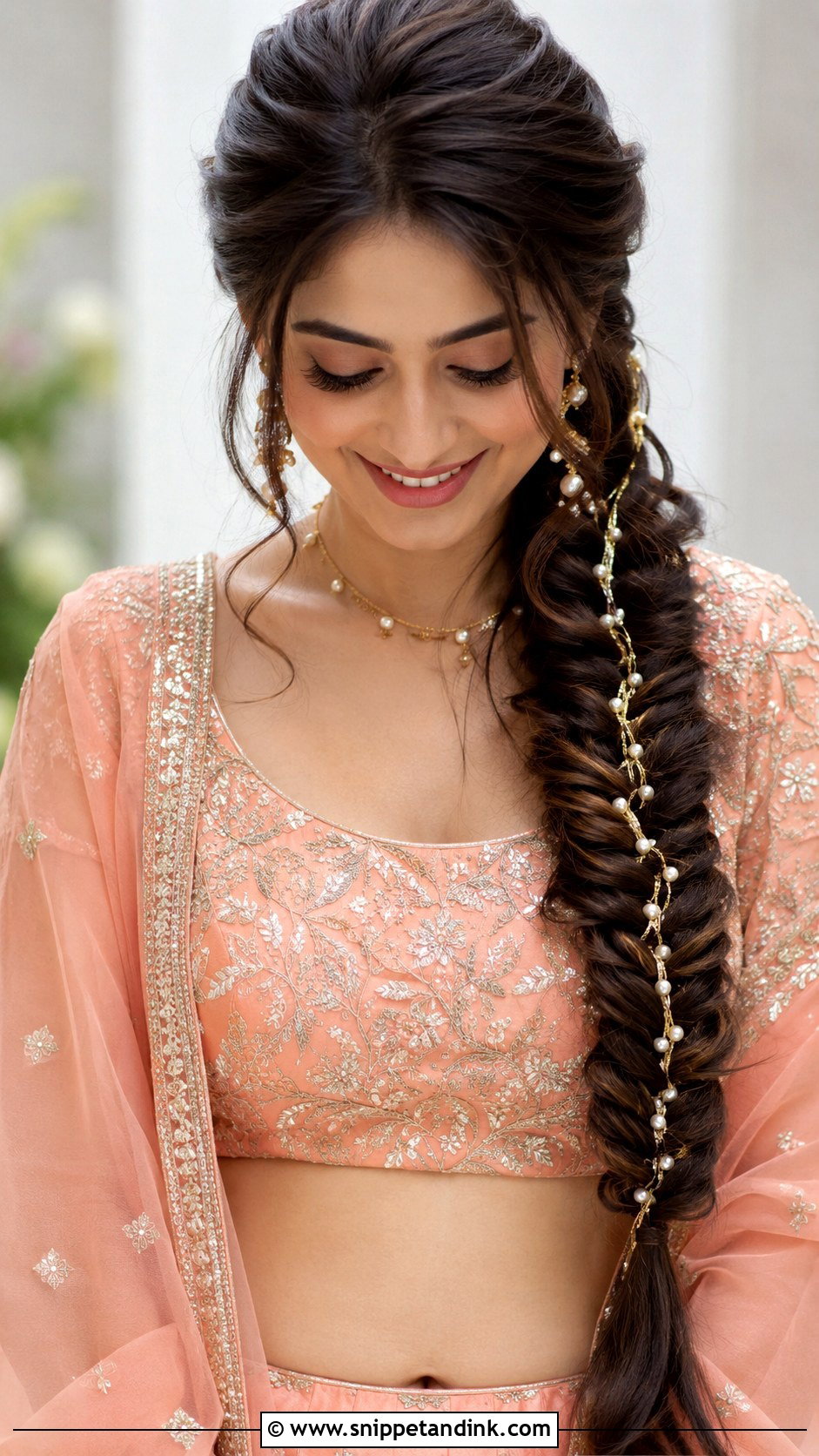
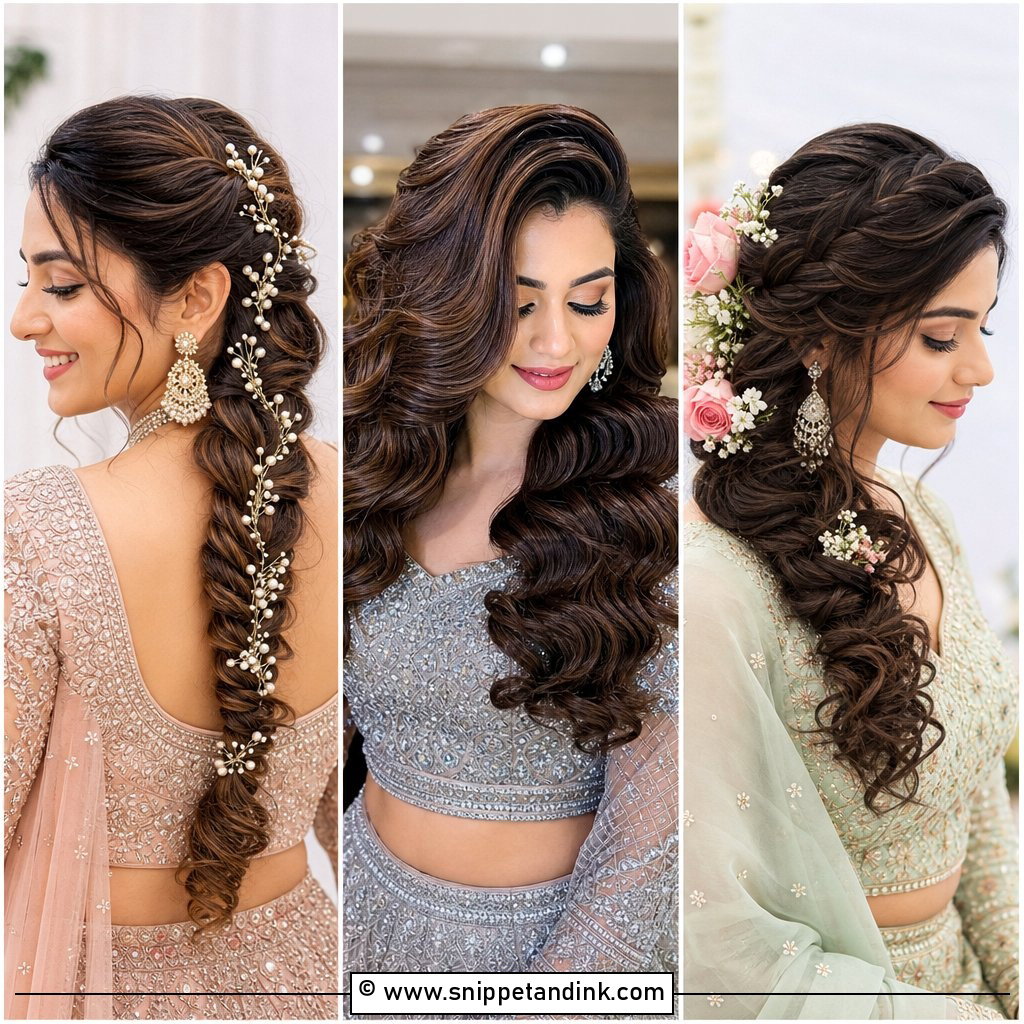
A fishtail weaves small sections back and forth, so the texture is finer than a three-strand plait, and pearl strings or gold thread sit better in that close weave. I tighten it fully, then gently pull the edges out so it reads wider in photos. It needs long hair without too many short layers, or ends poke out every few inches. Worn over one shoulder with a fusion saree or contemporary lehenga, it’s lighter on the scalp than a full jada, which brides who get tension headaches appreciate.
8. High Bun With Hair Accessories
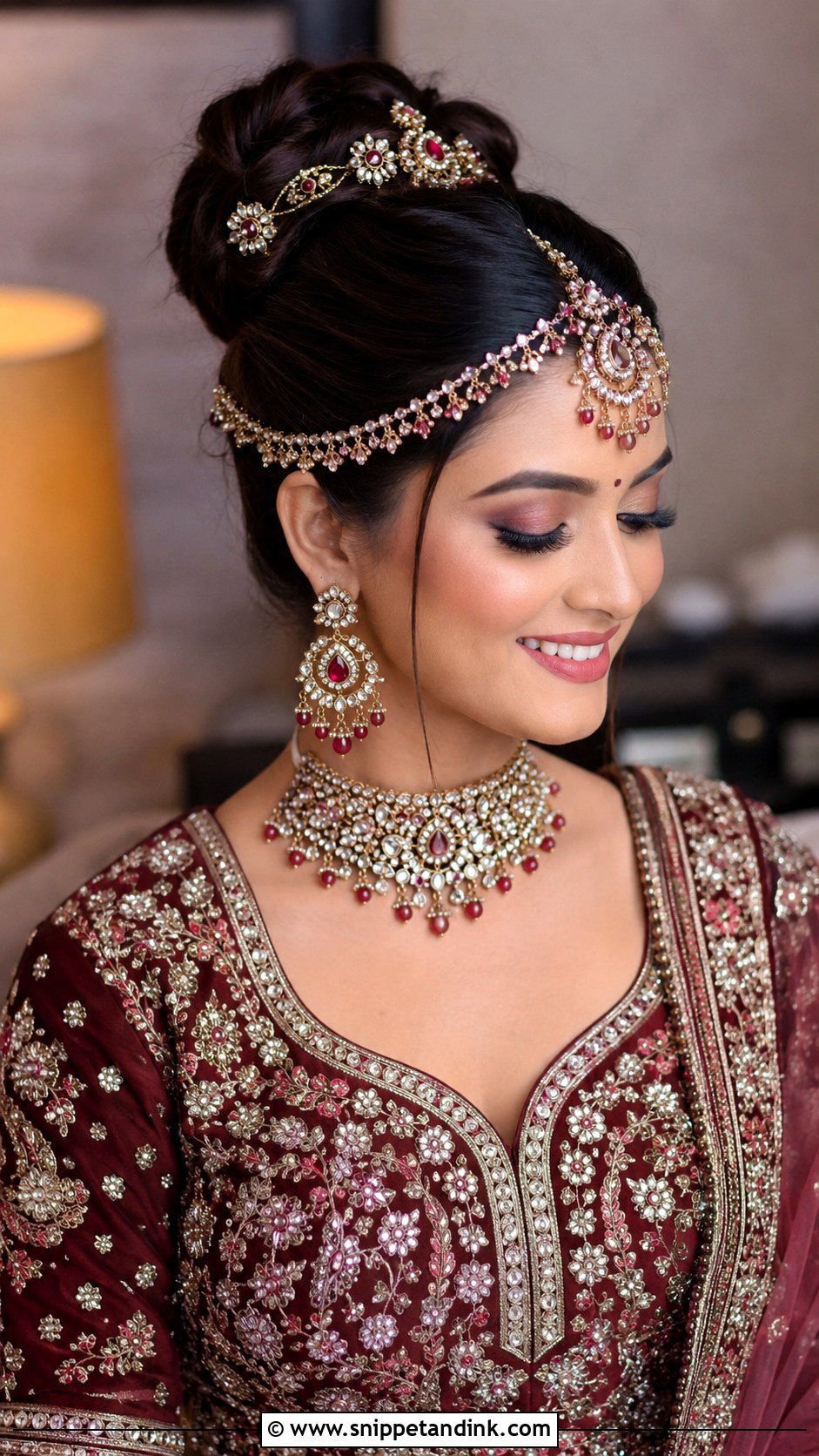
Set at the crown, a high bun adds height and shows off heavy earrings and chokers, and it’s a favourite with many North Indian brides. It’s also the style I’m most careful with under a dupatta. A bun this high lifts the fabric into a tent shape unless I plan for it, so I pin the dupatta just in front of the bun and lock the bun with crossed U-pins so the extra weight doesn’t drag it backwards. Ornamental pins or a matha patti go in last. On a petite bride I set it a little below the very top of the head; too high and it looks like it’s balancing there.
9. Open Curls With Diamond Pins
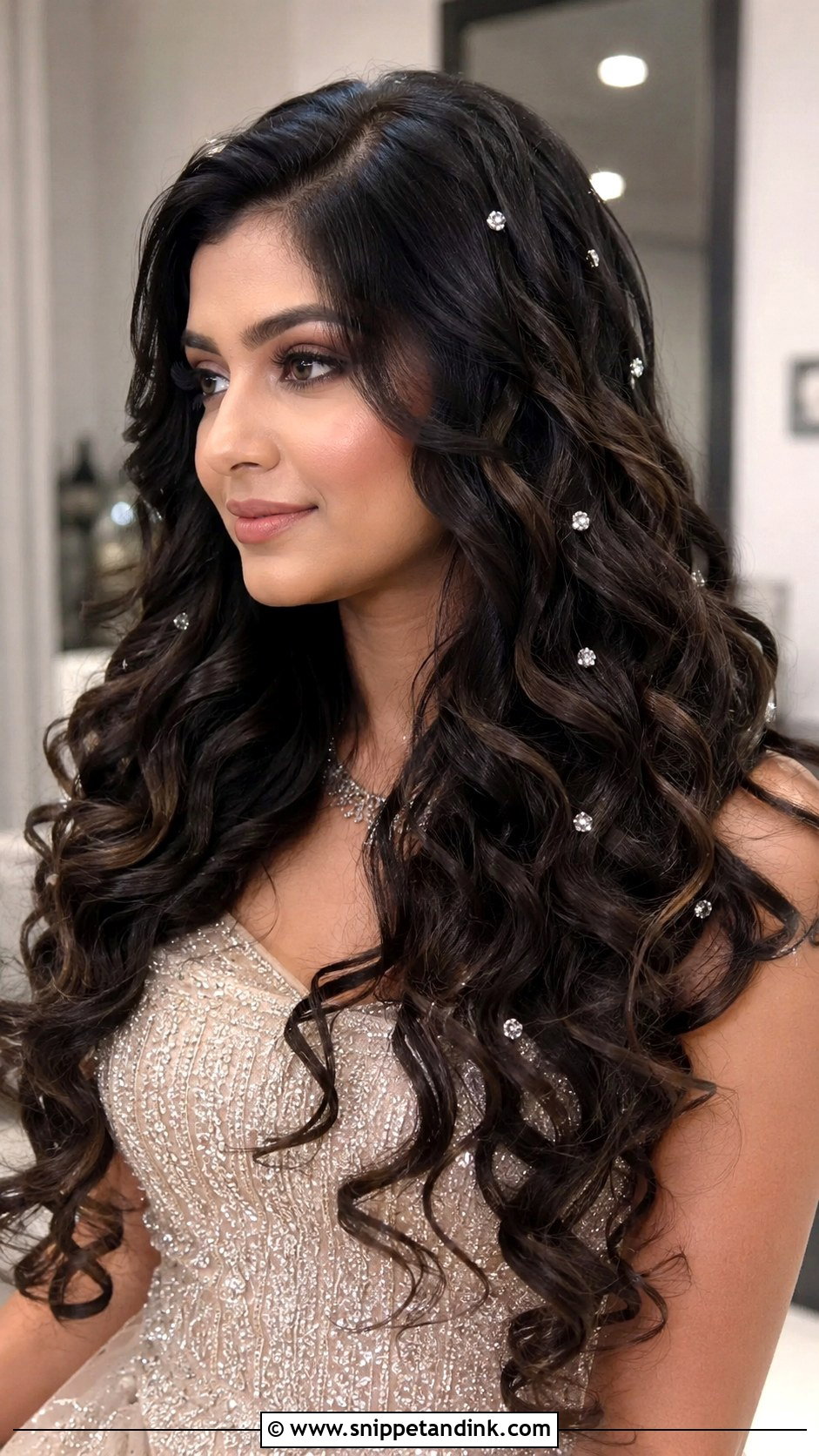
Open curls scattered with diamond or crystal pins belong to the reception, when the heaviest ceremony is over and hair can finally move. Crystal pins need something to bite into: I grip each one into a small section close to the root, because in loose curled hair they slip and hang at odd angles. Curls drop fast in heat, so for an outdoor reception in a warm month ask for a firmer set and expect softer waves by the end of the night. Long hair gives the curls room to fall.
10. Kerala Bridal Braid With Jasmine
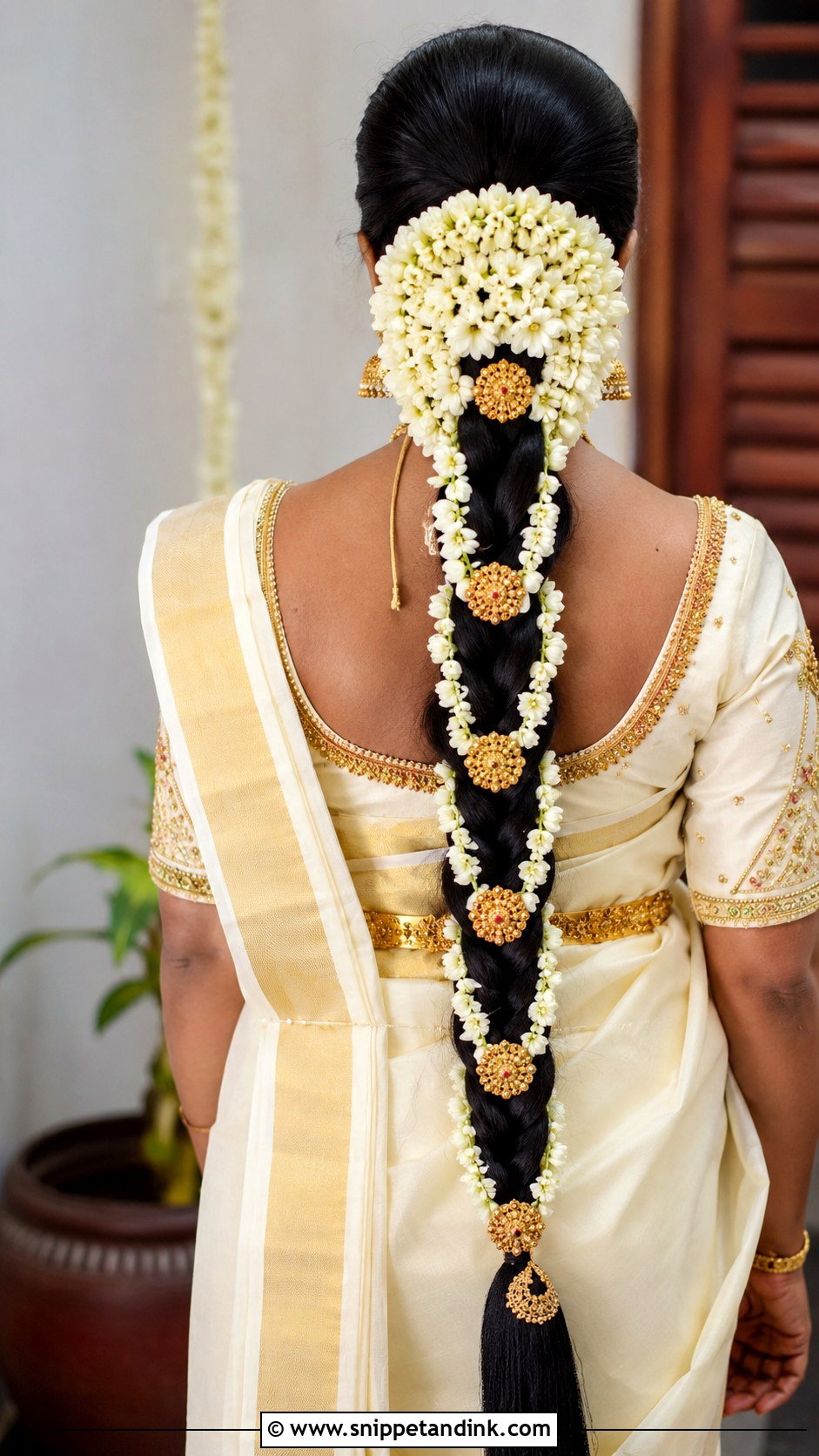
The Kerala bridal braid is a long, neat plait running straight down the back, threaded with jasmine and worn with the cream-and-gold Kasavu saree and temple jewelry. Its simplicity is the point, and because nothing hides it, the braid has to be smooth and even from top to end. I braid on hair washed the day before rather than that morning, since freshly washed, silky hair frays out of the plait. If your hair thins past mid-back, a matching extension woven in at the nape keeps the width even. Gold brooches lie flat when pinned through the weave, not just over it.
11. Messy Bun With Loose Tendrils
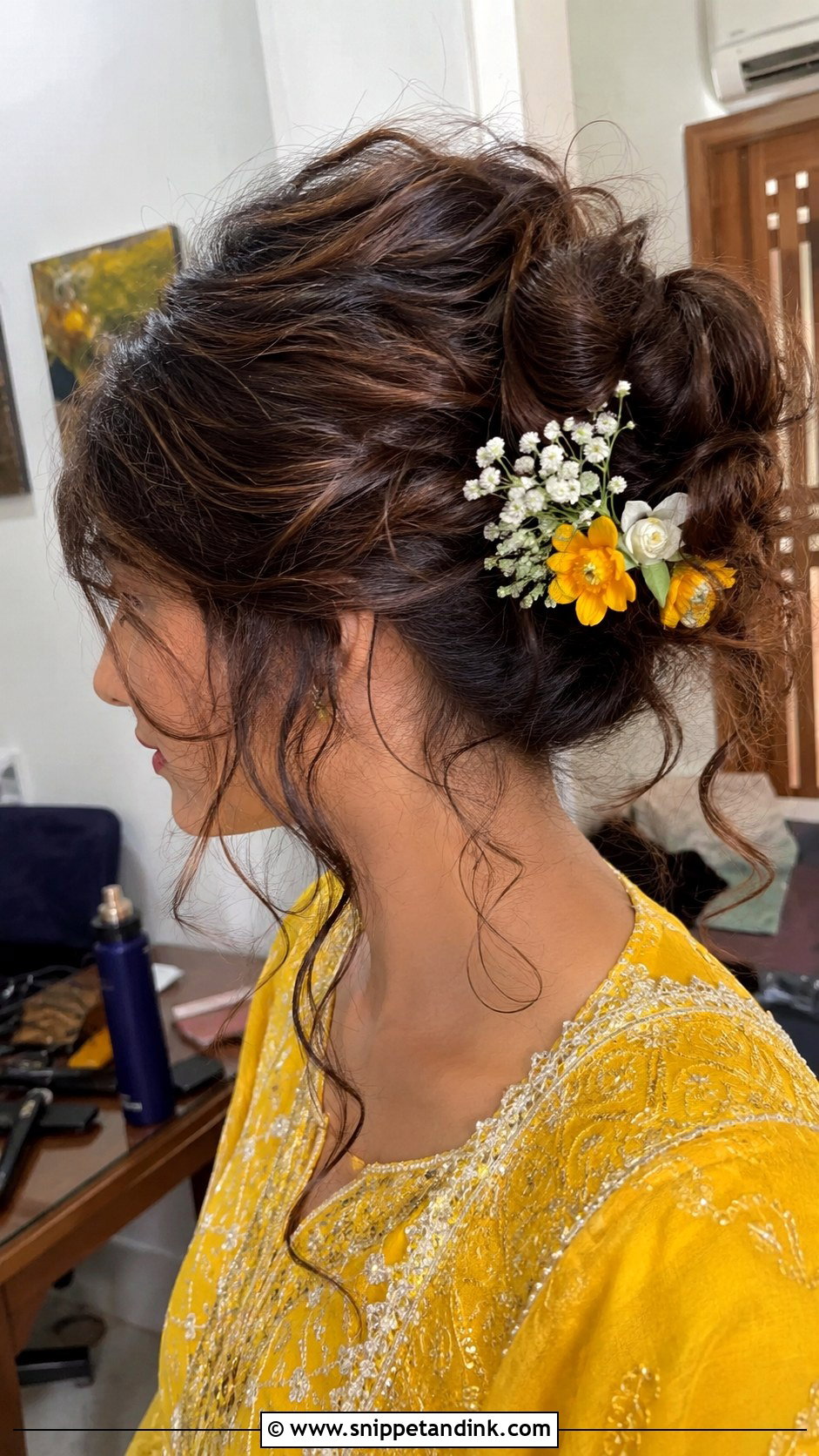
I’ll be honest: a messy bun takes more planning than a sleek one. Every loose-looking section has to be pinned on purpose, or the whole thing falls apart by the second hour. I curl the hair first and prep with texturizing spray so the twists have grip, then pull out a few pieces at the face at the very end. It’s a comfortable choice for mehndi and haldi, when you’ll be sitting cross-legged and leaning forward. For haldi, leave flowers and pearls out altogether, because turmeric paste stains white petals.
12. Dutch Braid Updo With Gold Threads
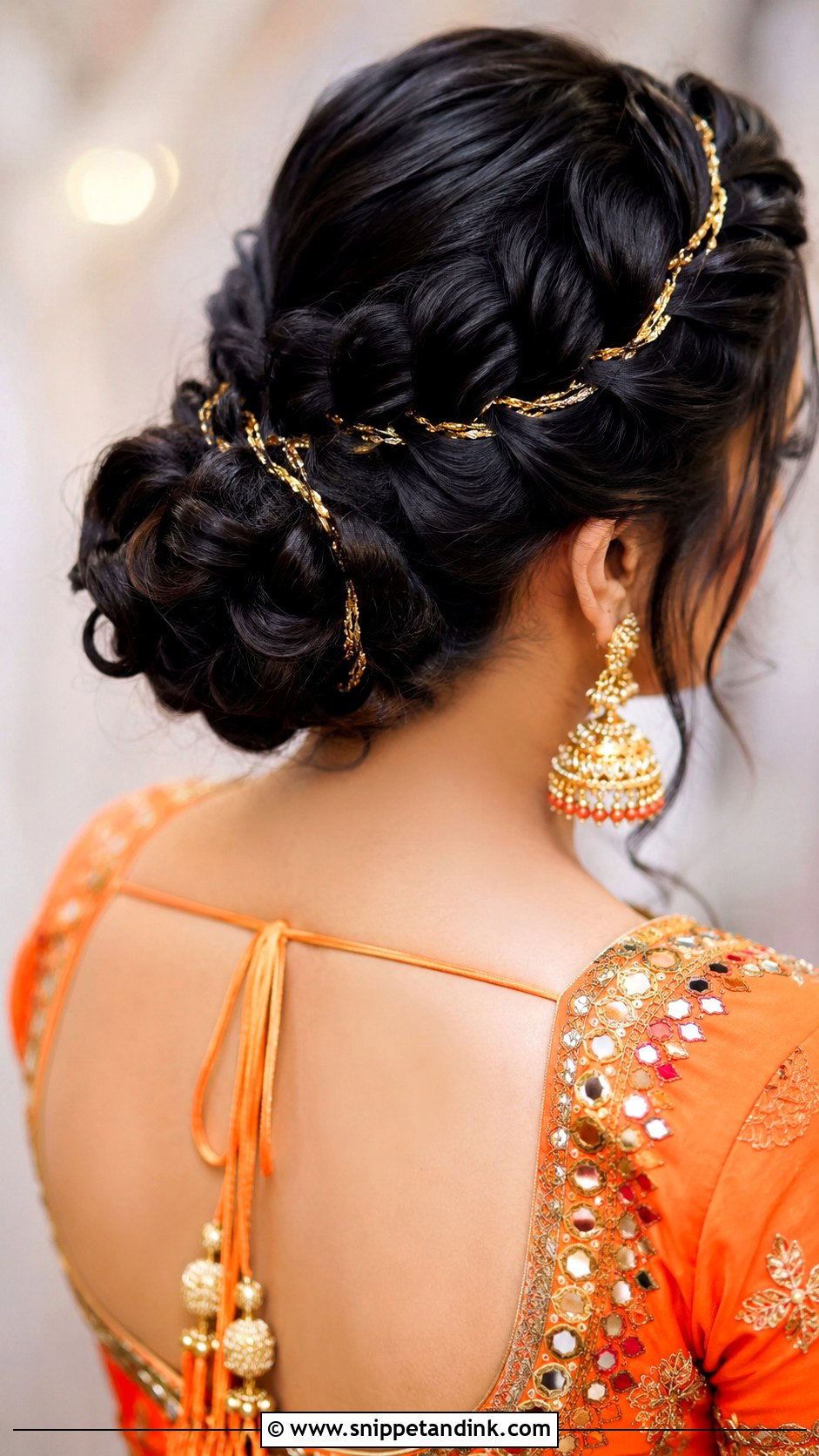
Dutch braids are plaited underhand so they stand up from the head, and gold thread woven through picks up the warmth of traditional bridal gold. I braid close to the scalp and secure the sections into the updo with U-pins, since bobby pins tend to slide on braided hair. This is a style for the bride who wants her hair to be part of the decoration, paired with a vivid lehenga and bold jhumkas. It needs medium to long hair with enough density for the raised plaits to show; on fine hair I pull the loops out gently to widen them.
13. Side Swept Curls With Floral Clip
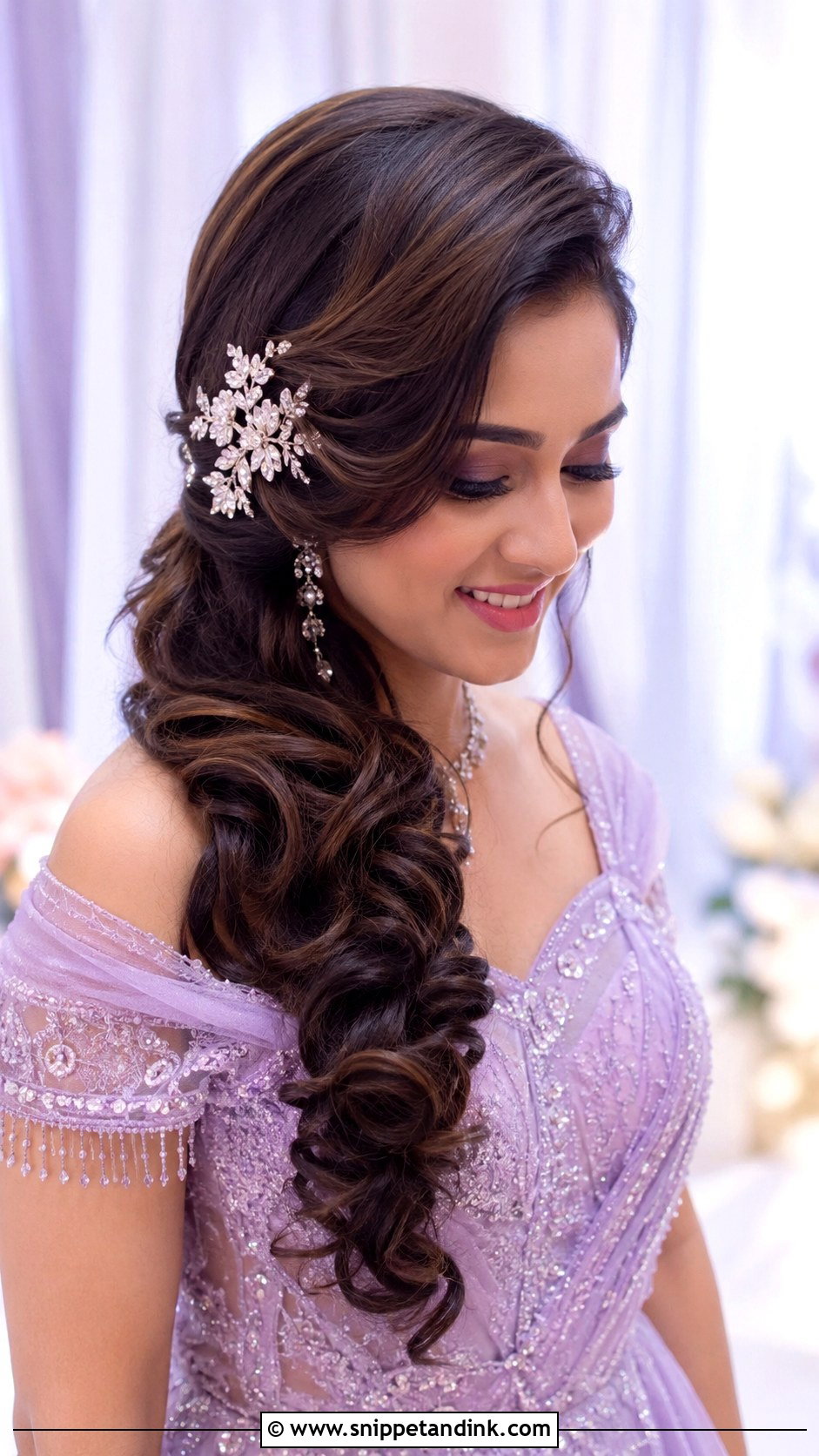
All the hair is gathered over one shoulder in soft curls and fixed with a floral or jeweled clip behind the ear. The empty side does the work: wear your boldest earring there and let the collarbone show. I anchor the sweep with a row of crossed pins behind the far ear, hidden under the curls, because a clip alone can’t hold long, thick hair through a reception. Decide on the side before your trial. It should face the photographer at the stage, opposite to where your dupatta falls.
14. Kondai Bun With Jasmine Layers
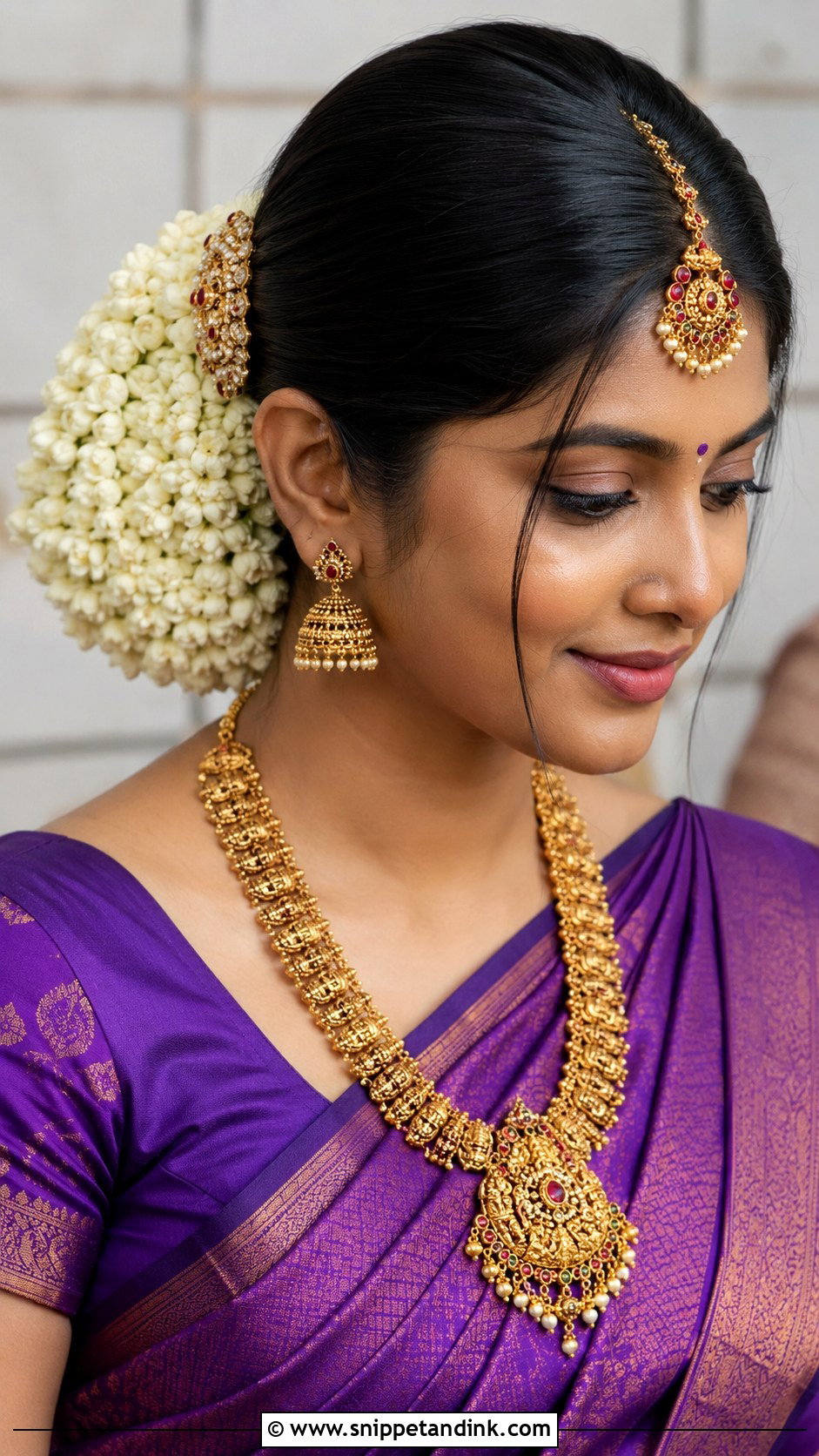
The kondai is a round low bun from Tamil bridal tradition, wrapped in several layers of fresh jasmine. I set it over a firm round base so it keeps its shape under the flowers and a pinned saree pallu, then add jasmine in tight rings working outward. Gold kondai ornaments can sit at the centre. For many Tamil families the jasmine is part of the ritual meaning, not decoration alone. Short or layered hair can still carry a kondai; a hair donut and a clip-in bun piece do most of the work.
15. Braided Bun With Pearl Strings
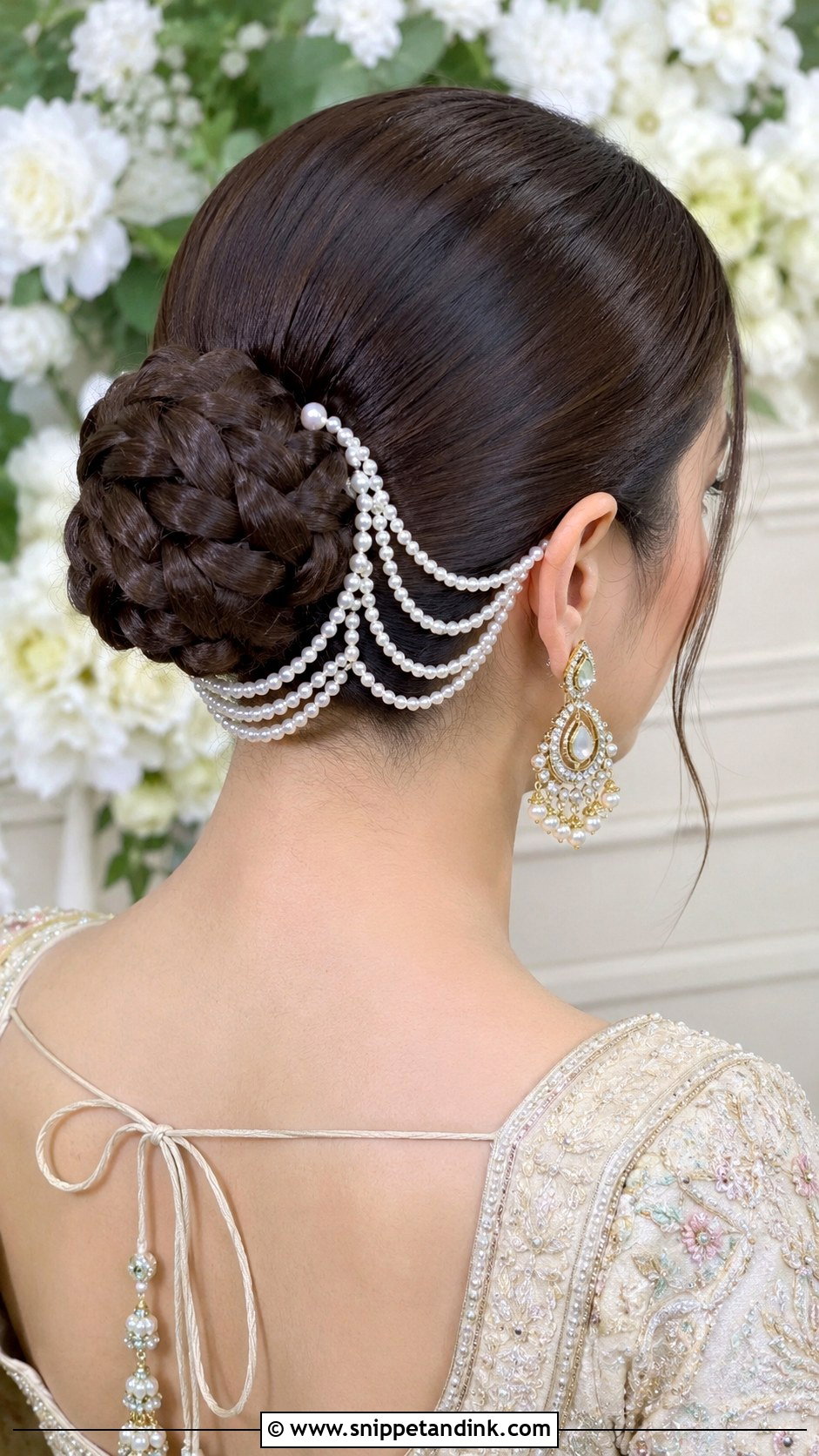
The hair is braided first, then coiled into a bun and draped with pearl strings. Coiling a braid gives more surface pattern than a twist and grips pins well, so it holds through a reception full of dancing. I usually braid in two sections rather than one so the finished bun comes out round instead of oval. Pearls show up best against pastel and ivory; on deep red or maroon, gold detailing reads more clearly.
16. Textured Ponytail With Floral Accent
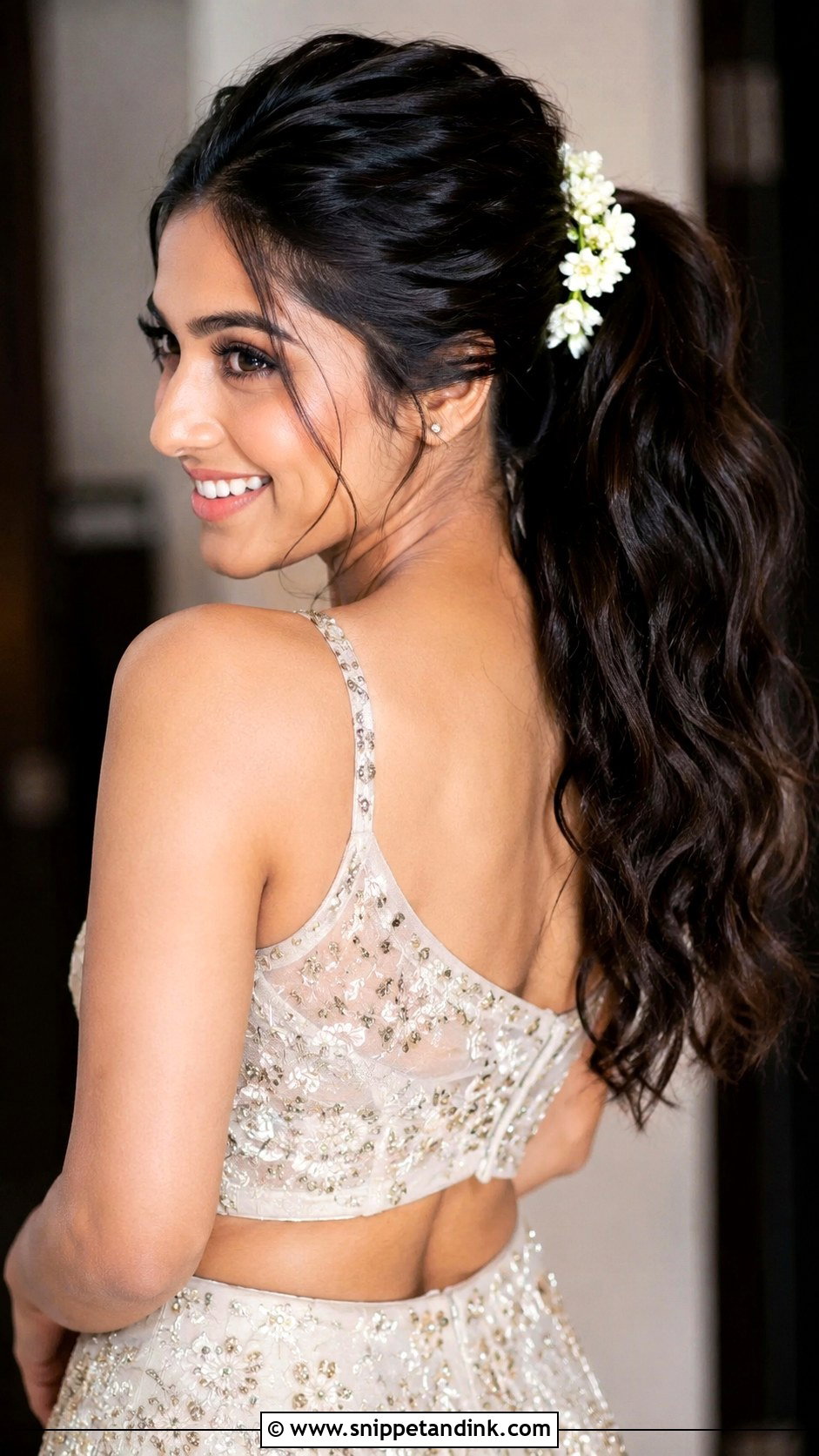
The ponytail is the newest arrival on this list, worn high or mid-height for cocktail nights and Indo-Western outfits, with a small gajra or jeweled cuff around the base. Its weak point is that base. One elastic sags under the weight of waves and extensions after a few hours, so I tie two, one above the other, and hide both under a wrapped strand of hair. Back-comb the crown lightly before tying or the top looks flat in profile shots. I wouldn’t choose it for the pheras, where a dupatta has nowhere to sit.
17. Maang Tikka Bun With Roses
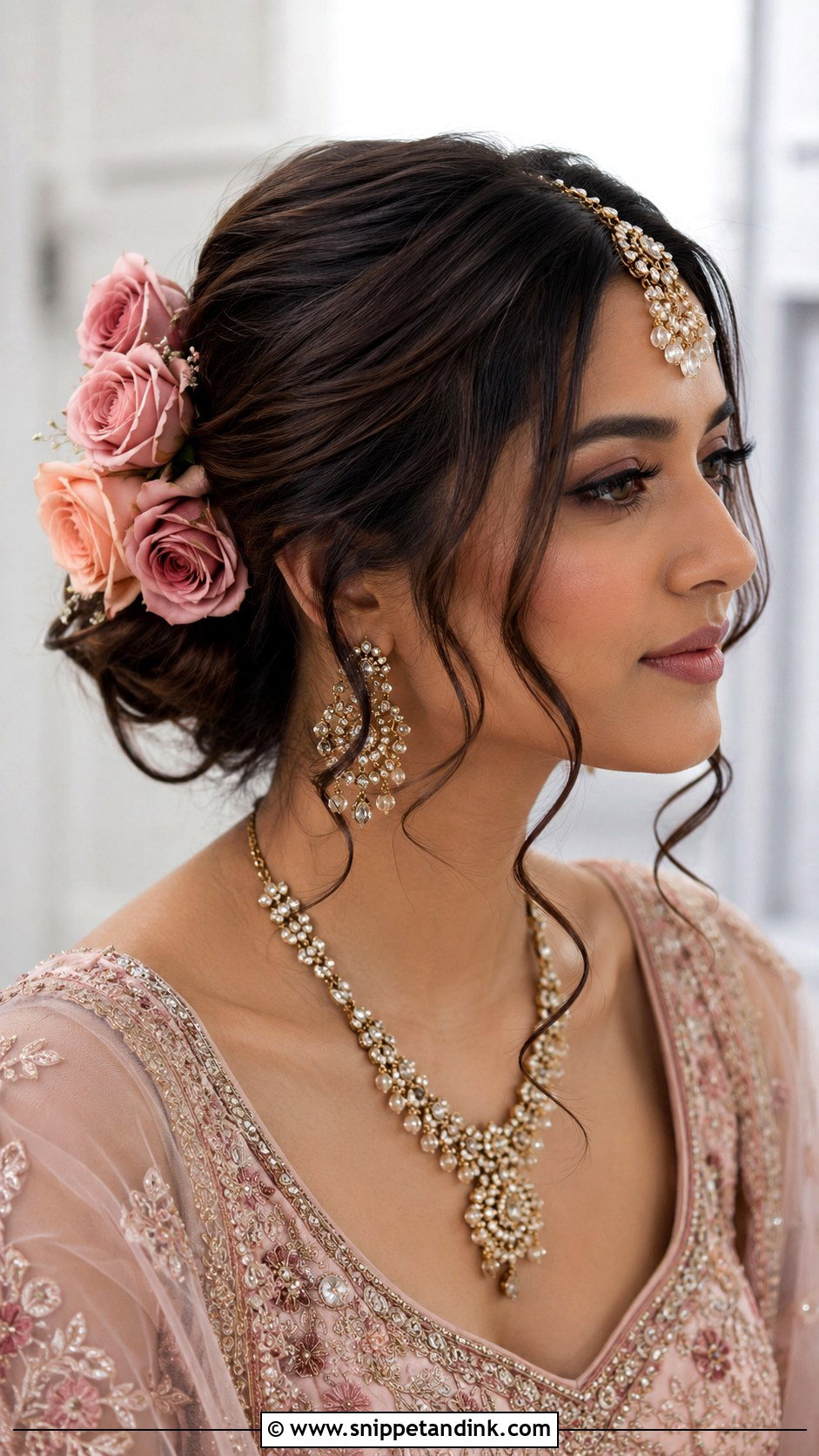
A low or mid bun set with blush, ivory or peach roses, with a maang tikka at the centre, softens a pastel lehenga. Roses are heavier than jasmine and wilt faster once warm, so I use spray roses or small garden roses with short stems, kept chilled until the last minute, and place them along the lower edge of the bun where they get handled least. The tikka should be pinned to the hair under the parting, not just hooked on, or it slides with every turn. It’s a gentler option for brides who find strong jasmine scent too much.
18. Loose Waves With Center Parting
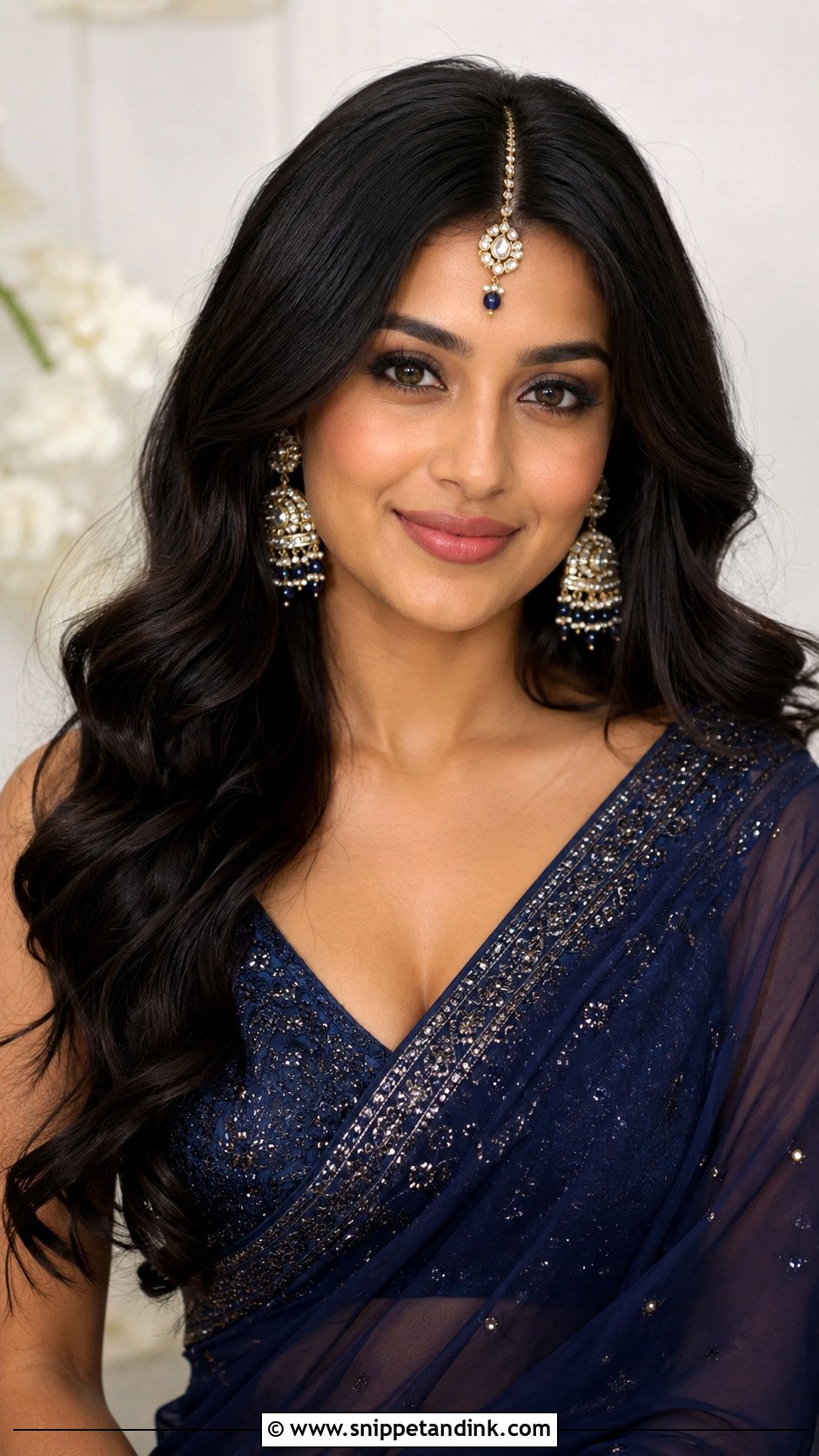
Sometimes the plainest look suits a bride best. Loose waves with a clean centre parting frame the face and let a maang tikka and statement earrings carry the decoration, for the sangeet, the reception or a fusion saree. Open hair is the least forgiving in humidity, so I set the waves with heat protectant and a light-hold spray, and tell brides to carry a small comb, not a brush, for touch-ups. A couple of diamond pins near the temple add sparkle without dragging the waves down.
19. Braided Half Updo With Flowers
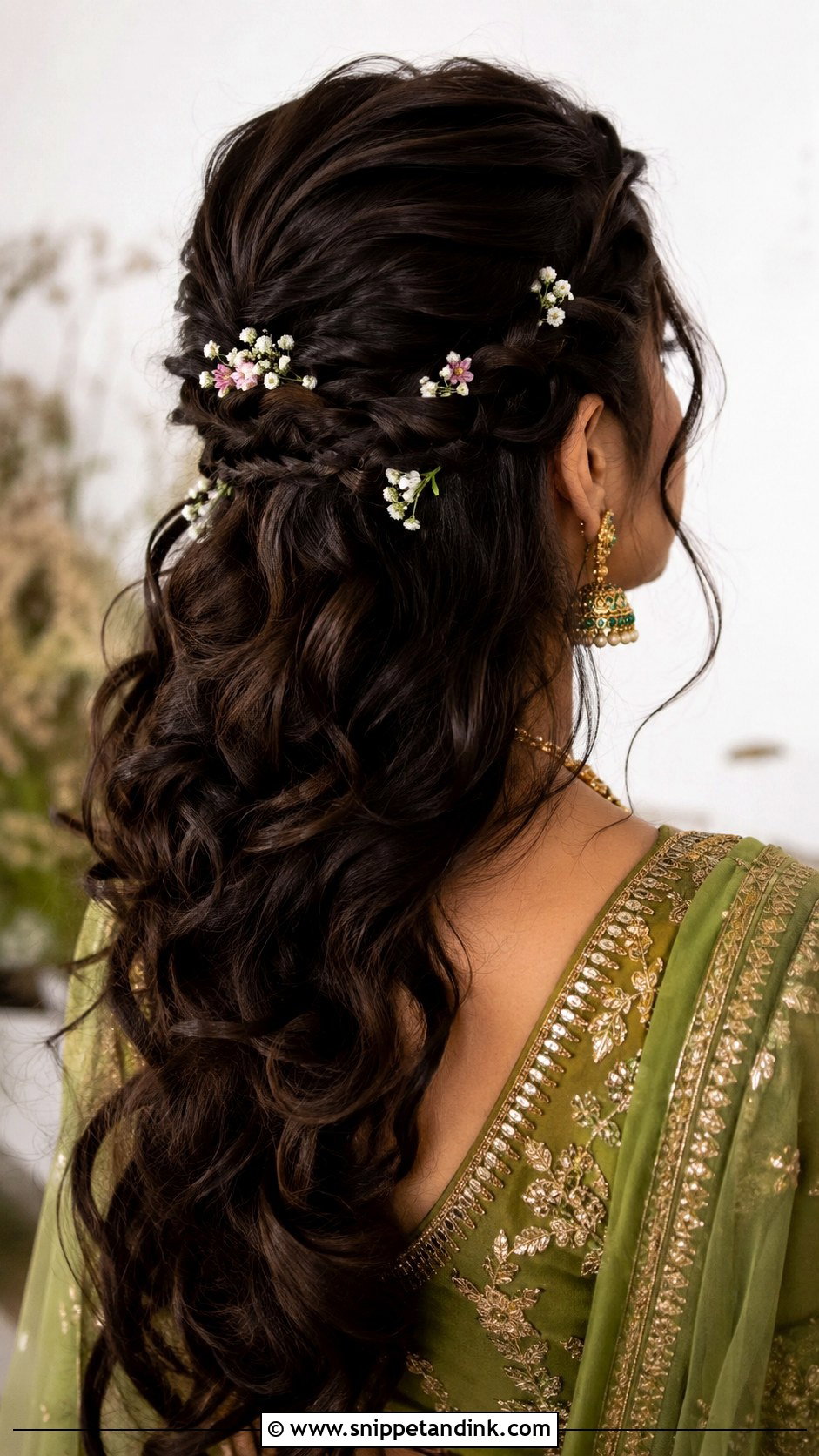
The top section is plaited back and the rest falls in waves, with small flowers tucked along the braid. It keeps hair out of your eyes, which is why I like it for mehndi: your hands are covered in wet paste for hours and you can’t push hair aside. Pin the braid firmly at both ends, since that’s where it loosens first. Medium to long hair gives enough length below the braid for the look to read as finished.
20. Bejeweled Bun With Crystal Vines
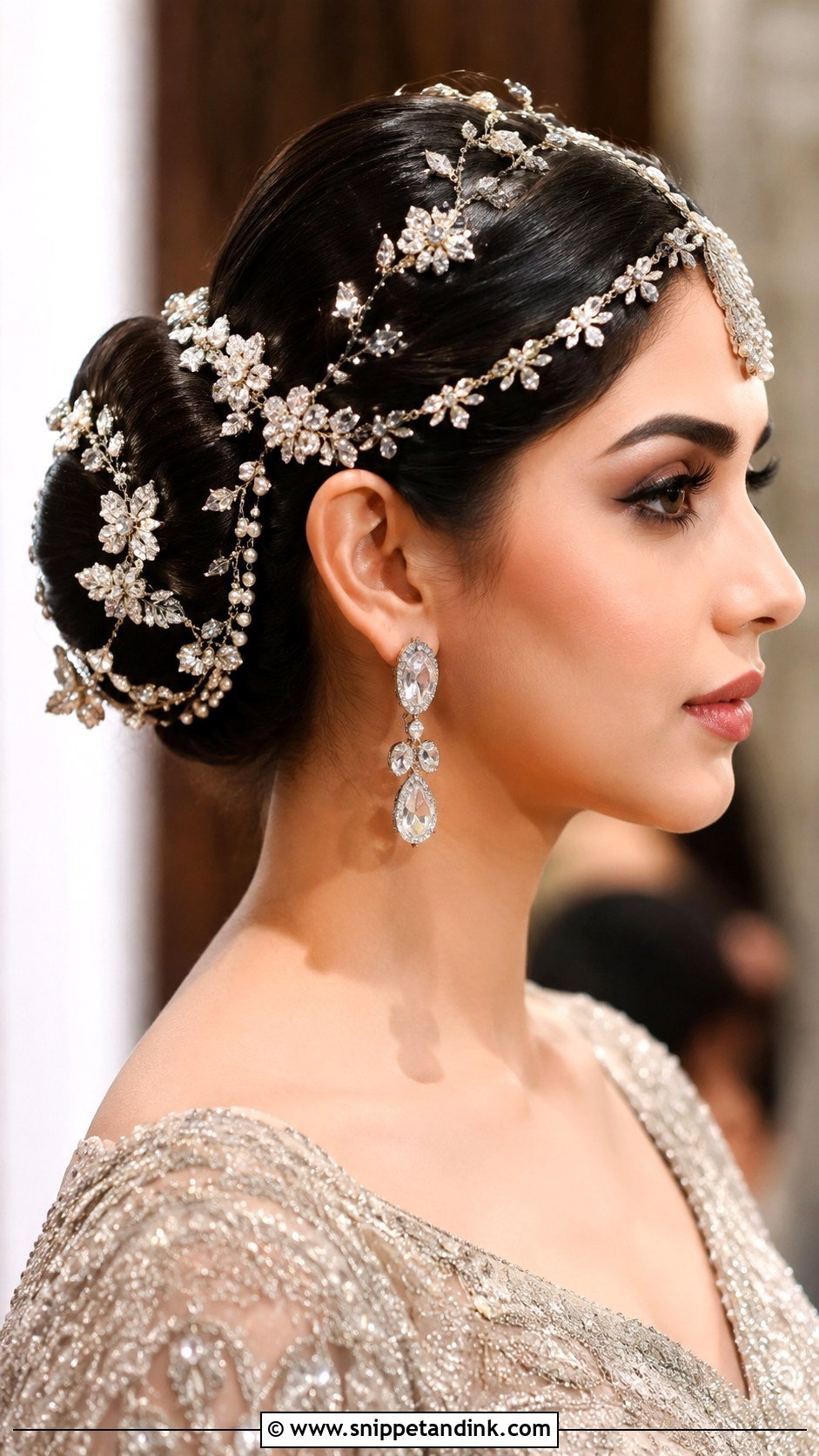
Crystal vines, jeweled brooches and sparkling pins are wound around a sleek chignon in place of flowers. Vines are flexible wire, so I shape them before pinning and tuck the wire ends under the bun, where nothing can scratch the neck. Keep the bun itself smooth; crystals on top of messy texture look cluttered. With a heavily embellished lehenga or a shimmering gown, a matching matha patti ties hair and outfit together. Crystals throw back a lot of light under flash, so take a quick test photo at your trial.
Ordering and Pinning Jasmine So It Lasts the Muhurtham
Jasmine carries most of the traditional looks above, and it behaves nothing like a florist’s roses. Strung jasmine opens and starts to brown within hours once it’s warm, so timing matters more than quantity.
- Order strung buds, not open flowers, for the wedding morning. Tight buds open slowly on the head and still look fresh in photos late in the ceremony.
- Keep the strings wrapped in a damp cotton cloth in a cool box until I’m ready to pin. Don’t mist them once they’re in the hair; drips leave marks on silk.
- A full jada or veni is heavier than it looks. I pin it to a hidden base braid or padding and spread the weight across several U-pins, so nothing drags at one point and gives you a headache by the second hour.
- Ask for a few spare strings. Petals bruise every time the dupatta is adjusted, and a spare length lets me patch a gap in a couple of minutes.
- If you react to strong scent or pollen, hold a short string near your face for an evening a few days before. Pearl strings or good artificial jasmine look close in photos and never wilt.
When a Jada Slips Halfway Through the Pheras
Long ceremonies mean sitting, standing, bending for blessings and relatives tugging the dupatta straight. The usual failures are a jada pulling away at the nape, a tikka drifting off centre and curls flattening under fabric. Each is a two-minute fix if someone nearby has the right pins and knows where the base is.
So before you leave the trial, ask your stylist to put together a small kit: matching bobby pins, a handful of U-pins, a travel hairspray and a tail comb. Then have them show your sister or a cousin exactly where the anchor ponytail sits. That one demonstration saves more hairstyles than any amount of spray.
Your Hair From Haldi to Vidaai
Most Hindu weddings ask your hair to get through several rituals, a heavy dupatta, the garland exchange and often a long evening after. Judge each style against that day, not just against the photo. Bring your outfit colours, jewelry and dupatta to the trial, and tell your stylist which events need a change of look. The right style is the one you can sit in for hours without thinking about it, from the first ceremony to the reception.
You'll Like These Ideas:


Leave a Reply