
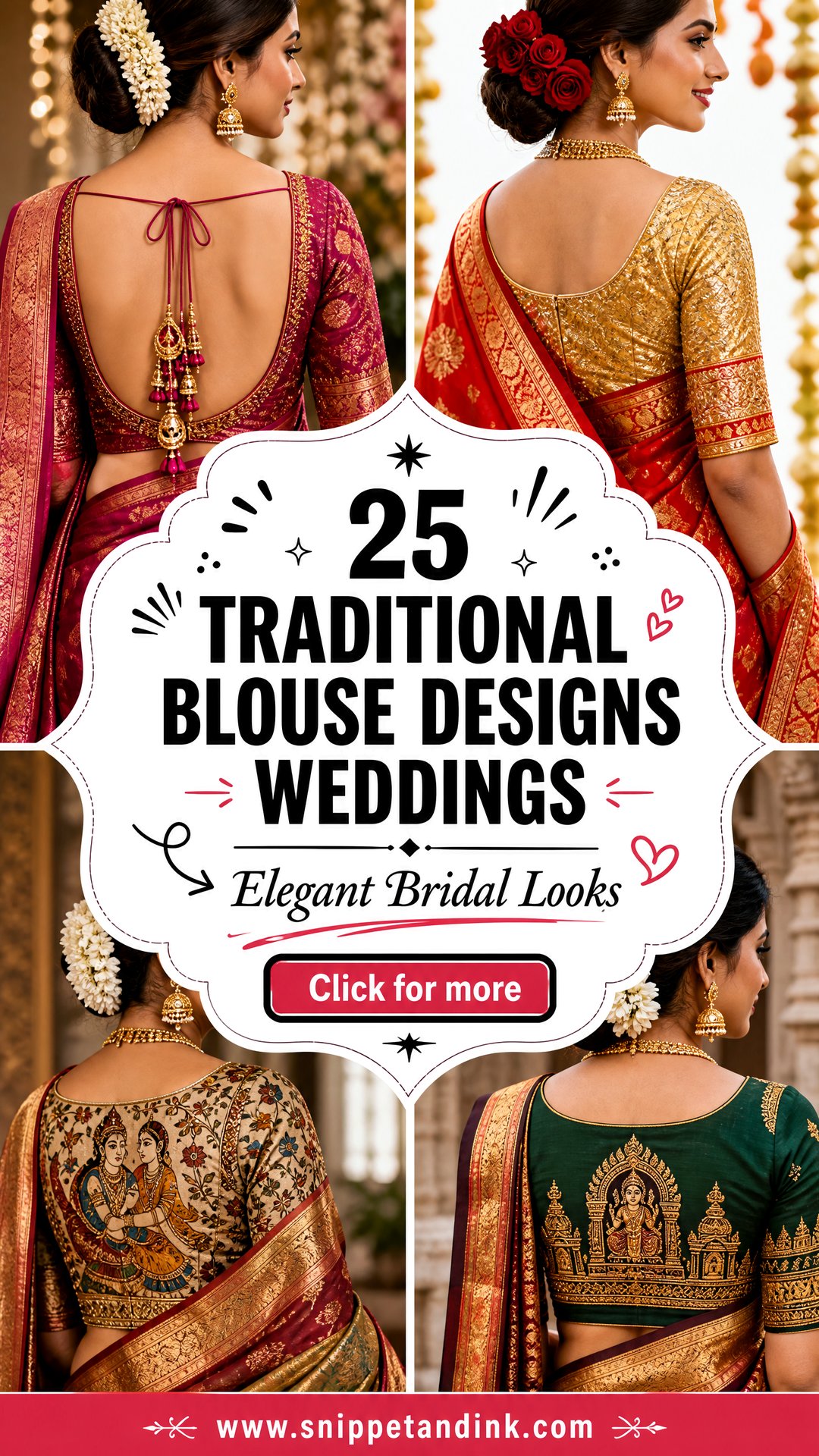
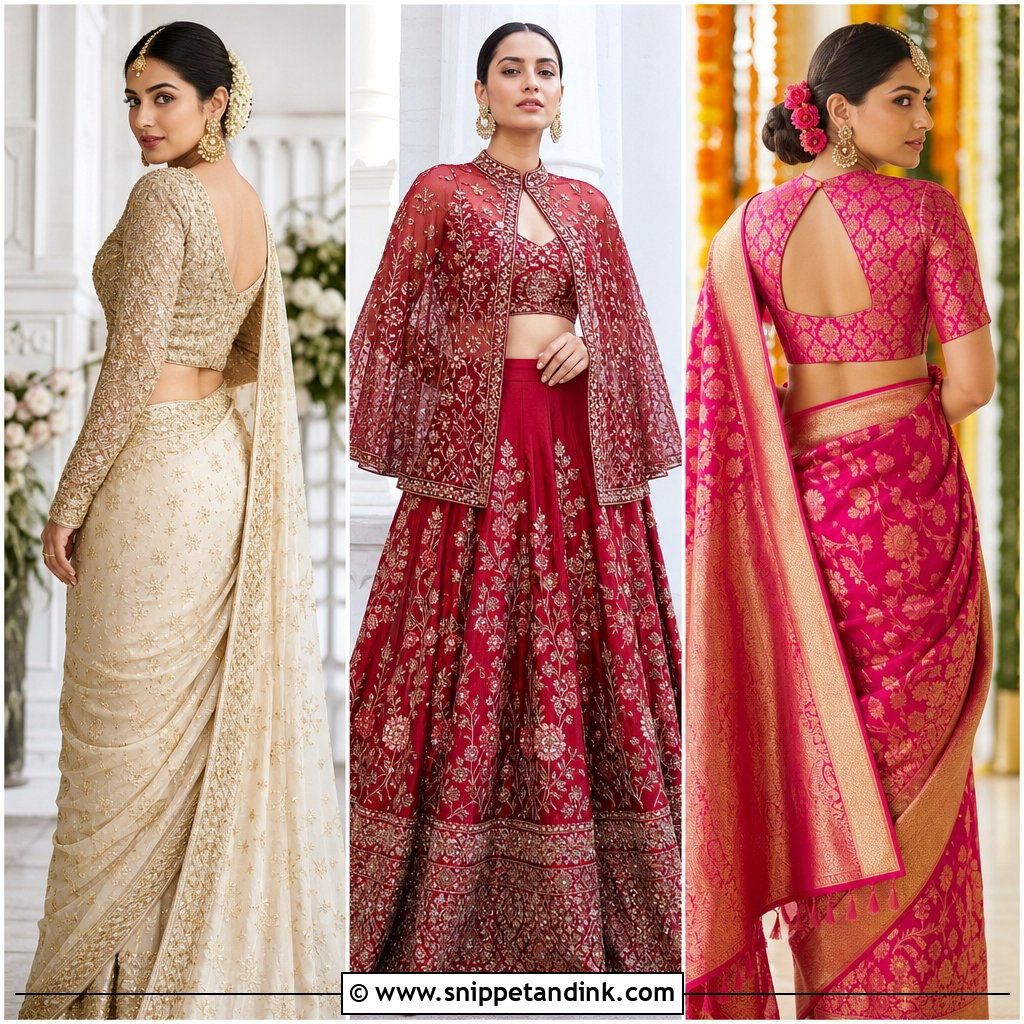
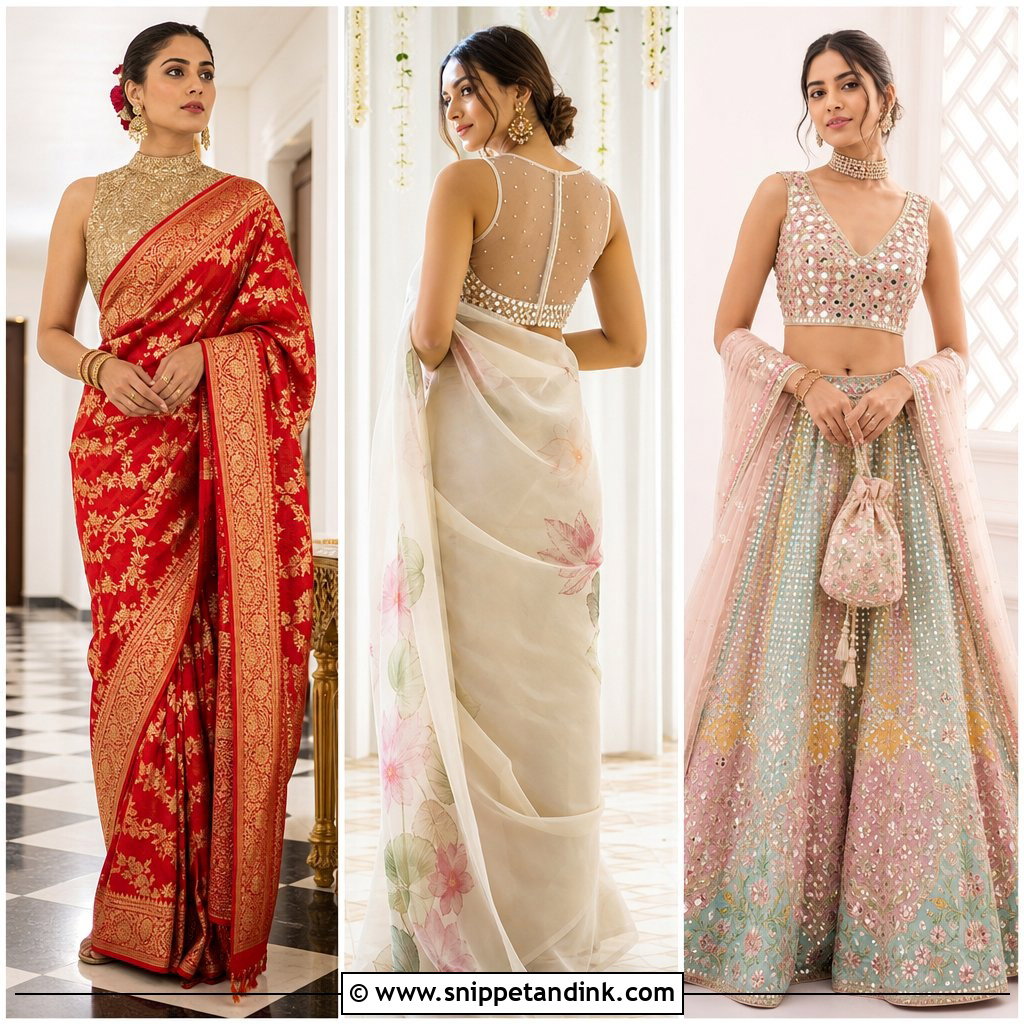
A saree is only as good as the blouse under it. The blouse decides how the pallu sits, where the necklace falls, how freely the arms move and how you’ll feel six hours into the ceremony. Below are the traditional blouse designs weddings keep bringing back, for brides, bridesmaids and guests alike: Kanjivaram and Banarasi silk, Paithani motifs, Aari and zardosi work, potli buttons and dori backs. Heritage handwork hasn’t gone anywhere; what has changed is a cleaner fit and less clutter around it. With each one I’ve added what I look at when a client brings it to a fitting.
Briefing Your Tailor Before the Fabric Is Cut
Most blouse disappointments start at the first appointment, not the last. Handwork like Aari or maggam can take several weeks, and wedding season fills every good tailor’s calendar, so I book the blouse as soon as the saree is chosen. Then I bring the following to that first meeting.
- The actual saree, so the tailor can match the border, pick the lining shade and see how thick the silk is.
- The jewelry you plan to wear. Neckline depth depends on whether you’ll wear a choker, a long haar or both.
- The bra or padding you want. Many brides prefer built-in cups, which must be decided before cutting.
- Your closure preference: back hooks, a side zip or a front opening. Think about who will help you dress.
- A request for extra seam allowance, about an inch at the side seams, so the blouse can be let out later or for another wedding.
Ask for a trial fitting with the saree draped, not the blouse on its own. A blouse that fits standing still can lift at the back once the pallu is pinned over the shoulder.
1. Kanjivaram Saree Blouse For Wedding
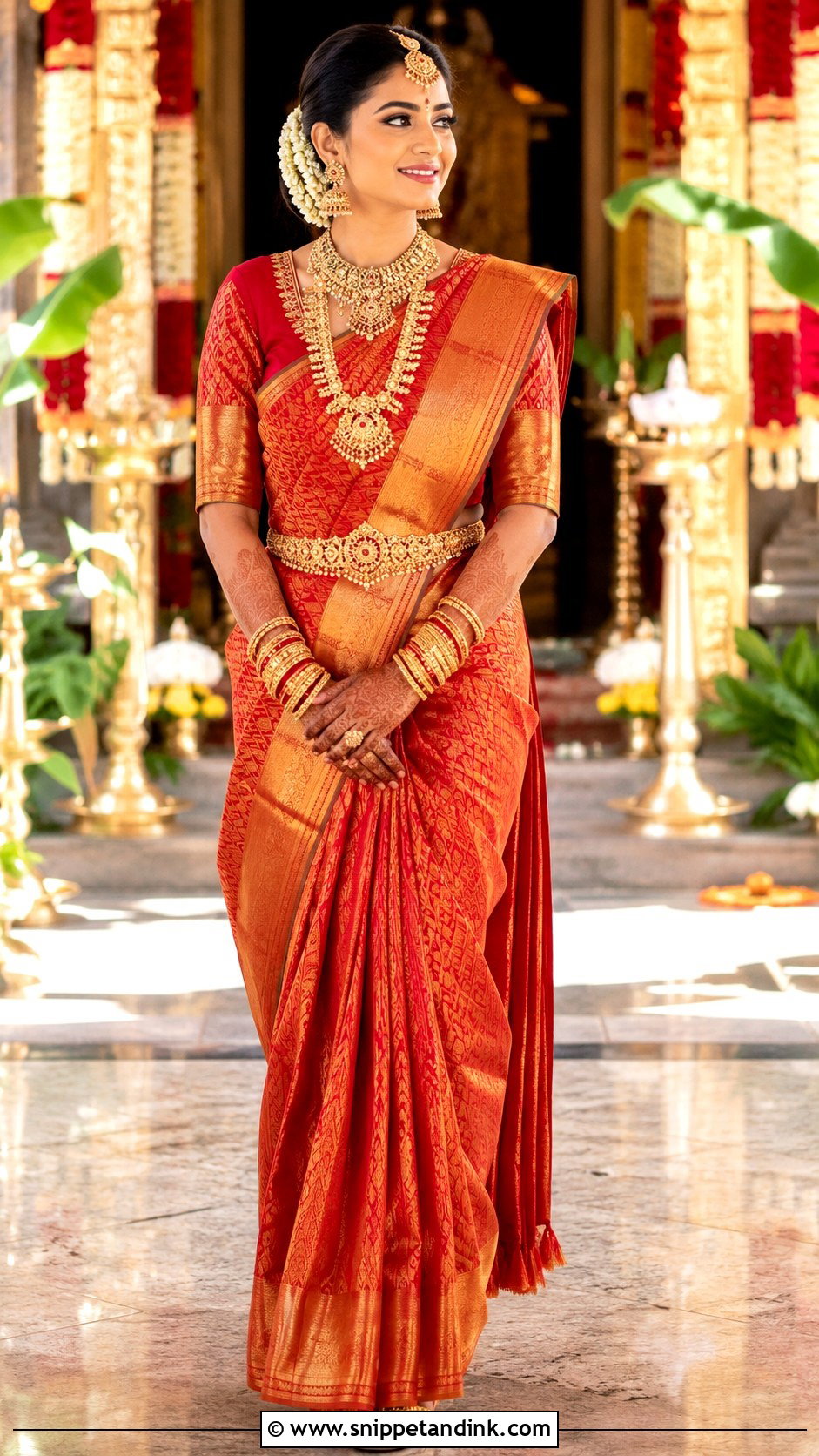
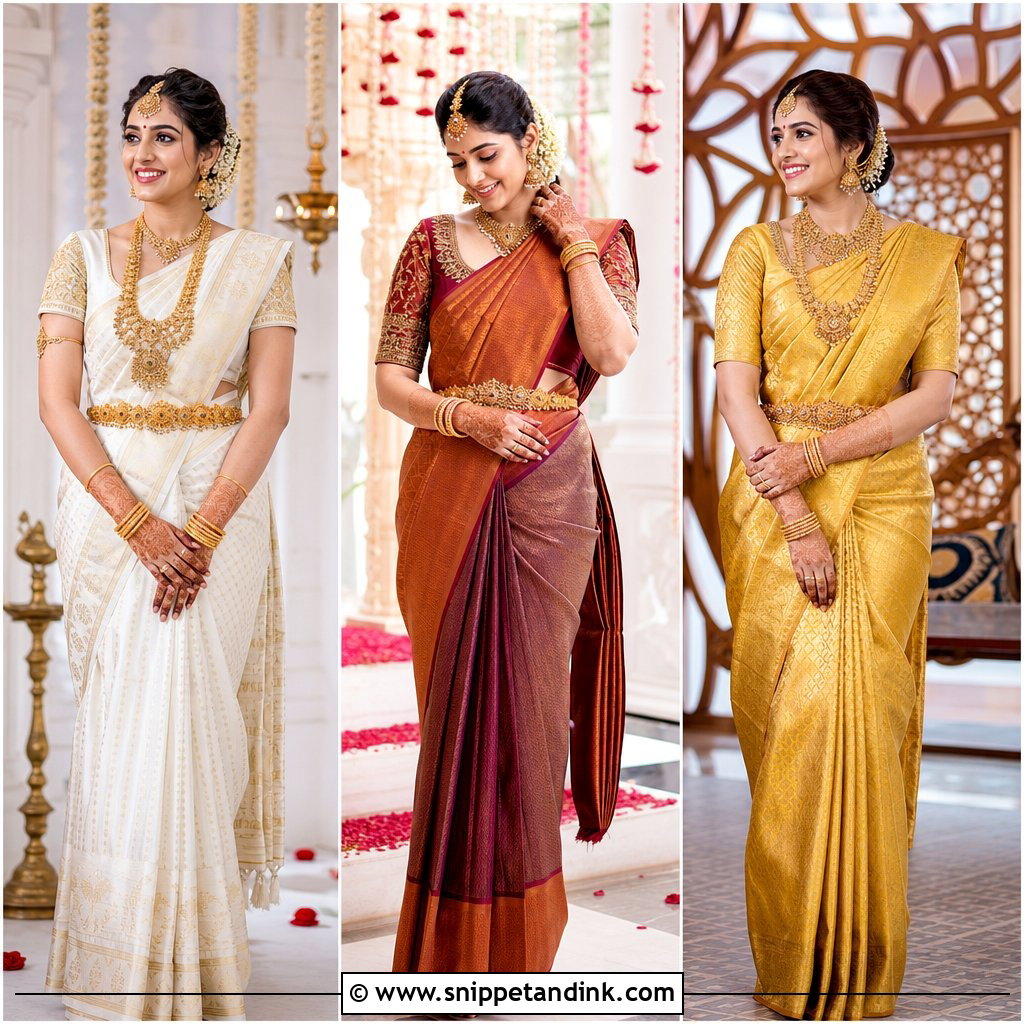
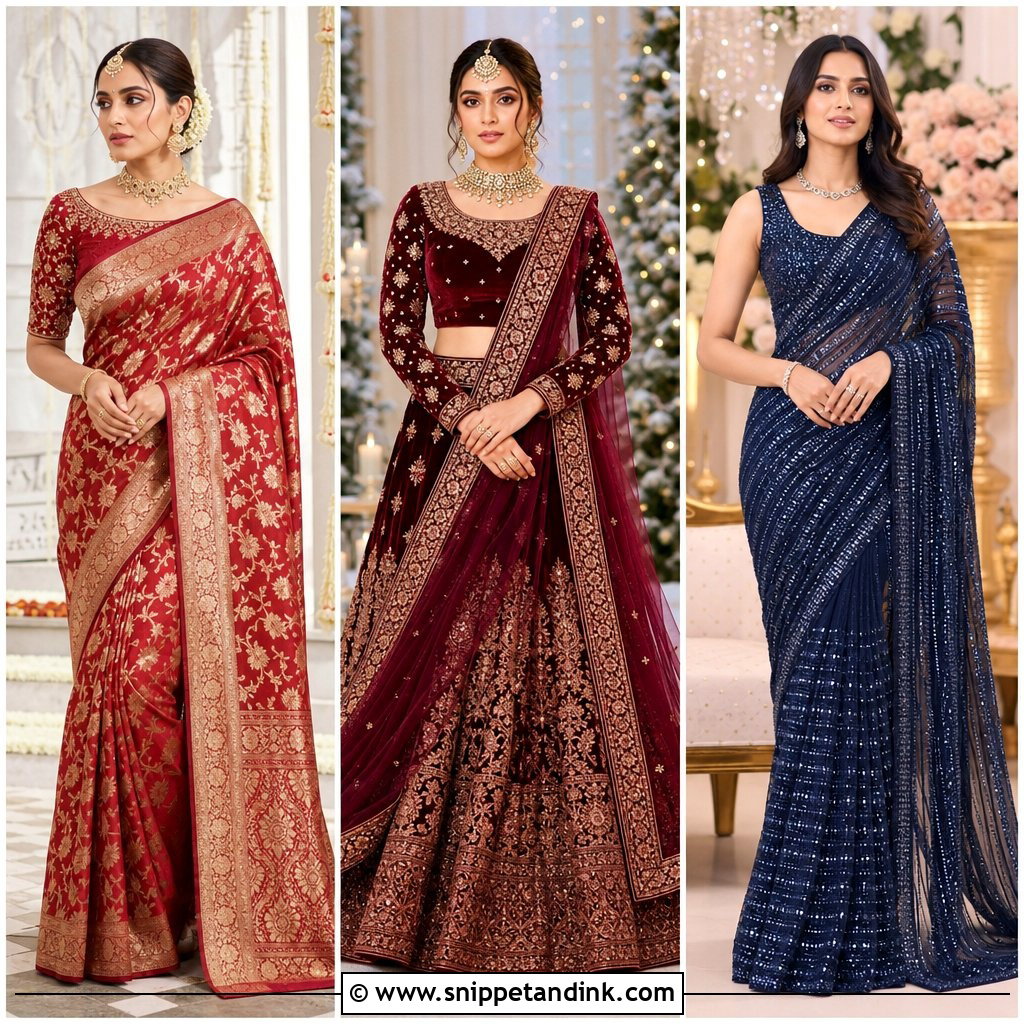
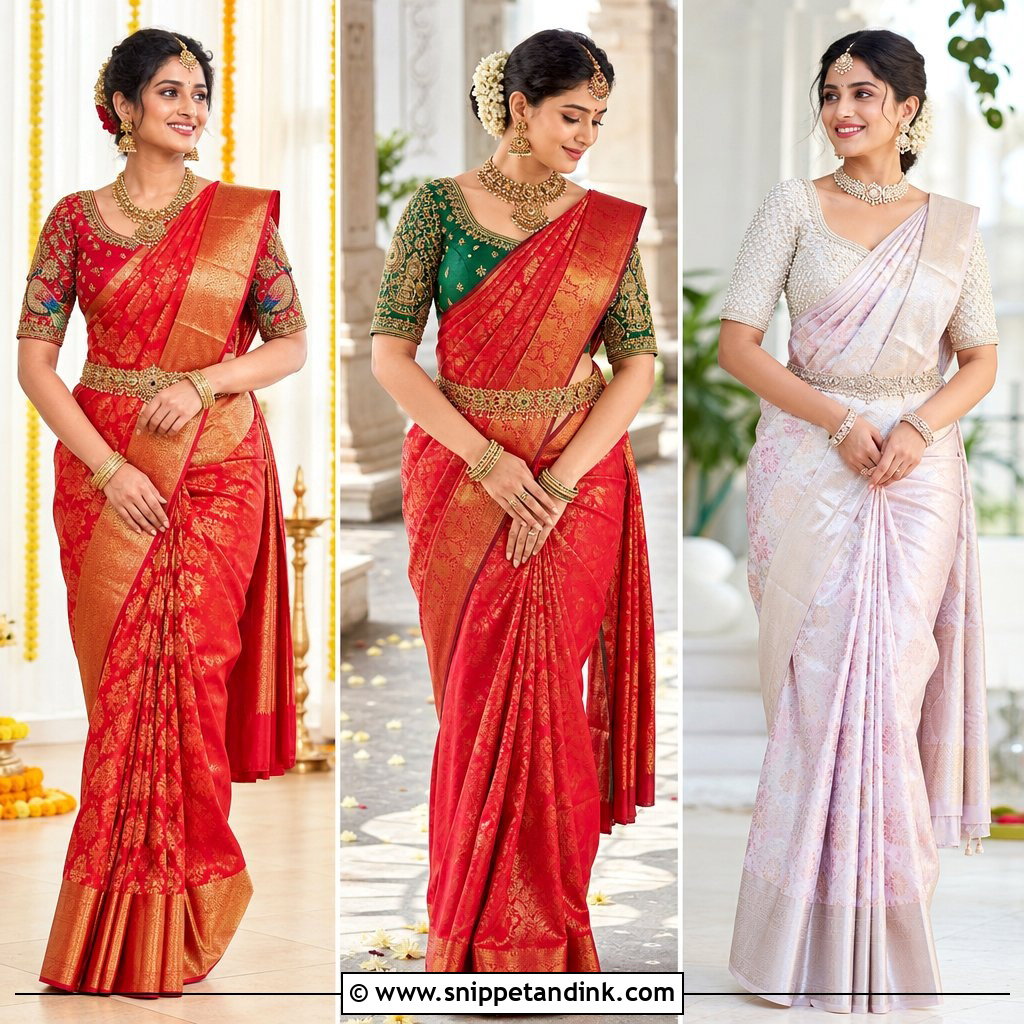
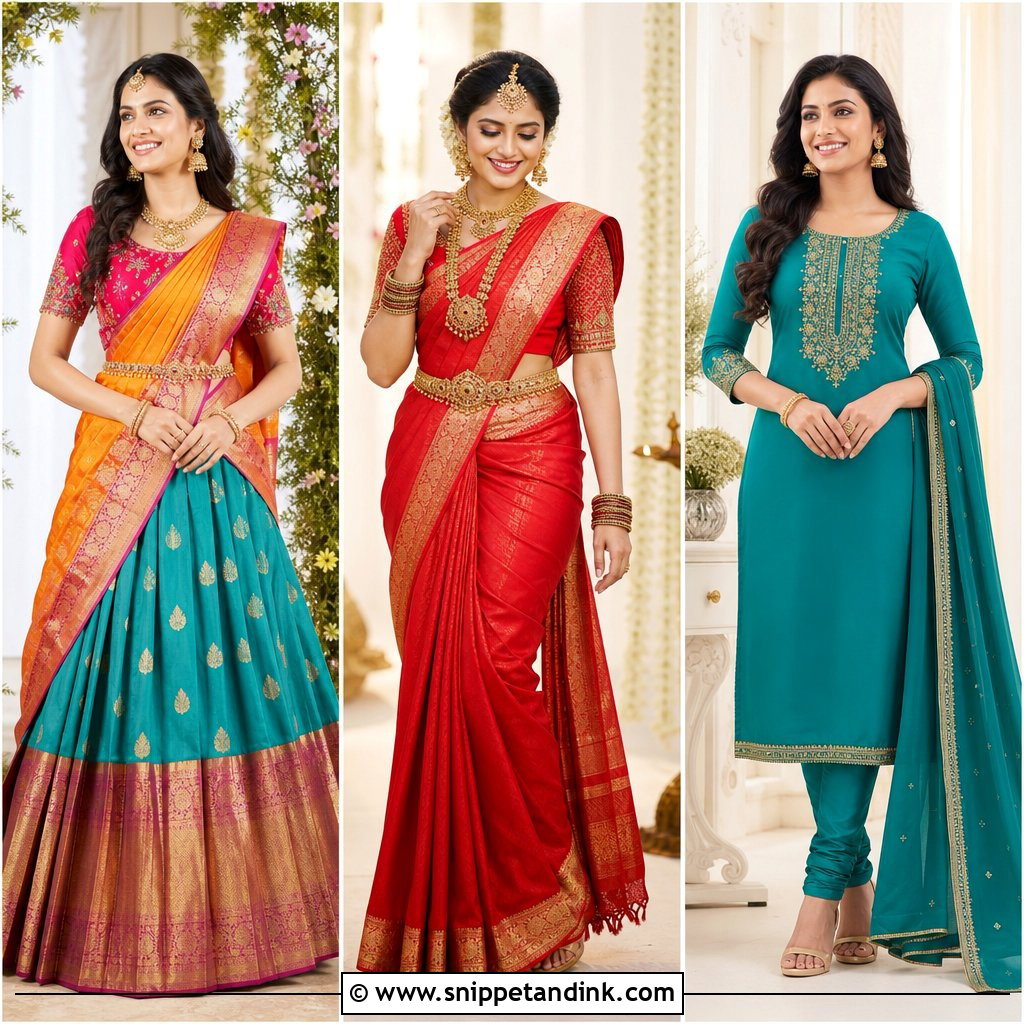
Kanjivaram is where most South Indian brides begin. A heavy silk in red, gold, emerald, purple or deep pink calls for a fitted blouse that either matches the border or contrasts with the body. Elbow sleeves edged in zari are the classic proportion. Kanjivaram silk is thick, so I ask the tailor to keep the blouse seams flat and use a softer lining; a stiff blouse under a stiff saree makes the shoulder look boxy. With heavy weaving, keep the neckline to a clean round, U or square, then add temple jewelry, gold bangles, a waist belt and jasmine.
2. Banarasi Saree Blouse For Wedding
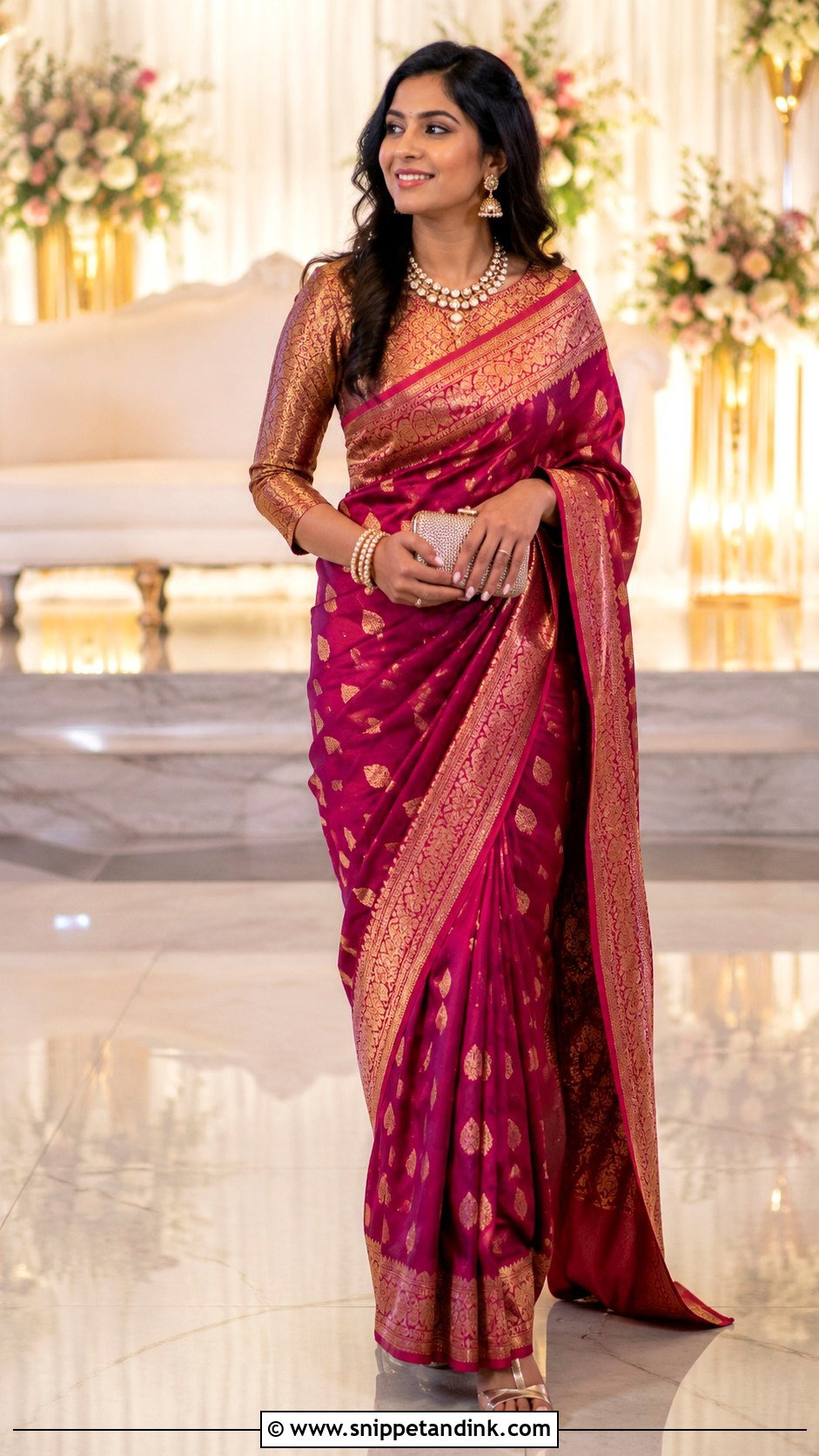
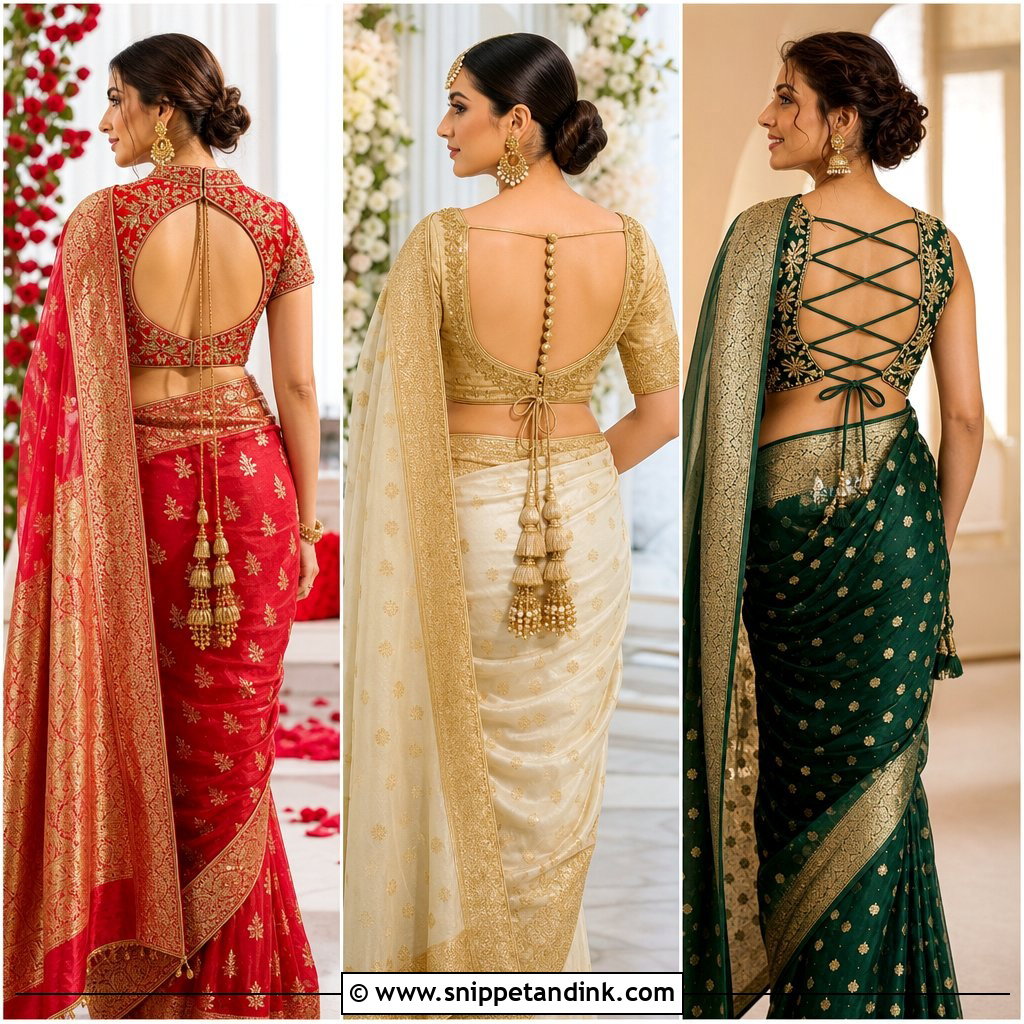
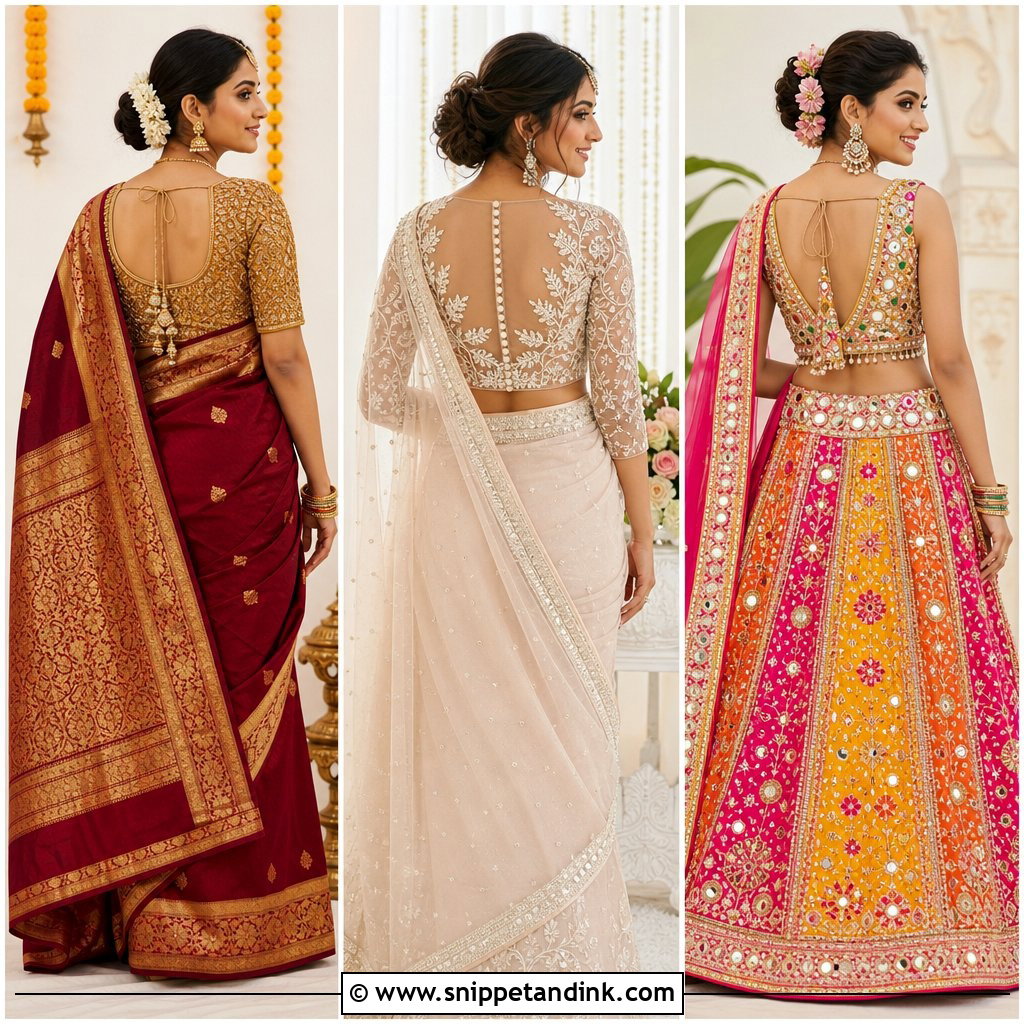
Banarasi brocade carries weight and shine on its own. A jewel-toned Banarasi saree with a brocade blouse in gold, wine, magenta, navy or bottle green looks grand without much help. Three-quarter sleeves with woven motifs give coverage and photograph well. The thing to watch is the brocade’s metallic weft on the inner arm: it can scratch over a long evening, so I always ask for a fine cotton lining in the sleeves. Kundan jewelry, a structured clutch, glass bangles and embellished sandals finish it for bridesmaids, mothers and guests alike.
3. Paithani Saree Blouse For Wedding
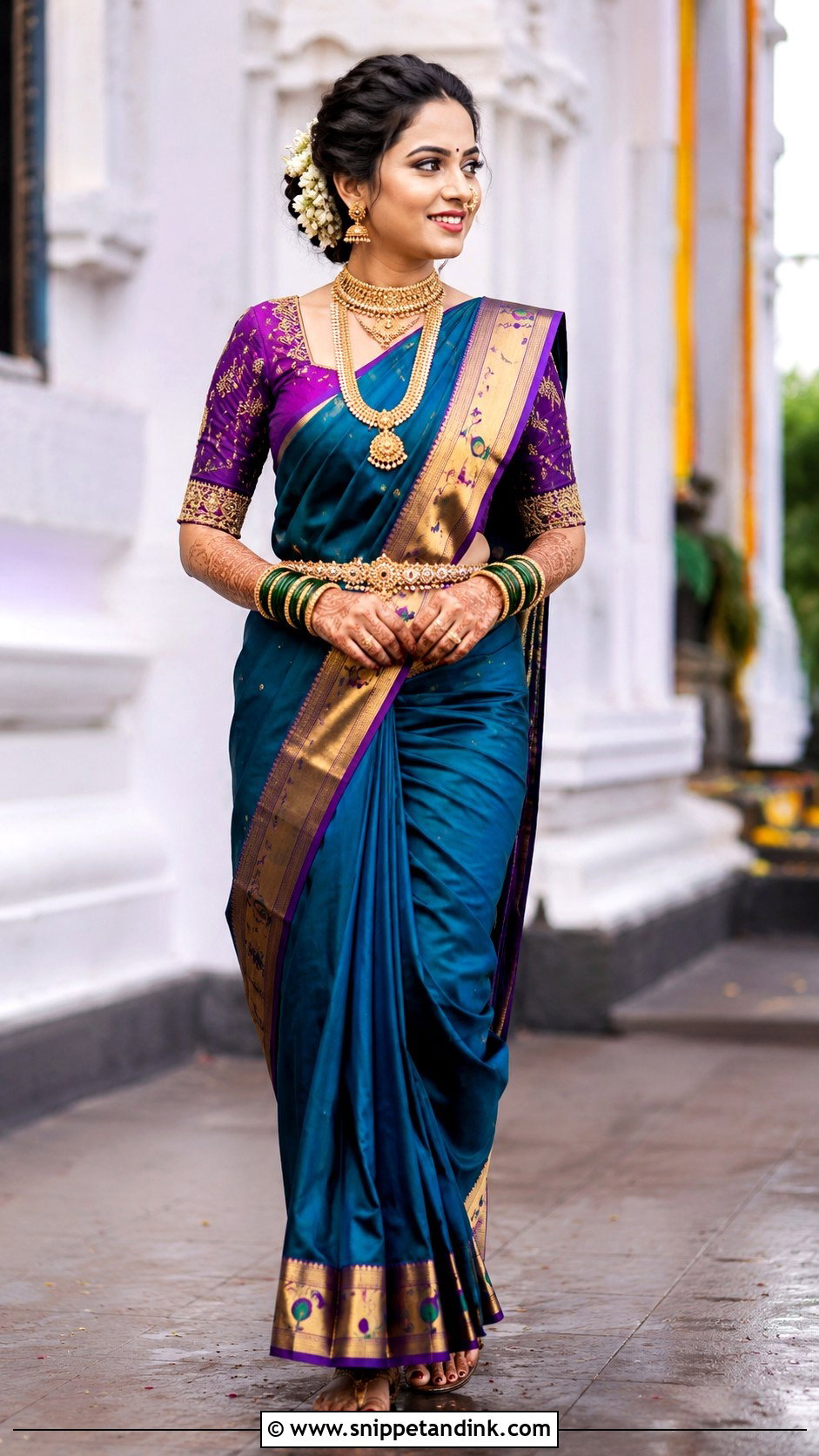
A Paithani saree blouse usually takes its cue from the pallu, with its peacock or lotus motif and zari border. Peacock blue, purple, mustard, pink and green are the traditional ground colours. A square neck or deep round back with dori detail keeps it traditional but current. When I plan one, I check that the blouse motif doesn’t sit next to the pallu motif at the same scale, because two peacocks of equal size side by side compete. A nath, green glass bangles, gold jewelry and a neat bun with flowers complete the Maharashtrian look.
4. Zardosi Blouse With Silk Saree
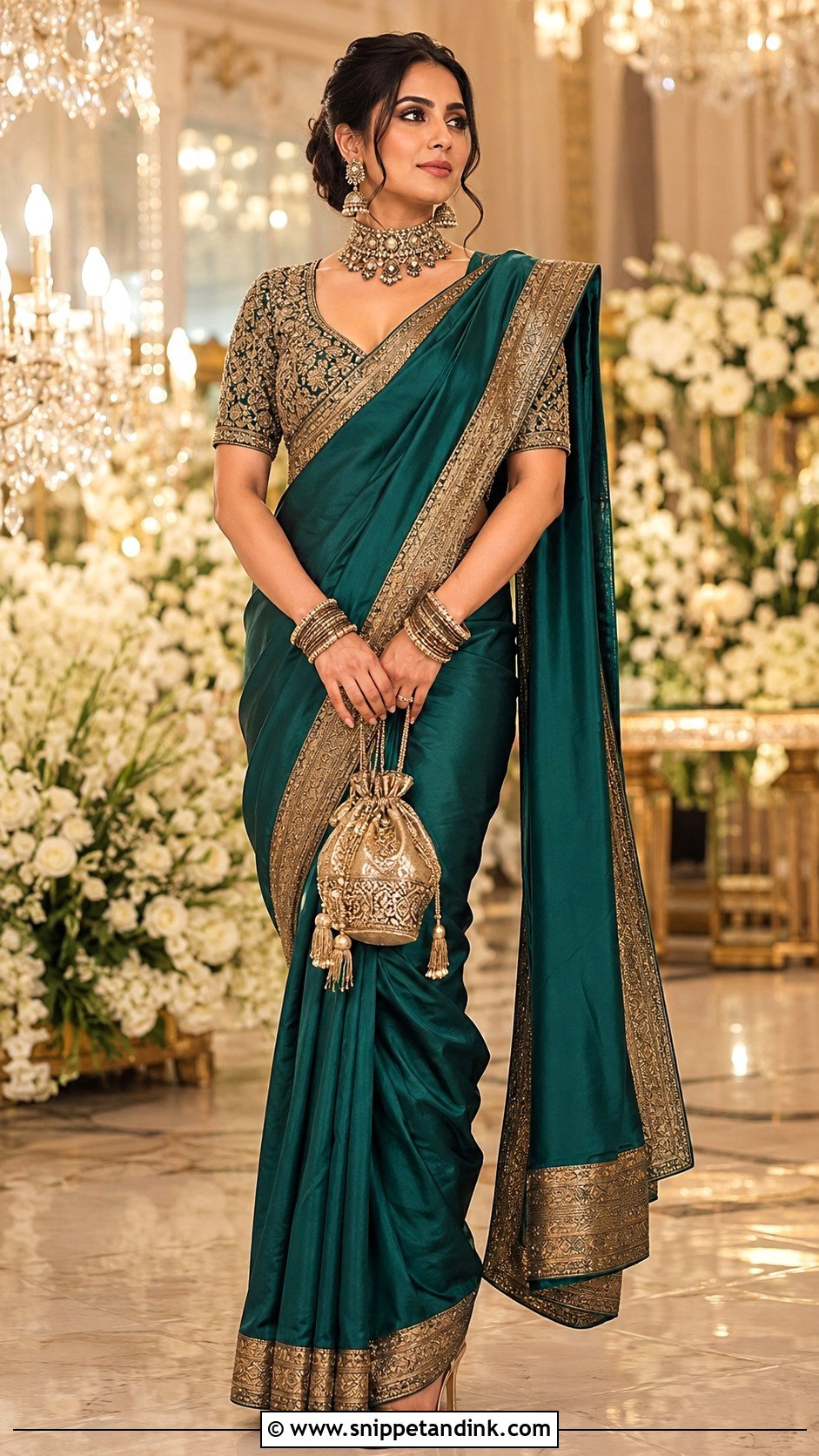
Zardosi uses metal wire and thread laid onto the fabric, so a zardosi blouse is genuinely heavy. Antique gold or metallic embroidery on the neckline, sleeves and back pairs well with silk, tissue or Banarasi sarees in maroon, emerald, royal blue, rust or plum. Because of that weight, shoulder fit is everything: a loose shoulder lets the embroidered sleeve drag down and twist. Jhumkas, a choker, bangles and a potli bag finish the festive look. Ask for a lining behind the embroidery so the wire backs don’t rub your skin.
5. Aari Work Blouse With Bridal Saree
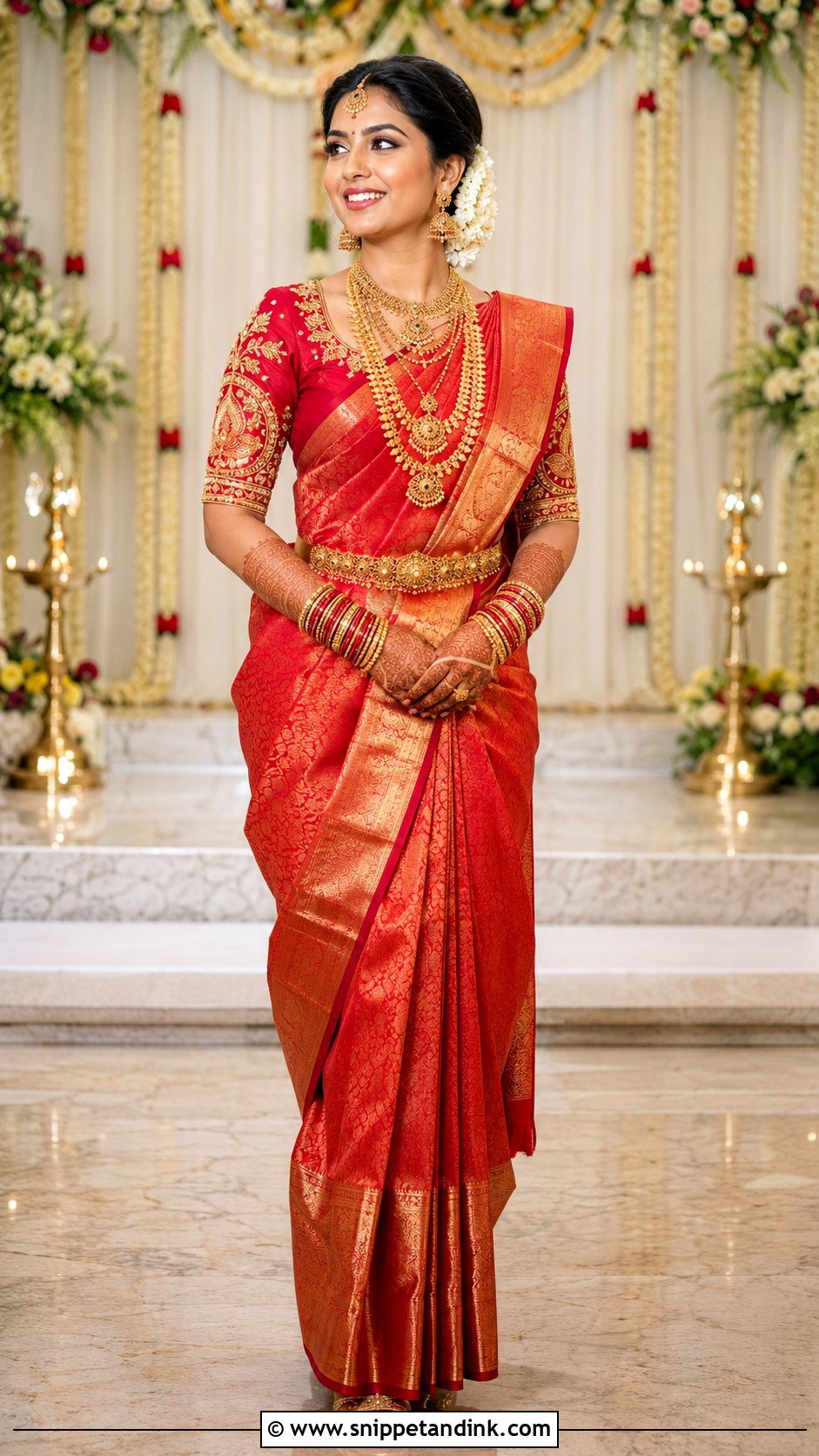
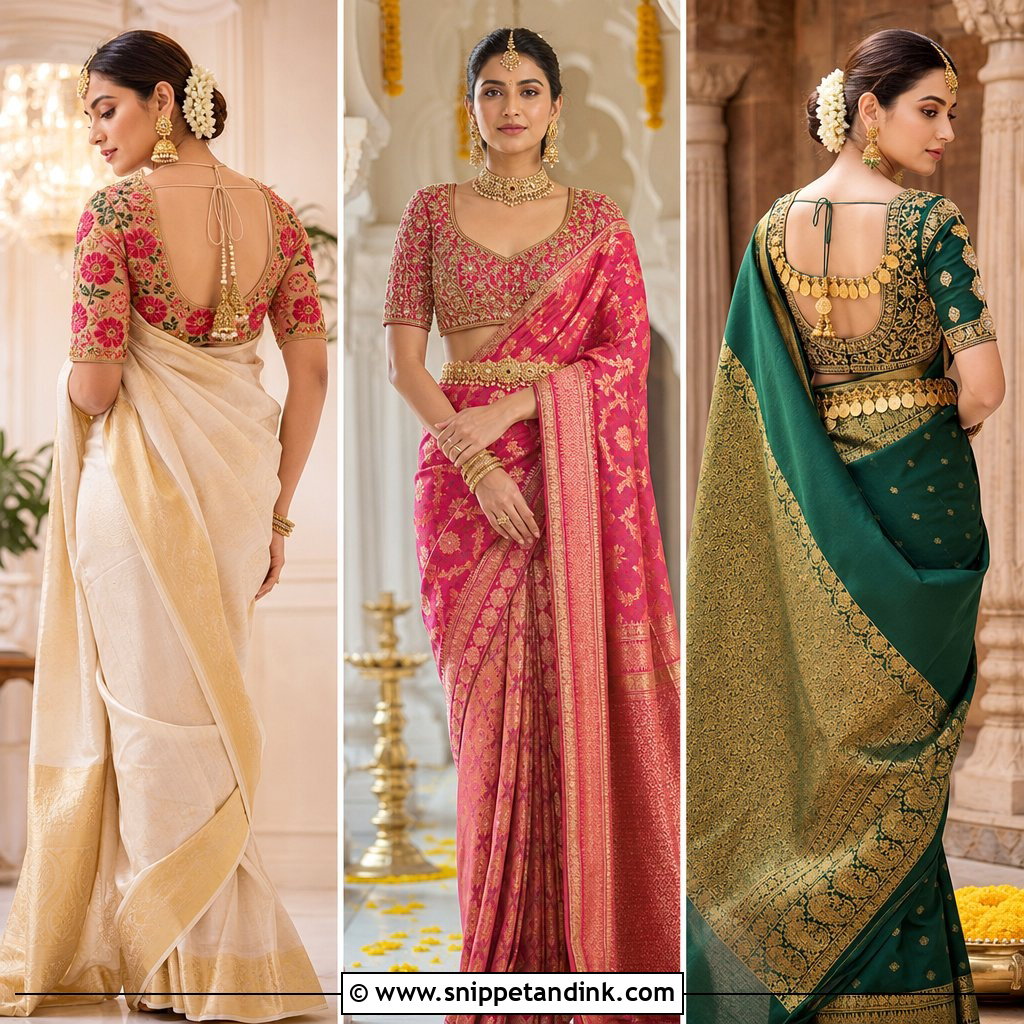
Aari work is done with a hooked needle on a frame, which gives fine, even chain stitches and lets an artisan follow floral vines, paisley borders, temple patterns or peacocks precisely. It’s also where personal details go, from initials to a small motif that means something to the family. Red, gold, orange, pink or green silk sarees suit it. The sleeves and back panel show the work best, so I’d pin the pallu slightly tighter than usual to keep the back visible. Layered gold necklaces, bangles, anklets and a flower bun complete it.
6. Maggam Work Blouse With Pattu Saree
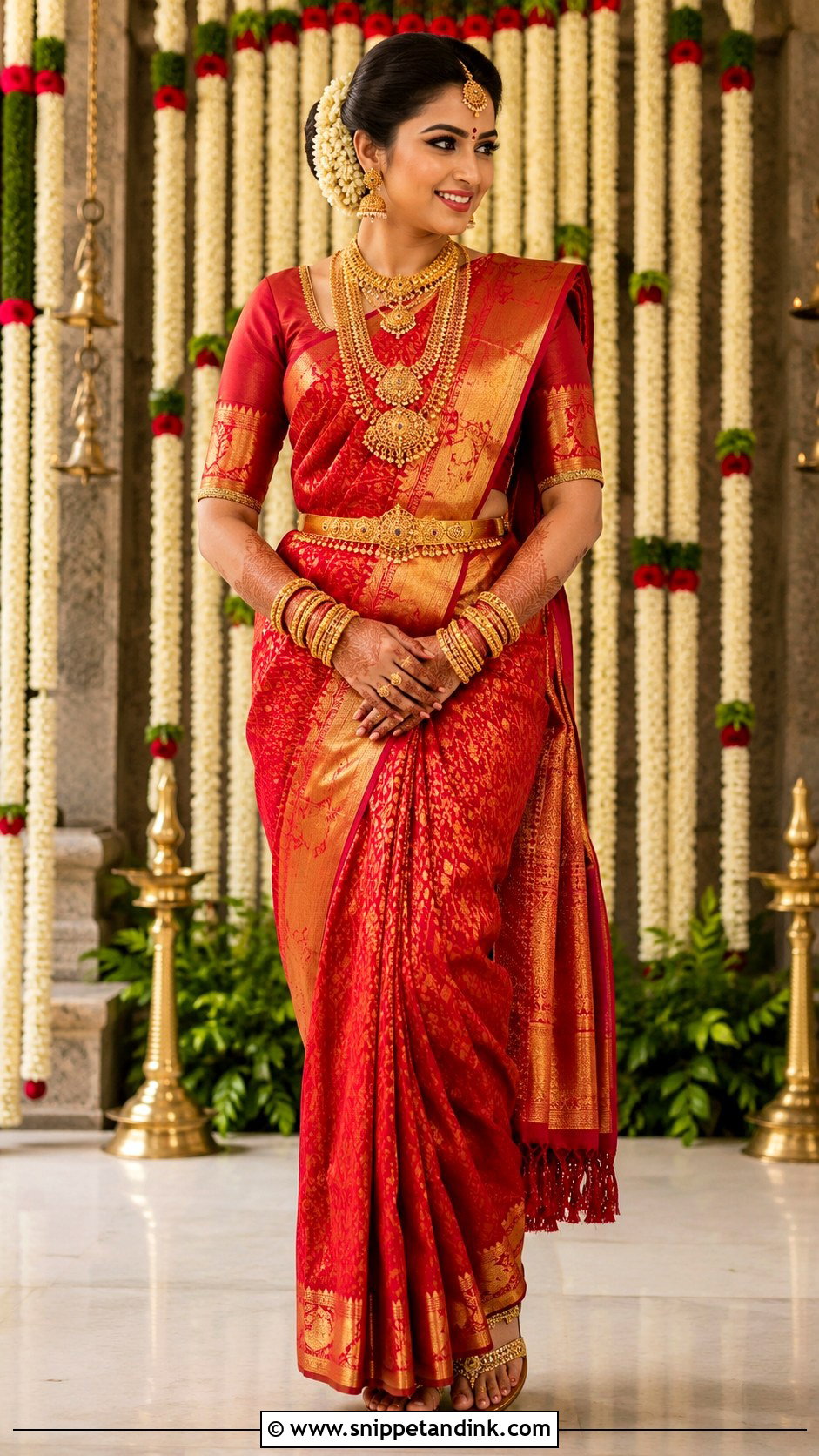
Maggam is the Telugu name for the frame-based embroidery that layers beads, stones, zari, pearls and threadwork around the neckline, sleeves and back. Pair it with a traditional pattu saree in gold, red, green, purple or coral. Temple jewelry, a vaddanam waist belt, bangles and flowers in the hair complete it. My rule for maggam is one focal point, heavy sleeves or a heavy back, not both. A blouse covered everywhere looks crowded once the jewelry goes on, and it gets uncomfortably warm.
7. Embroidered Elbow Sleeve Blouse For Wedding
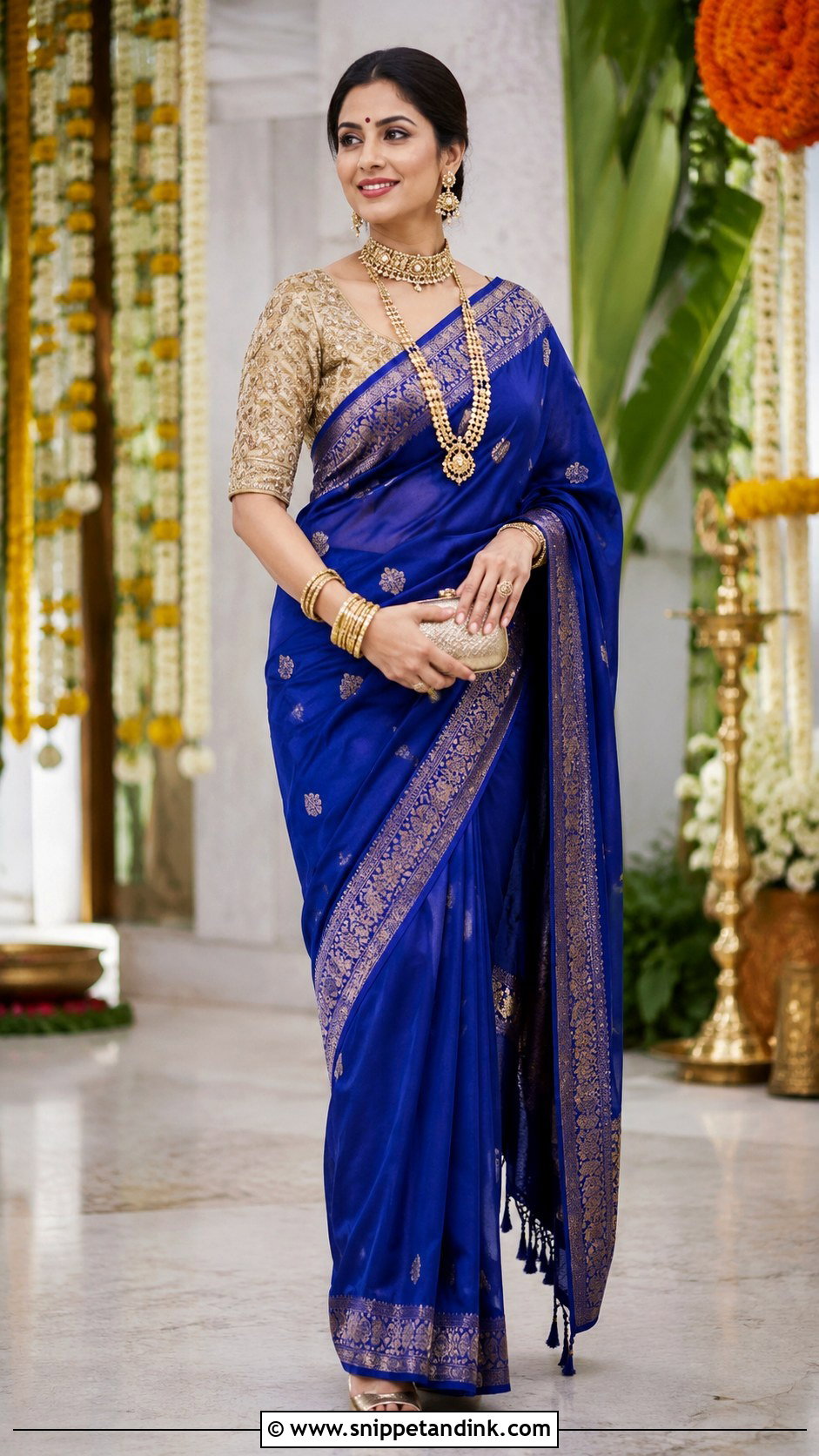
Elbow sleeves are the length I recommend most often. They cover the upper arm, leave the wrists free for bangles and give enough room for embroidery without bulk. Silk, organza, Banarasi or Kanjivaram sarees all suit it, with floral embroidery, zari borders or small beads on the sleeve and a cleaner bodice. Make sure the sleeve ends just above the elbow crease, not on it; a sleeve sitting on the joint creases and pulls every time you bend your arm. A choker, long necklace, bangles and heeled sandals finish it.
8. High Neck Blouse With Traditional Saree
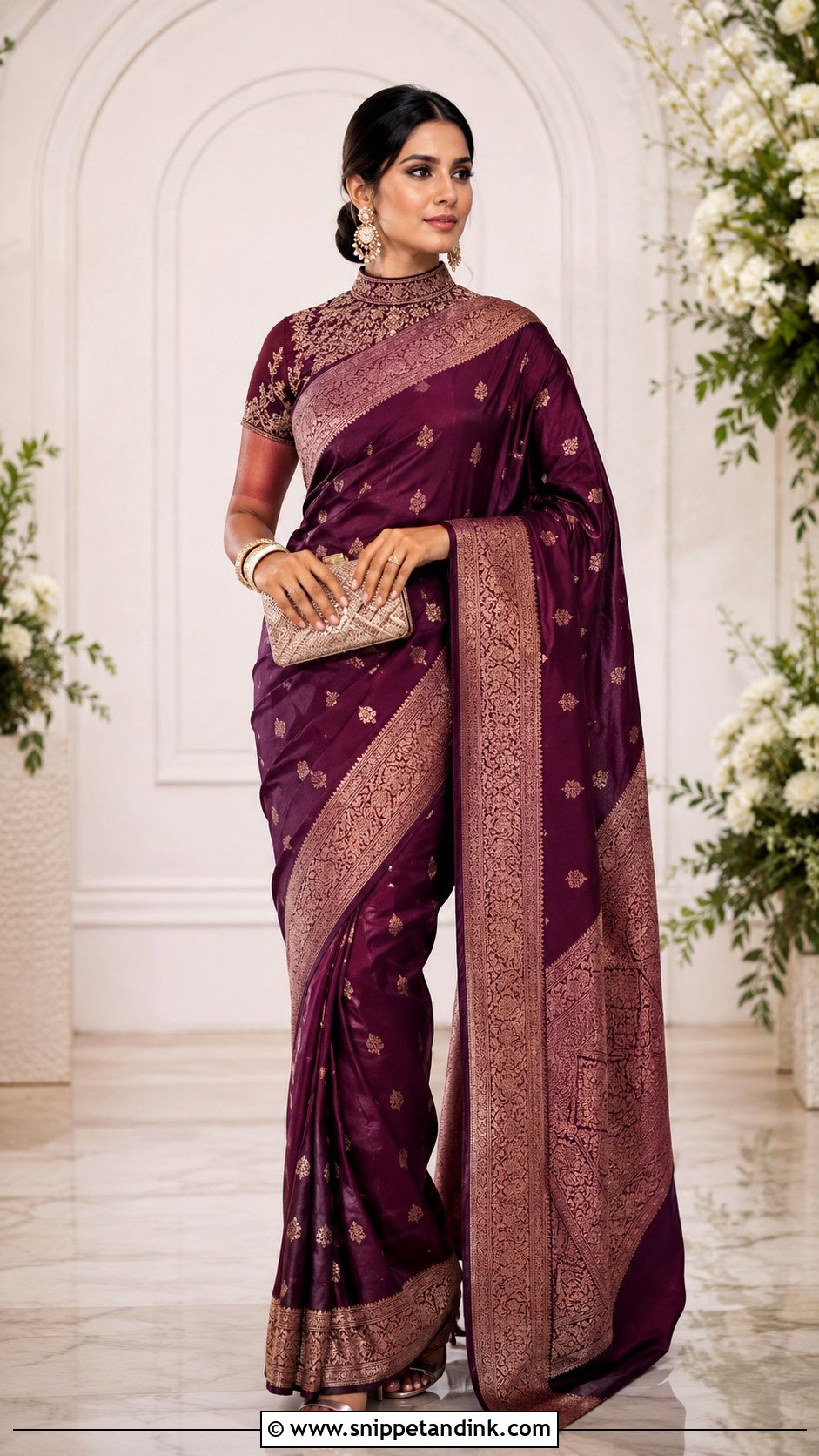
A high neck blouse frames the face and reads regal under Banarasi, silk, tissue or brocade, especially at evening receptions. Put the embroidery around the collar, shoulders or sleeves. With the neck covered, a heavy choker is too much, so let statement earrings, bangles and a sleek clutch do the work. I’d ask for a back opening with a hook at the collar, so you’re not pulling it over set hair. Keep a finger’s width of ease at the neck, too, because a tight collar is miserable after the first hour. A neat bun or soft waves keep it polished.
9. Boat Neck Blouse With Silk Saree
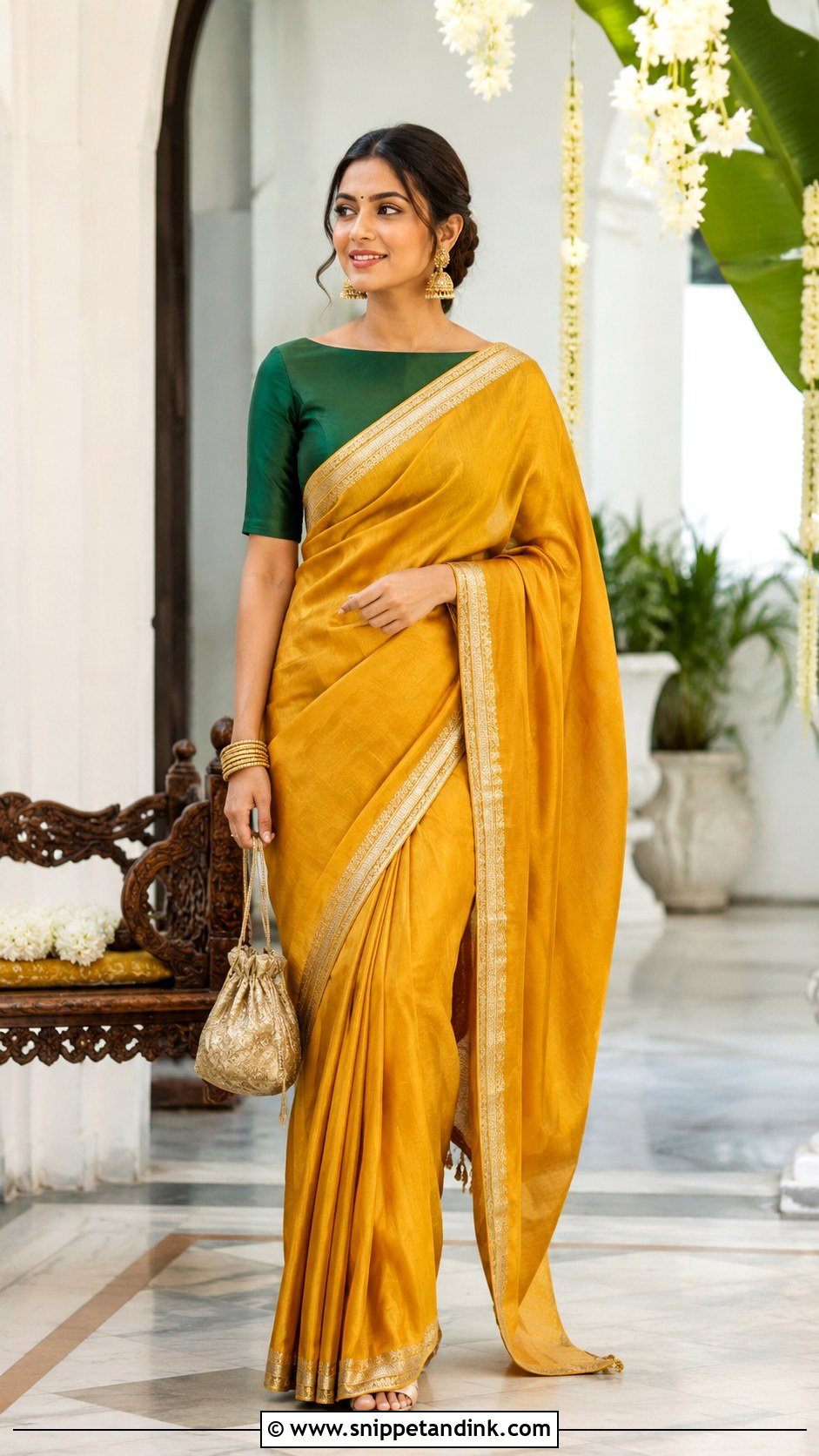
A boat neck blouse runs wide and straight across the collarbone, which gives a clean, traditional line. It suits silk sarees, lighter Banarasi and cotton-silk, and looks best with elbow or three-quarter sleeves. Zari edging or small thread motifs near the neckline add detail. It balances a heavy saree border well. Boat necks can slip toward the shoulder edge on narrow frames, so I add a small bra-strap holder inside each shoulder. Drop earrings, bangles, a small bindi and a potli bag suit bridesmaids, sisters and guests.
10. Square Neck Blouse With Wedding Saree
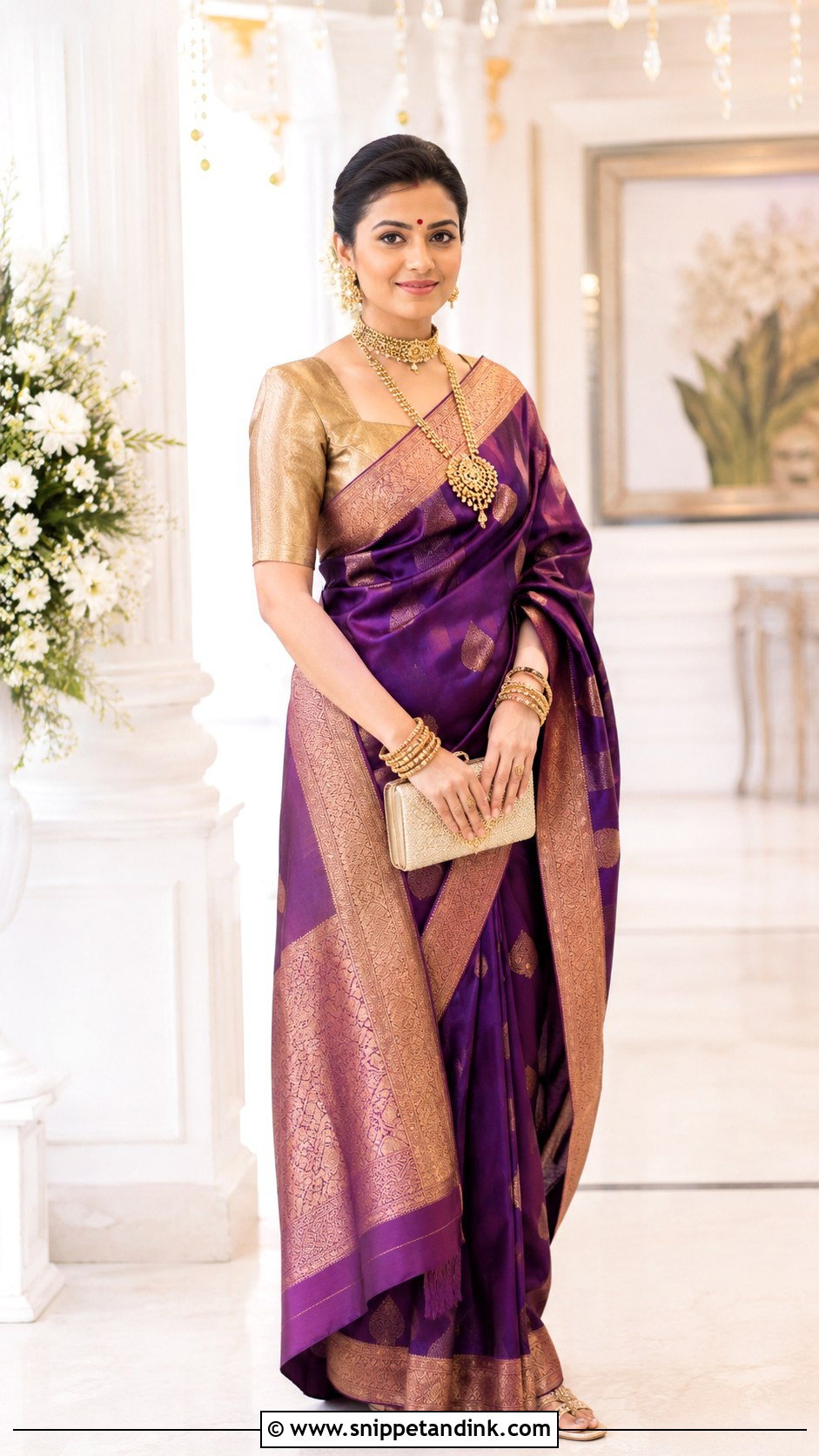
Square necks frame jewelry well, which is why they’ve become a favourite under Kanjivaram, Paithani, silk and Banarasi. A short gold choker, a pearl set or a kundan piece all sit neatly inside the straight line. Elbow sleeves with zari trim keep it rooted in tradition. At a fitting I check that the corners lie flat against the chest; if they lift when you sit, the neckline needs a narrow facing or a little interfacing. Bangles, a bindi, embellished sandals and a neat hairstyle complete it.
11. Round Neck Blouse With Bridal Saree
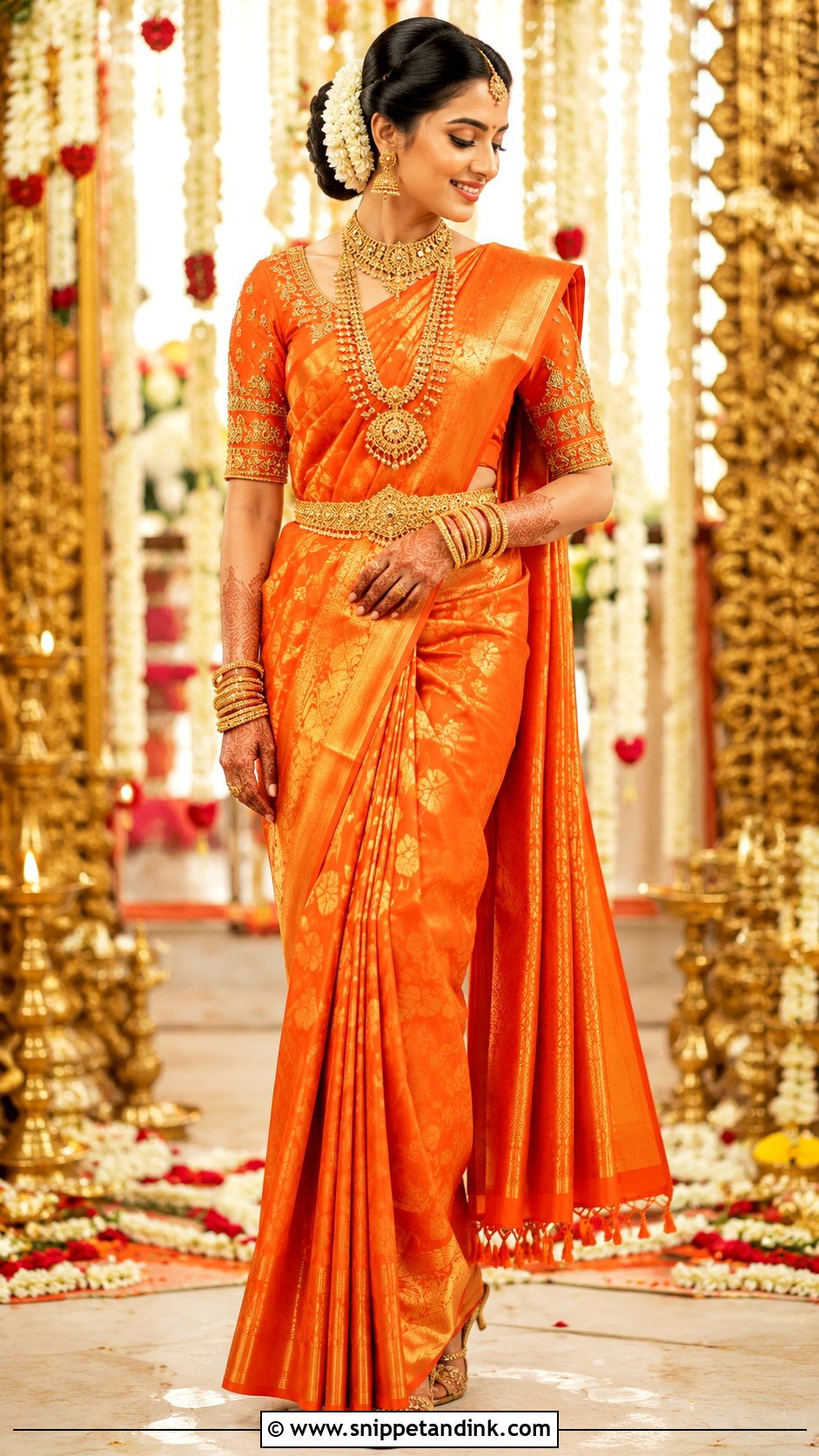
The round neck is the safest blouse for a bridal saree. It never competes with the drape, and it’s comfortable through long ceremonies. Pair a heavy silk with a well-fitted round neck in matching or contrast fabric, then put the embroidery on the sleeves or back. Gold jewelry, layered necklaces, bangles and a flower bun complete it. Depth is the decision here: a slightly deeper round shows a layered necklace properly, while a high round suits a single choker. Decide on the jewelry before the tailor cuts the neckline.
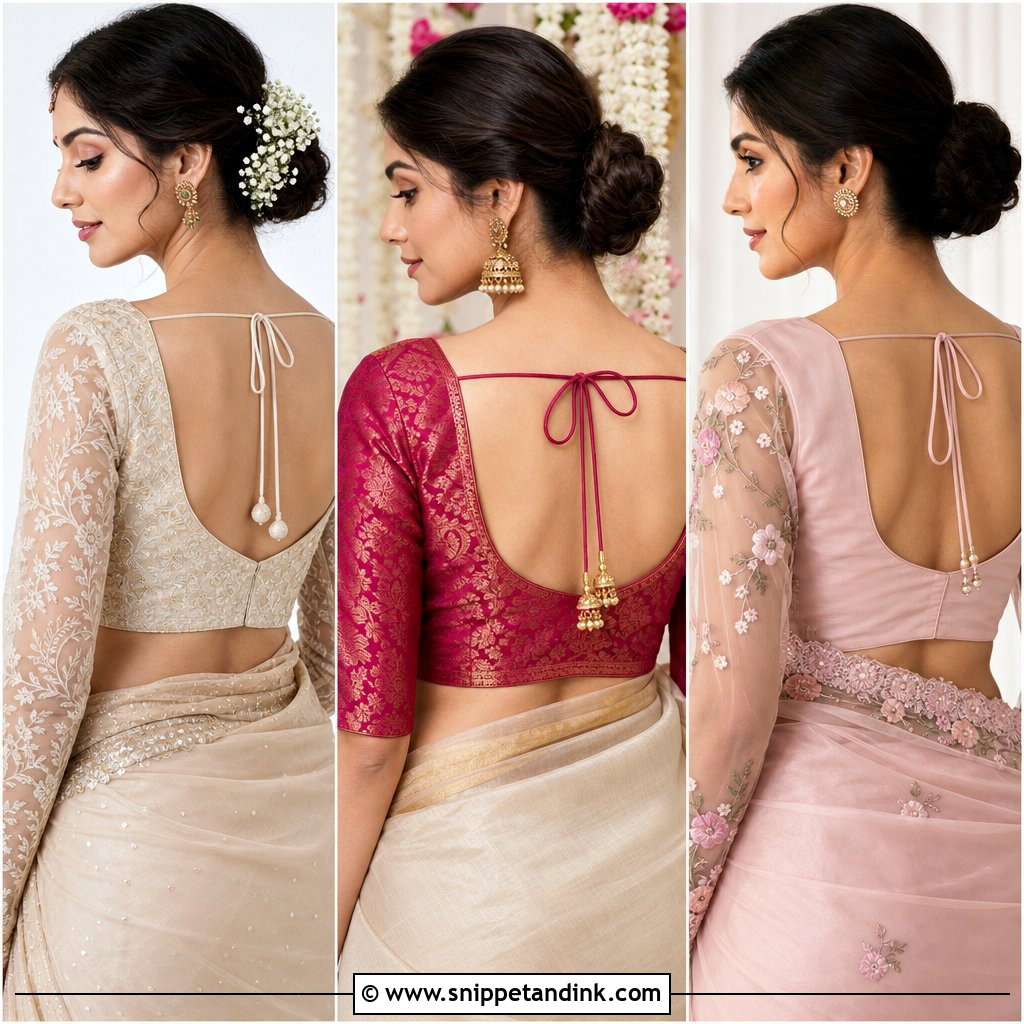
12. Deep Back Blouse With Dori For Wedding
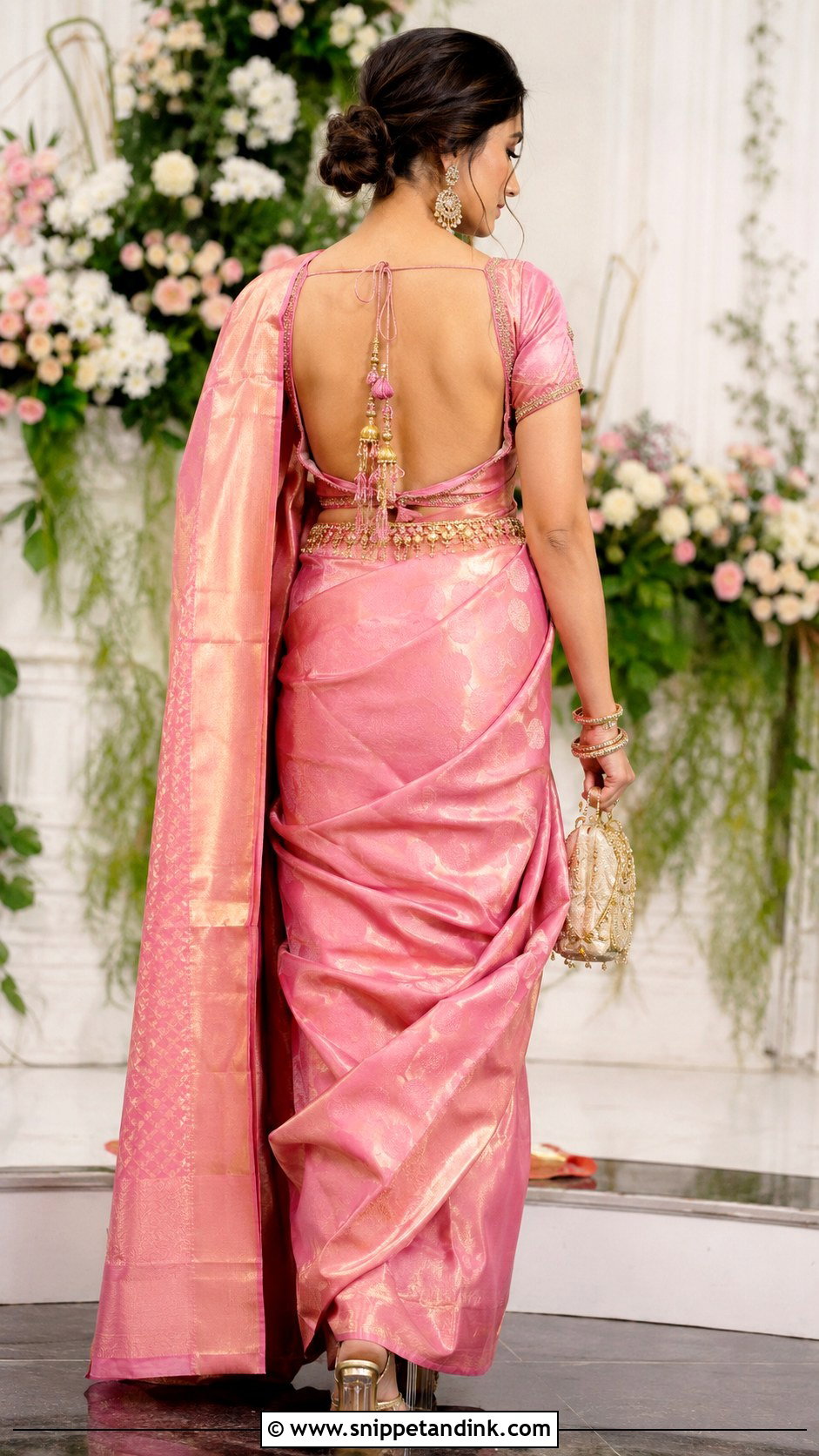
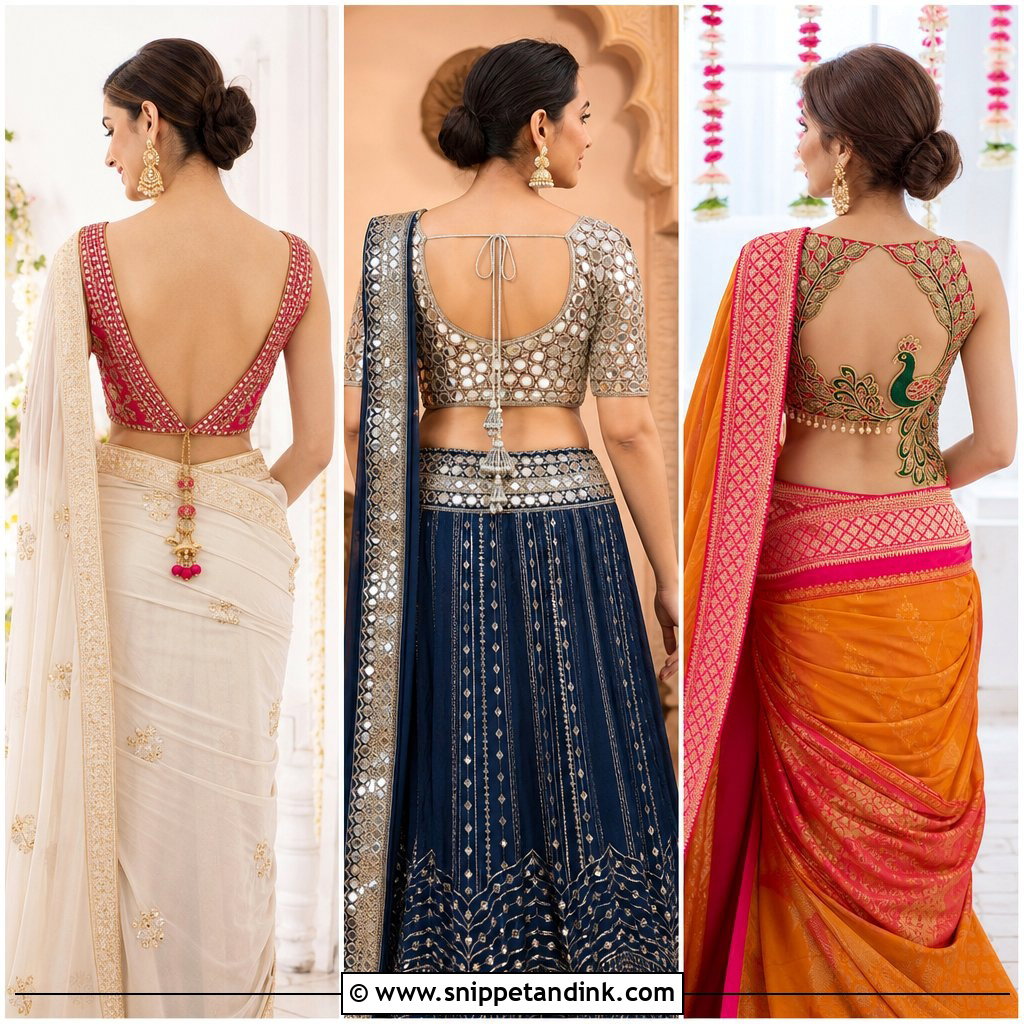
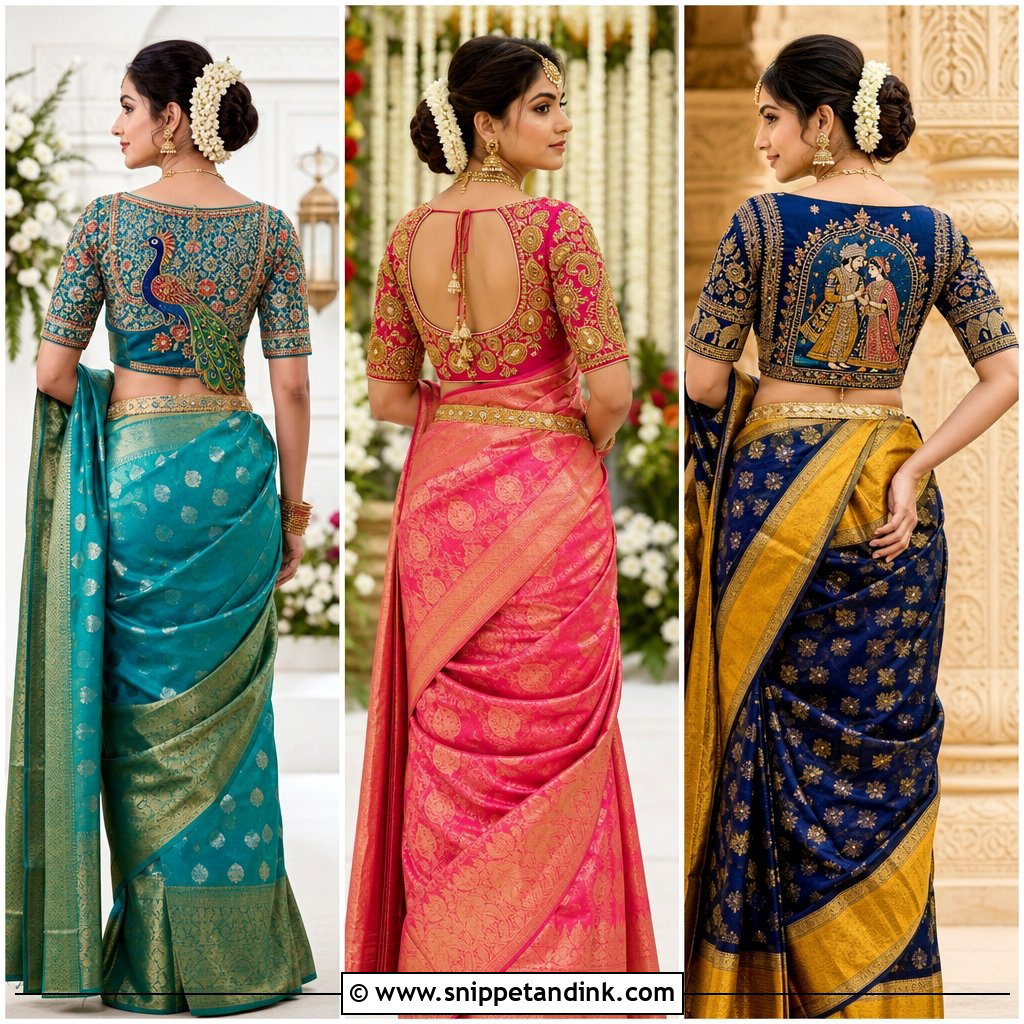
A deep back with dori ties shows best under a neatly pinned drape. Pair it with silk, Banarasi, georgette or Paithani, and add potli tassels, latkans, pearl strings or zari tie-ups for movement. Keep the front supportive, since a deep back gives the blouse less to hold onto. I build in padded cups or a firm lining at the front and pull the dori to fit, so the blouse stays put when you dance. Statement earrings, bangles, a waist belt and a soft bun or braid suit receptions, sangeet nights and guest looks.
13. Potli Button Blouse With Saree
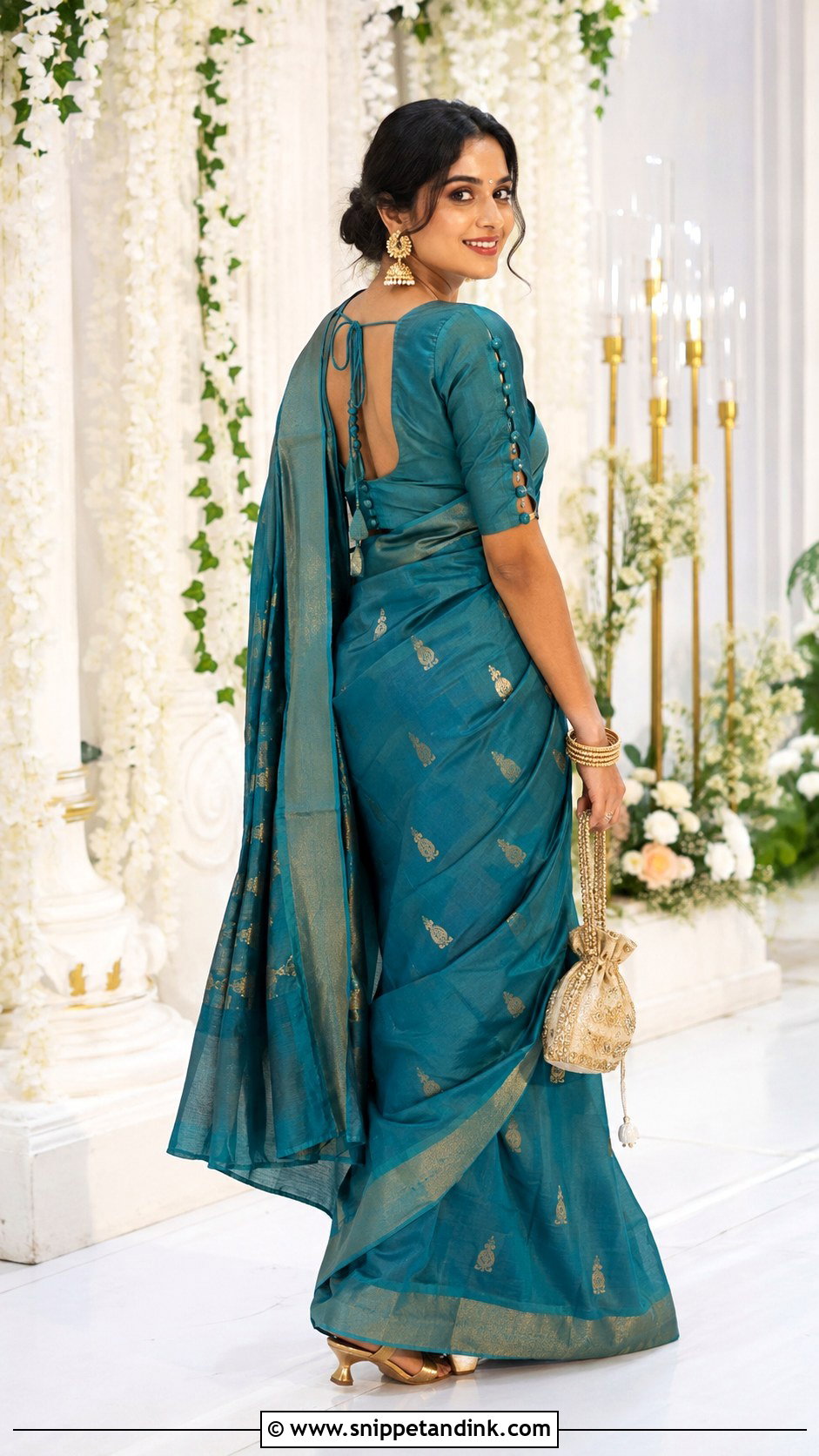
Potli buttons are small round fabric-covered buttons, and a row of them adds texture without heavy embellishment. They can run along the back, the sleeve or a front placket. Silk, cotton-silk, Banarasi or organza sarees suit them, especially in jewel tones, brocade or raw silk. Real potli closures with loops take longer to fasten than hooks, so I usually sew them as decoration over a hidden zip or hooks. Jhumkas, bangles, a small bindi and classic sandals complete it, and contrast or zari-piped buttons make the detail stand out.
14. Brocade Blouse With Plain Silk Saree
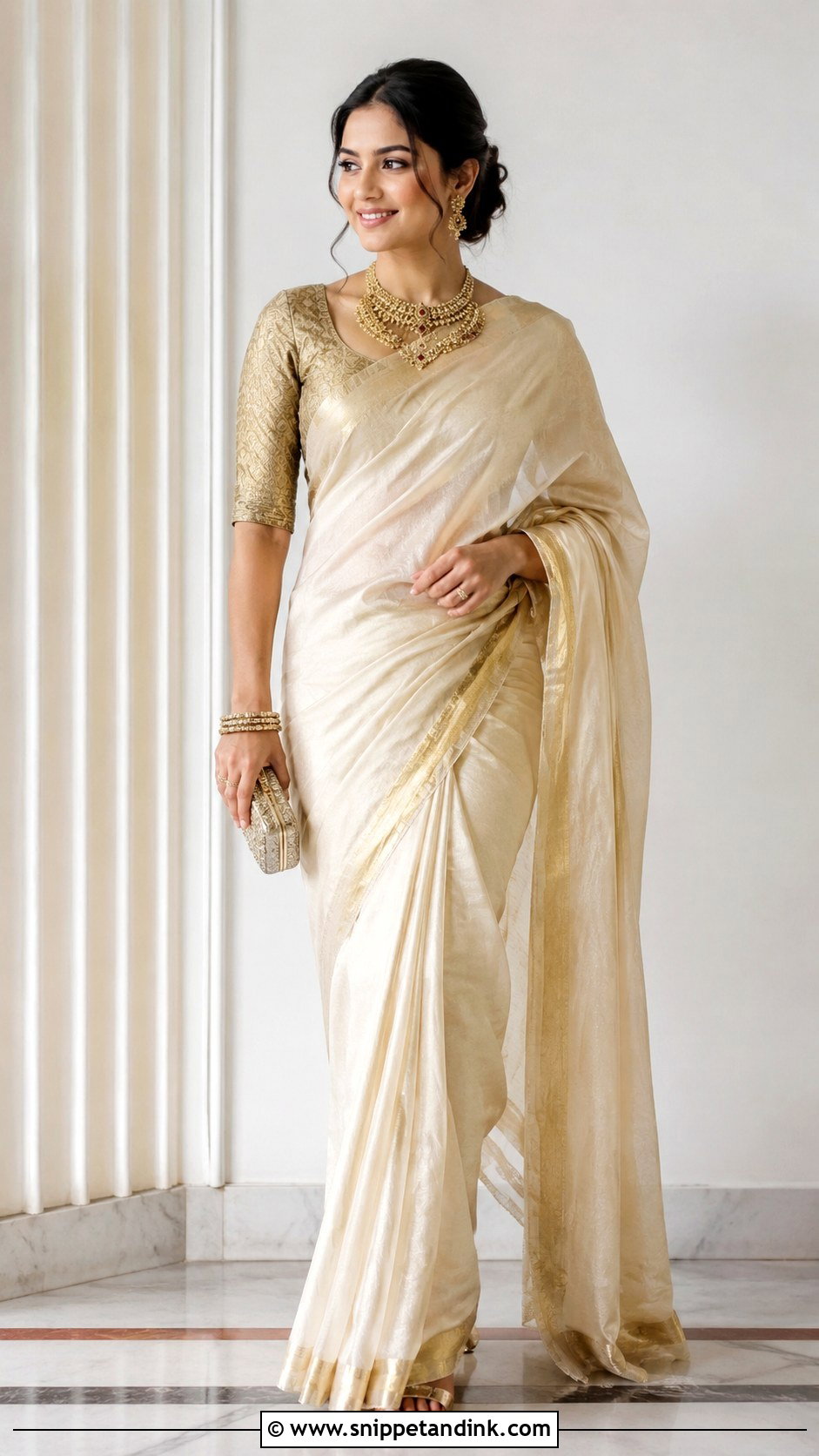
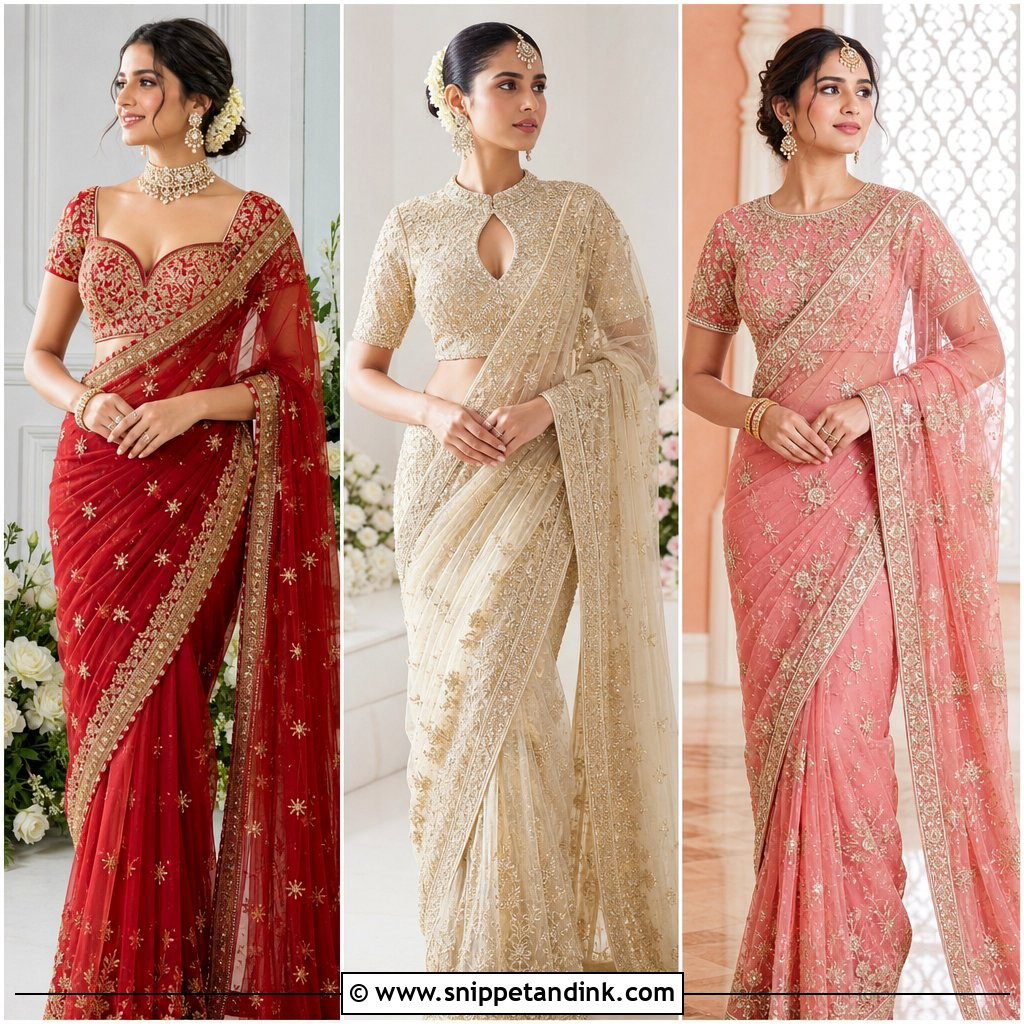
Pairing a plain silk saree with a brocade blouse is the quickest way to make an outfit look rich. The saree stays clean while the blouse brings pattern and shine. Gold, antique, copper or jewel-toned brocade with elbow sleeves gives the traditional finish. It’s also how I revive an older silk saree for a new wedding: a fresh brocade blouse changes the whole impression for the cost of the fabric and stitching. A statement necklace, bangles, a clutch and embellished heels finish it.
15. Contrast Blouse With Kanjivaram Saree
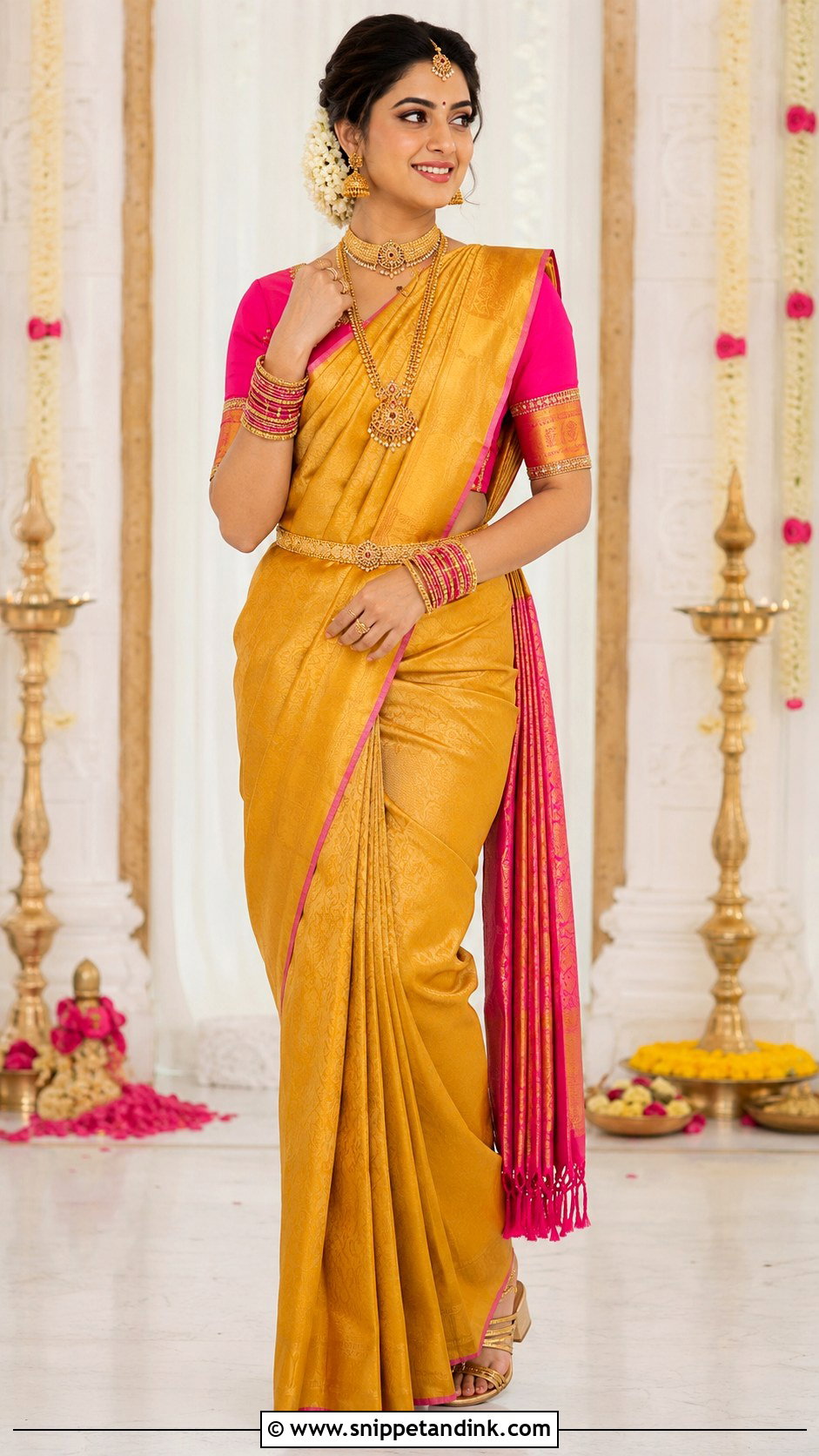
Contrast blouses are a long tradition with Kanjivaram: red with green, purple with gold, mustard with pink, teal with magenta. The contrast lights up the saree border and gives strong colour definition in photos. Choose elbow sleeves, zari piping and a simple neckline. The best contrast usually comes from inside the saree itself, so I hold the blouse fabric against the border and the pallu, not only the body colour. Temple jewelry, bangles, a bindi, flowers and a waist belt for formal events finish the look.
16. Gold Blouse With Red Wedding Saree
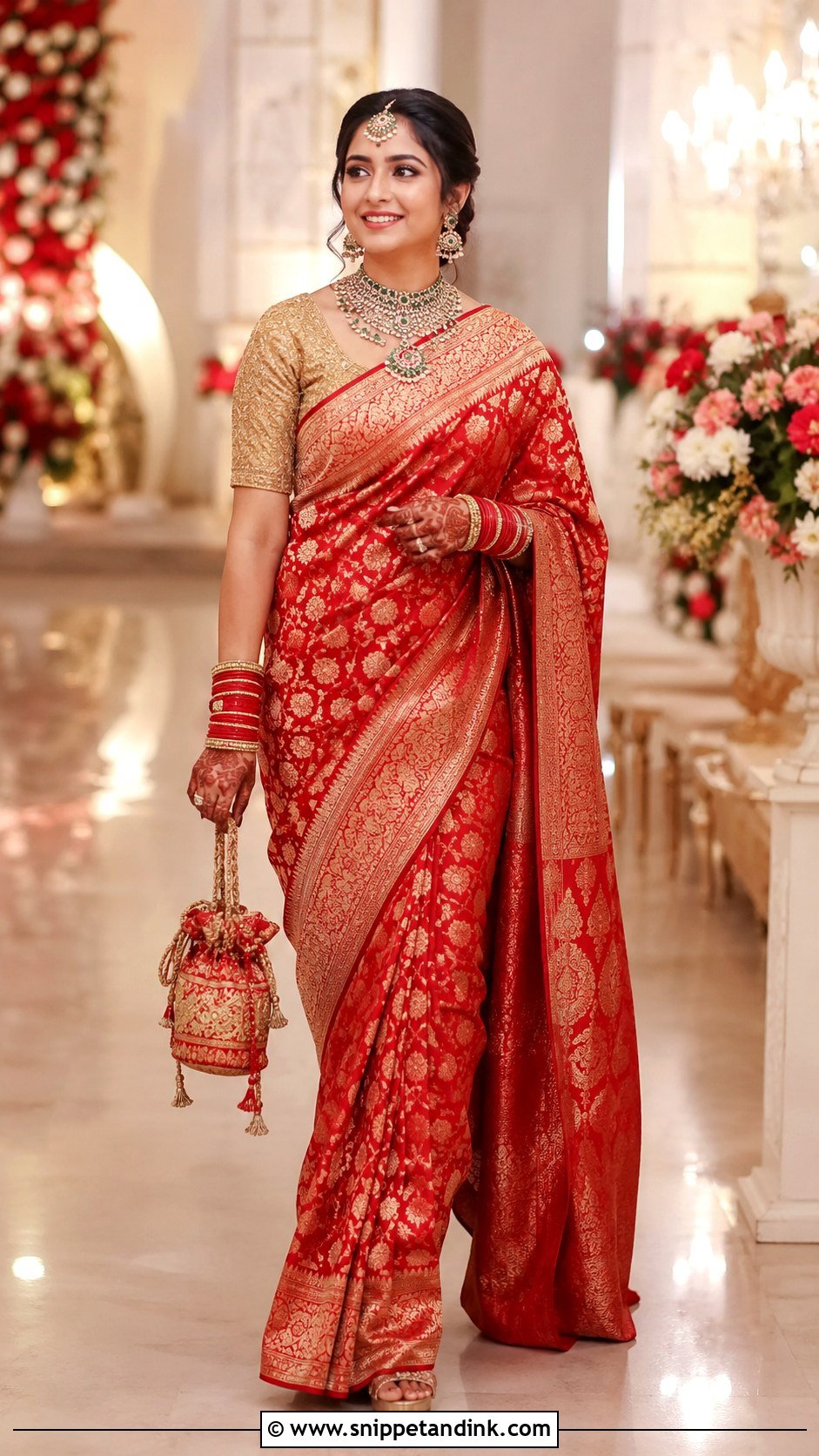
Red saree, gold blouse: this pairing reads bridal in almost every region. The blouse can be brocade, tissue, raw silk or embroidered fabric, depending on how grand you want it, under a red silk, Banarasi or Kanjivaram. Because the colours are already rich, keep the cut neat with a round neck, square neck or elbow sleeve. Gold tissue can look flat in daylight and flare in flash, so I’d check it in both before deciding. Kundan or temple jewelry, red and gold bangles, a potli bag and embellished sandals complete it.
17. Velvet Blouse With Traditional Saree
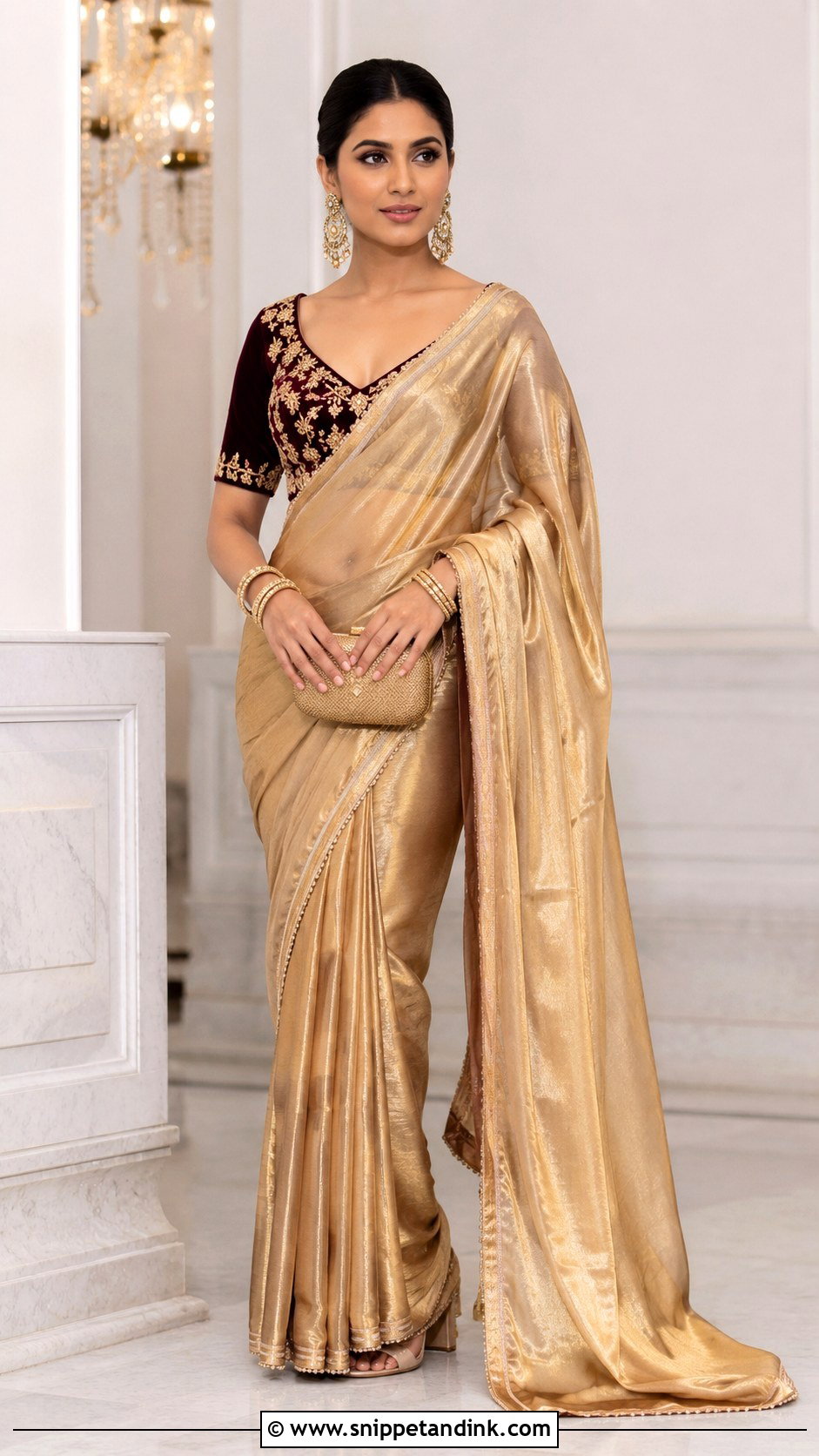
A velvet blouse brings depth to silk, Banarasi, tissue or organza sarees, especially at winter weddings and evening functions. Maroon, bottle green, navy, plum and a dark purple all look rich with gold embroidery. Pair it with a zari-bordered saree, kundan earrings, bangles, a clutch and heeled sandals. Velvet is warm and has a pile that crushes when pressed, so it’s a poor choice for a hot afternoon ceremony and shouldn’t be ironed directly. Keep the fit clean and avoid bulky layers.
18. Puff Sleeve Blouse With Wedding Saree
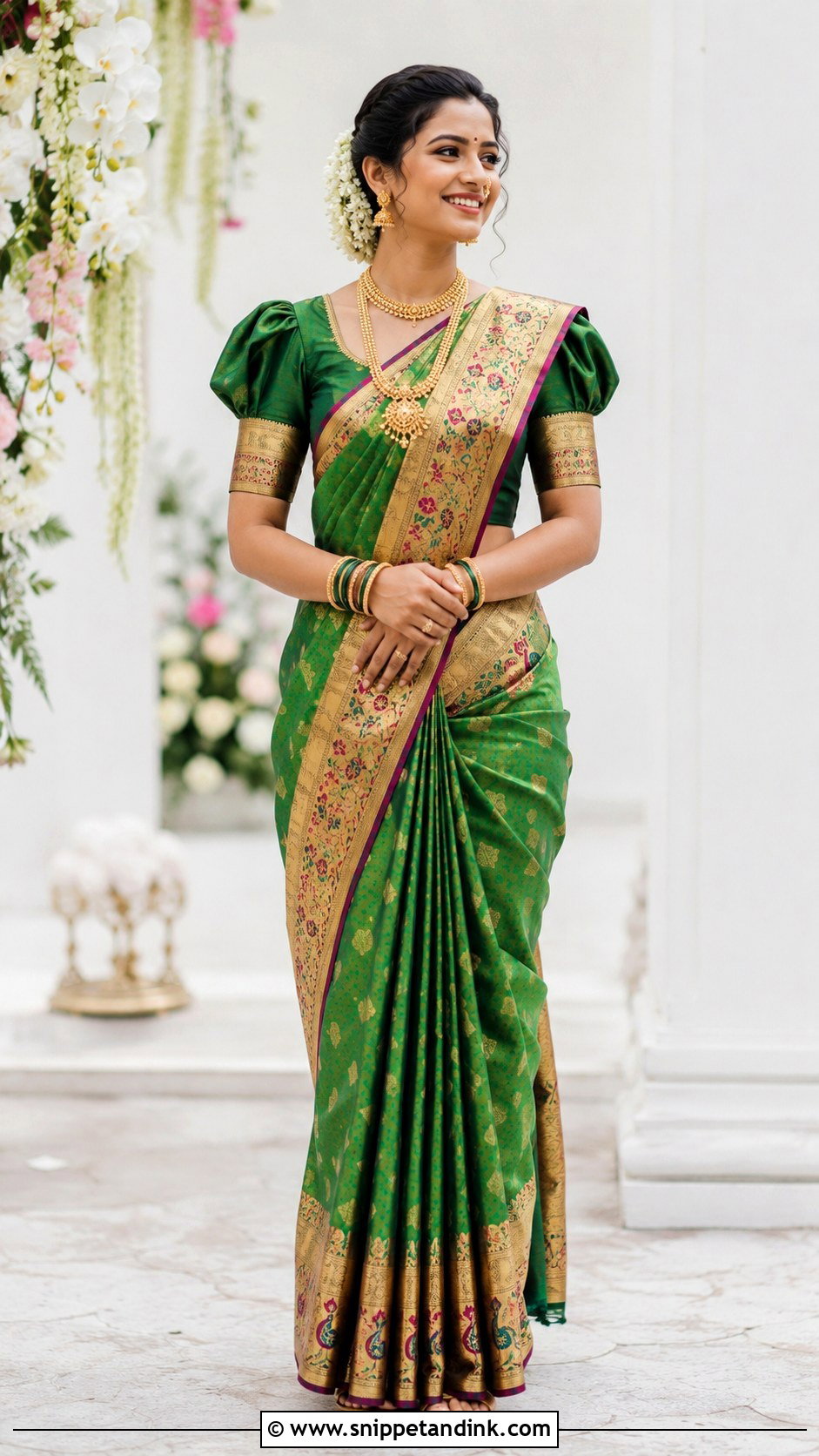
Puff sleeves give a soft vintage touch to silk, Paithani and heirloom sarees. They can be short and round or longer with a cuff for structure. Bright festive colours, gold jewelry, bangles, a bindi and a neat braid or bun suit the look for bridesmaids, sisters and guests. Keep the puff moderate. A large sleeve fights the pallu on the draped shoulder and gets crushed under it, so I sometimes cut the pallu-side sleeve slightly smaller so both look even once the saree is on.
19. Full Sleeve Blouse With Silk Saree
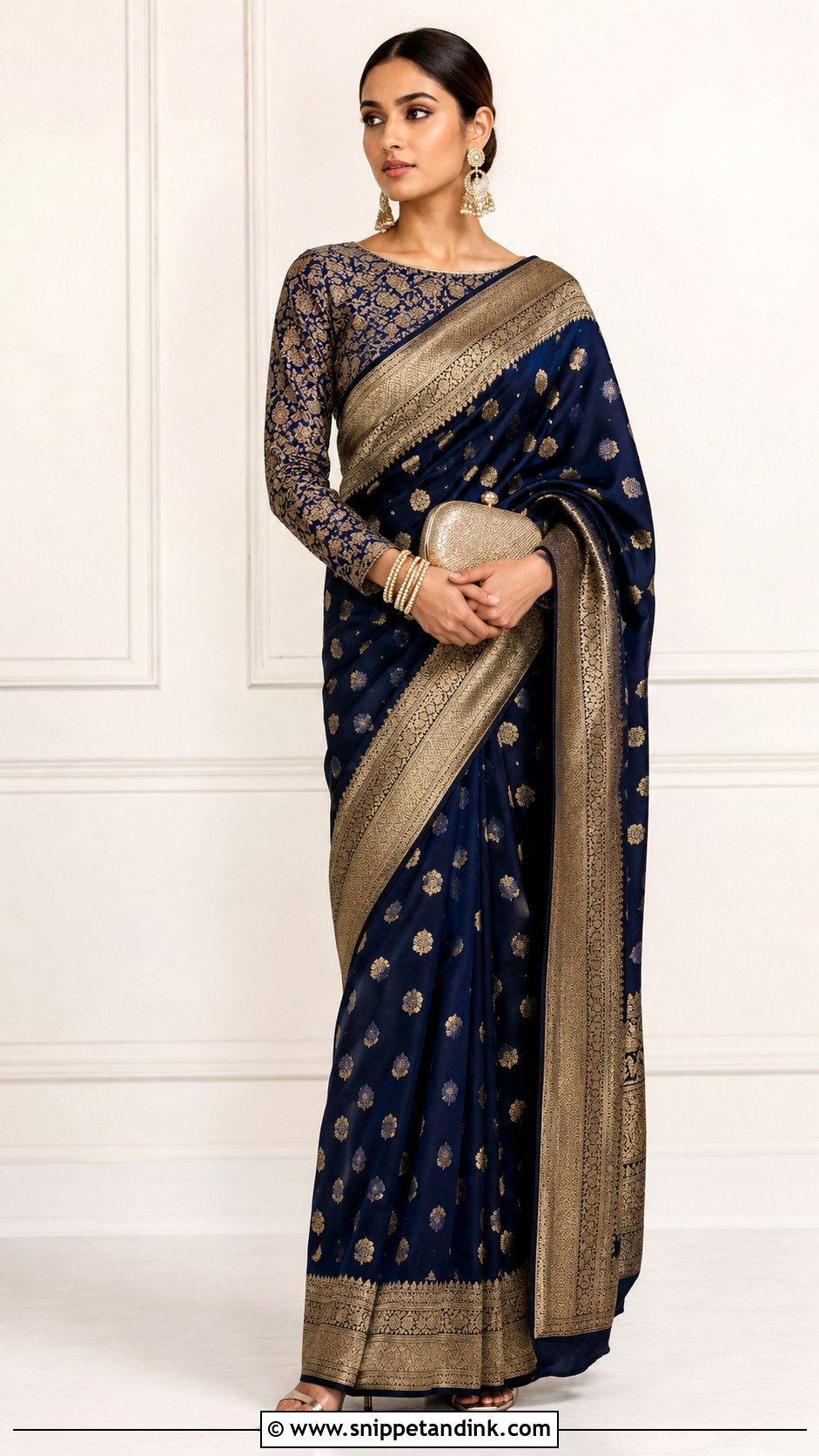
Full sleeves suit cooler weather, formal ceremonies and anyone who wants coverage. Sheer embroidered sleeves, zari borders, brocade or fine threadwork keep them festive. Banarasi, Kanjivaram, tissue or plain silk sarees all work, with statement earrings, bangles, a clutch and sleek heels. With the sleeves as the feature, keep the neckline simple. I’d make the sleeve slightly roomy at the elbow and narrow at the wrist; a fully tight sleeve restricts the hands during rituals, and bangles won’t sit over a stiff cuff.

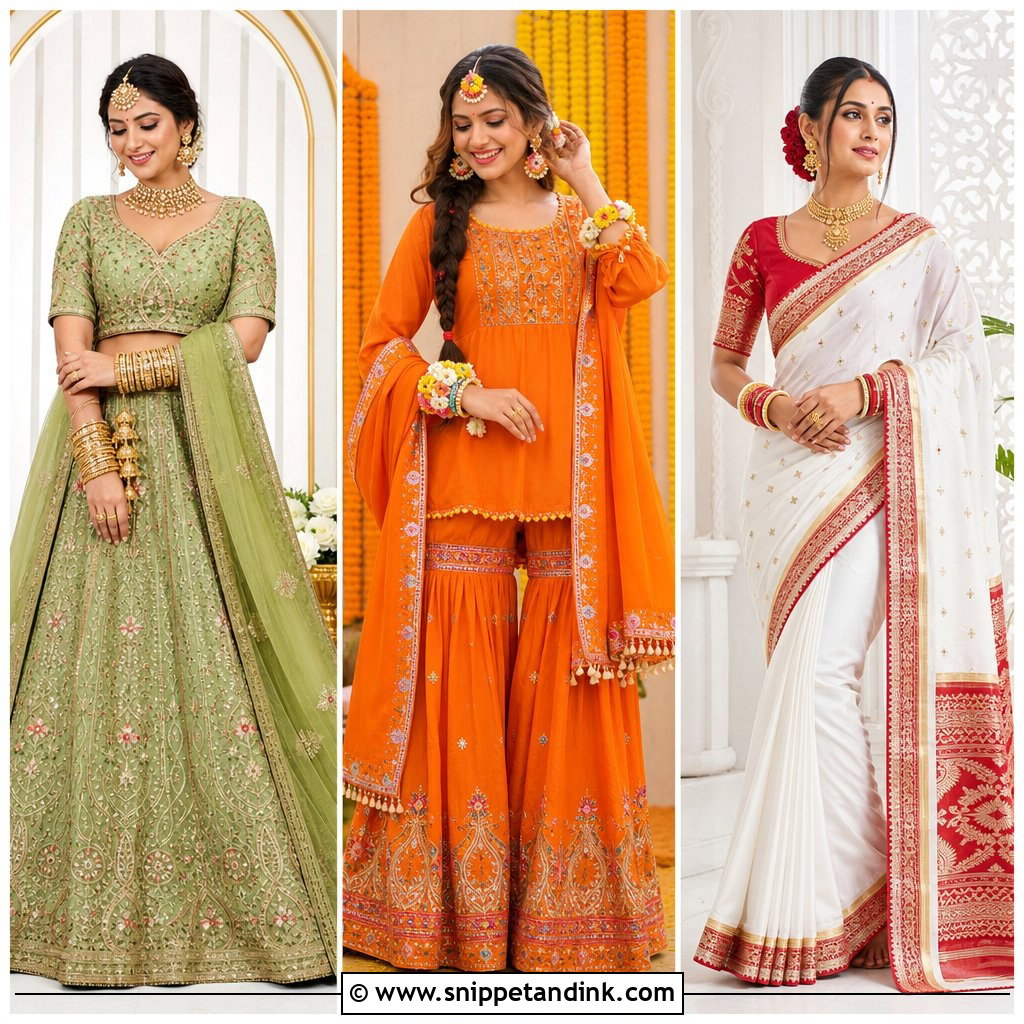


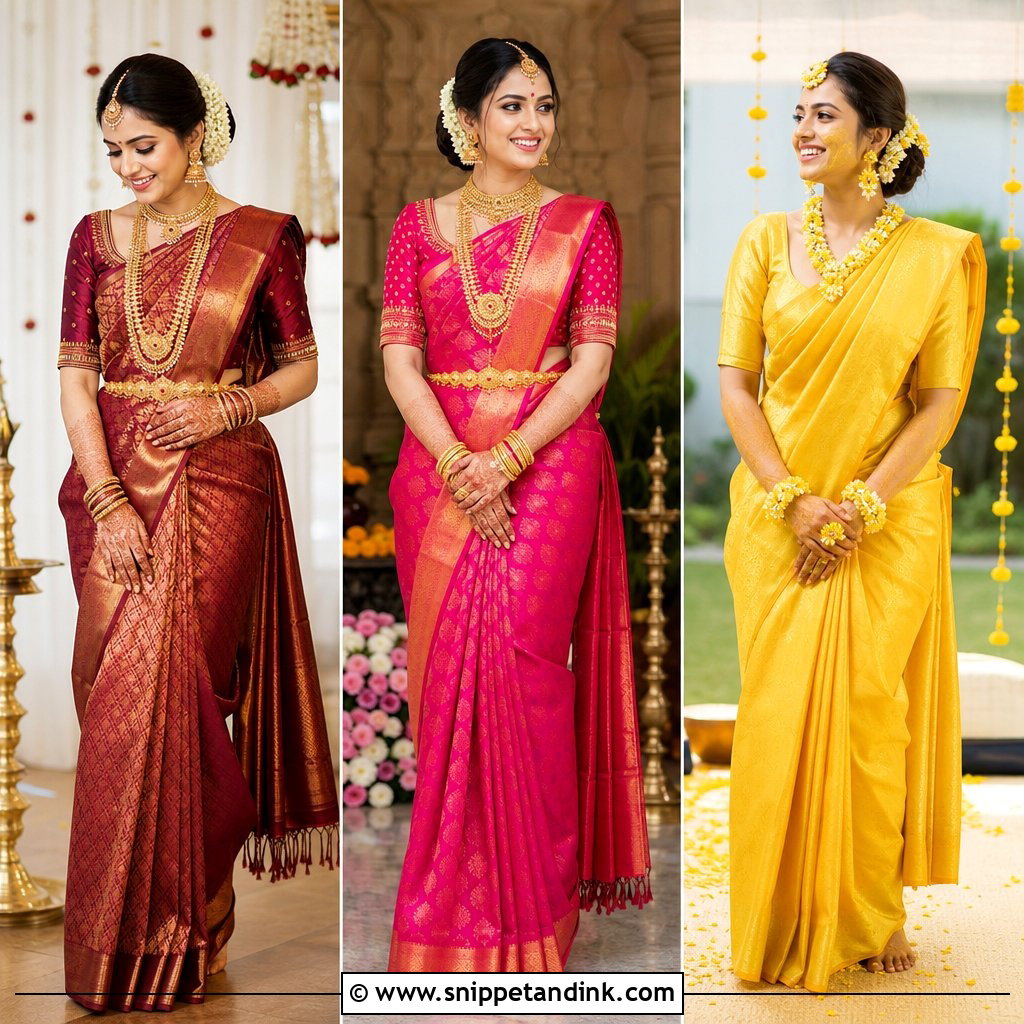
20. Half Sleeve Blouse With Traditional Saree
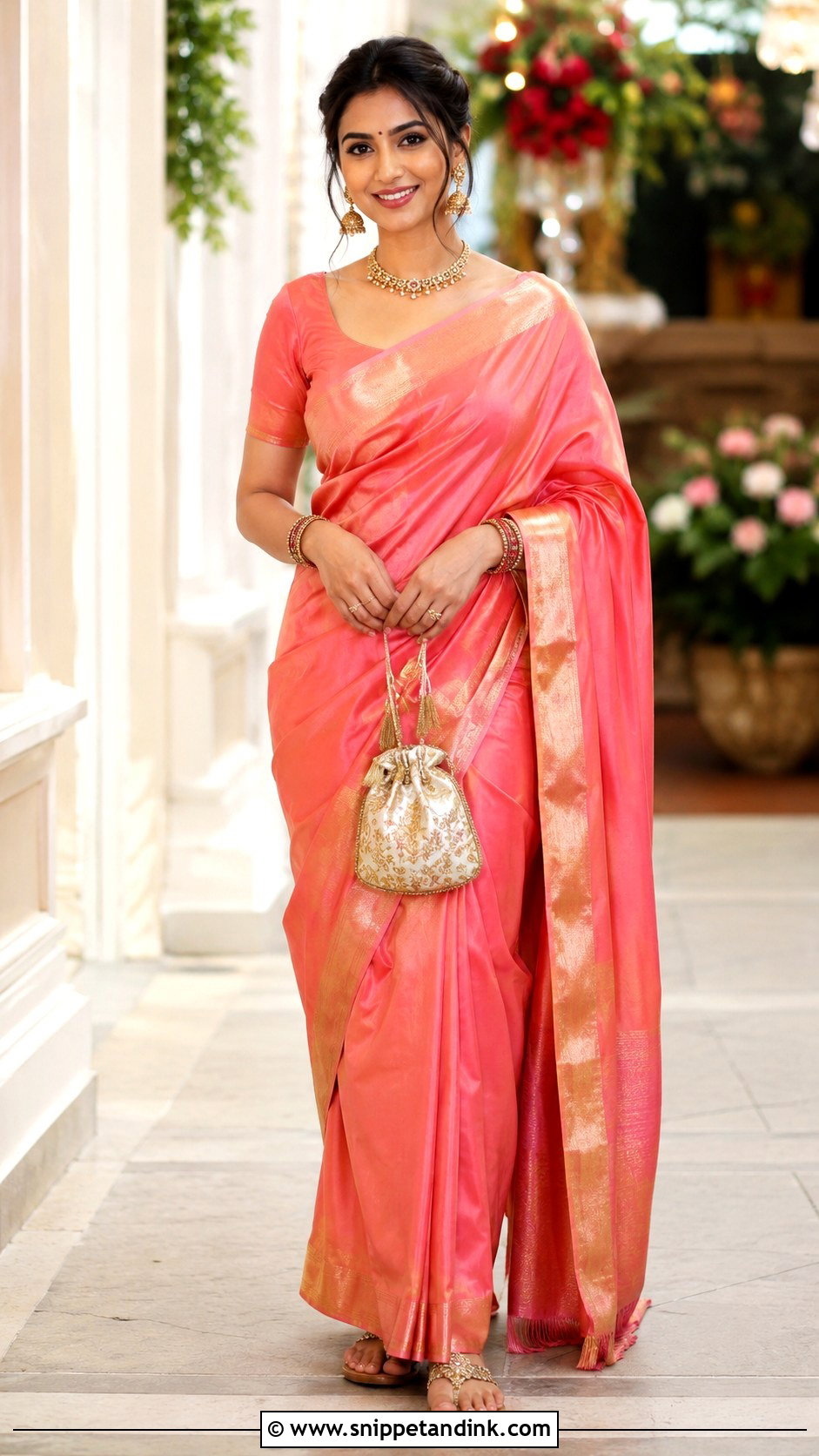
Half sleeves are the easiest to style and work with almost every saree, from silk and Banarasi to Paithani and cotton-silk. They’re comfortable for long functions and leave the forearms clear for bangles and hand jewelry. Zari piping, small motifs or border detail keep the blouse festive. If the saree is very ornate, a plain half-sleeve blouse is often the most elegant answer. Earrings, a necklace, bangles, a bindi and a neatly pleated pallu finish it for guests, bridesmaids and family members.
21. Mirror Work Blouse With Wedding Saree
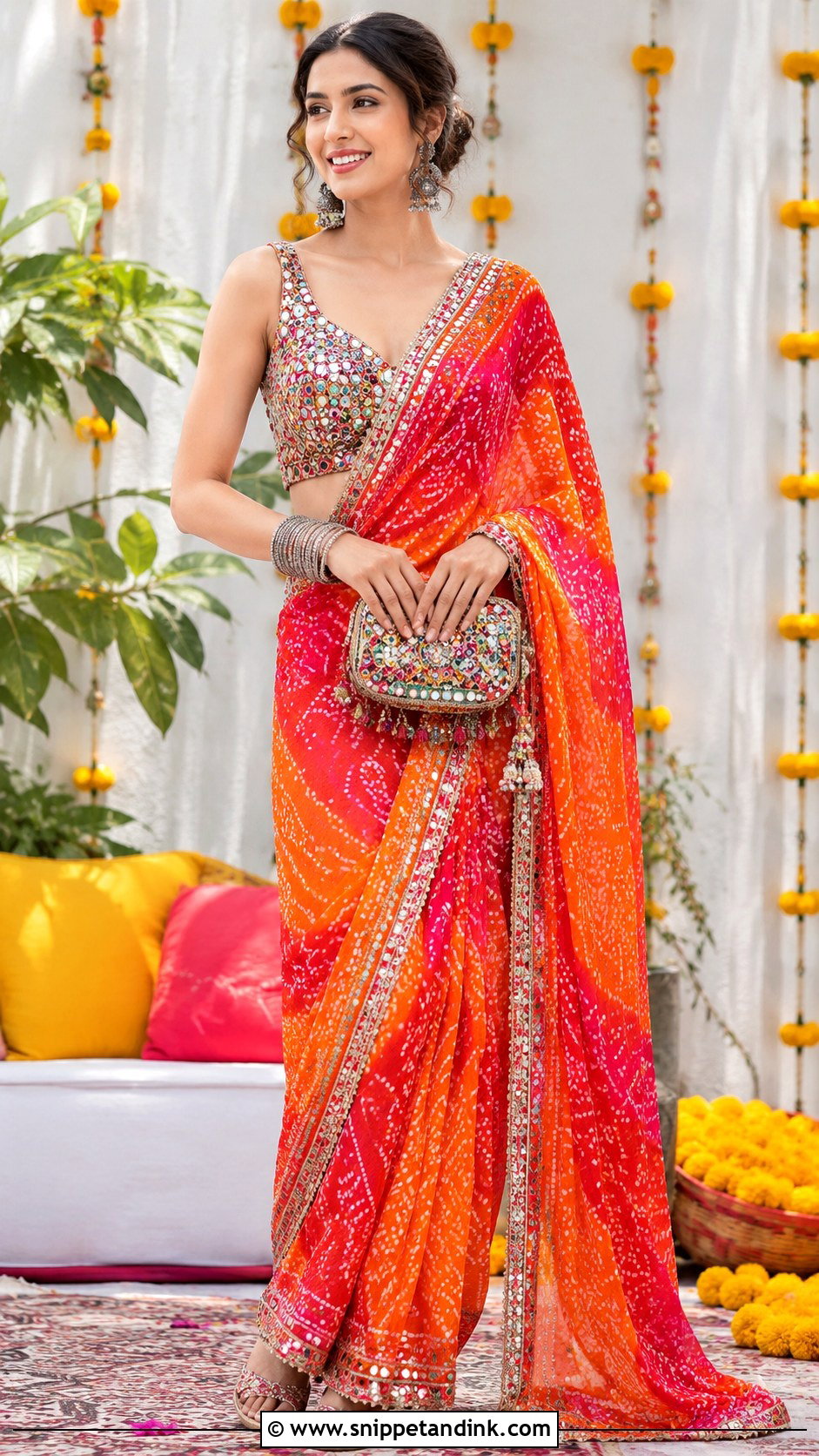
Mirror work catches light and moves, which makes it right for daytime ceremonies and pre-wedding functions like mehndi. It pairs with silk, georgette, chiffon or bandhani sarees; keep the saree rich but not busy. Mirror accents on the sleeves, neckline or back are enough. The small mirrors have hard edges under the stitching, so I always ask for a soft lining and avoid them at the inner arm. Oxidised jewelry, kundan earrings, bangles and embellished flats or heels finish it, with hair tied back so the work shows.
22. Kalamkari Blouse With Silk Saree
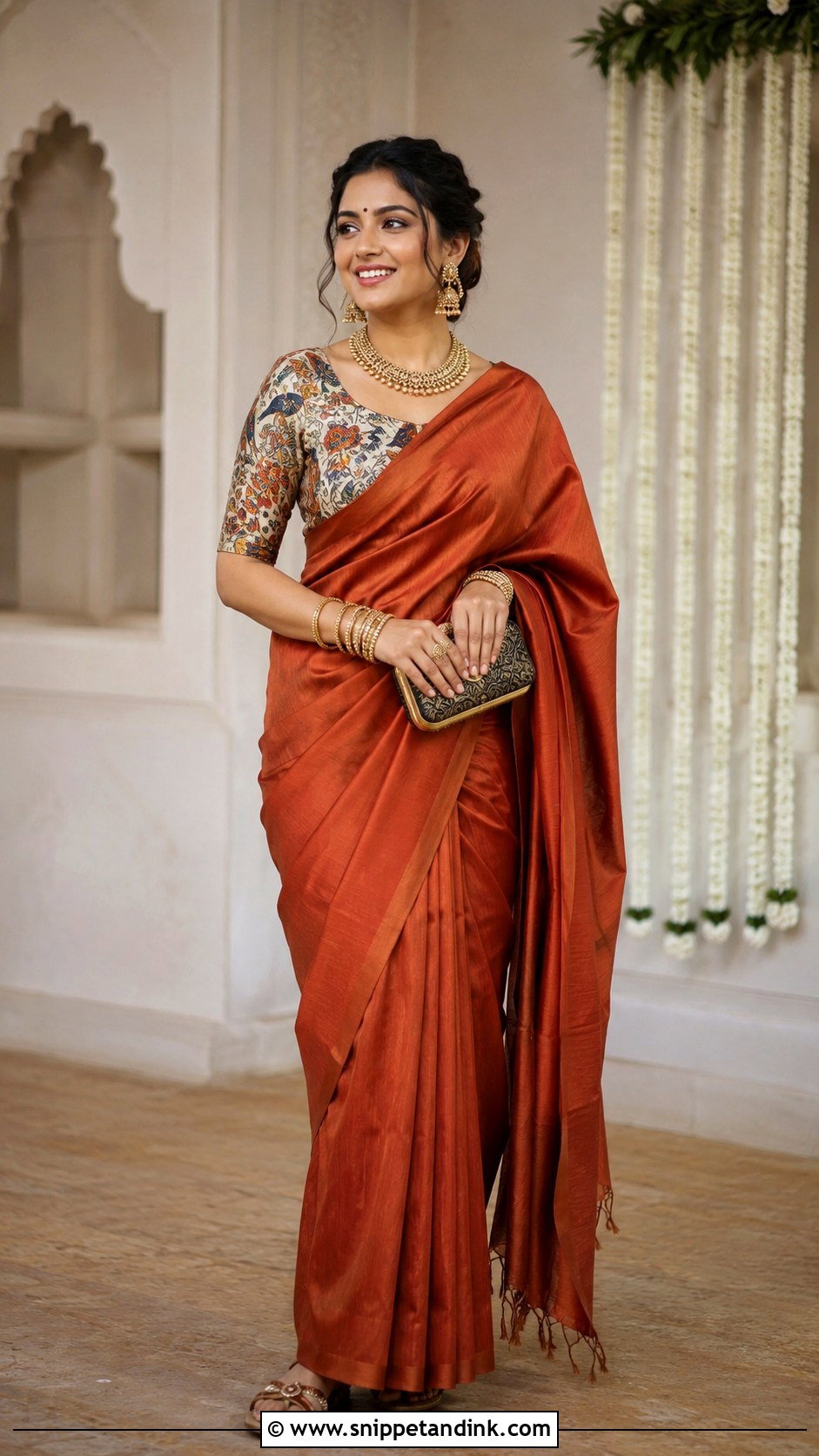
Kalamkari is hand-painted or block-printed with natural dyes, often showing florals, vines, birds or mythological scenes. A Kalamkari blouse gives a wedding outfit an artistic, heritage feel. Pair it with a plain silk, cotton-silk or muted Kanjivaram saree so the artwork stays the focus, and choose earthy tones like rust, indigo, mustard, maroon or cream. Natural dyes can bleed when wet, so this blouse should be dry-cleaned, and I’d keep it away from turmeric or haldi events. Antique gold jewelry, bangles, a bindi and a simple clutch suit intimate ceremonies.
23. Temple Border Blouse With Saree
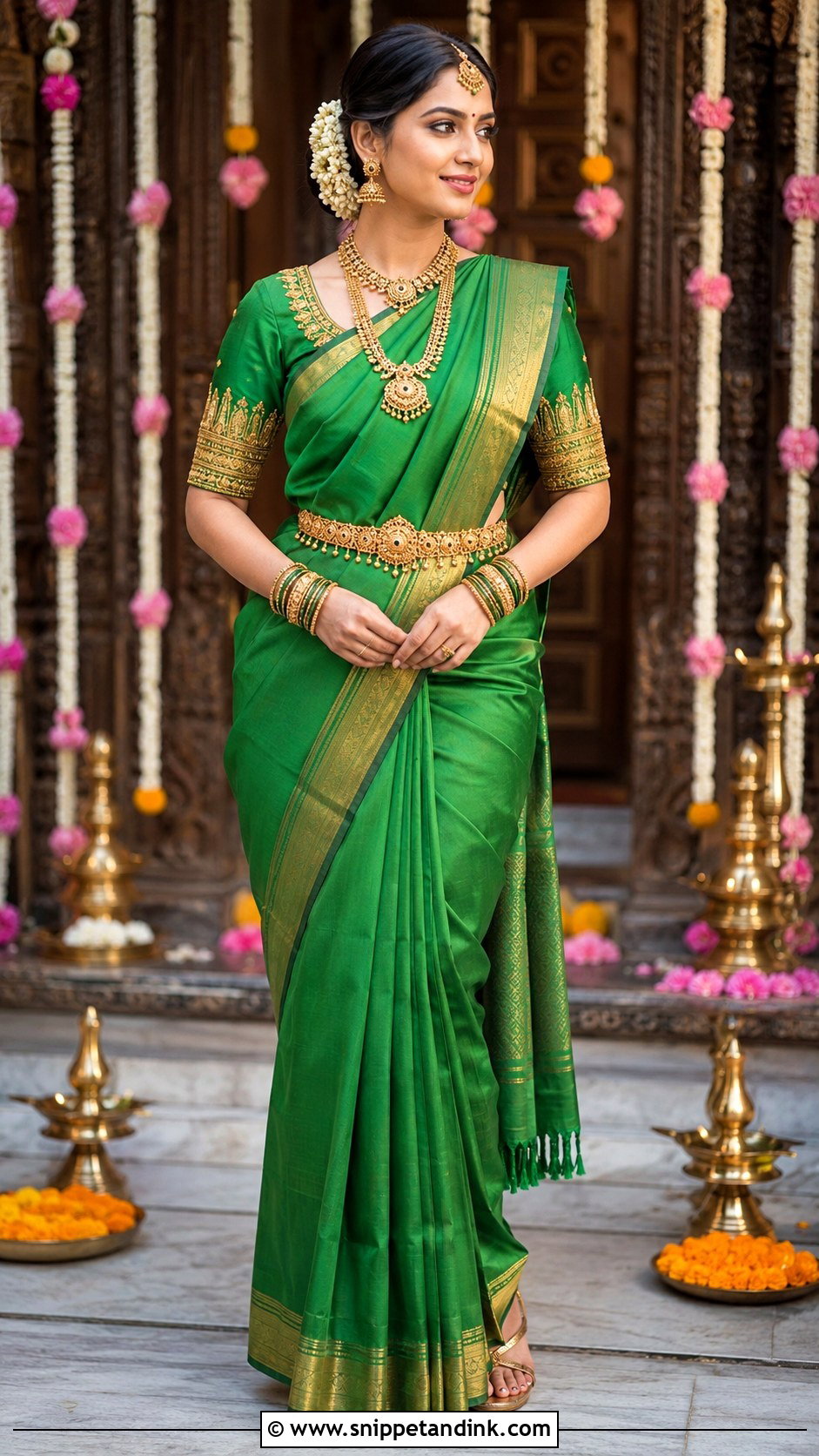
Temple borders echo the gopuram-style patterns woven into many South Indian silks. On a blouse, the border can sit on the sleeves, neckline, hem or back. Kanjivaram, pattu, silk and cotton-silk sarees all suit it. If your saree has a temple border too, line up the blouse border so the points face the same direction and sit at matching heights across the sleeve and the saree edge; mismatched borders are surprisingly noticeable in close-ups. Temple jewelry, bangles, a waist belt, jasmine and traditional sandals complete it.
24. Pearl Work Blouse With Wedding Saree
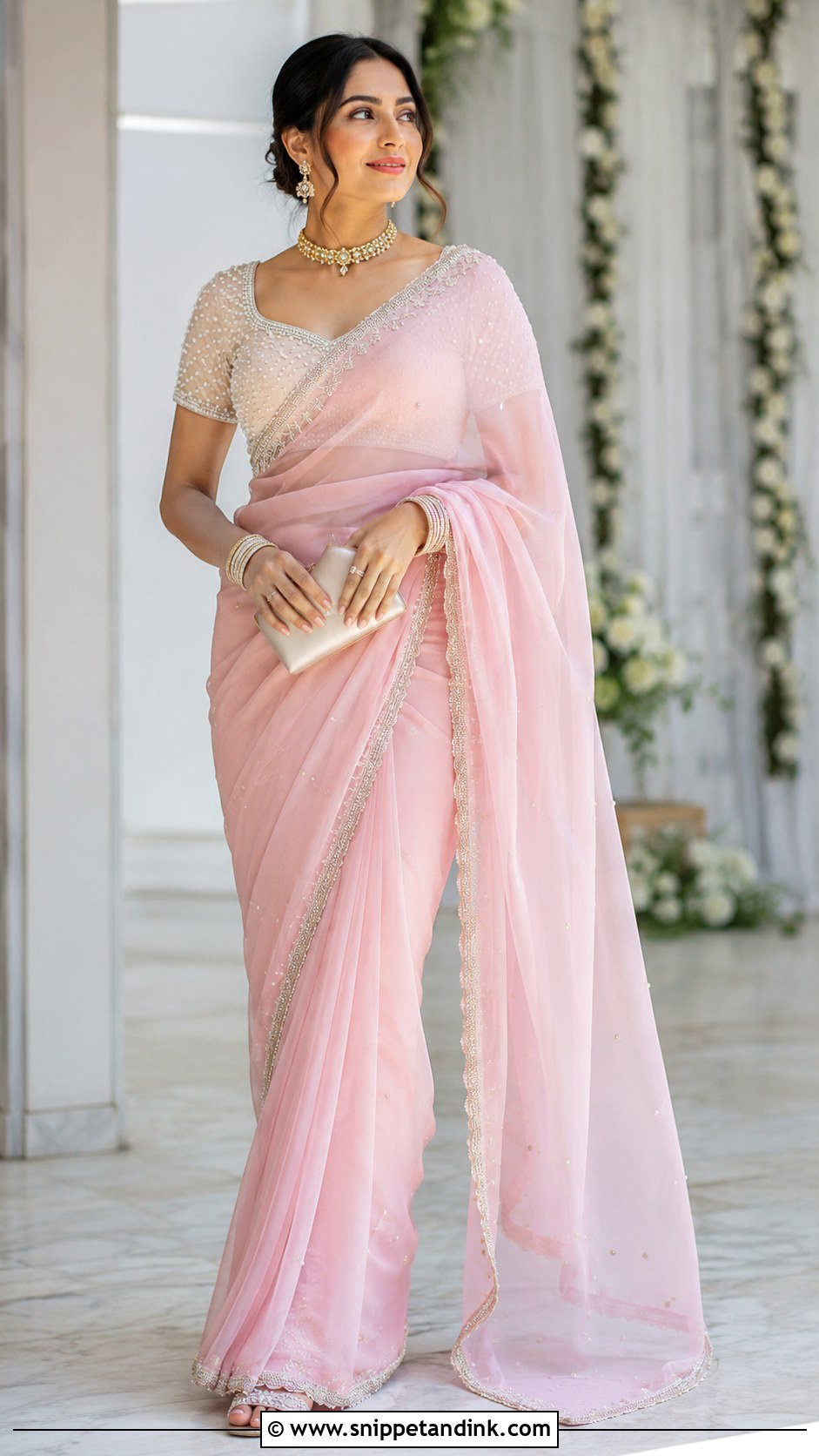
Pearl work softens a saree outfit, especially pastel silk, tissue, organza, cream Banarasi or light gold. Pearls can sit along the neckline, sleeves or back. Pearl earrings, kundan pieces, bangles, a satin clutch and neutral embellished heels complete it, and a sleek bun with soft makeup suits it. Avoid crowding it with heavy accessories. Pearls sewn on thin fabric pull it down, so I ask for organza or net interlining behind the beadwork to stop puckering. Receptions, daytime weddings and elegant guest outfits suit it.
25. Heavy Bridal Blouse With Saree
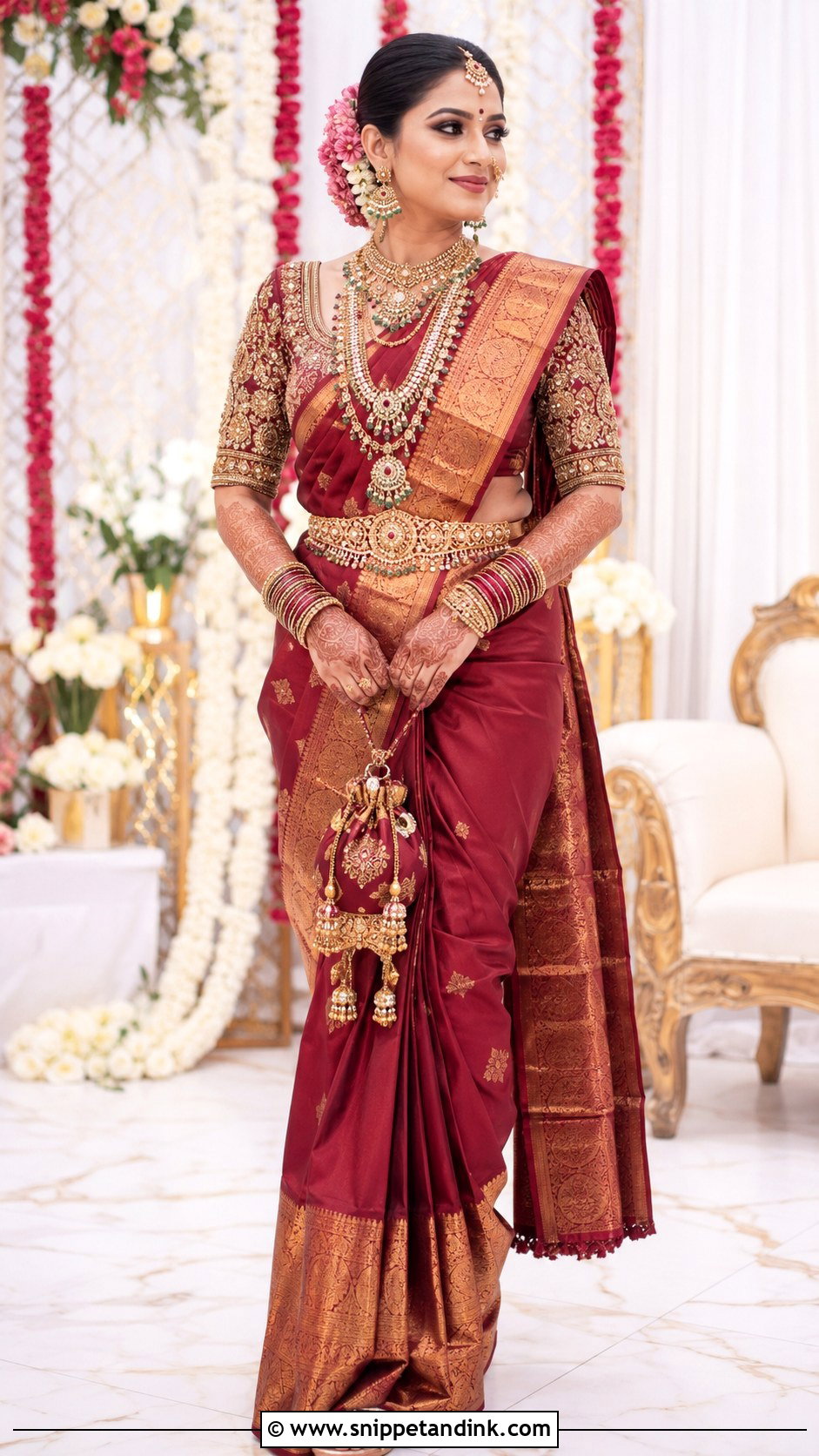
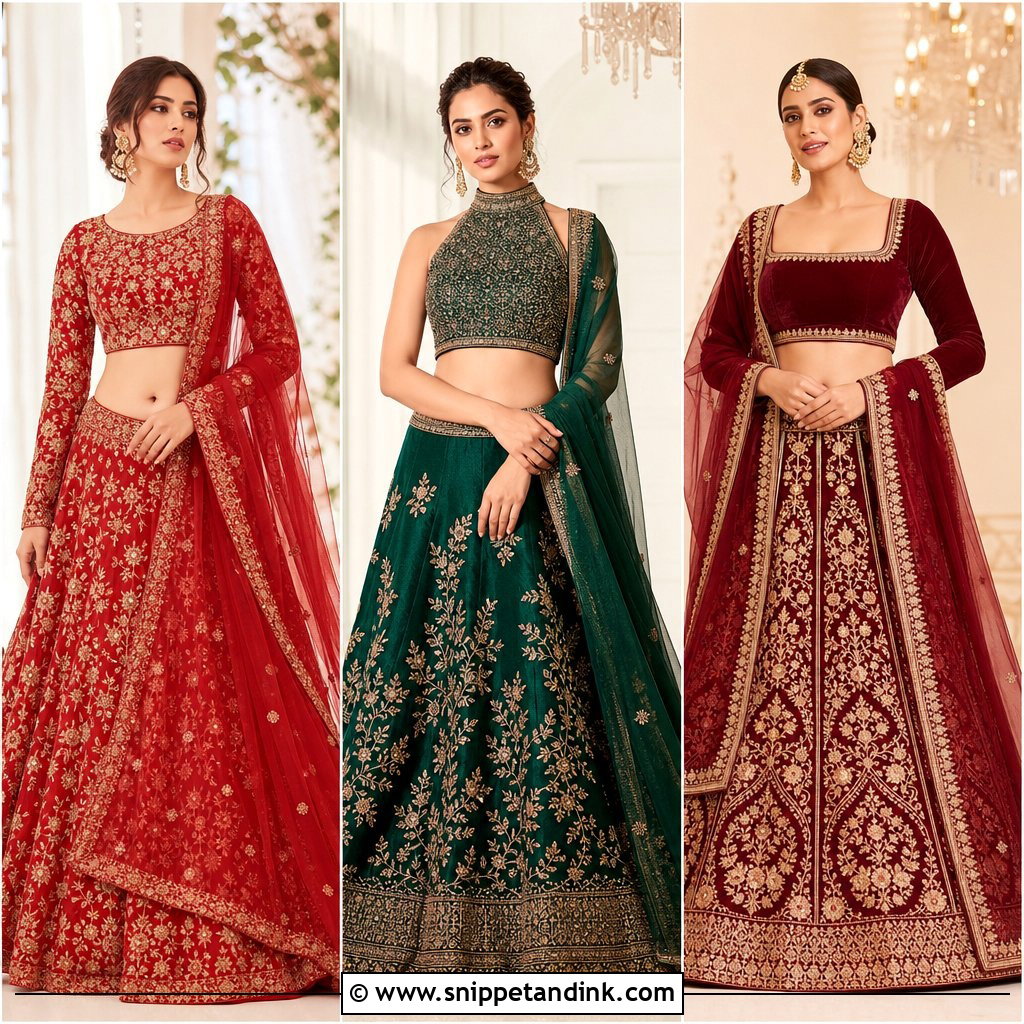
The heaviest blouse belongs at the main ceremony. It can combine zardosi, Aari, maggam, beads, pearls, stones, zari and traditional motifs across the sleeves, neckline and back, under a rich silk, Kanjivaram, Banarasi or pattu saree in red, gold, maroon, green, pink or orange. Layered jewelry, bangles, a waist belt, flowers, a potli bag and decorated sandals complete it. Tailoring is the whole job here. The blouse carries real weight, so it needs a firm lining, reinforced shoulder seams and enough ease at the armhole to raise your hands during the rituals.
Heavy Handwork Through a Long Ceremony Day
Embroidered blouses look their best in the first hour. What happens over the next eight depends on heat, weight and construction. These are the problems I see most and how I head them off.
- Sweat: silk and zari both mark with perspiration. Sew-in underarm shields cost very little and save the blouse.
- Scratching: metal threads, stones and mirrors rub the inner arm and the sides of the chest. A cotton lining behind every embroidered area solves it.
- Sagging sleeves: heavy sleeves pull the shoulder seam down by evening. Reinforce the seam and keep the shoulder fit snug.
- Heat: velvet and dense zardosi are hard work at an outdoor daytime muhurtham. Keep them for evening or air-conditioned venues.
Putting the blouse away afterwards
Air it inside out before storing, then have it dry-cleaned by someone who handles zari. Wrap it in soft muslin rather than plastic, lay it flat instead of hanging so the embroidery doesn’t stretch the shoulders, and keep it away from the saree’s folds so beads don’t press marks into the silk.
Let the Saree Lead, Then Cut the Blouse
A good wedding blouse brings fabric, fit, embroidery, colour and jewelry together without fighting the saree. Kanjivaram silk, Banarasi brocade, Paithani borders, Aari work, zardosi, pearls and temple details all have their place. Start from the saree, the ceremony and the weather, then decide the neckline and sleeve. A simple blouse looks grand under the right drape, and a heavy one can turn a classic saree into a bridal outfit. In both cases, the fit is what people notice first.
You'll Like These Ideas:



Leave a Reply