
Dressing a Telugu bride is really dressing her for several ceremonies, each with its own mood. Kanchipuram pattu sarees, the white-and-red Madhuparkam, temple jewelry, the vaddanam waist belt, jasmine-wrapped braids and layered gold harams all carry meaning, and the order in which they appear matters. Many brides now add lighter blouses, pastel silks, pearl sets and fresher makeup without losing that respect for tradition. When I plan with a bride, I want each look to be comfortable enough for hours of sitting at rituals and still read clearly on camera, from Nichayathartham and Pellikuthuru through the Muhurtham to the reception. Here are twenty-five complete looks, head to toe, with the practical notes I give in fittings.

Matching Each Function to the Right Weight of Silk
Telugu weddings are a series of functions, and the biggest mistake I see is a bride buying all her sarees for colour without thinking about what happens at each event. Some rituals stain, some keep you seated for hours, and some happen at a muhurtham time that might fall at dawn or late at night. I plan the wardrobe in this order:
- Pellikuthuru: turmeric paste will mark the fabric, so choose a yellow or warm silk you won’t mind staining.
- Nalangu and family functions: light silk or handloom you can sit on the floor in and laugh in.
- Nichayathartham or engagement: mid-weight silk with lighter jewelry, saving the heaviest set.
- Muhurtham: the Madhuparkam for the sacred rites and, in many families, a heavy pattu for the rest of the ceremony. Ask your family which order they follow.
- Reception: the outfit you can stand, greet and dance in for hours, often a lehenga or lehenga saree.
Silk sarees with heavy zari need ordering early, especially if a blouse must be tailored from the running piece. I’d buy the main wedding saree at least three months ahead so the blouse has time for two fittings.
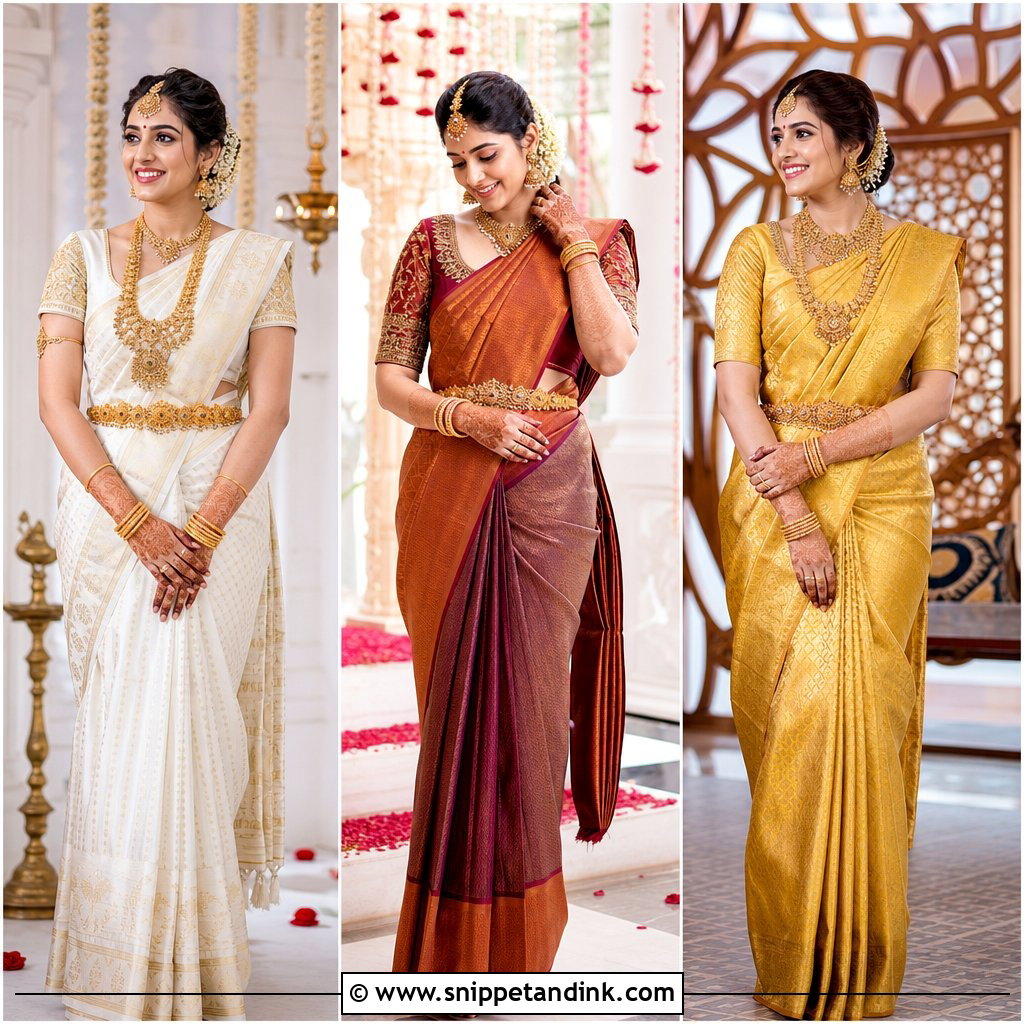
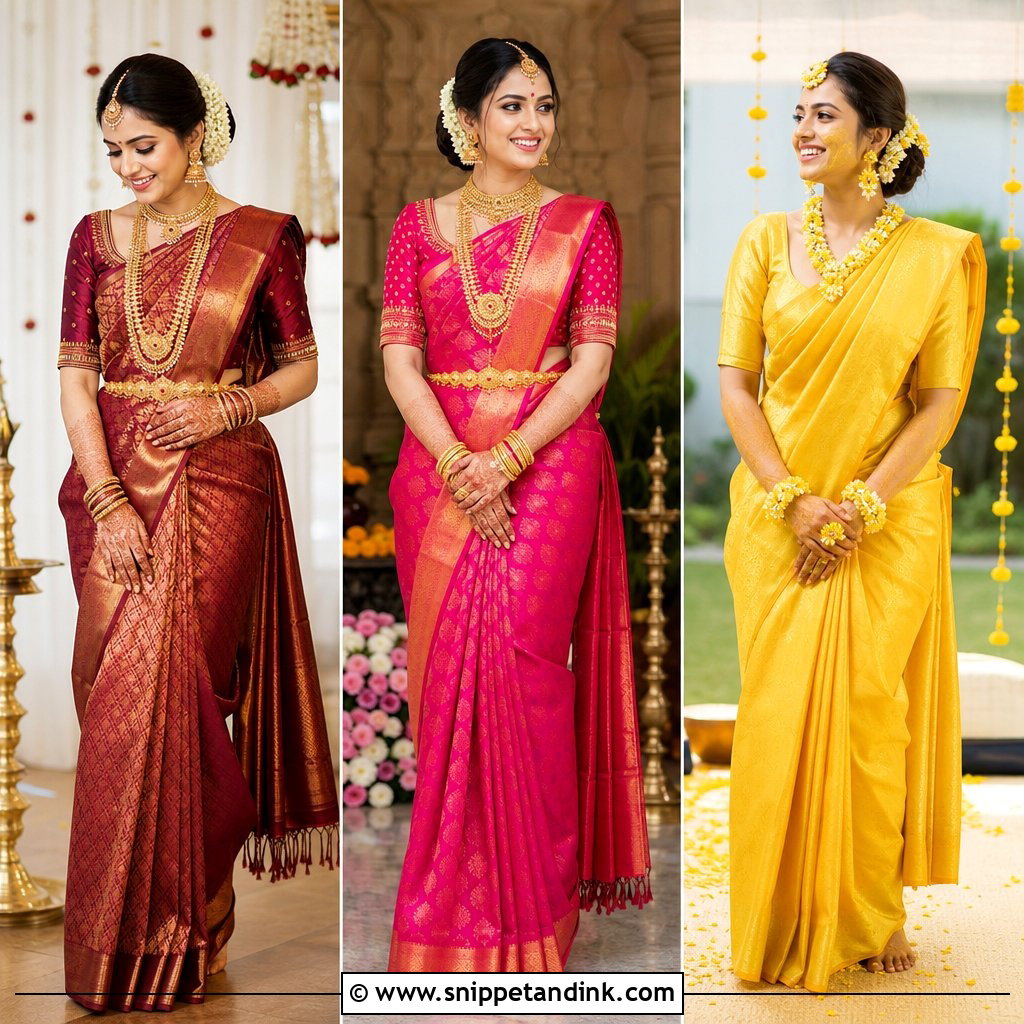
1. Telugu Bride Kanchipuram Pattu Saree
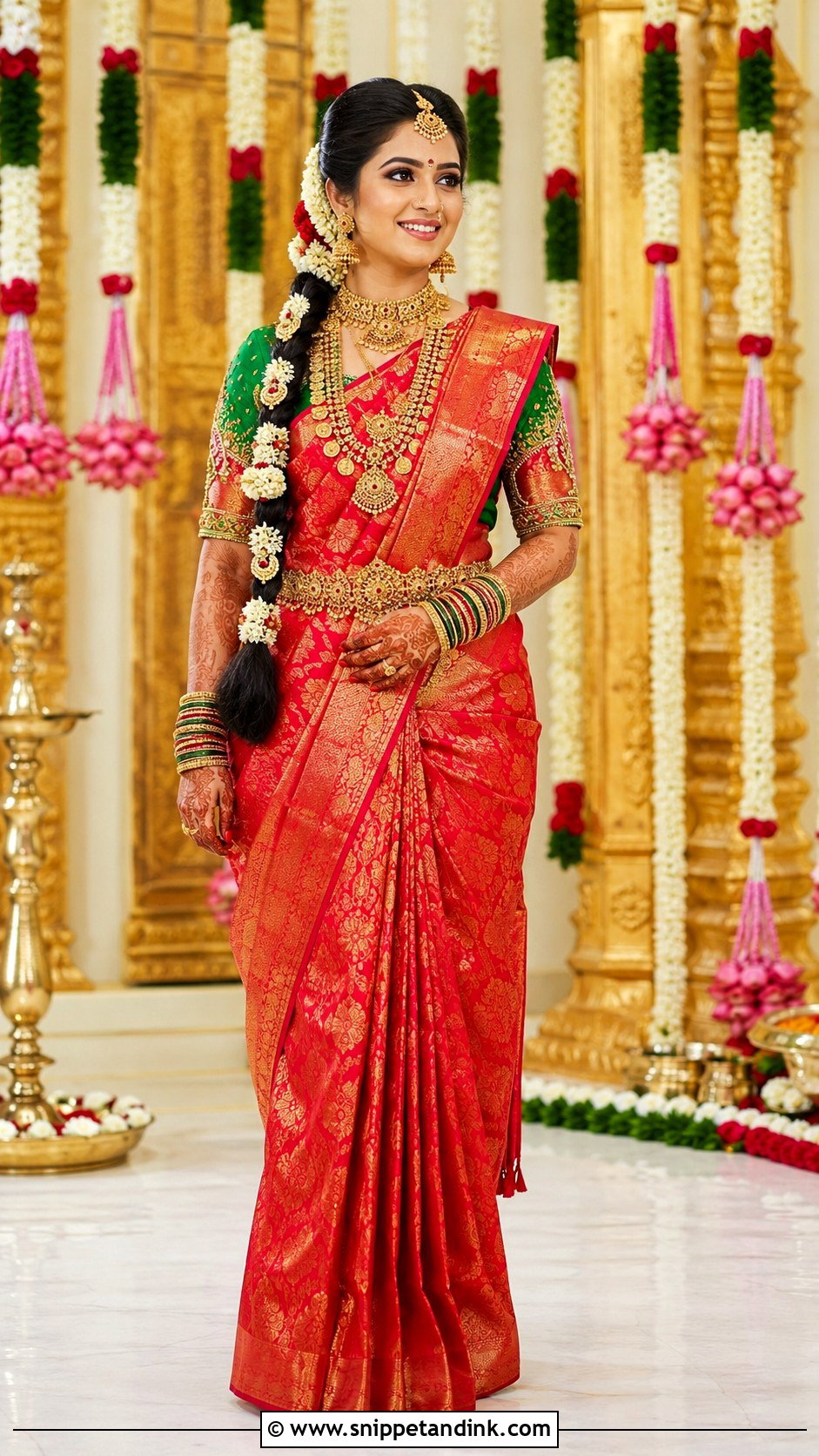
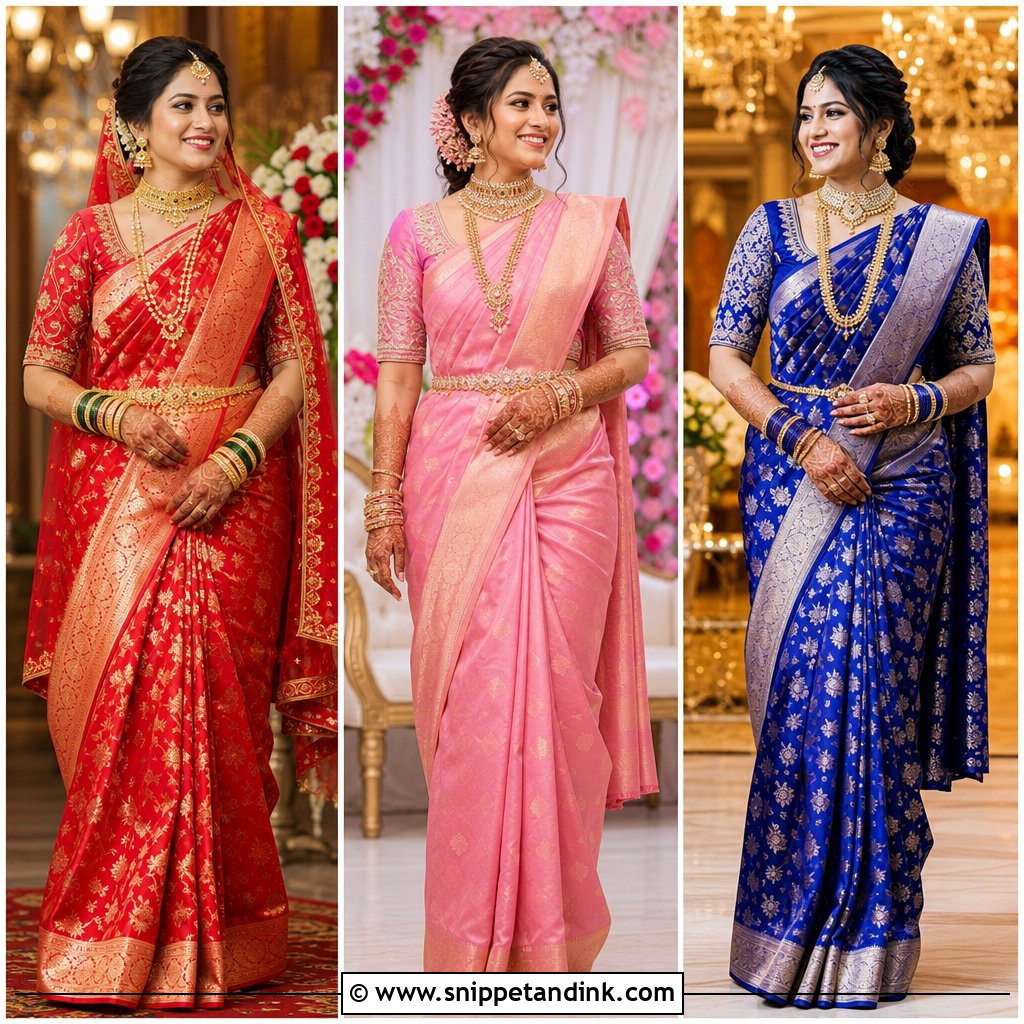
The Kanchipuram pattu is the backbone of most Telugu wedding wardrobes. Its heavy mulberry silk and broad zari border hold sharp pleats, which is why it looks so structured in seated ceremony photos. Deep red, maroon, green or gold are the traditional picks for the main ceremony. A fitted blouse in matching silk or contrast brocade sits under a full temple set: choker, long haram, vaddanam, jhumkas, vanki and bangles. One thing I check every time is the weight. A real Kanchipuram with heavy zari can be tiring after six hours, so do a full dress rehearsal at home, standing and sitting cross-legged. Kohl-lined eyes, glowing skin and a red or rose lip complete it.
2. Telugu Bride Madhuparkam Saree
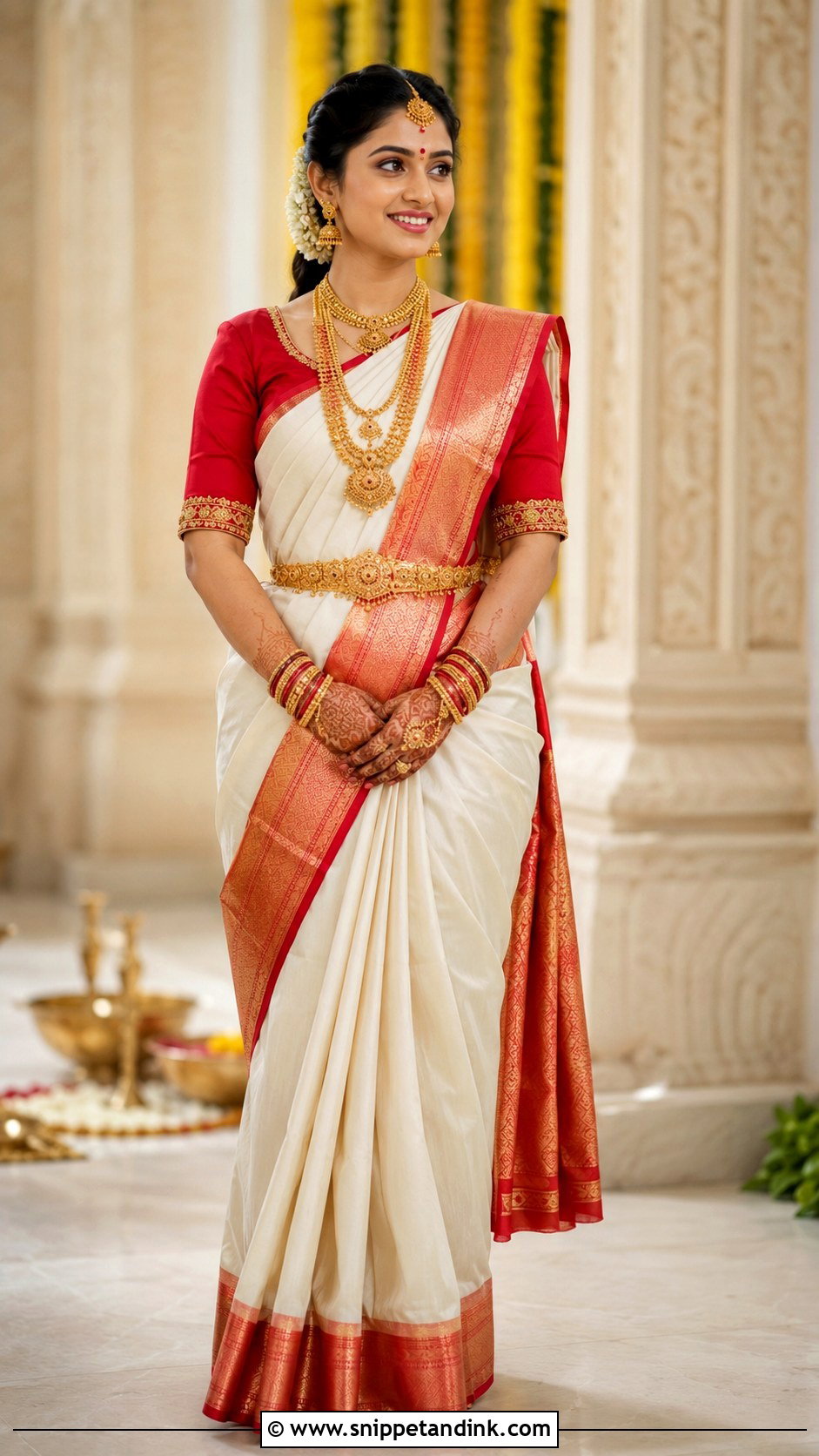
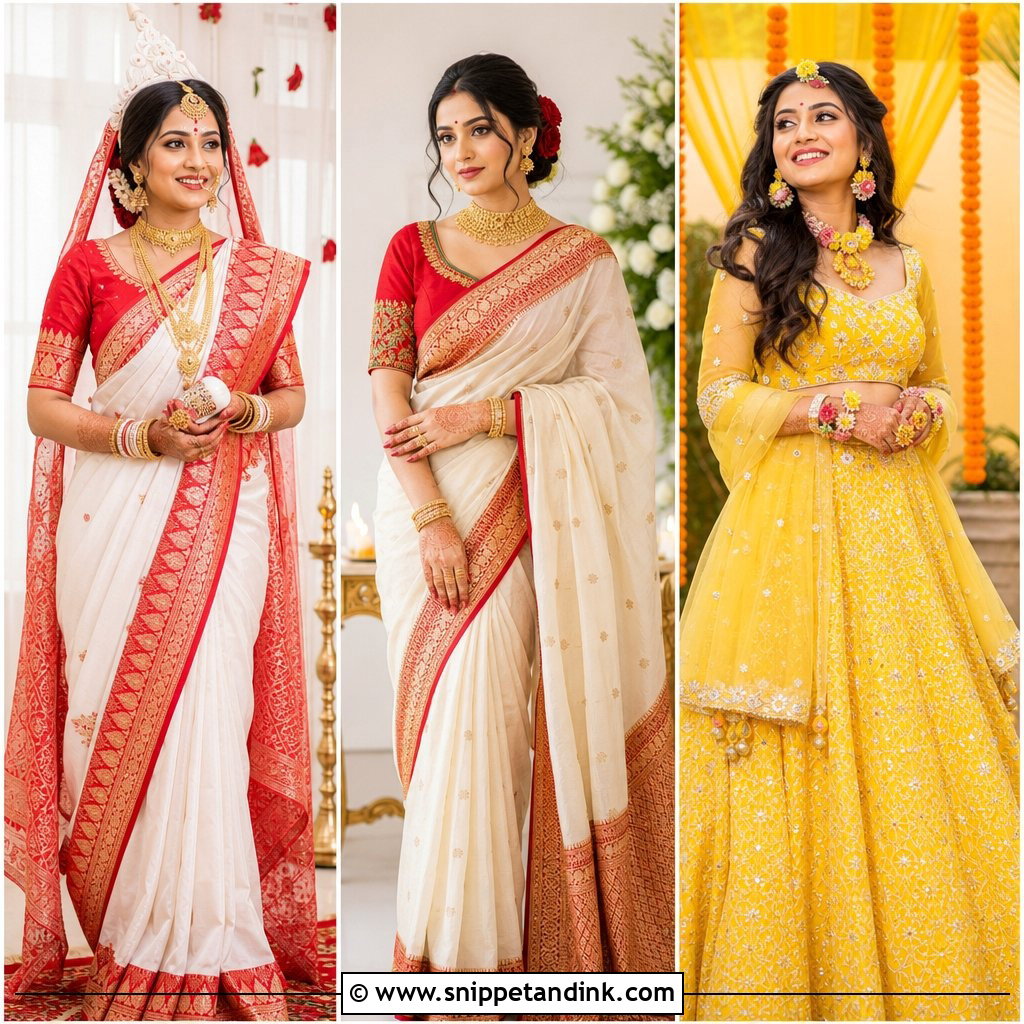
The Madhuparkam is plain at first glance: white or ivory cotton or silk with a red border, worn for the sacred part of the wedding. Its simplicity is the point, and it gives gold jewelry room. A red silk blouse adds warmth. Because the base is so clean, a short necklace, long mala, vaddanam and gold bangles can be layered without looking crowded. A sleek braid with jasmine, a red bindi and fresh makeup finish it. Light-coloured fabric shows every mark, so I keep wet turmeric, kumkum and sticky hands well away until the bride is seated.
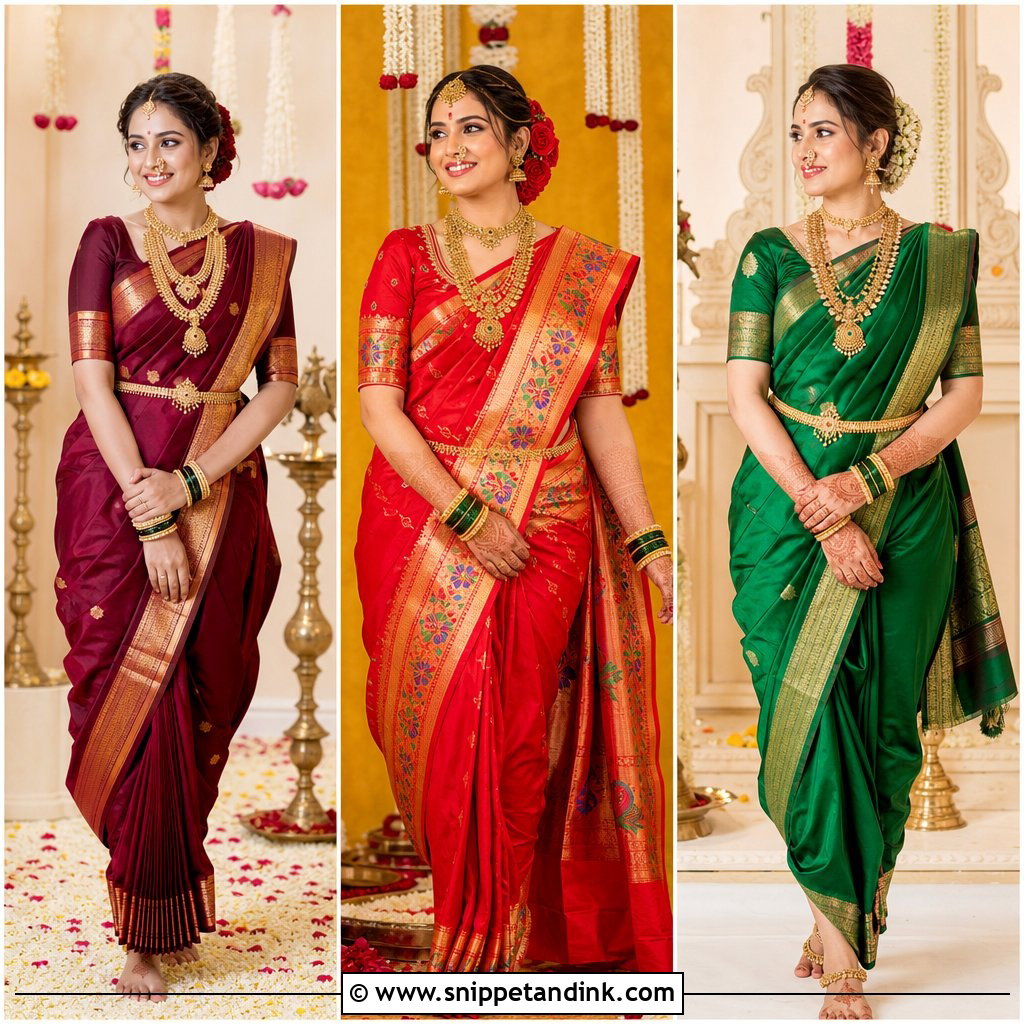
3. Telugu Bride Red Pattu Saree
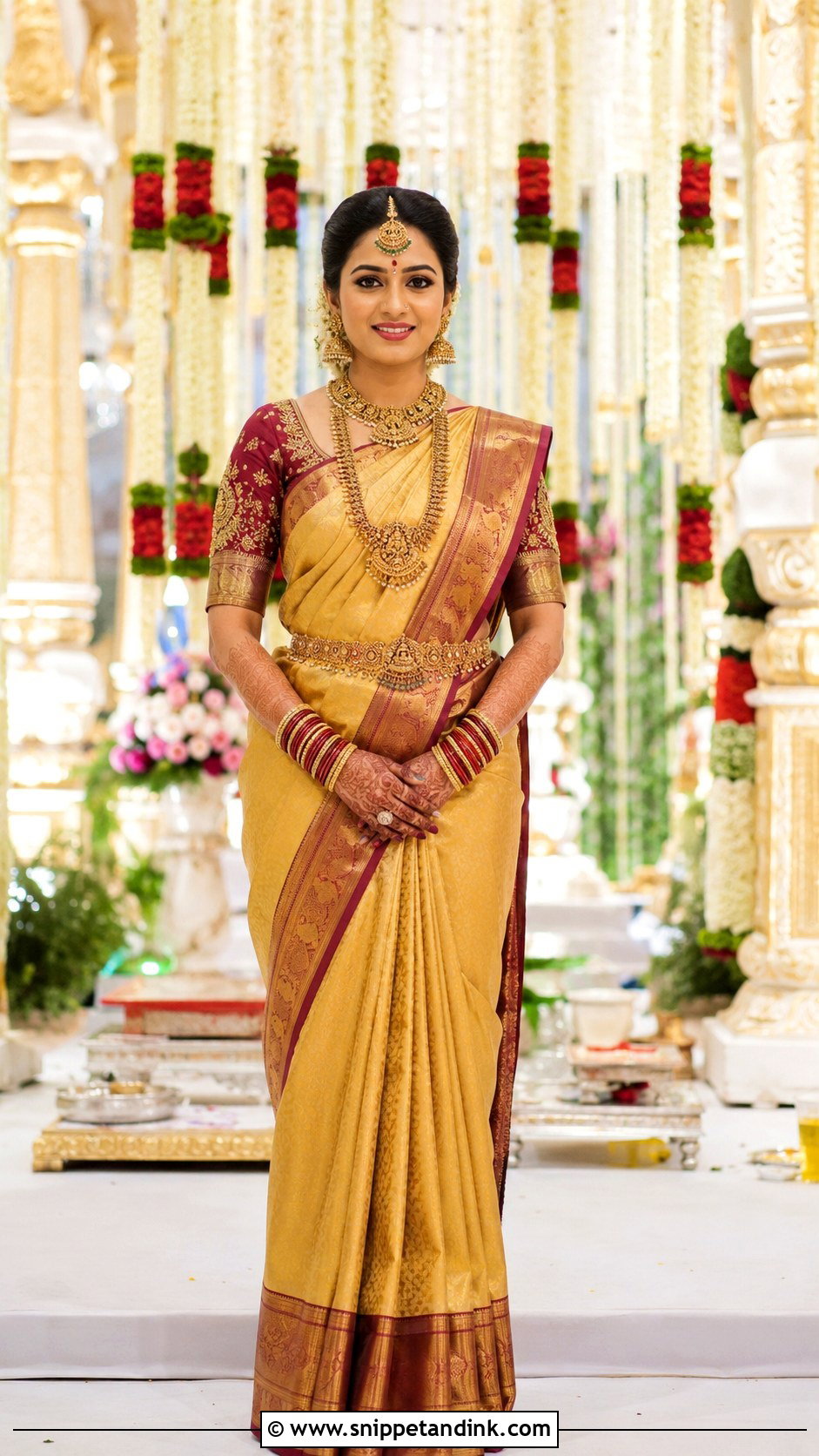
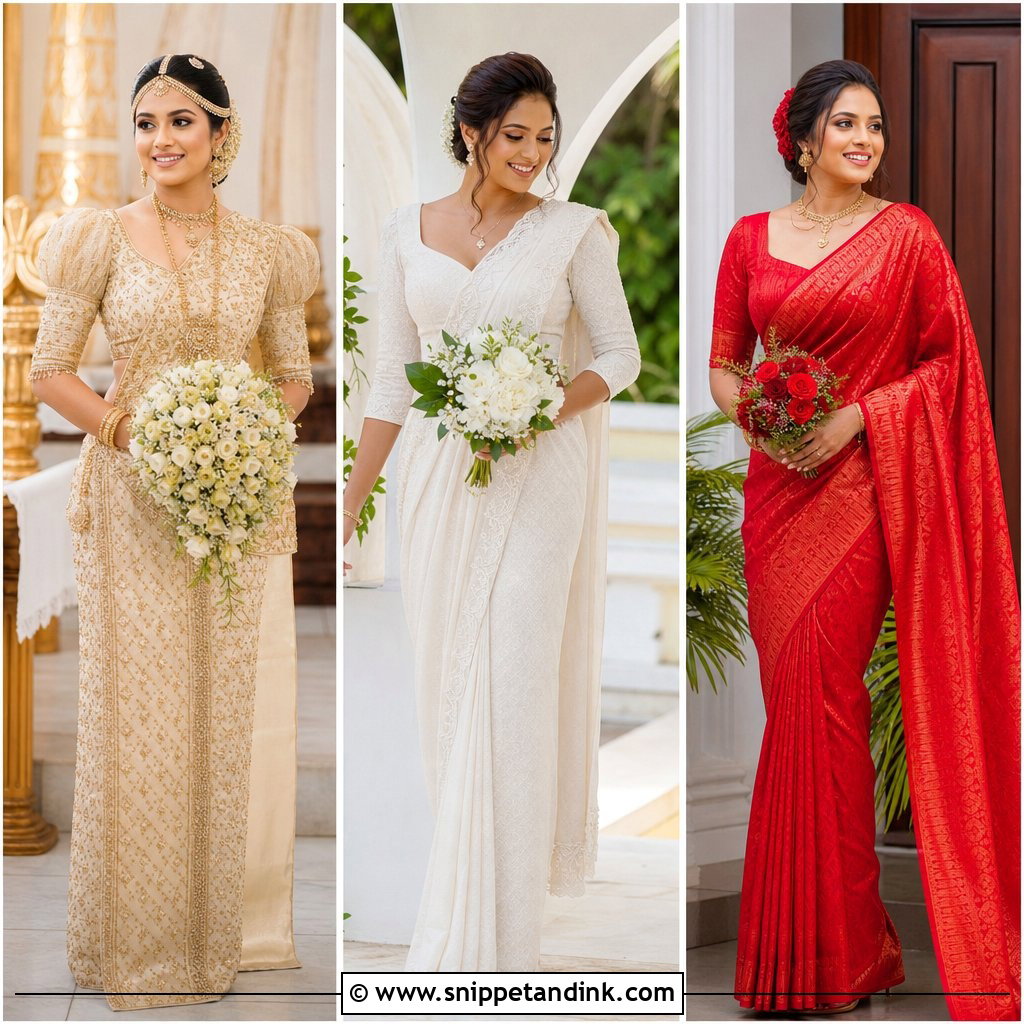
A red pattu saree is the bold, festive Muhurtham choice, and it glows under warm mandapam lighting. Choose gold zari motifs, a contrast green border or an antique finish, then balance the colour with a gold or green blouse. Red can swallow thin jewelry, so this is the saree where heavier temple pieces earn their place: mango mala, kasu haram, choker, vaddanam and stacked bangles. A centre-parted bun or braid with jasmine softens the face. Keep eyes defined and choose a lip in the same family as the saree, red, berry or deep pink, rather than fighting it.
4. Telugu Bride Gold Pattu Saree
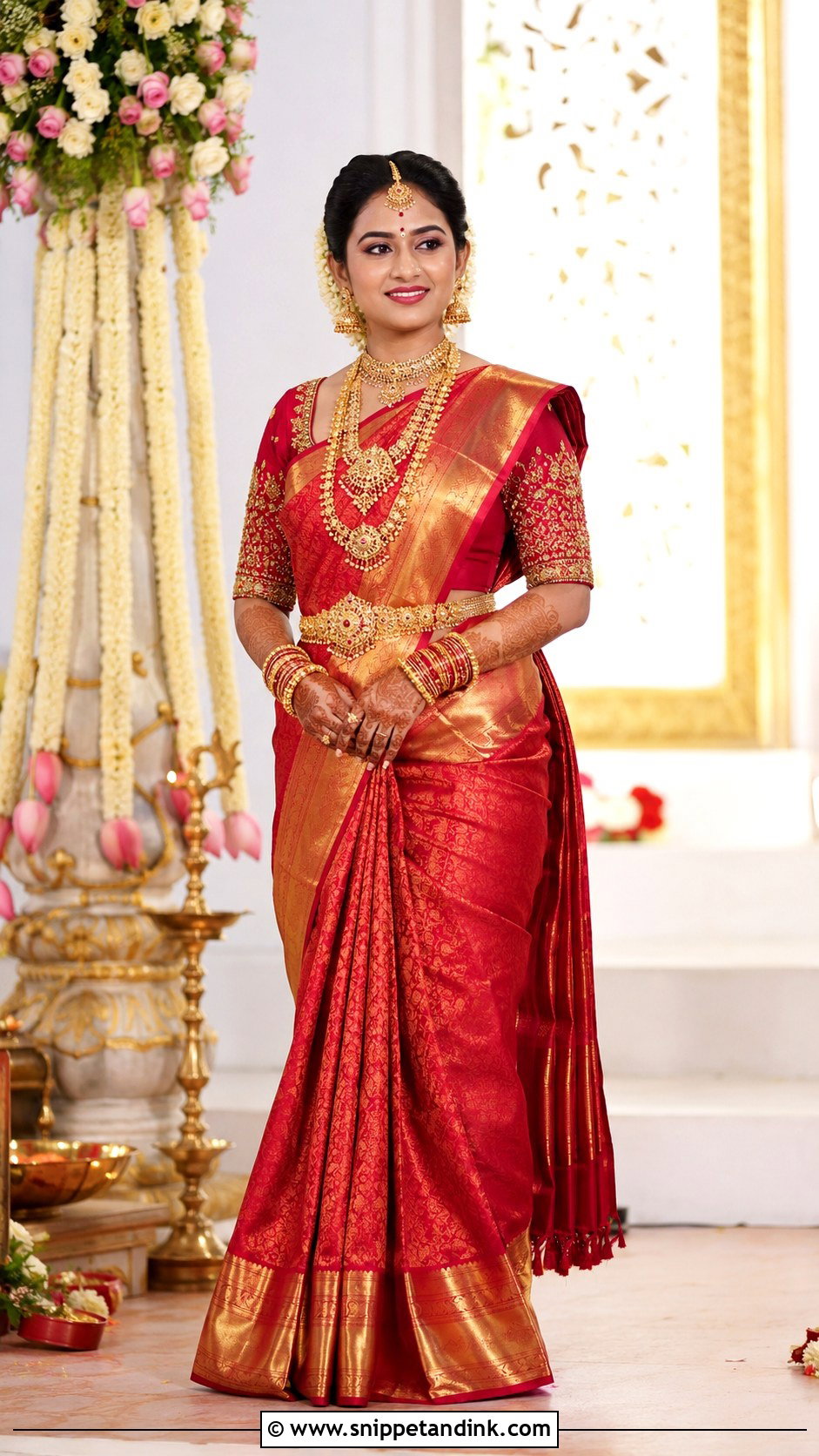
Gold silk looks regal without needing many colours. A gold pattu with subtle motifs and a red or maroon border lets antique gold jewelry blend in rather than compete. The risk is that everything merges into one tone in photos, so I insist on a contrast blouse and a border that’s clearly visible in the pleats. A layered choker, long haram, vaddanam, jhumkas, bangles and a maang tikka complete the set. Warm brown eyes and a muted red lip keep the face distinct from all that shine.
5. Telugu Bride Green Silk Saree
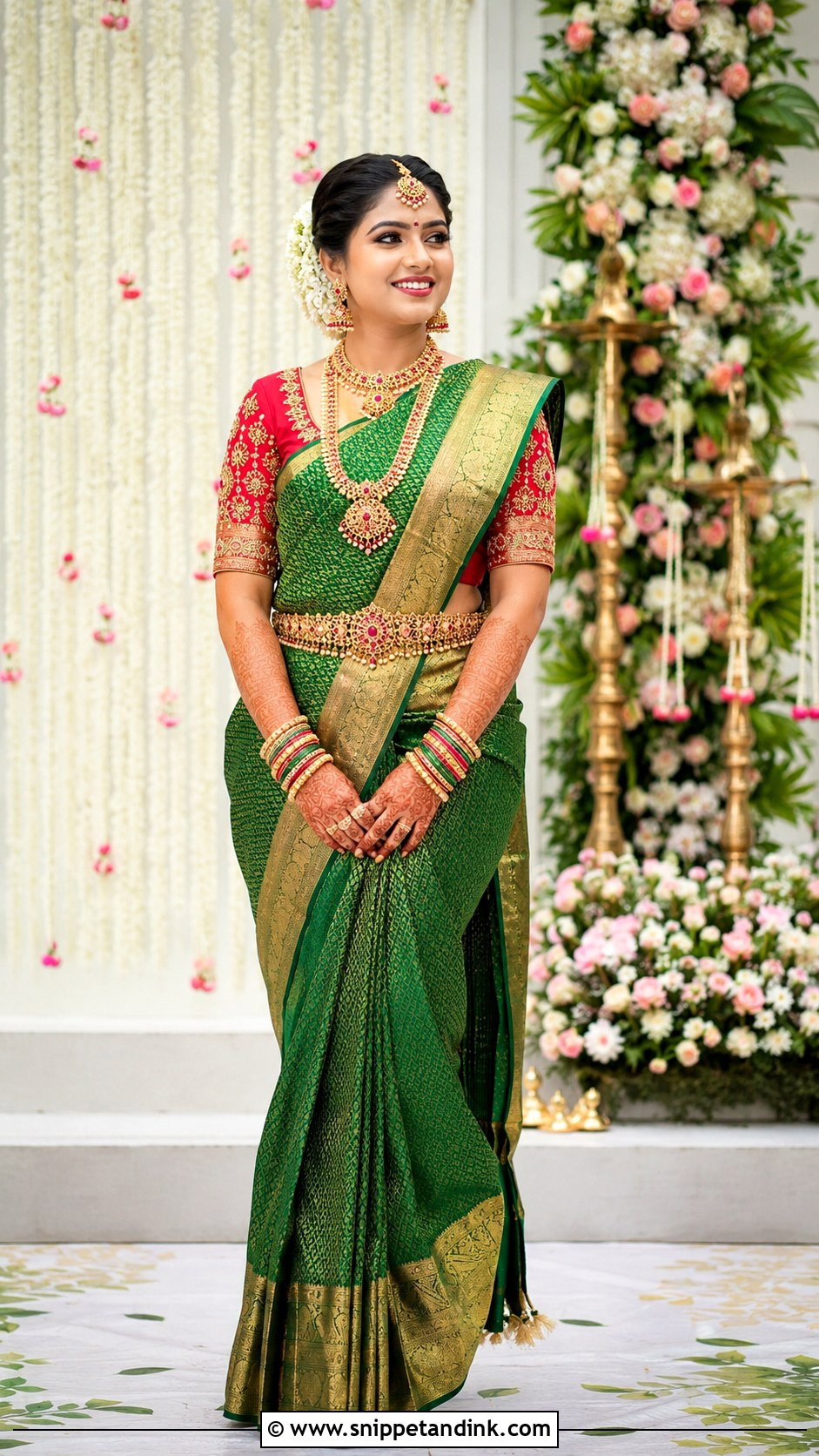
Green silk is fresh and auspicious, and it suits both pre-wedding rituals and the main ceremony. Emerald, parrot, bottle and leaf greens all pair well with gold zari. Pick the blouse by how much contrast you want: red gives the most, gold the least. Ruby or emerald accents enrich traditional gold. On green, the vaddanam does a lot of work, pulling the drape in at the waist so the saree doesn’t look boxy. Jasmine in a braid or low bun, soft rose makeup and a small red bindi finish it.
6. Telugu Bride Pink Pattu Saree
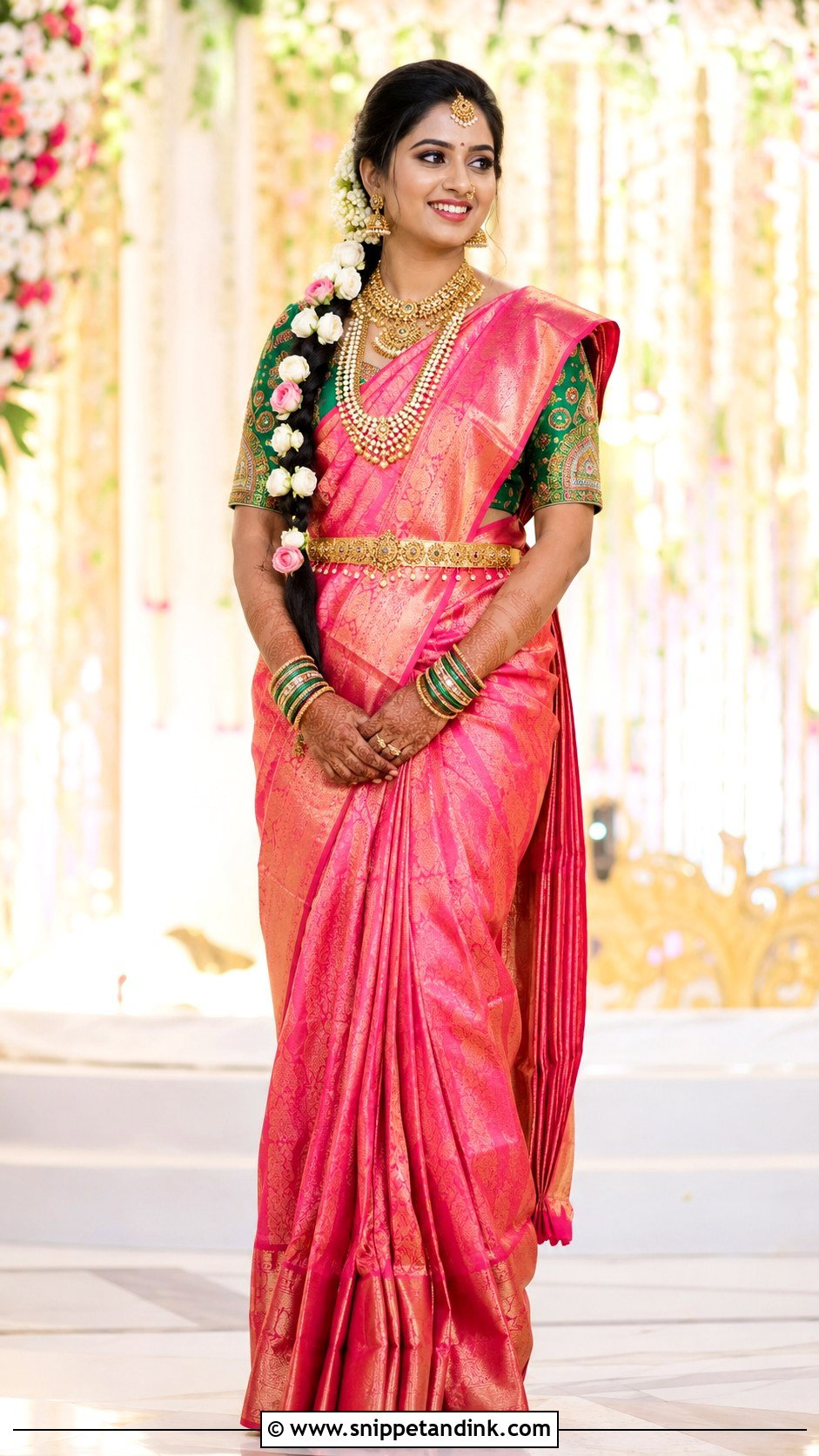
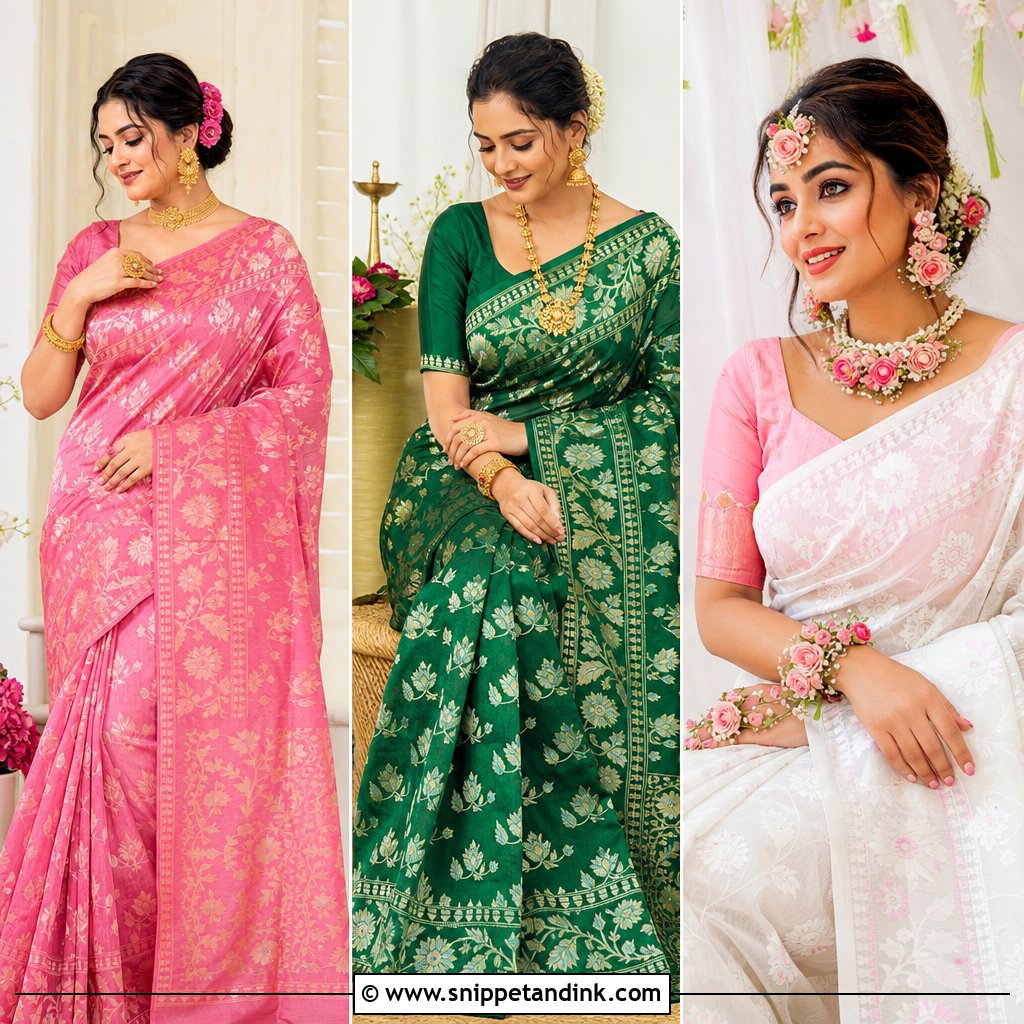
Pink pattu is youthful and suits Nichayathartham or Pellikuthuru as much as a modern ceremony. Rani pink is bold, blush is soft and magenta is the richest traditional option. Gold, green or purple blouses all pair with it. I find pink takes pearls more kindly than red does, so a mix of temple pieces with pearl drops works here. A braid with jasmine and a few roses suits the colour. Fresh skin, winged liner and a rose-toned lip keep the face bright without heavy contouring.
7. Telugu Bride Orange Silk Saree
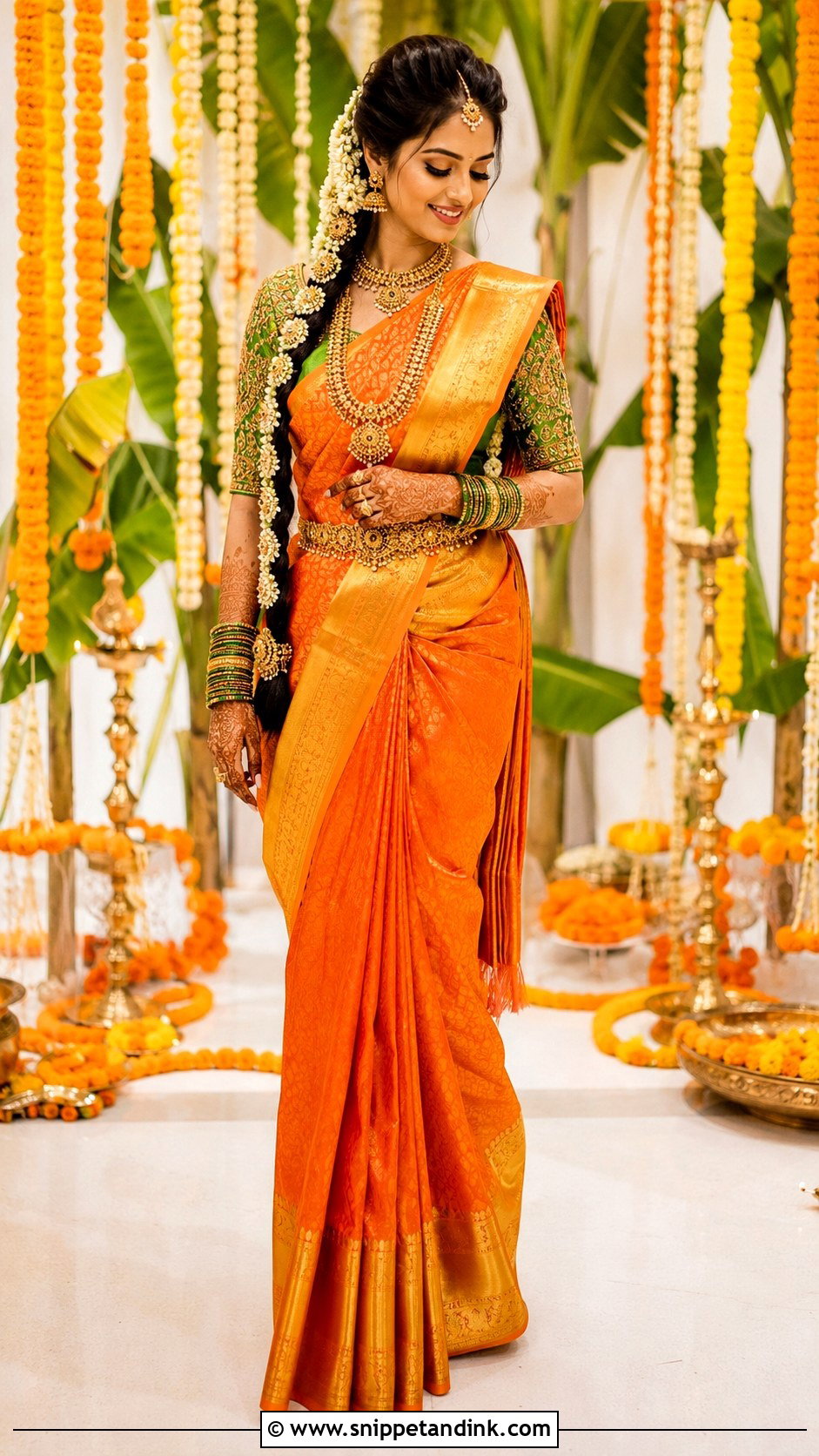
Orange silk belongs to the turmeric-and-marigold functions, especially Pellikuthuru and daytime rituals. Burnt orange, mango or coral pattu with a gold border keeps the warmth; red, green or gold blouses add contrast. Antique gold, stacked bangles, a vaddanam and traditional jhumkas suit it. Daylight is unforgiving on orange near the face, so I warm the makeup to match: bronzed eyes, peach blush and a coral or terracotta lip. A centre-parted braid with fresh jasmine keeps it classic.
8. Telugu Bride Yellow Pellikuthuru Saree
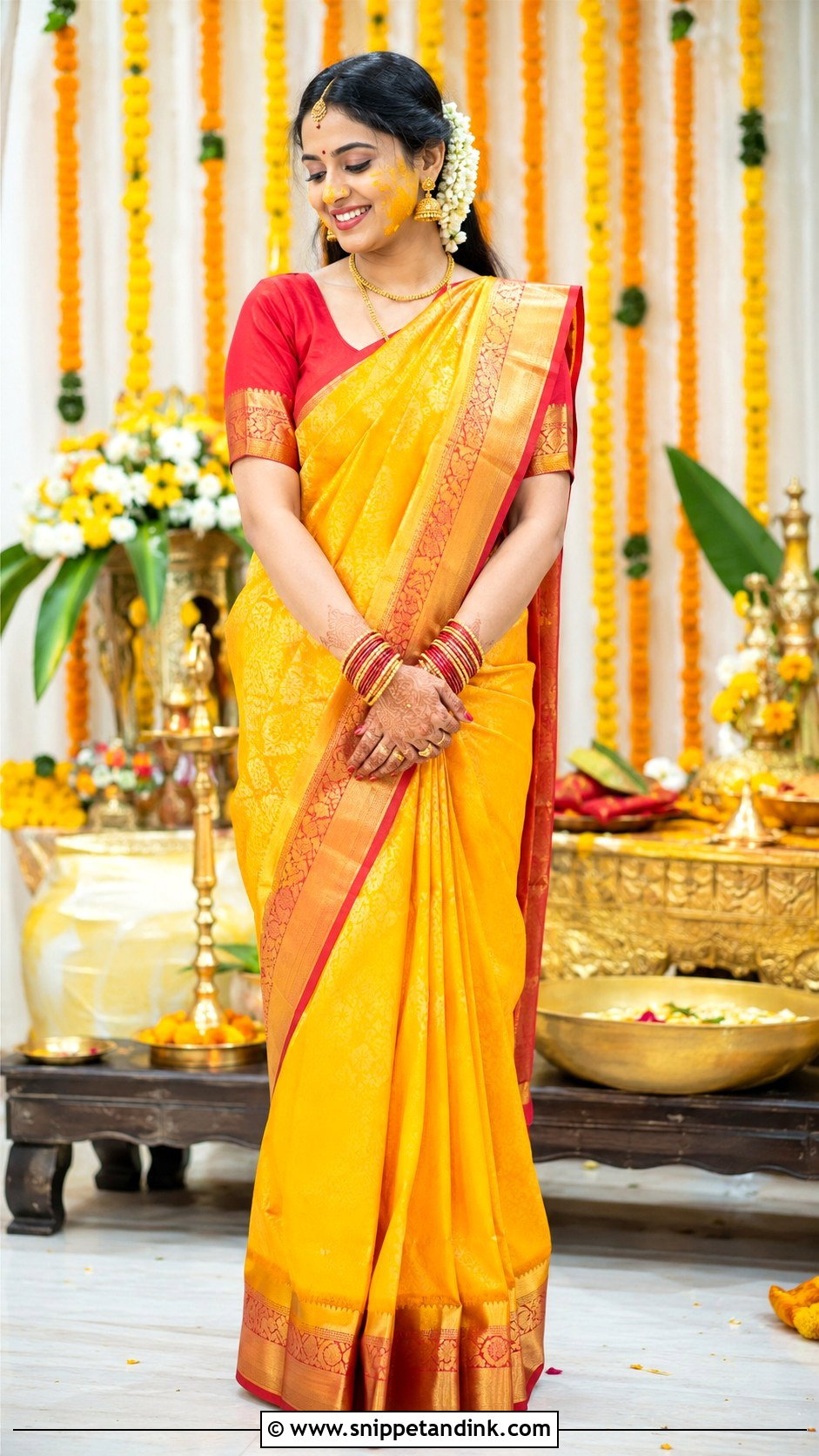
For Pellikuthuru, the bride is usually smeared with turmeric paste, so the saree will get marked. That’s the first thing I tell anyone choosing one. Pick a mustard, marigold or golden yellow silk with a red or green border that you’re happy to have stained, rather than an heirloom. The blouse should be comfortable for sitting and bending through rituals. Jewelry can be lighter than the wedding set: a short necklace, jhumkas, bangles and an optional simple waist belt. Fresh flowers in the hair, dewy skin and a small bindi complete it.
9. Telugu Bride Dharmavaram Silk Saree
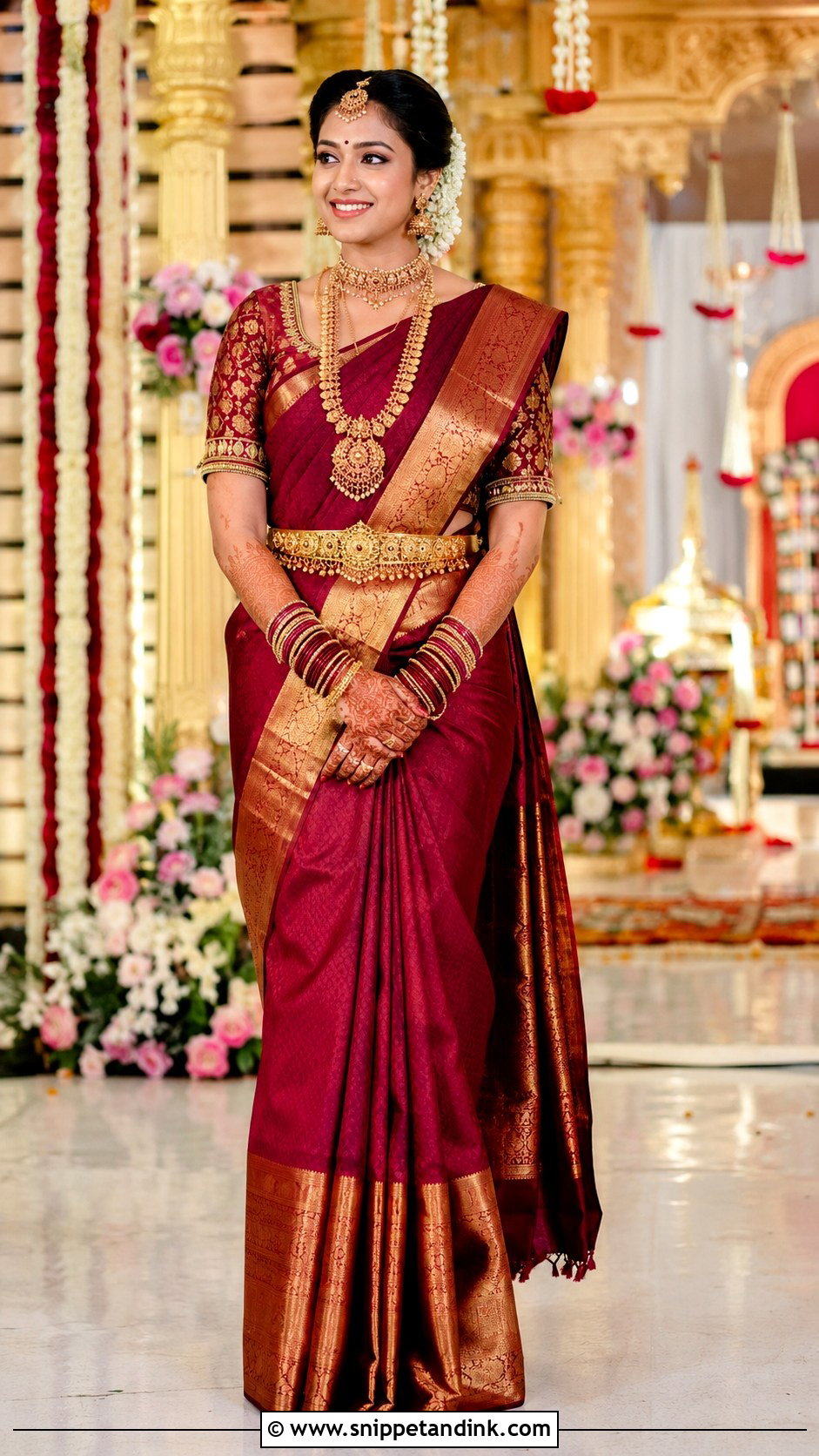
Dharmavaram silk is heavier than many brides expect, with dramatic contrast borders and rich texture. Deep maroon, purple, blue, green and red all look striking in this weave. Because the border is so wide, the pleats must be folded so it shows clearly; I pre-pleat these the day before. A brocade blouse suits it. The saree already carries a lot, so jewelry should balance rather than add: a temple choker, long haram, vaddanam and bangles. A braid with jada accessories adds height at the back. Keep makeup polished but low on glitter.
10. Telugu Bride Uppada Silk Saree
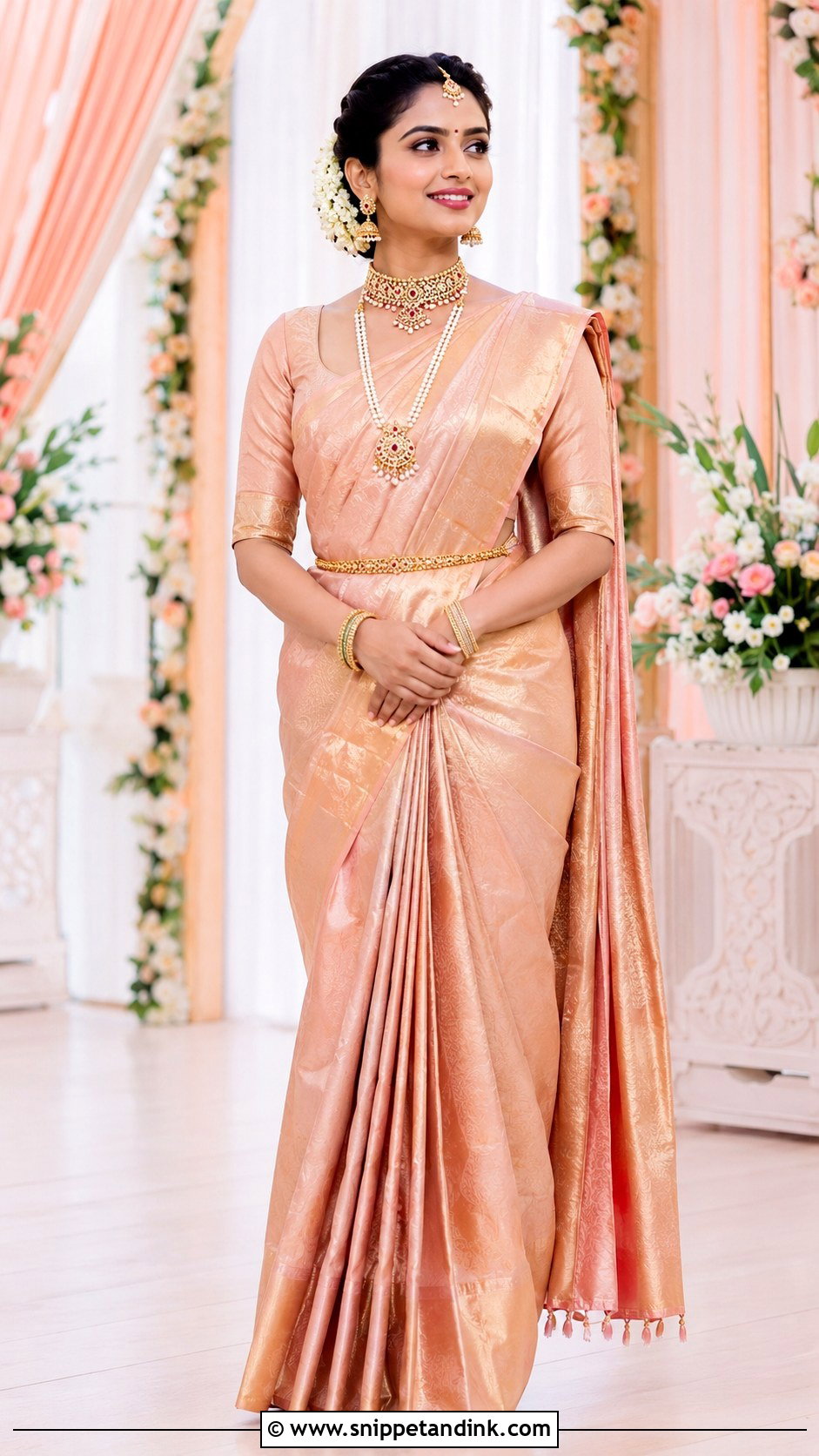
Uppada silk is light and drapes softly, which makes it a sensible pick for long functions or reception-style moments when a heavy pattu would be exhausting. Pastel gold, soft pink, lavender, ivory or jewel tones with delicate zari all suit it. Because the fabric is fine, it shows creases and pin marks more than a stiff silk, so use small pins and pin through the pleats, not the face of the saree. A gold choker, pearl haram, jhumkas and slim bangles keep it refined. A low bun with jasmine or soft waves finishes it.
11. Telugu Bride Gadwal Saree
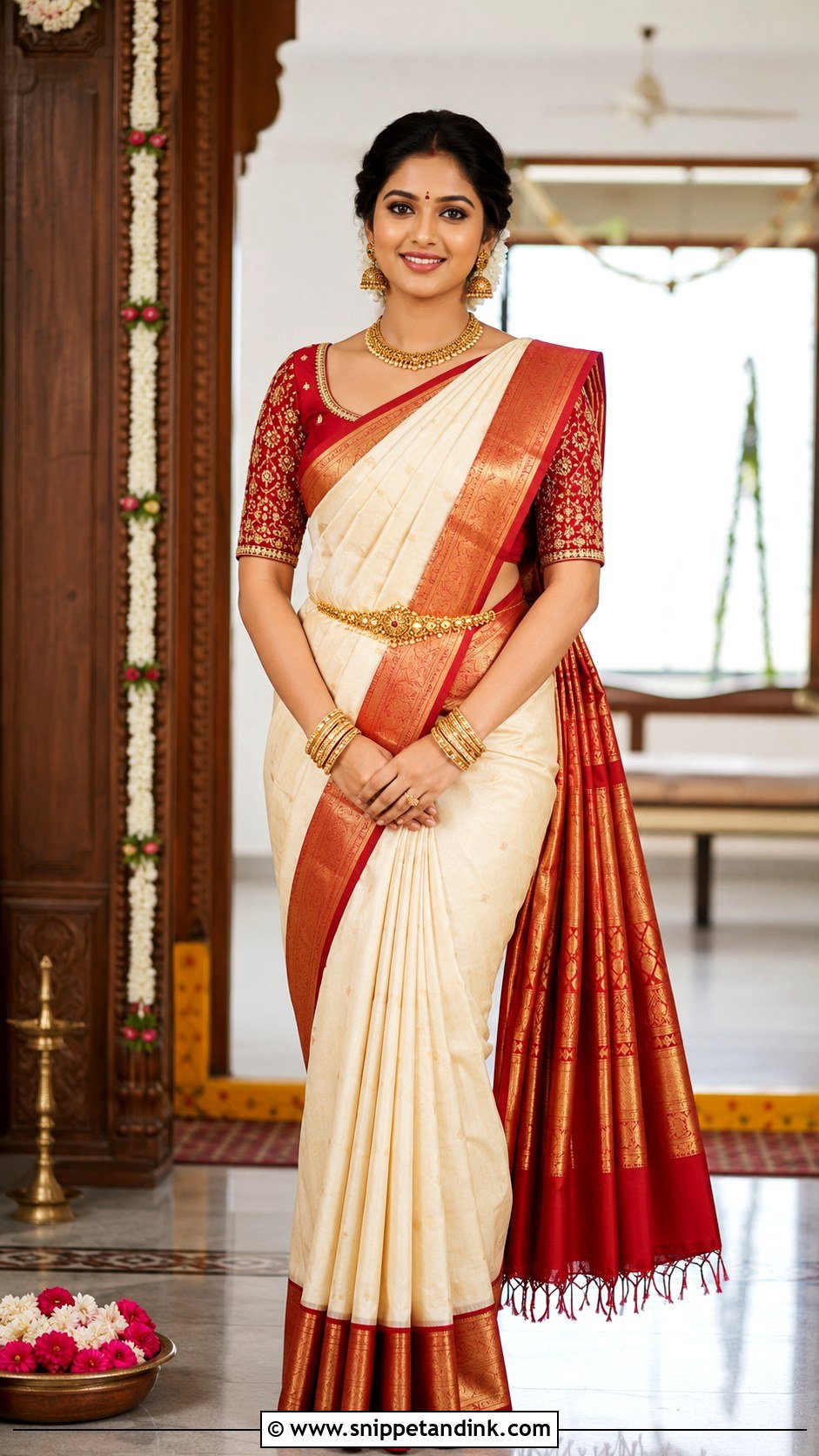
Gadwal sarees are handloom with a cotton body and silk border, which means they’re cooler to wear than an all-silk saree. They suit engagement, vratham and family rituals. Classic combinations include cream with red, green with gold, pink with orange and maroon with mustard. A contrast blouse highlights the border. Medium-weight gold, a choker, earrings, bangles and a simple vaddanam for formal events are enough. A neat bun with flowers and clean makeup keep it polished. If your ceremony is daytime and summer, I’d seriously consider one.
12. Telugu Bride Pochampally Silk Saree
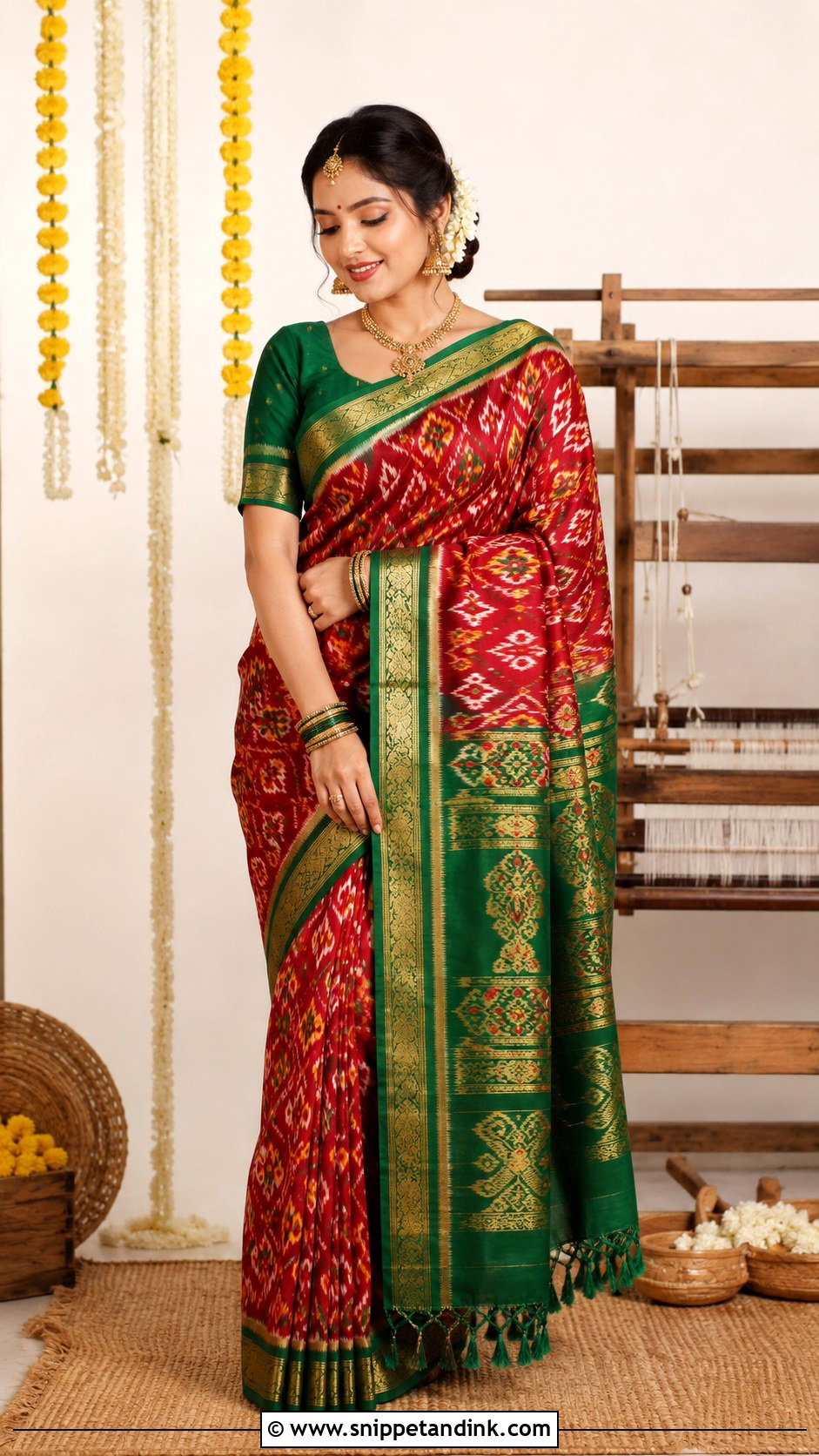
Pochampally ikat brings geometric pattern into a bridal wardrobe, and it’s what I suggest when a bride wants something traditional that still stands apart from the usual heavy pattu. Red, green, blue, pink or ivory ikat with zari accents all work. With a busy pattern, I keep the blouse plain; for a festive event, brocade adds richness. Gold jewelry suits it, and antique or oxidised pieces fit pre-wedding events. A braid or low bun keeps it tidy, and soft matte makeup with a bold bindi balances the pattern.
13. Telugu Bride Kuppadam Pattu Saree
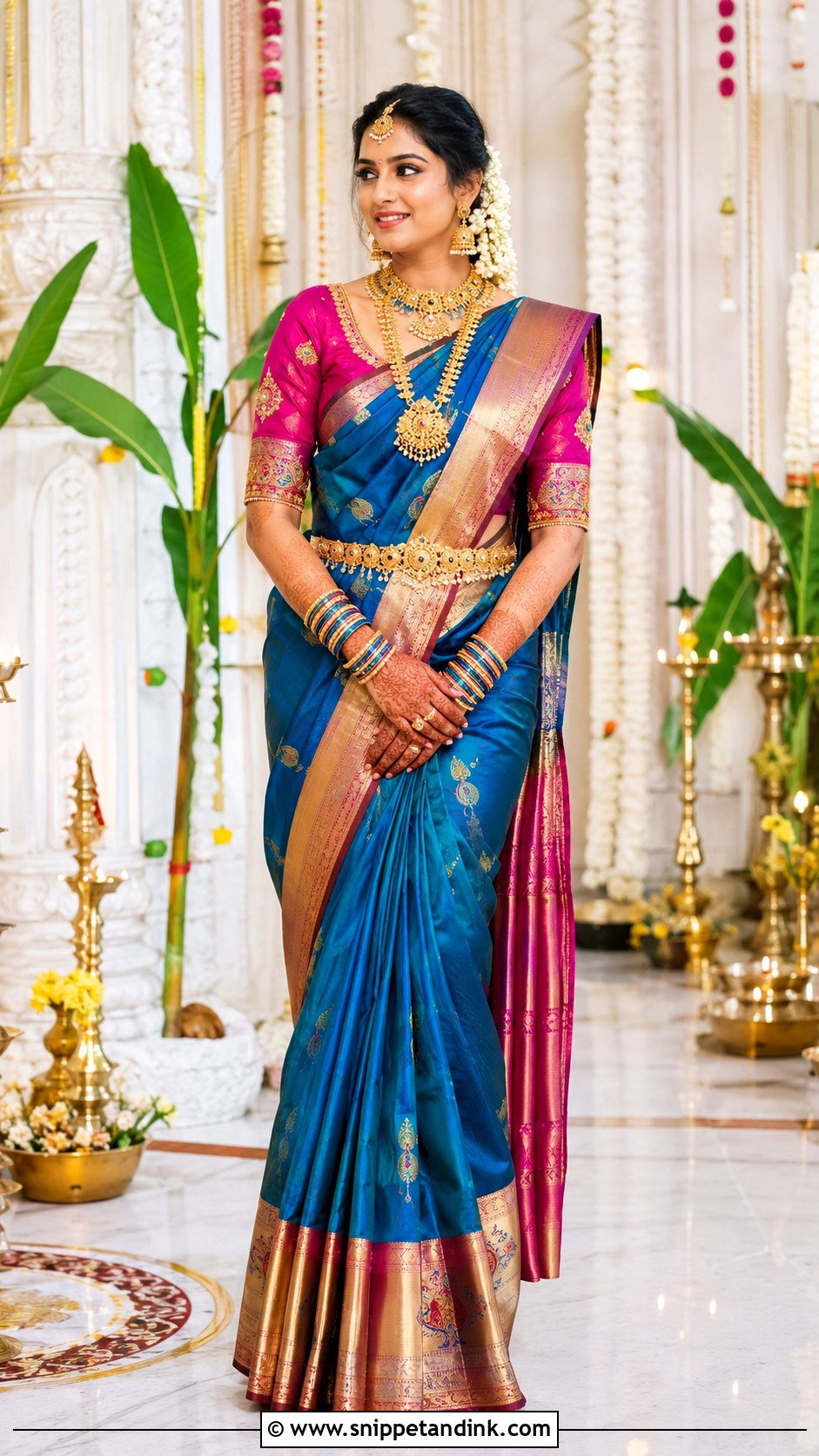
Kuppadam pattu has a soft drape with an interlocked border, and it gives regional Andhra charm without the weight of a full Kanchipuram. Red, rust, turmeric yellow, peacock blue and leafy green suit it. Pair it with a contrast silk blouse and pleat neatly so the border reads in photos. A traditional necklace set, jhumkas, bangles and a vaddanam complete it. A jasmine-wrapped braid or bun works well, with warm makeup, defined eyes and a soft red or coral lip.
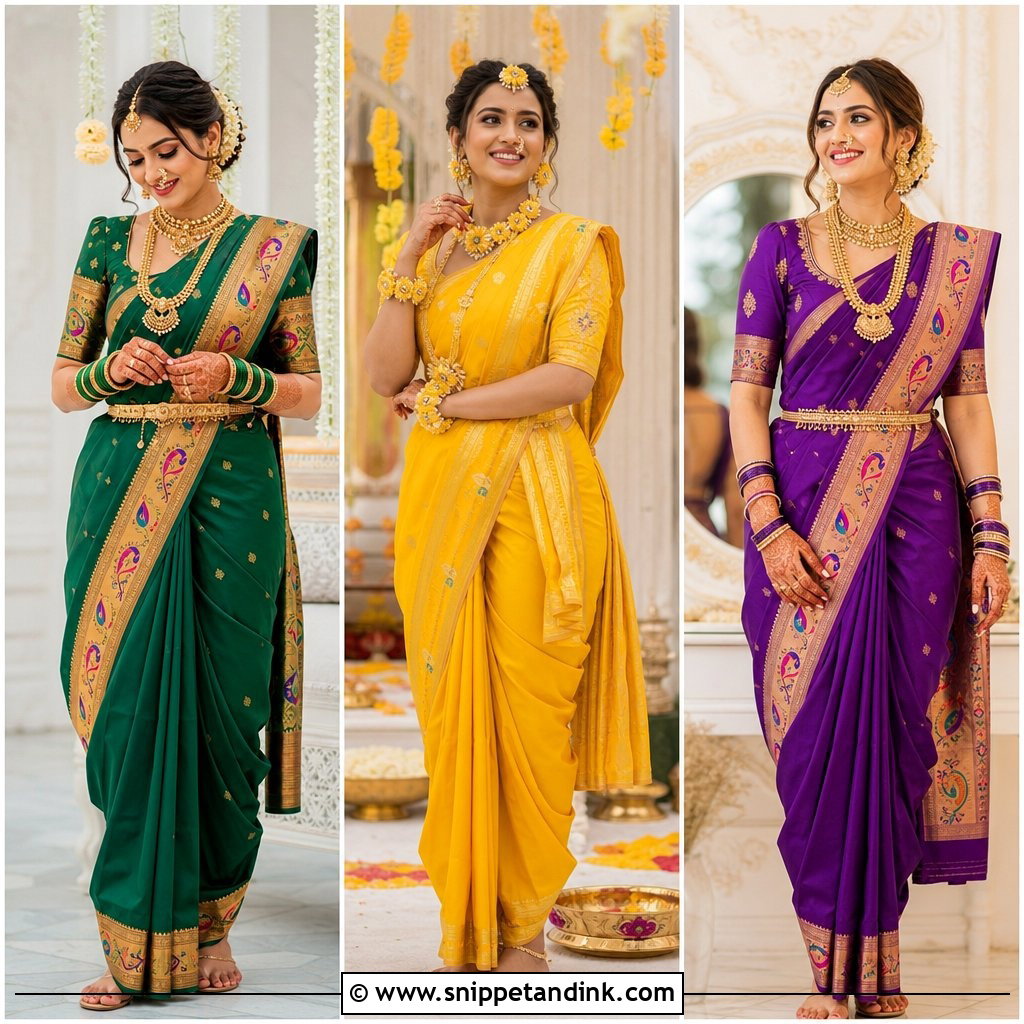
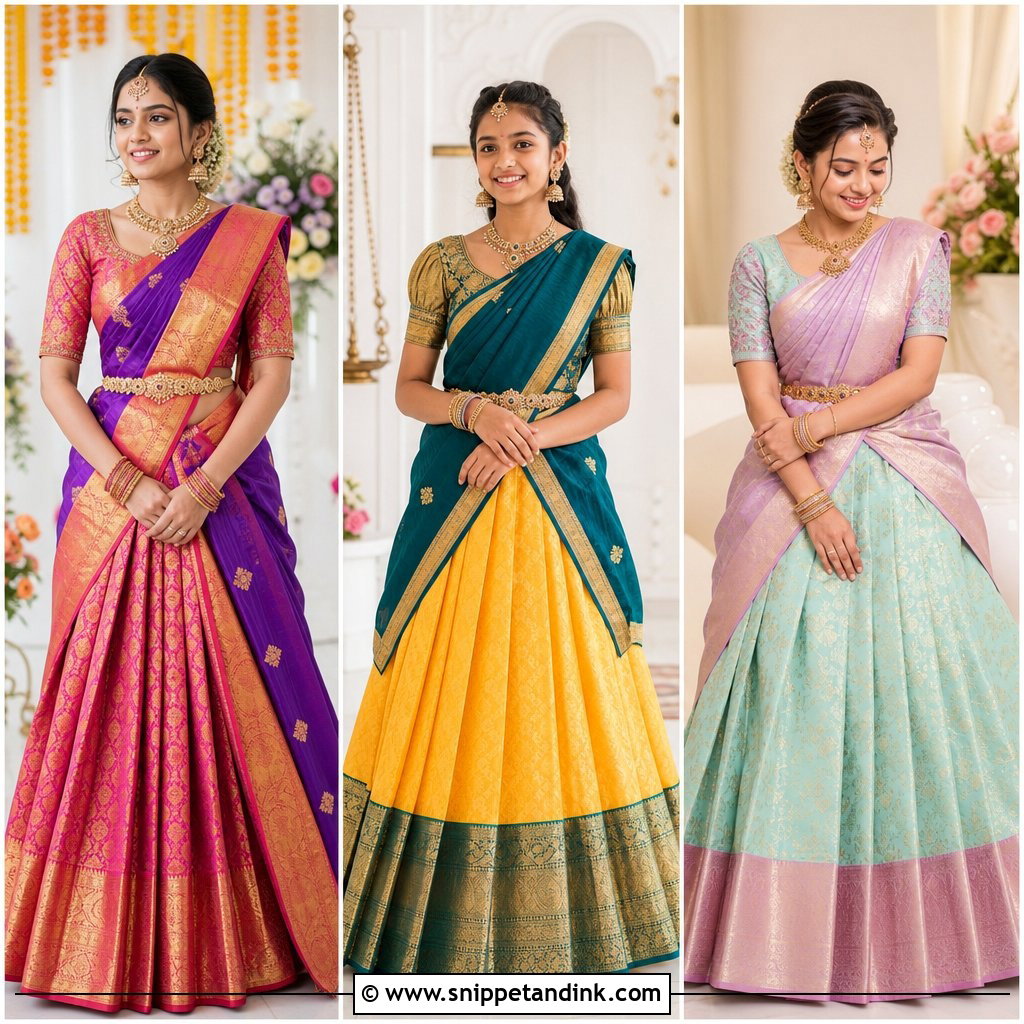
14. Telugu Bride Half Saree
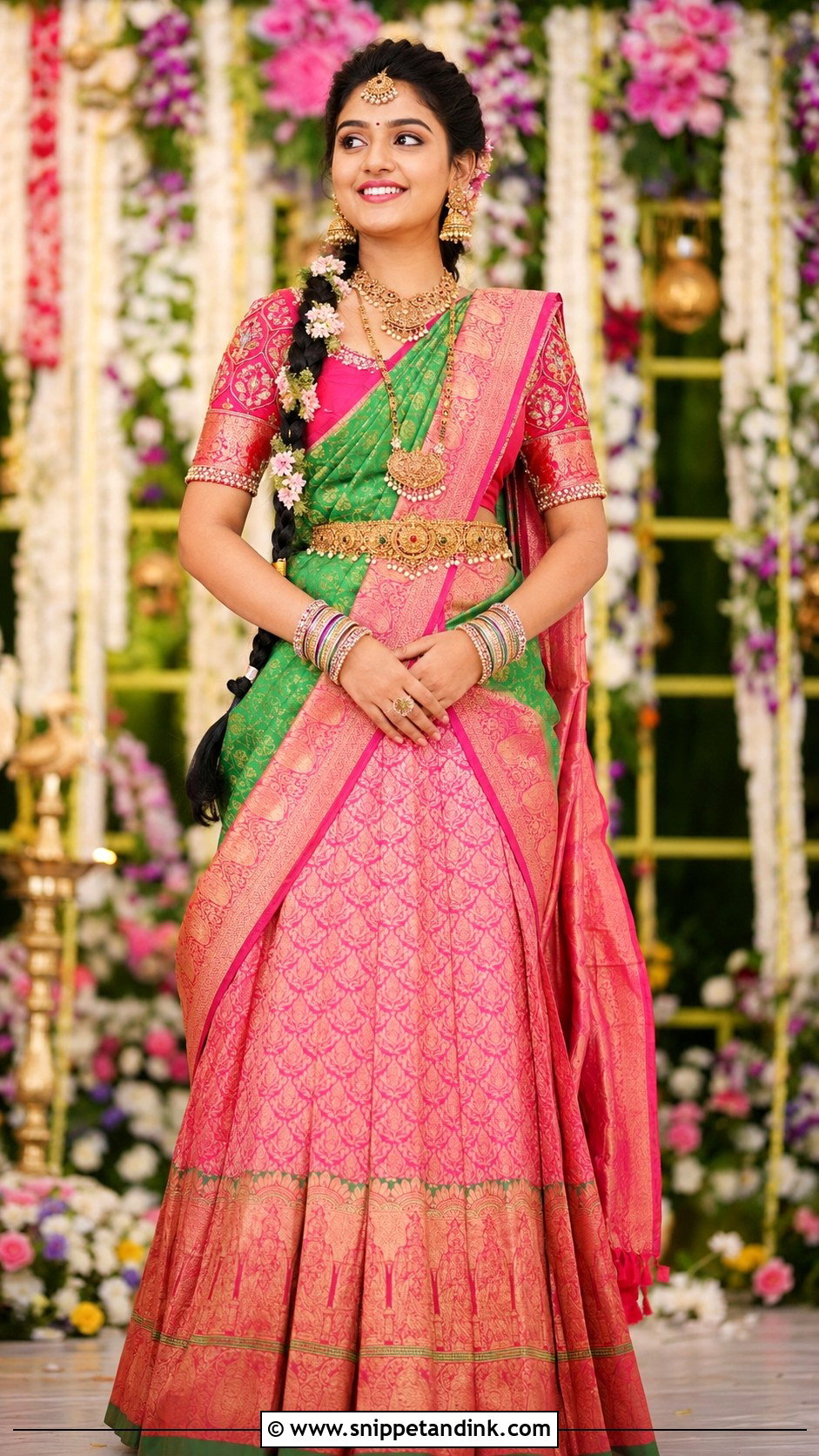
The half saree, with its silk skirt, fitted blouse and voni draped across the body, is the youthful look for pre-wedding events, portraits or a reception change. Pink with green, red with gold and purple with orange are the festive pairings. Temple jewelry, bangles, a waist belt and jhumkas make it bridal rather than casual. A long braid with flowers suits the silhouette. Pin the voni at the shoulder and the waist, because it slips when you dance. Keep the makeup fresh and bright.
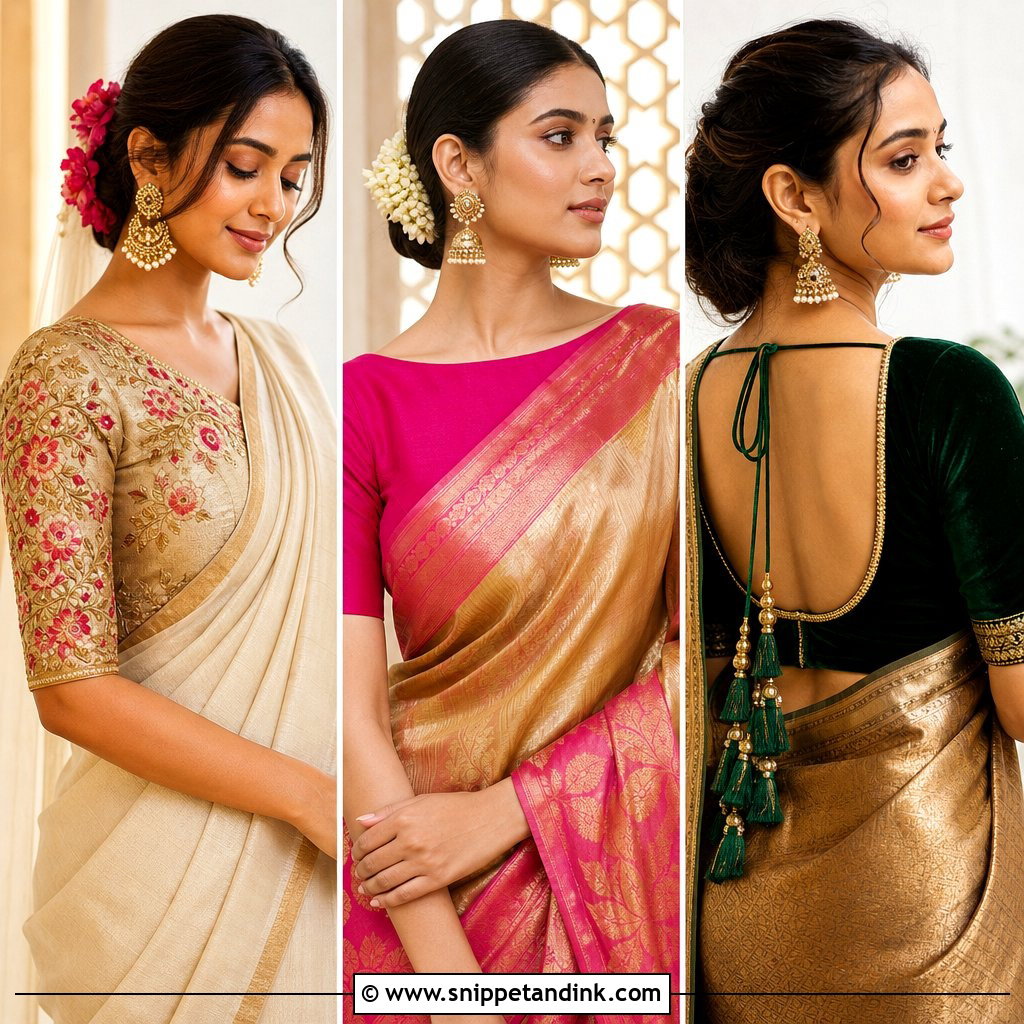
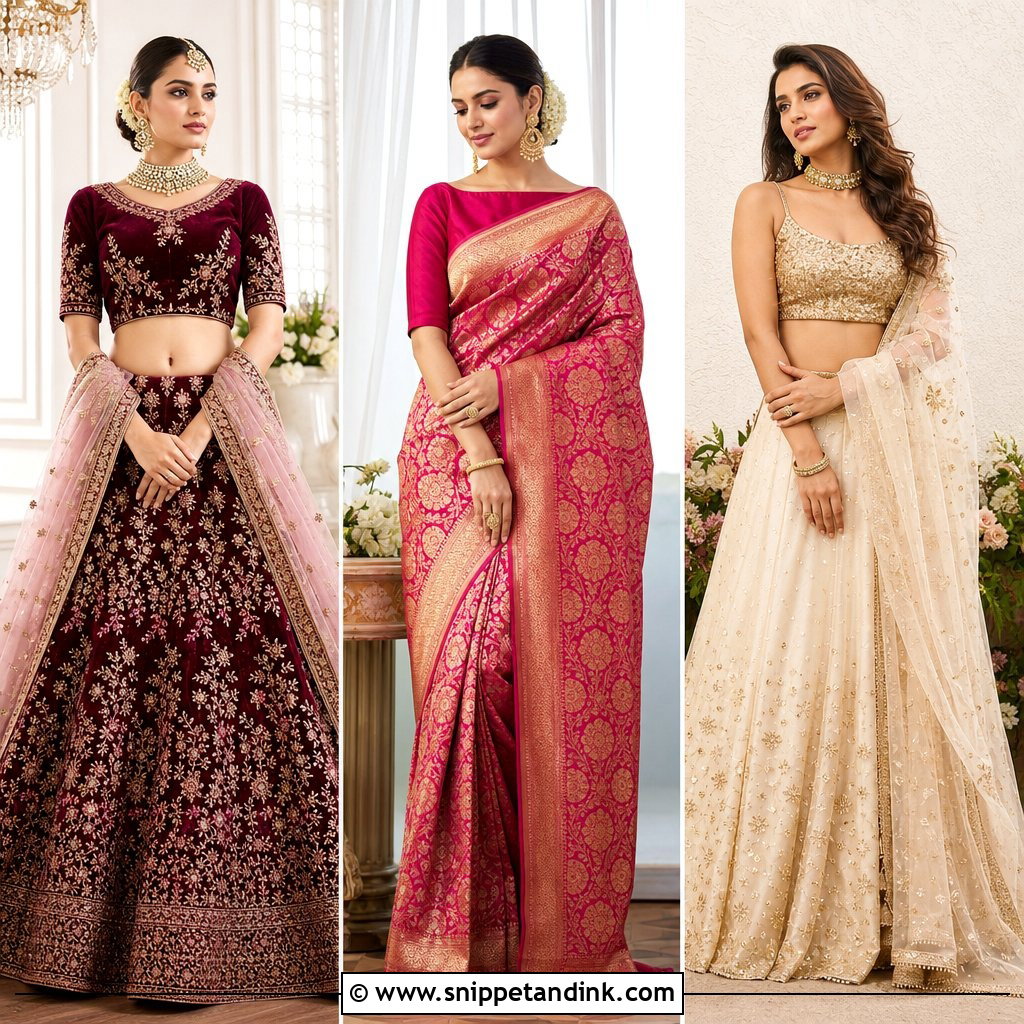
15. Telugu Bride Lehenga Saree
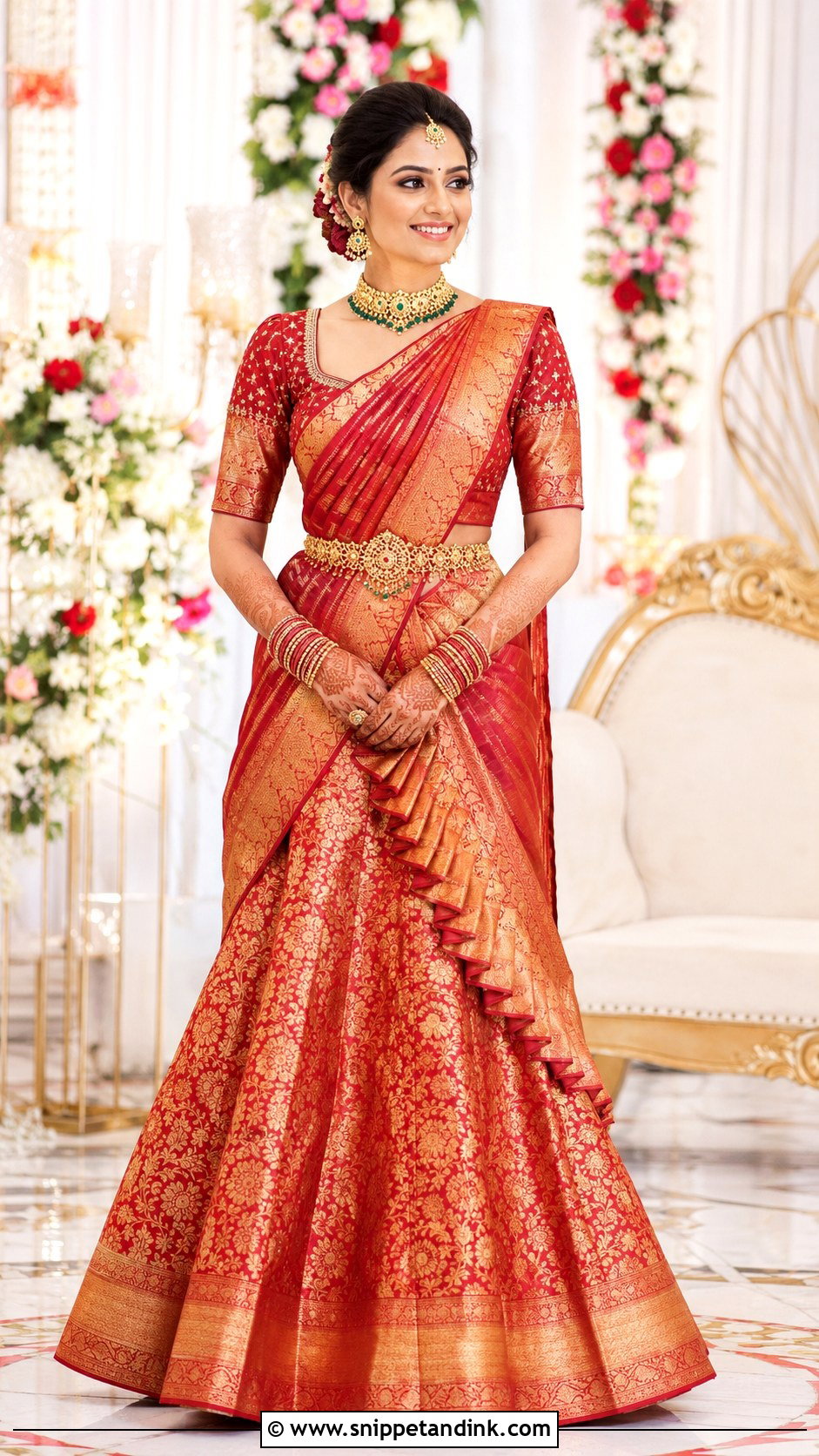
A lehenga saree gives you a saree’s look with a pre-stitched skirt, so there’s no re-tucking pleats every hour. It’s practical for receptions, sangeet-style celebrations and entries. Silk, brocade or embroidered fabric in red, gold, green or blush all work. The pallu should still be pleated and draped traditionally so it doesn’t look like a costume. A choker, earrings, bangles and a statement waist belt complete it. Ask for a hook-and-eye closure rather than a zip at the side; zips on heavy fabric can split under strain.
16. Telugu Bride Reception Lehenga
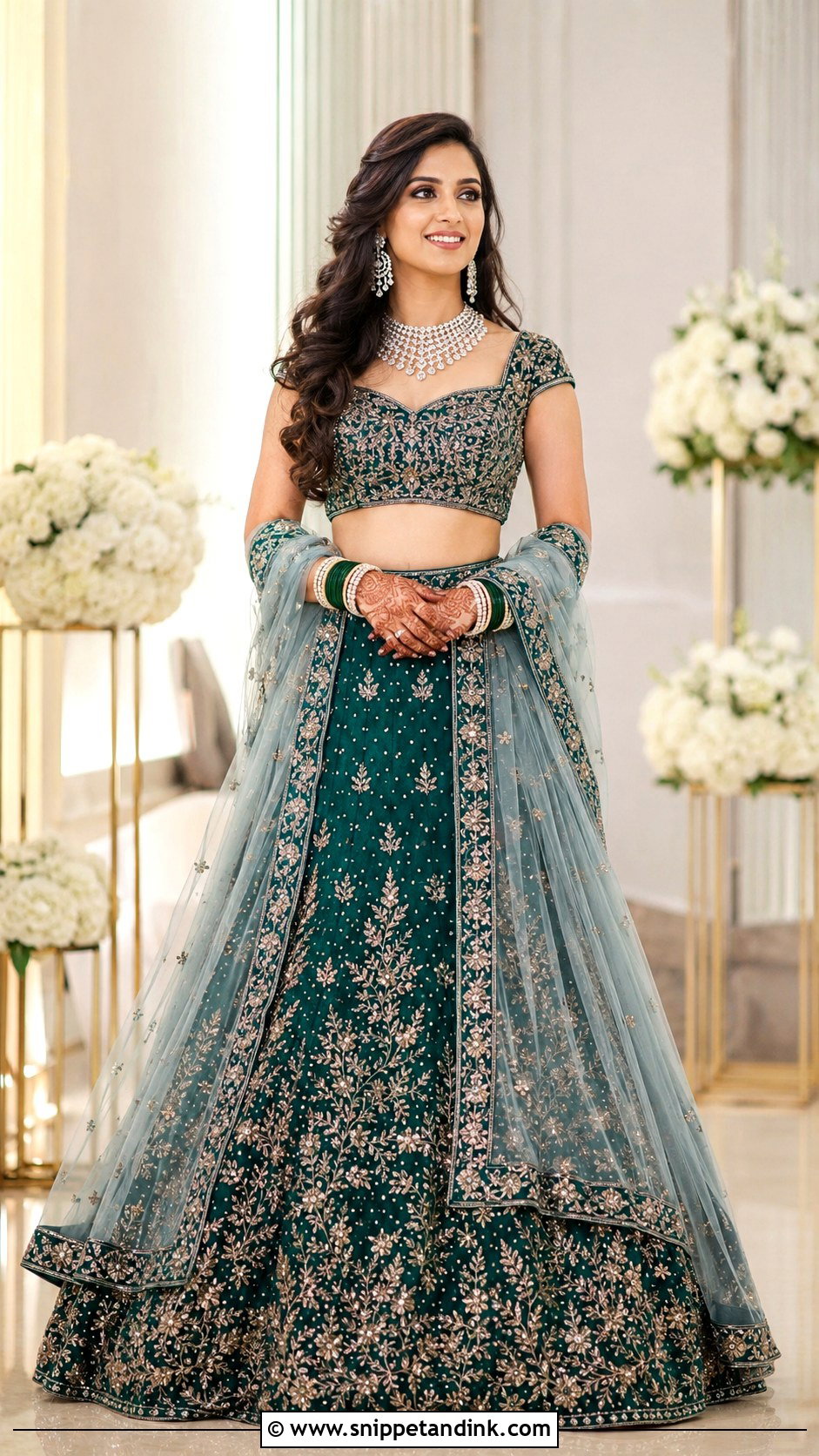
The reception is where many Telugu brides switch to something more glamorous after the traditional ceremony. Silk, velvet, organza or an embroidered lehenga in champagne, wine, emerald, blush, navy or gold are all options. Velvet is warm, so I’d keep it for winter receptions. The dupatta should be light enough to carry for hours. Diamond, kundan, pearl or antique gold can suit, depending on the colour. With heavy embellishment, a statement necklace and matching earrings are enough. Soft waves or a floral bun and luminous makeup finish it.
17. Telugu Bride Temple Jewelry Look
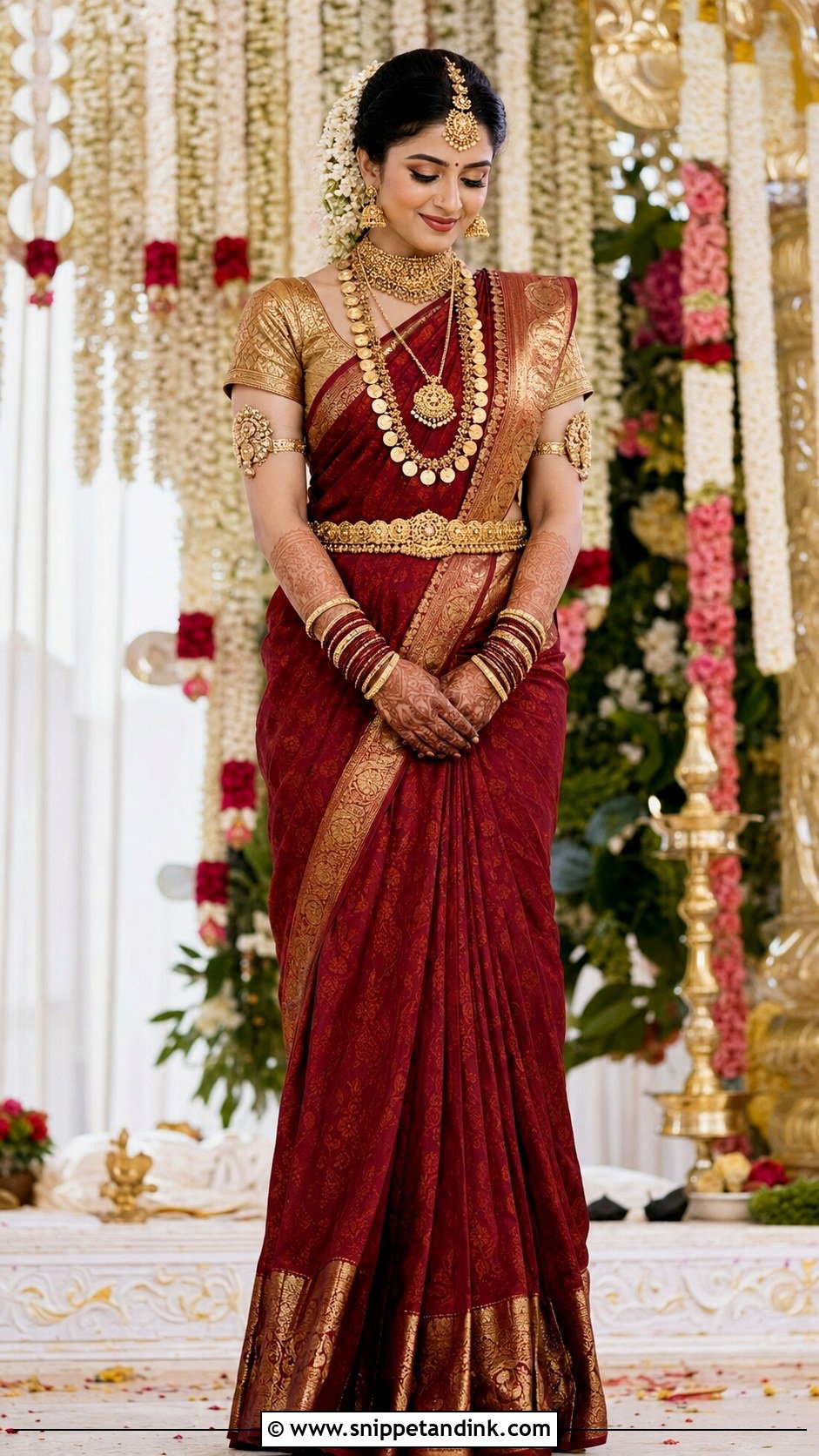
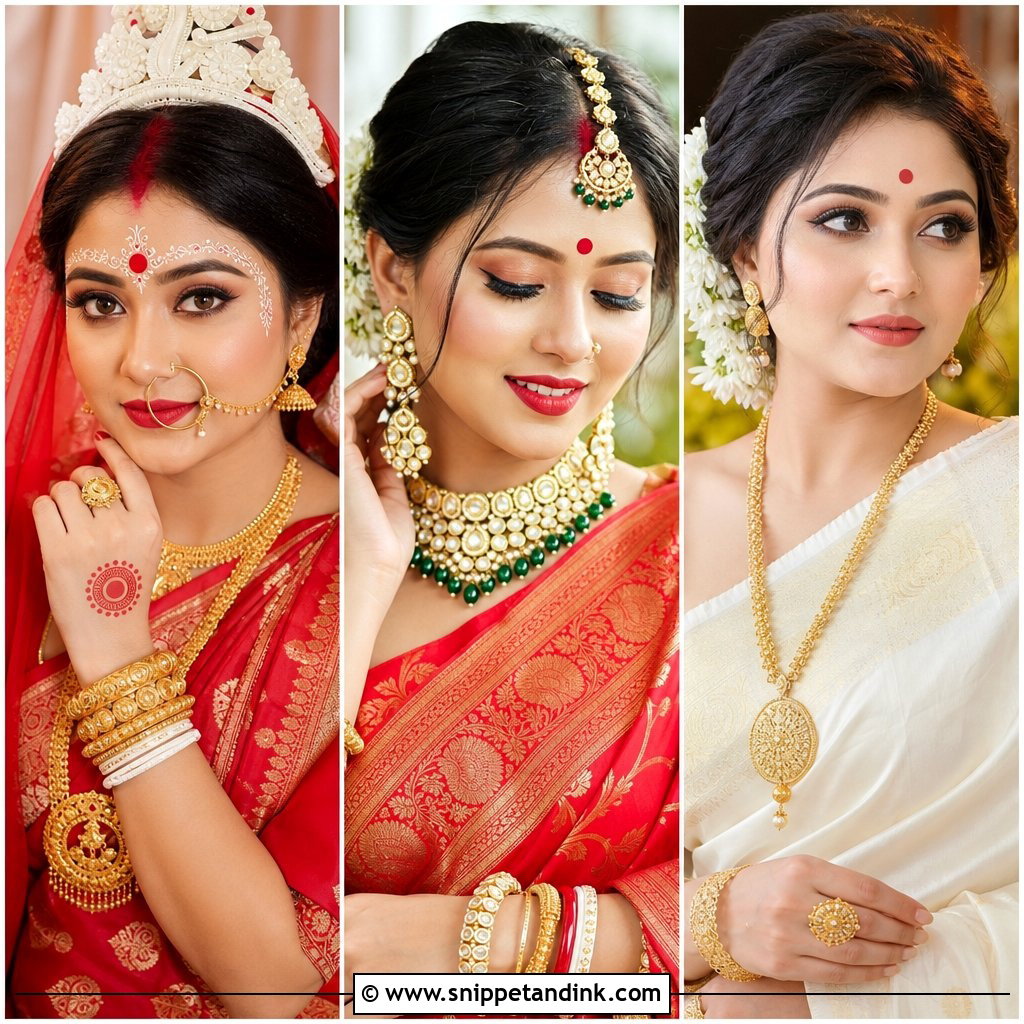
The full temple jewelry look is the most traditional and the heaviest. Build it over a rich red, green, gold or maroon pattu with a temple choker, kasu mala, long haram, vaddanam, vanki, jhumkas, bangles and a maang tikka. Balance matters. A blouse with a comfortable neckline lets the layers sit without stacking on top of each other, and earrings should be supported with ear chains if they’re heavy. A long braid with jada billalu and jasmine completes it. Makeup needs glowing skin and strong eyes so the face isn’t lost under all that gold.
18. Telugu Bride Pearl Jewelry Look
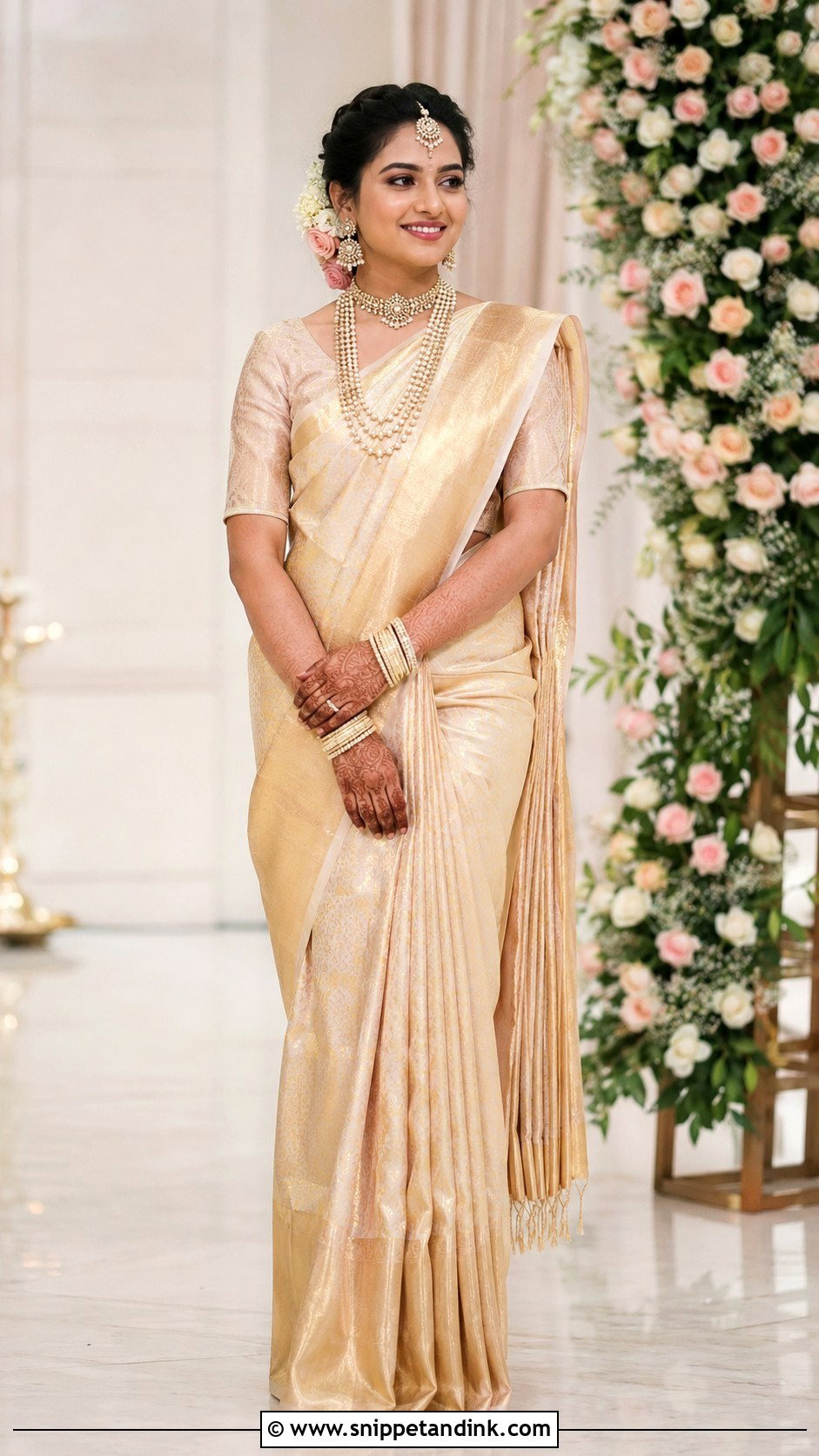
Pearl jewelry gives a softer, Nizami-inspired finish that many brides from Telangana or Hyderabad families love. Pearls pair with a rich silk, a tissue saree or a pastel pattu in ivory, blush, mint, gold or deep green. A pearl choker, long layered necklace, matching earrings, bangles and a delicate passa or maang tikka suit it if your family tradition allows. Pearls are porous, so I spray perfume and hairspray before putting them on, never after. A low bun with jasmine or roses and soft shimmer eyes complete it.
19. Telugu Bride Vaddanam Saree Look
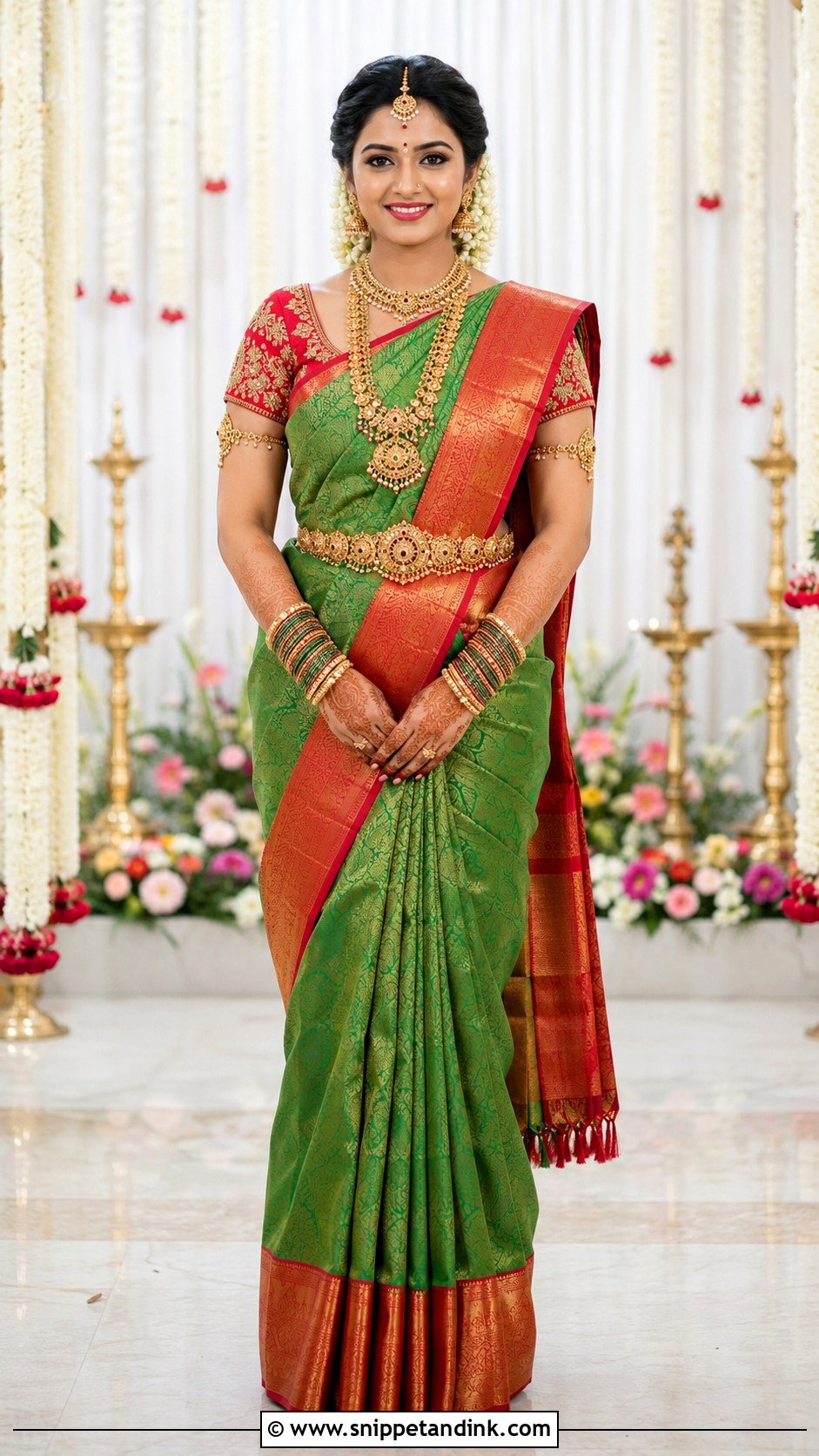
A vaddanam shapes the whole saree. Pulled in at the waist, it smooths the pleats and gives the drape a clear line, especially with Kanchipuram, Dharmavaram or Gadwal silk. Fit is the issue: have the belt adjusted with the saree and blouse on, because the fabric layers add more girth than people expect. A blouse that fits well at the waist keeps the belt secure. Layered necklaces, bangles, jhumkas and armlets suit it, and a braid or bun with flowers keeps the focus traditional. It shows best in seated ceremony photos.

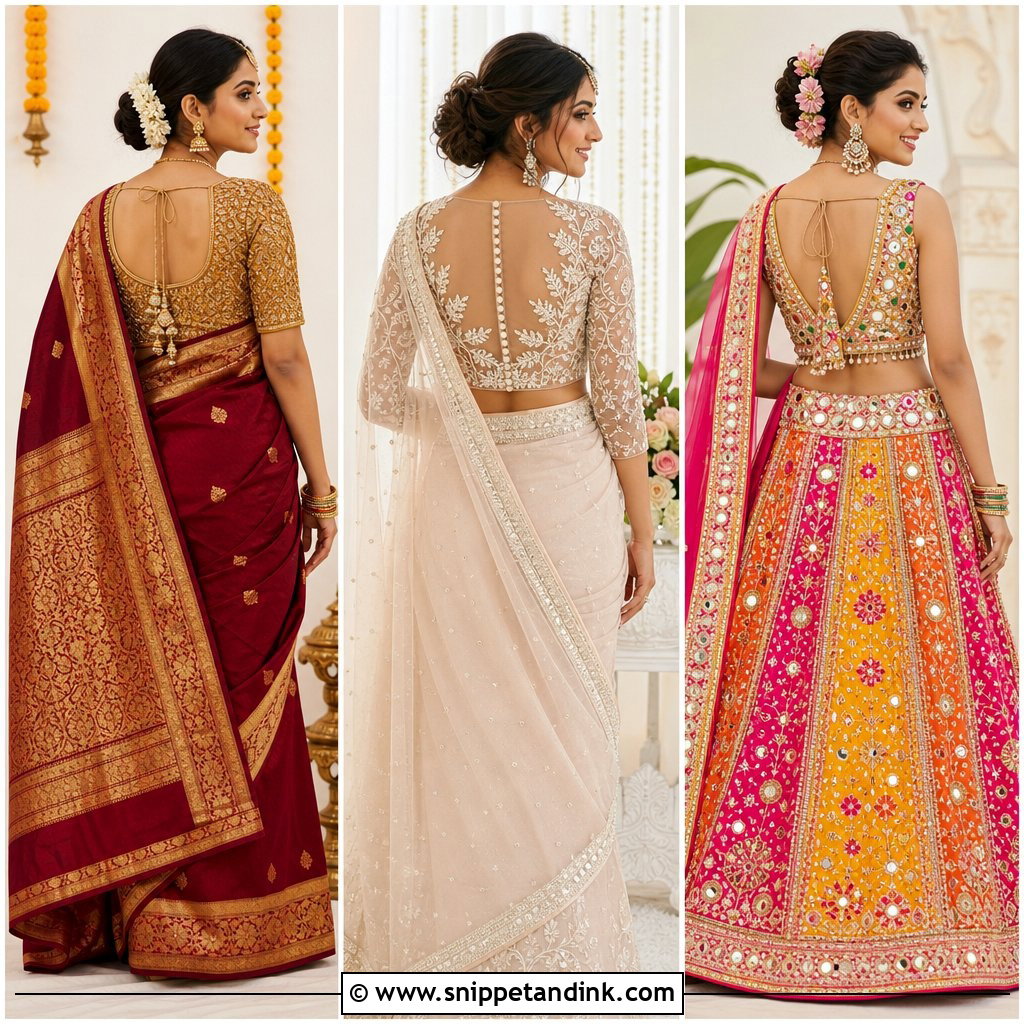
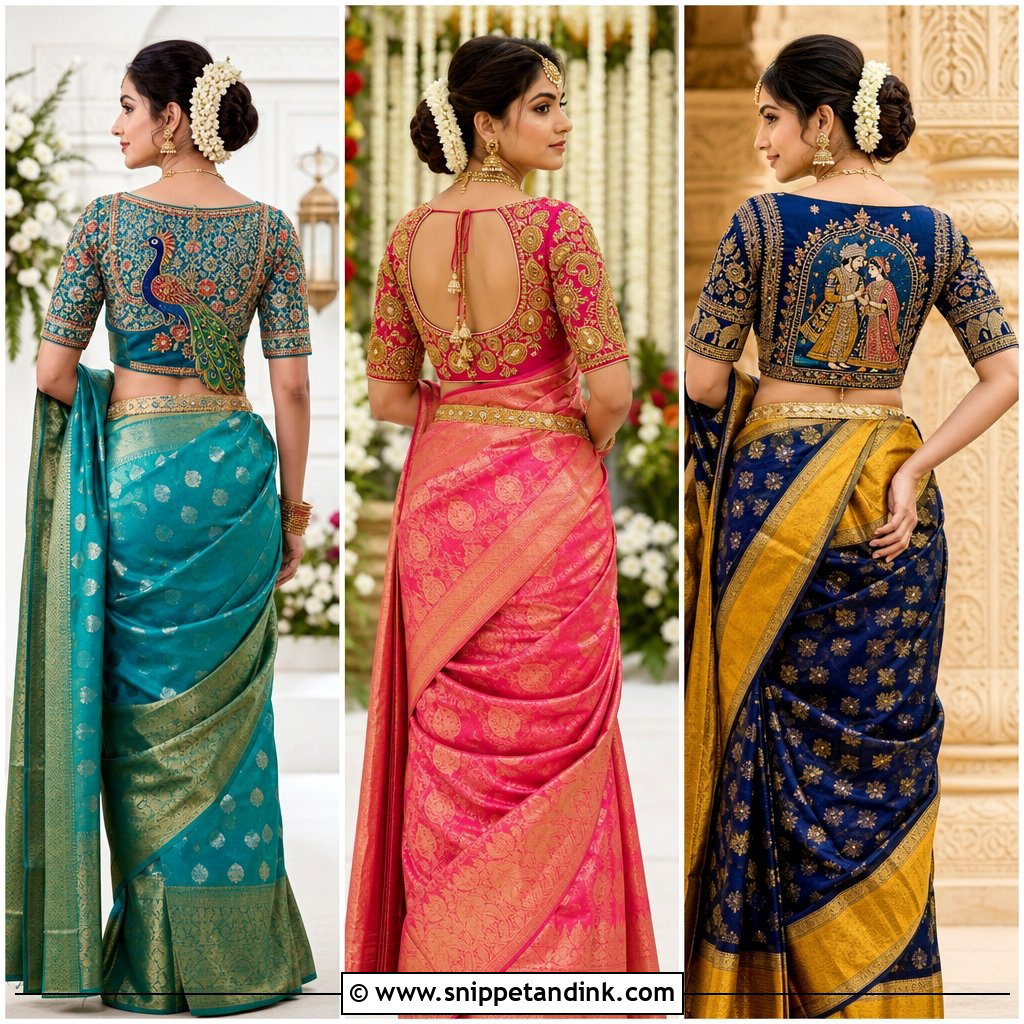
20. Telugu Bride Jada Hairstyle Look
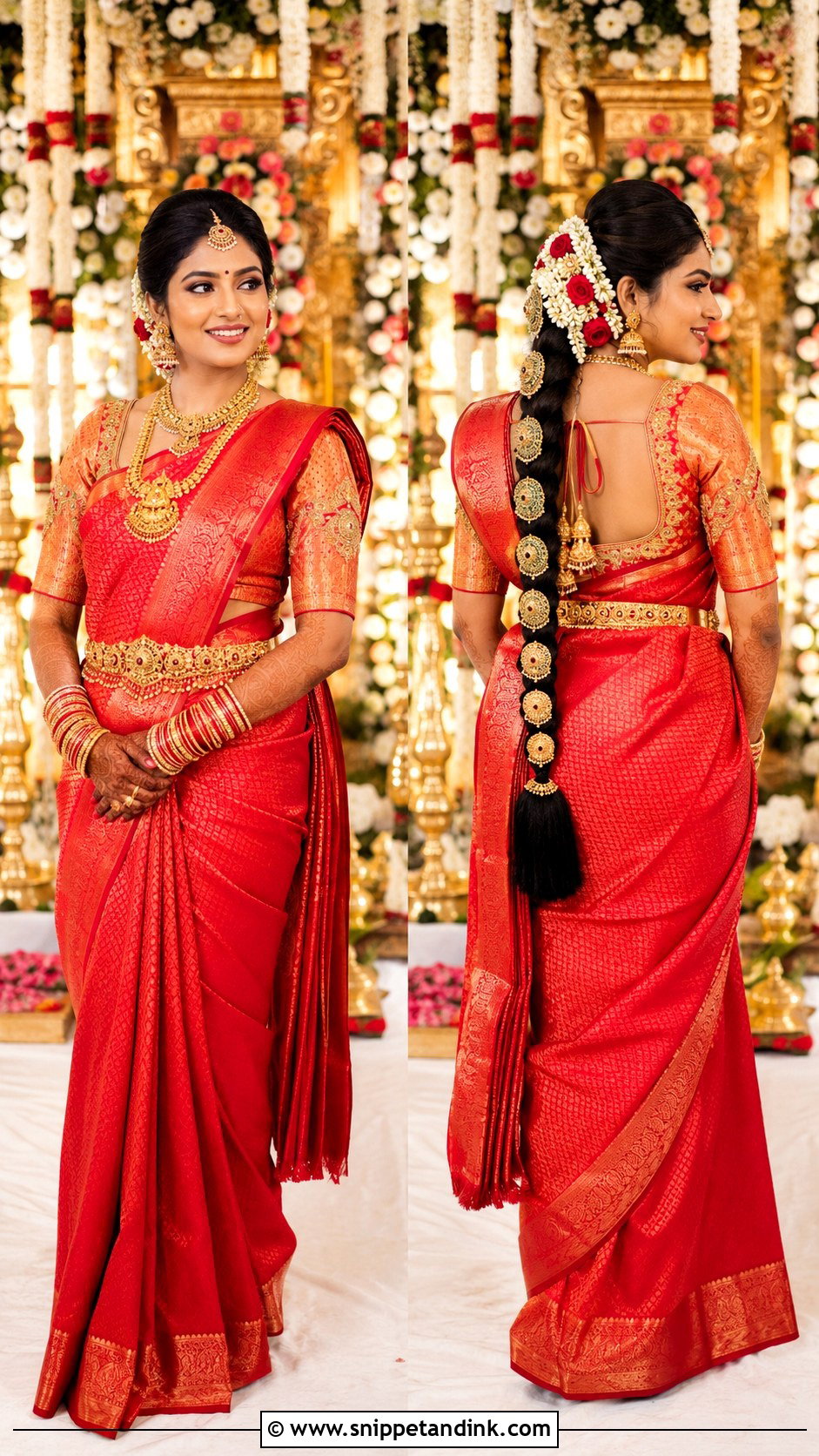
A jada hairstyle look turns the back of the bride into a feature. A long braid wrapped in jasmine and roses with jada billalu pairs naturally with temple jewelry, a vaddanam and a maang tikka. The braid also balances a heavy saree by adding detail behind. Jada accessories are heavy, so I anchor them at the base of the braid and pin along its length. Choose a blouse with a neat back design since all eyes go there during the ceremony. Kohl eyes, a red bindi and a warm lip complete it.
21. Telugu Bride Bridal Bun Look
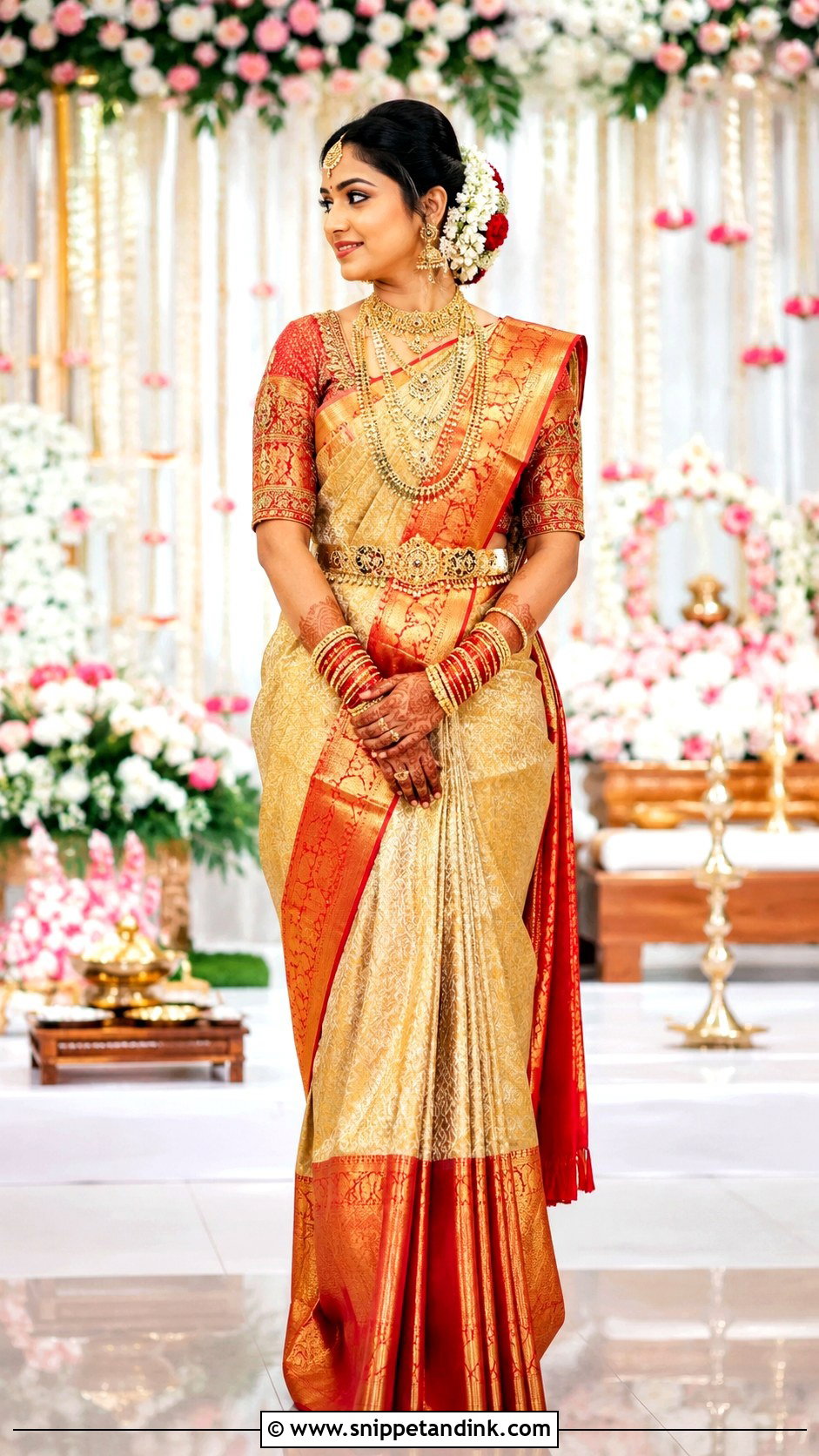
A bridal bun frames the face cleanly and keeps the neck open, which lets a choker and statement earrings show. It suits silk sarees, tissue sarees and reception lehengas. A low or middle bun wrapped in jasmine, roses or traditional hair accessories pairs with a pattu, layered jewelry, bangles and a vaddanam for the ceremony. For a softer look, add face-framing pieces or a gajra around the bun. Buns are more comfortable than heavy braids for long rituals, which is why I often suggest one for the reception switch.
22. Telugu Bride Minimal Makeup Saree Look
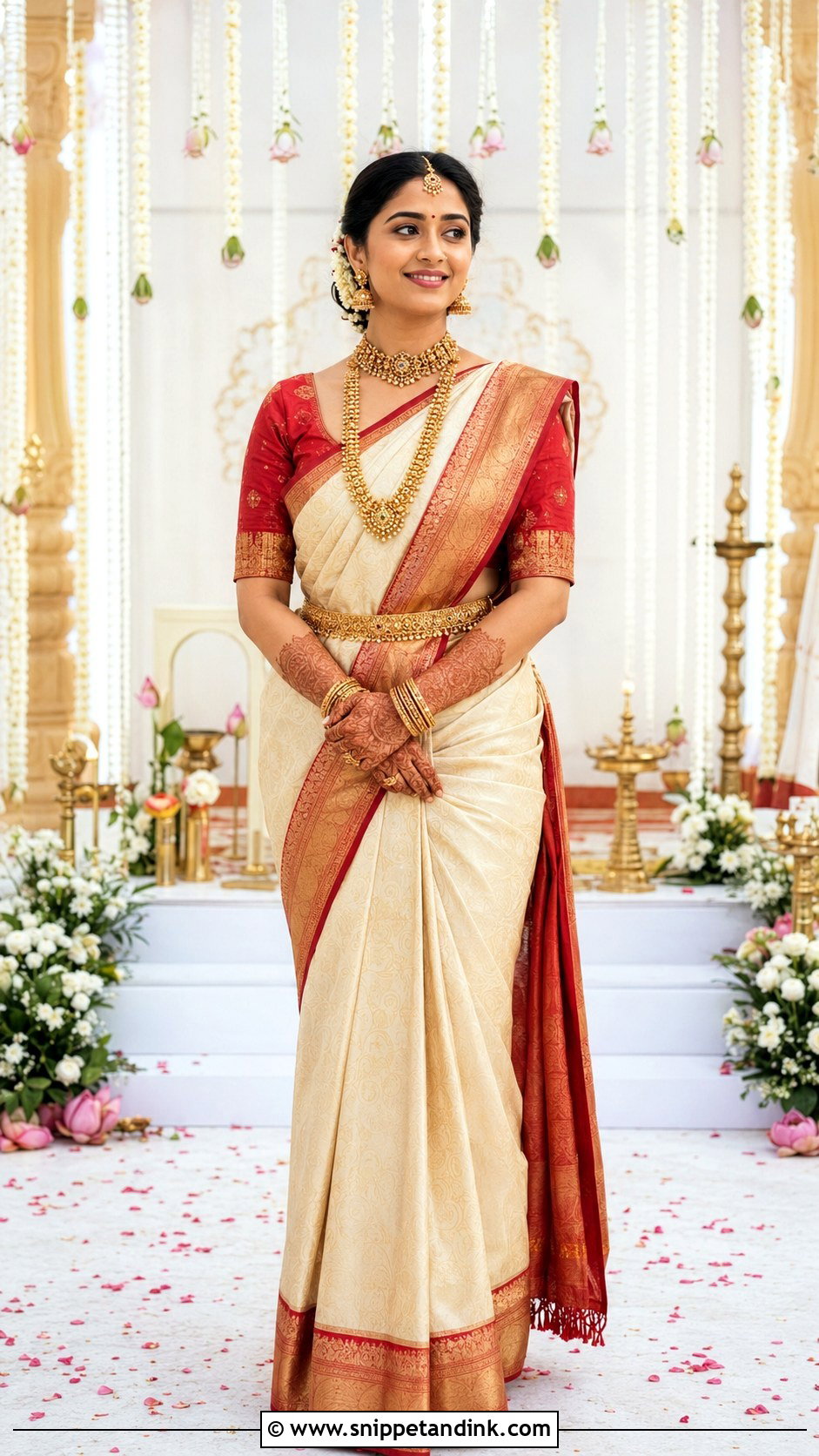
Minimal makeup needs a rich saree so the outfit still looks bridal: a gold pattu, the Madhuparkam, a pastel Uppada or a soft pink Kanchipuram. Choose jewelry carefully instead of wearing every piece. A choker, long necklace, earrings, bangles and a simple hair accessory can be enough. Keep skin glowing, brows groomed, eyes softly defined and lips in rose, coral or muted red. Even minimal makeup needs a long-wear base and setting spray for a Telugu ceremony, because heat, rituals and lamps work against it.
23. Telugu Bride Engagement Saree
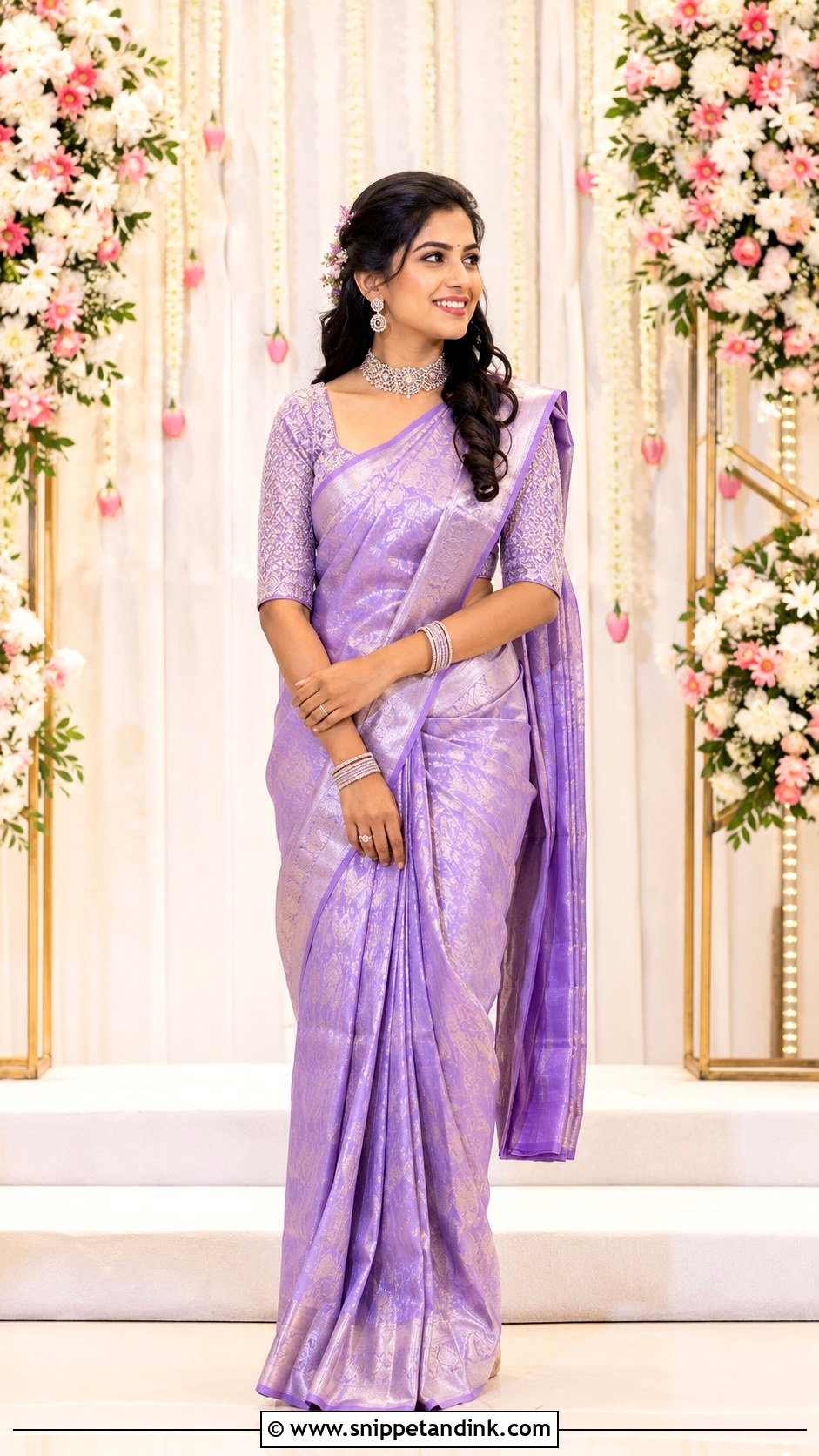
An engagement saree should feel festive but lighter than the wedding-day outfit. Silk, organza silk, tissue or handloom in lavender, blush, emerald, royal blue, peach or gold all suit. A stylish blouse should still be respectful and comfortable for family rituals. Jewelry can be lighter, such as a diamond choker, pearl set, antique gold necklace or kundan earrings. Add bangles and a small bindi. Soft curls, a half-up hairstyle or a floral bun finish it. Keep the heaviest pieces for the wedding so they feel special.
24. Telugu Bride Nalangu Saree
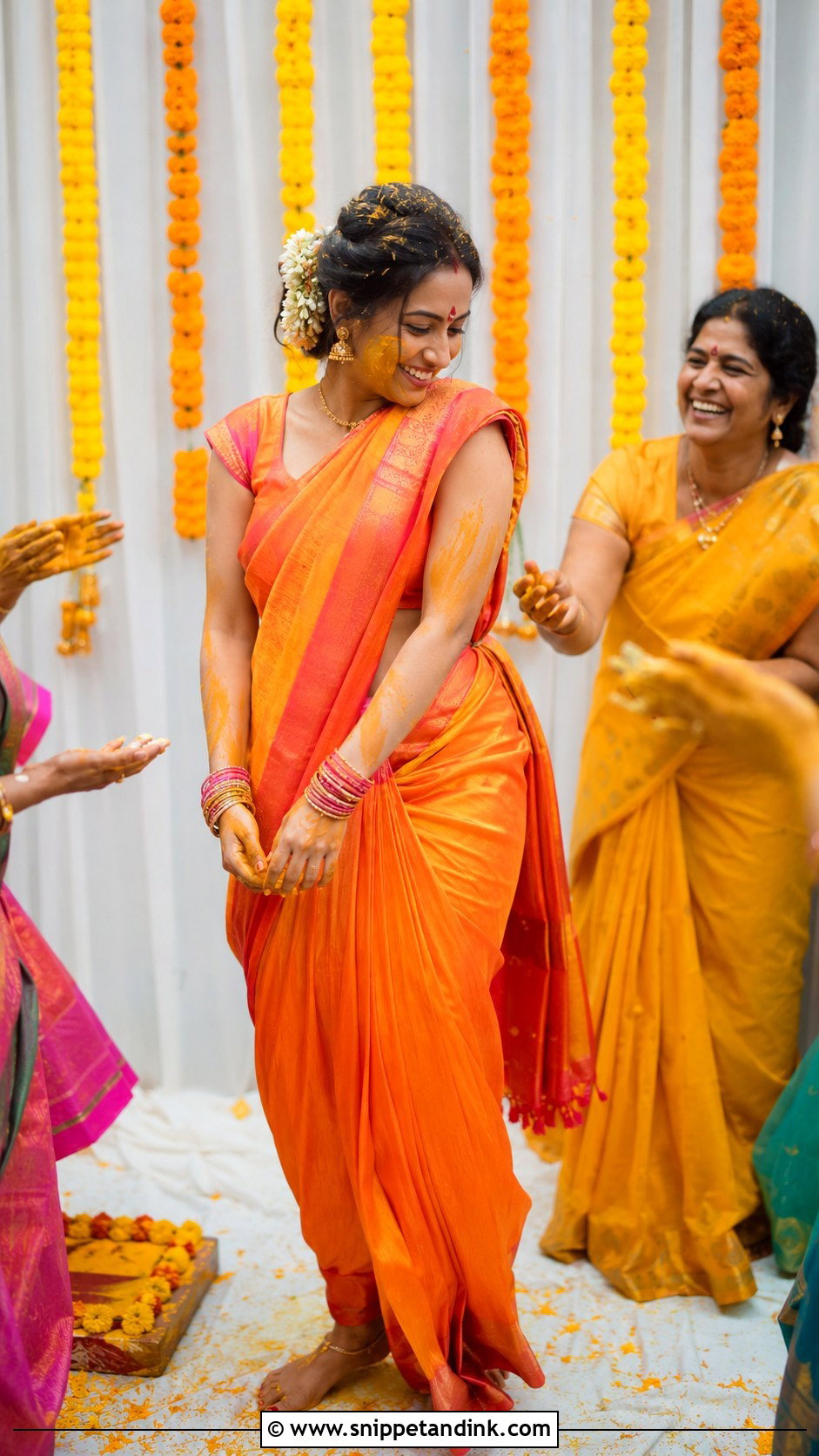
Nalangu is playful and family-led, full of games and laughter, so the saree should let you move and sit on the floor easily. Bright yellow, orange, pink, green or red suit the mood, in lightweight silk or soft handloom rather than a heavy wedding saree. Simple gold jewelry, bangles, jhumkas and fresh flowers in the hair are enough. A braid, loose bun or half-up hairstyle survives the movement. Light, long-wearing makeup is better than a full bridal face here, and candid photos of these events are some of the best you’ll get.

25. Telugu Bride Modern Saree Look
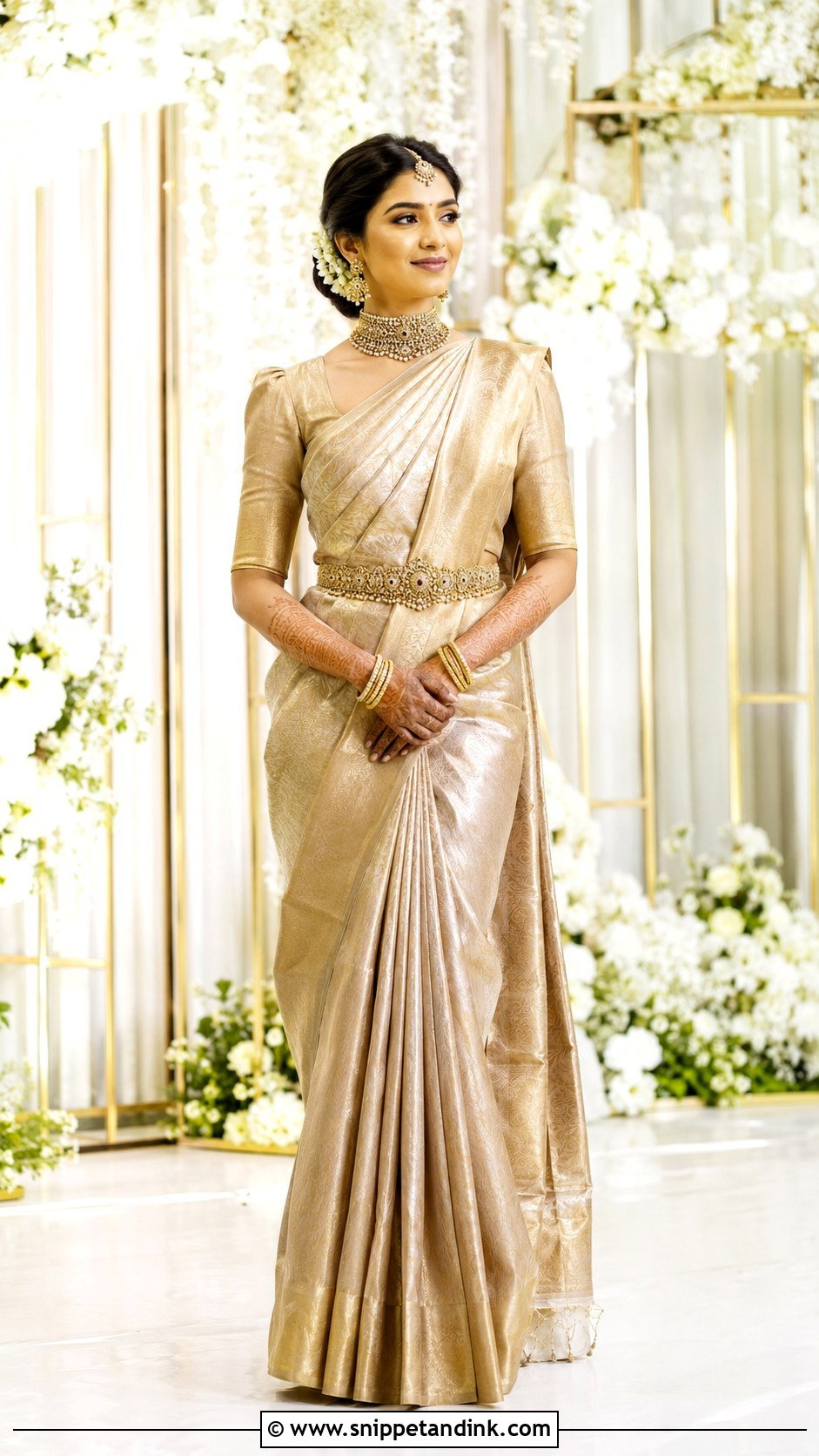
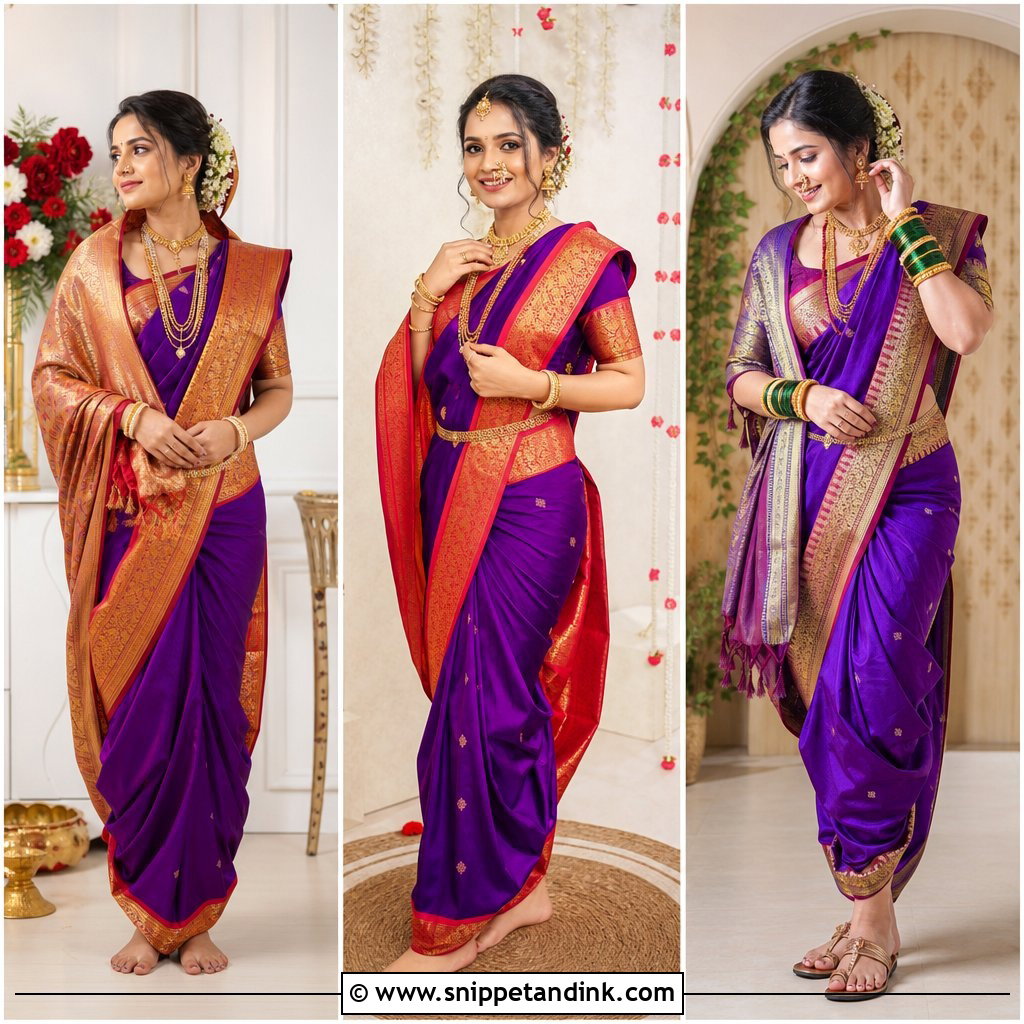
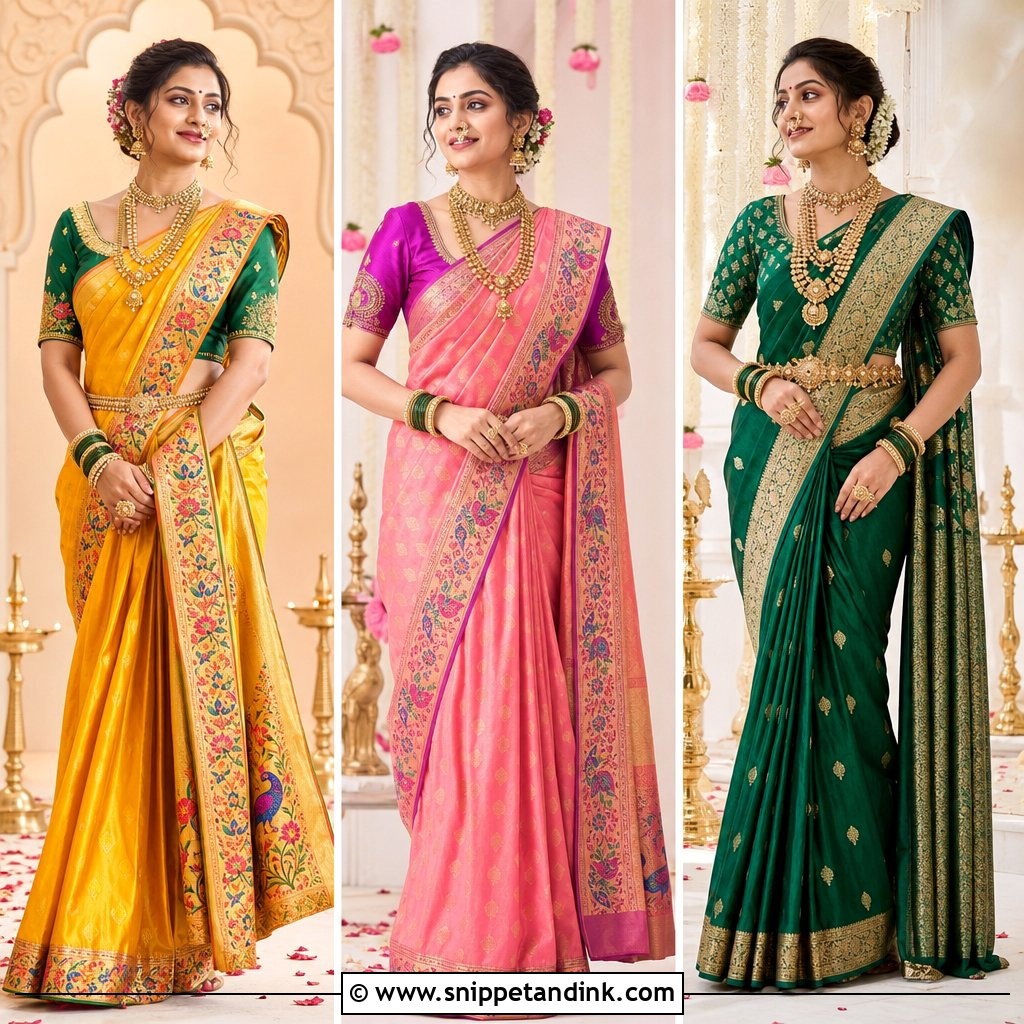
A modern saree look keeps the tradition but trims the volume. Silk, tissue, organza or a lightweight pattu in champagne, ivory, blush, sage, copper or muted gold suits it, with a structured blouse, neat pleats and fewer but stronger jewelry pieces. A statement choker, earrings, bangles and a sleek vaddanam can be enough. A low bun, soft waves or a small flower arrangement replace the heavy braid. Luminous makeup with neutral eyes and a defined lip finishes it. I’d check with family before choosing this for the Muhurtham itself; it often suits the reception better.
Pre-Pleated Silk, Fresh Jasmine and Heavy Gold on the Day
On the Muhurtham day, small preparations save a lot of time in the getting-ready room. These are the three I never skip.
Pre-pleat the pattu
A heavy Kanchipuram or Dharmavaram can take a long time to drape from scratch, and pleats folded in a hurry splay open. I pre-pleat the pallu and front pleats a day or two before, press them, and hold them with soft clips or thread. On the day the drape goes on in minutes and stays crisp through seated rituals.
Keep jasmine cool until the last minute
Jasmine strings brown quickly in heat and under lights. Buy them on the morning itself if you can, wrap them in a damp cotton cloth, and keep them somewhere cool until hair is done. Have a spare string for the reception, because the ceremony strings will be tired by then.
Spread the weight of the jewelry
Long harams swing forward when you bend during rituals, so I pin them discreetly to the blouse. Heavy jhumkas need ear chains to share the load. Fit the vaddanam over the draped saree, not over bare fabric, and check that you can sit cross-legged in it before the ceremony begins.
Silk, Jasmine and the Rituals That Shape Each Look
A Telugu bridal wardrobe works when each function gets the outfit it needs and the bride still feels like herself. A grand Kanchipuram, the sacred Madhuparkam, a cheerful Pellikuthuru saree or a modern reception lehenga should each be complete from blouse to jewelry, hair and makeup. Weigh comfort, family custom and the length of each ritual as seriously as colour. Temple jewelry, jasmine, the vaddanam and silk will always anchor the look. Plan the sarees by function, rehearse the heaviest one, and the day itself becomes much easier to enjoy.
You'll Like These Ideas:


Leave a Reply