
A designer label on its own doesn’t make a wedding dress work. What I look at with every bride is how the bodice is built, how the fabric moves when she walks and sits, and whether the shoes, veil and jewelry finish the line or fight it. The newest gowns lean toward sculpted bodices, basque waists, bows, soft color, bias-cut slips, separates and convertible pieces, and nearly all of them reward careful styling more than extra sparkle. Below are the 25 dresses I’d pull for a fitting room, from classic gowns and modern shapes to reception changes, destination options and a few pieces for guests, each with the notes I’d give you in person.
How a Designer Gown Order Runs From Deposit to Final Fitting
Most designer wedding dresses are made to order once you pay the deposit, not pulled from a stockroom. Production and shipping often take several months, and alterations come on top of that, so I tell brides to order roughly eight to twelve months before the wedding. Some labels offer rush production for a fee, but it can narrow your fabric and color options.
Alterations usually start eight to ten weeks before the date. Expect two or three fittings, more for a corset, a bias cut or a gown with heavy beading that has to be moved by hand.
- First fitting: hem, waist and bodice are pinned. Bring the exact shoes and undergarments you’ll wear.
- Second fitting: check that the changes hold when you sit, walk and dance, and learn how the bustle works.
- Final fitting, about two weeks out: bring the person who will help you dress and bustle on the day.
- Collection: inspect beading and hems under good light before the dress leaves the shop.
Try not to switch shapewear between fittings. Every change after the first pinning means unpicking work that’s already done.
1. Satin Ball Gown Wedding Dress
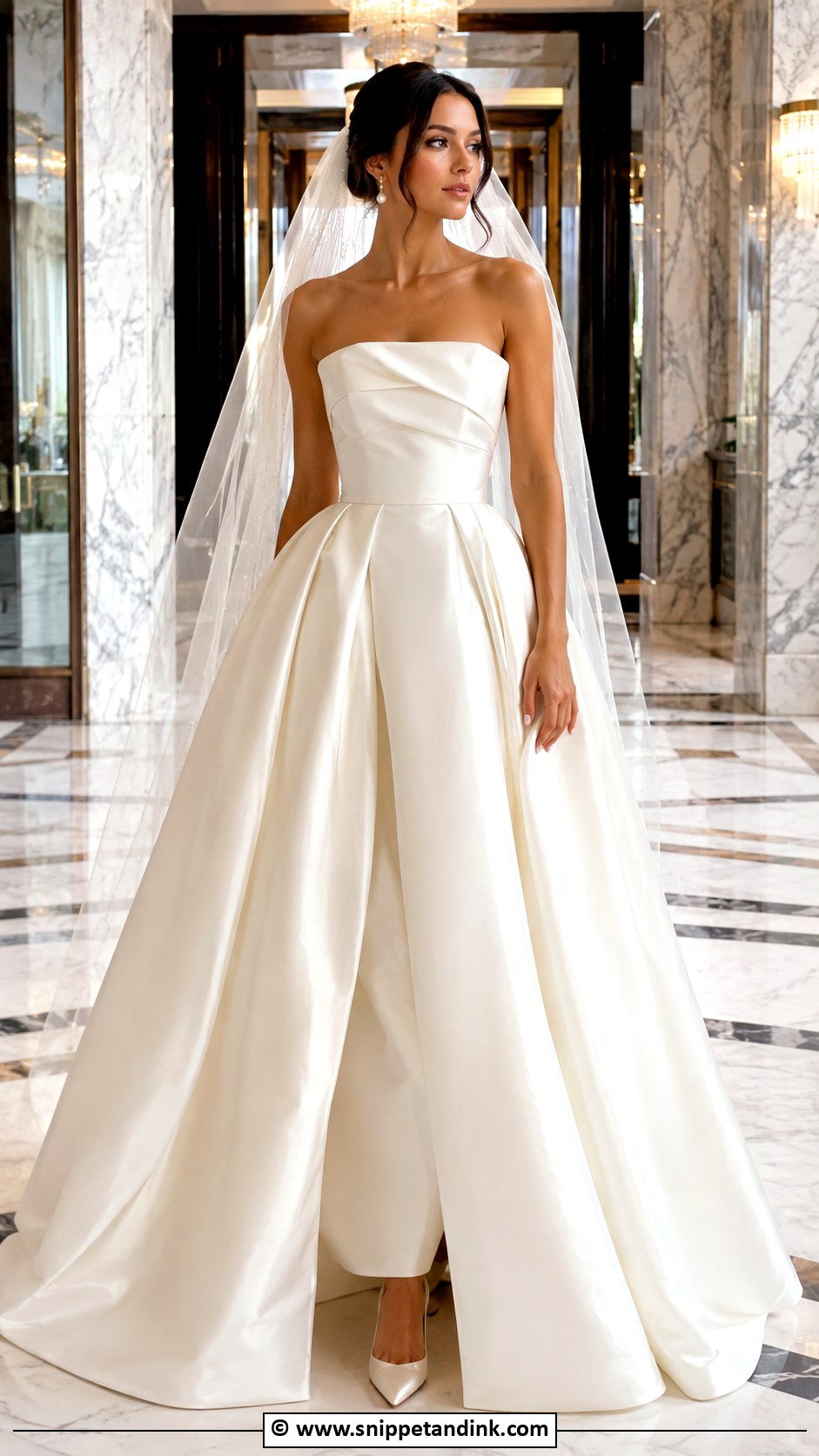
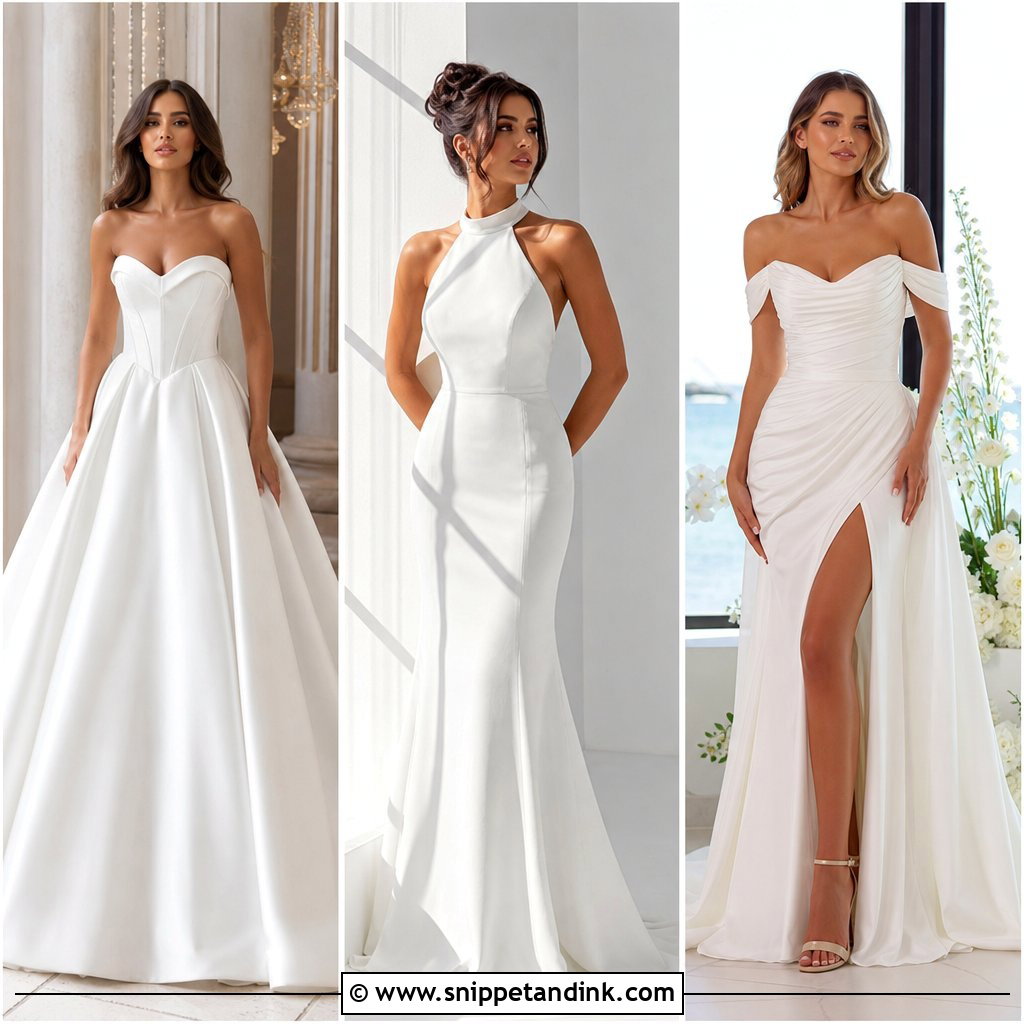
Satin tells the truth about construction, which is why I trust a satin ball gown only after I’ve looked inside it. A skirt this full pulls the waist seam down unless the bodice is properly boned and anchored, usually with an inner waist stay. Keep the neckline clean and let pointed satin heels, pearl drops and a long soft-edged veil finish it, with a sleek low bun so the neckline stays visible. Skip oversized jewelry. Carry a compact bouquet too, since you can’t hold a wide one close to your waist over that much skirt. Hotel ballrooms and black-tie evenings are where this gown belongs.
2. Lace Mermaid Wedding Dress
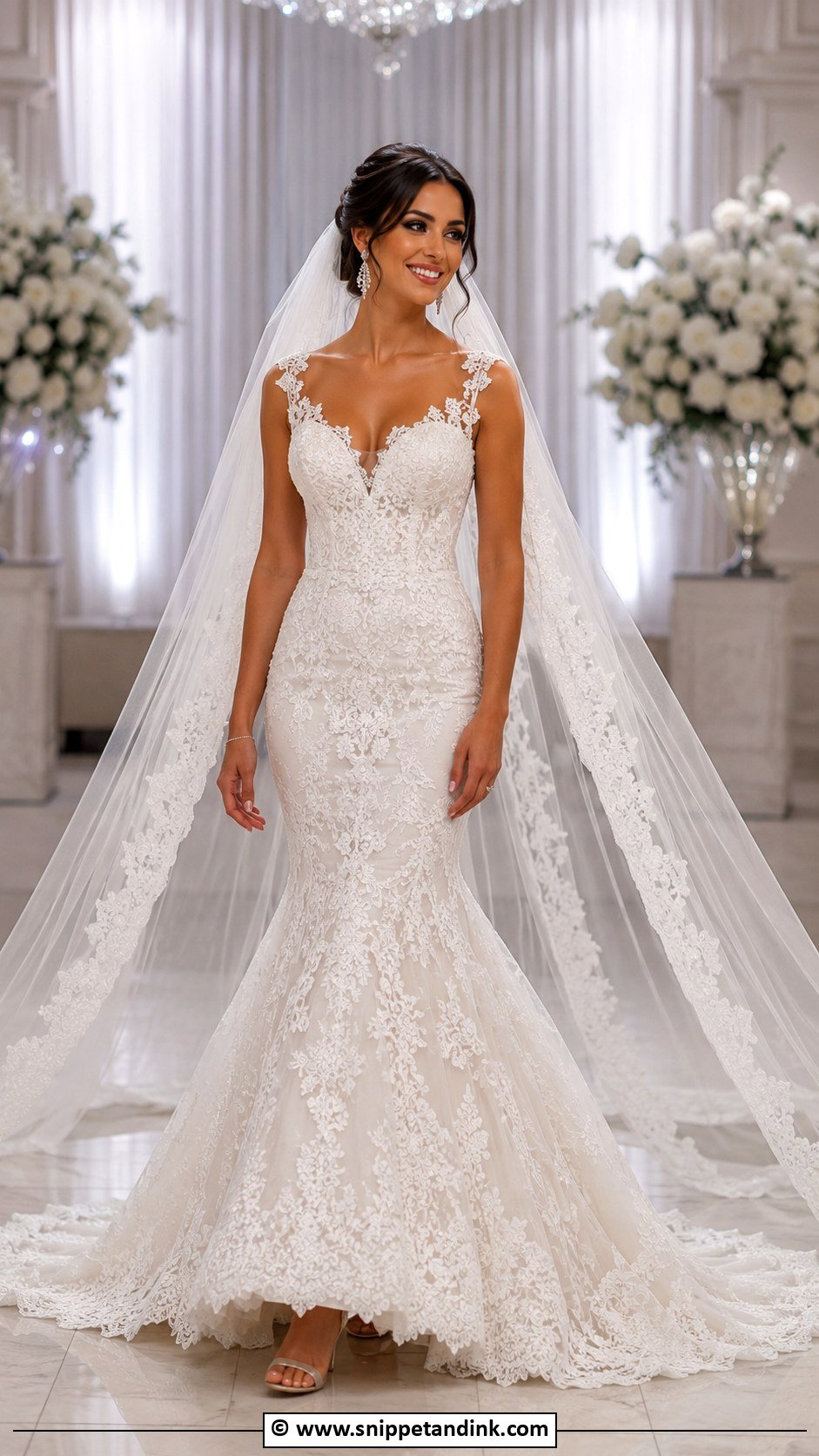
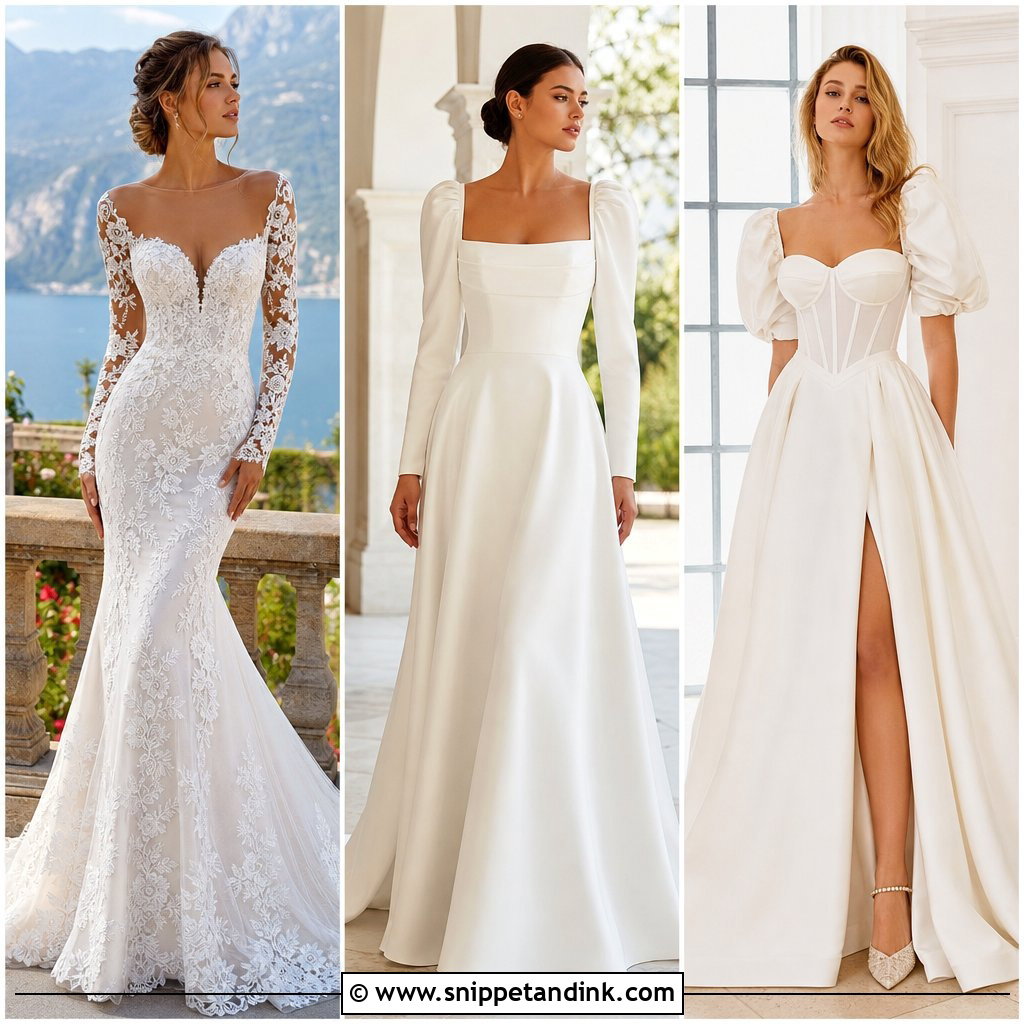
With a mermaid, the flare point decides how your day feels. If the skirt opens at or just above the knee, you can walk and climb steps; set it lower and it looks dramatic but you’ll take small steps for hours, so I always have brides sit and climb a stair in the sample. Floral lace, sheer sleeves or a scalloped neckline keep the fitted shape romantic. Crystal earrings, a cathedral veil and slim metallic heels are enough, and smooth hair or soft waves keeps the eye on the lace. Save the embellished clutch for the reception.
3. Basque Waist Wedding Dress
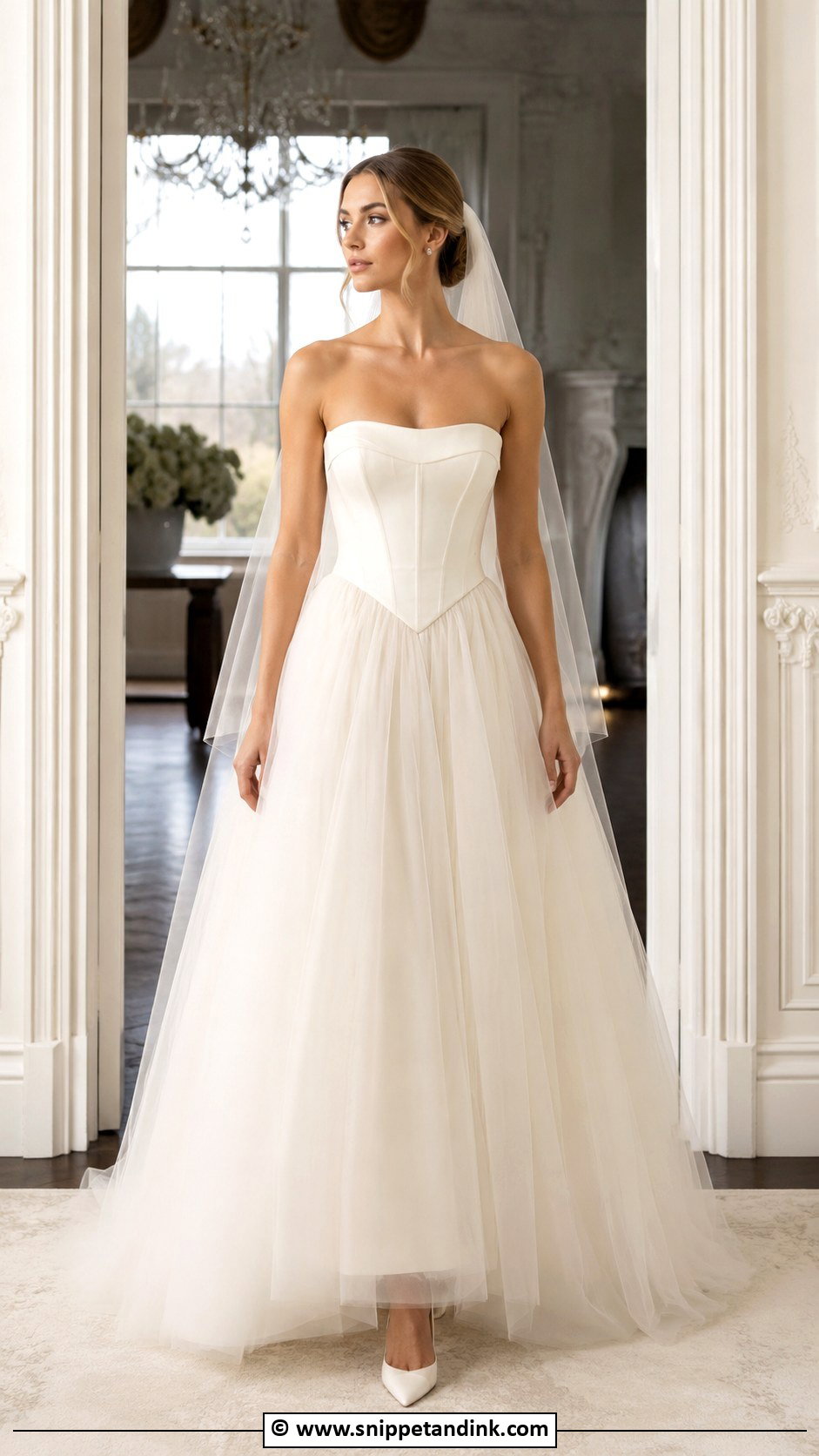
A basque waist wedding dress works because the dropped V point draws the eye down and lengthens the torso. That point has to land in the right place on your body, though. Too low and it fights the hip; too high and it reads like an ordinary waistline. It’s the first thing I pin at a fitting. Strapless bodices over tulle or satin carry it well, and a sheer veil lets the V show through. Pointed ivory heels and small studs are all it needs.
4. Drop Waist Wedding Dress
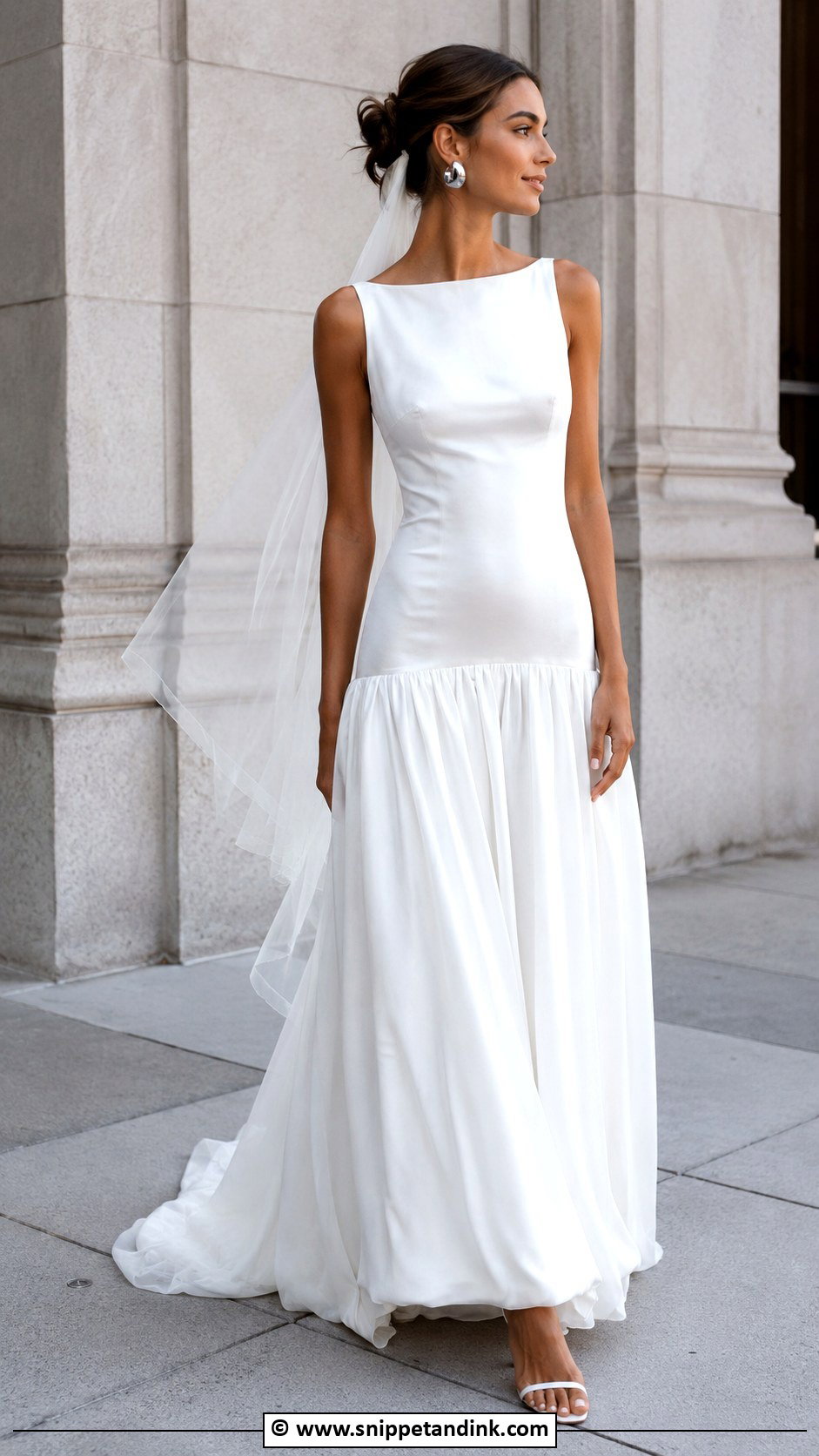
A drop waist wedding dress starts the skirt at the hip instead of the natural waist, giving one long, unbroken line through the body. Fabric changes the result more than you’d expect: taffeta keeps a crisp flare, while silk falls close and soft. For a short-waisted bride I place the seam just below the hip bone rather than mid-hip. Slingback heels, a clean veil and sculptural earrings keep it modern. The bodice has to be tailored closely here, because a loose one makes the dropped seam look like a mistake.
5. Bow Detail Wedding Dress
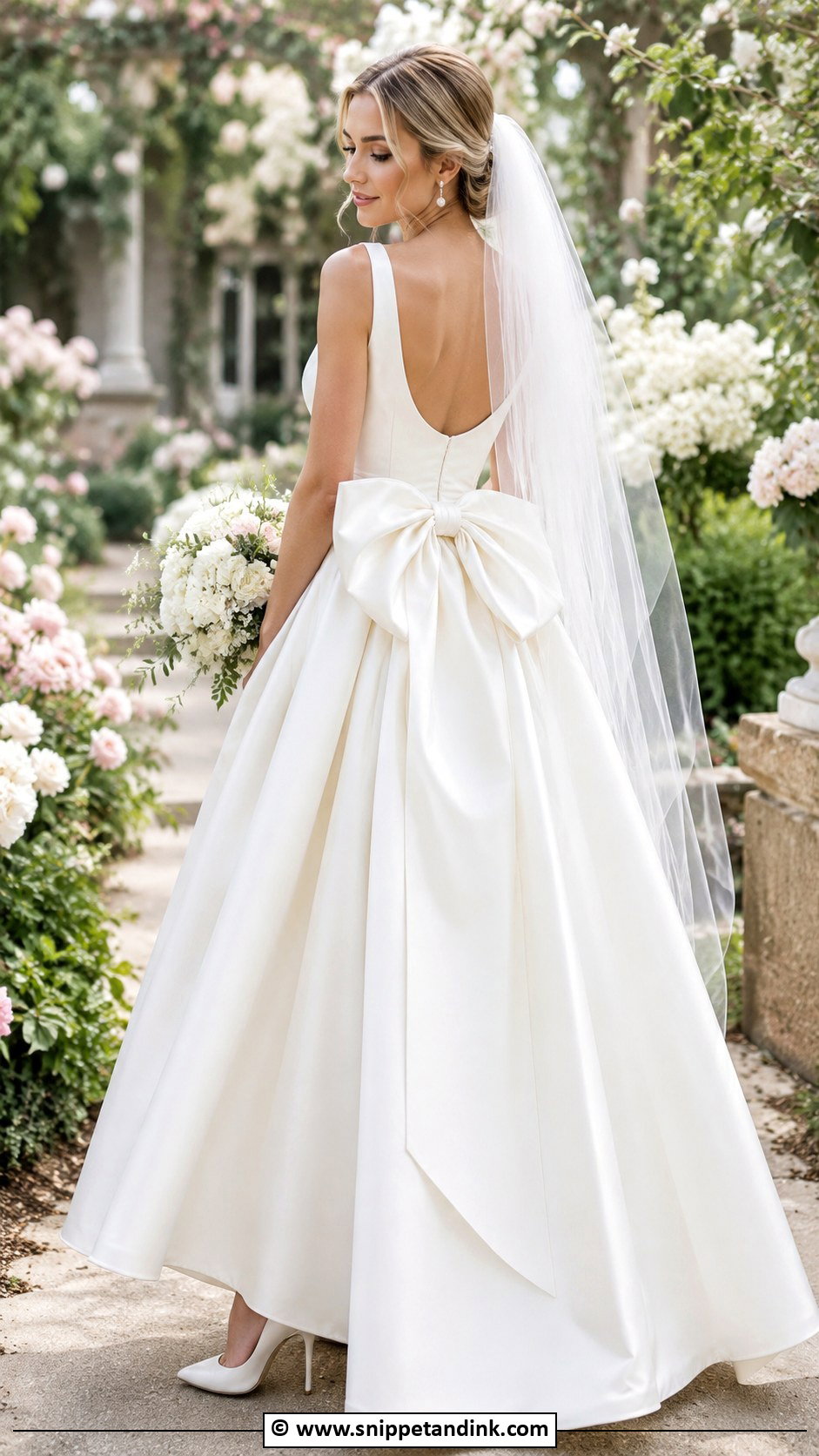
One bow placed with intent does more than three scattered ones. A back bow gets the most attention, since guests see your back for the whole walk down the aisle. Watch the weight. A large structured bow can drag on a zip or twist a strapless bodice, so I ask the seamstress to tack it to the boning. Satin pumps, pearl earrings and a plain veil keep the bow in charge, and if it sits on a shoulder, wear your hair off that side.
6. Floral Applique Wedding Dress
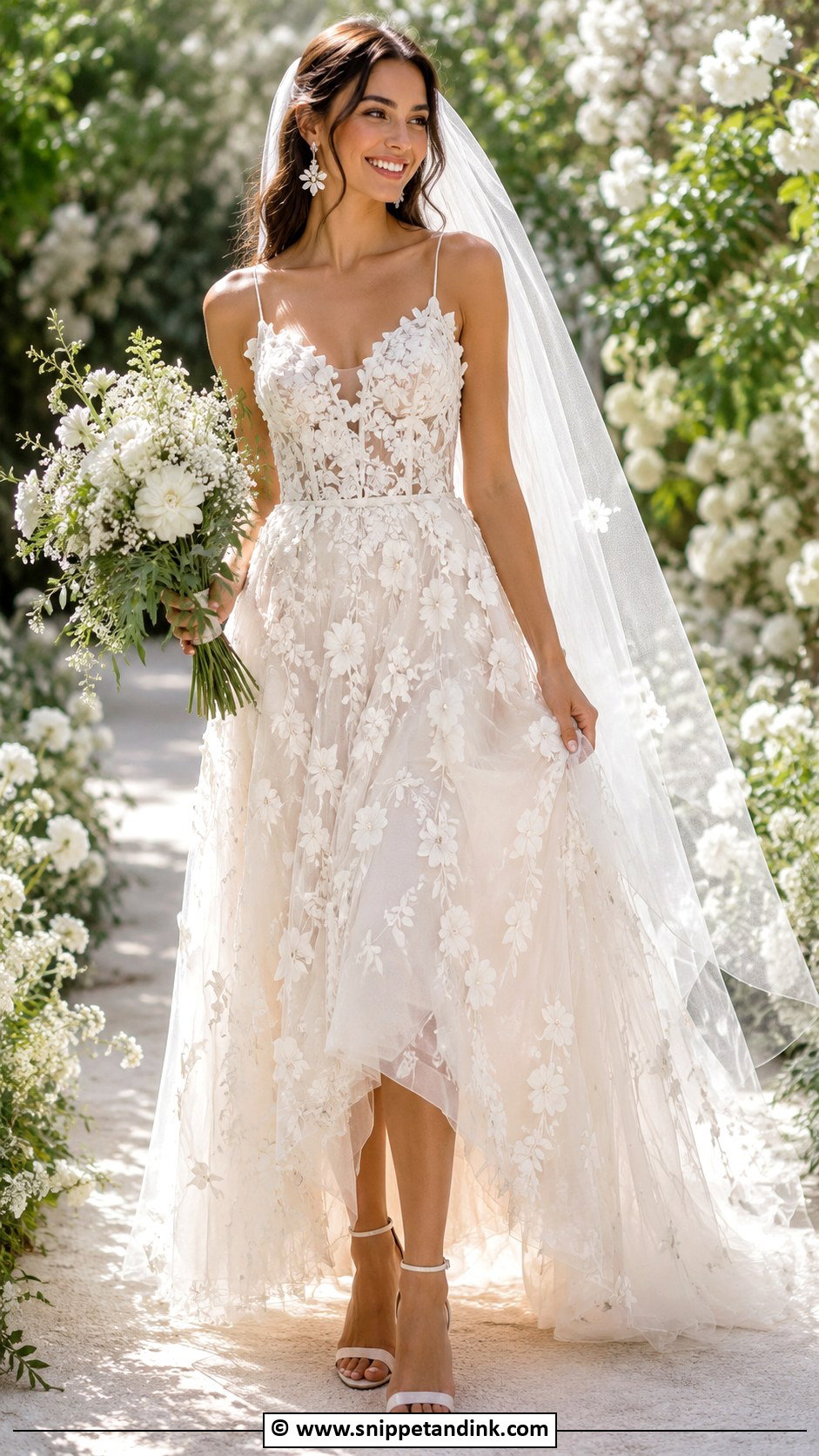
Raised 3D flowers on tulle look delicate, but they’re the detail most likely to catch on a veil comb or bouquet wire. I check how each applique is stitched down and keep a needle and matching thread in my kit on the day. Flat appliques on lace give a quieter version of the same idea. Thin-strap heels and small floral earrings suit it, and a loose updo keeps the neckline flowers in view. Daylight shows the texture best, so garden and spring ceremonies make sense, with a simple bouquet that doesn’t crowd the skirt.
7. Minimal Silk Slip Wedding Dress
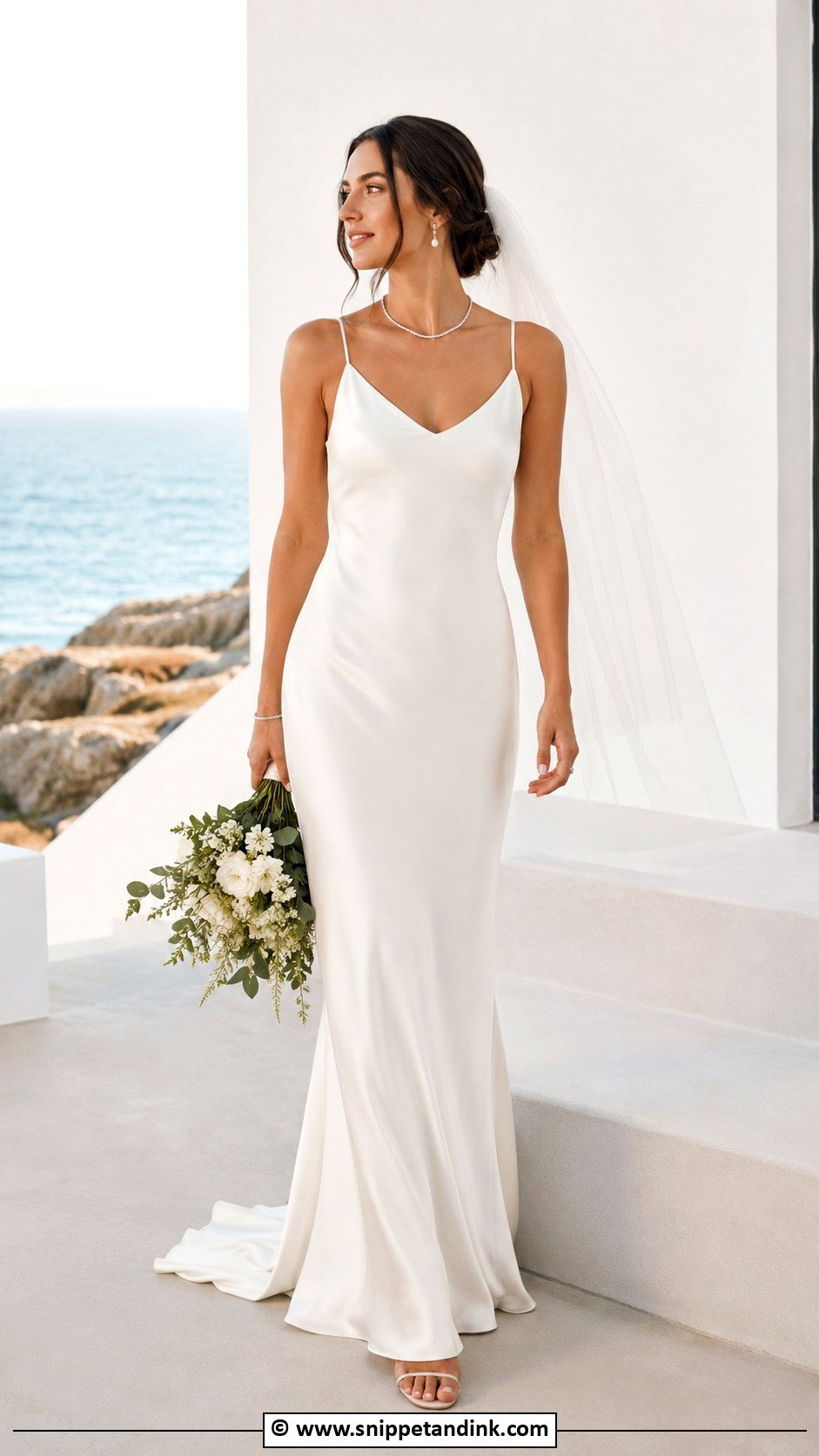
A bias-cut silk slip shows everything: underwear seams, uneven alterations, even a crease from the car. Bias fabric stretches on the diagonal, so I never let it be taken in tight; it should skim the body, not grip it. Decide on smooth, edge-free shapewear, or none, before your first fitting, because it changes the measurements. A fine tennis necklace, small drops and barely-there heels are plenty, plus a sheer or scarf-style veil for the ceremony. It suits city halls, small dinners and beaches. Silk does water-mark in sea spray, so plan your shoreline photos for the end.
8. Off Shoulder Wedding Dress
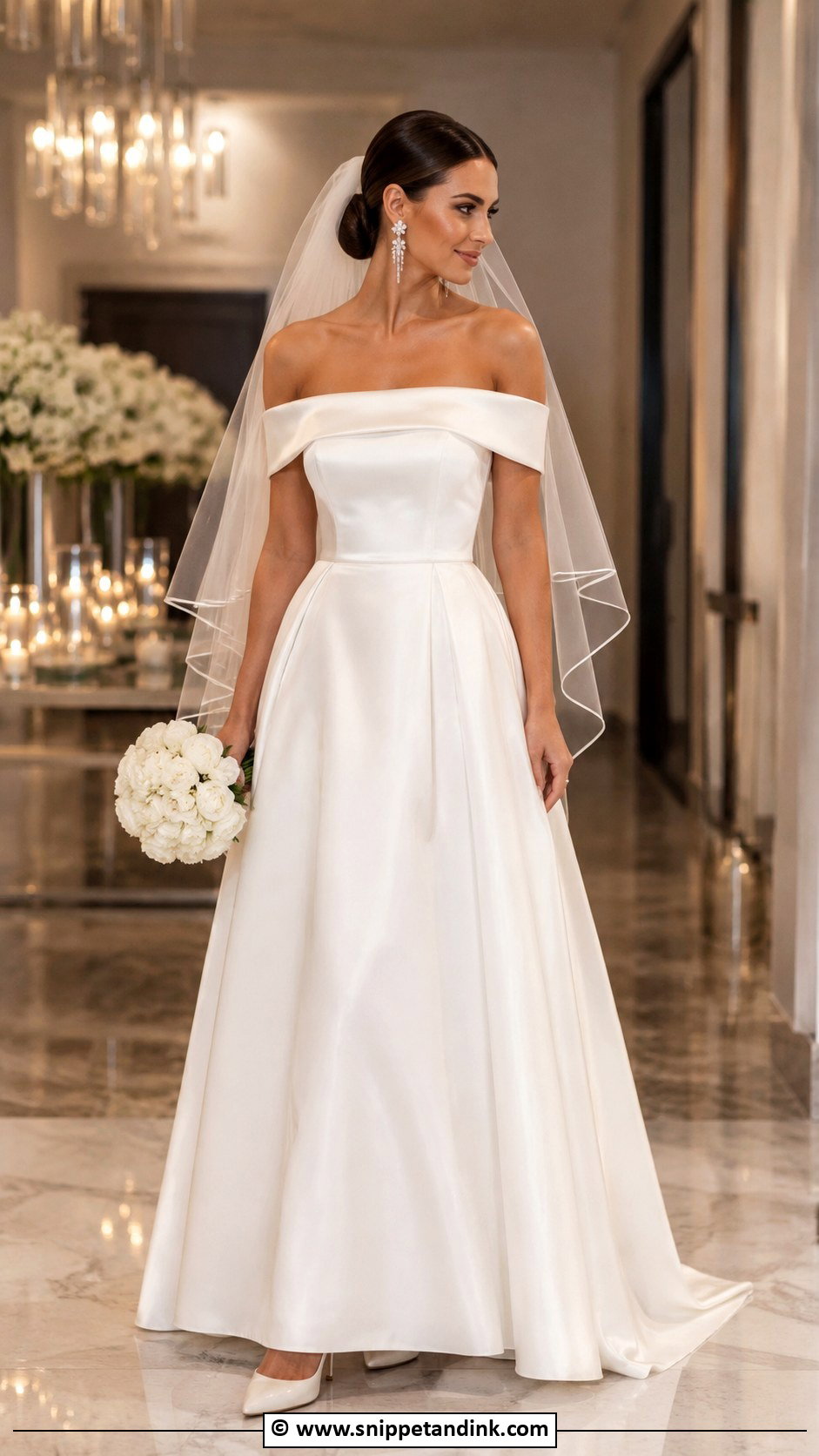
Off-shoulder sleeves have to be tested with your arms moving. If the band is tight, it fights every hug and the first dance; if it’s loose, you’ll be hitching it up all night. In fittings I have brides reach forward as if hugging someone. Satin reads classic, lace softer, crepe sleek. Statement earrings, a smooth updo and a fingertip veil frame the collarbone without crowding it. The neckline photographs well from the front and side, which helps at formal evening receptions.
9. Corset Wedding Dress
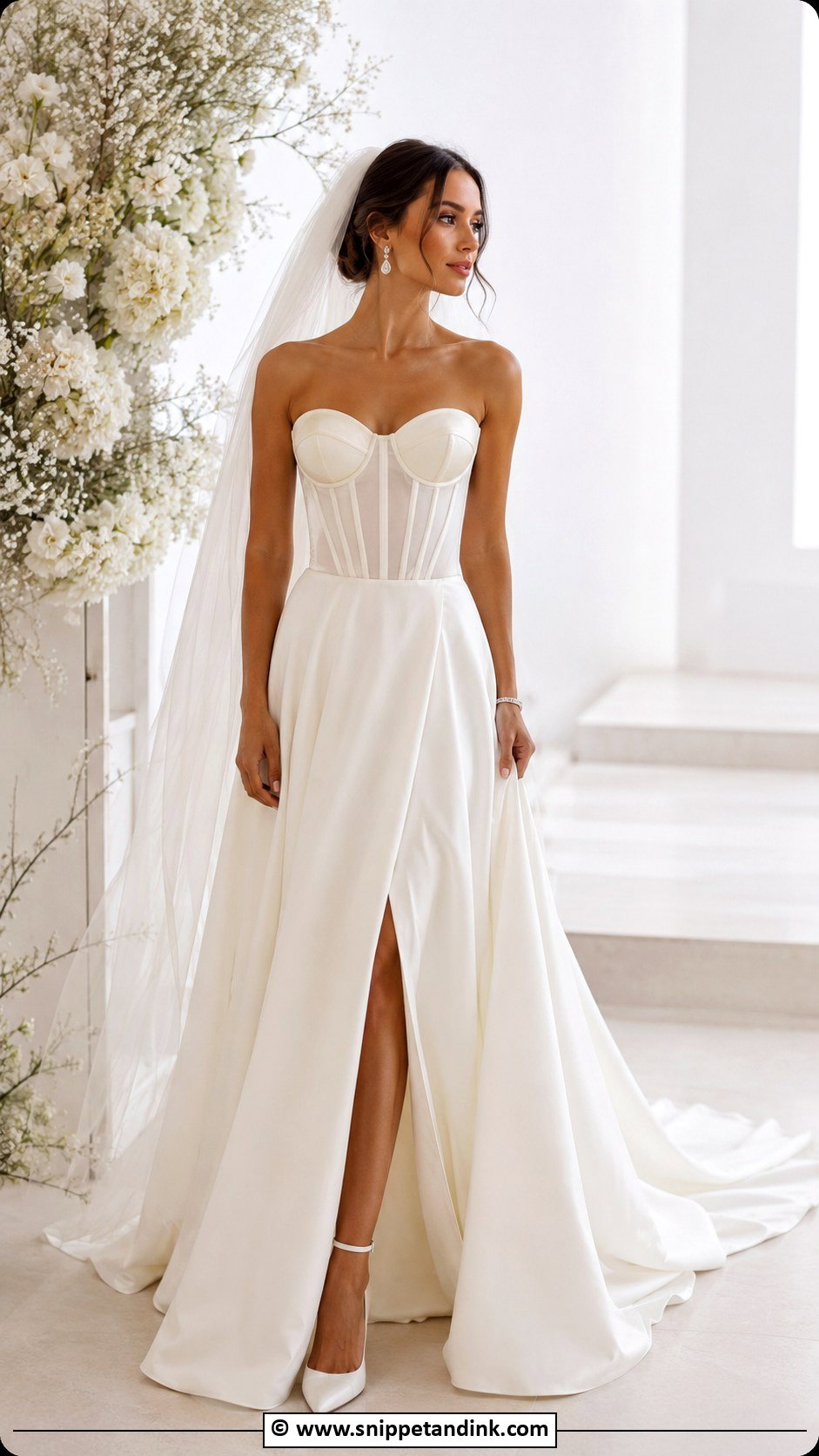
A true corset bodice has boning, a waist tape and often a modesty panel under the lacing, and that build is what holds you up without straps. I count the bones and check whether the lacing can be adjusted on the morning, because many brides gain or lose a little in the final weeks. An A-line skirt softens the structure; a fitted skirt sharpens it. Sleek heels, small earrings and a veil are enough. Leave the statement necklace at home.
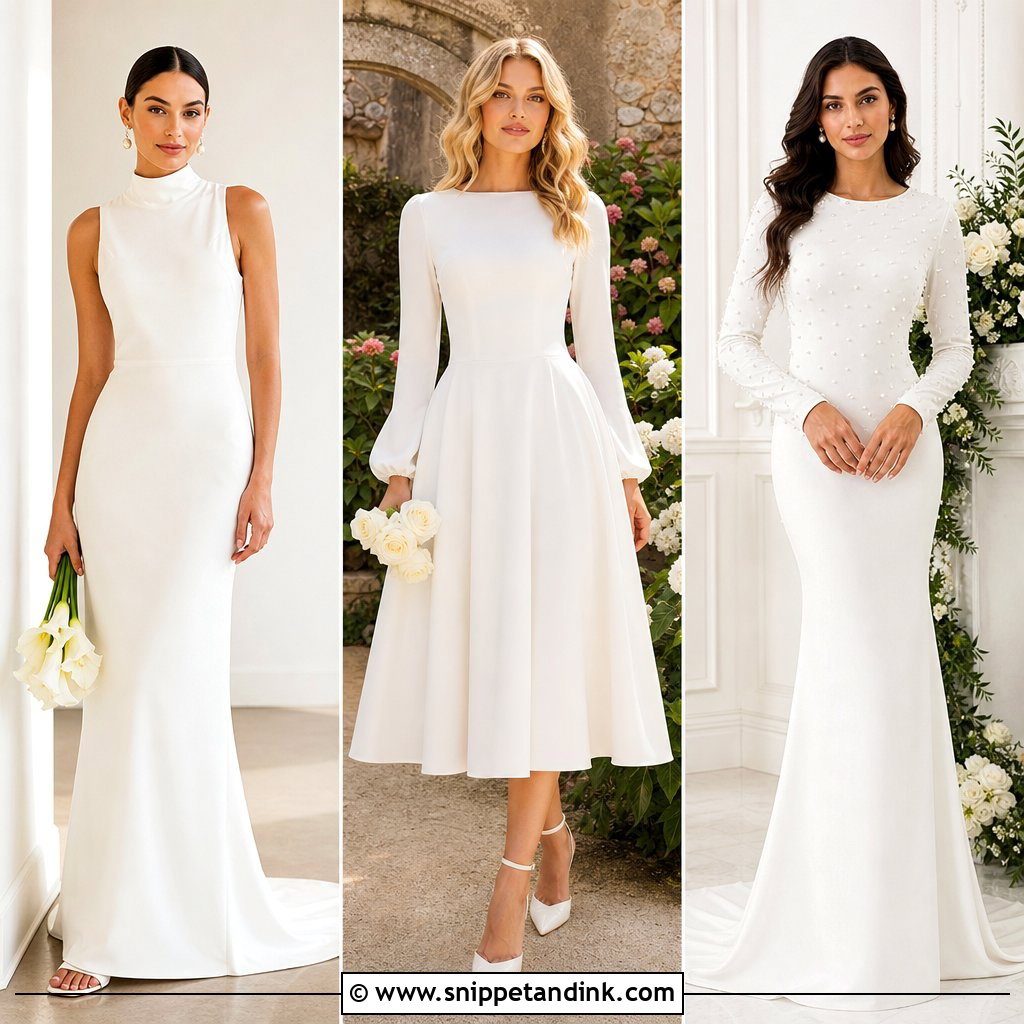
10. High Neck Wedding Dress
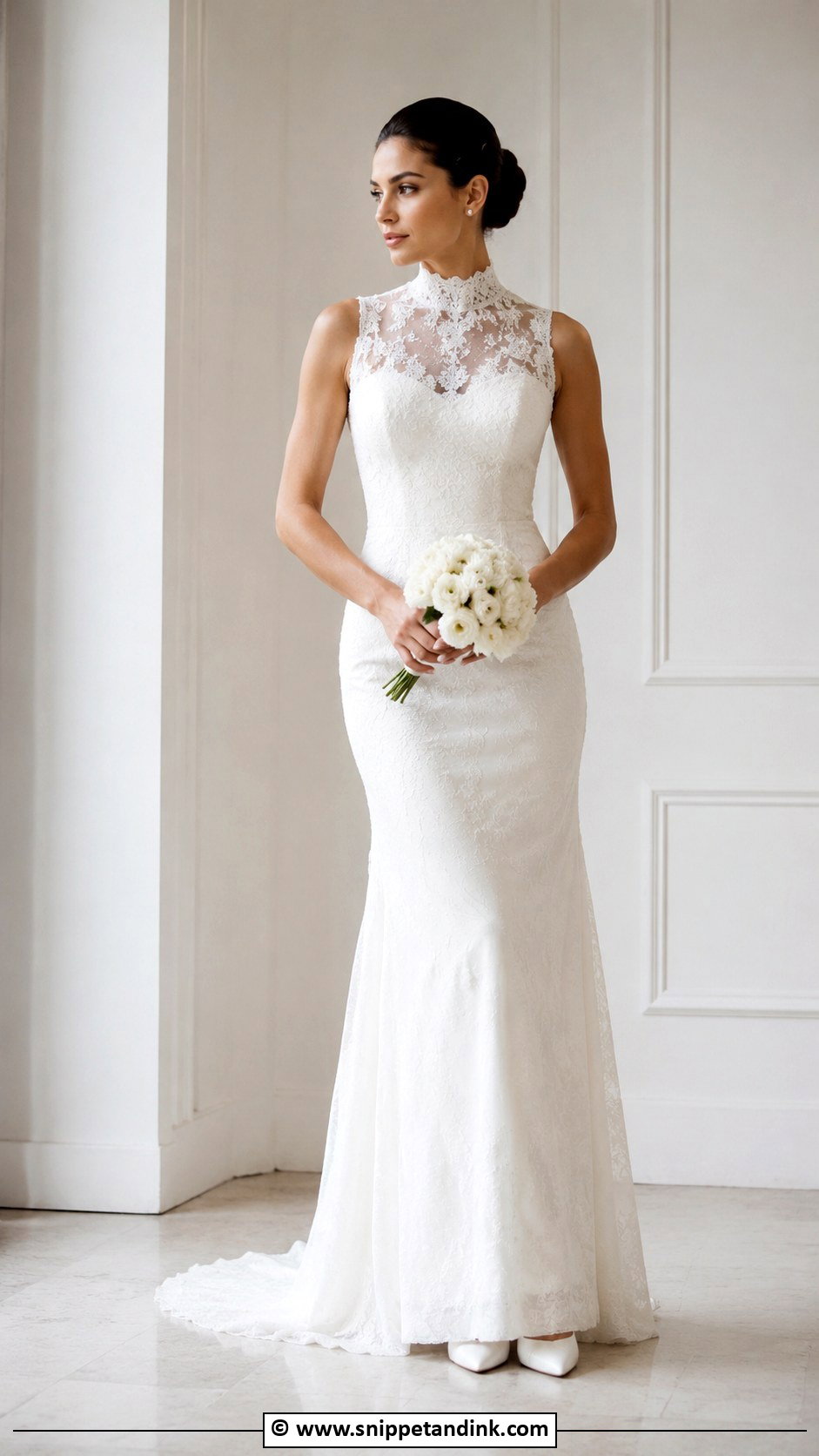
The test I run on every high neck: look down at your hands as if reading vows. If the collar creases or digs under your jaw, it’s too high or too stiff. Lace, crepe, satin and illusion tulle all work when the collar clears. Skip the necklace and let earrings, a bracelet and a sleek bun do the job. An open back or defined waist gives the coverage some contrast. Cooler months and city venues suit it best.
11. Long Sleeve Wedding Dress
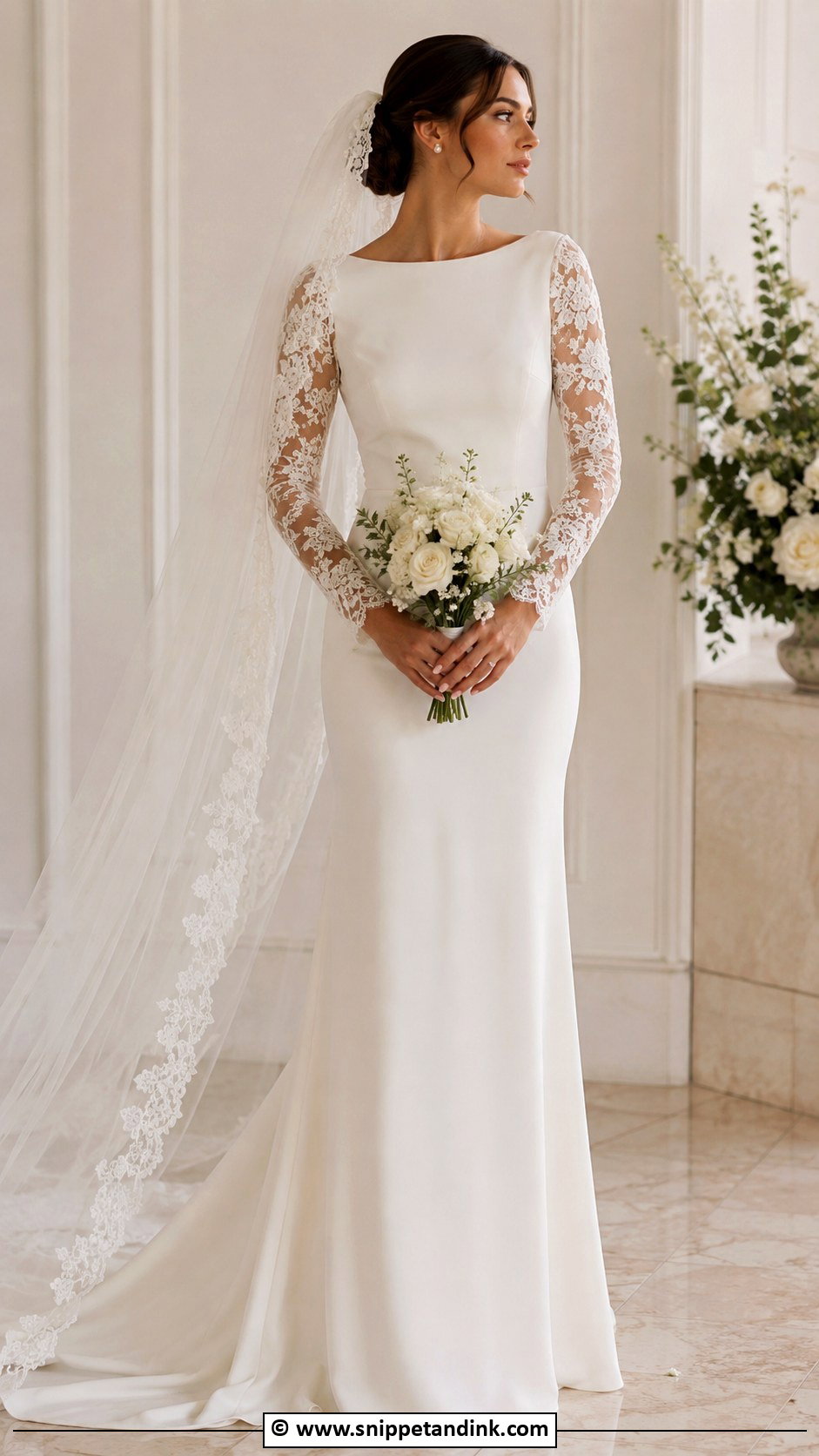
Sleeves cause more comfort complaints after the ceremony than any other part of a gown. Fitted crepe looks sharp but limits reach, so make sure you can lift your arms to shoulder height for hugs and dancing before you sign off. Sheer lace forgives more because it has some give. Covered buttons, soft volume and fine embroidery are where the designer work shows. Closed-toe heels, pearl studs and a veil matched to the dress suit fall and winter weddings, and long sleeves balance a deep back nicely.
12. Square Neck Wedding Dress
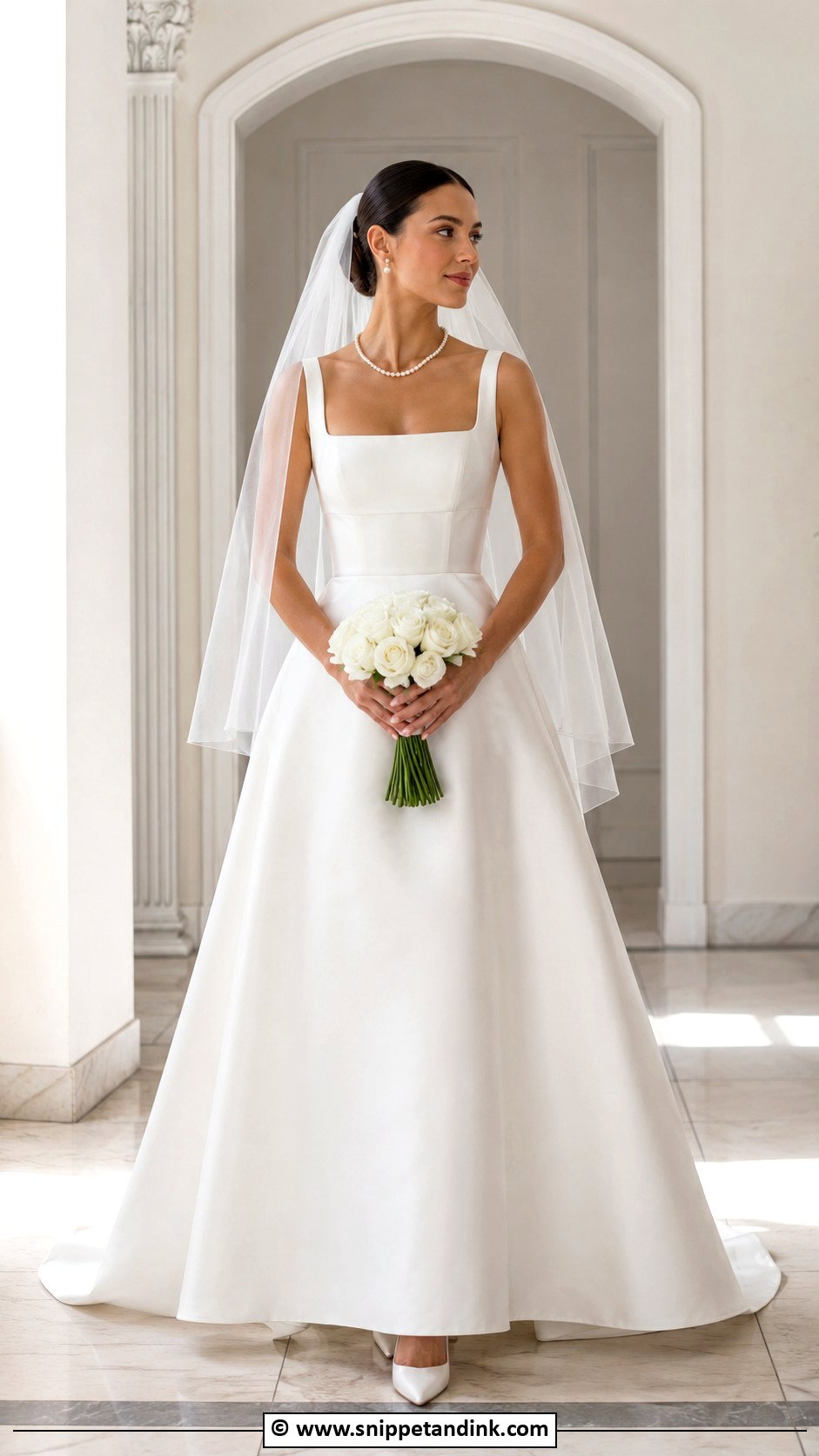
A square neckline fits more body types than most because its straight top edge frames the collarbone and face. The detail I check is the corners. If they gape when you lean forward, the bodice needs taking in at the side seams. Pair a fitted bodice with an A-line skirt for balance, or a slim crepe skirt for something sharper. A short pearl necklace sits neatly inside the frame, and soft waves or a low bun suit it. Satin, mikado, lace and crepe all hold the line.
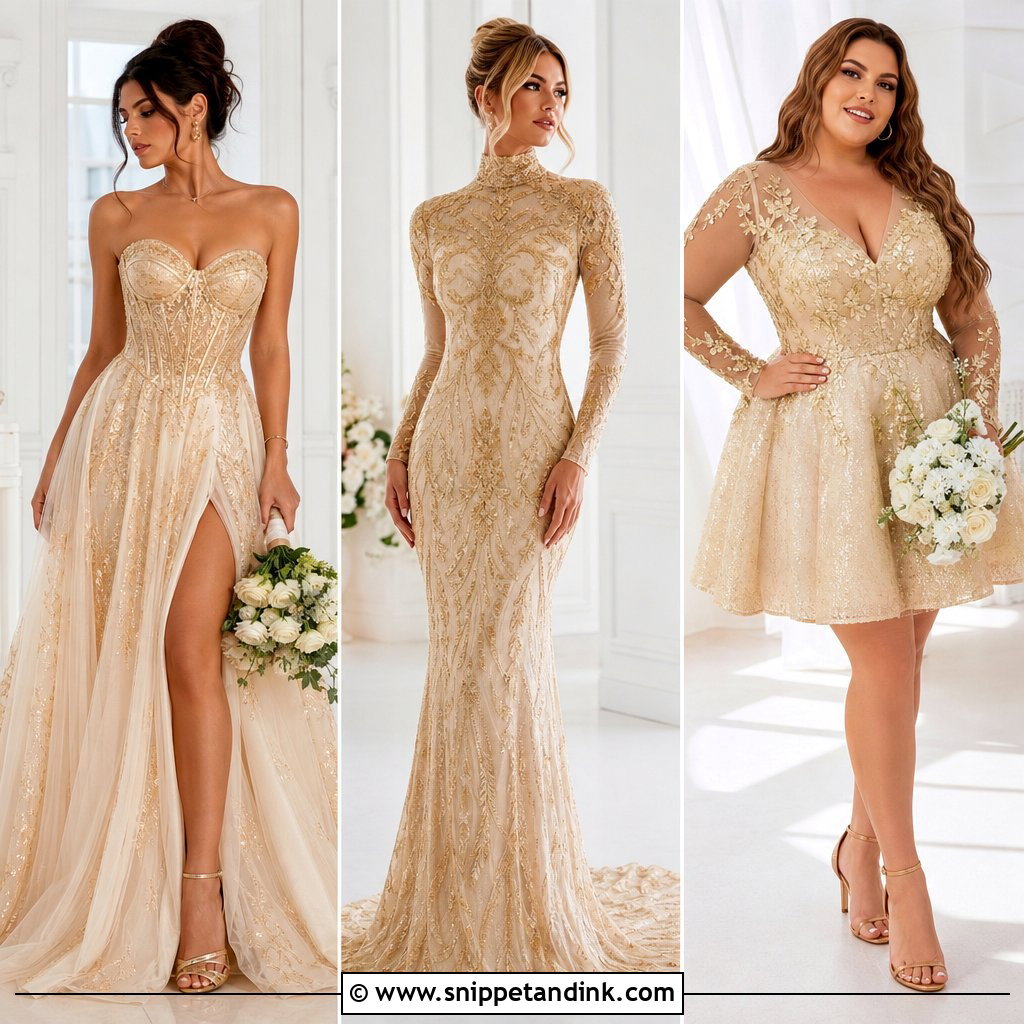
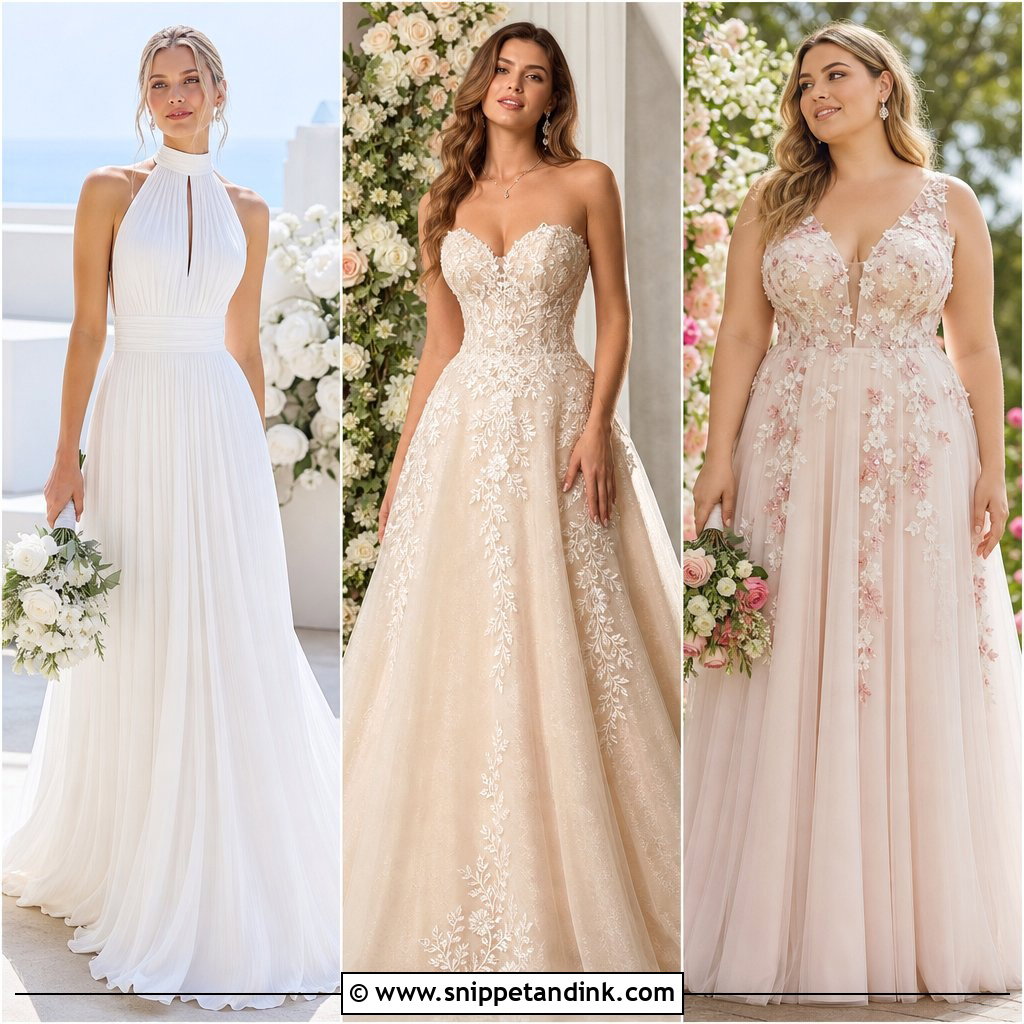
13. Champagne Wedding Dress
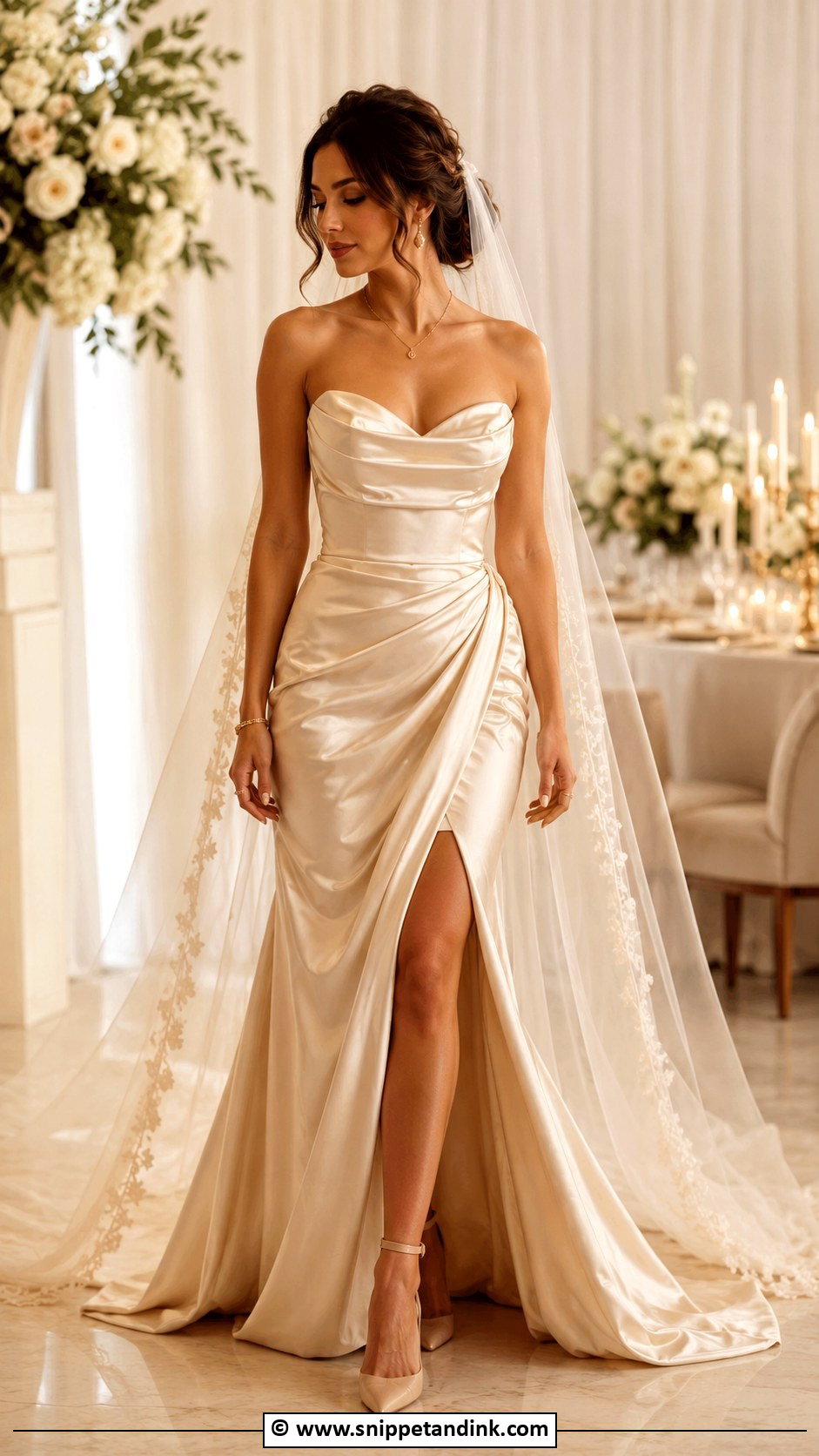
Champagne needs to be judged against your skin in daylight, not under a boutique’s warm bulbs. On some complexions it reads golden; on very fair skin under camera flash it can drift toward nude. I hold the fabric at the face beside a window before anyone decides. Satin, tulle, lace and beading all take the tone well. Nude or champagne heels, gold jewelry and a warm ivory veil keep everything in one family, and bronze, peach or rose makeup sits comfortably with it. Candlelit receptions flatter it most.
14. Blush Pink Wedding Dress
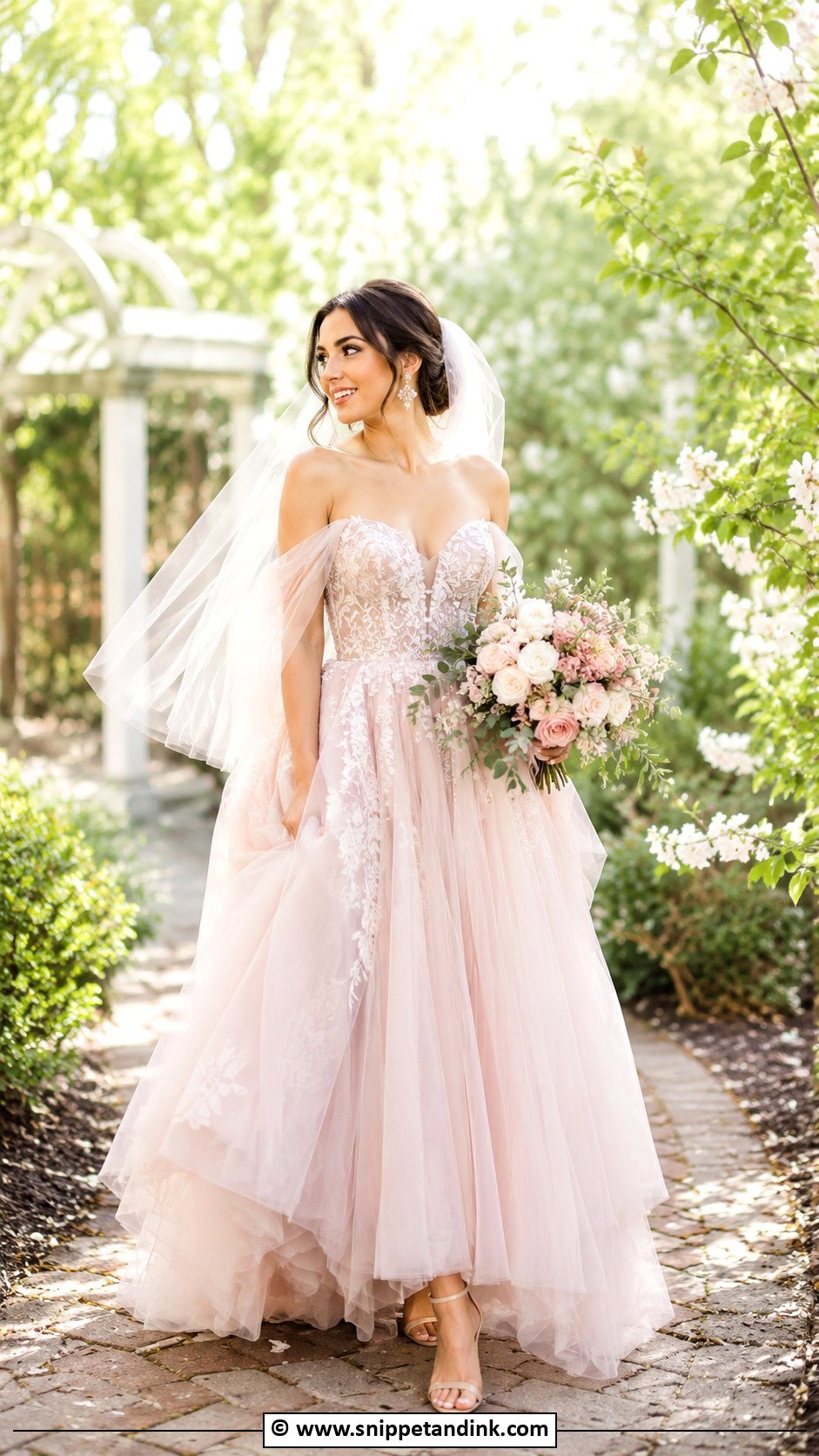
Most blush gowns are a pink lining under ivory tulle, which is why the color reads soft rather than loud. Ask whether the pink is in the lining or the fabric itself; a lining can often be swapped for ivory if you change your mind. Embroidery, satin and fine beading all carry the shade. Nude heels, rose-gold earrings and a blush or ivory veil work, with a bouquet in white, cream or pale pink so nothing clashes. Spring gardens suit it.
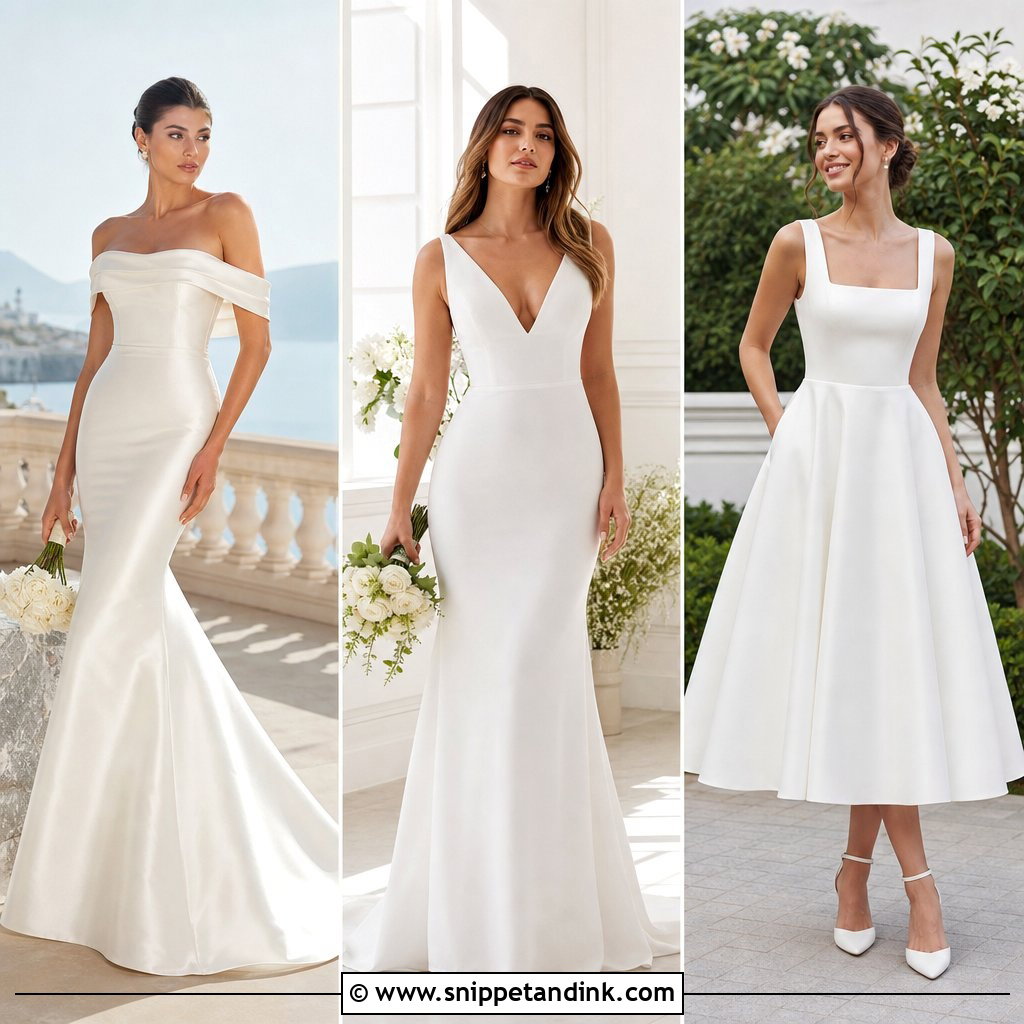
15. Blue Wedding Dress
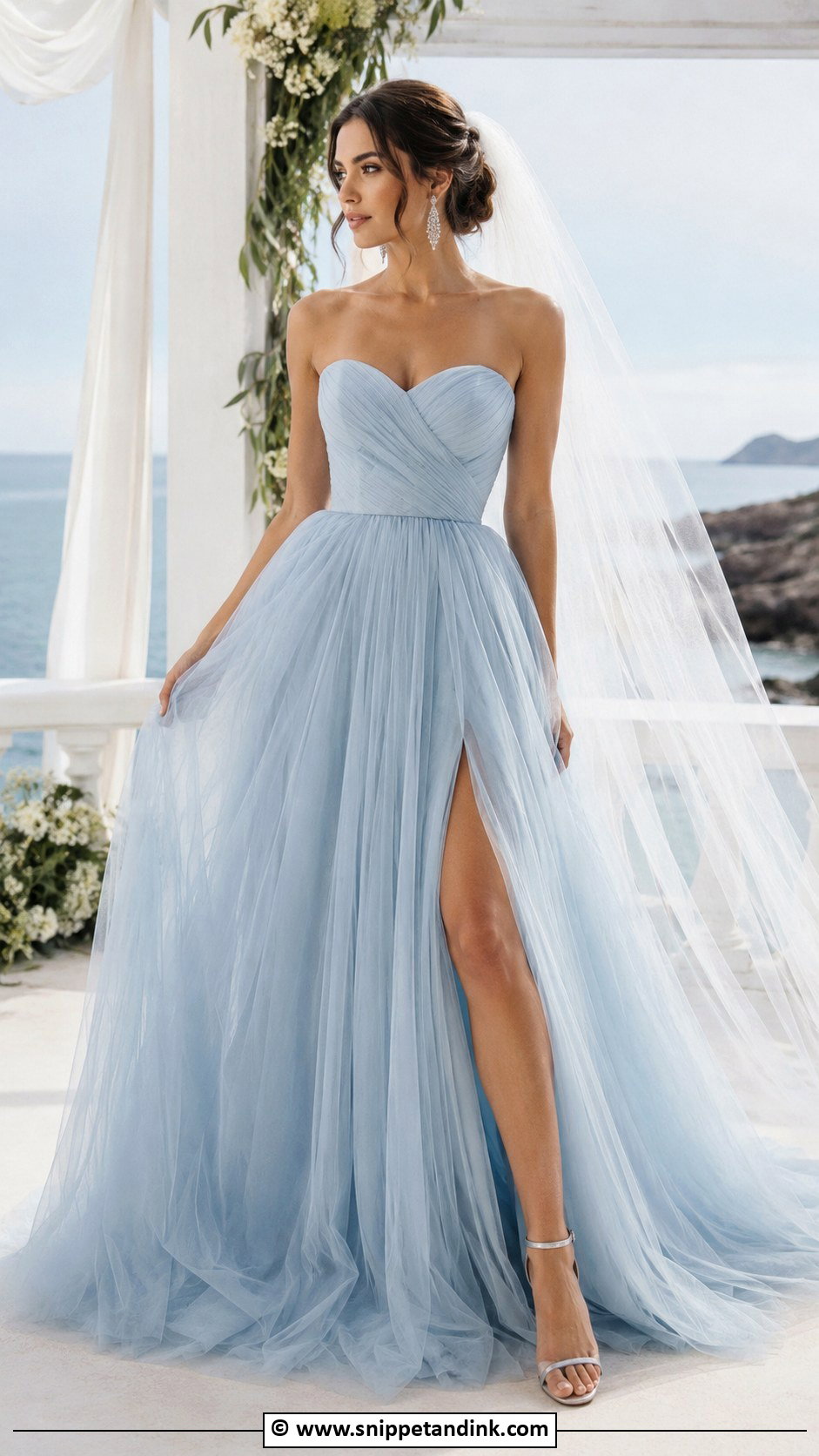
Pale blue changes more on camera than any other bridal color. Powder blue in shade or under grey skies can turn greyish, so look at it outdoors before you commit and mention it to your photographer. Tulle, silk and embroidered organza keep the color soft. Silver heels, crystal earrings and a veil in ivory or matching blue finish it. Detailed dress, light accessories; simple dress, one sparkling hairpin. Coastal and destination ceremonies are where blue makes the most sense.
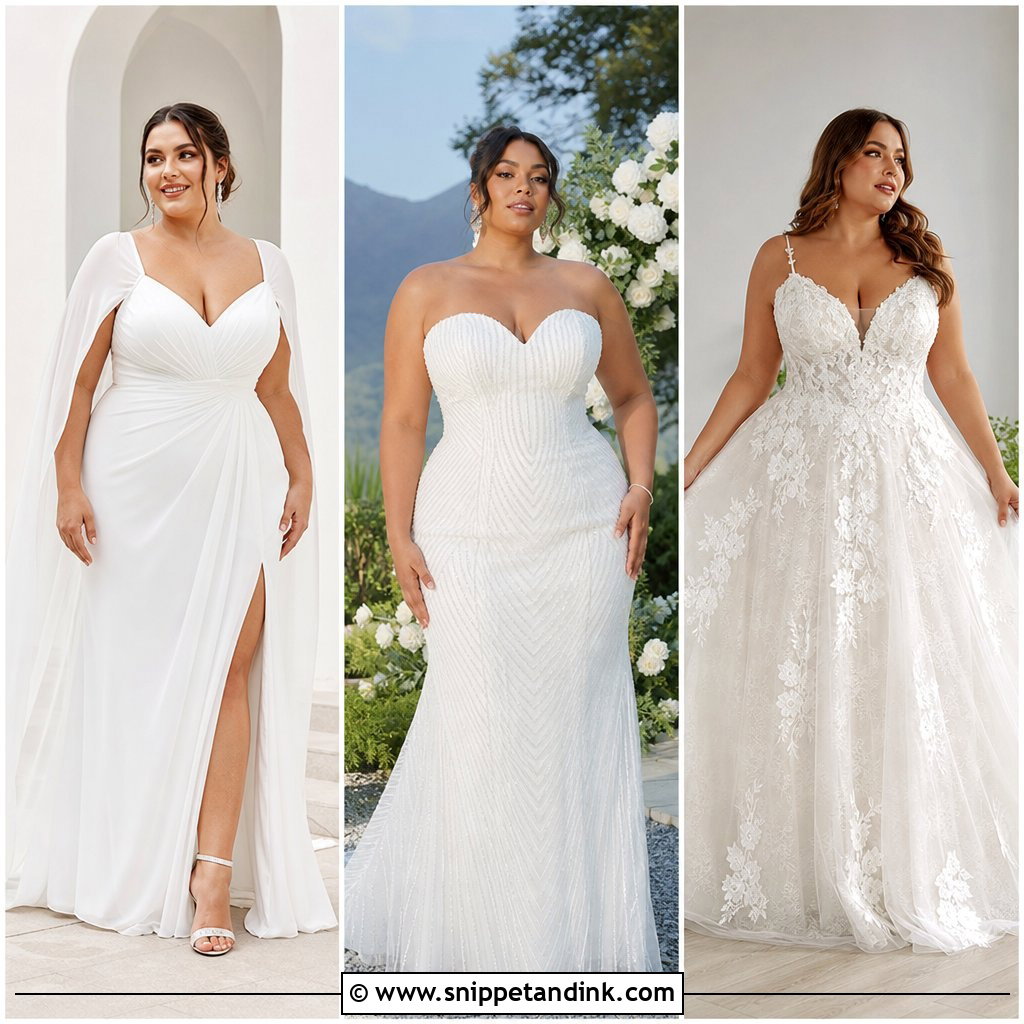
16. Beaded Wedding Dress
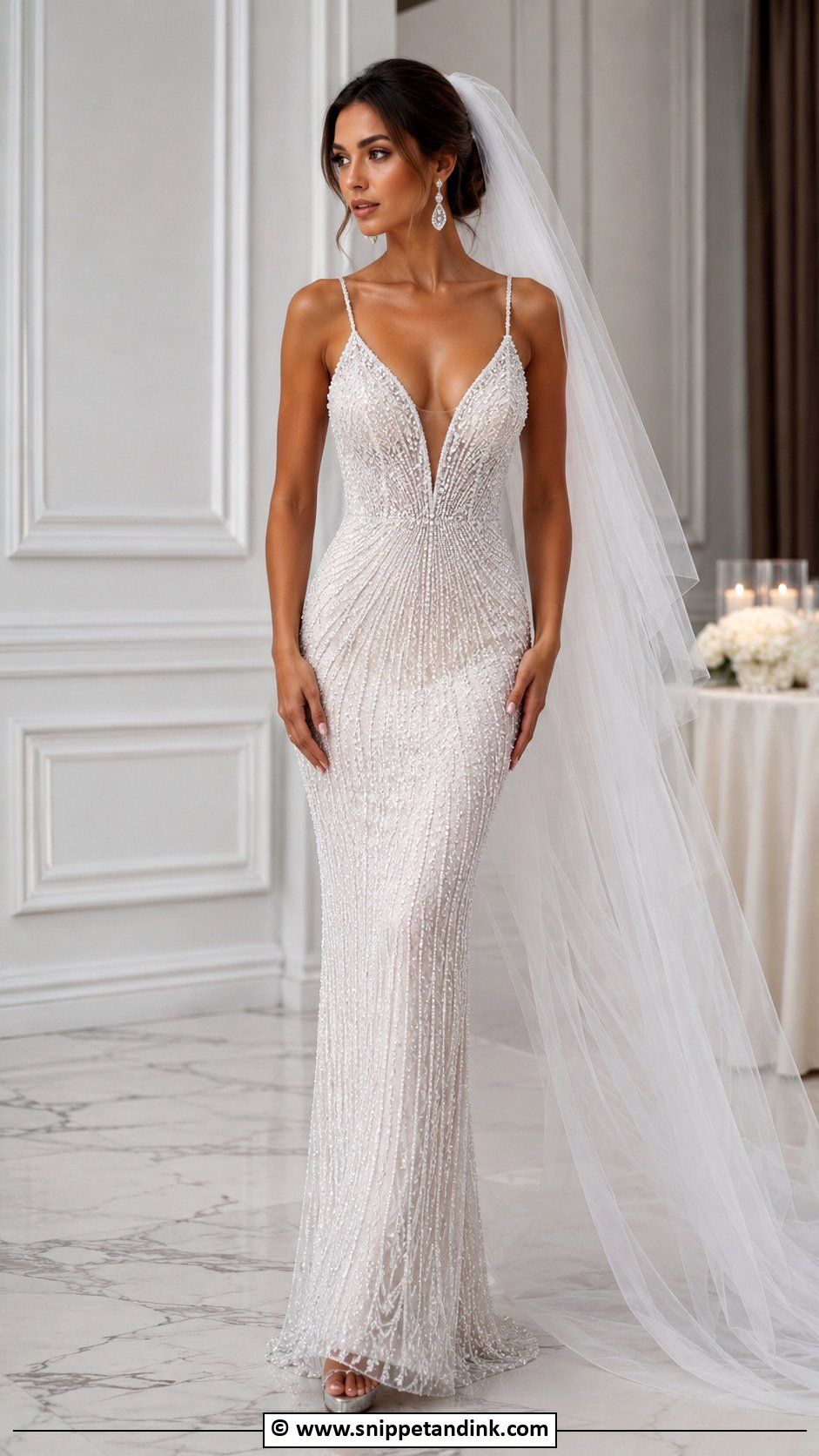
Hand beading is heavy, and that weight hangs from your shoulders or the waist seam. A gown that feels fine for five minutes in a boutique can feel very different by hour five, so wear the sample long enough to notice. Check under the arms as well, where beads rub and can mark skin. Fitted beaded gowns read glamorous, beaded A-lines softer. A plain veil, metallic heels and crystal earrings are enough; more sparkle only competes. Evening receptions catch the light best.
17. Feather Trim Wedding Dress
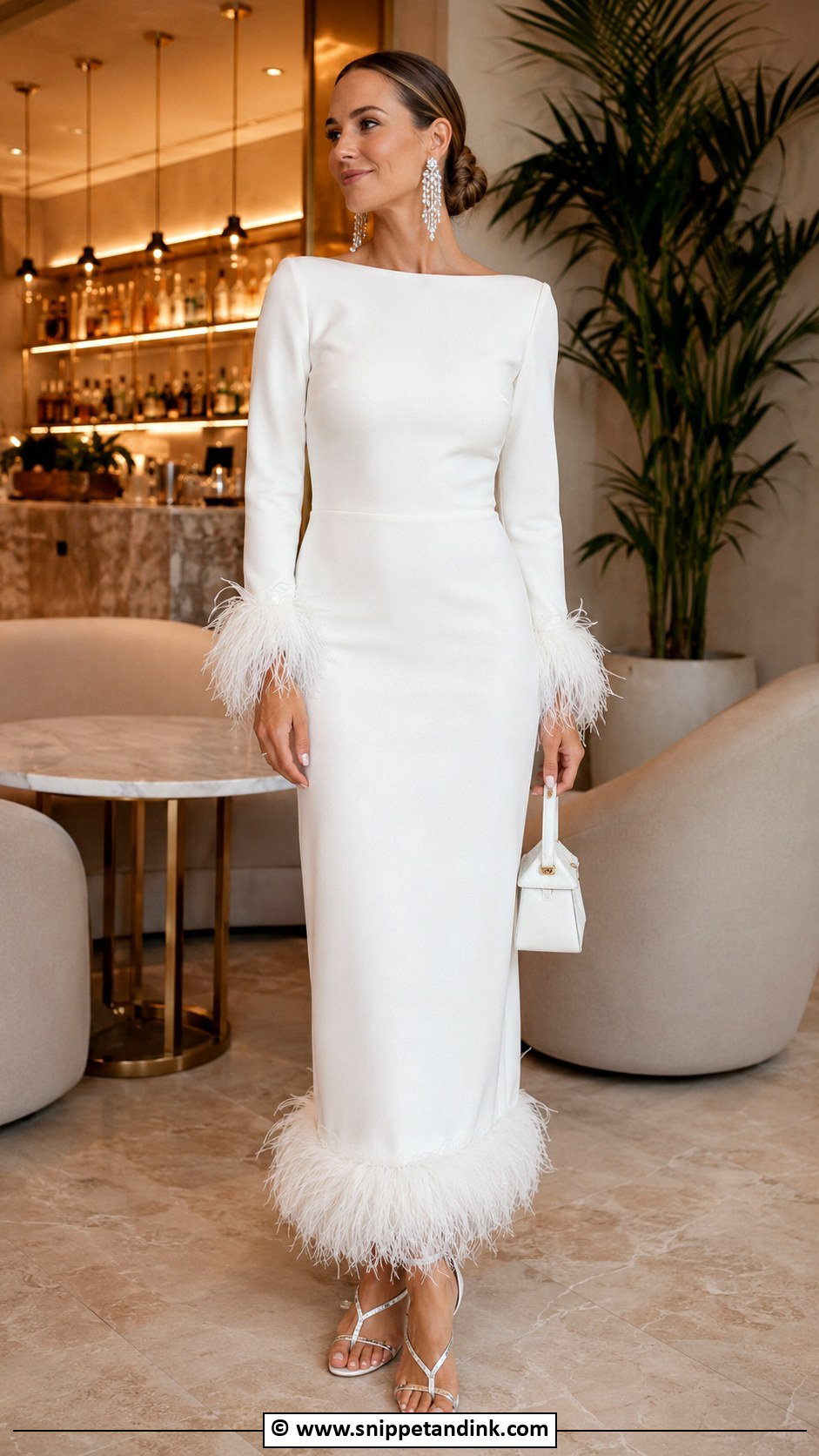
A feather trim wedding dress moves with every step, which is exactly why it comes alive at a reception or after-party. Ostrich feathers flatten and clump when damp, so I’d keep this one out of rain and save it for later in the night. Keep the base dress simple so the trim looks intentional. Satin sandals, statement earrings and a small structured bag finish it. A feather mini is easier to dance in than a column, and sleek hair keeps volume away from your face.
18. Wedding Reception Mini Dress
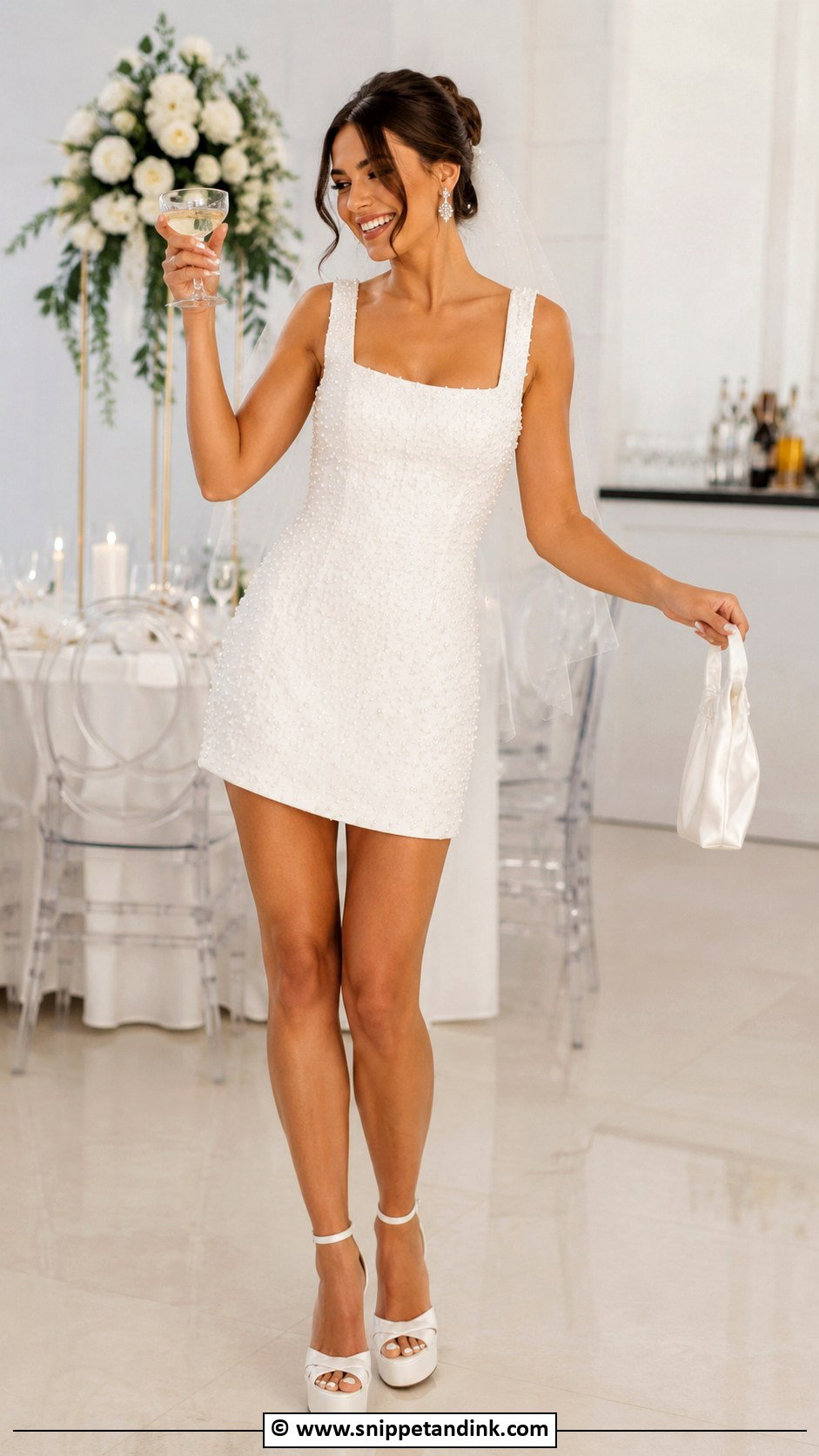
A reception mini is a costume change, so plan the change itself: where you’ll do it, who helps with the zip, and how long you’ll be away from guests. Fit it with the exact shoes you’ll dance in. Pearls, bows, feathers or sculptural fabric keep it bridal, with white platforms, crystal earrings and a small satin bag. A short veil or hair bow adds fun. Sit down in it at the fitting too, because a mini rides up more than you expect. For courthouse and small weddings it can be the main dress.
19. Wedding Jumpsuit Dress
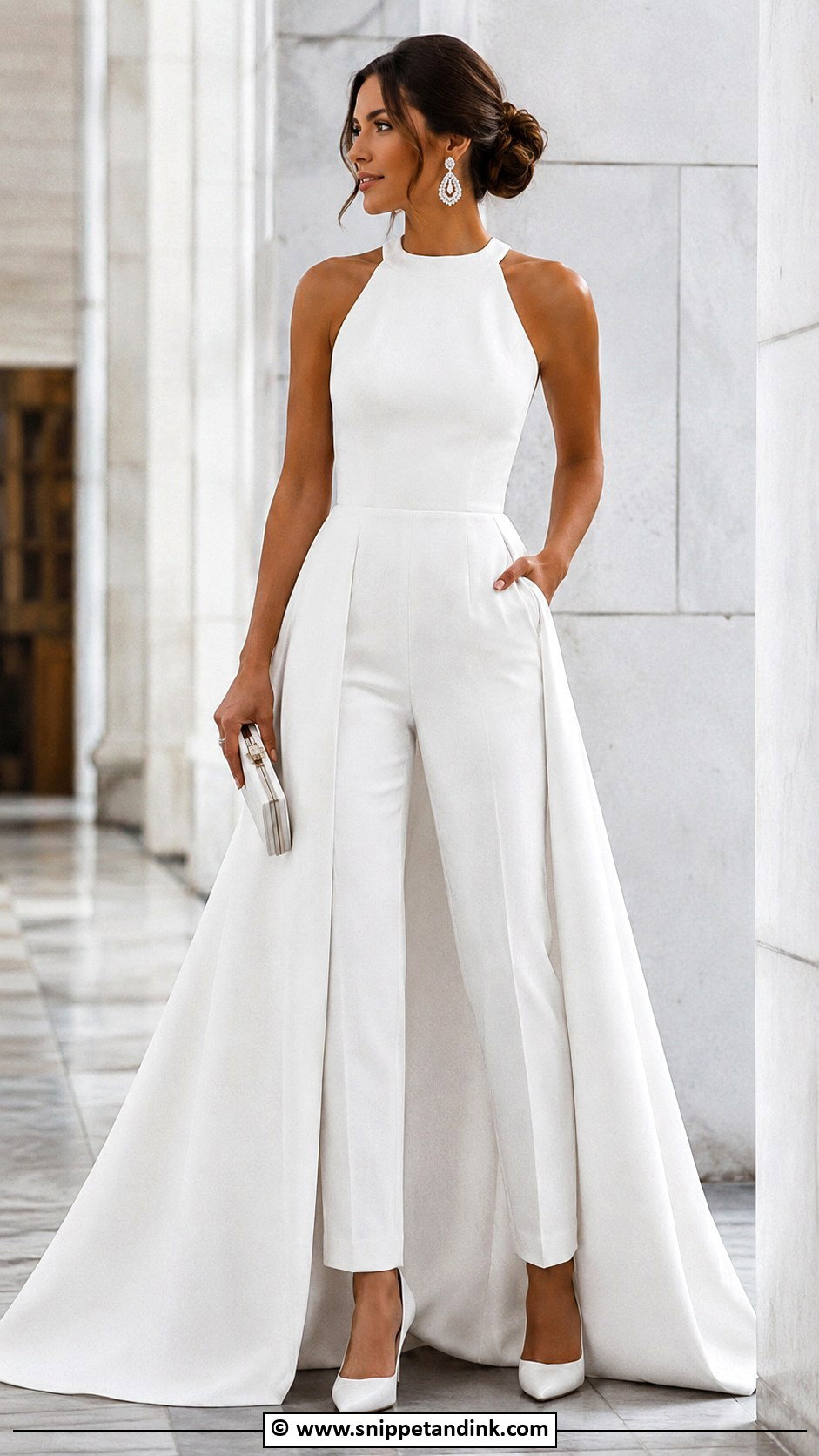
Jumpsuits succeed or fail on the rise. Too short and it pulls when you sit; too long and it sags in photos, so that’s the measurement I spend longest on. A detachable overskirt, cape or train turns a tailored white jumpsuit into a ceremony look, and pointed heels, bold earrings and a sleek clutch finish it. Courthouses, elopements, rehearsals and reception changes are its natural home. The honest trade-off is bathroom trips. Ask for a zip you can reach yourself, or plan your help.
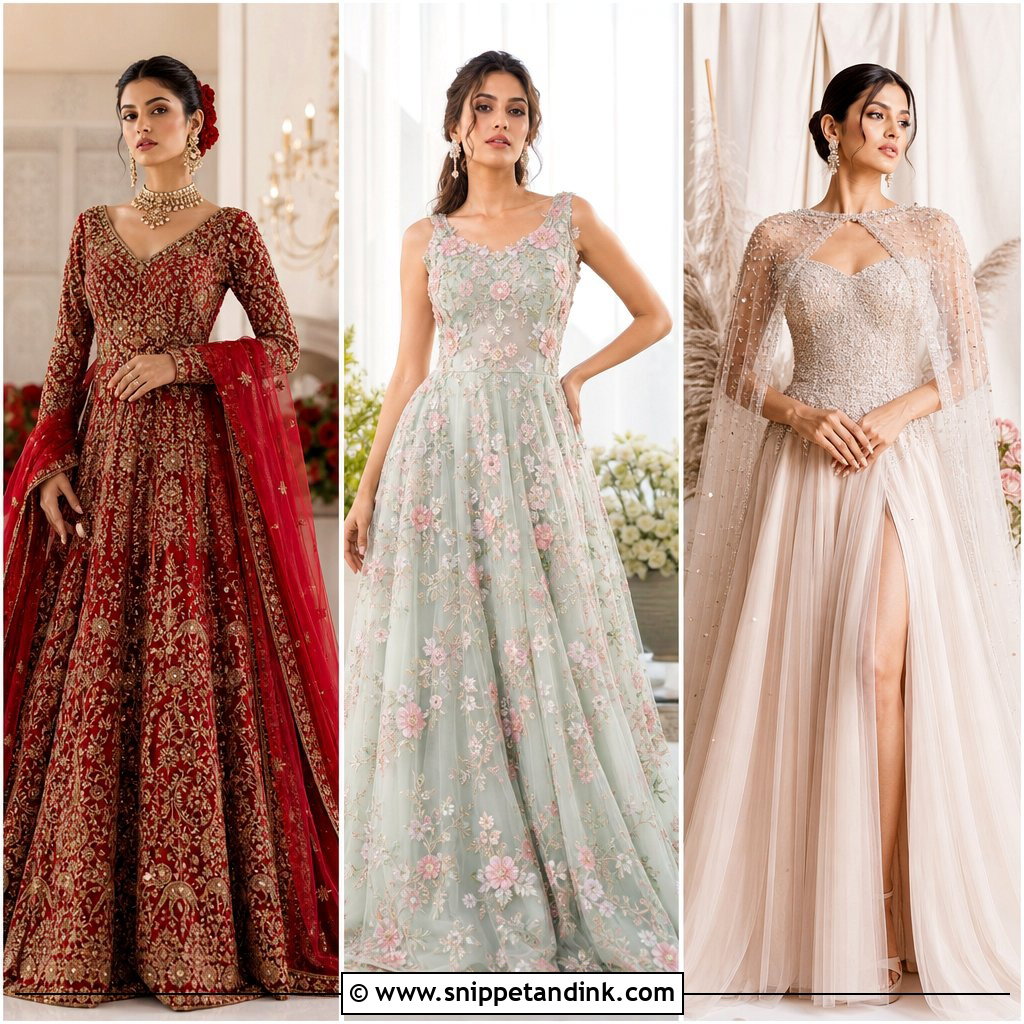
20. Designer Lehenga Wedding Dress
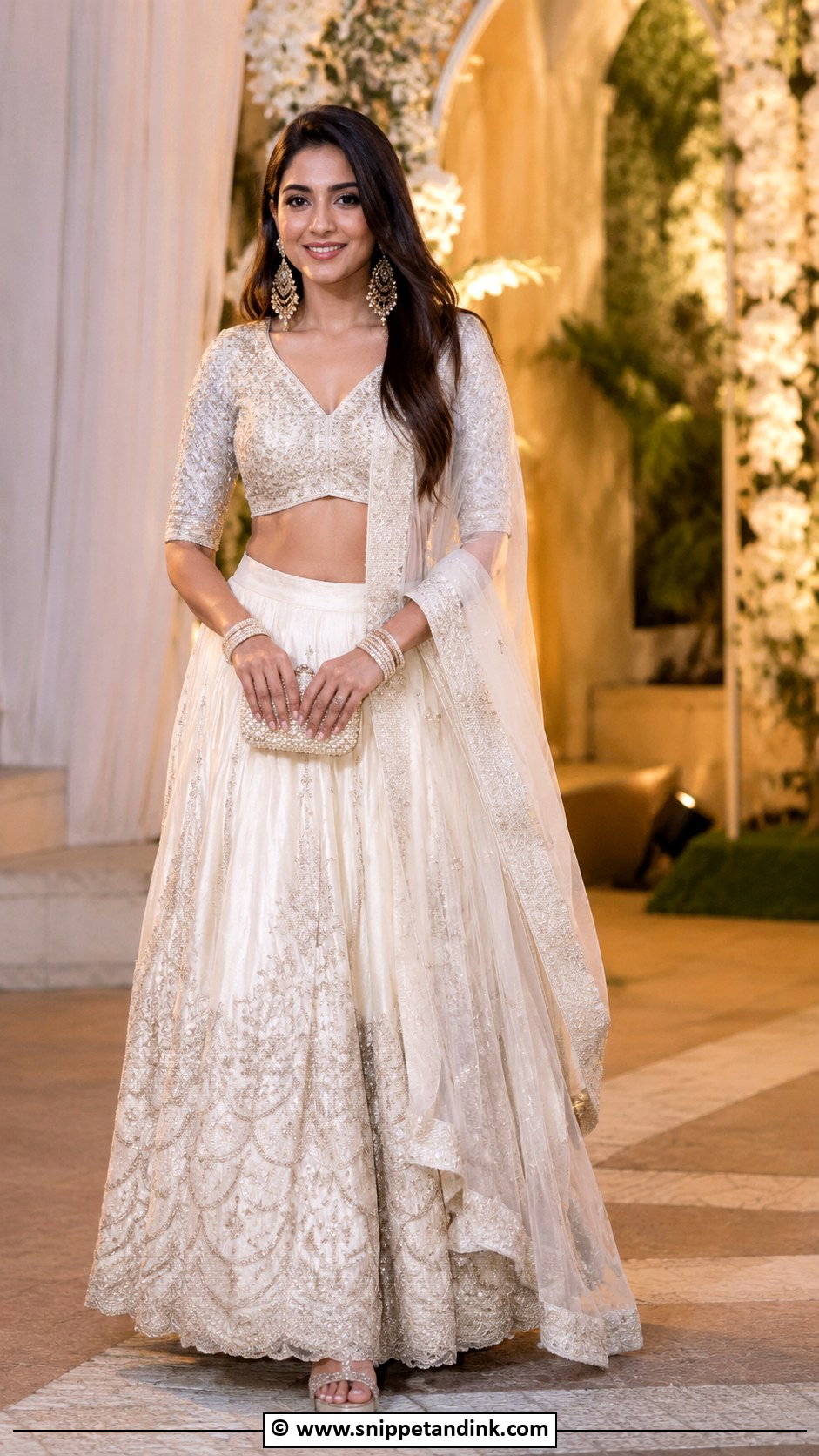
A lehenga’s weight sits entirely on your waist, and heavy zardozi or stone work adds up fast. Wear a heavy skirt for a full hour before you decide, and leave plenty of time for the blouse, which always takes the longest to fit. Ivory, blush, champagne, red and pastels all suit wedding events. Pin the dupatta at the shoulder and into the hair with pins hidden under the fold, so it stays put through rituals. Embellished sandals, statement earrings and bangles complete it. Lighter embroidery is kinder for events where you’ll dance.
21. Designer Saree Wedding Dress
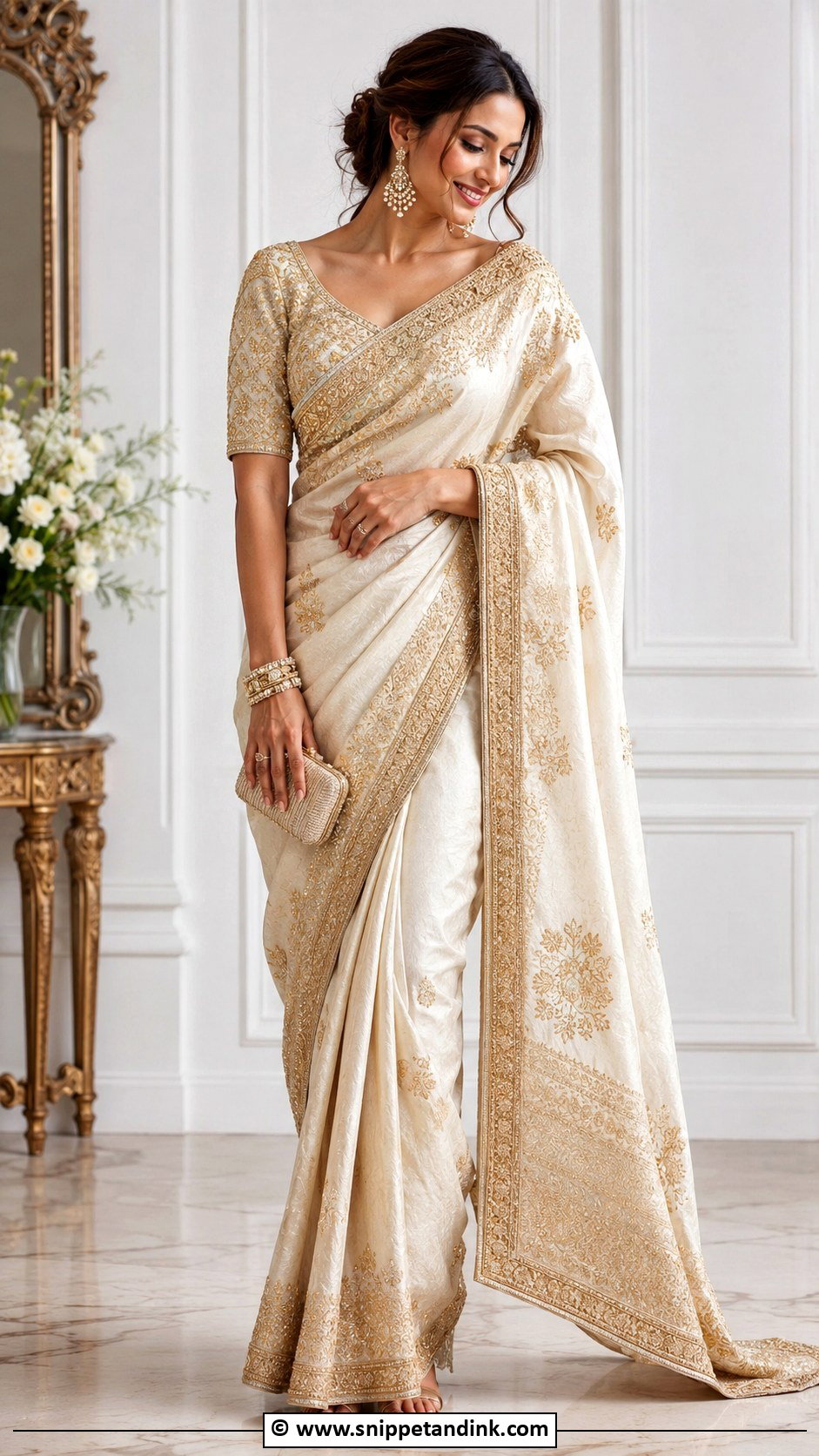
Silk holds saree pleats well; georgette and net slide and need more pins. Organza sits light but crisp. Whichever you choose, have the drape done by someone experienced or practice it more than once. The blouse makes or breaks a wedding saree, so give your tailor time. Ivory, gold, blush, emerald and deep jewel tones all work. Wear the heeled sandals you’ll actually use when the drape is set, because pleat length follows shoe height. Statement earrings, stacked bangles and a sleek bun or side-parted waves finish it.
22. Cape Wedding Dress
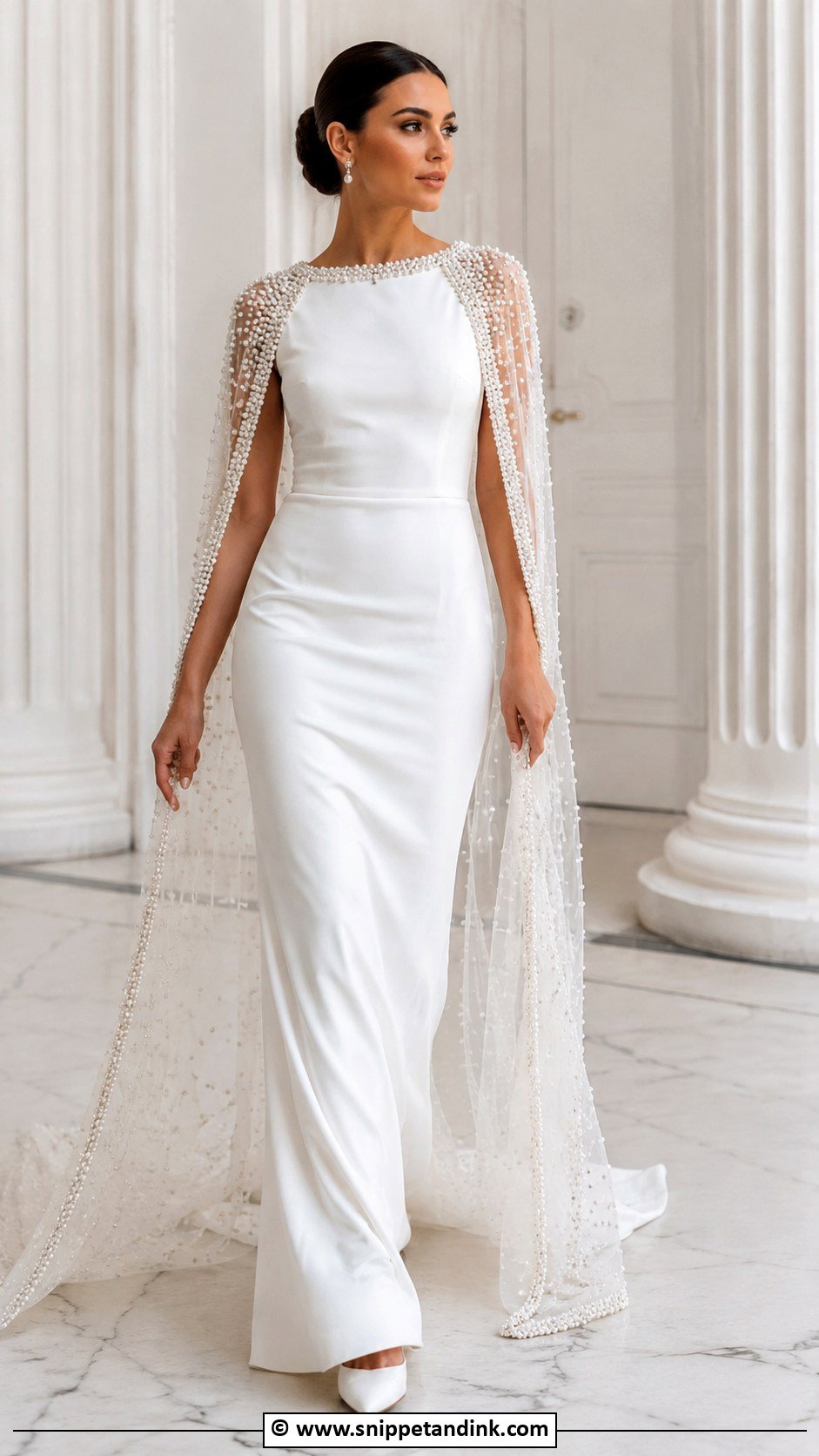
A cape replaces the veil, so it has to attach somewhere secure: shoulder snaps, hooks or a band at the neckline. I check that it doesn’t drag the gown’s neckline backward when the bride raises her arms. Sheer, lace, pearl-trimmed or tulle capes all work over a simple gown. Pointed heels, drop earrings and a clean hairstyle suit it, with no necklace if the cape is detailed. I’d always choose a detachable cape so you can dance without it.
23. Detachable Train Wedding Dress
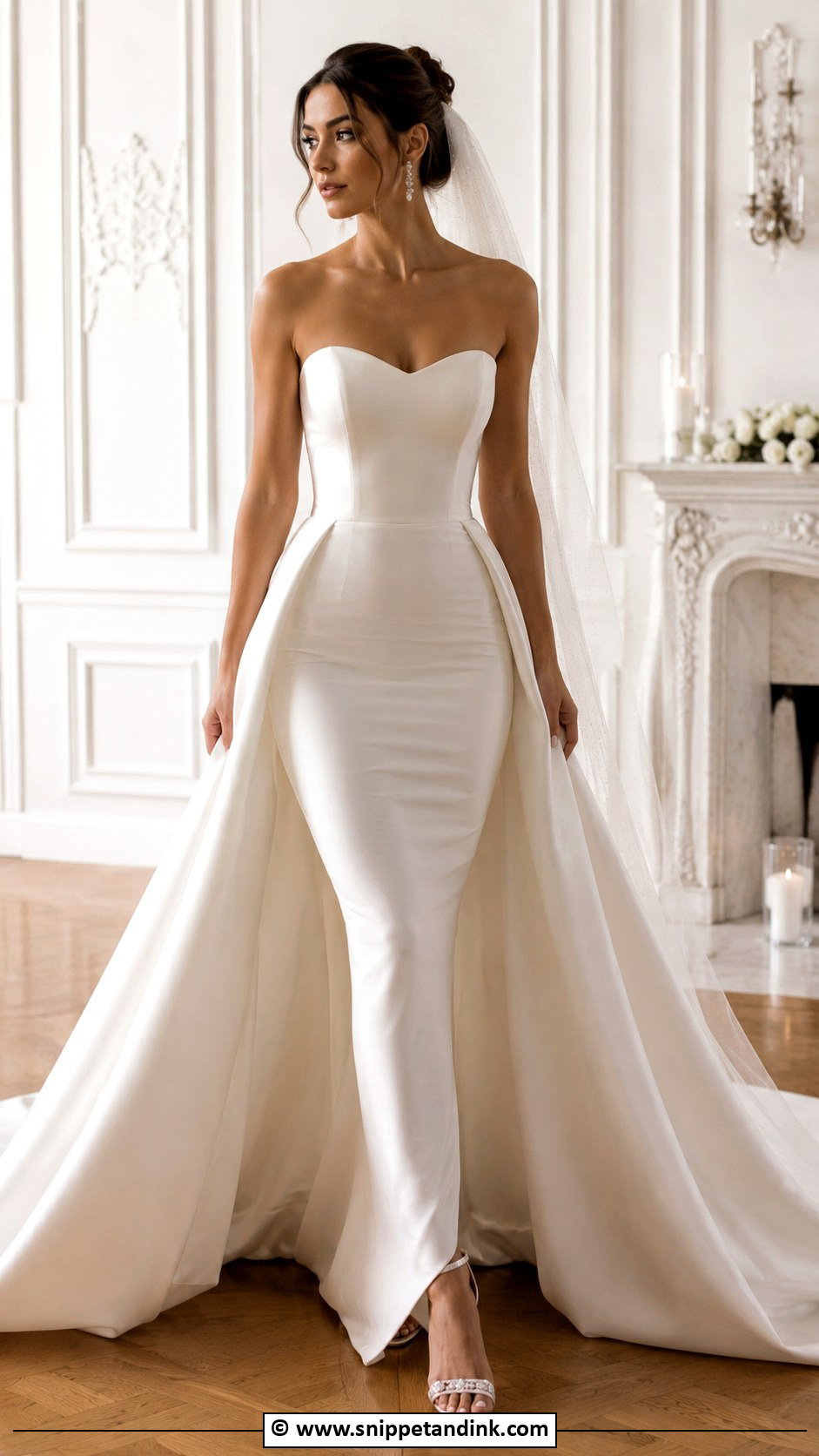
A detachable train wedding dress gives you a full processional and then a lighter dress for the party. Ask how the train attaches. Hidden buttons look neatest but take longest to undo, while hooks and snaps are quicker. Show your maid of honor or planner how it comes off before the day, not in a corridor during cocktail hour. Choose heels that suit both lengths, and keep the veil simple.
24. Designer Wedding Guest Gown
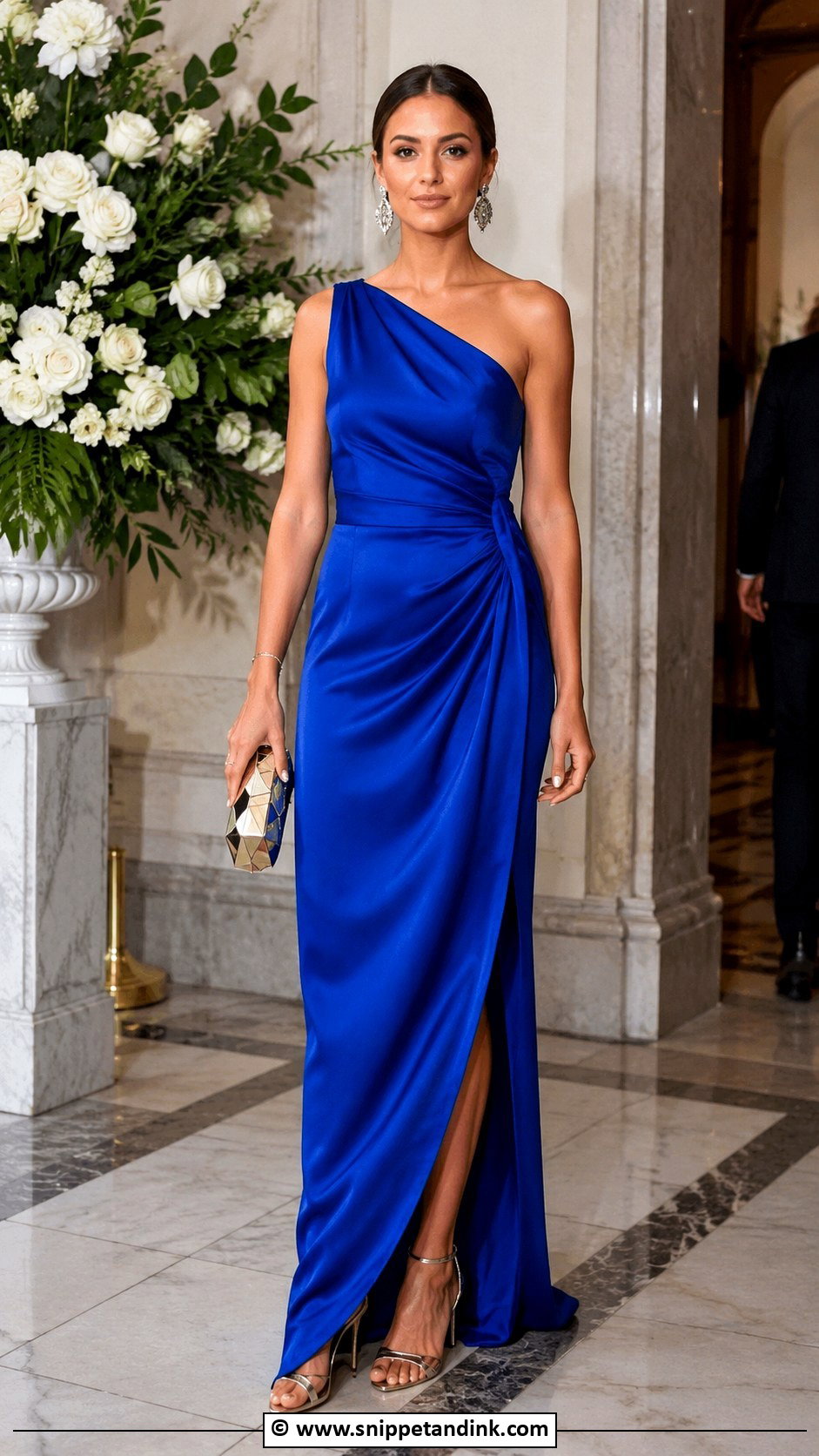
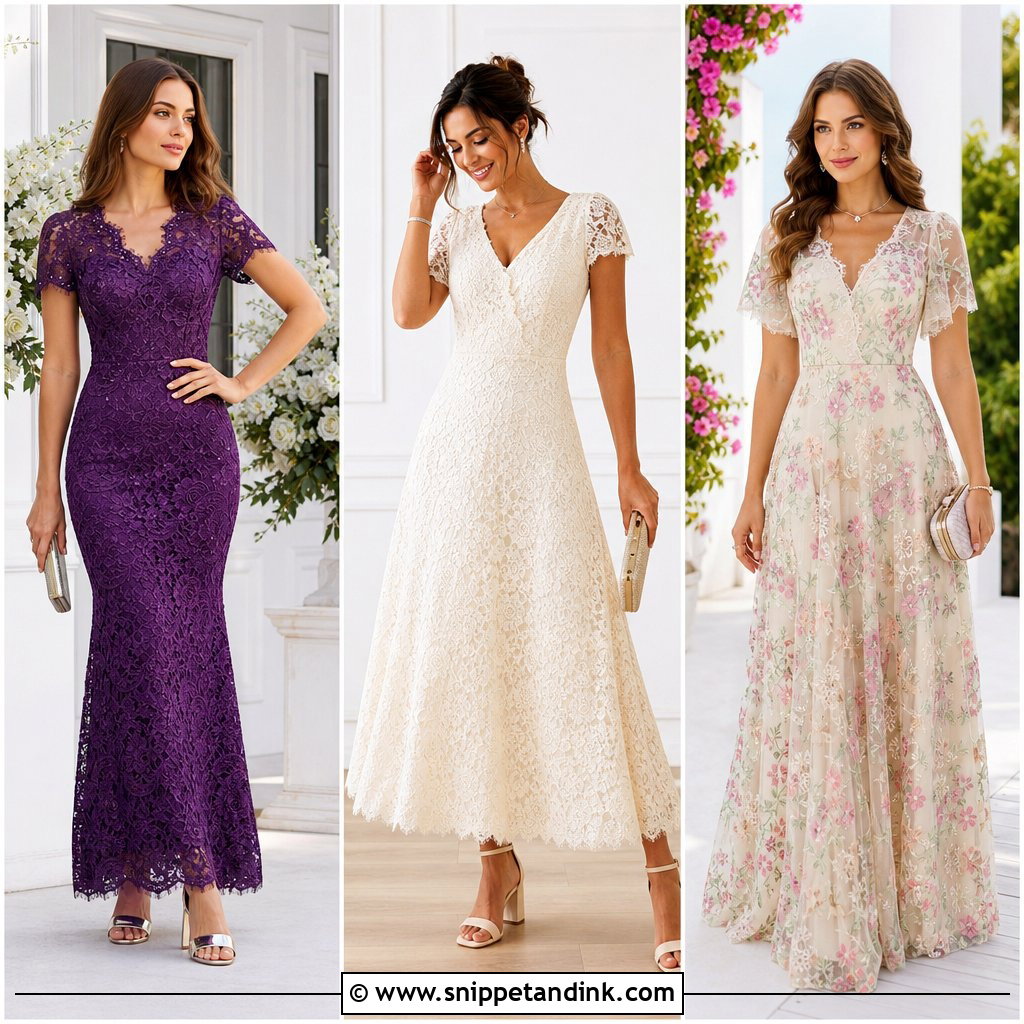
A guest gown should read formal without drifting into bridal territory. Floor length in cobalt, emerald, rose, lavender or a soft floral print fits most evening dress codes; avoid white, ivory and pale champagne unless the couple asks. A sleek satin gown suits black tie, while a floral chiffon gown belongs at garden or destination weddings. Metallic heels, a structured clutch and refined jewelry are enough. On lawns, bring heel protectors or wear block heels, and sit in the gown before you buy it, because wedding days run long.

25. Designer Wedding Guest Midi Dress
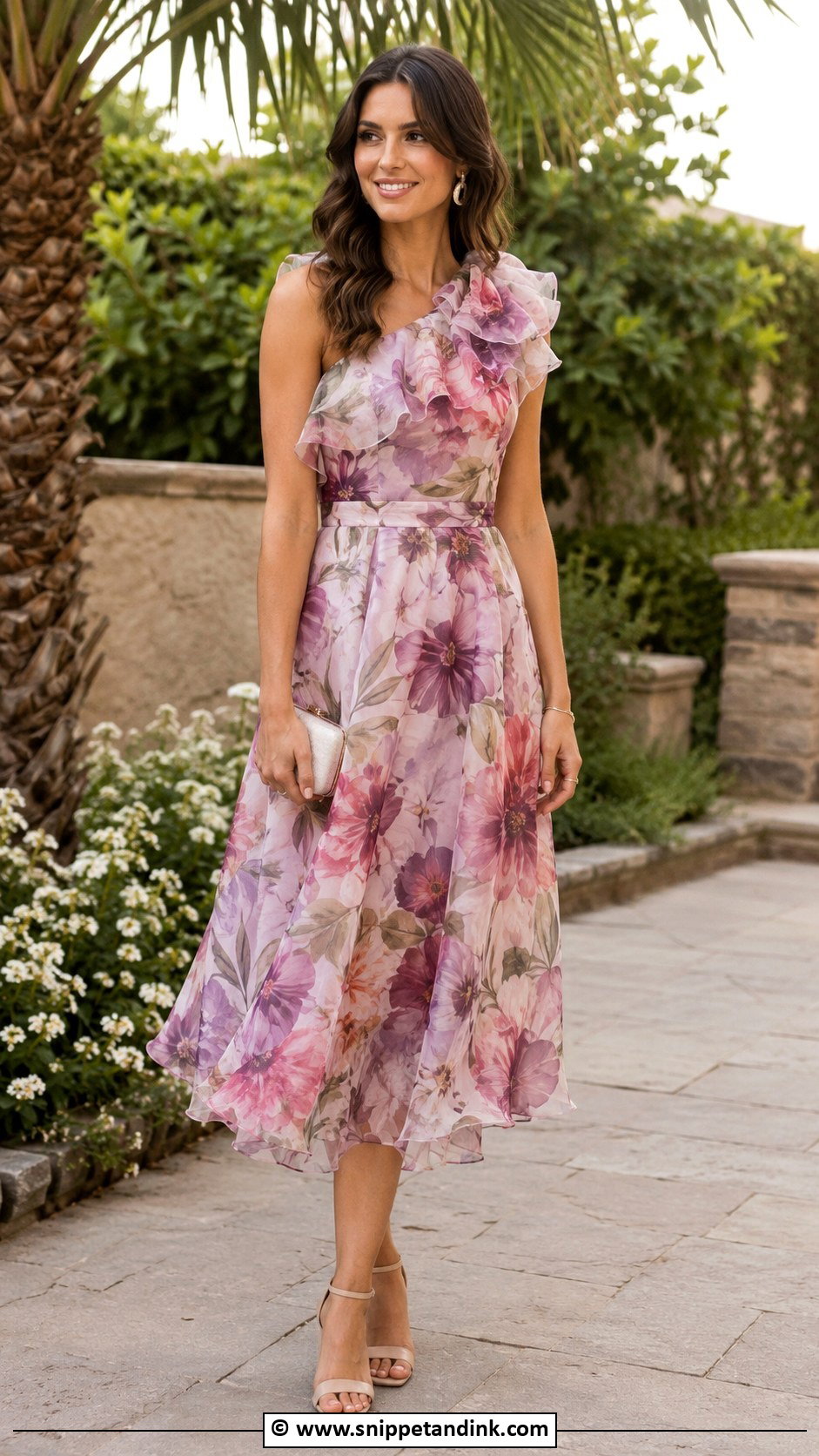
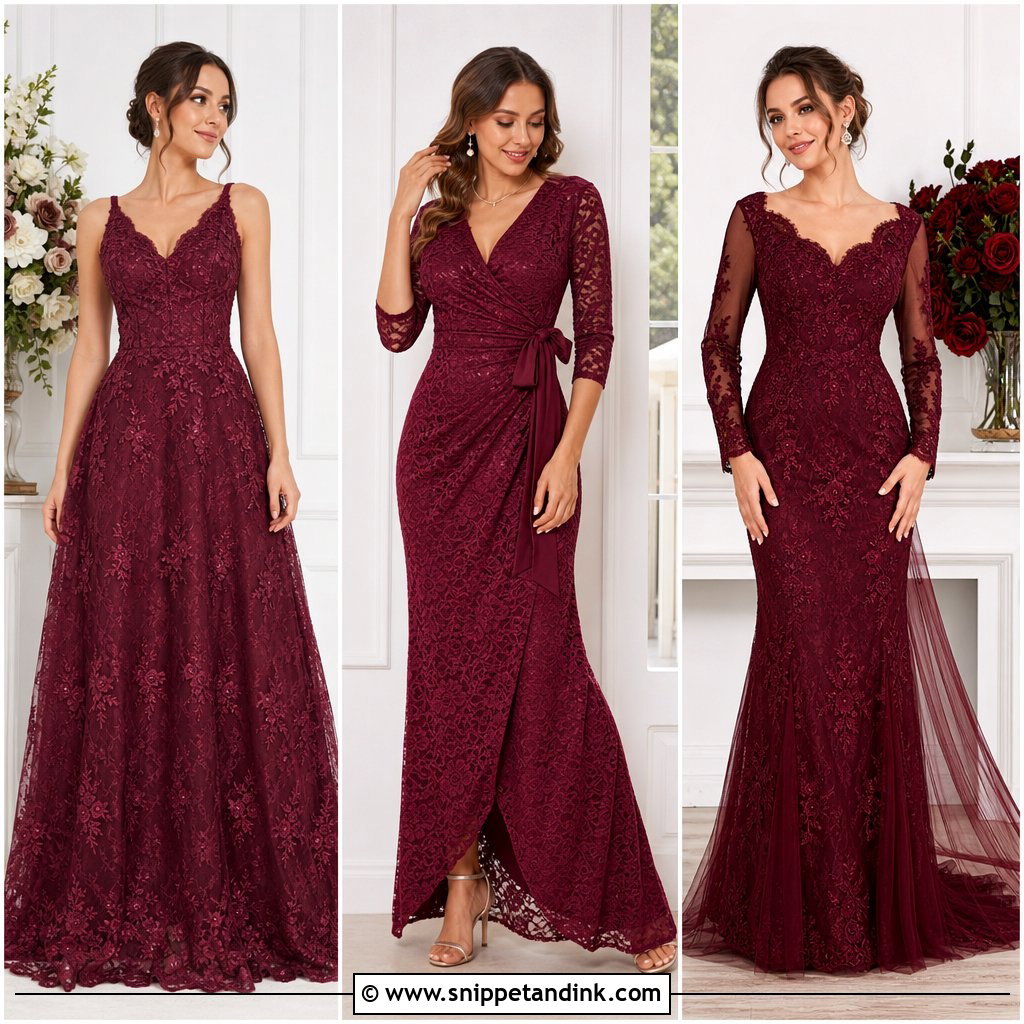
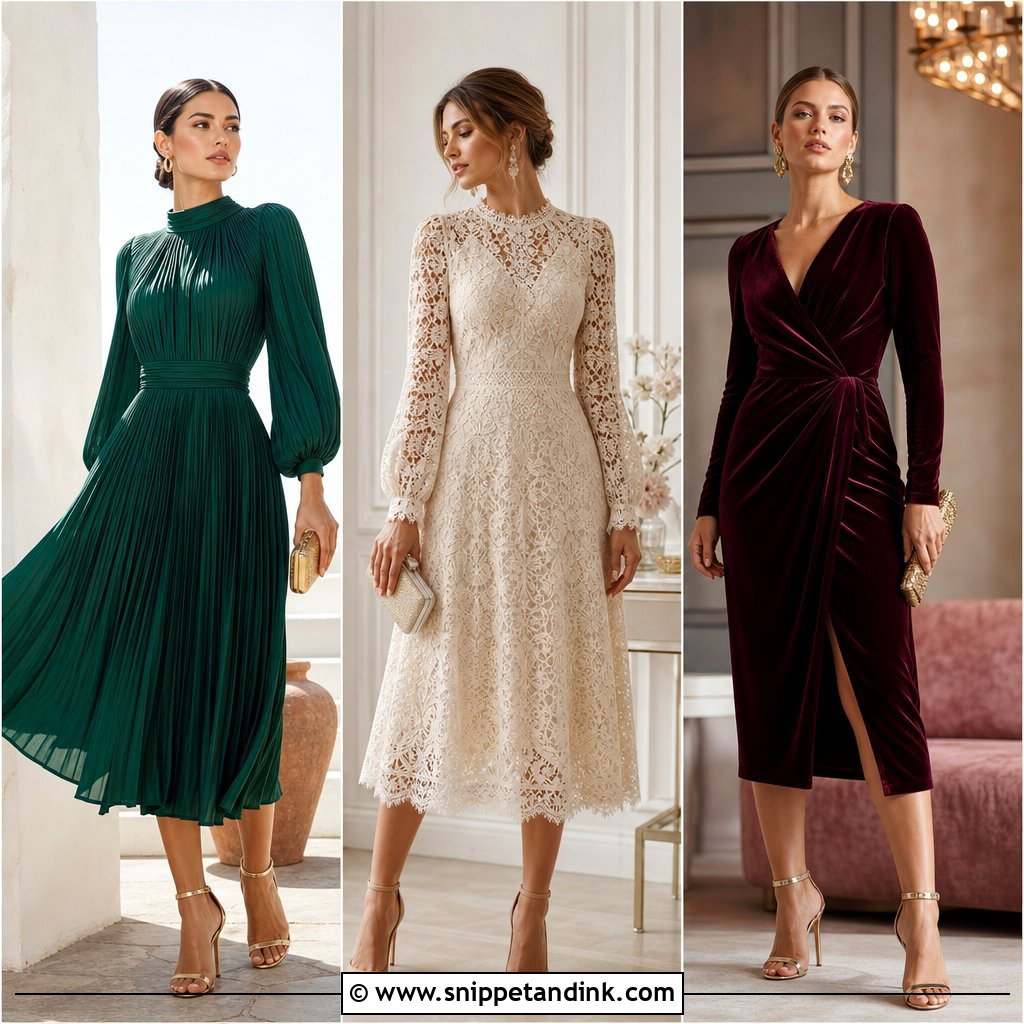
Midis cover more dress codes than guests expect, from daytime and garden weddings to most semi-formal invitations. Think a satin slip midi, a floral organza dress, pleated chiffon or a sculptural one-shoulder design. The hem stops mid-calf, so your shoes are on show; pick them on purpose, and choose block heels for grass. A small clutch and simple earrings are enough. Satin creases from sitting, chiffon barely does, worth knowing if there’s a long car ride first.
What Silk, Satin and Beads Need After the Last Dance
Care starts the night of the wedding. Sugary drinks and frosting leave marks you can’t see at first, and they turn yellow-brown as they oxidize over the following months. Get the gown to a specialist cleaner within a few weeks and point out every spot you remember, even the invisible ones.
Steaming at Home
Steam from the inside of the skirt and keep the nozzle moving. Silk and satin can water-spot if a drip lands on them, so I hold a clean cotton cloth between the steamer and any delicate panel. Never press beading or appliques directly.
Storing for Years
- Heavily beaded gowns should be folded with acid-free tissue in a box, not hung, because their weight stretches the shoulders over time.
- Lighter silk and satin can hang from the sewn-in hanger loops so the shoulders carry no strain.
- Use a breathable cotton bag or acid-free box. Plastic traps moisture and can yellow fabric.
- Keep it somewhere dark, cool and dry, never an attic or a damp basement.
Sit, Walk and Reach Before You Fall for a Photo
Every dress here can look right or wrong depending on fit, fabric and what you pair with it. Before you fall for a photo, sit, walk, lift your arms and look down in the sample, because those four moves expose nearly every problem I fix later. Match the shape to your venue and the hours you’ll spend in it, then choose shoes, veil and jewelry after the dress, never before. Satin ball gowns, lace mermaids, colored gowns, lehengas, capes, minis and guest midis all have a place. The right one is the dress you’ve forgotten you’re wearing by the second hour.
You'll Like These Ideas:





Leave a Reply