
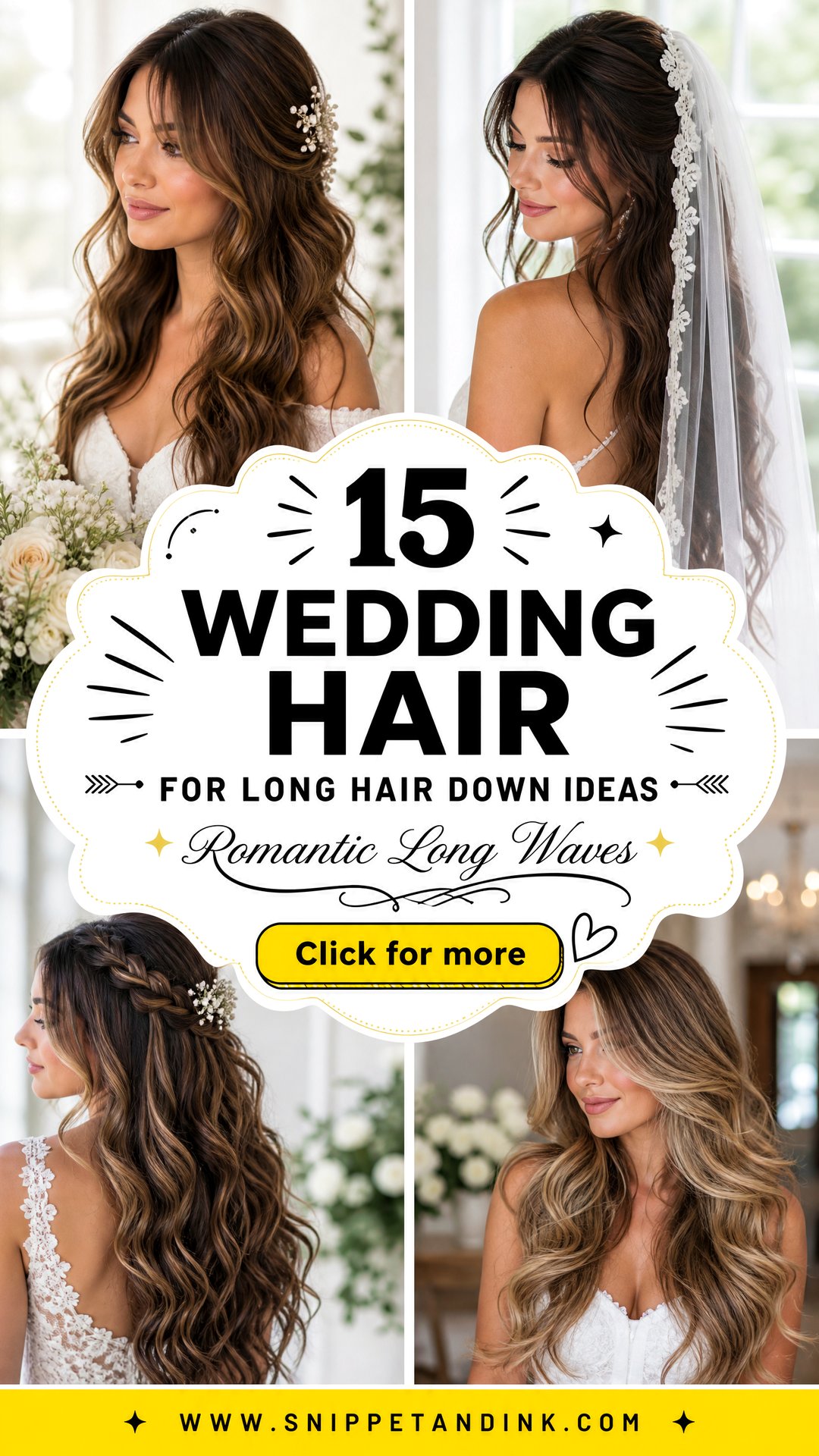
Wearing your hair down is the choice I see brides second-guess most, usually because someone told them it won’t last. It can last. It just needs more planning than an updo, because nothing is pinned and gravity is working on every curl from the moment you stand up. The style you pick should suit your neckline, where the veil sits, the weather at the venue and the texture you were born with. Here are fifteen ways to wear long hair down, with what I’d do at the chair to make each one hold.
Why Down Styles Drop Faster Than Updos, and How I Set Them
Long hair is heavy. A curl at the end of waist-length hair has the weight of the whole length pulling on it, while in an updo the same curl is pinned in place. That’s the whole reason down styles need a different approach.
- Start with hair that isn’t freshly washed. Hair washed the night before or that morning is often too slippery to hold a curl. Washed a day before and lightly dry-shampooed usually behaves better, though very oily or very curly hair can be the exception.
- Prep the root and mid-lengths. A mousse or setting lotion before blow-drying gives the hair memory. Adding product only at the end does far less.
- Curl, then pin. Each warm curl gets pinned up in its coil and left to cool completely. Hair sets its shape as it cools, not while it’s hot.
- Brush out last. Only once everything is cool do the pins come out and the curls get brushed into waves. Brushing warm curls makes them fall.
Expect even well-set waves to relax by an inch or two over the day. I curl slightly tighter than the final look for that reason. It’s also why trial photos should be taken a few hours after styling, not straight away.
1. Long Wedding Hair Down With Loose Waves
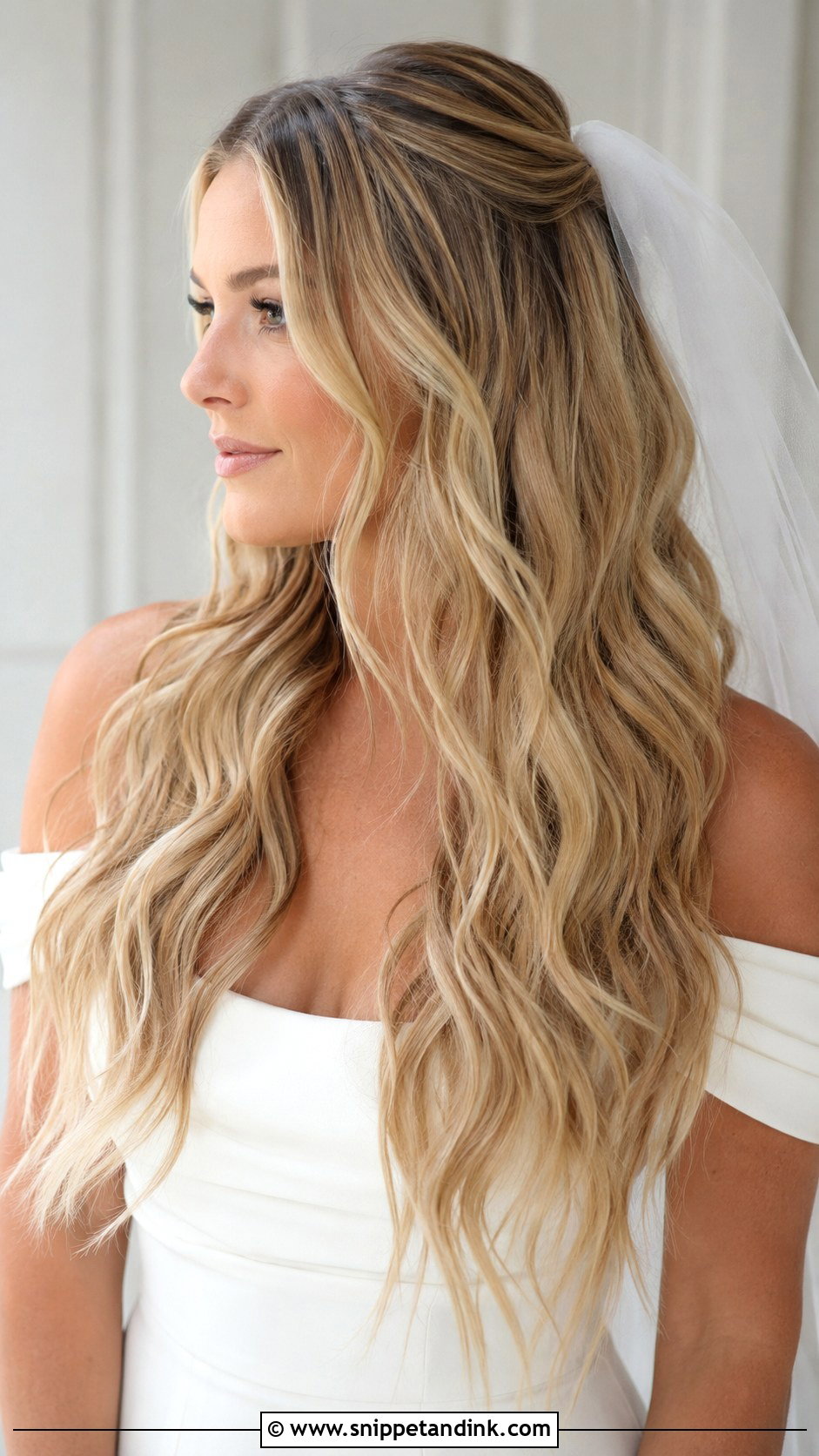
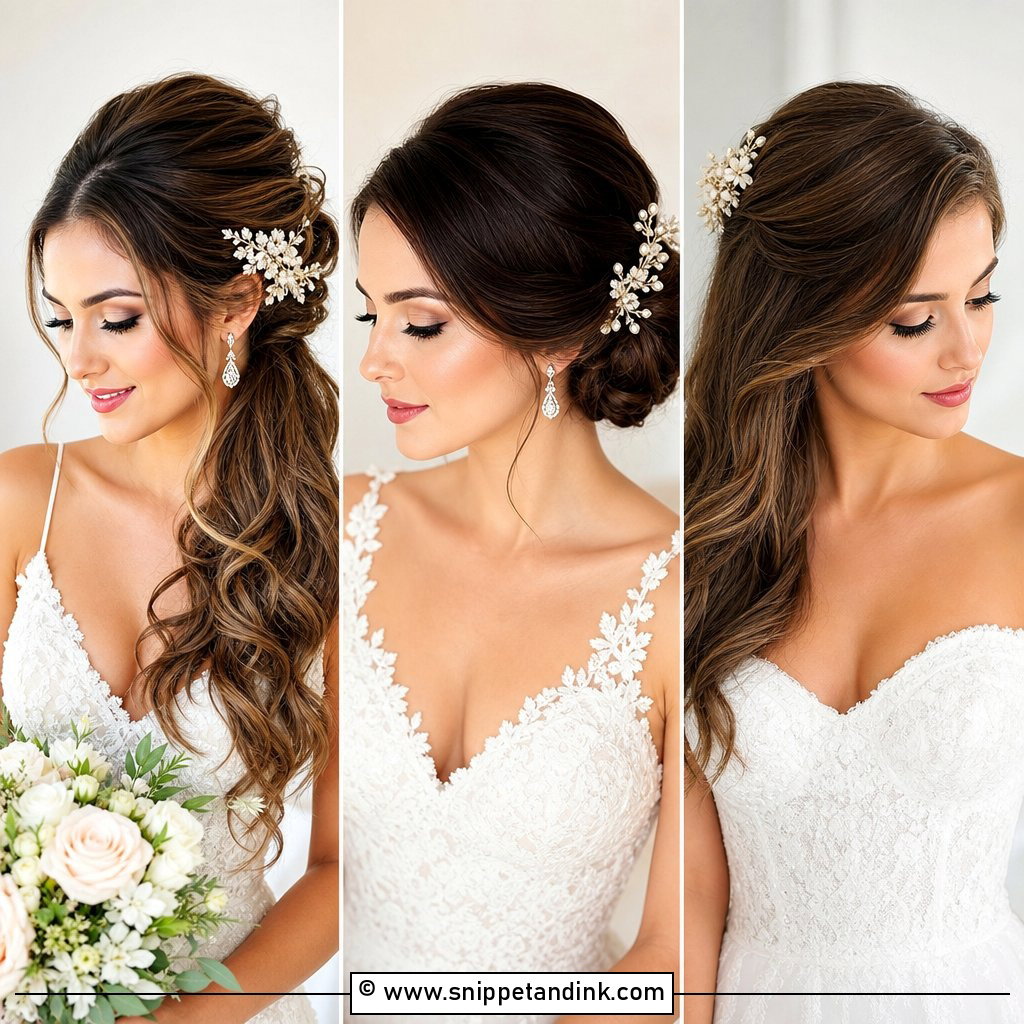
Loose waves are the style I’m asked for most, and the one most often done too tightly. I curl in larger sections than you’d expect, pin each curl while it cools, then brush everything out so the bends merge into waves. Brushing is what keeps it from looking like stiff ringlets. The roots stay smooth. A middle part reads current, a soft side part reads more romantic. Strapless and off-the-shoulder gowns show the waves best, and the shape gives a veil something to rest against.
2. Long Wedding Hair Down With Hollywood Waves
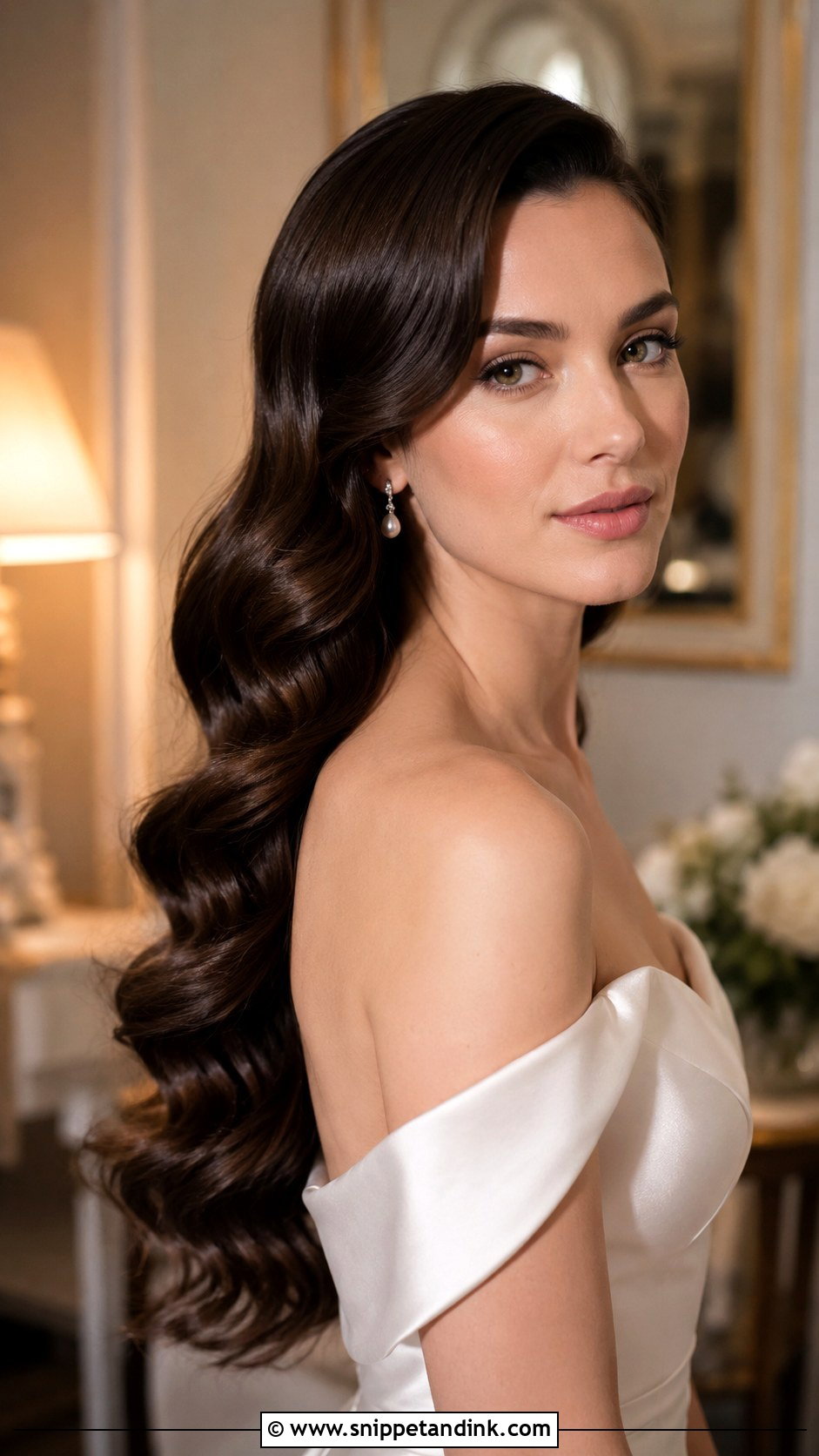
Hollywood waves are a sculpted set, not a loose curl. Every section gets curled in the same direction, pinned, cooled, then brushed into one continuous S-shaped ripple and pressed with clips while a firm, brushable spray sets. It is the most glamorous way to keep hair down, and it suits fitted gowns and a deep side part. The weakness is frizz, so this one needs a smoothing blowout first. If your hair drops a curl within an hour, clip-in extensions add density and structure the wave can sit on.
3. Long Wedding Hair Down With Soft Curls
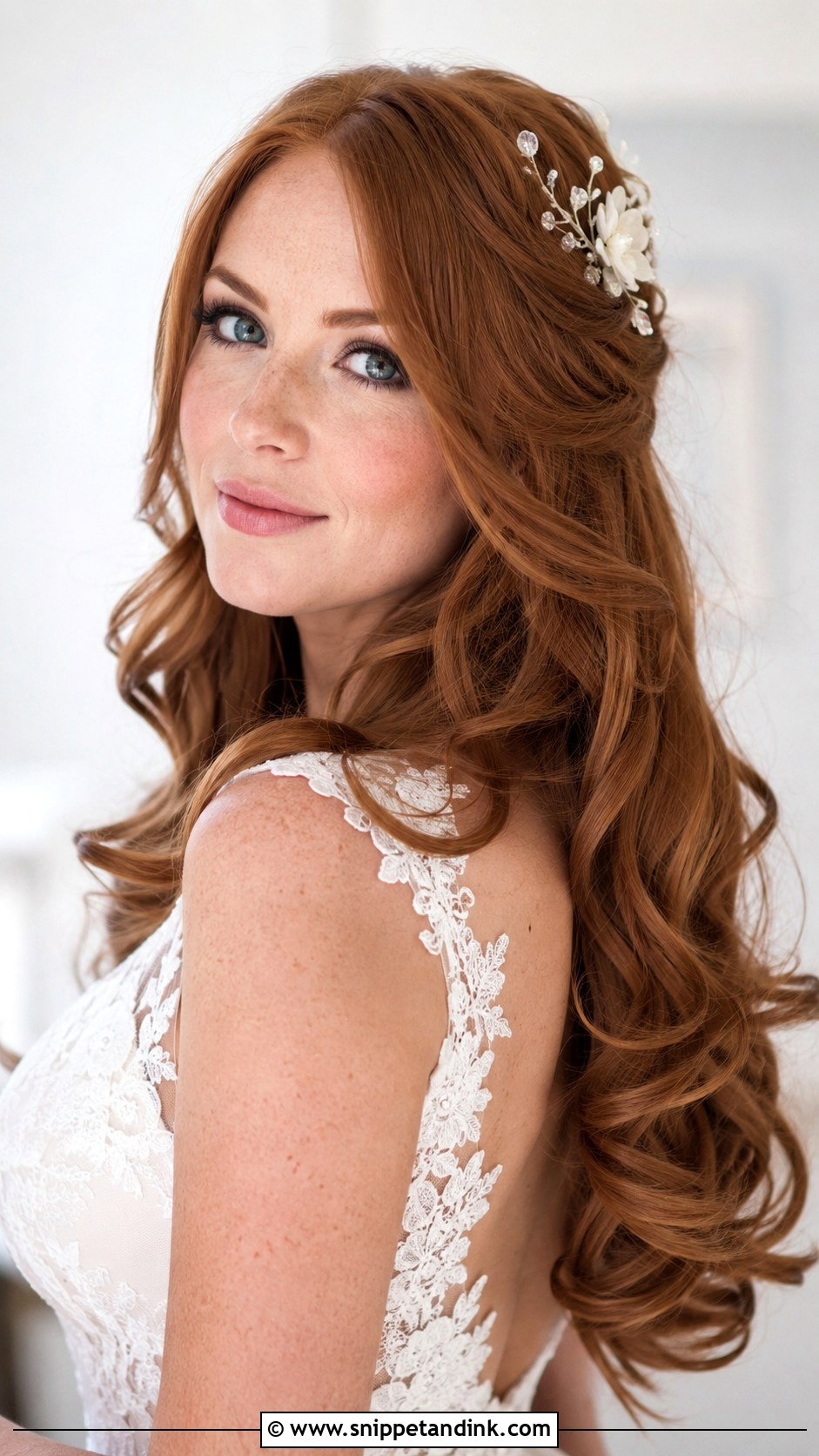
Soft curls sit between waves and ringlets: fuller than waves, but loosened by hand after setting so they bounce rather than coil. Where they start changes the whole look. Starting at the cheekbones frames the face; starting near the shoulders looks more natural on very long hair and leaves the top sleek. They suit church ceremonies and indoor receptions, where there’s less humidity working against them. A couple of delicate pins or a small floral comb is all they need.
4. Long Wedding Hair Down With Curtain Bangs
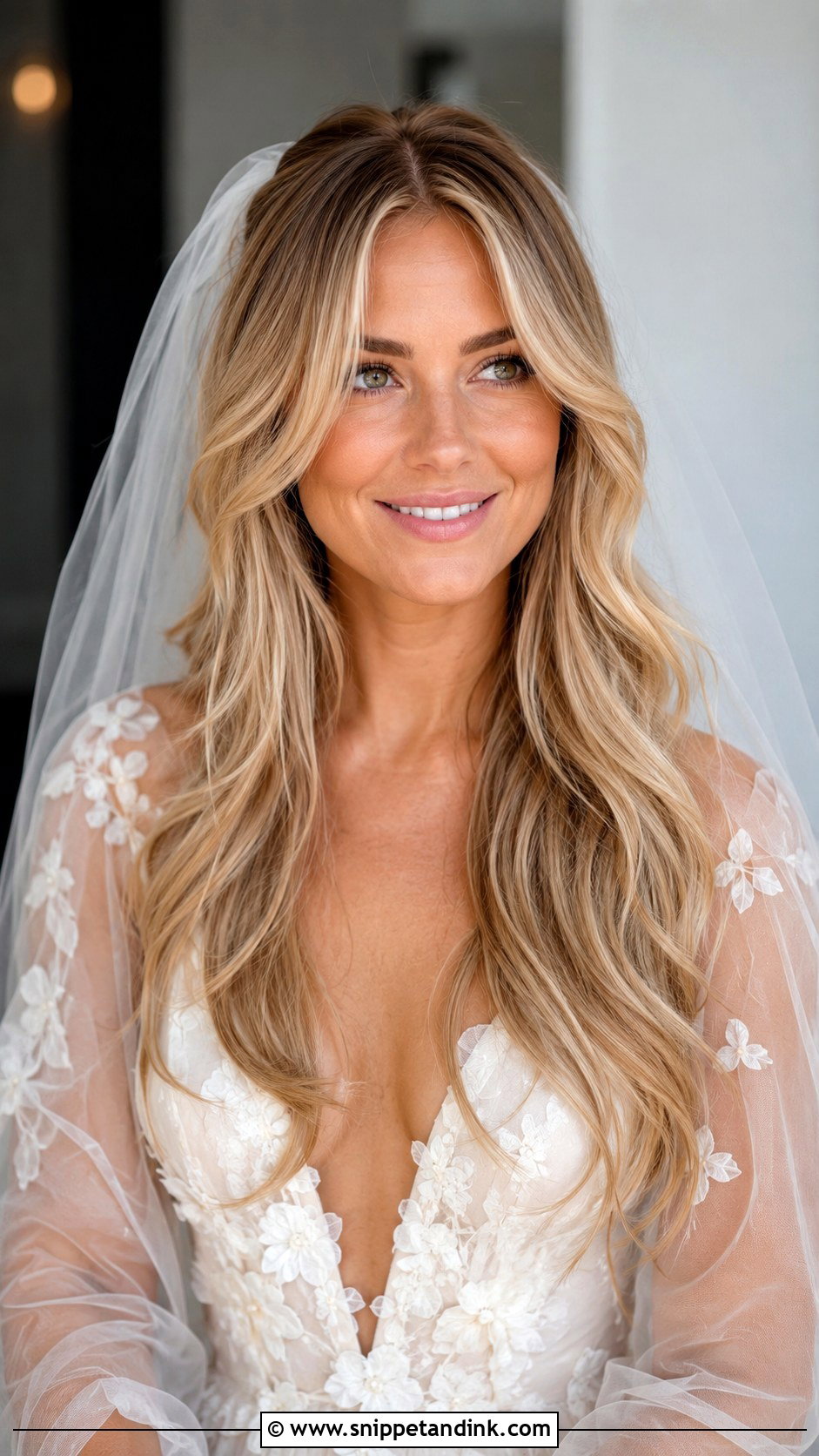
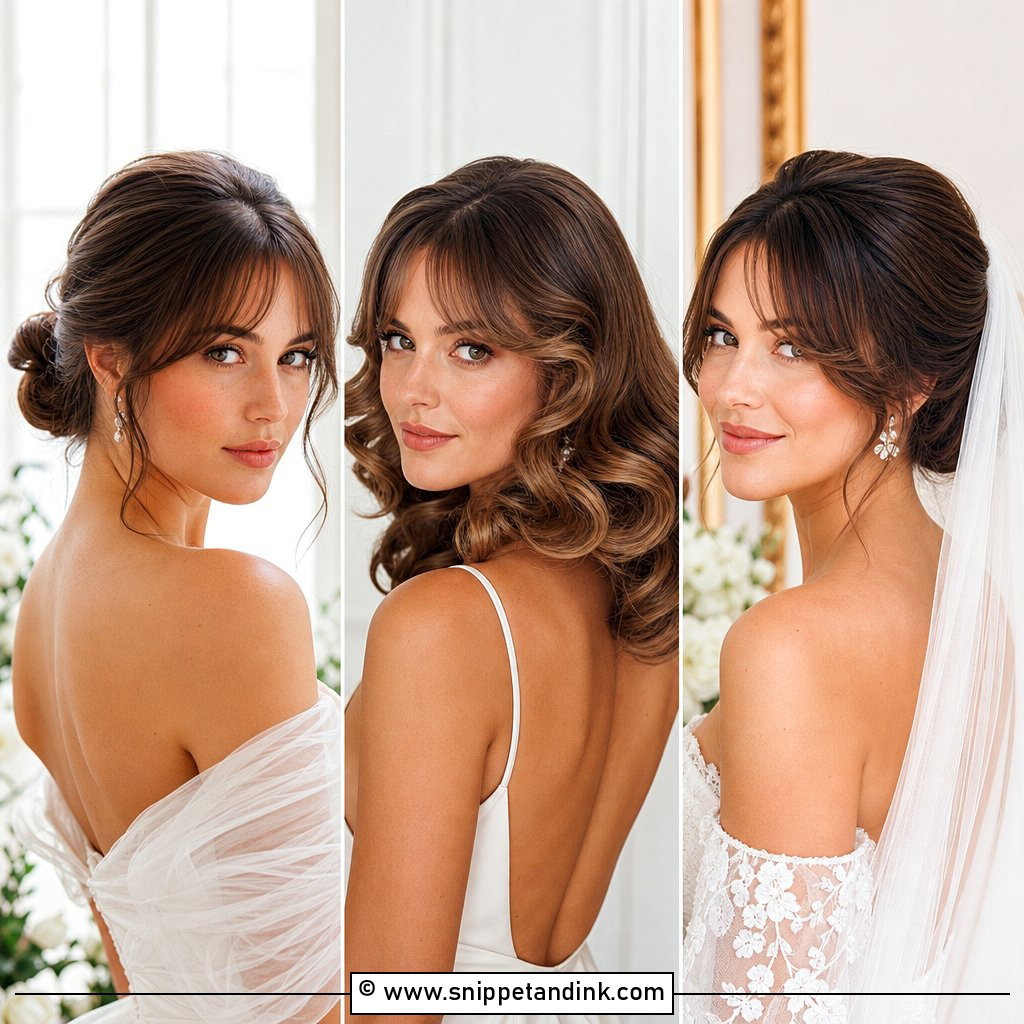
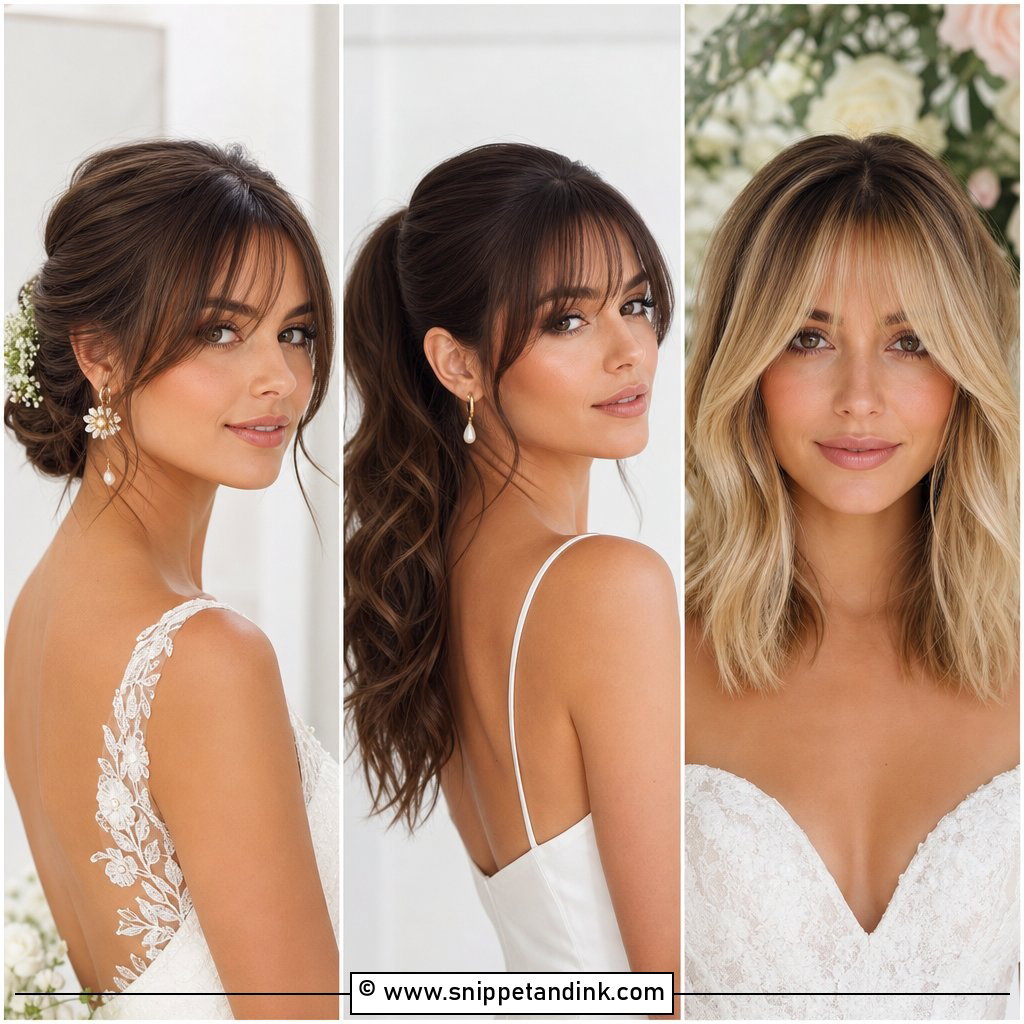
Curtain bangs are the reason some brides never want an updo: they frame the cheekbones whether the hair is up or not. I blow-dry them first, over a round brush lifted away from the face, before the rest gets waved. Done last, they tend to fall flat against the forehead. Keep them light. A veil set behind the crown and small earrings suit them. If you don’t already have curtain bangs, don’t cut them in the final month; they need a few weeks to fall properly.
5. Long Wedding Hair Down With A Side Part
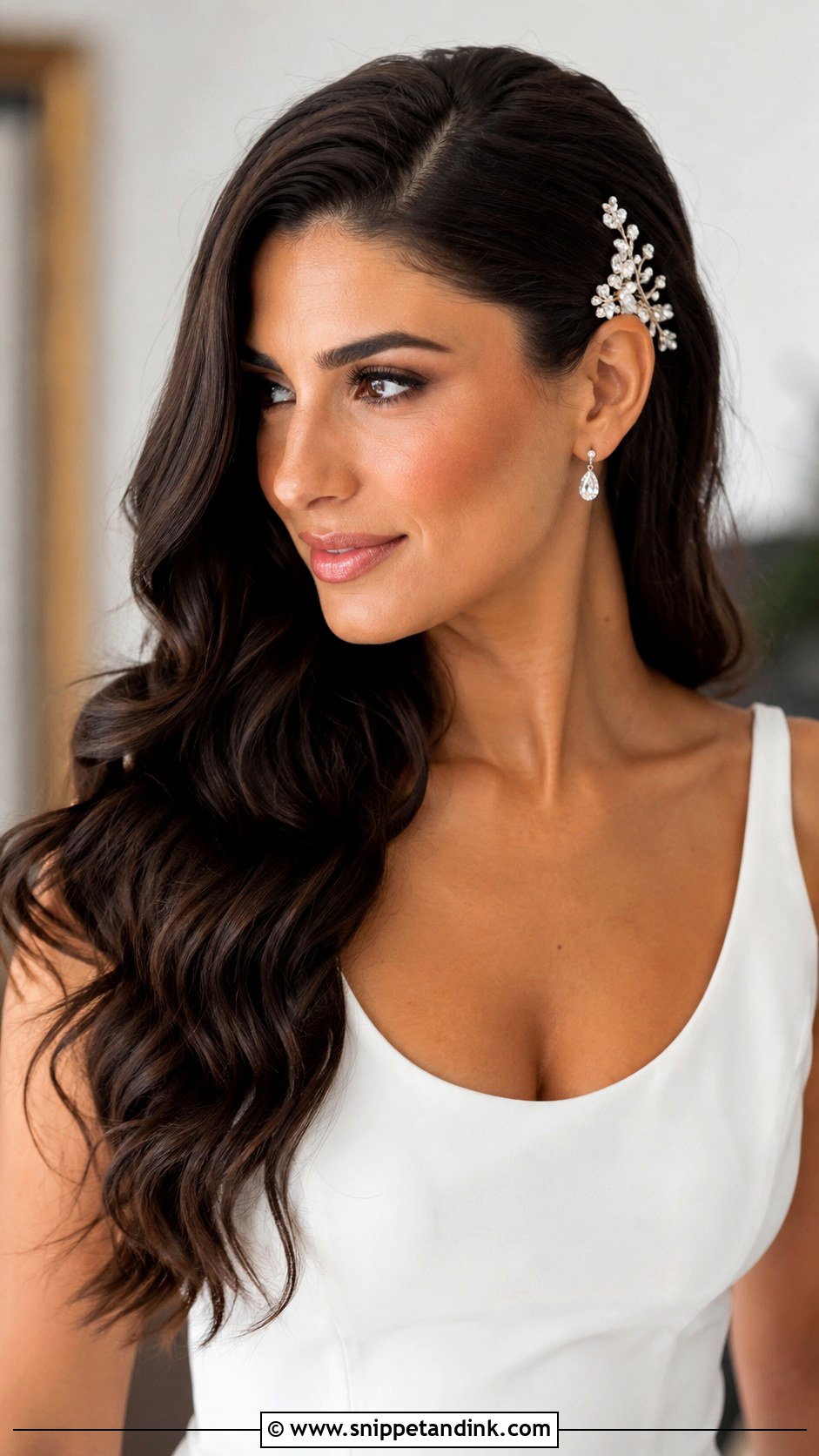
Changing your part is the quickest way to change the shape of down hair. A side part puts volume at the crown and lets one side tuck behind the ear with a pin or comb. A deep part reads formal; a softer one reads relaxed. The catch is that hair trained to your usual part will try to fall back there by the afternoon. I set the new part with root lift spray while blow-drying and pin it flat while it cools, which holds much better than spray at the end.
6. Long Wedding Hair Down With A Veil
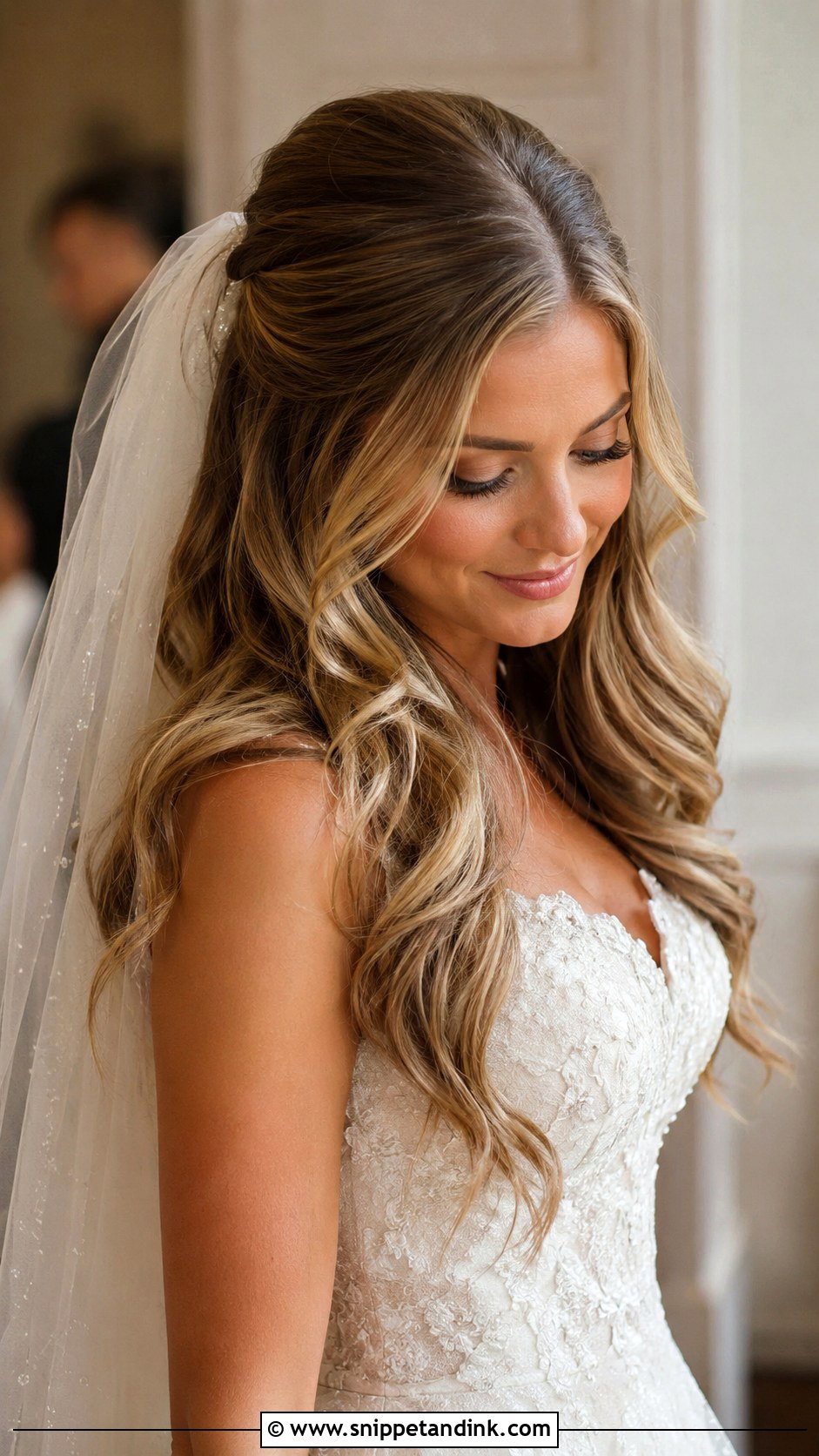
A veil with hair down needs a hidden anchor, because loose hair gives a comb nothing solid to grip. I tease a small section at or just under the crown, smooth a layer over it, and push the comb into the tease. Waves and soft curls help the veil sit and move with the hair. Keep the face polished, though; a veil over very loose, piecey hair can make the whole look read unfinished. Long hair and long tulle also build static, so a light mist of hairspray on your brush before the veil goes in keeps them from clinging.
7. Long Wedding Hair Down With Pearl Pins
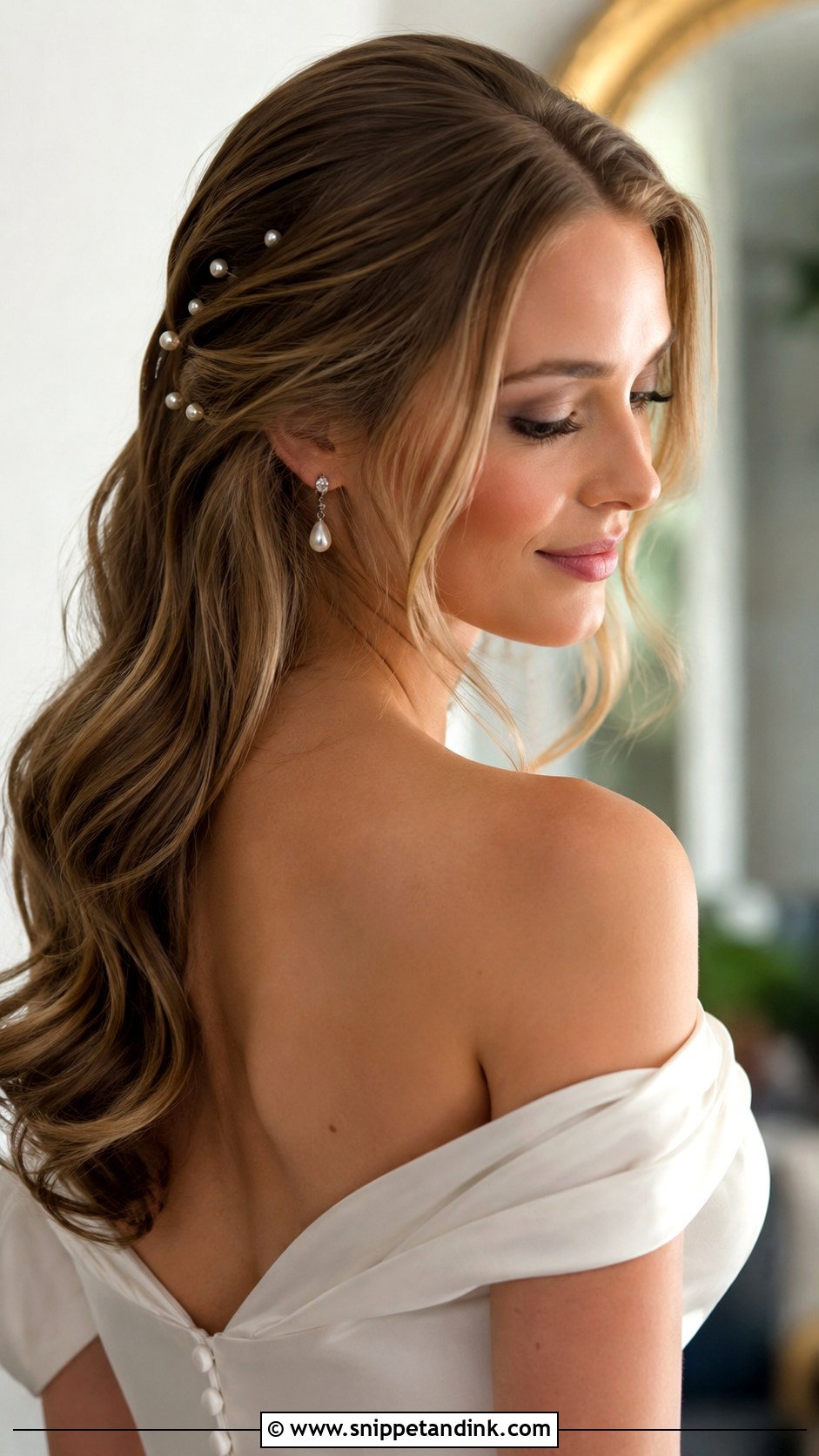
Pearl pins give long hair a detail that close-up photos pick up. I place them along one side, above the ear, or across a twisted section at the back, and on silky hair I hide a bobby pin underneath each one so it can’t slide out as the waves move. Few is better than many. Five well-spaced pins look deliberate; fifteen scattered ones look like a decorated cake. Pearl earrings and a satin or lace dress tie them in.
8. Long Wedding Hair Down With A Floral Crown
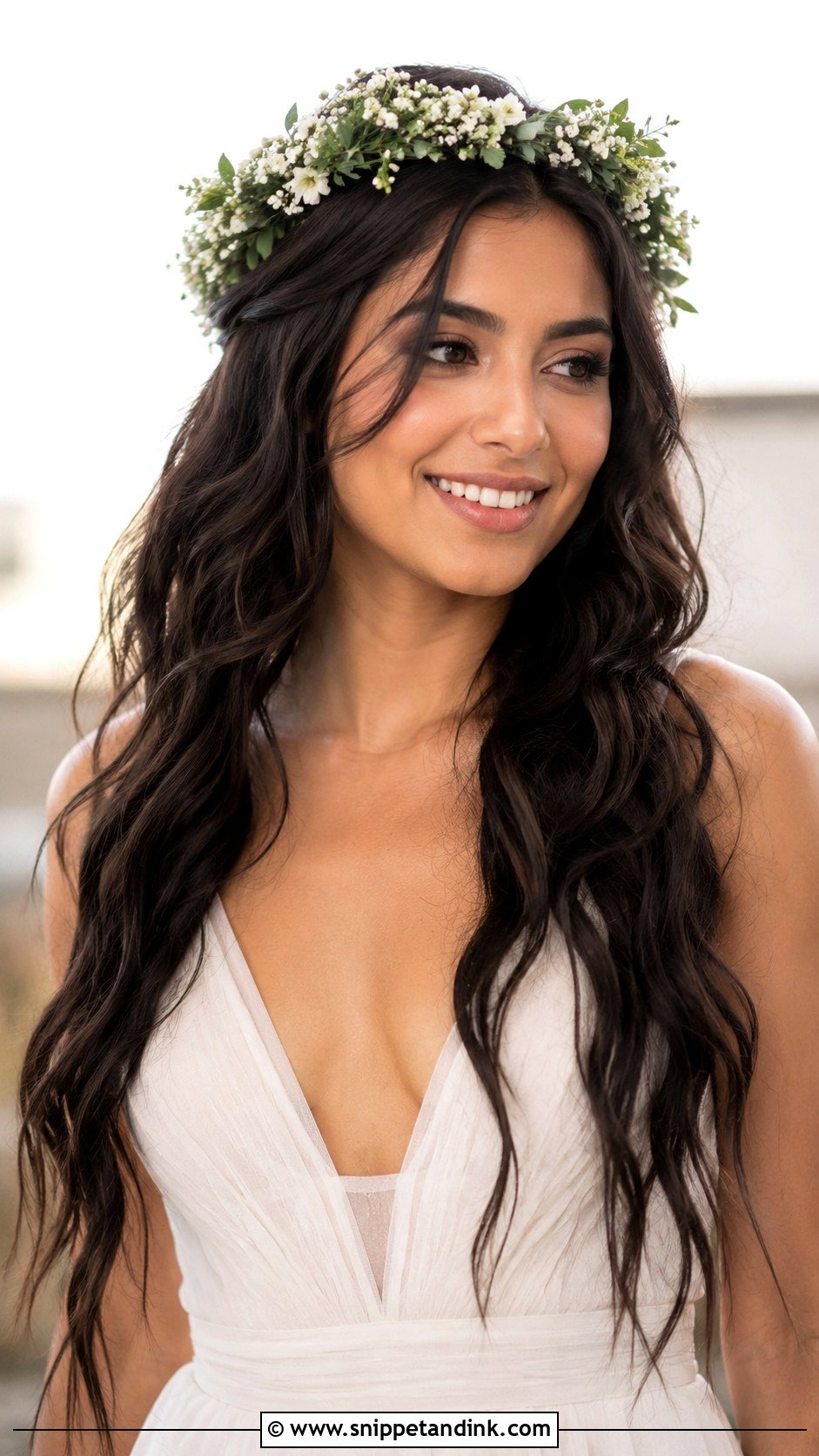
A floral crown goes on after the hair is fully styled and set, never before, or the curls underneath get crushed and can’t be touched up. Small crowns of greenery and tiny blooms sit more comfortably through a long day than full ones, which get heavy and press on the temples. They suit garden, beach and rustic weddings. Ask your florist what will hold up in heat; fresh flowers resting on a warm head all afternoon wilt faster than the ones in your bouquet. A couple of face-framing pieces pulled out help the crown look worn rather than placed.
9. Long Wedding Hair Down With A Waterfall Braid
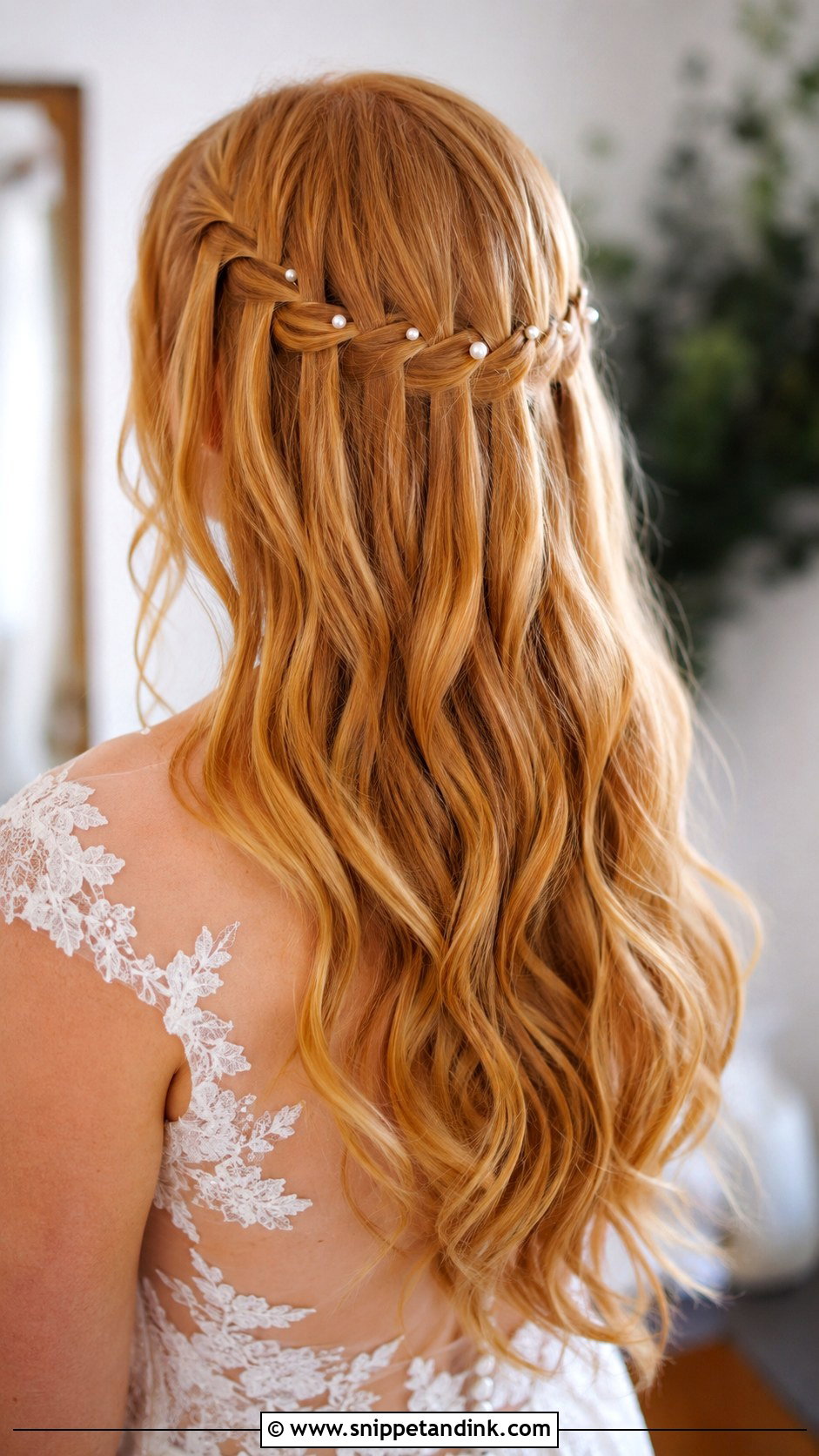
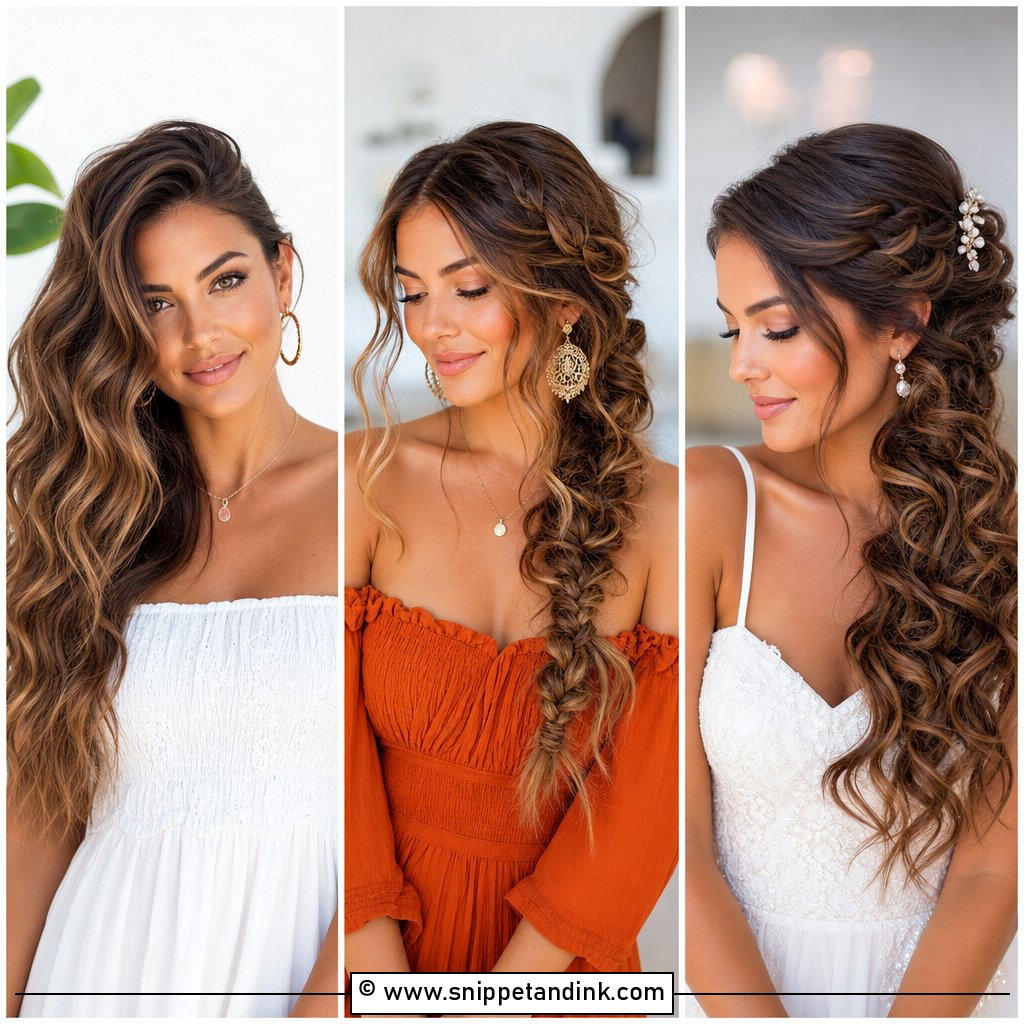
A waterfall braid drops a strand out of the braid at each crossover, so the lengths stay loose underneath. That’s what lets you have a braided detail without committing to half up. I curl the hair first, so the dropped pieces blend into the waves, and I braid with a slightly damp hand to keep flyaways down. It can arc across the back like a soft crown or sweep from one side. Tiny pins slot into it easily. Keep it neat; a loosely pulled waterfall braid loses its pattern quickly.
10. Long Wedding Hair Down With A Side Braid
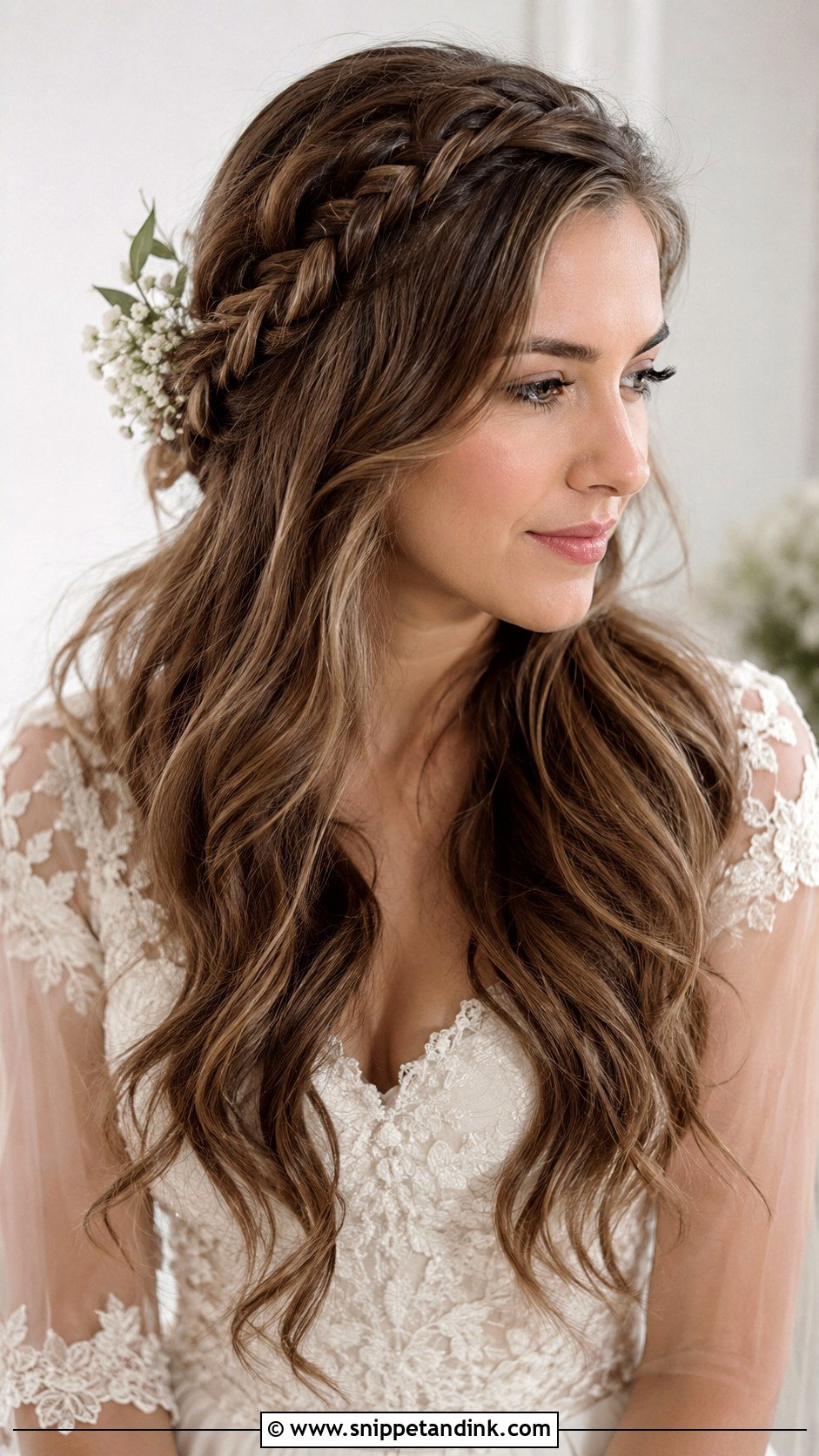
A side braid is the simplest way to keep hair out of your face during the vows. It can start at the temple and disappear into the waves, or run along one side for a more boho look. The braid also gives you a firm place to anchor accessories that would slide out of loose hair. Pull it apart only a little. A heavily pancaked braid photographs as messy at a distance, even if it looks soft in the mirror.
11. Long Wedding Hair Down With A Hair Vine
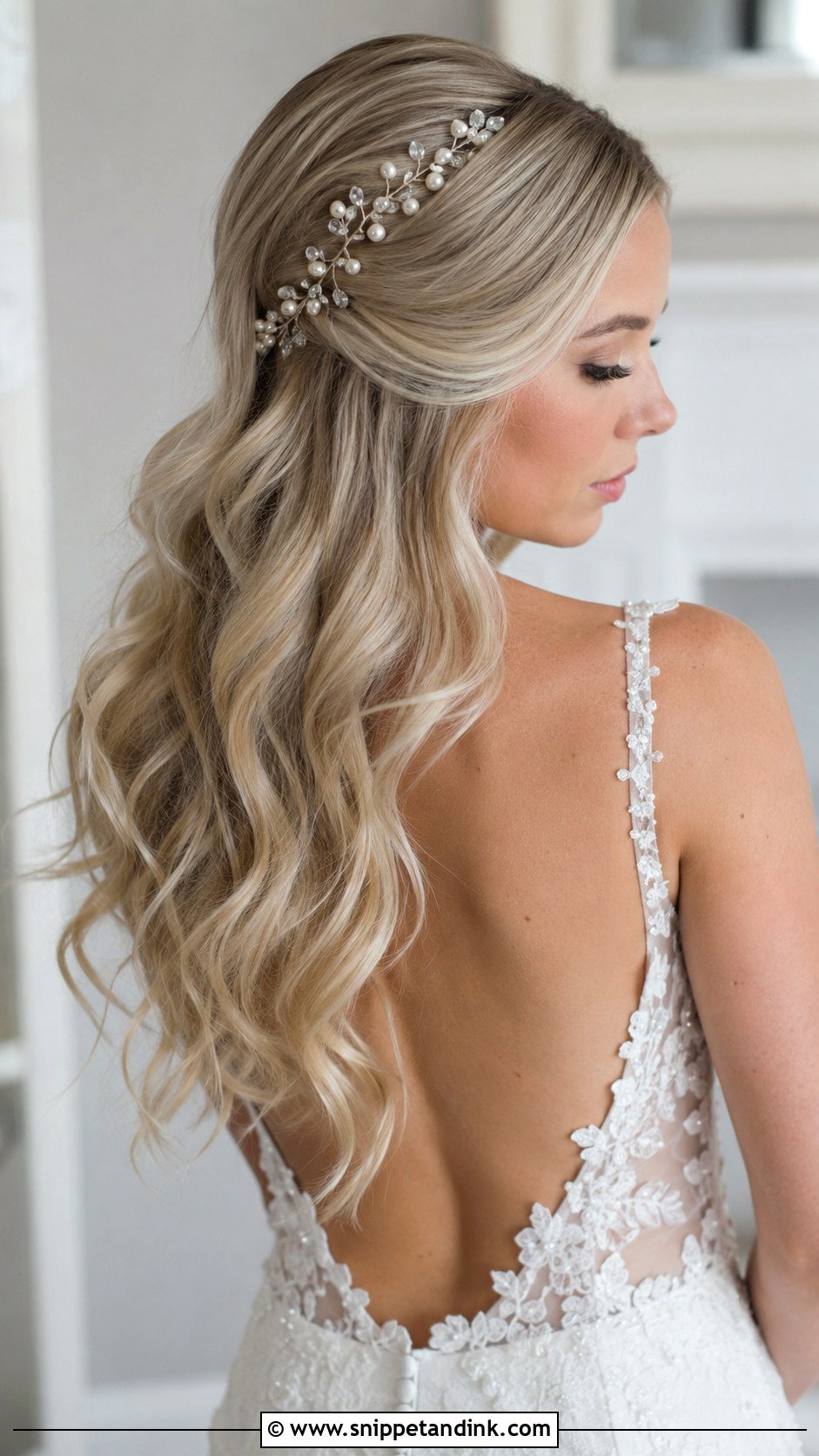
A hair vine bends to the shape of the style, which is why it suits down hair better than most rigid pieces. I weave it through the waves at the back, or wrap one end around a pinned twist and let the rest trail. Thin wire vines need anchoring every few inches with small pins, or they sag as the hair moves. The hair underneath should be smooth enough for the vine to show. It works with sheer sleeves and with a veil worn below it.
12. Long Wedding Hair Down With Sleek Straight Hair
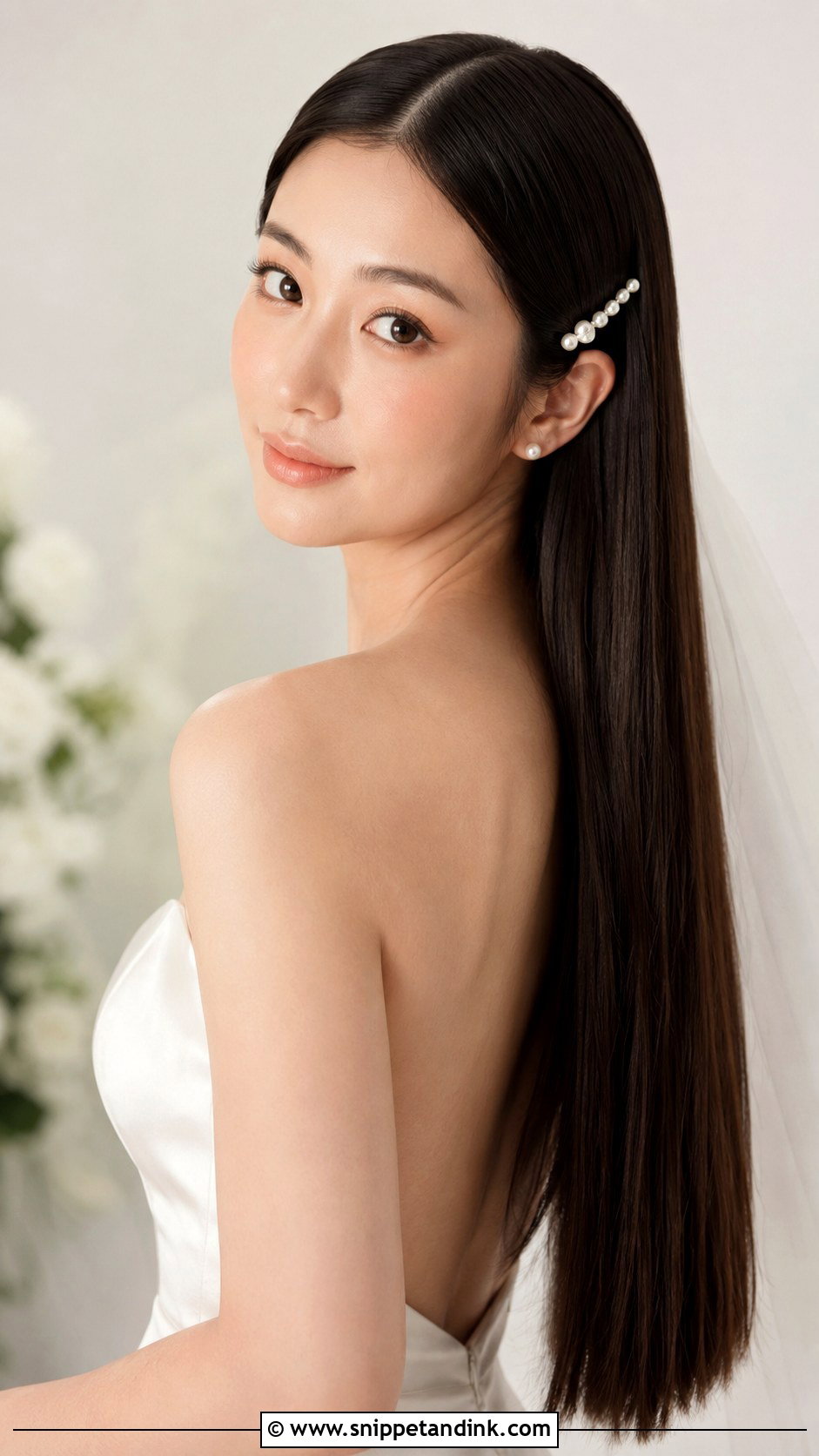
Sleek straight hair shows everything, so it rewards healthy ends and punishes split ones. Get a trim a couple of weeks before. I blow-dry in small sections with a paddle brush, finish with a flat iron, and use a little shine spray rather than heavy oil, which separates long hair into strings by evening. It suits minimalist gowns and high necklines, and brides who don’t feel like themselves in curls. Humidity is the risk: if the venue is outdoors in summer, this is the style most likely to frizz.
13. Long Wedding Hair Down With Beach Waves
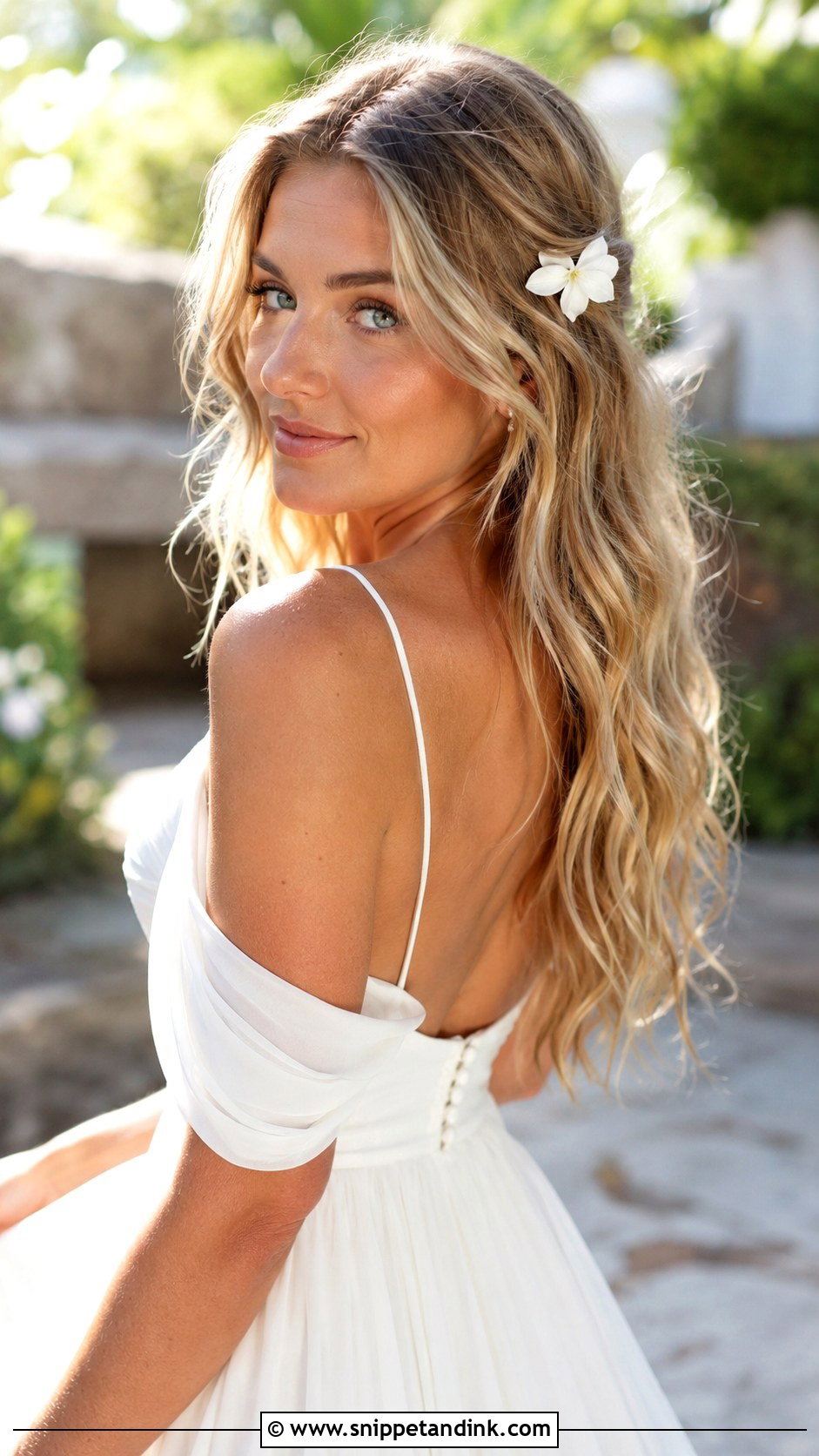
Beach waves should look loose and soft, not crunchy. I bend the hair with a flat iron or a large wand, leaving the ends straight, then break it up with a light texture spray instead of salt spray, which can feel gritty and dull long hair. The top stays smooth so it still reads bridal. It suits destination and coastal weddings because sea air will add movement anyway. A small flower or comb is enough.
14. Long Wedding Hair Down With Voluminous Blowout
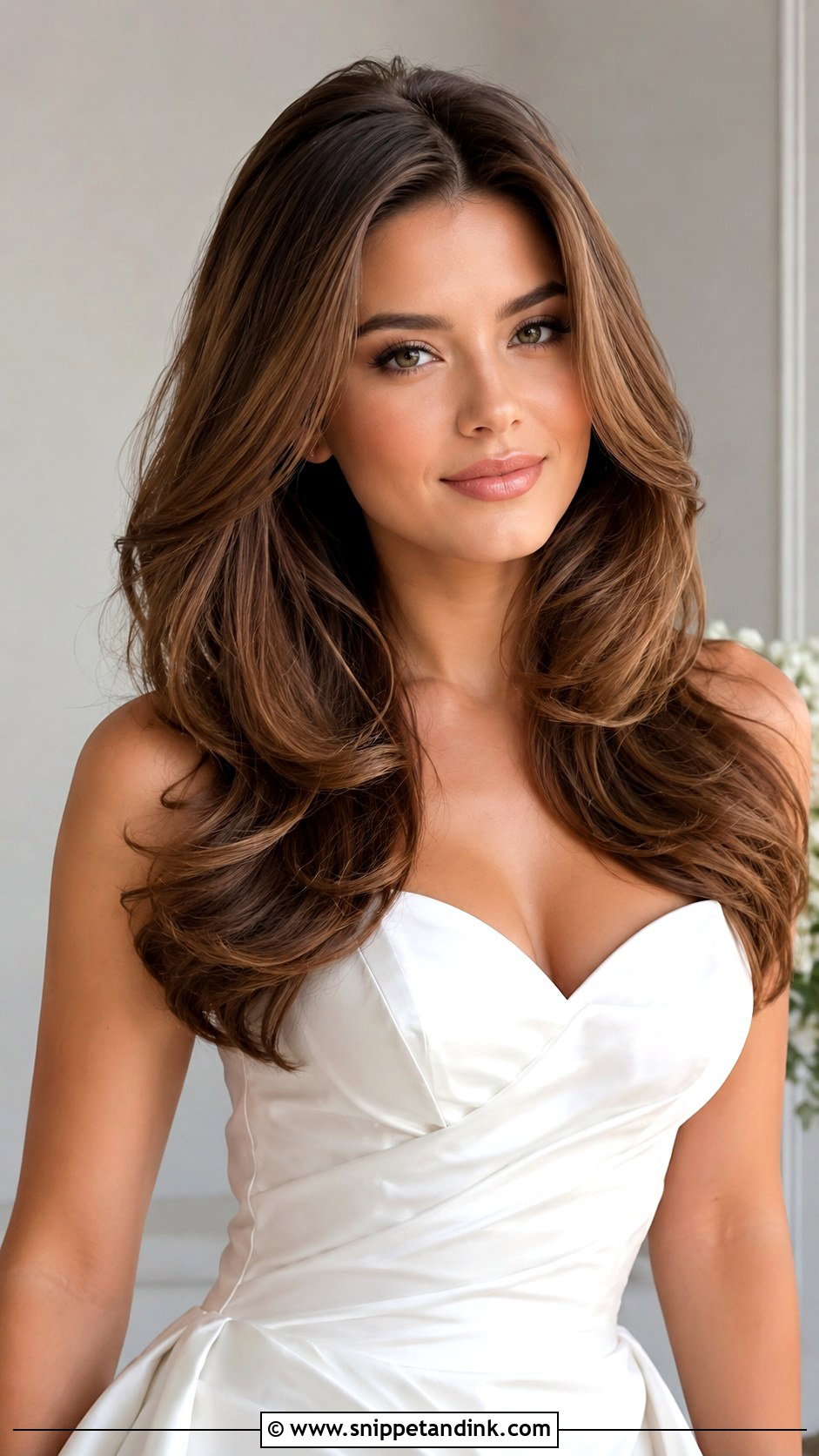
A voluminous blowout is bounce instead of curl. The roots are lifted over a large round brush and the ends are wrapped so they turn under and out. It’s light, comfortable and easy to touch up. On fine hair the volume drops quickly, so I add a mousse at the root before blow-drying and sometimes a few clip-in wefts at the crown for fullness that doesn’t look added. It suits classic gowns and clean makeup. Bring a large round brush to the venue if someone can use it for a quick refresh.
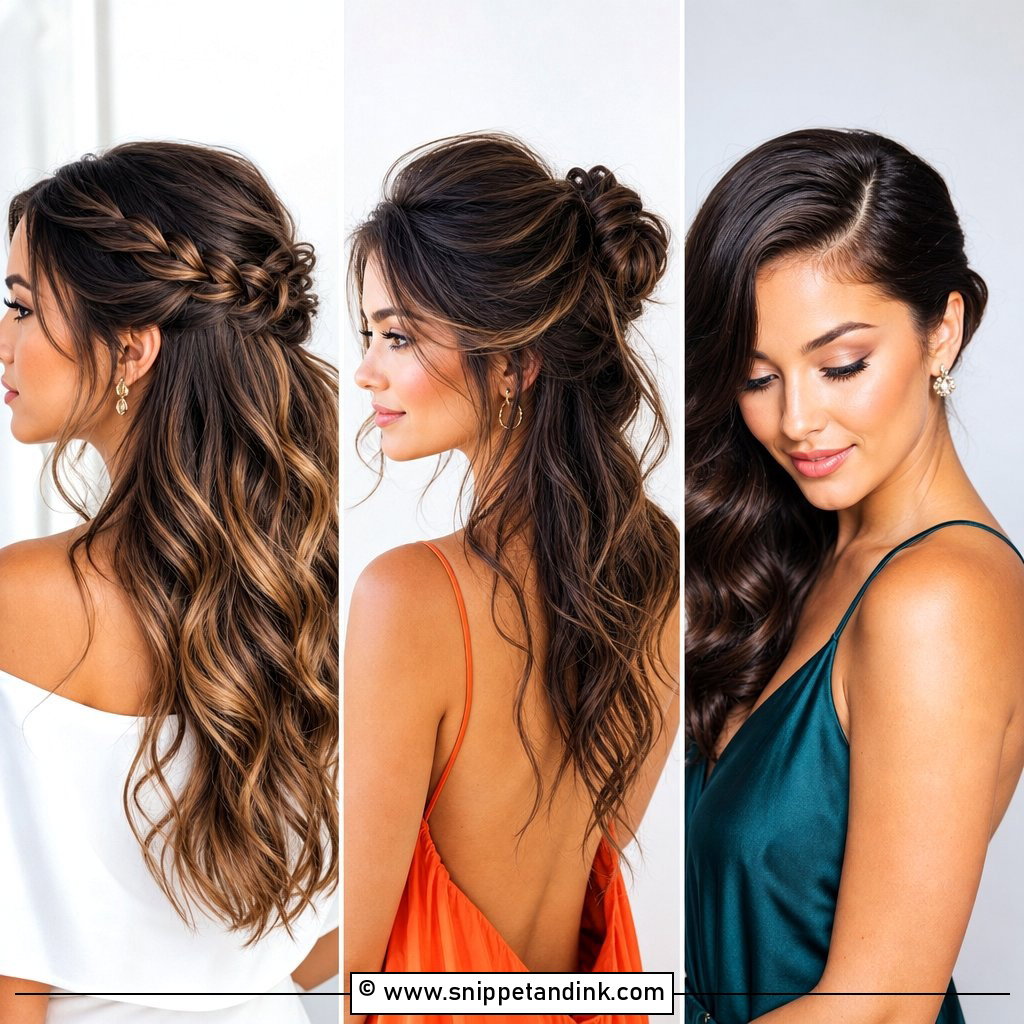
15. Long Wedding Hair Down With Natural Curls
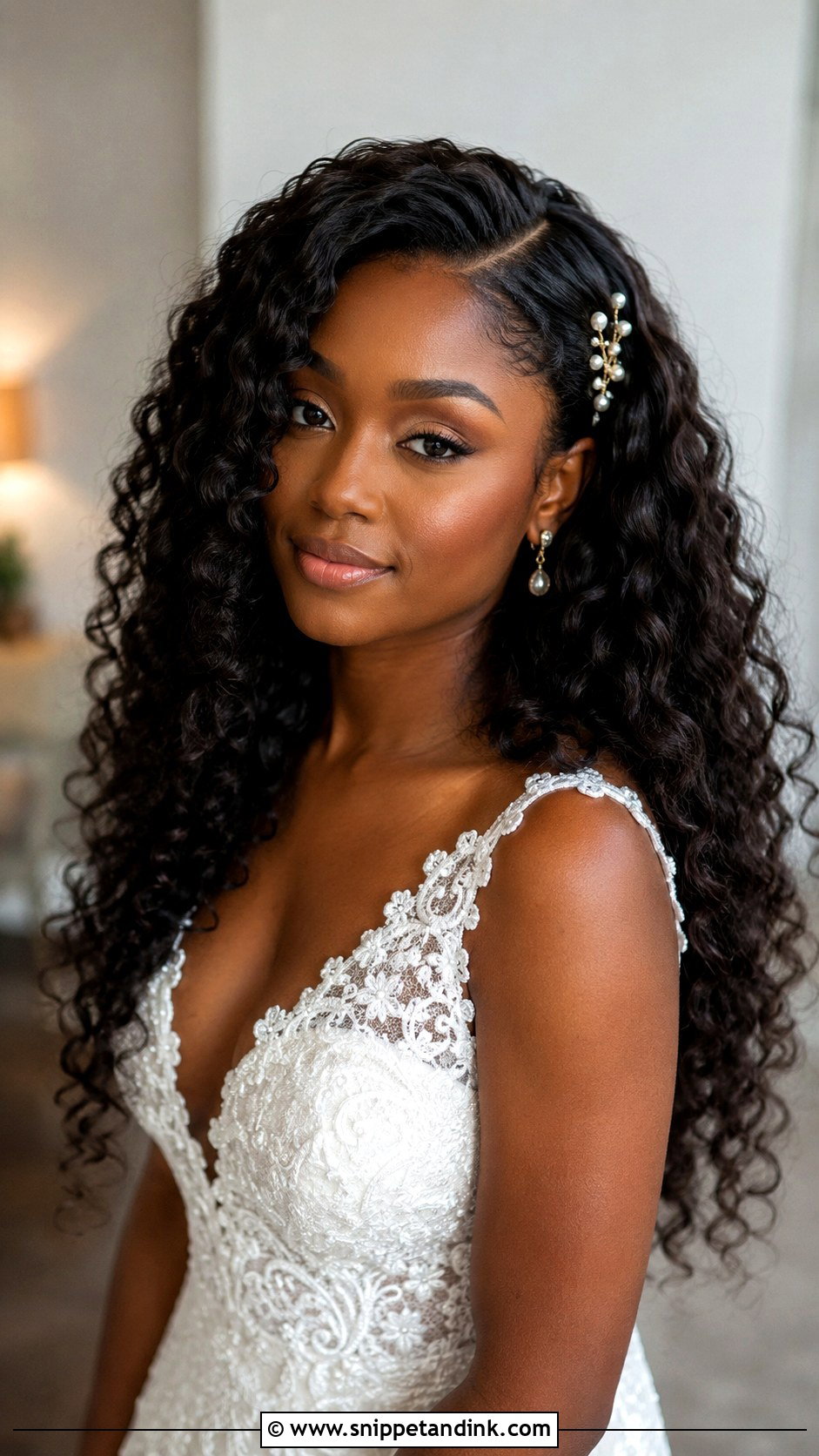
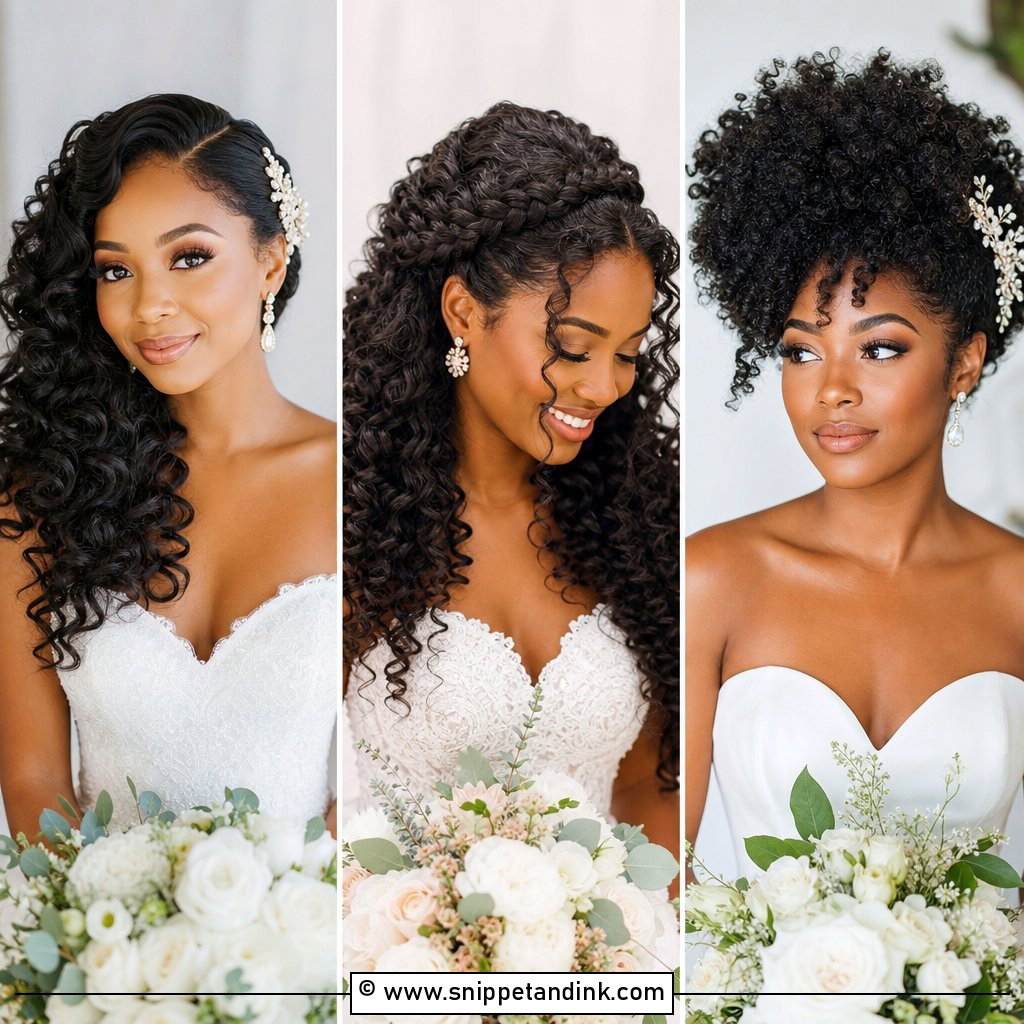
Natural curls worn down are at their best when they’re hydrated and left alone once set. I style on wet hair with whichever product suits the texture, cream for looser curls and gel or mousse for tighter ones, and let it dry fully before touching it. Shaped layers help long curls fall evenly instead of forming a triangle. A side part, middle part or one pinned-back section changes the feel. Pearl pins, flowers or a light veil can sit on top without hiding the pattern. Avoid brushing them out on the day; it turns curls into frizz.
Beaded Bodices, Lace Backs and Hair That Catches on Them
One thing nobody mentions about wearing long hair down: it rubs against your dress all day. A few things I check at the fitting or trial:
- Beading and sequins on the shoulders or back can snag strands, especially fine hair. If your dress is heavily beaded behind, consider sweeping the hair over one shoulder or choosing a half-up version.
- Open lace catches curls in its holes as you move. Smooth satin or crepe doesn’t.
- Buttons down the back disappear under long hair. If those buttons are the reason you bought the dress, plan a moment in the portraits with the hair swept to the front.
- Your bouquet is held right where long hair falls forward. Ends can get caught on wired stems or ribbon. Hair behind the shoulders for the ceremony avoids it.
Over the shoulder or behind?
For the processional and vows I usually style the hair behind the shoulders, because guests see the back of you for most of the ceremony and hair pushed forward hides the dress. For close portraits, bringing some length over one shoulder frames the face and adds shape. Ask your photographer to remind you; brides rarely think about where their hair is falling once the day gets going.
Leave Your Trial Hair In Until Evening
Down styles can be sleek, glamorous, soft or boho, and the one for you depends on your hair, your dress and where you’re standing when you say your vows. They need more planning than an updo, with hold, weather, veil placement and photo angles in mind. At your trial, test the curl, the part and the accessories, then leave the style in for the rest of the day. What it looks like that evening is what it’ll look like at your reception.
You'll Like These Ideas:




Leave a Reply