
Plenty of brides spend months saving updos and then realise at the trial that they feel more like themselves with their hair down. I’d trust that instinct. Loose hair moves when you walk, catches light in candid shots, and looks like you on a very good day. It’s also more versatile than people assume, from soft waves at a garden ceremony to glossy straight hair with satin. The catch is that down hair has to survive weather, hugs and ten hours of wear, so the style needs to match your texture, your dress and the hold you really need.
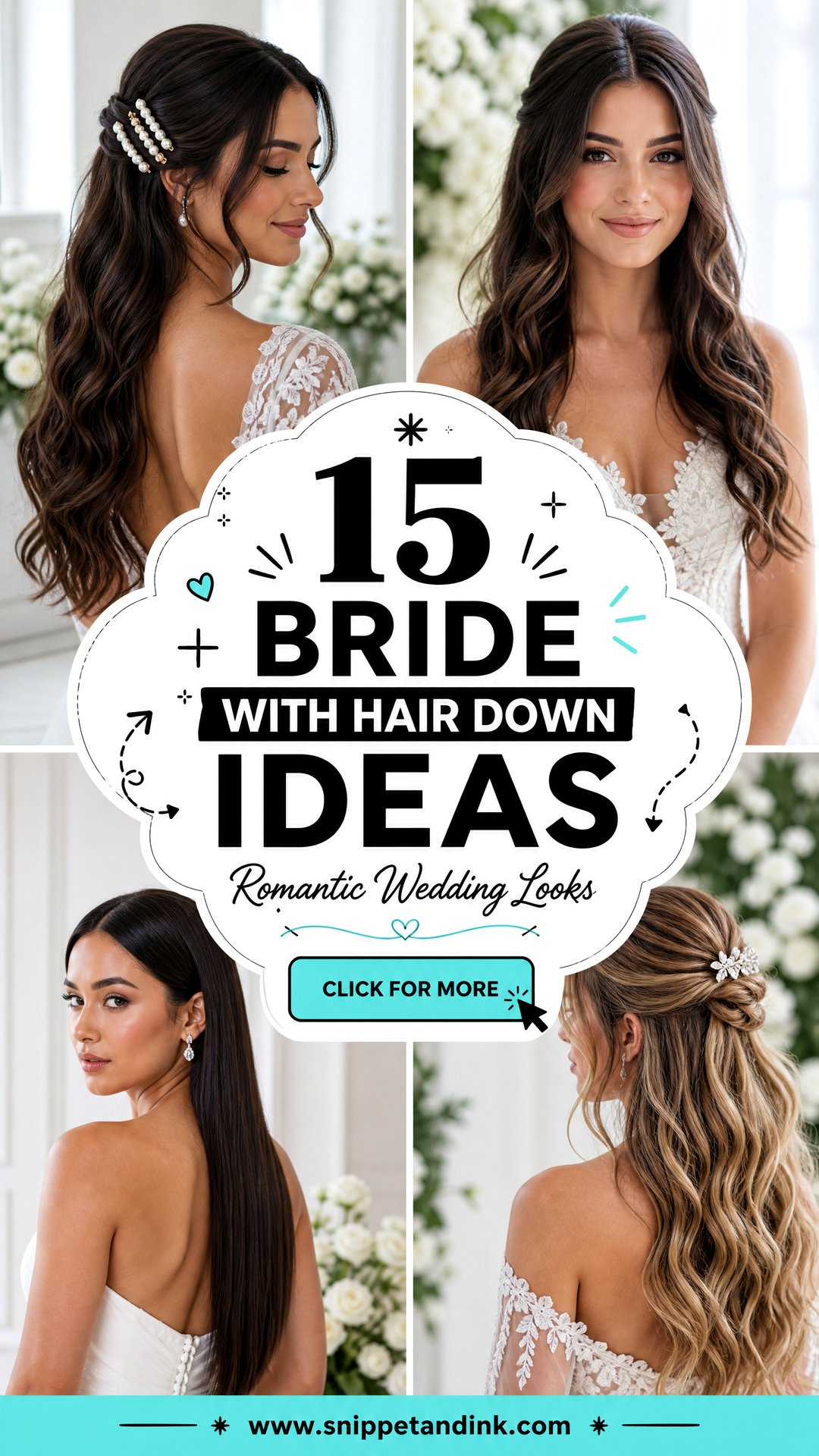
Will Loose Hair Hide the Back of Your Dress?
I ask this before choosing any wave or curl, because down hair covers the part of the dress many brides fell for in the shop. A low back, a row of covered buttons or a lace illusion panel can vanish under long waves, and you walk down the aisle with your back to most of your guests.
There are easy fixes. Sweep everything over one shoulder for the ceremony, pin a half-up section so the centre of the back shows, or tuck the lengths behind the shoulders for back-view portraits. Your photographer can also ask you to flip your hair forward for a few frames.
Snags, beading and necklaces
- Heavily beaded or sequinned bodices grab loose hair, especially at the shoulder seams. Run your fingers over the fabric at a fitting and see what catches.
- Fine lace edges at the neckline pull at strands every time you turn your head, which roughs up waves within an hour.
- Chain necklaces and long drop earrings tangle in loose curls. A choker or studs is far more comfortable with hair down.
- Hair oil and shine spray can mark pale silk if hair rests on it all day, so keep products light on the ends.
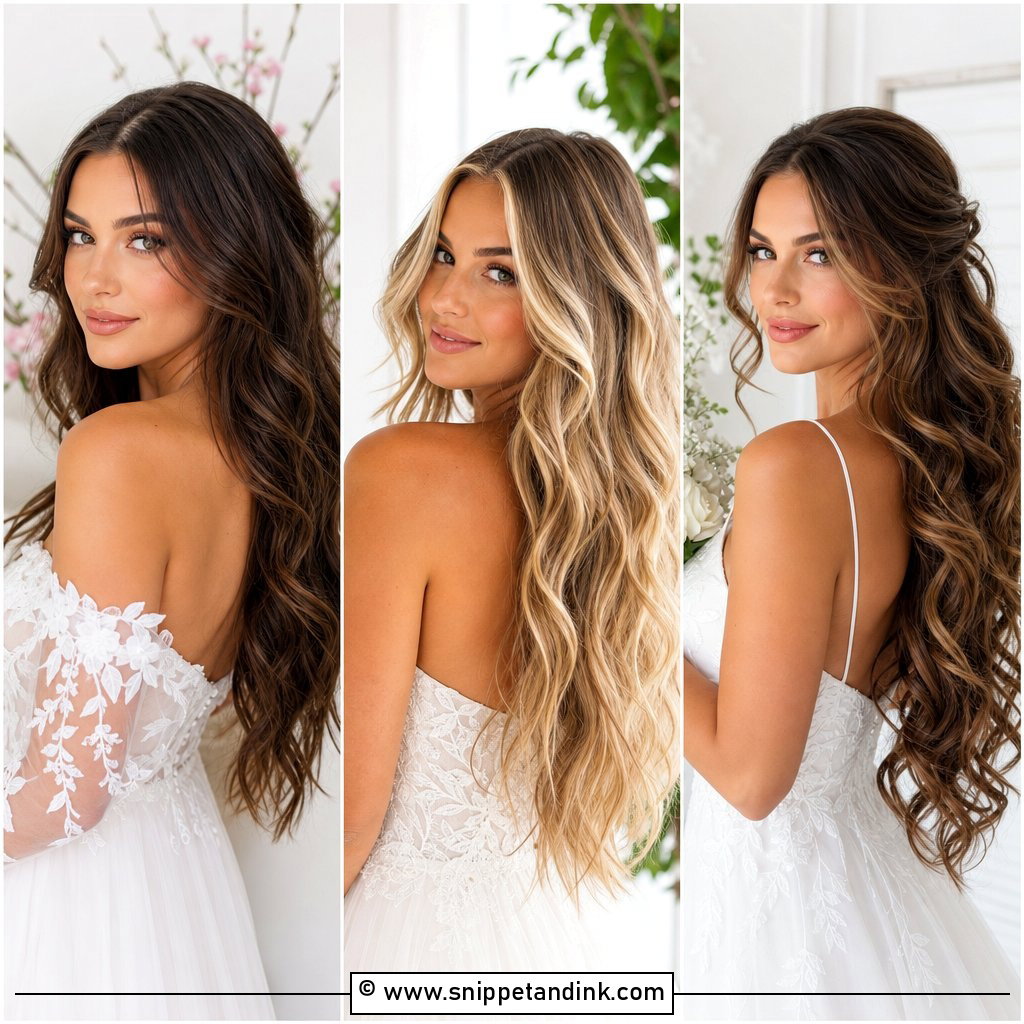
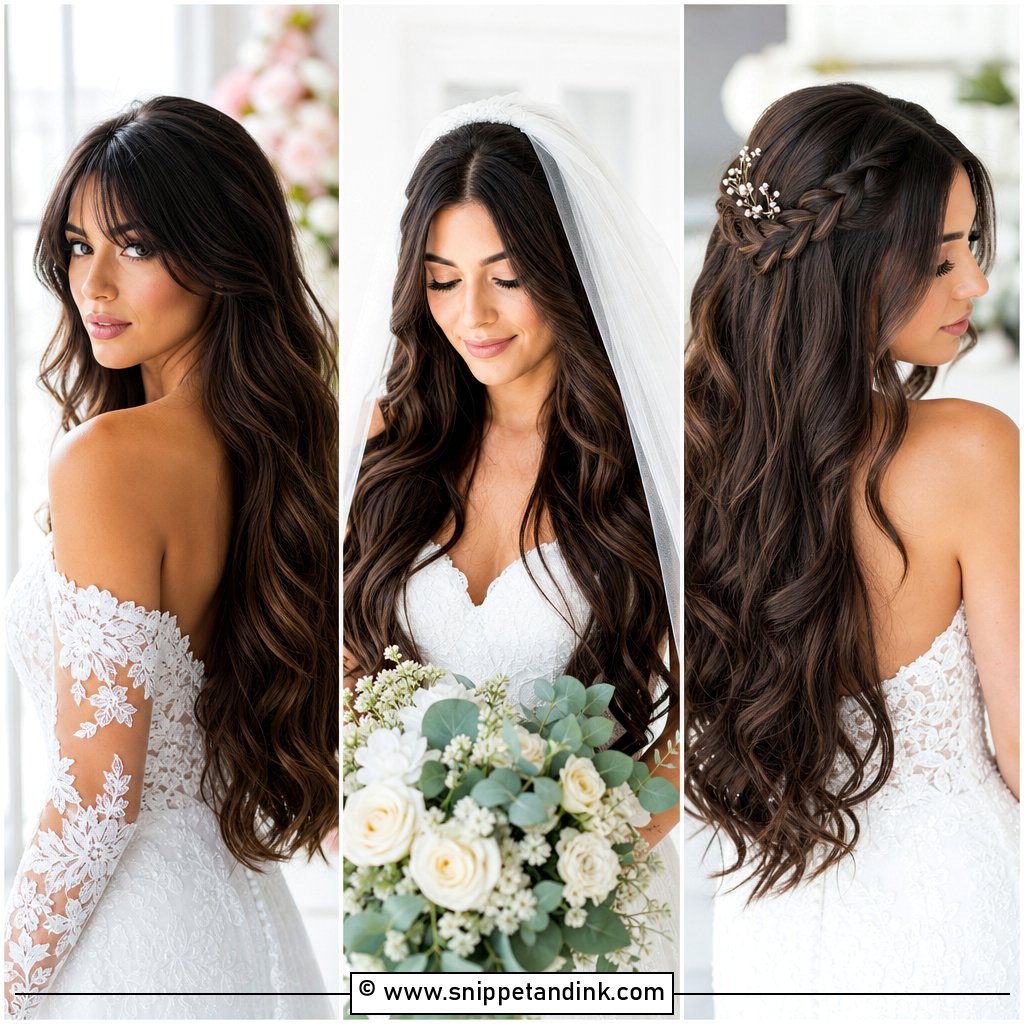
1. Bride Hair Down Soft Waves
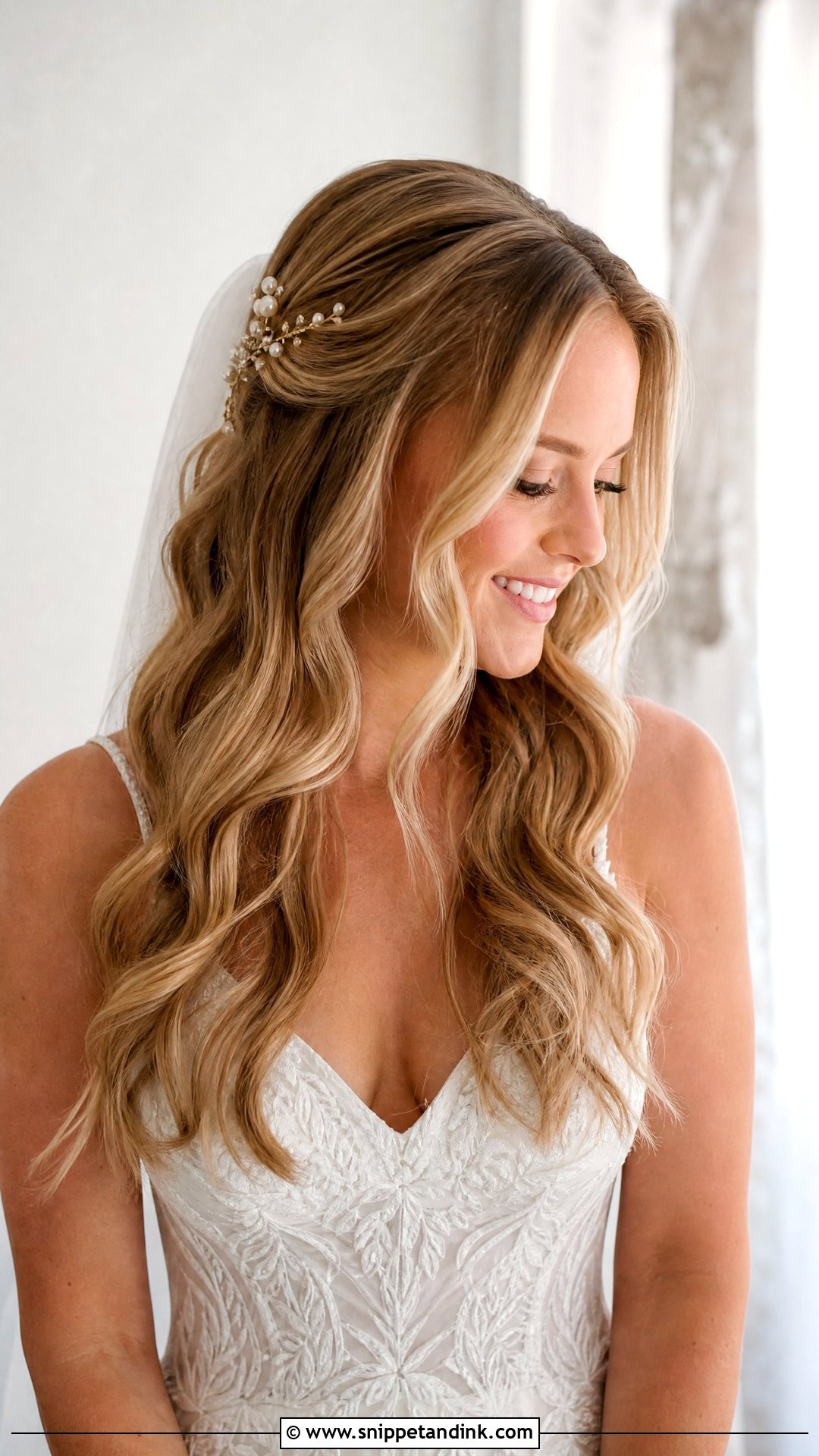
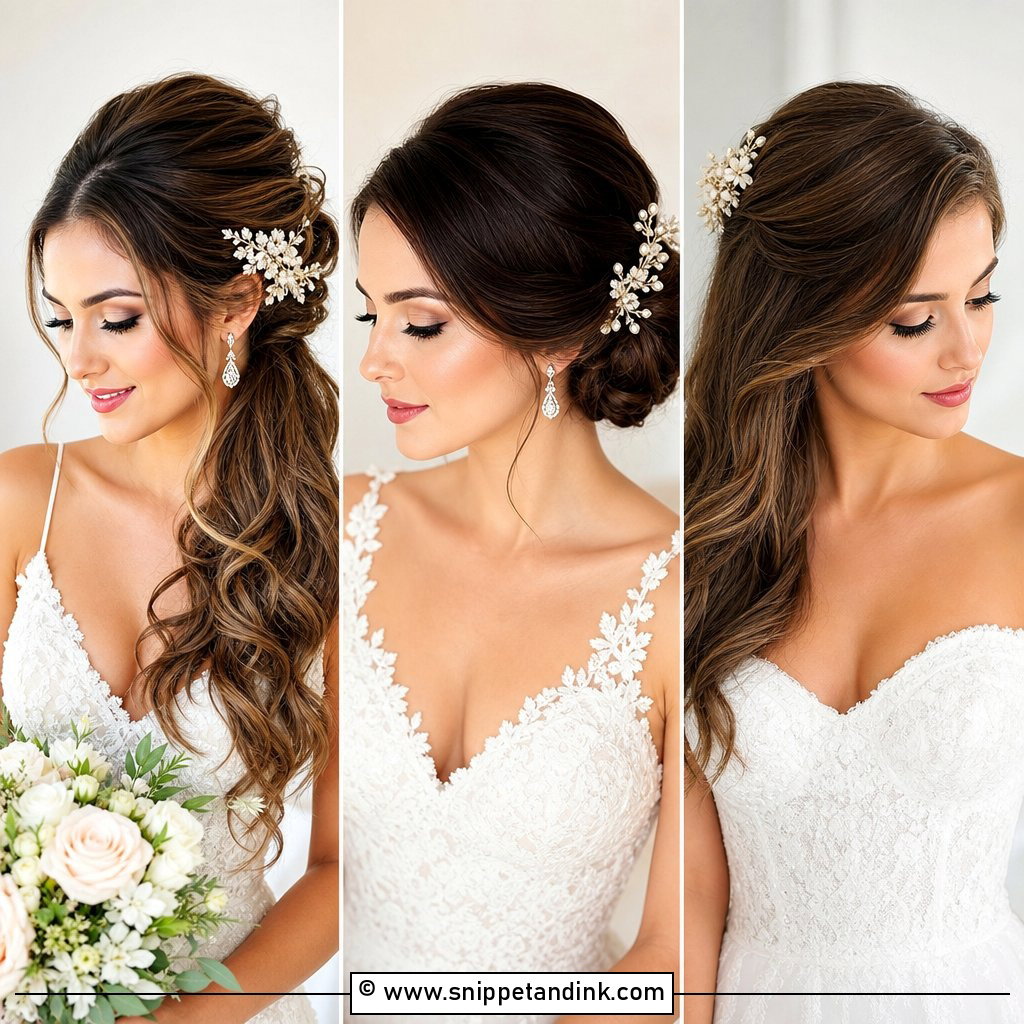
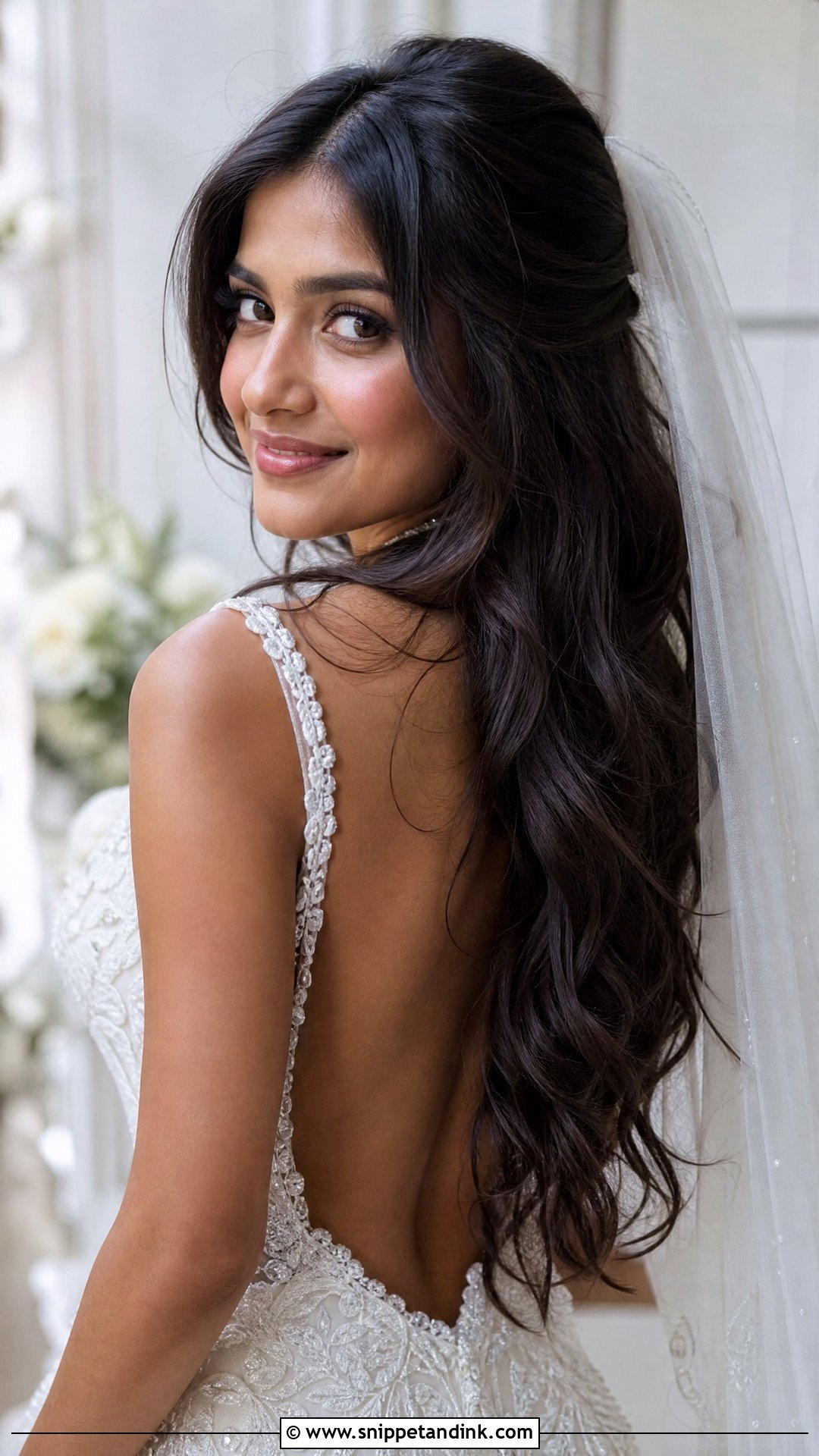
Soft waves are the style most brides picture, and they’re more fragile than they look. The goal is smooth at the roots, a gentle bend through the mid-lengths and relaxed ends. I set them with a large barrel and let each section cool pinned up, because a wave brushed out while still warm loses half its shape within an hour. Ask for a flexible spray, never a crunchy one, so the hair still moves. With a veil or an off-the-shoulder neckline they need nothing else.
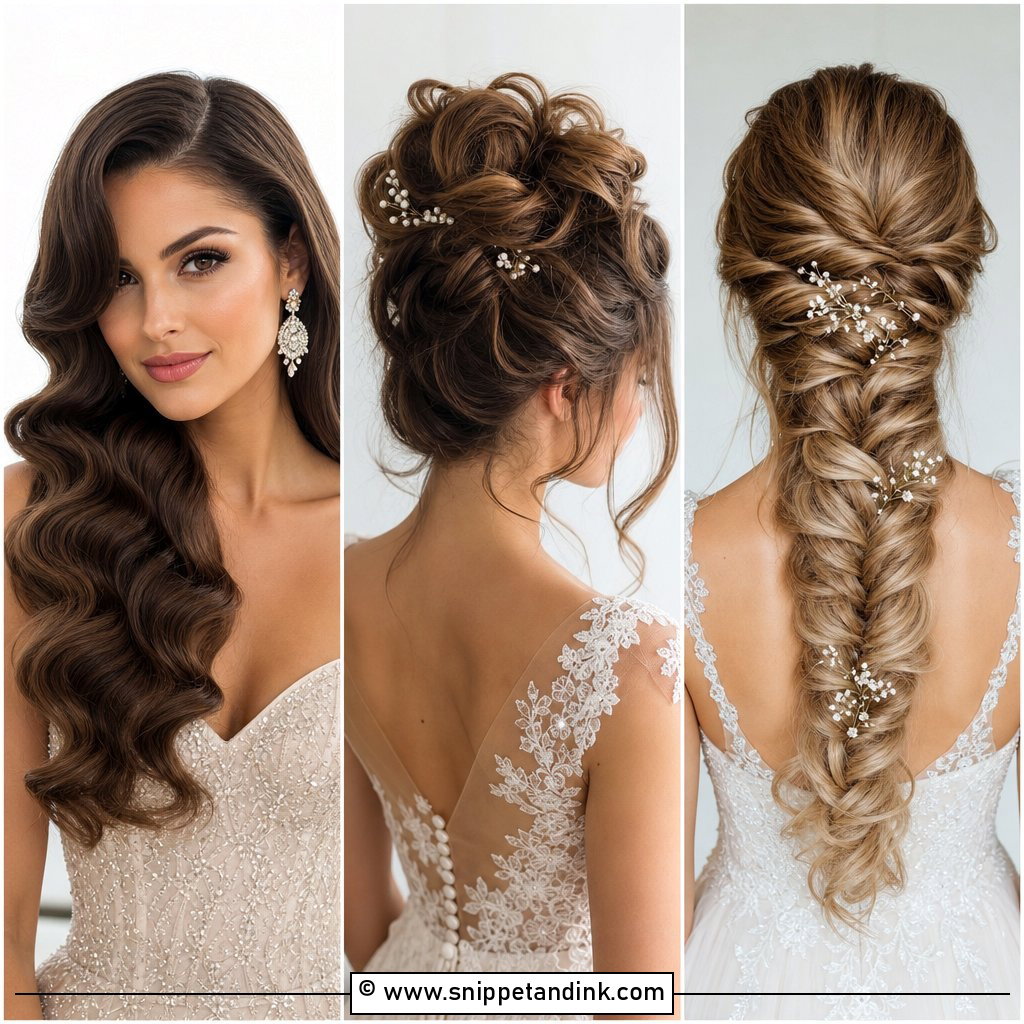
2. Bride Hair Down Hollywood Waves
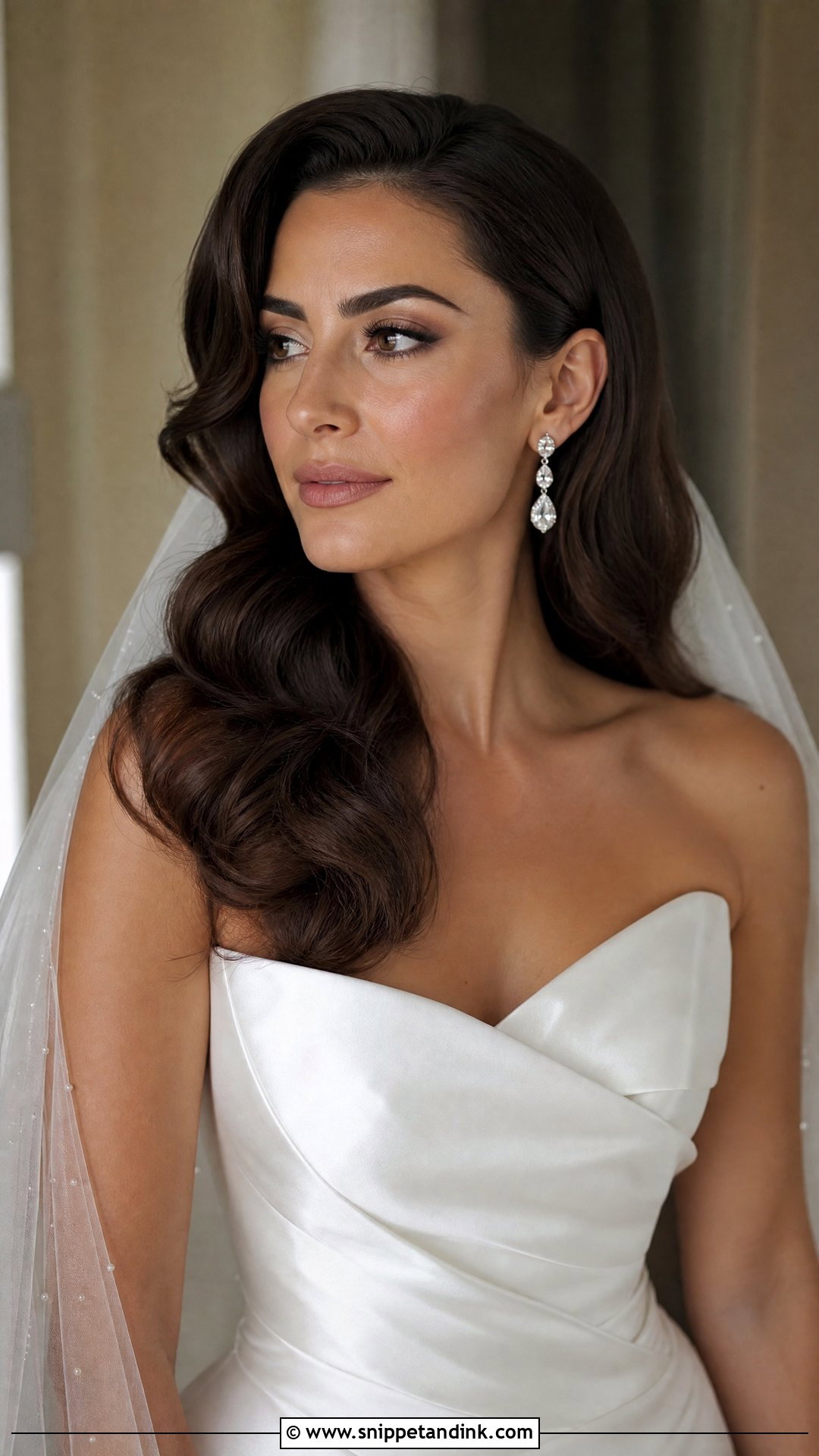
Hollywood waves are the most technical down style I do. Every curl goes in the same direction, gets pinned to cool, and is then brushed through with a boar bristle brush until the curls merge into one ribbon of S-shapes. Skip the brushing and you get curls, not waves. Length helps, so lobs and long hair suit it, and extensions can supply what’s missing. A deep side part gives the classic look. In humid outdoor heat it softens quickly, so I keep this one for indoor venues and fitted satin gowns.
3. Bride Hair Down Loose Curls
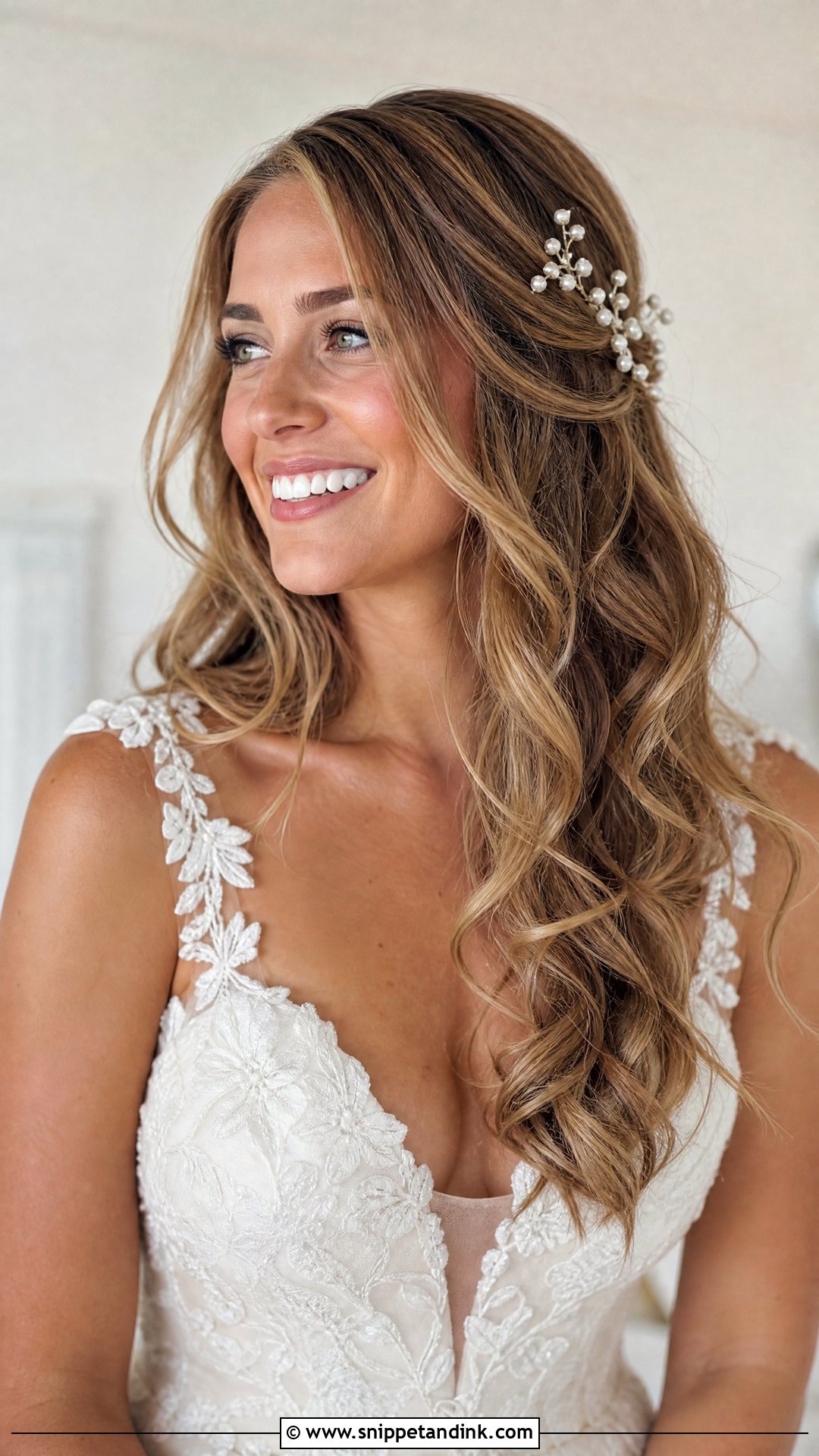
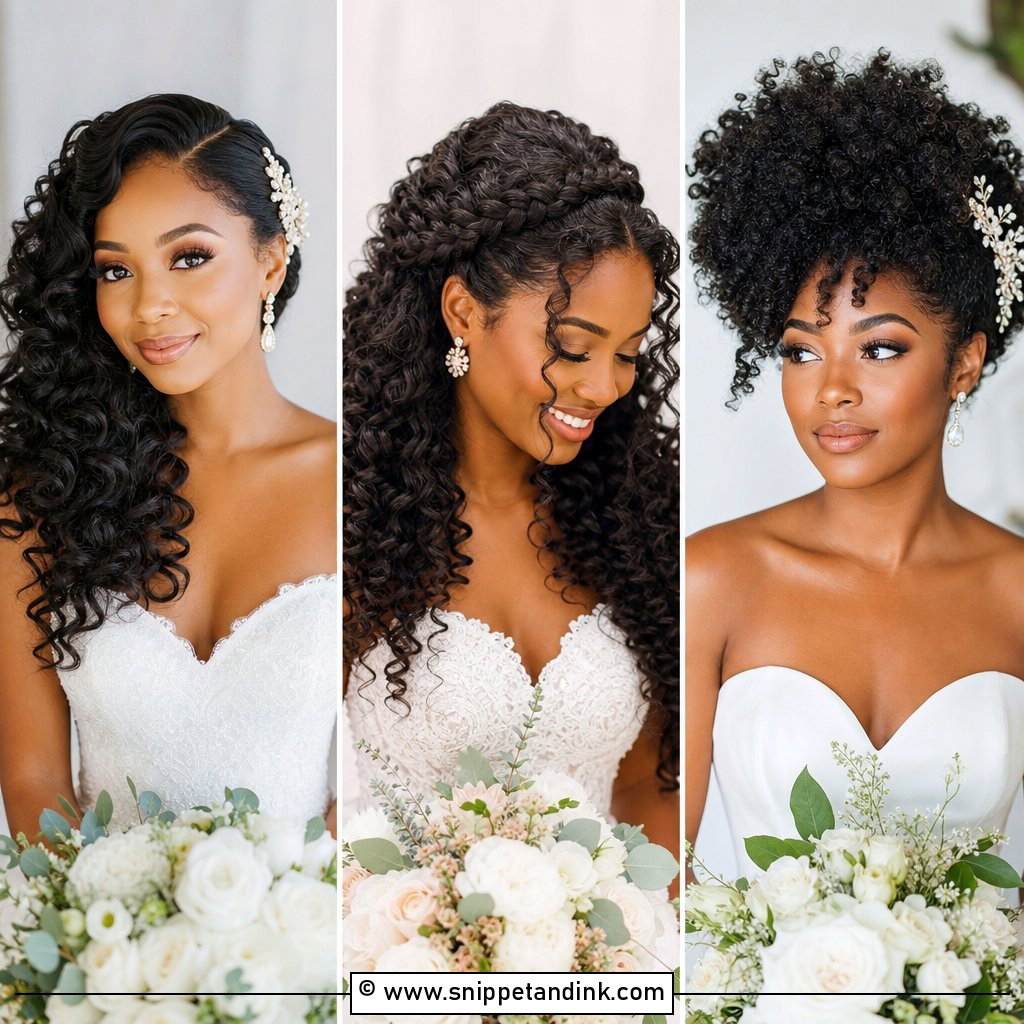
Loose curls give more volume than waves without going formal. They should be bigger than ringlets, with enough separation to show shape. If your hair drops a curl within the hour, tell me before the trial: I’ll set the curls in pin curls or velcro rollers while you do makeup, and only brush them out when you’re dressed. Highlights and long layers make the curl pattern easier to see in photos. On very heavy, one-length hair, I’d expect them to relax noticeably by the evening.
4. Bride Hair Down With Veil
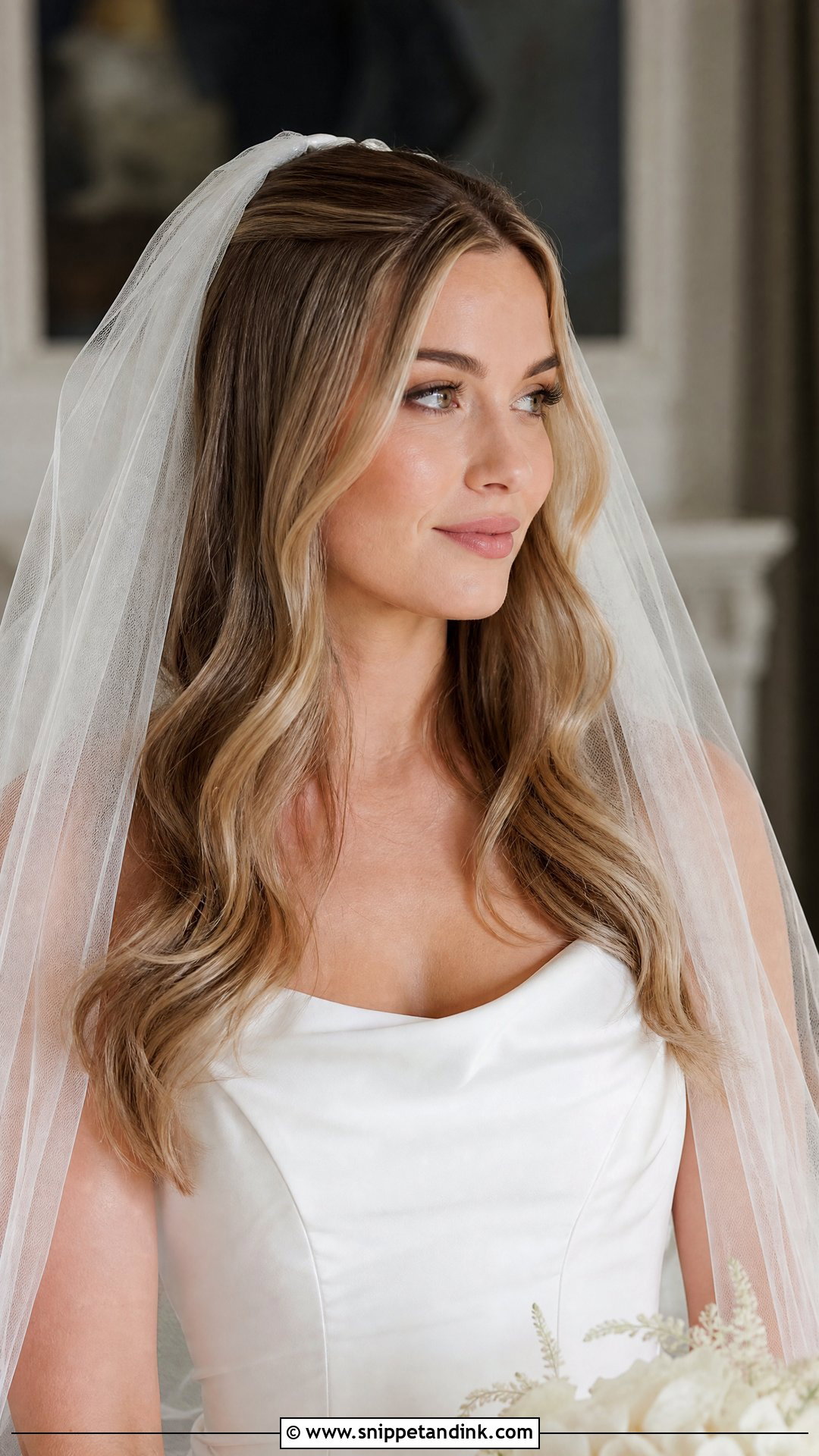
A veil needs something to grip, and loose hair gives it very little. Under the top layer I’ll put a small anchor, either a hidden braid or a criss-cross of bobby pins, and the comb slides into that so it never touches the waves. Keep the crown smooth and the lengths free. Sheer tulle, fingertip and cathedral veils all let the hair show through. What I’d avoid is a heavy, beaded veil on fine, silky hair, because the weight drags the comb back and flattens the top within a couple of hours.
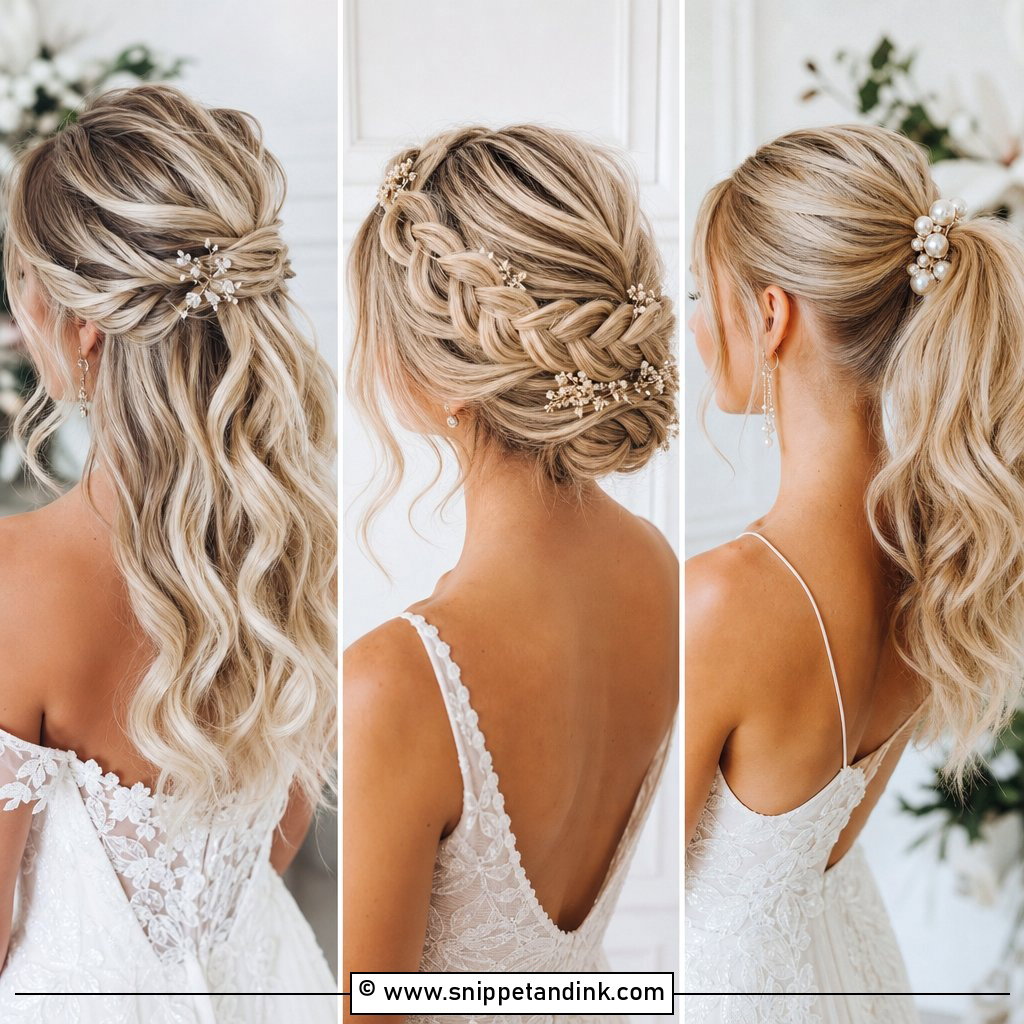
5. Bride Hair Down With Pearl Clips
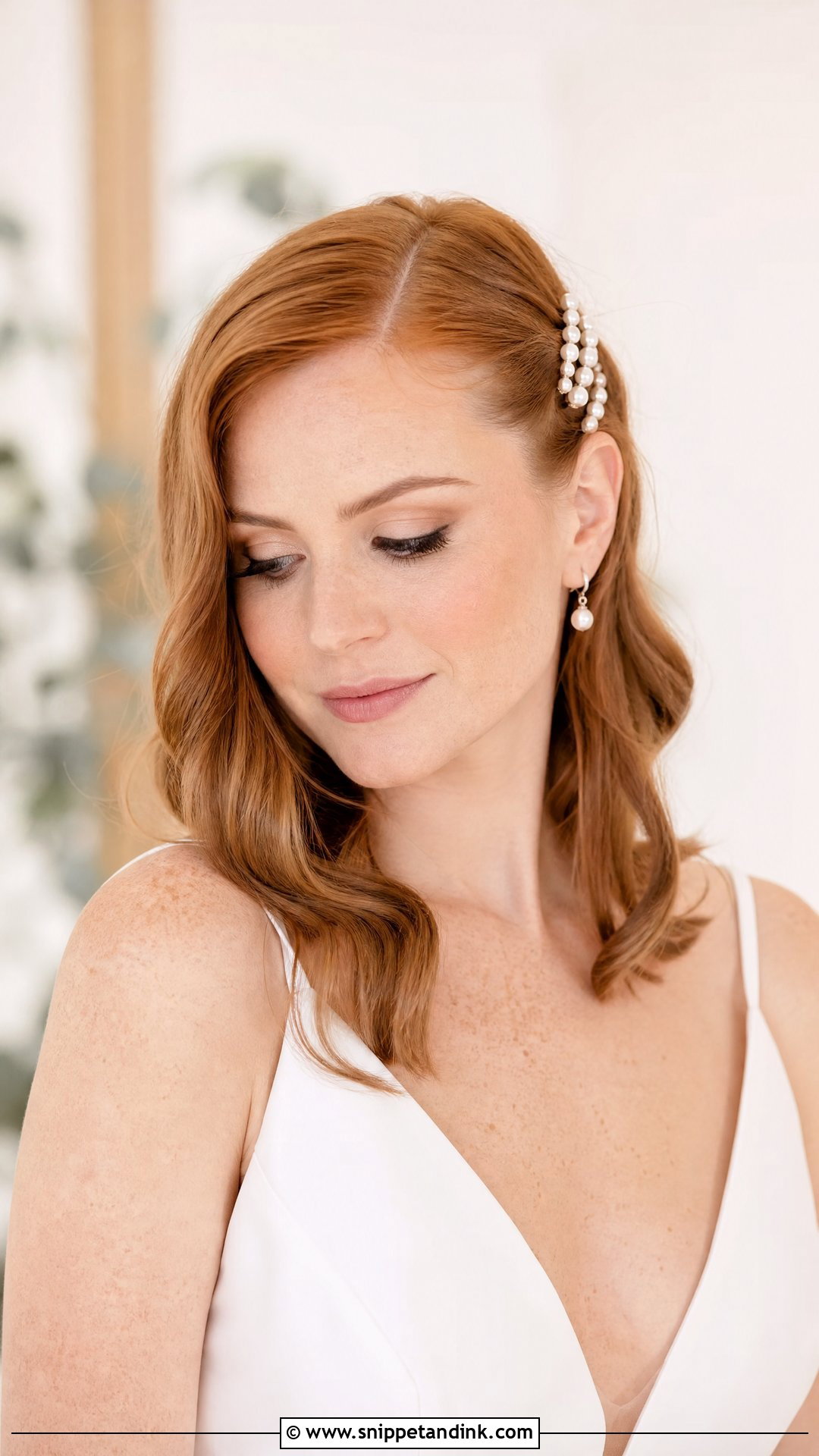
Pearl clips give you a focal point without an updo. One clip holding a side back, a pair at the crown, or a few dotted through soft waves all work on straight, wavy or curly hair. Small pearls read subtle; big clusters are louder and want plainer hair around them. Clips slip on silky hair, so I slide a bobby pin in first and clip over it. Frizz around a clip shows up badly in close-ups, so smooth that patch before anything goes in.
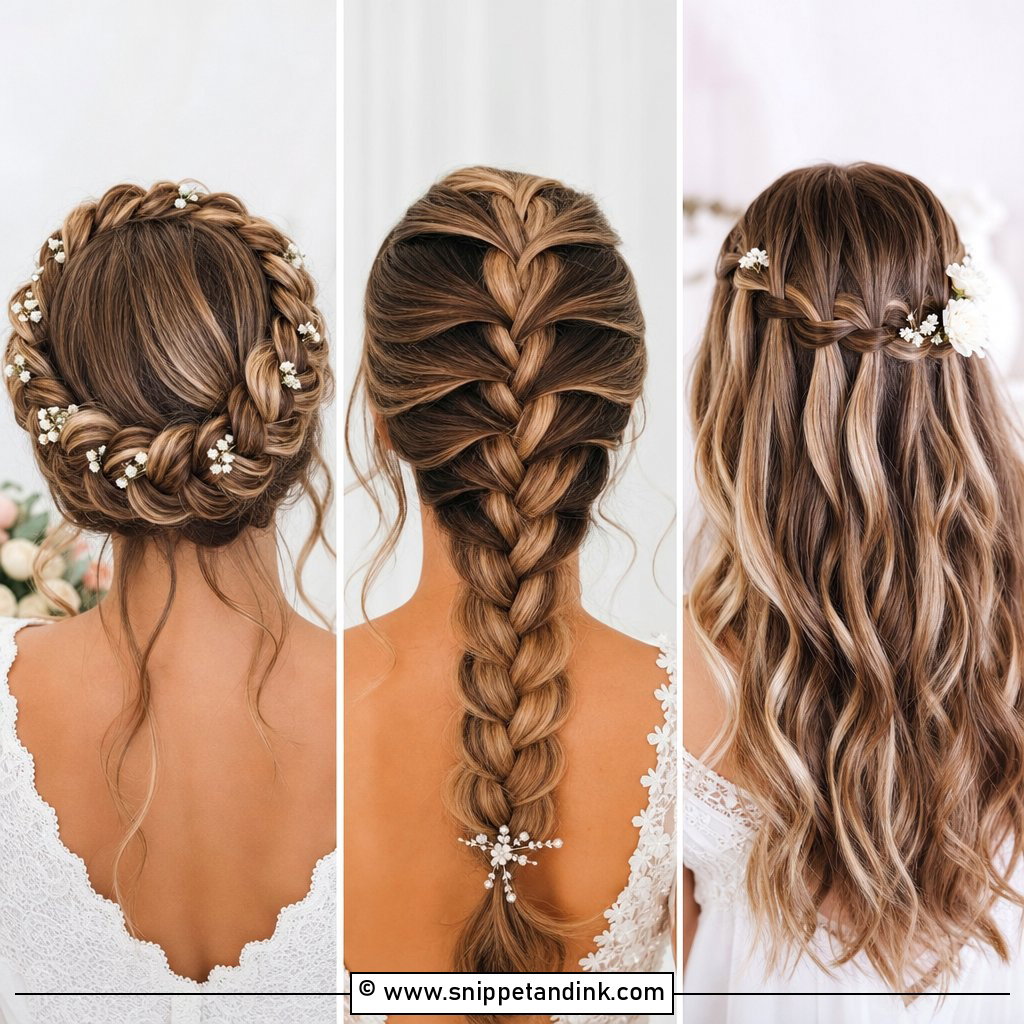
6. Bride Hair Down With Flower Crown
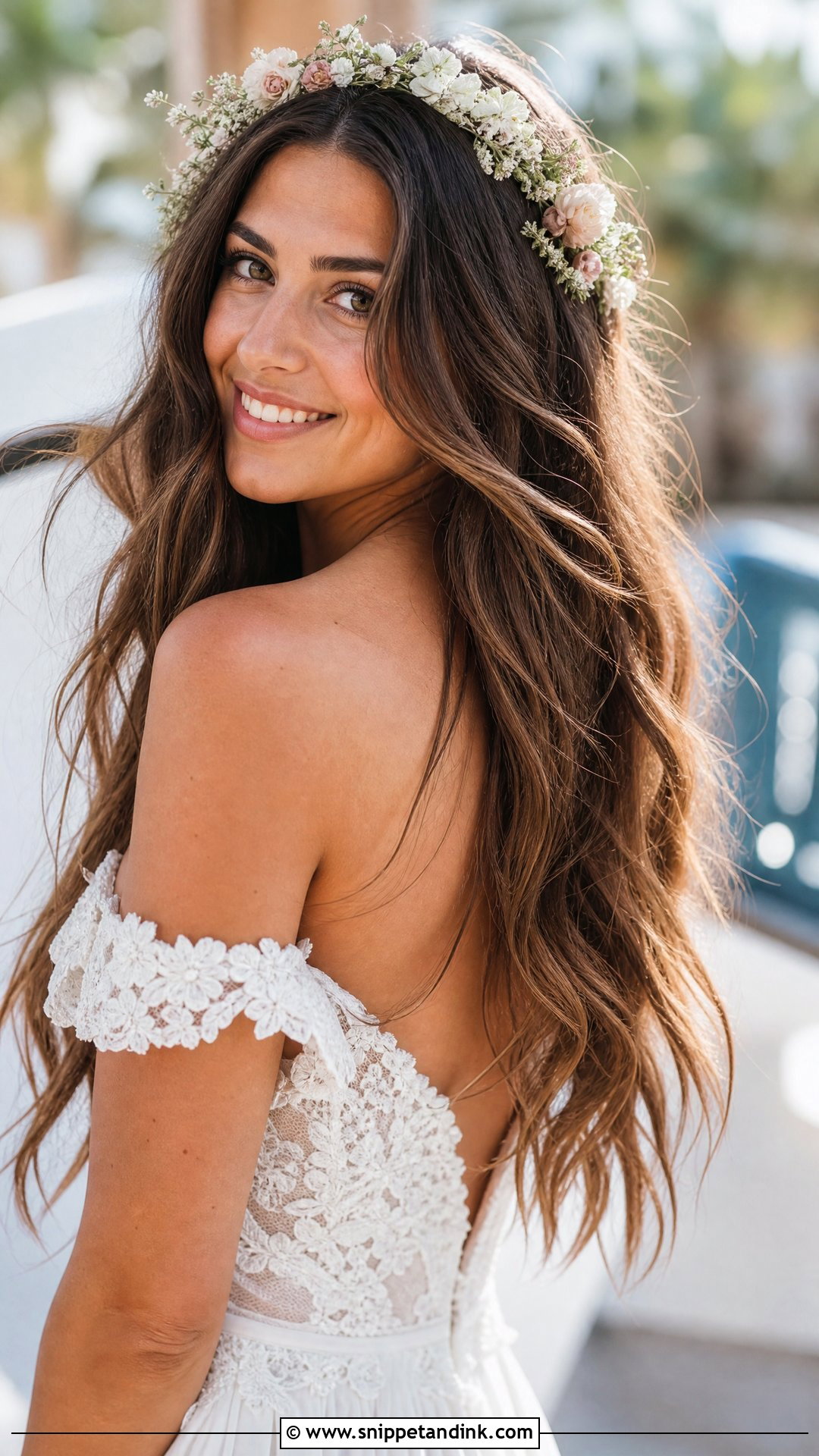
Flower crowns belong outdoors, and they suit loose waves or natural curls far better than sleek hair, which shows every wire. Choose the scale first: a full crown is boho, a thin vine is quieter. Fresh blooms wilt against a warm head with no water, so ask your florist for hardy flowers and keep the crown in the fridge until the last moment. Silk stems are the honest choice for heat or wind. Once the crown is on, keep the rest of the hair simple.
7. Bride Hair Down With Side Part
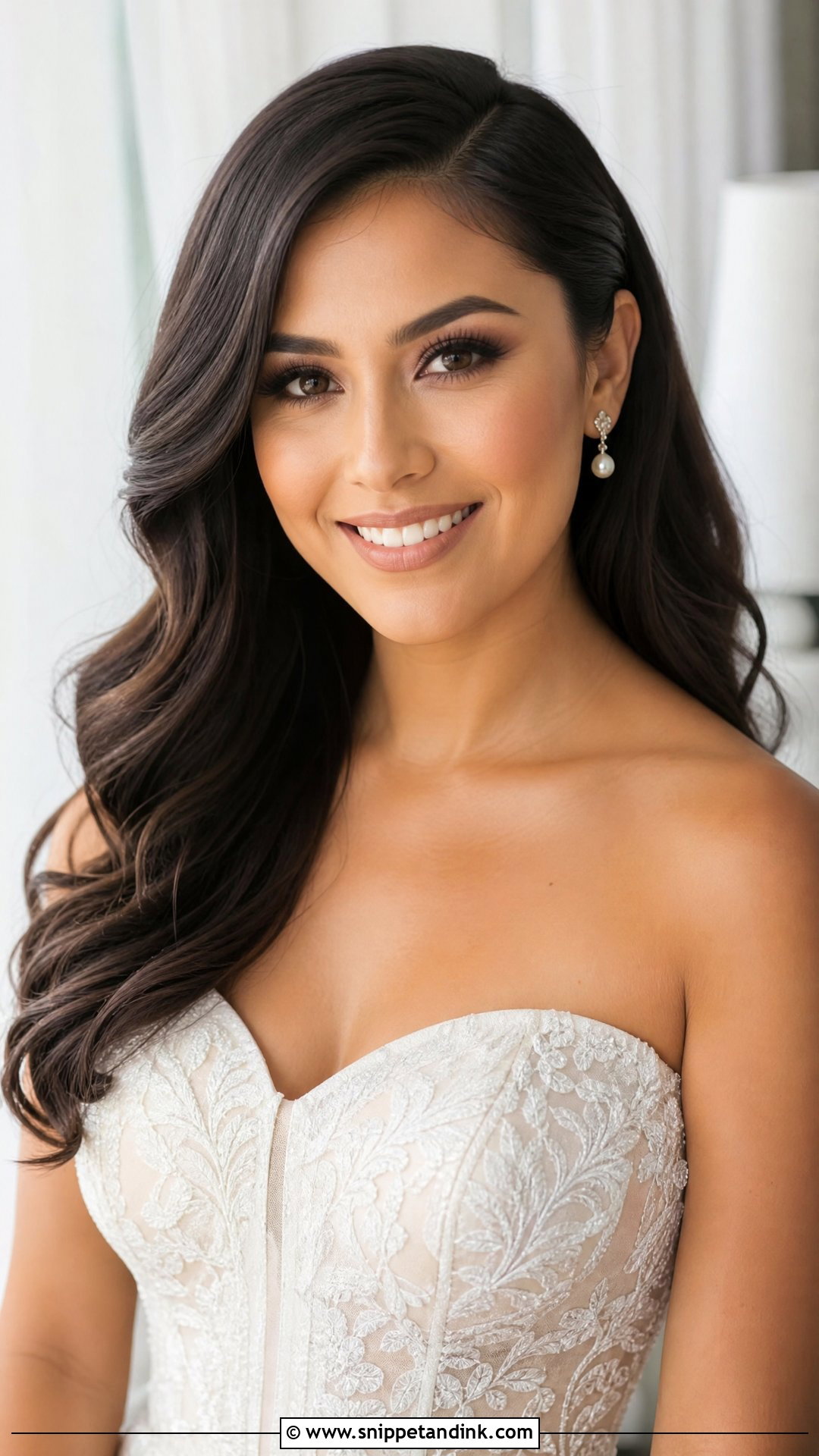
Moving the part is the quickest way I know to change loose hair. A deep side part adds height at the crown and makes waves look more dramatic, and it softens a strong jaw. One side can be tucked behind the ear or pinned with a comb to show off earrings, which suits strapless and one-shoulder gowns. Check your natural part before the day, though. Hair forced against its growth pattern springs back by evening, so I train it with a blow-dry rather than just combing it over.
8. Bride Hair Down Center Part Waves
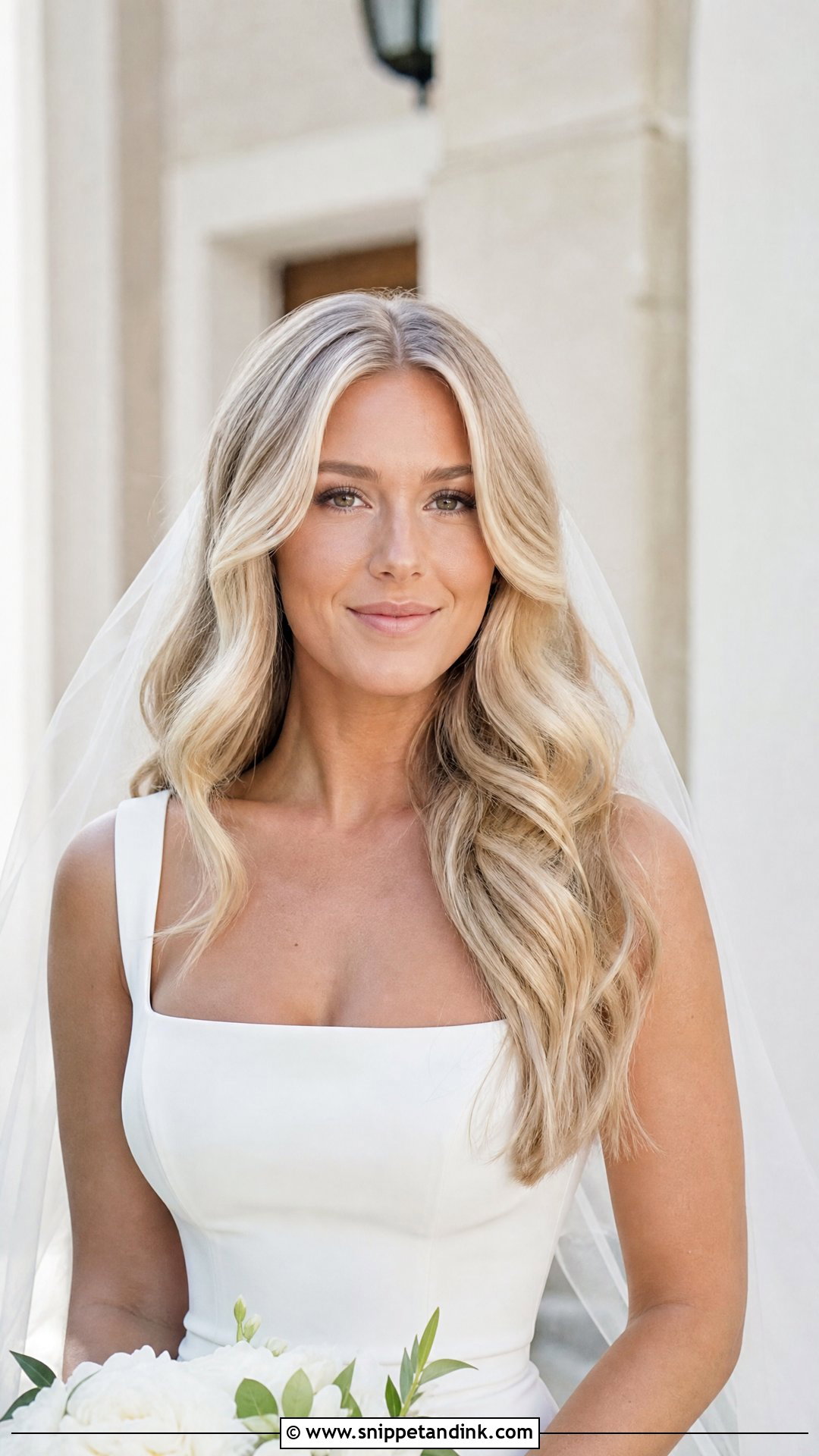
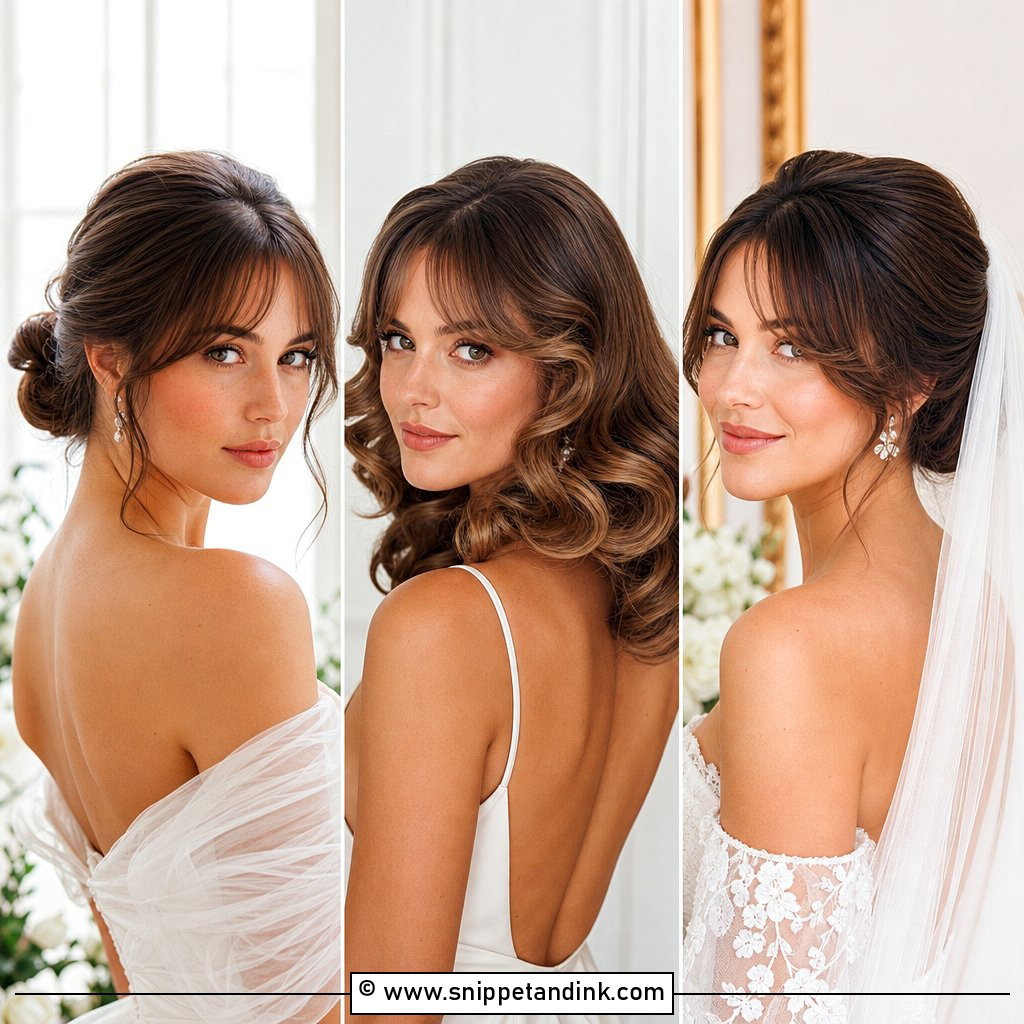
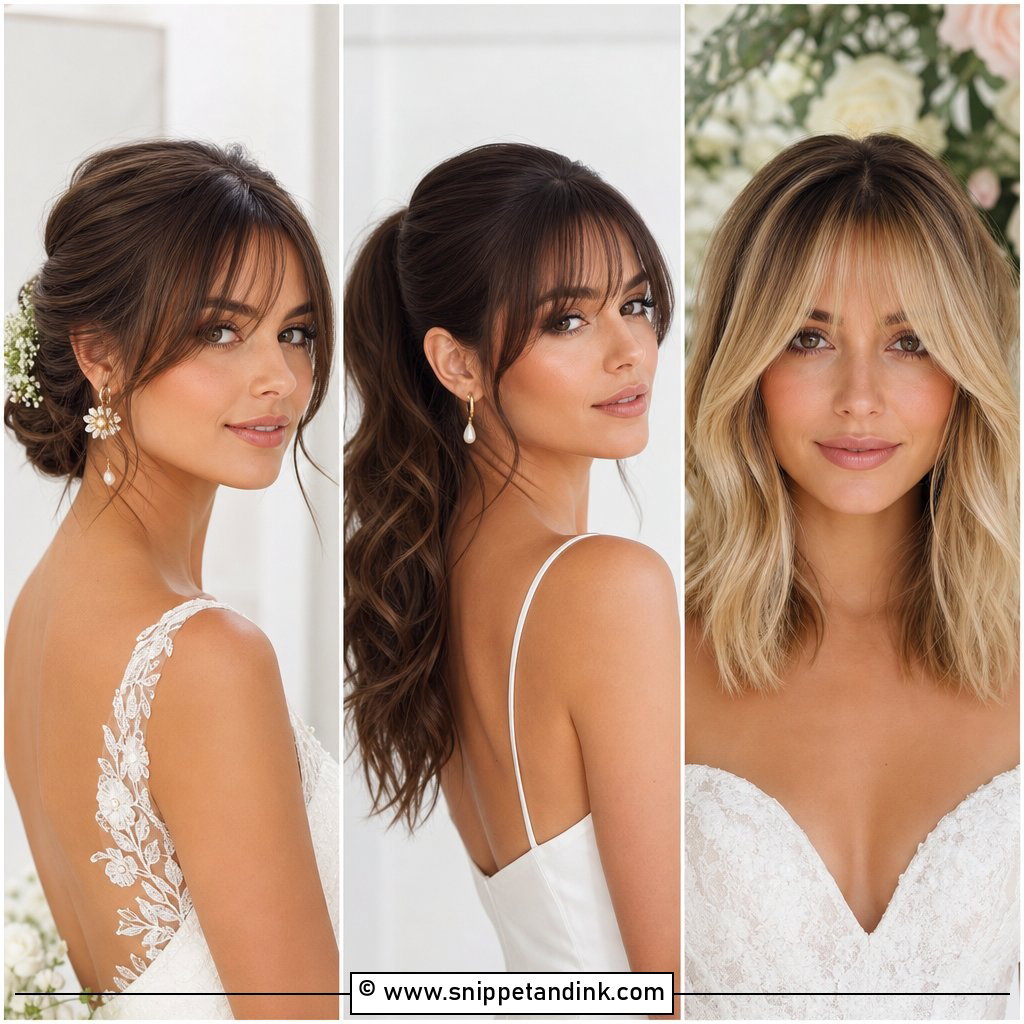
Centre parts read modern because they’re symmetrical, and that’s exactly what makes them unforgiving. Any unevenness at the roots shows straight on. I smooth the first few centimetres flat and keep the waves starting below the cheekbone. Cuts with long layers, curtain bangs or face-framing pieces suit it best, since the front shapes the face without hiding it. With a minimalist gown and clean makeup, it feels current without dating your photos.
9. Bride Hair Down Sleek Straight Hair
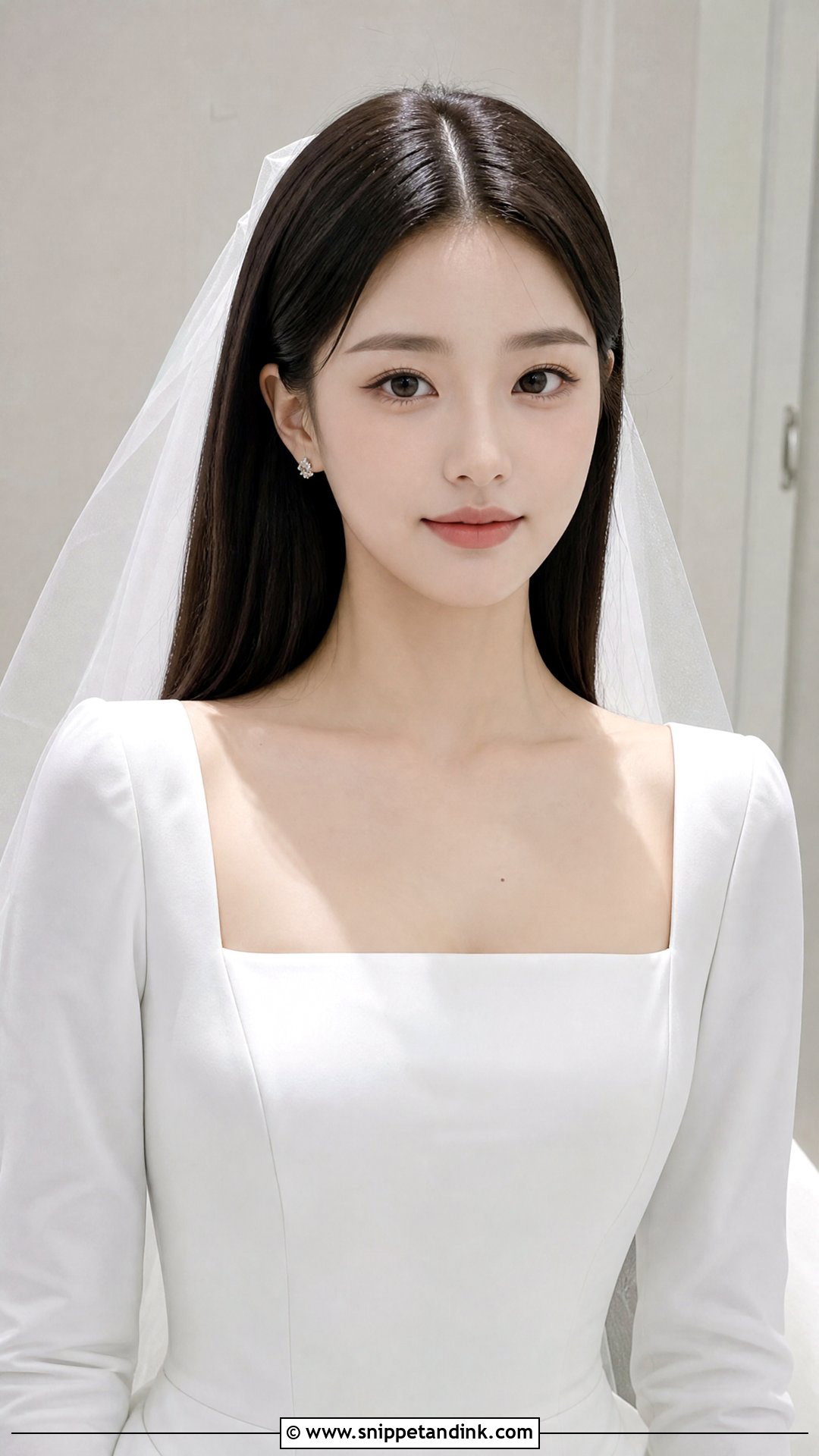
Straight hair is the style that looks easiest and takes the most care to make bridal. Without shine and a deliberate shape it just looks like a normal Tuesday. I blow-dry with a paddle brush, flat iron in thin sections, and finish with a light shine spray, keeping oils off the roots. Blunt cuts and glossy colour show it off. Humidity is the risk: hair that’s naturally wavy will start reverting at the hairline within hours, so I’d only pick this for dry weather or an indoor reception.
10. Bride Hair Down Bouncy Blowout
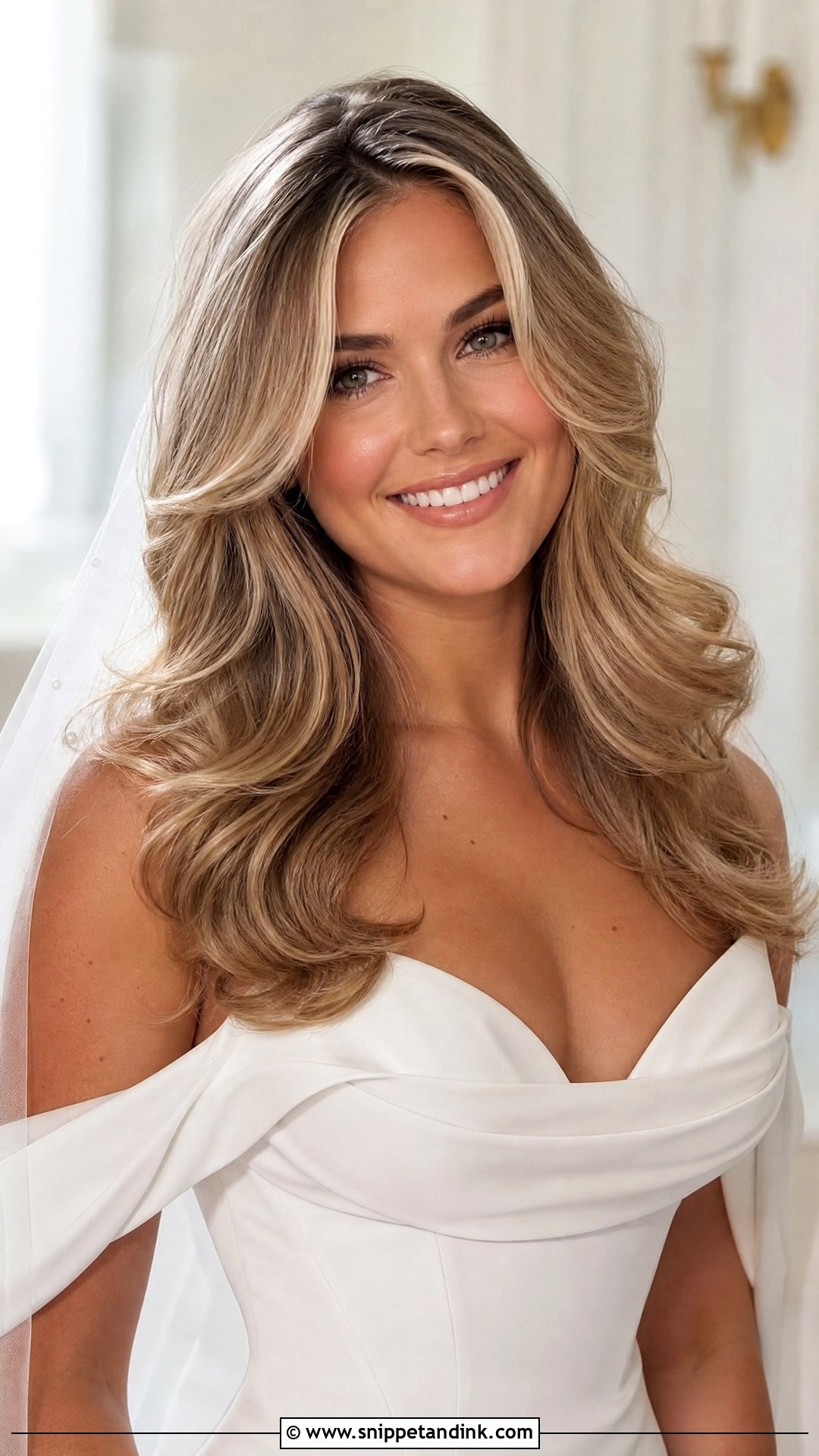
A Bride hair down bouncy blowout is all volume and bend, with no defined curl. I build it with a large round brush and set the crown in velcro rollers while you finish makeup, then sweep the front pieces away from the face. Layered medium or long hair takes it best. Very fine, one-length hair struggles to hold the lift, and I’d add a few big curls underneath for support. Pair it with a hairband or a simple veil.
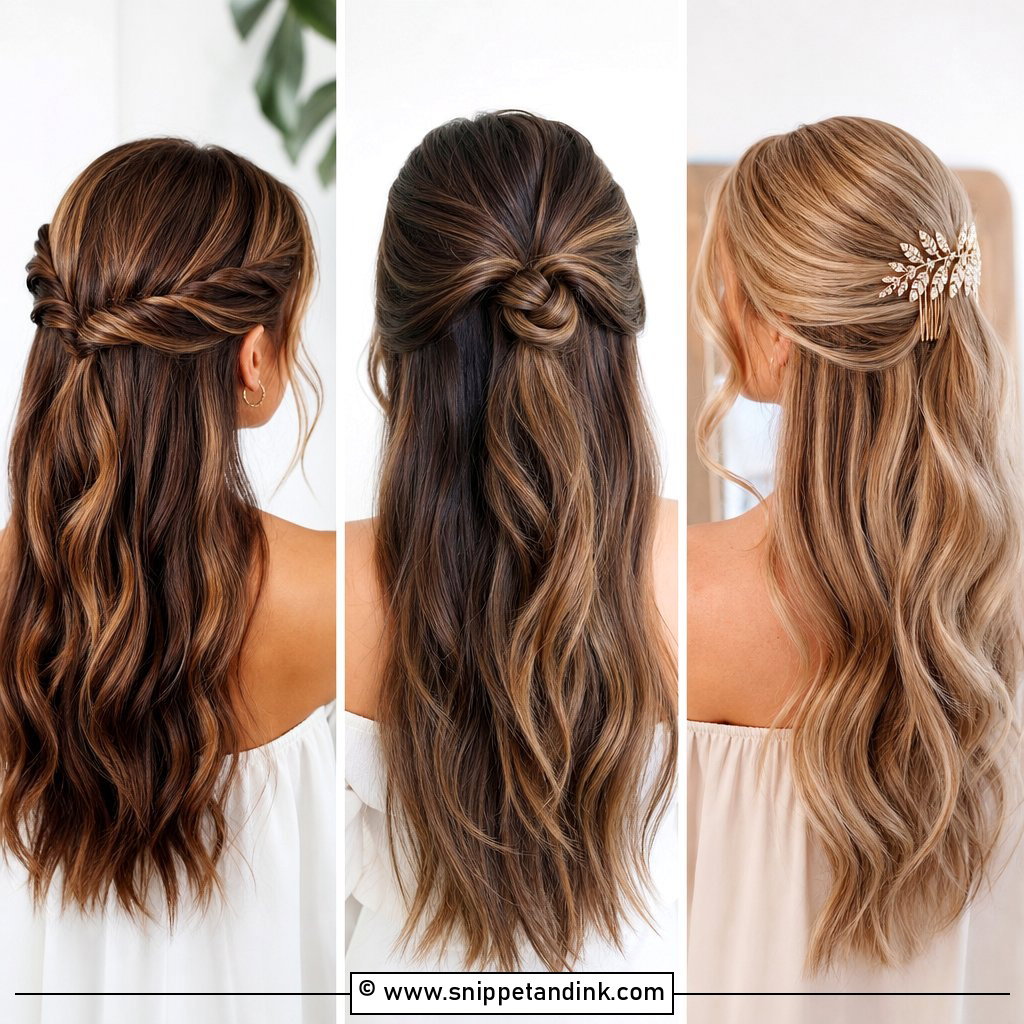
11. Bride Hair Down Half Up Waves
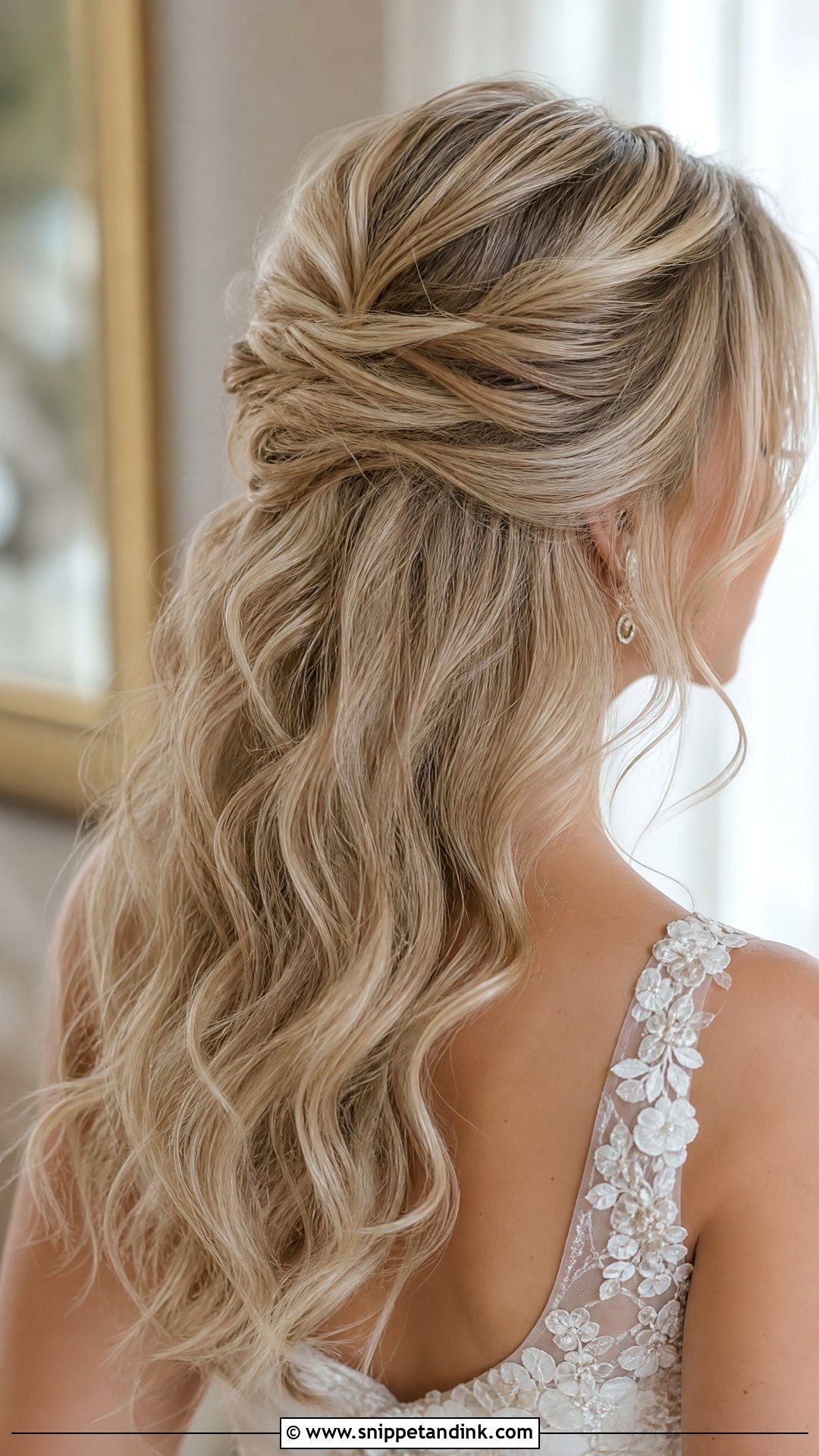
Half up is down hair with a safety net. The top section is twisted, pinned or braided, which keeps hair off your face in the ceremony and photos while the rest flows. It’s also my usual answer when a bride wants a veil with loose hair, because the pinned section gives the comb something solid to grip. Smooth the top for a classic finish, or loosen it a little with waves for something softer. The one thing that goes wrong: a section pinned too high reads as a little girl’s hairstyle, so I place it at the crown or just below.
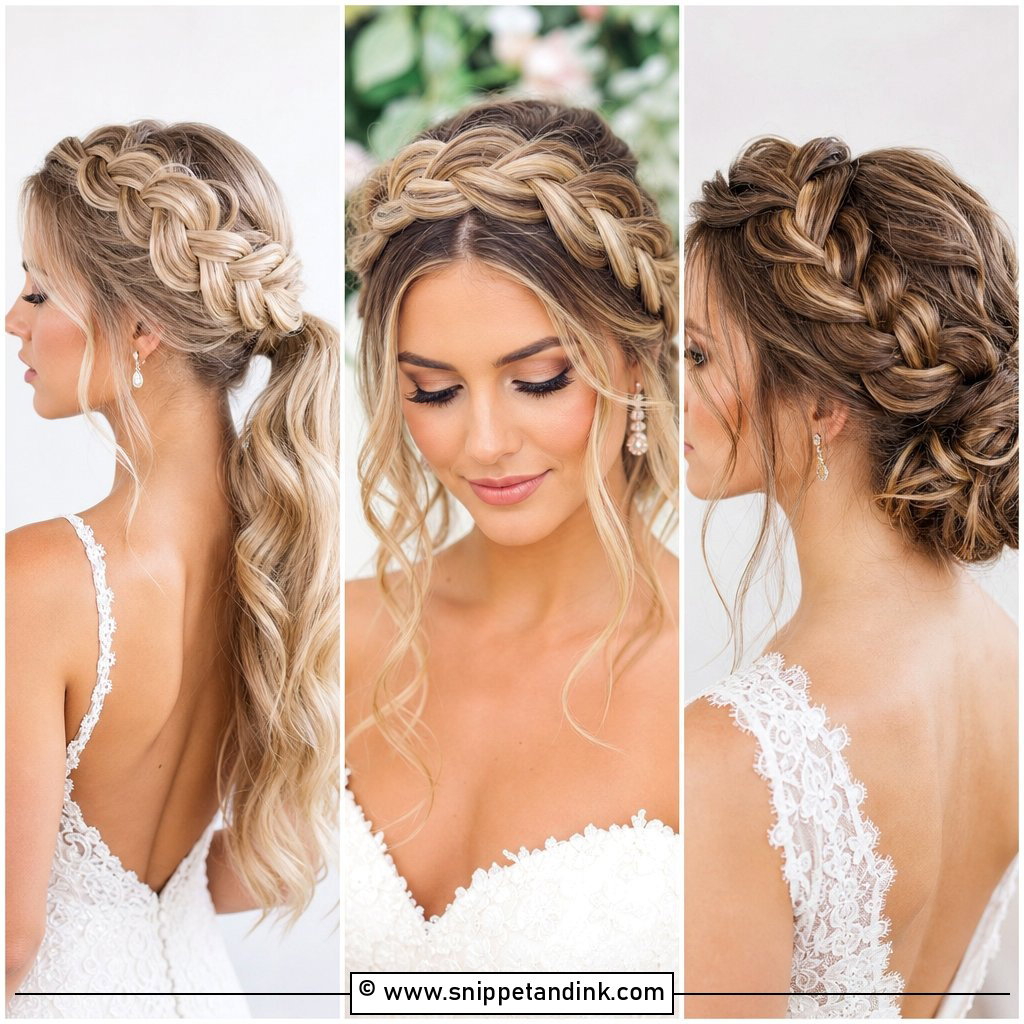
12. Bride Hair Down With Braided Crown
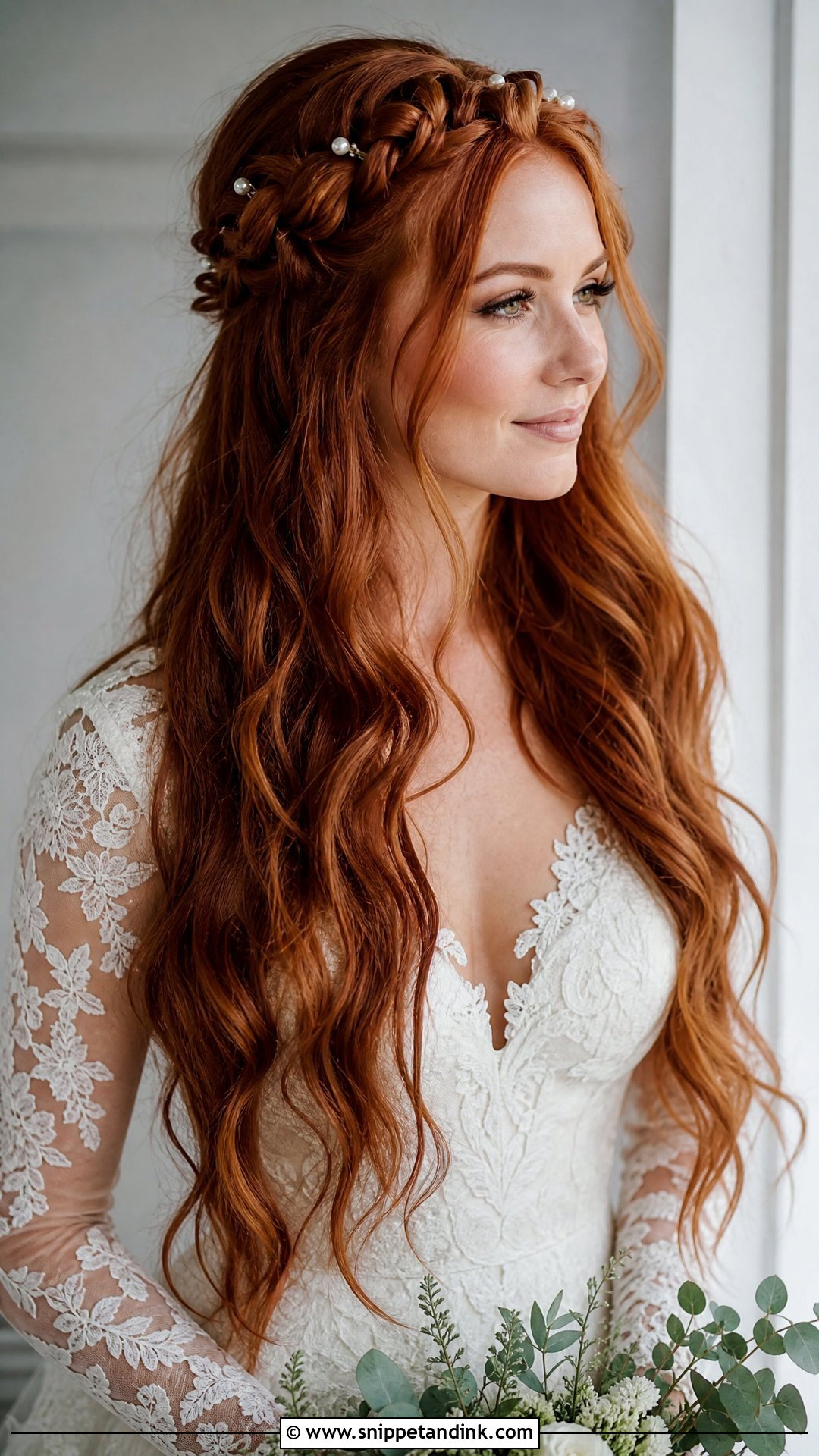
A braided crown keeps the front controlled outdoors while everything else stays loose. The braid can run across the hairline like a headband, wrap the crown, or start at each temple and meet at the back. I plait it tight and then gently pull the edges out, since a braid started loose falls apart once the wind gets at it. Textured and curly hair hides the pins beautifully. Add tiny flowers or pearl pins if you want detail, but the braid alone often does enough.
13. Bride Hair Down Natural Curls
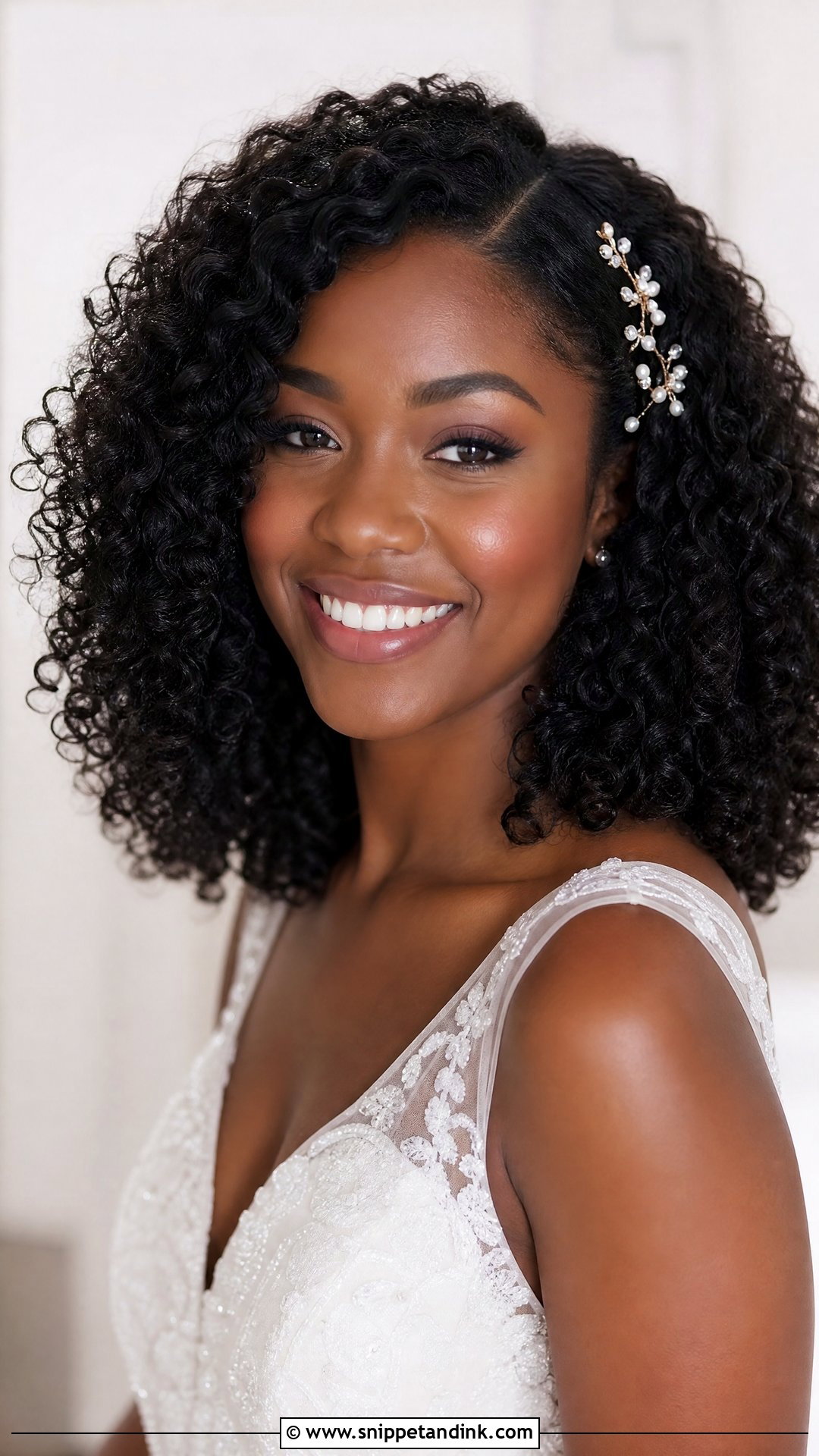
Natural curls look their best when they’re hydrated, shaped and defined rather than smoothed away. Get a cut four to six weeks before the wedding, so the shape settles and any dry ends are gone. On the day I work with your own curl routine, using a leave-in, a gel or cream for definition and a diffuser, and leave the cast alone until it’s fully dry so it doesn’t frizz. Layers stop the ends from looking heavy, and face-framing curls soften the eyes. A few small pins or pearls make it bridal without changing your pattern.
14. Bride Hair Down Short Bob
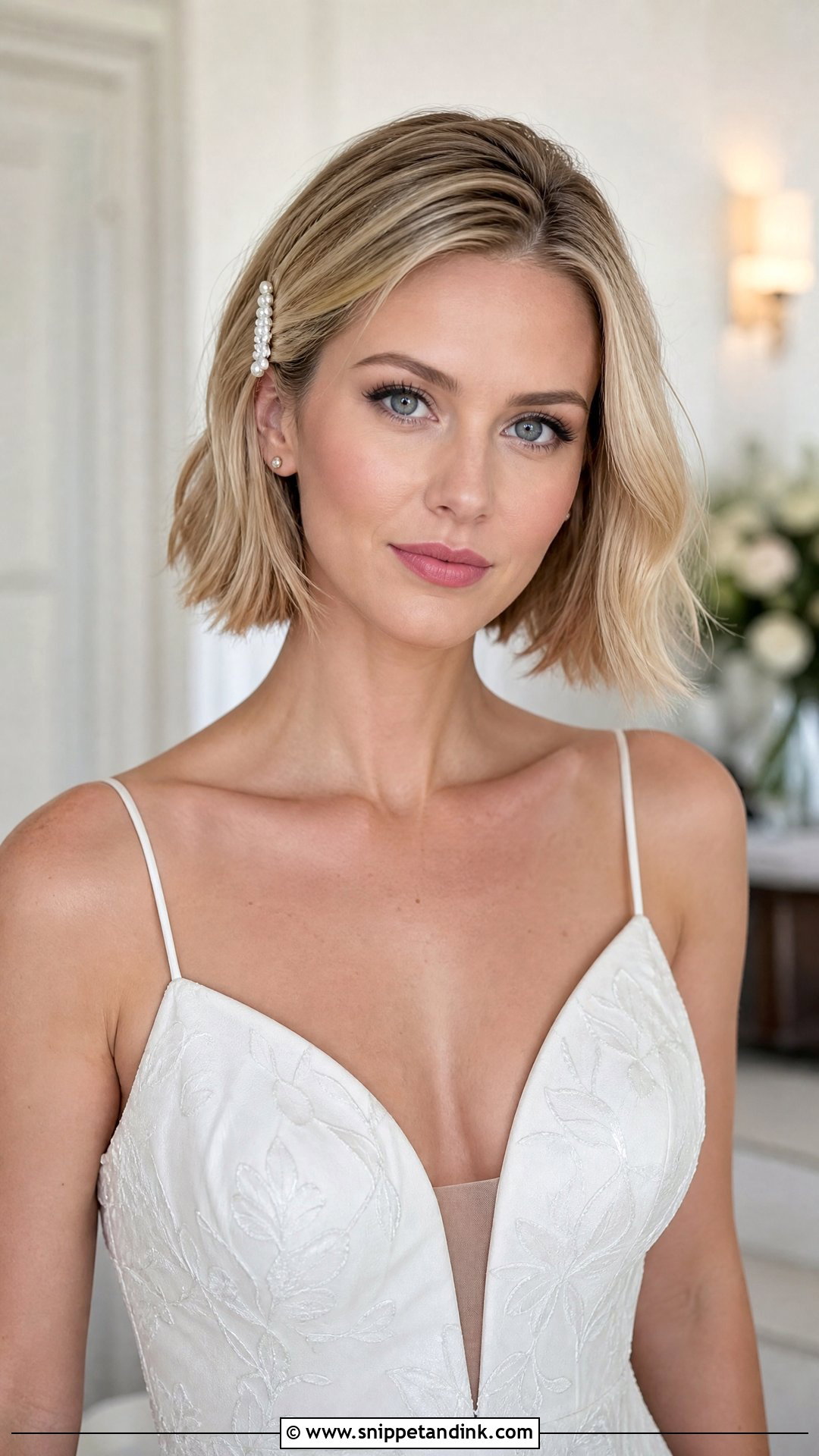
Bride hair down short bob styling has nowhere to hide. Every angle is visible in portraits, so the shape has to be clean from the front and the side. A small bend with a flat iron gives movement; a sleek finish is crisper. Tucking one side behind the ear shows off earrings and stops the bob swinging into your face while you read vows. Birdcage veils and slim headbands suit the length well. It’s also cooler in summer, which brides who’ve worn long hair to a July wedding will appreciate.
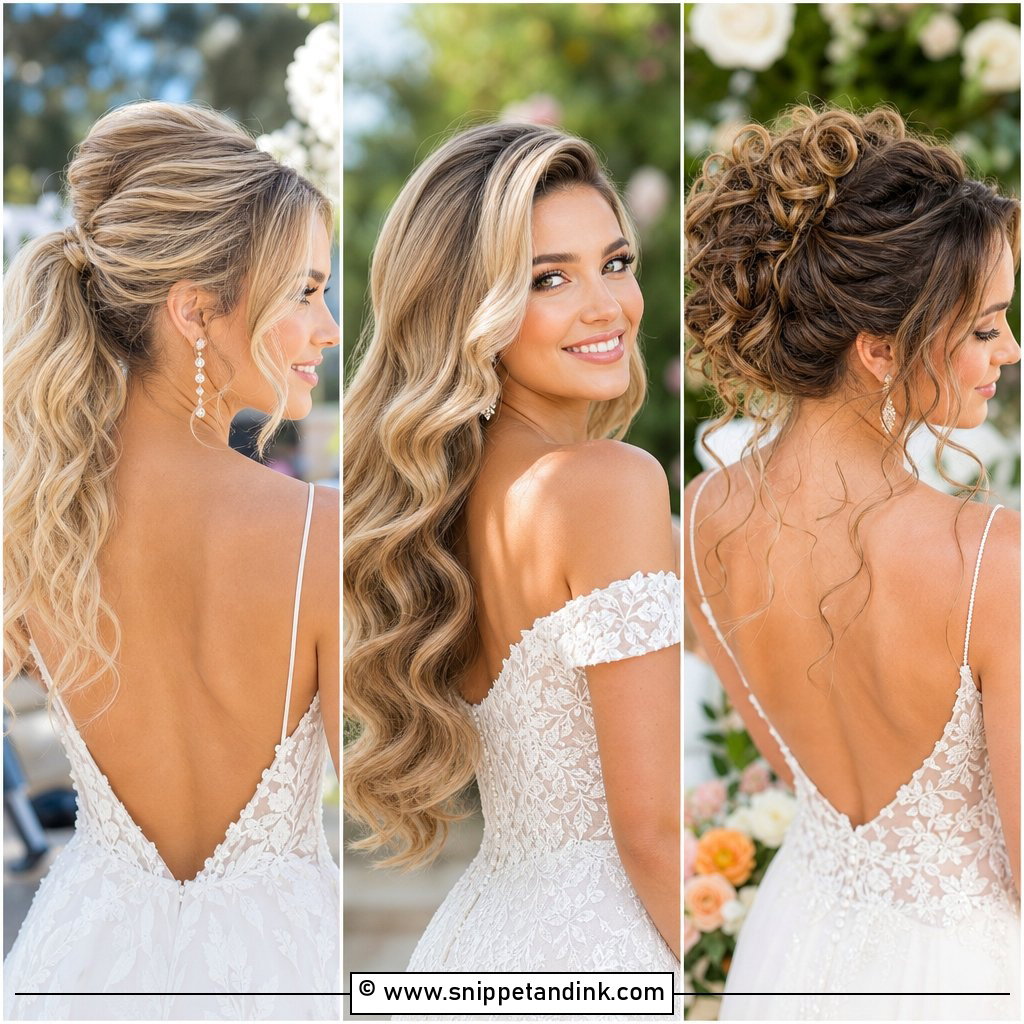
15. Bride Hair Down Long Layers
Long layers are what make waves and curls sit well on down hair, especially around the face and shoulders. Without them, one-length long hair hangs heavy and the bottom curls drop first. If you’re cutting for the wedding, do it a few weeks out, not the week before. For more volume or length, extensions if you want extra volume are worth trying at the trial, so they can be blended and cut in. Keep the top smooth and the ends airy.
Noon to Midnight With Your Hair Down
Loose hair changes more over a wedding day than any updo. It gets touched, hugged, rained on, sat on and danced in. Knowing roughly what happens when lets you plan small rescues instead of panicking in the bathroom.
- Getting ready: curls are usually pinned up to set while you do makeup and dress, then brushed out last. Release them too early and they’ll be looser at the aisle than in the mirror.
- Ceremony and portraits: this is when the hair is fullest. Ask your photographer for back and side shots now.
- Drinks and dinner: the ends relax, and the side you lean on, usually toward your partner, flattens first. Fingers and a mist of spray fix most of it.
- Dancing: heat pulls the front pieces forward. A slim headband or clip in someone’s bag lets you sweep it back in seconds and still look finished.
Humidity deserves its own warning. Curly or wavy hair that has been straightened tries to return to its natural pattern in damp air, and blowouts frizz first at the hairline. If the forecast is muggy, half up or loose waves will forgive far more than glass-straight hair.
Test It Outside Before You Commit
Down hair can go glamorous, boho, sleek or completely natural. What decides it is your real hair rather than the photo you saved. If your curls drop within an hour, a softer wave that relaxes gracefully will look better at ten o’clock than a tight set that collapses. For an outdoor ceremony, think about wind and humidity before shape. Fine hair that won’t hold much is a good case for clip-in extensions or a roller set. At the trial, put on your veil and accessories, step outside if you can, and take photos from every side.
You'll Like These Ideas:



Leave a Reply