
A fringe changes how I plan a whole bridal style. It’s the piece of hair closest to your eyes, your makeup and the camera, and it’s the first thing to separate, go oily or flip up in humidity. Get it right and it softens even the most formal updo. Bridal hair right now favors touchable finishes, face-framing bangs and brushed texture over sprayed-stiff fringes. Below are twenty ways to wear curtain, wispy, side, curly, full or micro fringe on the day, with what I check for each and where each one tends to go wrong.
Tell Your Stylist How Your Fringe Falls on a Bad Day
At a consultation, I ask brides to show me their fringe as it dries naturally, not after a perfect blow-dry. That tells me where the cowlicks are, which way it wants to part and whether it lifts at the hairline. A fringe that springs up on its own will do the same on the wedding day, in heat, tears and wind, so I plan around it rather than fighting it.
- Arrive at the trial with your fringe air-dried, or with a photo of how it falls untouched.
- Say how you usually style it day to day; I’d rather refine that than invent a new shape.
- Mention any brow or lash treatments planned; a lash lift or brow tint changes how a fringe frames the eyes.
- Bring the earrings you’ll wear, since a side fringe and a big earring can crowd one side of the face.
The fringe also touches your makeup more than any other part of the hair. Foundation on the forehead transfers onto bangs and makes them separate and look greasy. I ask the makeup artist to set the forehead well with powder, and I style the fringe after the base makeup is done, not before.
1. Wedding Updo With Curtain Fringe
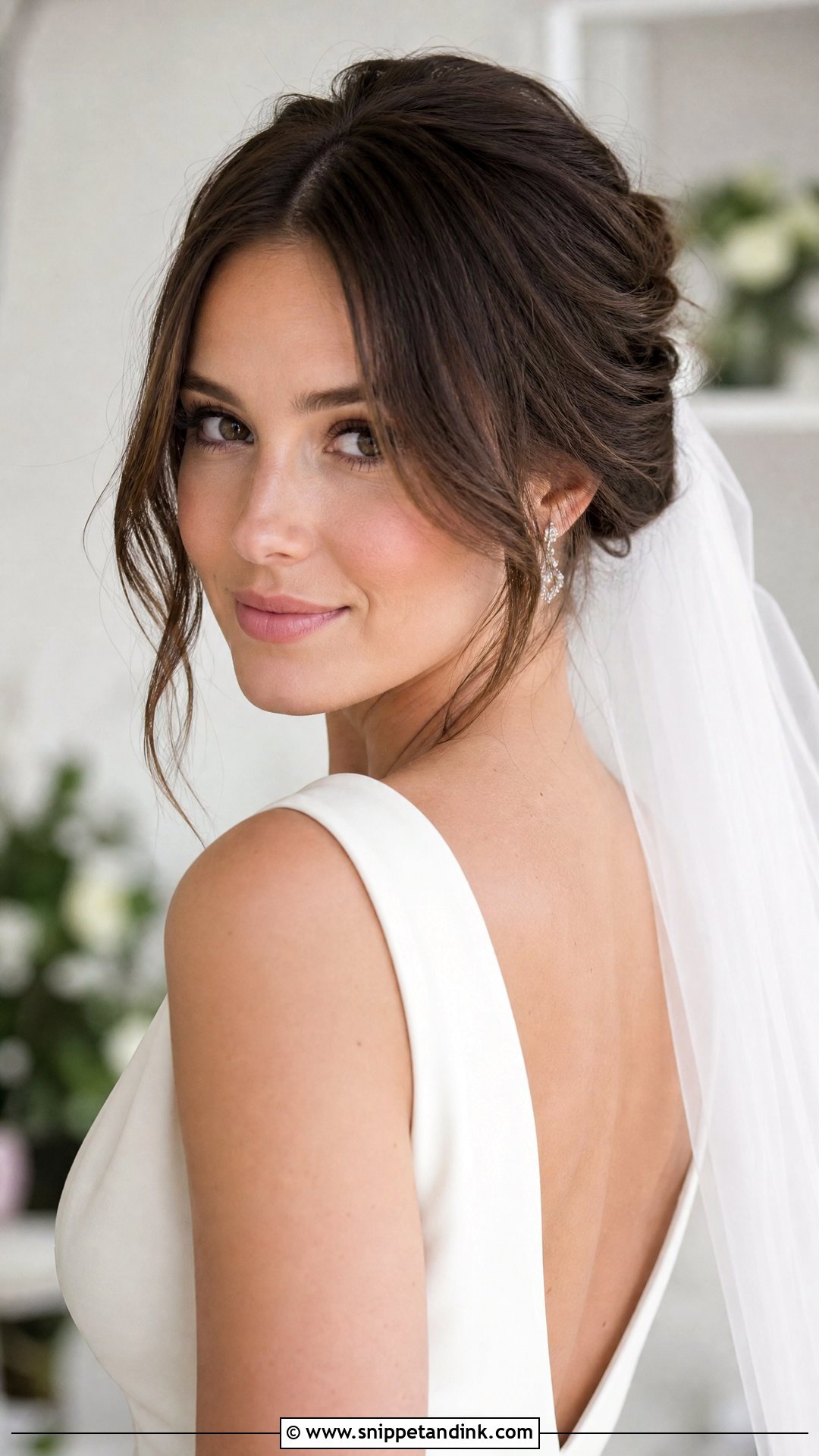
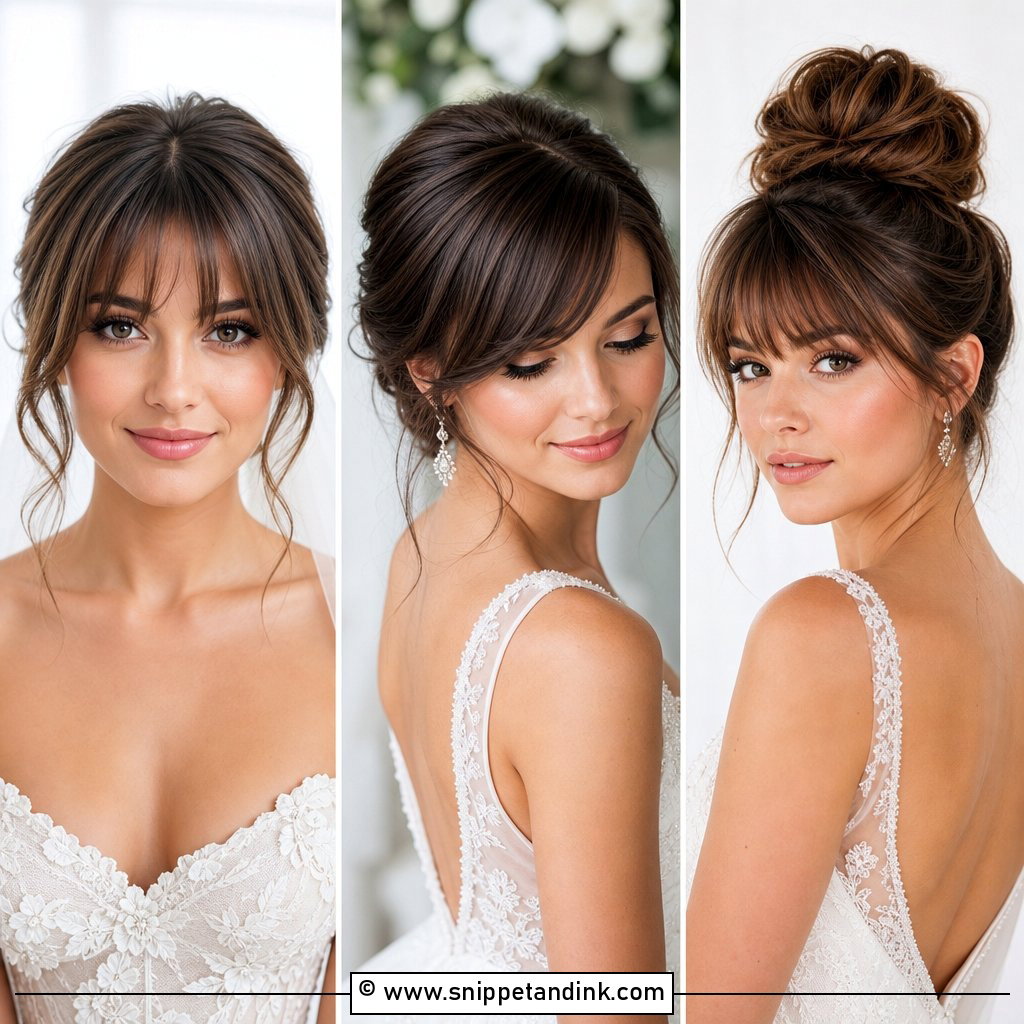
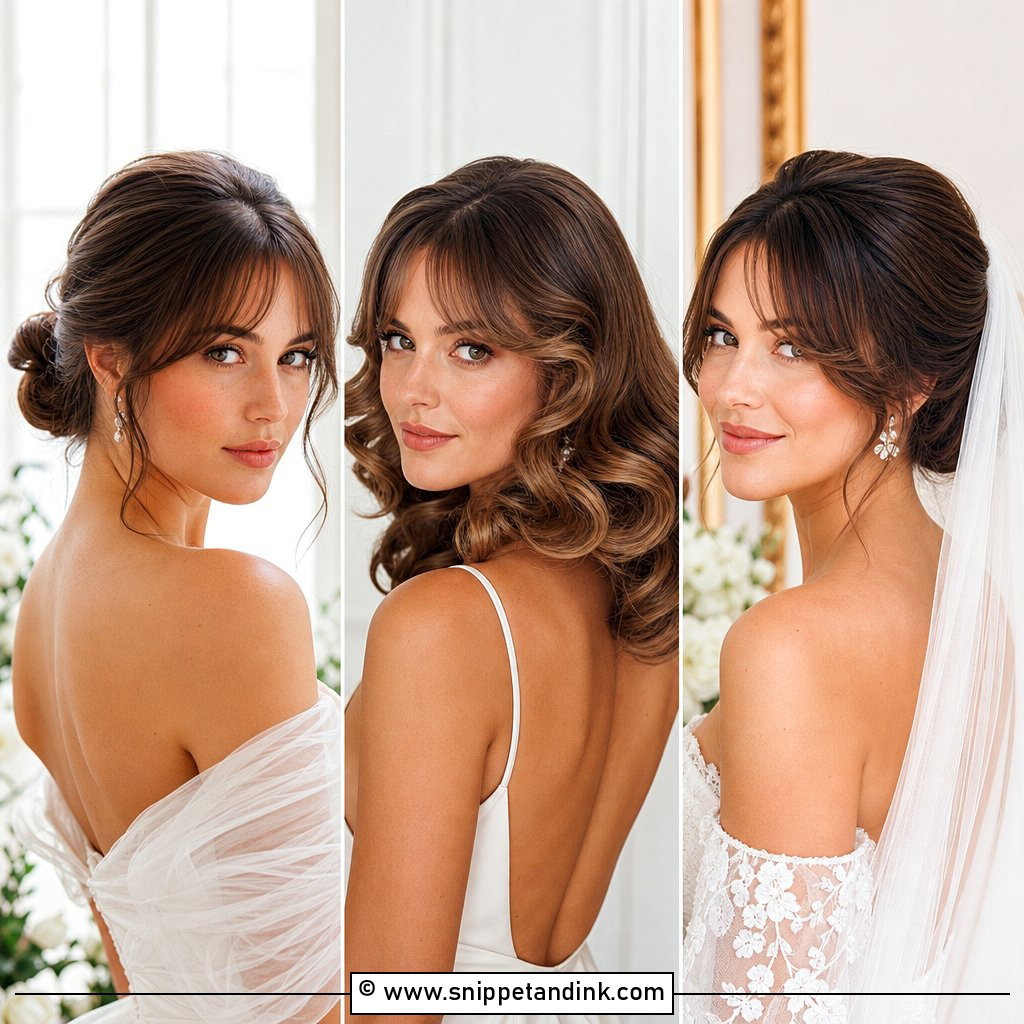
Curtain fringe softens a formal updo more than any other cut. Because it parts at the center and opens near the cheekbones, it frames the eyes and brows without covering your makeup. I pair it with a low bun, a textured chignon or a pinned twist. With a veil, the fringe stays visible while the back holds the structure. I bend each side of the fringe away from the face with a round brush rather than curling it; tongs on curtain bangs tend to give a dated flick.
2. Wedding Low Bun With Wispy Fringe
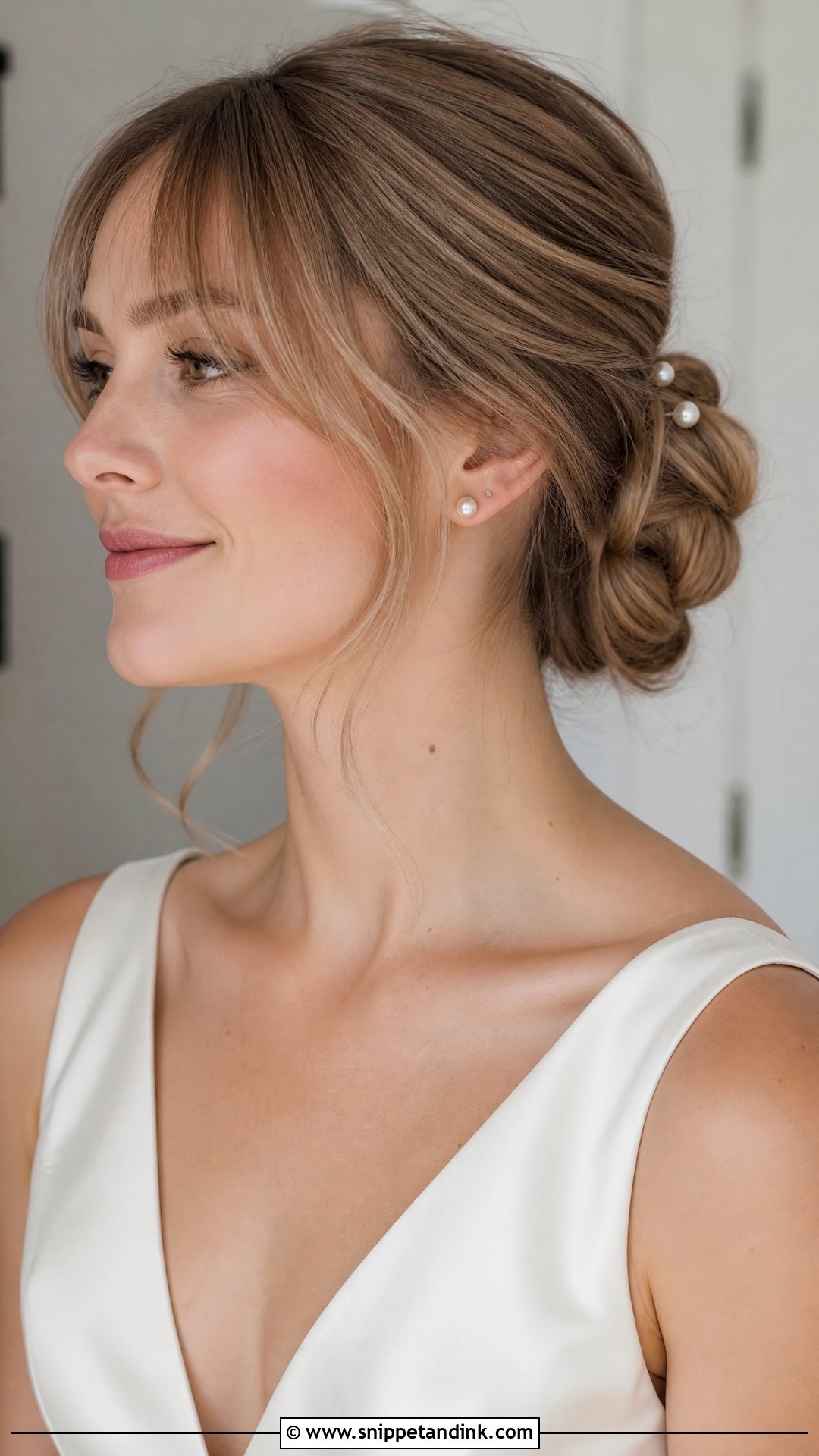
Wispy fringe lightly breaks across the forehead in airy pieces, and with a low bun at the nape it makes a soft, simple pairing. It suits fine hair especially well, because the fringe adds detail without needing volume. Thick hair can carry it too if the bangs have been point-cut so they don’t sit as a solid block. I keep the bun a little loose and blend a couple of face-framing strands into the fringe. The risk with wispy bangs is separating into thin strings as the forehead warms up, so I use powder, not cream, to set them.
3. Wedding Half Up Hair With Fringe
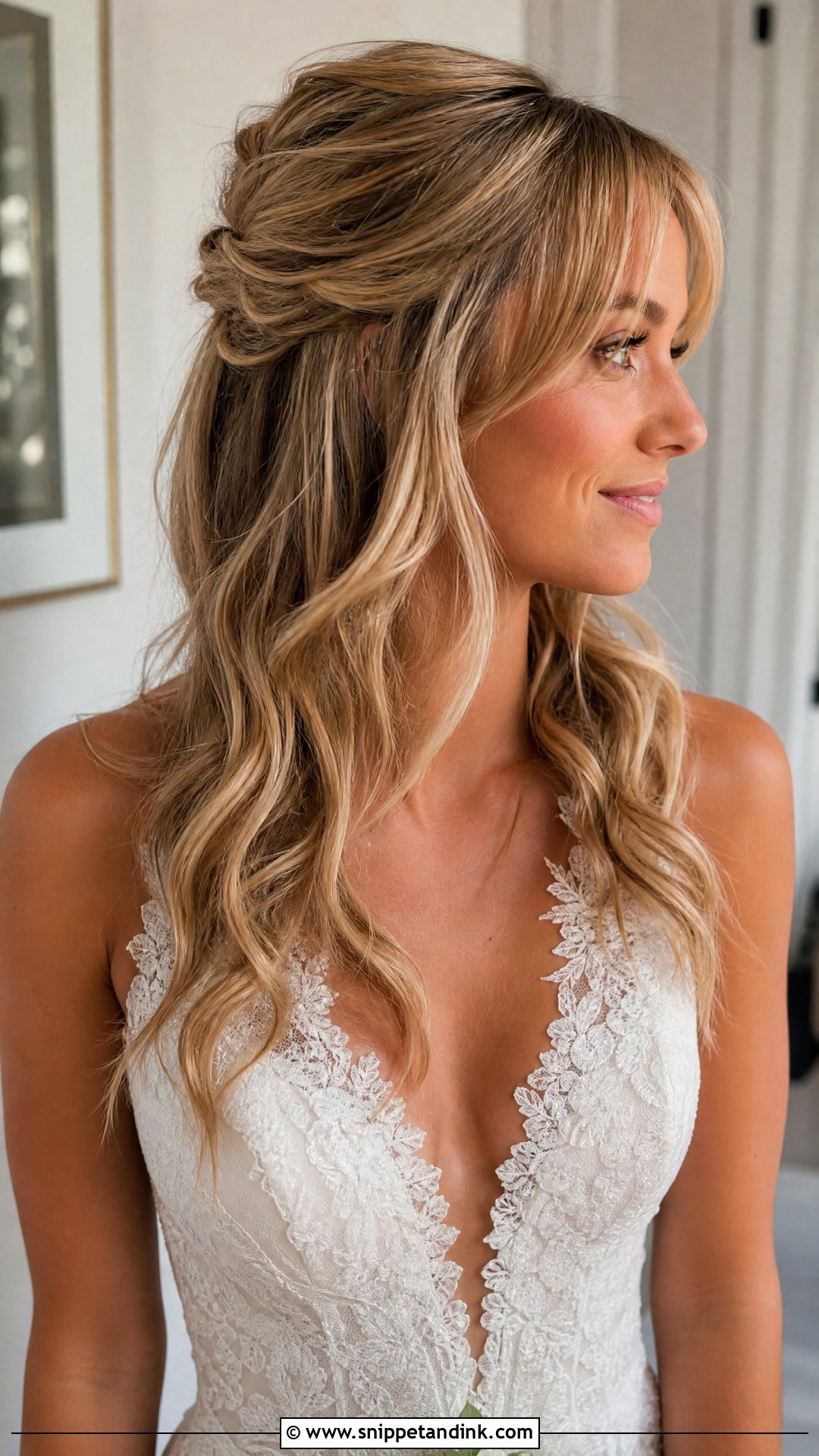
Half-up hair with fringe keeps hair off your cheeks outdoors without losing movement. The crown is lifted, twisted or braided back while the fringe frames the face. Curtain fringe, feathered bangs and longer side fringe all suit it. I wave the lengths so the fringe connects to the rest of the hair visually; straight lengths under a curled fringe look like two different styles. A delicate comb or a few small pins above the twist finish it.
4. Wedding Waves With Full Fringe
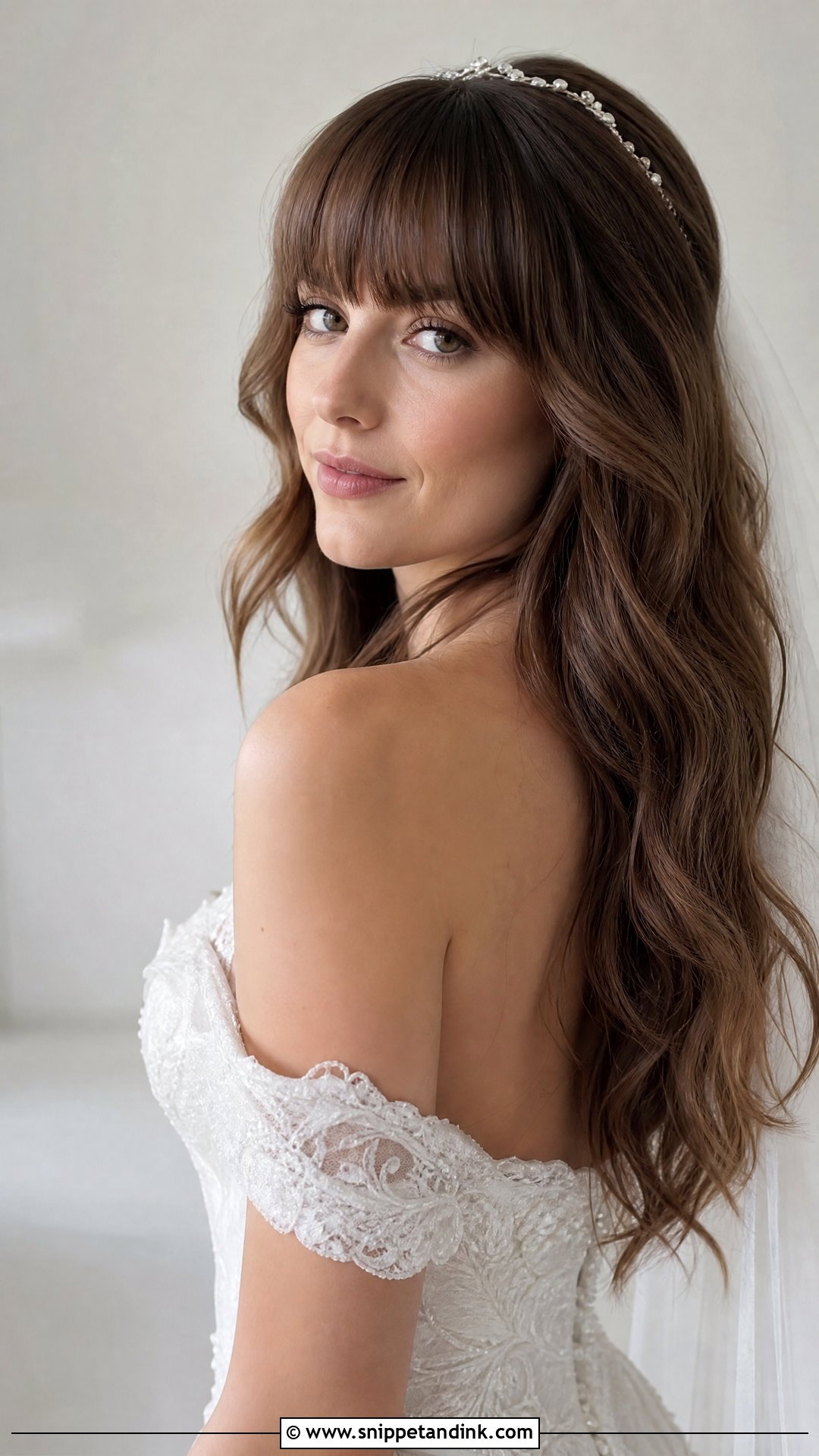
A full fringe with waves balances classic glamour with something more current, and it puts the attention squarely on your eyes. The fringe should be smooth but not flat, with a slight curve following the brow. Long hair, medium hair and lobs all carry it. Full fringes split down the middle in humidity, especially over a cowlick, and that’s the issue I test for at the trial. I blow-dry the fringe flat side to side first to neutralize the cowlick, then shape it forward. Keep the waves brushed out and use light-hold spray only.
5. Wedding Chignon With Side Fringe
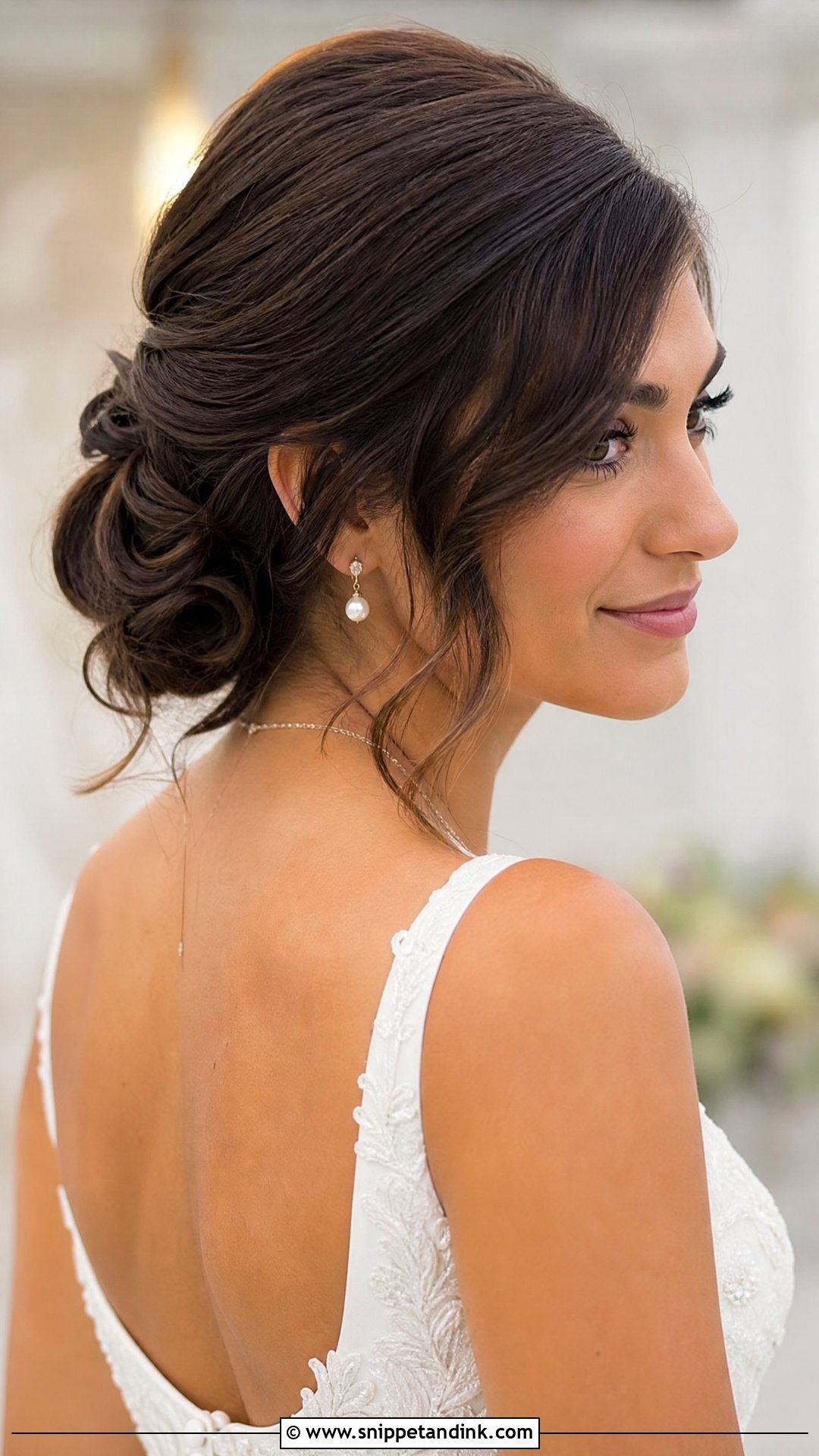
Side fringe sweeps across the forehead into the temple and pairs naturally with a low, smooth chignon for a slightly vintage feel. Off-the-shoulder dresses, sweetheart necklines and classic veils suit it. The diagonal line adds length to the face, which helps round, square and heart-shaped faces. I keep it soft and flexible rather than glued down, using a touch of shine cream; a hard-set side fringe cracks when you laugh and doesn’t fall back into place.
6. Wedding Ponytail With Fringe
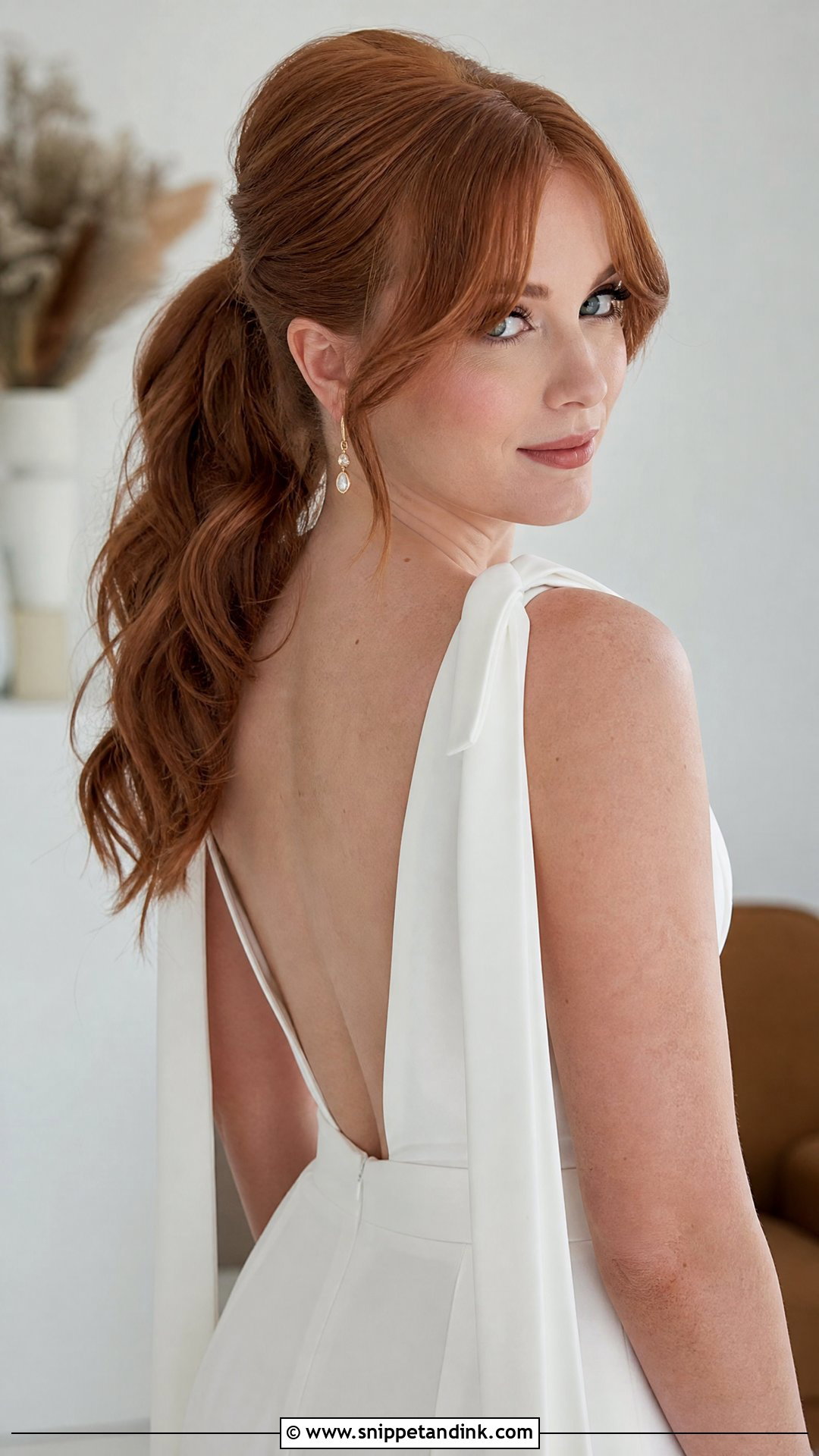
Fringe takes the hard edge off a ponytail, which otherwise can look severe slicked back. Wear the tail high, mid or low depending on your dress. Curtain bangs read romantic, wispy bangs delicate, a side fringe more polished. I wave the ponytail so it doesn’t look like gym hair and wrap a small piece of hair around the base. One thing to know: a tight, high ponytail pulls the hairline back, which can lift a fringe off the forehead, so I set it slightly lower than you might expect.
7. Wedding Braided Crown With Fringe
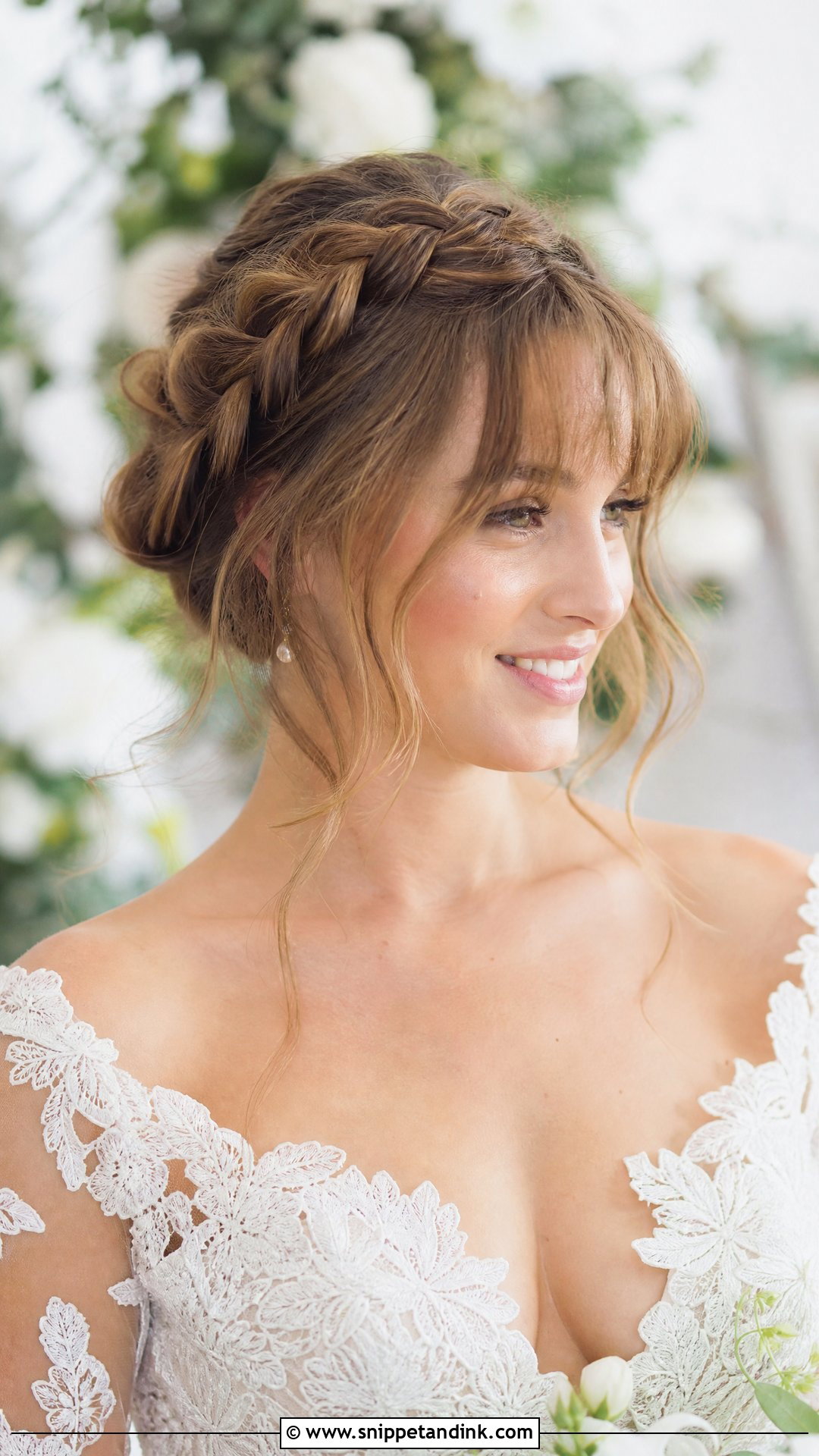
A loose, textured braided crown keeps this storybook style from looking dated. The braid wraps around the head or sits across the crown, and the fringe stays free at the front. Garden weddings, beach ceremonies and relaxed bridal styles suit it. Wispy and curtain fringe blend most easily. On fine hair, I spray texture through before braiding so the braid holds, then pull it apart gently once it’s pinned. The front of the braid should start behind the fringe, not on top of it, or the bangs get pushed forward.
8. Wedding Bob With Fringe
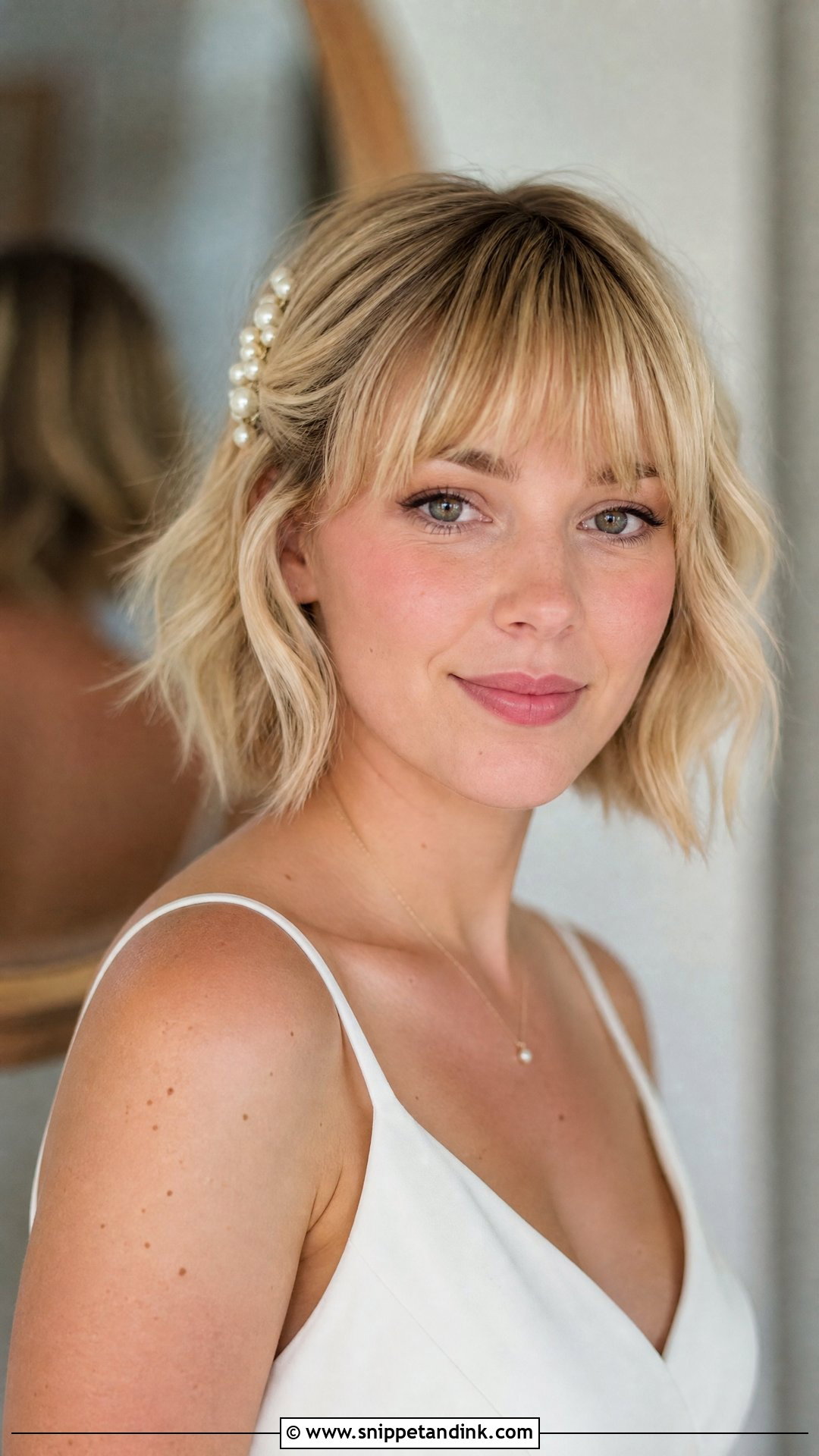
Short hair can look just as bridal as long hair; a wedding bob with fringe already has a strong shape, so I focus on shine, movement and a clean silhouette. A softly waved bob reads romantic; a sleek bob with blunt bangs reads bold. Pearl clips, a slim headband or a small veil behind the crown complete it. Trim the fringe a week or two before, not the day before. Freshly cut bangs sit too short and too blunt for a few days.
9. Wedding Lob With Curtain Fringe
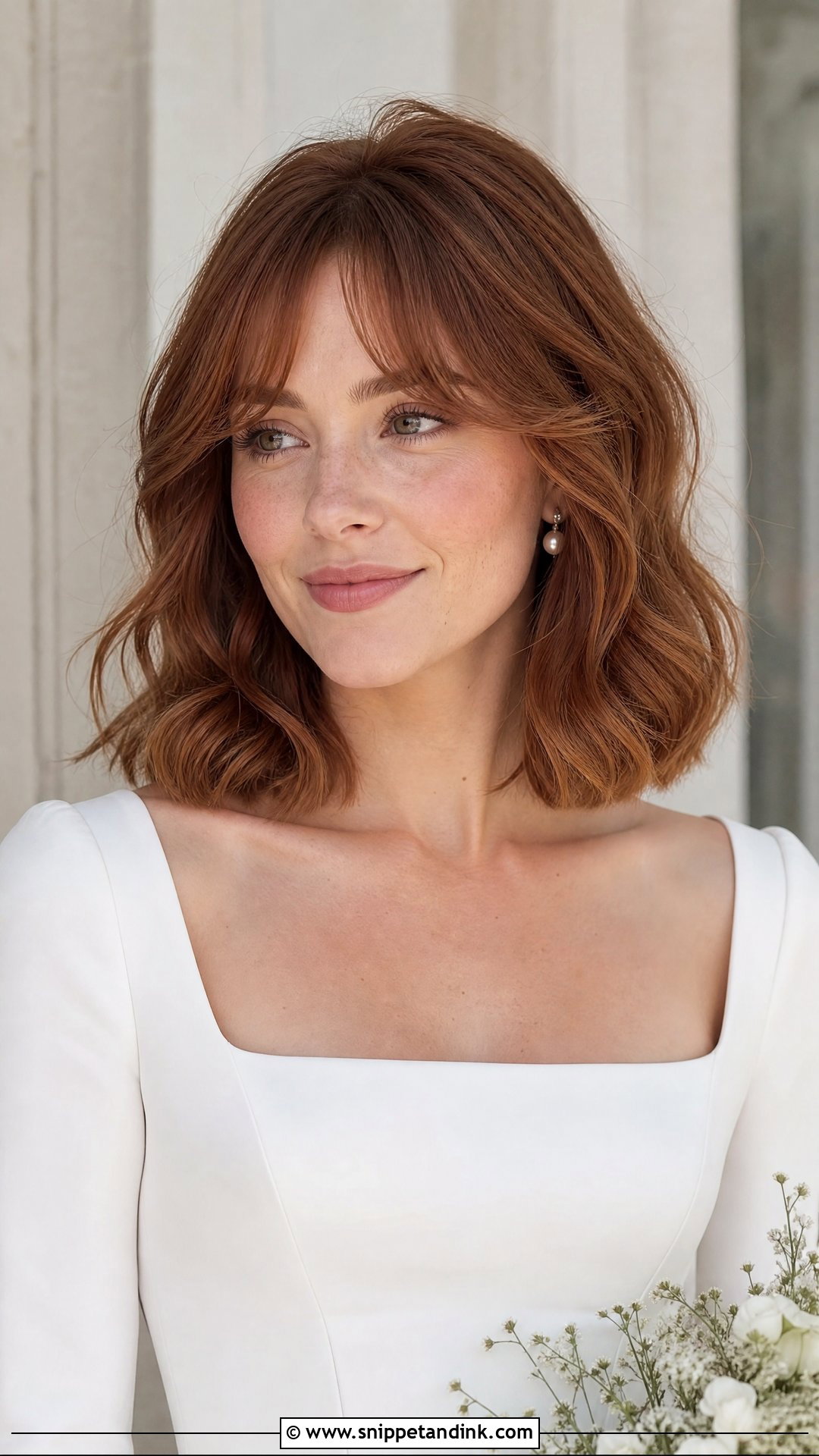
Curtain fringe blends into the front layers of a collarbone-length lob so naturally that it never looks like a separate piece. The lob shows off earrings and necklines and works down, half-up or pinned to one side. Glossy shine reads more formal, tousled waves more relaxed. This is the easiest option on the list for a bride who doesn’t want extensions, and the one most likely to look like your own hair on a good day. Ask for the curtain to be blended into the face-framing layers at your last cut so the two connect.
10. Wedding Messy Bun With Fringe
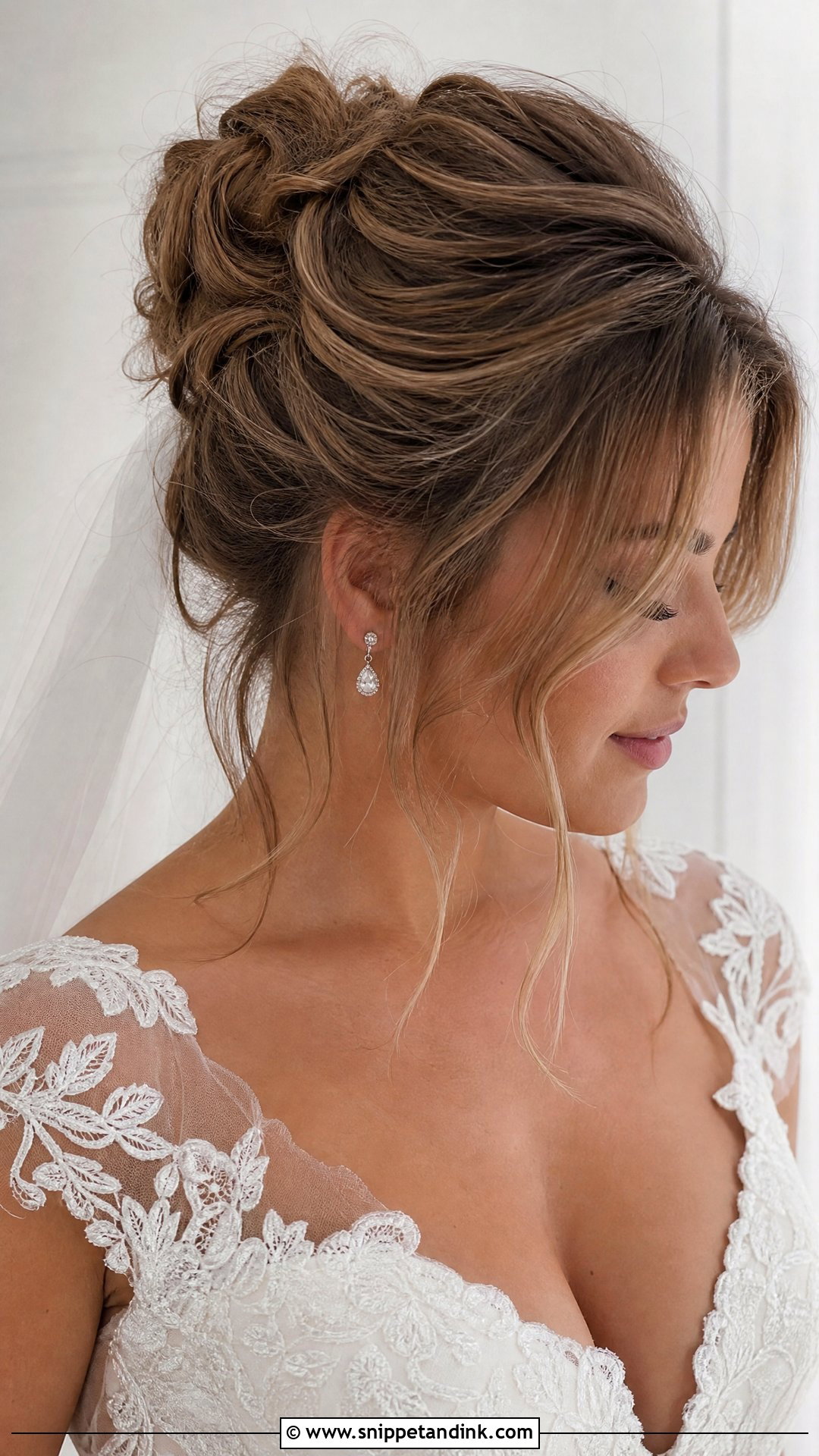
An undone bun gets structure from a fringe; without one, a messy bun can look like it fell out. I build an airy bun with soft volume at the crown and a few loose pieces around the face, secured on a firm hidden base so it survives hugs and dancing. Wispy fringe, bottleneck bangs and curtain bangs all flow naturally into the front layers here. Lace dresses, simple gowns and outdoor venues suit it.
11. Wedding Sleek Bun With Blunt Fringe
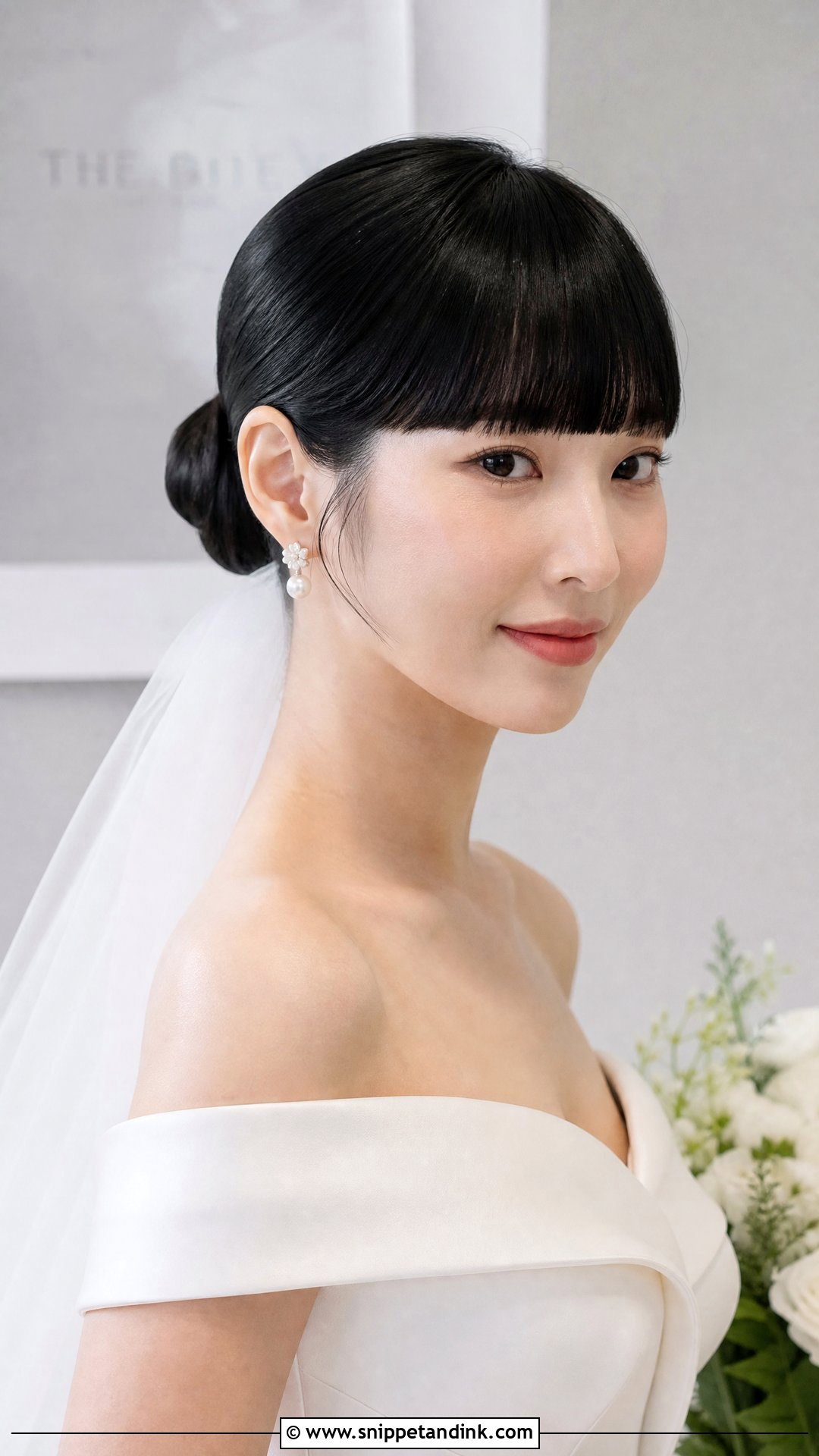
Sleek bun, blunt fringe: two clean lines and nothing else. The bun can sit low or high. The fringe has to be glossy and dead straight, so prep is everything: a flat iron, smoothing cream and a humidity shield on the fringe itself. Minimalist gowns, structured dresses and modern accessories suit it. I’d steer you away from this one if your fringe has a strong cowlick or you get married somewhere humid. A blunt fringe that kinks up shows instantly in close-up photos.
12. Wedding Curly Updo With Fringe
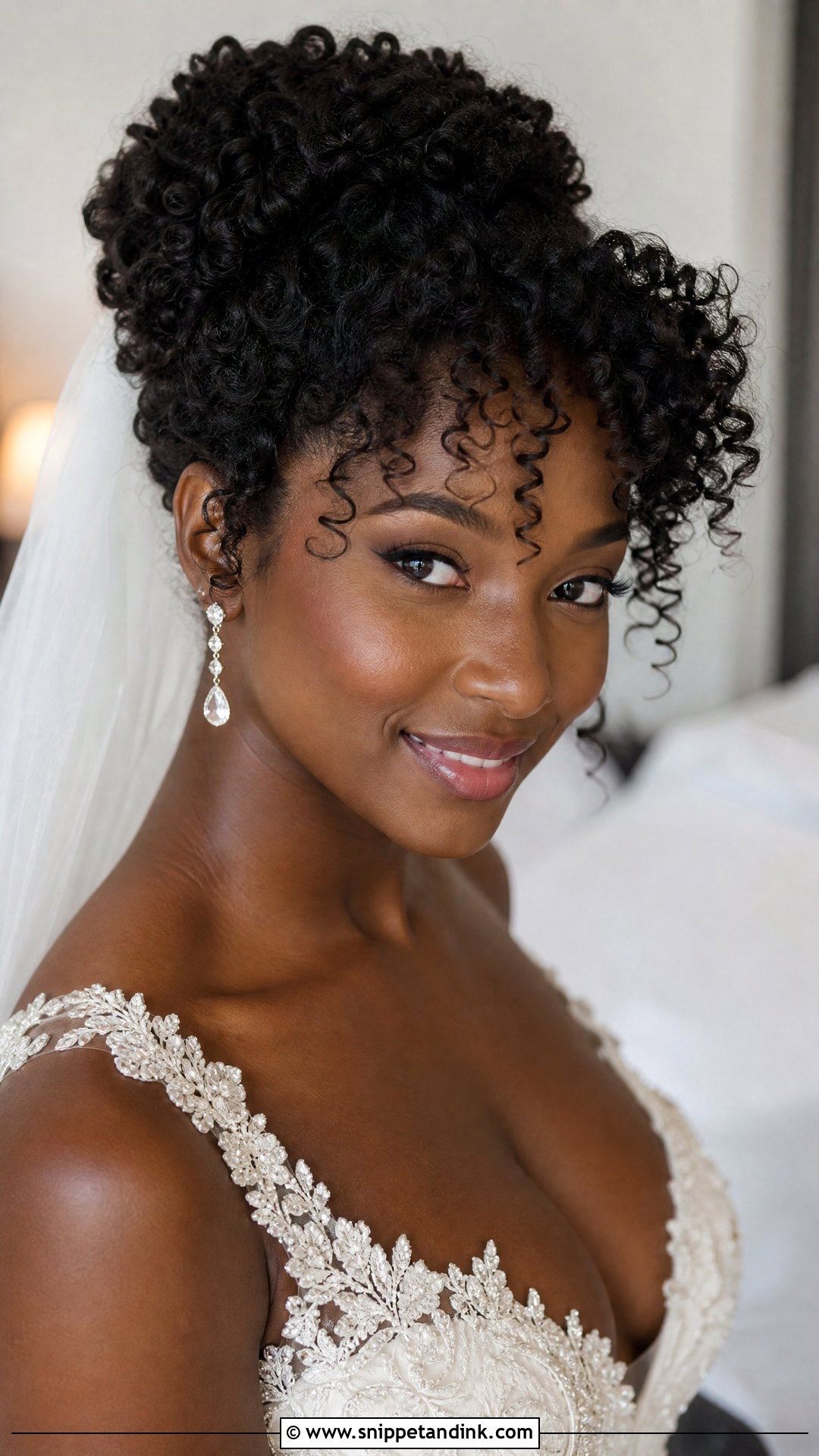
With a curly fringe, I shape the curls around the forehead and temples and gather the rest into a soft updo, which stops the style from feeling scraped back. Definition matters more than smoothness here. I pin curls in a way that keeps their volume, and prep with moisture and a light gel or curl cream so the fringe curls stay separate. Curly fringe shrinks as it dries, so cut it longer than you want it to sit. A few small pins or flowers add detail; let the curls stay the focus.
13. Wedding Hollywood Waves With Side Fringe
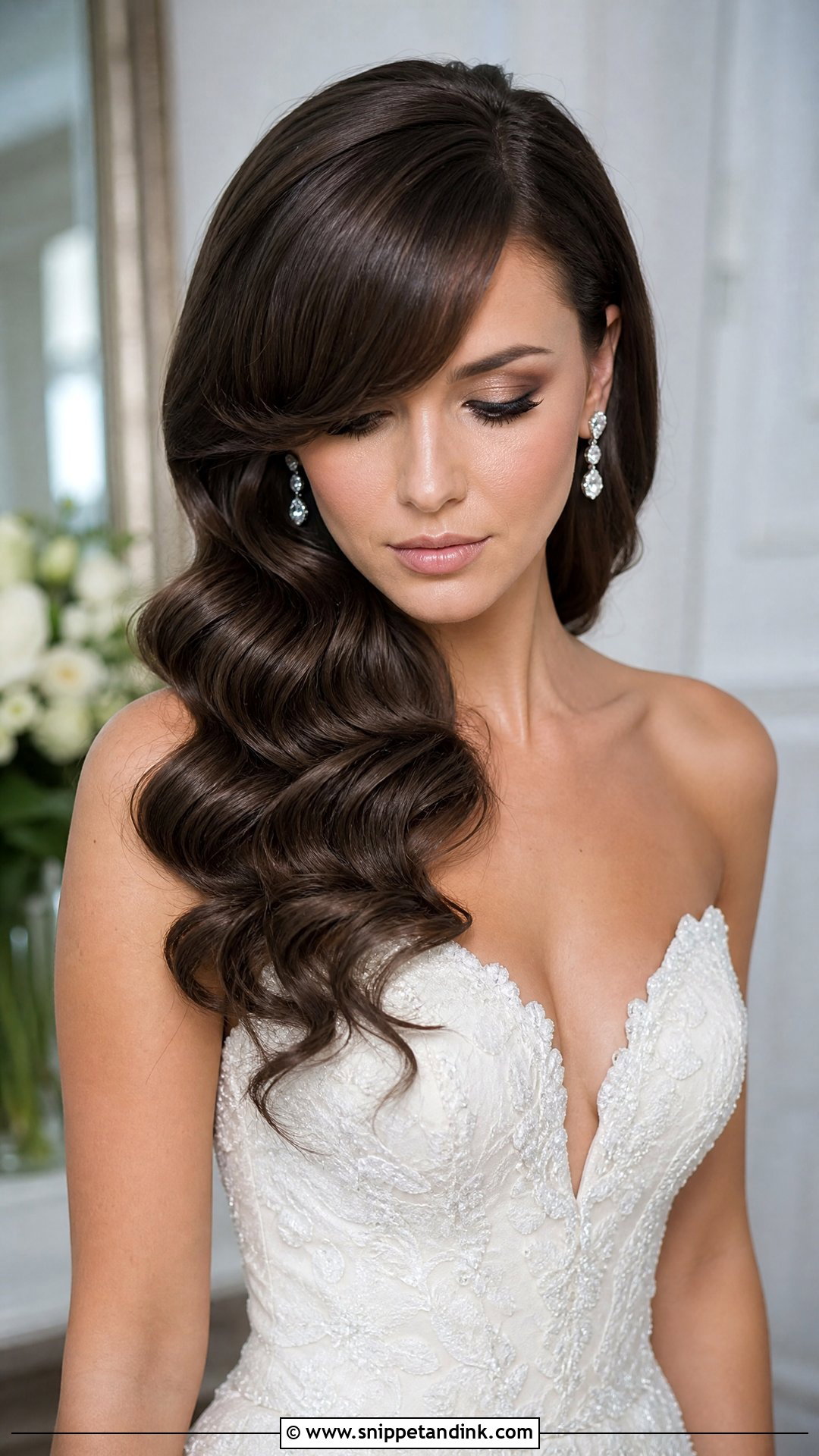
Hollywood waves with side fringe can look modern rather than costume, as long as the fringe blends into the first wave instead of sitting separately. I brush the waves into smooth curves and sweep the fringe across the forehead along the same line. Long, medium and layered cuts can wear it, often with one side of the hair brought forward over the shoulder for photos. A deep side part adds drama. Shine spray goes on lightly; too much makes waves look wet. Formal venues and evening ceremonies suit it best.
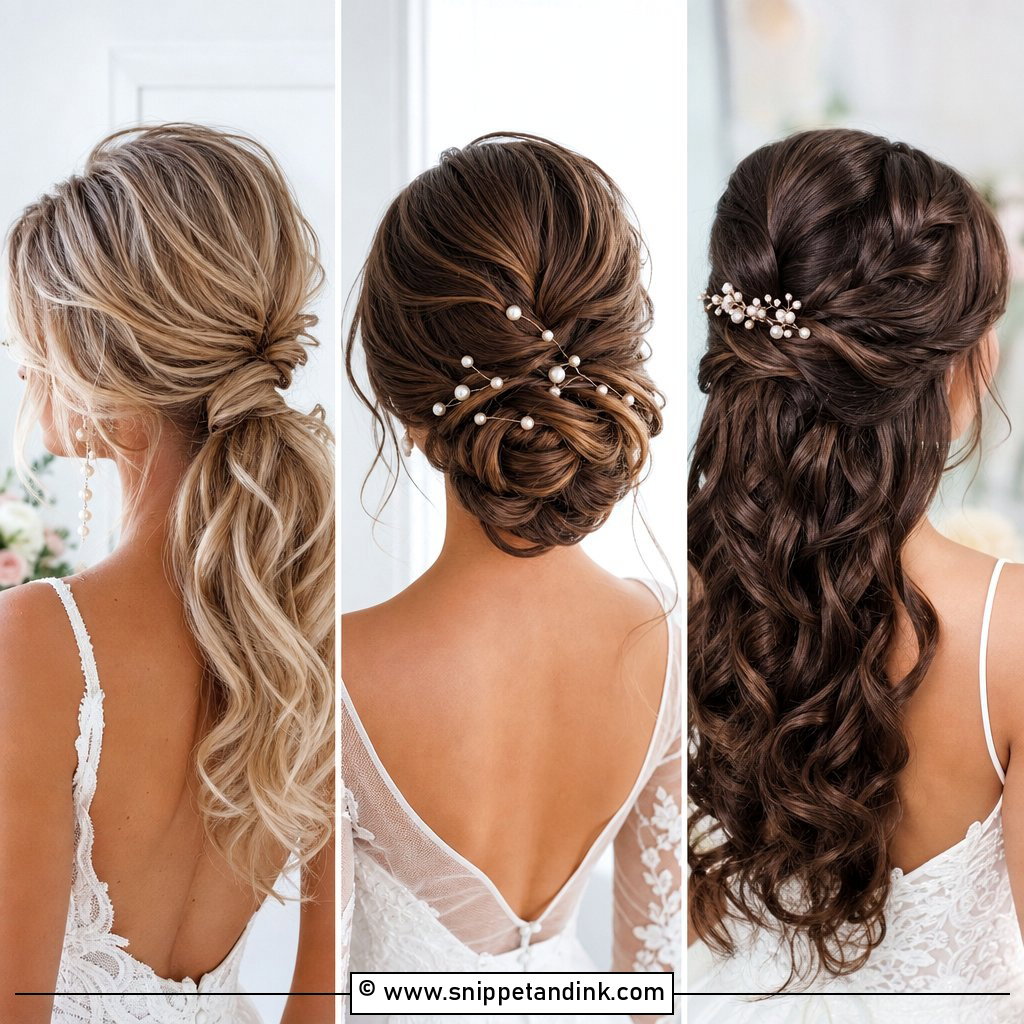
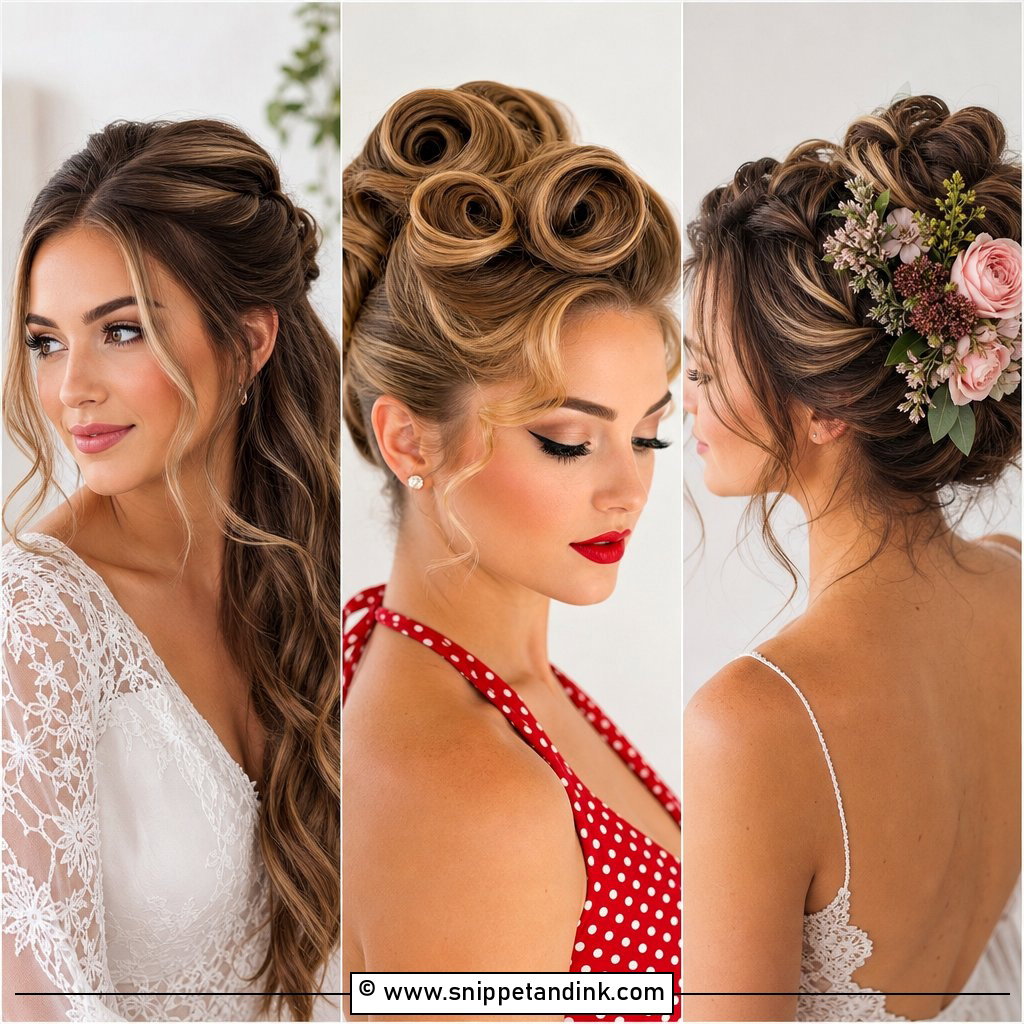
14. Wedding French Twist With Fringe
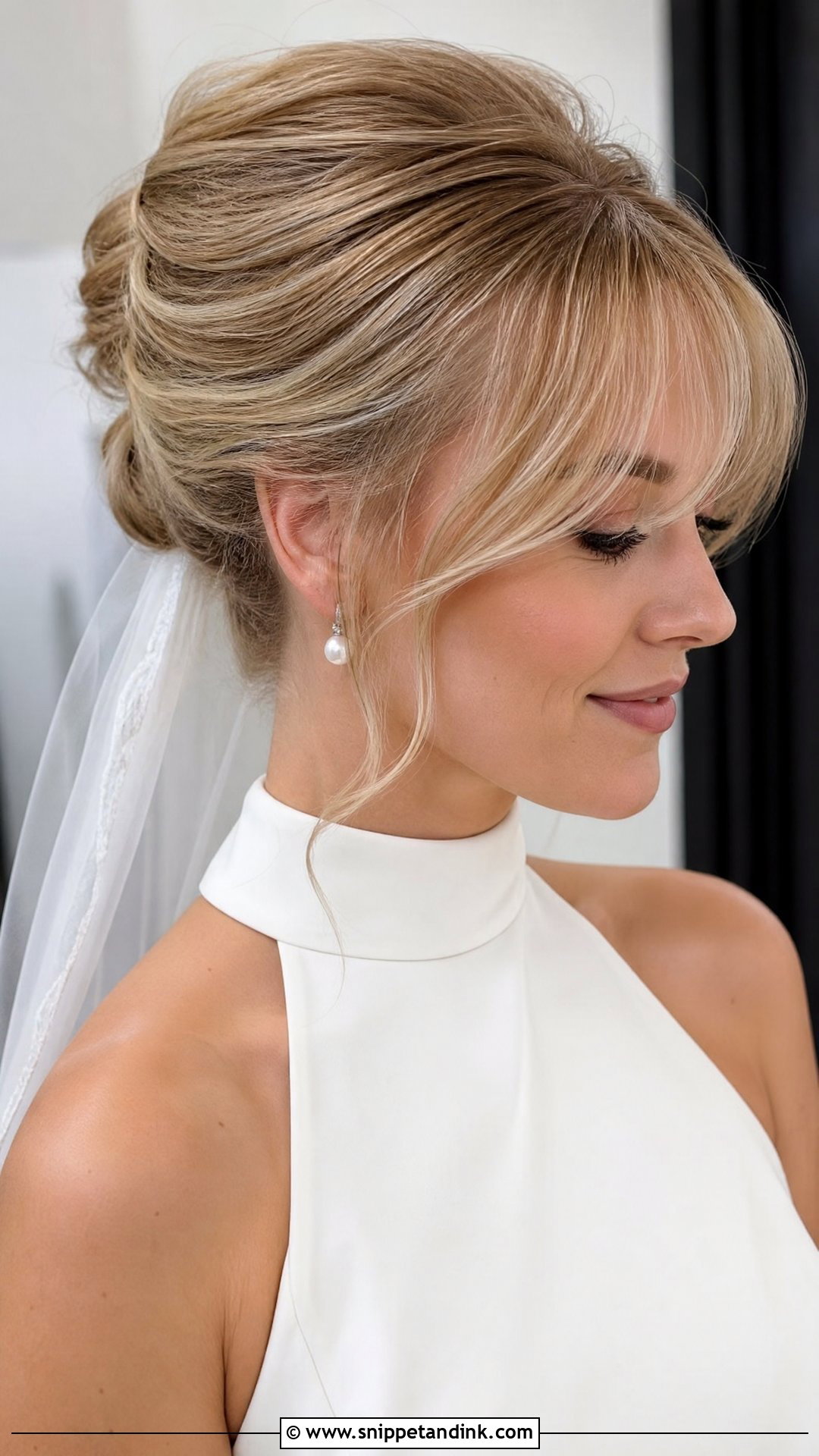
A French twist with fringe keeps a classic shape at the back and softens the front. Curtain fringe, side fringe and wispy bangs all work. It suits high necks, bateau necklines and pearl earrings. I leave a few soft pieces near the temples so it doesn’t look stiff, and keep the twist smooth but not lacquered. A veil sits comfortably above or below the twist. The fringe goes in last, after the twist is pinned, so I can see how it balances the height.
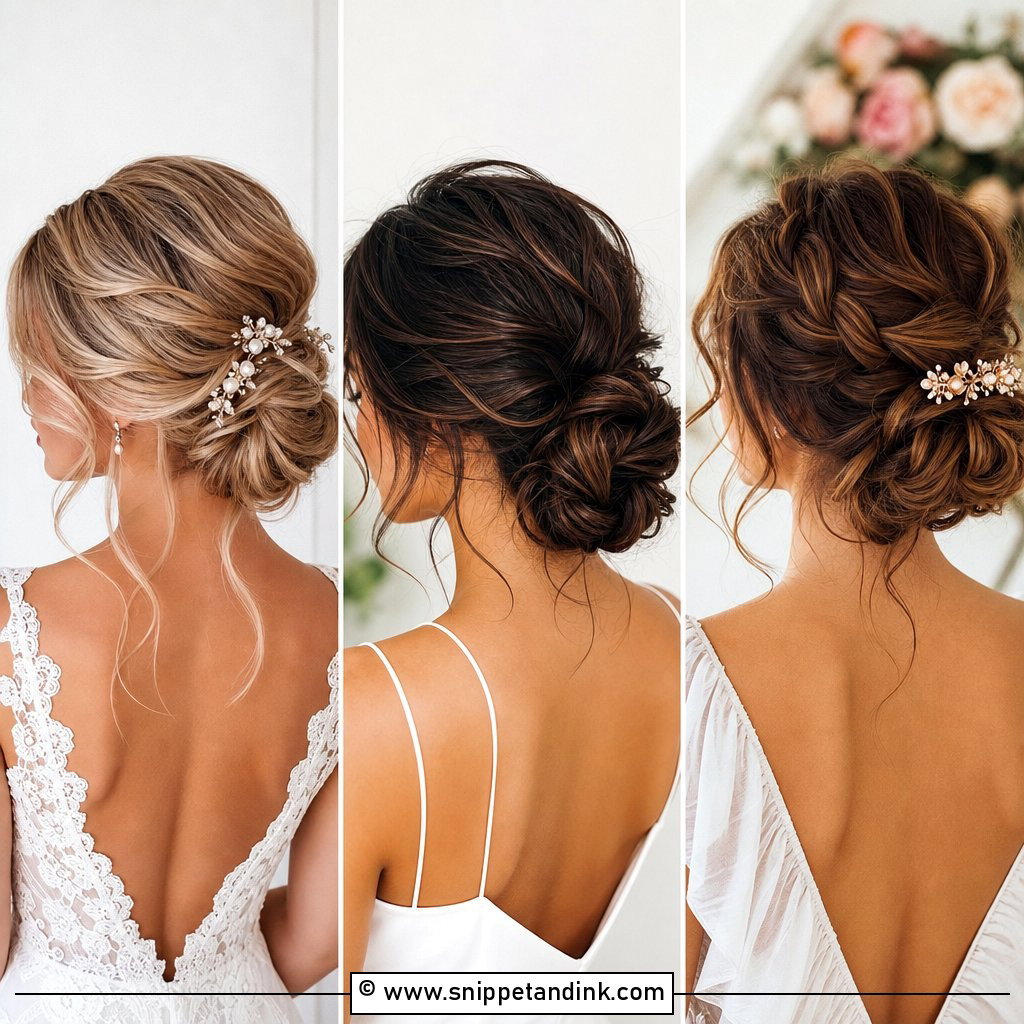
15. Wedding High Bun With Fringe
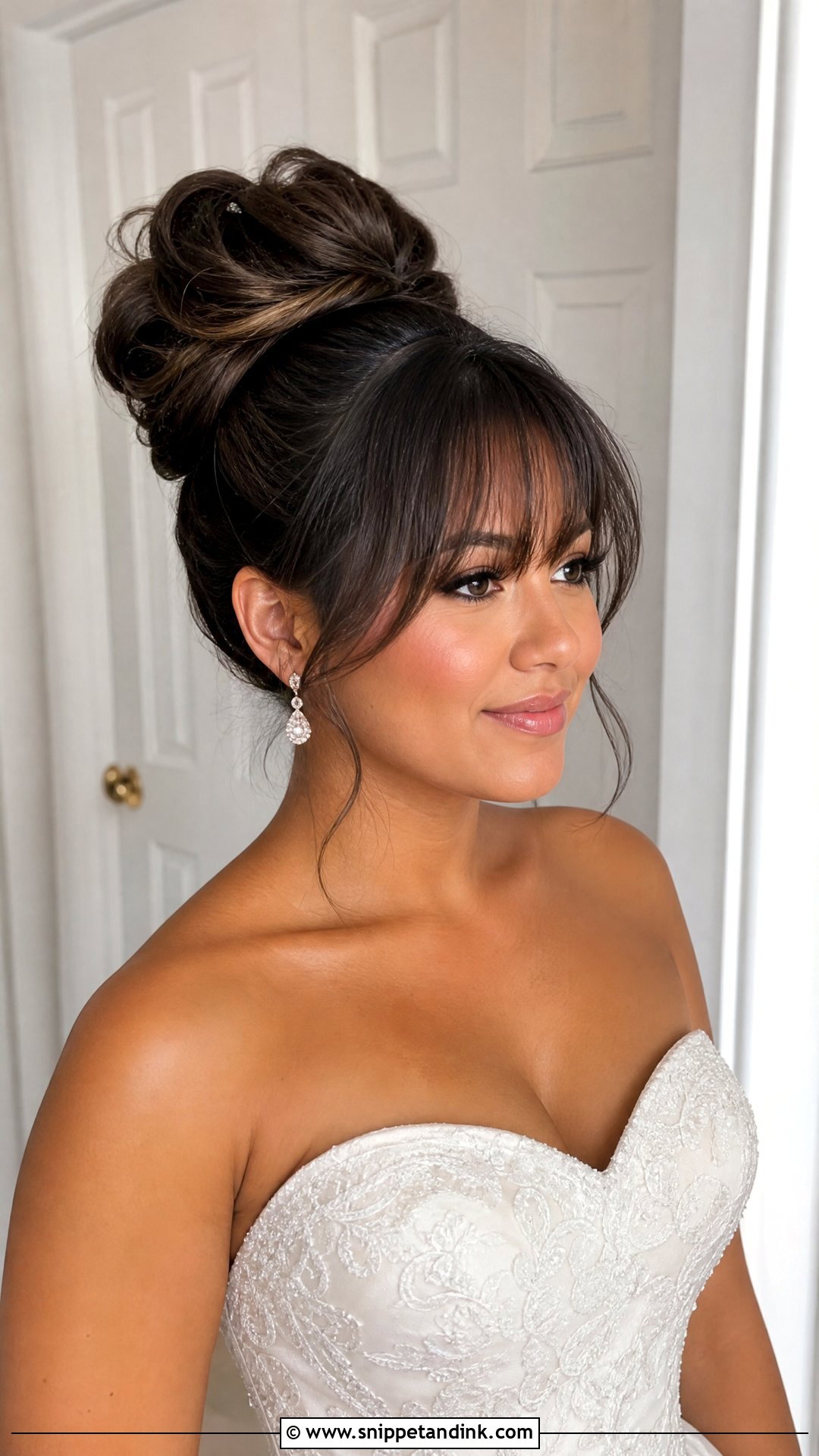
Lifting the hair into a high bun opens the neck and shoulders, and a fringe keeps the front from looking too exposed. The bun sits at the crown or slightly behind it. Earrings, a veil or a detailed bodice all get room to show. A full fringe makes it bold, curtain fringe more romantic, and the bun can be smooth, braided or textured. I always style the fringe before finalizing the bun; pulling hair up for a high bun shifts the hairline, and the fringe needs to sit right first.
16. Wedding Long Hair With Bottleneck Fringe
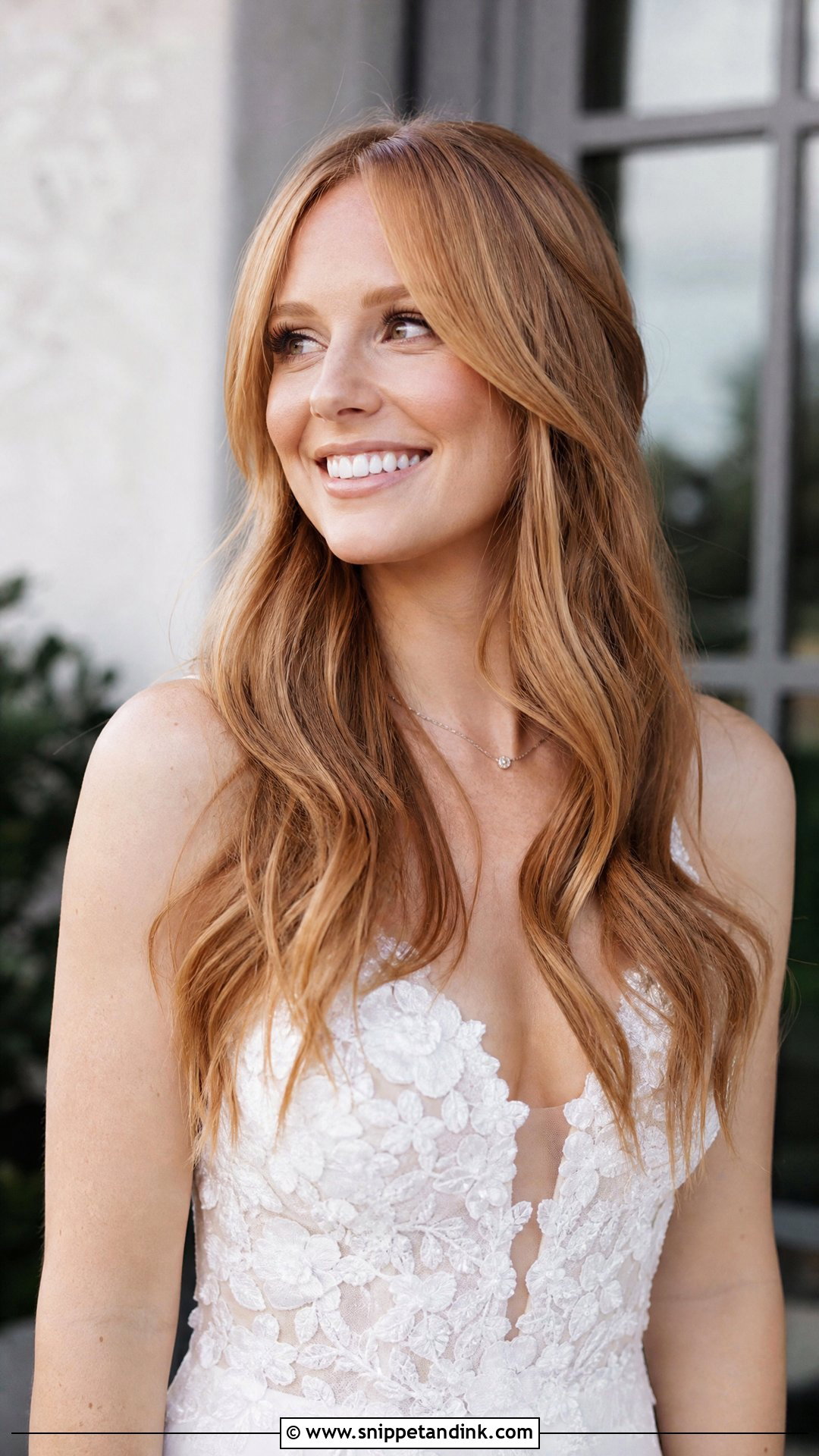
Bottleneck fringe is narrower in the center and longer at the sides, so it frames the face rather than covering the forehead. On long hair, it pairs with loose waves, soft curls or a half-up shape, and its longer edges blend into the front layers. It suits brides who want bangs but also want movement around the cheeks and jawline. I give the fringe only a slight bend; curling it fully turns it into two curtains and loses the shape.
17. Wedding Short Hair With Micro Fringe
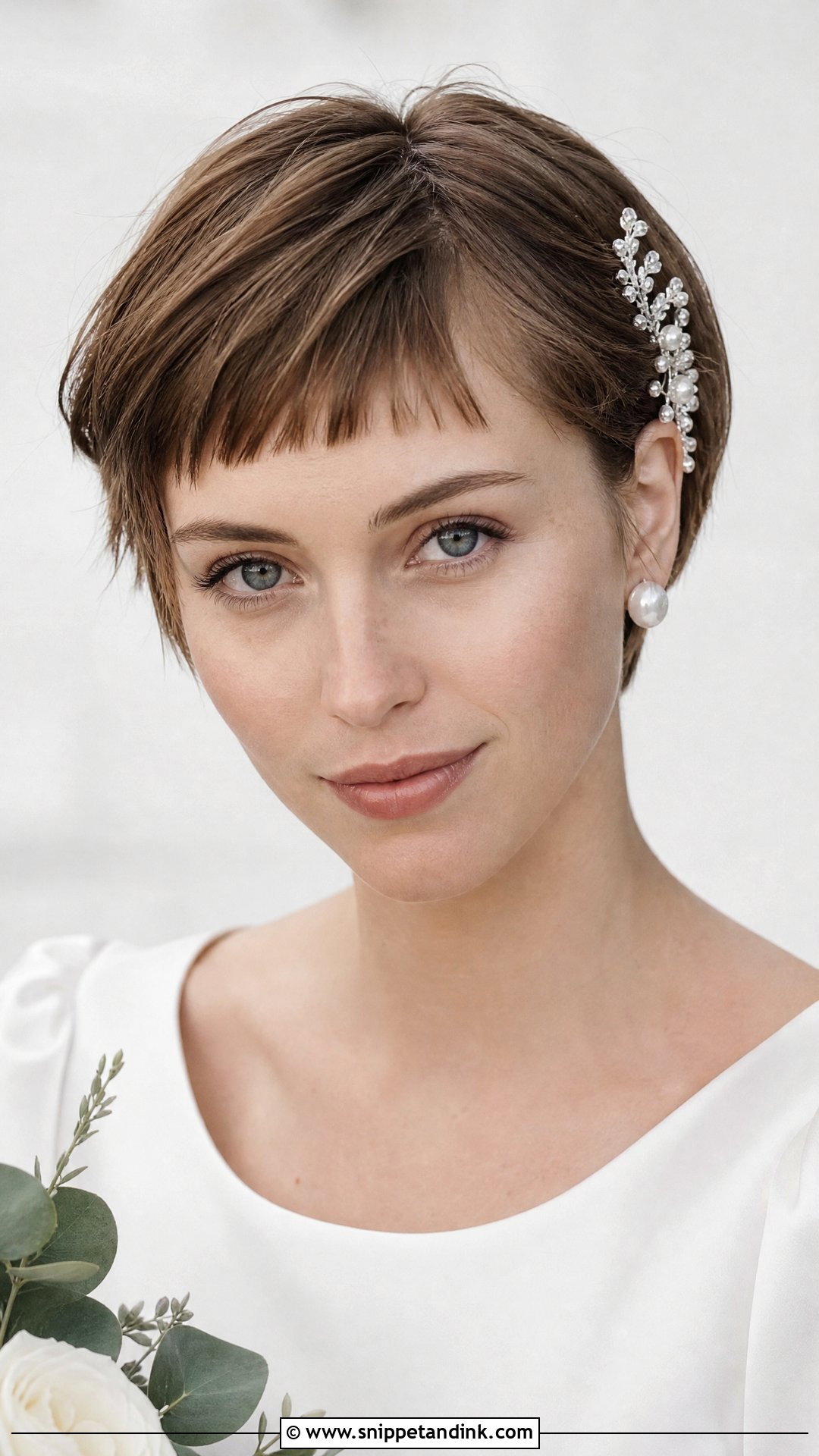
A micro fringe sits well above the brows, so your eyes and brows become the feature. It goes with pixie cuts, bixie cuts, short bobs and textured crops. The finish needs to look intentional: shine, smooth edges and a tiny amount of paste for shape. A small comb, slim headband or delicate veil makes it ceremony-ready. Micro fringe hides nothing, so it isn’t for someone unsure about it; I’d never cut one for the first time in the months before a wedding.
18. Wedding Loose Curls With Fringe
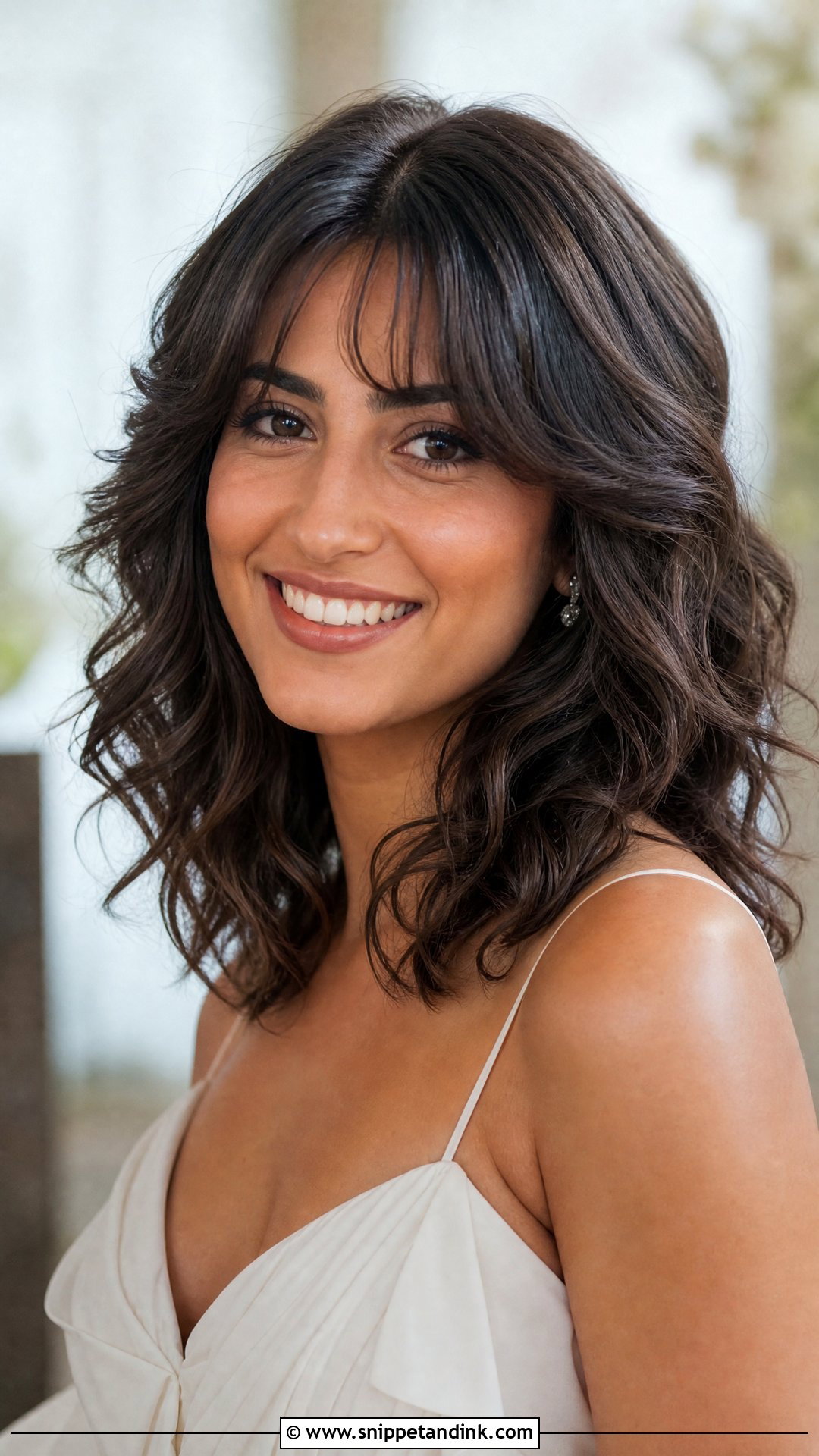
Loose curls with fringe suit bridesmaids, guests and brides who want movement without an updo. The curls add body through the lengths; the fringe frames the upper face and can be feathered, parted or swept depending on face shape. I brush curls out into soft waves unless tight curls are your natural texture. Down styles with fringe fight one thing over the day: hair touching the face. Flexible spray holds the curls, and a pin behind one ear keeps them from sticking to lip gloss.
19. Wedding Bun With Face Framing Fringe
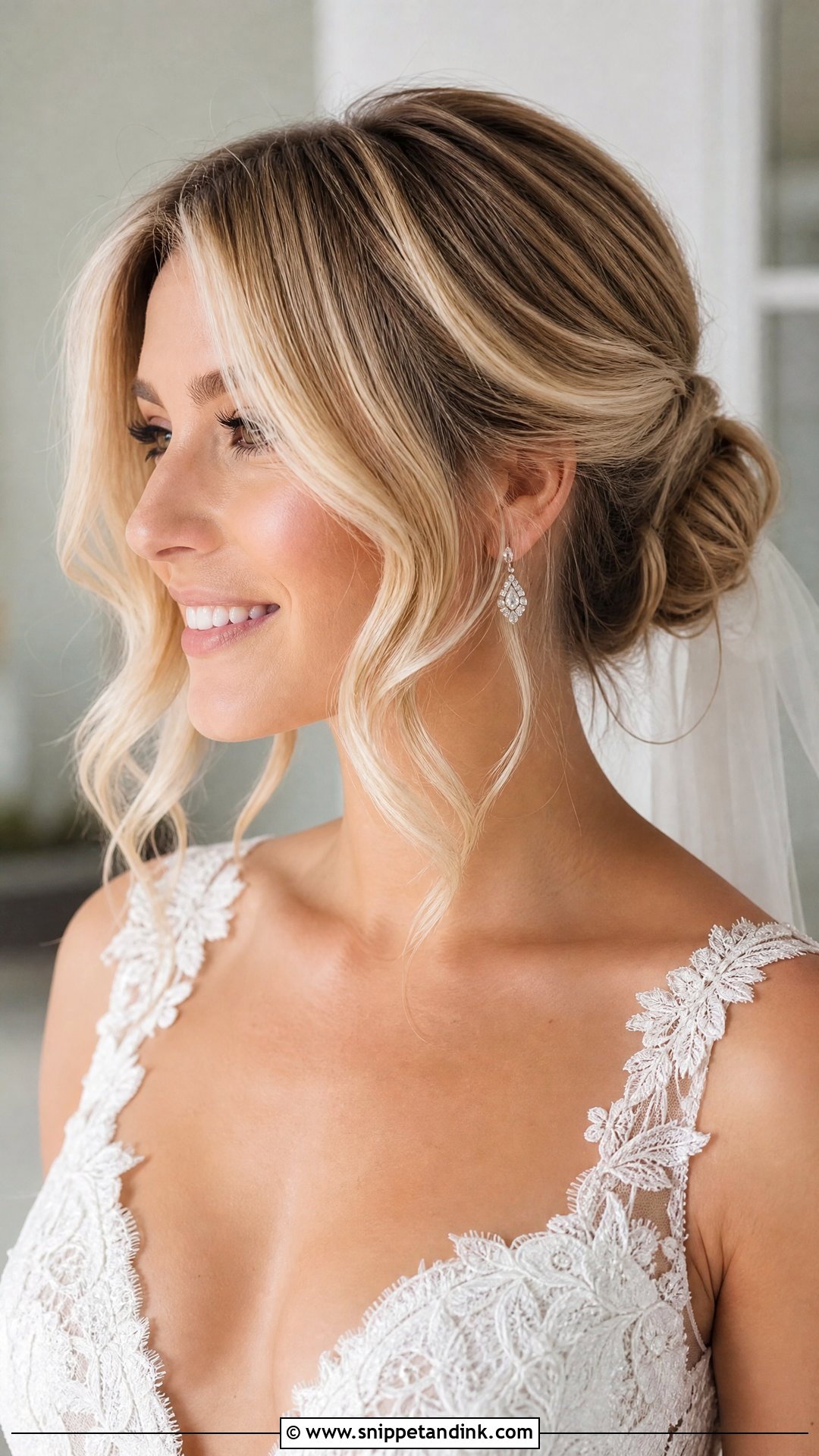
If you feel exposed with a full updo, this is my answer. A bun with face-framing fringe softens the forehead, cheeks and jaw and still keeps the neck and shoulders open. The bun can sit low, mid-height or slightly undone. Face-framing pieces should be chosen and shaped at the start, not tugged out at the end; random strands pulled loose last look accidental. Light, shaped pieces pair with almost any dress.

20. Wedding Veil Hair With Fringe
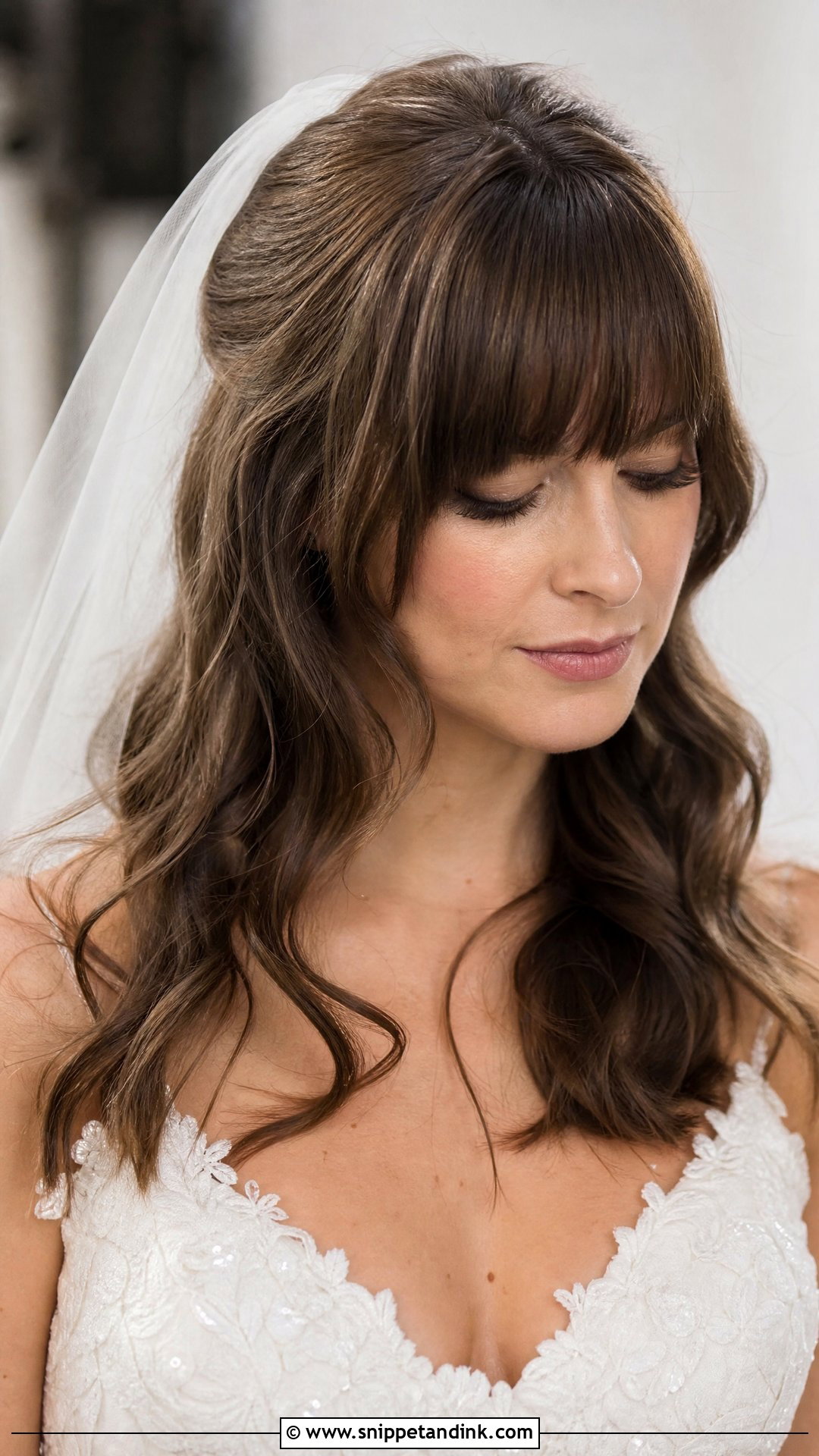
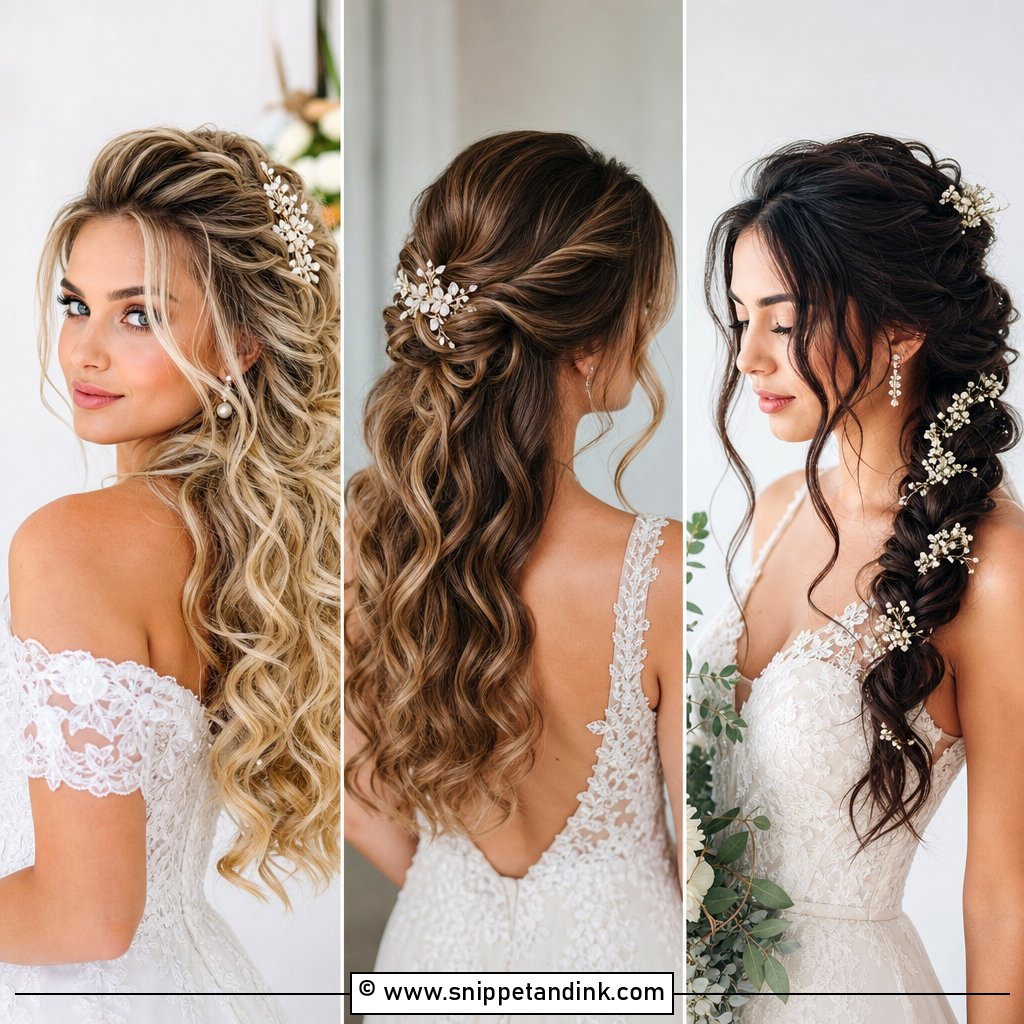
Veils and fringe need to be planned together so the bangs stay visible and the veil stays secure. A fringe works with waves, low buns, half-up hair, bobs and ponytails. I place the veil behind the fringe area, usually at the crown or above the bun, so the front doesn’t look crowded. Shape curtain fringe before the veil goes in; keep full bangs smooth and slightly curved. Bring the veil to the trial. A heavy veil can drag the crown back and lift a fringe off the forehead, and that’s easier to fix at a trial than on the morning.
Halfway Through Growing Out a Fringe?
Many brides decide to grow out their bangs for the wedding, and the date lands in the awkward middle stage where the fringe hits the eyes or cheekbones. That’s workable. A grown-out fringe at cheekbone length is basically curtain fringe; I part it at the center and bend each side away from the face. If it’s past the cheekbones, it becomes a side sweep or face-framing piece.
If you’d rather have no fringe at all, I can twist or braid it back along the hairline and pin it under the rest of the style. That only works if it’s long enough to reach the pinning point, usually past the ear, so test it at the trial.
Trims and timing
Book a fringe trim a week or two before the wedding. Avoid trimming it yourself the night before, which brides do surprisingly often when nerves set in. Bangs shrink as they dry, and a home trim on wet hair almost always comes out too short. If it’s slightly too long on the morning, I can blow-dry it to sit higher; if it’s too short, there’s little I can do.
Treat the Fringe as Part of the Hairstyle
A fringe should frame your face, suit the mood of the dress and look like it belongs to the rest of the style. Soft curtain bangs go with buns and waves. Wispy fringe softens low updos. Full fringe makes waves and bobs more striking. Curly fringe brings your natural texture into the look, and micro fringe makes a fashion statement. Pick the one you’re comfortable wearing for twelve hours. Book a trial, bring the veil or accessories, and don’t change your bangs at the last minute. Prepared well, the fringe can be the detail people remember.
You'll Like These Ideas:



Leave a Reply