
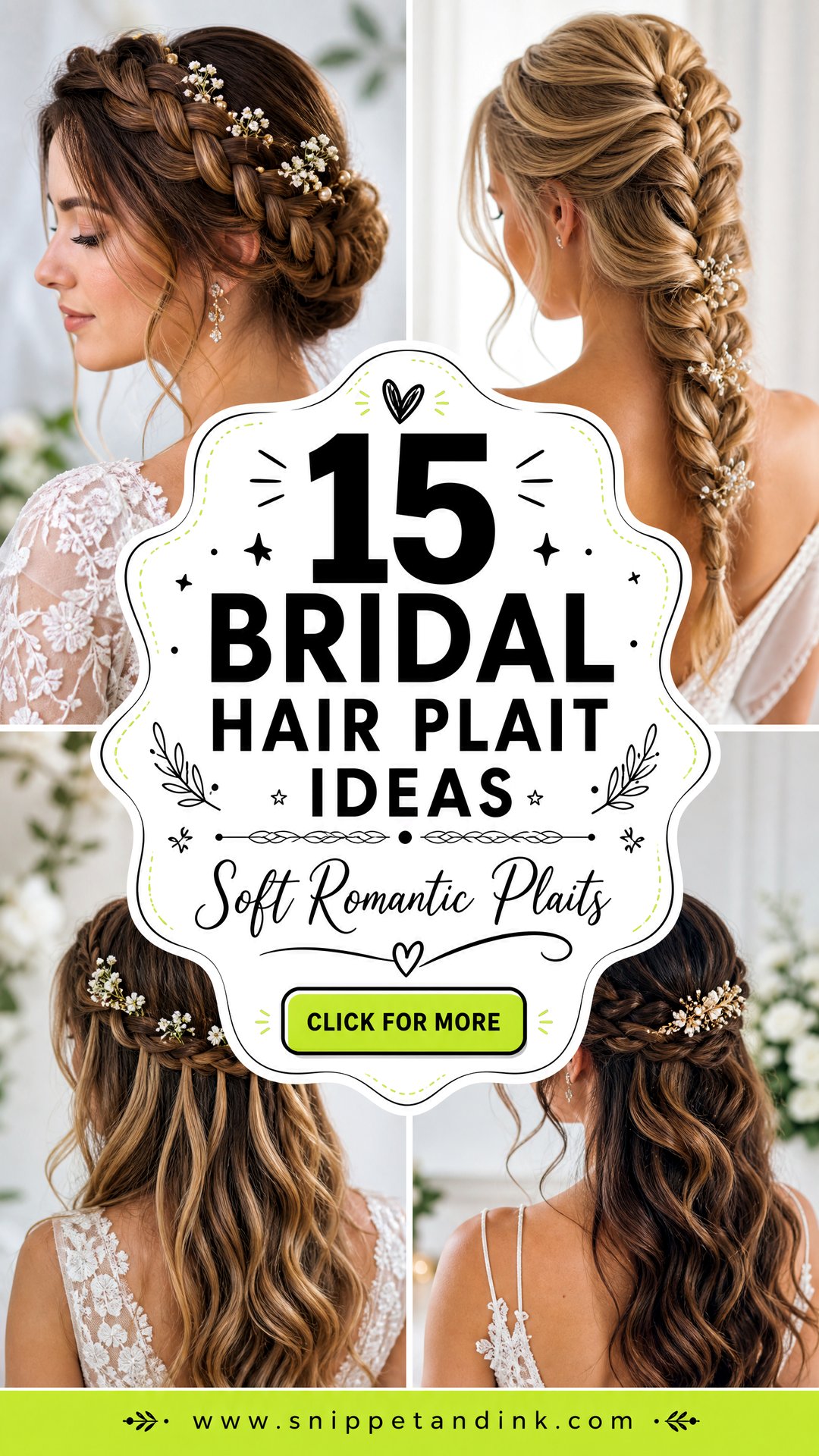
If I had to pick the hairstyle most likely to look the same at midnight as it did at the altar, it would be a plait. Braids hold their shape through hugs, wind, a sweaty dance floor and a dozen veil adjustments in a way loose curls rarely do. They also take on whatever mood you give them: pulled apart and soft for a garden ceremony, sleek for a city hotel, heavy with jasmine and gold for a traditional South Indian wedding. Veils, pearls, ribbon and fresh flowers all sit happily in a braid. Below are fifteen plaits, from fishtails and halos to box braids, with notes on who each one suits.
Your Length and Density Decide the Plait More Than a Photo Does
Most of the fat, cushiony braids you’ll see in inspiration photos have help. Either the hair is very thick, or there are clip-in extensions hidden inside, or both. I tell every bride this before she falls for a look, because the same fishtail on fine, shoulder-length hair comes out half the width and twice as tight.
Fine or thin hair
Pancaking, where I gently tug the edges of each loop outward, makes a thin braid look much fuller, but it has limits. A couple of wefts of clip-in hair matched to your colour can double the volume of a side plait or crown braid. Ask at your trial whether your look needs them, and buy them early enough to be colour-matched and trimmed.
Layered or shoulder-length hair
Short layers tend to poke out of the braid by mid-afternoon. Plaits that run along the head, like Dutch, French or halo styles, catch short layers more easily than one long braid hanging down the back. A light wax stick smoothed over the finished braid tames the spikes.
Very thick or long hair
A crown or halo plait made from a lot of hair can get heavy, and some brides end up with a sore head by the speeches. I’ll thin the braid by leaving some length down, or split the hair into two smaller plaits pinned in a ring.
Curly and coily hair
Natural curls usually braid best on hair that’s been stretched first, by blow-drying, banding or a twist-out, so the plait looks defined rather than fuzzy. Keep edges and parting smooth with a little gel, and plan a satin scarf for the night before.
1. Bridal Fishtail Plait
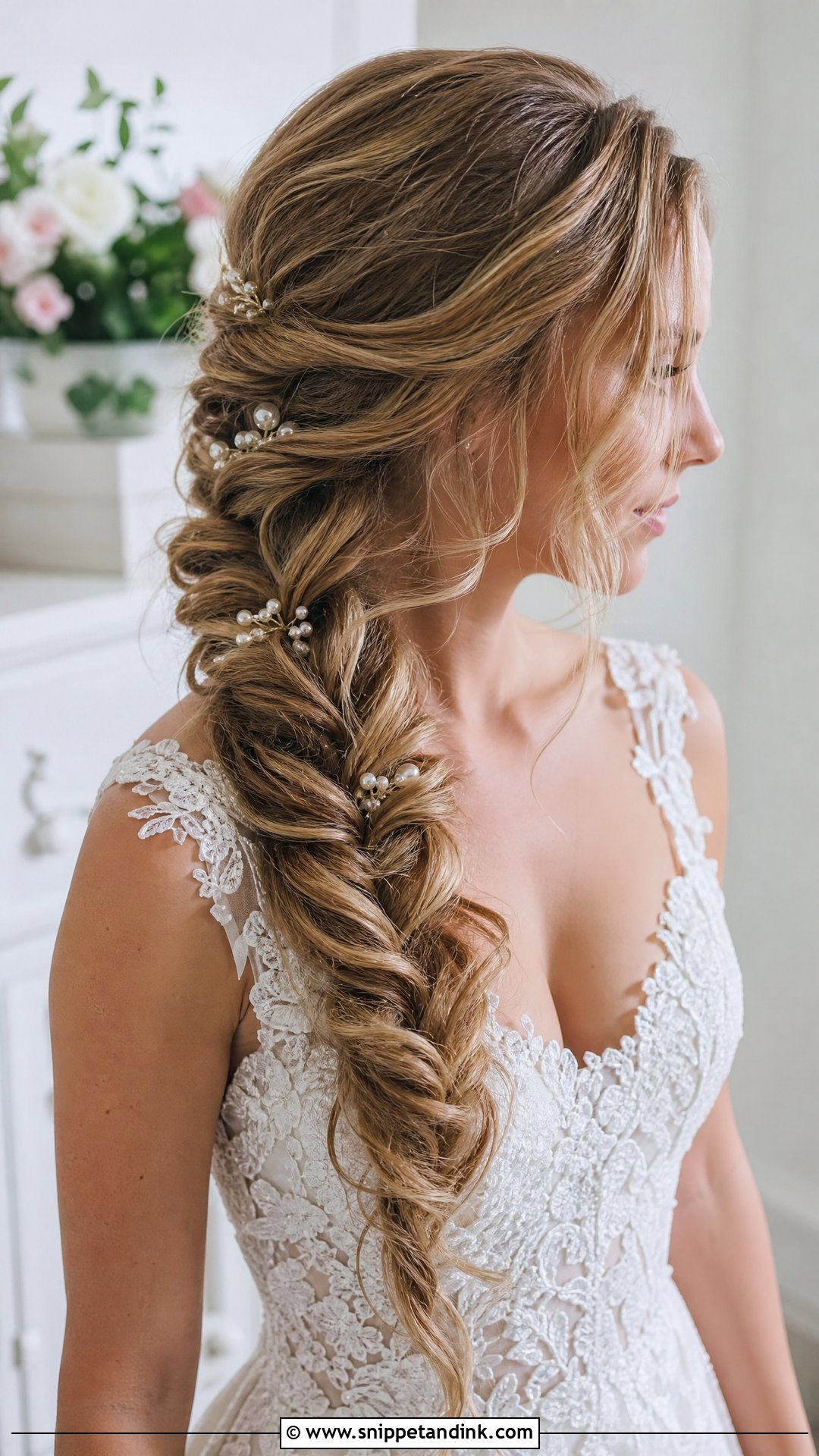
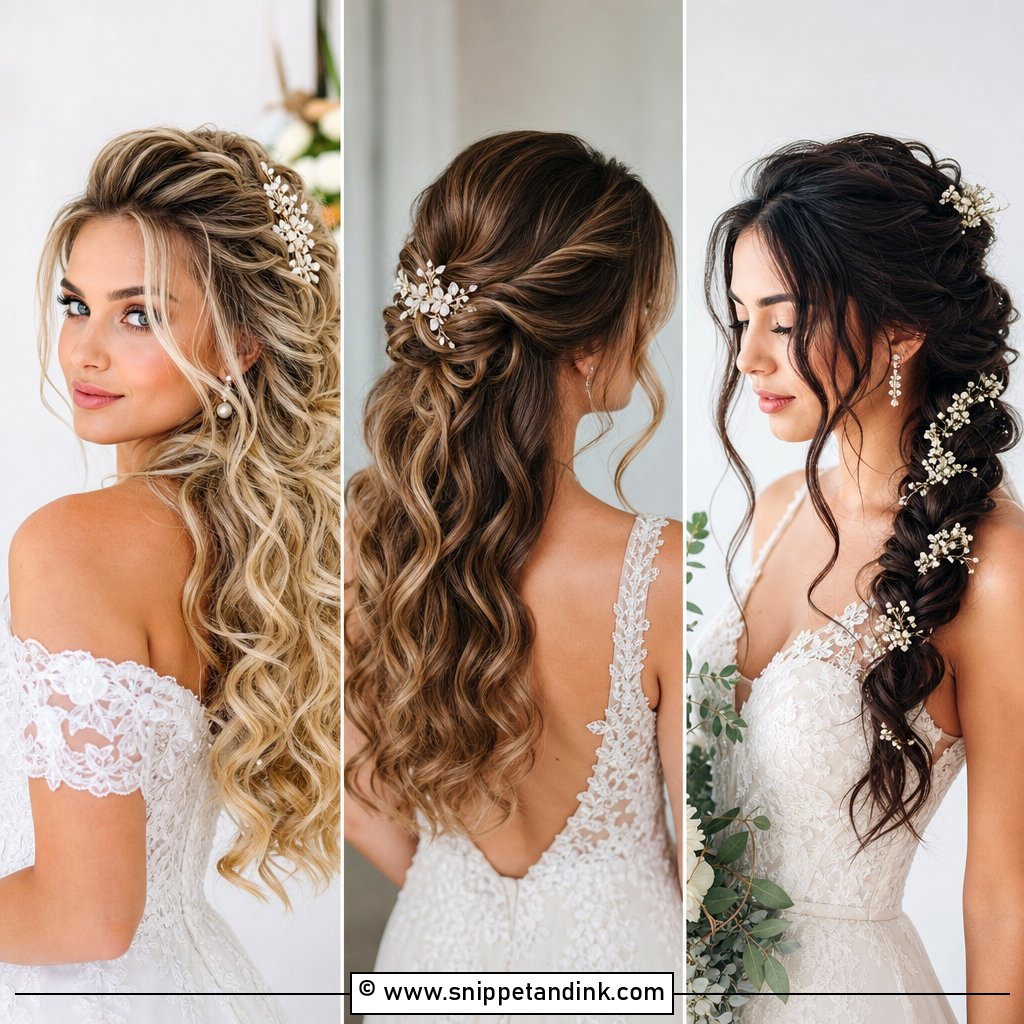
A fishtail is built from two sections instead of three, which gives that fine herringbone texture and makes it look more delicate than a classic braid. It needs length to show, ideally hair that reaches past the shoulder blades. Once it’s secured, I pull the outer edge of each stitch outward a little; on fine hair that alone can make the plait look twice as thick. Worn over one shoulder, the pattern faces the camera in portraits. A few pearl pins or tiny flower stems slide neatly between the stitches.
2. Bridal Side Plait
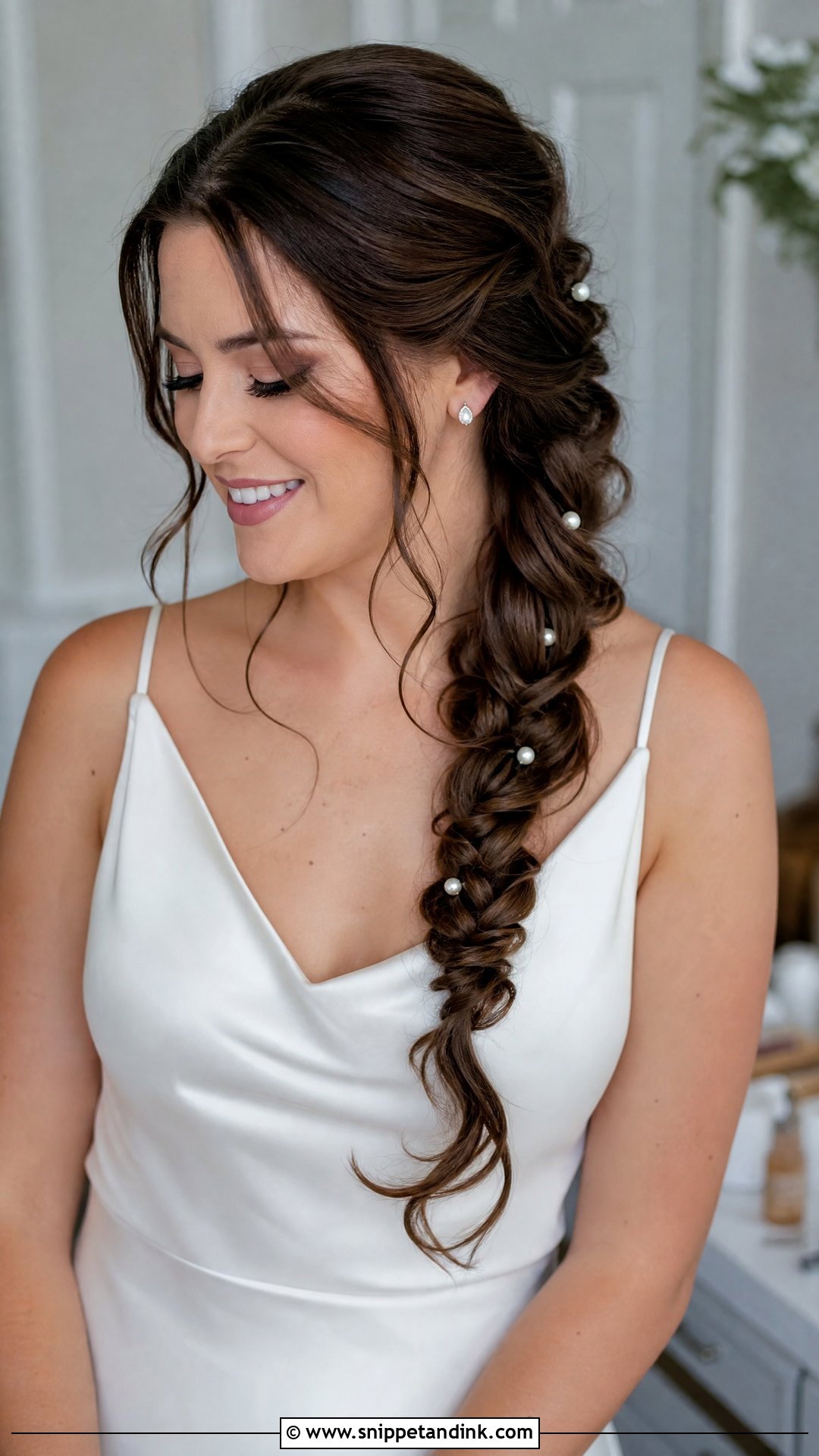
A bridal side plait resting over one shoulder frames the neckline and keeps the hair under control. It earns its place with open backs, detailed bodices and one-shoulder dresses, because the braid becomes part of the outfit rather than covering it. I curl the hair before braiding, then braid loosely, so the plait has body instead of looking flat and school-day neat. Decide the shoulder at the trial: if your bouquet arm is on that side, it will crush the braid in every processional photo.
3. Bridal Crown Plait
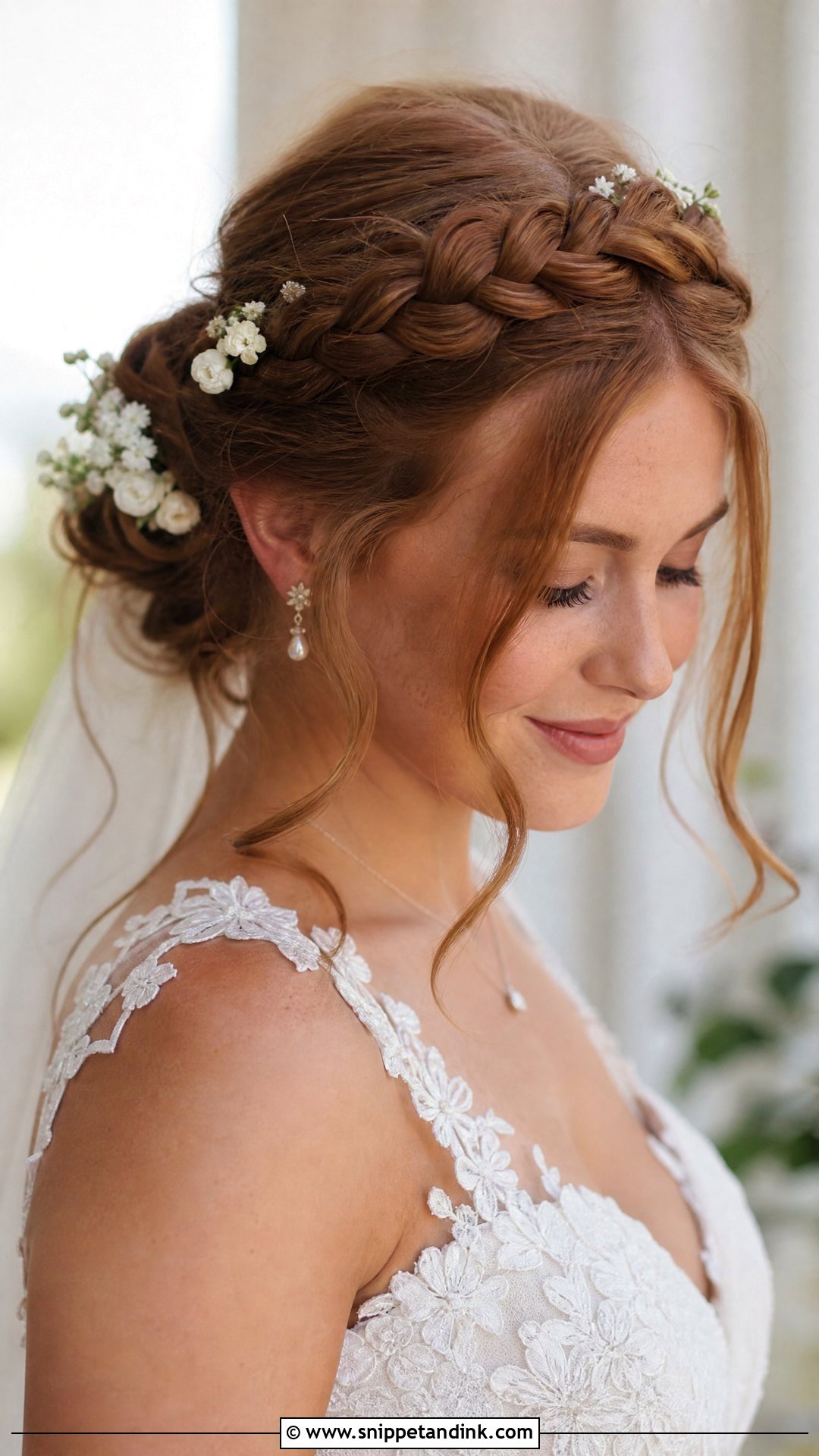
A crown plait wraps around the head like a band, so the face and neck stay completely clear. That’s why I suggest it for hot outdoor ceremonies and very long days: there’s nothing to drop and nothing touching your neck. It can be smooth and polished or pulled out into an airy texture. Layered hair needs a little extra care here, because the shortest layers at the nape tend to escape first; I pin those under before I braid. Drop earrings show off well with it.
4. Bridal Halo Plait
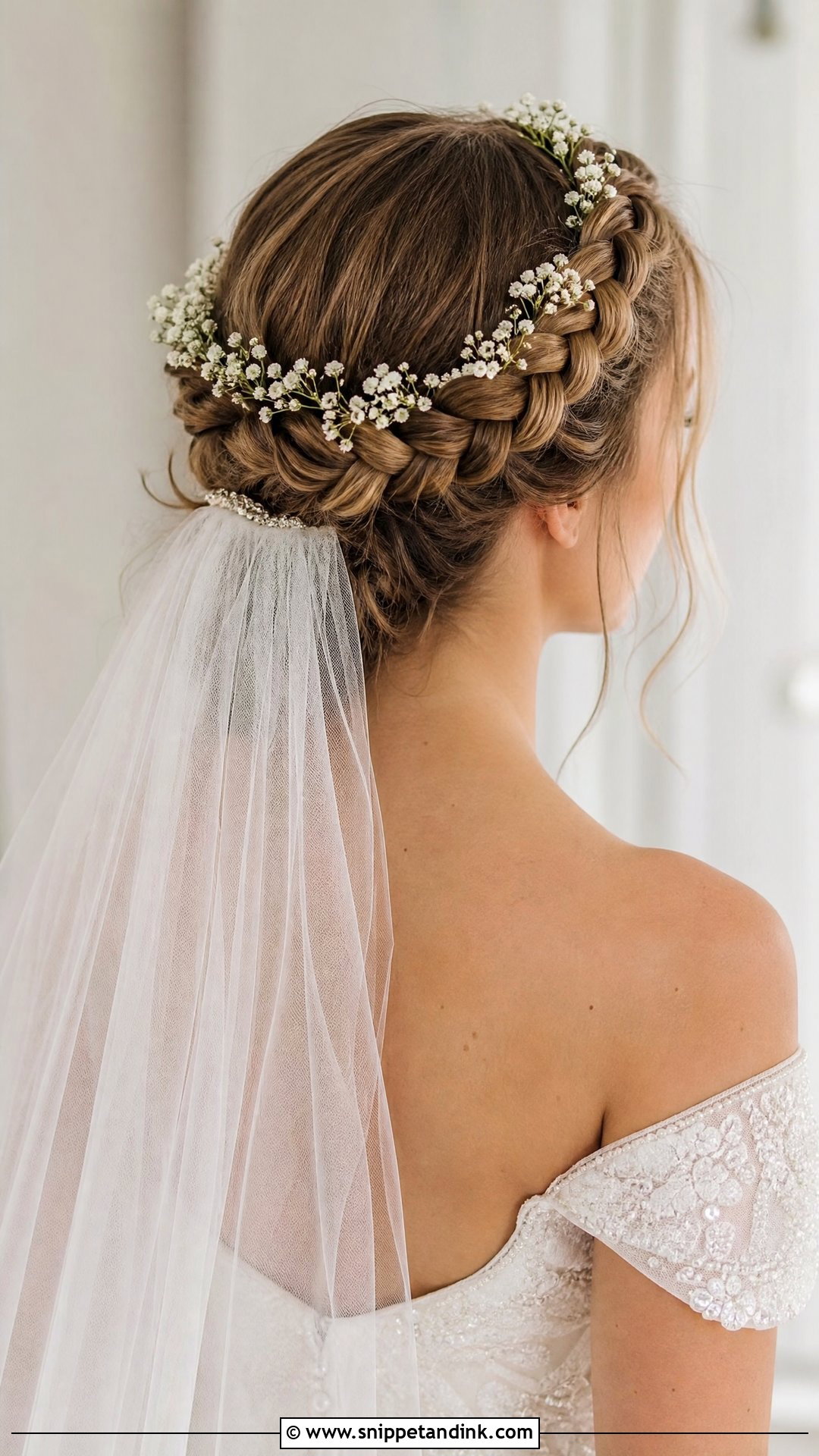
The halo plait is the crown braid’s softer cousin, rounder and more relaxed, and it sits lower at the back. That lower line leaves room for a veil comb to slide in underneath without hiding the braid. Fullness is the whole look. I prep with texture spray, braid, then gently pancake every loop before pinning it in place with pins hidden under the braid itself. Tiny white flowers or pearl pins tucked around the circle finish it without adding weight.
5. Bridal Plaited Bun
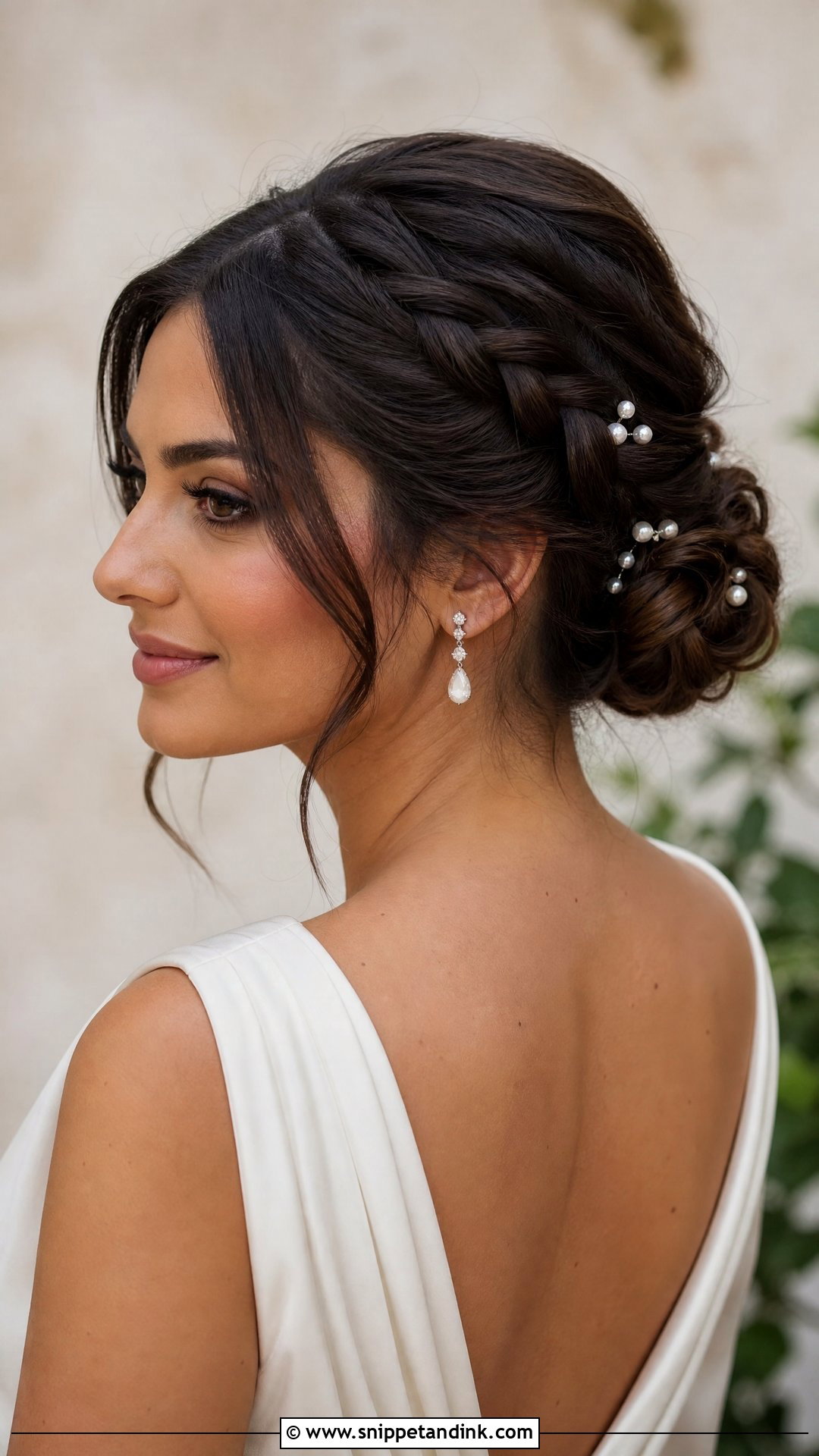
A plaited bun gives you the security of an updo with visible braid detail. The plait can wrap around the bun, cross the crown or be woven into the knot. On windy venues and summer days it’s one of the most reliable styles I do, because every strand is tucked and pinned. I keep the bun low if a veil is going in, since a high bun pushes the comb up and makes the veil stand away from the head. Some looseness at the front stops it from feeling stiff.
6. Bridal French Plait
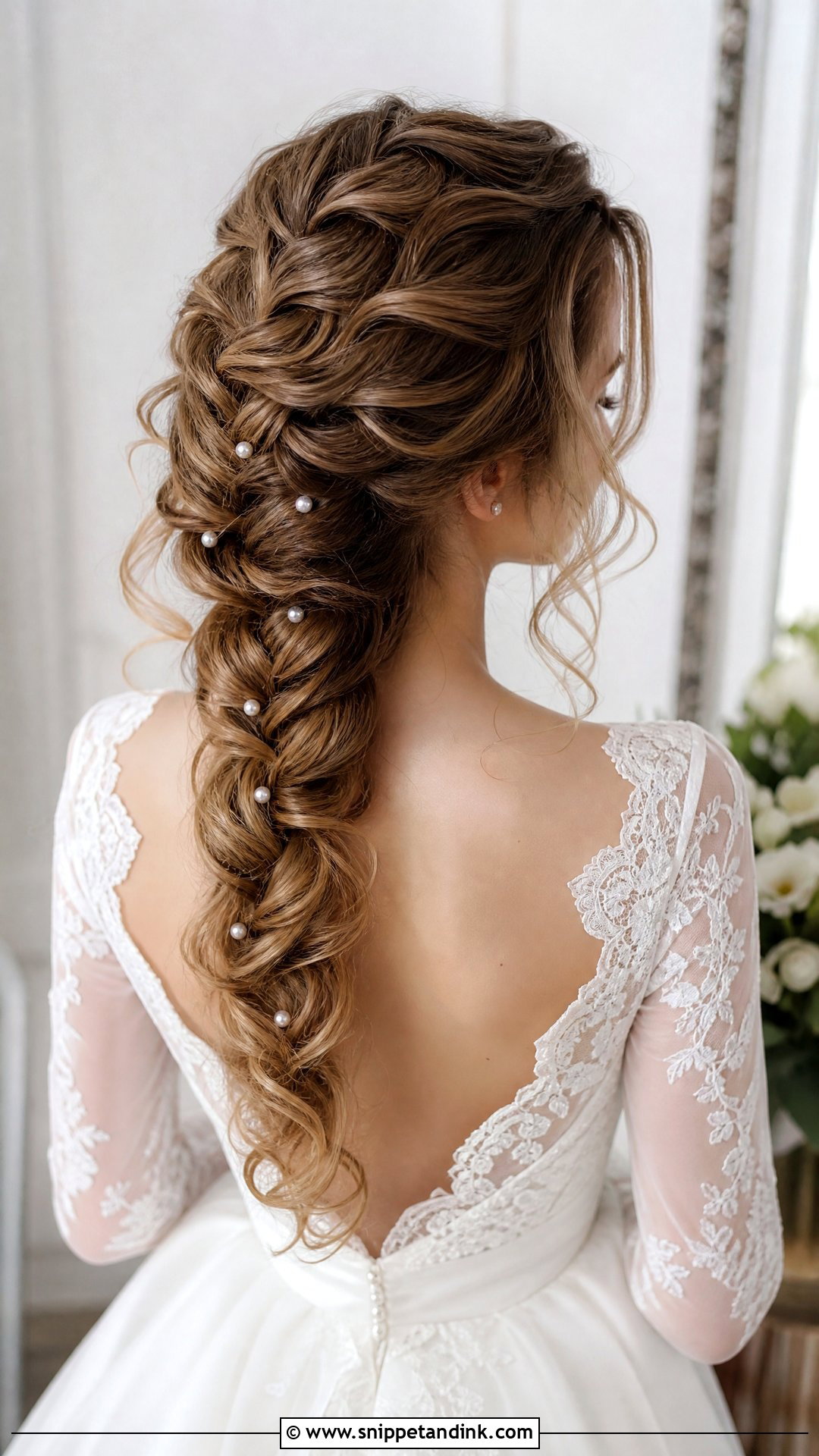
French plaits start at the crown and gather hair in as they travel down, and that built-in structure is why they suit thick hair so well: the weight gets spread along the head instead of hanging from one point. For a softer bridal finish, I leave a little lift at the crown and loosen the braid through the length. Down the back reads traditional; angled to one side, the guests see more of it. A few pearl pins along the centre line are usually enough.
7. Bridal Dutch Plait
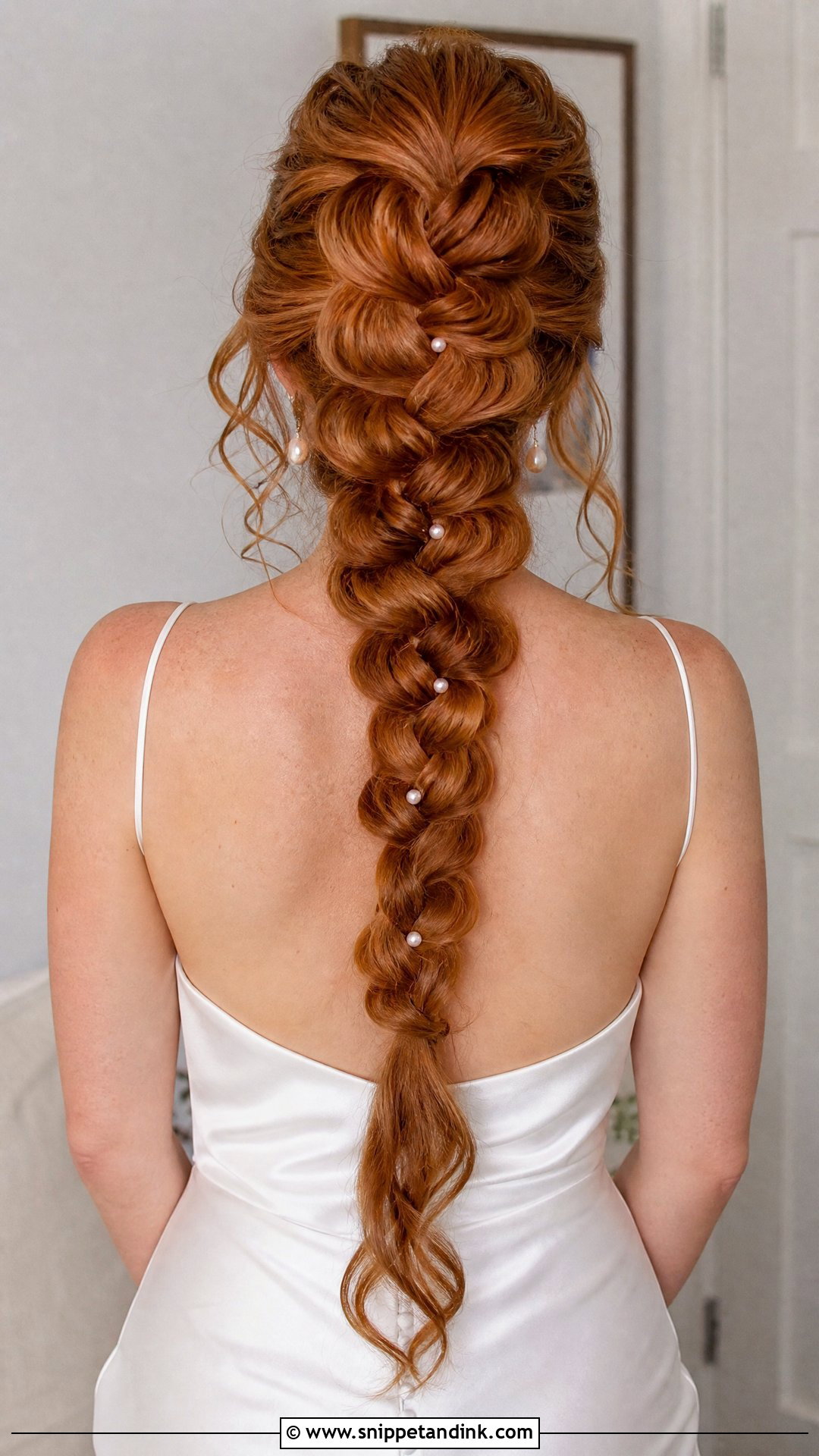
A bridal Dutch plait is braided under rather than over, so it sits raised on top of the hair and reads clearly in photos, even from the back row. Choose it when the braid is meant to be the feature. It sits well with plain satin gowns and minimal jewelry because nothing competes with it. The mistake I see most is braiding it too tight, which looks severe and can ache by evening. Braid firmly, then ease each section out.
8. Bridal Waterfall Plait
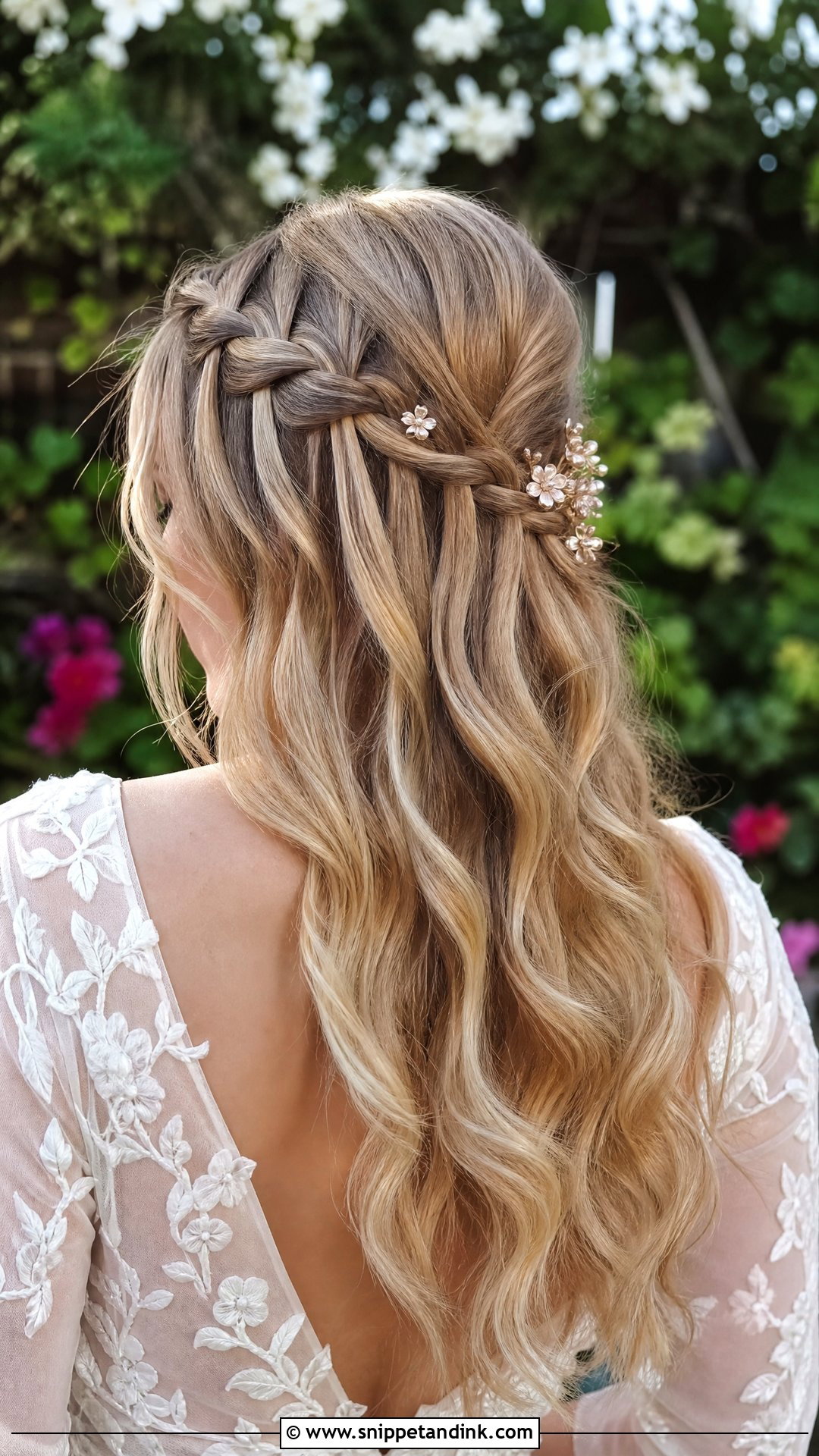
The waterfall plait lets you keep your hair mostly down. It crosses the back or side of the head, dropping a strand out at each stitch so curled lengths fall through. It shows off highlights and dimensional color especially well, because the dropped pieces fan out. My caution: it’s the most fragile braid on this list. The dropped strands aren’t anchored, so on very fine or slippery hair I add a few hidden pins under the braid line and use a flexible spray, never a stiff one.
9. Bridal Half Up Plait
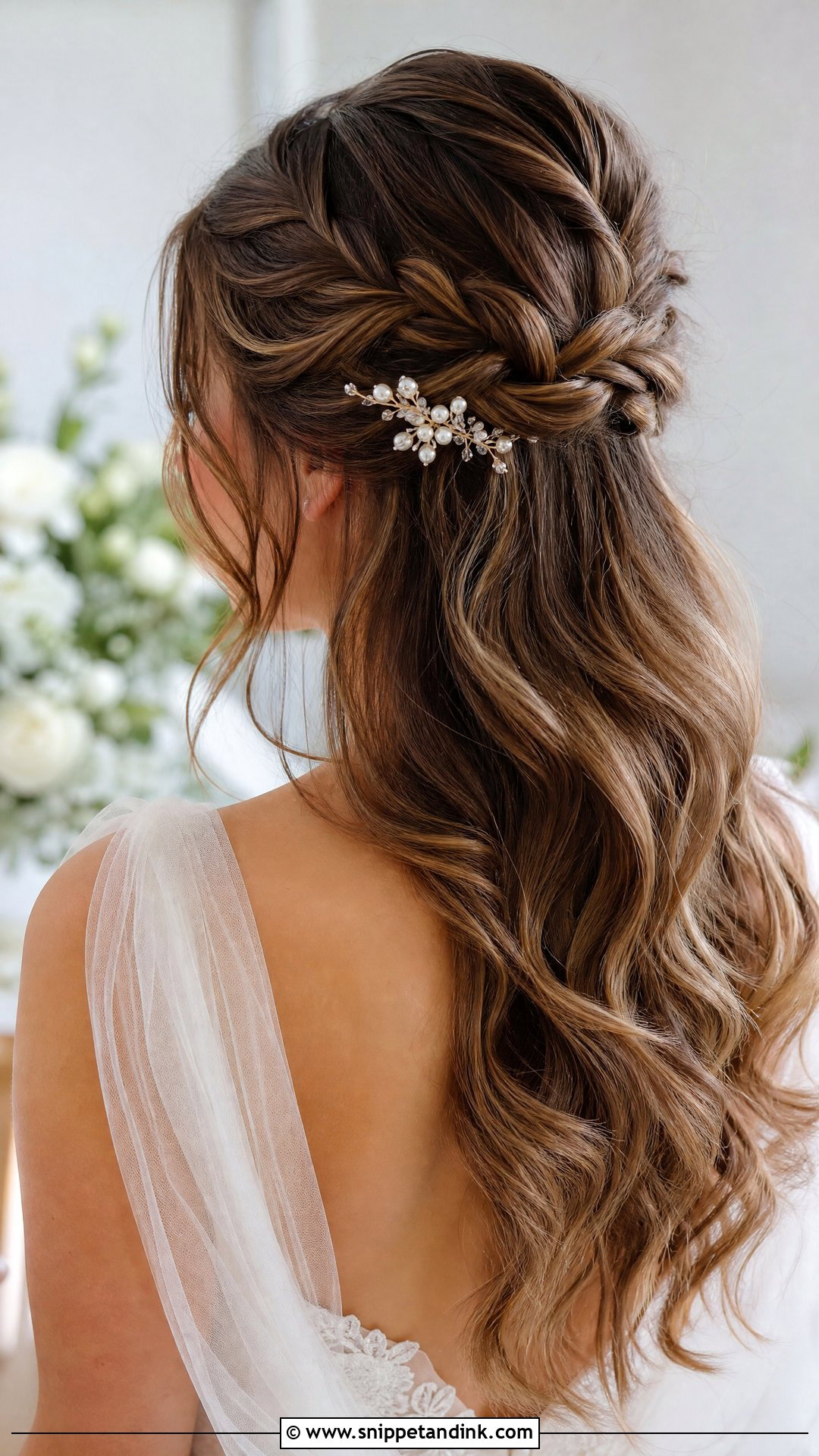
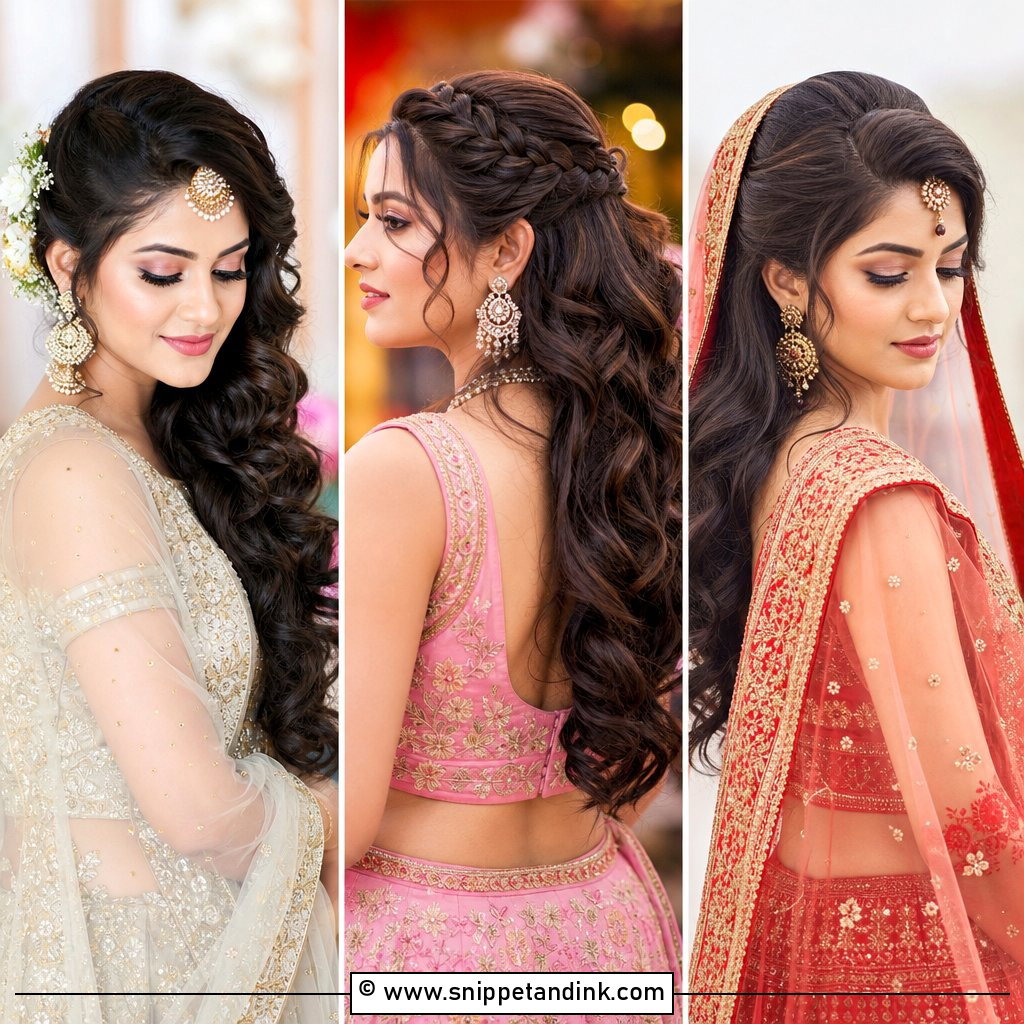
A bridal half up plait braids or twists the top sections back while the rest falls in waves. I suggest it when a bride wants loose hair but hates strands falling forward during the vows. Any braid works here, from a fishtail to a simple three-strand, depending on how much texture you want. Where the plaits meet at the back is the natural spot for a comb, pearls or ribbon, and it doubles as a firm anchor for the veil.
10. Bridal Plait Ponytail
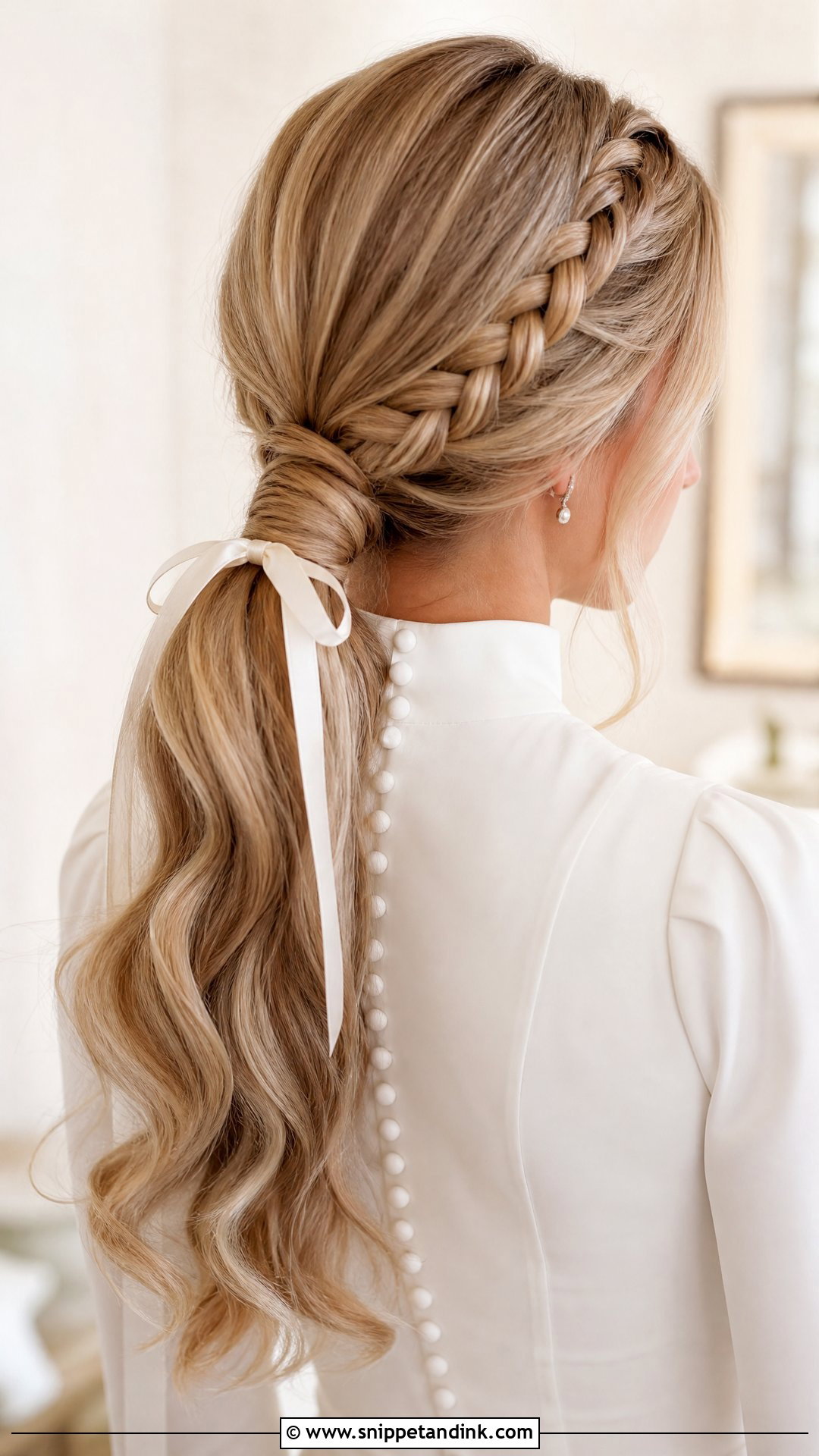
A braided ponytail is modern and comfortable, and it’s one of the few plaits I’d suggest for a high-neck dress, since it lifts the hair clear of the collar. The braid can run through the ponytail, wrap the base or start at the crown before flowing into curls. Low versions read softer; high versions read fashion-led and need more volume at the crown so the head shape doesn’t look flat. Hide the elastic with a strand of hair or a pearl wrap.
11. Bridal Plait With Ribbon
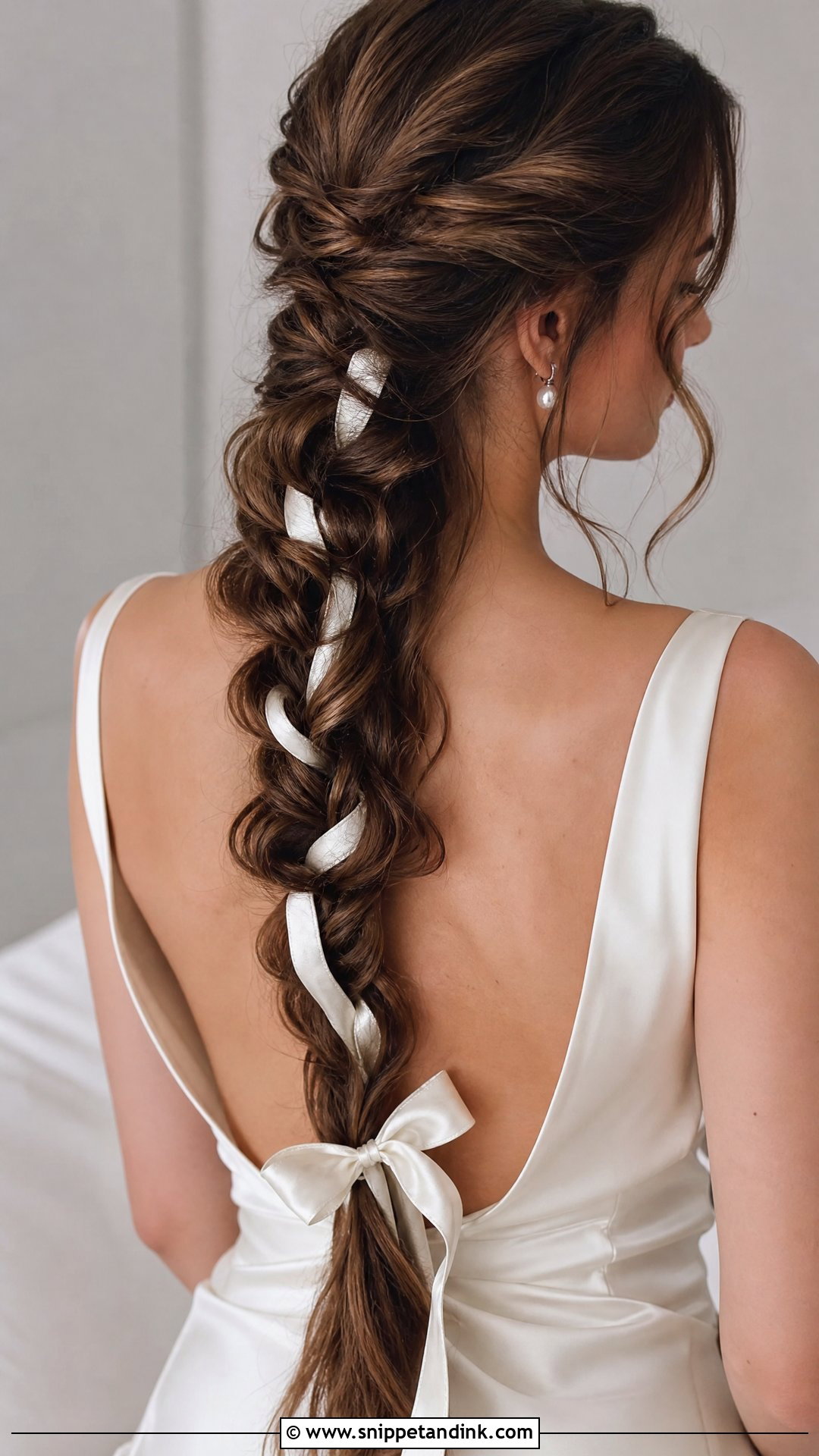
Ribbon is one of the easiest ways to carry a colour into your hair. It can be woven right through the braid, tied at the end or finished as a soft bow at the base. Ivory, champagne, blush and pale blue all work, and a strip from your dress alteration offcuts is a nice touch if your seamstress saves them. Long hair shows it off best, because the ribbon follows the braid. I thread it through as I braid rather than afterwards, so it’s locked in and can’t slide out mid-dance.
12. Bridal Plait With Pearls
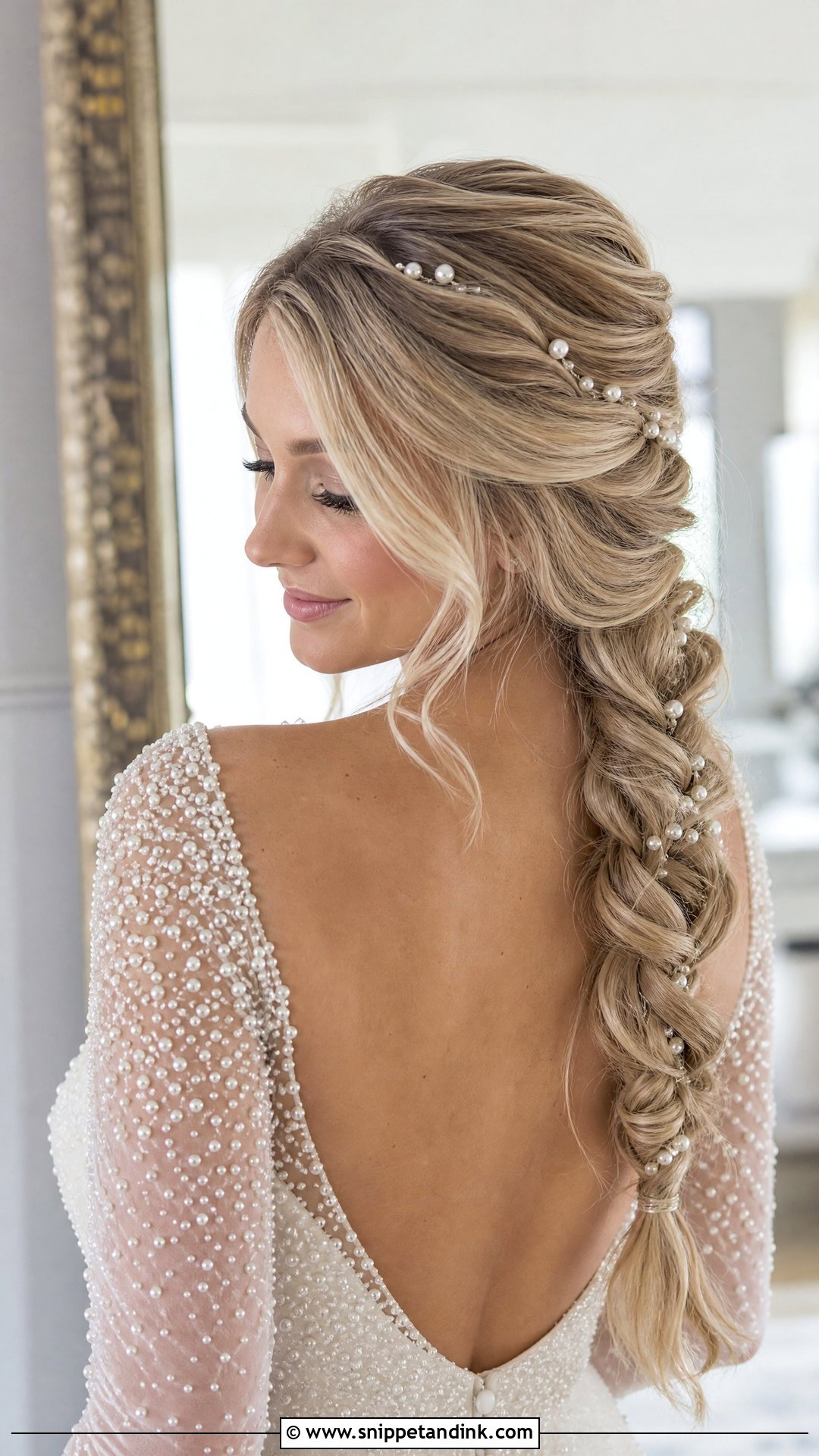
Pearls turn a simple plait into something clearly bridal without adding bulk. They can be scattered along a fishtail, placed through a crown plait or circled around a plaited bun. Spacing is the skill. I set them where the stitches overlap, because a pin pushed into the gap between loops grips better and sits flush. Too many and the braid looks busy; a handful, evenly spaced, looks considered. Keep the braid slightly full so the pearls have something to sit in.
13. Bridal Plait With Flowers
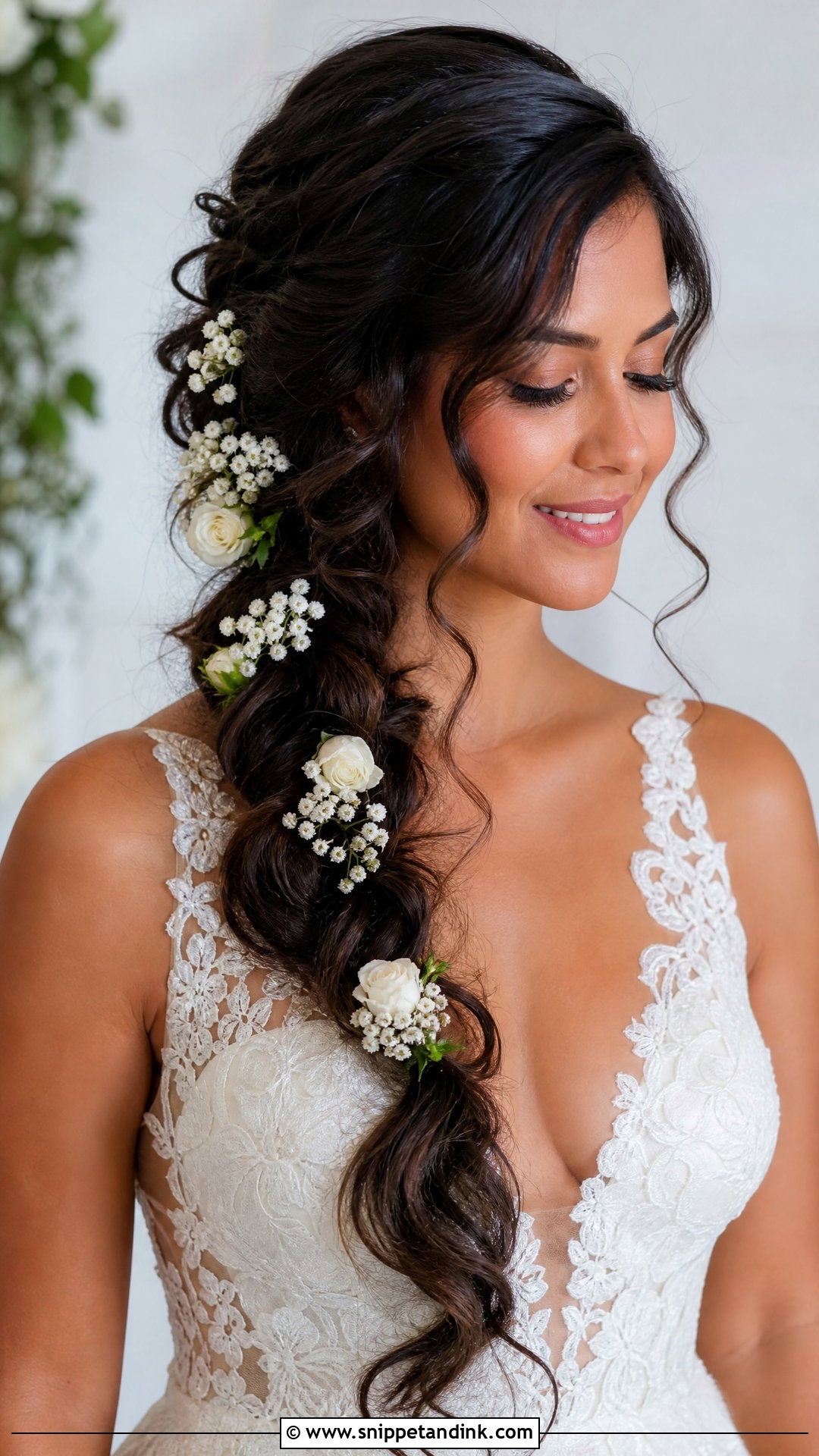
Flowers in a plait suit garden weddings, beach ceremonies and outdoor receptions. Fresh blooms can be tucked into the braid, set around the crown or added near the end of a side plait. Baby’s breath, small roses, jasmine and tiny orchids are popular because they stay small against the hair. Ask your florist and stylist to talk to each other; flowers out of water for hours need hardy varieties, and the florist should wire them for the hair. A loose braid gives each stem room to sit.
14. Bridal Box Braid Plait
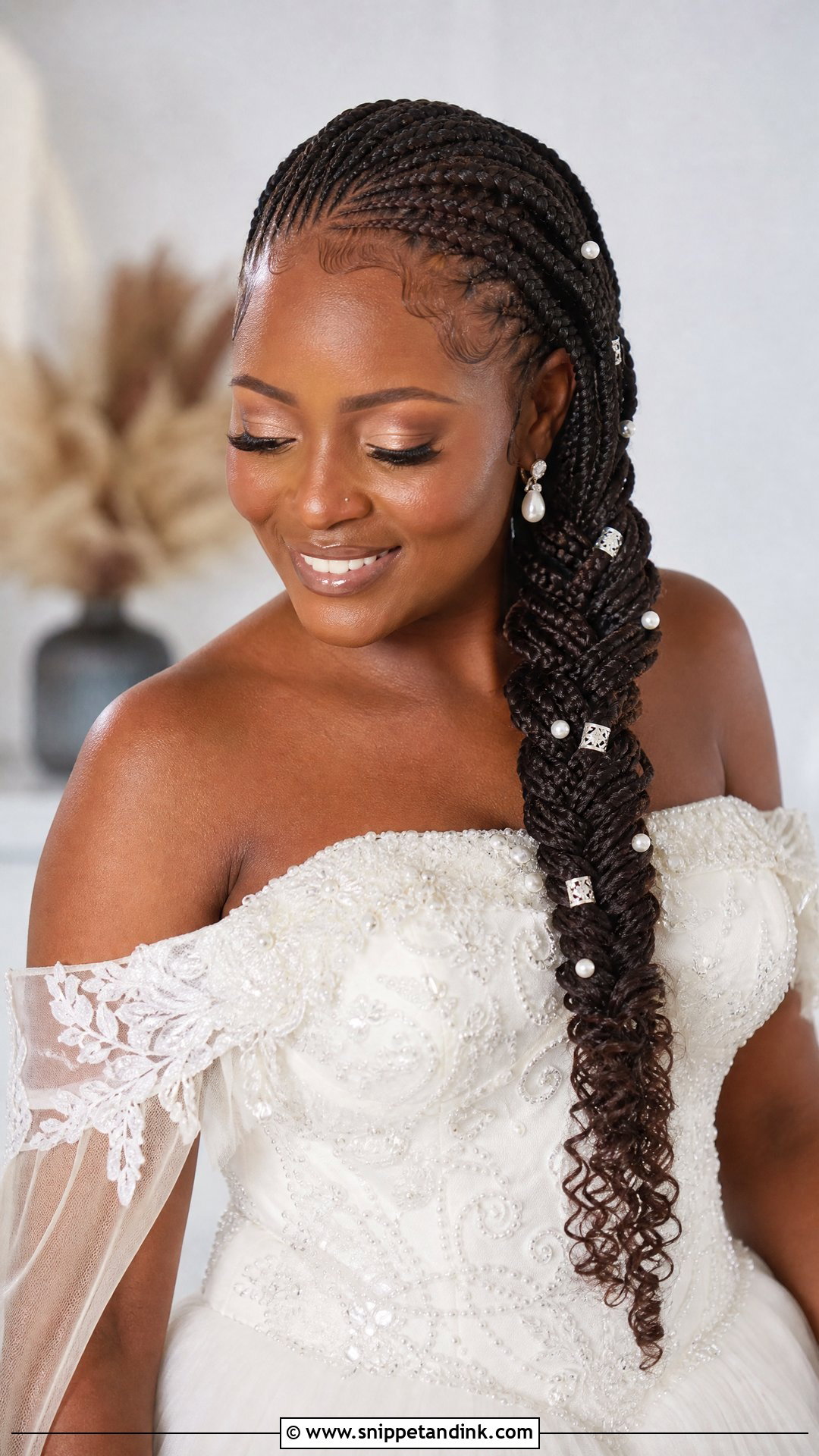
If you already wear box braids, your wedding look can build on them rather than start over. Long box braids can be gathered into one thick plait, swept into a side braid or shaped into a braided ponytail with curled ends. Because the braids are installed, this is one of the longest-lasting styles you can wear. I’d book a fresh install a few days before the wedding, not the morning of, so the scalp has settled. Smooth the edges and add pearl cuffs or gold accents along the length.
15. Bridal South Indian Plait
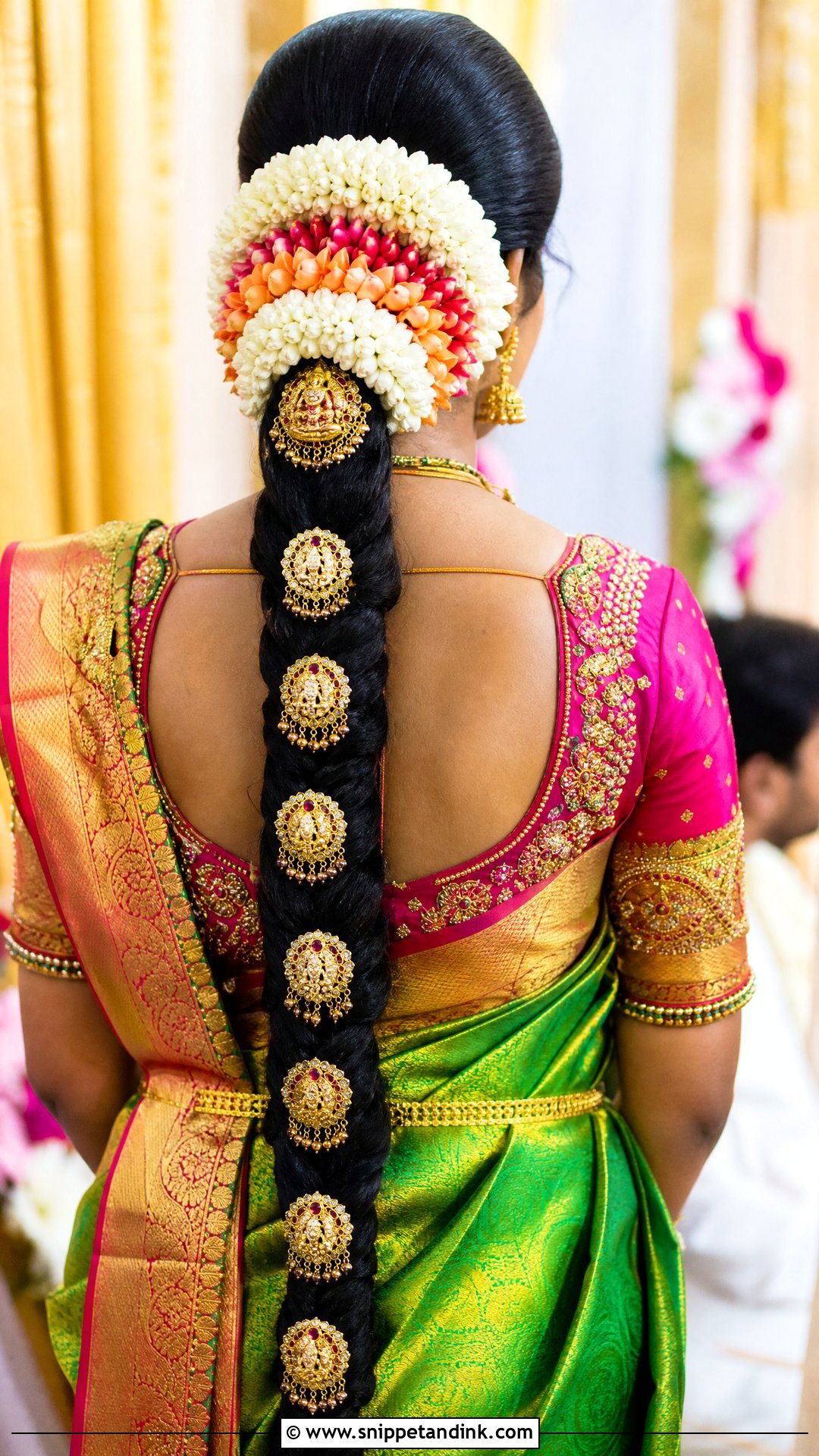
A bridal South Indian plait is ceremonial and rich, usually decorated with jasmine, gold accessories or a full braid ornament running down its length. It sits naturally with sarees, temple jewelry and detailed blouses. The crown is kept sleek and the length arranged neatly down the back, so it reads clearly in both front and back portraits. Heavy ornaments need a strong base: I braid firmly and often add extensions inside the plait, so it carries the jewelry without pulling at the scalp.
Guests Spend the Ceremony Looking at the Back of Your Head
This surprises a lot of brides. For the vows themselves, the people in their seats mostly see your back, and the photographer gets plenty of shots from the aisle. That makes a plait one of the best styles for the ceremony, because the detail lives right where everyone’s looking. It also means I finish the back as carefully as the front, with no visible elastics and no pins glinting under the veil.
A few things to settle at your trial:
- Which shoulder a side plait should fall over, so it isn’t hidden against your partner or squashed under a bouquet arm
- Where the veil comb goes. Above a crown plait it sits securely, but pushed into a fishtail it can drag the braid out of shape
- Whether fresh flowers in the braid will last until the photos. Ask your florist which blooms can go hours without water
- How it looks under a cathedral veil versus with the veil off at the reception
Taking it out without a fight
At the end of the night, find and remove every pin first, counting them into a cup if you like. Then undo the braid from the bottom up, separating sections with your fingers instead of a brush. A little conditioner or oil worked through the lengths before detangling makes it far gentler. The next morning you’ll have soft crimped waves, which make easy day-after brunch hair.
A Plait Is the Hairstyle Least Likely to Come Undone
Plaits stretch from soft garden looks to sleek hotel weddings to full traditional ceremony styles, so the real question is which one fits your neckline, length, texture, veil and how long you’re happy to sit in the chair. For the most security, a plaited bun, crown plait, Dutch plait or South Indian plait will barely move all day. If movement matters more, look at a waterfall plait, side plait, fishtail or half-up plait. Take your saved photos to the trial, wear the accessories you’ll actually use, and ask for a hand mirror to check the back.
You'll Like These Ideas:



Leave a Reply