
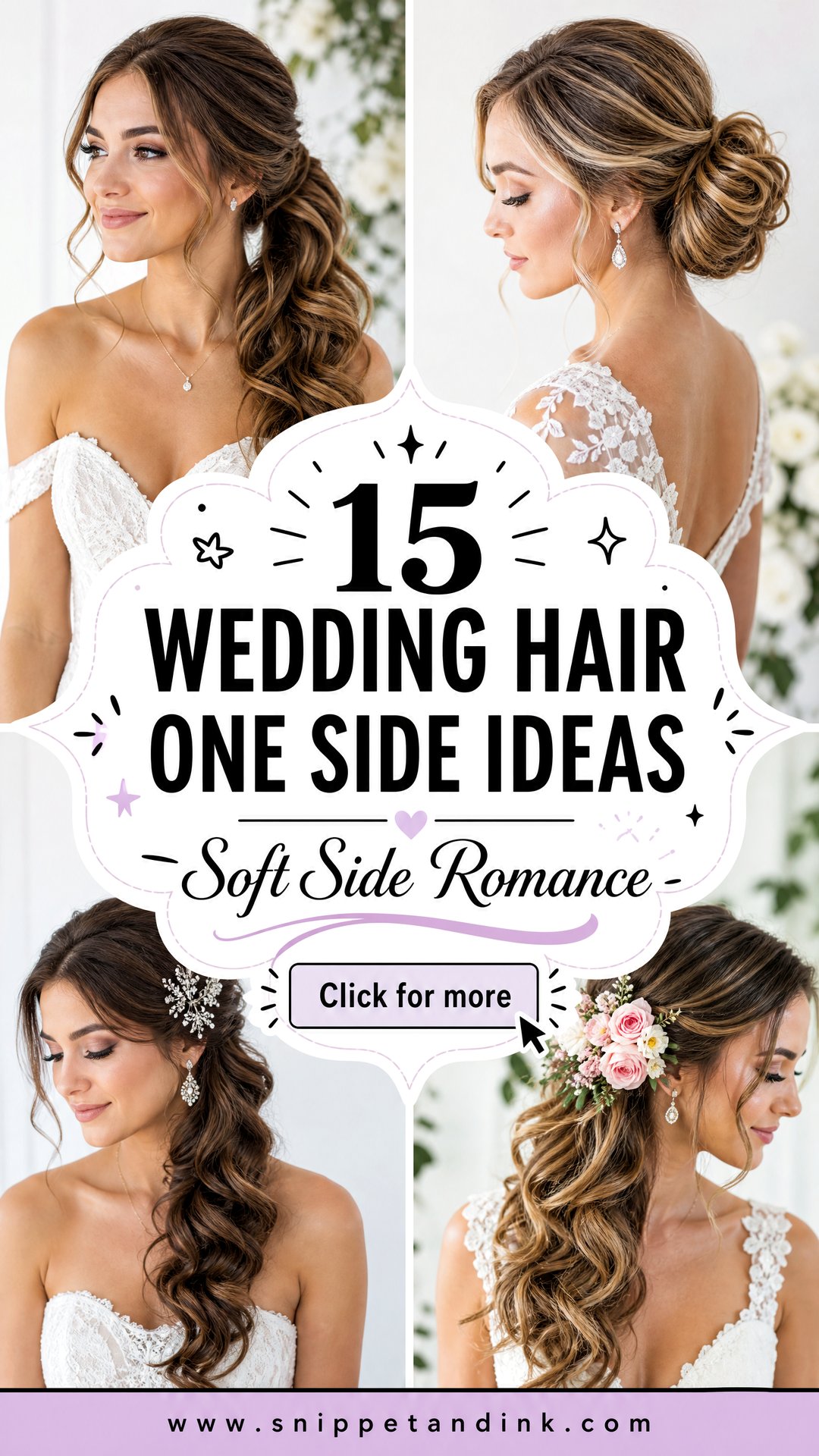
Sweeping the hair to one side opens up half the face and the neckline while keeping some length and softness on the other. That asymmetry is the whole appeal, and it is also what takes planning, because one side carries all the weight and all the detail. It can be curls, braids, a bun, a ponytail, a veil, flower pins or pearl clips, and it pairs naturally with one-shoulder gowns. Here are fifteen versions I style, from sleek ballroom sweeps to loose garden braids, with what holds each one in place.
Your Parting, Your Profile and the Altar All Vote on the Side
The first question I ask at a trial isn’t about curls or braids. It’s which side the hair should fall on, and there are usually three things pulling in different directions.
- Your natural parting. Hair parted against its growth pattern lifts back over the day, so I start from the side your hair already falls to.
- Your preferred profile. Most people have a side they like in photos. Look through your phone; you’ll see it.
- The ceremony layout. During vows, one side of your face is turned toward the guests and the photographer. Ask your officiant or planner where you’ll stand, so the detail isn’t facing the wall.
When those disagree, I usually go with the ceremony, because that’s where the photos you’ll keep are taken. A one-shoulder dress adds a fourth vote: hair usually looks best falling over the bare shoulder, so the strap and the hair aren’t stacked on the same side.
1. Side Swept Wedding Hair
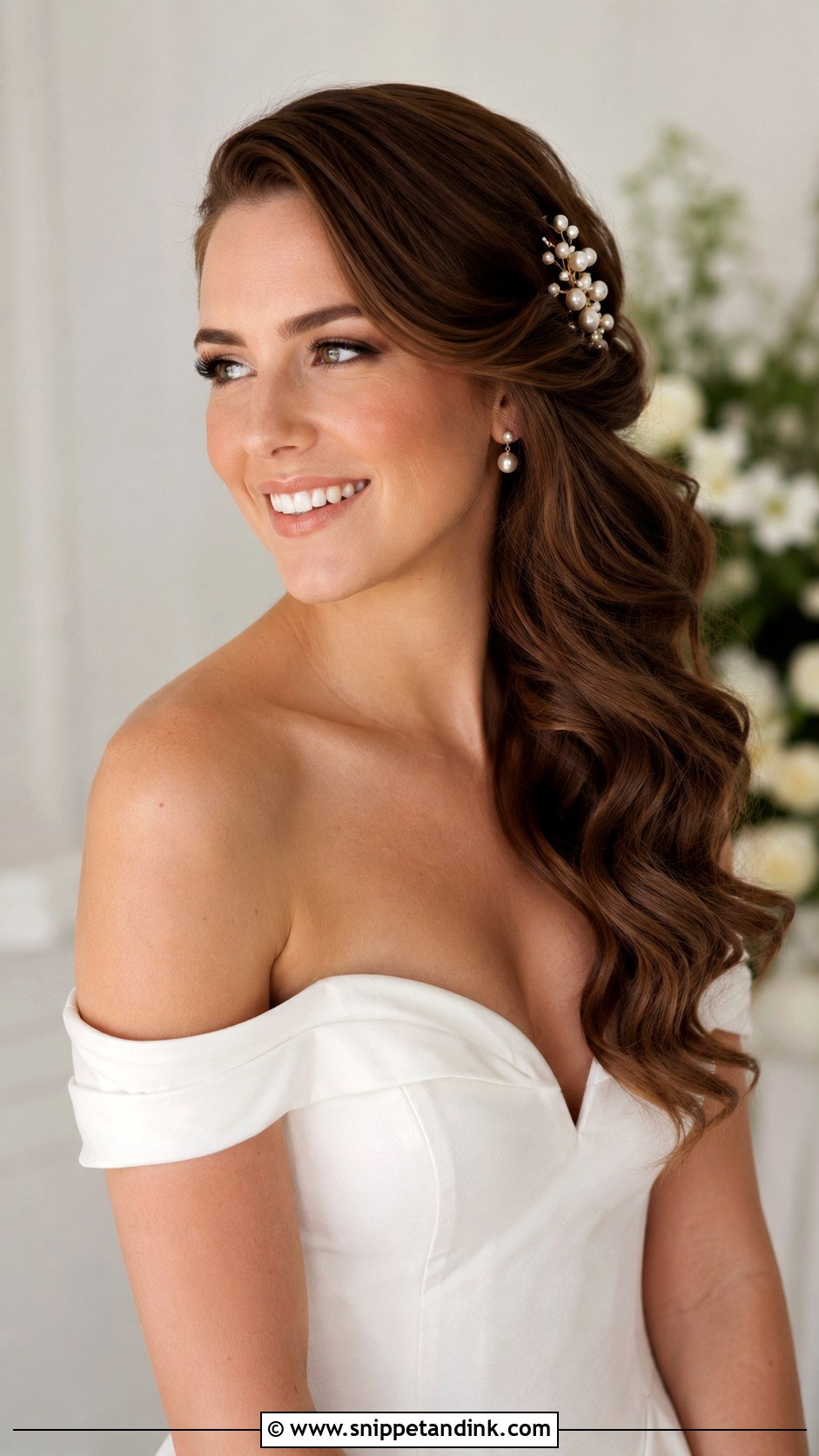
The plain side sweep is mostly an anchoring job. I part the hair deep on one side, bend the lengths, then cross two or three pins in an X behind the opposite ear so the hair can’t creep back to the centre. Without that anchor, turning your head pulls it loose within an hour. It balances strapless, sweetheart and one-shoulder necklines. Flexible hold keeps it moving, and a pearl clip over the pinned spot hides the hardware.
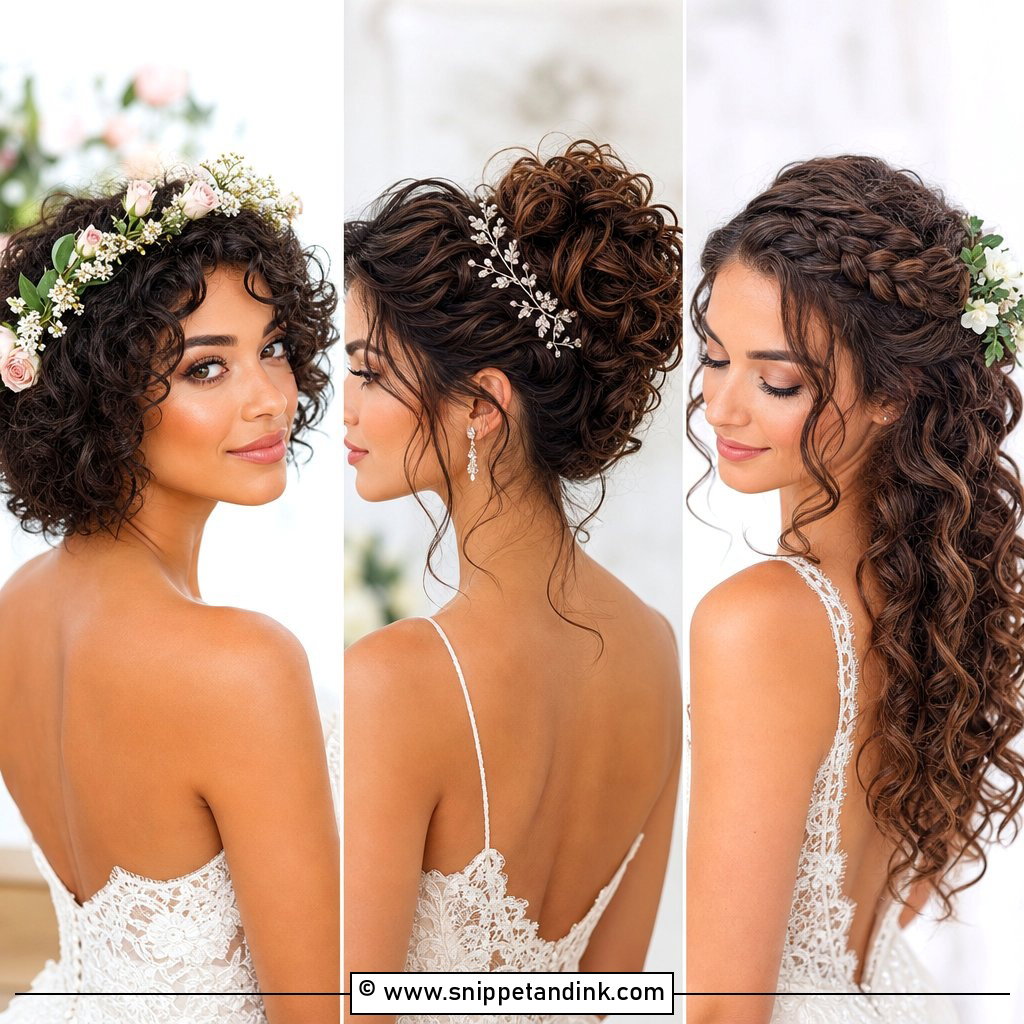
2. One Side Wedding Curls
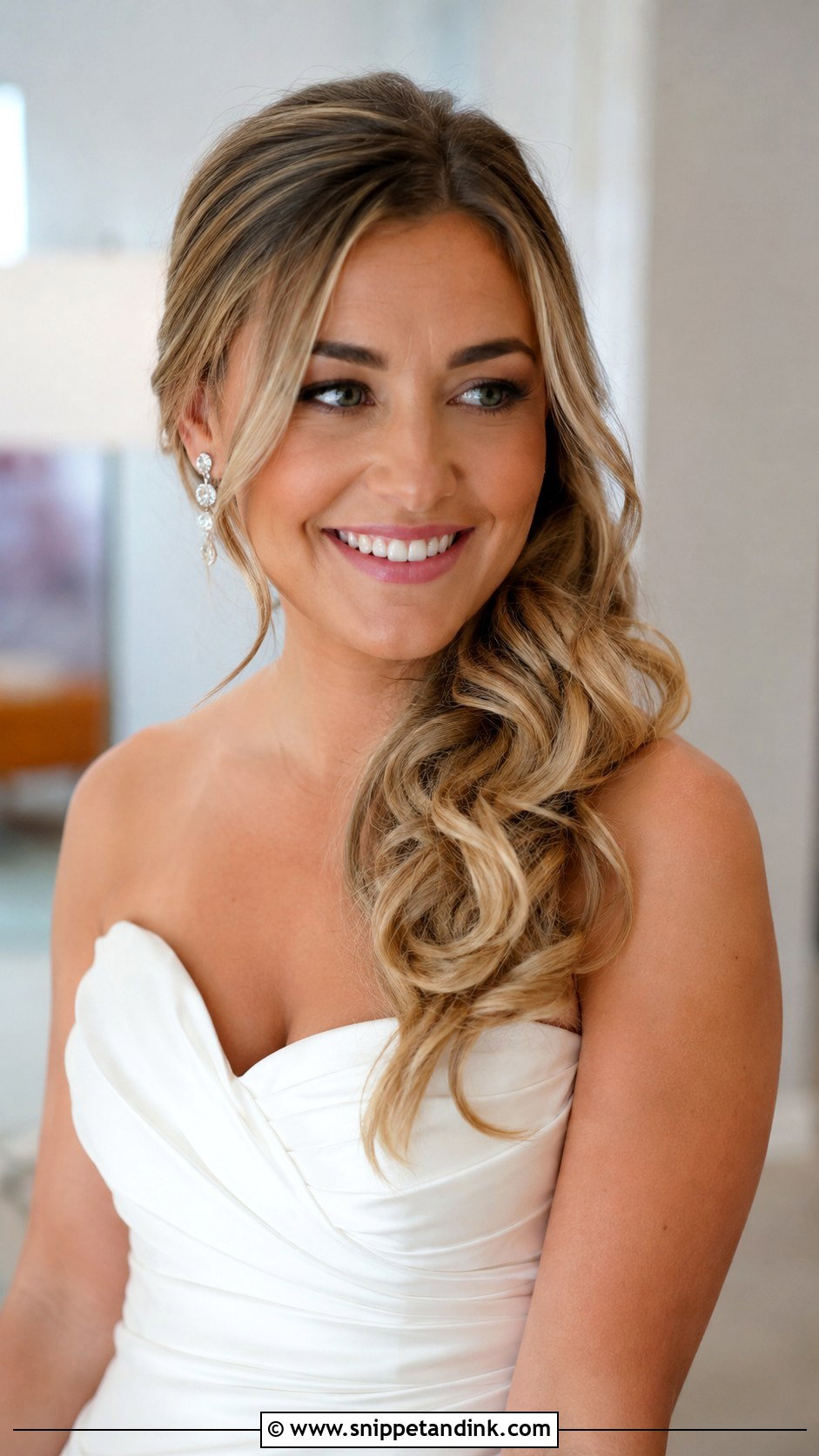
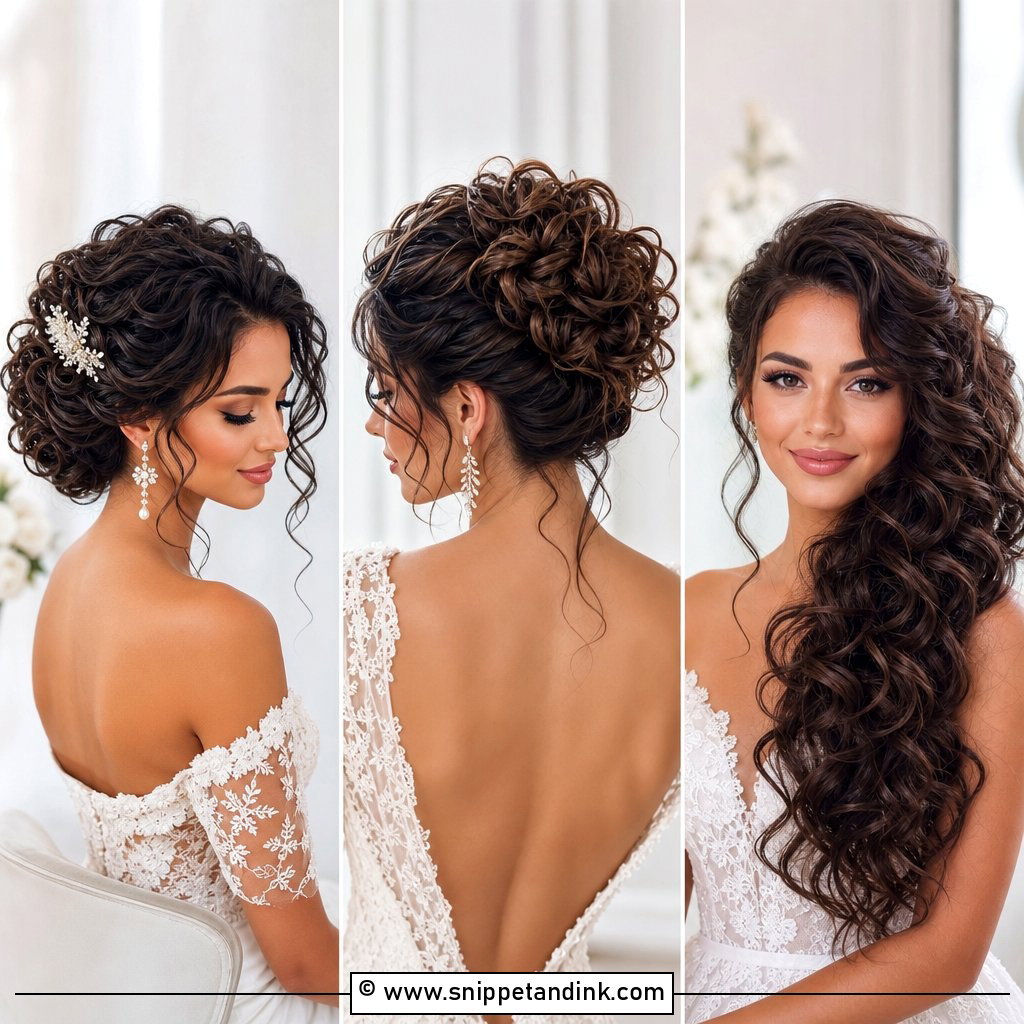
Gathering all the curls over one shoulder doubles their volume at the collarbone, which is the effect most brides are after. It needs medium to long hair. Larger barrel curls, brushed-out texture and a hidden pinned section behind the ear give the fullest shape. Fine hair that drops curl fast needs a trial to test products and cooling time; I’d sooner find that out weeks before than on the morning. It sits well under a veil, though it holds its own without one.
3. Side Swept Hollywood Waves
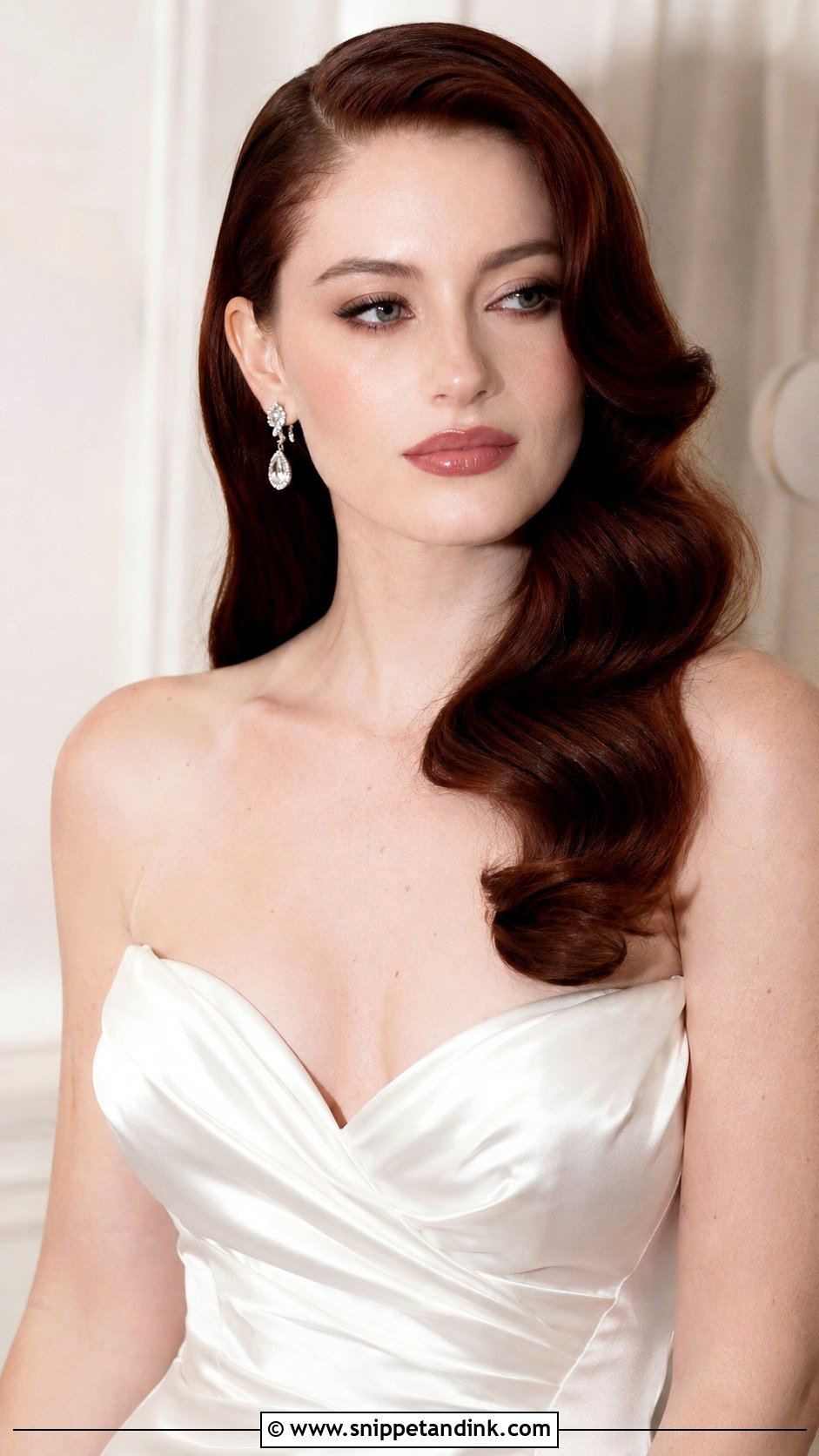
Hollywood waves swept to one side are the most structured look in this list. Every section is curled in the same direction, then brushed into a single continuous S and pressed with clips while the spray sets. The deep side part does a lot of the drama. Satin gowns, fitted dresses and bold earrings suit it. It’s unforgiving if the hair is frizzy or the pattern breaks, so get a gloss treatment a week or two ahead if your hair tends to look dull.
4. Side Braid Wedding Hair
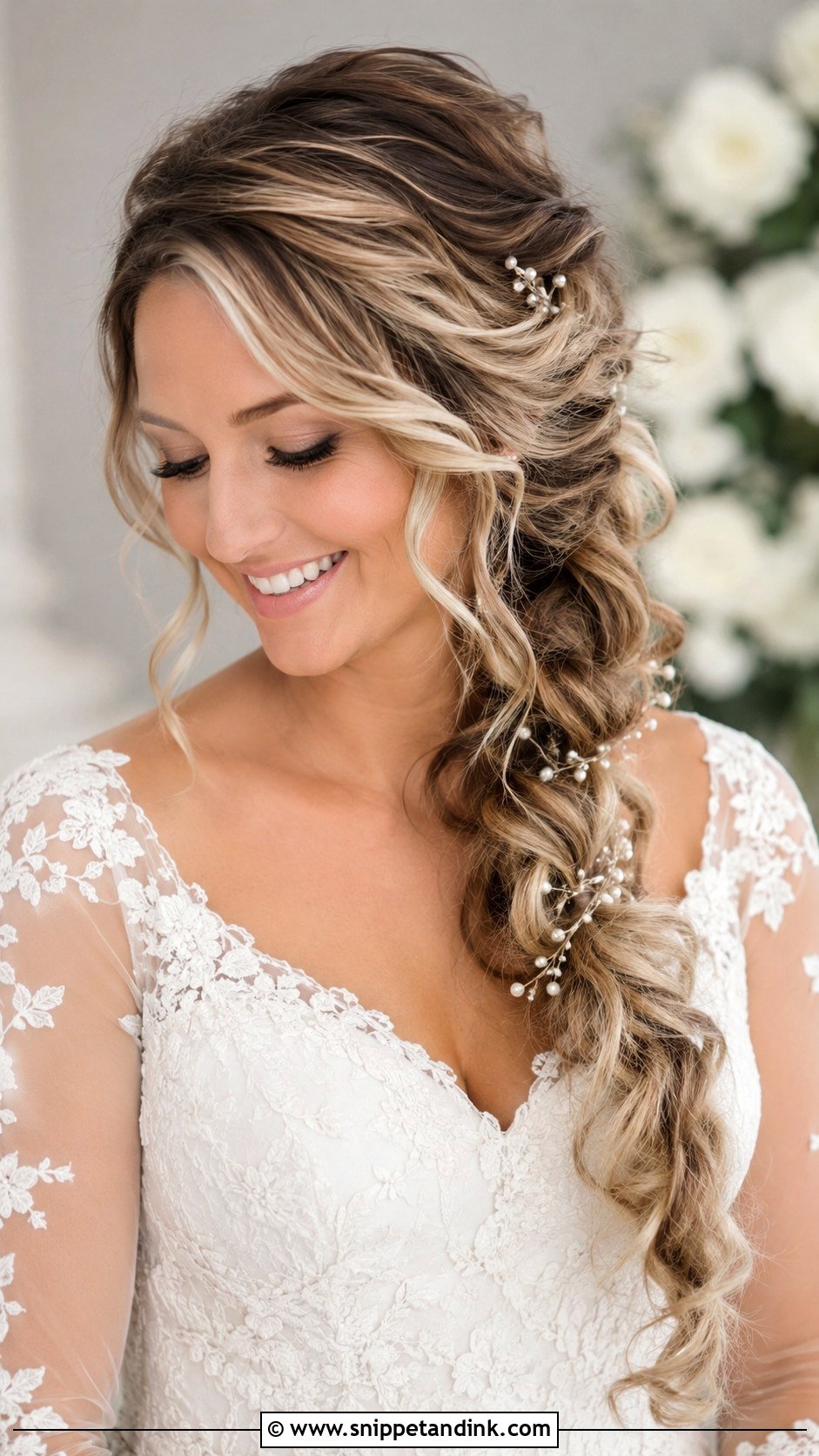
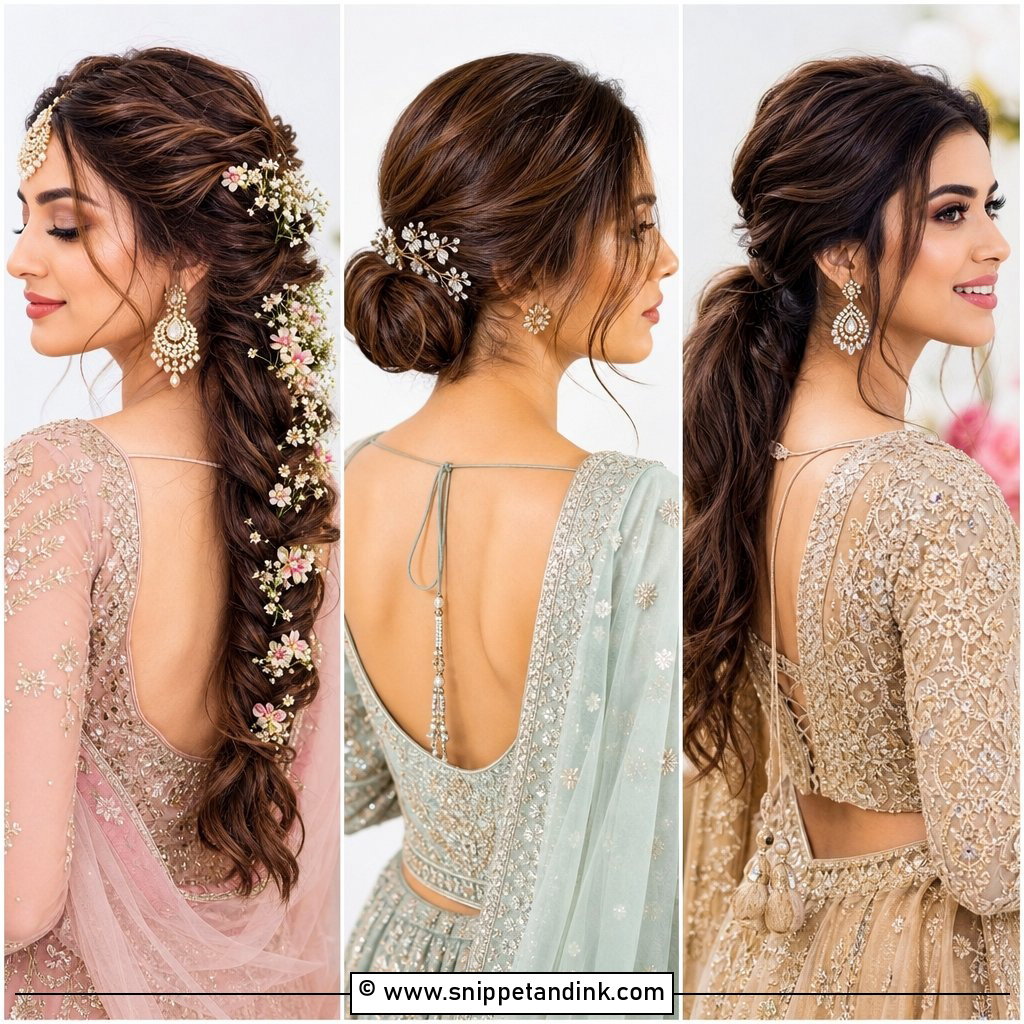
A side braid keeps all the length gathered, which matters on a windy outdoor day when loose hair ends up across your face in every photo. I braid it fairly firmly, then pull the loops wider so it looks soft. It can be relaxed or crisp depending on the dress. Leave a few pieces at the front to keep it from looking too neat. Baby’s breath, pearl pins or tiny flowers tucked into the braid add detail.
5. Side Fishtail Braid Wedding Hair
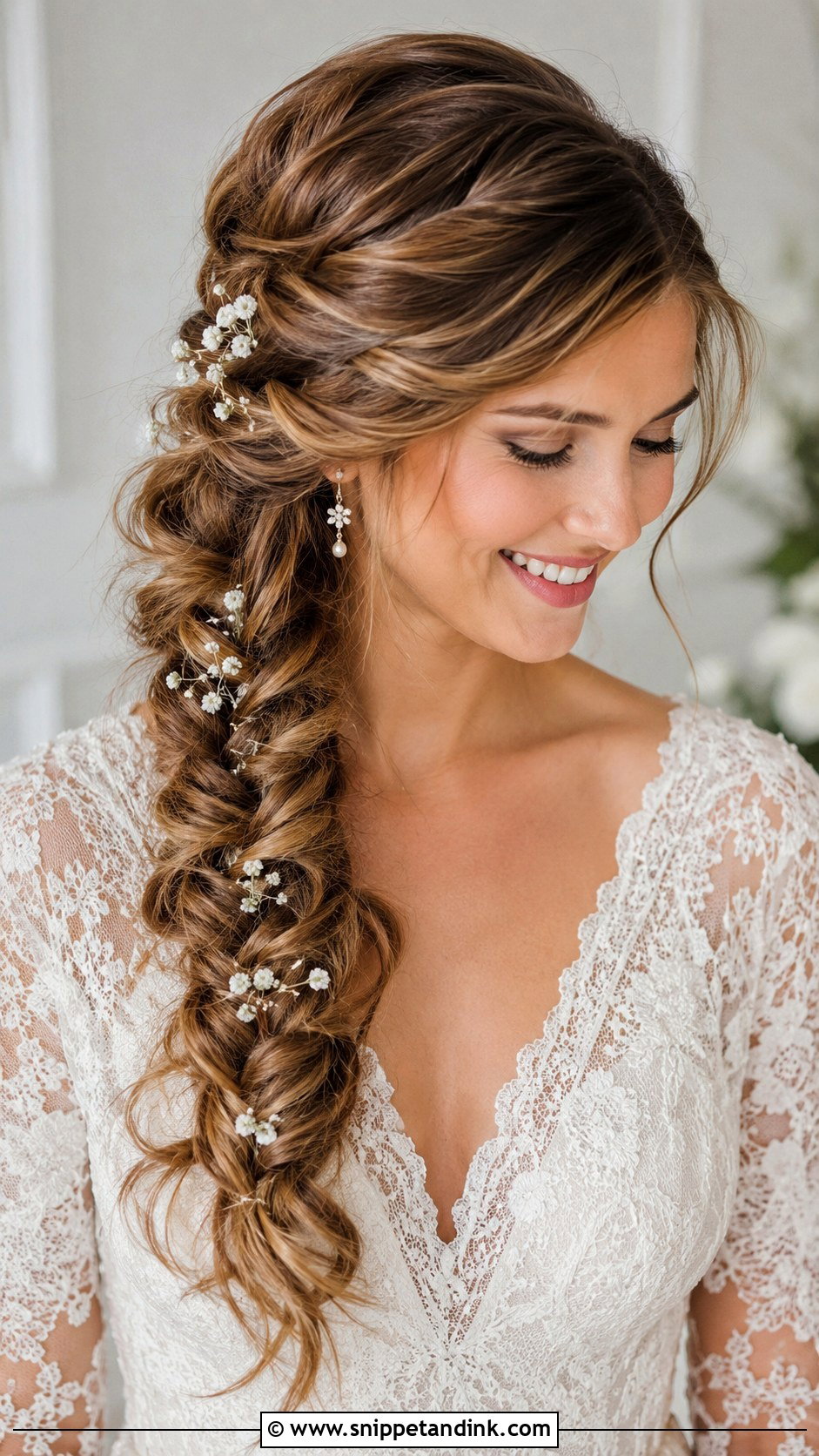
A fishtail is woven from two sections instead of three, which gives a finer, more intricate pattern. It’s slower to make and needs long hair to show the pattern properly. Starting the braid low, around the jaw, keeps it relaxed; starting it high above the ear reads tighter and more formal. I add volume at the crown first, since a flat top above a detailed braid looks unbalanced. It suits boho and lace dresses at garden or beach venues.
6. Side Ponytail Wedding Hair
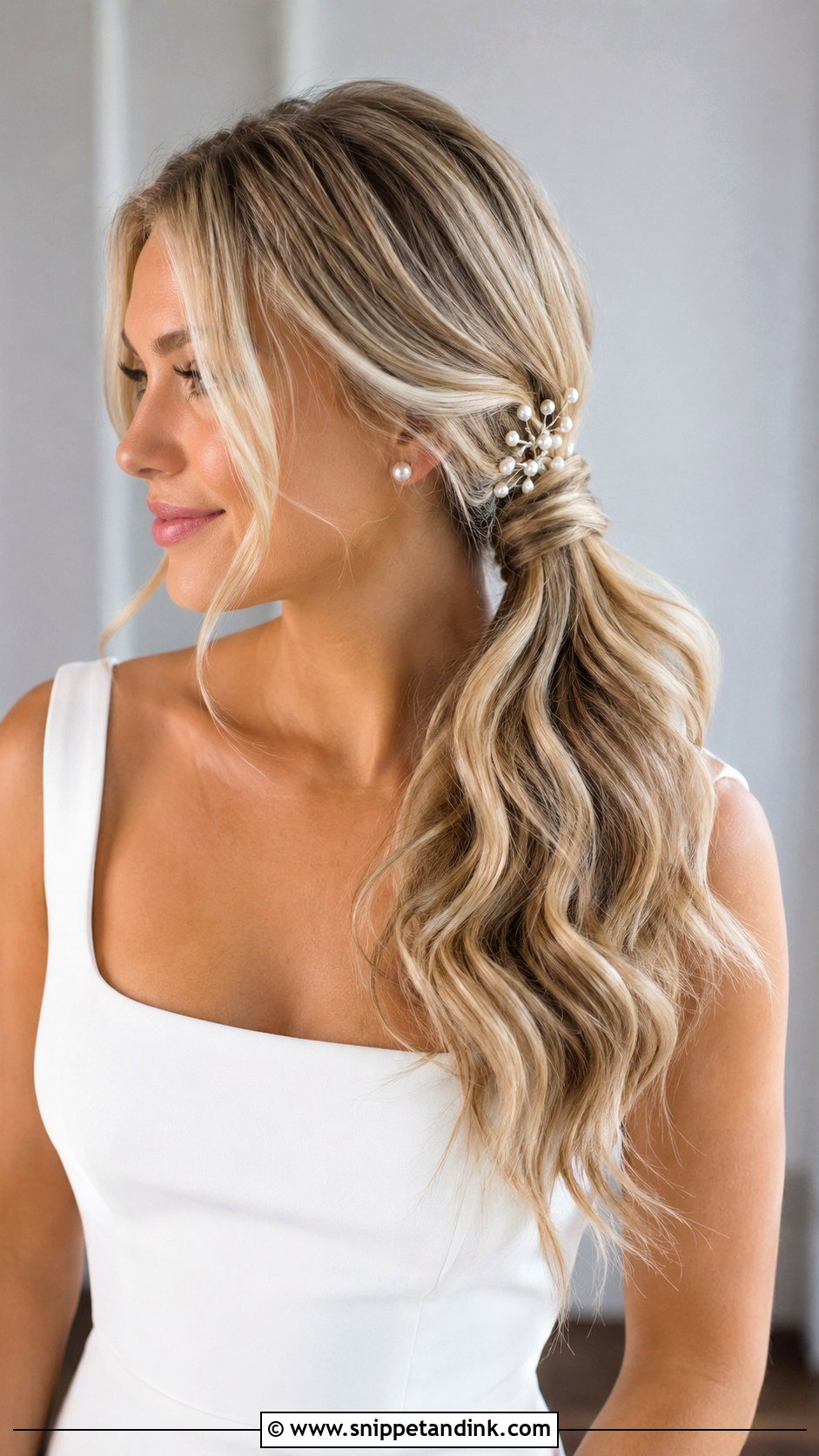
A side ponytail looks simple but needs a good base. I gather the hair low at the nape, slightly off centre, and secure it with an elastic and two crossed pins underneath so it doesn’t swing back to the middle. Then I wrap a section around the elastic to hide it and curl or smooth the length. It’s comfortable for dancing and keeps hair off your back. A bow or a pearl comb at the base dresses it up.
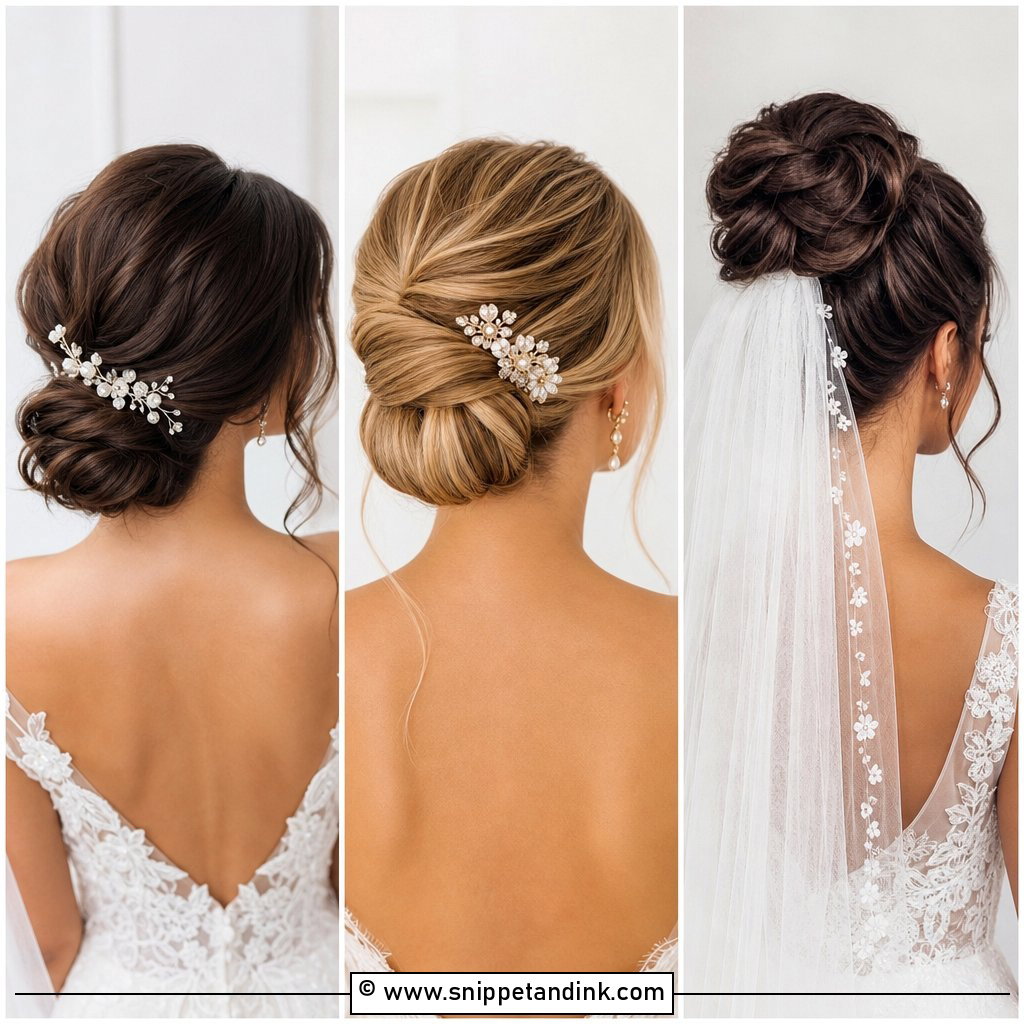
7. Side Bun Wedding Hair
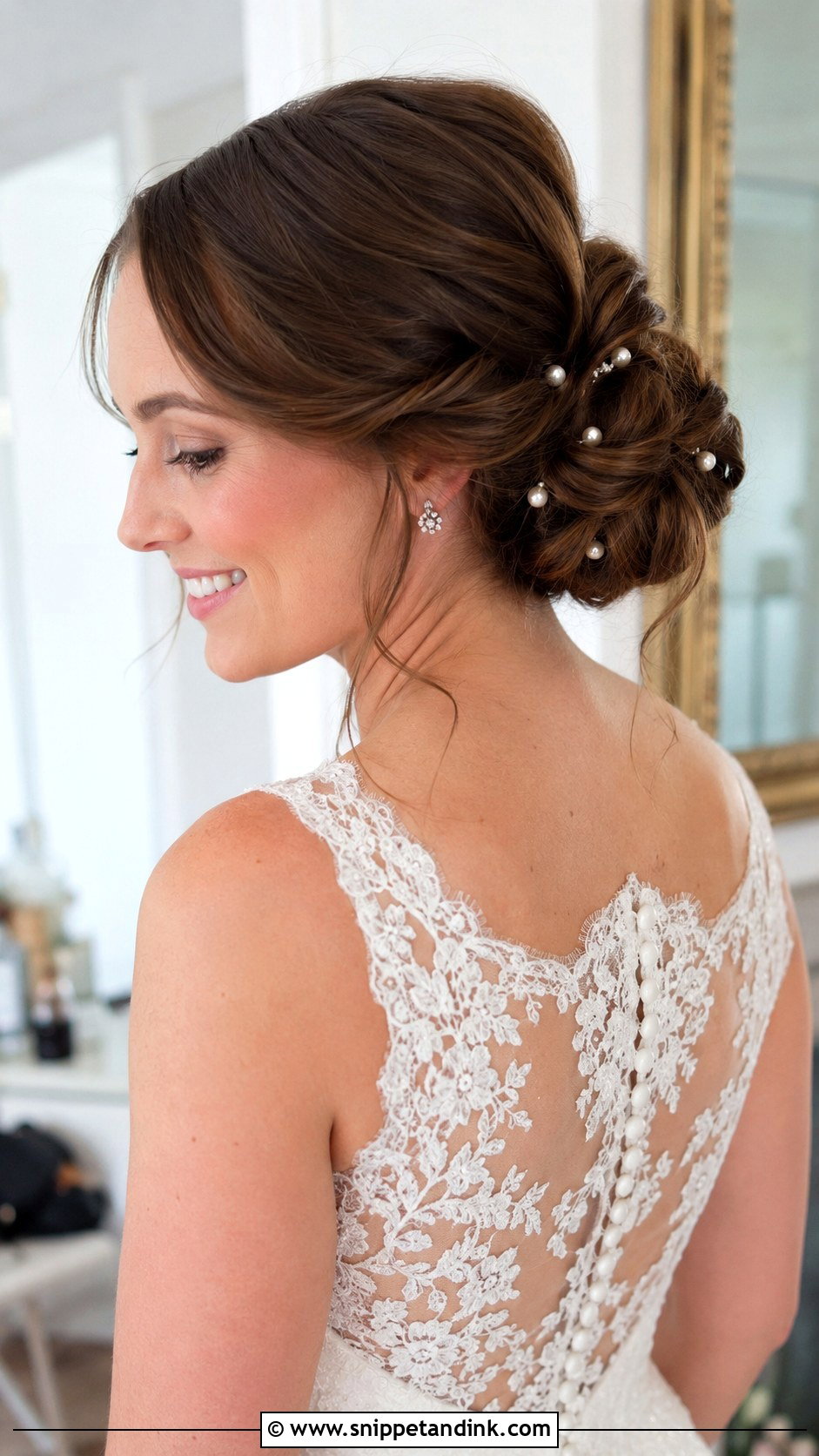
Moving a bun off centre makes it visible from the front, which a classic back bun isn’t in vow photos. I place it low, just behind and below one ear, so it doesn’t press when you lean against a chair. Veils, vines and pearl pins all sit naturally above it. A smooth finish is formal; loose pieces soften it. It keeps the back of an open or lace-backed gown completely clear.
8. Side Chignon Wedding Hair
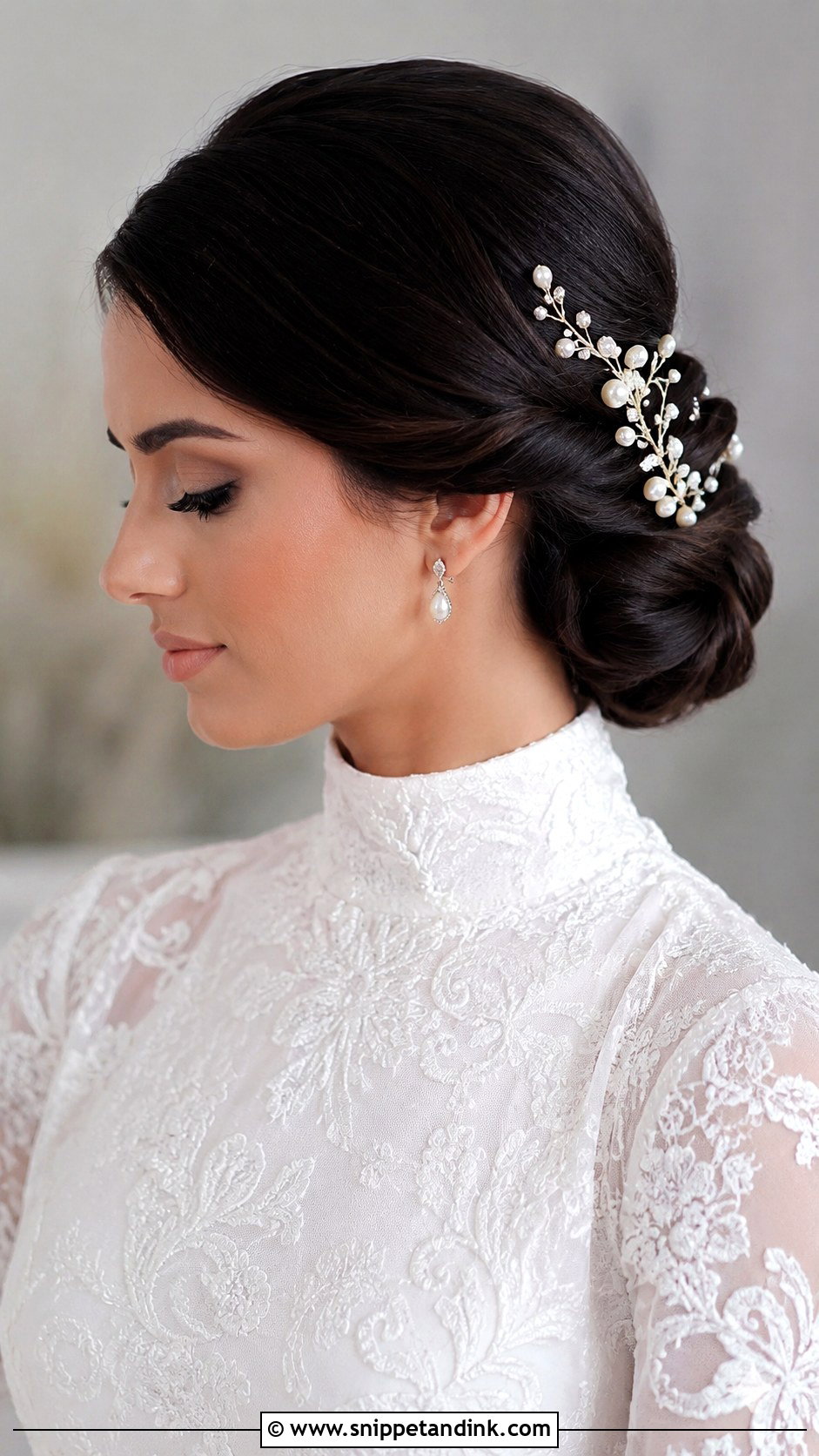
A chignon is tighter and more structured than a messy bun, so placed to the side it reads formal and composed. The roll shapes the jaw and neck on that side. I’d pair it with classic gowns, pearl jewellery and cathedral veils. Choose smooth for polish or softly twisted for warmth; either way it shouldn’t feel tight on the scalp. A small comb or one pin is enough decoration.
9. Half Up Side Swept Wedding Hair
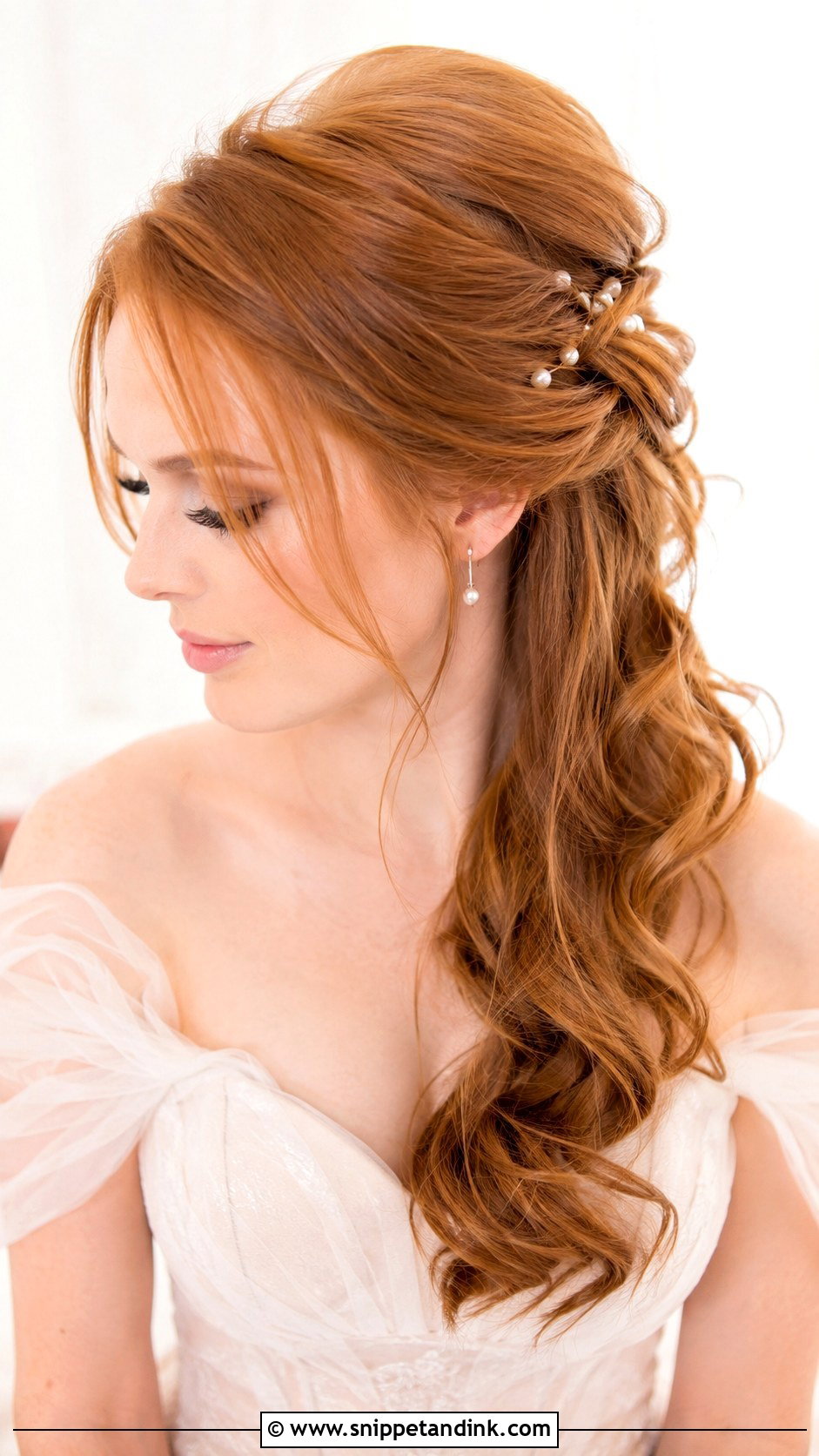
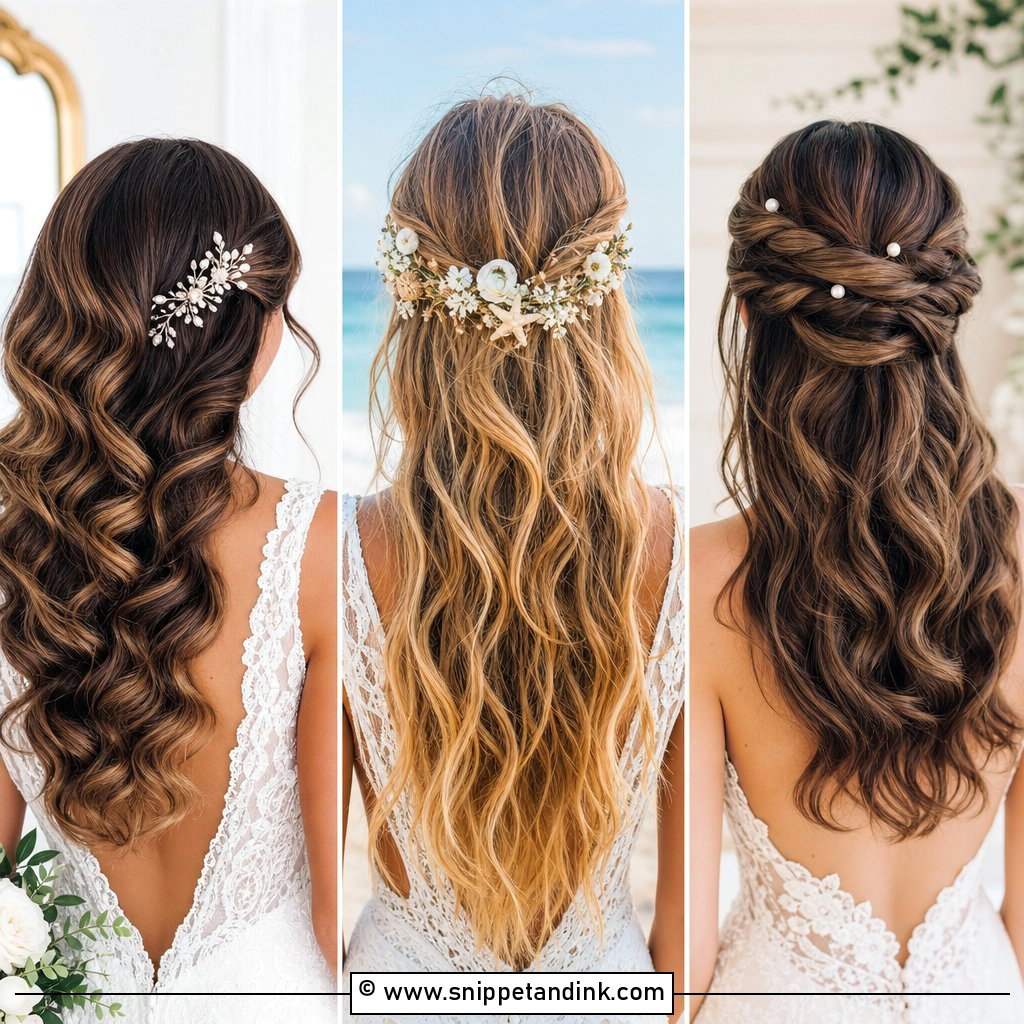
Half up and swept to one side gives you lift at the crown, a secure top section and length falling over one shoulder. The pinned top makes it steadier than fully loose hair, which suits brides who want volume but hate hair in their face. Curls, waves and natural texture all work. I usually twist the top section rather than clip it, then pin the twist at a slight angle so it leans toward the sweep.
10. One Side Pinned Wedding Hair
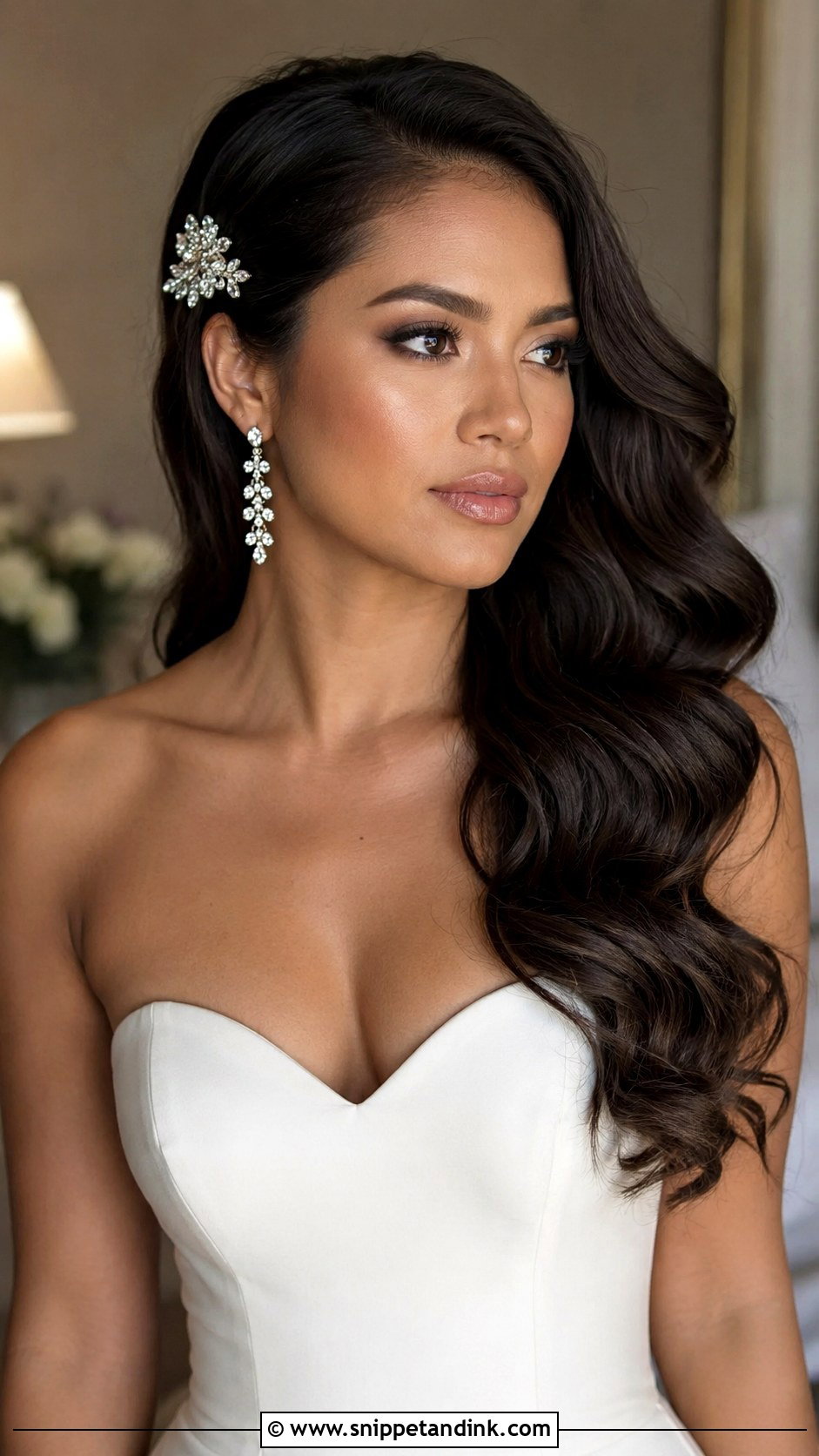
Pinning one side back is the lightest change you can make to loose hair. One side is tucked behind the ear and secured, opening up an earring and the neckline. The rest stays down. A crystal barrette, pearl clip or floral comb can cover the pins. I keep the pinned section a little loose at the top; pulling it tight makes the side look flat and the parting stretch.
11. Side Swept Straight Wedding Hair
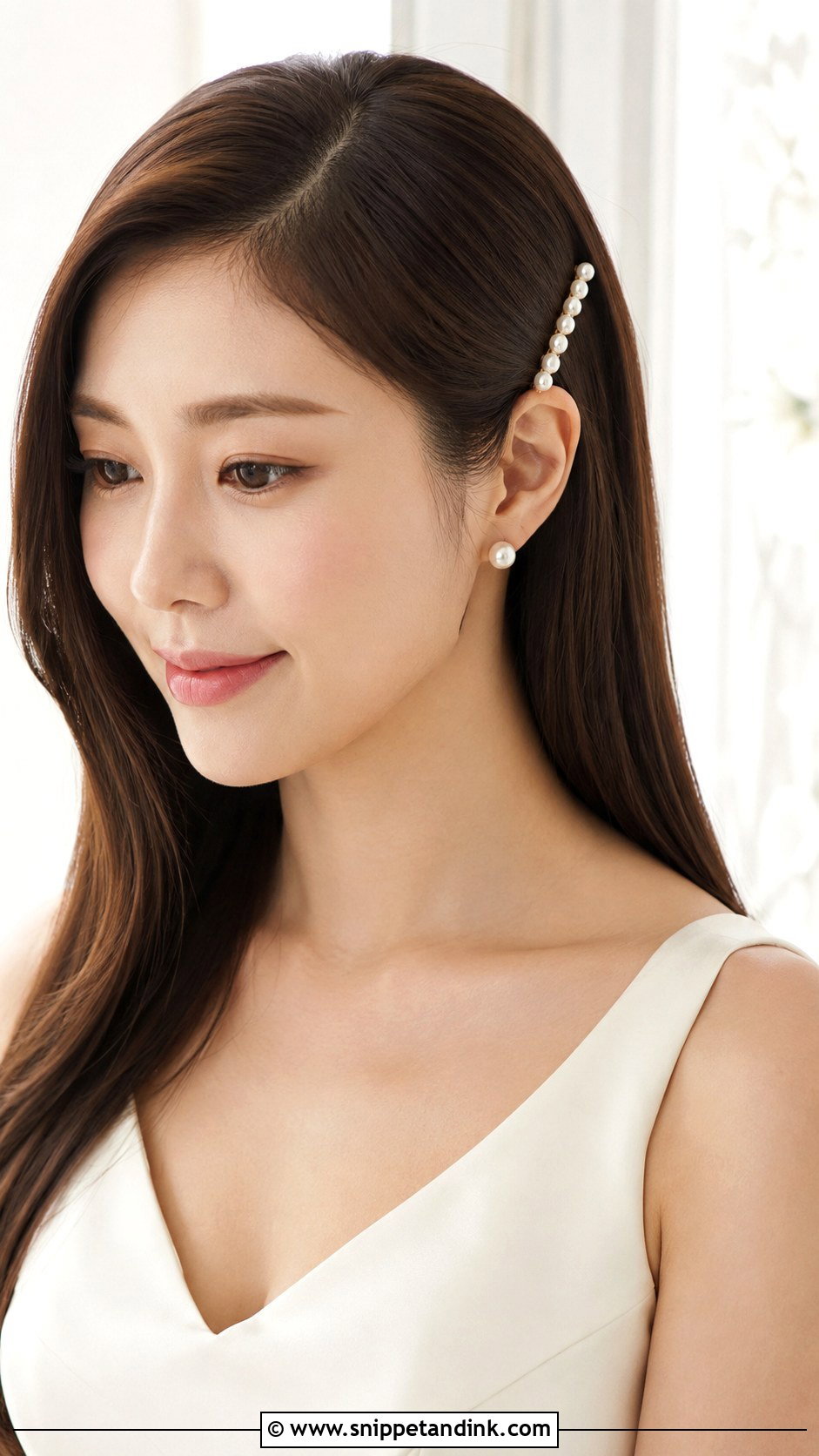
Straight hair swept to one side is the choice for brides who don’t want curls, or whose hair won’t hold one. It only works if the hair is glossy and the ends are healthy, so book a trim and a shine treatment a couple of weeks ahead. A deep part and one tucked side keep it from looking like everyday hair. Use heat protectant and an anti-frizz finish, especially if the weather is humid. A slim metal barrette is enough detail with a minimalist gown.
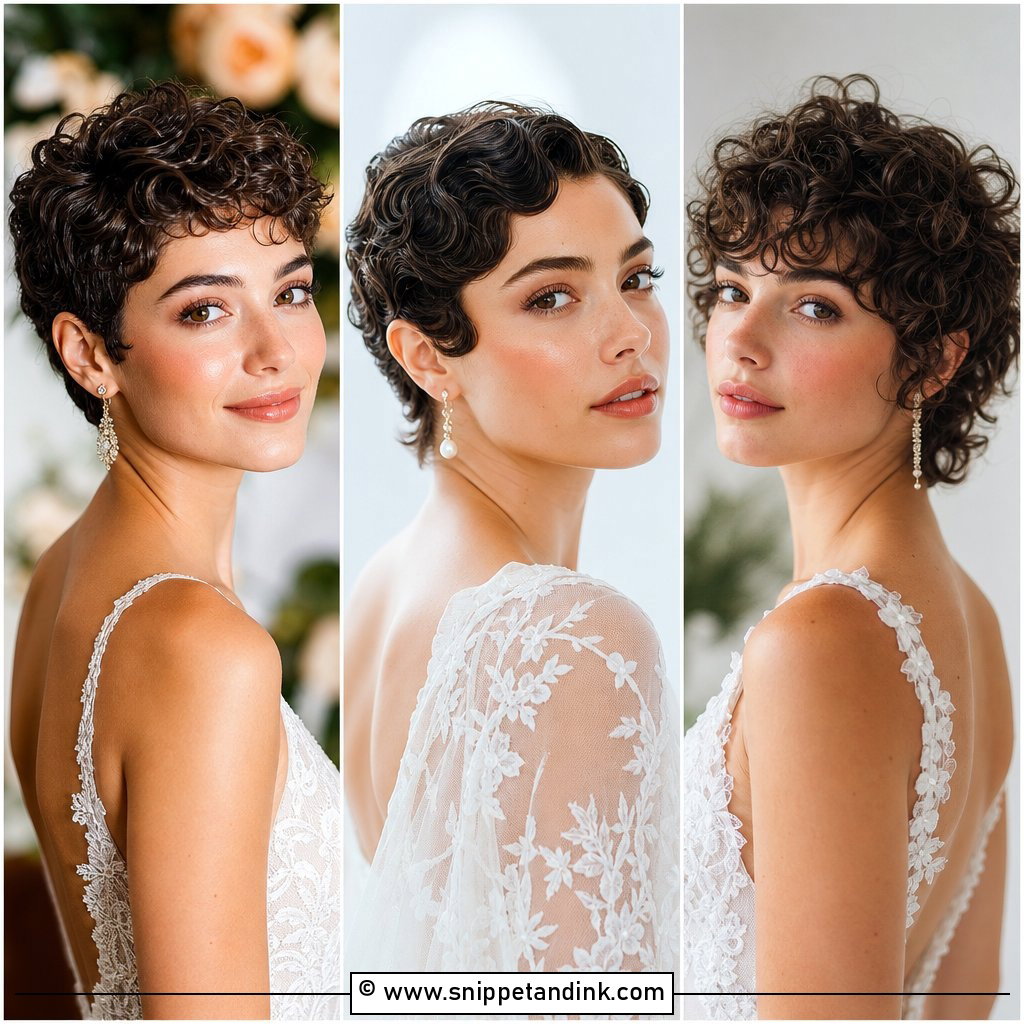
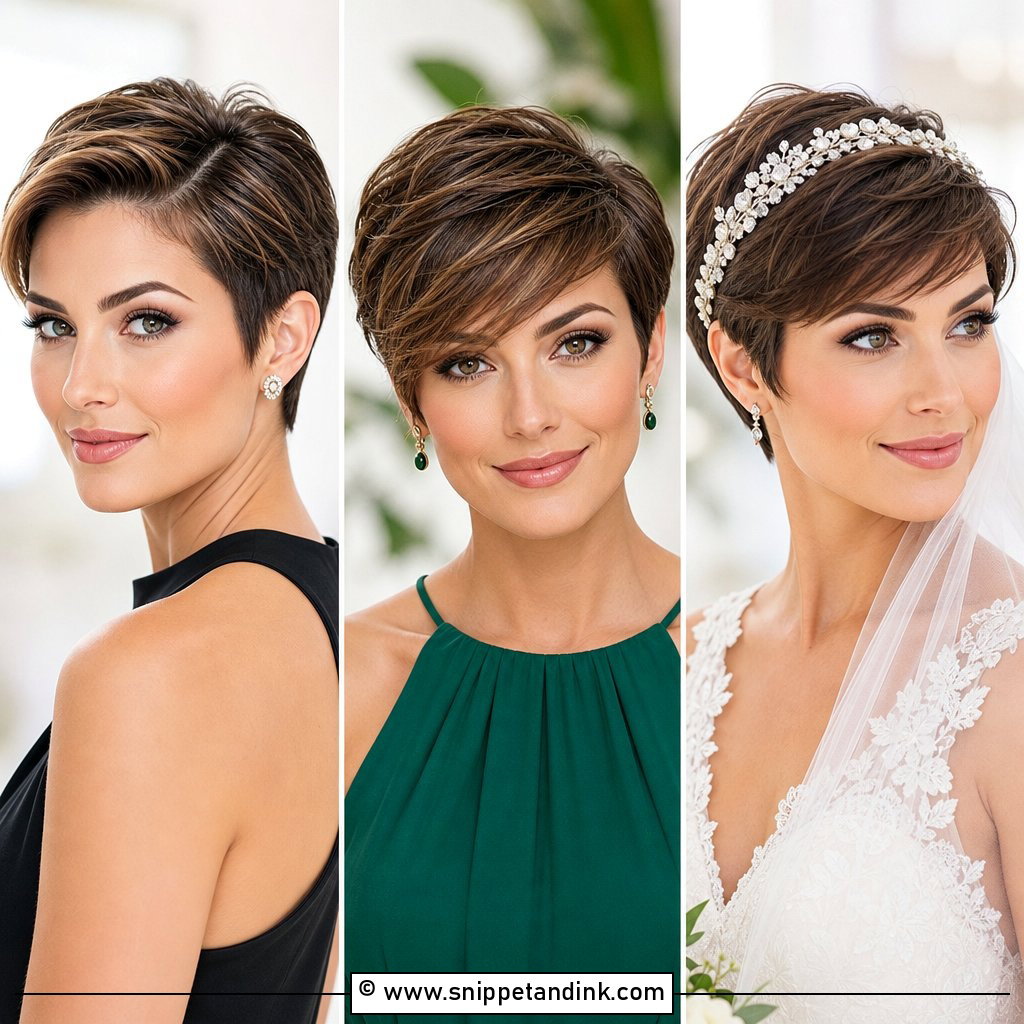
12. Side Swept Short Wedding Hair
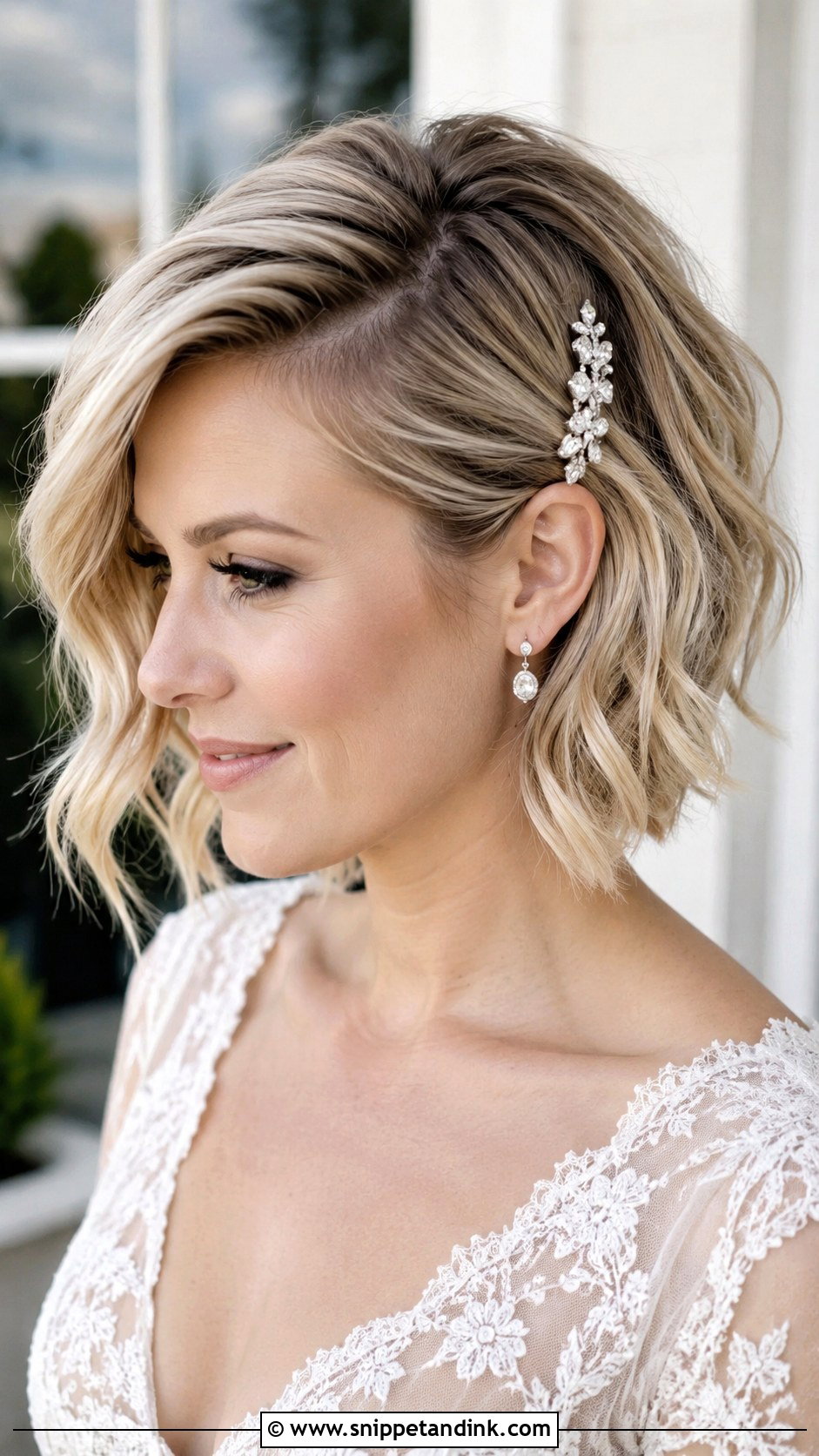
Short hair can be swept as well as long. A bob, lob, pixie or cropped cut takes a deep side part, soft bends or a pinned tuck on one side. The layers in the cut are useful here, giving lift on the heavy side. A birdcage veil suits it, as do pearl pins and jewelled barrettes. Have the cut done two weeks before rather than days before, so it looks grown in.
13. Side Swept Wedding Hair With Veil
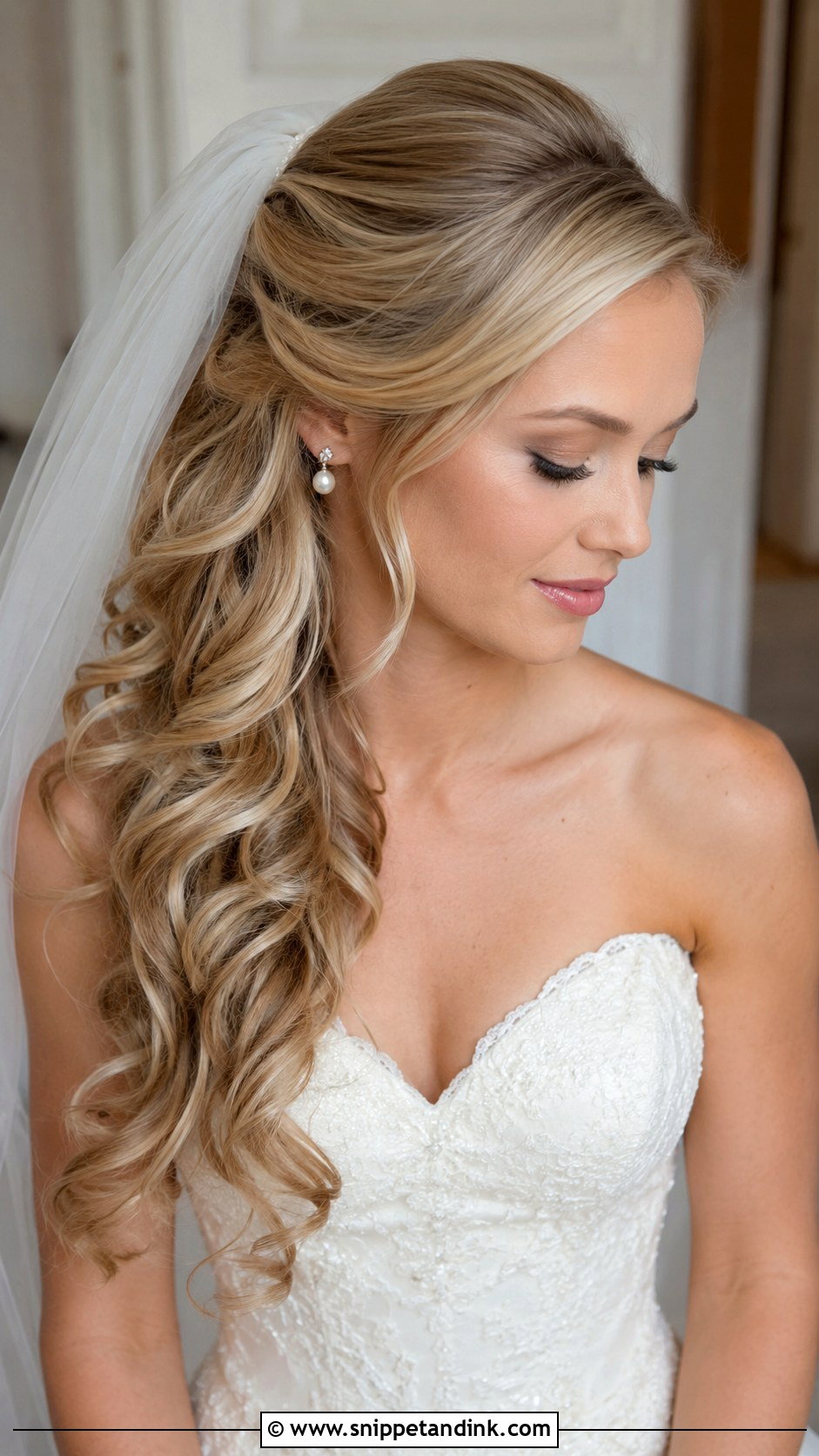
A veil with a side sweep needs placing carefully, or it hides the very detail you wanted to show. It can sit at the crown, above a low pinned section, or behind the side sweep so the hair still shows from the front. The hair must be anchored before the veil goes on, since the comb adds pull to an already lopsided weight. Bring your veil, or one with a similar comb, to the trial. Soft curls, waves, half-up styles and low side buns all work under it.
14. Side Swept Wedding Hair With Flowers
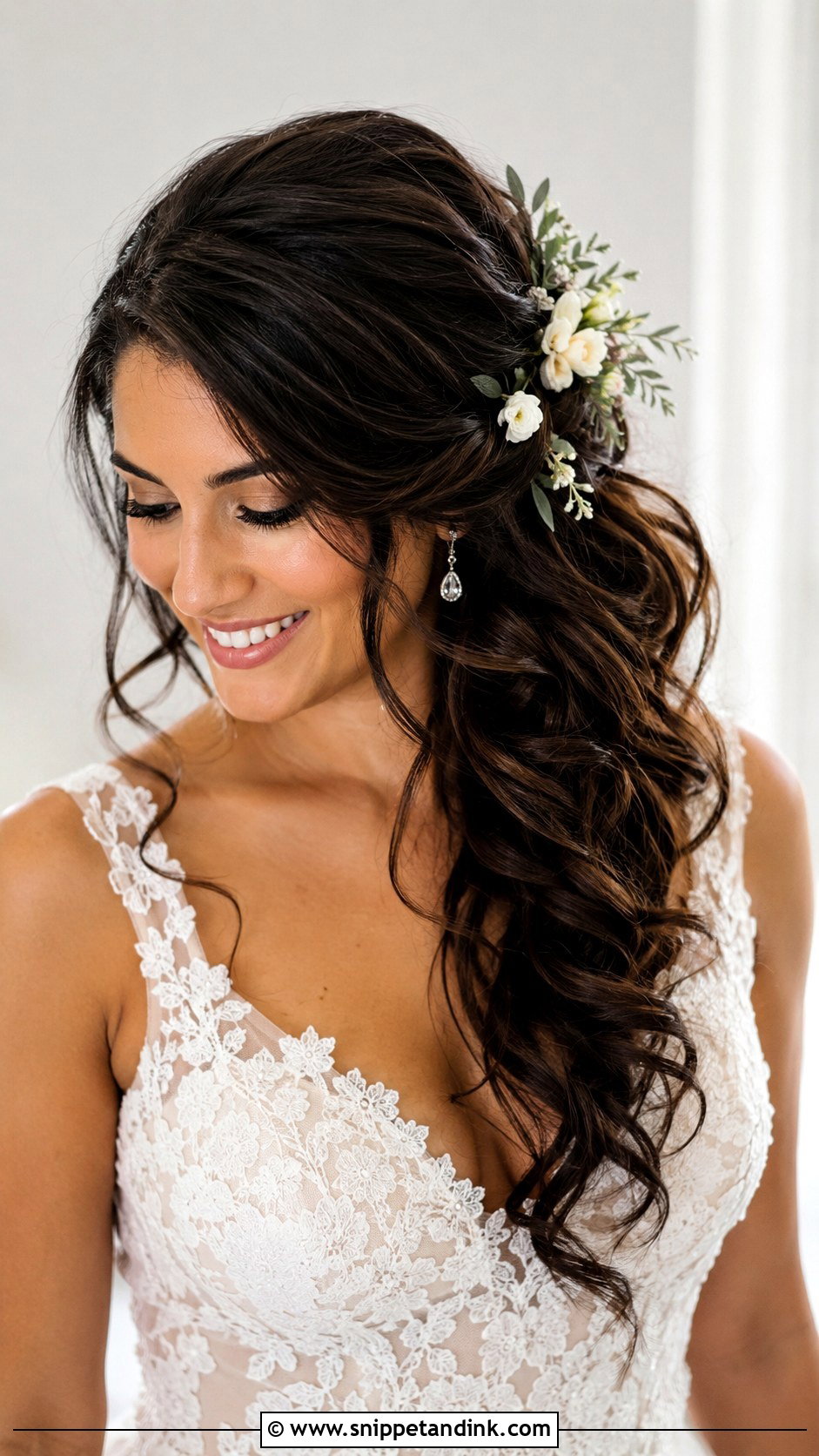
Flowers follow the line of a side style naturally: tucked into waves, along a braid or beside a side bun. Choose blooms that echo the bouquet without competing. Tiny white blossoms, blush flowers, sprigs of greenery and dried flowers all work. Fresh blooms wilt in heat, so ask your florist for sturdy stems wired short and kept cool until styling. Textured waves and loose braids hold them better than sleek hair.
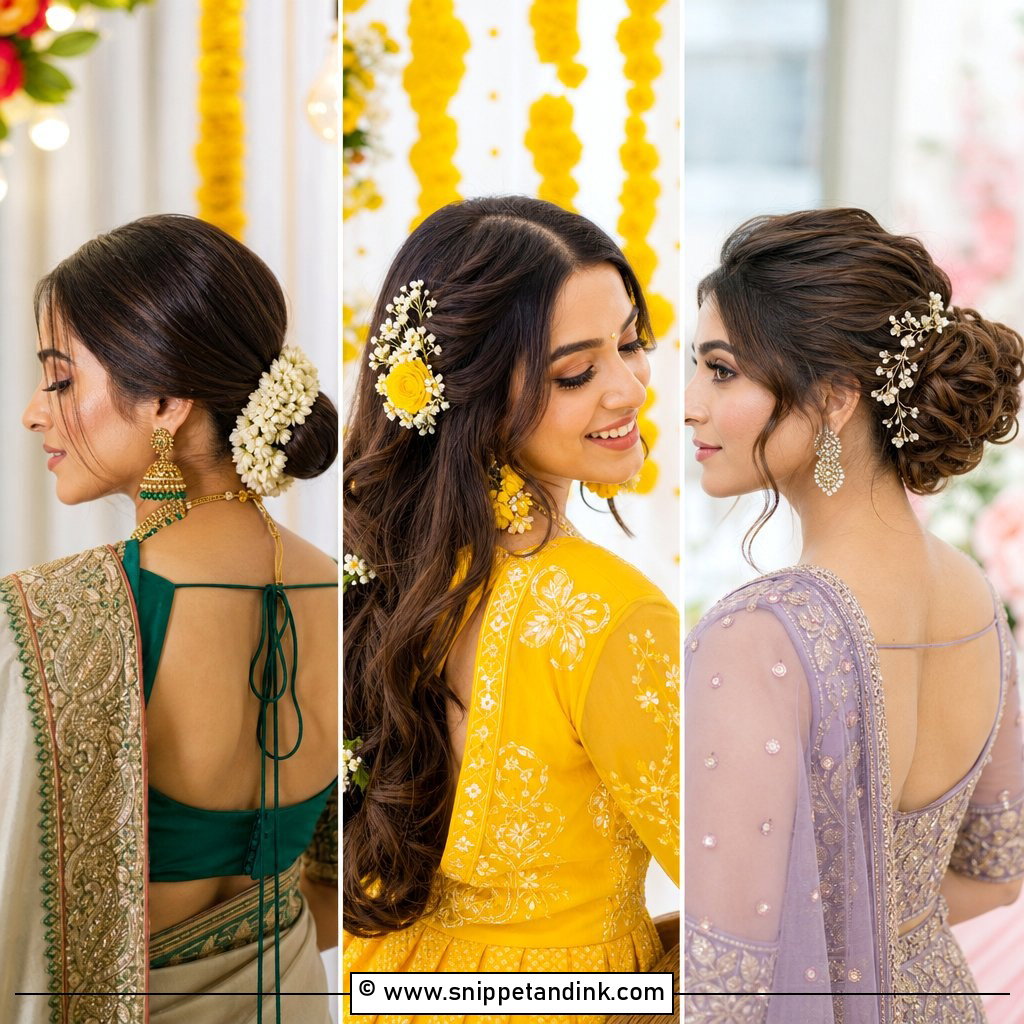
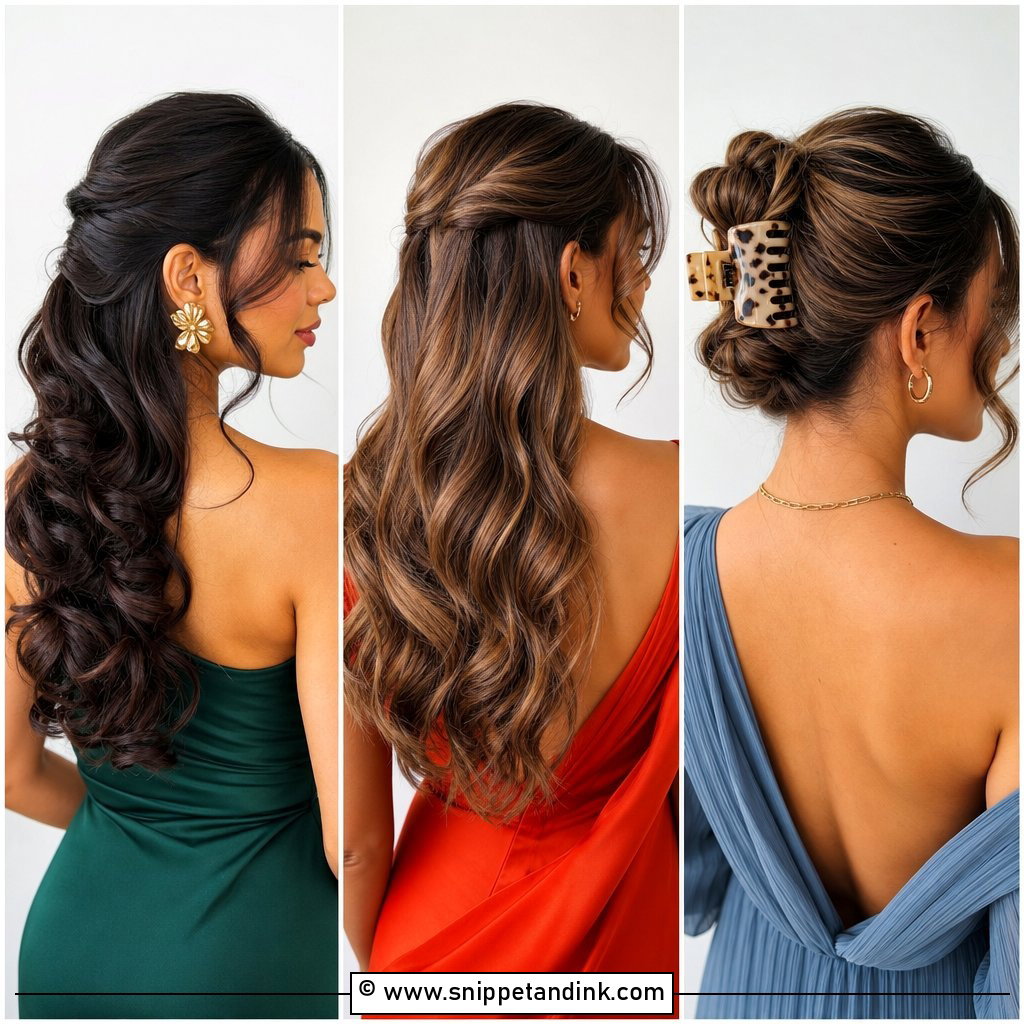
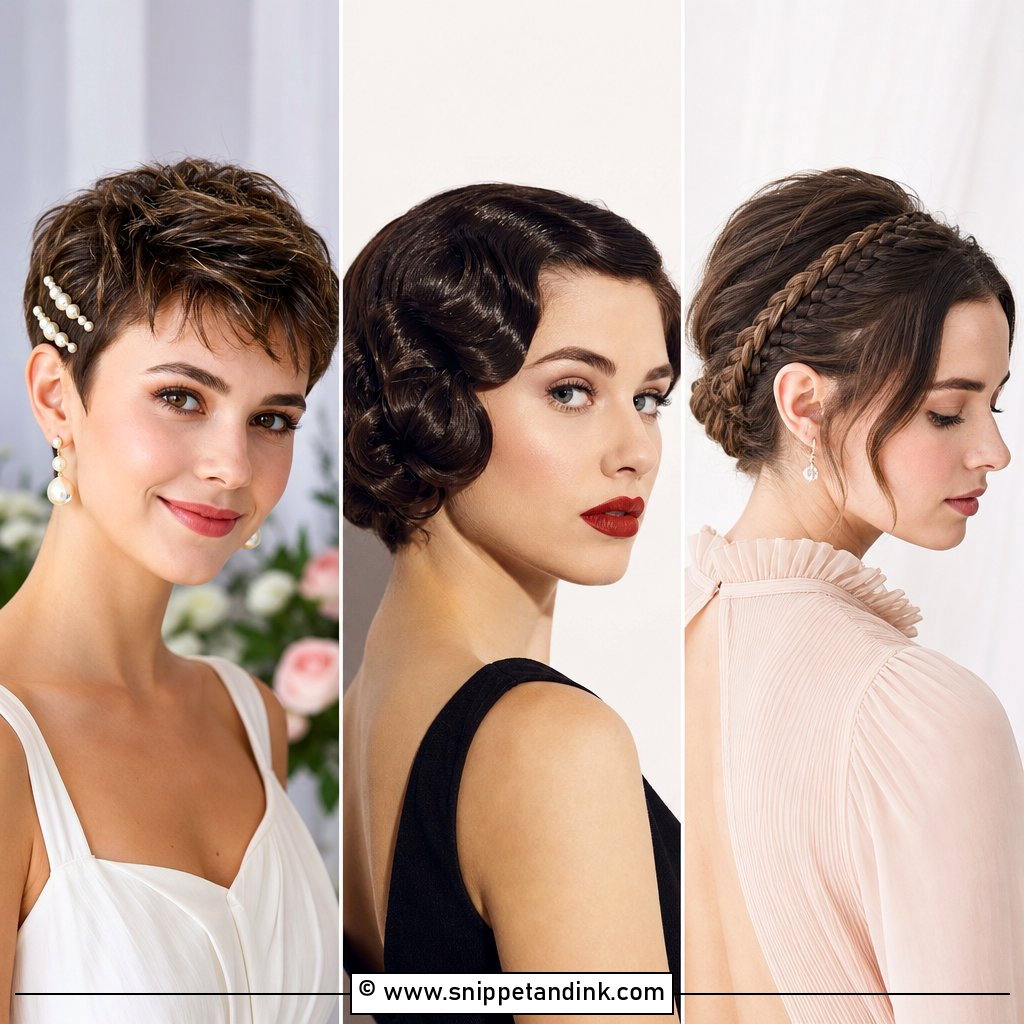
15. Side Swept Wedding Hair With Hair Comb
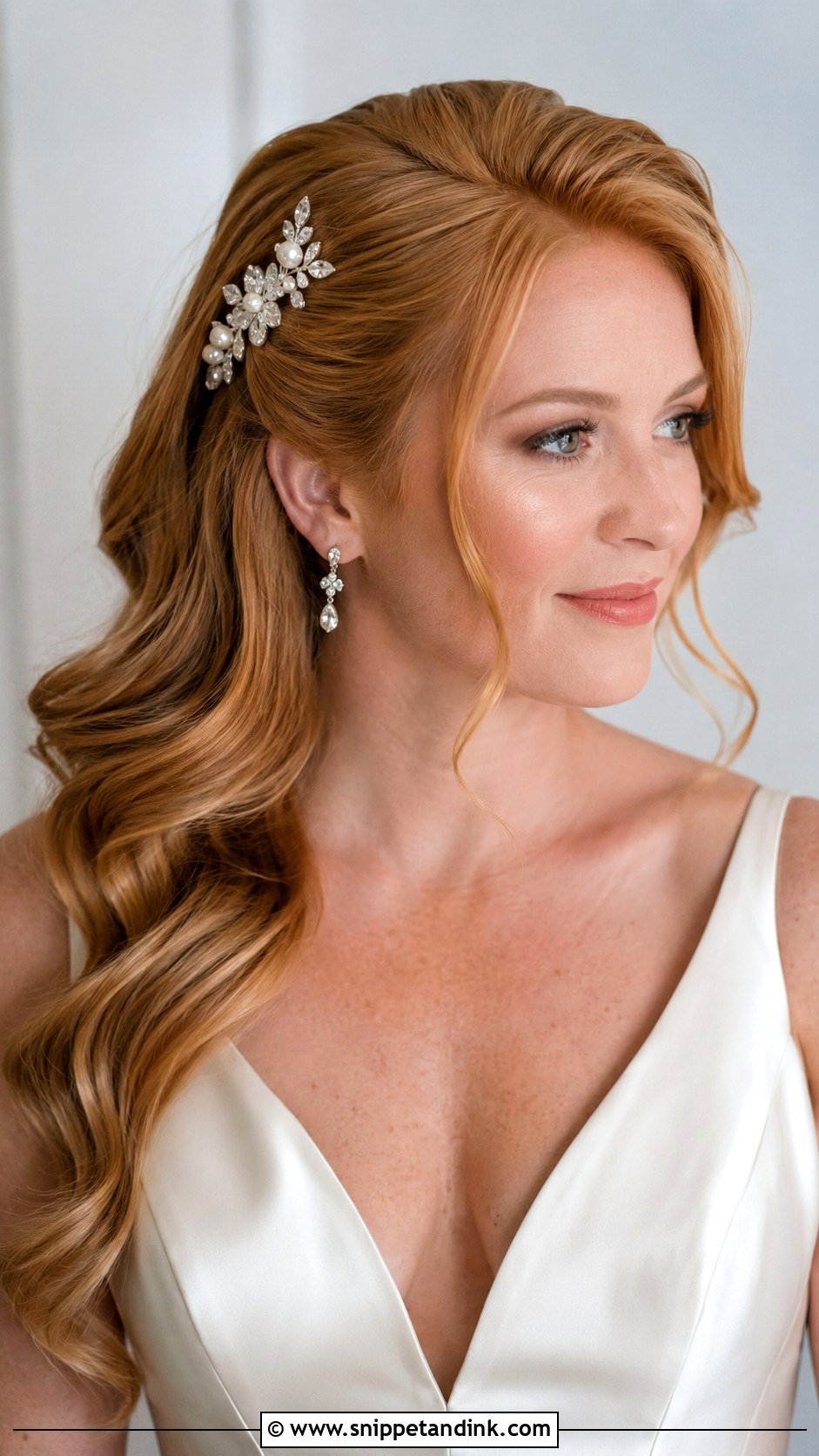
A comb is the simplest way to finish a side style, and it does a structural job too: placed over the anchor pins, it hides them and adds grip. It can sit above the ear, near the part, behind a twist or beside a side bun. Pearl reads classic, crystal reads glamorous and floral reads softer. Position it where it shows from the front, but not right beside a large earring, where the two will crowd each other.
How a One-Sided Style Drifts Over Ten Hours
Every side style slowly migrates. Each time you turn your head or someone hugs you, a little of the hair slides back toward the centre, and by evening the sweep can be sitting behind your shoulder. The fix is in the anchor: crossed pins behind the opposite ear, and sometimes a small flat braid hidden under the top layer for them to grip.
Think about your bouquet too. If you carry it on the same side as the sweep, your arm presses into the curls through the whole processional. Hold it on the other side, or switch hands for photos. At the head table, check which side faces your partner, as that’s the side people will lean in toward.
A quick reset before the evening photos
Ask a bridesmaid to look at the back. If the sweep has drifted, gently draw it forward with your fingers, never a brush, and add one pin behind the ear to hold it. A light mist of flexible spray brings the curls back without stiffening them. If a curl has dropped completely, twist it around your finger and hold it for a few seconds rather than reaching for an iron.
Your Good Side Is Worth Planning Around
A one-sided style gives you some loose hair and some structure, and the trick is that the anchoring is hidden. Side curls, a low side bun, a fishtail, a sleek straight sweep or a half-up style all work if they’re secured behind the opposite ear and matched to your dress. Bring your saved looks and your veil to the trial, and decide which side the hair goes on before anything else. Then wear it for a few hours to see how it settles.
You'll Like These Ideas:


Leave a Reply