
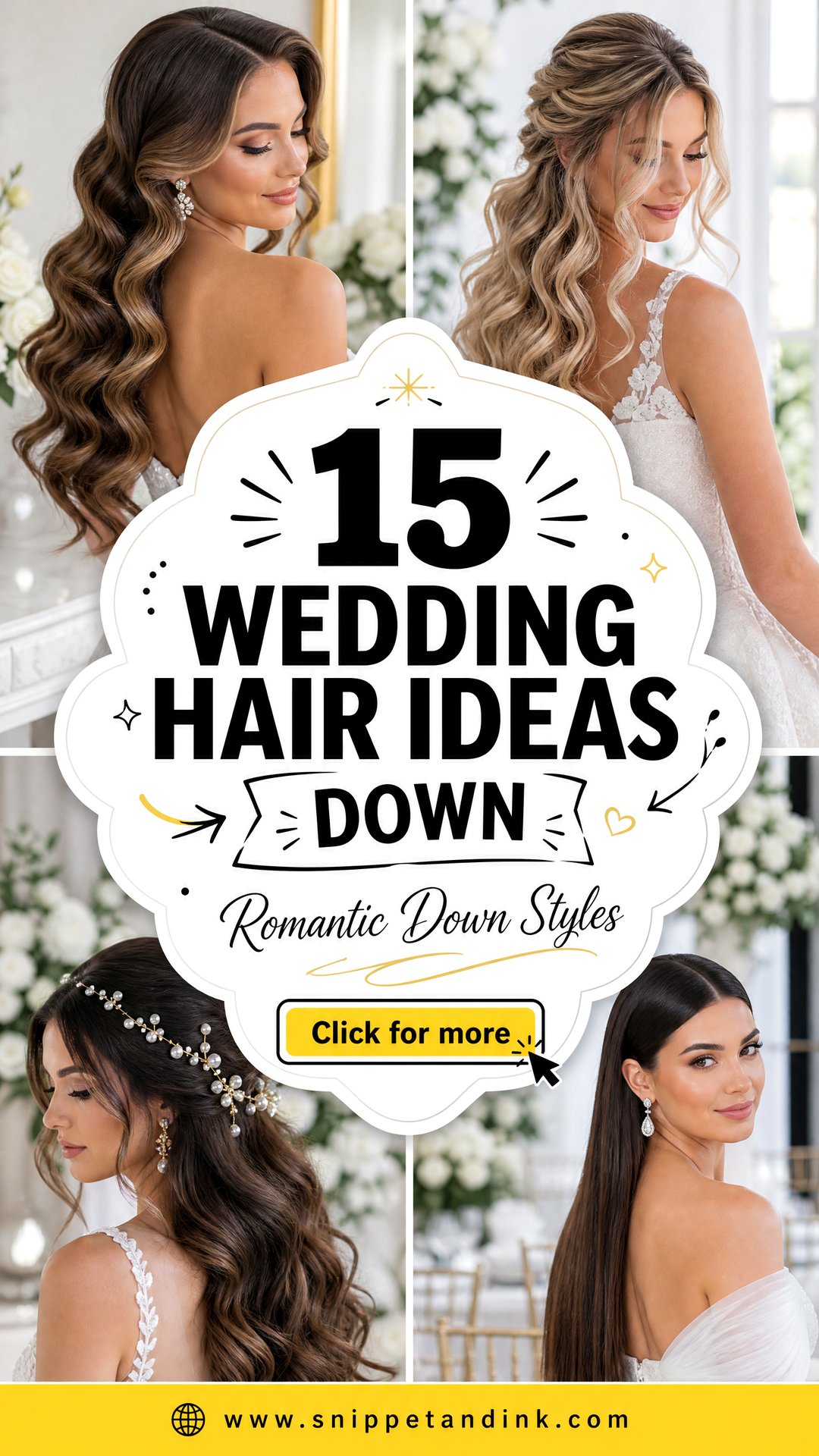
Loose hair is the request I get most often, and it is also the one brides underestimate. An updo is held by pins; hair worn down is held only by how well it was prepped and set, so it has to survive hugs, a veil, a breeze and a lot of hands. The looks I’m asked for right now are polished but soft: Hollywood waves, glossy curls, half-up details, natural texture, pearls, bows, flowers and face-framing pieces. Below are fifteen of them, with what I actually do to make each one last and who I’d steer toward something else.
Prep That Starts the Day Before Decides Whether Waves Last
Most down styles that fall apart by the first dance were lost before the iron came out. Freshly washed, very silky hair is slippery and lets curl go quickly, so for many brides I prefer hair washed the evening before. Very fine or oily hair is the exception; it often needs a morning wash because grease weighs curl down faster than slip does.
- Skip conditioning masks and hair oils for two or three days beforehand. They make the hair glossy and also make it refuse to hold a bend.
- Dry the hair completely, roots included. A damp patch at the nape will drop its curl within the hour.
- Use a root mousse or light volume spray while blow-drying, so the lift comes from the base and not from teasing alone.
- Arrive with clean, dry, unstyled hair and no leave-in product unless your stylist asks for it.
On the morning, the order matters too. I curl in sections no wider than the iron barrel, pin each curl to cool, and only break them up once everything is cold. Spraying lightly between sections works better than one heavy coat at the end, which tends to make the top layer stiff and the underneath limp.
1. Wedding Hair Down With Hollywood Waves
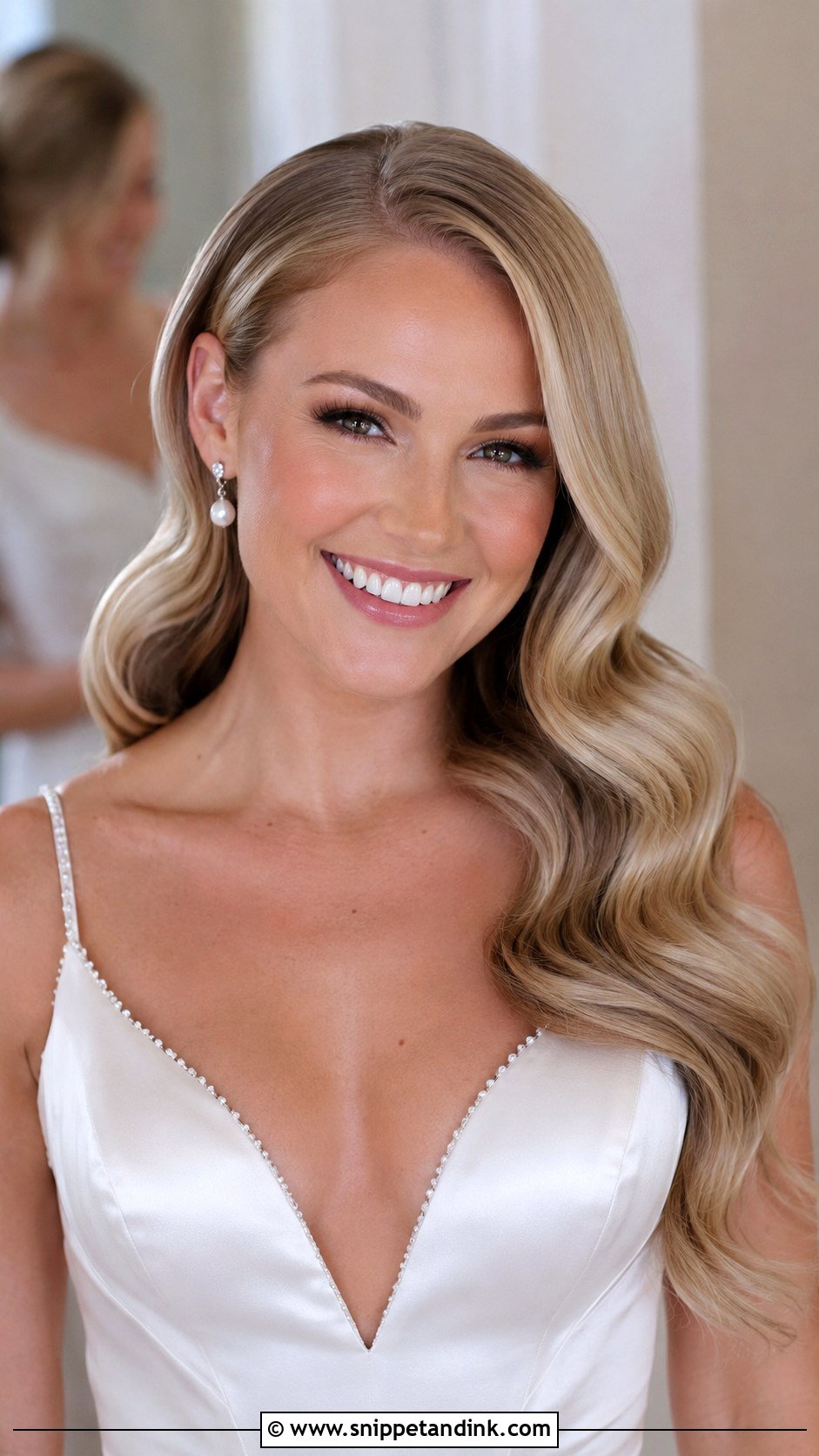
This is the most structured of the down styles, and it needs hair that will take a set. I curl every section in the same direction, pin each curl flat to cool, then brush the whole head into one continuous S shape and press the ridges with duckbill clips while spray dries. A deep side part does most of the drama. On fine hair that drops curl within an hour, I’ll usually suggest clip-in wefts for weight and grip, or a softer wave instead. It sits cleanly against strapless and off-the-shoulder satin because there is nothing on the shoulders to break the line.
2. Wedding Hair Down With Soft Waves
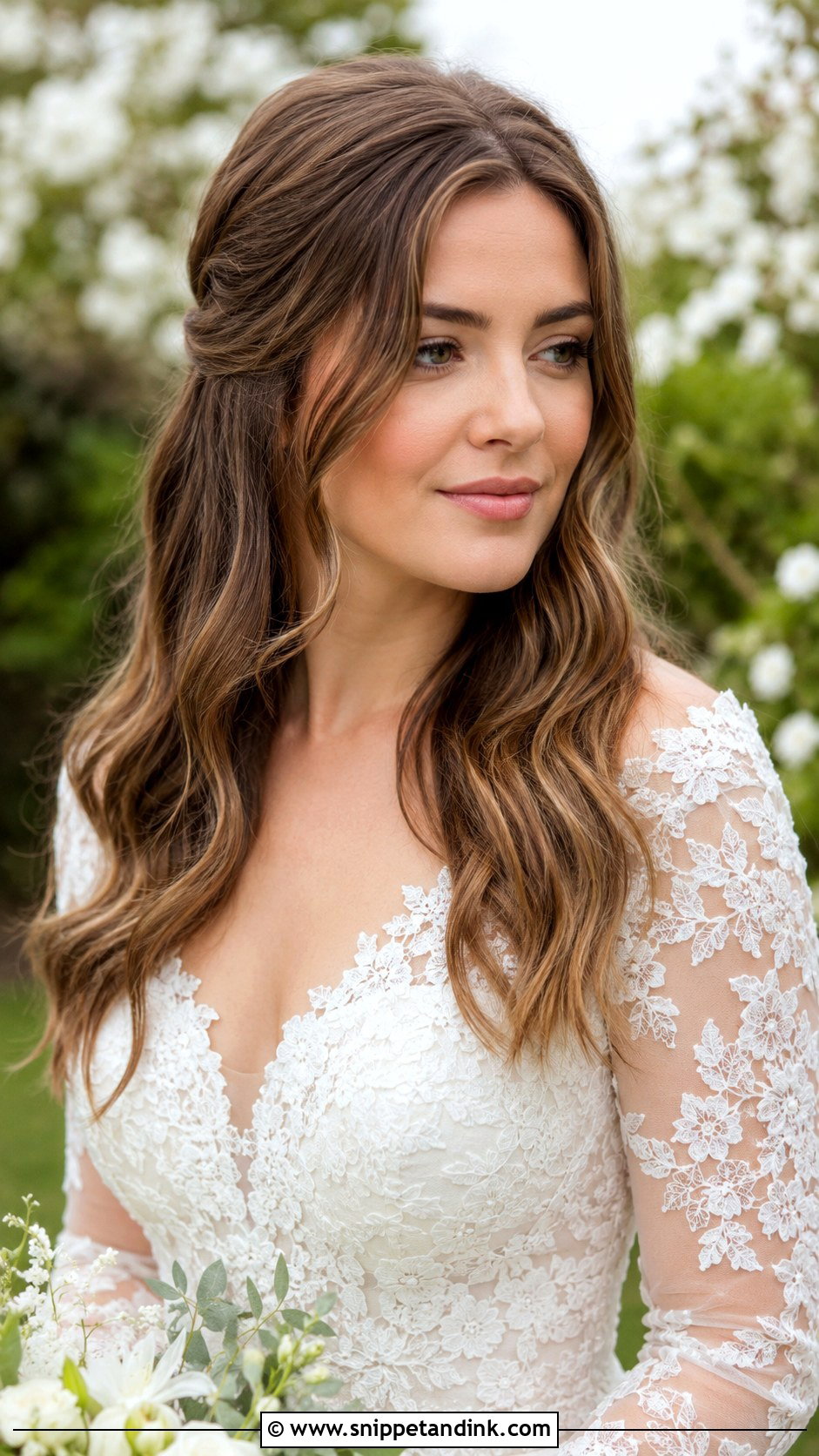
Soft waves are what I reach for when a bride says she wants to look like herself, only better. The bends start around the cheekbone rather than the root, and the ends are left a little open so they move when she walks. Finer hair does well here because a looser wave asks less of the strand than a tight curl. The catch is that a relaxed wave can relax all the way to straight by evening, so I set it with a medium iron and more product than it looks like it needs. A light shine spray at the end keeps it from reading dull in daylight.
3. Wedding Hair Down With Loose Curls
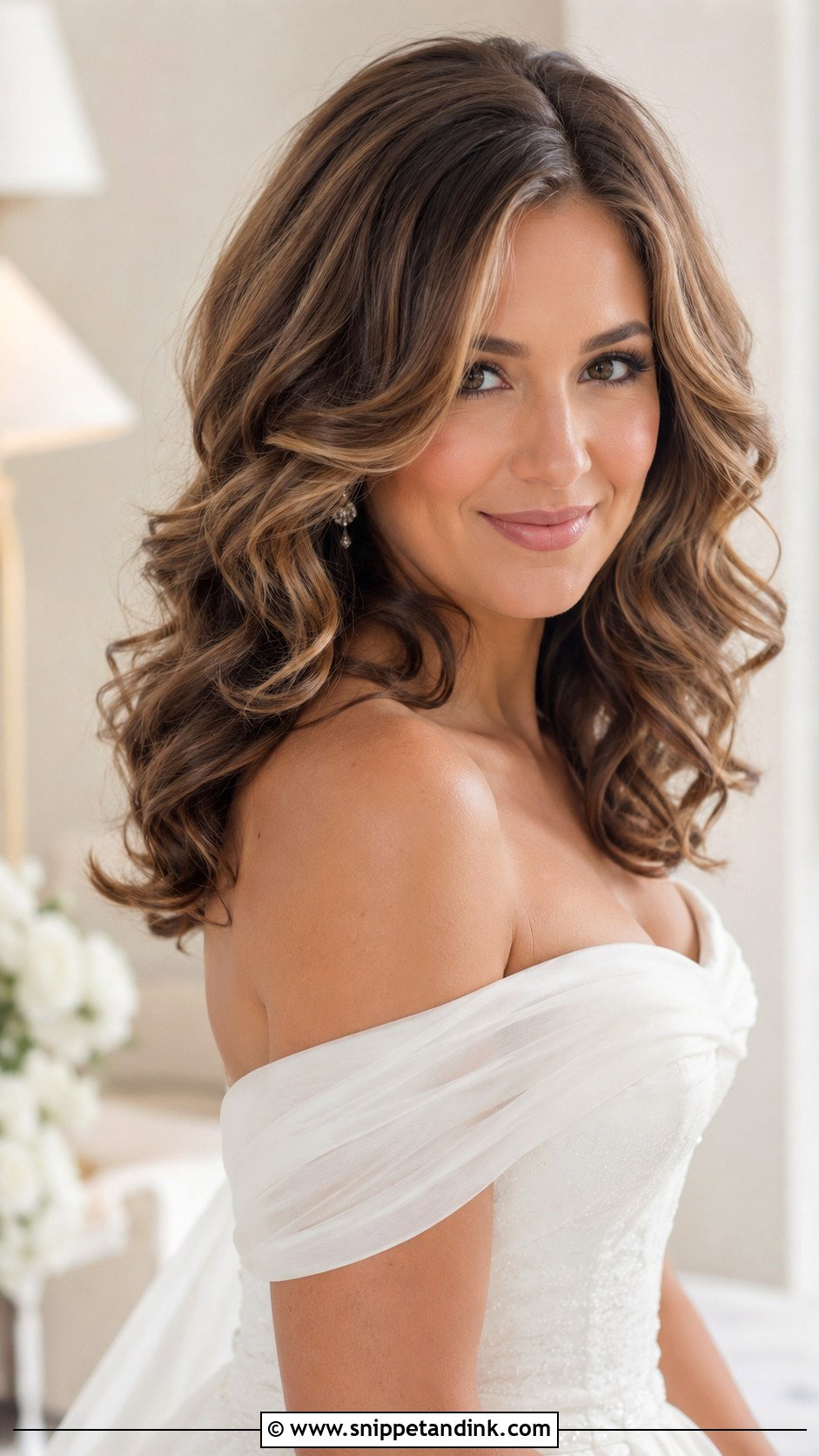
Loose curls carry more volume than a wave, which is useful when a fitted dress makes the head look small in full-length shots. I curl in small sections, let every curl cool completely in a pin curl, and only then break them apart with my fingers. Brushing too early is the usual reason curls fall in the first hour. Combs and pearl pins grip curls well because there is texture to slide into.
4. Wedding Hair Down With Side Part
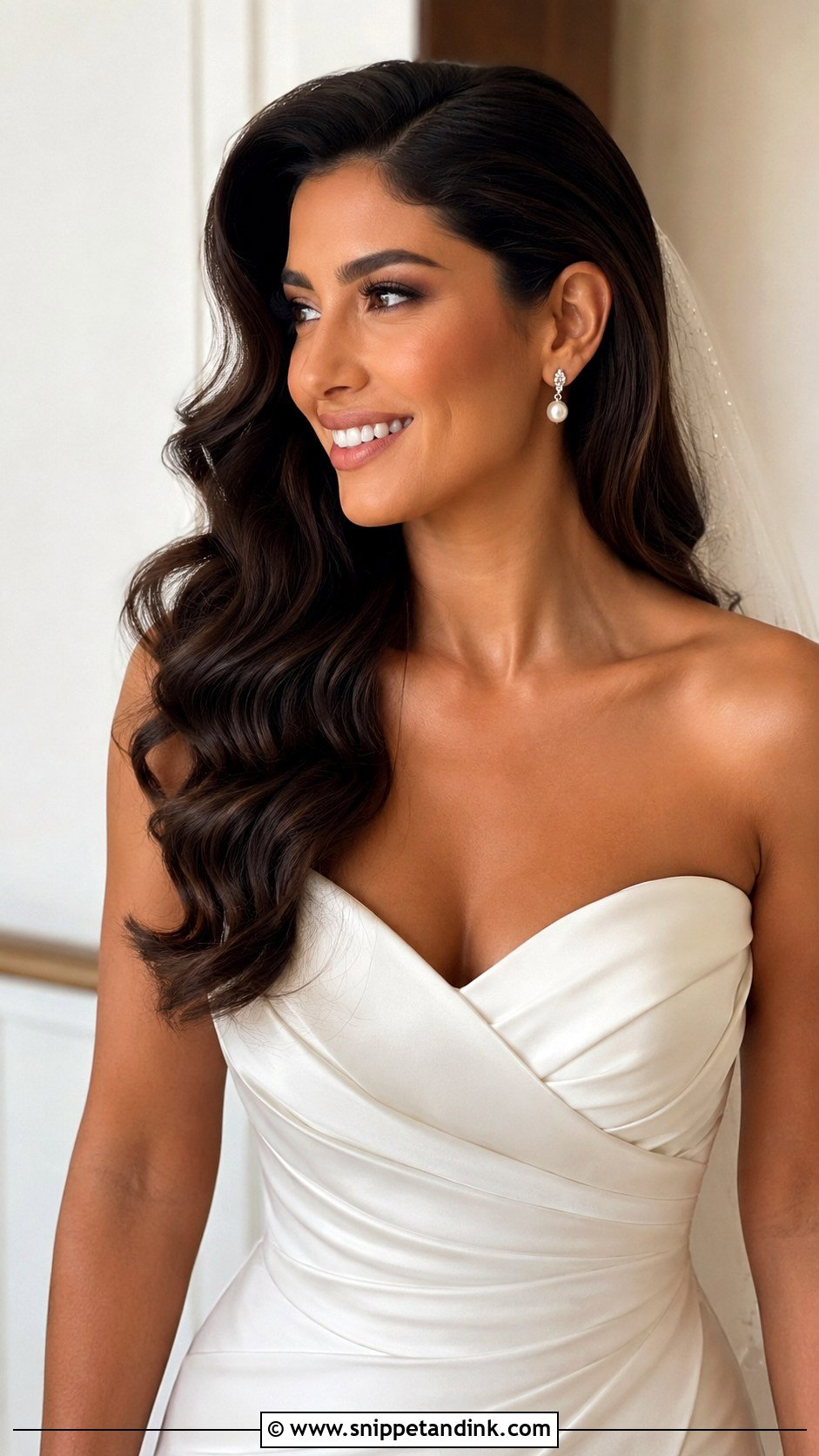
A deep side part is the simplest change that makes loose hair look styled. I set the part while the hair is still damp, because a part blow-dried the other way will try to flip back by the speeches. It throws weight across one eye and cheekbone, which suits most faces and gives a strong profile in vow photos. If your hair has a stubborn cowlick at the front, tell your stylist at the trial; sometimes the part has to sit a little further over than you’d choose. One tucked side or a small comb keeps the heavy side out of your face during the ceremony.
5. Wedding Hair Down With Middle Part
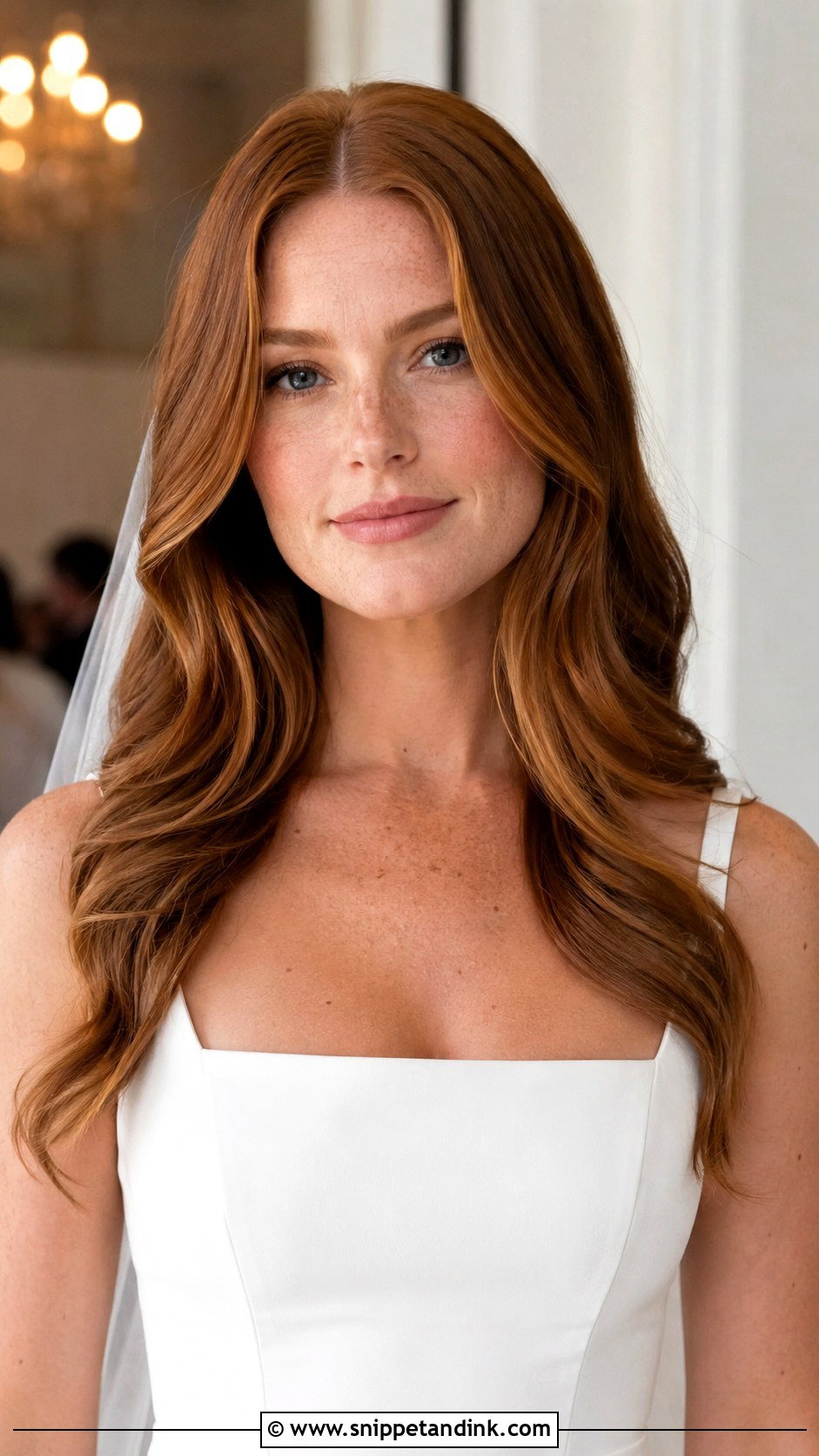
The middle part looks minimal, but it is less forgiving than it seems. Any asymmetry in the hairline or in how the two sides wave shows straight away, so I curl the front pieces on each side away from the face and check them in a mirror held behind the bride. It suits square and high necklines where the face is the frame. Avoid letting it go flat at the crown; I lift the roots with a round brush so the shape stays balanced rather than plastered.
6. Wedding Hair Down With Veil
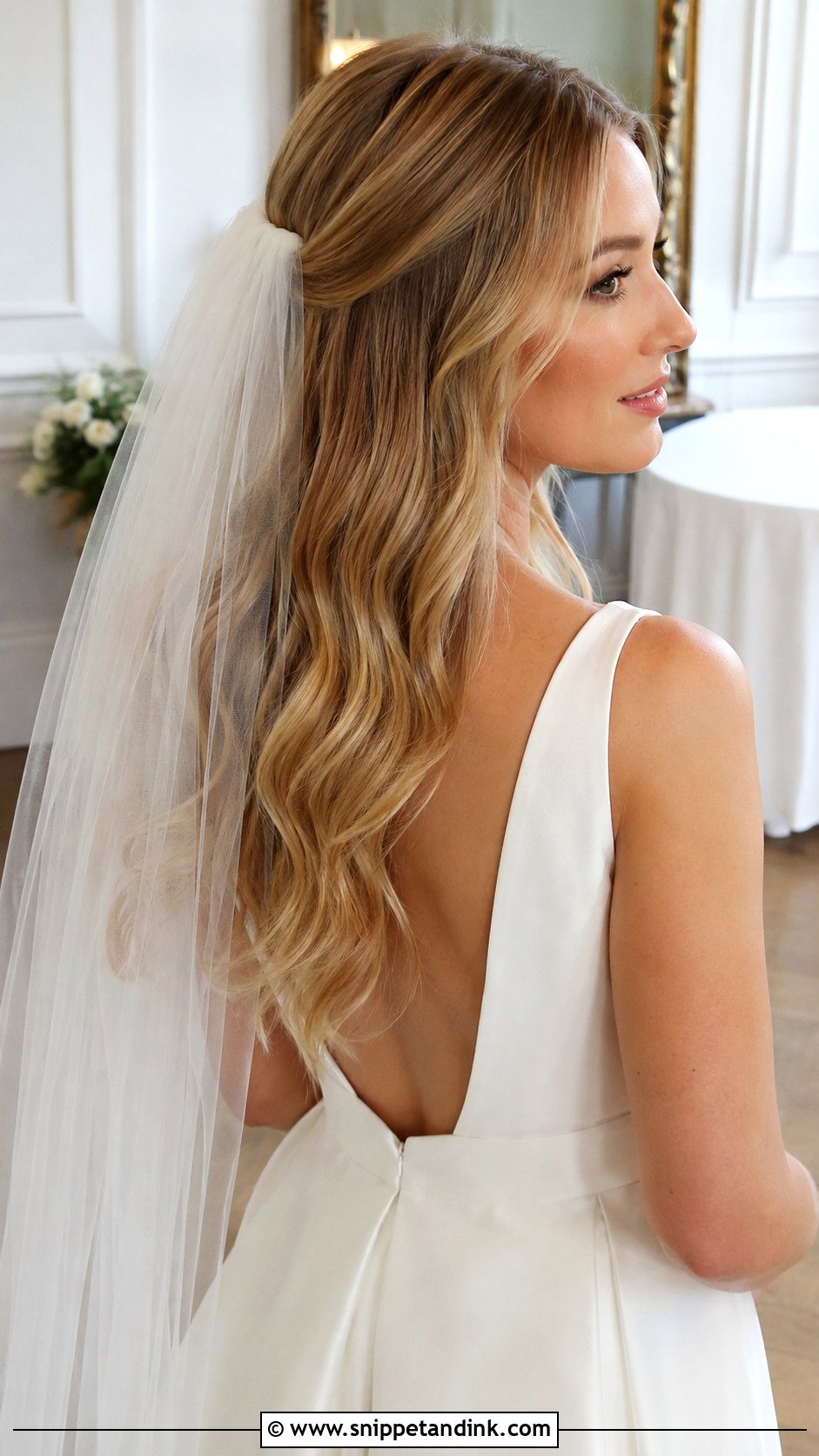
Down hair gives a veil comb nothing solid to bite into, so the support has to be built underneath. I usually make two small hidden braids or a crossed pin anchor just below the crown, smooth the top layer over them, and slide the comb into that base. Waves and brushed curls hold up under the tulle and still look finished once it comes off. It works with fingertip, chapel, cathedral, and simple tulle veils, though a long cathedral pulls hard on the anchor. Bring the real veil to your trial so we can feel its weight and see how the hair falls after removal.
7. Wedding Hair Down With Pearl Pins
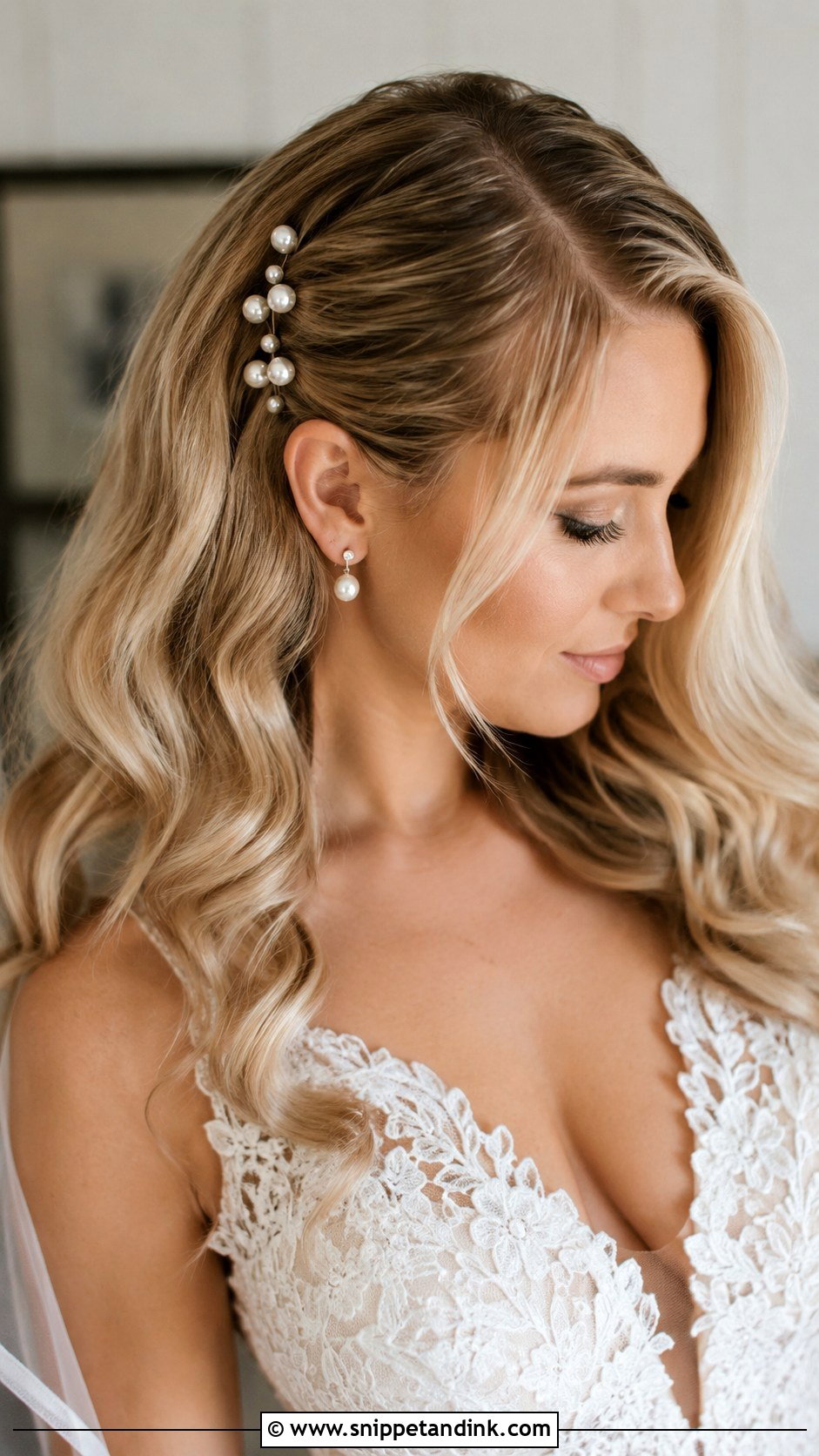
Pearl pins are where restraint pays off. Five or six placed along one side or tucked into the back of the waves look deliberate; twenty scattered everywhere look like a craft project in close-ups. I set them last, after the spray is dry, so the pearls stay clean, and I angle each pin toward the crown so it catches in the hair rather than sliding down the wave. They sit naturally with lace and satin slips.
8. Wedding Hair Down With Flower Clips
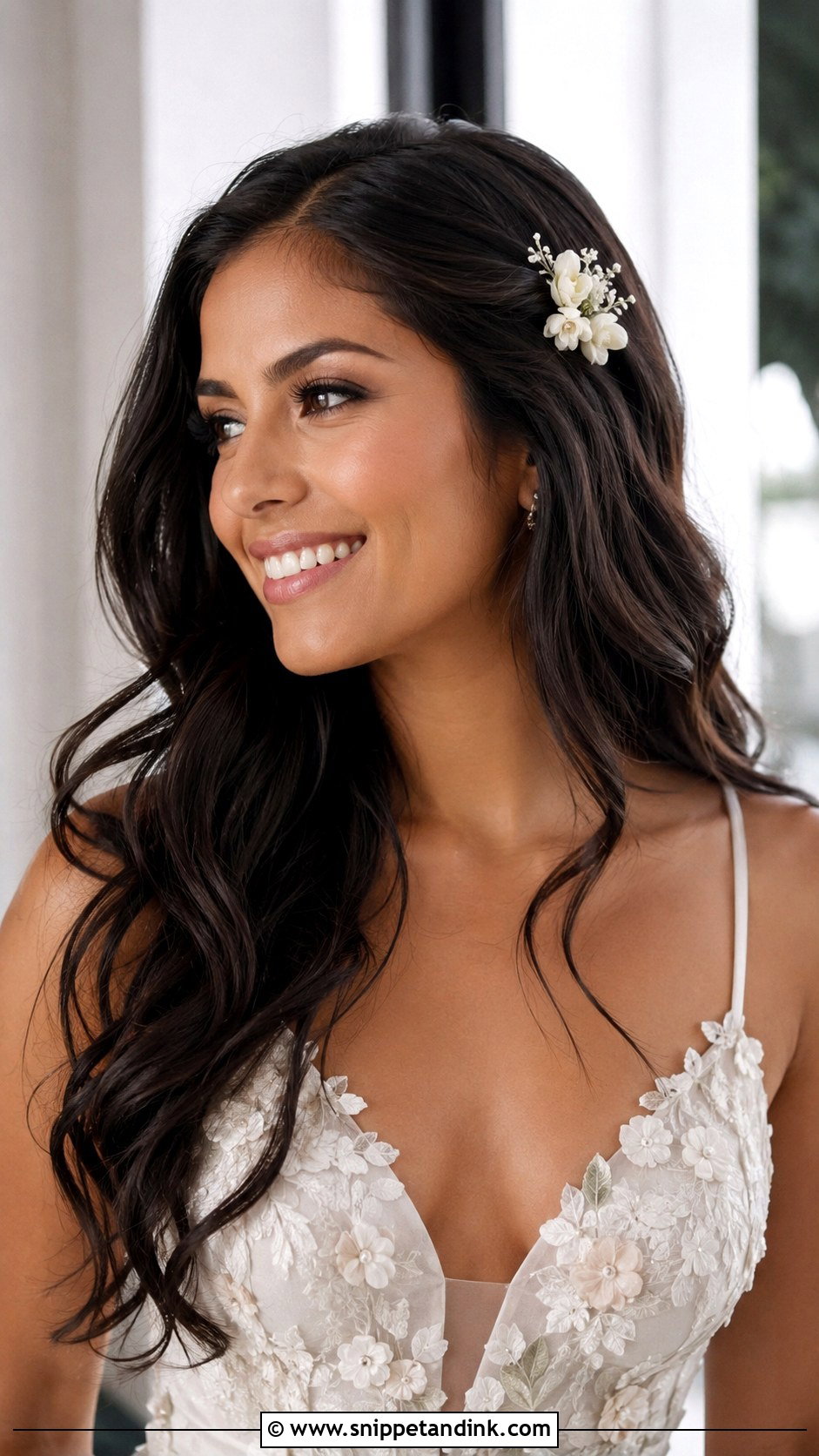
Fresh or silk, flower clips want textured hair to hold onto, so I’d pair them with waves or curls rather than a pin-straight blowout. A single bloom above one ear is the cleanest version; smaller ones worked into the waves feel softer. Fresh flowers wilt in direct sun, so for summer and outdoor ceremonies I often suggest hardier blooms or silk, and ask the florist for stems wired short. Keep the colour from fighting the bouquet. I always add a hidden pin crossed under the clip because wind will lift a clip on loose hair long before it moves one in an updo.
9. Wedding Hair Down With Bow
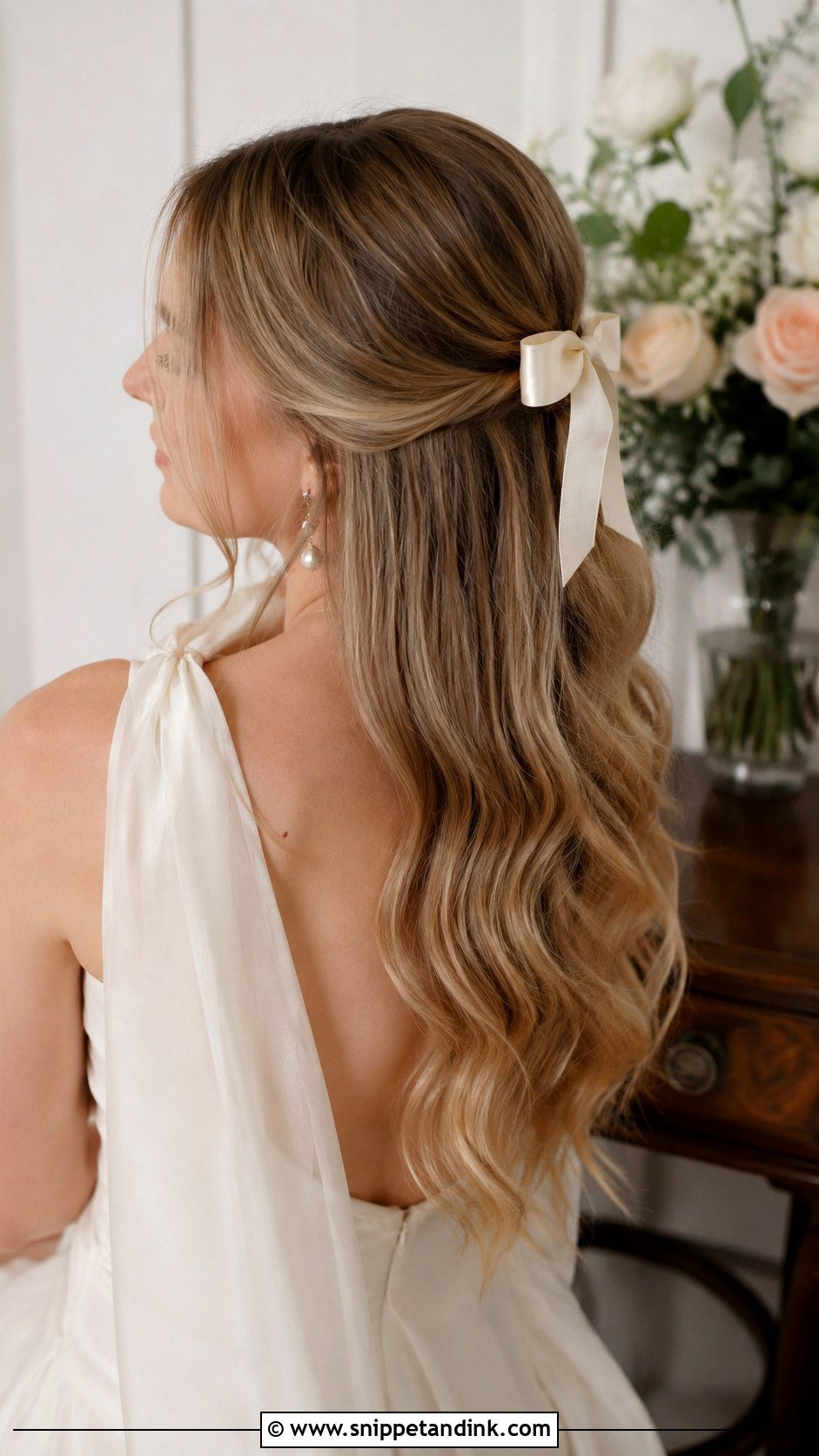
Wedding hair down with a bow can look grown-up or childish, and the difference is mostly scale and fabric. A satin or silk bow with some body holds its loops; thin organza collapses by the afternoon. It can sit at the crown, on one side, or over a small half-back section while the rest stays down. Ivory, champagne or blush disappear into fair hair, so on blondes I sometimes suggest black for contrast. With a plain gown, the bow is the whole statement, so keep it modest in size.
10. Wedding Hair Down With Face Framing Pieces
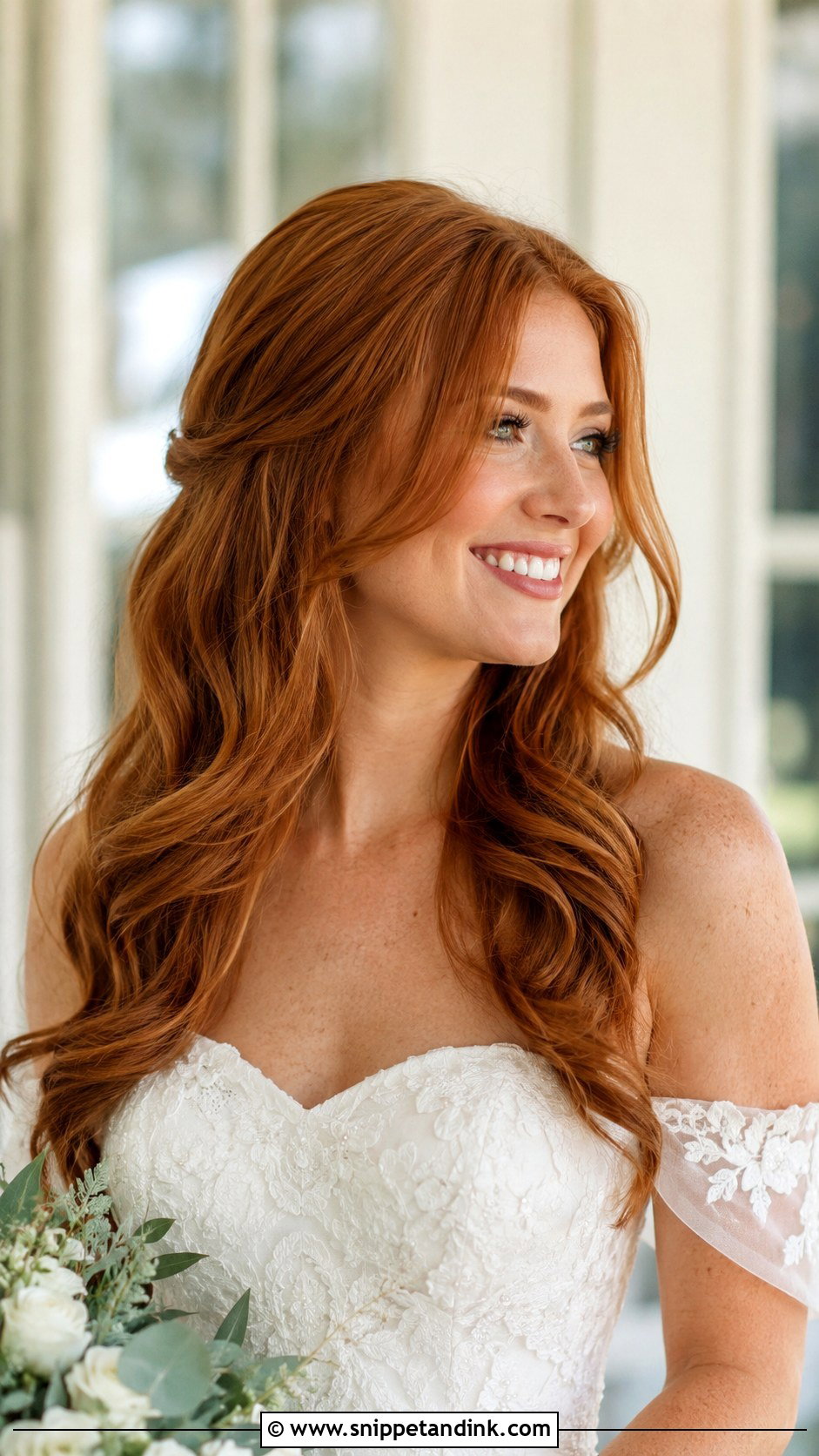
Face-framing pieces fail in two ways: cut too short, they stick to lip gloss all night; left too long, they vanish into the rest of the hair. I aim for pieces that land around the cheekbone or jaw and curl them away from the face. I also check them with the bride talking and laughing, not just posed, because that is when they end up in her mouth. They suit almost every down style here, waves, curls and smooth blowouts alike.
11. Wedding Hair Down With Natural Curls
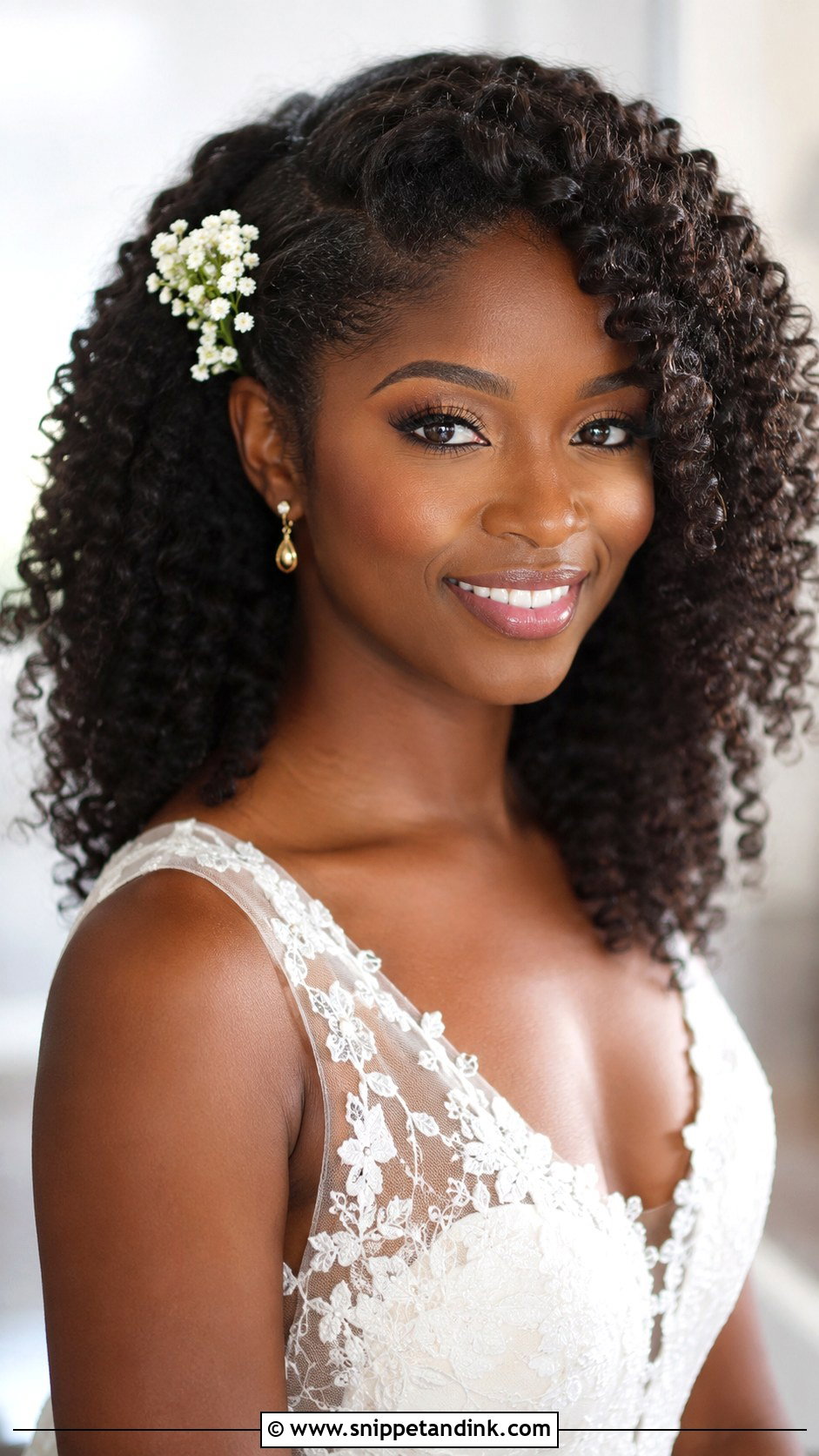
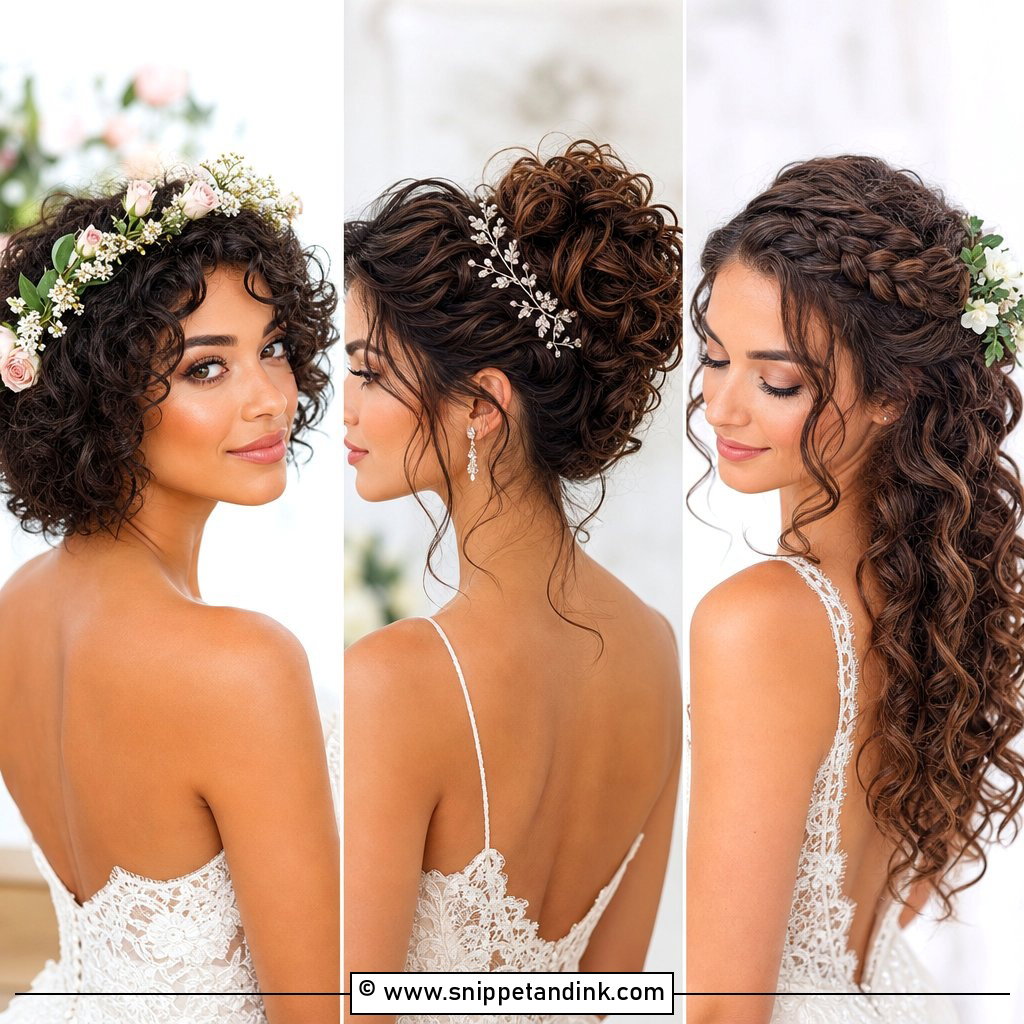
Curly brides should never be talked out of their own texture. The work here is consistency: I ask the bride to wash and style exactly as she normally would on a good curl day, and we repeat that routine at the trial so nothing new reacts badly on the morning. Curl cream, a gel cast, a diffuser and an anti-humidity finish keep the pattern defined without crunch. Avoid brushing curls once they are dry; I’d rather reshape with fingers and a little water. A side part, pinned side or one flower works well, and the look sits naturally with lace or a clean modern dress outdoors.
12. Wedding Hair Down With Long Layers
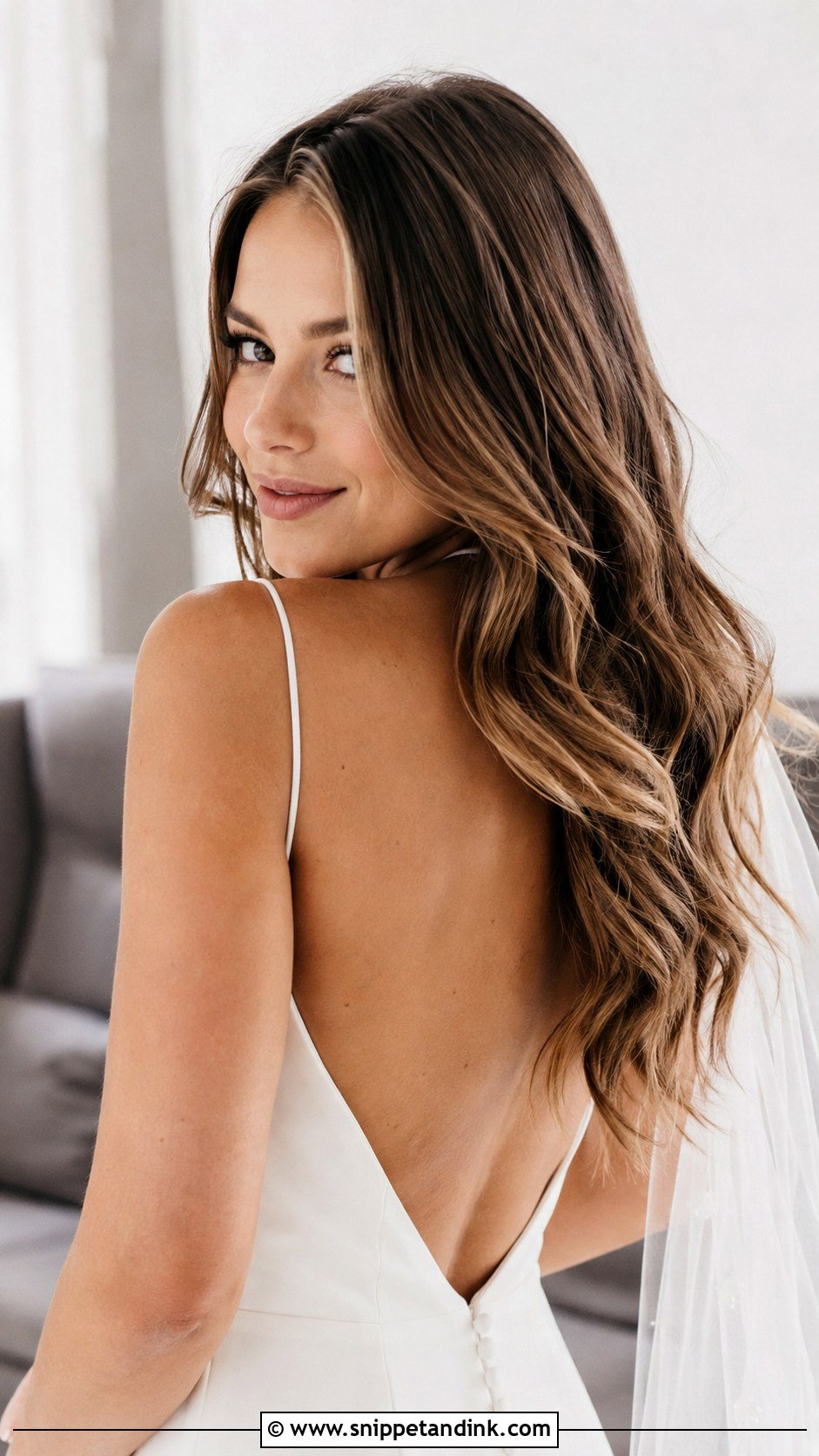
Long layers are the haircut I’d ask for before a down style if the ends are heavy and blunt. They let waves fall at different levels, so the shape doesn’t collapse into a triangle below the shoulders. Thick hair and hair with extensions benefit most. Get them blended, not choppy, and get them cut four to six weeks ahead so the edges have softened. A smooth blowout before curling helps the layers catch light and makes the wave sit tidier.
13. Wedding Hair Down With Sleek Straight Hair
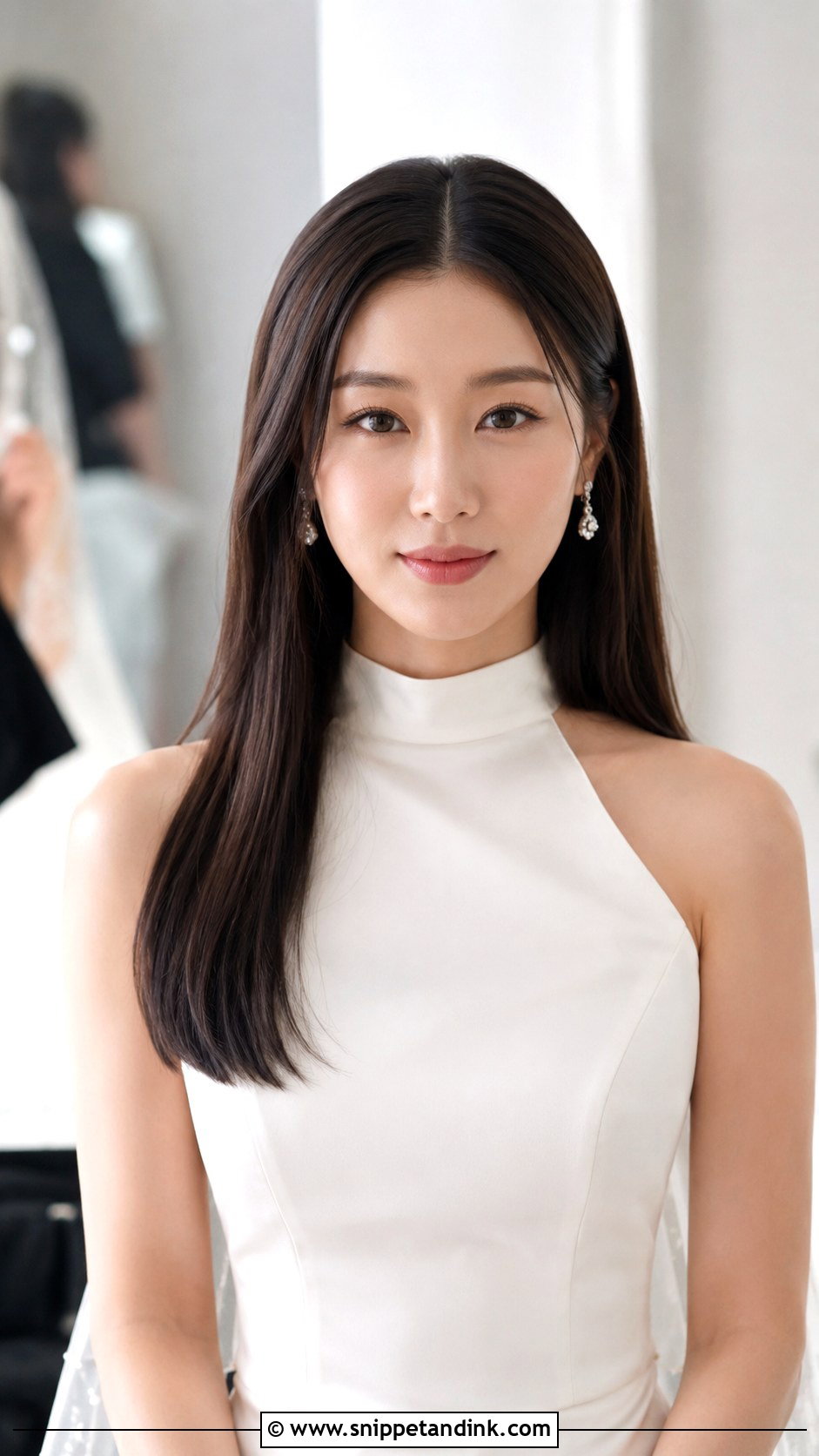
Sleek and straight looks easy and is quietly the hardest down style to keep right, because every frizzy strand and split end is visible. I’d only recommend it if the hair is in good condition; a trim and a gloss treatment a couple of weeks out make a real difference. I flat iron in thin sections with heat protection, then bend the very ends slightly so it doesn’t hang like a sheet. In humid weather, it’s the style I worry about most. A middle part, tucked sides or pearl accessories go well with it at a city venue.
14. Wedding Hair Down With One Side Pinned Back
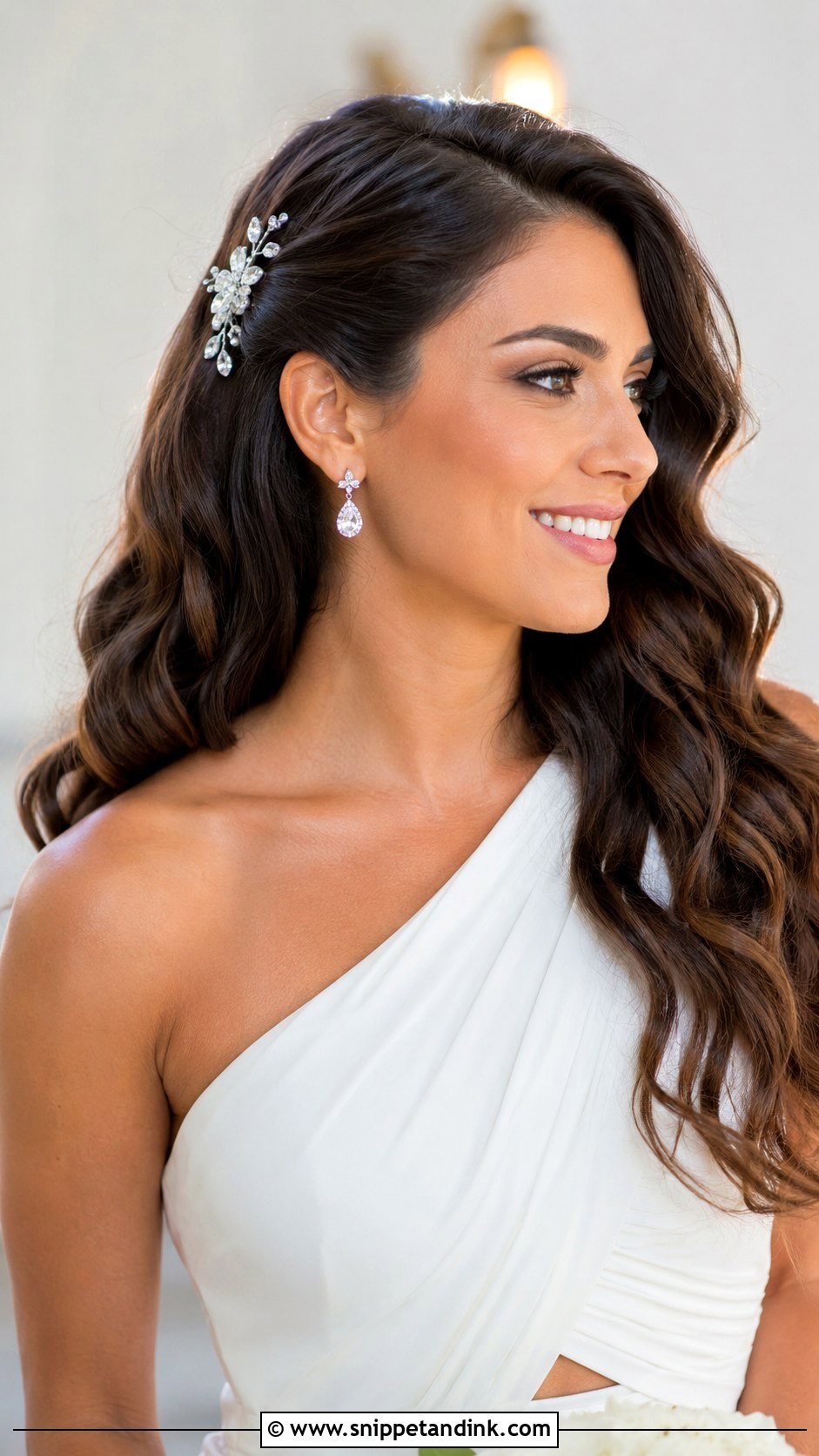
Pinning one side back shows off an earring and a neckline without committing to a half-up. I twist or braid the section flat against the head and cross two pins under it, then lay the top layer over to hide them. The finish can be sleek, braided, or dressed with pearls or a comb. It pairs well with Hollywood waves, loose curls and natural texture. Pin back the side that faces your guests during the vows, which is usually the side the photographer will shoot from.
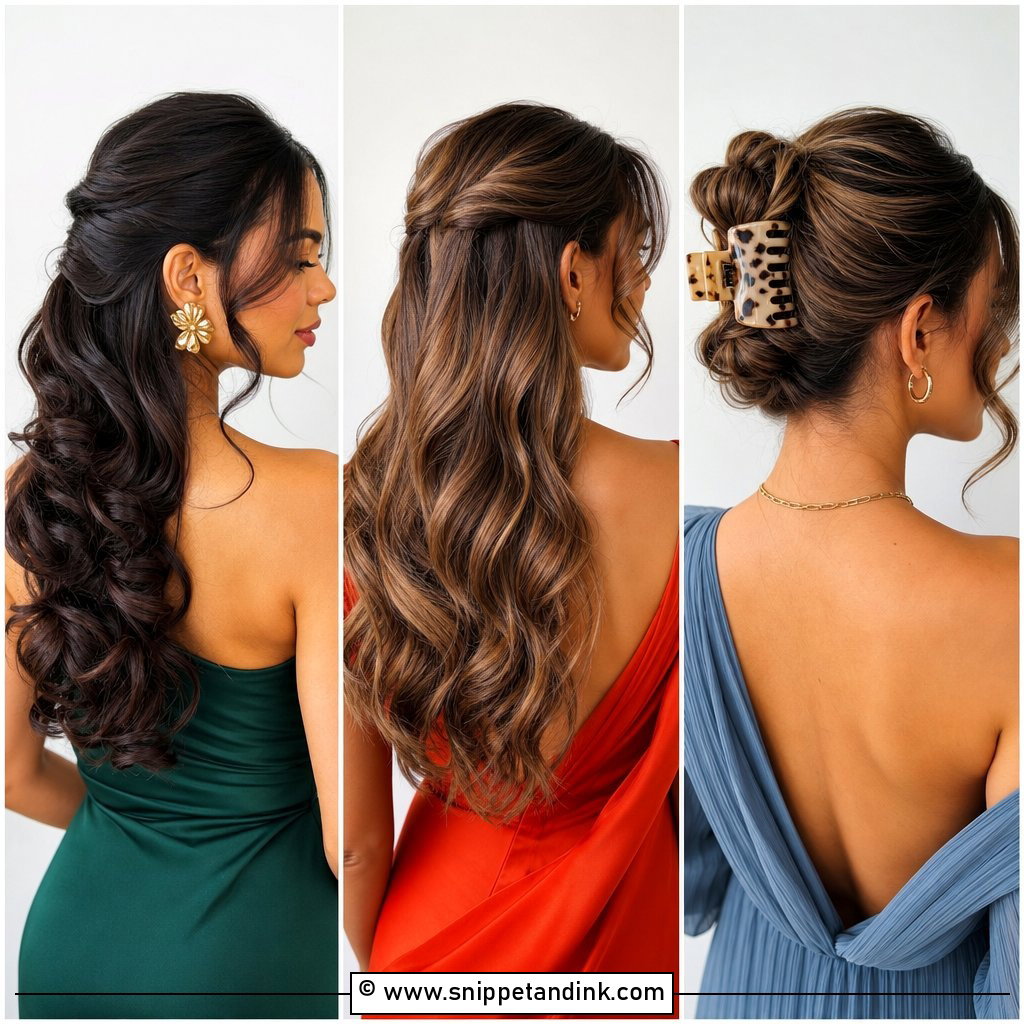
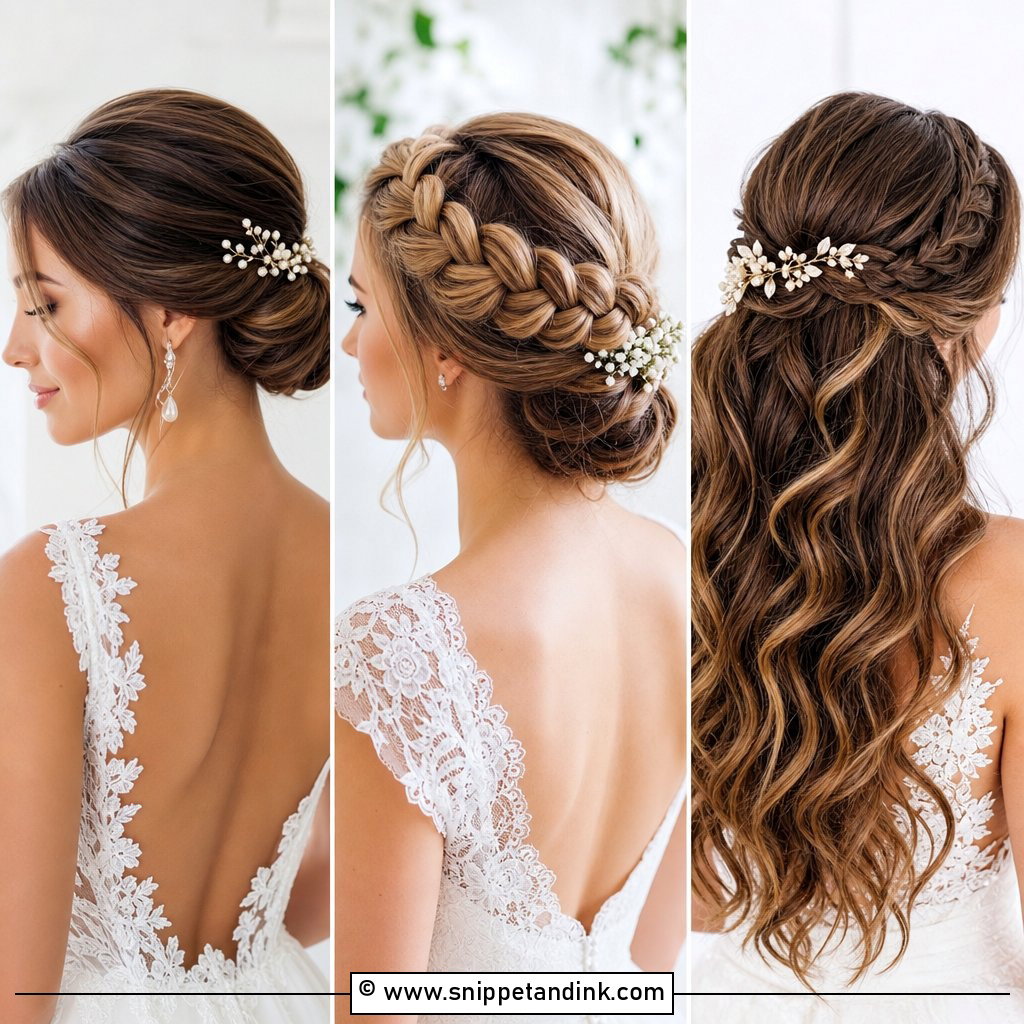
15. Wedding Hair Down With Brushed Out Curls
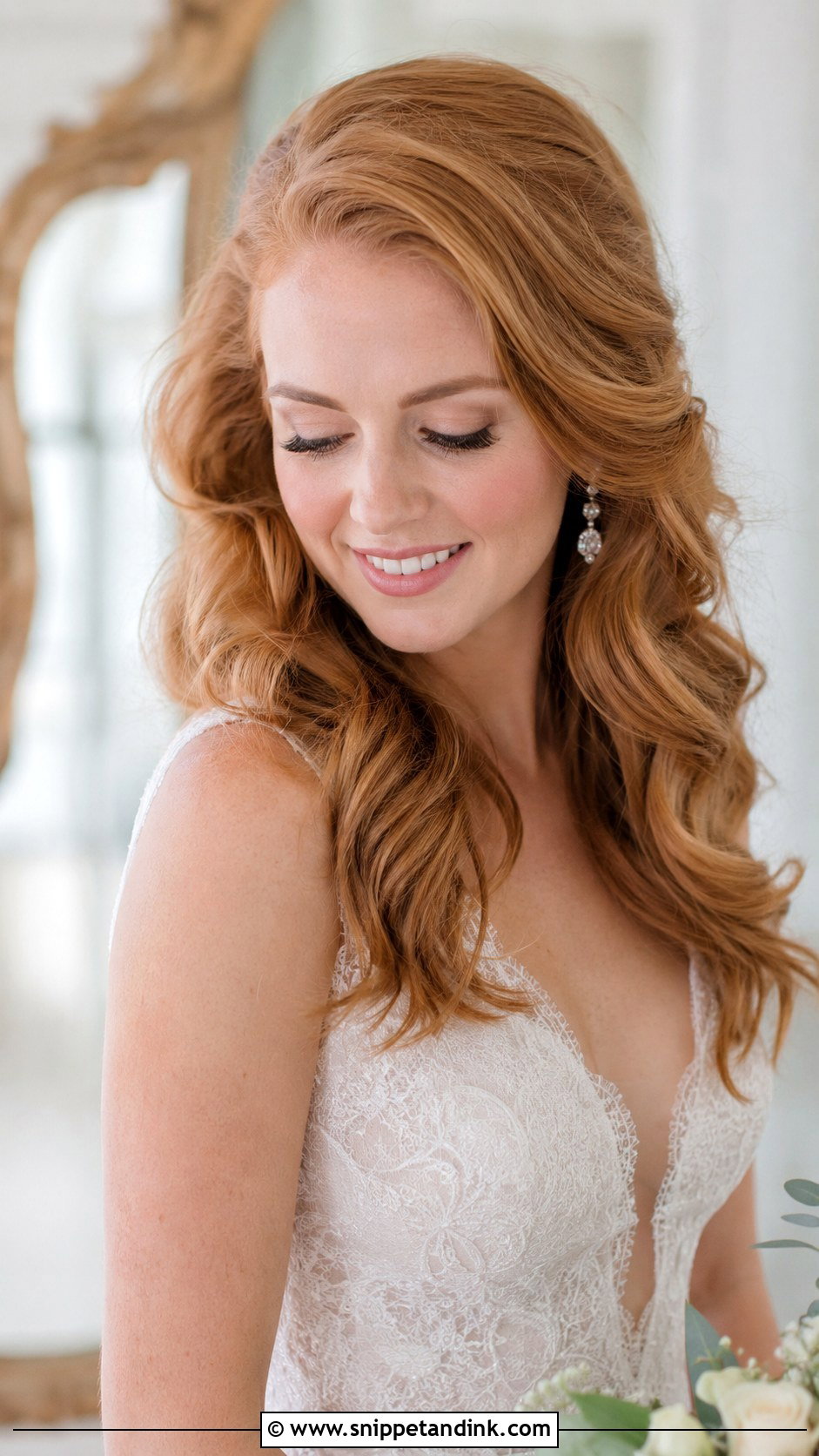
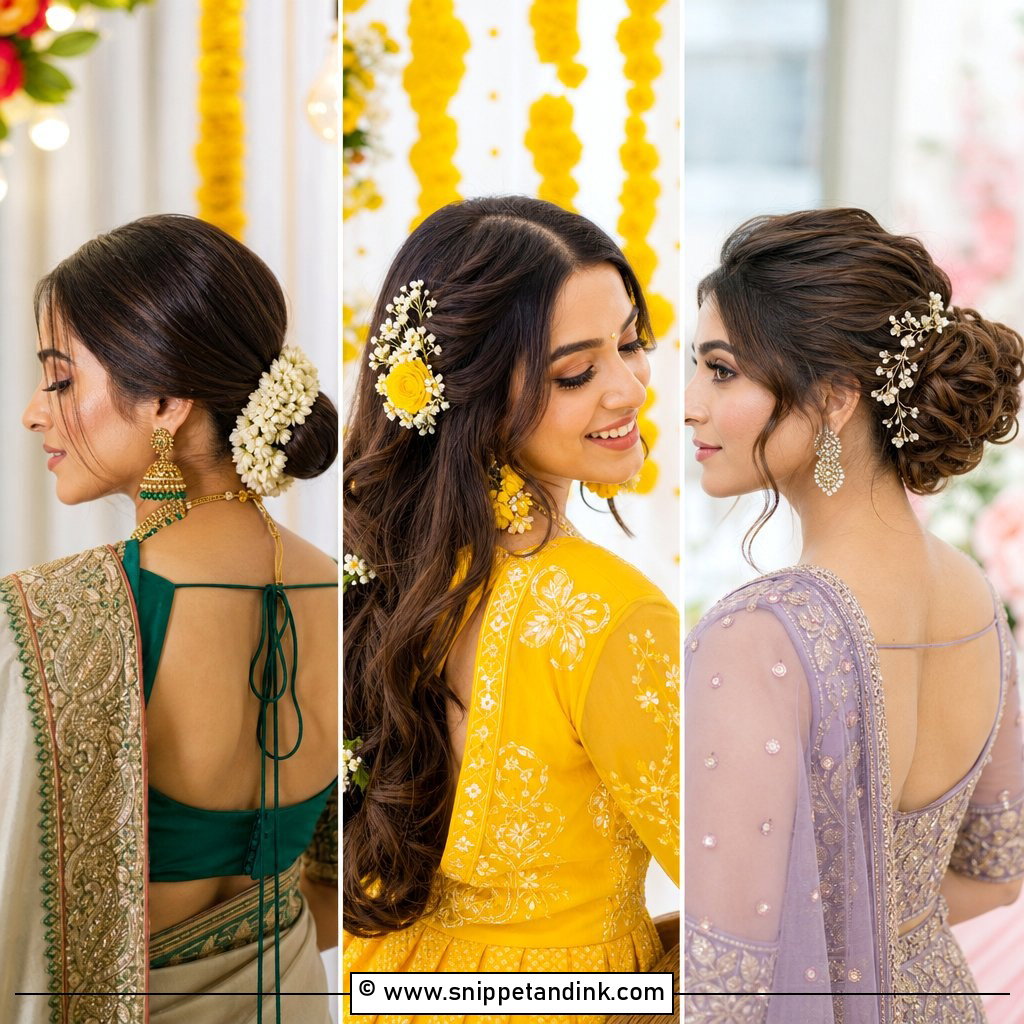
Brushed-out curls start as tight, fully cooled curls and get brushed with a paddle or boar bristle brush into a big, cloudy shape. The result is the most forgiving style here: as it relaxes during the evening it just gets softer, never messy. I add light backcombing at the crown for lift and a flexible spray, nothing that sets hard. It suits medium to long hair, with a veil, comb or pearl detail.
Lace Sleeves, Beaded Backs and Other Things Loose Hair Snags On
With hair down, the dress and the hair are in contact all day. Beaded bodices, sequins and Chantilly lace catch strands every time you turn your head, and by evening the back can look matted where it rubbed. If your gown has an open beaded back or lace shoulders, tell your stylist; a smoother set or a pinned side may hold up better than brushed curls.
Necklaces do the same thing. A clasp at the nape grabs the underside of the hair, so I fasten jewellery before styling and keep the lowest layer smooth over it. Hugs are the other culprit. Hands go straight to the back of the head, and that’s where curls flatten first.
What I leave with the maid of honour
- A travel-size flexible hairspray, not the strong hold I set with.
- Six or eight bobby pins matched to the hair colour, for a veil comb or flower clip that loosens.
- A small mirror, so a fix happens before the photos, not after.
- Clear instructions not to brush the curls; fingers only, and only to separate.
Adjusting One Wave Pattern for Fine, Dense or Clip-In Hair
The same picture on a mood board needs a different method on different hair. Fine hair wants smaller sections, a smaller barrel than the photo suggests and a longer cooling time, because the wave will open up by roughly a third as the day goes on. Dense hair is the opposite problem: it holds curl well but can look heavy and triangular, so I thin the bulk with layering at the cut and curl the underneath sections tighter than the top.
Clip-ins are useful for both, either to add grip to fine hair or to lengthen a style that ends at the collarbone. Match them to your colour at the trial, not on the morning, and have them cut into your own ends so the line disappears once everything is curled together.
Structure You Can’t See Is What Keeps Down Hair Polished
Loose hair can be every bit as secure as an updo when the support is hidden underneath and the set was done properly. Pick the shape based on your texture and how well it holds a curl, then let the dress, veil and weather narrow it down. Hollywood waves give structure, soft waves move, curls add volume, and sleek hair reads modern. Bring your veil and accessories to the trial, wear the style for a few hours afterward, and take photos from the back and side as well as the front.
You'll Like These Ideas:


Leave a Reply