
Ask brides at a consultation what they want and a surprising number say “some kind of bun.” It’s a sensible instinct. A bun is still in place at the last dance, it gives a veil somewhere to anchor and it suits a city registry office as easily as a garden. What turns a pinned knot into wedding hair is fit: the neckline, the veil, your texture and the shape of your face all decide where it should sit and how soft it should be. Below are fifteen versions, from clean and low to curled, braided and dressed with flowers or pearls, with what I’d watch for on each.
Messy Means Something Different to Every Stylist
Bun vocabulary is slippery. One stylist’s “messy” is a few soft wisps; another’s is a deliberately undone knot with pieces falling at the neck. “Sleek” can mean glossy and smooth or pulled tight enough to look like a ballet bun. The surest way to avoid a surprise at the trial is to translate words into pictures.
- Bring two or three photos of buns you love, ideally on hair close to your own colour and thickness. A bun built on very thick hair won’t look the same on fine hair.
- Bring one photo of a bun you don’t like. It often tells me more than the favourites.
- Point at the parts that matter: the height, how much hair is left out at the face, whether the crown is lifted or flat.
- Say how you want it to feel by evening, not just how it should look at noon. “I’d rather it loosen a little than stay rigid” is useful direction.
Wear a top with a neckline similar to your dress. A bun that looks right over a hoodie can sit too high or too low once your shoulders are bare.
1. Low Bun Wedding Hair
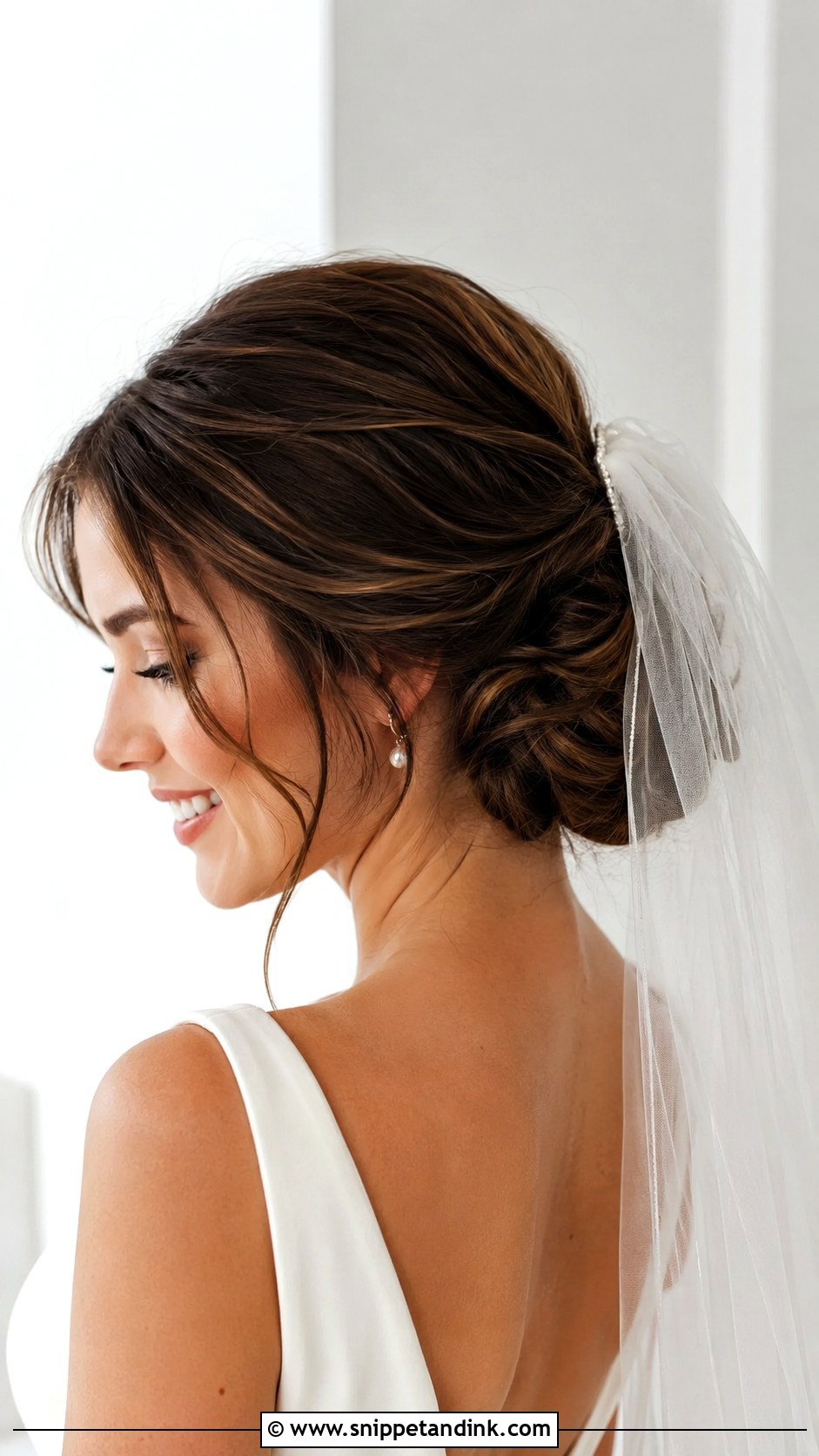
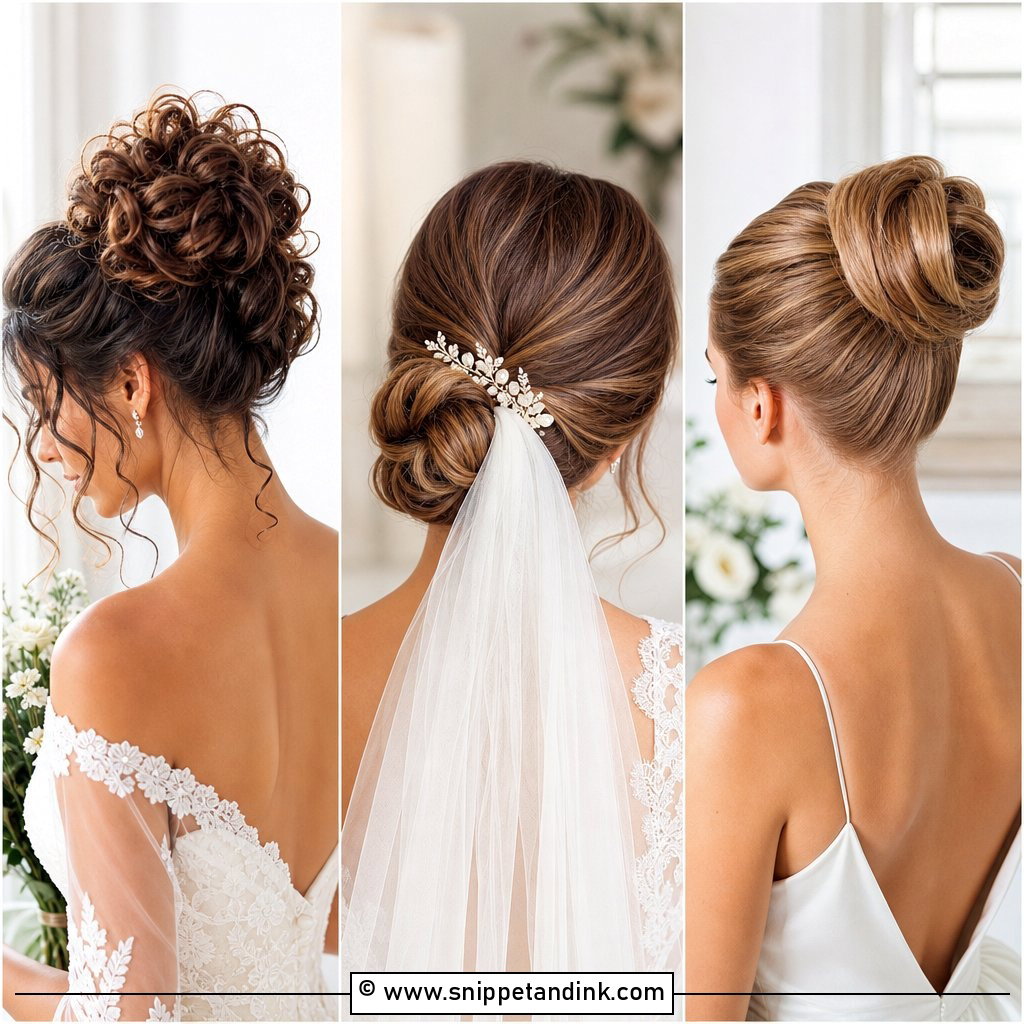
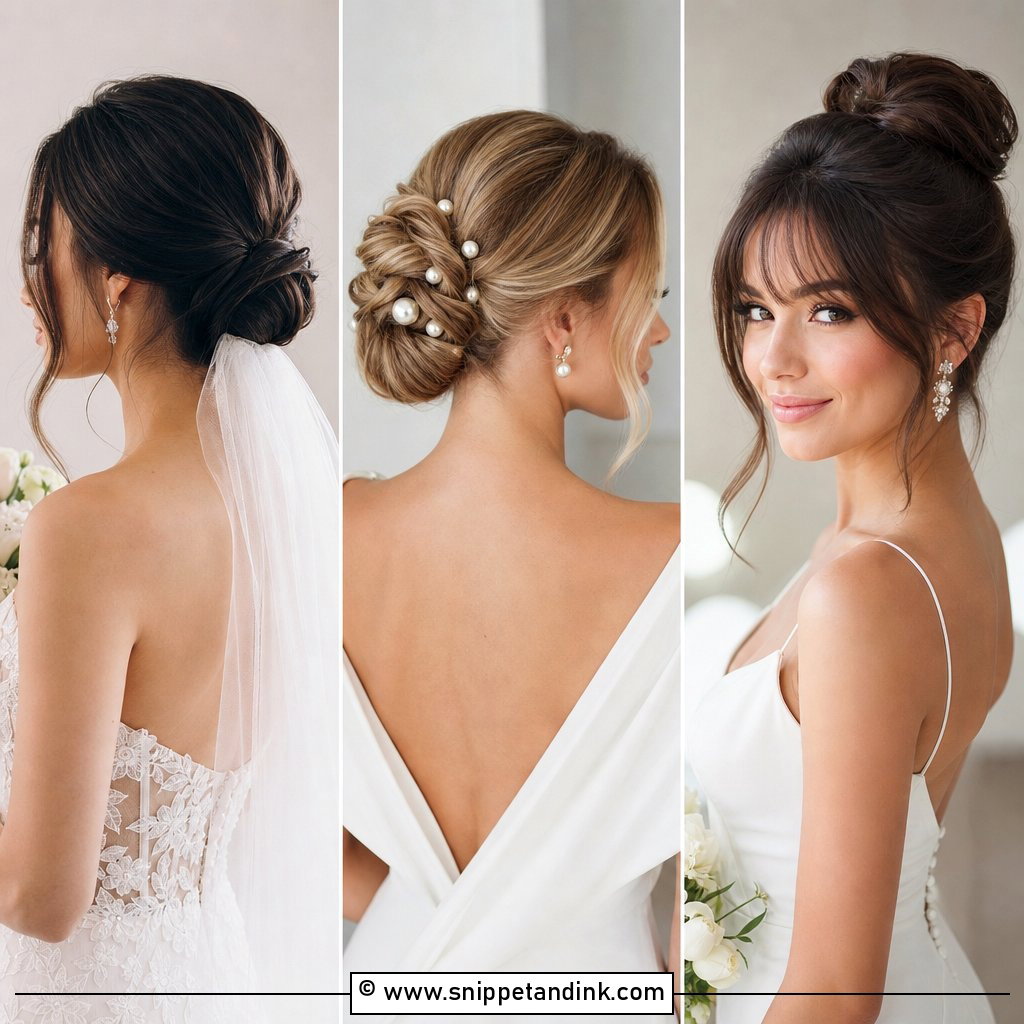
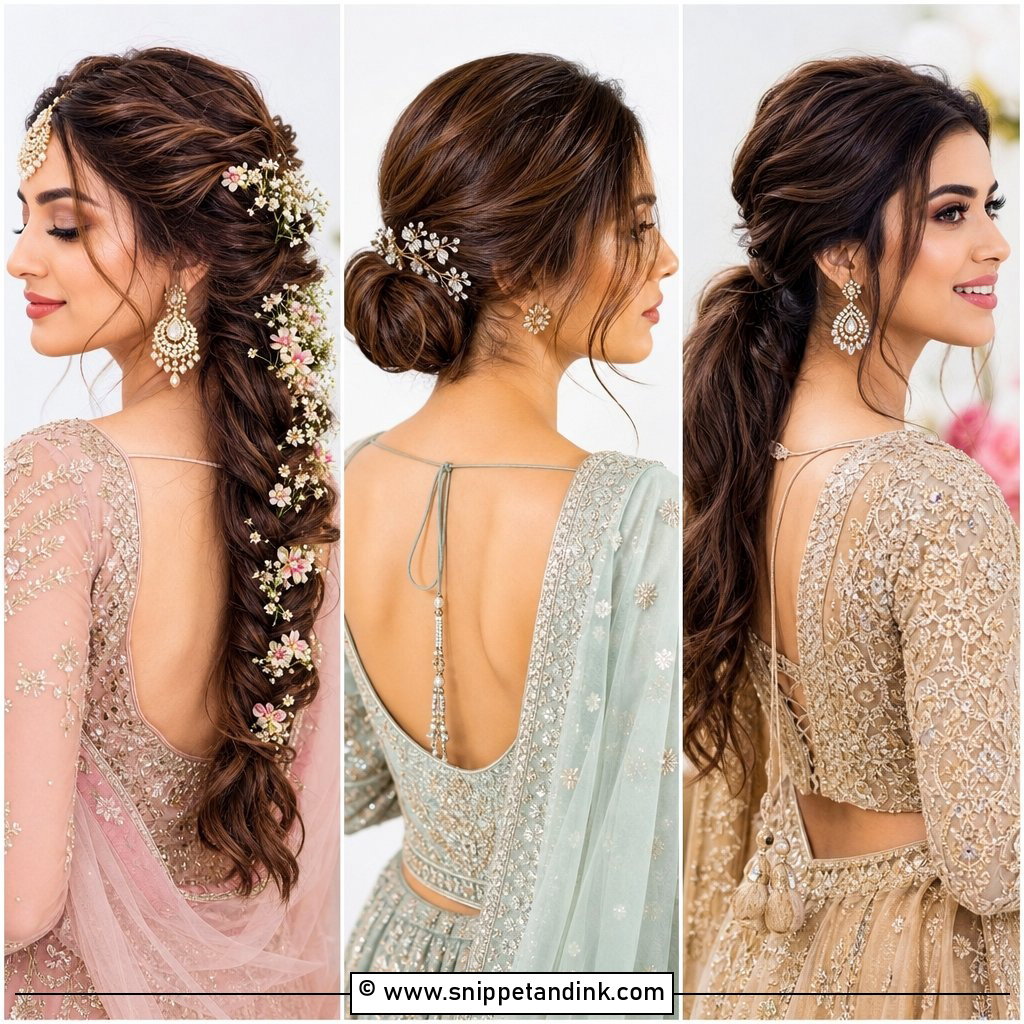
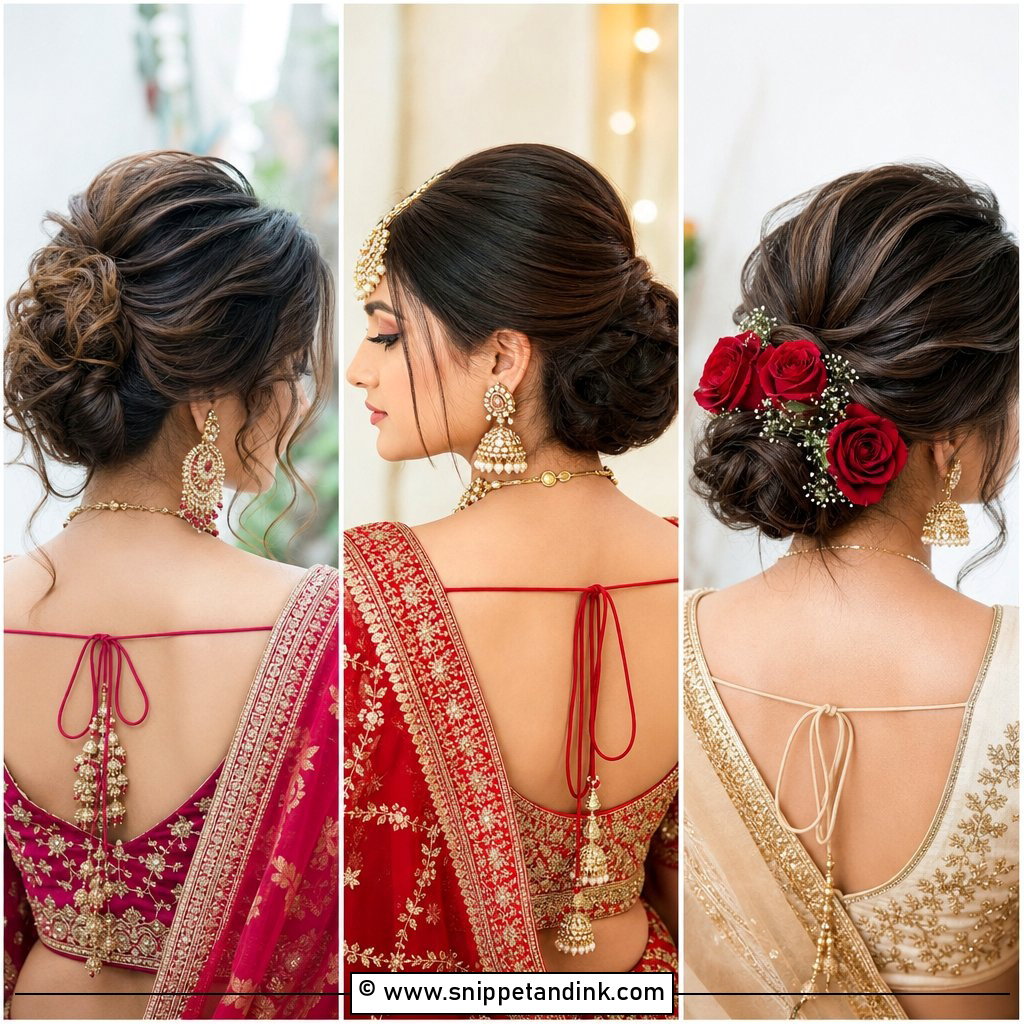
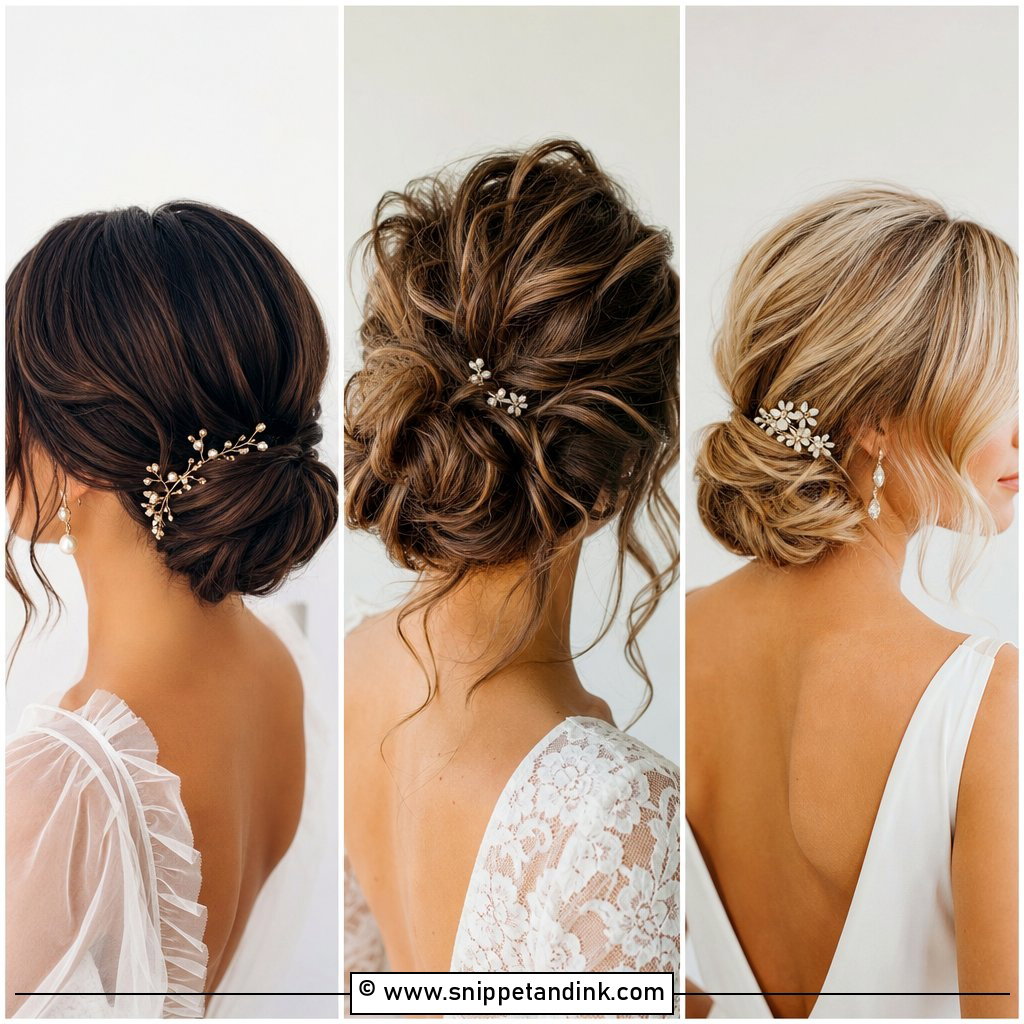
My default recommendation, and for good reason. A bun at the nape clears the shoulders for a strapless gown, sits neatly under a high neck and leaves an open back fully on show. It also gives a veil comb, pearl pins or statement earrings a calm background. Gentle lift at the crown and a few loose face pieces make it soft; a smooth front with a crisp part makes it clean. The one thing I check is height relative to the collar. With a high neck, the bun has to sit just above the fabric or the two rub all day.
2. Sleek Low Bun Wedding Hair
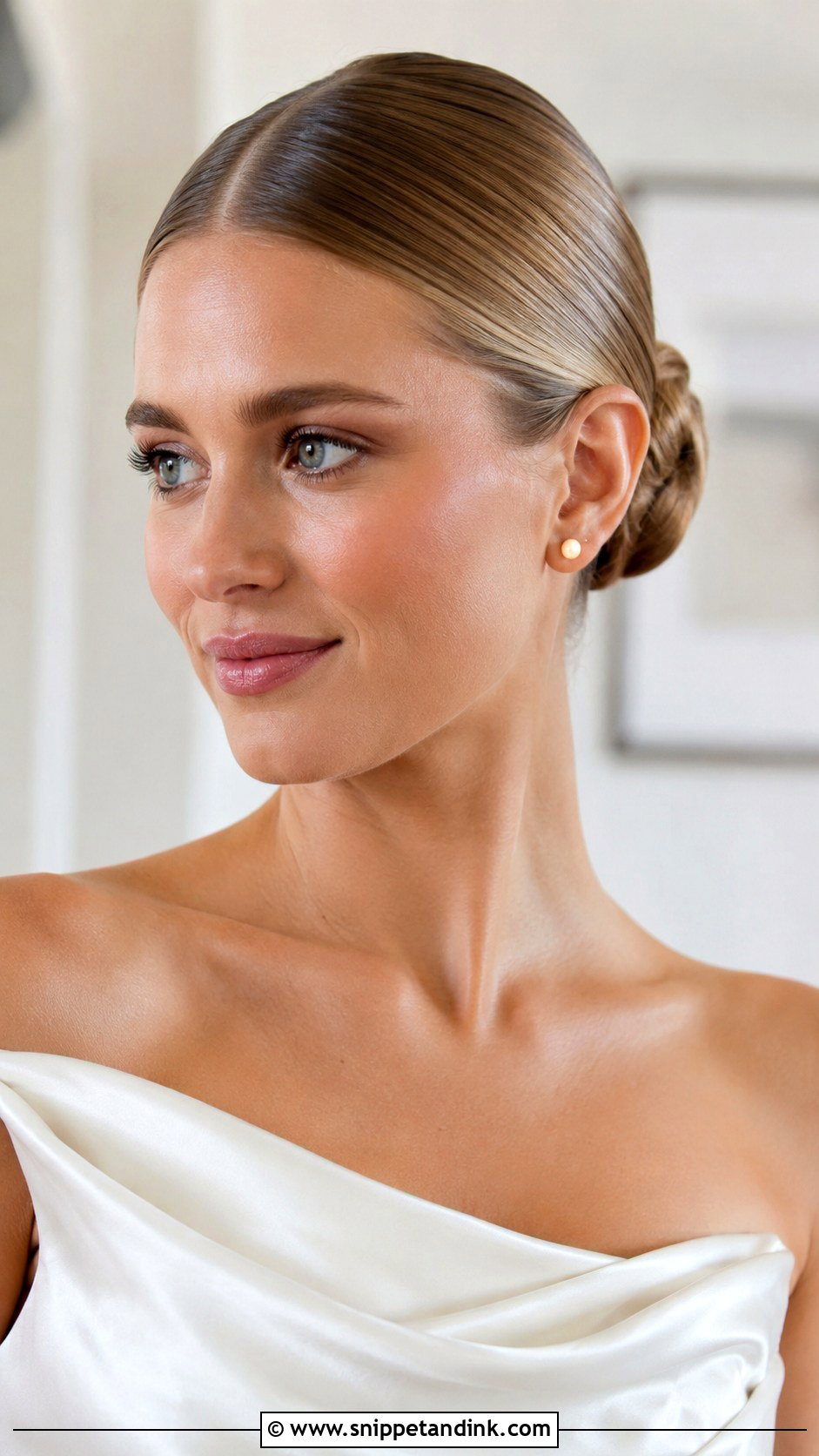
Glossy and controlled, the sleek low bun belongs with satin, modern gowns and city venues. A middle part reads editorial; a deep side part softens the face. Shine is the goal, stiffness the enemy. I use a smoothing cream and a little light gel only along the hairline, then a fine mist of spray, because gel through the whole head hardens into a helmet by the evening. Pearl studs, a veil or a slim comb are about all it needs.
3. Messy Bun Wedding Hair
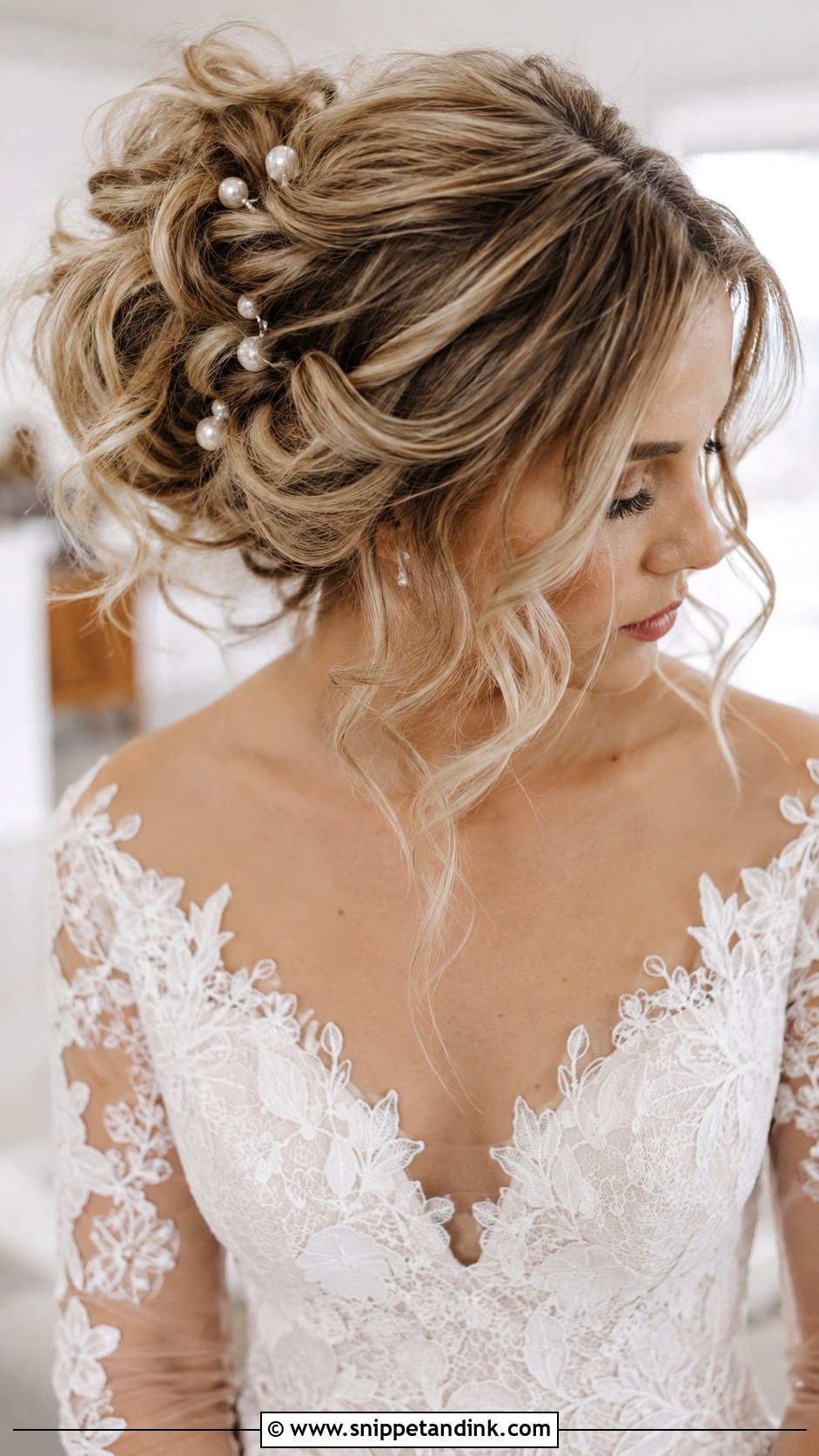
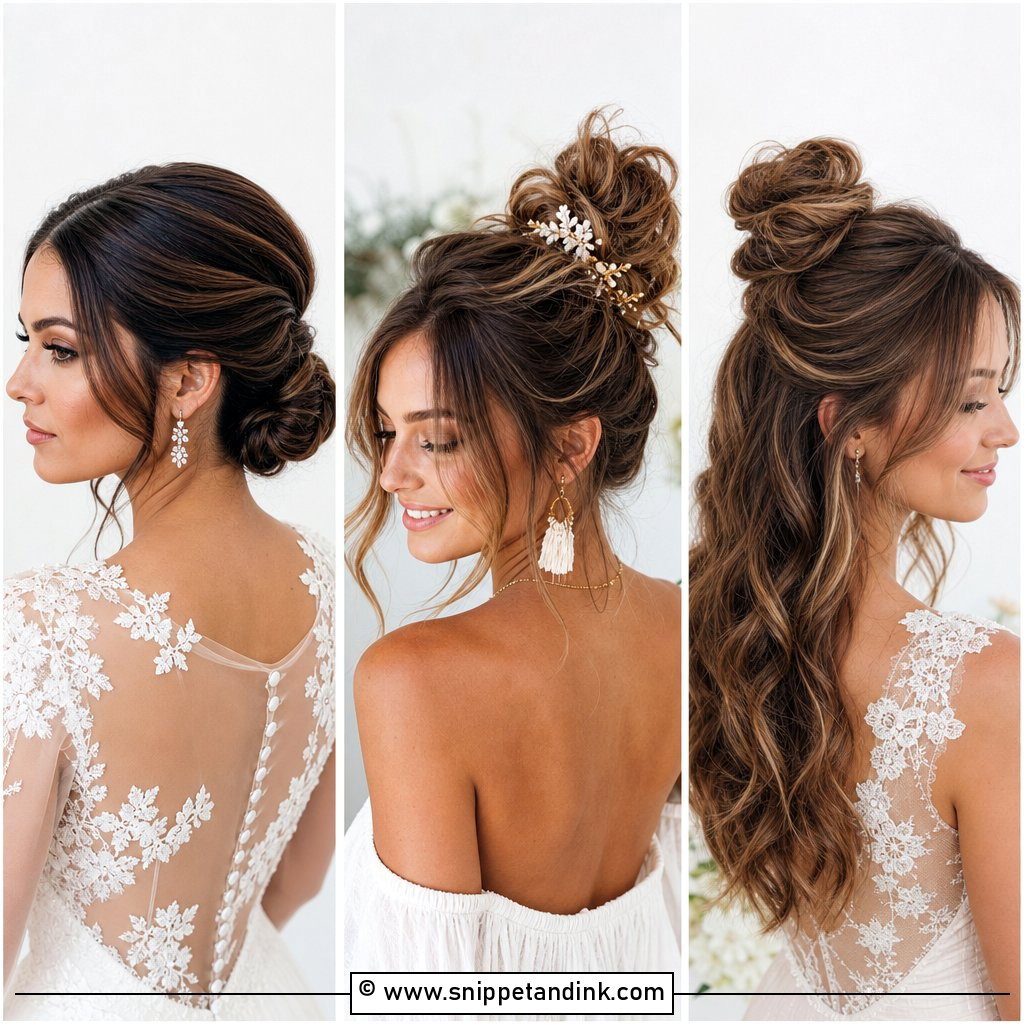
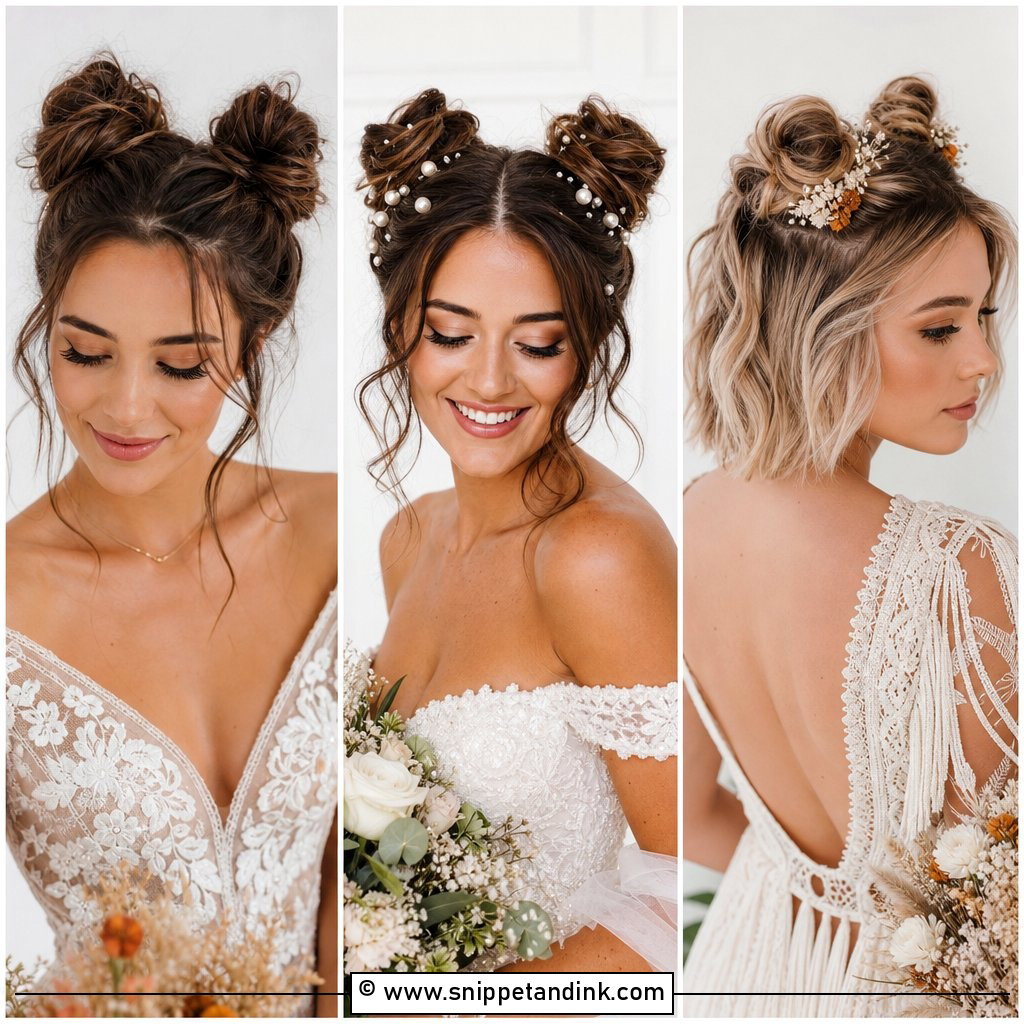
Undone, but on purpose. A good messy bun has soft texture, controlled volume and pieces that fall where they flatter rather than where they escaped. Pinning loose curls into the bun builds fullness, which helps fine and medium hair look thicker. It suits outdoor ceremonies, rustic barns and beaches. For a bridal touch, a few pearl pins, tiny flowers or a delicate vine keep the relaxed feel. I set the loose face pieces last, after the hairspray, so they stay soft instead of setting into stiff ribbons.
4. High Bun Wedding Hair
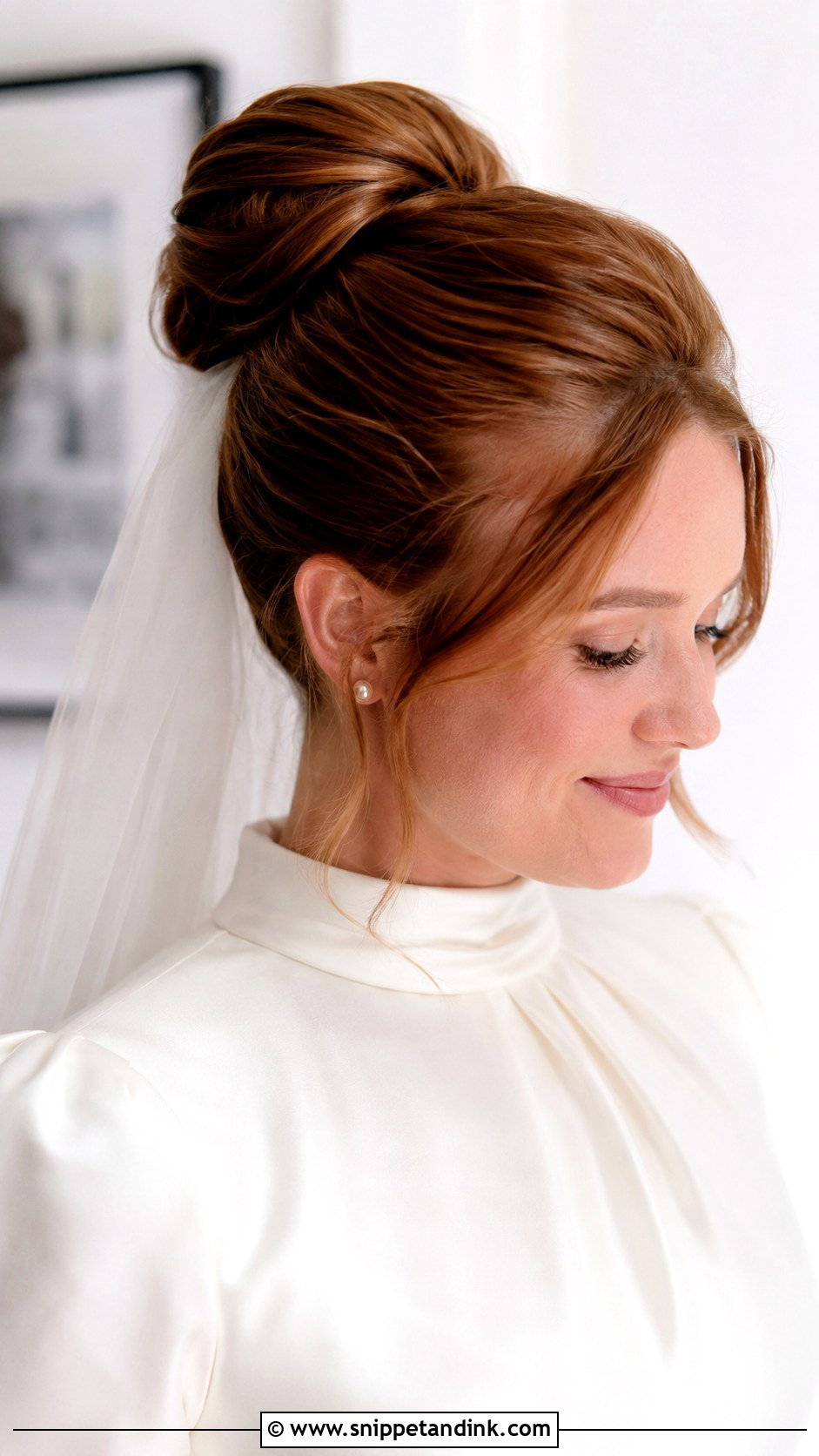
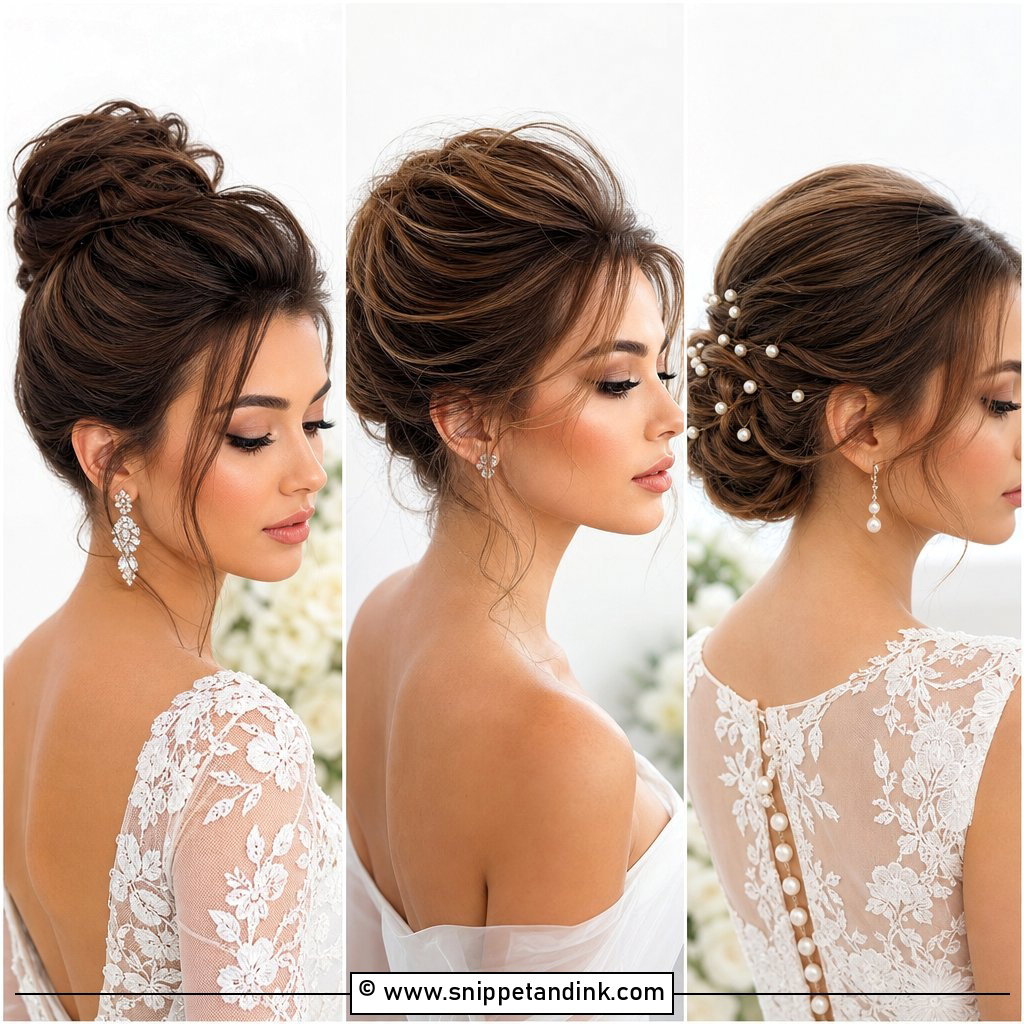
Height changes what people look at. With the hair lifted off the shoulders, attention moves to the face, the makeup and the bodice. A bun right at the crown has a ballet feel; a little lower is softer. High necks, long veils and big earrings all suit it. Comfort decides whether it works, though. A heavy bun at the crown pulls on the scalp for hours, so I build volume at the roots, smooth the sides and keep the bun rounded and modest in size rather than piling all the length on top.
5. Textured Bun Wedding Hair
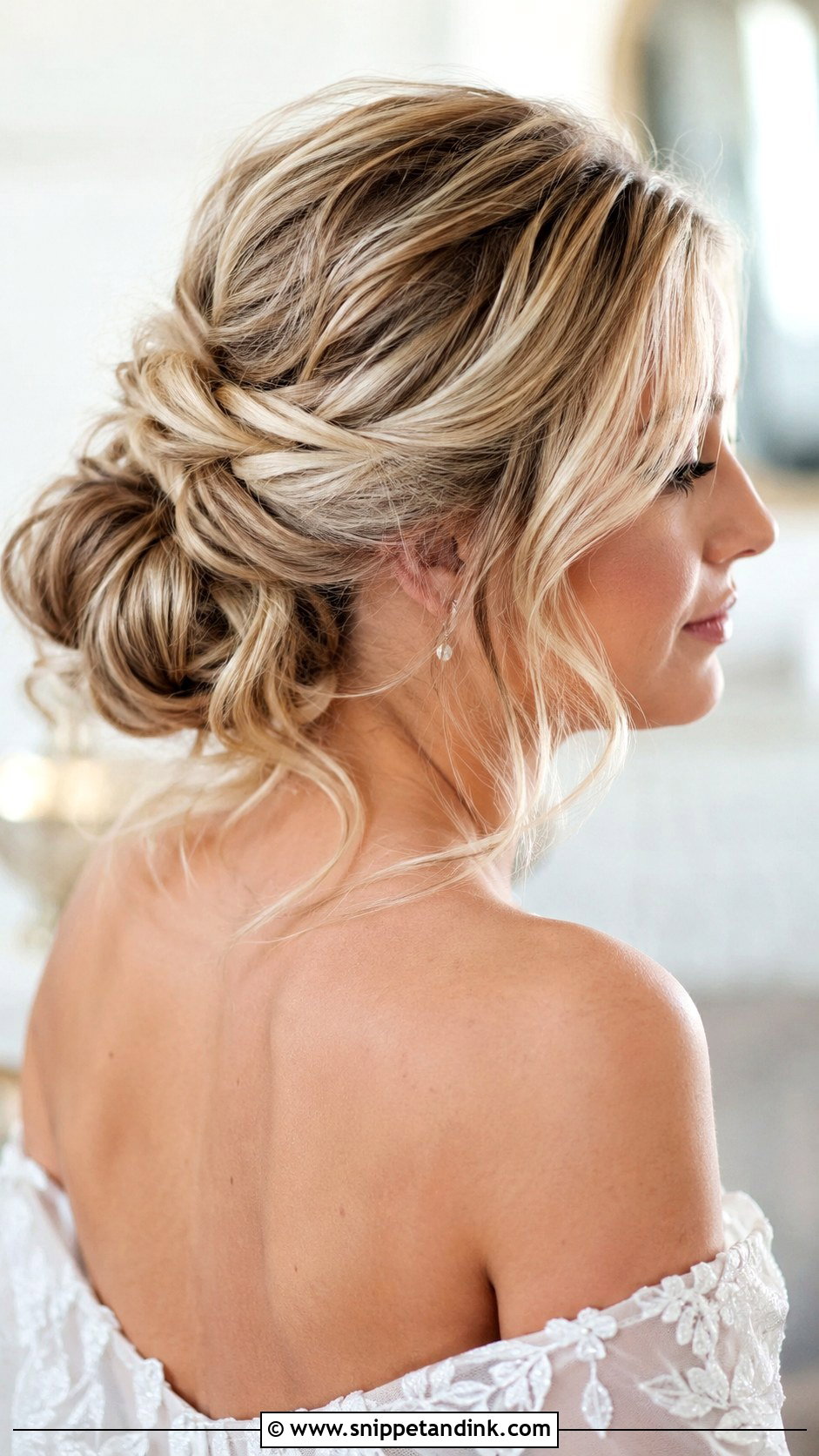
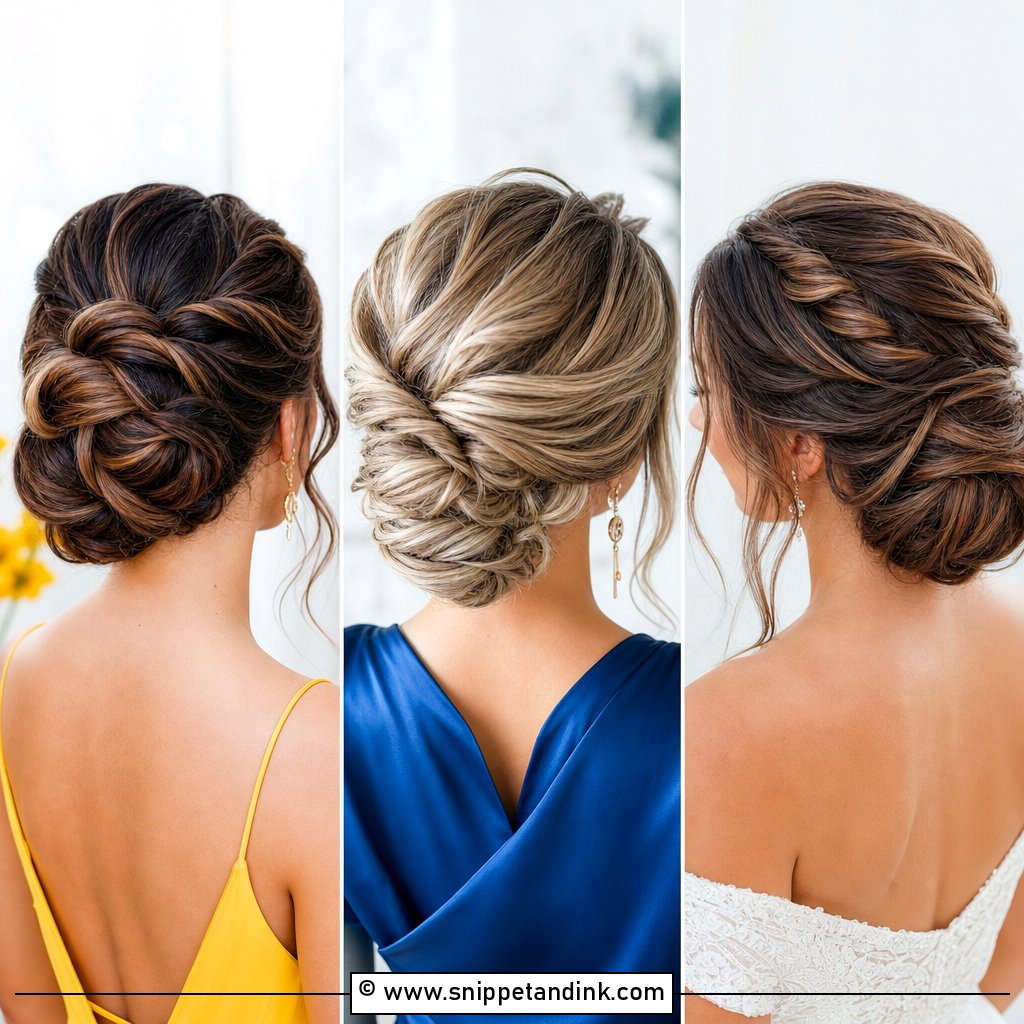
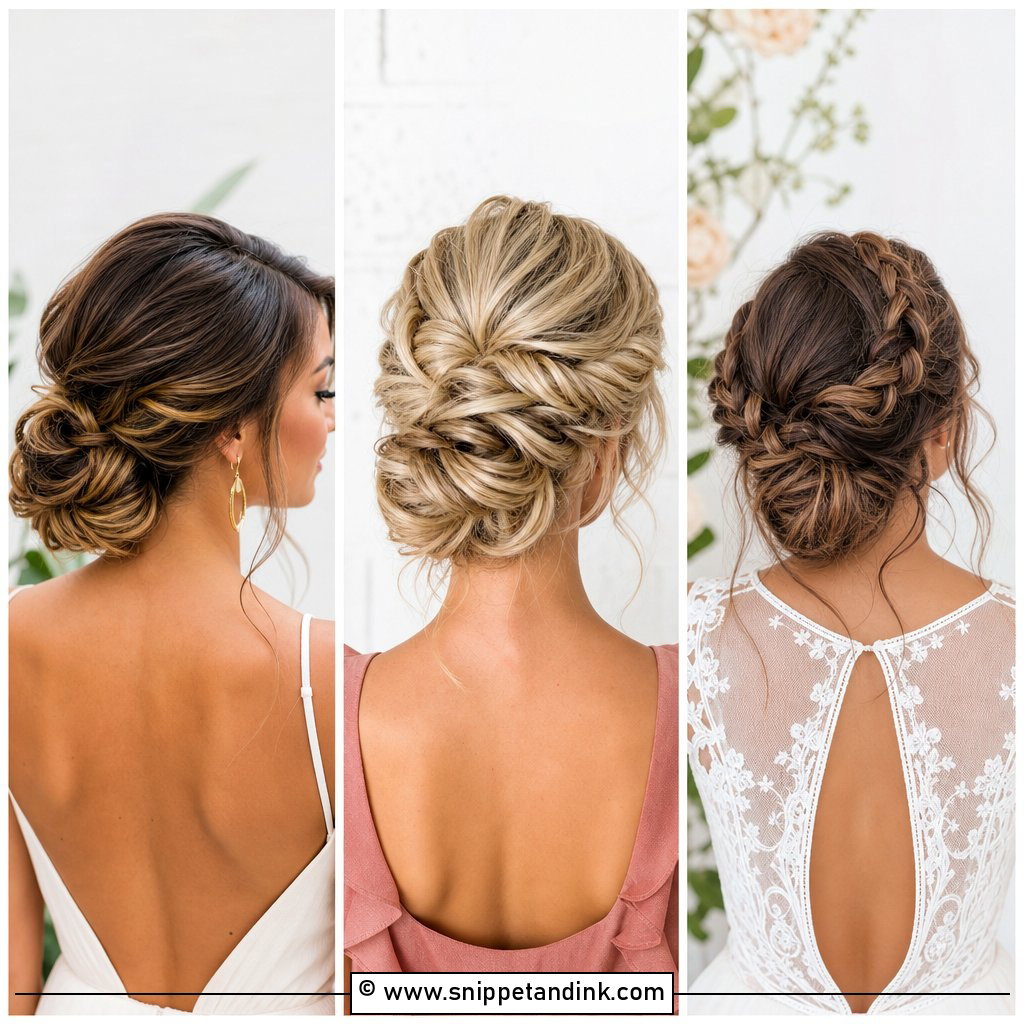
Flat buns disappear in photos; this one builds in curls, twists and pinned sections so the shape shows from every angle. Highlights help a lot, because the lighter strands trace each twist. Fine hair may need padding or a few clip-in wefts for volume, while thick hair simply needs careful sectioning so the bun doesn’t balloon. I keep the front lightly waved or lifted at the root, which stops the textured back from looking disconnected from a flat front.
6. Braided Bun Wedding Hair
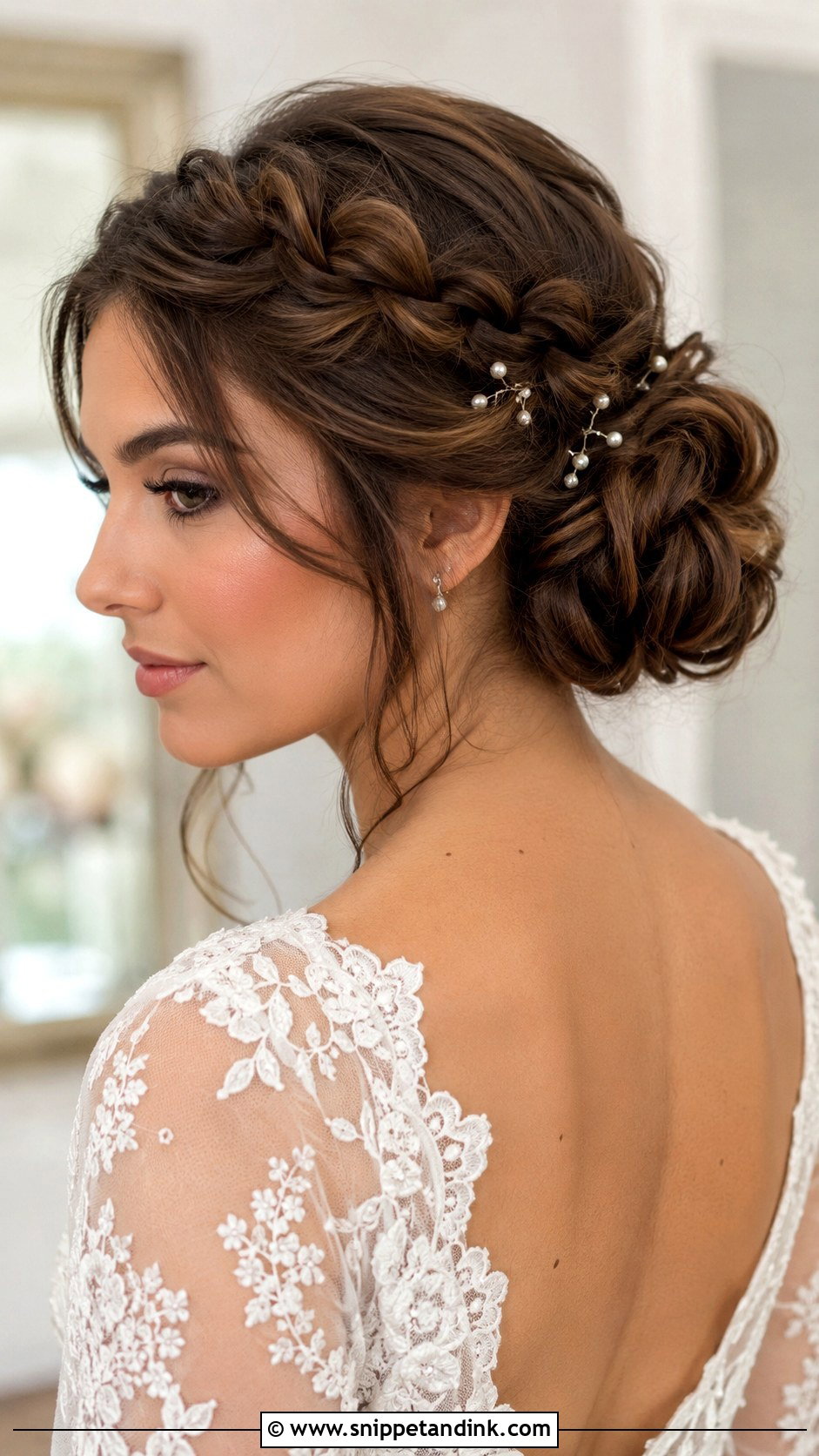
Think about the aisle when you’re deciding on this one. A braid wrapped around the bun, swept across the crown or blended into the back gives the ceremony photos something to capture while your back is to the guests. Braids also grip silky hair and tuck in short layers. I pull a loose braid apart gently after pinning for a softer, fuller look; for a neat finish I keep the braid tight and pair it with a smooth low or mid bun. Either way, plait it before the bun goes up, not after.
7. Chignon Wedding Hair
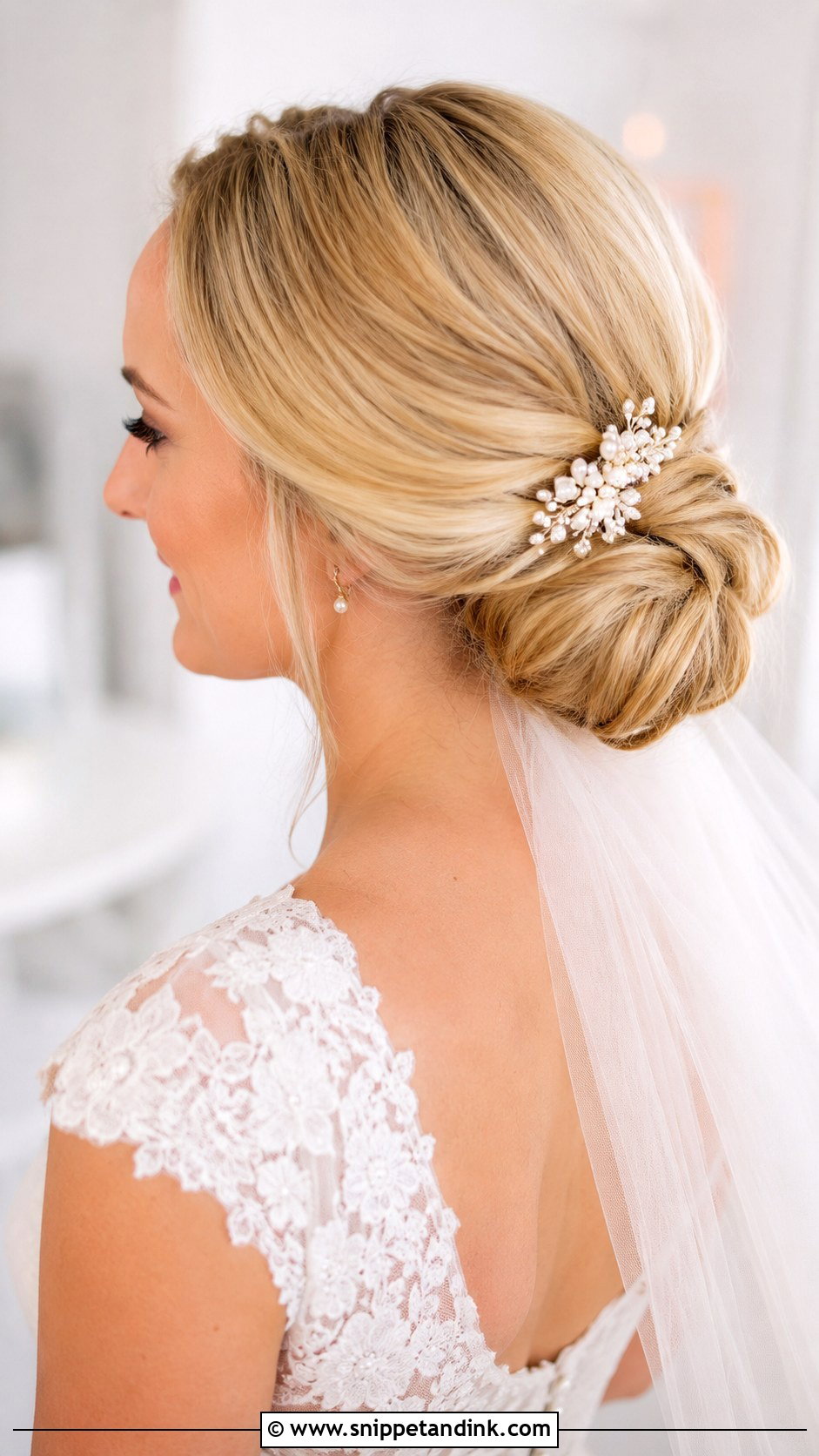
The chignon is folded or twisted rather than wound into a ball, and it sits low at the back of the head. That folded shape is why it pairs so well with lace, pearls and a cathedral veil pinned just above it. Smooth and tight reads formal; looser with waves reads romantic. I balance it at the front with a side or middle part and a touch of lift at the crown, since a chignon with a completely flat top can look severe in profile. It’s the bun I’d suggest if you want photos that won’t date.
8. Side Bun Wedding Hair
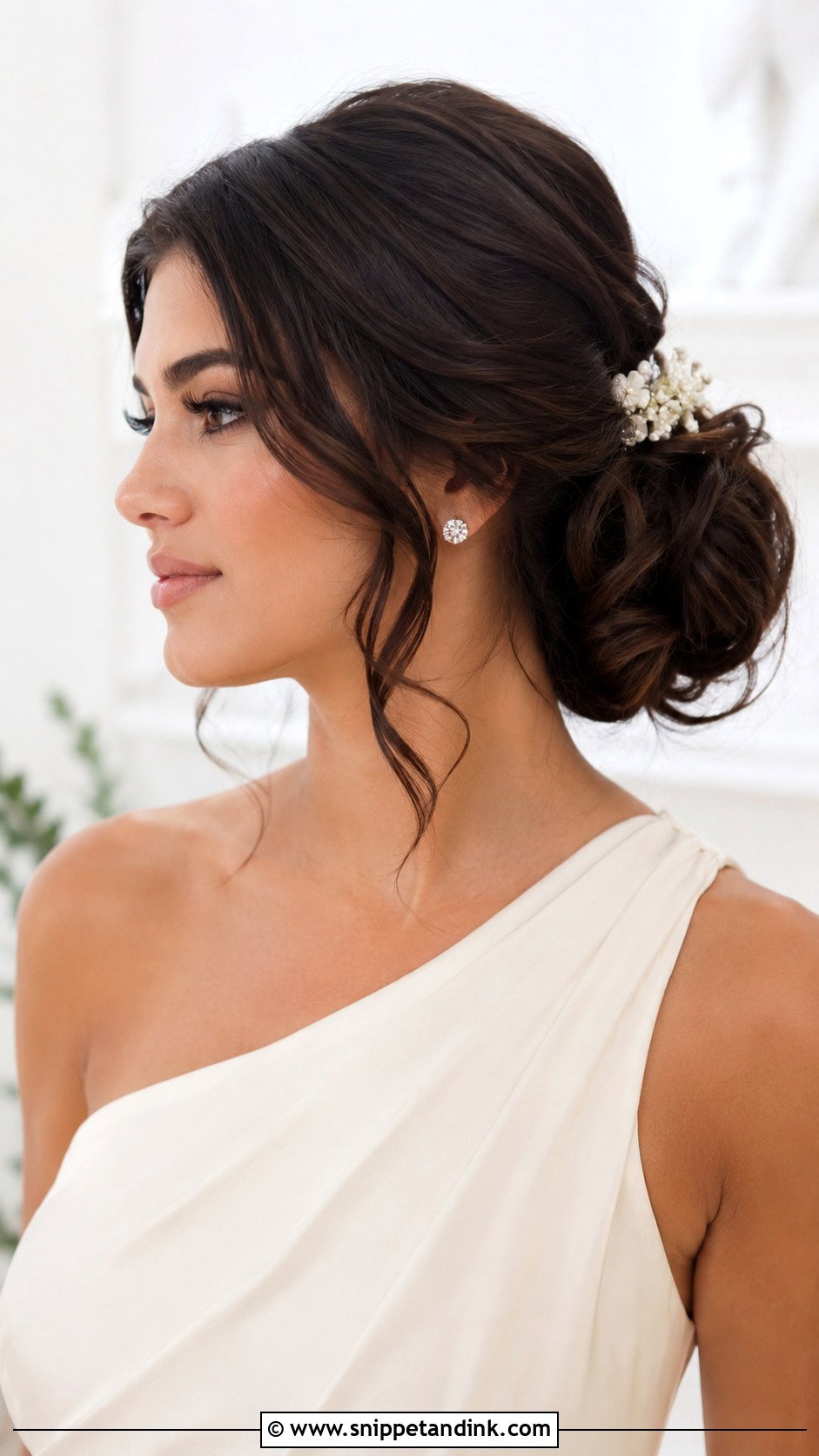
Setting the bun slightly off-centre softens the face and pulls the eye along the neck. Low and loose looks gentle; smoother and sculpted feels formal. One-shoulder and asymmetric necklines balance it nicely, as do side-swept bangs falling on the opposite side. Curls through the bun add texture, and a couple of light pieces near the cheeks keep it from looking heavy. Settle the side at your trial. I usually put the bun on the side that will face your guests during the vows, so it isn’t hidden against your partner.
9. Curly Bun Wedding Hair
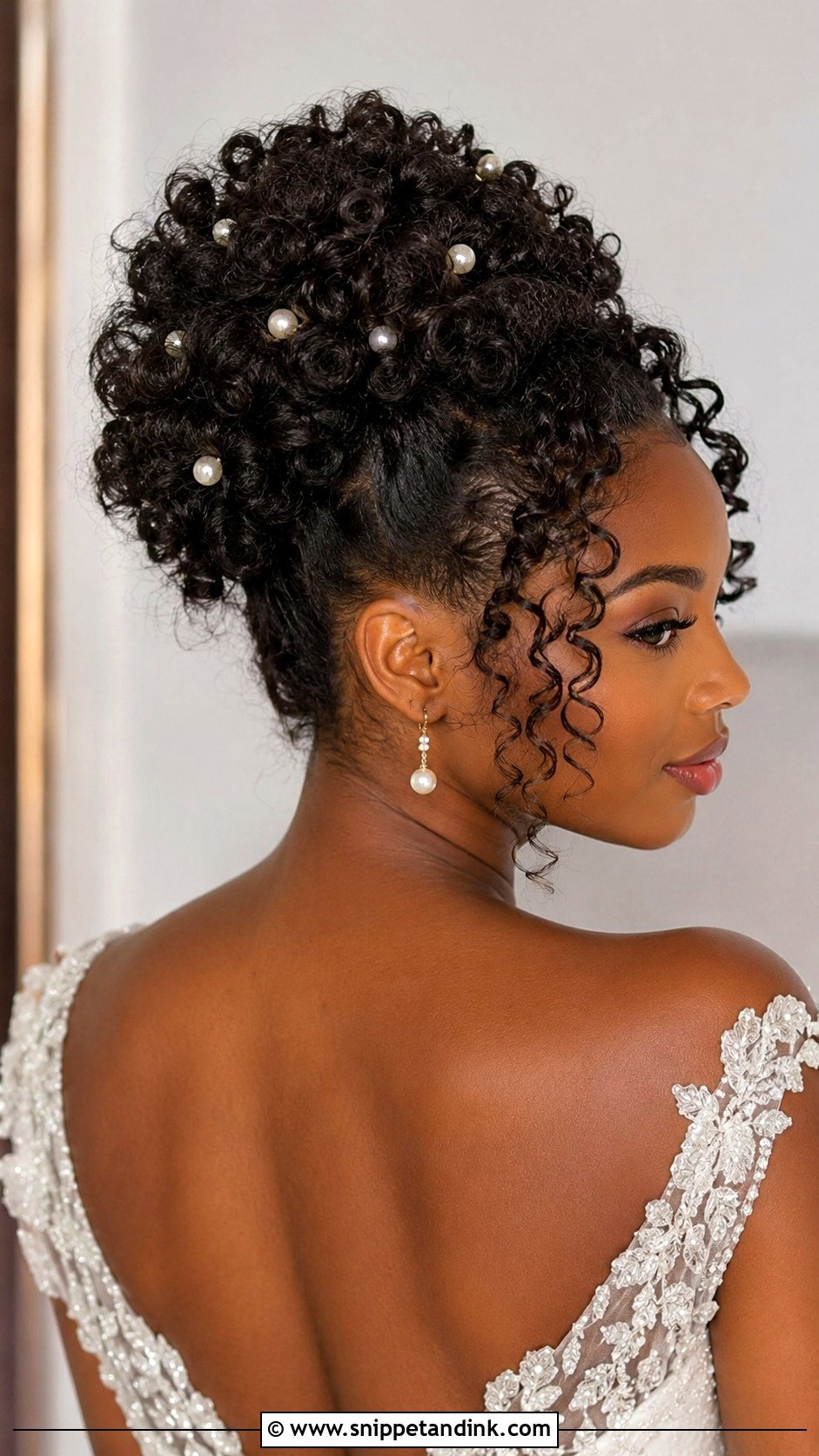
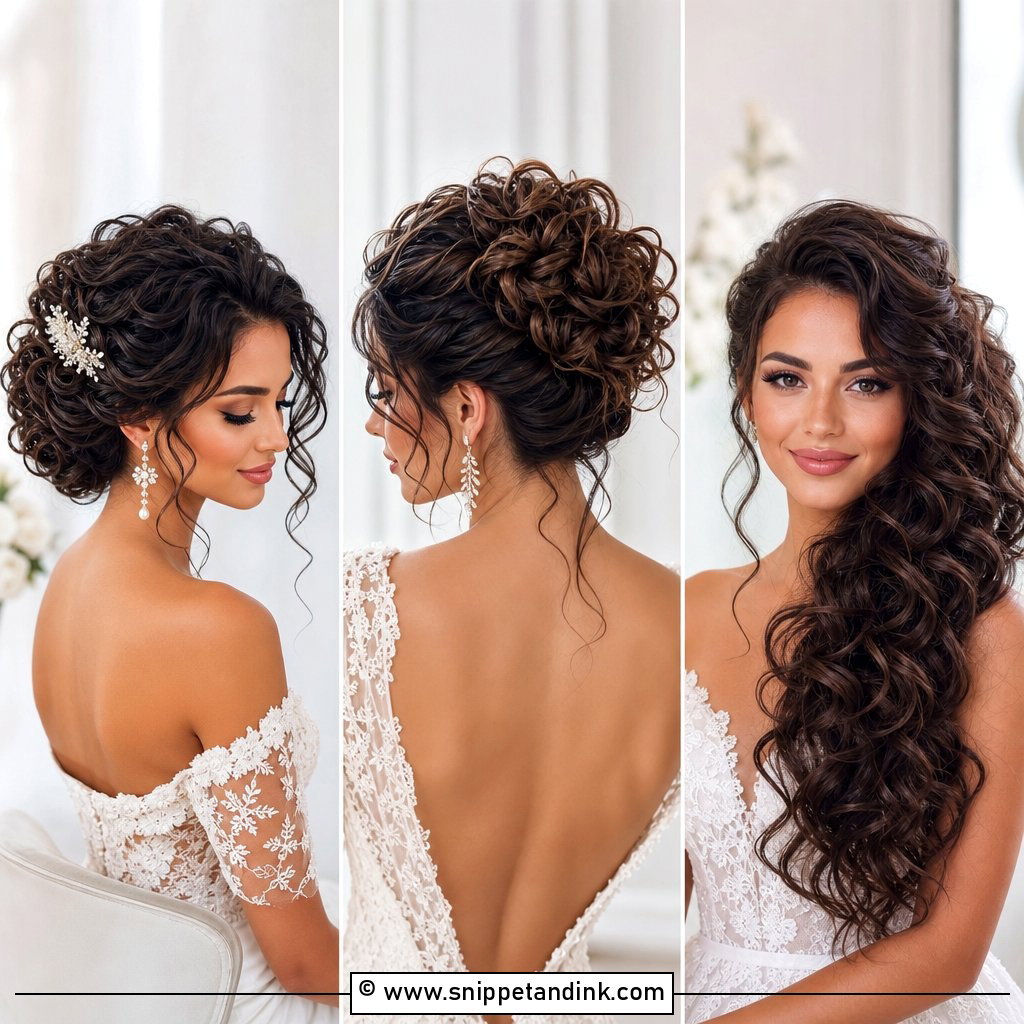
Natural curls should look like curls in a bun, not like hair fighting to be smooth. Pinned loosely into a low, mid or high bun, they make a soft, full shape on their own. Prep matters more than pinning here. Hydrate, define and let the curls dry fully before styling, then use a flexible hold rather than a stiff spray so the bun still moves at midnight. Straight hair can be curled for the same effect, though it will relax faster in humidity. Pearl pins, small blooms or a veil tucked underneath all sit well among curls.
10. Twisted Bun Wedding Hair
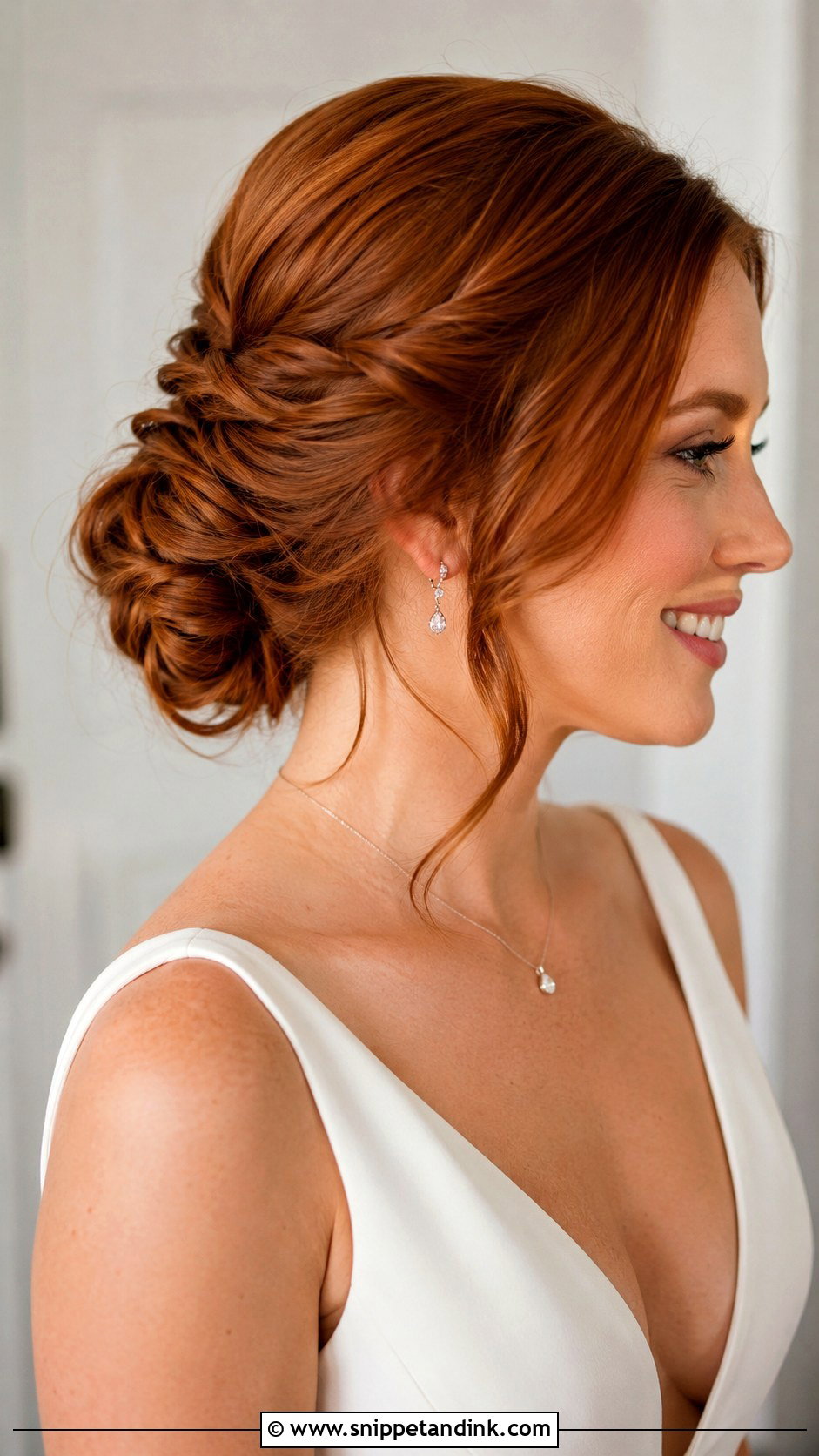
Twists give you the detail of a braid without the braiding. Sections twisted from the sides, crossed at the back or wrapped around the bun make soft, flowing lines. Medium to long hair works best, and balayage or highlighted hair shows the movement especially well. A smooth front keeps it formal, while loose tendrils soften it. The thing to watch: twists slowly unwind if each one isn’t pinned against its direction, so they need their own pins, not just the bun’s.
11. Bun Wedding Hair With Veil
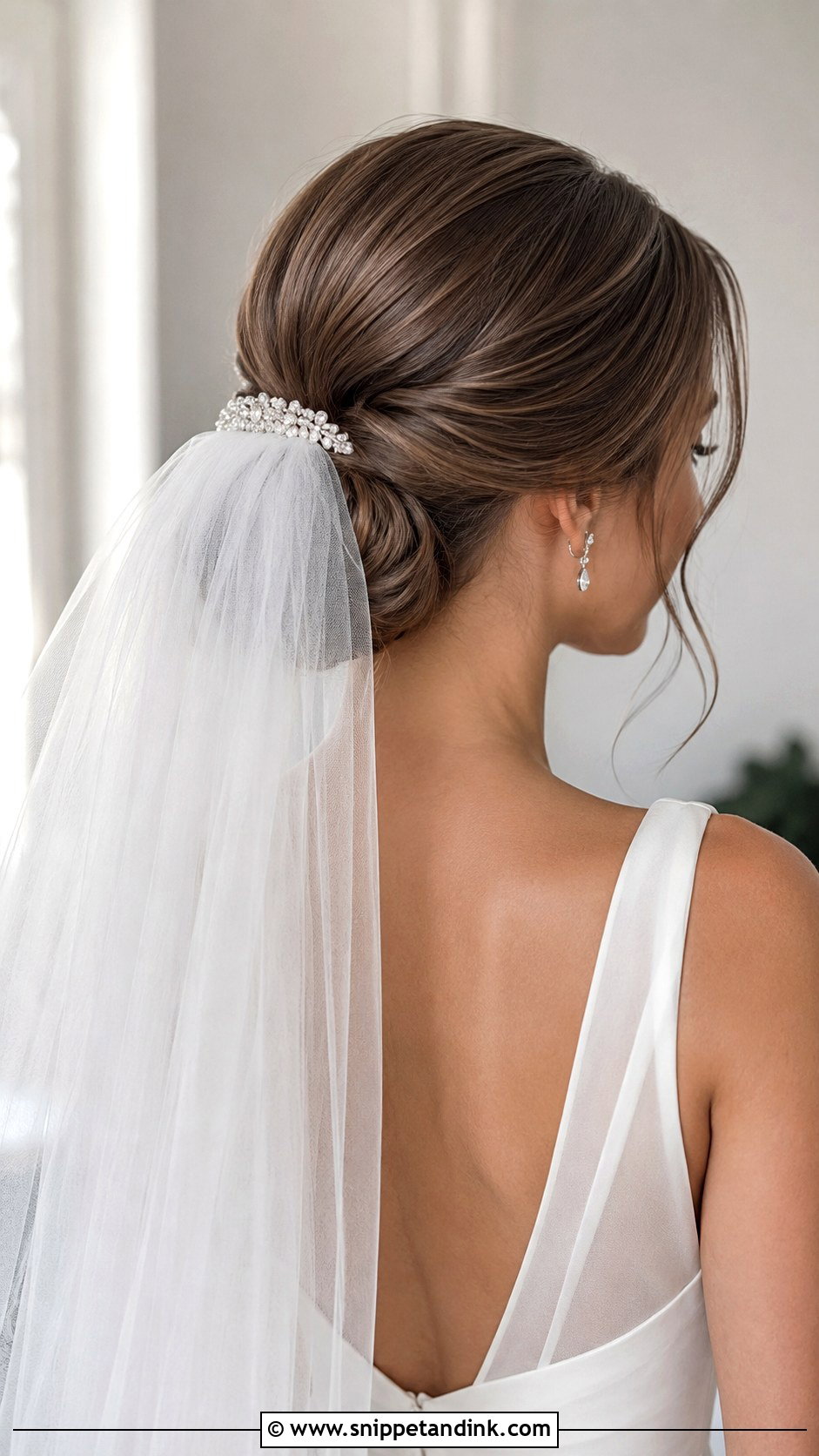
Veil placement should be decided at your trial, not worked out at the last minute on the morning. A low bun can take the veil above it for height or below it for a cleaner line. A high bun usually looks best with the veil underneath, so the bun keeps its outline. Heavier veils need extra pins or a small braided anchor under the comb. If the veil will stay on through dinner, I’d rather loosen the bun slightly than have you counting the hours until it comes off.
12. Bun Wedding Hair With Flowers
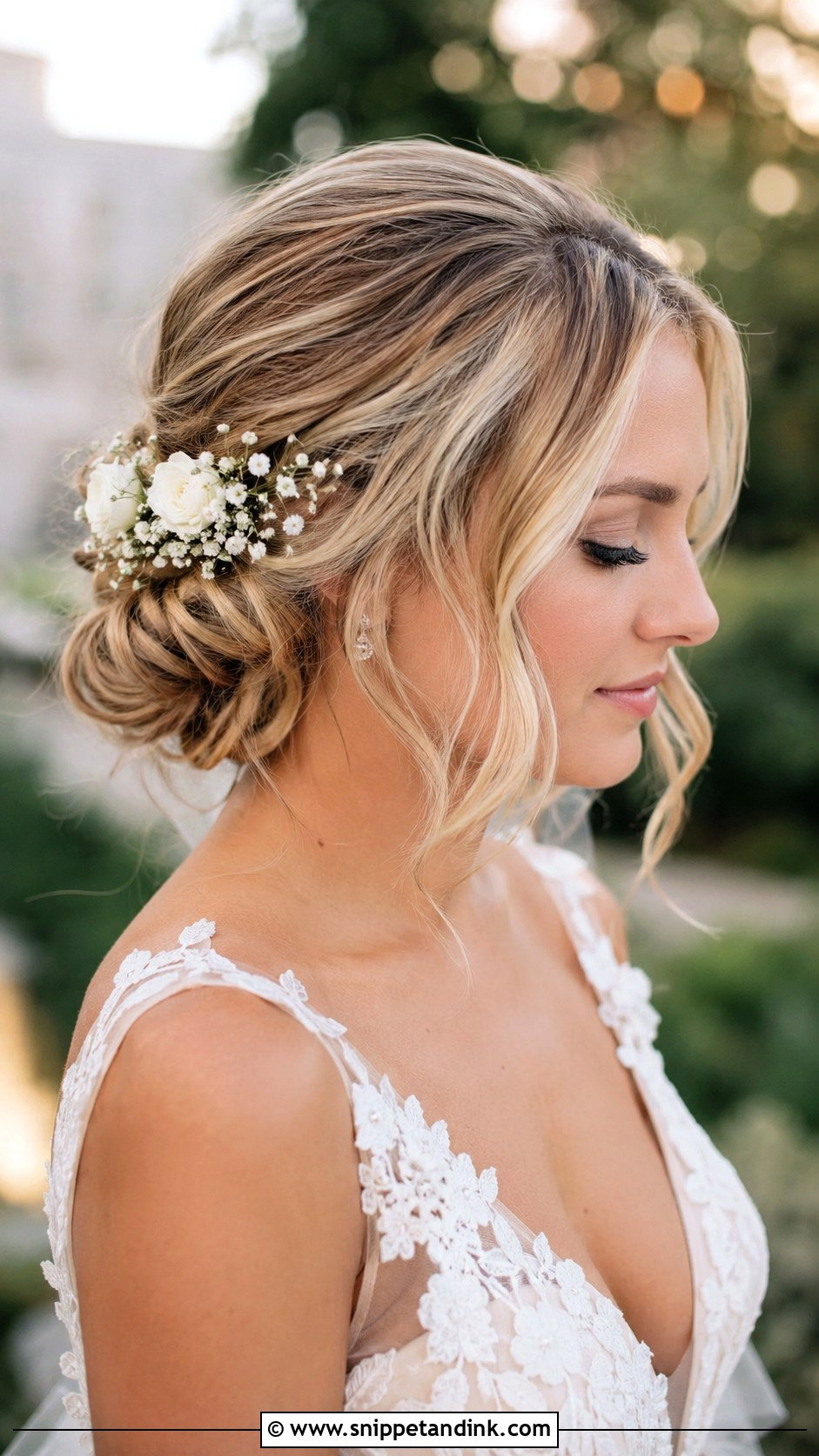
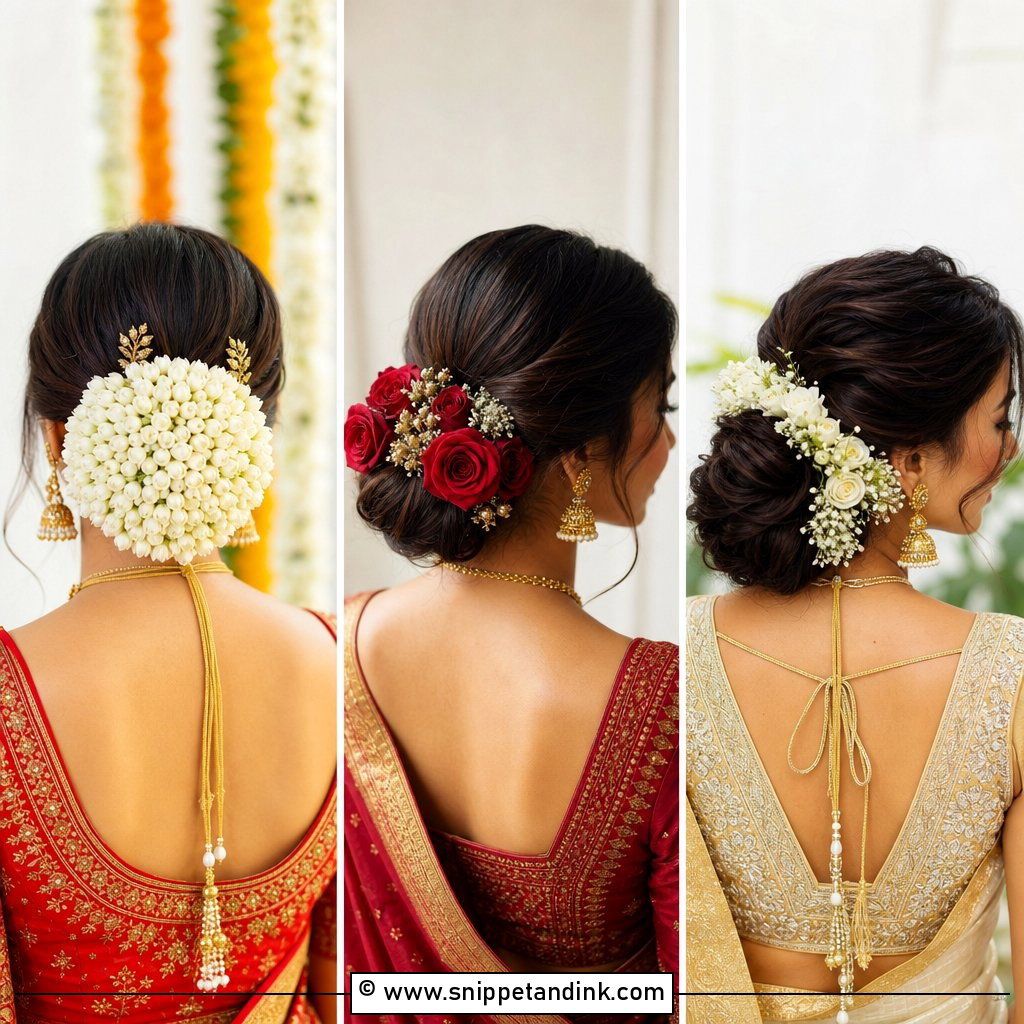
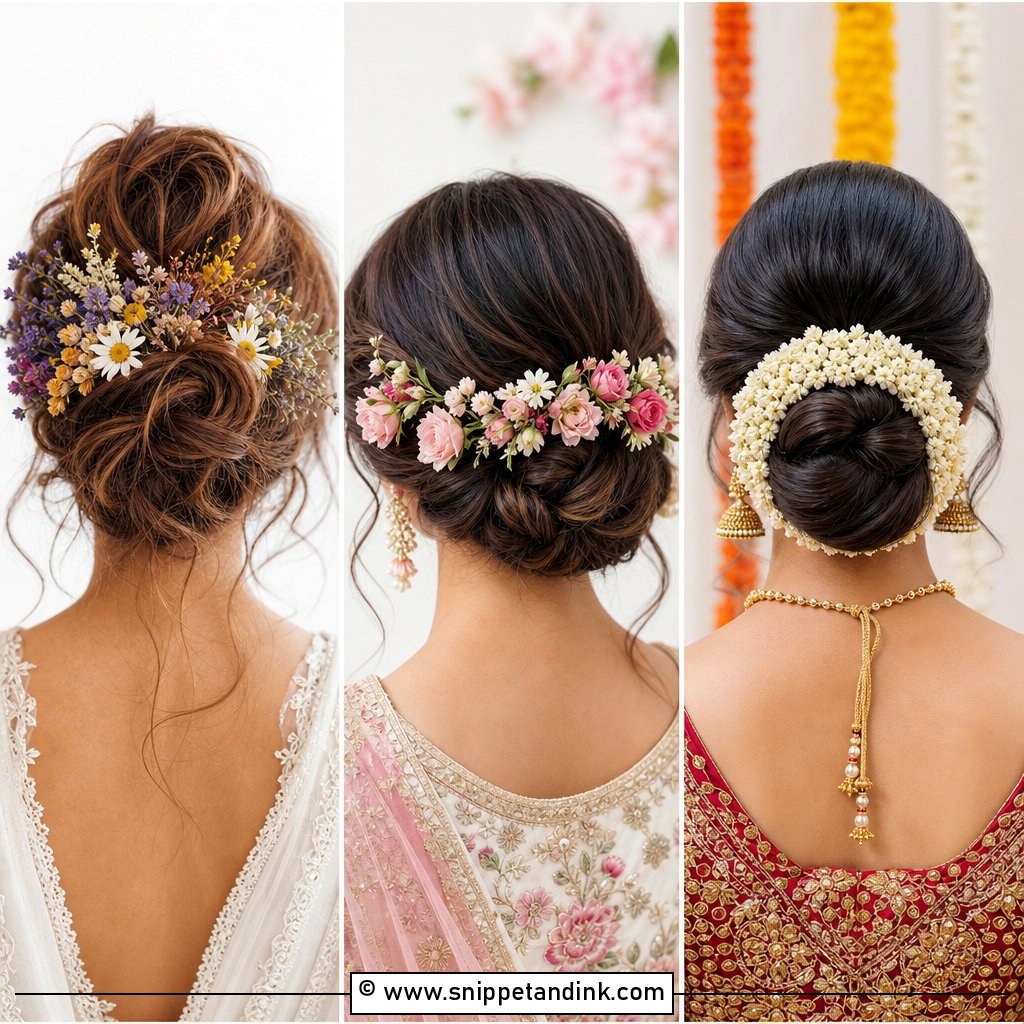
Small blooms tucked into the hair are the most natural pairing of all. Bun wedding hair with flowers works best when the flowers stay small: tucked around a low bun, set to one side or scattered through a textured one. They should echo the bouquet but don’t need to copy it. Baby’s breath, spray roses, orchids and dried florals all hold up differently, and dried ones last longest. I ask the florist to wire fresh stems so I can pin them into the bun rather than balance them on top. Coordinate the delivery time too, so the flowers arrive while the bun is still being finished.
13. Bun Wedding Hair With Pearls
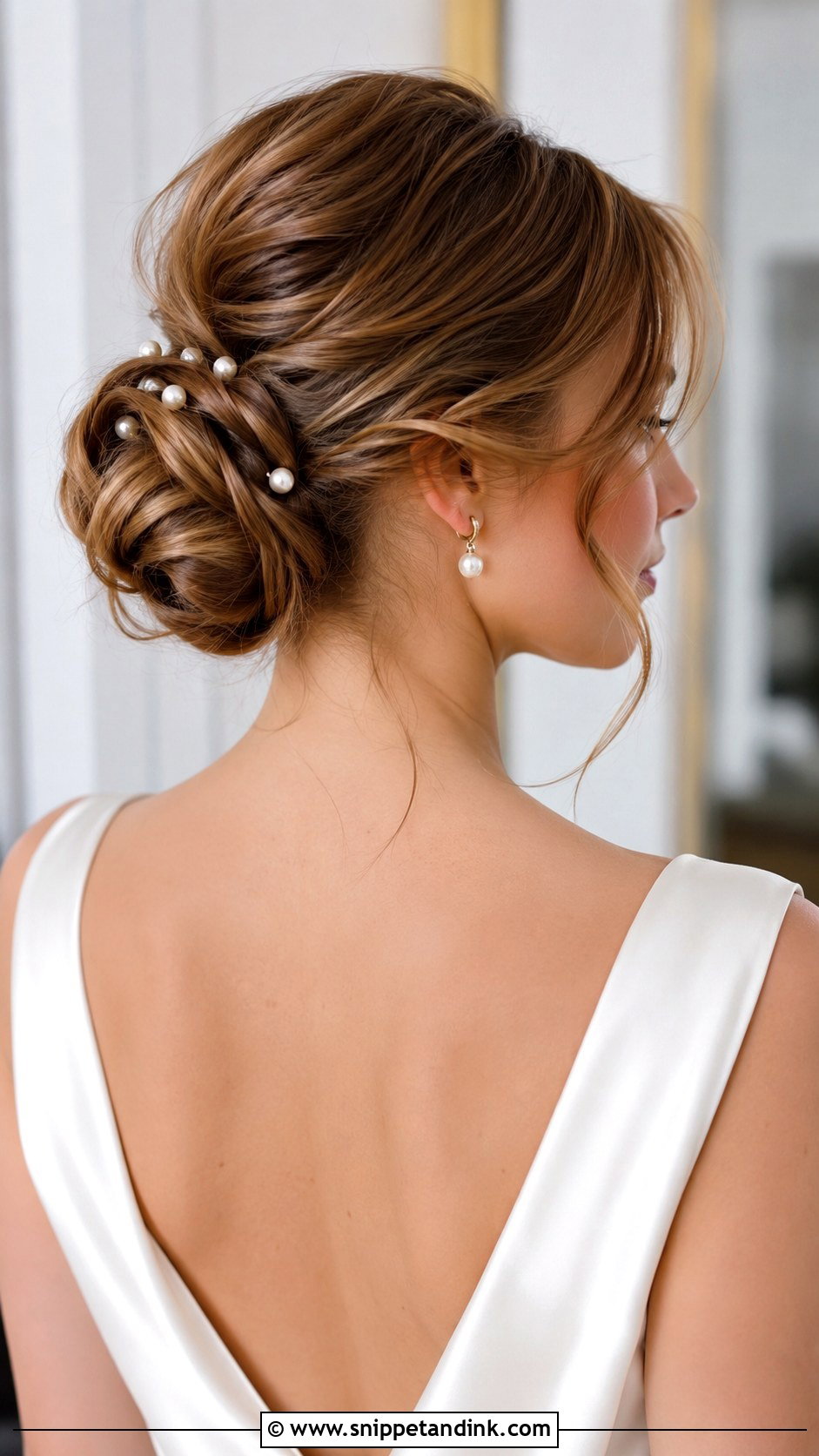
Pearls on a bun look expensive for very little effort, and they suit classic gowns, satin, lace veils and minimal dresses equally. Pins can circle a low bun, sink into a messy one or line a braided bun. Spacing is where most people go wrong, clustering too many in one spot. I place them in a loose, uneven pattern, a little denser on the side that faces the camera. Small pearls look delicate; larger ones make more of a statement against dark hair.
14. Bun Wedding Hair For Long Hair
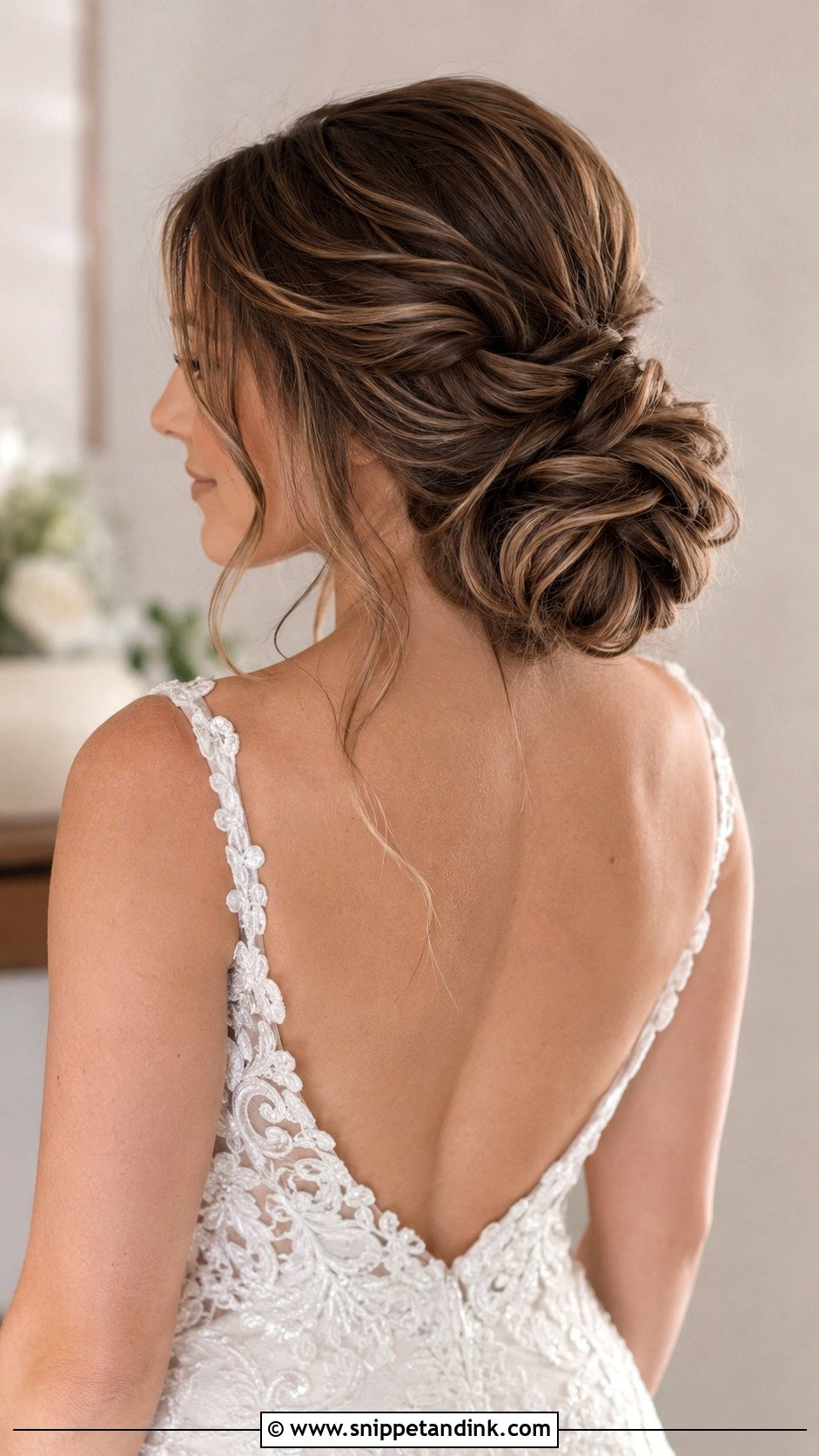
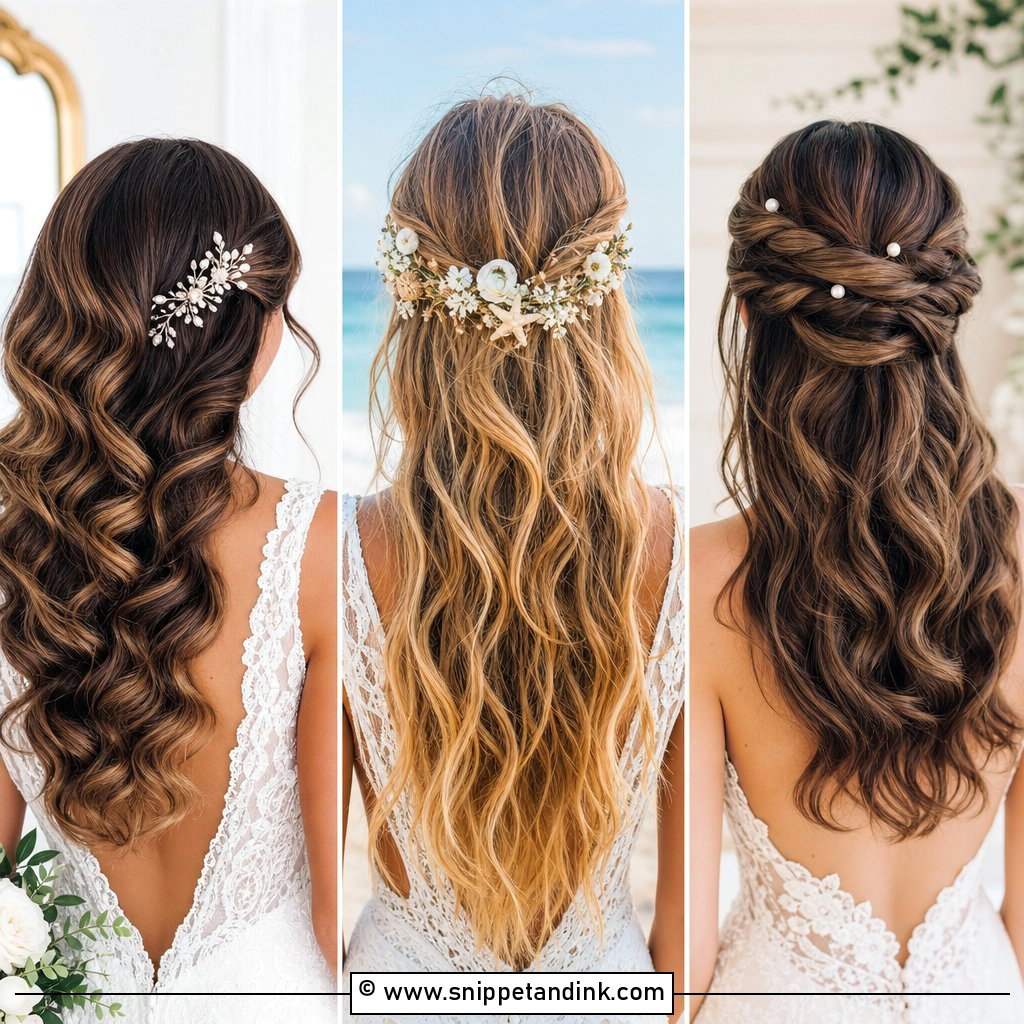
Long hair gives you every option and one problem: weight. A tight high bun built from waist-length hair drags on the scalp within hours, so I lean toward low textured buns, twisted chignons and braided buns that spread the length across a wider base. Very thick hair gets sectioned and pinned in layers, each with its own anchor. Long lengths also let me weave lighter pieces or curls through the bun for depth. Grand, soft or sleek, the base has to be solid first.
15. Bun Wedding Hair For Medium Hair
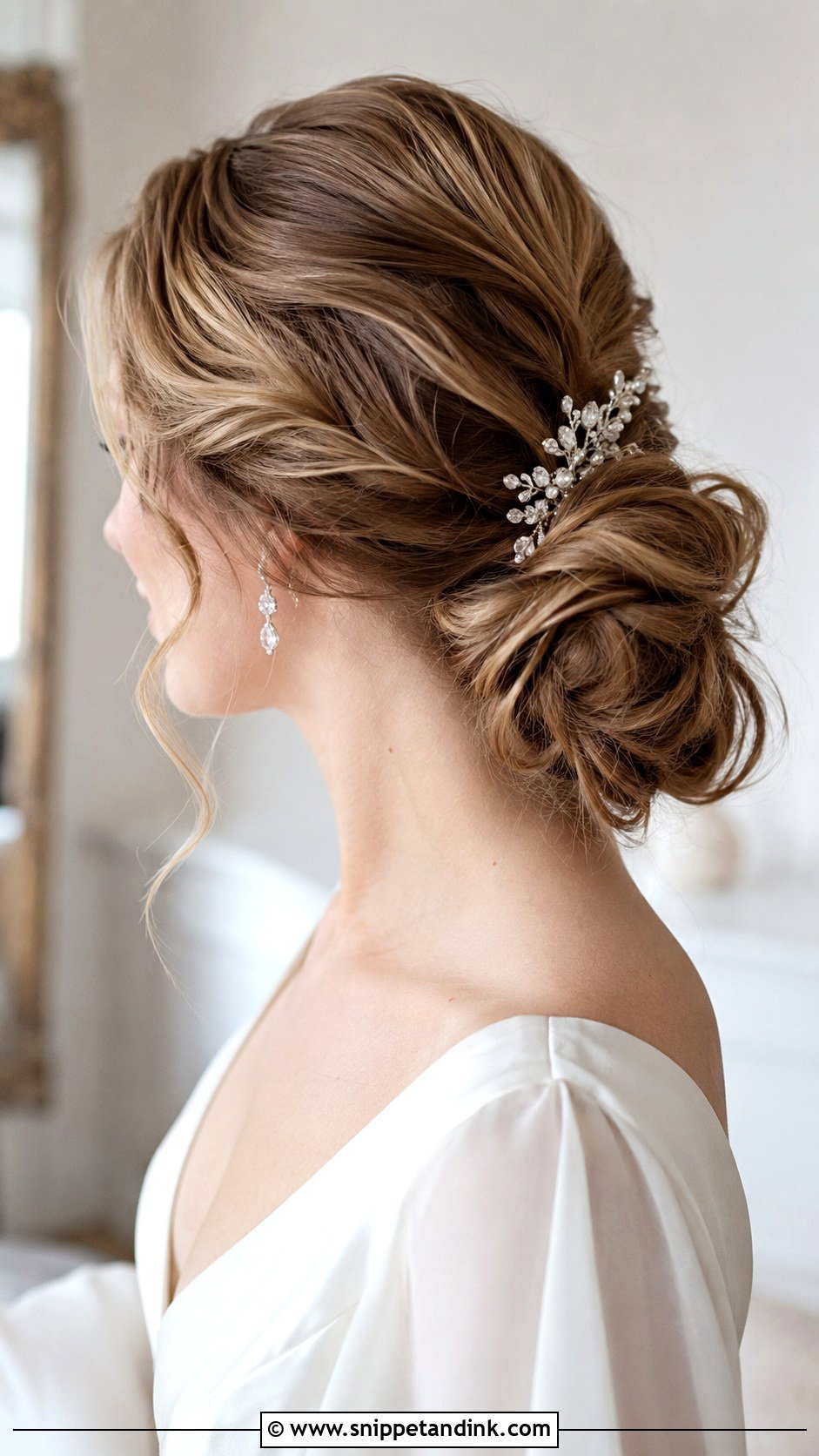
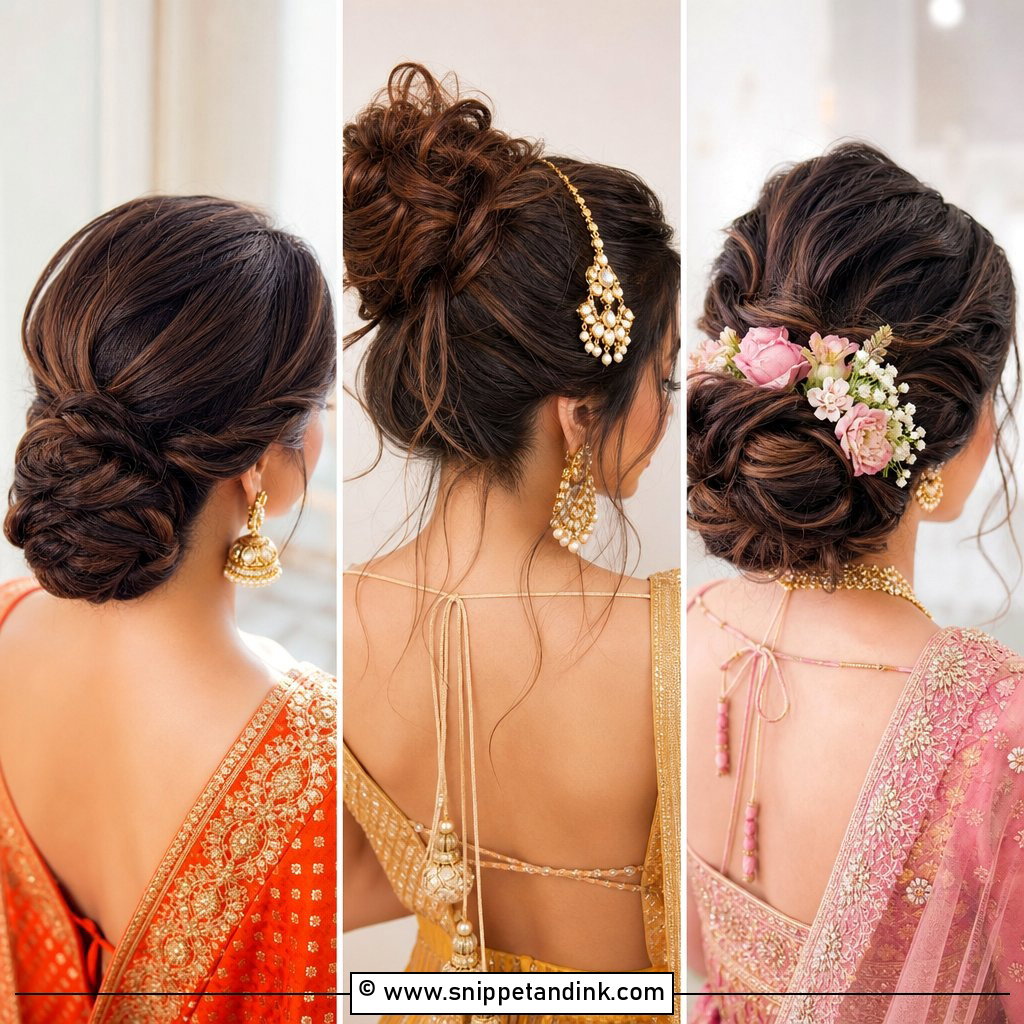
Shoulder-length hair makes a full bun, as long as you don’t try to force a huge one. A low chignon, a soft textured bun or a twisted bun all work because none needs extreme length. Curling the hair first adds body and grip, then each section gets pinned into a fuller shape. Padding or a few extensions add volume if you want it, though plenty of medium lengths don’t need them. The shortest layers at the nape are the usual escape route, so I tuck and pin those first.
How a Bun Looks From Row Five
During the ceremony your guests mostly see the back of your head, and the photographer spends a surprising amount of time on your profile: the vows, the kiss, the walk back down the aisle. That’s where a bun earns its place. Braided, twisted and textured buns give those angles something to look at, while a very small sleek bun can almost vanish behind a veil from a distance.
Flash photography is also hard on very glossy hair. A sleek bun that looks perfect in the mirror can show a bright stripe of shine in reception photos, so ask for a finishing spray with less sheen if you’ll be dancing under lights.
Humidity, heat and a midnight finish
In humid weather a sleek style tends to frizz at the hairline first, while a textured or curly bun hides that frizz as part of the look. If the forecast is sticky, that’s a fair reason to pick the softer option. In real heat, a mid or high bun keeps the neck cooler than a low one under a veil. And if rain is possible, keep an anti-humidity spray and a few pins in someone’s bag, because a quick touch-up at the hairline after outdoor photos is usually all it takes.
Test Your Bun With the Veil and Earrings On
A bun is secure, adaptable and hard to get wrong once it’s placed for your dress. Sleek low buns look modern, messy and textured ones softer, and braids, chignons, flowers and pearls add character. Your neckline, veil, venue, texture and comfort decide which suits you. Bring photos to the trial, wear something with a similar neckline and test the style with the actual veil and earrings. If you still feel like yourself when you look in the mirror, that’s the bun.
You'll Like These Ideas:


Leave a Reply