
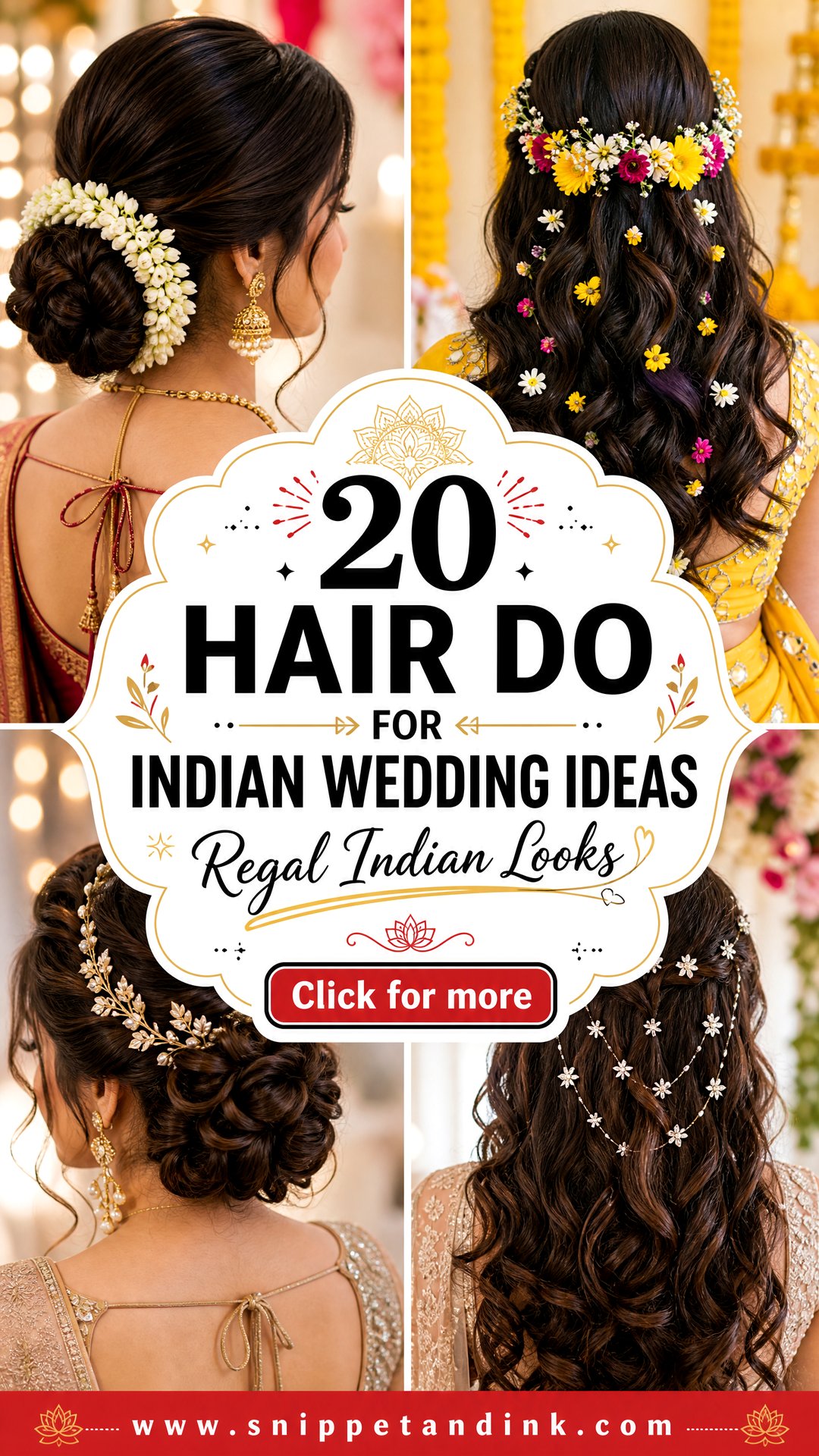
Hair for an Indian wedding is rarely one look. Over several functions you might wear a relaxed braid for the haldi, something sturdy for hours of henna, open curls for the sangeet and a heavily dressed bun for the pheras. Each one has to carry jewelry, flowers or a dupatta and still frame your lehenga or saree. These 20 hairdos cover brides, bridesmaids and guests, and I’ve noted what each style can carry and how well it lasts.
Planning Hair Across Haldi, Mehendi, Sangeet and the Pheras
Before choosing individual styles, I map out each function with the bride. The question isn’t only what looks good, but what each event will ask of the hair.
- Haldi: expect turmeric paste and water. Choose a braid or loose style you don’t mind washing out, and leave expensive accessories aside.
- Mehendi: you’ll sit for a long time with your hands out of action. Pick something fully secured, with nothing that can fall into your face.
- Sangeet: plan for dancing. Braided buns, plaits and well-pinned half updos hold up best.
- Wedding ceremony: the most jewelry and usually the heaviest dupatta, so you need a firm bun with a strong base for pinning.
- Reception: often the chance for open curls, side-swept styles or a sleek modern bun.
If two functions fall on the same day, plan a change that’s realistic. Moving from a braid to open curls is easy; taking down a fully pinned bun usually leaves kinks and backcombing that need time to fix.
1. Floral Bun for Indian Bride
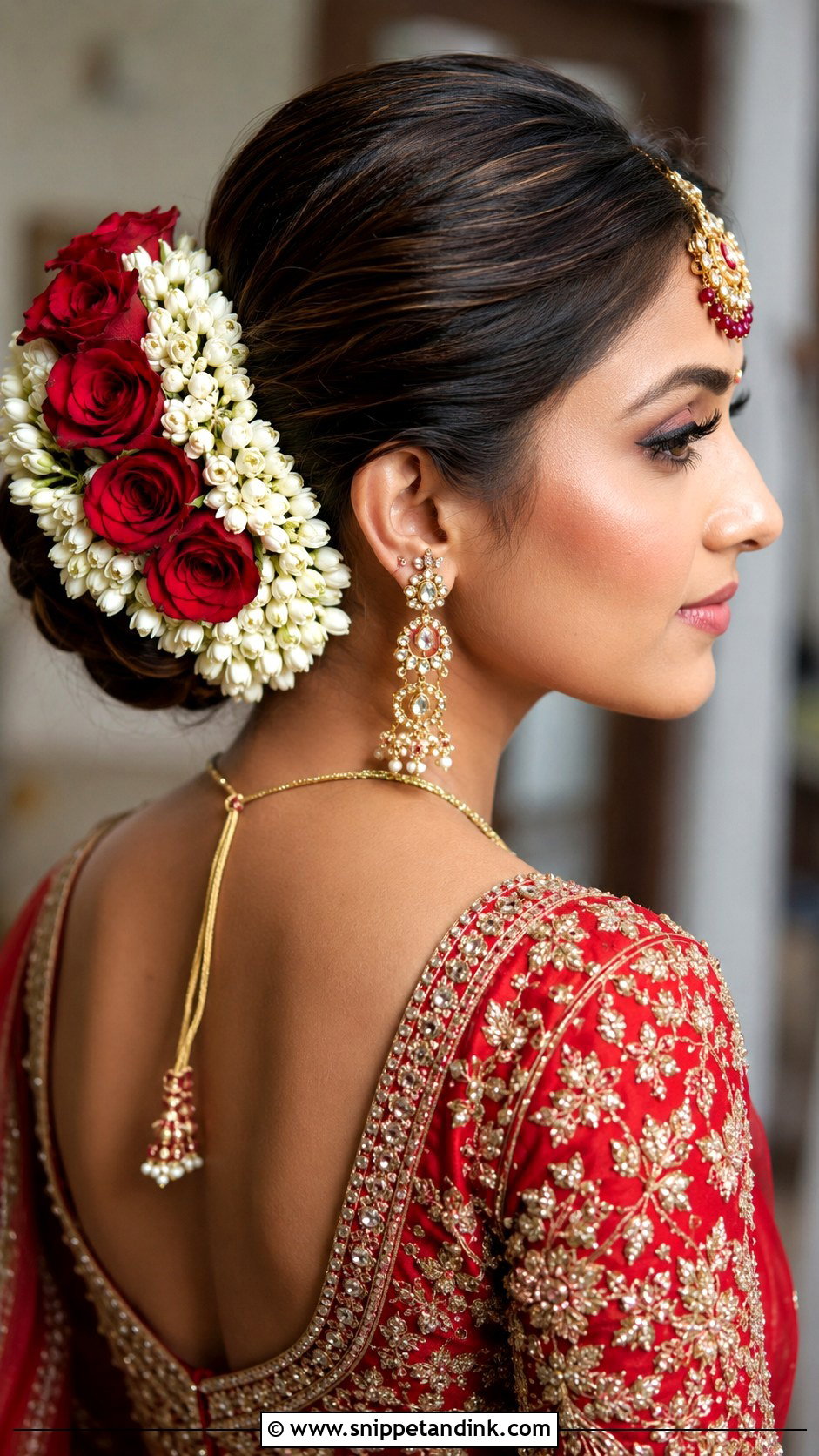
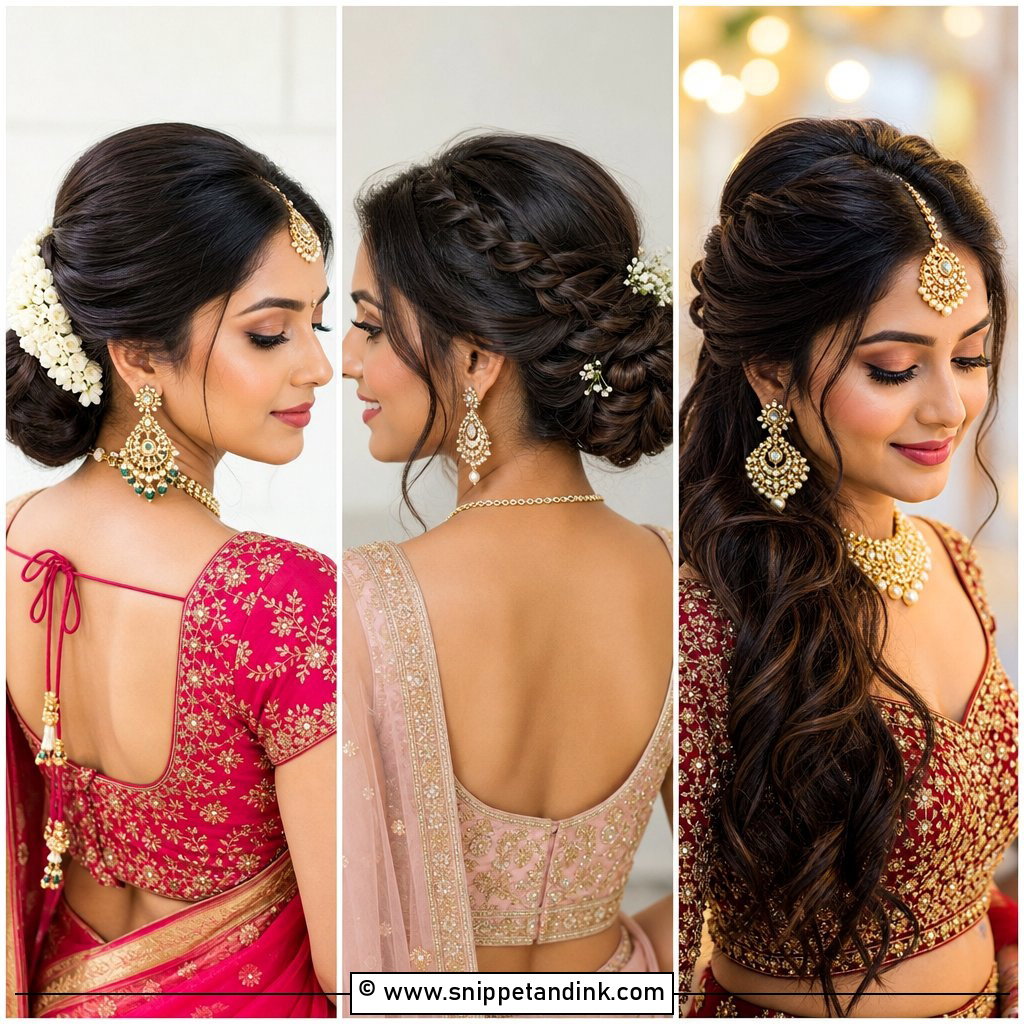
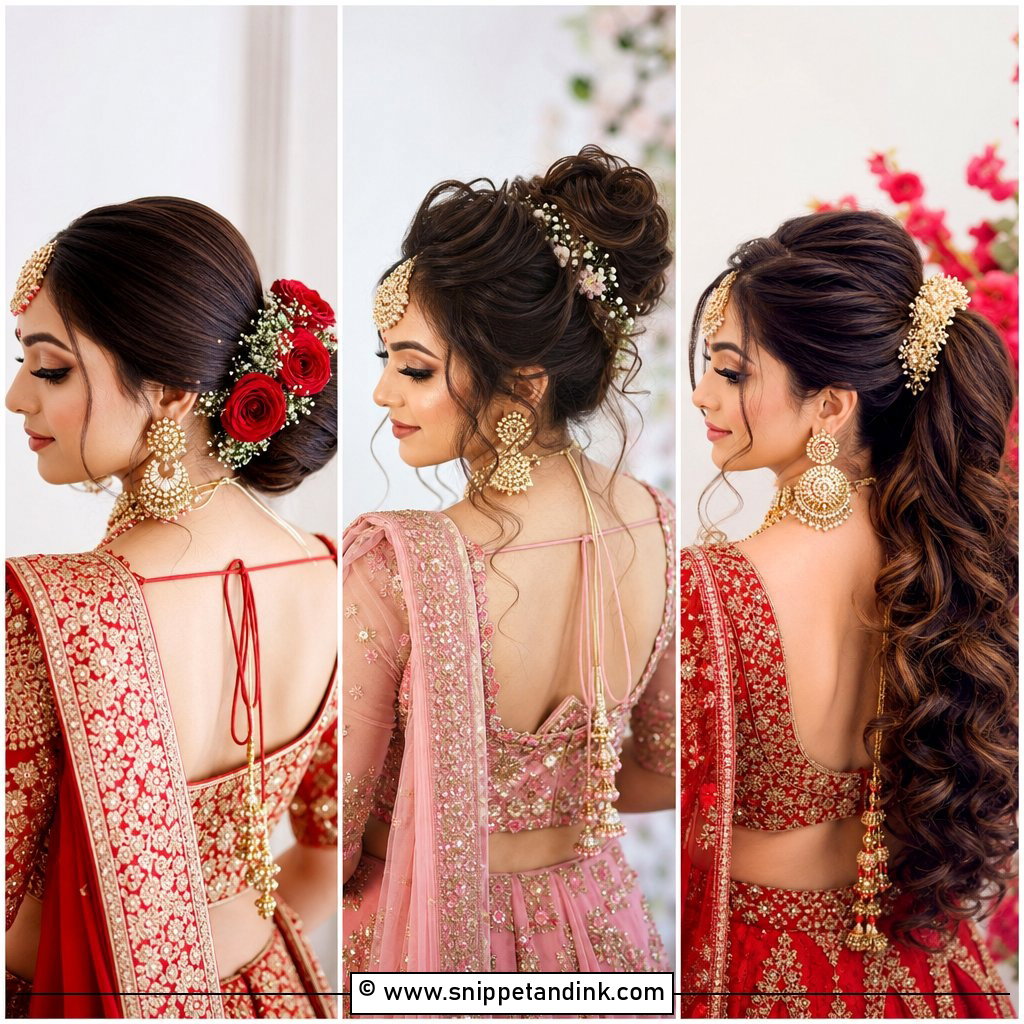
A floral bun is where many brides land for the main ceremony, and with good reason: the bun gives fresh flowers a solid bed to sit in. Jasmine and roses pin in easily; marigolds are heavier and suit a larger bun. I set the bun first, then attach the flowers with U-pins through their wired stems. A maang tikka pairs well with a center part. Real flowers wilt, so ask for them to arrive close to styling time and keep them cool until then.
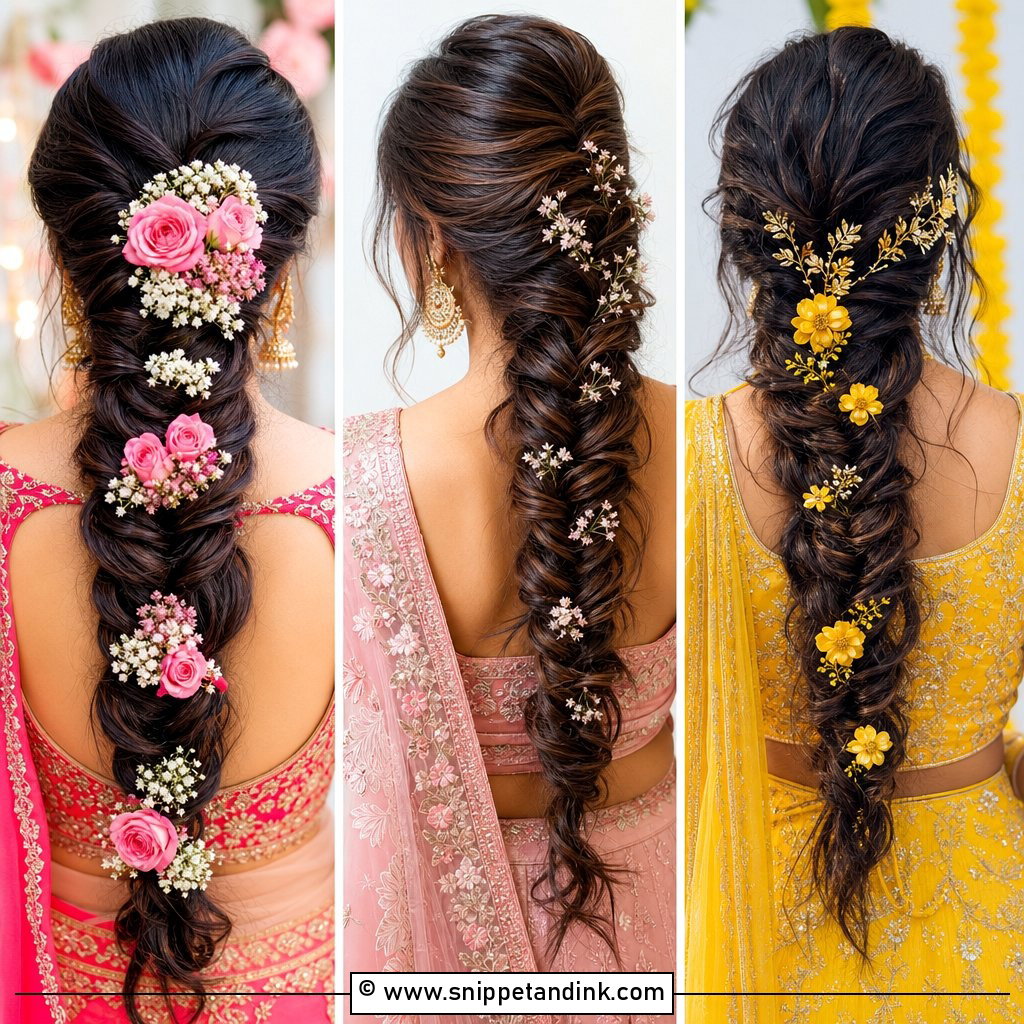
2. Fishtail Braid With Hair Jewelry
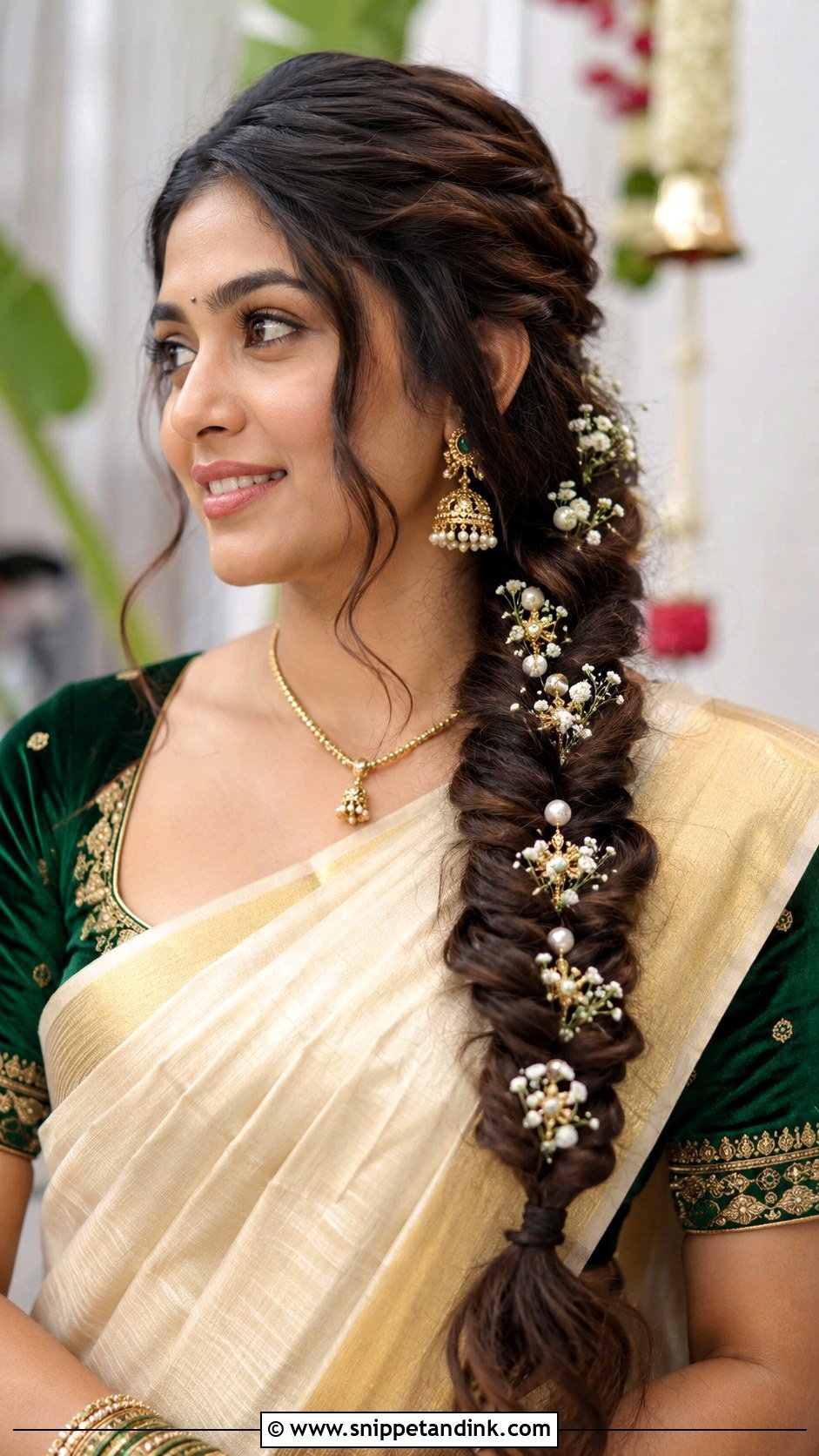
A long fishtail draped over one shoulder is a strong choice for sarees and South Indian bridal looks, where the braid itself becomes part of the jewelry. Most brides need extensions for the length you see in photos, and those should be color-matched well before the day. I braid it firmly, then loosen the edges for width. Braid jewelry, pearls or small flowers attach along the plait with small pins. Check that the braid won’t rest on heavy zari work, which can snag the hair.
3. Messy Braided Bun for Sangeet
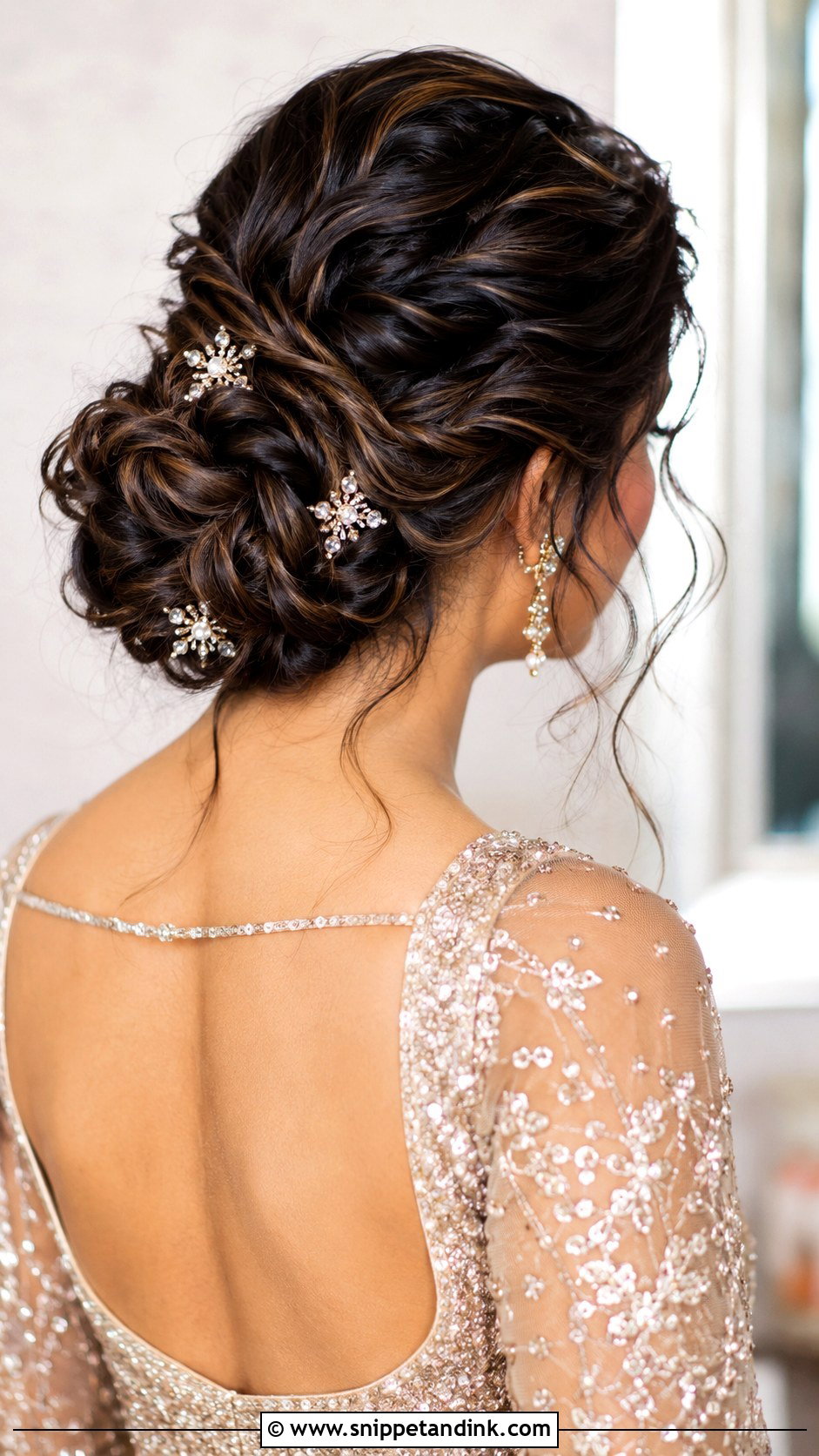
Your sangeet night means a lot of dancing, so I want hair that’s secure but forgiving. A braid coiled into a low or mid bun does both: the braid locks in the length, and the strands I pull loose afterward can move without the structure collapsing. Crystals or small blooms add sparkle. It works with lehengas and Indo-Western outfits, and if it loosens a little by midnight, it still looks deliberate.
4. Half Updo for Wedding Guest
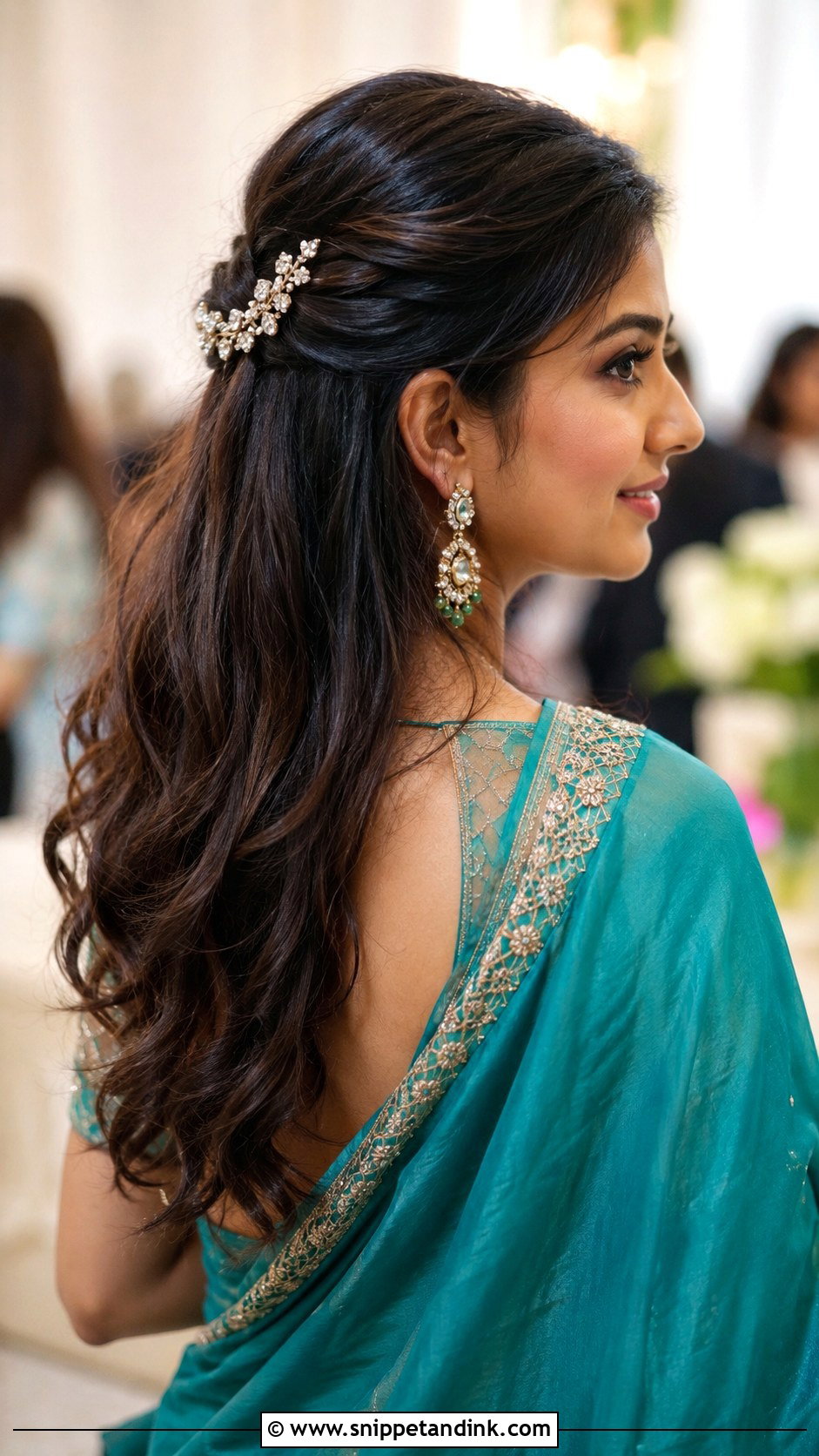
For guests, a half updo is a practical middle ground, dressed enough for a ceremony and light enough to wear all day. The top section is pinned into a small twist or knot while the rest falls in waves. With traditional outfits I keep it sleek and add a small maang tikka or clip; Indo-Western looks suit more texture. Hair that won’t hold a curl should be set on rollers, or the loose lengths go flat by lunch.
5. Low Bun With Gajra
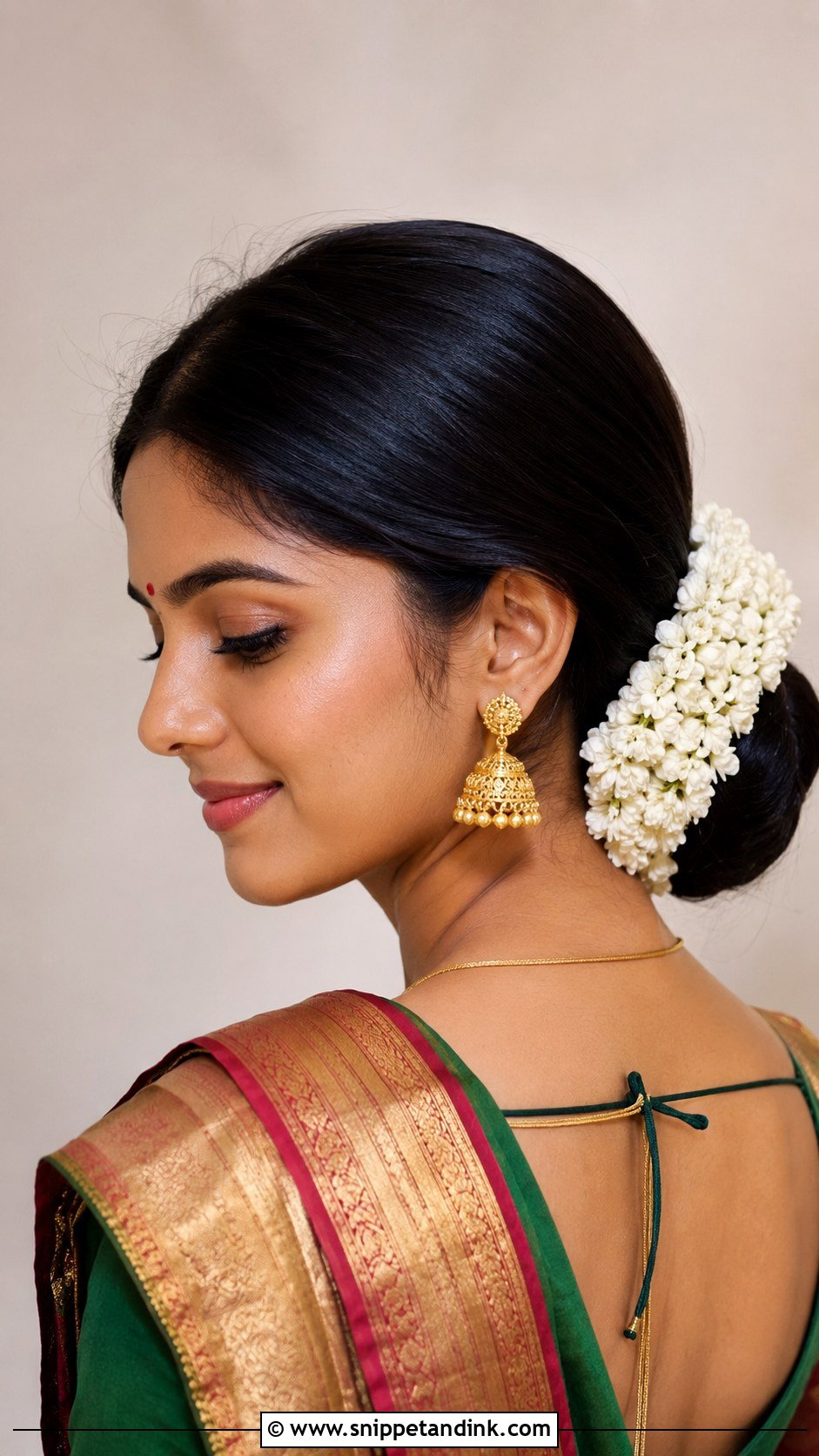
A low bun wrapped in a jasmine gajra is a classic for South Indian brides and silk sarees. The bun has to be firm, because a full gajra adds noticeable weight and drags downward as the day goes on. I wrap the gajra around the bun and secure it with U-pins at intervals rather than relying on one or two. Jasmine also starts to brown after several hours, so for long ceremonies some brides keep a second string ready. Jhumkas and a bold bindi finish it.
6. Open Hair With Curls and Maang Tikka
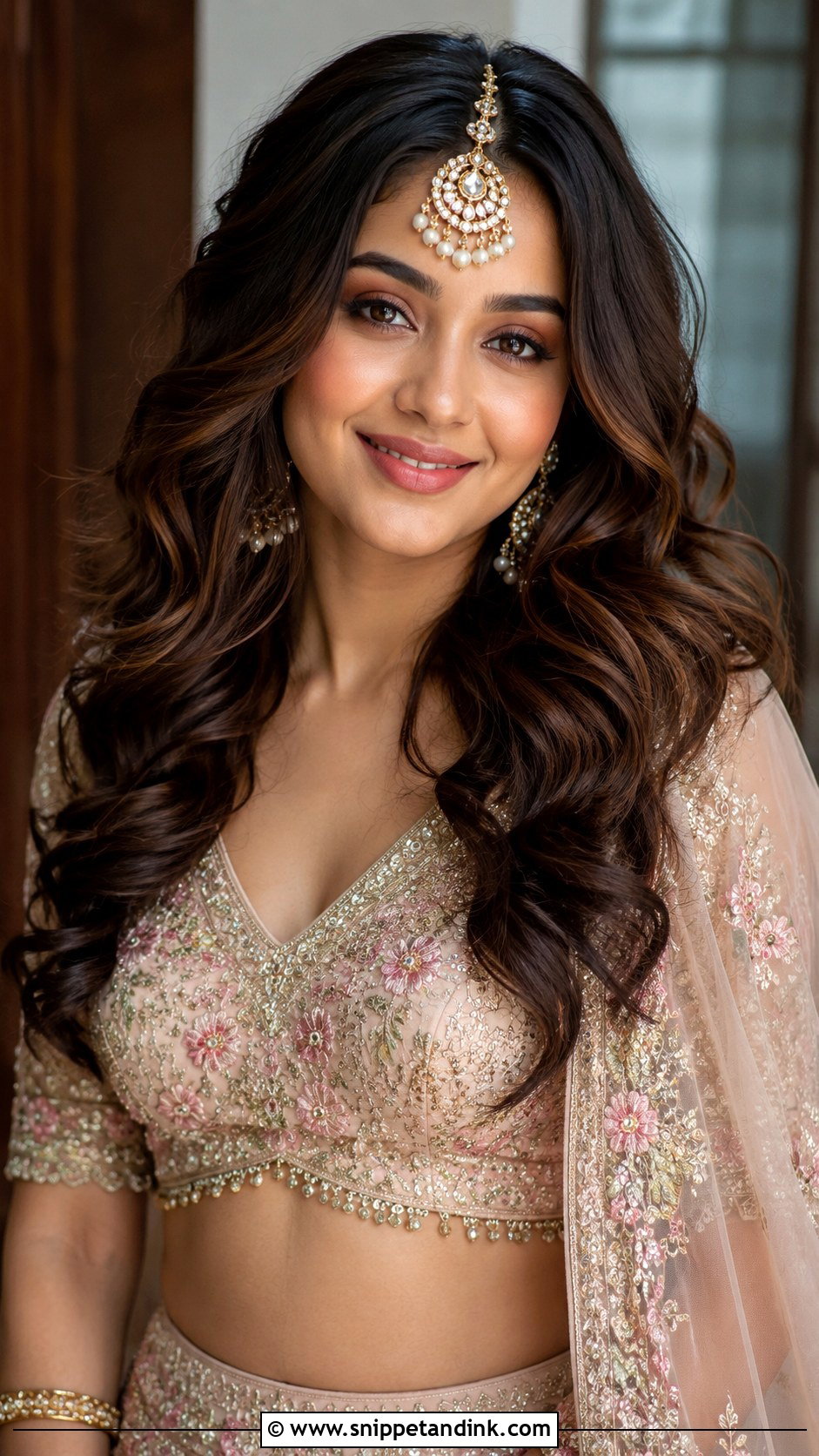
Open hair with curls is a popular choice for receptions and pre-wedding shoots, especially for brides who dislike heavy updos. The curls need a solid set, because in a warm hall they relax quickly. A statement maang tikka or matha patti frames the face, and I anchor it to a tiny hidden braid at the part so it doesn’t slide. A few face-framing strands soften the look. It suits lehengas and gowns alike.
7. Braided Crown for Indian Bride
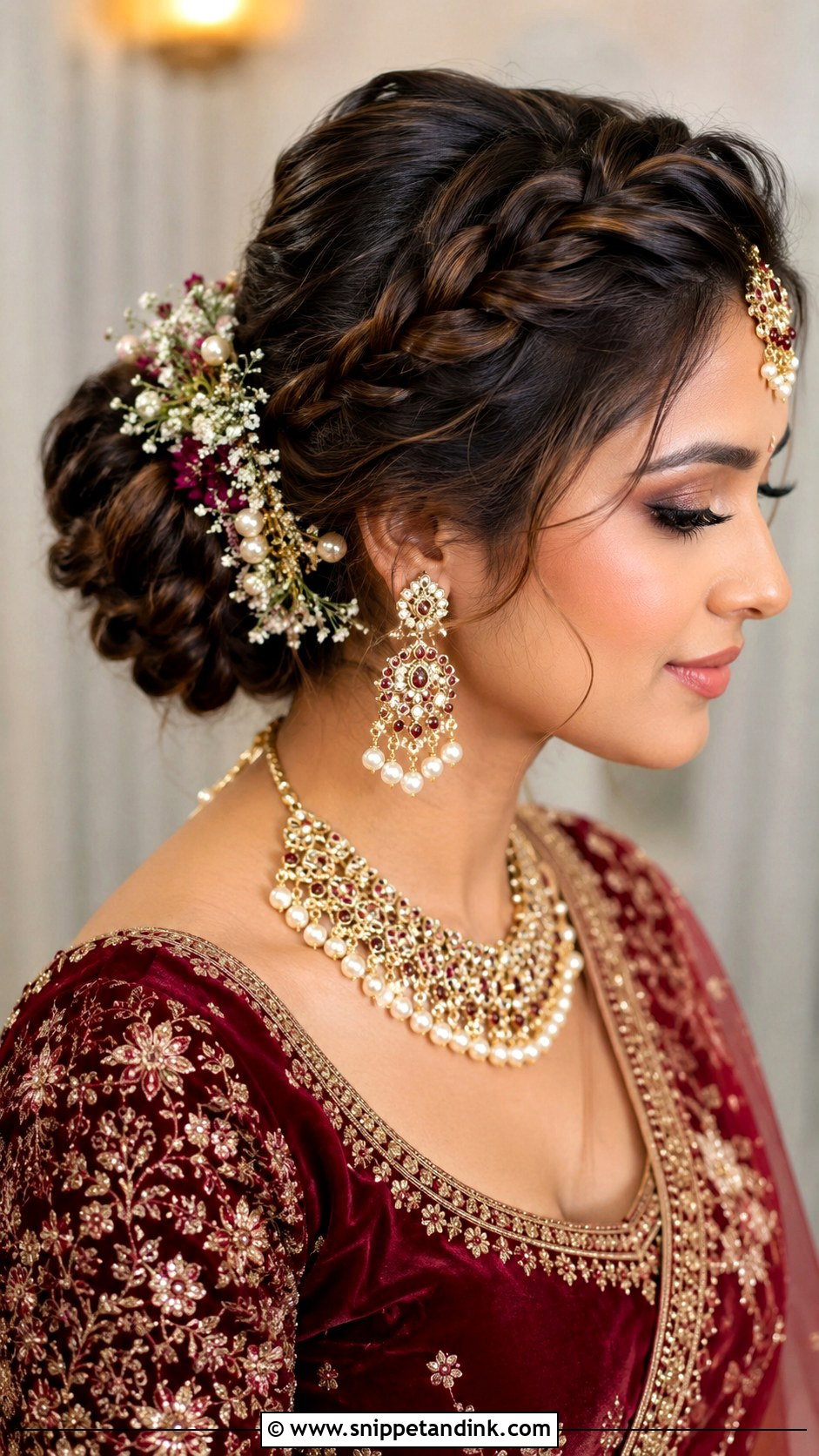
A braid wrapped across the crown and finished in a low bun keeps hair completely off the face, which helps during long rituals near the sacred fire. It also gives jewelry a sturdy base, since pins hold far better in a braid than in loose hair. Pearls, flowers or sparkling pins can be added along it. Shorter hair can manage this with clip-in extensions.
8. Side Swept Curls for Reception
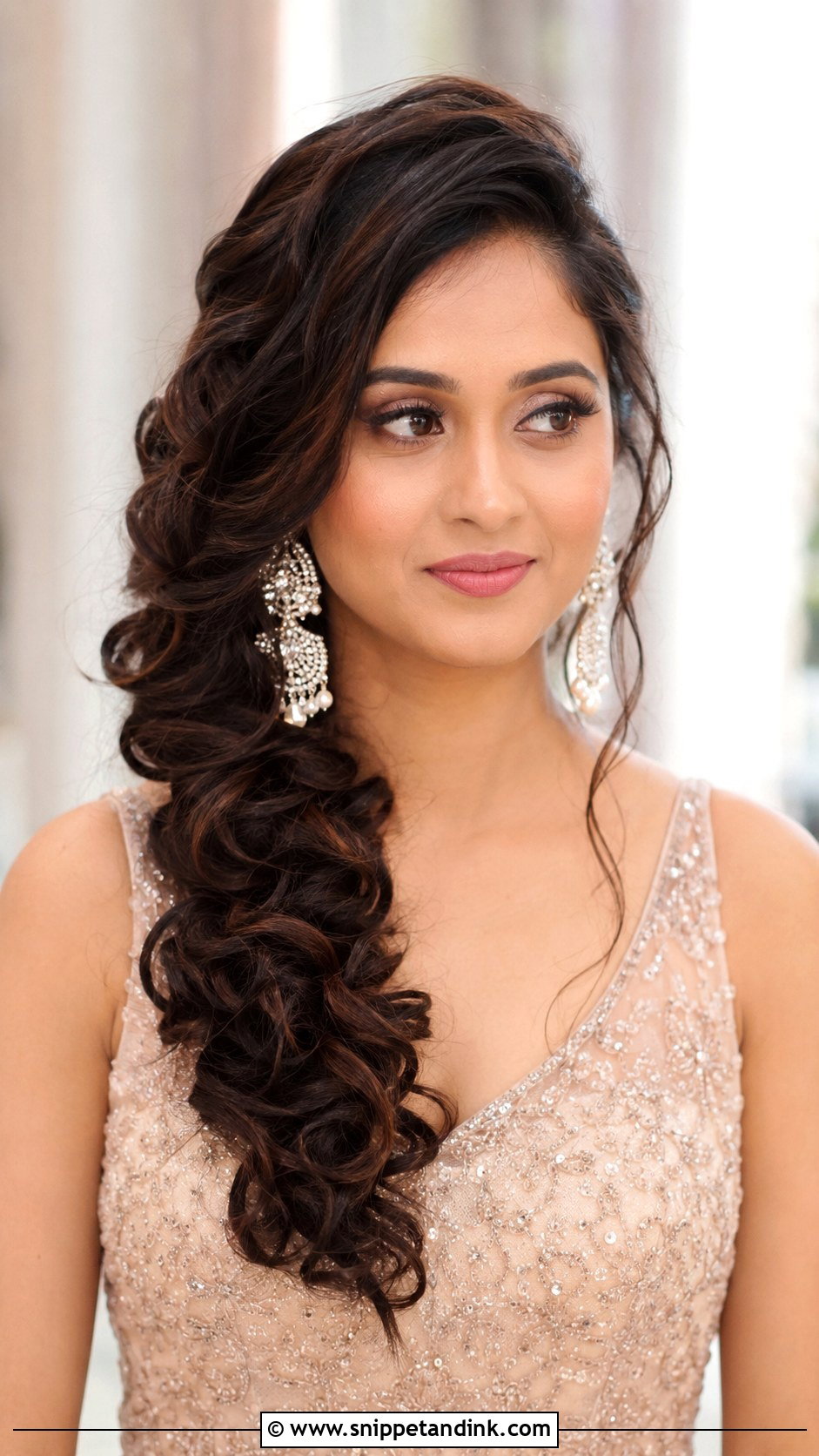
Side-swept curls gather all the volume over one shoulder, leaving your neckline and one earring on show. Reception gowns and glittering lehengas both suit it. I pin the back section behind the ear before curling, so the hair doesn’t creep back to the center during the evening. You’ll need medium to long hair. Keep the swept side away from a heavy dupatta, or the two will tangle.
9. Bun With Pearl Embellishments
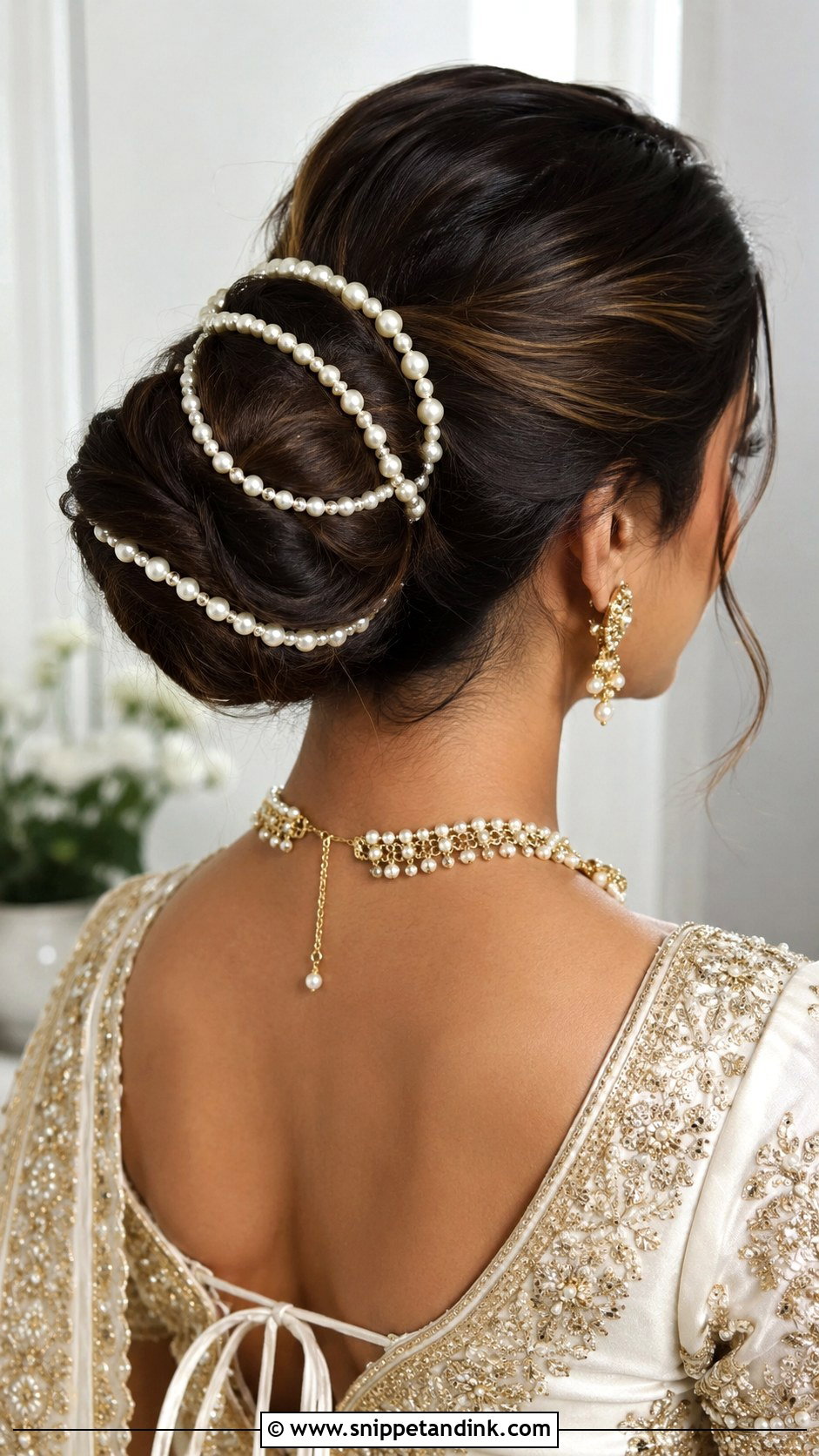
Pearl pins or strands in a bun suit brides who prefer quiet detail over heavy embellishment, and pearls sit comfortably alongside polki or kundan jewelry. I pin them last, into the base of the bun, so they don’t slide out of loose strands. A low bun reads traditional; a higher one looks more modern. It works for daytime and evening functions.
10. Dutch Braid Into Bun
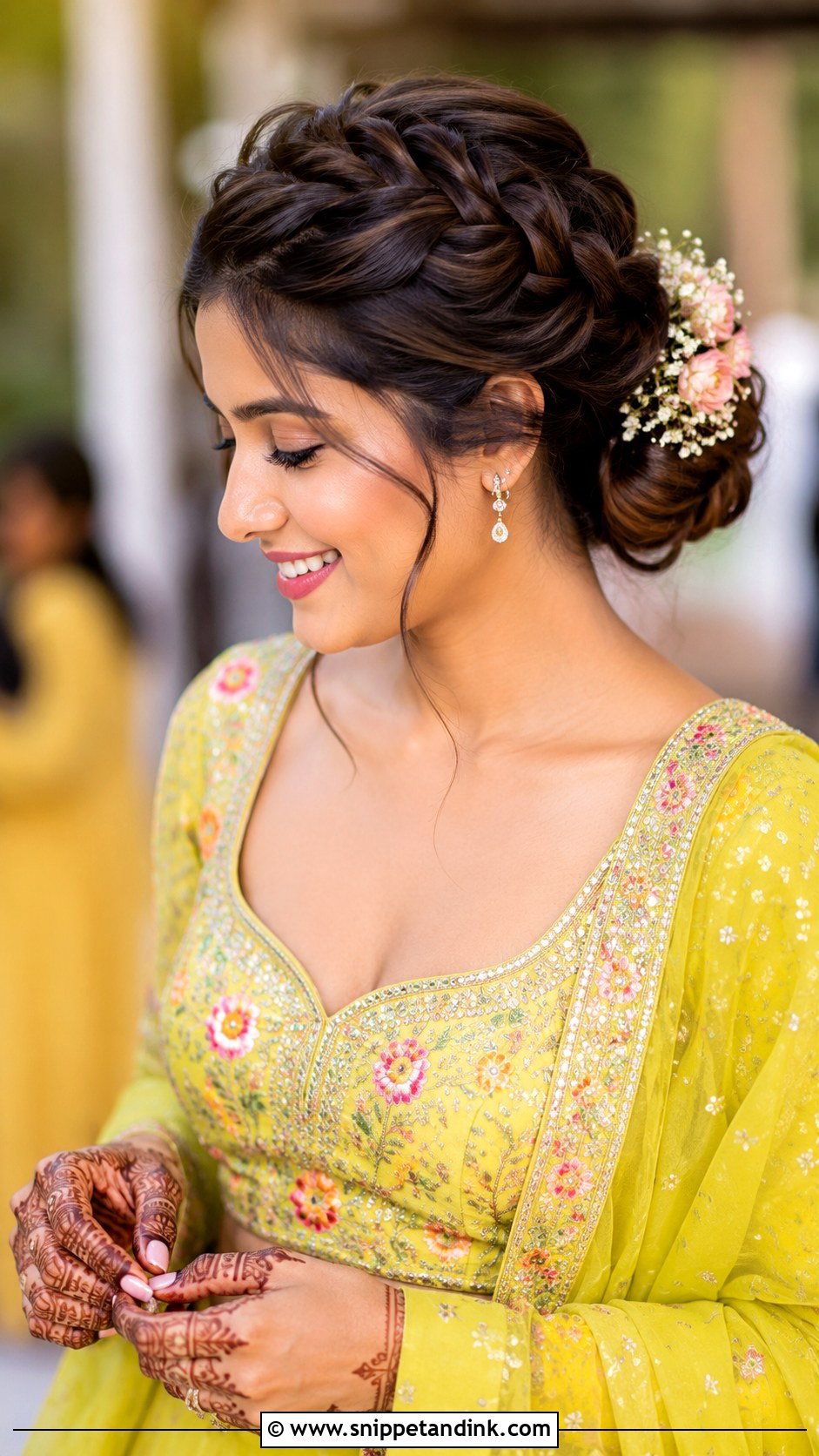
A Dutch braid sits raised on the head, so it stays visible under a dupatta and gives the style a firm structure for dancing. It’s my usual suggestion for mehendi and haldi functions, where you’ll be sitting, moving and possibly getting turmeric paste or water near your hair. Colored threads or small flowers woven through add a festive touch. Medium to long hair works best.
11. Bridal Bun With Matha Patti
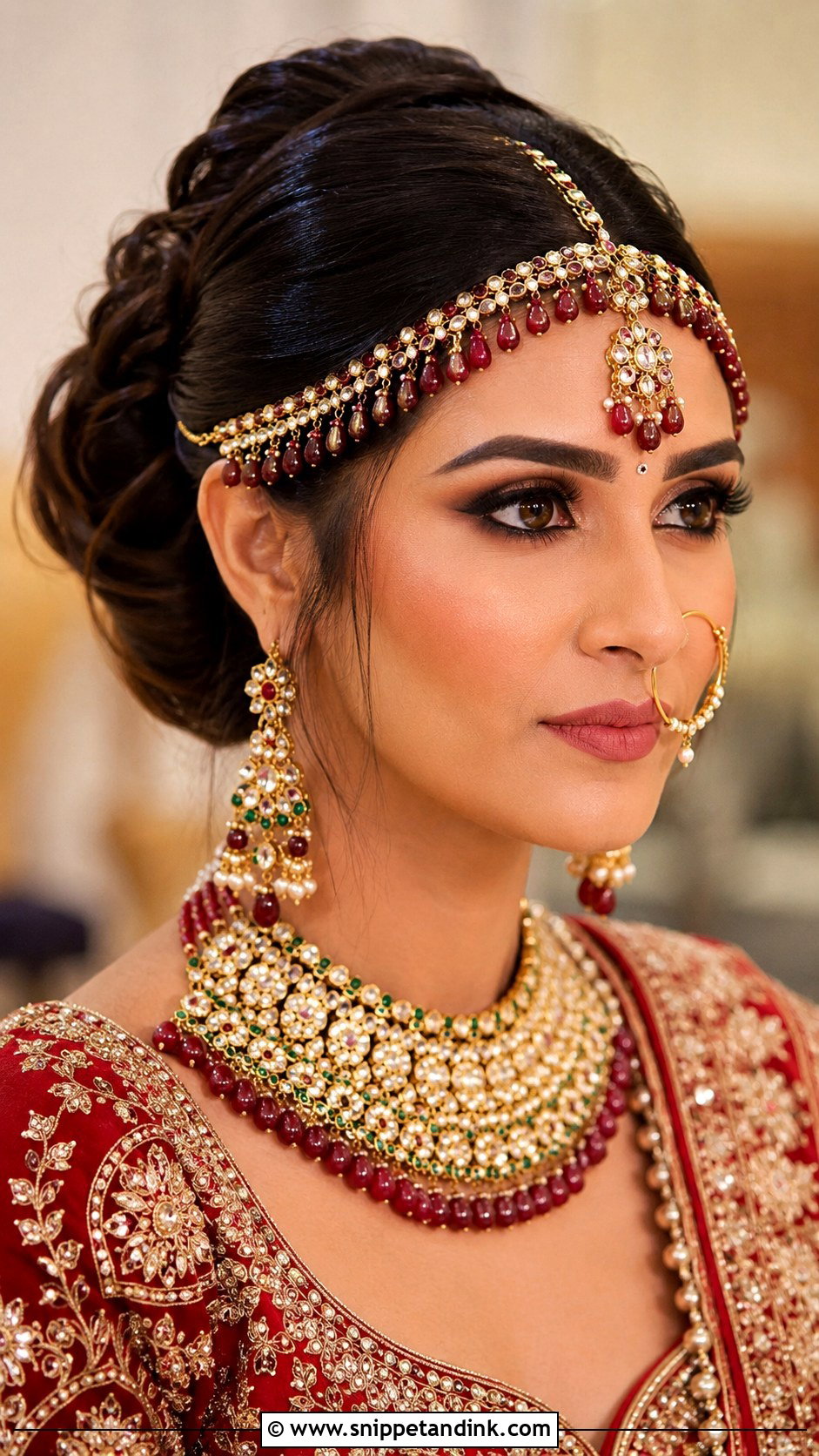
For the main ceremony, a voluminous bun with a matha patti gives the most formal finish. The matha patti runs along the hairline and center part, so the part must be neat and the front hair smooth. I secure the side chains with small pins into hidden braids at the temples; without them, the chains slip every time you turn your head. The bun can sit high or low. Bring the actual piece to your trial, since chain length decides how the front hair is shaped.
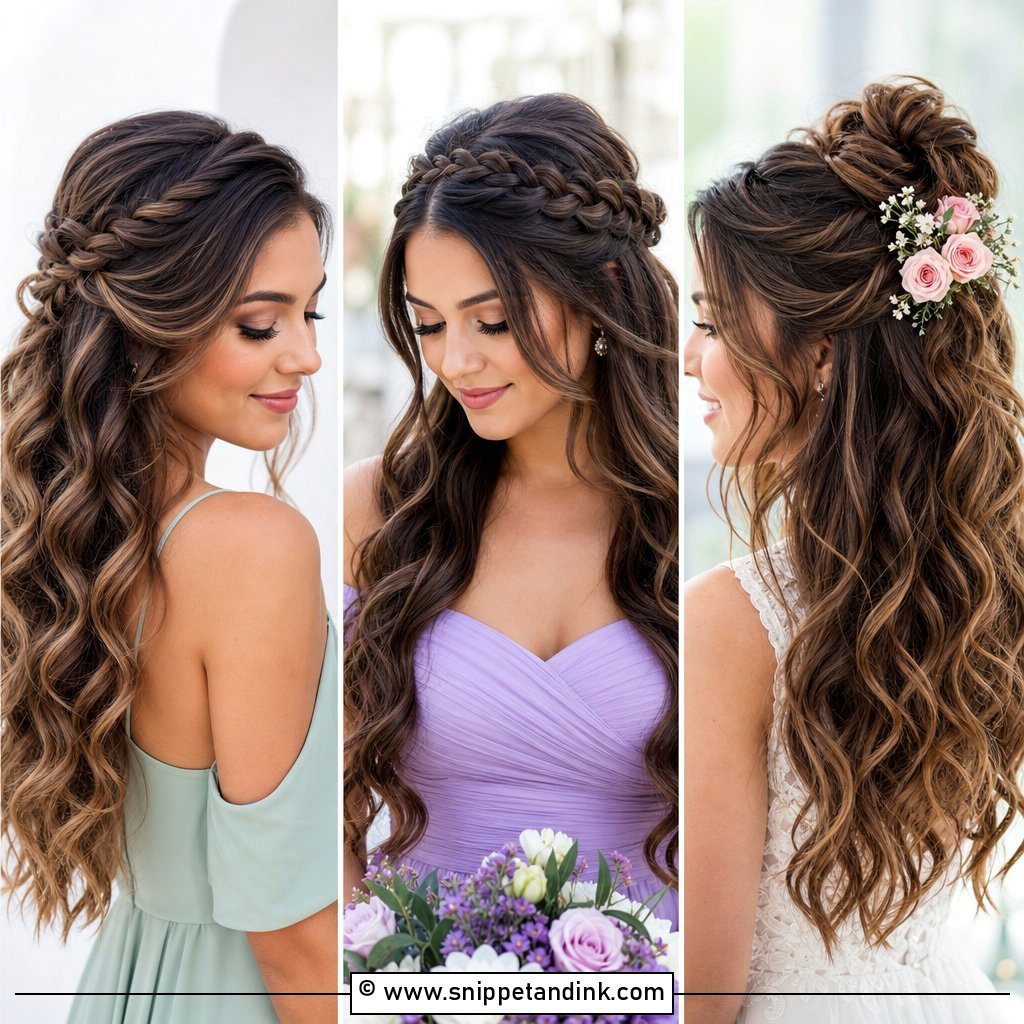
12. Wavy Half Updo With Flowers
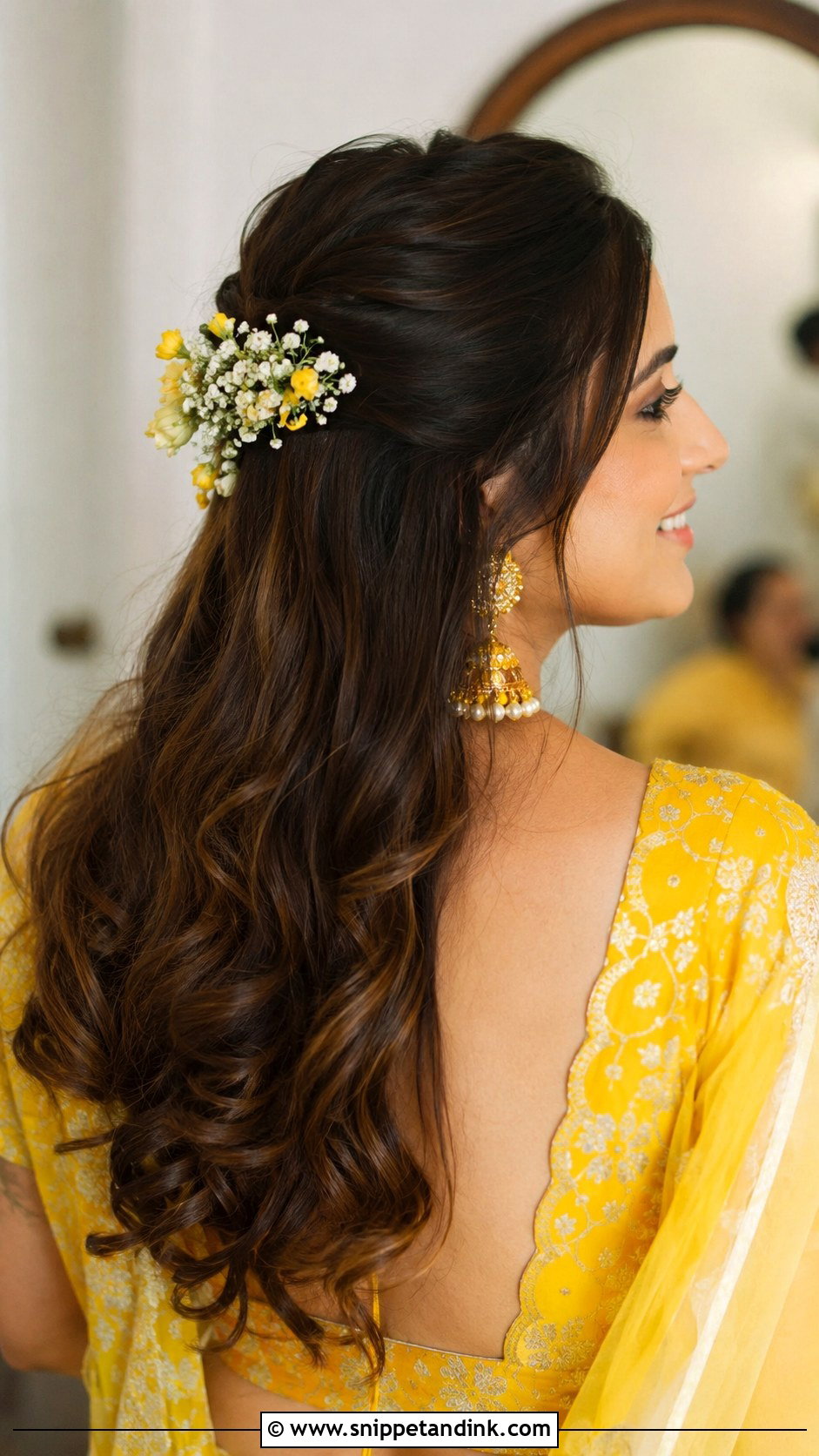
Pulling back the top section and pinning small fresh flowers there gives a light look for daytime functions such as haldi or mehendi. The loose waves underneath keep it airy, and fine hair gains volume from the curls. In heat, choose hardy flowers like baby’s breath or small spray roses, and leave the face-framing strands loose.
13. Sleek Low Ponytail for Guest
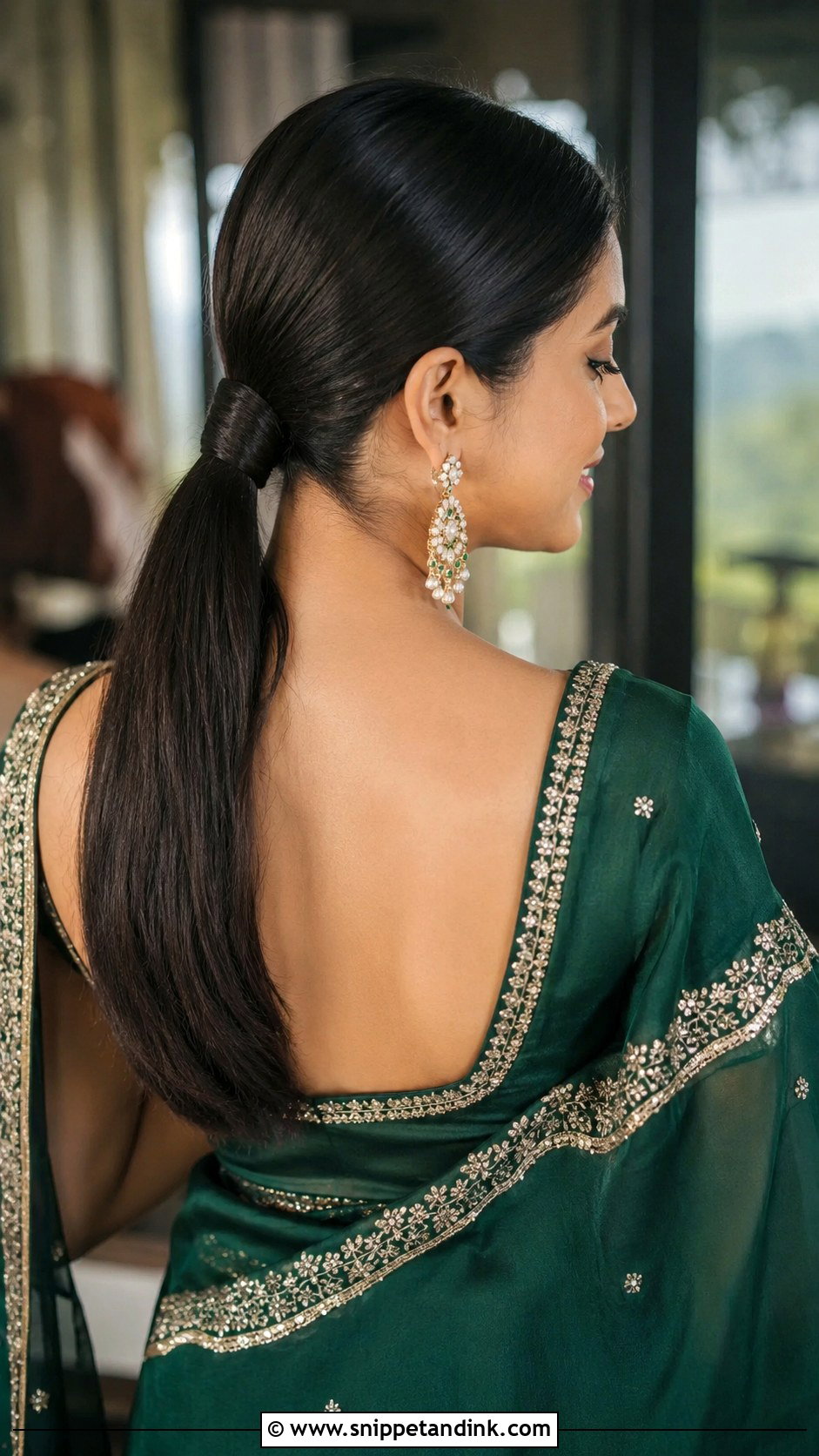
Simple can still look polished, and a sleek low ponytail is the quickest way there for guests. It also lasts well through a long day. I smooth the hair back with gel, tie it at the nape, and wrap a strand around the base to hide the elastic. It works with sarees and Indo-Western outfits and shows off earrings. Wavy hair may need a quick flat-iron pass on the tail for a cleaner finish.
14. Floral Hair Down for Haldi
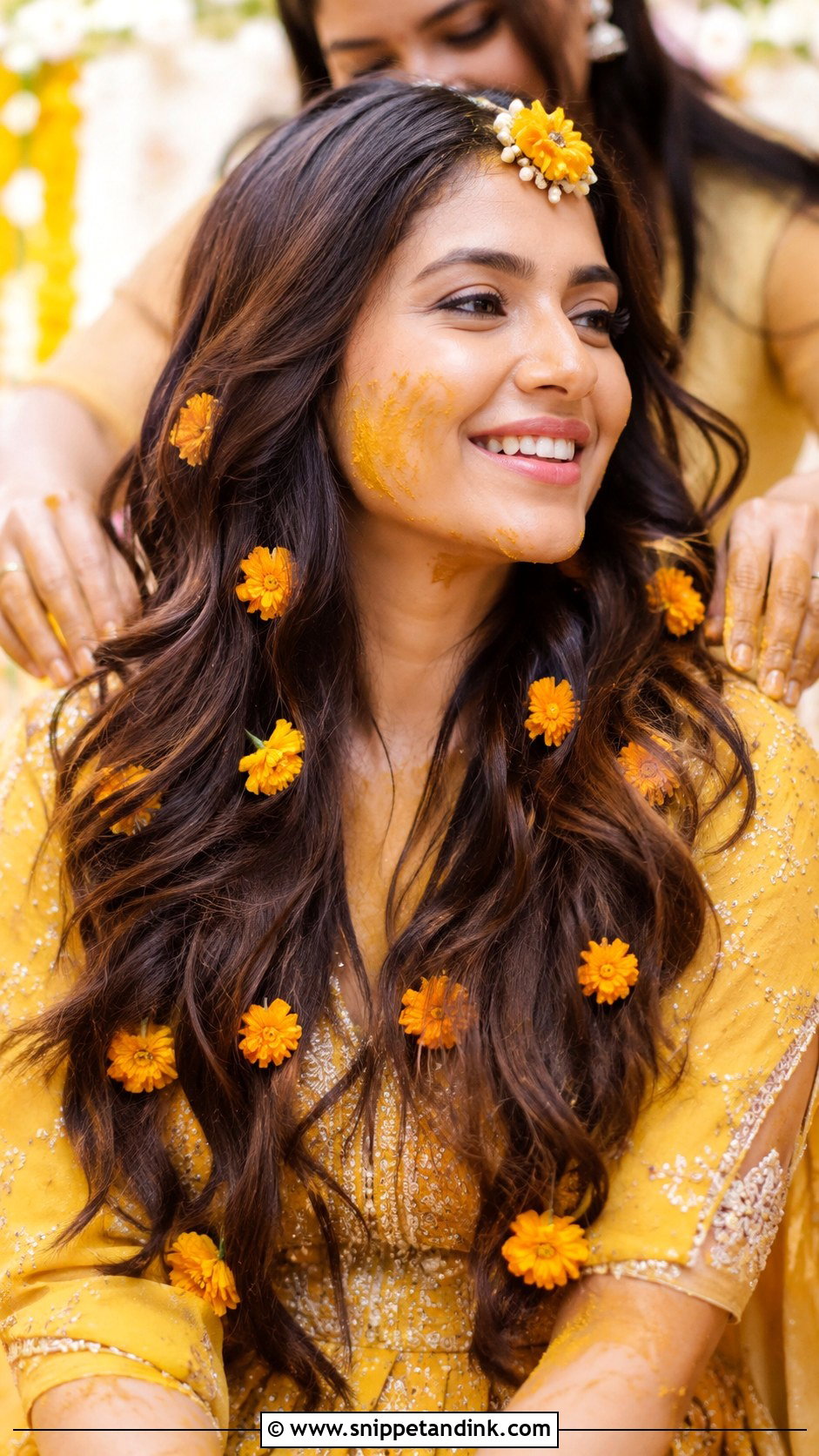
For haldi, loose hair with marigolds or other bright blooms matches the cheerful mood. Be practical, though: turmeric paste can stain light, highlighted or color-treated hair, and it’s messy to wash out. I suggest a light coat of hair oil beforehand, and a loose braid if you expect plenty of paste. Tuck flowers behind one ear or weave them through. Yellow outfits and simple jewelry suit it.
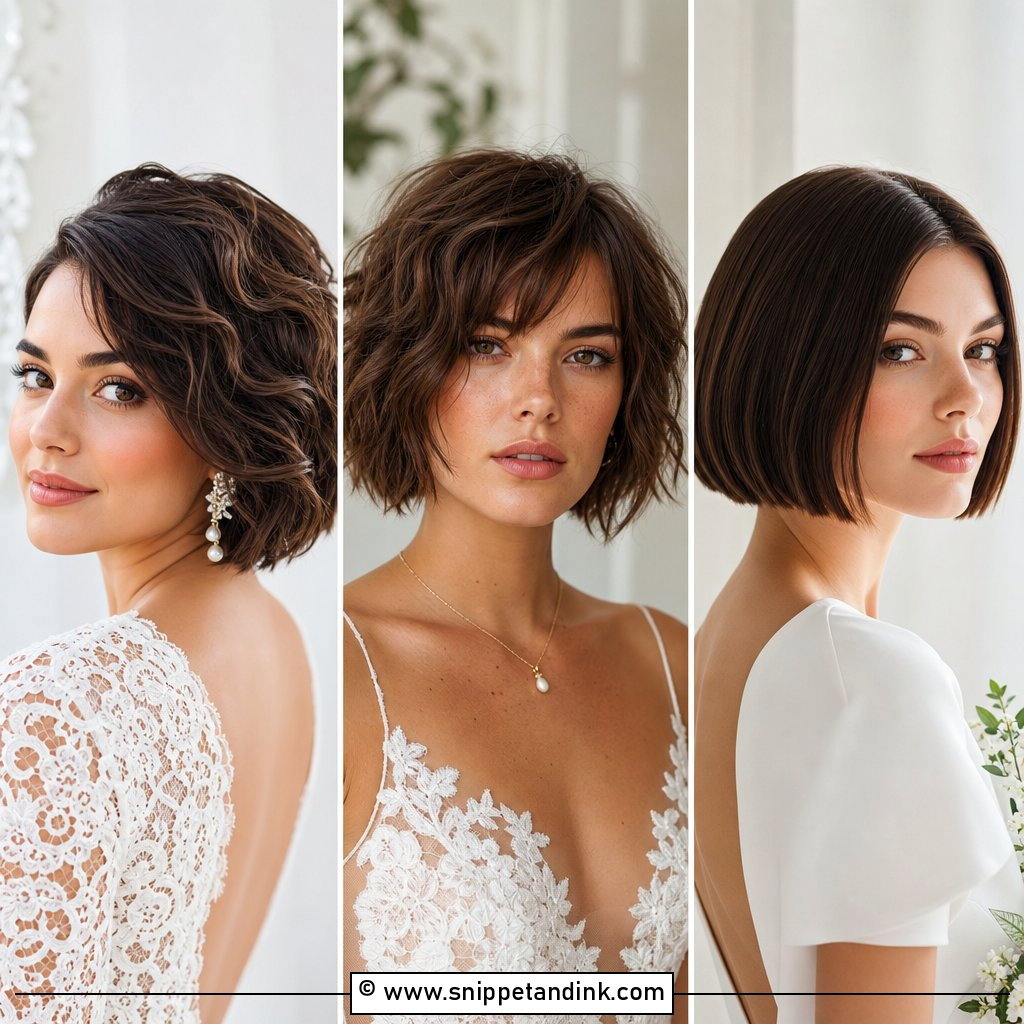

15. French Braid Bun for Mehendi
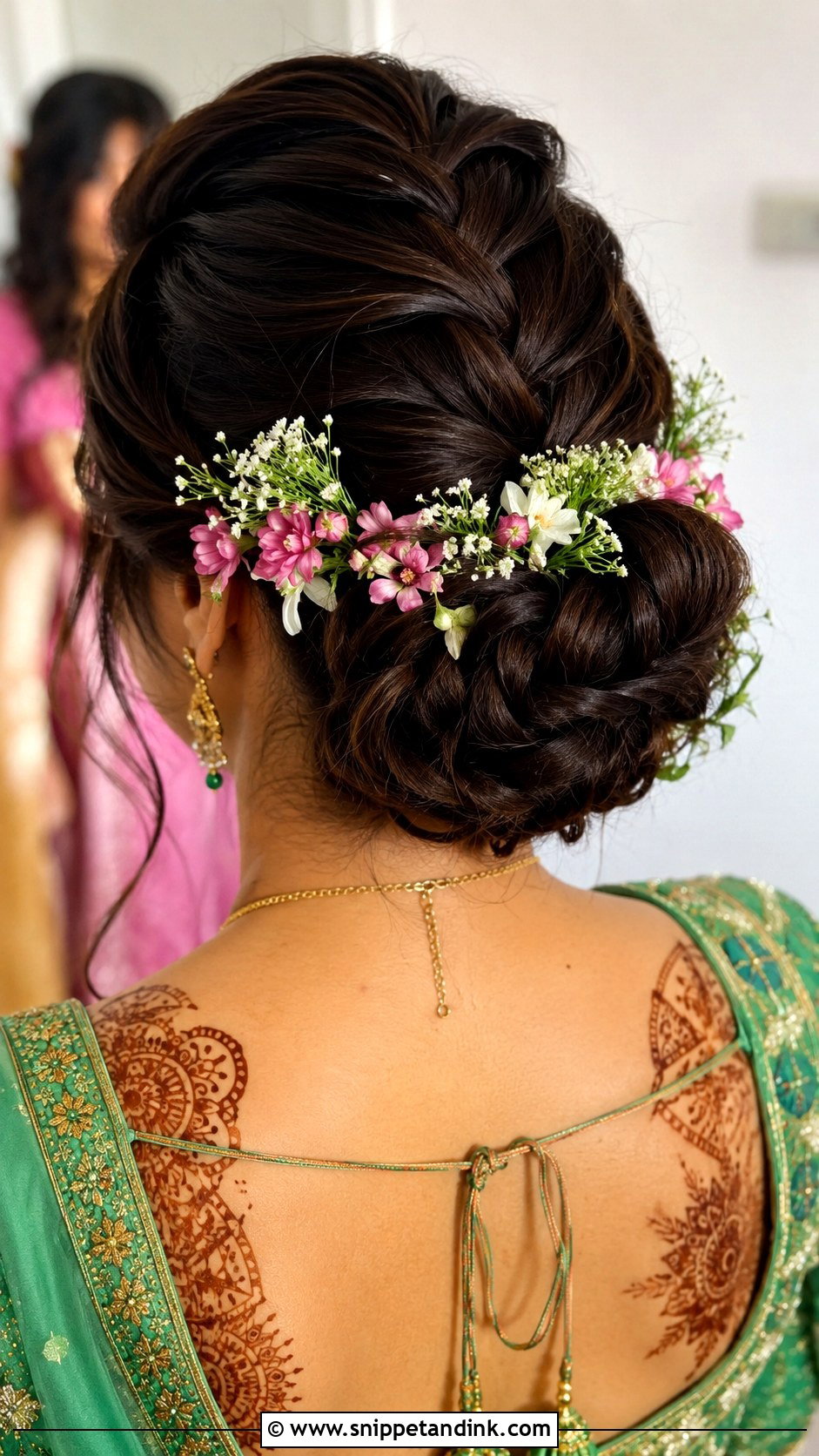
Sitting for henna can take hours, and you can’t touch your hair once your hands are covered. A French braid coiled into a bun keeps every strand off your face for the length of your mehendi celebrations. Colorful flowers or threads add a festive touch. Make sure it’s fully secure before the artist starts, because nothing can be fixed until the paste dries.
16. Voluminous Curls With Side Part
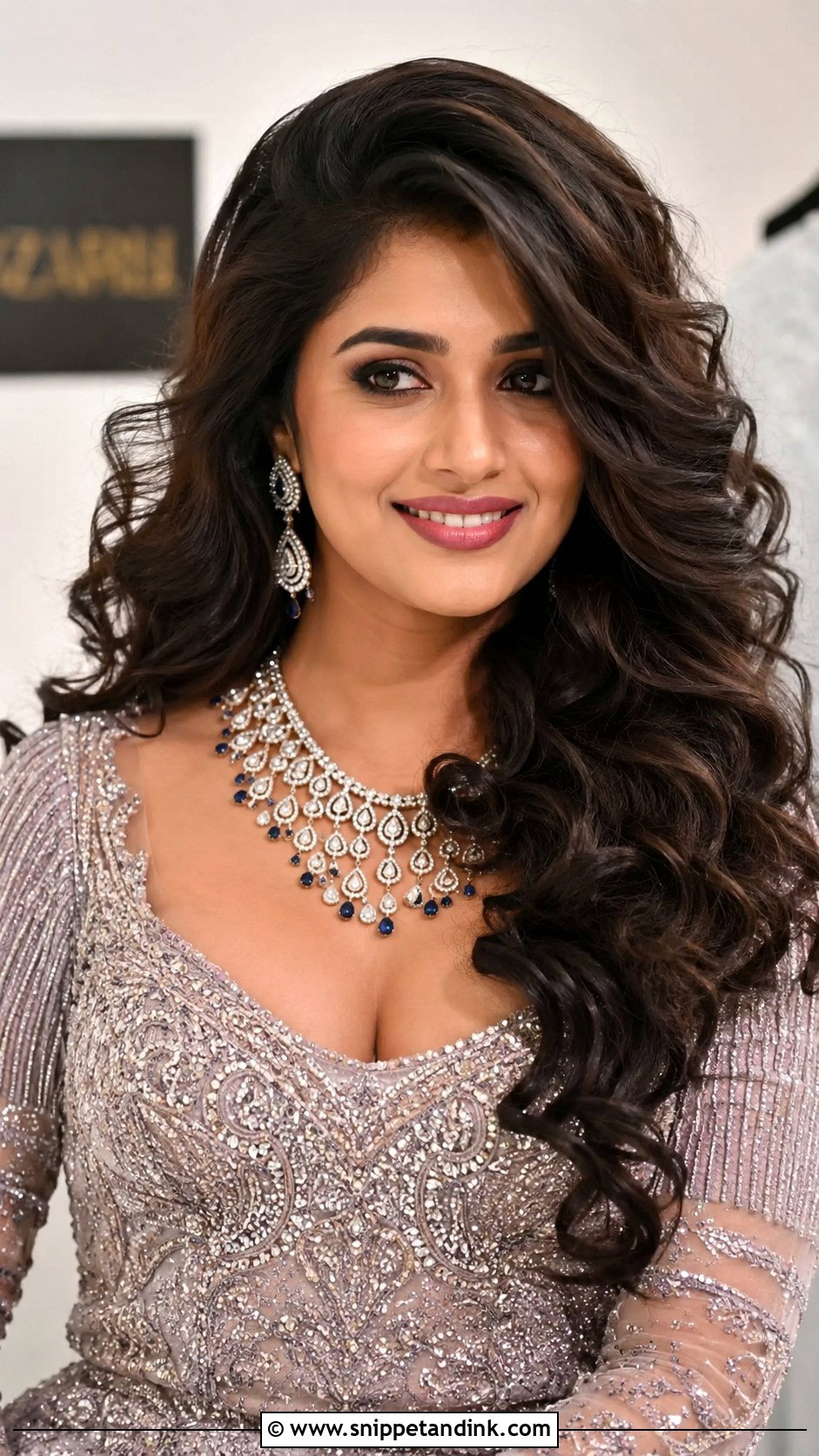
Big curls with a deep side part create volume and drama for a reception. I set them with hot rollers or a large barrel, then brush them out gently for a full shape, and the side part sweeps the front across the face. Thinner hair gains fullness from this style. In a warm venue, plan a touch-up mid-evening, as curls this large relax fast.
17. Twisted Updo With Hair Accessories
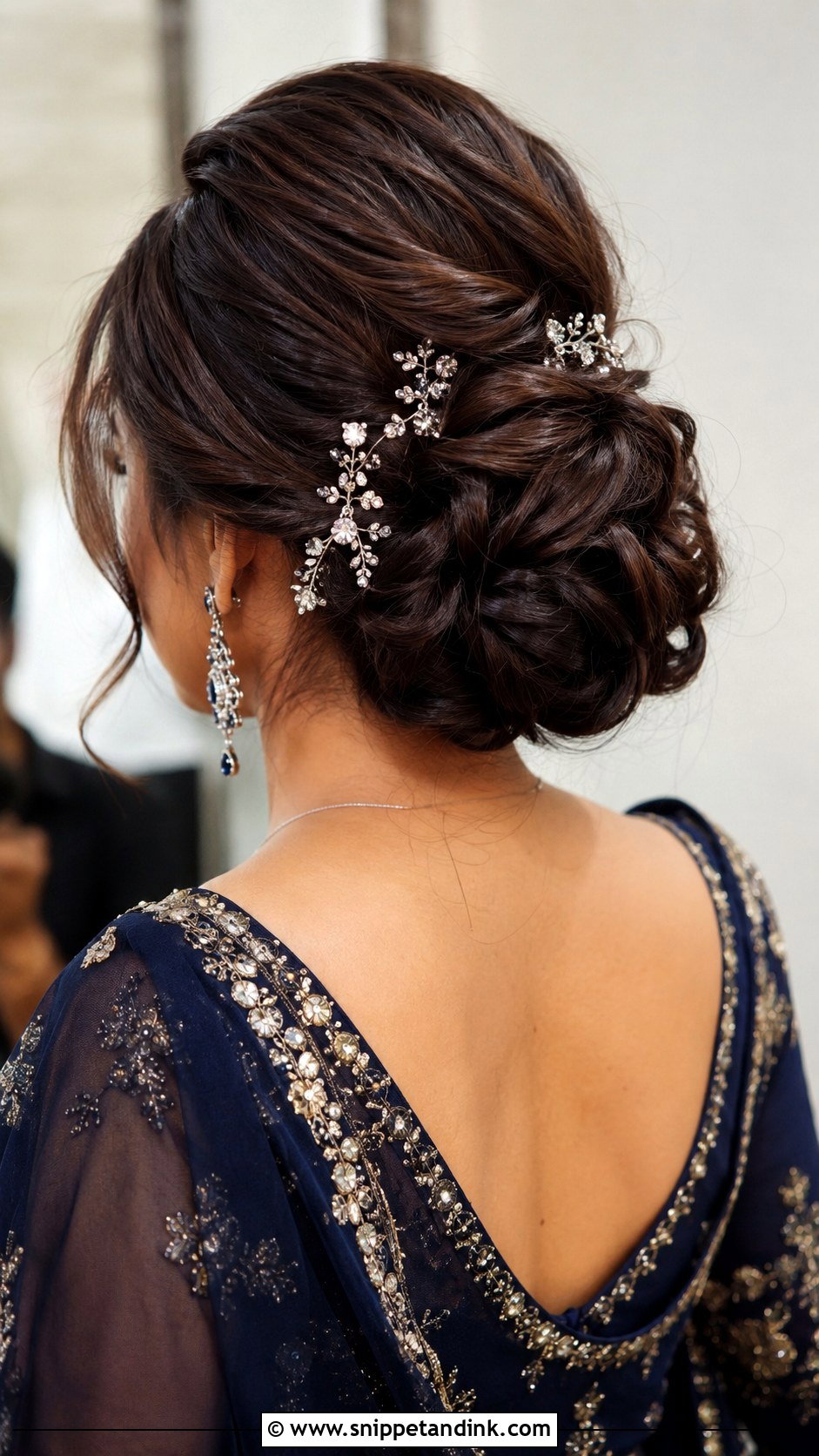
Soft twists pinned into a structured shape at the back give a refined finish for receptions and evening functions. The updo keeps the neck and shoulders bare for statement jewelry, and crystal pins or a jeweled comb can be added. Twists grip each other well, so this style handles dancing better than most loose looks. Medium to long hair is needed.
18. Boho Braids for Wedding Guest
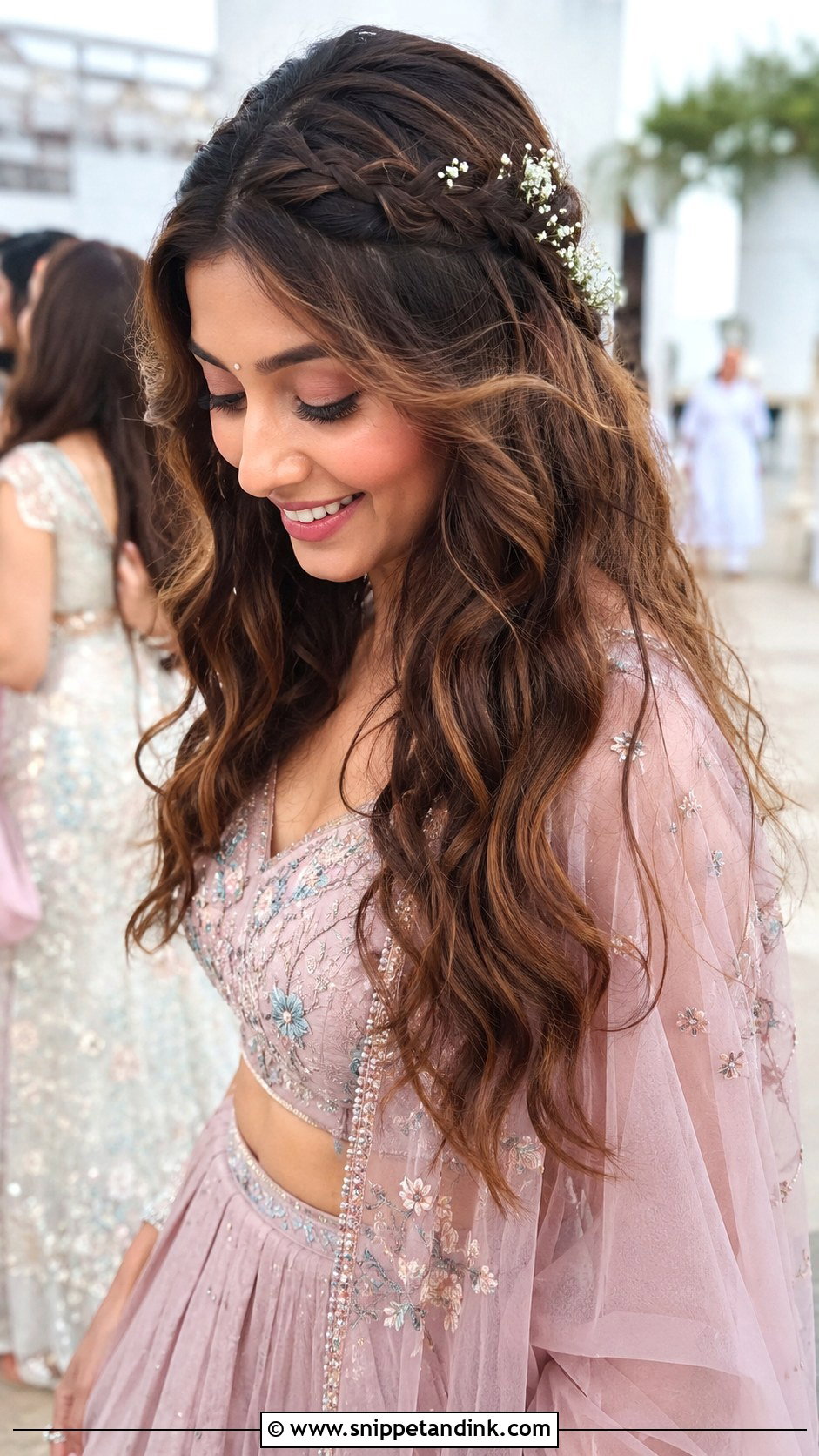
Small braids woven through open waves give a relaxed, youthful look for daytime functions such as mehendi or sangeet. Tiny flowers or beads can be threaded into the braids. Any hair texture can carry it, though very fine hair may need a texturizing spray so the braids show. It pairs well with flowy lehengas and Indo-Western outfits.
19. High Bun With Statement Earrings
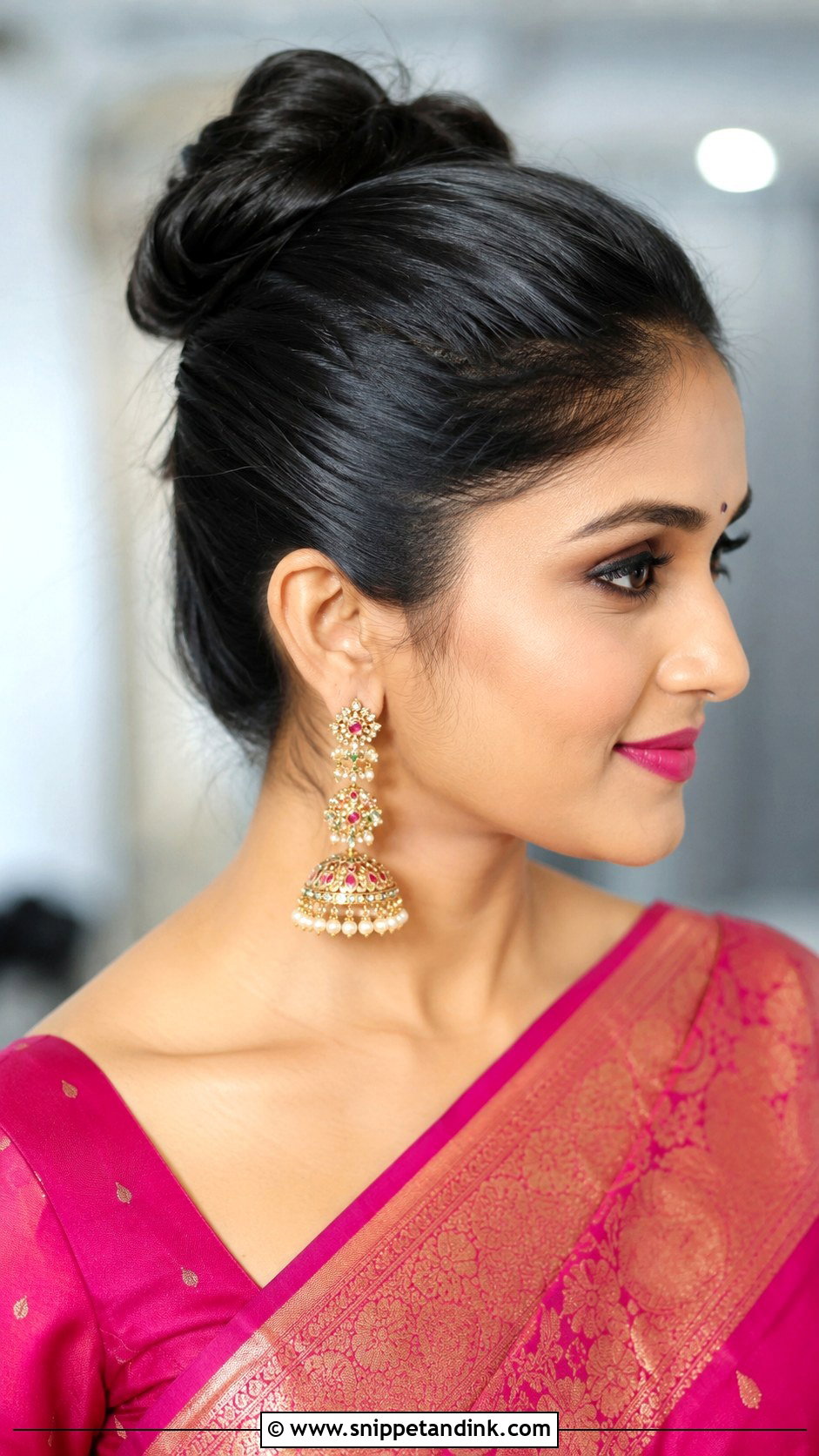
A high bun clears the neck entirely, which is why I suggest it when earrings are the main jewelry. Heavy jhumkas and chandelier earrings show fully from every side. The bun can be sleek or textured, with flowers or pins at the base. Fine hair will need a donut for size. A high bun and a dupatta draped over the head can fight each other, so plan which ones you’ll wear together.

20. Loose Waterfall Curls With Diamond Pins
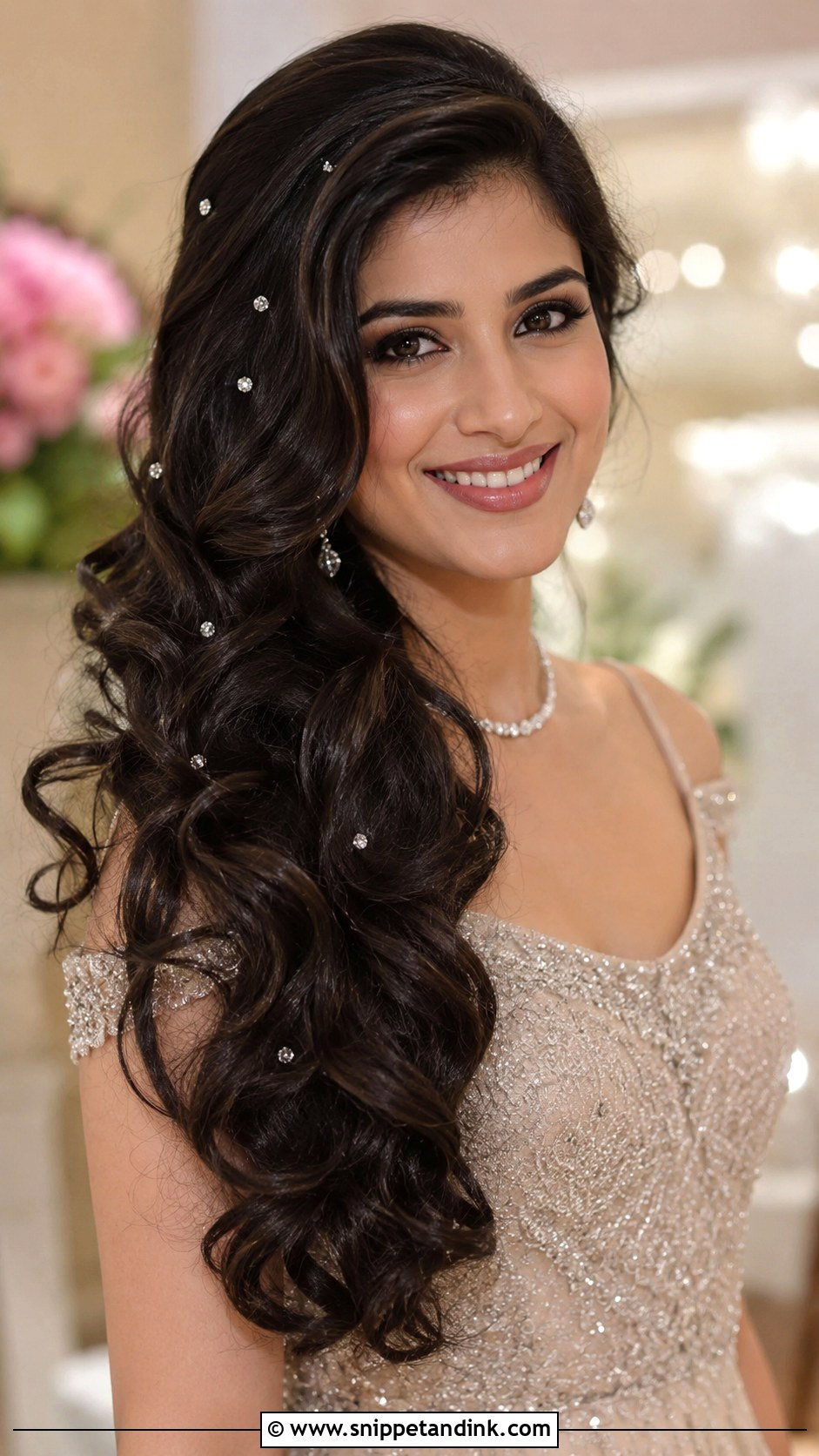
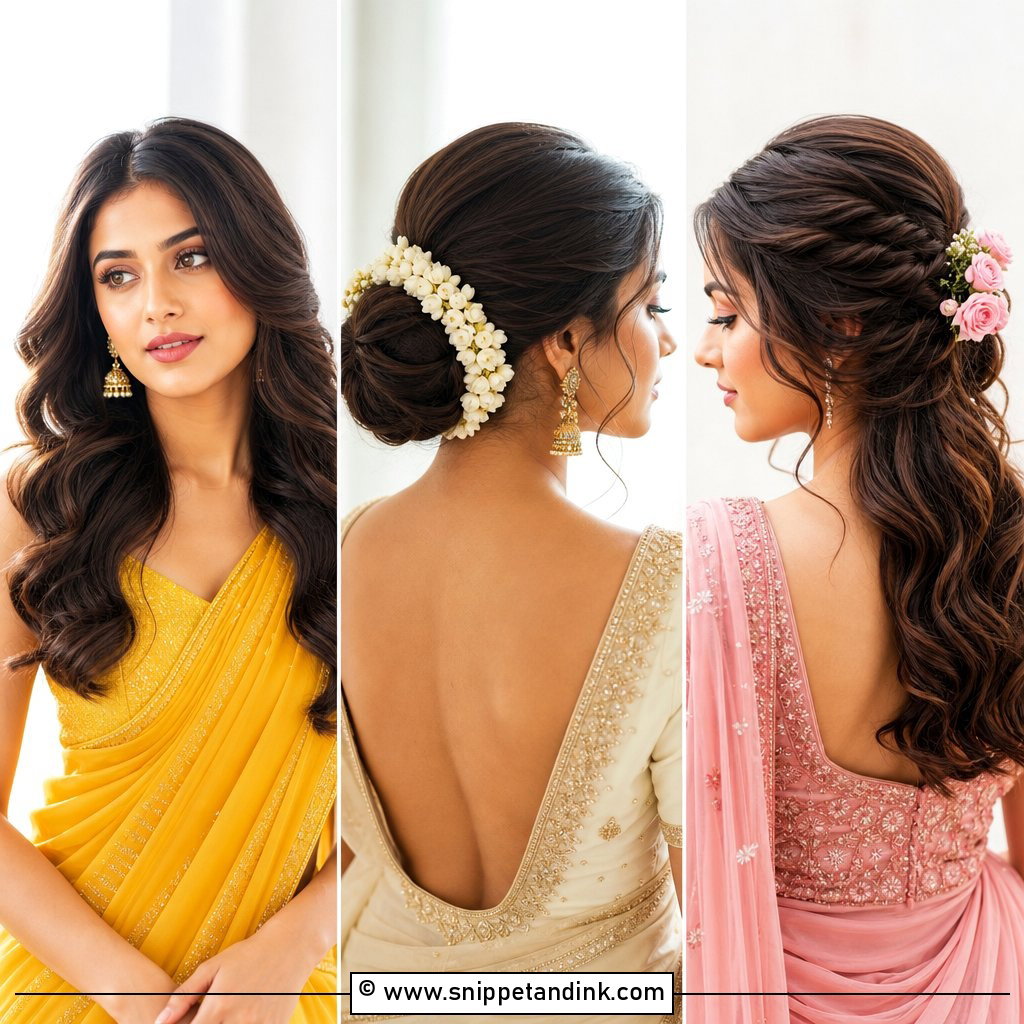
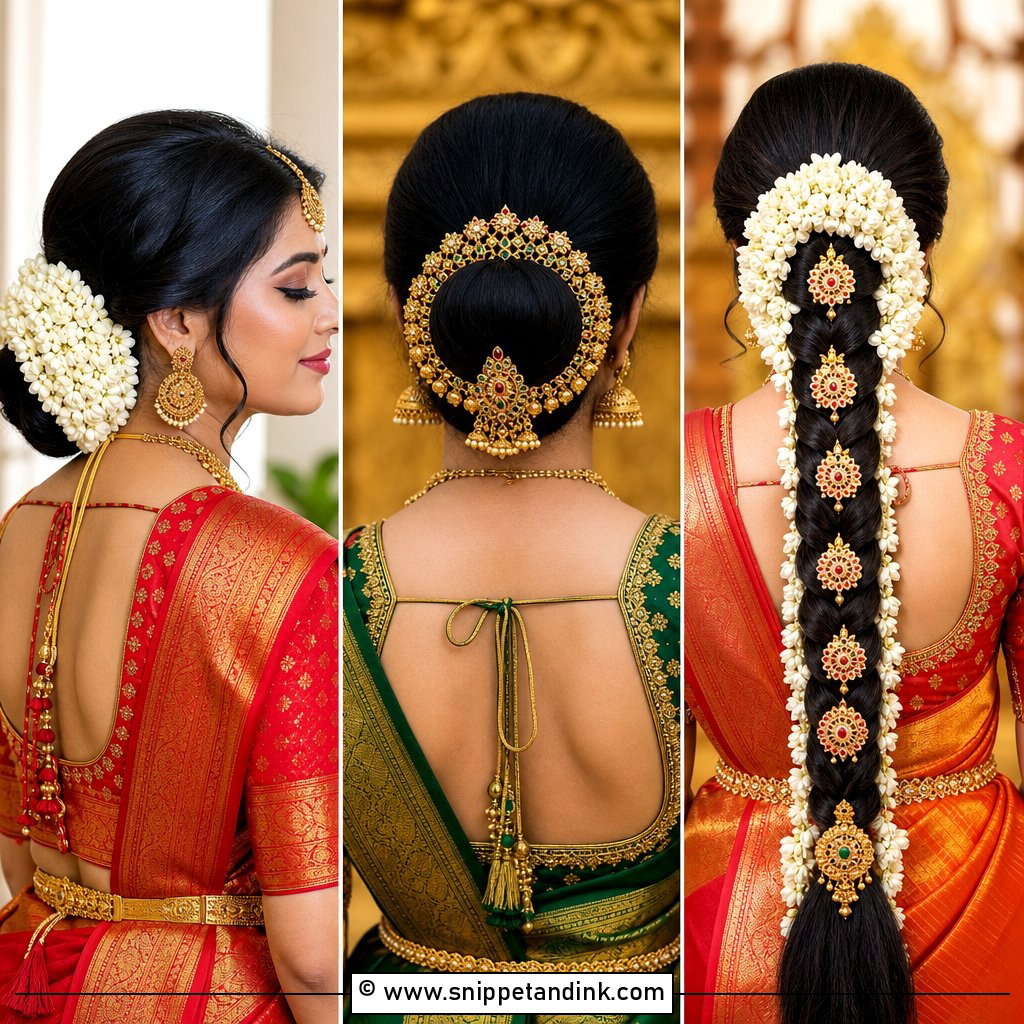
Loose curls scattered with diamond-style pins give a modern, glamorous look for receptions and cocktail functions, and the pins catch light as you move. I place them in clusters where the curls have the most body, since pins sitting on flat sections tend to slip. A center or side part both work. It suits thick and thin hair and pairs well with gowns and delicate jewelry.
Anchoring a Dupatta, Tikka and Gajra Without a Headache
Bridal jewelry and a heavy dupatta add real weight, and all of it hangs from your hair. When that weight is pinned into loose strands, it pulls on the scalp and starts to slip within hours.
Build hidden anchors first
I make small hidden braids or sections exactly where the tikka, matha patti and dupatta will attach. The pins go into those, which spreads the weight and keeps everything in place.
Pin the dupatta into the bun
The dupatta should be pinned into the bun itself, with the pins hidden underneath. Whoever drapes it should work alongside your stylist, because a dupatta pinned on after the hair is finished often drags it out of shape.
Keep the jasmine fresh
Jasmine is delicate. Keep the gajra wrapped in a damp cloth in the fridge until it’s needed, and attach it as late as you can.
Give your scalp a break
If the ceremony runs long, a quiet moment to lift the dupatta off your head between rituals eases the pressure noticeably.
Which Function Gets Your Boldest Hair?
Hair for an Indian wedding works best when you plan the functions as a sequence, matching each style to the outfit, the jewelry and what you’ll be doing. From flower-filled buns to braids and open curls, there’s something here for brides, bridesmaids and guests. Pearls, gajras or sparkling pins make each look your own. Share your full function schedule with your stylist early, so they can plan the timing, the products and the changes between looks.
You'll Like These Ideas:



Leave a Reply