
Easy glam is what most brides ask me for, even when they bring photos of something quite different. Translated, it means hair that looks finished in every picture, doesn’t need fixing every half hour, and still feels like your own. That rules out very little. Pinned or loose, sleek or textured, almost any style can be easy if it suits your hair and the day’s weather. These fifteen are the shapes brides keep coming back to, each with its practical side: what it needs underneath, who it suits and where it tends to fail.
Weather Narrows the Shortlist Before the Dress Does
Before I look at a dress photo, I ask about the forecast and the venue. Hair reacts to humidity, wind and heat far more than to a neckline, and a bad match can undo a style that looked perfect at the trial.
Humid or coastal
Pinned styles and sleek buns hold up best. Waves and curls loosen as the hair takes up moisture, so if you want them, go for relaxed waves that still look good when they soften, not precise Hollywood ridges.
Windy or fully outdoors
Braids and low buns stay put. Fully loose hair blows across your face in ceremony photos and tangles with a veil, so I’d want at least the front pinned back.
Dry heat or air conditioning
This is where down styles last longest. Curls drop mainly from moisture and weight, so a dry room gives waves and straight hair their best chance. Static becomes the bigger nuisance, and a drop of light oil on the ends calms it.
1. Wedding Low Chignon
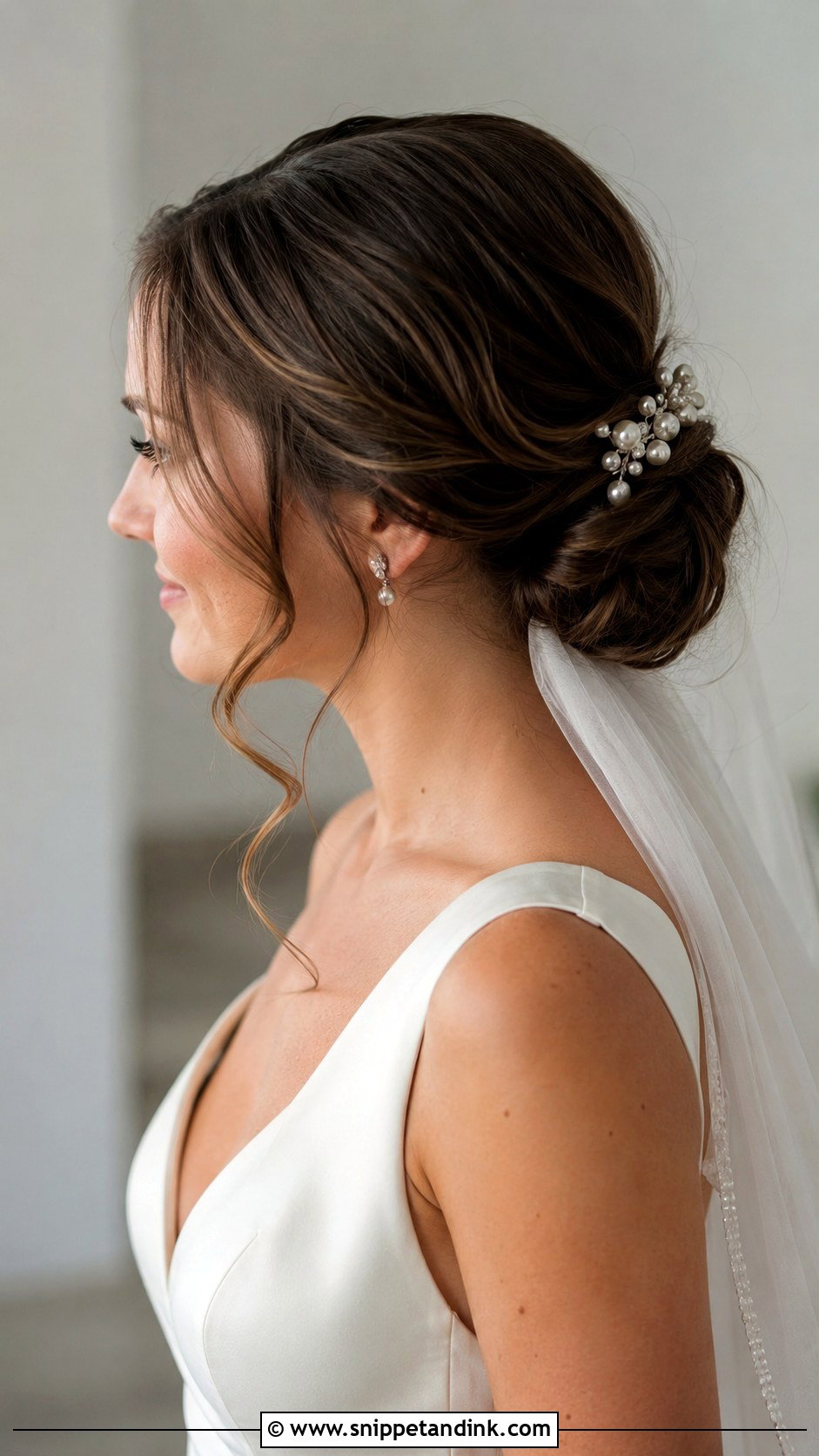
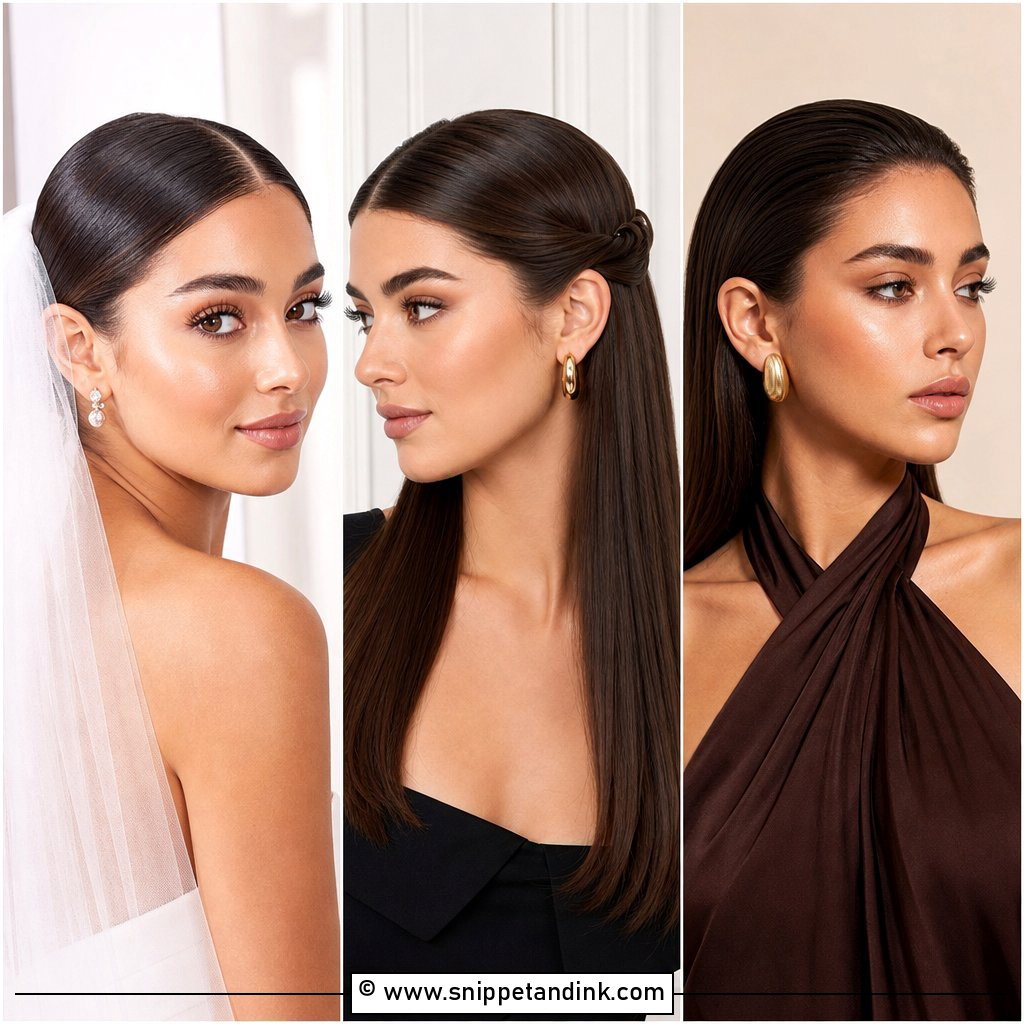
The low chignon keeps all the attention on your face and the neckline of the dress, because nothing sits above or beside the head. It’s the most secure style I do: the weight rests at the nape, the pins go into the densest part of the hair, and touch-ups are rarely needed. Smooth it for a formal ceremony, add a little texture for a garden. Veils, pearl pins and floral combs all anchor into it easily. If close-up portraits matter most to you, ask for a couple of soft face pieces so the hairline doesn’t look stark.
2. Wedding Soft Updo
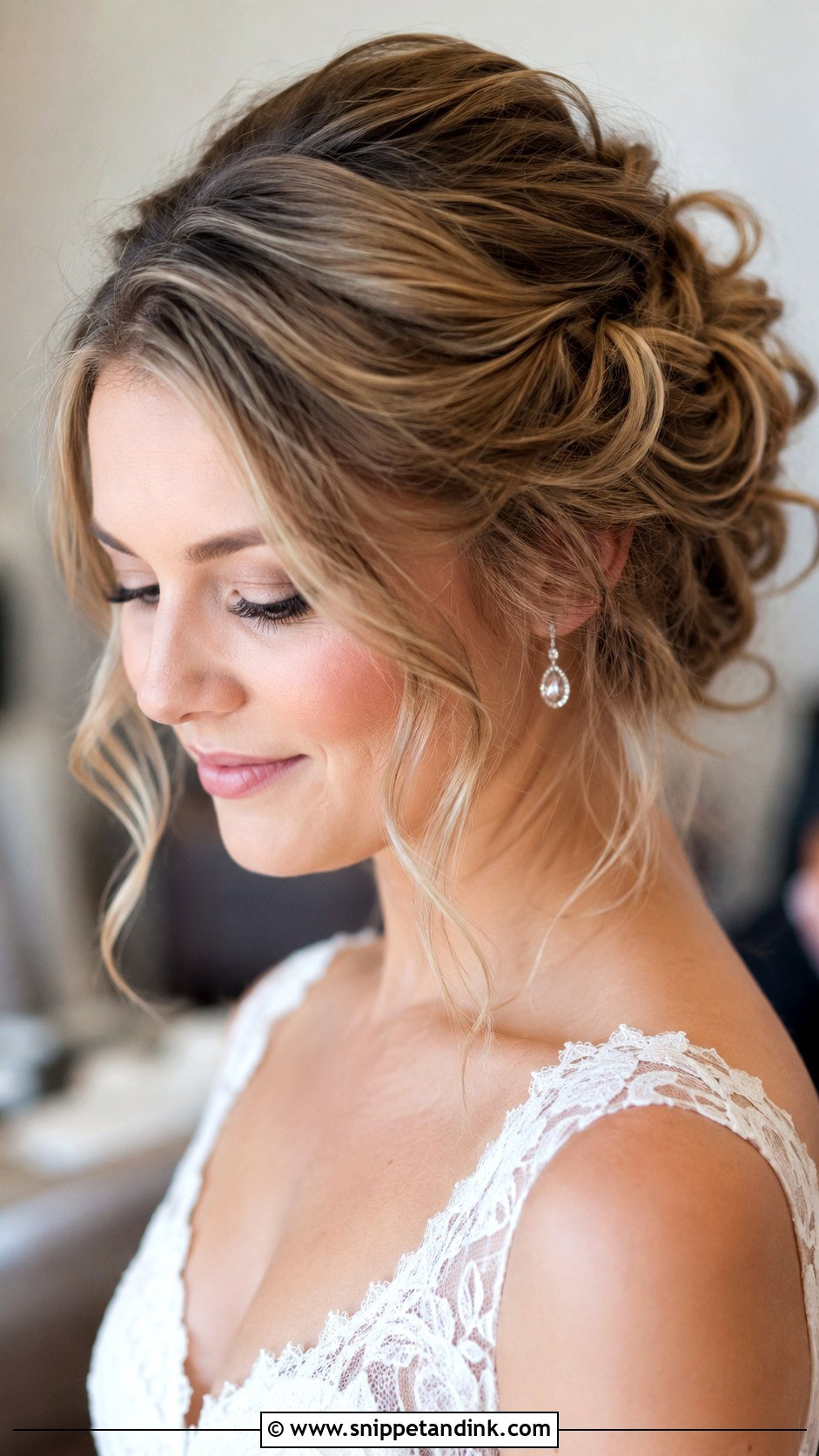
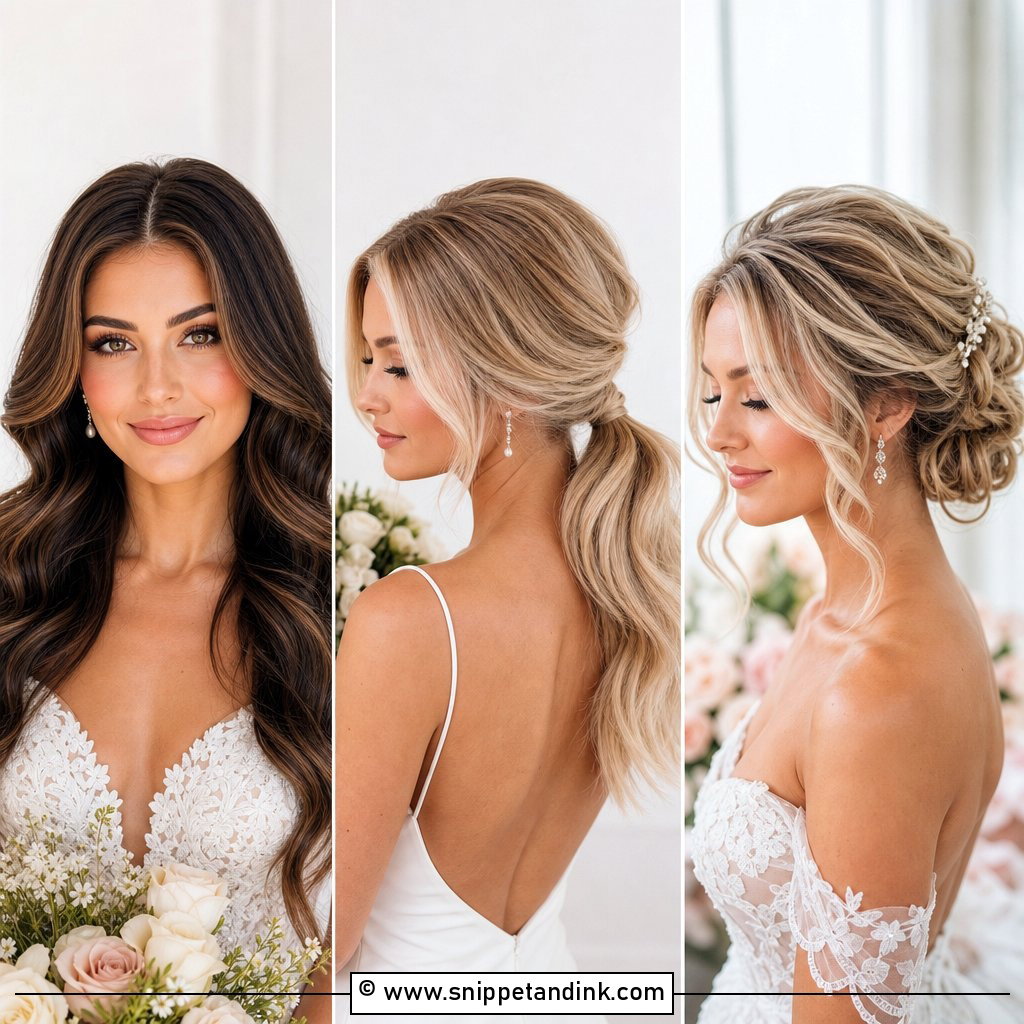
Soft updos are pinned loosely by design, and that’s also their risk. I build them on a firm hidden base, usually a small ponytail or a couple of crossed pin anchors, then place the loose twists and crown volume on top. Without that base, airy turns into collapsing by the first dance. Lace and off-the-shoulder dresses suit the softness. Straight hair needs curling first so the twists have a bend to hold; naturally wavy hair often needs nothing more than a texture spray.
3. Wedding Half Up Half Down Hair
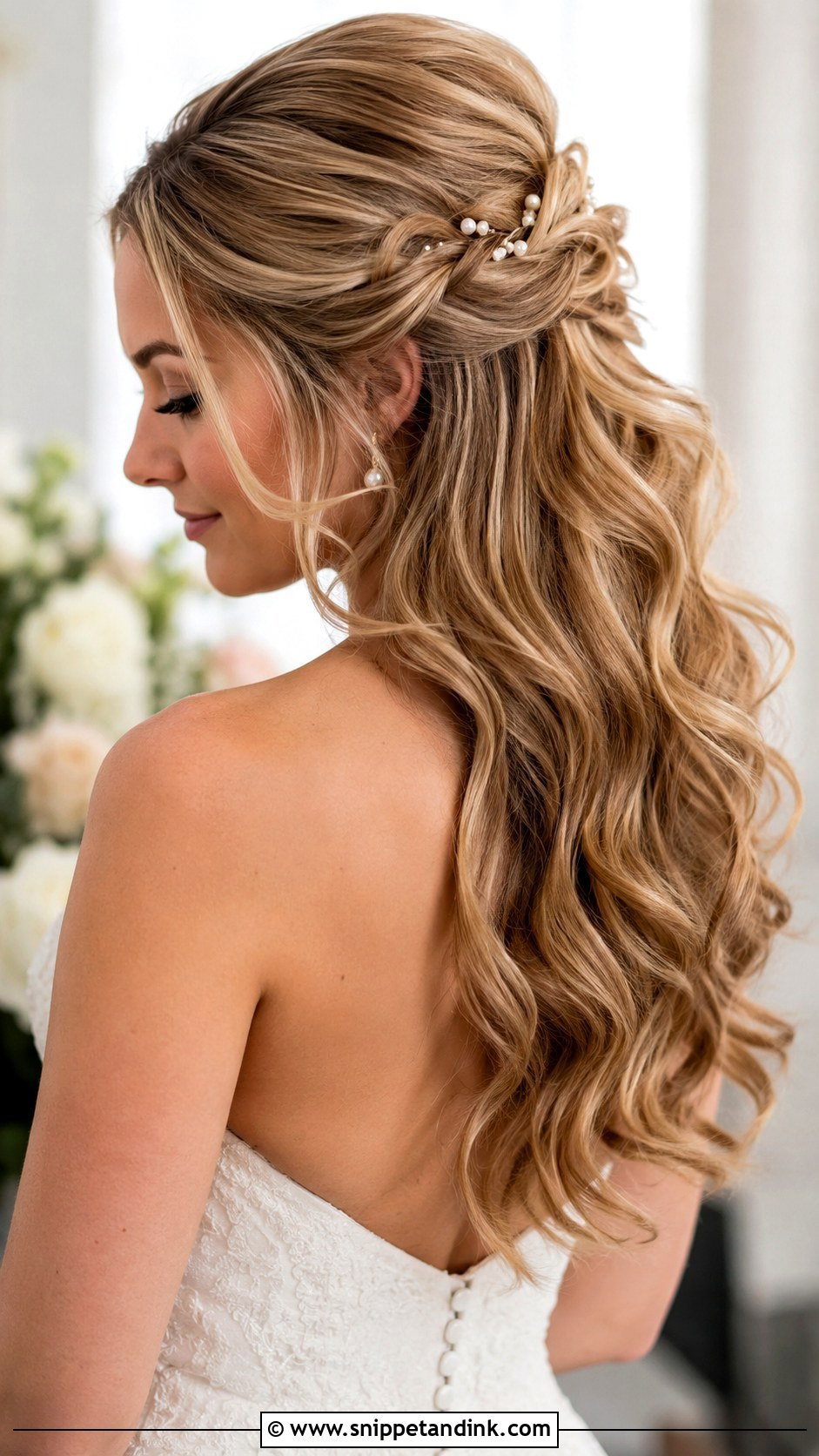
Half up keeps the length you love and lifts just enough away from your face to read bridal. The trade-off is that curls on the loose half carry the weight of all the hair below them, so they drop faster than pinned curls. On hair that won’t hold a curl, I set each section in a pin curl to cool completely, and often add a few clip-in wefts for weight and fullness. It frames bare shoulders well, which is why it so often goes with strapless gowns and sweetheart necklines.
4. Wedding Hollywood Waves
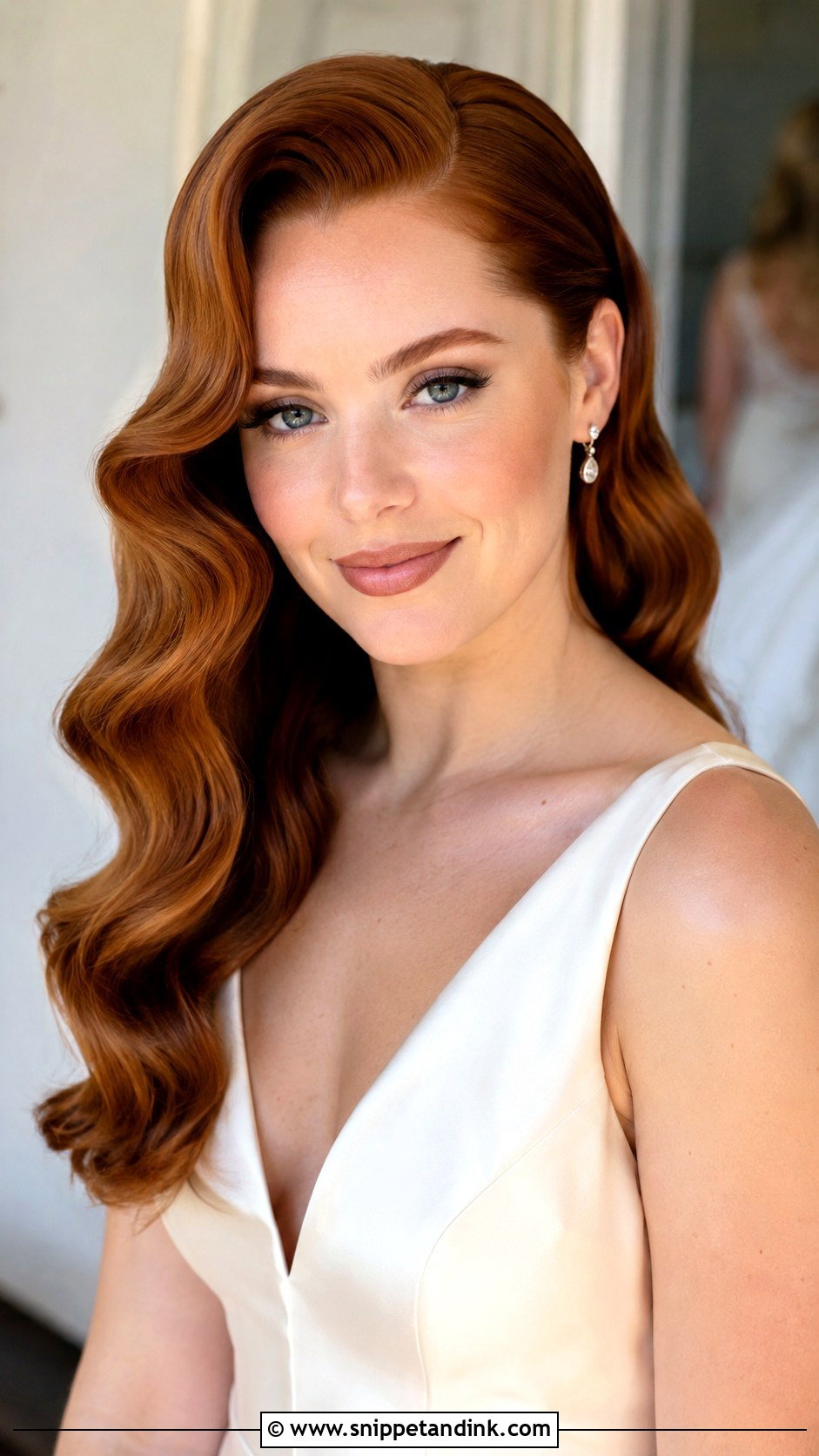
Hollywood waves are a set, not a curl. Every section is curled in the same direction with the same barrel, pinned to cool, then brushed together into one continuous S-shape and clipped at the ridges while the spray dries. That’s why they take longer than they look, and why the deep side or center part has to be decided in advance. Satin gowns and fitted silhouettes suit them. Humidity is their enemy, since on a damp outdoor day the ridges soften within hours. One clip at most, so the pattern carries the look.
5. Wedding Sleek Bun
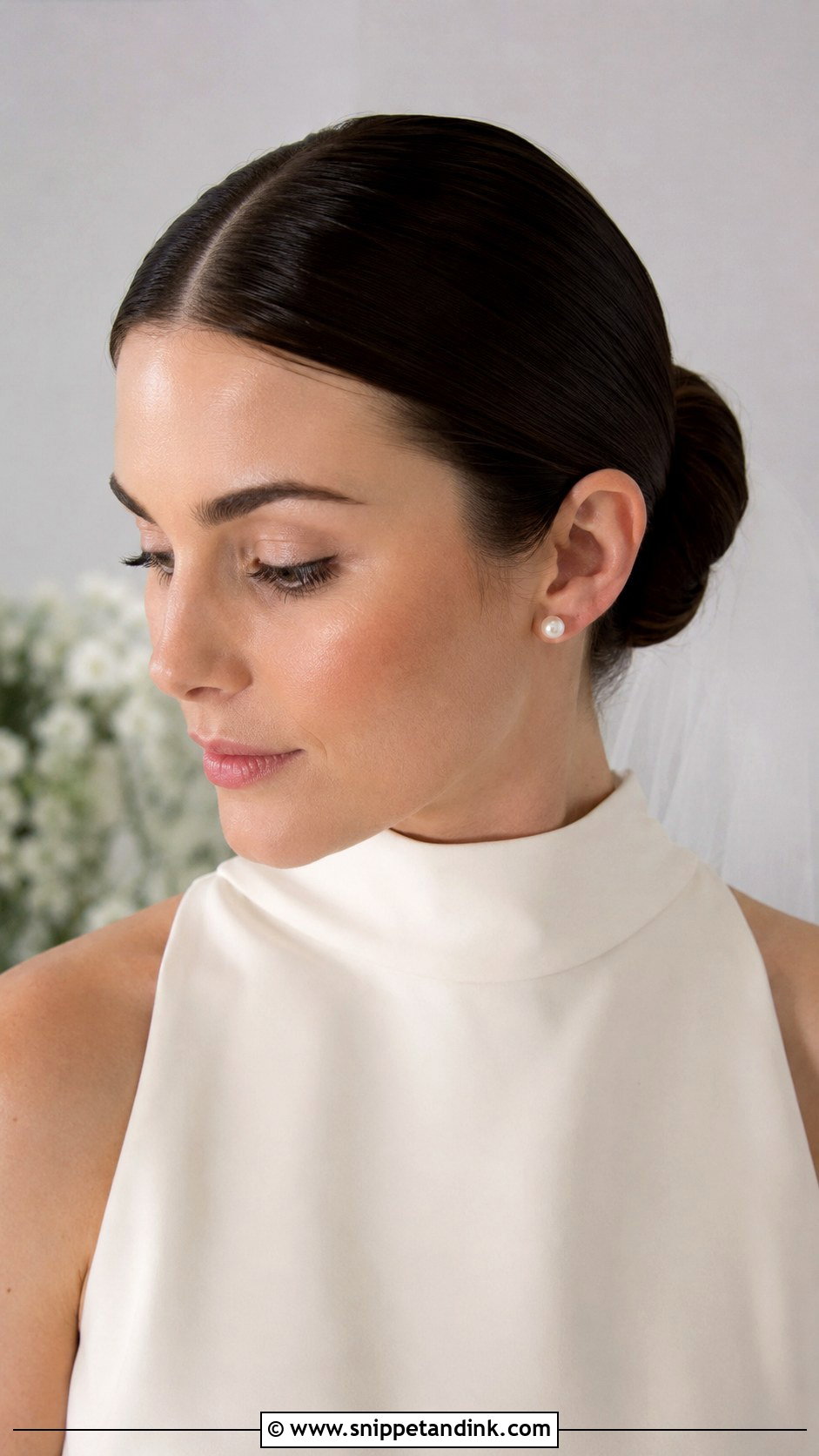
A sleek bun puts everything else on display, which is the point. Your dress, earrings and makeup take over because the hair is quiet. I smooth it back with a strong gel and a boar bristle brush and twist it tight at the nape or slightly higher. High necks and simple crepe dresses suit it especially well. It copes with warm weather better than almost anything else, because there’s no curl to fall. The only upkeep is flyaways, and a dab of gel on a clean toothbrush in your bag handles those.
6. Wedding Textured Bun
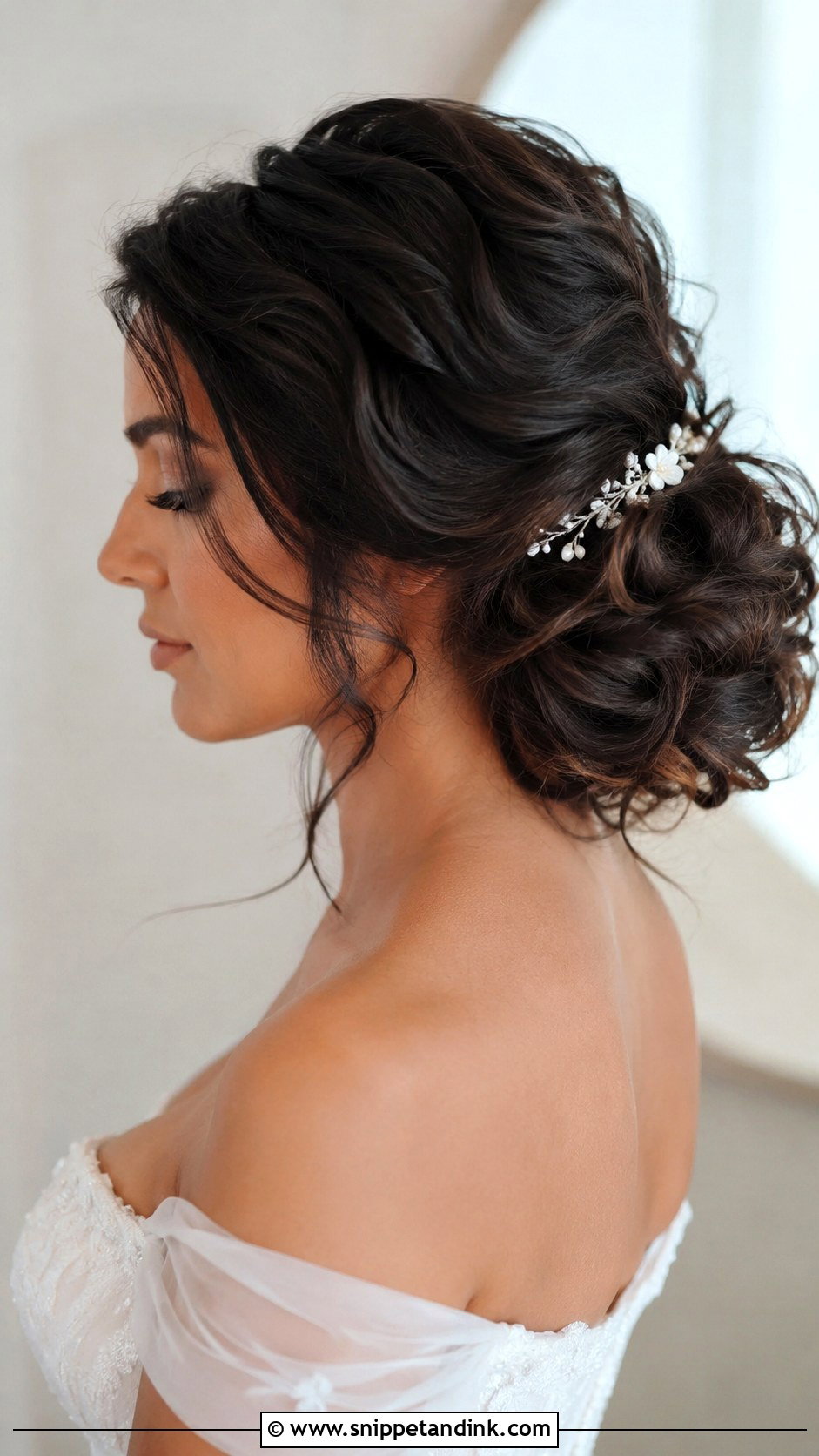
This is the bun I suggest when a bride can’t decide between soft and secure. The hair is curled, loosened and pinned into a full shape, so fine hair looks thicker and very thick hair gets spread out instead of packed into one heavy knot. Controlled texture is the skill here; stray bits poking out at random look accidental in photos. Ask your stylist to pin it with dancing in mind, which usually means a few more pins than they’d use for a photo shoot.
7. Wedding Braided Bun
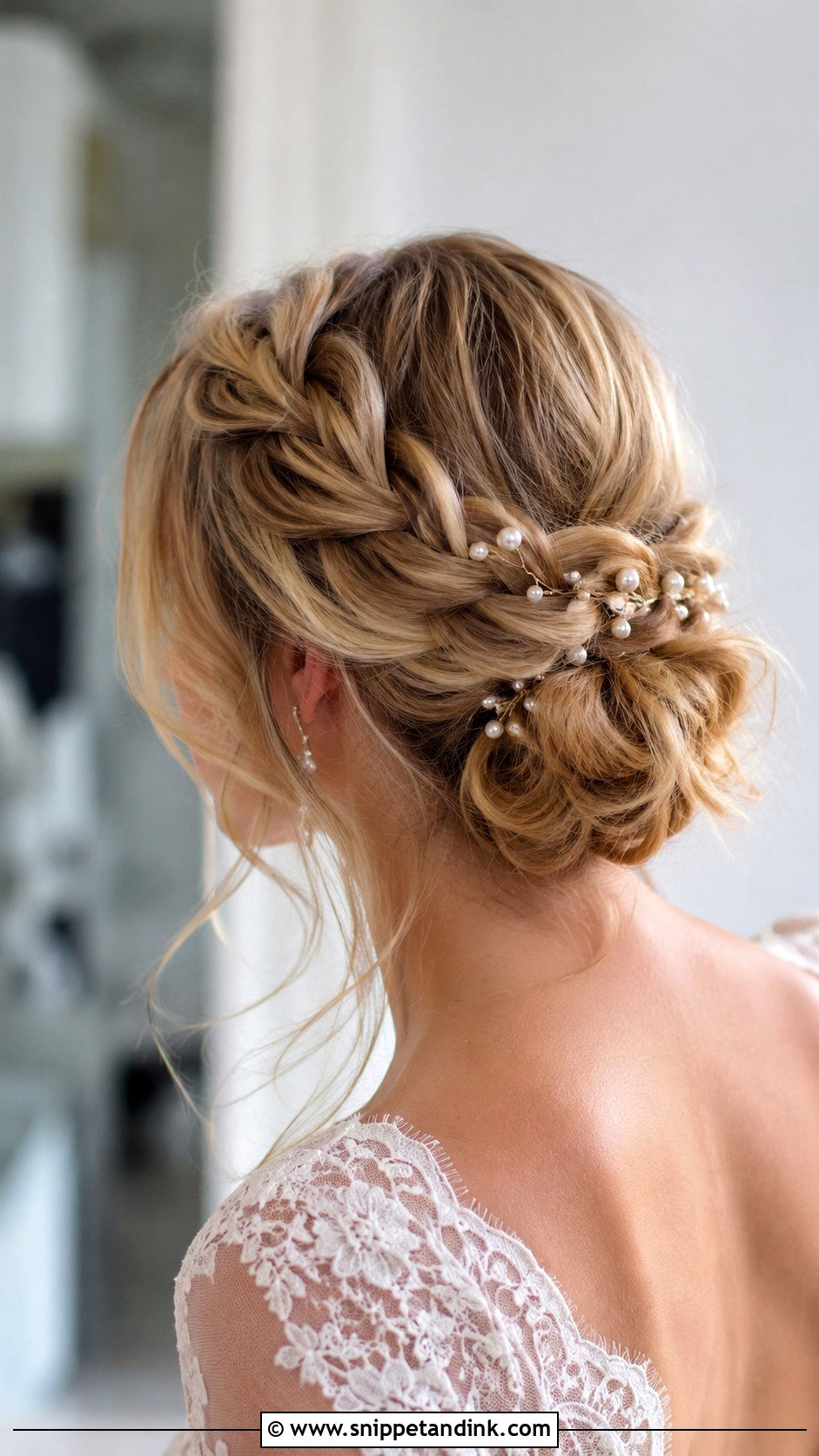
Braids make slippery hair behave. Very smooth, silky hair tends to slide out of a plain bun, but a braid gives the pins something to grip. I wrap a braid around the base of the bun, blend it into a low chignon or start it at the crown and lead it back into the shape. It looks decorative without any accessories, though a few small pins or flowers in the plait soften it further. Rustic and garden weddings suit it naturally.
8. Wedding Low Ponytail
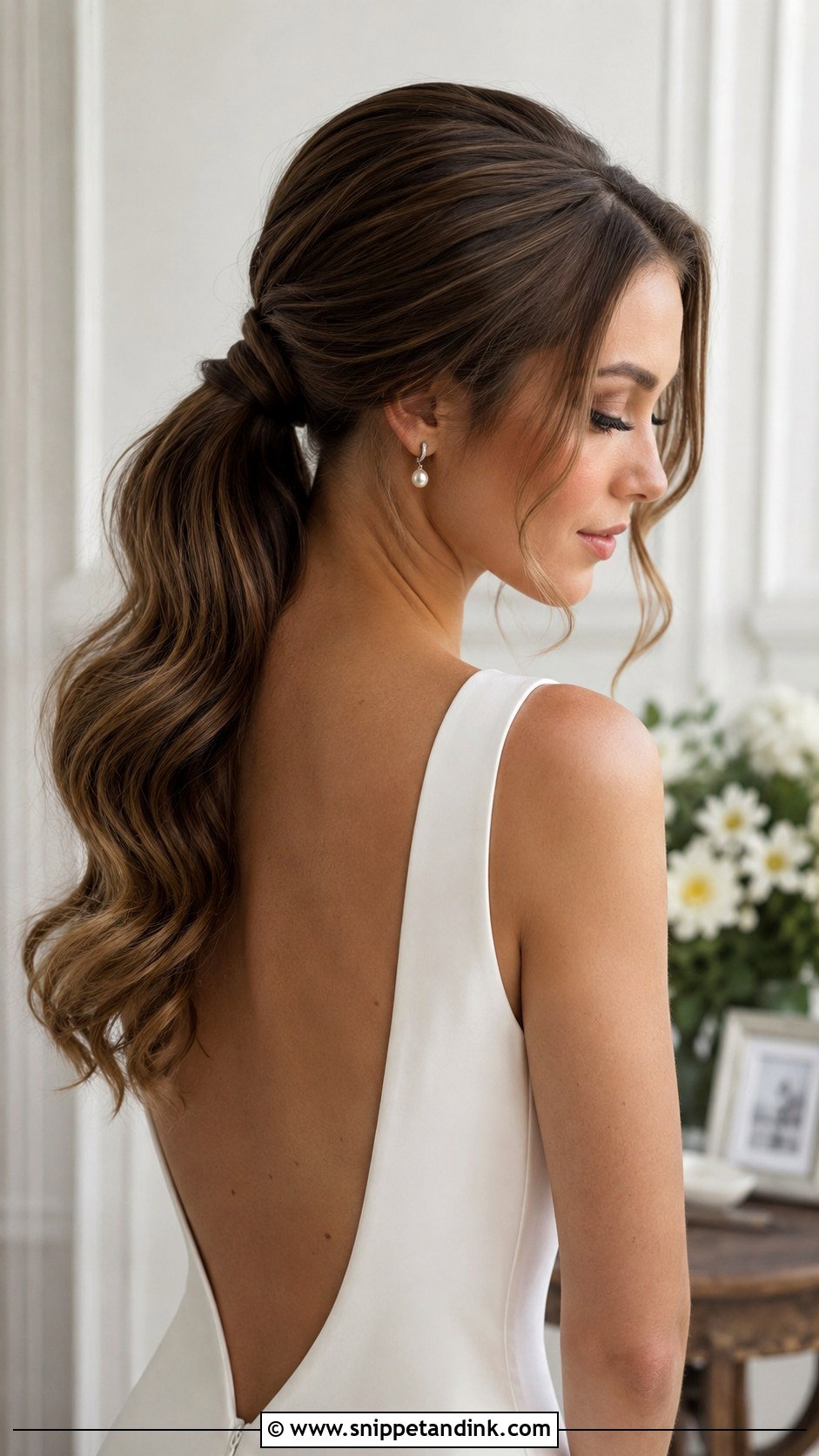
Low ponytails surprise people with how bridal they look once they’re shaped with volume, curls or a wrapped hair section hiding the elastic. They keep the hair gathered and off the face while still showing length, and a backless dress shows them off particularly well. For a softer version I add waves through the tail and leave loose pieces at the temples; for a sharper one I keep the crown smooth and glossy. Either way, a hook elastic and two crossed pins at the base stop it slipping.
9. Wedding High Ponytail
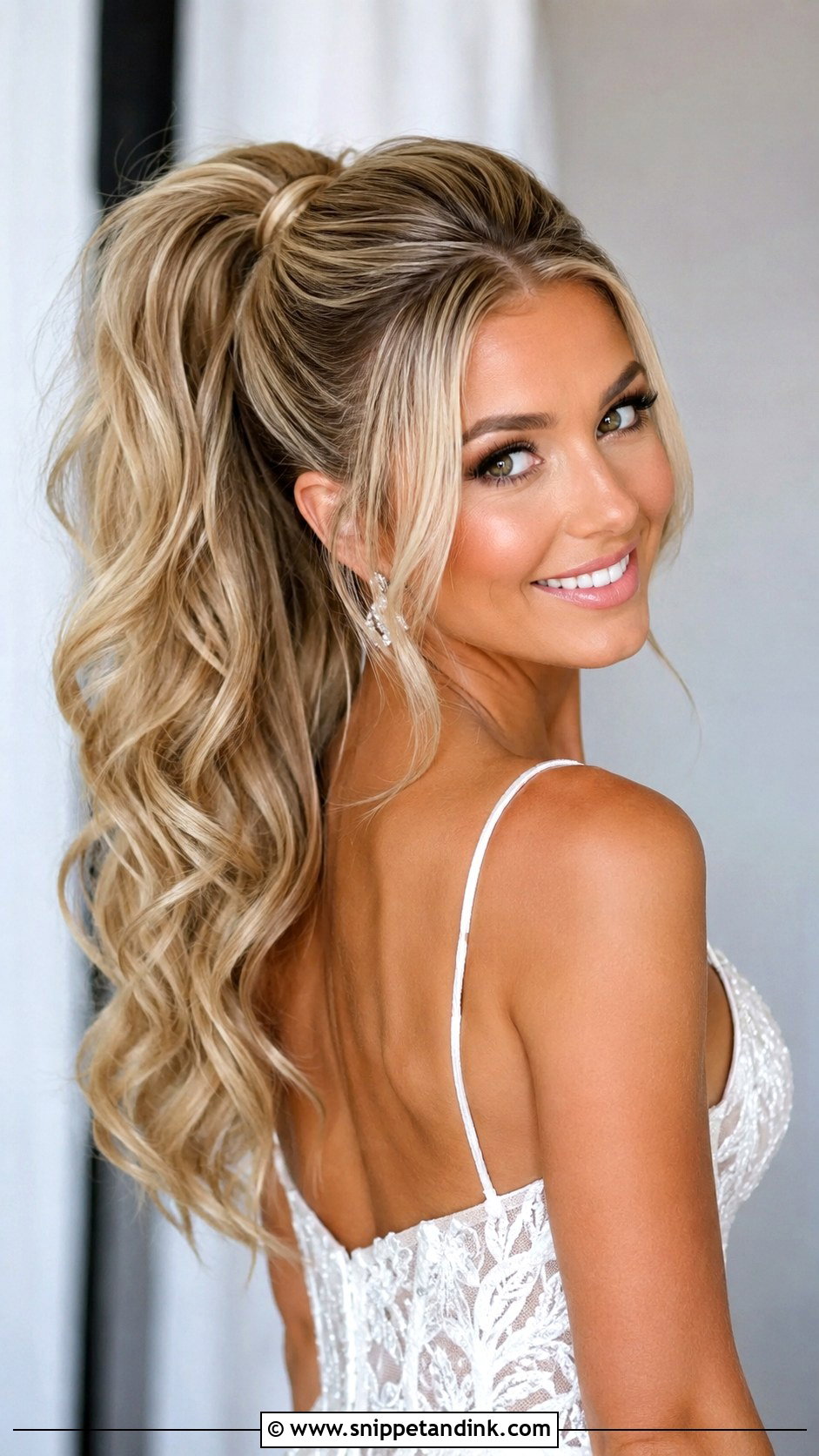
A high ponytail lifts the whole face and swings on the dance floor, which is why so many brides choose it as a reception change. It needs length, from long hair or extensions, to look dramatic rather than stubby. I hide the elastic with wrapped hair and build smooth volume through the tail. The weight at the crown is the downside. If you’re prone to tension headaches, a lower placement, or wearing it only for the evening, is kinder.
10. Wedding Side Braid
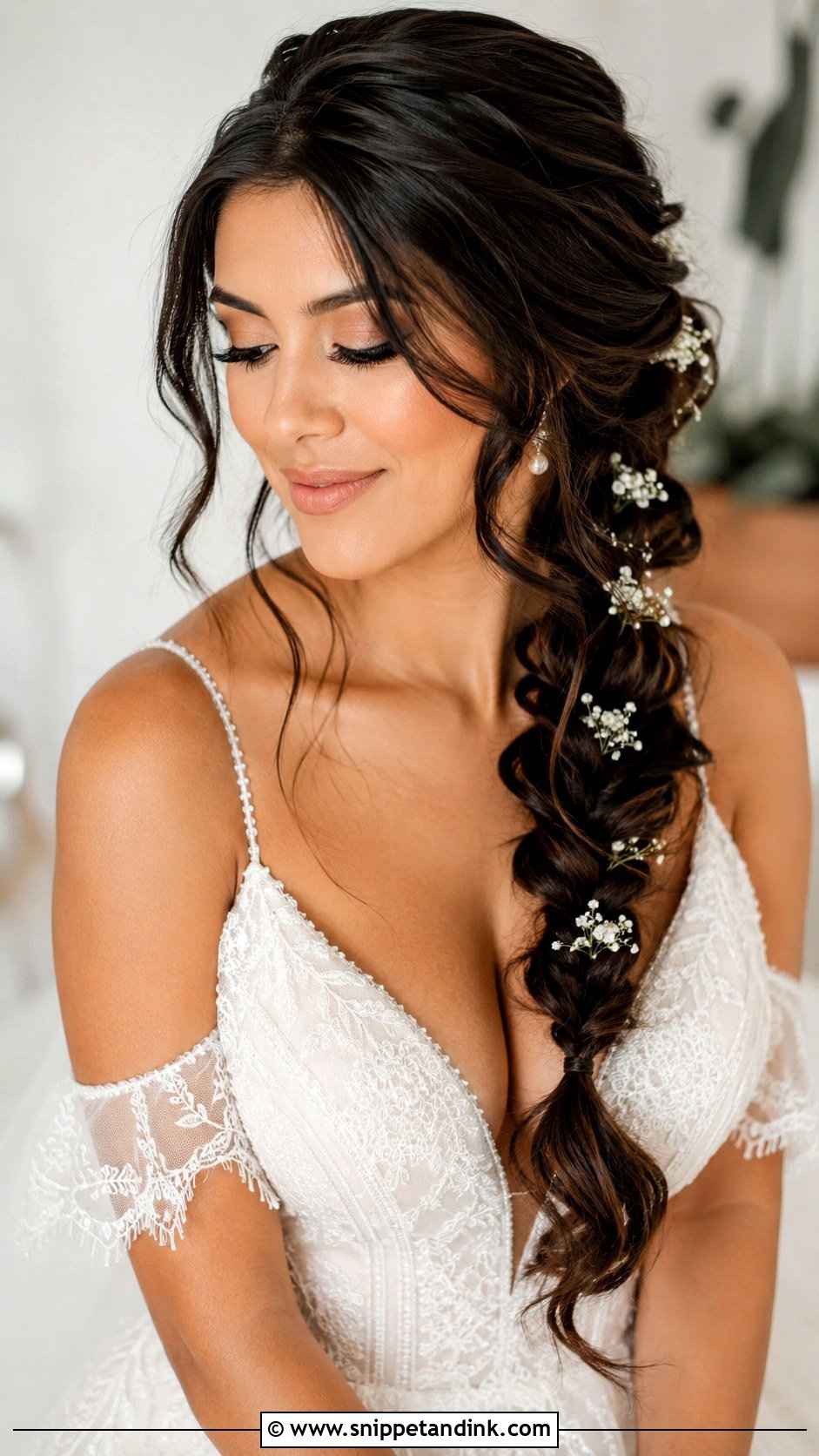
Side braids land at the front of every portrait, and that’s their charm. The braid sits over one shoulder, loose and boho or tighter as a fishtail, and open necklines show it off. Outdoors it’s practical, since long hair stays contained in the wind. For a fuller look I pull the outer edges gently after braiding, and thinner hair often benefits from a couple of wefts woven in. Keep some soft waves at the front so the braid isn’t the only thing happening.
11. Wedding Crown Braid
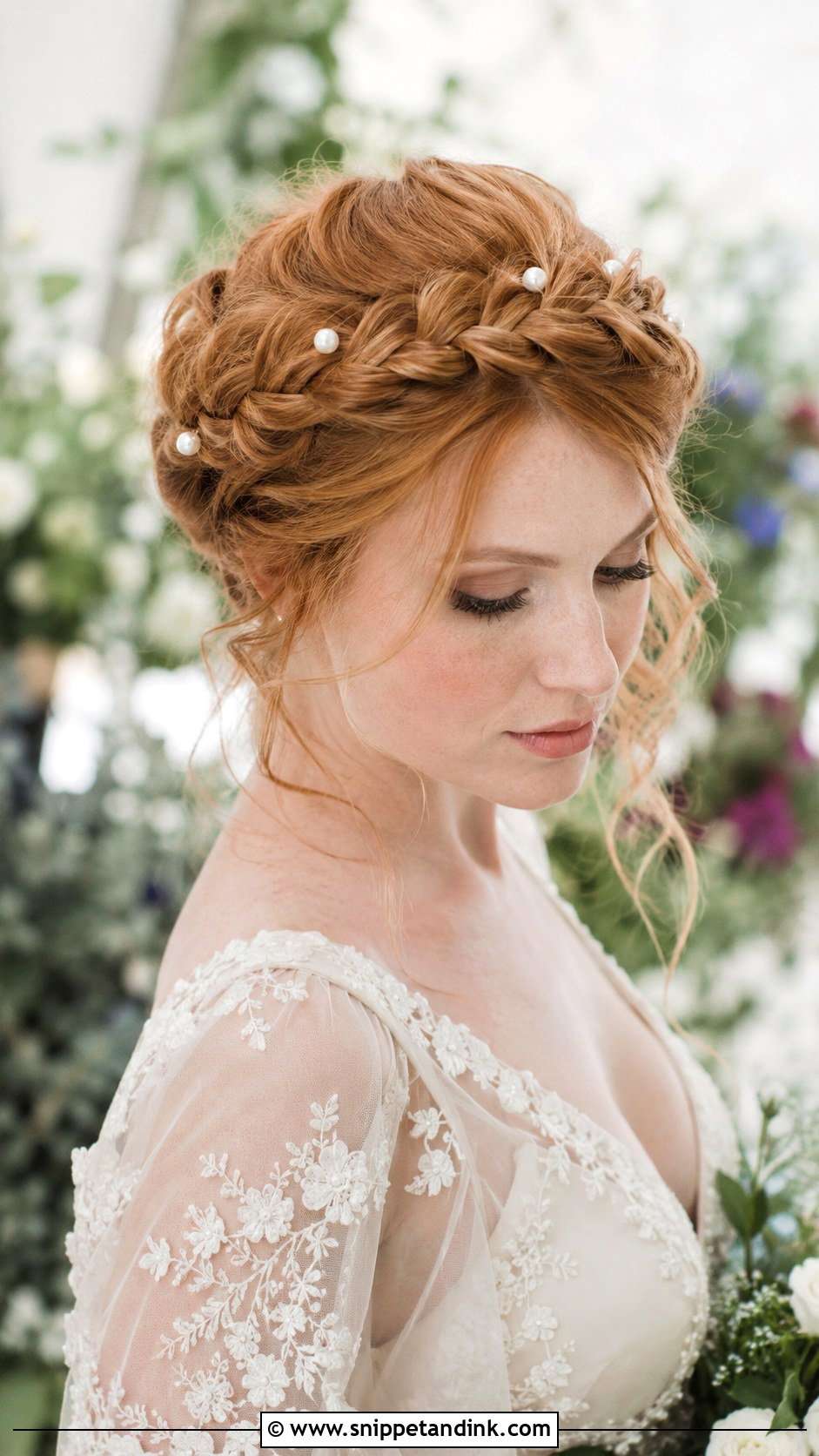
Crown braids keep every strand off the neck and face, which makes them one of the most comfortable choices for a hot summer wedding. The braid circles the head like a halo and can be kept neat or loosened. I place a veil underneath the braid at the back, where the comb has the whole plait to hold onto. Natural makeup and soft fabrics suit it. What I check most is volume: a thin, tight crown braid looks schoolgirlish, so I pull it out gently until it frames the head properly.
12. Wedding Natural Curly Updo
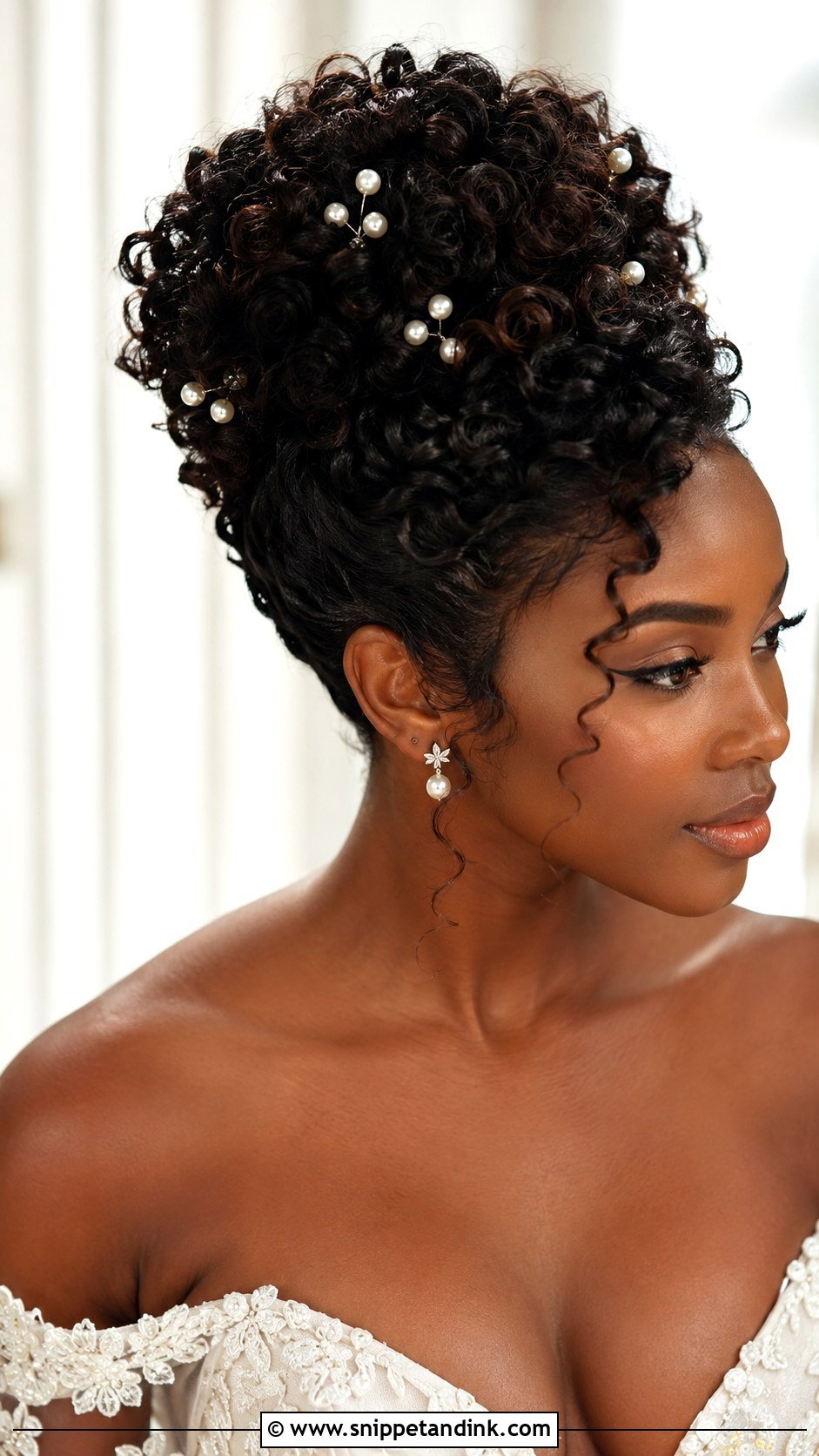
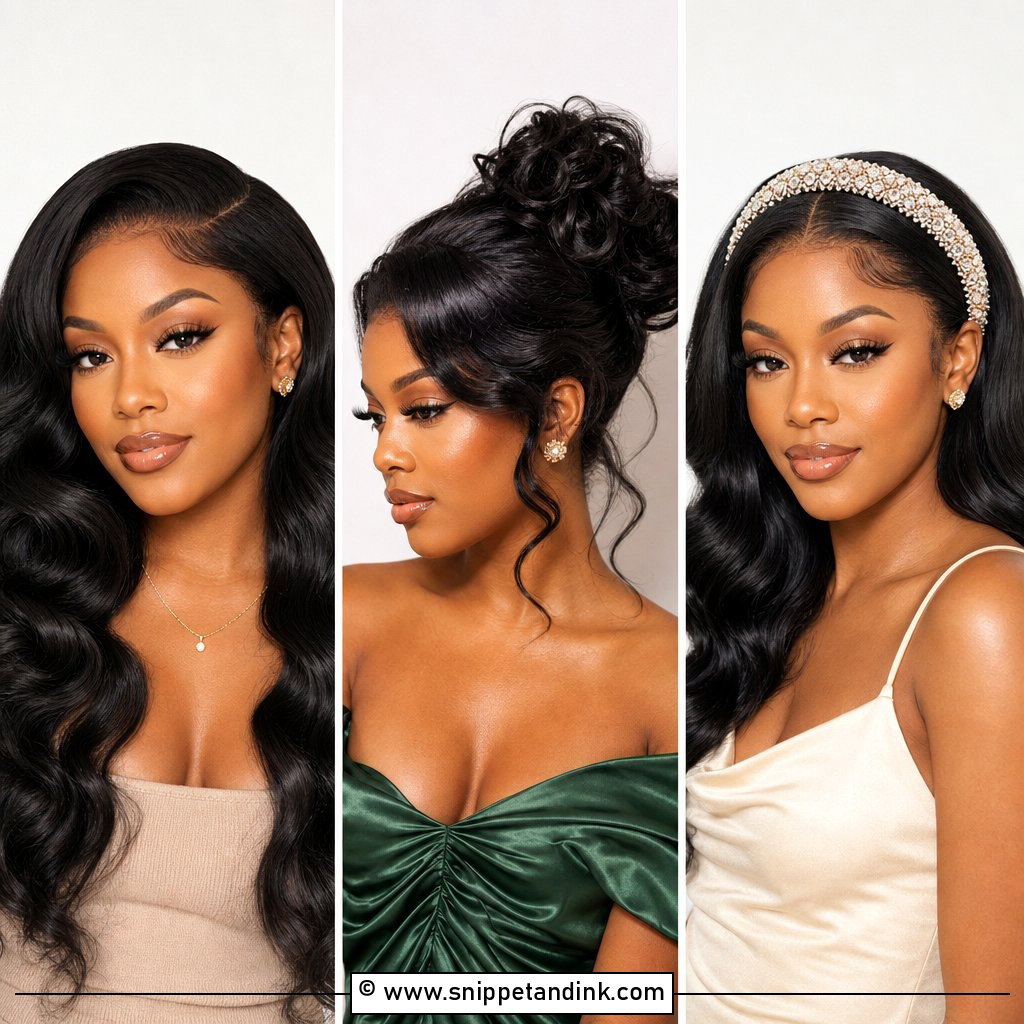
Natural curl updos lift and pin the hair into a sculpted shape without smoothing out the pattern. They work best on coils, curls, and textured hair that has been moisturized and defined the day before, because curls restyled dry on the morning tend to frizz. Whether it sits high, low or a little off-center depends on your face and neckline. Plan the hold carefully too: curl cream underneath, a gel with real grip on the edges and a light mist over the top.
13. Wedding Short Hair Waves
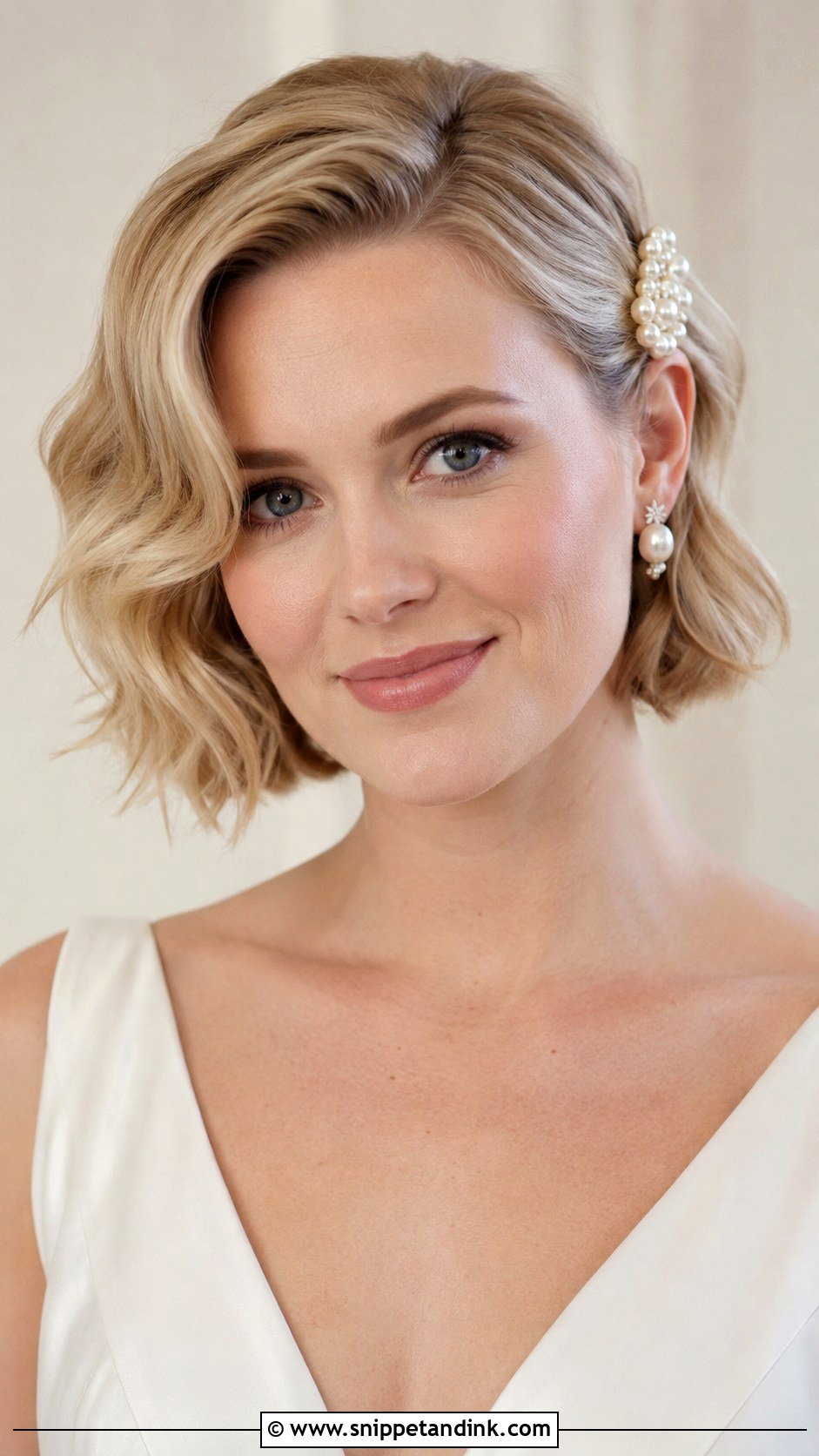
Short waves give a bob or lob the polish of a longer style. I bend sections with a flat iron or a small barrel, then brush gently so the waves connect. A deep side part reads classic, a middle part modern, and a pearl comb or small clip is plenty of decoration. The detail that matters most is the ends. Short hair shows dry or split ends right at the jaw, so a trim a couple of weeks before makes a visible difference. If you already love your short hair, there’s no reason to fake length for one day.
14. Wedding Straight Hair
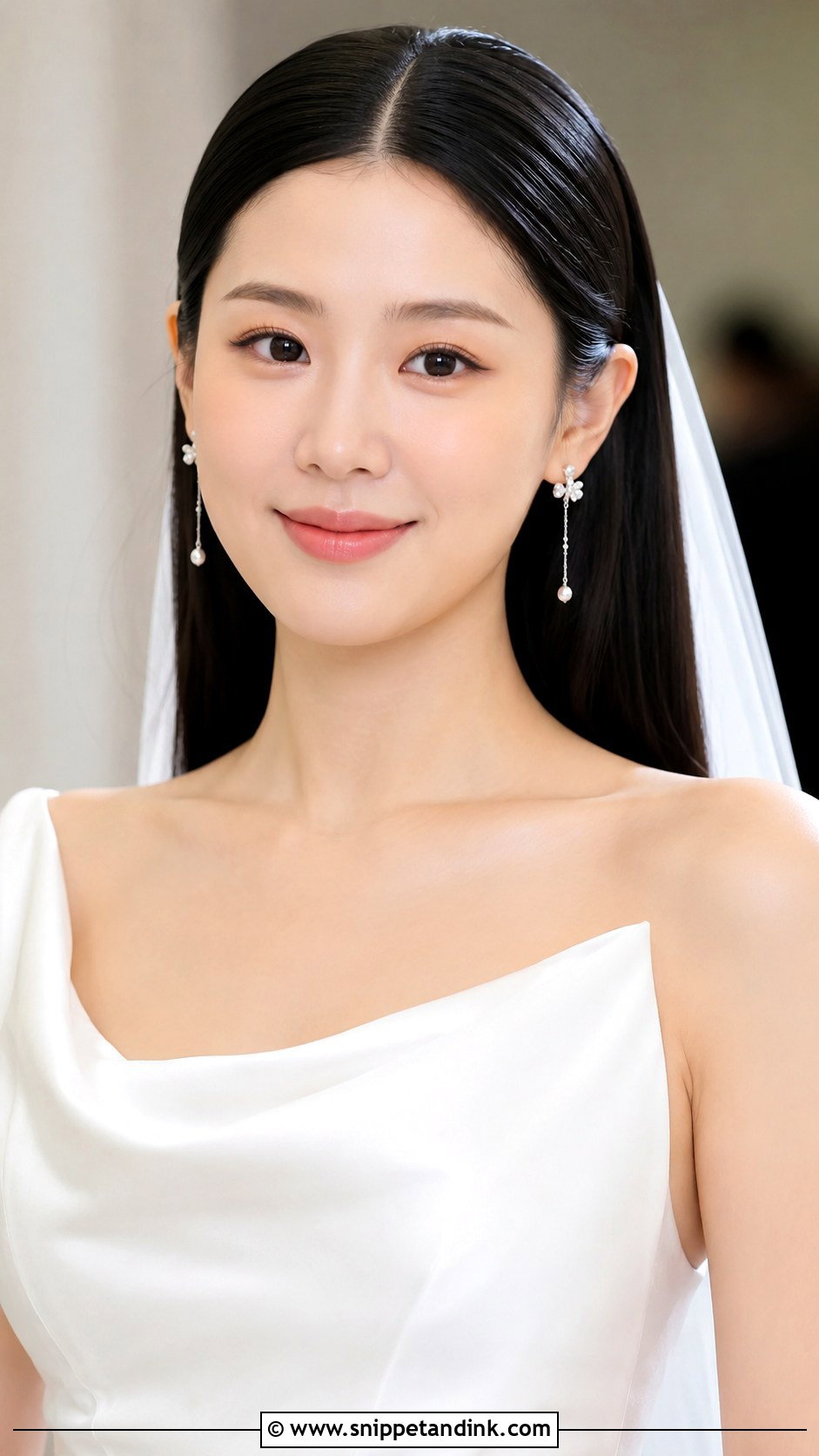
Straight hair is harder to get right than it looks, because there’s nothing to hide behind. It needs healthy ends, smooth lengths and a deliberate part. I blow-dry it with a round brush for body at the root, then flat-iron the lengths lightly so they still move. Tucked behind one ear, it shows off earrings and makeup. If curls never last in your hair, or you’re after a clean editorial look, this is the honest choice. Watch the roots on humid days; straight hair flattens there first.
15. Wedding Loose Waves
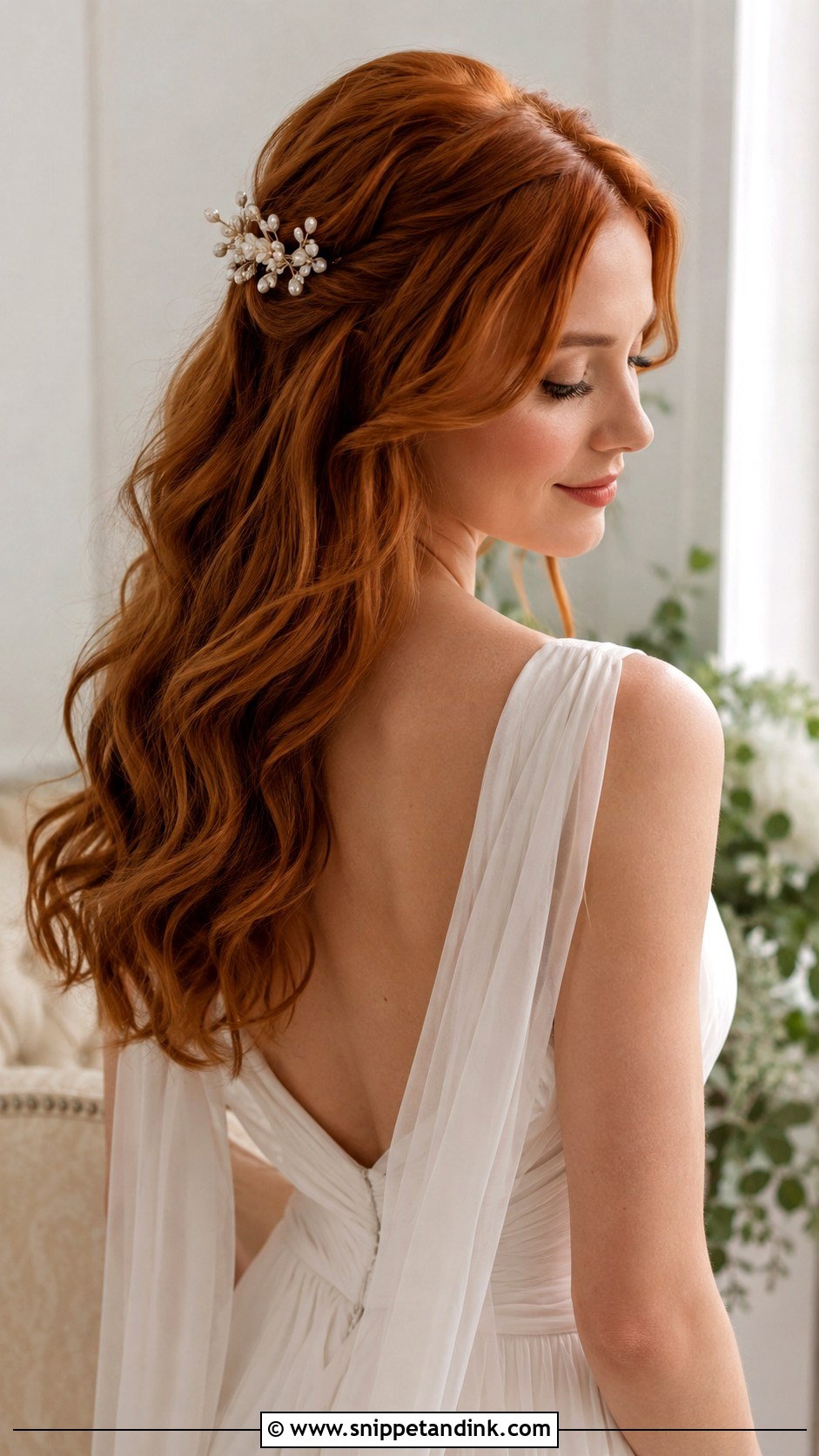
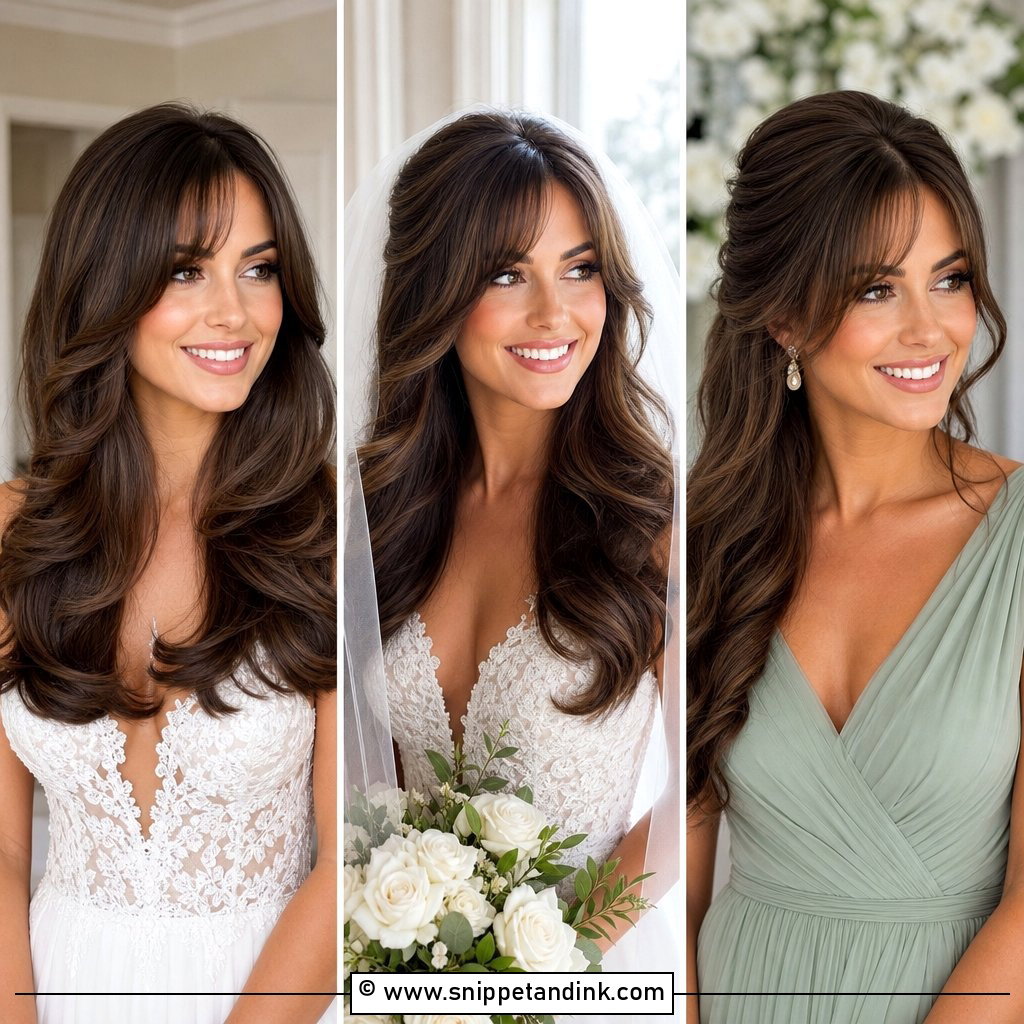
Loose waves sit between Hollywood structure and everyday curls, and they suit most lengths and textures. Beaches, gardens and relaxed venues see them more than any other down style. To stop them falling flat, I prep with a volumizing mousse, curl in alternating directions and let each section cool before brushing through. A floral comb or a small half-up section adds shape. In humid weather, expect them to loosen by evening, which on this style mostly just looks softer.
How Long Each Look Takes in the Chair
Styling time shapes the whole wedding morning, and brides are often surprised by how much it differs between looks. As a rough guide for a bride with medium to long hair:
- Straight hair or a sleek bun: around 45 minutes to an hour.
- Loose waves, a low ponytail or half up: about an hour.
- Braided styles, crown braids and textured buns: an hour to an hour and a half.
- Hollywood waves and natural curl updos: often longer, because of setting and cooling time.
Those times vary with hair density and with the stylist, so ask yours to confirm them at the trial and add fifteen minutes of buffer. Plan for the hair to be finished before you step into the dress. Lowering a gown carefully over a finished style is easy; restyling a section that caught on a zip is not.
If bridesmaids and family are booked with the same stylist, the bride rarely goes first or last. Somewhere in the second half of the schedule is usual, so your hair is fresh for the ceremony but there’s still time left for a calm final check and any pinning the veil needs.
Easy Glam Is Mostly Good Preparation
Easy glam usually comes down to preparation more than technique. Hair that’s been cut and conditioned well, a style picked for the weather you’ll actually get and a trial that tests hold, volume and accessories will look more polished in the photos than an ambitious style that drops by dinner. Save the few looks you keep returning to and show them to your stylist. They’ll tell you quickly which one your hair can carry.
You'll Like These Ideas:



Leave a Reply