
Textured hair gives a bridal stylist more options than any other hair type: it can be pressed sleek, worn in its natural coils, braided, twisted or loc’d, and every one of those can become an updo. An updo also clears the way for a detailed neckline, an open back and big earrings. What changes from bride to bride is the preparation, because a silk press, a fresh braid install and a twist-out each need different timing and care before the day. Below are 20 updos, with notes on what each one asks of your hair.
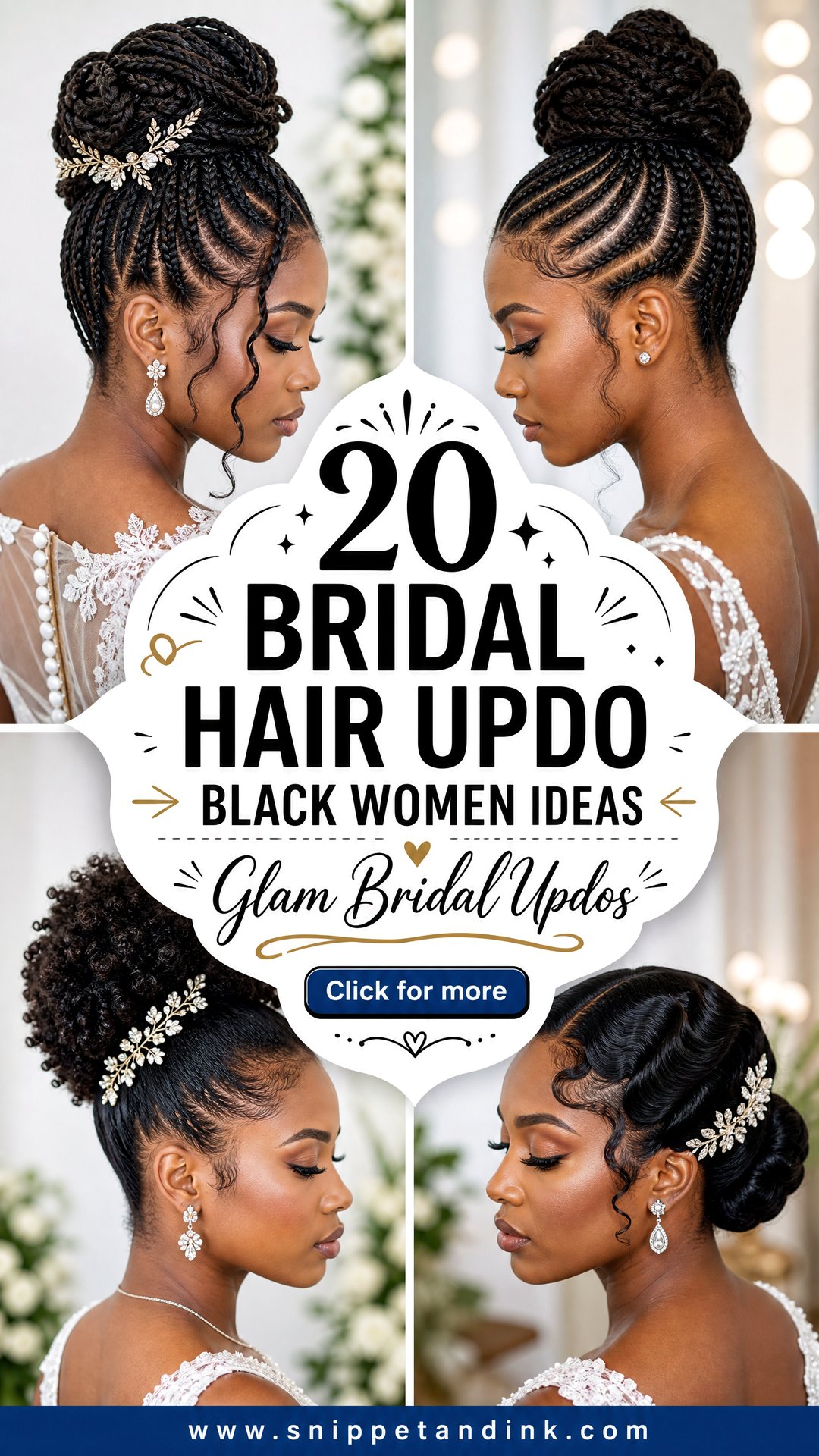
Timing a Braid Install or Silk Press Around the Wedding
Most of the styles below aren’t done on the wedding morning alone. Braids, twists and locs are installed or refreshed days ahead; a press needs to survive until the day. Getting that timing right matters as much as the style itself.
- Braids and twists: have them installed several days to about a week before. Freshly installed braids can feel tight and look raw at the roots; a few days lets them settle while still looking neat.
- Tension at the edges: ask your braider to keep the hairline loose. Tight braids around the edges can cause lasting hair loss, and a wedding isn’t worth that.
- Silk press: plan it close to the day, and protect it from steam, sweat and rain. Moisture makes pressed hair revert, so skip the hot shower in the days before.
- Booking: knotless braids, Fulani braids and long locs can take many hours. Good braiders book up, so reserve the slot as soon as the date is set.
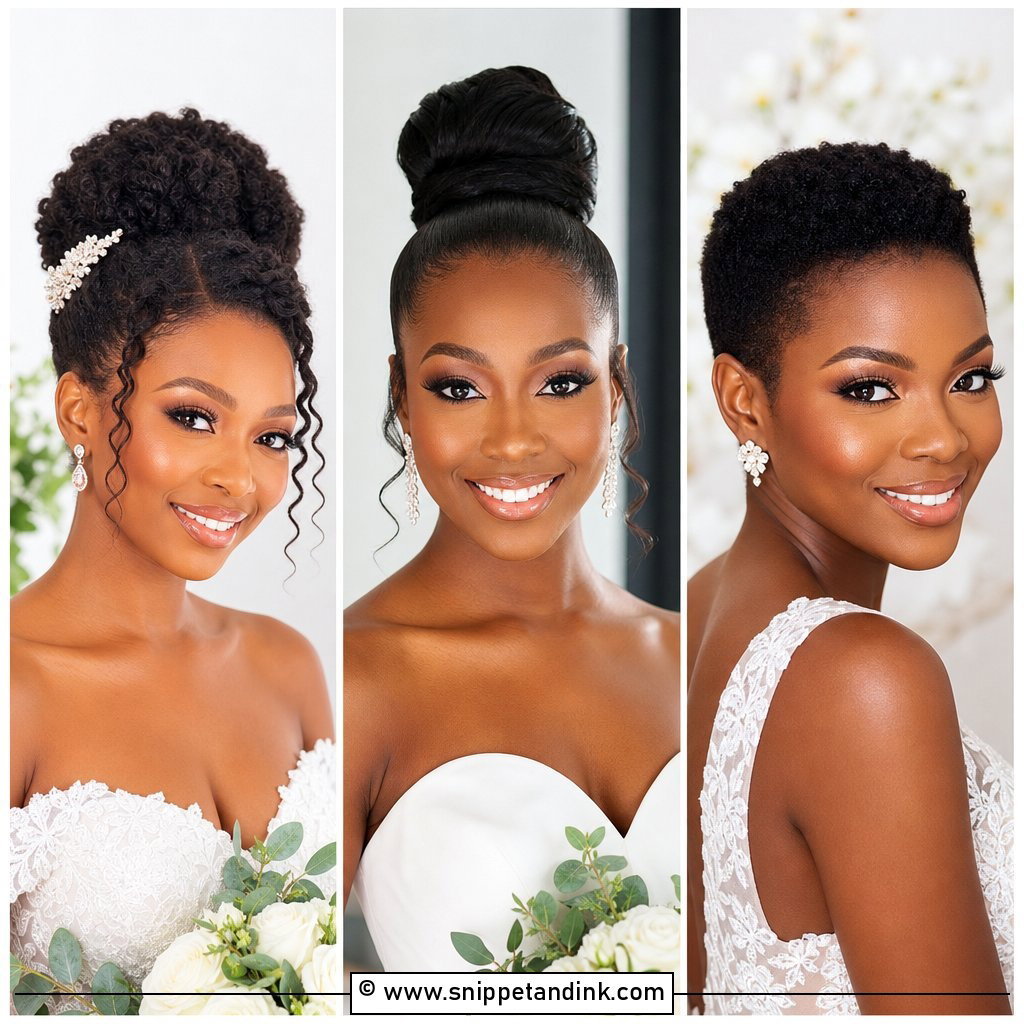
1. Sleek Low Bun Updo
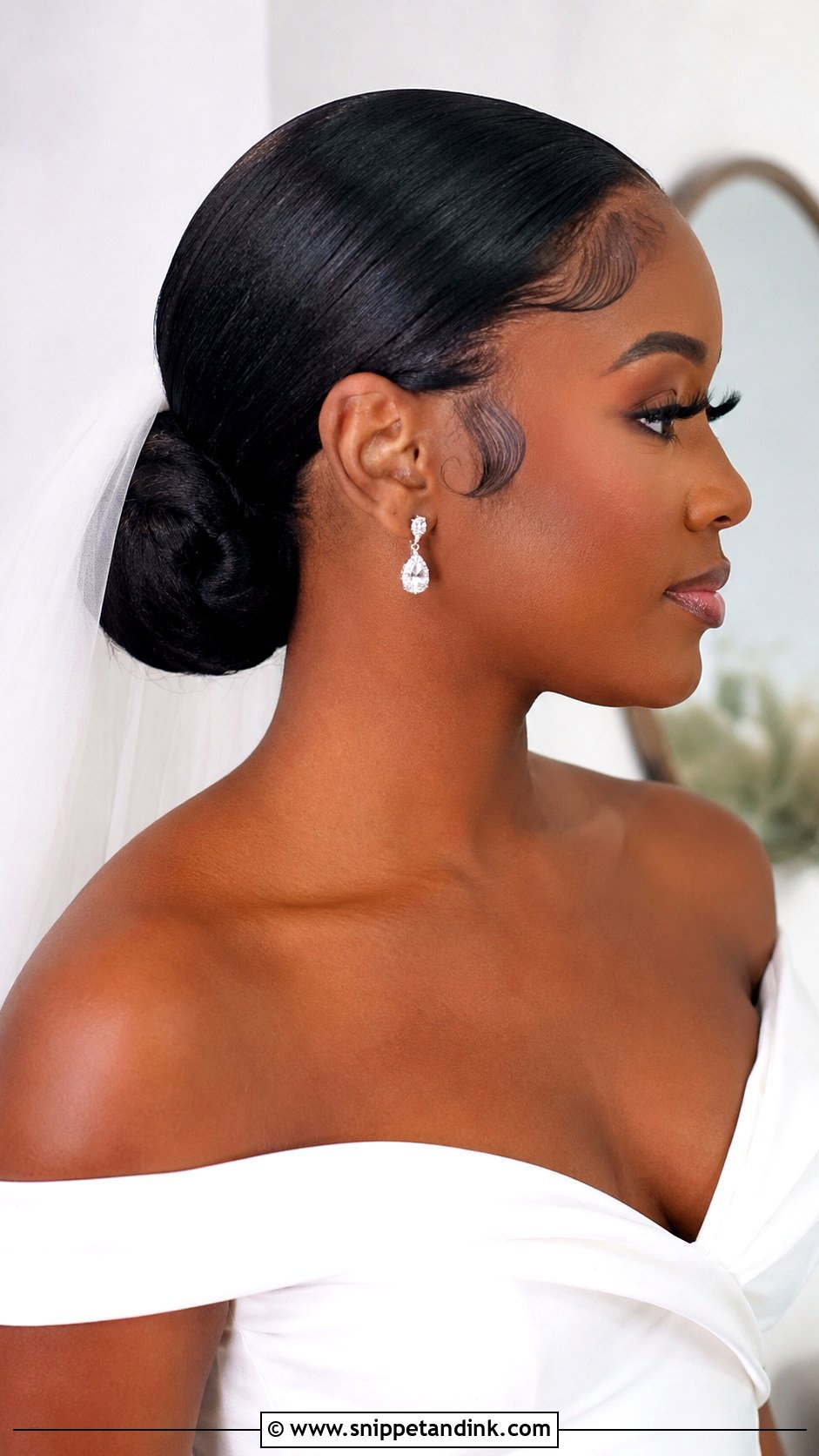
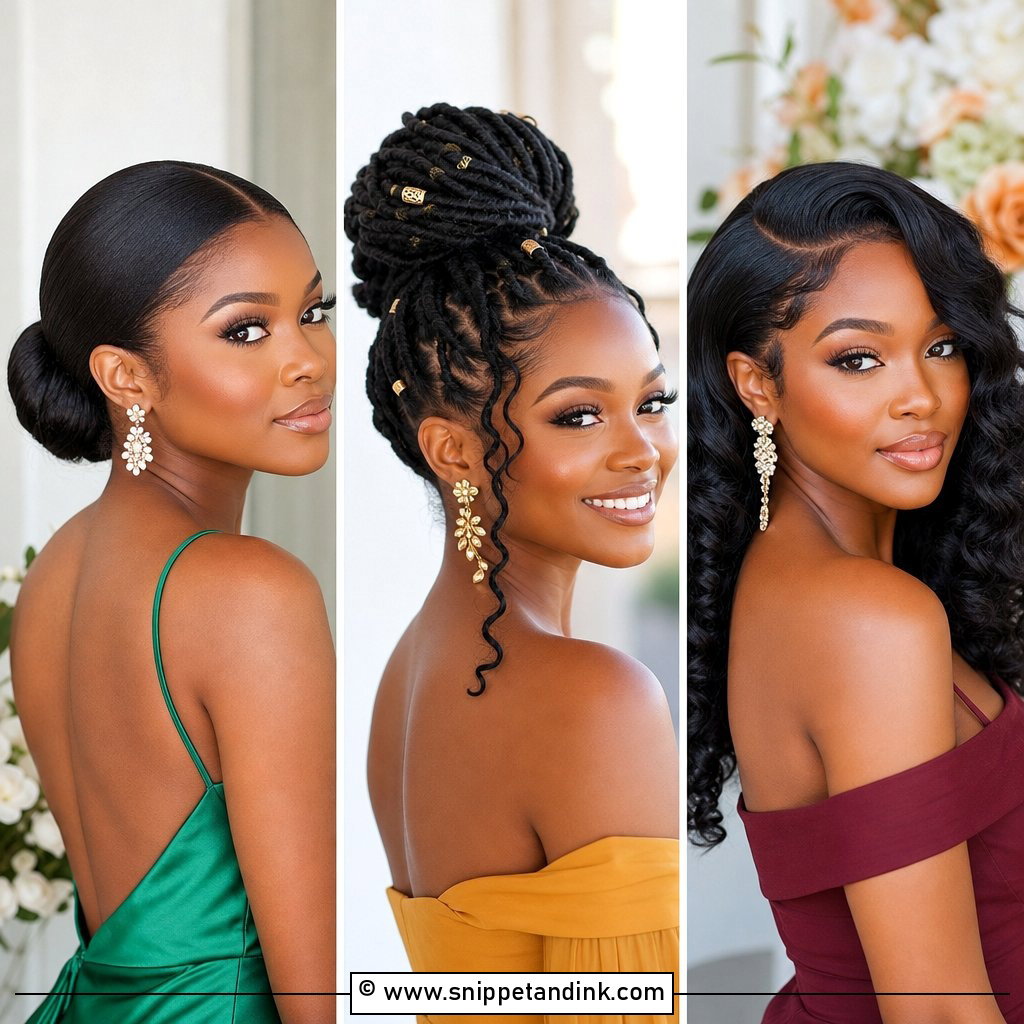
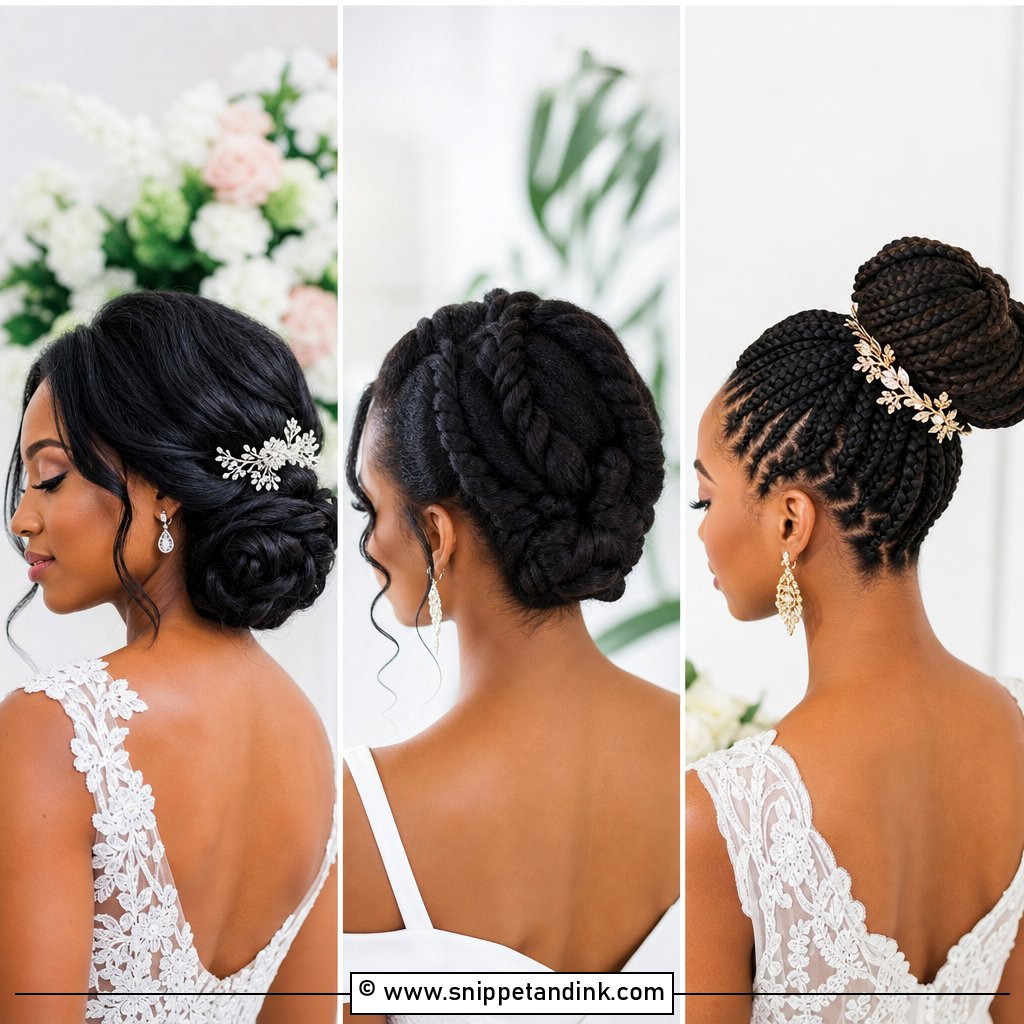
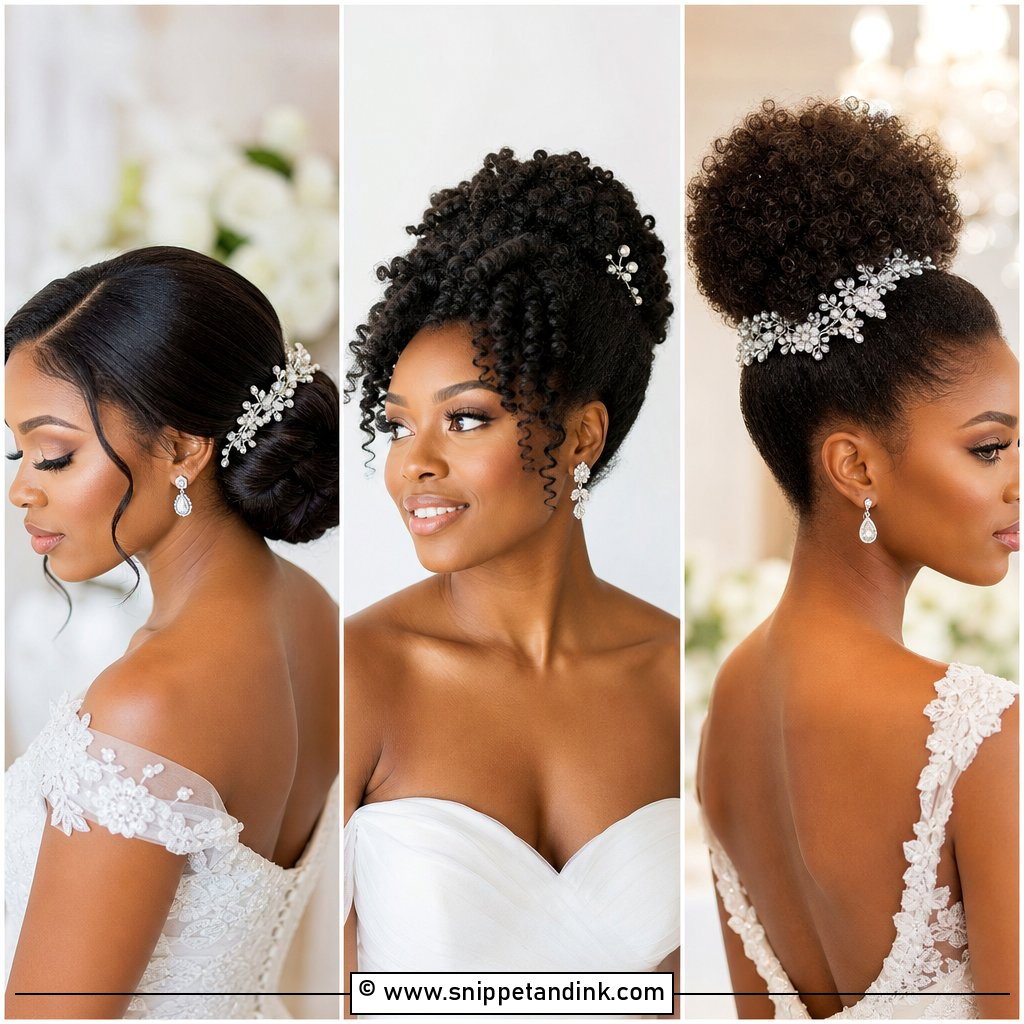
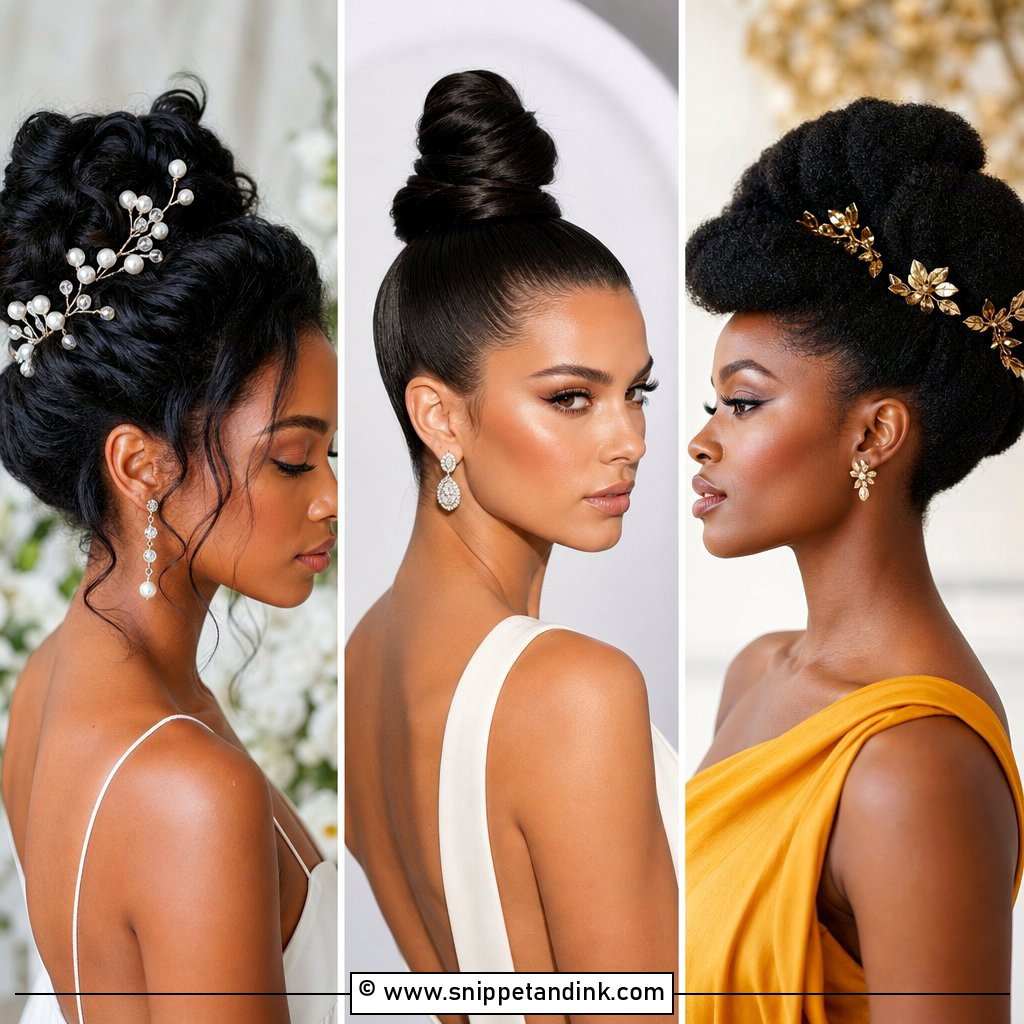
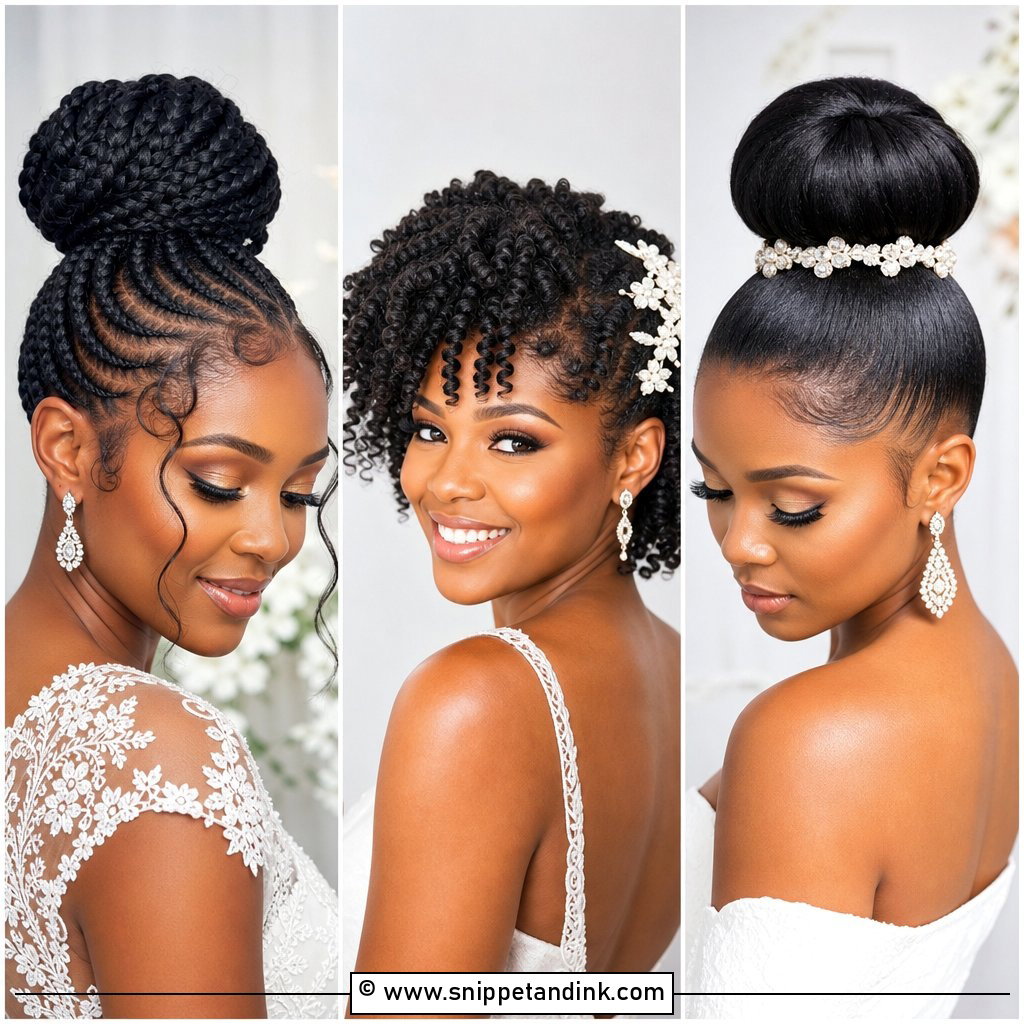
A sleek low bun starts with hair that’s been blown out or pressed smooth, then brushed back into a neat knot at the nape. Edges are laid with a soft brush and a little edge control. Go light with it: too much leaves a white cast that shows in flash photos. It suits relaxed, pressed or extension-enhanced hair and keeps an open back or a detailed neckline fully visible. If your wedding is outdoors in humidity, a pressed bun can puff at the hairline by evening, so pack a small brush and edge control for touch-ups.
2. Curly High Bun Updo
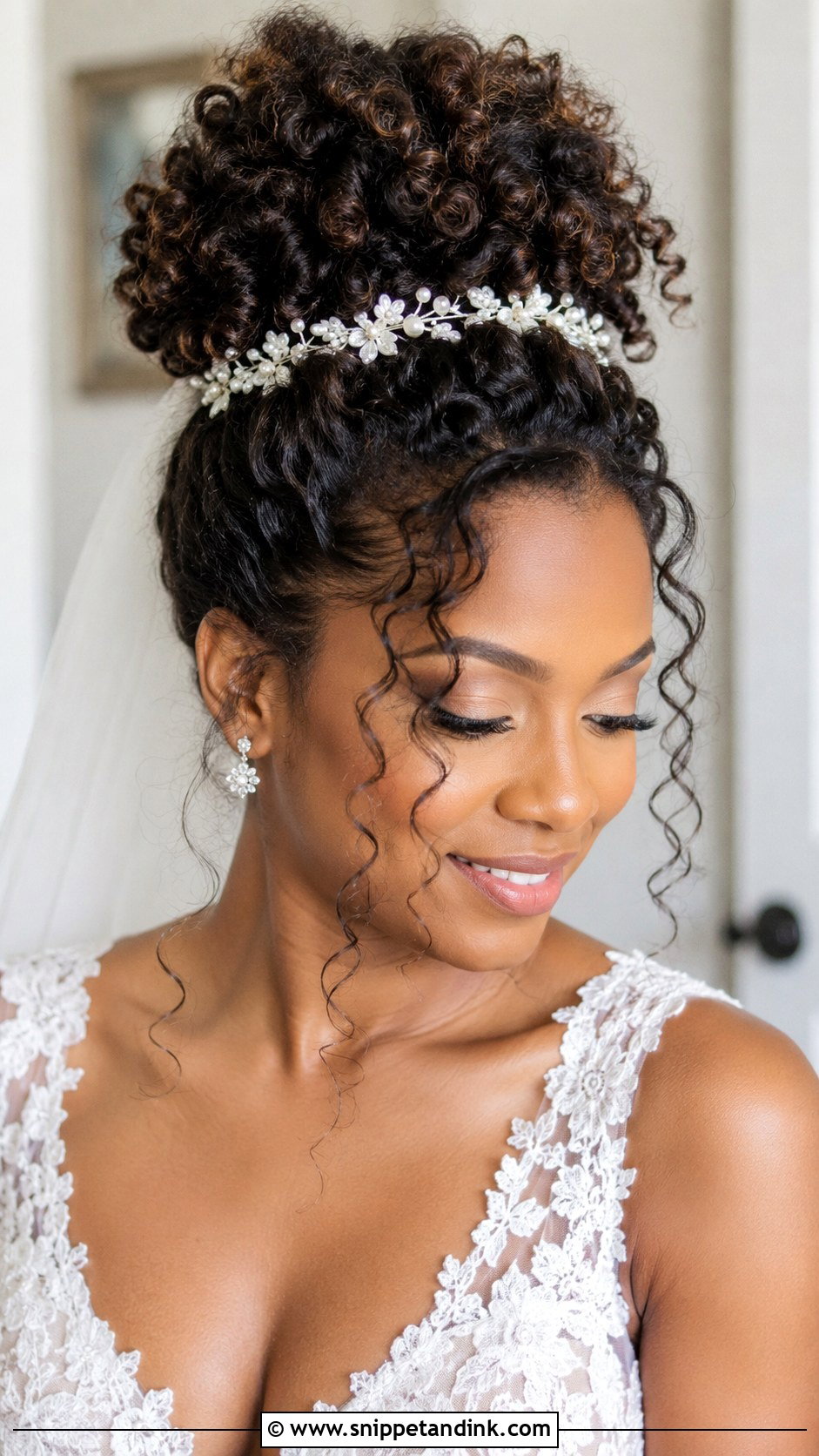
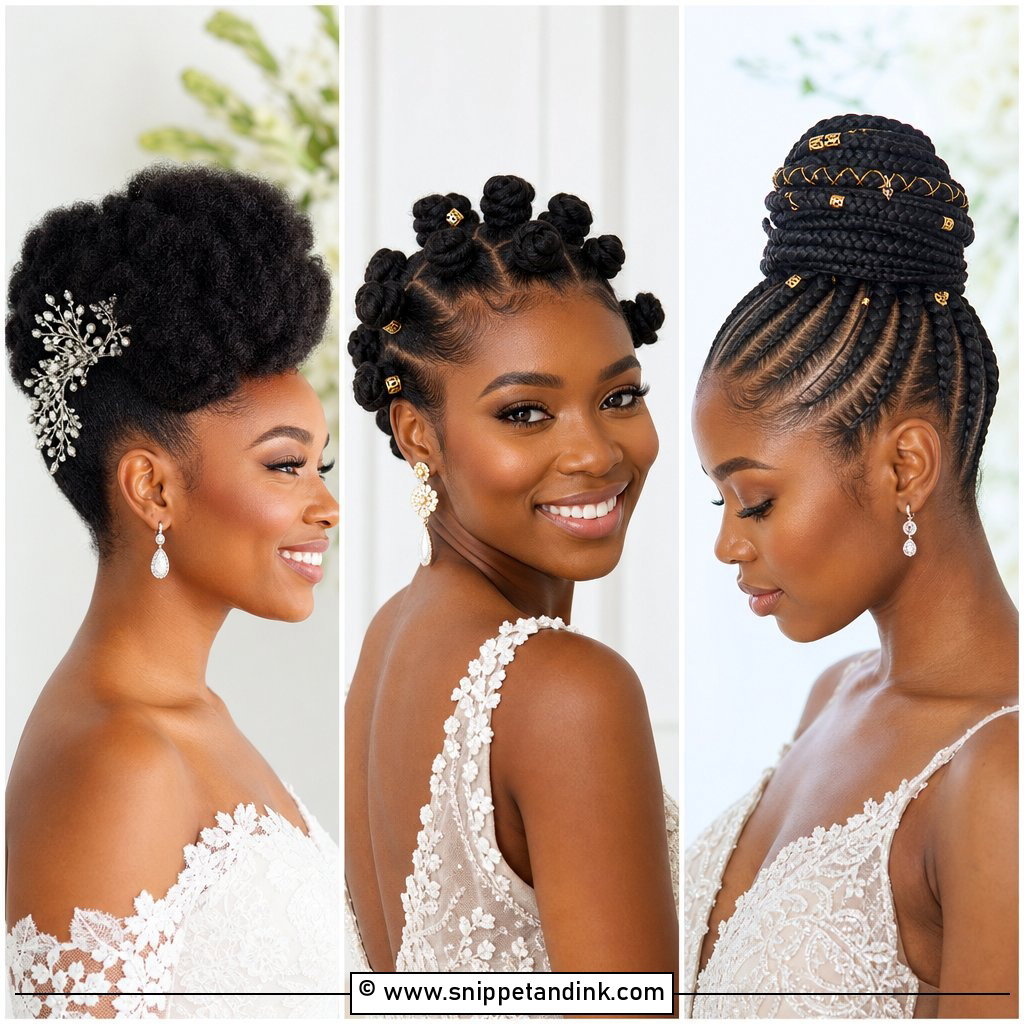
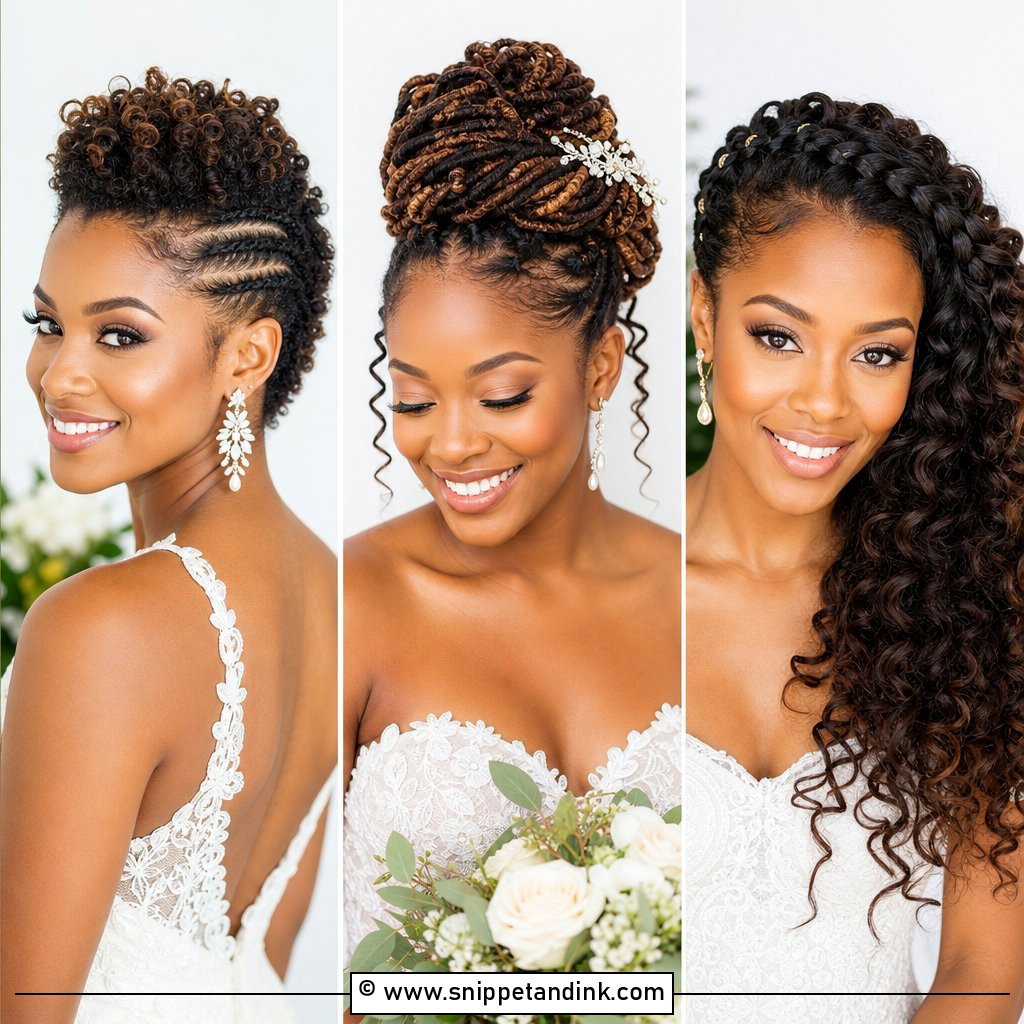
A curly high bun gathers your natural coils into a round shape at the crown. I like to define the curls first with a cream or a gel, let them dry completely, then gather them with a stretchy band rather than a tight elastic so the texture isn’t crushed. Leave a few tendrils at the face. The height creates a crown-like outline, and a flower headband or lace accessory sits just in front of it. Flowy and lace gowns suit it best.
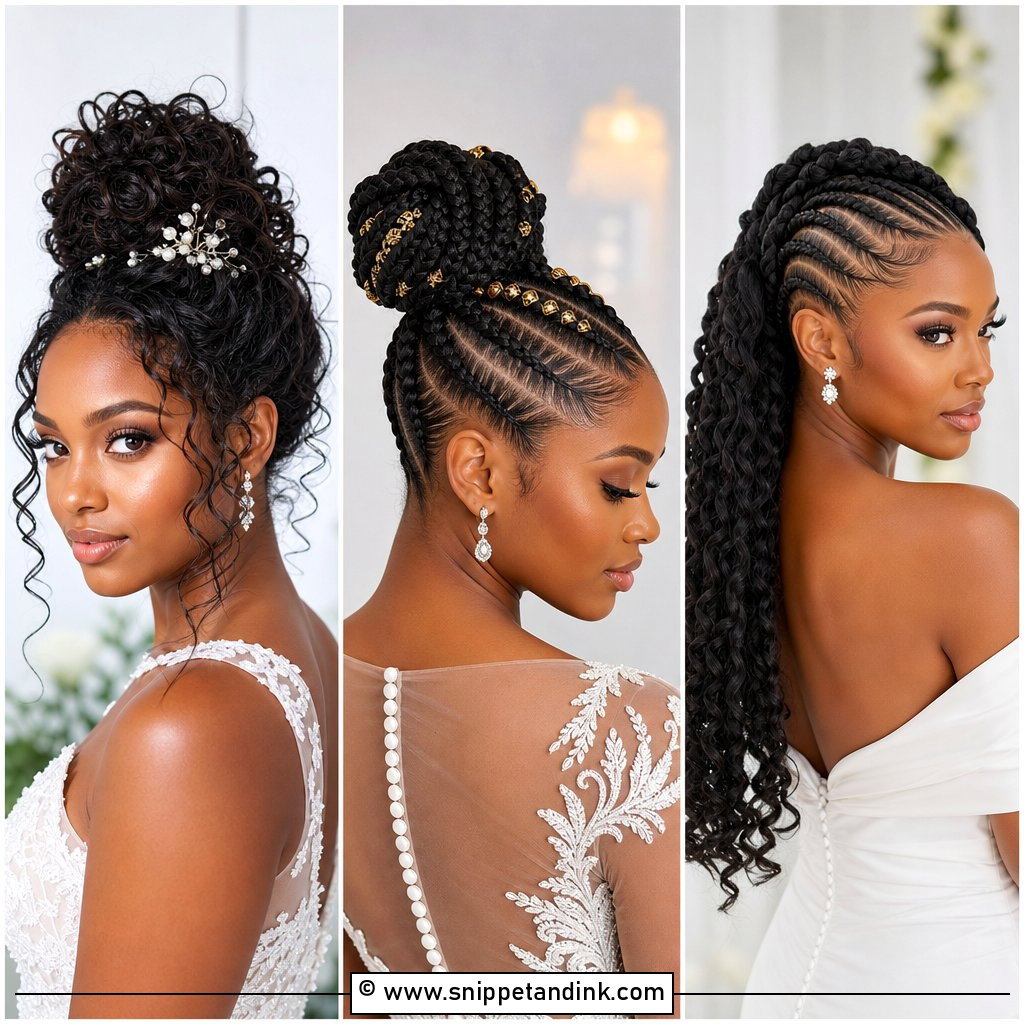
3. Goddess Braids Updo
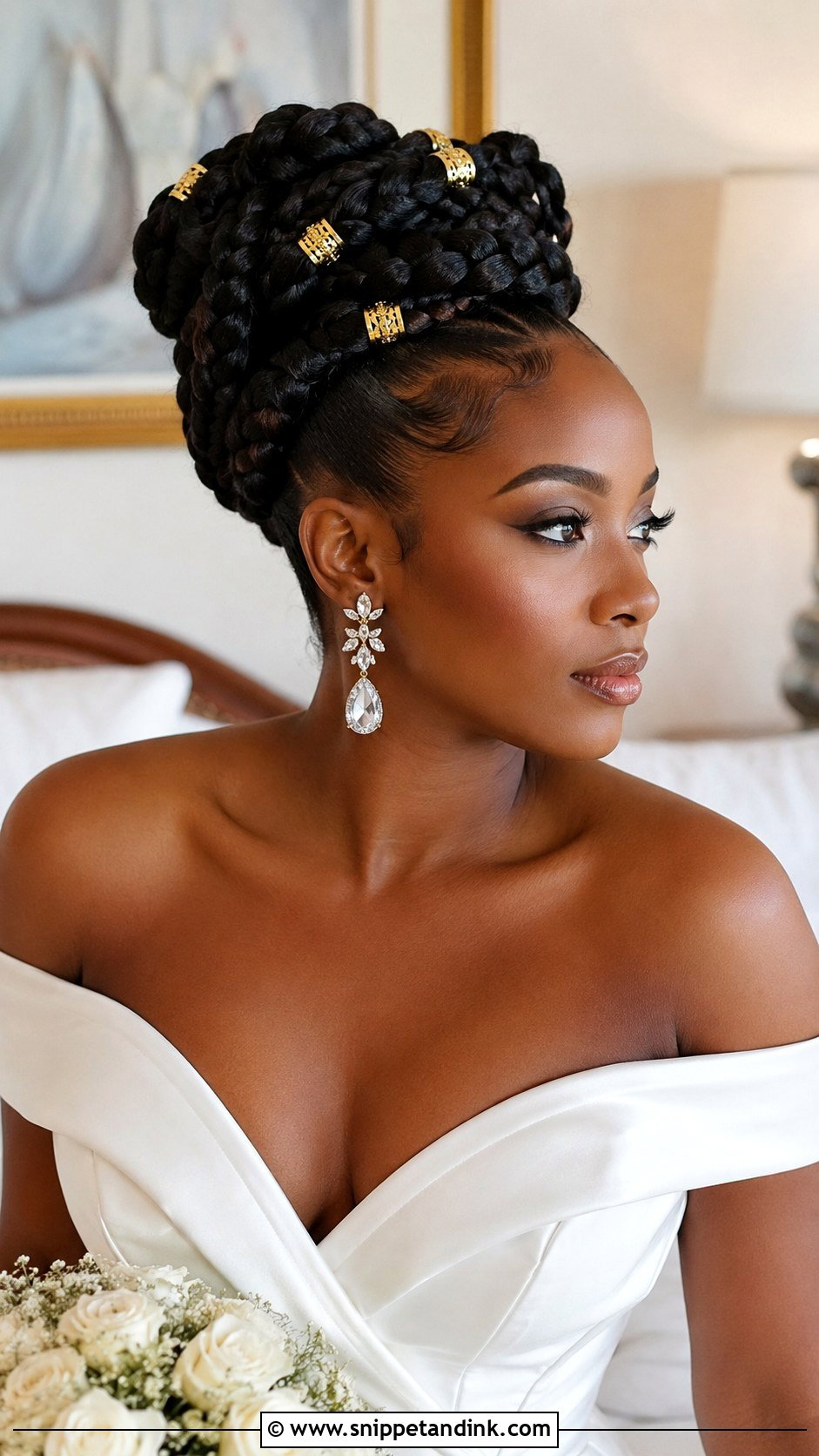
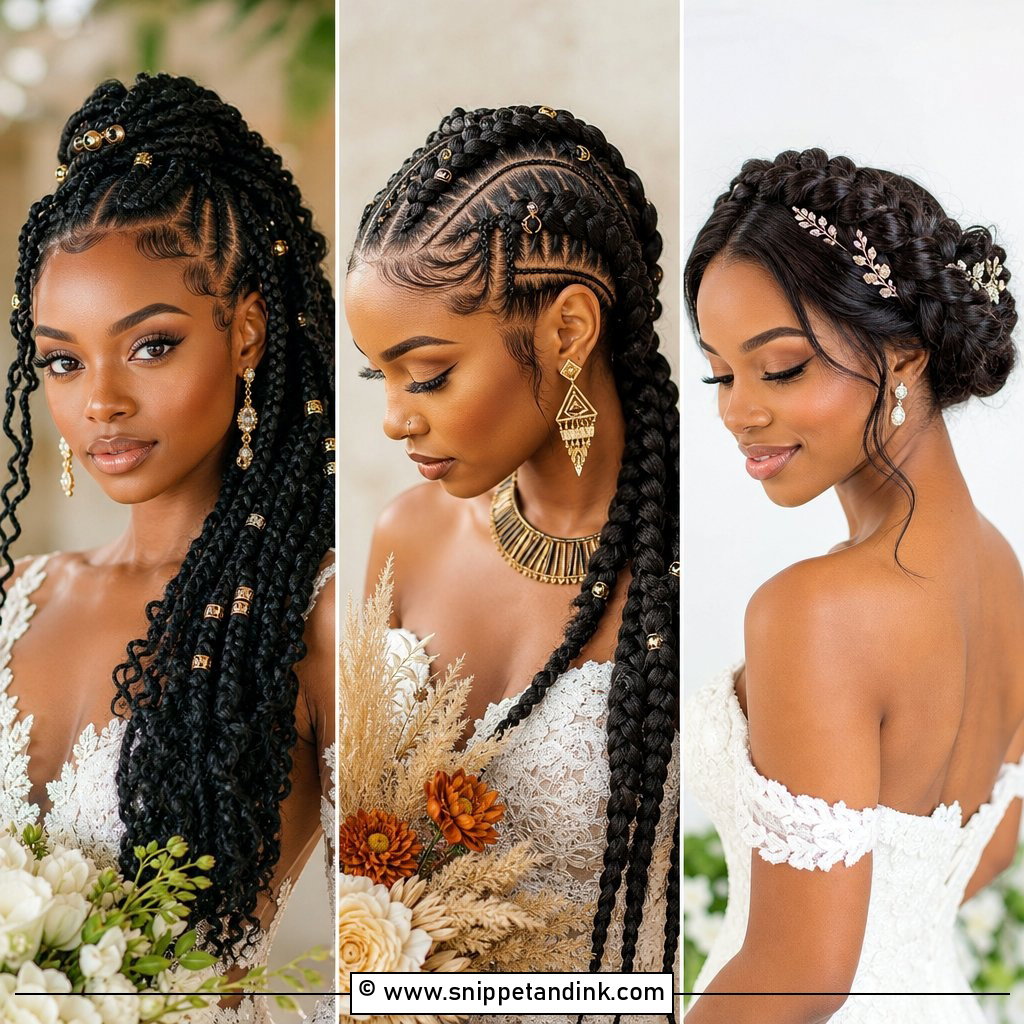
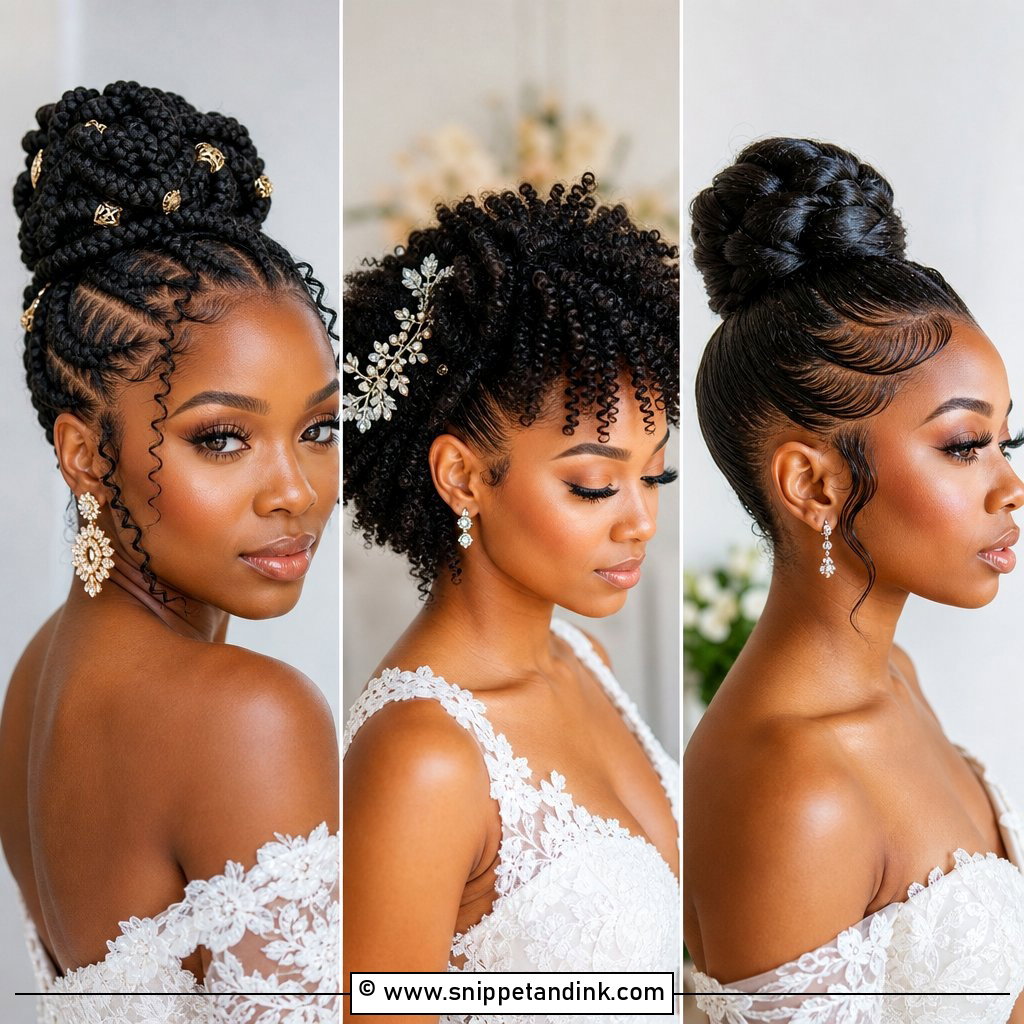
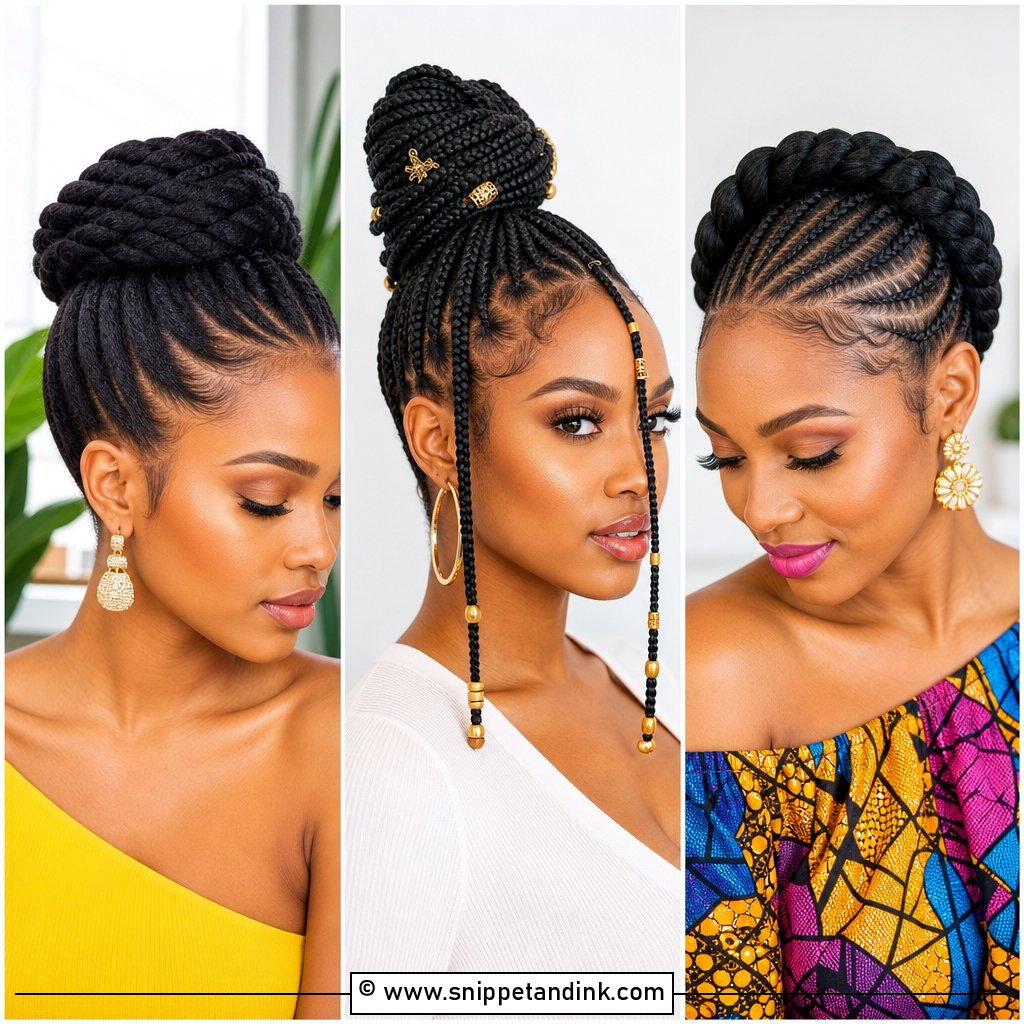
Goddess braids are thicker braids with loose curly ends, and in an updo they’re usually coiled into a crown, gathered into a bun or swept into swirls. They hold their shape with very little pinning, which is why they last through long receptions. The one thing I check is weight: a full head of long goddess braids piled on top can feel heavy by late evening. Coiling them lower, or at mid-height, helps. Gold cuffs or small jeweled accents slide right onto the braids.
4. Twist-Out Updo
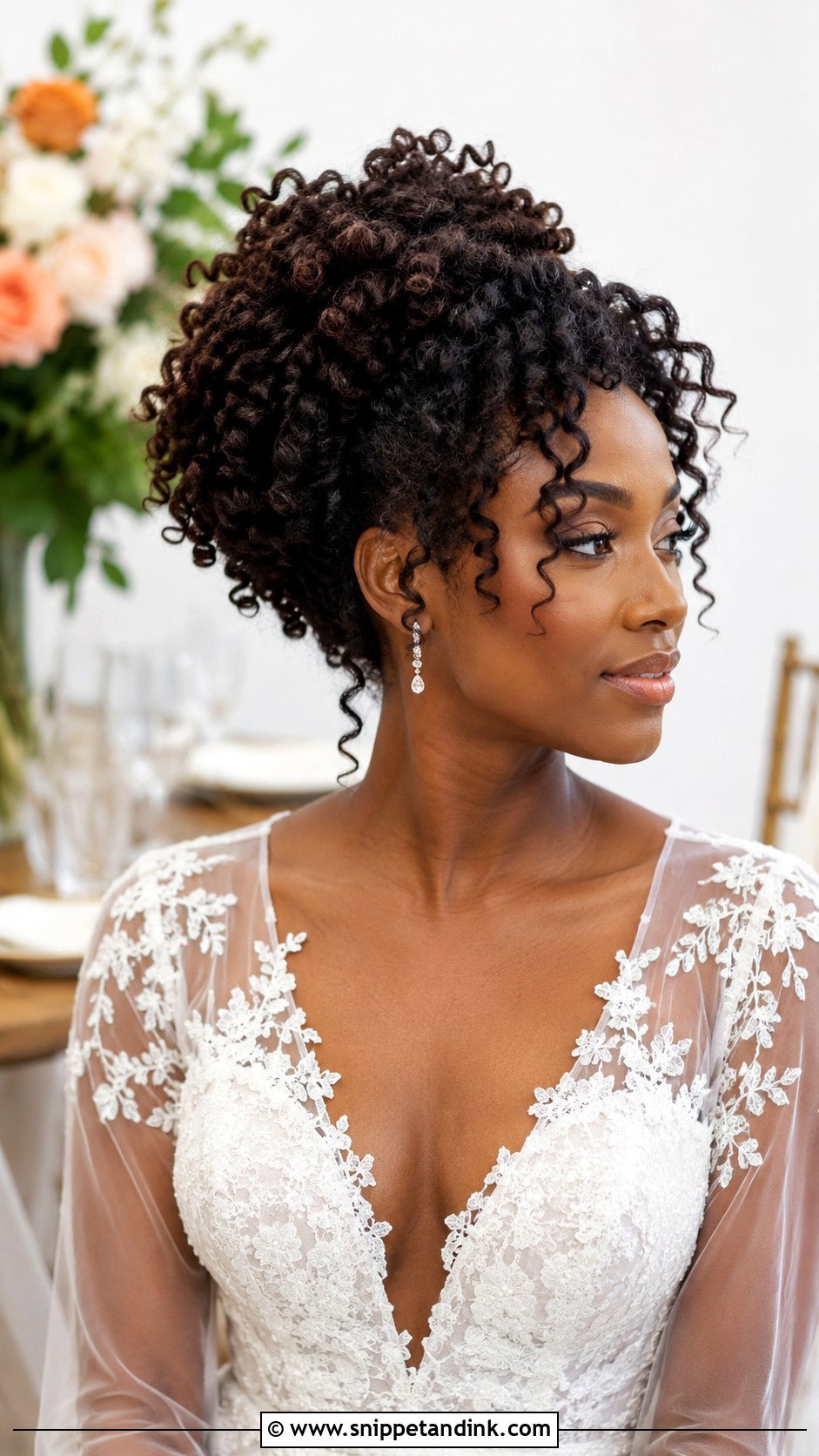
A twist-out updo depends on the twist-out itself, so the twists need to be done the night before and fully dry before they’re unravelled. Unravelled damp, they frizz instead of defining. Then the curls are gathered and pinned into a sculpted shape with a few left loose at the face. It’s comfortable, soft and shows off your natural pattern without heavy manipulation. Traditional or bohemian gowns both work. Rain or humidity will expand it, which some brides love and others don’t; decide that at the trial.
5. Knotless Braids Updo
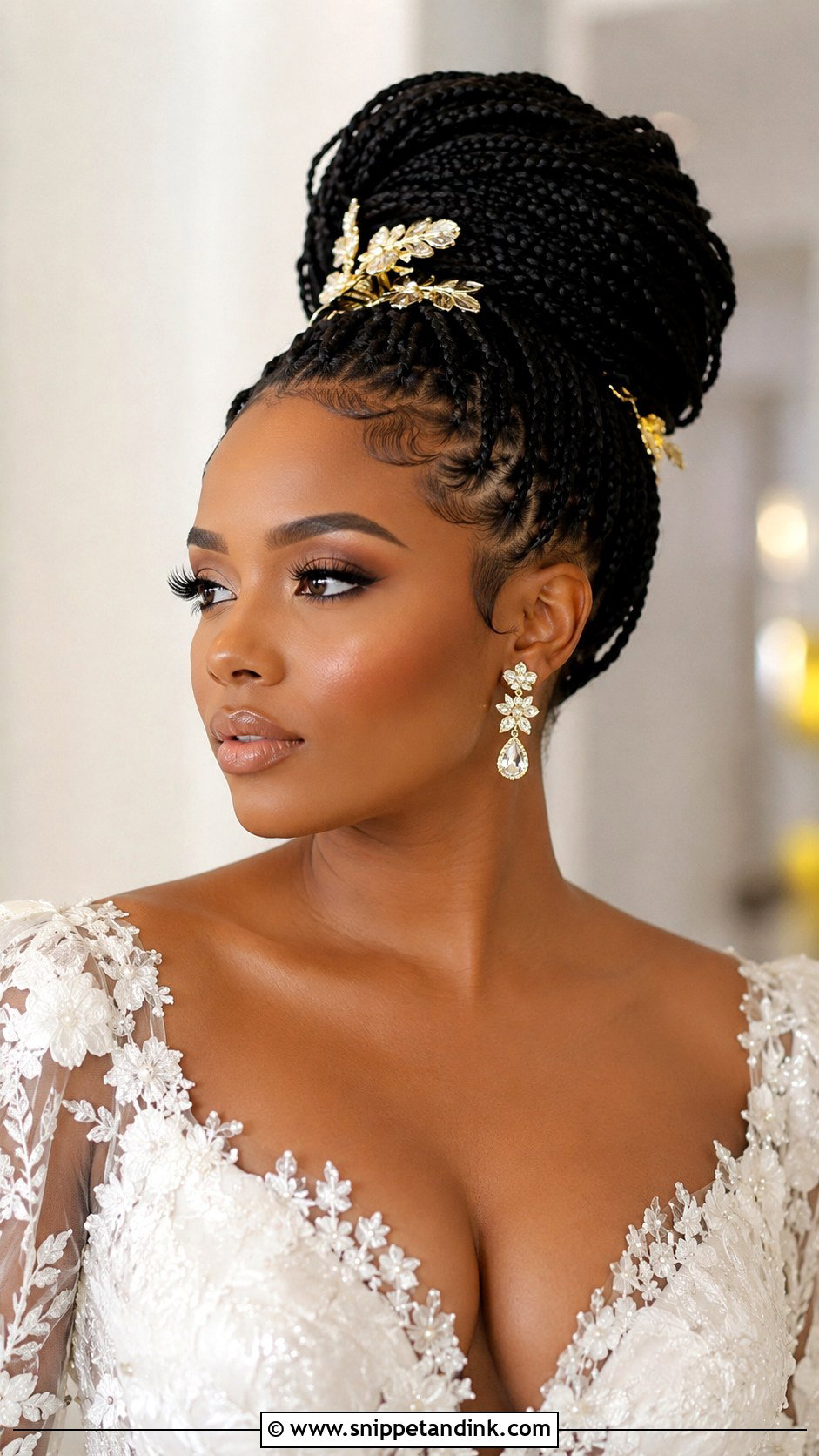
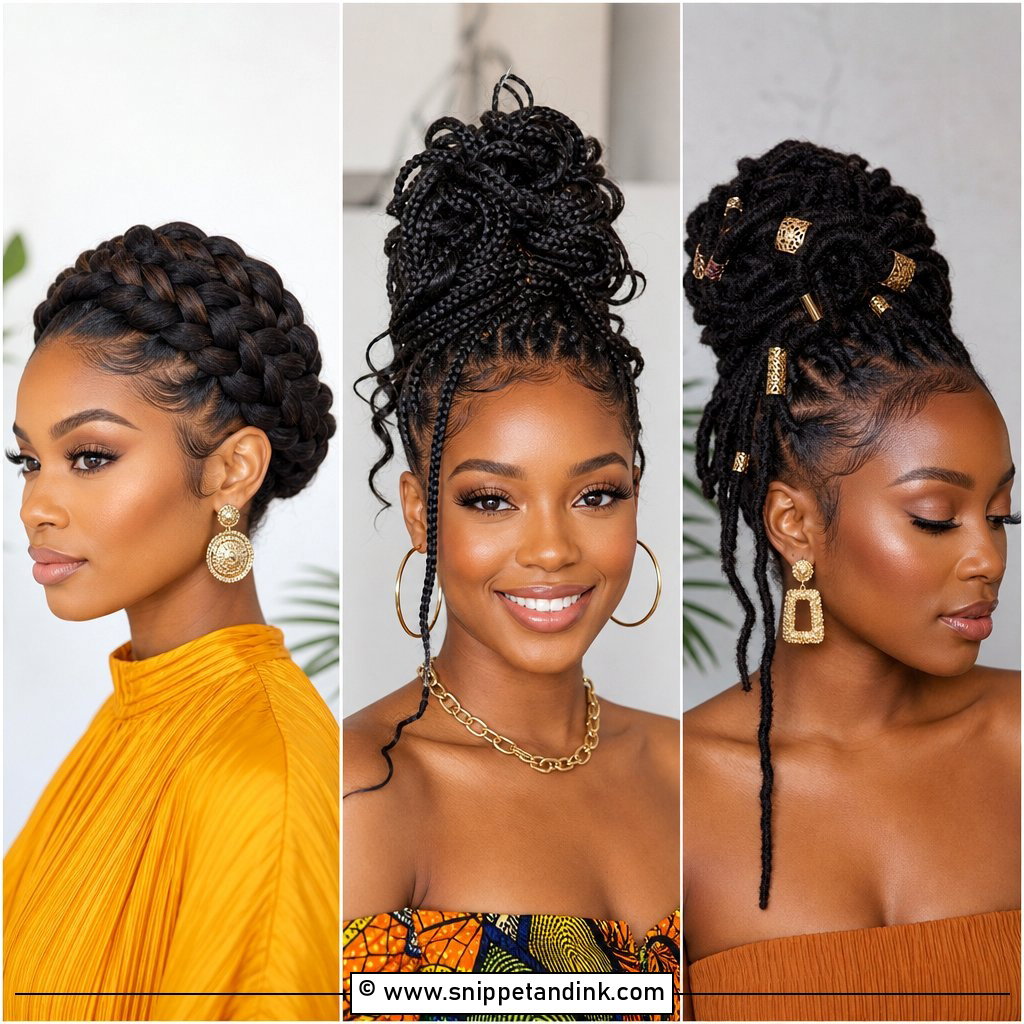
Knotless braids start with your own hair at the root and add extension hair gradually, so they lie flat and put less tension on the scalp than traditional box braids. That makes them comfortable to wear for hours and easy to shape: a high bun, a sculpted crown or a swirl. Installation takes a long time, so book your braider early. Beads, gold accents or fresh flowers tucked between braids personalize them. They hold through dancing and photos better than almost any style here.
6. Chignon Updo
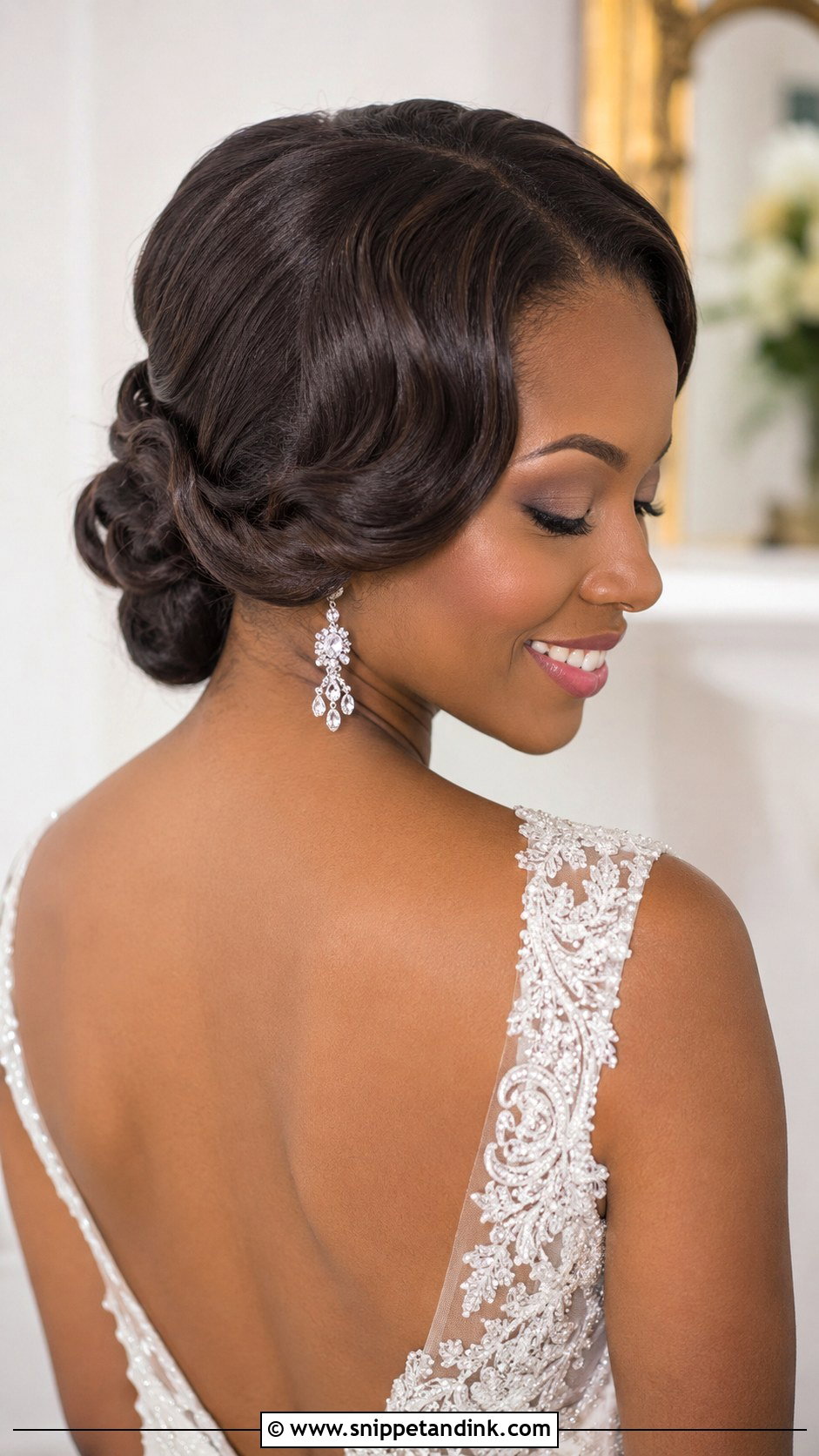
A chignon is a low, twisted bun at the nape. On pressed or relaxed hair, I add gentle waves first, then twist and pin; on natural hair, I often stretch it with a blow-dry or a twist-out so the roll is smooth. A deep side part feels vintage; a center part feels more current. It’s an easy match for most dresses and faces, and statement earrings sit well with it. Keep it sleek or loosen a few pieces.
7. Cornrow Bun Updo
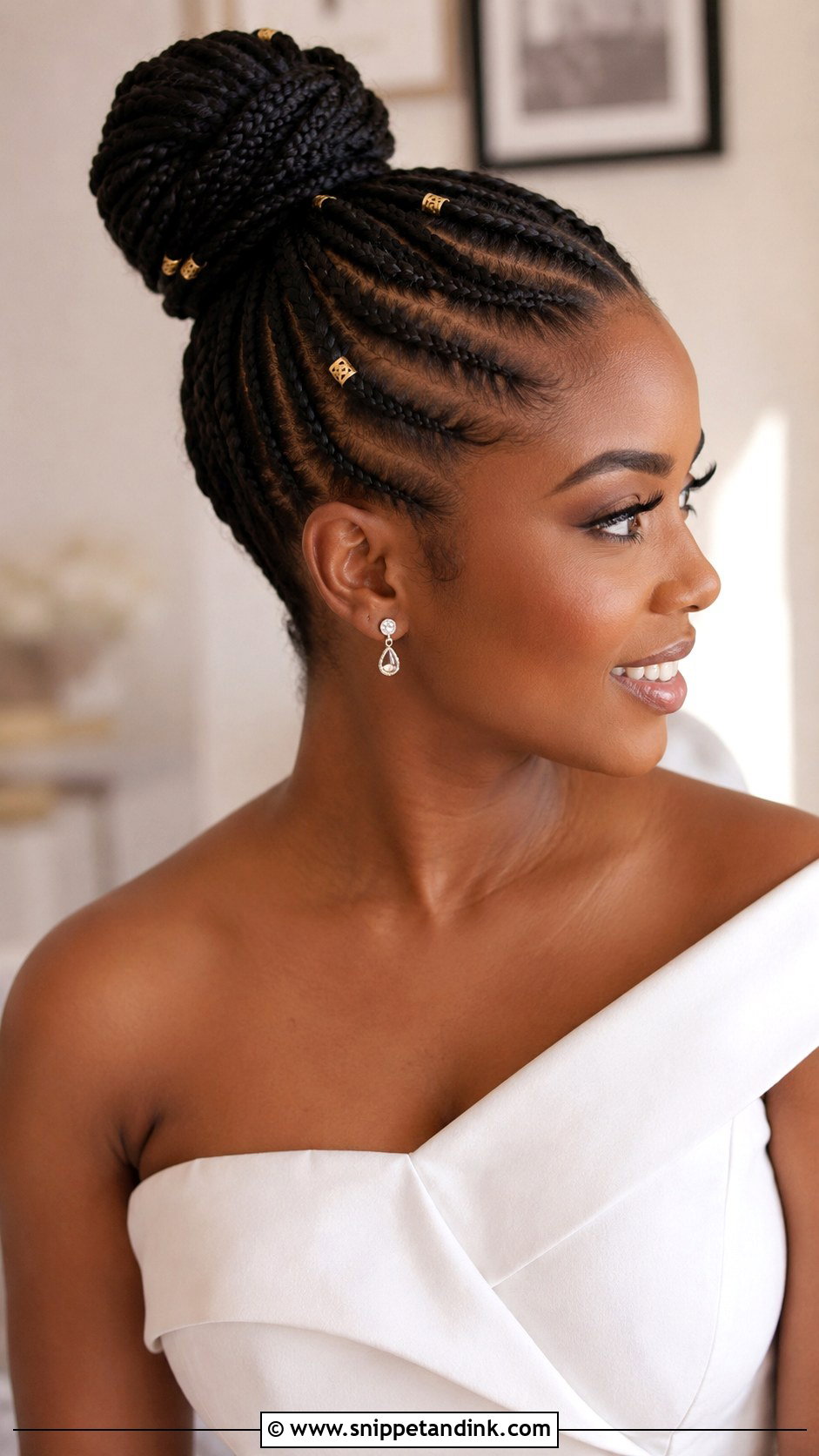
Cornrows are braided flat along the scalp, then gathered and twisted into a polished bun. The pattern can be straight back or curved, and that’s where the design shows. It’s very low maintenance on the day, since nothing is loose to drop. Ask your braider not to braid the edges tight; tension at the hairline over time damages it. Beads, cuffs or fresh blooms personalize it, and the clean lines suit structured modern gowns.
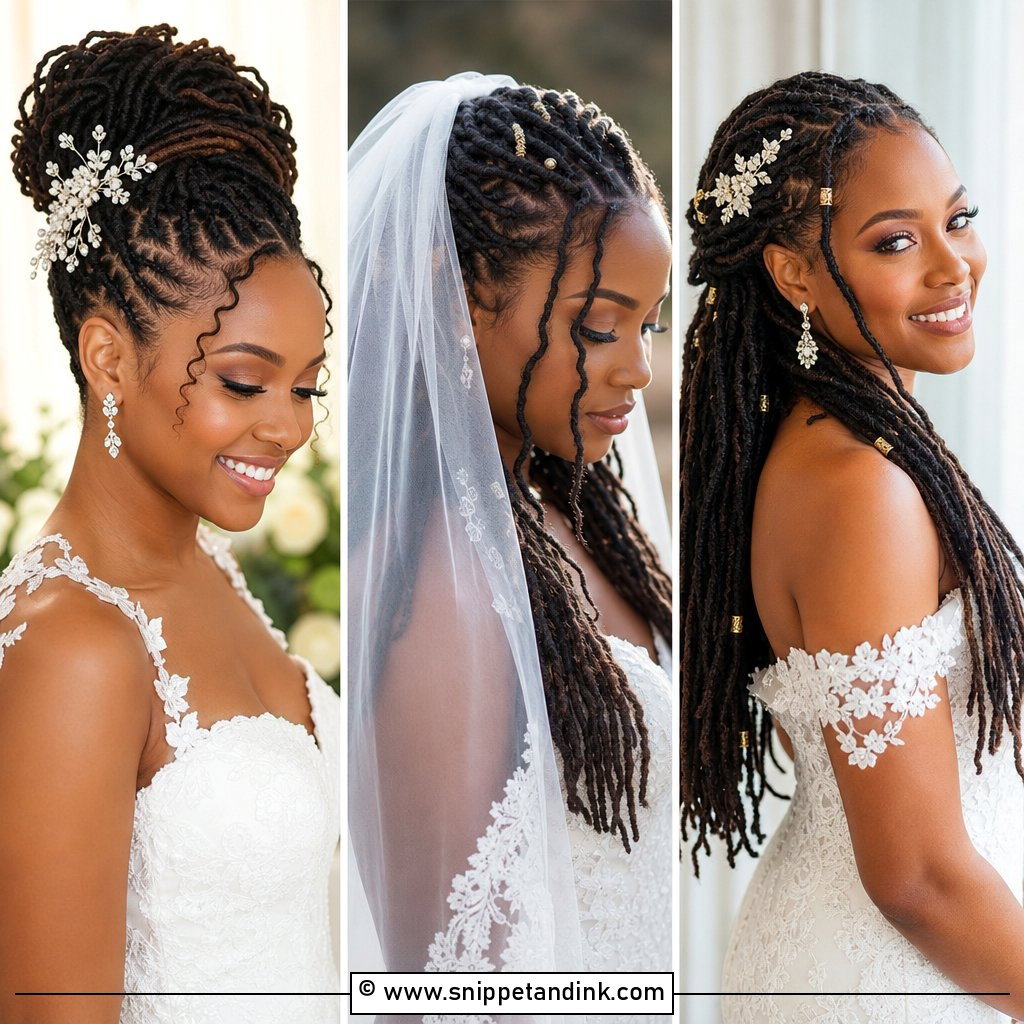
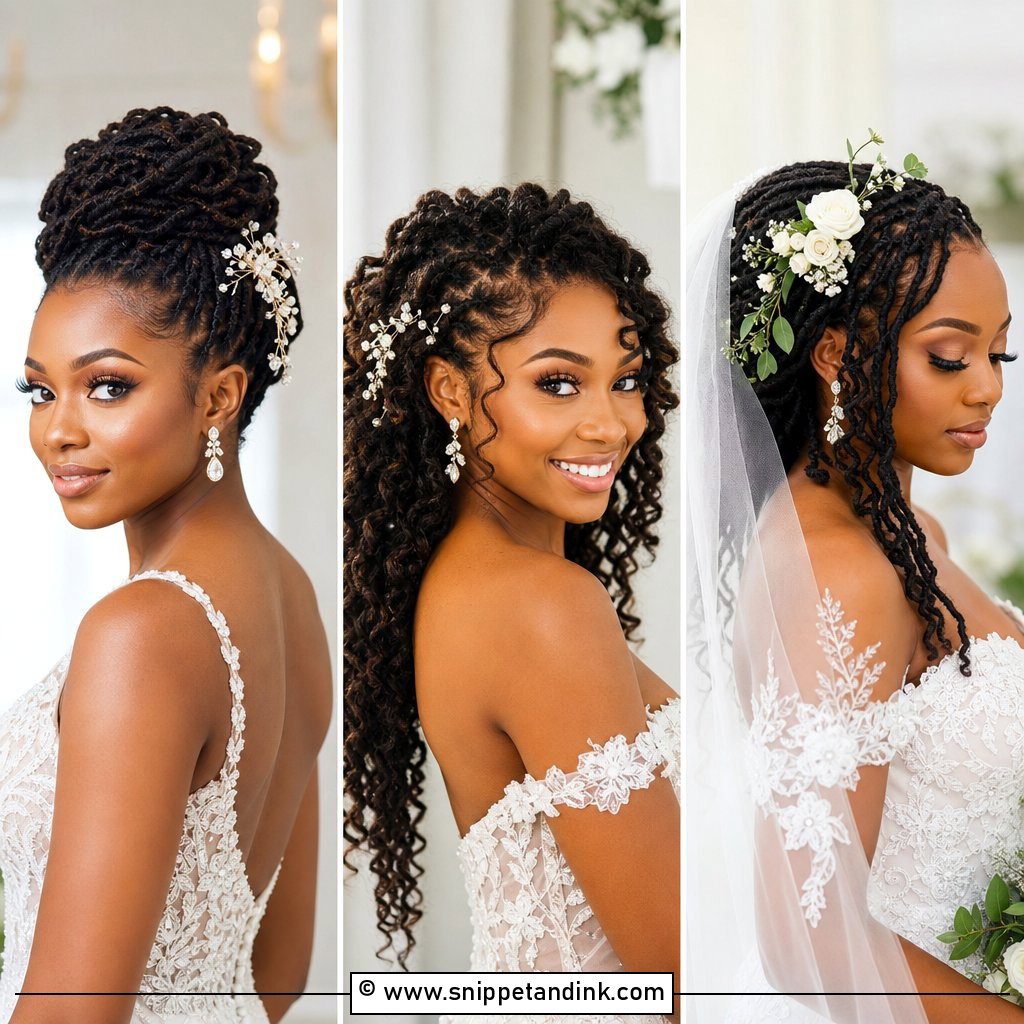
8. Loc Updo
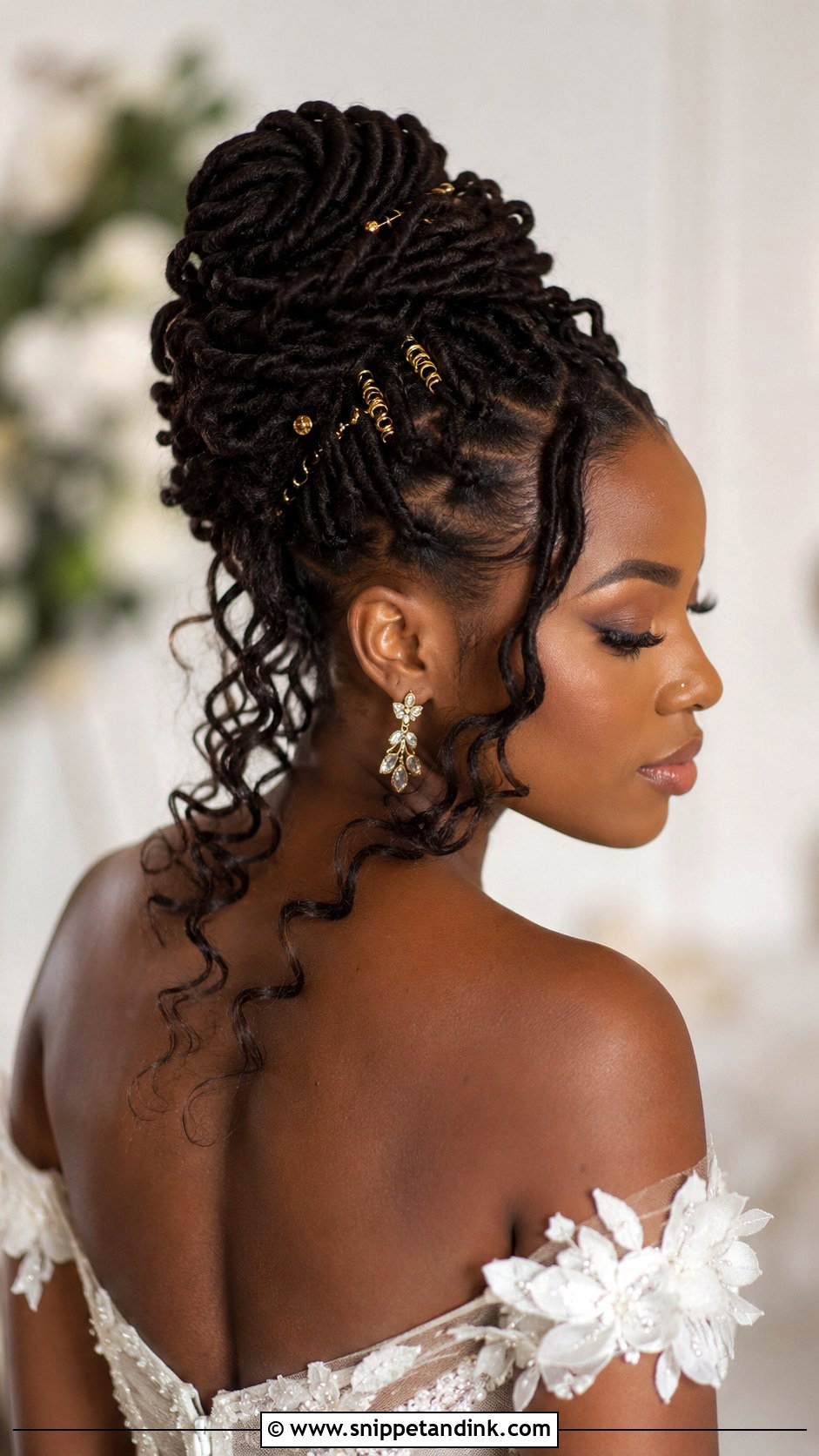
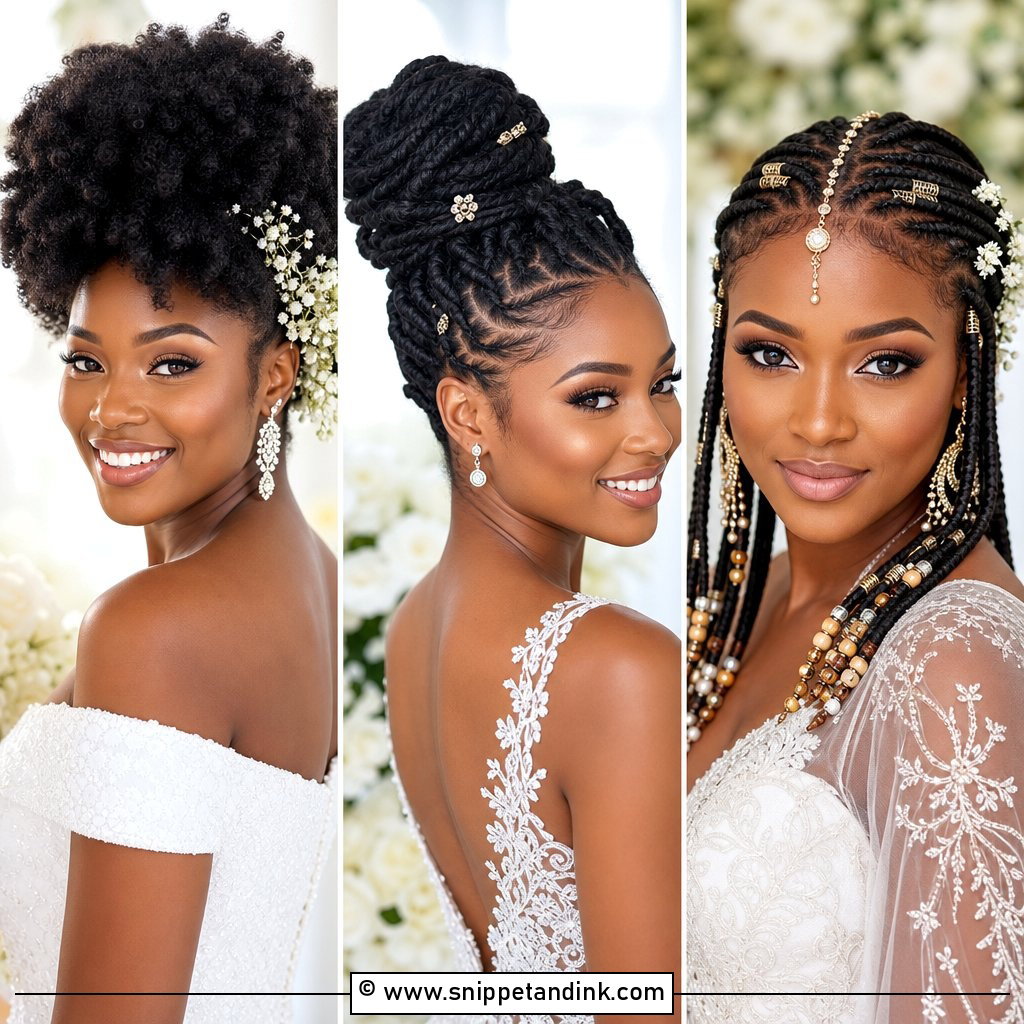
With natural locs or faux locs, an updo can be a sculpted bun, a coiled crown or a set of loops. For curls, set your locs on curl rods or pipe cleaners the night before, let them dry fully, then unravel and pin. Locs are heavier than loose hair, so I spread the weight across several anchor points instead of one bun. Gold cuffs or flowers accent them nicely. Get your retwist done a week or so before rather than the day before, so the roots look settled, not tight.
9. Braided Crown Updo
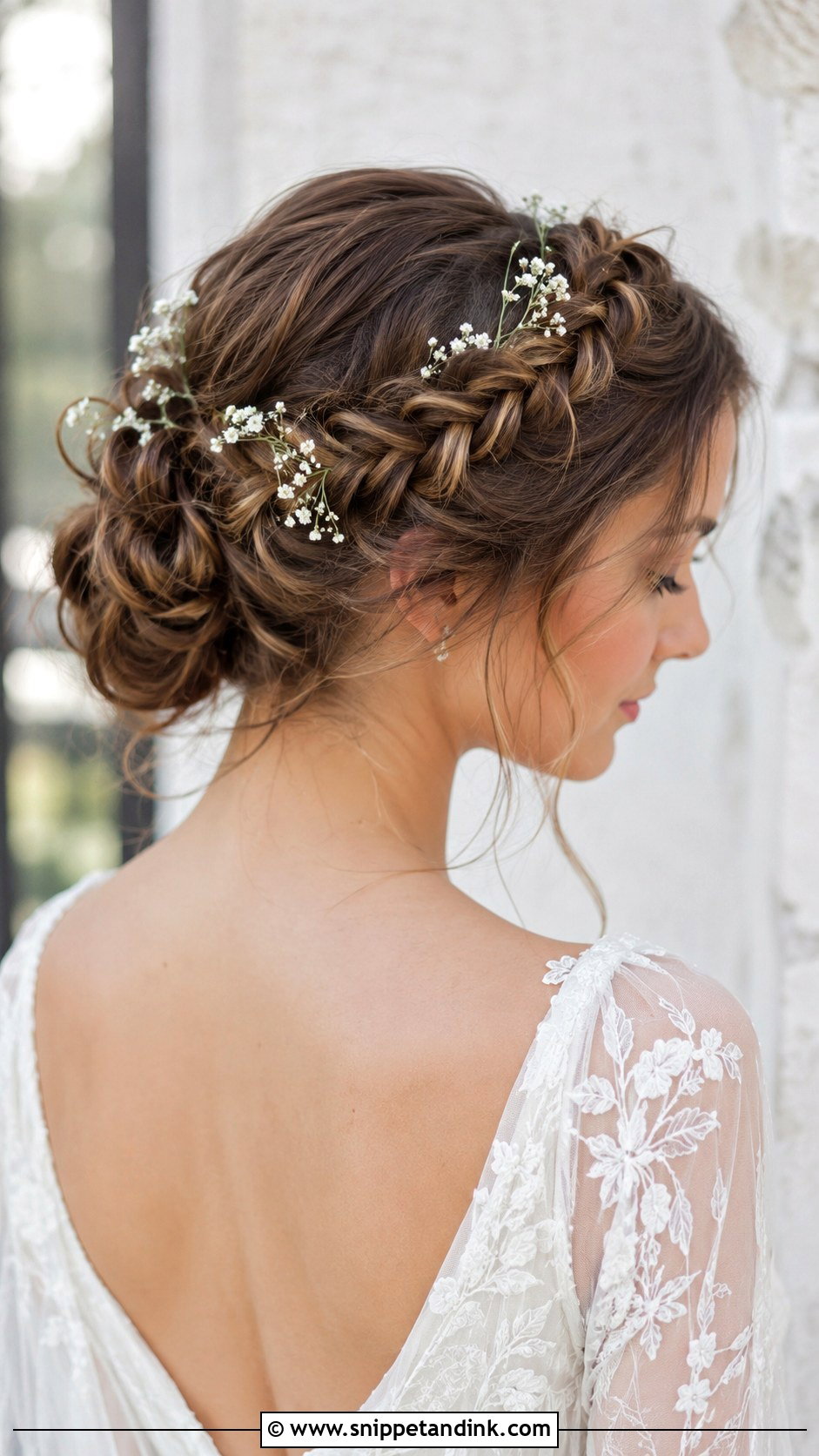
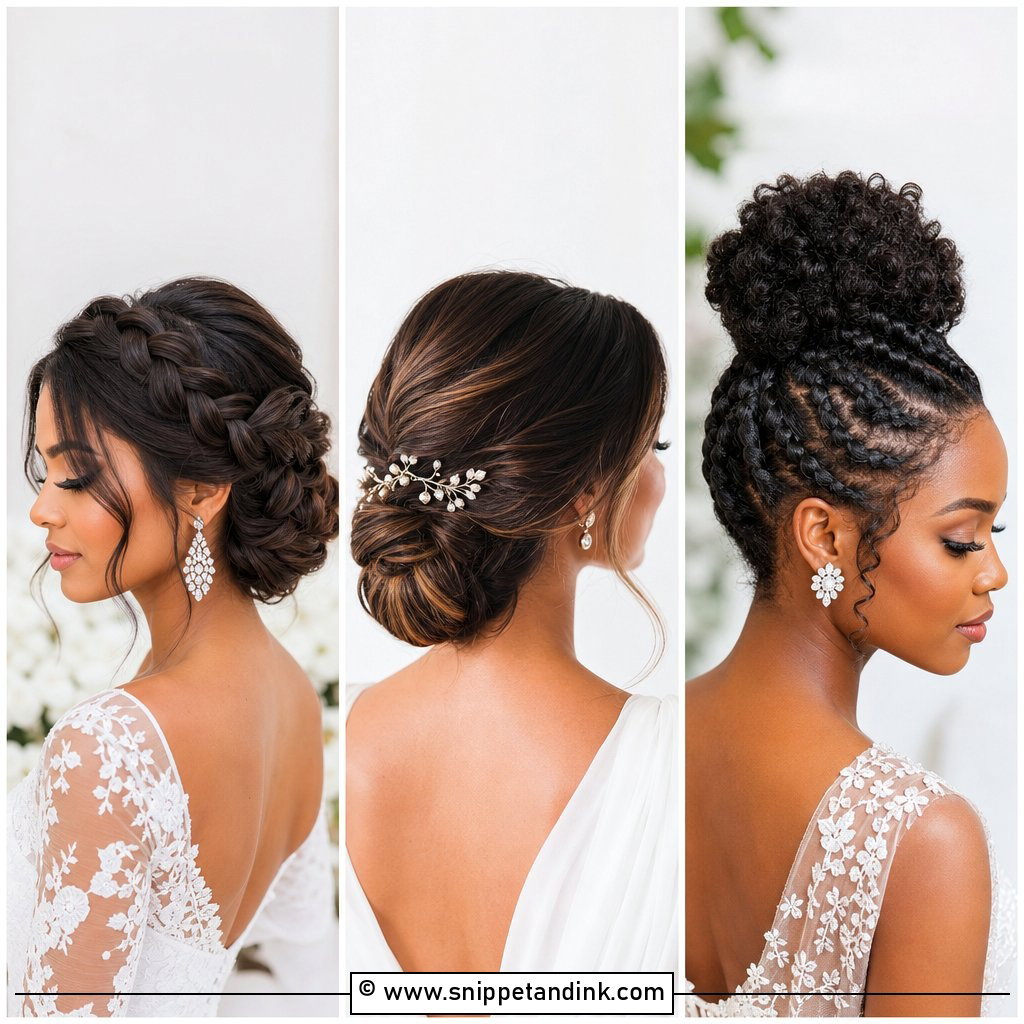
A braided crown circles the head and keeps every strand off the face. It works on natural hair, and with added braiding hair it can be fuller and more even. I pin it in several places along the circle, not just where the ends meet, so it can’t shift under a veil. Small flowers or jeweled pins along the braid suit a garden setting, and the shape pairs well with bohemian or vintage gowns.
10. Fulani Braids Updo
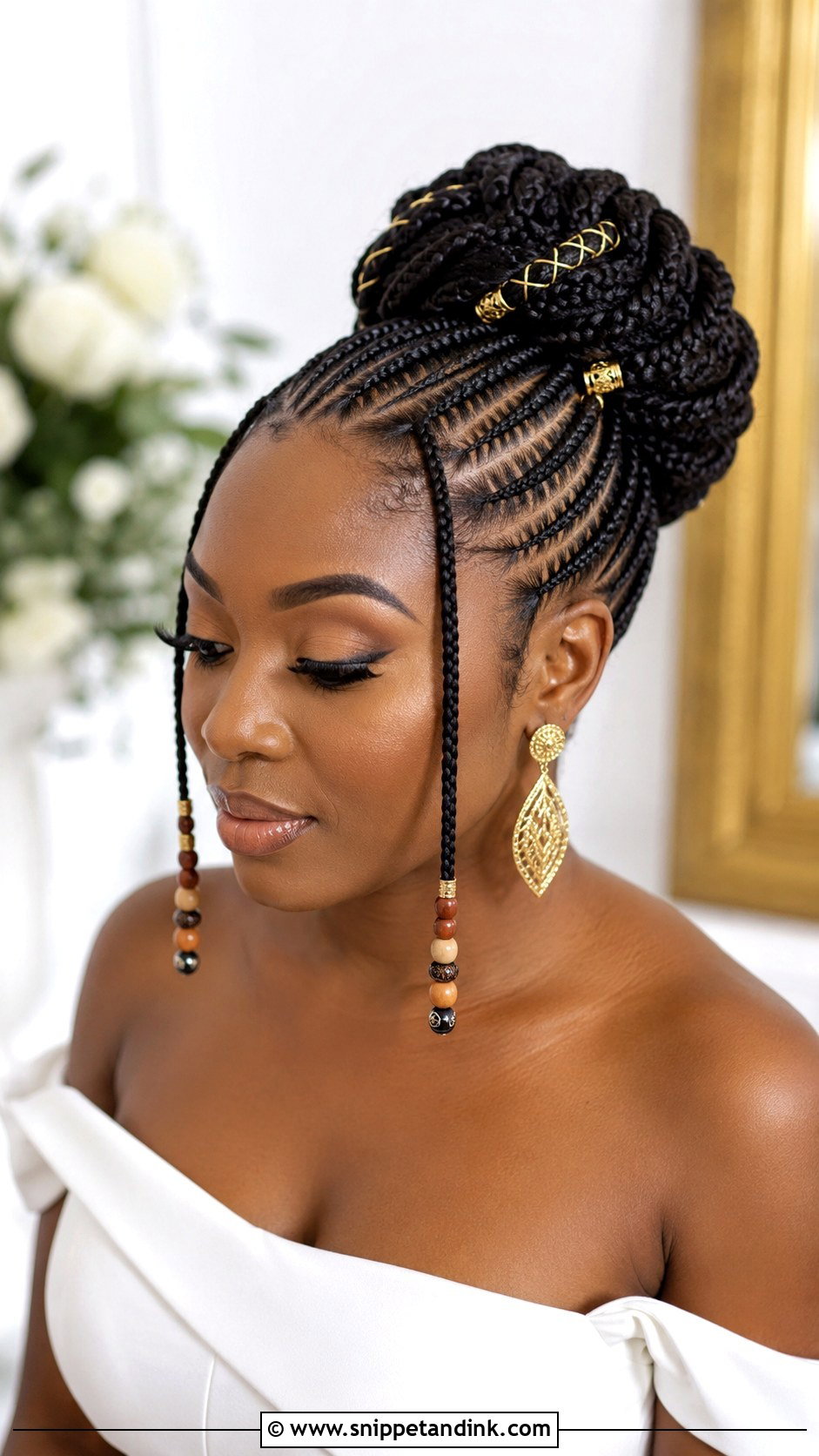
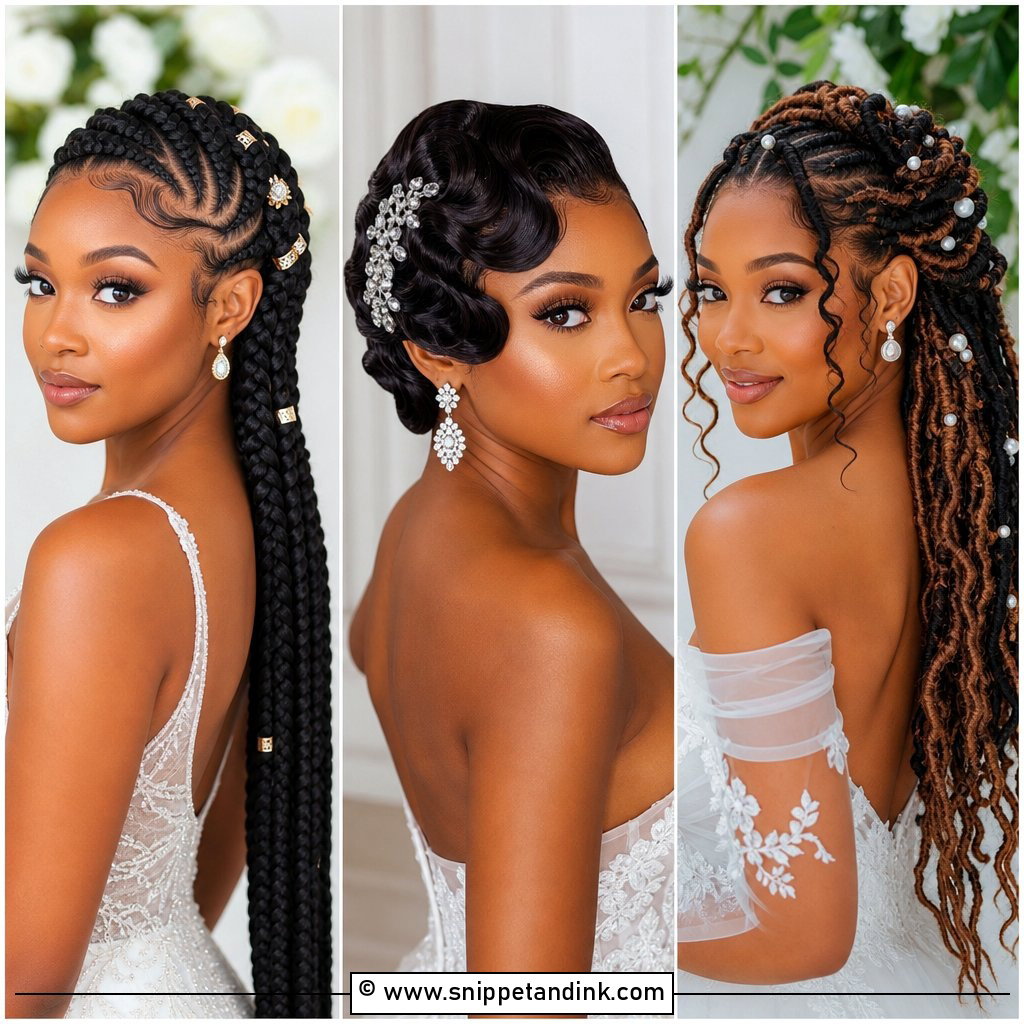
Fulani braids are known for a center braid running front to back, side braids that often curve toward the face, and beads or gold accents woven in. In an updo, they’re swept up into a bun or coiled into a crown. They come from a long tradition, and I’d encourage brides who choose them to keep the beadwork meaningful to them rather than decorative filler. The detail reads clearly from every angle. With bold earrings and a sleek gown, the Fulani braids updo is a confident choice.
11. Twisted Low Bun With Curls
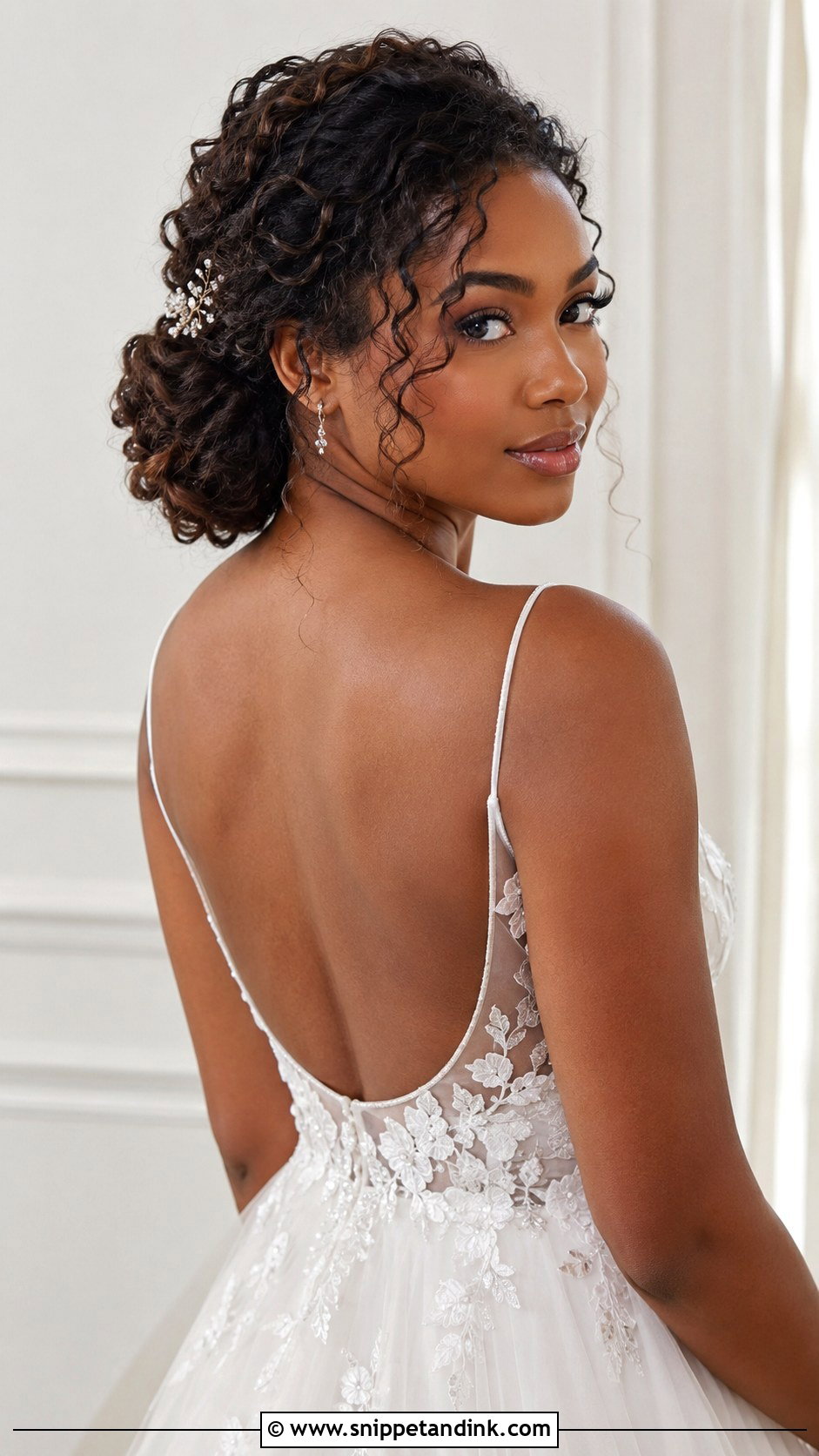
Here the hair is twisted and gathered into a low bun, with a few curled pieces left out for movement around the face and neck. Twisting the sections before they go into the bun gives texture without needing much product. It’s softer than a sleek bun and less structured than a chignon. Flowy gowns and delicate accessories suit it; a single sparkling pin or fresh flower is plenty.
12. Faux Hawk Braided Updo
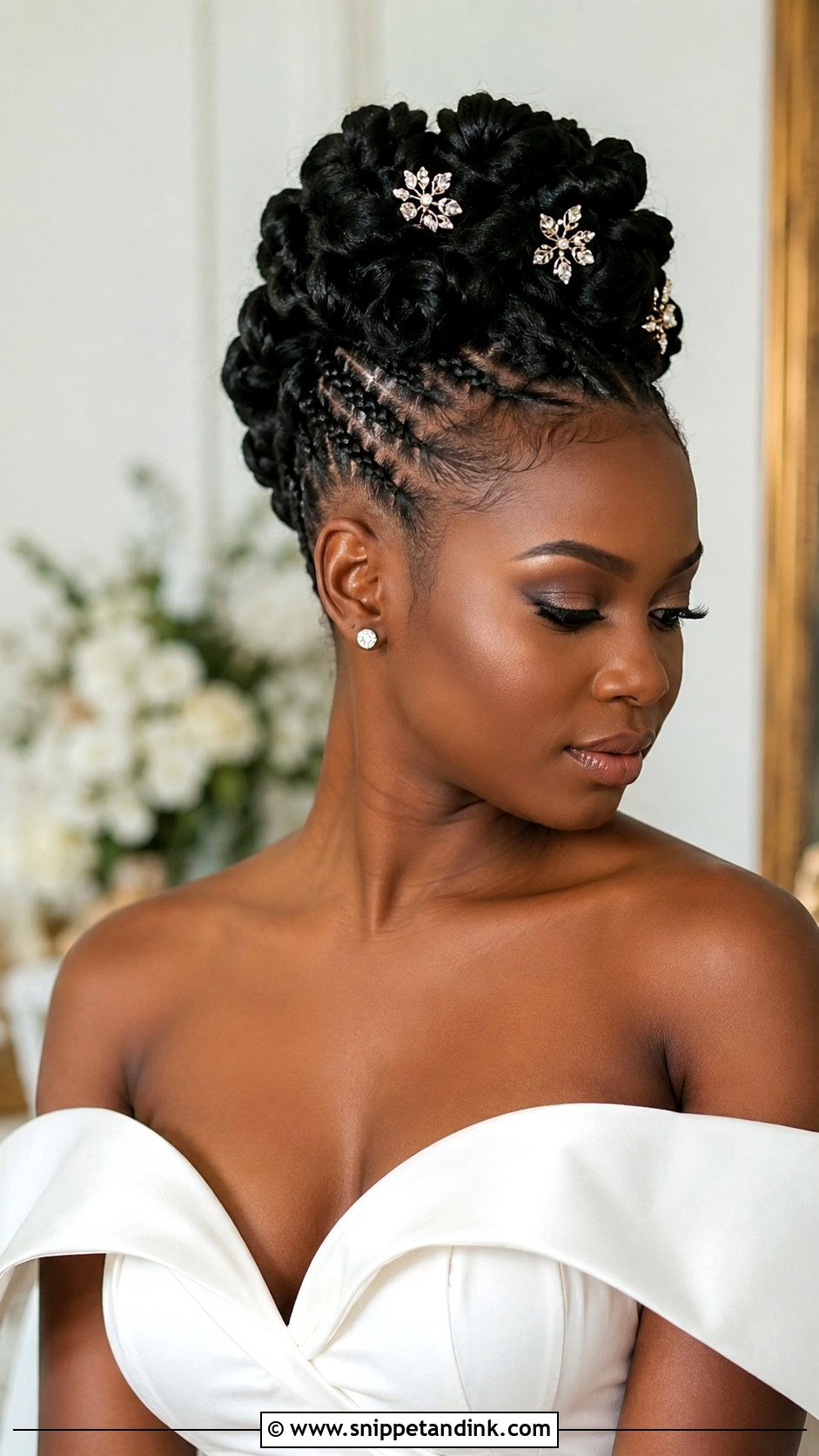
A braided faux hawk sweeps braids up and into a raised shape running along the center of the head. It’s bold and sculptural, and it photographs most dramatically in profile. Because the volume is concentrated at the top, I build it on a firm base of cornrows or flat twists at the sides so nothing loosens. Cuffs, beads or jeweled accents work along the ridge. A veil is tricky here; most brides who choose the faux hawk braided updo skip one or wear it for the ceremony only, attached at the back.
13. Textured Natural Puff Updo
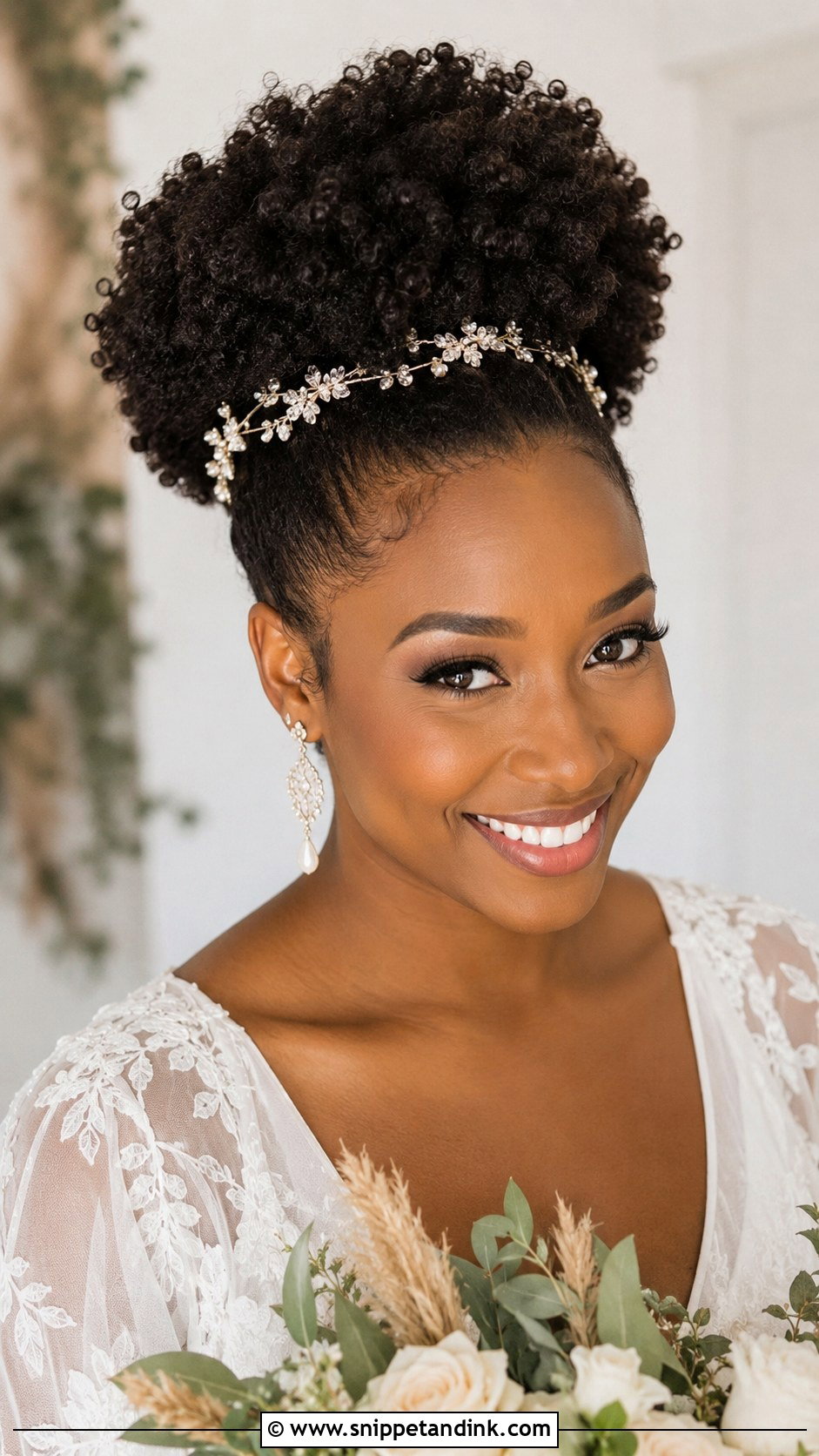
A natural puff is the simplest style here, and it still needs care to look bridal. Stretch the hair first with a blow-dry on low heat or a twist-out, so the puff is full and even rather than shrunken on one side. Gather it with a soft band or a scarf, never a tight elastic. Smooth the edges lightly. A jeweled headband, fresh flowers or a vine sit in front of the puff. It’s comfortable and suits modern and bohemian gowns alike.
14. Halo Braid Updo
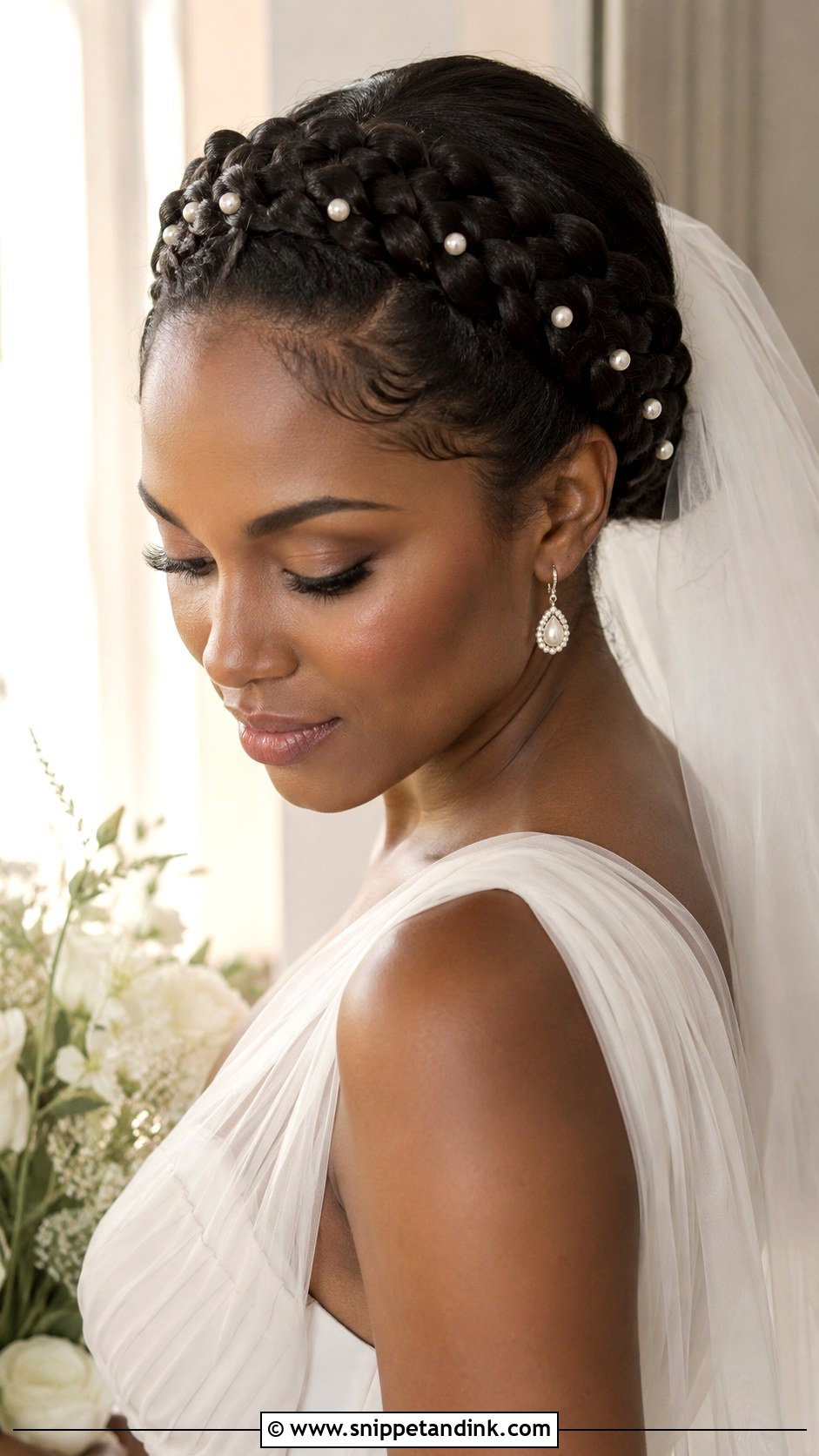
One braid circling the head makes the halo. On thinner or shorter natural hair, I add braiding hair so the circle is even all the way around. It’s polished and keeps hair in place all day. I slip the veil comb under the braid at the back, which holds it securely. Small flowers or pearls tucked into the braid suit a flowing veil or a simple gown.
15. Flower-Adorned Curly Updo
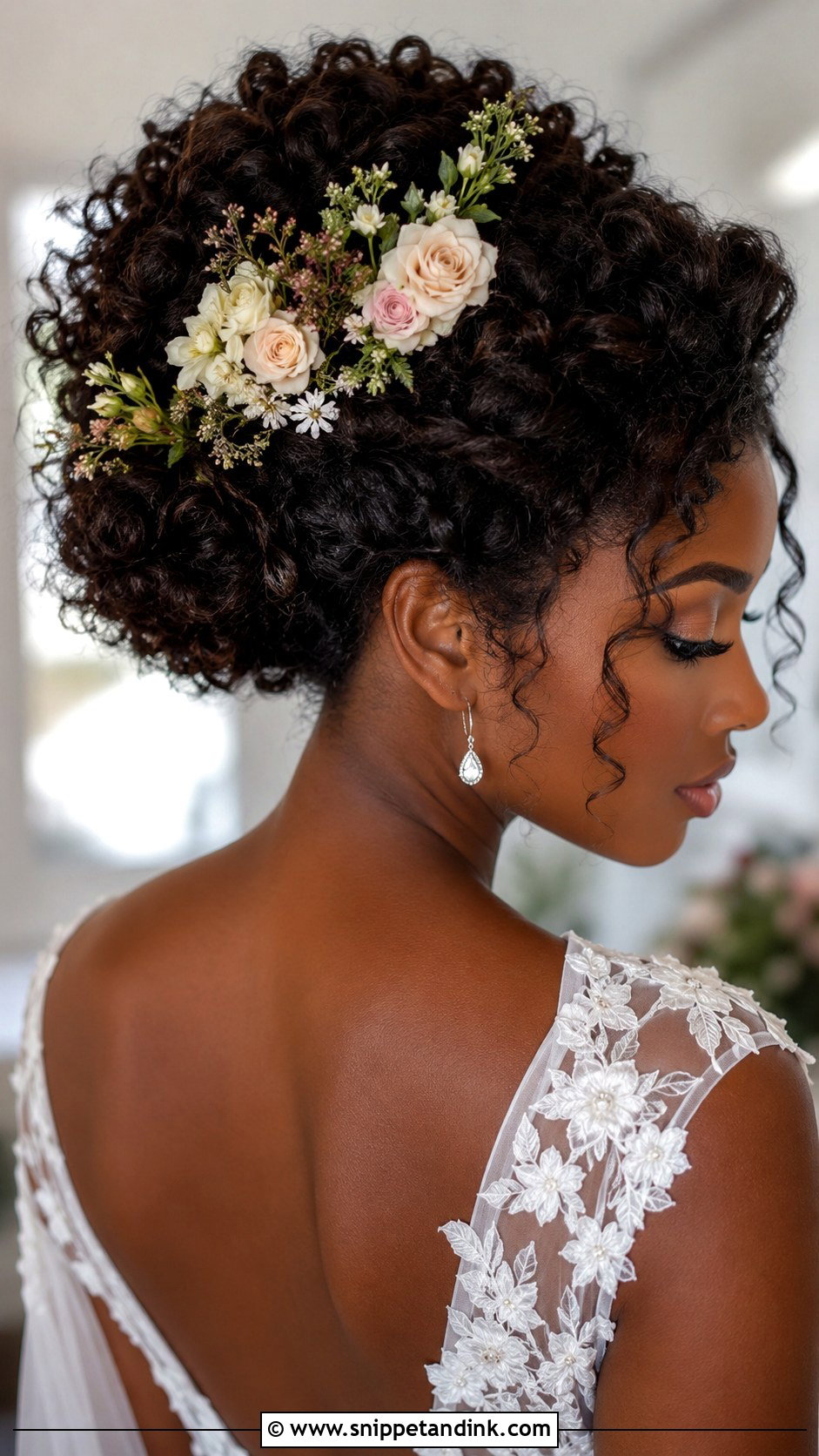
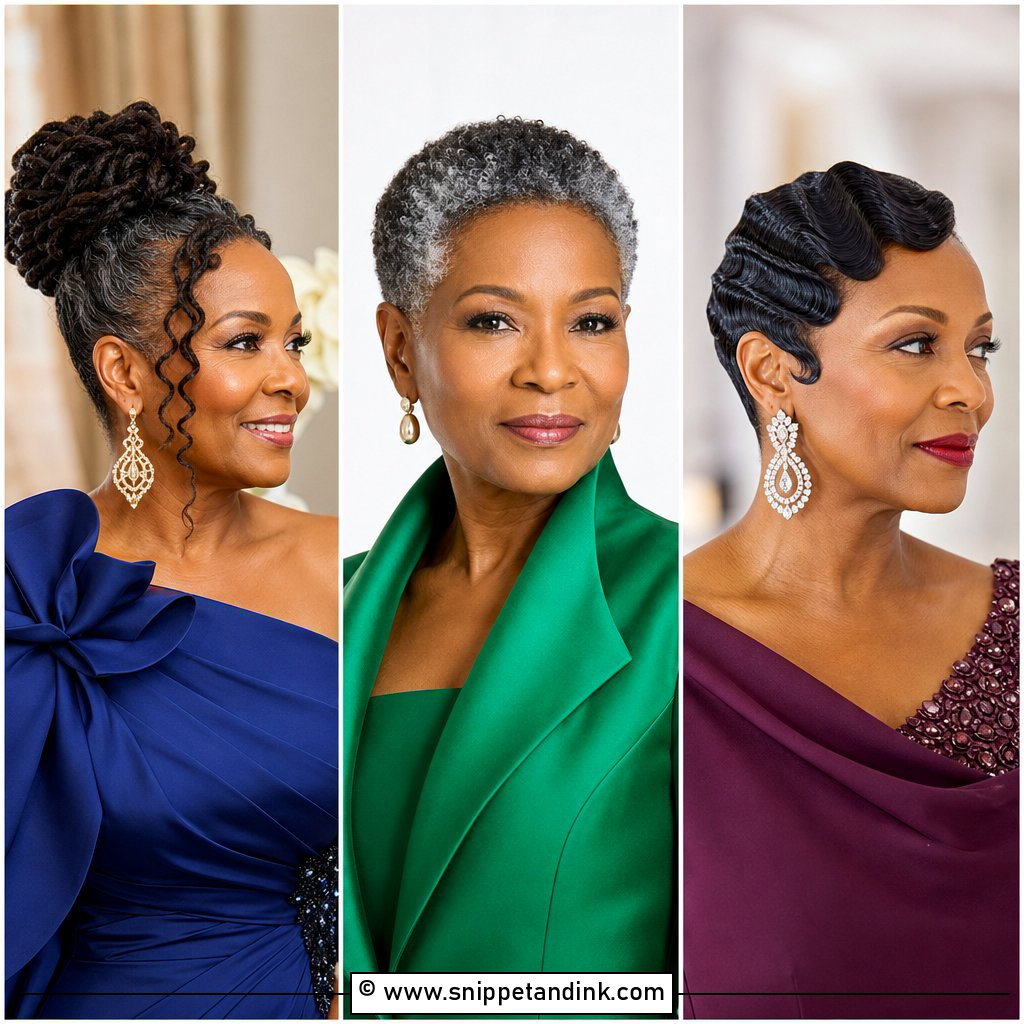
Curls are gathered into a soft, full bun, and fresh or silk flowers are woven through it. With natural curls, I’d lean toward silk flowers or very sturdy fresh ones, because curl creams and gels can leave residue on petals and the flowers may stain light hair accessories as they wilt. Leave one curled piece loose at the face. Matching the blooms to your bouquet ties it together. Bohemian, lace and outdoor gowns suit it.
16. French Roll Updo
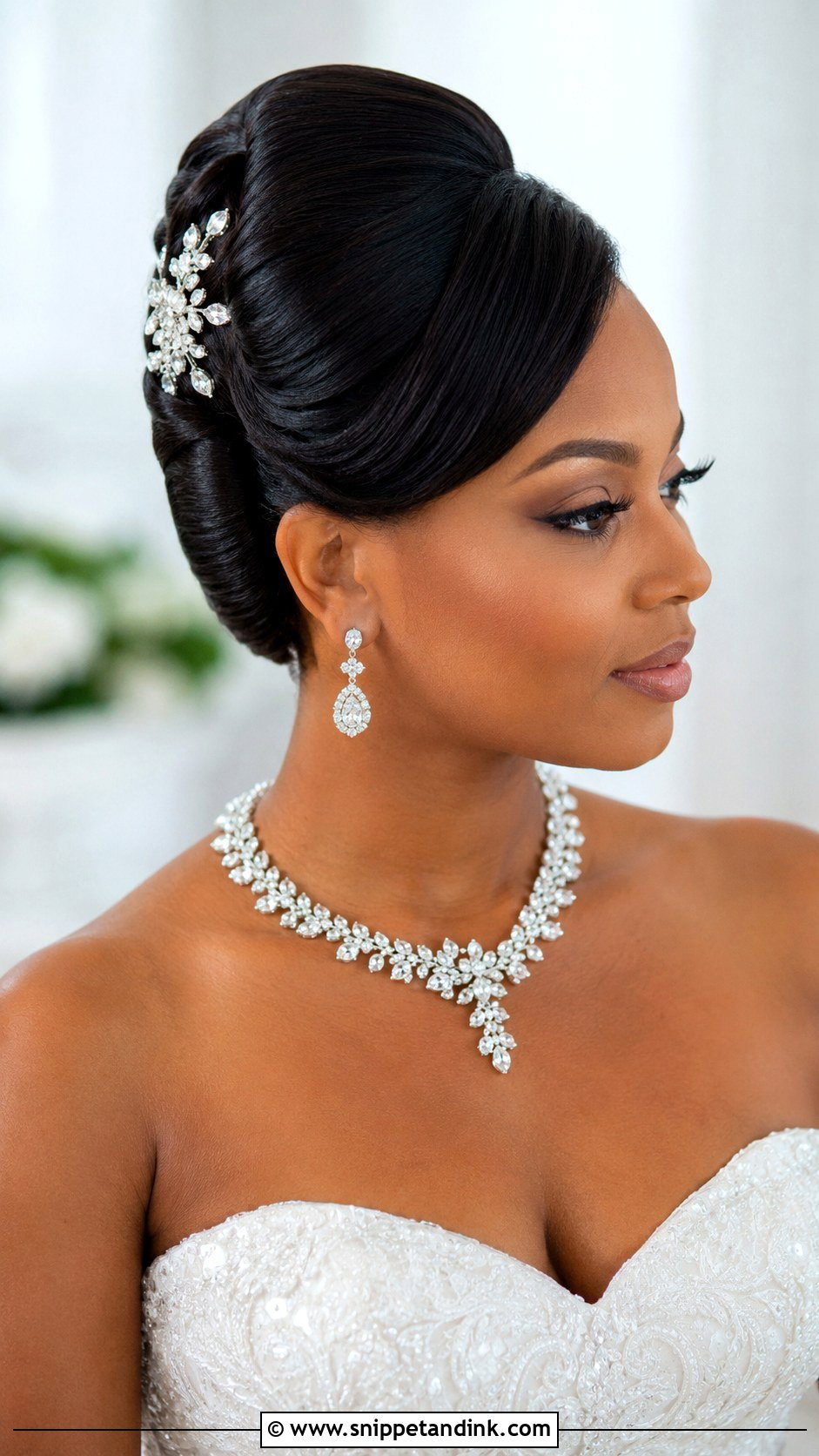
The French roll is swept to one side and rolled under into a smooth vertical tuck at the back. It needs smooth hair, so relaxed or freshly pressed hair works best. On a pressed style I set the roll with a light hold product, not a heavy oil, since oil makes the hair slip out of the pins. A sparkling pin or comb at the top of the roll is enough decoration. It suits classic formal gowns and statement jewelry.
17. Bantu Knot Updo
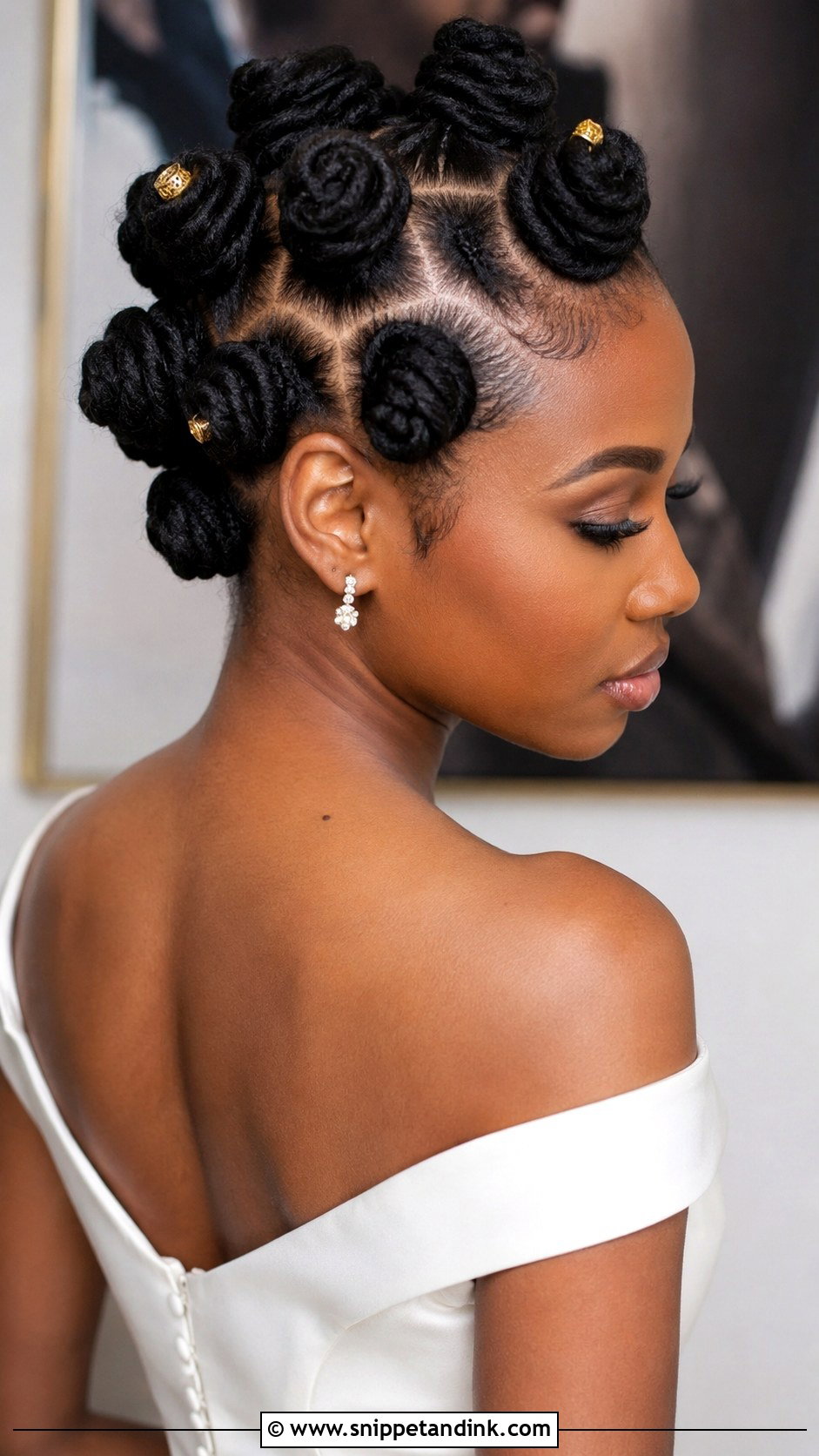
Bantu knots are sections of hair twisted and coiled into small raised knots, laid out in a pattern across the head. It’s a style with deep cultural roots, and the geometry is the whole point, so the parting has to be clean and even. Keep every knot intact for a bold pattern or unravel a few for softness. I check comfort here: each knot pulls on its section, so they shouldn’t be wound tight. Gold accents or small flowers between knots work with a modern gown.
18. Side-Swept Updo
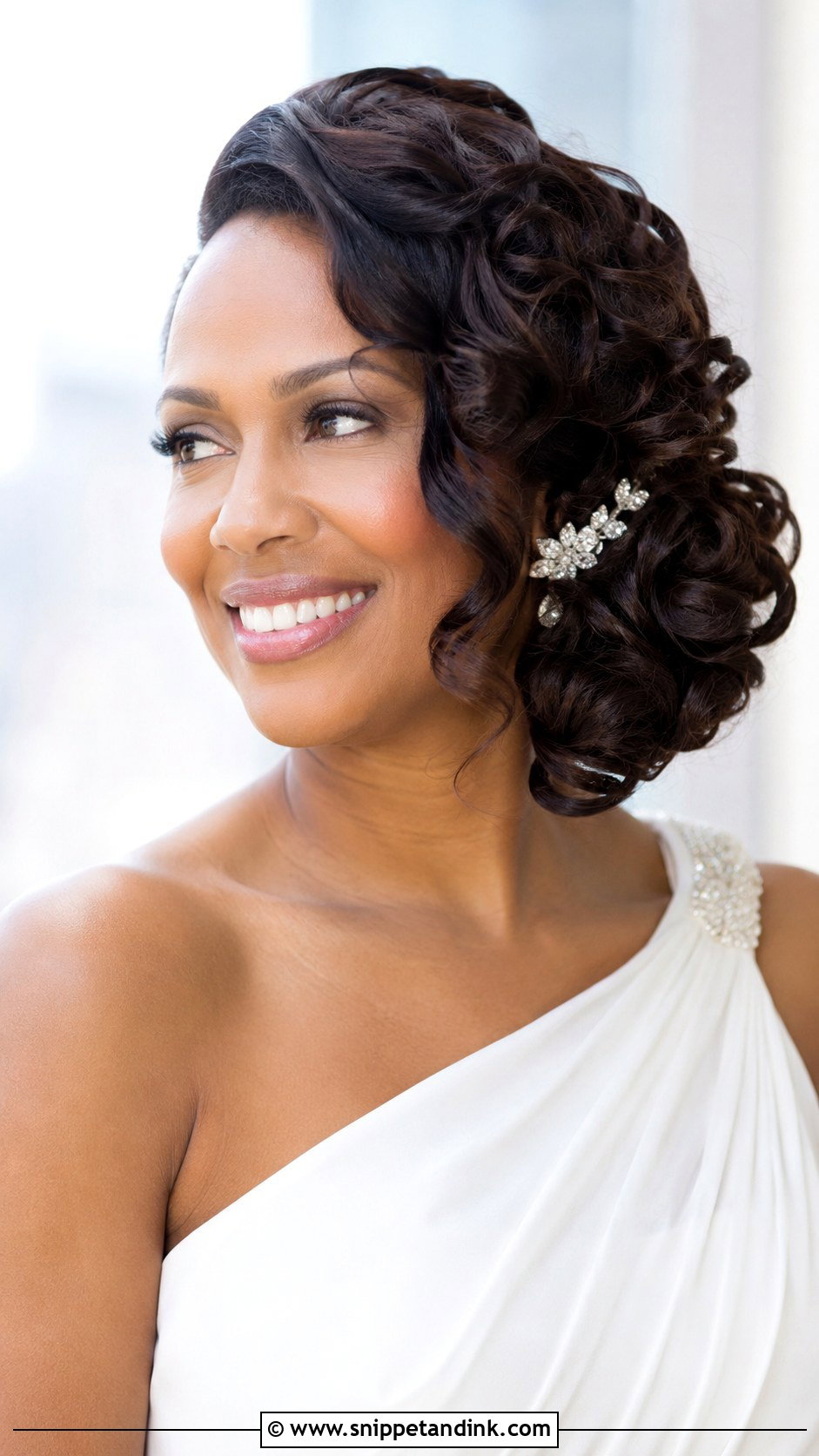
Hair is gathered to one side and pinned into a bun or a cluster of curls near the shoulder. Curls, braids and smooth waves all work. Place it on the side opposite the dress’s shoulder detail, so the asymmetric neckline and the hair balance each other rather than crowding one side. A jeweled pin or flower at the gathering point hides where the pins sit.
19. Marley Twist Updo
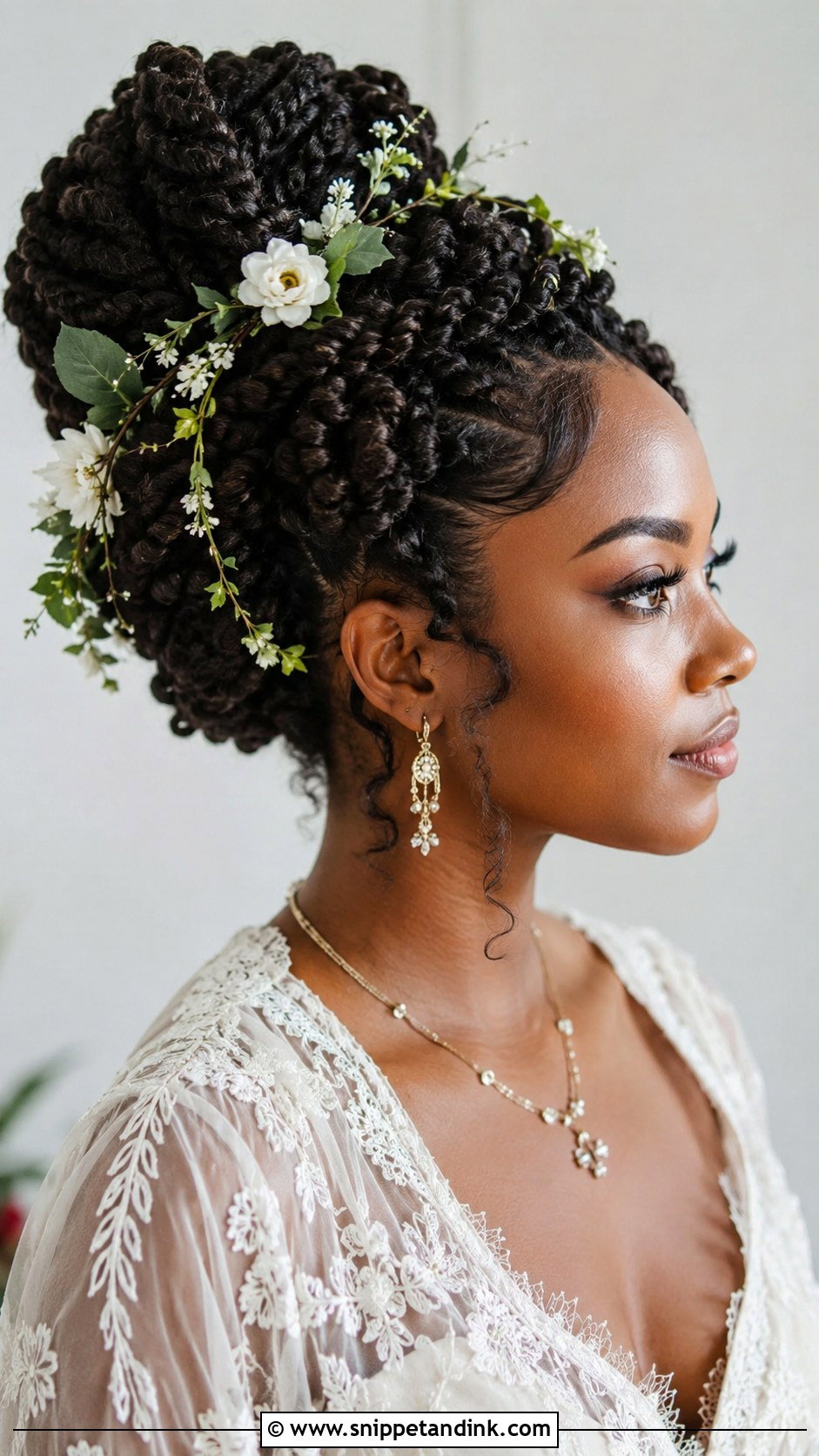
Marley twists use a coarser, more textured extension hair than smooth braiding hair, so the twists look fuller and closer to natural coils. That bulk makes a voluminous bun, crown or sculpted shape easy. They’re comfortable once installed and hold well for hours. They’re a little heavier than knotless braids, so if your twists are long, ask for them at mid-length. Fresh flowers, cuffs or vines suit an earthy or flowy gown.
20. Finger Wave Updo
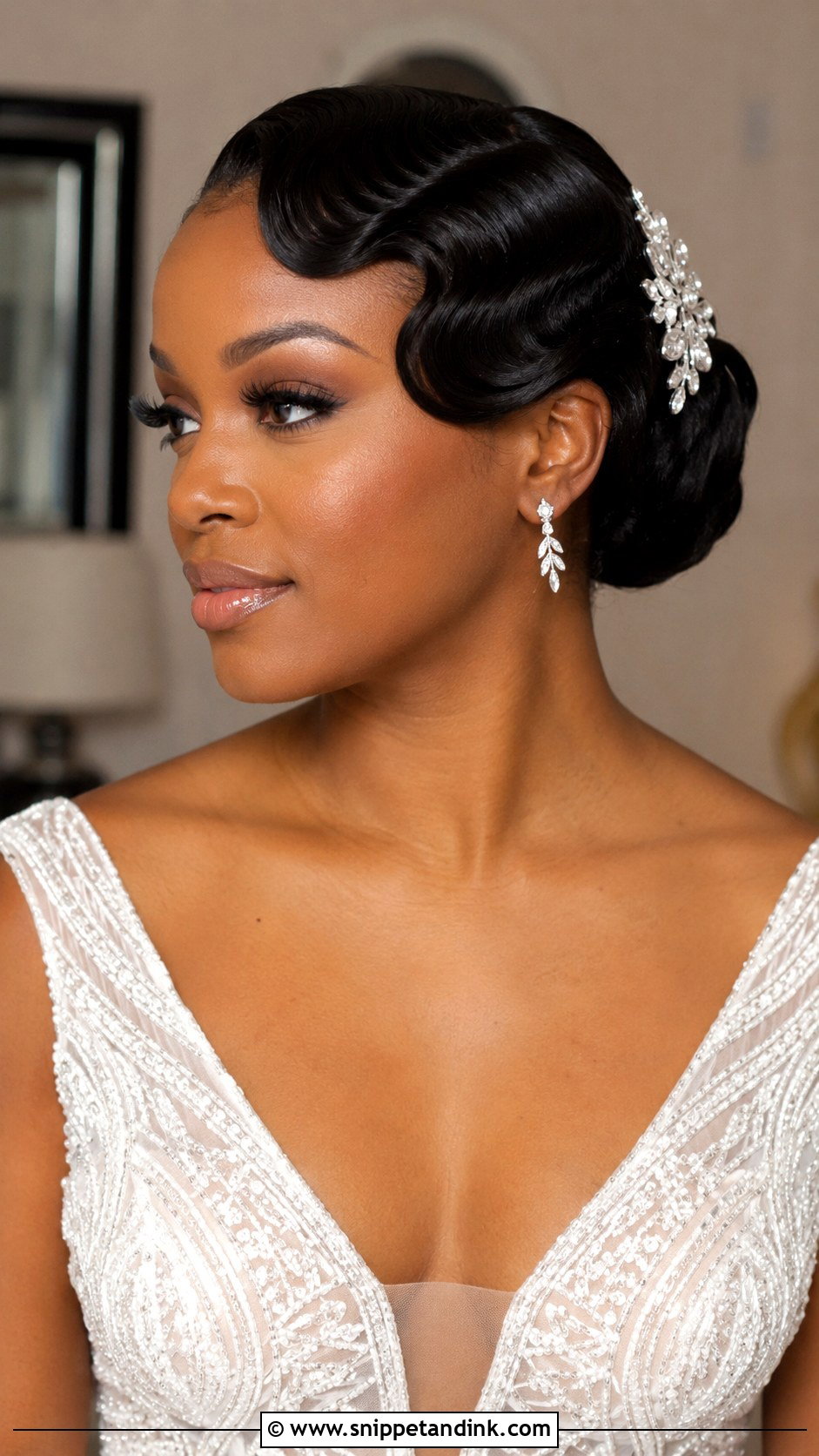
Finger waves are sculpted close to the head along the sides or front, with the rest gathered into a sleek bun or roll. They’re traditionally set with a strong setting gel and combed into shape, then left to dry before being touched. Relaxed or pressed hair holds them best. Pair the waves with art deco gowns and a jeweled comb. Once dry, they’re very durable; the risk is touching them while damp.
Where a Veil Comb Goes in Braids, Locs and Coils
A veil comb slides out of smooth, braided or loc’d hair more easily than out of loose waves, because there’s less hair to grip. I usually do one of three things. On braids and locs, I slide the comb under several braids at the back of the updo, so they hold it like a strap. On a curly puff or bun, I sew or pin the comb into the base of the bun with a couple of bobby pins crossed over its teeth. With a very heavy cathedral veil, I’ll sometimes use a small hidden braid or a wrapped base as a dedicated anchor.
Try the actual veil at your trial and walk around in it for a while. If it tugs, adjust then, not on the morning.
Protecting the Style the Night Before
If your hair is done the day before, sleep in a satin scarf or bonnet, or on a satin pillowcase. Cotton pulls moisture out of curls and roughs up a press. For curls and twist-outs, pineapple the hair loosely at the top of your head. For braids and locs, a long satin bonnet keeps lint and fuzz off. In the morning, refresh curls with a little water and cream rather than heavy product, so the texture stays soft for photos.
Your Hair, Your Heritage and the Updo That Fits Both
From sleek low buns and chignons to bold faux hawks, goddess braids and flower-filled curls, there’s an updo here for every texture. Choose based on your hair as it is now, the dress you’ll wear and how much time your stylist or braider needs. Bring photos of what you love to your consultation, plan the install or press dates around the wedding, and add the personal pieces that mean something to you: gold cuffs, fresh blooms or family beads.
You'll Like These Ideas:


Leave a Reply