
The right wedding dress is rarely the prettiest gown on the rail. It’s the one your body, venue and schedule can actually live in from the first photo to the last dance. Bridal collections right now lean toward soft structure, clean tailoring, pearl accents, floral texture, drop waists and detachable layers, usually in warm ivory rather than stark white. I’ve built each idea below as a full outfit, with the veil, shoes and jewelry I’d put with it, because those choices change how a dress reads almost as much as the dress does. Start with the silhouettes that suit your setting and let the details follow.
The Bra, the Shoes and the Two People to Bring to Your First Appointment
The first salon visit sets the tone for the whole search, and a little preparation stops you falling for a dress for the wrong reasons.
- Wear a nude strapless bra or a bodysuit, and bring shoes close to the height you plan to wear. Salons keep sample shoes, but your own give a truer idea of the hem.
- Bring one or two people whose taste you trust. A big group gives a dozen opinions and usually leaves the bride more confused.
- Save a handful of dress photos you like and notice what they share, such as a neckline or a fabric. That pattern tells your consultant more than any single picture.
- Know your budget including alterations and say it at the start, so you aren’t shown gowns you can’t buy.
Samples usually come in one standard size and are clipped to fit, so judge the shape and fabric rather than the exact fit. A good consultant will clip the back to show you how it would sit after tailoring.
Book that first visit early in the search, before you’ve scrolled through hundreds of photos, and choose a weekday if you can. Salons are quieter then, and the consultant has more time to pull options you wouldn’t have picked yourself.
1. A Line Wedding Dress With Pearl Veil
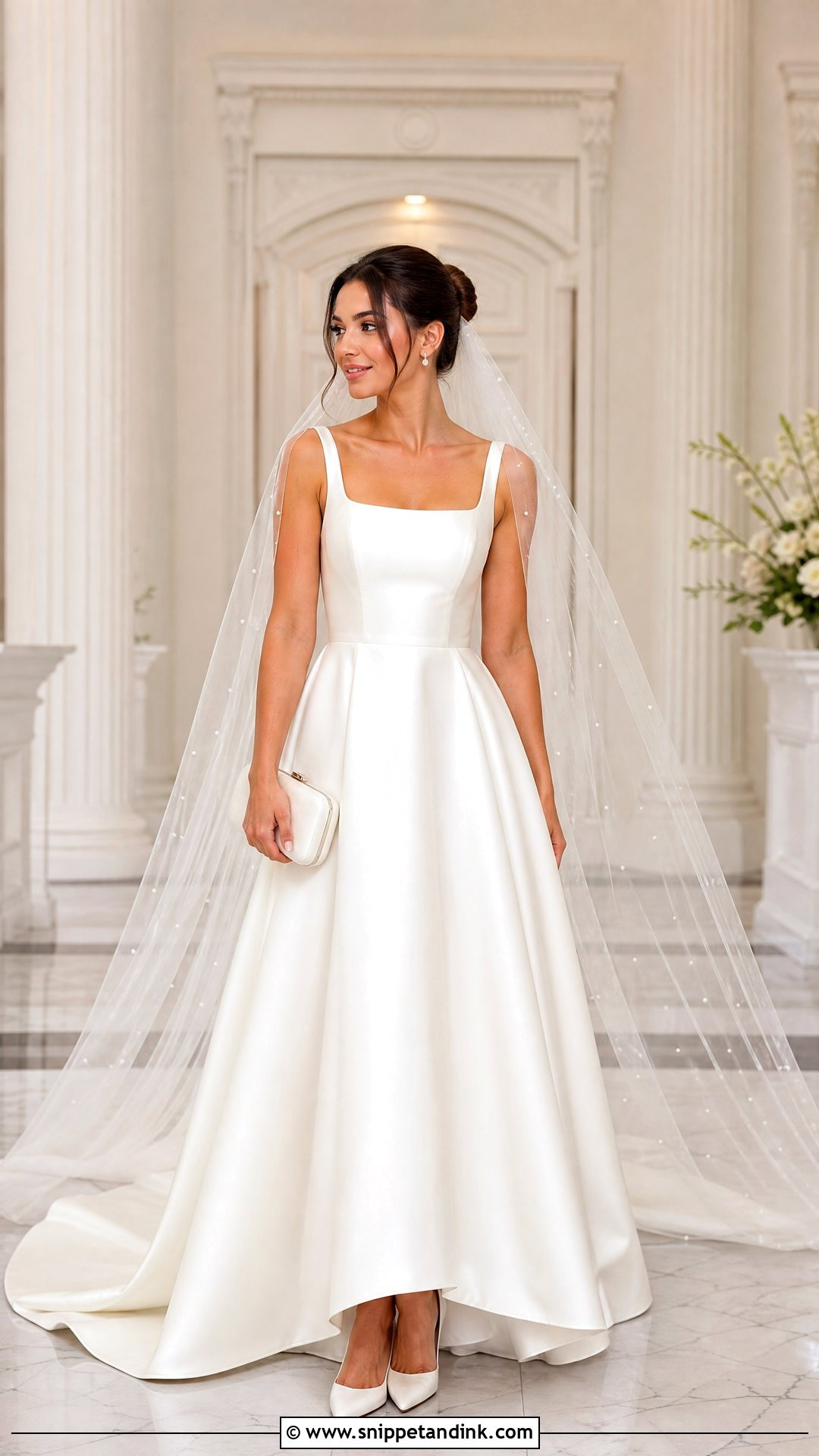
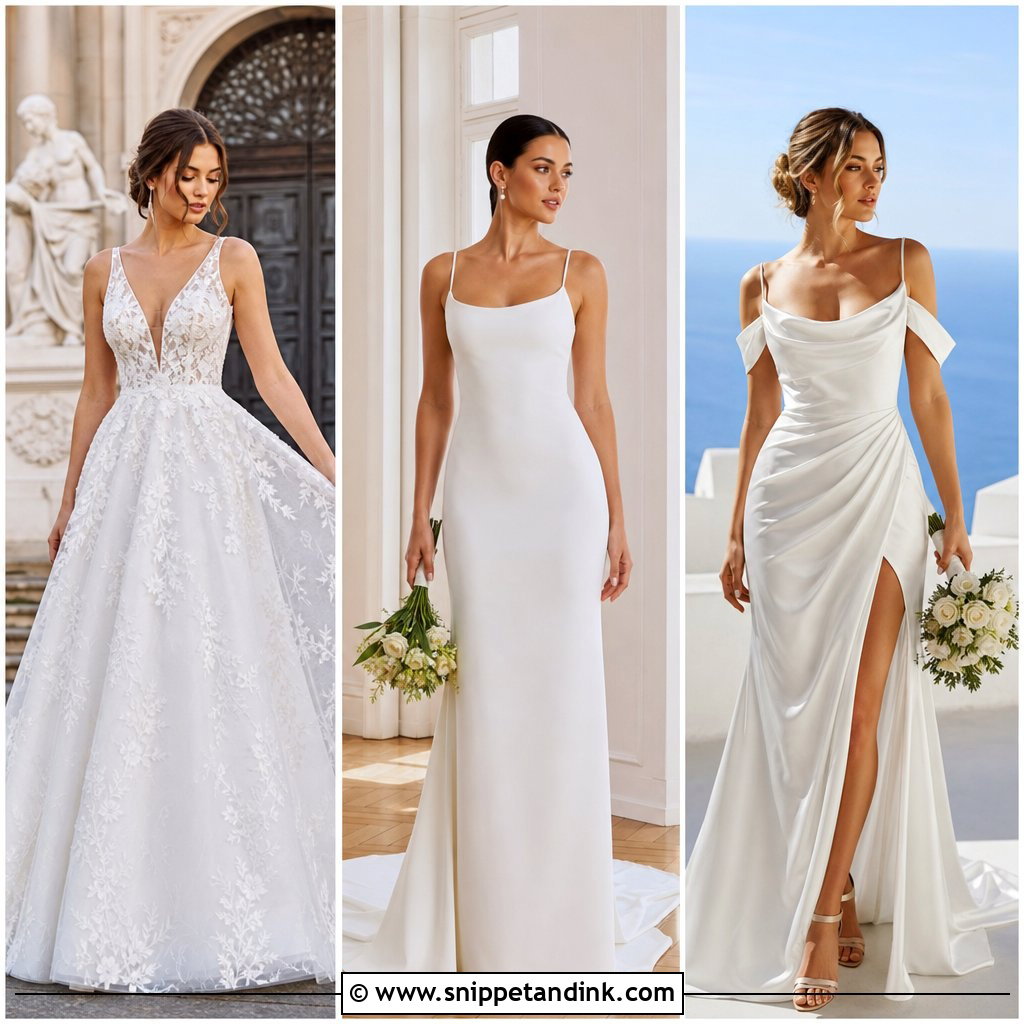
When a bride walks in unsure, this is the first silhouette I pull, because a fitted bodice with a skirt that releases from the waist suits nearly every figure. Fabric sets the mood: mikado holds a crisp shape, satin shines, soft tulle floats. A pearl veil adds detail at eye level without weight. Check that the pearls are sewn rather than glued, since glued ones pop off the first time the veil catches. Pearl drops, pointed ivory heels and a small satin clutch finish it.
2. Strapless Wedding Dress With Satin Gloves
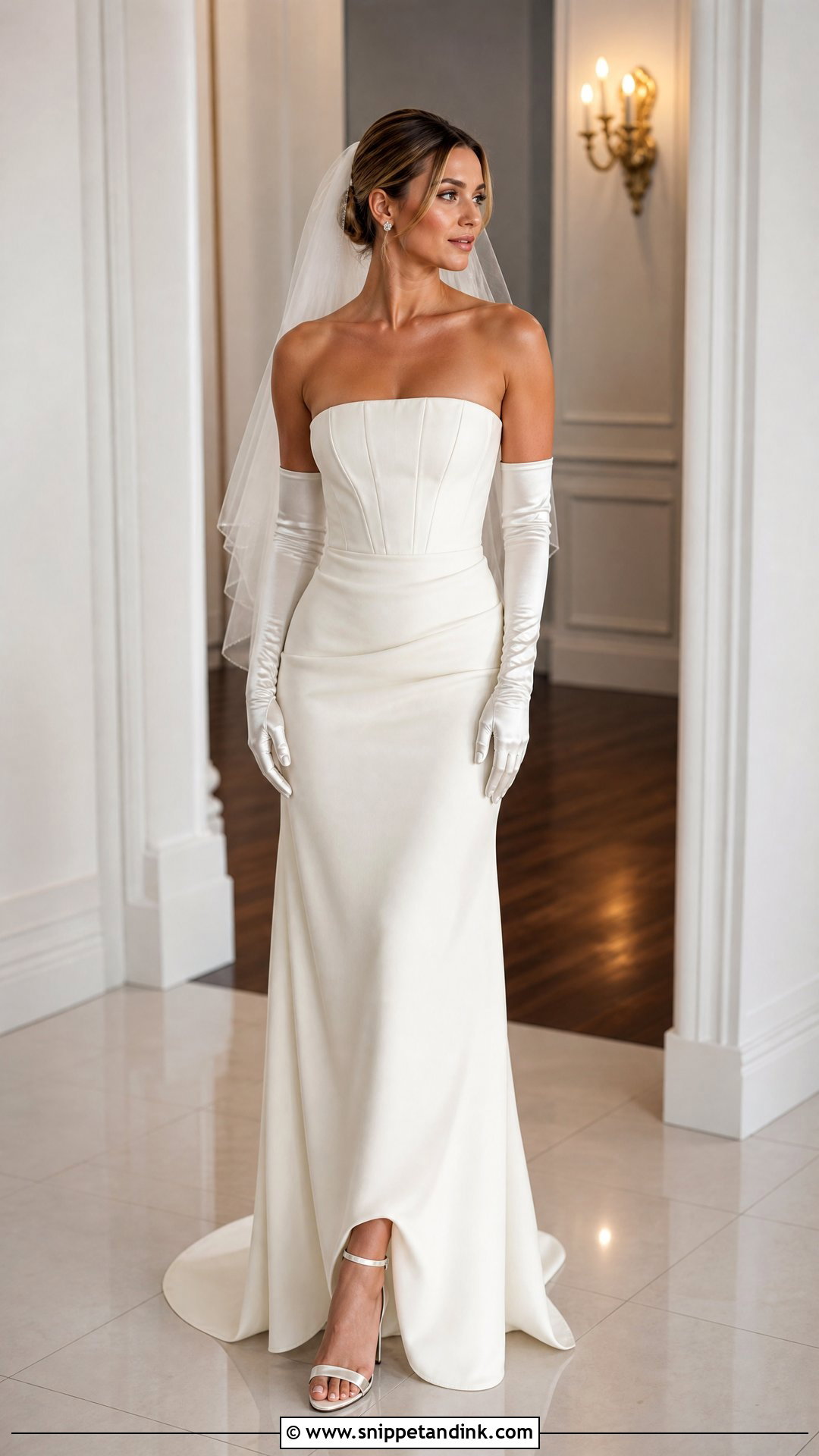
Satin gloves are the one accessory I’d let a plain strapless gown carry, since the bare neckline and arms leave room for them. The bodice has to do real work here, with boning, a waist stay and a snug top edge, or you’ll be hitching it up all evening. A smooth bun, crystal studs and delicate ankle-strap heels keep the rest clean. Decide in advance whether the gloves come off for the ring exchange, and who holds them.
3. Long Sleeve Lace Wedding Dress
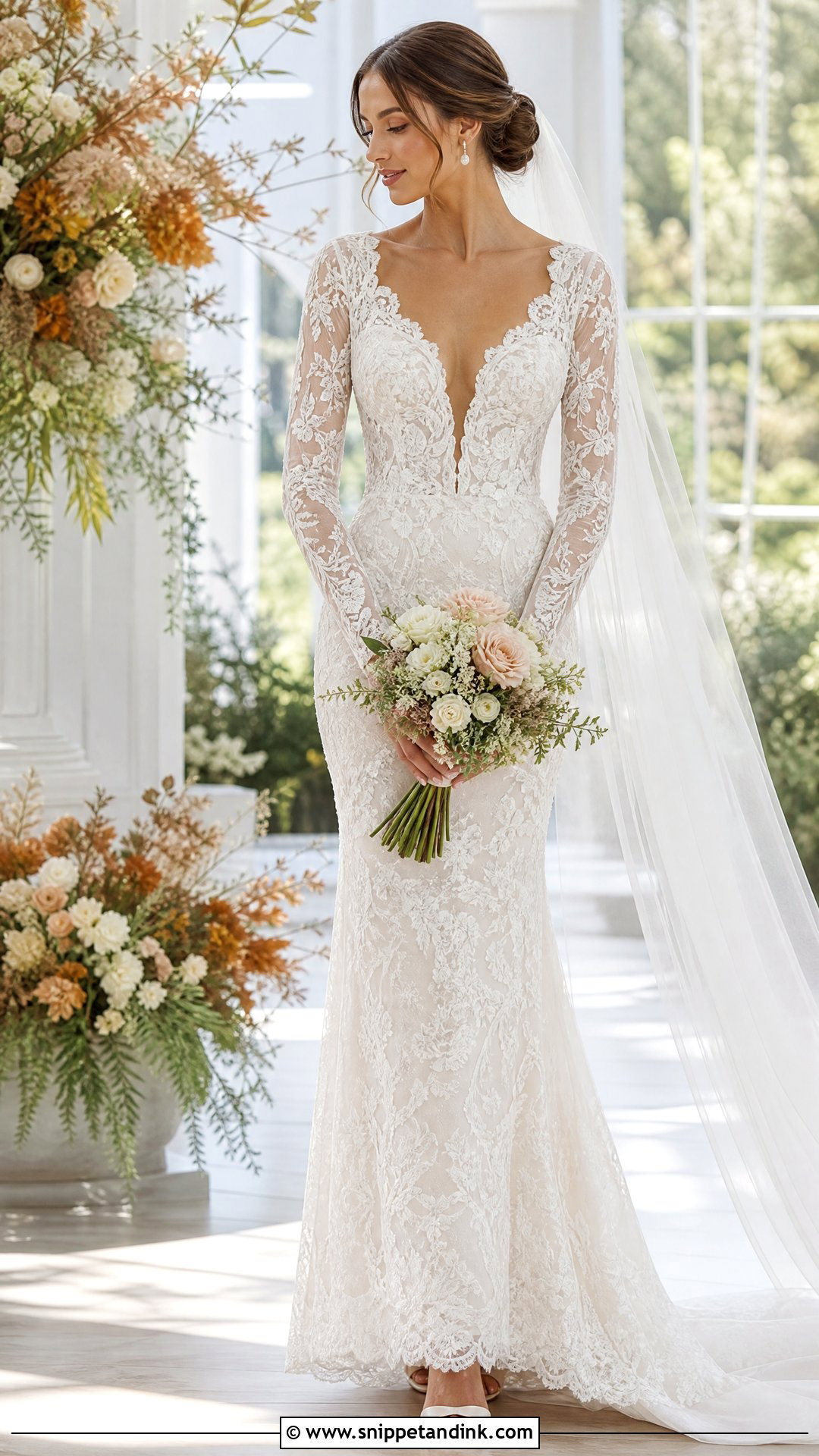
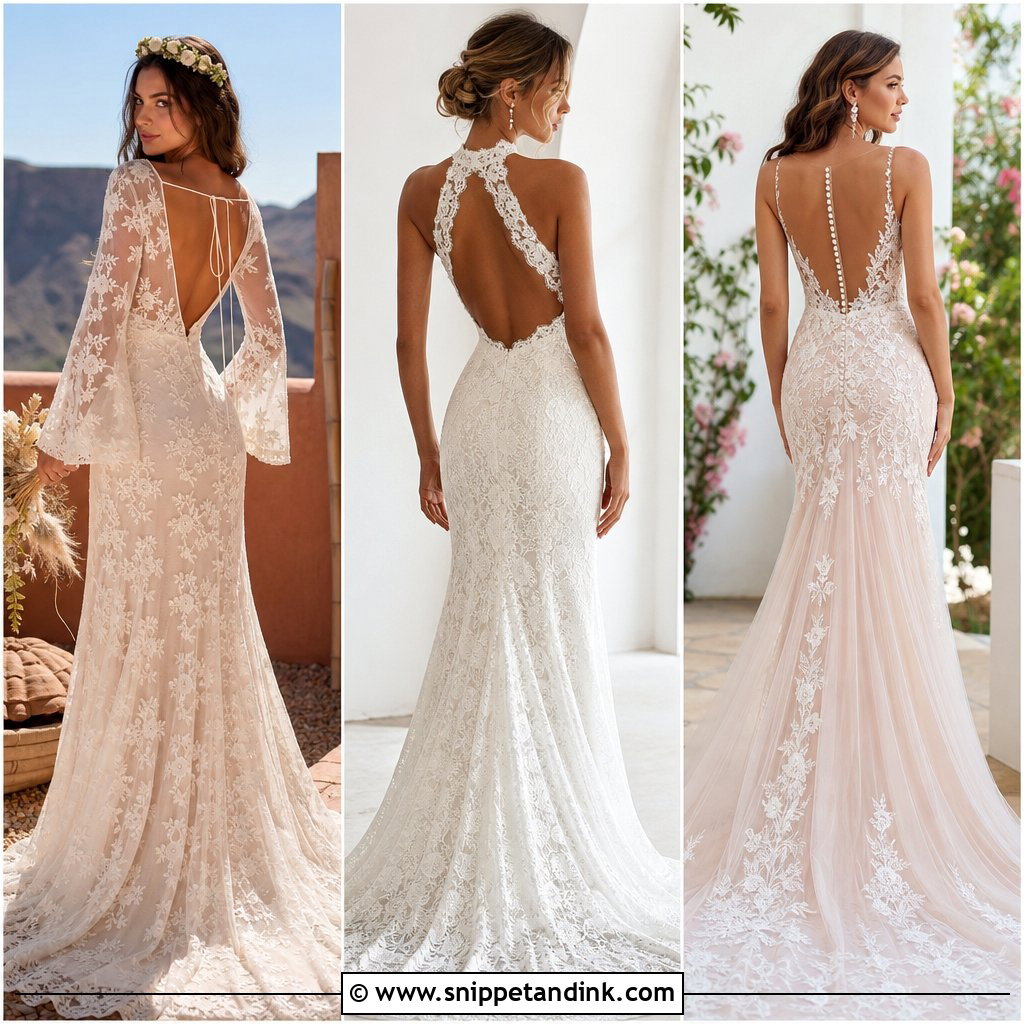
Lace sleeves can be sheer, lined, fitted or slightly flared, and that choice matters more for comfort than for looks. Fitted lace without stretch restricts your arms, so test a full hug and a raised toast before ordering. Floral lace suits outdoor settings; graphic lace feels more modern. Simple ivory heels, a low chignon and tiny earrings let the lace lead, with a plain veil that won’t compete. I’d suggest it for fall, winter and cool spring ceremonies.
4. Satin Slip Wedding Dress With Low Bun
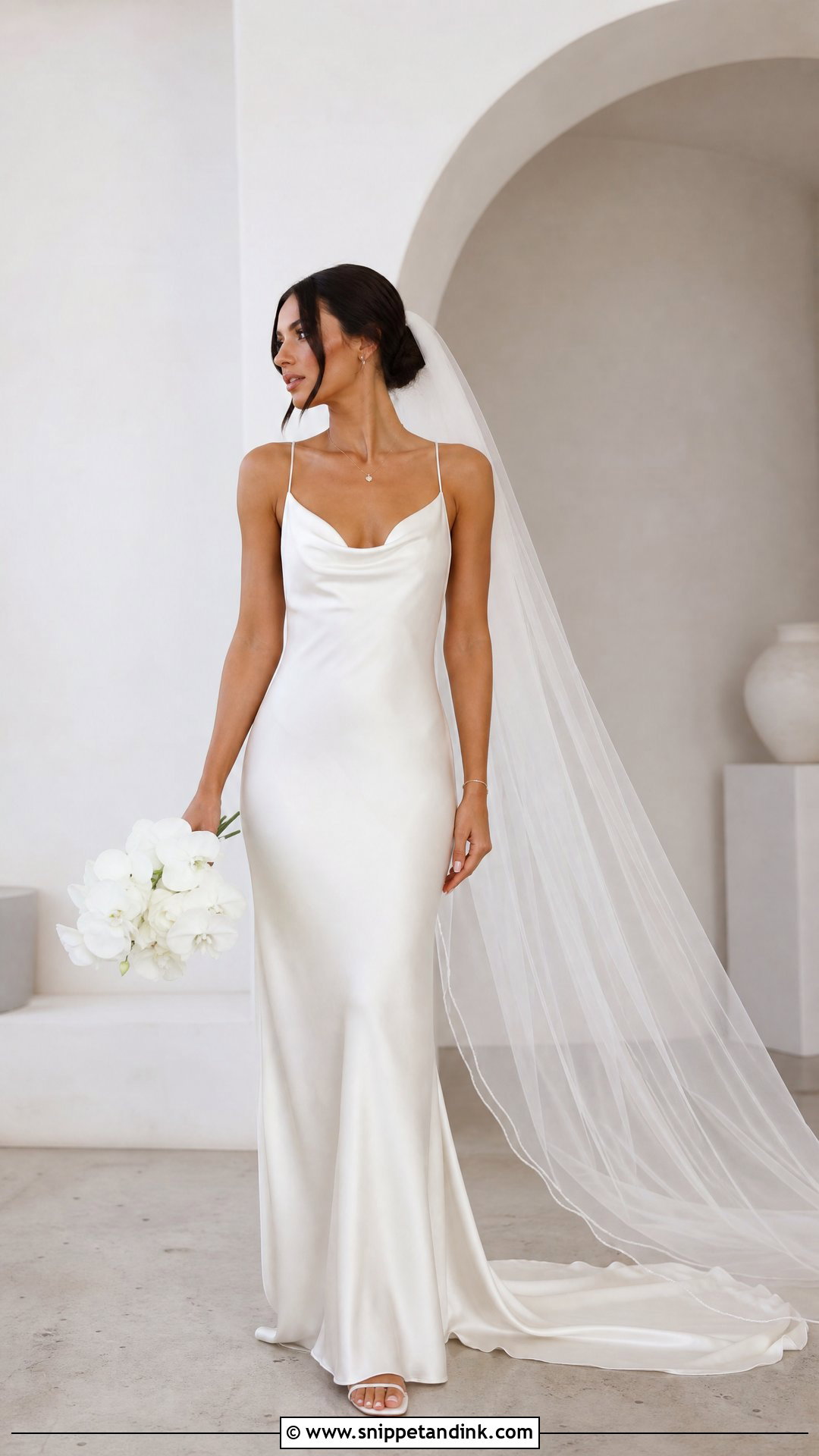
With a slip dress, the drape is the design, so fit matters more than any decoration. A bias cut skims the body because the fabric runs diagonally and gives slightly, but that same give shows every line underneath, so smooth, invisible underwear is essential. Style it with a low bun, strappy ivory sandals and fine jewelry, and add a sheer or scarf-style veil to make it read bridal. Small weddings and warm-weather ceremonies suit it best.
5. Ball Gown Wedding Dress With Long Veil
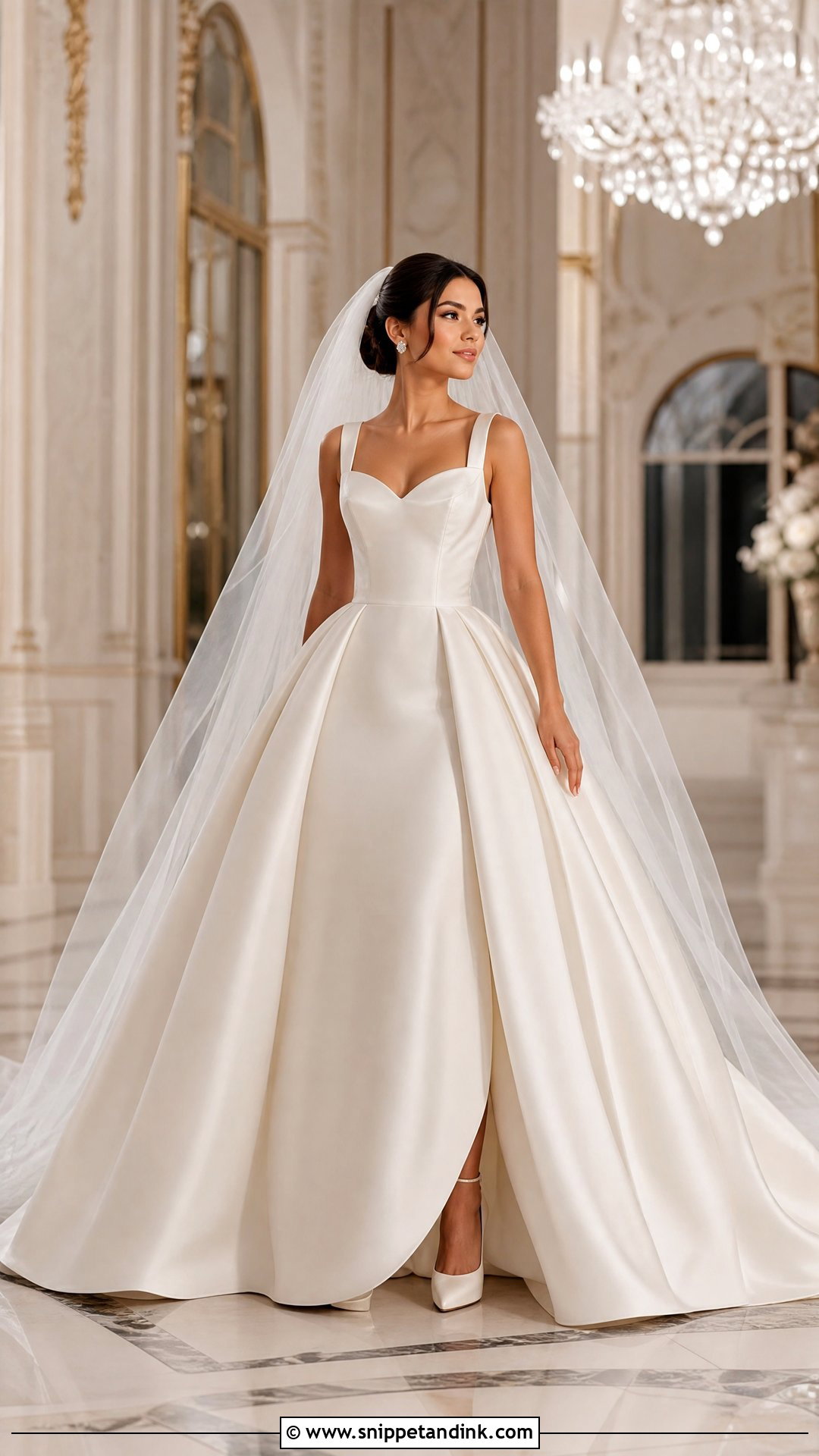
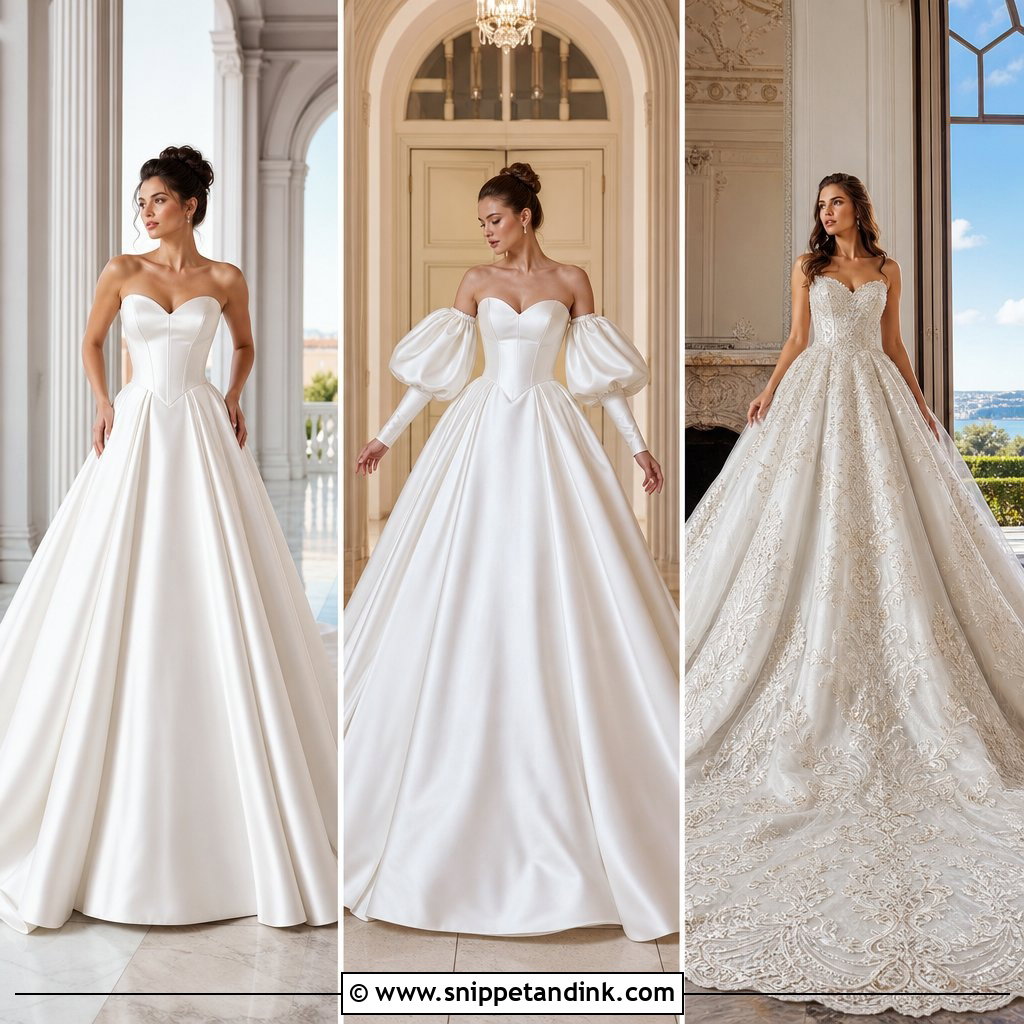
A ball gown delivers ceremony drama with nothing more than a full skirt and a defined waist. Clean satin looks modern, layered tulle softer, and a long veil adds movement as you walk. I steer ball-gown brides toward comfortable block heels, since nobody sees them under the skirt and you’ll be standing for hours. Check the venue’s doorways, aisle width and bathrooms too. A skirt this size needs space and a helper.
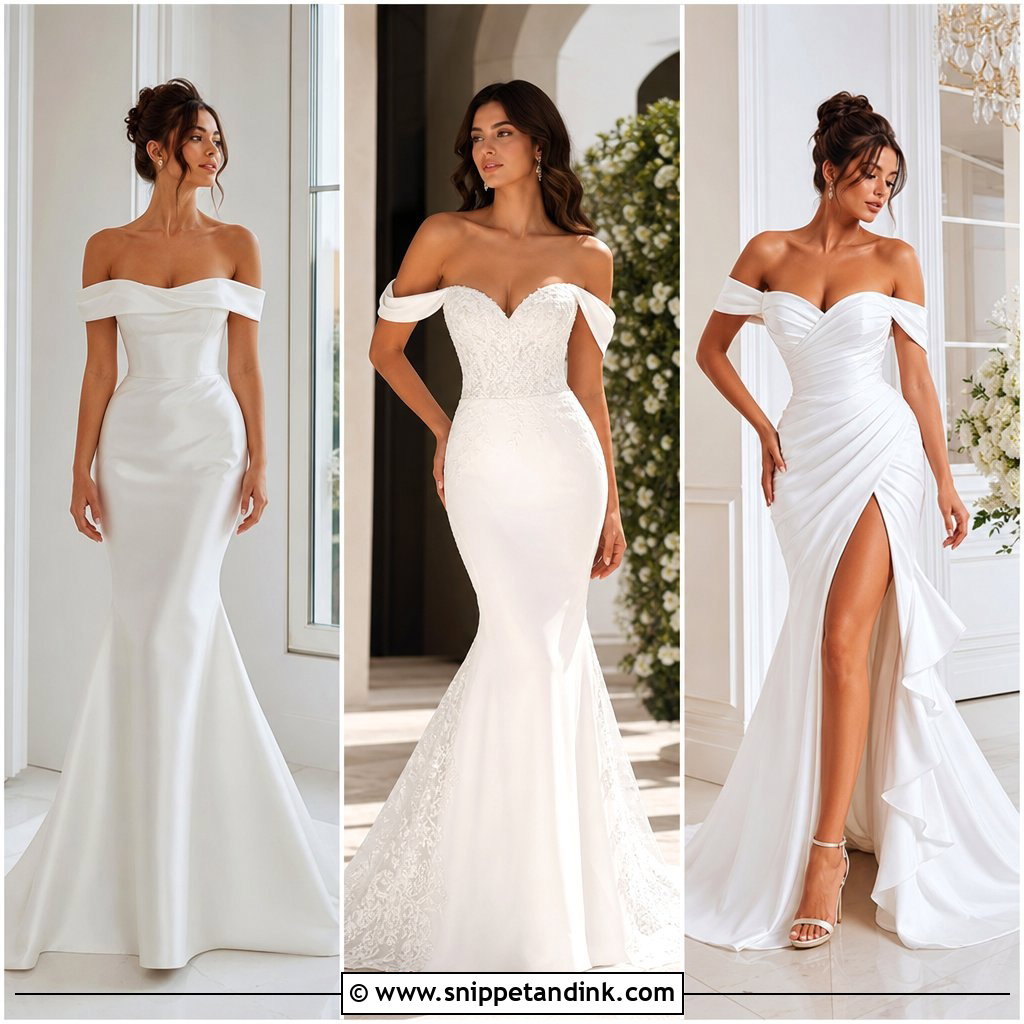
6. Off Shoulder Wedding Dress With Soft Curls
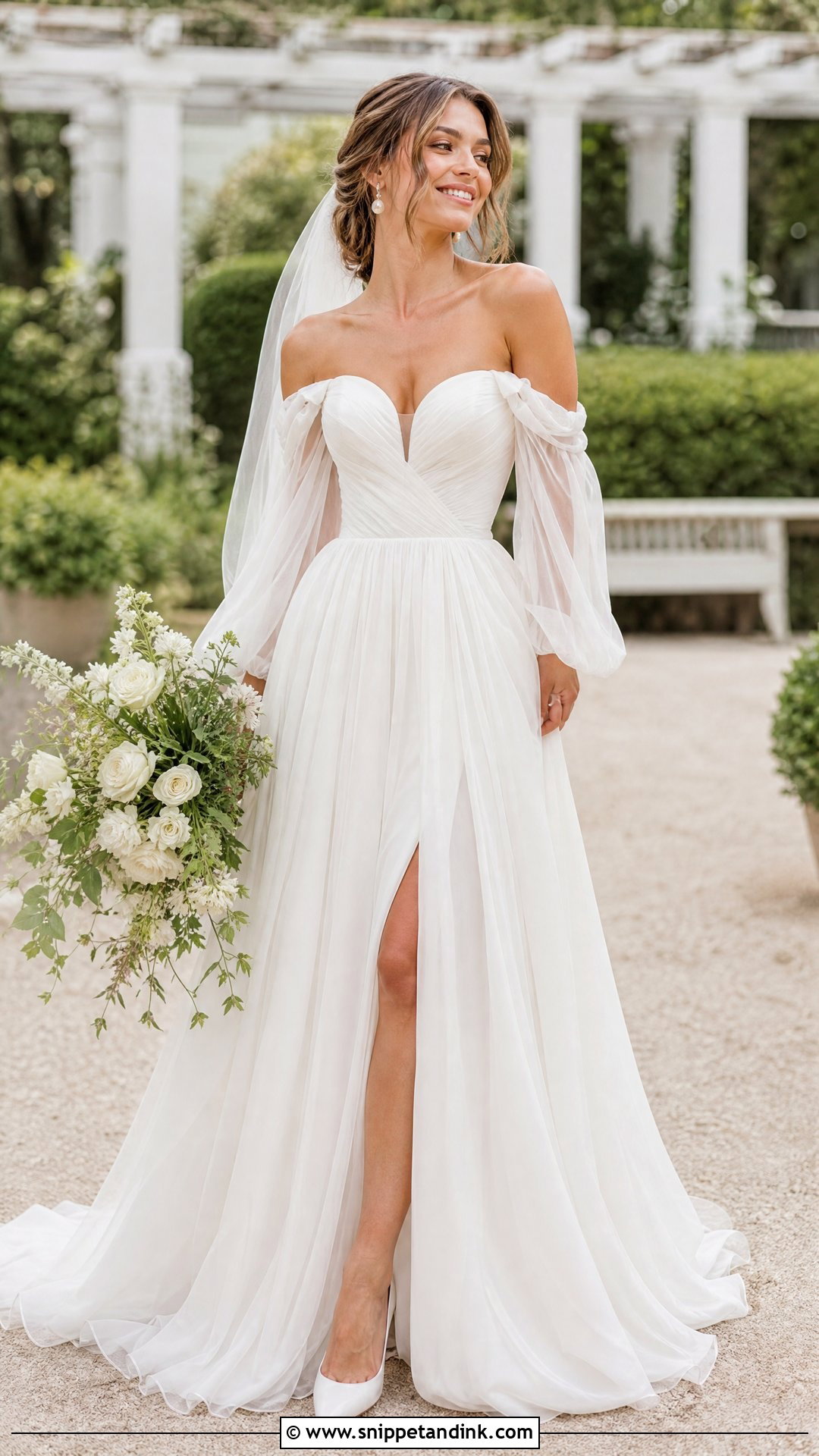
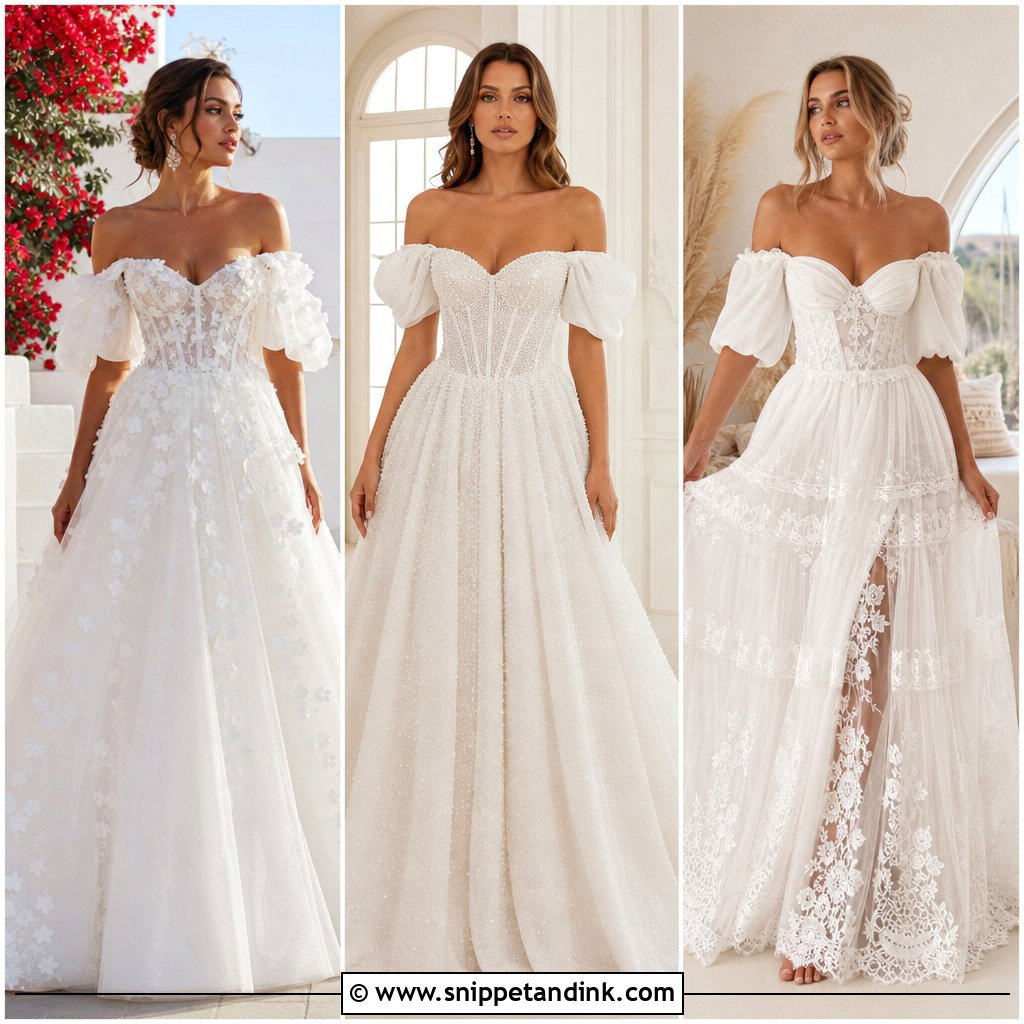
Off-shoulder sleeves sit across the upper arms, covering them while leaving the shoulders bare. Soft curls pinned to one side with a small comb pair naturally with the neckline. Satin, crepe, lace and tulle all work. My checkpoint at the fitting is simple: raise your arms. If the band digs in, ask for a little stretch in the sleeve so you can still hug and dance. Pearl earrings and a veil anchored below the curls finish it.
7. Square Neck Wedding Dress With Pearl Earrings
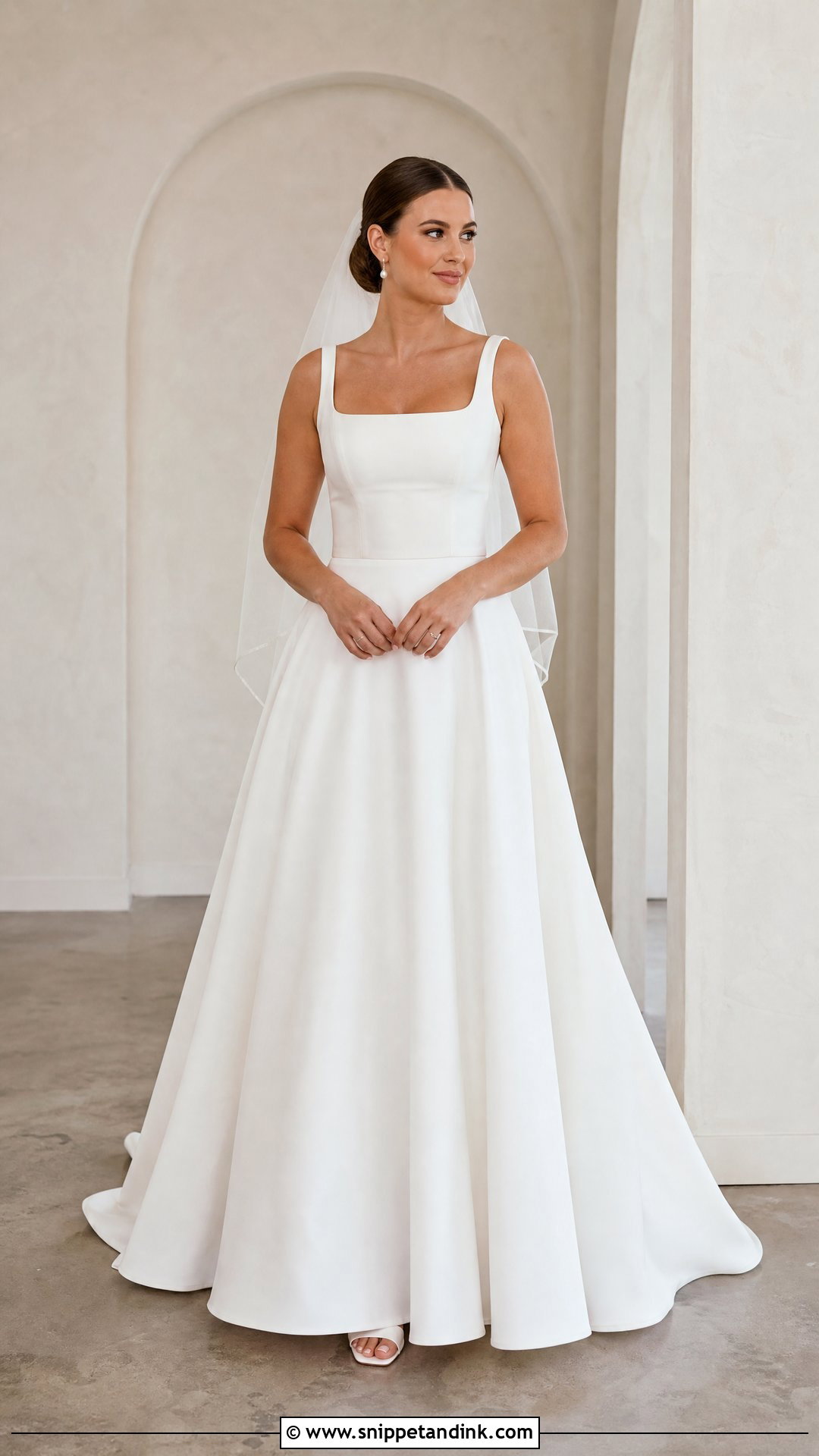
Square necklines open the chest without plunging, and their straight lines make the bodice look structured. They also adjust well. A seamstress can raise the edge or add hidden cups, which is why they work across so many bust sizes. Pearl earrings soften the sharp line. A sleek updo, satin heels and a fingertip veil keep it balanced over an A-line or column skirt.
8. Drop Waist Wedding Dress With Tulle Skirt
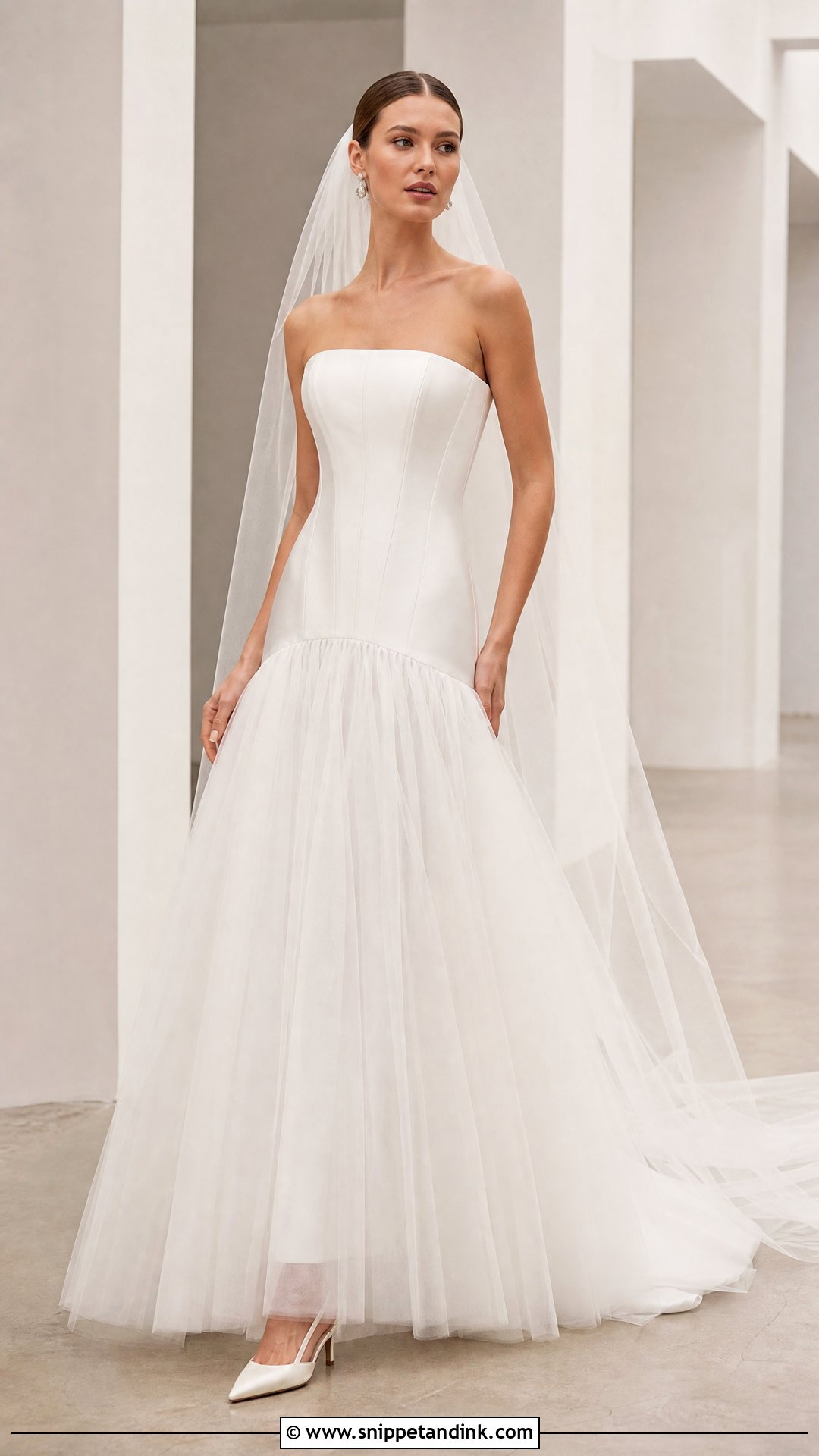
A drop waist wedding dress lengthens the torso before opening into a soft skirt, and it’s one of the most fashion-led shapes in bridal right now. It flatters a longer torso most. On a shorter torso, I ask for the drop to sit just below the natural waist instead of at the hip, or the legs can look shortened. A structured bodice reads sculptural, a tulle skirt adds lightness, and a long veil keeps the eye on the waist detail.
9. Mermaid Wedding Dress With Crystal Heels
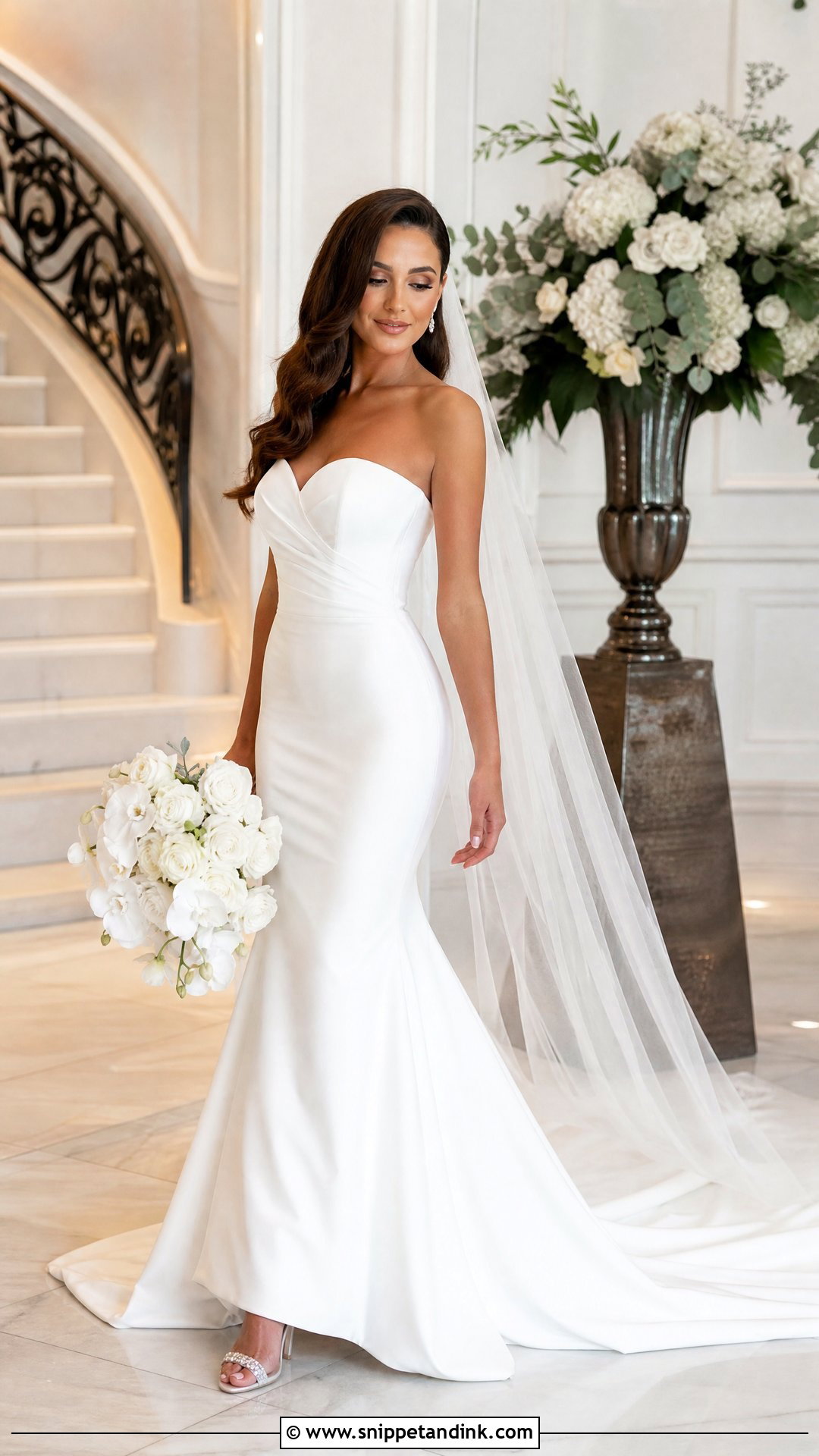
A mermaid wedding dress hugs the bodice, waist and hips before flaring near the knee. Choose a fabric with structure, such as crepe, satin or lace over lining, because thin fabric shows every line. Crystal heels add sparkle so jewelry can stay small. Be honest at the fitting: if you can’t climb a step or sit without hitching the skirt, ask for the flare to start lower. Side-part waves suit it for an evening wedding.
10. Floral Applique Wedding Dress With Garden Veil
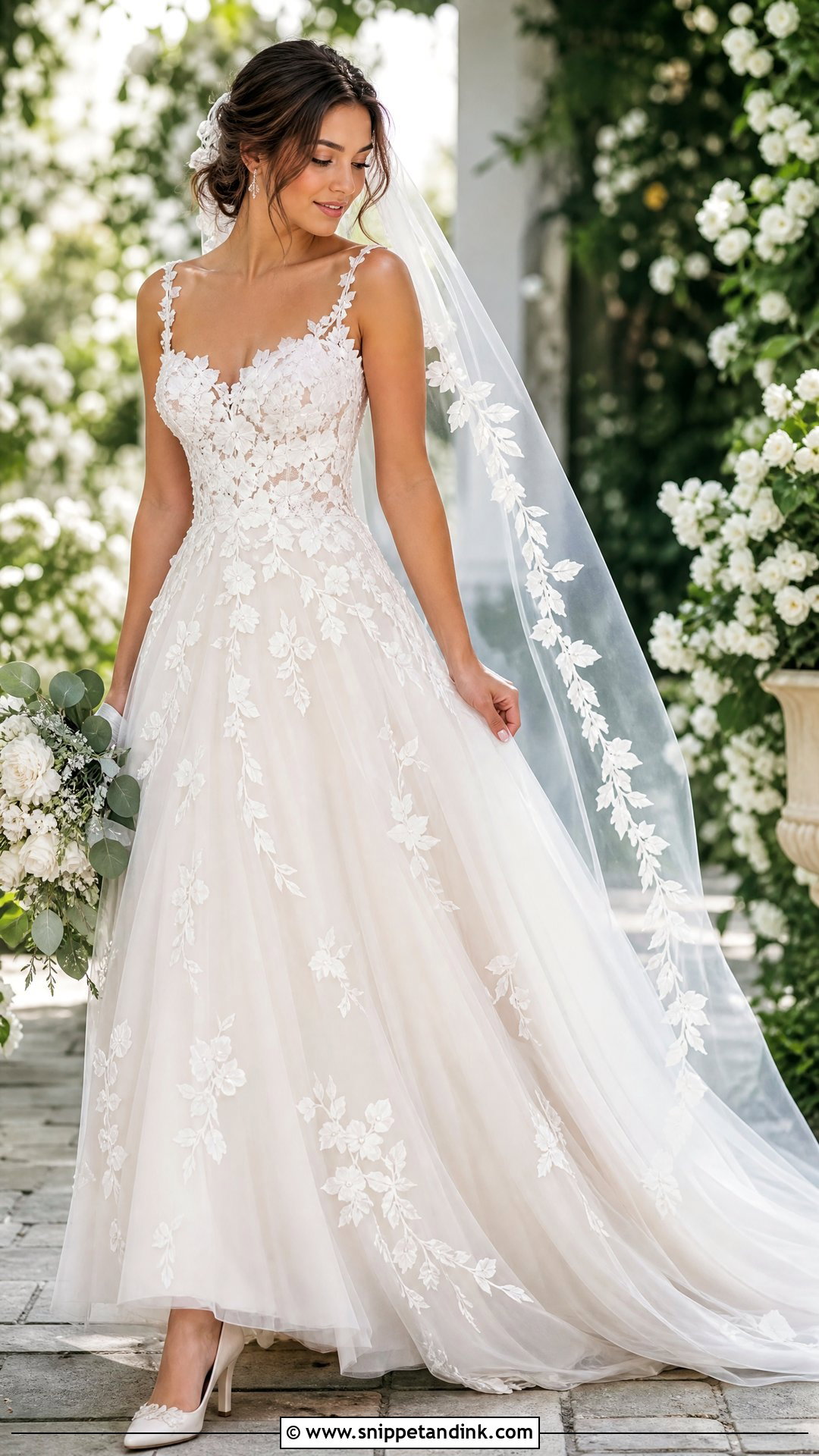
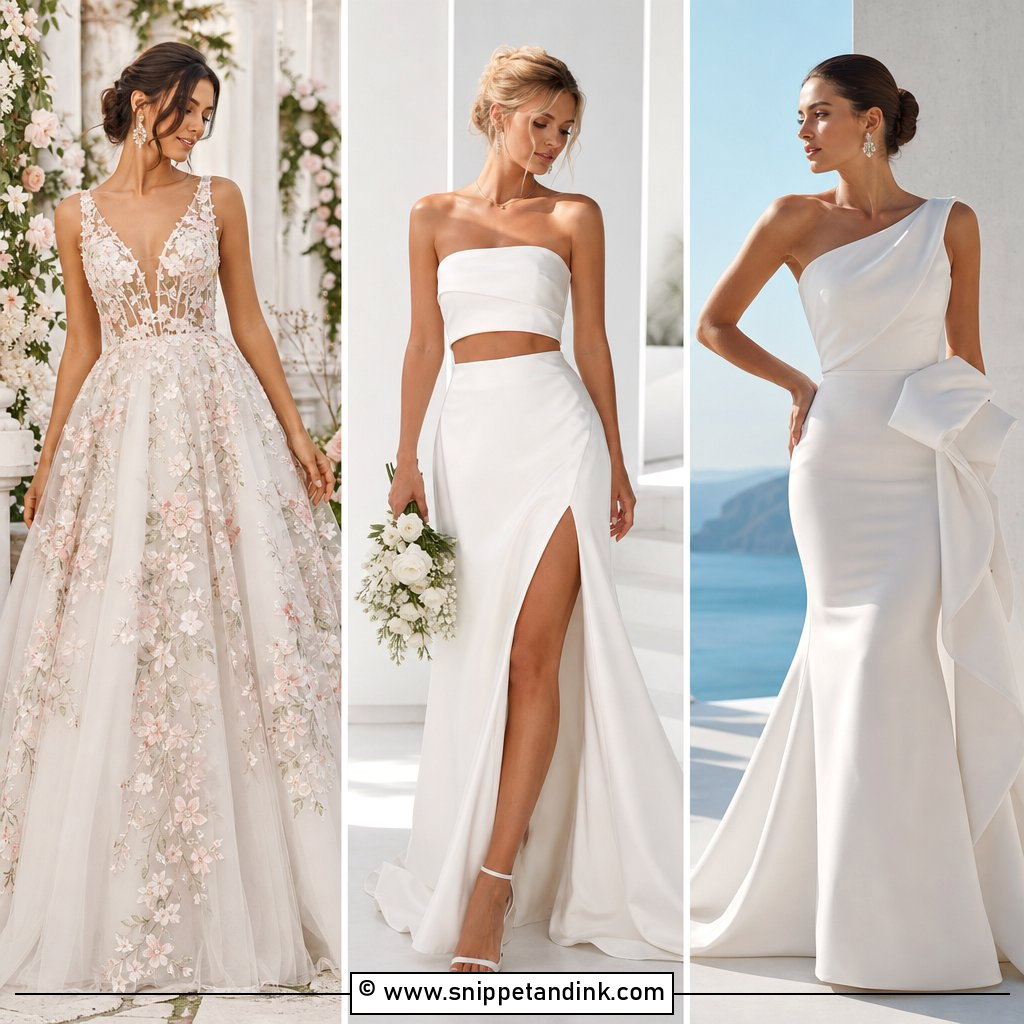
Appliqué flowers can be scattered across sheer layers or packed onto the bodice, and they bring texture without heavy sparkle. I like them most when they echo the actual wedding flowers, which your florist can match if you share a close-up photo of the dress. A veil with subtle floral edging ties it together. Shoes need to handle grass, so ivory sandals or low heels, and a loose updo keeps attention on the dress.
11. Minimalist Crepe Wedding Dress With Sleek Veil
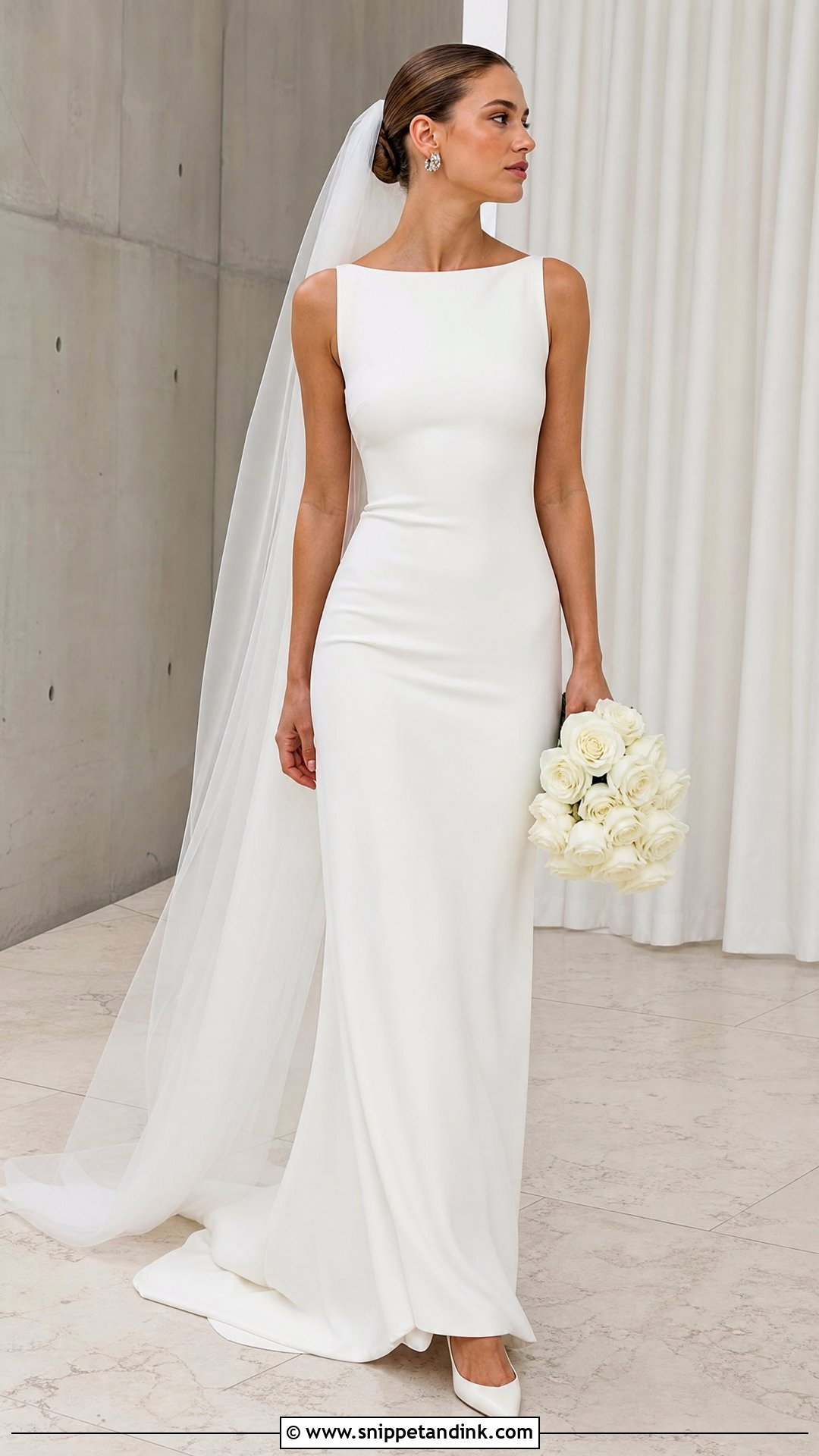
Crepe has enough weight to skim the body and stays comfortable all day, which is why minimalist brides love it. Because there’s nothing to hide behind, I look hard at the seams, buttons and hem; any puckering shows from across the room. A square neckline, long seams, a low back or covered buttons add interest without clutter. Pointed pumps, sculptural earrings, a polished bun and a sleek veil suit a city wedding.
12. High Neck Wedding Dress With Open Back
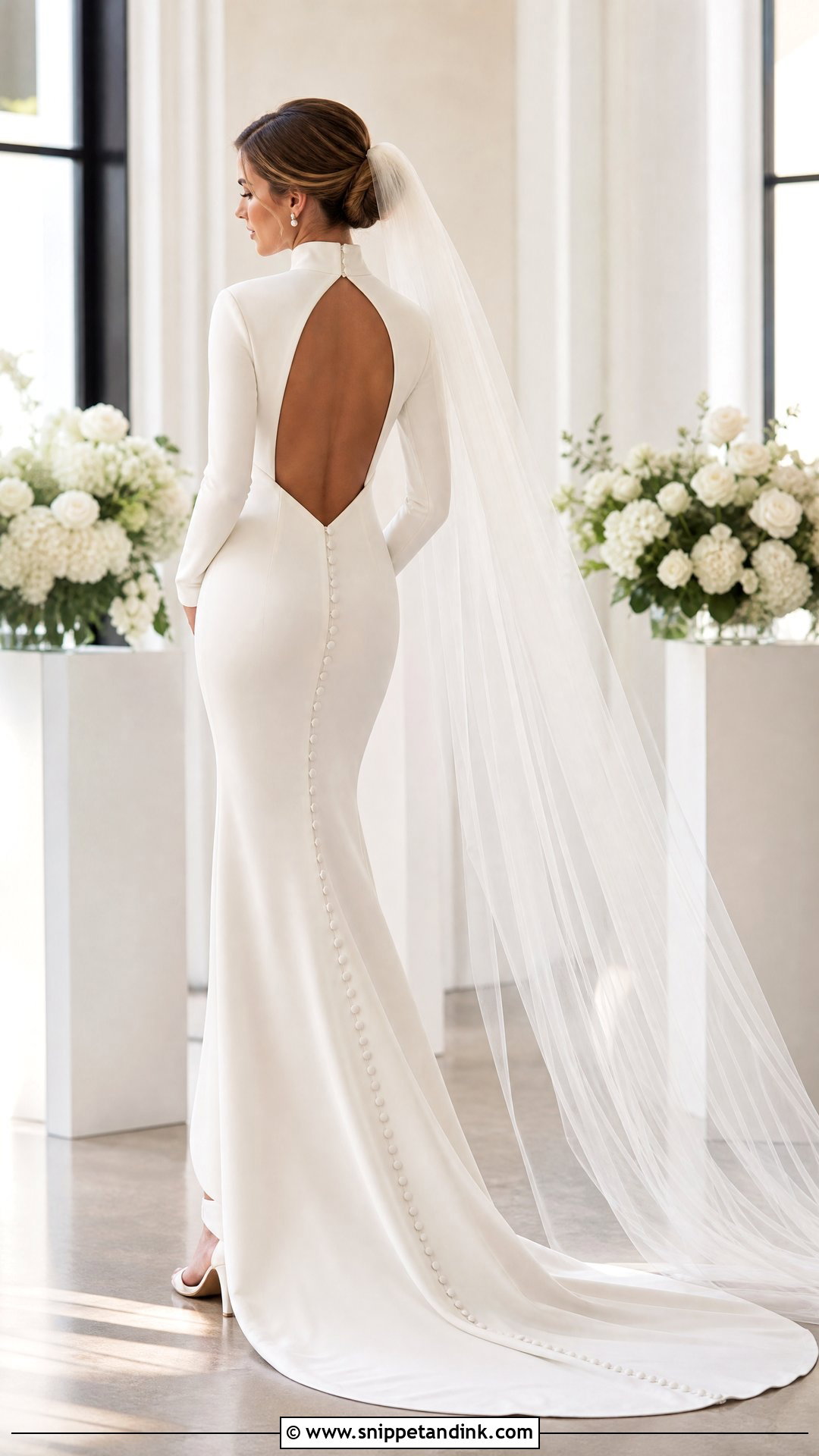
The front is covered and the back delivers the surprise, so plan everything around being seen from behind. An updo is close to essential, since loose hair hides the back detail. The neckline can be lace, satin or crepe, while the back may have buttons, sheer panels or a clean opening. I’d use a plain veil that comes off after the ceremony, so the back is clear for the first dance.
13. Tea Length Wedding Dress With Bow Heels
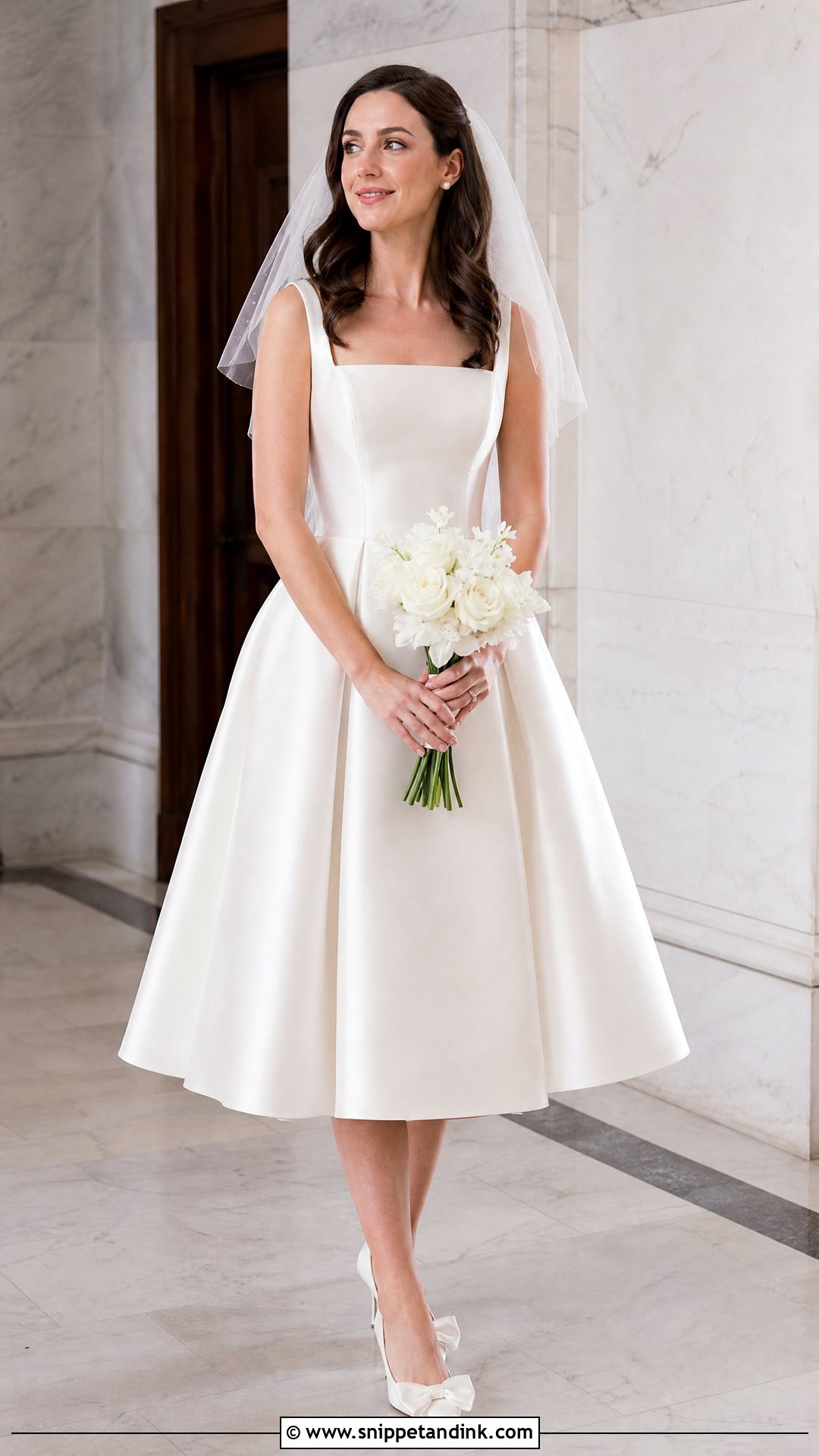
A tea length wedding dress falls between knee and ankle, so walking and dancing are simple and the shoes join the outfit. Bow heels make it playful. The skirt needs body to hold its shape, so taffeta, satin, lace or organza work better than soft chiffon. Pearl studs, a short veil and soft curls finish it for a courthouse wedding or a brunch reception.
14. Corset Wedding Dress With Full Skirt
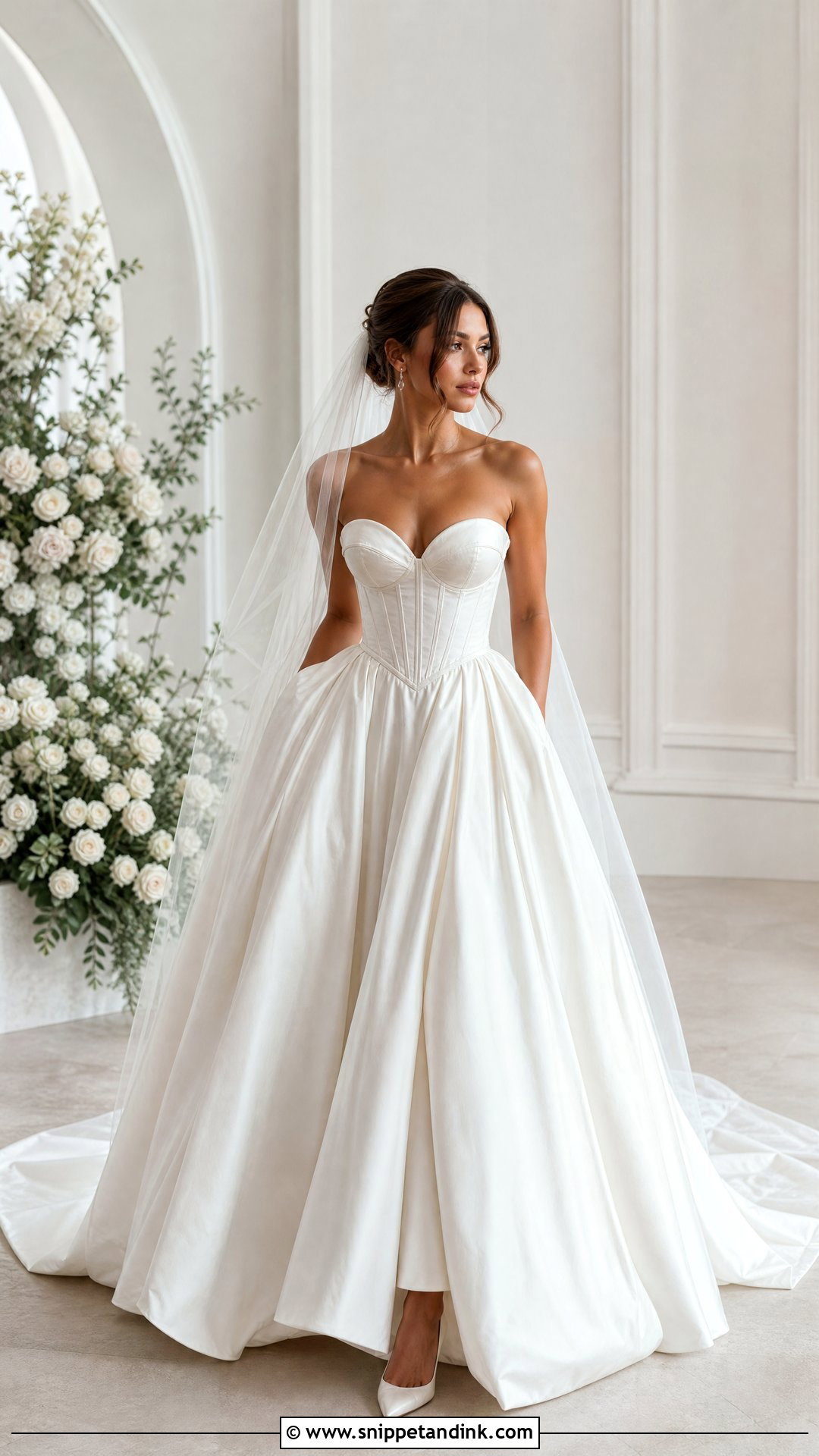
A corset bodice supports the bust and shapes the waist, and over a full skirt the effect is romantic without feeling fragile. Modern versions often show their boning or use sheer overlays, and the bones should lie flat without pushing through at the top edge. I always ask brides to sit and eat a little at the final fitting, because a corset fitted standing can pinch at dinner. If the construction is the feature, keep accessories minimal.
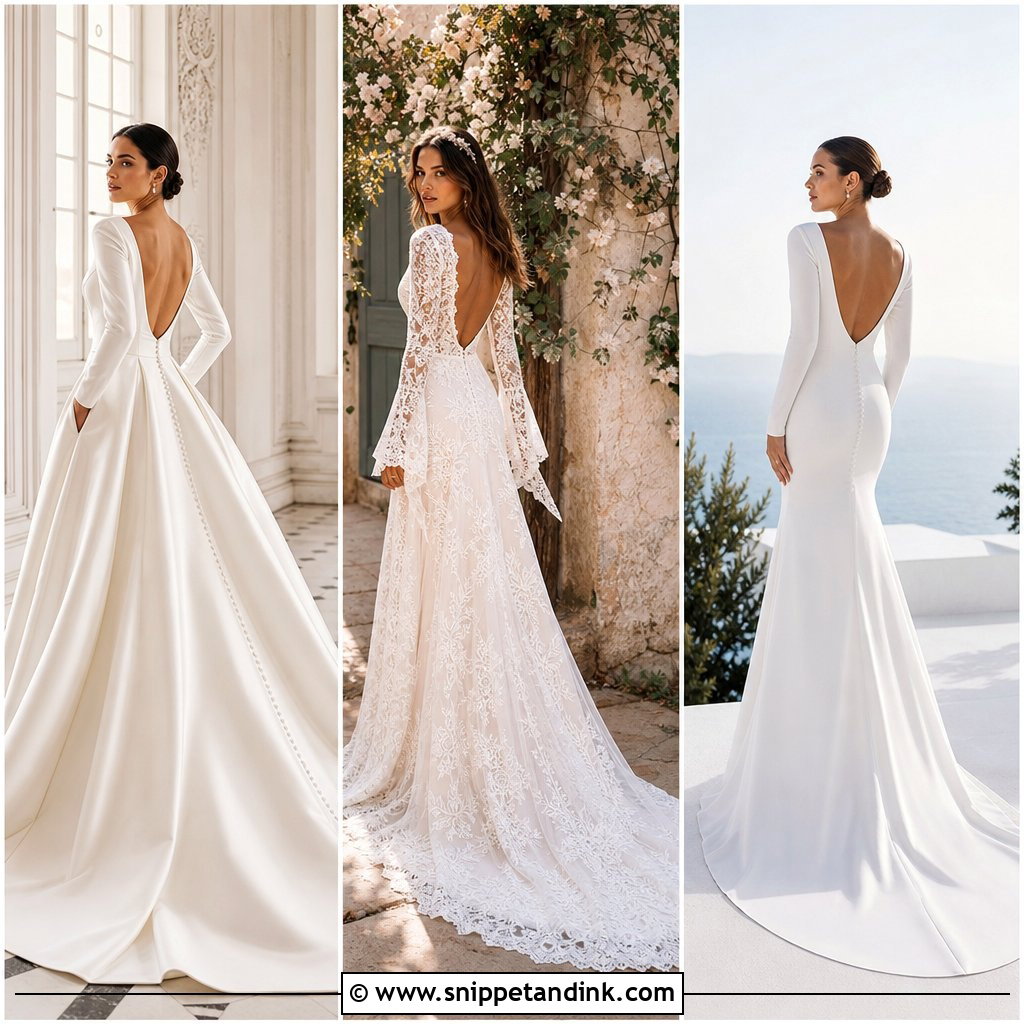
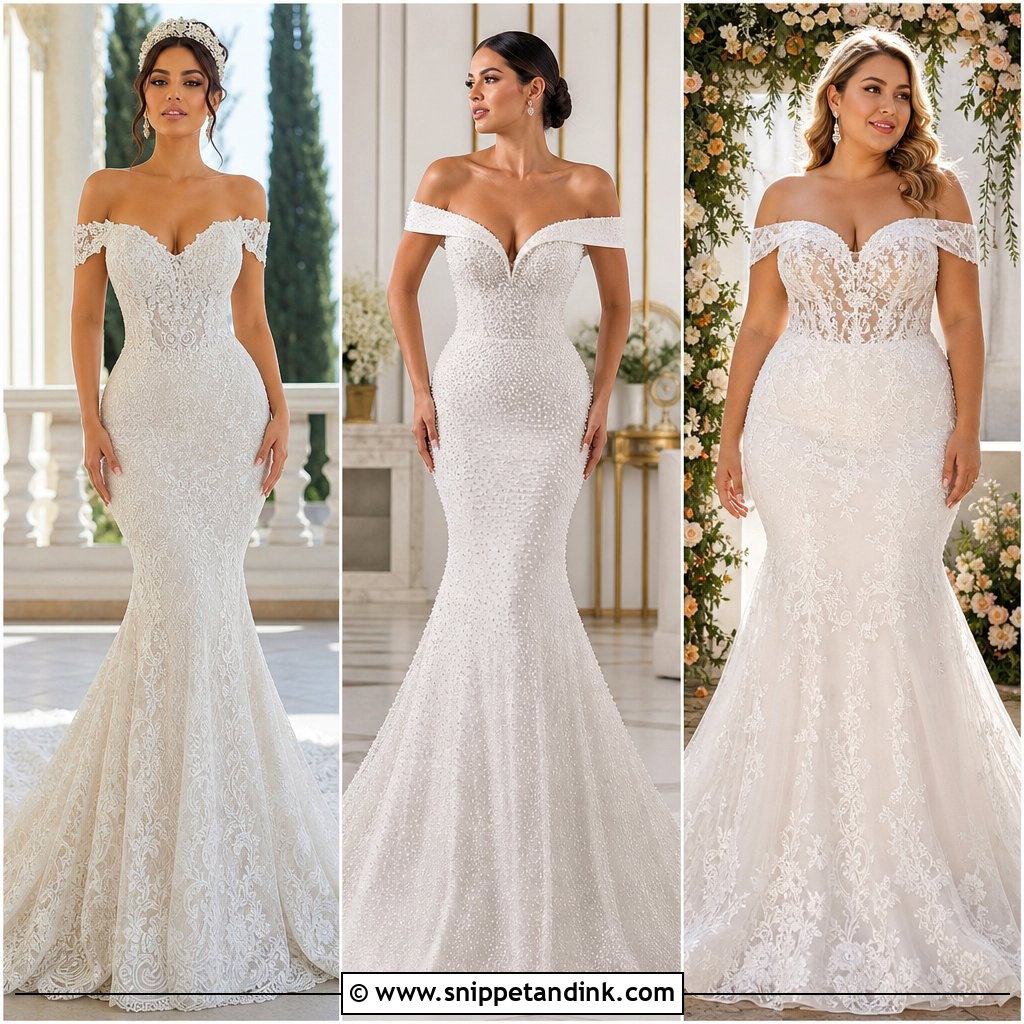
15. Champagne Wedding Dress With Gold Jewelry
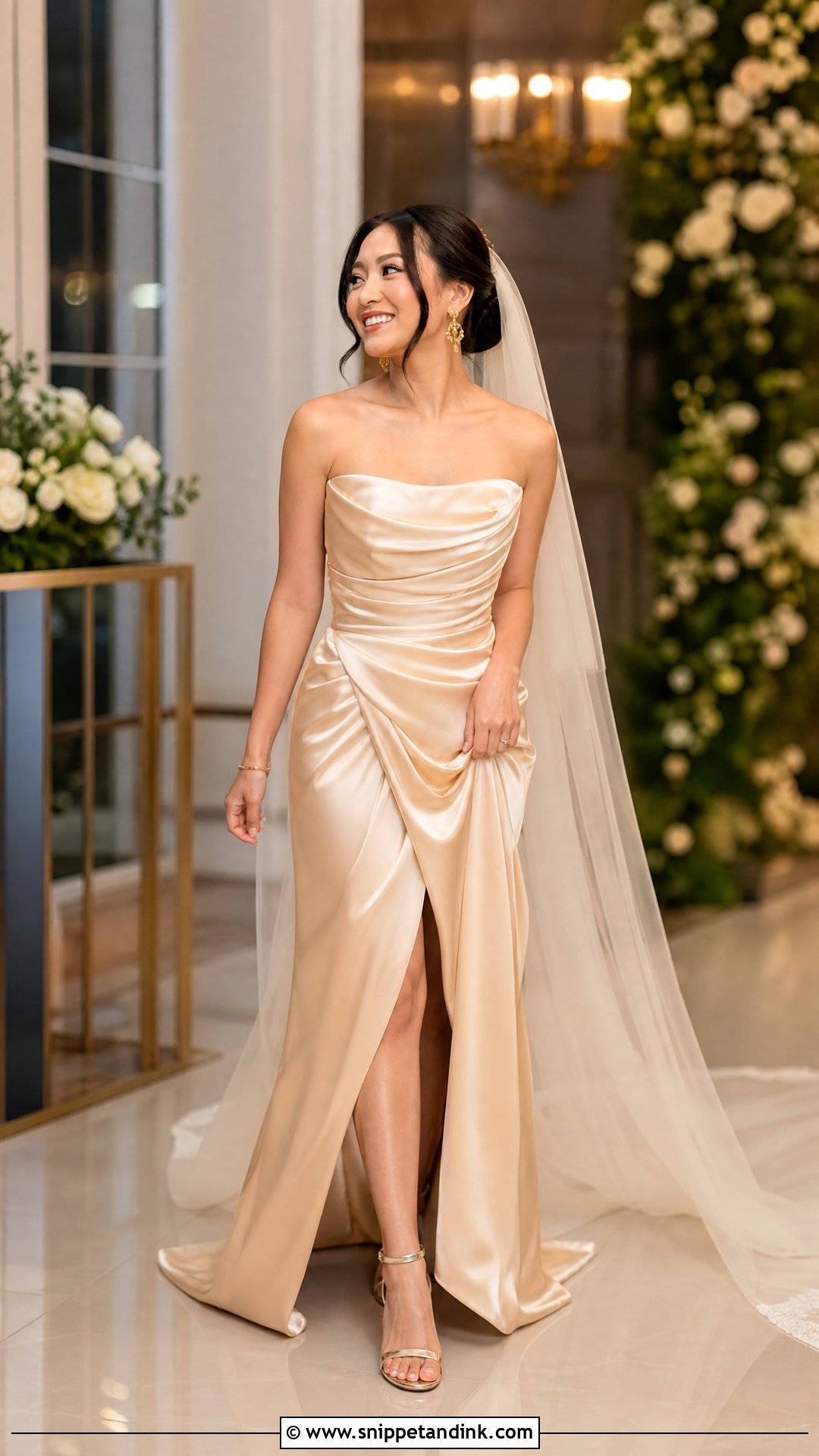
Champagne is the warmer alternative to bright white and flatters most skin tones. Satin, tulle, lace and beaded fabrics all take the color well. Gold jewelry completes the warmth, so I’d swap silver for gold drop earrings and metallic sandals. Match the veil to the dress rather than choosing pure white, which makes champagne look dull beside it. Glowing, natural makeup suits a candlelit evening reception.
16. Sheer Sleeve Wedding Dress With Pearl Shoes
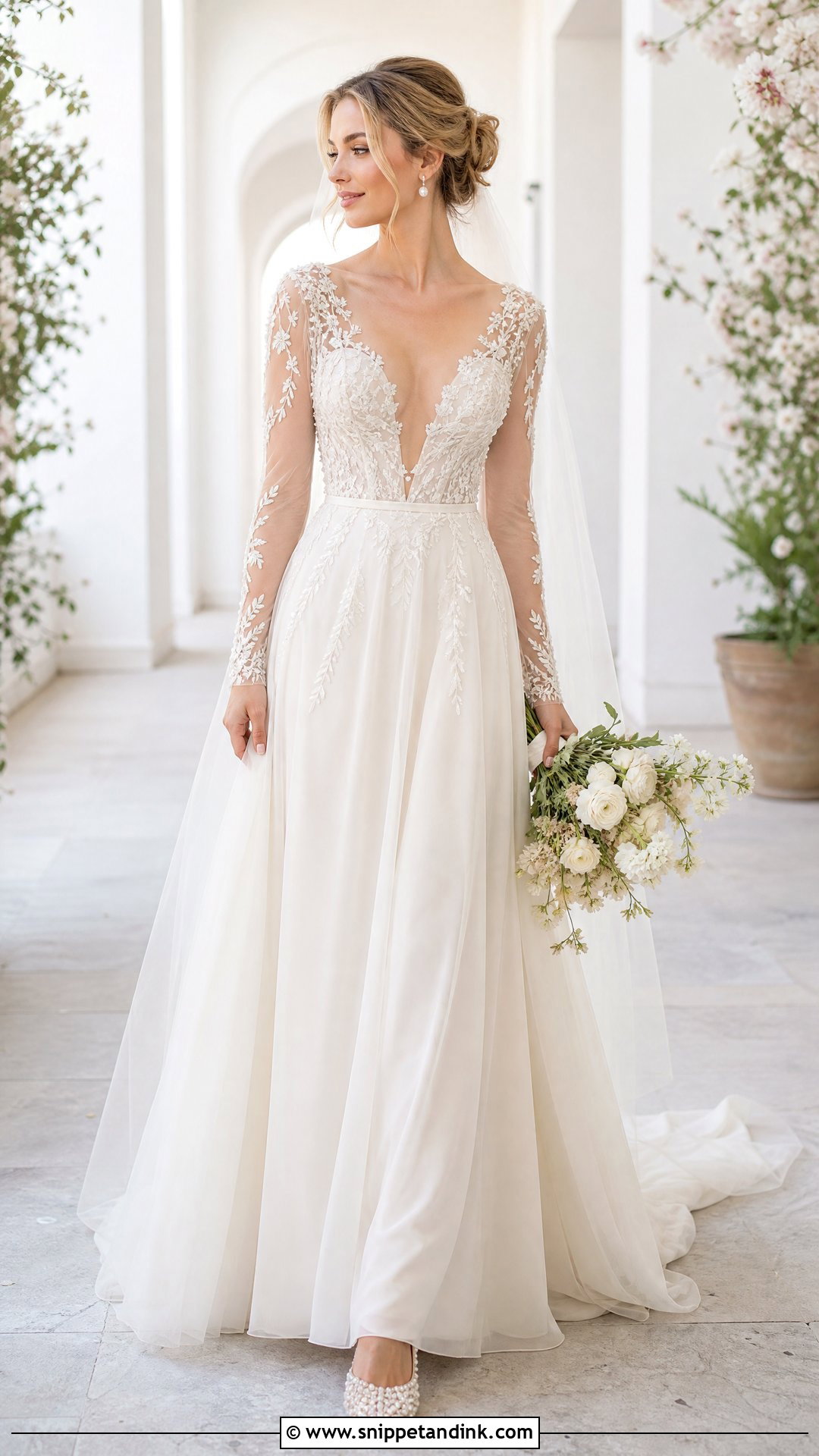
Sheer sleeves cover the arms without the weight of a full long-sleeve gown. They can be plain tulle, lace, dotted fabric or floral embroidery. Pearl shoes tie in with pearl earrings so the outfit connects from head to toe. One practical note: tulle sleeves snag on bracelets and watch clasps, so keep your wrists bare. A simple veil and a relaxed updo suit spring, fall and indoor weddings.
17. Halter Wedding Dress With Low Ponytail
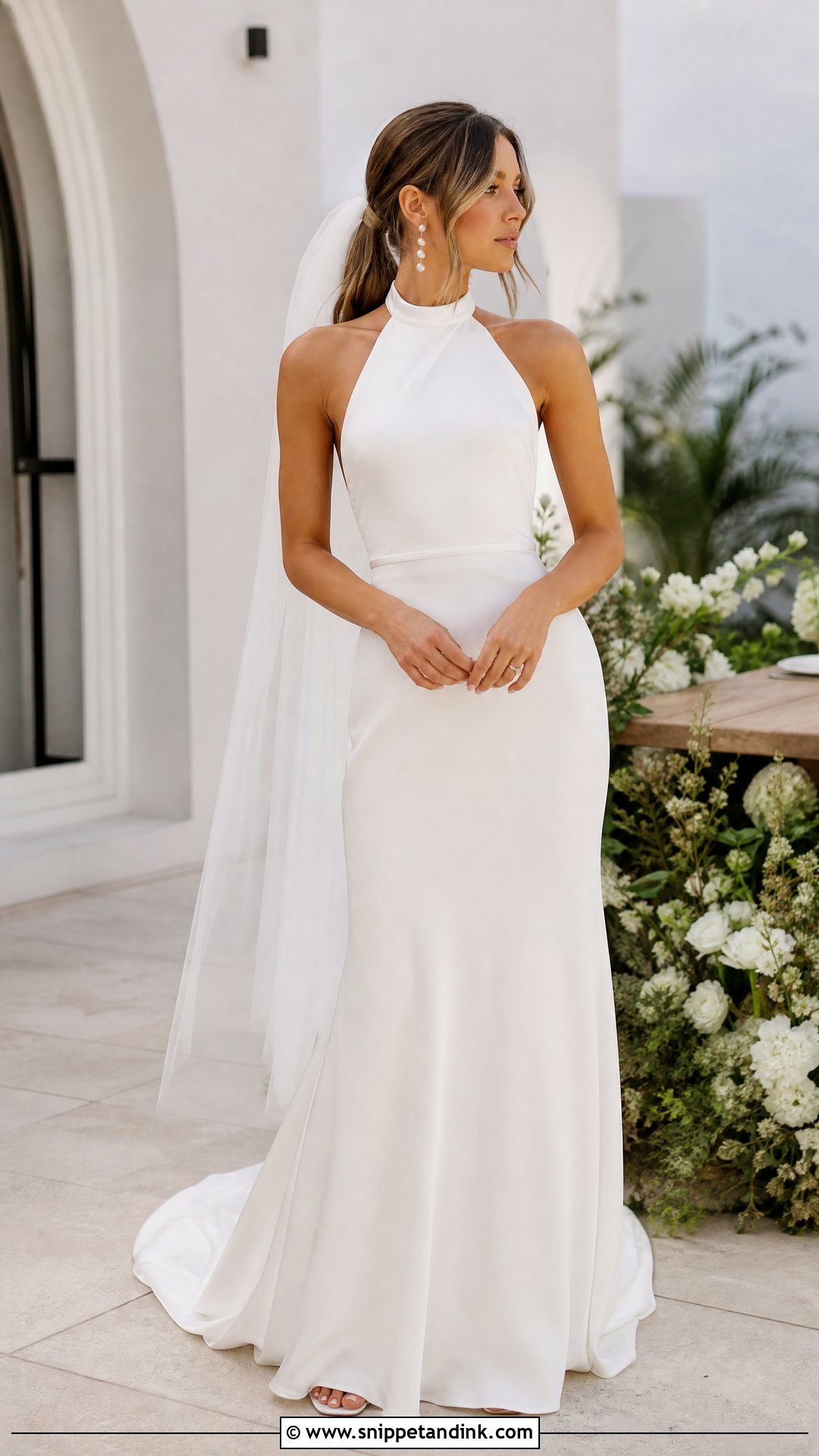
A halter shows the shoulders and supports from the neck, which some brides find more secure than strapless. The skirt can be fitted, A-line or flowing. A low ponytail keeps the neckline visible; set the veil low at the back of the head so it doesn’t press on the strap. Long earrings and simple heels finish it. It’s strong for beach and summer hotel weddings, though in the weeks before, watch for strap tan lines.
18. Short Wedding Dress With Statement Bow
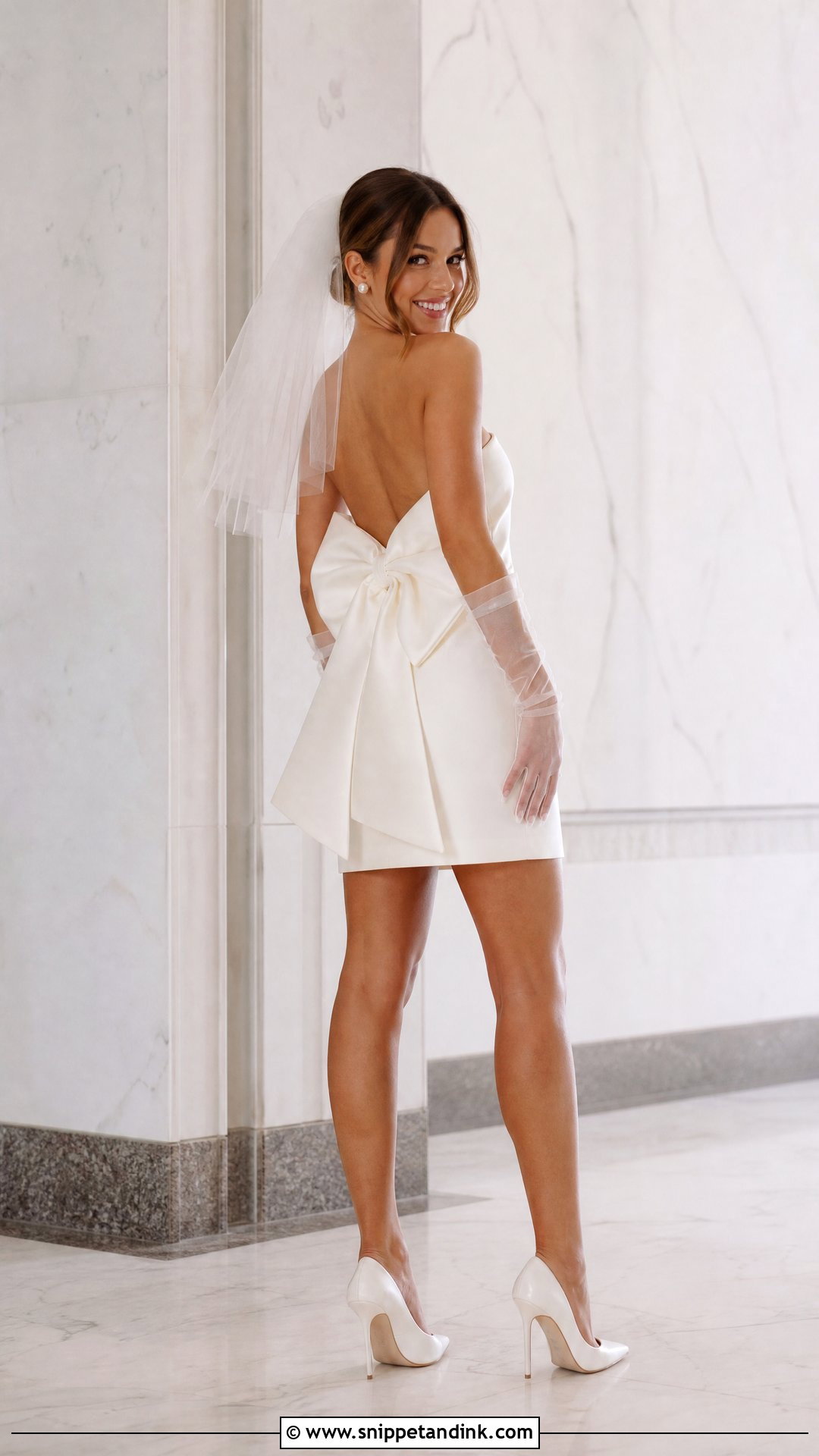
Bows need structure. A short dress with a statement bow works best in crepe, mikado or taffeta, where the loops hold their shape instead of collapsing. The bow can sit at the back, shoulder, waist or neckline. Pointed heels, sheer gloves and simple earrings suit it, and a birdcage or short tulle veil adds charm. Courthouse ceremonies, rehearsal dinners and second looks are its natural home.
19. Beaded Wedding Dress With Simple Sandals
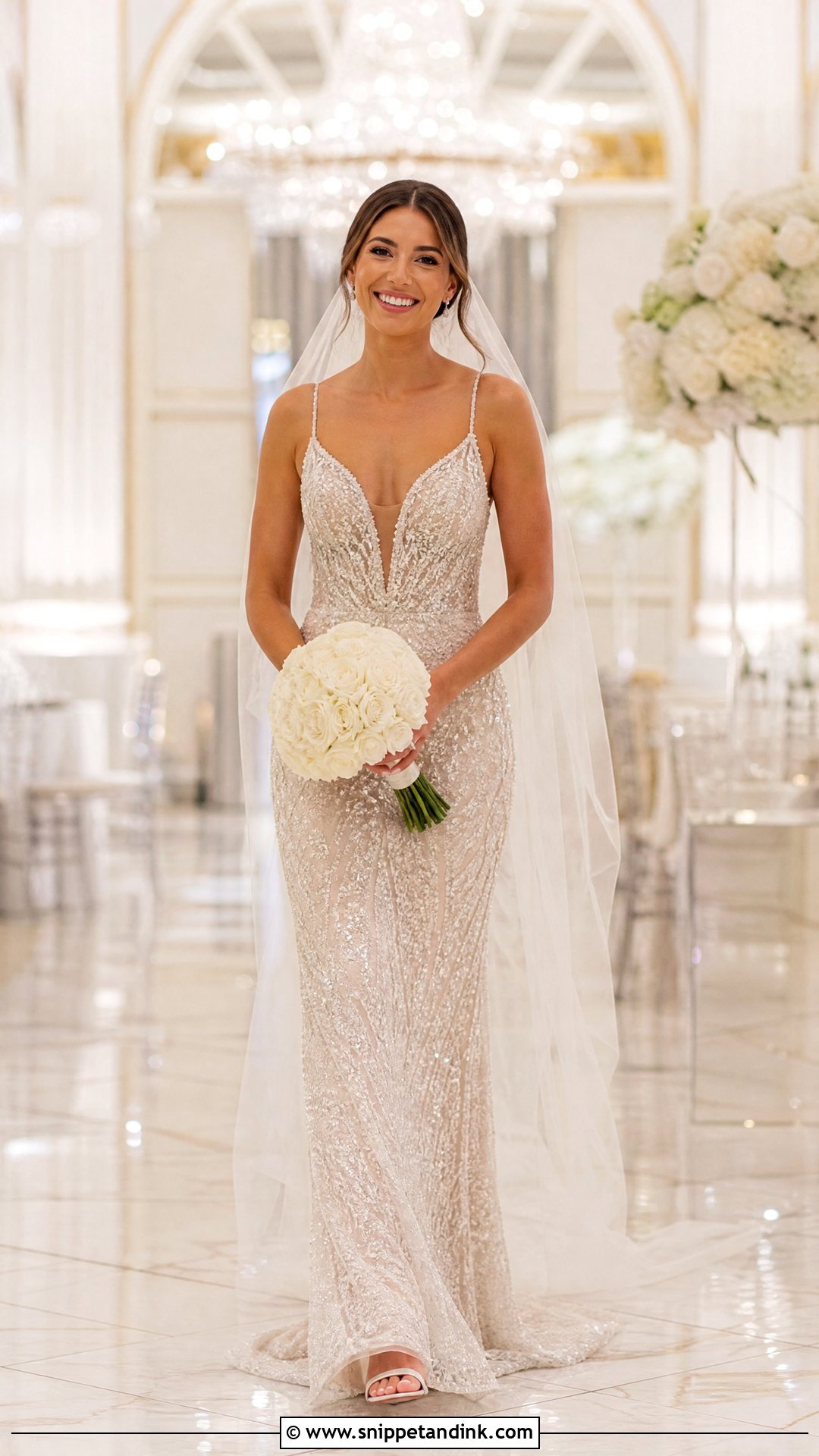
Beadwork reads modern when it follows the seams and lines of the dress instead of covering every inch. Simple sandals balance the shine. Under bright reception lights, beads catch light from every angle as you move, which makes this strong for evening and rooftop weddings. Heavy beading needs secure straps and an experienced seamstress, since alterations mean removing and re-sewing beads by hand.




20. Boho Wedding Dress With Suede Sandals
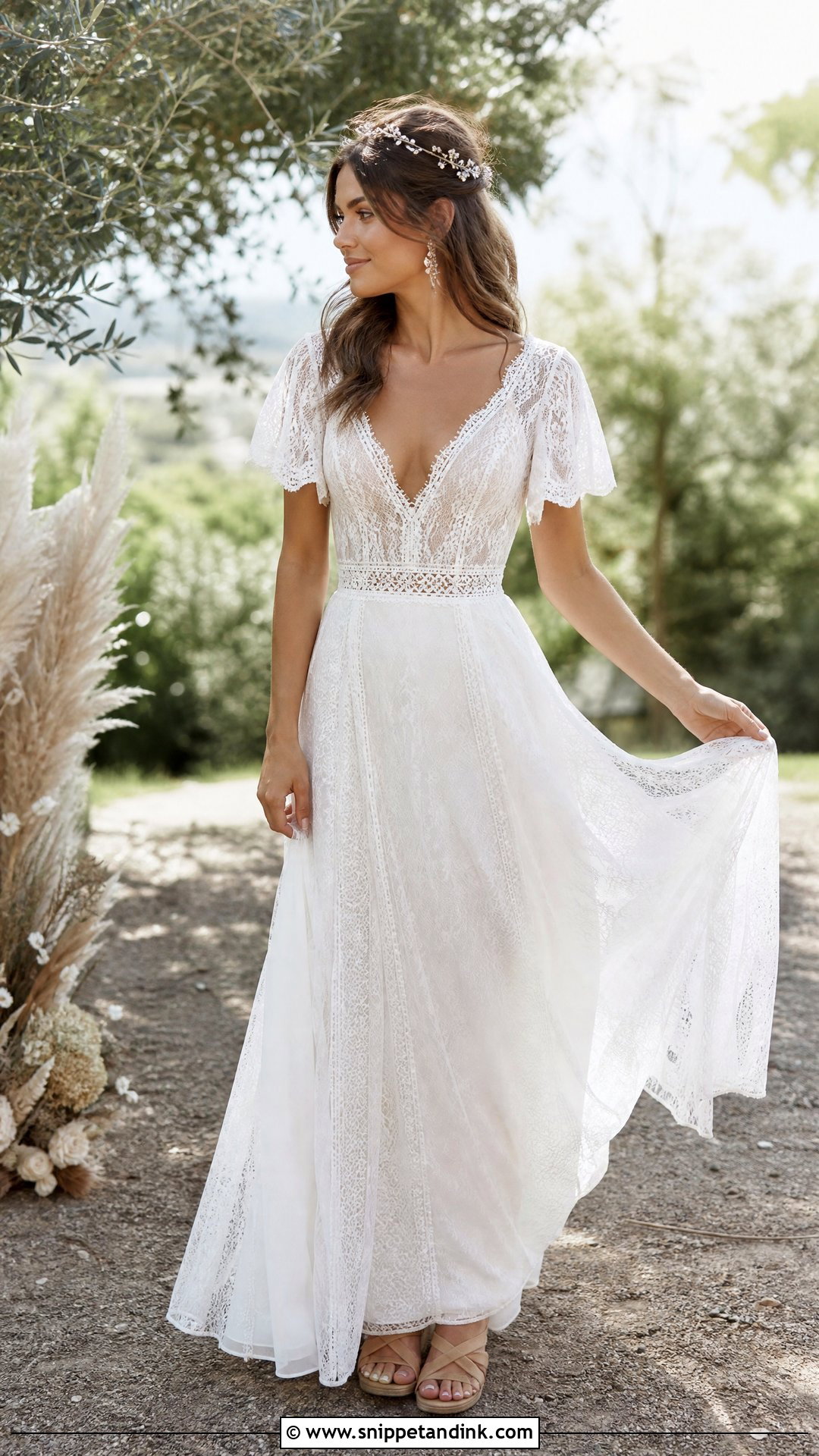
Boho dresses have to move, so look for soft lace, flutter sleeves, flowing skirts or light embroidery. Suede sandals or low block heels handle grass and paths, where a stiletto sinks. Loose waves with a delicate hair vine suit it, and a floral hairpiece can replace the veil. The aim is relaxed, not unfinished, so I still insist on a proper hem fitting in the exact shoes.
21. Plus Size Wedding Dress With Sweetheart Neckline
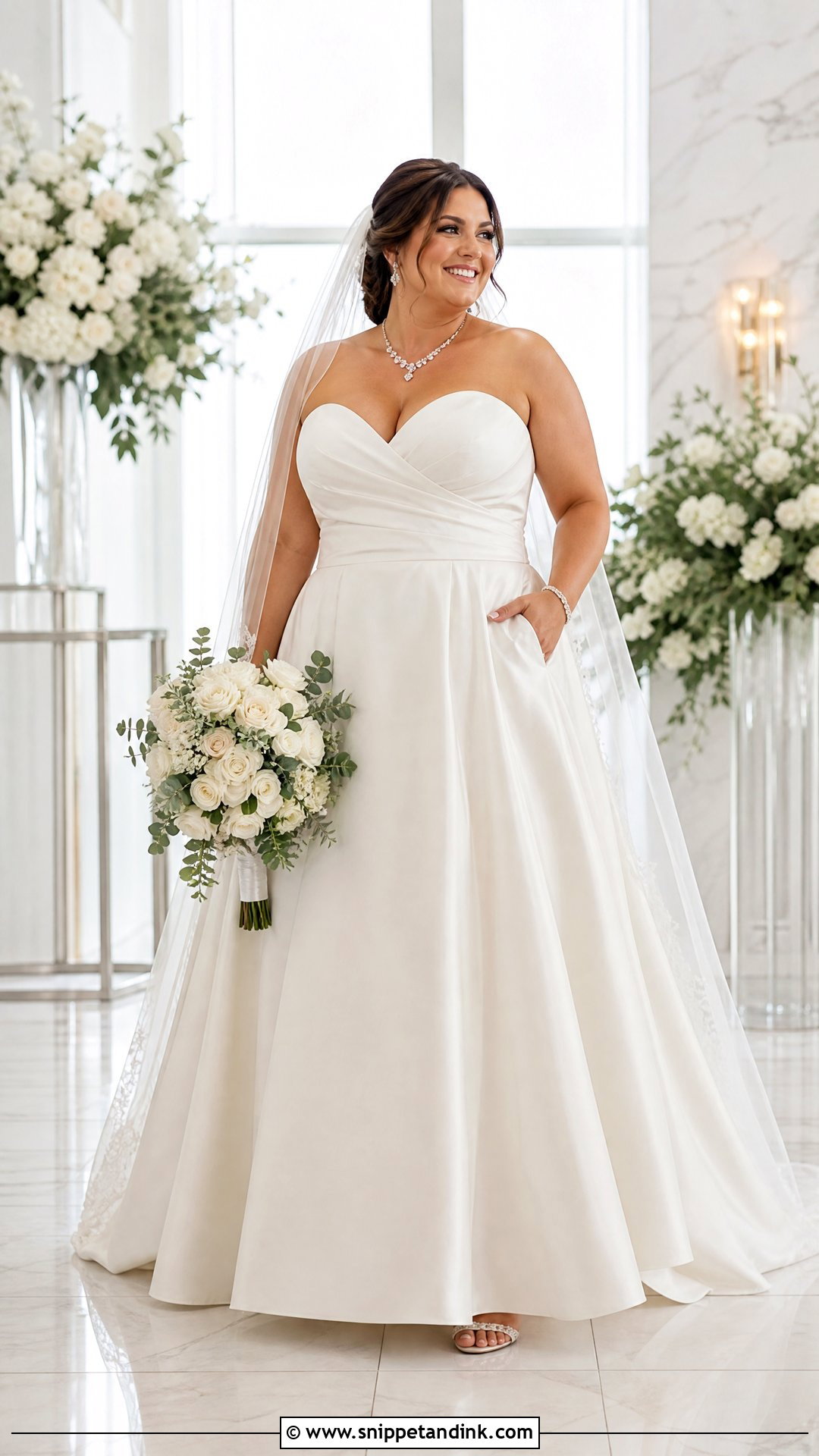
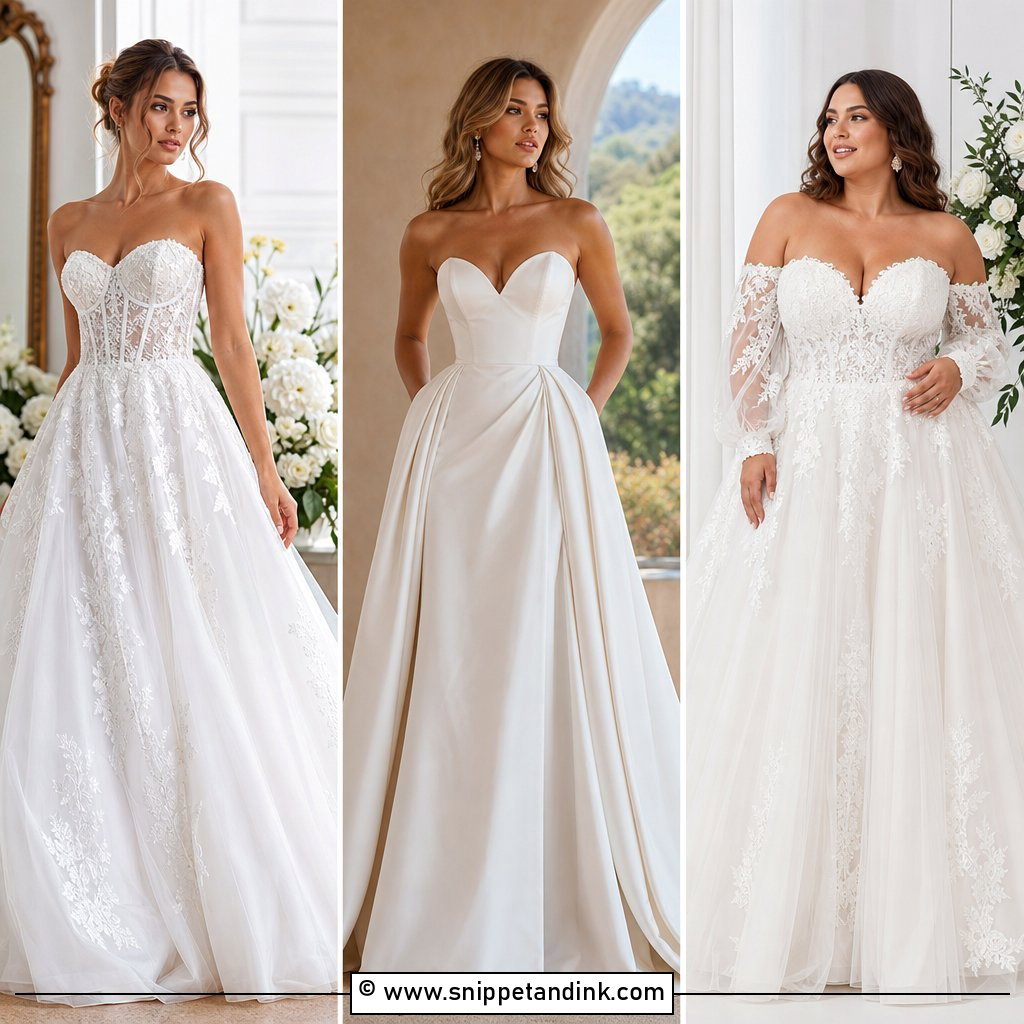
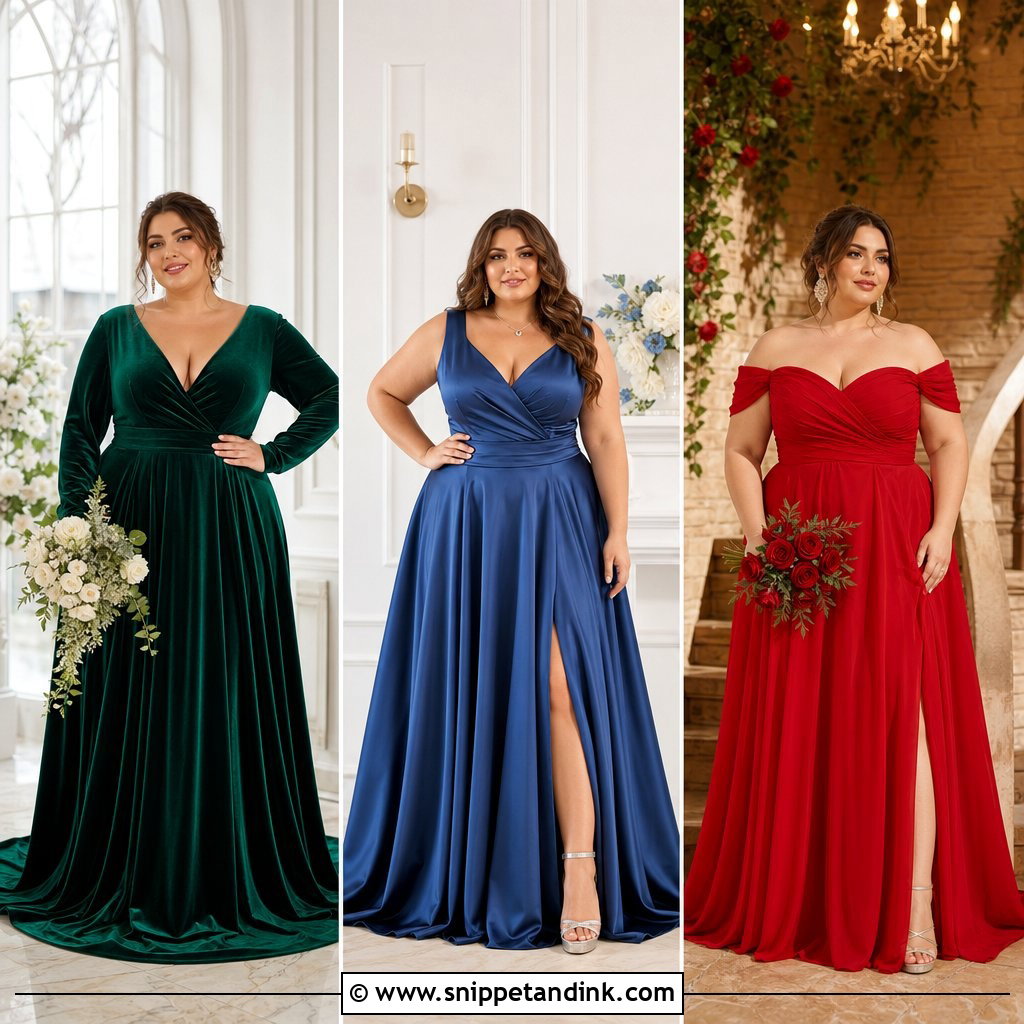
A sweetheart neckline softens the bust and works with straps, sleeves or a strapless bodice. On a plus size gown, what matters most is inside: firm boning, built-in cups or a bra that suits the dress, and lining that doesn’t cling. A-line skirts are the common choice, yet fitted gowns can look incredible with good tailoring. Supportive heels and a securely anchored veil finish it. The point is comfort and confidence, never hiding your body.
22. Maternity Wedding Dress With Empire Waist
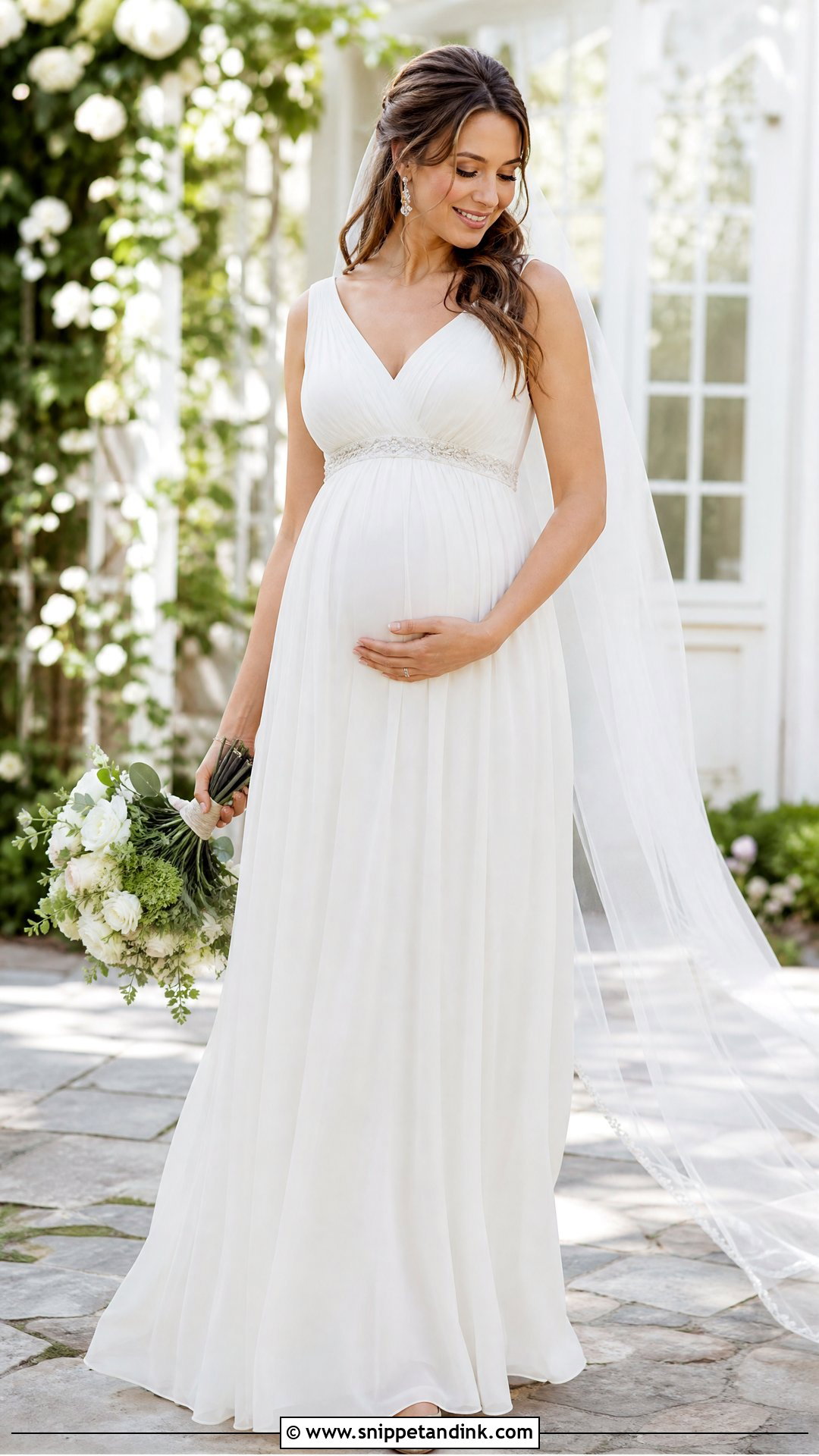
A maternity wedding dress with an empire waist sits under the bust, so the skirt flows over the bump without pressure. Chiffon, stretch lace and light tulle move gently and forgive changes in size. Bumps grow quickly, so I schedule the final fitting as close to the wedding as the seamstress allows and ask for a lace-up or adjustable back. Cushioned block heels or embellished flats give stability.
23. Beach Wedding Dress With Barely There Sandals
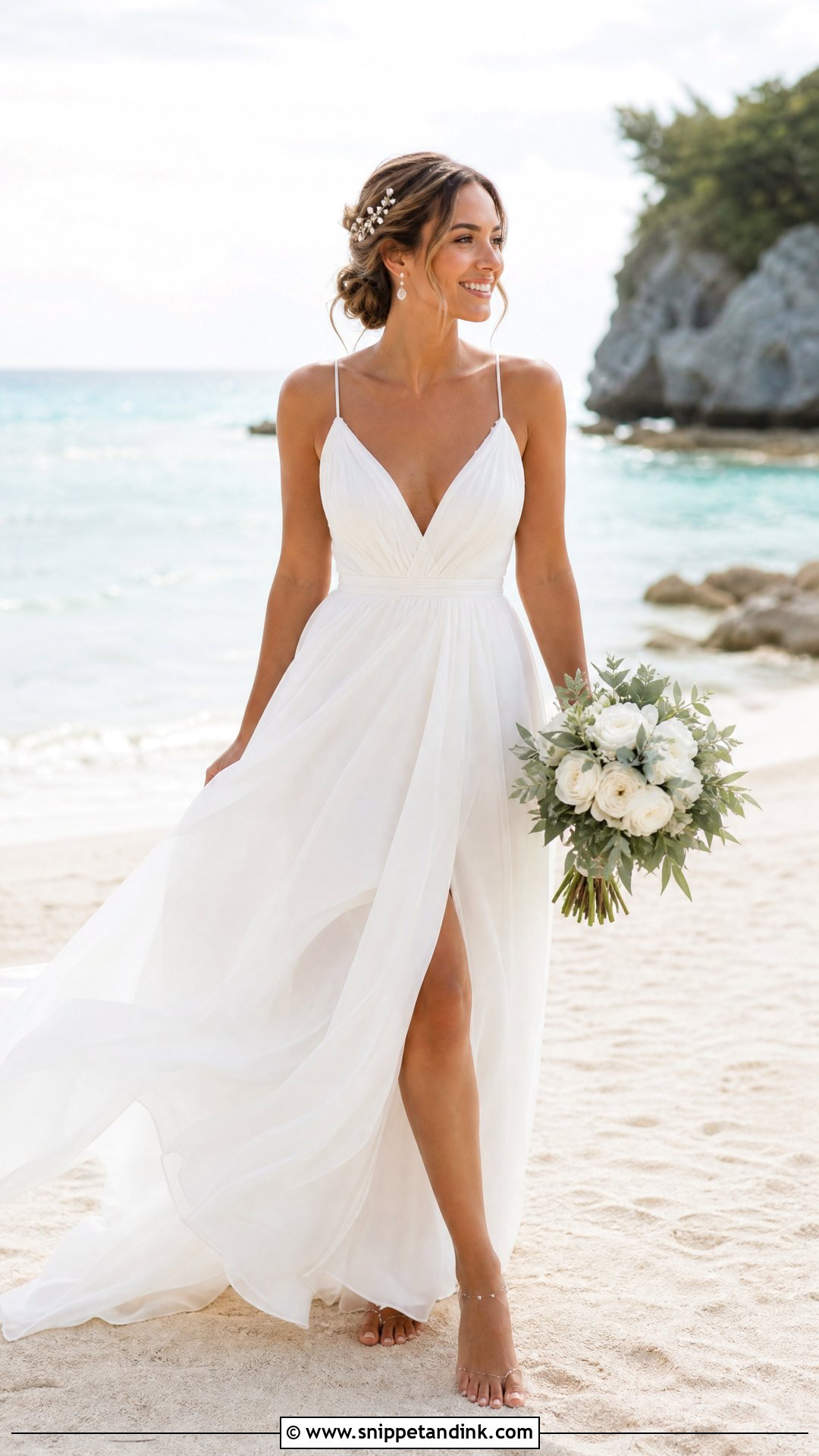
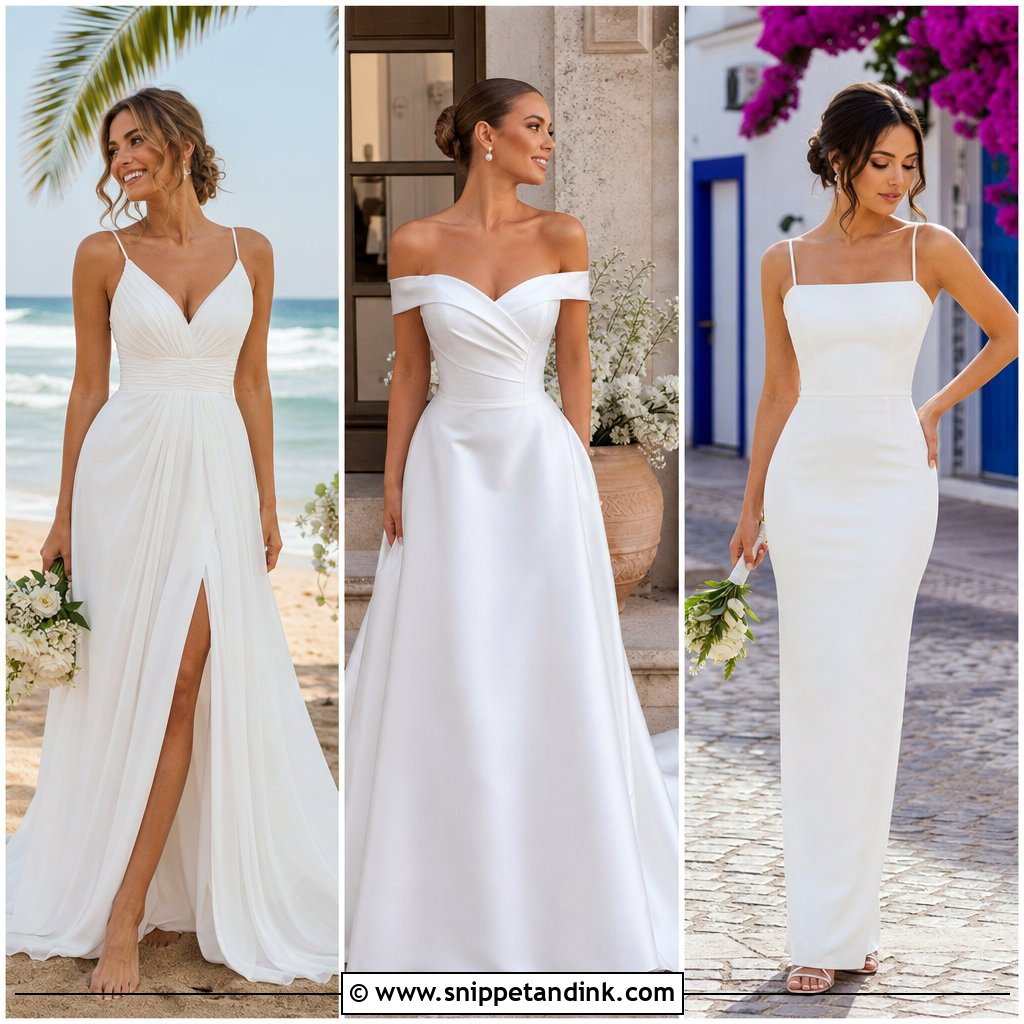
Near water, breathable fabric wins: flowing chiffon, soft crepe or simple lace. Barely there sandals stay elegant on sand or boardwalk. Wind is the real problem. Choose a short veil you can pin firmly, or swap it for a pearl hair pin. Relaxed silhouettes, open backs and delicate straps all suit a seaside setting, with small earrings and natural makeup.
24. Winter Wedding Dress With Faux Fur Wrap
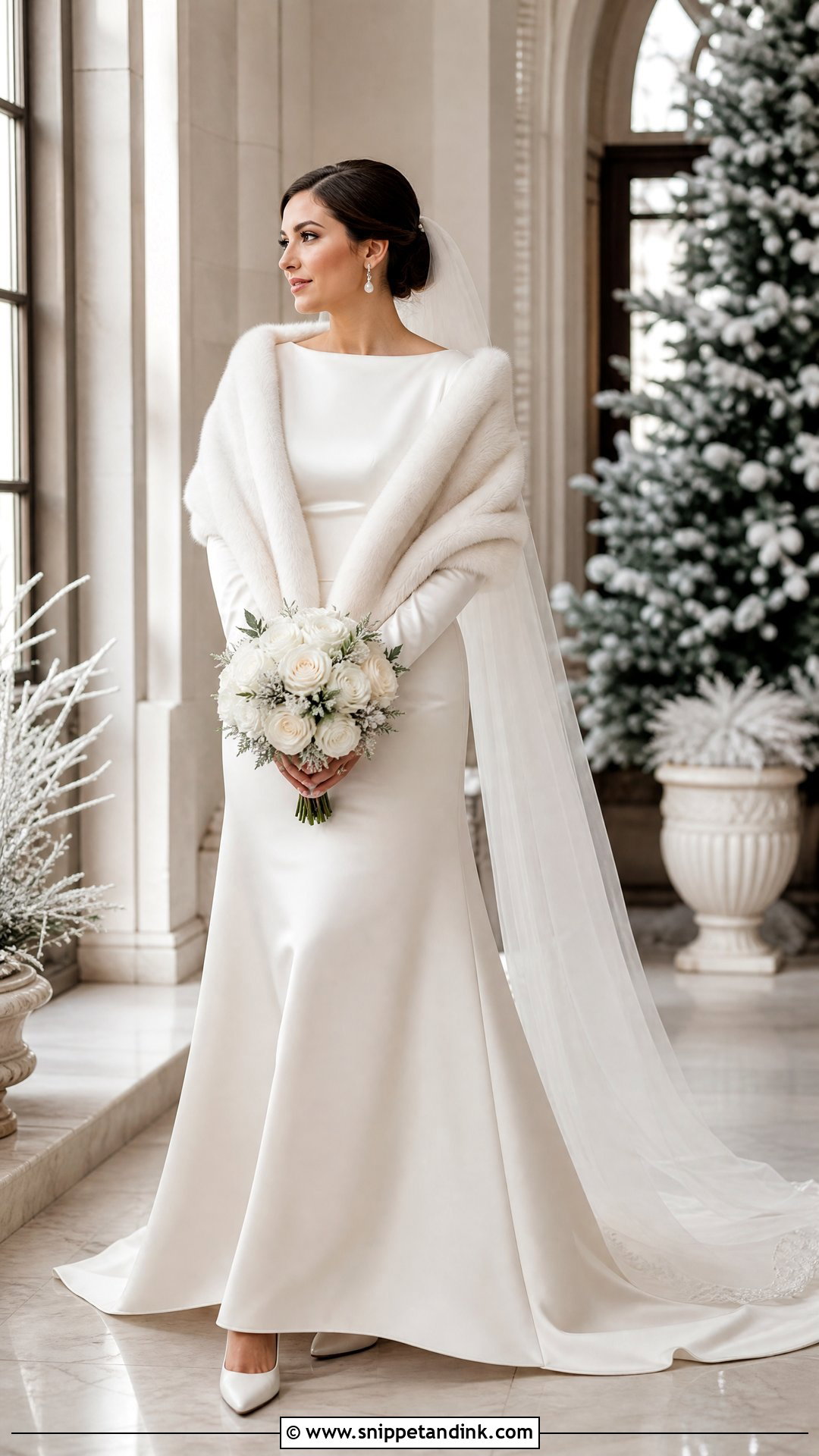
Winter dresses need layers that don’t hide the gown. A satin, crepe or lace dress with long sleeves or a structured bodice pairs well with a faux fur wrap, which warms your shoulders for outdoor portraits and comes off indoors. Closed-toe heels, pearl earrings and a long veil polish it, and ivory, cream, champagne or soft silver suit the season. Check that the fur doesn’t shed onto dark suits before the hugging starts.
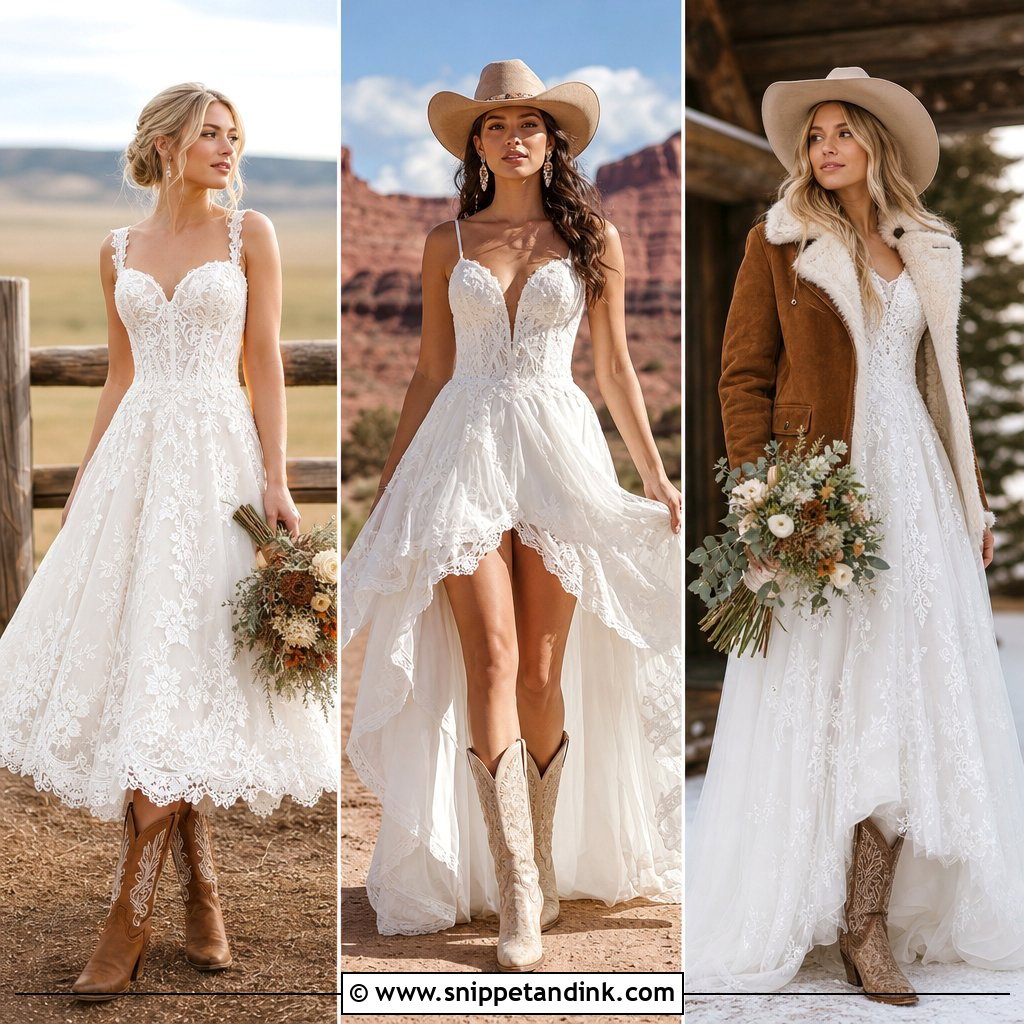


25. Two Piece Wedding Dress With Bridal Cape
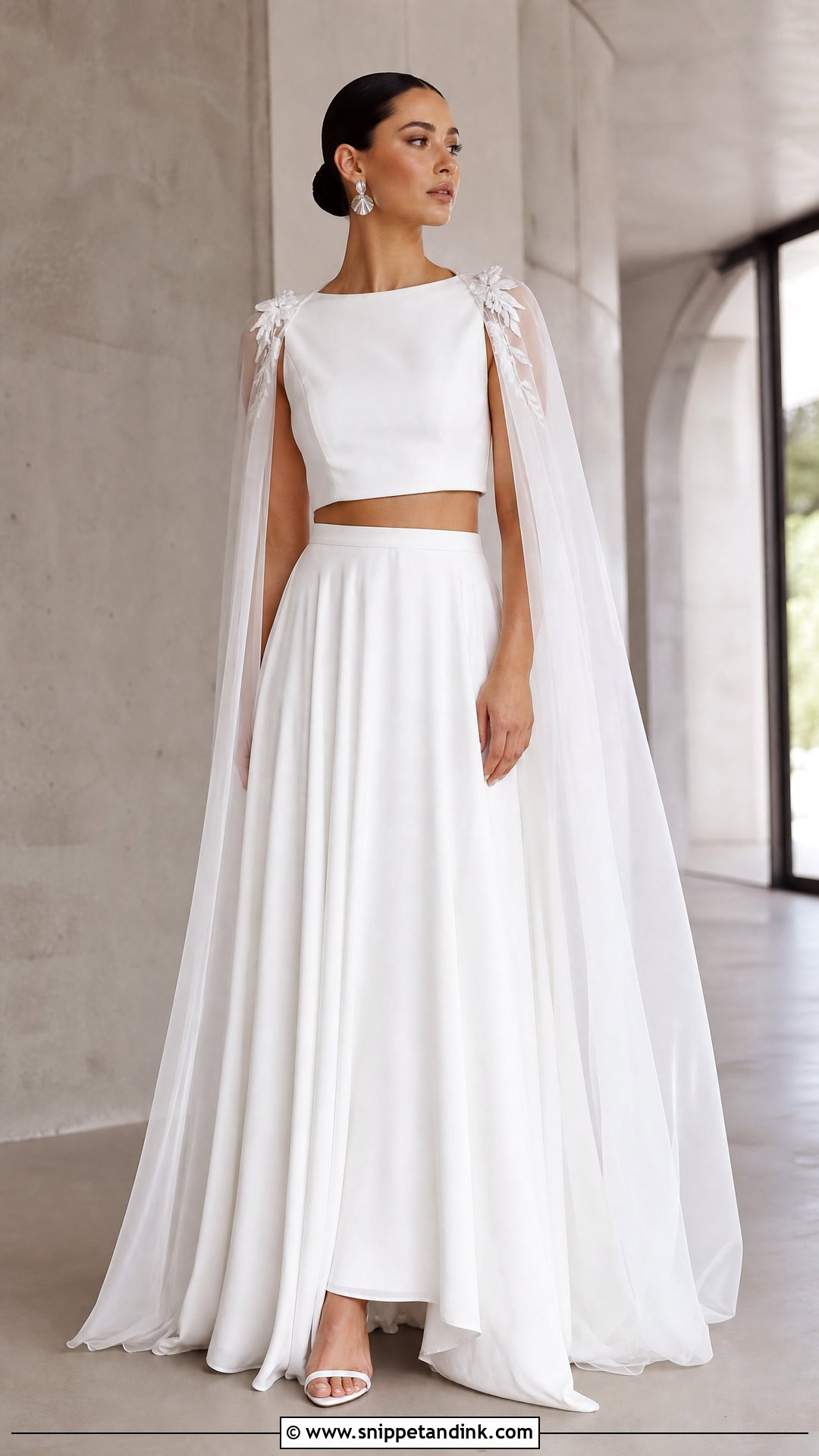
A two piece wedding dress gives you flexibility. A fitted crop top over a high-waisted skirt looks elegant when the fabrics match and the gap is small and deliberate. For more coverage, a sleeved lace top or a structured satin top works. A bridal cape can replace the veil. Sleek heels and sculptural earrings complete it, and some brides swap the skirt for something shorter at the reception.
A Movement Test Before You Say Yes
Most regrets I hear aren’t about how a dress looked. They’re about how it felt three hours in. Before you commit, do this in the fitting room:
- Sit on a chair without arms for a full minute, then stand. Watch for the bodice digging in or riding up.
- Raise both arms as if hugging someone taller than you.
- Walk briskly, turn, and take a few steps backwards, the way you will leaving the altar.
- Bend down to pick something up off the floor.
- Breathe deeply and laugh. A bodice that only works while you hold your breath wins in photos and loses at dinner.
Leaving enough time for the order
Many made-to-order gowns take several months to arrive, and alterations usually begin two to three months before the wedding. Ordering around eight to ten months ahead leaves room for both, but timing varies by designer and season, so ask before you pay a deposit.
Fit First, Everything Else Second
Ball gown or slip, lace or crepe, every dress here can be bridal. What makes one right for you is your venue, the season, your comfort and how you want to feel in photos. Settle the fit first, then build the outfit around it with the veil, shoes, jewelry and hair, and leave enough time between purchase and wedding for alterations to happen without panic.
You'll Like These Ideas:



Leave a Reply