
A close-fitting gown is the most honest dress in the bridal shop. It shows your shape, and it shows every fitting decision too. The category is wider than most brides expect: a sculpted mermaid, a sleek crepe column, a lace trumpet, a bias satin slip, a corset bodice that hugs the waist before the skirt releases. Lately I’m seeing brides ask for minimal lines, basque waists, pearl work, detachable sleeves, sheer layers and softer fitted shapes that don’t feel rigid. Which one is right comes down to your venue, fabric, neckline and how much you plan to move. Here are 30 body-skimming styles, with the fitting notes I’d give you for each.
Where a Fitted Gown Stops Holding You
Every fitted silhouette is defined by the point where the fabric stops holding you. That point decides how you walk, sit and dance more than the neckline or the lace ever will.
- Mermaid: releases at or just below the knee. The most drama, the shortest stride.
- Trumpet: releases around mid-thigh. Nearly as shapely, much easier to move in.
- Sheath: follows the body without a real flare. Simple to wear if it has a slit or kick pleat.
- Column: falls straight from the hip. Clean and calm, but needs flawless tailoring.
Fabric changes the rules. A crepe with a little stretch moves with you, while mikado and heavy satin have no give at all, so a non-stretch mermaid needs more ease built in at the thigh. When I’m unsure between two shapes, I ask the bride to try the walk test in both: cross the room, take a step up, sit down. The answer is usually obvious within a minute.
1. Fitted Mermaid Wedding Dress
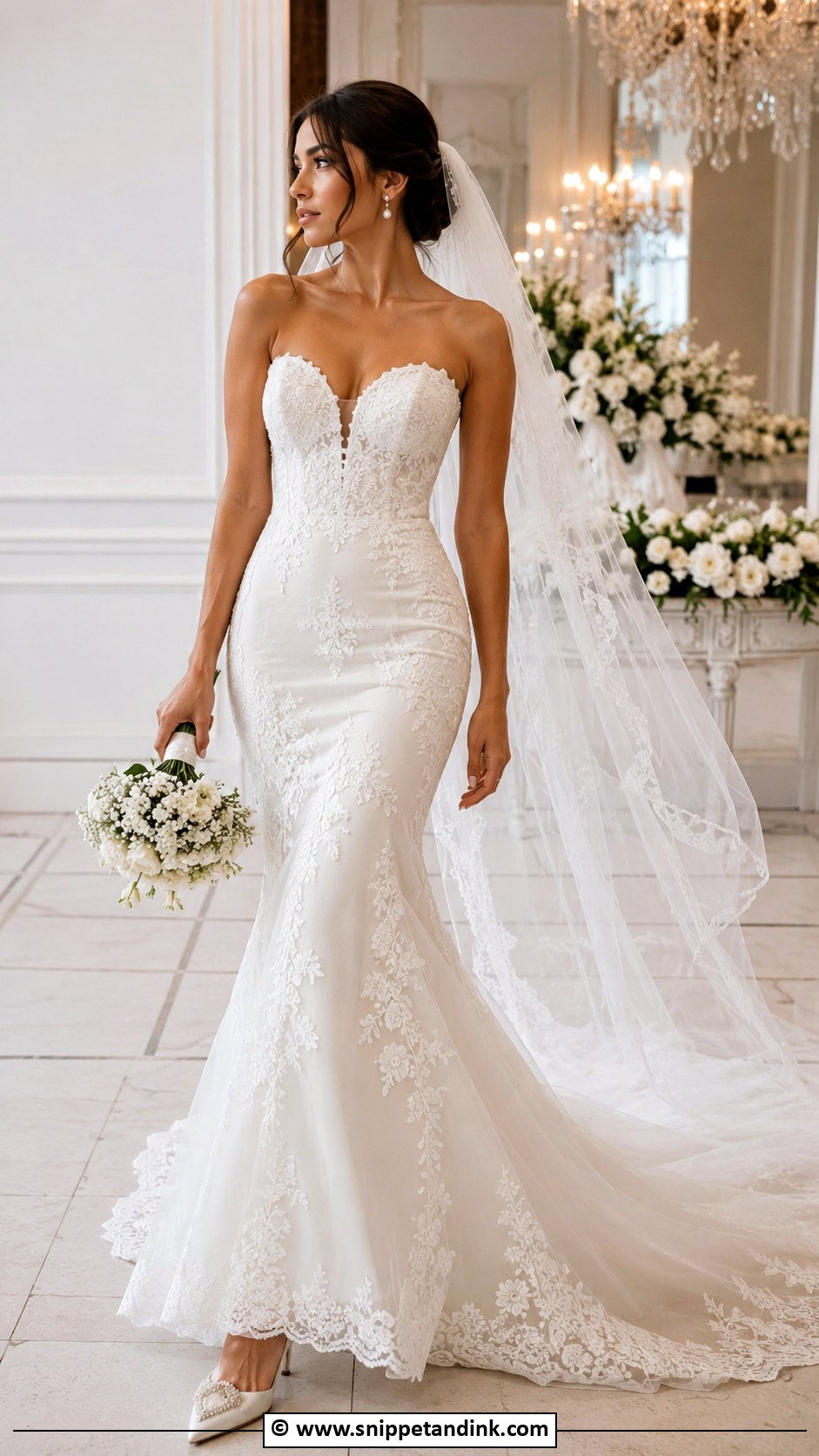
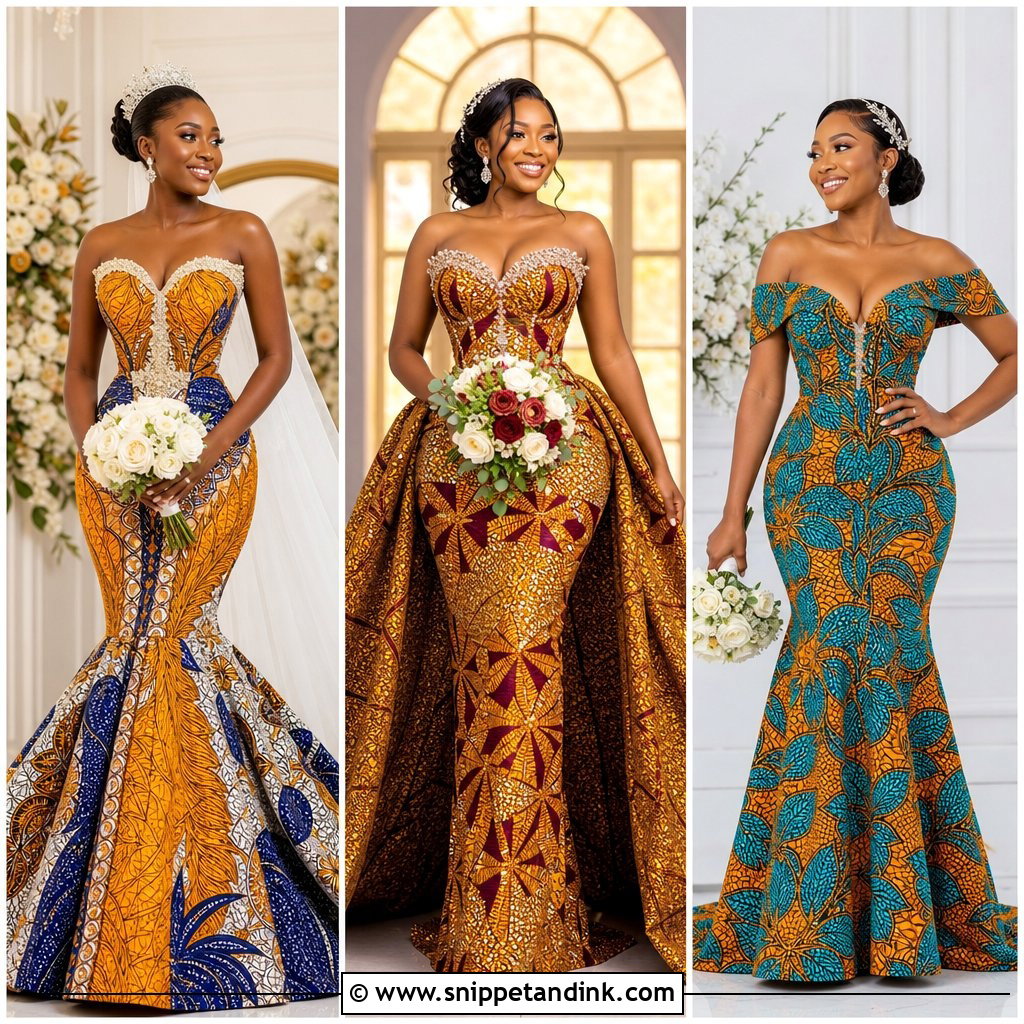
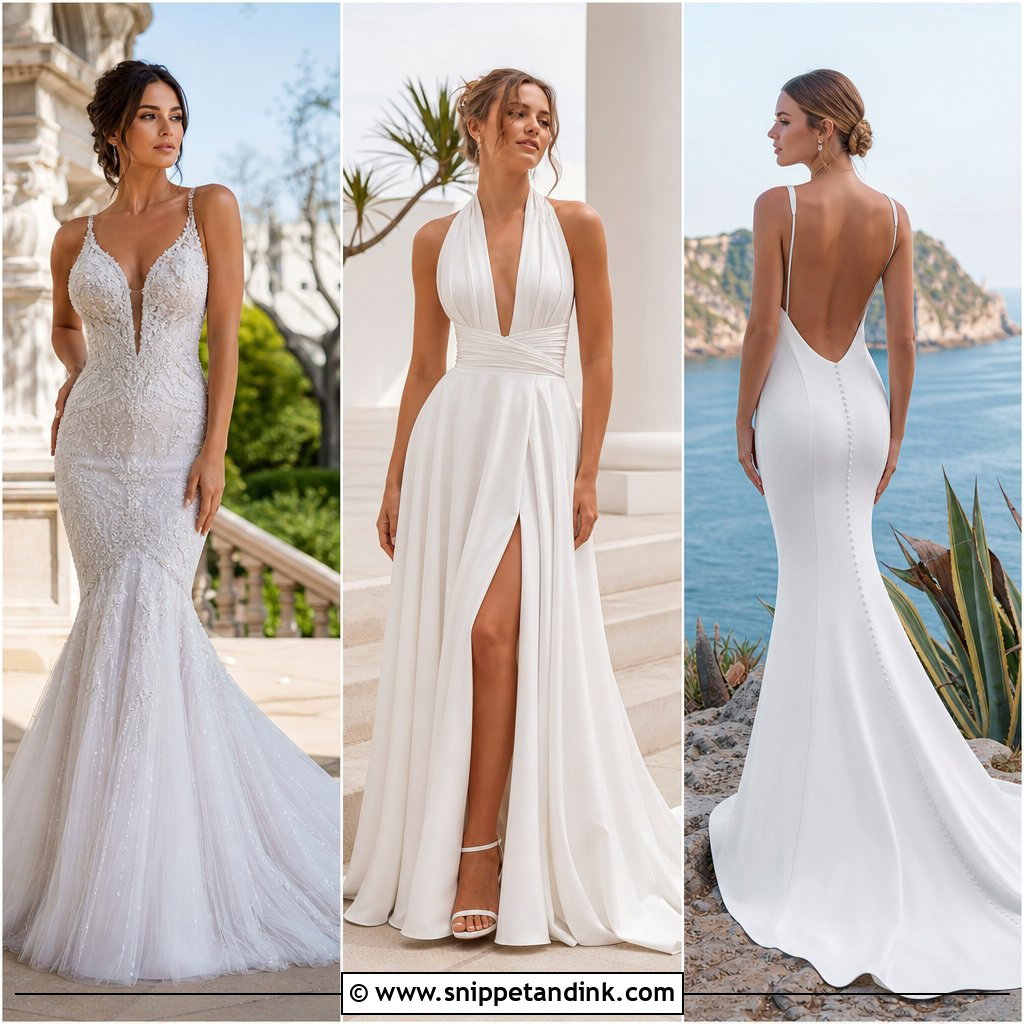
The mermaid is the most dramatic shape on this list and the least forgiving to walk in. A fitted mermaid wedding dress holds the bodice, waist, hips and thighs, then flares at or just below the knee. Lace, crepe, satin and mikado each give it a different weight; mikado holds the flare crisply, lace softens it. I always ask a bride to walk across the shop and climb a step before we talk about necklines, because the knee flare shortens your stride. Sweetheart, veil, pointed heels and pearls make it classic; a straight neckline and sleek bun make it modern. Plan two or three alteration appointments for this one.
2. Fitted Trumpet Wedding Dress
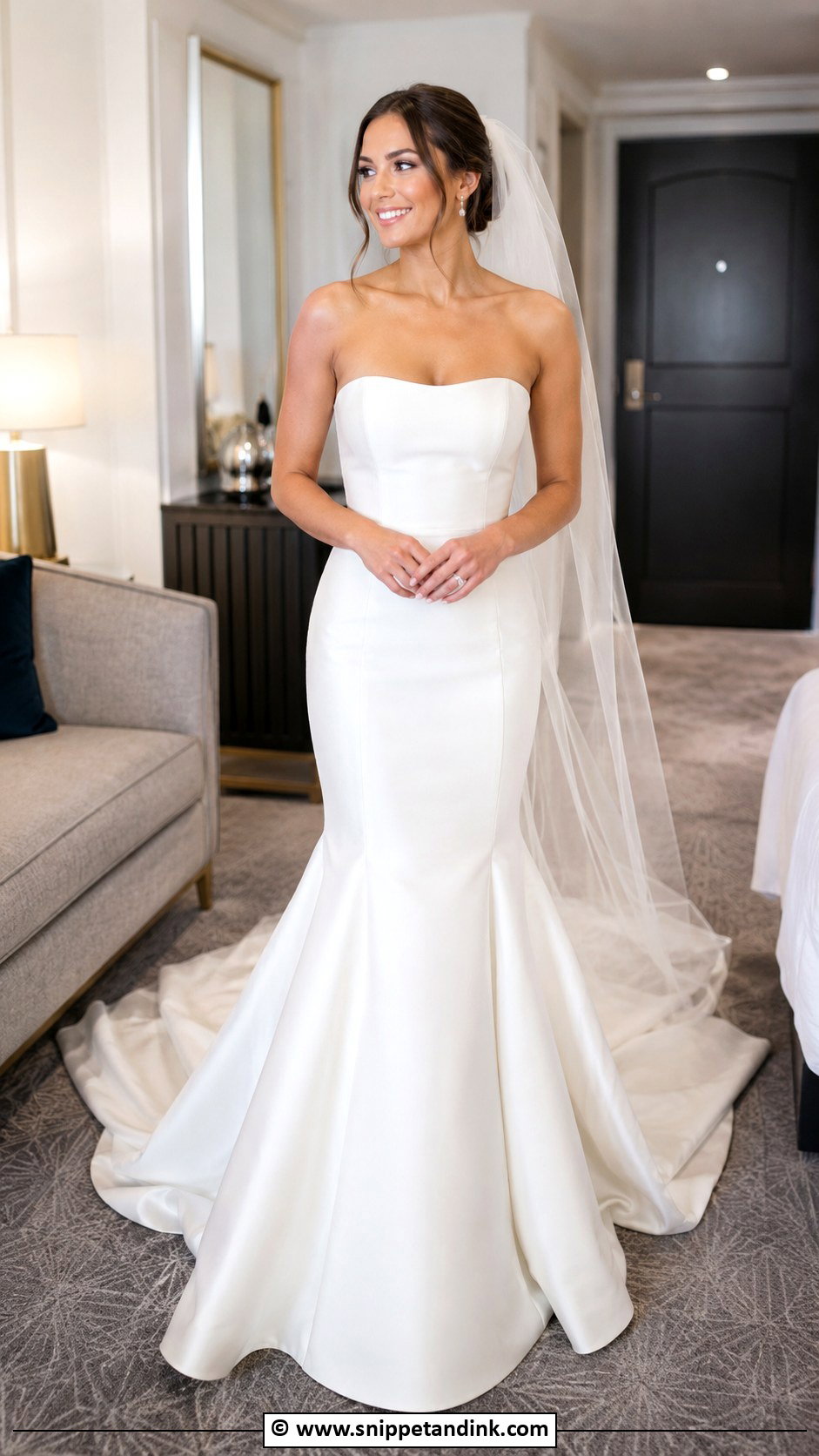
Shape without the stride problem: that’s the trumpet. It follows the bodice and hips like a mermaid but starts to flare higher, usually around mid-thigh, so you can walk and dance more freely. Crepe suits it well because it smooths the body without bulk. Lace with a chapel veil and drop earrings softens it. I keep the bouquet clean and the heels simple so the line of the gown does the work. When a bride loves mermaids but hates feeling held in, this is where I steer her next.
3. Fitted Lace Wedding Dress
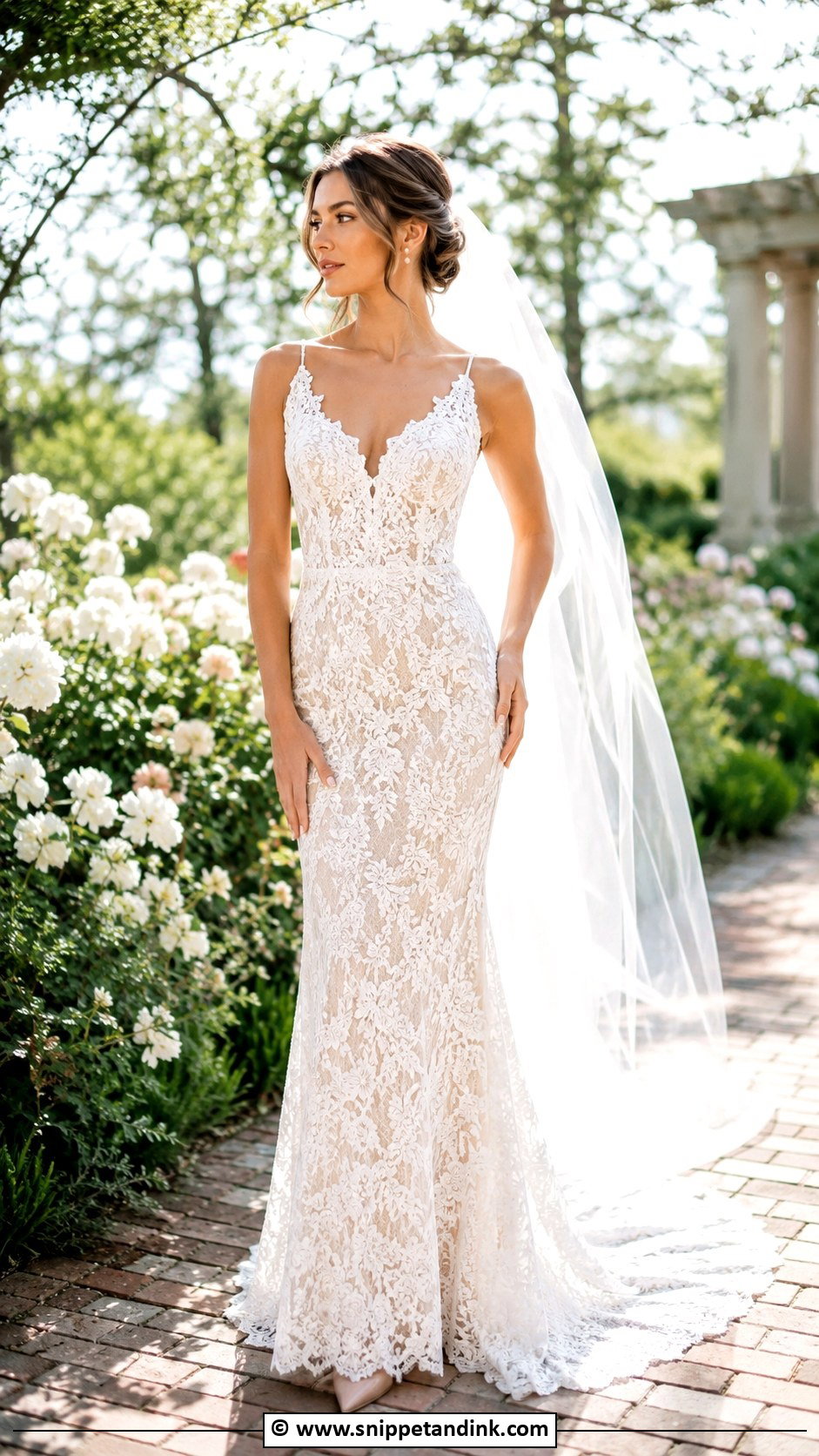
Lace on a fitted gown has a practical bonus: its texture hides small fit imperfections that plain crepe would show. Floral lace feels soft and feminine, geometric lace looks more current. Long lace sleeves give coverage; a strapless lace bodice feels lighter. The fitting detail I fuss over is the seams, because a skilled seamstress will match or appliqué the lace across them so the pattern isn’t cut through. Nude or ivory heels, a soft updo and small pearl or crystal earrings complete it. With heavy lace, keep the veil plain.
4. Fitted Crepe Wedding Dress
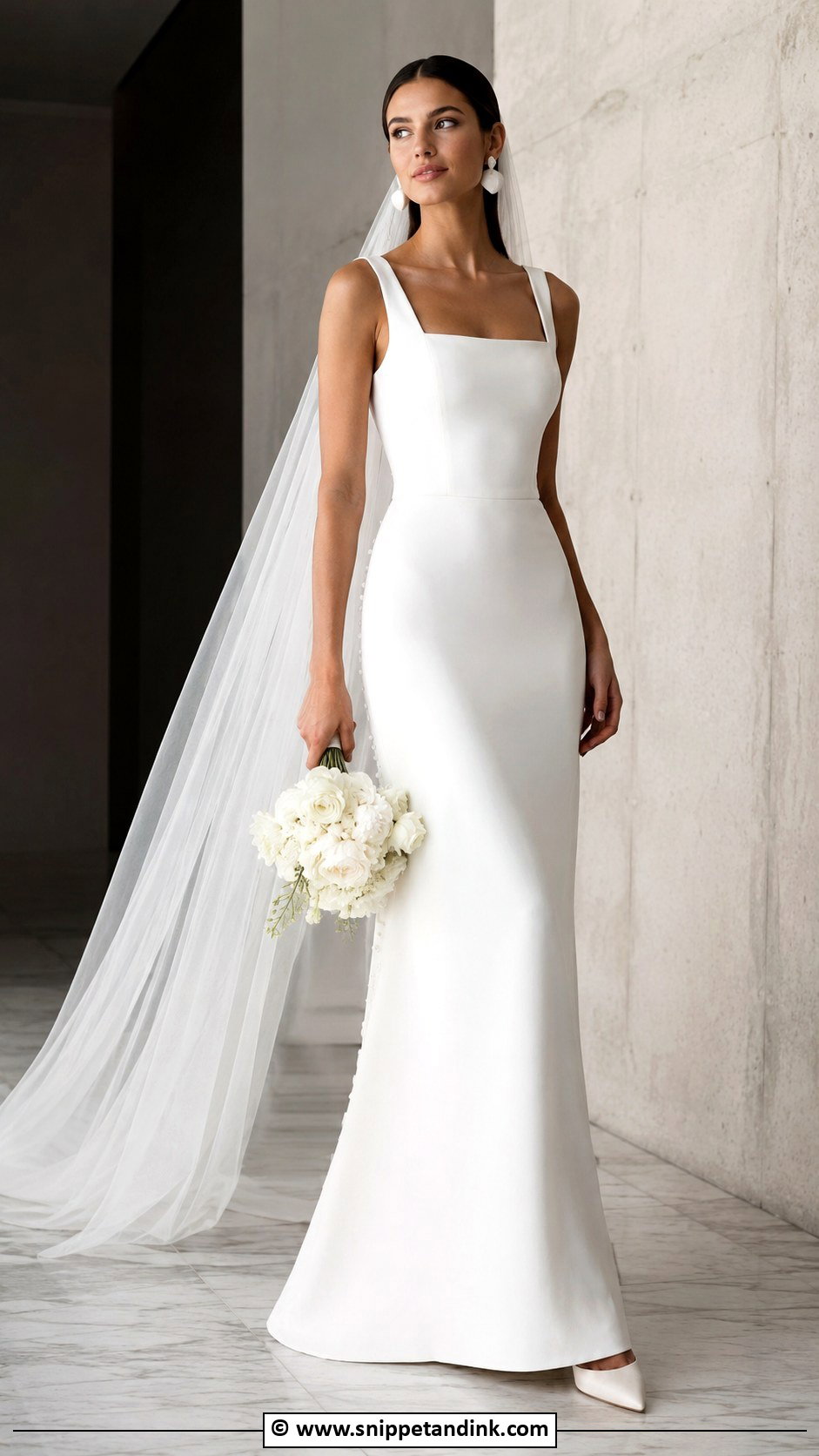
Crepe is the fabric I love most and trust least without a good seamstress. It skims the body with a matte, polished finish, but it shows every seam, bra line and pulled stitch. That’s exactly why it suits brides who want strong tailoring over embellishment. Princess seams, a square neckline, covered buttons or a low back give it character. A long veil, sculptural earrings and sleek heels finish the look. Get your undergarments sorted before the first fitting, not after, and choose a seamstress who has worked with bridal crepe before.
5. Fitted Satin Wedding Dress
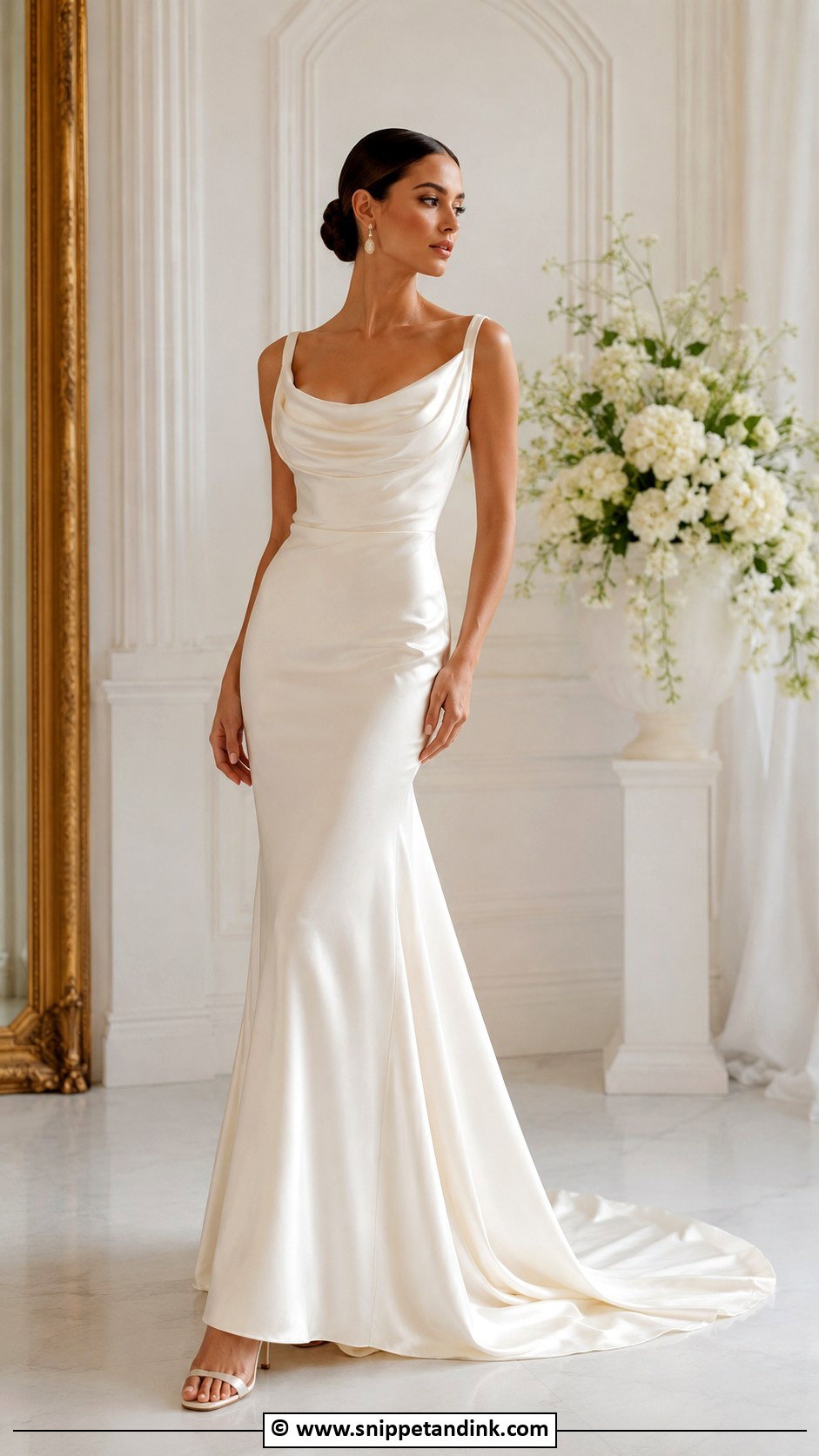
Satin catches light in long, soft highlights, and that’s where its elegance comes from. It holds mermaid, trumpet and sheath shapes well. A cowl neckline in fluid satin feels relaxed and romantic, while a strapless satin gown looks formal and polished. The trade-off is that satin highlights wrinkles and any tension in the fit; a drag line across the hip shows from the back row. I look for strong lining and plan a steam on the morning of the wedding. Satin heels, a smooth veil and minimal jewelry keep it refined.
6. Fitted Strapless Wedding Dress
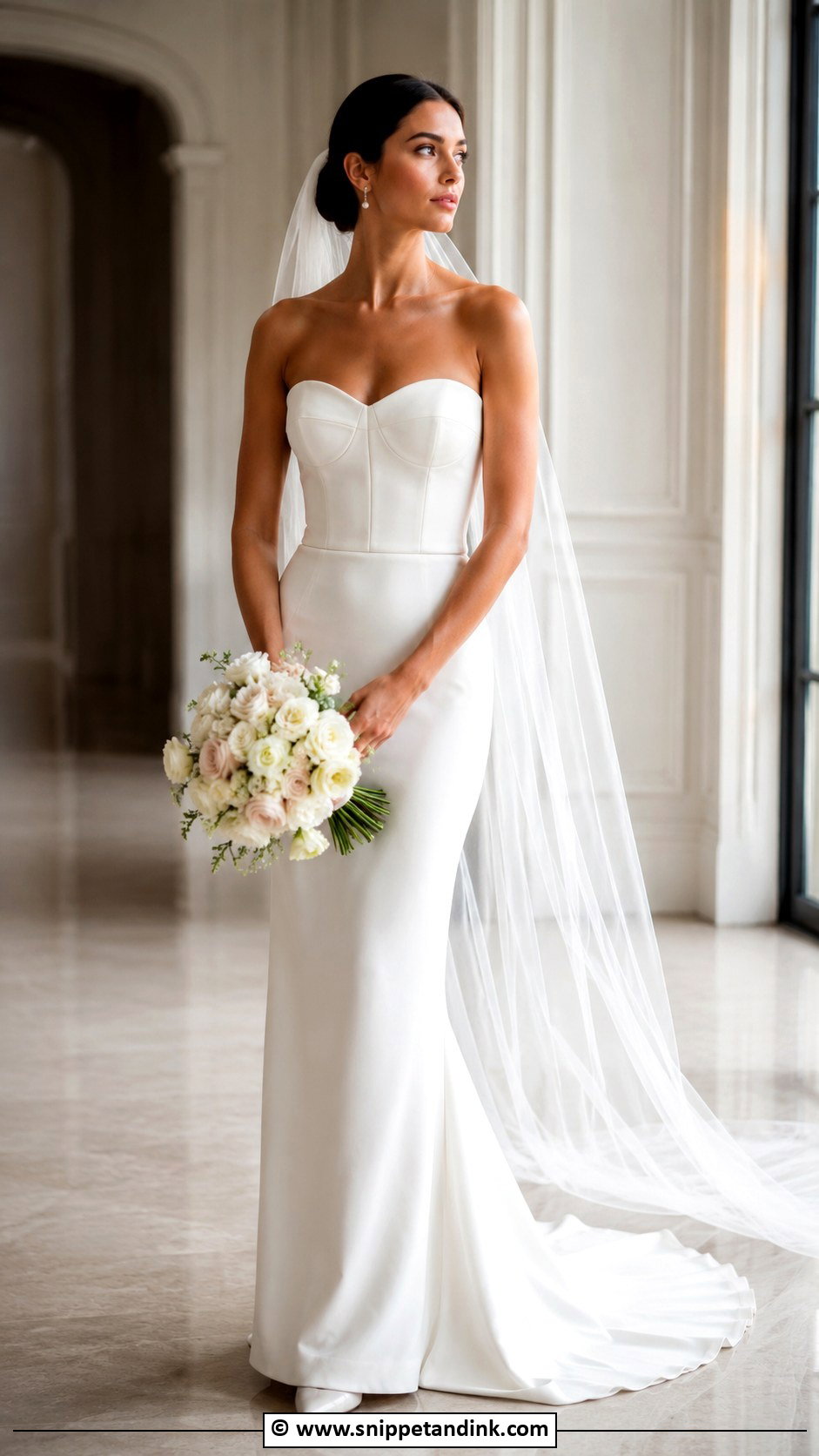
Strapless gowns stand or fall on their inner structure. I check for internal corsetry or boning and a waist stay, a grosgrain band inside that anchors the bodice at your waist so the top doesn’t slide down. If you’re tugging at the neckline during the fitting, you’ll be tugging all day. The open neckline suits statement earrings, a fine necklace or a sleek veil. Minimal crepe or dramatic lace and beading both work. A polished updo, pointed heels and a fitted veil finish it.
7. Fitted Off The Shoulder Wedding Dress
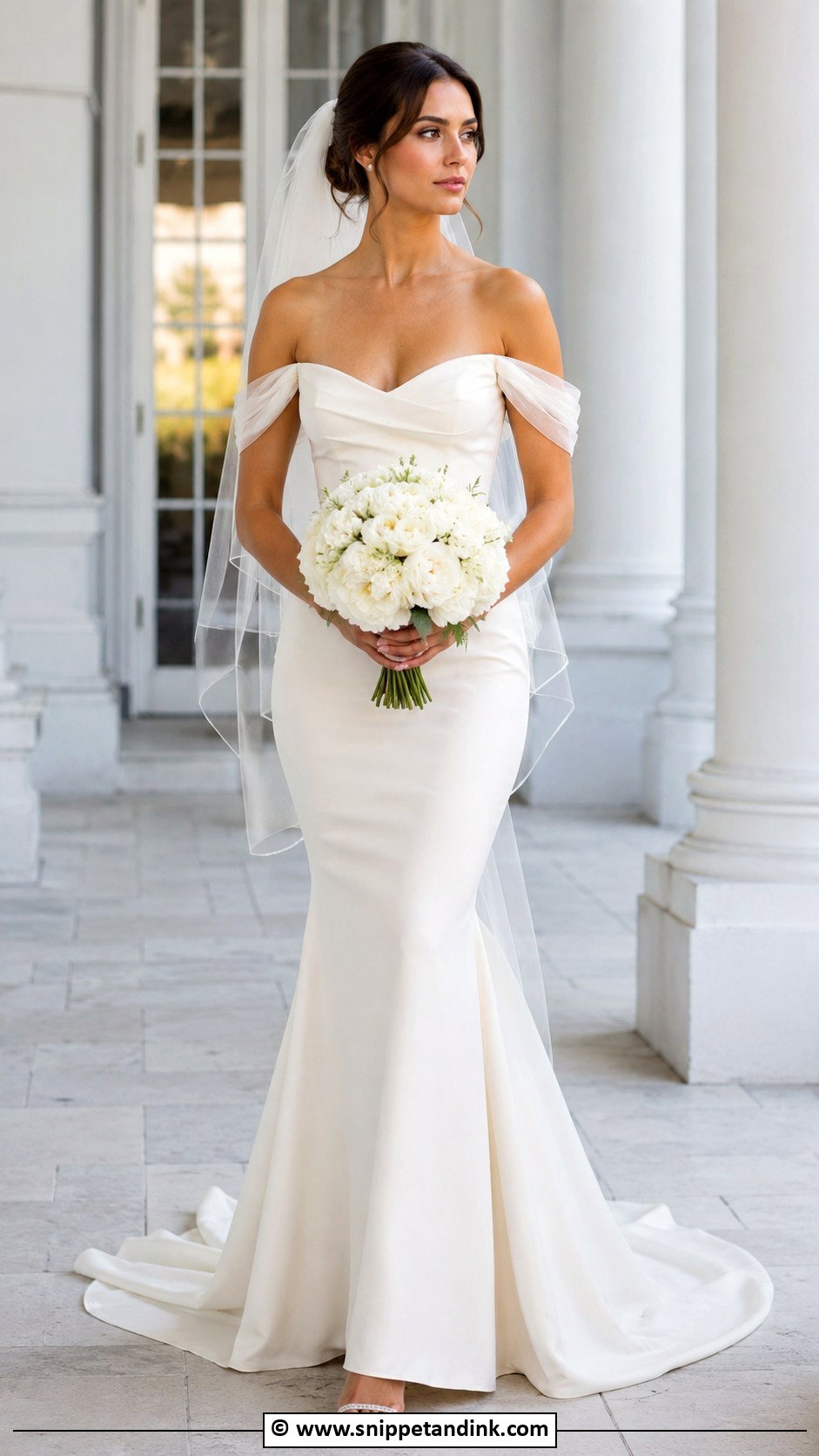
Off-the-shoulder necklines on fitted gowns look romantic and have one big limitation: arm movement. The band sits on your upper arms, so lifting them high pulls the bodice up. I ask brides to raise their arms as if hugging someone taller and to mimic a first-dance hold at the fitting. Soft draped sleeves move more than structured bands. It pairs well with mermaid, trumpet and sheath silhouettes, with a low bun, pearl studs and a medium-length veil that leaves the neckline visible.
8. Fitted Long Sleeve Wedding Dress
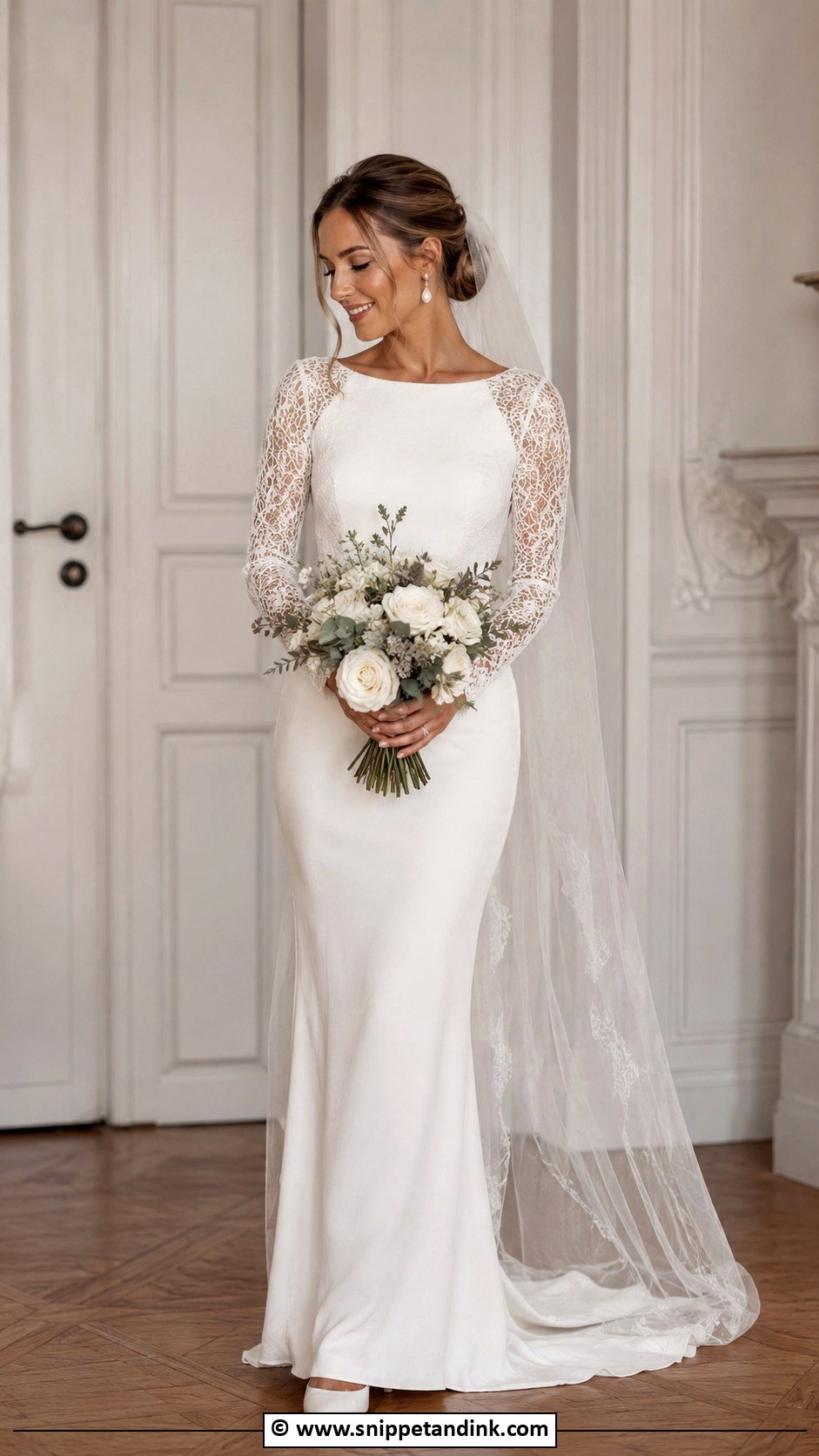
Long sleeves on a close-fitting dress need the most careful tailoring of anything on the list. Too tight at the bicep and you can’t bend your arms; too loose at the wrist and they look borrowed. Sheer lace sleeves feel romantic, crepe sleeves modern, satin sleeves smooth and formal. A high neck with long sleeves reads regal, while a plunging neckline balances the coverage. I always fit sleeves with the arms bent as well as straight. Classic heels, a simple veil and delicate earrings suit cooler weather and formal venues.
9. Fitted Corset Wedding Dress
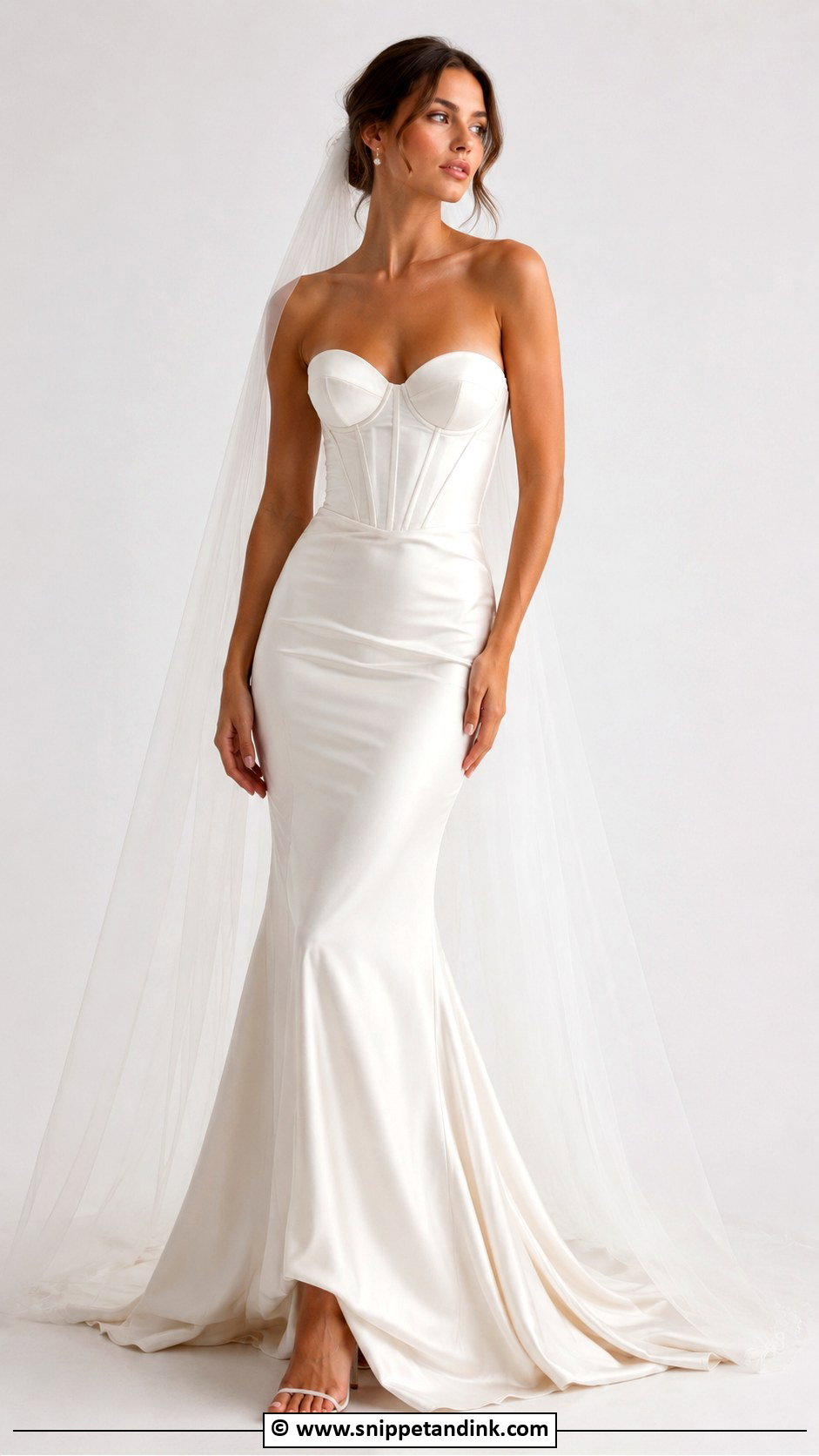
A corset bodice gives the most sculpted waist of any style here, and the most visible structure. Exposed boning looks fashion-forward; hidden boning supports with a softer finish. It pairs well with a mermaid skirt, a trumpet skirt or a sleek column silhouette. I make every corset bride sit down and eat a pretend dinner at the fitting, because a bodice that feels fine standing can press hard into the ribs when seated. A long veil, elegant heels and small earrings keep the corset as the main feature.
10. Fitted Basque Waist Wedding Dress
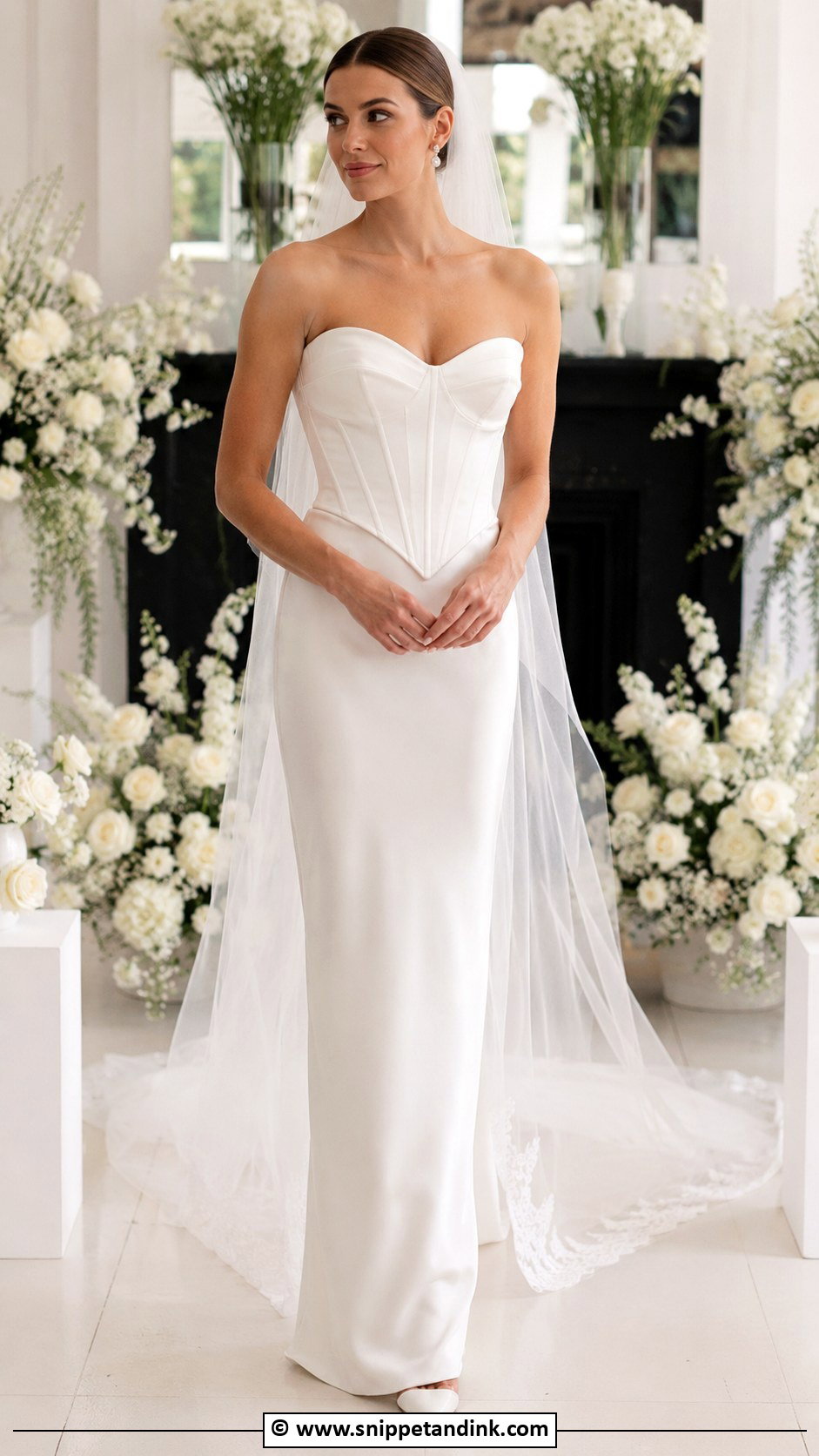
The basque waist dips into a V below the natural waistline, which lengthens the torso and gives a fitted gown a vintage note. It suits short-waisted brides especially well, since the V creates length where they lack it. Satin or mikado makes it structured; lace makes it romantic. Placement is the alteration I watch: the point of the V should sit centered and level, and it can shift if the bodice is taken in unevenly. Keep the veil clean, the heels pointed and the jewelry simple, since the waist already makes the statement.
11. Fitted Square Neck Wedding Dress
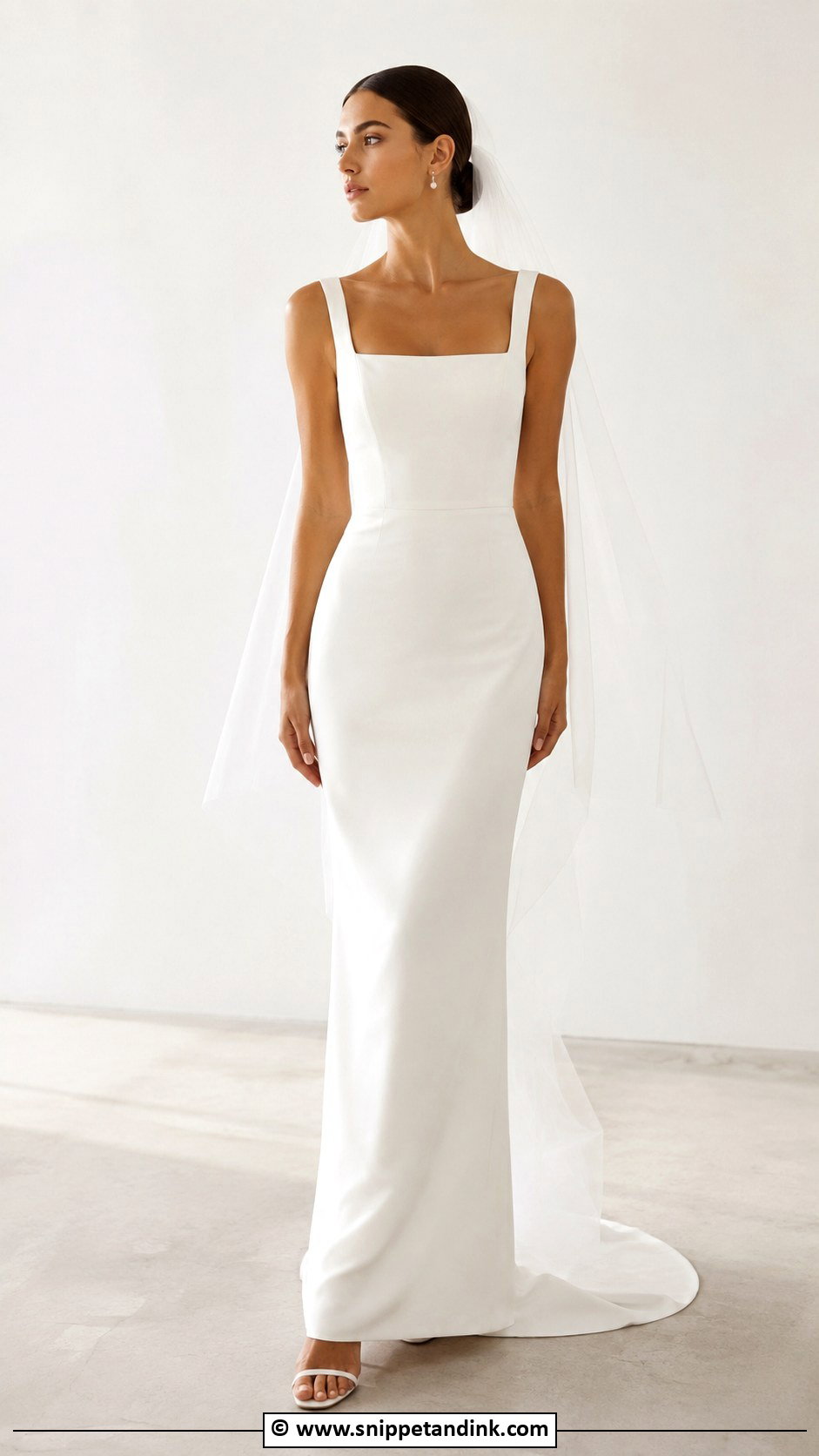
Square necklines are among the easiest for me to fit well, which is part of why they suit so many brides. The straight edge frames the collarbone without drama, in crepe, satin, lace or stretch fabrics. Thin straps make it modern; wider straps and covered buttons feel classic. My check is the corners: they should lie flat against the chest, not lift away when you lean forward. A sleek bun, small earrings and a simple veil finish it, with a fine bracelet or a sheer veil with light trim if you’d like more softness.
12. Fitted Sweetheart Wedding Dress
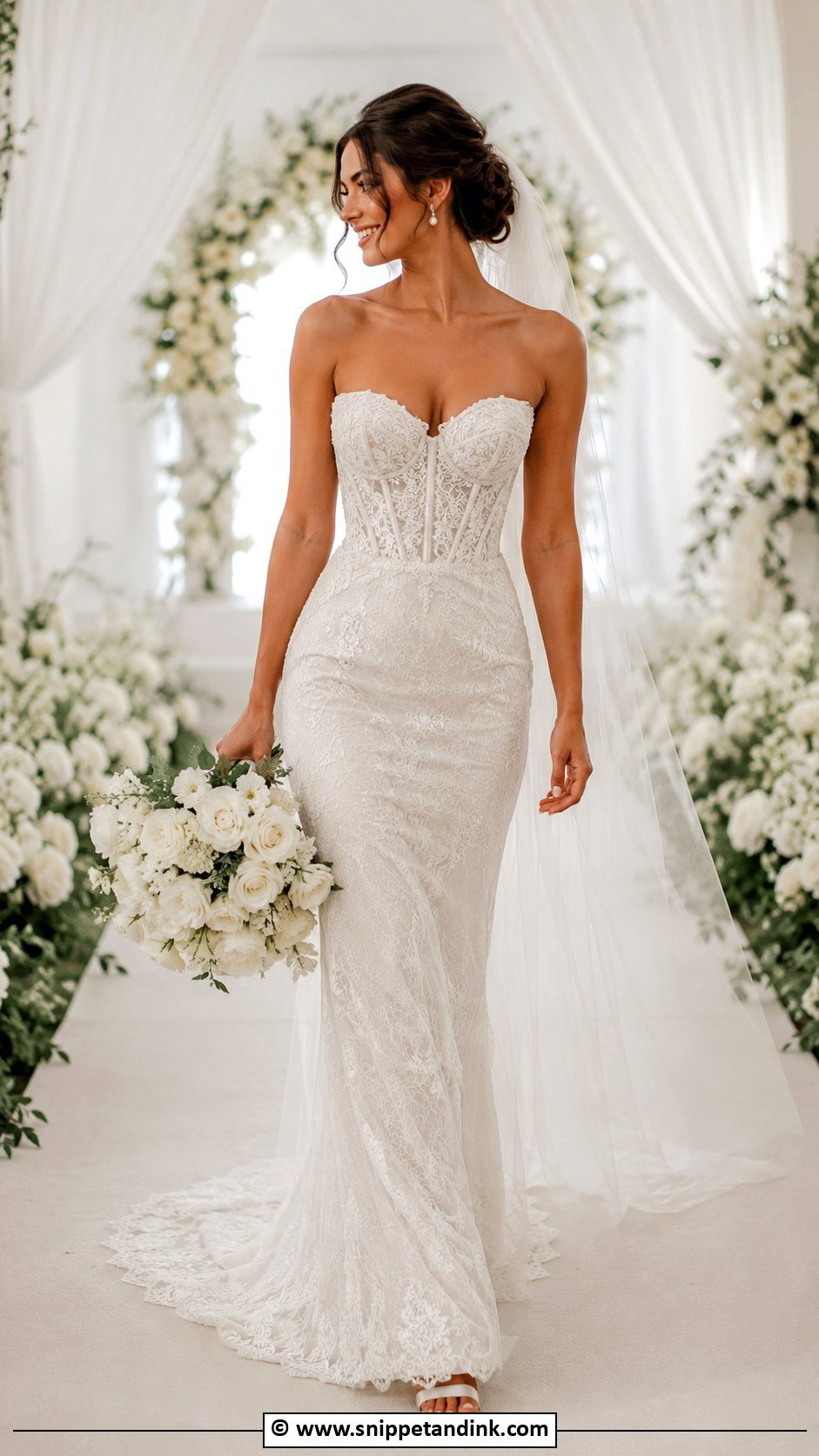
A sweetheart neckline softens a close fit and has been a bridal favorite for good reason. It works with strapless designs, corset bodices, lace overlays and mermaid skirts. Bust support is where the alterations go. The curves of the sweetheart should sit snugly against you without gaping or cutting in, and that often means adjusting the cups as well as the side seams. Pearl earrings, a soft veil and heels toned to the fabric suit it. Add detachable sleeves or a removable overskirt to get two looks from one gown.
13. Fitted V Neck Wedding Dress
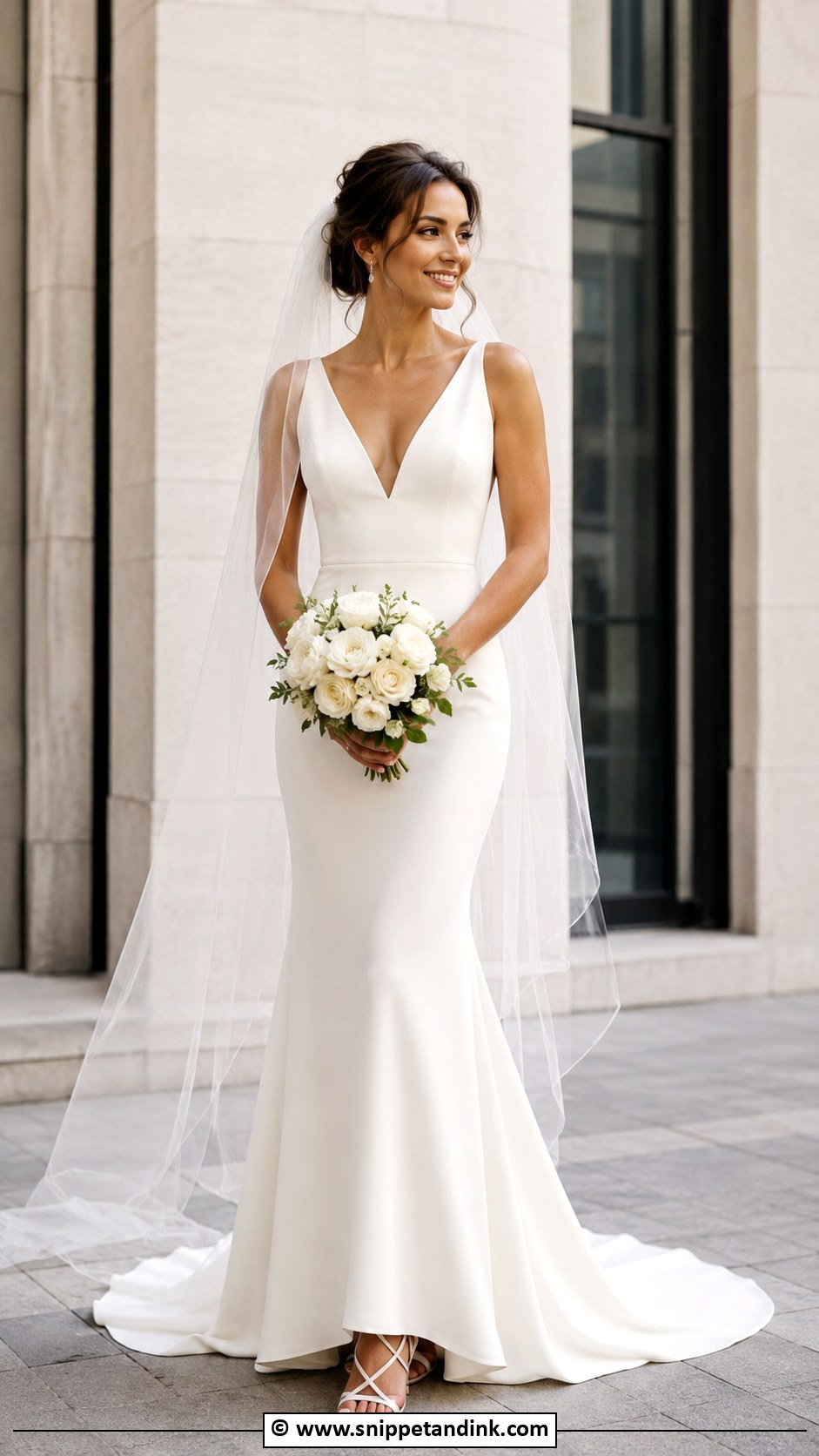
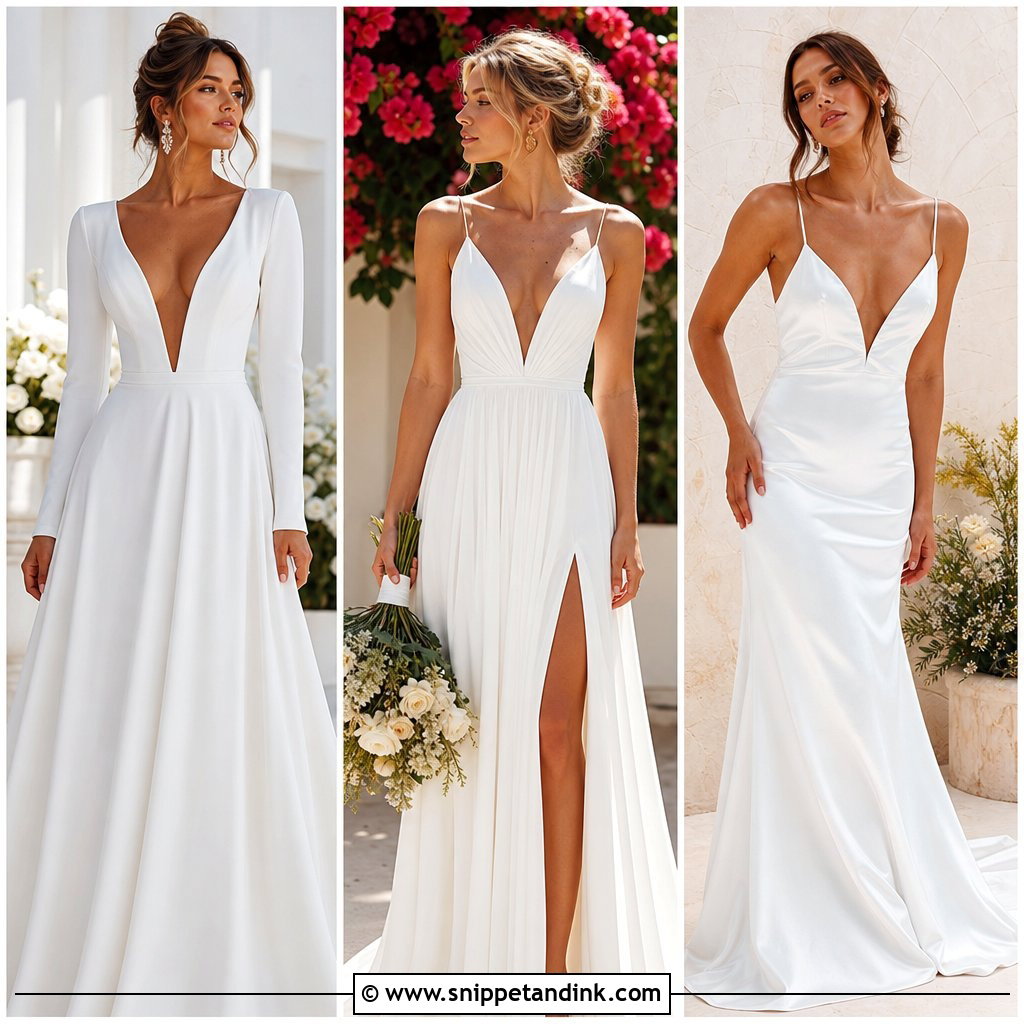
A V neckline lengthens the body, and on a fitted gown that effect is strong. A deep V feels bold; a softer V suits brides who want less exposure. It works with fitted lace, crepe sheaths and satin trumpets. For a low V, I ask the seamstress to add illusion mesh or fashion tape points so you can bend and hug without worry. Add a fine pendant only when the neckline is plain; otherwise skip it. Soft waves, minimal earrings and strappy heels complete it.
14. Fitted High Neck Wedding Dress
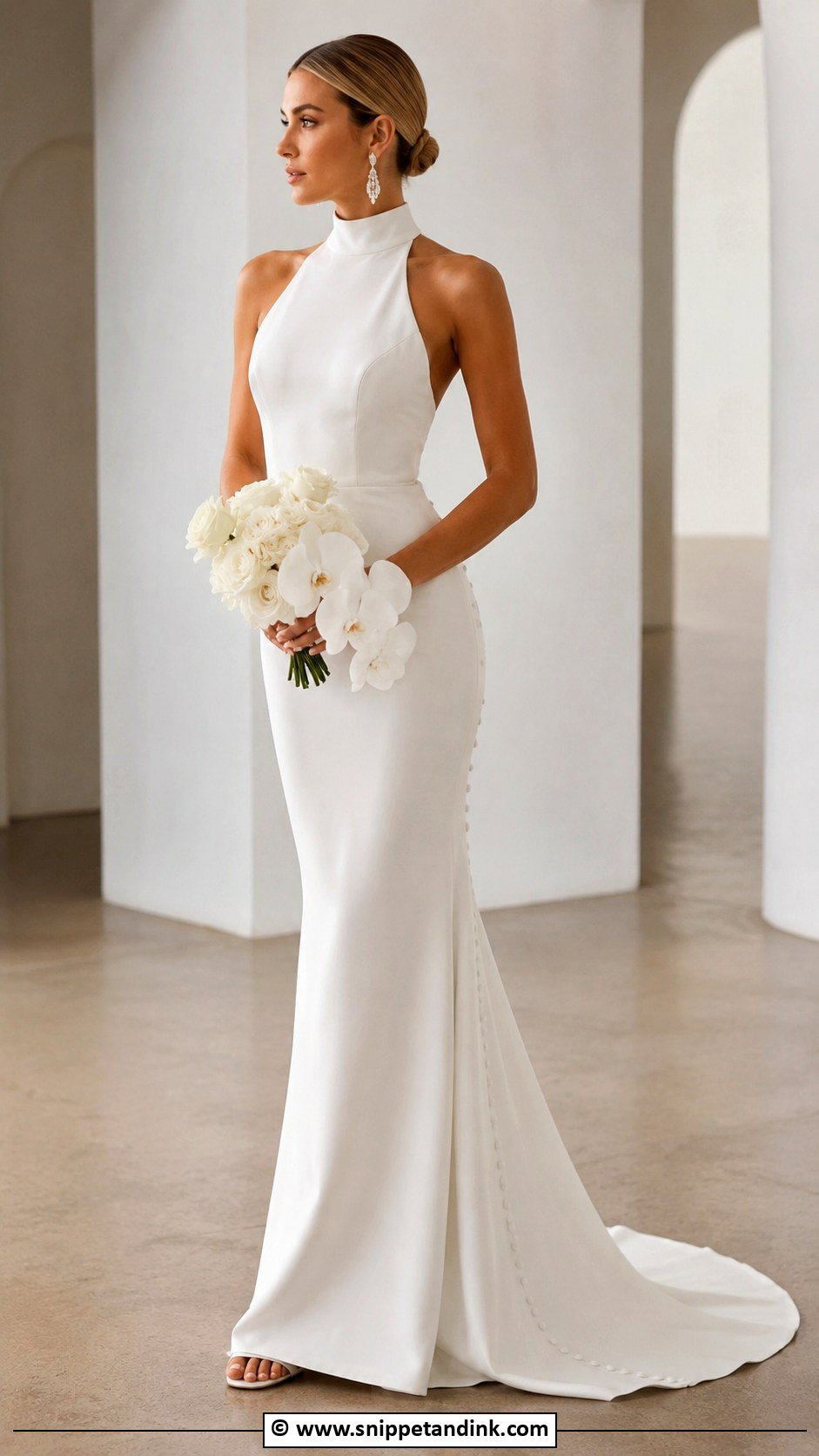
A high neck balances a body-hugging shape and gives one long, clean line from chin to hem. Crepe makes it minimal, lace vintage, satin formal. No necklace, obviously; earrings, a polished bun and a simple veil are enough. Tailoring at the neck is fiddly, because a collar that’s even slightly tight feels like it’s choking you after a few hours, while a loose one stands away from the throat. I check it with the bride turning her head both ways. City weddings, museum venues and formal receptions suit it.
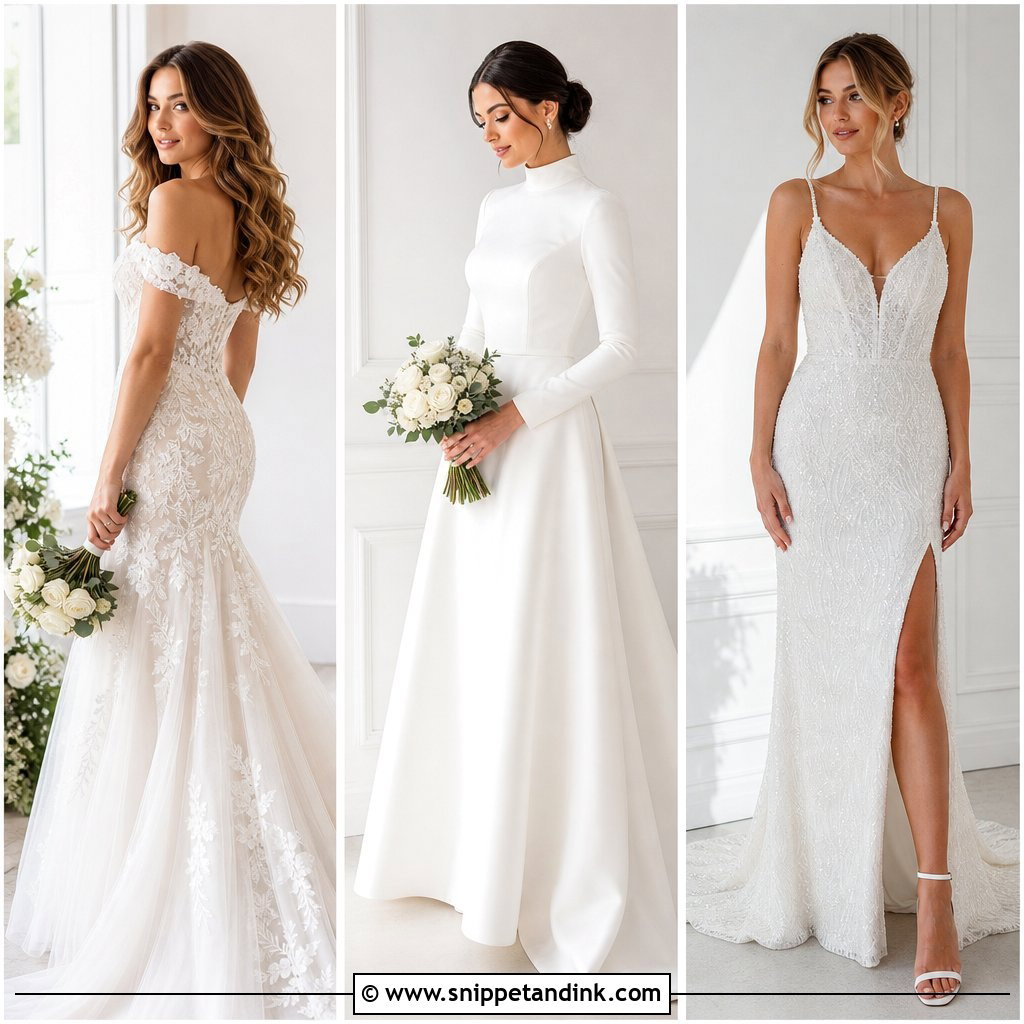
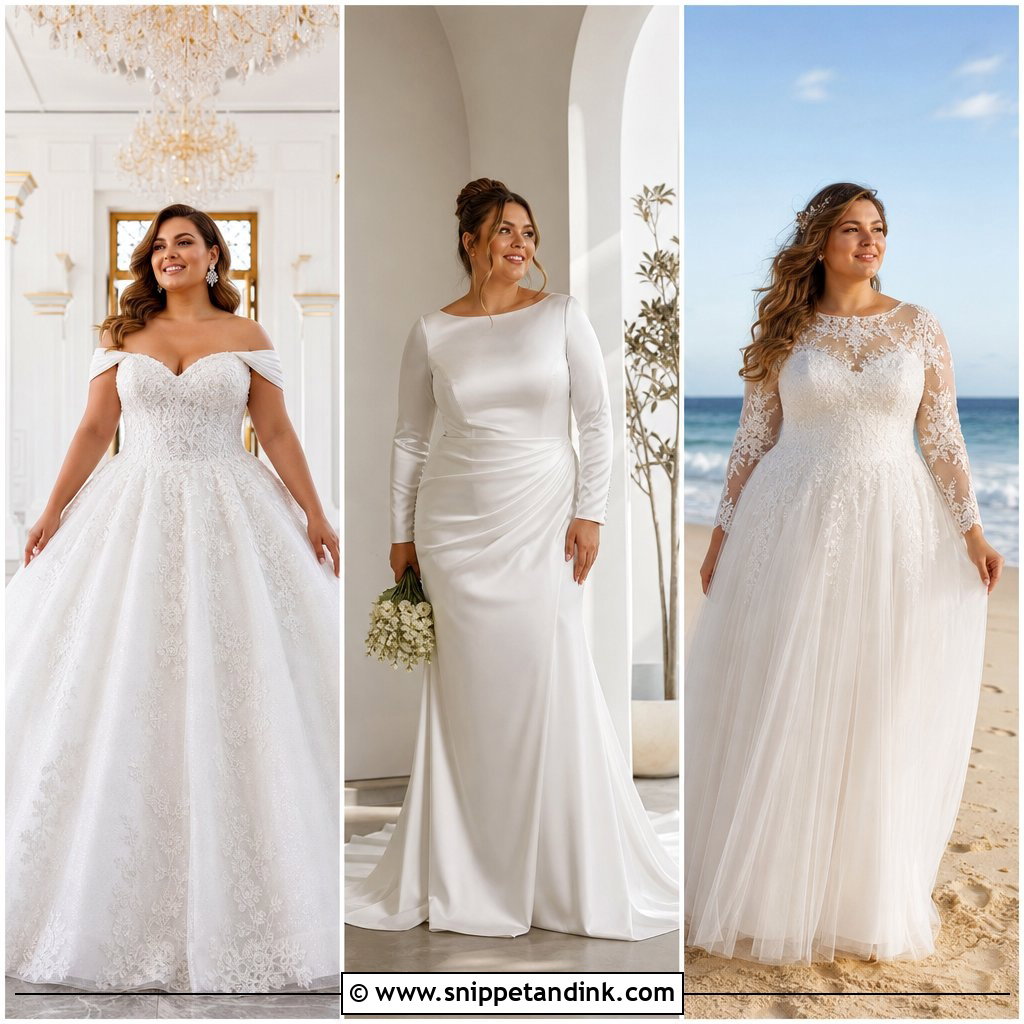
15. Fitted Halter Wedding Dress
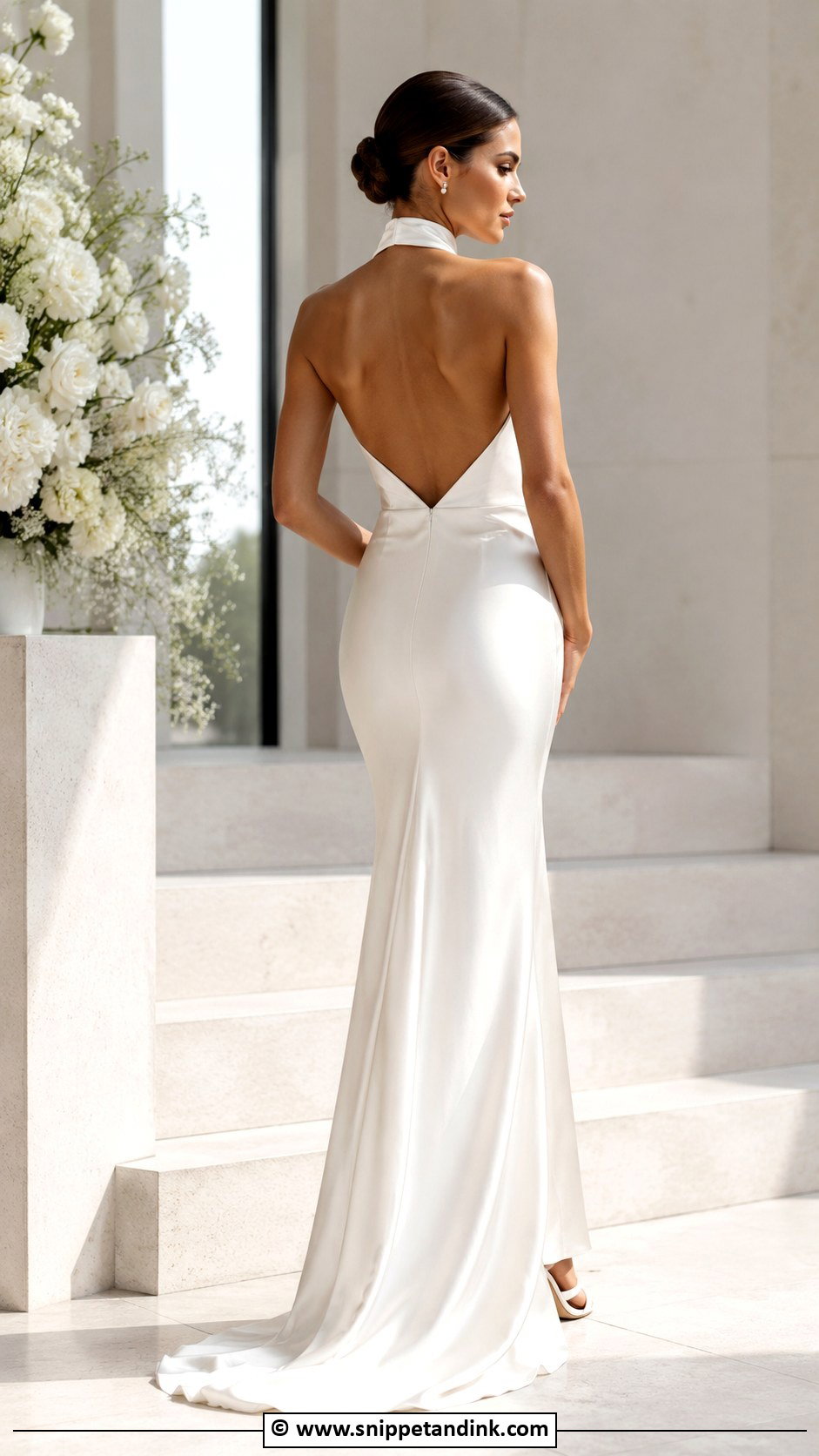
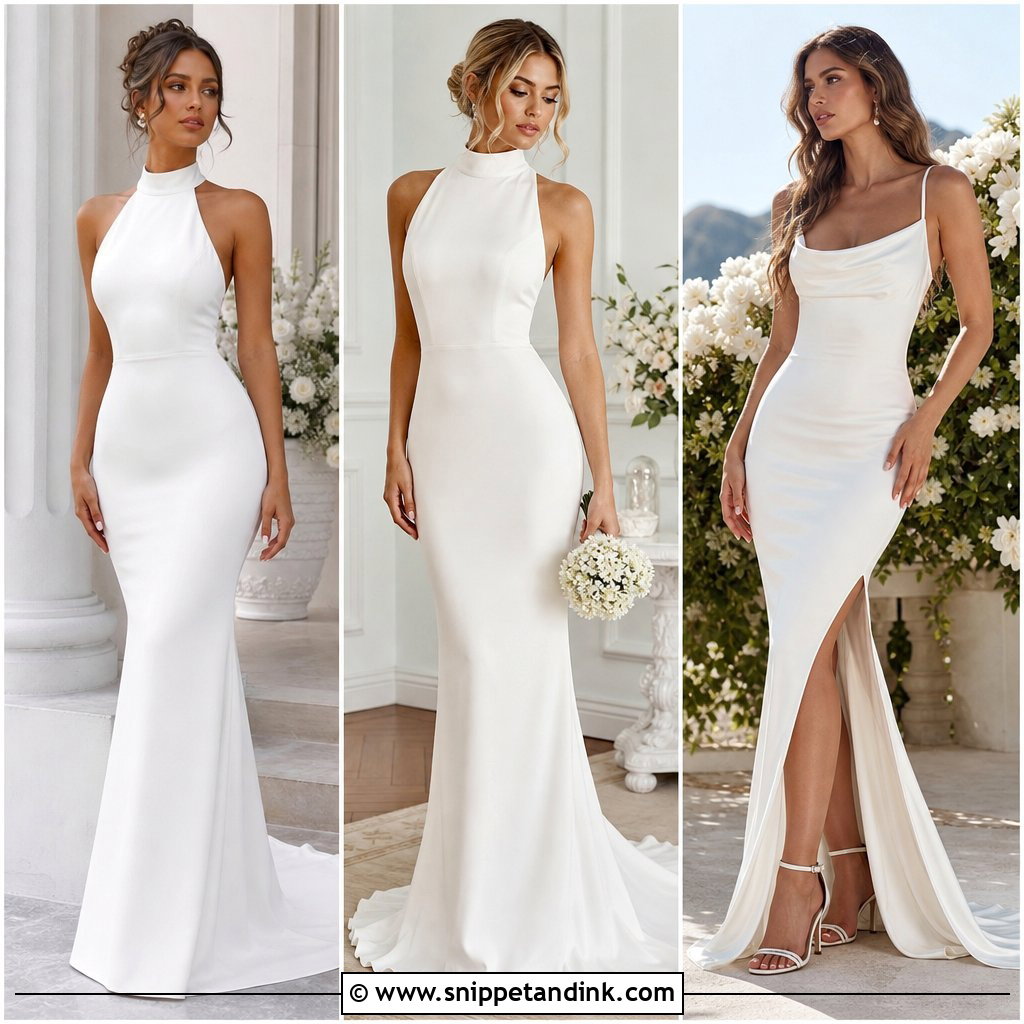
Halters show off the shoulders and arms and leave room for an open or keyhole back, which is why I suggest them to brides who love a back detail. Crepe halters look clean and architectural; satin has a softer glow. The neck strap carries weight, so I check it isn’t pulling the bodice up or pressing into the back of the neck after twenty minutes. A low bun or tucked waves keep the neckline visible. Slim heels, small earrings and a neat bouquet balance it. Column, sheath, trumpet and low-back shapes all work.
16. Fitted Low Back Wedding Dress
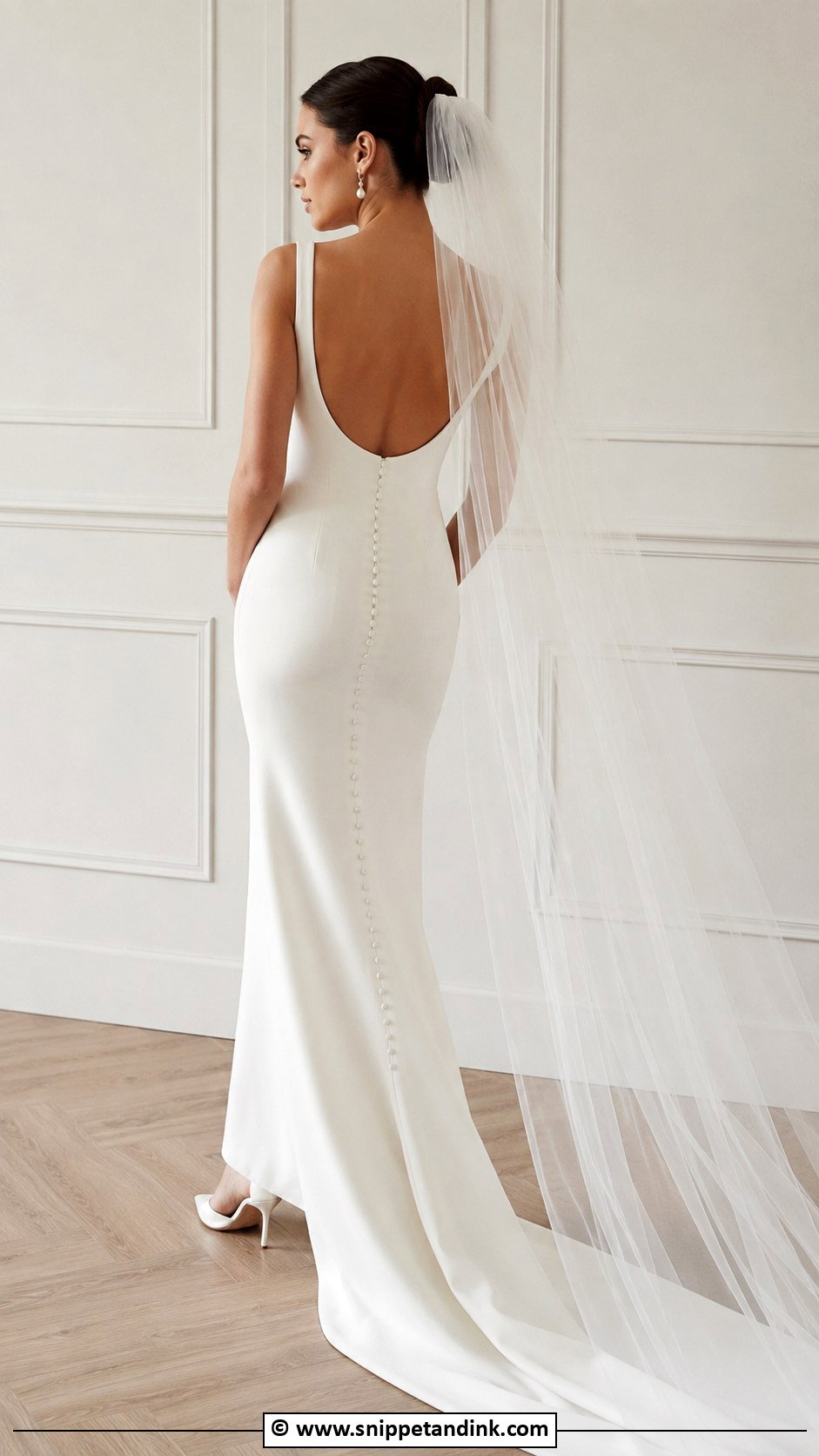
Guests spend the whole ceremony looking at your back, so a low back is a smart place to put the detail. A long veil or covered buttons running down the skirt look striking from behind. Crepe, satin, lace and beaded fabrics all suit it. Support is the problem to solve early. Adhesive bras, built-in cups or custom structure stitched into the bodice keep the front secure, and I sort that before the first fitting. Keep accessories to earrings, a bracelet and polished heels, with a low bun or side-swept hair to show the back.
17. Fitted Open Back Wedding Dress
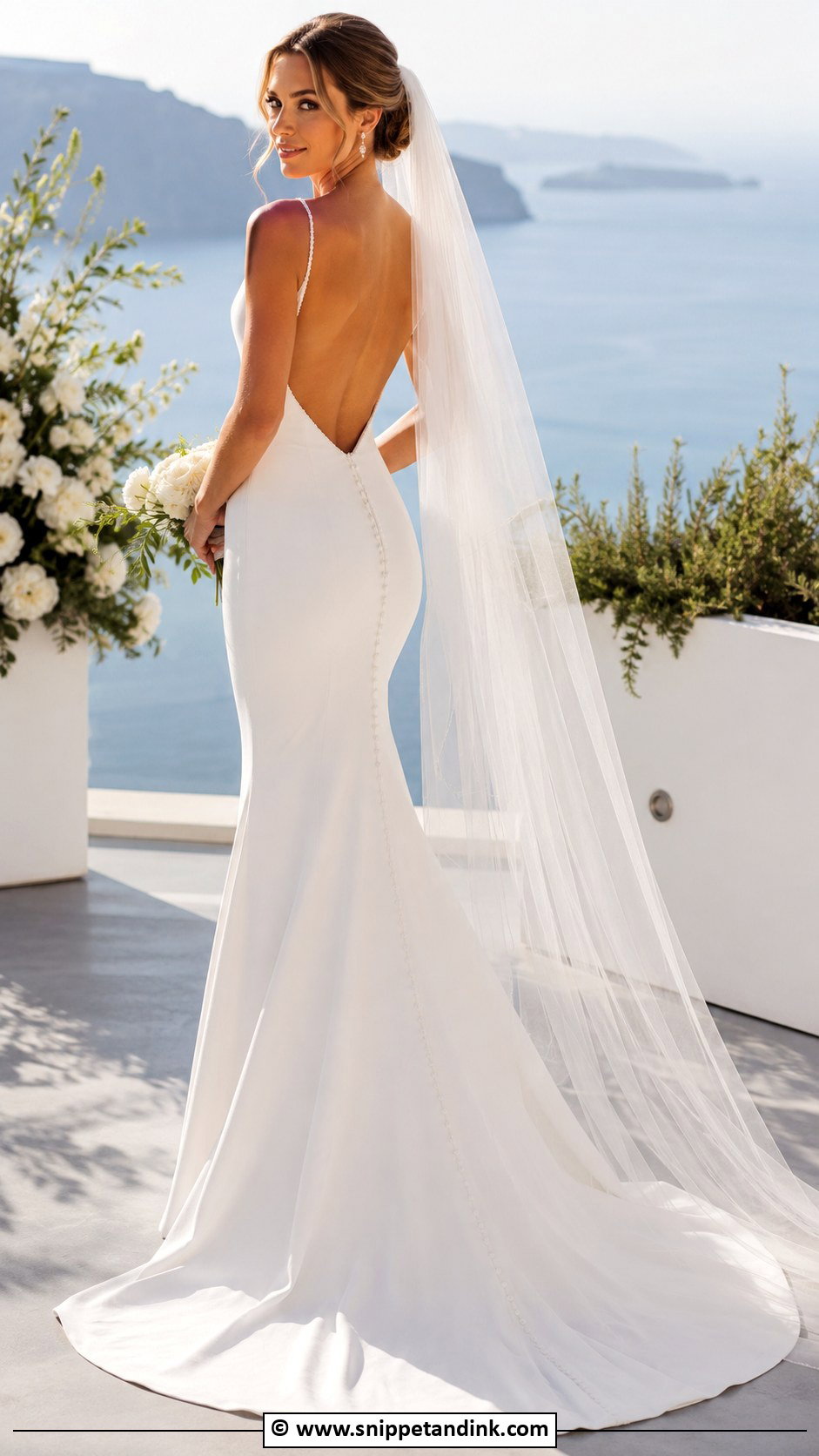
Open backs give a fitted gown its memorable detail without heavy decoration. The edges are the fitting point I watch: they should lie flat on the skin when you stand, sit and reach forward, and a gap at the edge is visible in every rear-view photo. Plain crepe makes it minimal; lace or beading adds romance. A sheer veil lets the back show through. Delicate earrings and clean heels finish it. Warm-weather weddings and destination ceremonies suit it well.
18. Fitted Beaded Wedding Dress
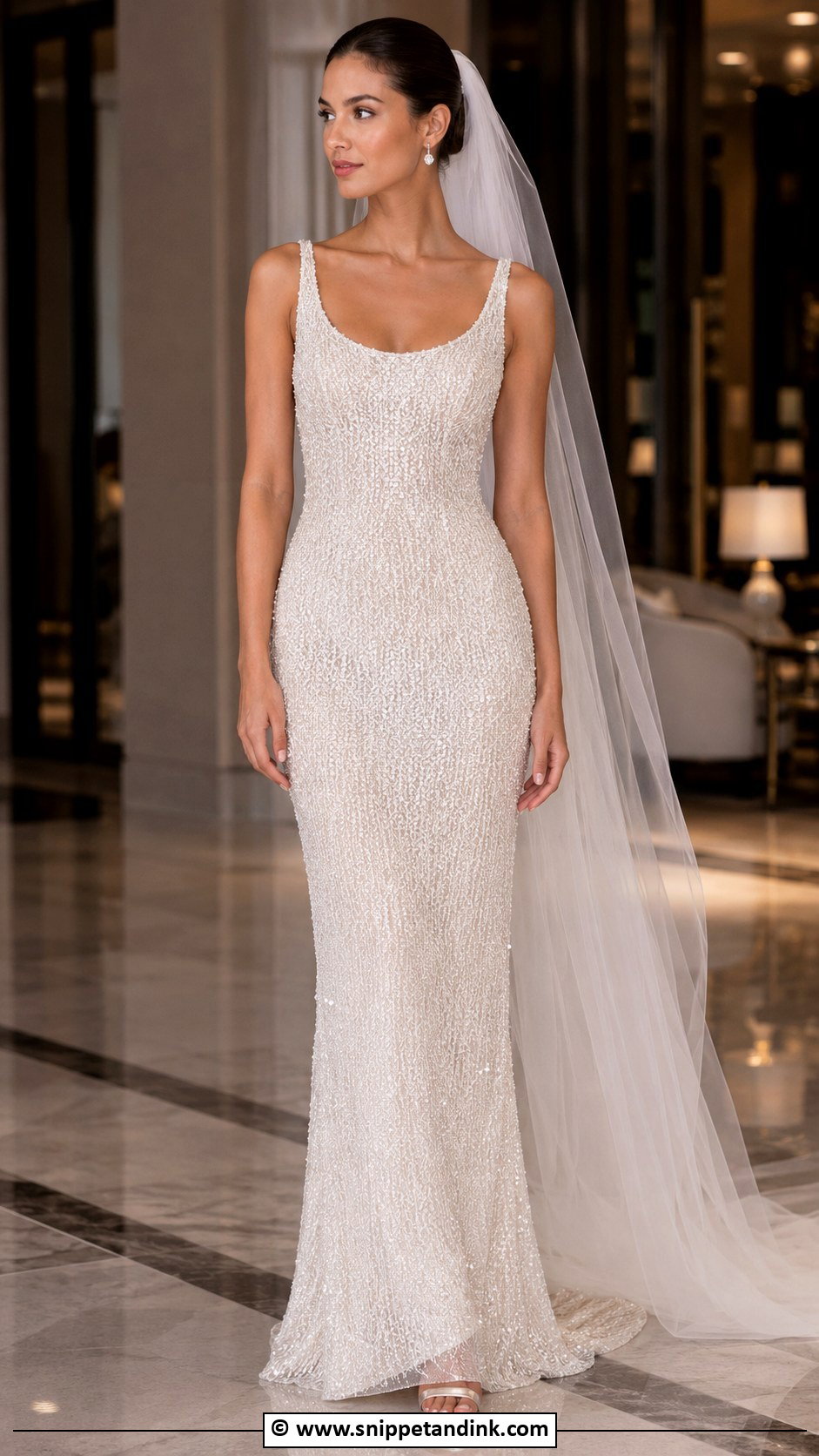
Beaded fitted gowns are heavier than they look on the hanger, sometimes by a lot. I want brides to wear one for a good ten minutes, walk, sit, and see how the weight settles on the shoulders and hips. Beading can be subtle, scattered pearls or crystal trim, or full-body shimmer that shines at evening receptions and hotel weddings. Simple accessories only: small earrings, smooth heels, a clean veil. Good lining matters here, both for comfort and so the beads don’t scratch the skin underneath.
19. Fitted Pearl Wedding Dress
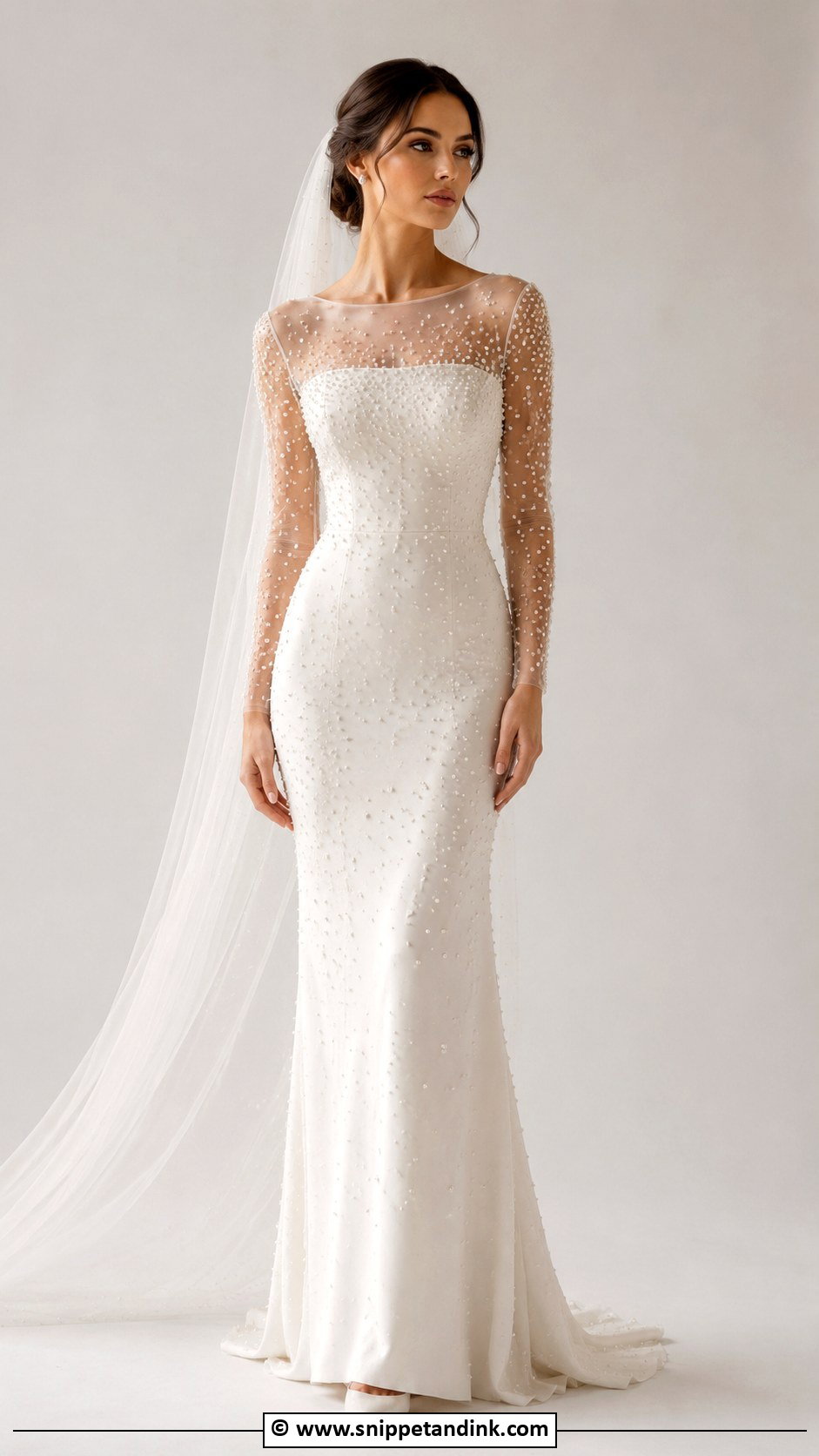
Pearls soften a sleek silhouette and give detail without high shine. Tiny pearl embroidery looks classic; larger pearl accents feel fashion-forward. Crepe, tulle overlay, satin and sheer illusion fabrics all carry them well. My caution is snagging: pearls catch on bracelets, rings and lace-edged veils, so I’d pick jewelry with smooth settings and a veil with a clean edge. Pearl studs and simple ivory heels keep the embellishment intentional. It’s a good choice when you want detail without sparkle.
20. Fitted Floral Applique Wedding Dress
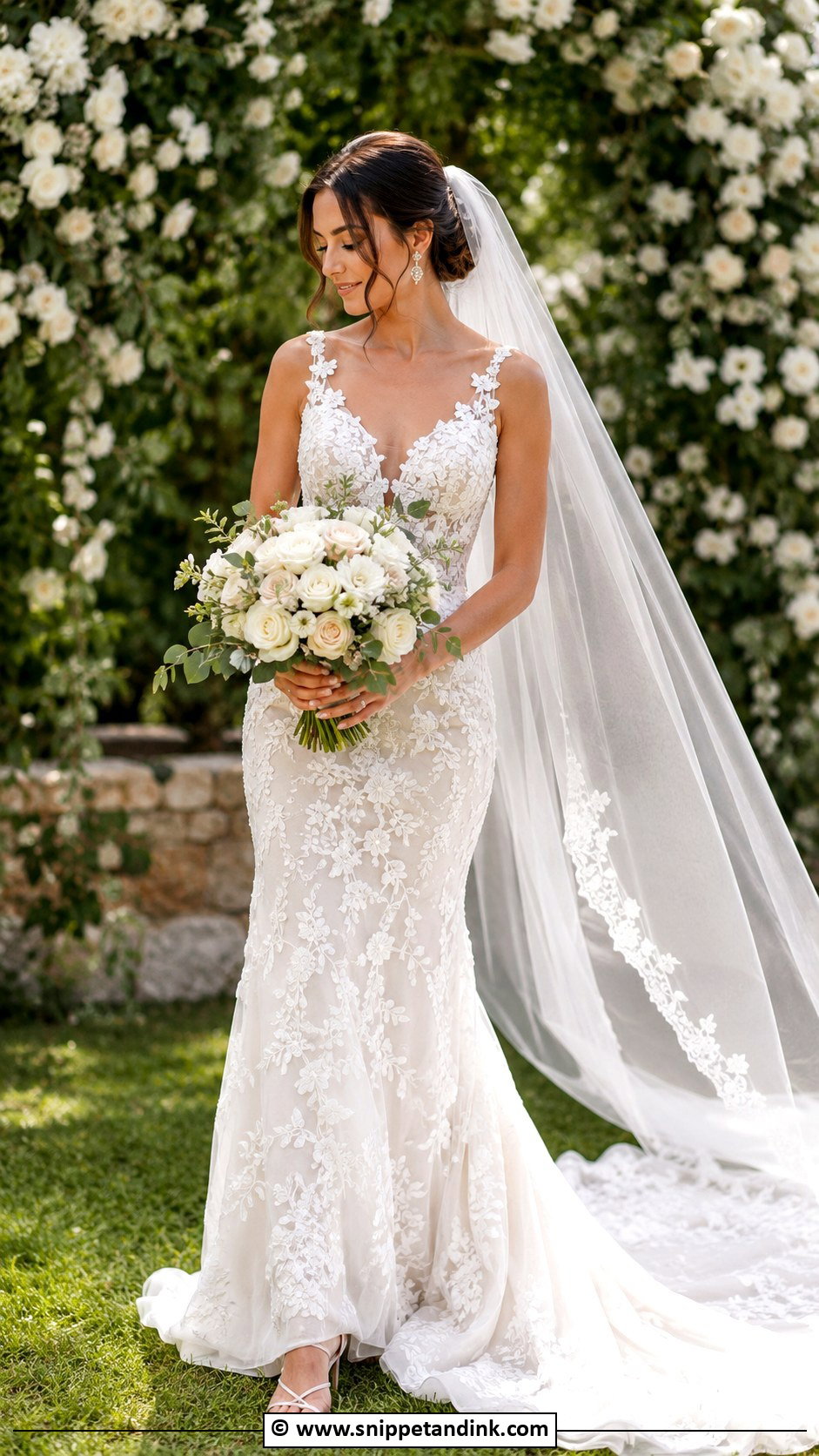
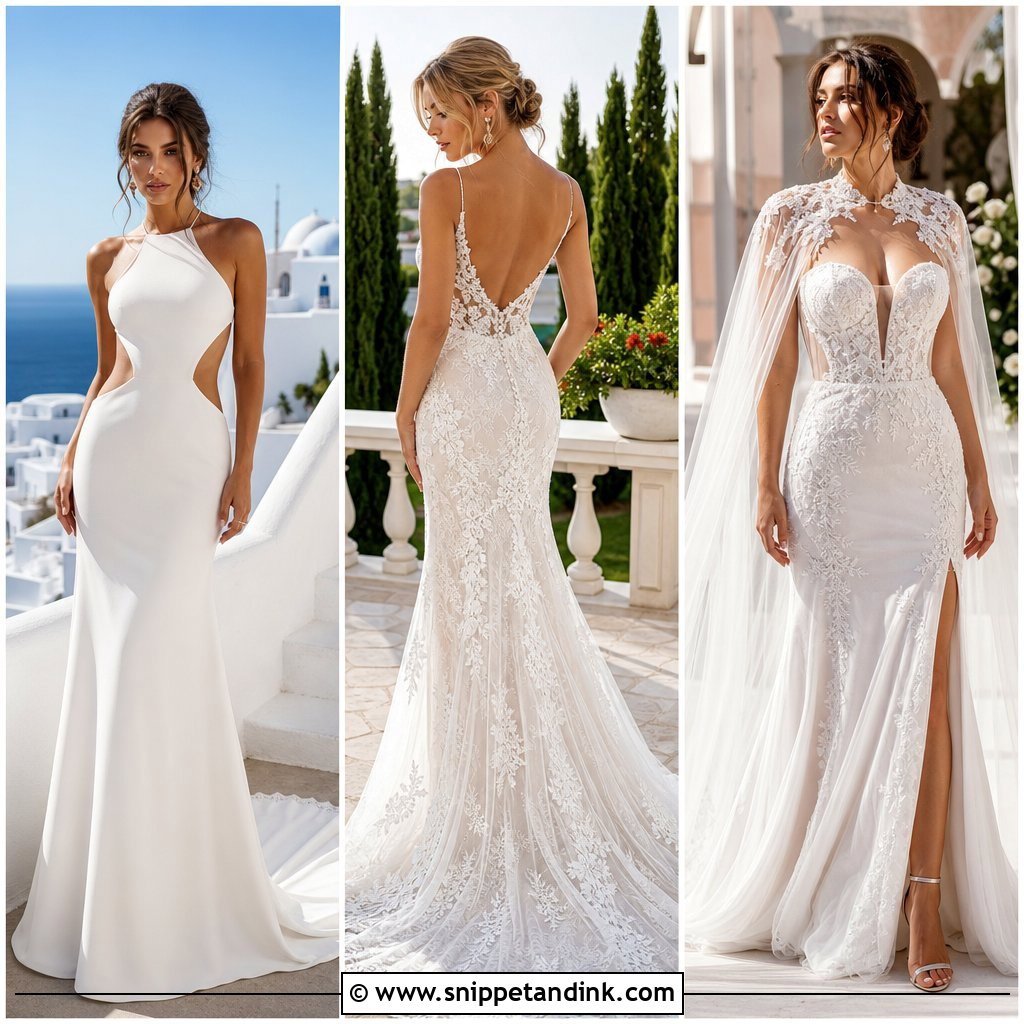
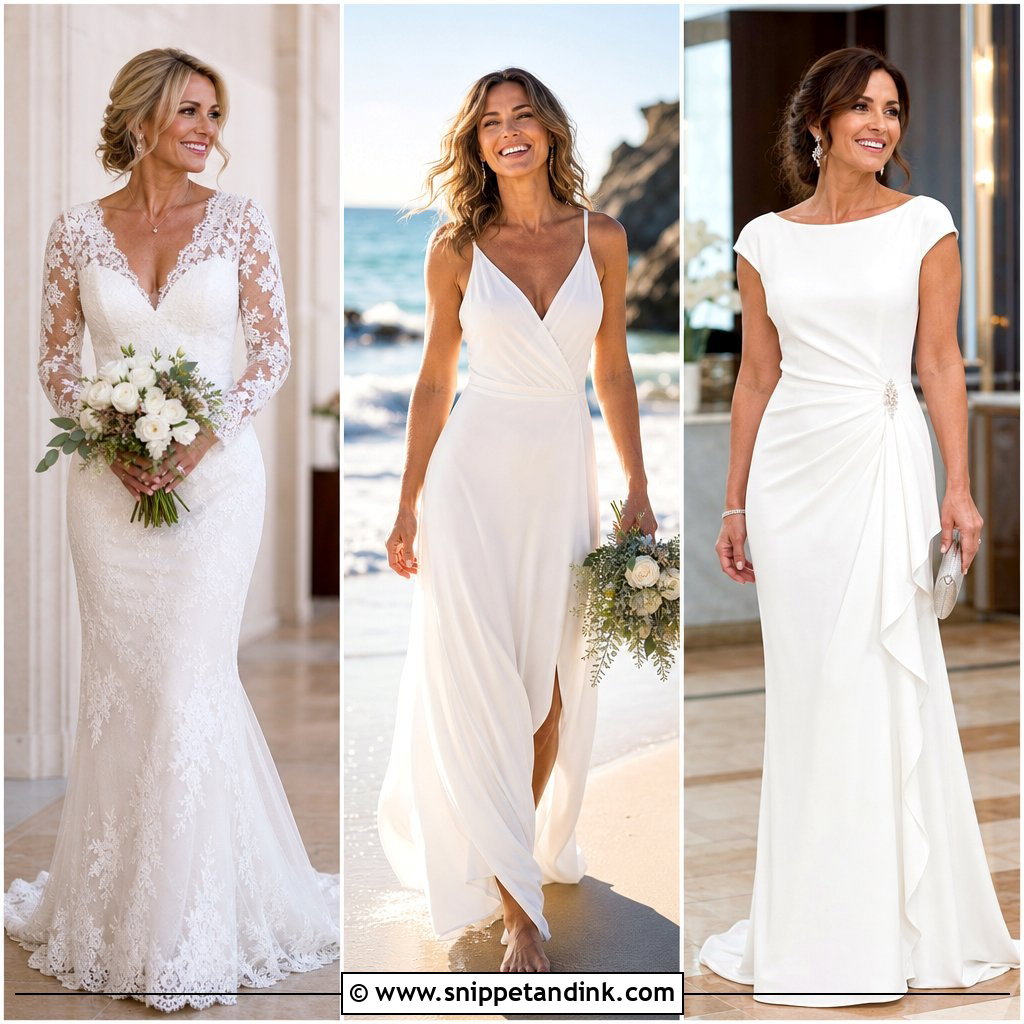
Floral appliqués can steer the eye wherever you want it. Along the bodice they draw attention up; down the hips they emphasize curve; around the train they reward the back view. Ivory appliqués on tulle or lace look soft, while raised flowers over a nude-lined base add dimension. I always check that appliqués near the inner arm and waist are stitched flat, since raised edges rub during a long day. A simple veil, delicate earrings and classic heels suit garden and indoor ceremonies. Keep the bouquet simple so it doesn’t compete.
21. Fitted Sheath Wedding Dress
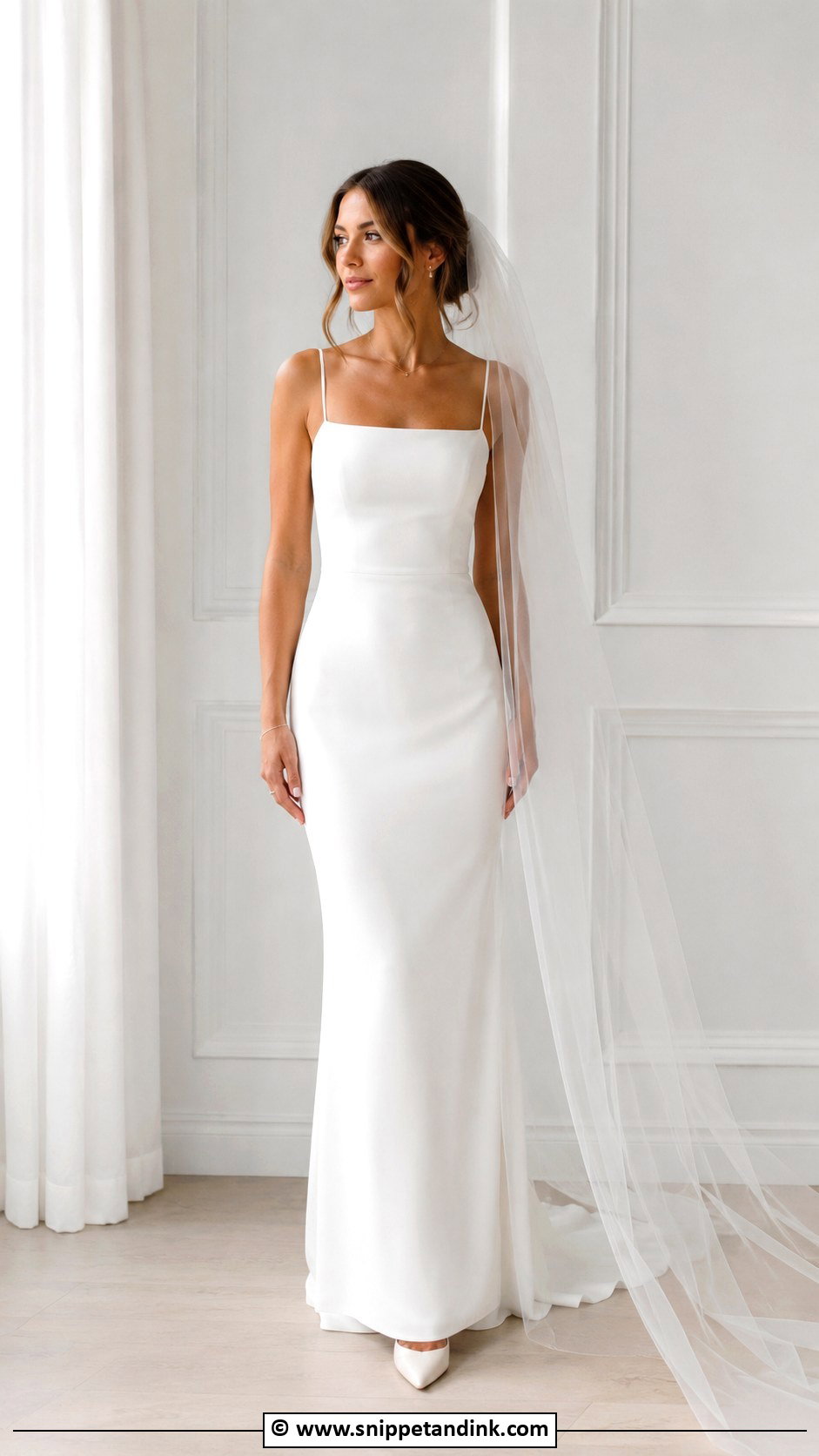
Sheath gowns follow the body in a straight, close line without a real flare, which makes them easier to wear than the dramatic shapes above. They suit courthouse, beach, destination and modern venues. Crepe looks polished; satin looks soft and fluid. Because the line is so clean, tailoring decides everything, and the dress should skim, not pull. A walking slit or a small kick pleat at the back hem is something I ask for on narrow sheaths, so you can manage stairs. A long veil, minimal jewelry and comfortable heels finish it.
22. Fitted Column Wedding Dress
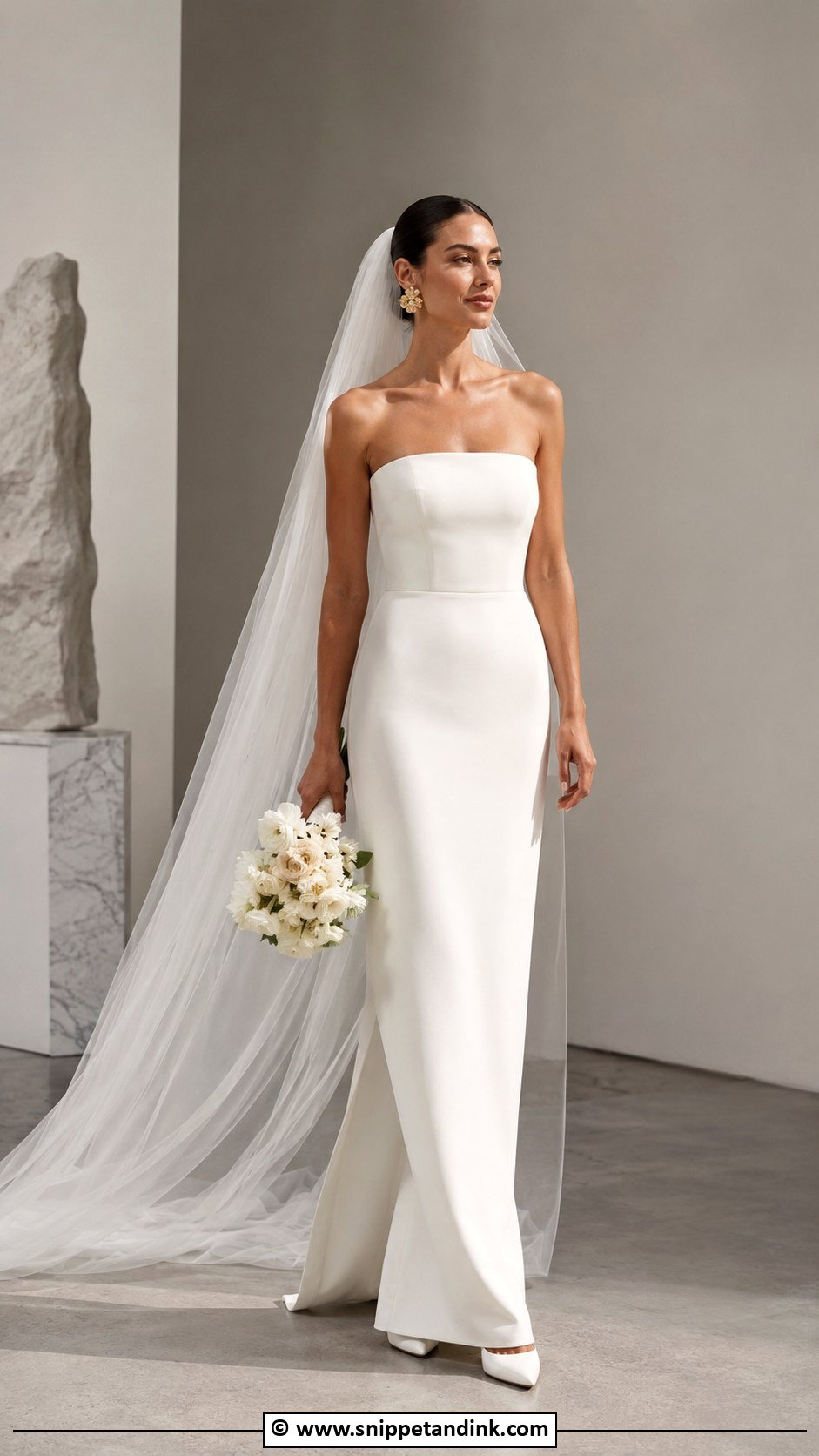
A column falls close in one long vertical line, with very little fuss. It suits brides who love minimal styling and clean fabric. Crepe or silk satin looks classic; a slit or sculpted neckline makes it contemporary. I’d add a dramatic veil when you want ceremony impact, then take it off for the reception. Pointed heels and a sleek bun complete it. Restraint is the point of this gown, so every remaining detail needs to be precise.
23. Fitted Slip Wedding Dress
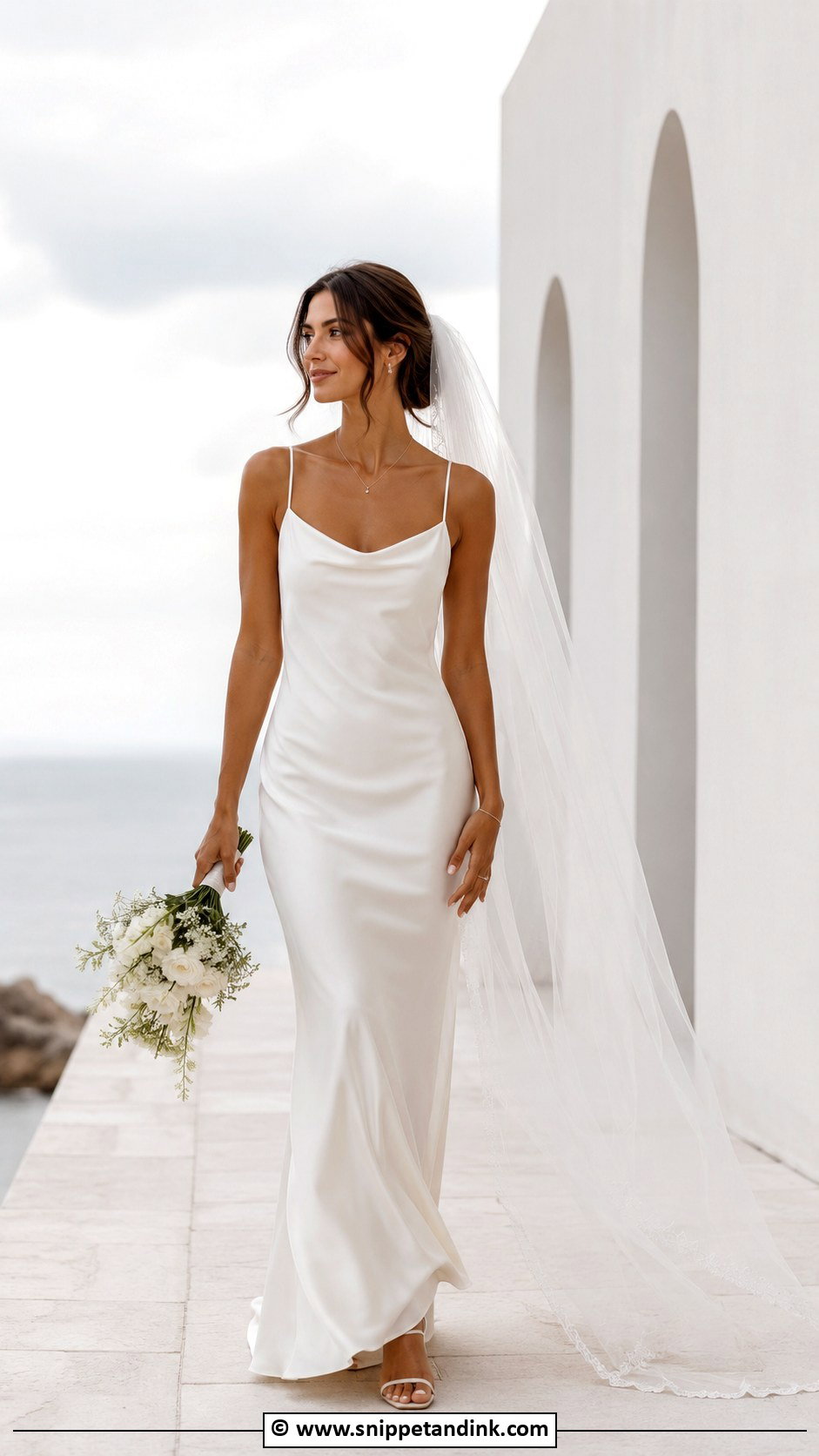
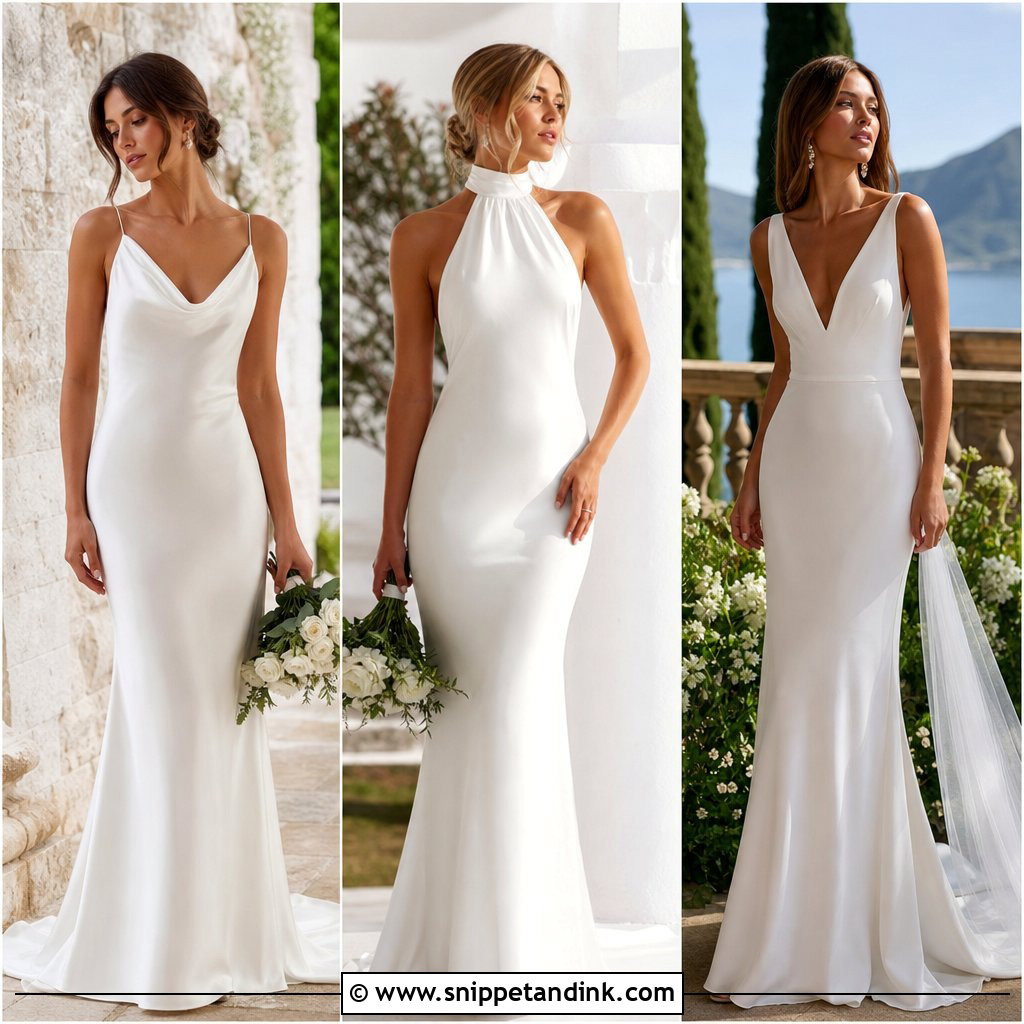
Slip dresses look simple and are surprisingly hard to wear well. Bias-cut silk or satin skims the body with delicate straps, and that same fluid fabric clings wherever it finds a ridge, so smooth, edge-free undergarments in your skin tone are essential. I always look at a slip under bright light from the side at the fitting. It suits city weddings, destination celebrations and intimate ceremonies. Strappy heels, a fine veil and delicate jewelry complete it, with a sheer cape, bolero or tailored coat for ceremony coverage.
24. Fitted Minimalist Wedding Dress
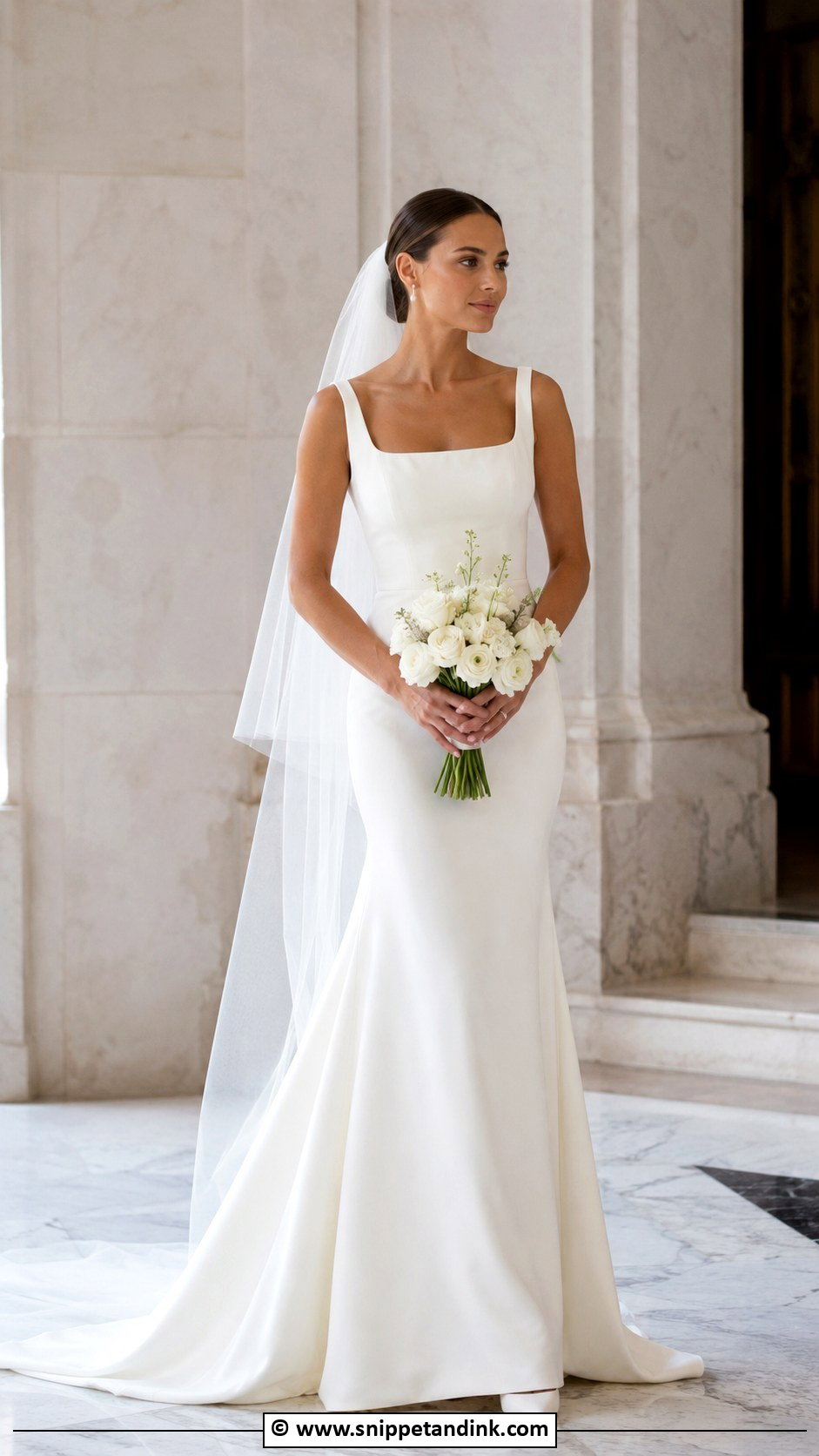
Minimal never means plain when the fabric and fit are right. Clean seams, good cloth and careful tailoring make this style feel expensive. Crepe, satin, silk and matte mikado work well. Pick one standout detail, a square neckline, low back, covered buttons or a sculpted waist, and let it carry the gown. Sleek heels, pearl or metal earrings and a veil without heavy trim finish it. With nothing to distract, I spend extra fitting time on the hem and the back, where small flaws show most.
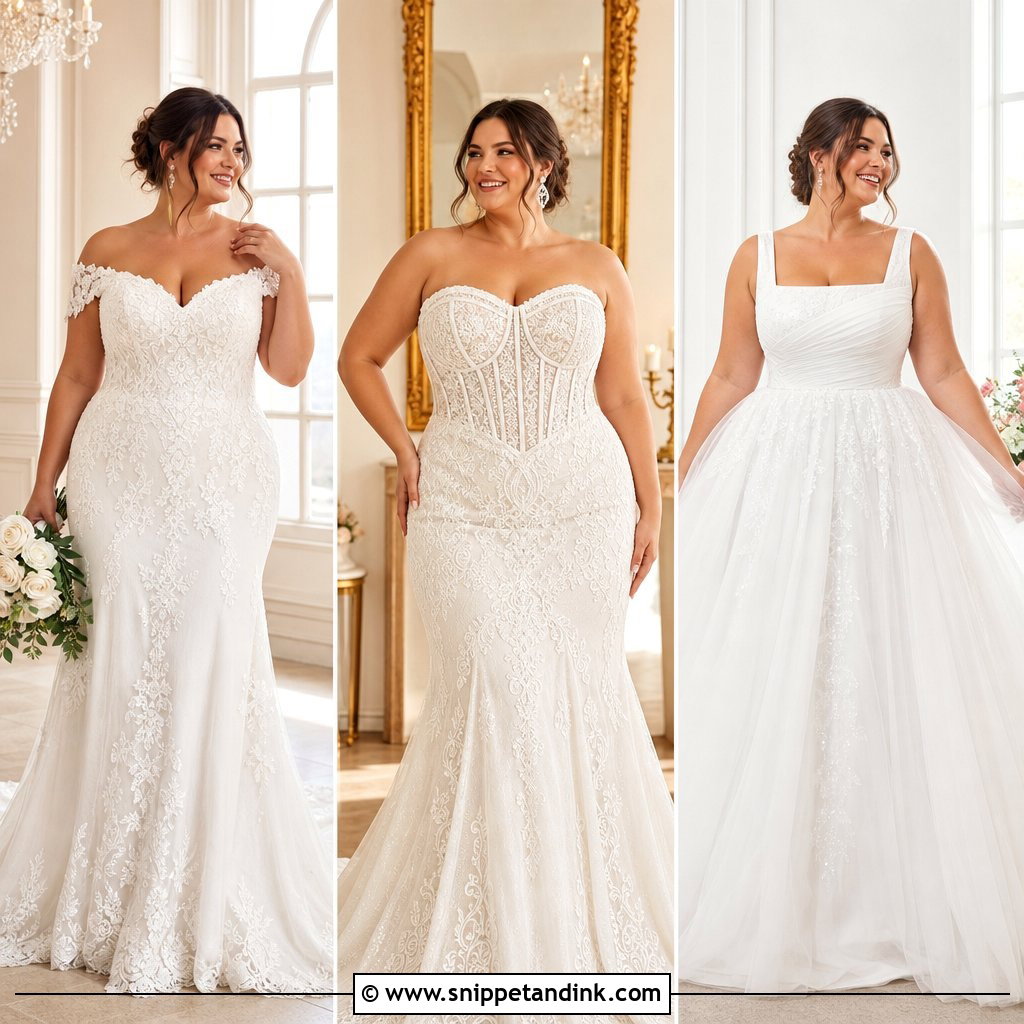

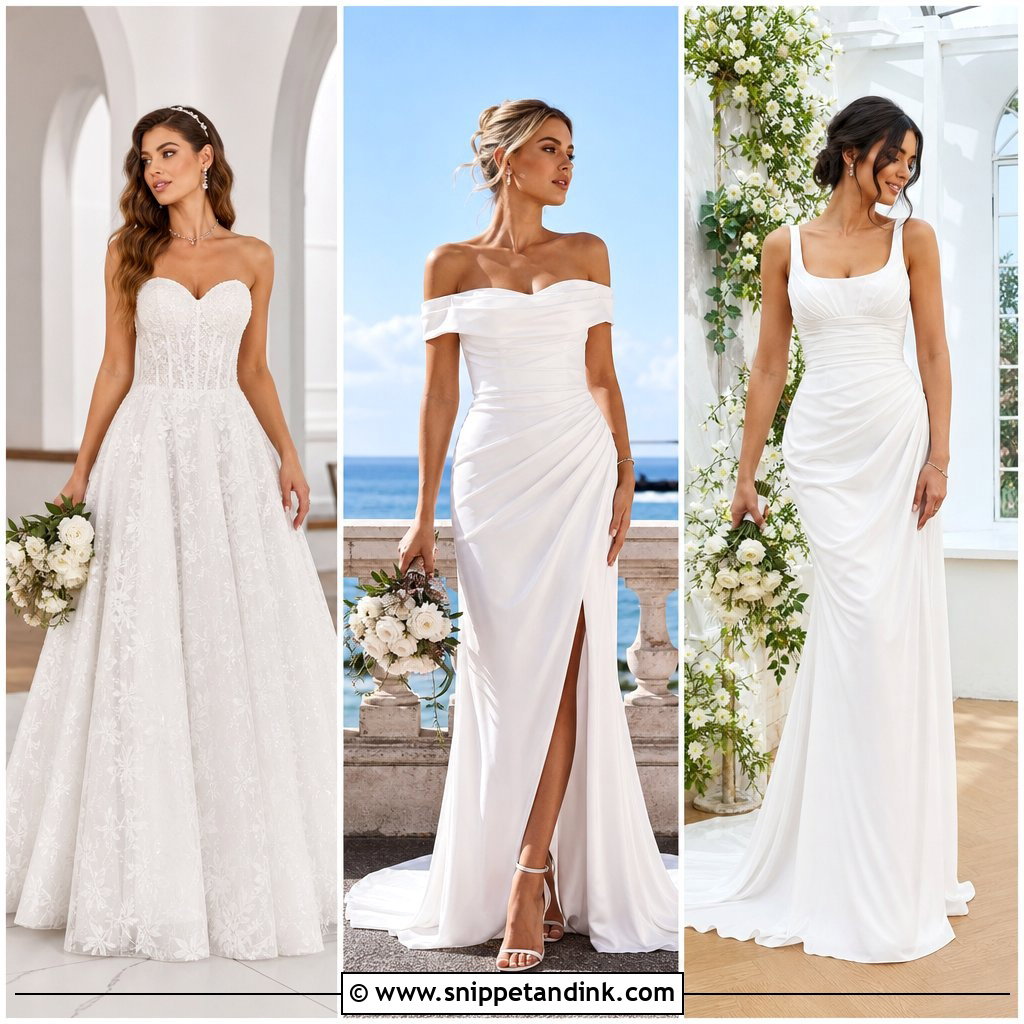
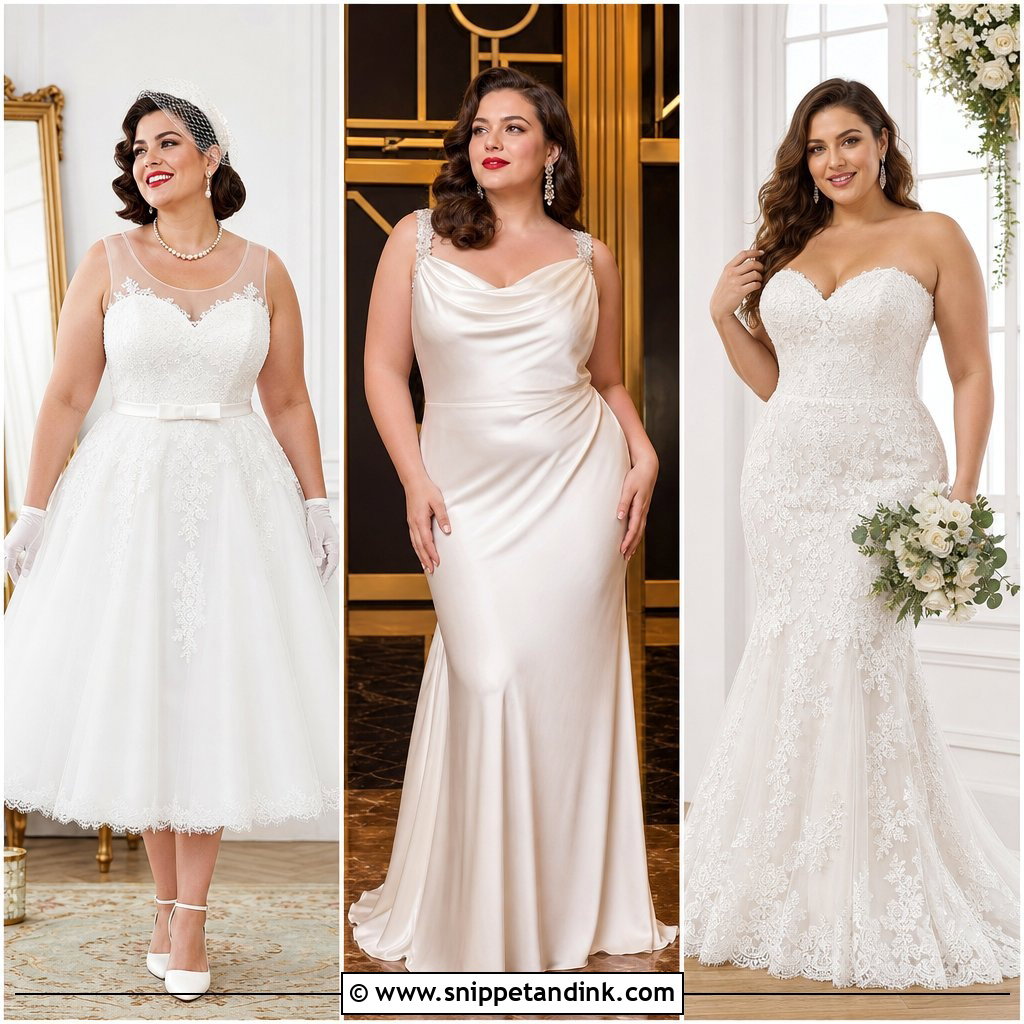
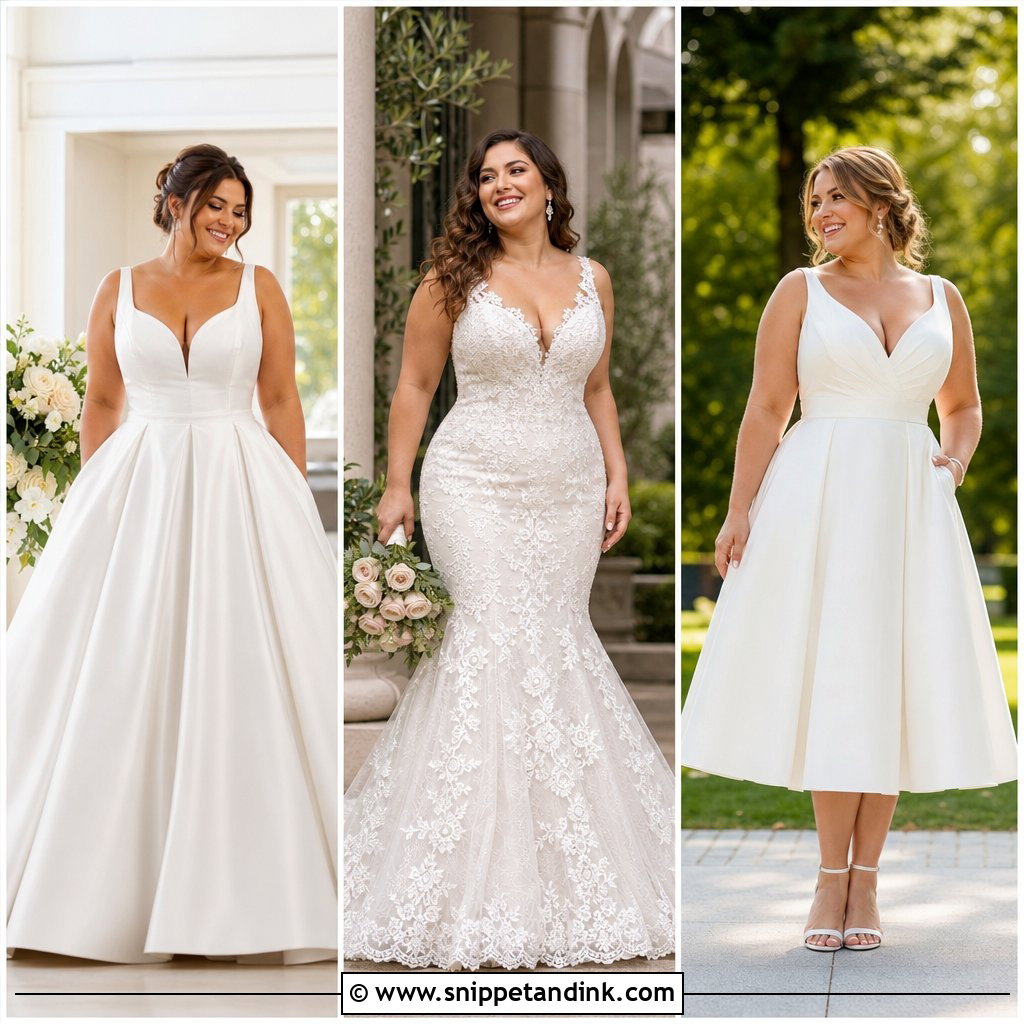
25. Fitted Modern Wedding Dress
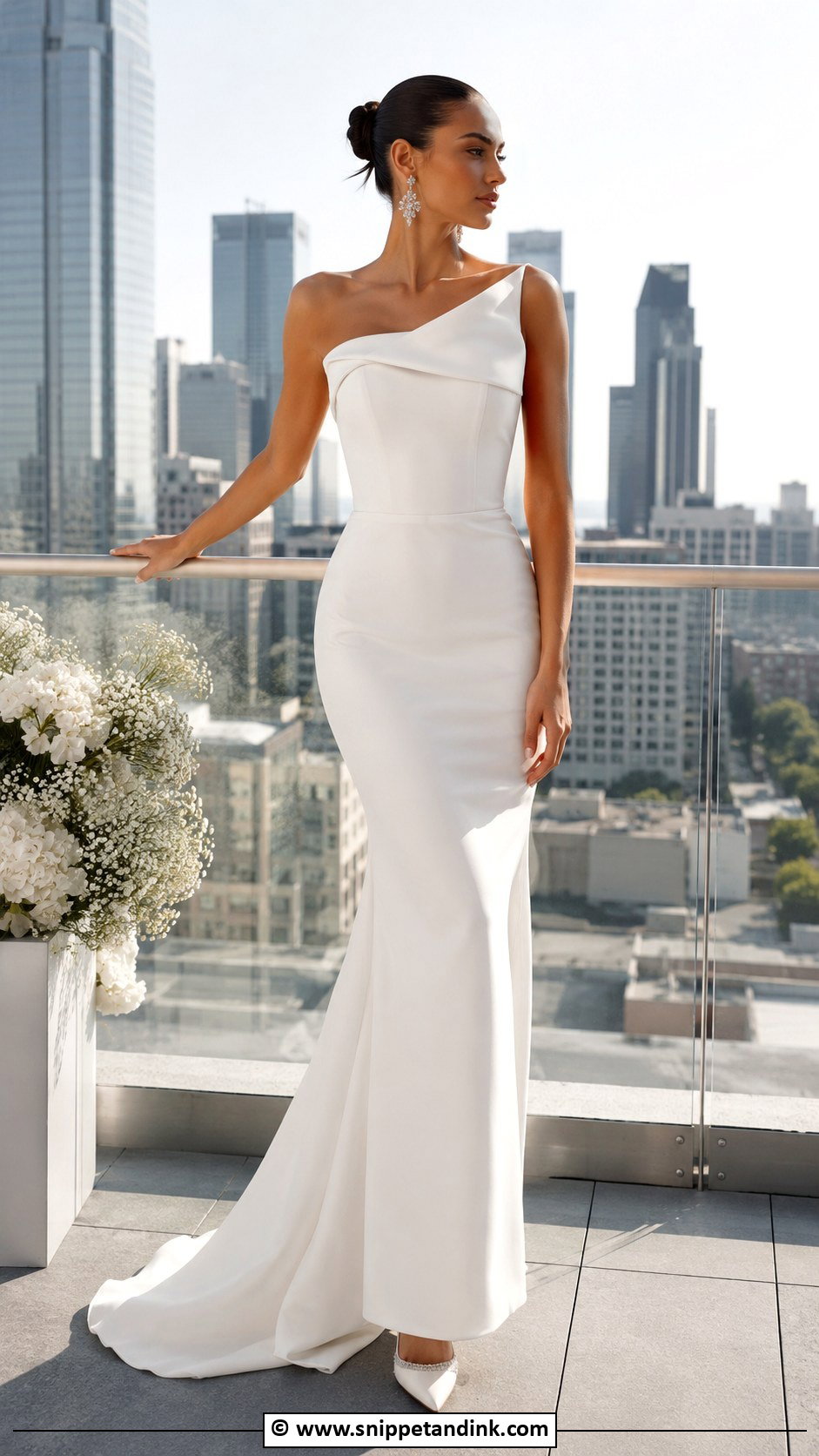
Modern fitted gowns hinge on one fresh design idea: an asymmetric neckline, angled seams, a structured bodice, a side slit or a detachable scarf. Crepe and satin hold that crisp line best. Sculptural earrings, sleek heels and a polished hairstyle suit city venues, rooftops, galleries and contemporary hotels. I’d warn about side slits: check where they open when you sit, because a high slit that looks right standing can open further than you’d like on a chair. A soft veil or white bouquet adds bridal softness.
26. Fitted Vintage Wedding Dress
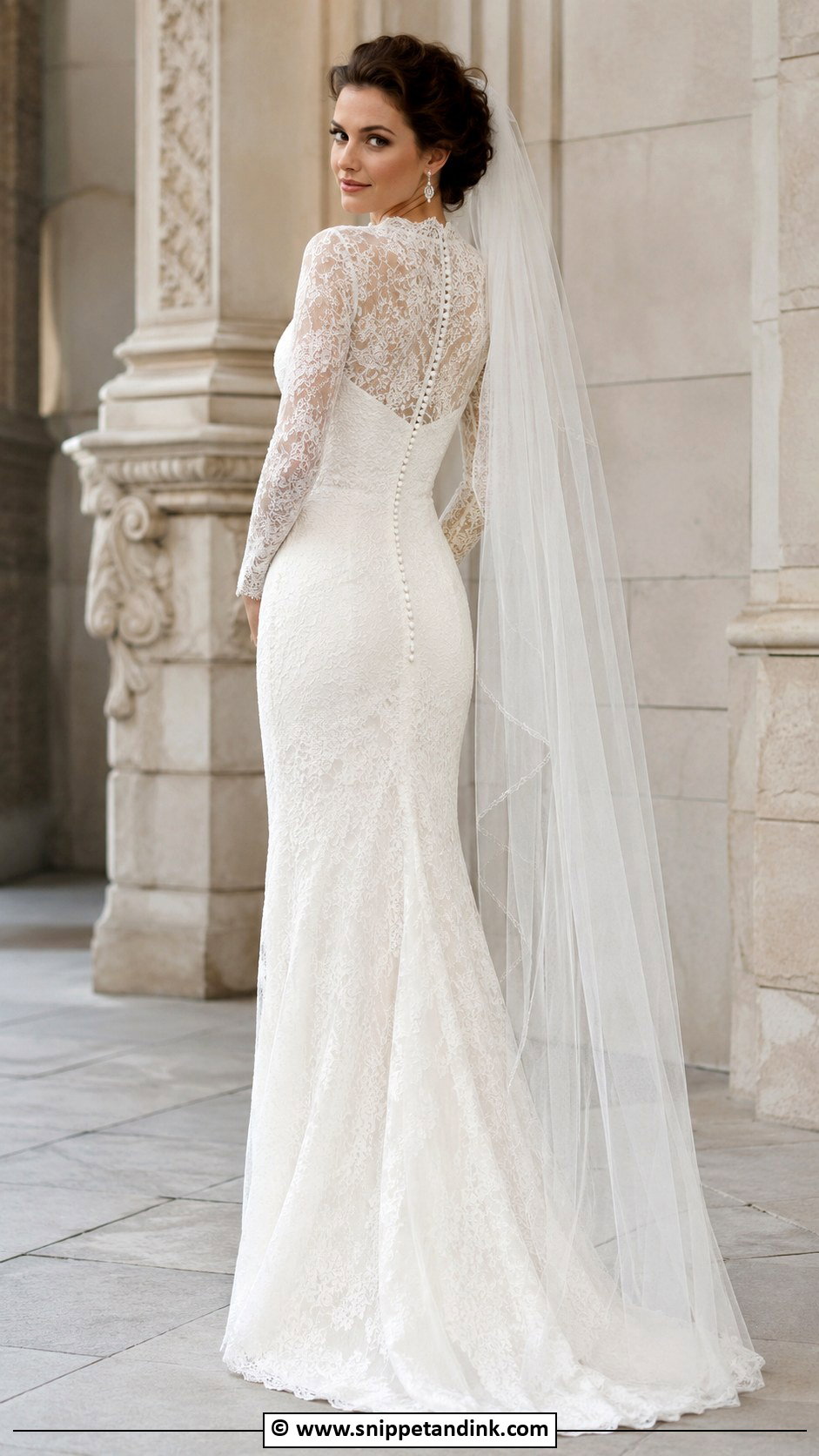
Vintage-inspired fitted gowns change character with the era you borrow from. Lace sleeves, high necklines, basque waists, satin buttons and fine beading all bring vintage charm. Satin with a low back and soft waves reads old Hollywood; lace with long sleeves and a slim train reads romantic. Pearl earrings, ivory heels and a veil in the same mood complete it. Keep the hair and accessories polished but not themed. The aim is inspiration, not period costume.
27. Fitted Boho Wedding Dress
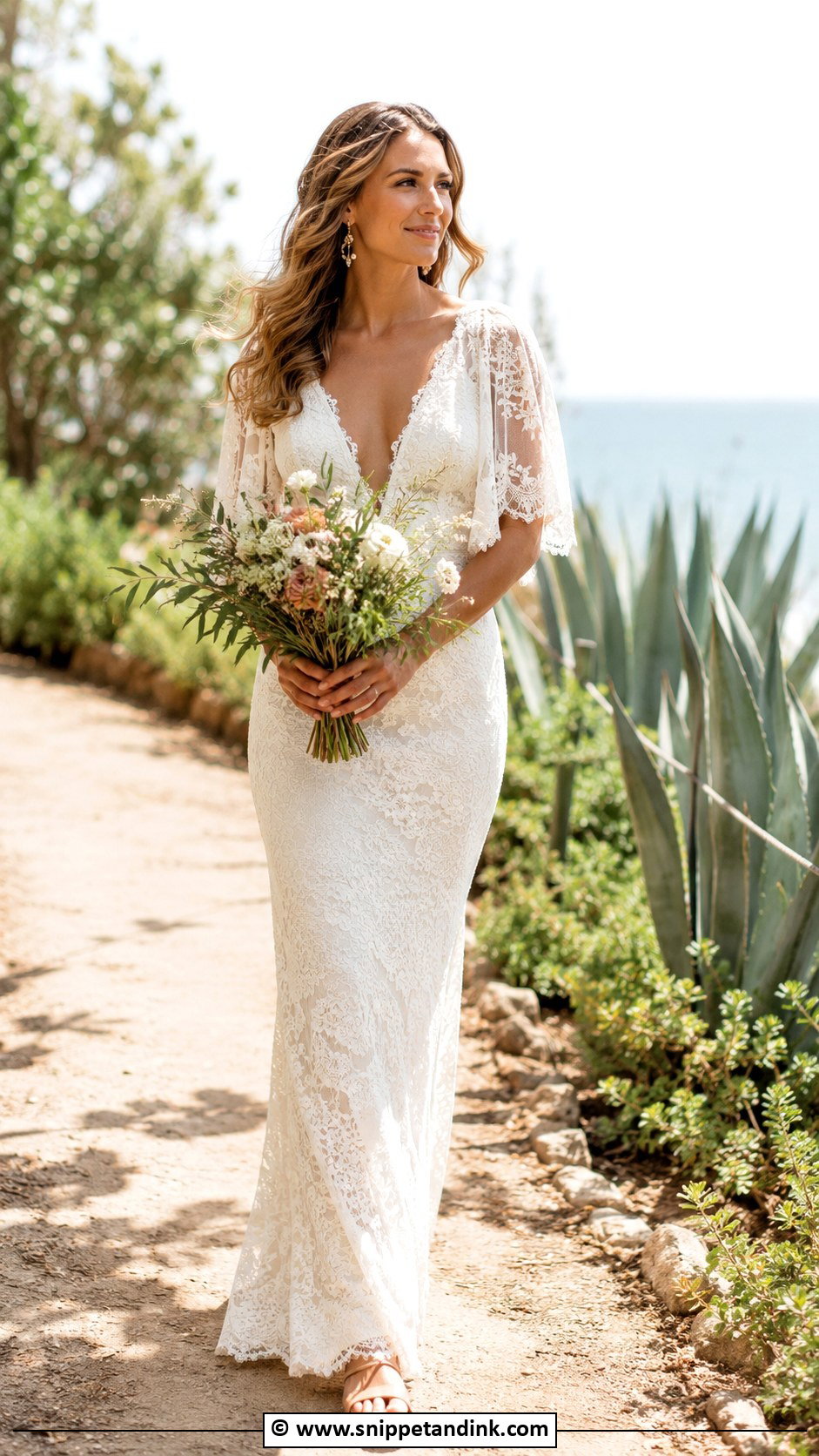
Boho fitted gowns trade structure for movement: soft lace, crochet-style texture, flutter sleeves, sheer panels and a gentle train. The lighter fabrics move easily, which suits outdoor, desert, garden and beach weddings. Loose waves, simple earrings, block heels or sandals and a natural bouquet complete it. Lightweight lace can still look sloppy if the fit is loose, so I tailor the waist and hips as carefully as on a structured gown, and I check the lining length so it doesn’t peek below the lace hem.
28. Fitted Beach Wedding Dress
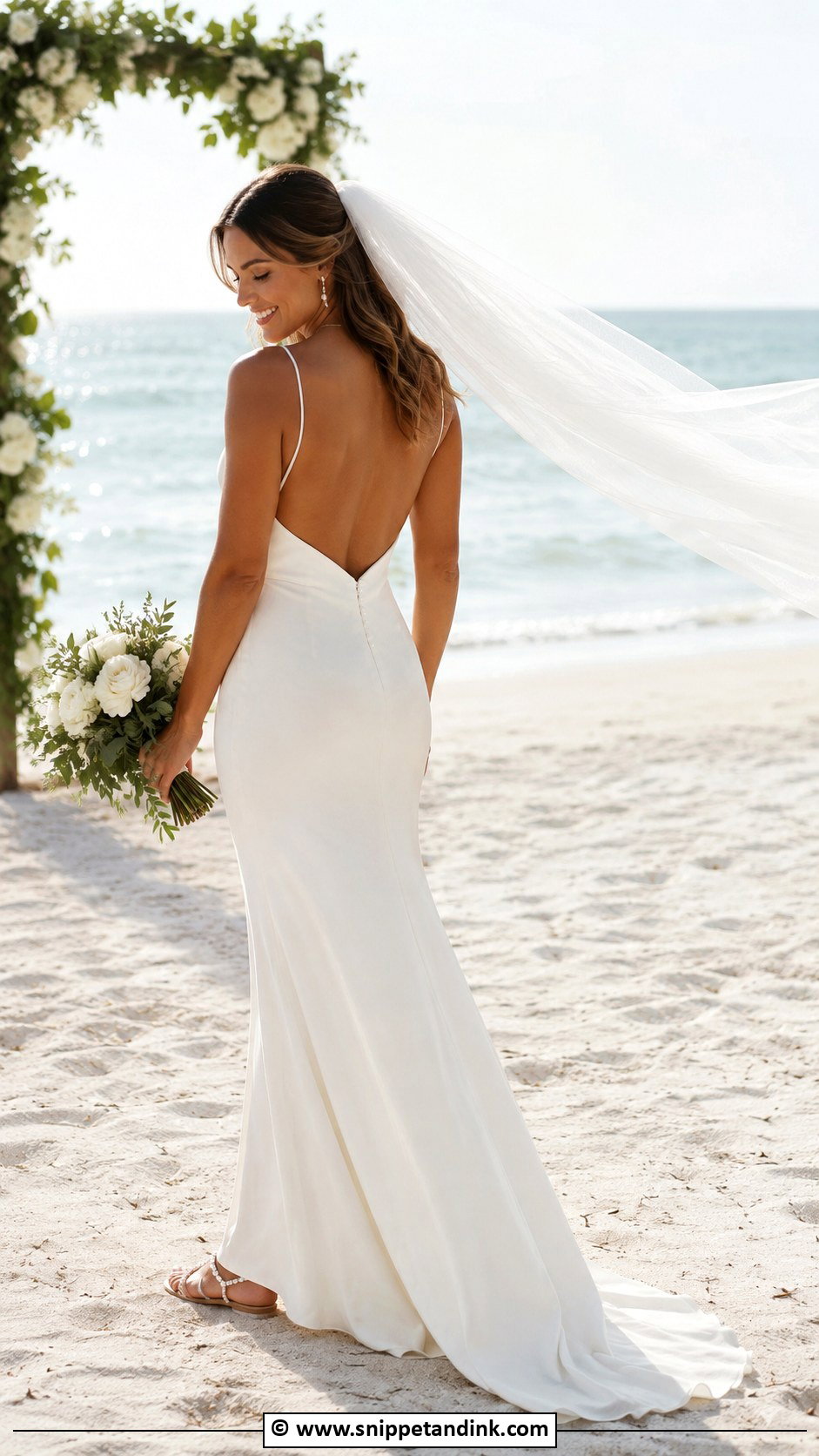
Sand, wind and heat all push against a heavy gown. For a beach wedding I suggest crepe, chiffon-lined lace, stretch satin or a simple sheath, with no long stiff train to drag through wet sand. Thin straps, open backs and soft necklines suit the warmth. Flat sandals, low block heels or bare feet with foot jewelry fit the setting. Keep jewelry minimal and choose a short or weighted veil that won’t wrap around your face in the breeze. Hem it for the shoes you’ll actually wear on the sand.
29. Fitted Courthouse Wedding Dress
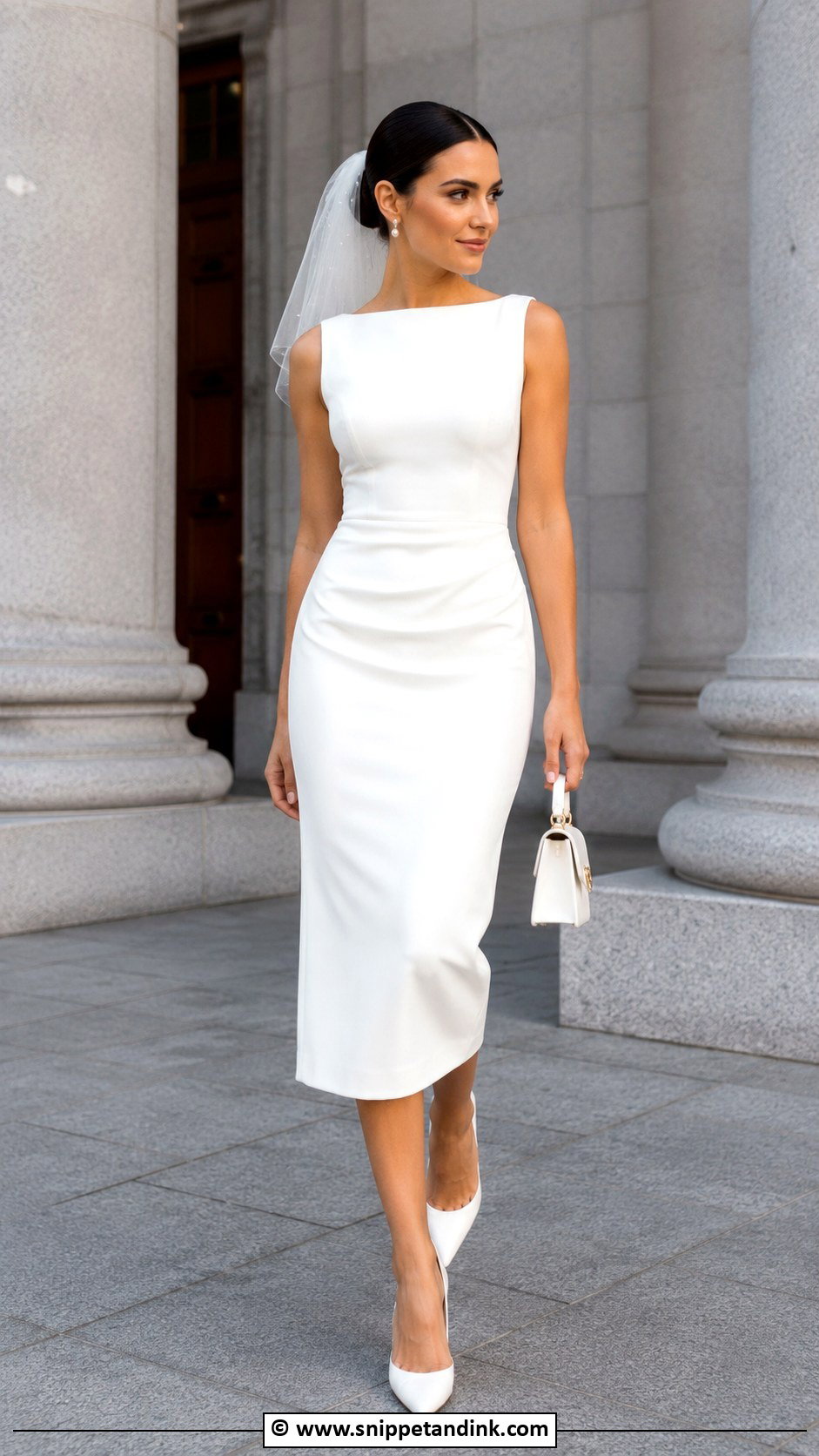
Courthouse weddings need a dress that looks special without overwhelming a small room. A crepe sheath, satin midi, tailored column or simple strapless gown all work. You’ll be walking, standing in lines and posing on city streets, so comfort matters more than at a big ceremony; I’d skip a train entirely. Elegant heels, a small bouquet, a structured mini bag and pearl or metal earrings complete it. A short veil, headband or bridal bow adds personality, and the same dress carries straight on to lunch or dinner.
30. Fitted Reception Wedding Dress
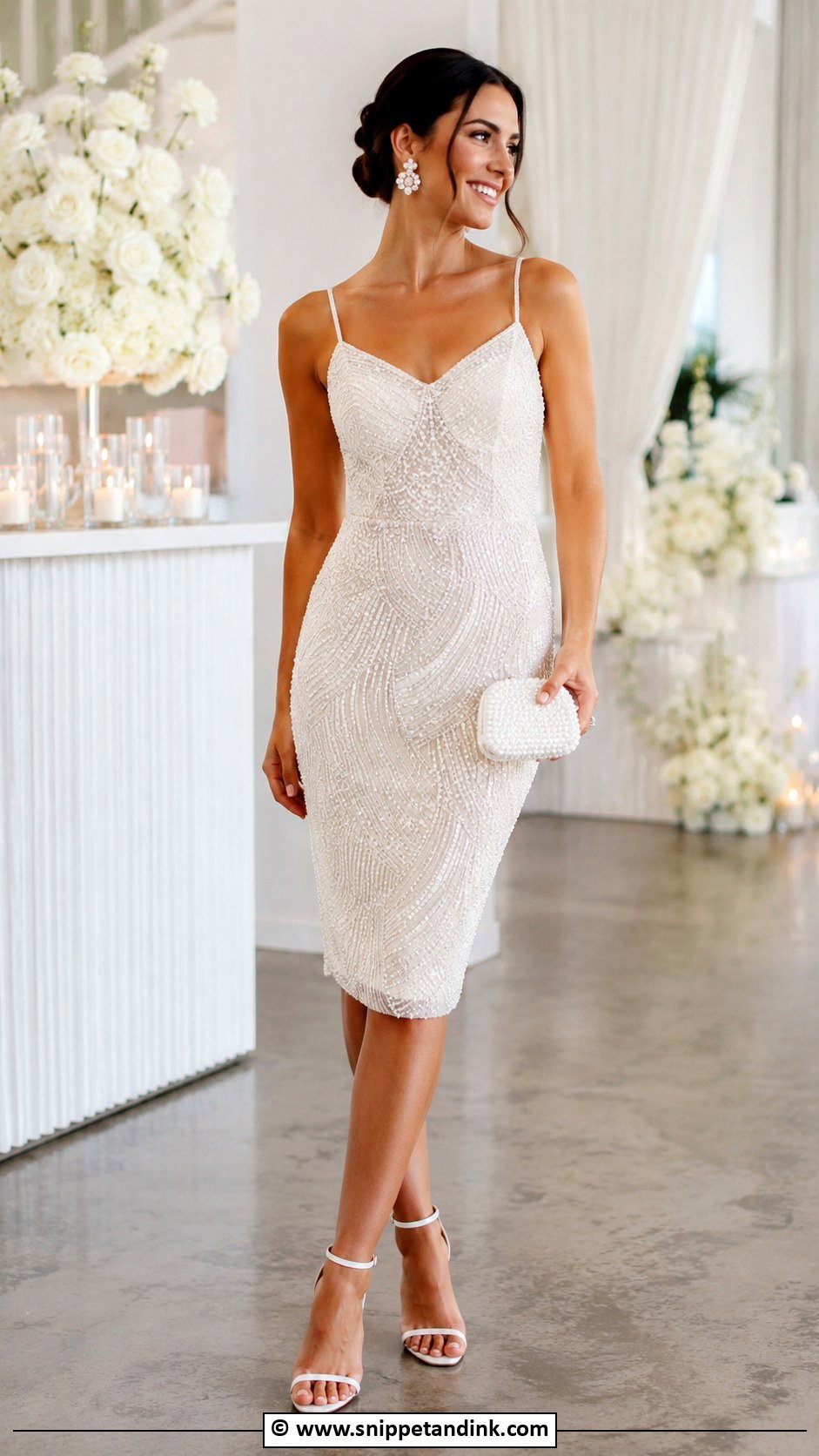
Reception dresses are made for movement. Many brides change into a second dress that’s lighter, shorter or more playful than the ceremony gown: a fitted mini, a sleek satin midi, a crepe sheath or a beaded column. Time the change into your schedule, because getting out of a corseted gown with many buttons takes longer than people expect. Comfortable heels, statement earrings and a hairstyle that holds into the night finish it. White, ivory or pearl details keep it bridal.
Undergarments That Disappear Under a Body-Skimming Gown
Close fits show everything underneath, so I plan undergarments as part of the dress. Choose pieces in a shade close to your skin, not white, which can show through ivory crepe and lace. Smooth, laser-cut edges hide better than lace trims. Many fitted gowns can have cups sewn in, which removes the bra question entirely.
Bring the exact undergarments to every fitting. Swapping shapewear between the last fitting and the wedding changes how the dress sits, sometimes by enough to show.
Living a Whole Day in a Close Fit
Most fitted gowns are finished at a last fitting around two weeks before the wedding. After that, try to keep your routine steady, because a big change in diet or training in the final days shows first in a close fit.
Small requests that make a big difference
- A bustle for any train, tested at the last fitting by the person who’ll do it on the day.
- A wrist loop on a long train, so it’s off the floor during photos.
- A walking slit or kick pleat on narrow sheaths and columns.
- A practice run at the bathroom with your helper; it’s easier facing backward on the seat, with the skirt gathered forward.
A Close Fit Should Hold You, Not Hold You Back
Fitted gowns cover far more ground than one tight silhouette: a dramatic mermaid, a smooth crepe sheath, a romantic lace trumpet, a fluid satin slip or a structured corset with a modern edge. The right one supports your body, suits your venue and lets you move. What separates a good fitted gown from a great one is the unglamorous part: fabric, lining, alterations and undergarments. Get those right and the style you love will feel like yours.
You'll Like These Ideas:




Leave a Reply