
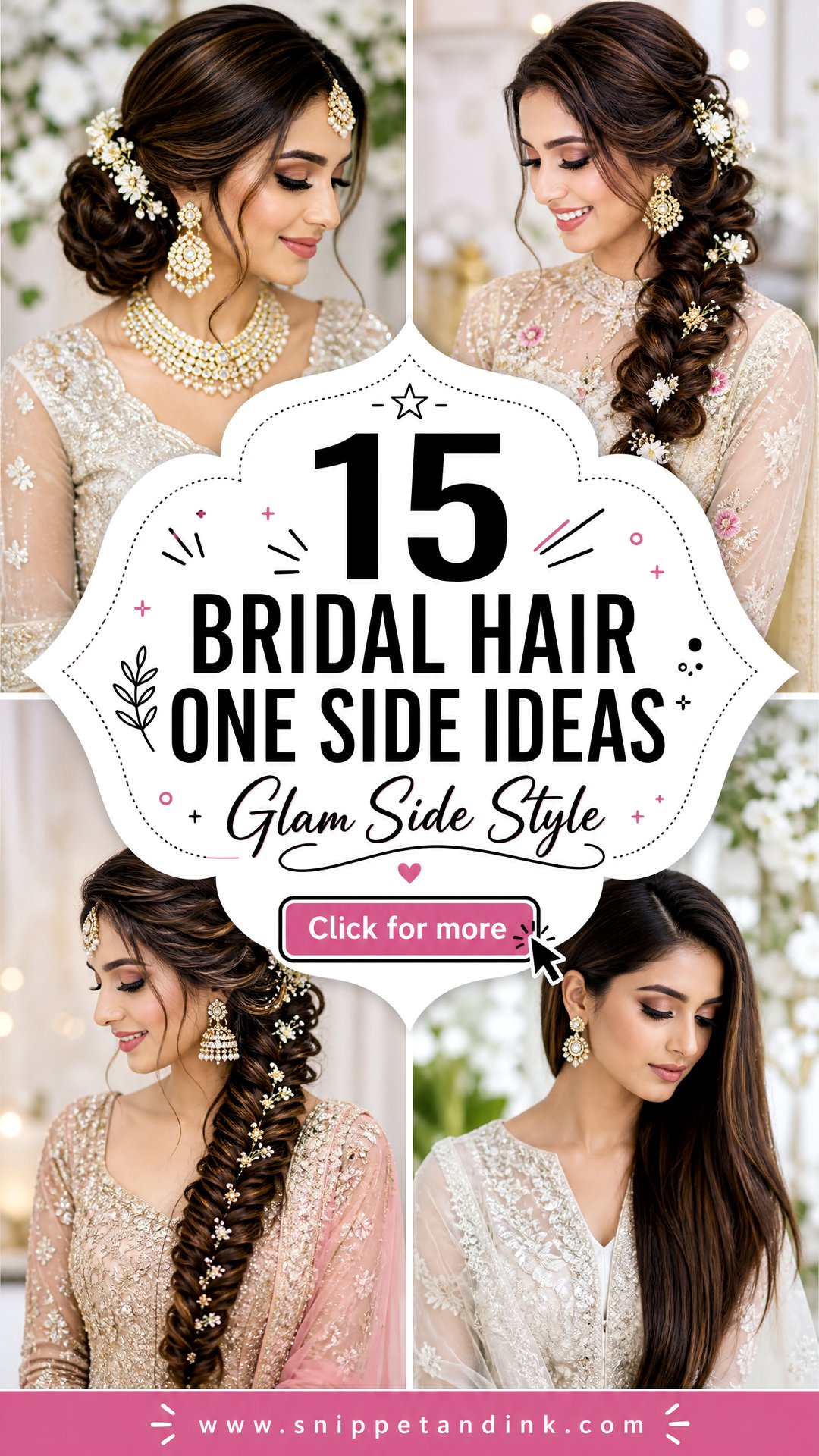
One-sided hair is the style I suggest most often to brides who can’t decide between up and down. It frames the face, clears one ear for a good earring, and keeps the hair under control while still showing off length. It also has a built-in partner in the one-shoulder dress. Waves, buns, ponytails, braids and half-up shapes can all be pushed to one side, and each behaves a little differently over a long day. I’ve added what I’d check for each one, so the photos you take to your trial come with the right questions attached.
Left or Right? Settle That Before Anything Else
Before styles, there’s a smaller decision that changes the whole look: which side does the hair go to? I work it out with a few questions at the start of every trial.
- Where is your natural part? Hair that’s parted on the left for years wants to fall right. Fighting that is possible, but expect more product and more pins.
- Which side of your face do you prefer in photos? Most people have one. The hair should frame that side and leave it open to the camera.
- Where does the groom stand? In most ceremonies the guests see one side of you for the whole vows. Sweep the hair away from the aisle and the volume ends up hidden; toward the aisle and it’s on show.
- Does your dress have a strap or detail on one side? With a one-shoulder gown, the hair usually goes to the bare shoulder so it doesn’t cover the strap.
If the answers point in different directions, I’d go with the ceremony layout. It’s the moment with the most photos from a fixed angle.
1. Bridal Side Swept Waves
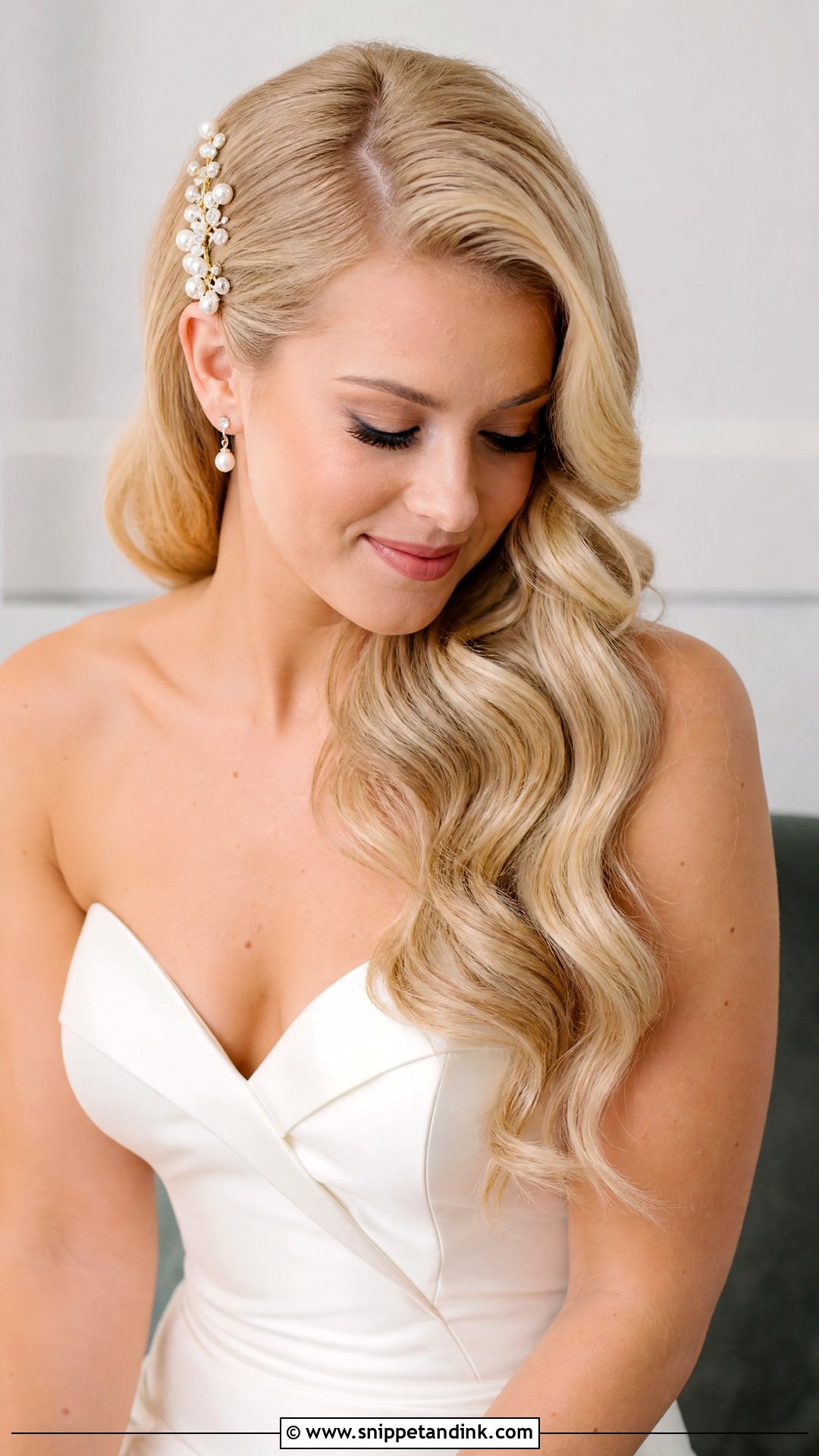
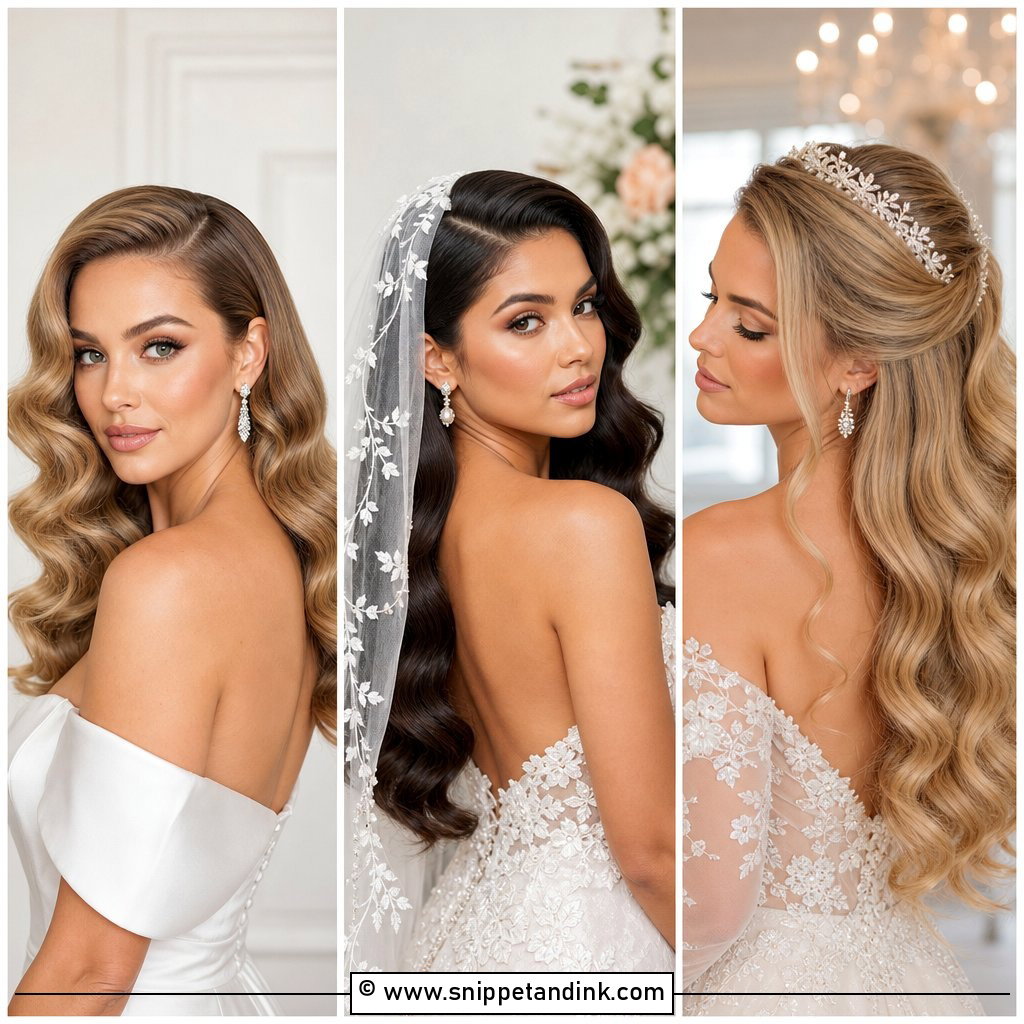
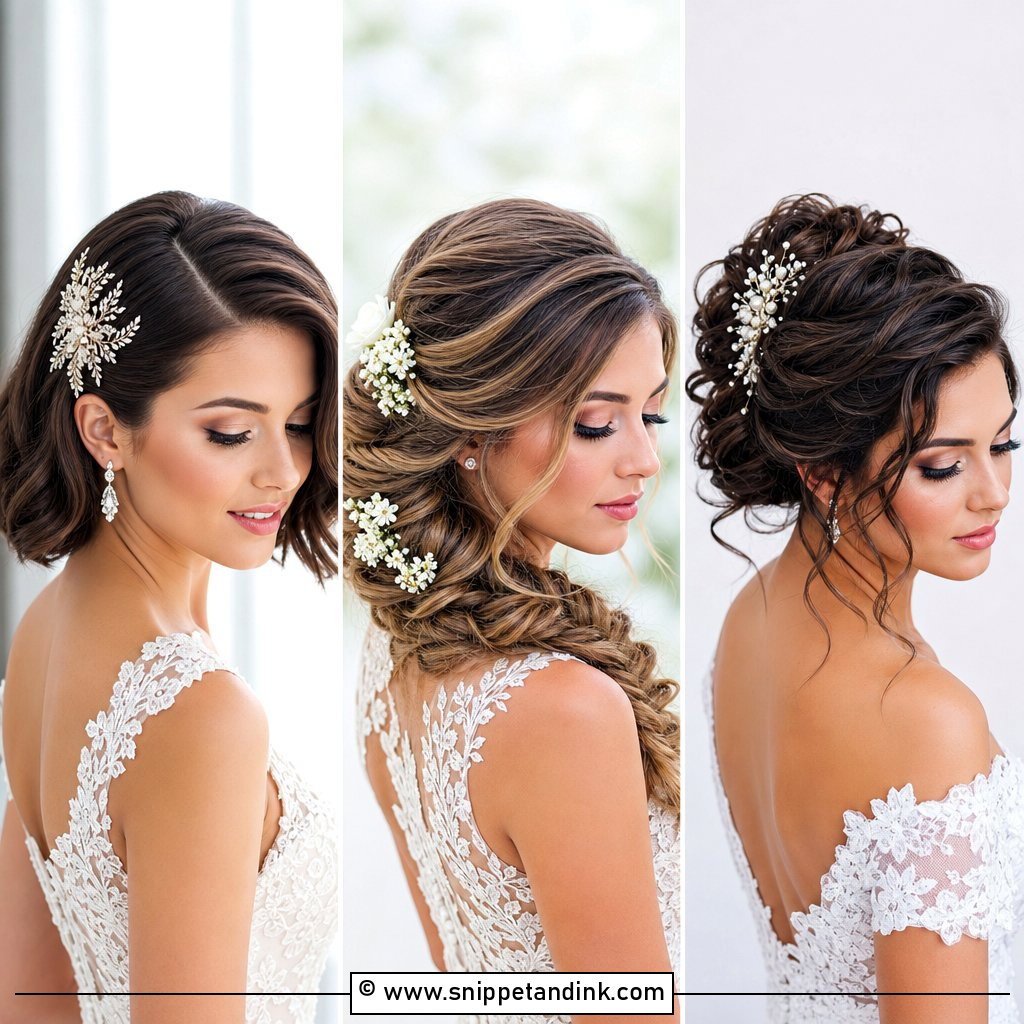
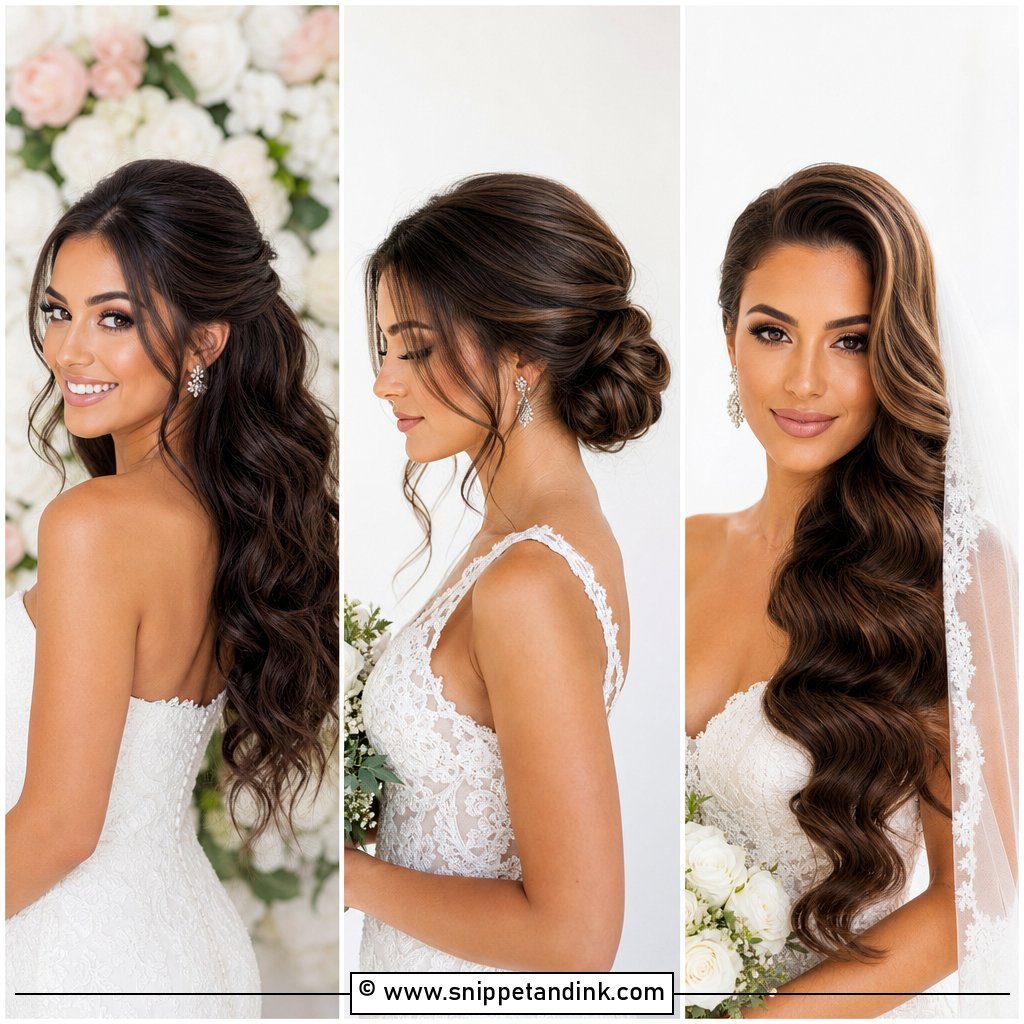
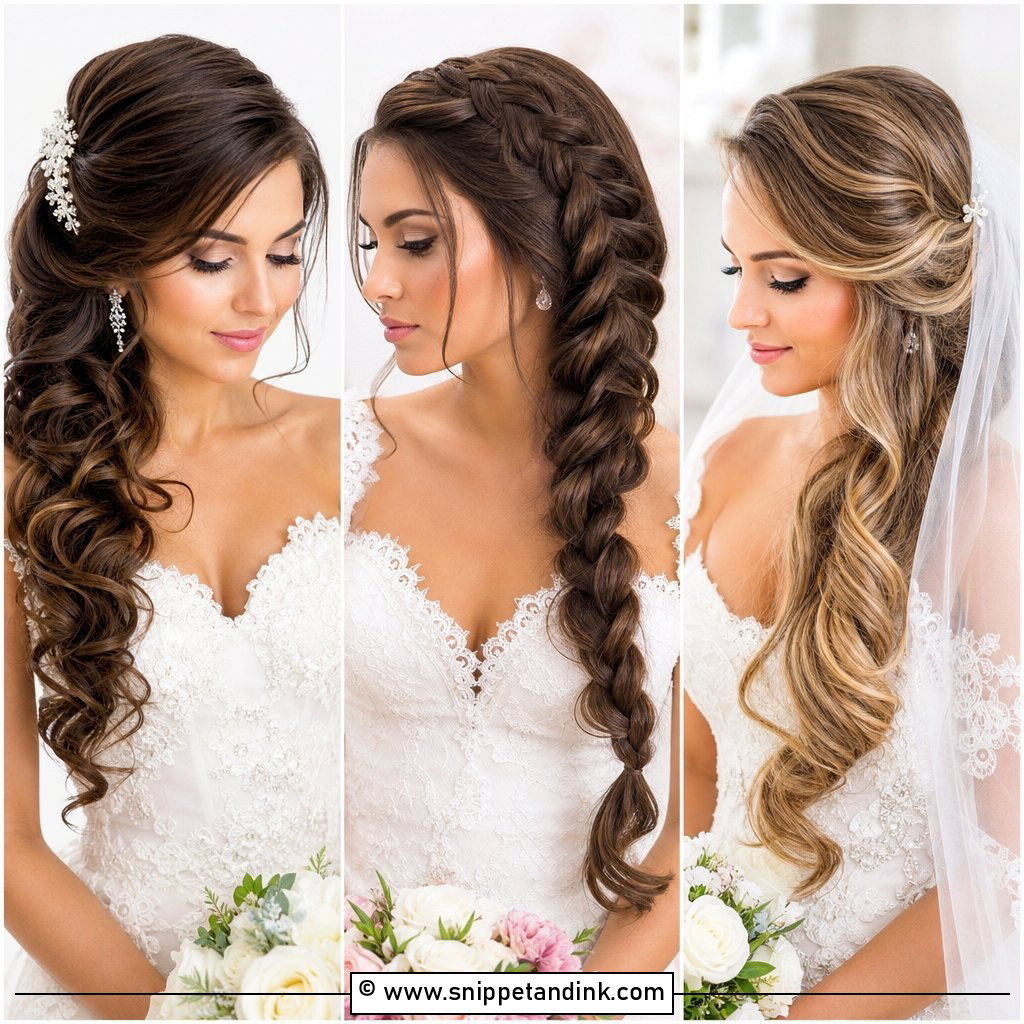
Side-swept waves start with a deep part, usually in line with the arch of the brow. I curl everything away from the face, let it set, then brush the waves together so they fall as one shape over the shoulder. Medium to long hair is needed for the flow to read in photos. The lighter side gets pinned back with hidden bobby pins, a pearl comb or a small clip. With strapless gowns and sweetheart necklines the waves add movement while leaving most of the bodice visible.
2. Bridal Side Swept Curls
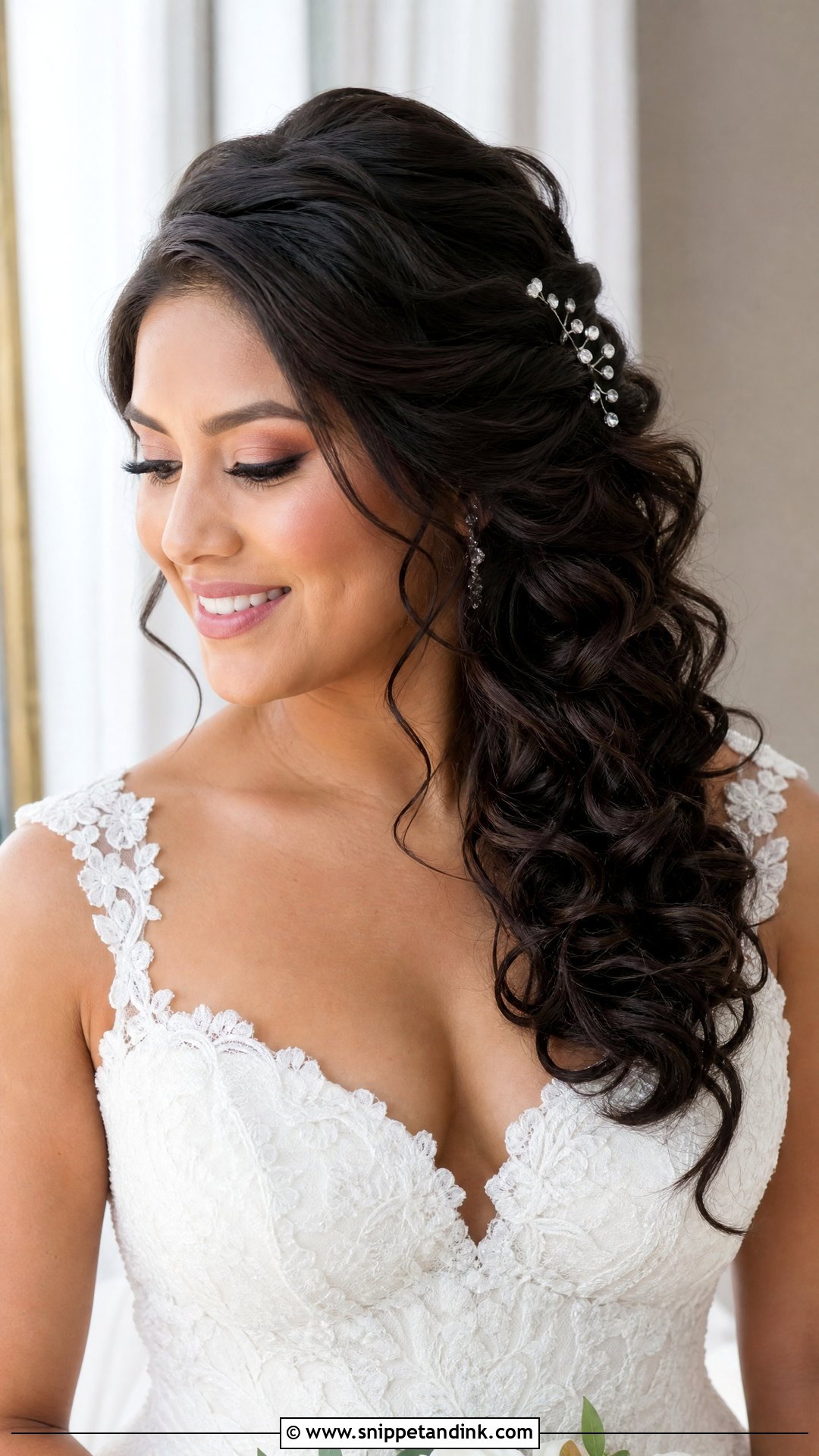
Curls give more volume and bounce than waves, and they can be brushed out soft or left defined. On naturally curly hair I don’t reset the pattern; I gather it to one side and pin underneath. Extensions help if you want more length or density on the swept side. What makes this hold is a secure base: I make a vertical row of crisscrossed pins behind the ear, and the curls are pinned into that rather than just draped. A light veil, a few crystal pins or small flowers finish it.
3. Bridal Side Bun
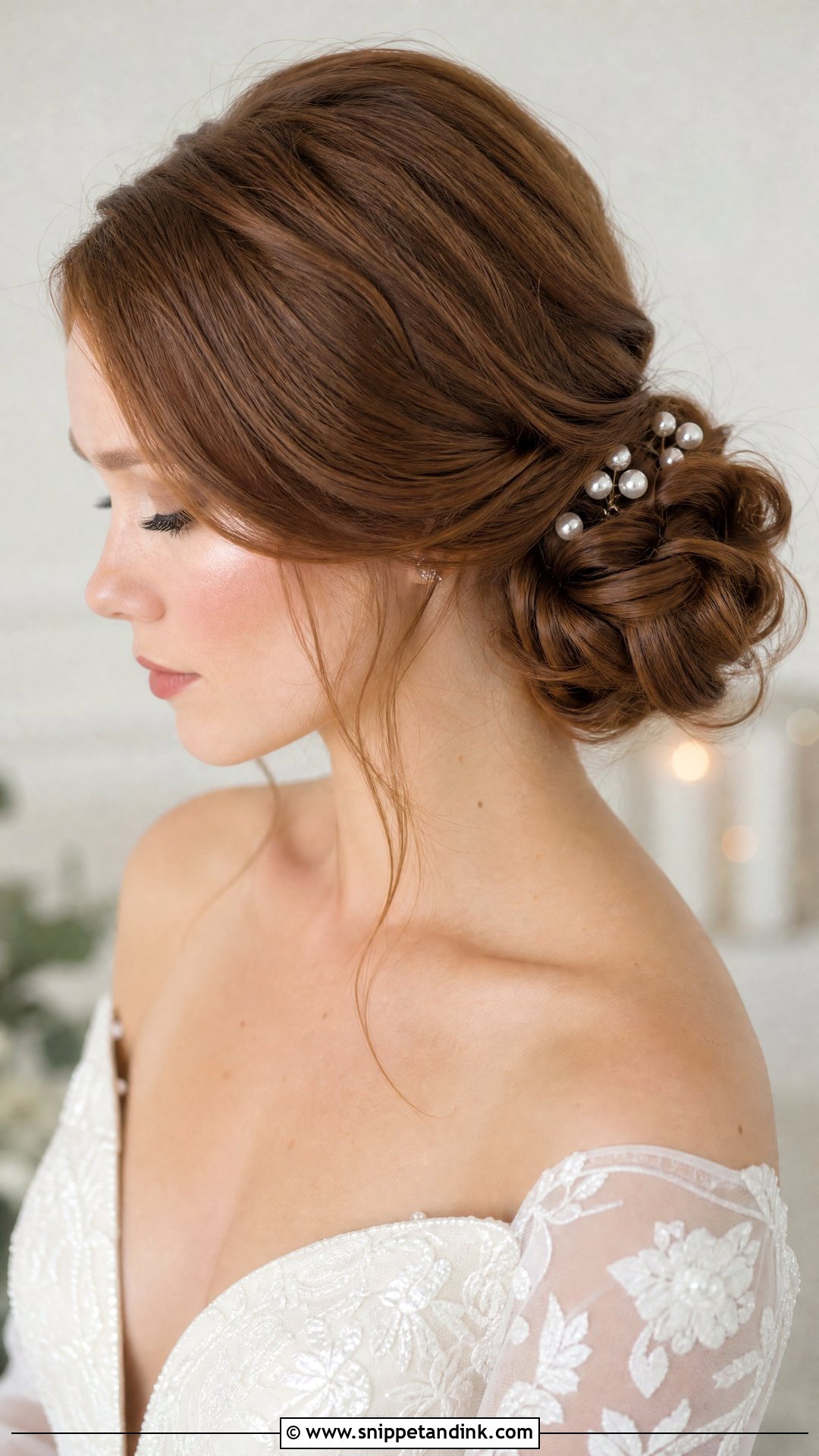
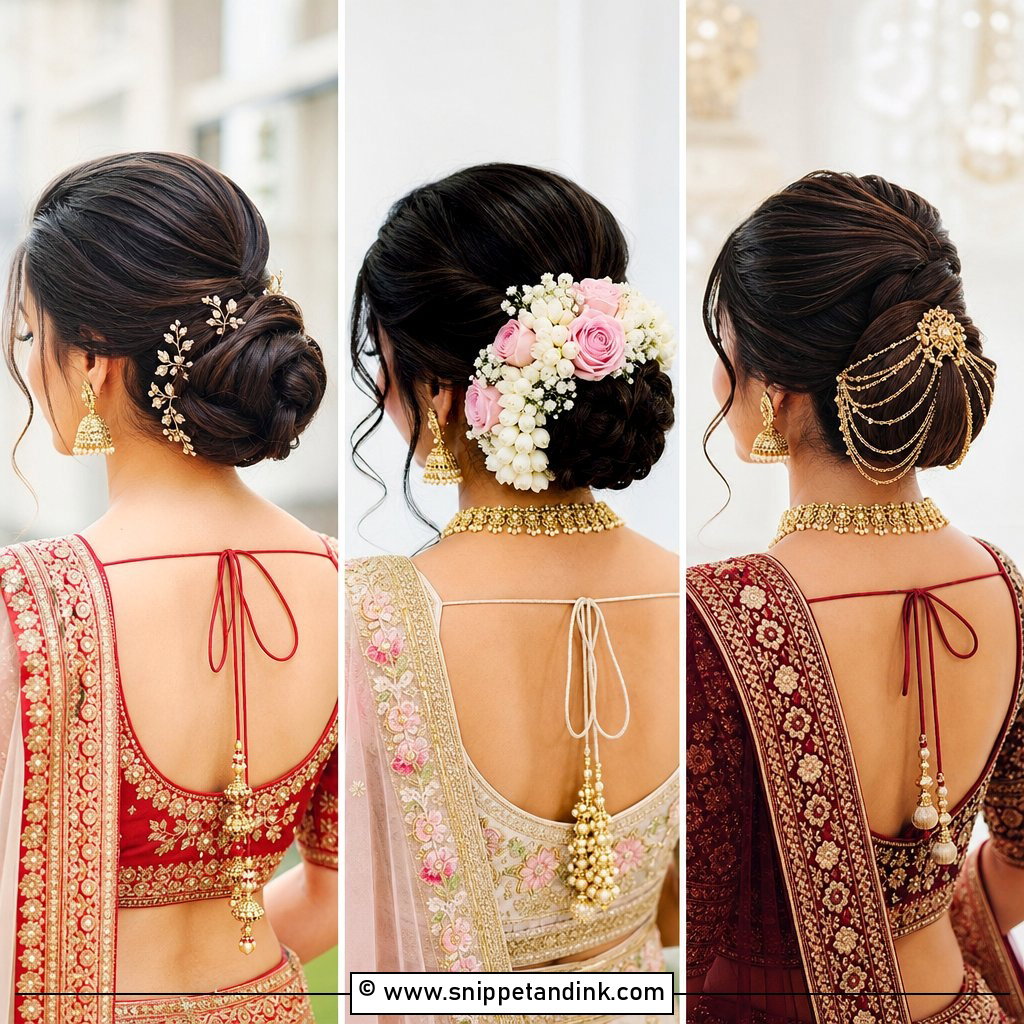
The side bun is the comfortable one. It sits low near one side of the nape, so you can lean back in a chair at dinner without crushing it, which is more than a centred bun allows. Smooth for a formal ceremony, a bit looser for a garden. I place it on the opposite side to the photographer’s usual angle during the vows, so the bun shows in profile rather than hiding behind your shoulder. It suits a detailed back, a high neck or a one-shoulder gown, and a veil can tuck in just above it.
4. Bridal Side Chignon
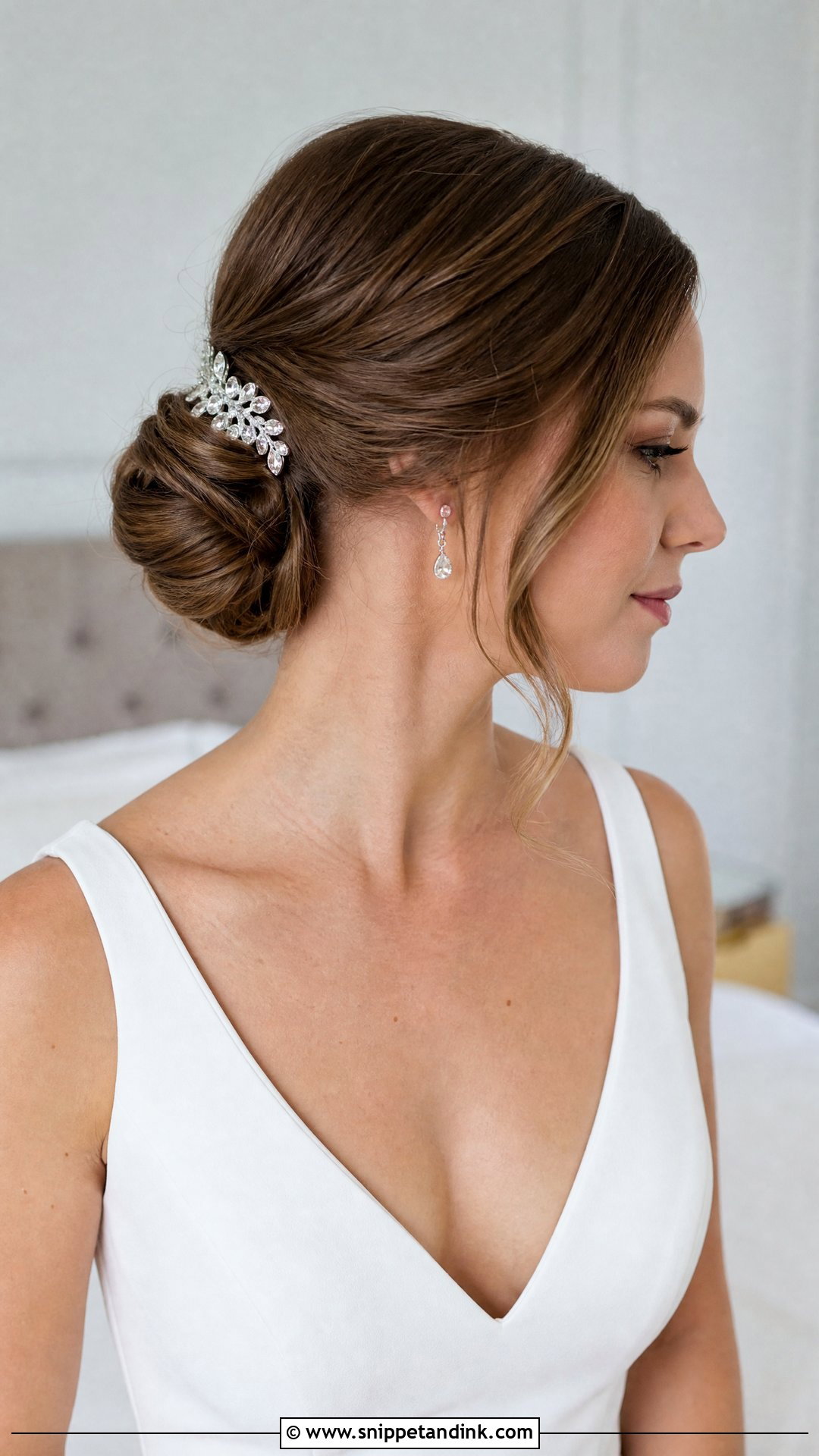
Move a chignon a few centimetres off-centre and it stops looking strict. The hair is gathered to one side and shaped into a smooth twist or a tucked knot. It handles straight, wavy or lightly curled hair. My trick for keeping it from looking severe is to leave the crown with a little lift and to let one or two pieces fall at the temple on the far side. Drop earrings work especially well, since the chignon leaves the near ear completely clear.
5. Bridal Side Ponytail
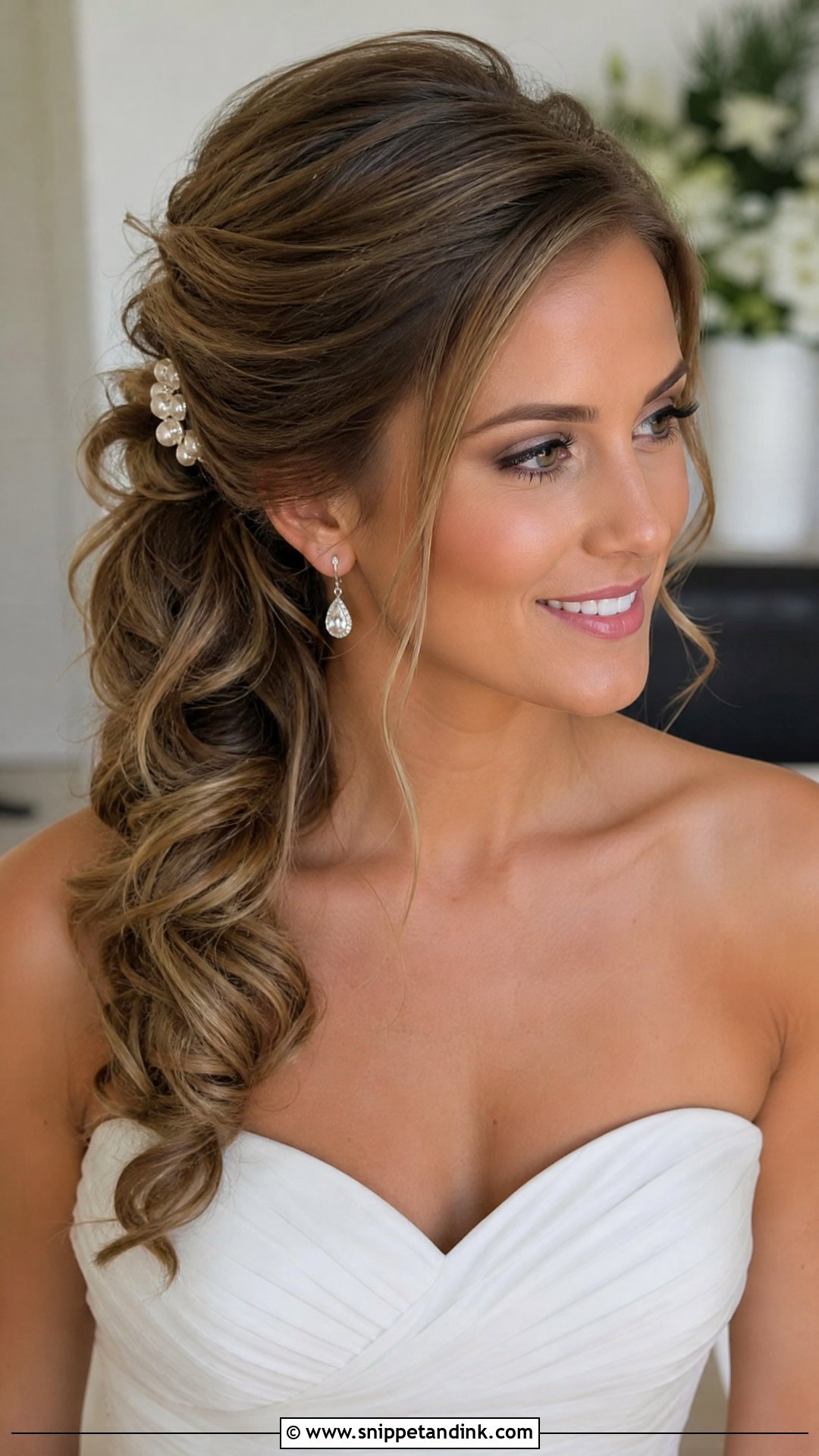
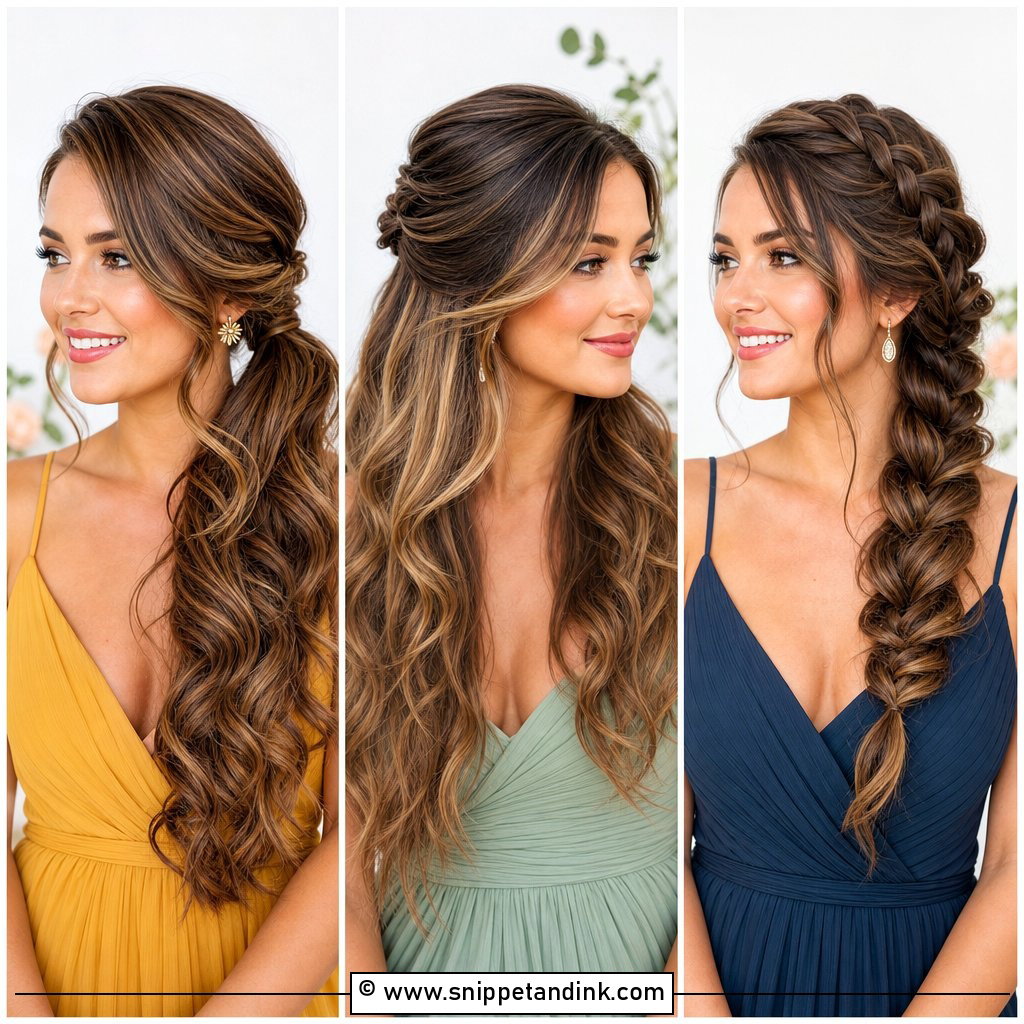
A side ponytail gives you hair-down length with far more control. It rests over one shoulder and stays put through the ceremony and the dancing. I tie it slightly behind the ear rather than directly below it; tied too far forward, the elastic drags on the front hairline all day. Wrapped hair around the base hides the elastic. It suits long or layered hair and extensions, and a pearl pin or small floral comb at the base finishes it.
6. Bridal Side Braid
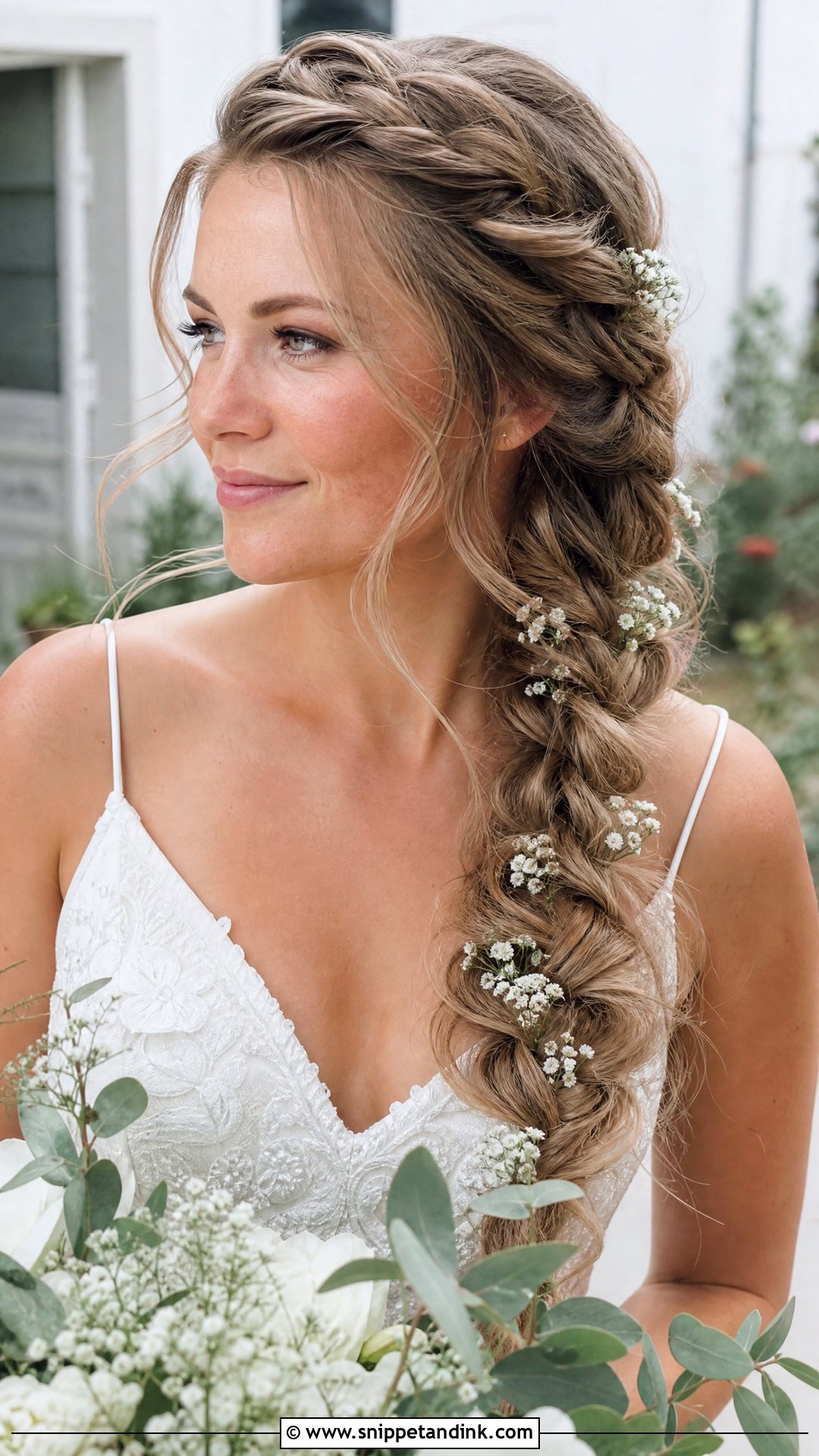
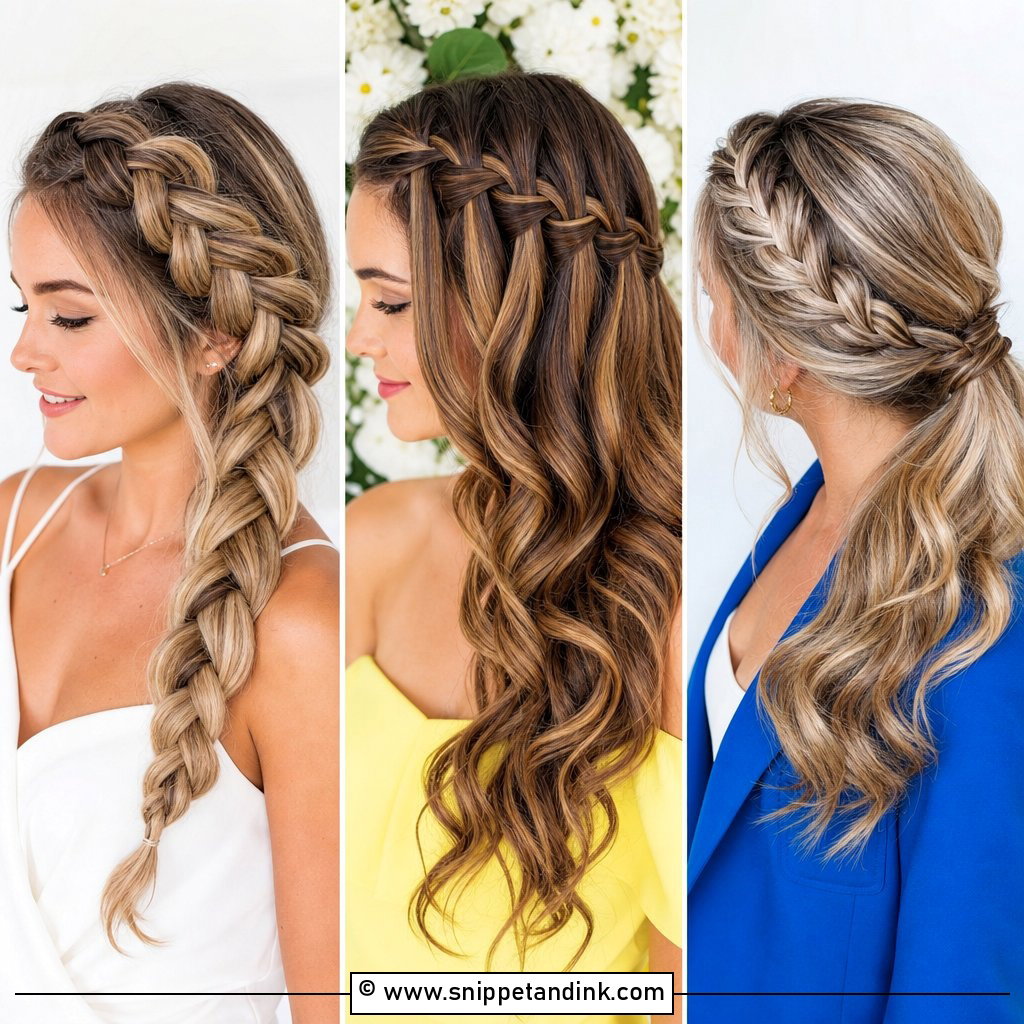
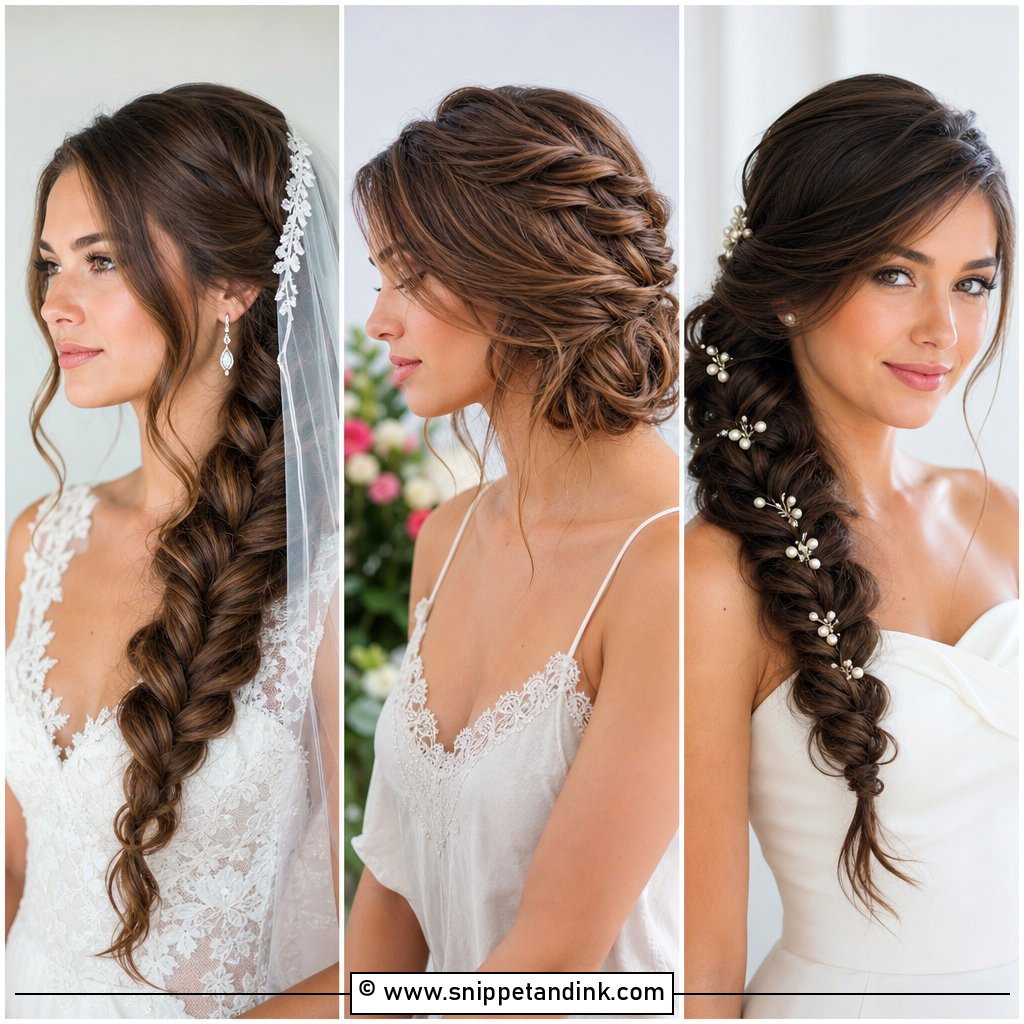
Fishtail, Dutch, French or a loose three-strand plait: the braid you pick sets how detailed the look is. I pull it apart gently once it’s tied off, working from the bottom up so it widens evenly. It’s a good choice for thick hair that needs structure and for outdoor weddings, where loose hair turns into knots in the wind. Leave curls around the face, weave in a few small flowers or add pearl pins along the plait. Keep it all on the side that won’t be pressed against a groom’s arm in photos.
7. Bridal Side Fishtail Braid
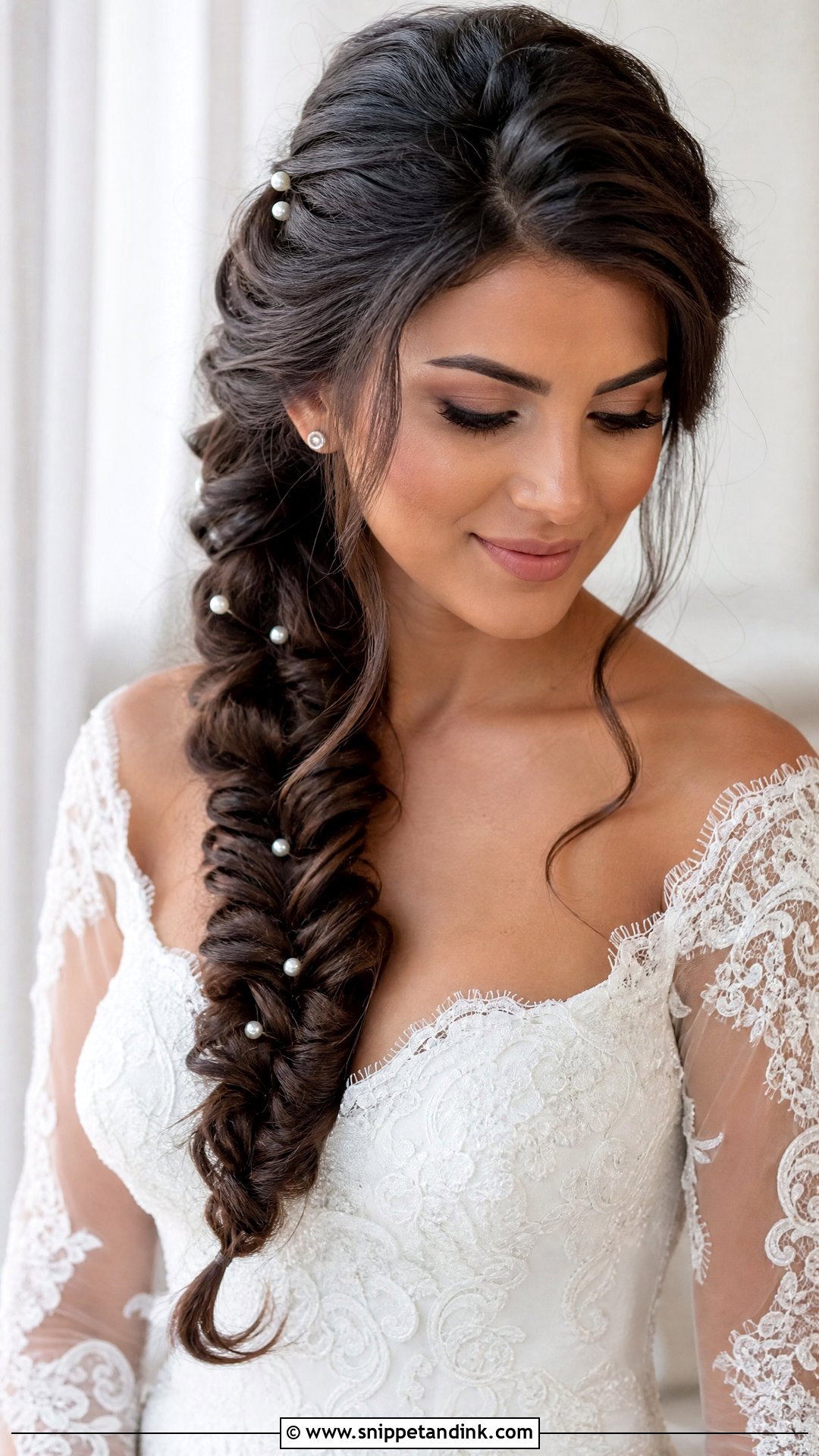
The fishtail is finer and more intricate than a regular braid, which is exactly why it needs loosening. Tight, it looks like a rope; pulled apart a little, the weave becomes visible. I start with a deep part, soft lift at the crown and face-framing curls, then braid over one shoulder. Finish with pearl pins for polish or tiny blooms for something softer. It takes longer than a standard braid on the morning, so build in the extra time. Set it with a soft spray, never a stiff one.
8. Bridal Side Half Up Hair
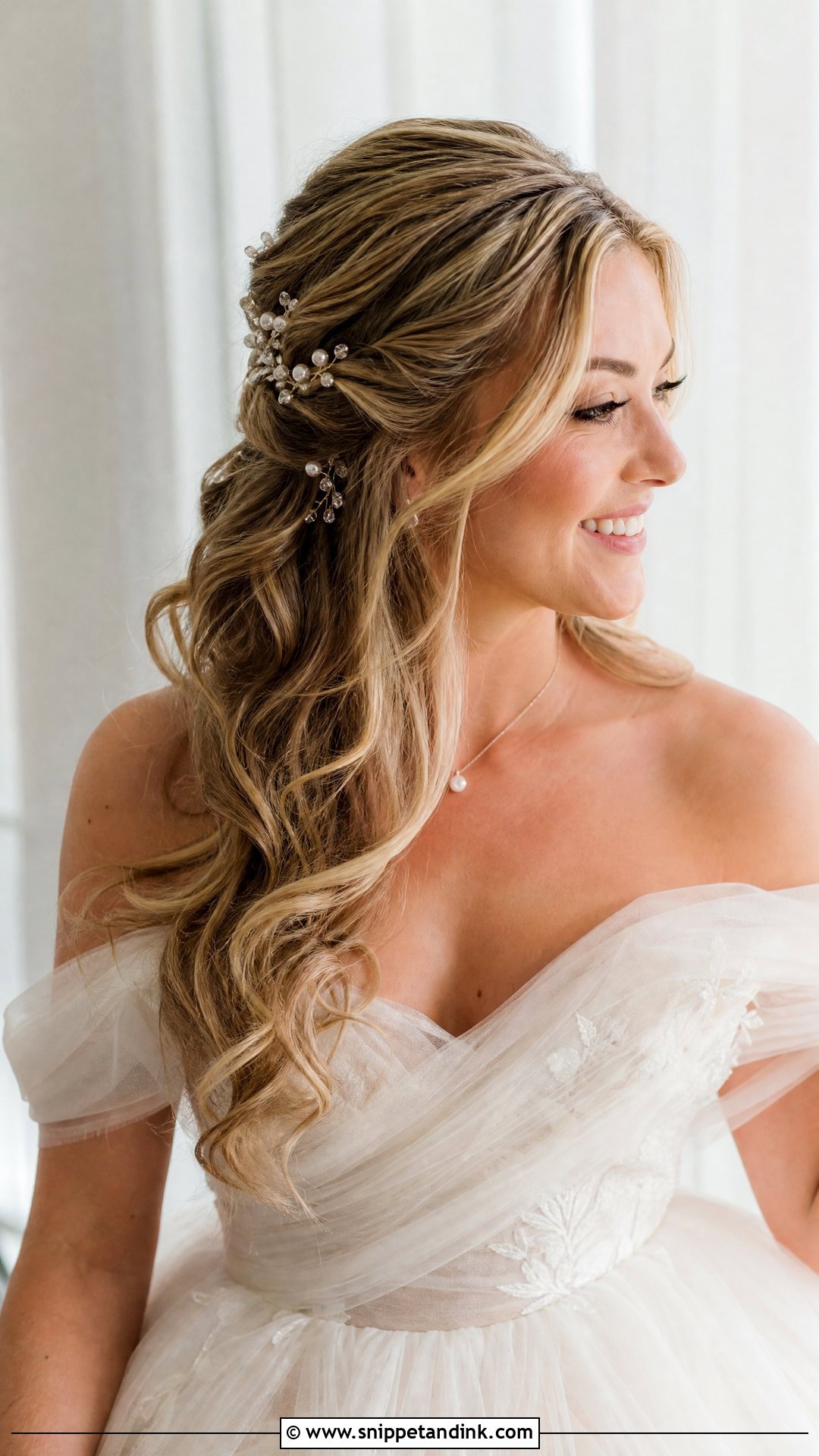
Half up on one side lifts and secures the crown while the length falls over a shoulder. The top section can be twisted, braided or simply pinned, and the rest stays curled or waved. It opens your face but keeps the hair loose, and the pinned section is a steady home for a veil comb. Leave loose tendrils at the front if your neckline is simple. I curl the hanging section last so it hasn’t dropped by the time you walk.
9. Bridal Side Swept Hair With Veil
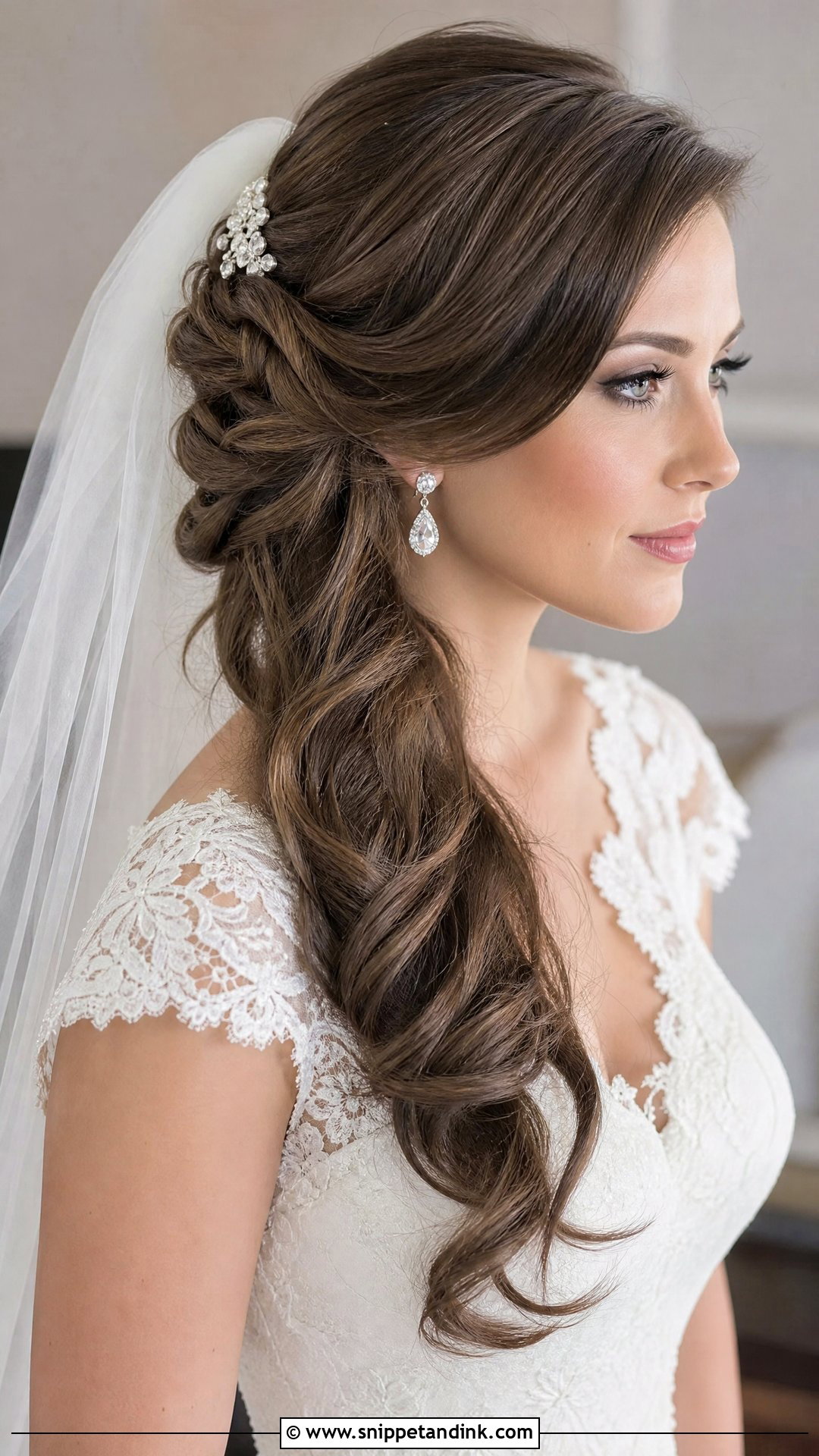
With a side-swept style the veil has to work around the hair, not land on top of it. It can sit above a side bun, behind a pinned wave section or near the crown for a more classic outline. Weight matters: a light single-layer veil blends with loose waves, while a heavier or structured veil wants the anchor of a bun or chignon. I always test the veil at the trial, pin it, take it out, and check what the hair looks like afterwards, because the reception version of the style is the one in most of your photos.
10. Bridal Side Swept Hair With Flowers
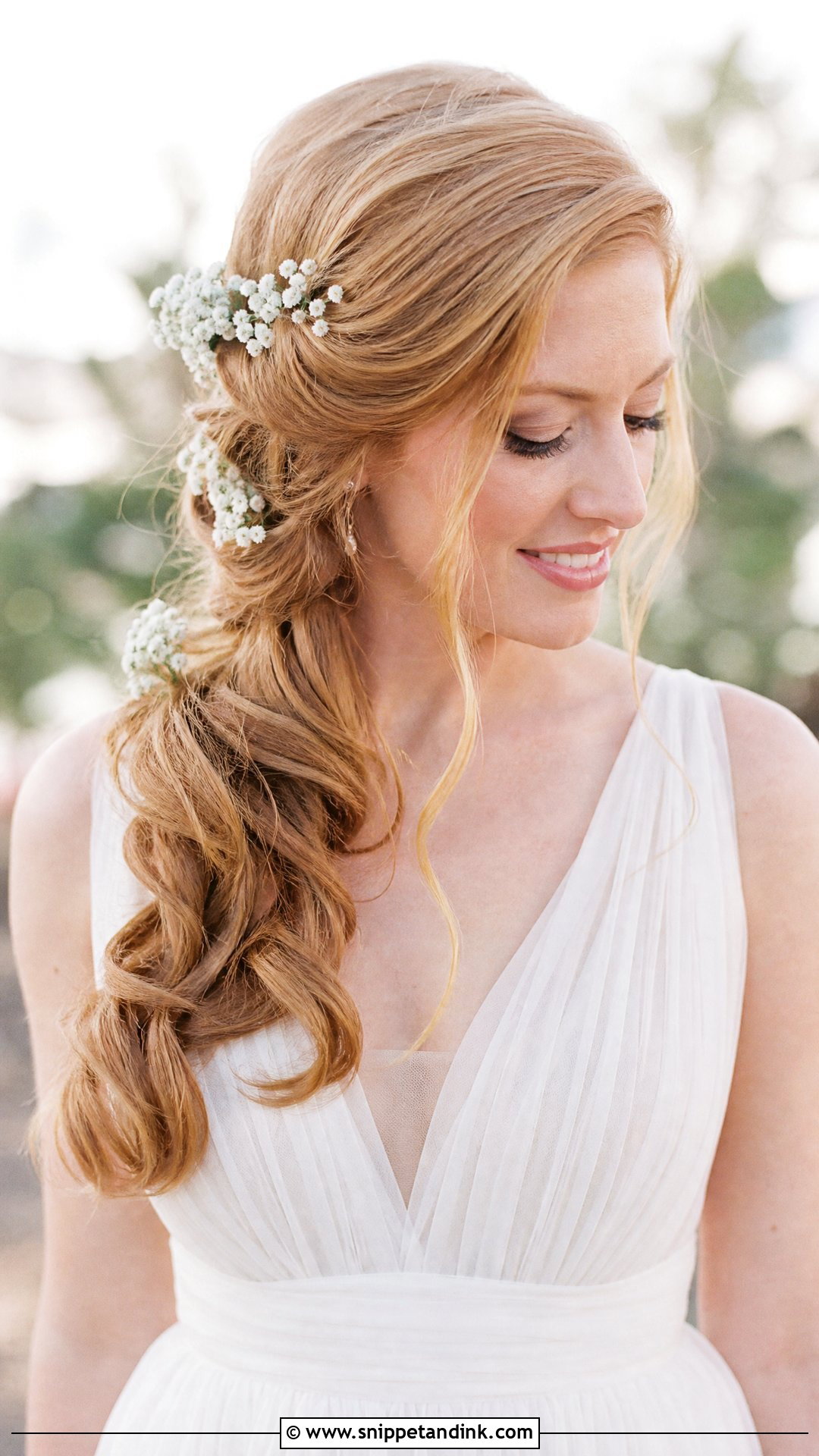
Flowers go where the hair is pinned, into a braid or around a side bun. Keep them small; oversized blooms hide the shape that makes one-sided hair work. Fresh flowers need to be tough enough for heat, hugs, and movement, so I ask that the florist and I talk before the day about which stems to wire. Garden, beach and spring weddings suit this best. Keep the waves loose around the flowers so they look like part of the style rather than placed on it.
11. Bridal Side Swept Hair With Pearls
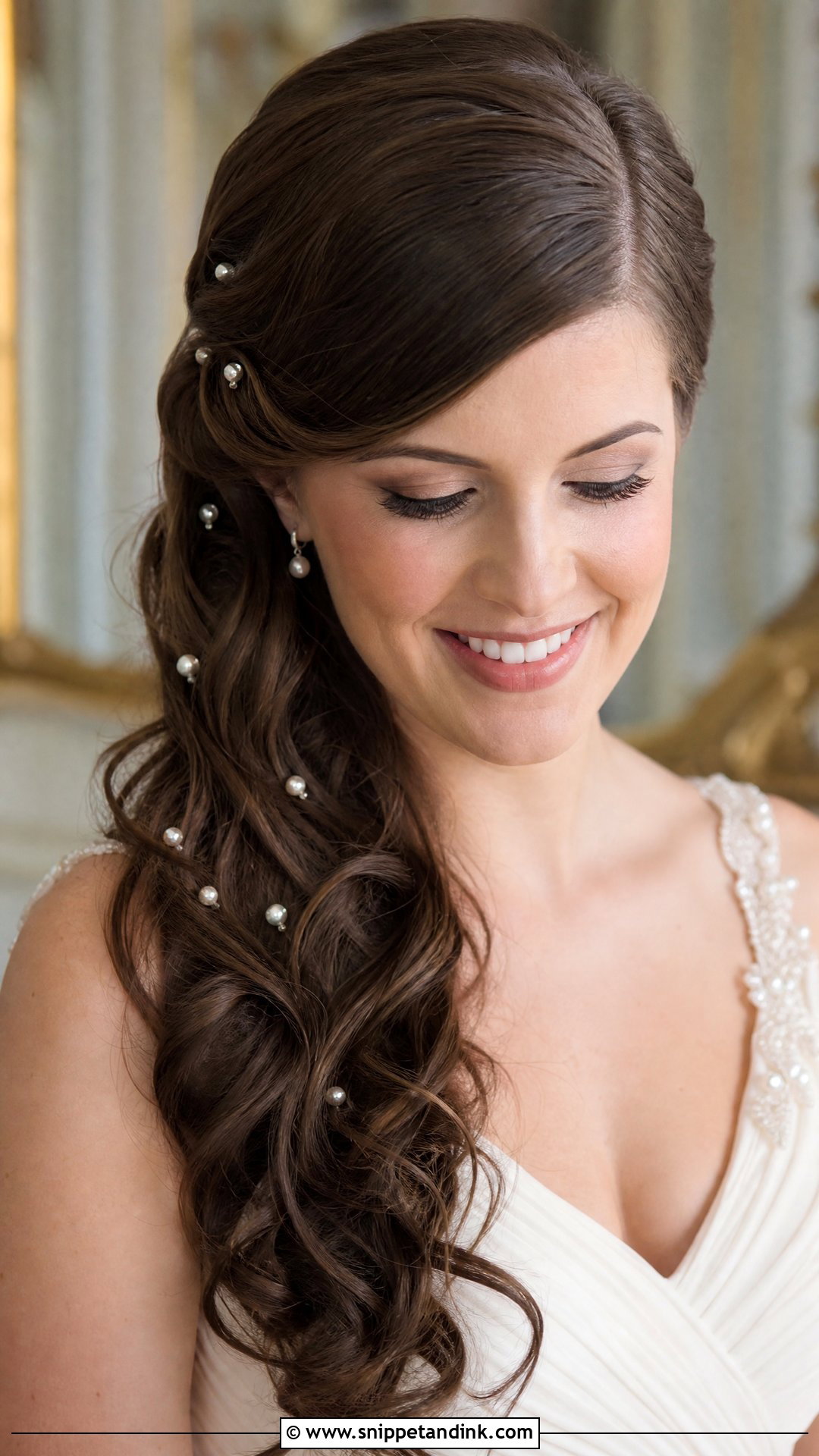
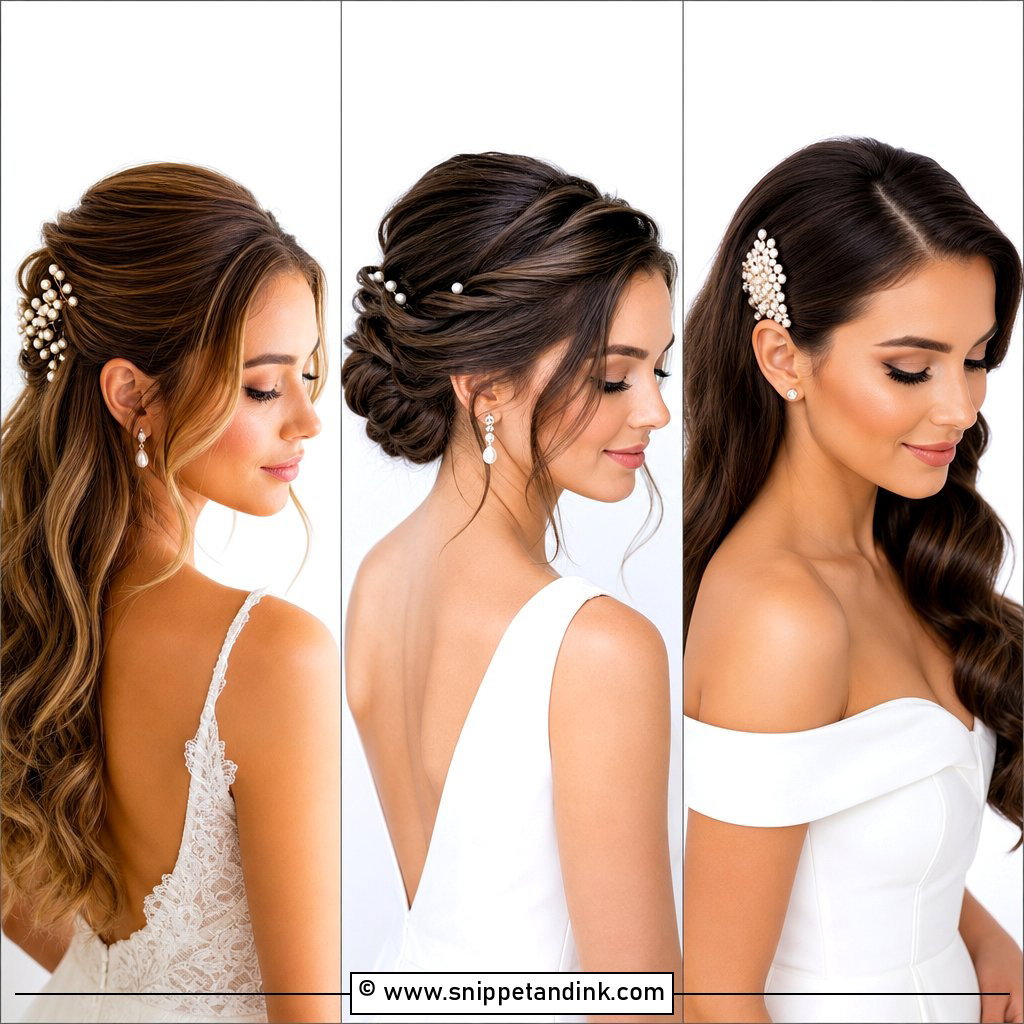
Pearls can be pins, a comb, a vine or tiny accents scattered through curls or a braid. They suit sleek gowns and lace alike. For a softer look I keep them on the pinned side, clustered where they’ll catch the light. For more drama they go all the way down a side braid or around a side bun. Pearls show up any frizz around them, so this is one style where I spend extra time on shine and smoothing.
12. Bridal Side Swept Hollywood Waves
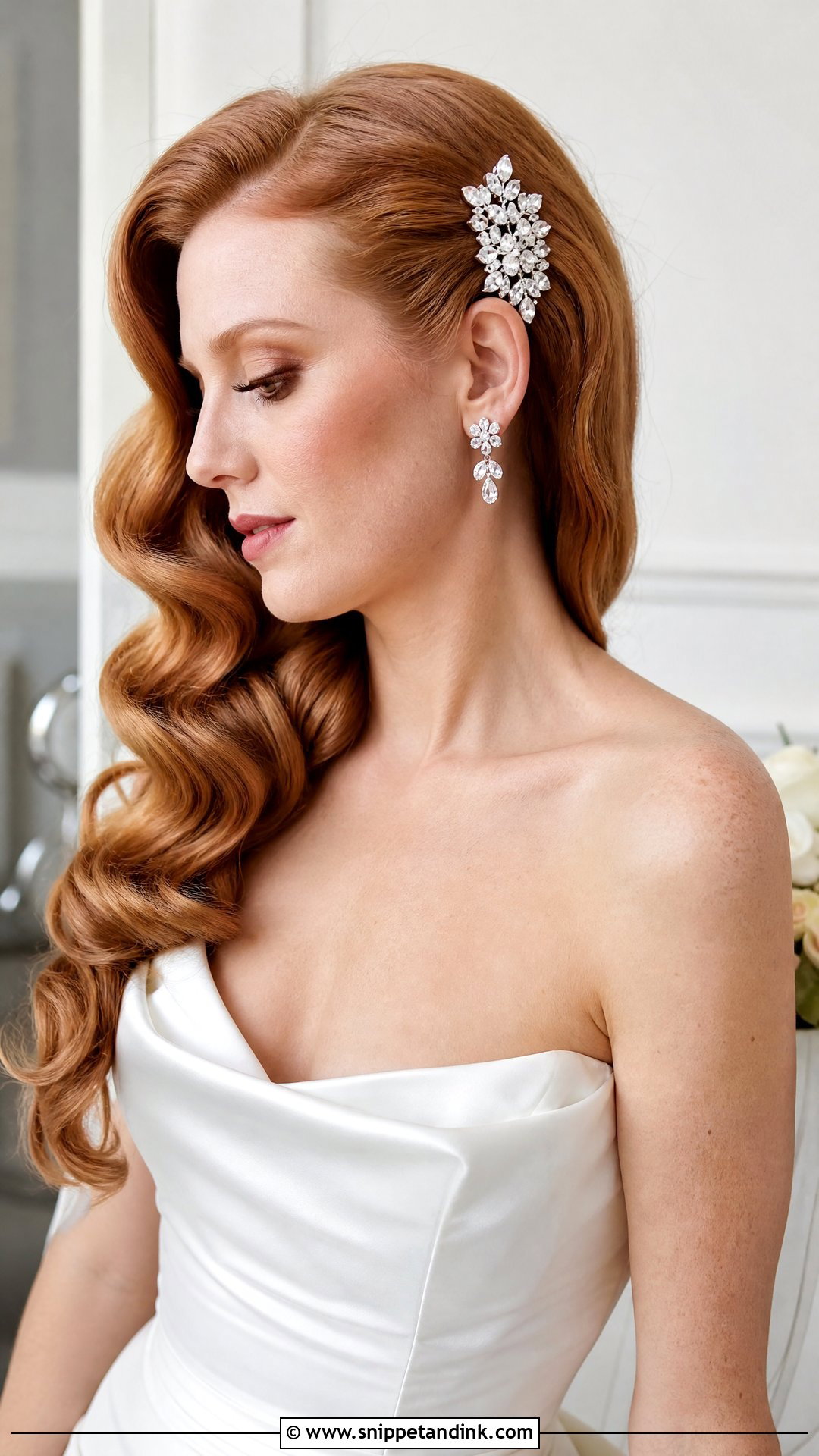
Hollywood waves are the most technical style on this list. Every wave has to be curled in the same direction, pinned to set, then brushed through so they join into ridges. A deep side part is essential; without it there’s no sweep. One side can be tucked and pinned behind the ear while the other falls in glossy waves over the shoulder. With satin, structured gowns and statement earrings, few styles look more glamorous. Book a trial; strong setting products can dull shine, and the balance takes testing on your hair.
13. Bridal Side Swept Straight Hair
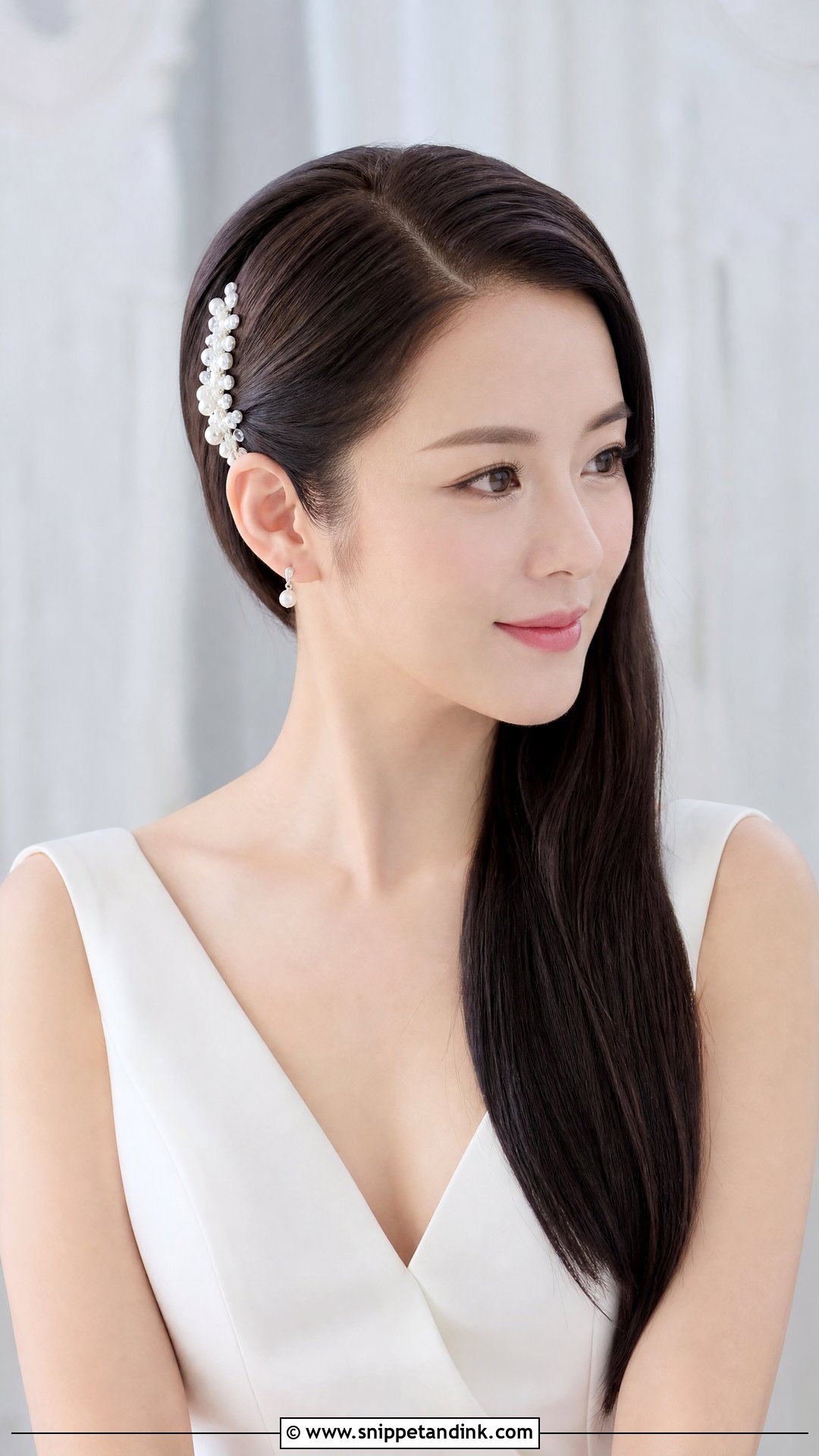
Not every bride wants curls, and straight hair swept to one side can look very sharp. A deep part, glossy lengths and a tucked or pinned side give the one-sided effect without volume. It suits minimal gowns and city weddings. Straight hair shows every kink, so I flat iron in small sections and finish with a smoothing cream and shine spray, then set the swept side with pins I hide under the top layer. A sculptural clip, a pearl barrette or a veil adds the bridal note.
14. Bridal Side Swept Short Hair
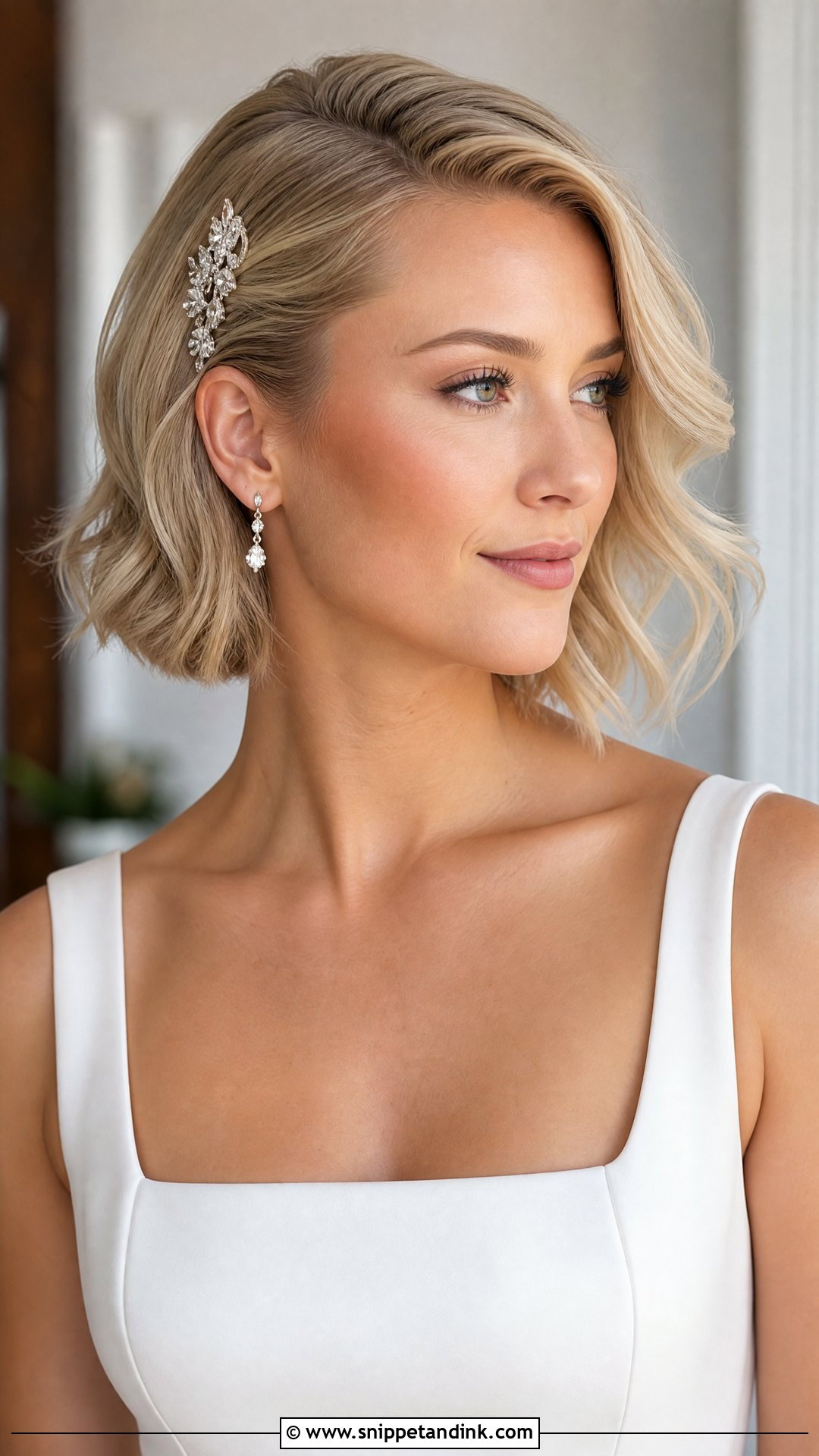
Short hair takes a side sweep surprisingly well, especially a bob, lob, pixie, or cropped cut. The work is in the front: I blow-dry the fringe and top section toward one side so it moves that way on its own. Short waves can be held with a crystal clip, a sleek bob can tuck behind one ear, and a pixie needs a little lift and texture. It shows off earrings and the dress. Don’t book a cut the week of the wedding; two or three weeks lets short hair fall into its shape.
15. Bridal Side Swept Natural Hair
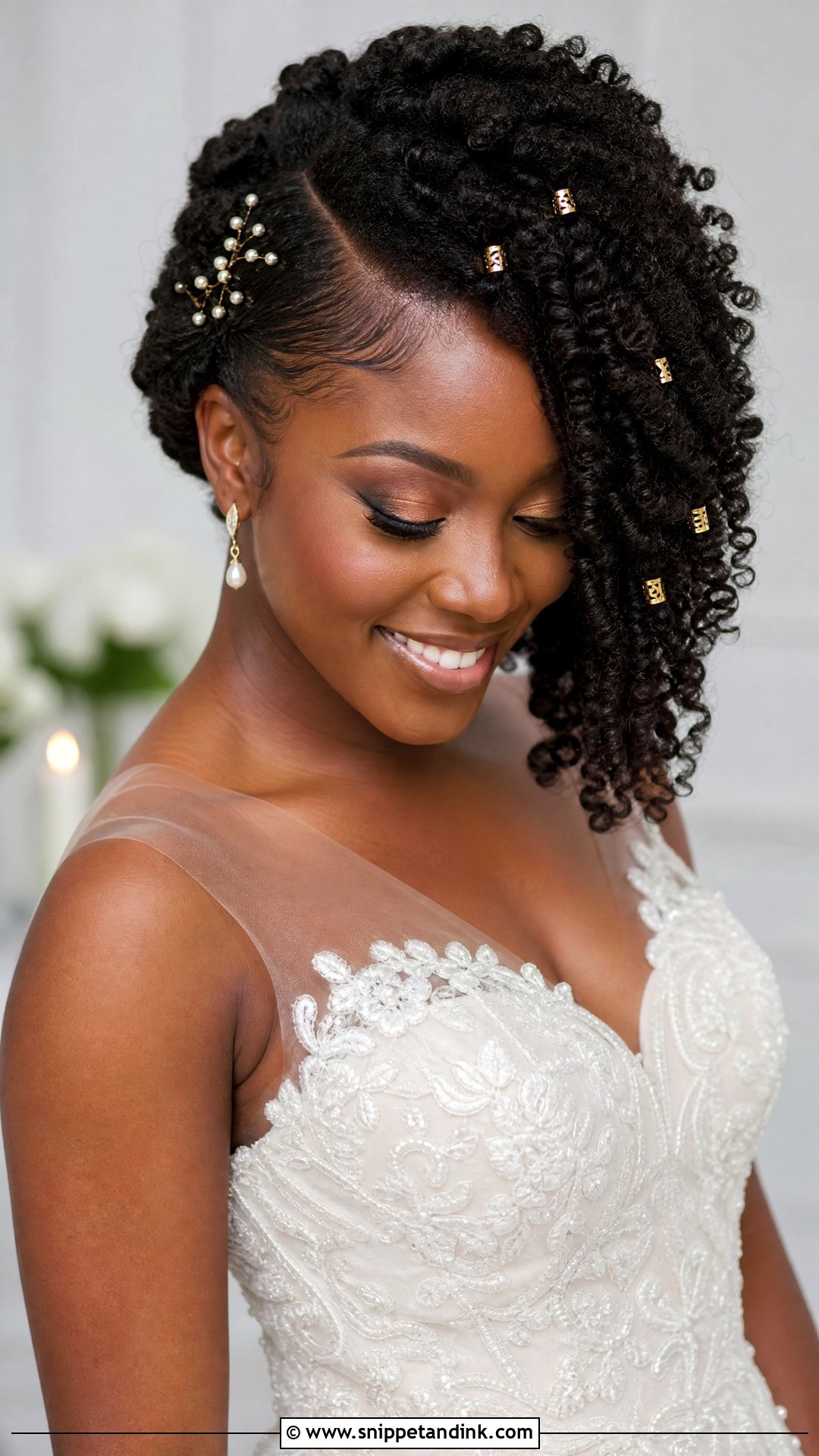
Curls and coils swept to one side make a full, eye-catching shape. Wear defined curls over one shoulder, a side puff, a curly side updo or a braided detail with texture around it. Moisture is the foundation; if coils go in dry they look dull and frizz early. For anything with volume, I build a hidden base of small flat twists or a cornrow on the swept side and anchor pins into it, because pins alone won’t stay in springy hair. Pearl pins, gold cuffs or small flowers finish it.
All the Weight Sits on One Shoulder
Every style here moves your hair’s weight onto one side of the head, and that’s what I build around. Pins placed only at the front won’t hold it; the anchor needs to be behind the ear and at the nape, where the pull is.
Long, heavy hair can start to drag the swept side down by the late afternoon, and you may feel it as a tug at the temple. If your hair is thick or past the shoulder blades, ask for the swept side to be pinned in two layers, one hidden underneath and one on top. It’s also why I’m cautious about very large extensions on one side only: the extra weight pulls on the clips and on your scalp.
Lace, Beading and Hair That Rests on Fabric
One-sided hair lies on your dress all day, and that has consequences you won’t see in the mirror. Curls catch on beading, sequins and lace edges, and every time you turn your head they pull. Lace can also snag individual hairs and create frizz on that shoulder.
Wear something with a similar texture to the trial if you can, or at least tell your stylist what the bodice is made of. On heavily embellished gowns I’ll set the swept hair a little higher so the ends sit on skin rather than fabric, or lean toward a side bun. Light hairspray on the ends also helps them slide instead of grip.
Which Side, Which Shape, and How Much Hold
Hair worn to one side flatters most faces and pairs with a wide range of necklines. Keep it soft with waves, structured with a chignon, relaxed with a braid or sharp with straight hair. Your texture, neckline, veil and how much hold you need will narrow it quickly. Bring your photos to the trial, but be open when your stylist suggests moving the part or the bun a little; those small shifts are often what make the style look like it was planned for your face.
You'll Like These Ideas:


Leave a Reply