
Most Indian brides end up in a bun for one plain reason: it is the only shape that can carry a tikka, a gajra and a pinned dupatta for eight hours while keeping the face and earrings clear. Within that, the range is wide. A bun can be strictly traditional with jasmine and temple jewelry, or soft and textured with pearls and a few loose pieces at the cheek. I’ve grouped classic juda looks, South Indian buns, reception buns and floral ones below, with notes on what each one asks of your hair and your stylist.
The Order I Build a Bun That Has to Carry Jewelry
A bridal bun under Indian jewelry is engineering first and decoration second. The most common problem I’m called in to fix is a bun that looked right at nine in the morning and slumped by the pheras, nearly always because it was built in the wrong order.
- Start with hair washed the day before, not that morning. Freshly washed hair is slippery and pins slide out.
- Make a tight anchor ponytail or a small anchor braid exactly where the bun will sit. Everything else pins into it.
- Place the tikka or matha patti and secure it before shaping the bun.
- Add padding or a hairpiece, then wrap and pin the hair over it.
- Pin flowers and accessories last, with the dupatta pinned to the bun base, not to loose hair.
Weight is the other thing I plan. A full gajra, a matha patti, a hair chain and an embroidered dupatta together can give a bride a headache by the second hour. If you’re wearing all of them, ask your stylist to spread the load, with some pins anchoring into the crown and some at the nape, so no single spot takes all of it.
1. Indian Bridal Bun With Gajra
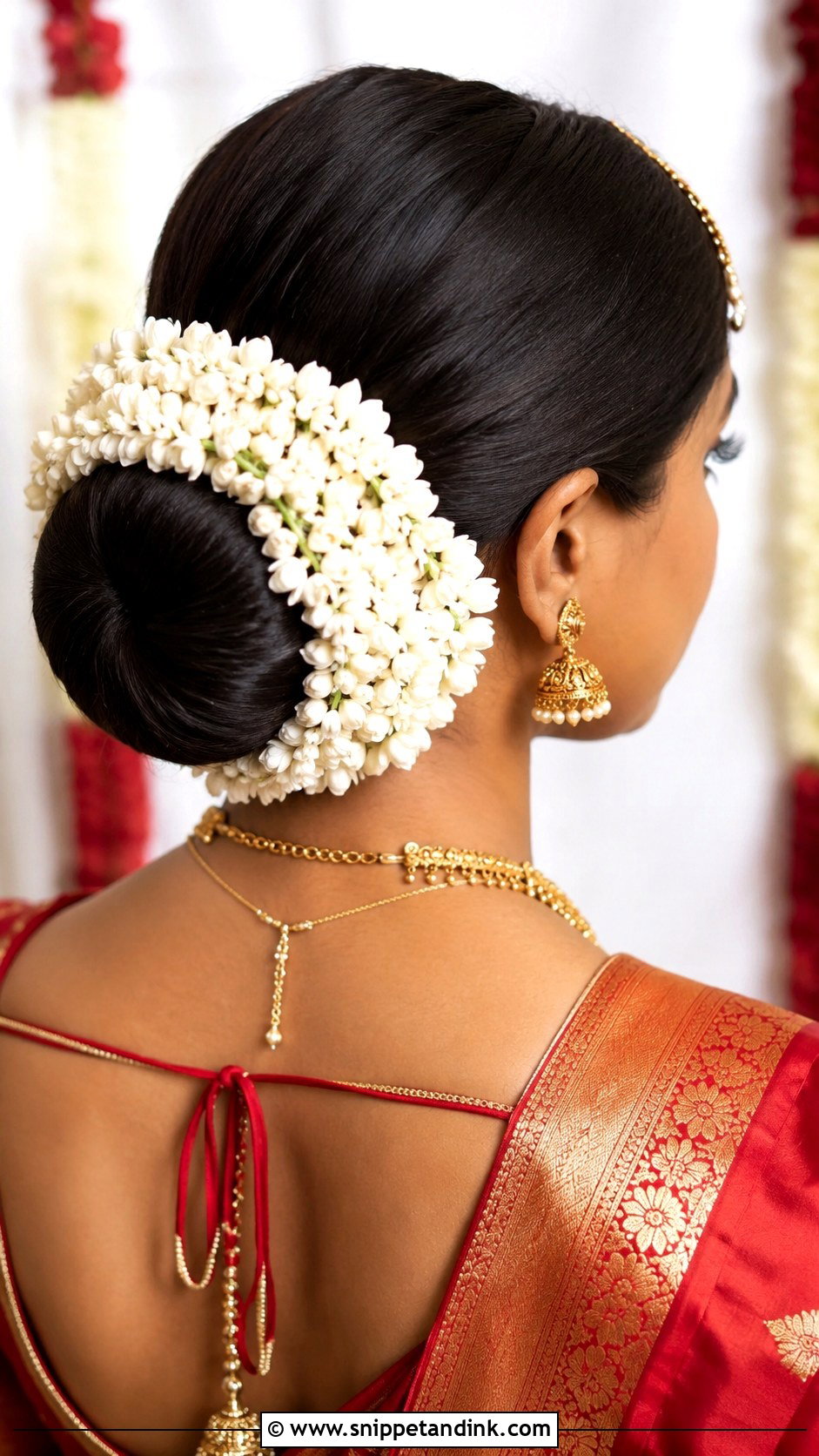
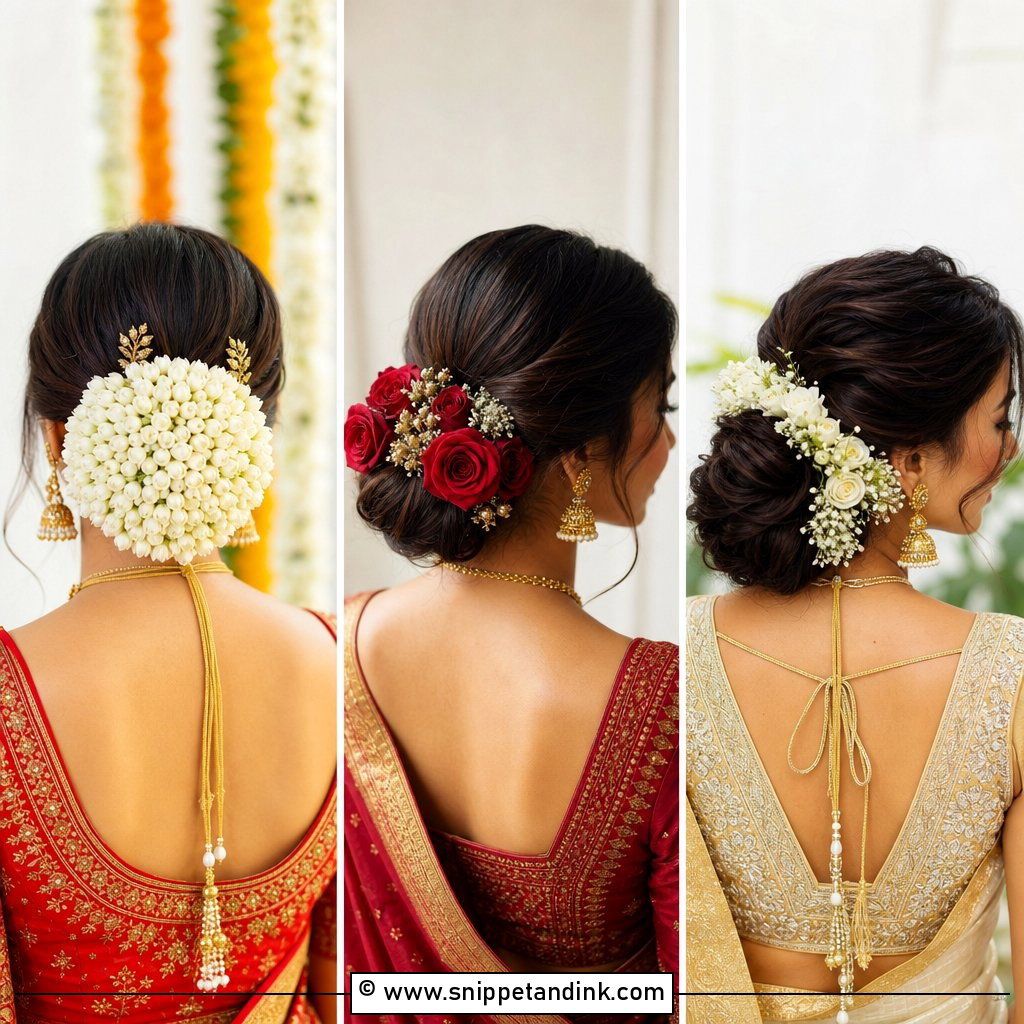
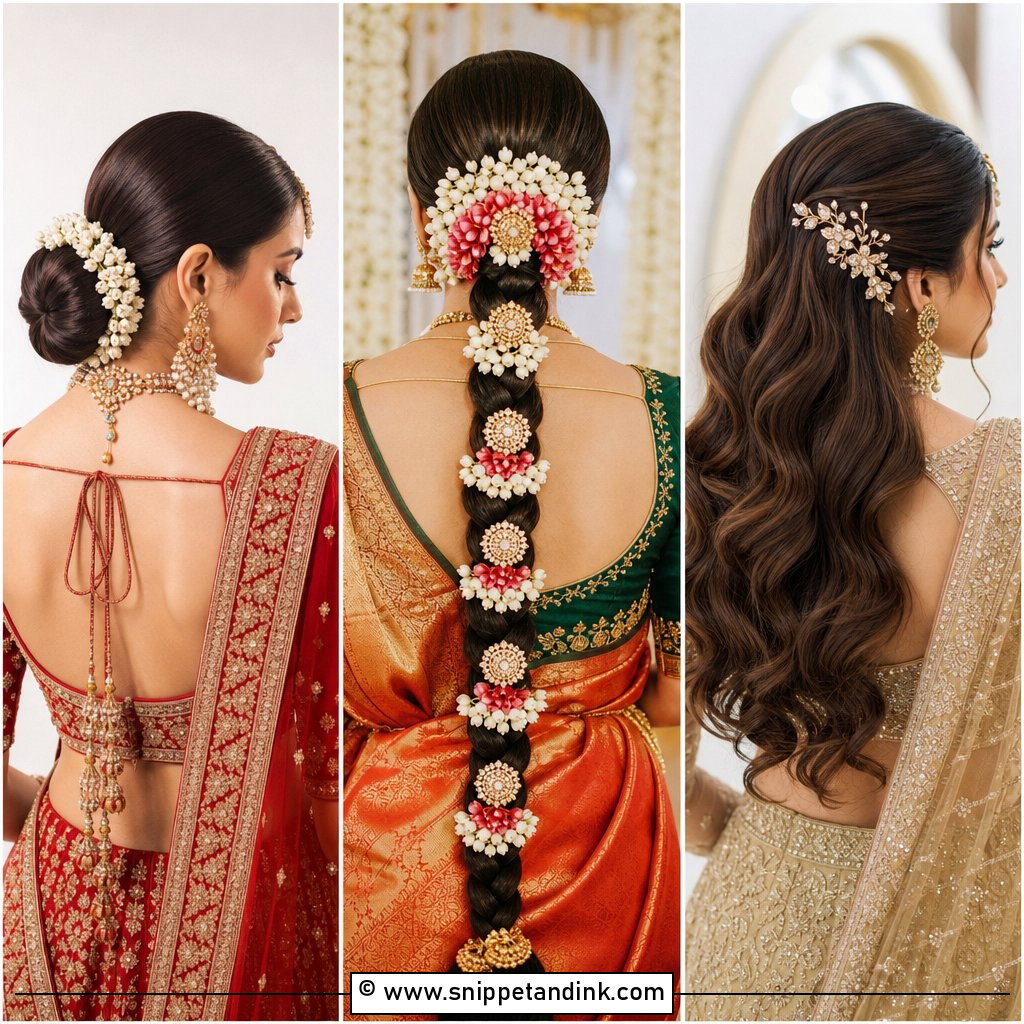
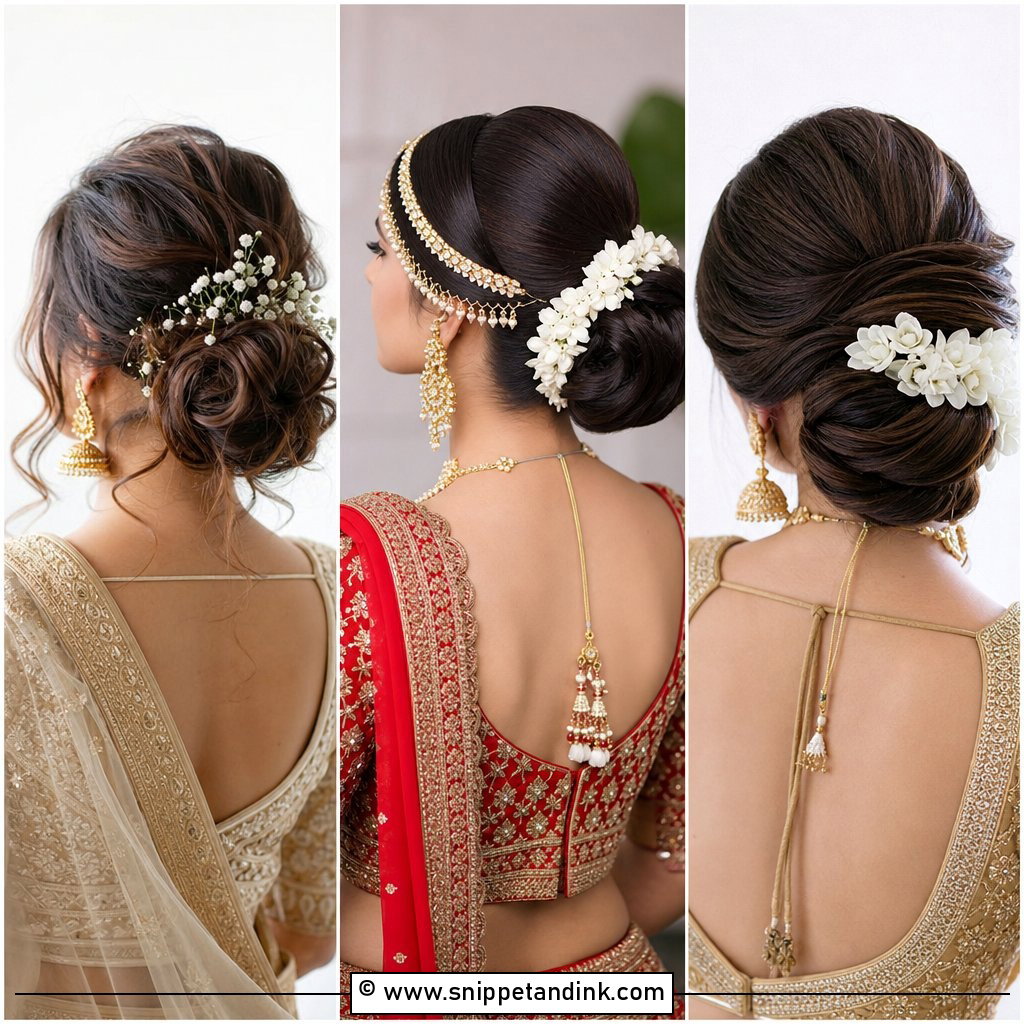
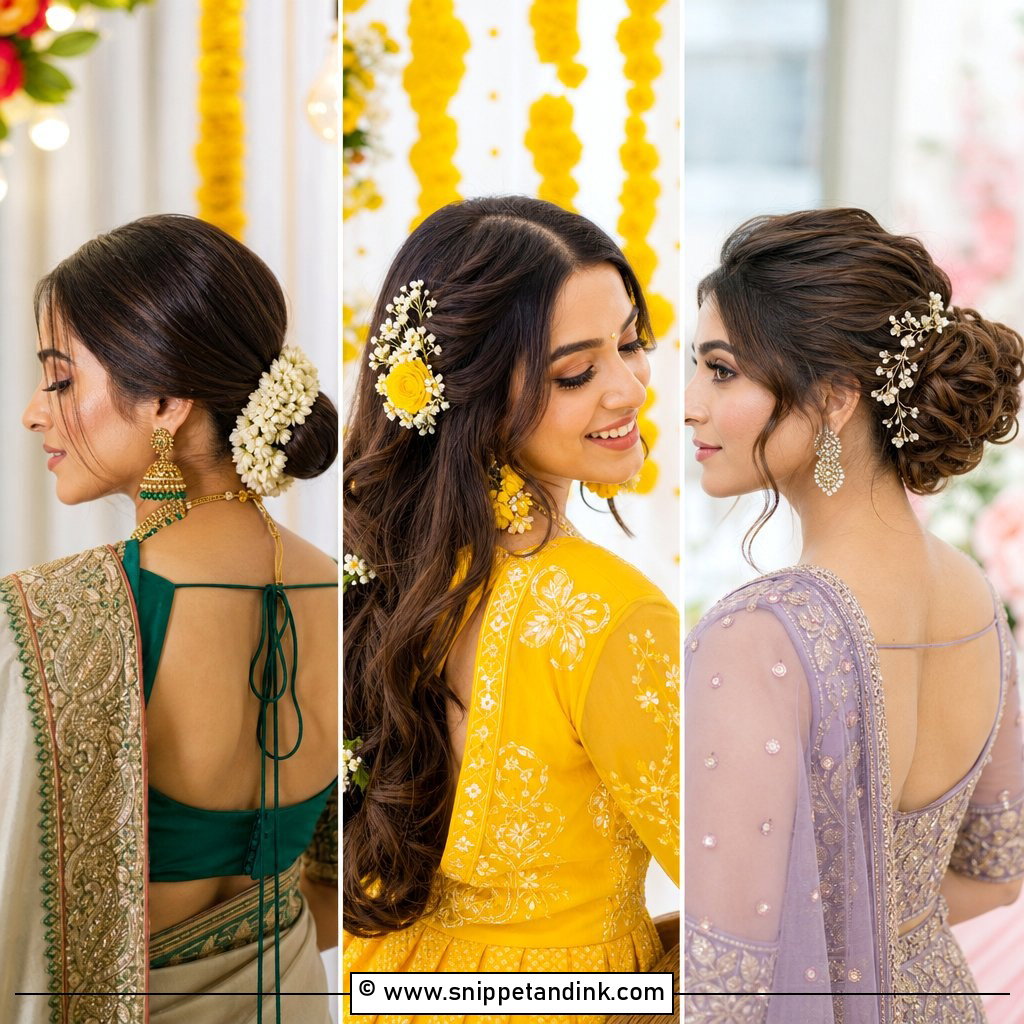
A centre parting, smooth sides and a round low bun at the nape, wrapped in one or two strands of fresh jasmine. It’s the look most families picture, and the scent is half of it. The structure is simple, so the work goes into the anchoring. I pin the gajra through the bun itself, not just around it, with U-pins every few centimetres, because jasmine strings are heavier than they look and slide once the bride starts moving. It sits happily with almost any outfit colour and leaves room for a tikka, matha patti and a dupatta.
2. South Indian Bridal Bun With Temple Jewelry
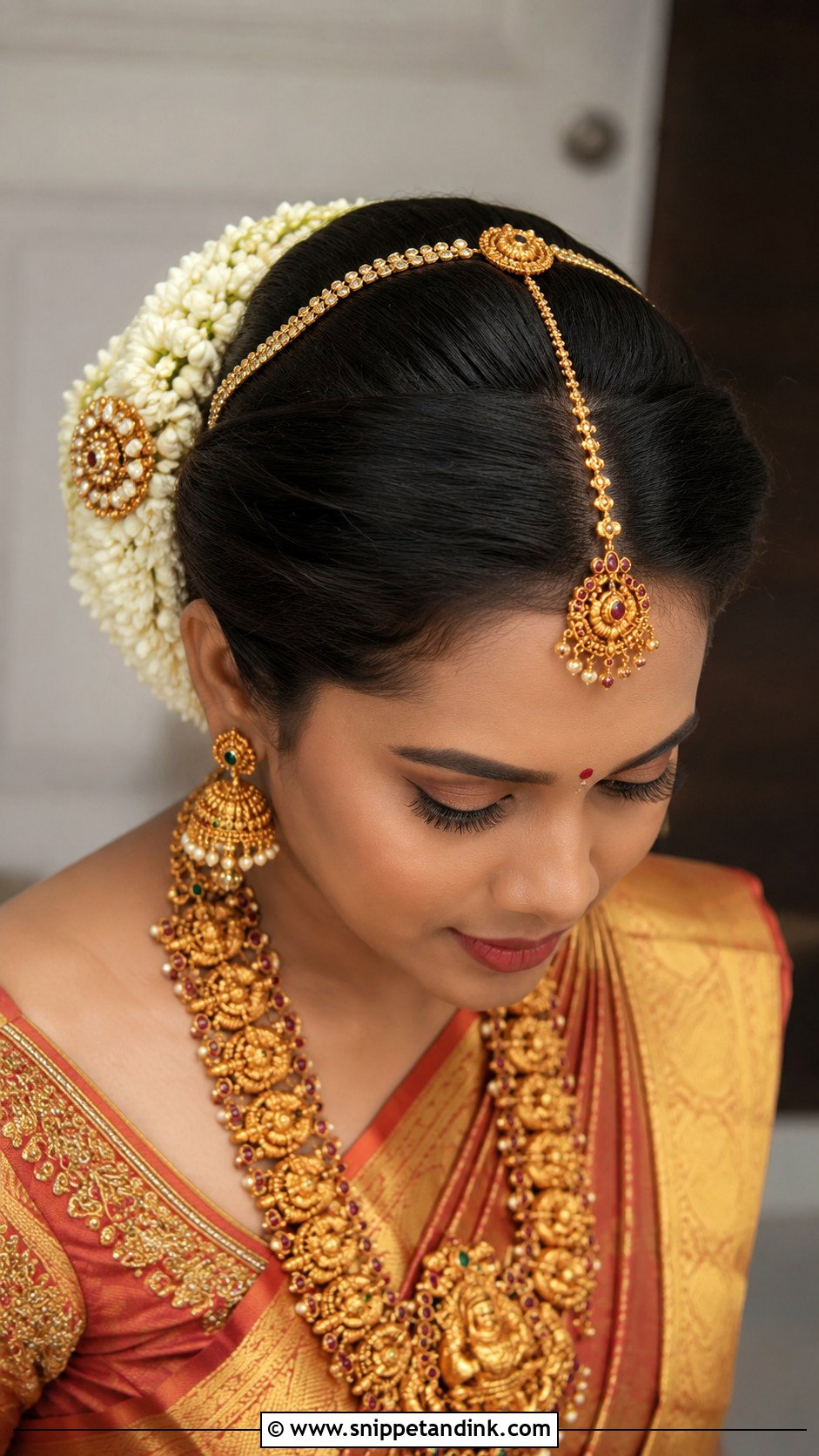
A South Indian bridal bun is fuller and more architectural, usually set low or just above the nape, then layered with jasmine, gold chains, a rakodi and temple pins. With a Kanjeevaram it reads beautifully from the back during the ceremony. That fullness almost always comes from padding or a hairpiece, and the gold adds real weight, so I build a firm base with a tight anchor ponytail before any decoration goes on. The front stays sleek so the gold does the talking.
3. Indian Bridal Low Bun
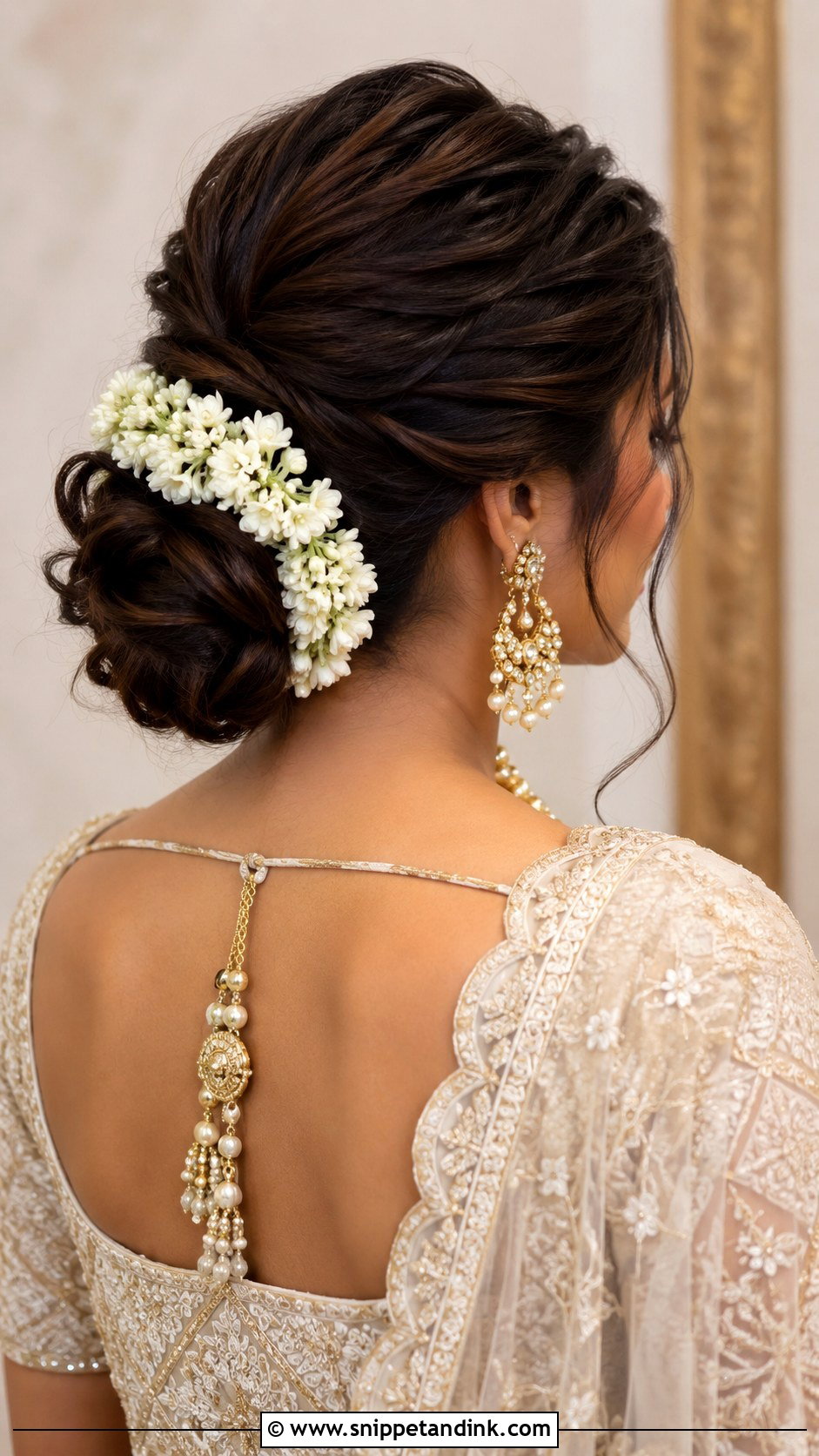
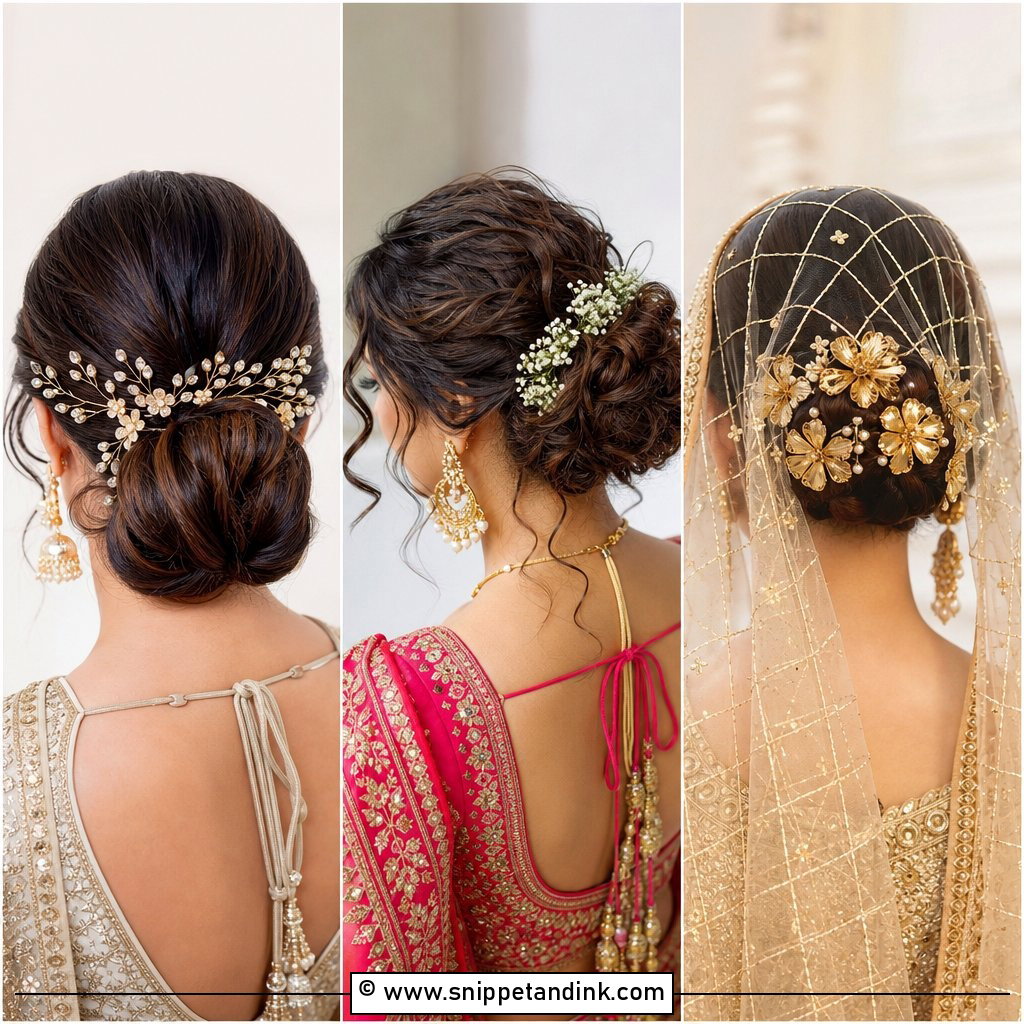
The low bun is the easiest one to wear all day. Sitting right at the nape, it doesn’t fight a dupatta and it leaves the neckline open for a heavy necklace. Sleek, twisted or lightly textured, it works with a lehenga, saree or sharara, for pheras, nikah or the reception. Medium-length hair can get there with a small padding or a clip-in piece. I’d keep decoration to a few roses, pearl pins or a short gajra, since a low bun loaded with flowers starts to drag the neck forward.
4. Indian Bridal Messy Bun
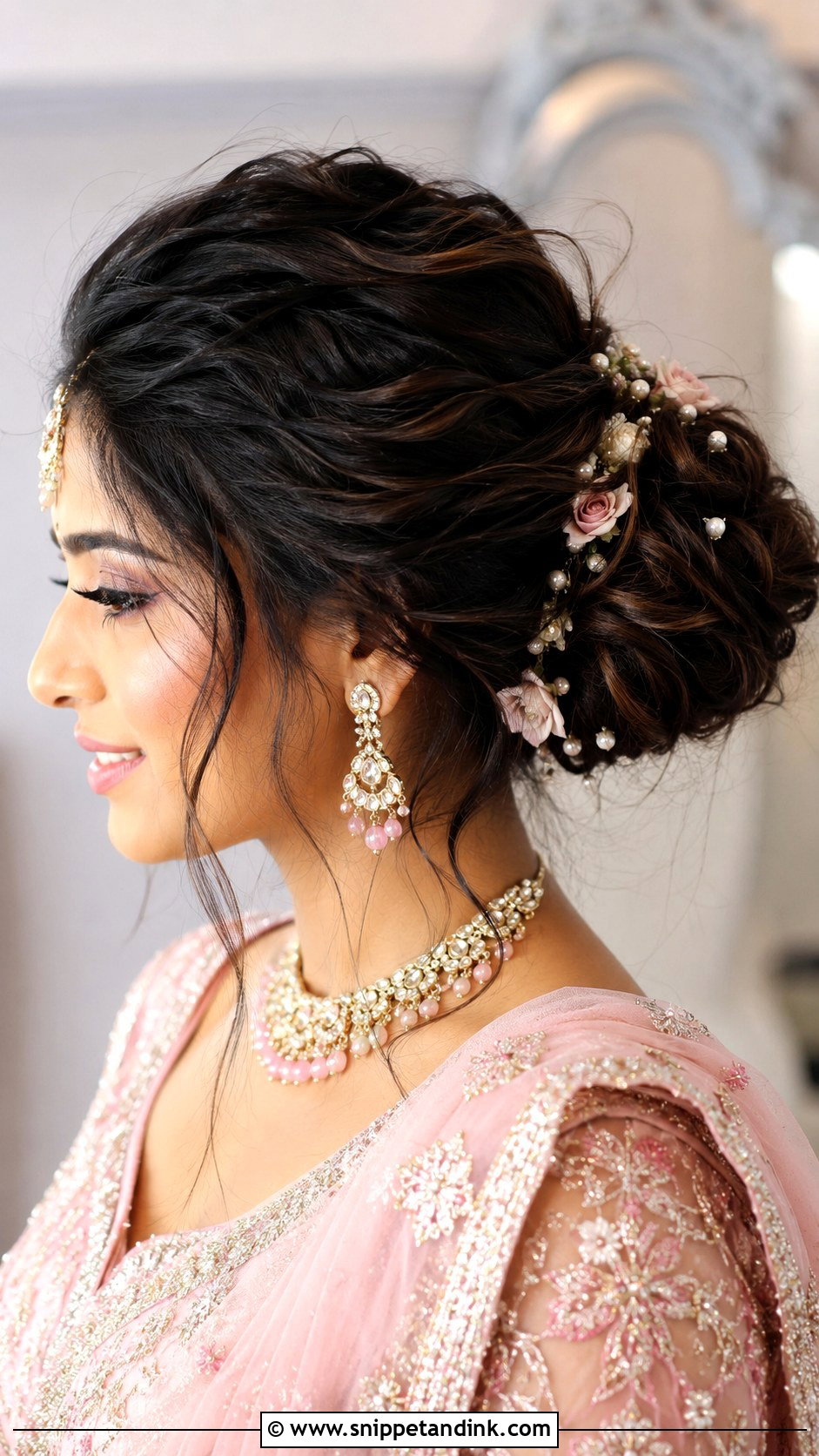
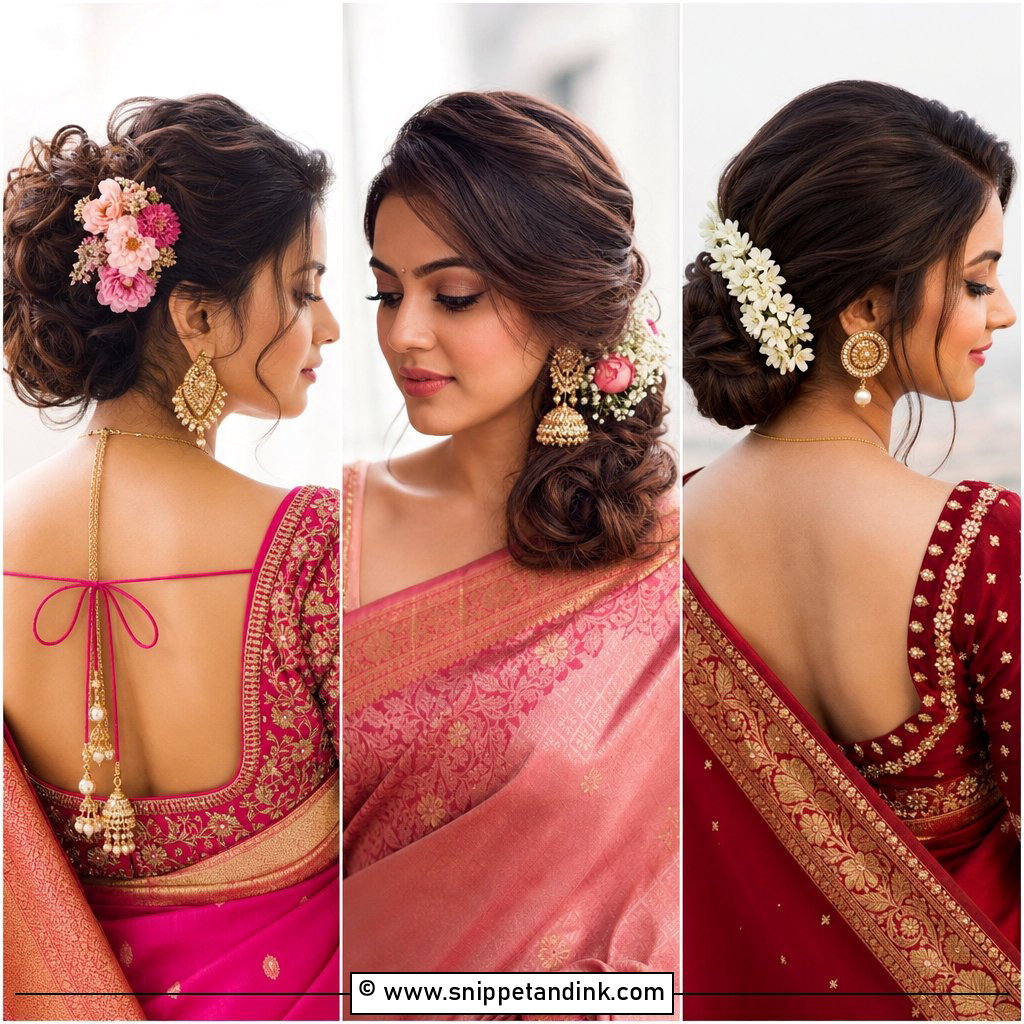
Loose twists, some volume and a couple of face-framing strands make a bun that looks relaxed. It isn’t. A messy bun takes more pins than a sleek one, because every loose piece has to be placed and then set so it doesn’t simply fall out by the second function. Wavy and thick hair suit it best, since the texture is already there. Fine straight hair needs curling and a texturising spray first, otherwise the twists collapse flat. Small flowers or pearl pins keep it bridal.
5. Indian Bridal Bun With Roses
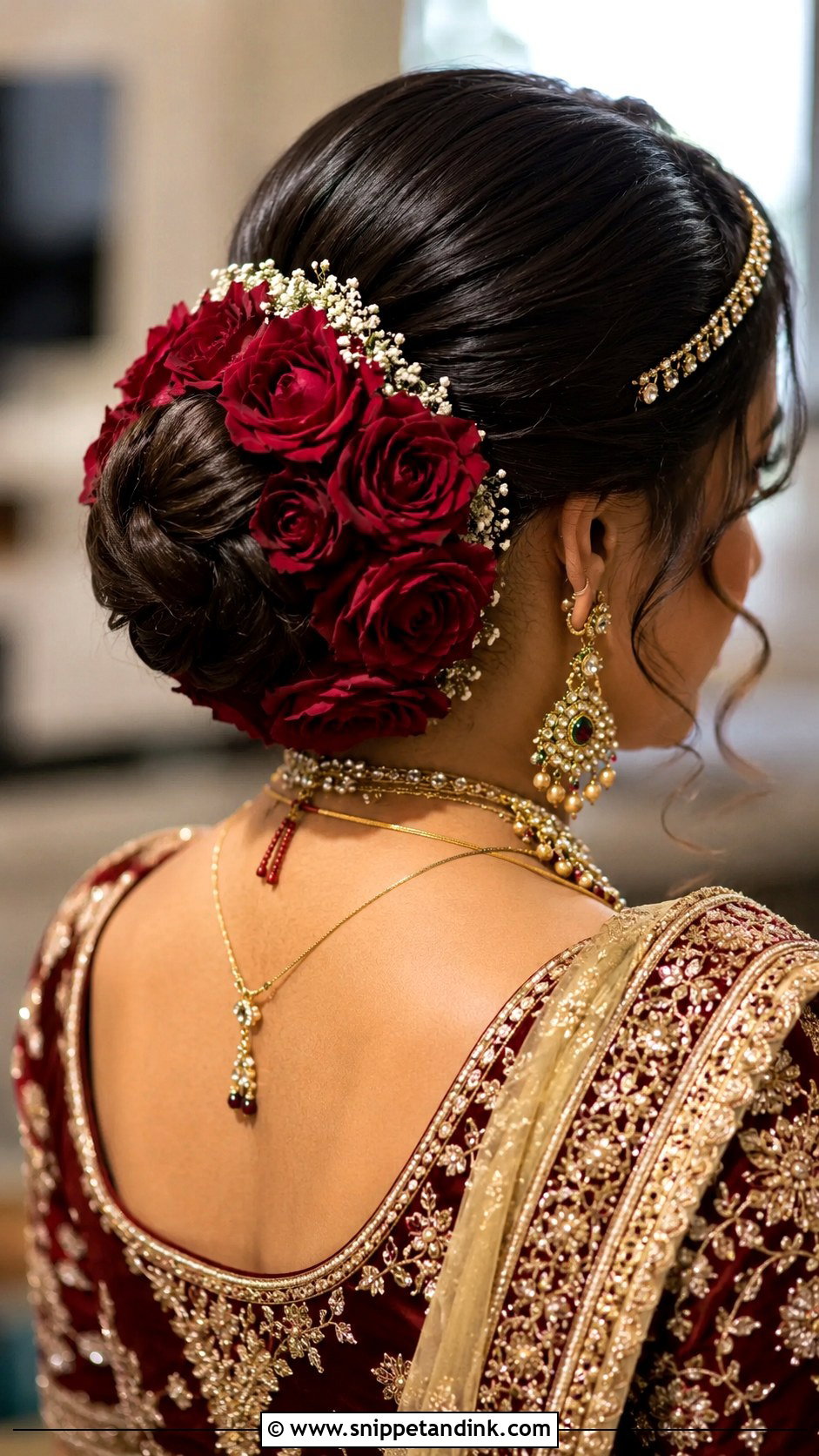
Roses give more colour than jasmine and a bolder outline. Red ones go with deep red and maroon outfits; pink, peach or ivory suit pastels and daytime ceremonies. I group the roses on one side or in a crescent around the bun instead of dotting them evenly, which looks spotty in photos. Size them against your jewelry. Heavy jewelry wants small blooms, while a simple outfit and dupatta can take larger ones. Roses also bruise, so I wire or pin them through the stem rather than the head.
6. Indian Bridal Bun With Maang Tikka
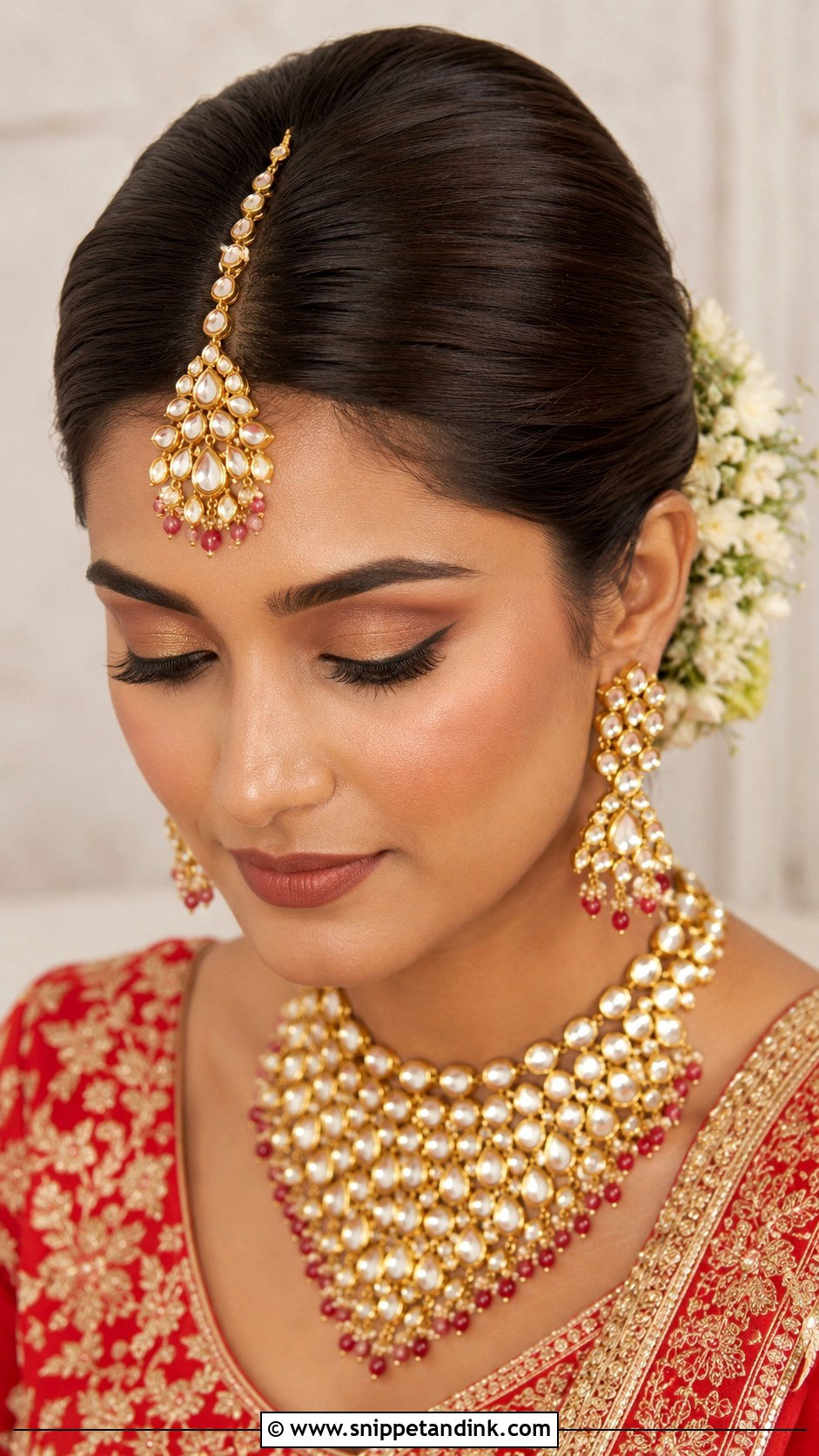
A maang tikka needs a clean centre parting to hang straight, so the front of this look is all about control. The bun at the back can be low, round, twisted or floral. With a heavy tikka, I keep the crown flat and put the volume into the bun instead. Volume on top lifts the chain and tilts the pendant off-centre within an hour. I also pin the tikka’s hook into a small hidden braid along the parting, which holds far better than pinning into loose hair.
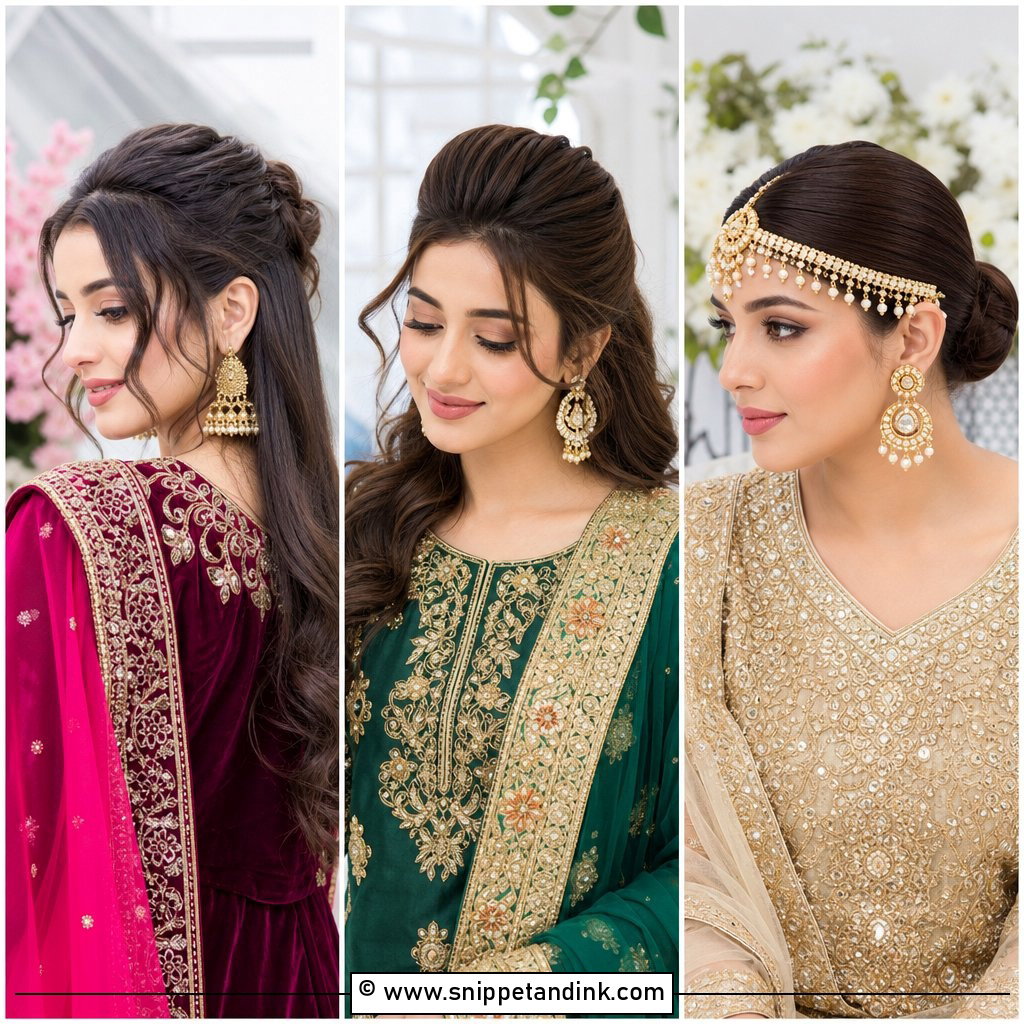
7. Indian Bridal Bun With Matha Patti
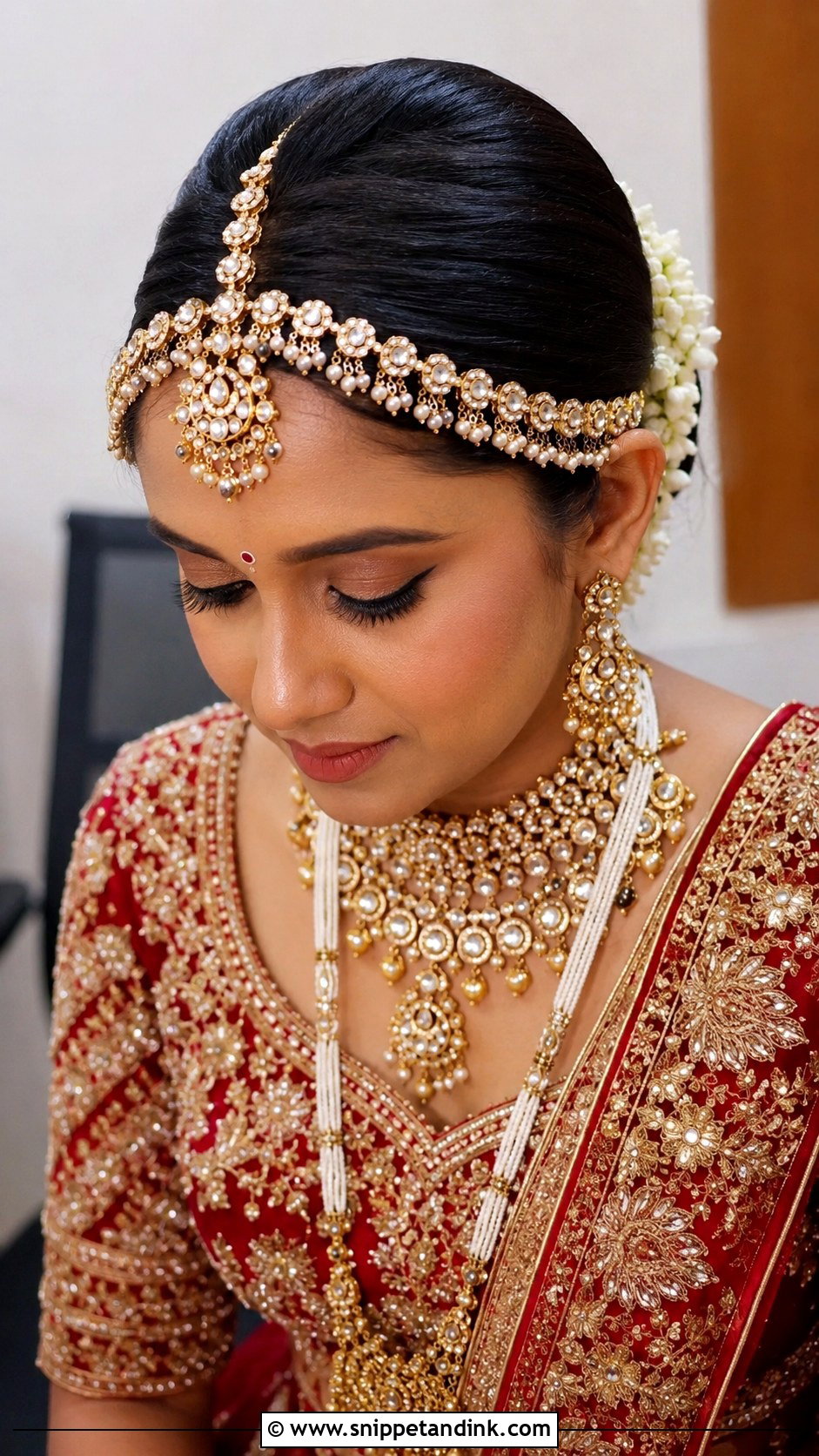
Matha patti covers the hairline, so the front has to be completely flat or the chains ride up and sit crooked. A low or mid bun balances the weight of the patti and the dupatta better than a high one. With an embroidered lehenga or heavy saree and layered necklaces, the whole look feels royal. I always place and secure the matha patti first, then build the bun to meet its side chains. Doing it the other way round means repinning the bun, which nobody wants on the morning.
8. Indian Bridal Bun With Dupatta
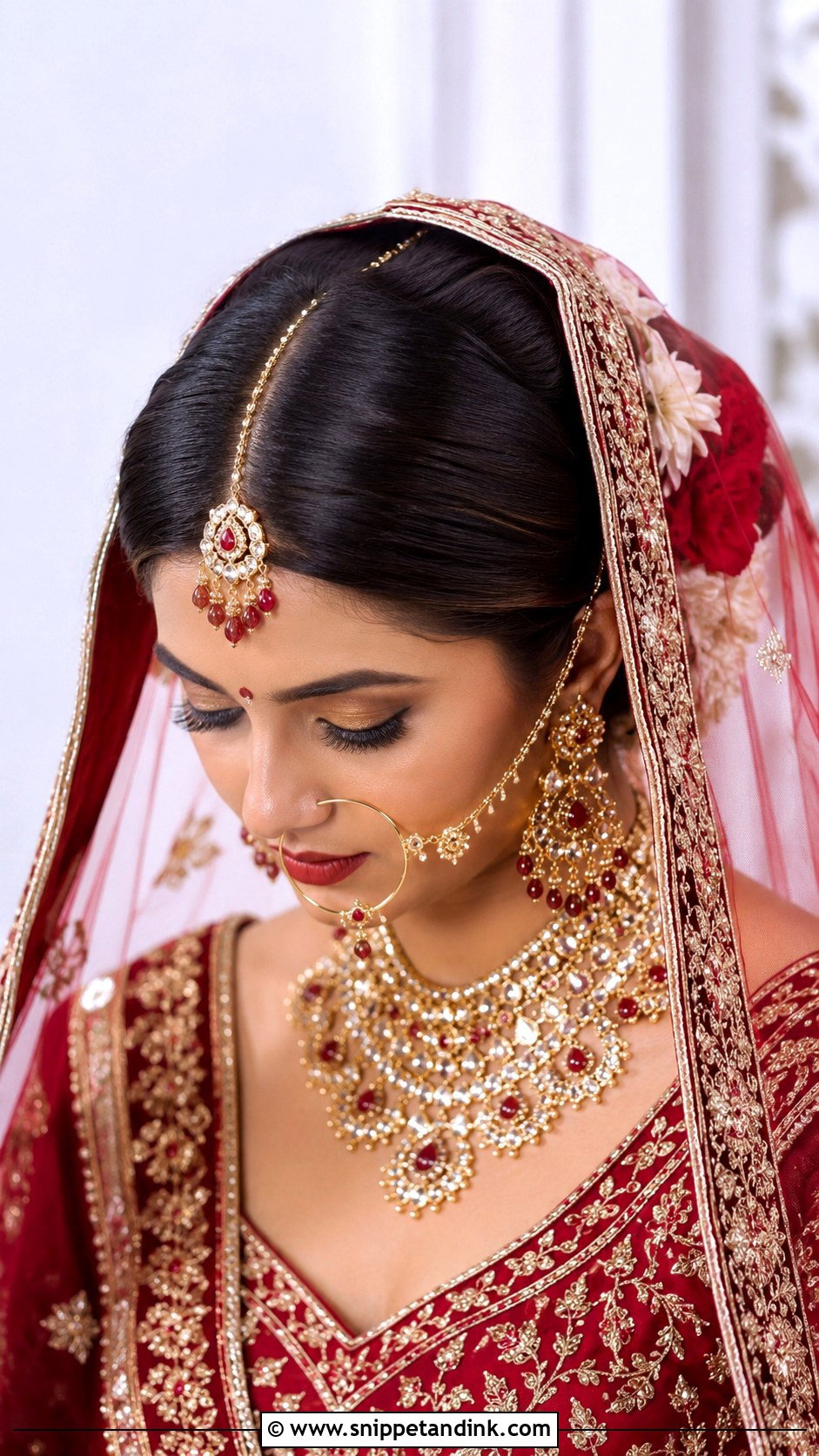
When the dupatta is going on the head, the bun is really a foundation. It should sit low or at mid height so the fabric can be pinned to it without dragging on the scalp. A smooth crown makes the dupatta lie neatly from the front, and a fuller bun gives the pins something solid at the back. That matters most with heavily embroidered dupattas during pheras or nikah ceremonies. If you want flowers to show in photos, they go below the dupatta line. Light padding and hidden pins carry the weight without a headache.
9. Indian Bridal Bun With Pearls
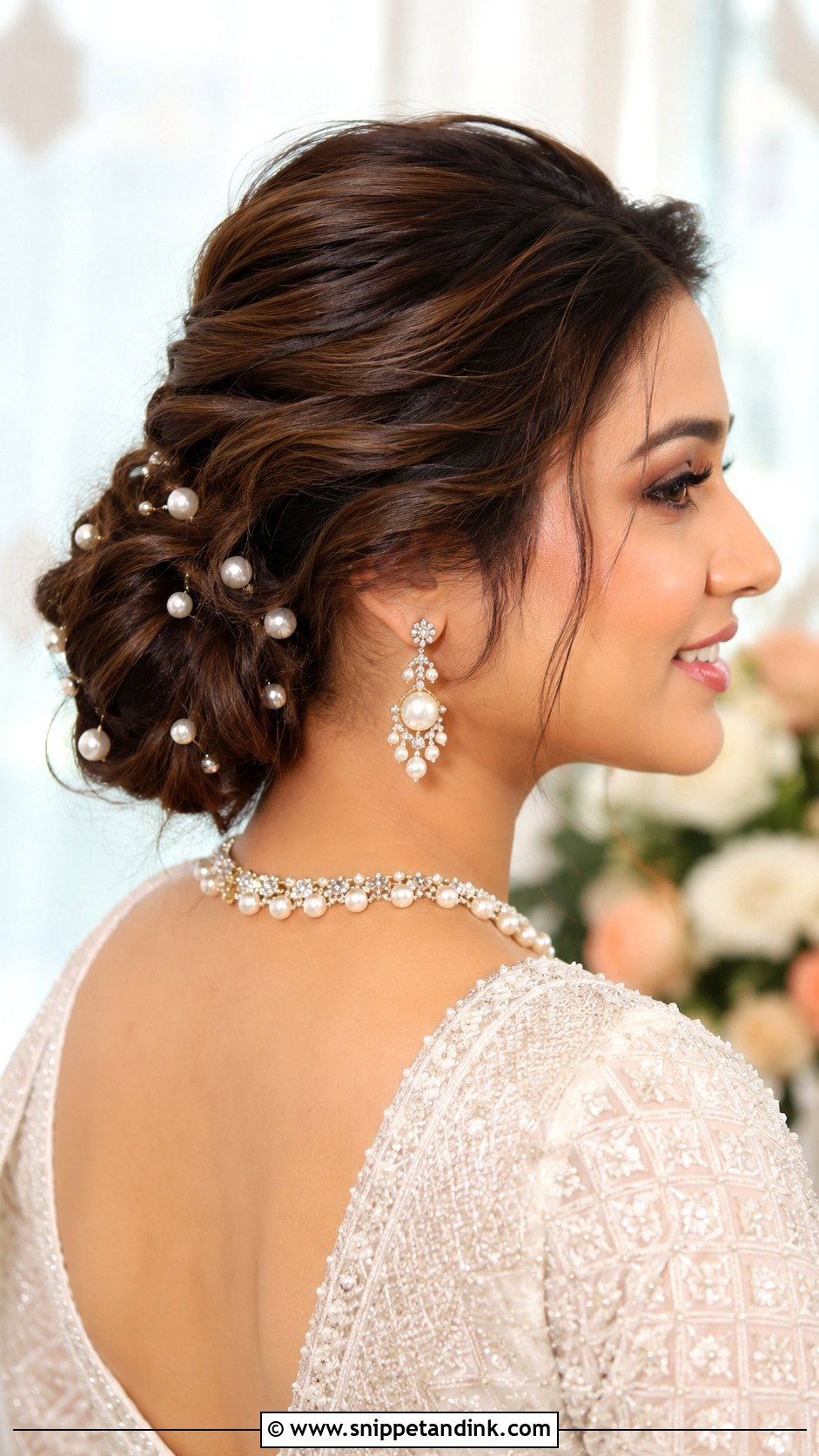
Pearls look soft and polished, especially for an engagement, a reception or a pastel outfit. They come as single pins, fine strings or a net over the bun. If your outfit has pearl embroidery or ivory tones, they tie everything together. My rule is fewer than you think. Pearls catch flash, so a crowded bun looks spotty in photos, while a balanced scatter looks clean from every angle.
10. Indian Bridal Bun With Fresh Flowers
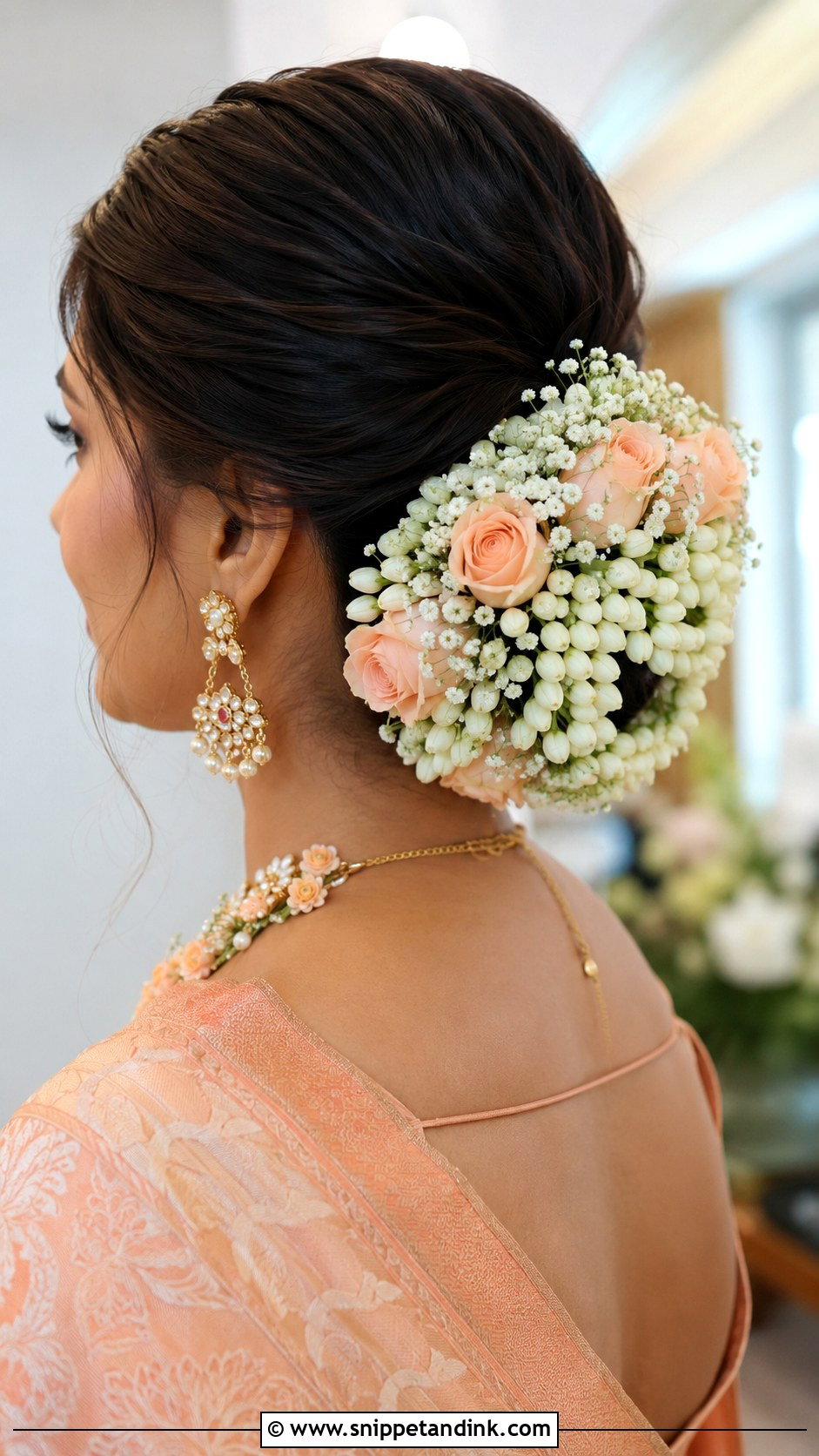
Jasmine, roses, tuberose, baby’s breath, orchids and marigolds can all be used, wrapped around the bun, grouped on one side or covering it completely. Heat is the issue. Jasmine and tuberose hold up reasonably; delicate petals brown at the edges fast in a warm hall. In hot weather I choose sturdier flowers and pin them close to the bun base, where the hair shades them a little. Loose flowers anywhere else end up on the floor by the reception.
11. Indian Bridal Bun For Saree
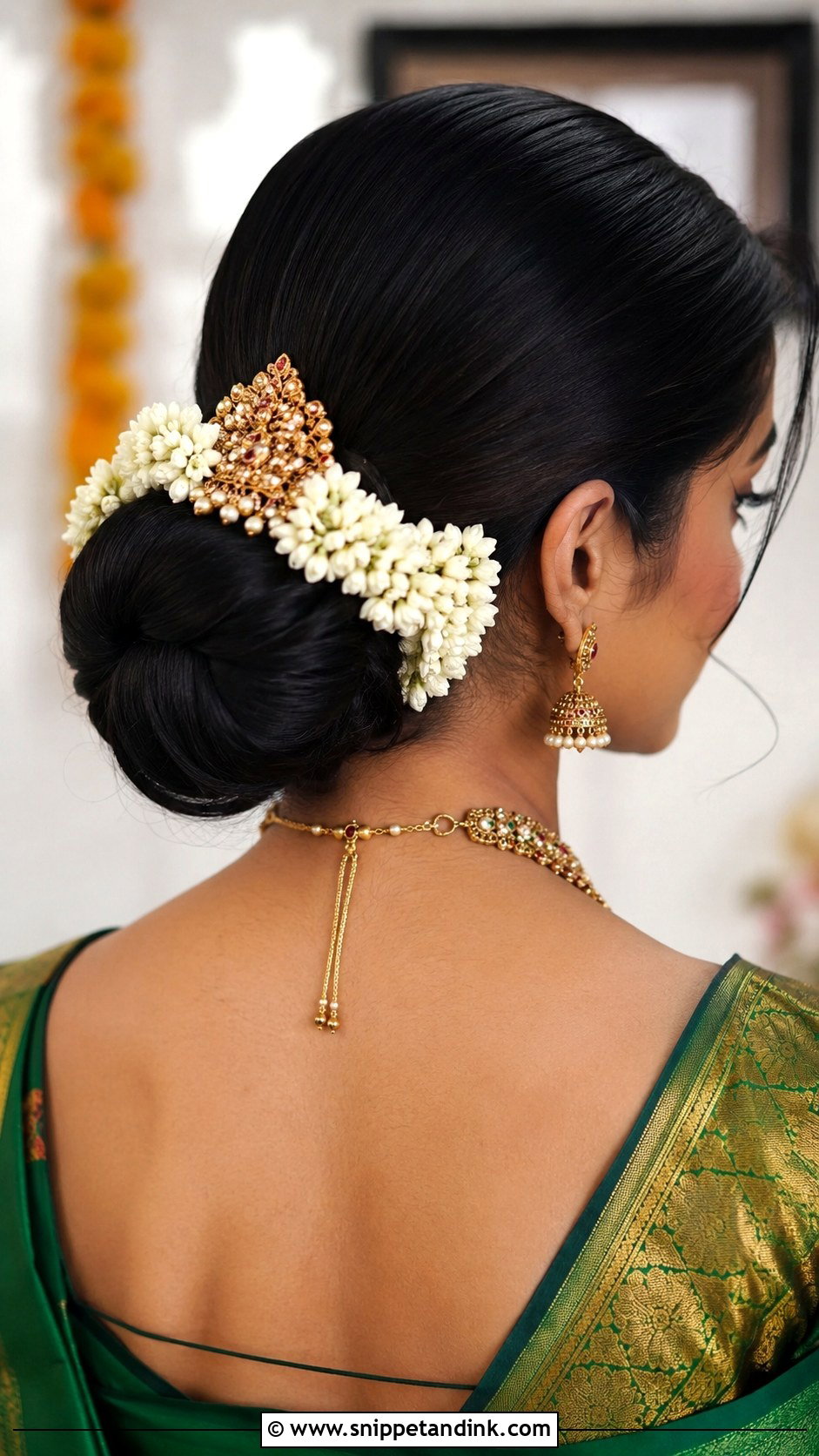
With a saree, the bun has to stay put while pleats are adjusted and the pallu is draped over the shoulder. A low round bun is the classic answer because it shows the neckline. Silk sarees take gajra, temple jewelry or gold pins well. Chiffon, organza or embroidered sarees suit pearls, roses or a textured bun. I match structure to fabric: stiff silk looks best with a firm, defined bun, while a light drape looks better with something softer.
12. Indian Bridal Bun For Lehenga
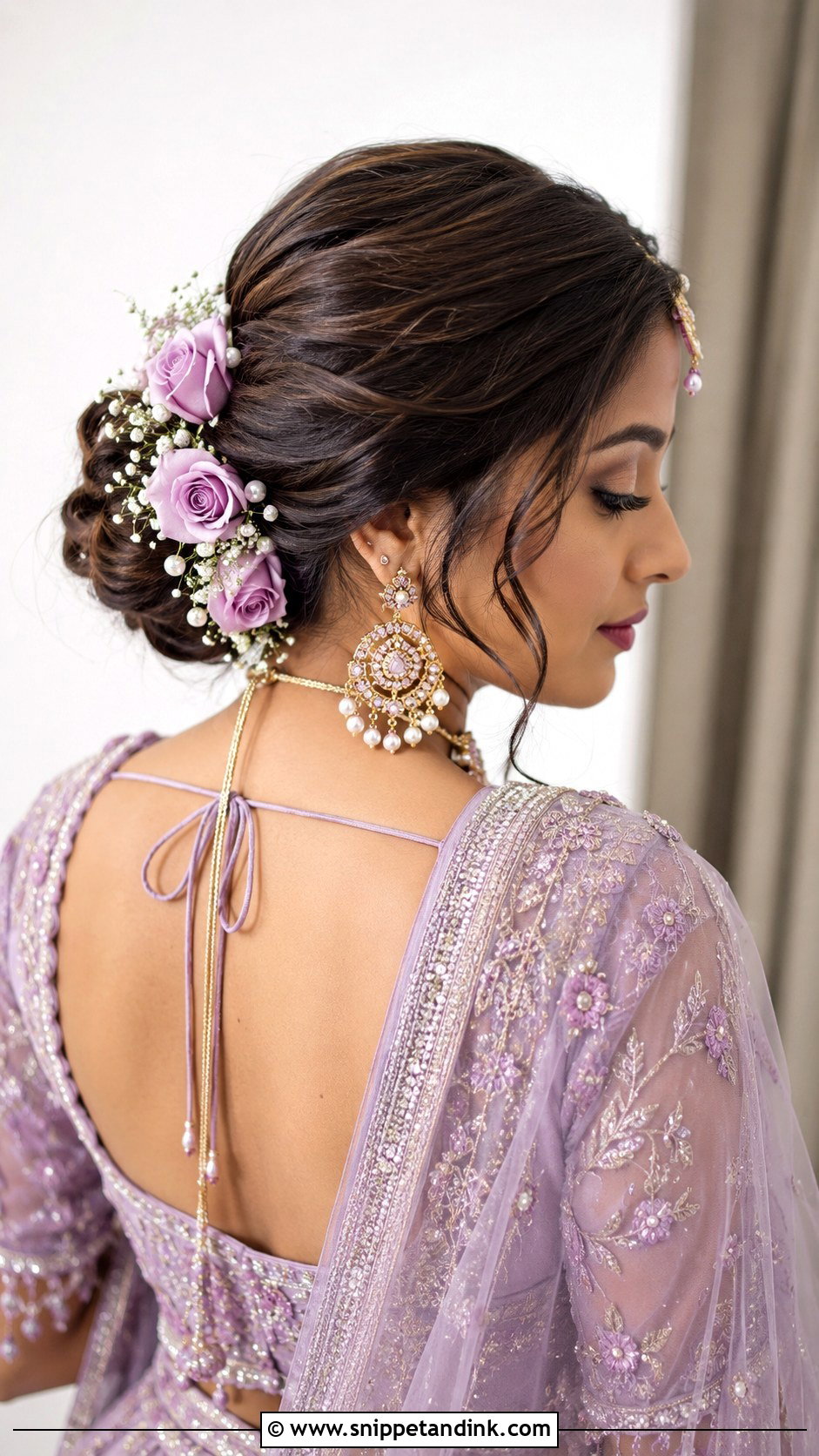
An Indian bridal bun for lehenga changes with the outfit. A heavily embroidered lehenga wants a clean low bun with controlled volume, while a pastel or floral one can take a soft messy bun with roses or pearls. A centre part frames a tikka; a soft side part looks more modern. What I look at first is the blouse neckline. A deep back or a high collar changes where the bun should sit more than any trend does.
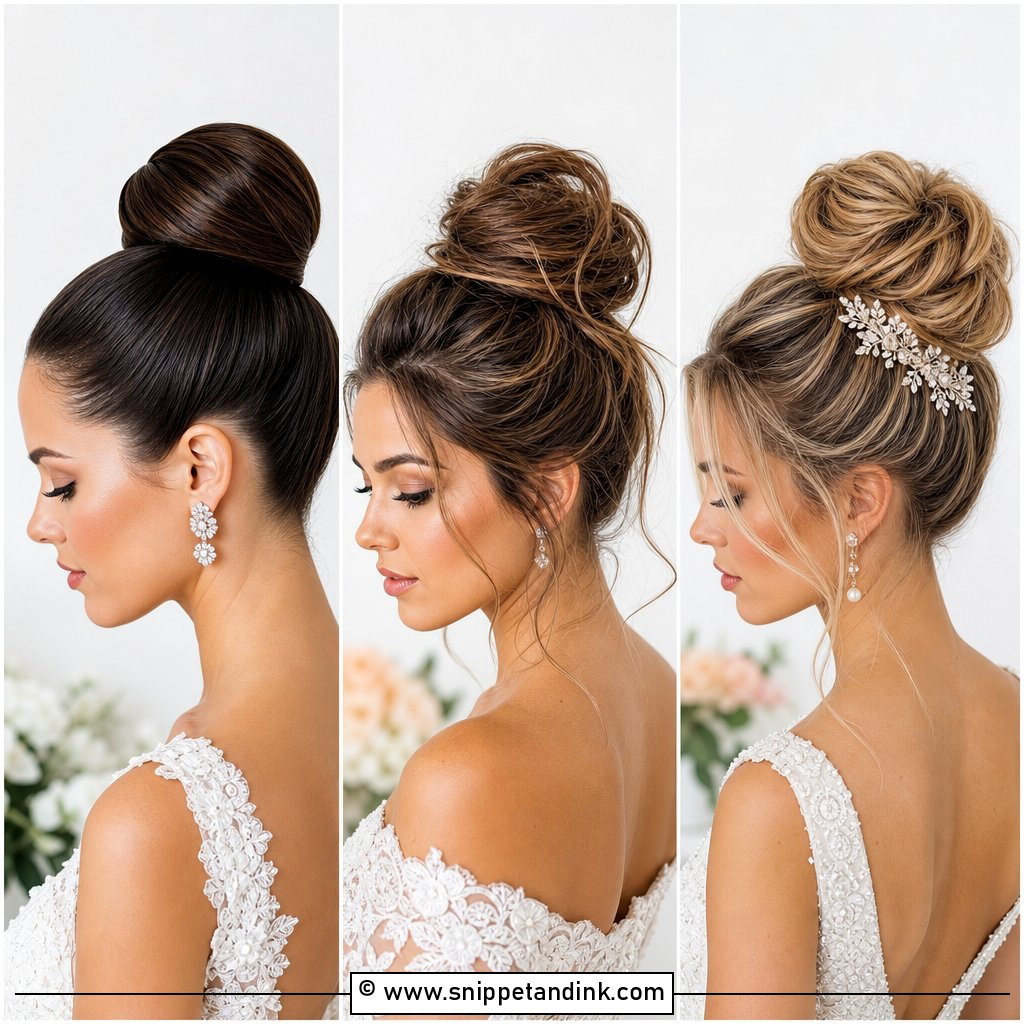
13. Indian Bridal High Bun
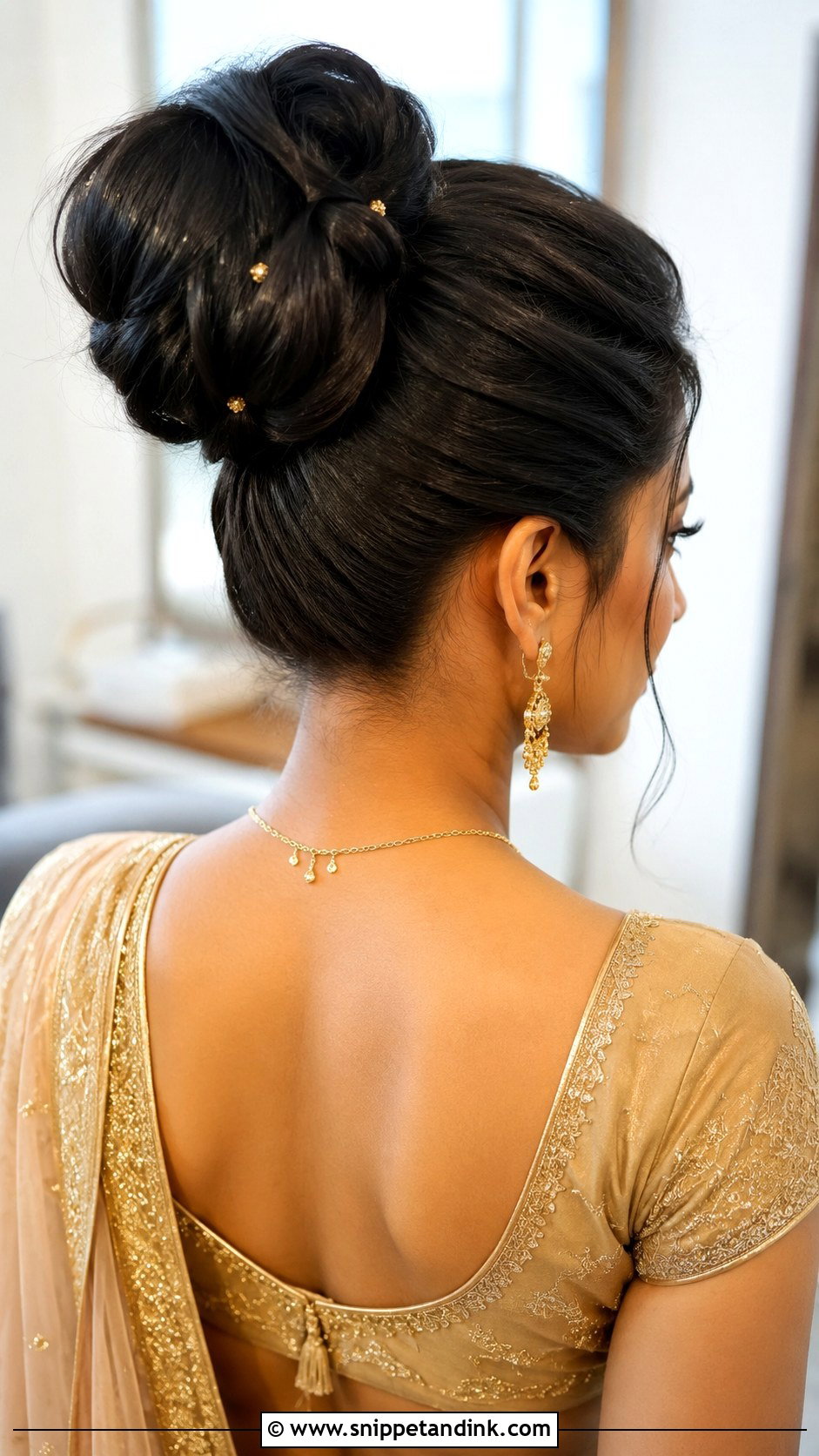
Placed on the crown, a high bun lengthens the neck and works with a high-neck blouse, statement earrings or a dramatic dupatta drape. It’s visible from the front, which suits a sangeet, reception or modern ceremony. It is also the hardest bun to keep comfortable, because all the weight sits on a small anchor at the top of the head. I section carefully and cross-pin it, and I’d skip bulky flowers on one that’s already full. Not my first choice if the dupatta goes over the head for long.
14. Indian Bridal Braided Bun
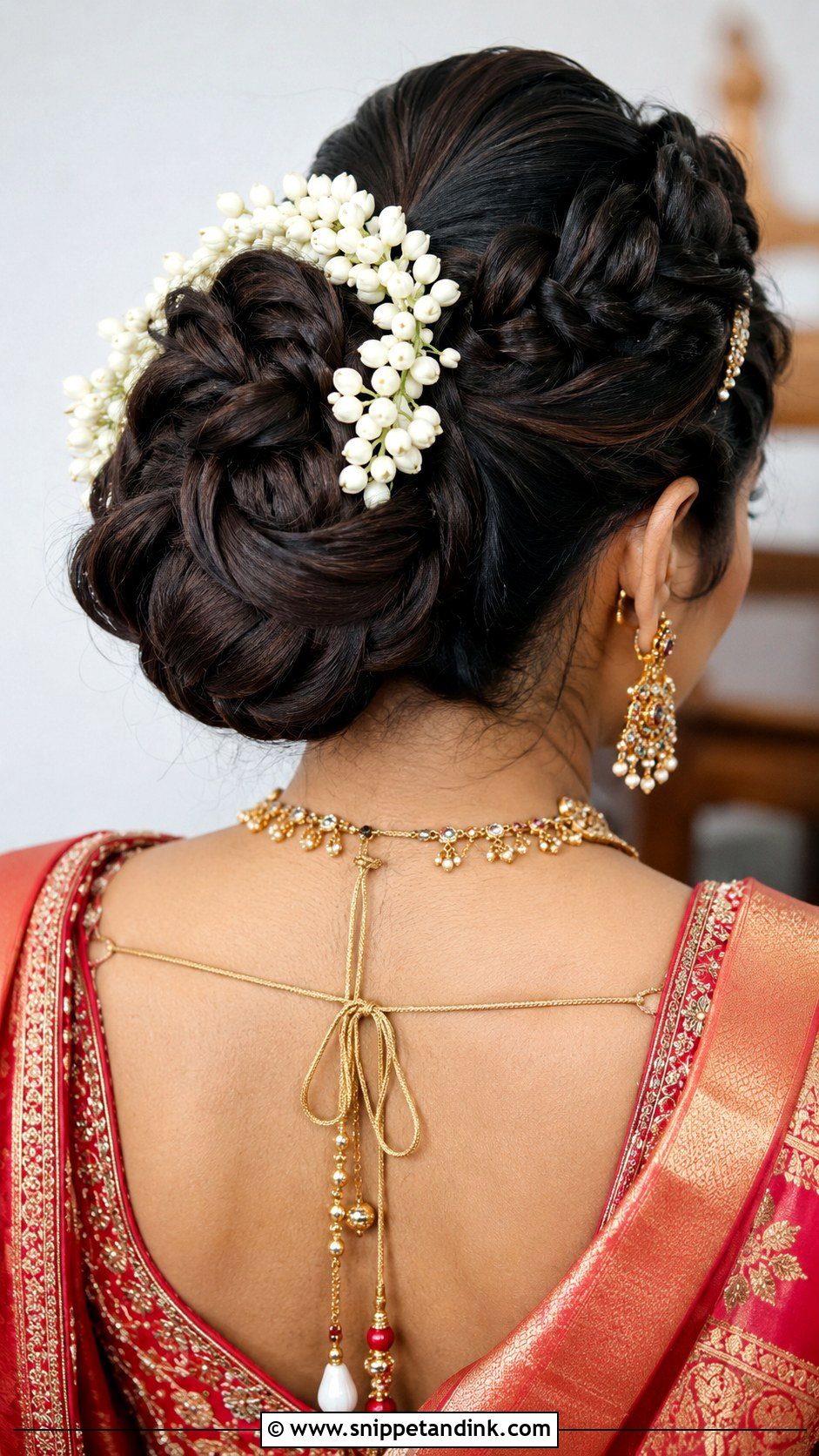
A braid that starts at the crown, wraps around the bun or is woven into it adds texture and a traditional feel. It sits between a plain juda and a loose messy bun. Braids are my secret weapon for long days, because a braided section locks the hair in place and won’t slide even if the pins shift. With silk sarees, lehengas and temple jewelry it looks right at home. Flowers tucked along the braid soften it.
15. Indian Bridal Twisted Bun
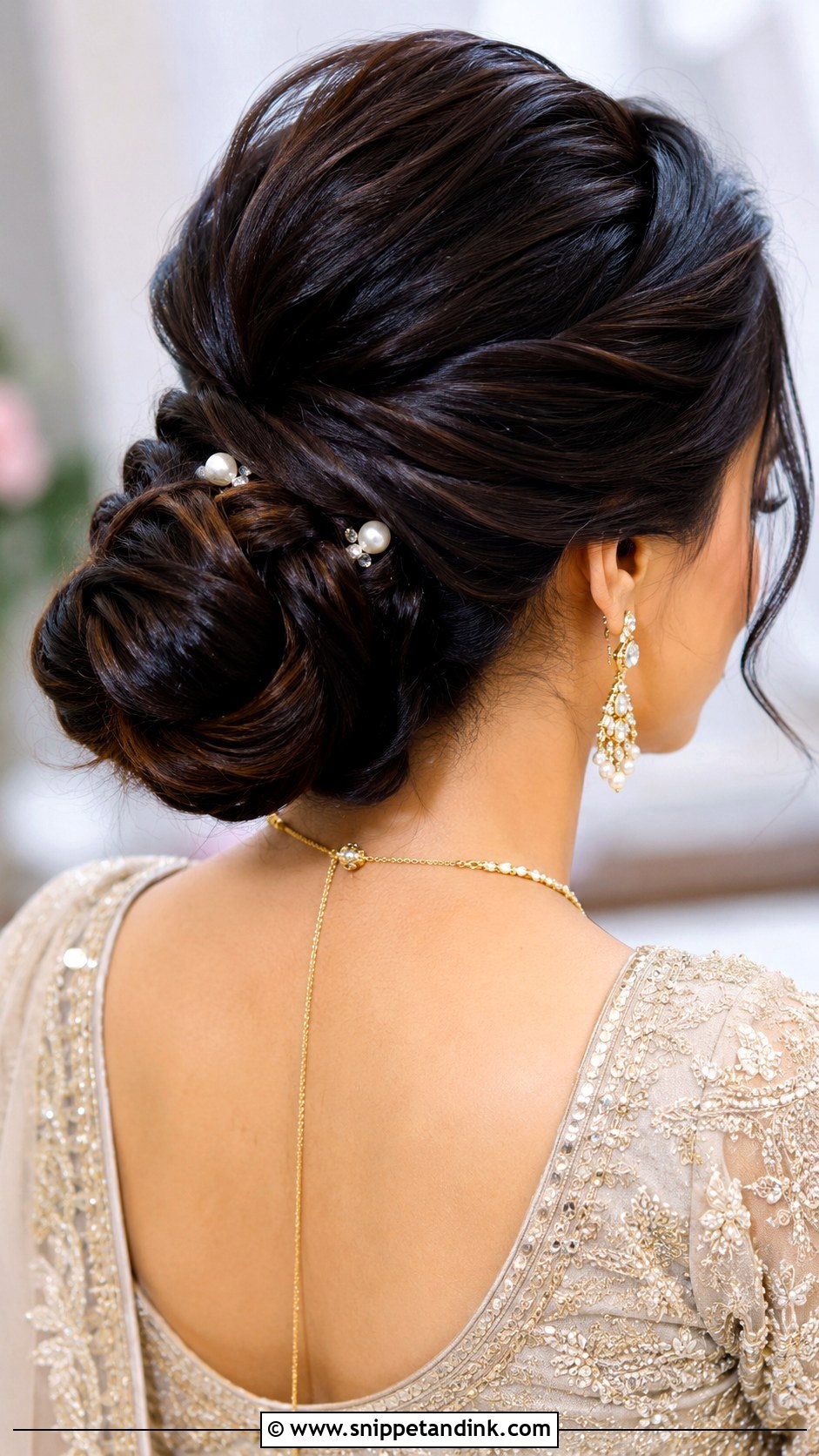
Twists pinned into a rounded shape give a sculpted bun with movement at the back. Medium and long hair suit it, and extensions add fullness when needed. It takes pearl pins, small floral clips, fresh roses or a light gajra. On fine hair I’d twist slightly smaller sections than looks necessary, because big twists on fine hair separate and show the scalp underneath. The front can stay smooth or lift slightly, depending on your face shape and jewelry.
16. Indian Bridal Sleek Bun
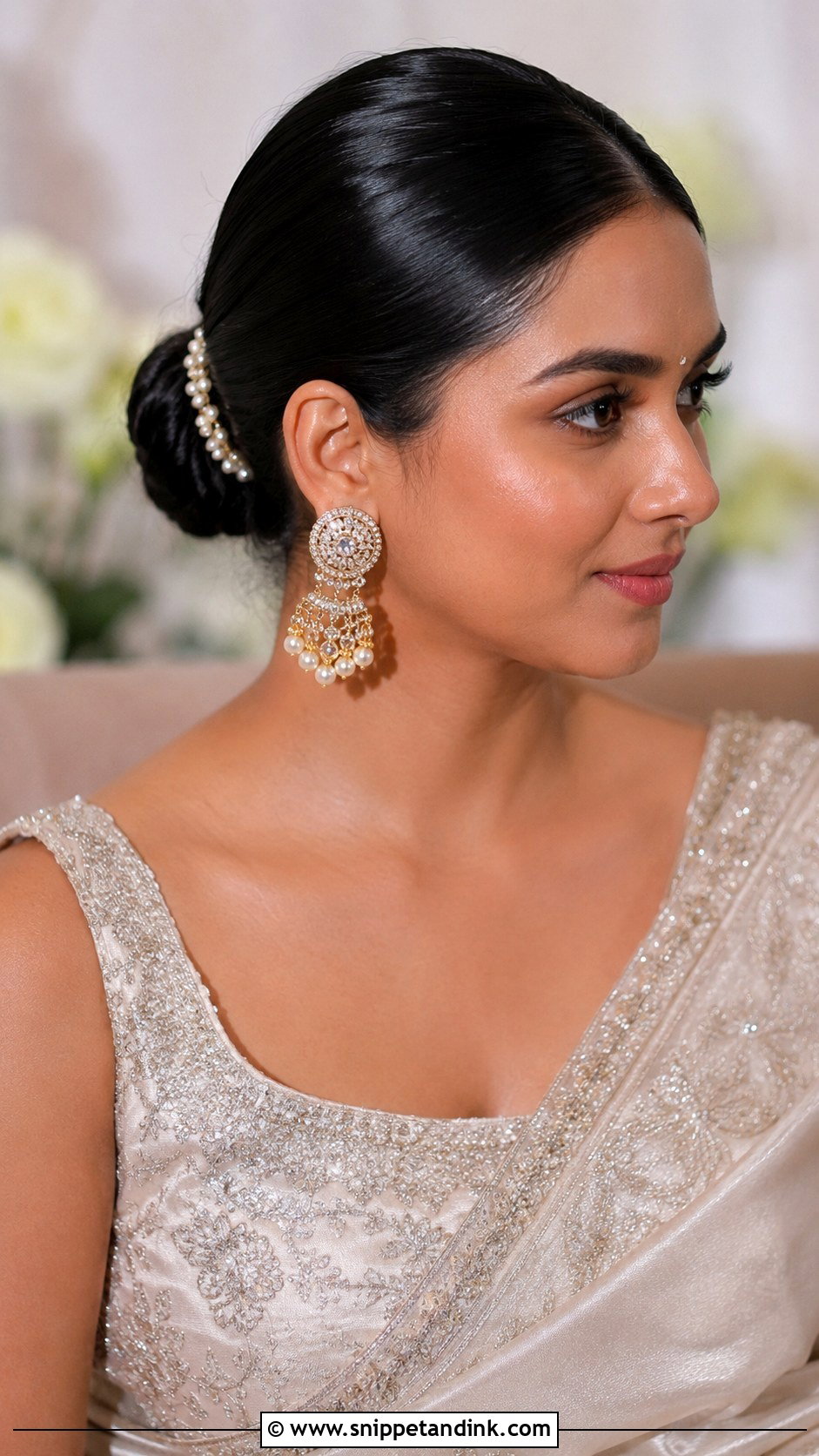
Hair pulled tight and smooth into a clean, glossy bun, usually with a centre part. It shifts all attention to the face, makeup, earrings and neckline, so it’s the one I suggest when the outfit or jewelry is already very heavy. Reception gowns and sharply styled sarees suit it well. The difficulty is flyaways. Indian hair often has a lot of short regrowth around the hairline, and in close-up portraits every frizzy strand shows, so I use a small brush with gel and finish with a light shine spray.
17. Indian Bridal Bun With Juda Pin
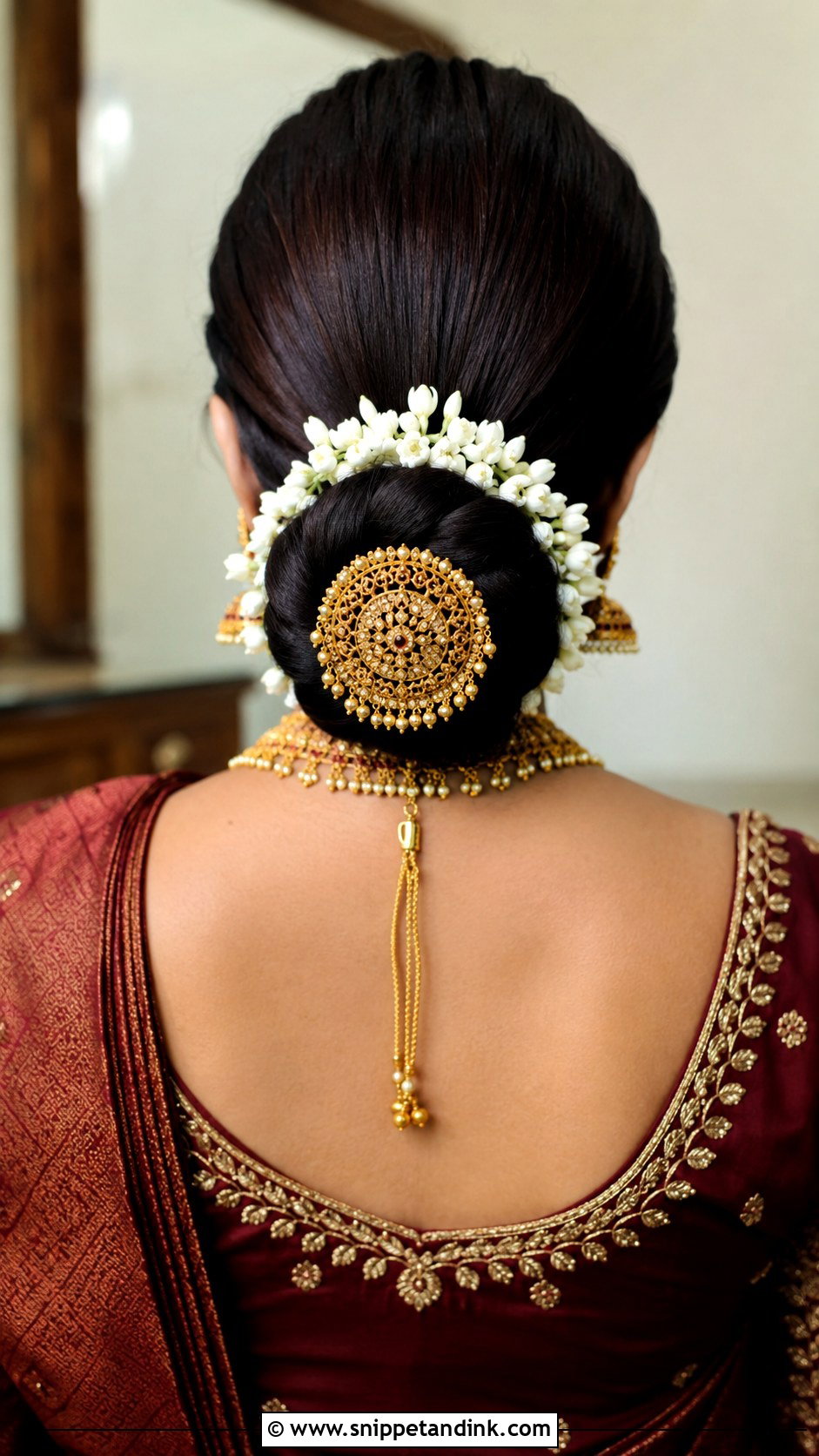
A juda pin gives one statement piece at the back, set in the centre or just above a round, low, twisted or braided bun. Gold suits traditional sarees and lehengas; pearl, kundan or crystal suit an engagement or reception. Match the metal to your jewelry, since gold, rose gold, silver and antique finishes clash quickly. Heavy pins also tip forward if the bun is soft, so I make the base firm and slide the pin in at a slight upward angle.
18. Indian Bridal Bun With Hair Chains
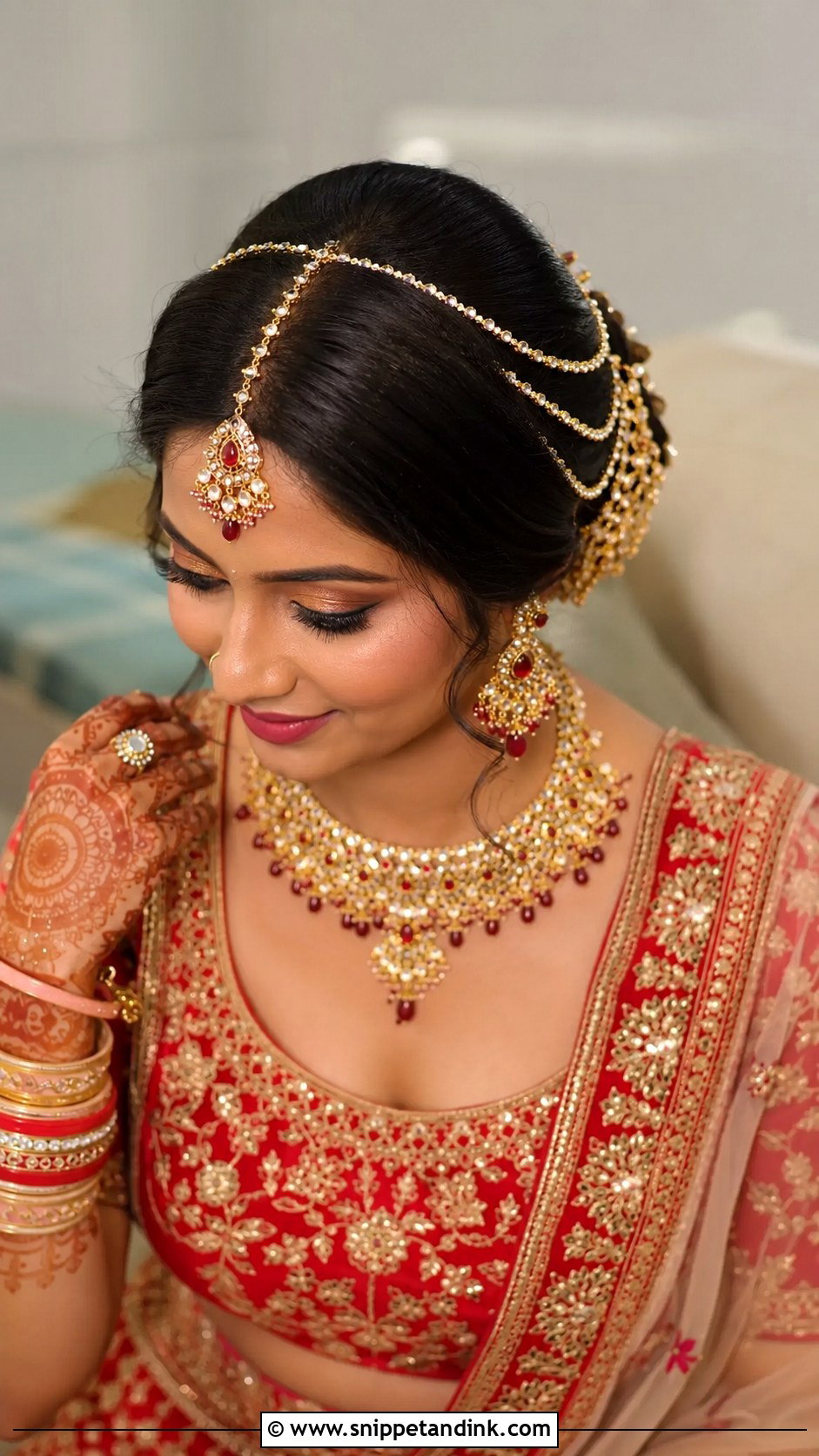
An Indian bridal bun with hair chains links the parting to the bun or drapes chains across the crown and around the back. Chains need a smooth base, because any bump makes them sit unevenly. They pair with a matha patti, tikka, temple jewelry or kundan. I keep the bun structured enough to take the extra weight, and I check the chains from the side and back in the mirror, since that is where they usually sag first.
19. Indian Bridal Bun With Baby Breath
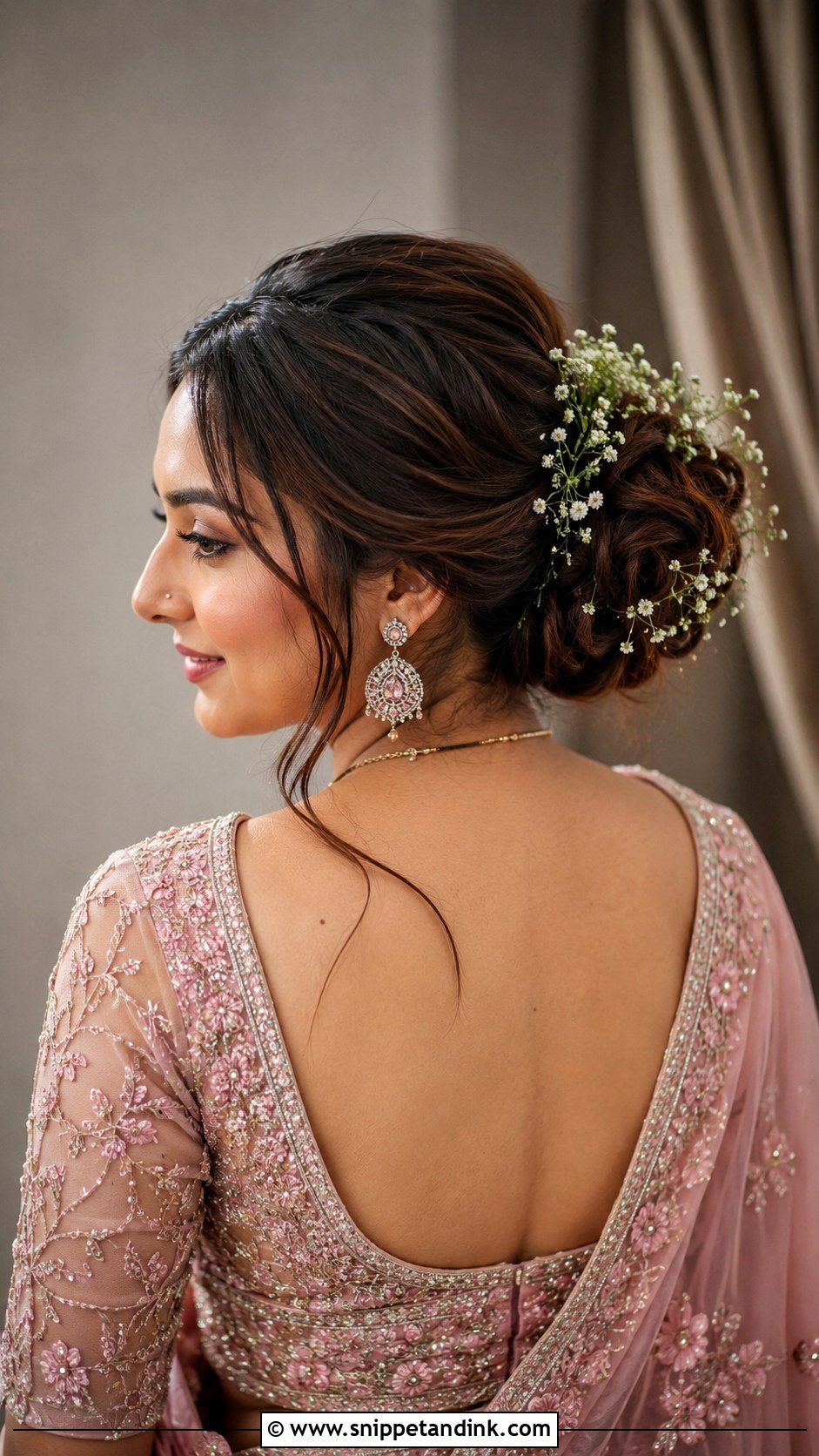
Baby’s breath tucked through a textured, twisted or loosely gathered bun gives tiny white dots of flower without any large bloom taking over. Pastel lehengas, garden ceremonies and daytime weddings suit it, along with blush, ivory, peach, lavender and mint outfits. It’s also quite hardy, so it survives heat better than most delicate flowers. I spread it evenly in small clusters. Random sprigs look like they fell in.
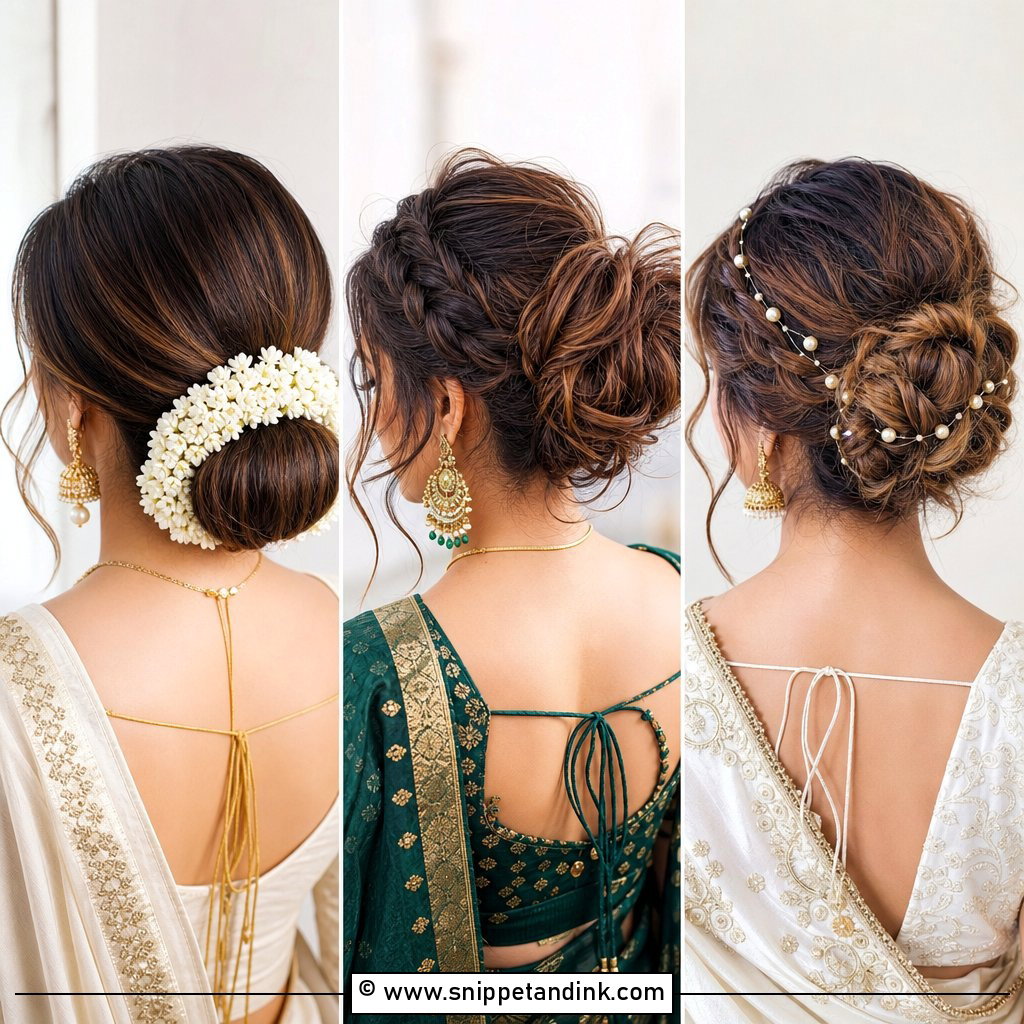



20. Indian Bridal Reception Bun
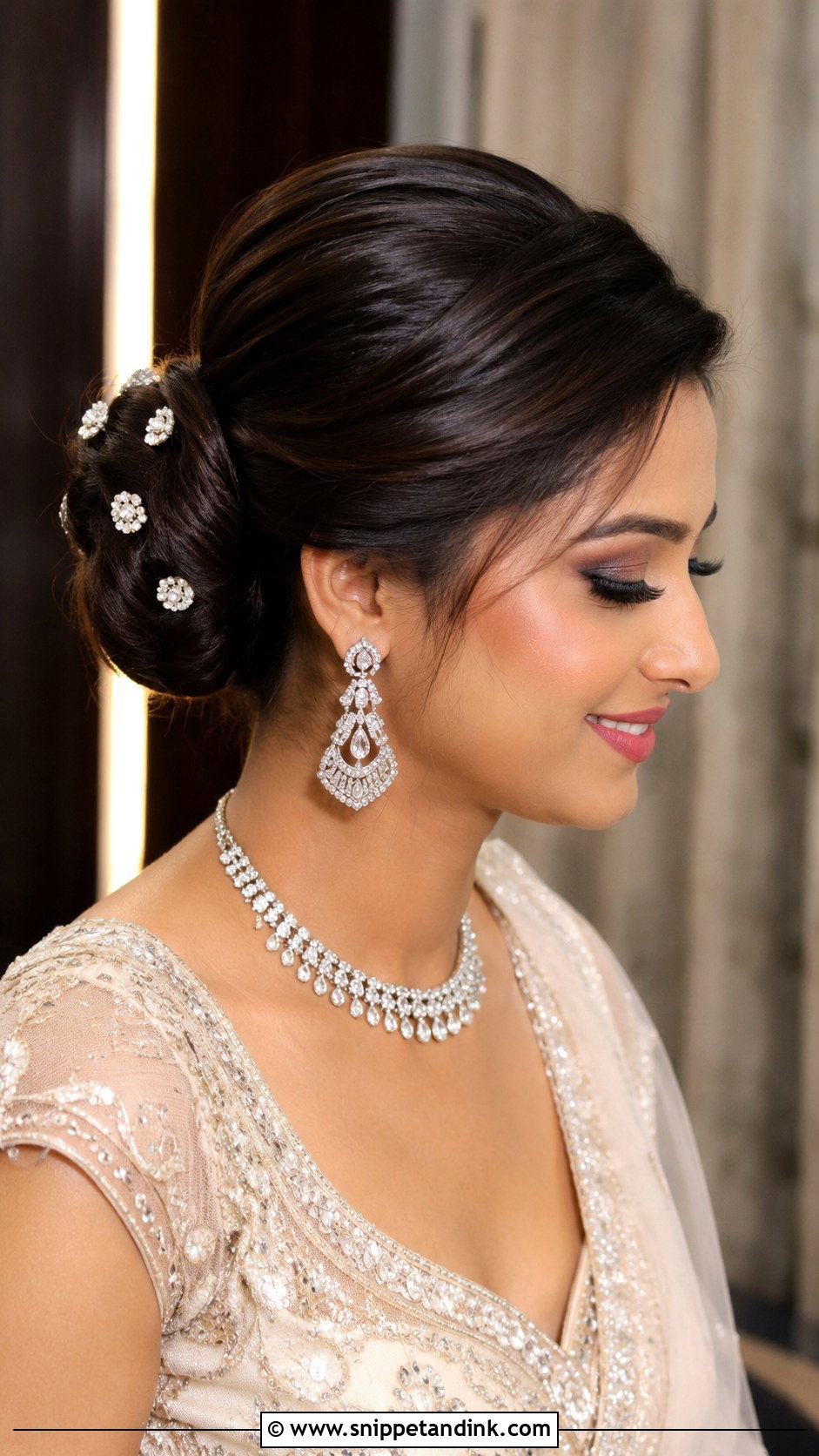
The reception bun can be sleeker and more fashion-led than the ceremony one: a low sleek bun, a soft chignon, pearls or a few roses. It should suit the reception outfit, gown, lehenga, saree or fusion. Receptions mean hours of standing, greeting and photographs under bright lights, so comfort matters more than at any other function. Many brides go straight from the ceremony look, and I’d take some pins out and rebuild rather than adding more on top. A little shine spray and one strong accessory are enough.
Getting Jasmine to Stay White Until the Last Ritual
Jasmine is gorgeous and temperamental. Picked buds open and brown within hours in warm air, so timing the gajra matters as much as pinning it.
- Order strings of tightly closed buds for the morning of the ceremony, not the evening before.
- Keep them wrapped in a damp cotton cloth in a cool spot until they go in your hair. Avoid ice, which blackens the petals.
- A light mist of water before you walk out helps; spraying hairspray directly onto the flowers browns them.
- Keep a second string aside if the ceremony runs into the evening, for a quick swap before the reception.
Short or Thin Hair Can Still Wear a Full Juda
Much of the volume you see in bridal buns is not the bride’s own hair. A doughnut padding, a mesh bun filler or a clip-in hairpiece matched to your colour gives a full juda even from shoulder-length or fine hair. Bring the piece to your trial so your stylist can colour-check it in daylight and see how it sits under your actual dupatta. If your hair is very short at the nape, a low bun is harder to hide pins in, and a mid-height placement usually looks more natural.
Trial Day Is Where Your Bun Gets Decided
Buns stay popular because they hold flowers, jewelry and veils, look tidy in photos and change character with very small adjustments. A sleek bun feels refined, gajra feels traditional, roses add colour, pearls or baby’s breath feel modern. List your outfit weight, how the dupatta will be worn, your jewelry and how long each ceremony runs before your trial. Then wear the trial bun for a few hours. A centimetre of height or a change of parting can transform the look, and only wearing it tells you whether it will still feel comfortable at midnight.
You'll Like These Ideas:




Leave a Reply