
A puff is a small thing with a big effect. A few inches of lift at the crown or above the forehead changes how the whole face reads in photos: cheekbones look higher, a heavy necklace looks less heavy, and a dupatta or veil has something to rest on instead of flattening everything. I put puffs under buns, braids, ponytails and loose curls, and they hold a tikka, a tiara or a ring of flowers without complaint. What I spend the most time on at a trial is size and placement for that particular face and outfit. The looks below run from classic and traditional to modern, soft and fully natural.
How Big Should Your Puff Actually Be?
Most puffs that look wrong in photos are simply too tall. Height that seems modest in a mirror at arm’s length can tower once the camera is slightly below you, which is where many ceremony shots are taken from. These are the rules of thumb I use to land on the right size.
- Long face or high forehead: keep the puff low and wide rather than tall, or move it back toward the crown. Extra height at the front lengthens the face further.
- Round or short face: a little more front height genuinely helps, because it adds length and balances fuller cheeks.
- Heavy tikka or matha patti: keep the front flatter and smoother so the jewelry lies straight along the part, and put the volume behind it.
- Large earrings and a big necklace: moderate the puff. When everything is big, nothing stands out.
- Partner’s height: check side-by-side photos. A dramatic puff can make a couple look oddly matched in portraits.
At the trial I build it to the size I think is right, then take one photo from slightly below and one from the side. If we’re unsure, I go a little lower. It’s easier to add lift than to rescue a puff that looks like a helmet.
1. Bridal Puff Bun Hairstyle
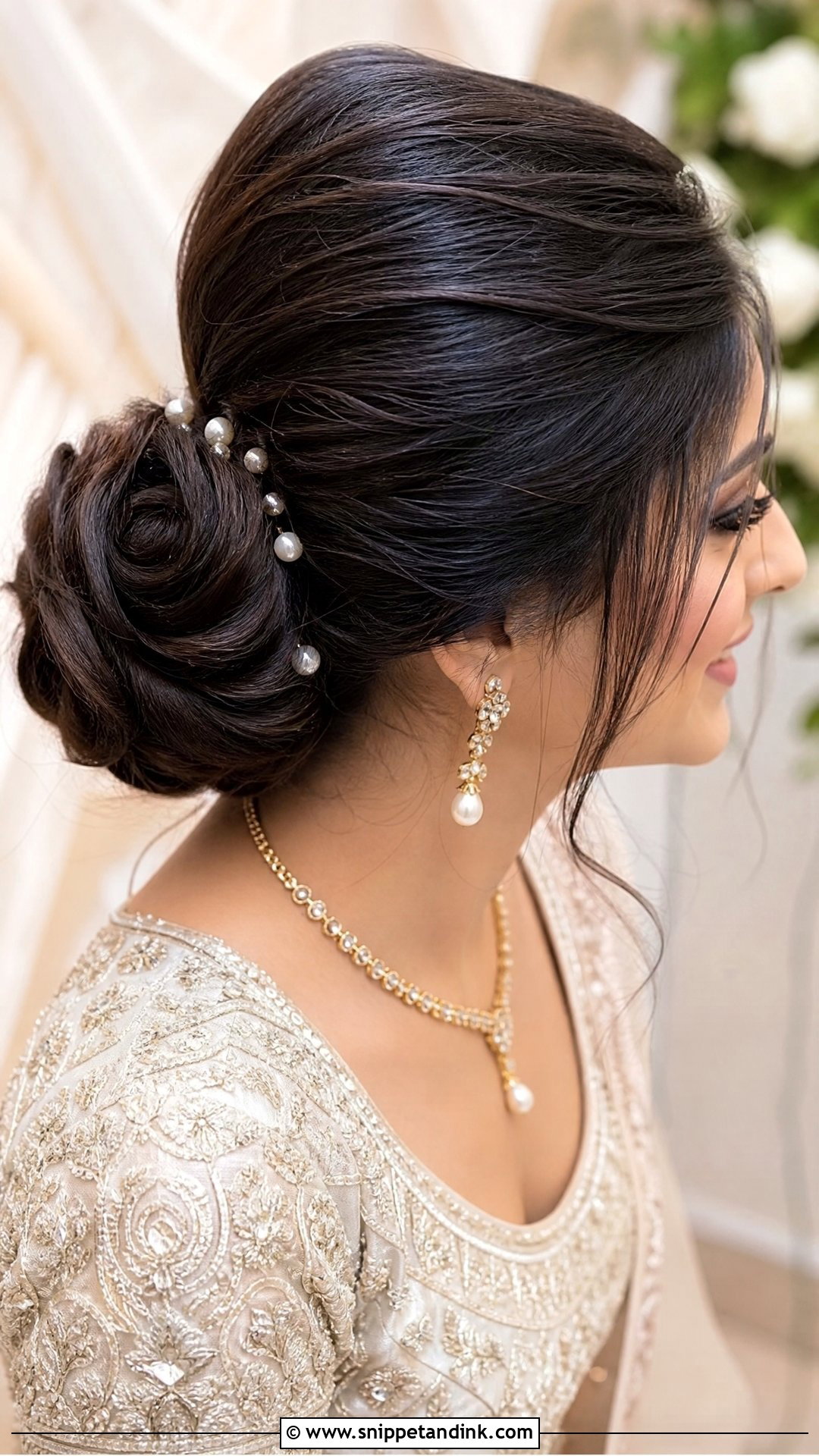
The puff bun is the safest place to start. I lift the crown, smooth it back and gather everything into a low or mid bun, which gives the face height while the length stays locked away for a long day. The volume balances a veil, a dupatta or big earrings, and it flatters round, oval and heart-shaped faces in particular. The common mistake is a stiff, lacquered puff that looks like a separate piece. I backcomb only the underside of the section, smooth a clean top layer over it and leave it soft to the touch. A single loose face-framing strand makes it less formal.
2. Bridal Front Puff Hairstyle
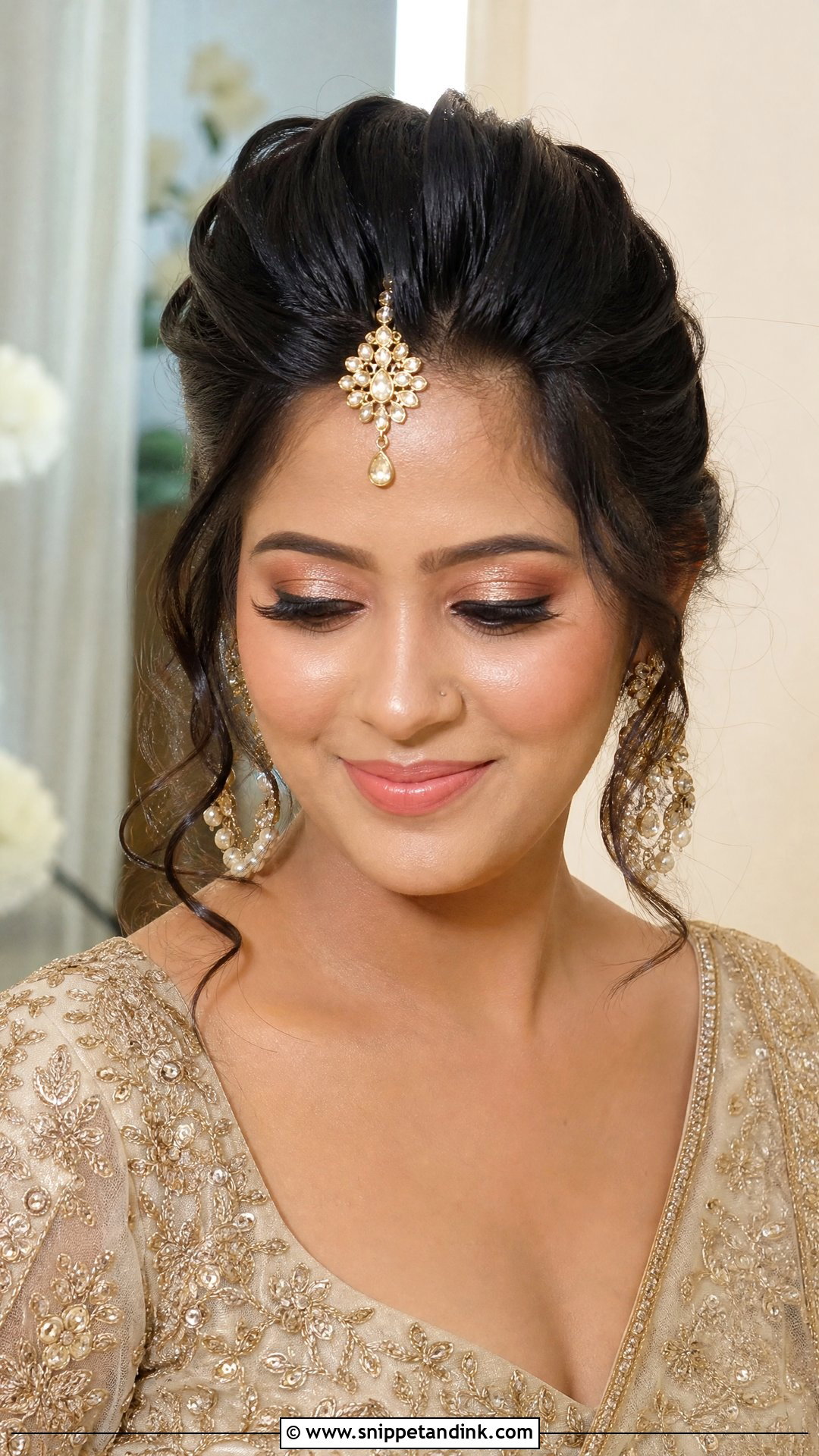
A bridal front puff hairstyle puts the lift right above the forehead. I section the front, tease the roots, smooth it back and pin it, then style the rest into a bun, braid or ponytail. It lengthens a round face and gives heavy jewelry some balance. The pins under a front puff have to be crossed and set into a firm base, because this is the part that takes every hug and every adjustment of the dupatta. Under a maang tikka, a headband or a veil, it doubles as a neat foundation.
3. Bridal Puff Hairstyle With Curls
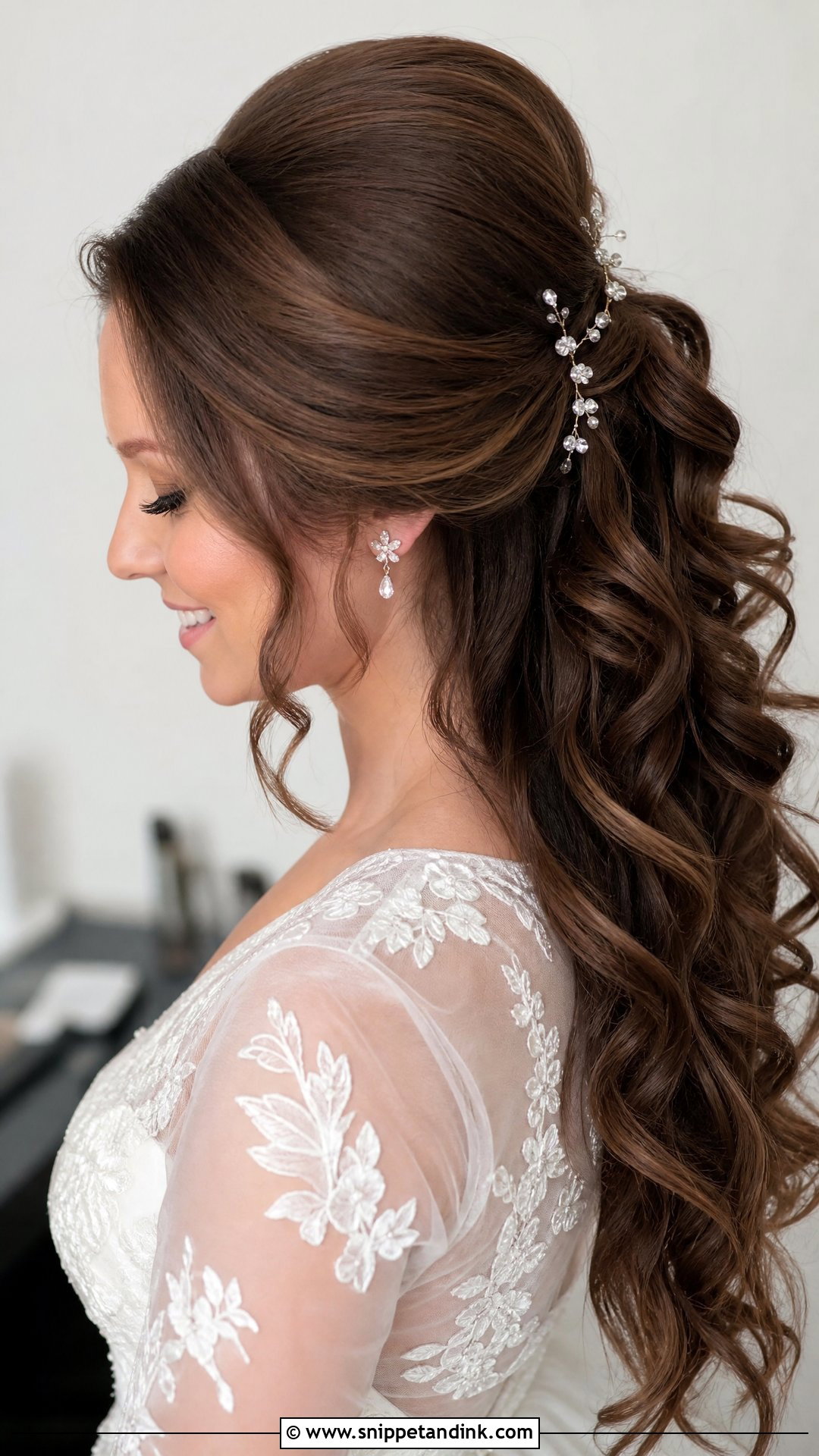
Curls under a puff give it movement and stop it reading as severe. The lift sits at the crown and the curls fall over the shoulders or down the back, which suits gowns, lehengas, sarees and reception outfits alike. Medium to long hair can wear the curls loose, half-up or swept to one side. Where most versions go wrong is the join, a visible shelf between a flat-ironed puff and the curls below. I curl the hair under the puff too and blend the two sections with my fingers. A few flowers or pearl pins set at that join hide it completely.
4. Bridal Puff Ponytail Hairstyle
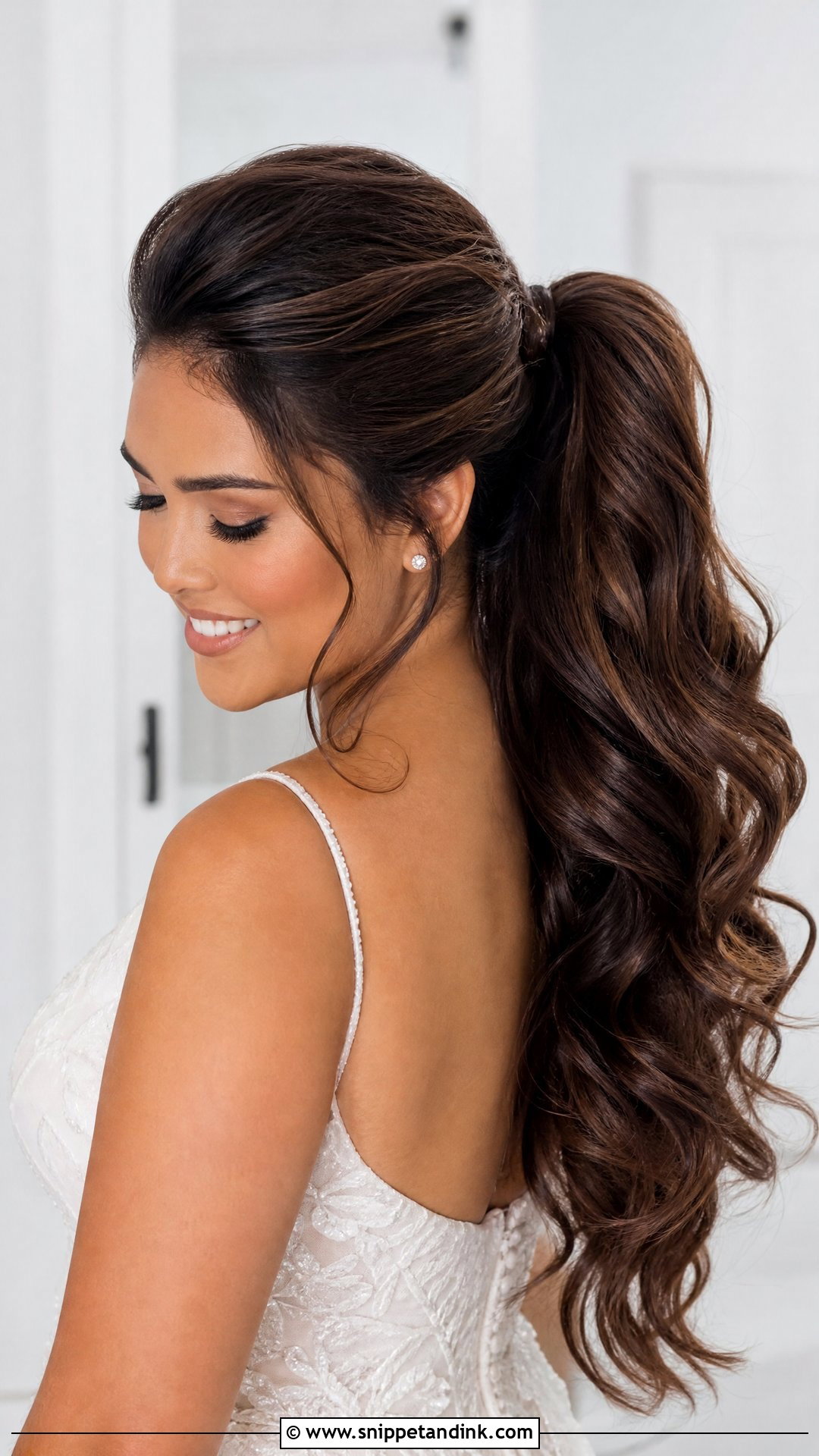
Less weight than a bun, more polish than open hair: that’s the puff ponytail. The top gets its lift and the length stays on show, sleek, wavy, curly or loosely teased. I suggest it for receptions and engagement ceremonies, where a bride wants to move freely and dance. A strand of hair wrapped around the base hides the elastic. I put the same wave through the tail as I put into the crown, so the two halves read as one style instead of a puff sitting on top of a separate ponytail.
5. Bridal Puff Hairstyle With Braid
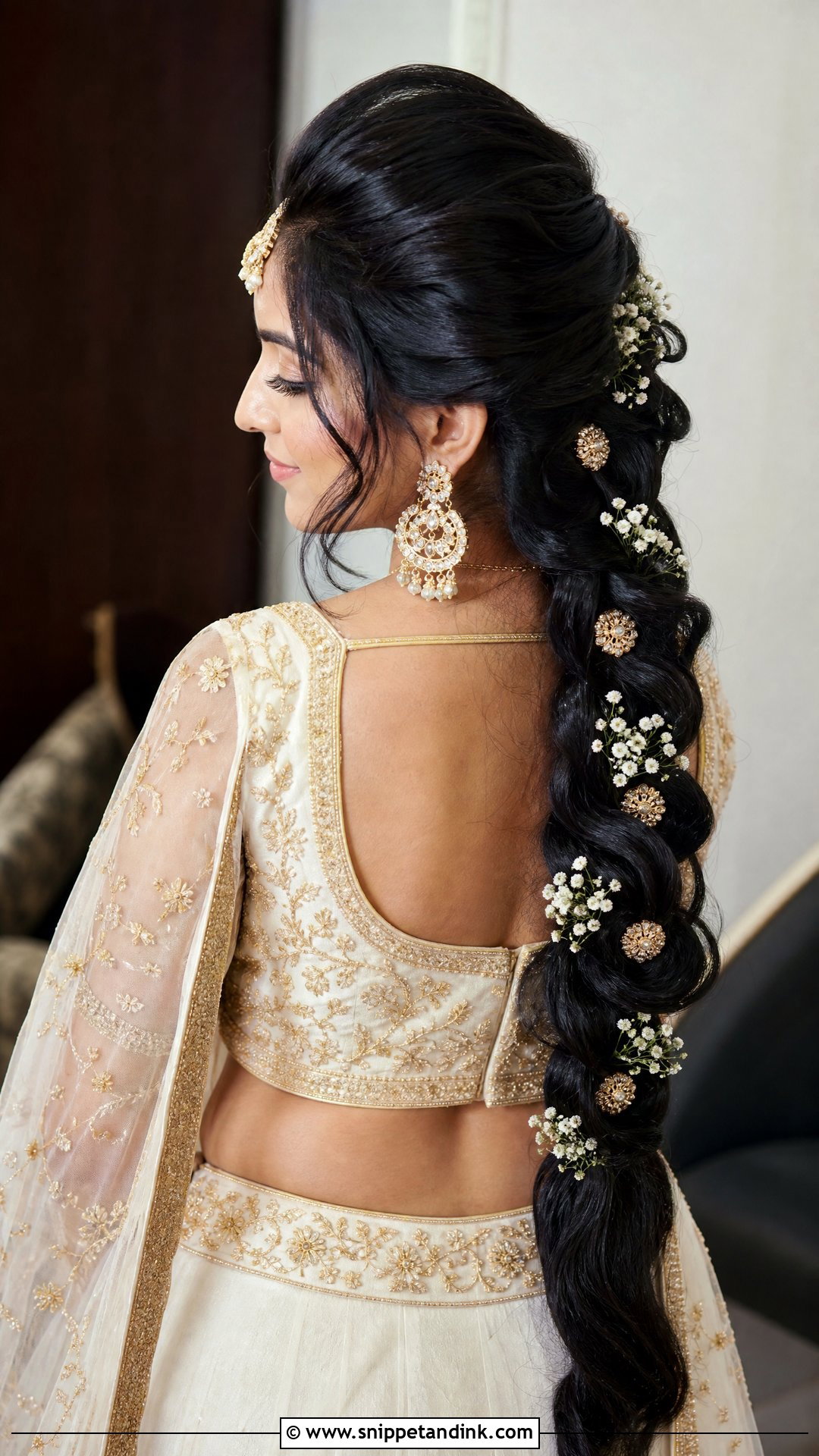
Pairing a puff with a braid gives you height at the front and something to admire from behind, which is useful when guests spend half the ceremony looking at your back. The braid can be a three-strand, a fishtail, a side braid or a long embellished bridal braid, and it holds the length through a long day of sitting, standing and greeting relatives. Flowers, gold pins, small beads or a fine chain worked down the braid make it festive. I keep the puff rounded and smooth here so the eye goes to the braid’s detail rather than to two busy areas at once.
6. Bridal High Puff Hairstyle
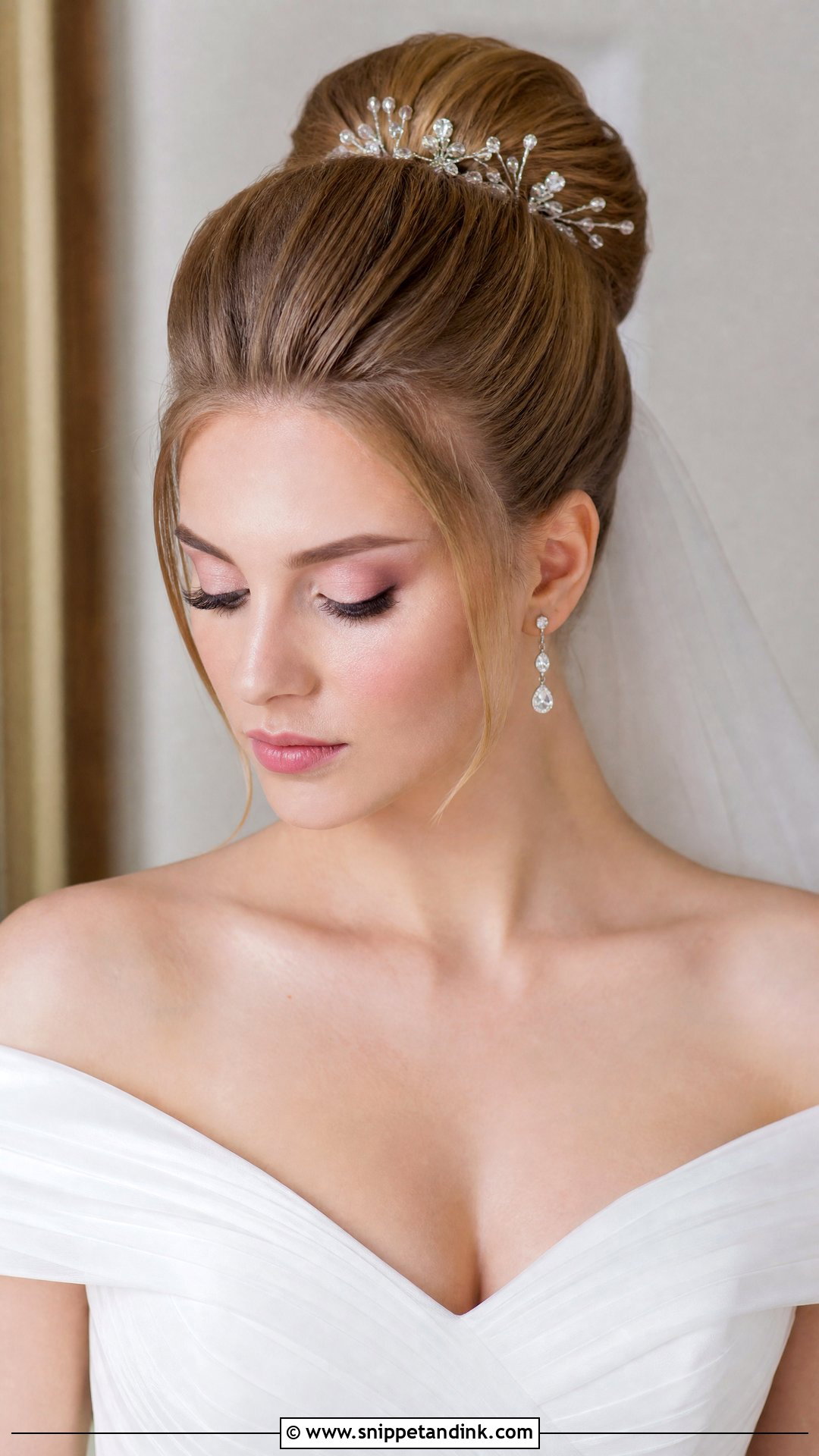
High volume at the crown makes the boldest portraits and lengthens the neck. It suits structured outfits and heavy bridal sets, and it sits over a bun, a ponytail or loose curls. This is also the puff most likely to look harsh, so I’m careful with it. I tease or pad the crown, smooth the top layer neatly over it, and check it from the side, where an overbuilt puff shows a hard angle. Flexible spray keeps it lifted but still touchable. I’d talk anyone with a long face or a very high forehead out of the tallest version.
7. Bridal Low Puff Bun Hairstyle
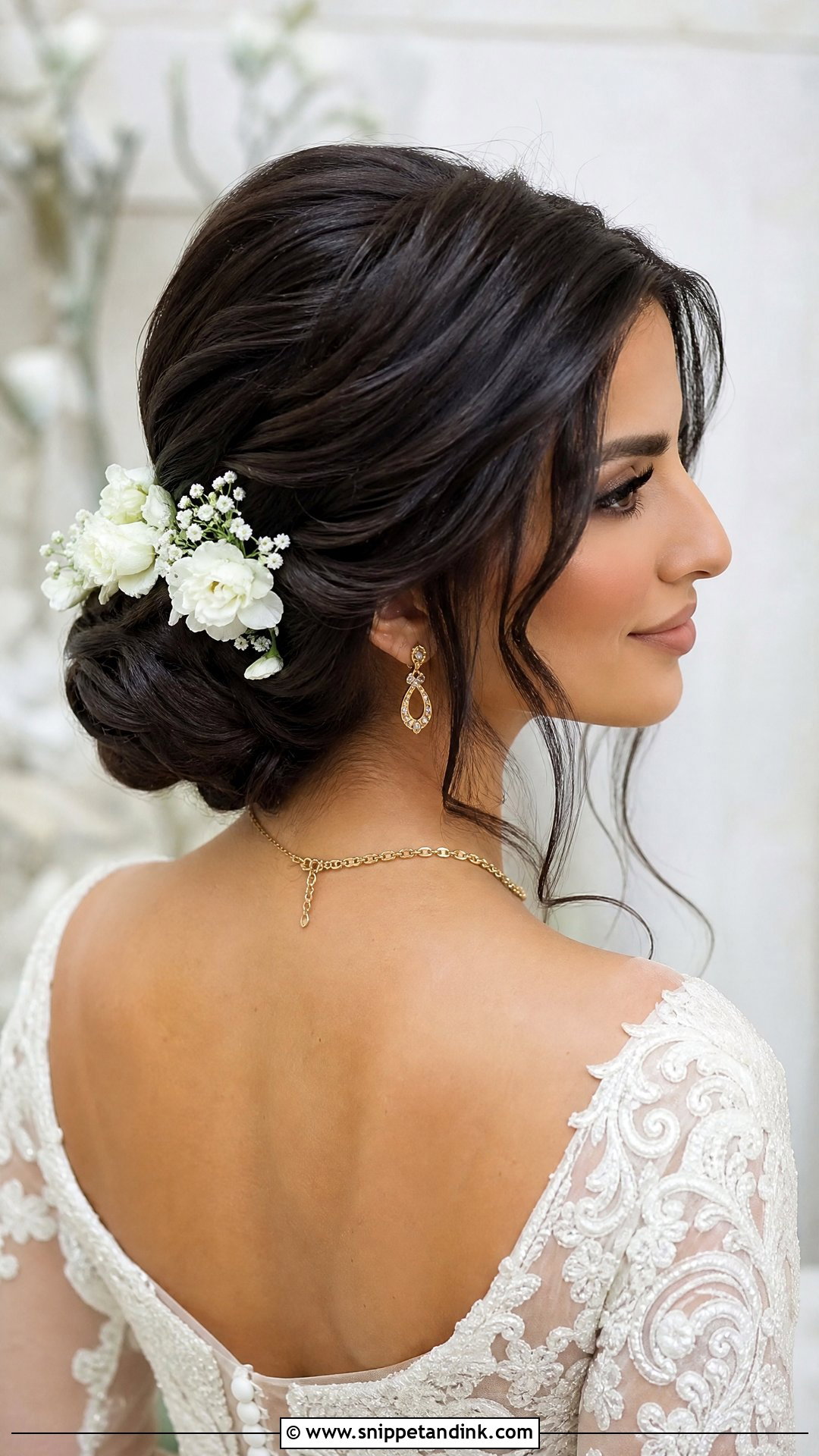
Not every bride wants height at the front. The low puff bun keeps a gentle lift at the back of the crown and then gathers everything into a low bun, so the profile stays graceful and a veil or dupatta sits easily over it. The bun can be sleek, twisted, braided or slightly loose. Fresh flowers around it or pearl pins along a twist give the detail. Side and back views are where it shines, so I always show brides those angles in the mirror, not just the front.
8. Bridal Puff Hairstyle For Saree
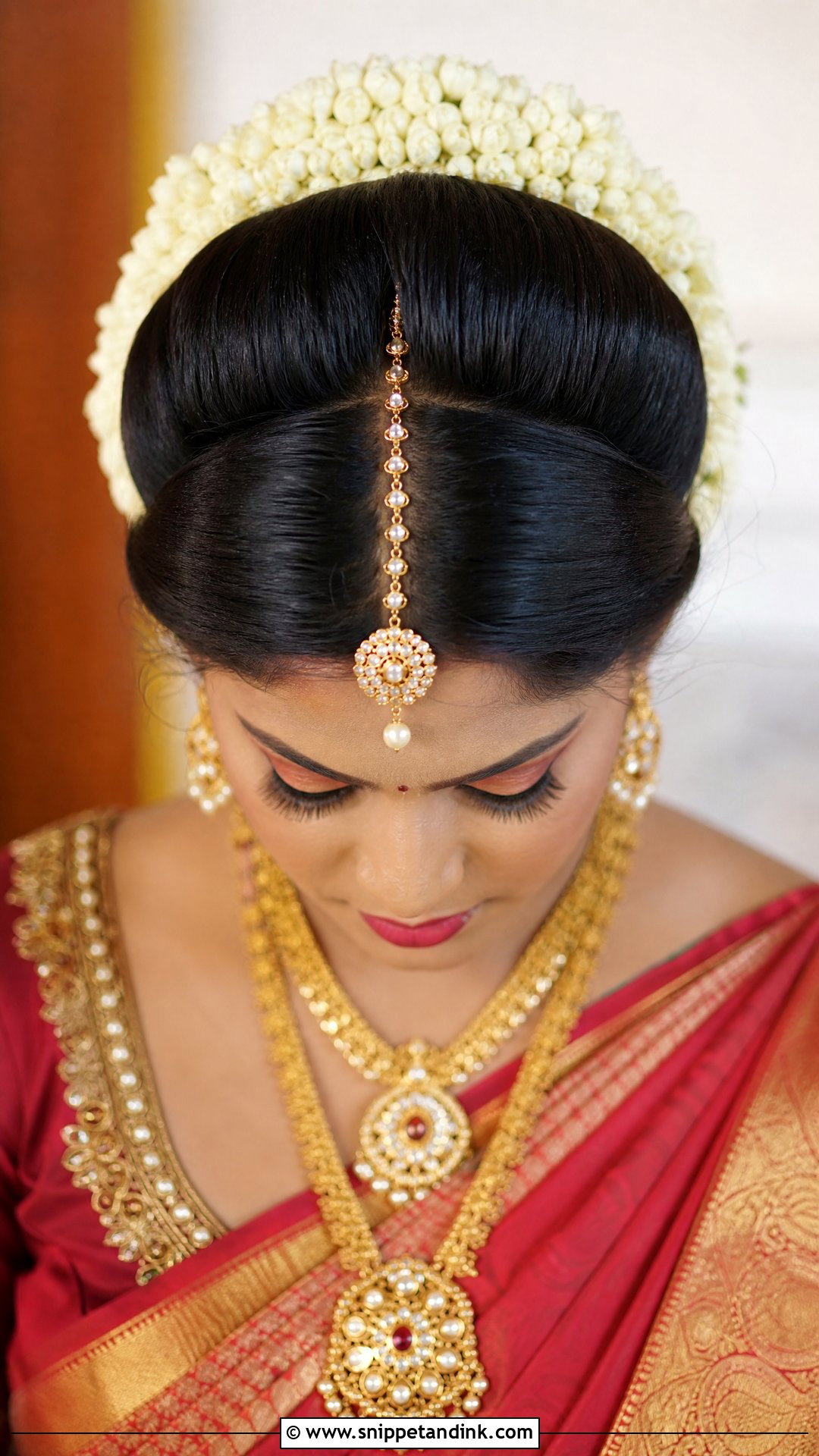
With a saree, a lifted crown and traditional drape just belong together. The puff frames the face and the rest can go into a bun, a braid or soft curls, with a strong base for a gajra or headpiece. For heavy silk sarees I’d go with a polished puff with a neat bun; lighter sarees suit a softer puff and loose curls. I match the puff to the jewelry, not the other way round. Big jhumkas and a large tikka need balanced crown volume, or the hair looks small beside them.
9. Bridal Puff Hairstyle For Lehenga
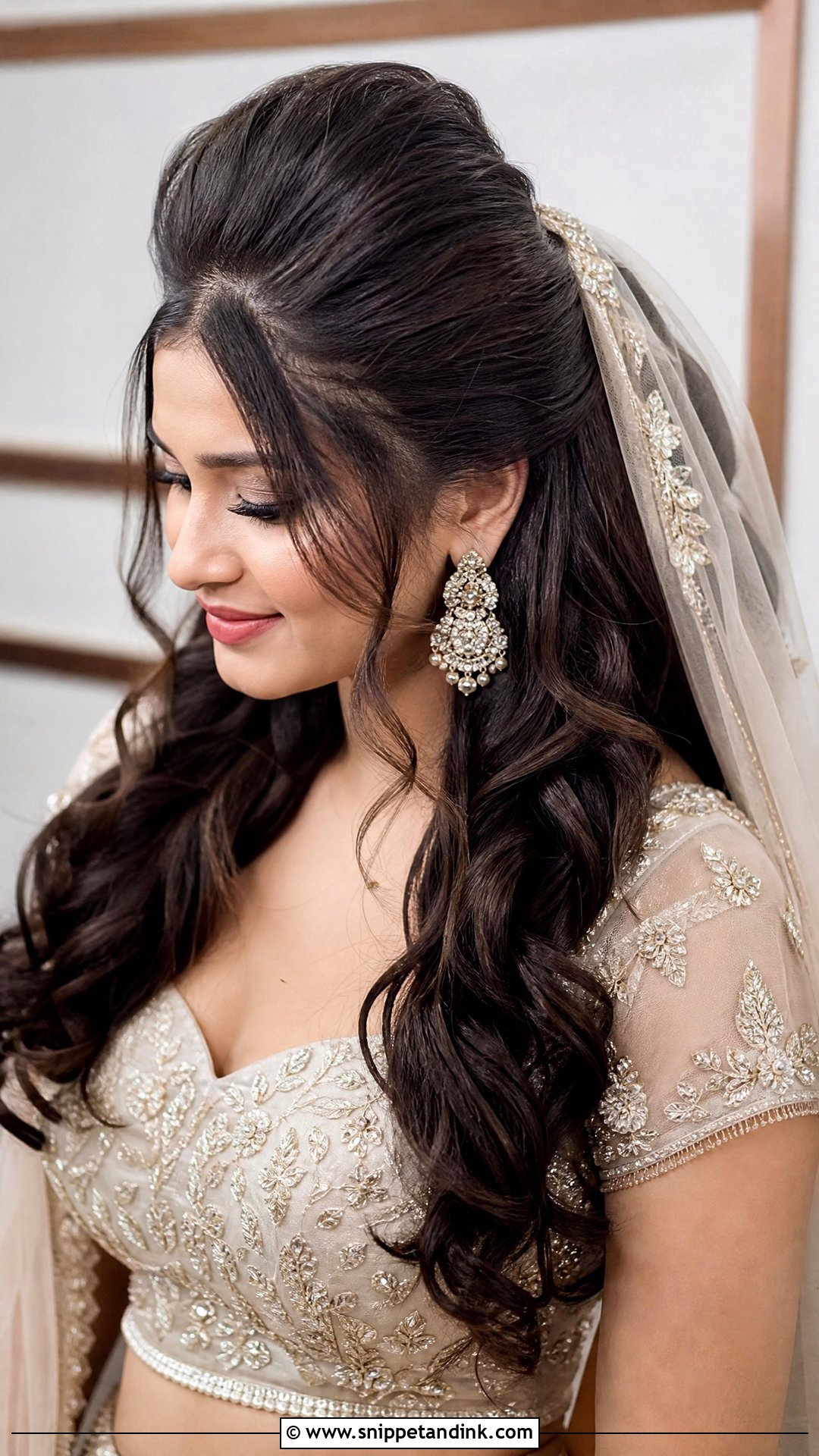
Lehengas carry a lot: embroidery, layered jewelry and usually a dupatta over the head. A puff keeps the face visible and lifted underneath all that. Center part, side part, bun, braid or long curls all work below it. When the dupatta is pinned at the back, I place the puff at the crown so the fabric doesn’t press the hair flat. A couple of loose face-framing strands and a lightly textured finish keep it from looking stiff. The puff should support the outfit, not compete with it.
10. Bridal Puff Hairstyle With Maang Tikka
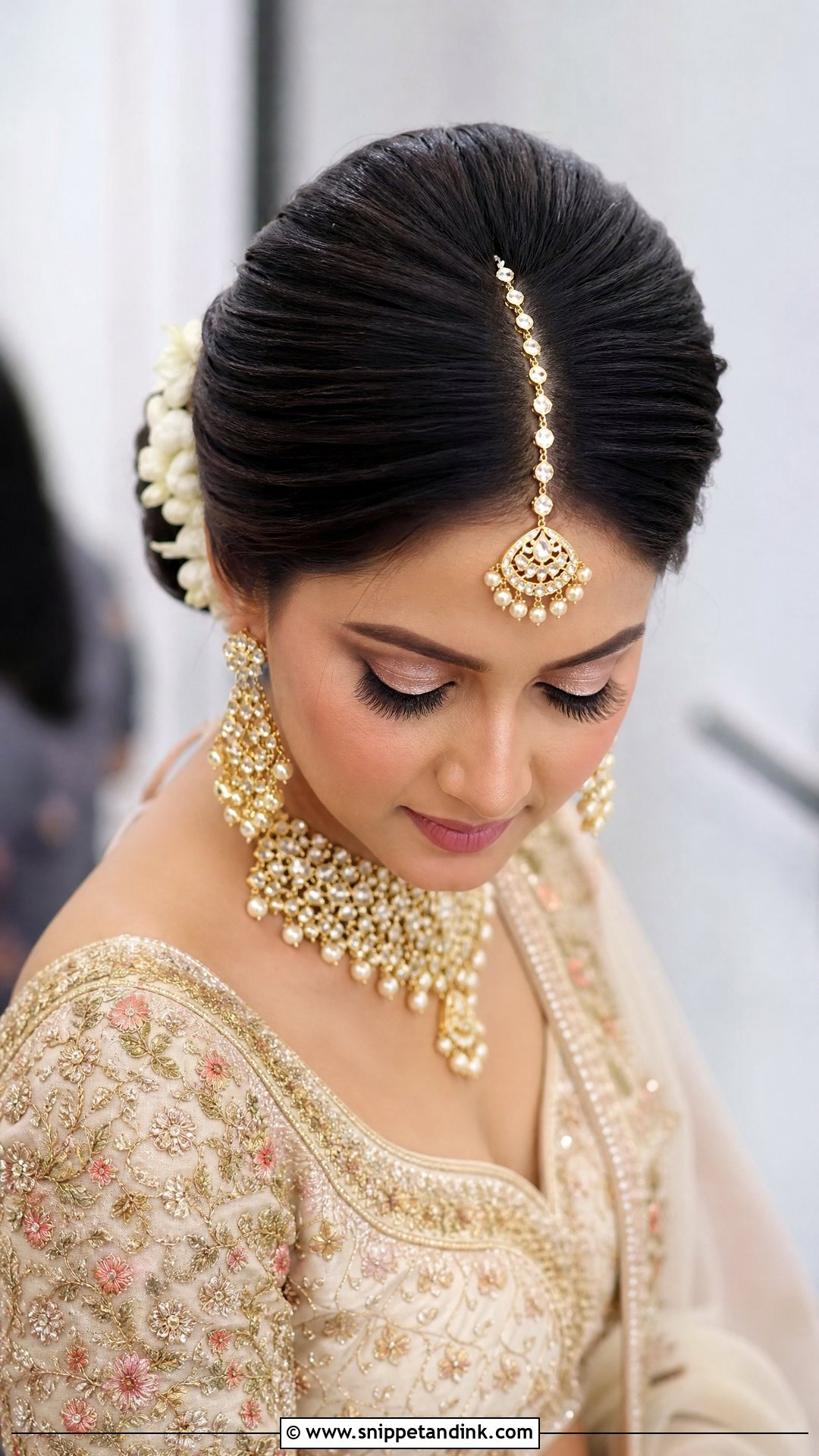
The tikka decides where the puff goes. I build the lift behind a center part or slightly back at the crown, so the chain has a clean, straight path along the parting. A front puff that’s too tall pushes the tikka forward and it ends up hanging crooked on the forehead by the second photo. I smooth the hair around the part so the metal sits flat, and I pin the tikka’s hook into the base, not into the teased section. Buns, long braids and half-up curls all suit this.
11. Bridal Puff Hairstyle With Veil
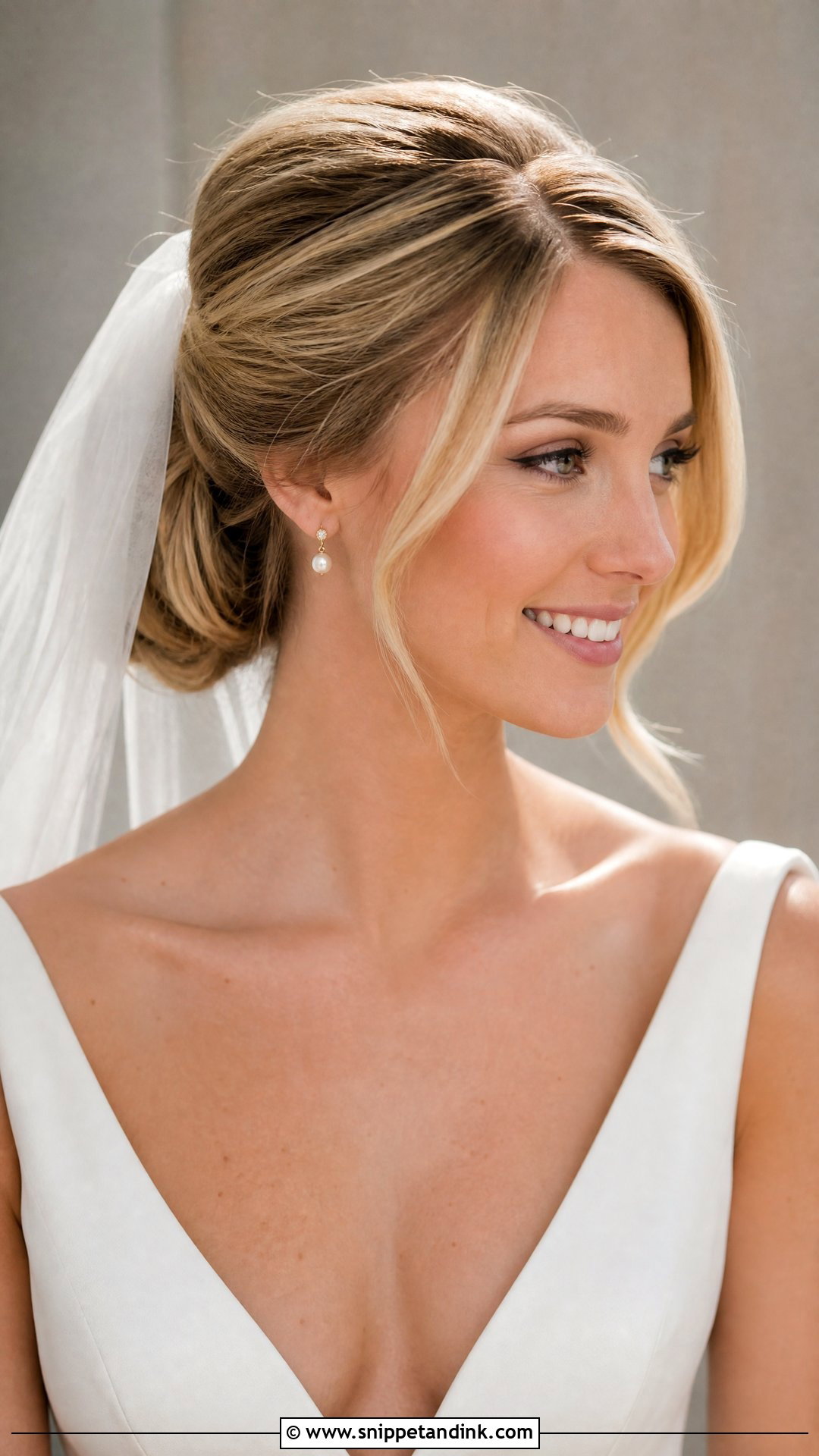
Veils flatten hair, and a puff is the simplest defense. I lift the crown and pin the veil comb just below or behind the volume, so the fabric falls gracefully from a raised point instead of sitting on top of the head. A low bun, curled ponytail, half-up style or chignon all work underneath. Heavy veils are the issue: always try yours at the trial, because a long beaded veil can drag a loosely built puff backward within an hour. Secure but not tight is the feel to aim for.
12. Bridal Puff Half Up Hairstyle
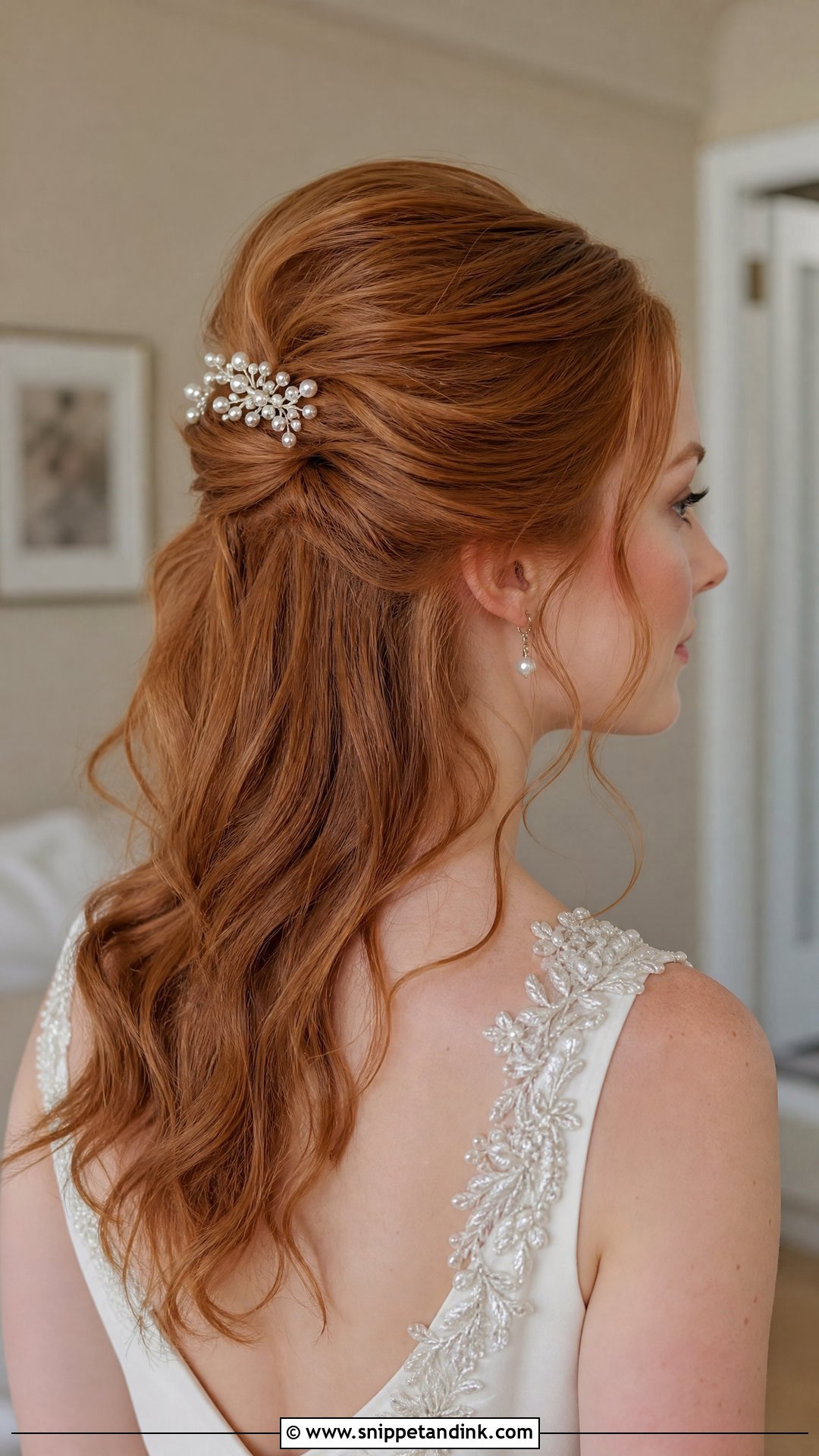
Half up with a puff gives you volume and still lets you wear your hair down. The top section is lifted and pinned back, the rest falls in curls, waves or smooth lengths. It keeps hair off the face without hiding it, and takes a comb, tiara, floral clip or veil easily. The step between the pinned section and the loose hair is what I watch; I blend it by curling the hair just below the pins so there’s no harsh ledge. Outdoor ceremonies and receptions suit it, and it’s comfortable to wear for hours.
13. Bridal Puff Hairstyle For Long Hair
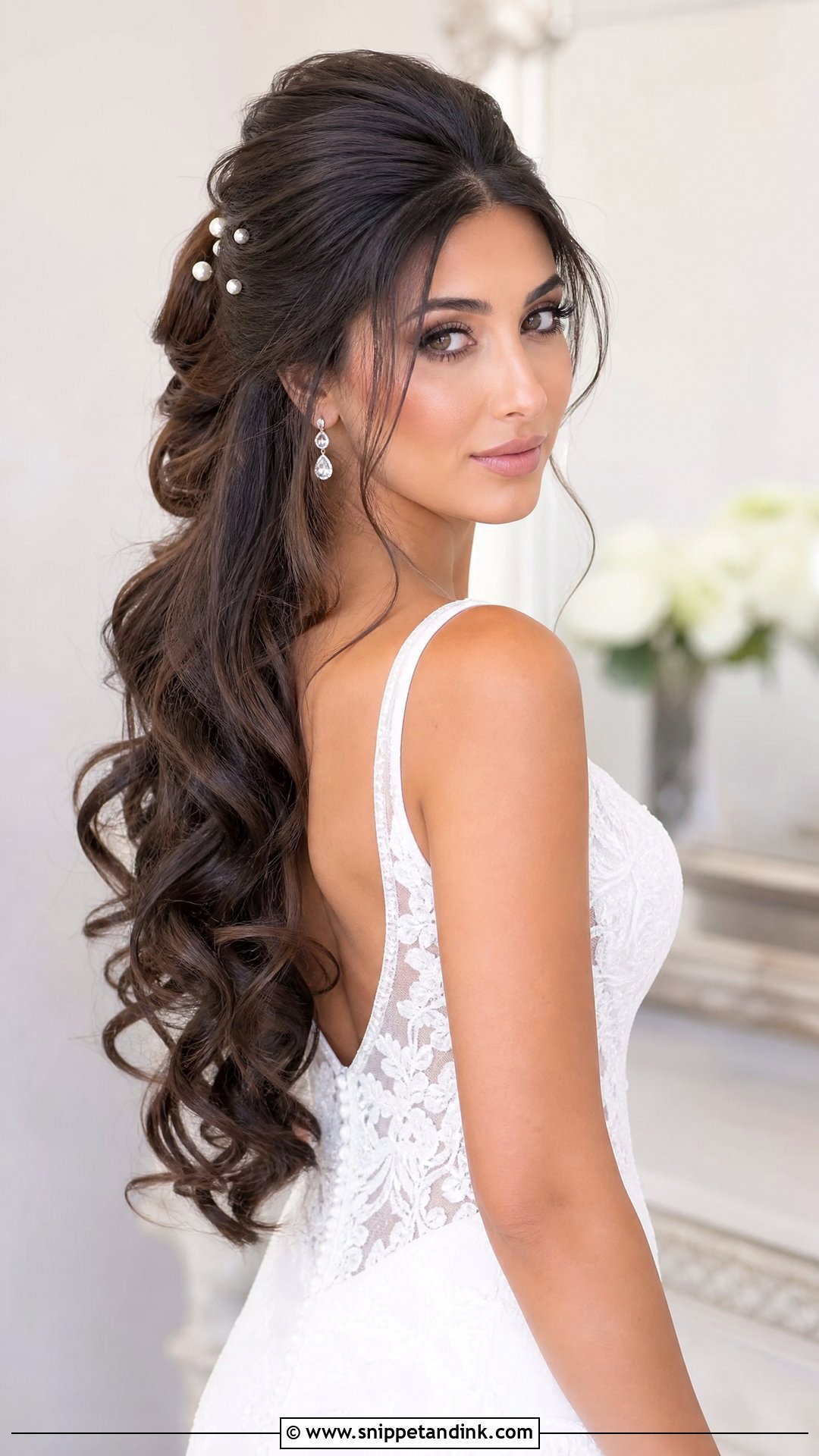
Long hair gives a puff room for drama: a long braid, cascading curls, a twisted bun or a full ponytail can all follow it. Weight is the catch. Long, heavy lengths pull on the crown all day, so I build a firm hidden base under the puff, crossed pins into a small anchoring section, before any accessory goes on. That’s what stops it dropping by the evening. Thick hair may need a few face-framing layers to avoid looking bulky; fine hair can take padding or extensions for fullness.
14. Bridal Puff Hairstyle For Short Hair
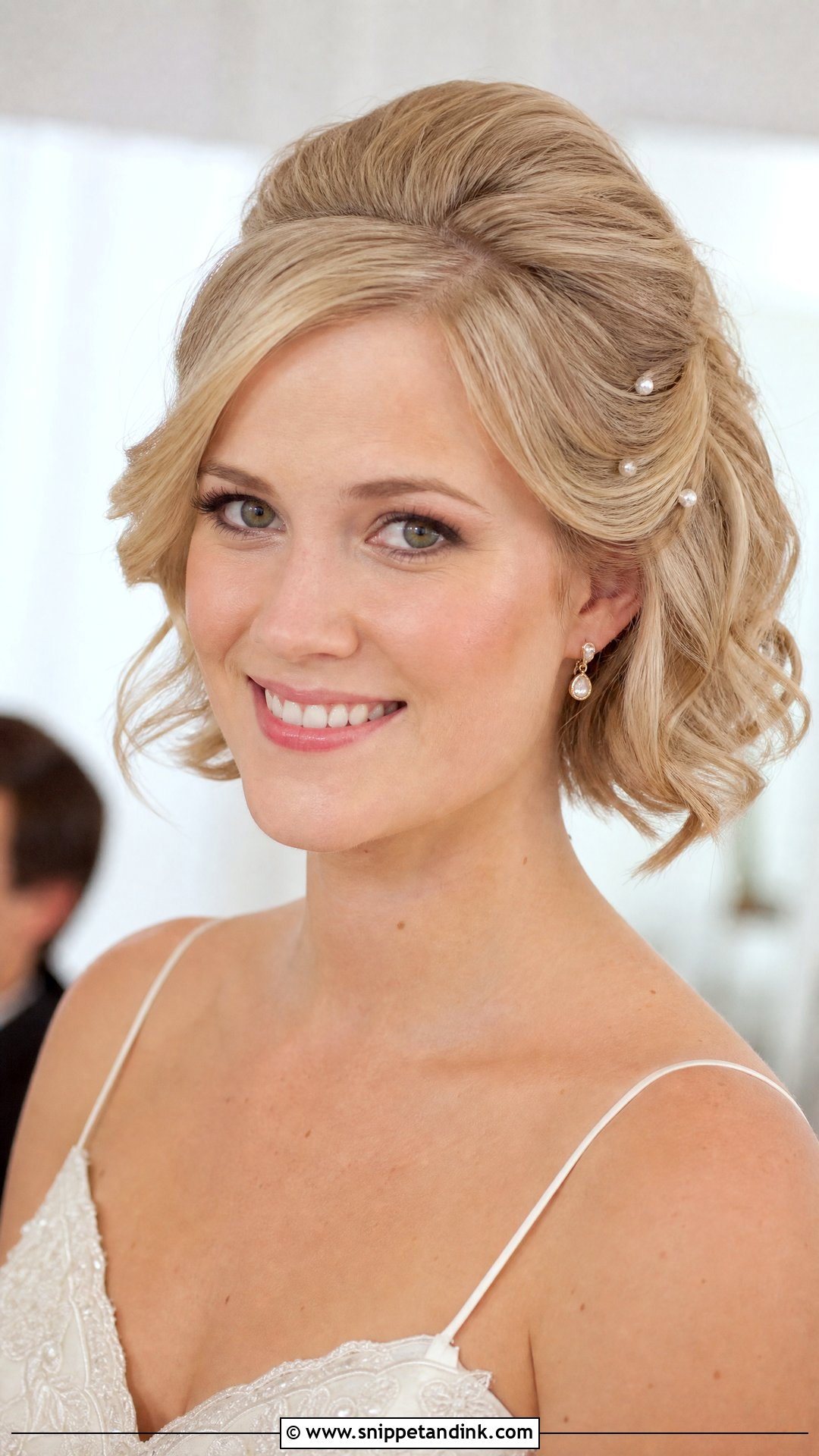
Short hair can still carry a puff. I tease the front or crown gently, smooth it and pin it, then curl, wave or tuck the ends into a small updo. Bob-length hair looks chic with a lifted crown and polished side pieces. A delicate comb, a few pearl pins or a short veil adds the bridal note. Over-teasing is the risk on short hair, since there’s no length to hide the texture, so I use less backcombing and more root-lift spray, and hold the shape with hidden pins.
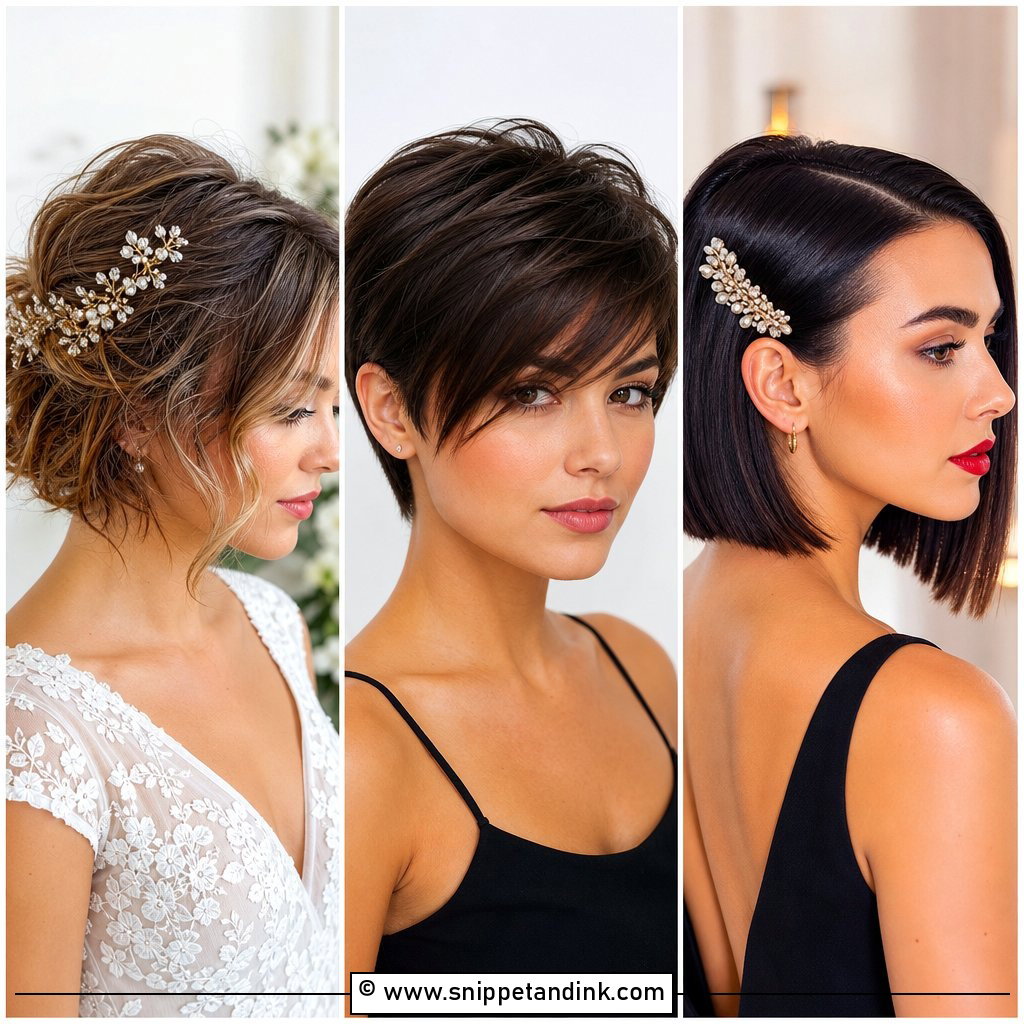
15. Bridal Puff Hairstyle For Natural Hair
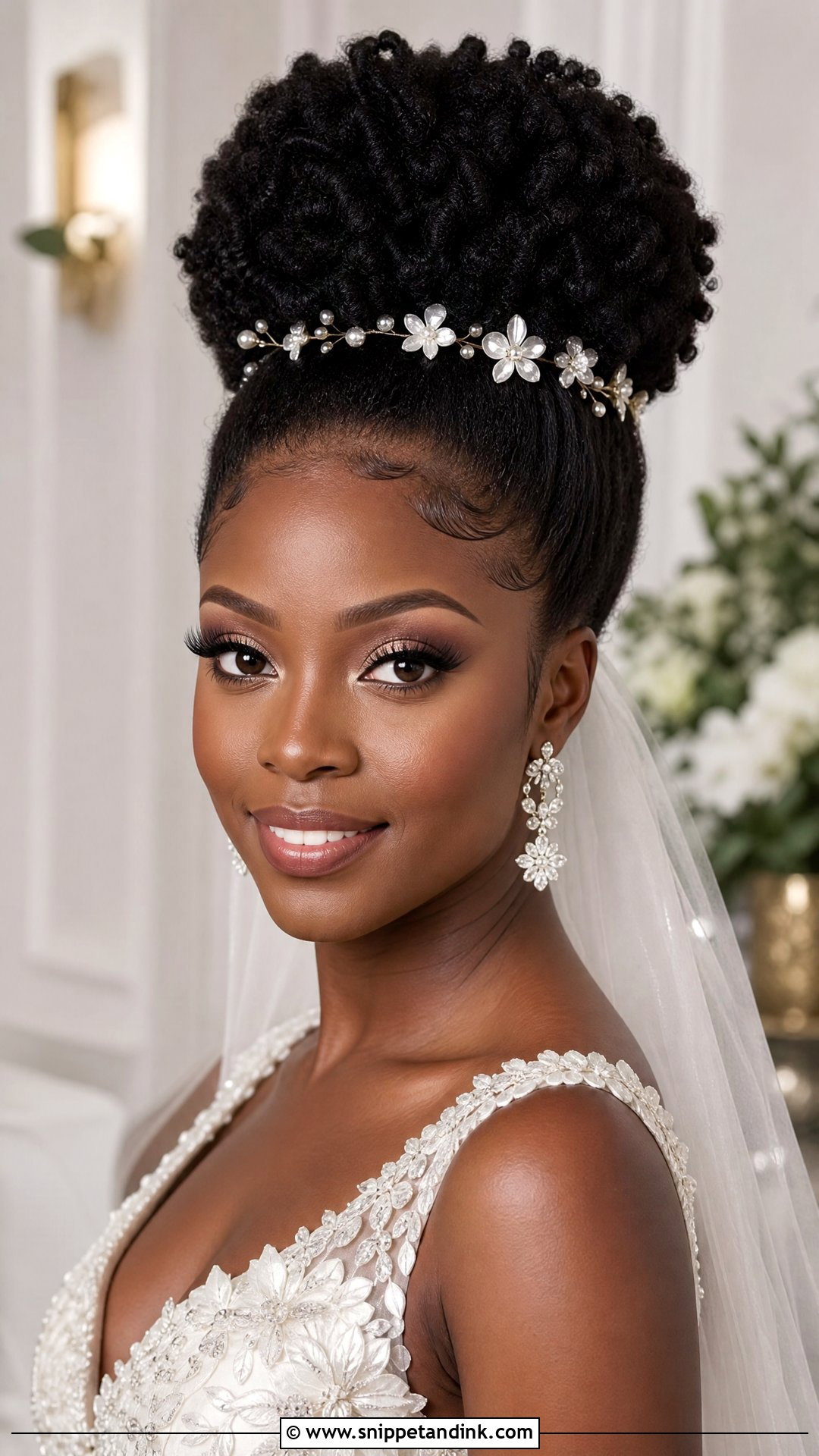
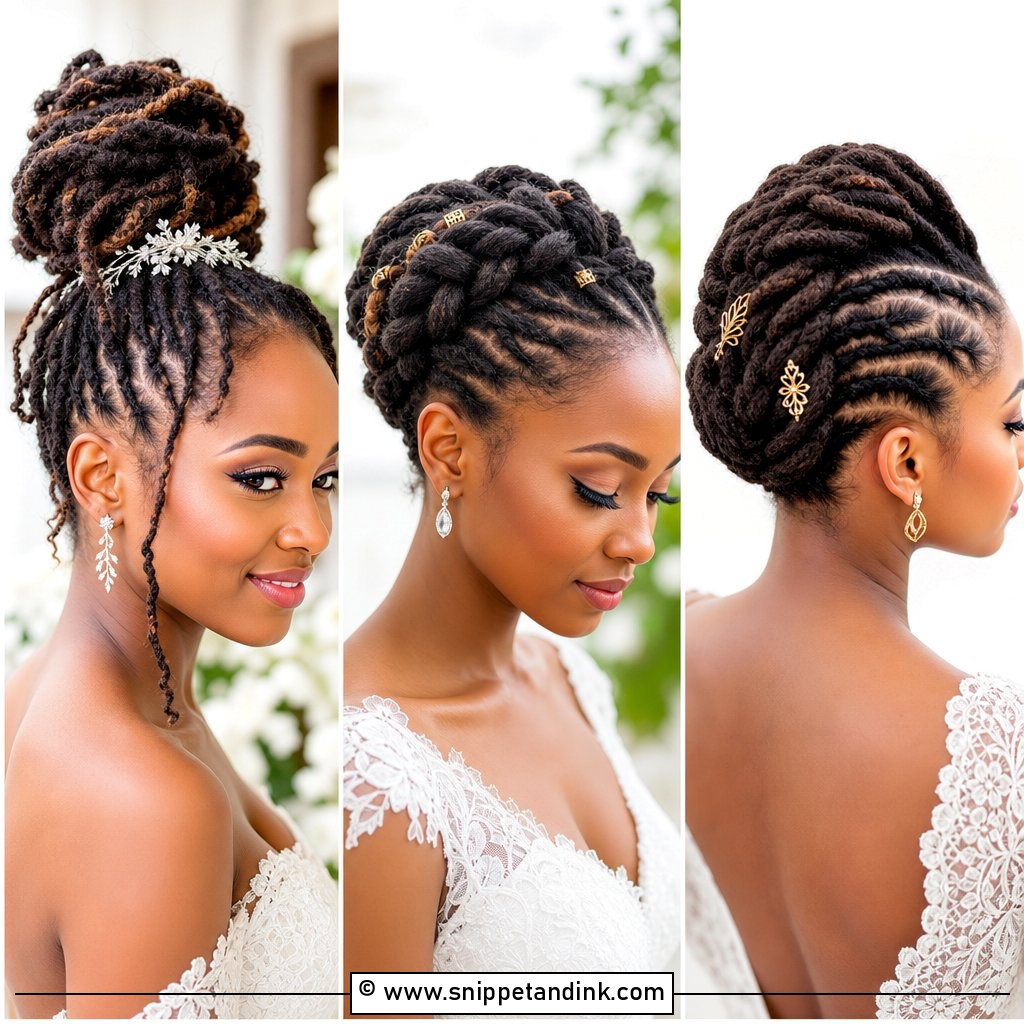
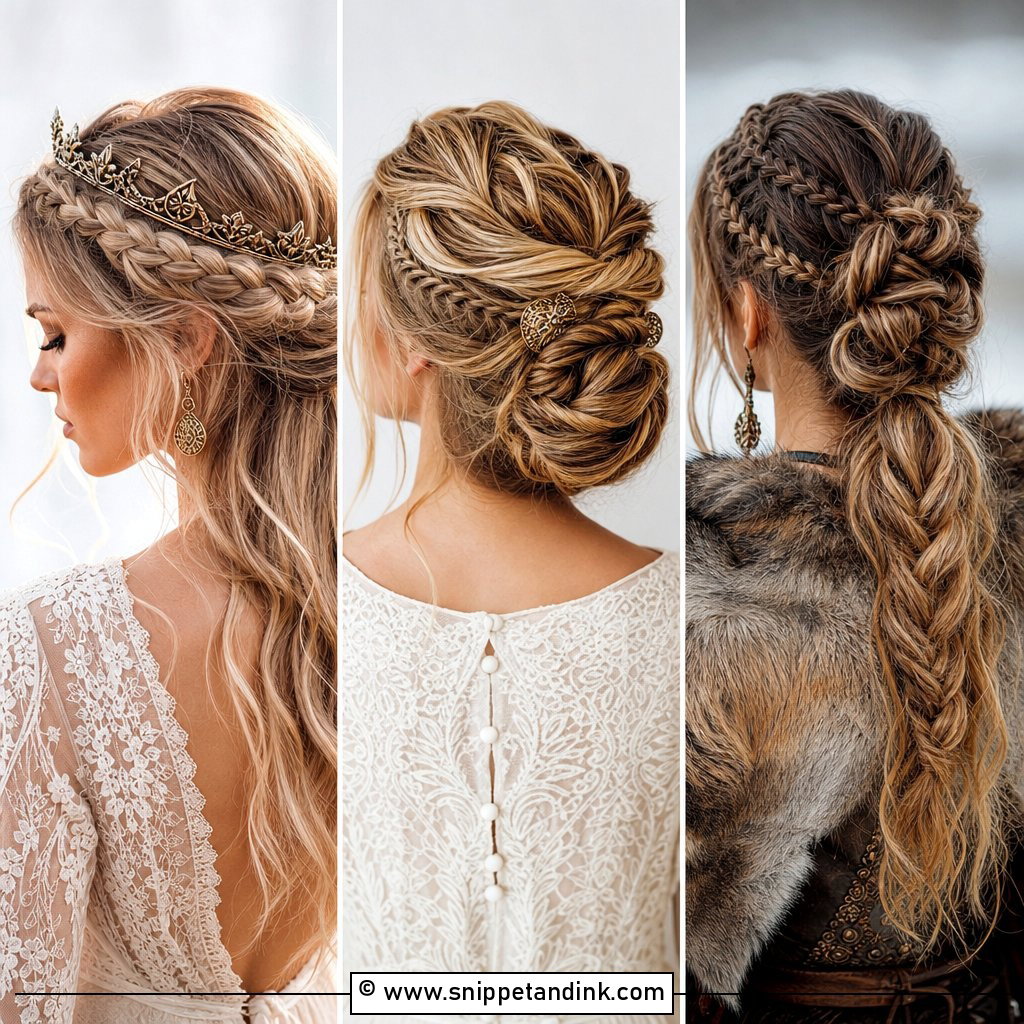
Natural hair makes some of the best puffs there are, because the volume is already there. A high puff, a crown puff or a puff bun shows coils and curls at their fullest while staying comfortable. Moisture and definition come first: I prep with a leave-in and a cream or gel suited to the curl pattern, then shape with my hands and a soft brush rather than a fine comb, which breaks up the curl. Edges can be laid or left soft. Hair jewelry, floral pins and a veil all sit well, and a sleek base under a rounded puff is just as striking as a fully textured one.
Under a Heavy Dupatta From Pheras to Reception
An embroidered bridal dupatta can weigh a surprising amount, and it’s often pinned straight on top of the most delicate part of the hairstyle. Pinned into the puff itself, it slowly presses the lift flat and drags it backward over a few hours of rituals. I pin the dupatta to the bun or to a firm base behind the puff, never into the lifted section.
For long ceremonies and hot venues I often use a small padded insert under the puff instead of relying on backcombing alone. It keeps its shape when humidity flattens teased hair, and it weighs very little. If your puff is backcombed only, give a fine tail comb and a small hairspray to a family member so it can be lifted again before the reception photos.
The Night-After Unpinning, Done Gently
After a wedding night, the temptation is to pull pins and drag a brush through. Don’t. Teased hair under a puff is a dense knot of backcombing and spray, and brushing it dry snaps strands. Remove every pin first, then work a generous amount of conditioner or a light oil into the teased section and finger-detangle from the ends upward. Only use a wide-tooth comb once the knots have loosened. If there are more events in the next day or two, rinse, condition and let it dry properly before the next round of teasing; hair holds the new style better for it.
Half an Inch Changes the Whole Face
A puff can be soft or bold, traditional or modern, sleek, curly, braided or completely natural, and it still does the same job: lifting the face, holding the jewelry and giving the veil or dupatta a shape to sit on. Before you decide, think about your neckline, where the dupatta or veil will be pinned, how heavy your earrings and tikka are, your texture, and how many hours this look has to last. Do a trial with the real accessories, because a small change in height genuinely shifts the mood. Puff bun, ponytail, braid or half-up, the right one is the one you forget about once it’s pinned.
You'll Like These Ideas:


Leave a Reply