
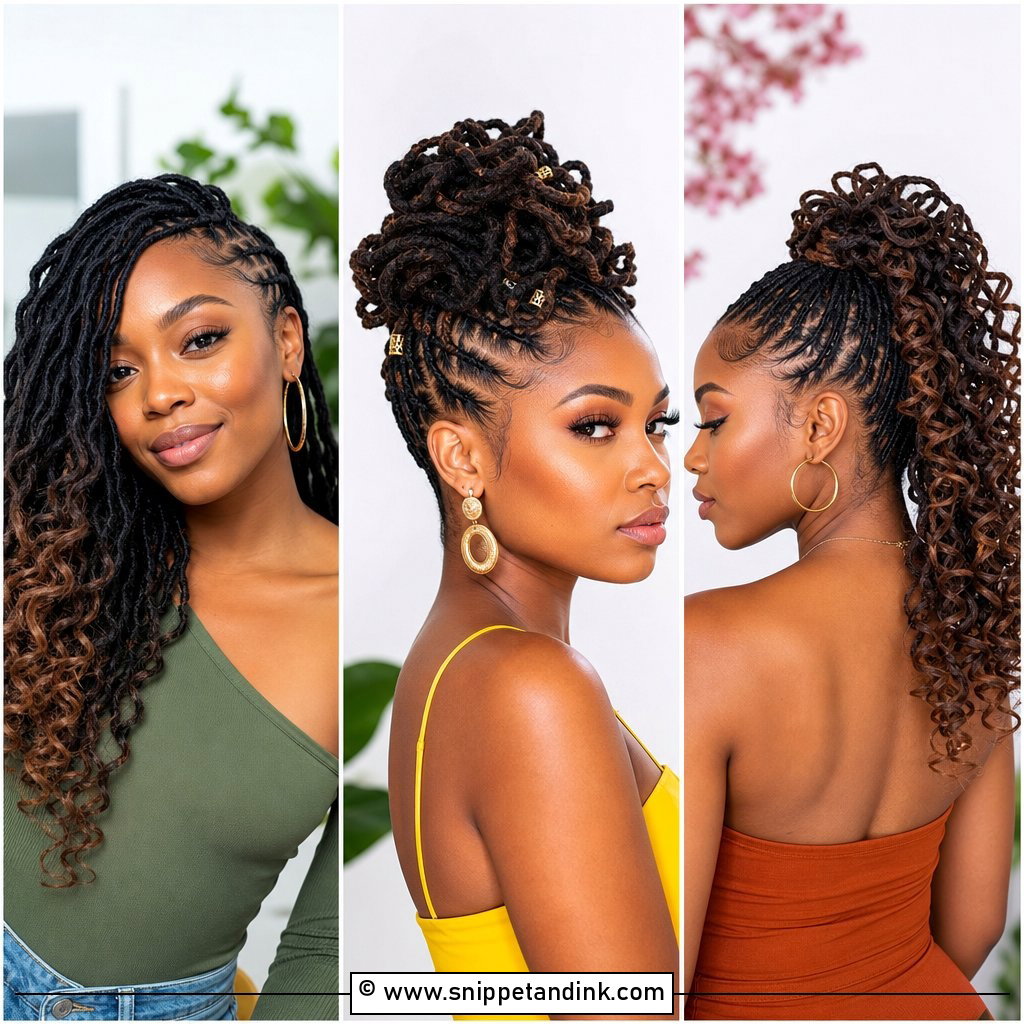
Microlocs give me more to work with than almost any other loc size. Because each loc is so fine, they bend into buns, curls, braided crowns, twists and half-up shapes the way loose hair does, while still showing the loc pattern that makes them yours. The trade-off is volume: a full head of microlocs can mean hundreds of locs and a lot of weight to anchor. When I plan a wedding style, I start with the neckline, the veil, any accessories, the venue, and how many hours the style has to last. A low bun suits a formal ceremony; curled locs left down suit a garden party. The twenty styles below work for brides, bridesmaids, mothers and guests.
Retie, Wash and Set in the Fortnight Before
Most of what makes wedding microlocs look good happens before the stylist ever picks up a pin. I ask brides to plan three appointments backwards from the date.
The retie
I’d schedule your last retie roughly one to two weeks before the wedding, not the day before. A fresh retie can leave the scalp tender and the roots looking tight, and a few days lets everything settle while the parts still look clean. Ask your loctician to keep the tension gentle around the hairline.
The wash
Microlocs take a long time to dry through to the core. Wash two or three days before the wedding and make sure they are completely dry, under a hooded dryer if needed. Damp locs pinned up for a day can start to smell musty, and they won’t hold a set.
The set
If you want curls or a wave, set the locs the night before on rods, pipe cleaners or small braids, and sleep on a satin pillowcase or bonnet. Take the set down on the morning, not the night before, so the pattern is as fresh as possible when the photographer arrives.
1. Wedding Microlocs Low Bun
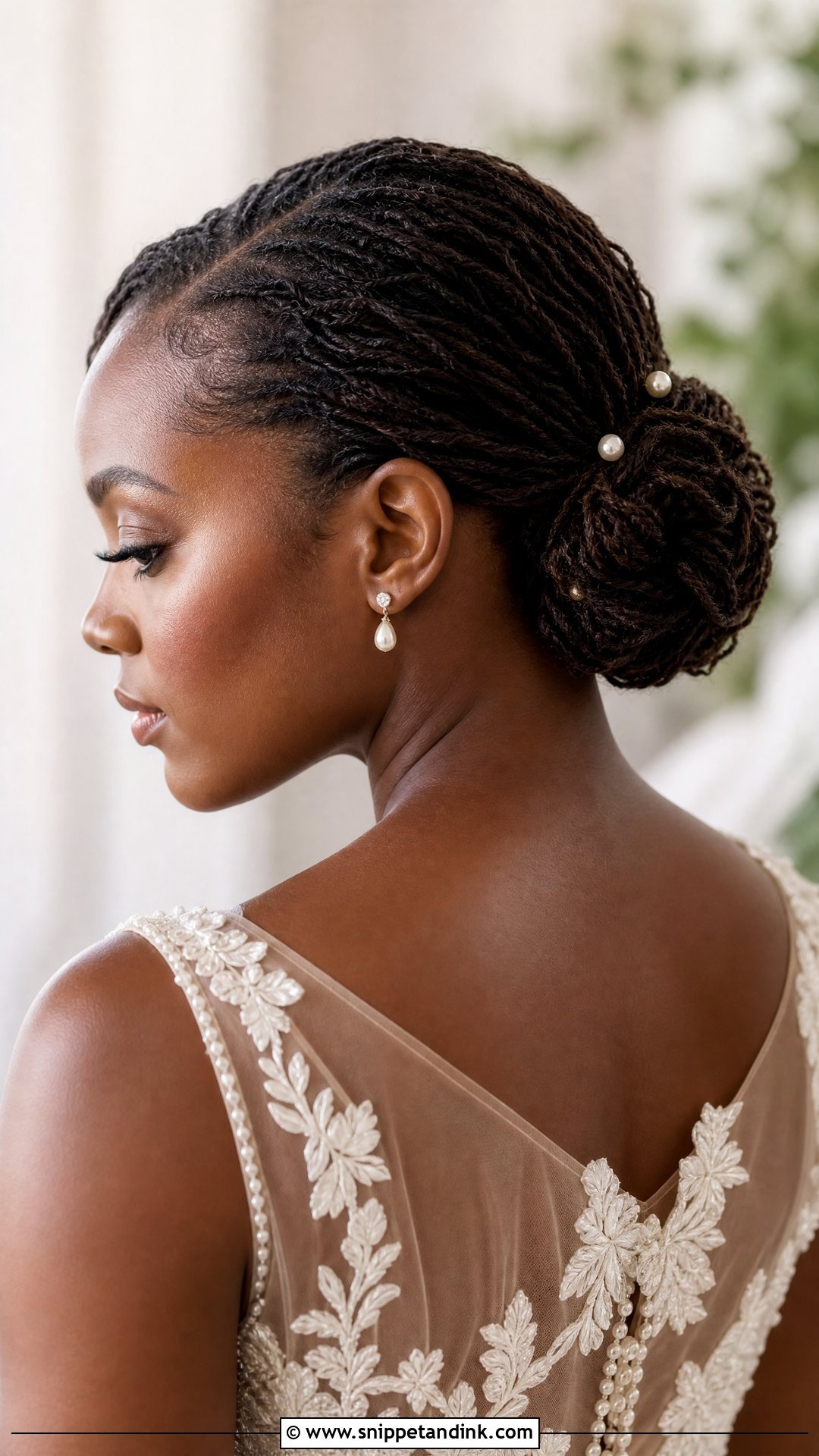
A wedding microlocs low bun is the style I’d suggest first to a bride who wants a veil and doesn’t want to think about her hair again. The locs gather at the nape into a smooth bun that holds veils, pearl pins, combs and classic earrings without fuss. High necklines, lace backs and detailed shoulders all benefit from hair that stays out of the way. My one firm rule: no tension at the edges. Pulling the hairline tight for a sleek front is how brides end up with a headache by the speeches and stress on the edges afterward. A soft side part or a few face-framing locs keeps it from looking severe.
2. Wedding Microlocs High Bun
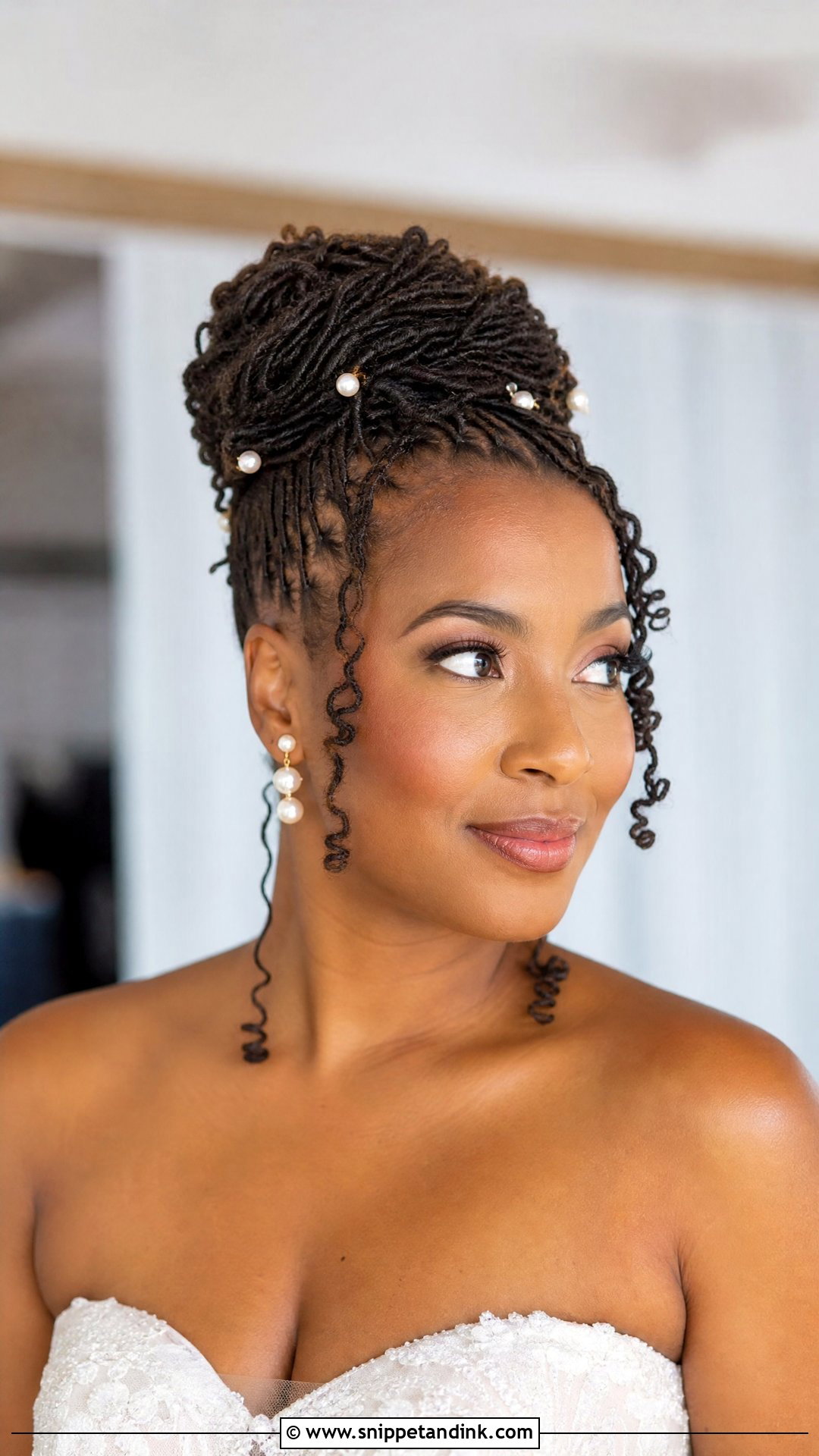
Height lifts the face, and a high bun gives you the most of it. It shows off the fullness of the locs while keeping them fully up, and it can be round, slightly oversized or neatly tucked. Strapless gowns, halters, statement earrings and fine hair jewellery all sit well beneath it, and an open neck is a relief at a summer wedding. The catch is weight. A large mass of microlocs sitting high pulls on the crown, so I build it over a secure base, often a small braided anchor, rather than pinning straight into loose locs. A few curled locs at the temples soften it.
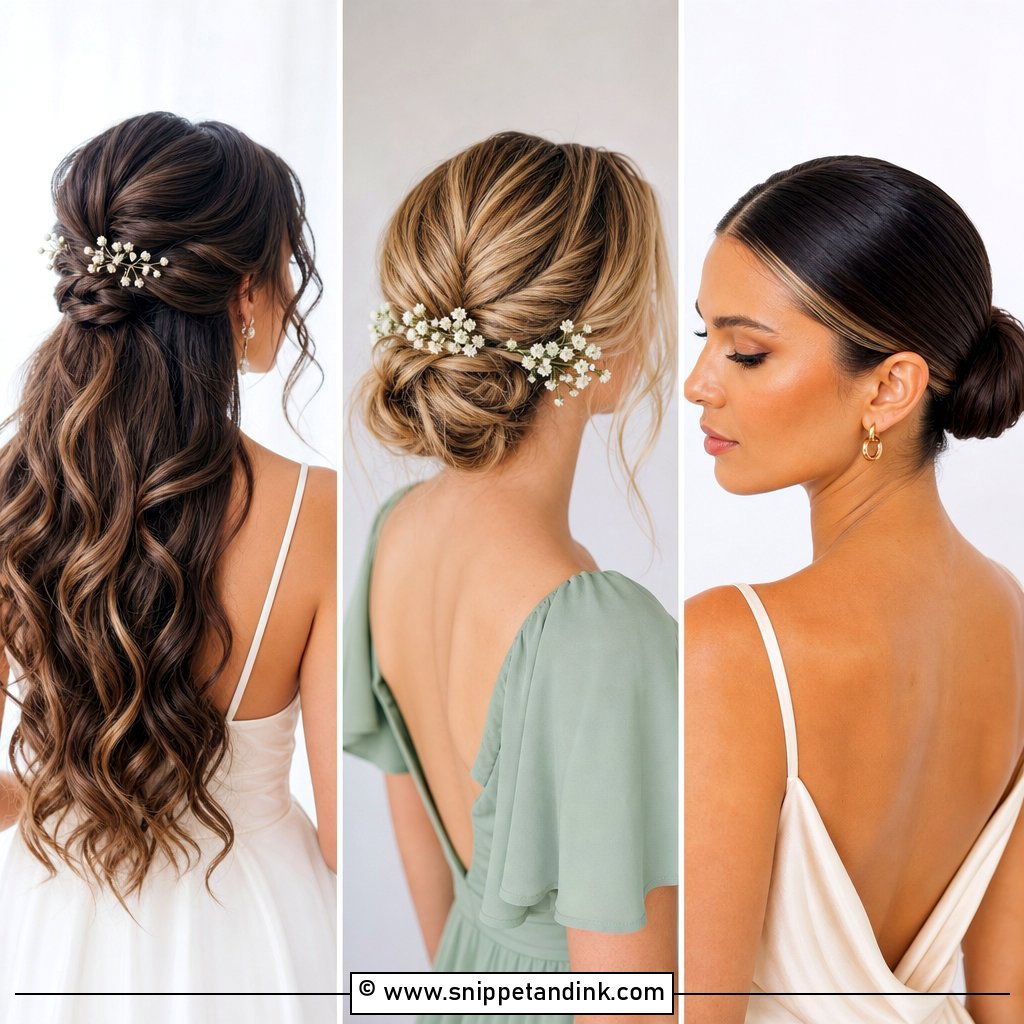
3. Wedding Microlocs Half Up Half Down
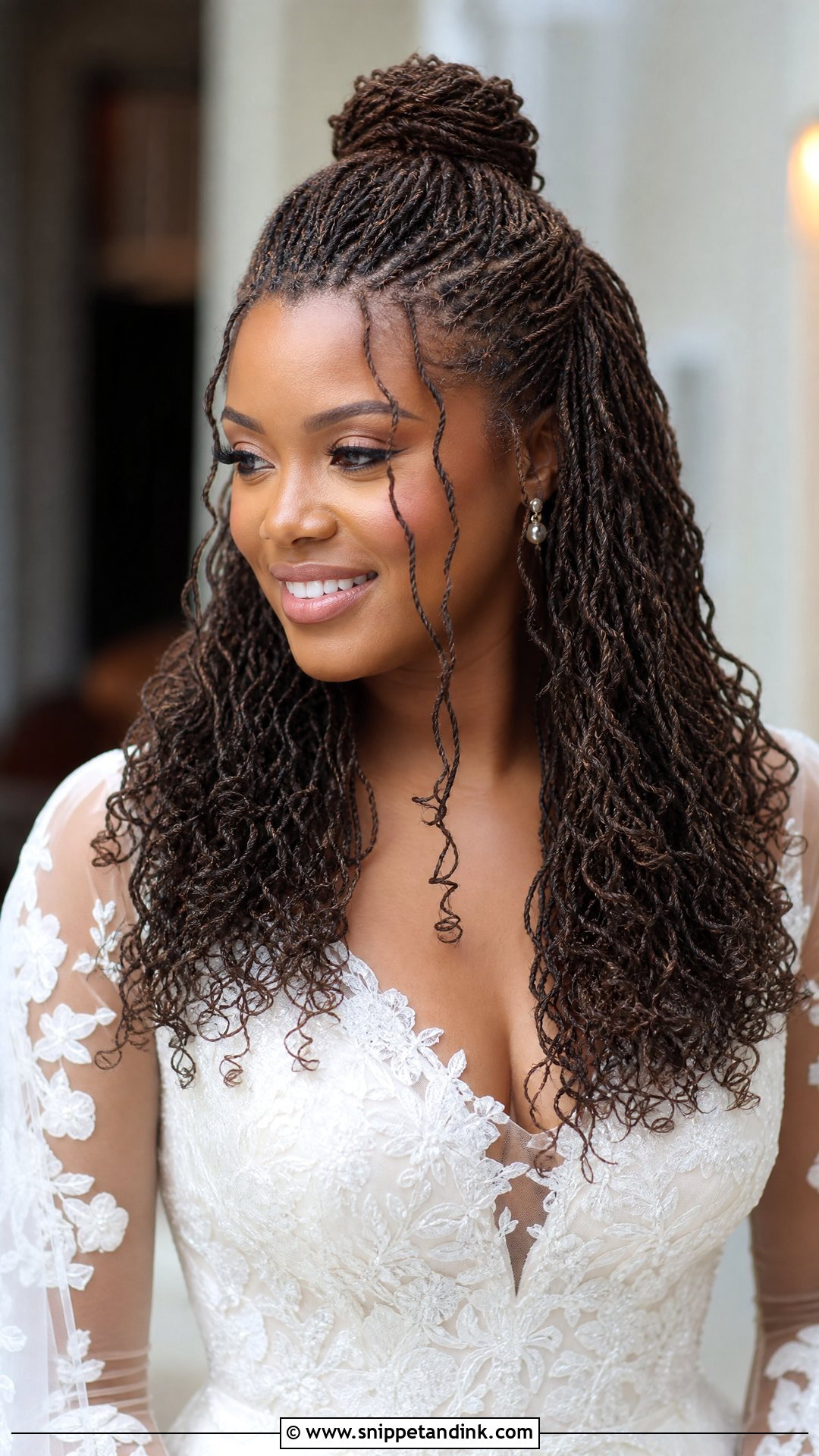
Half up, half down gives you the length of loose locs with the security of an updo on top. I twist, braid or pin the top section into a small bun and let the rest fall down the back or over the shoulders. It lifts the face without hiding length. Garden weddings, beach ceremonies and bridesmaids suit it. Curling the ends adds movement in photos, and the top section makes a natural anchor for a small floral pin, pearl comb or a veil comb tucked underneath.
4. Wedding Microlocs Side Swept Curls
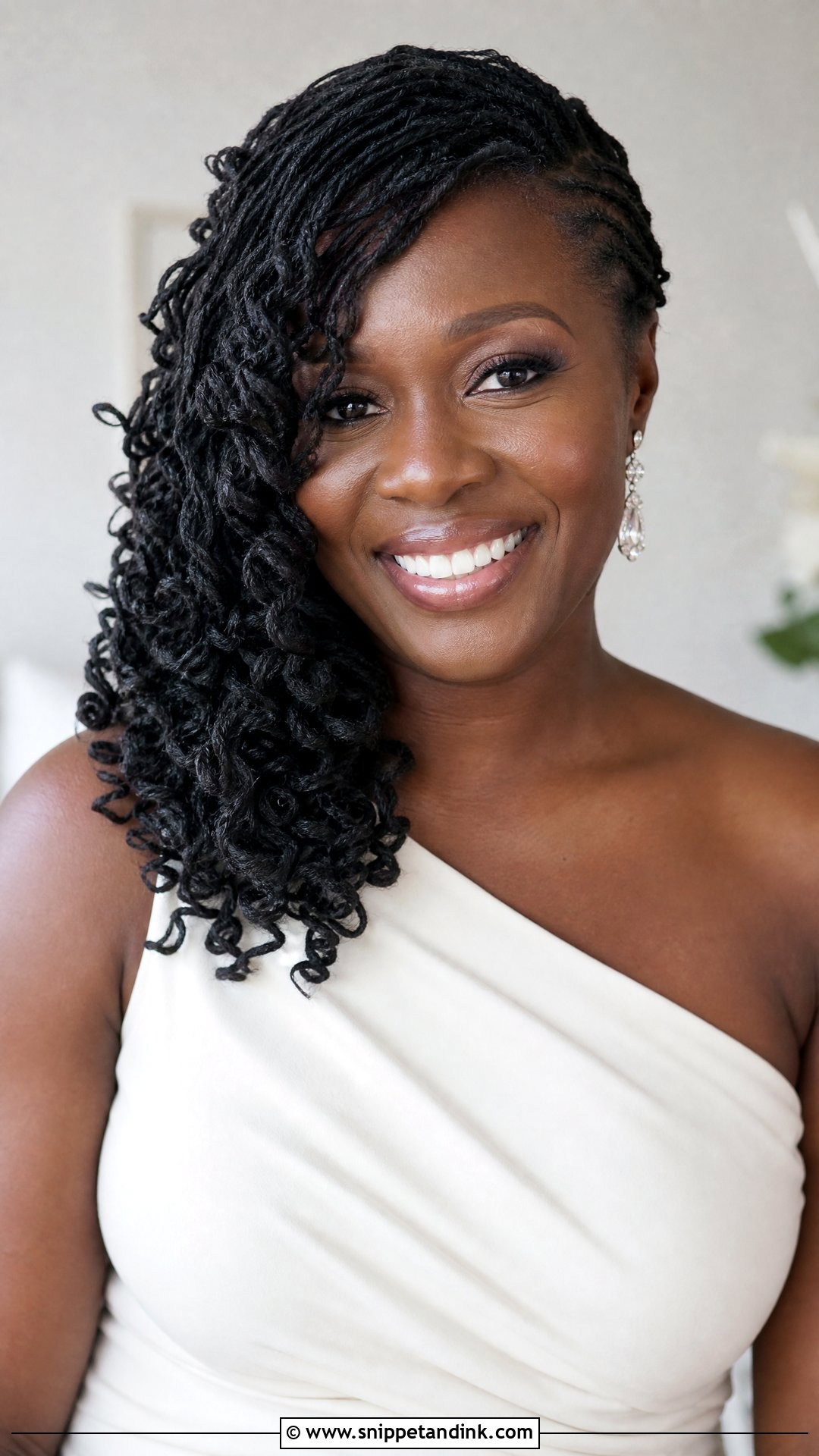
Side-swept curls are about one shoulder: the locs are curled or set in a braid-out and swept across for a glamorous shape. One-shoulder dresses, sweetheart necklines and open backs pair naturally with it, and it leaves the earrings and neckline on show. A deep side part reads dramatic; a softer part reads natural. The hidden side is where this style fails. I pin it firmly behind the ear, crossing pins in an X, so the locs don’t slide back over during hugs, dancing or wind. Gold cuffs or pearls finish it.
5. Wedding Microlocs Crown Braid
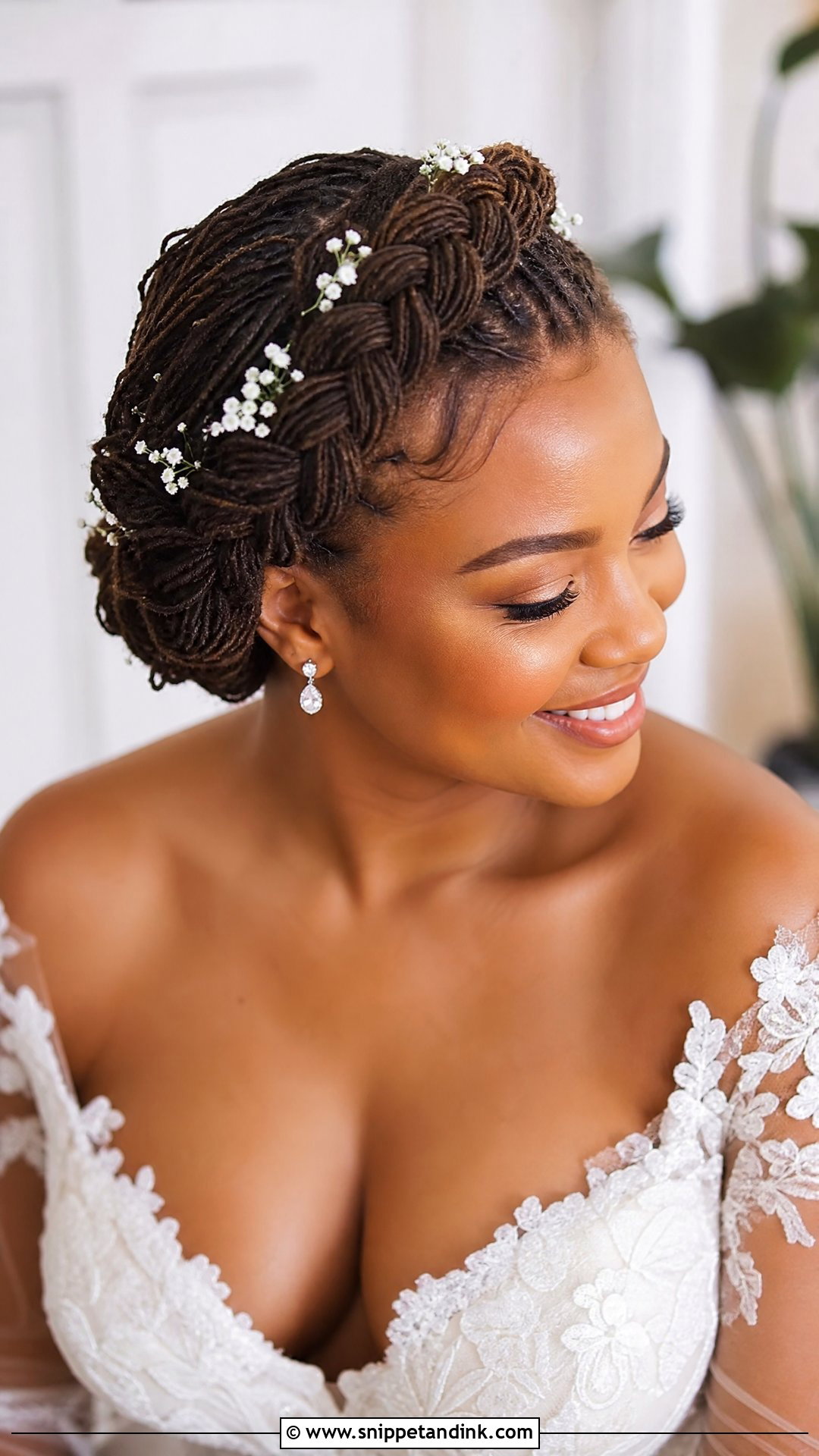
A wedding microlocs crown braid creates a regal halo without heavy accessories. I braid or flat-twist the locs around the head so they frame the face. Microlocs make cleaner crown braids than larger locs because each strand is thin enough to lie flat. It keeps hair off the neck, which helps in warm venues and long ceremonies. A veil sits best placed low at the back, and small flowers tuck easily into the braid. Keep the front braid relaxed rather than tight; a crown that pulls at the hairline gets uncomfortable after a few hours.
6. Wedding Microlocs Chignon
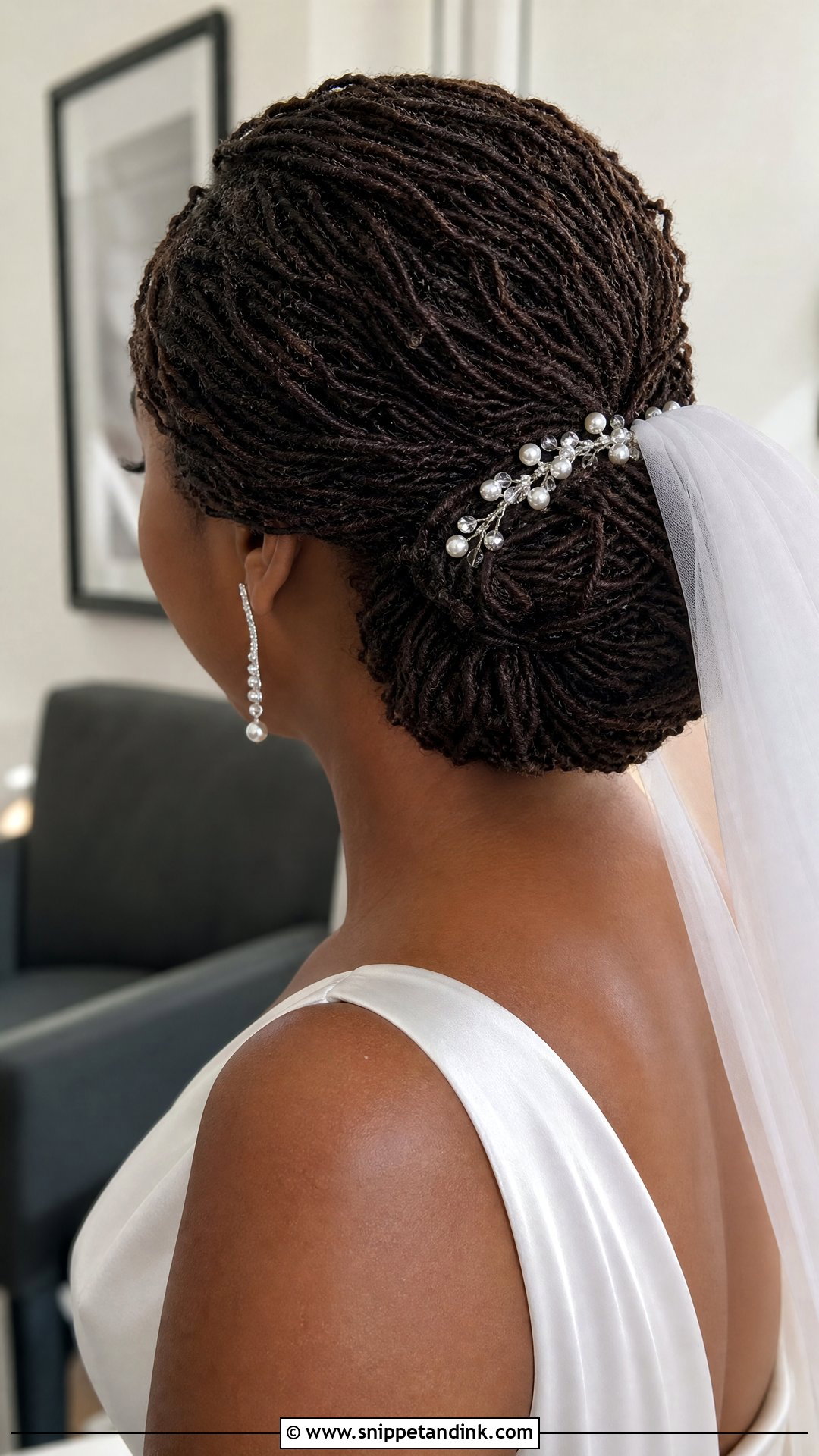
A chignon is softer than a tight bun: the locs gather low and tuck into a rounded shape, often with gentle twists visible through the back. It suits formal weddings, courthouse ceremonies and classic gowns. It’s also one of the best bases for a veil, because the comb slides into a firm, dense shape and stays put. A few tiny curled locs near the face or nape add some softness. Pearl pins, crystal clips or a plain metallic comb add detail without hiding the natural texture.
7. Wedding Microlocs Petal Bun
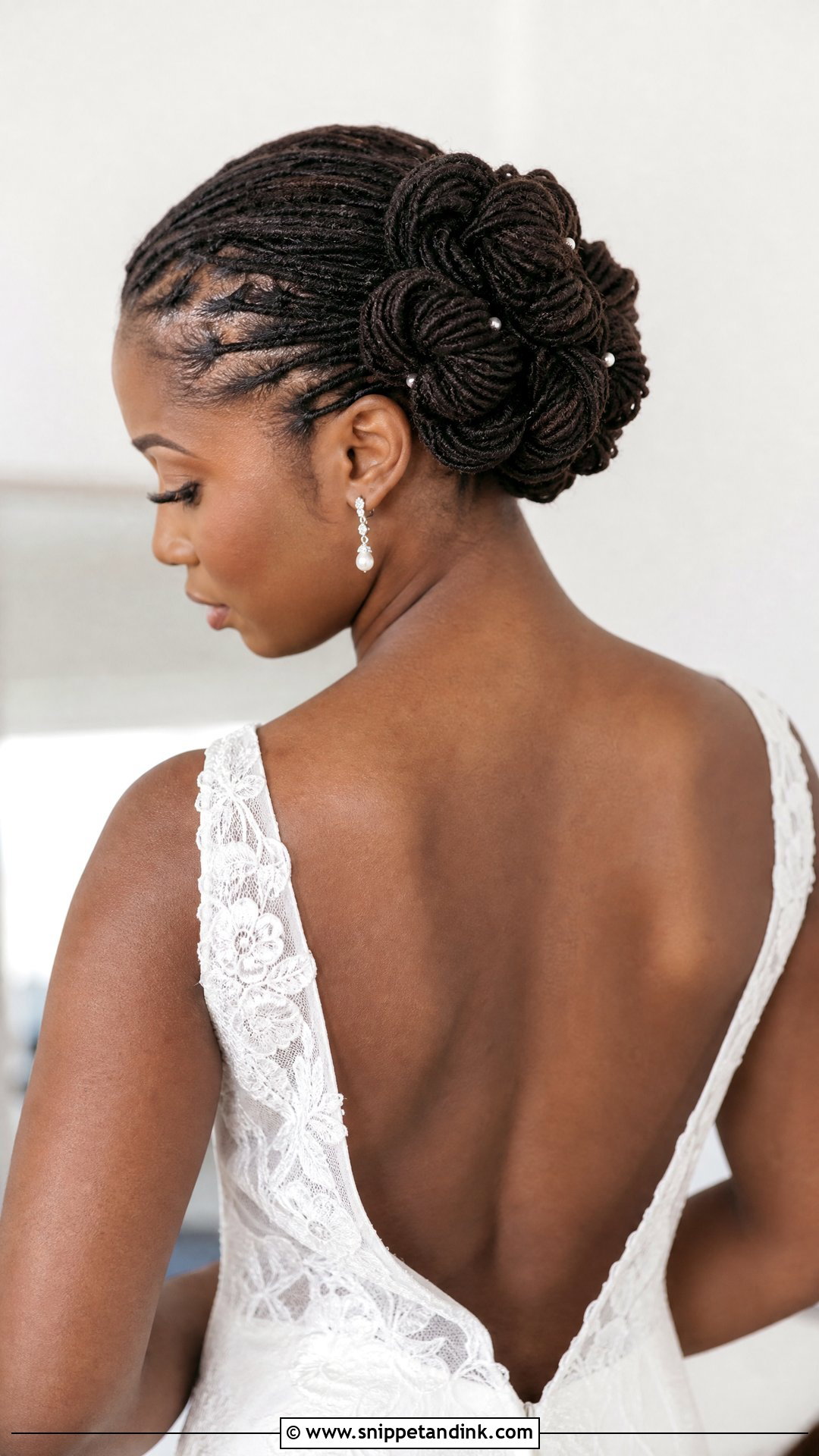
The petal bun is the style I’d pick for a bride whose dress has an open or lace back, because it’s built to be seen from behind. I shape the locs into rounded loops that resemble petals, which gives texture from every angle. It can sit high, low or to one side, depending on face shape and accessories. Since the bun is the detail, jewellery should stay minimal: a few pearl pins or tiny gold cuffs. Each loop needs its own pin, so it’s a longer chair session than a simple bun.
8. Wedding Microlocs Bun With Gold Cuffs
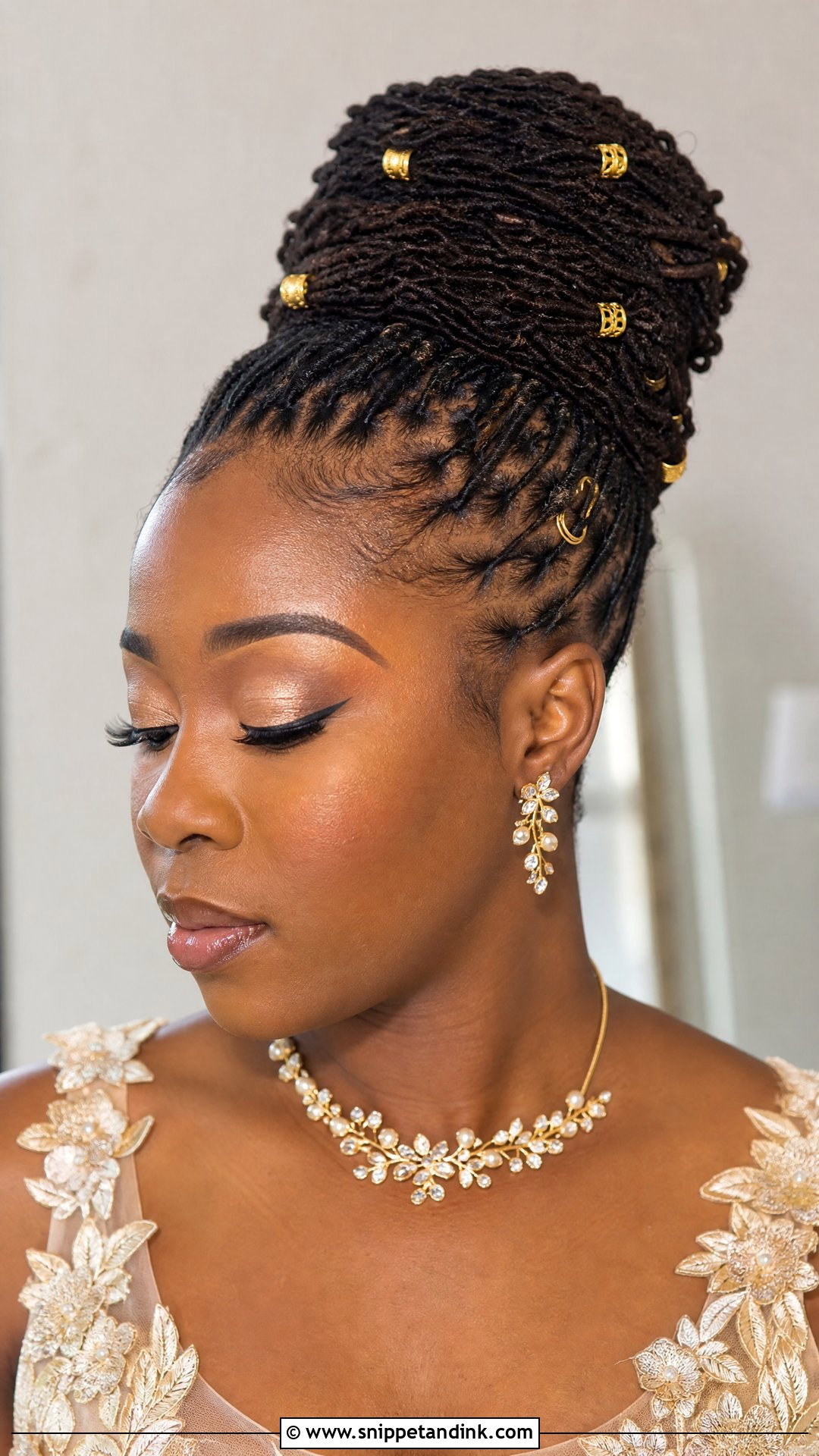
Gold cuffs bring warmth and celebration to a clean bun, high, low or centred at the back. They work especially well for traditional, cultural, or heritage-inspired ceremonies, and alongside ivory, champagne, gold or earth-toned outfits. With microlocs, cuff size matters: many cuffs are made for larger locs and slide right off a fine one, so I check the fit before the day and use adjustable or small-diameter cuffs. Space them evenly rather than clustering, so they catch light without looking heavy. A smooth base with soft edges finishes it.
9. Wedding Microlocs Bun With Pearl Pins
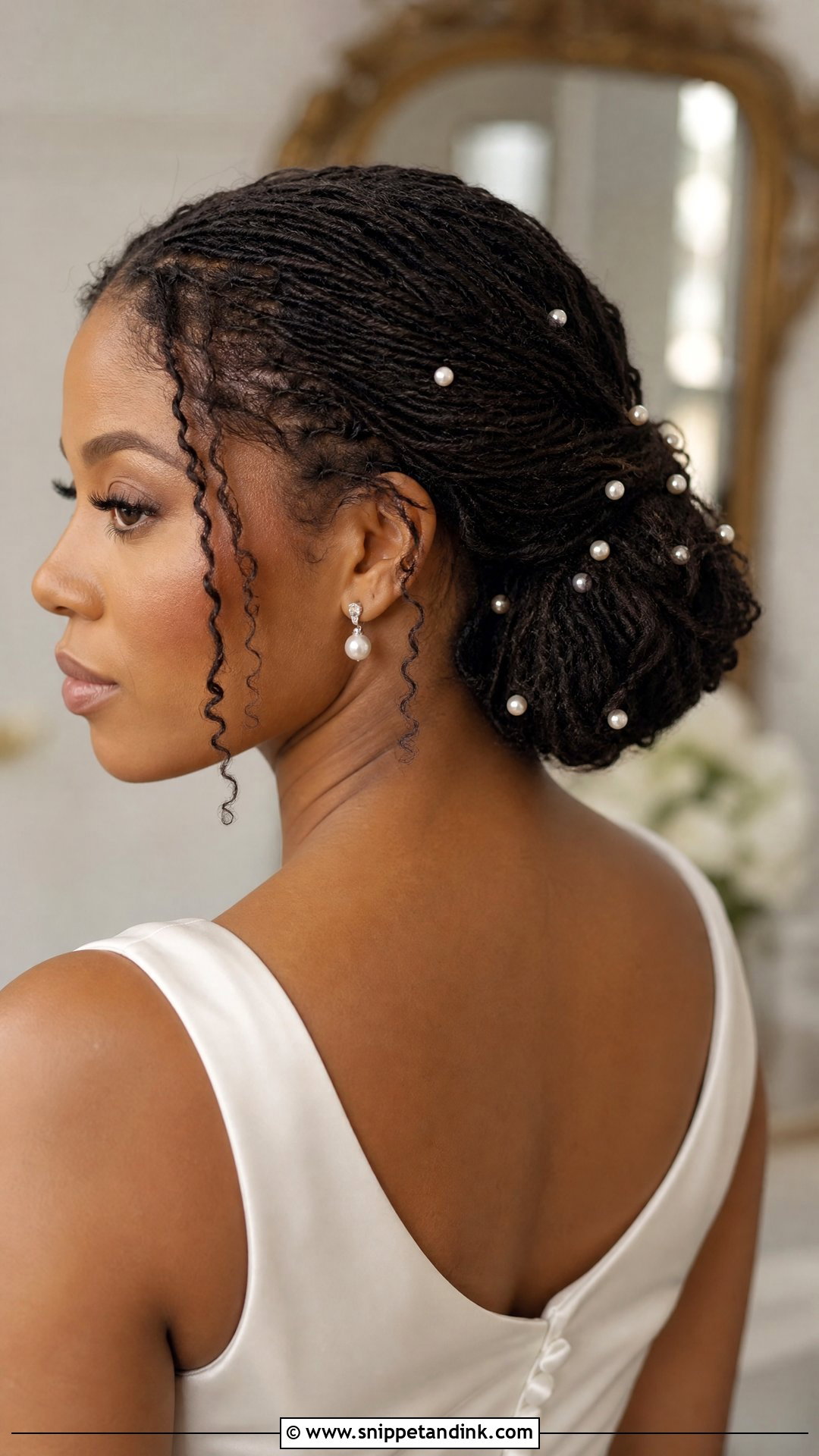
Pearl pins make any microloc bun read bridal. The bun can be loose and rounded, twisted low at the nape or placed high. Against dark brown or black locs, pearls give a gentle contrast that isn’t loud. Satin gowns, lace, pearl earrings and classic veils pair naturally with it. I scatter pins lightly and at slightly different angles rather than lining them up in a row; a straight line of pearls looks mechanical in photos, while a scatter looks like it grew there.
10. Wedding Microlocs Updo With Veil
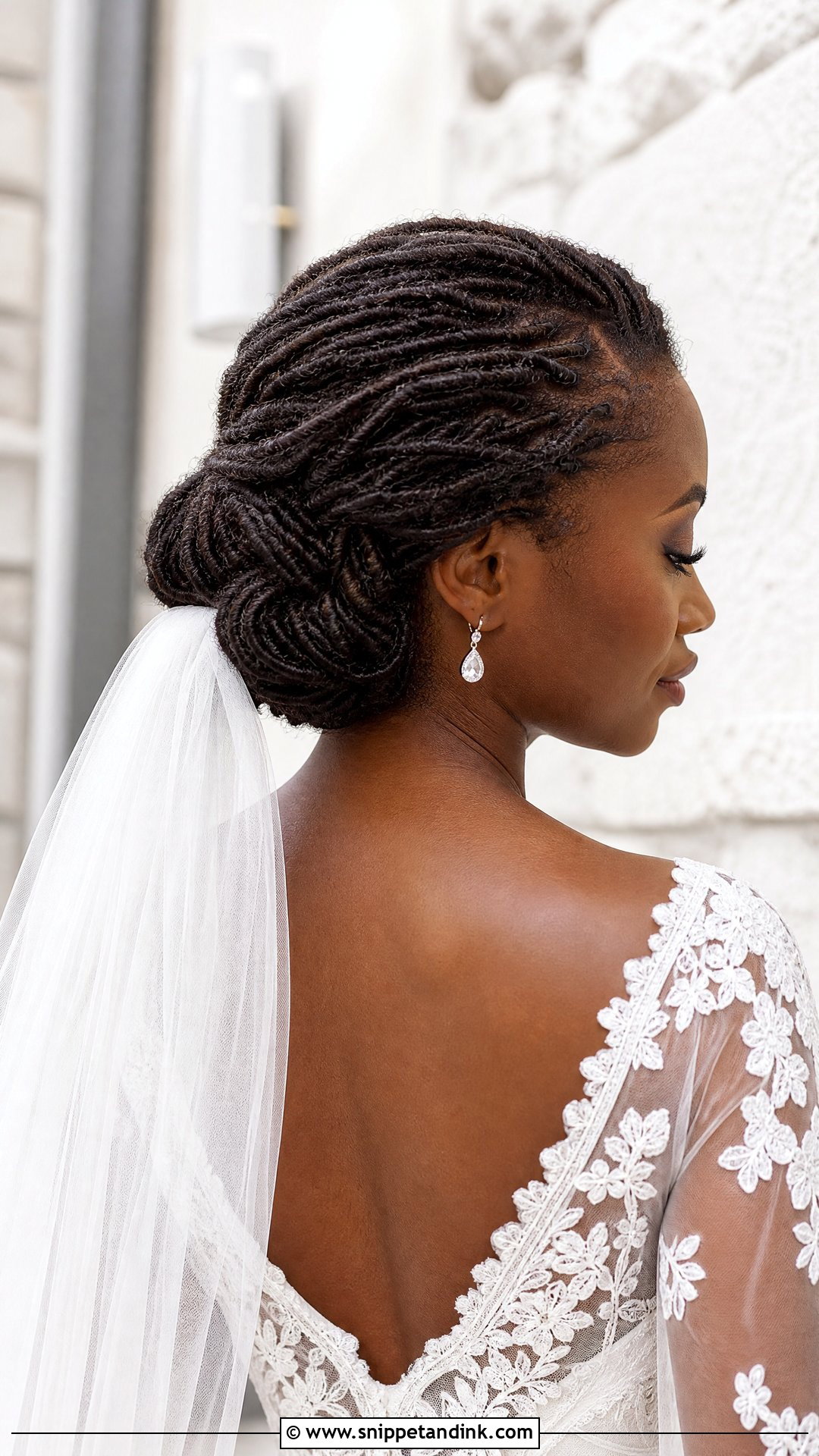
Plan the veil and the updo together, not separately. The locs can form a low bun, chignon, tucked roll or twisted updo, and the veil can sit above or below it. Below feels modern and soft; above feels more traditional. What I always do is test the actual veil comb at the trial. Microlocs are small and slippery for a comb’s teeth, so I usually anchor it into a pinned base or a small braid rather than just pushing it into the locs, and I check it holds when the bride turns her head quickly.
11. Wedding Microlocs Boho Updo
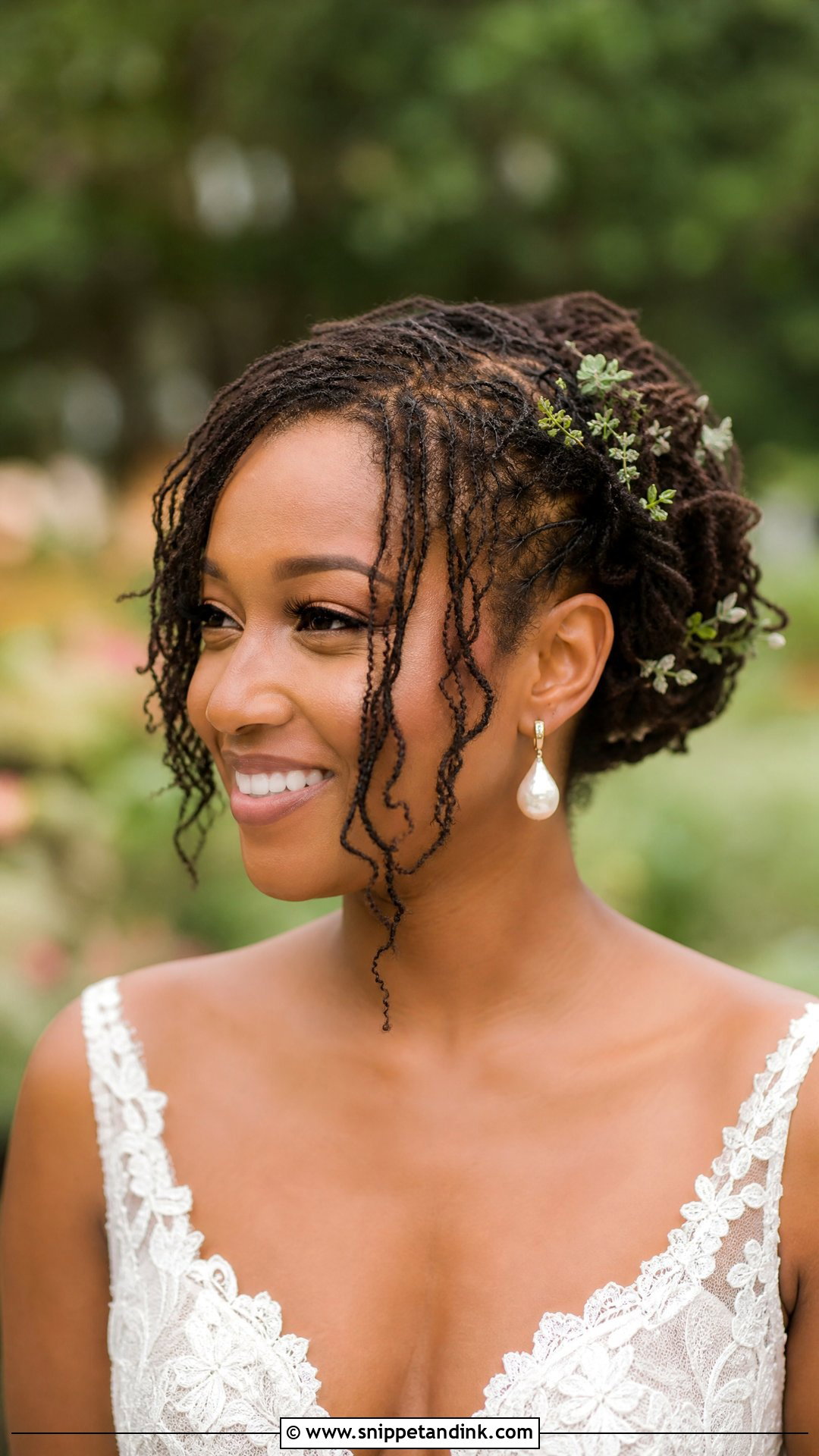
A boho updo isn’t sleek, and it shouldn’t be. The locs are loosely twisted and pinned with a few pieces left free around the face or nape. Done well, it looks undone on purpose. Done badly, it just looks unfinished, so I still pin the internal structure firmly and only loosen the surface. Floral dresses, lace gowns, beach weddings, garden venues and soft makeup all suit it. Small flowers, leafy pins or fine gold accents work, but restraint keeps it from looking crowded.
12. Wedding Microlocs Curled Ends
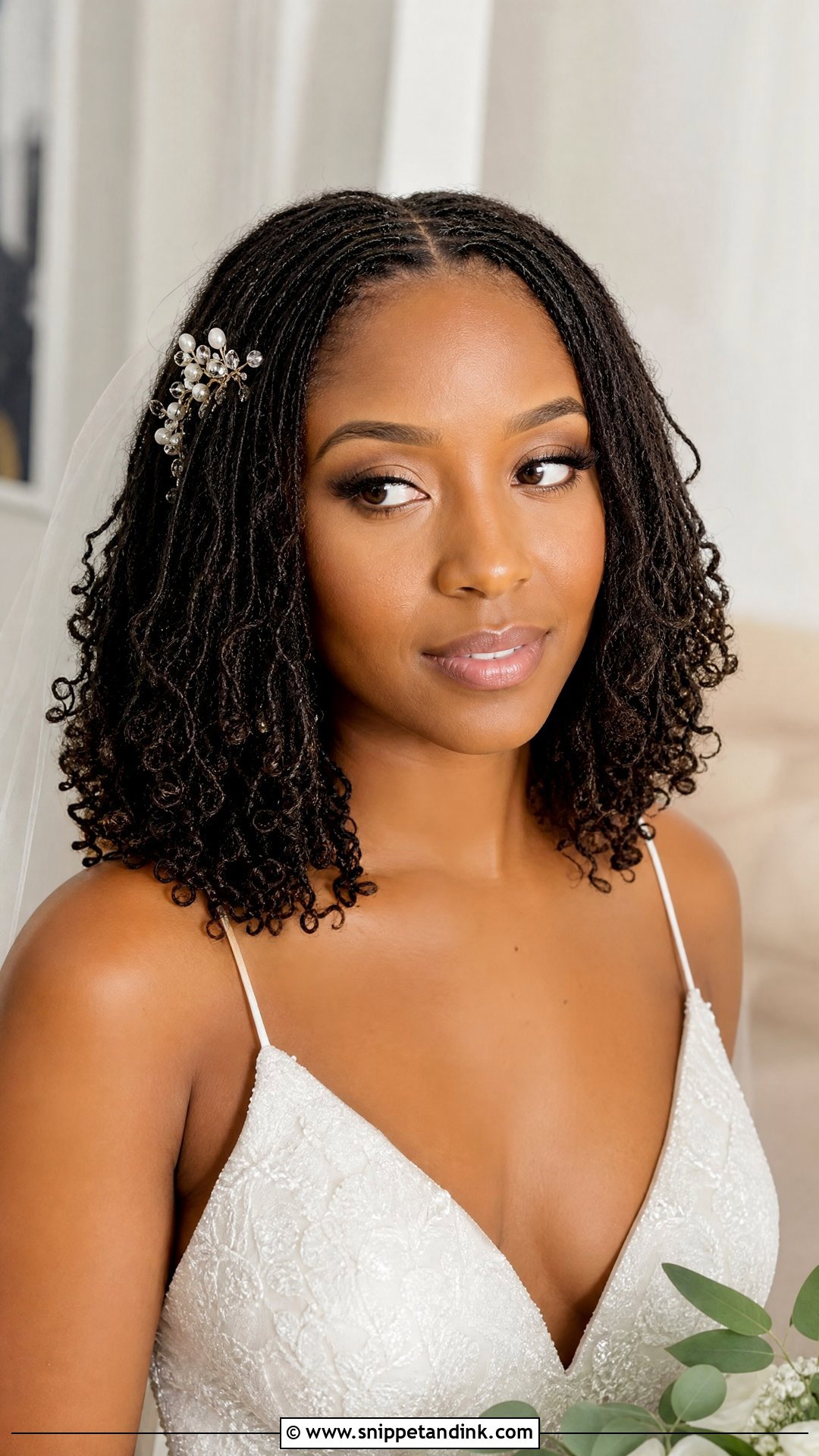
Curled ends dress up locs worn down. The ends can be set on rods, braids, bantu knots or another heat-free method your loctician approves. I set them on slightly damp locs and leave them overnight; microlocs hold a set well once they’ve dried completely in shape, and undoing a set too early is the usual reason curls fall flat by evening. It works on short, medium and long locs. A side part, middle part or pinned-back front shapes the face. Bridesmaids and guests can wear it as easily as the bride.
13. Wedding Microlocs Ponytail
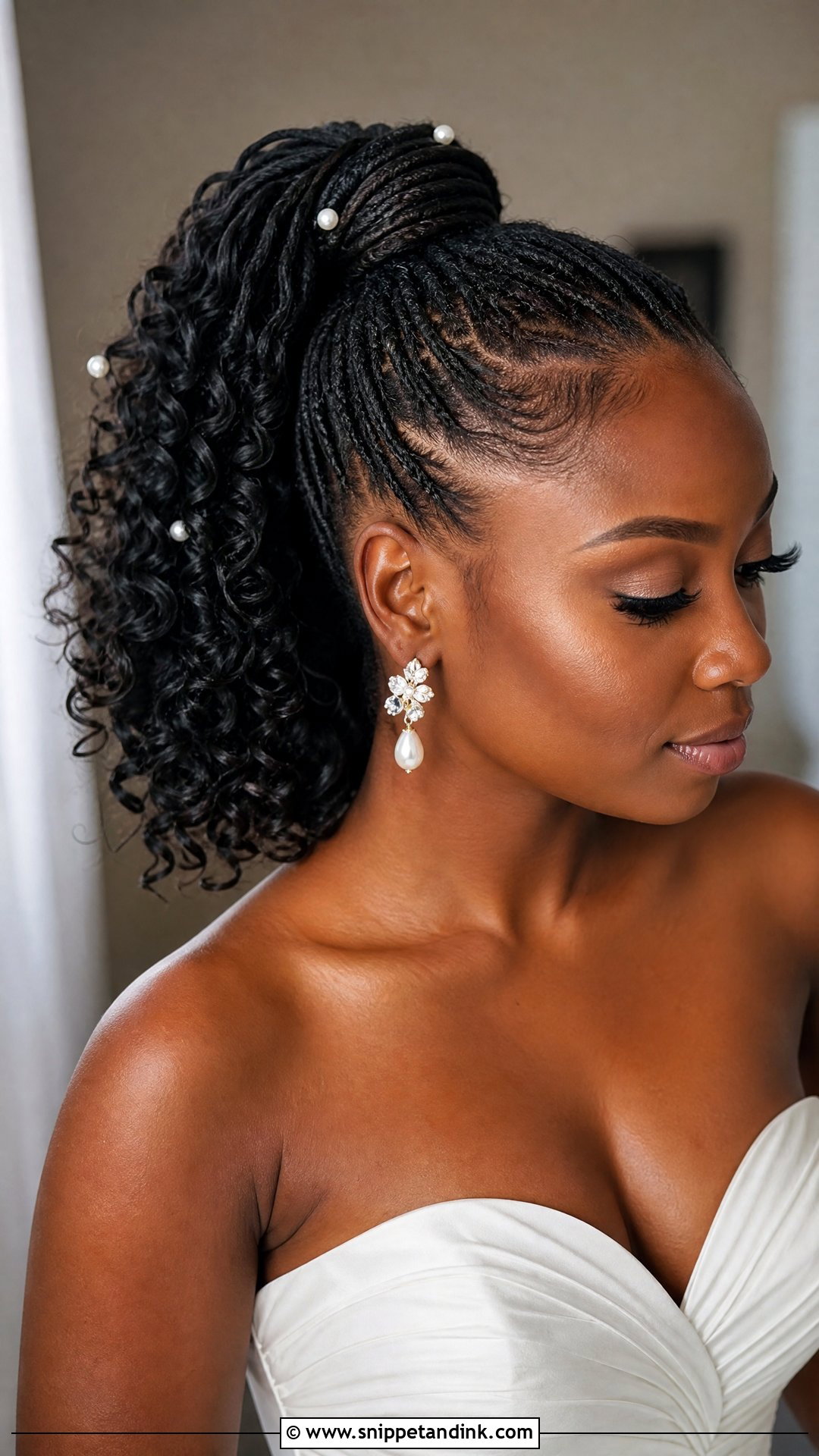
Ponytails get underrated at weddings. High reads bold and youthful; low reads softer and more formal. I wrap a few locs around the base to hide the band, and for heavy heads of microlocs I use two bands, one inside the other, so the tail doesn’t sag halfway through the reception. It stays secure on the dance floor in a way loose hair can’t. Curled ends, pearl pins or a jewelled tie make it bridal. Keep tension gentle near the hairline.
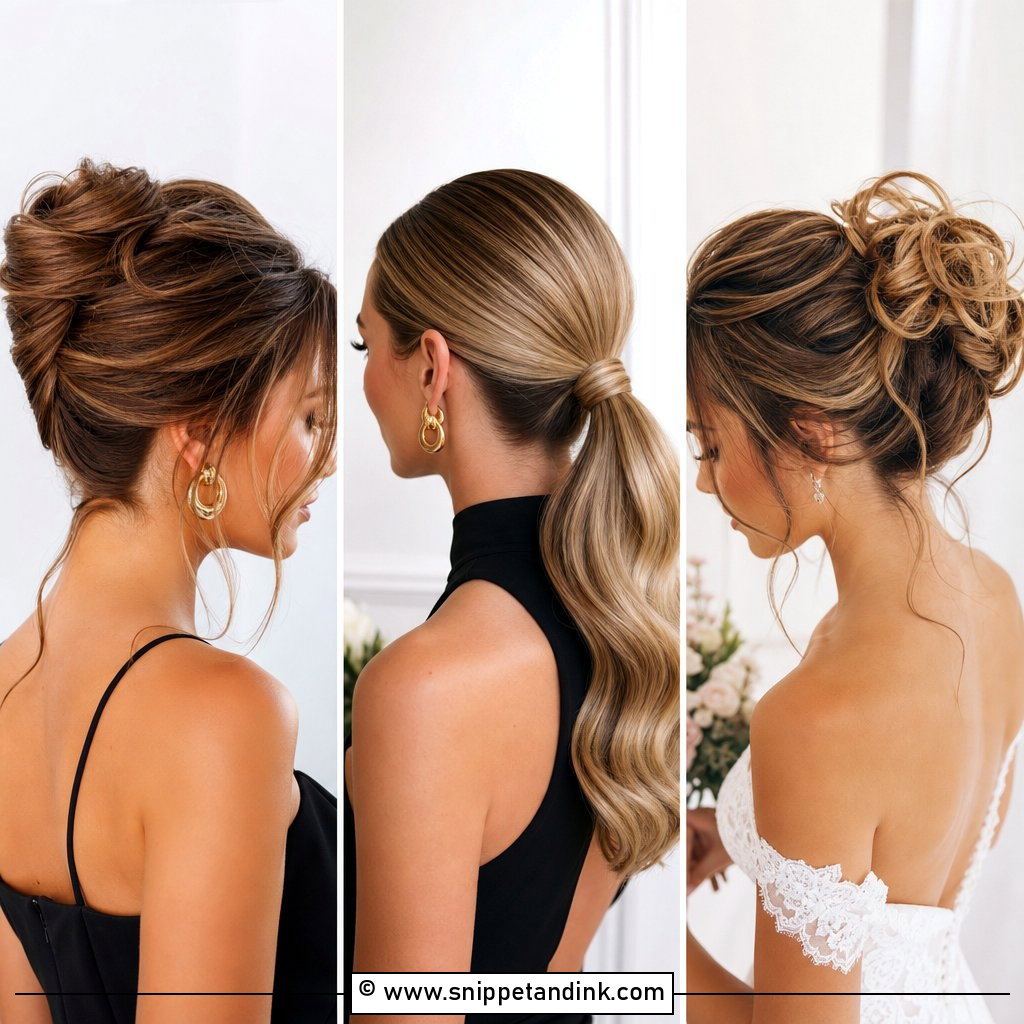
14. Wedding Microlocs French Roll
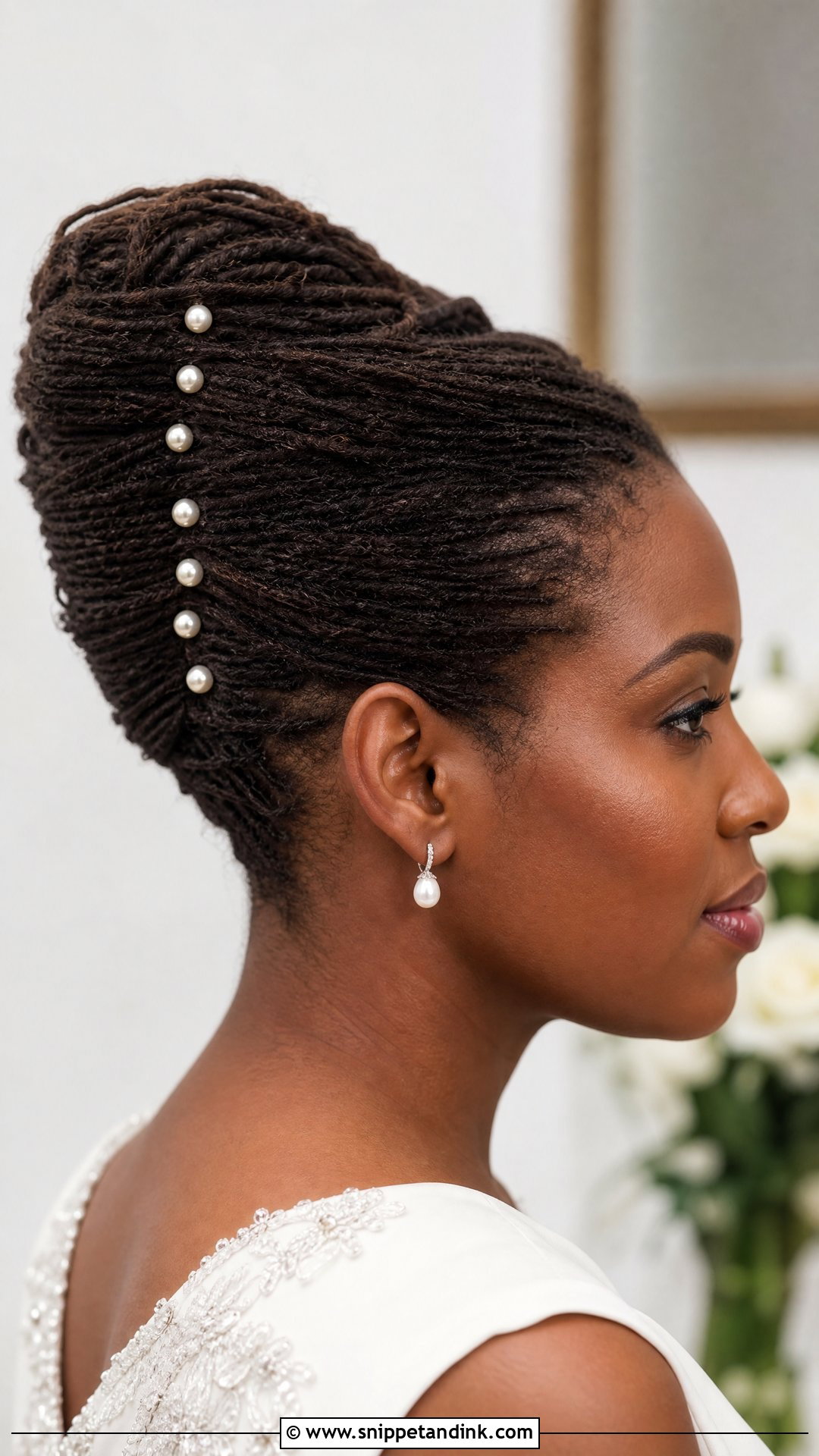
A wedding microlocs French roll is a classic vertical shape: locs swept upward and tucked into a roll at the back, giving a clean side profile. Formal weddings, vintage gowns, courthouse ceremonies and mothers of the bride all suit it. It holds well through a long day. How sleek it looks depends on loc maturity; newer microlocs are fluffier and give a softer, more textured roll, while mature locs lie smoother. Pearl pins along the roll or a small comb at the side complete it.
15. Wedding Microlocs Side Bun
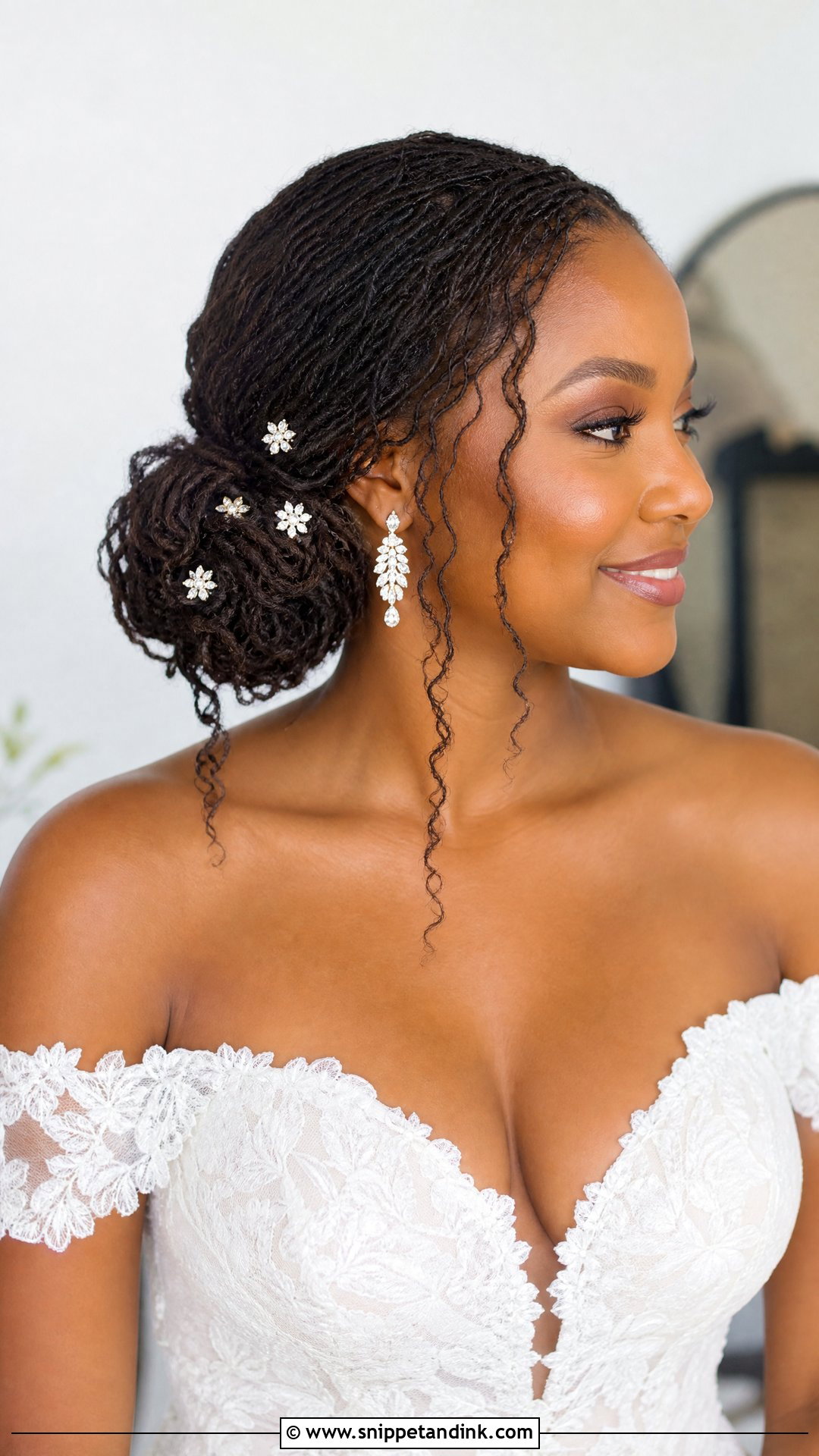
A side bun sits low behind one ear, so the style is visible from the front in portraits without wearing the locs down. Side parts, asymmetrical gowns and off-the-shoulder necklines suit it. The bun can be smooth, twisted, petal-shaped or loosely pinned. I always balance it with a few curled locs near the opposite cheek, otherwise the face looks lopsided in straight-on photos. Small pearls or gold pins finish it.
16. Wedding Microlocs Braided Updo
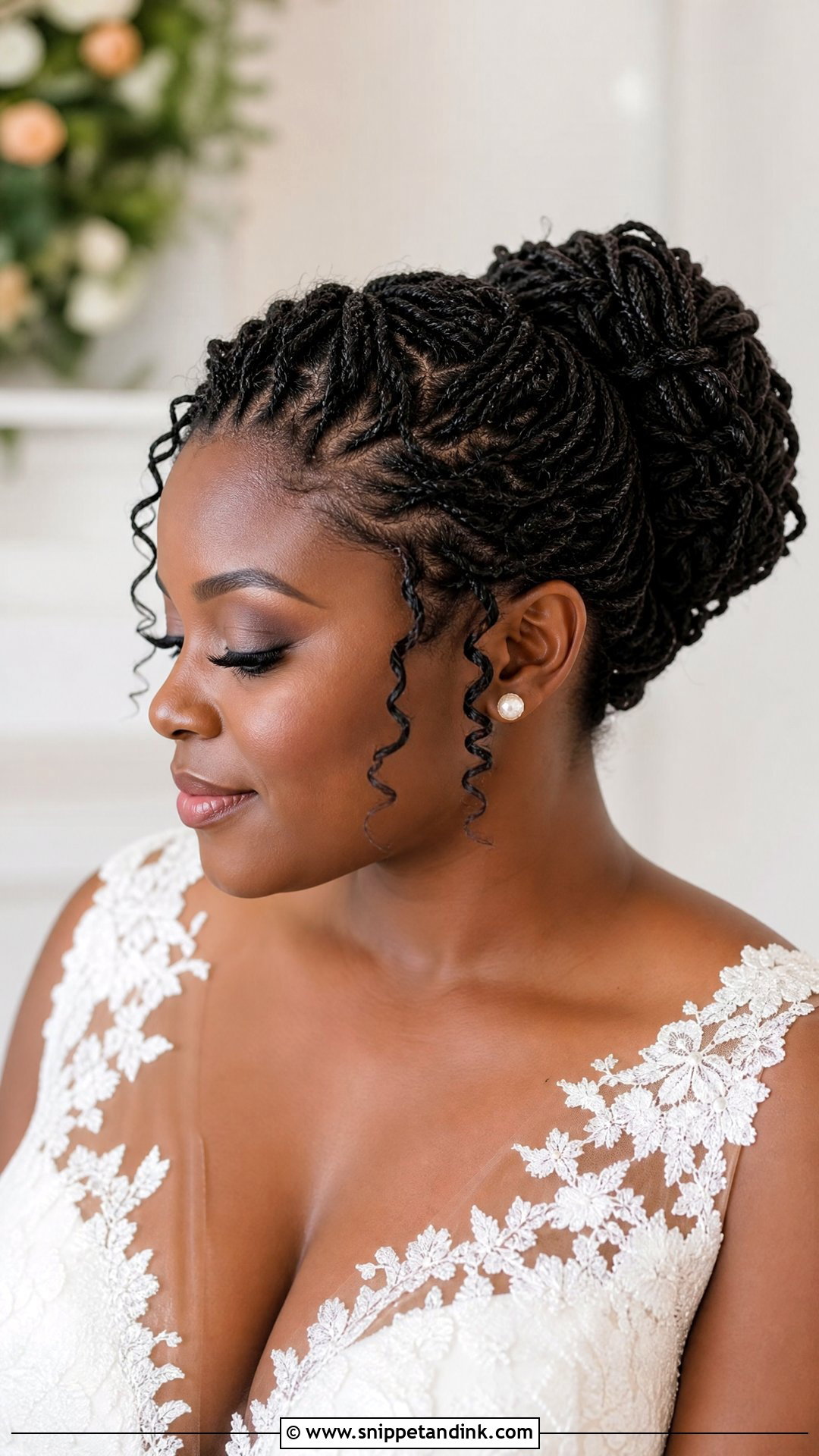
Braids give a microloc updo structure and grip. I braid along the front, sides or crown, then pin into a bun or tucked shape at the back. The braids do the holding, so the style lasts better in humidity and through destination and all-day weddings than pinned-only updos. Tight braids look regal and modern; looser braids look romantic. Curled face-framing locs, a fine comb or a few pearl accents soften it for a bride.
17. Wedding Microlocs With Flowers
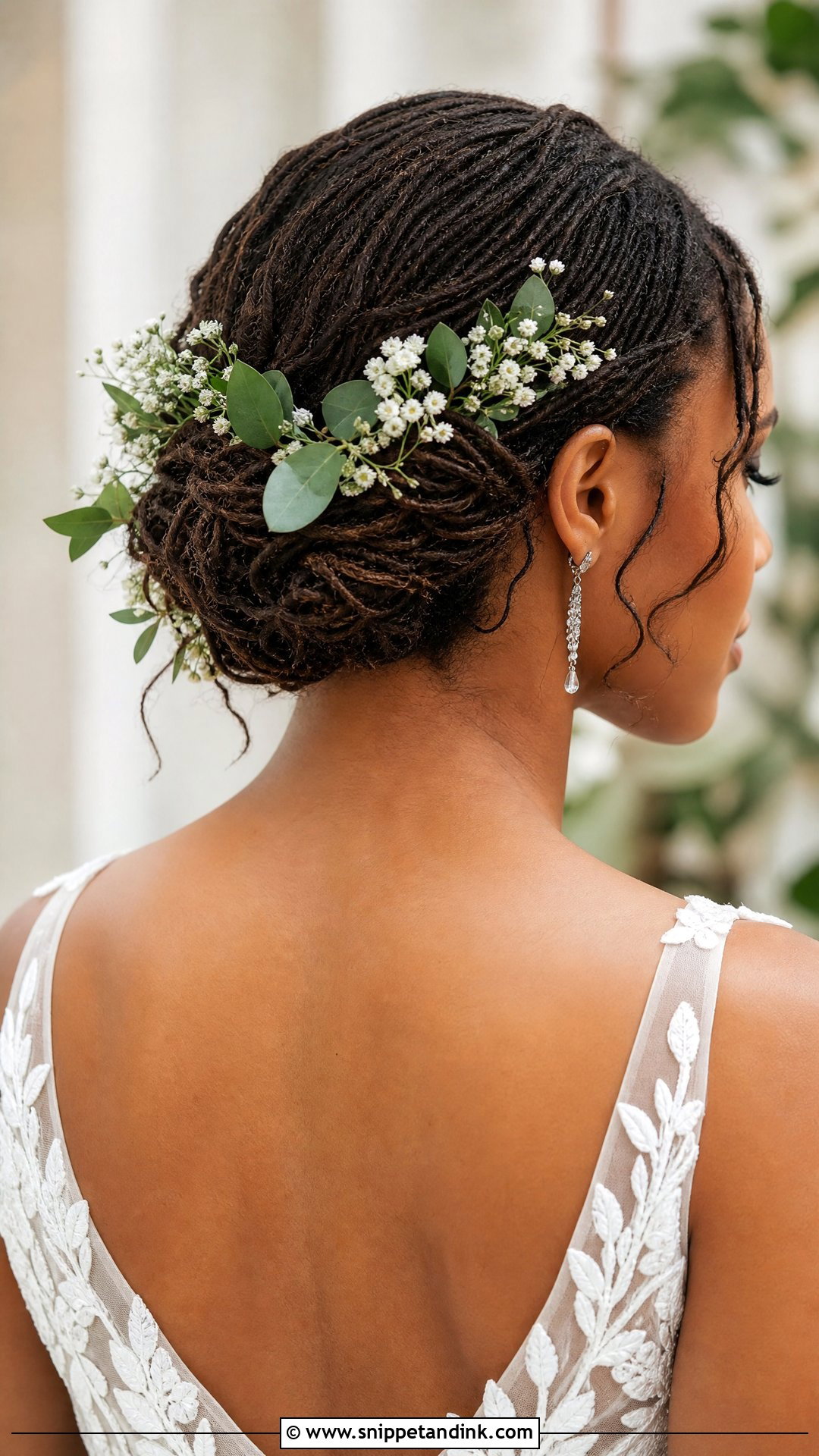
Flowers suit outdoor ceremonies. They can sit in a low bun, run through a crown braid, scatter across a half-up style or follow a side sweep. Match them to the bouquet but keep them small so they don’t swamp fine locs: baby’s breath, tiny orchids, spray roses and greenery work. I wire stems or pin them at an angle into a braided anchor; flowers pushed straight into loose microlocs fall out within an hour. A few accents look more natural than covering the whole style, and real flowers will wilt by evening, so keep them out of direct sun.
18. Wedding Microlocs With Hair Jewelry
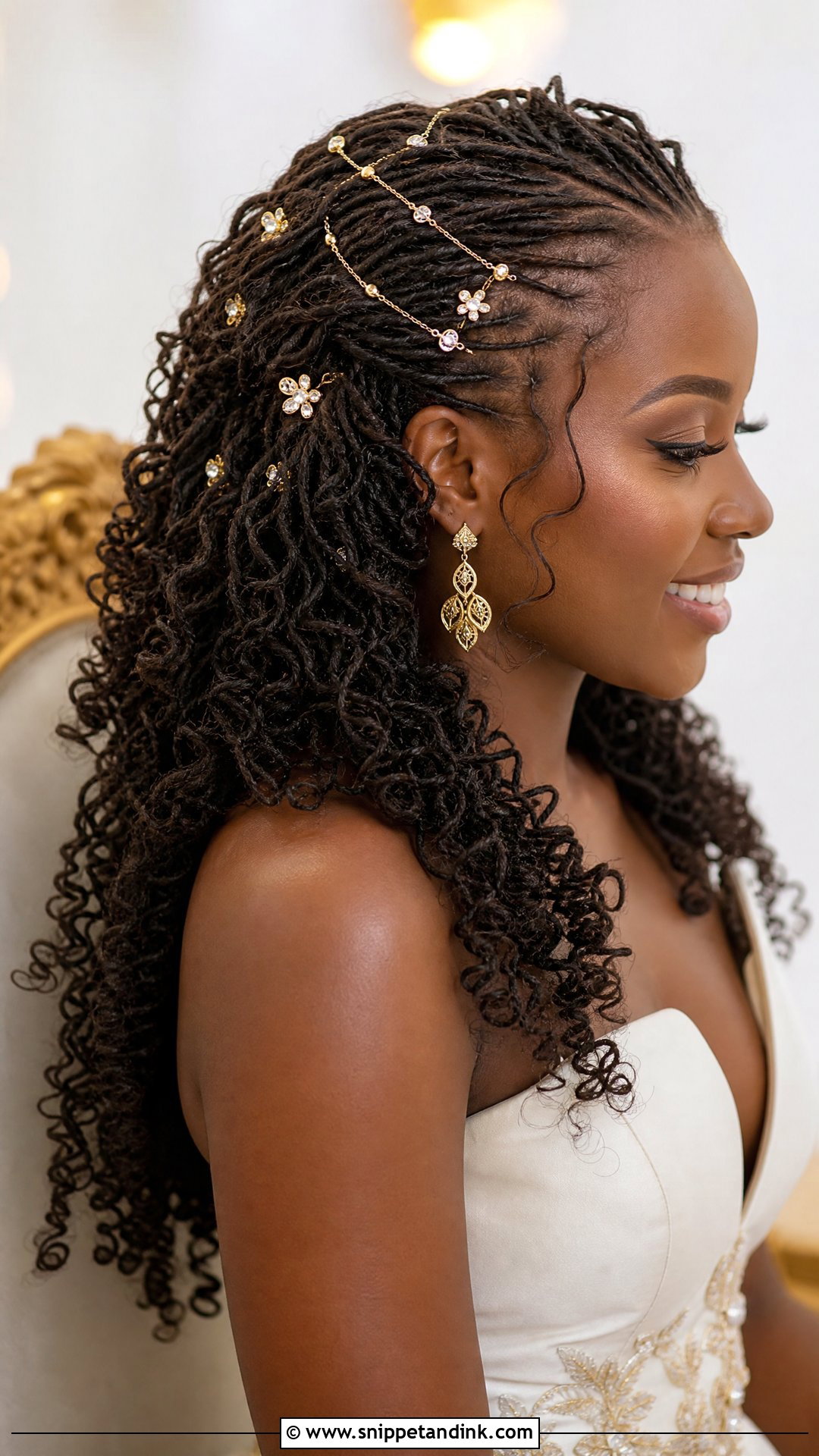
Hair jewellery adds sparkle without changing the style underneath. Hair chains, cuffs, crystal pins, pearl vines and fine combs all dress up buns, ponytails, half-up looks and loose curls. Match it to the dress: a detailed gown wants smaller pieces, while a simple dress can carry one strong accessory. Microlocs give lots of placement options because there are so many small sections to hook into. Steer clear of anything heavy or sharp; lightweight pieces sit comfortably and don’t drag on individual locs over a long day.
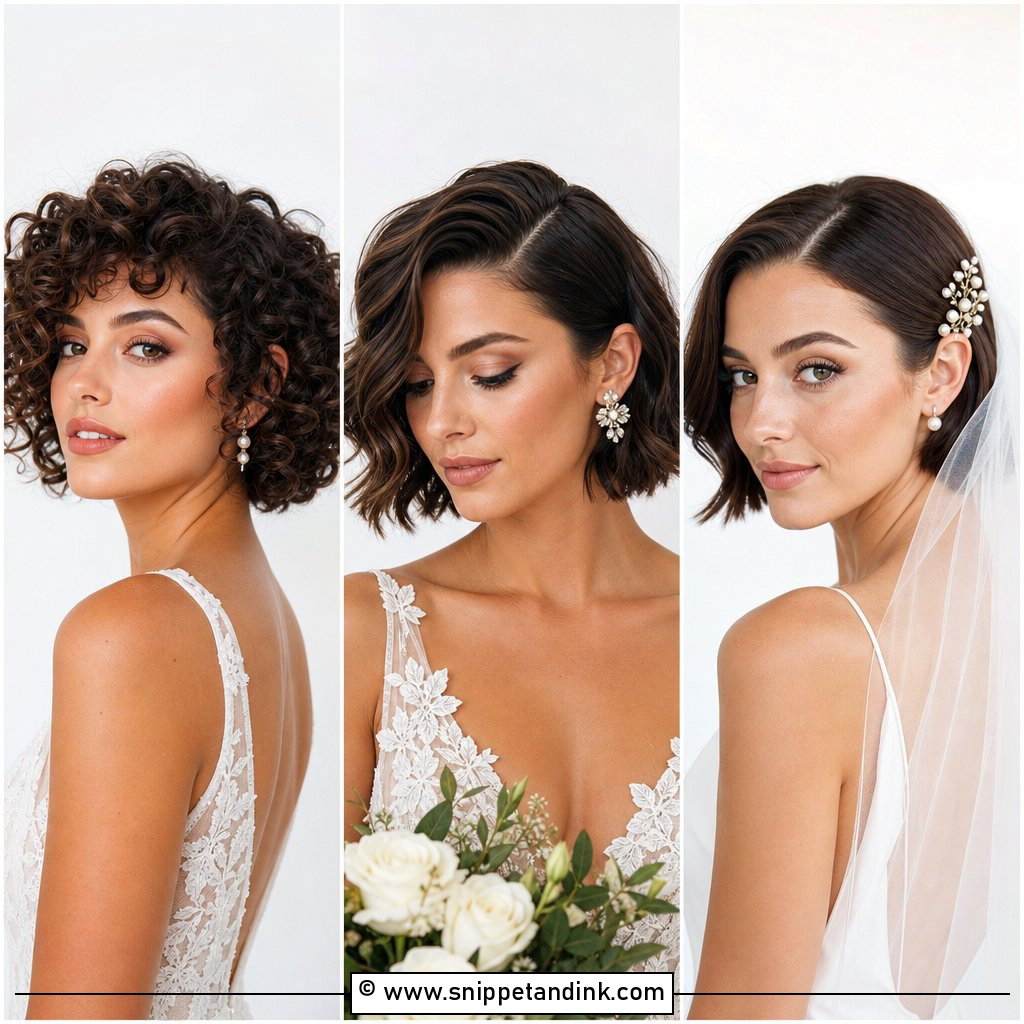
19. Wedding Microlocs Bob
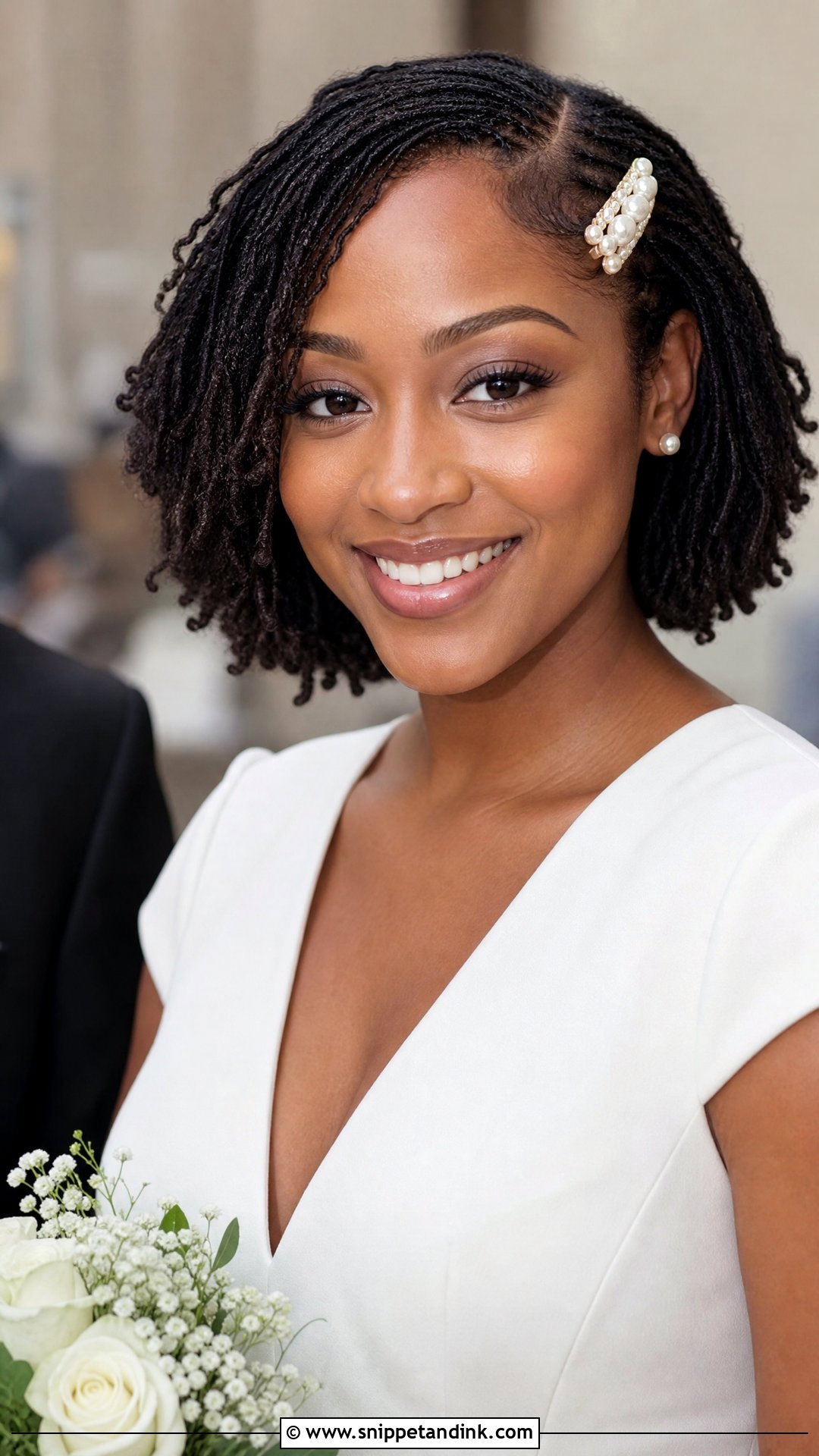
A wedding microlocs bob is the easy answer for shorter locs, no extensions or forced updo required. It can be worn with a side or middle part, tucked sides, curled ends or a small pinned-back section. It suits statement earrings, simple gowns and courthouse weddings. Soft curls at the ends or a pearl clip on one side make it bridal. Parting shows up in every close-up with a bob, so a clean retie before the wedding matters more here than with an updo that hides the roots.
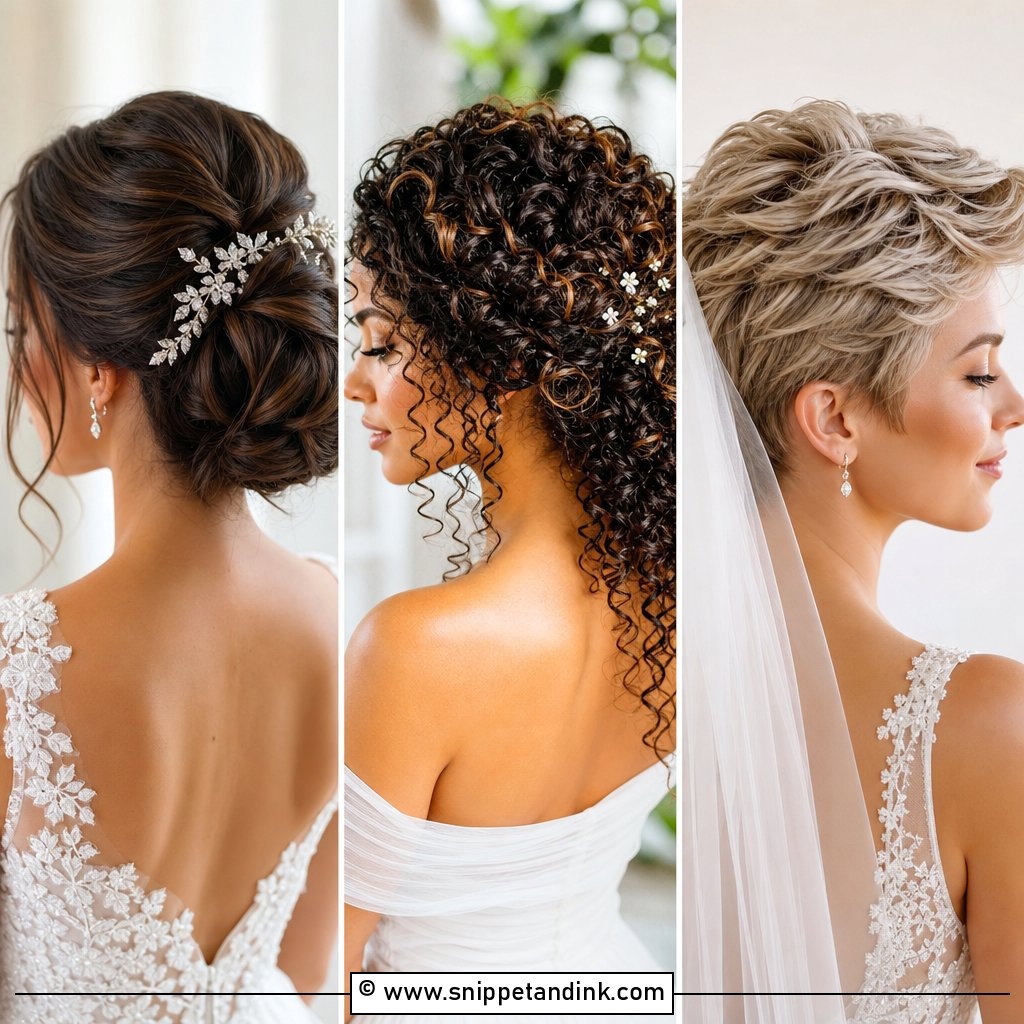
20. Wedding Microlocs Down With Accessories
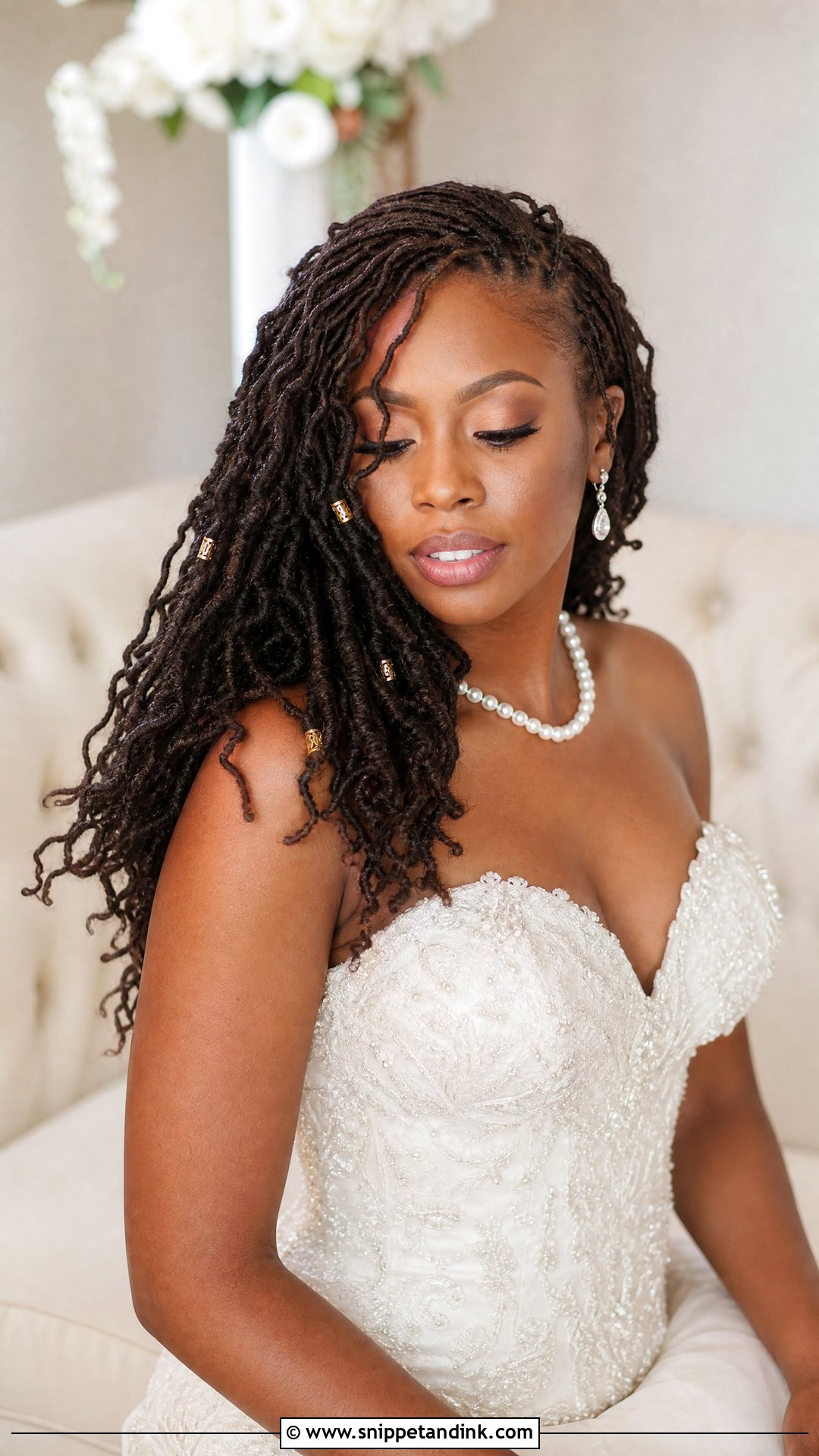
Wearing your locs down is the most honest version of your everyday hair. If you love them loose and don’t want an updo, I’d style them with a defined part, soft curls or a braid-out pattern, then add pins, cuffs, flowers or a fine headpiece. Long microlocs suit this best because the length becomes part of the look. Keep accessories light and evenly placed, and consider a soft side sweep or a few face-framing pieces for photos. One practical note: loose locs are warm on the neck, so for a hot outdoor wedding, have a clip ready for the reception.
Pinning Hundreds of Small Locs Without Pain by Dinner
The most common complaint I hear about wedding updos on microlocs isn’t the look. It’s the ache by the third hour. A full head of microlocs carries a lot of weight, and if that weight hangs off a few pins at the crown, you’ll feel it.
- Spread the load. I pin the style into several anchor points, often small braids or twists, instead of one bun holding everything.
- Use the right pins. Long, sturdy bobby pins and U-pins slide along a loc and grip; short flimsy pins slip out of fine locs.
- No tension at the edges. Your hairline should feel the same at the end of the day as it did at the start.
- Tell your stylist if anything pulls during the trial. A single tight pin becomes a headache over twelve hours.
At the end of the night, take pins out slowly, one at a time, and don’t drag a comb through. Rinse any product out within a day or two so it doesn’t build up inside the locs, and give your scalp a rest from tight styles for a while afterward.
Comfort and Hold Matter More Than the Shape You Pick
Microlocs offer far more range than most people expect, from a clean low bun or dramatic high bun to a half-up style, curls worn down or a braided updo. The right one depends on your dress, venue and taste. Whichever you choose, it has to look good in photos and still feel comfortable through the ceremony, reception, hugs and dancing. Book a trial if you can, bring your veil and accessories, and work with a stylist who understands loc care and won’t put your edges under tension for the sake of a sleek finish.
You'll Like These Ideas:


Leave a Reply