
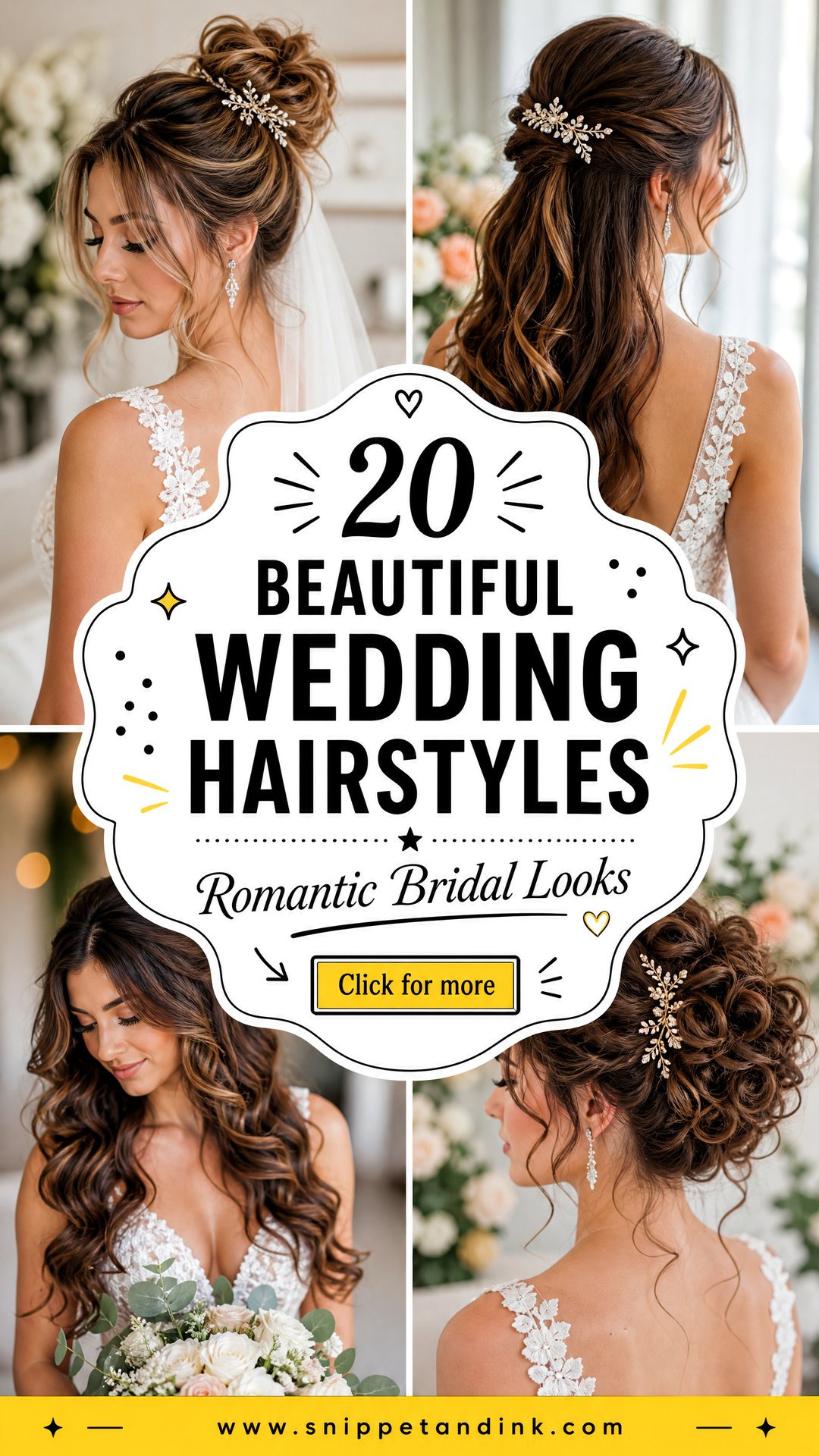
Wedding hair has a long day ahead of it: a veil going on and coming off, hugs, a car ride, and a dance floor that gets warm by ten. When I sit down with a bride for the first time, I care less about the trend and more about what her hair will be doing by hour eight. The styles below run from low buns and sculpted waves to braids, ponytails and short cuts, and each one has a hair type it loves and one it fights. Your neckline, your veil and the forecast will shorten the list quickly. These wedding hairstyles are made for saving, so screenshot the ones you like, back views included, and bring them to your trial.
Your Hair Density Narrows This List Faster Than Your Dress
Before you fall for a picture, look at the hair in it. Most inspiration photos show thick hair, often with extensions added, and the same style on fine hair needs a different build. When I meet a bride, I hold a section of her hair between my fingers and feel its weight, how slippery it is and how quickly it takes a curl. That tells me more than any mood board.
Fine or slippery hair
It holds a shape best when it was washed the day before, not that morning. Updos built on a small anchor ponytail outlast loosely pinned styles, and braids help because they give pins something to grip. A sleek bun and Hollywood waves are realistic. A big messy bun usually needs padding or a weft.
Thick or heavy hair
Weight is the problem, not volume. Heavy hair pulls a high bun backward and drops curls quickly, so I work in smaller sections and use more pins than feels necessary. Low buns, chignons and half-up looks sit comfortably. A high bun needs a solid base, or the pull on your scalp starts to ache by dinner.
Curly, coily and short hair
Work with your texture instead of straightening it for one day; the curly updo and worn-down curls below both start from a good wash-and-define. For bobs and pixies, the cut does most of the work and accessories carry the rest.
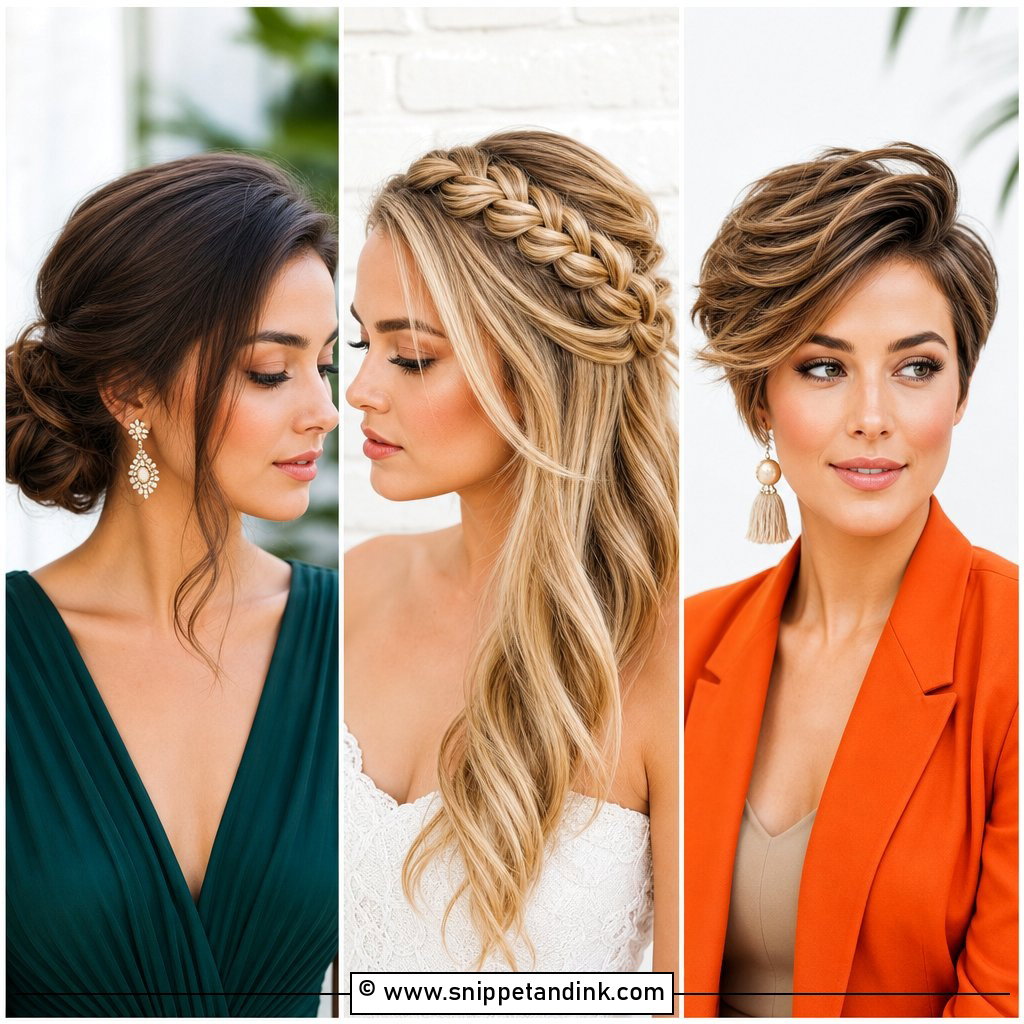
1. Low Bun Wedding Hairstyle
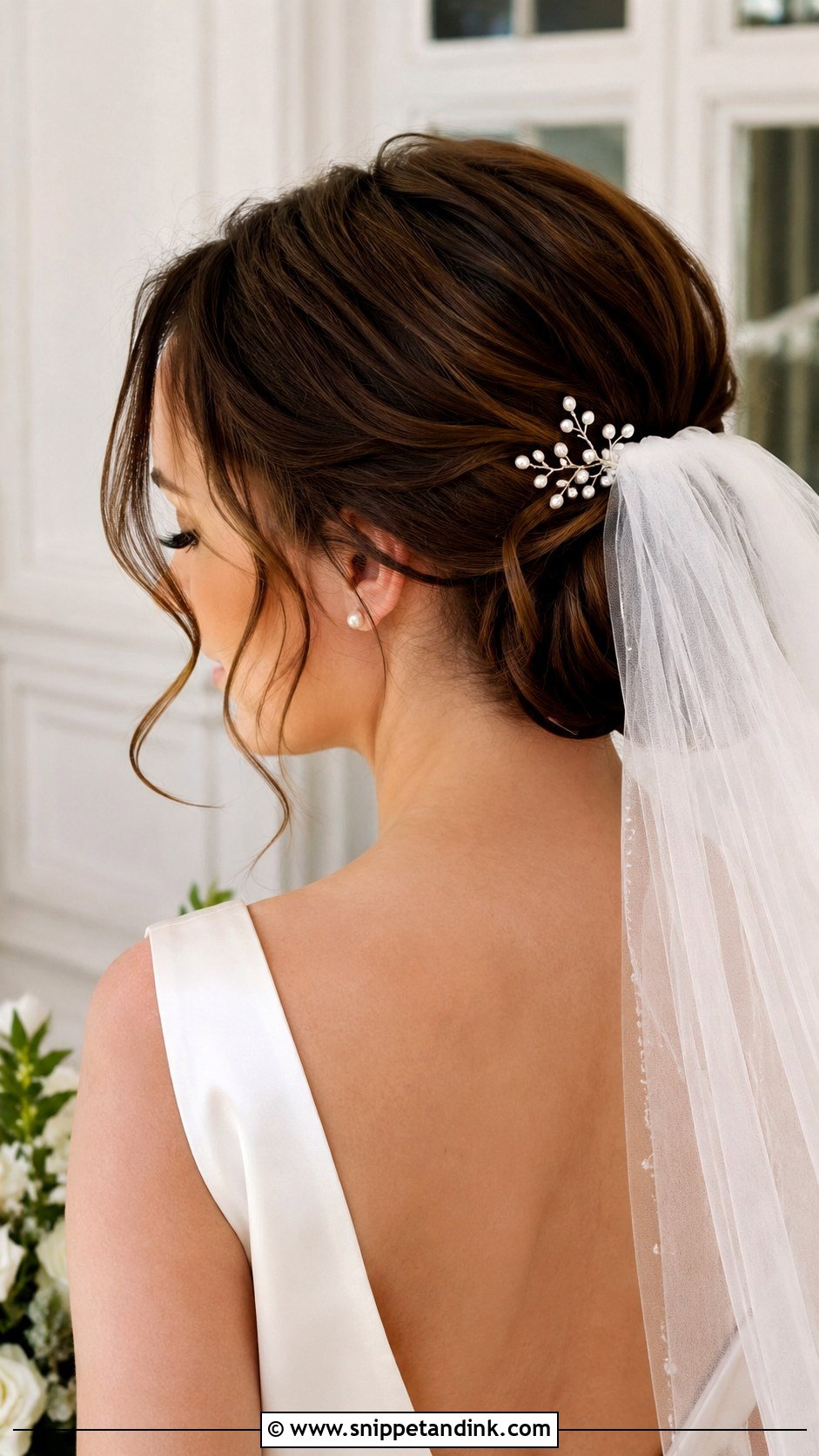
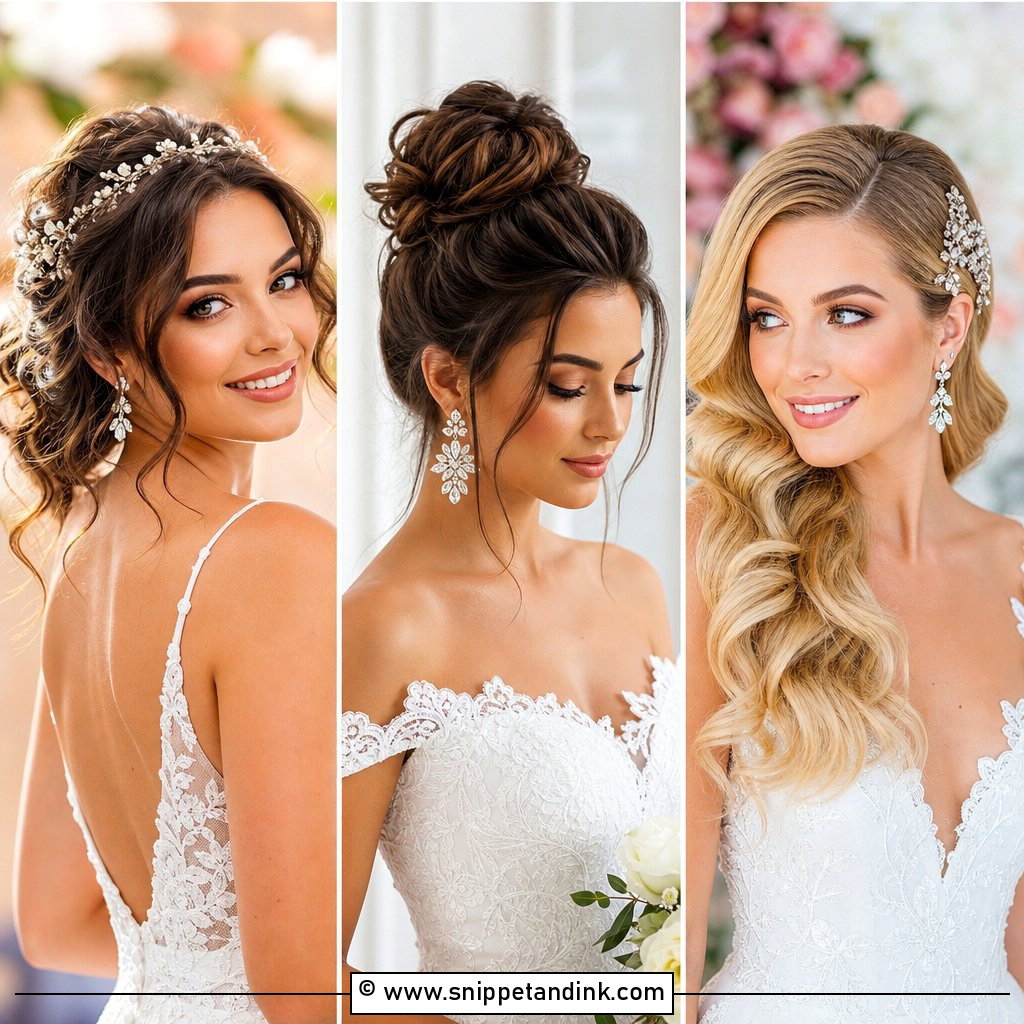
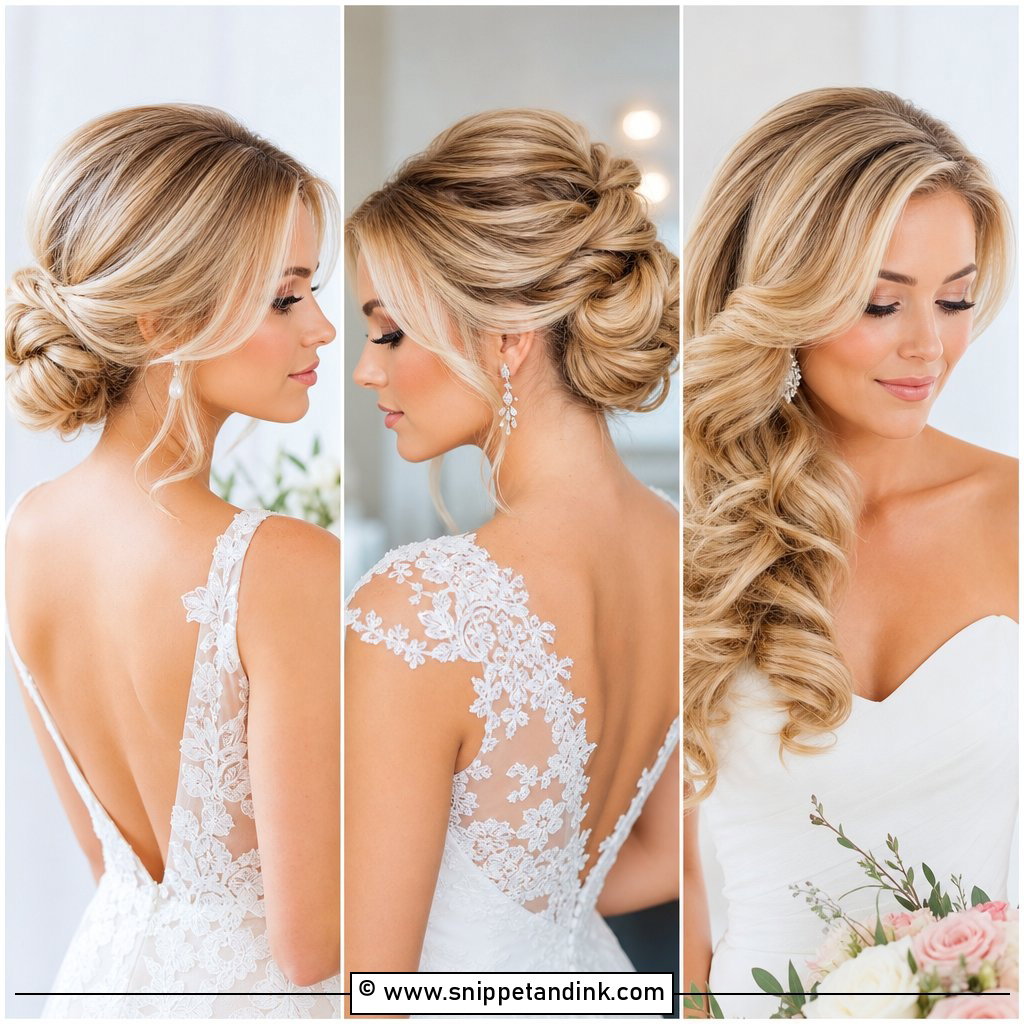
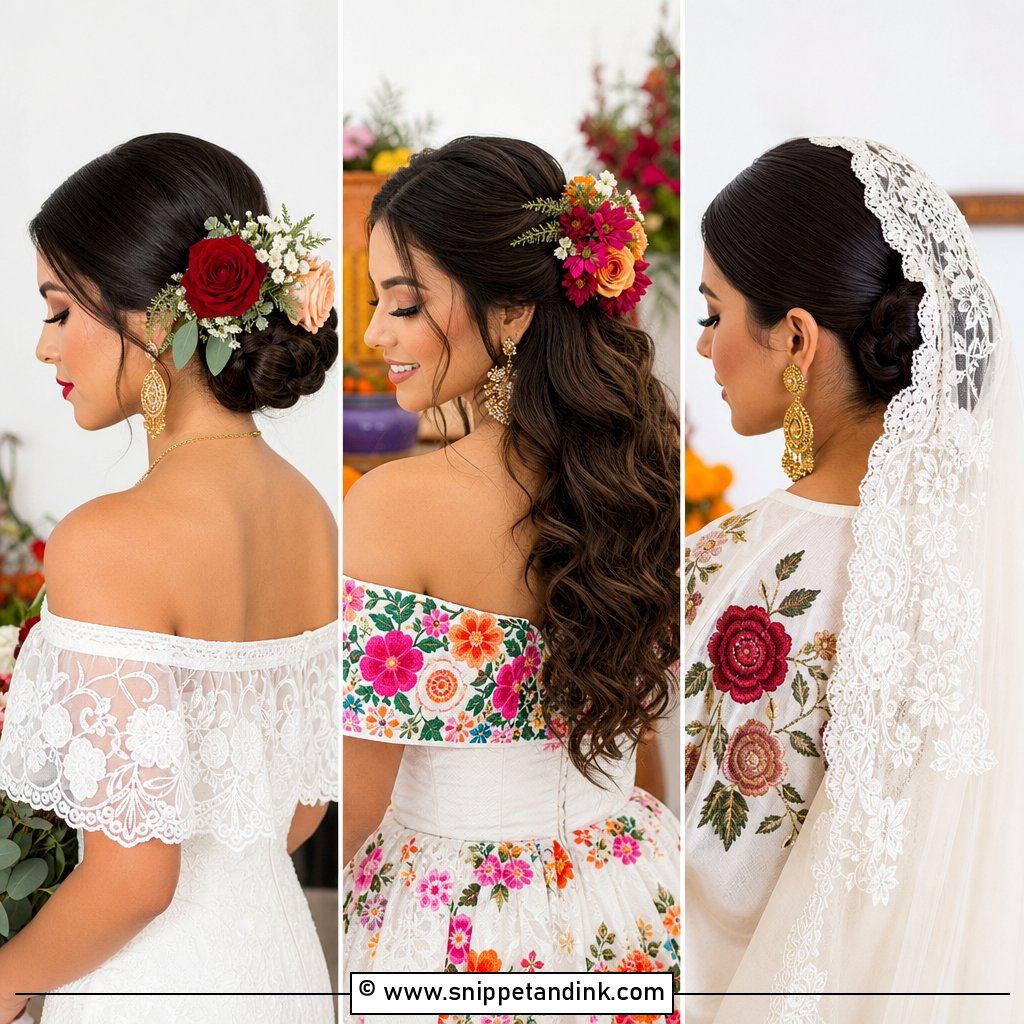
Most of my brides end up here, and for good reason. A low bun sits at the nape, so a veil comb can slide in above it without any rebuilding, and it stays clear of strapless, square and high necklines. I build it on a small anchor ponytail or a criss-cross of pins first, because a bun pinned straight onto loose hair starts sagging by the speeches. Ask for a little lift at the crown and a couple of face-framing pieces. Sleek reads ballroom; a bit of texture reads garden.
2. Sleek Bun Wedding Hairstyle
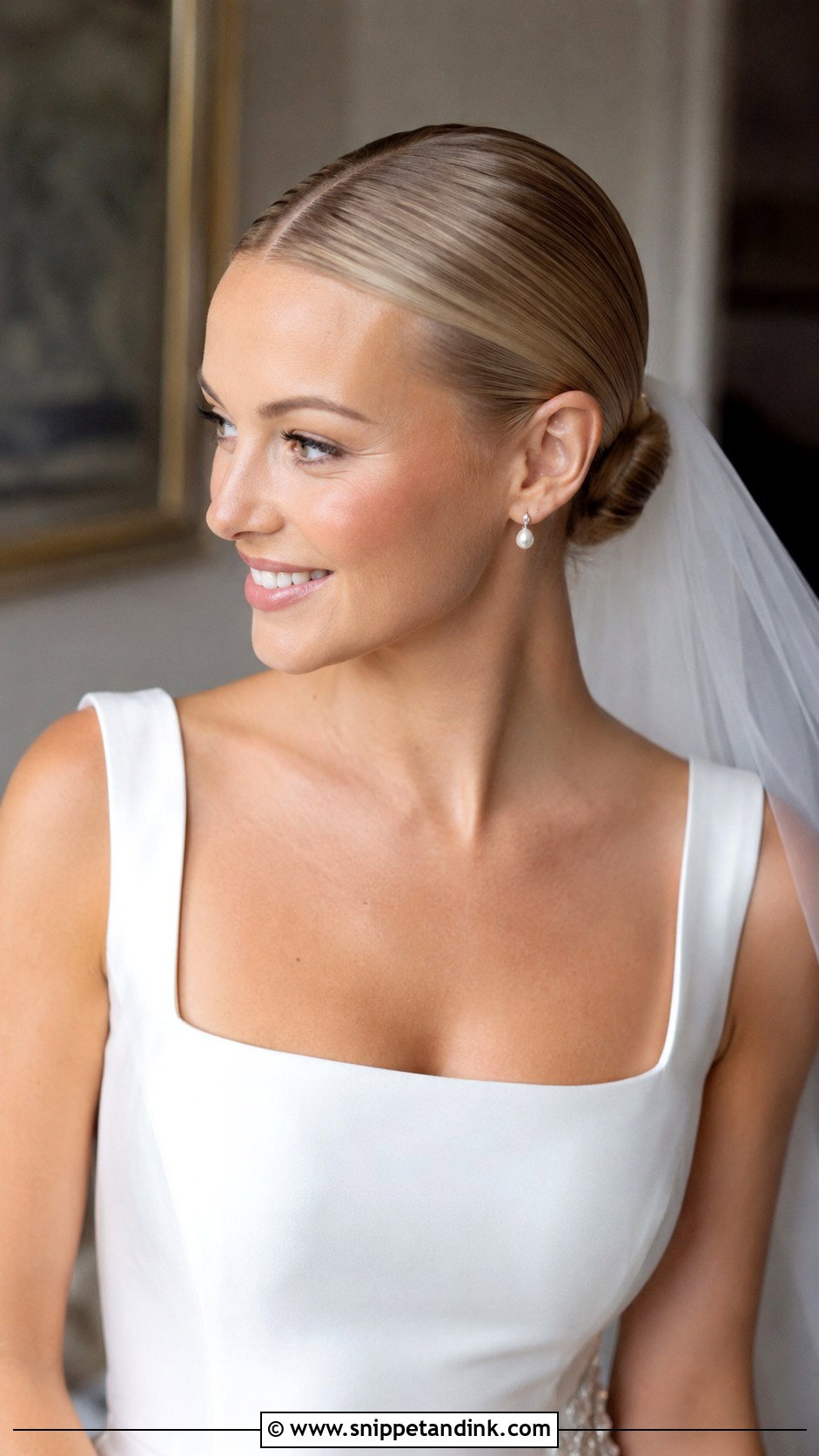
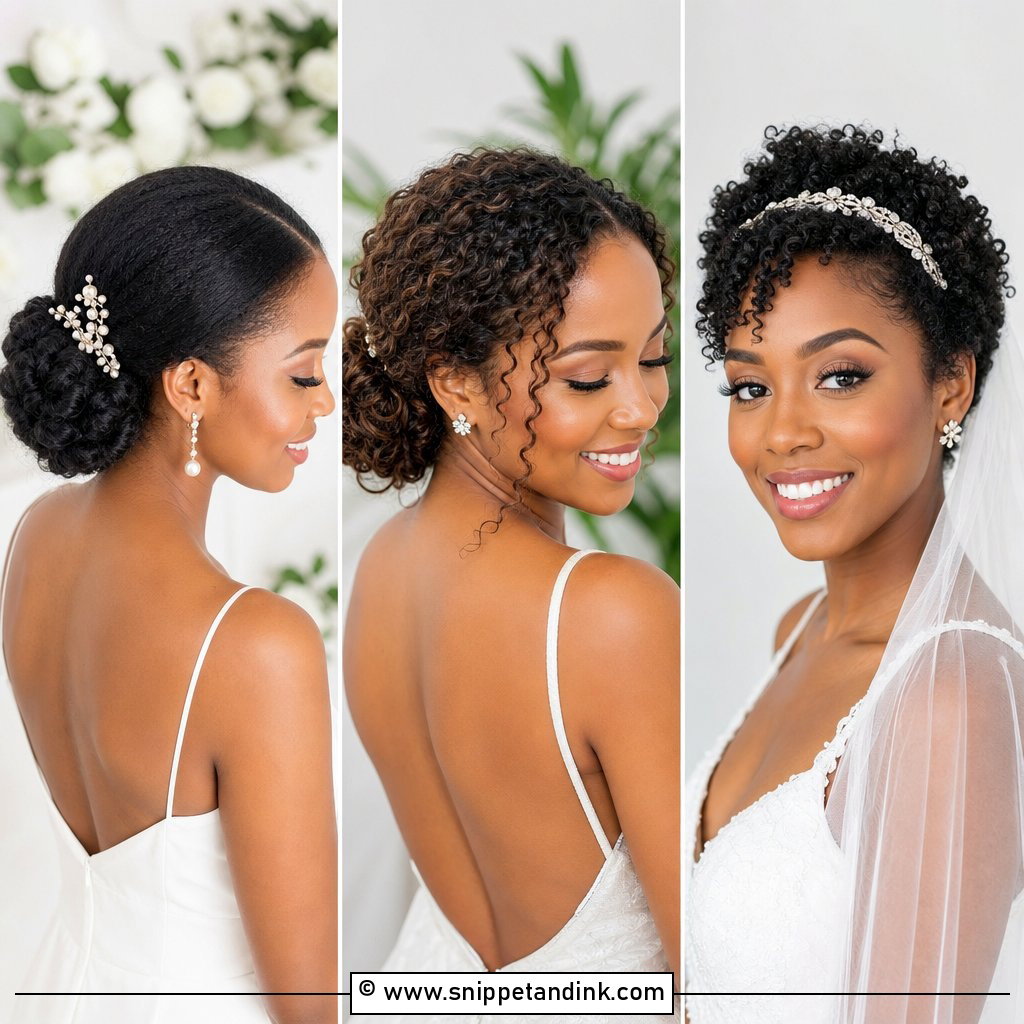
A sleek bun lives or dies on shine, and shine shows every flaw. I blow-dry the hair completely smooth before I gather anything, because one kinked section near the hairline will catch the light in every close-up. It suits structured bodices and minimalist gowns since the hair stays quiet next to the dress. A center part looks balanced; a deep side part softens it. Humidity is where it earns its place, although if you have a lot of short baby hairs that frizz, they need gel and patience. It barely needs decoration.
3. Messy Bun Wedding Hairstyle
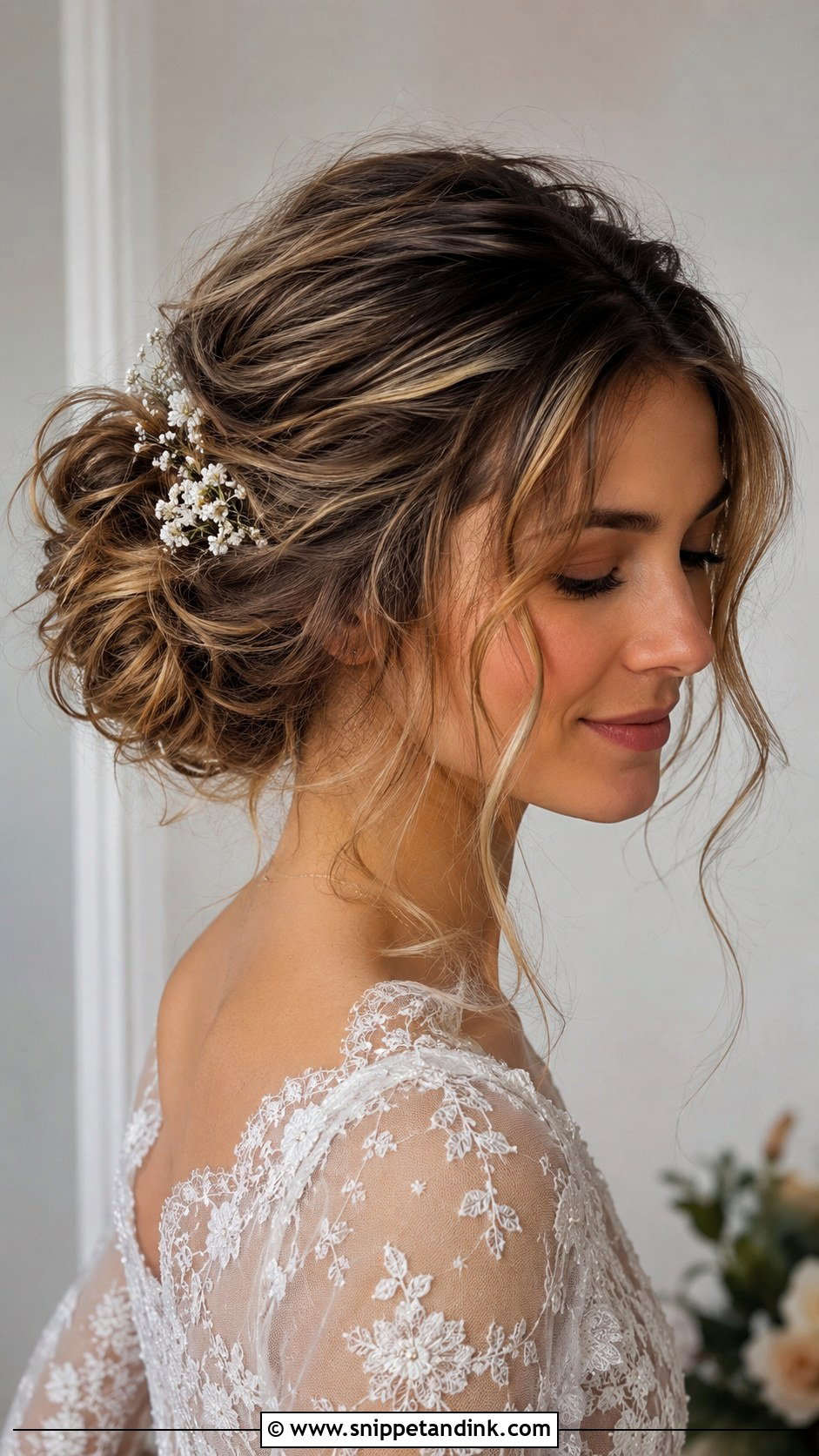
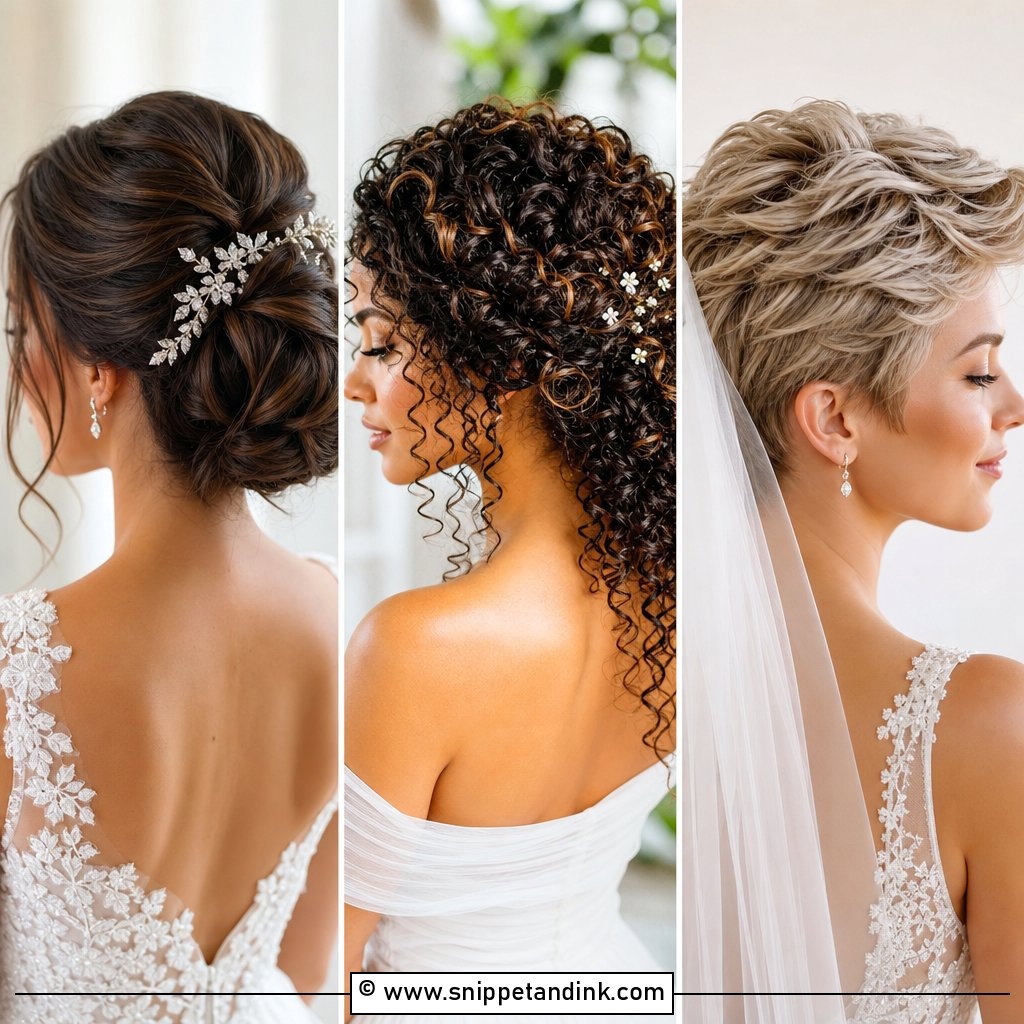
The word messy worries me a little, because a bun that is actually messy falls apart before dinner. What brides usually mean is soft: pinned curls, loose pieces around the face, and volume that looks unplanned. Underneath, I still set a firm base with a small elastic and a few crossed pins, and the softness gets pulled out on top of that. It sits naturally with lace and flowing gowns at an outdoor venue. I’d skip it on very fine, freshly washed hair, which slides out of loose pins within an hour.
4. Classic Chignon Wedding Hairstyle
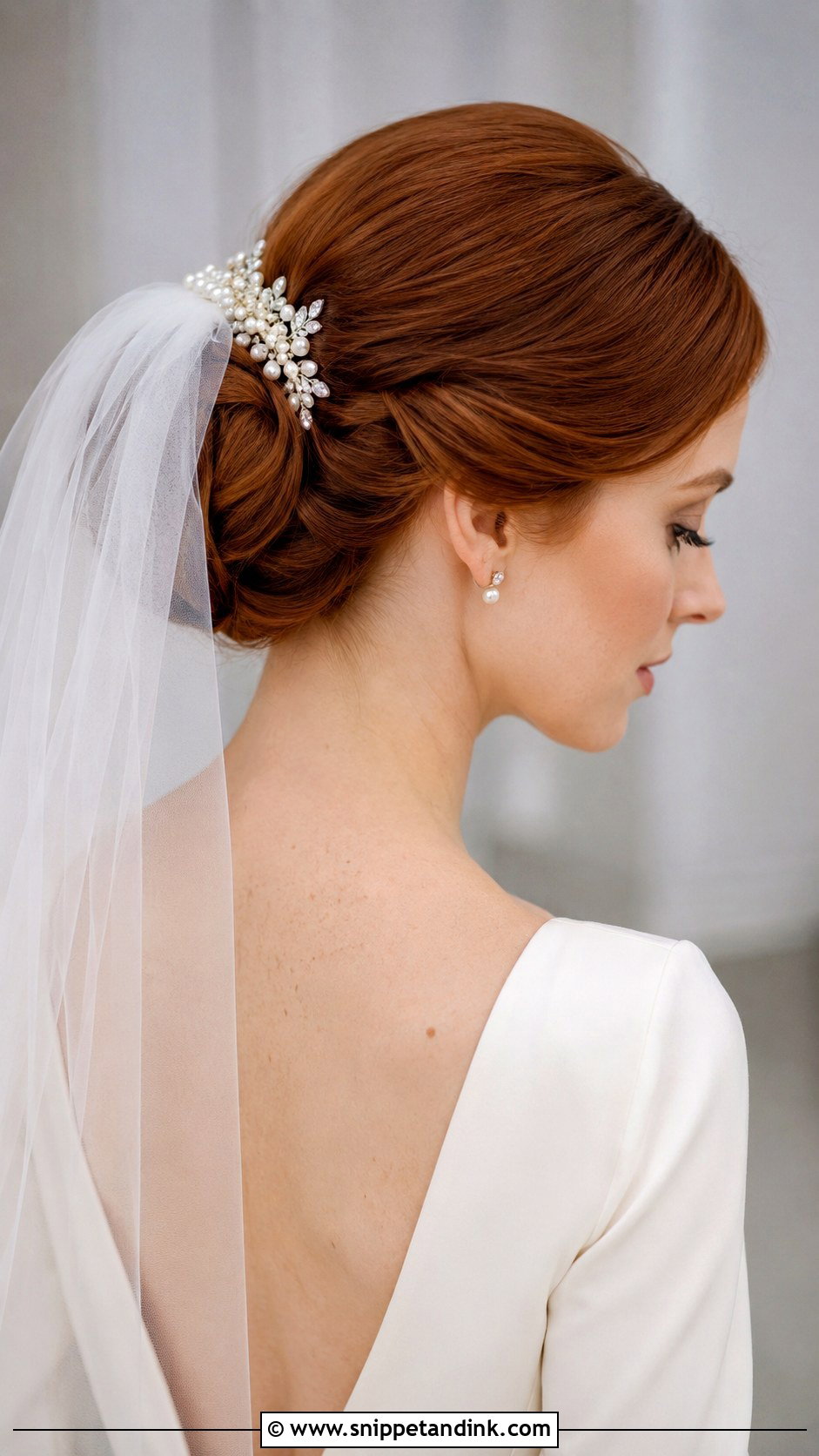
A chignon is a rolled or tucked shape at the back of the head, and its side profile is what you’ll see in half the ceremony photos, so I always check it from the side in a hand mirror before I call it finished. It takes a veil comb easily. Medium to long hair works; shoulder-length hair usually needs a clip-in weft or a small pad to give the roll enough body. Keep it smooth for a formal ceremony or loosen a few sections for something softer, and stop at a pearl pin or one simple comb.
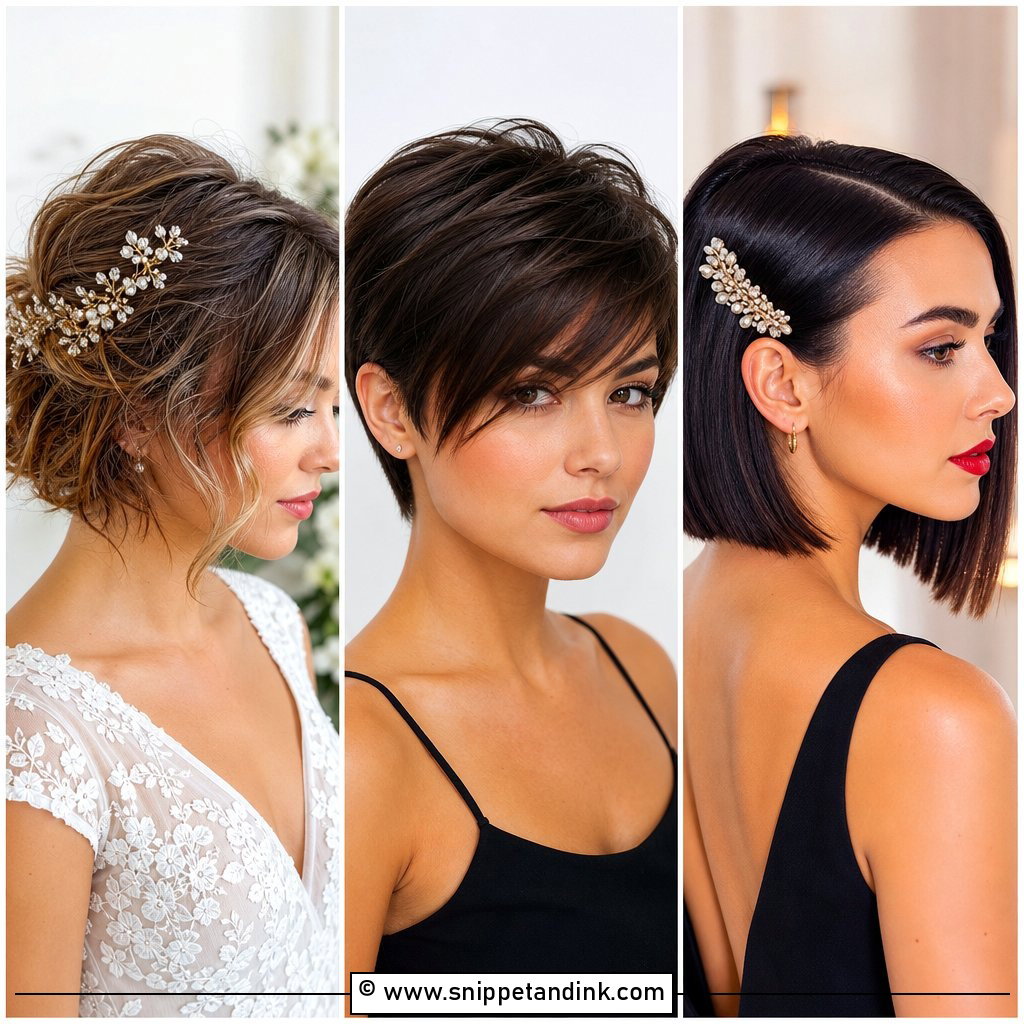
5. Textured Updo Wedding Hairstyle
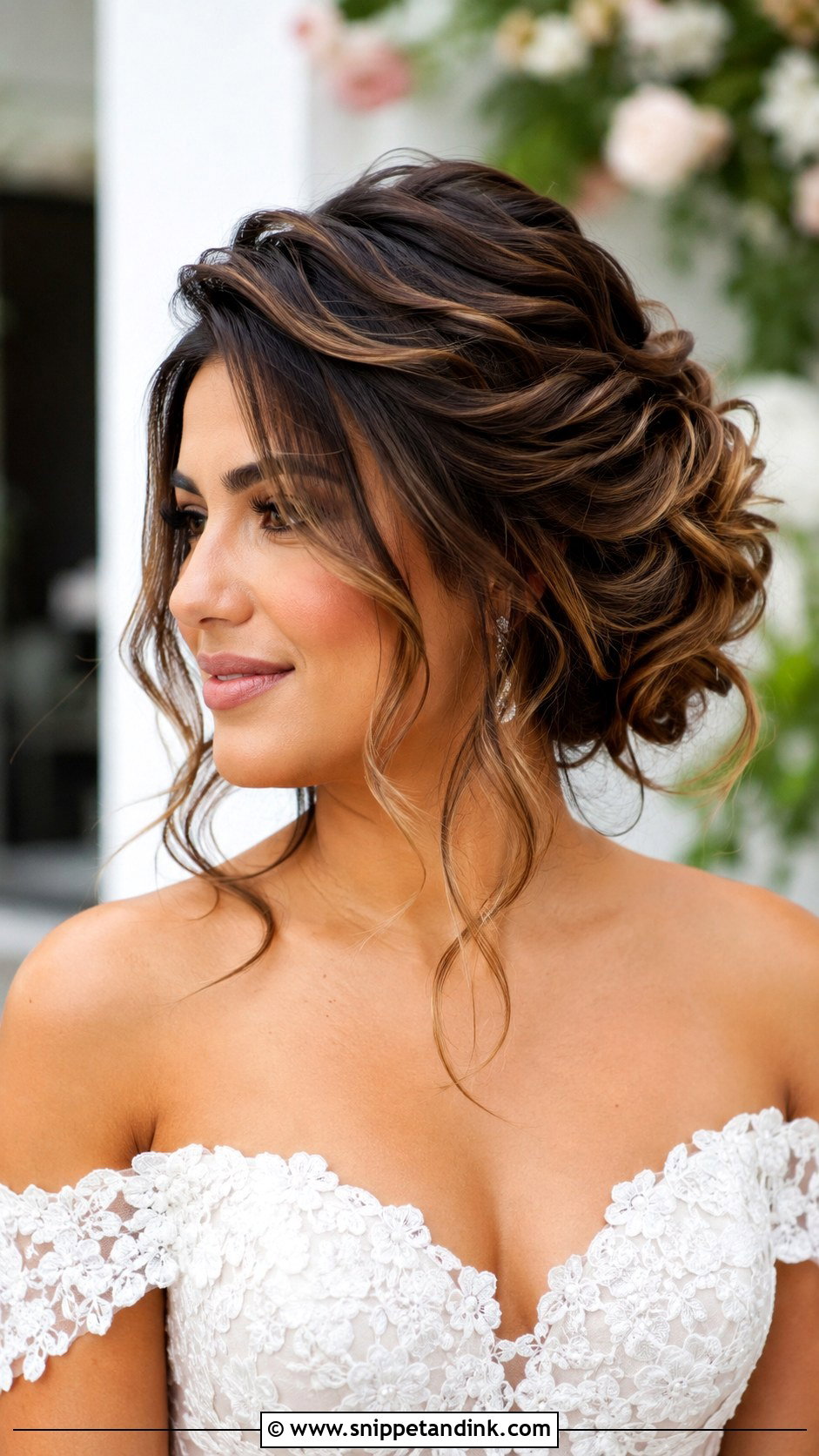
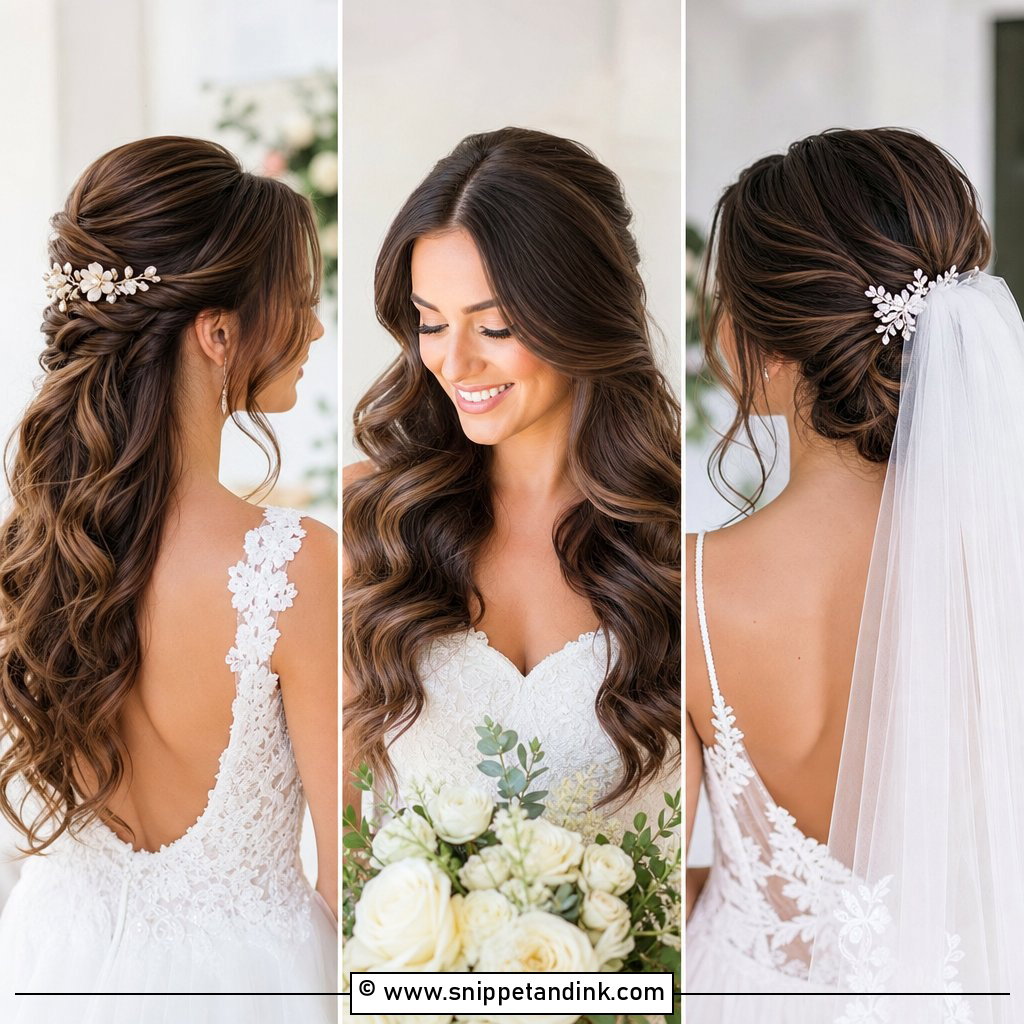
Textured updos are my favorite way to show off balayage or highlights, because the pinned twists turn the color in different directions and it reads as depth on camera. The style is built from curled sections pinned loosely through the crown, somewhere between a polished bun and a relaxed one. The risk is the back: soft at the front can look accidental at the back if the sections aren’t balanced. During the trial I take a photo of the back on the bride’s own phone so she can judge it too. Combs and small floral pins slot into the gaps without fuss.
6. Braided Updo Wedding Hairstyle
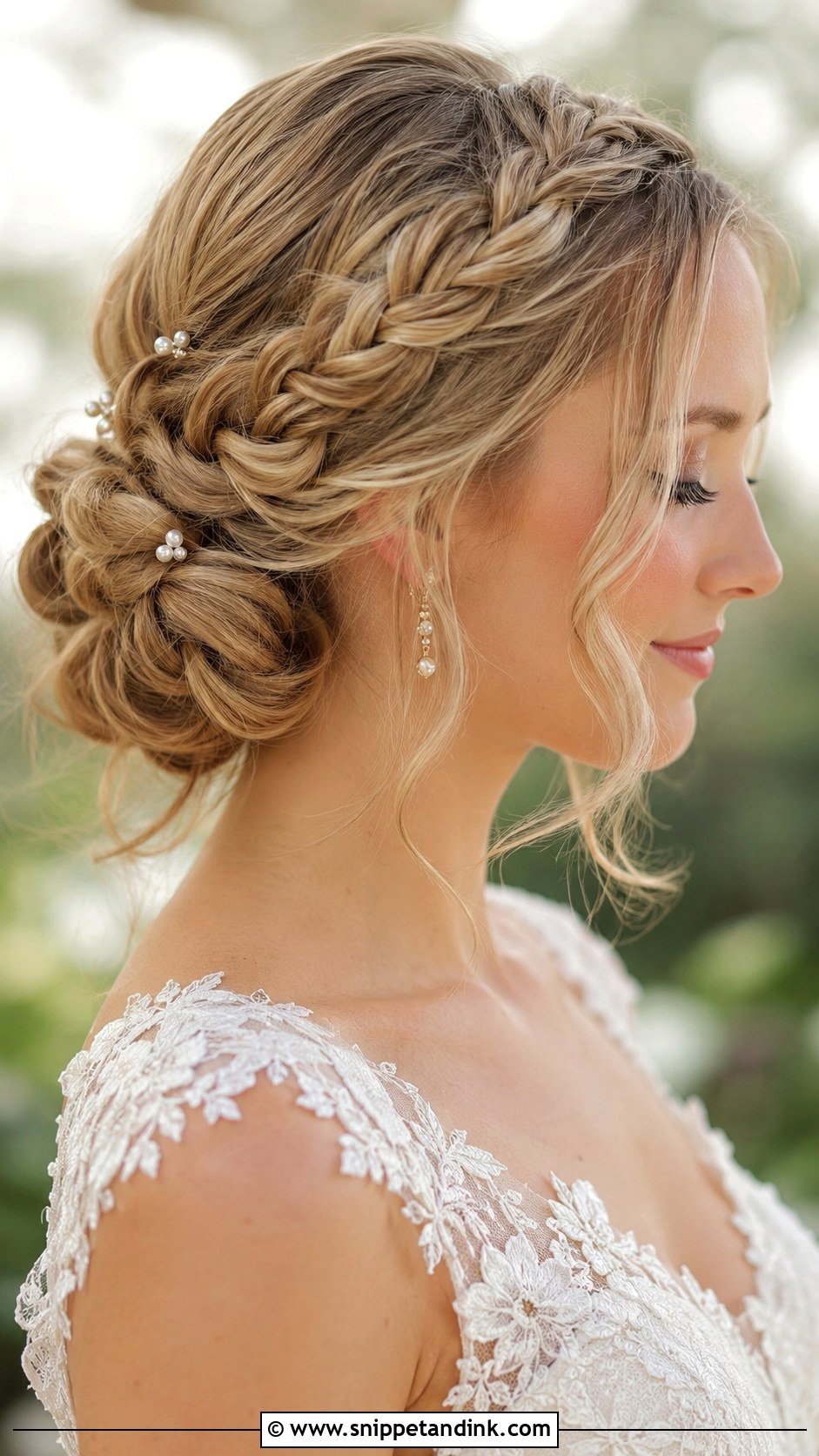
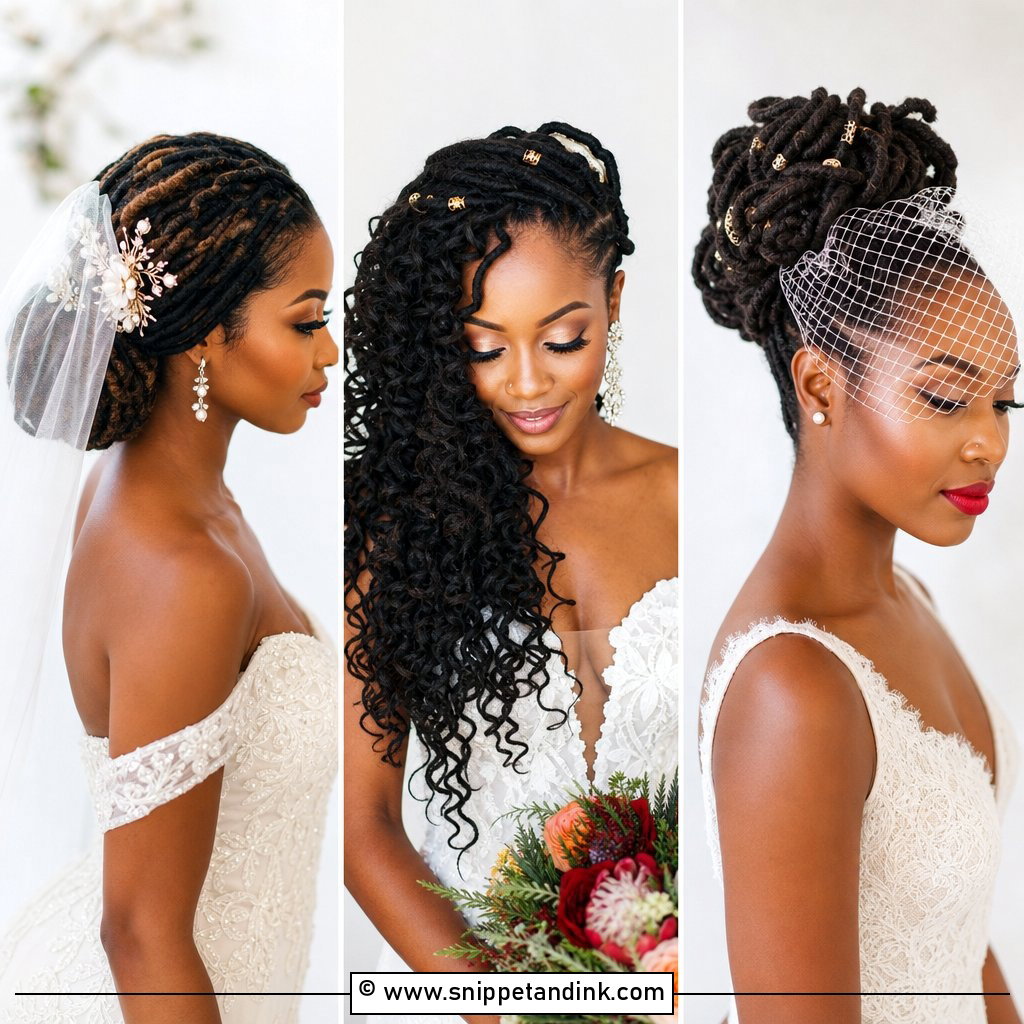
Braids do a quiet job in an updo: they lock in layers. If your shorter layers keep escaping pins, braiding them first and pinning the braid holds them for the whole day. The braid can wrap into a low bun, cross over the crown or feed into a tucked chignon. Afterward I loosen each loop by hand, pulling gently at the edges, so it looks full instead of tight. Garden and rustic venues are its natural home, and tiny pearls tucked into the loops look good up close.
7. Half Up Half Down Wedding Hairstyle
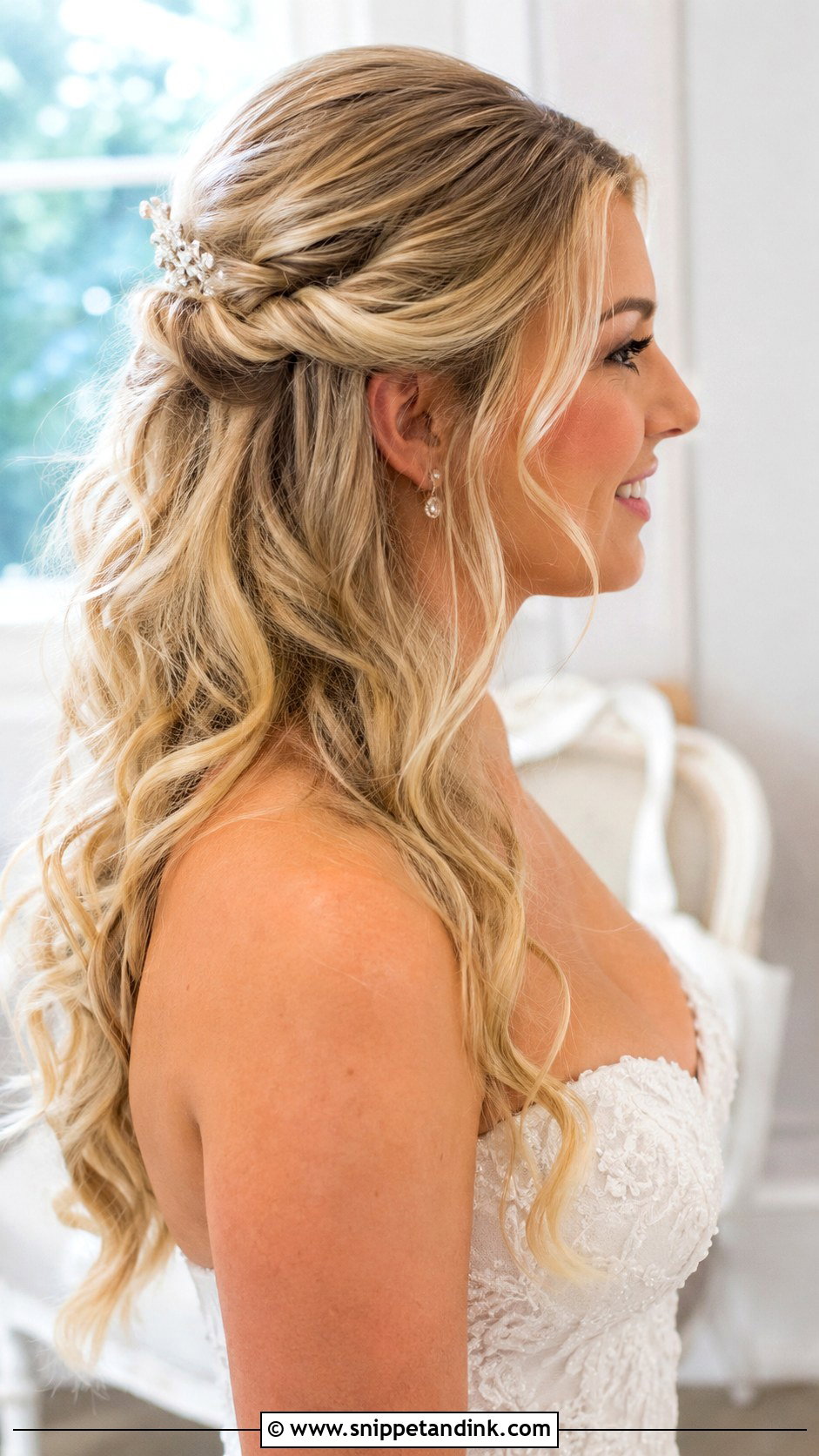
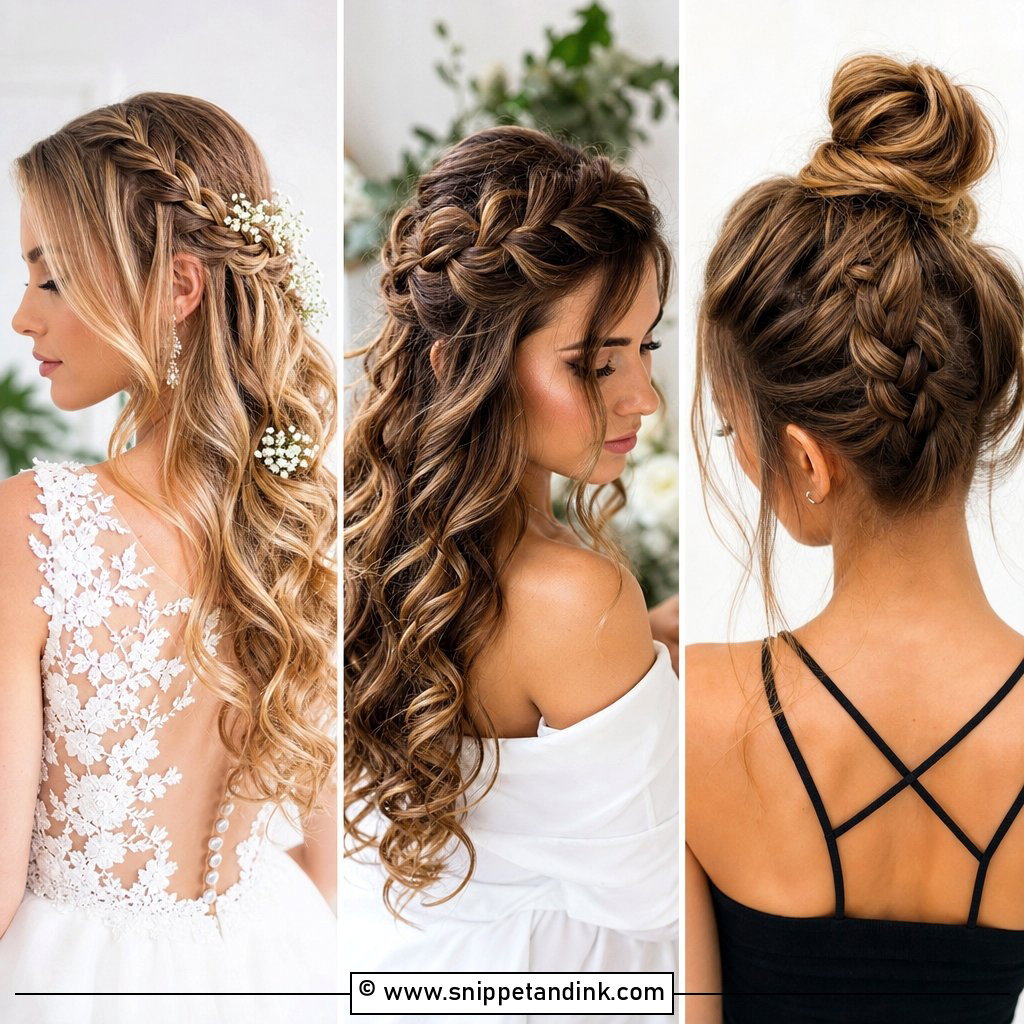
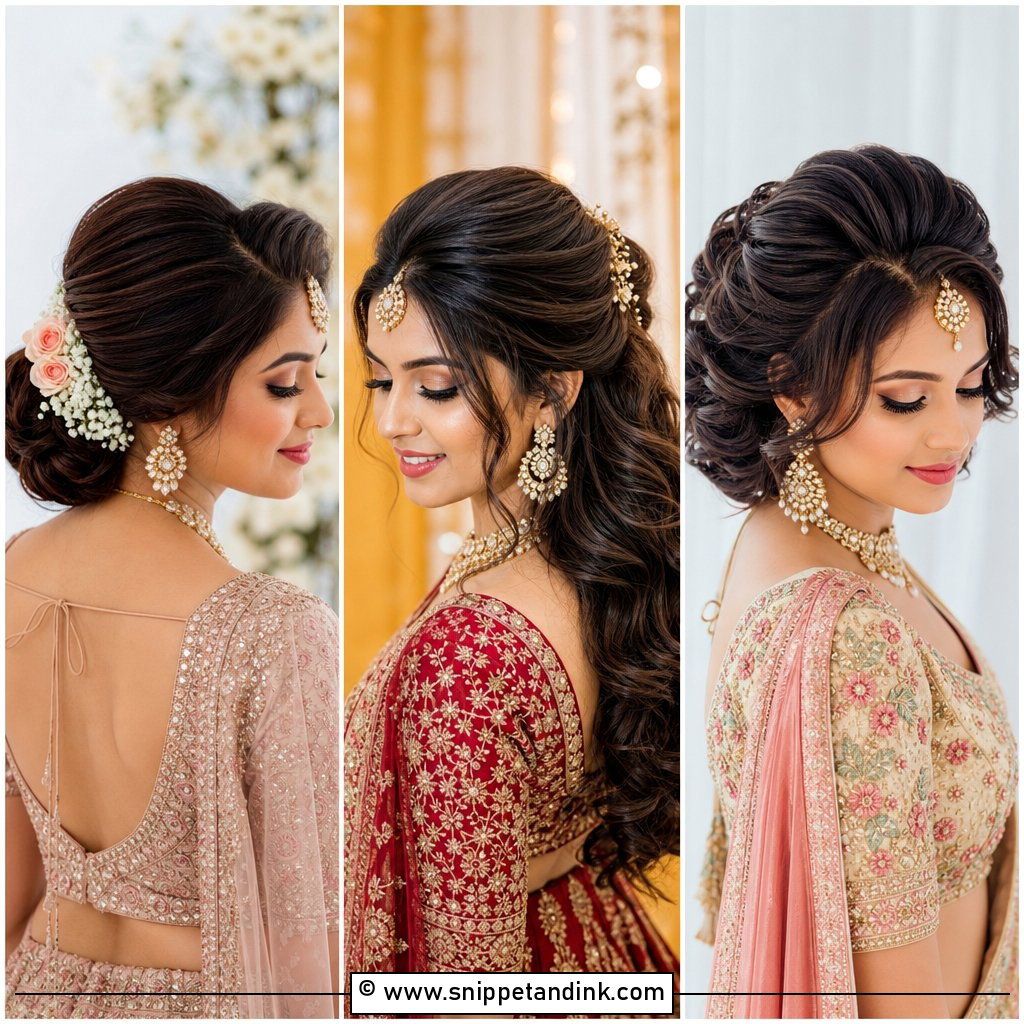
Half up gives you length on show while the front stays off your face, which matters more than brides expect once they’re crying, laughing and leaning in for photos. The weak point is the loose half. Curls that weren’t set and cooled properly relax into limp waves by the first dance, so I curl, pin each curl to cool, and only brush out at the very end. The top can be twisted or braided, and a hair vine or small comb hides the pins. Sweetheart and off-the-shoulder necklines pair naturally with it.
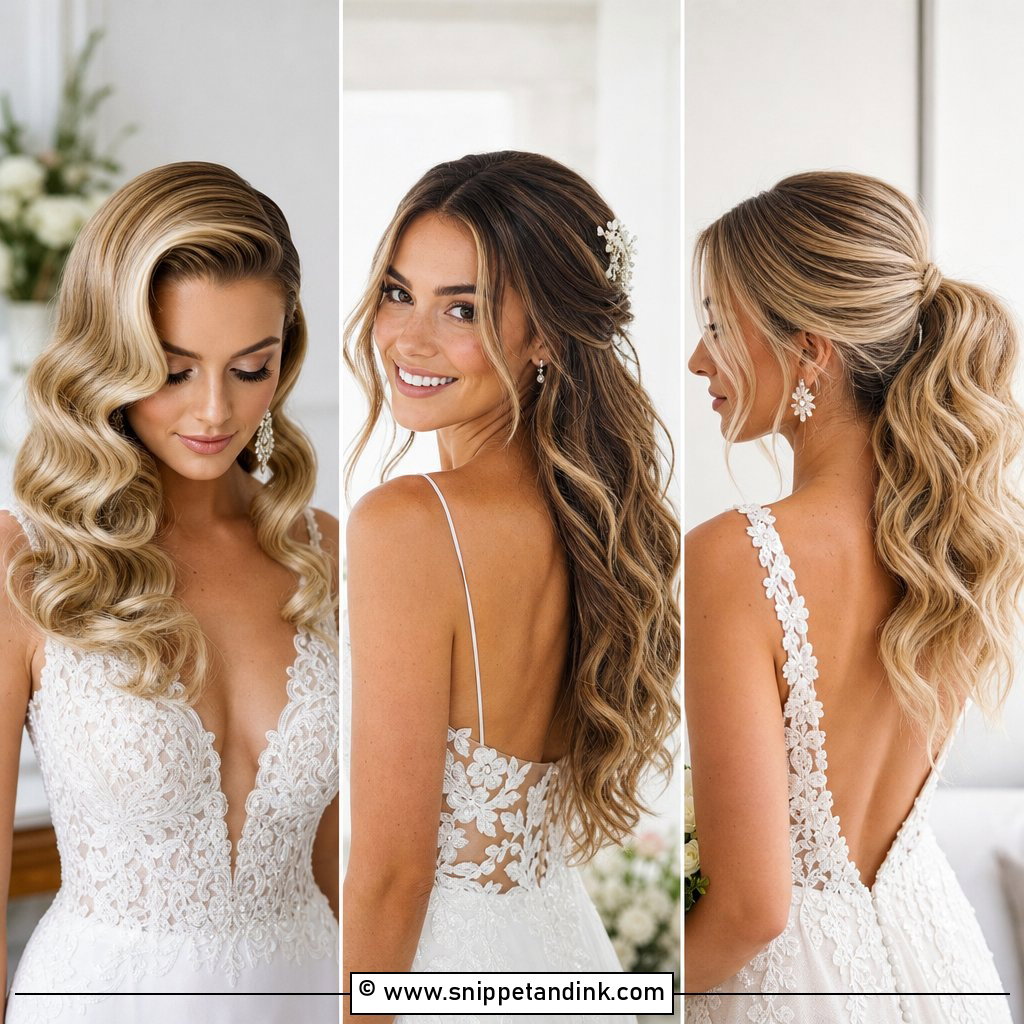
8. Hollywood Waves Wedding Hairstyle
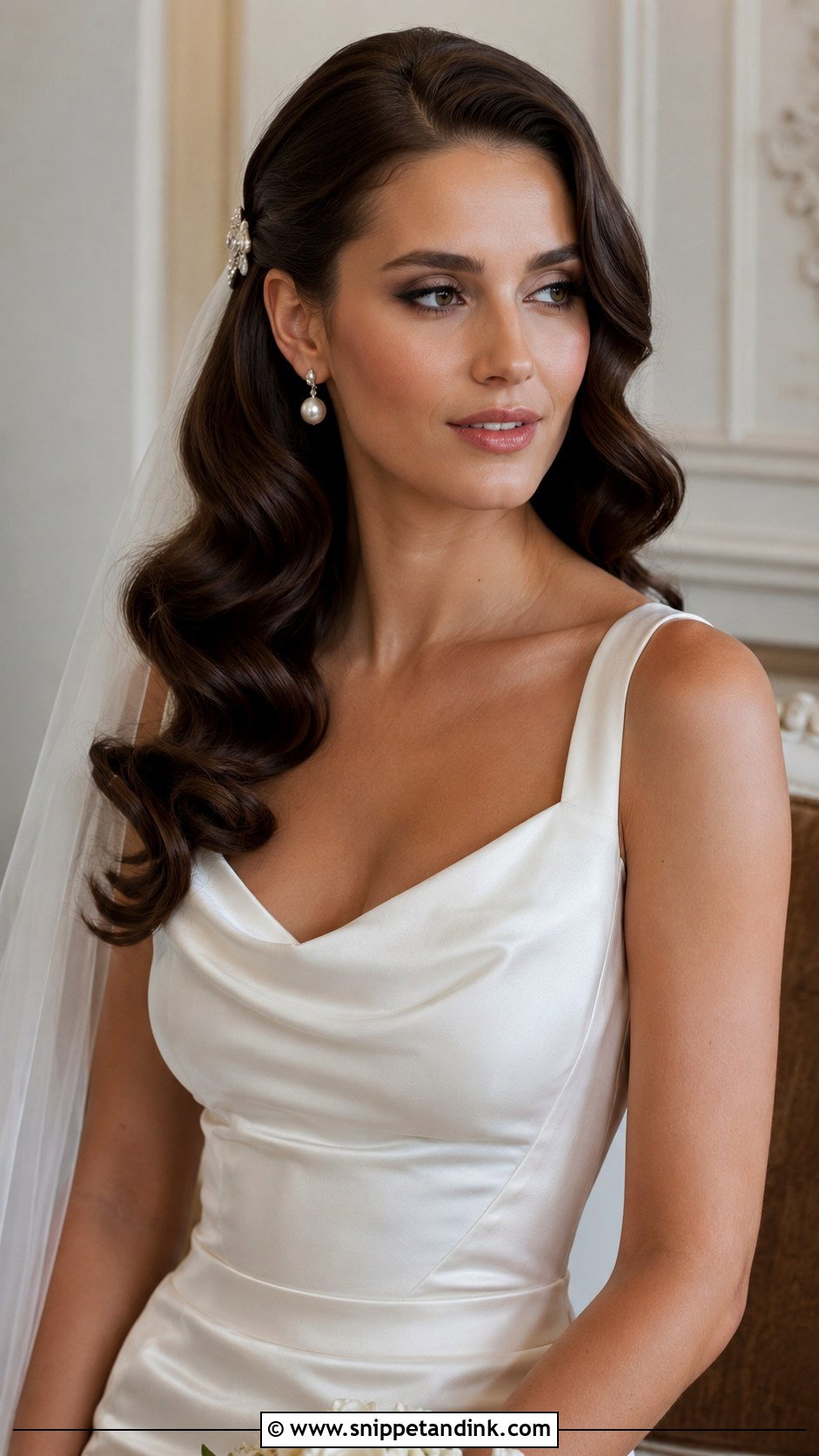
Hollywood waves are one continuous S-pattern running from a deep side part, and they take more work than they look. I set every section in the same direction, pin it while it cools, then brush the whole head together so the waves merge into one glossy ribbon. That sculpted shine sits well against satin and fitted vintage-style gowns. Tucking the shorter side behind an ear with a couple of hidden pins shows off your earrings. Heavily layered hair is harder, because the short pieces break out of the pattern, so tell your stylist about your cut before the trial.
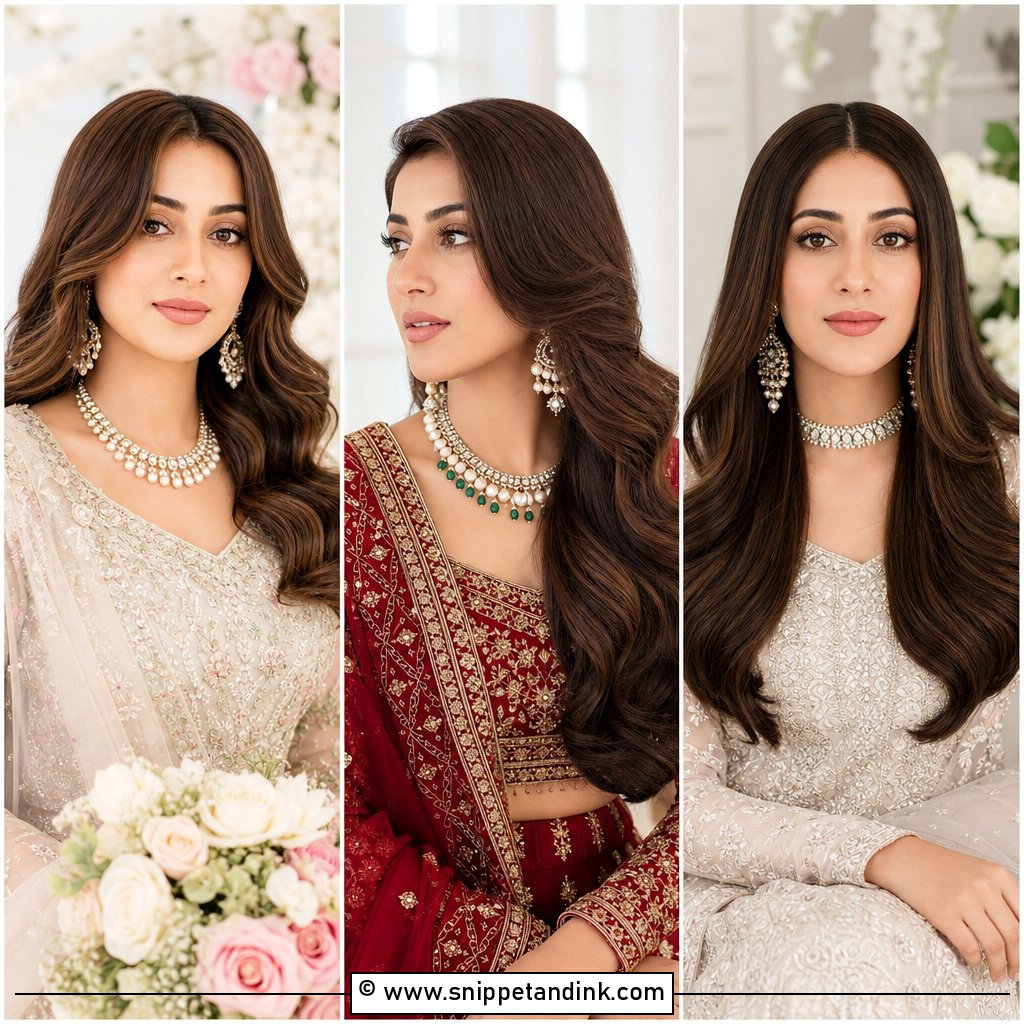
9. Soft Waves Wedding Hairstyle
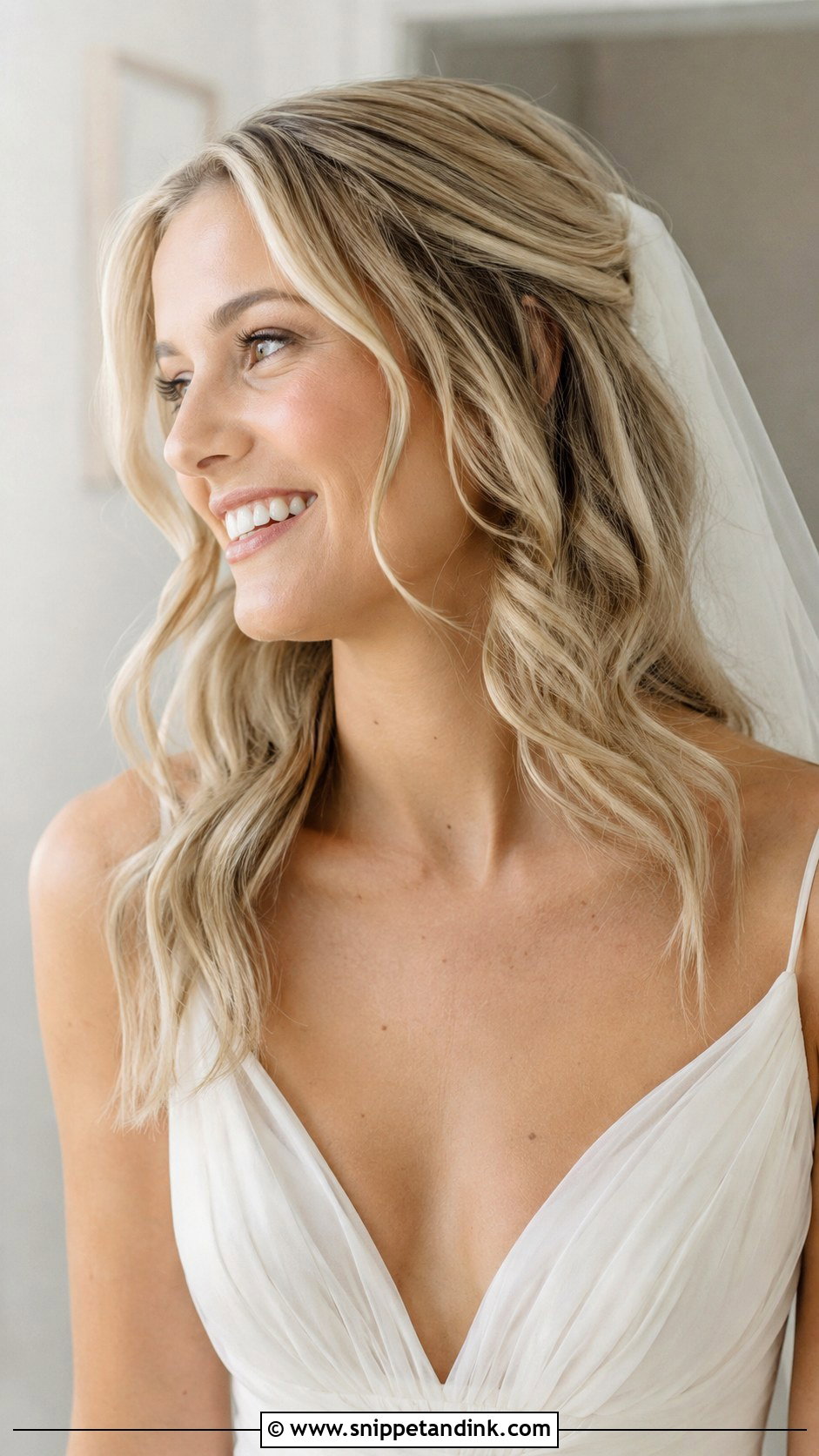
Soft waves are what I suggest to brides who wear their hair down every day and want to recognize themselves in the photos. They’re tidier than beach waves: smooth bends, polished ends, no crunch. The honest trade-off is staying power. Loose hair has nothing holding it except the set, so I use a heat protectant with some grip, a slightly smaller barrel than the finished wave needs, and let every curl cool completely. A veil at the crown or a side comb gives it a bridal focal point.
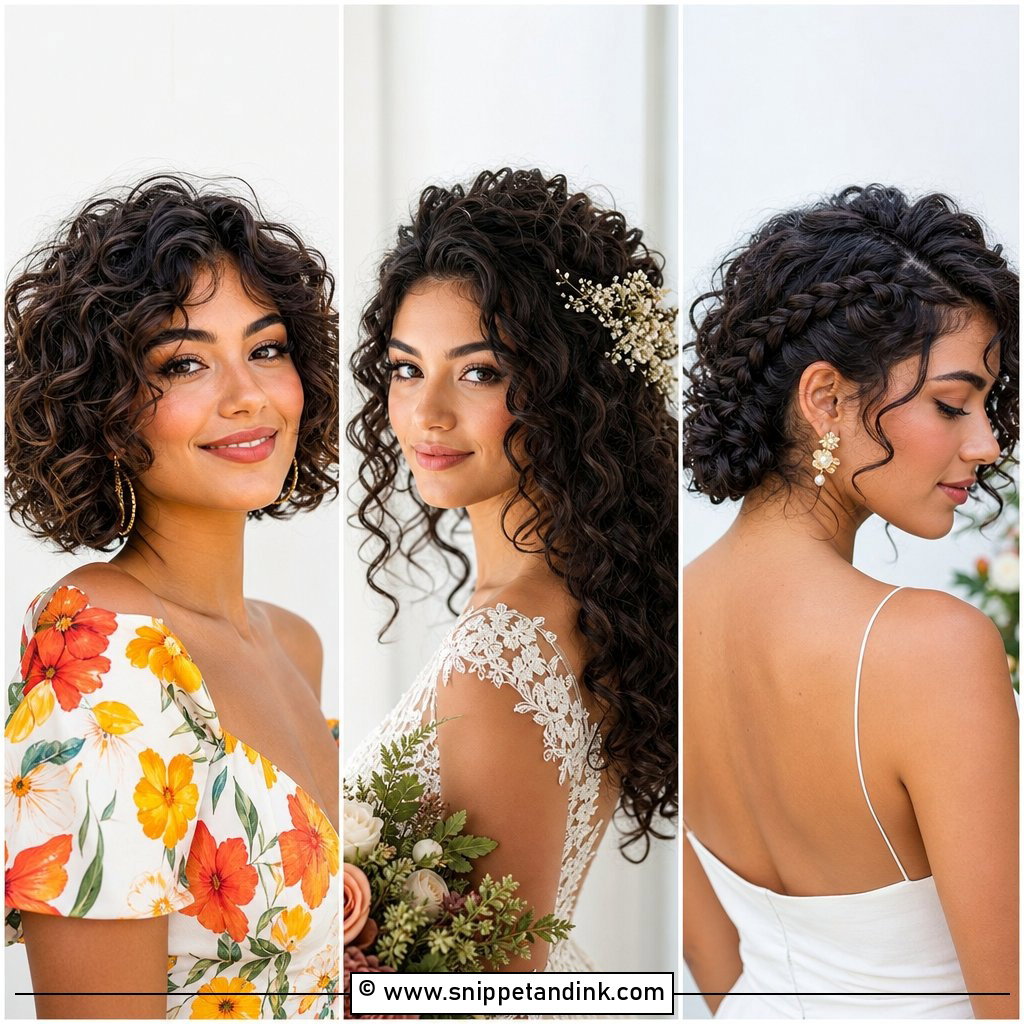
10. Loose Curls Wedding Hairstyle
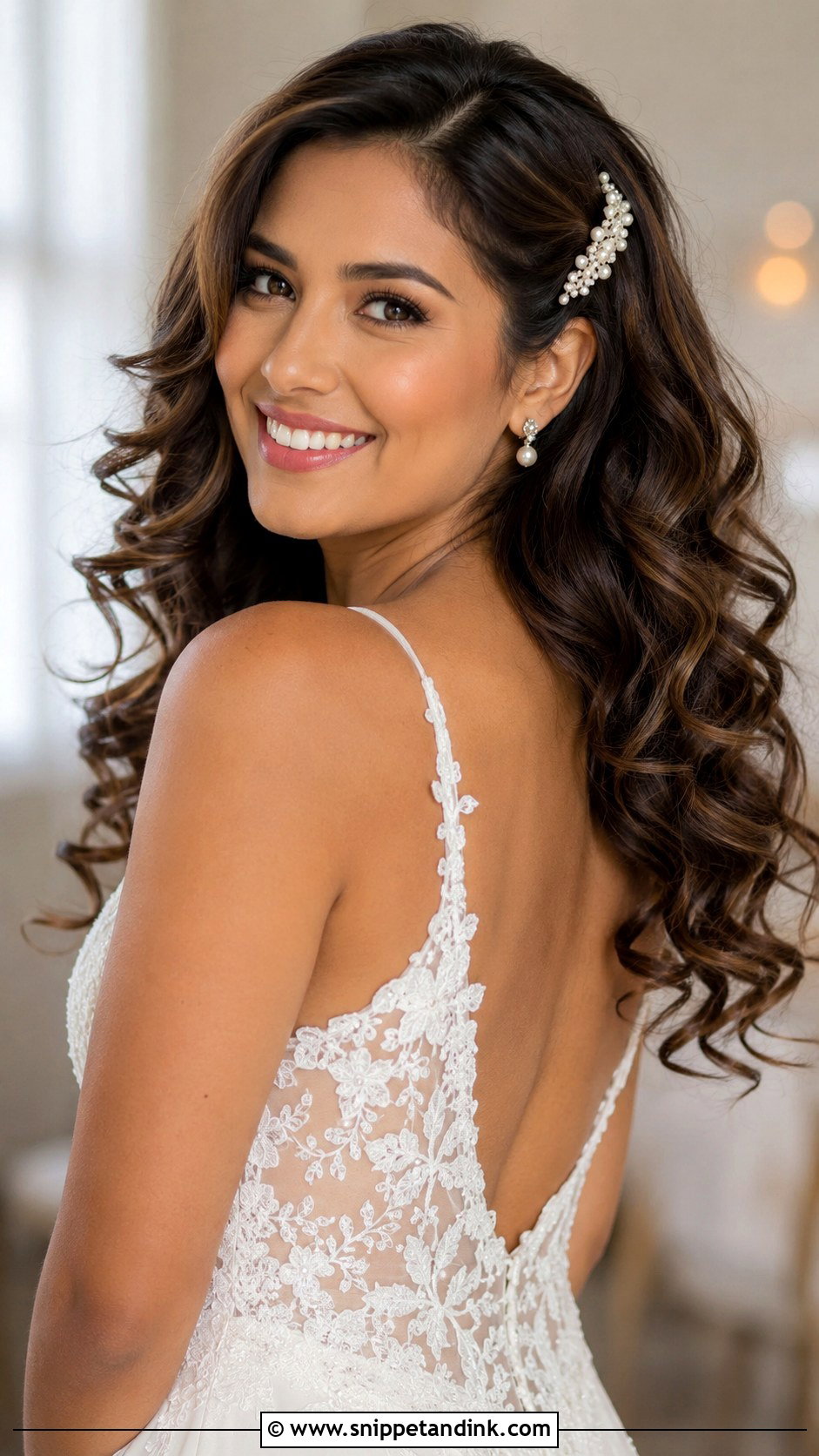
Loose curls look fullest on layered hair, because the shorter layers form separate curls that catch the light at different heights. They’re worn by bridesmaids, brides, and wedding guests alike, so the bridal version needs a finish that sets it apart: curls brushed out instead of tight ringlets, and a part placed on purpose. I usually go with a side part when a bride wants volume and a center part when her features suit symmetry. A pearl clip is all it needs.
11. High Bun Wedding Hairstyle
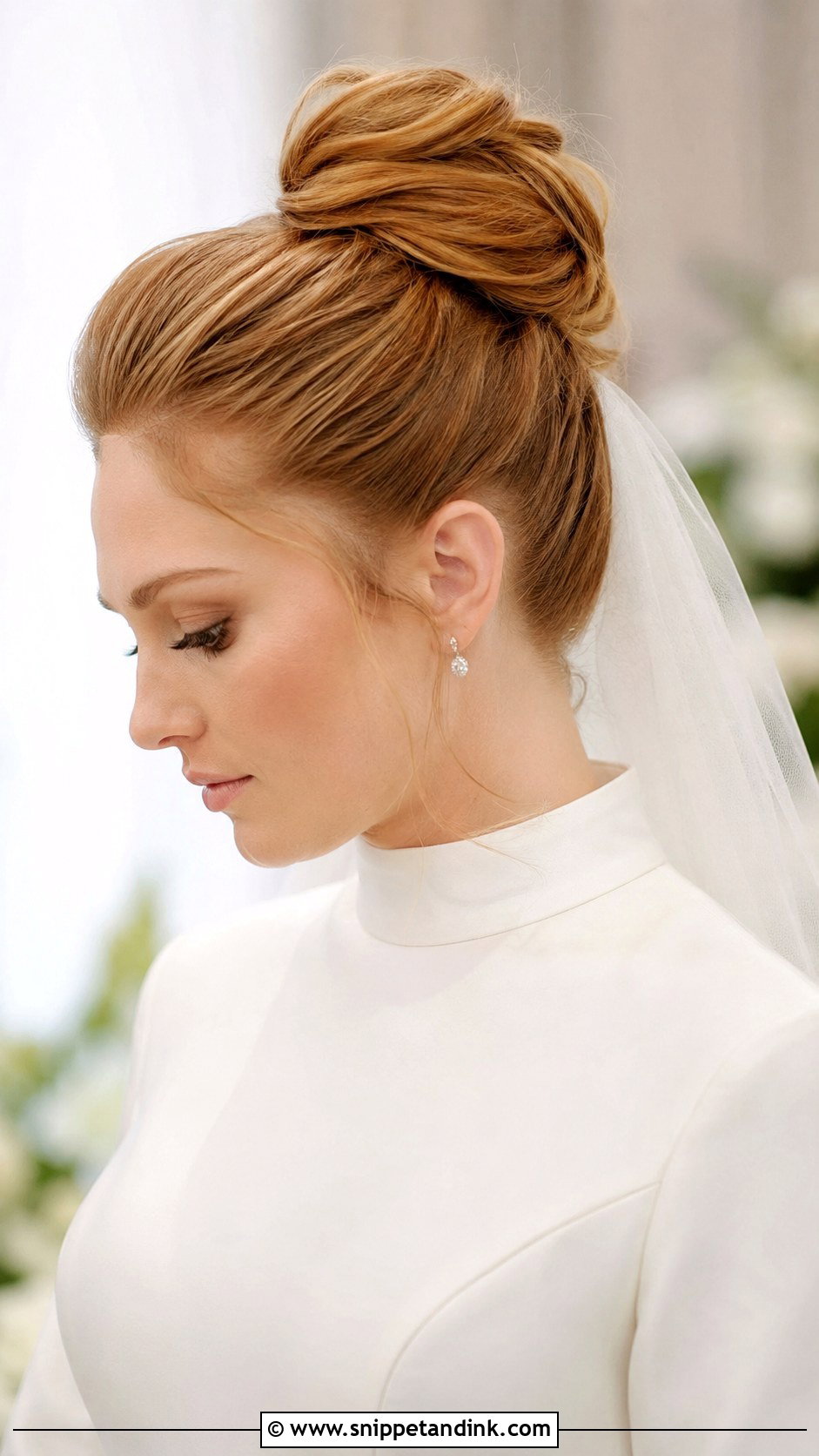
A high bun lifts everything: cheekbones, neck, shoulders and the back of the dress. It pairs well with halter gowns, high necklines and open backs, and on a hot day it keeps hair completely off your neck. Placement is the whole style. I find the spot by tilting the bride’s chin slightly up and studying her profile; too low looks undecided, too high drifts toward gym hair. A veil goes underneath the bun, which means the bun has to be pinned extra firmly, since the comb pulls on it every time you turn.
12. Bridal Ponytail Wedding Hairstyle
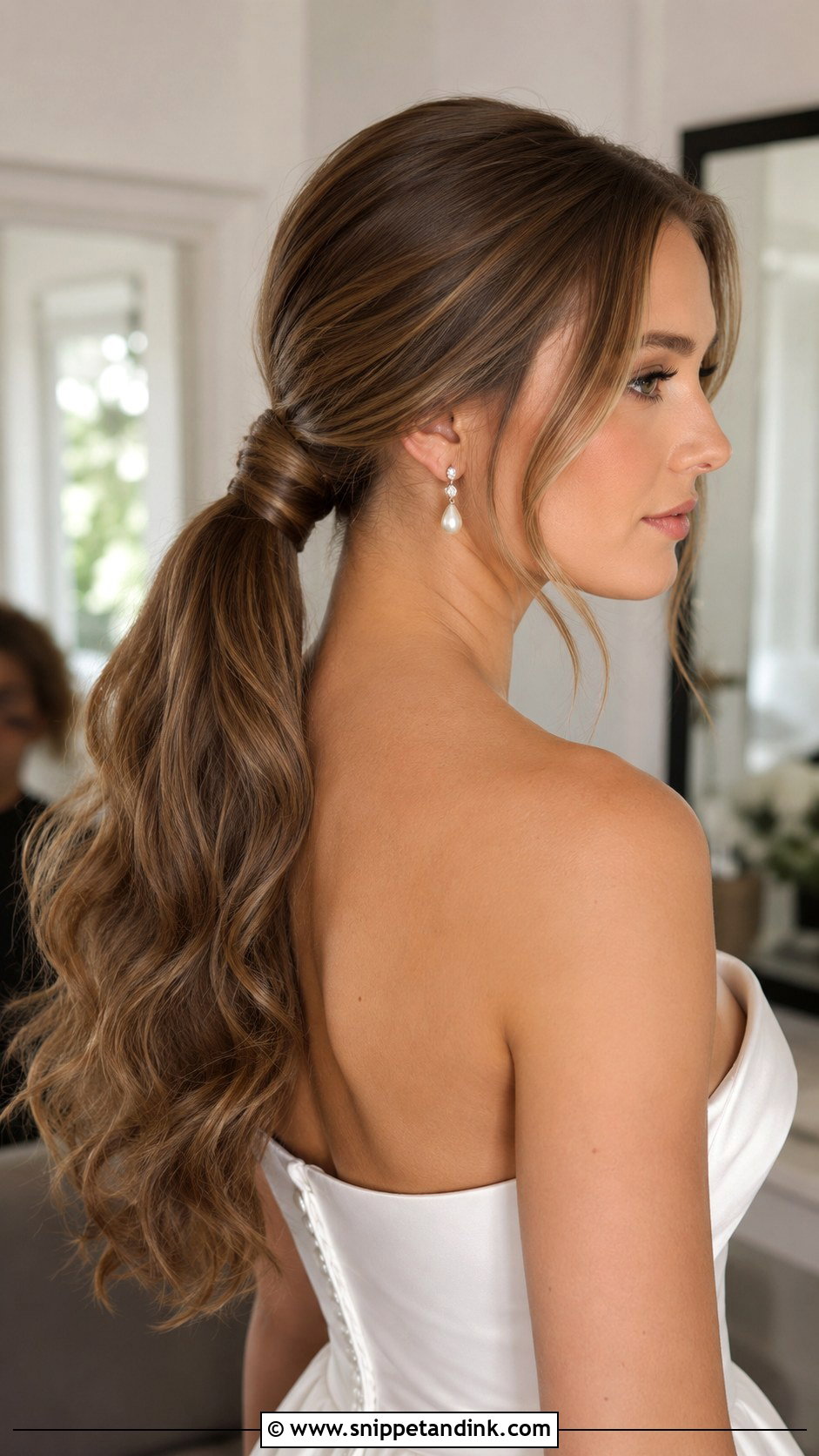
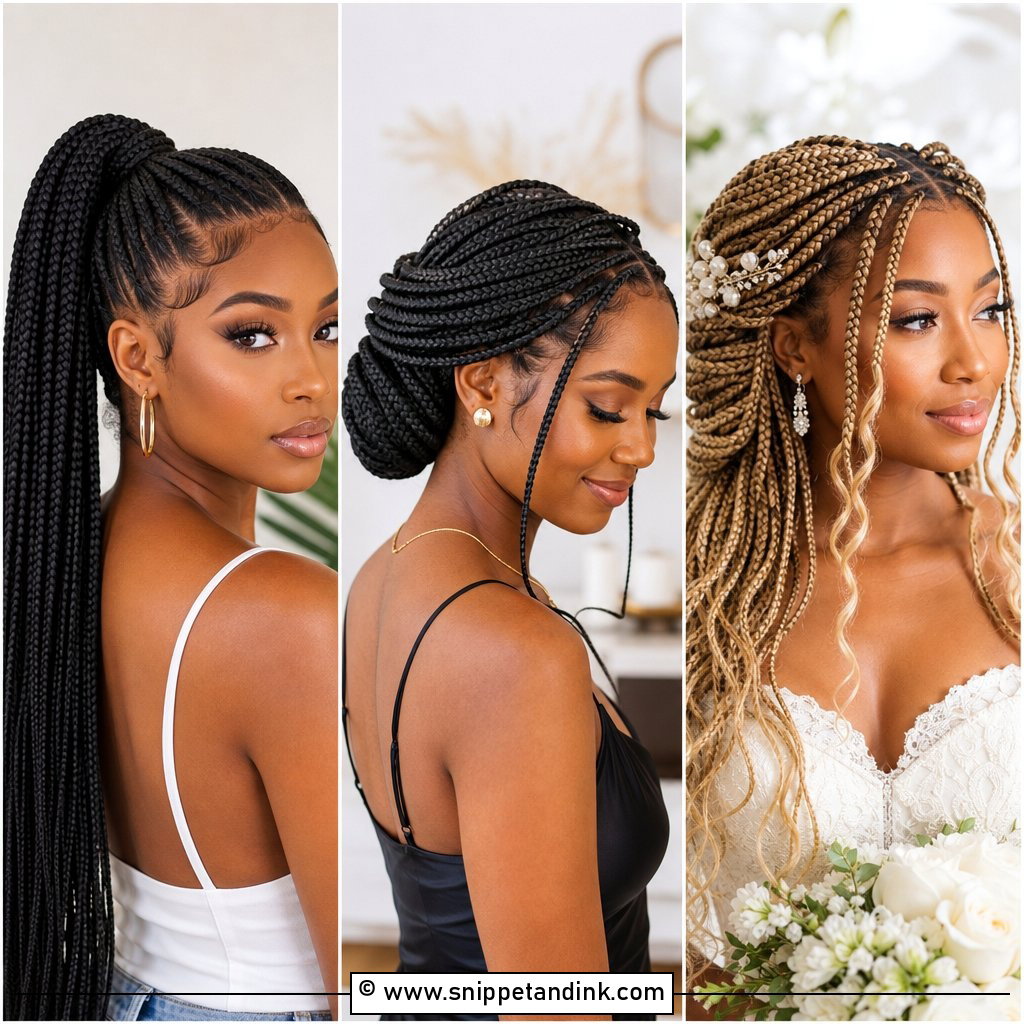
Ponytails get underestimated as wedding hair. A bridal one has a wrapped base, smooth sides and a few face-framing pieces, and it’s comfortable for twelve hours because there are no pins pressing into your scalp. I set the height by the dress: low and sleek for a clean column gown, higher and curled for a strapless one. The question I ask every ponytail bride is about density. A thin ponytail looks thinner on camera, so clip-in wefts hidden under the top section are often worth it. It dances better than any updo.
13. Braided Ponytail Wedding Hairstyle
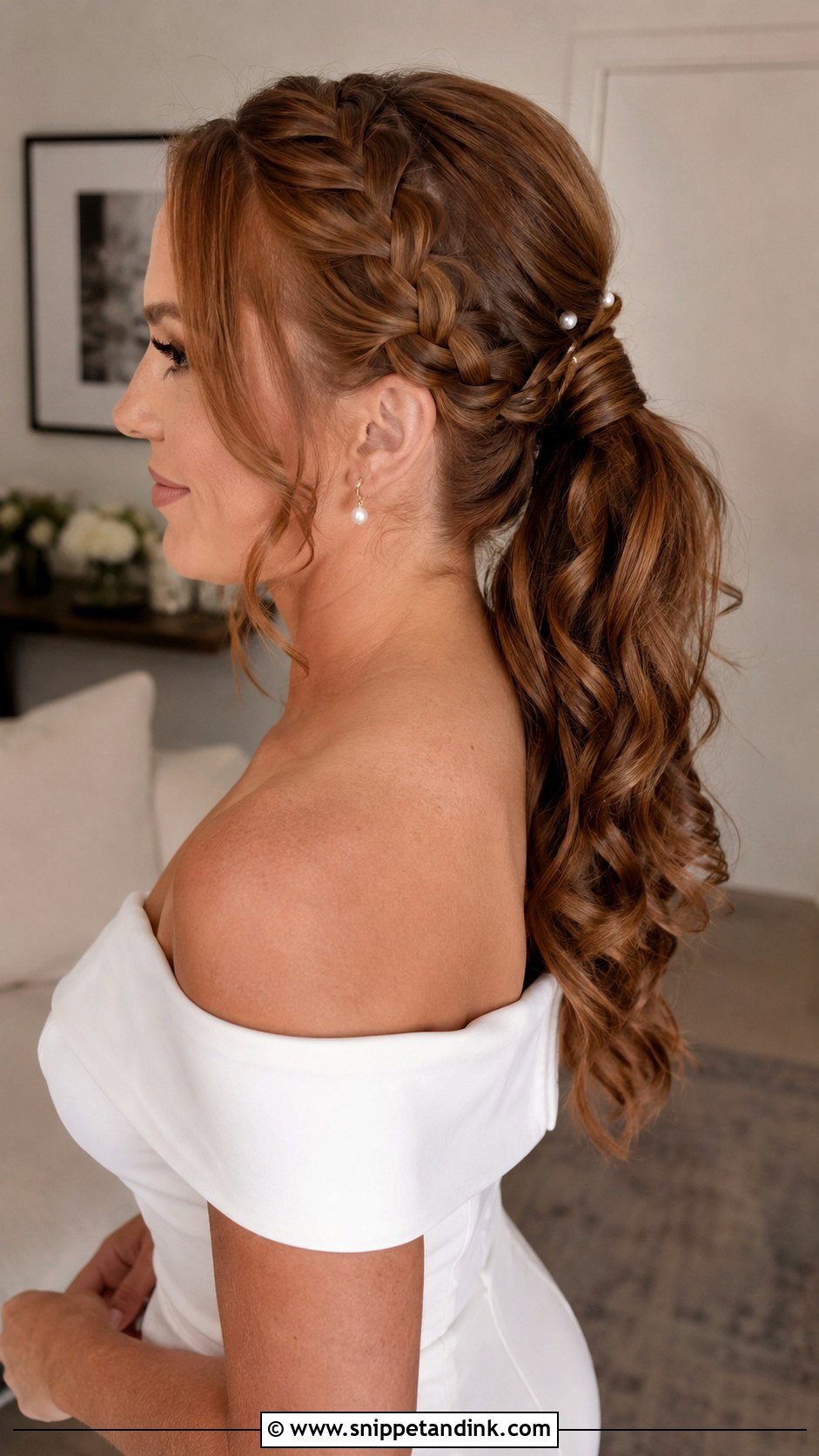
Adding braids to a ponytail gives it texture and, more usefully, grip. Small braids along the sides keep layers and flyaways in place in wind, which a smooth ponytail can’t manage. They can start at the crown or along the hairline before joining at the base, and the length can be waved or braided to the ends. Outdoor weddings suit it well. Pearl pins also push into braids and stay put, which isn’t true of smooth, glossy hair.
14. Crown Braid Wedding Hairstyle
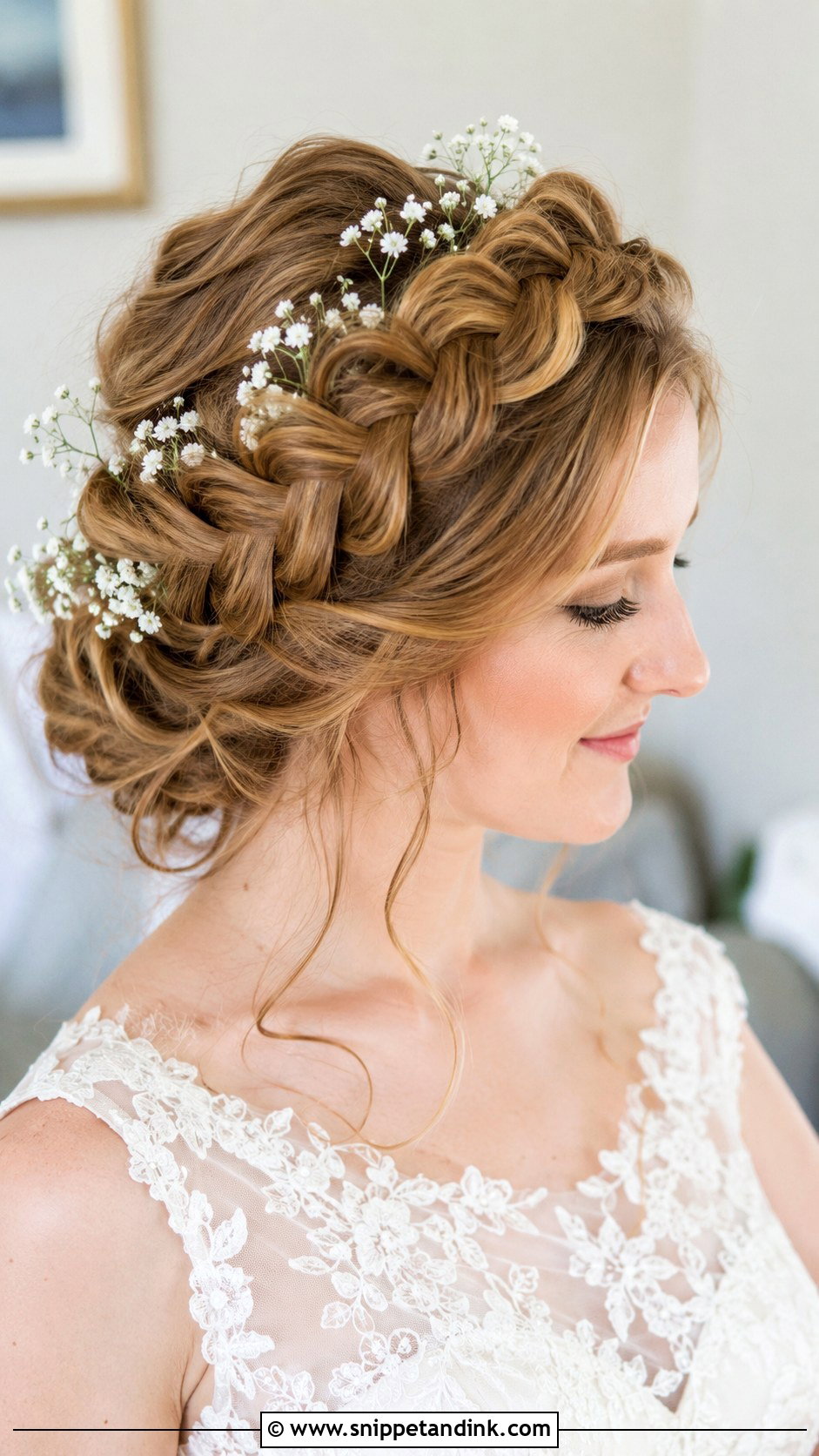
A crown braid wraps around the head like a halo, either all the way or across the top with the rest pinned low. The braid needs enough length to make the trip, so that’s the first thing I measure: hair that reaches the shoulder blades usually makes it, and shorter hair can braid from one side and finish in a pinned bun. Pull the braid apart gently for fullness and leave a few face-framing pieces. It sits naturally beside lace or embroidered sleeves, and small flowers anchor into the braid securely.
15. Side Swept Curls Wedding Hairstyle
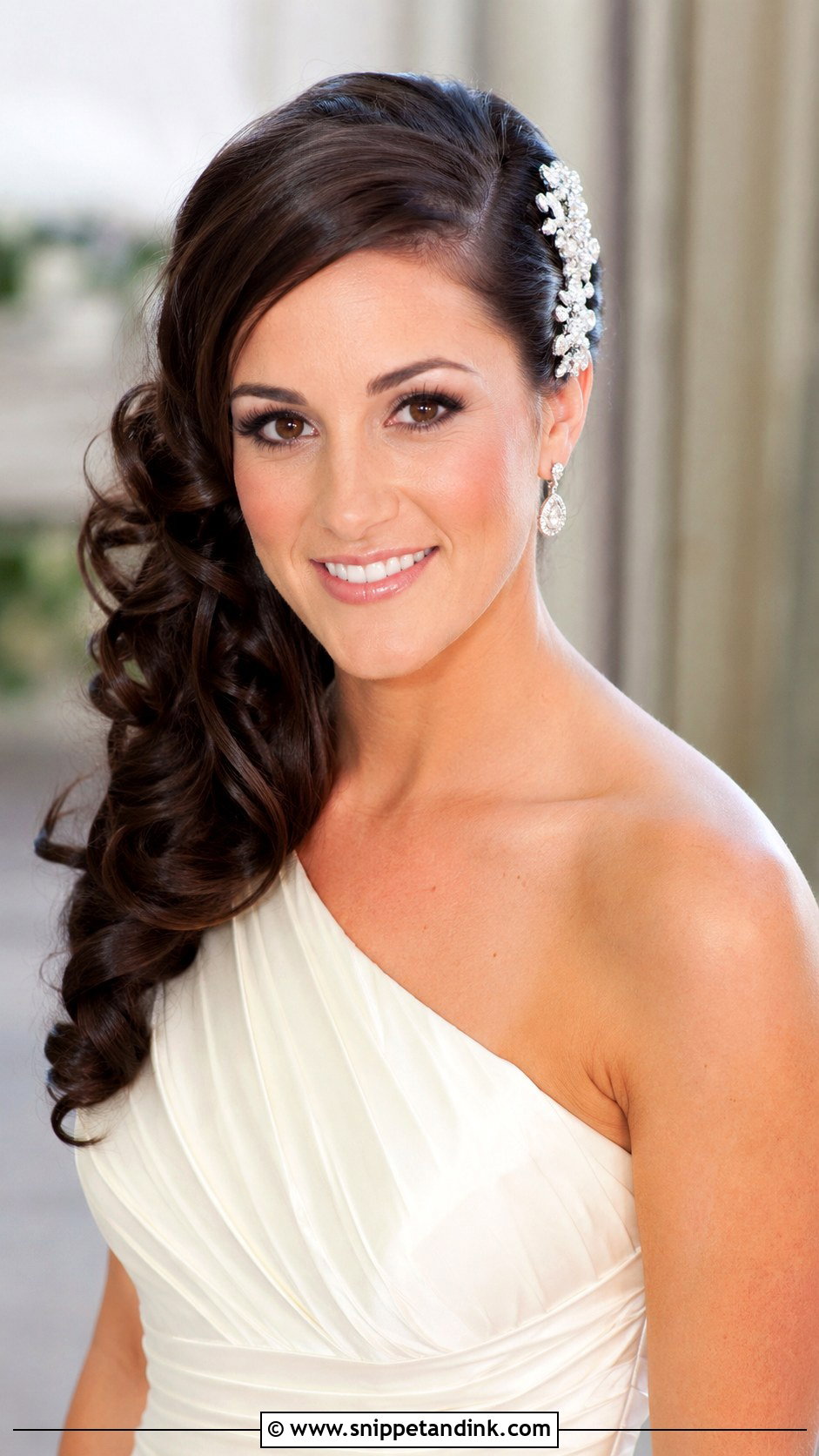
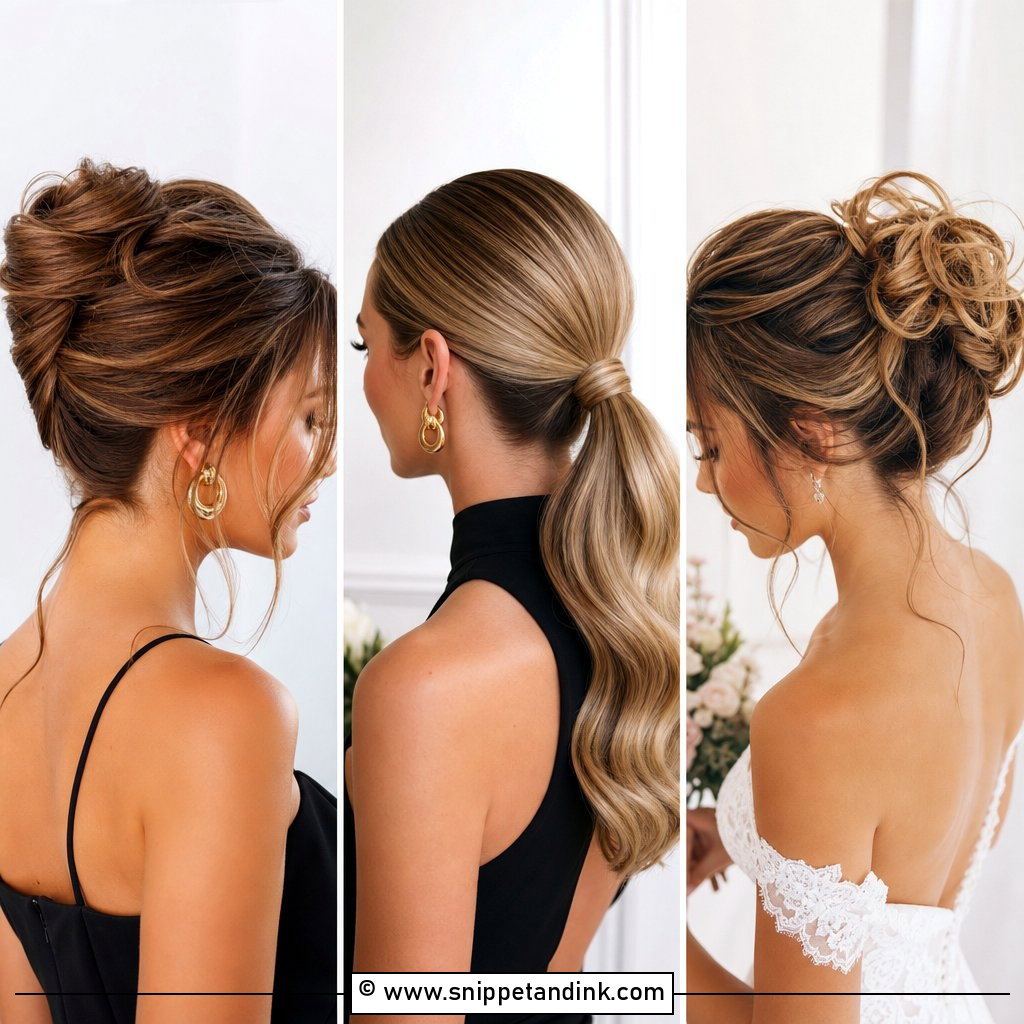
Moving all the volume to one side frames the face and leaves one shoulder bare, so it pairs naturally with a one-shoulder dress or an earring you want seen. The pinned side does the heavy lifting. I build a hidden row of crossed pins behind the ear, because all that curled hair pulling across will drag a weak anchor down within a couple of hours. Long hair or extensions give the curled side its fullness. A jeweled clip belongs on the tucked side, where it also covers the pins.
16. Curly Updo Wedding Hairstyle
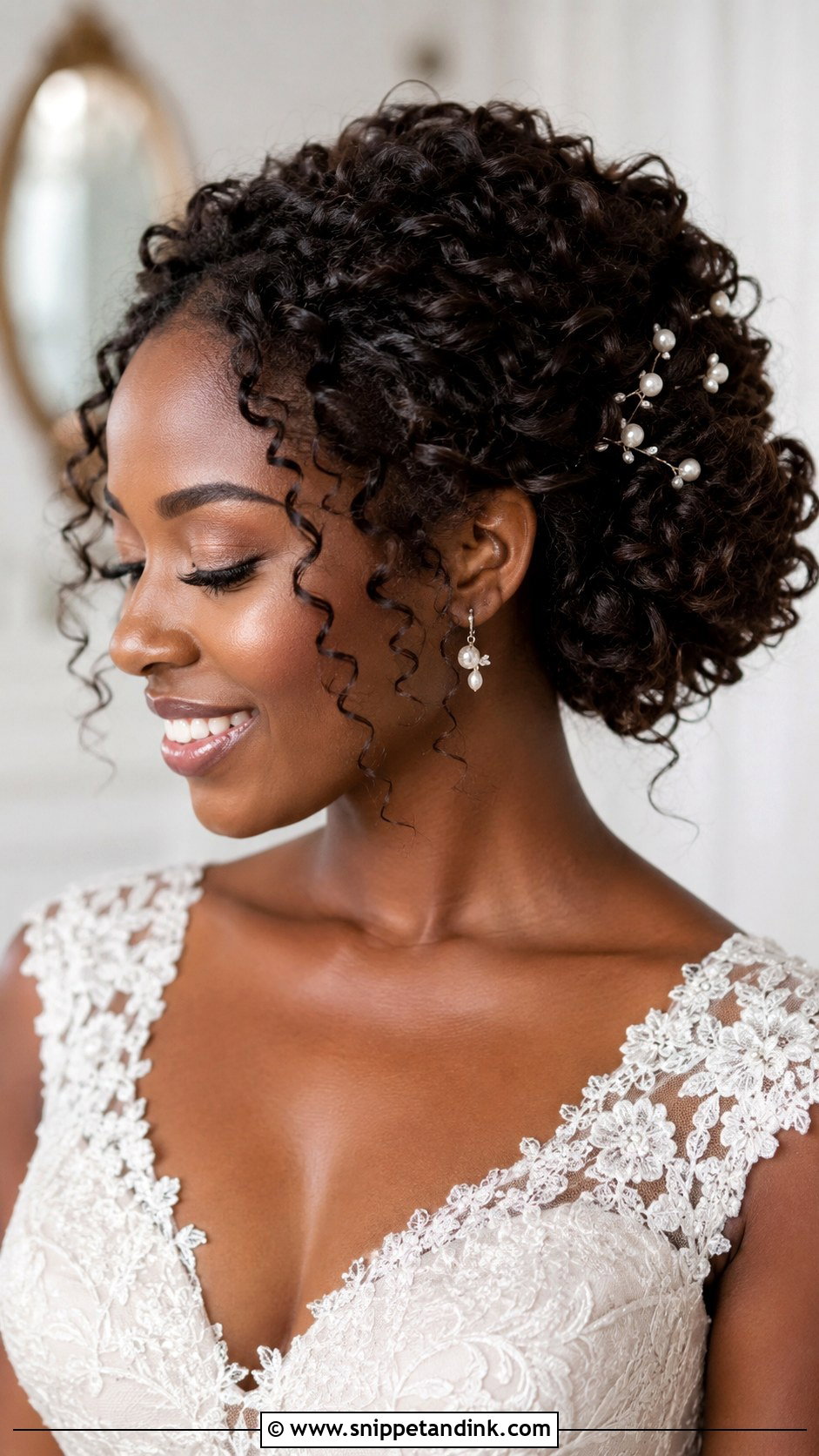
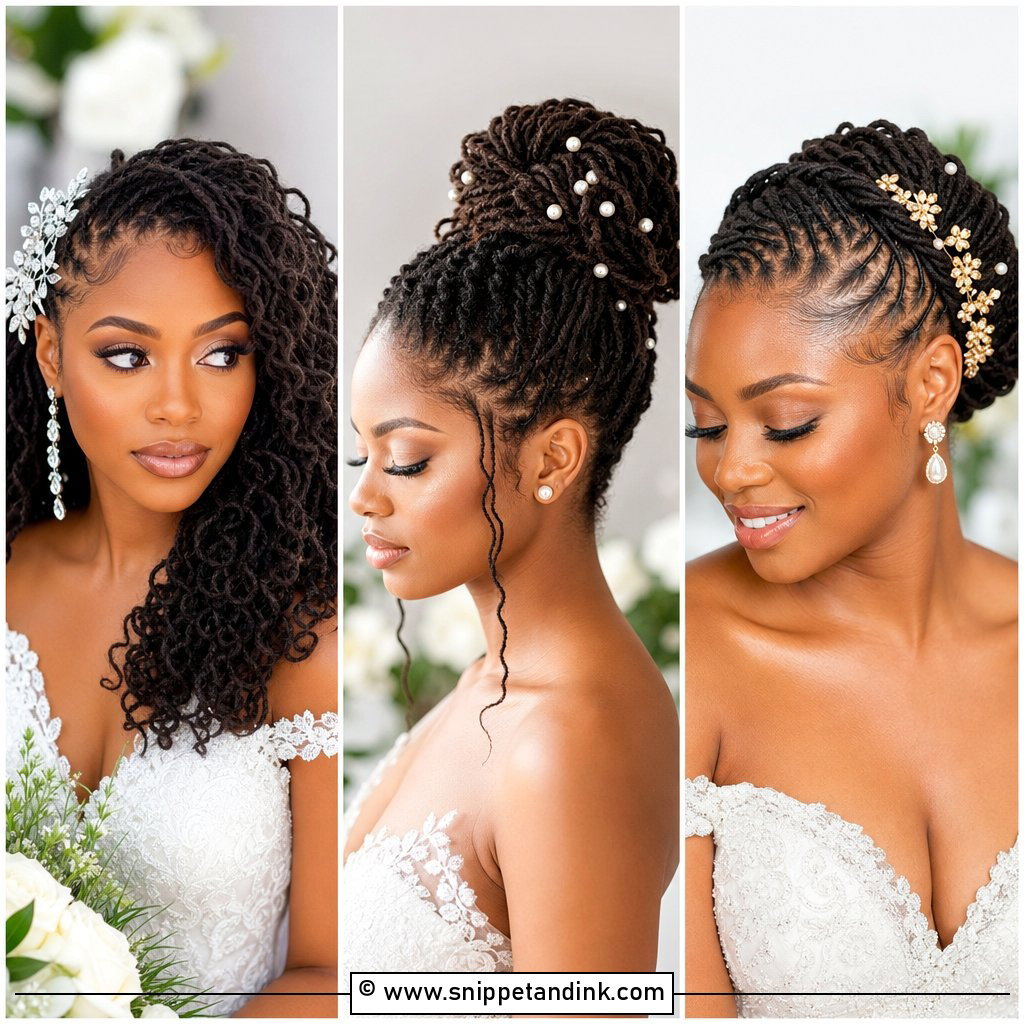
Curly updos use your curl pattern for volume instead of fighting it. For brides with naturally curly or wavy hair, I’d much rather work with defined, hydrated curls than blow them straight and re-curl them, which tends to leave frizz. Wash and define a day or two before with the products your curls already like. Then I gather sections and pin beside each curl clump rather than through it, so the clumps stay intact. A trial matters here more than anywhere, because every pattern sits differently.
17. Natural Curls Wedding Hairstyle
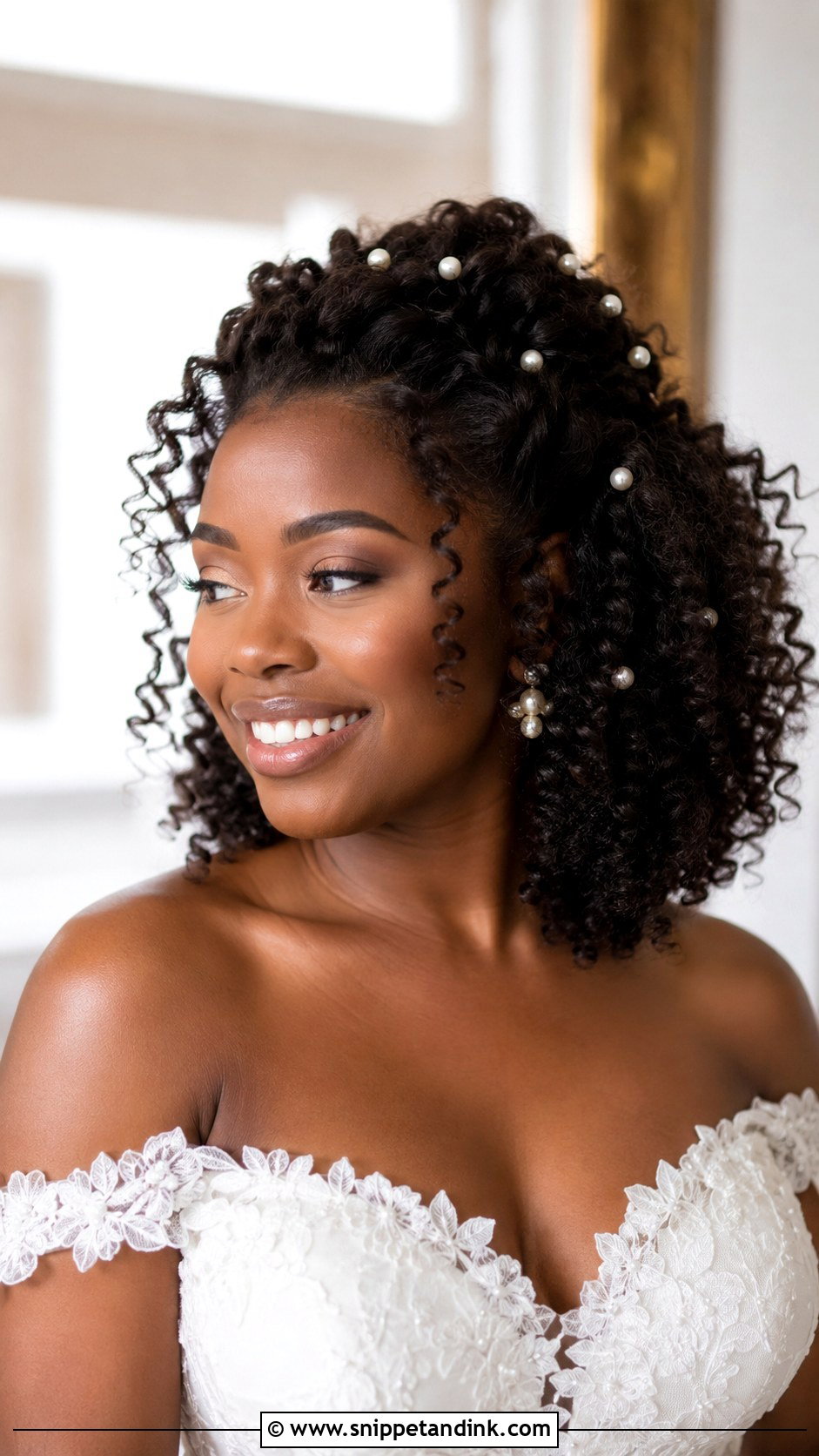
Wearing natural curls down is the most personal option on this list, and the one that depends most on definition. I’d plan your wash day with you, then shape and set on the morning rather than restyle from scratch. Ask for volume where you love it and controlled edges where you need them, with strong definition through the ends, since that’s where curls fray first. A veil can sit above the crown or tuck under a gathered section. Fresh flowers and pearl pins hold well in curls because the texture grips them.
18. Short Bob Wedding Hairstyle
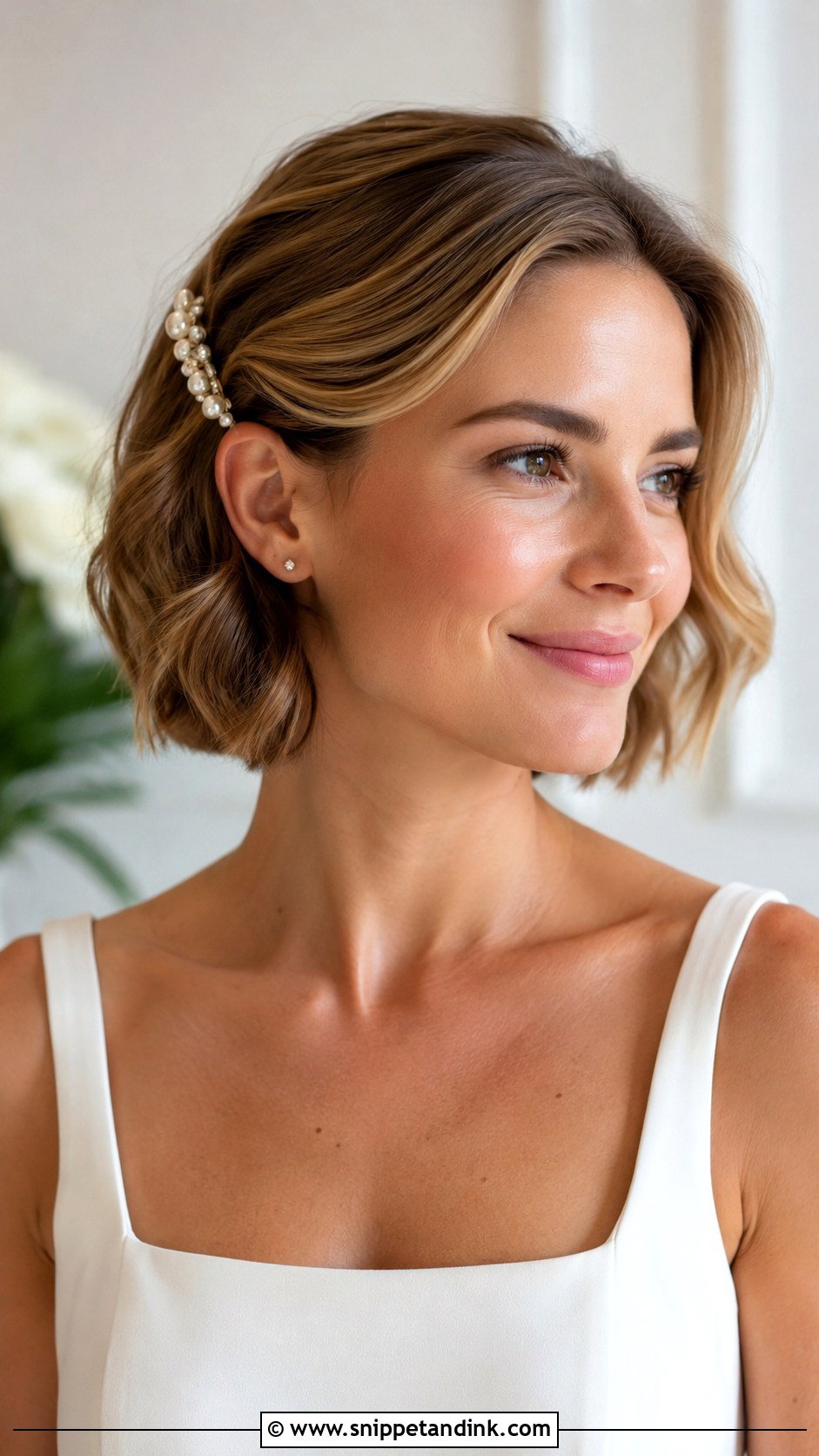
A bob can look every bit as bridal as long waves, but short hair shows every finishing detail. I lift the roots, add a soft bend through the ends and polish the surface so it reflects light. A side part dresses it up; a center part looks cleaner and more modern. Tuck one side behind the ear to show an earring or a clip. Veils still work, though there’s less hair to hold a comb, so I often anchor it with two crossed pins underneath first. Get your trim a week or two before the wedding so the ends have time to settle.
19. Pixie Cut Wedding Hairstyle
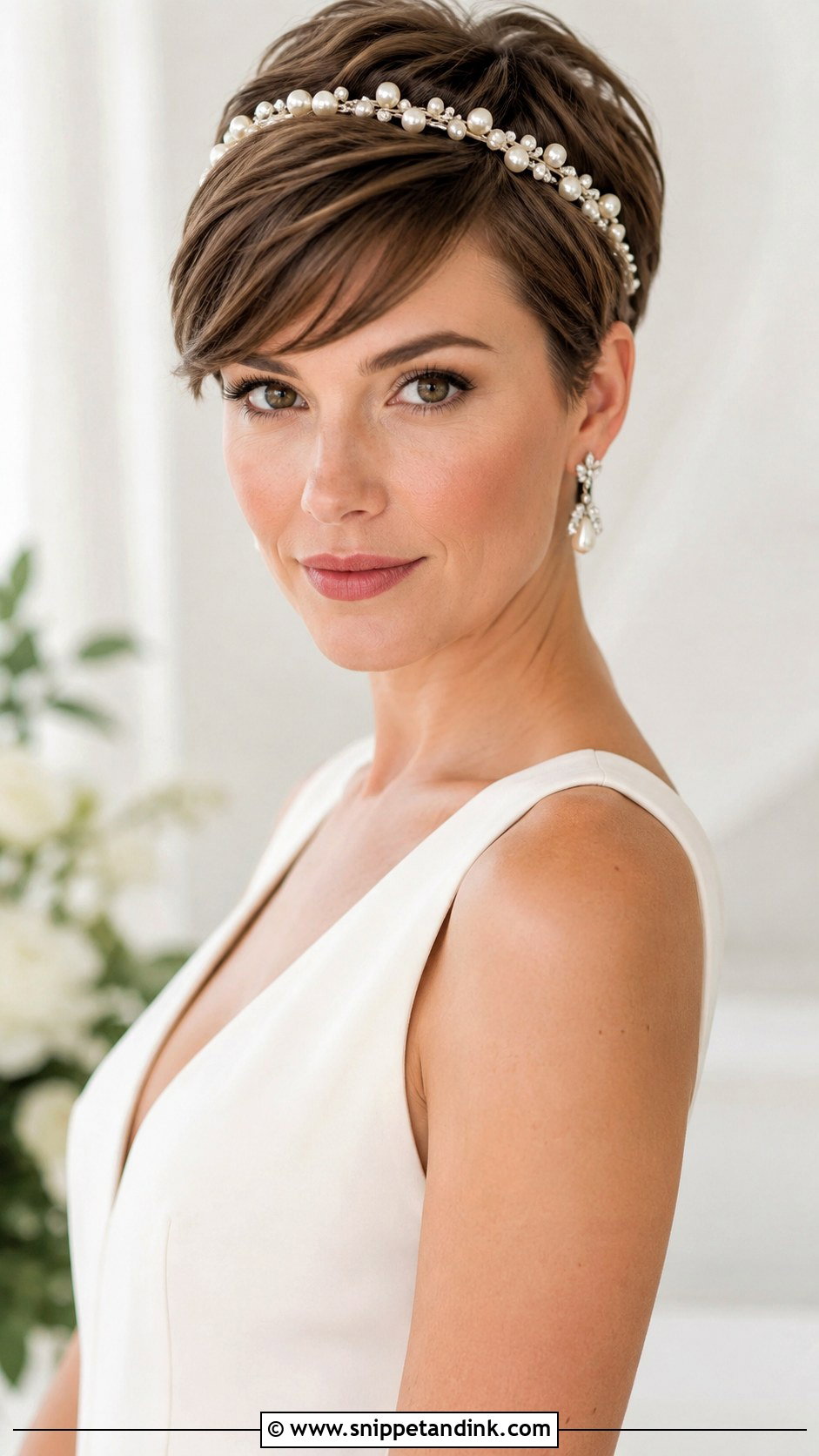
With a pixie, the wedding look comes down to texture and accessories, because there’s no length to play with. A sleek pixie with a simple veil or pearl headband looks modern, while a softly tousled pixie feels relaxed. It suits brides who already love their short hair and don’t want extensions. I work with the cut’s strongest angles, usually the nape and the line around the ear, and keep product light so it still moves. Statement earrings finish it.
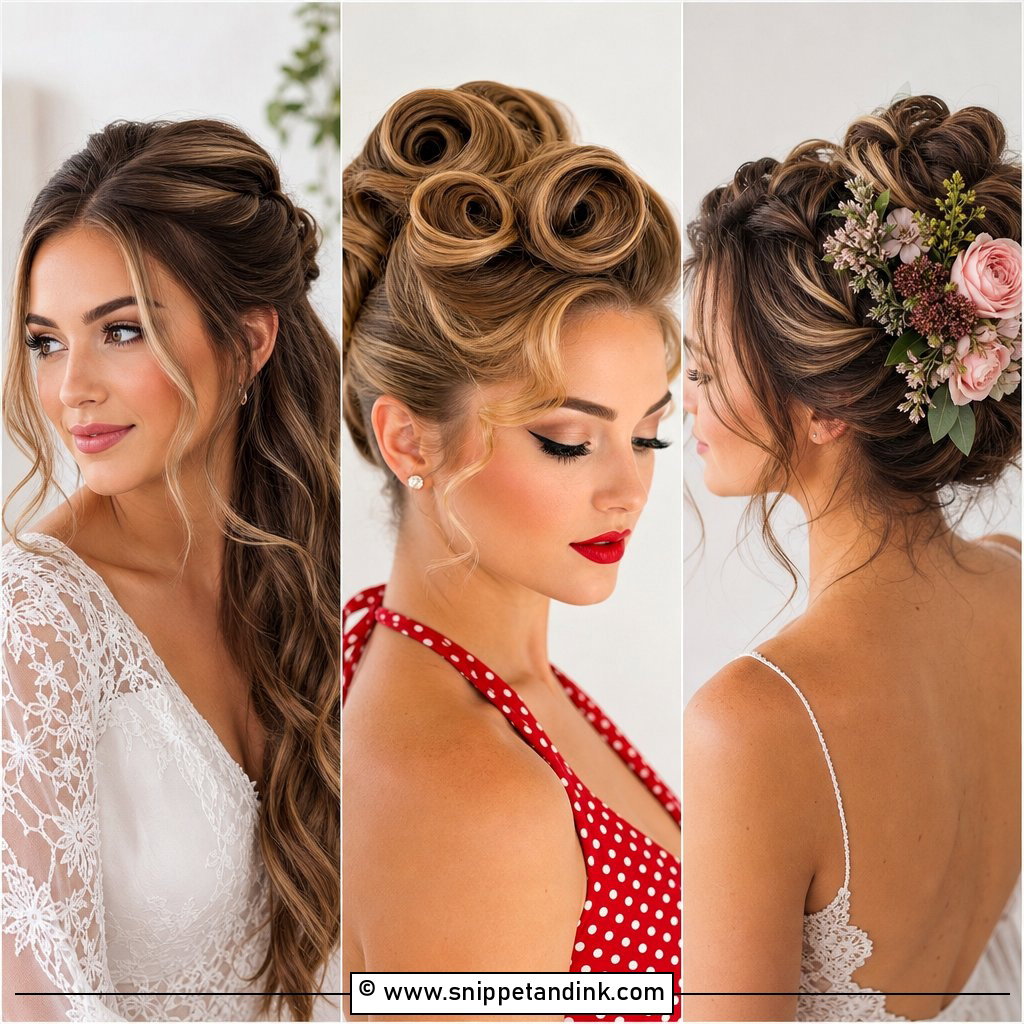
20. Loose Fishtail Braid Wedding Hairstyle
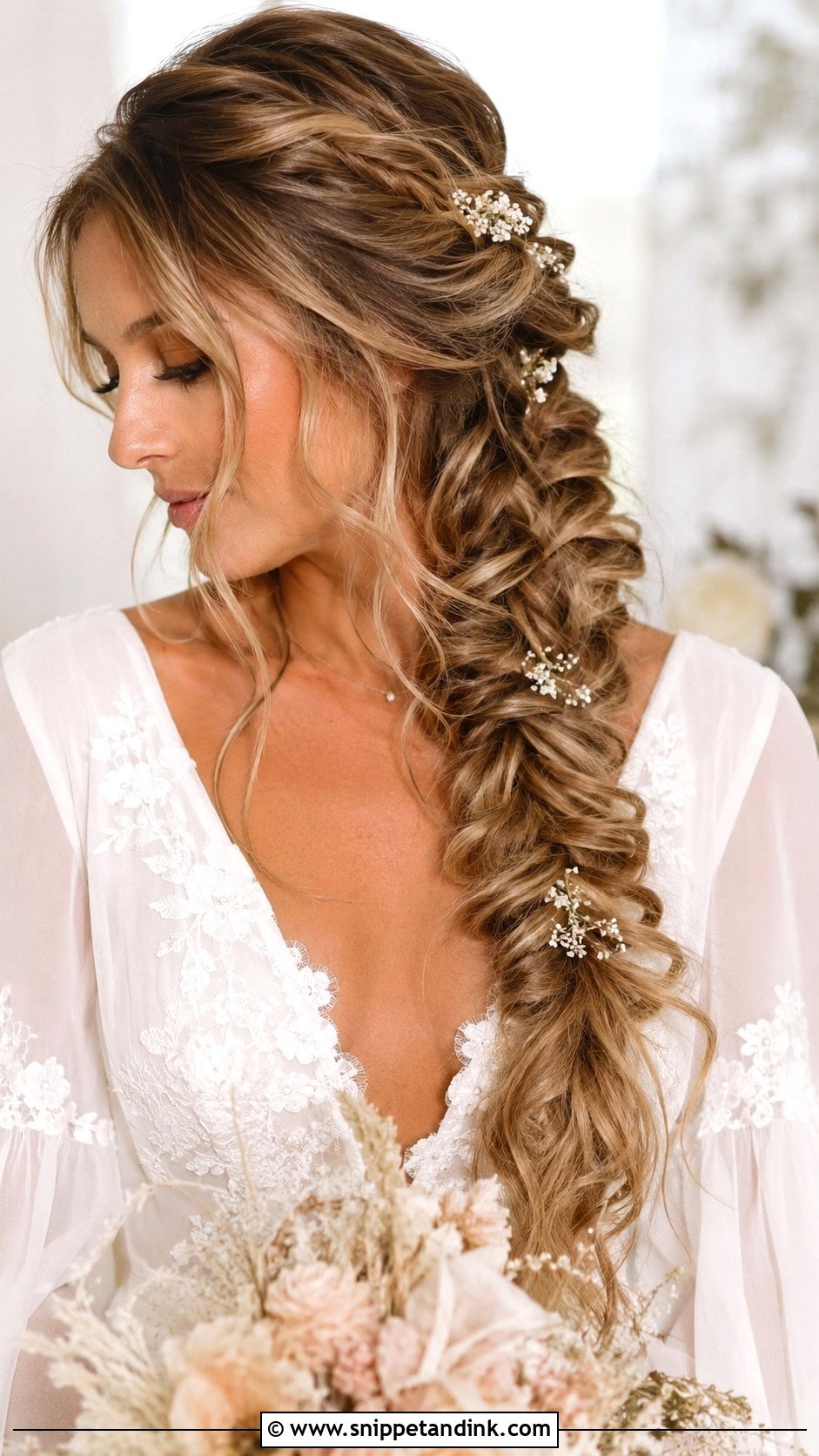
A fishtail is made by crossing tiny pieces between two sections, which is why it looks more intricate than a three-strand braid. It can fall down the back or over one shoulder. I braid it fairly firmly and only then pull the edges loose, since loosening as you go leaves gaps. It keeps long hair contained at the beach or in a field, and ribbon or tiny flowers tuck into its many small loops. One caution: over a long day it rubs against lace or beading at the shoulder, so if your dress has that detail, wear the braid down your back.
Twelve Hours Later, Some of These Styles Look Different
Your hair gets photographed at its freshest in the afternoon and again on the dance floor late at night. Styles age in different directions, and it helps to know which way yours will go.
- Sleek buns and low chignons barely change. If anything, they look neater once the hairspray settles.
- Loose waves and curls relax the most, and faster in humidity, so start a little tighter than the look you want.
- Messy and textured updos can loosen around the pins. A few spare bobby pins in your bag fix most of it.
- Ponytails hold well, but the base can sag under heavy hair. A second elastic hidden under the wrap prevents it.
- Braids get a little fuzzier as the hours pass, which mostly reads as softness in photos.
If your reception runs late or sits outdoors in summer, lean toward the first styles on that list, or plan a change. Taking a half-up style fully down, or pinning tired waves into a low bun before the dancing starts, takes me about ten minutes and saves the evening photos.
Arriving at the Chair With Hair Ready for Pins
Most of my morning problems come from prep, not styling. Wash the night before or the day before, depending on how fast your roots get oily, and dry your hair completely. Skip heavy conditioner, oils and shine sprays near the roots, because they make pins slide. Wear a button-up shirt so nothing gets pulled over a finished style, and bring your veil, combs and any extensions with you, so they go in at the right stage instead of being forced in at the end.
The Style That Still Looks Like You at Midnight
The right wedding hairstyle is the one that still looks like you at midnight and doesn’t need fixing between photos. Trends are a starting point; your dress, venue, hair texture and the forecast should make the decision. Bring front, side and back photos to your trial, since most inspiration shots show one angle and the back is where updos differ most. If your hair needs more volume or hold, raise extensions, padding and prep products early so there’s time to order and test them. Sleek bun or natural curls, it should feel secure enough that you forget about it.
You'll Like These Ideas:


Leave a Reply