
Dressing bridesmaids for an Indian wedding is really dressing them for three or four different events, often in different weather, while making sure nobody upstages the bride. Light lehengas and shararas handle the dancing, silk sarees suit the rituals, and Anarkalis, gowns and fusion sets fill in the rest. Colour does a lot of the work: pastels for daytime, jewel tones after dark, and a shared shade or border to make group photographs look planned. Below are twenty complete looks, with the fitting and comfort notes I give every bridal party. The right one fits well, lets her move and still feels like her.
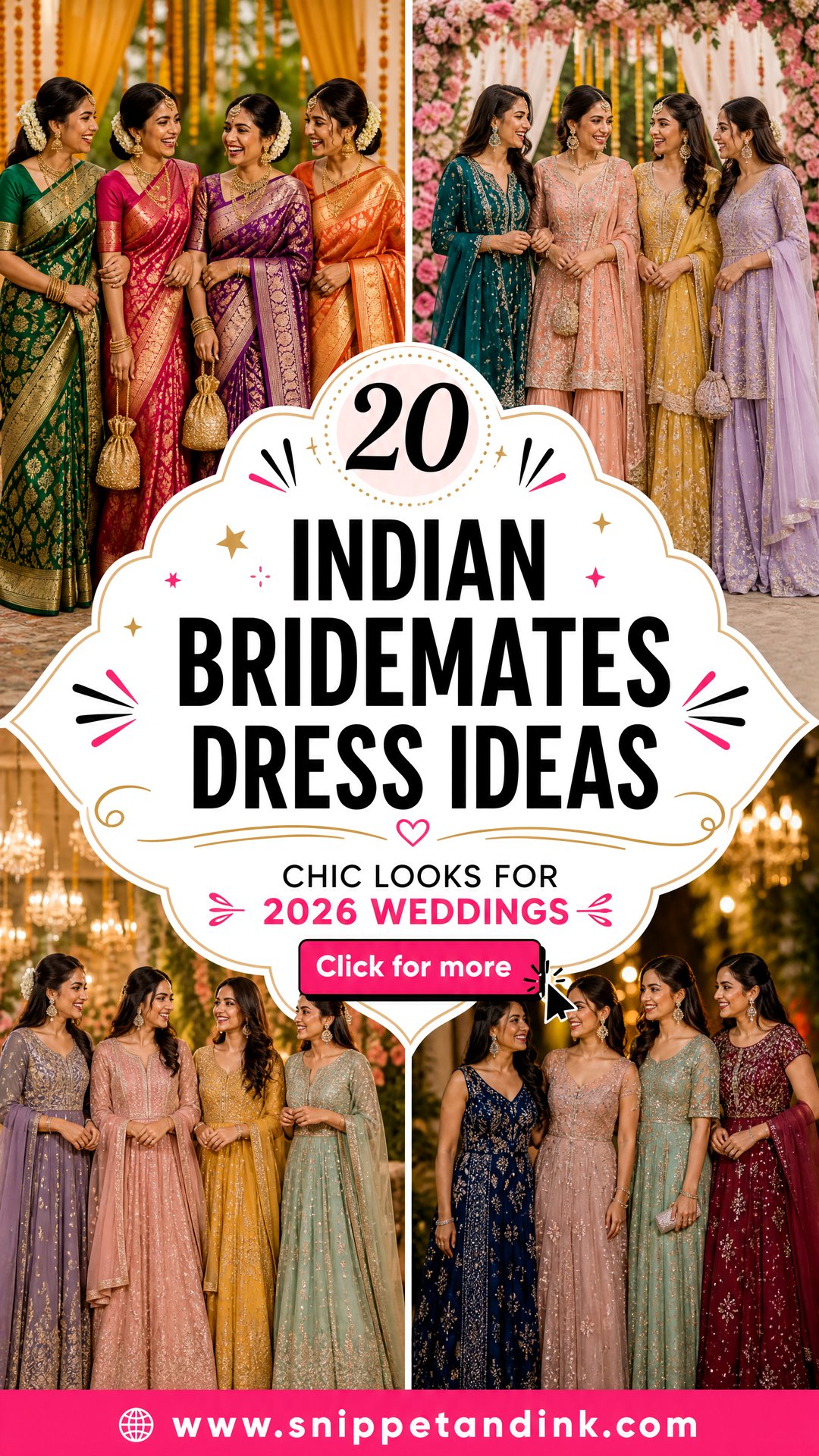
Dressing Very Different Bridesmaids as One Group
A bridal party rarely shares one body type, budget or comfort level, and forcing a single outfit on everyone is where resentment starts. My approach is to fix one element and leave the rest open.
- Fix the palette: three or four shades from one family, so each person picks what flatters her.
- Or fix the detail: the same border, embroidery or dupatta across different silhouettes.
- Let each bridesmaid choose her silhouette, so a saree, a sharara and an Anarkali can stand together.
- Agree on a jewelry metal, gold or silver, so photos look consistent.
Talk about cost early and kindly. If the bride wants a specific outfit, it’s gracious for her to cover it or offer a cheaper alternative. Order everything at the same time, from the same supplier where possible, because dye lots vary and a slightly different pink stands out in a line.
Bridesmaids who live in different cities should each be measured by a local tailor using the same measurement sheet, then have a fitting nearby once outfits arrive. Leave a few weeks between delivery and the first event for alterations; embroidered ready-made outfits almost always need the blouse taken in or the hem adjusted.
1. Pastel Indian Bridesmaid Lehenga
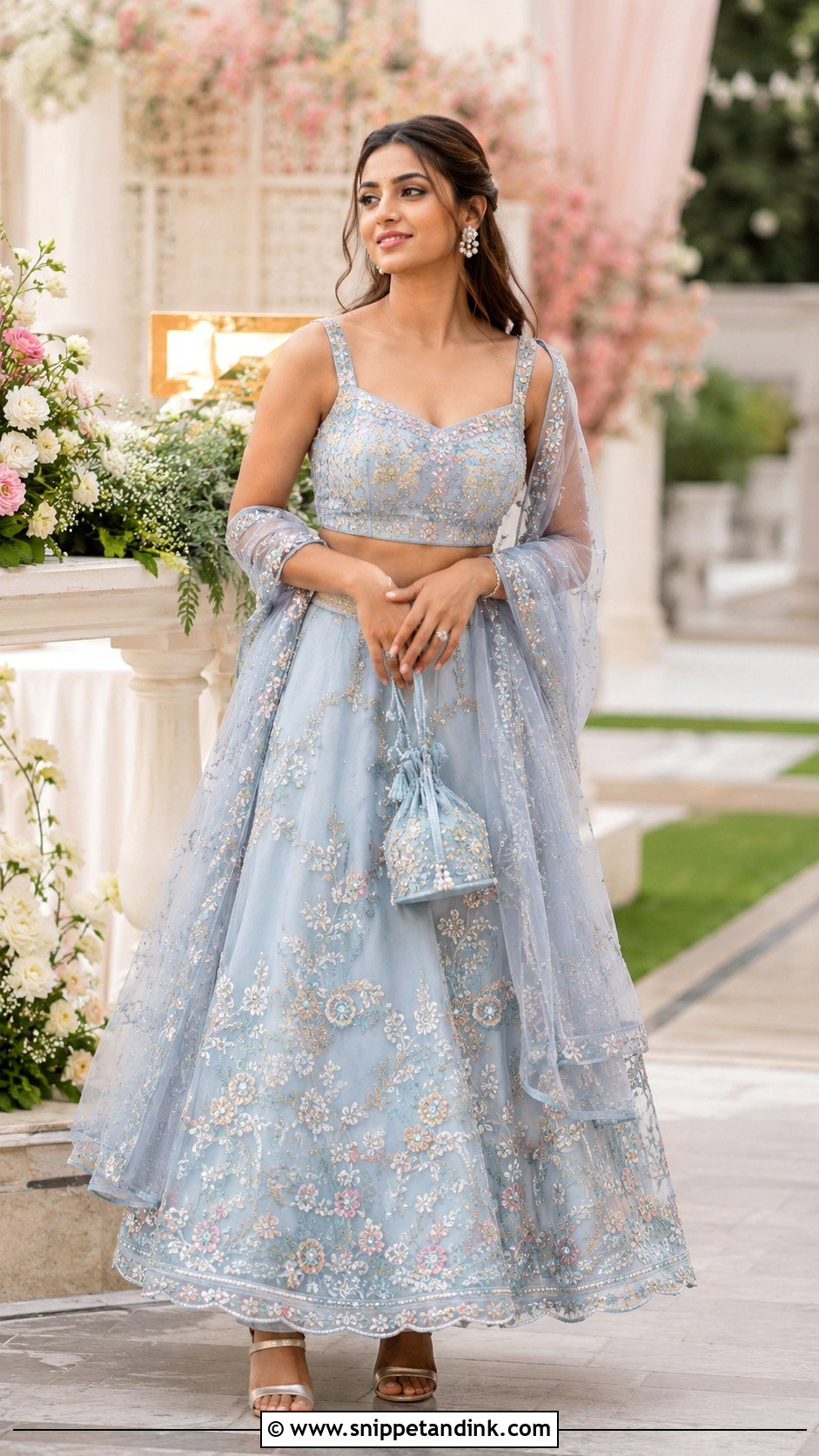
A pastel lehenga in georgette or organza is the easiest bridesmaid outfit to coordinate for a daytime wedding or engagement. I rarely put everyone in the same shade. Powder blue, blush, mint, peach and lavender in the same embroidery and silhouette look deliberate, and each bridesmaid gets the colour that suits her skin. Keep the embroidery light so nobody looks bridal. A sheer dupatta on one shoulder, pearl earrings and metallic block heels finish it.
2. Mirror Work Indian Bridesmaid Lehenga
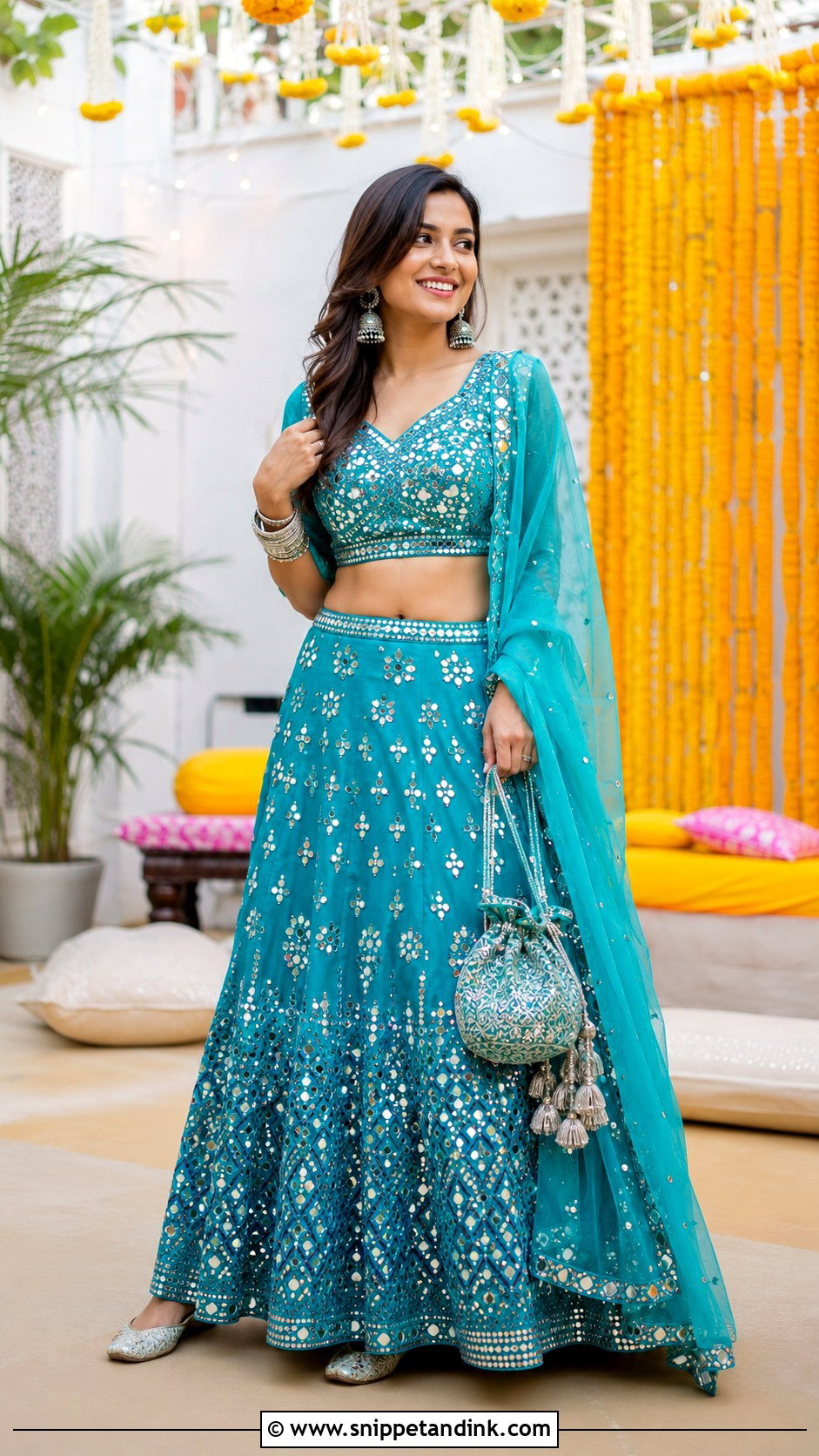
Mirror work is made for a sangeet: every small mirror throws back the lights when you move. A colorful mirror work lehenga in fuchsia, teal, purple, coral or royal blue with a cropped blouse and light dupatta can be danced in for hours. Choose small, evenly spaced mirrors rather than dense clusters. Large glass mirrors are heavy and their edges can scratch the inside of your arm. A braided ponytail and cushioned juttis keep it practical. One embroidery pattern in several colours ties the group together.
3. Floral Organza Indian Bridesmaid Saree
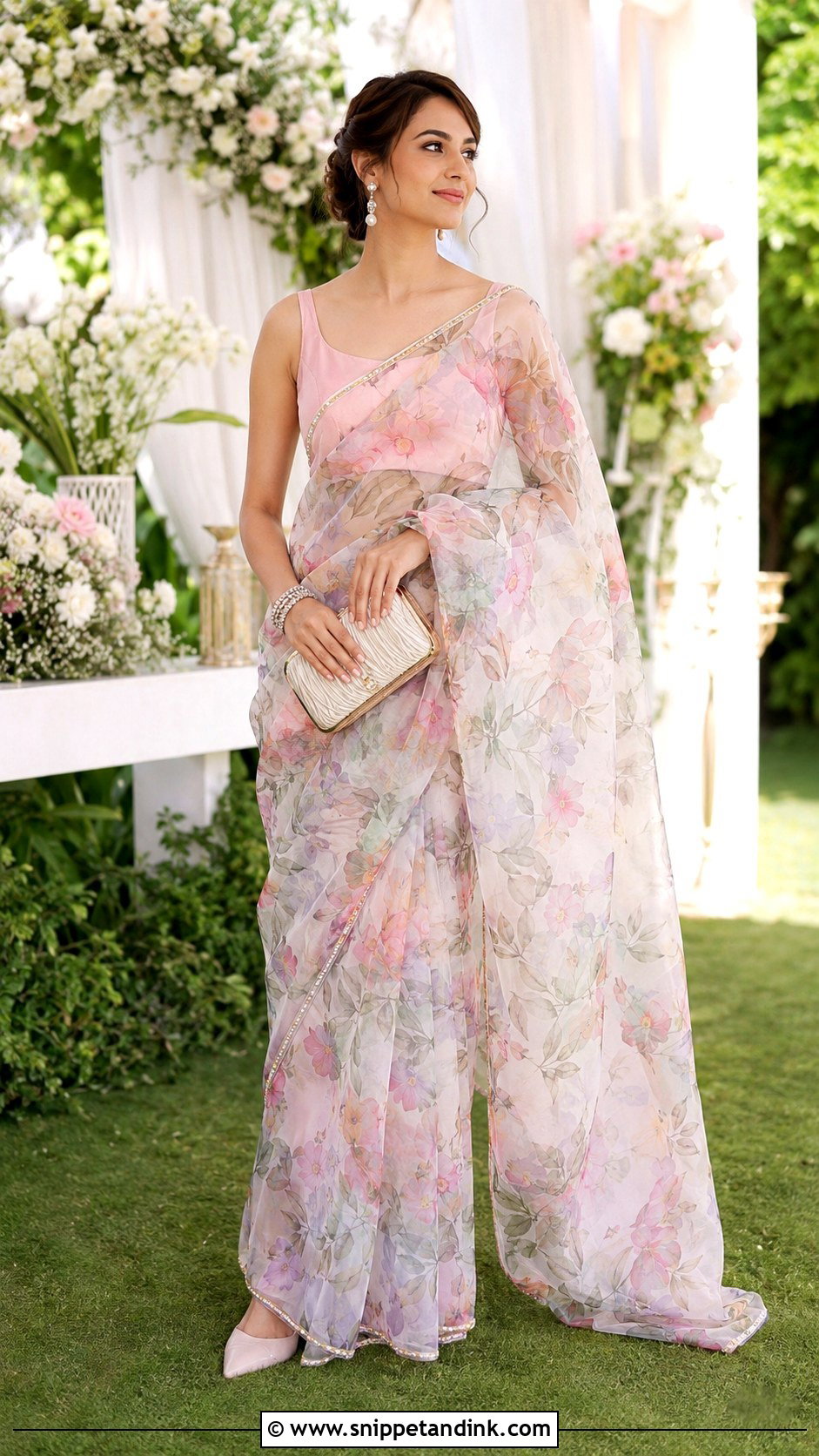
Floral organza is airy enough for a morning ritual in spring or summer. Choose watercolour flowers or a delicate border rather than oversized prints, and a solid sleeveless blouse that picks one colour from the saree. Organza is stiff and springy, so the pleats and shoulder need discreet pins or the drape puffs out. Pearl drops, slim bangles and kitten heels match its weight. A bun with a few fresh flowers suits outdoor photographs.
4. Banarasi Silk Indian Bridesmaid Saree
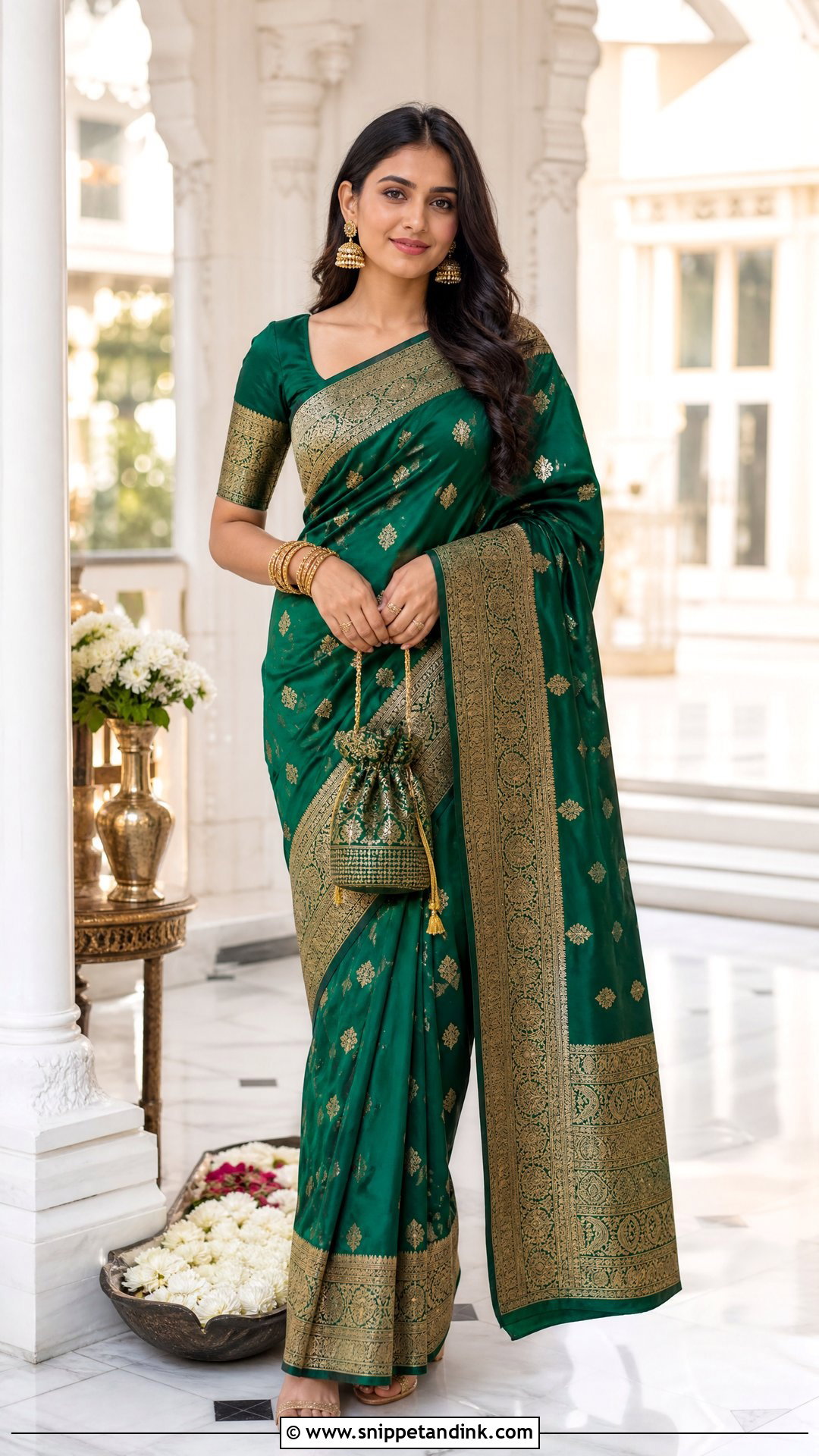
Banarasi silk puts bridesmaids in proper ceremony dress. Emerald, magenta, navy, mustard and deep purple with woven gold all look rich beside a bride in red, without matching her. An elbow-sleeve blouse with real structure keeps the drape secure. My favourite trick for a bridal party is one shared border colour across different saree shades. The silk already has a lot going on, so jhumkas, bangles and a centre-parted low bun are enough.
5. Pre-Draped Indian Bridesmaid Saree
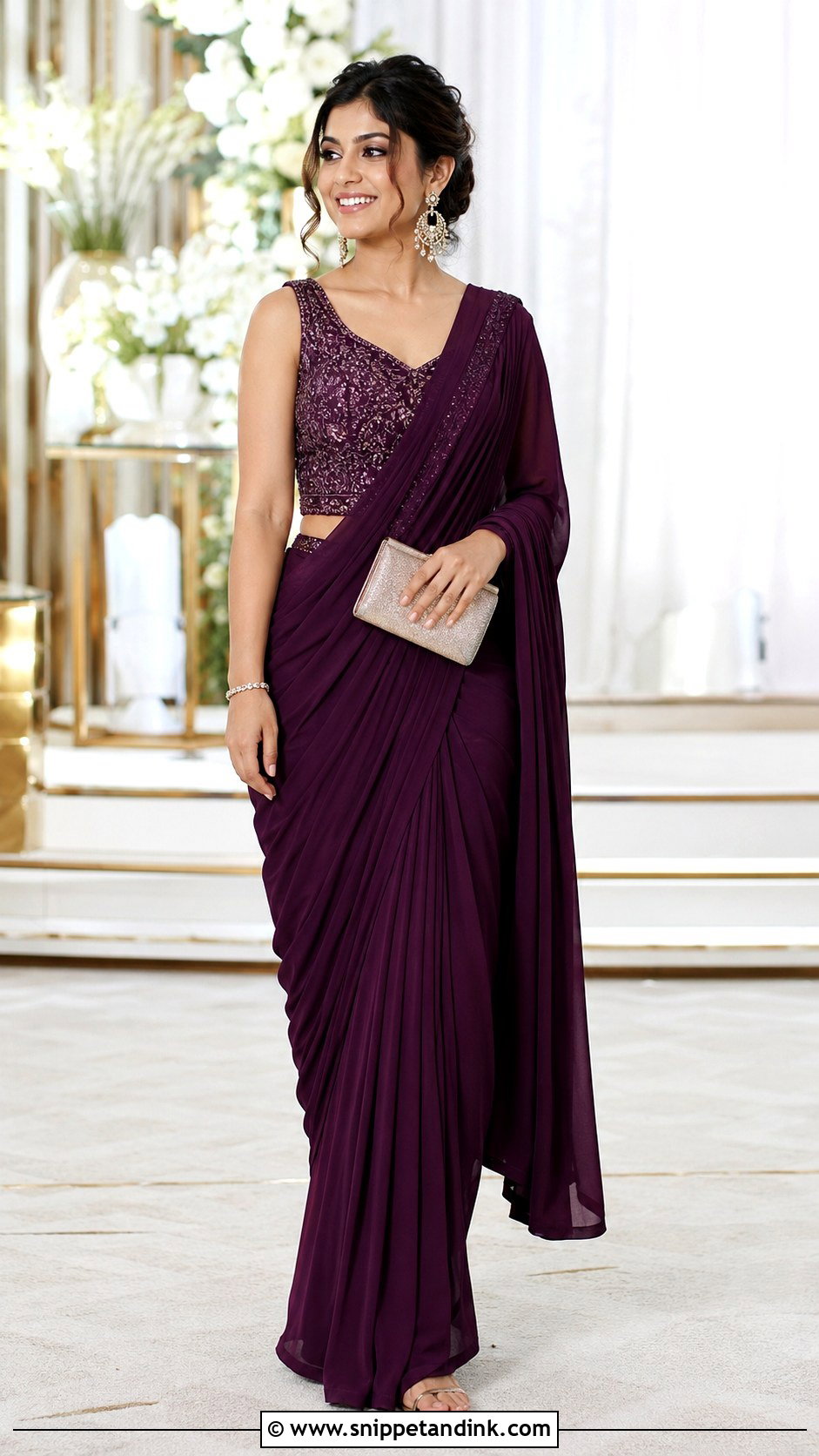
A pre-draped saree is my default for any bridesmaid who has never worn a saree or who’ll be running errands for the bride all day. Chiffon, crepe or georgette in a jewel tone, pastel or soft metallic works. The pleats are stitched and the waist is fitted, so it survives stairs, sitting and dancing without re-pinning. Choose a blouse with proper straps or sleeves. Statement earrings, heeled sandals and a sleek ponytail make it a strong reception look.
6. Embroidered Indian Bridesmaid Sharara
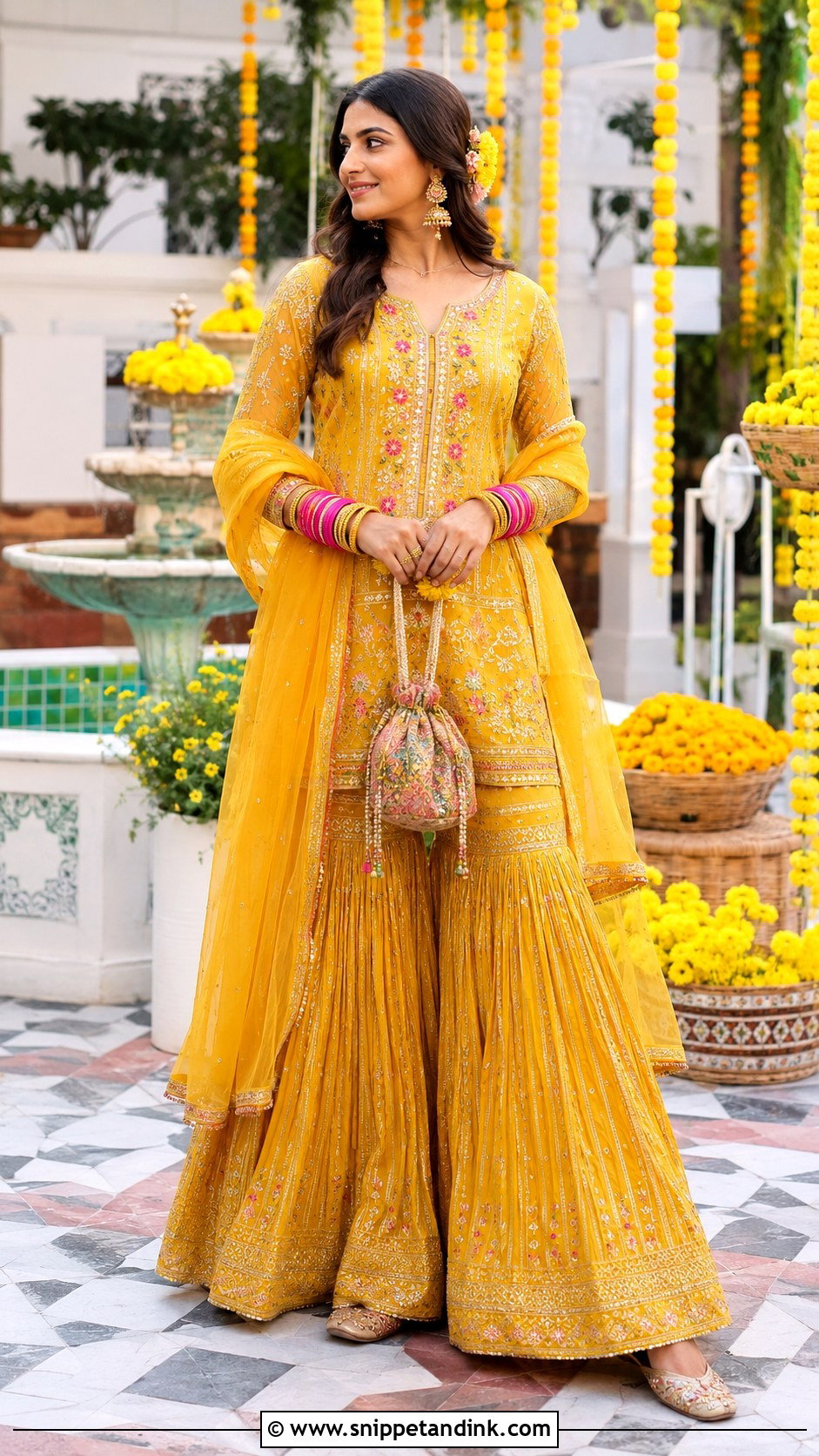
Shararas give festive volume without a lehenga’s weight on the waist. Wide flared pants and a short or mid-length kurta embroidered at the neckline and hem are the base, with a soft dupatta pinned to one shoulder. Marigold, green, pink, turquoise and lilac suit a mehndi. A bridesmaid who wants more coverage can take a longer kurta with the same pants and still match. Get the hem right; a sharara that touches the floor gets trodden on during the dancing.
7. Traditional Indian Bridesmaid Gharara
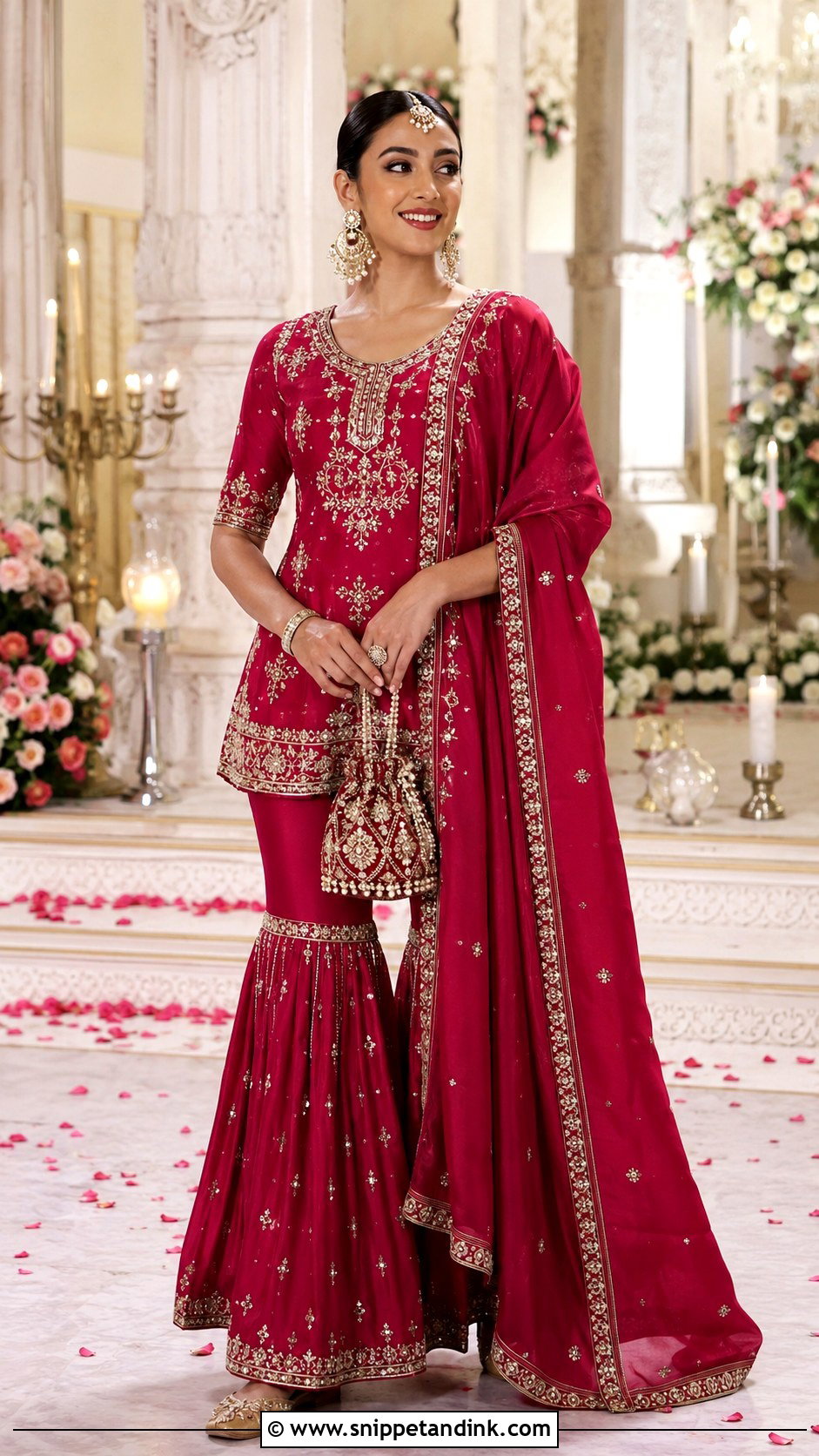
Ghararas are often confused with shararas, but the shape is different: fitted to the knee, then flaring, usually with a band of gota or embroidery at the knee joint. A short, well-fitted kurti keeps that shape visible. Ivory and gold look refined; raspberry, bottle green, saffron and sky blue are livelier. Chandbalis, a maang tikka and a beaded potli suit it. Because the flare starts low, walking takes a small adjustment, so wear it once before the nikah or mehndi.
8. Floor-Length Indian Bridesmaid Anarkali
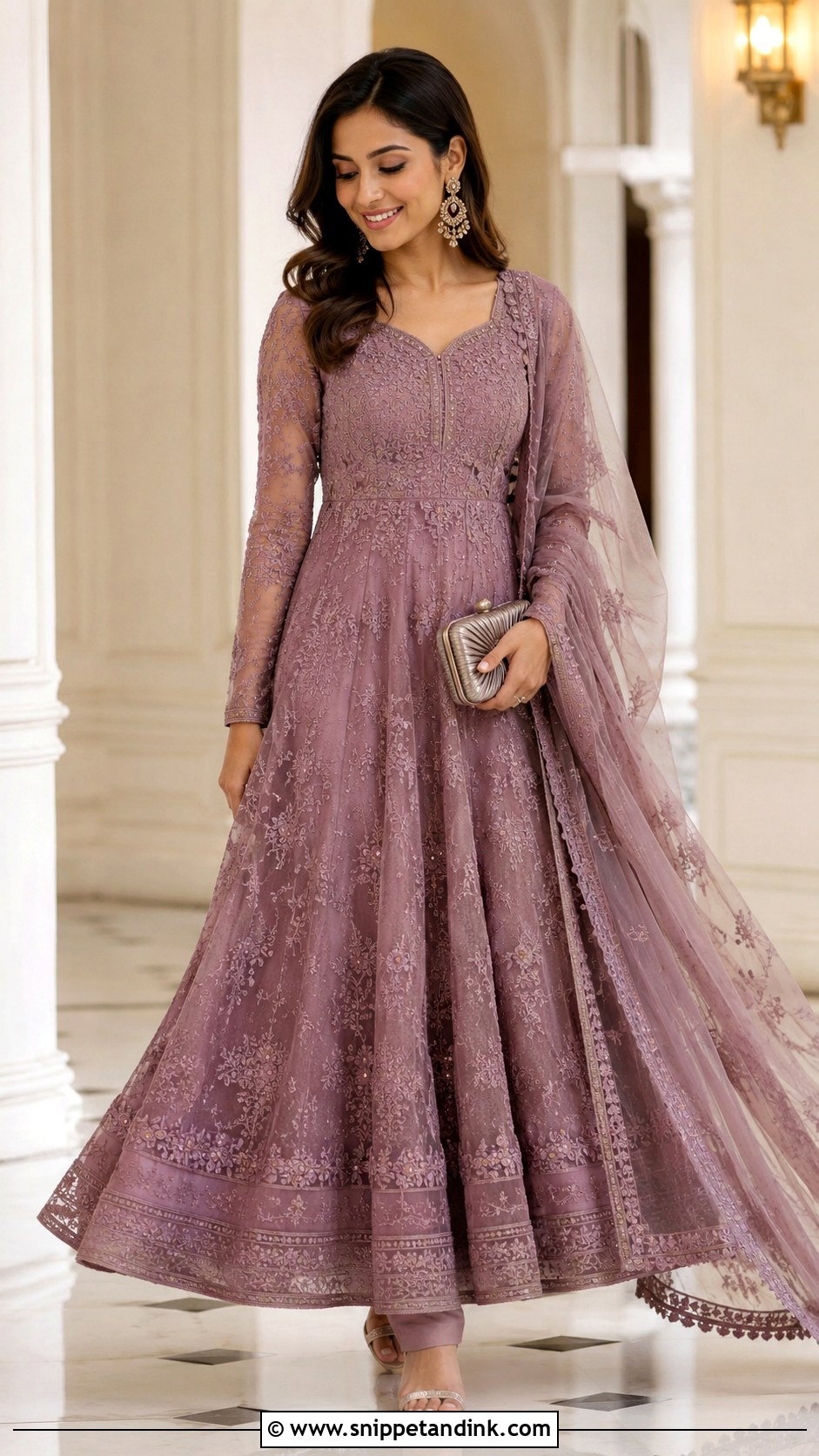
Floor-length Anarkalis look like gowns and wear like traditional clothes. Chiffon or georgette in summer, silk or light brocade in winter. Fine embroidery at the neckline, waist and cuffs is enough. The bodice fit decides everything, so have it tailored, and it will flatter most shapes. For groups, I like one colour family in different depths, such as rose, mauve and plum, so each bridesmaid has her own shade. Narrow pants, a coordinating dupatta and hidden heels finish it.
9. Punjabi Suit Indian Bridesmaid Outfit
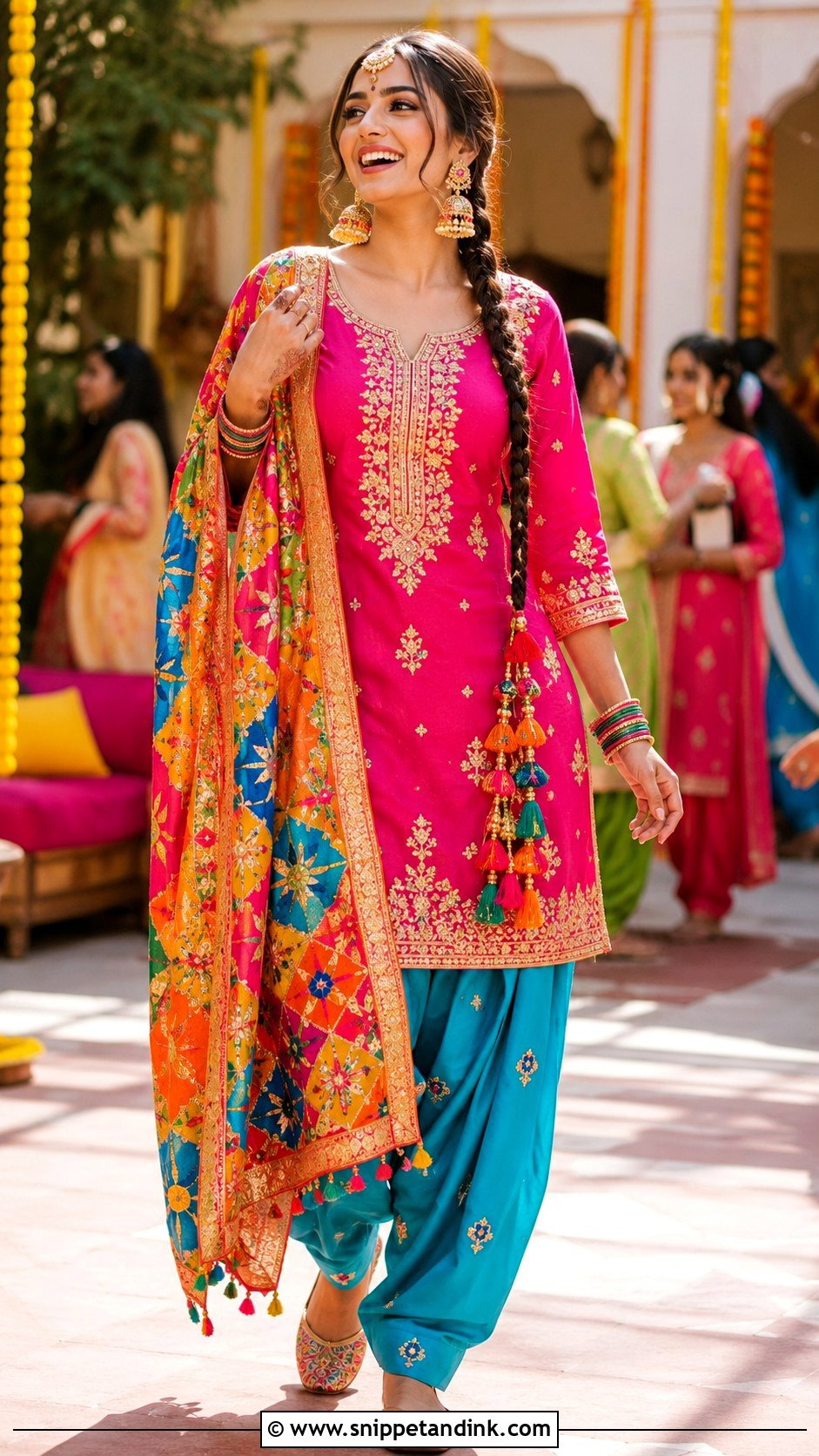
A bright Punjabi suit is what I’d choose for a jaggo or a daytime mehndi where everyone dances for hours. A fitted or straight kurta with salwar and a phulkari, gota or embroidered dupatta looks joyful in hot pink, orange, yellow, green or cobalt. A paranda braid and cushioned juttis are both practical and traditional. Flat juttis can rub on the first wear, so break them in at home for a few evenings. Repeat the same dupatta across different kurta colours to tie the group together.
10. Palazzo Kurta Indian Bridesmaid Set
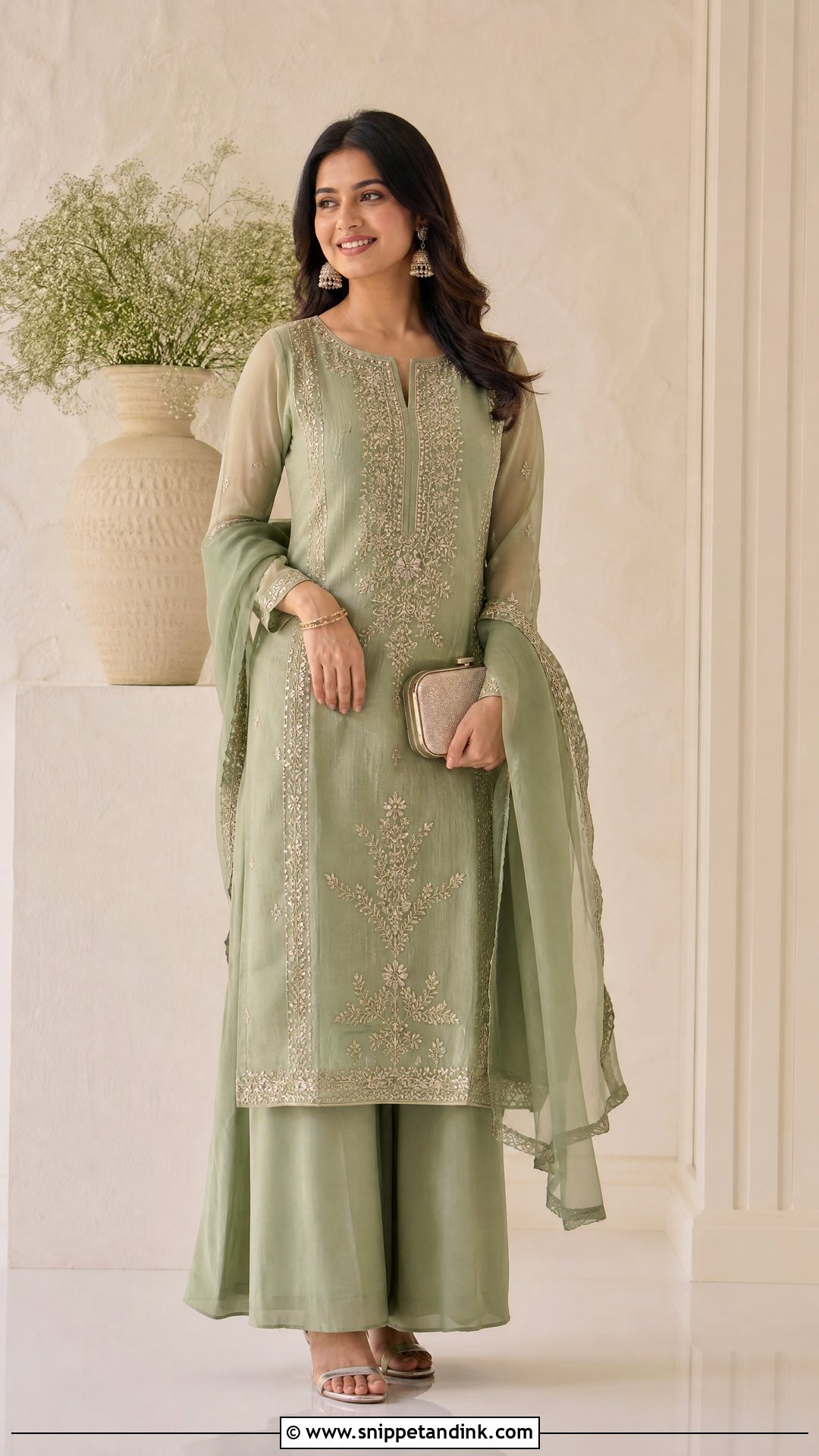
Palazzo and kurta sets suit smaller ceremonies and welcome dinners where a heavy lehenga would feel like too much. Sage, dusty rose, navy or ivory with embroidery at the neckline, sleeves and hems look polished. Proportion is the thing to get right: a waist-length kurta balances wide palazzos on a petite frame, while a longer kurta gives coverage on a taller one. A light dupatta, medium earrings and a sleek low bun complete it.
11. Dhoti Pants Indian Bridesmaid Outfit
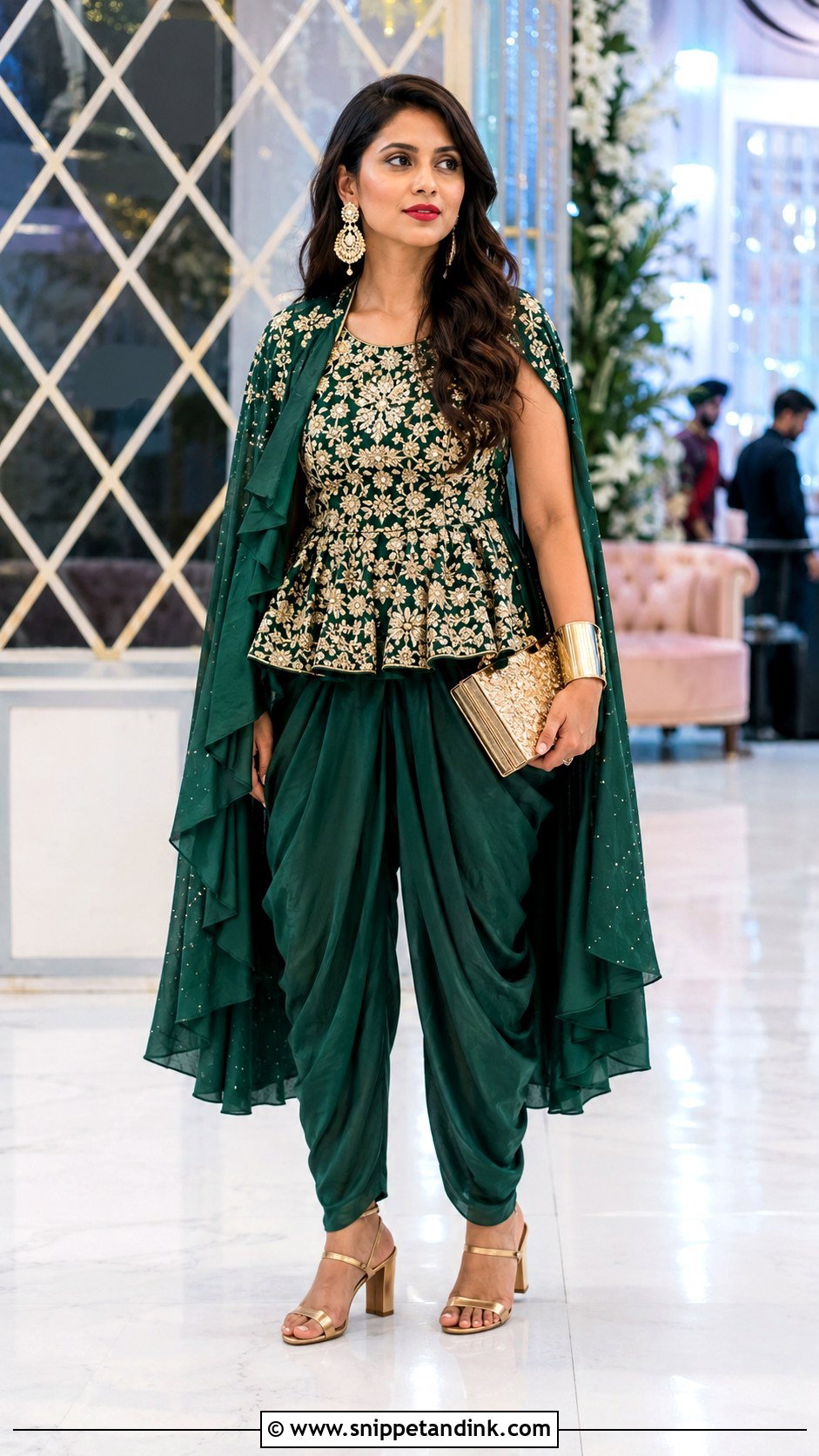
Dhoti pants are for the bridesmaid who wants something modern and refuses to give up movement. The draped folds need a fabric that falls cleanly, like crepe or a silk blend; stiff cotton bunches at the hips. An embroidered peplum, short kurta or asymmetric tunic should define the waist. Wine, emerald, navy and rust suit evening; mint and peach suit daytime. A cape or light dupatta adds coverage without hiding the pants.
12. Indian Bridesmaid Jumpsuit
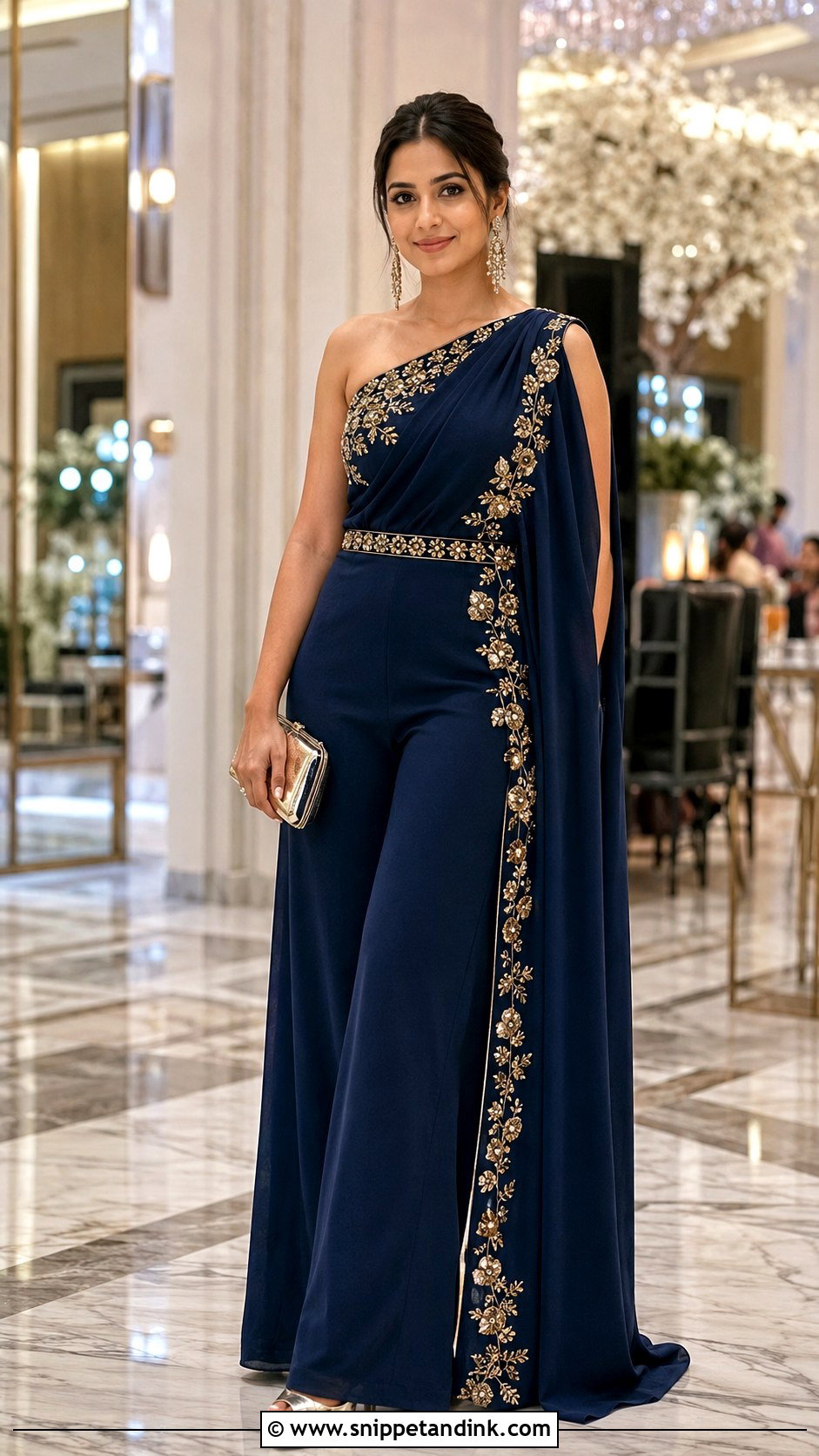
A jumpsuit is the outfit I suggest to bridesmaids who hate managing a dupatta. Wide-leg cuts with zari borders, floral embroidery, mirror work or a one-shoulder drape keep it festive. A defined waist matters, and so does practicality: check how the bathroom trip works before buying, since some styles need a full undress. If the neckline is decorated, skip the necklace. This complete Indo-Western outfit suits a cocktail night, sangeet or modern reception.
13. Jacket Lehenga Indian Bridesmaid Outfit
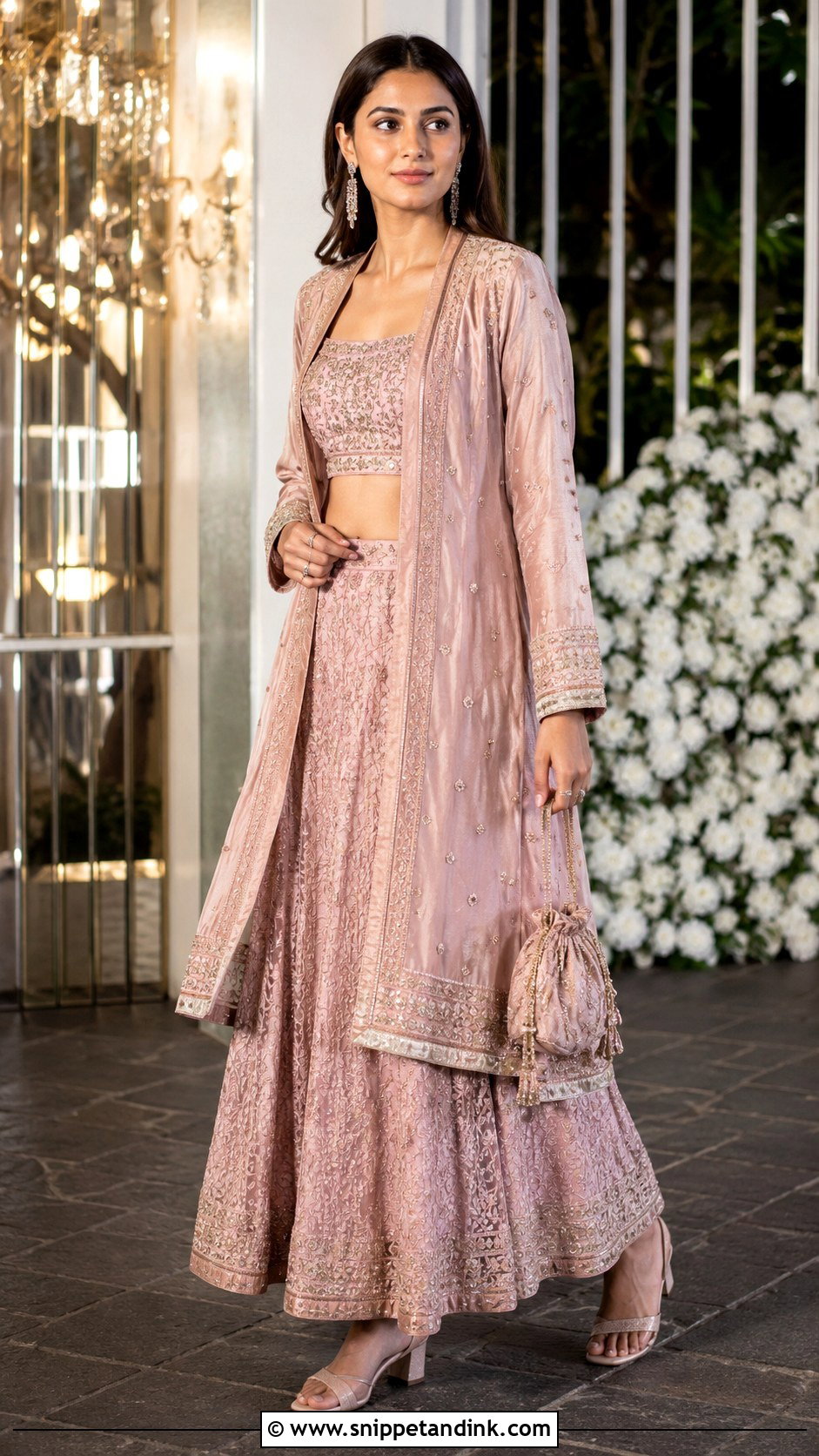
A long open jacket over a lightly embellished skirt and fitted blouse replaces the dupatta, so there’s nothing to re-pin during photos or dancing. Matching tones lengthen the body; a contrasting jacket stands out more. Embroidery should sit along the front edges, cuffs and hem. Keep the blouse plain, because three busy pieces crowd each other. It’s warm, which makes it ideal for cooler evenings and formal receptions and less so for a summer afternoon.
14. Belted Indian Bridesmaid Saree
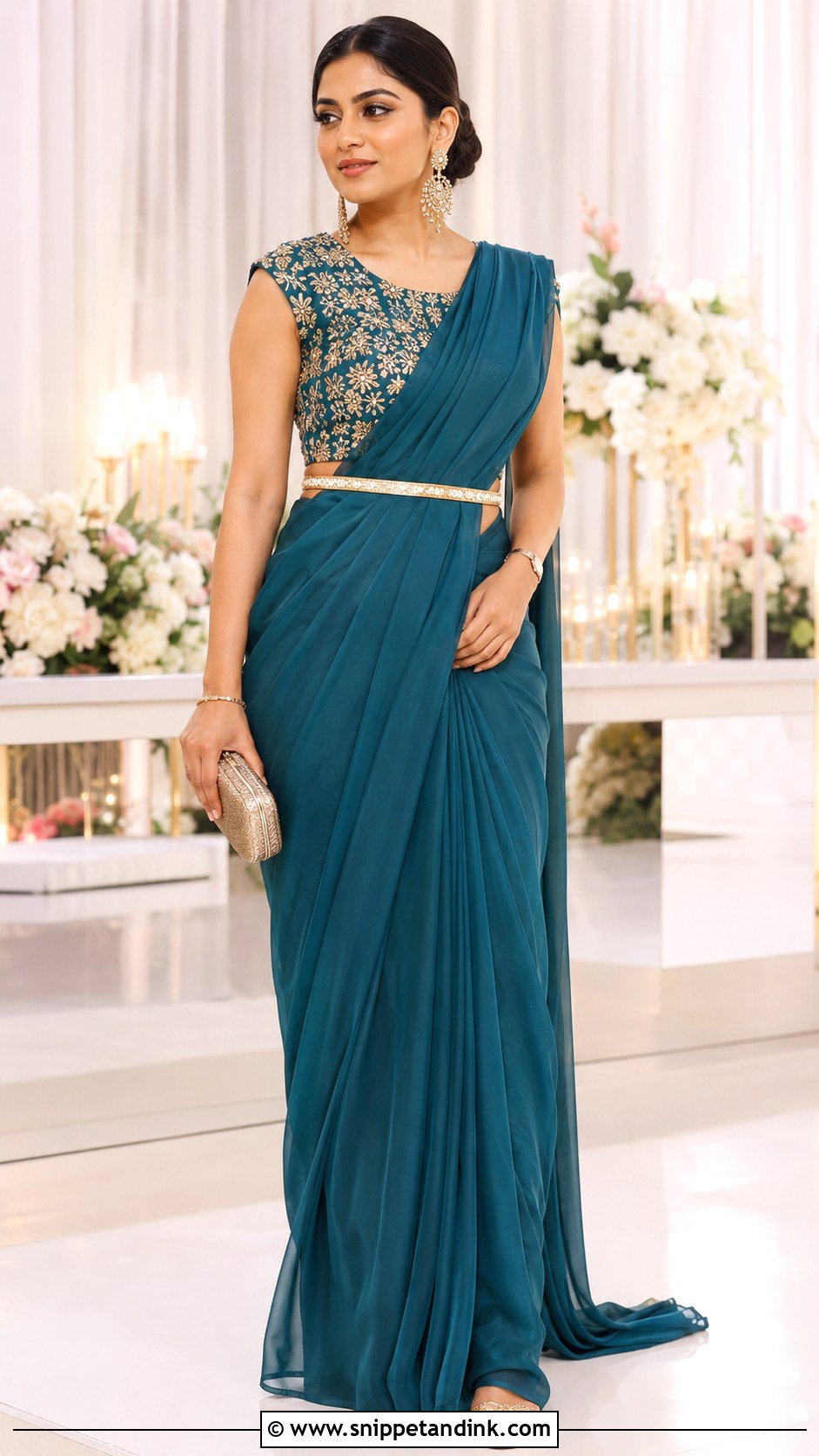
A belt solves the most common bridesmaid saree problem, which is pleats slowly working loose. Chiffon, satin or georgette draped close to the body, a fitted embroidered blouse, and a slim metallic or fabric belt at the natural waist hold everything in place. Matching belts also unify a group in different colours. If the blouse neckline is detailed, keep necklaces minimal. A sleek bun suits receptions and engagements.
15. Cape Lehenga Indian Bridesmaid Outfit
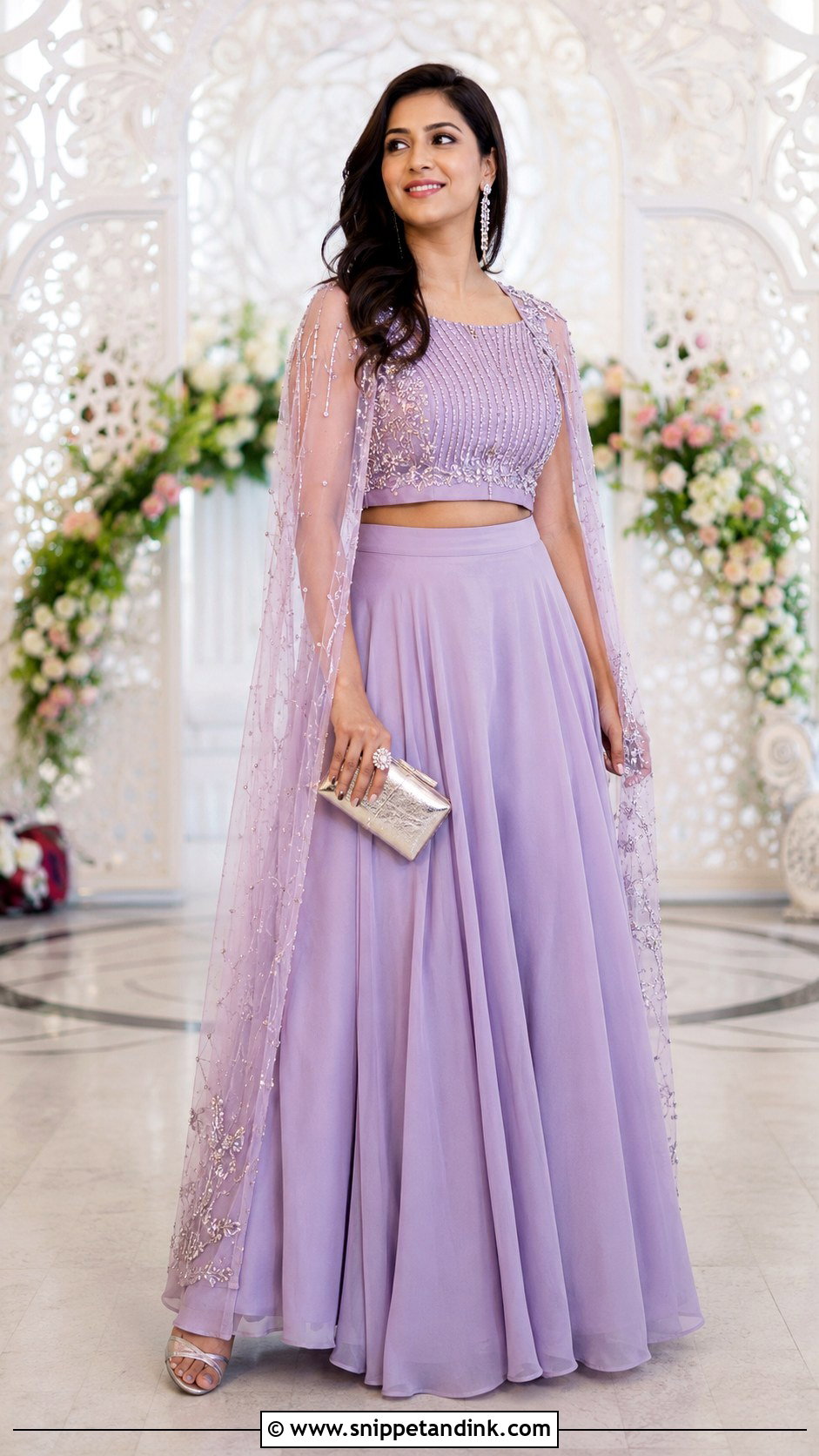
Capes give movement without the fuss of draping. A sheer shoulder cape or long overlay with fine sequins, beads or thread goes over a flowing skirt and fitted blouse. Make sure it doesn’t hide the skirt’s main embroidery. Pastels work for daytime; emerald, midnight blue and plum for evening. I’d always pair a cape with a low bun, because loose hair tangles in sheer fabric and sequins catch long strands. Different cape lengths in the same colour keep a group varied.
16. Indian Bridesmaid Co-Ord Set
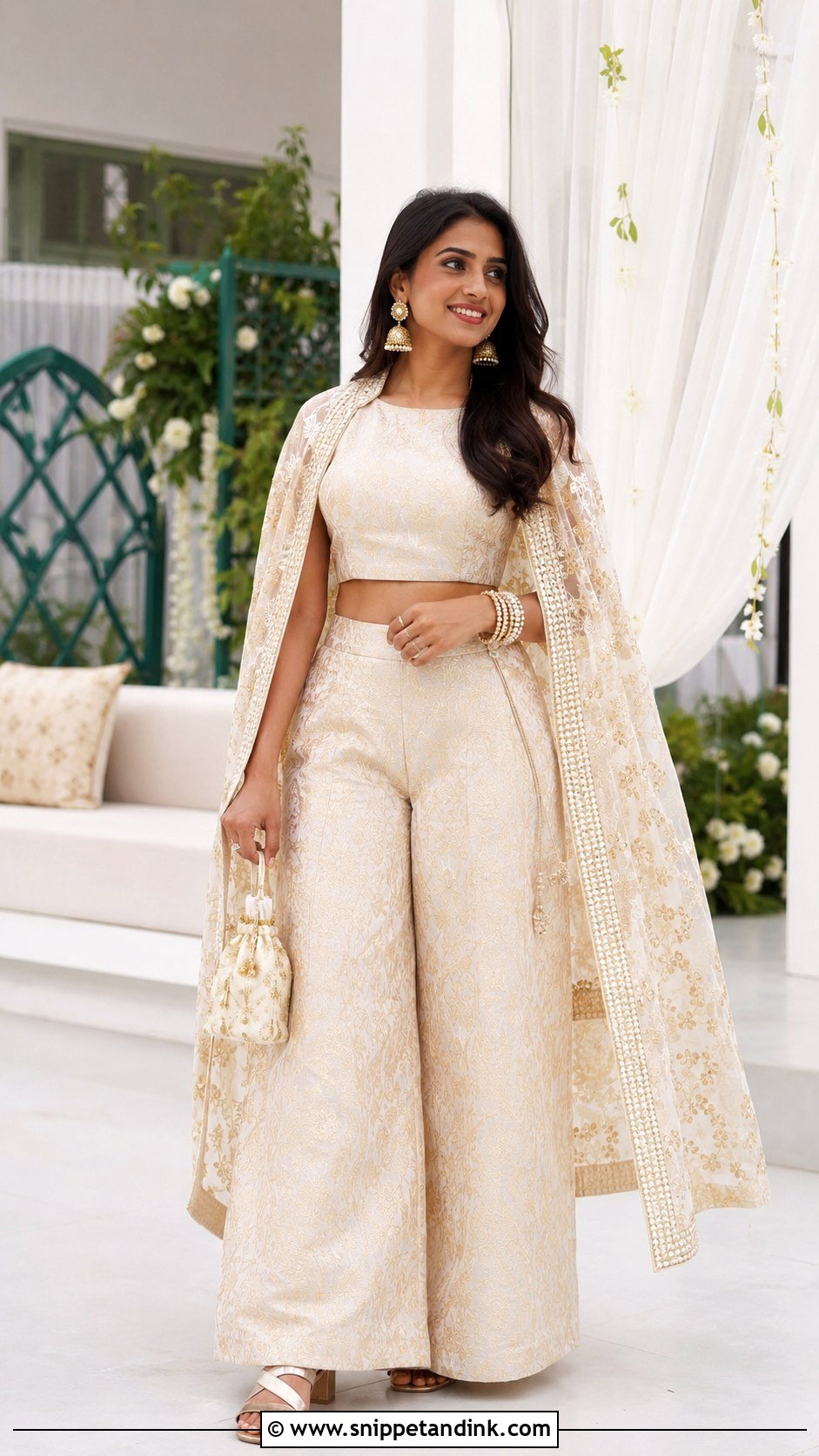
A co-ord set is the bridesmaid outfit most likely to be worn again, which makes it easier to ask friends to buy one. Wide-leg pants with a cropped or waist-length top, plus a jacket, cape or light dupatta, keep it festive in brocade, silk blends or soft embroidery. A high waist on the pants balances most shapes. Bridesmaids can mix complementary colours within the same fabric family. Hoop jhumkas, stacked bracelets and block heels finish it for a welcome event or mehndi.
17. Chikankari Indian Bridesmaid Outfit
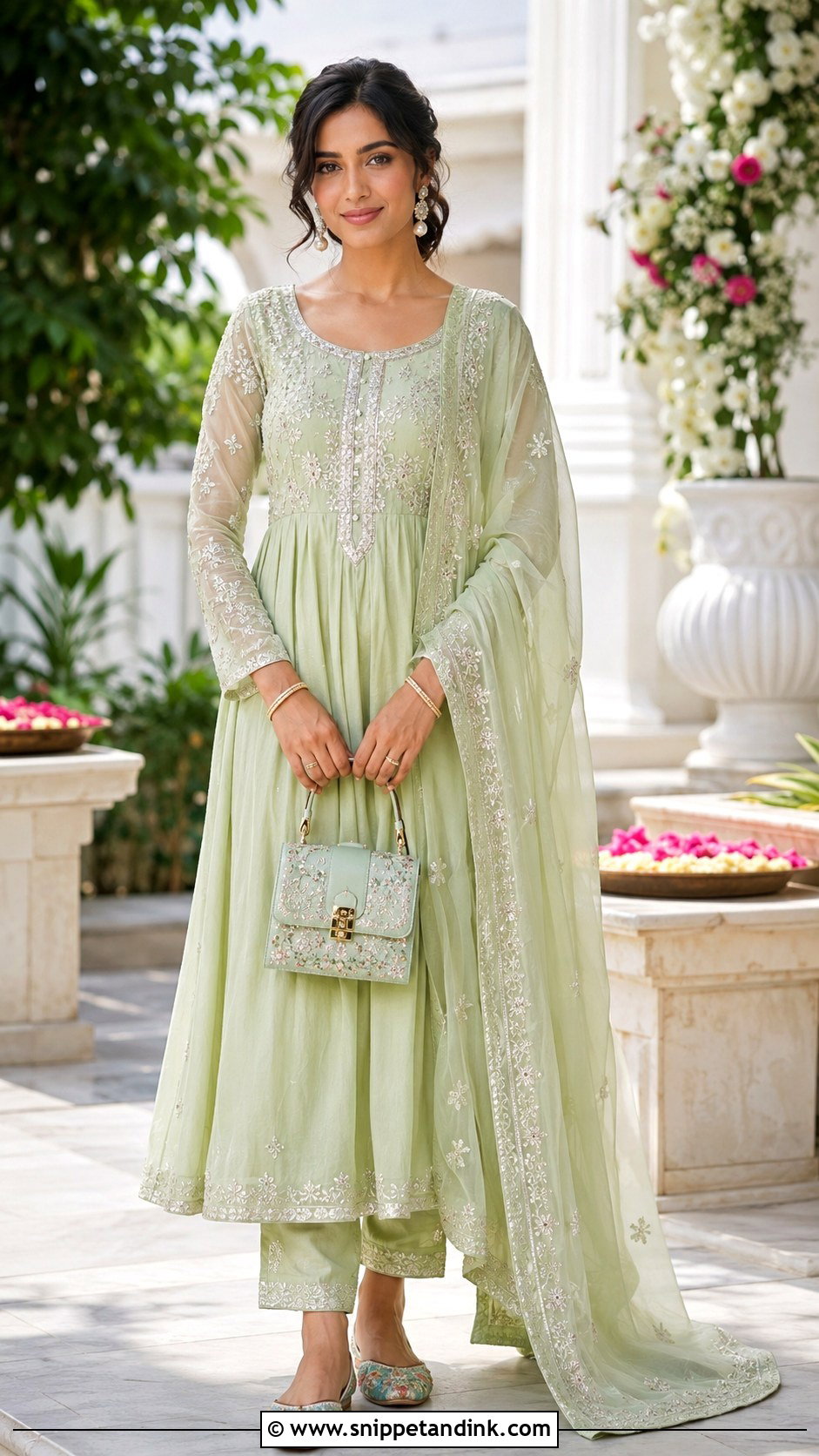
Chikankari is hand embroidery from Lucknow, traditionally white thread on fine cotton or georgette, and it is one of the coolest things to wear at a summer wedding. A long kurta or short Anarkali in ivory, blush, lemon, powder blue or pistachio pairs with straight pants, palazzos or a light skirt. A few sequins added to the embroidery lift it for evening. The fabric is delicate, so turn it inside out and hand wash or dry clean. Ideal for a haldi or morning ritual.
18. Velvet Indian Bridesmaid Lehenga
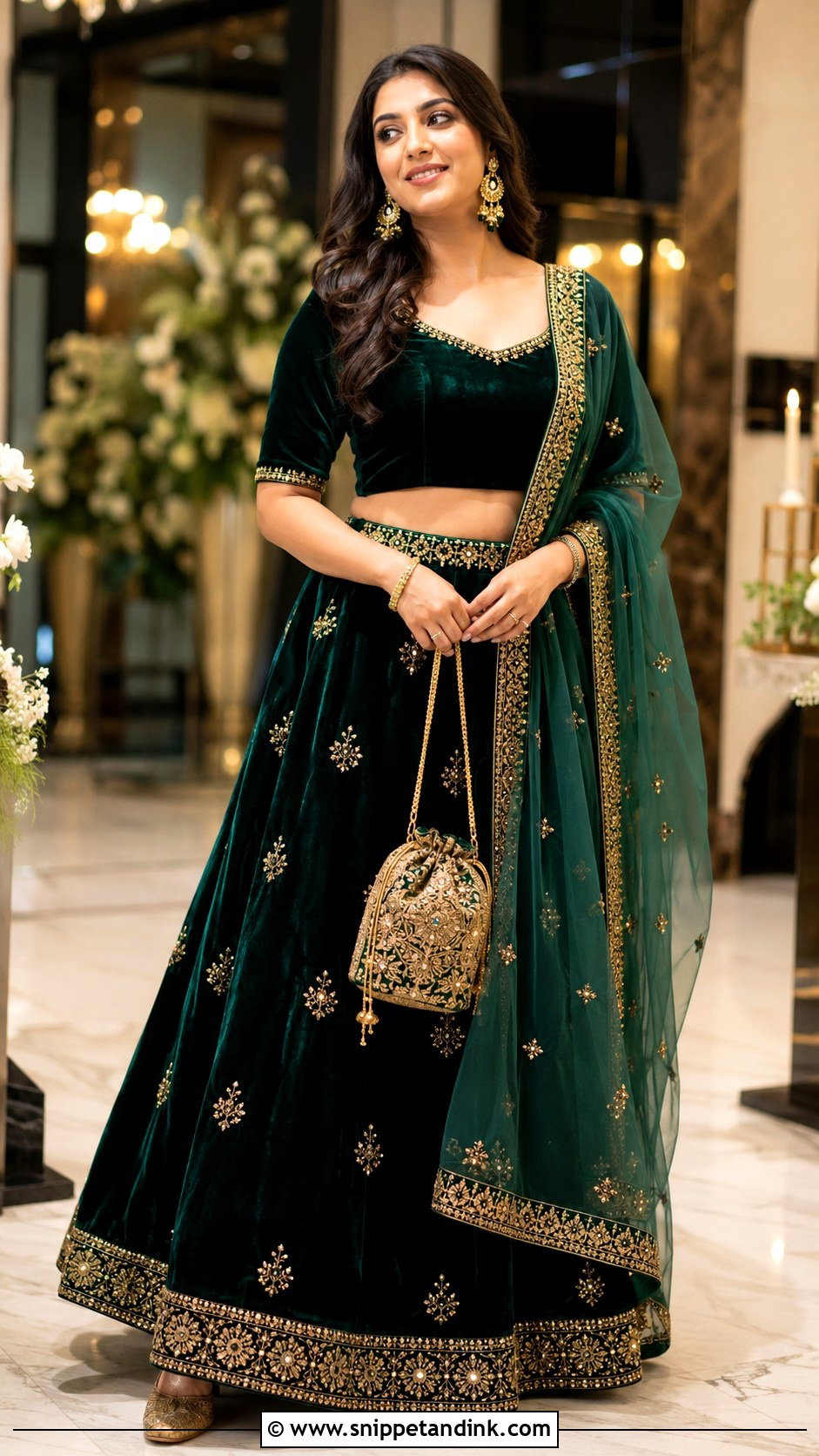
Velvet is the cold-weather choice: navy, emerald, burgundy, plum or deep teal with moderate embroidery. Pair the skirt with a velvet blouse or contrasting silk, and add a light net or organza dupatta so the outfit doesn’t look heavy. Focus jewelry near the face and skip the layered necklaces. Indoors with heating, velvet gets hot quickly, so I’d only choose it for an evening ceremony or a reception in a properly cool season.
19. South Indian Bridesmaid Half Saree
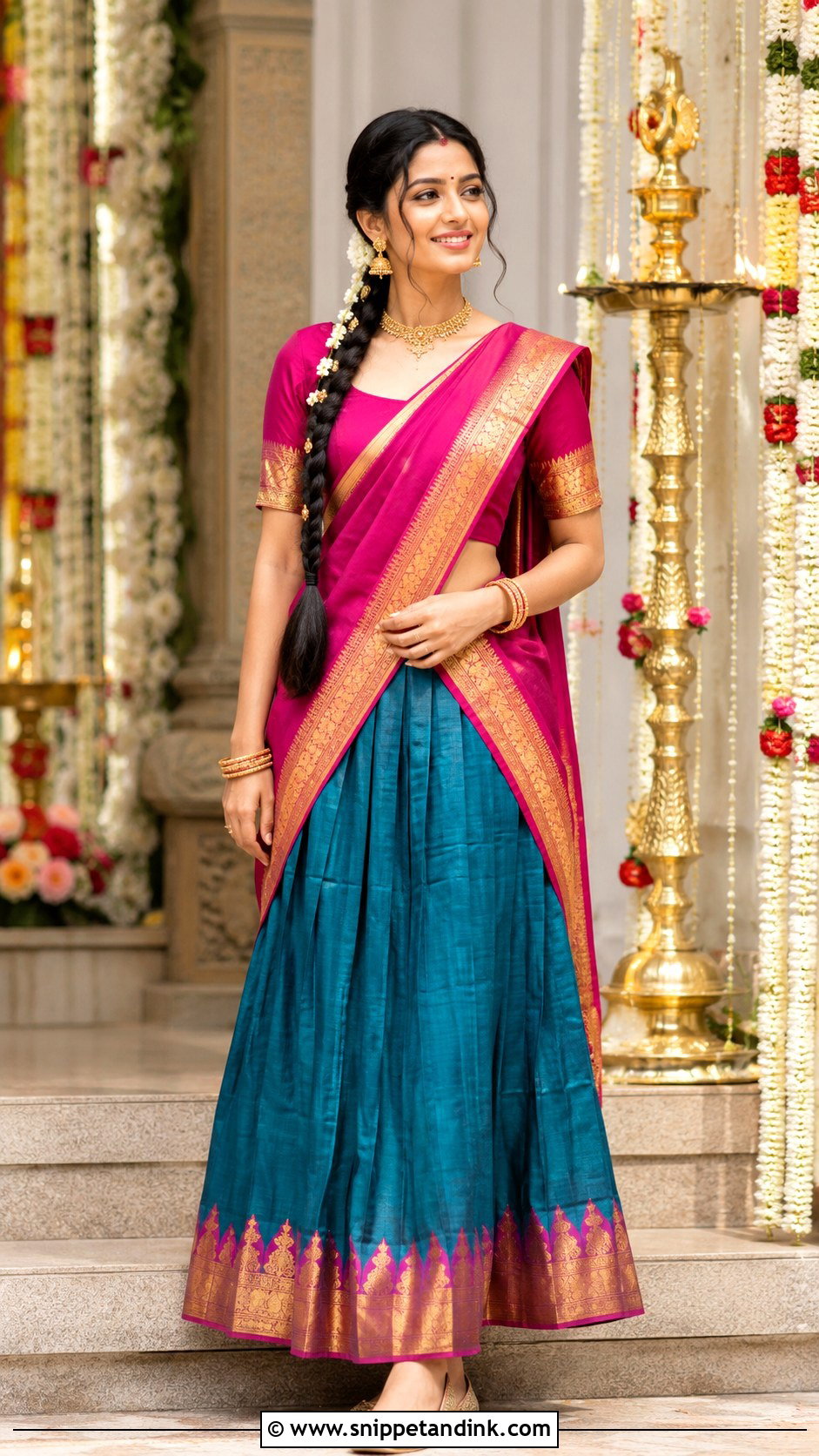
A half saree suits bridesmaids at a South Indian ceremony: a flared skirt, fitted blouse and dupatta draped diagonally like a pallu. Jewel-toned silk or pairings such as teal and magenta are traditional, and woven borders link the three pieces. Temple-style earrings, bangles, a small bindi and low heels complete it, with a long braid accented with flowers. The diagonal dupatta needs to be pinned at the shoulder and tucked at the waist, or it slides off during rituals.
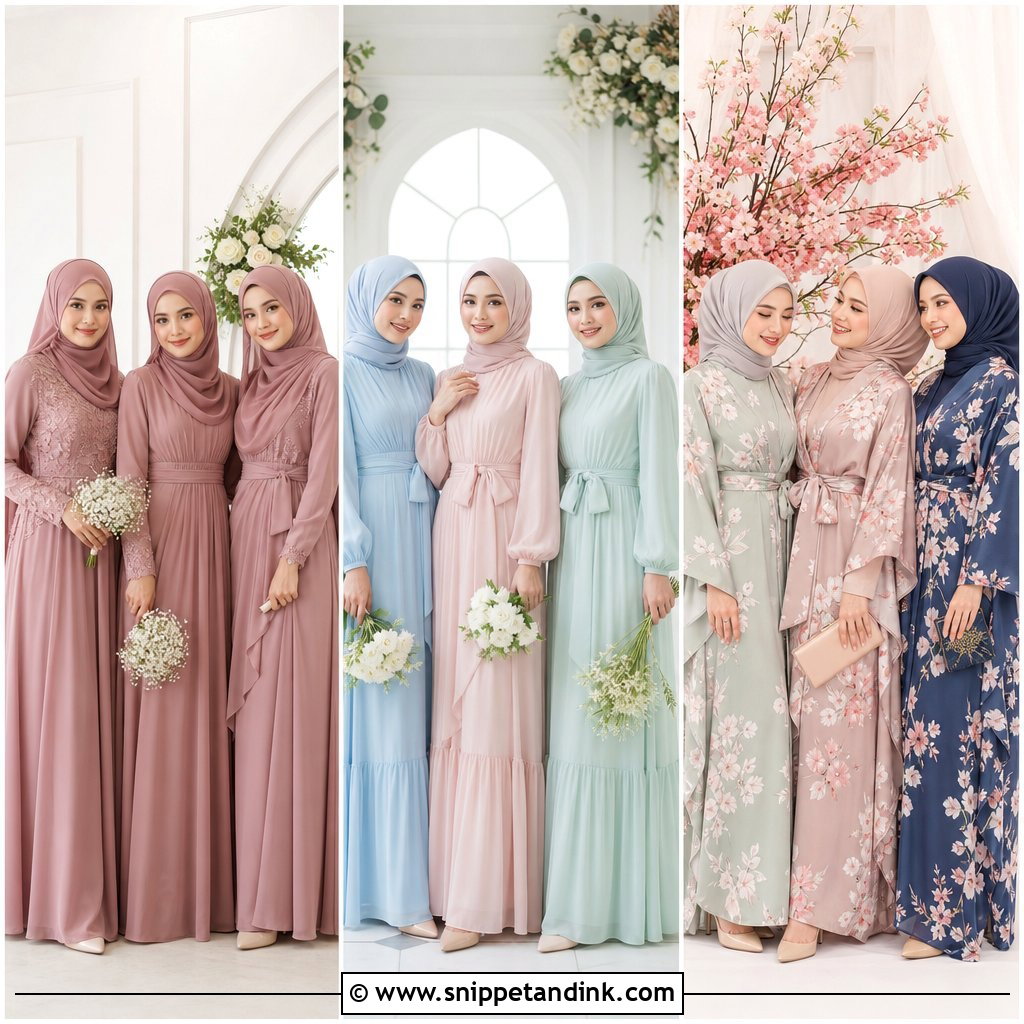
20. Embellished Indian Bridesmaid Gown
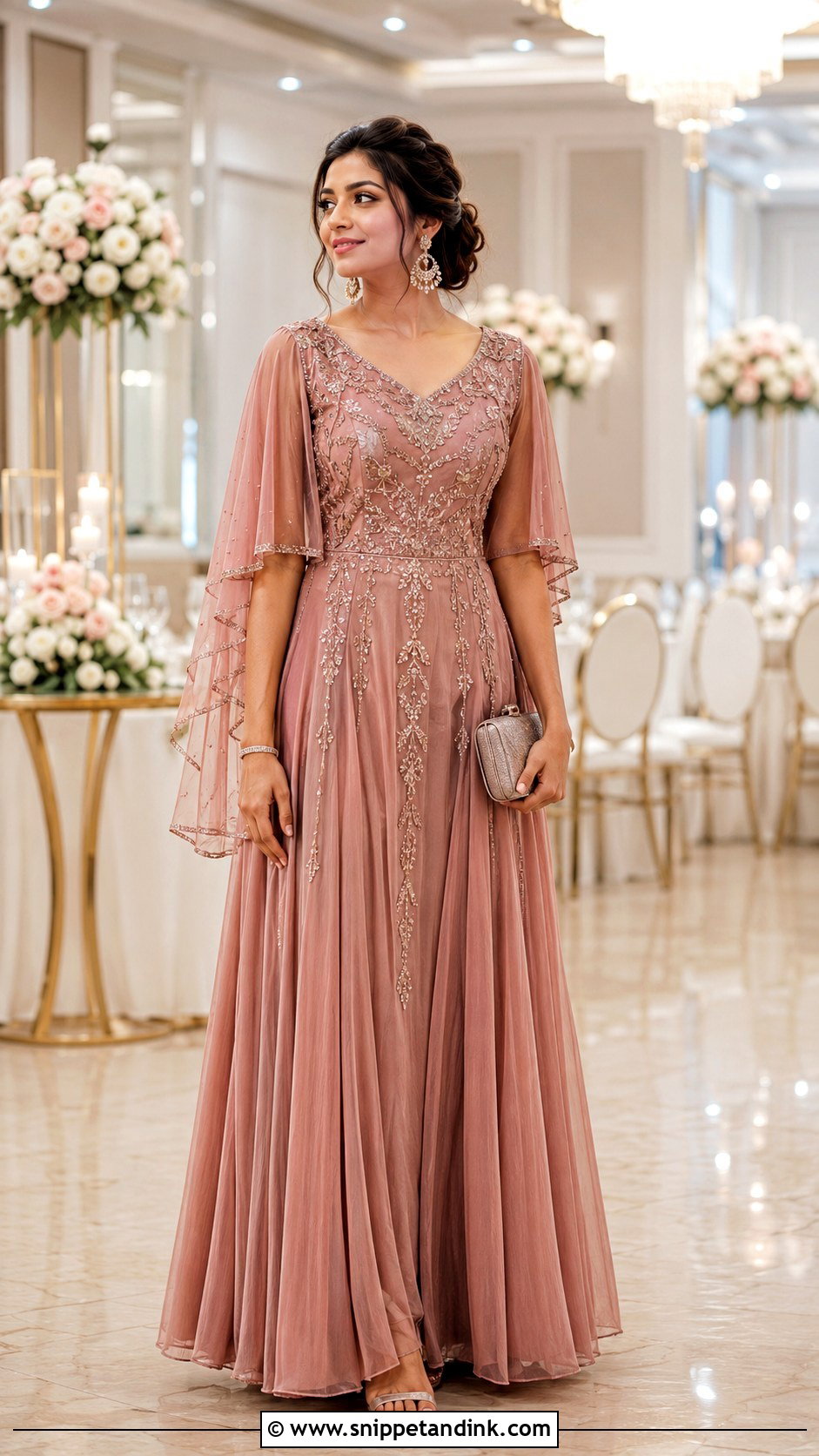
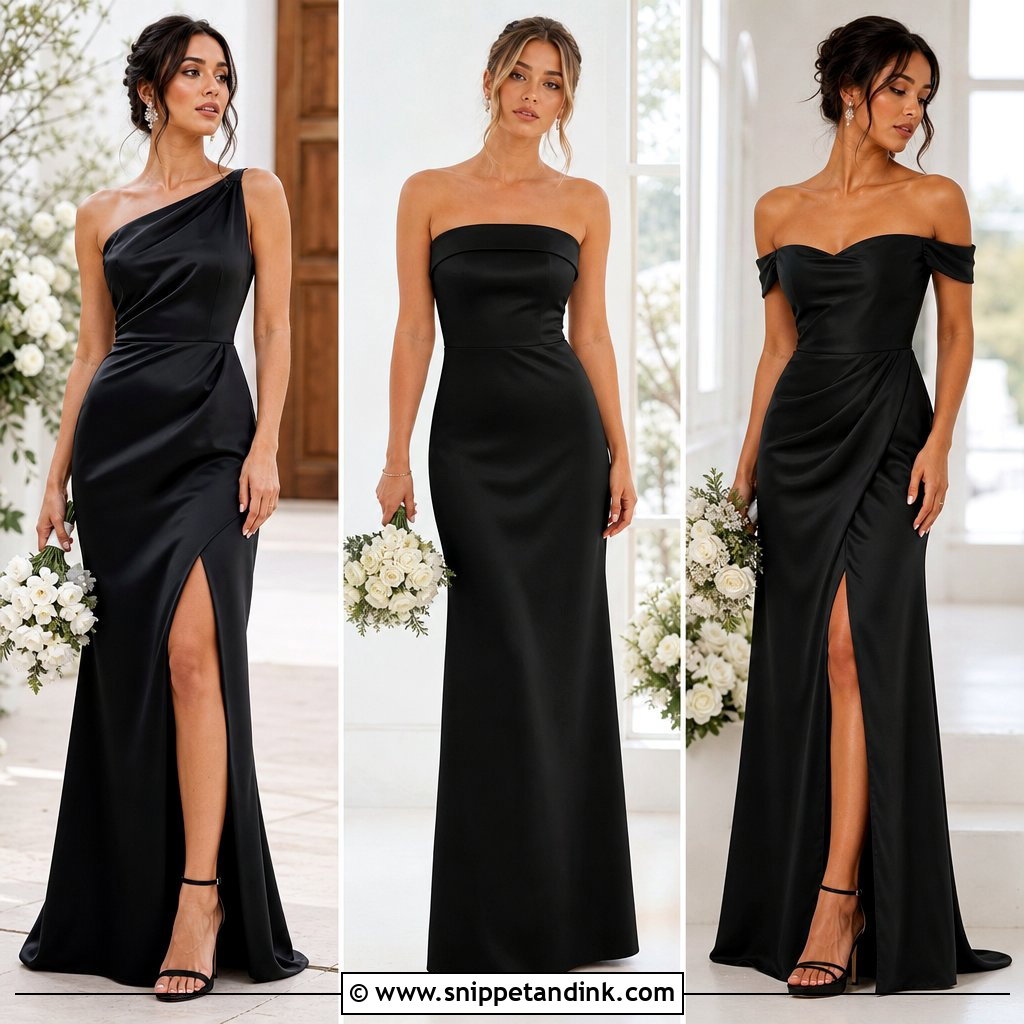
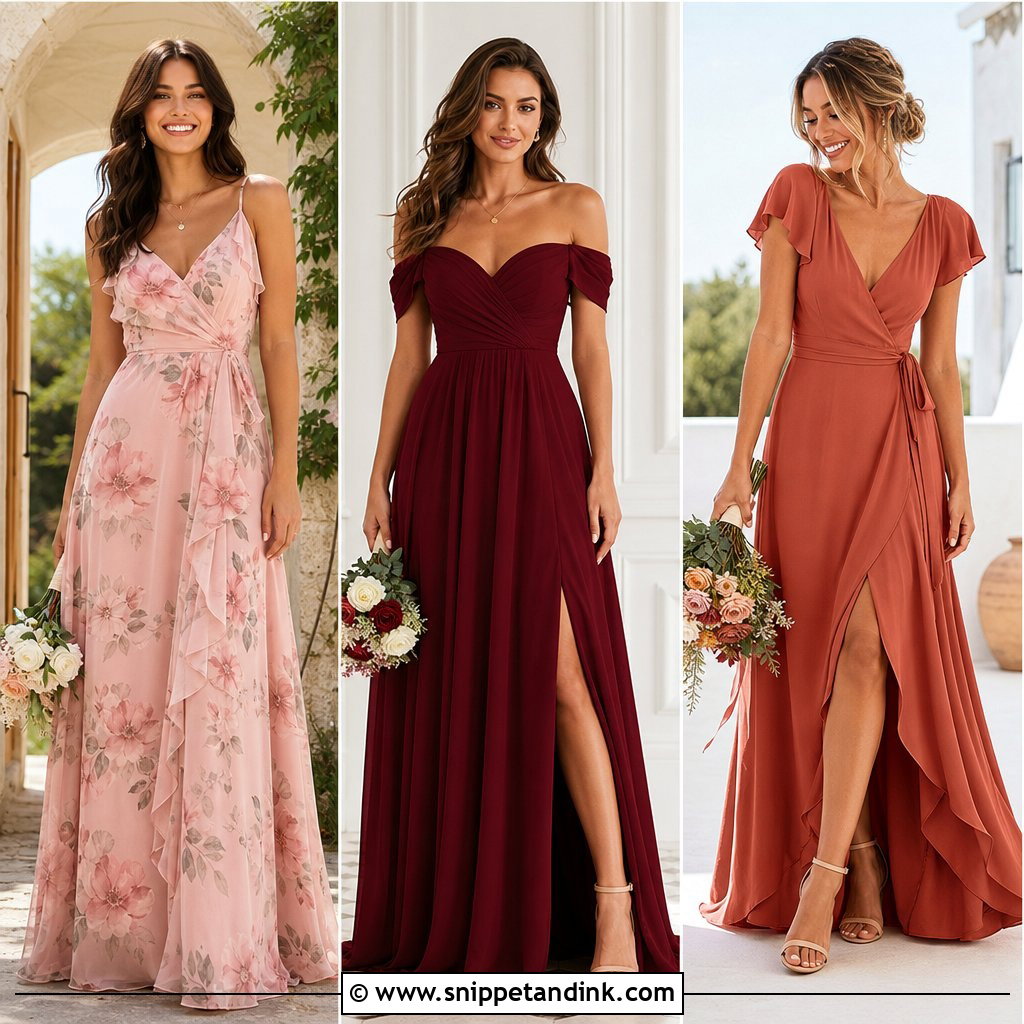
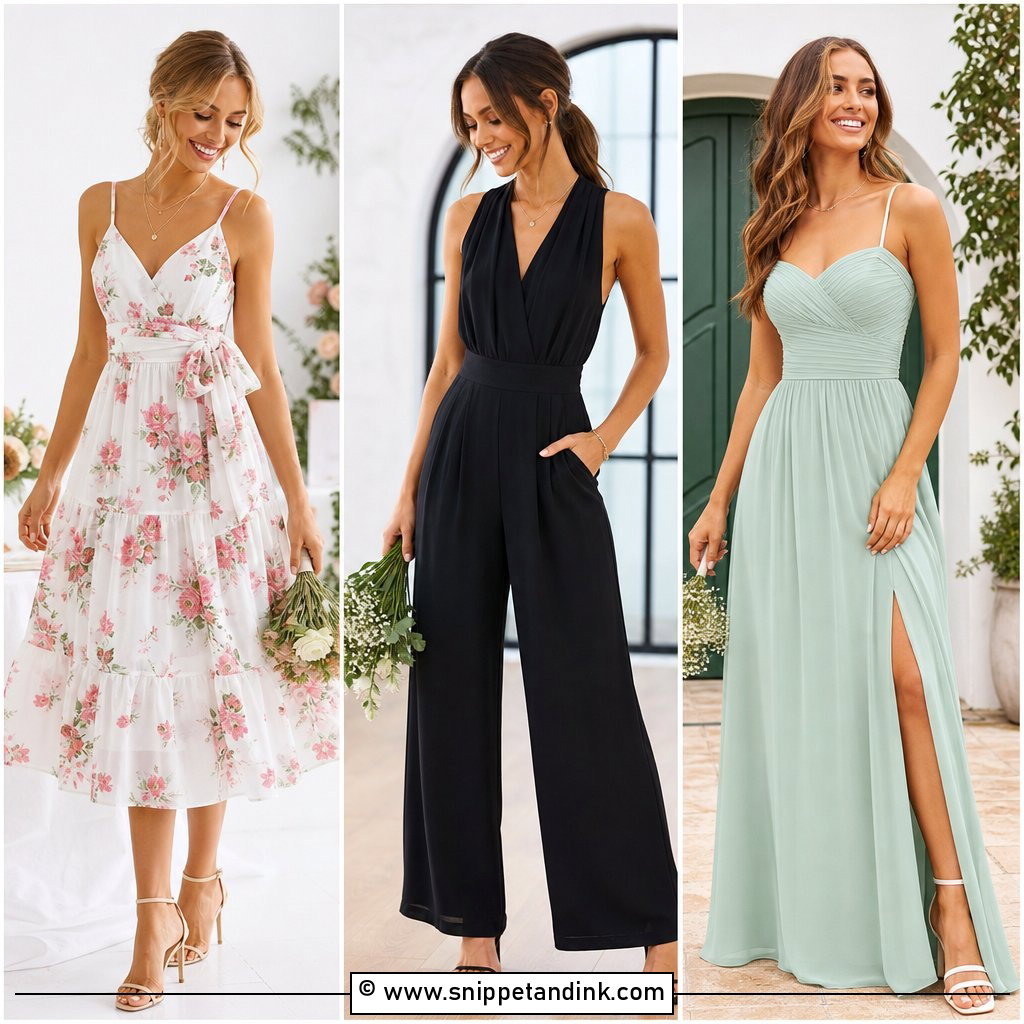
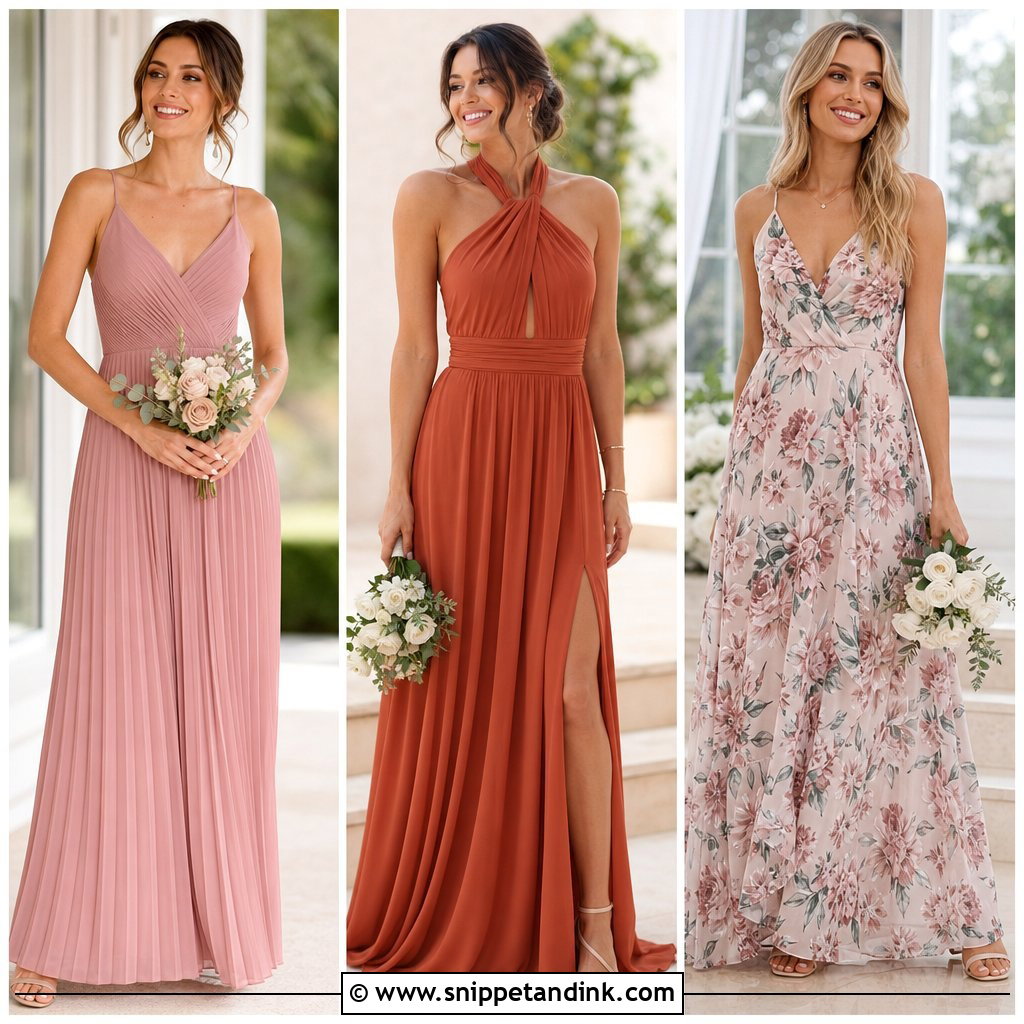
An embellished gown is the simplest option for a bridesmaid who just wants to step into one piece. A-line or softly fitted with Indian embroidery, beadwork, zari or a draped cape sleeve, in champagne, dusty rose, navy, mauve, emerald or silver-grey. Hem it just above the floor in the shoes she’ll wear. The neckline should let her bend, carry the bride’s things and hug guests without adjusting it. It sits well beside traditional outfits at a reception.
Colours That Sit Well Beside a Red or Pastel Bride
Before the bridal party orders anything, they need to know exactly what the bride will wear at each event. The bridesmaids frame her in photographs, and a few colour rules keep it that way.
If the bride wears red or maroon
Avoid red, maroon and deep rani pink, which compete. Emerald, teal, mustard, gold and blush all set red off. Ask about the groom’s outfit too, since a cluster of bridesmaids in his exact colour looks odd in group shots.
If the bride wears ivory or pastel
Here bridesmaids should step darker or brighter, not paler. Ivory and white beside an ivory bride blur together, and pastel on pastel washes everyone out. Jewel tones or a stronger version of the bride’s own colour give her a clear outline. Check the final choice in the venue’s light, or at least in evening light, before ordering.
One Palette, Many Silhouettes
A good bridesmaid wardrobe is coordinated, comfortable and right for each event. Sarees, lehengas, shararas, Anarkalis and fusion outfits can all sit in the same group if colour, embroidery, fabric or accessories connect them. Think about venue, weather and how much moving each event involves before anyone orders. Tailoring matters even more for bridesmaids than for the bride, since an outfit that pinches or slips becomes the thing everyone notices. Add supportive shoes, secure draping and a hairstyle that lasts, and the whole party can enjoy every event.
You'll Like These Ideas:


Leave a Reply