
Satin is unforgiving and rewarding in equal measure, and a high neckline makes both qualities more obvious. The sheen picks out every seam, pleat and covered button, so a well-cut satin gown looks sharp from across a ballroom, while a poorly fitted one shows its pull lines in every photo. You’ll find high necklines on satin A-lines, sheaths, mermaids, ball gowns, halters and mock necks, some with open backs. My styling rule with satin is restraint near the collar: a clean updo, one pair of earrings, shoes you can stand in and a veil that lets the neck show. Below are twenty satin gowns with the fitting and fabric notes I’d give at an appointment.
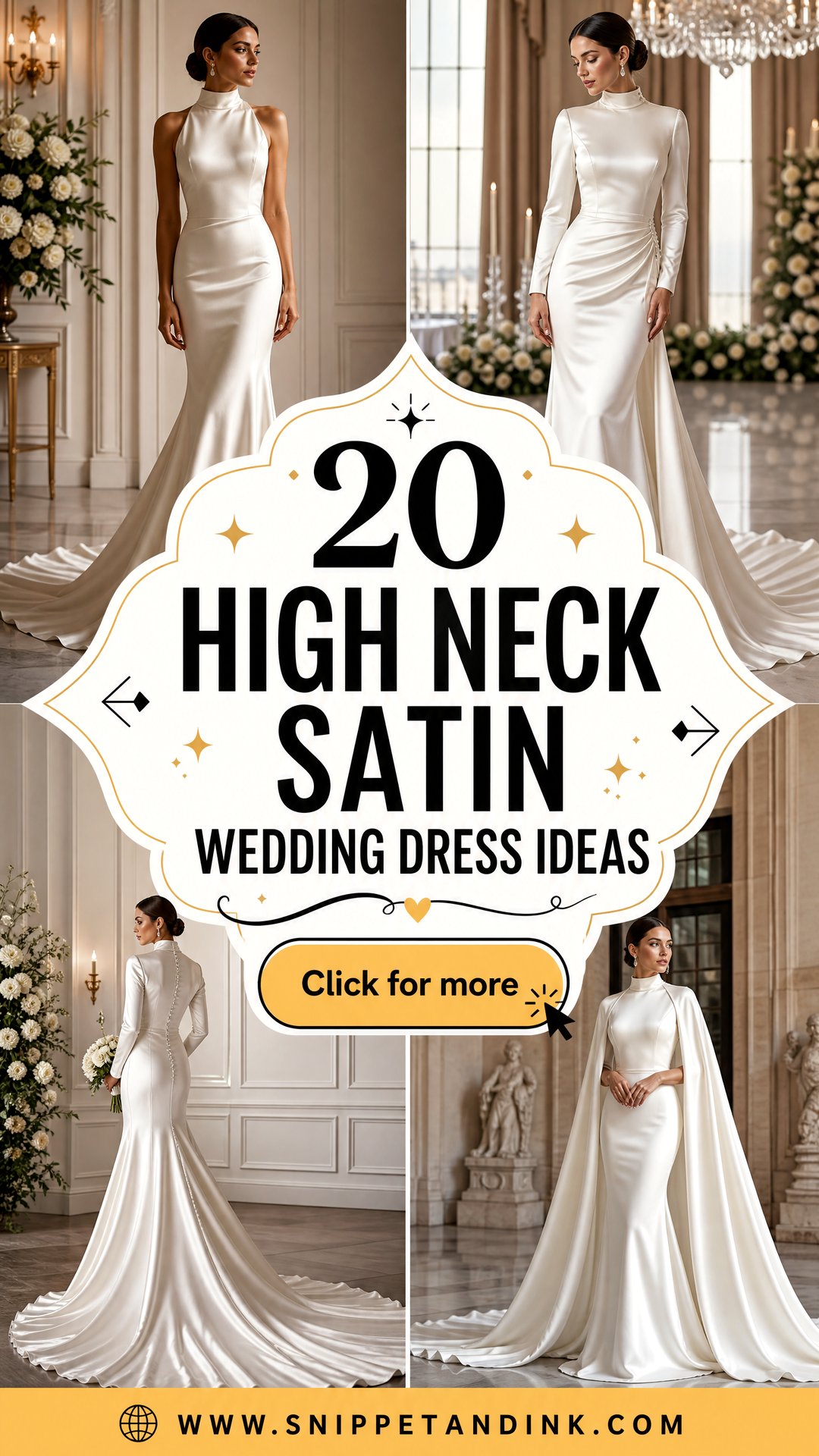
Duchess, Charmeuse or Crepe-Back: Satins Behave Differently
Bridal shops call a lot of fabrics satin, and they don’t wear alike. Knowing which one you’re touching tells you how the gown will move, crease and hold up by the end of the night.
- Duchess satin is heavy and dense. It holds a ball gown or A-line shape on its own and creases less than lighter satins, but it’s warm in summer.
- Charmeuse is light and fluid, with a liquid drape that suits bias-cut sheaths and draped bodices. It shows everything beneath it, including the outline of shapewear.
- Crepe-back satin has a shiny face and a matte back. It’s soft enough for a slim cut, firmer than charmeuse, and a good middle ground.
- Stretch satin has a little elastane, which helps mermaid and fitted shapes recover after sitting.
Silk satin breathes and has a softer glow; polyester satin is tougher and shrugs off creases but can trap heat and shine more brightly under flash. Neither is wrong. Rub a corner between your fingers: if it springs back without a mark, it’ll survive a car ride.
1. High Neck Satin A-Line Wedding Dress
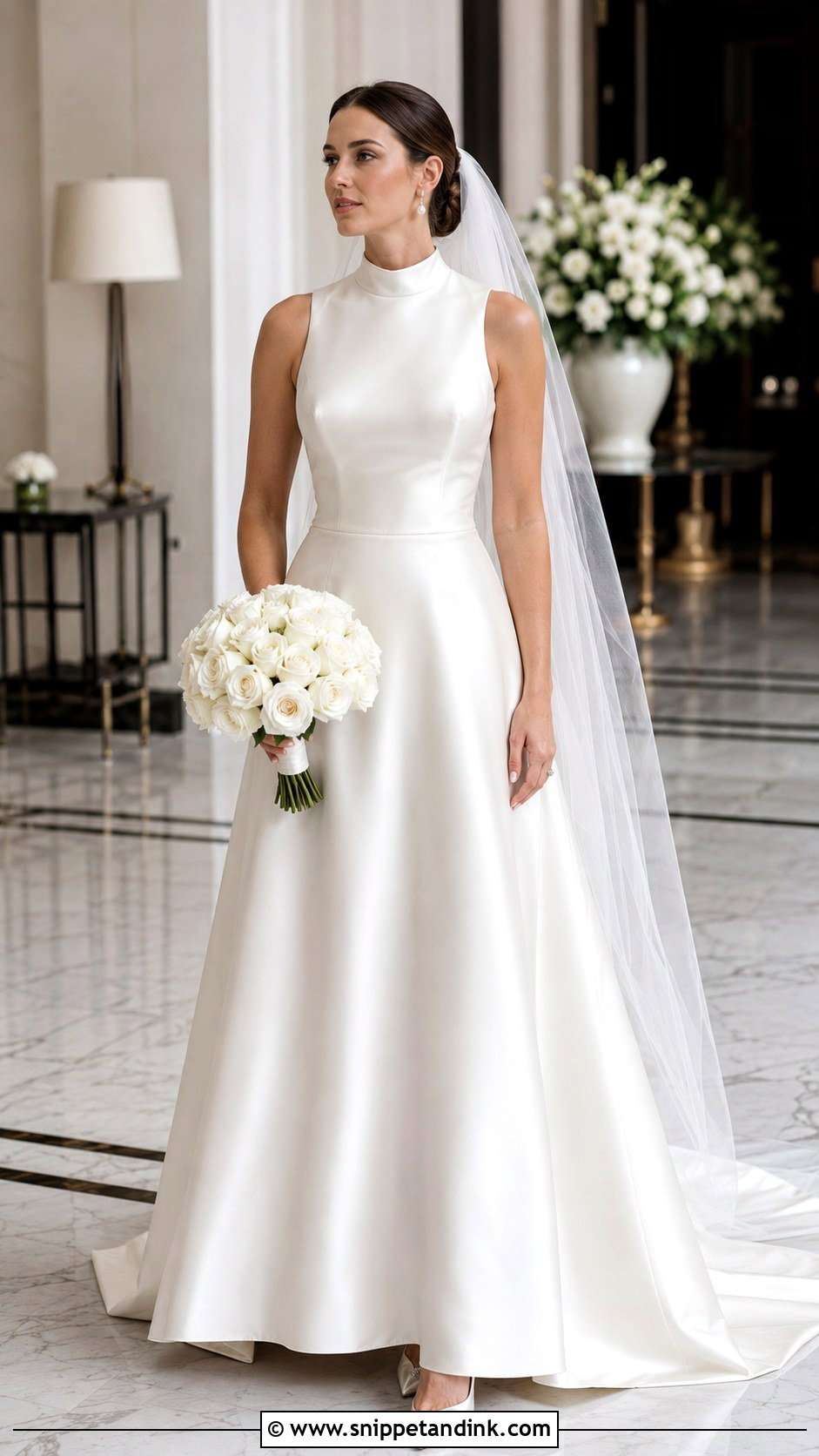
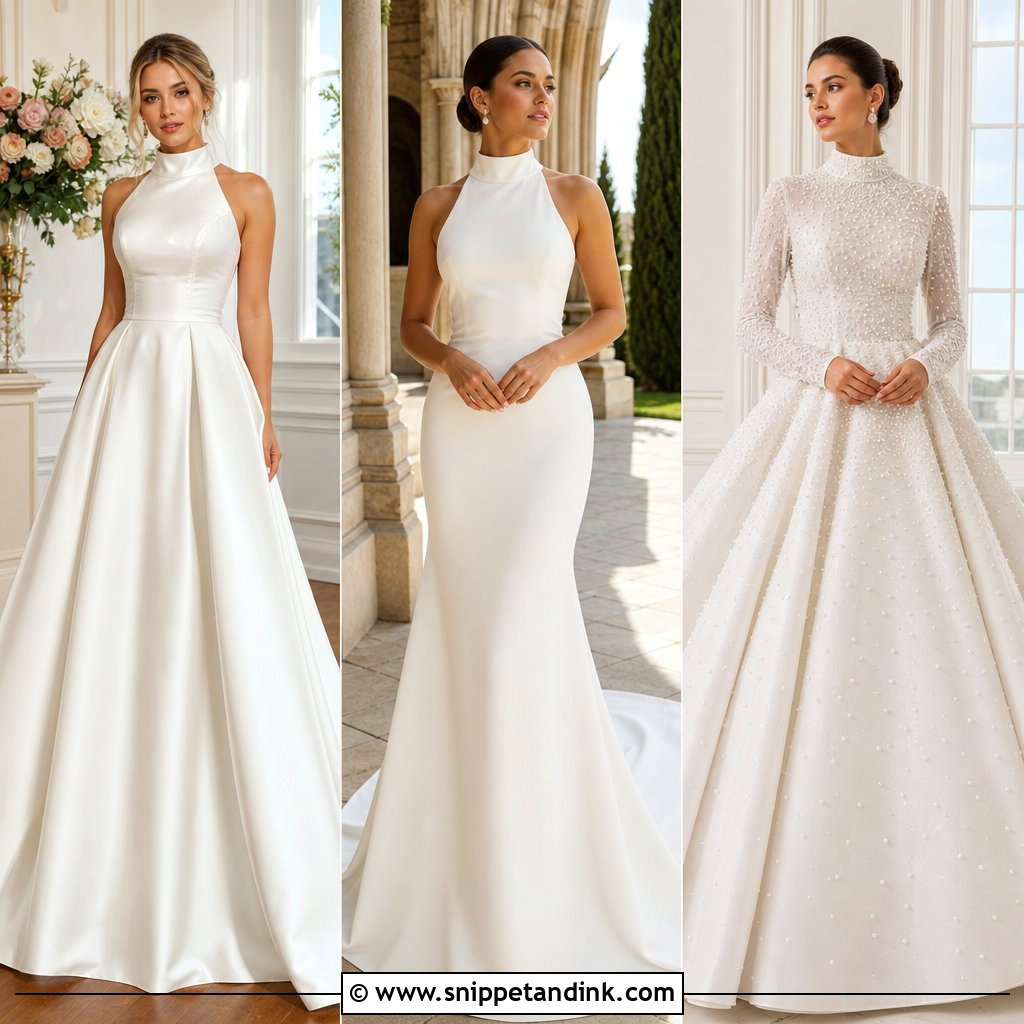
This is where I start most brides who say they want satin but aren’t sure which shape. A fitted bodice with a banded waist, opening into a gentle A-line, suits nearly every figure and sits well in heavy duchess satin. Hold ivory and soft white against your face in daylight; ivory warms olive and deeper skin, while bright white can look blue on very fair skin. Pointed satin pumps, small pearl drops and a smooth low bun are enough. A fingertip or chapel veil with a narrow satin edge ties it together, with white roses or calla lilies in a compact bouquet.
2. High Neck Satin Ball Gown Wedding Dress
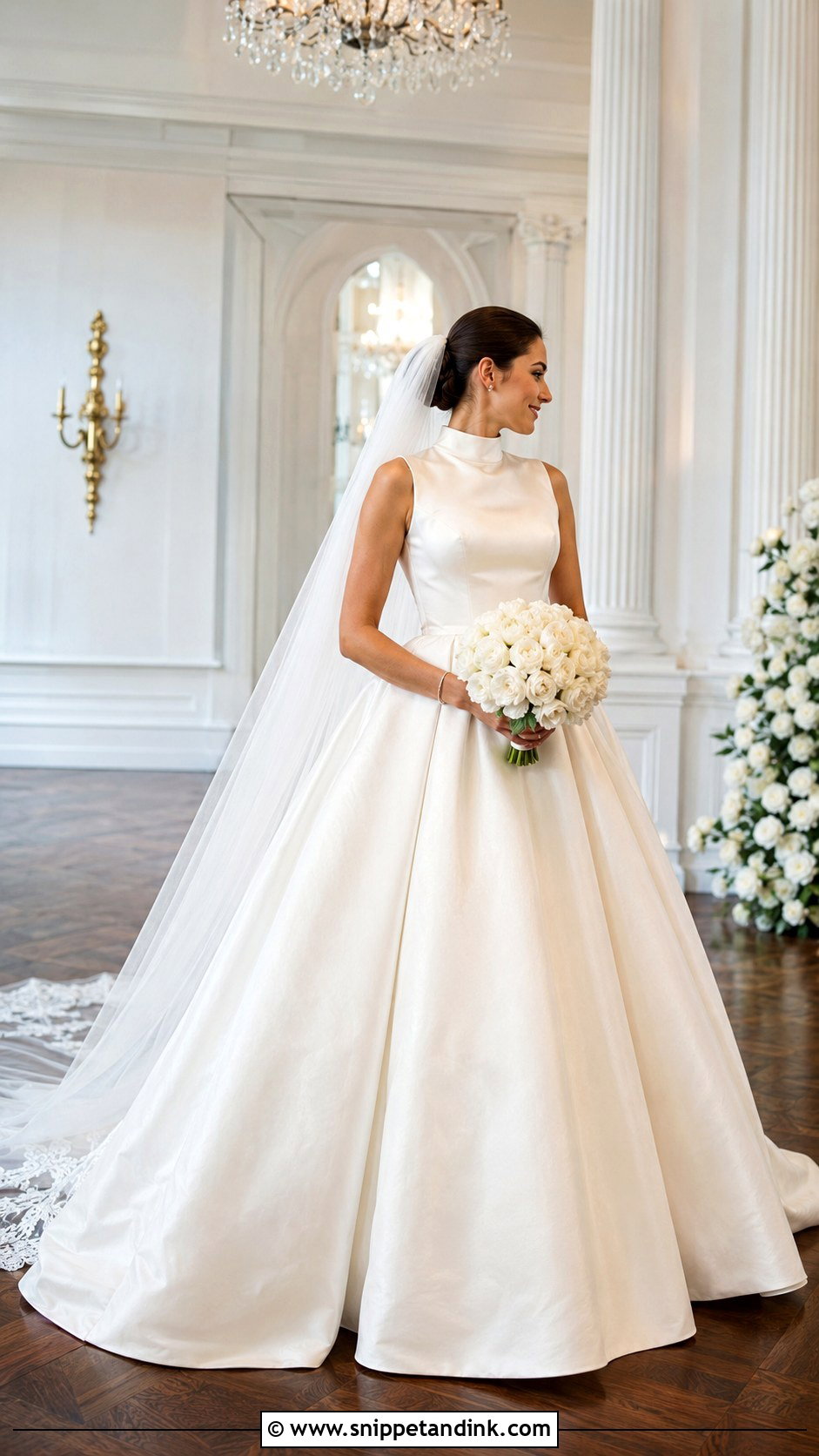
Crisp satin holds a ball gown skirt out on its own, but that volume weighs a lot, and most of it hangs from the waist. A sleeveless bodice keeps the top half light, and covered buttons along the back give the traditional finish. Wear block-heel pumps; no one sees your shoes under all that skirt, and your feet will thank you by the speeches. Pearl studs, a slim bracelet and a neat chignon are plenty. Go cathedral with plain tulle or swap the veil for a pearl comb. A round bouquet keeps the shape symmetrical.
3. High Neck Satin Mermaid Wedding Dress
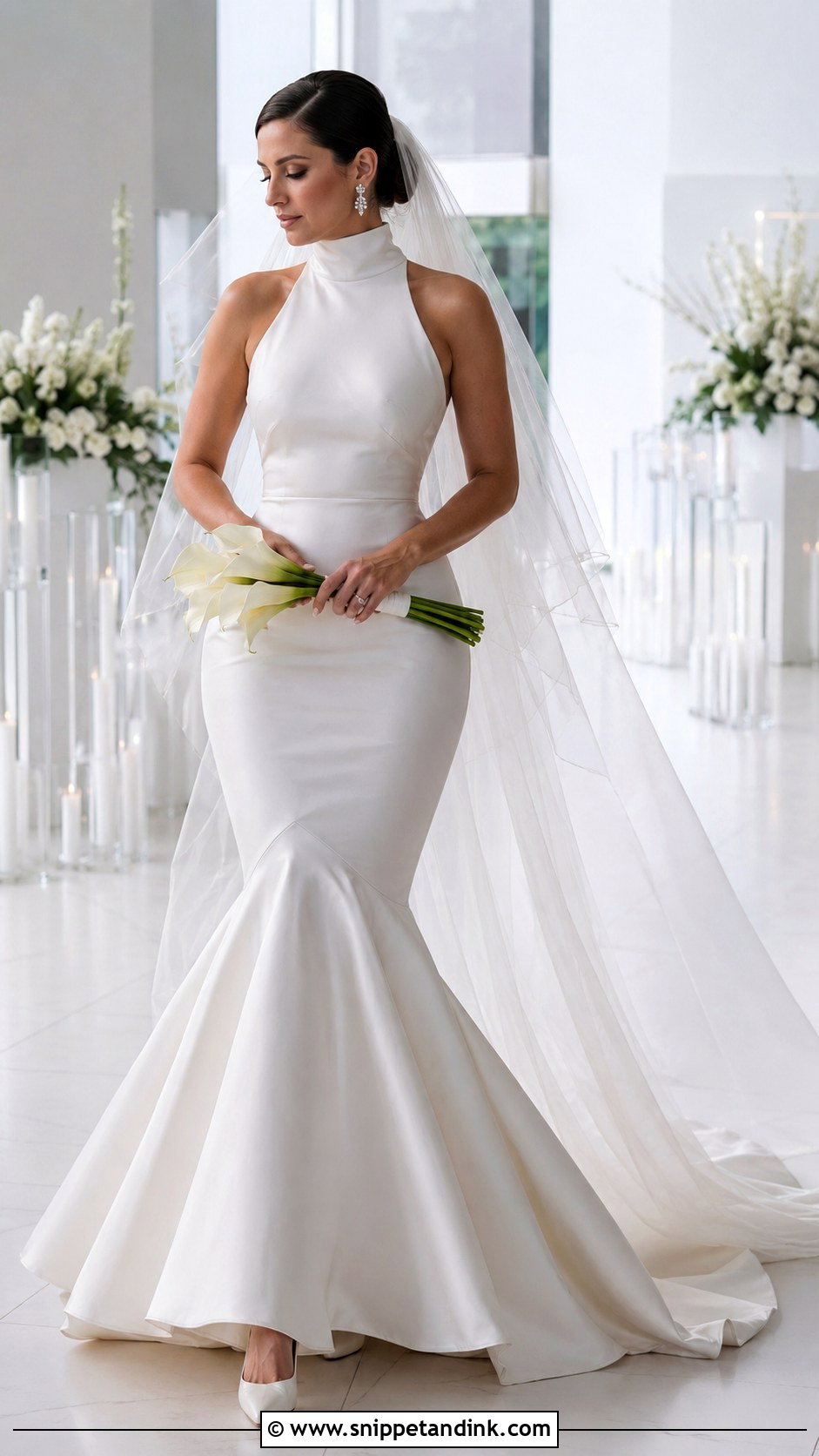
In my experience rigid satin fights a mermaid shape, creasing at the knee where the flare starts. Stretch satin or satin-backed crepe bends with you and recovers when you stand. Keep the bodice plain and fitted, flaring near the knee, so the skirt does the work. Pointed pumps extend the line, crystal drops bring light to the face, and a low side-parted bun shows the collar. A medium-length veil set beneath the bun is cleaner than an embellished one. Orchids or calla lilies in a narrow bouquet suit the slim silhouette.
4. High Neck Satin Sheath Wedding Dress
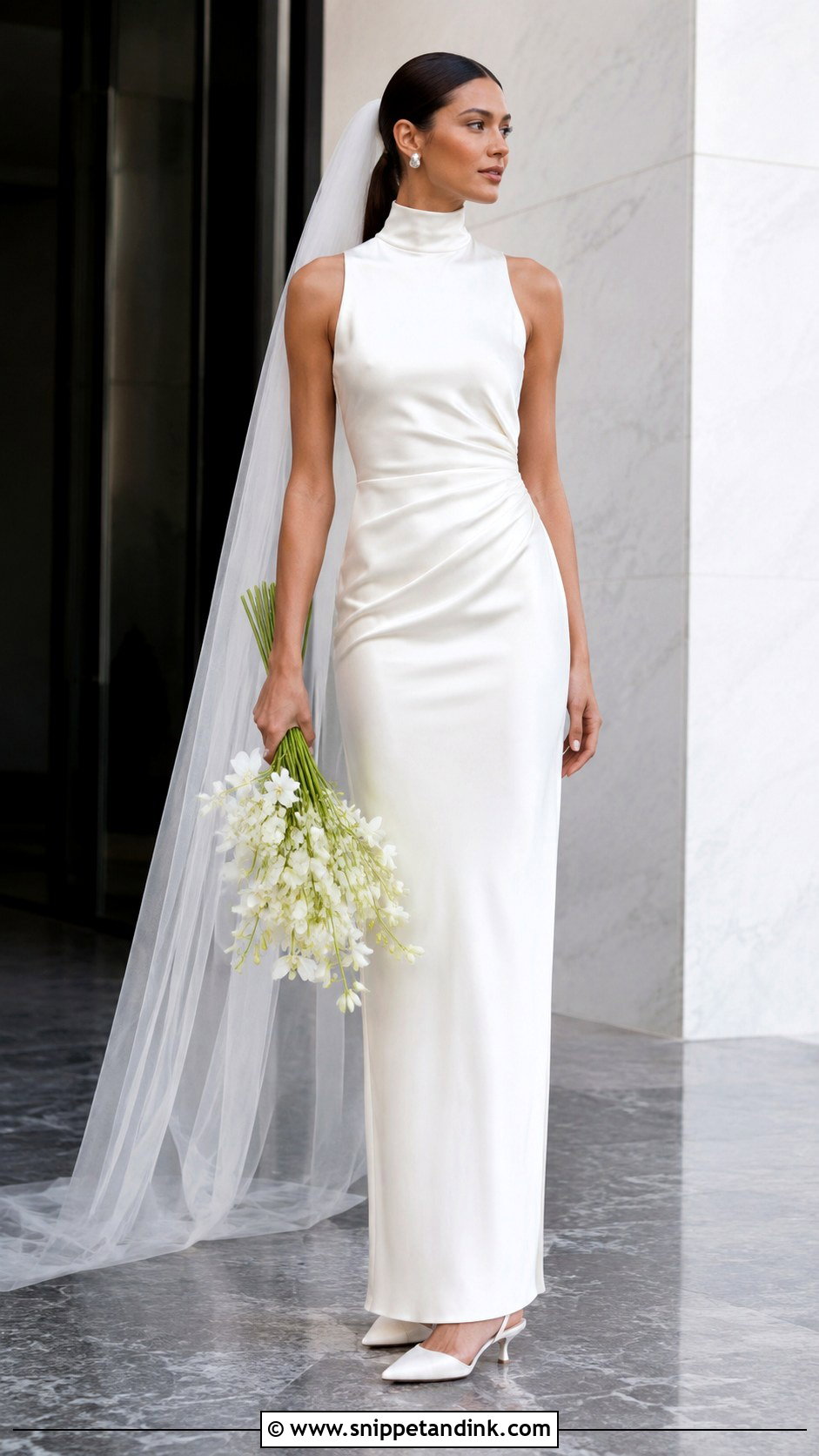
A satin sheath should skim, never grip. If you can see where the fabric strains across the hips, it needs letting out, because satin magnifies every tight spot with a shine line. A subtle waist seam or a little draping adds definition without breaking the long line. Kitten-heel slingbacks, sculptural earrings and a small structured clutch suit a city wedding. A sleek ponytail or tucked low bun keeps the neck clear. Choose a plain floor-length veil or a short birdcage. Long-stemmed white flowers echo the vertical shape.
5. High Neck Satin Halter Wedding Dress
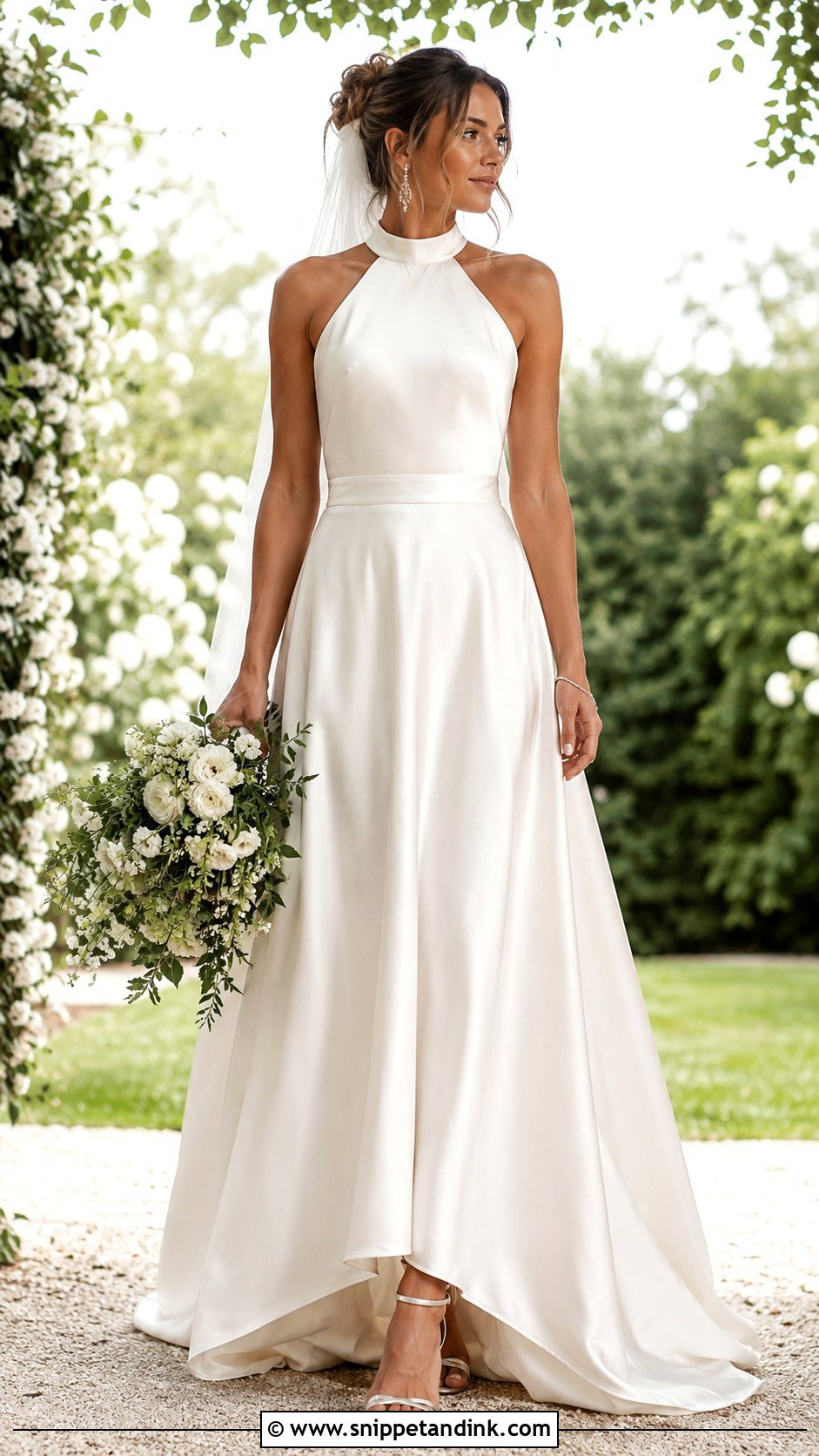
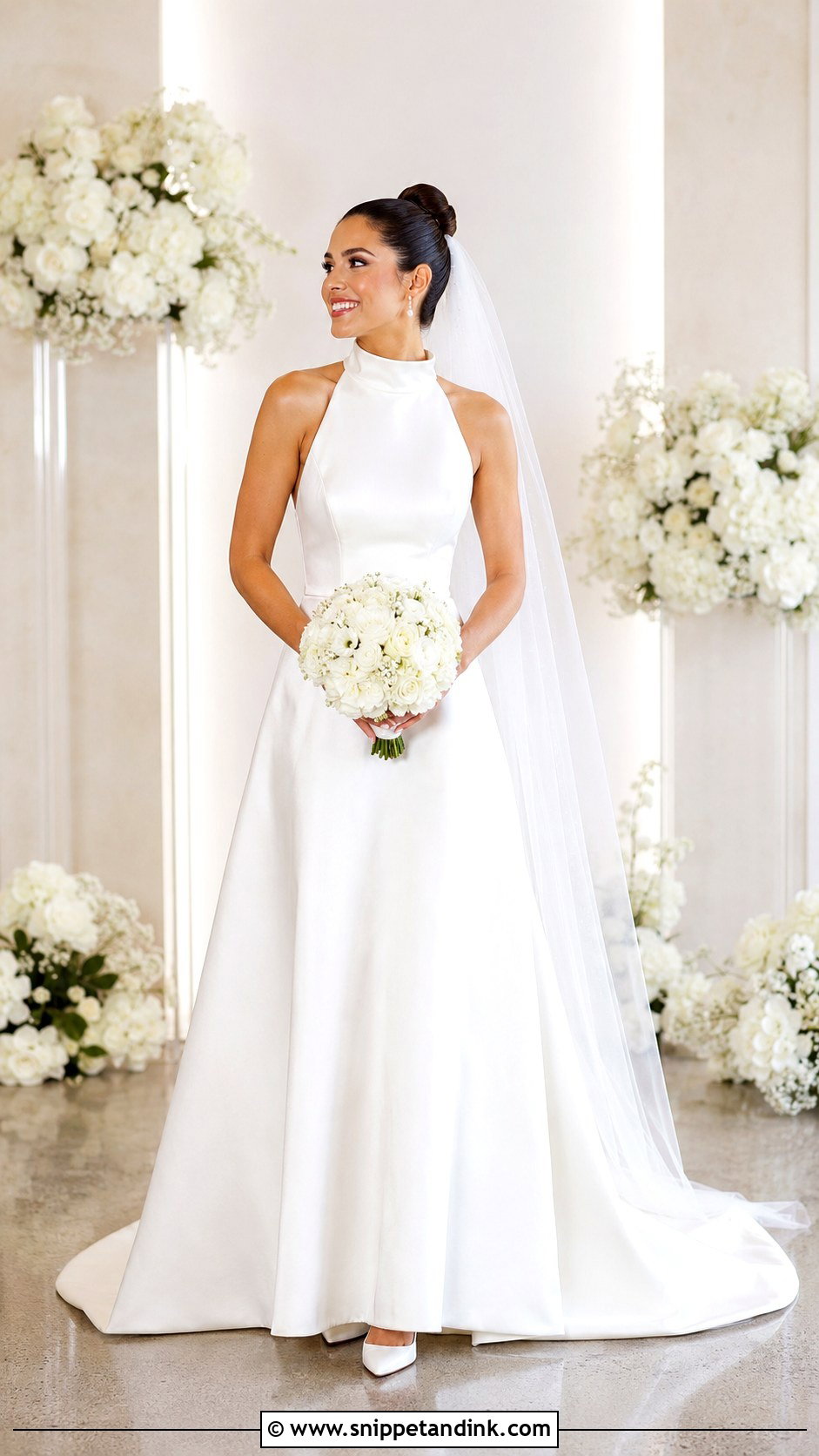
Broad halter straps are worth insisting on in satin. Narrow ones twist, and when satin twists, the light catches the fold and everyone can see it. Good inner construction keeps the neckline flat all day. An A-line or soft column skirt balances the strong shoulders. Put your hair fully up in a textured bun or polished knot, and swap the necklace for long earrings. Metallic ivory sandals, a fine bracelet and a sheer veil below the bun finish it. For an outdoor ceremony in warm weather, a loose bouquet with greenery suits the open shoulders.
6. High Neck Satin Mock Neck Wedding Dress
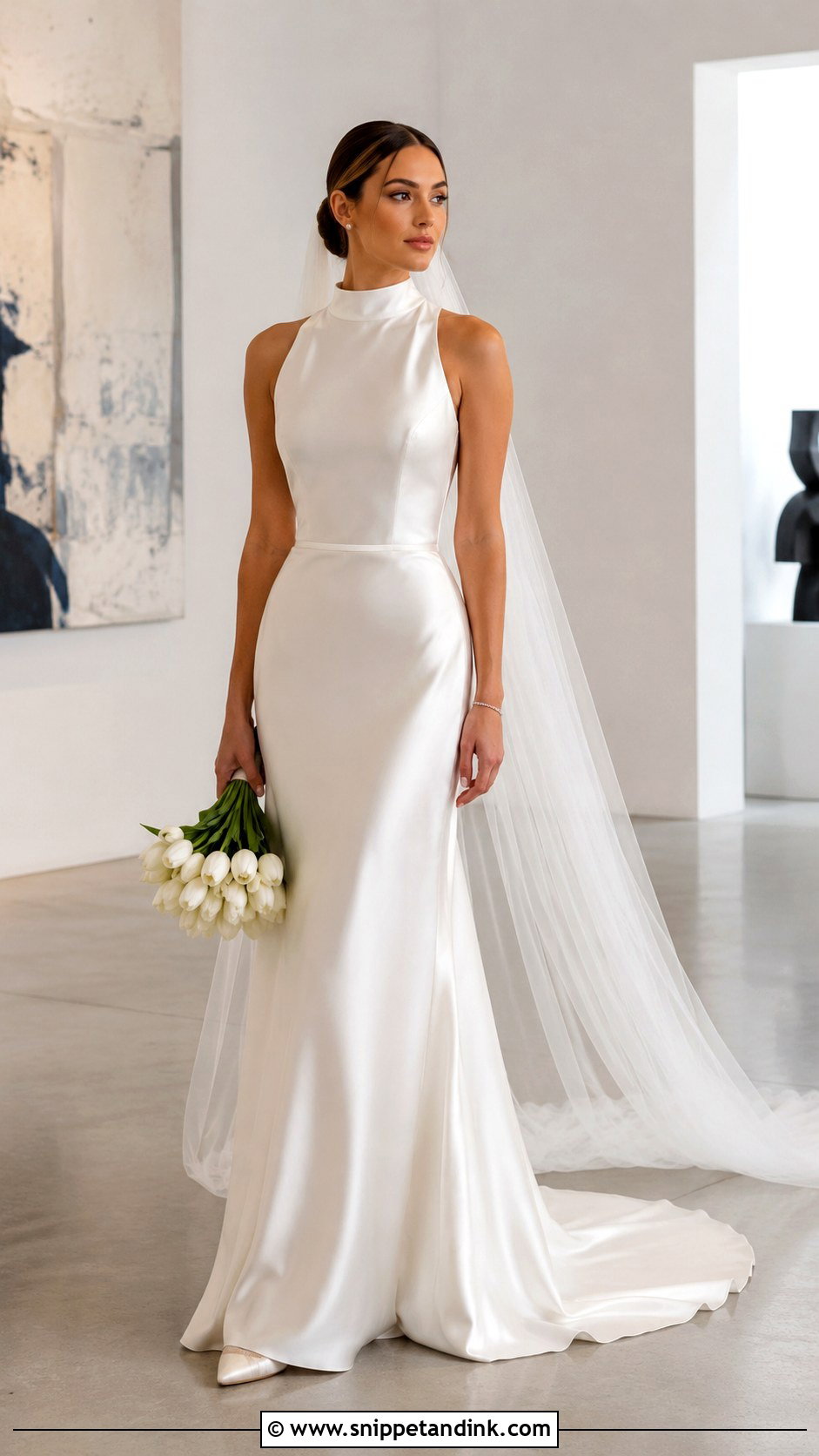
A mock neck wedding dress in satin needs a collar that’s interfaced firmly enough to stand without wrinkling. Pinch it lightly at the fitting; if it creases and stays creased, it’ll look crumpled by lunchtime. It should sit around the neck without pressing. A sleeveless fitted bodice and fluid skirt keep the gown light, with covered buttons or a hidden zip at the back. Pointed ivory heels, pearl studs and one slim bracelet are enough. A centre-parted chignon makes a symmetrical frame, and a plain chapel veil below the bun stays clear of the collar.
7. High Neck Satin Long Sleeve Wedding Dress
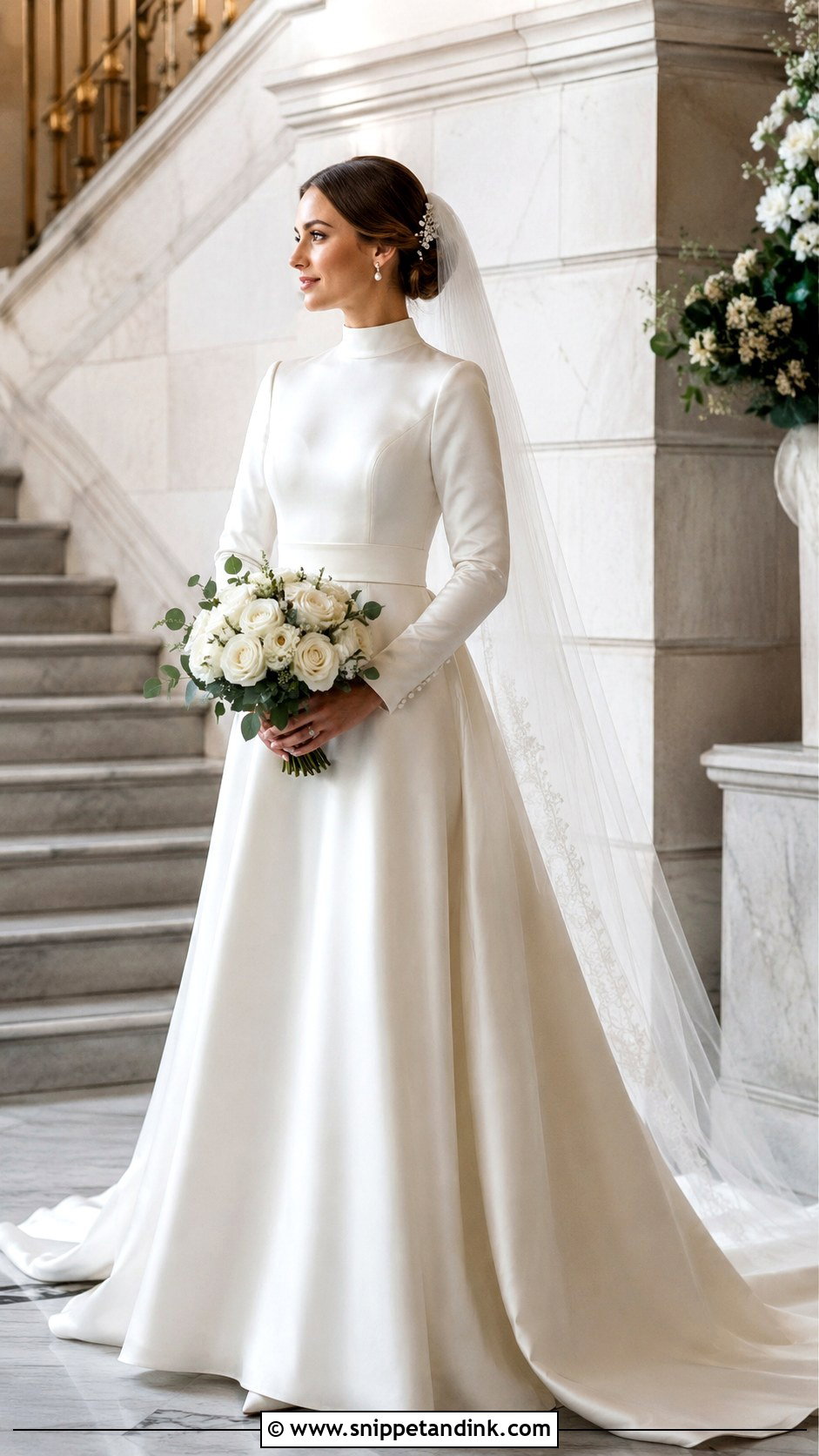
Long satin sleeves suit autumn and winter, and they’re warm, so I wouldn’t suggest them for an outdoor July wedding. Slim sleeves with clean shoulder seams and covered buttons at the wrist look best. The wrist buttons matter more than they seem; if they’re fiddly, ask for a hidden snap so you can push sleeves up to wash your hands. A softly flared skirt keeps the full coverage from looking severe. Closed pumps or embellished flats, a low bun with a pearl comb, small earrings and a plain cathedral veil suit it. Carry white roses with winter greenery.
8. High Neck Satin Keyhole Back Wedding Dress
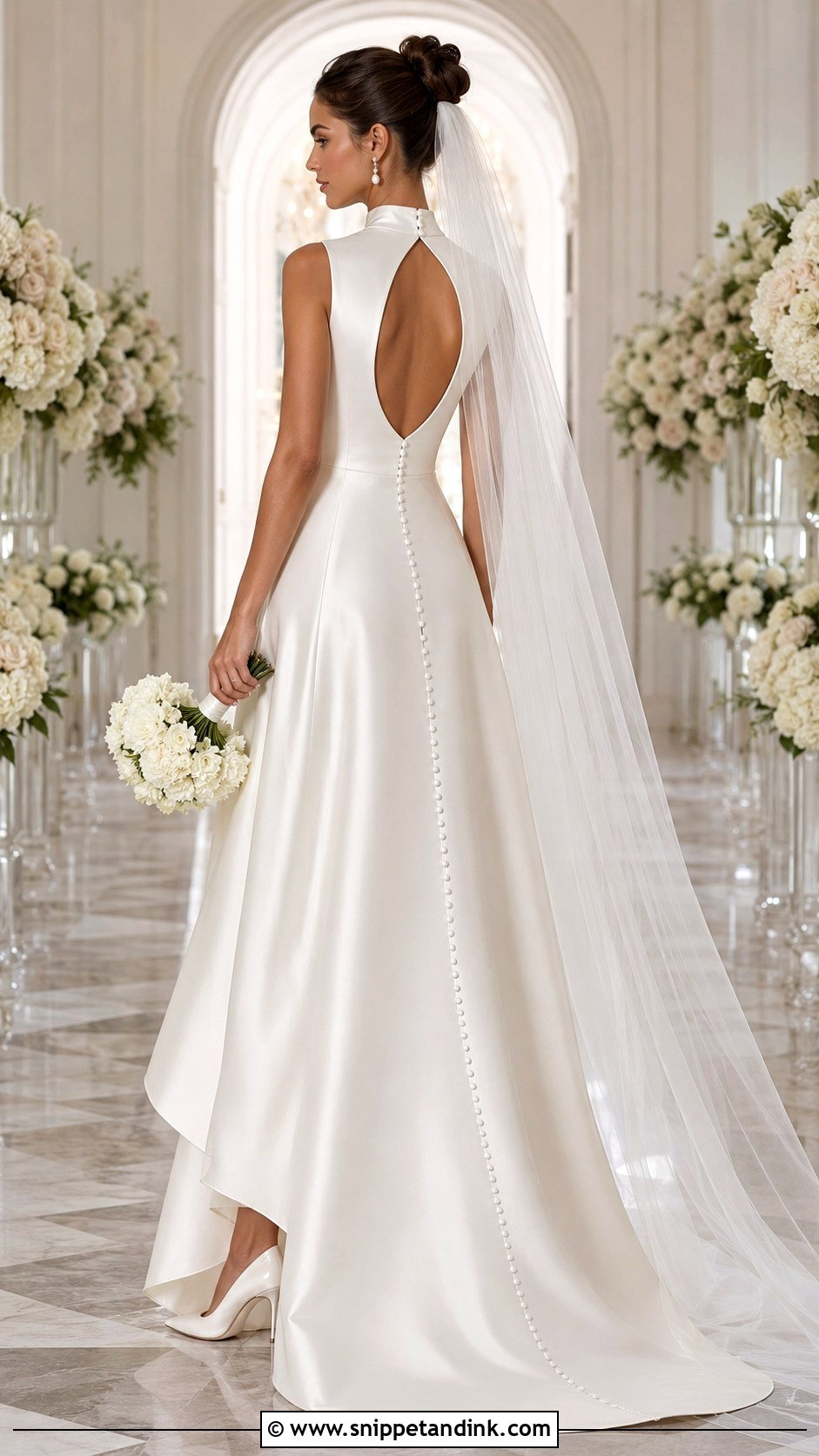
A keyhole opens a small window in an otherwise covered satin bodice, rounded for subtle interest or longer and angular for a modern edge. Covered buttons above or below finish the edge. The support underneath must stay hidden, so I’d plan sewn-in cups rather than a bra. Where you place the veil changes how much of the keyhole shows: set at the crown, it reveals the back only as it moves; set beneath the bun, the opening stays in view. Ivory pumps, drop earrings and a compact bouquet complete it.
9. High Neck Satin Open Back Wedding Dress
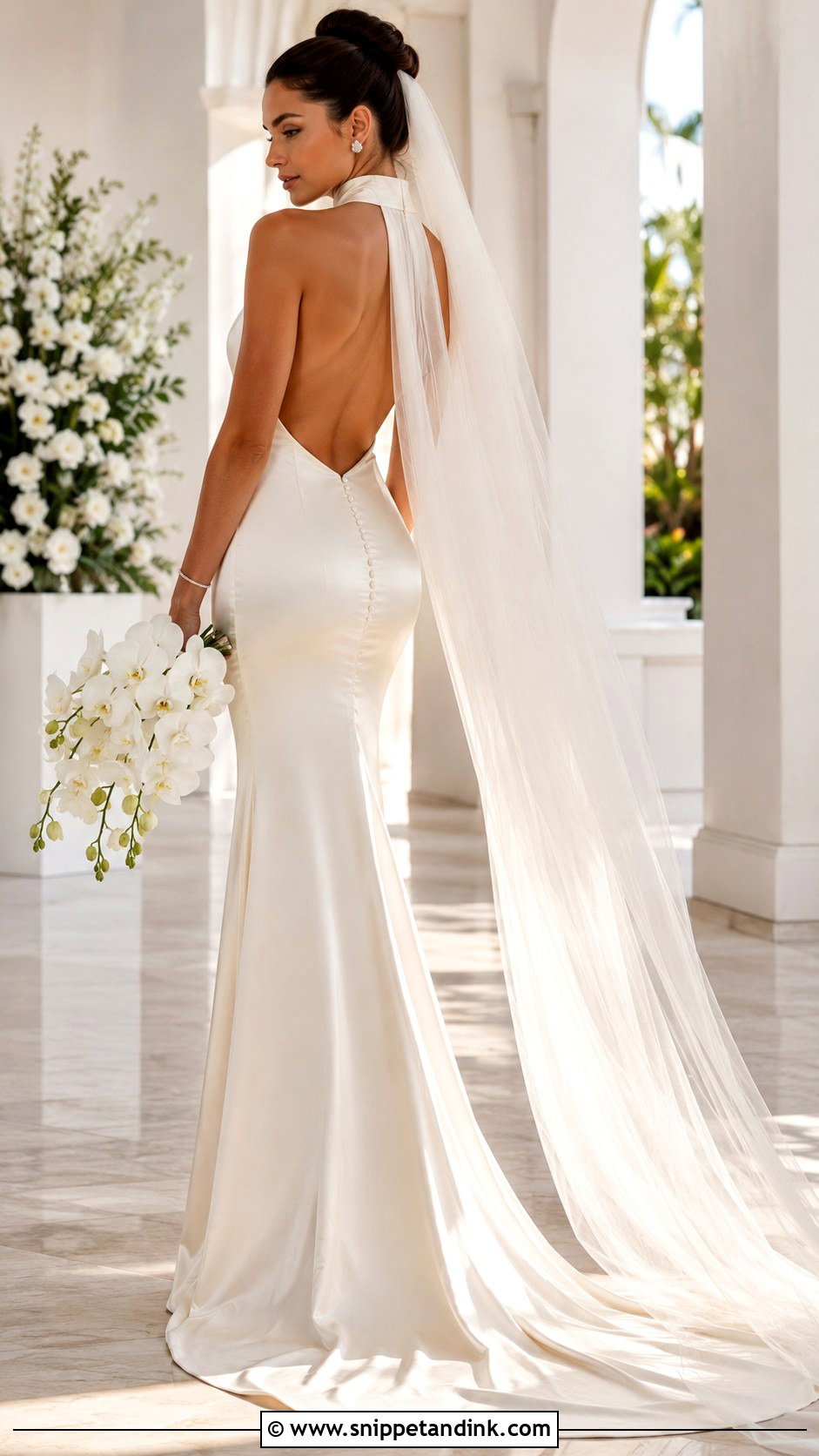
I’m stricter with fit on satin than on lace, because satin shows gaping more, so an open back gown in satin needs precise tailoring to sit flat against the spine with no bra straps in sight. The opening can be rounded, cut into a deep V or framed with fine straps, over a column or flared skirt. Wear your hair high so the back stays clear. Crystal earrings, a fine bracelet and minimal ivory sandals are all you need. A sheer cathedral veil can come off after the ceremony to show the back fully. White orchids keep the line clean.
10. High Neck Satin Bow Back Wedding Dress
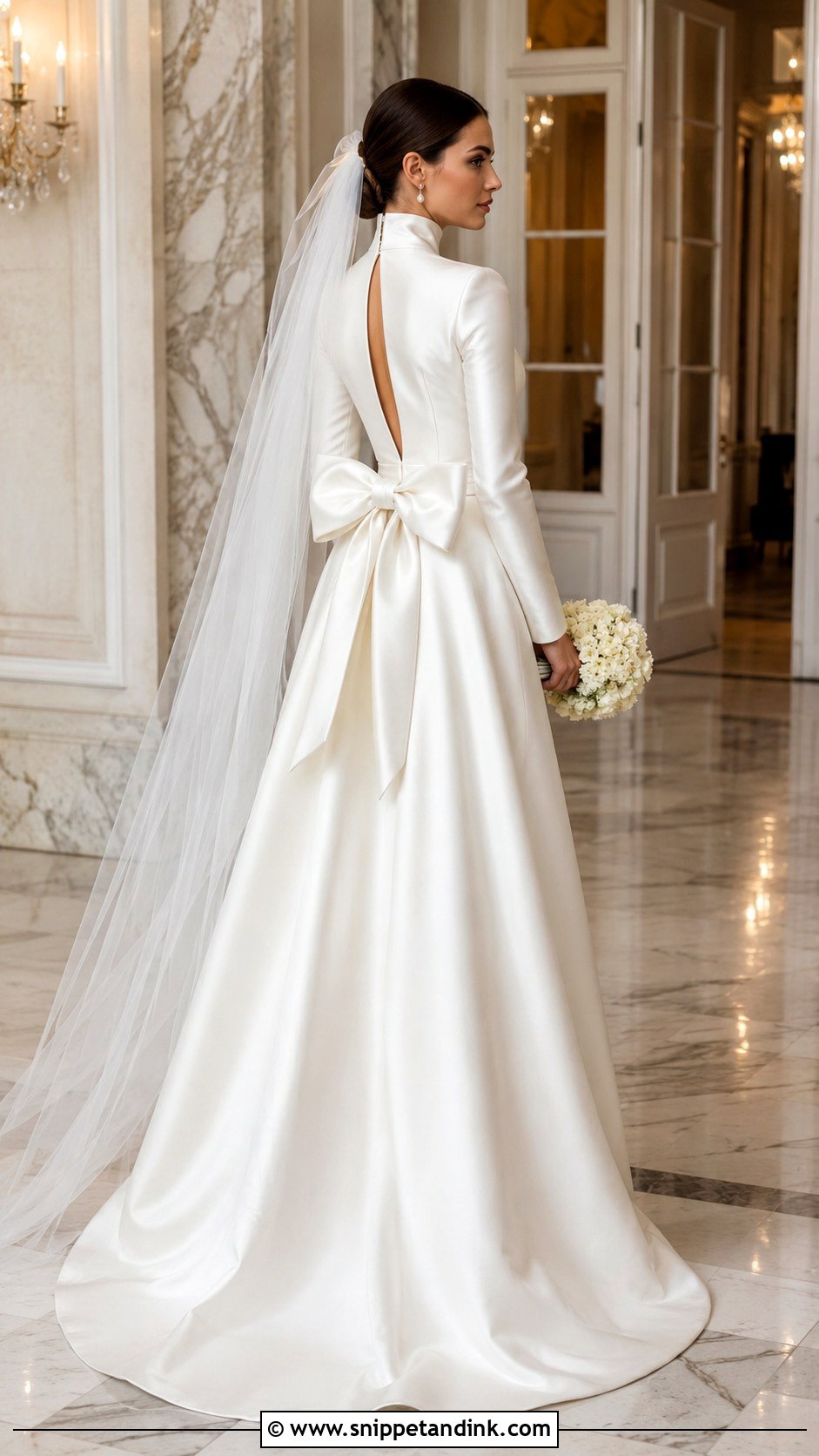
A satin bow keeps its shape only if it’s interfaced and stitched to the dress at several points; a loose bow wilts by evening. Structured bows at the waist give drama, while long ties fall softly. A-line and mermaid skirts both leave space for the bow to show. Keep the front plain, with minimal seams and no necklace. Pearl earrings, closed pumps and a smooth chignon suit it. Wear the veil above the bun for the ceremony, then take it off for portraits that show the bow. Keep the bouquet small.
11. High Neck Satin Pleated Wedding Dress
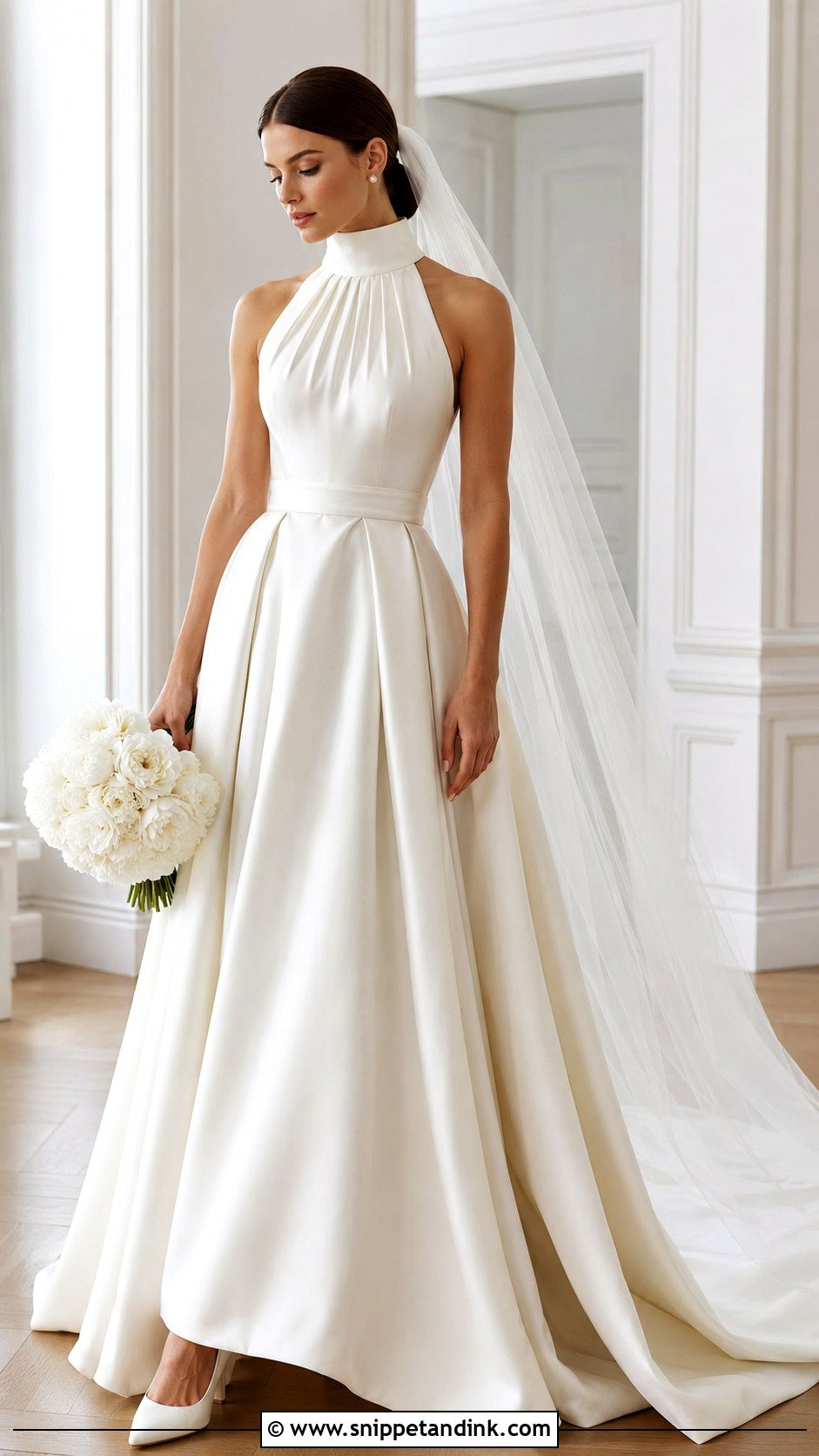
Satin pleats are where pressing makes or breaks the look. Pressed sharply, they look tailored in photos; steamed loosely, they look soft. Decide which you want and tell whoever presses the gown on the morning. Narrow pleats at the collar or waist add subtle detail; deep skirt pleats give volume on an A-line or ball gown. Simple satin pumps and pearl or crystal studs keep it plain. A sleek low ponytail contrasts with the structure. Choose a veil without lace, and soften the gown with peonies or roses.
12. High Neck Satin Draped Wedding Dress
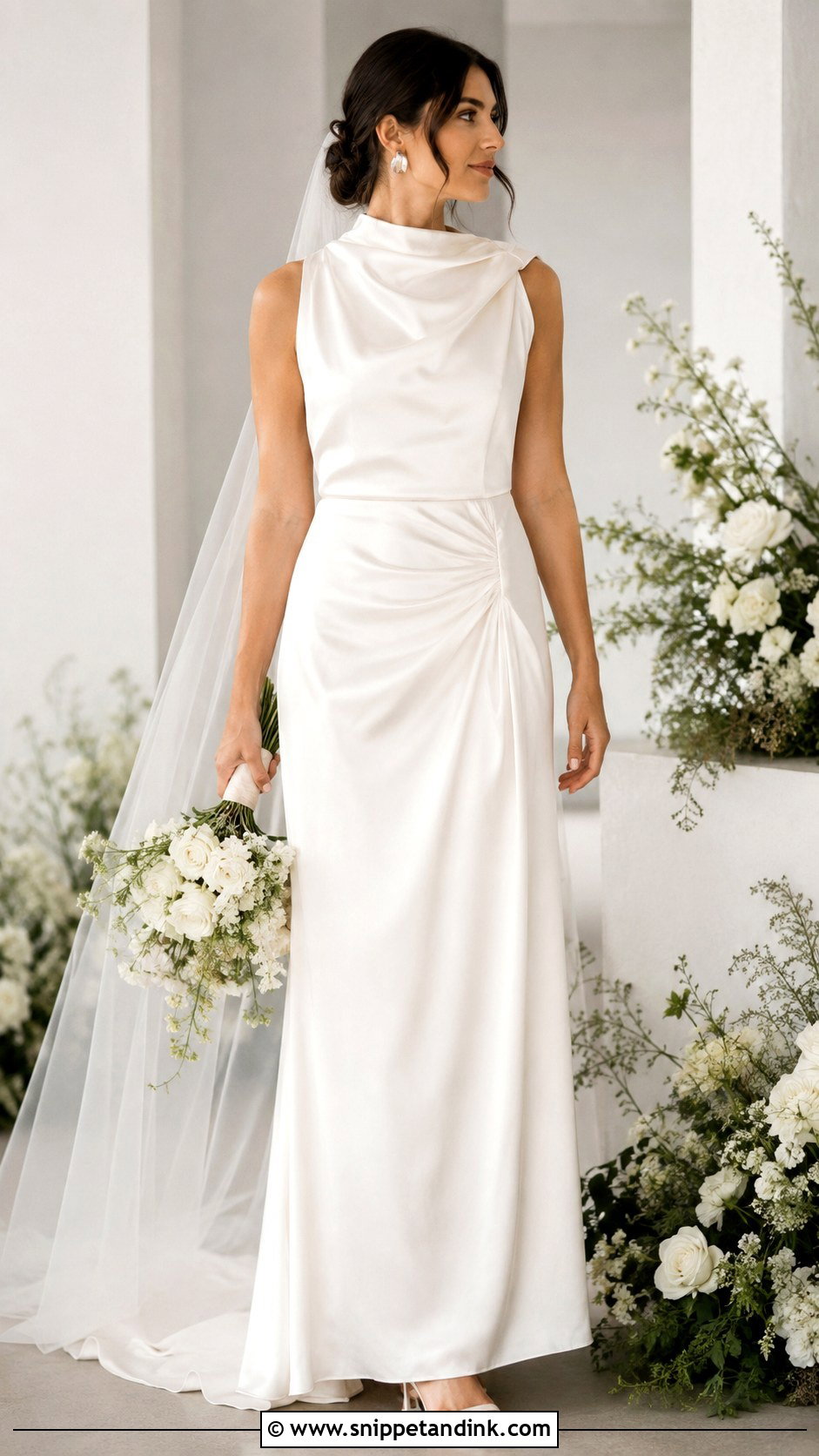
Draped satin is best in a fluid weight, charmeuse or a soft silk blend, because heavy satin folds into stiff tubes rather than soft ripples. Folds across the waist define it; fabric gathered at one shoulder makes the neckline asymmetric. Every drape has to be fixed with small hand stitches, or it shifts as you move, so check them at the fitting. Delicate slingbacks, brushed-metal earrings, a small satin clutch and a loose low bun with a few face-framing pieces suit the movement. A lightweight chapel veil and a loose bouquet complete it.
13. High Neck Satin Wedding Dress With Pockets
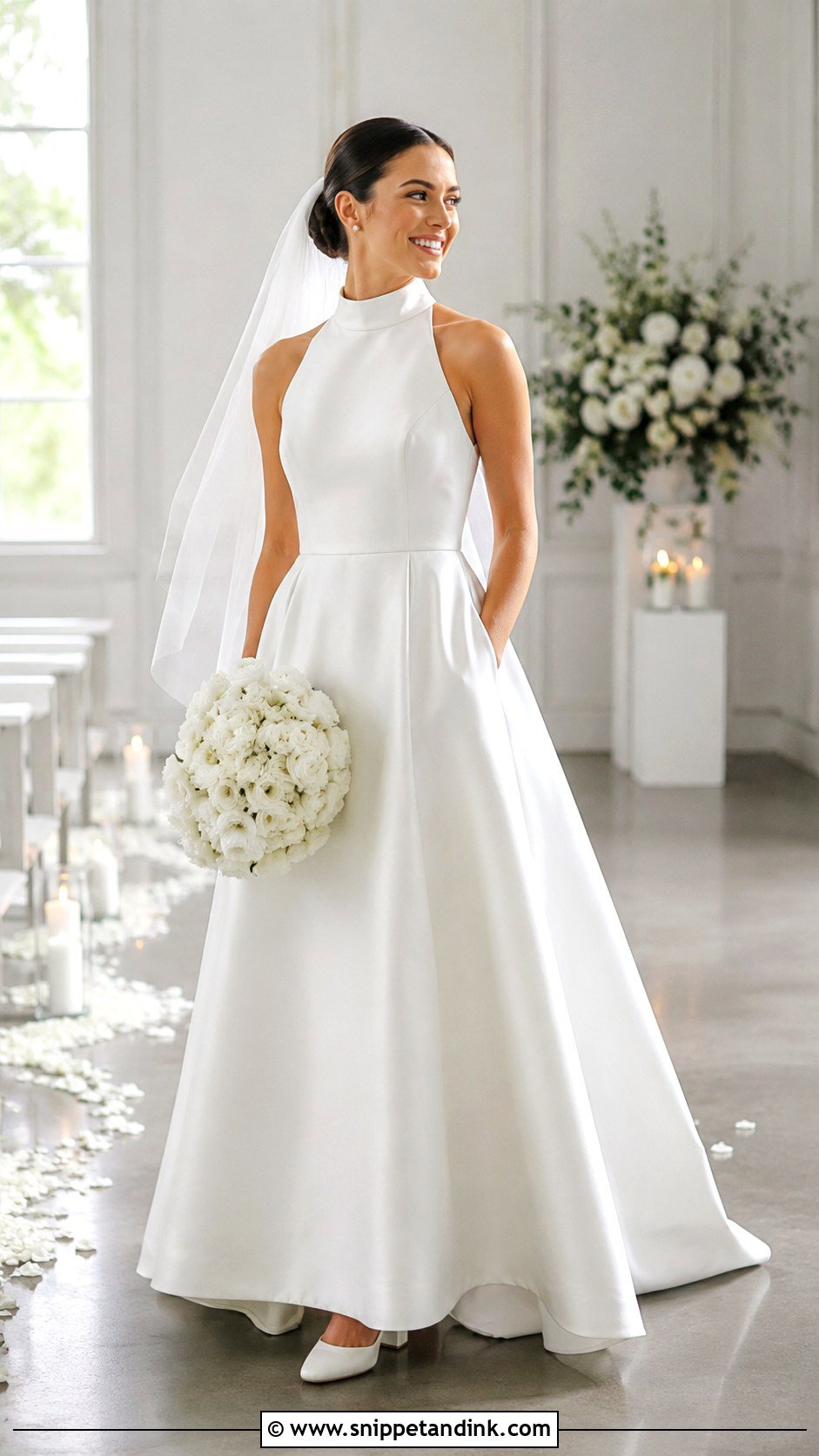
Pockets come up at nearly every fitting I do, and in satin they only work if the fabric is structured enough not to sag at the hip. A-line and ball gown skirts hide the openings in their fullness. One warning: anything heavy in a pocket pulls the satin and leaves a shine line, so keep it to a lip balm and a tissue. A clean bodice, defined waist, low block heels, pearl earrings and a polished bun suit the relaxed mood. Wear a fingertip veil. Set the bouquet down for a few photos with your hands in your pockets.
14. High Neck Satin Wedding Dress With Train
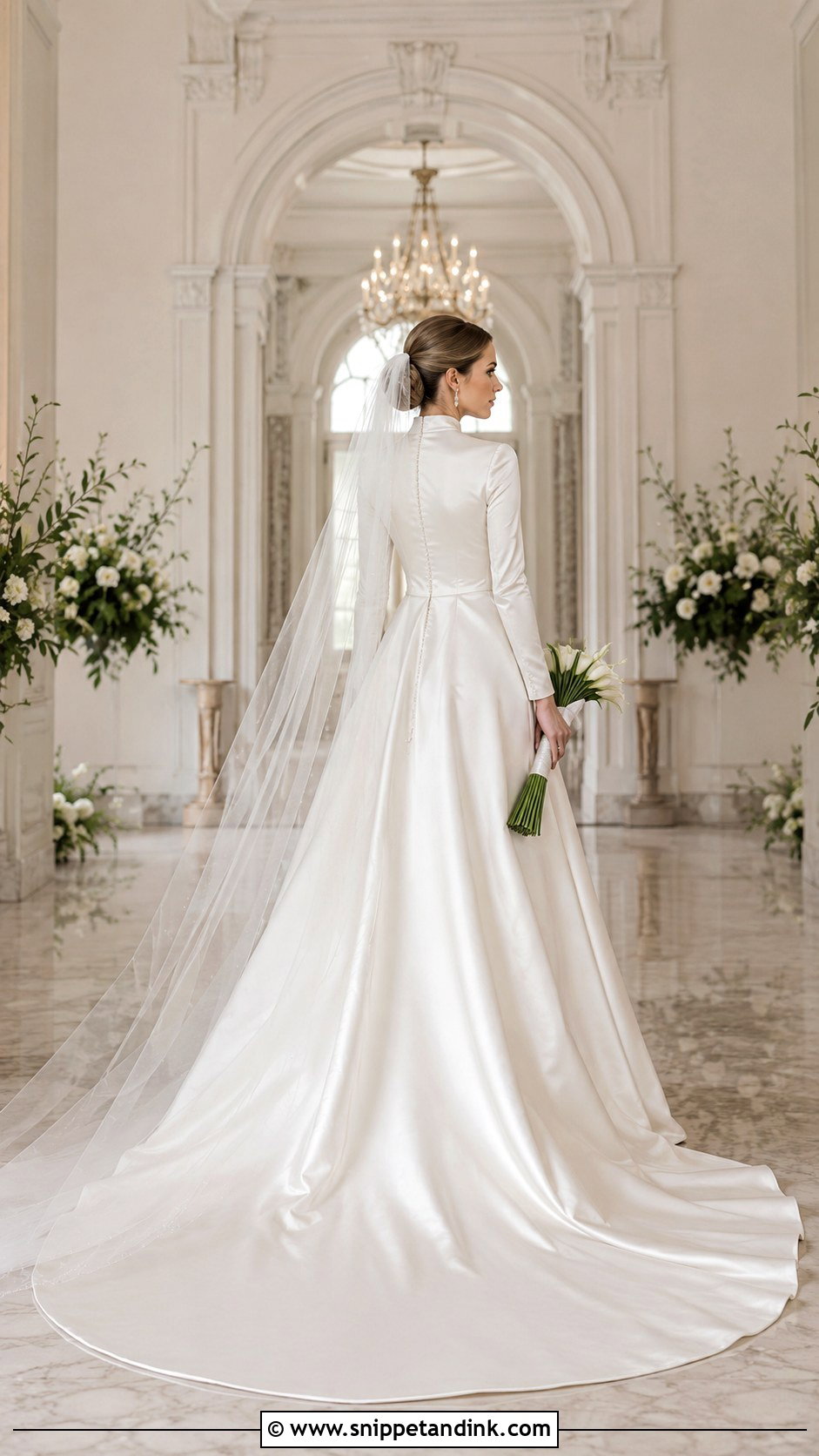
A train turns a satin gown into one long line from collar to hem. Sweep trains suit a smaller wedding, while chapel and cathedral lengths raise the formality. Think about the floor: satin trains pick up grass stains and dust, and they slide on polished stone. Plan a secure bustle for the reception. Keep the bodice streamlined. Closed heels, small drop earrings and a clean updo suit it, with a veil matching or just exceeding the train. Ask your photographer for a shot of the train laid out from behind.

15. High Neck Satin Wedding Dress With Cape
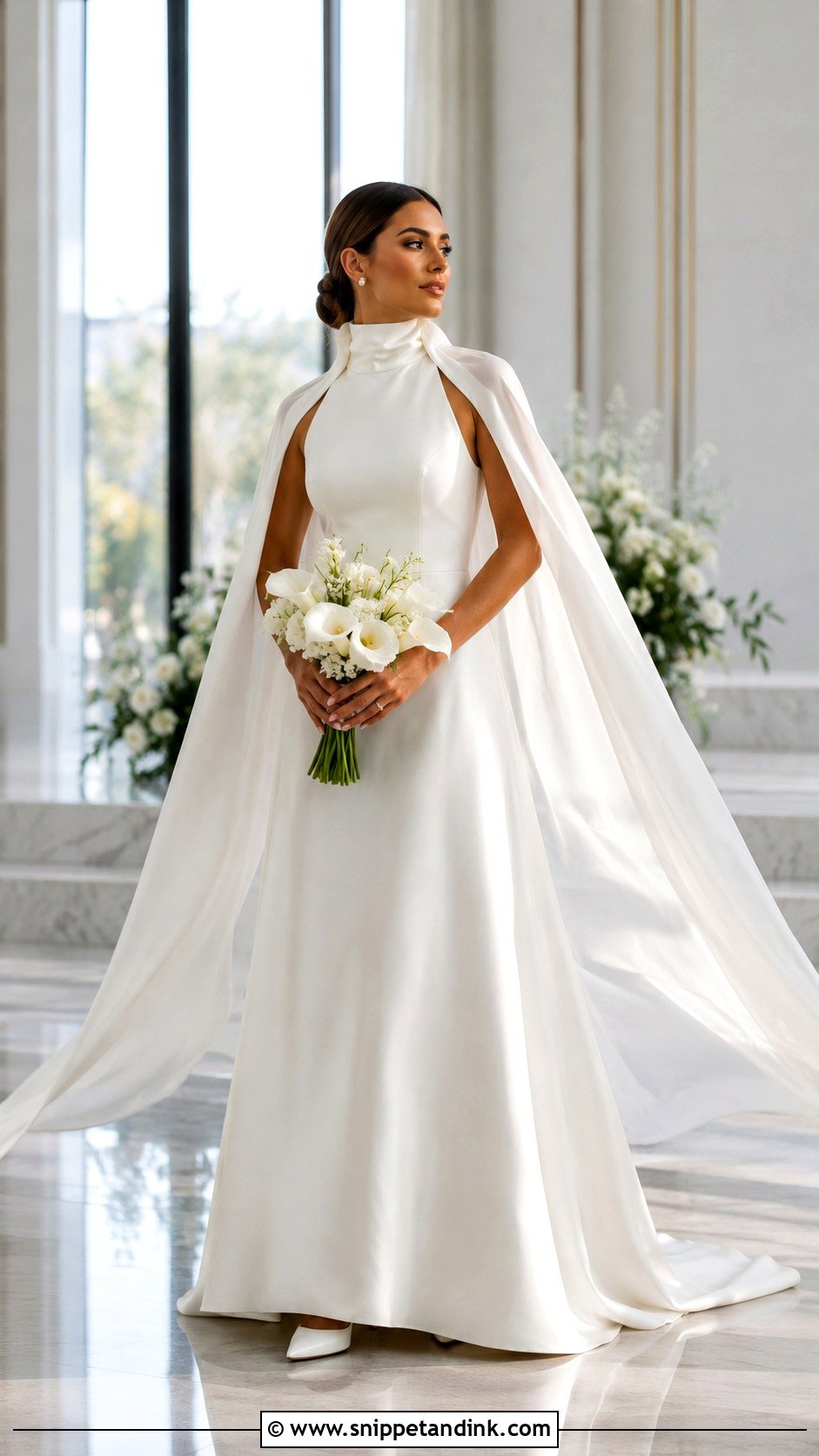
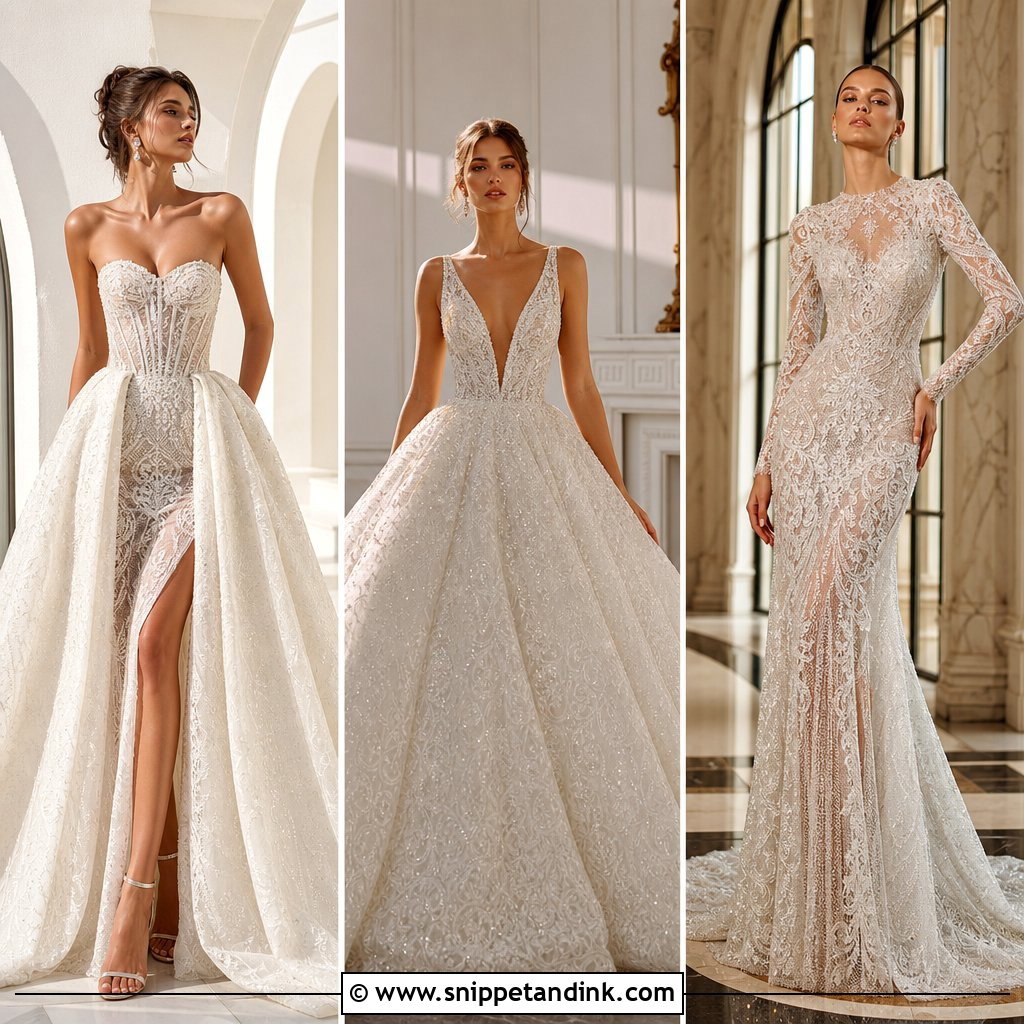
A sleeveless satin gown with a detachable cape gives you two looks: a floor-length cape for the ceremony, the plain dress afterwards. A shorter capelet offers light coverage instead. Choose a cape with minimal beading so the satin underneath still shows and the neck doesn’t get bulky. The clips or snaps that hold it should attach to the collar seam, not the satin face, which can pucker. Pointed pumps, pearl studs and a low bun suit it. You won’t need a veil. Carry a structured white bouquet.
16. High Neck Satin Wedding Dress With Pearl Details
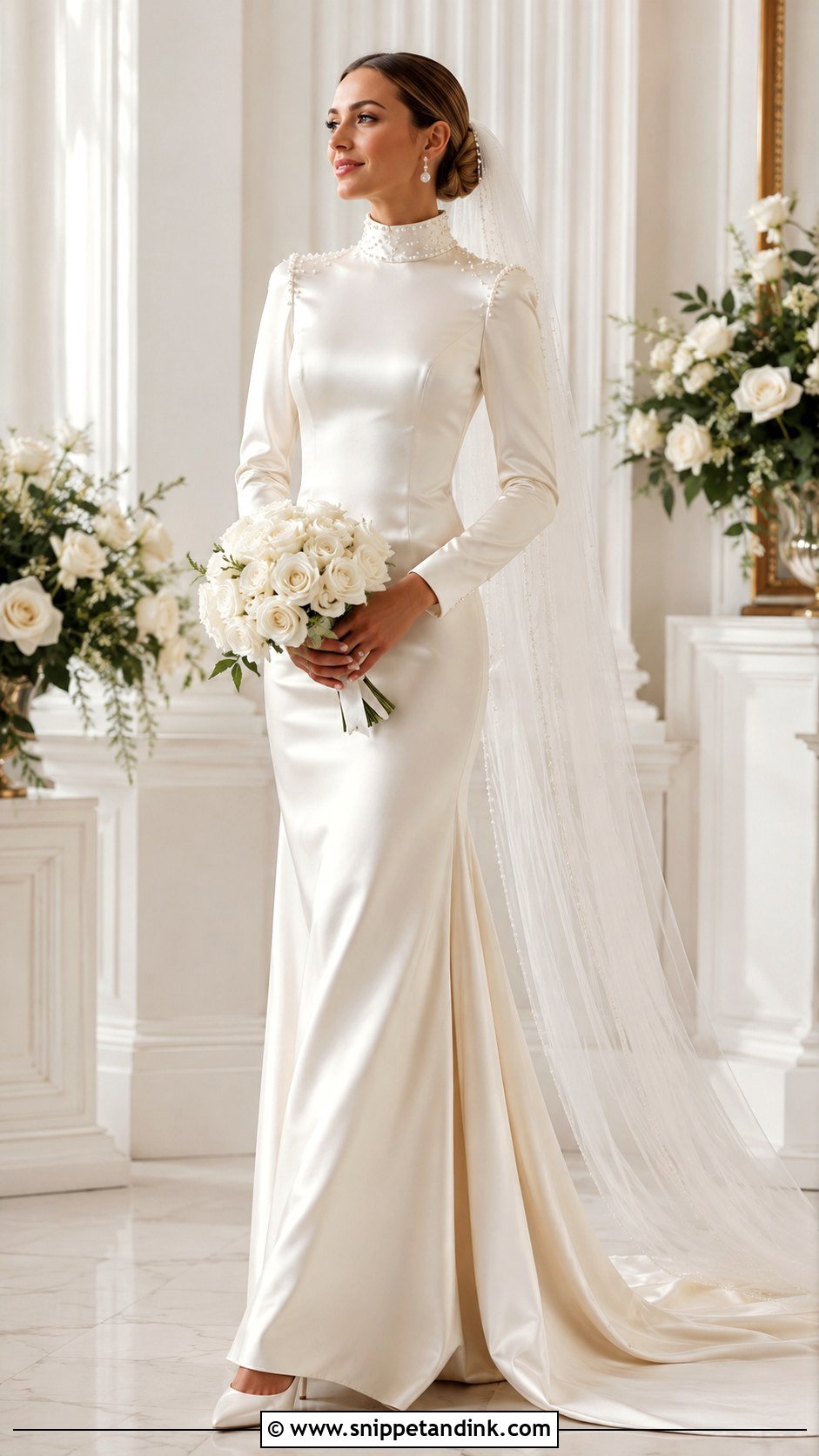
Pearls glow against satin instead of sparkling, which suits a bride who wants decoration that won’t flash in photos. Trace the collar, scatter them on the shoulders or run them down the covered back buttons, but keep them to one area so the satin stays smooth. Each pearl is a tiny weight, so a densely pearled collar needs firmer interfacing. Pearl studs or small drops, ivory pumps and a clean chignon keep it classic. Skip the necklace. A plain tulle veil with a few widely spaced pearls and white roses finish it.
17. High Neck Satin Wedding Dress With Lace
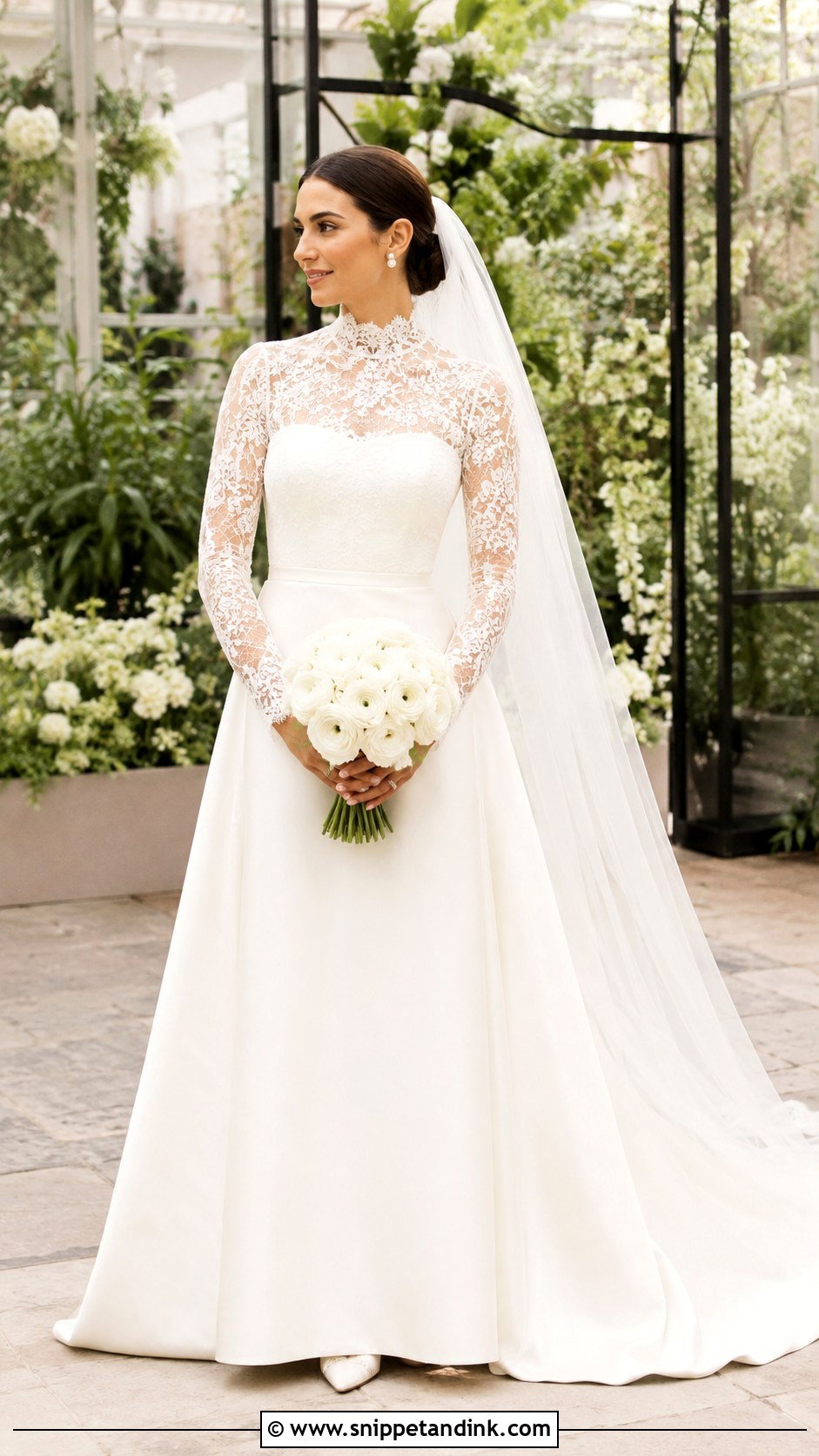
Lace on the collar, sleeves or upper bodice, with a smooth satin skirt below, gives detail without losing structure. I always hold the lace against the satin by a window before ordering; two ivories rarely match exactly, and lace often looks warmer. An illusion layer under the lace adds coverage and keeps the pattern visible. Almond-toe pumps, small pearl earrings and a neat low bun suit it. Keep the veil plain so it doesn’t add a second lace pattern. Roses or ranunculus in a soft bouquet suit a traditional church or a garden ceremony.
18. High Neck Satin Minimalist Wedding Dress
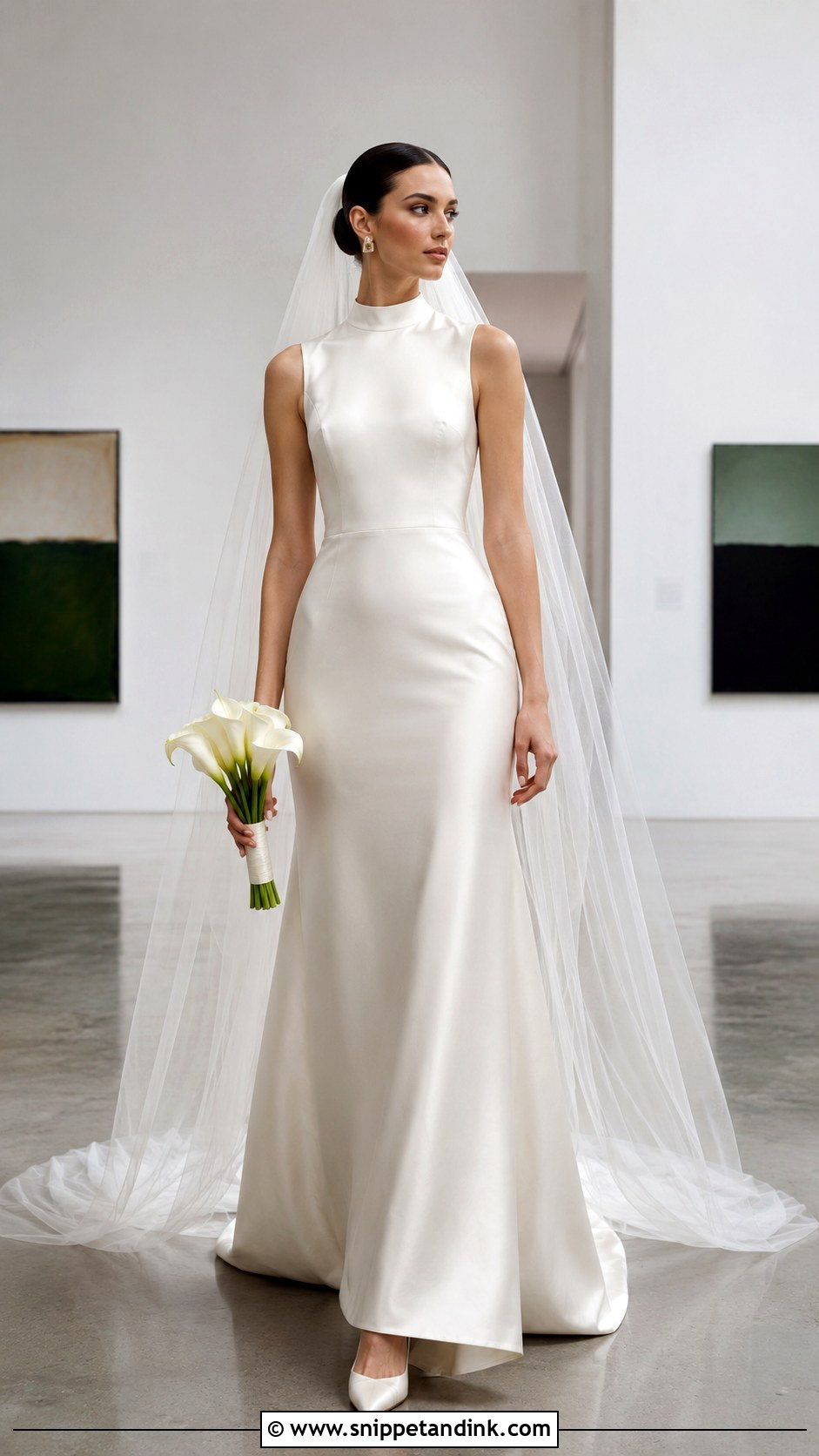
A minimalist satin gown depends on proportion, fabric quality and tailoring, because there’s nothing to distract from a flaw. A smooth sleeveless bodice, defined waist and straight or slightly flared skirt, with hidden seams and a concealed zip, keep it uninterrupted. If the budget is tight, I’d spend it on better satin before anything else; cheap satin looks plasticky without decoration to break it up. Pointed ivory pumps, modern studs and calla lilies suit it, with a sleek centre-parted bun. A plain cathedral veil gives ceremony drama and comes off to reveal the clean shape for a gallery or a city venue.
19. High Neck Satin Plus Size Wedding Dress
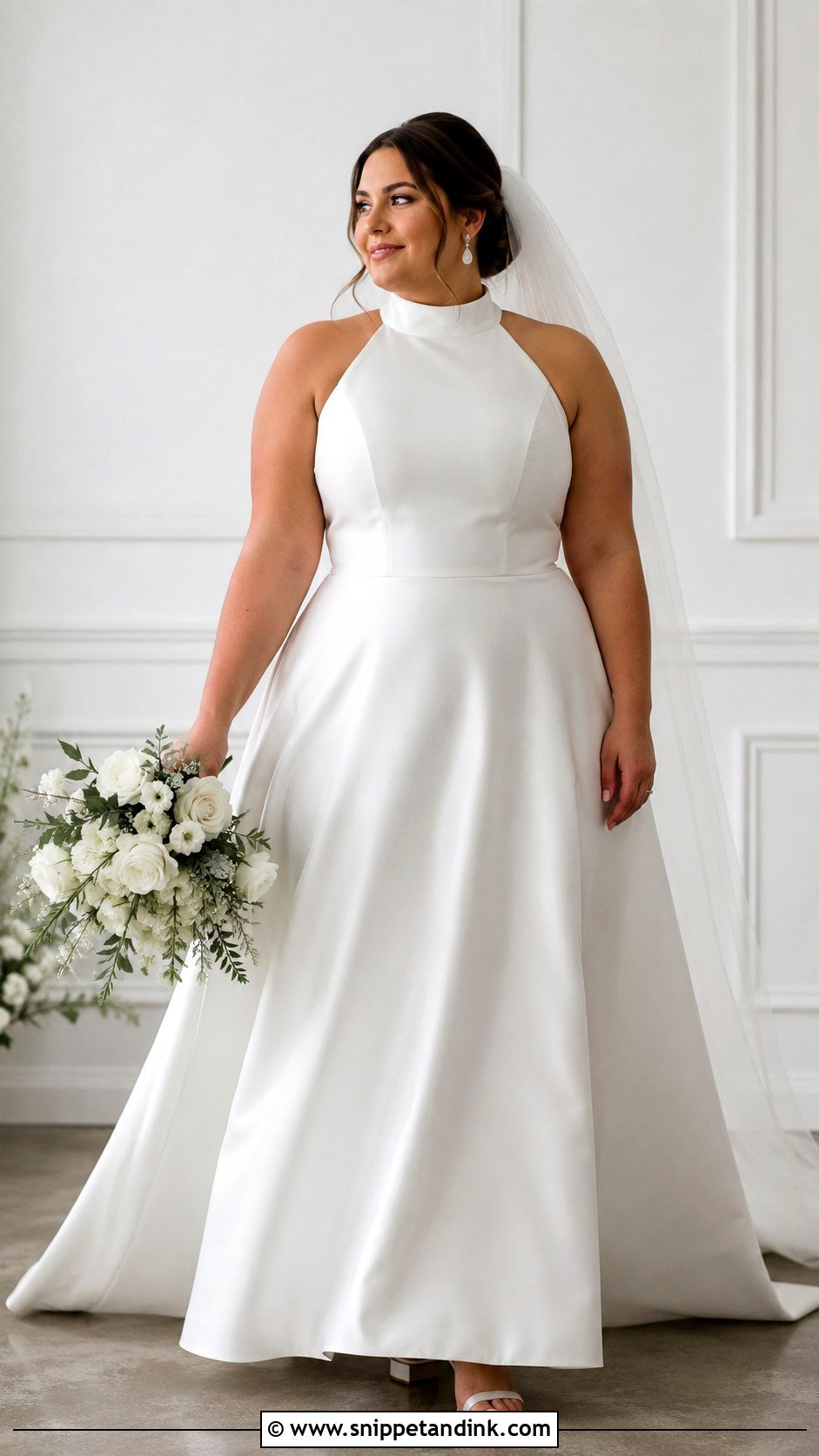
The first thing I check for a curvier bride is satin weight. Thin satin clings and shows every seam underneath; a heavier satin with a good drape skims over the body and looks smoother. An A-line skirt, structured waist and well-placed princess seams shape the silhouette. Choose a collar with room to turn your head. Supportive block heels or flats, drop earrings and a soft updo suit it, and a chapel veil adds vertical length. Sleeves, a keyhole or waist pleating are personal choices, not rules. The right dress is the one you feel secure moving in.
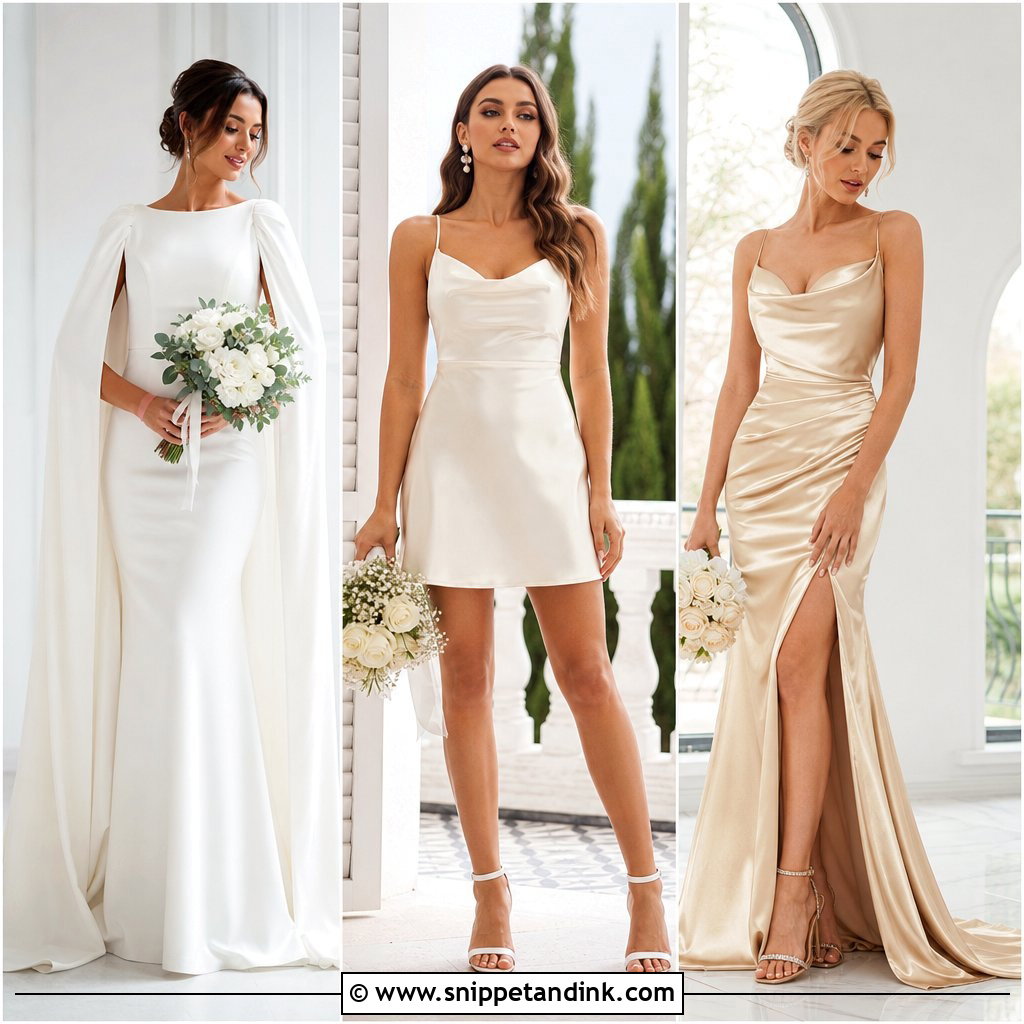


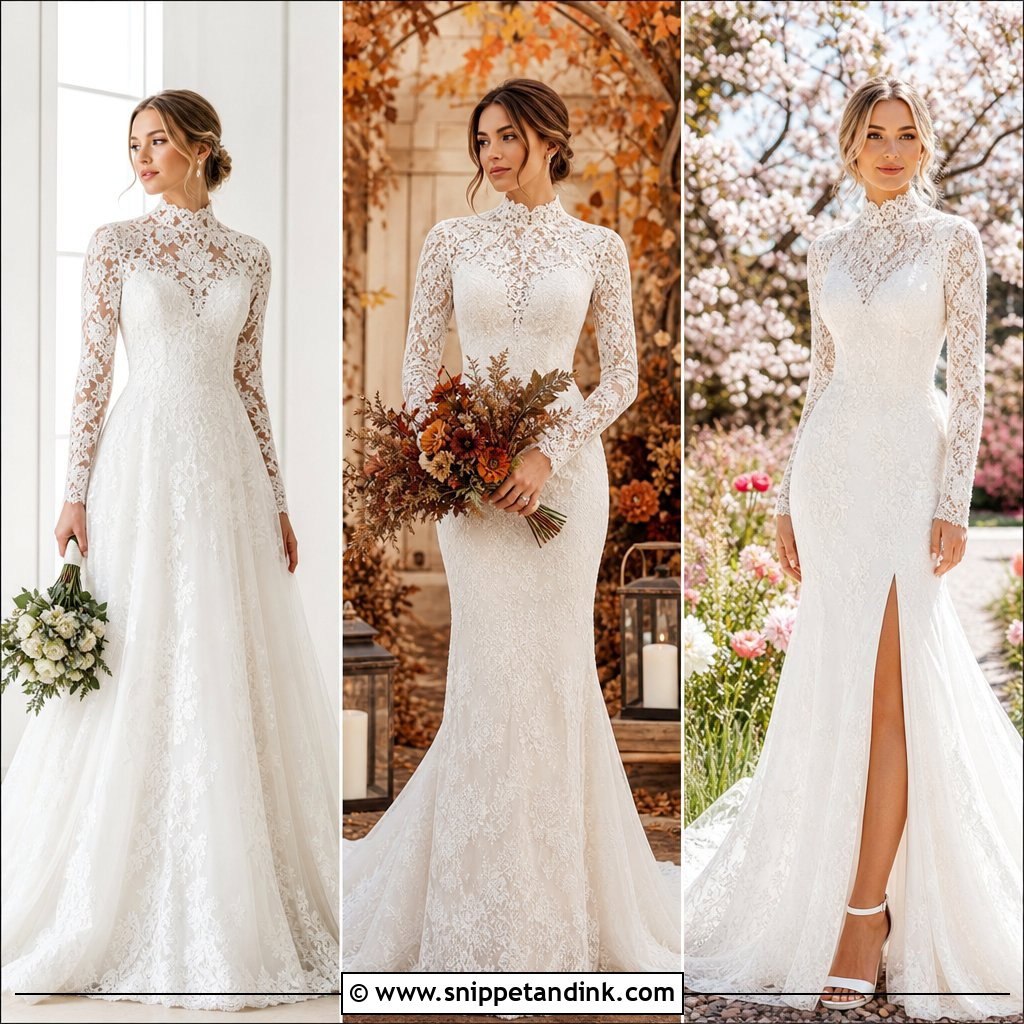
20. High Neck Satin Petite Wedding Dress
On a petite bride, a high neck can swallow the neck if the collar is cut for a taller frame. Ask whether the gown comes in petite sizing, or have the bodice shortened so the collar, waist and armholes sit where they should. A column, sheath or light A-line keeps your length; a sweep or short chapel train stays manageable. Pointed pumps in a close ivory carry the line down, and small drops keep the face clear. A raised bun or sleek ponytail opens the neck. A fingertip veil suits most petites, but a cathedral veil works if it’s scaled. Carry a compact bouquet.
Creases, Water Spots and the Drive to the Venue
Satin creases where it’s compressed, mostly across the lap when you sit. Have the gown steamed on the morning, then avoid sitting in it until you have to. In the car, lift the back of the skirt and sit on the lining rather than the satin, and spread the skirt across the seat.
Water is the other enemy, especially on silk. A splash dries as a ring that can be more visible than the original stain. If something spills, blot with a clean white cloth and leave it; don’t rub and don’t use a wet wipe.
I also pack a small kit for any satin bride: a clean white cotton cloth, a roll of tape for lifting lint and dog hair, and a travel steamer for the venue if the skirt gets crushed in transit. Hold the steamer a hand’s width away and keep it moving, since a nozzle pressed close can leave a water mark of its own.
Afterwards
Get the gown professionally cleaned within a few weeks, since sugar from champagne or cake turns brown as it ages even when you can’t see it now. Store it folded in acid-free tissue inside a breathable cotton bag or box, somewhere dark and dry. Plastic dry-cleaning covers trap moisture and can yellow satin over the years.
Good Satin Shows Good Tailoring
Satin pairs well with a high neck because the collar, the fabric and the cut all speak plainly. A-lines and ball gowns give structure; sheaths, halters and mermaids look sleek. Pearls, pleats, pockets, bows, capes and open backs each add a different kind of interest. Once the gown is chosen, plan the shoes, hair, earrings, veil and flowers together, and keep the neckline clear. Above all, satin rewards good tailoring and punishes poor fit, so spend your alteration budget accordingly.
You'll Like These Ideas:









Leave a Reply