
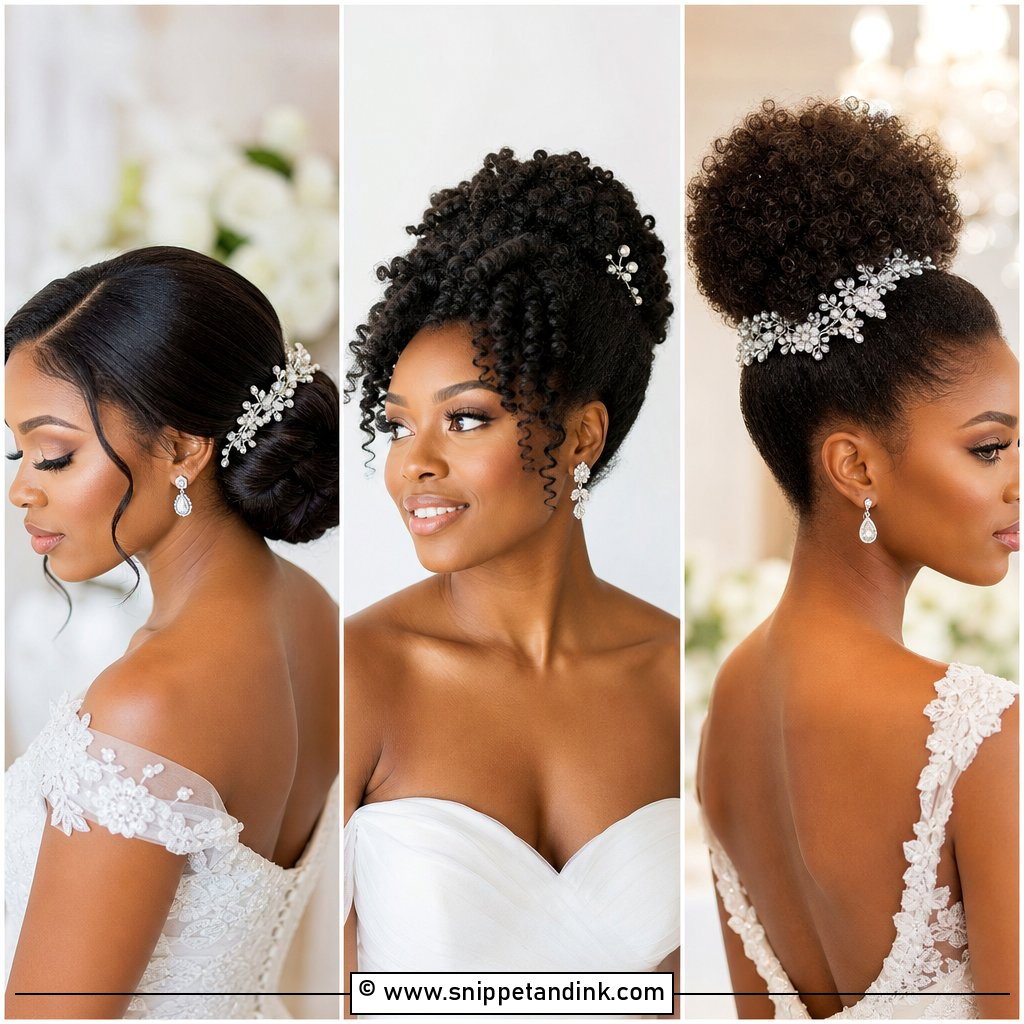
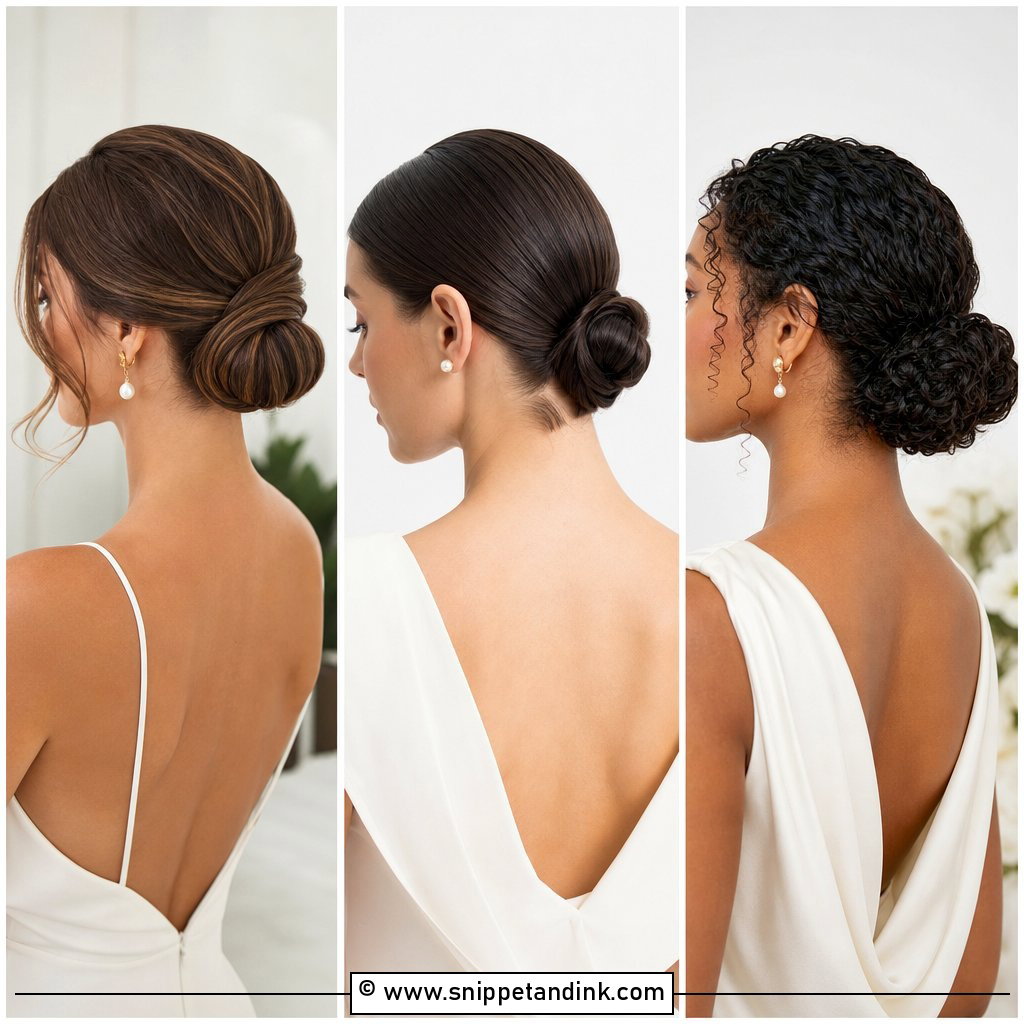
A low bun is the updo I reach for most often with Black brides, and not because it’s safe. It sits below the veil comb, it leaves the neck and earrings open, and it can be built on almost any texture, from a fresh silk press to a 4C afro that has never seen a flat iron. What changes from bride to bride is the groundwork underneath: how the hair is stretched, how tight the base is, and how the edges are handled. Below are 20 low buns I’d happily put on a bride, with notes on what each one asks of your hair and where it tends to go wrong.
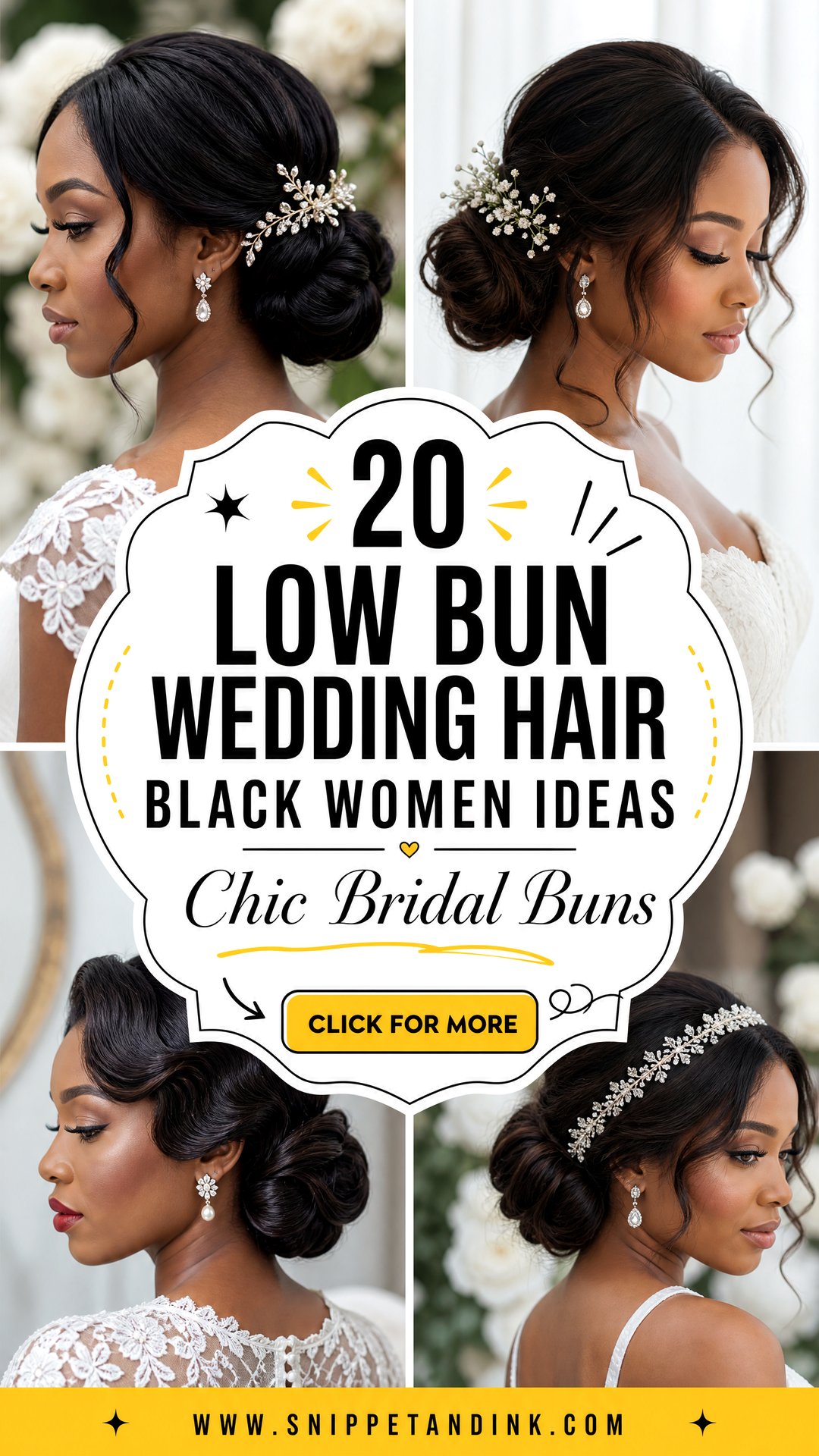
Silk Press, Stretched Curls or Braids Underneath the Bun
The bun you see in a photo is the last ten minutes of work. What decides whether it lasts is how your hair arrives at the chair, and that falls into three routes.
Pressed hair
A silk press gives the sleekest buns on this list, but it reverts when it meets moisture. I like it done two or three days before the wedding, so the hair has settled and any oil has evened out, and then it must be wrapped every night in a satin scarf. If the wedding is outdoors in a humid month, I’ll warn the bride that the hairline is the first thing to frizz, and plan a smooth bun with a band or braid at the front instead of a fully sleek finish.
Stretched natural hair
Natural hair doesn’t need a press to wear a low bun. A blow dry on low heat, or a stretched set with banding or large twists, gives enough length to wrap and pin without heat damage. Shrinkage is the thing to plan for: a bun built on unstretched coils will be noticeably smaller, so if you want a big round bun, either stretch the hair or add a matched clip-in piece.
Braids and extensions
Braided buns are installed ahead of time, and the timing matters. Too early and the braids look fuzzy by the wedding; too late and the scalp is still sore. About a week before is usually right. Whatever added hair you use, match the texture to your own, since sleek extensions next to coily edges look obvious in close photos.
1. Sleek Low Bun With Edges
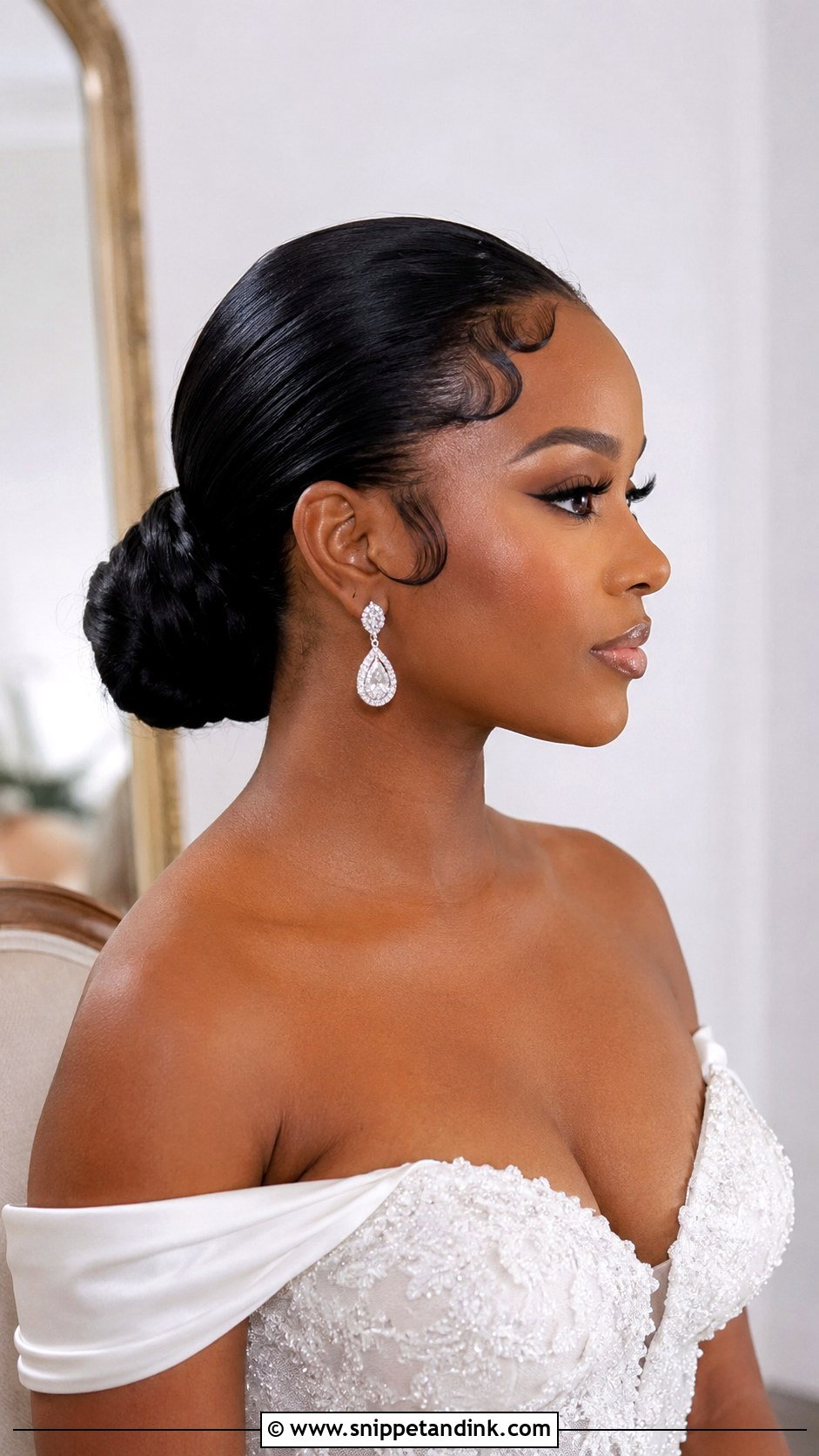
This is the bun that shows every flaw, so the prep matters more than the styling. I want the hair blown out or pressed two or three days earlier, then brushed back with a boar bristle brush and a light gel so there are no ridges at the crown. The edges get laid last, after the bun is pinned, otherwise the pull of brushing undoes them. A sleek finish loves a cathedral veil and big earrings, but it isn’t kind to anyone who hates their hairline being on show.
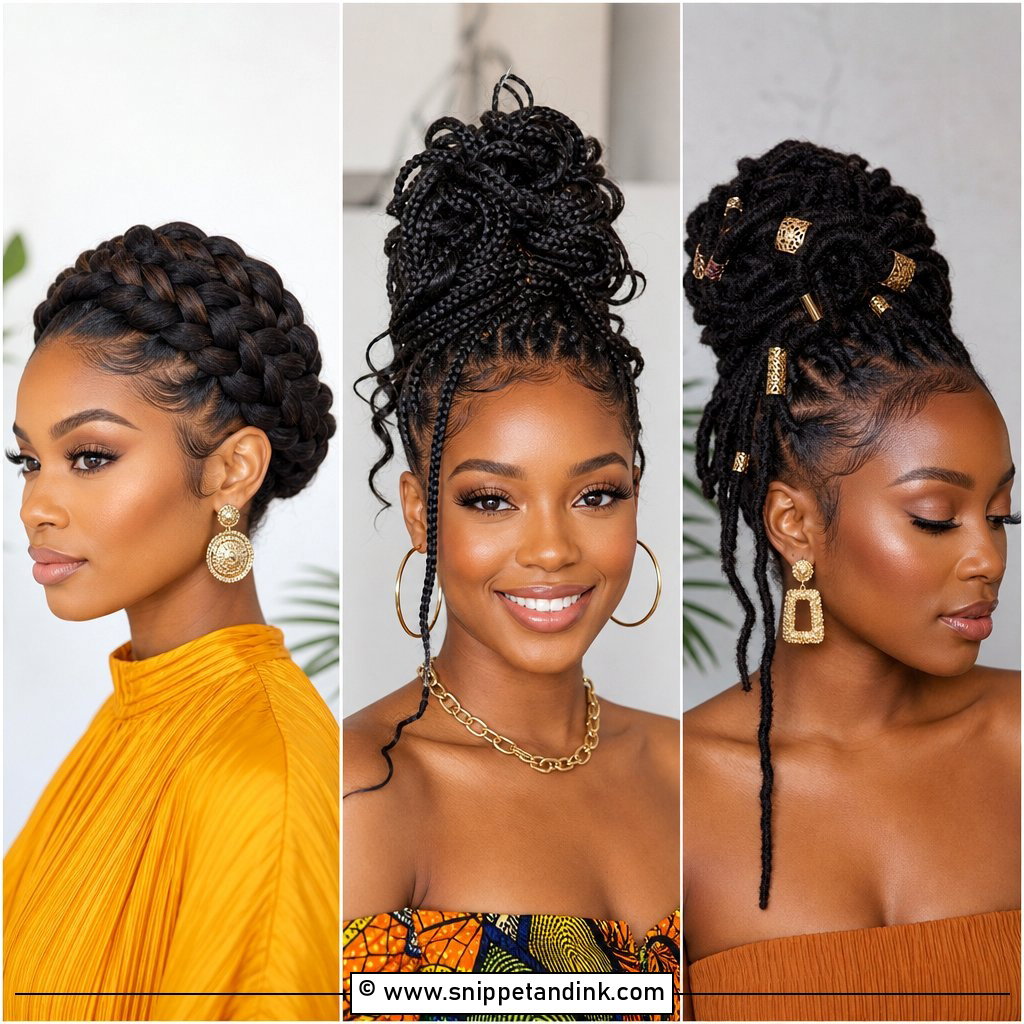
2. Braided Low Bun
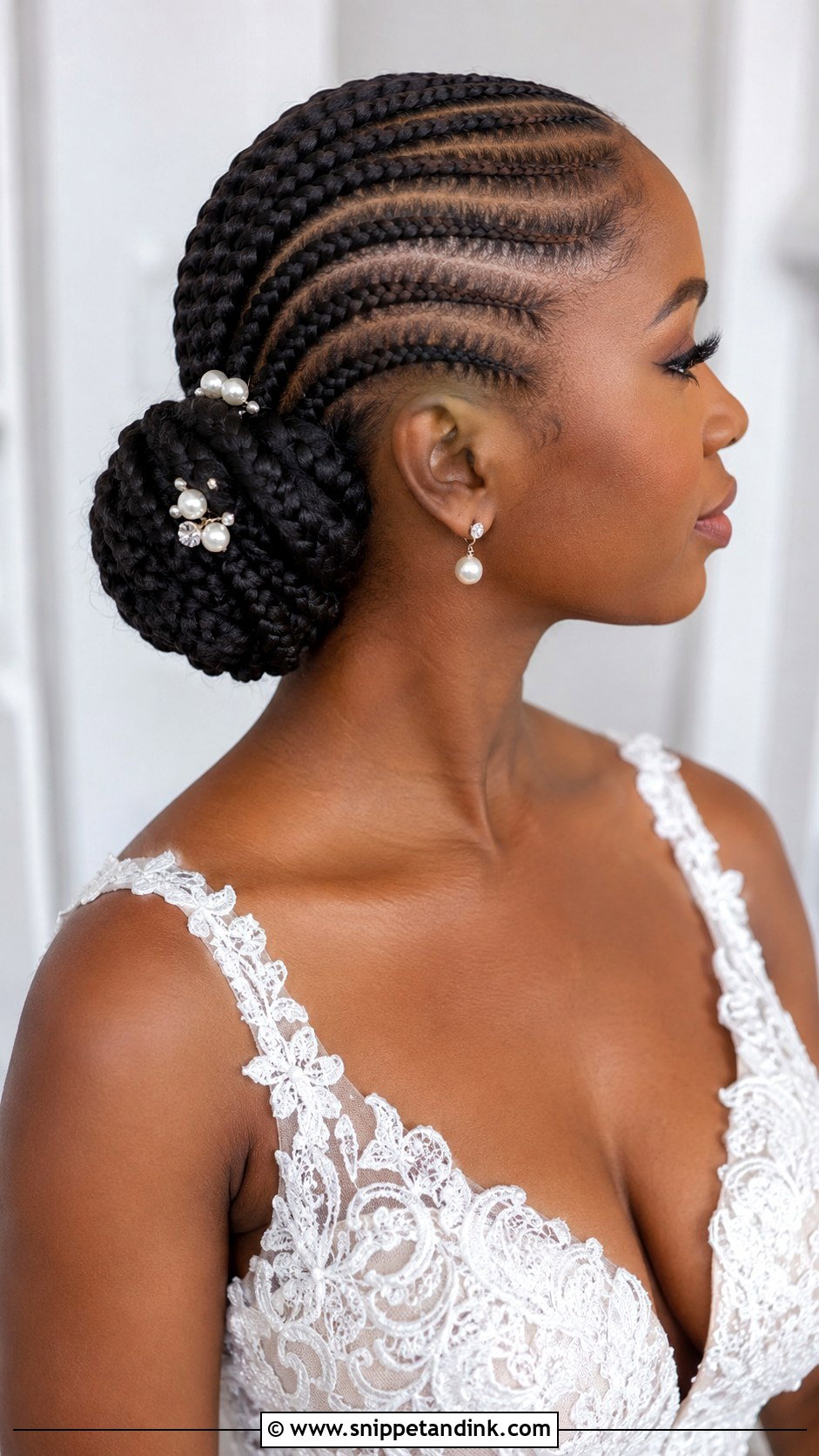
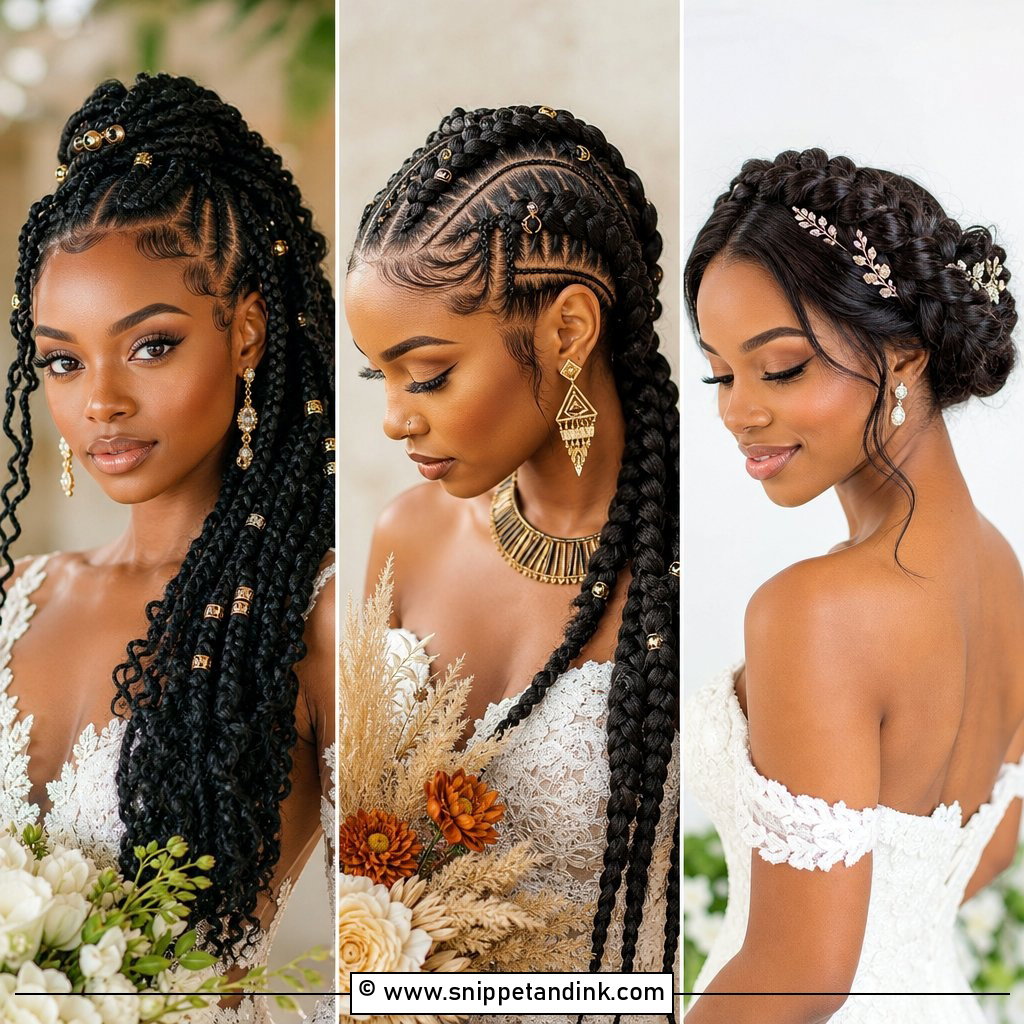
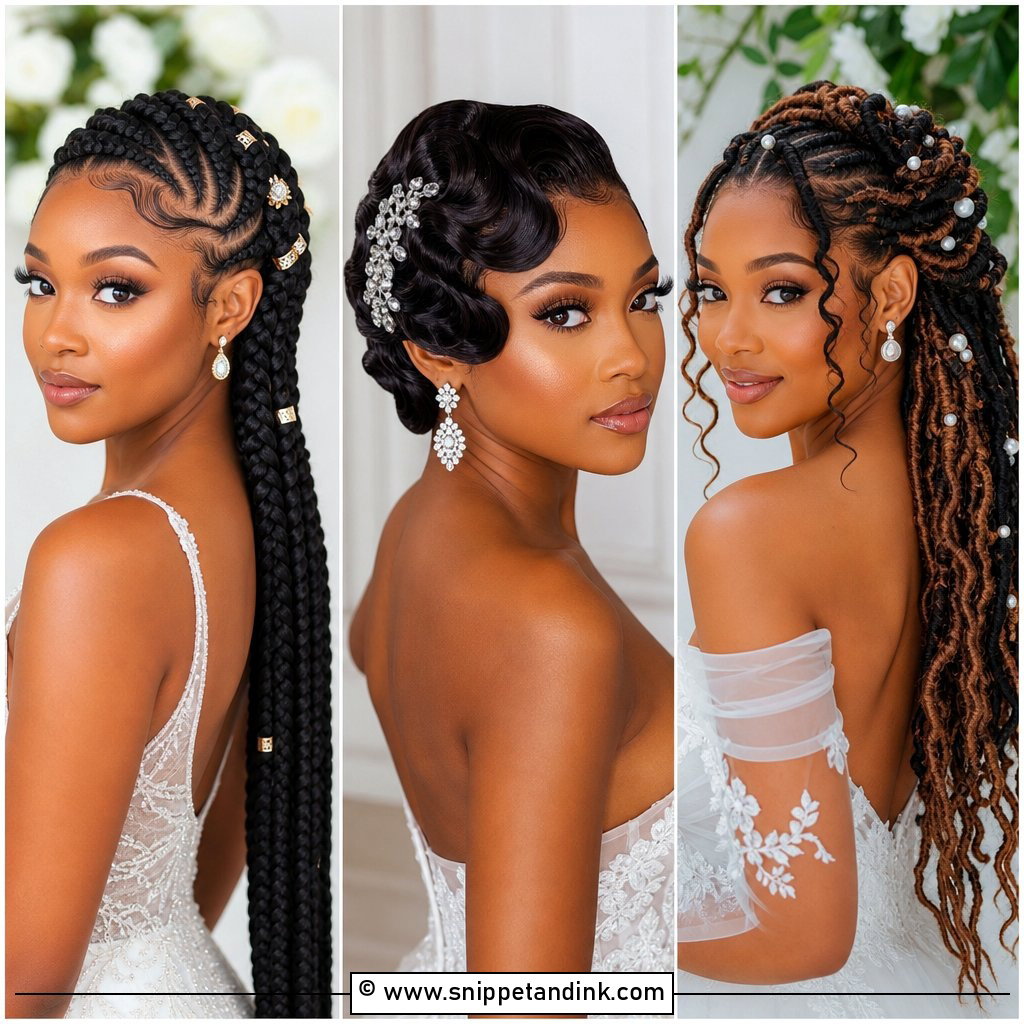
Cornrows or feed-in braids run straight back and finish in a thick, coiled bun at the nape. I prefer to have the braids installed about a week ahead, because the scalp is often tender for the first few days and a bride shouldn’t be wincing under a veil comb. Fine braids read delicate; wider ones hold up better in long-distance shots. Of all the styles here, this one is the hardest to knock out of place, which is why I suggest it for long receptions with a lot of dancing.
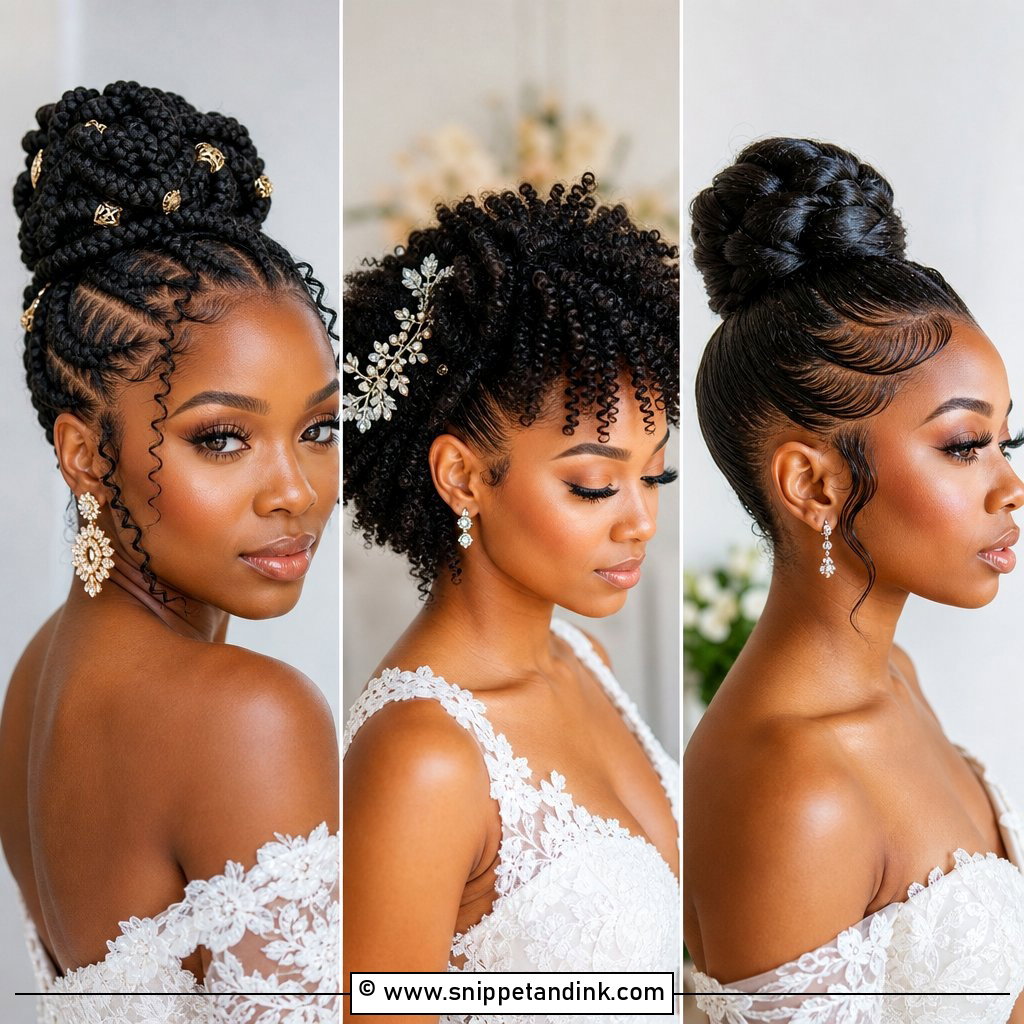
3. Low Bun With Curly Tendrils
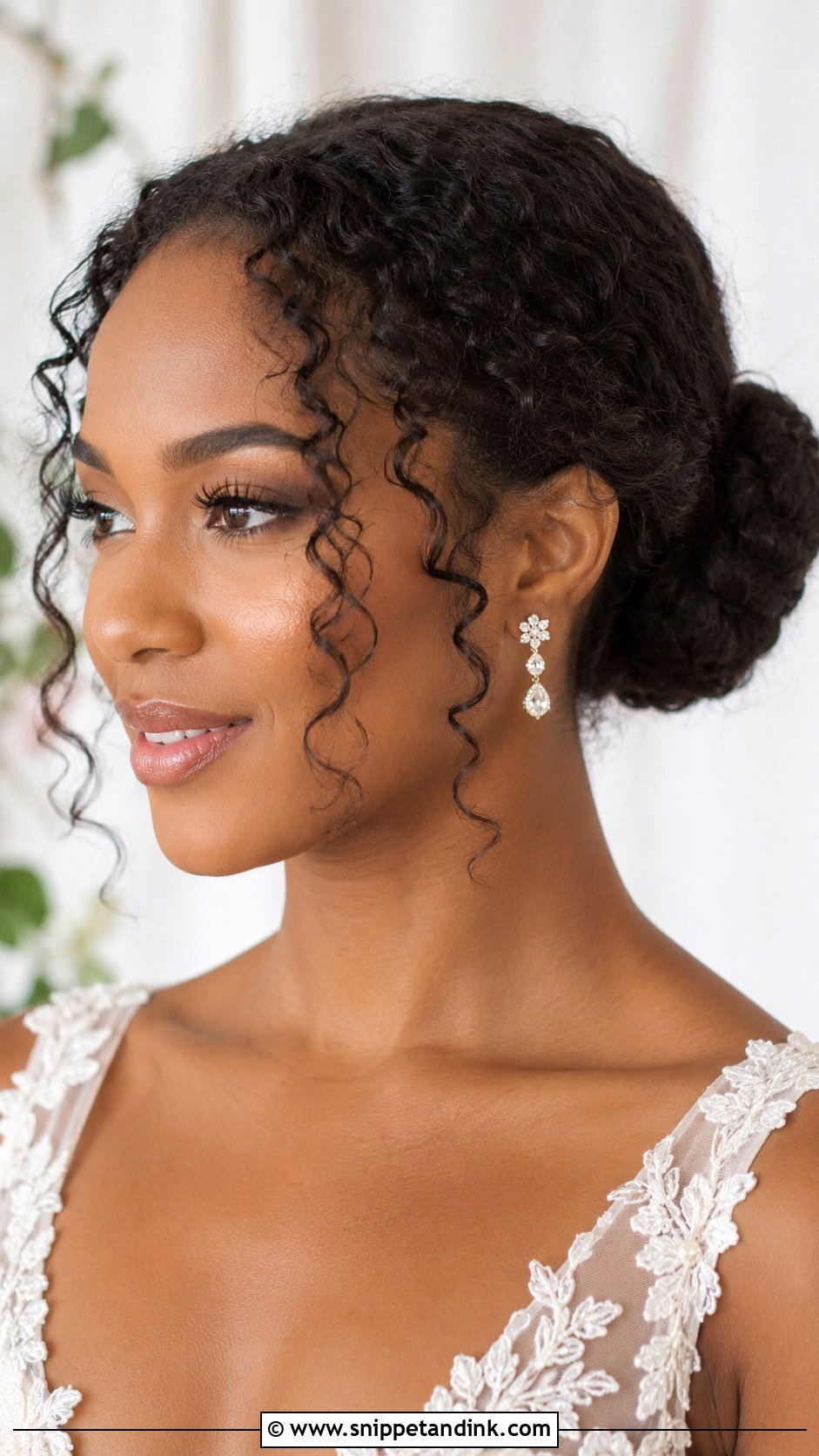
Most of the hair goes into a neat bun and a few coily tendrils stay loose at the temples and behind the ears. The tendrils are the part that misbehaves. Pulled from the hair after it’s been stretched, they look limp, so I set them separately on small flexi rods or finger coil them with a cream the night before. A quick mist of curl refresher brings them back after the ceremony. On very fine hair I’d pull out fewer pieces, since every tendril takes bulk away from the bun.
4. Twisted Low Bun
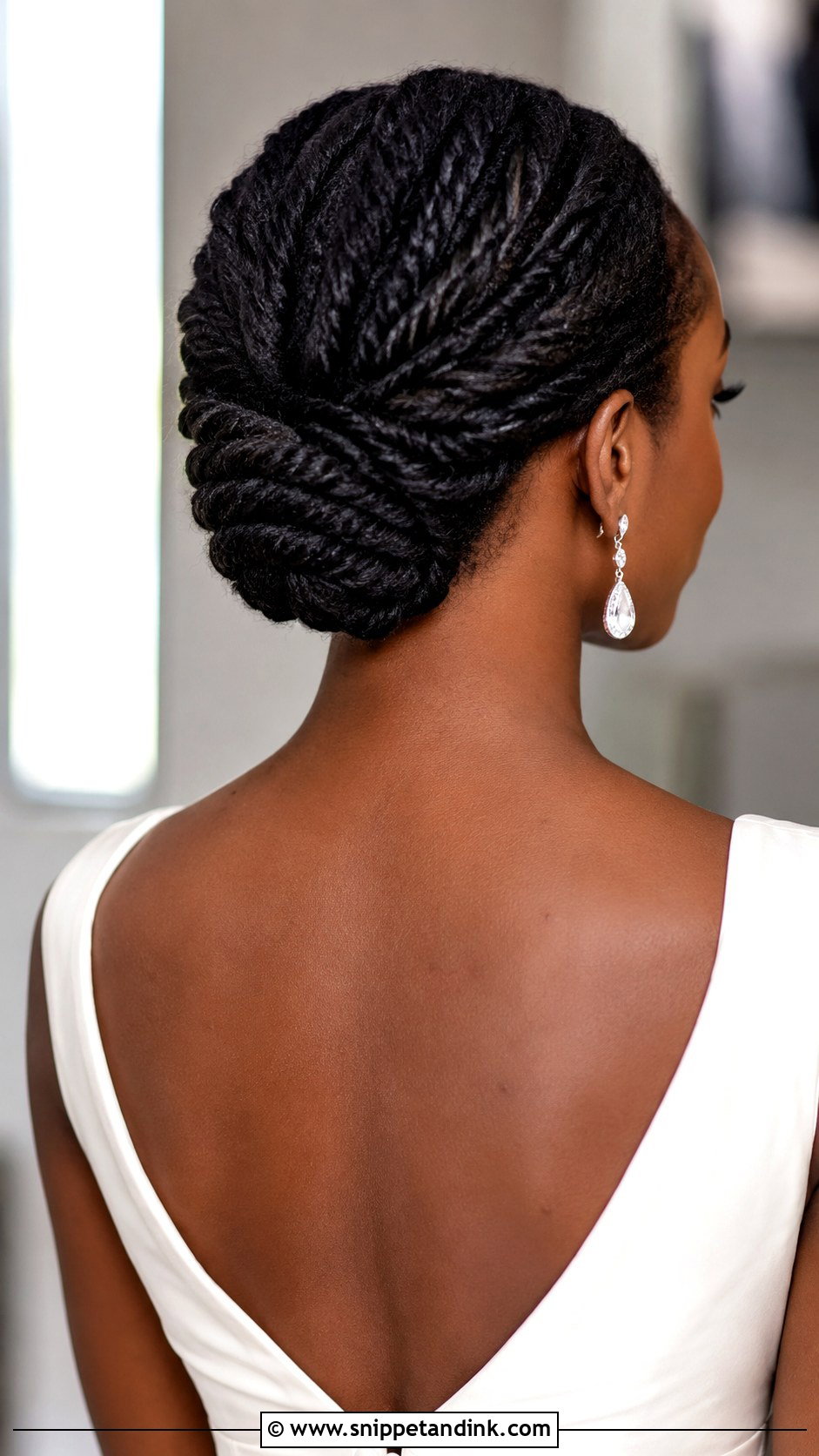
Two-strand twists or flat twists guide the hair back into a rolled, rope-like bun. This is one of the few buns that works on shorter natural hair, because the twists can be pinned overlapping each other instead of needing length to wrap. I usually twist on damp, stretched hair and let it set overnight; twisting on soaking wet hair shrinks it into a smaller bun than the bride expects. Leave the twists defined, or separate them gently on the morning for a fuller shape.
5. Low Chignon With Pearl Pins
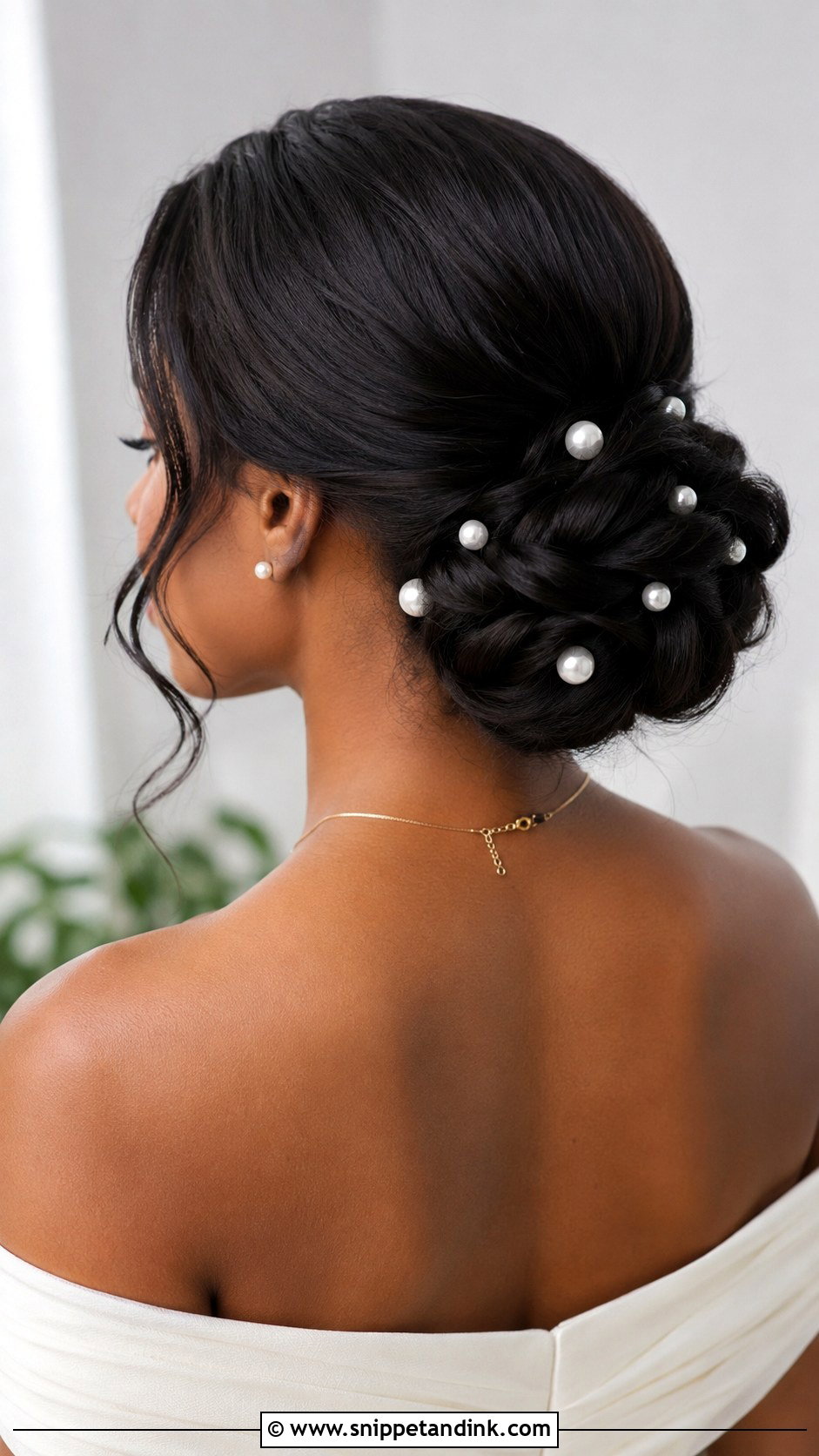
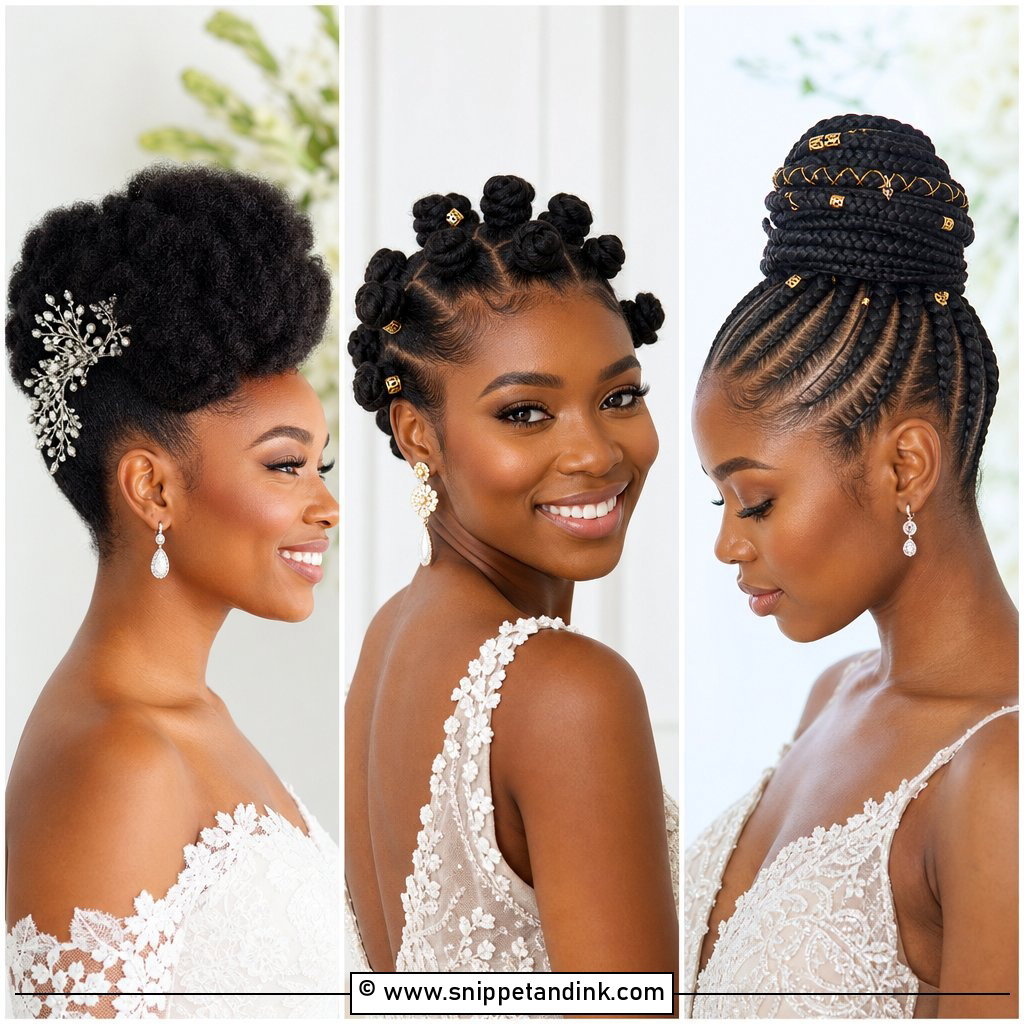
A chignon is a knot rather than a wrap, so it sits flatter against the neck than most buns, which is exactly why it suits off-the-shoulder gowns. This one coils into a smooth, rounded knot with pearl pins scattered over it. I place the pearls after the veil goes in, so I can see which ones the comb will hide. It needs enough length to fold under itself; if the hair is shoulder length or shorter, I’ll add a clip-in piece matched to the texture rather than force it.
6. Low Bun With Baby Hair Swirls
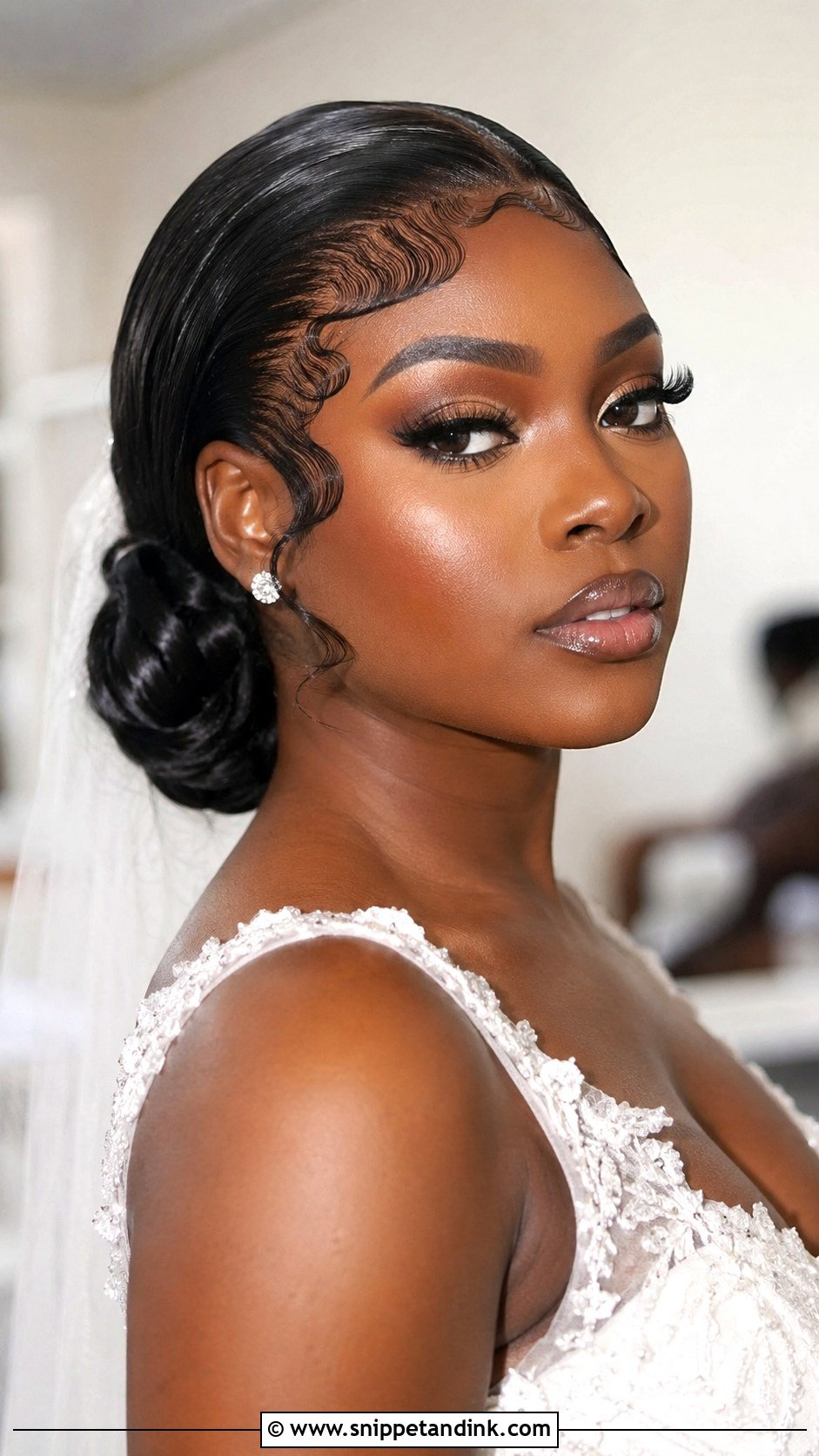
Here the bun stays simple and the edges do the talking. Swirled baby hair takes a soft edge brush, a gel with real hold, and patience: I lay each section, then tie a silk scarf over the hairline for ten minutes so it sets flat. Sweat is the enemy, so I won’t do detailed swirls on a bride getting ready in a hot room without air conditioning. In close-ups the detail reads like lace, which makes it worth the extra twenty minutes in the chair.
7. Braided Halo Low Bun
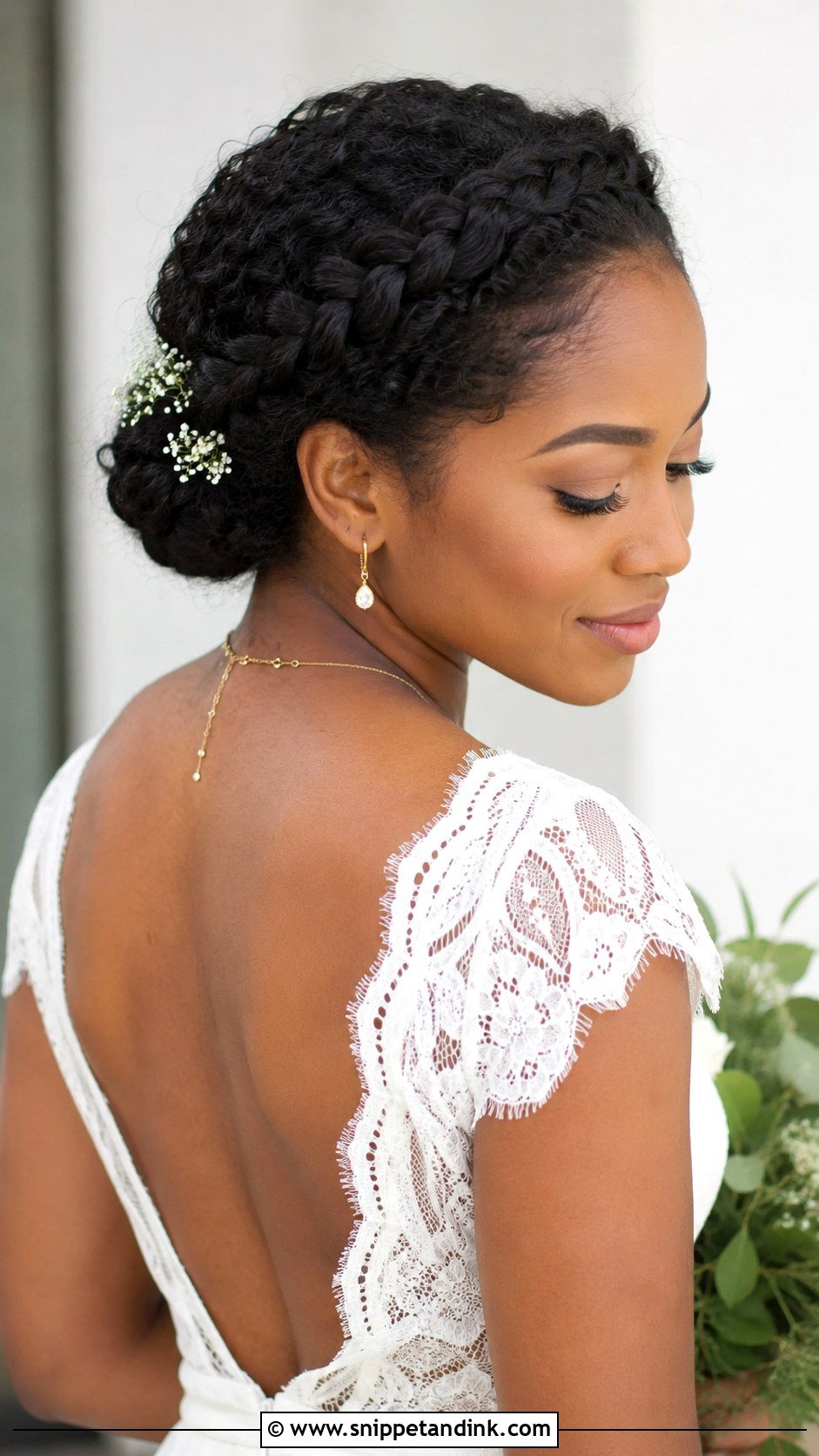
A braided halo arcs across the front of the head and travels back into a low bun. The halo sits where a tiara or flower crown would, so it gives that same framed effect without anything to slip. Placement is the tricky bit: too far forward and it reads as a headband; too far back and it disappears in front-facing photos. I set the braid just behind the hairline and check it in a mirror from the front and the side before pinning the bun.
8. Sleek Side-Parted Low Bun
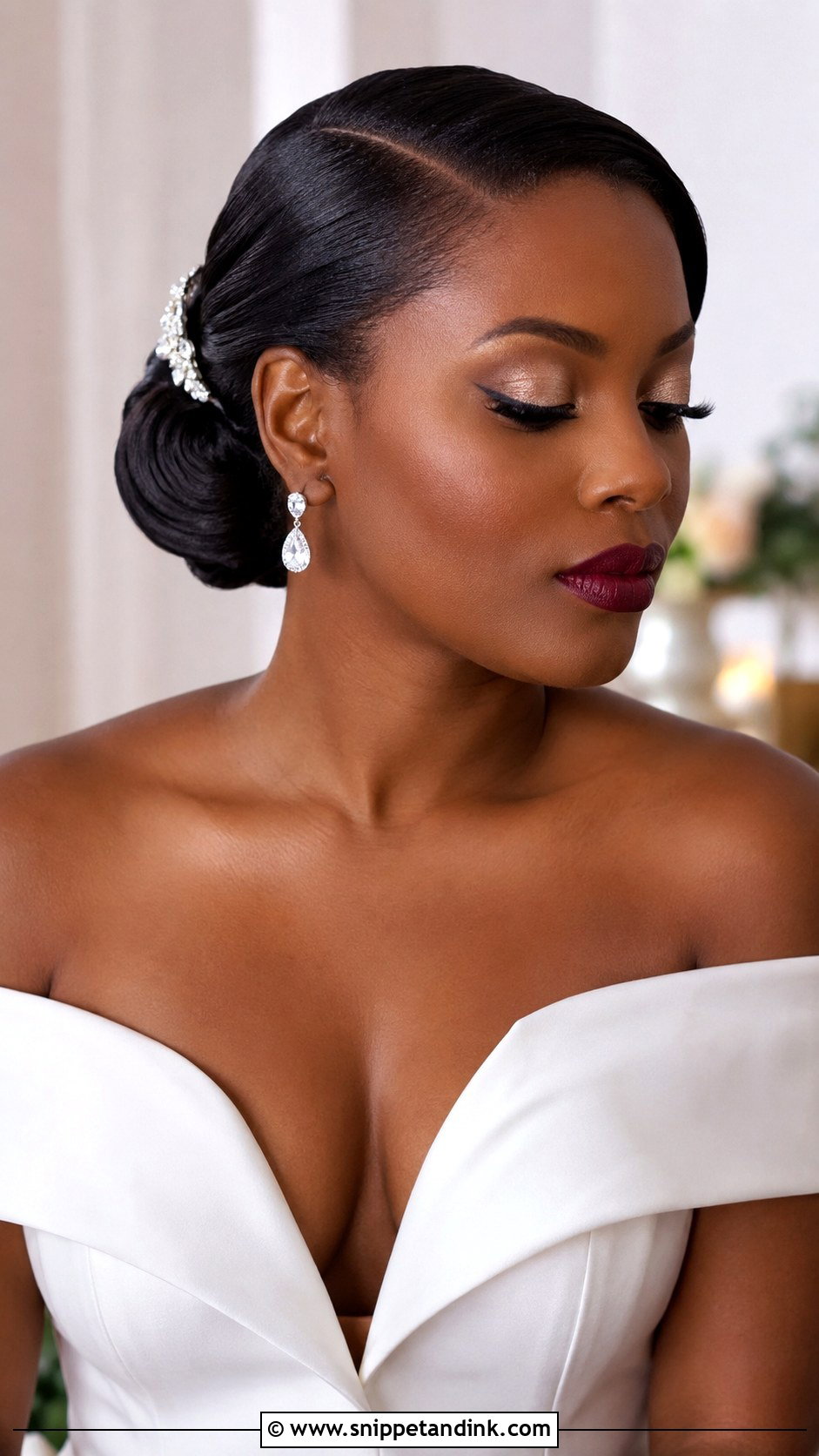
A deep side part pulls the hair across the head before it gathers at the nape, and that asymmetry is what gives it an editorial edge. I decide the side with the bride by looking at her photos, since most people have a favourite angle and the part should open the face toward it. Relaxed hair or a silk press gives the cleanest line. On natural hair that hasn’t been pressed, the part tends to soften by the reception, so I’d rather choose a softer style than fight it all day.
9. Low Bun With Gold Hair Cuffs
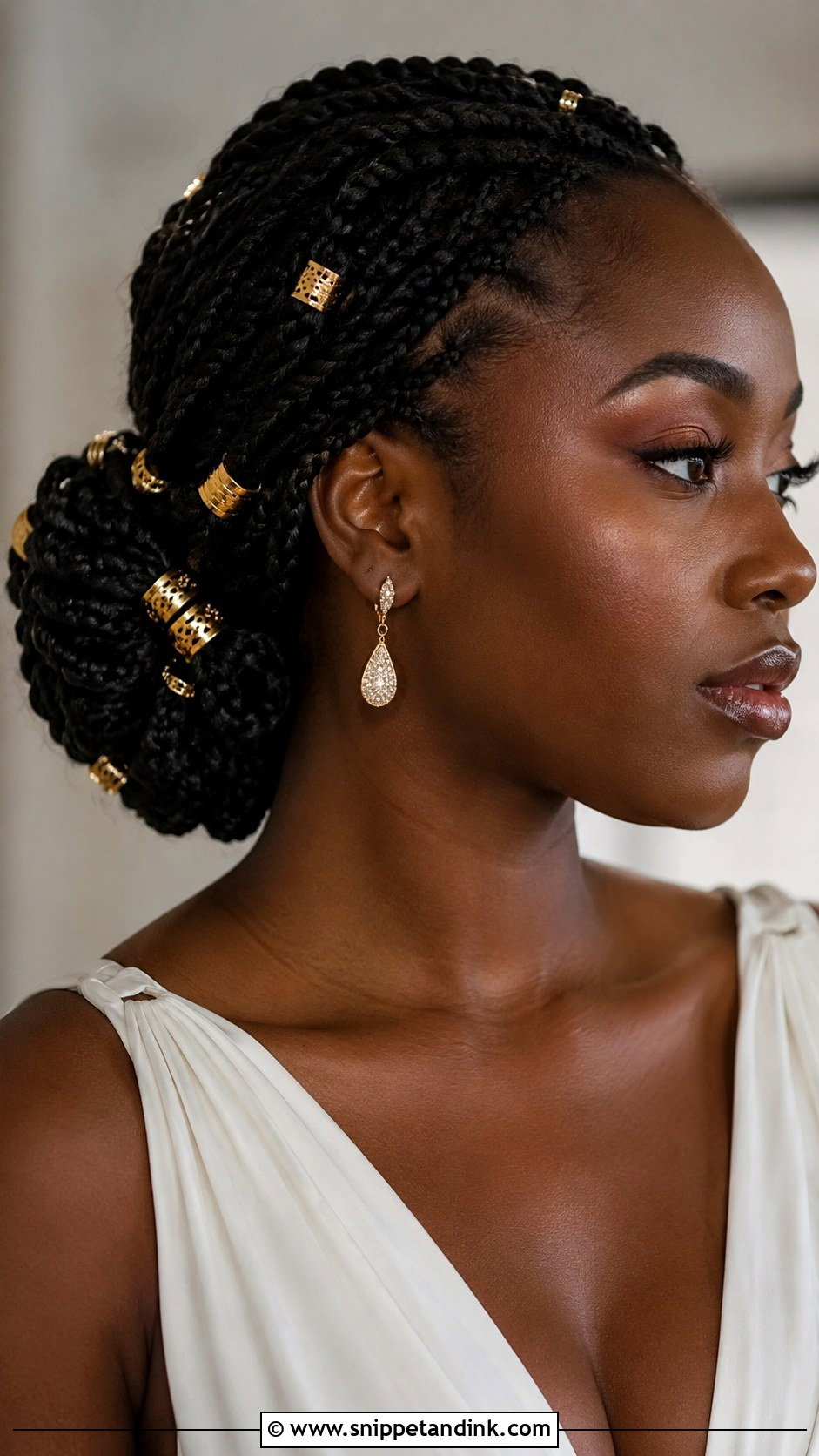
Gold cuffs and rings threaded onto braids or twists turn the bun into jewellery. The cuffs grip best on braids that are firm and slightly thicker than the cuff opening; on loose twists they slide down within an hour. I space them along a few braids so they echo the bun instead of crowding it, and I check they aren’t sitting where the veil comb goes. Warm-toned makeup and gold earrings pull it together, and the look carries real meaning for brides who wear it as a nod to African adornment.
10. Soft Romantic Low Bun
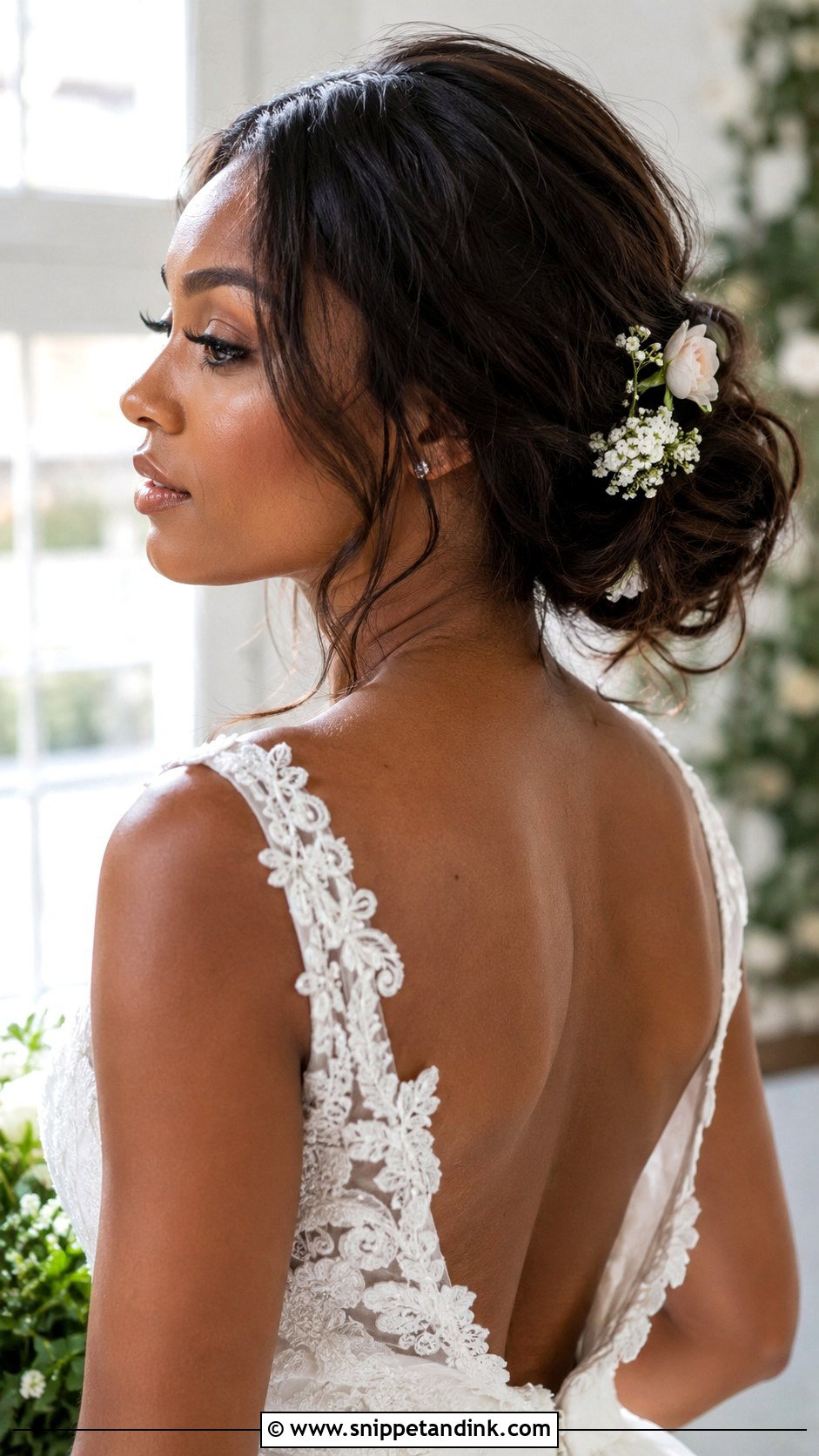
Loosely gathered hair with a little lift at the crown and soft pieces around the face: this is the gentlest bun on the list and also the one most likely to collapse. A loose finish still needs a firm foundation, so I build a small, tight ponytail or braid underneath and pin the loose shape over it. Wavy blowouts and loosened curls take it well. Fine, silky hair often looks flat in it by evening, and I’d steer that bride to the textured version further down.
11. Low Bun With Flower Crown
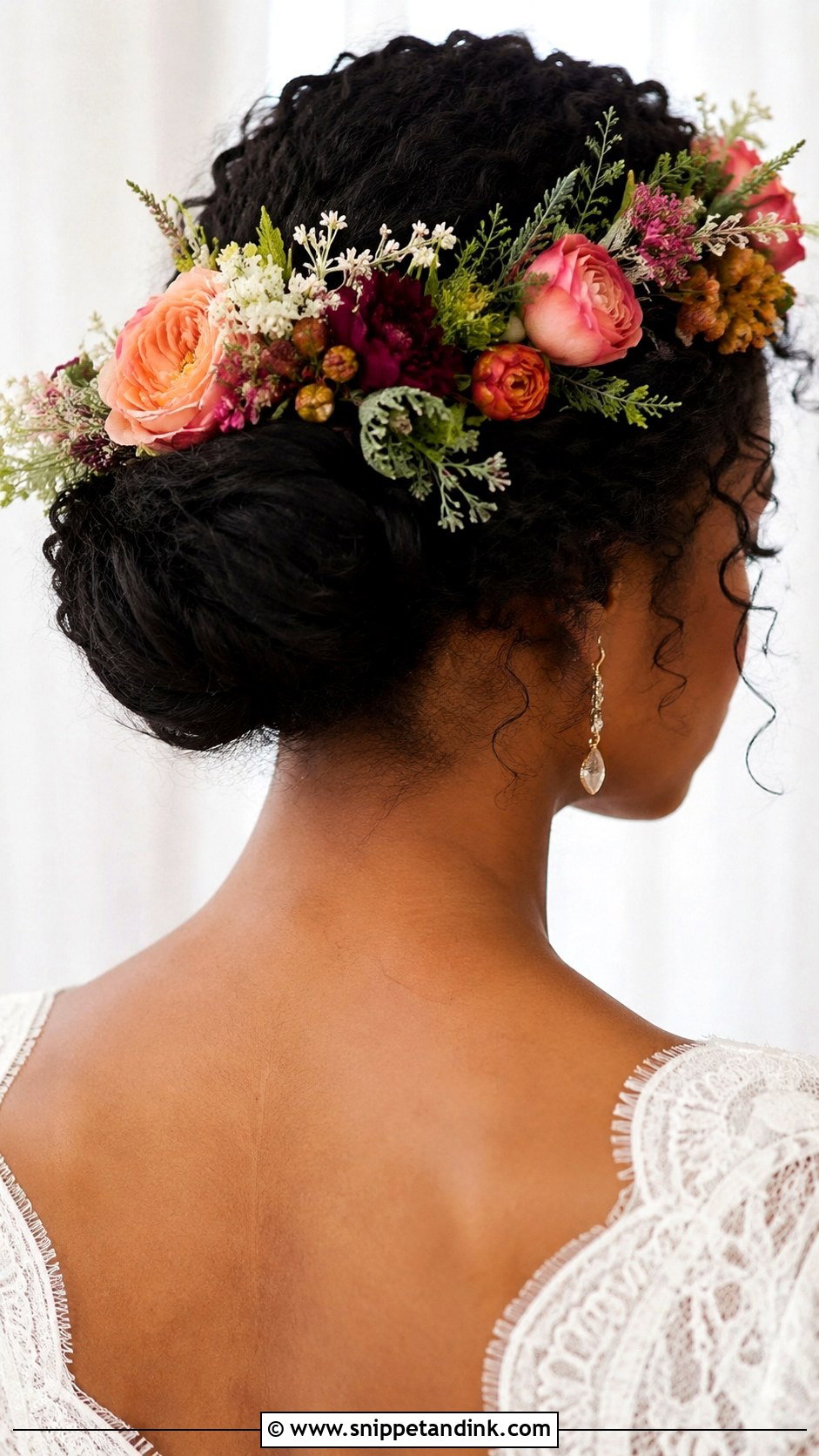
A crown of fresh or silk blooms sits over a smooth or textured low bun. With fresh flowers I always ask the florist for hardy stems; delicate petals wilt fast once they’re on a warm head, and anything with pollen can mark light-coloured hair or a white veil. Silk flowers are the safer bet for a long outdoor day. Keep the bun underneath plain so the crown has nothing to compete with, and test the fit at the trial, since a crown that’s too tight gives a headache by mid-afternoon.
12. Bantu-Inspired Low Bun
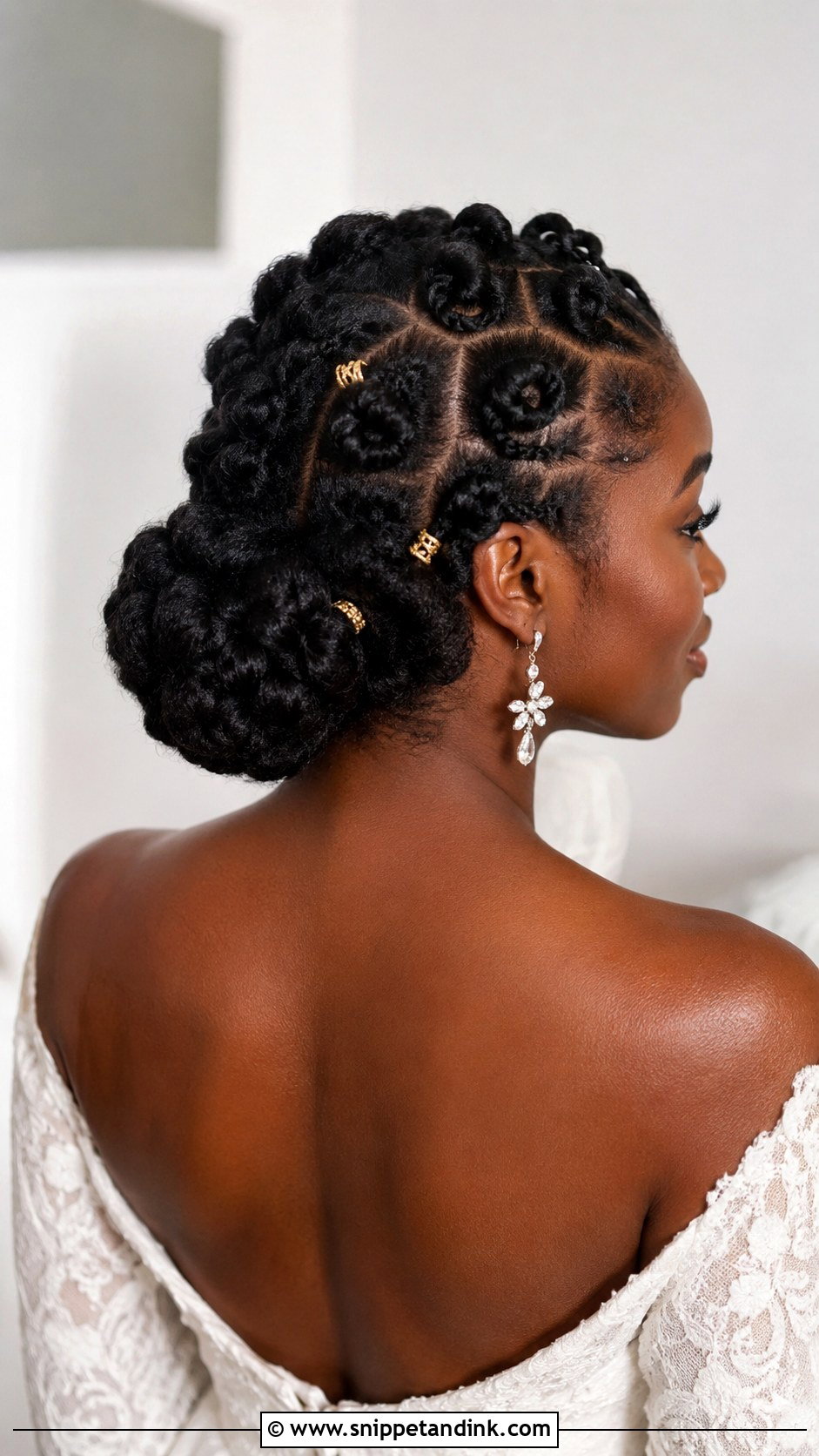
Sculpted, coiled sections inspired by Bantu knot influences come together in one low bun, sometimes ringed with smaller decorative knots. Tightly coiled and kinky textures hold this shape far better than relaxed hair, which tends to unwind. I part the sections with a rat-tail comb so the scalp lines are crisp, because those clean partings are half of what makes the style read as deliberate. A few gold pins are enough decoration.
13. Low Bun With Curtain Bangs
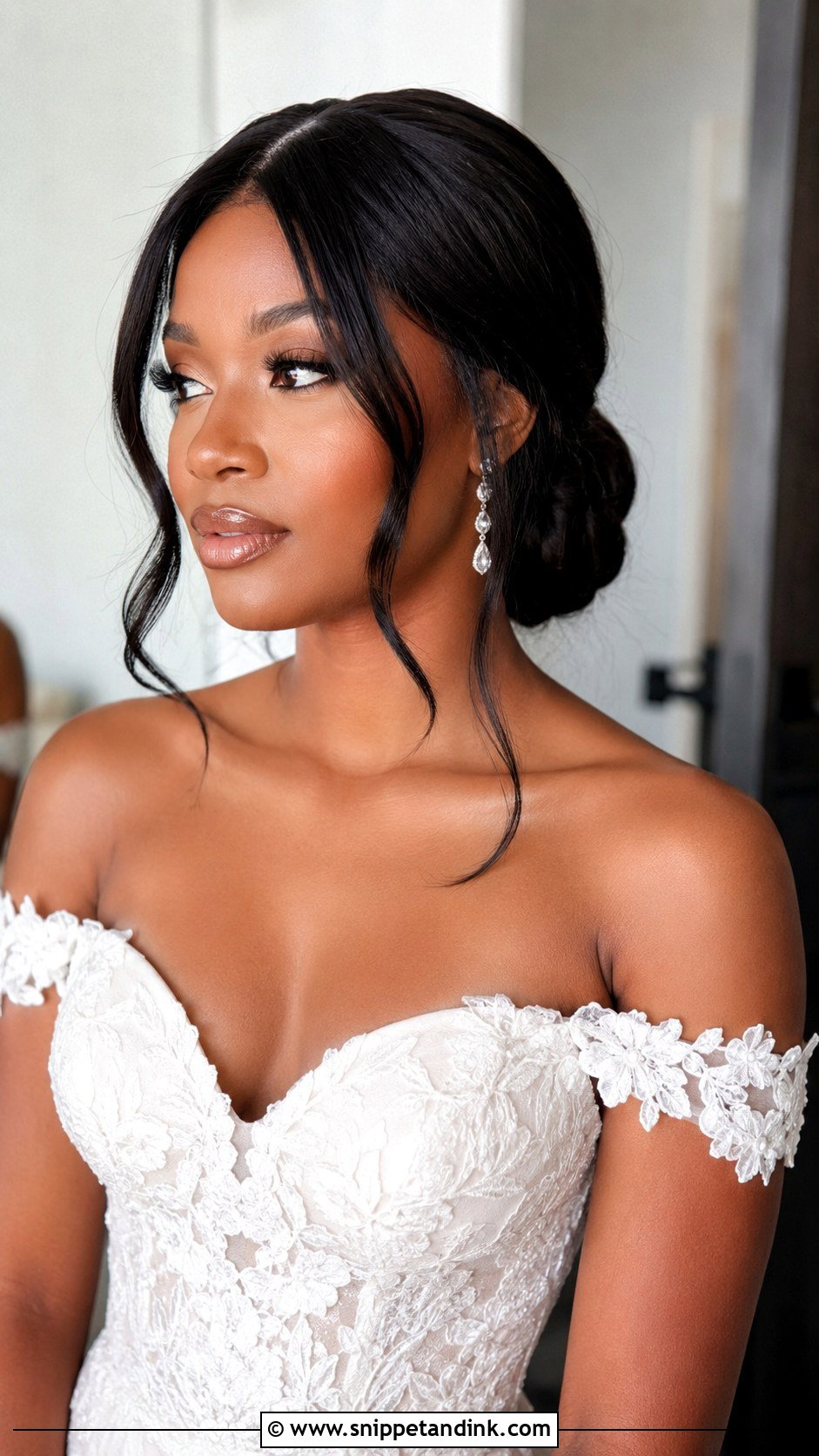
Long, parted curtain bangs frame the cheekbones while the rest of the hair goes back into a sleek bun. The bangs need to reach at least the cheekbone, or they flick out and start to look unfinished. Straightened bangs stay put better on a humid day; curly bangs look softer but can shrink up by the evening. Drop earrings sit right under them, and they make a good pairing with this one.
14. Vintage-Inspired Low Bun
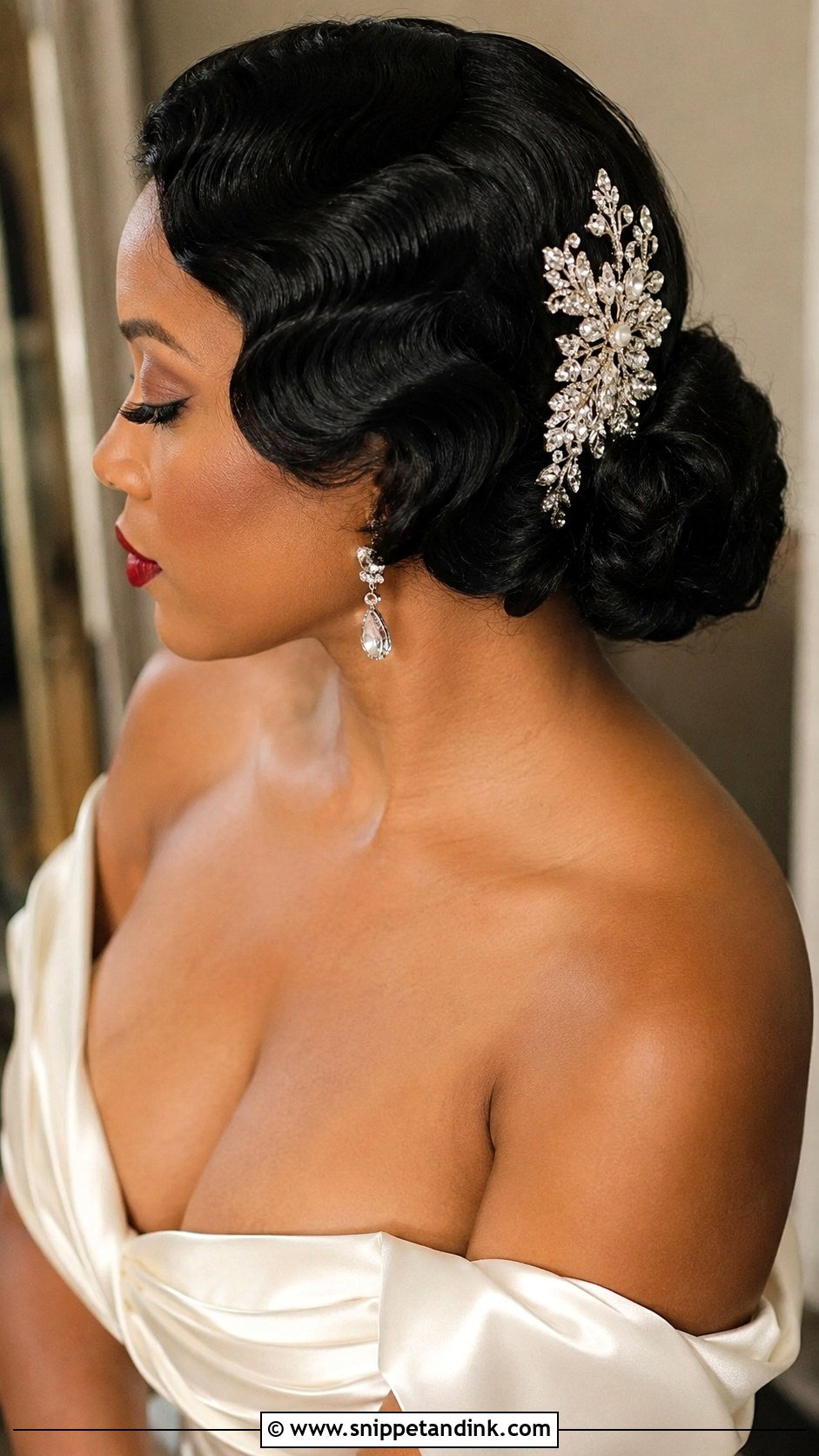
Finger waves or pin curls at the front lead back into a rolled bun, straight out of old Hollywood. The waves are set into wet, gelled hair and must dry completely before they’re touched, so this one needs the longest lead time on the morning. Relaxed hair and silk presses hold a wave crisply. A jeweled comb at the side of the bun and a red lip finish it, and it looks right with satin gowns in a way it doesn’t with boho lace.
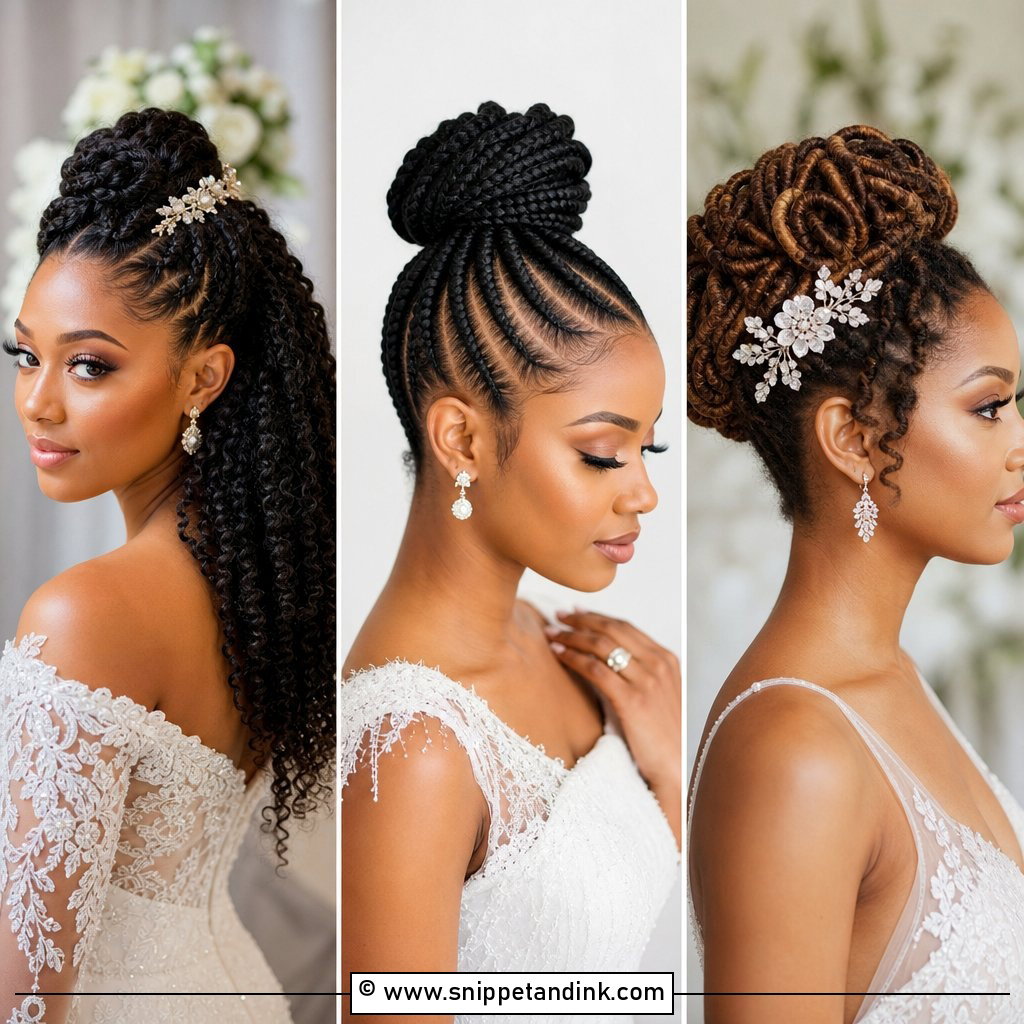
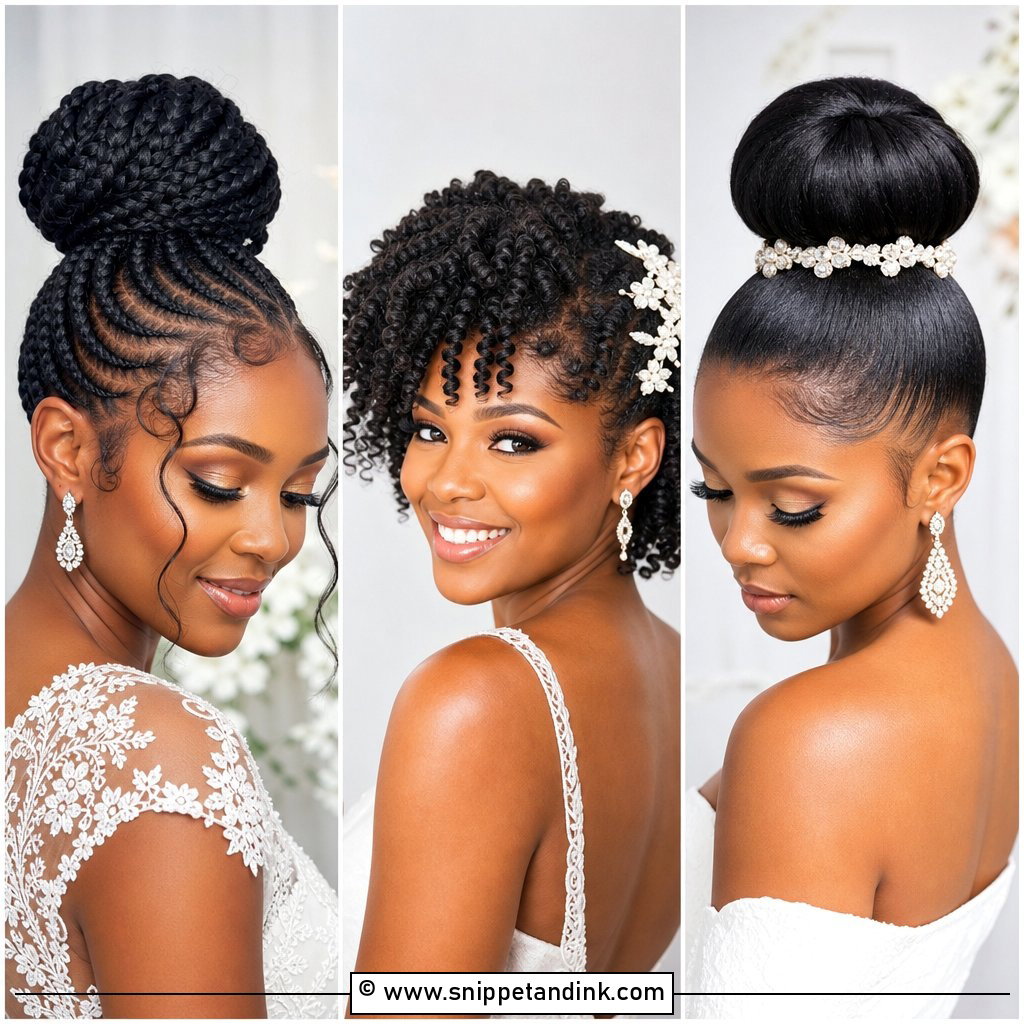
15. Low Bun With Goddess Braids
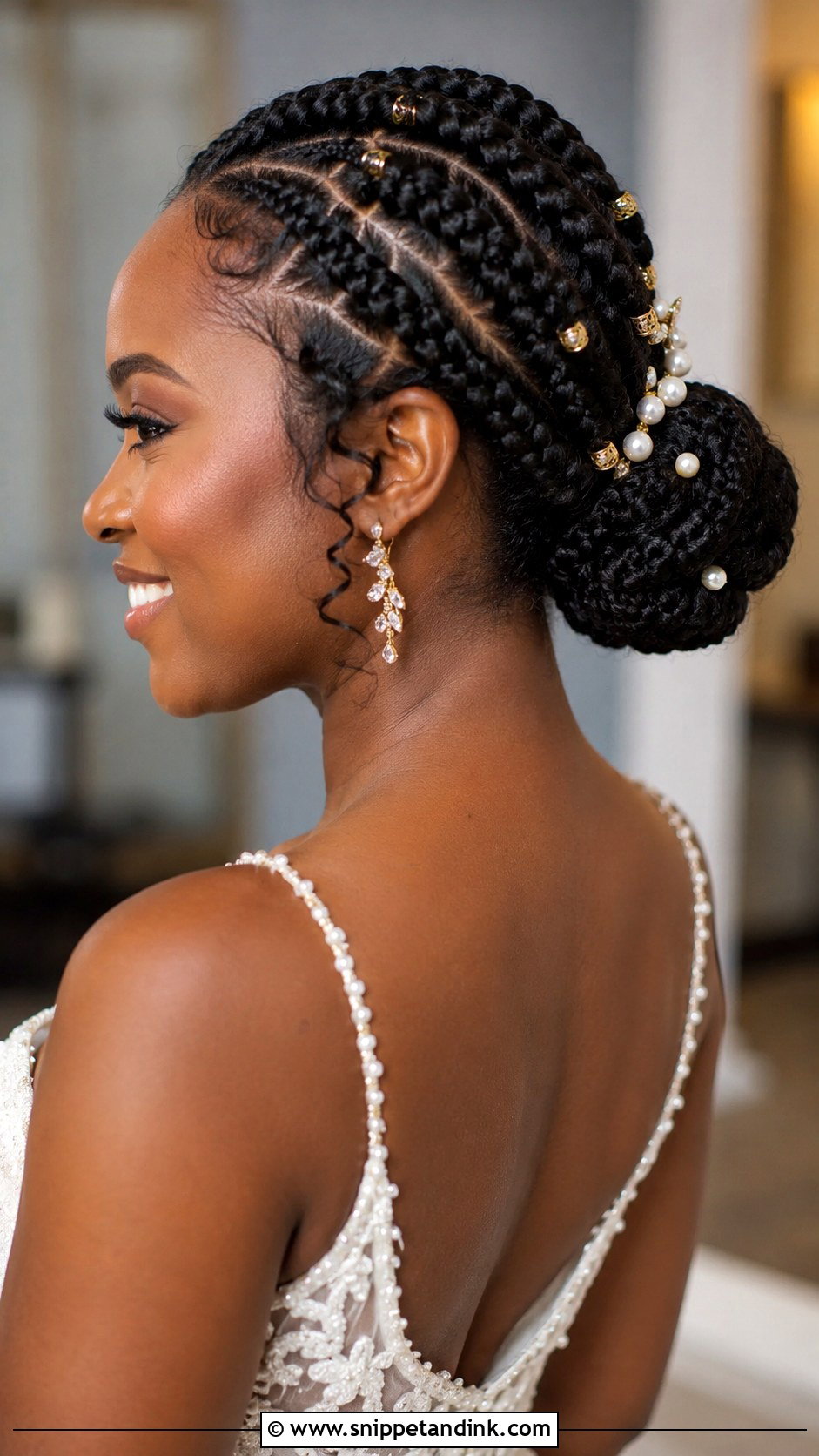
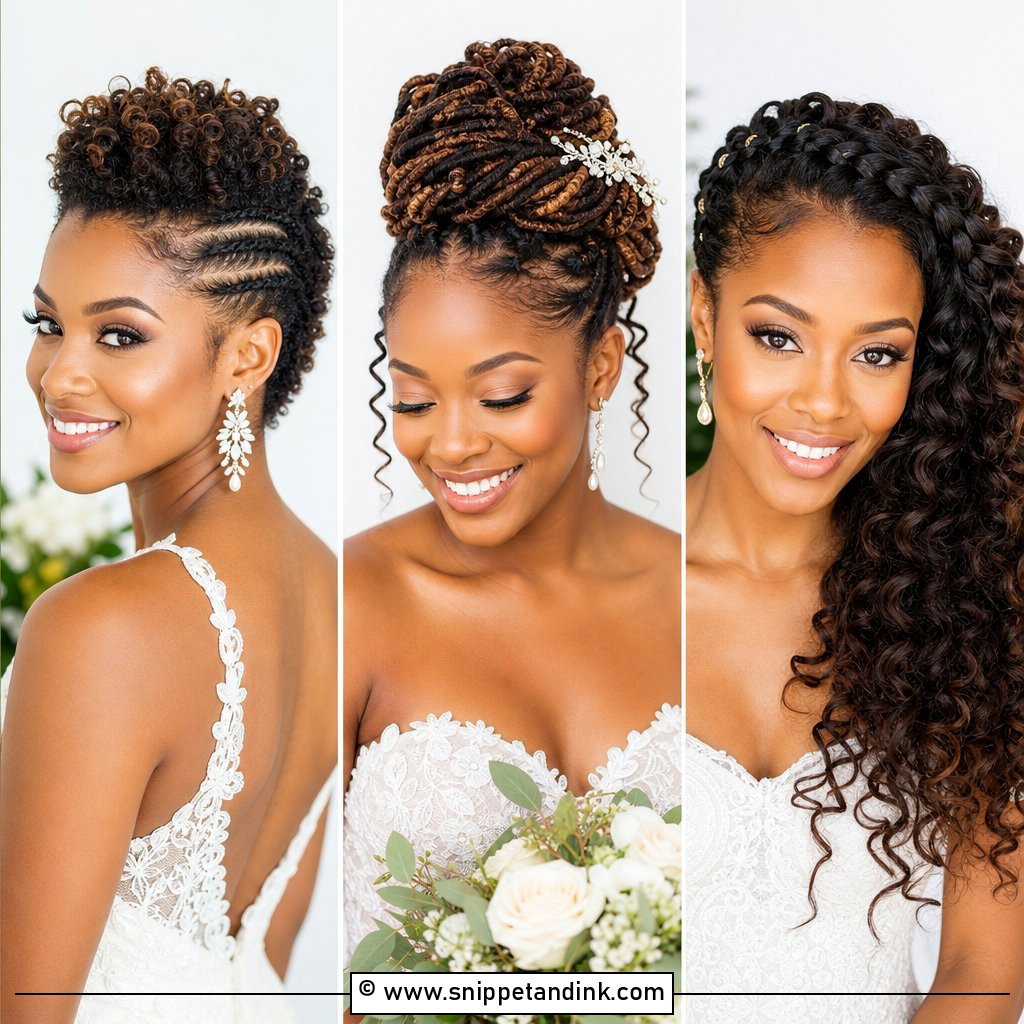
Goddess braids are thick, raised braids that run back along the scalp and gather into a low bun. Added hair gives them that chunky volume, and I’d stick to lightweight braiding hair, since heavy extensions pull on the edges after a long day. They hold through dancing better than nearly any loose style. Pearls or gold beads can be threaded in during installation, which is easier than adding them later.
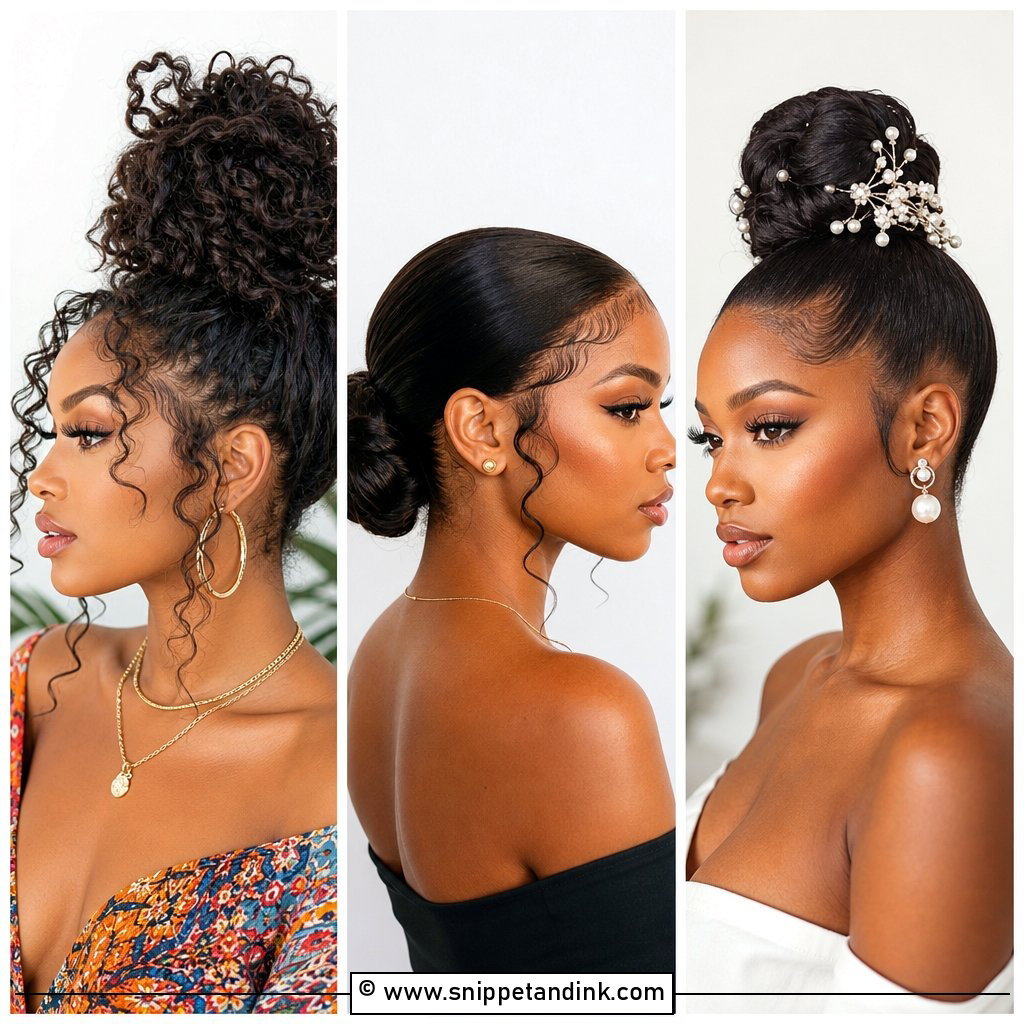
16. Low Messy Bun
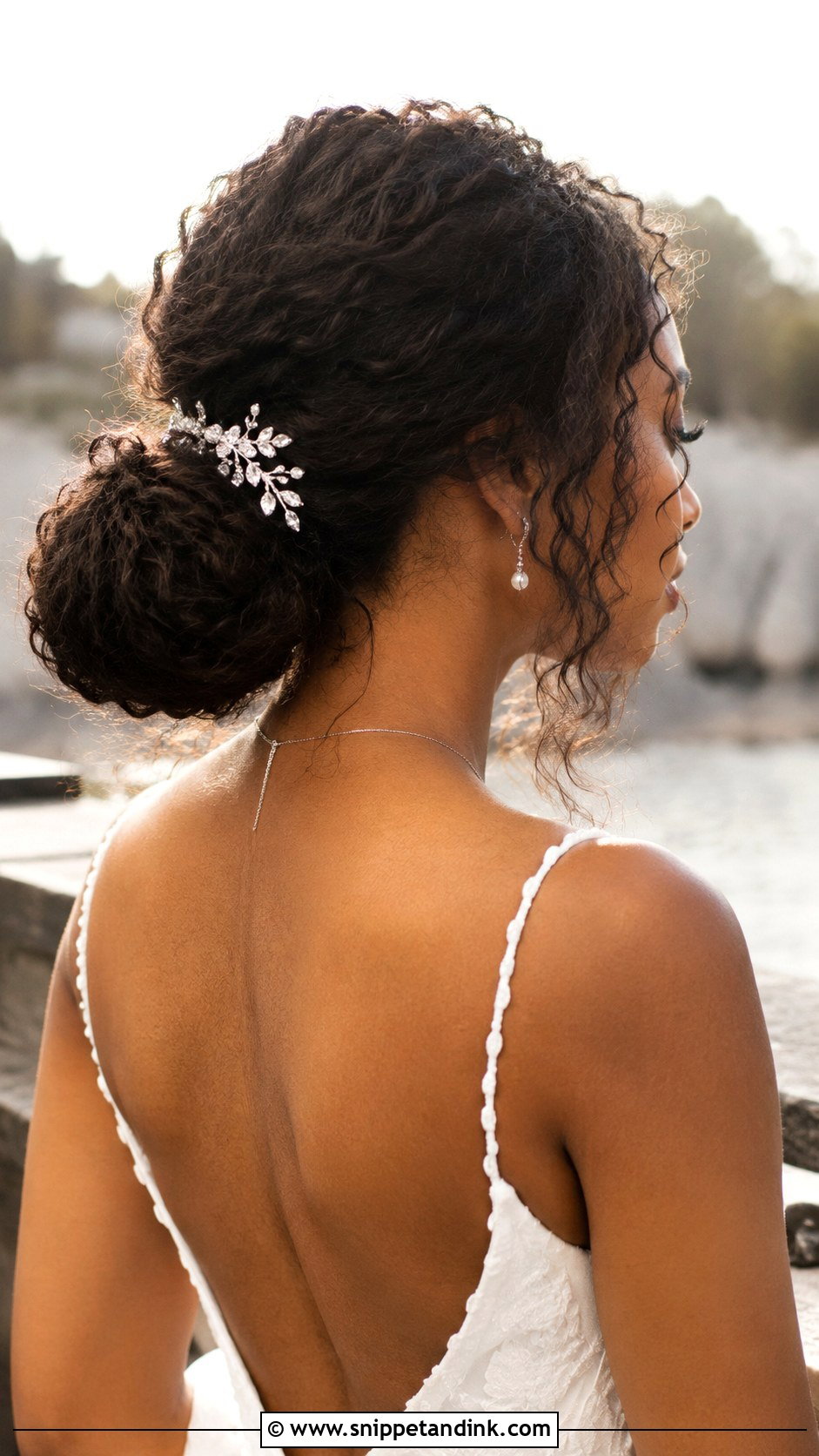
A messy bun is only messy on the surface. Underneath, I secure the base properly and then pull out pieces and loosen the texture with my fingers, because a bun that is genuinely loose will drop by the first dance. Curly and coily textures suit it naturally, since the volume is already there. A small sparkly clip or a few flowers are enough. This is the one I’d suggest for a relaxed outdoor wedding where the bride would rather not think about her hair at all.
17. Low Bun With Headband
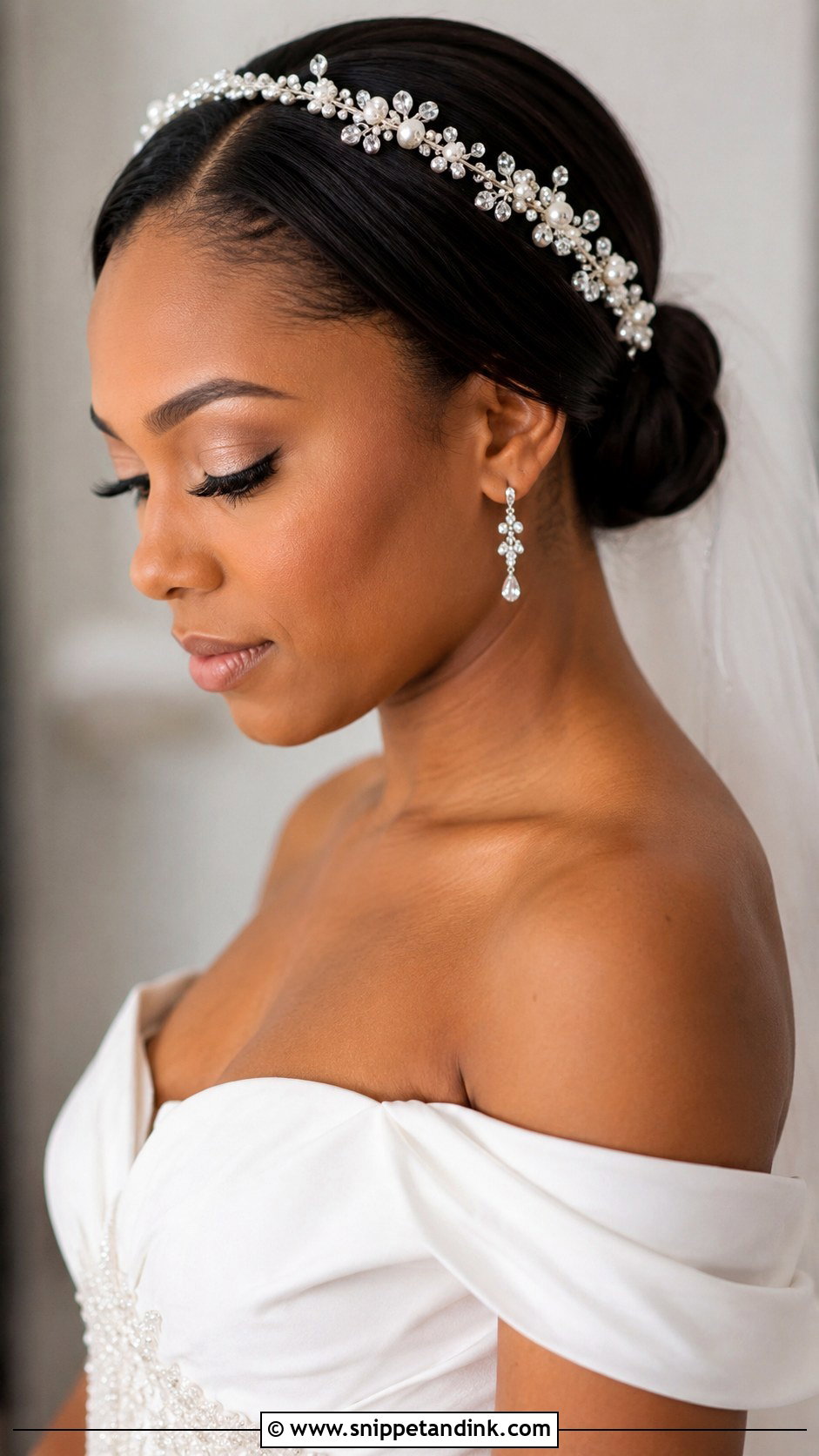
The headband does most of the styling here, sweeping across the crown while the hair sits in a neat low bun behind it. The band also holds down shorter layers and flyaways, which is useful on natural hair that tends to puff at the crown in humidity. Pick a band with teeth or a soft grip on the underside, otherwise it creeps backwards. I match the metal to the bride’s earrings so the two read as a set.
18. Low Bun With Face-Framing Pieces
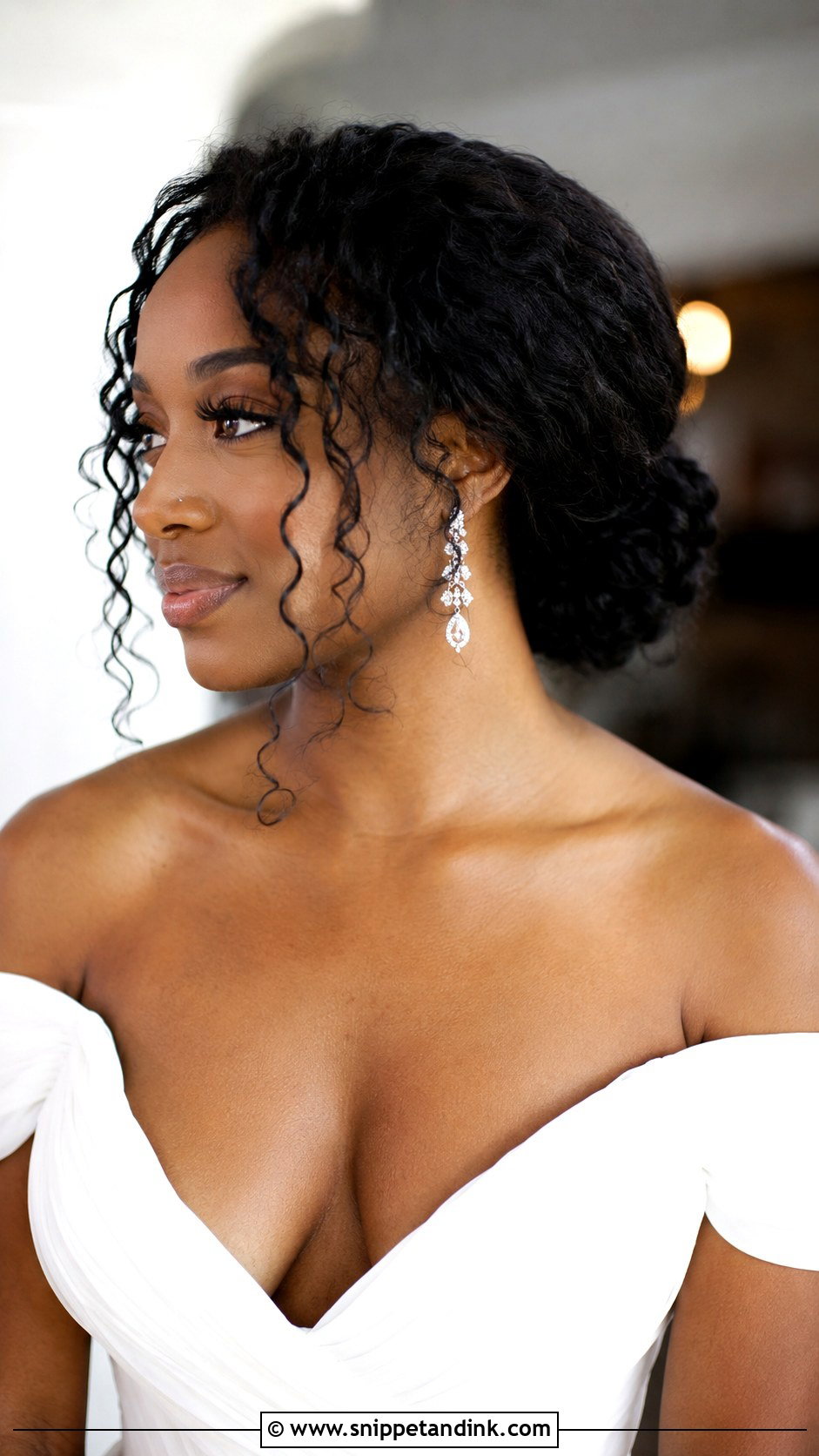
A smooth, secure back with soft strands around the face. The framing pieces can be straight, waved or curled to match the bride’s texture, and they’re what make the bun look relaxed rather than severe. I cut no new pieces for a wedding; I use the hair that naturally falls forward, because fresh face-framing layers cut the week before rarely sit right. A gentle curl on those pieces gives them movement in photos.
19. Twisted Crown Low Bun
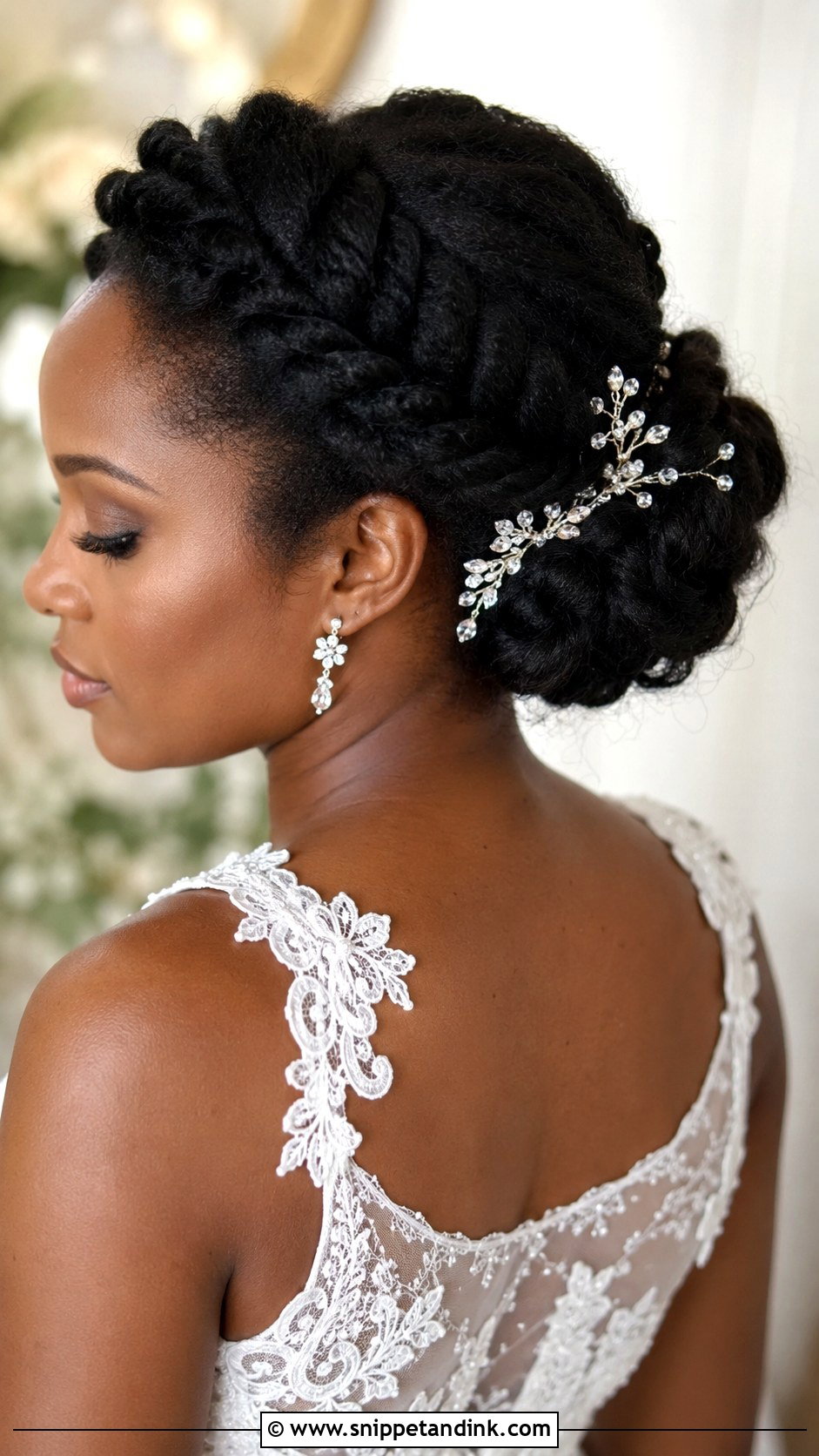
Twists wrap around the top of the head like a crown and then flow into a soft bun at the nape. Twist size is adjustable, which helps on natural hair and extensions alike, but the crown twists have to be pinned in a zigzag pattern to stop them sliding back as the day goes on. Small flowers or crystals tucked into the twists add detail without weight. It’s a good middle ground between a braid crown and something softer.
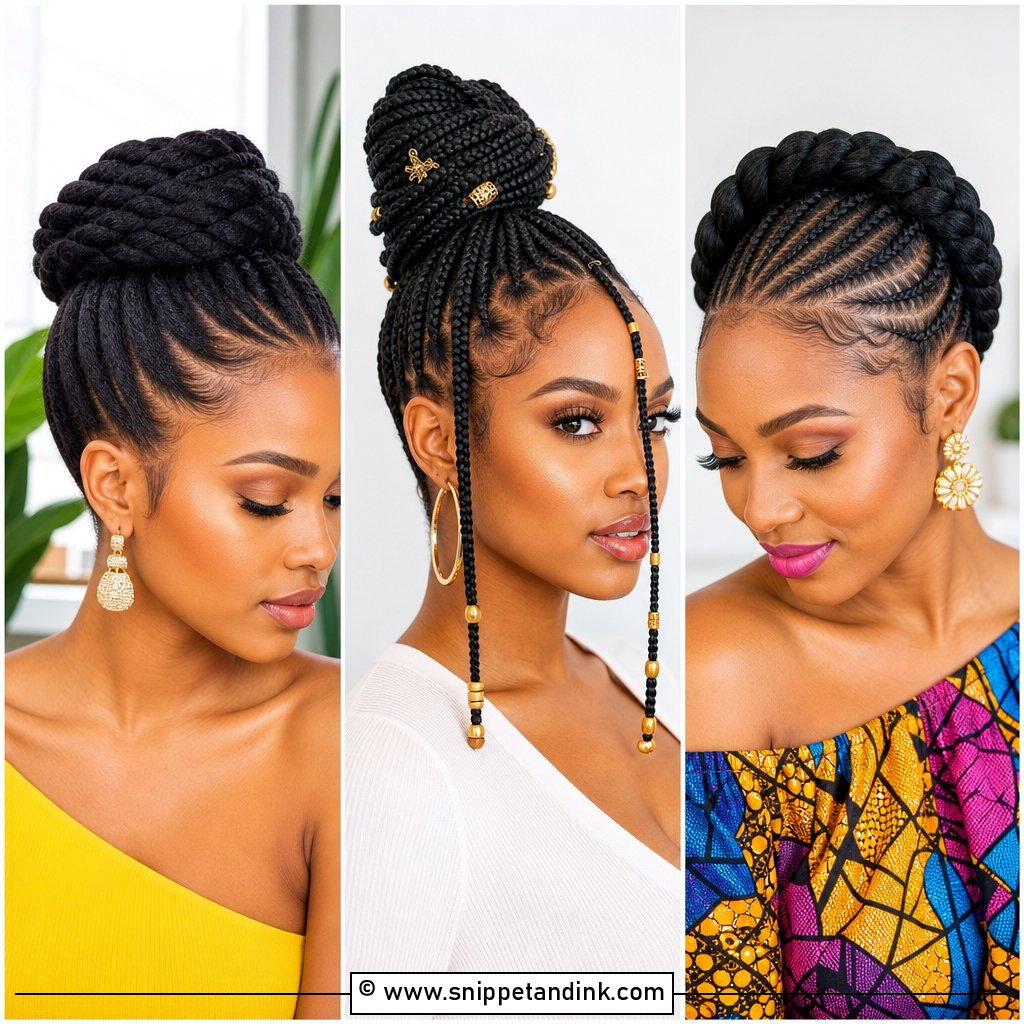
20. Low Bun With Embellished Veil
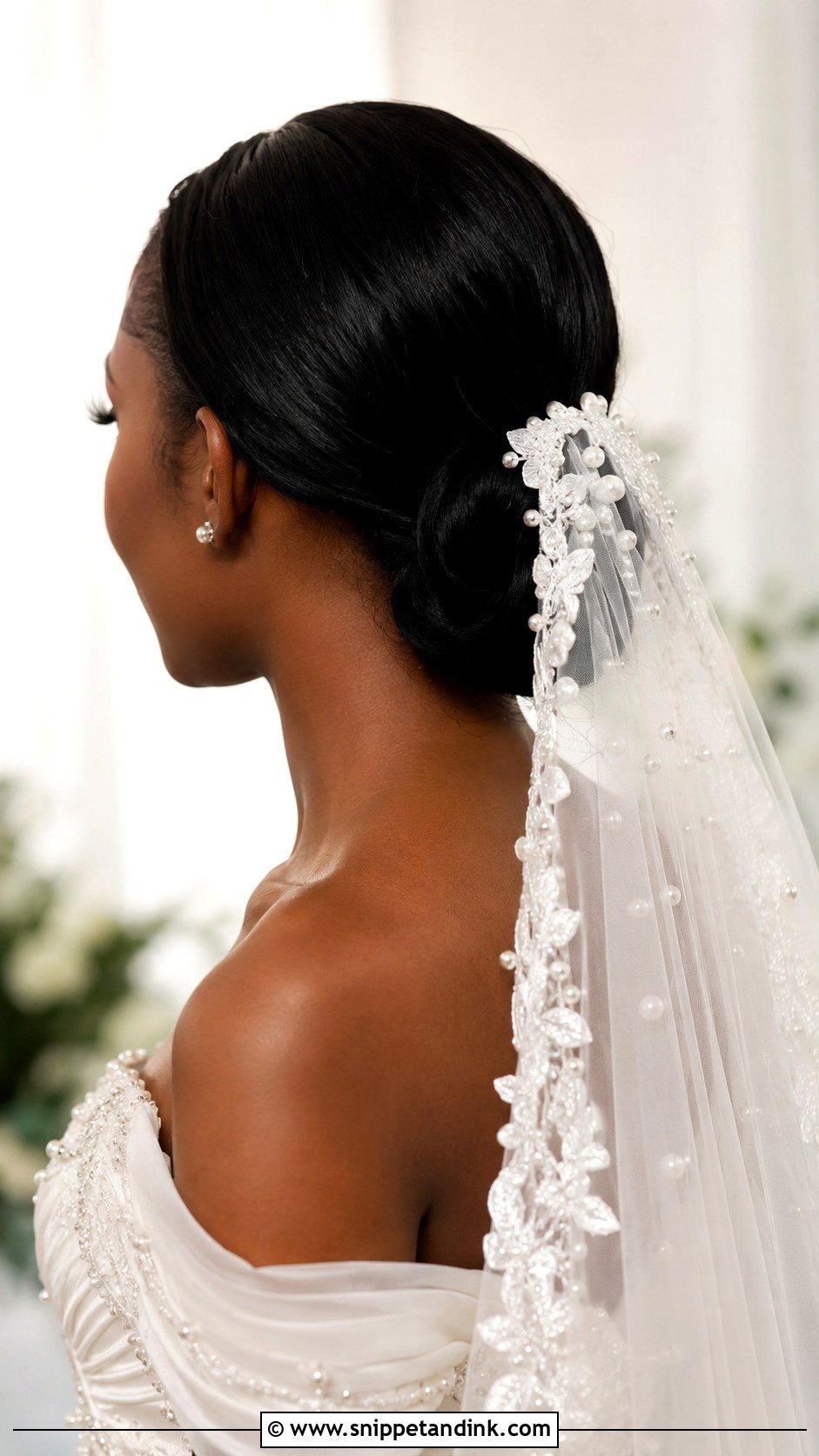
The bun sits low enough that a veil comb can slide in just above it, which keeps the veil from dragging the style down. For an embellished veil with pearls, lace or crystals, the bun needs to be anchored with crossed pins underneath, as a heavier veil pulls harder than people expect. I attach the comb above the bun and angle it slightly downwards. It works on every texture, from sleek to coily, and it makes the veil the clear focus of the look.
Protecting Your Edges Through a Twelve Hour Wedding
Low buns are kind to most hair, but the sleek ones put steady tension on the hairline, and edges are the most fragile hair on the head. A few habits keep the look on and the hairline healthy.
- Ask for the base to be firm but not tight. If you have a headache or tiny bumps along your hairline within an hour, the bun is pulling too hard and should be loosened before you leave for the ceremony.
- Skip laying your edges with heavy gel every day in the weeks before. Repeated brushing and gel build-up weaken the same hair you want to swirl on the day.
- Keep extension weight sensible. A heavy bun of added hair hangs off a few small sections all evening.
- Pack a small kit: a soft edge brush, a travel gel, a silk scarf and a few pins in your hair colour. Sweat at the hairline softens laid edges, and a two minute touch-up before the reception fixes it.
- Take the style down gently that night. Remove every pin first, loosen the bun with oil on your fingers, and don’t rip out gel with a brush.
If you already have thinning at the temples, tell your stylist at the trial. A side-swept or banded front covers it without adding more tension, and that’s a far better trade than a sleek pull-back that makes it worse.
Your Texture Should Pick the Bun Before the Photo Does
Every bun here can be adapted to Black hair, but not every one will suit your hair right now. Bring two or three favourites to your trial along with photos of your gown and veil, and be honest about how your hair behaves on an ordinary day. A good stylist will tell you which version holds, which needs extensions, and which needs a different prep. Add your own details, gold cuffs, pearls or fresh blooms, once the base is sorted.
You'll Like These Ideas:


Leave a Reply