
Black gowns are some of my favorite dresses to photograph, and also the easiest to get wrong. Black fabric only shows its detail when light skims across it, so the lace, satin or tulle has to be lit and placed with more care than an ivory dress ever needs. Below are twenty complete looks with the settings and flattering poses I’d plan for each. Lace reads softest against greenery, satin shines against pale stone, and tulle comes alive when it moves. The single rule I’d hold on to is separation: put the dress against something lighter than itself, or its outline disappears.
Why Black Gowns Need Different Light
A camera averages what it sees. Point it at a bride in black and it tries to brighten the dress toward grey, which overexposes her face; expose for her face and the dress can drop into a featureless shape. I always expose for skin first and then use light direction, not brightness, to bring the fabric back.
Light that shows black fabric
- Side light from a window or low sun skims across lace, velvet and satin and reveals their texture. Light from behind the camera flattens it.
- Open shade and overcast skies are kind to black. Hard midday sun puts hot streaks on satin and deep shadows in folds.
- A white reflector held low bounces light into the skirt and under the chin without changing the mood.
- Pale backgrounds give separation. Dark trees, dark walls and night skies make the outline disappear.
When you look through a photographer’s portfolio, find a dark suit, a black dress or a black-tie guest in their galleries. If those garments show folds and texture, they know how to handle yours.
1. Black Lace Wedding Dress in a Forest
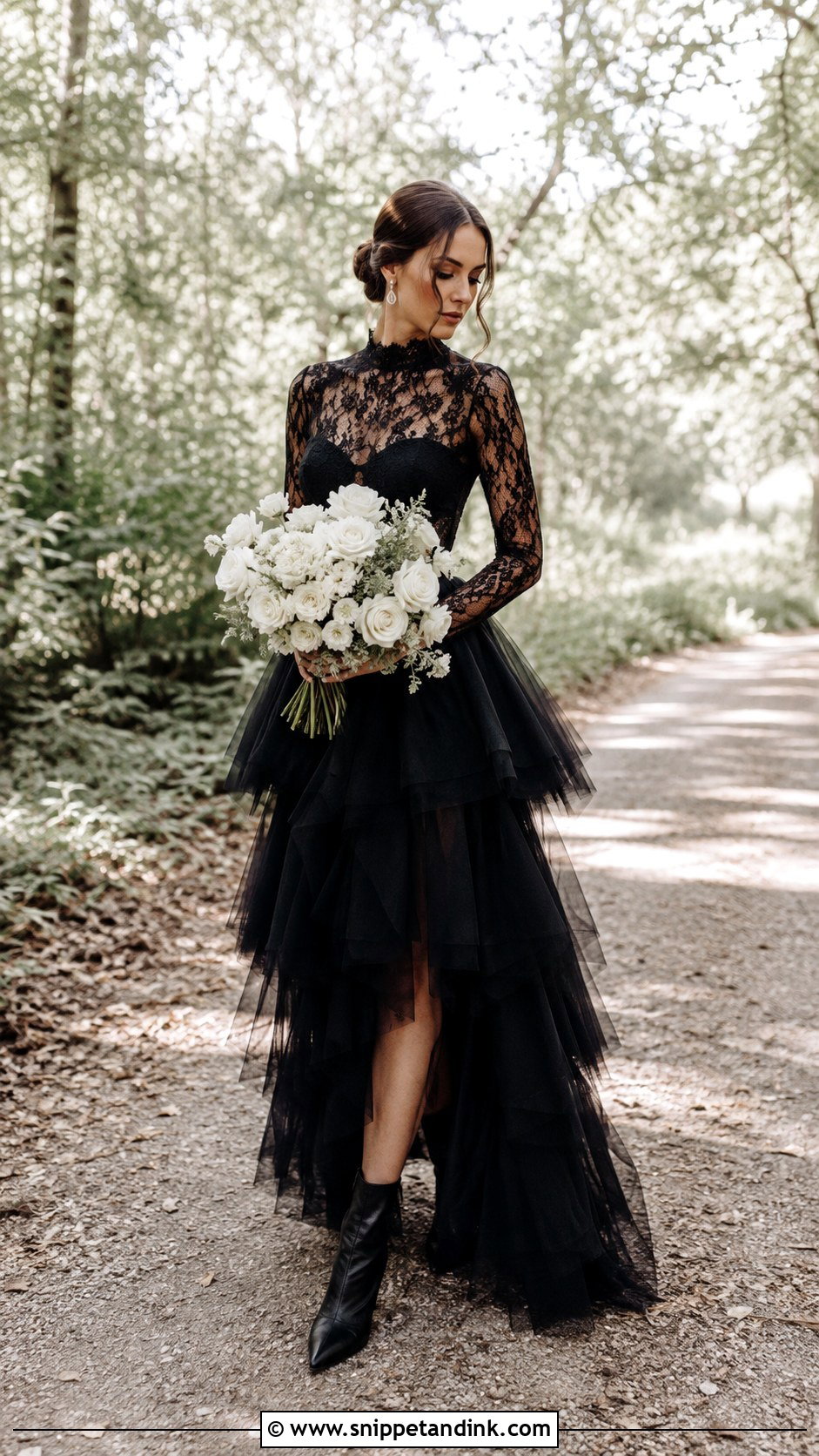
In a forest the lace is the story, so I look for a path where the light breaks through the canopy rather than the darkest, moodiest corner. A fitted long-sleeve lace bodice over a layered tulle skirt works well among trees, with black pointed boots for footing, pearl drops, a fine hair vine and white roses with soft greenery. A loose low bun keeps the neckline clear. I shoot walking frames and side profiles here, and I keep the bride a few steps in front of the trunks; pressed against dark bark, black lace simply vanishes. Overcast days are a gift in woods, as the light is even and the lace keeps its pattern.
2. Black Satin Wedding Dress on Marble Steps
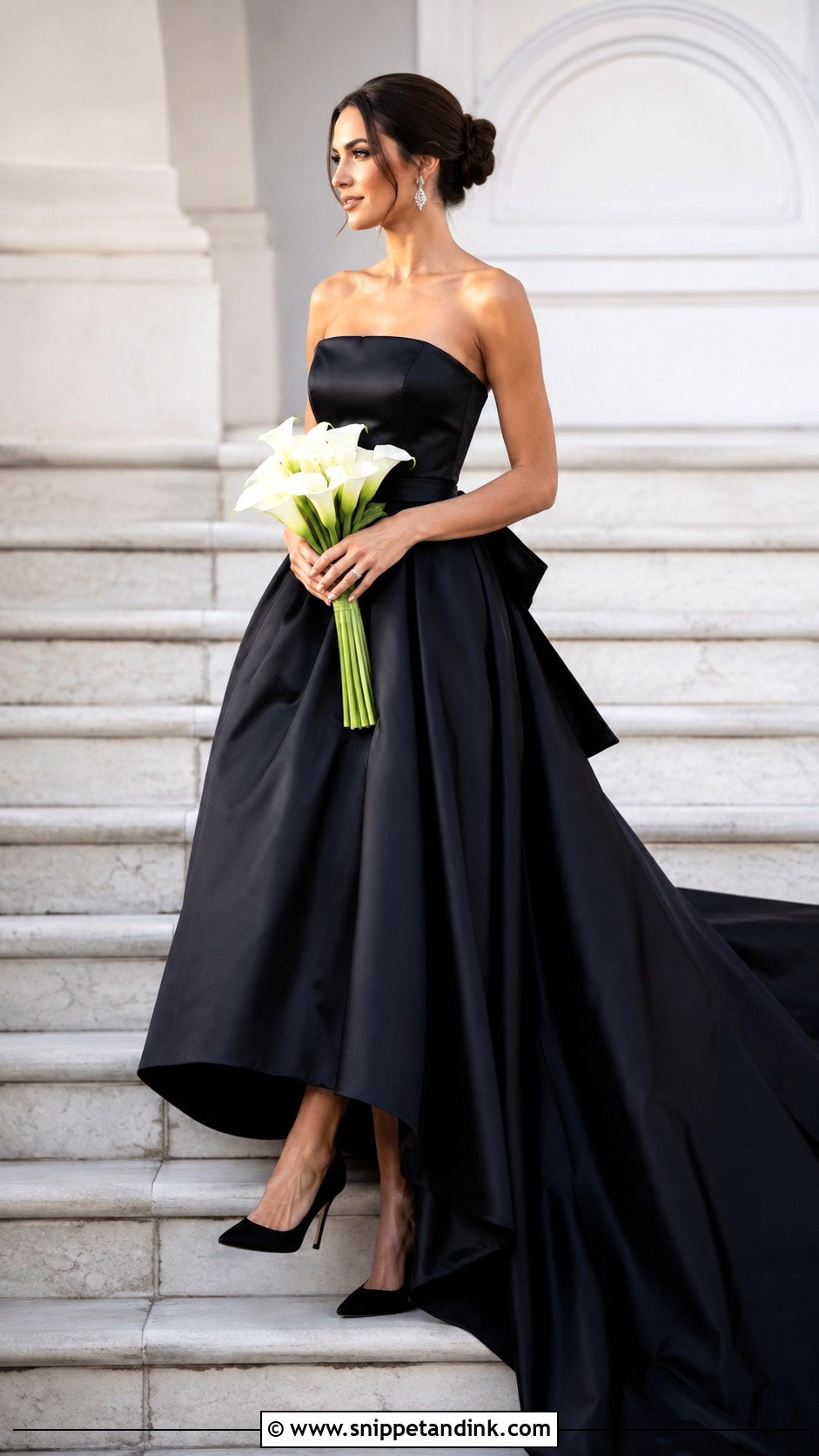
Black satin against pale marble is about as much contrast as you can get. A structured ball gown with a long train suits steps, finished with crystal earrings, black satin pumps, a few white calla lilies and a sleek center-parted bun. I place the bride midway up so the train can curve out behind her, then shoot a straight-on frame, an over-the-shoulder frame and a slow walk down. Satin is a mirror. Hard sun gives hot white streaks across the skirt, so I’d rather work in open shade or with soft, even light that shows the sheen without blowing it out. Keep the steps clear of decoration.
3. Black Mermaid Wedding Dress by the Ocean
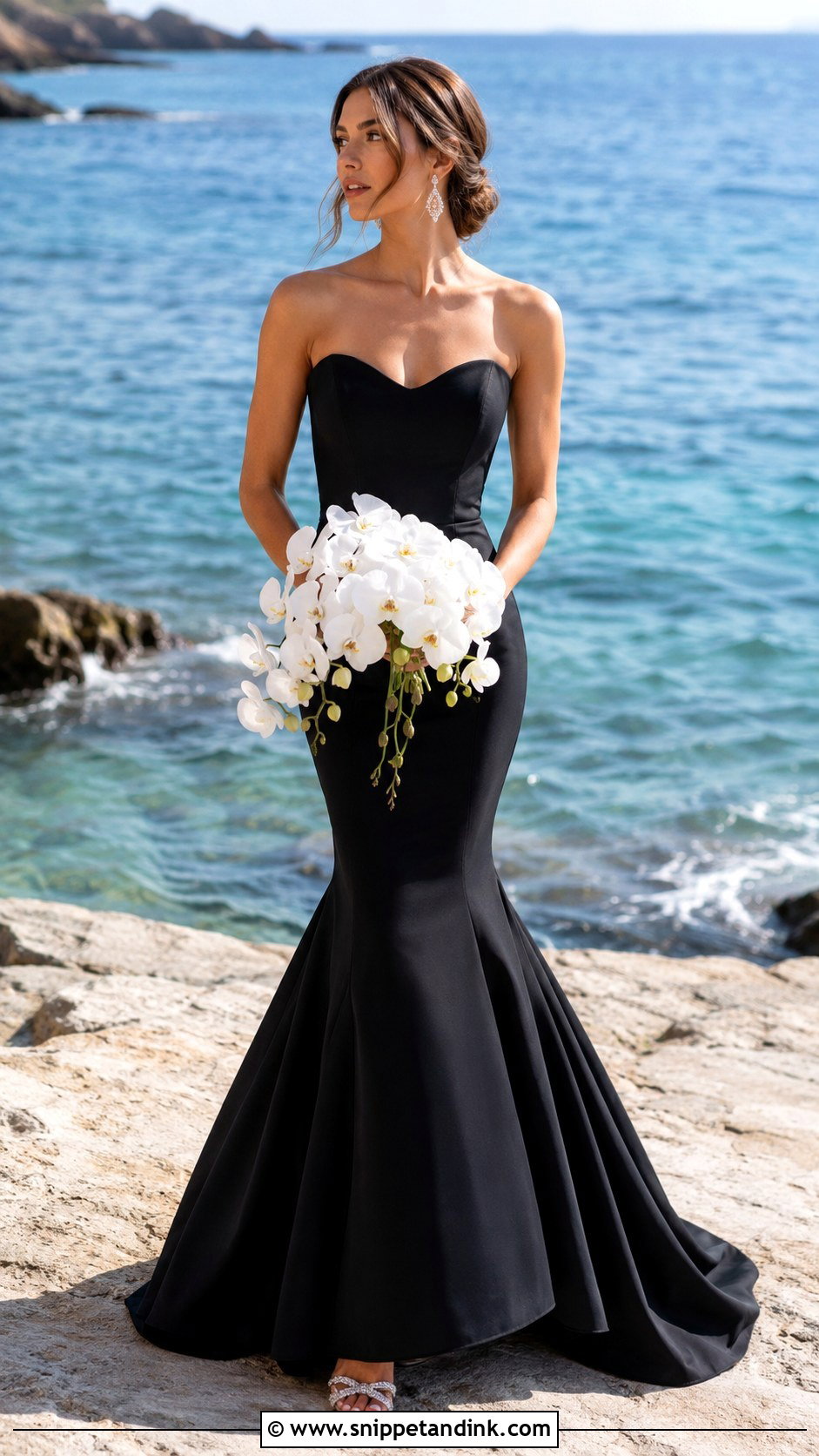
A fitted mermaid gown against a bright coastline is a bold frame. Choose one with a defined waist, a supportive bodice and a flare that starts near the knee, plus silver drops, a slim bracelet and sandals that grip firm sand. A compact bouquet of white orchids is enough. Wind is the real issue at the beach, so I suggest soft waves or a low ponytail rather than anything delicate. Pose near the shoreline, not in the water; salt leaves pale marks on black fabric that show in every frame. I shoot a little low to lengthen the mermaid line, then finish with walking shots along the wet sand.
4. Black Tulle Wedding Dress in a Wildflower Field
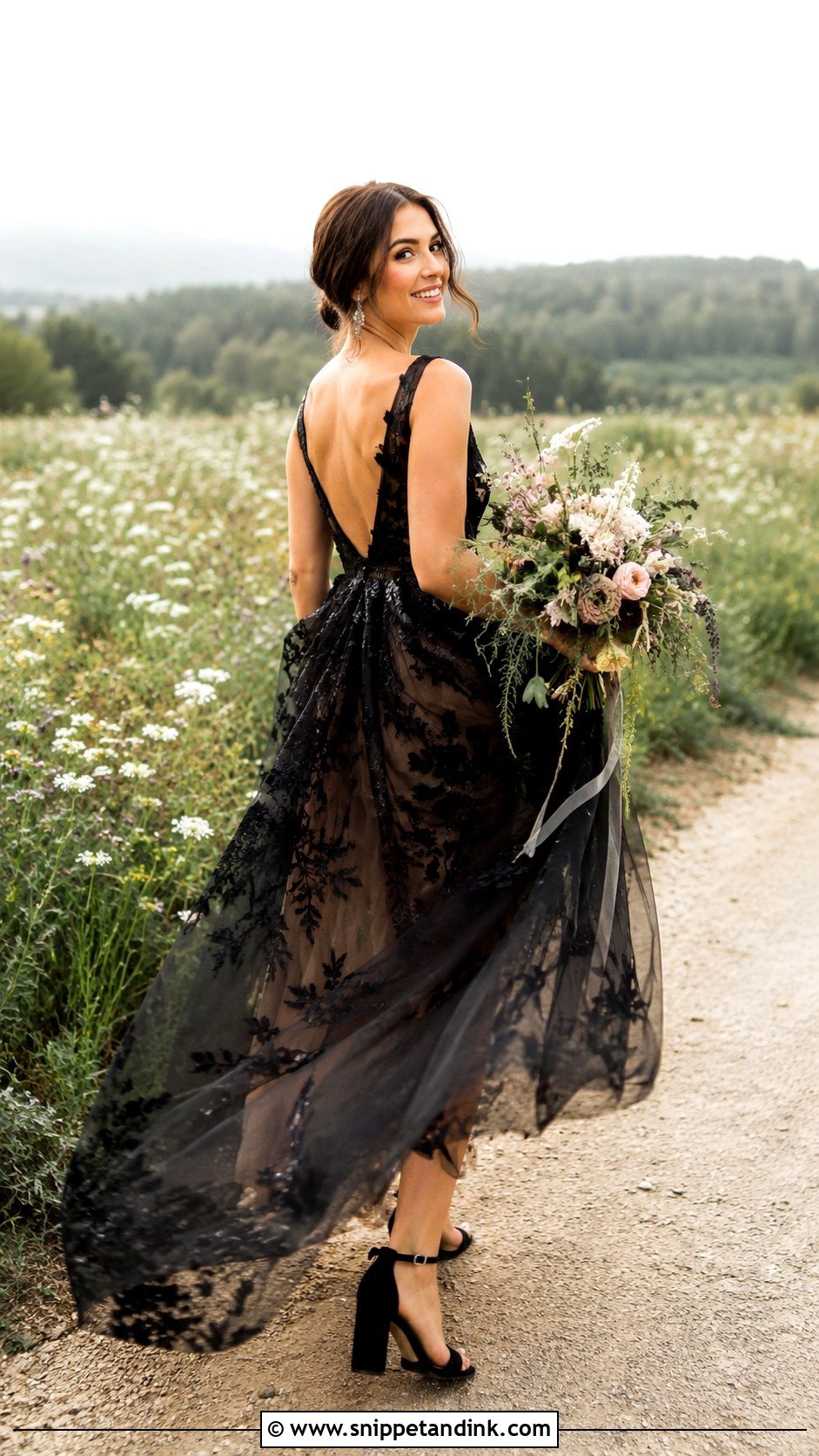
Black tulle in a wildflower field is all about movement. A gown with a fitted bodice, a few floral appliqués and a full skirt fans out on a turn, and that’s the frame people remember. Black block heels, small crystal earrings and a loose bouquet in white, lavender and muted pink suit it, with a relaxed braided updo and a few loose strands. Stay on an existing path so nobody tramples the meadow. I avoid noon sun here, as multiple tulle layers turn into one dark blob under harsh light; bright, hazy daylight keeps each layer distinct. A neutral blanket gives you a seated frame without grass stains.
5. Black Long Sleeve Wedding Dress in a Historic Hall
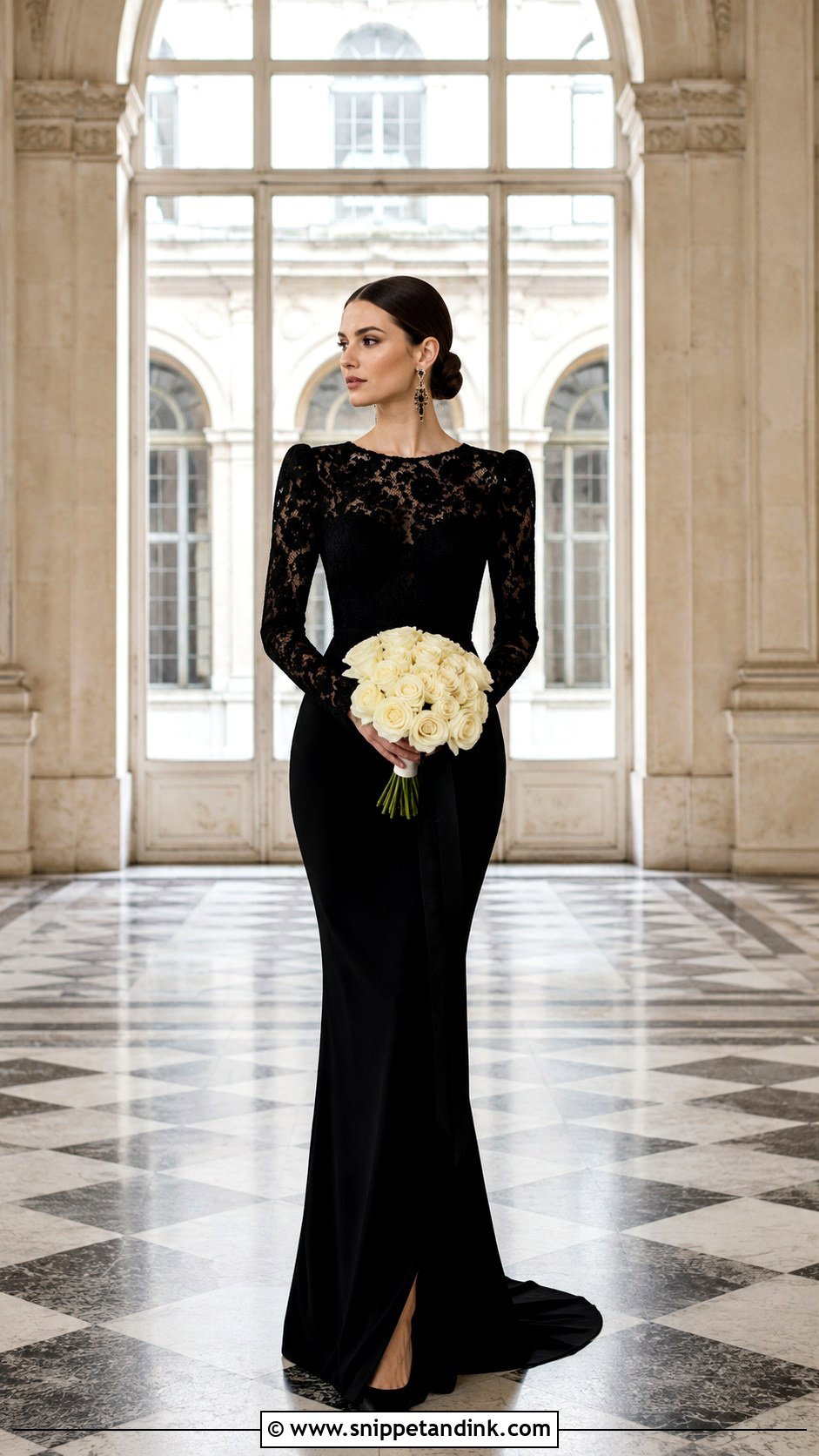
A historic hall gives a long-sleeve black gown the formality it deserves. Fitted crepe or lace with a high neck, a defined waist and a sweeping train works, with black pumps, vintage-style earrings, structured ivory roses and a polished chignon. I start with a centered, symmetrical frame, then move to window light. A tall window to one side is the best light in the building for black lace, since it rakes across the pattern and shows its depth. A side-facing pose reveals the train without hiding the bodice. Keep props minimal so the architecture and the dress share the frame.
6. Black Corset Wedding Dress in a Bright Studio
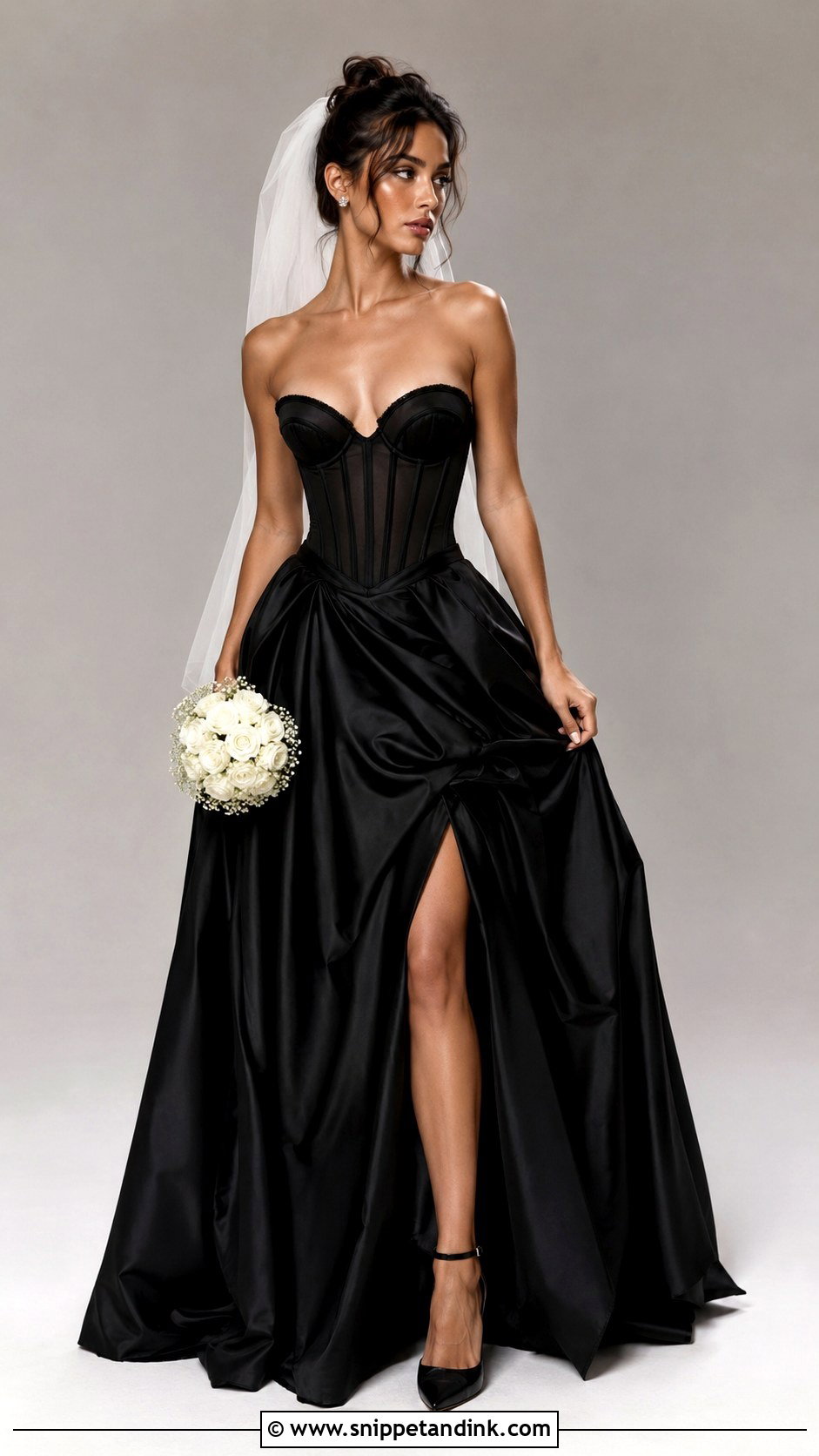
A studio takes away every distraction, which suits a corset gown where the construction is the point. Choose visible boning, a supportive neckline and either clean satin or tulle below; black heels, crystal studs, a fine bracelet and a small white bouquet complete it. Smooth hair or brushed-back waves show the neckline. Use a pale grey or white backdrop, never black. I light a corset with a large soft source slightly to the side, so each bone casts a faint shadow and the seams become visible instead of merging into flat dark fabric. Then try a confident stance, a seated profile and a frame where the bride adjusts her skirt or gloves.
7. Black Cape Wedding Dress in a Mountain Landscape
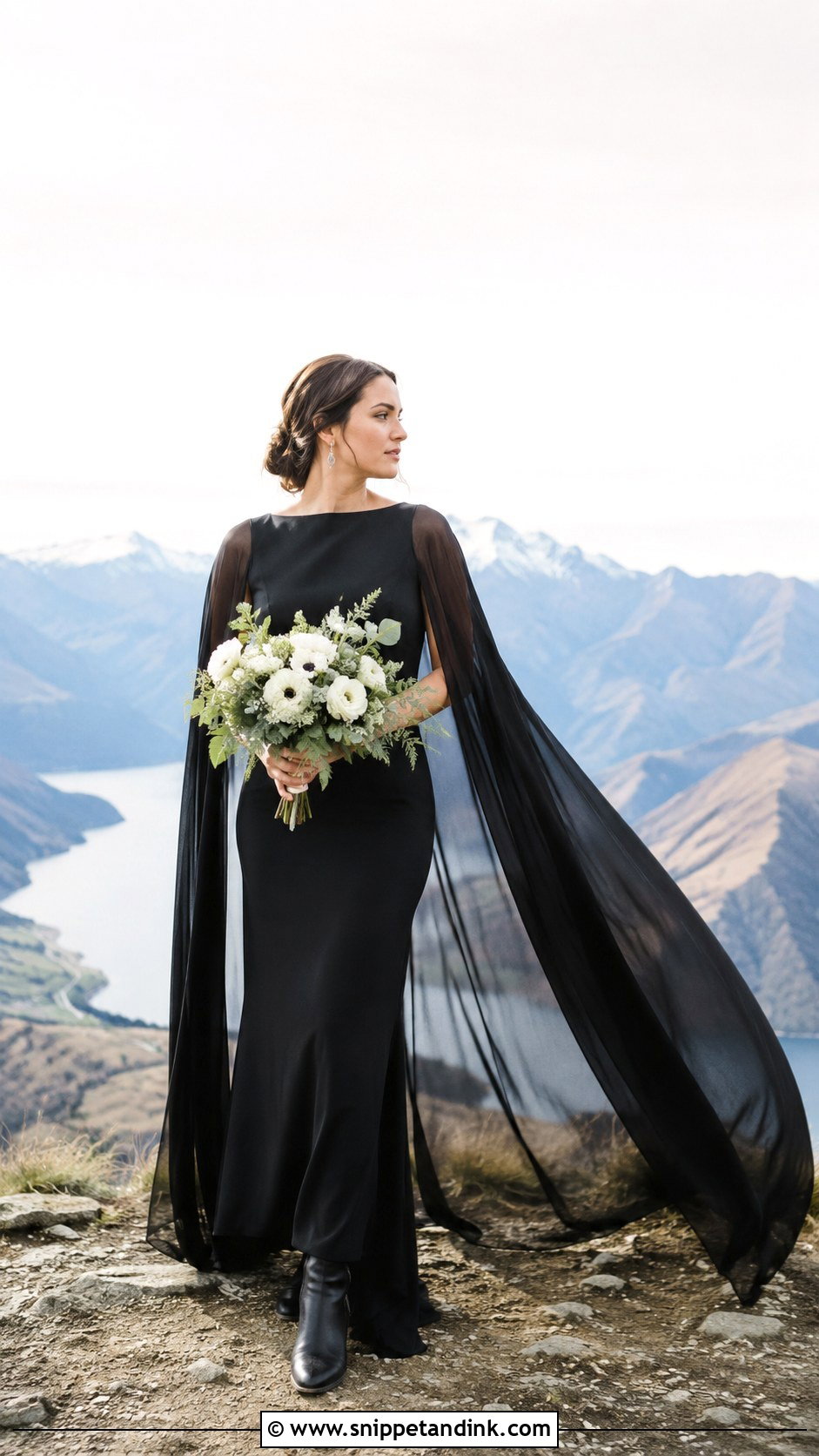
A sheer cape changes a simple black gown on a mountain into something cinematic. Start with fitted crepe, a clean neckline and a long, unbroken line, then add a detachable black cape that extends past the hem. Ankle boots, sculptural silver earrings, a small white-and-green bouquet and a sleek ponytail finish it. Safety comes first: choose a level overlook, never a ledge, and stop if the wind picks up. I position the bride against the bright sky for separation, shoot the cape lying still first, then let a little breeze lift it. A wide frame shows scale; a tighter side angle shows the dress.
8. Black Sequin Wedding Dress in the City
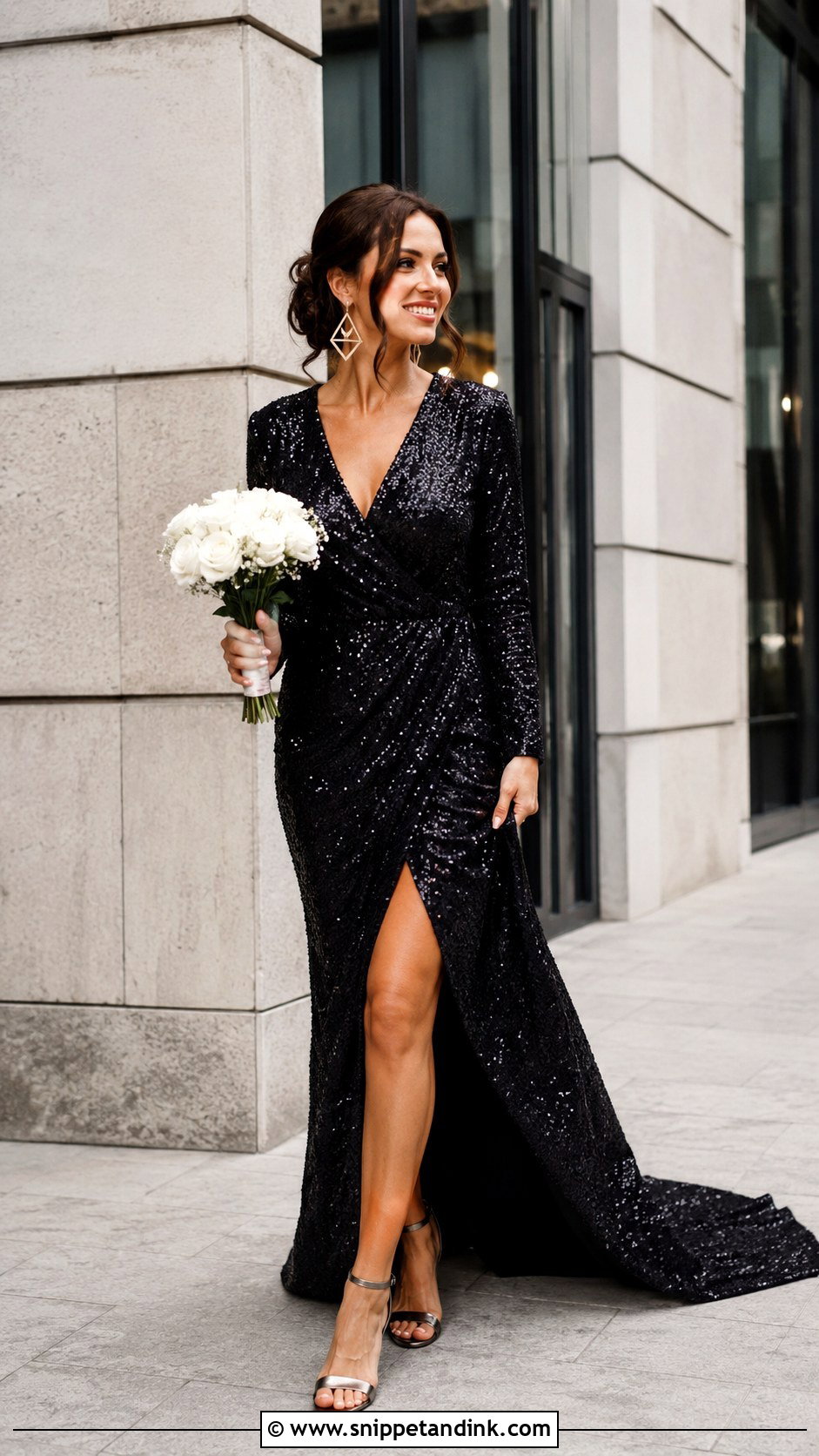
A black sequin wedding dress was made for a city at twilight. Pick a floor-length, streamlined gown with a modest train, then add metallic heels, geometric earrings, a small bouquet of white anemones or roses and a smooth low ponytail. I schedule this for the short window after sunset when the sky still holds some light and building lights are on; later than that, the dress goes dark and grainy. Walking frames make the sequins flicker. Look for pale stone or glass walls, and step away from big signs and busy color that pull the eye.
9. Black Velvet Wedding Dress in a Winter Garden
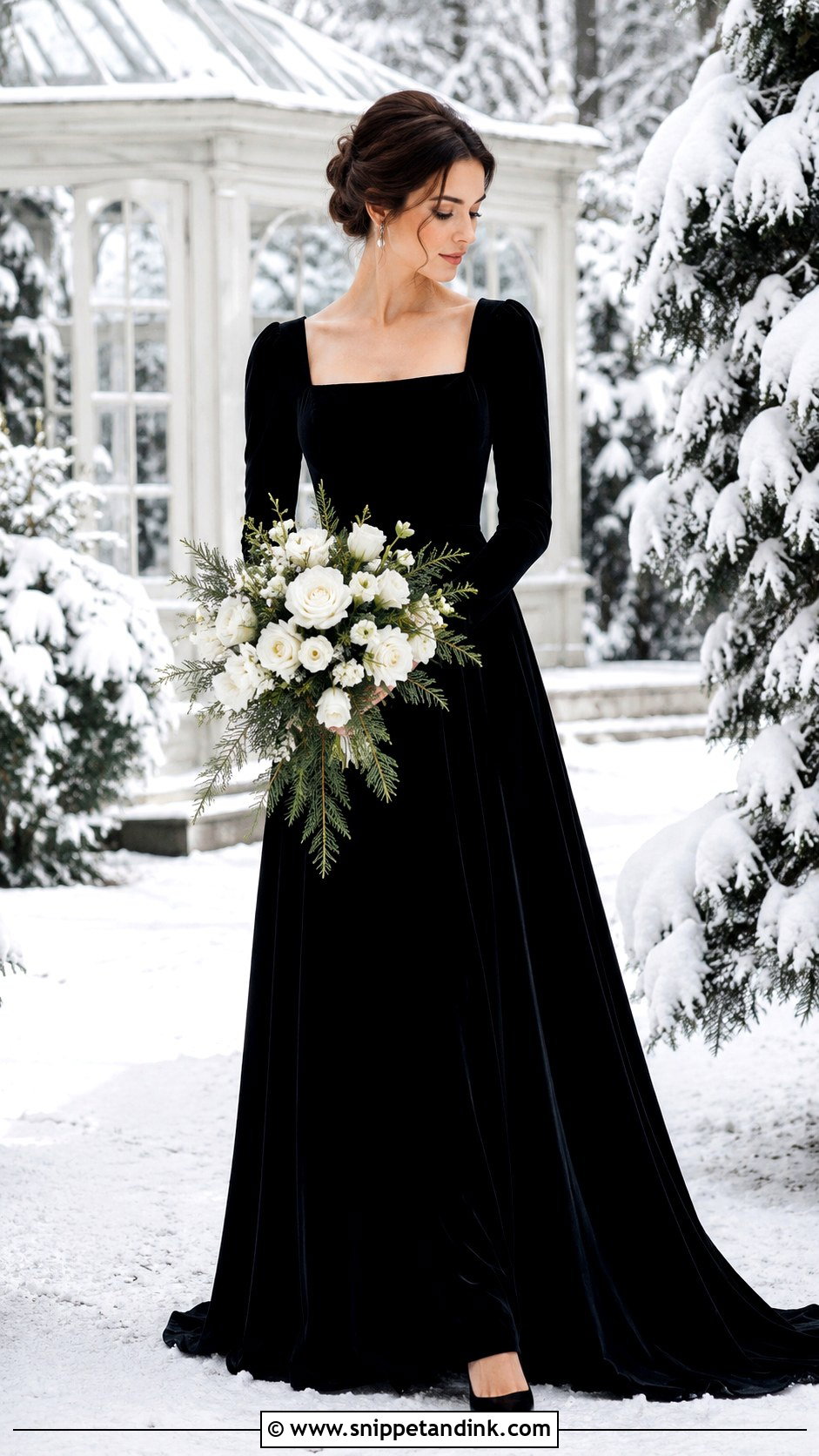
Velvet in a winter garden is rich and quiet. Choose a long-sleeve velvet gown with a square neckline, a fitted waist and a soft flare, with closed-toe heels or ankle boots, pearl earrings, white flowers with evergreens and a smooth low bun, maybe a velvet ribbon. Velvet has a nap, so it looks lighter from one direction and almost pure black from the other. I turn the bride slightly until the light catches the bodice, and the texture appears. Snow helps a lot, since it bounces light back up into the fabric. Keep an ivory wrap nearby between frames and lift the train off wet ground.
10. Black and White Wedding Dress in a Modern Gallery
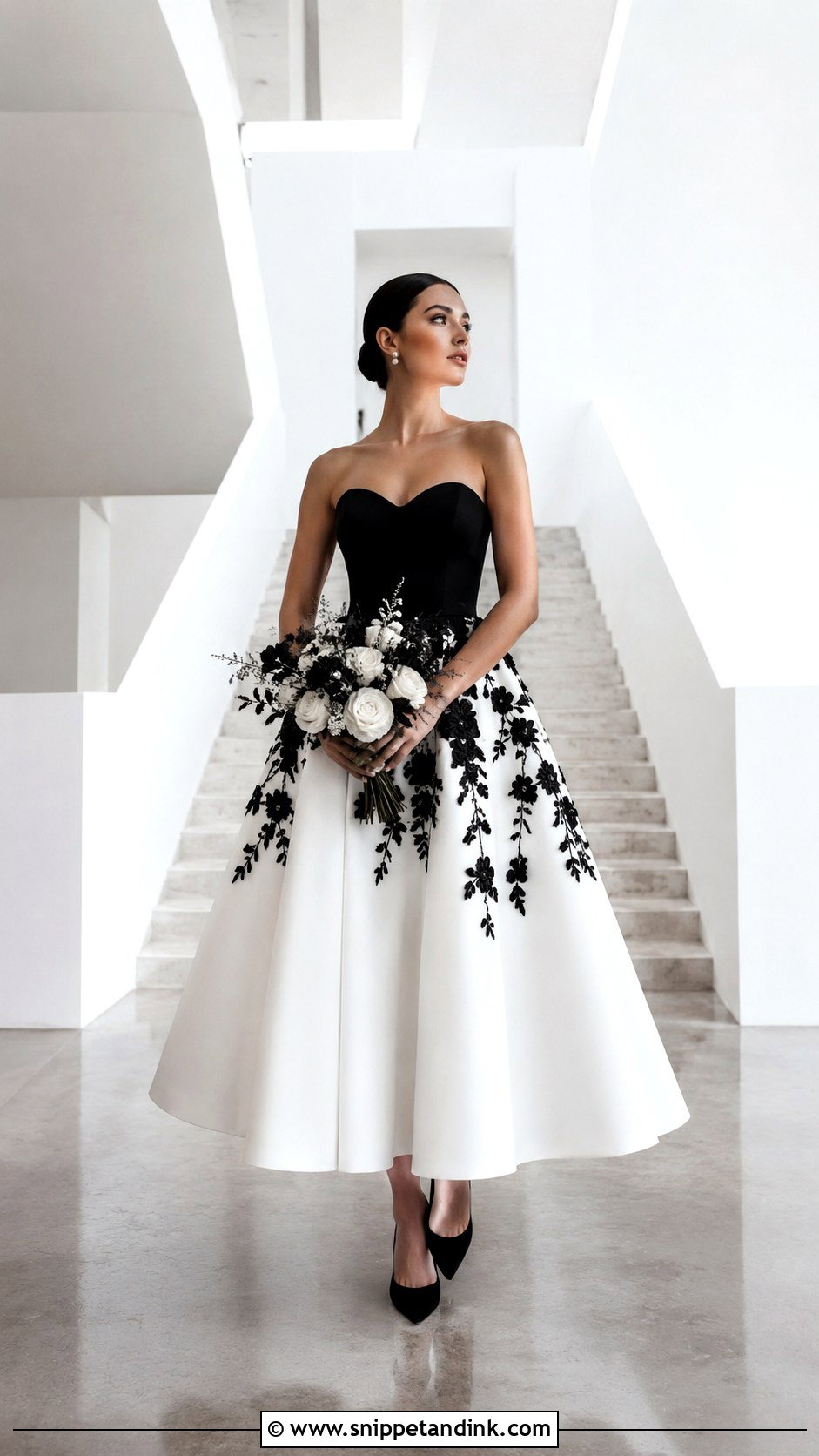
A color-blocked gown, black bodice and white skirt, or white covered with black floral appliqué, belongs in a white-walled gallery. Keep accessories simple with black pumps, pearl earrings and a monochrome bouquet, and choose a straight bob, polished bun or tucked-back waves. This is the hardest dress here to expose, because the white wants less light and the black wants more. I meter for the white so it keeps its detail and shoot in soft, even light that doesn’t push the contrast further. Use symmetry first, then gentle walking and turning poses. Photograph front, back and side, and confirm the gallery’s rules before you bring in flowers or gear.
11. Black Off Shoulder Wedding Dress in a Rose Garden
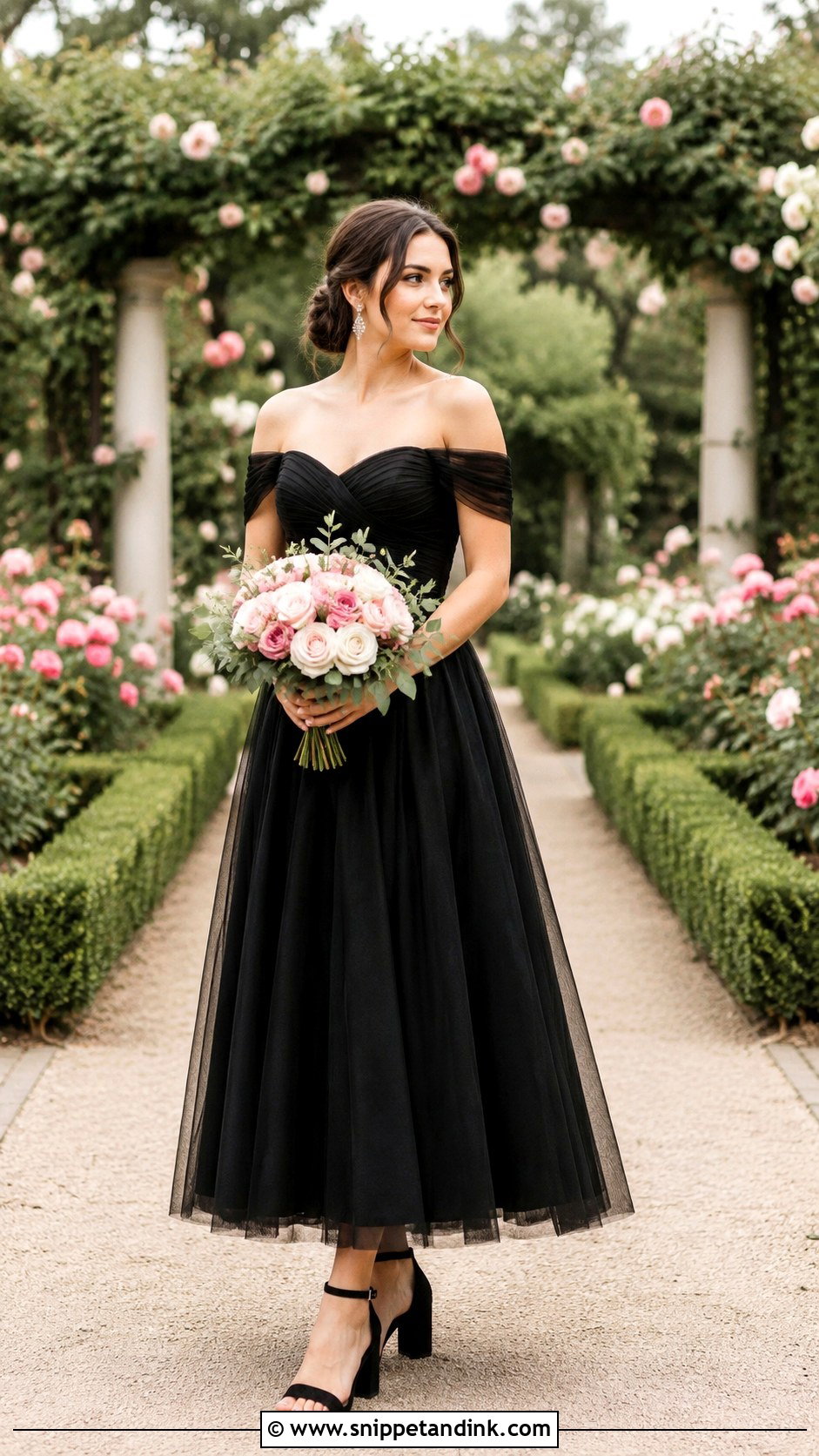
Roses soften a black off-the-shoulder gown, as long as the dark foliage doesn’t swallow it. Choose a supportive folded neckline, a fitted waist and a flowing A-line skirt, with pearl or crystal drops, black block heels, white and blush roses and a loose low bun. I look for a pale gravel path with open space around the bride, and if we use an arch, I keep her out in front of it rather than framed by green on every side. An over-the-shoulder look shows the neckline; a bench frame shows the skirt. Add a slow walk and a few turns, because moving fabric looks natural rather than posed.
12. Black Wedding Dress With a Red Bouquet
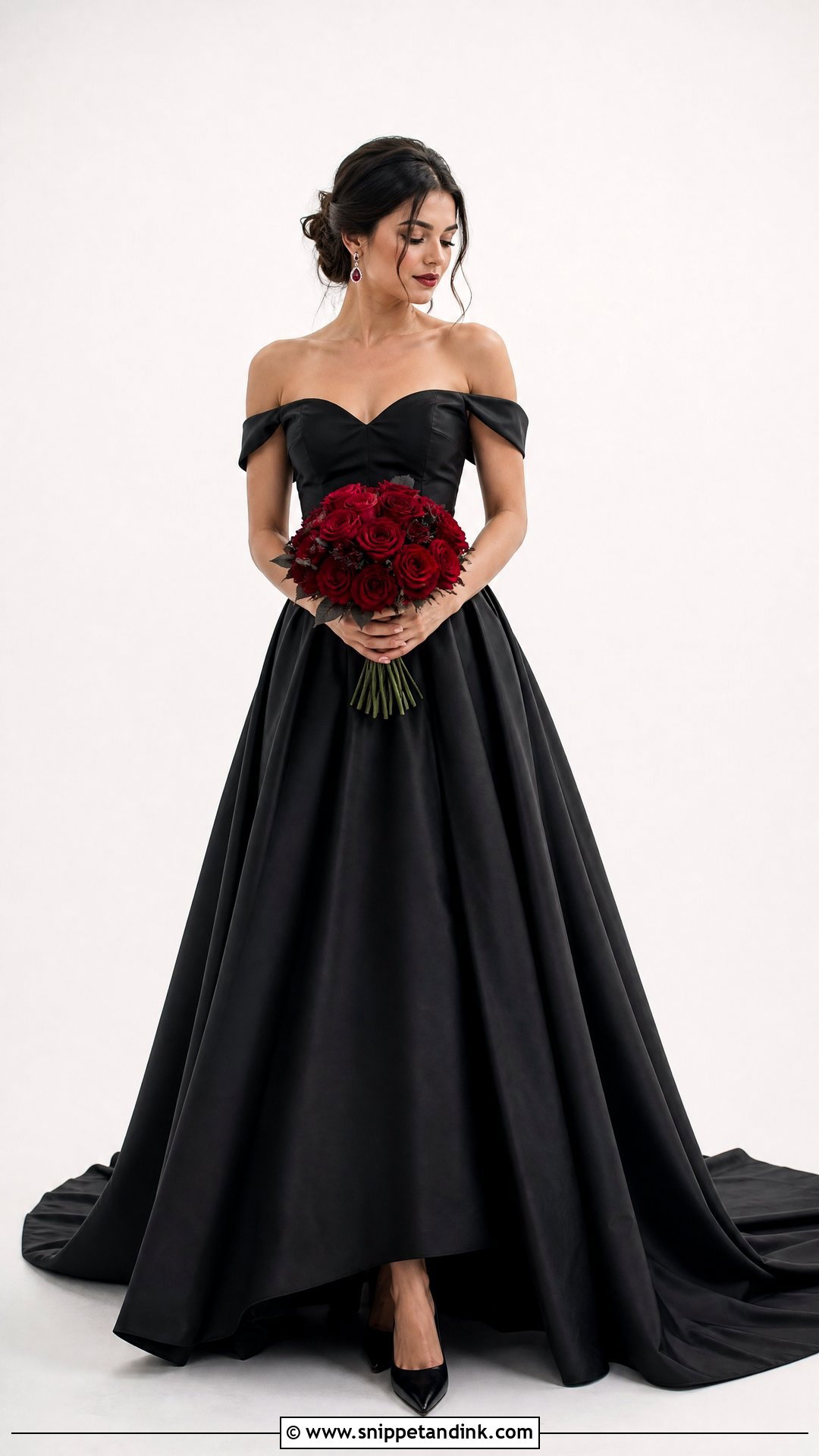
A red bouquet against a black gown pulls the eye straight to the hands, so I plan frames with and without it. A clean satin or crepe dress, black pointed heels, small ruby-toned earrings and red roses or anemones with little greenery make the outfit; a polished updo and neutral makeup keep it calm. A white studio, pale terrace or light room works best. Red is a color cameras find hard to render, and it can clip to a flat, glowing patch, so I watch its exposure separately from the dress. Start with the bouquet at waist level, then at the hip, then set it aside for a few full-length frames so the dress has its own pictures.
13. Black Wedding Dress With a Pearl Veil
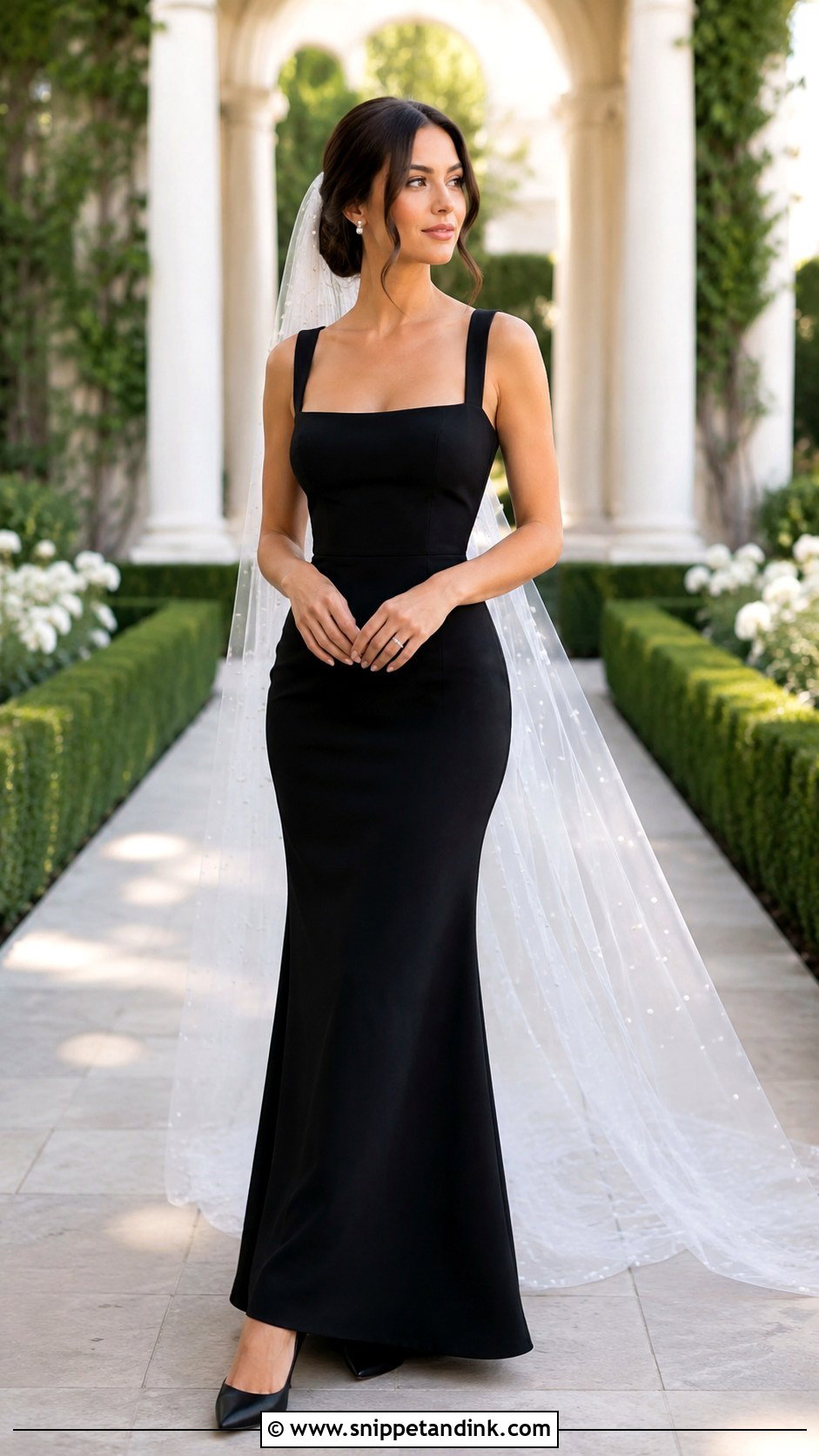
Pearls on a veil add softness to an all-black outfit. Pair a fitted black dress with a simple bodice and a medium train, black pumps and pearl studs, with a fingertip or floor-length veil spaced with pearls over a smooth bun. A bright plain wall or a light interior shows the pearls best. I shoot the veil hanging still first so its length is clear, then have someone lift one edge just off camera for a little movement. Pearls tangle quickly in wind and in tulle, so I keep a hand free to straighten them between frames. Get the back view, an over-the-shoulder angle and a full front frame.
14. Black Mini Wedding Dress at a Courthouse
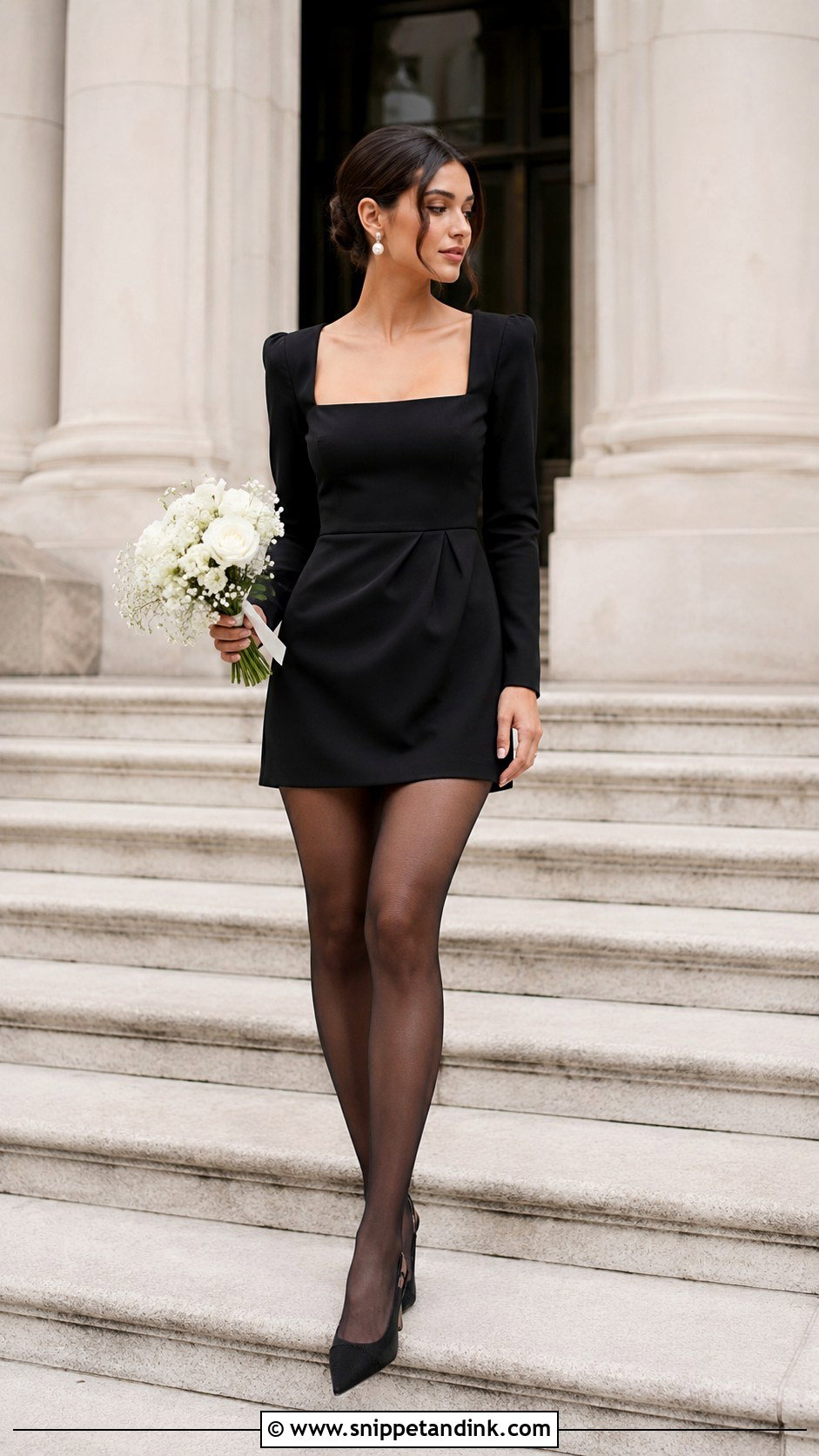
Short and black is a great courthouse look, and the light outside a courthouse is often flat and bright, which suits it. Choose a tailored mini with a structured neckline and a defined waist that lets you sit and walk. Sheer black tights are optional; pointed pumps or slingbacks, pearl earrings and a small white bouquet complete it, and a short birdcage veil or a hair bow keeps it bridal. Shoot on pale steps or between columns, with permission. I always do full-length walking frames so the shoes and hem are in the picture, plus a seated step frame with crossed ankles. Hand paperwork and bags to a friend before you start.
15. Black Tea Length Wedding Dress in a Vintage Hotel
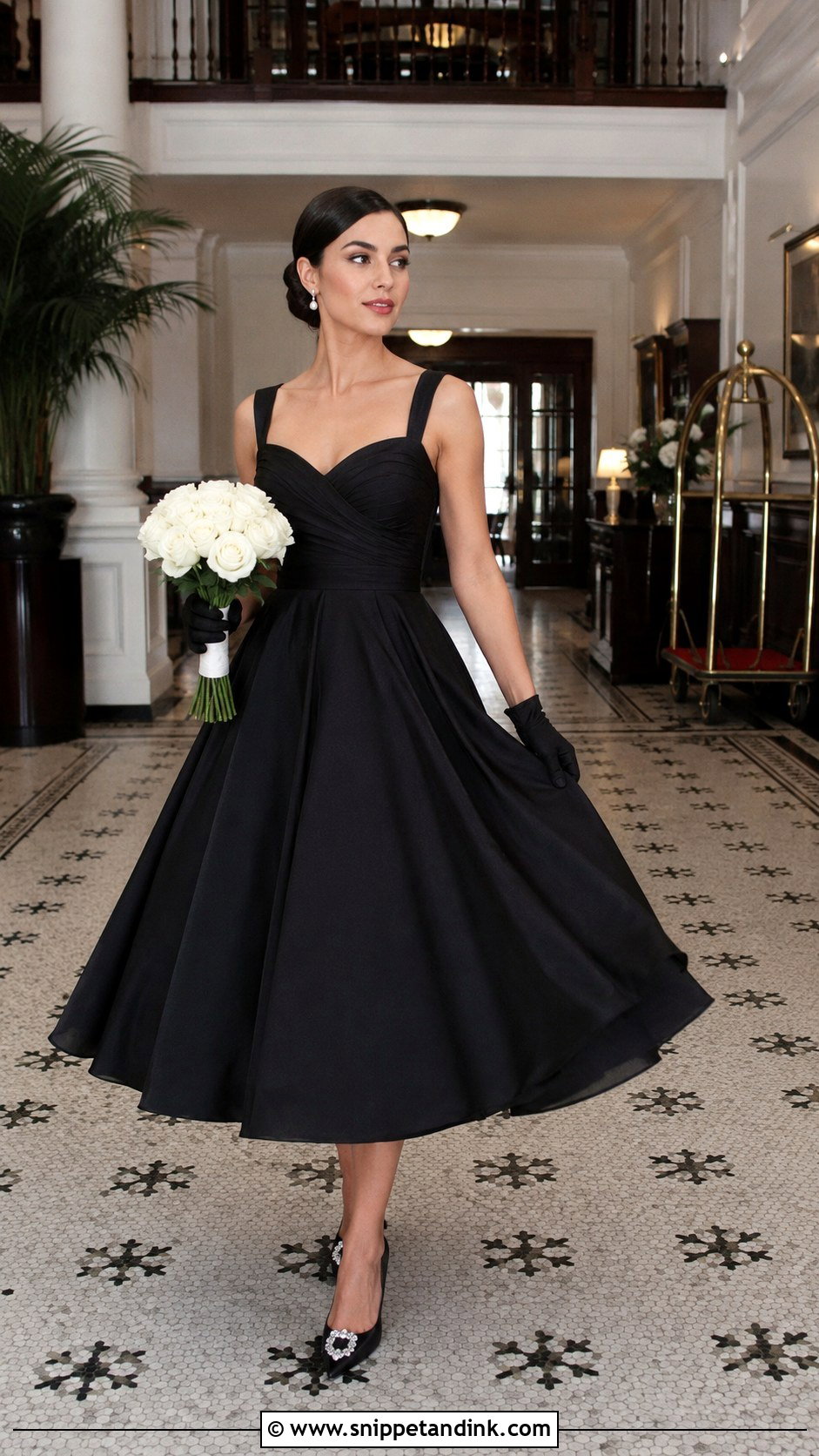
Tea length shows the shoes, so I plan this session around them. Choose a fitted black bodice, a full calf-length skirt and lace or satin detail, with embellished black pumps, short gloves, pearl earrings, a compact bouquet of white roses and soft waves or a French twist. A bright hotel lobby, a sweeping staircase or patterned tile suits it. Dim bars and corners don’t; black needs light to show anything at all. A small skirt swish reveals movement and shoes together. For seated frames, I ask the bride to angle her knees to one side and sit forward on the chair, which keeps the waist defined.
16. Black Boho Wedding Dress in the Desert
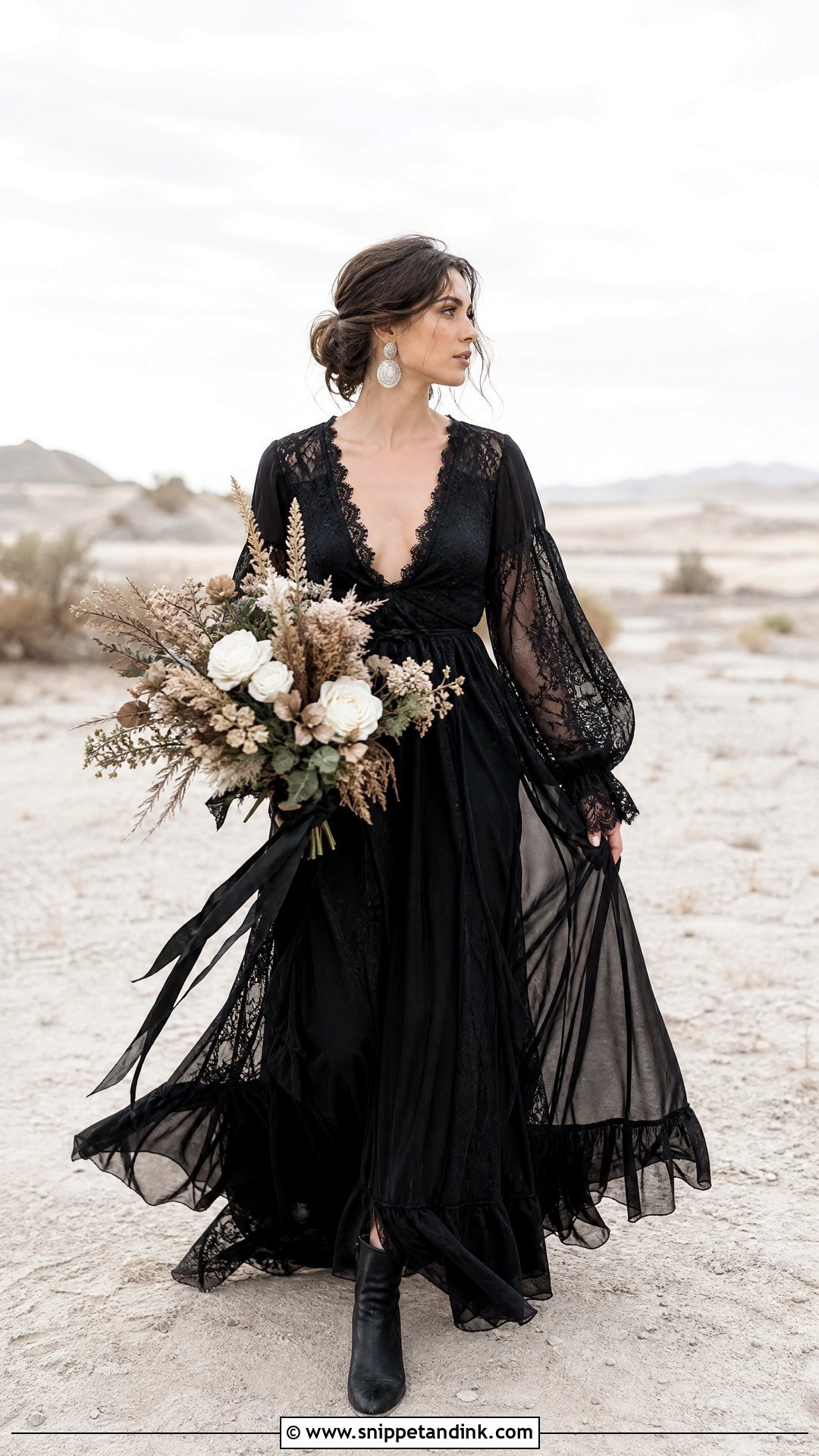
A loose black boho dress looks natural against pale desert sand. Choose flowing chiffon or lace with long sleeves and an easy waist, black ankle boots, hammered silver earrings, dried grasses with white flowers and a textured braid or soft waves. Heat is the thing to plan around. I shoot desert sessions in the first hours after sunrise or the last hour before sunset, since a black dress in midday sun gets uncomfortably hot and the light turns harsh. Earlier light also keeps color accurate. Bring a clean mat for the train, water and shade for the bride, then get one wide landscape frame and several closer full-length ones.
17. Plus Size Black Wedding Dress in a Greenhouse
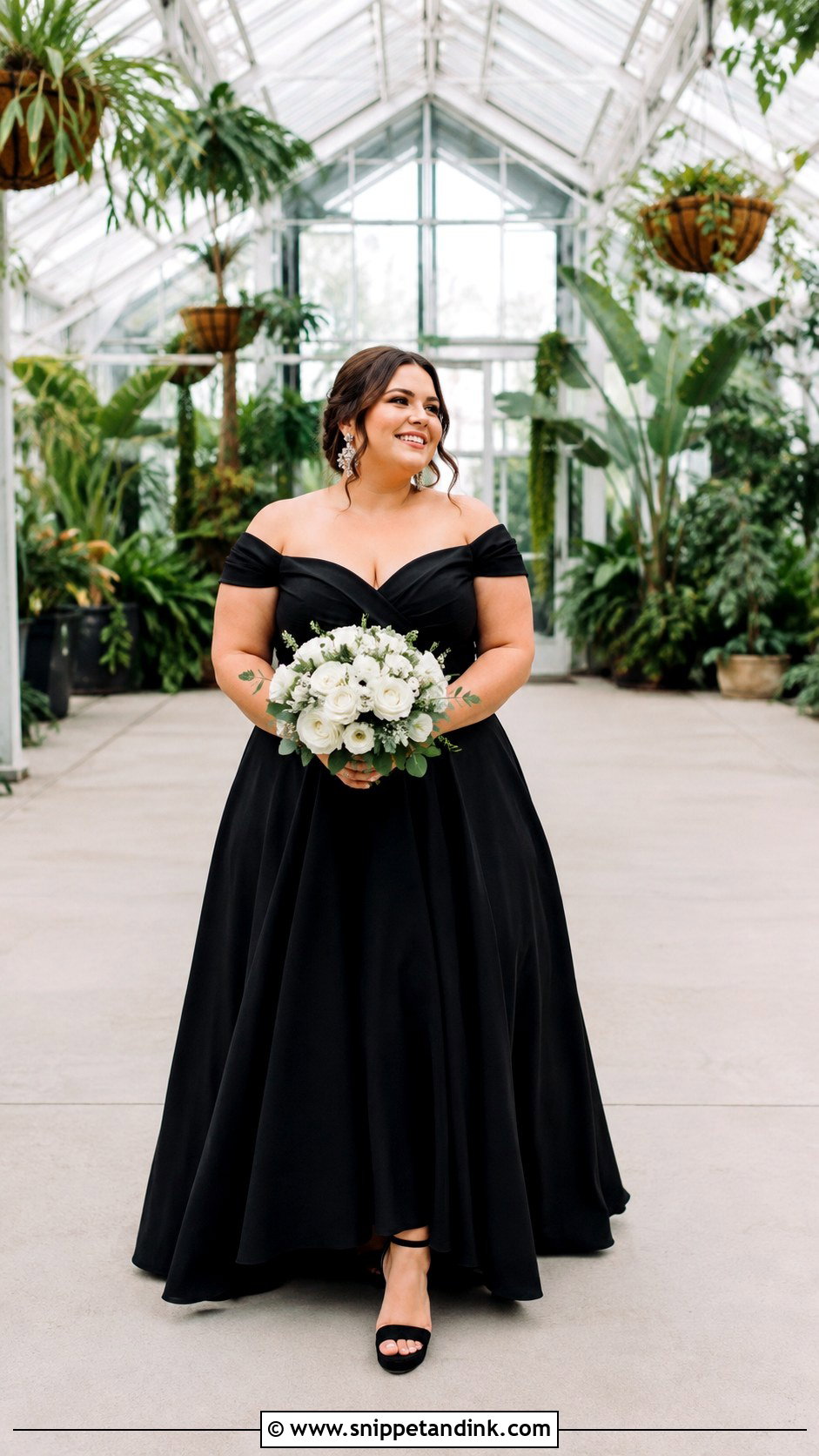
Greenhouses have some of the best natural light I work in: diffused through glass, coming from above and the sides at once. For a plus-size bride in black, choose a gown with real internal support, a defined waist and a skirt that moves easily; an off-shoulder A-line, a wrap bodice or a structured ball gown all suit it when fitted well. Add block heels, statement earrings, white flowers with little greenery and waves or a low updo. Stand in a wide aisle, not against dense plants. I turn the body a few degrees from the camera to show the waist, and I always include straight-on, joyful frames too; a confident bride doesn’t need to be angled into hiding.
18. Black Wedding Pantsuit on a Rooftop
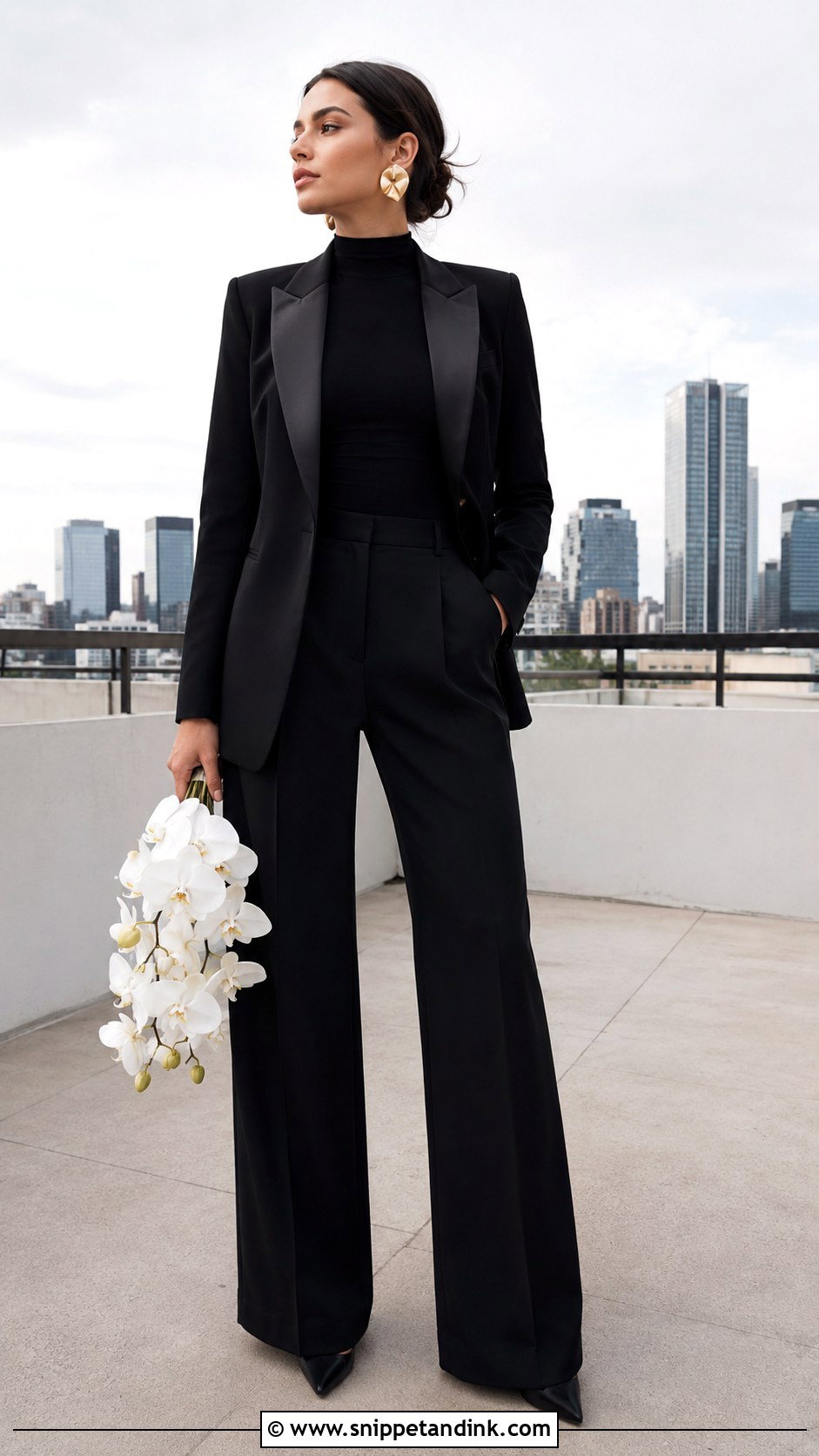
A black pantsuit on a rooftop reads modern and sharp. Choose a tailored blazer with a satin lapel, a fitted camisole or high-neck top and wide trousers that nearly reach the floor, then pointed heels, sculptural earrings, a few white orchids and a sleek ponytail or bob. Pick a roof with secure railings and pale flooring, away from vents and machinery. A satin lapel is the only shine on the outfit, so I place the bride where the sky reflects in it. Stand, walk, then lean lightly against a safe wall; a hand in a pocket relaxes the pose, and holding flowers low shows the tailoring.
19. Black Wedding Dress With Bridesmaids
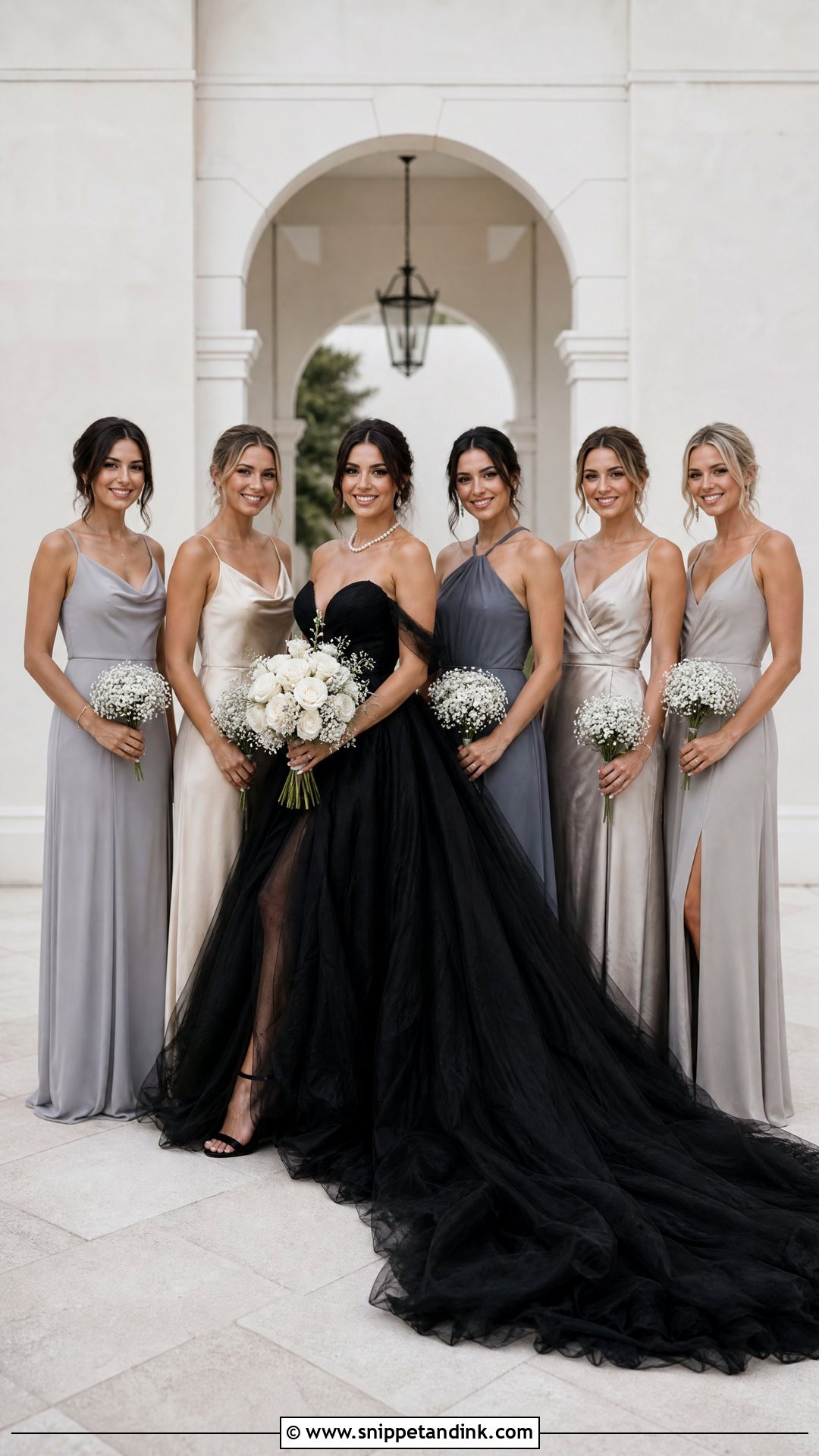
With bridesmaids, the job is keeping the bride the darkest and most defined shape in the frame. Dress her in a full black ball gown or a fitted lace gown with a visible train, and put the attendants in soft grey, champagne, muted blush or ivory in complementary lengths, with shoes and jewelry in the same neutral range. The bride carries white flowers, the attendants smaller arrangements with greenery. I place her a half step forward so her whole outline stays clear, and leave a gap between each person. Shoot a centered formal frame, a walk and a candid where everyone looks at her. Nobody stands on the train.
20. Black Wedding Dress Couple Portrait
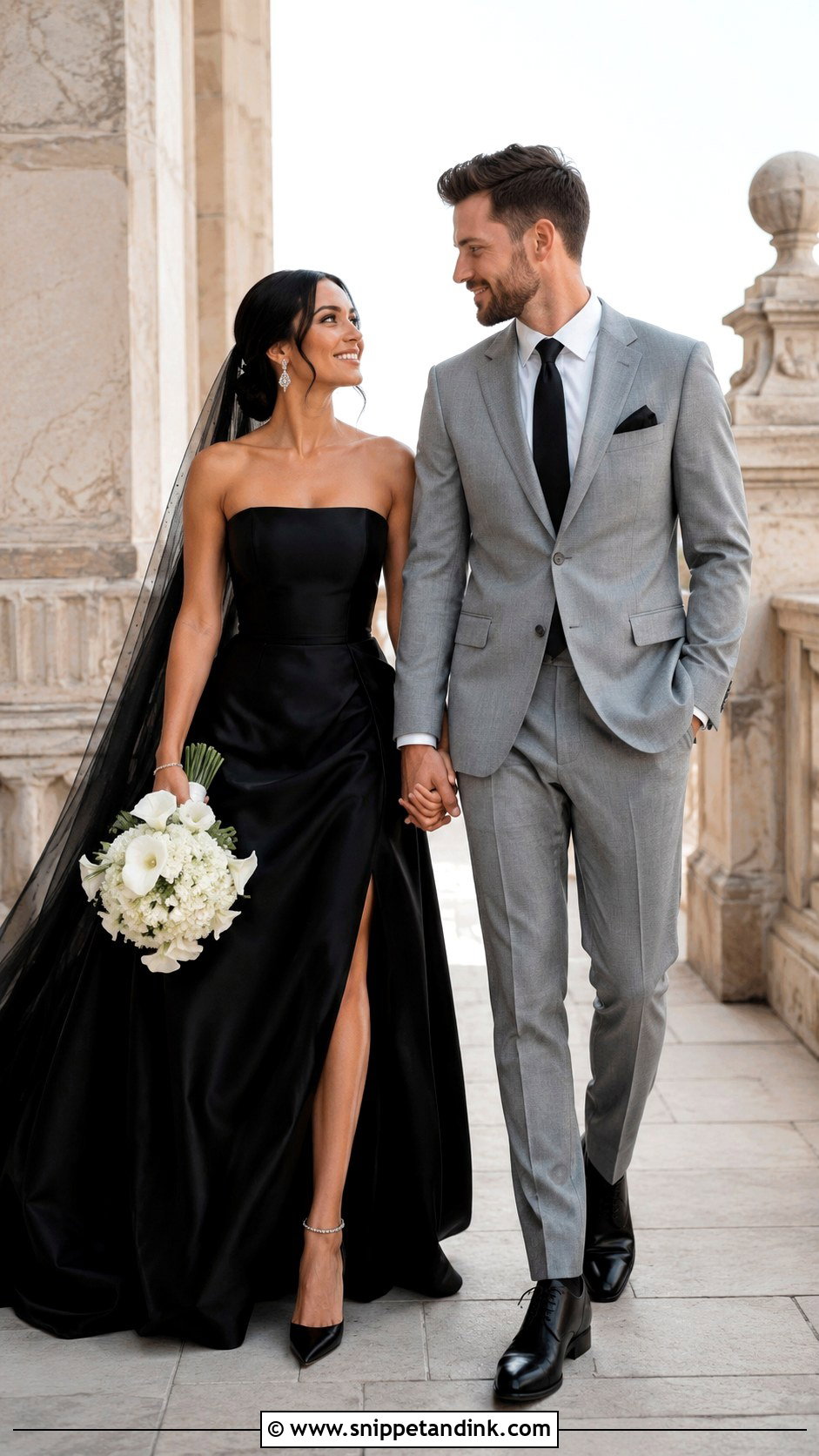
In couple portraits, I still want the dress fully readable, so I start side by side with both outfits in view. Style the bride in black satin, lace or tulle with coordinated heels, earrings, veil and bouquet, and the partner in light grey, ivory or deep charcoal with a plain shirt. A bright terrace, open garden, mountain viewpoint or modern interior all work. Then capture hand-holding walking shots, a forehead touch and an over-the-shoulder frame that shows the train. A dark suit pressed against a black bodice merges into one shape, which is why I prefer lighter suits. Keep hands relaxed and off the bodice, and take solo bridal frames before rearranging the train.
On the Day: A Short Plan for a Black Gown Session
Black shows small problems that an ivory dress would hide, so a few minutes of preparation saves a lot of retouching later.
- Steam the gown and veil before you leave, then lint-roll the dress once you’re at the location. Dust, white fluff and pet hair show up sharply on black.
- Pack a clean white sheet or mat for the train, a few clamps for adjusting fit at the back, blotting papers and a small brush.
- Book the timing around light, not the clock: an hour after sunrise, the hour before sunset or an overcast afternoon all work. Allow extra time for location moves in a long train.
- Keep a helper close for the veil, the train and the bouquet, so you can relax between frames instead of fixing things.
Keeping black looking black after editing
In editing, I lift shadows only enough to show the fabric. Push them too far and black turns a muddy grey or brown, and the gown looks cheap. If you’ve seen dark dresses in a photographer’s work that look washed out, ask about it. A good editor will show you how they keep deep blacks while protecting skin tones.
Light the Dress, Then Let It Move
Every one of these sessions comes back to the same few decisions: a setting lighter than the gown, light that shows texture, and poses that reveal the shape. Lace in a forest, satin on marble, a sharp pantsuit or a flowing desert gown all follow that pattern. Try the shoes, veil, bouquet and hair together before the session, and talk to your photographer about fabric and exposure if you’re wearing lace, velvet or sequins. Plan a mix of still frames, walking and some movement. With that groundwork, a black gown photographs with all its detail intact and looks unmistakably bridal.


Leave a Reply