
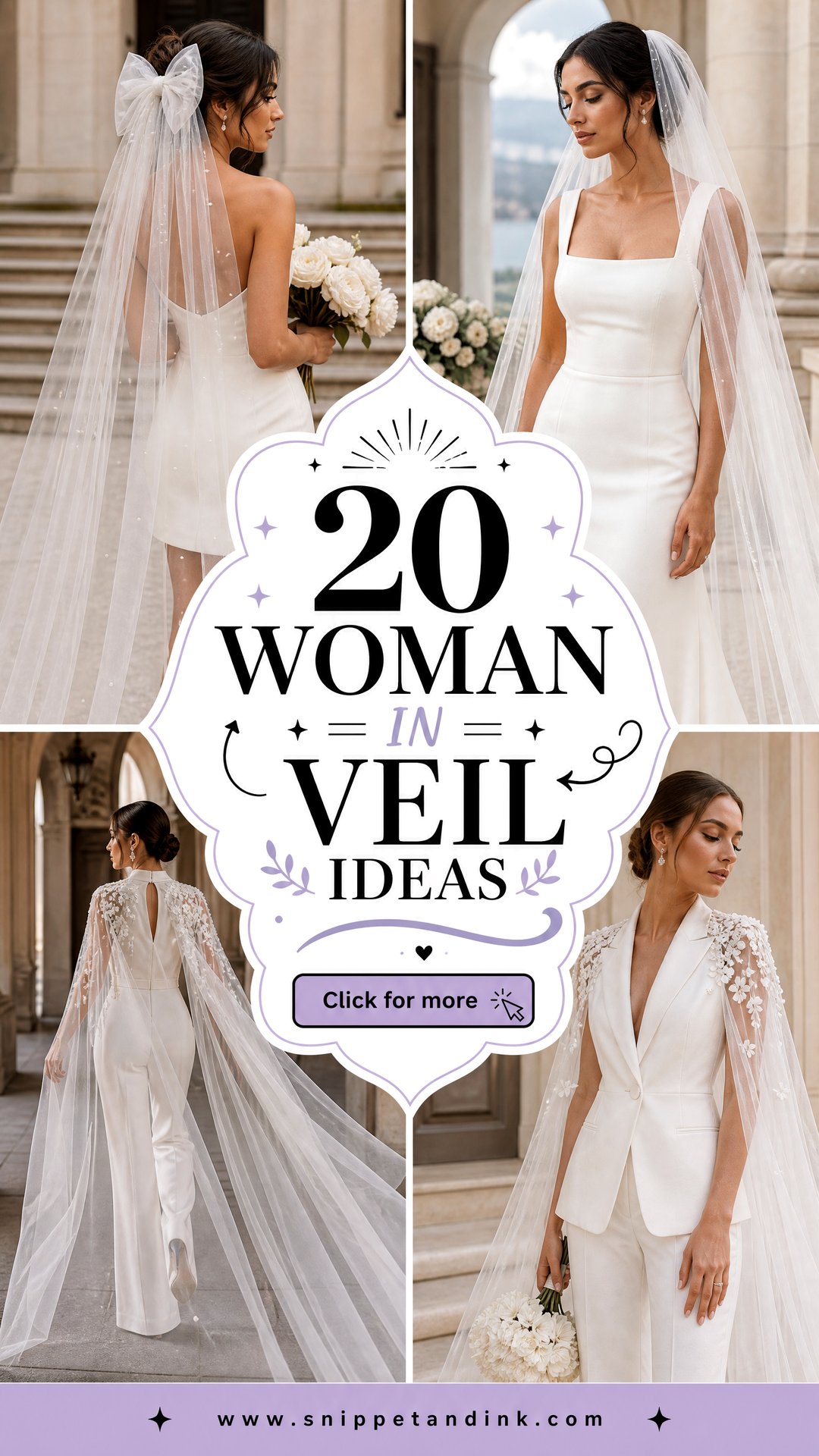
A veil changes a dress more than almost any other accessory, and it is also the piece brides most often choose last, in a hurry, from a single photo. In fittings I treat it as part of the outfit from the start: its length has to suit the skirt, its edge has to agree with the fabric, and its comb has to suit the hairstyle underneath. The pairings below run from cathedral tulle over satin to a dupatta worn over a lehenga, a cape on a jumpsuit and a short veil with a courthouse midi. For each one I explain why the two pieces work together and where the combination tends to go wrong.
Matching Veil Length to Your Skirt and Your Venue
I start every veil conversation with two questions: where does your skirt end, and what will you be walking on? Length should never stop at the same point as a strong line on the dress, such as a dropped waist or the start of a mermaid flare, because the two edges fight each other. Ending the veil just above or just below that line looks deliberate.
- Shoulder and elbow lengths suit minis, midis, suits and anything worn for dancing.
- Fingertip and waltz lengths work with most A-line and off-shoulder gowns and are the easiest to wear all day.
- Chapel and cathedral lengths need a long aisle and a dress with a train or full skirt to make sense.
- Outdoors on grass, gravel or sand, long tulle picks up debris and catches wind, so I lean shorter or plan to remove the veil after the ceremony.
Bring the veil, or at least a sample of the same tulle, to your dress fitting. Seeing it against the actual fabric settles questions about color and length in a few minutes.
Where the Comb Sits Decides How the Veil Falls
Placement is the detail brides overlook most often. A comb set high on the crown makes the veil stand away from the head and gives volume; set low, just above a bun at the nape, it drops close to the back and shows off the dress. Tell your hairstylist which effect you want before the trial, since the hairstyle has to be built around that spot.
Combs slide out of freshly washed, silky hair. I ask brides to come to the trial with second-day hair, and I criss-cross two bobby pins under the comb as a base for its teeth to lock into. Heavy veils with pearls or lace borders may need a second comb or loops sewn in for extra pins.
1. Cathedral Veil With Satin Ball Gown
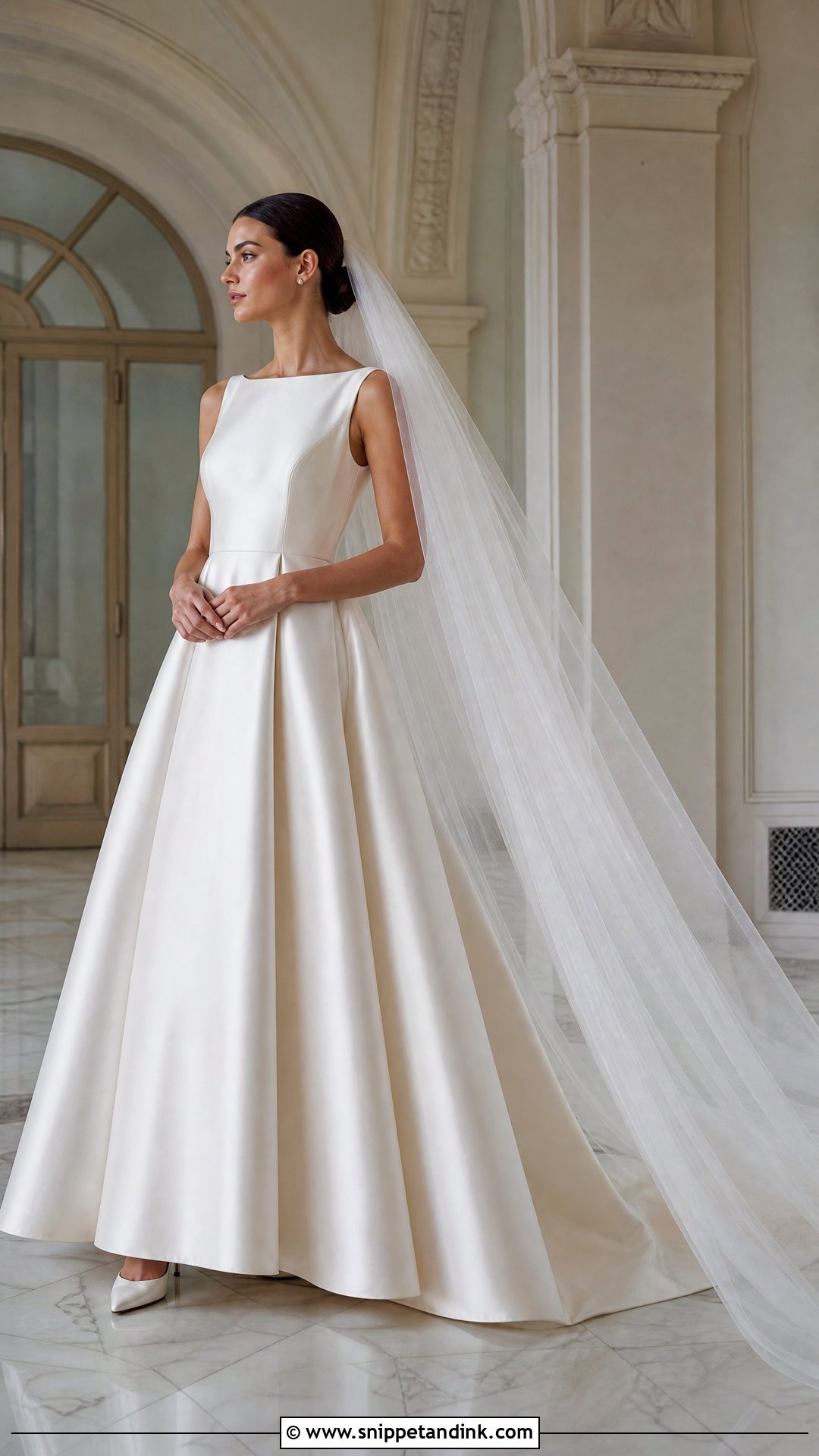
Satin and a cathedral veil are the most formal pairing in this list, and they need a gown with structure to carry them. A fitted bodice, a defined waist and a full skirt give the tulle a clear shape to fall over; on a soft, unstructured dress, that much fabric swallows the silhouette. I prefer plain silk tulle here, with at most a narrow satin edge that picks up the sheen of the dress. Satin shows every crease, so I ask brides to sit in the gown at the final fitting and check whether the veil drags the creases toward the floor. Keep jewelry to pearl studs if the neckline is doing the work, and anchor the comb in a sleek low bun, because a cathedral veil pulls hard at the crown once it is spread out behind you.
2. Fingertip Veil With Lace A-Line Dress
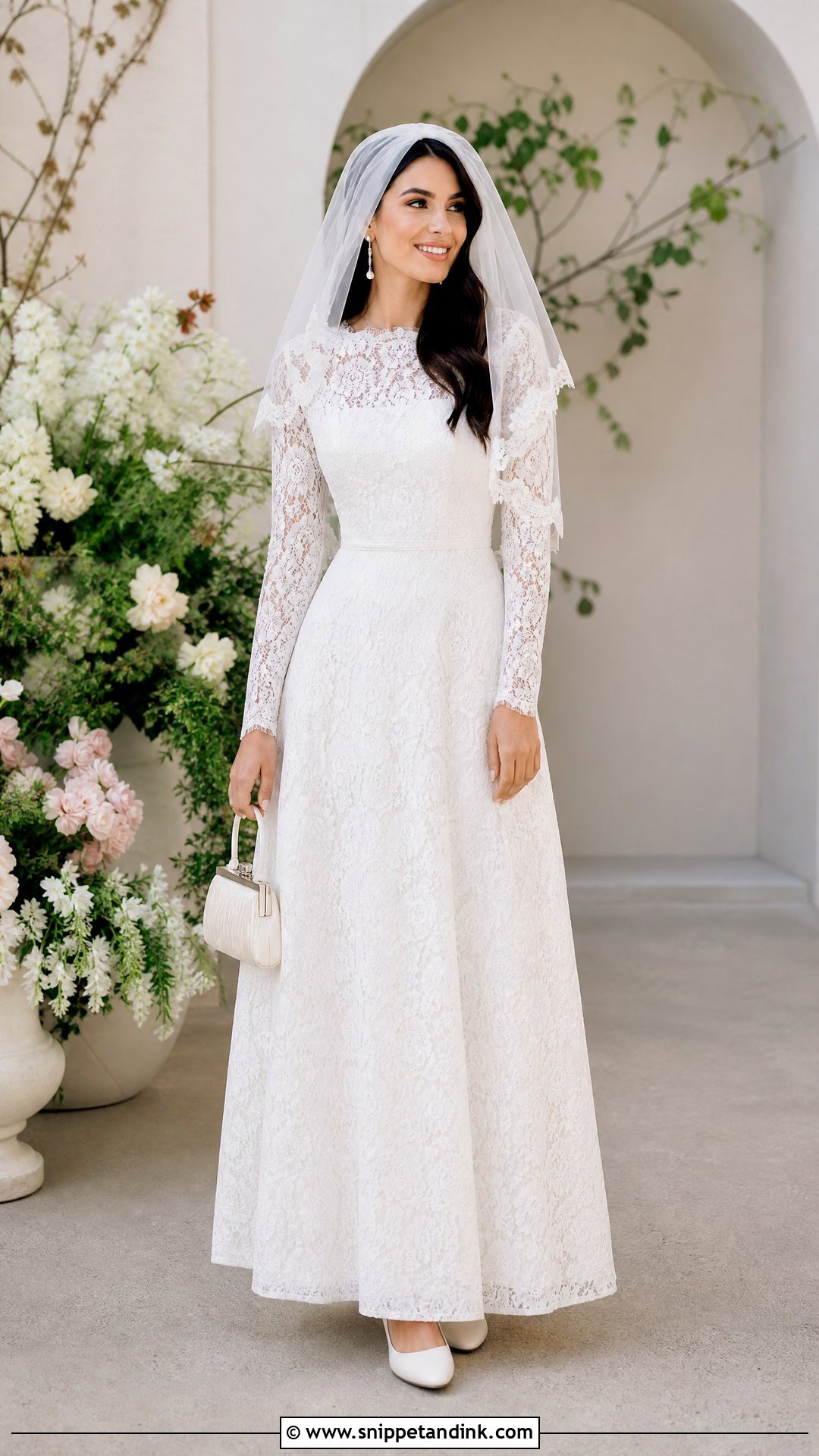
Lace and tulle sitting side by side is where I see the most clashes, so with a lace A-line dress I keep the fingertip veil almost bare. One repeated detail is enough: a scalloped edge that mirrors the hem, or a few appliqués cut from the same lace family. Hold the two fabrics together in daylight before you buy, since lace dyed ivory can make a diamond-white veil look grey. Fingertip length lands right where your hands rest on the skirt, which hides the waist seam and lets you move freely. Loose waves or a half-up style give the comb something to grip, and closed-toe block heels with pearl drops keep the outfit easy to wear for a full day.
3. Mantilla Veil With Long-Sleeve Gown
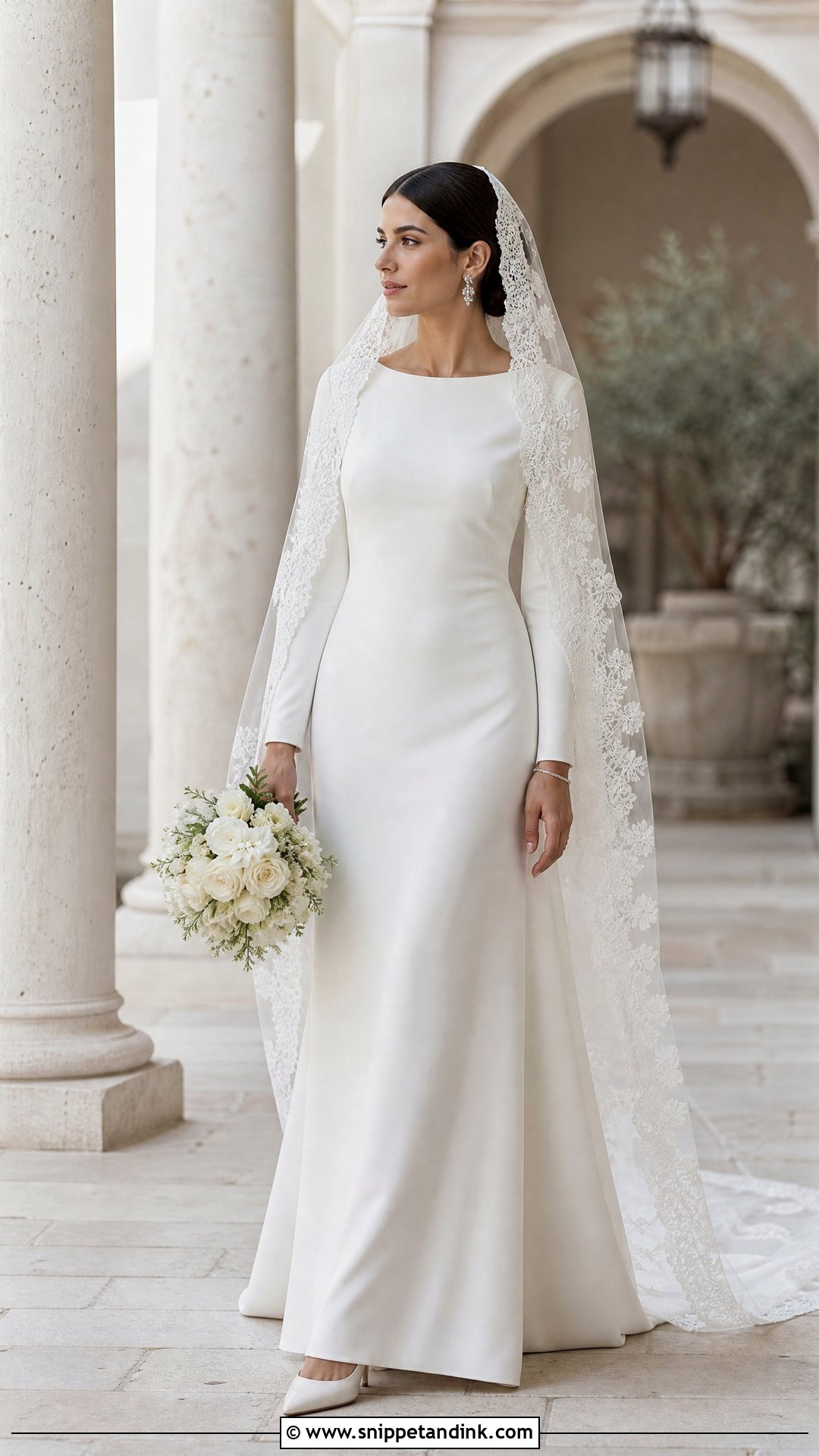
A mantilla veil has its lace border sitting right against the face, so I always pair it with the plainest long-sleeve gown we can find. Clean crepe or matte satin with covered shoulders lets the lace be the only pattern in the picture. Where you place the comb changes the whole effect: at the hairline the lace frames your cheekbones like a portrait, while a placement just behind the crown reads softer and less traditional. A center-parted low bun gives the comb a flat base. Match the lace shade to the dress in person, because bright white lace on an ivory gown looks like it came from a different outfit. Almond-toe heels and small crystal earrings are plenty.
4. Pearl Veil With Minimalist Crepe Dress
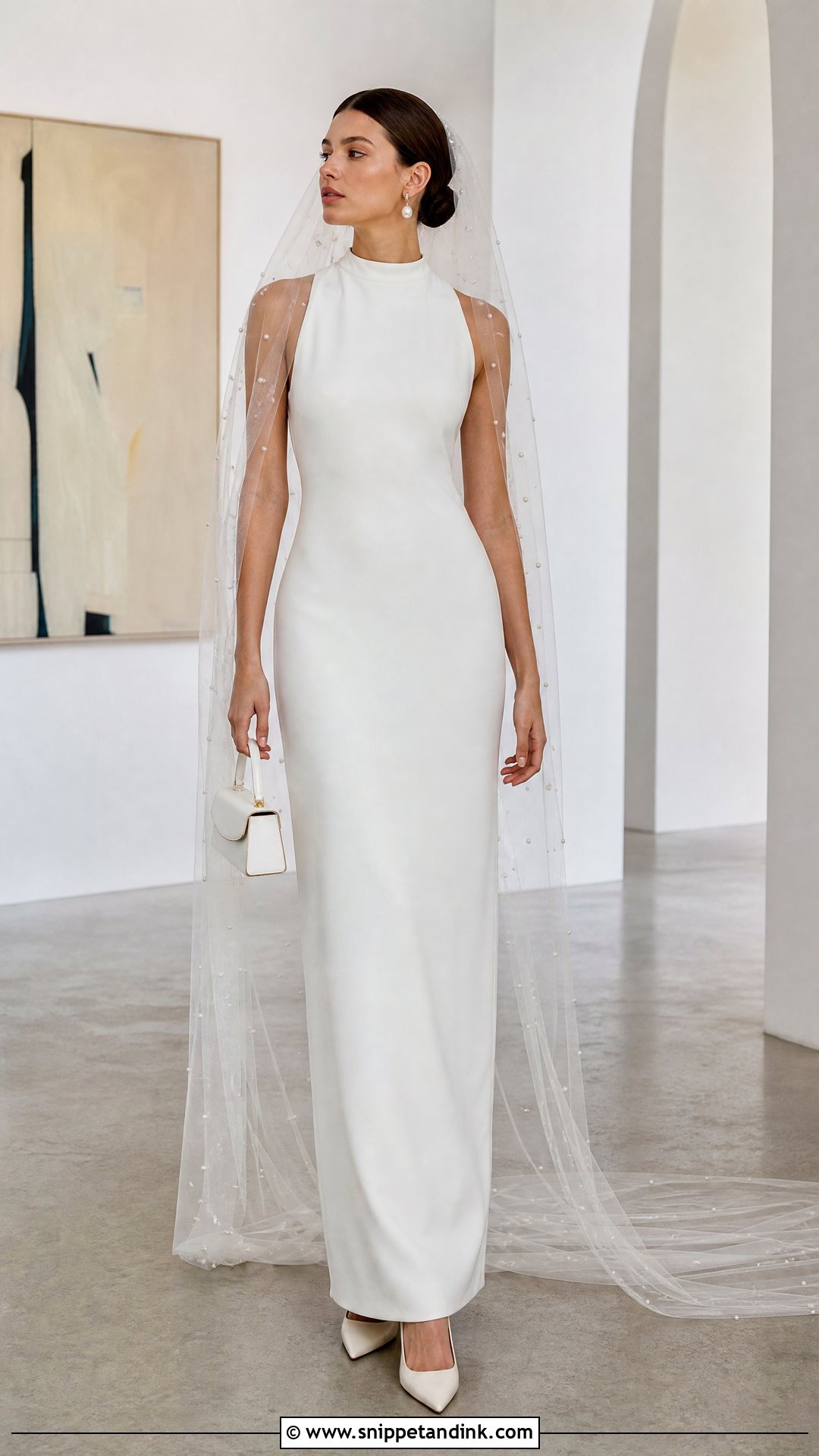
Pearls on tulle add weight, and that weight is something I plan for. A minimalist crepe column or sheath with a high neckline is the right backdrop, and a chapel-length veil gives the pearls room to spread out. I ask for the pearls to be sparse near the face and denser toward the hem, which keeps the veil from dragging forward and looks better in motion. Wear pearl earrings, but leave the necklace and bracelet behind. A low chignon lets the veil fall straight down the back, and pointed slingbacks keep the outfit crisp. If you are sensitive to weight on the head, ask the seller how many pearls are on the veil before you order, since a heavily beaded one can tug at the comb by the reception.
5. Blusher Veil With Strapless Gown
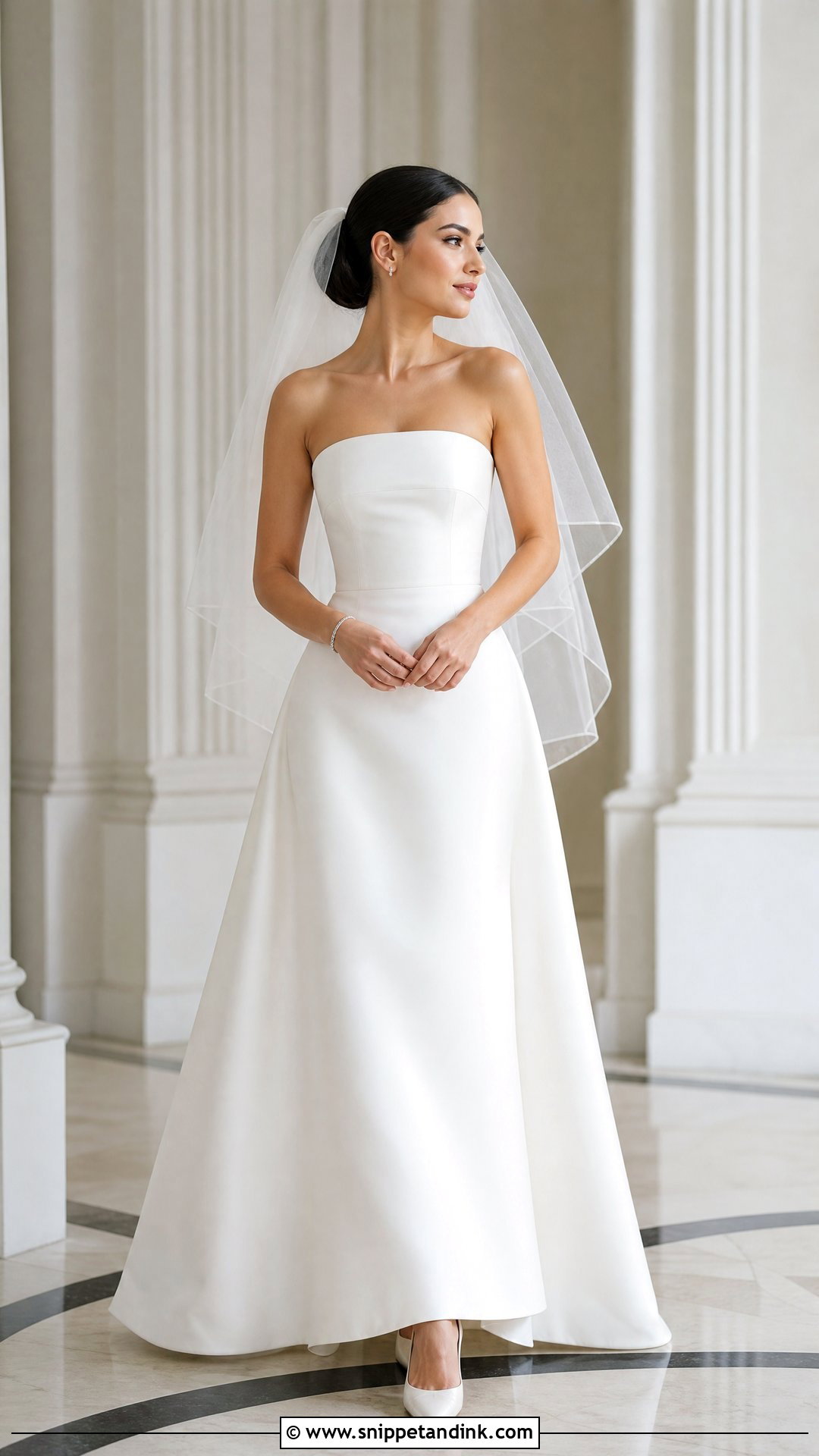
A blusher works with a strapless gown because the bare shoulders leave the tulle uncluttered as it falls. I nearly always suggest a two-tier veil: the short front layer covers the face for the walk, and the longer back layer stays down after it is lifted. Rehearse the lift with whoever is doing it, because the blusher has to be flipped from the hem, not the middle, or it snags on the comb. Plain tulle looks crisp; a pencil edge gives slightly more definition in photos. A neat bun or smooth ponytail holds the comb securely against an open neckline, and if the shoulders feel exposed in a cold church, a pair of removable gloves or a light wrap solves it.
6. Birdcage Veil With Tea-Length Dress
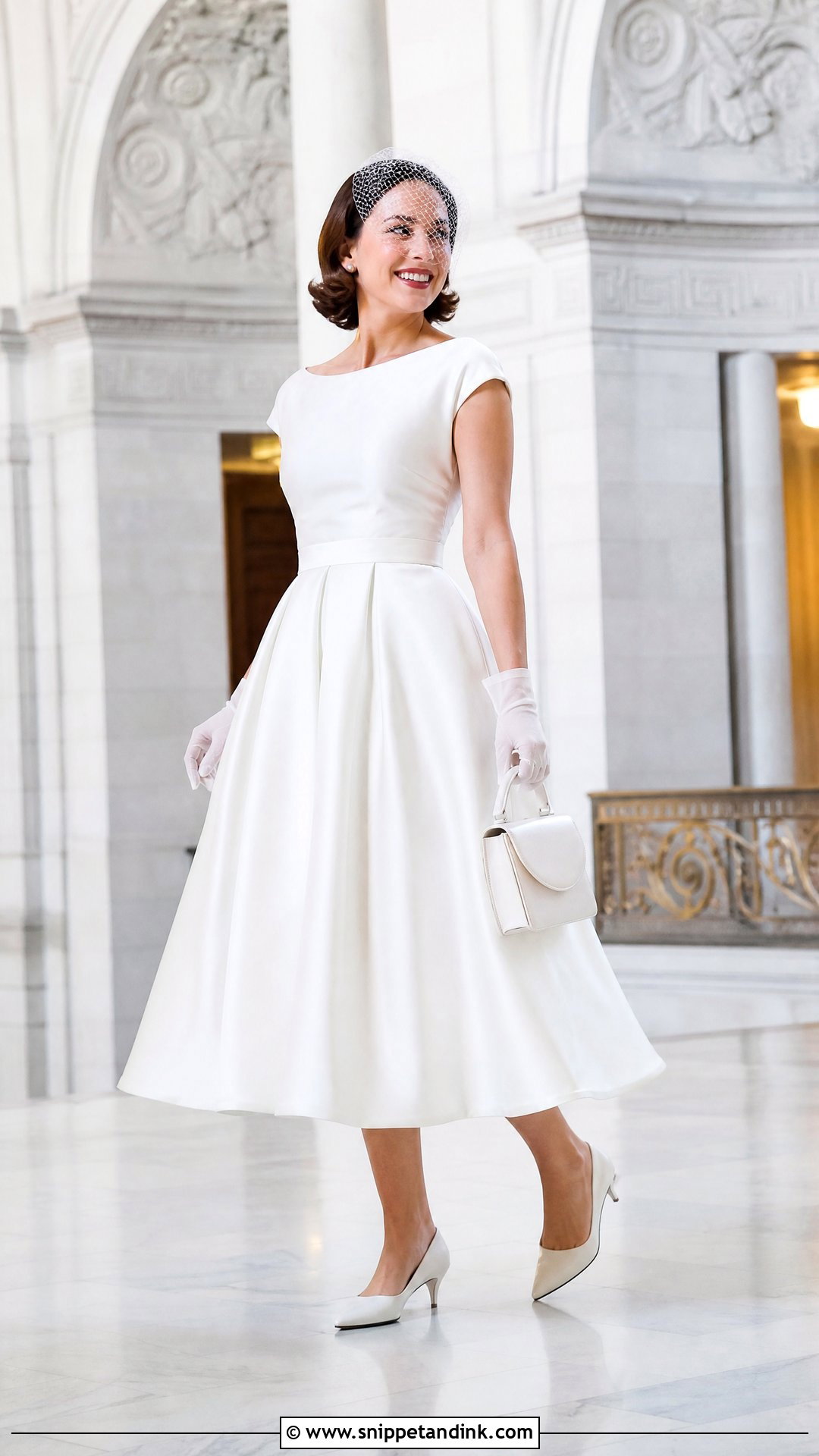
Birdcage netting is short enough to show the shoes, so with a tea-length dress the footwear becomes part of the look rather than an afterthought. A fit-and-flare dress ending between knee and ankle suits the scale of the veil, and the netting itself should be fine Russian or French net attached to a small comb or understated headpiece. I angle it so it covers one eye and stops at the cheekbone; any lower and it brushes the lipstick. Pointed kitten heels, pearl earrings and a top-handle bag finish it. A French twist or curled bob gives the comb a place to sit. Wrist-length gloves are optional, and anything longer starts to look like costume.
7. Chapel Veil With Mermaid Dress
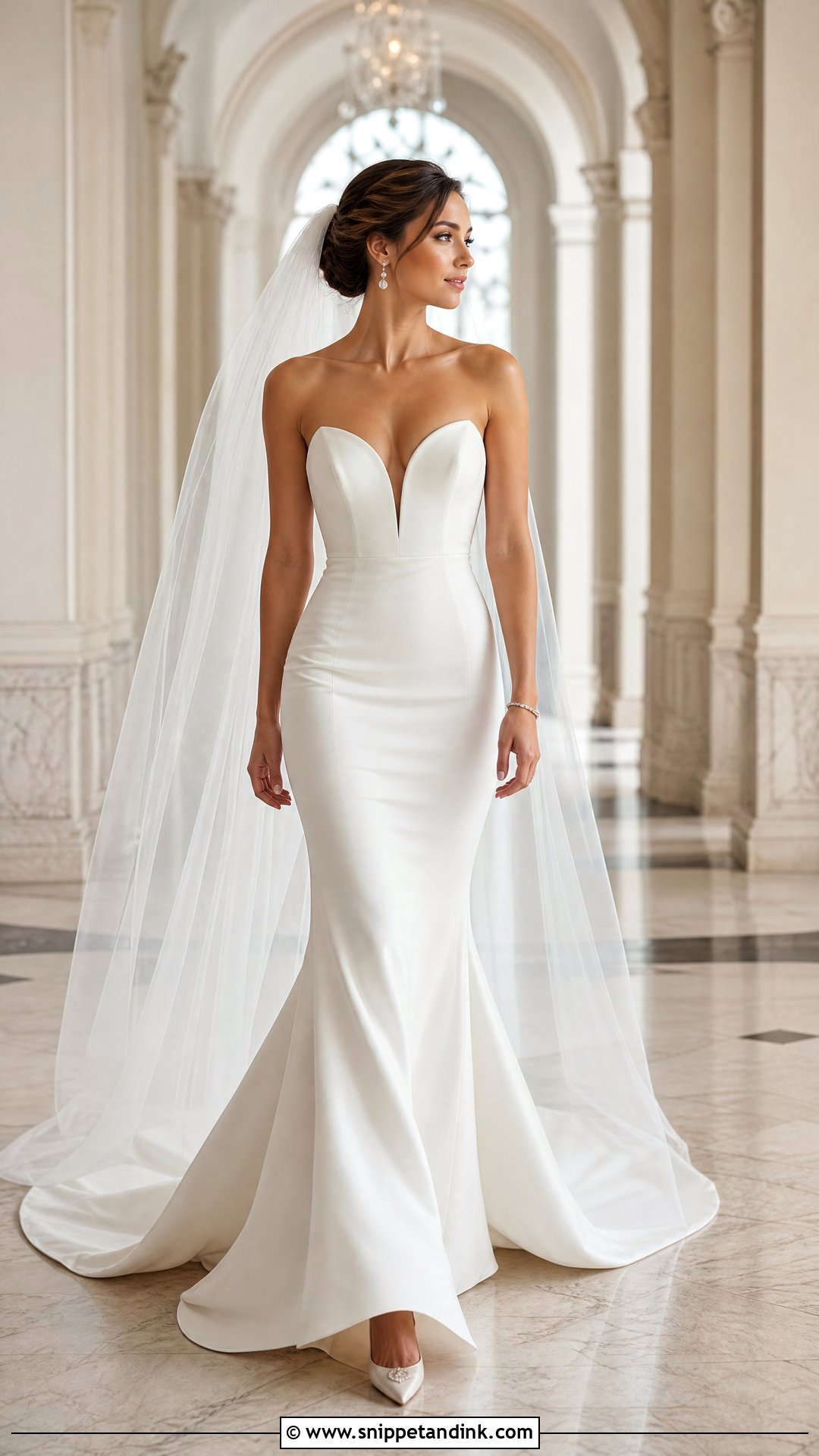
Mermaid gowns are fitted through the hips, and a chapel veil softens that line by trailing slightly past the flare. I steer clients toward plain tulle or a narrow lace edge for this pairing, because dense appliqués across the middle of the veil sit right over the back of the dress and hide the buttons or illusion detail you paid for. Put decoration at the outer edge instead. A polished updo keeps the neckline clear, and pointed heels support the long line of the silhouette. One practical note: a mermaid skirt restricts your stride, so practice walking with the veil behind you before the day so you can feel where it pulls.
8. Floral Veil With Simple Column Gown
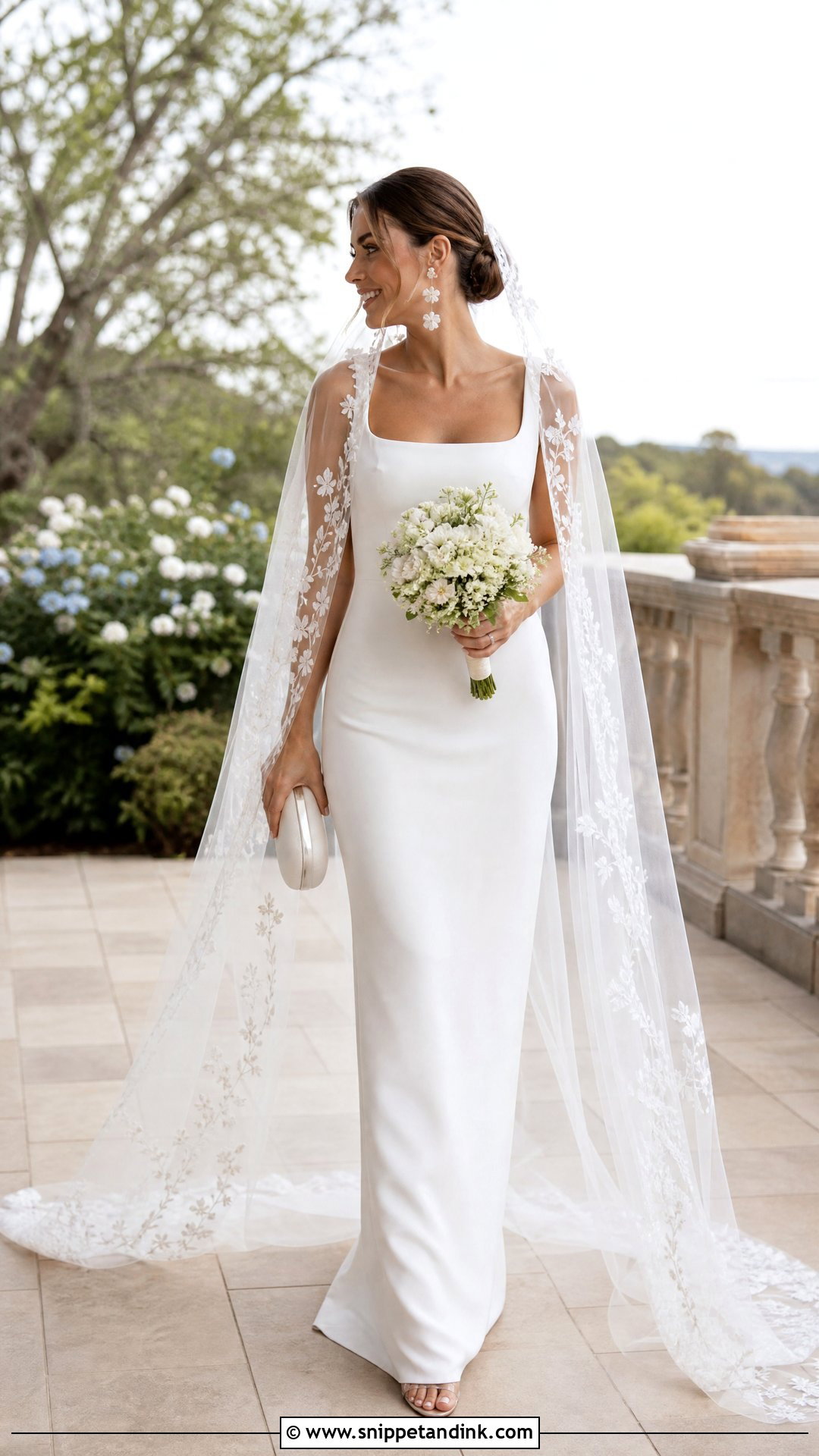
An embroidered floral veil needs the simplest gown you can stand. A column dress with minimal seams and no beading lets the flowers read clearly across the back. Keep the thread colors to white, ivory or the palest pastel; strong color embroidery on tulle can look like it is floating separately from the dress. A low bun or softly waved ponytail leaves the back open so the pattern is visible. The bouquet matters here more than in most pairings, since a large mixed arrangement competes with the embroidery. I usually suggest one flower variety with greenery, plus barely-there heels and a small satin clutch.
9. Bow Veil With Bridal Mini Dress
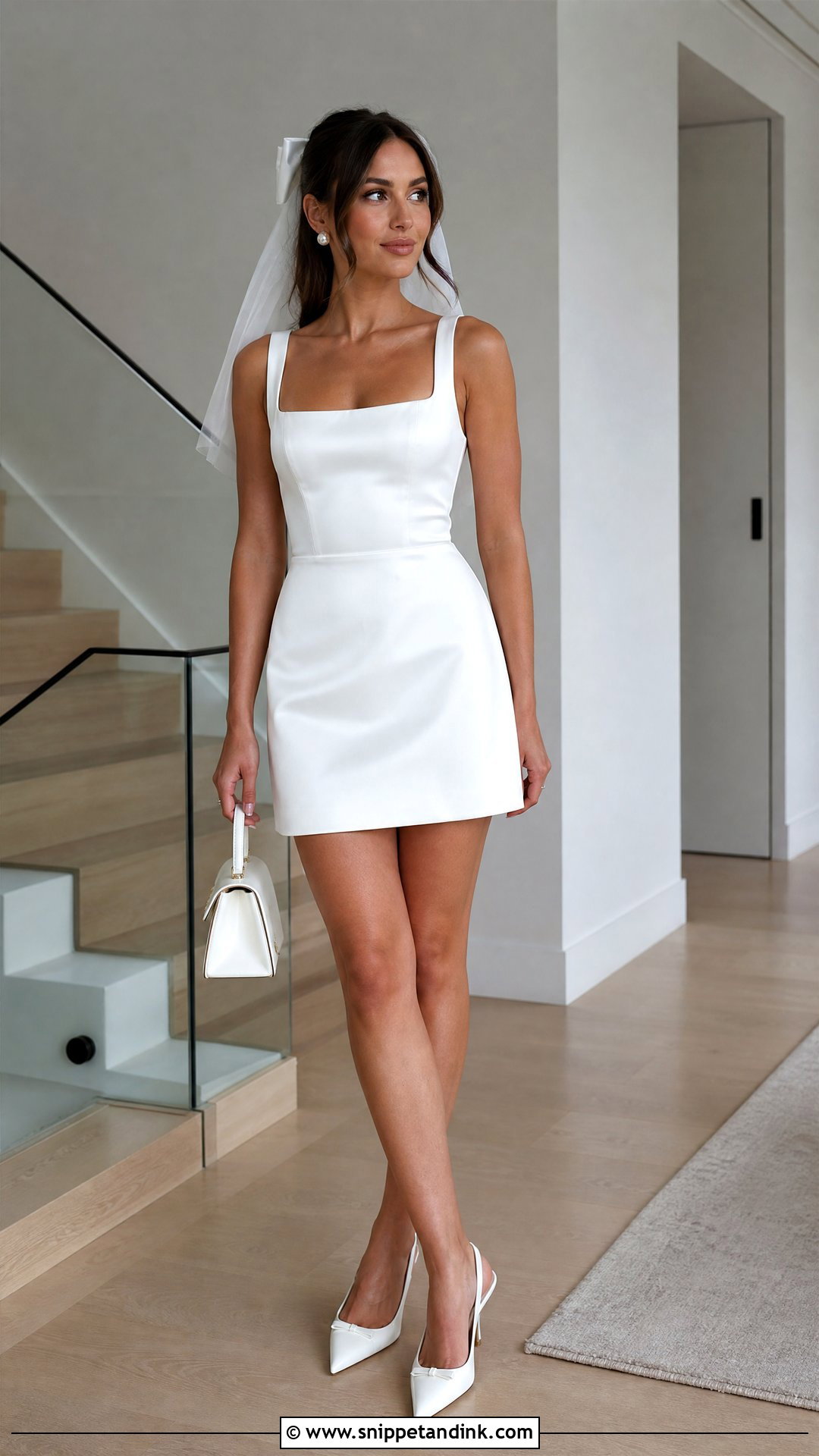
A bow veil on a mini dress is about proportion. The hem is short, so the tulle should stop at the shoulders or elbows; anything longer makes the dress look like it has lost half its length. A square neckline or structured sleeves give the outfit a clear shape, and the satin bow should sit low on the back of the head where a smooth ponytail or bun can hold its weight. Pointed slingbacks, sheer tights if the weather calls for them, a compact top-handle bag and pearl studs are enough. This is one of the easiest pairings to wear from a civil ceremony straight into the reception.
10. Juliet Cap Veil With Vintage Gown
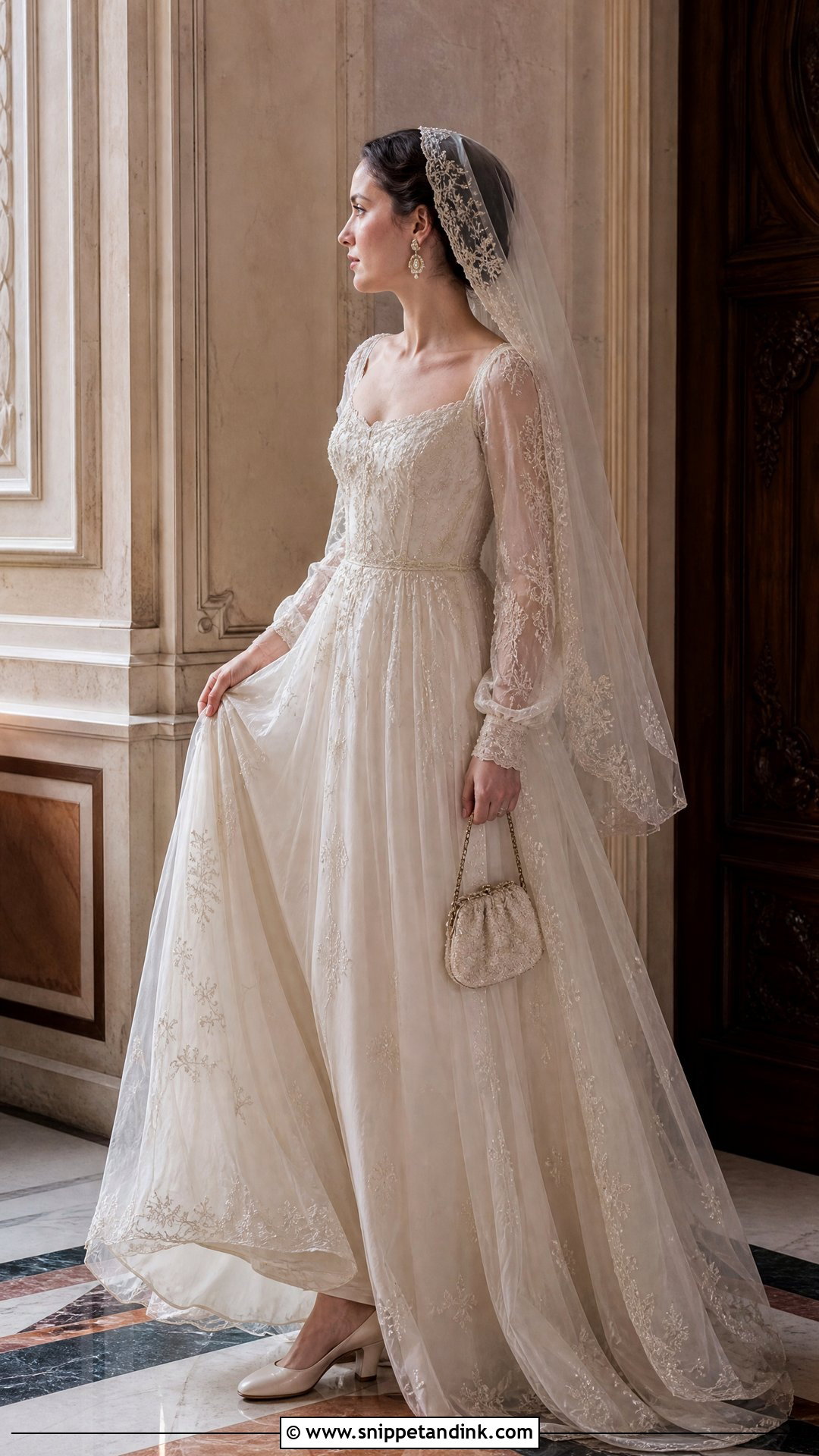
A Juliet cap veil sits close to the head, so the fit is everything. I measure around the head where the cap will sit and test it over the final hairstyle, since soft waves gathered at the nape add bulk that a cap must accommodate. A flowing long-sleeve gown with light beading or lace suits the vintage feel. Balance the detail: an intricate dress takes a lightly decorated cap, and a plain gown can carry a more ornate band. Low satin heels, a small beaded bag and antique-style drop earrings complete it. Keep the makeup soft, or the period influence starts to look theatrical.
11. Drop Veil With Square-Neck Dress
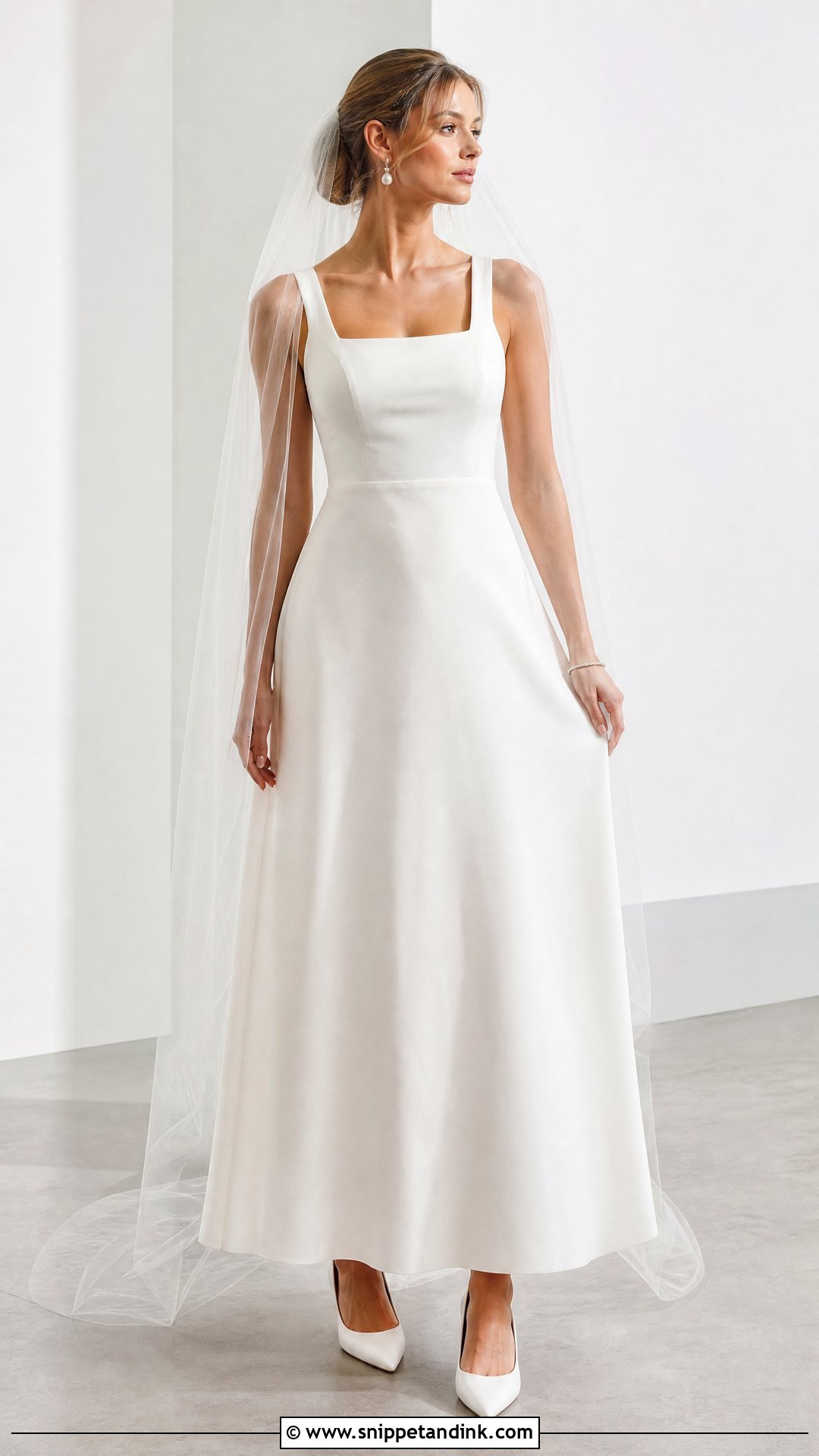
A drop veil is a single circle of tulle laid over the head with no gathers, which is why it pairs so well with a square-neck dress and its strong straight lines. It sits flat only if the hair underneath is flat, so I place a low bun right at the nape and pin the veil just above it. If you want face coverage for the ceremony, ask for a circular cut long enough at the front to lift back easily. Leave the edge raw or very narrowly trimmed to keep the minimalist effect. Satin pumps, a slim bracelet and small pearl earrings round it out. Drop veils slide more than gathered ones, so add a second comb or a few bobby pins hidden under the tulle.
12. Waltz Veil With Off-Shoulder Gown
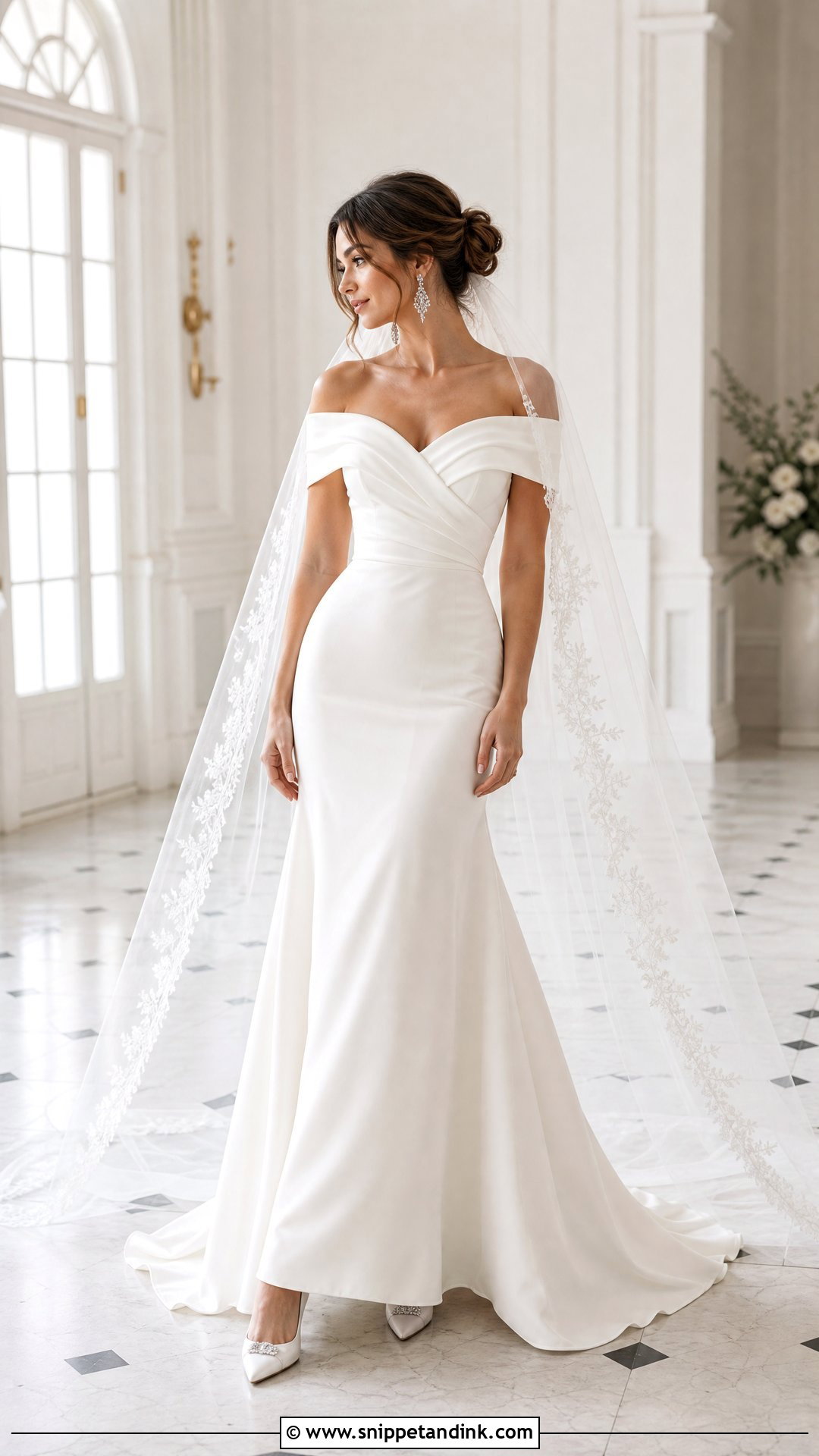
Waltz length falls between the knee and the ankle, and it is the length I recommend most to brides who want drama but plan to dance. Paired with an off-shoulder gown, it leaves the train visible and still gives movement behind you. Fine tulle with a simple edge suits pleated or sculptural necklines best. Skip the necklace so the shoulders stay the focus, and choose chandelier earrings and pointed pumps instead. A low textured bun holds the comb well; very silky hair needs a little texture spray first so the comb does not slip during the first hug.
13. Embroidered Veil With Clean Slip Dress
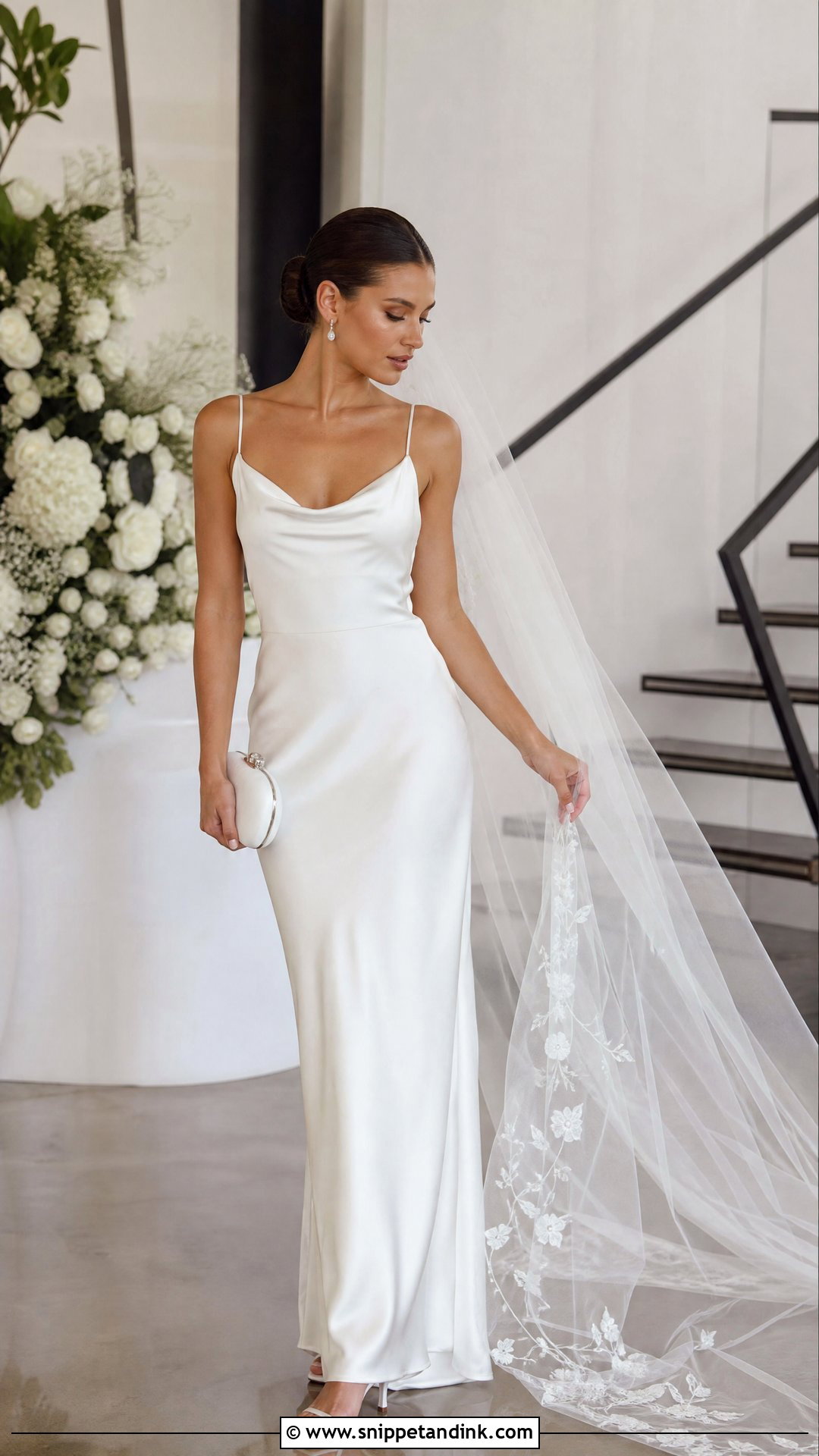
A slip dress gives an embroidered veil a clean background, but satin cut on the bias shows every pin mark and pull, so I fasten nothing to the dress itself. The veil can carry flowers, initials or a simple border, and I advise leaving plenty of empty tulle between motifs so it reads as considered rather than crowded. A neat bun contrasts with the fluid gown and keeps the embroidery visible. Sleek heeled sandals, small drop earrings and a satin clutch are all it needs. If the ceremony requires covered shoulders, a detachable wrap or tailored jacket works better than a heavier veil.
14. Hijab Veil With Modest Wedding Dress
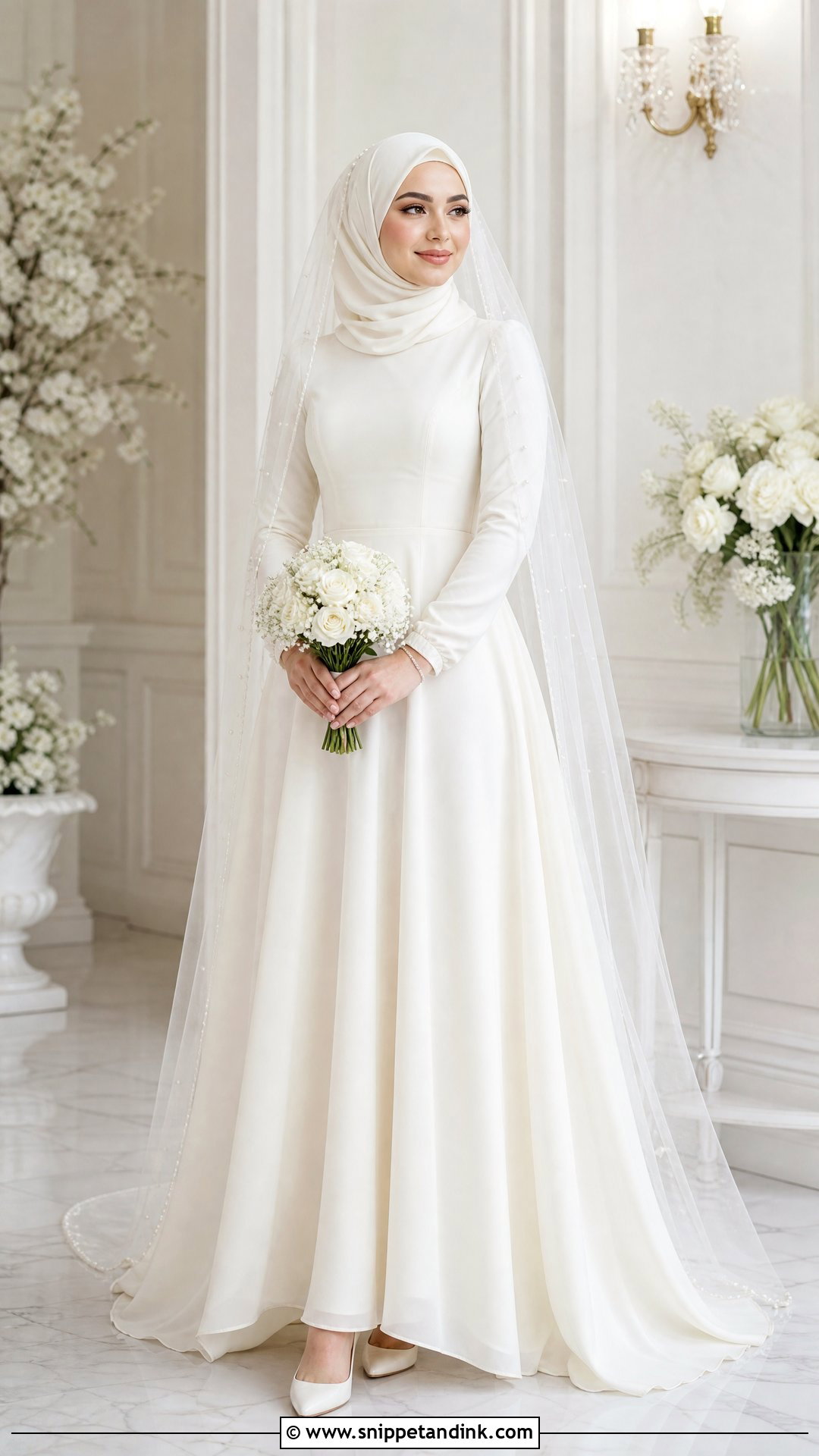
With a hijab and a veil together, bulk is the main thing I manage. Choose a fully lined long-sleeve gown with a high neckline and an A-line skirt, then wrap a smooth chiffon or crepe hijab close to the head so the veil has a flat surface to sit on. A lightweight tulle veil goes over the top, secured with pins placed away from the temples and ears, where pressure becomes painful after a few hours. Plain tulle suits a beaded dress; a pearl or lace edge suits a plain one. Match the hijab color to the gown under the same light so the two read as one piece. Comfortable closed-toe heels and a small bouquet keep the outfit easy to move in.
15. Dupatta Veil With Bridal Lehenga
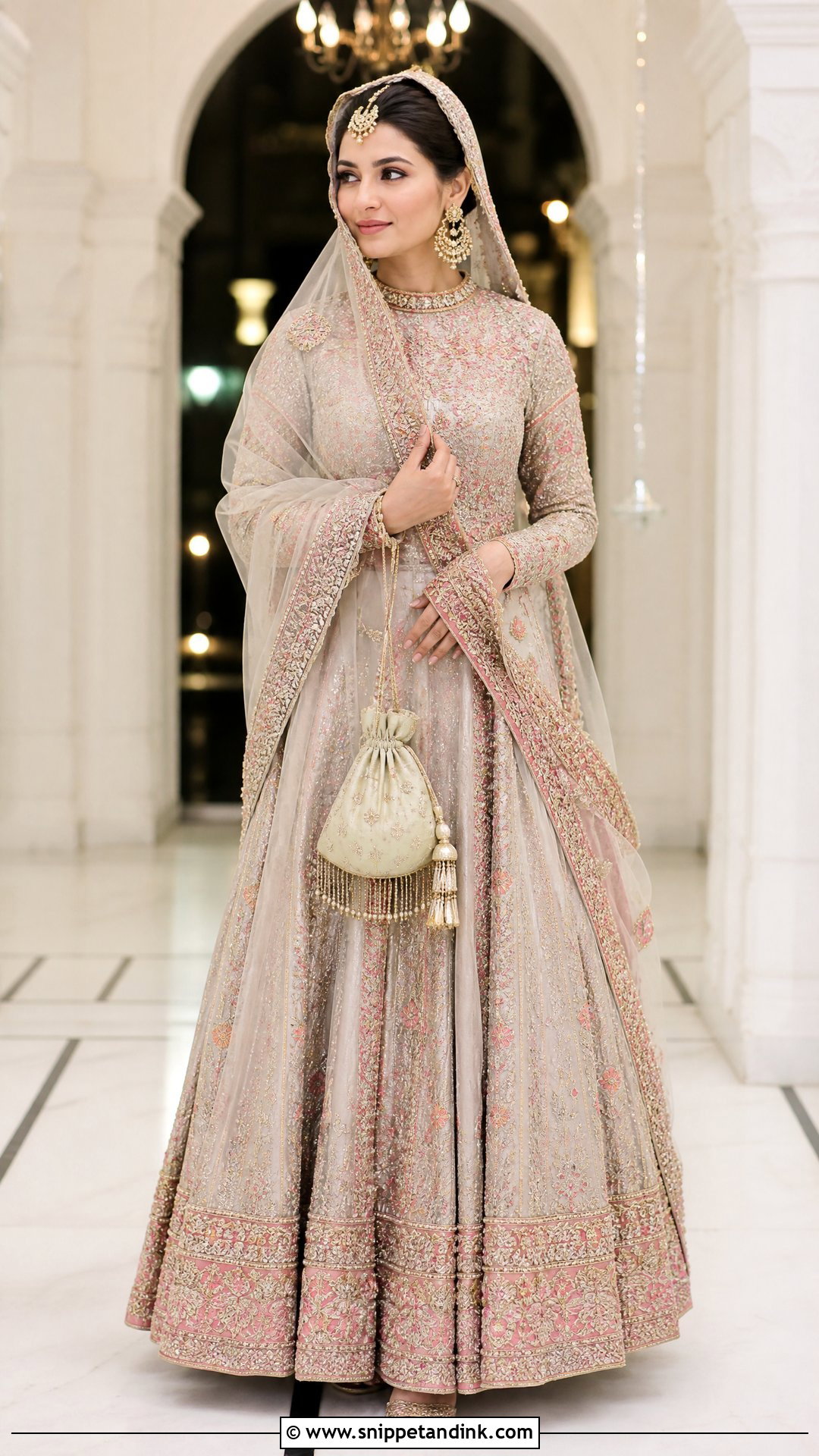
Draping a dupatta over the head turns it into a veil that belongs to the whole bridal lehenga, so the blouse, skirt and dupatta should be planned together. If the skirt is heavily embroidered, pick a dupatta with a strong border and a quieter center so the face stays visible and the outfit does not feel overloaded. Lightweight net or georgette sits much more comfortably on the head than a heavy silk. I pin the dupatta at the crown and at both shoulders so it stays in place while walking, and a second drape across the torso adds coverage if you want it. Embellished flats or block heels, a potli bag and a forehead piece finish it. Coordinate embroidery colors rather than matching every motif exactly.
16. Cape Veil With Tailored Jumpsuit
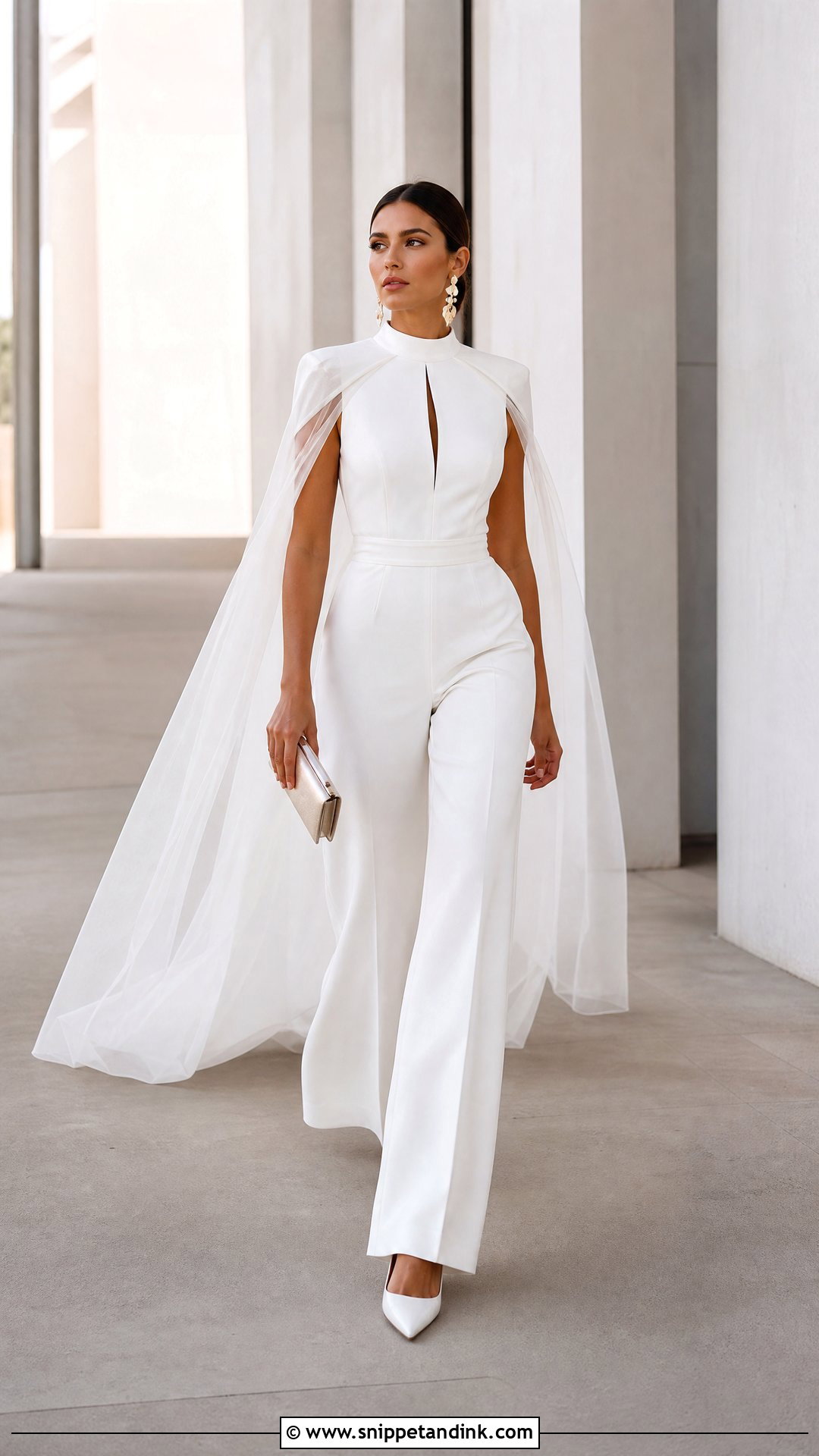
A cape veil fastens at the shoulders instead of the hair, which suits a tailored jumpsuit because nothing competes with the clean line of the hairstyle. Choose a wide-leg jumpsuit in a structured fabric with a defined waist. The cape needs to be light; heavy tulle pulls the shoulder seams backward and you will feel it within the hour. Sculptural earrings, pointed heels and a sleek clutch are enough, and if the cape has a decorative fastening, leave the necklace off. A smooth ponytail or tucked low bun keeps the modern lines intact.
17. Shoulder Veil With Bridal Suit
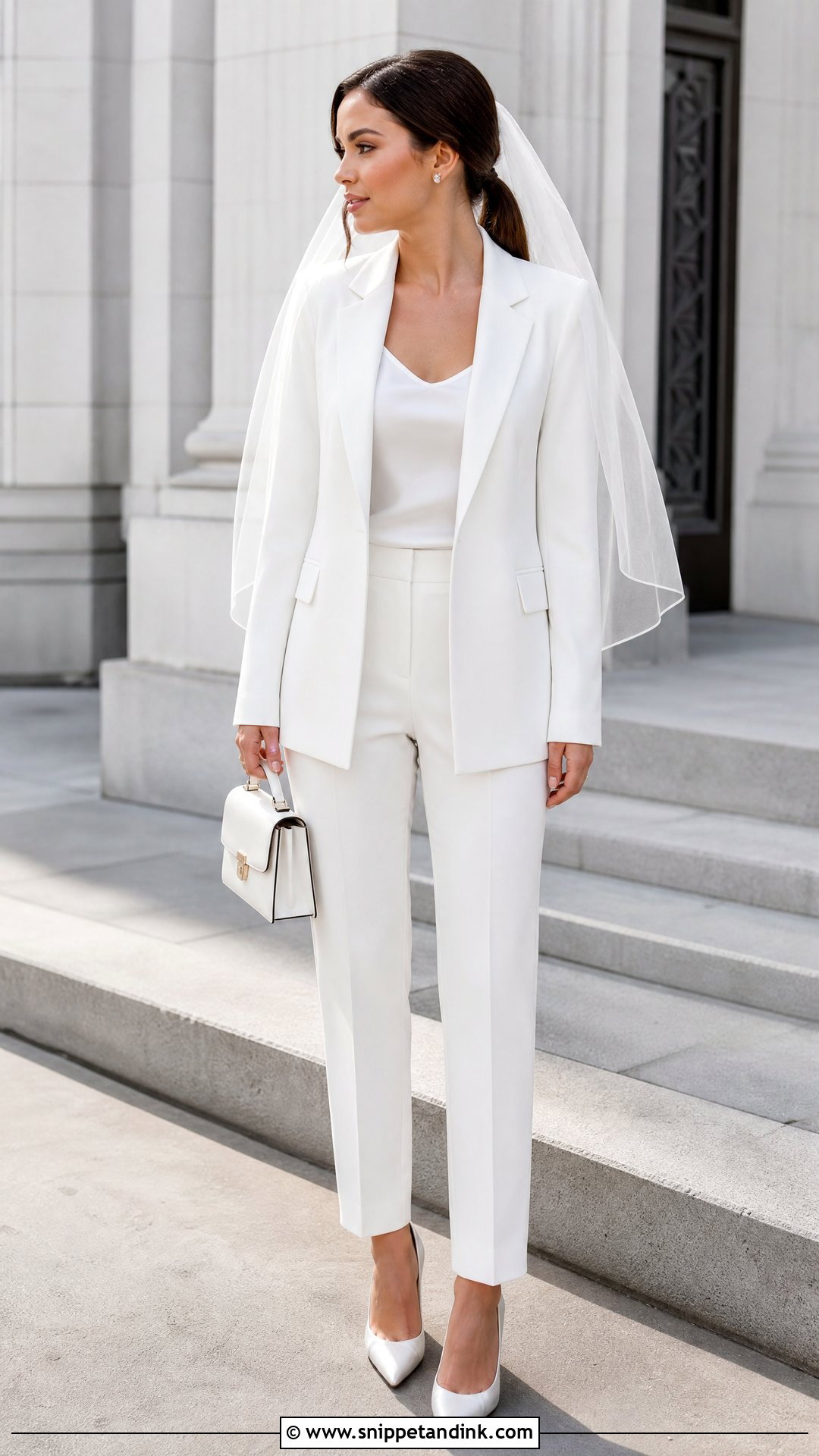
A shoulder veil is the quickest way to make a white suit read as bridal. Whether the blazer is fitted or slightly oversized, the veil should stop at the shoulders so it sits in proportion to the tailoring. Attach it to a comb, a headband or a small bow, and wear a silk camisole or high-neck shell underneath. A low ponytail or polished bob suits the short length. Two practical checks: the suit fabric must be fully opaque in flash photos, and the trousers need hemming to the exact heels you will wear. A single flower or compact bouquet softens the structure.
18. Scarf Veil With Backless Gown
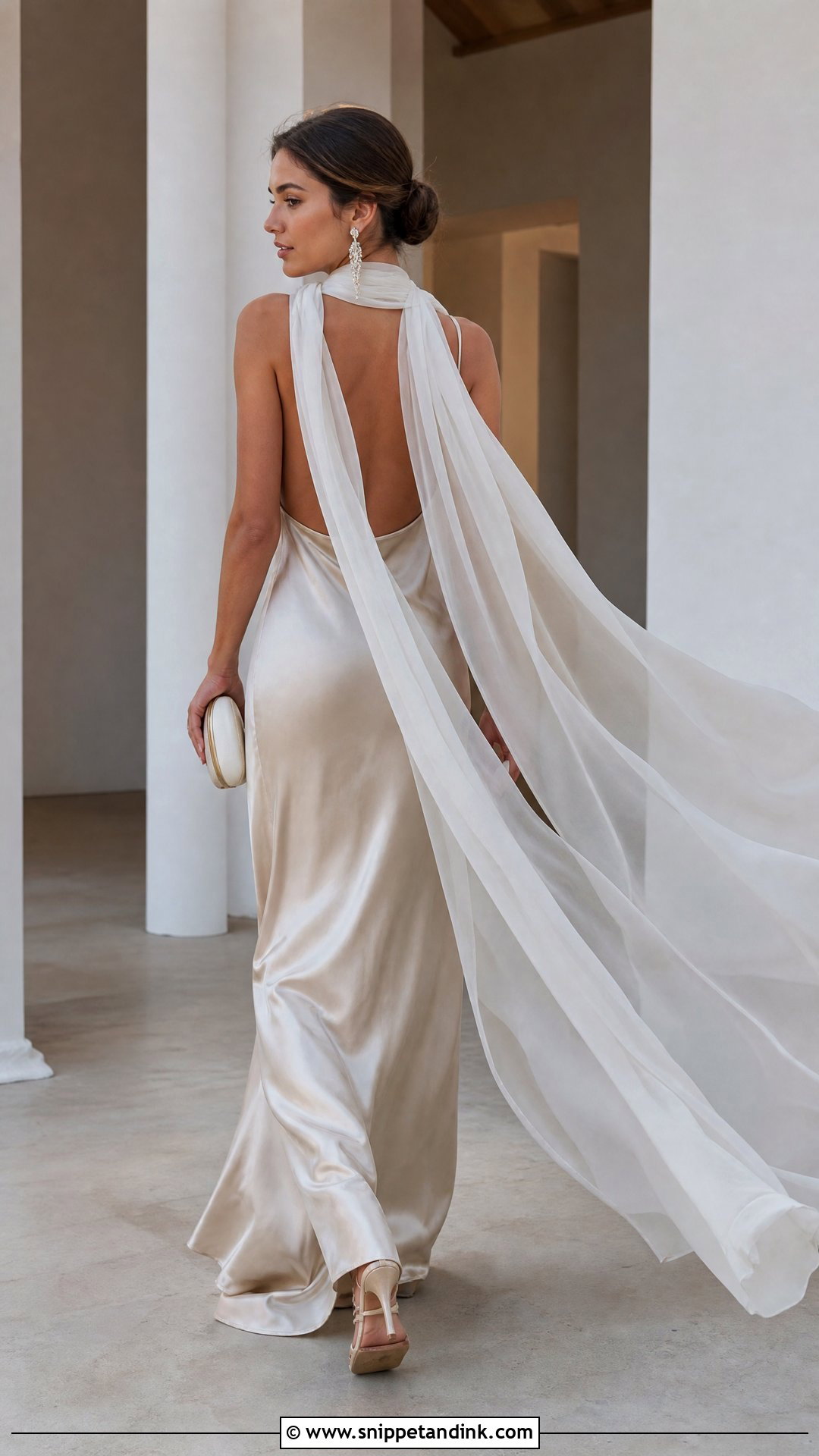
A scarf veil draped around the neck shows off an open back better than any veil that falls from the head. The dress needs a high front neckline so the scarf has somewhere to sit, and the fabric should be lightweight chiffon, silk organza or soft tulle; anything stiffer bunches at the nape. I loop it once around the neck and secure it with a hidden pin near each shoulder blade so it stays put when you raise your arms. Leave out the necklace, since it interferes with the drape, and choose long earrings with heeled sandals and a slim clutch. A clean bun keeps the back visible.
19. Colored Veil With White Wedding Dress
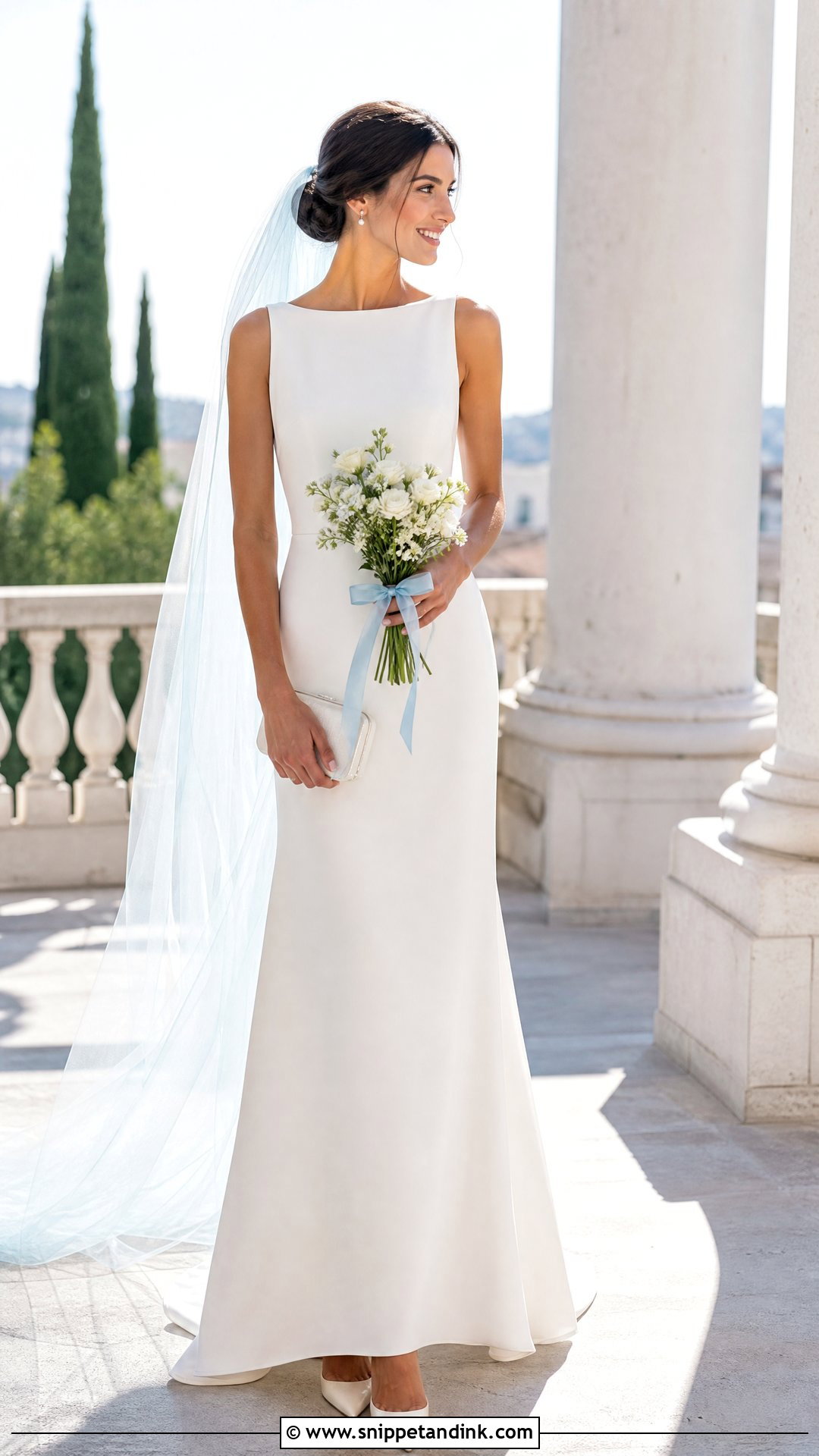
Colored tulle is sheer, so the shade you see in a swatch is never quite the shade you get over a white dress. Blush can turn peach against bright white, and pale blue can look grey in shade. Test the veil over the actual gown both outdoors and under warm indoor light before you commit. Choose a minimalist dress in crepe, satin or mikado so the color is the only feature, and keep the shoes and earrings neutral. Echo the shade once, in a bouquet ribbon or one piece of jewelry, rather than throughout the outfit. A low bun lets the tint frame the shoulders and back.
20. Short Veil With Courthouse Midi Dress
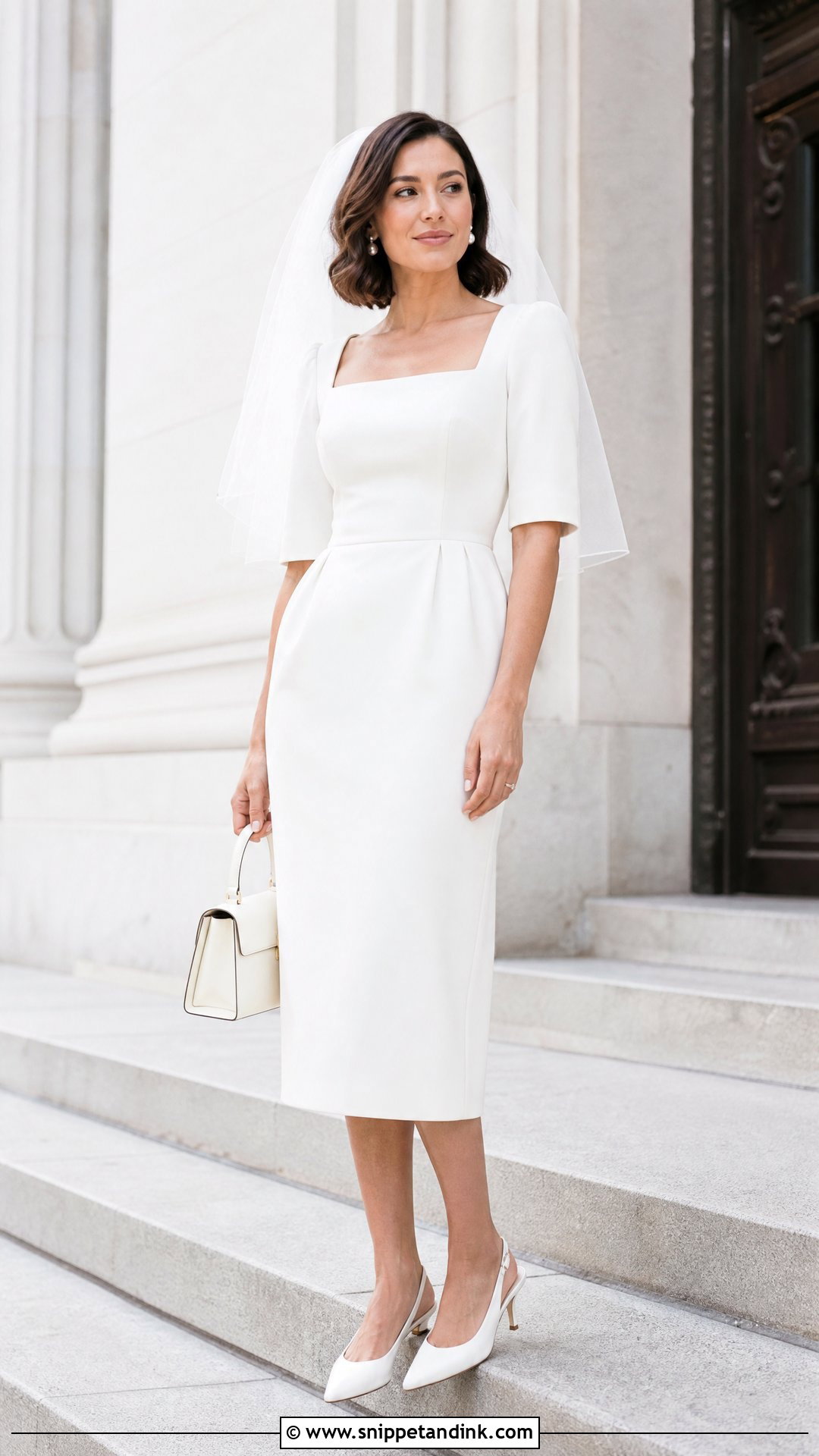
For a courthouse ceremony, I like a structured midi with a square neckline and a hem just below the knee, topped with a shoulder or elbow veil. The short length keeps the outfit in proportion and is easy to manage in hallways, elevators and city streets. Plain tulle, a narrow satin edge or a small bow attachment all suit it, depending on how detailed the dress is. Slingback pumps, pearl earrings and a structured bag big enough for the marriage paperwork make sense here. A smooth bun, ponytail or curled bob holds the comb well, and a cropped blazer covers you if the building is cold.
Creases, Static and Taking the Veil Off at the Reception
Veils arrive folded and creased. Hang yours in a steamy bathroom or use a handheld steamer from a distance, never an iron directly on tulle, since synthetic net melts quickly. Do this a few days ahead so it has time to relax, then keep it hanging in its garment bag.
Static is the other surprise, especially with polyester tulle in dry or air-conditioned rooms. A light mist of anti-static spray on the underside, tested on a hidden corner first, stops it clinging to your arms and gown.
Decide before the day who will remove the veil and when. Most brides take it off after the portraits so they can eat and dance, and the person doing it should know where the pins are so the hairstyle survives. Ask for a small bag or box to be kept ready so the veil is not left draped over a chair, where it will snag.
Wear It for a Full Hour Before You Commit
A detailed gown takes a simpler veil, and a plain dress can carry pearls, lace or embroidery. Most of the decisions above come back to that balance, along with length, edge finish and how the comb sits in your hair. Before the day, wear the full outfit and walk, sit and turn in it, because a veil that looks right standing still can twist or slip once you move. Whether you are a classic bride, a modest dresser or one of the modern minimalists, start from one pairing here and adjust the fabric, coverage and accessories until it feels like yours.


Leave a Reply