
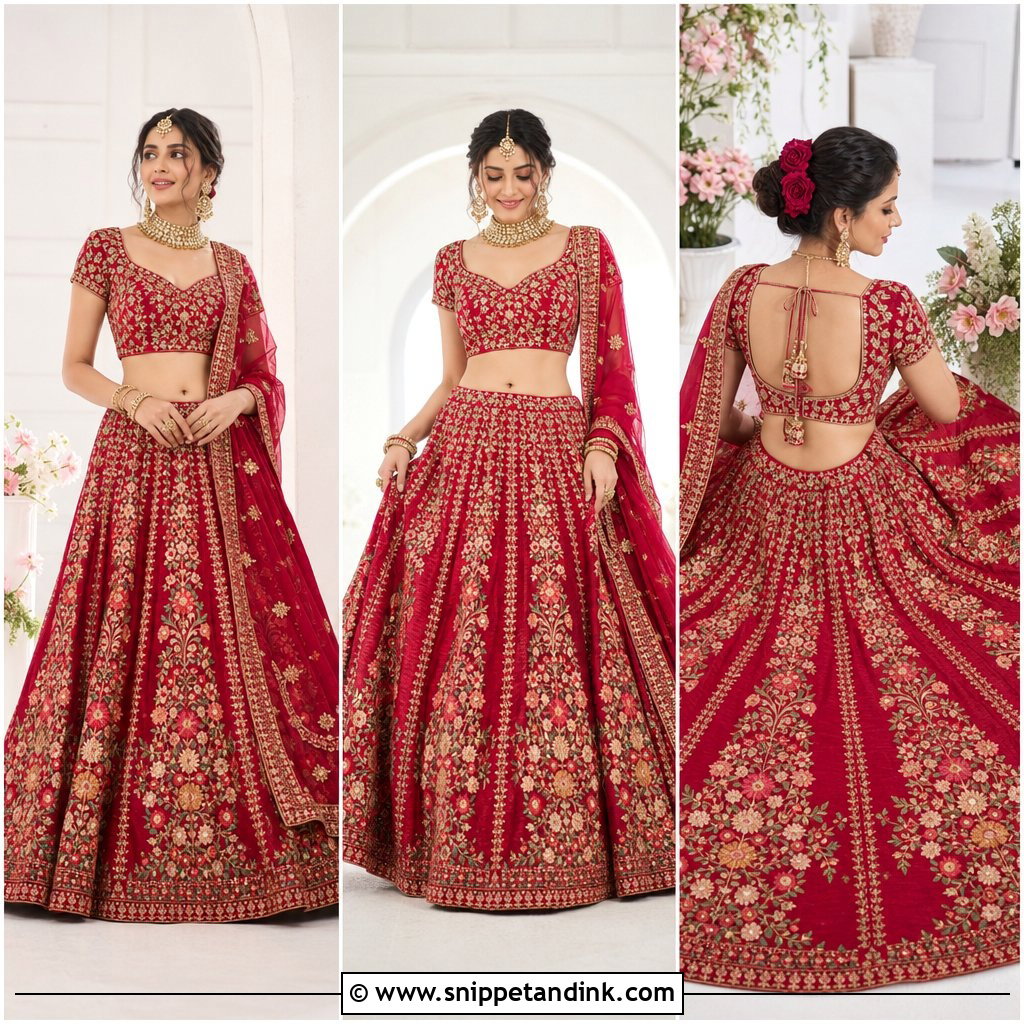
Traditional wear changes how I pose a couple. A heavy lehenga won’t let a bride sit cross-legged, a pallu slides off the shoulder every time she turns, and a sherwani with a stiff collar makes a groom look rigid unless I loosen his stance. The clothes carry so much color, embroidery and jewelry that my job is less about inventing poses and more about keeping all that detail visible while the two of you still look connected. Whatever the pairing, a saree and kurta, lehenga and sherwani, or anarkali and bandhgala, the poses below are the ones I come back to for weddings, engagements, festive shoots and pre-wedding albums. Each comes with what I adjust before I press the shutter.
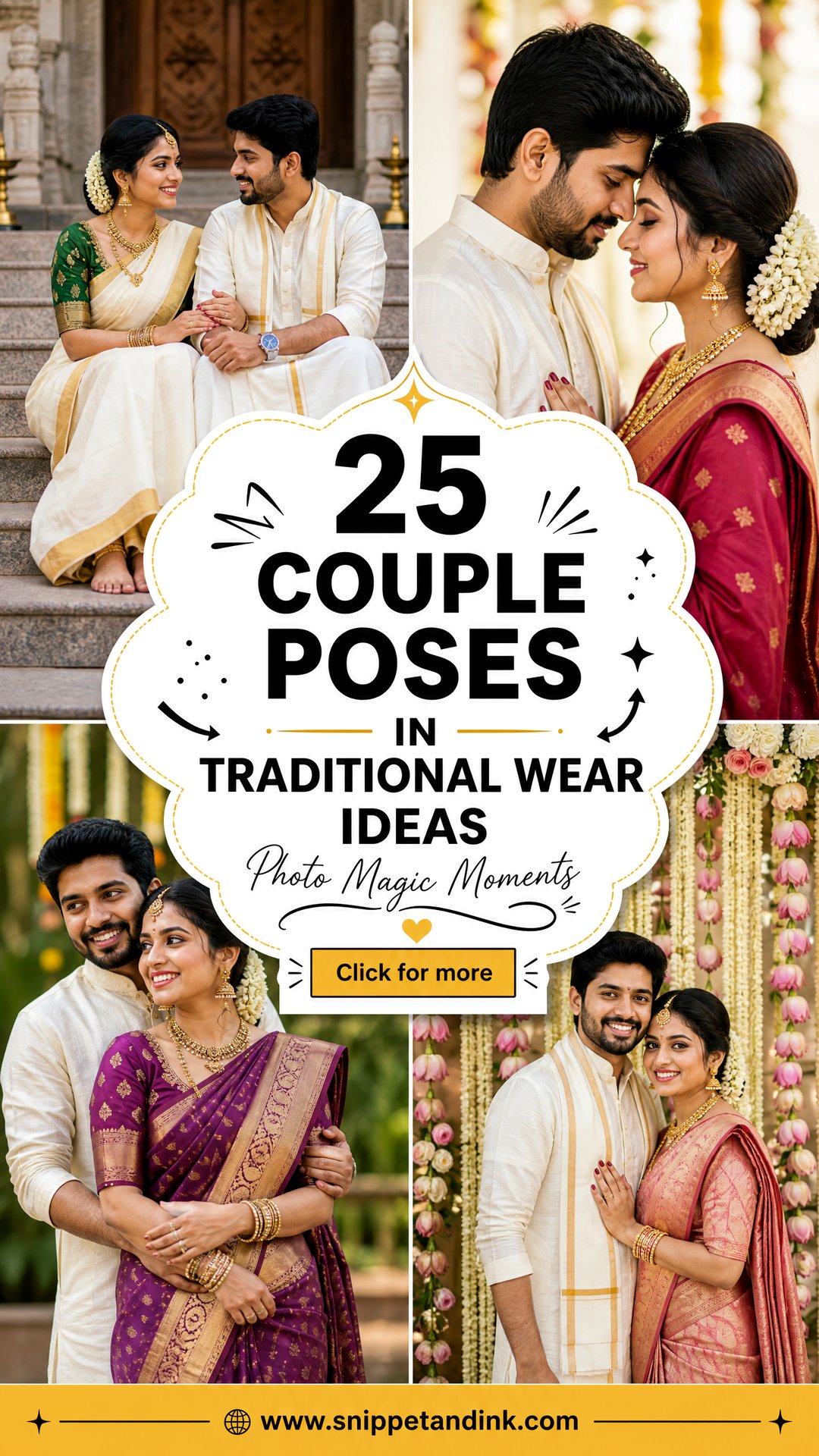
Heavy Lehengas, Slipping Pallus and What They Let You Do
Before I plan a single pose, I ask what each of you is wearing and how heavy it is. A bridal lehenga with dense embroidery can be very heavy, and that weight decides almost everything: how long the bride can stand, whether she can sit on the floor, how fast she can turn. A silk saree drapes beautifully but needs pinning at the shoulder and pleats, or every movement undoes it. A sherwani with a high collar and a safa changes how freely the groom can turn his head.
What I check at the start of a traditional shoot
- Pins: the pallu or dupatta pinned firmly at the shoulder and, for sarees, at the pleats. Unpinned fabric slides in every frame.
- Height: a safa or turban adds several inches. I may put the bride on a step or angle her closer to the camera to balance the frame.
- Jewelry that catches: long earrings, a nath chain and heavy bangles snag on sherwani embroidery during hugs and forehead touches.
- Footwear: juttis and heels on stone or grass. If she can’t walk steadily, walking shots become very slow walking shots.
- A helper: one friend or relative whose only job is fixing the drape between frames saves a lot of time.
1. Saree And Kurta Standing Couple Pose
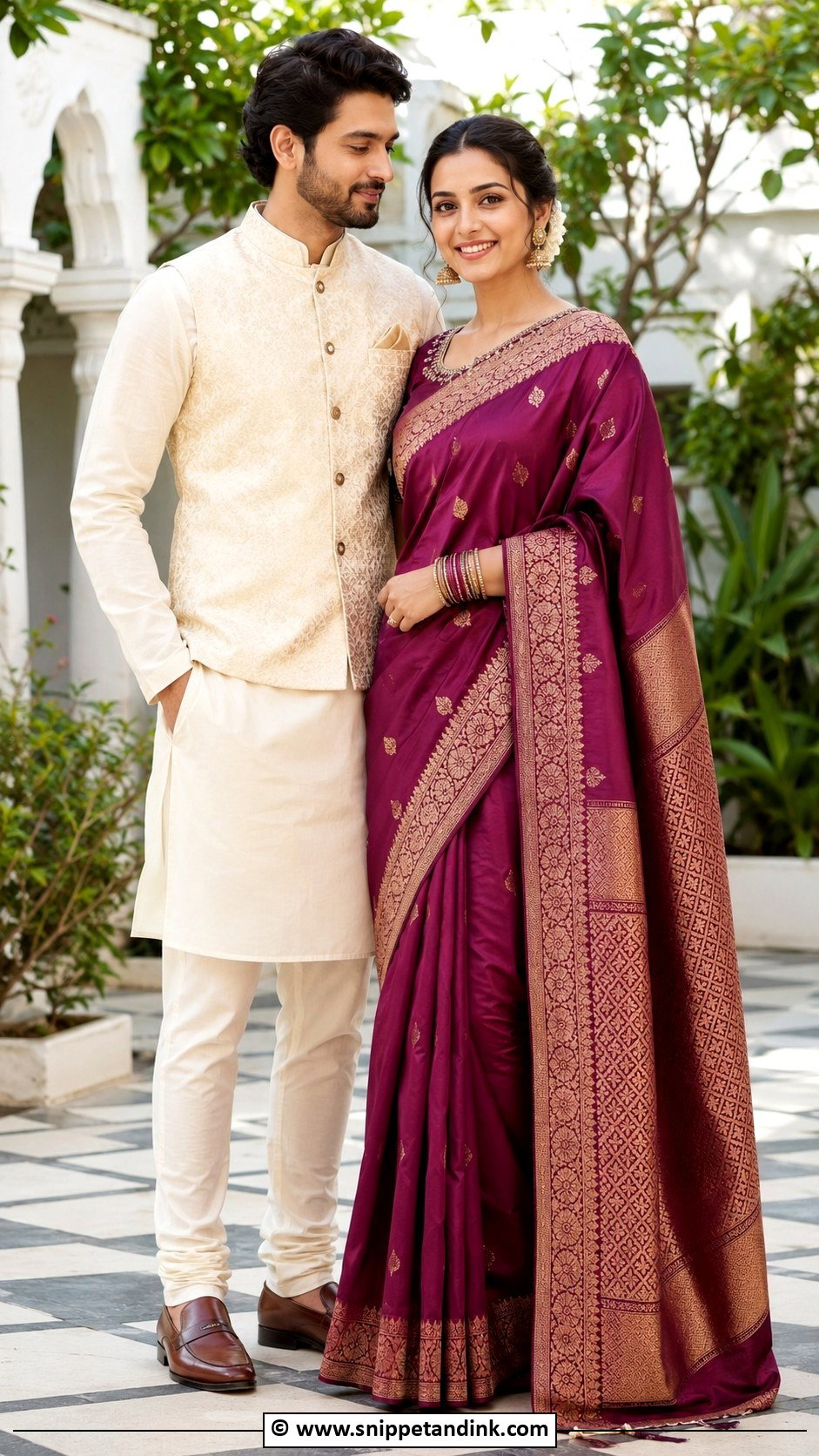
This is the pose I start every traditional shoot with, because it shows me how the outfits sit before we try anything harder. Angle the bride about a quarter turn toward her partner so the saree pleats fall straight and the pallu, blouse and bangles stay visible. His near hand goes lightly behind her shoulder or waist; the far hand hangs loose, not in a fist. I take the first frame with both of you looking at the camera, then ask you to look at each other. A plain garden wall, courtyard or carved doorway keeps the background from fighting the saree border.
2. Lehenga And Sherwani Front Facing Couple Pose
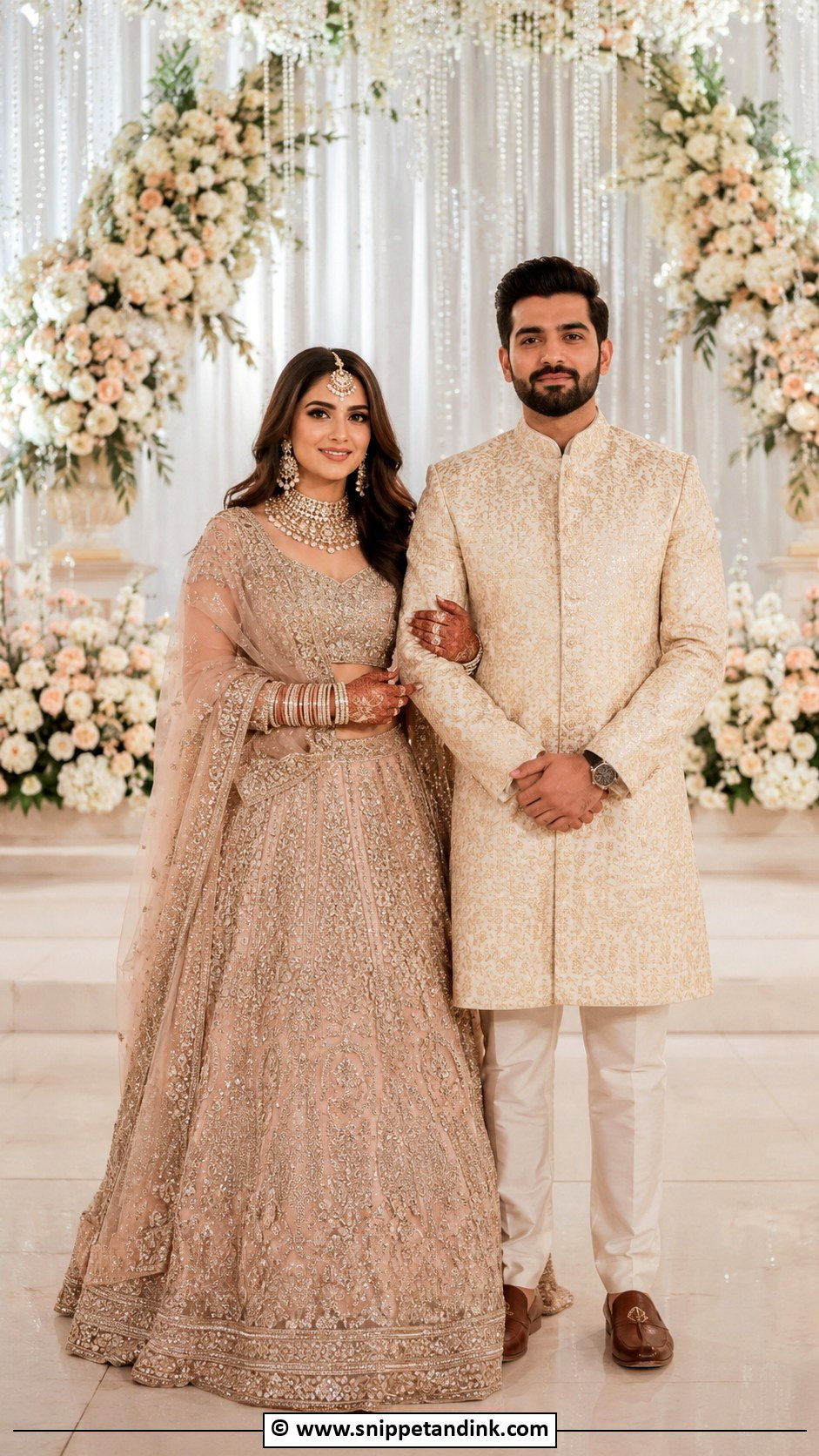
Front-facing portraits are the formal frame every family asks for, and they look stiff only when feet are lined up like soldiers. I have each of you put weight on the back foot and soften the front knee. Spread the lehenga so the flare and embroidery fan out evenly, and center the sherwani buttons, stole or brooch. A clutch, dupatta edge or a few flowers gives her hands something to do; his hand near the sherwani buttons reads polished rather than posed. This is the album’s anchor image, so I shoot it early while everything is crisp.
3. Traditional Couple Walking Pose
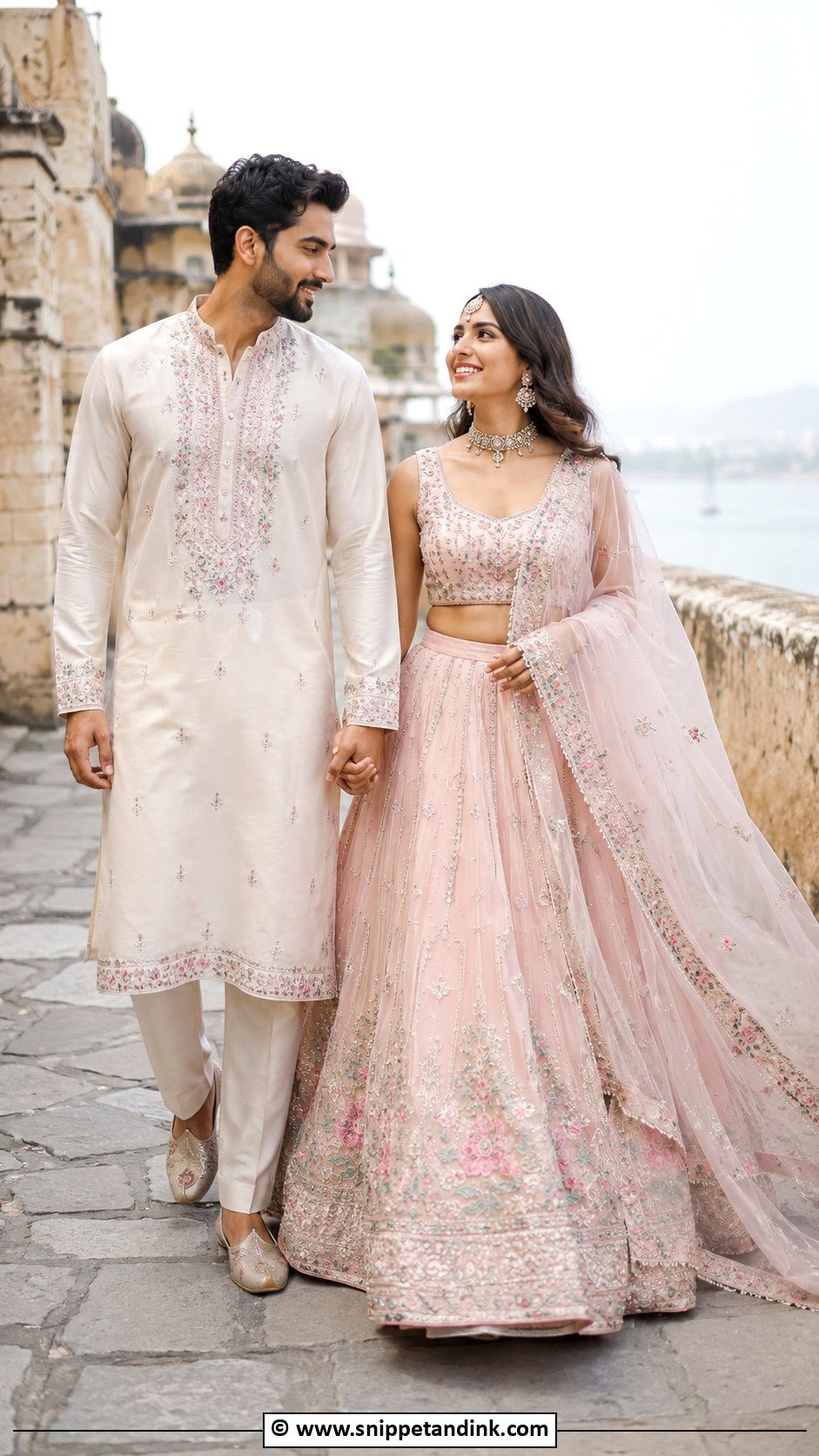
Walking shots look easy and take several takes. Walk slower than feels natural, hand in hand, angled slightly toward me, and don’t look at your feet. The pallu, dupatta or anarkali hem only moves if there’s a little air or a little speed, so in still conditions I ask the bride to let the fabric trail from her free hand. One of you looks ahead while the other glances over, or share a laugh. Palace corridors and garden lawns give depth; crowded venue paths don’t.
4. Back To Back Traditional Couple Pose
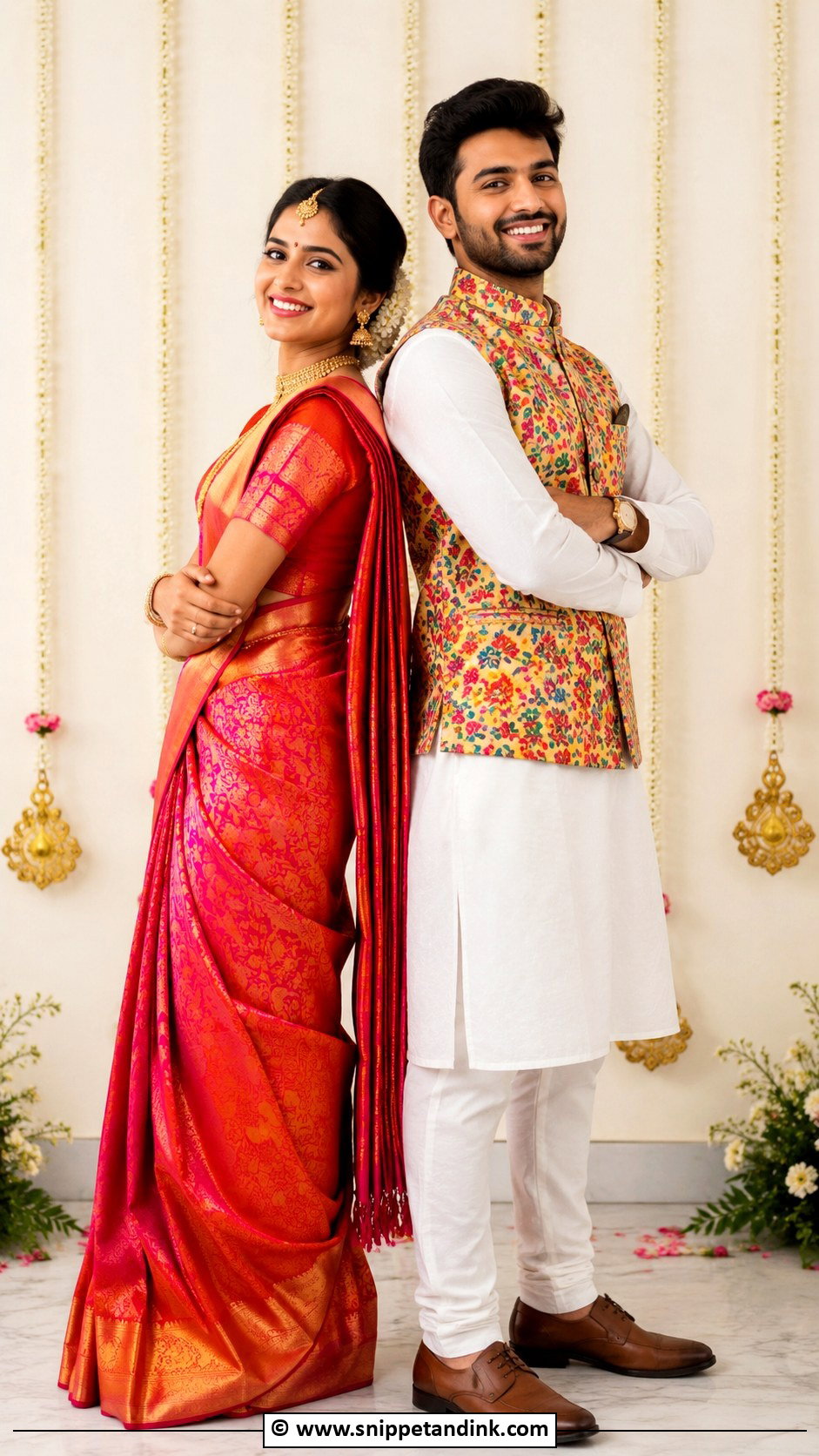
Back-to-back works best when each outfit is strong enough to carry its own half of the frame. Lean your backs together lightly and angle both bodies about 45 degrees toward the camera, so we see the front of each outfit instead of a profile. Crossed arms look confident on the groom and often awkward on a bride wearing heavy bangles, which click and slide; I usually have her hold her dupatta instead. Finish with a side glance at each other so it doesn’t read cold.
5. Sitting On Steps Couple Pose
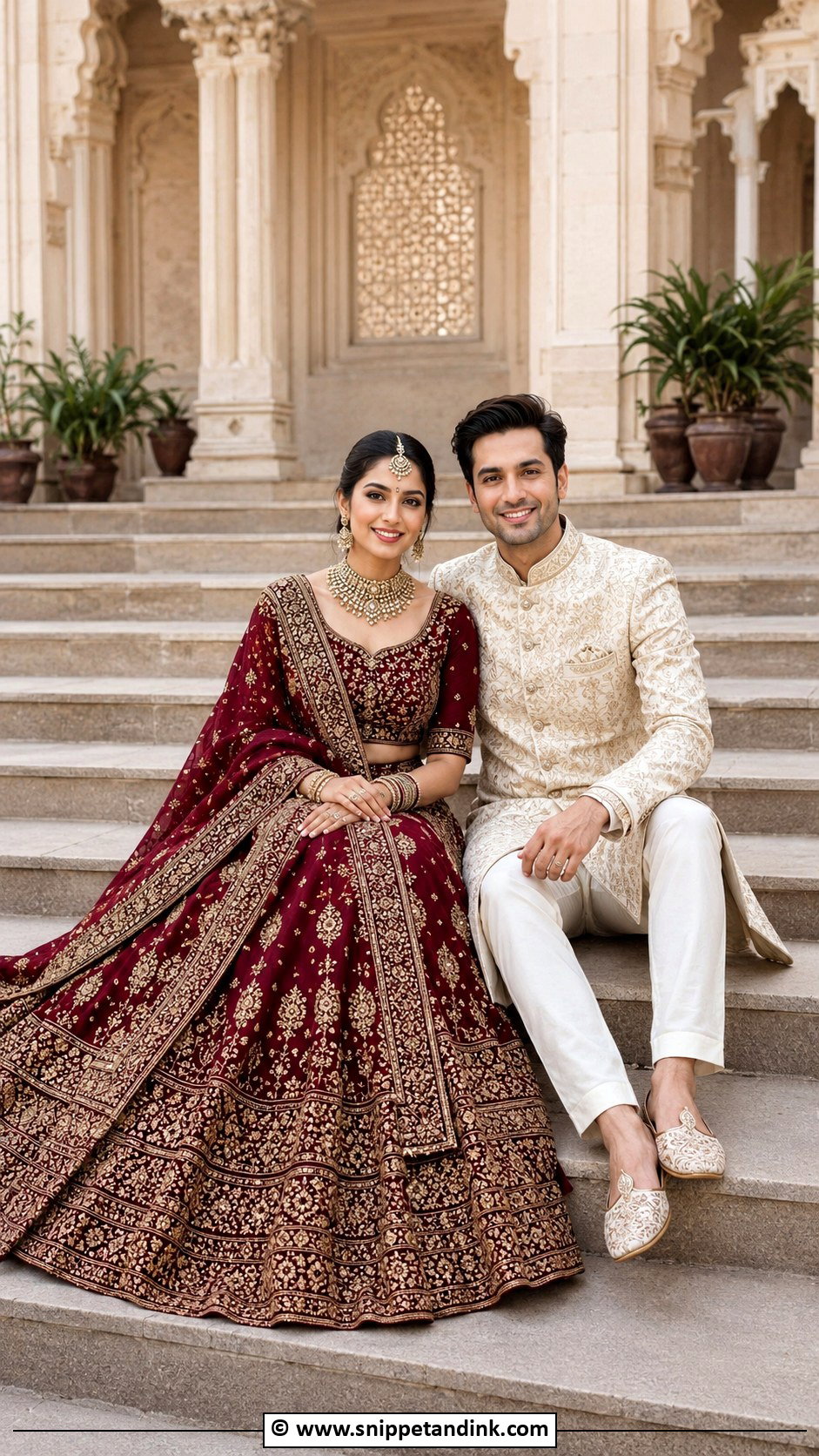
Steps solve the height-difference problem and give the frame layers. The bride sits one step below or beside her partner, and I spread the lehenga, saree or anarkali over the step edge so it falls neatly rather than bunching in her lap. He sits tall in a sherwani, kurta set, or bandhgala, one hand on his knee and the other near hers. Check the step for dust before sitting; stone steps leave grey marks on silk. I shoot from eye level or just below, which gives it a calm, regal feel.
6. Dupatta Frame Couple Pose
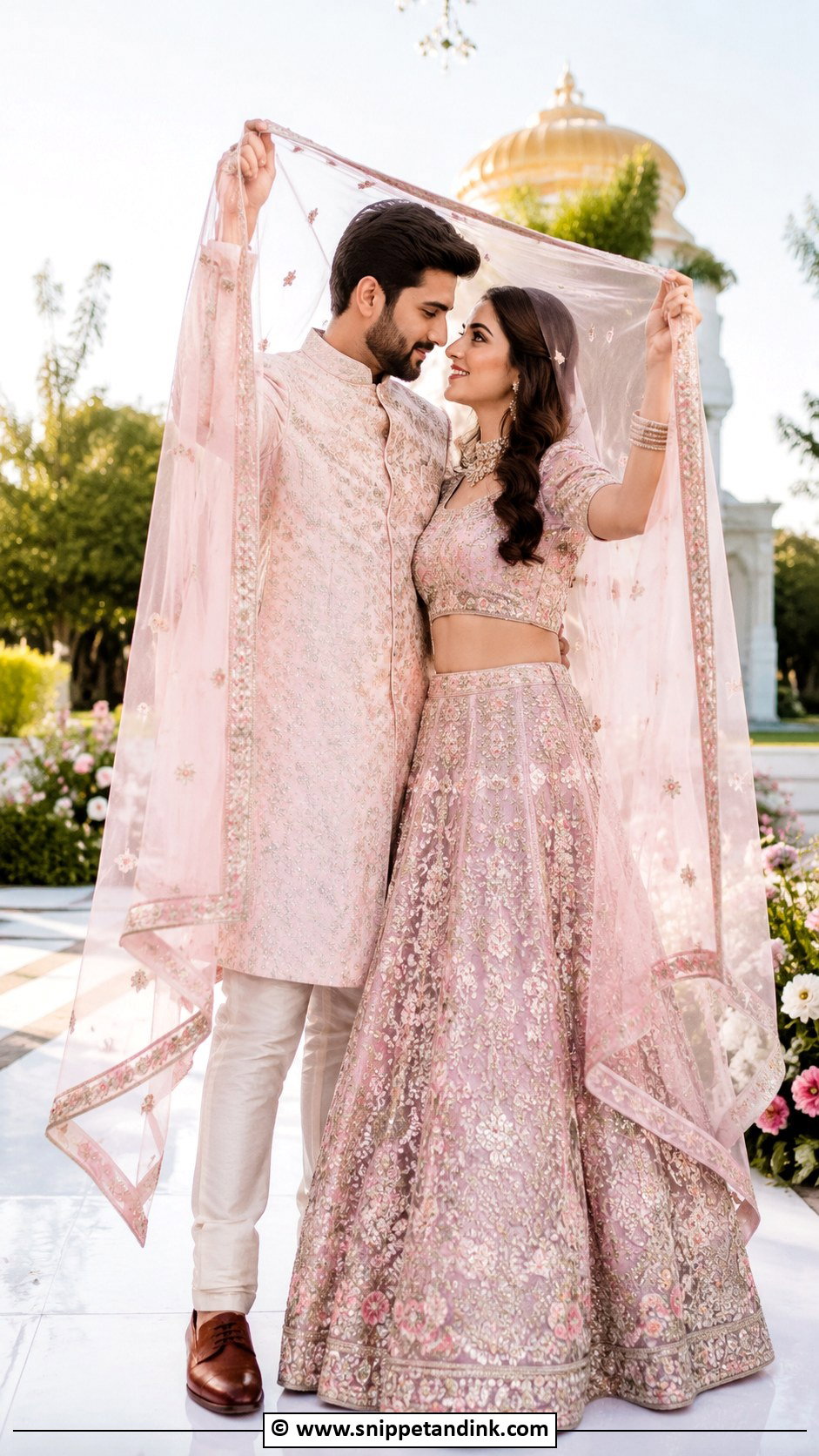
A dupatta frame is all about light passing through fabric. Sheer organza, net and fine embroidered dupattas glow when backlit; heavy velvet or brocade just blocks your faces. Lift the dupatta or pallu gently around both of you so it frames your shoulders without covering the outfits underneath. A second person holding the far corner out of shot makes this much easier. Keep expressions small, a smile or a quiet look. Soft outdoor light or a plain wall behind works best.
7. Hand Holding Traditional Couple Pose
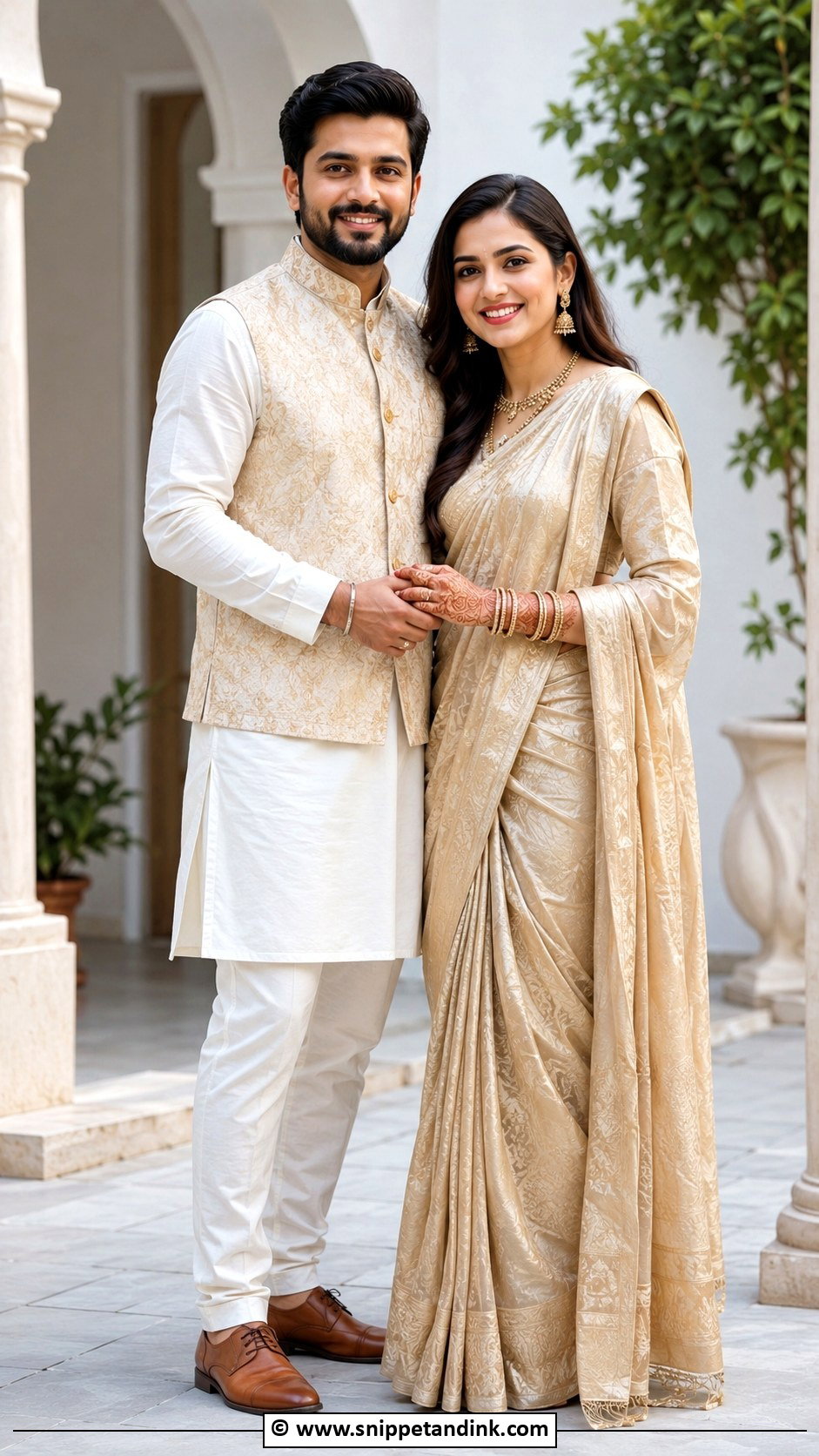
Hand-holding photos are mostly about the hands, so the first thing I check is grip. Couples squeeze when they’re nervous, and white knuckles show. Loosen your fingers and let them interlace lightly. Stand side by side, angled toward each other, with your joined hands in the middle of the frame so rings, bangles, mehndi and sleeve cuffs are clear. A sherwani cuff with buttons catches the light nicely here. It’s simple, and it works for engagements, festive portraits and anniversary shoots alike.
8. Forehead Touch Couple Pose
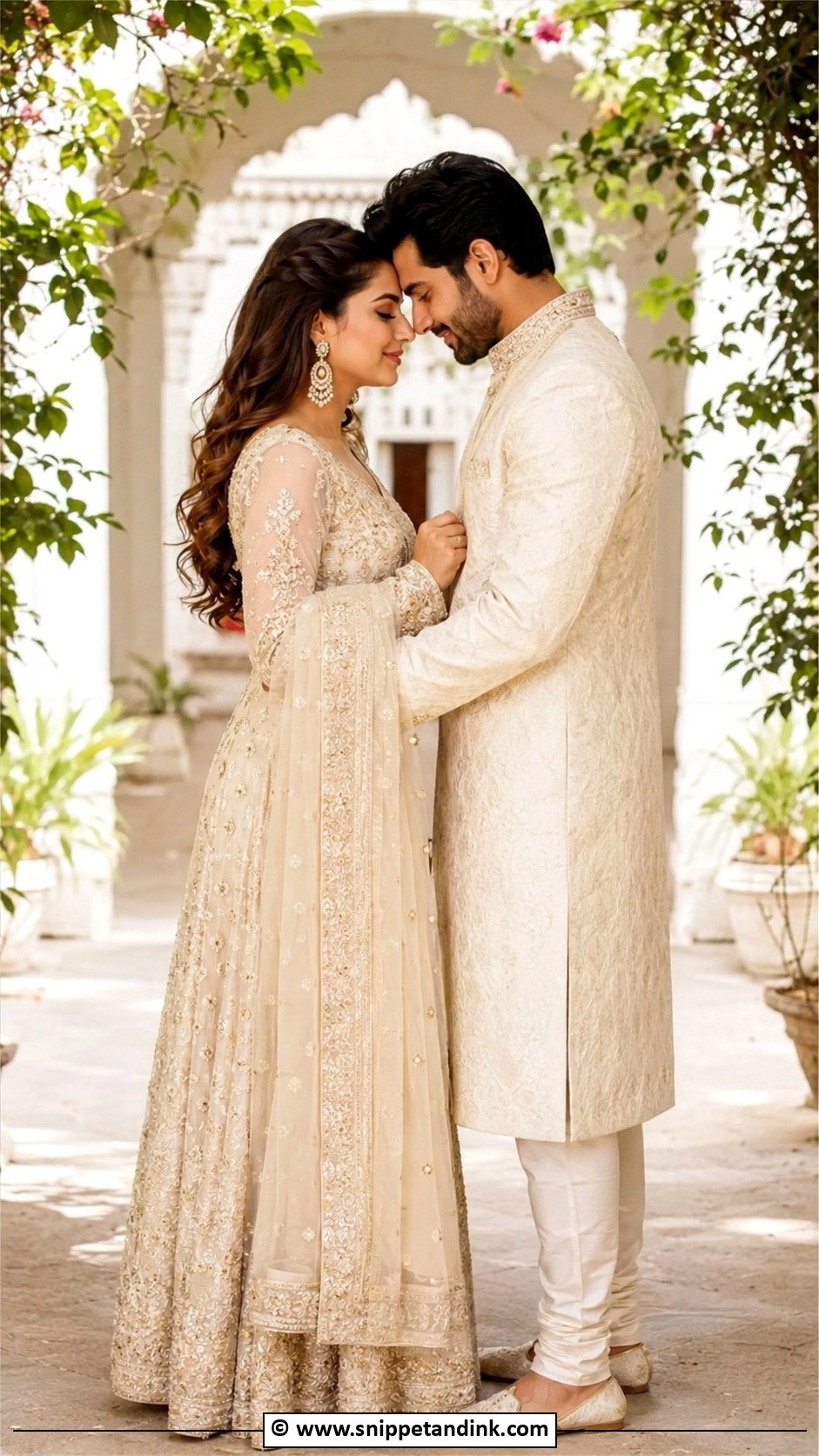
The forehead touch is the quiet frame I shoot between bigger set-ups, when a couple has relaxed. Stand close, foreheads gently together, eyes closed or lowered. Watch the maang tikka and any turban or safa: they bump, so tilt your heads slightly to the side. Her hand can hold the dupatta edge or rest on his arm. I shoot it from the side or a slight diagonal so zari, mirror work and silk texture stay readable. Plain backgrounds only.
9. Looking At Each Other Couple Pose
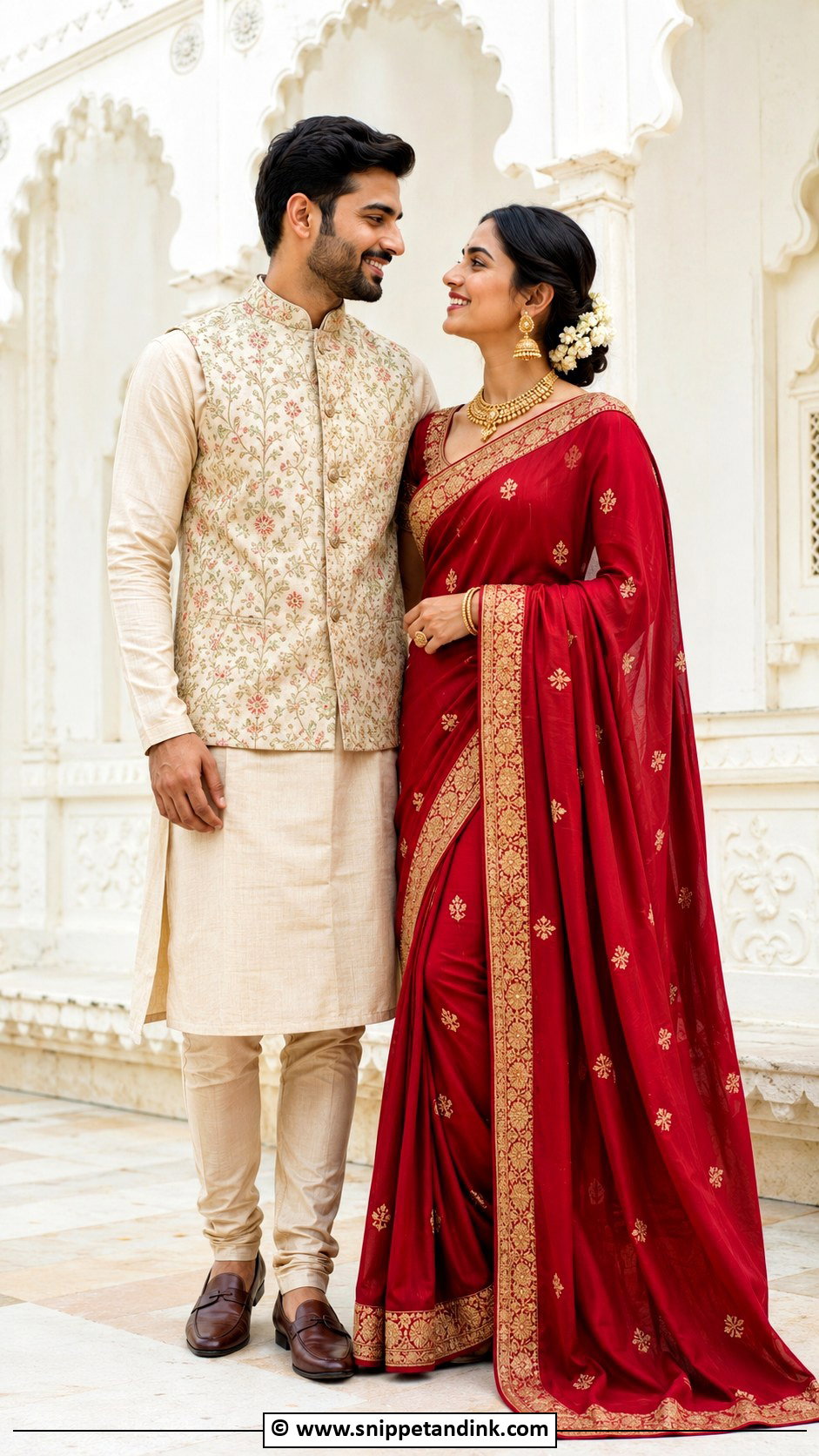
For couples who freeze when they look into a lens, this is the fix. Turn your bodies slightly inward and just look at each other; a soft smile beats a big expression every time. Before I shoot, I straighten the pallu, dupatta or lehenga border and smooth the sherwani stole, because once you’re looking at each other neither of you will notice it slipping. It works indoors and out, and it’s a staple in pre-wedding shoots and engagement albums.
10. Traditional Couple Twirl Pose
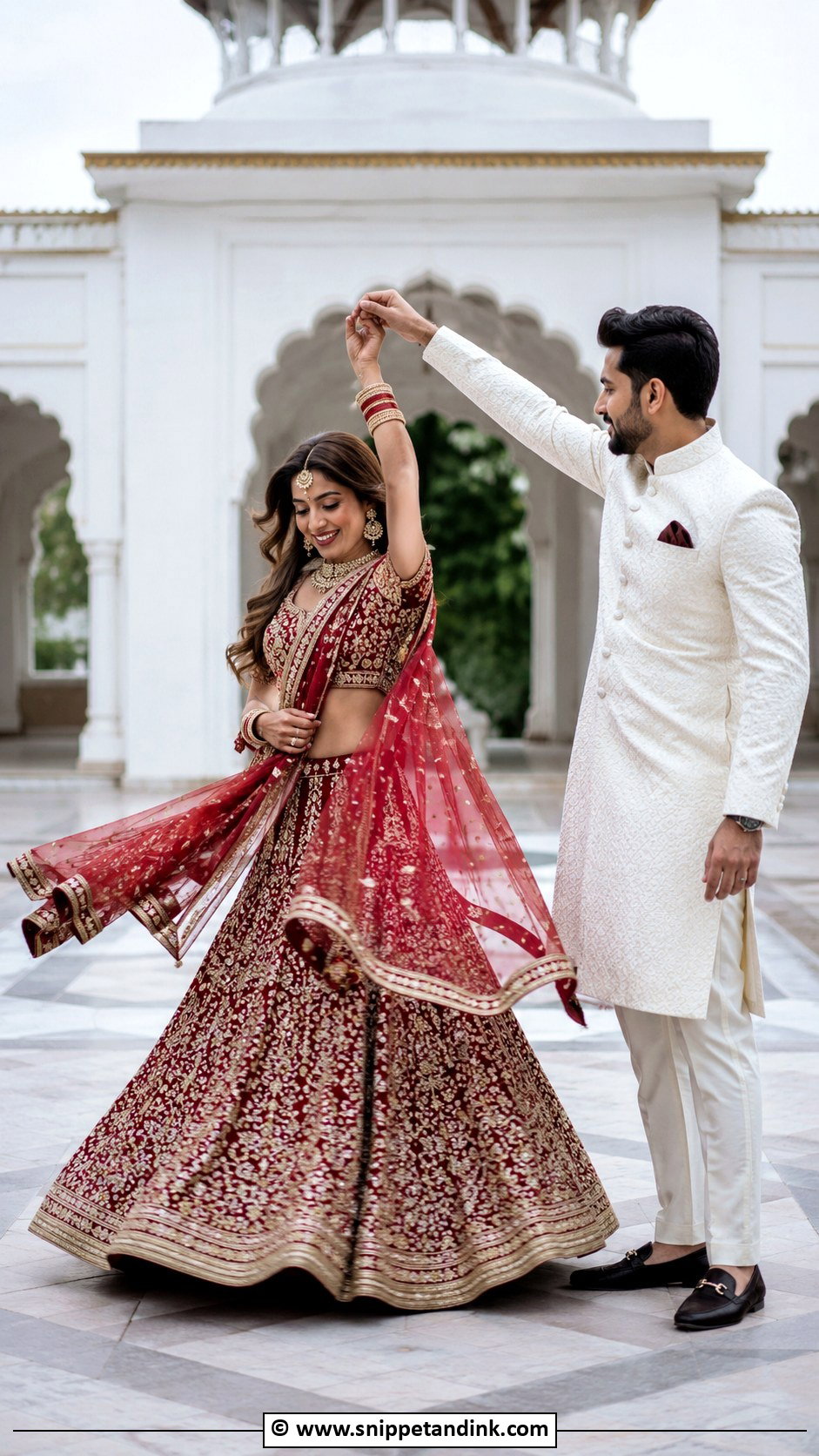
A twirl needs a flared outfit, so lehengas, anarkalis, shararas and lighter sarees are the ones to use; a tightly draped silk saree barely moves. He holds her hand above shoulder height and stays planted while she turns slowly. Faster spins blur the embroidery and can make a heavy lehenga swing her off balance. I shoot full-length at a fast shutter speed and take several turns. Clear the ground first: a courtyard or terrace works, gravel or uneven grass does not.
11. Shoulder Lean Couple Pose
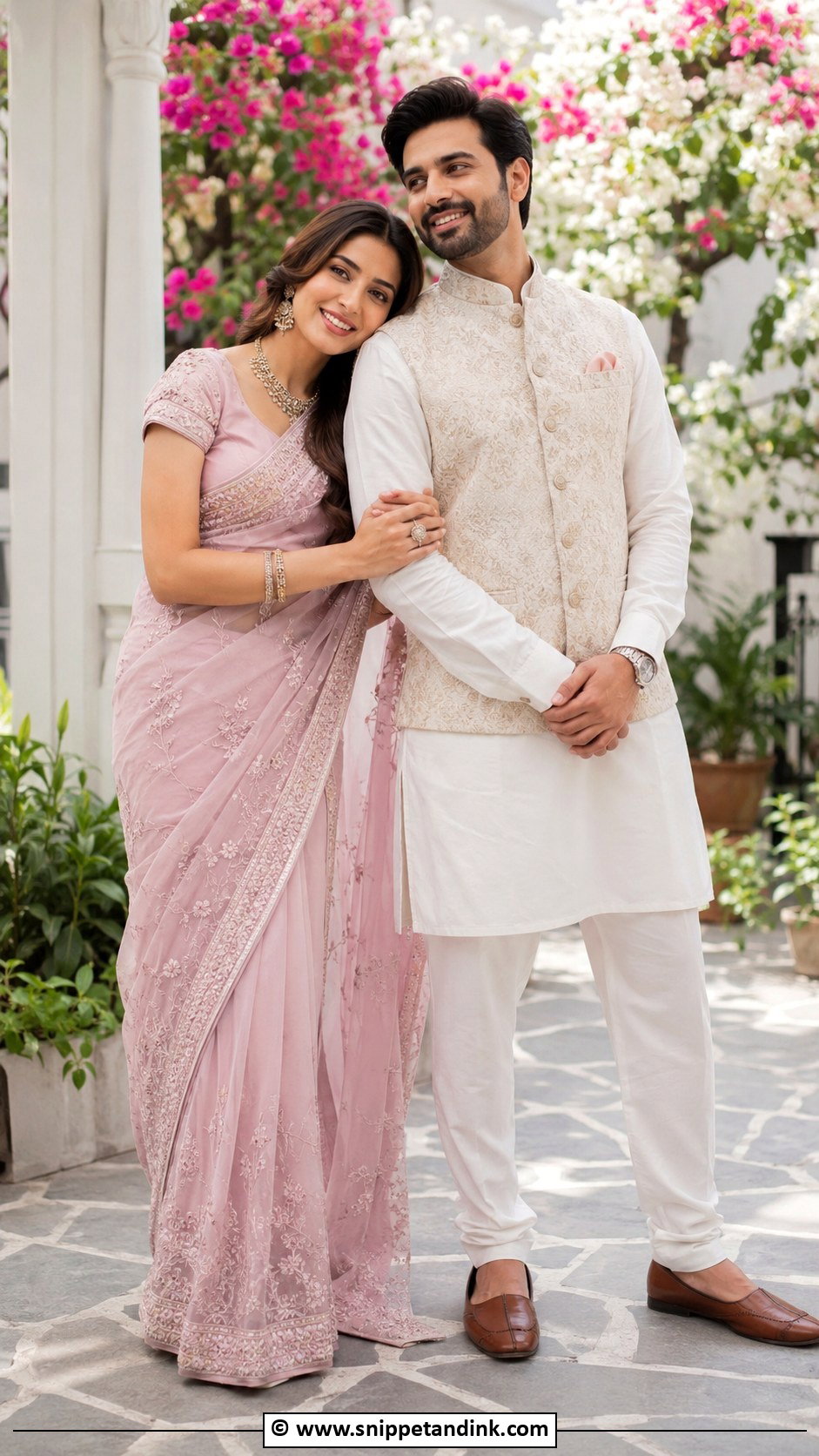
The shoulder lean is a rest pose that looks affectionate, and I use it when a couple has been standing a long time. She leans her head lightly on his shoulder; he keeps his posture tall so she isn’t sinking. Large statement earrings and a saree with statement earrings can press into his shoulder or catch on embroidery, so check that nothing is snagging. Keep both faces visible, looking at me or slightly away. It’s a good breather between group photos.
12. Traditional Couple Side Hug Pose
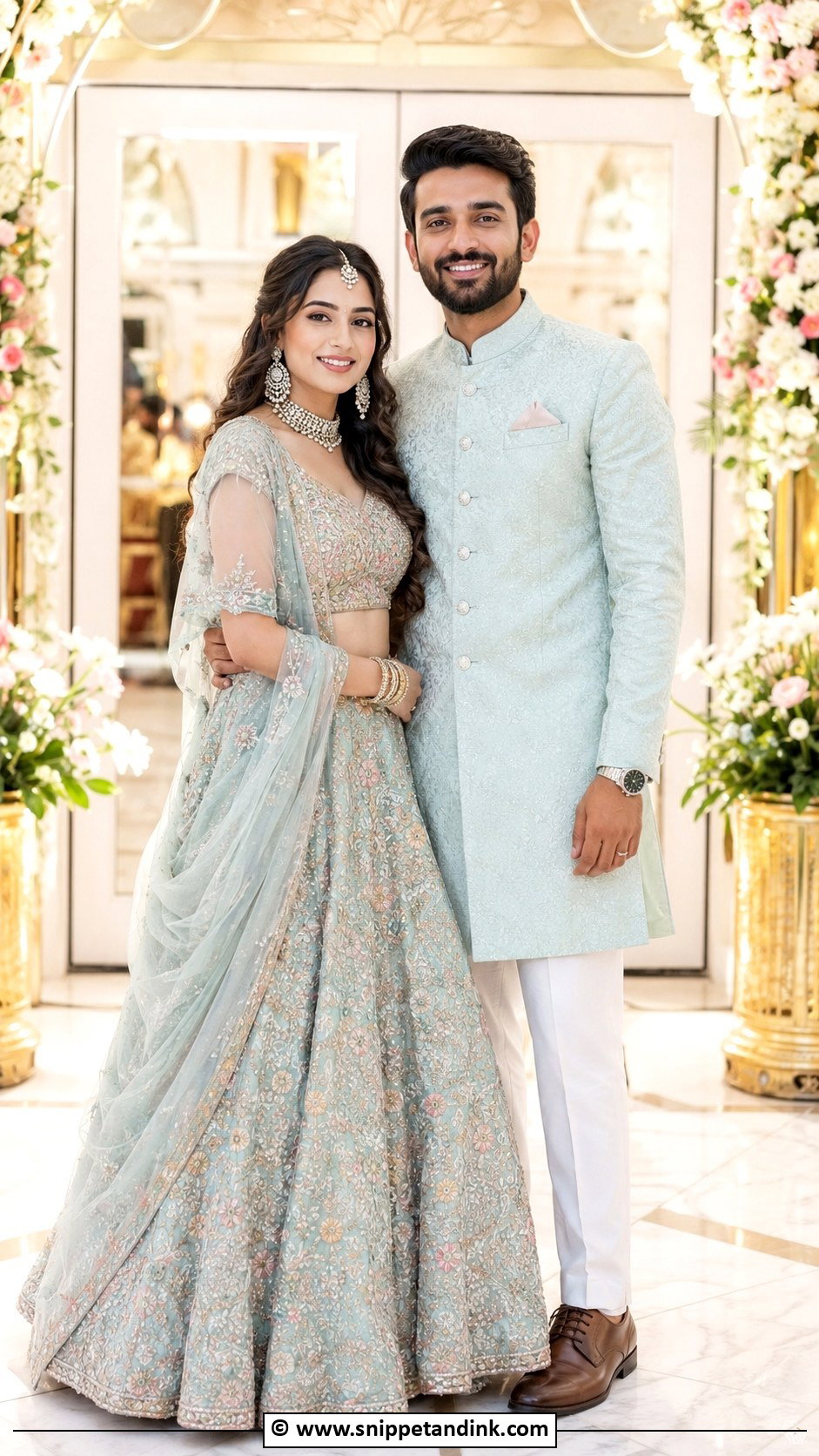
A side hug is the frame families love for festive cards because it looks friendly and relaxed. Stand side by side, one arm lightly around the other’s shoulder or waist, both turned slightly toward the camera so the outfits stay open. The common mistake is the hugging arm crushing the dupatta or pallu flat against her side, so bring the fabric forward first. Relaxed smiles are enough. It’s easy to repeat in every location, which helps an album feel consistent.
13. Traditional Couple Sitting On Floor Pose
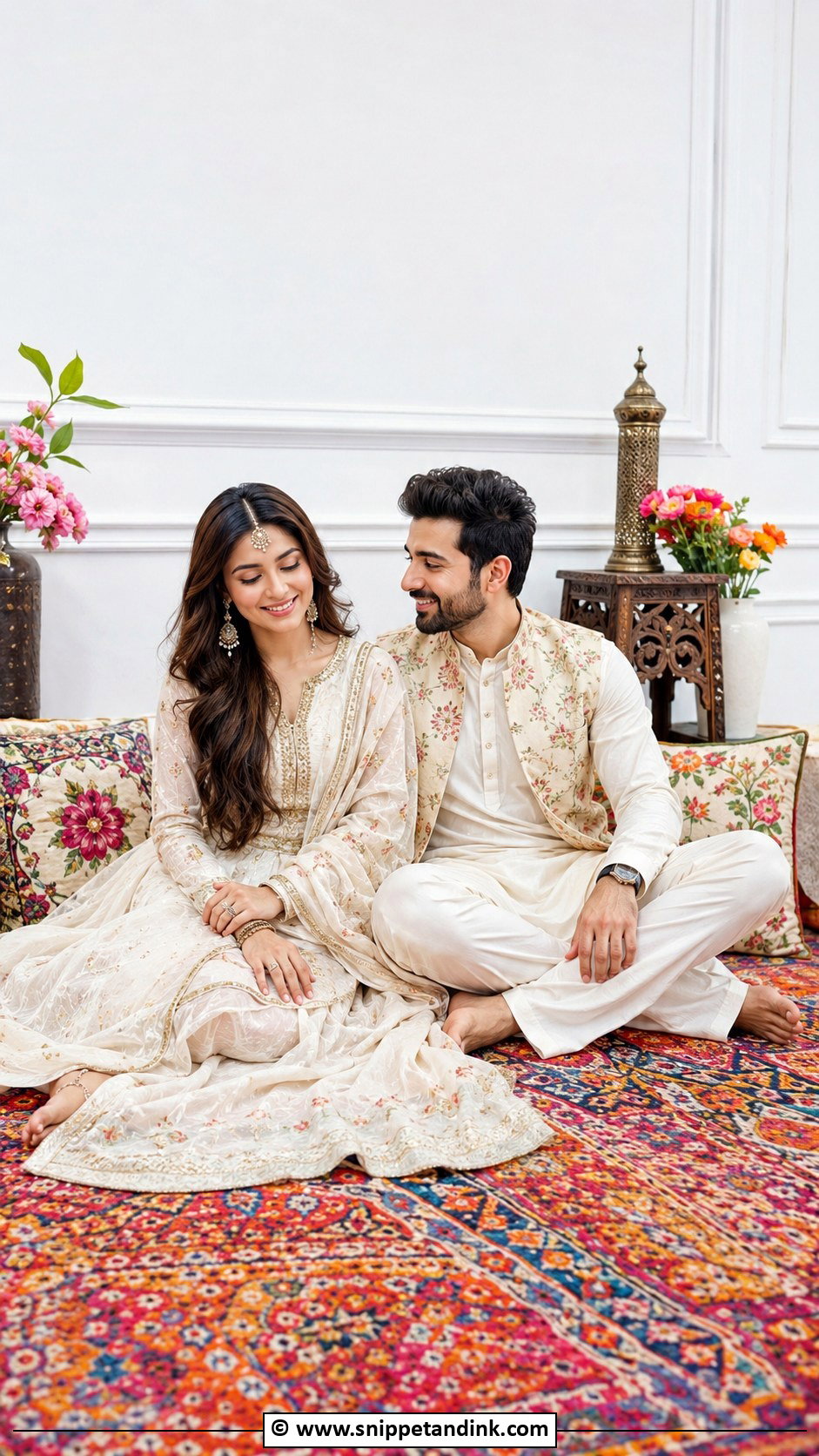
Floor poses look intimate and cultural, and they’re hard on outfits. A heavily embellished lehenga creases at the hip the moment she sits, and getting up gracefully needs a hand. Sit on a rug, low platform or clean courtyard floor; I spread the lehenga or saree around her in a soft circle and he sits beside her in a kurta pajama, sherwani or dhoti-style outfit. Hands rest on knees or near each other. Brass lamps, cushions and flowers around you make it feel like a scene rather than a set. I keep this one for late in a shoot.
14. Palace Balcony Couple Pose
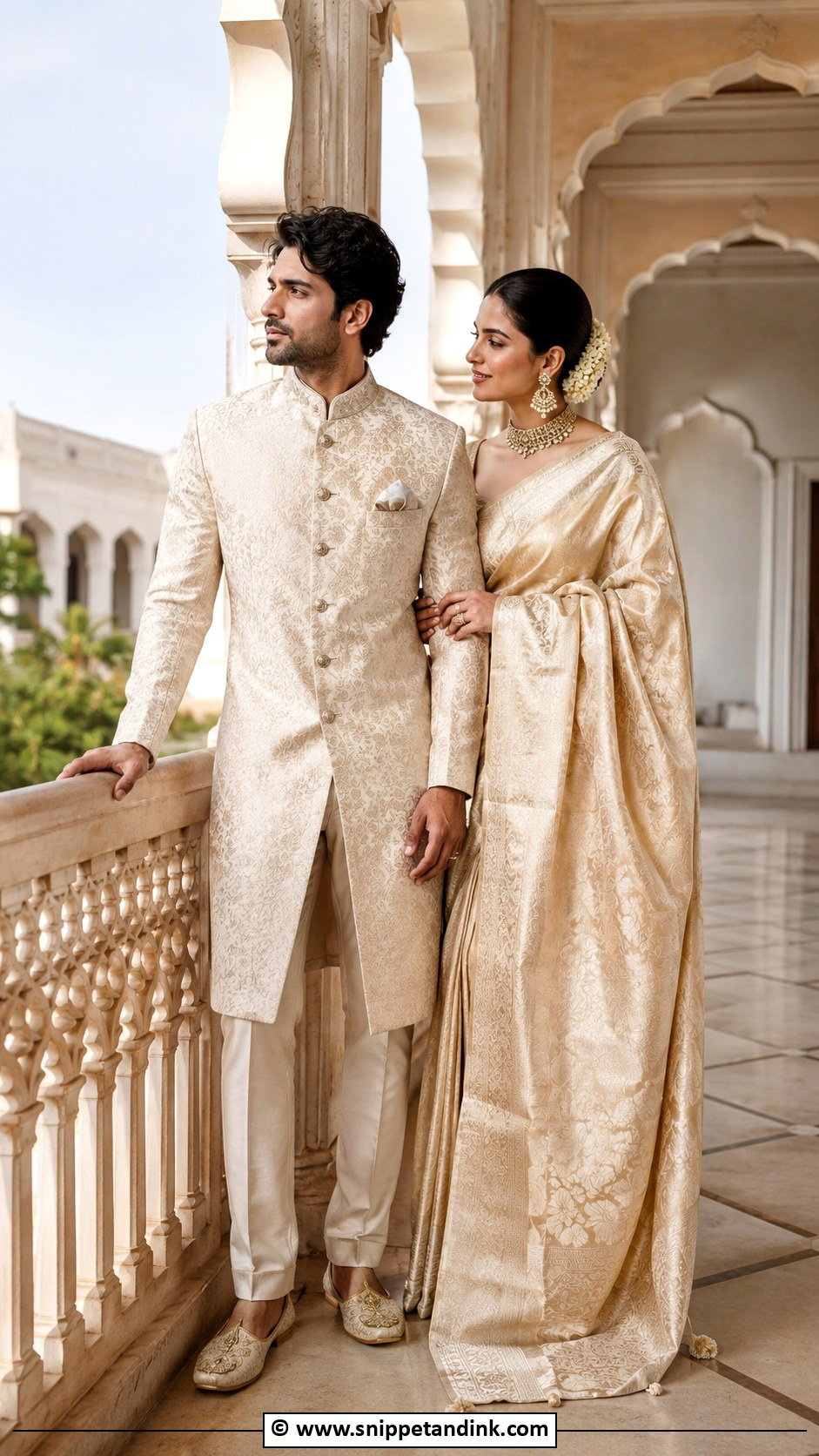
Balconies give an editorial frame, but railings are the enemy of full outfits. Stand beside the carved railing or in front of an arch, not behind it, so the lehenga or silk saree isn’t cut off at the waist. One of you looks out over the view and the other looks at their partner; that small difference makes the photo feel layered. I’ll often shoot from below, so the arch frames you against the sky. Destination weddings and royal-themed shoots suit it best.
15. Traditional Couple Ring Showing Pose
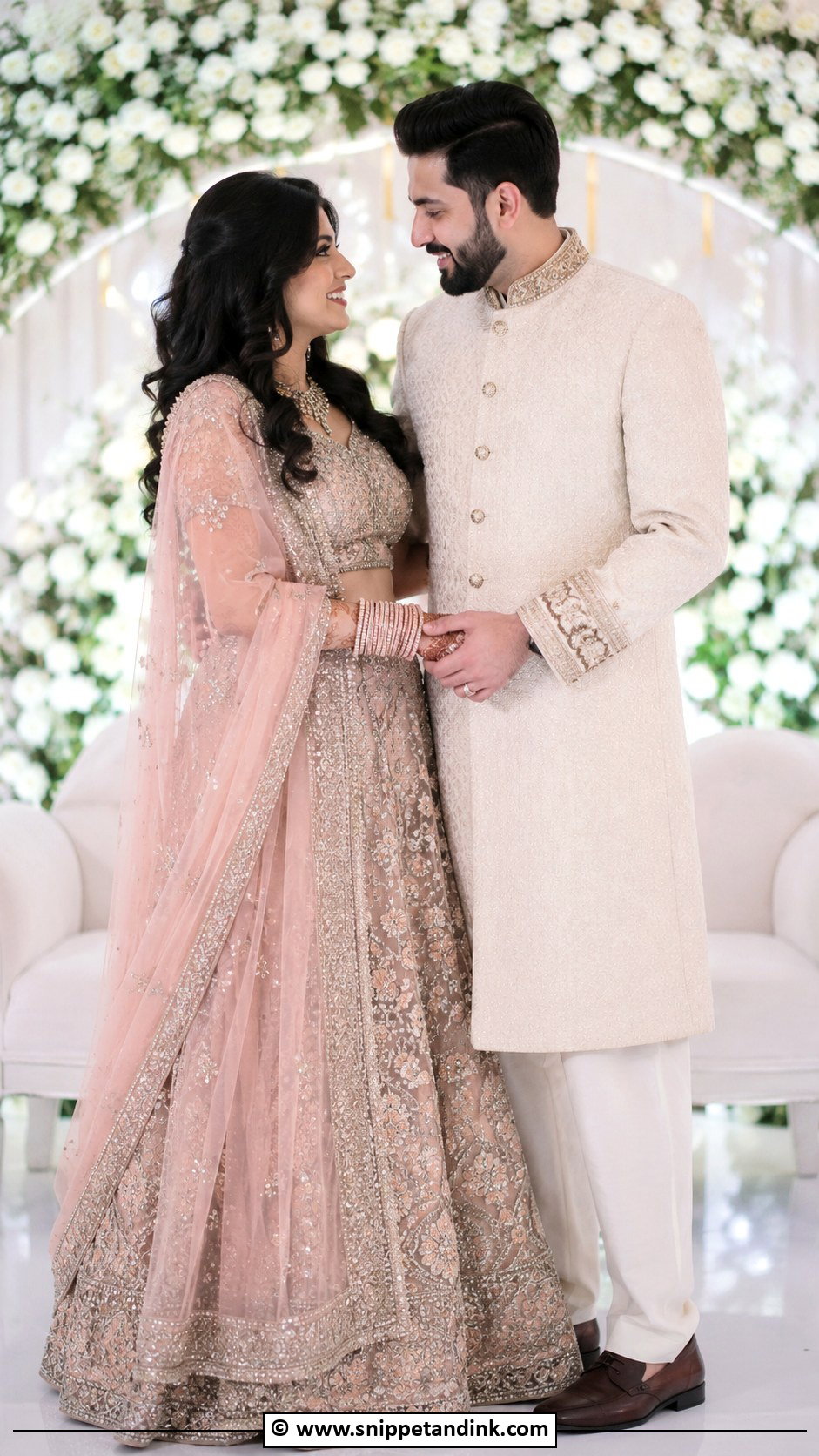
Ring photos need two frames: one full length, one close. Hold hands at chest or waist height so the rings, mehndi, bangles and cuffs line up, and drape the saree or lehenga cleanly around your hands. Smile at each other instead of staring at the ring; the close-up crops your faces anyway, and the wider frame looks warmer. Ask the groom to check his sherwani sleeve isn’t covering his watch or cuff. These usually become announcement photos.
16. Traditional Couple Mirror Pose
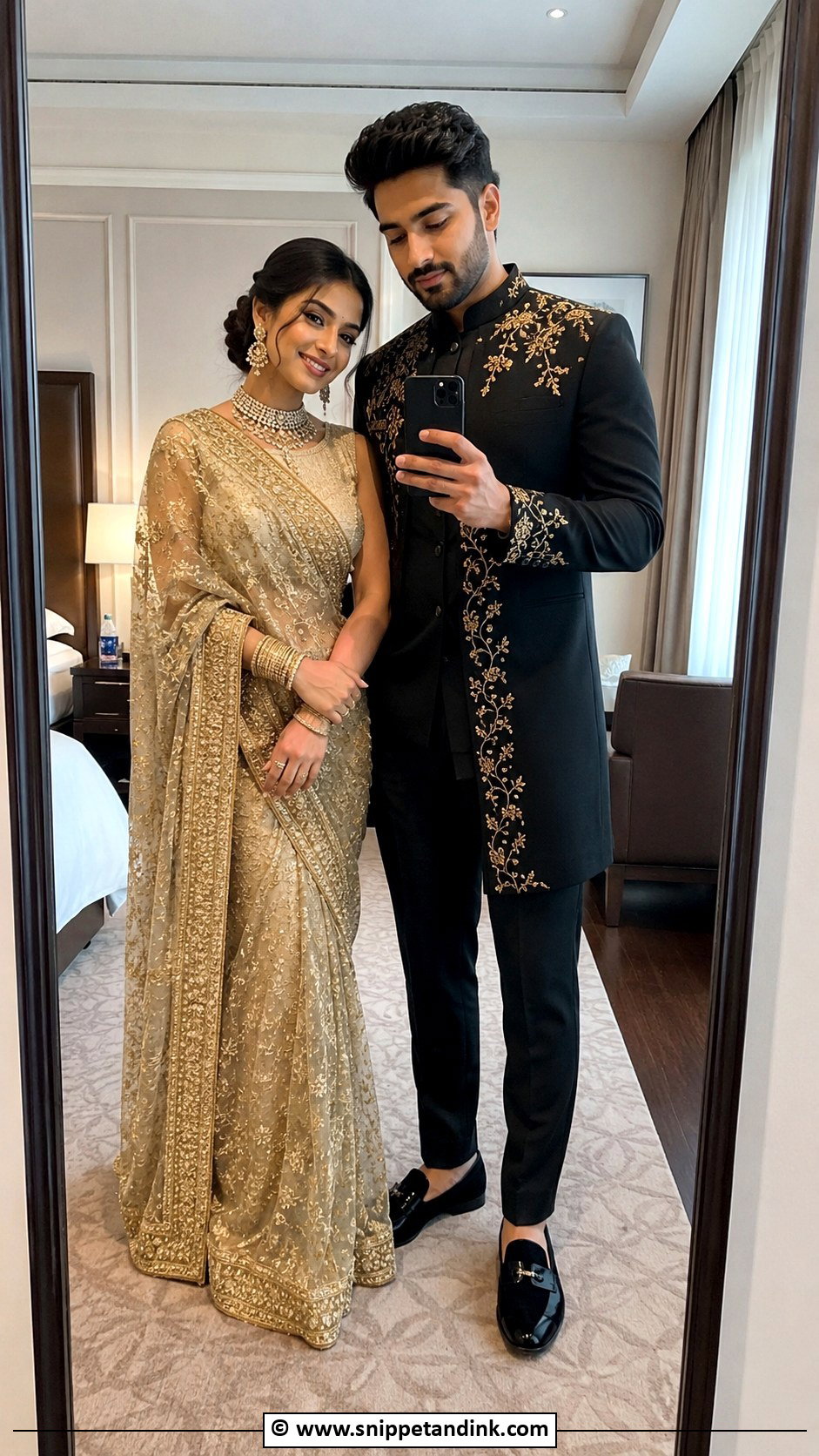
Mirror shots need a mirror bigger than most hotel rooms have. Full length is the minimum for both of you, and I stand at an angle so neither I nor my camera appear in the reflection. One partner looks into the mirror while the other looks at them; that gives two faces and two outfit views in one frame. It works best during getting-ready time, when the room is still tidy. Clear away bags, hangers and water bottles before we start.
17. Traditional Couple Umbrella Pose
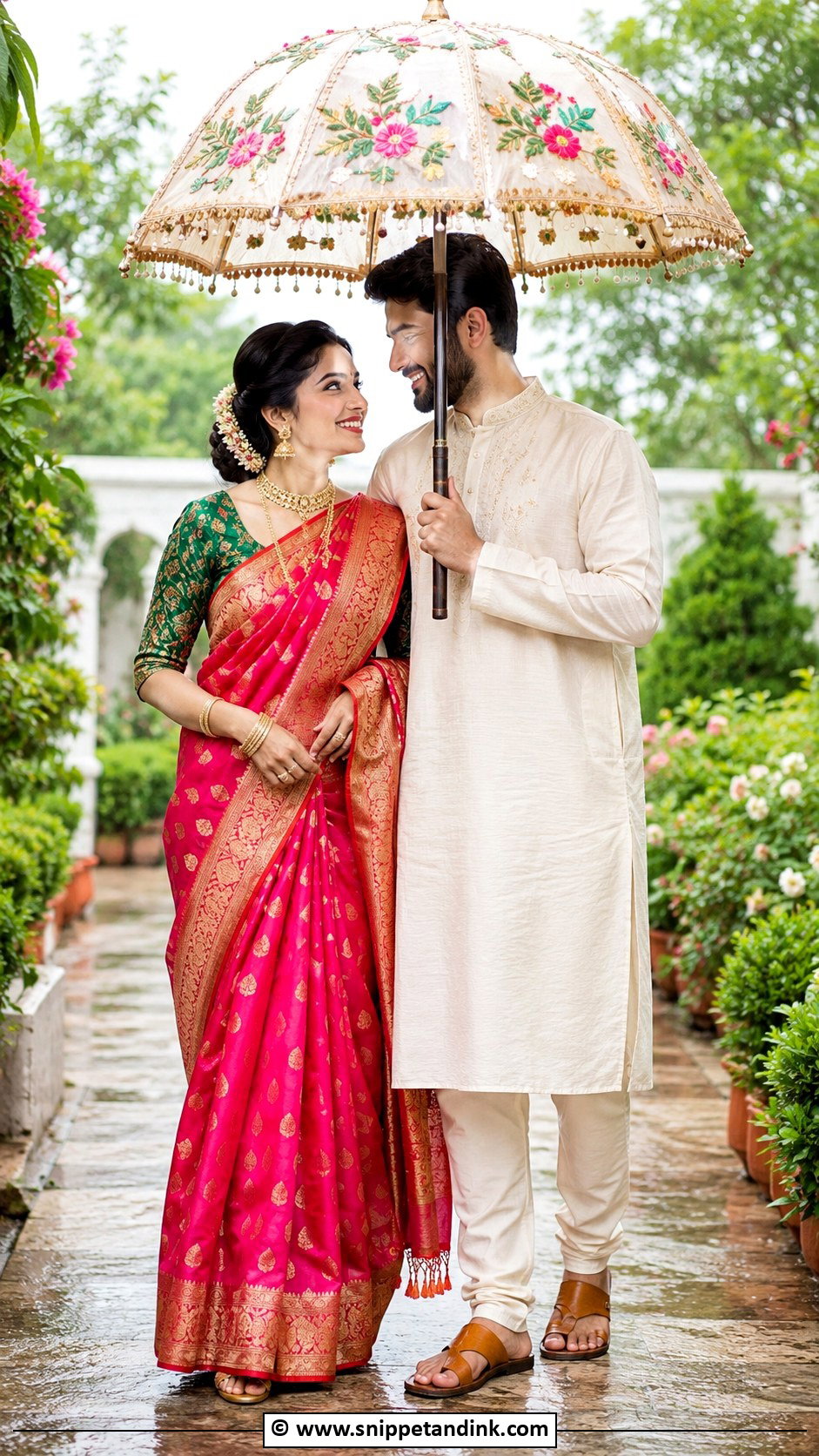
An umbrella adds color, but it also throws shade across your faces. I tilt it back slightly so it frames you without darkening your eyes, and in strong sun a pale or white umbrella bounces softer light than a dark one. Stand close underneath it, holding hands or leaning in, and keep the saree, lehenga or salwar suit visible below the canopy. Decorated or embroidered parasols suit garden shoots; a plain one suits monsoon-themed portraits. It gives the frame a storybook feel.
18. Traditional Couple Floral Backdrop Pose
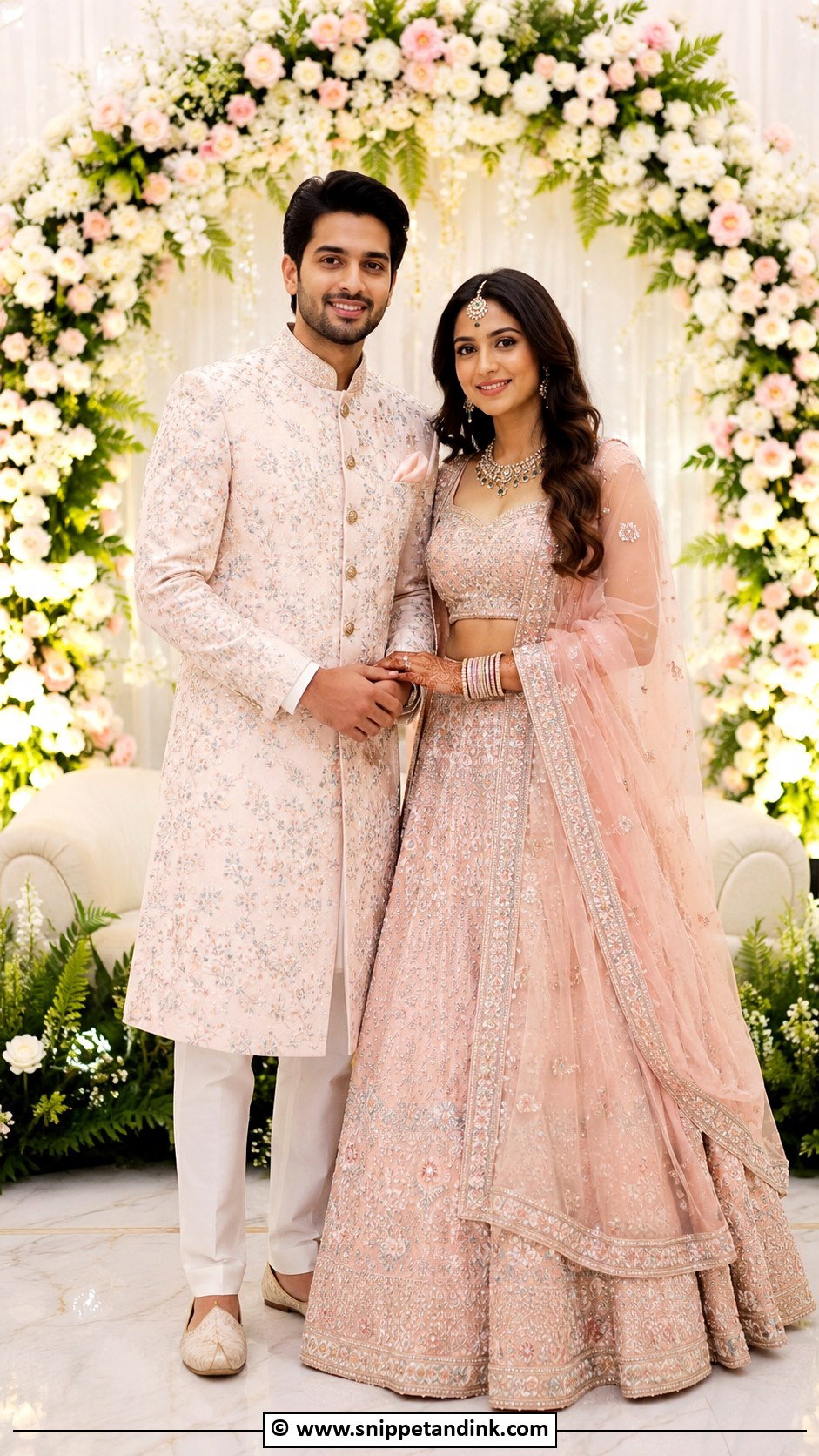
A flower wall already has a lot going on, so the pose should be plain. Stand close, hold hands or look at each other, and keep your hands still; busy gestures compete with the blooms. I match the light direction to the flowers, since a backdrop lit from the front looks flat. A lehenga, saree, or anarkali in a color that contrasts with the flowers keeps her from blending in, and a coordinated sherwani or bandhgala balances it. Engagement parties and receptions use this one constantly.
19. Traditional Couple Candid Laugh Pose
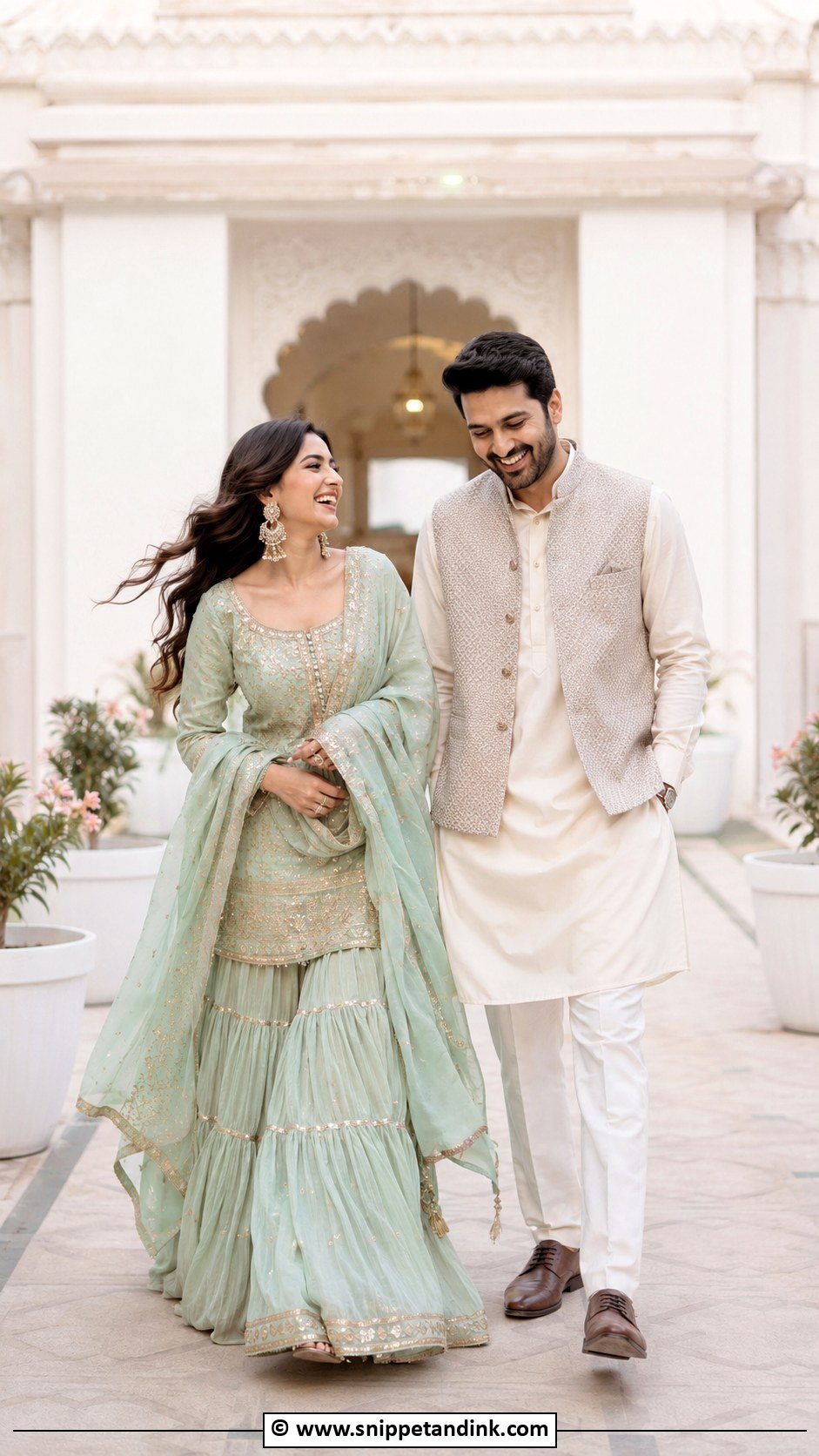
Real laughs can’t be ordered, so I set them up. I’ll ask the groom to whisper something only the bride would find funny, or ask her to fix his stole while he pretends not to notice. Walk, sit or stand close and let it happen. A flowing pallu or anarkali hem adds movement; his kurta or waistcoat stays neat. I shoot a burst and pick the frame where both faces are open. These end up as many couples’ favorite photos.
20. Traditional Couple Hands On Arm Pose
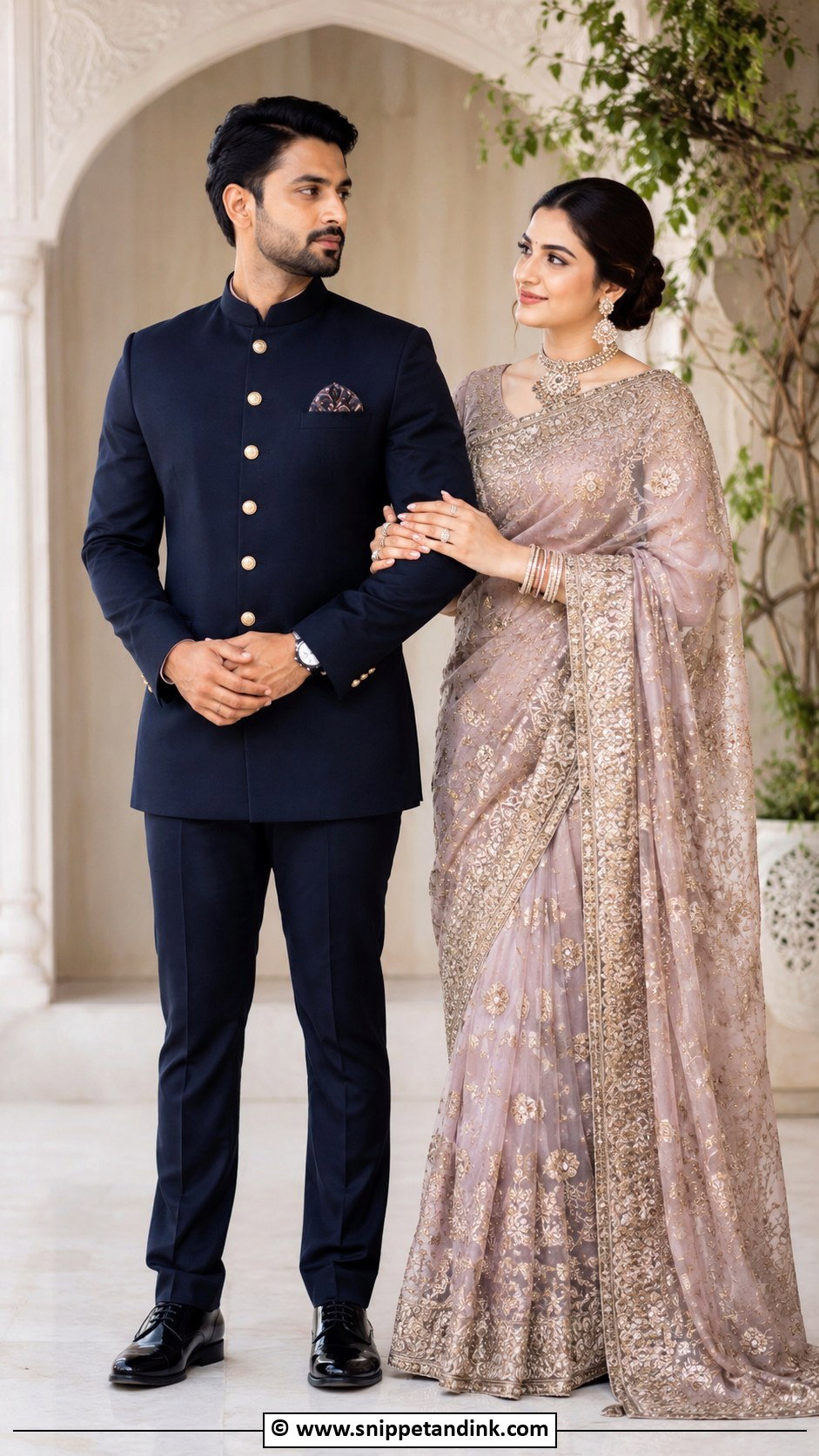
Hands-on-arm is the most respectful-looking pose here, which makes it the one I use with elders watching. He stands slightly angled and she rests one or both hands lightly on his forearm. That puts bangles, rings, mehndi and nails right in the frame. Look at the camera for the formal version, then at each other for a softer one. Keep her hands relaxed and fingers together; spread fingers look like a claw in photos.
21. Traditional Couple From Behind Pose
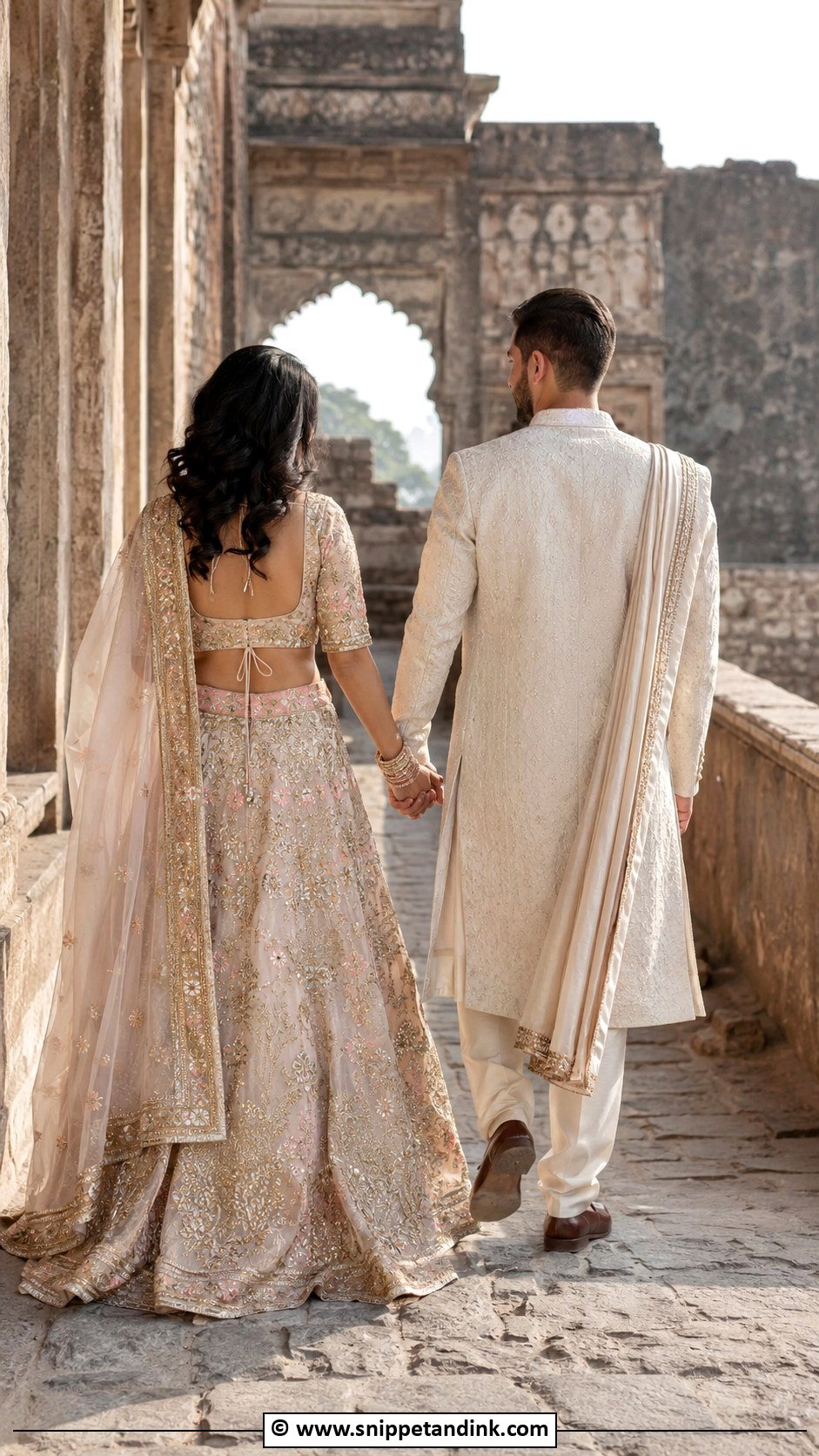
Shooting from behind only works when the backs are worth showing: a deep blouse back, a long dupatta, a lehenga trail, a sherwani with back detail. Walk slowly away from me down a long path, hallway or garden lane, holding hands, and turn your faces slightly toward each other halfway along. I include full bodies, shoes and setting. Pin the dupatta at the shoulder first, or it slides off as you walk and ruins the line.
22. Traditional Couple Seated Chair Pose
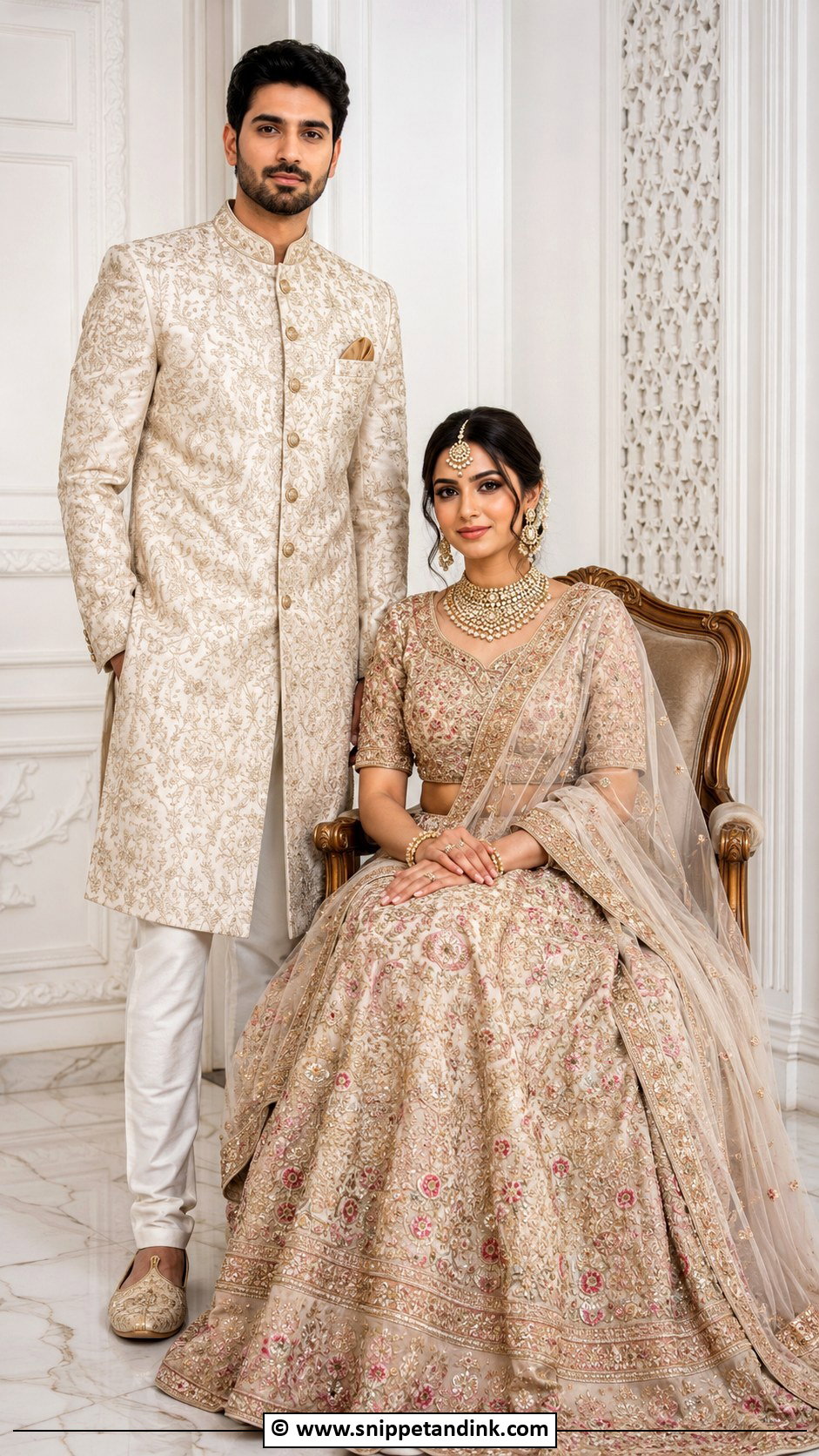
The seated chair pose is the formal portrait, often shot at receptions and in studios. One of you sits on a carved chair or bench and the other stands or sits beside. Arrange the saree, lehenga or anarkali so the drape falls over the chair edge cleanly; a sherwani should be unbuttoned at the bottom when he sits, or it pulls. Hands rest on the lap, the chair arm, or together. A heritage interior or a floral frame finishes it.
23. Traditional Couple Festival Pose
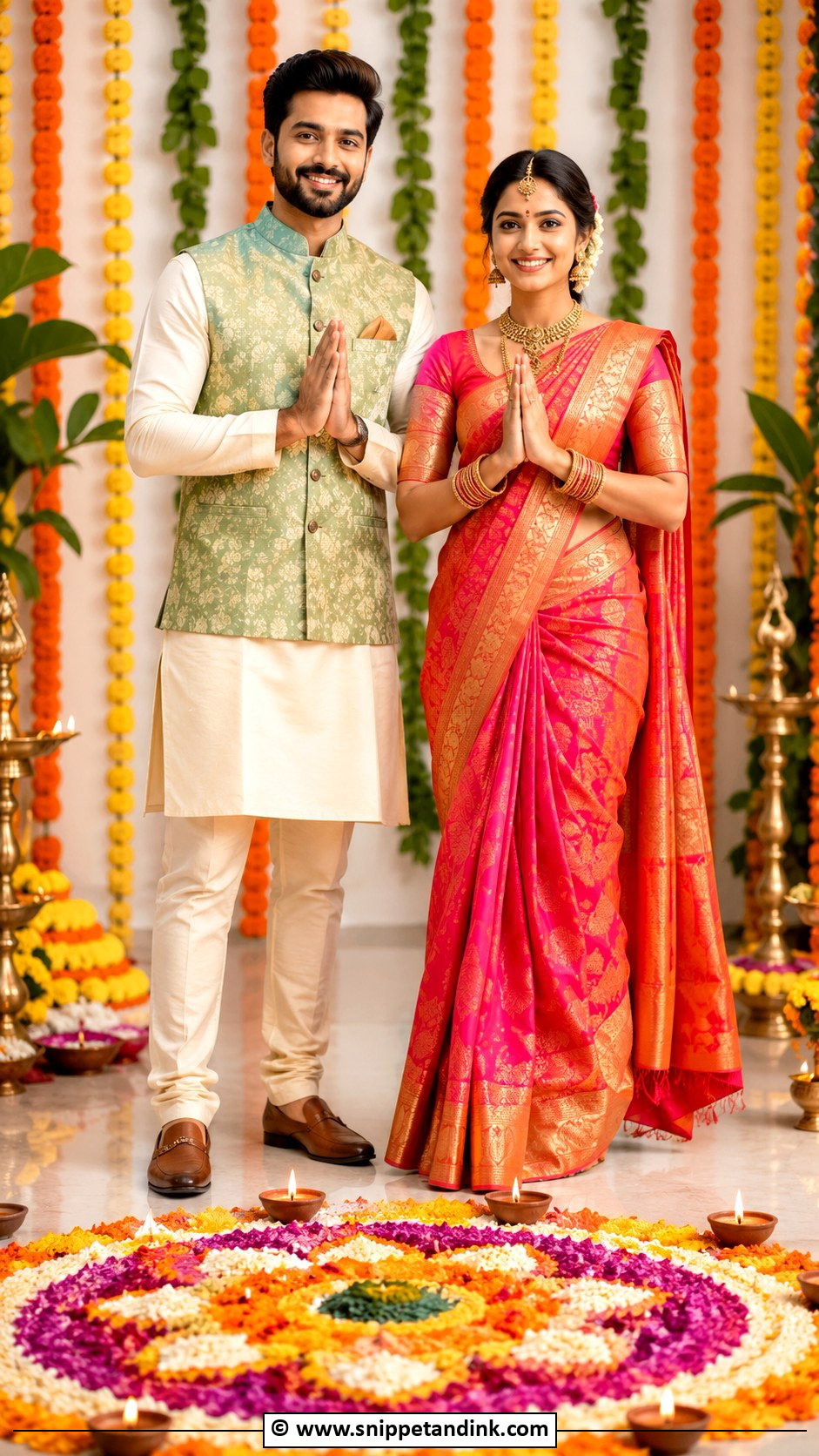
Festival portraits are the brightest frames in any album. Coordinate a bright saree and kurta, a festive lehenga and Nehru jacket, or an embroidered suit and bandhgala, then stand near rangoli, lanterns or diyas. Keep the pose simple: joined hands, a shared smile, a side hug. Small lights look magical behind you but can’t light your faces, so I add a soft light from the front and let the diyas glow in the background. It suits Diwali photos and family celebrations.
24. Traditional Couple Close Walking Pose
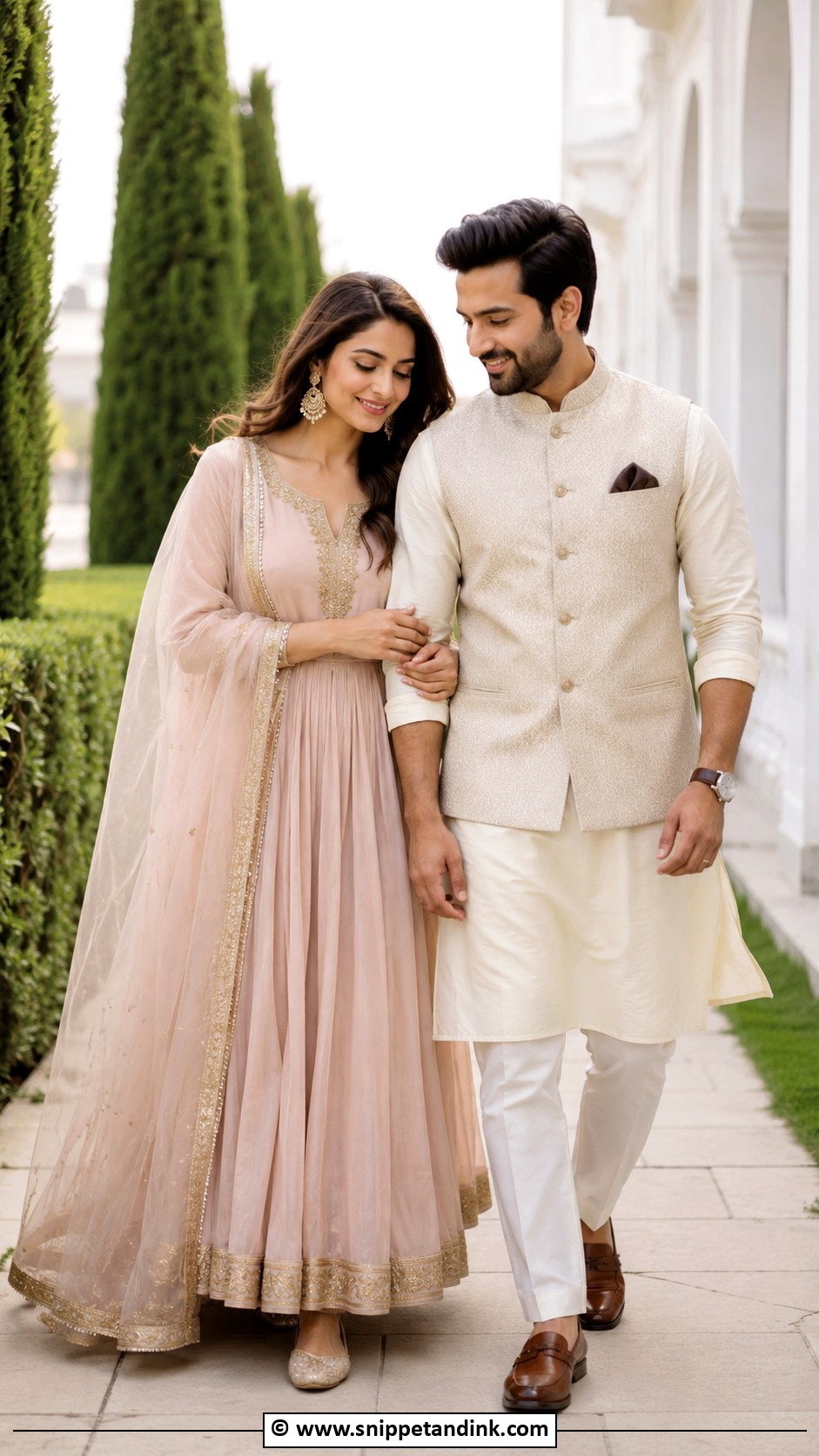
This is the walking shot for couples who aren’t comfortable holding hands in front of family. Walk side by side with shoulders nearly touching and fingers just linked, and talk to each other about anything at all. The conversation relaxes your faces. A saree, lehenga, sharara or anarkali moves softly with each step while his kurta or sherwani keeps the frame structured. I shoot from the front or a slight side angle on garden paths and venue entrances.
25. Traditional Couple Wide Landscape Pose
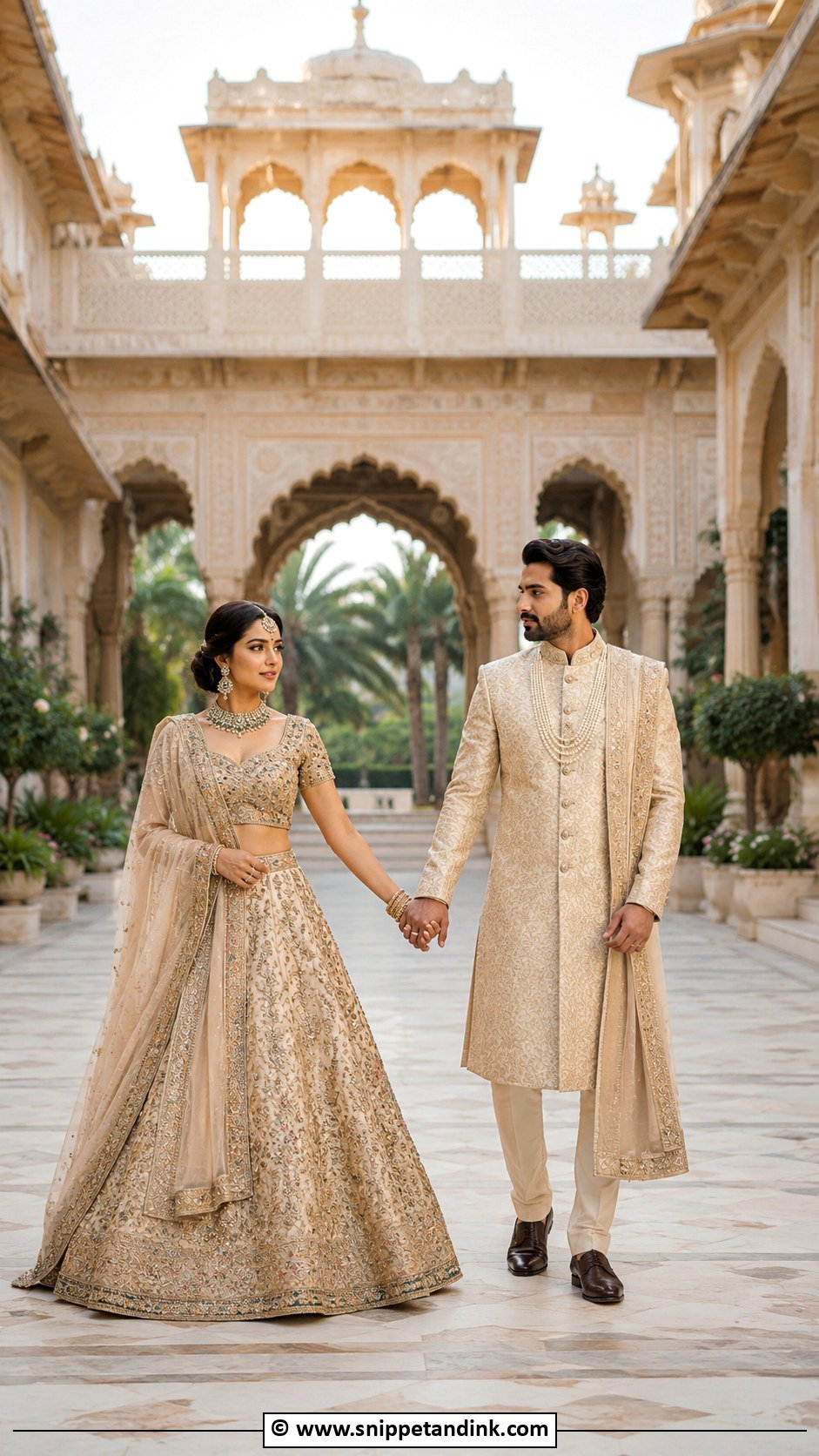
Wide landscape frames make you small and the location big, so the outfits need contrast to read from a distance. A red or deep pink lehenga pops against green lawns and pale stone; a beige sherwani against a beige fort wall disappears. Stand or walk together in a courtyard, garden, lakeside or open field, holding hands or standing close. I shoot from far back with a long lens. These are the prints couples frame for their walls.
Ordering the Poses So the Outfits Last
Traditional outfits look their best in the first half hour, before creases, sweat and slipping drapes set in. So I don’t shoot poses in the order they’re listed. I shoot them in the order the clothes can handle.
- Formal standing frames first: front-facing, saree-and-kurta, ring shots. These are the photos the family will print, so they need crisp pleats.
- Movement next: walking, twirls, from-behind shots. Fabric is still fresh and hair hasn’t dropped.
- Close and quiet frames: forehead touch, shoulder lean, looking at each other. These hide minor creases well.
- Seated and floor poses last. Sitting creases a lehenga at the hip almost instantly, and once that happens the standing shots are over.
Heat is the other limit. Heavy silk and velvet are hot under sun, and a bride in full jewelry tires faster than she expects. I plan outdoor portraits for the hour after sunrise or the hour before sunset, when the light is soft and the air is cooler, keep water with a straw nearby so lipstick survives, and build in a shaded break every twenty minutes or so. A rested couple looks relaxed in photos; an exhausted one looks tight around the eyes, and no pose fixes that.
Comfortable Couples Make the Best Portraits
After many traditional shoots, the pattern I see is simple: the couples who look best are the ones who feel comfortable, and the outfits look best when they can be seen clearly. You don’t need elaborate direction. Standing, walking and seated frames, a hand held loosely, a laugh that isn’t forced, all work beautifully in sarees, lehengas, kurtas and sherwanis. Give each other room to connect, keep the drapes and jewelry visible, and let the setting do the rest.
You'll Like These Ideas:


Leave a Reply