
A shoot built around twenty wedding dresses only works if every frame shows the gown as a whole: shape, fabric, accessories and the way it moves. When I photograph bridal looks, I take the full-length portrait before anything else, because a close-up of lace means little if nobody can see the silhouette it belongs to. Side profiles, seated frames and walking shots then round out a balanced gallery. Satin, lace, crepe and appliqué each react to light in their own way, so I’ve noted what each one needs under its look. The veil, bouquet, shoes and jewelry matter too, mostly in how much of the dress they cover or reveal.
Ordering Twenty Gown Changes by Light and Fabric
On a multi-gown day, the dresses set the pace, not the camera. Each change takes longer than people expect once you count lacing, bustles, veils and shoes. When I plan a day like this, I group the gowns by the light they need rather than by style, so I’m not chasing the sun between changes.
- Satin, crepe and heavily beaded gowns get the soft, low light early or late in the day. Hard midday sun throws glare off shine and makes matte crepe look flat.
- Lace, tulle and appliqué cope with brighter open shade, since their texture needs a little contrast to show at all.
- Fitted shapes like mermaids and minis are scheduled before anyone is tired, because they rely on posture more than any other silhouette.
- Every location gets a kit: handheld steamer, clips, a lint roller, safety pins and a clean white sheet to stand on.
The sheet sounds fussy, but it keeps trains off dirt and gravel between frames. I’d rather lose a minute laying it down than retouch a grey hem in every image of a set.
1. A-Line Wedding Dress Photoshoot
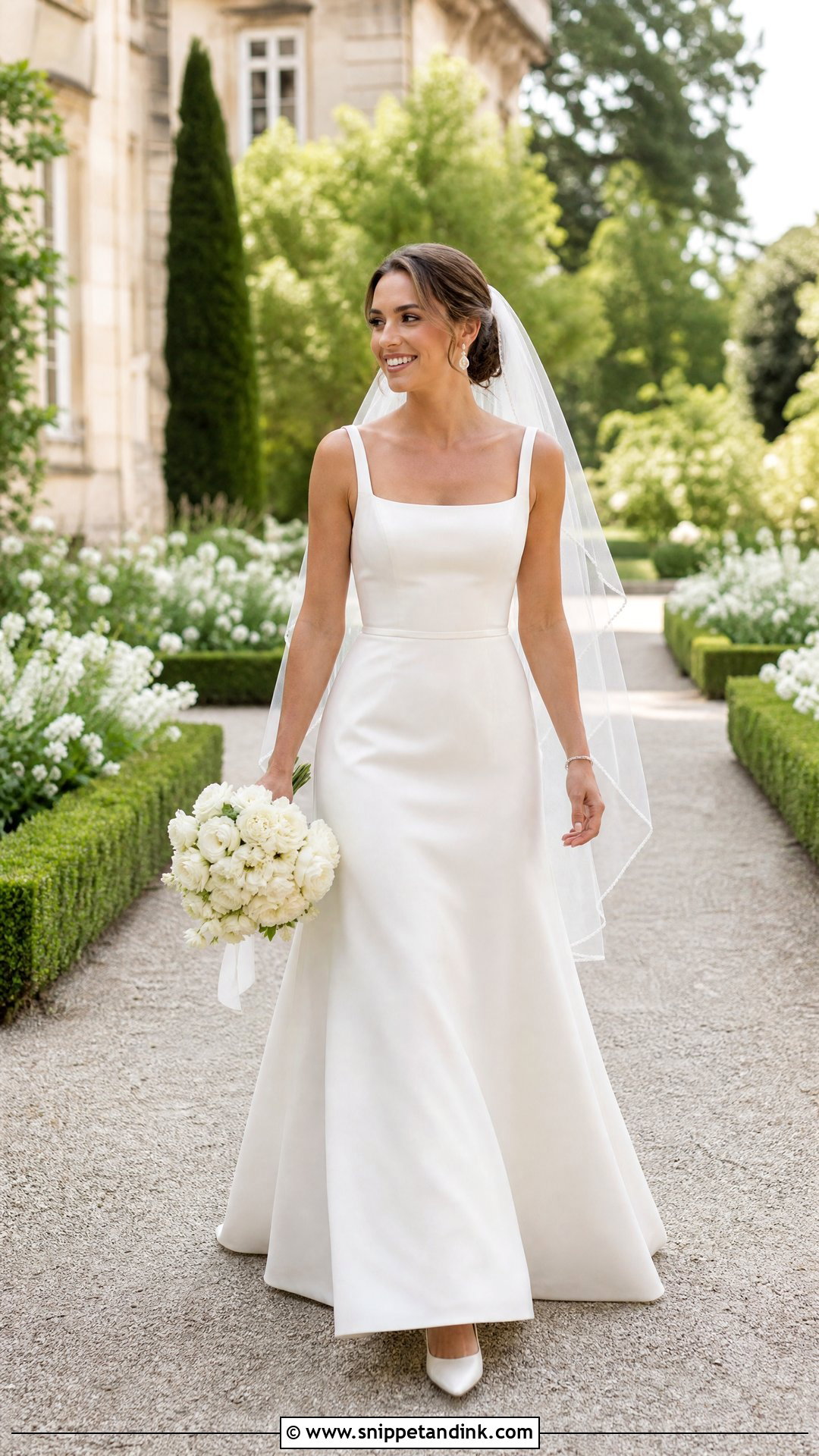
An A-line is the easiest silhouette I photograph, because the shape reads clearly from almost any angle. The fitted bodice and defined waist do the work, so I keep the hand-tied bouquet of white flowers and greenery at hip height, where it never crosses the waistline. Pearl earrings, pointed ivory heels and a medium-length veil are enough. I start with a straight-on full-length frame, then ask the bride to walk slowly toward me. The skirt only swings if she takes slightly longer steps than feel natural, so I tell her that before she starts. A garden path or open terrace gives room to shoot front, side, back and train without moving the light.
2. Ball Gown Wedding Dress Photoshoot
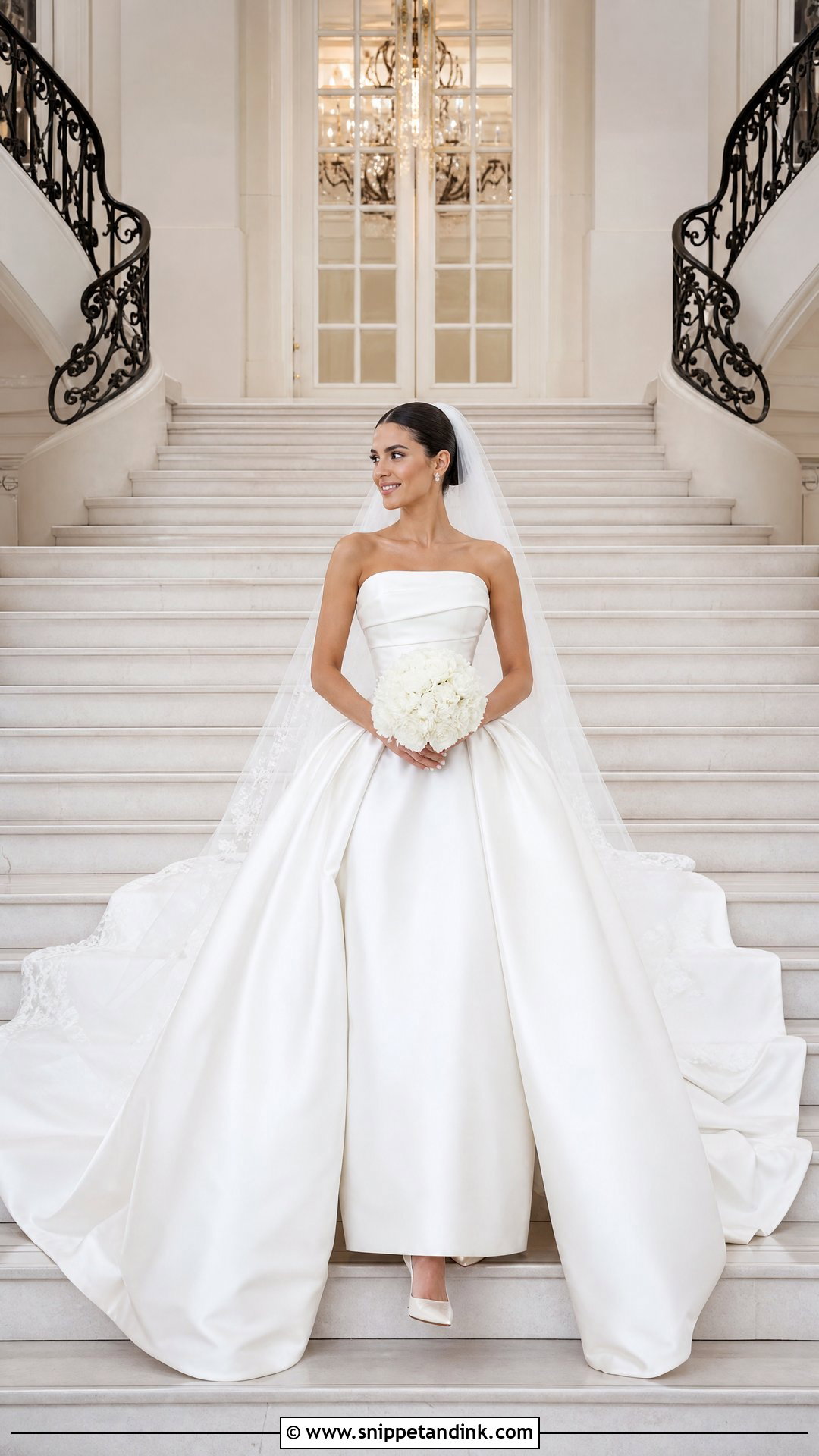
Ball gowns need width more than anything. Layers of tulle, organza or satin over a structured bodice take up real floor space, and in a tight room I end up cropping the skirt, which defeats the point of wearing one. Grand staircases and ballrooms work because I can back up far enough. I center her for one symmetrical frame, then have her turn a quarter so the waist reads against all that volume. For a seated shot, someone has to fan the skirt out by hand; it never settles evenly on its own, and lumpy tulle shows. A cathedral veil, sparkling studs, pumps hidden under the hem and a rounded bouquet keep the proportions in check.
3. Long Sleeve Lace Wedding Dress Photoshoot
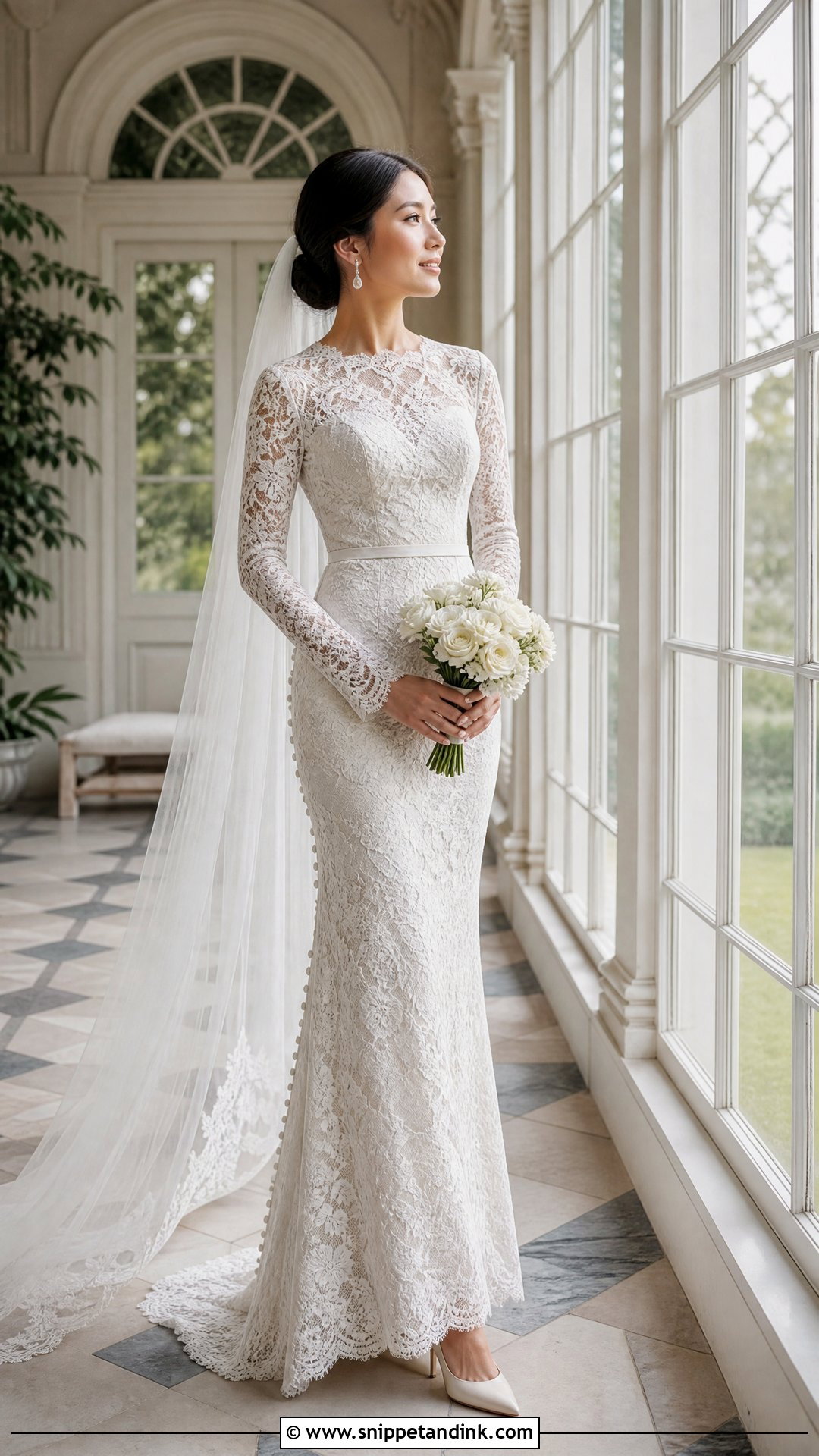
Lace needs soft, directional light to read. Under flat overhead light it turns into a white blur, but beside a tall window every motif picks up a little shadow, which is why long lace sleeves suit detailed bridal portraits. I ask for a three-quarter pose to catch the sleeve pattern and waist, then a back view for covered buttons, scalloped edging and the train. Keep the bouquet compact so it doesn’t sit on the bodice lace. A low bun, small drops, ivory pumps and a fingertip veil leave the lace in charge. I always end with a slow walk, because sleeved gowns can look stiff in still frames.
4. Satin Slip Wedding Dress Photoshoot
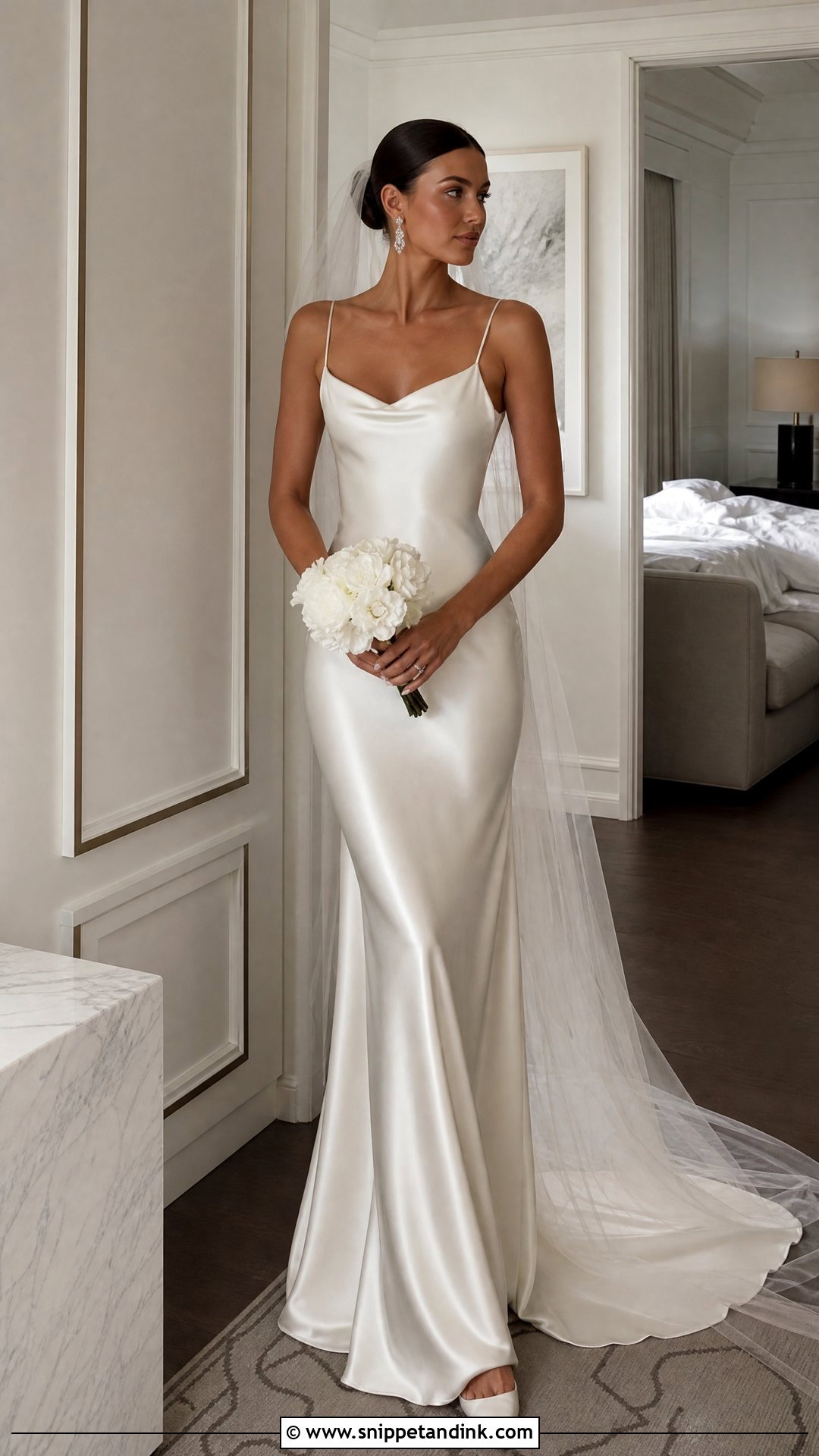
Satin is the fabric I worry about most. It gives a bridal photoshoot a clean, modern sheen, but it shows every crease and every hot spot of light. A bias-cut slip with narrow straps and a draped neckline clings as it moves, so I light it from the side and keep direct sun off it to avoid glare along the hip. Steam it on location, not at home, and check it again after any car ride or sitting break. Styling stays sparse: pointed heels, crystal earrings, a small white bouquet, a sheer veil if any, and a low bun or soft waves. A pale studio wall or bright hotel suite is plenty.
5. Off Shoulder Wedding Dress Photoshoot
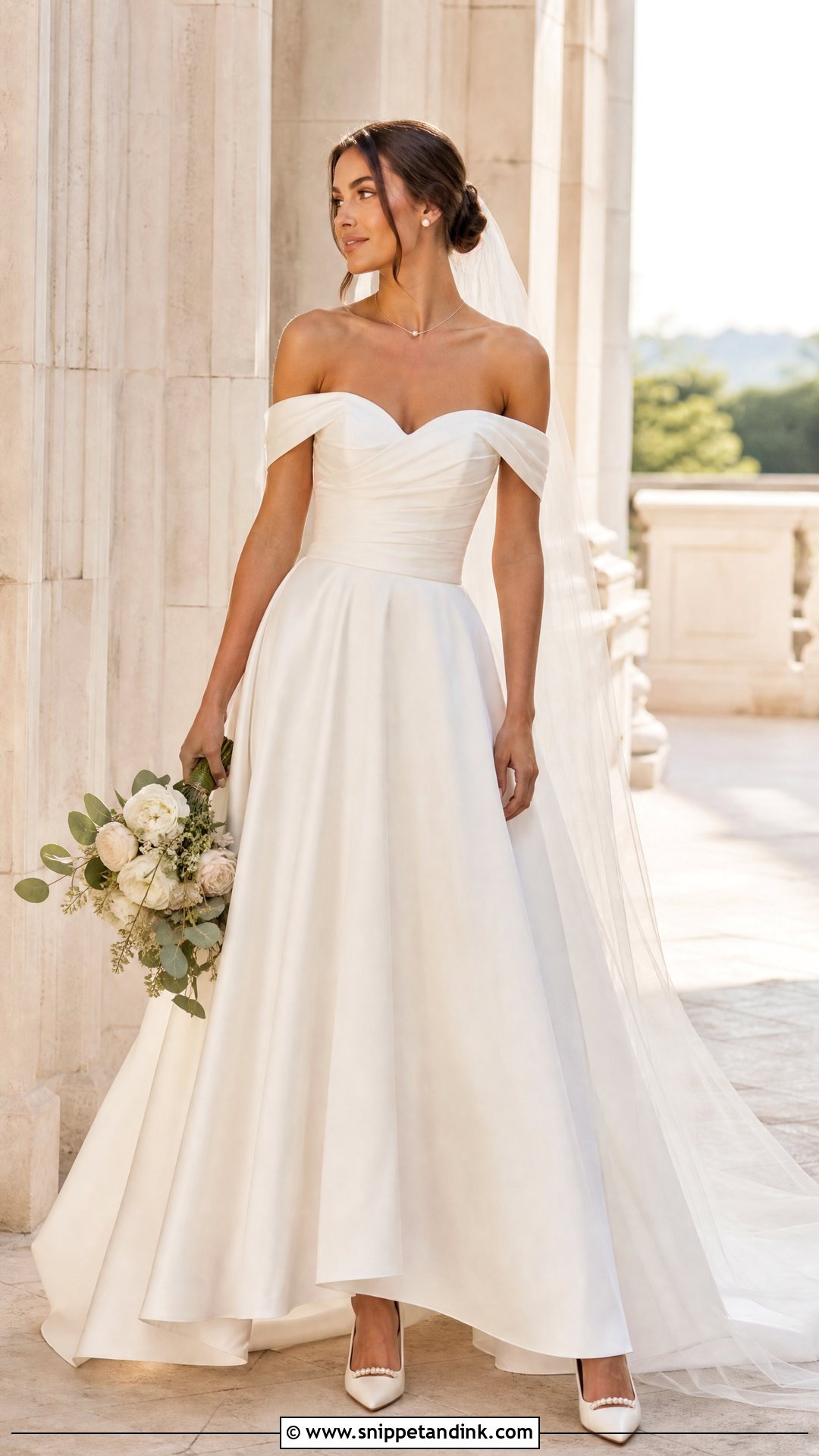
With an off-shoulder neckline, the shoulders are the subject, and tension shows instantly. Before the first frame I have the bride drop and roll her shoulders back, because almost everyone lifts them when a camera comes up. Make sure the sleeves sit securely enough to raise the arms without slipping. A delicate necklace, pearl studs and swept-back hair keep the frame open. I’ll shoot a direct portrait, then an angled one for the bodice, plus a back view if there are buttons or corset lacing. The most common mistake is raising the bouquet to chest height, which covers the one feature the dress is built around.
6. Mermaid Wedding Dress Photoshoot
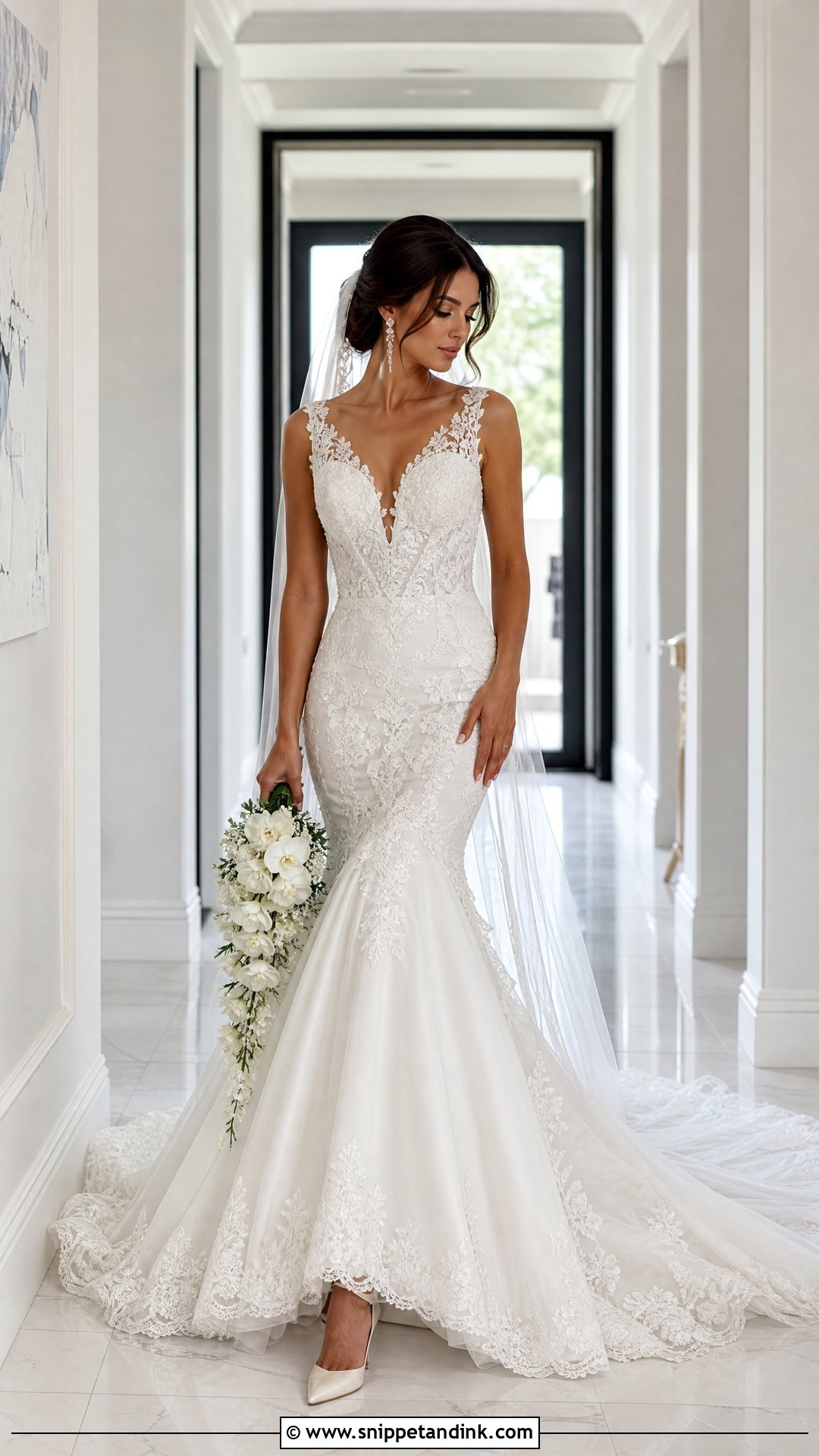
The flare point is everything with a mermaid gown. If the camera sits too high, the fitted section looks shorter and the flare seems to start in the wrong place, so I shoot from around hip height. She poses at a slight angle with one leg forward, then turns to profile to show where the skirt opens, then gives me a back view for the train. Walking is limited in a fitted skirt, so I direct one short walking shot rather than several. Practice sitting and turning in the dress at the final fitting. Drop earrings, a long veil, pointed heels and a narrow cascading bouquet suit the line, and a hallway or rooftop with clean architecture keeps the background quiet.
7. Minimalist Crepe Wedding Dress Photoshoot
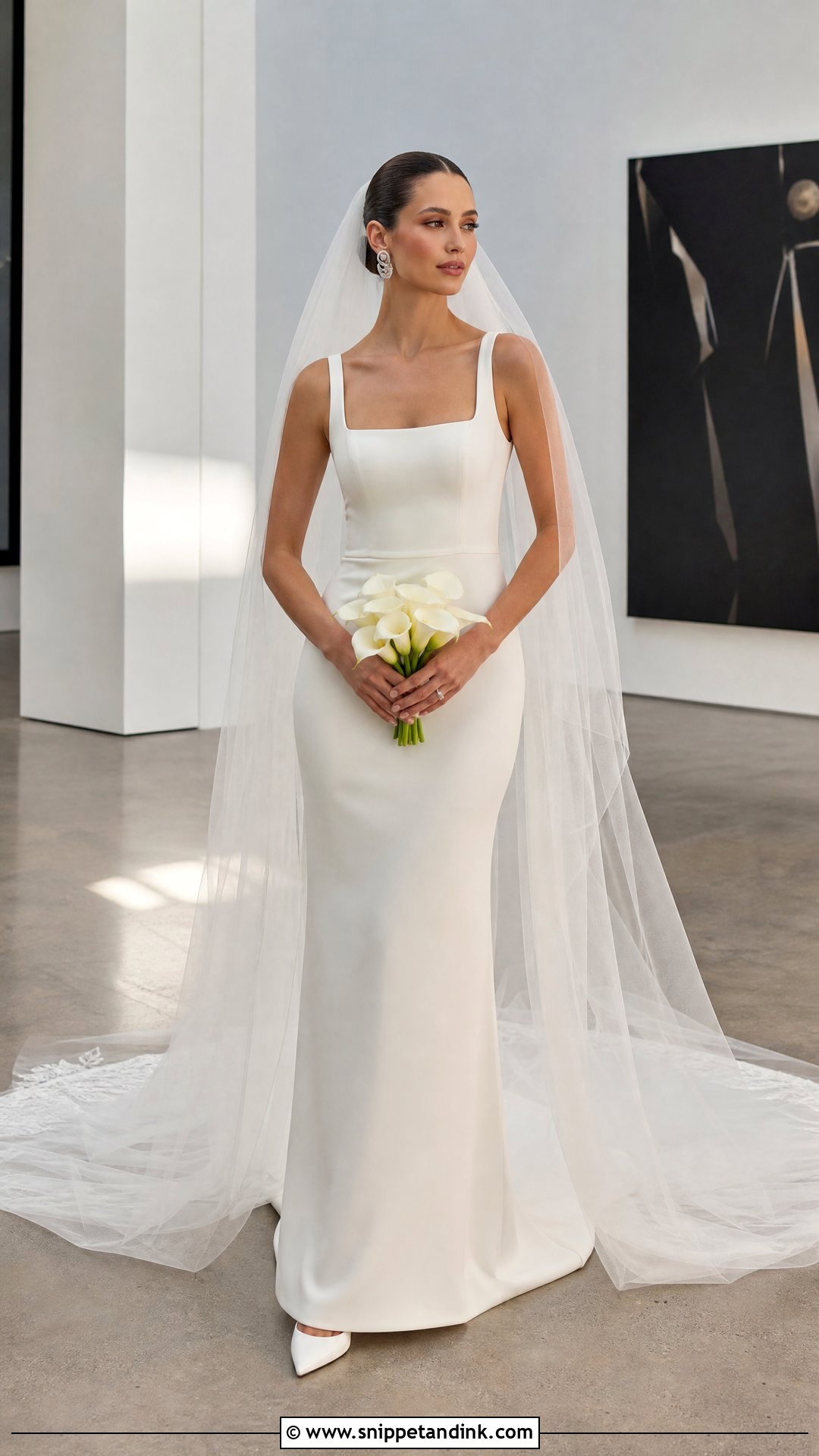
Crepe hides nothing. It has no shine or texture to distract the eye, so seams, a slightly long hem or a visible underwear line all show up in a full-length frame. That’s why I ask brides in a column or fit-and-flare crepe gown to finish alterations early and wear smooth, invisible undergarments. Sculptural earrings, white pumps, a neat bun and a few calla lilies suit a square neckline, and a plain cathedral veil adds the only movement. I shoot a centered full-body portrait, a profile, and a walk with the veil trailing. Courthouse steps or a white studio keep every line clean.
8. Boho Wedding Dress Photoshoot
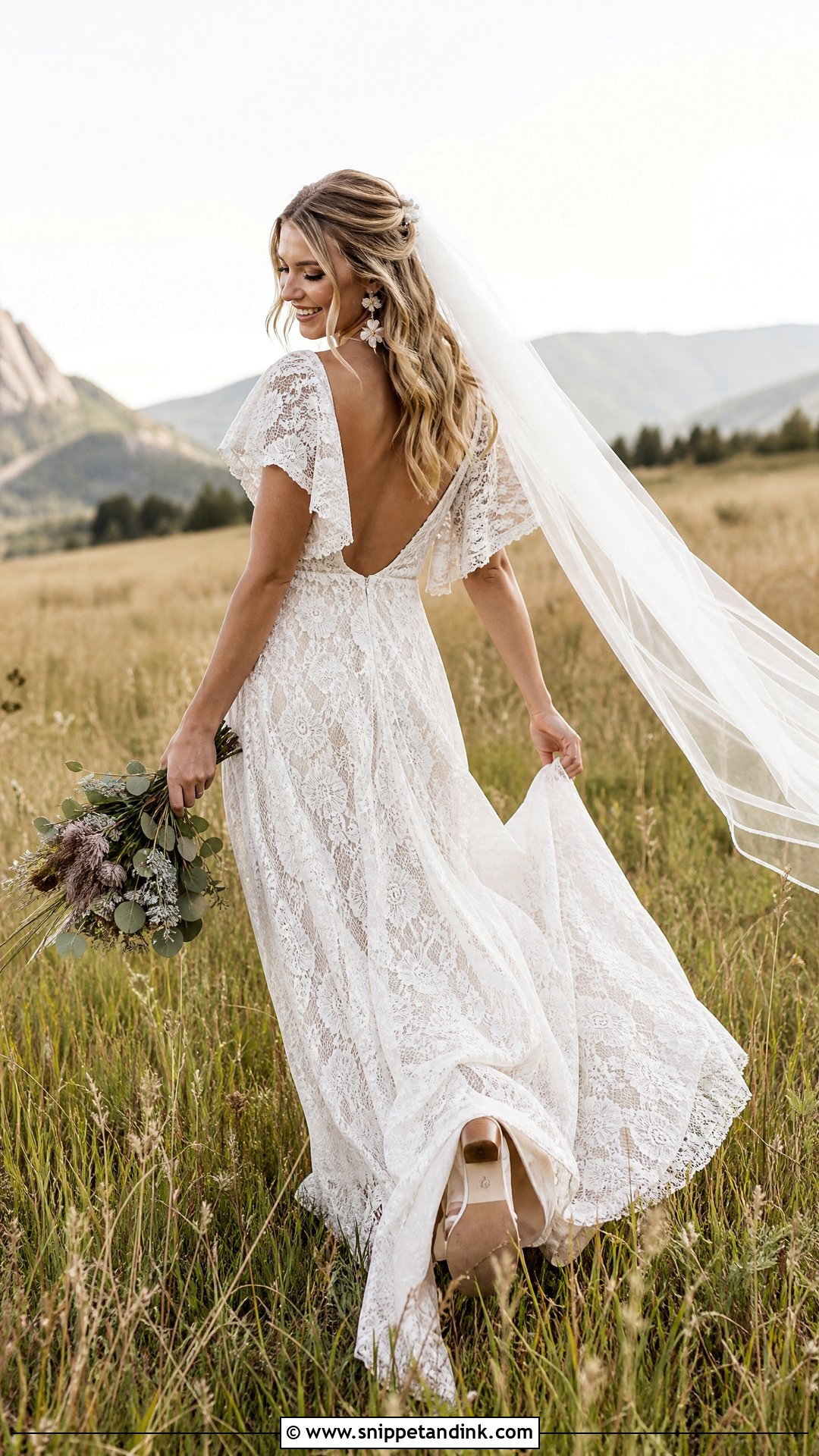
Chiffon and loose lace need air to look right, which is why boho gowns belong outdoors. Flutter sleeves, an open back or crochet details come alive when a breeze or a walk moves them, so I plan most of these frames as walking shots. A seated pose on a low wall shows the lace pattern. Loose waves, small floral earrings, block heels that won’t sink into grass and a lightly gathered bouquet are enough. Meadows and greenhouses suit the dress, but I keep props out of the frame. Too many crates and lanterns pull the eye away from the gown.
9. Tea Length Wedding Dress Photoshoot
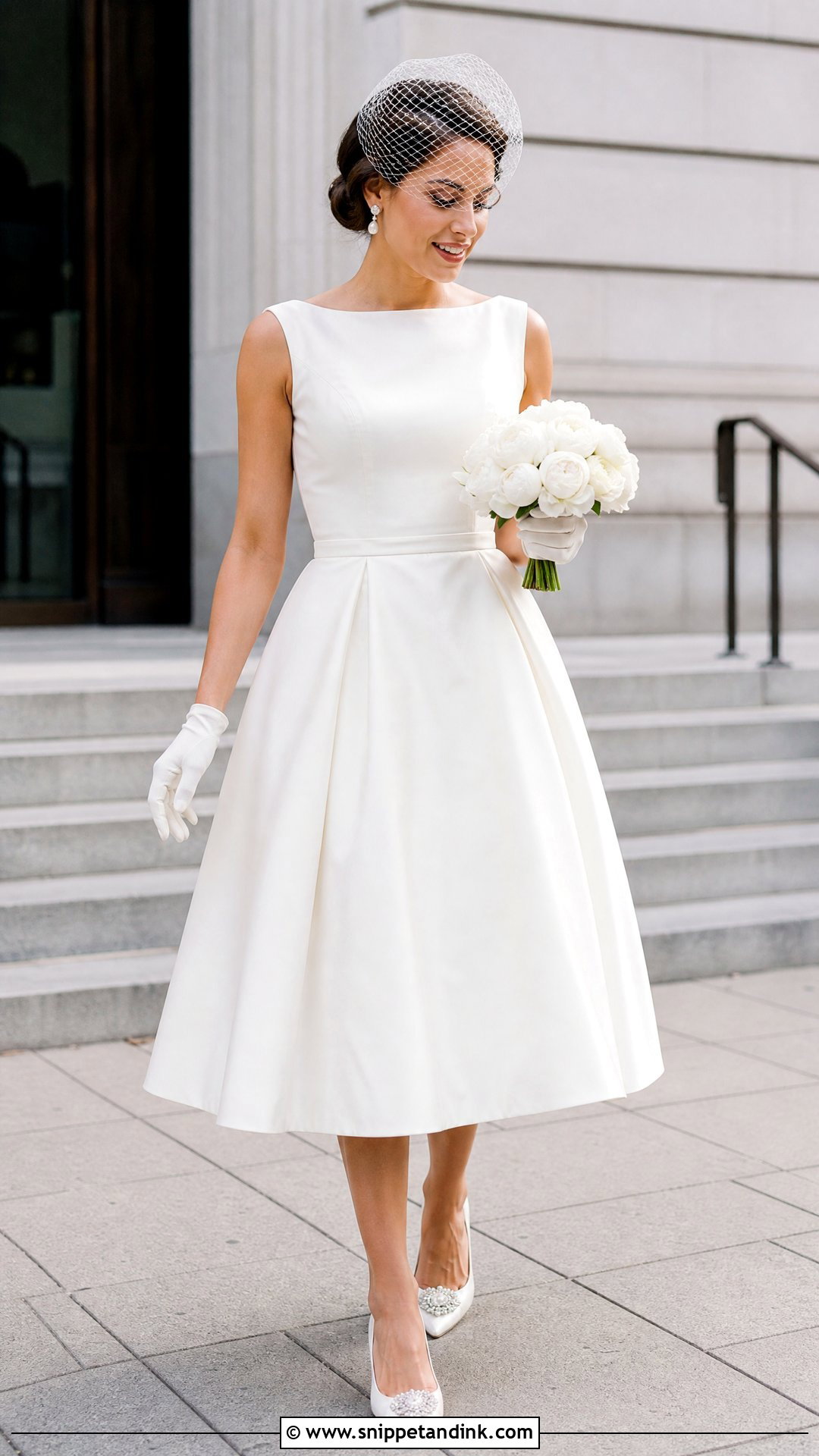
At tea length, the shoes become part of the dress. The hem stops between knee and ankle, everything below it is on show, so I look at the shoes before I look at the veil. Pumps, slingbacks or embellished flats all work as long as she can walk naturally in them, because a stiff gait is obvious in this length. Short gloves, pearl earrings, a compact bouquet and a birdcage veil or bow match the vintage shape. I like a walking frame on courthouse steps or a city sidewalk, then a seated one with ankles gently crossed. Go light on everything else; the hemline already carries plenty of personality.
10. Square Neck Wedding Dress Photoshoot
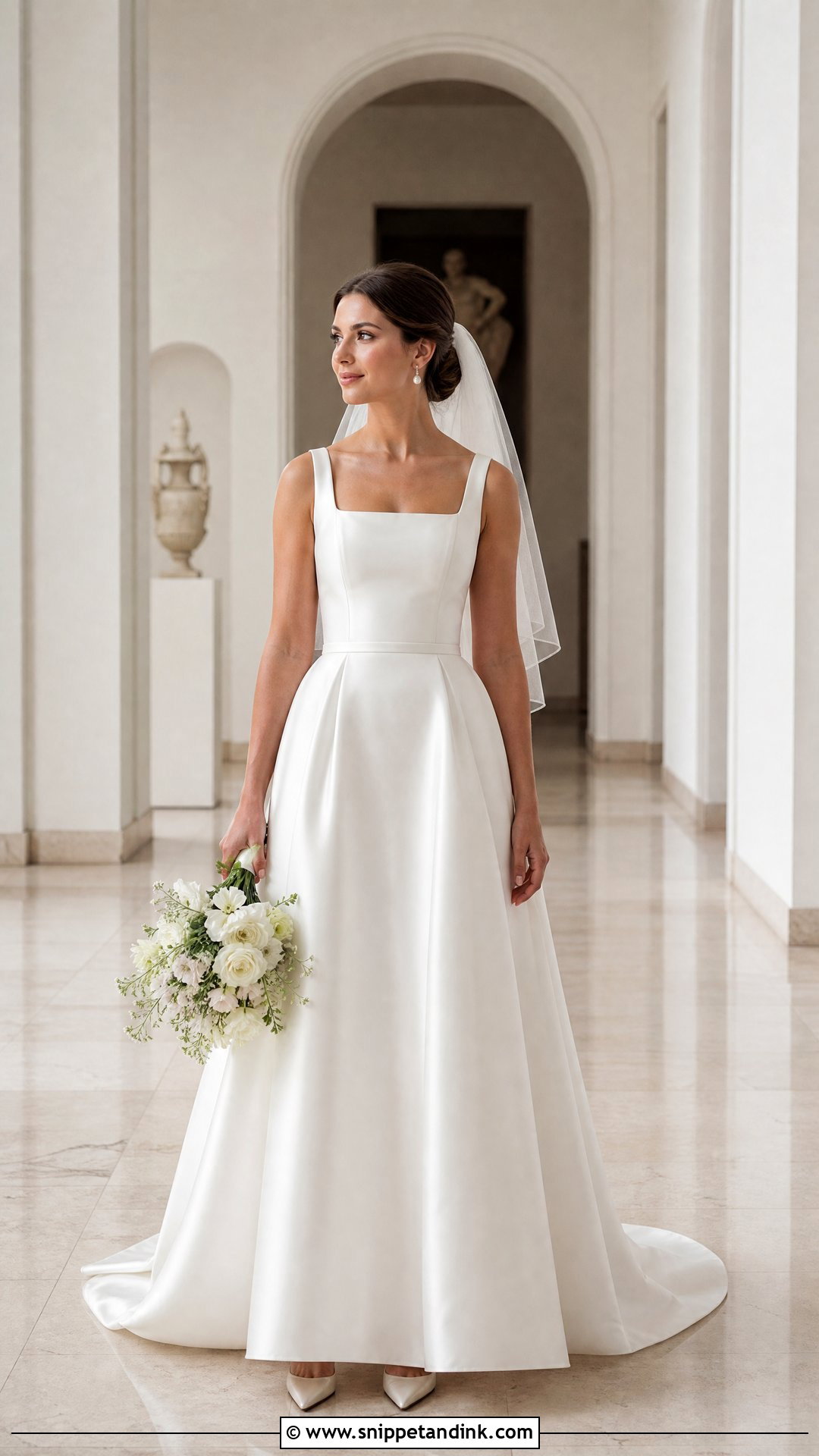
A square neckline is all straight lines, so any slouch shows as a bent edge across the chest. Satin, mikado and crepe hold that shape well, especially with wide straps or long sleeves. I keep her shoulders down and her chin slightly forward. A smooth bun, pearl drops, pointed heels and a medium veil leave the neckline uninterrupted, and a low bouquet keeps the bodice clear. Start with a centered full-length frame, turn slightly for the waist, then add a closer three-quarter for the neckline. I never let the close crop replace the head-to-toe shot. The dress is about structure, and structure needs the whole frame.
11. High Neck Wedding Dress Photoshoot
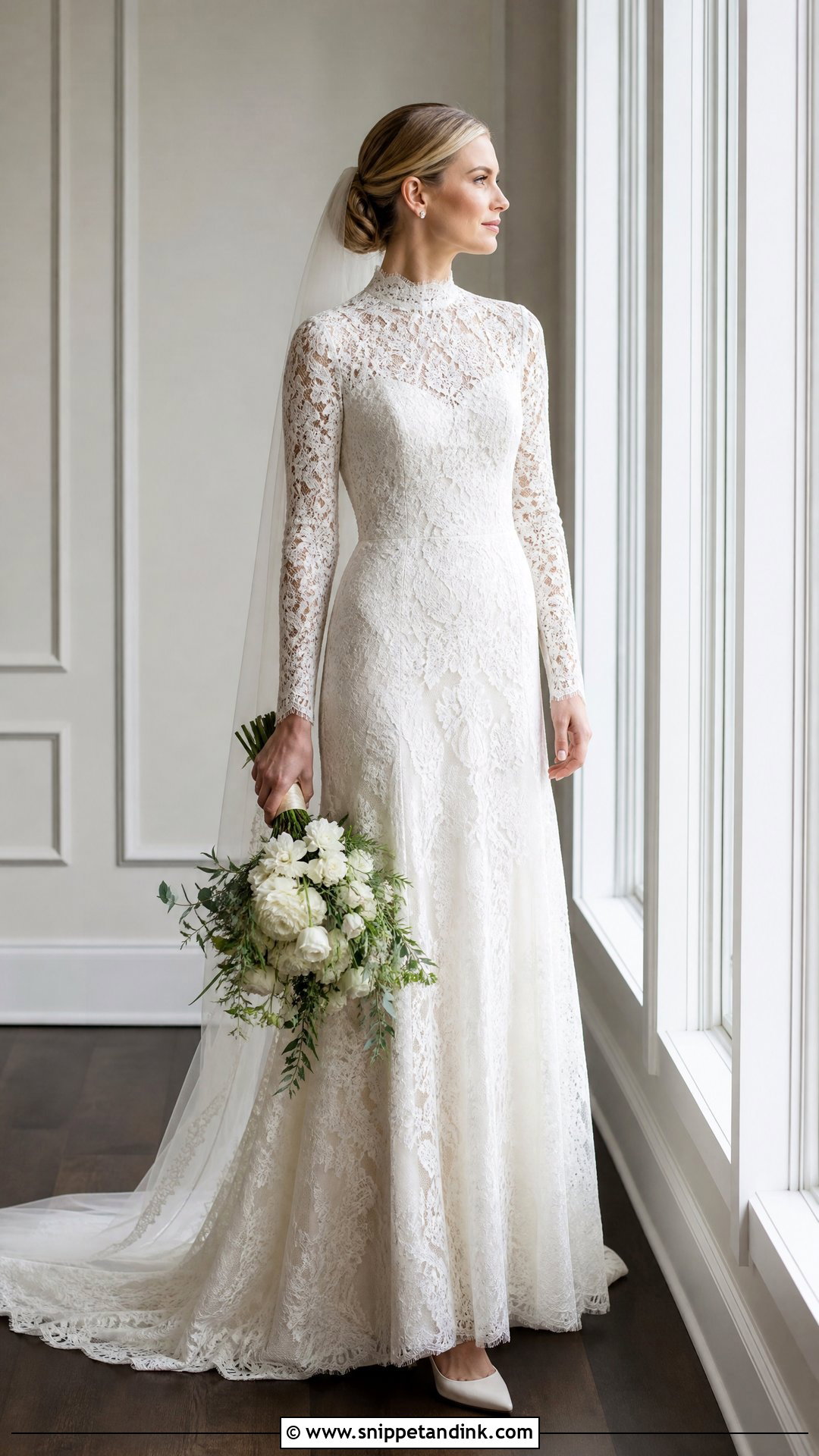
High necklines and veils have to be planned together. If the comb sits too high, the tulle falls over the collar and blurs it, so I ask the hairstylist to anchor the veil below a low bun. Lace, tulle or crepe at the neck needs no necklace; understated studs are plenty. Closed-toe heels and a long-stemmed bouquet held near the hip balance the coverage. A profile shows the neckline and hair together better than any other angle, so I take that first, then a straight full-length frame and a back view. Tall windows or pale columns help. Soft hands and slightly angled shoulders keep the covered silhouette from looking rigid.
12. Cape Sleeve Wedding Dress Photoshoot
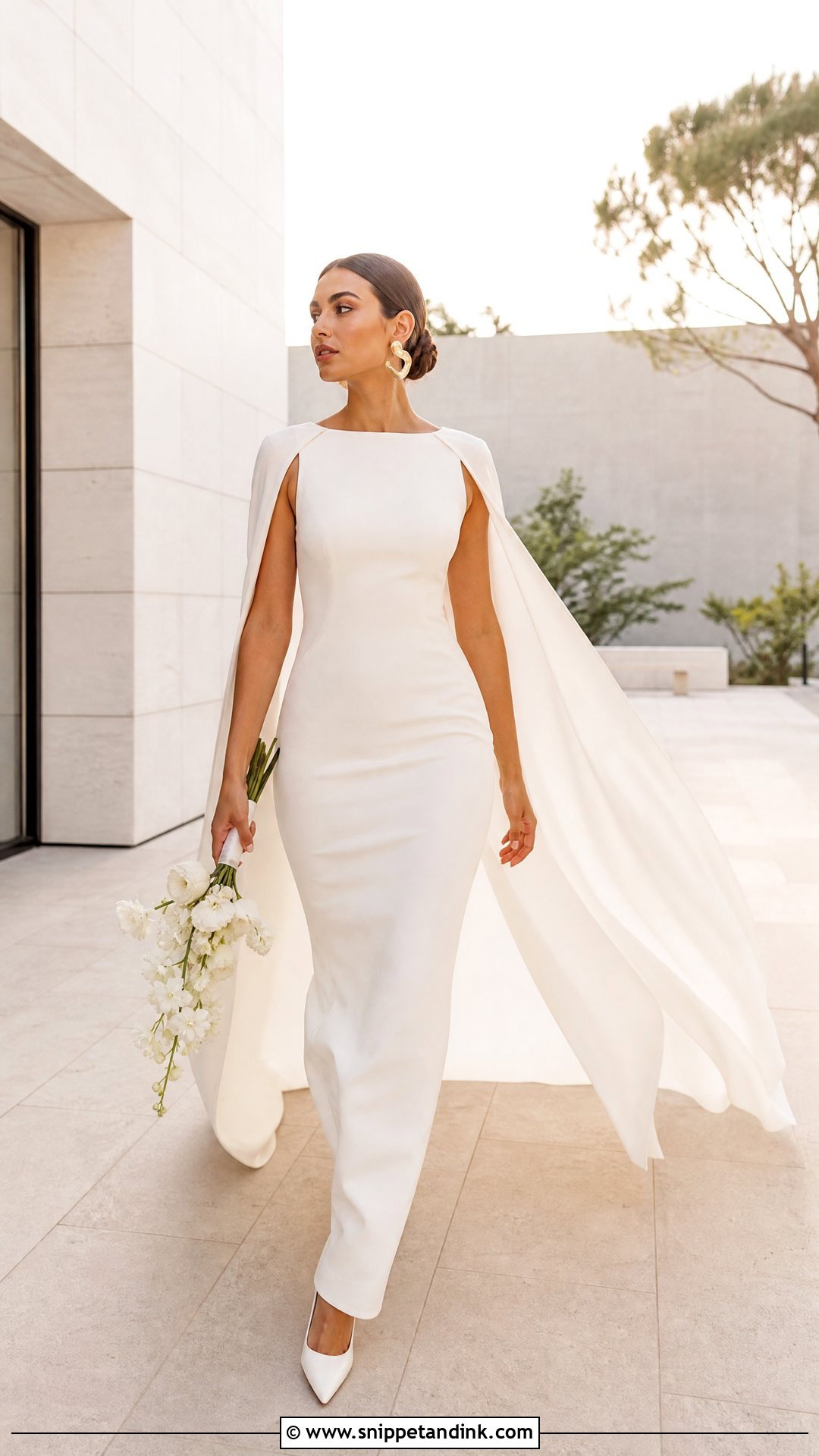
A cape is fabric that wants to move, and standing still wastes it. I take one front-facing frame first to show where the cape joins the shoulders or neckline, then switch to walking and turning shots so it lifts behind her. Keep the arms slightly away from the body, otherwise the cape folds flat into the dress. A large veil fights the cape for attention, so go short or skip it. A sleek bun, statement earrings, pointed pumps and a narrow bouquet keep the outline clean. Open staircases and coastal overlooks give the fabric space, though strong wind can wrap it around her, so I shoot between gusts.
13. Detachable Overskirt Wedding Dress Photoshoot
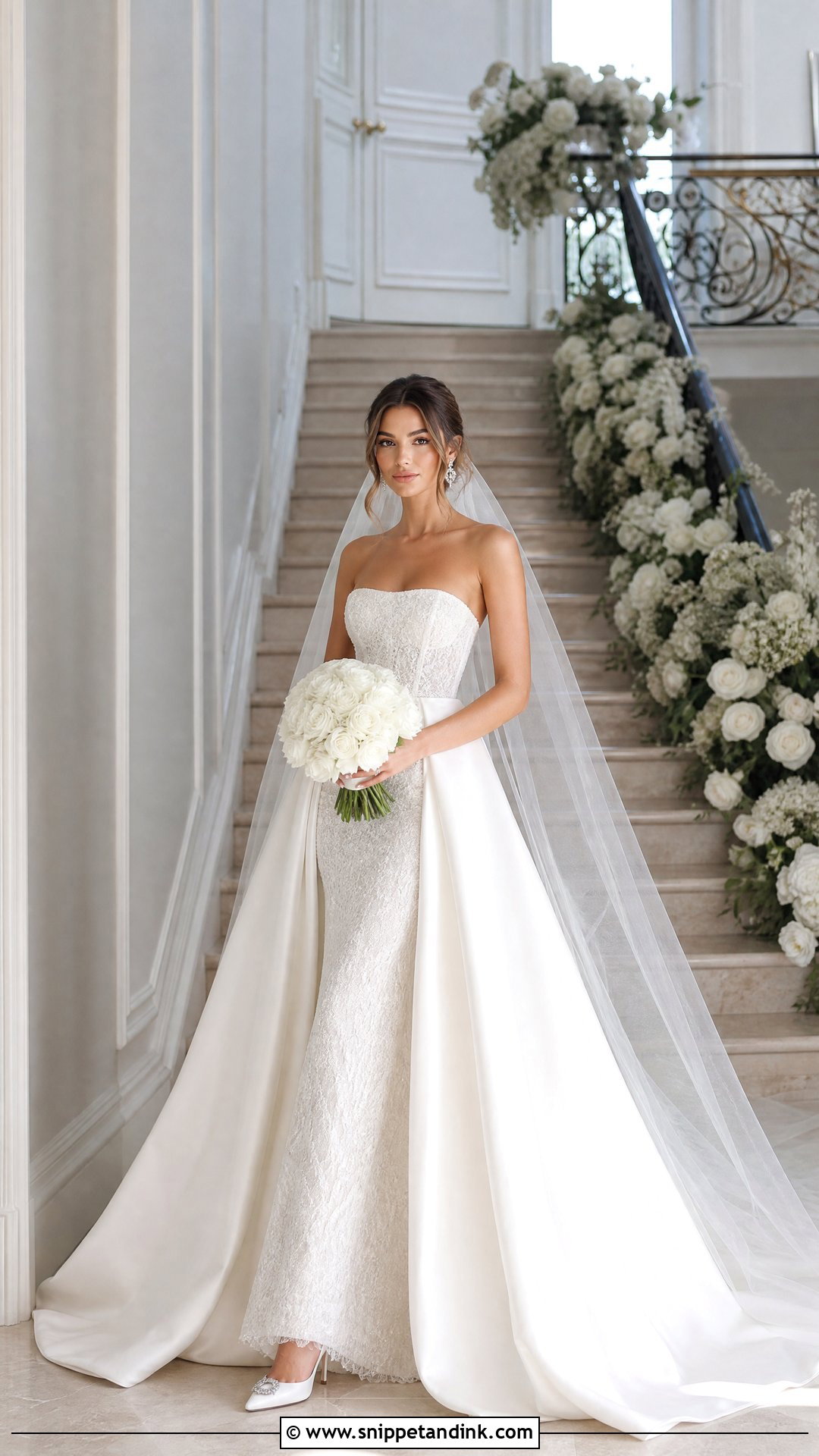
Two looks in one session sounds simple, but the change always takes longer than brides expect, so I build in a proper break and a private place to do it. With the overskirt attached, the gown reads as a formal ball gown: grand staircase or estate entrance, long veil, sparkling earrings, classic heels and a structured bouquet. Then the overskirt comes off to reveal the sheath, column or mermaid underneath, and I swap to a smaller bouquet or drop the veil. Front, side and back for both versions. After removal, check the waistband, because hooks and snaps can leave a visible ridge, and while it is on, smooth the opening and train before every wide frame.
14. Floral Applique Wedding Dress Photoshoot
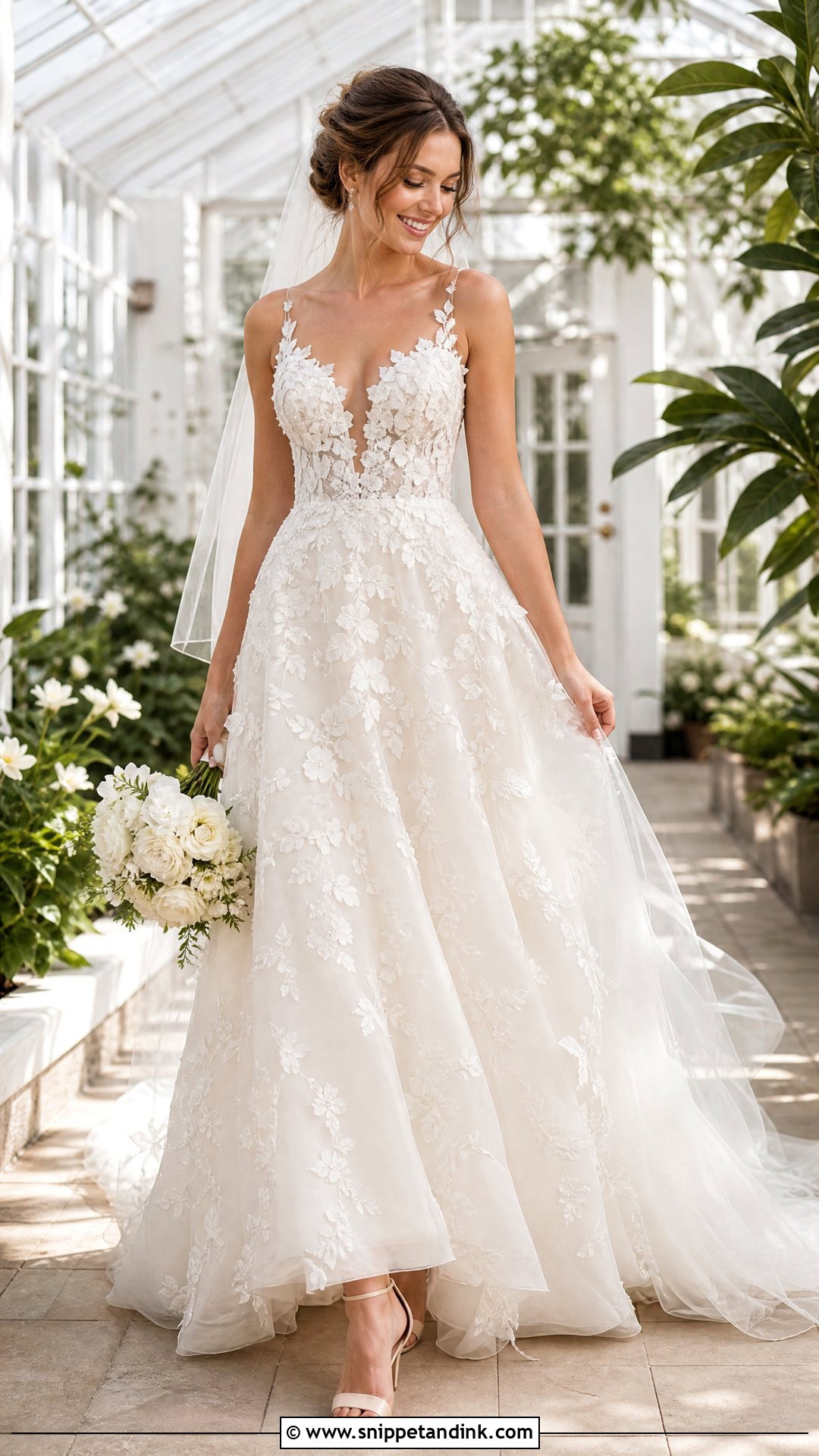
Three-dimensional appliqués cast tiny shadows, and those shadows are what make them visible in a photo. Flat front light kills that depth, so I angle the light from the side. Flowers across the bodice, sleeves, skirt or veil also need clear space behind them; against a busy garden bed they disappear. A neutral studio with a few arrangements, or a greenhouse with a plain wall, works better. Small earrings, pale heels, softly pinned hair and a bouquet that complements rather than copies the appliqués keep the dress in focus. I start full length to show how the flowers travel down the gown, then a side view and a slow turn.
15. Beaded Wedding Dress Photoshoot
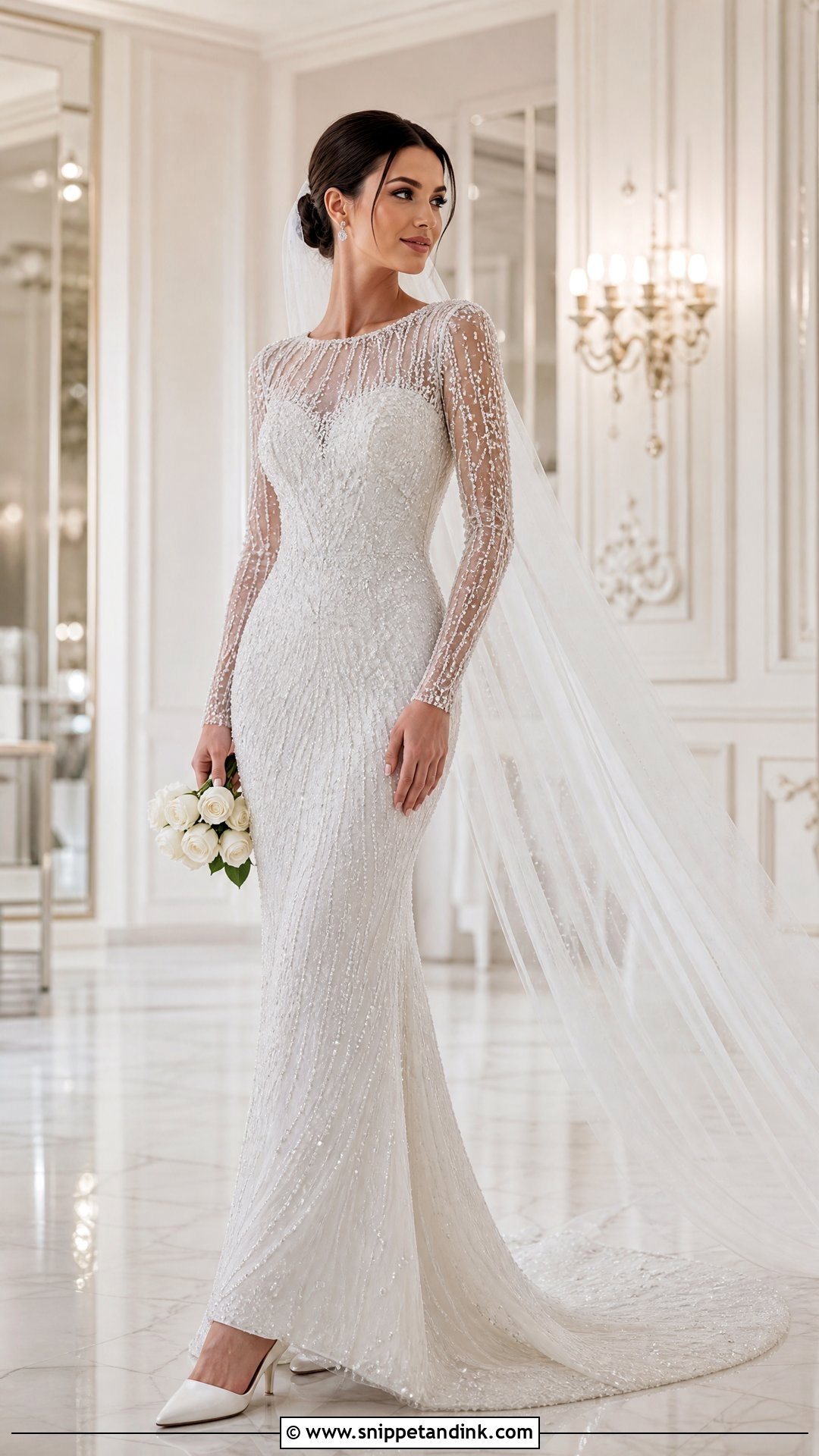
Beading behaves unpredictably on camera. Crystals throw sharp highlights, pearls glow softly, and sequins can flare white if the light hits them straight on. Controlled light in a ballroom, on a pale staircase or in a neutral studio lets me place those reflections where I want them. I shoot from the front and a slight angle so the beadwork follows the silhouette, and a gentle walk creates moving sparkle. Before the camera comes out, I go over the gown for loose threads and missing beads; a gap in a beaded pattern is surprisingly easy to spot in a large print. Simple earrings, satin heels, a clean updo, a small bouquet, and a sheer veil if the shine needs softening.
16. Plus Size Wedding Dress Photoshoot
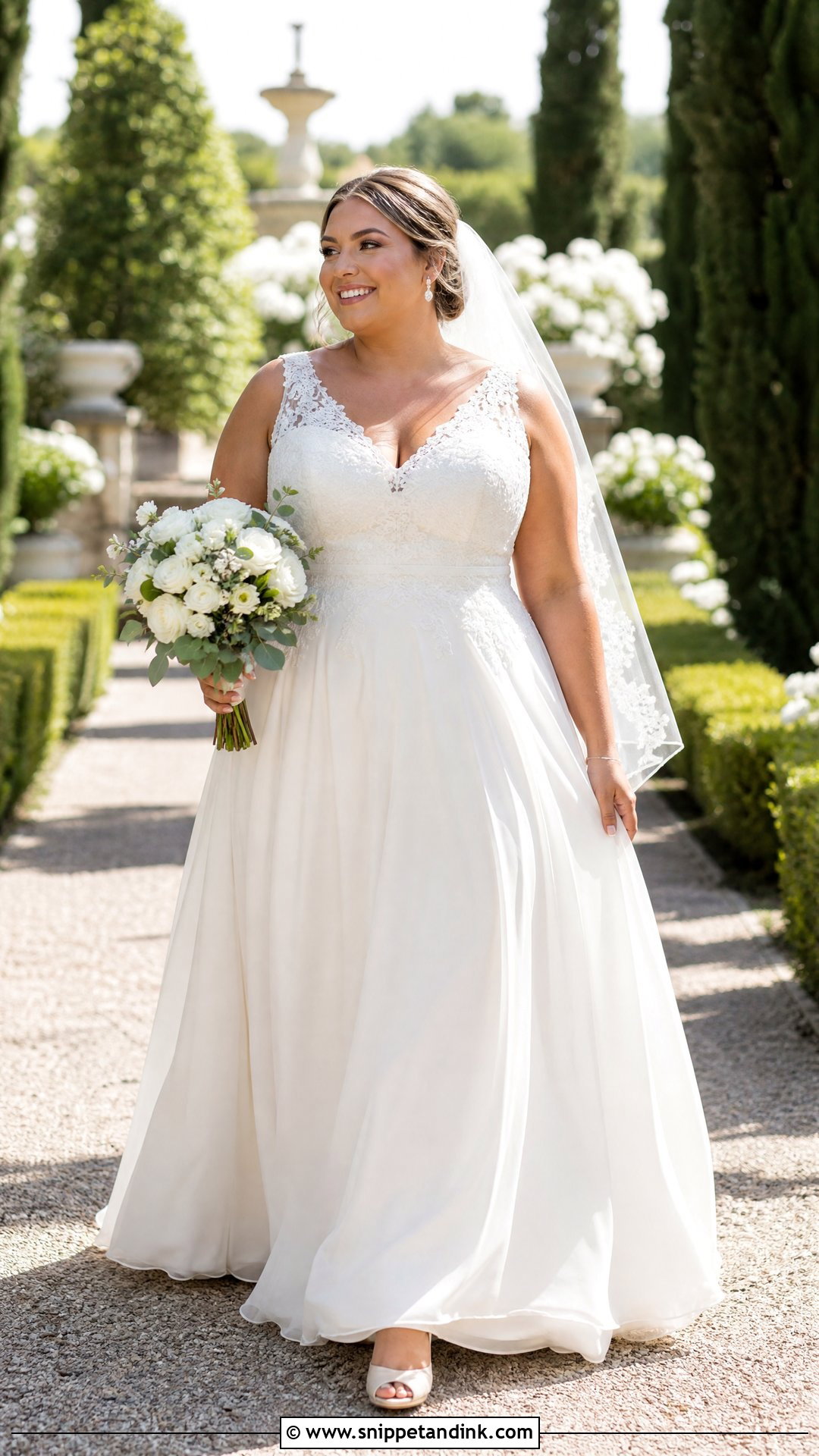
Fit decides how a plus size gown looks in photos far more than the silhouette does. An A-line, fit-and-flare or structured ball gown with good internal support and a defined waist all work once the alterations are right. I mix relaxed standing portraits with walking frames, side profiles and candid movement, since one fixed pose rarely suits anyone. Two small things change a lot: keep the bouquet below the waist, and leave a little air between arms and body so the waist stays defined. Shoes she can stand in for an hour, balanced earrings and a securely pinned veil finish it. I’m not trying to hide anything; I’m photographing the dress as it really fits her.
17. Petite Wedding Dress Photoshoot
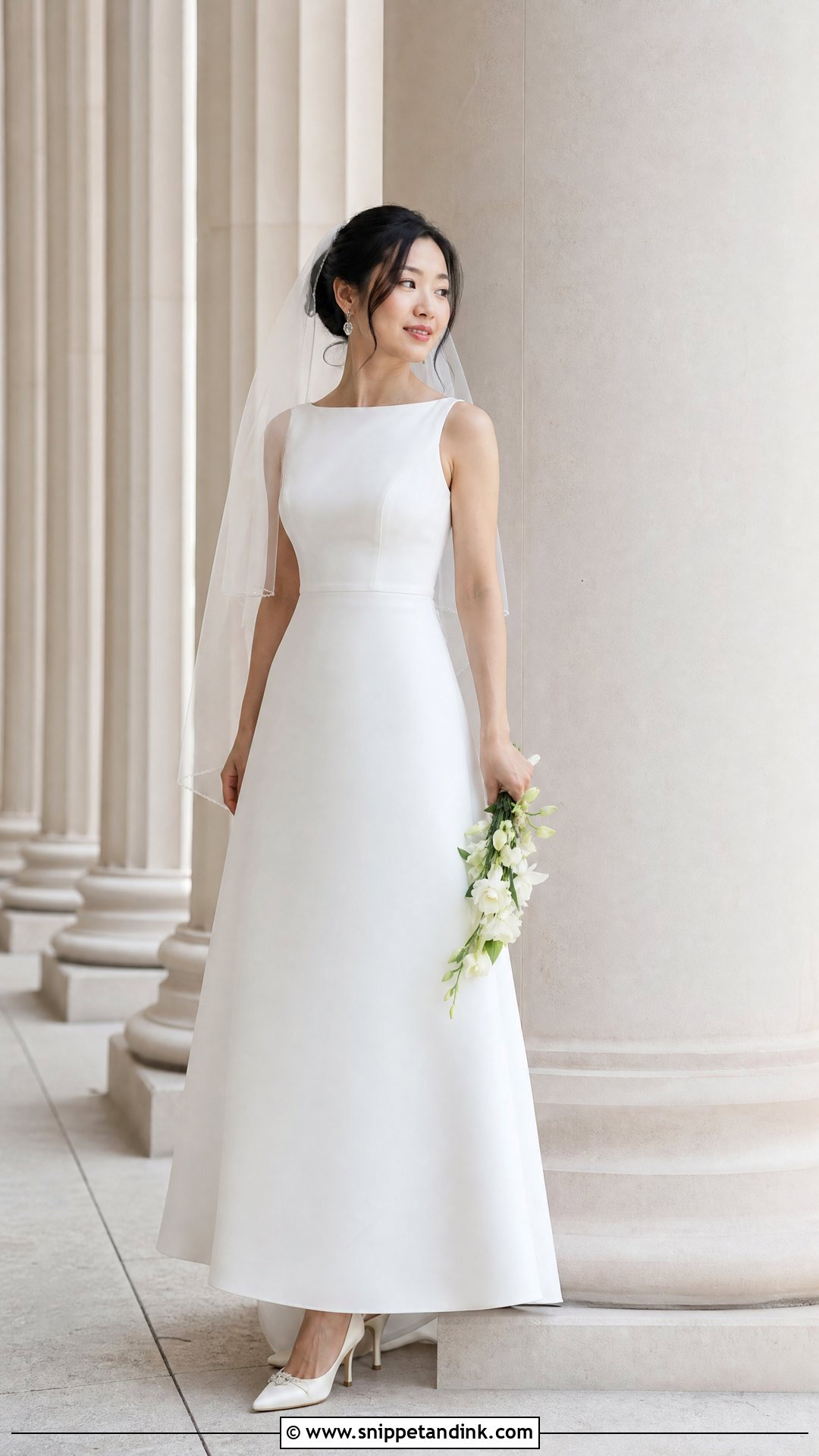
Proportion is the whole job with a petite bride. Heavy layers swallow a small frame, so a fitted A-line, sheath or subtle fit-and-flare usually reads better, and a higher waist with a carefully adjusted hem makes a real difference. Camera height matters as much as the dress. I shoot from around waist level, because shooting down from eye height shortens the body. Vertical lines help too, like tall windows, columns or a straight path. Small steps, one foot forward, a narrow bouquet, pointed heels and delicate earrings. Oversized accessories take over the frame quickly, so scale the veil to the gown.
18. Maternity Wedding Dress Photoshoot
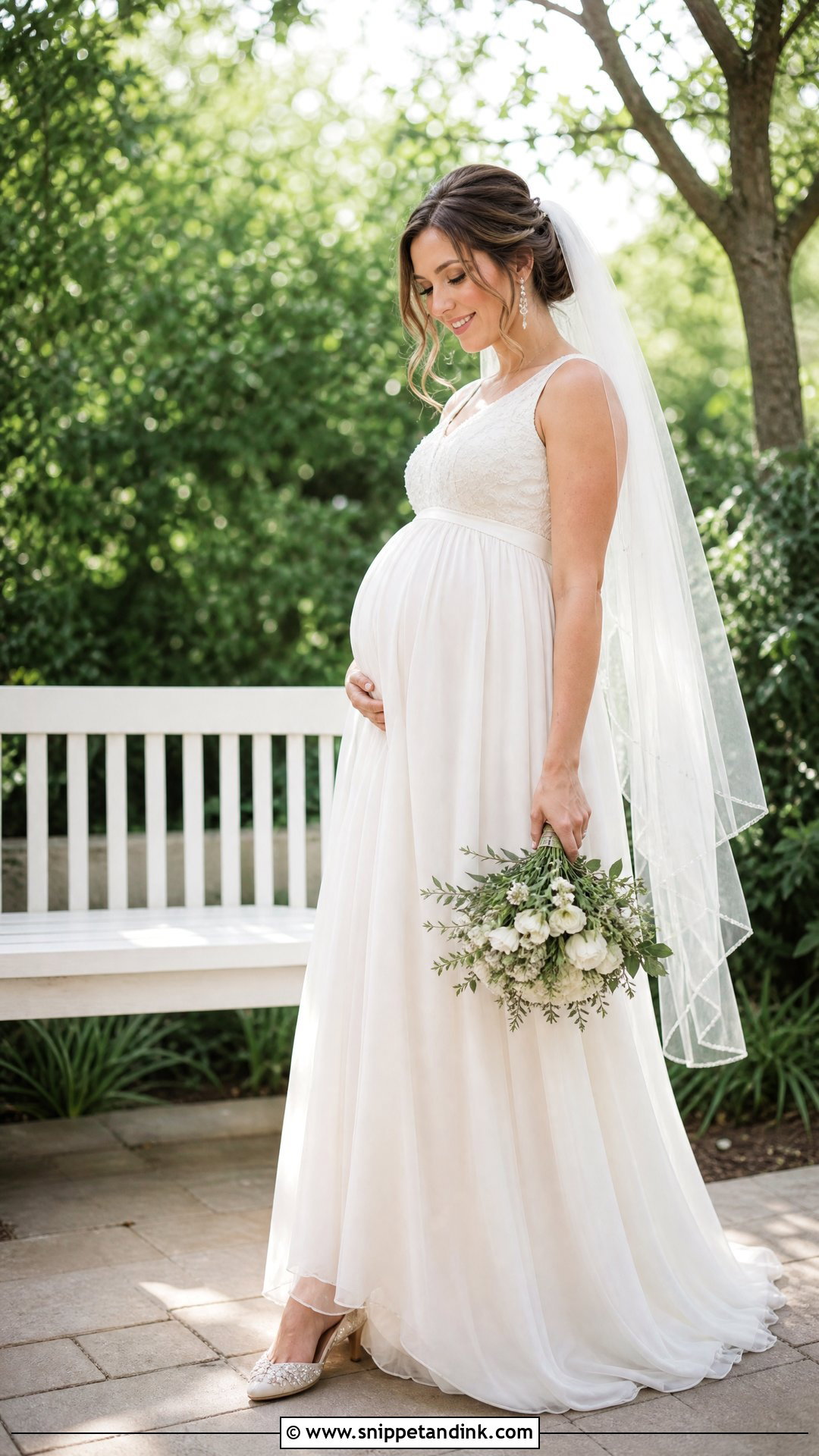
Comfort runs the schedule at a maternity bridal shoot. I plan shorter blocks with seating close by, water within reach and no rough ground to cross. Empire waists, stretch crepe and soft A-lines drape over the bump instead of pulling across it, and that drape is exactly what I want to show in profile. Block heels or embellished flats, light earrings, a secure hairstyle and a loosely arranged bouquet keep things easy, and a fingertip veil adds movement without tangling. I start with a relaxed front portrait, then turn her sideways. A seated frame gives her a rest and another full view of the dress.
19. Courthouse Mini Wedding Dress Photoshoot
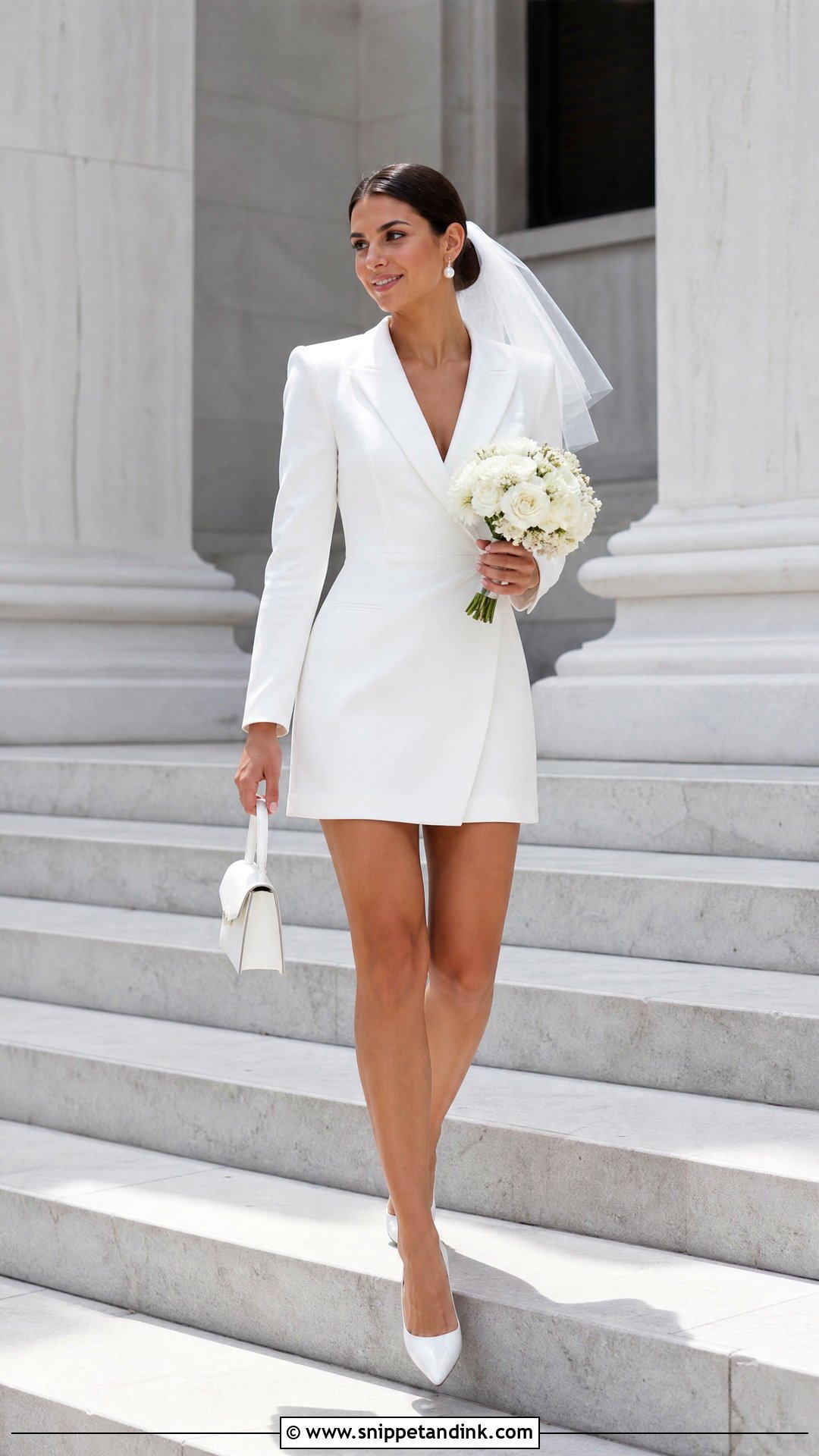
With a mini, shoes and accessories take up half the frame, so they need as much thought as the dress. A tailored white mini with long sleeves or a structured neckline, pointed pumps, a small top-handle bag, pearl earrings and a short veil or oversized bow carry the bridal signal. Keep the bouquet compact so it doesn’t cover the skirt. Courthouse steps and city streets suit the look. Seated shots are where minis go wrong, because the hem rides up as she sits; I let her settle, then smooth the hem before I shoot. Coordinated shorts underneath help, and it’s worth testing the dress walking and sitting at home first.
20. Modest Wedding Dress Photoshoot
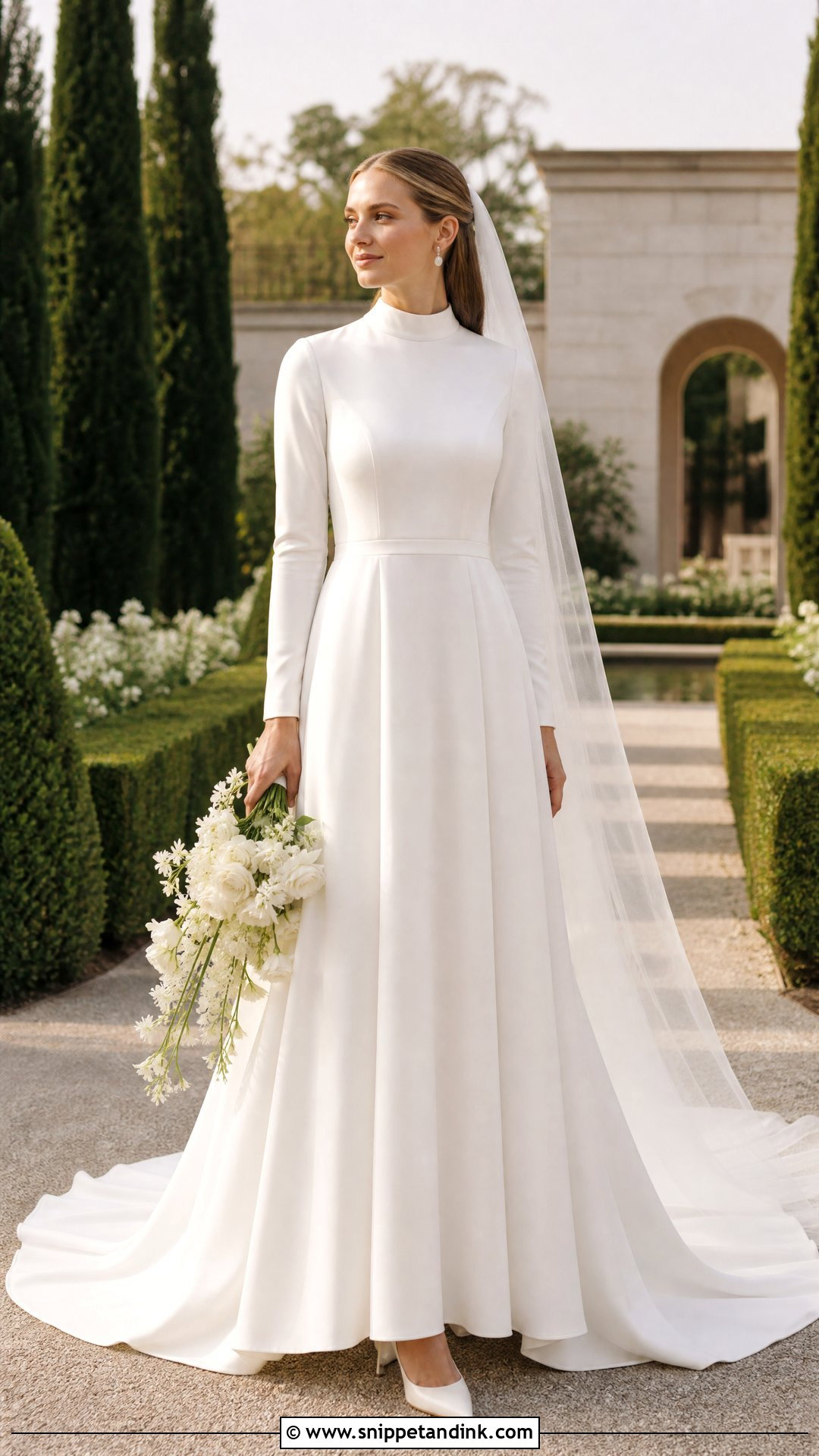
Modest gowns look deliberate when the tailoring is precise and loose when it isn’t. Long sleeves, a higher neckline and an opaque bodice leave fewer places to hide a poor fit, so I’d pay attention to the shoulders, cuffs, waist and hem at the final fitting. Elegant pumps, pearl or crystal earrings, a smooth hairstyle and a veil that doesn’t add bulk keep the line clean, and a long-stemmed bouquet at the hip keeps the bodice visible. I photograph front, side and back to show the sleeve construction and train, then a slow walk. Estate grounds or a pale studio suit the simplicity.
Grass on the Train and Other Fixes Between Frames
Something always shifts during a long session. These are the small problems I watch for, and how I deal with them without stopping the shoot.
Creases after a seated pose
Satin and crepe crease fastest, so I shoot seated frames last for each gown. Pressing with your hands rarely flattens a satin crease and can leave a dull patch on the sheen; a quick pass with the steamer is safer.
A veil that won’t behave outdoors
In wind, a cathedral veil can wrap around the bride’s face in a second. I have someone hold the far end out of frame and release it on my count, so it floats instead of flapping.
A hem that drags or catches
A hem that looked right at the fitting can catch on taller heels or drag with flats. Bring the exact shoes to the final fitting and to the shoot, and check where the hem meets the ground before every full-length frame. Dirt on the train comes off more easily dry, with a soft brush, than rubbed wet.
How Many Frames Each Gown Really Needs
For a gallery like this, I work to a core set per dress: a full-length front, a profile, a back view, one movement frame and a detail only if the fabric earns it. Those five come first. If time runs short later in the day, nothing essential is missing, and any creative frames are a bonus rather than a gap.
Twenty Gowns, One Shot List That Covers Them All
Treat each gown as a full look, not a garment on a hanger. Silhouette, veil, jewelry, bouquet, shoes, hair, pose and location all land in the same frame. Leave time for alterations, steaming and accessory changes, and give flowing skirts, trains, capes and overskirts room to move. If a bride can’t stand, walk and sit comfortably in a dress, the camera will show it. Build the list from front portraits, profiles, back views, seated frames and walking shots, and the gallery gets real variety without repeating itself.


Leave a Reply