
A simple style is not the same as a quick or fragile one. The looks below are simple in shape: a bun, a twist, a ponytail, waves. What keeps them looking good for twelve hours is the work underneath, the base, the pin placement and the product. I’ve grouped twenty styles I build often, from loose waves to tight buns, and for each one I’ve noted what it needs from your hair, who it suits less well and what I do to make it last, so your trial starts with a clear idea rather than a folder of pictures.
Twenty Minutes or Ninety? Rough Chair Times for These Styles
Simple doesn’t always mean fast, and the morning schedule is built around the slowest style in the room. These are the rough times I plan for one person with shoulder-length to long hair that has been washed and dried the day before. Thick or very long hair adds time; so do extensions.
- Around 30 to 45 minutes: sleek low ponytail, low loose bun, twisted half-up, side-swept waves.
- Around 45 to 60 minutes: half-up with waves, low chignon, braided low bun, beachy waves, messy high bun.
- An hour or more: Hollywood waves, braided crown, sleek straight on thick hair, floral crown half-up.
- Longest of all: vintage pin curls, because the set has to cool or dry before it is brushed out.
The bride usually goes last or second to last, so the style is freshest for photos, and I add a short buffer for the veil to go in once the dress is on.
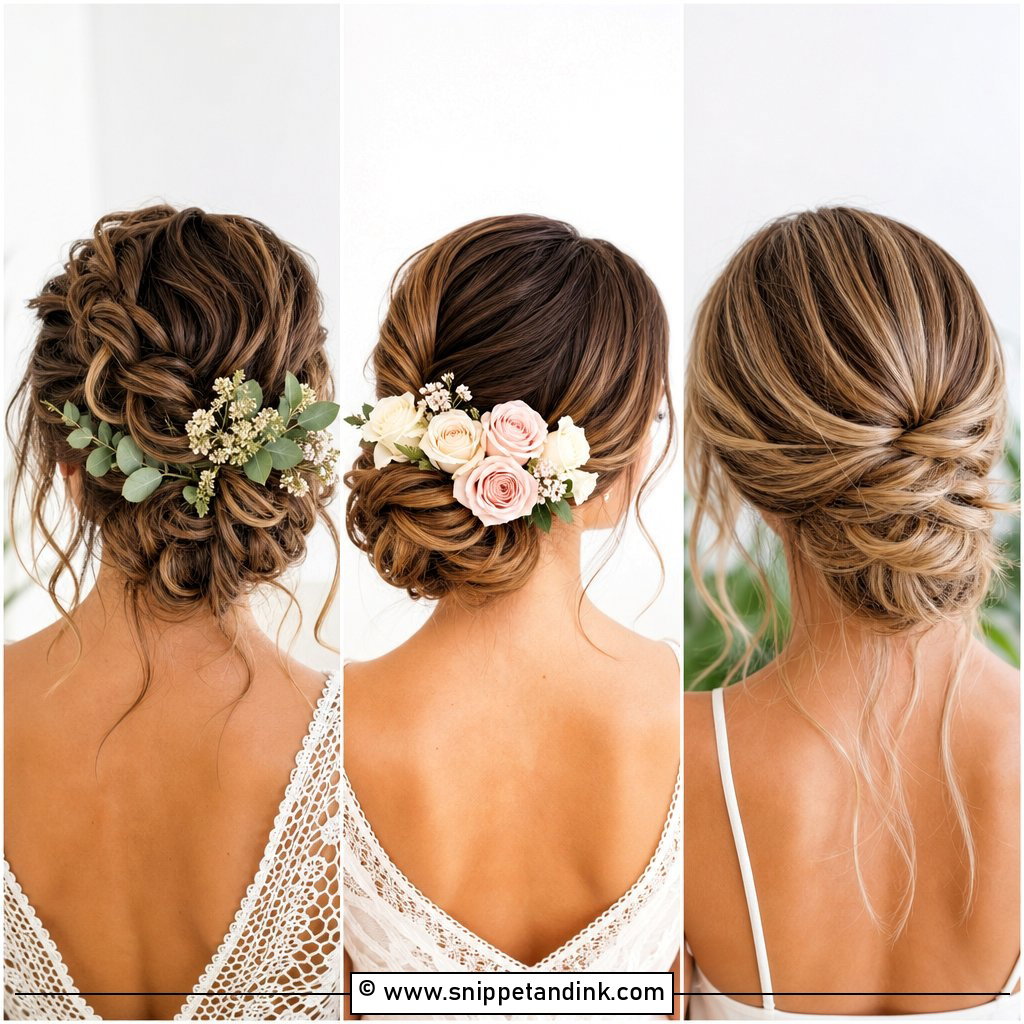
1. Low Loose Bun
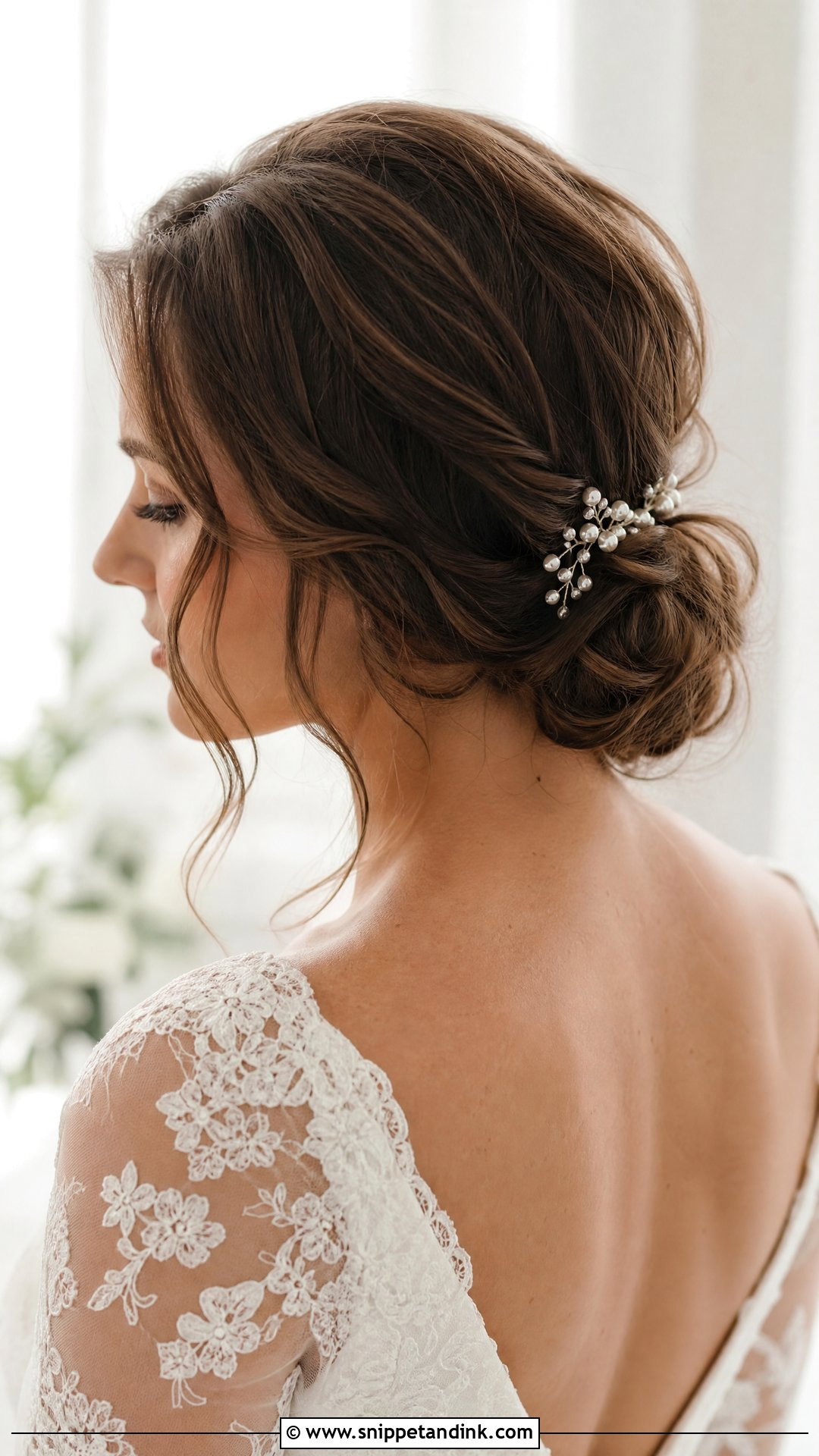
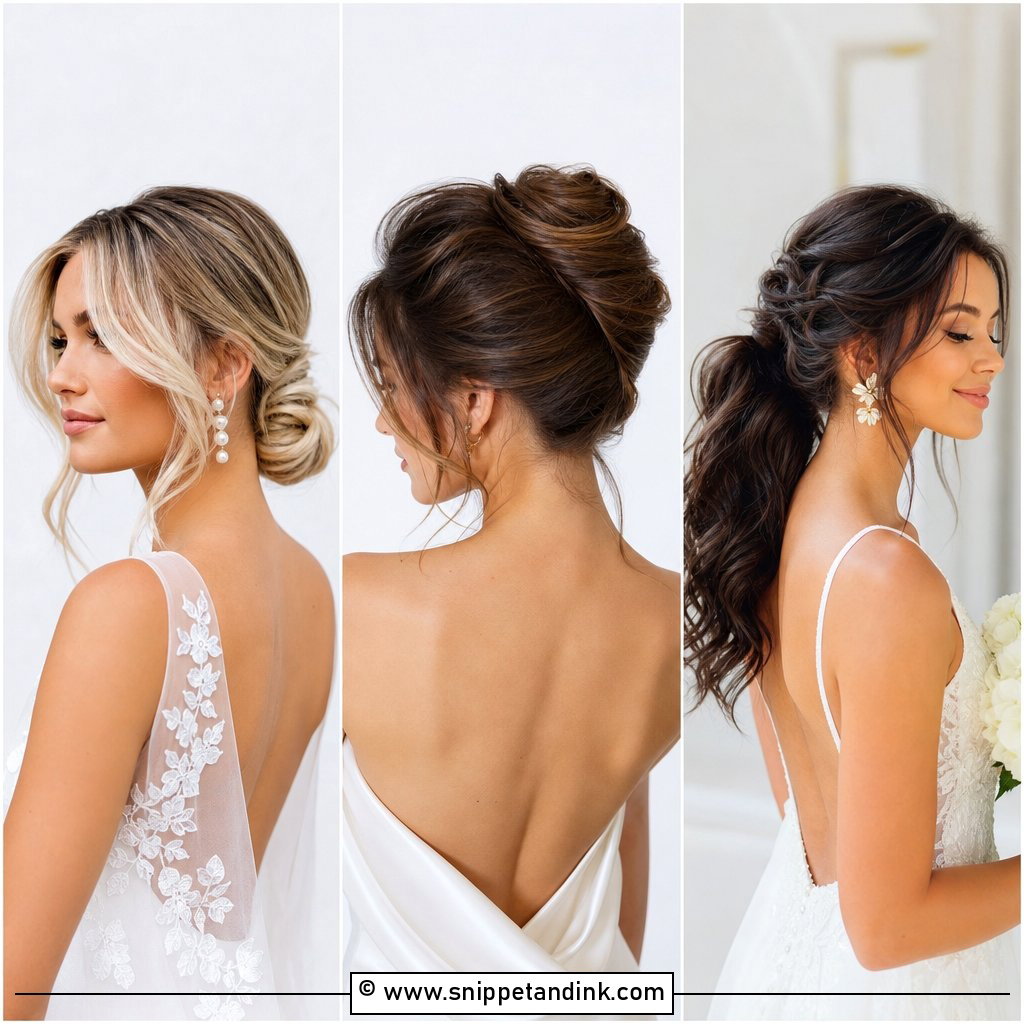
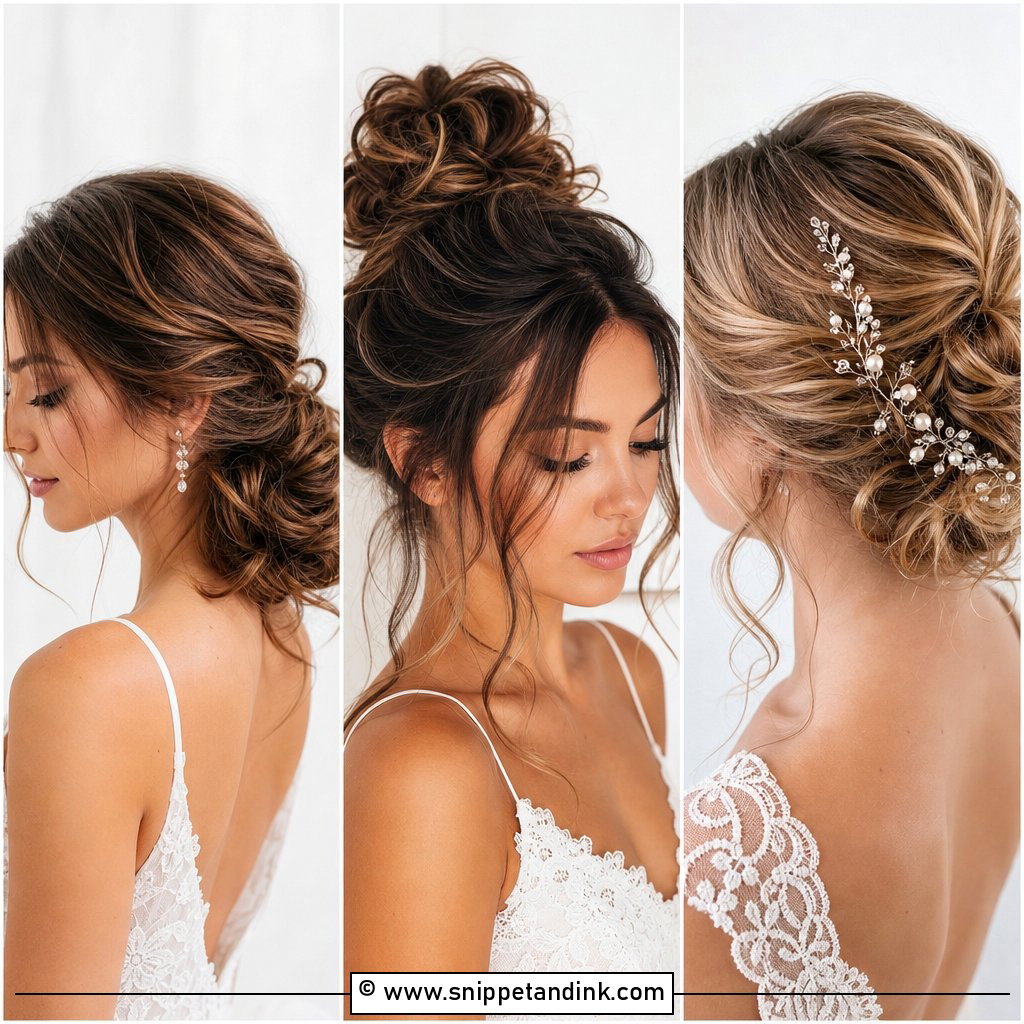
A low loose bun is the style I reach for when a bride says she wants to forget about her hair once it’s done. I build it on a small ponytail or braid at the nape so the pins have something solid to lock into, then wrap the lengths loosely around it. A few loose tendrils at the face keep it soft. It’s comfortable under a veil and against a chair back. The only hair it fights is very short layers, which escape at the nape unless I pin them first.
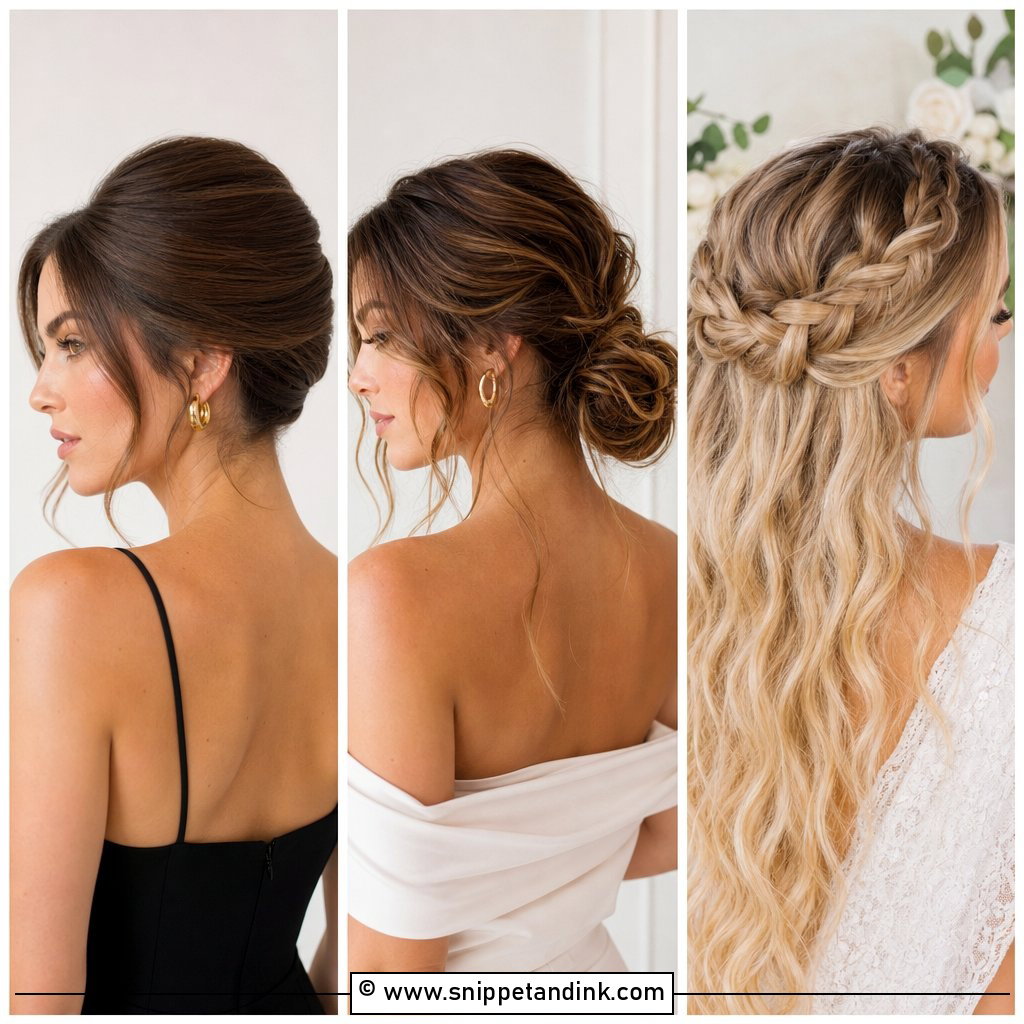
2. Classic French Twist
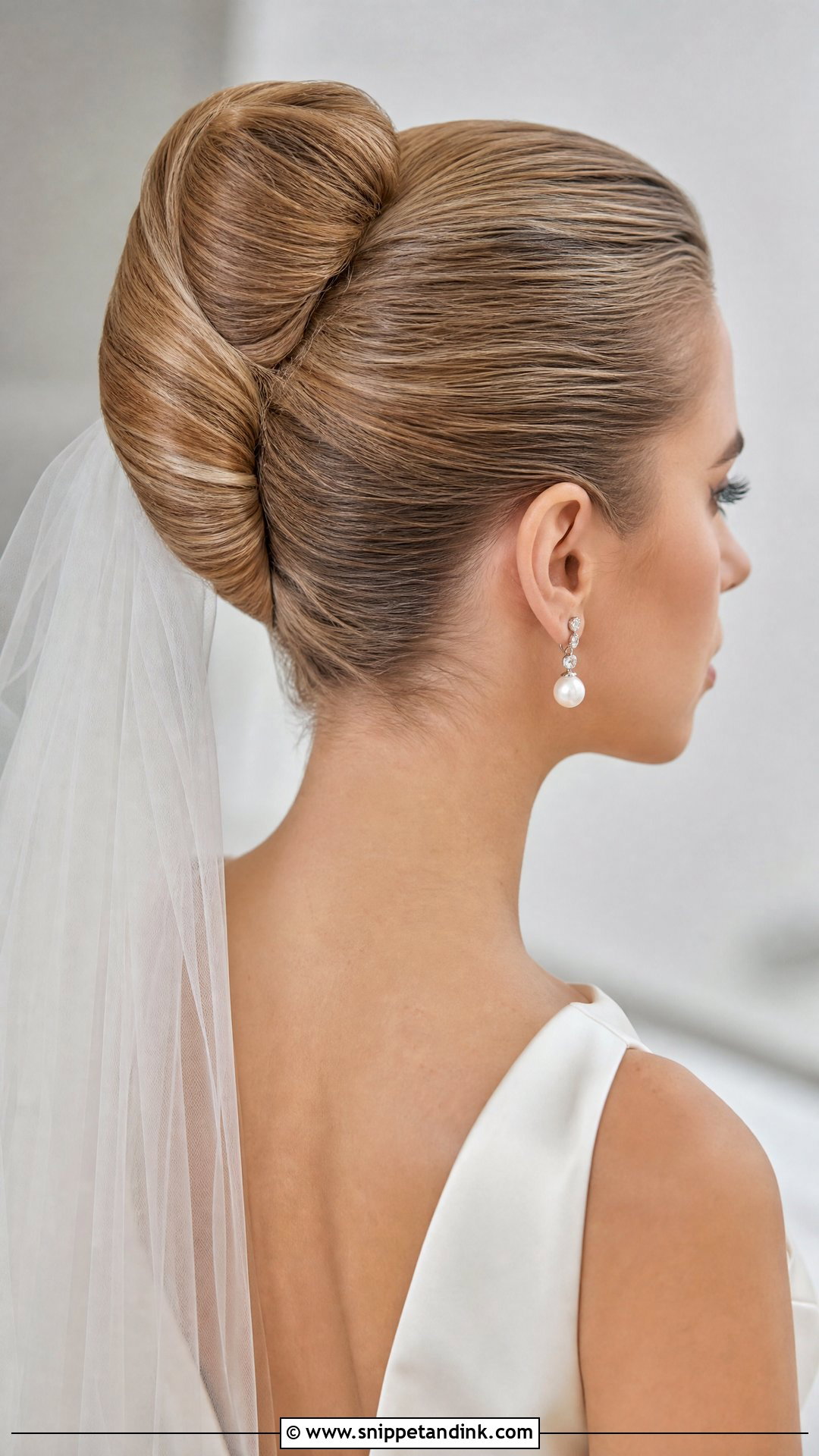
The French twist has lasted decades because it flatters a long neck and stays put. The secret is a backcombed base along the back of the head and bobby pins inserted into the fold, crossing over each other, so the roll can’t unwind. It needs hair at least past the shoulders and some grip; slippery, freshly washed hair will try to slide out of the seam. Keep it smooth with statement earrings, or loosen a few face-framing pieces. It’s a good choice for a warm day since nothing touches your neck.
3. Half-Up Half-Down With Soft Waves
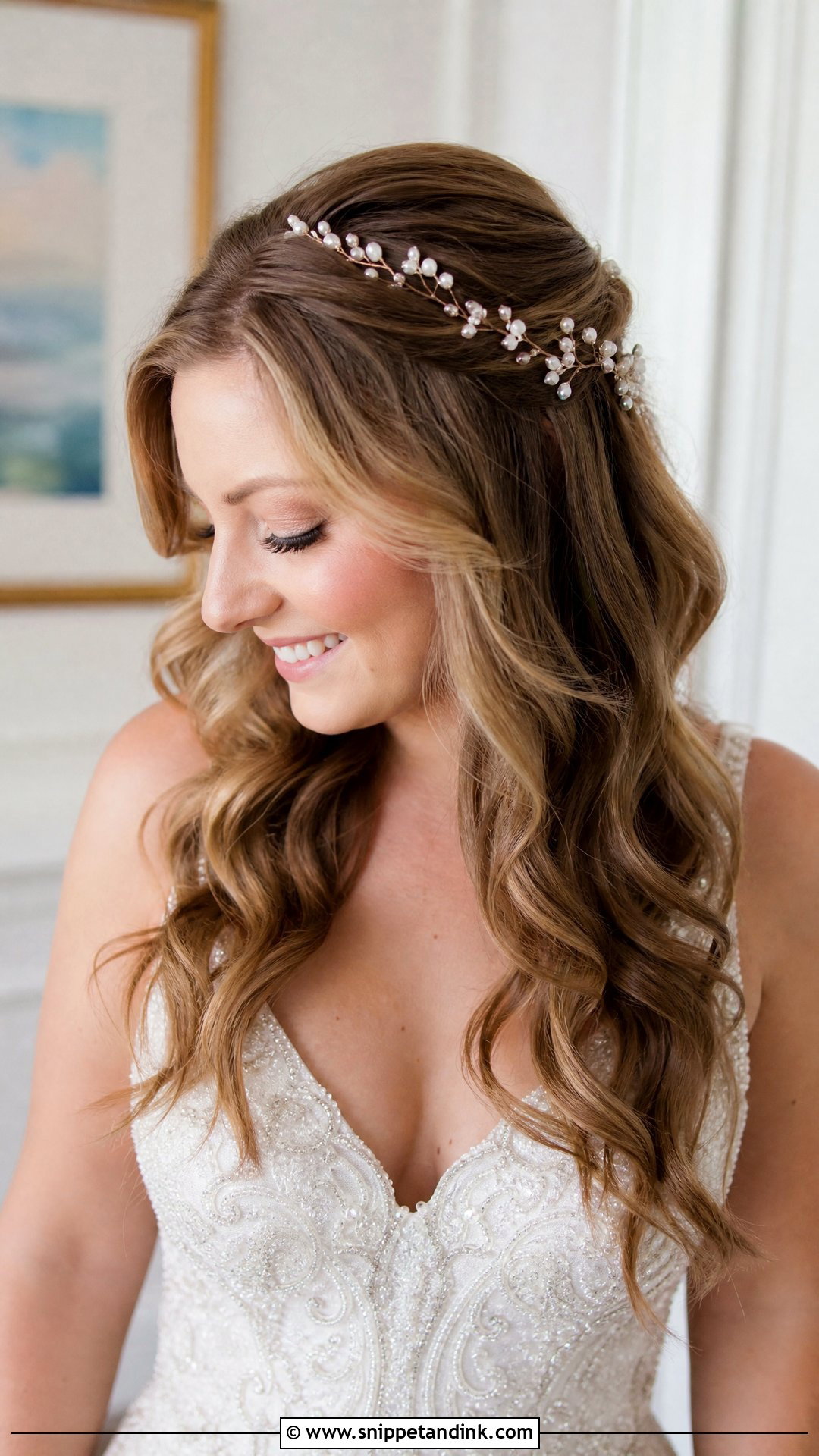
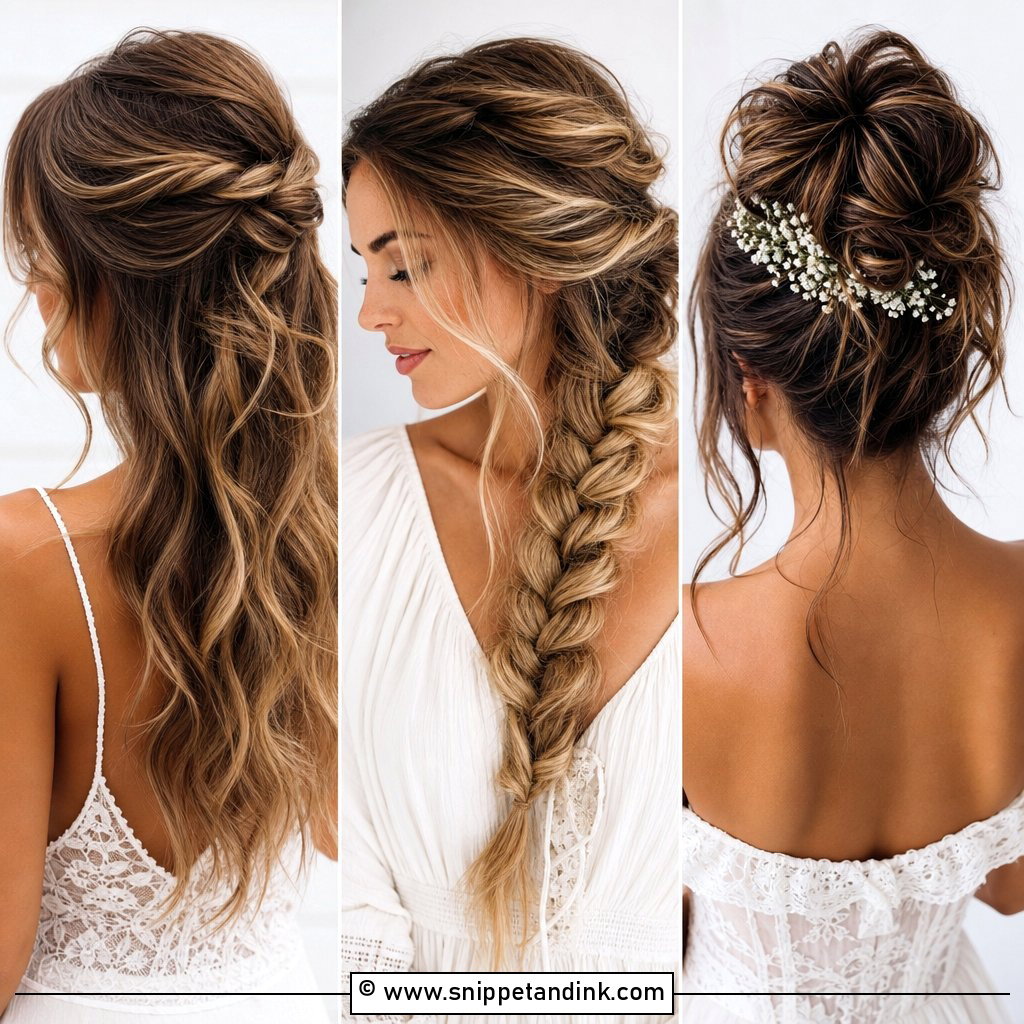
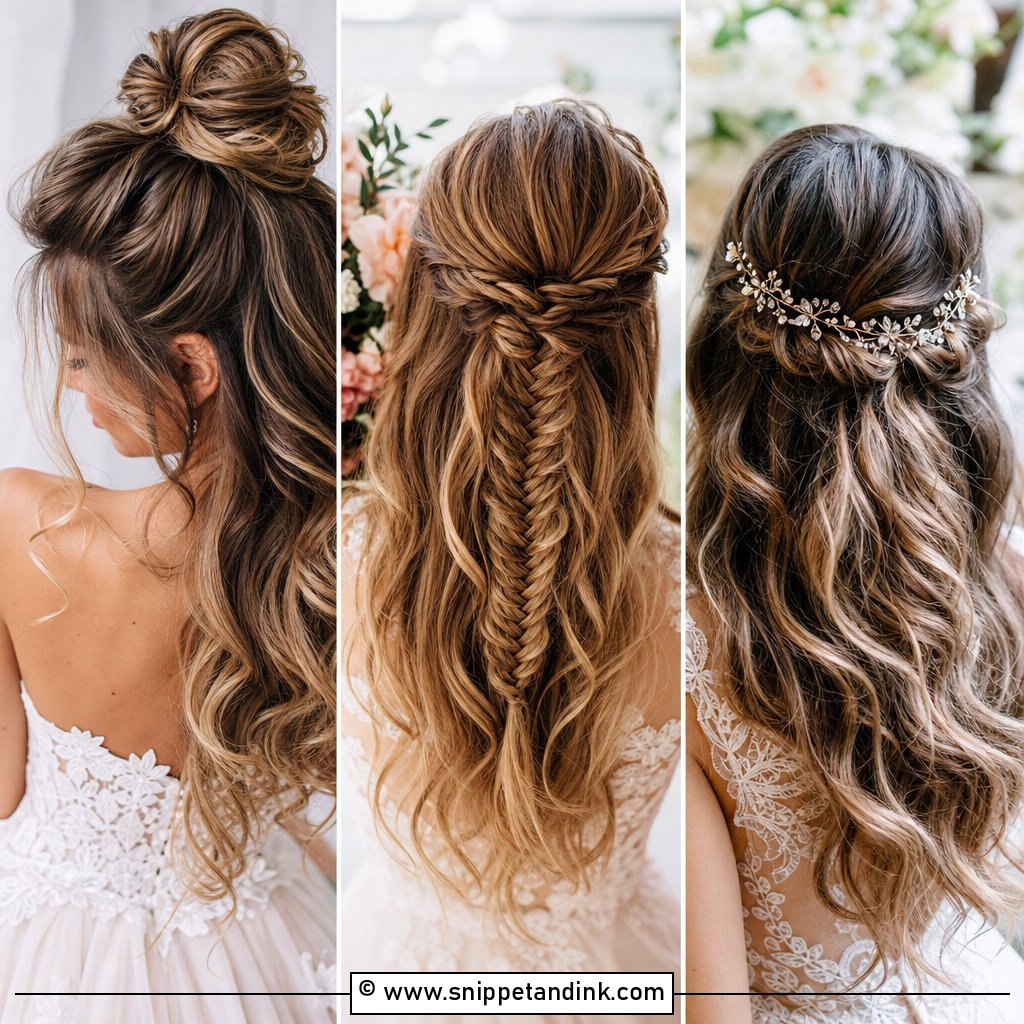
Can’t decide between up and down? Half-up, half-down keeps both. I take the top section back and anchor it with a hidden twist or a small elastic before any clip goes on, because decorative clips alone can’t hold the weight of thick hair. The rest falls in soft waves. Hair vines and fresh blooms both suit it. On very fine hair I add a little root lift to the top section first, otherwise it lies flat to the scalp in photos.
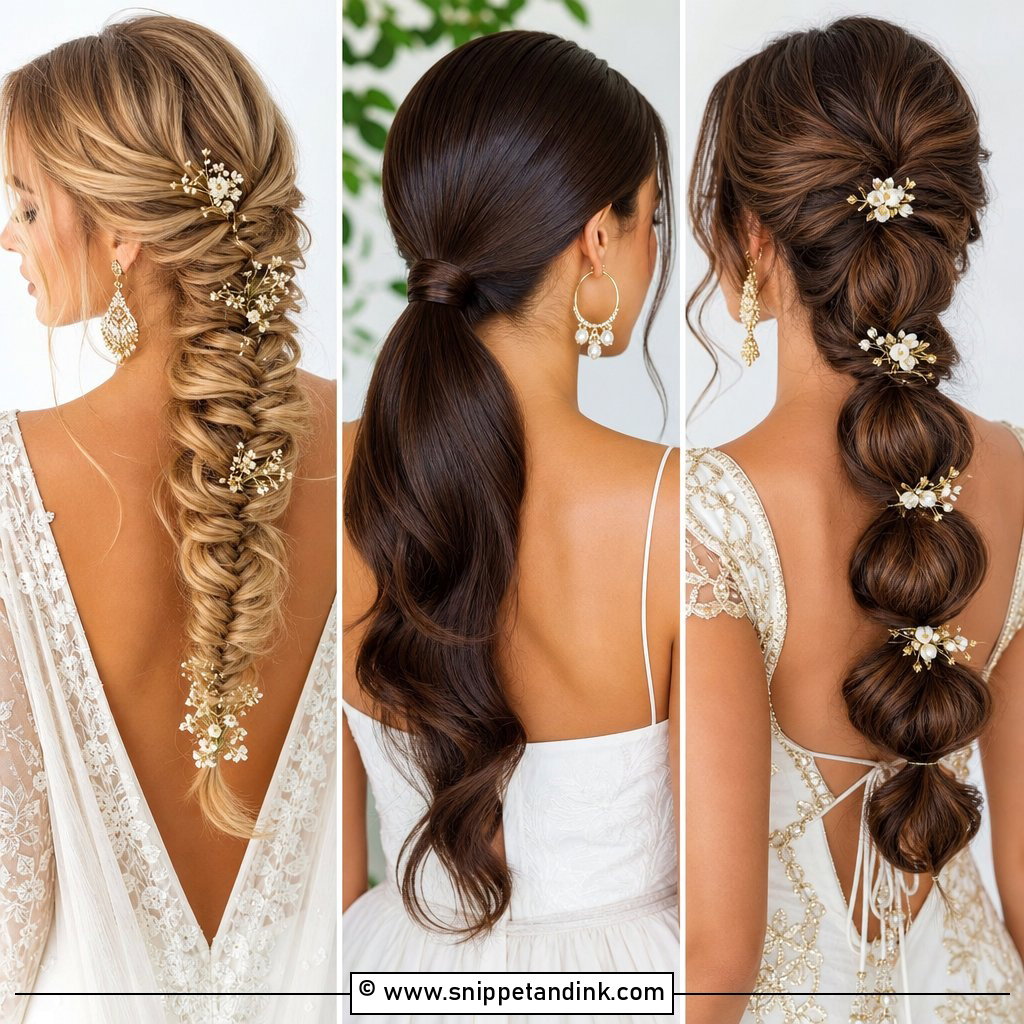
4. Sleek Low Ponytail
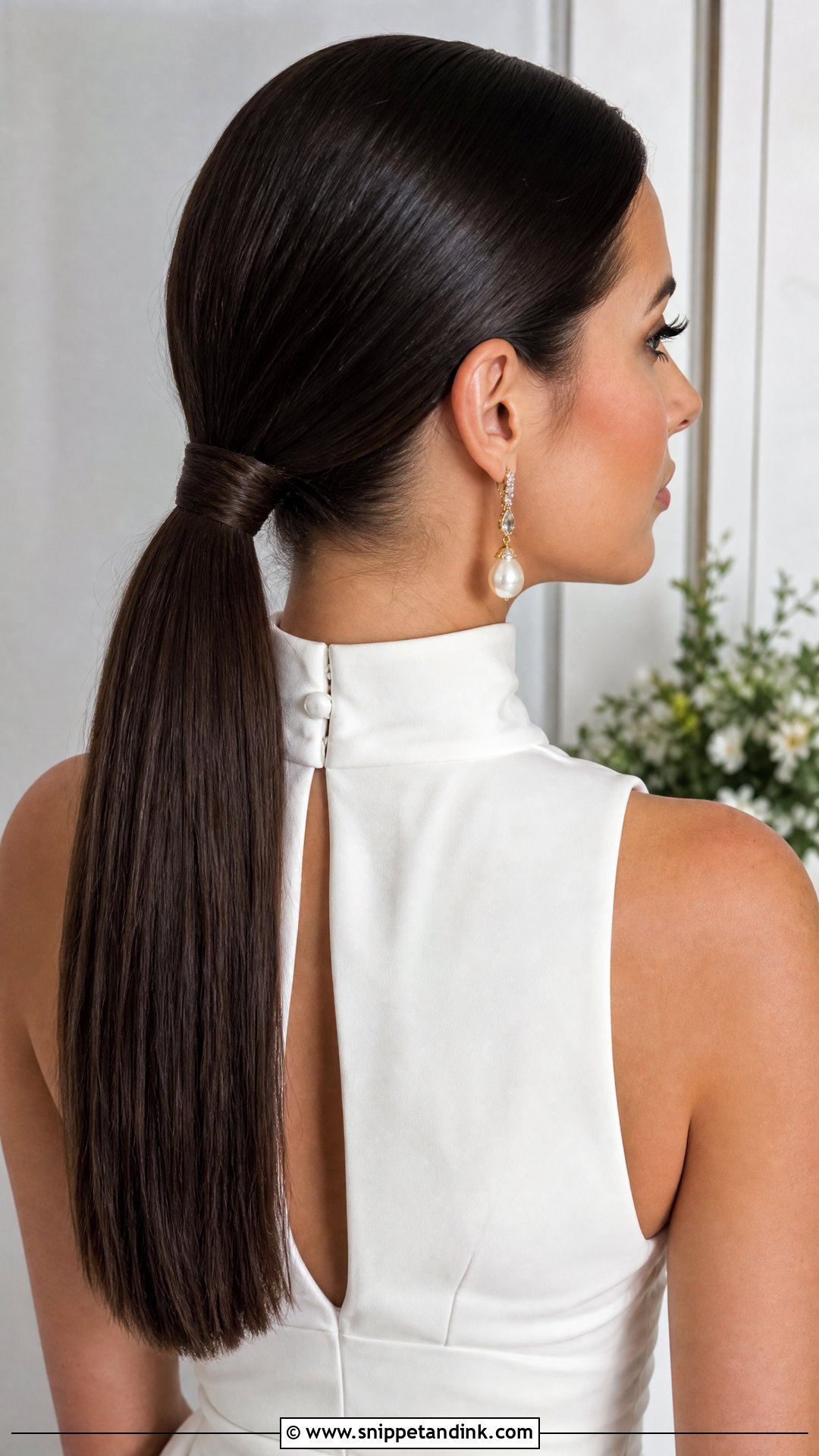
A sleek low ponytail is pure polish, and every flaw shows. I flat-iron in thin sections, smooth with a firm-hold gel or cream at the hairline, secure with a strong elastic, then wrap a piece of hair around the base and pin it underneath. Flyaways at the hairline are the enemy, so I finish with a toothbrush and a little spray. It’s striking with a high-neck gown and bold jewelry. Fine, thin hair can look sparse in a single ponytail; a clip-in ponytail piece fixes that quickly.
5. Romantic Hollywood Waves
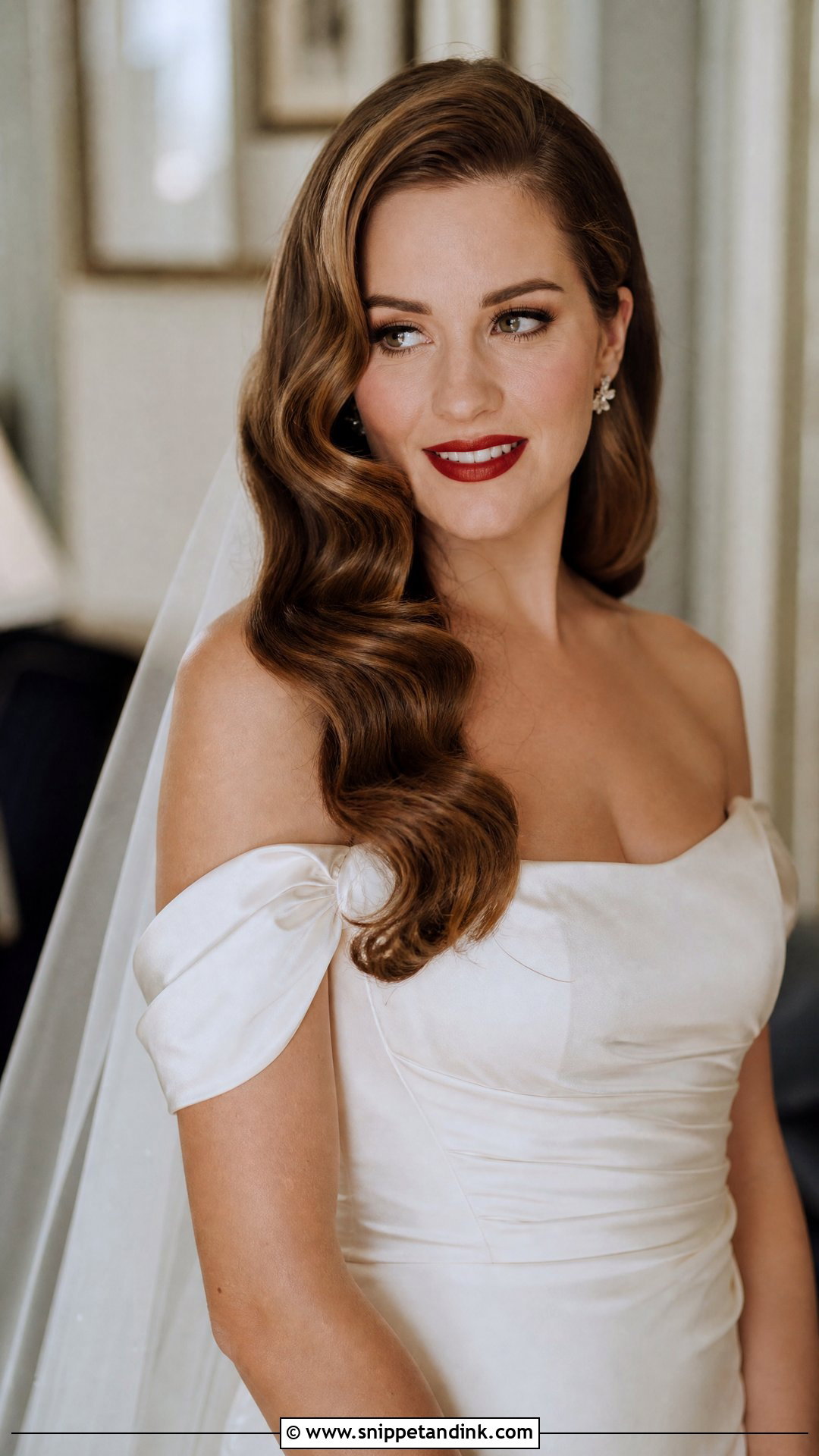
Old-school glamour comes from smooth, cascading Hollywood waves, deep and uniform, falling over one shoulder. Every section is curled in the same direction and brushed out with a boar bristle brush once cool, so the curls join into one wave. Pressing the ridges in with long clips for a few minutes sharpens them. It suits a fitted gown and a red lip. Be aware it loses definition faster in humidity than looser waves do, so I set it a touch tighter for outdoor summer weddings.
6. Messy High Bun
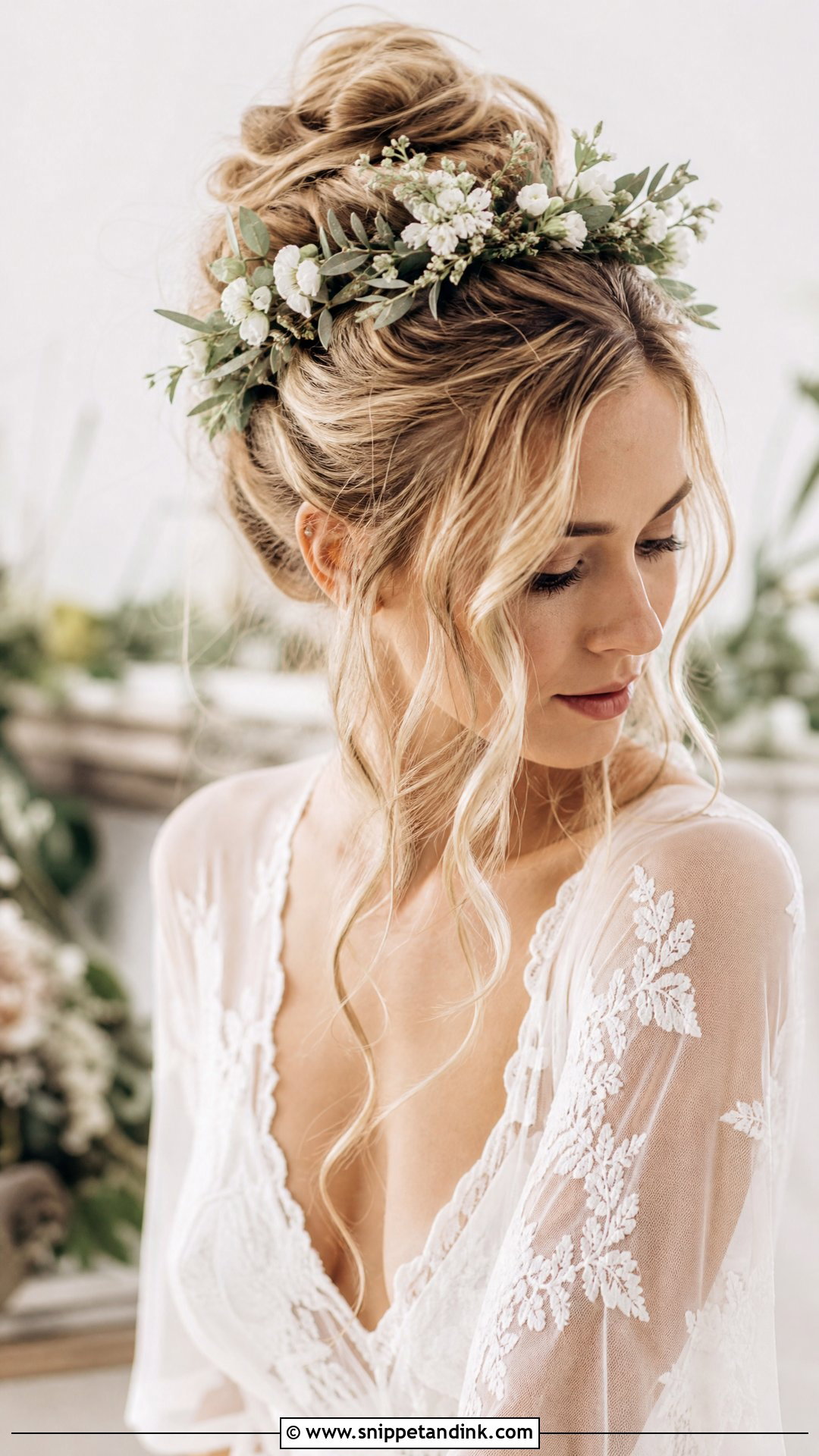
Don’t let the word messy fool you. A messy high bun takes planning, because it sits high on the head where gravity pulls hardest. I put the hair in a firm ponytail first, tease the lengths for volume, wrap them loosely and pin into the elastic, then pull out pieces at the face. Without the ponytail base, it will start to lean by the reception. It suits boho and rustic weddings and flowing gowns, though it can clash with a long veil, which has to sit beneath a high bun.
7. Braided Crown
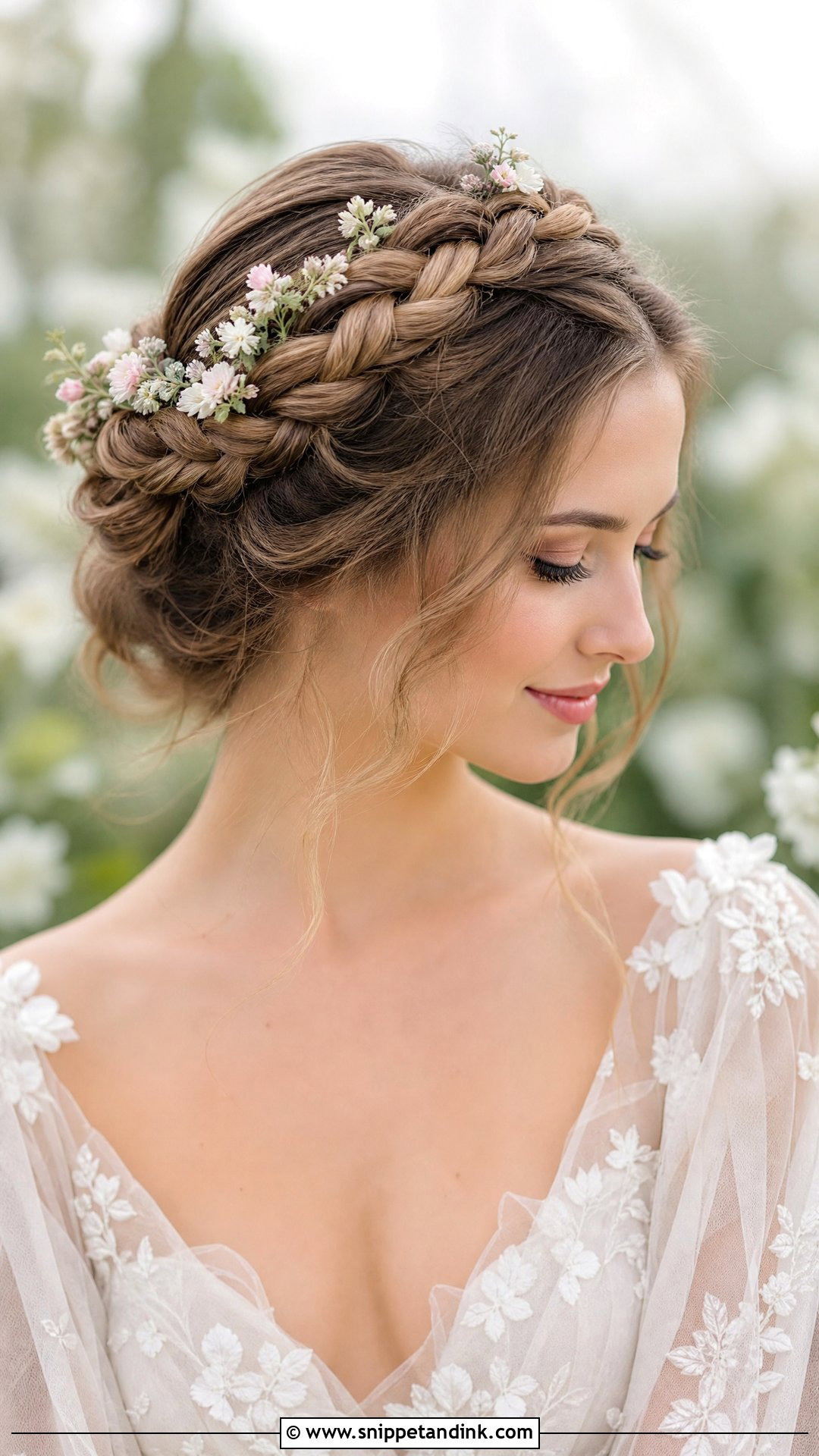
A braided crown wraps a braid around your head like a halo and keeps every strand off your face. I usually make two braids, one from each side, and pin them across the top, which is more even than one long braid stretched all the way around. Pins go under the braid, not through it. Medium and long hair suits it best; small flowers tucked into the loops finish it. If you want it loosened, I pancake the braid after it’s pinned, never before, or it loses its shape.
8. Low Chignon
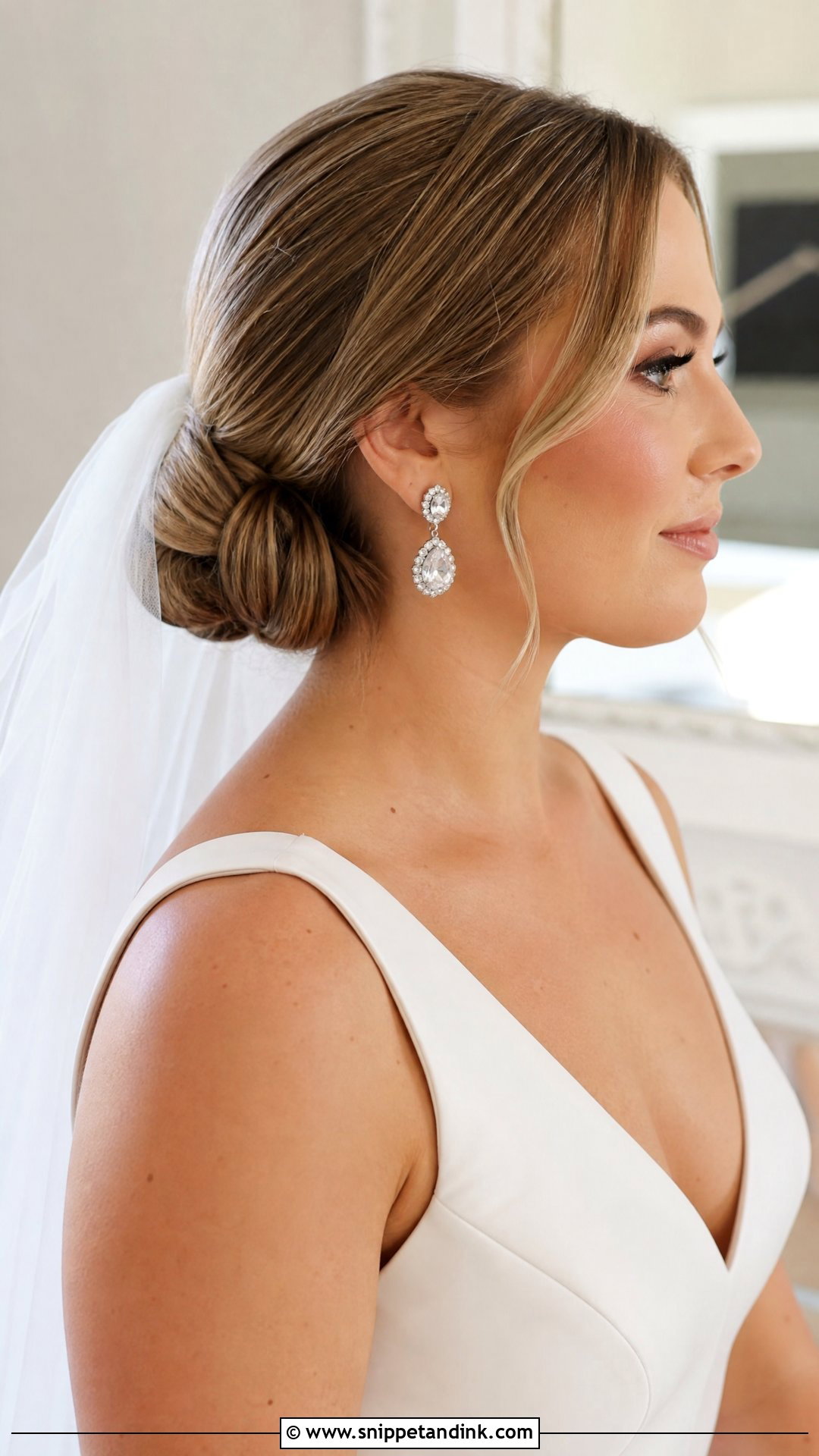
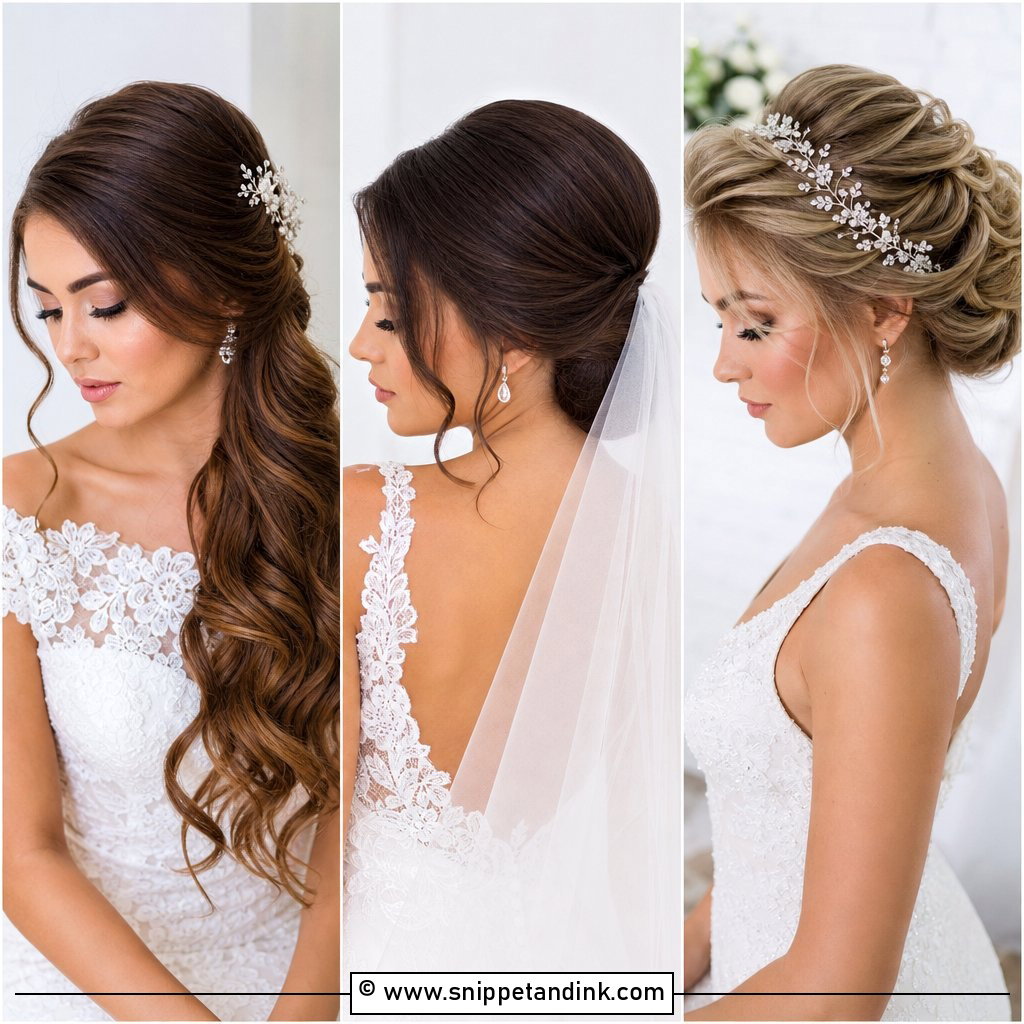
I’d call the low chignon the safest updo on this list. It coils hair into a smooth knot at the nape, which is the most stable spot on the head and leaves the crown clear for a veil or tiara. Smooth, it reads modern; with a few face-framing strands, softer. I secure it with U-shaped pins, which hold the coil without the tight pull of bobby pins. It flatters most face shapes and holds well through a long day.
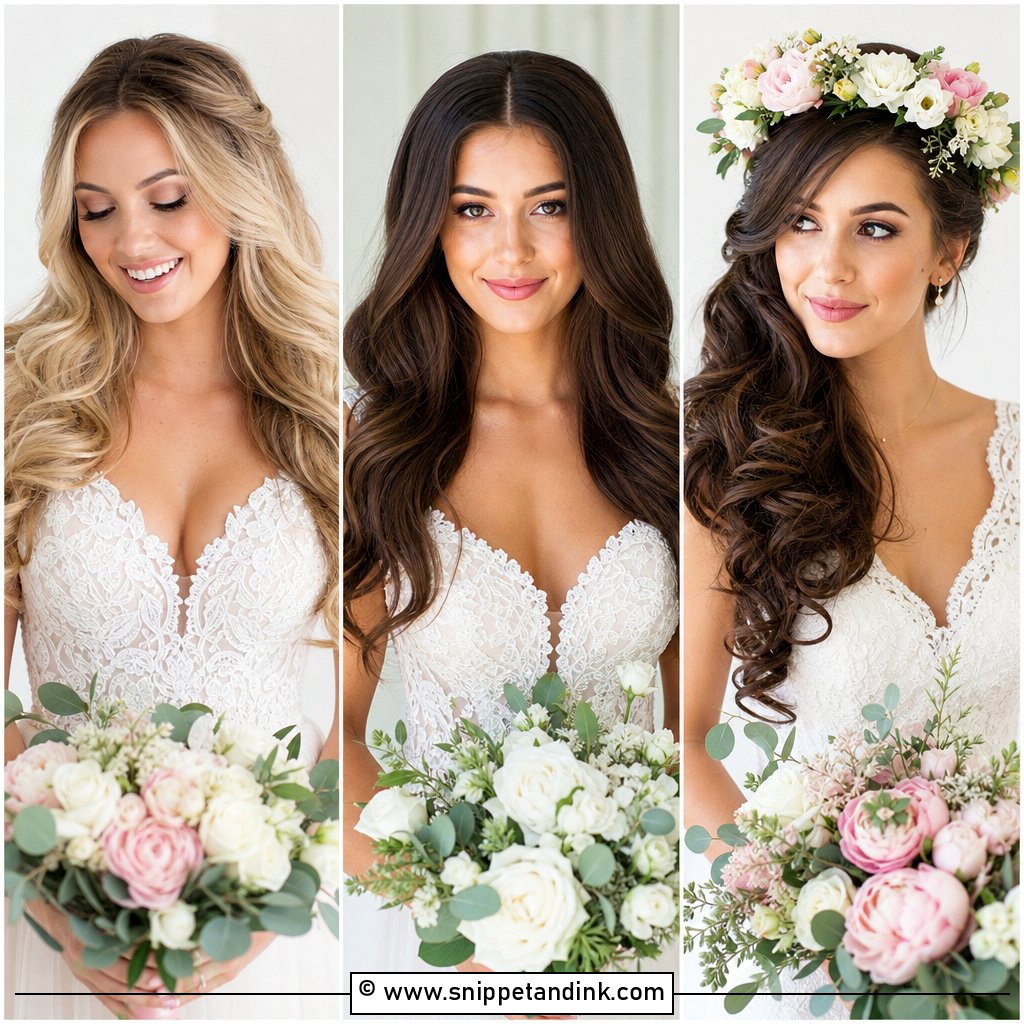
9. Soft Curls With Center Part
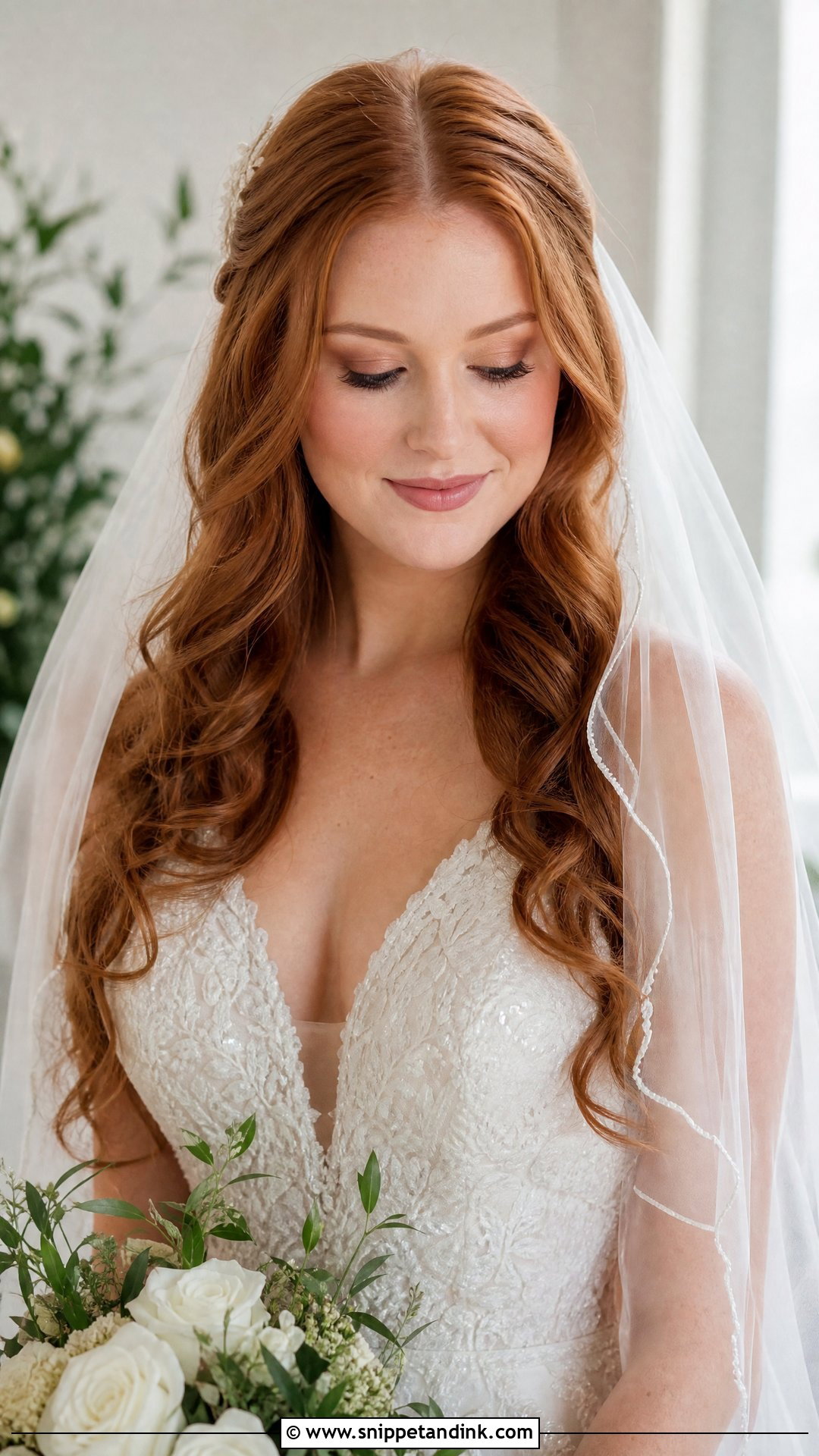
Soft curls with a centre part are simple to look at and honest about your hair. The symmetry shows if one side curls tighter than the other, so I always curl both sides away from the face with the same barrel and the same timing. Brush out gently once they’re cool. It sits nicely with a flowing veil or delicate accessories. If your face is noticeably asymmetric, a side part will usually feel more comfortable in photos.
10. Sleek Ballerina Bun
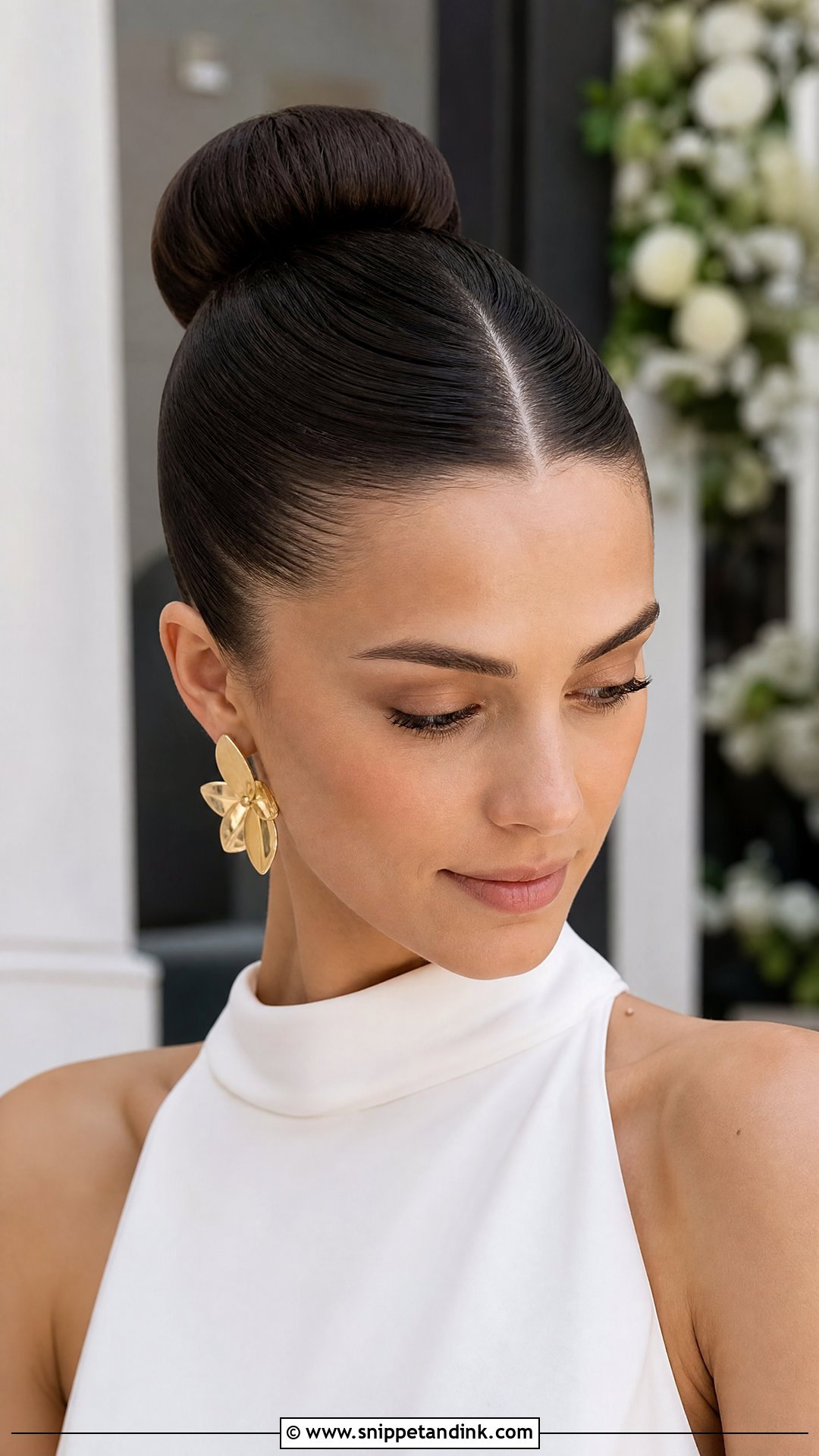
The sleek ballerina bun is clean, high and very modern, with a centre part for balance. It’s also the most demanding on the scalp. Hair pulled that tight for hours can give you a headache, so at the trial I set it a fraction looser and check how it feels after an hour. I smooth with gel, wrap the bun around a firm elastic and use plenty of pins. Bold earrings and a structured gown suit it.
11. Twisted Half-Up Style
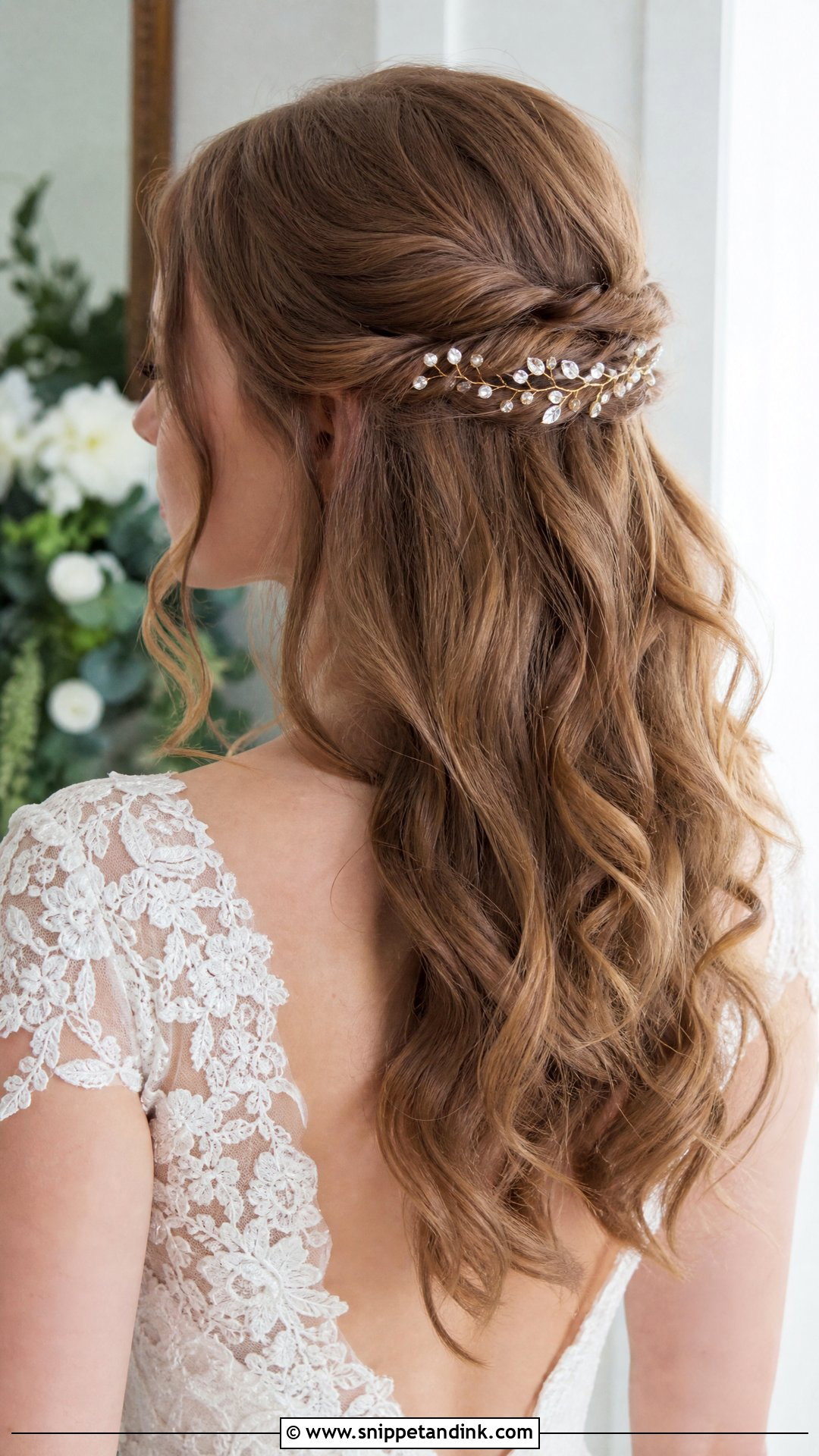
Twisted half-up styles look detailed but are among the easiest on this list. I take a section from each side, twist it towards the back and cross-pin the two together under the crown. Twisting away from the face keeps the hair from unravelling. A hair vine or small flowers can follow the line of the twists. Medium to long hair suits it, and it takes far less chair time than a braid.
12. Side-Swept Waves
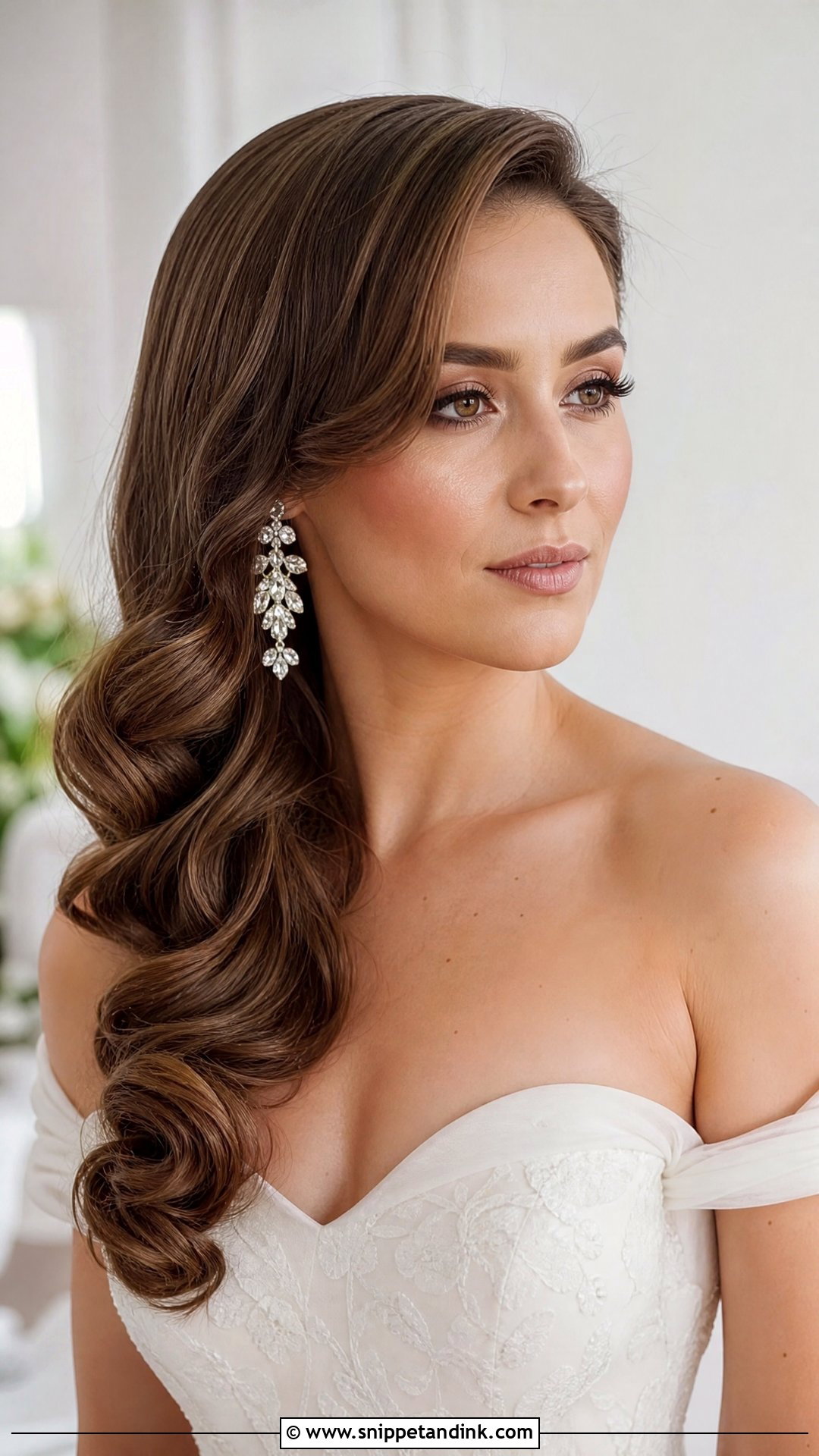
Hair swept over one shoulder shows off earrings on the bare side and suits off-shoulder and asymmetric gowns. I curl loosely, sweep everything across, and lock it with two crossed pins hidden behind the ear on the far side. That anchor is what stops it drifting back. Expect to reposition it after hugs. The drape frames the face well, but keep the side you sweep to the one facing your partner during the ceremony so it doesn’t hide your profile.
13. Braided Low Bun
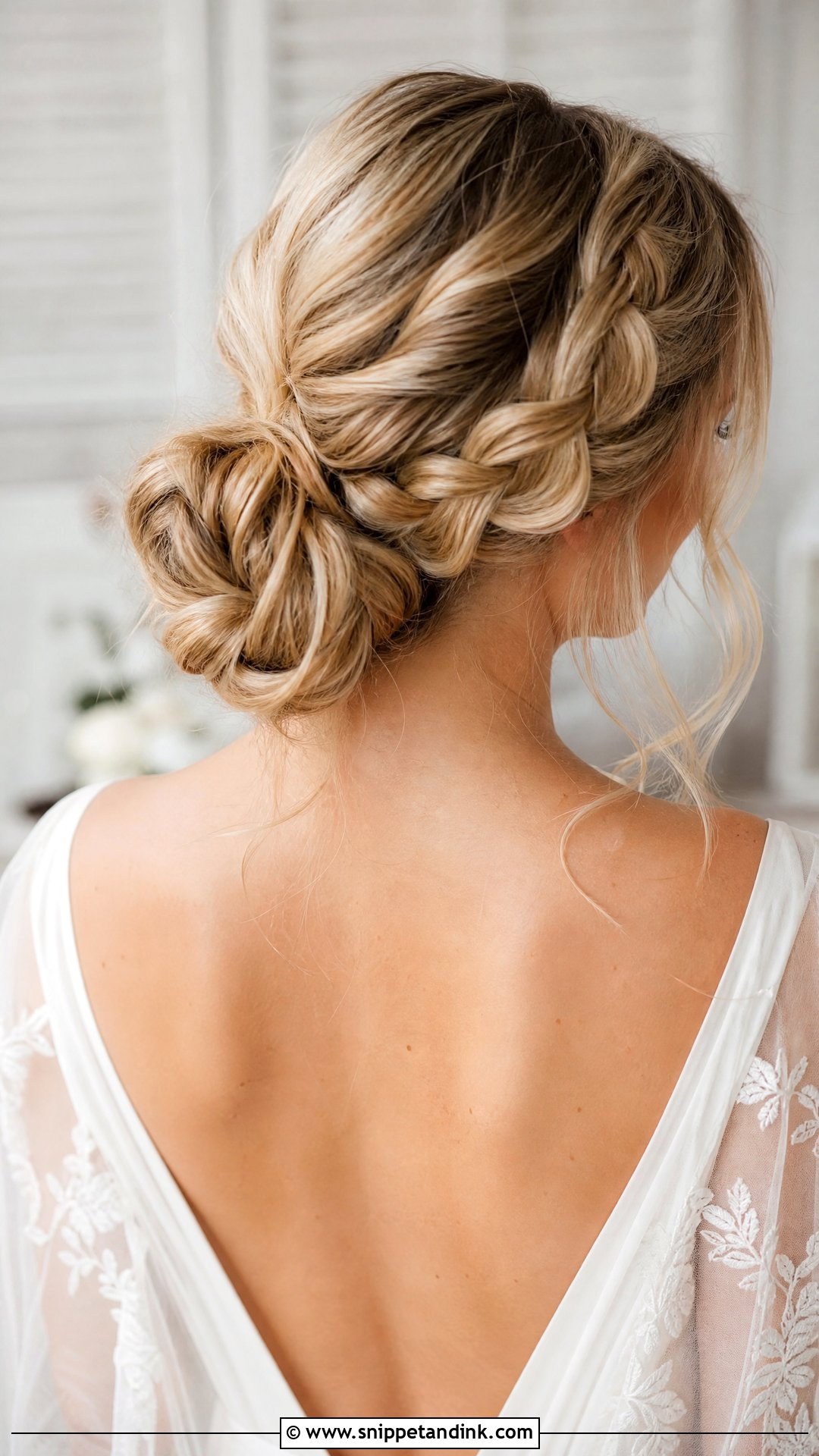
A braided low bun mixes texture with security. I braid the lengths first, then coil the braid into a bun at the nape and pin it flat, which makes it one of the most secure styles here. Loosening the braid before coiling gives a bigger, softer bun on fine hair. Leave a few tendrils at the face. It sits well with flowing gowns and simple accessories, and it rarely needs touching up.
14. Loose Beachy Waves
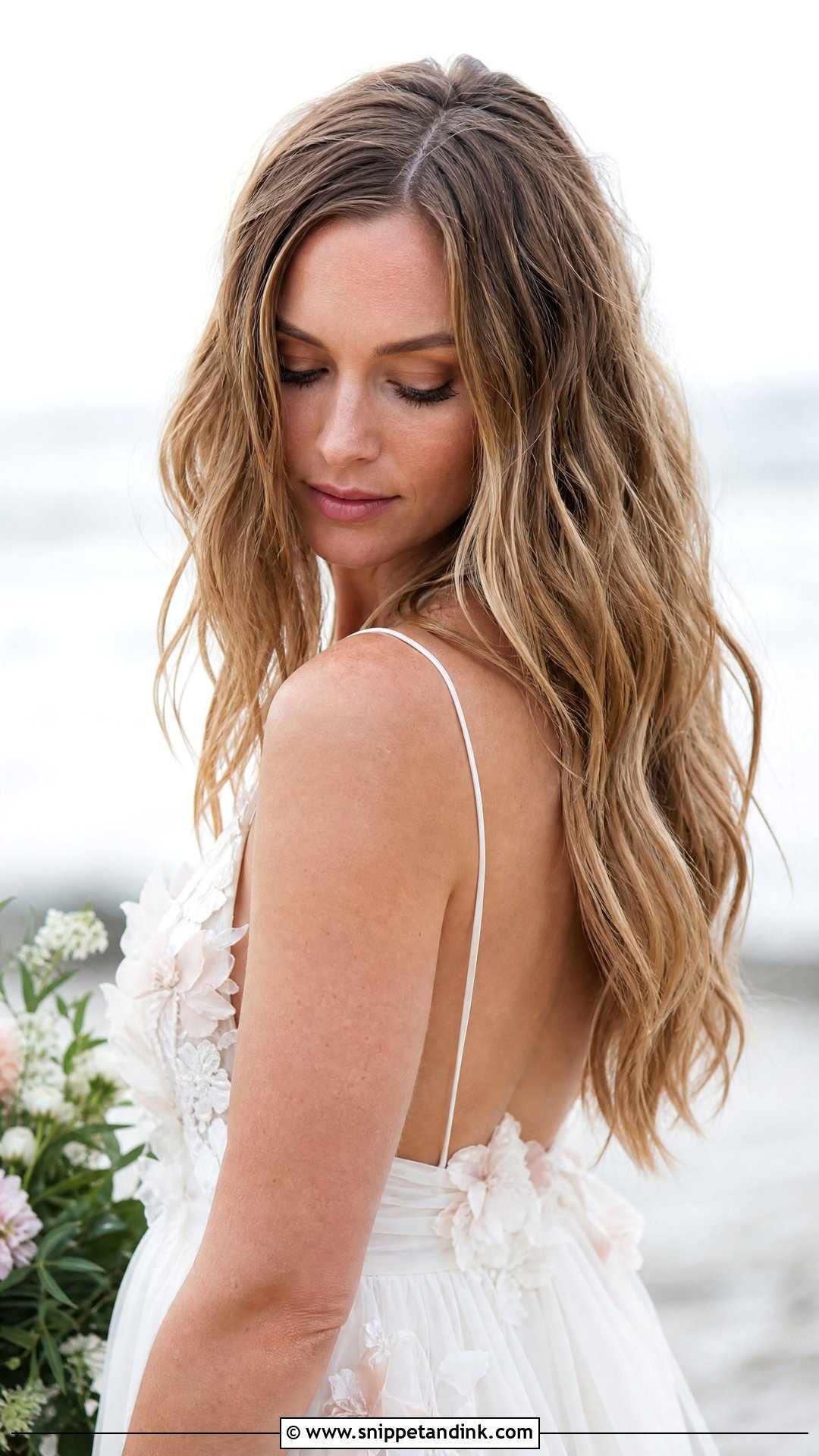
Planning a beach or destination ceremony? Loose beachy waves are made for it. I curl with a wand in alternating directions, scrunch, then finish with a light sea-salt spray for grip. The hard part is wind, not the waves themselves. On a breezy shoreline I pin a few hidden sections behind the ears so the hair doesn’t whip across your face during the vows. Lightweight gowns and floral accents suit this look best.
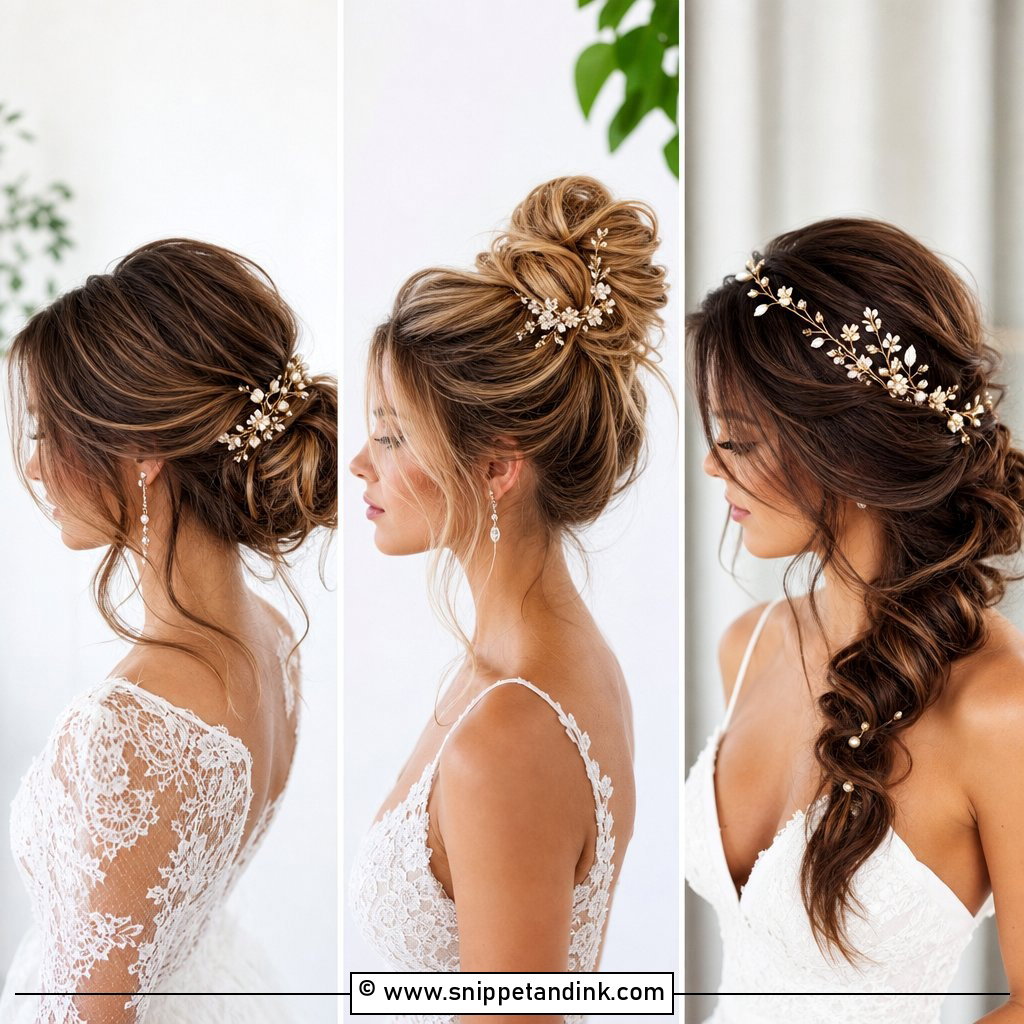
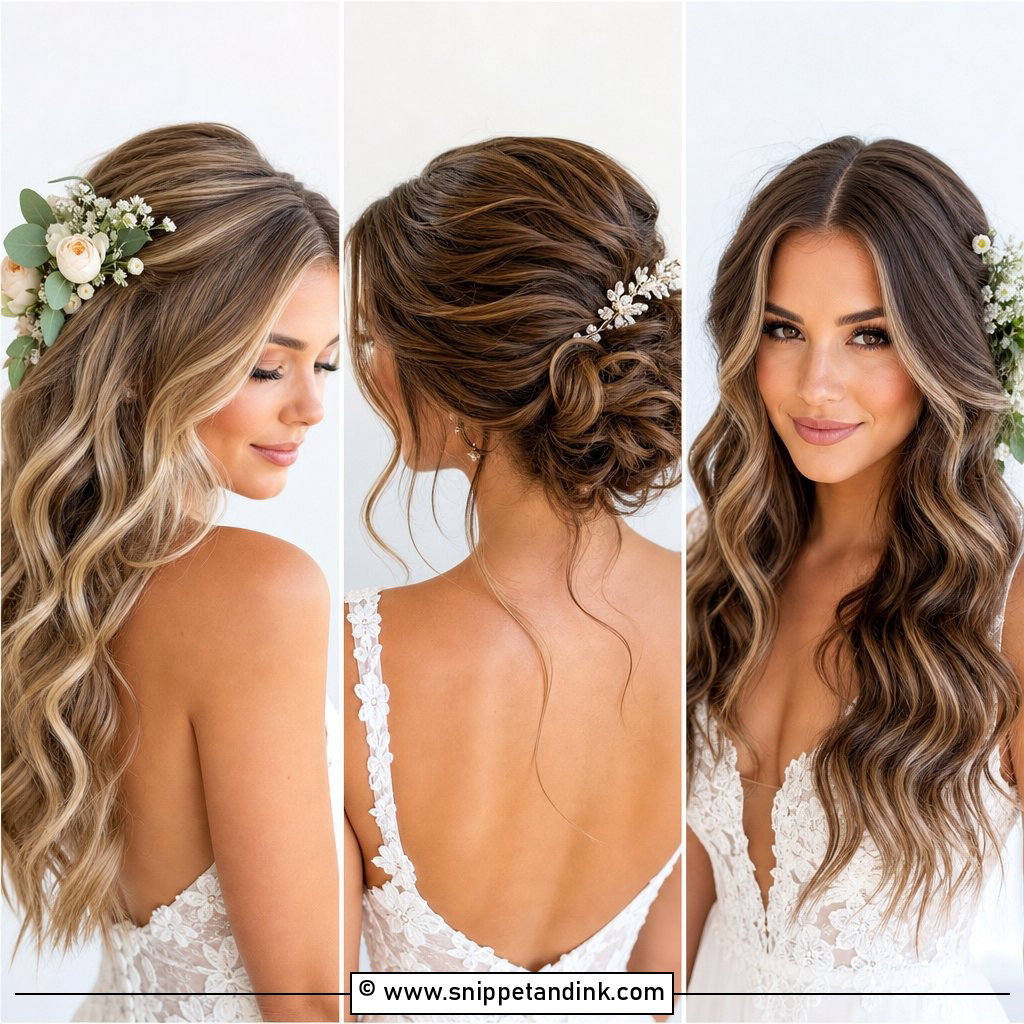
15. Elegant Updo With Loose Tendrils
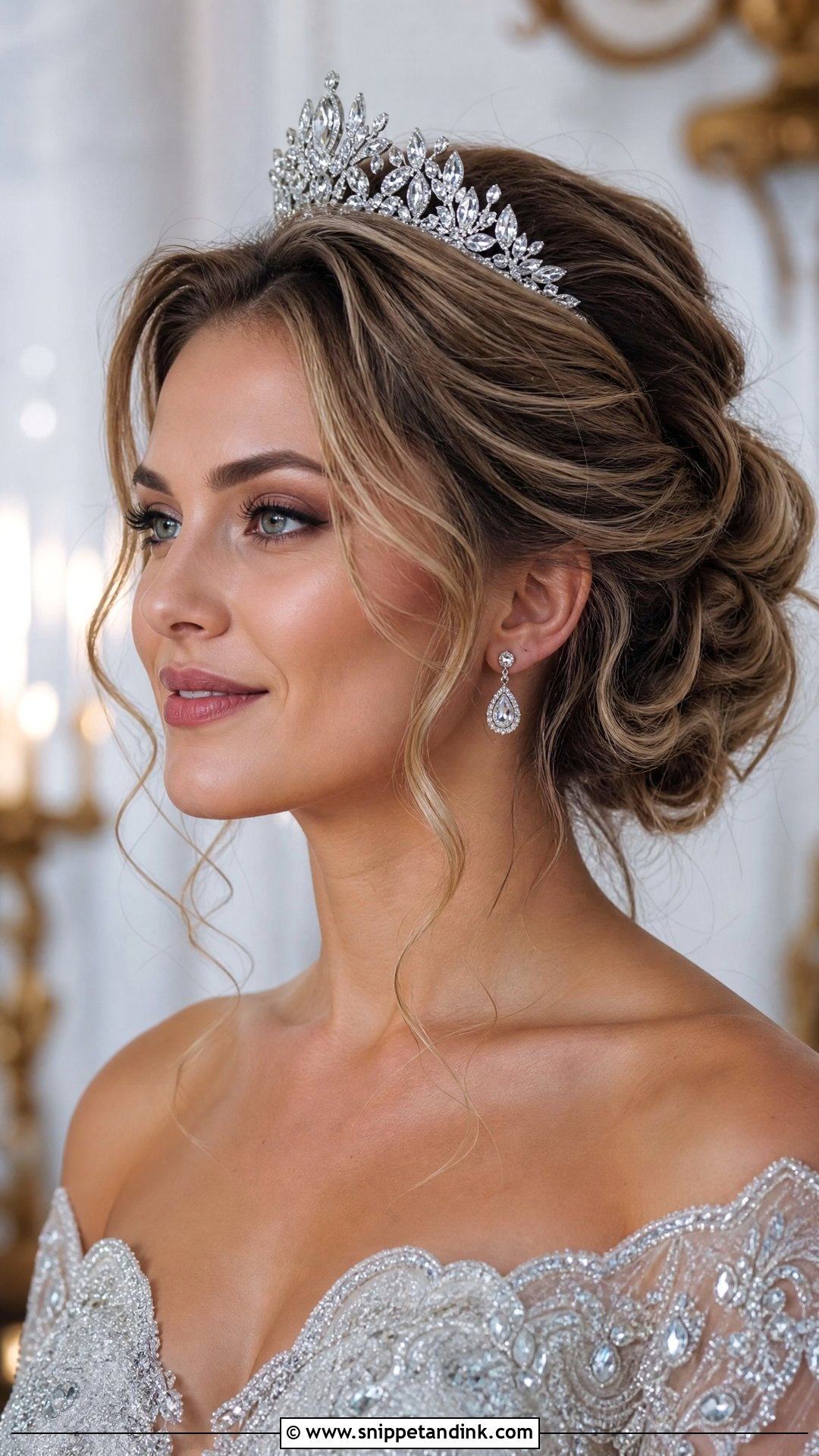
An updo with loose tendrils balances structure and softness. The tendrils matter more than they look: I choose them at the trial while you look in the mirror, curl them separately with a small barrel and spray them lightly, because thick tendrils look heavy and very thin ones go limp by evening. The updo itself sits well with veils, tiaras or statement earrings. It suits formal and semi-formal weddings.
16. Sleek Straight Hair
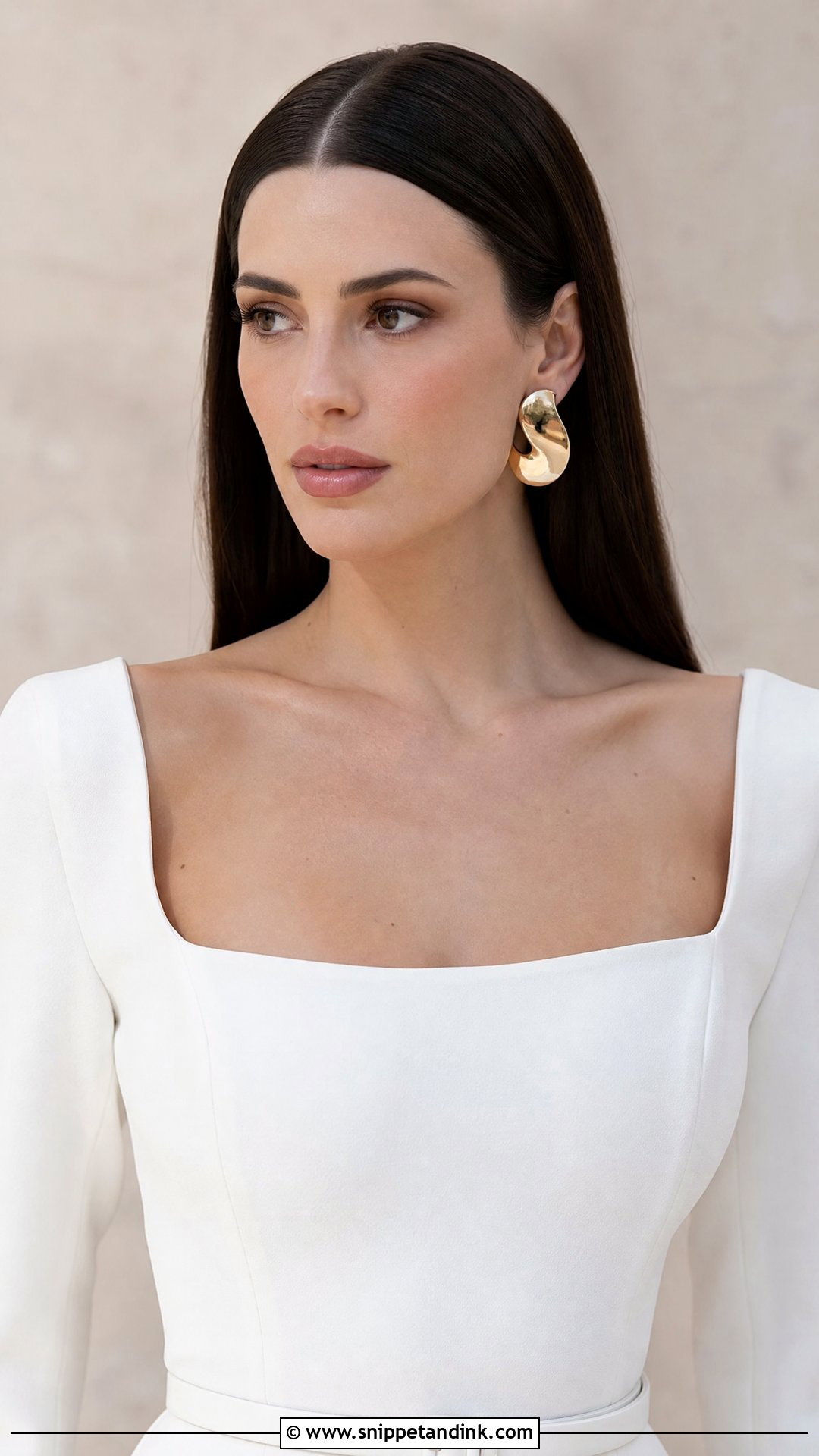
Sleek straight hair is minimal and modern, and it’s harder than curls to keep perfect. Humidity and a bit of sweat at the nape will make smooth hair bend or frizz, so I flat-iron in fine sections and finish with an anti-humidity spray rather than plain serum. Serum only goes on the ends. Structured gowns and bold accessories suit it. With a centre or side part, this one depends on healthy ends, so book a trim a few weeks out.
17. Floral Crown Half-Up
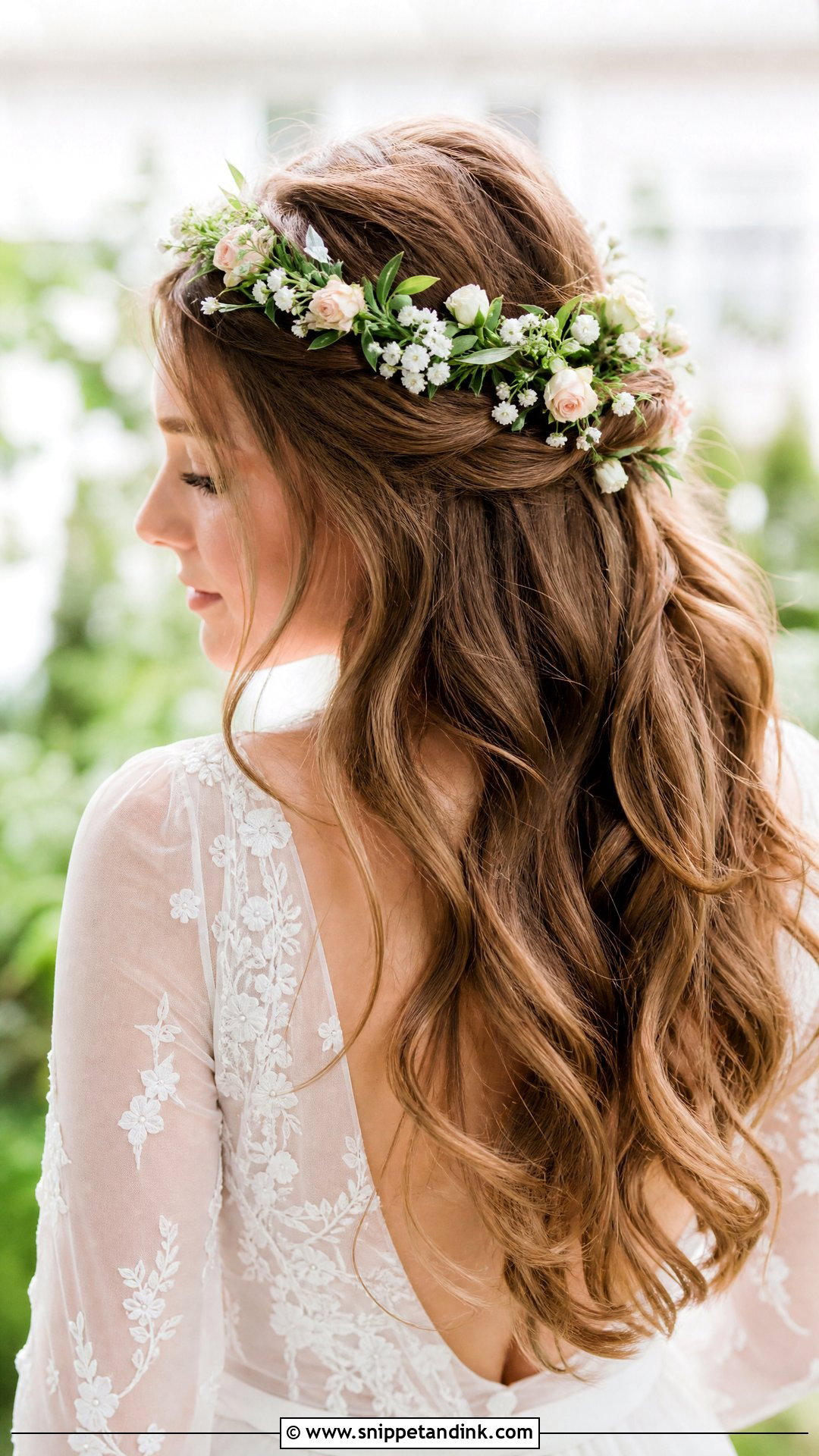
A floral crown on a half-up style has to be planned with your florist, not added on the morning. I ask for a crown wired onto a thin band so I can pin through it into the half-up section, and for hardy blooms such as spray roses, waxflower or ruscus, since delicate petals wilt within hours out of water. Faux flowers are a sensible choice in heat. It suits long and medium hair and garden or outdoor weddings. Matching a few stems to the bouquet ties it together.
18. Twisted Updo
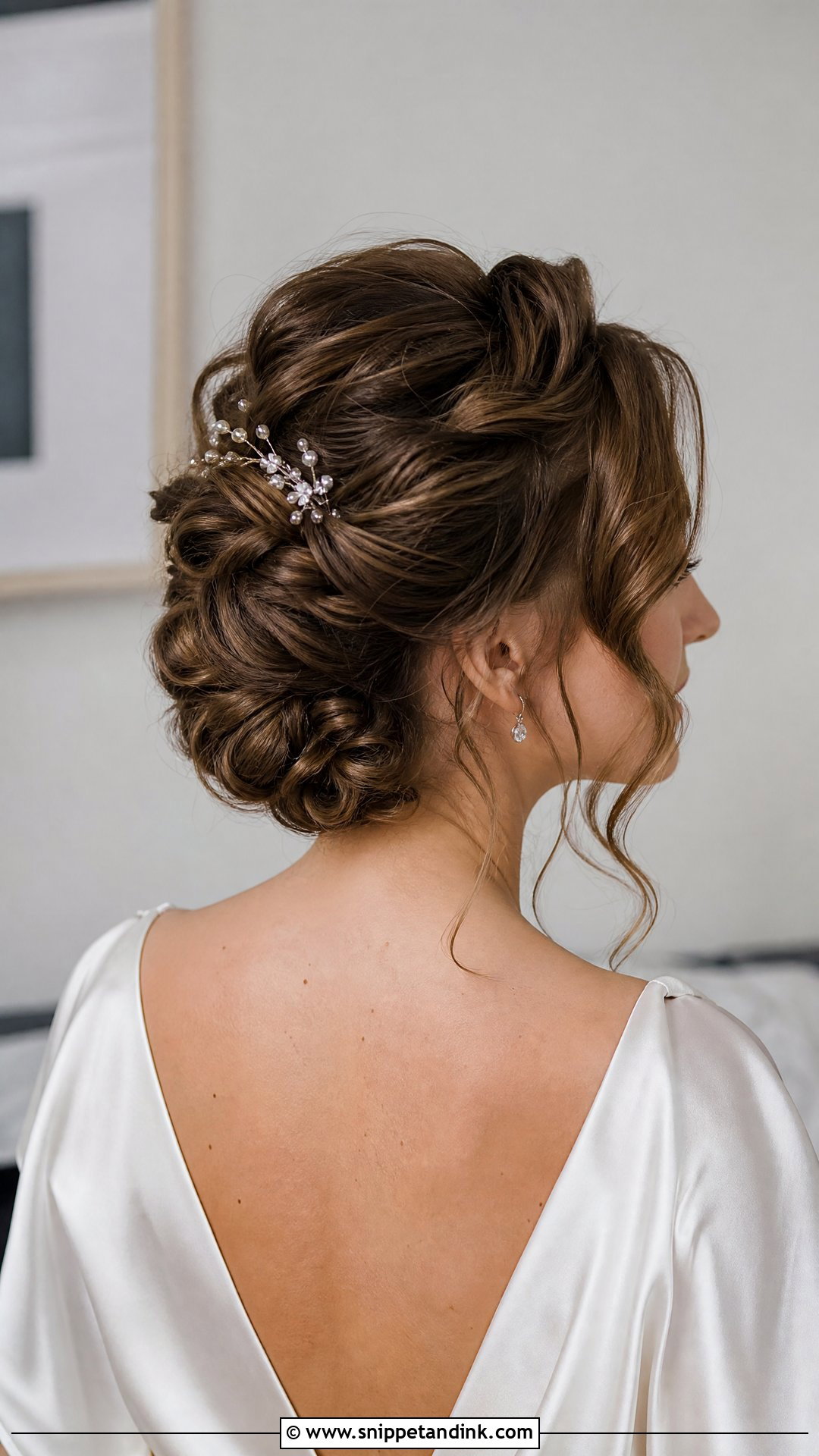
A twisted updo gathers rolled sections into a soft, structured shape at the back. Each twist is pinned on its own, which spreads the weight across the head and keeps it secure through dancing. Loose face-framing pieces stop it looking too formal. It flatters medium to long hair; on short layers the twist ends tend to poke out and need extra pins. Statement earrings or delicate hairpins finish it.
19. Low Side Bun
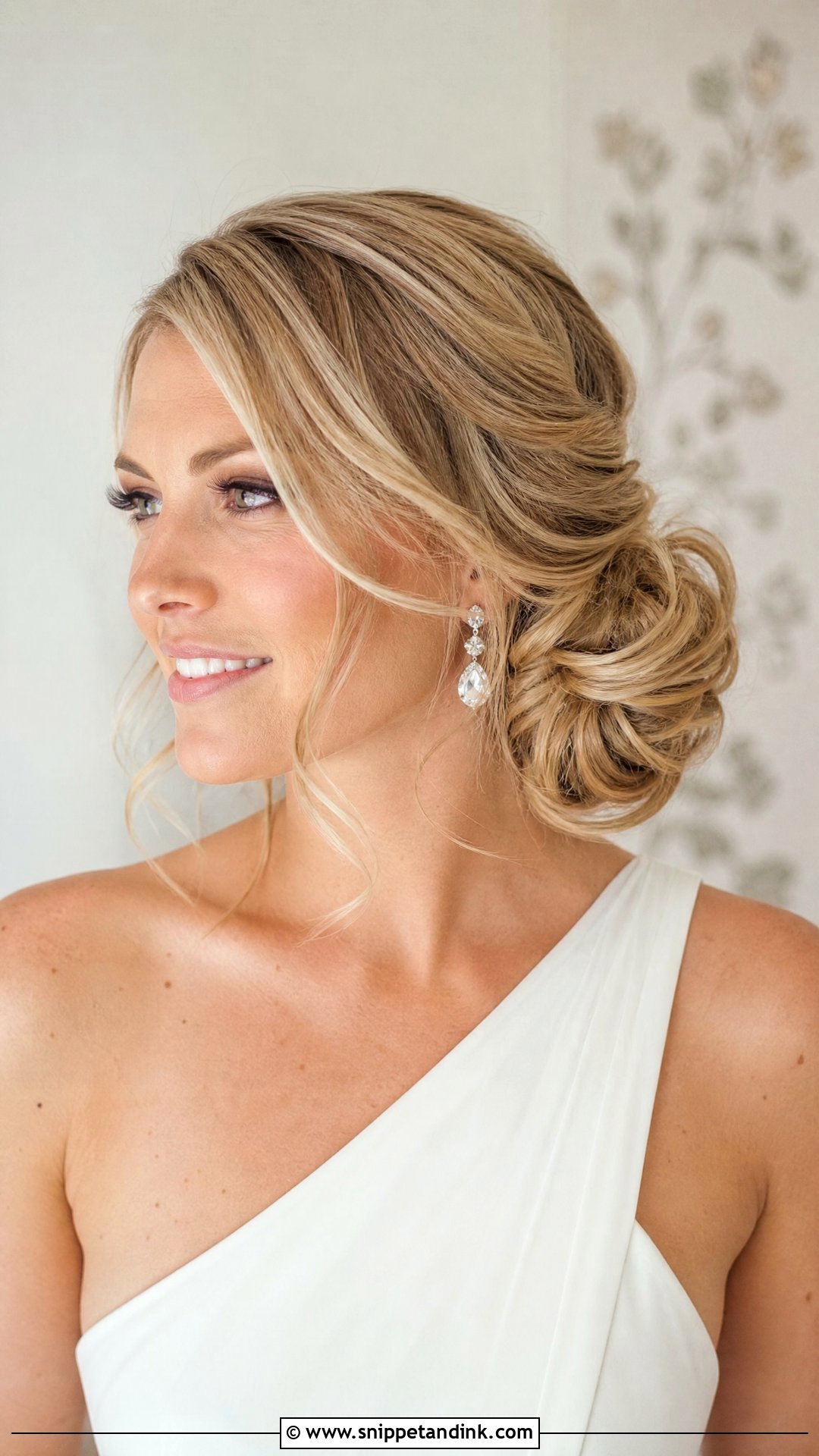
Looking for something asymmetric? A low side bun sits behind one ear and shows off the neckline and earrings on the open side. I put the ponytail base slightly off-centre rather than directly below the ear, because a bun pushed fully to the side can feel bulky against your shoulder when you turn your head. Soft tendrils loosen it. It works well with off-shoulder and one-shoulder gowns and suits both formal and boho weddings.
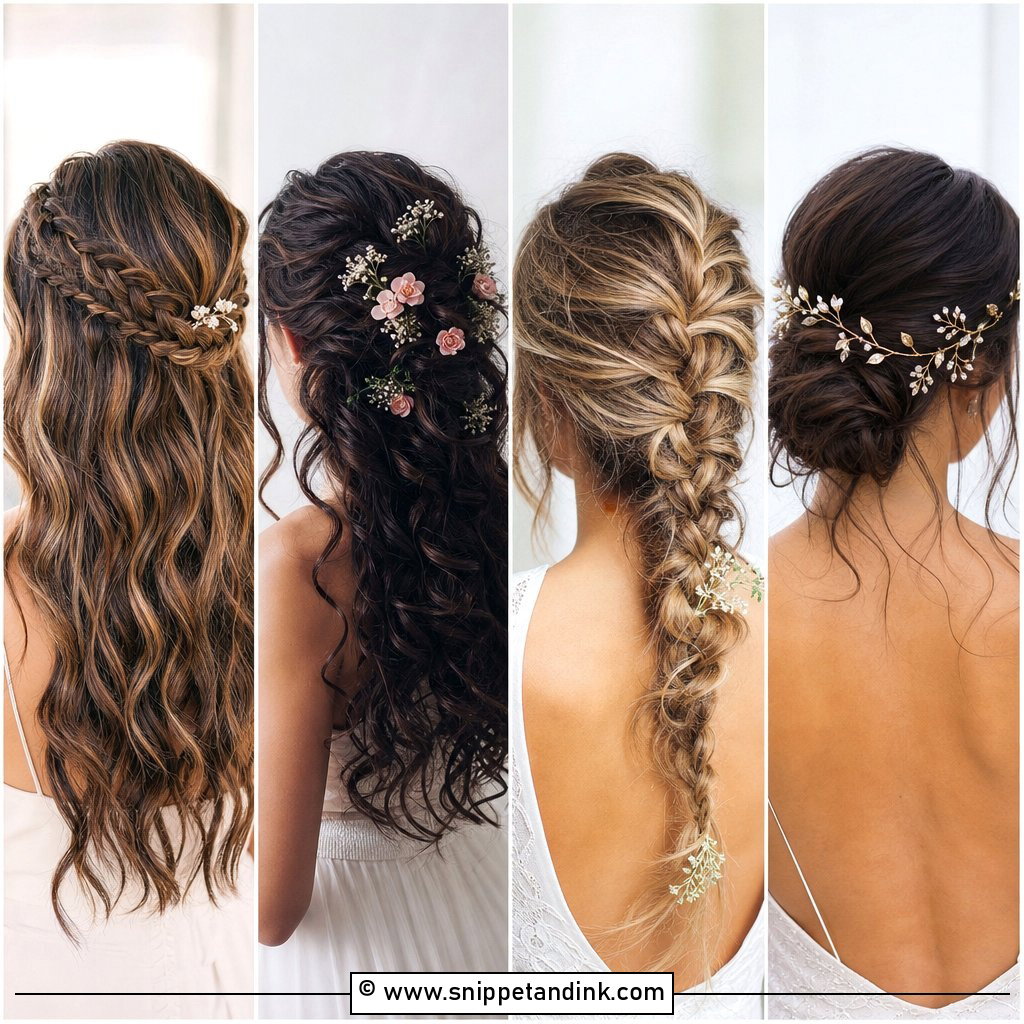
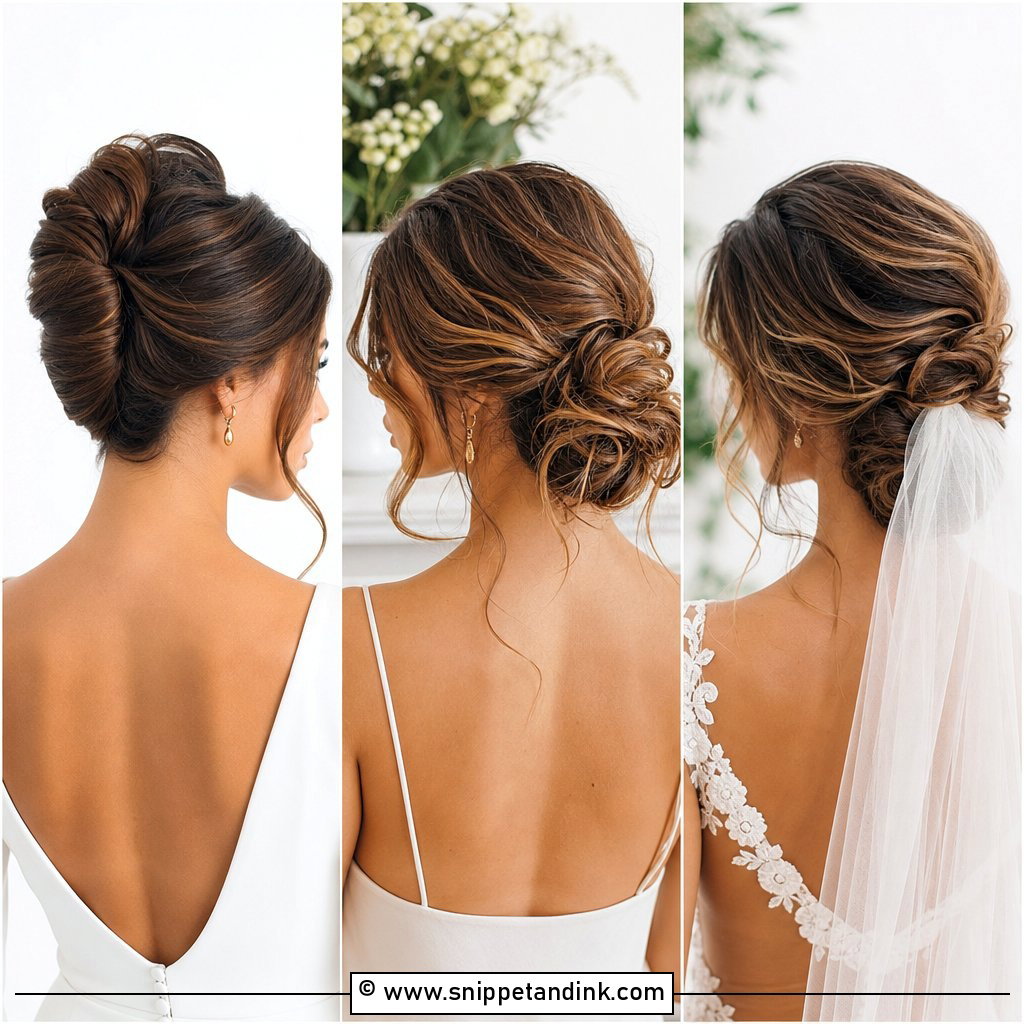
20. Vintage Pin Curls
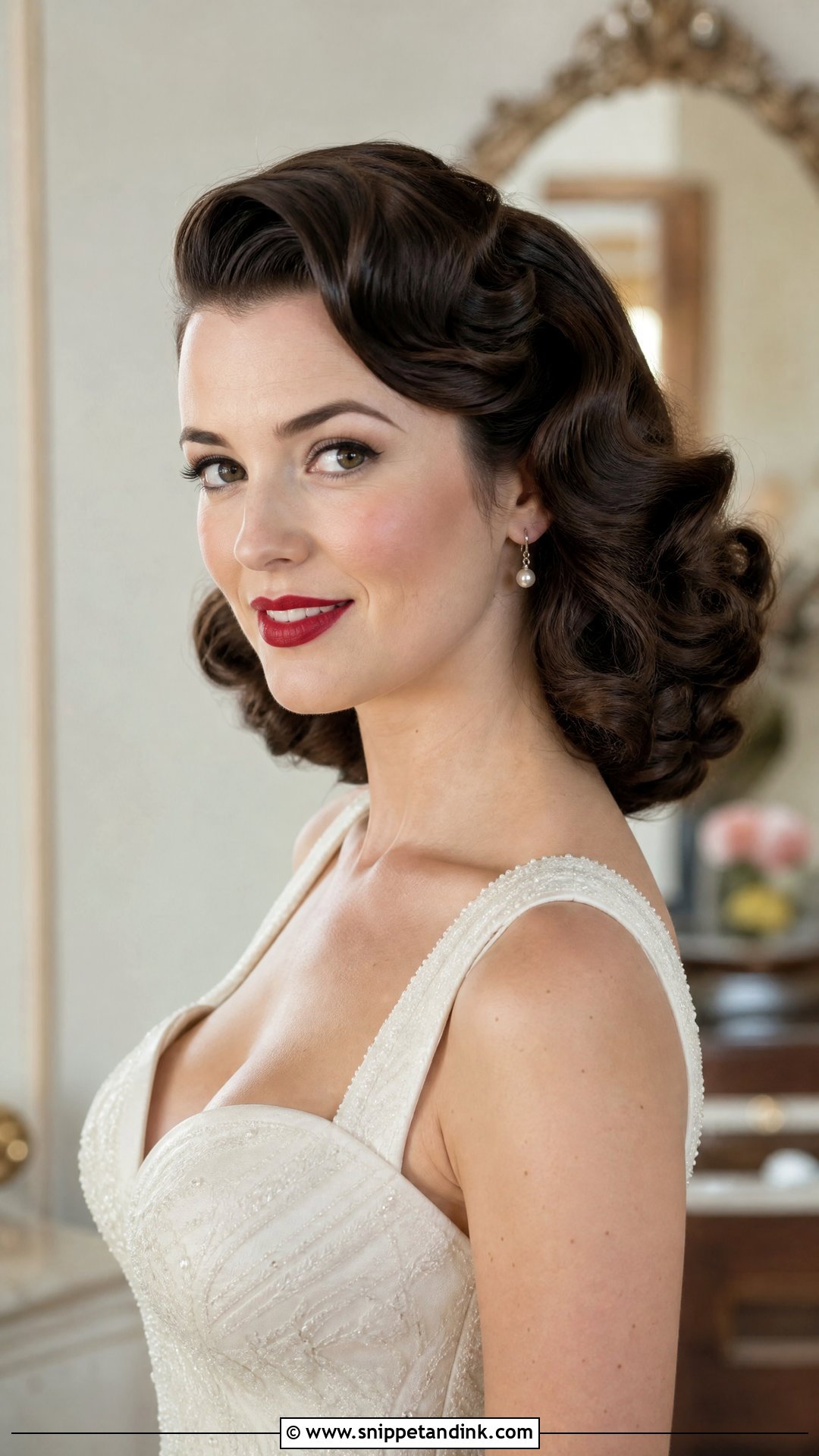
Vintage pin curls are a set, not a finished style. I wind small sections into flat coils, pin them against the head and let them cool or dry completely before brushing out into soft, defined waves. The longer they set, the longer the waves last, which is why I start pin curls early in the morning schedule. It suits retro-inspired weddings, a fitted gown and a red lip. Worn down or pinned to one side, it gives polished, old-fashioned glamour.
Thick Hair, Heavy Buns and the Afternoon Headache
Brides with a lot of hair often love the high bun and the ballerina bun most, and they’re the ones most likely to be reaching for their scalp by the speeches. Weight and tension together cause the ache. A few changes help without changing the look in photos.
- Place heavy buns lower. The nape carries weight far better than the crown.
- Split a thick ponytail into two elastics stacked one above the other, which spreads the pull.
- Use fewer, better-placed pins. U-pins and spin pins hold more hair with less pressure than dozens of bobby pins.
- Wear the trial style for at least two hours. If it aches after one, it will hurt after ten.
Styles a Bridesmaid Could Copy, and Ones to Leave to a Pro
If someone in your party is handy with a curling iron, the low loose bun, the twisted half-up and loose beachy waves are realistic for a confident friend to do, with a practice run a few weeks before. I’d leave sleek ponytails, Hollywood waves, braided crowns and pin curls to a professional. Those depend on precise sectioning and smoothing, and the mistakes are obvious in close-up photos.
Simple on Paper, Secure by the First Dance
A bridal style doesn’t need to be complicated to look finished. What makes the difference is the right foundation for your hair type, a trial that lasts long enough to show how the style behaves, and an honest conversation about comfort, from a bun that pulls to waves that drop in humidity. Save the photos you like, bring your veil or accessories to the trial, and tell your stylist which detail in each picture caught your eye. Then add your own touch.
You'll Like These Ideas:


Leave a Reply