
Nobody should feel they have to press, relax or hide their hair to look like a bride. From a short tapered afro to waist-length twists, natural texture gives me plenty to build with, and much of it holds a shape longer than straightened hair does. The 20 looks below run from halo braids and Bantu knots to pinned curls and a faux hawk. Under each one I’ve written what I’d check on your hair before committing to it, where it tends to give trouble, and how veils and flowers sit on it.
A Teeny Weeny Afro Has More Options Than You Think
Brides with very short natural hair often assume they’re stuck with one look. I don’t see it that way. A short afro shows off the face, the neck and the earrings, and there’s plenty I can do with it.
- Define the coils with a gel and a soft brush for a sculpted finish, then add one large flower or a jewelled clip at the side.
- Shape it with a pick into a neat round silhouette and add a slim tiara or headband; short hair holds a headpiece securely.
- Use a short birdcage veil or a fascinator rather than a long veil, which can look disconnected from very short hair.
- Try a temporary braided or twisted extension piece for one updo-style look on the day without committing to a long install.
If you’re growing out a big chop, I’d book a shape-up trim about two weeks before so the outline is even. A tapered cut photographs much more cleanly than one growing out unevenly.
1. Halo Braid Wedding Updo
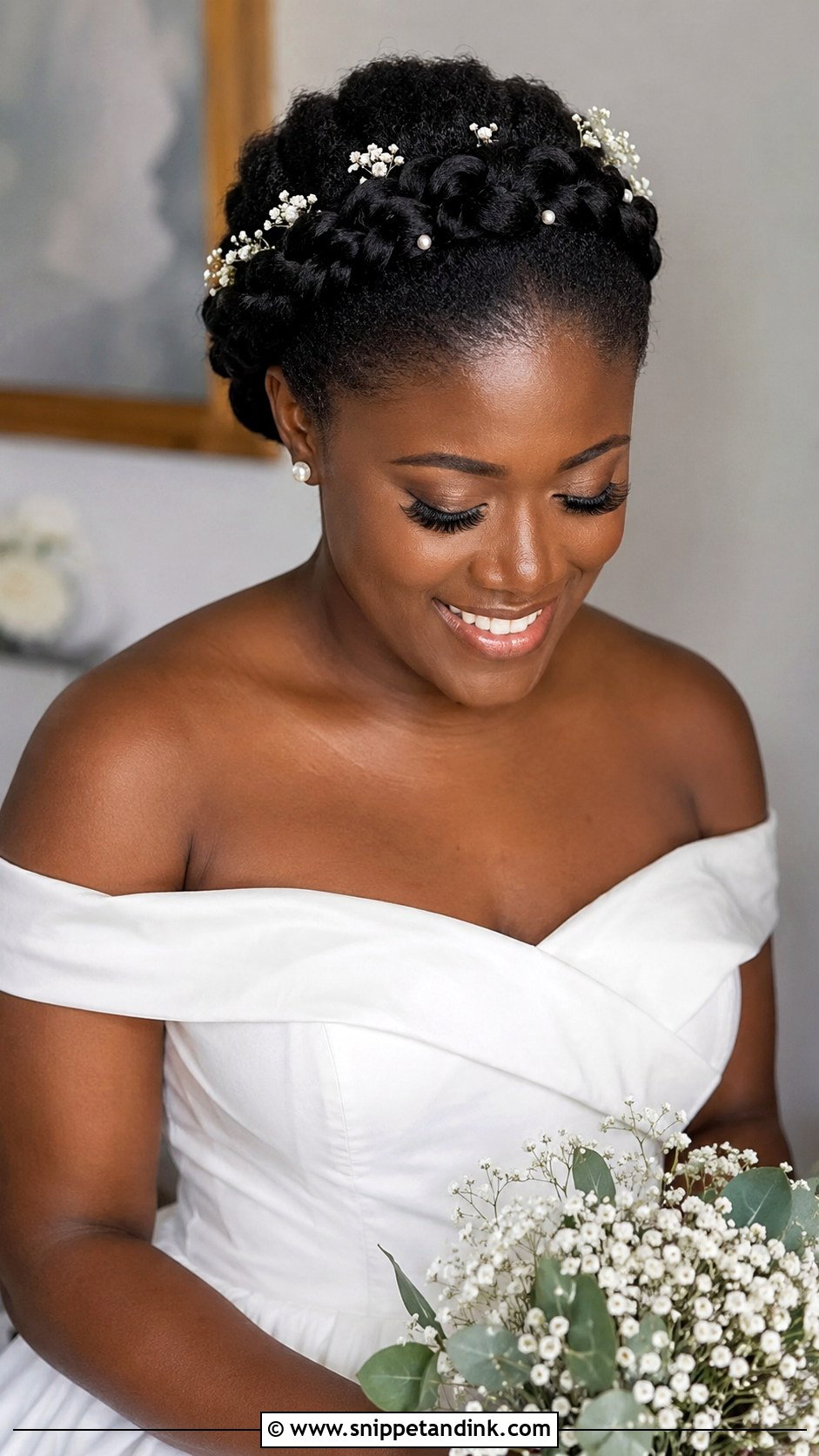
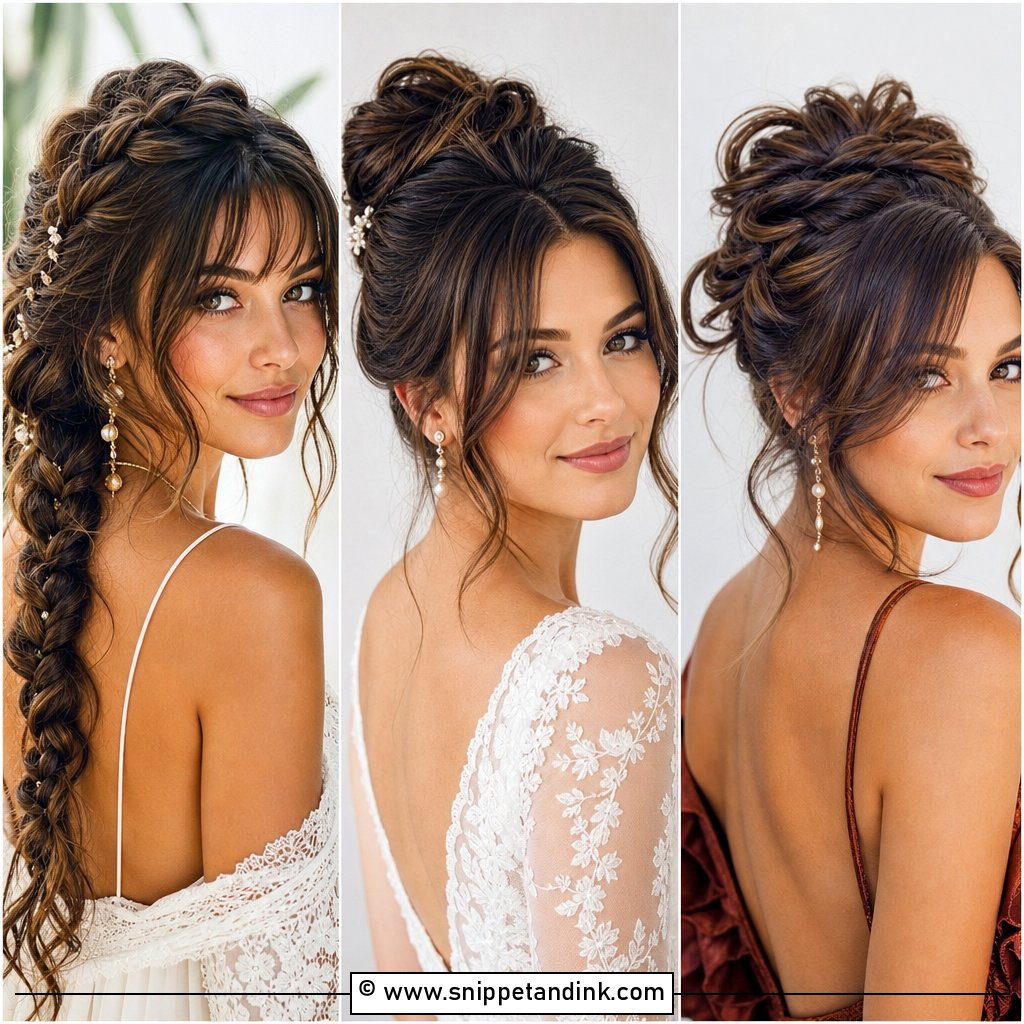
The halo braid wraps the head like a woven band and frames the face without any loose pieces to manage. On type 4 hair I often braid in a little extension hair so the braid is thick enough to read from the back of the room and long enough to meet itself. I keep the braid a finger-width back from the hairline to protect the edges. Baby’s breath or small pearl pins sit neatly in the braid, and it keeps your neck cool through a summer ceremony. A cathedral veil pins under it, or wear it bare.
2. Defined Twist-Out With Floral Pins
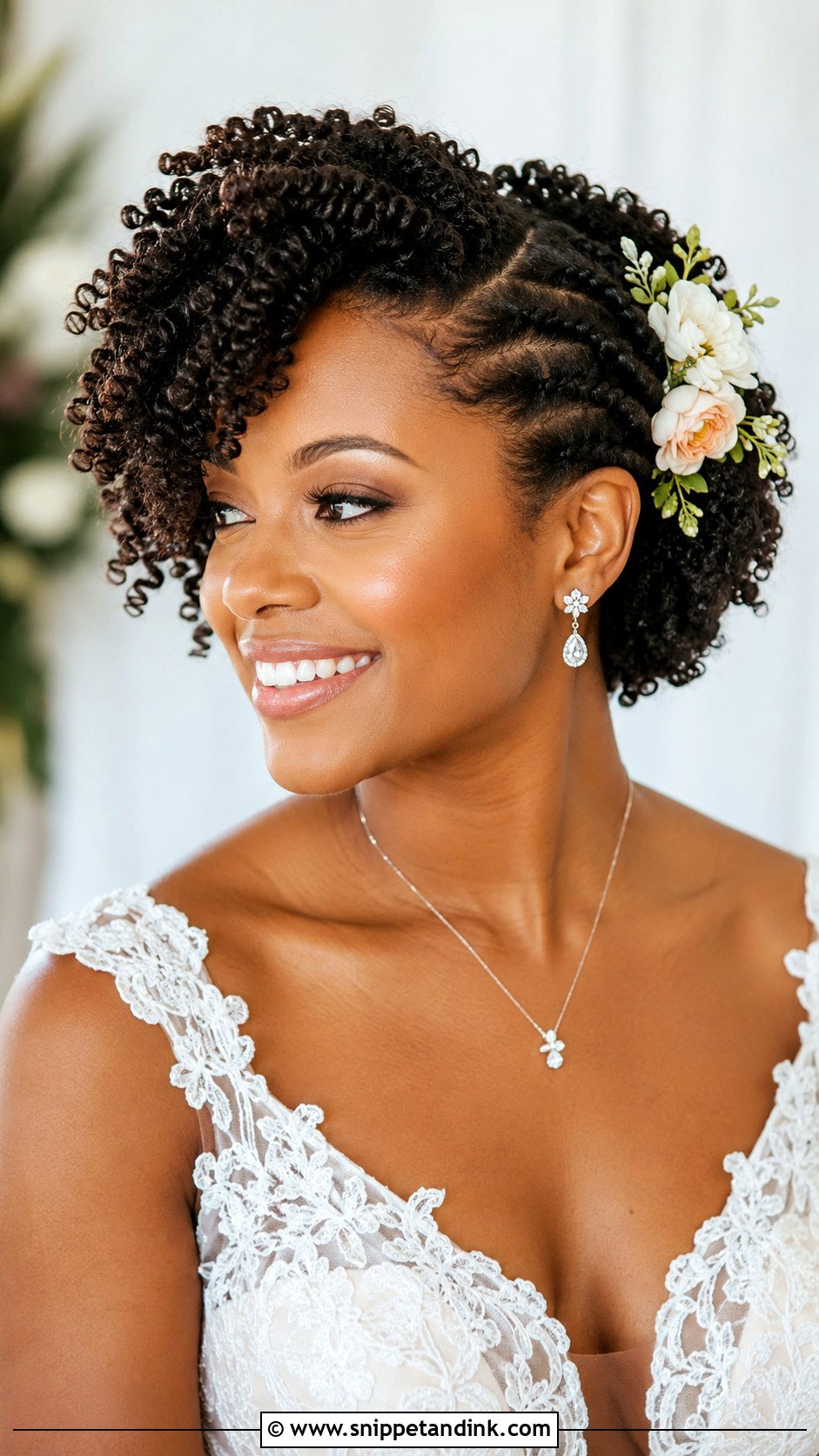
Twist the night before on freshly washed hair with a light curl cream, and leave it alone until morning. That’s most of the work. When I unravel, I twist each section back on itself a half-turn before separating, which keeps the coils springy instead of fuzzy. A few flat twists along one side sweep the volume across, and fresh florals or oversized pearl pins go where the curls gather. It’s relaxed enough for a garden wedding and still neat in formal portraits.
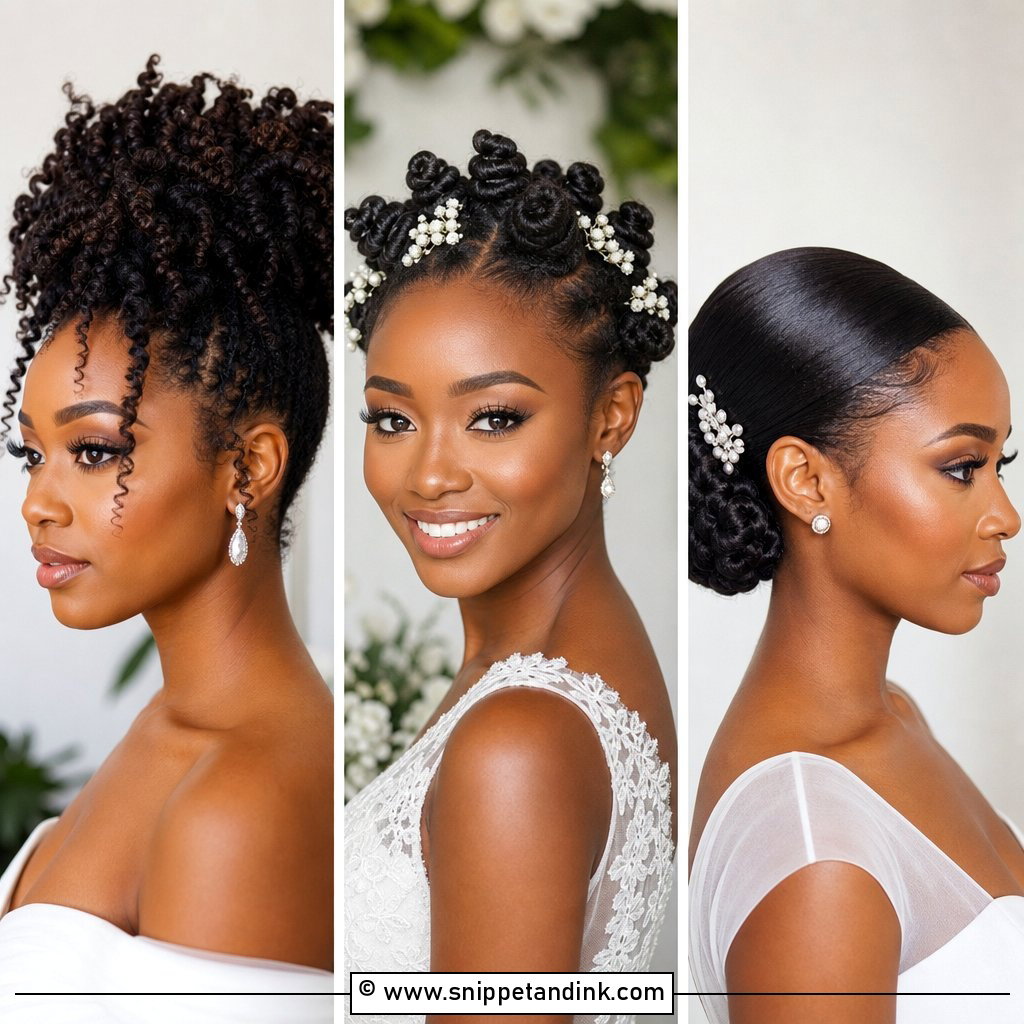
3. Bantu Knots Bridal Style
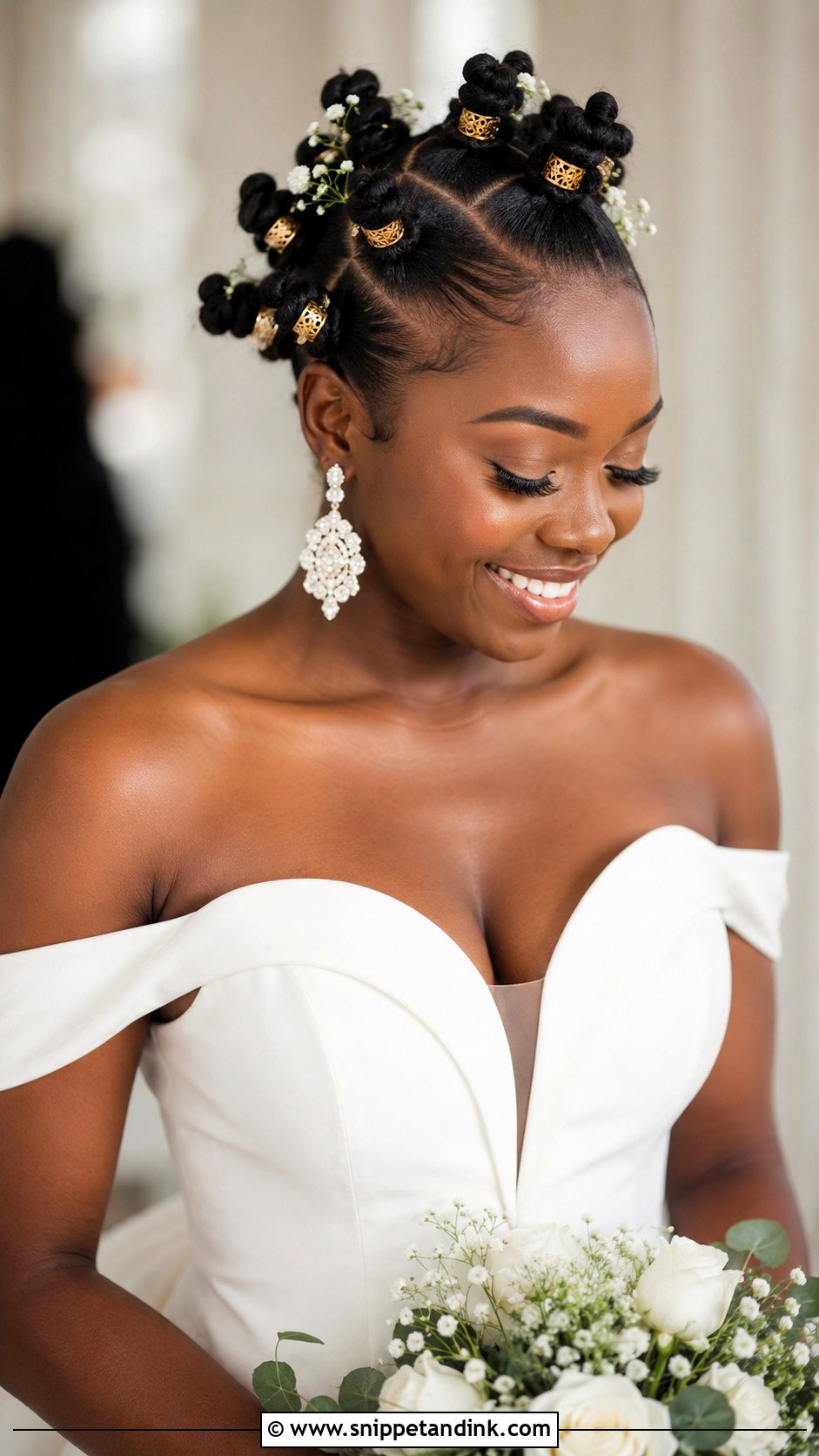
Bantu knots are sculpture, and they’re deeply cultural, which is why I take the parting seriously: even sections are what make the pattern look intentional in photos. Each knot is coiled close to the scalp. For a wedding, slim gold cuffs, a thin tiara between the rows or a few fresh flowers dress them up. Small knots look intricate; large ones look bolder and need less time. They protect the hair through honeymoon travel, and on the last day they can be unravelled into a defined curl.
4. High Puff With Veil
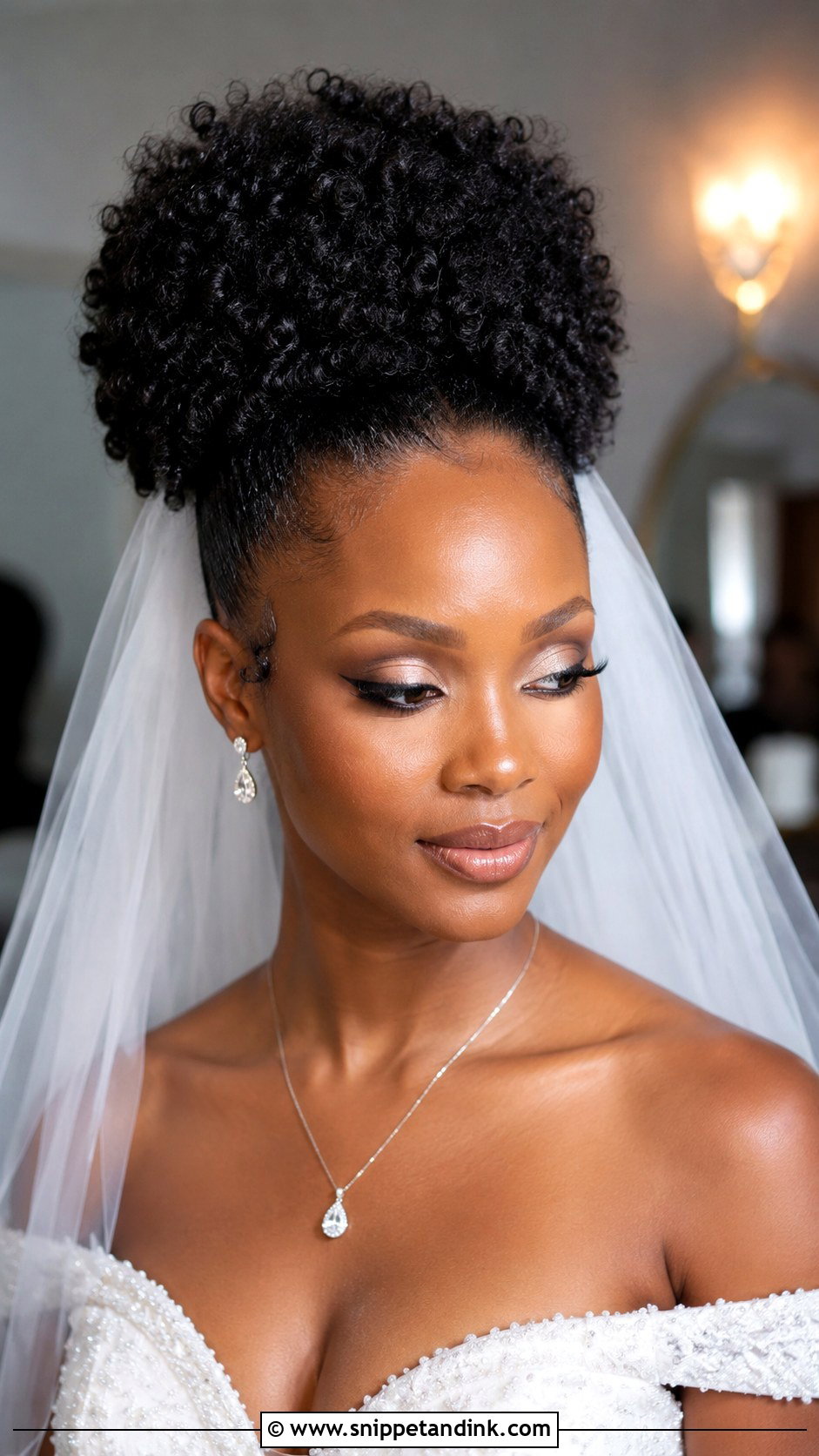
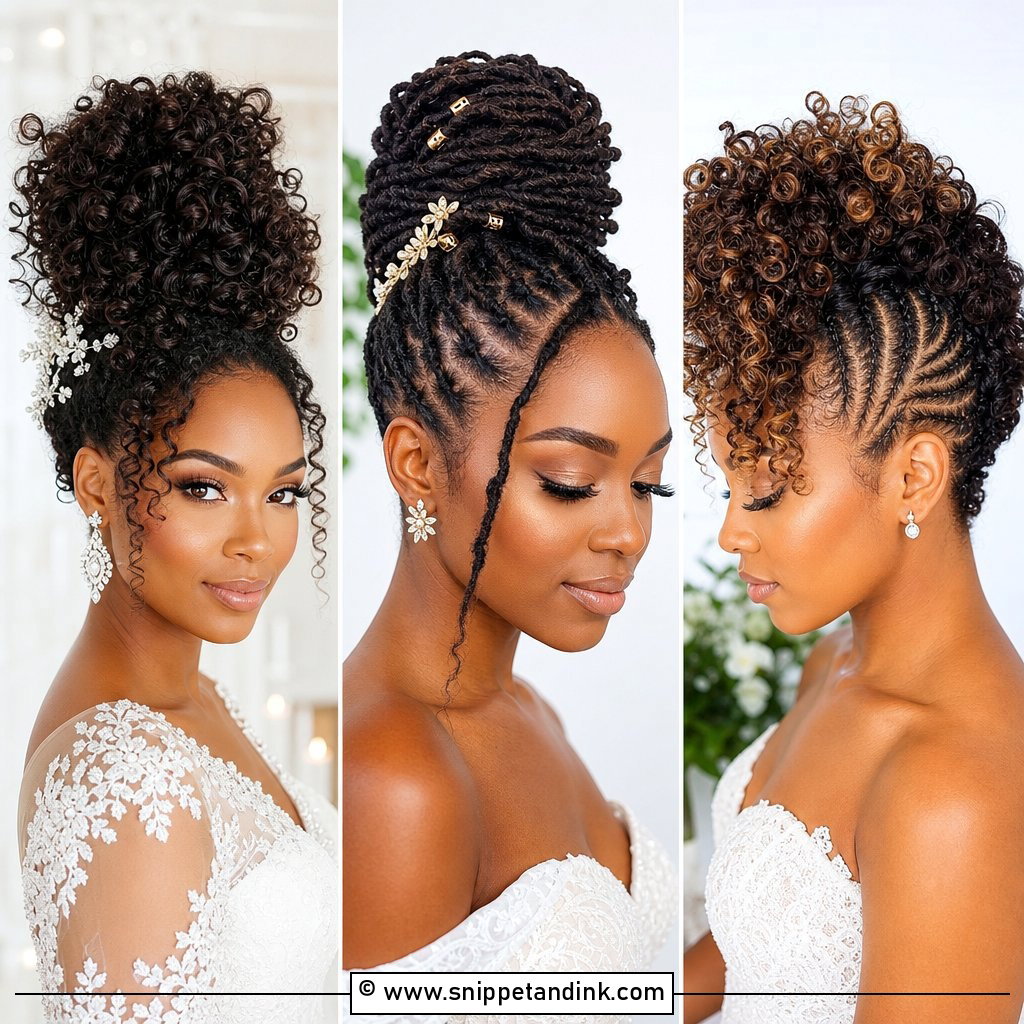
This is the easiest style on the list to do yourself, and one of the best for a long veil. Smooth your edges with a soft gel, gather the curls with a fabric band and pick the puff out round and tall. I slide the veil comb in just under the base so the tulle falls from behind the puff rather than flattening it. The height suits round and oval faces and lengthens the neck above an off-the-shoulder gown. Statement earrings fill the space the hair leaves open.
5. Goddess Crown Braid
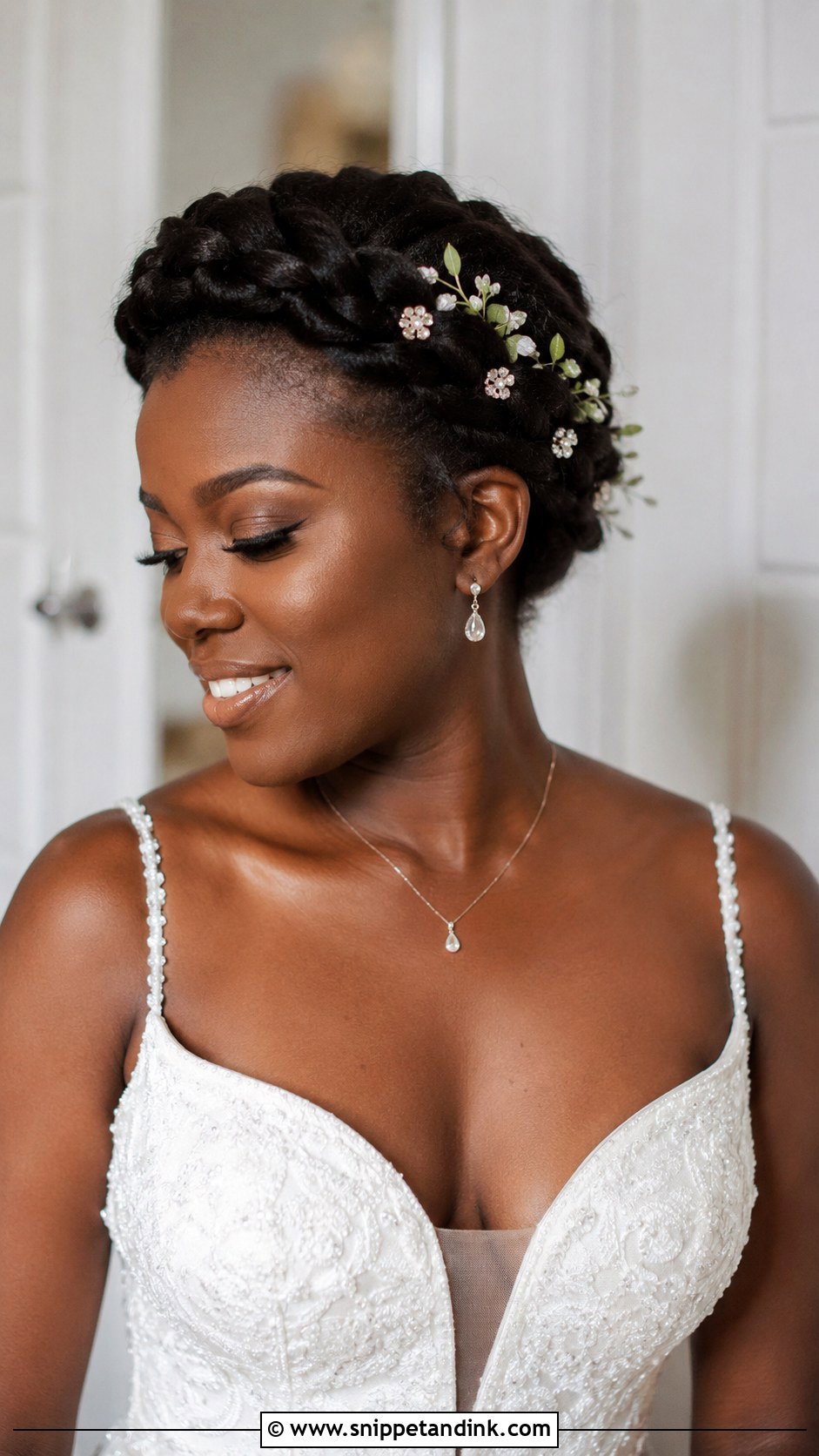
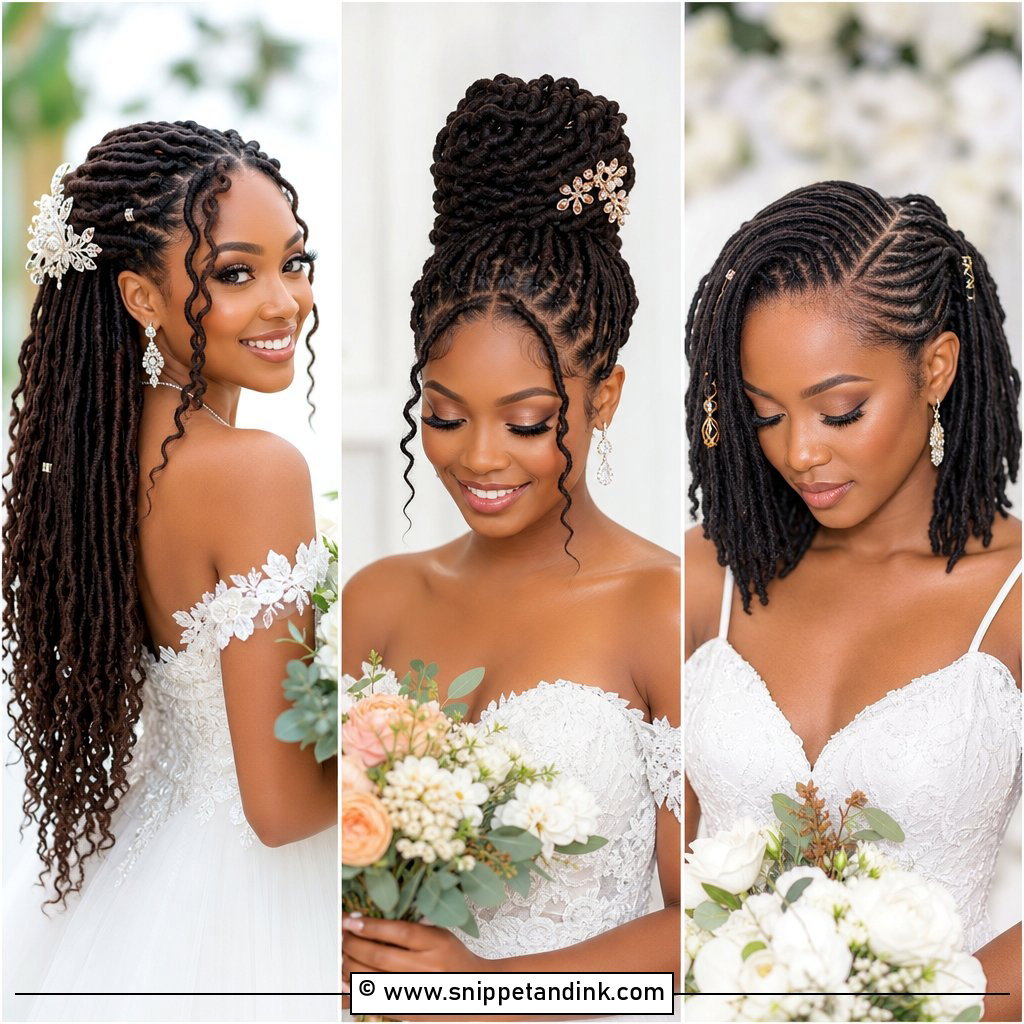
A goddess crown braid is a single thick braid sweeping across the top of the head. Most brides need some extension braided in so it’s full enough to wrap all the way round, and I match it closely to your colour and texture so the join disappears. Rhinestone pins or a little fresh greenery give it a garden feel. It doesn’t loosen on a dance floor, and a veil tucks neatly beneath it.
6. Fulani Braids Wedding Updo
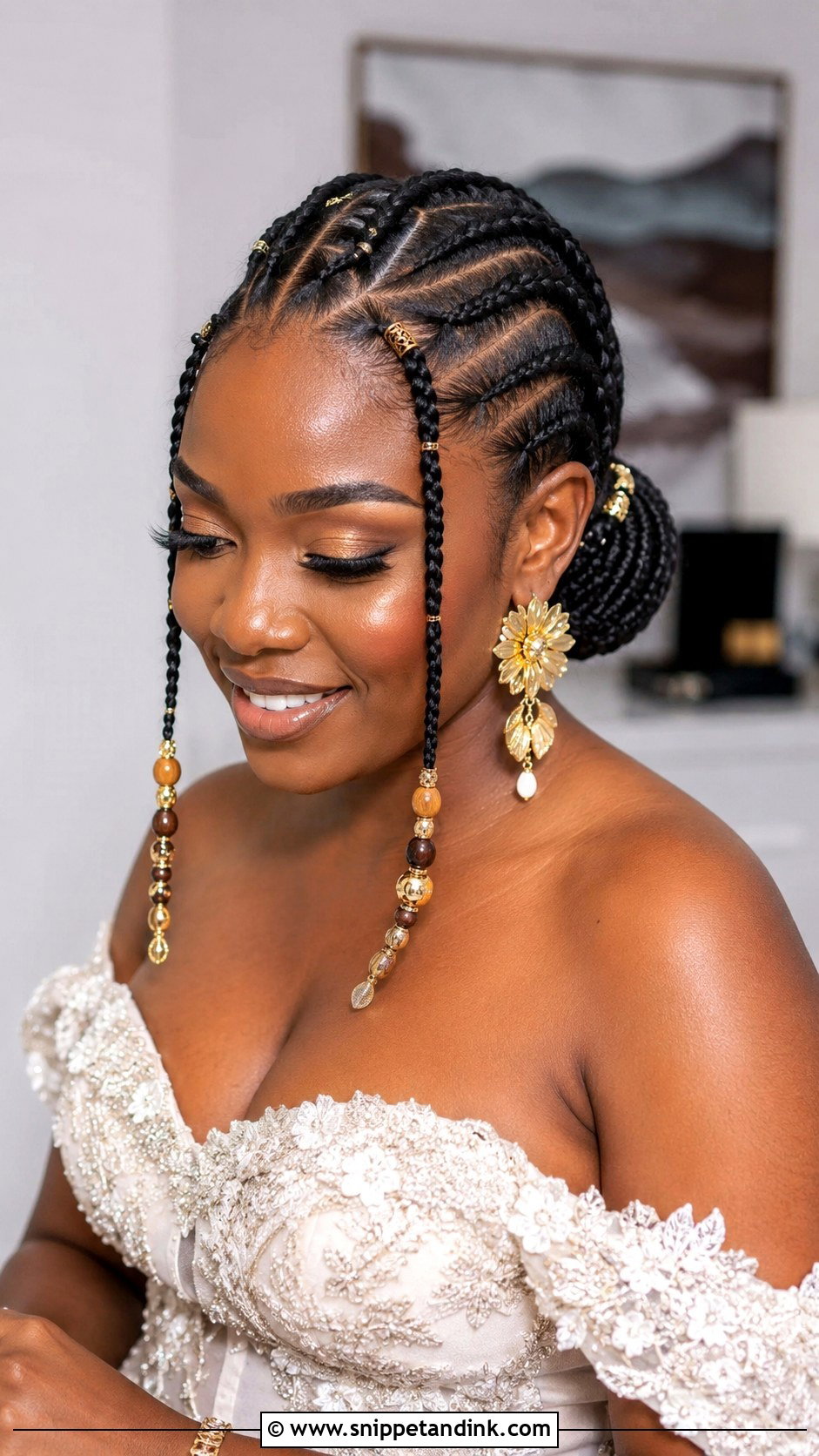
Fulani braids carry real heritage, and gathered into an updo they’re one of the most meaningful looks a bride can wear. The pattern usually runs from a centre part with braids swept back into a high or low bun, often with side braids framing the face. Beads, gold rings or cowrie shells finish them. I’d plan beads carefully: a full set adds noticeable weight to the ends, so I keep most of them on the braids that show from the front. The partings photograph in sharp lines from behind.
7. Flat Twist Bun
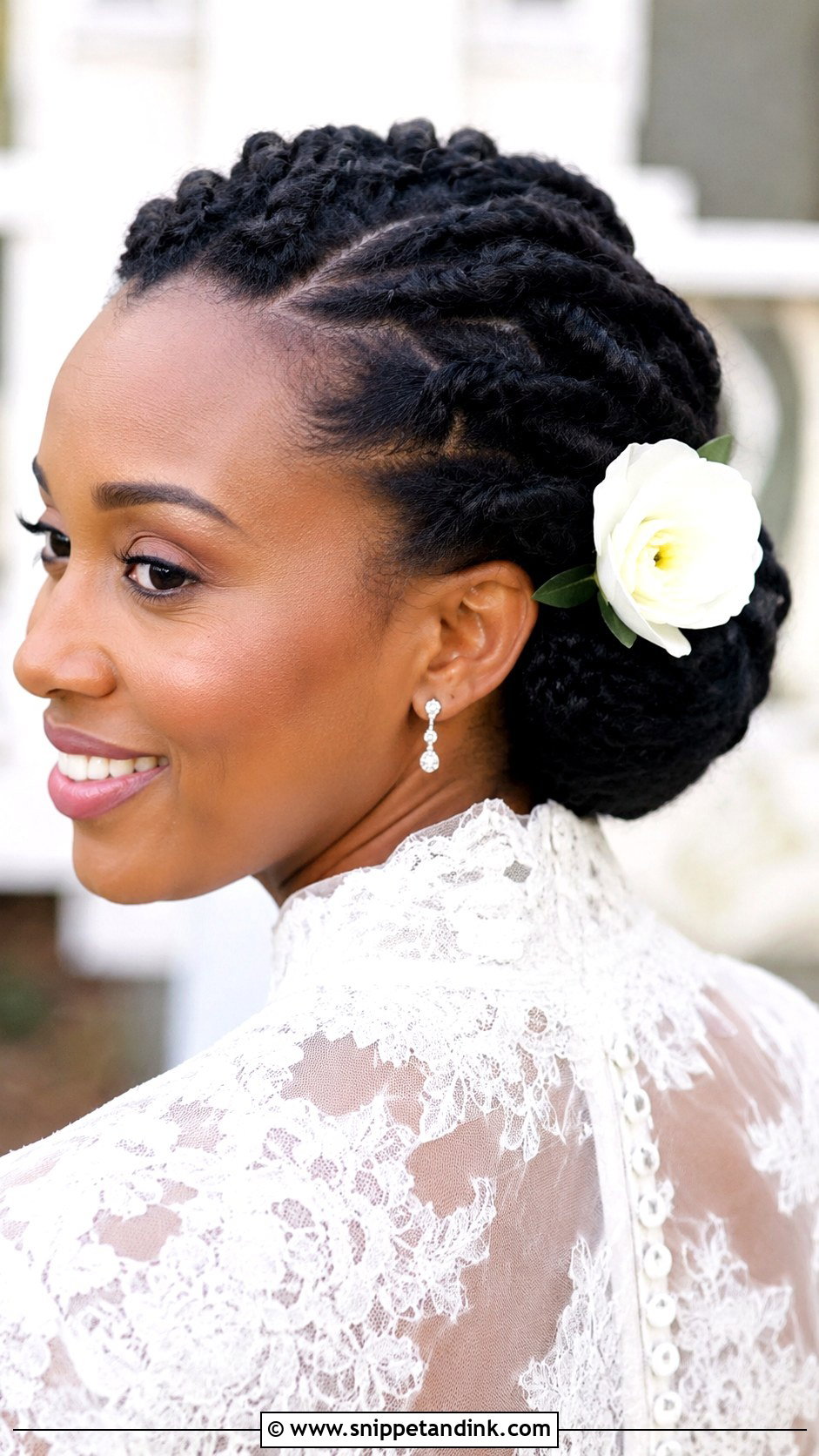
Flat twists run along the scalp into a low bun at the nape, so the finish is sleek with a little texture. Lay the edges with edge control as the very last step, not the first, or they’ll be dull by the photos. I’d happily see a bride do this herself after a couple of practice runs. A vintage comb or a single bloom beside the bun finishes it, and it’s light enough to forget you’re wearing it.
8. Carefree Natural Afro
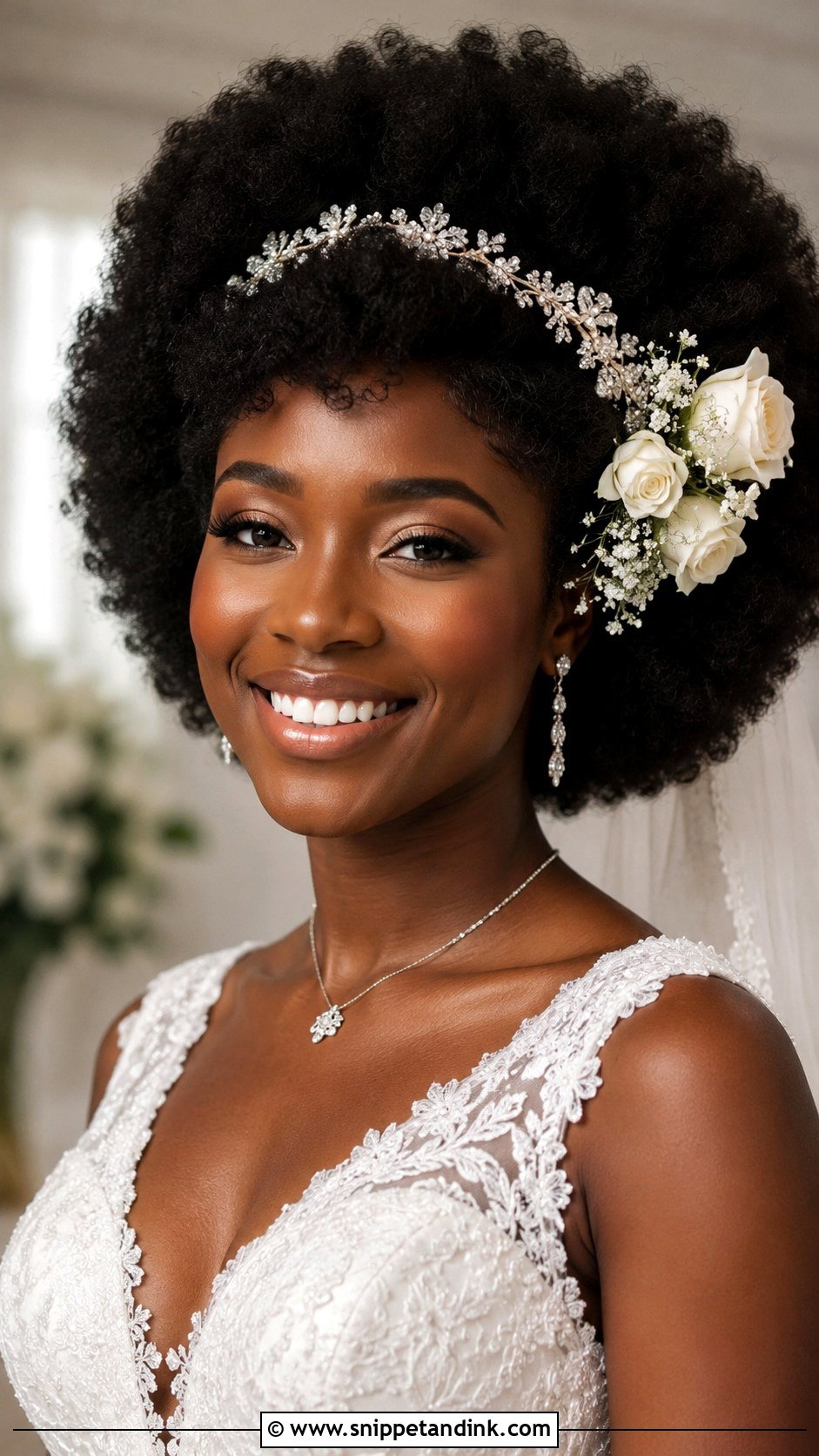
A picked-out afro is the most direct way to wear your hair as it is. I stretch the hair the night before with large twists or a banded set, then pick from the root on the morning for an even, round halo. That stretch makes shaping much easier and limits shrinkage. A sparkling headband, a row of fresh flowers or a slim tiara dresses it up. It works for new naturals with very short hair too; a small afro with a bold headpiece can look very striking.
9. Half-Up Half-Down Curls
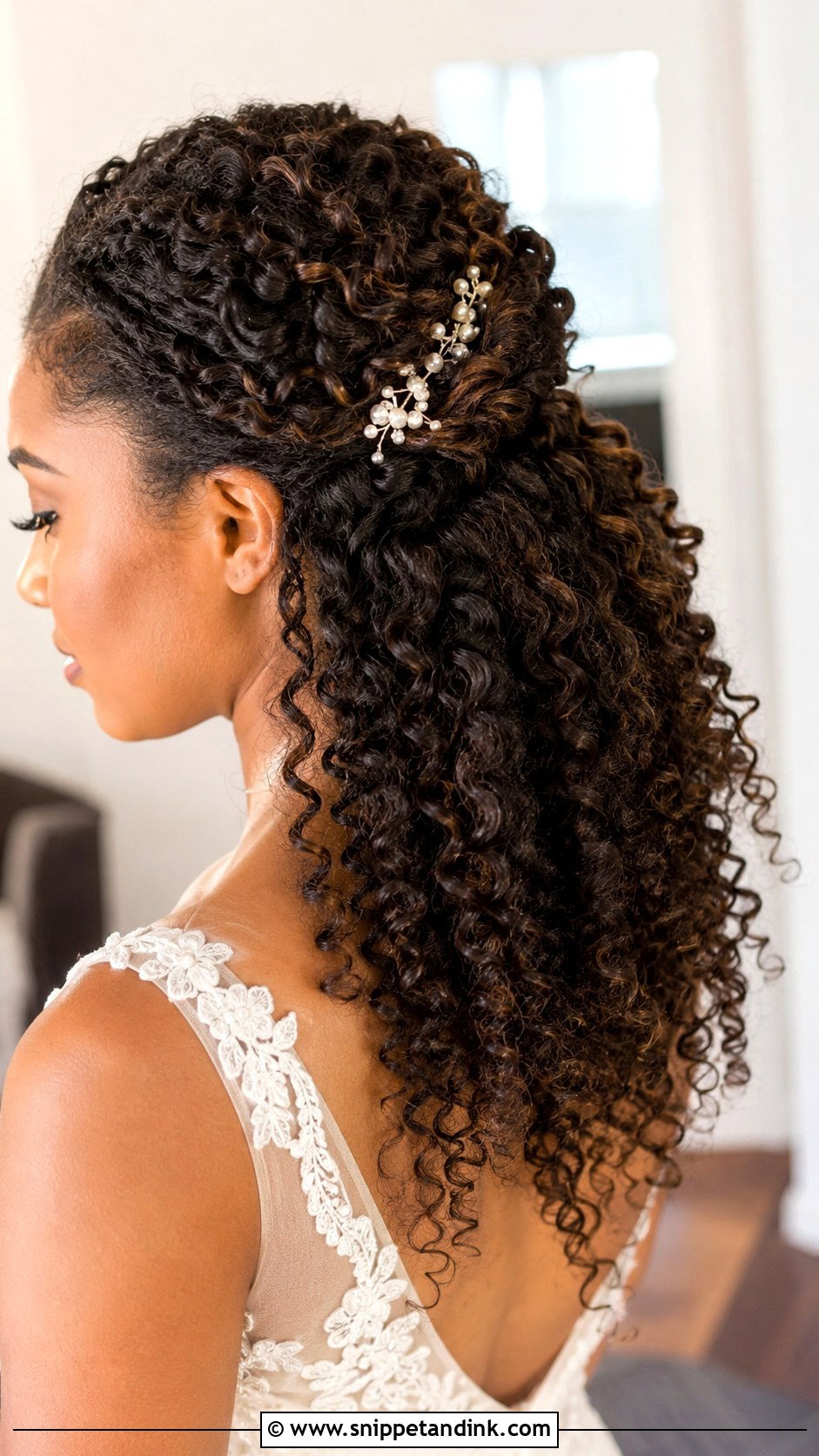
How much hair goes up changes everything here. Gather the top section into a twist or small bun and let the rest fall. For dense coils, I take a bigger top section so the loose length doesn’t overpower the face; for finer curls, a smaller one so the back keeps its volume. A comb, pearl pins or a flower crown go where the sections meet. Keep a small bottle of curl cream mixed with water for touch-ups on the loose coils during your special day.
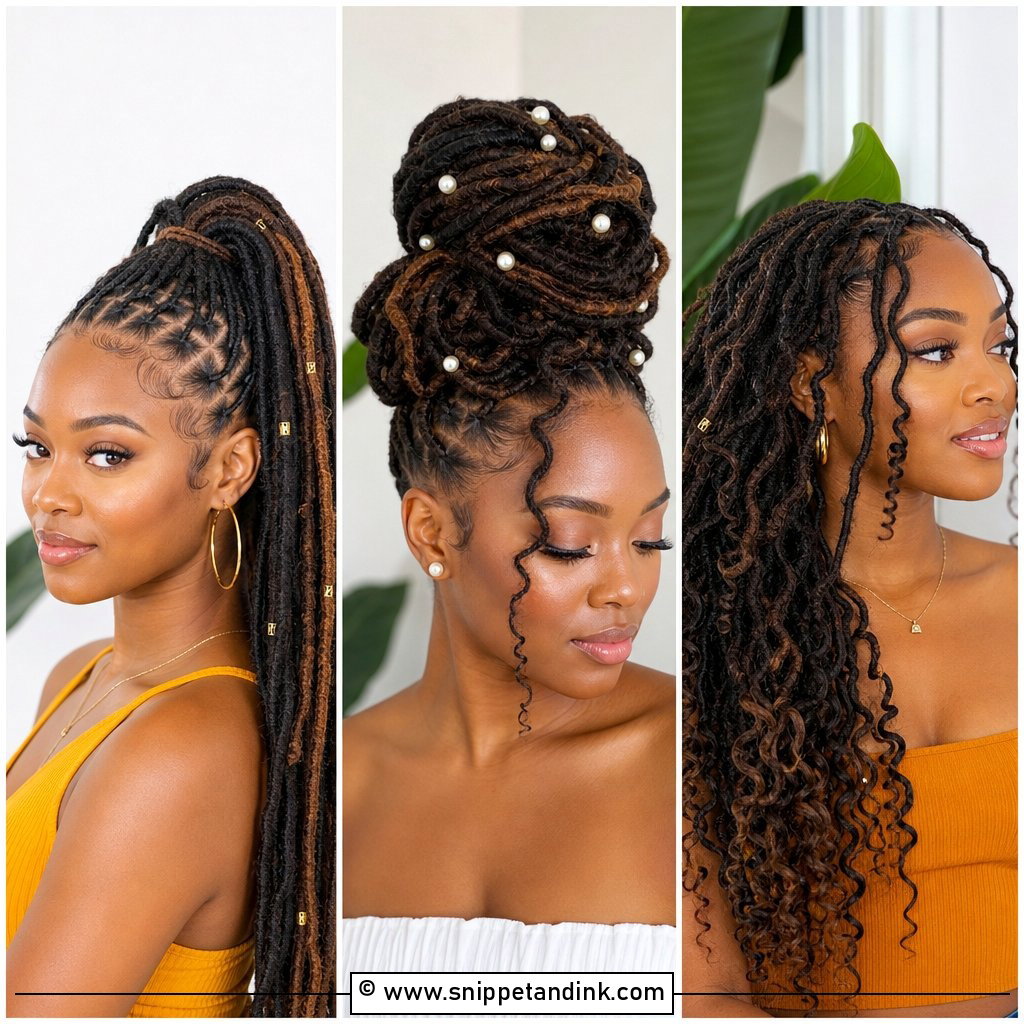
10. Knotless Box Braids Bun
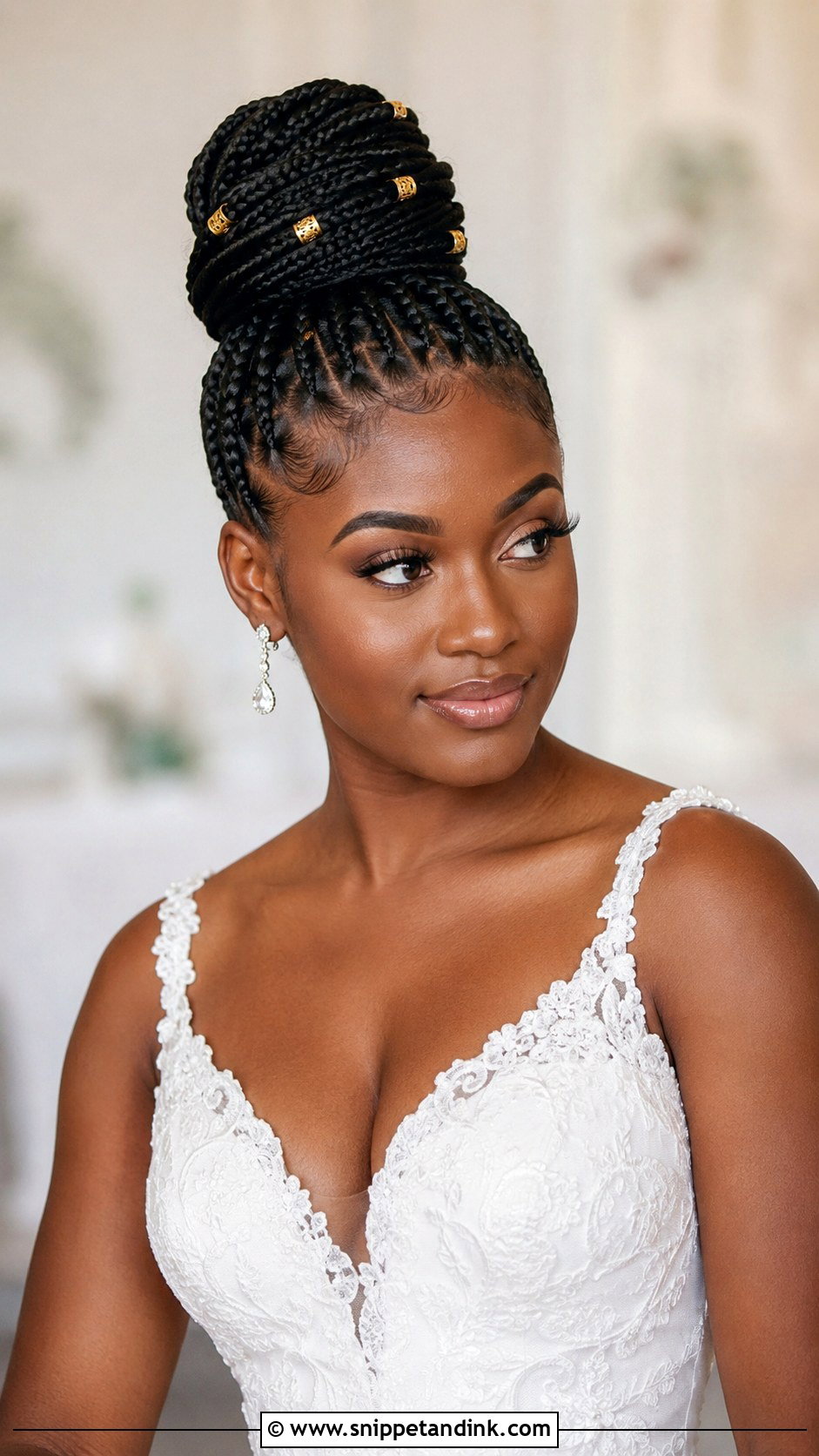
Knotless box braids start with your own hair at the root and feed in extension gradually, so there’s less tension and a flatter, more natural base. That makes them comfortable through a long ceremony. I sweep them into a high bun or a looping chignon and wrap a few round the base, adding gold cuffs for sparkle. One caution: very long knotless braids gathered into a single high bun get heavy, so I’d keep the length to mid-back or choose a low bun.
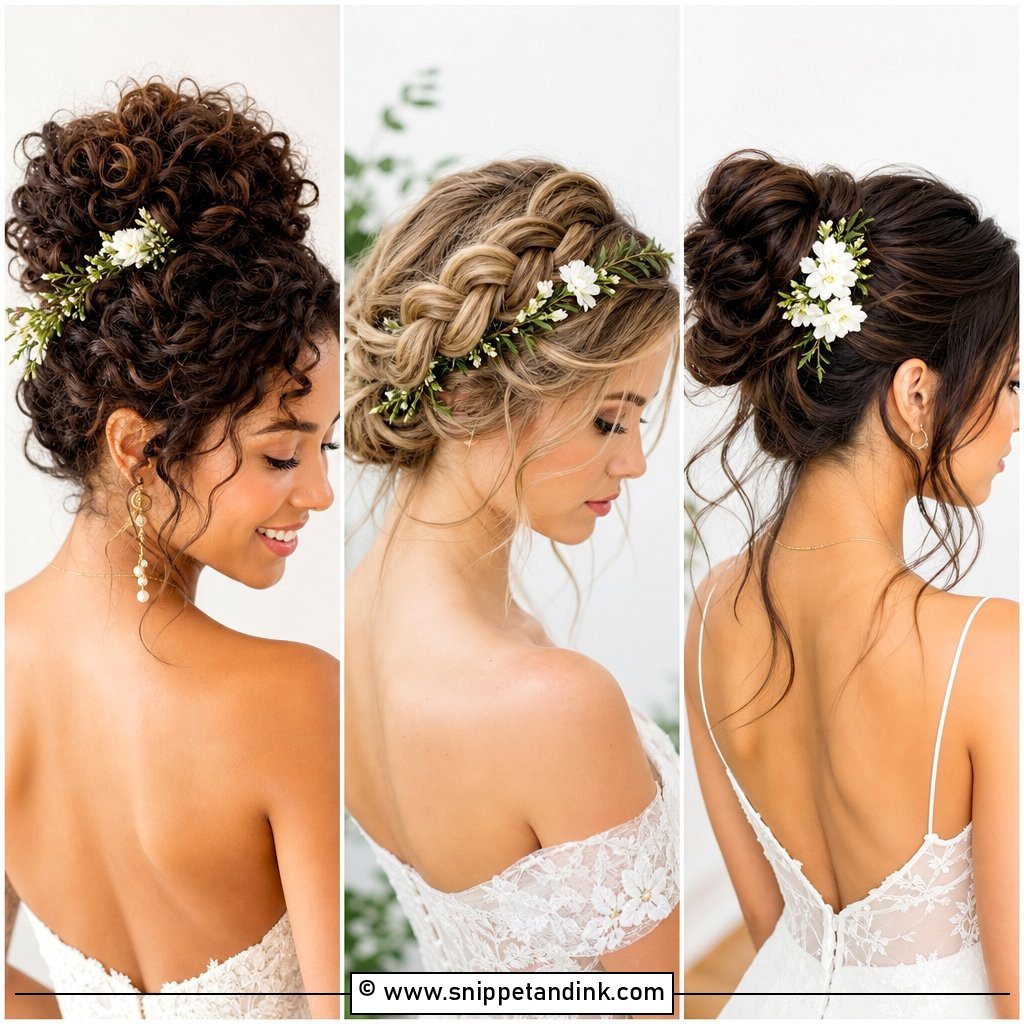
11. Big Curly Side Bun
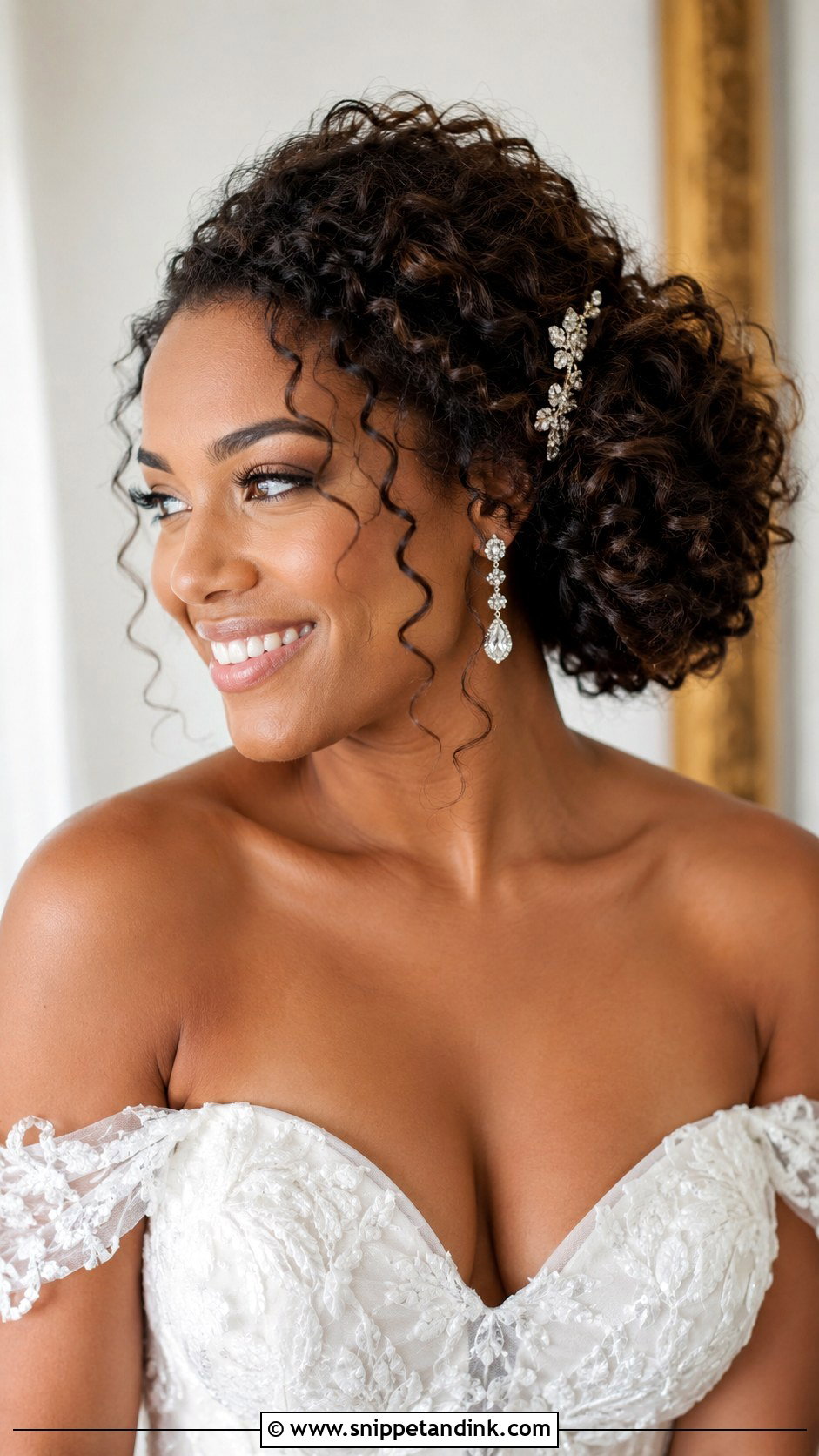
Gather the curls to one side into a full, loose bun just behind the ear. Volume is the point, so I don’t compress the curls; I pin around the edge of the bun and leave the centre airy. It suits off-the-shoulder gowns and chandelier earrings on the open side, with a few tendrils at the face. Fresh flowers or a jewelled pin sit on the side facing the guests. Any curl type works, though very short hair won’t build enough bun.
12. Braid-Out With Side Sweep
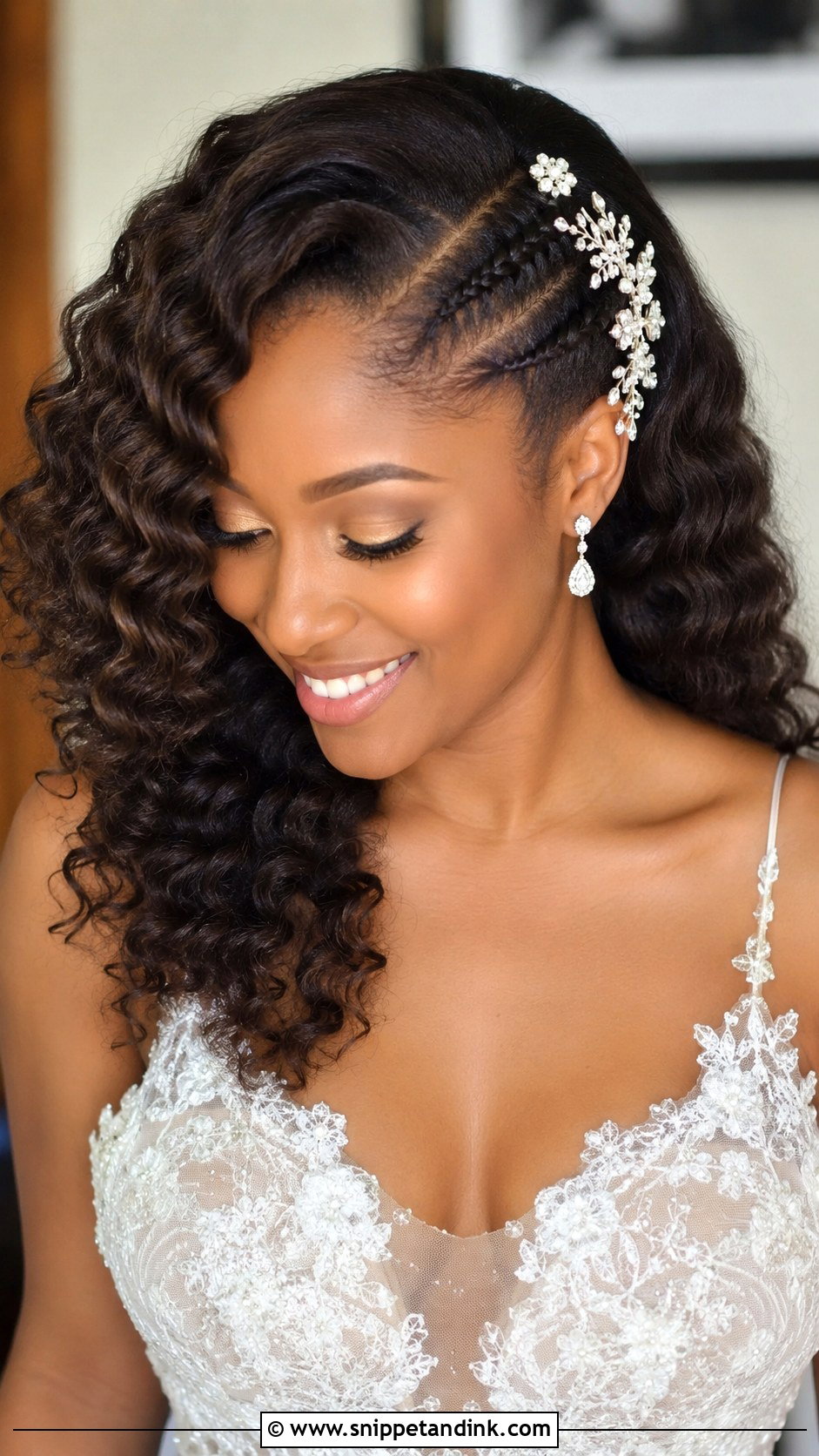
A braid-out gives longer, smoother waves than a twist-out. I braid medium sections on damp hair, let them dry overnight and unravel in the morning with a little oil on my fingers. Swept to one side and pinned behind the shoulder, the waves fall in one long line. A hair vine or a few blooms along the swept side adds detail. If the hair is still slightly damp inside when you unravel, the waves will drop by the reception, so give it a full night.
13. Low Chignon For Natural Hair
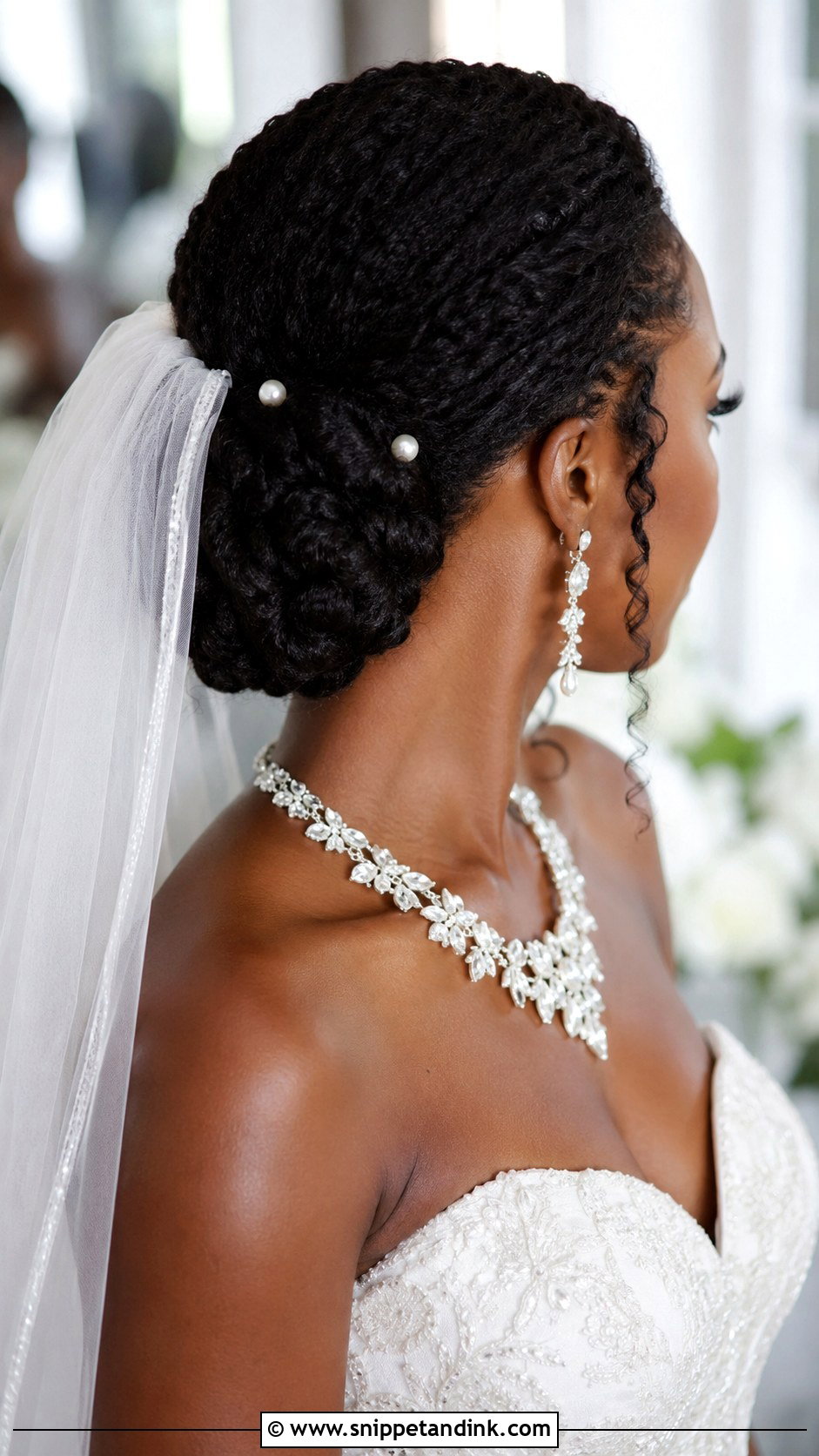
A low chignon sits at the nape and frames a statement necklace and a cathedral veil equally well. I gather the curls, smooth them with a cream before any gel so the ends stay soft, and sculpt the knot round. Keep it sleek for a modern look or leave a few coils loose at the temples. Pearl pins or a small hairpiece add sparkle. The weight stays low, so it’s comfortable all evening, and it suits almost every face shape.
14. Cornrows Into A Bun
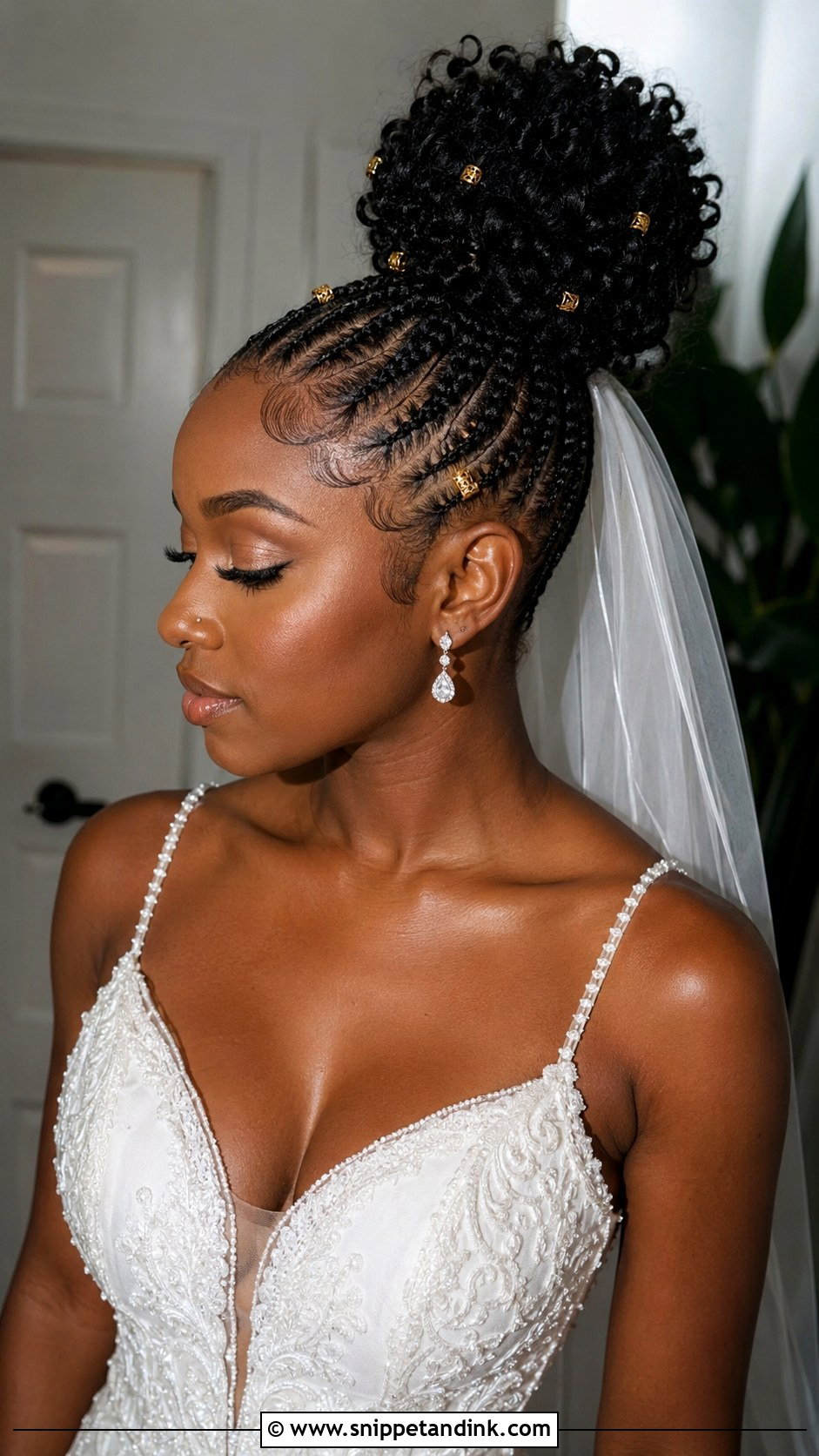
Cornrows lead back from the hairline and finish in a textured bun or curly puff. The braiding pattern is where you get to be creative: curved lines, zigzags or straight rows all change the character. I’d have them done no more than a day or two before, so the parts are crisp. Gold beads or a jewelled clip mark the point where the braids meet the bun. It’s secure and comfortable through a full day and night.
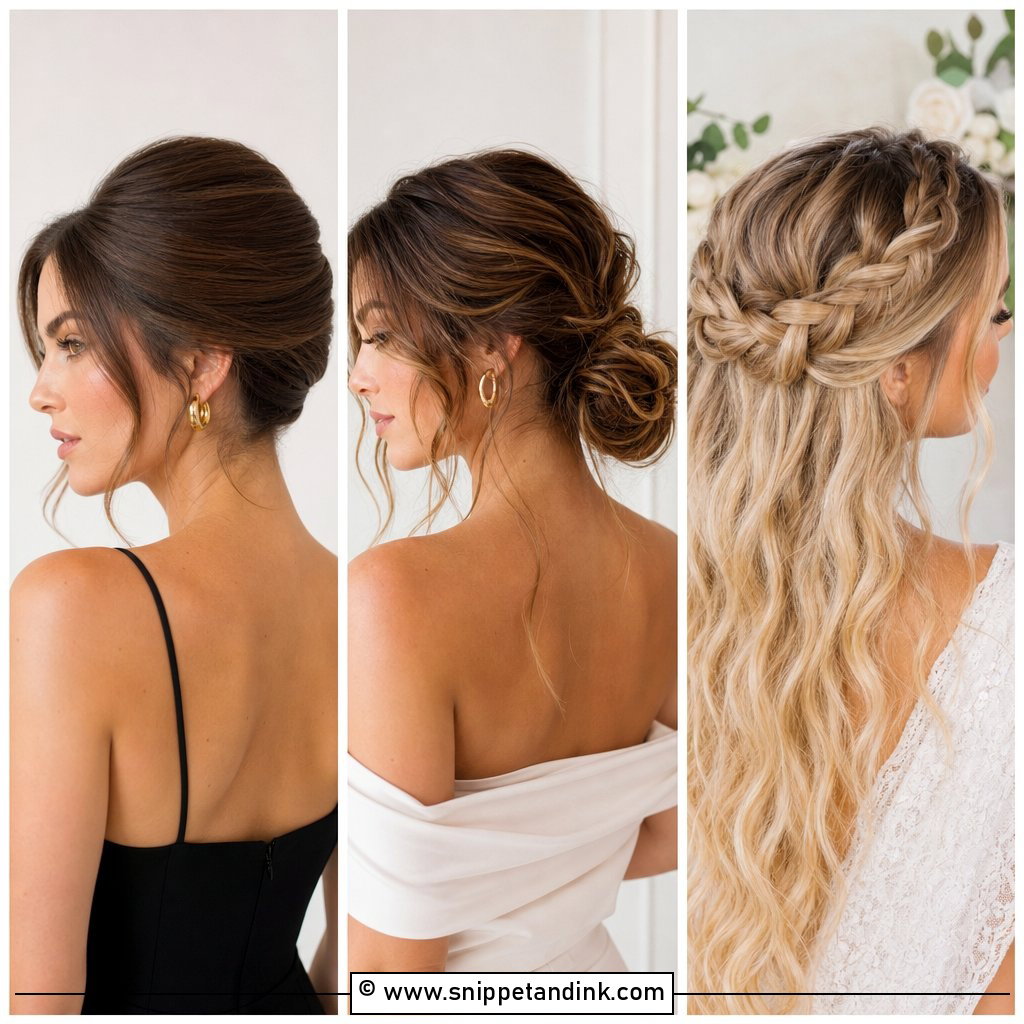
15. Twist Updo With Accessories
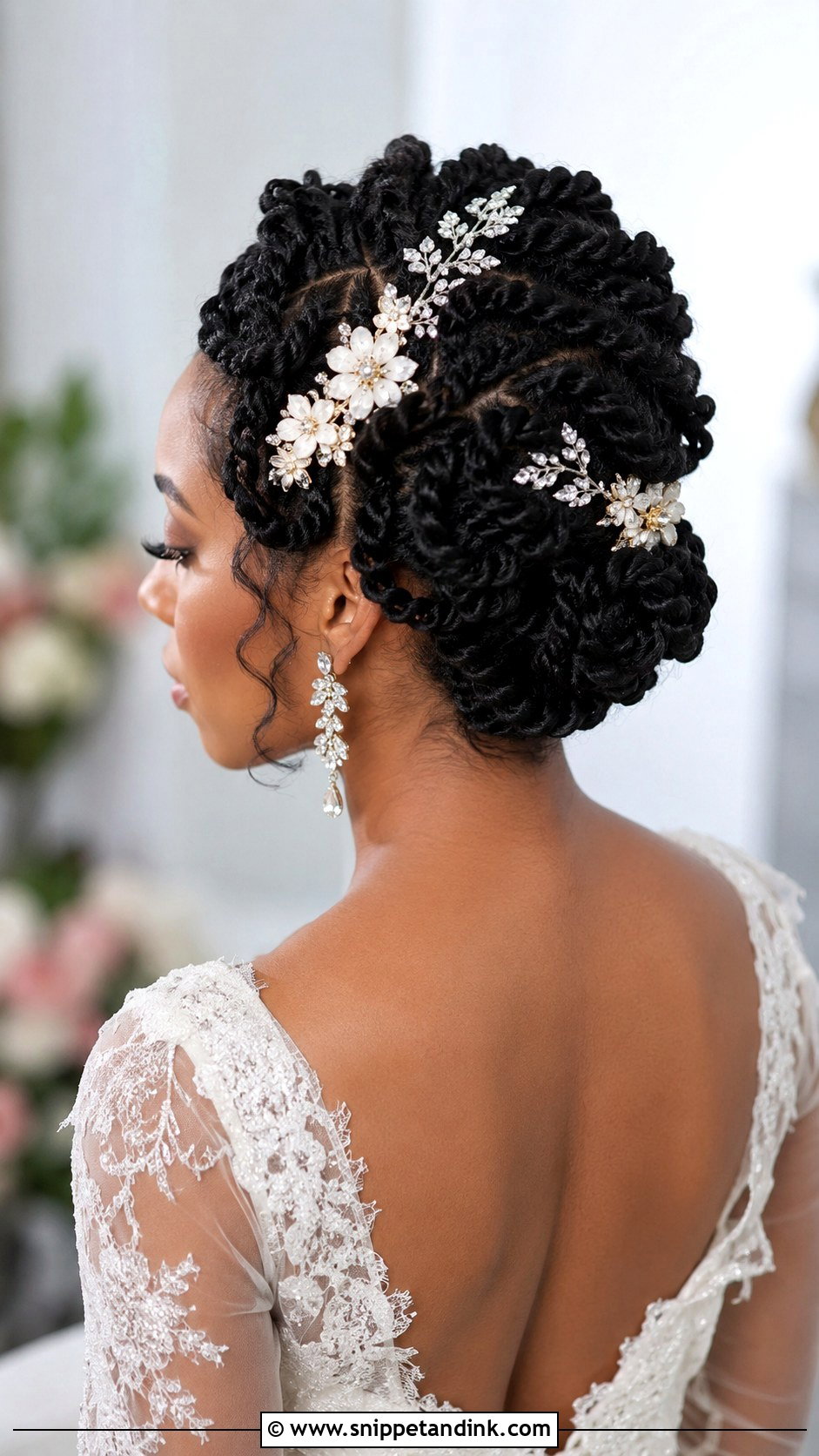
Two-strand twists put very little tension on the scalp, so they’re a kind base for an elaborate updo. I loop and pin them into soft swirls and folds, and because each twist holds its shape, the updo keeps its outline for hours. Crystal pins, fresh flowers or a tiara set among the twists suit it. The look can shift into a side chignon later in the night if you want a change. It’s a detailed style without the pull of tight braids.
16. Pinned Curls Updo
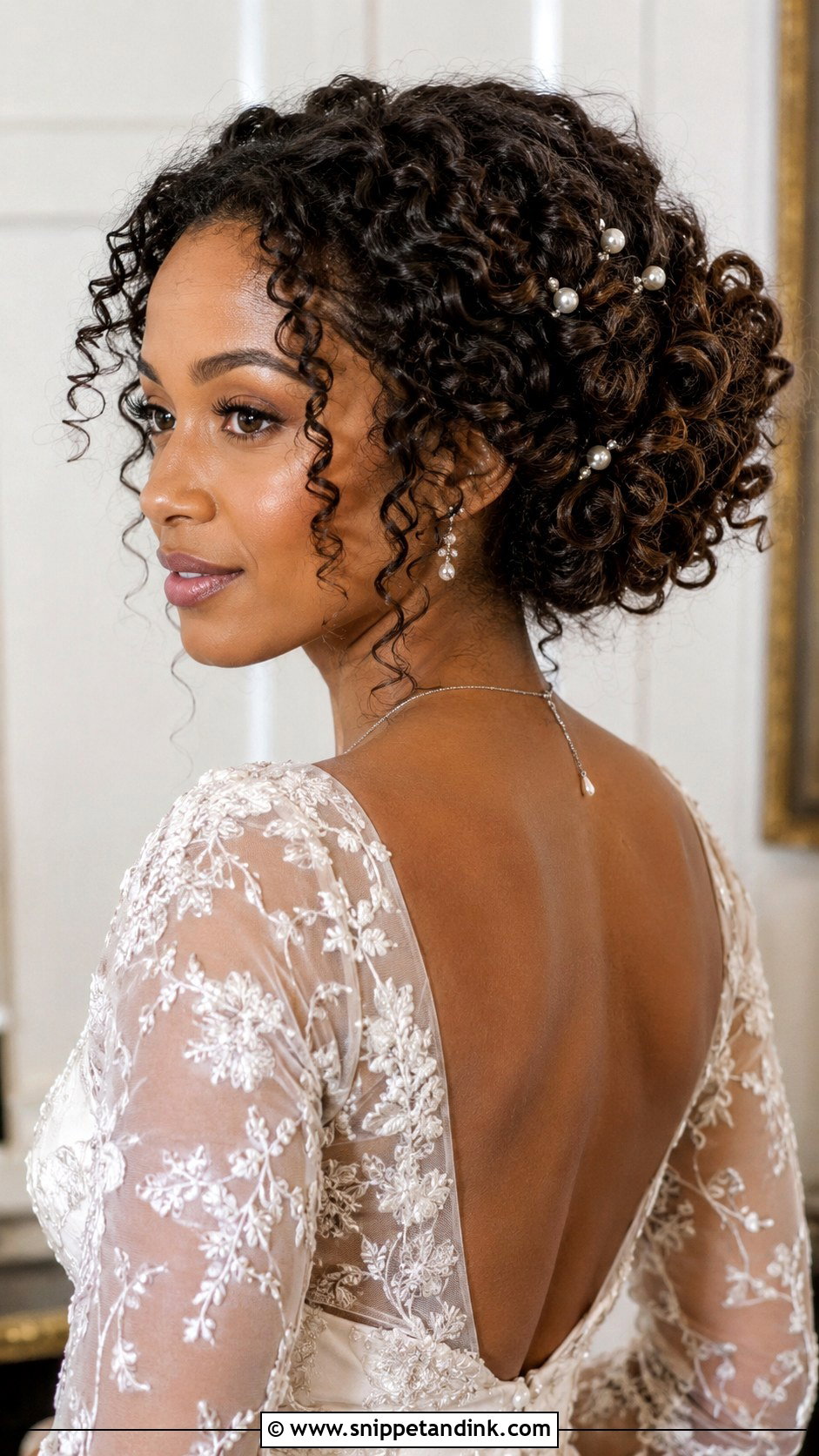
Pinned curls give a soft cloud of texture rather than a sculpted shape. I section the curls and pin them up in loops and clusters, placing each pin under a curl so nothing shows. A few tendrils fall at the face. Pearl pins, sparkling clips or florals tuck between the curls. The airy look suits vintage-themed or relaxed weddings. If your curls usually flatten quickly, I’d set them on flexi rods the night before for more spring.
17. Senegalese Twists Updo
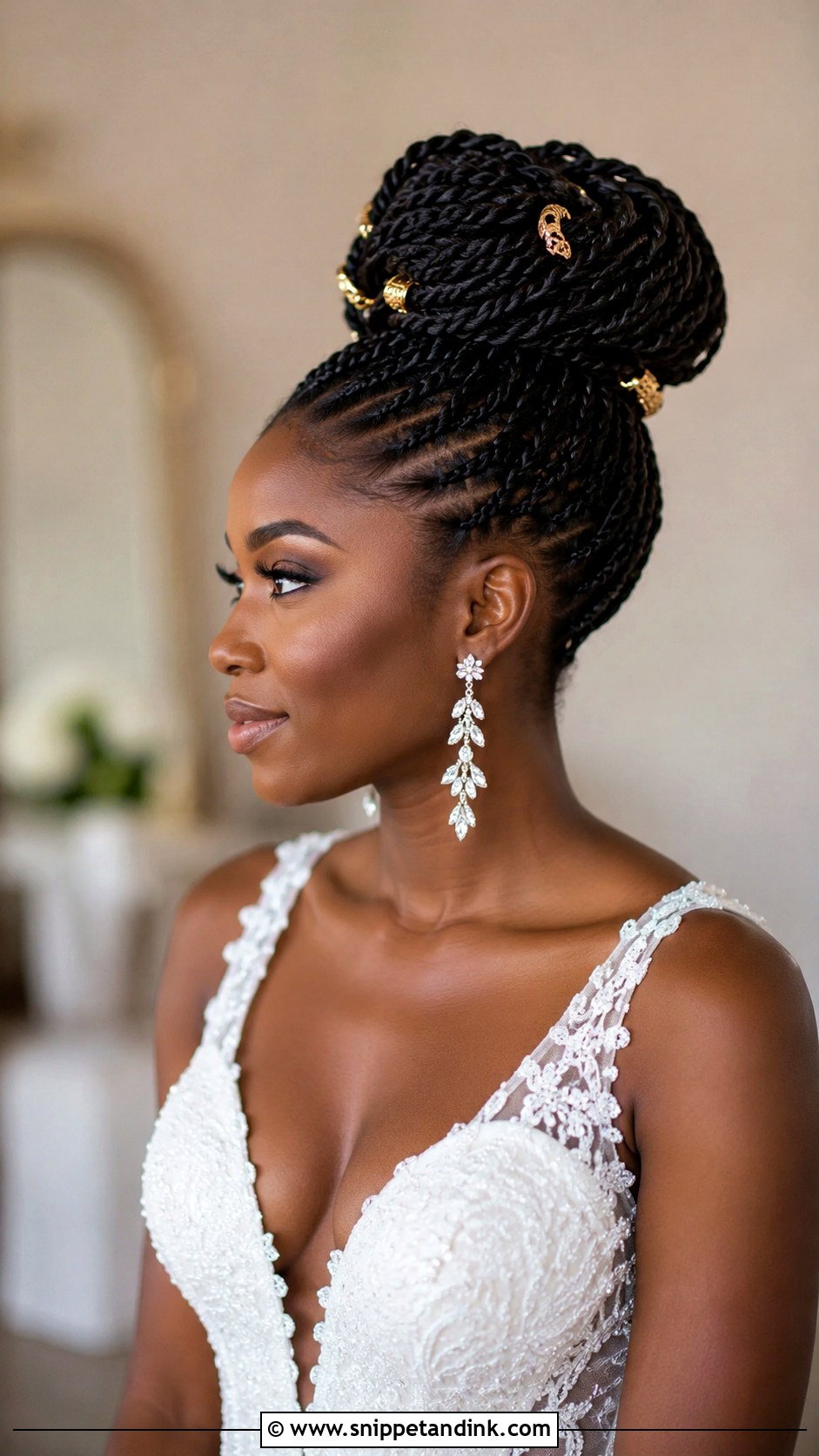
Senegalese twists are smooth and rope-like, so they gather into a clean high bun, a low chignon or a sweeping updo with very defined lines. I wrap a few twists round the base of the bun and add gold accents. The style lasts well past the wedding, so it carries straight into a honeymoon with very little care. Install it about a week before the wedding; fresh twists can feel tight for the first few days.
18. Natural Faux Hawk
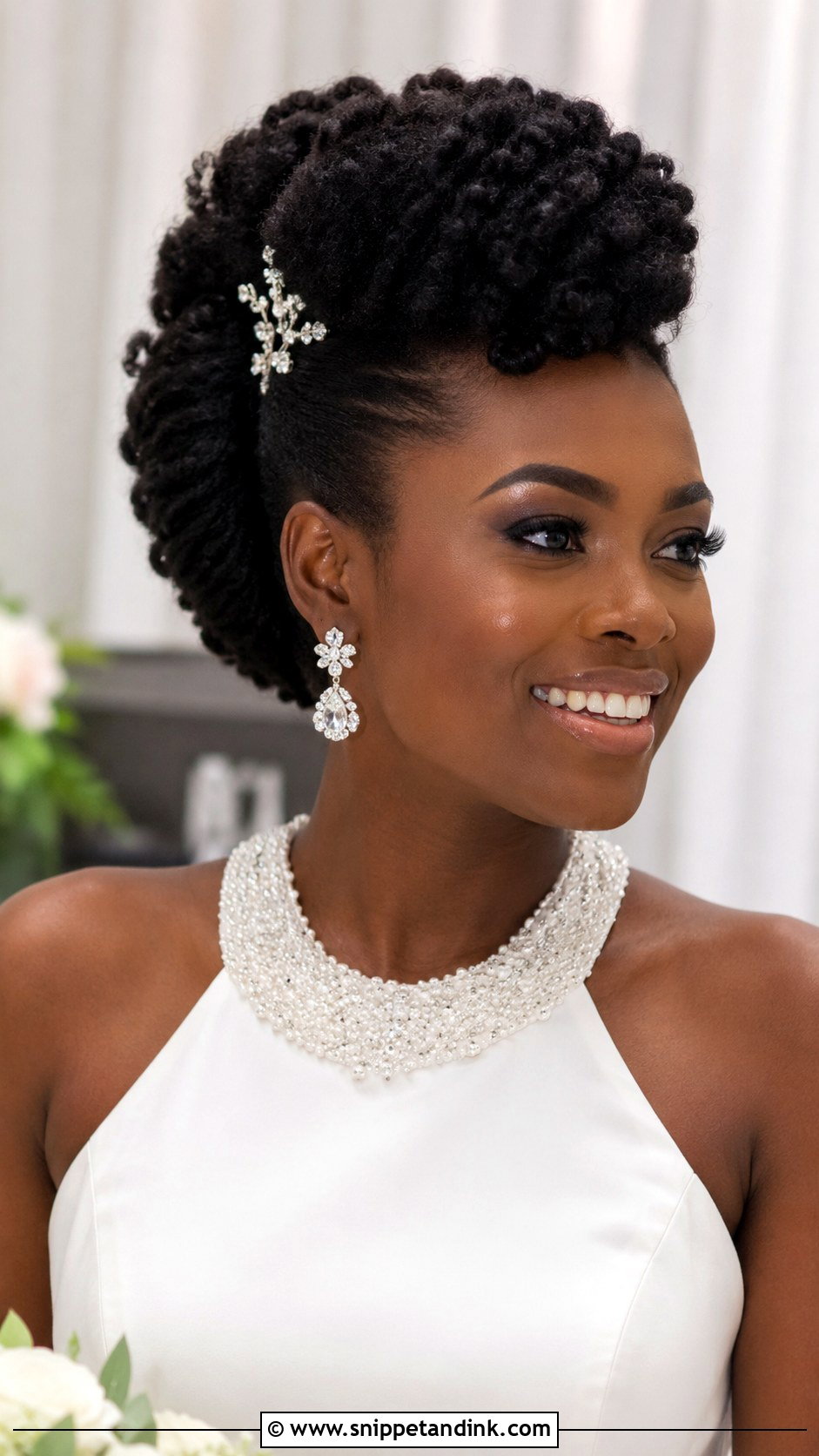
The natural faux hawk is for a bride who wants something no one expects. The sides are pinned flat or twisted inward and the height is built down the centre. I anchor the sides firmly with crossed pins, since that’s where the strain sits. Crystal pins or flowers in the centre curls add softness. It pairs with sleek modern gowns and bold jewellery, and it looks daring in the best way.
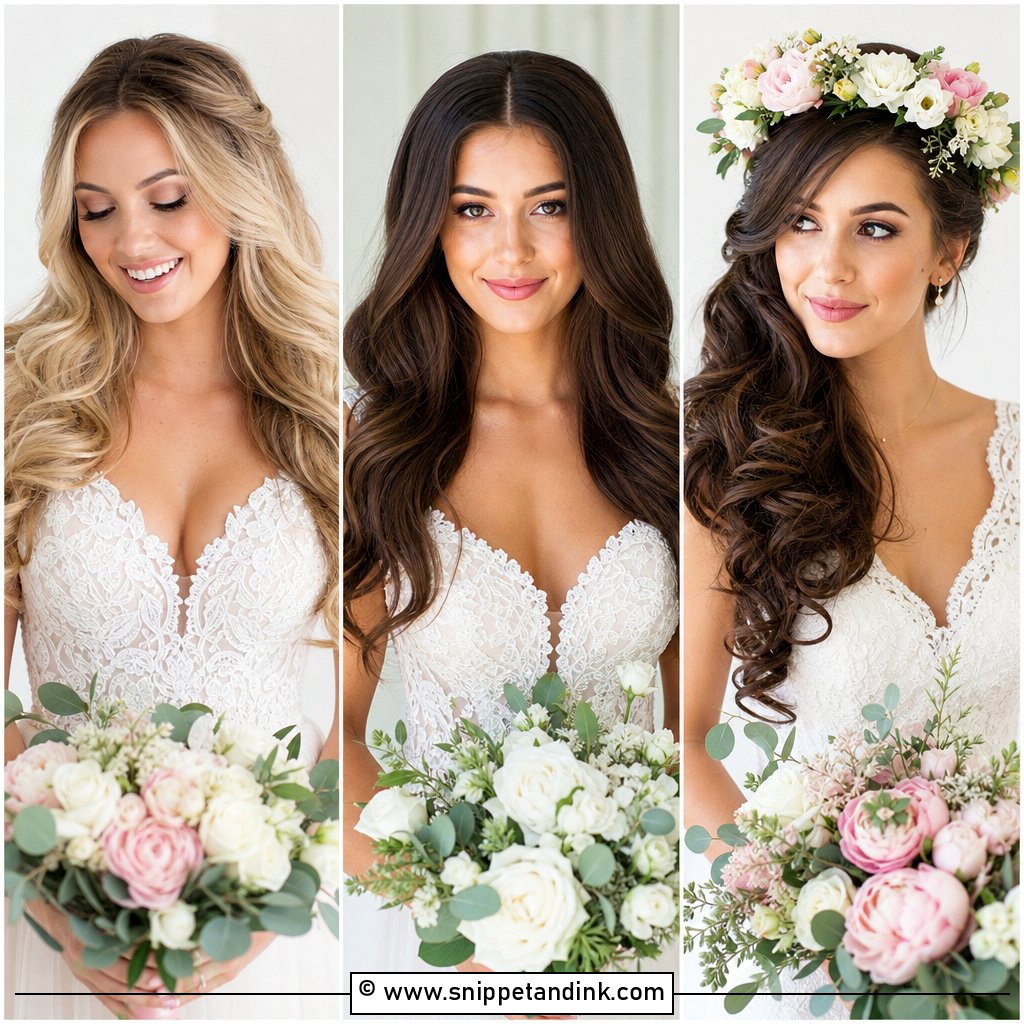
19. Loose Curls With A Tiara
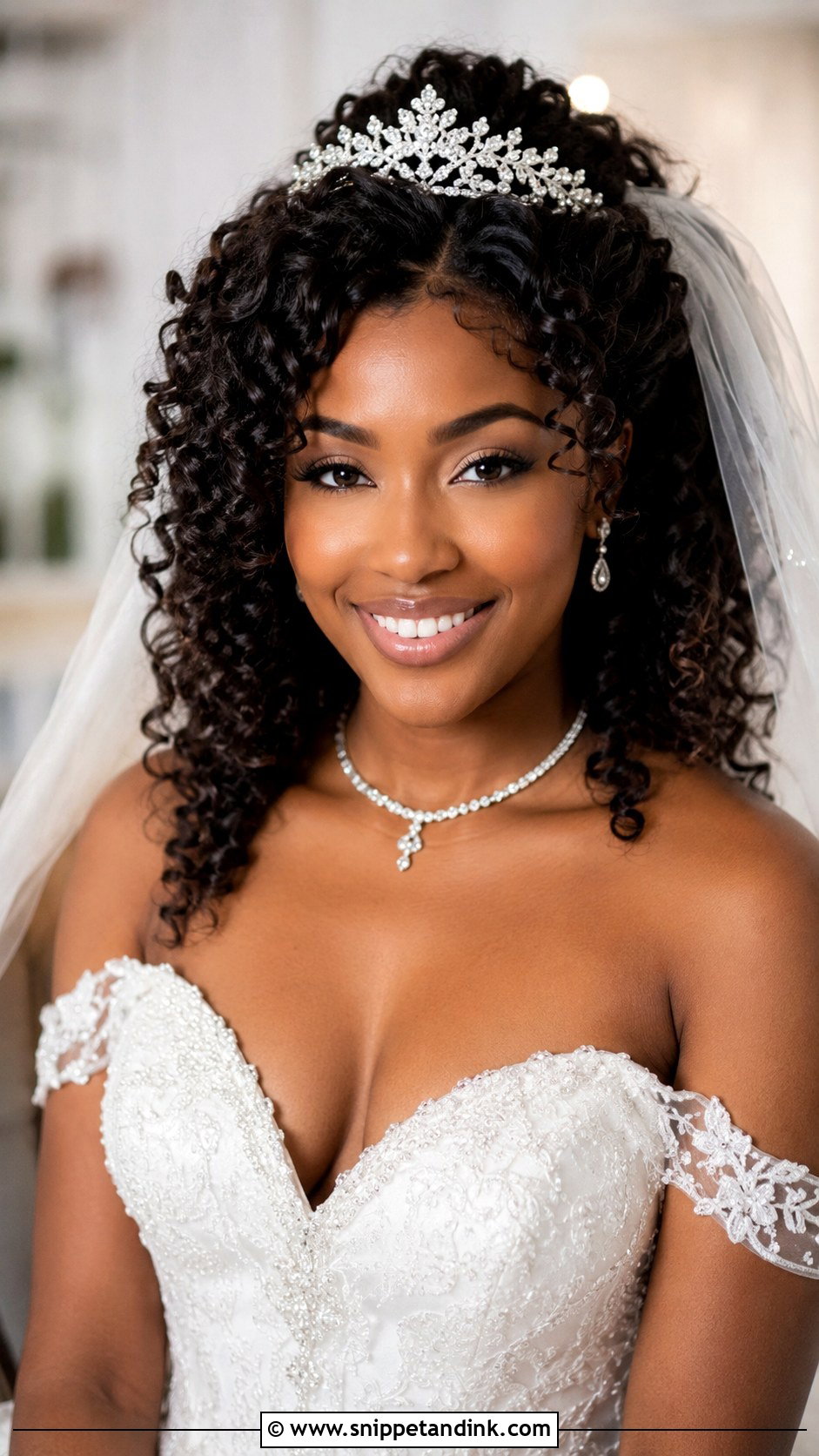
Loose curls with a tiara is the most fairytale look here. Let your curls hang free and set the tiara on top like a crown. Tiaras with combs at each end grip textured hair much better than a plain band, and I pin through the frame at two points as well. A curl cream for definition and a light hold keep frizz down. A veil set just behind the tiara adds length without hiding the curls.
20. Micro Braids Chignon
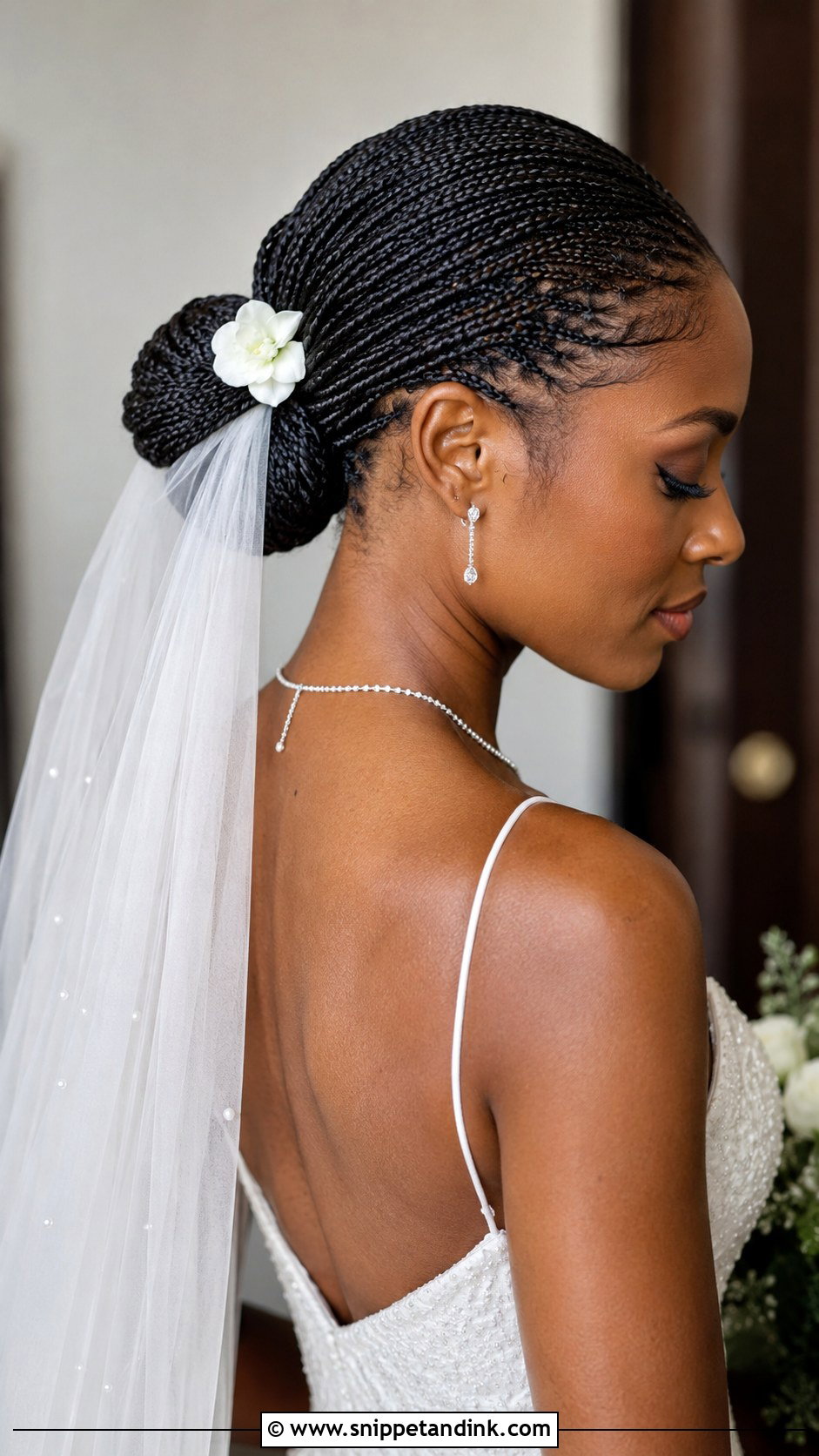
Micro braids are tiny, so a chignon built from them looks smooth and fine-grained. They gather into a low knot with subtle texture, and a single fresh bloom or a row of pearl pins is enough decoration. They take many hours to install and a long time to remove, so book that braider well ahead. They last well into a honeymoon and sit nicely under a veil.
Braids That Feel Good on the Day and After It
Many of these styles rely on a braiding or twisting install, and the comfort of that install matters as much as how it looks. A braid that pulls on the morning will ache by the reception. When I check a fresh install, these are the warning signs:
- Small bumps at the base of the braids, especially around the hairline.
- Pain when you tilt your head or raise your eyebrows.
- Skin visibly lifted or shiny where a braid starts.
- Trouble sleeping on your side the first night.
If you notice any of these, go back to your braider and have the tightest braids redone. Don’t wait it out the week before your wedding.
Carrying the style into the honeymoon
Protective styles travel well. Sleep with a satin bonnet or on a silk pillowcase, use a light scalp oil on the parts, and spritz the length with a little leave-in. Most braids and twists are best taken out after about six to eight weeks. Take them down slowly with oil and detangle each section before the next. Then give your hair a deep conditioning treatment and a short rest before the next install.
Which Crown Will You Wear Down the Aisle?
A halo braid, a free afro and a low chignon all ask for the same groundwork: hydrated hair, a stylist who knows textured hair, and a style that suits how you actually live in your hair. Start deep conditioning weeks ahead, not the night before. Add fresh flowers, pearls or a tiara where they mean something to you. Then pick the look you’d still be happy wearing twelve hours later, and walk down the aisle in it.
You'll Like These Ideas:



Leave a Reply