
Most of what makes Pakistani wedding hair work is invisible in the photos. It’s the pin base under a jhumar, the padding inside a bun so a heavy dupatta doesn’t crush it, the extensions braided into a paranda so the tassel hangs straight. The looks change from function to function, sleek for the baraat, softer for the walima, braids and flowers for the mehndi, but each one has to survive hours of sitting, greeting and changing weather. I’ve added the practical detail behind every style here, so you can show your stylist the picture and also tell her what it needs.
Tikka, Jhumar or Matha Patti? Each Needs a Different Anchor
Brides often pick a hairstyle and then try to fit the jewelry onto it. I work the other way round, because each traditional head piece pulls in its own direction and the hair has to be built to hold it.
Tikka
It hangs from a single hook along the centre part. I create a small pinned section just behind the hairline for the hook to grip. Without it, the tikka slides down toward your brow as soon as you start moving.
Jhumar
This sits on one side, and a heavy one pulls the whole style sideways. I braid a small flat base above the ear on that side and hook the jhumar into it. That’s also why I usually pair it with a side part or a low bun rather than open curls.
Matha patti
It needs three secure points: the centre and both sides. The chains run along the hairline, so the front has to stay smooth. I pin the side chains on top of the hair, then cover the pins with a thin section brushed over them.
Wearing all three is possible, but the scalp carries real weight by the end of the day. For a long baraat, I’d pick two.
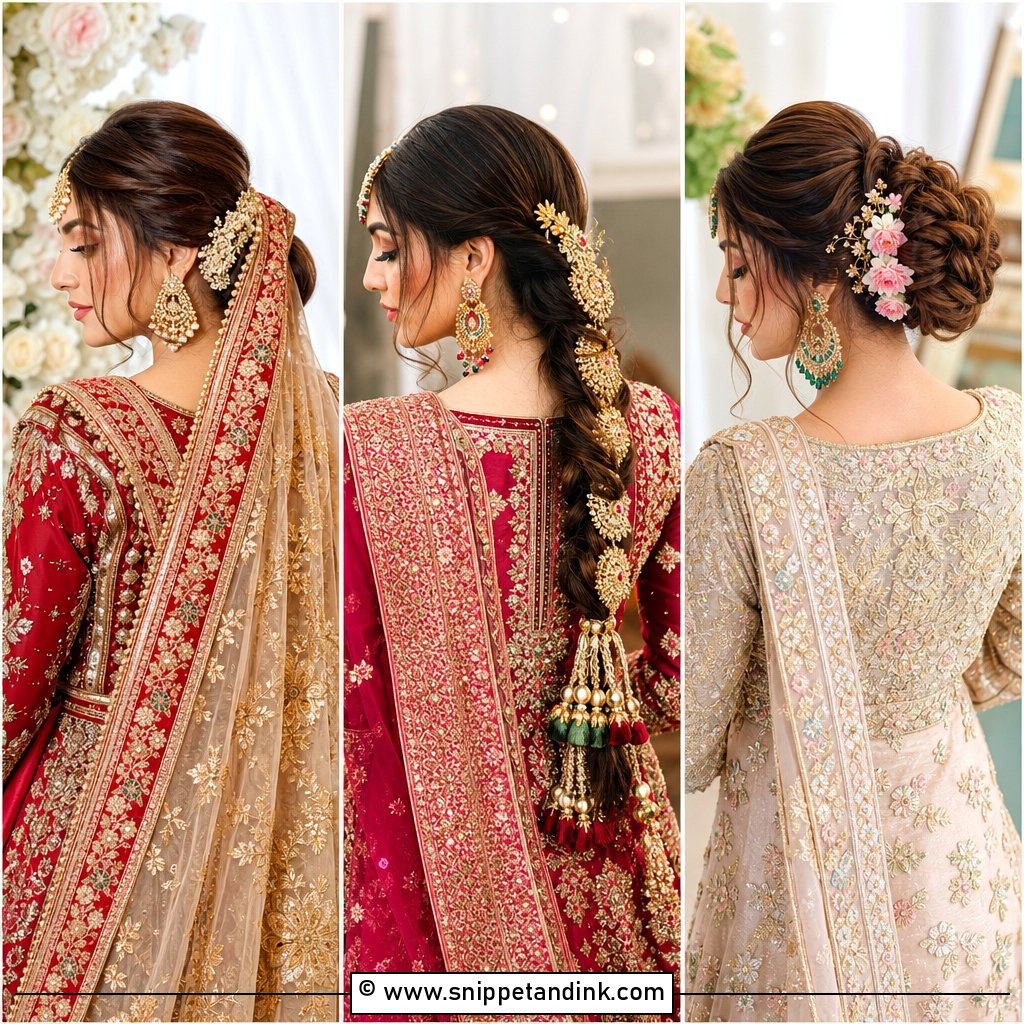
1. Pakistani Bridal Low Bun With Dupatta
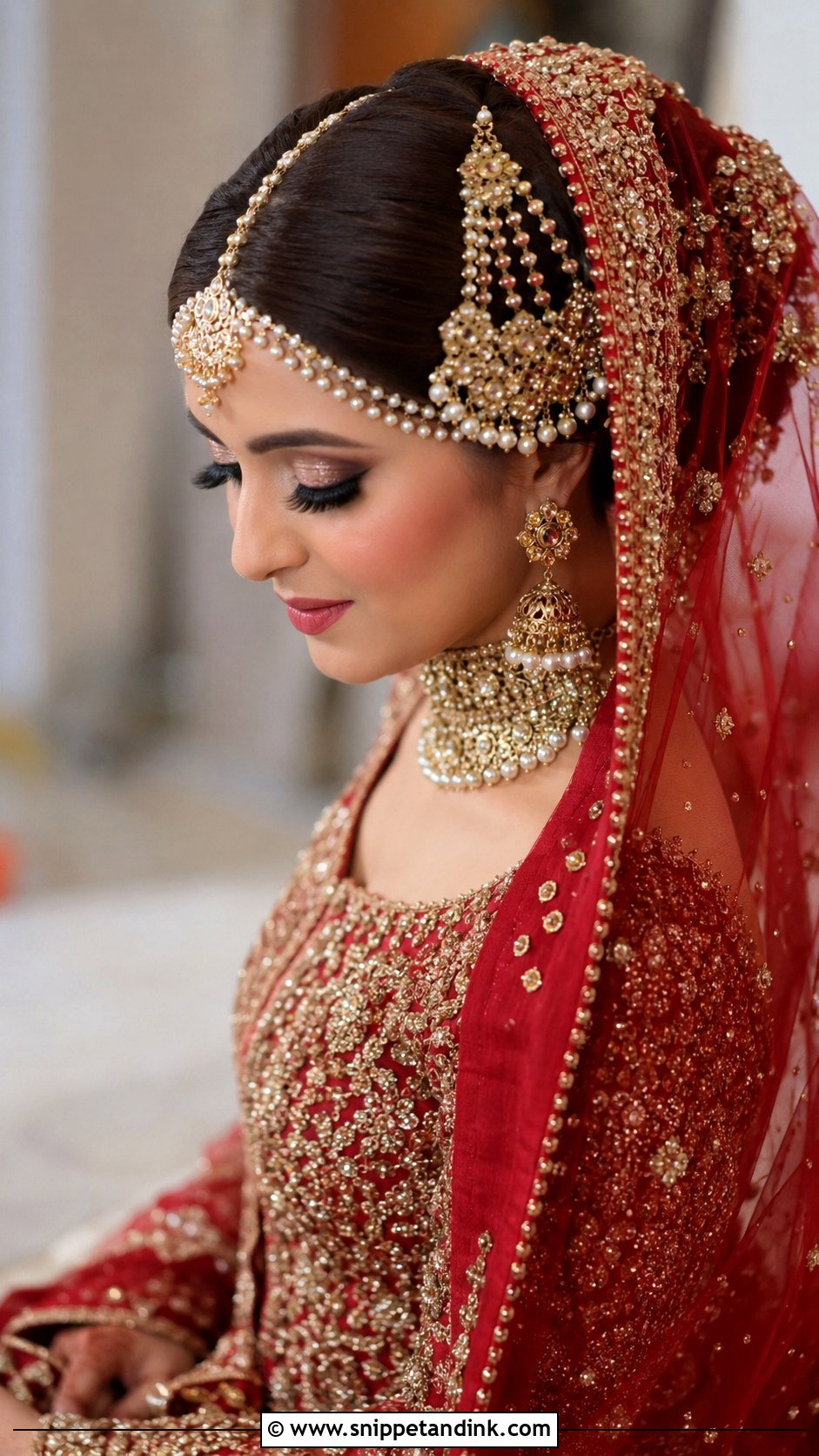
Heavy jewelry and a heavy dupatta need a base that doesn’t move, and that’s what a Pakistani bridal low bun with dupatta gives you. Sitting at the nape, it takes the dupatta pins without dragging on the crown, and leaves the front free for a matha patti, jhumar or tikka. I add a little height at the crown before the dupatta goes on, otherwise the fabric presses the top flat. For a baraat with embroidered outfits it’s the safest choice. Tell your stylist if you get headaches from tight styles; the bun should feel firm, never pulling.
2. Pakistani Wedding Floral Bun
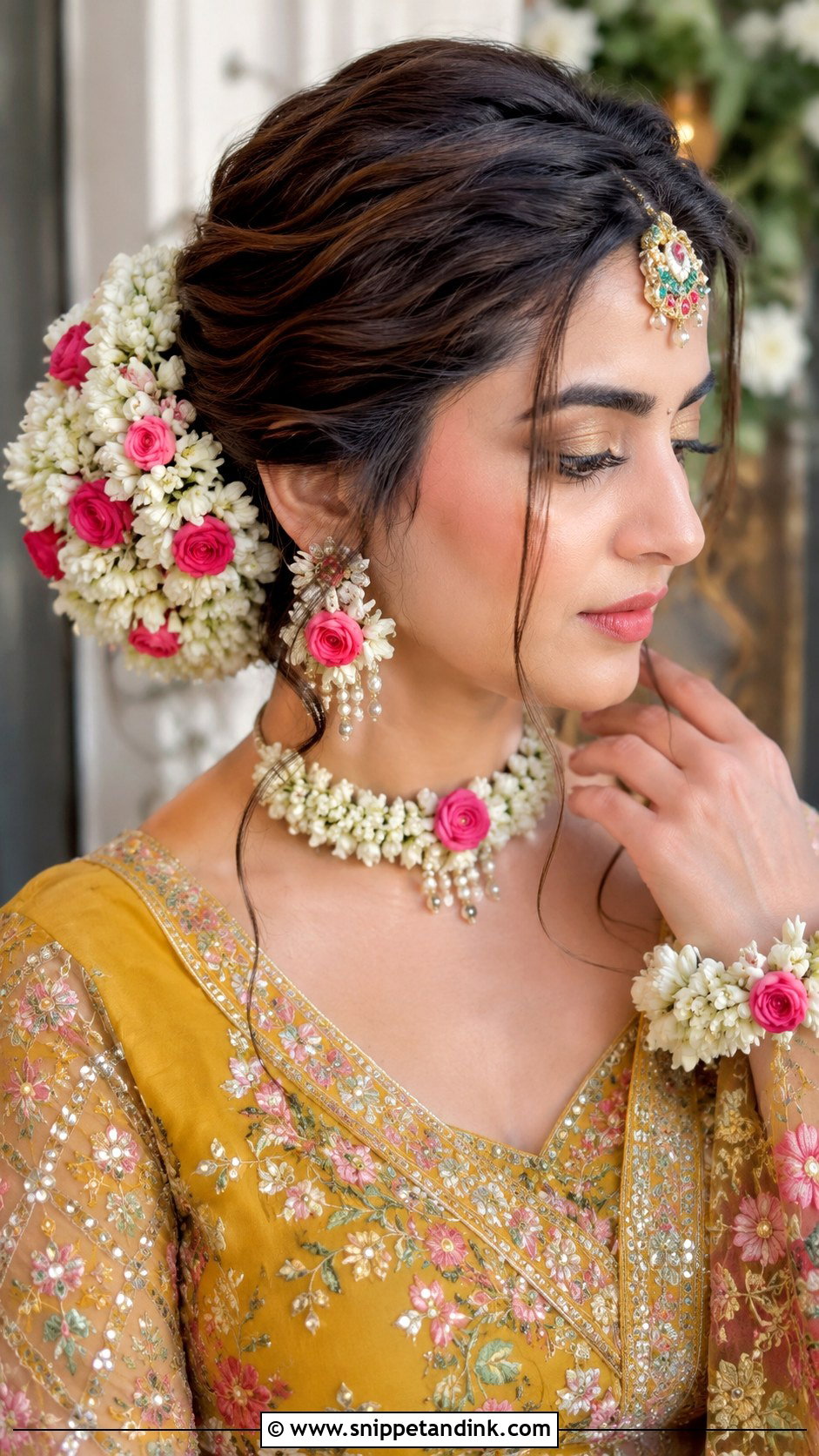
The back of your head appears in more wedding photos than you’d think, which is where a floral bun pays off, especially against a detailed neckline or dupatta border. It suits mehndi, dholki, mayun and outdoor daytime events. I pin the bun first so it would hold bare, then add jasmine, baby’s breath, roses or a gajra around the base. With heavy jewelry I keep the front clean. With lighter pieces, a couple of loose strands at the face soften it. It’s comfortable enough to dance in.
3. Pakistani Mehndi Braid With Paranda
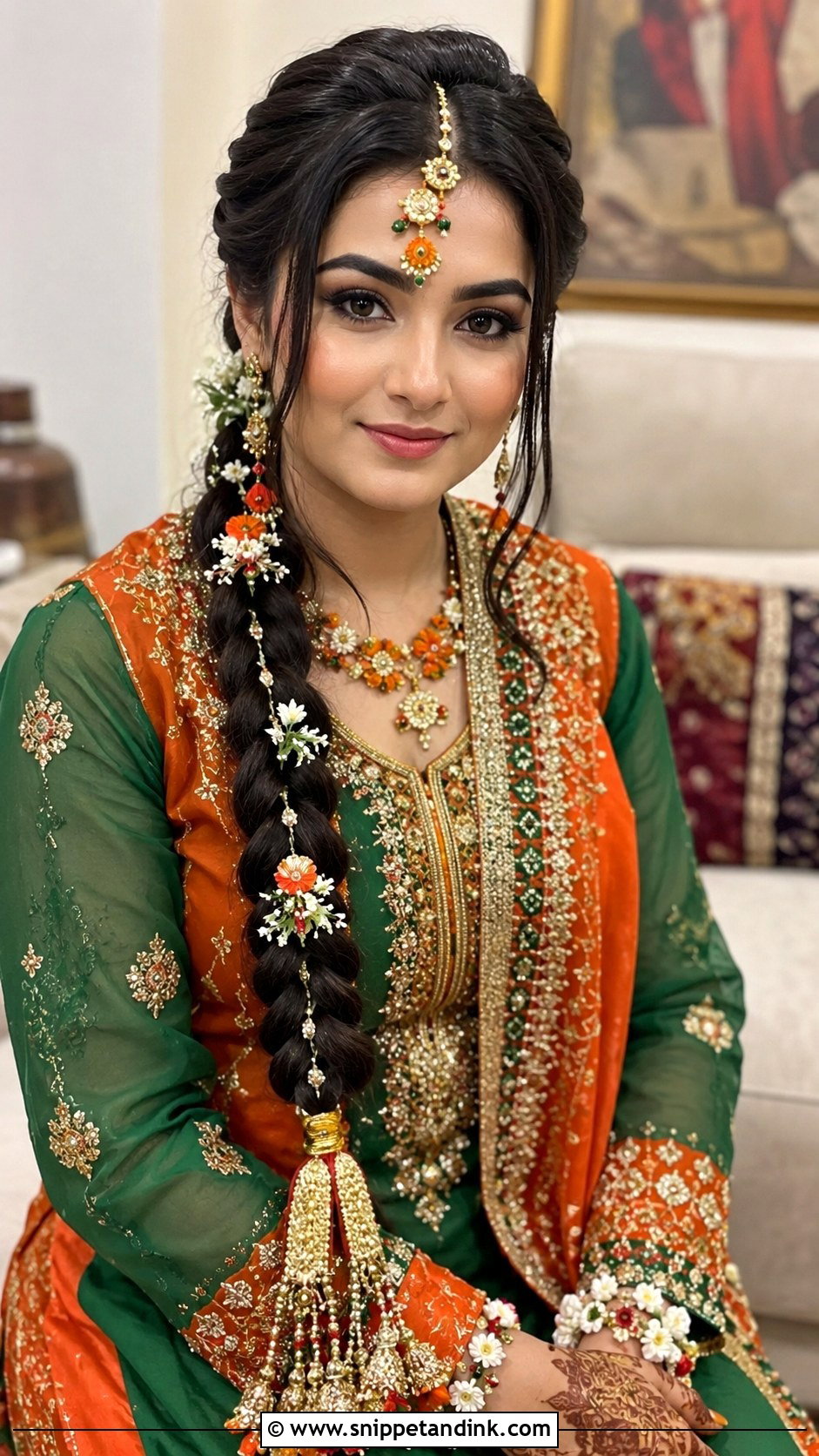
A paranda is a cord with tassels woven into the lower part of the braid, and it pulls more than it looks. For a Pakistani mehndi braid with paranda, I start weaving it in around the shoulder blades, not at the nape, so the weight sits on thicker hair. A long, full braid shows it off best, which is why I often blend in extensions, matched so the braid tapers evenly. Choose the paranda colours from the outfit. If the outfit is already busy, skip extra flowers or mirror pieces along the braid; the tassels are decoration enough.
4. Pakistani Bridal Side Braid
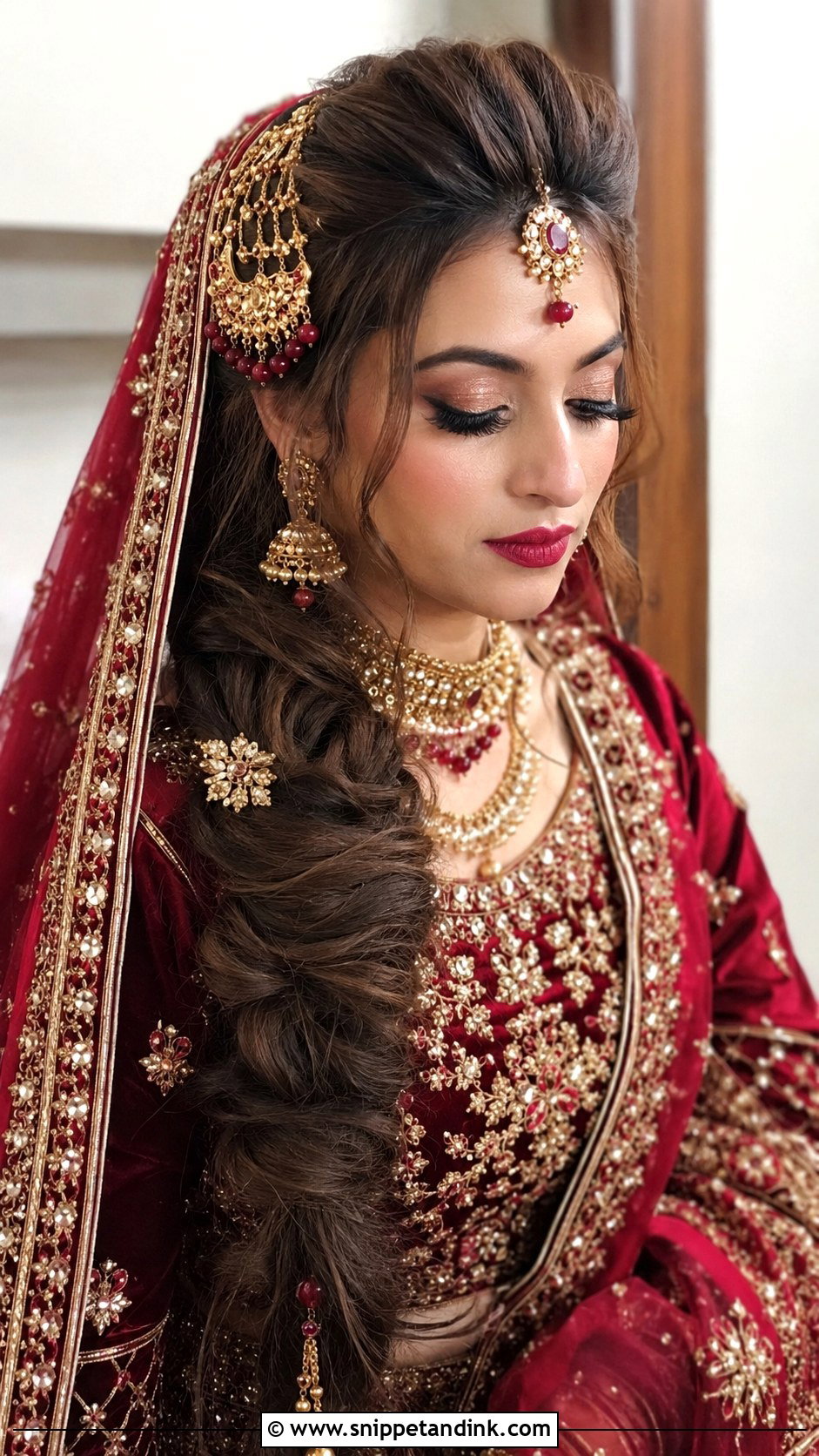
Want your hair seen from the front without wearing it open? A side braid does that. It sits over one shoulder, so the dupatta goes on the opposite side or rests lightly on the head. Sleek suits a formal event, while a fluffier, pulled-out version suits a mehndi. The bare side leaves room for a jhumar or statement earrings. I start the braid slightly behind the ear rather than directly at it, which keeps it from flopping forward when you lean down to greet someone.
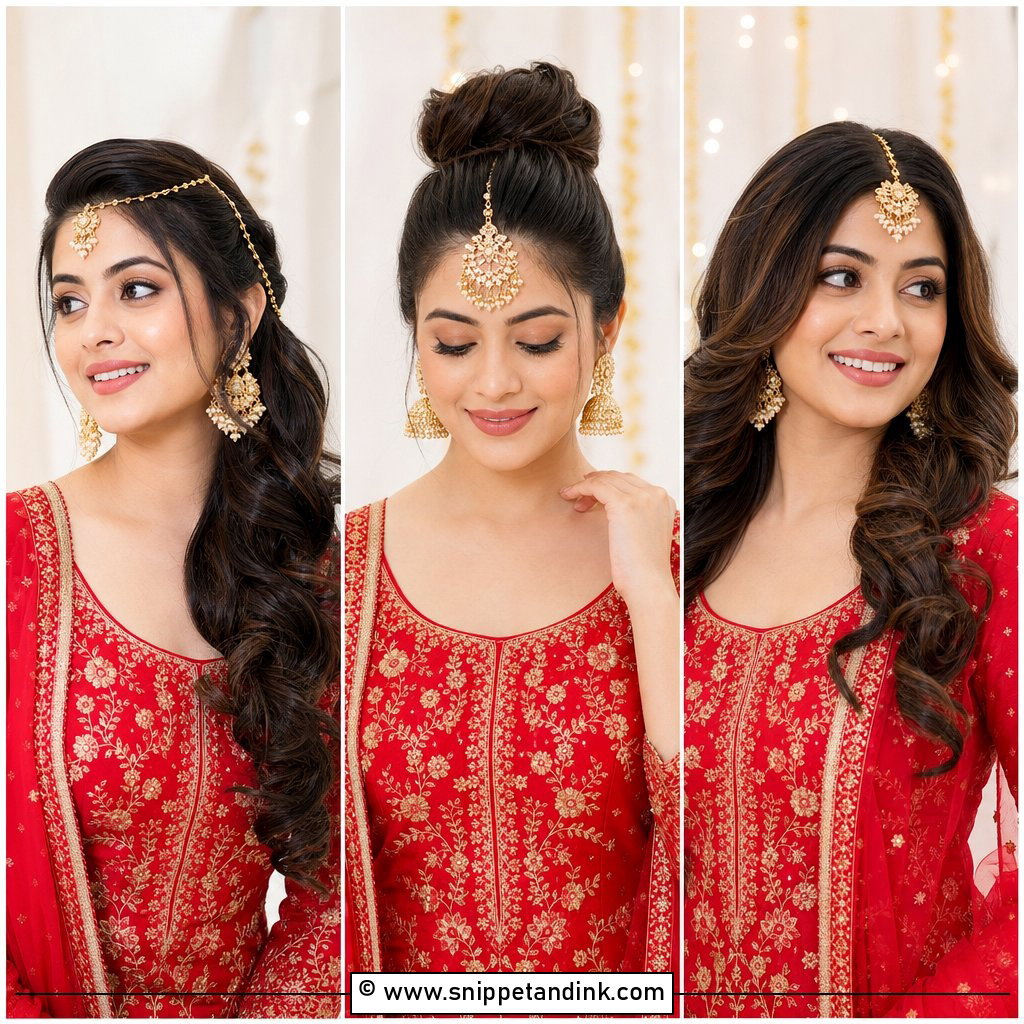
5. Pakistani Walima Soft Curls
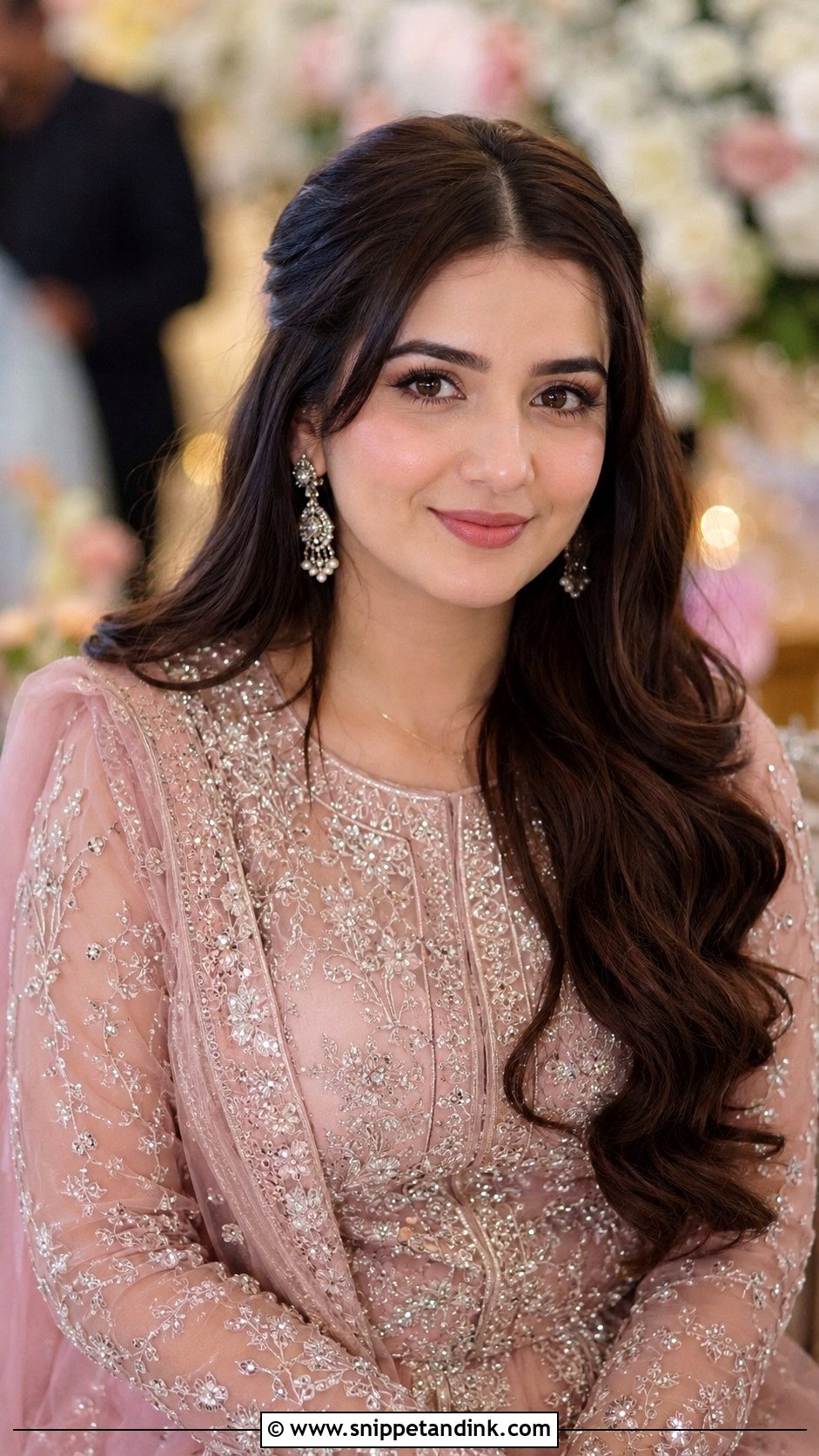
After a structured baraat, open curls feel like a relief, and that’s why so many walima brides ask for them. They should be brushed and glossy, not stiff. I heat-set each curl and pin it while it cools, add light backcombing at the crown for lift, and finish with flexible spray so the hair still moves. A centre part reads graceful; a side part leans glam. Pastel outfits, delicate jewelry and a sheer dupatta or veil suit them. Skip this one if the venue is outdoors in summer, because curls loosen fastest in heat.
6. Pakistani Wedding Half Up Curls
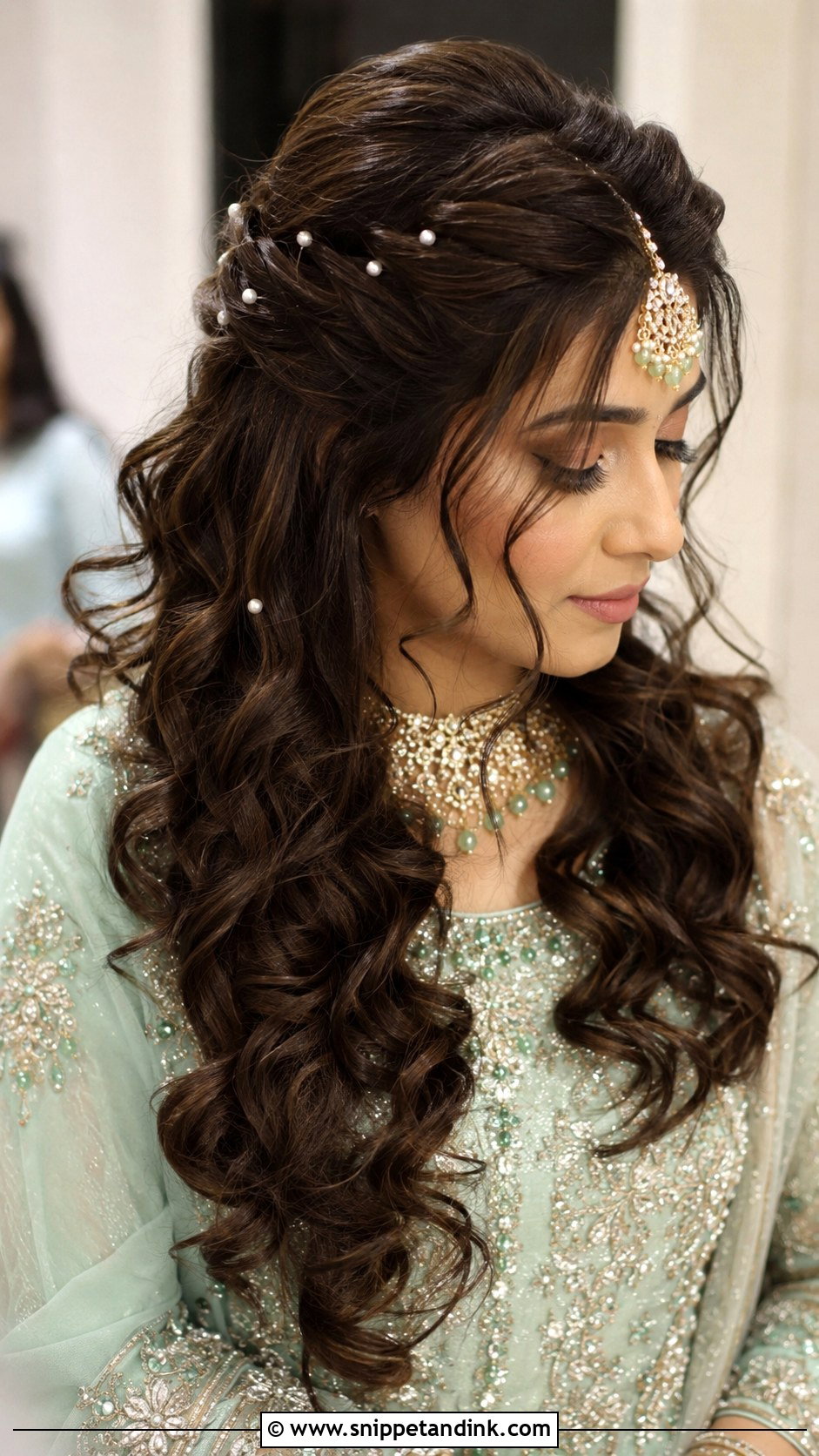
Half up curls keep a pinned section on top and let the rest fall. I twist or braid the top lightly so there’s something firm for a tikka to hook onto. It’s a common pick for bridesmaids and sisters of the bride, and for brides wanting a lighter nikkah or walima look. Keep the curls defined rather than messy so it still reads formal. A few small pearls are enough.
7. Pakistani Bridal High Bun
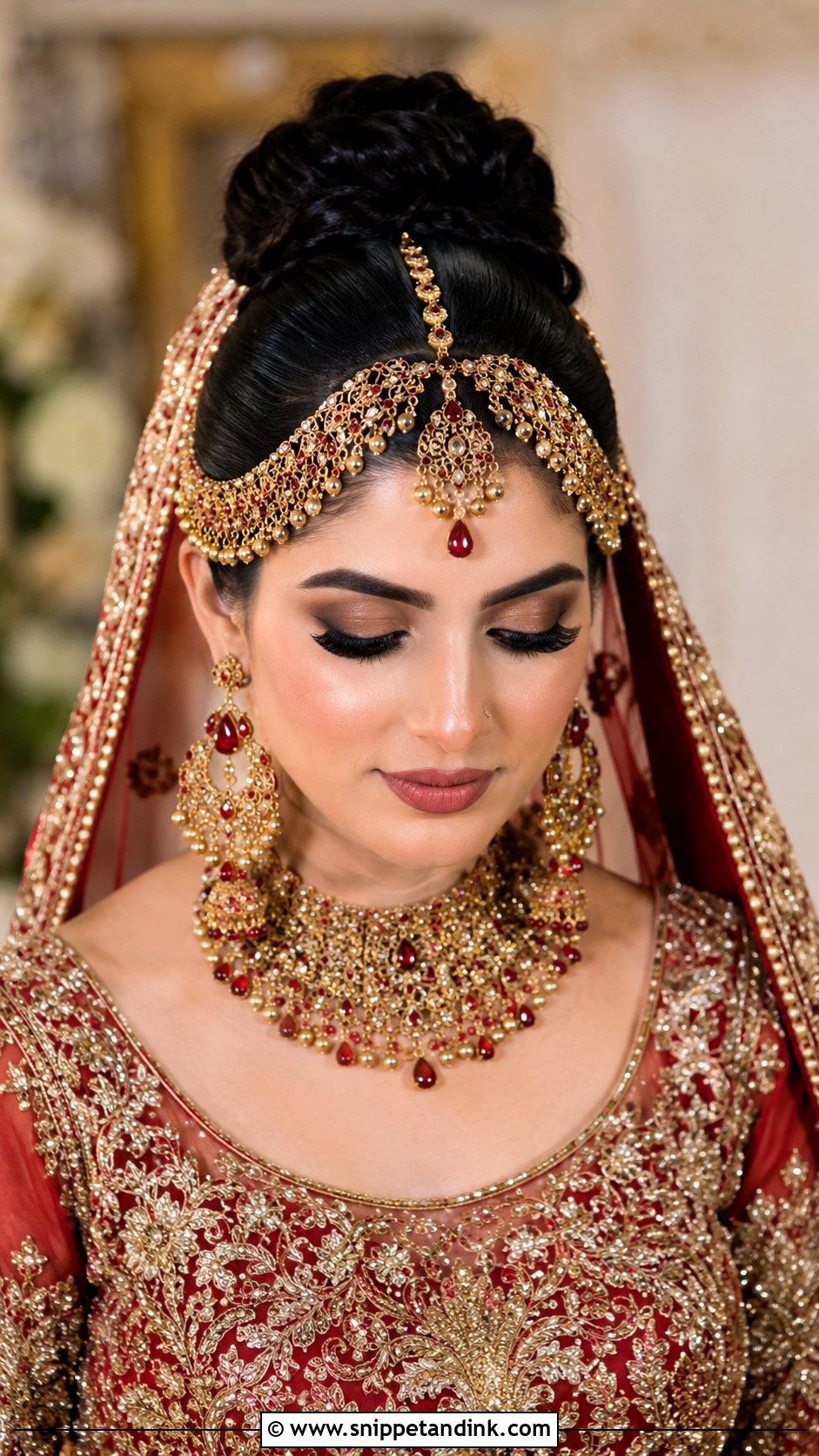
A high bun lifts the whole silhouette and holds a thick dupatta border up off the shoulders. It lengthens the neck, which helps with heavy, high-necked outfits. I build it on a small donut or padding so it keeps its shape for hours, and I check the side view carefully, because too high reads harsh in profile. A smooth centre part with a matha patti or tikka keeps it traditional. It’s the style I’d pick for a grand baraat entrance where the outfit is very formal.
8. Pakistani Wedding Messy Bun
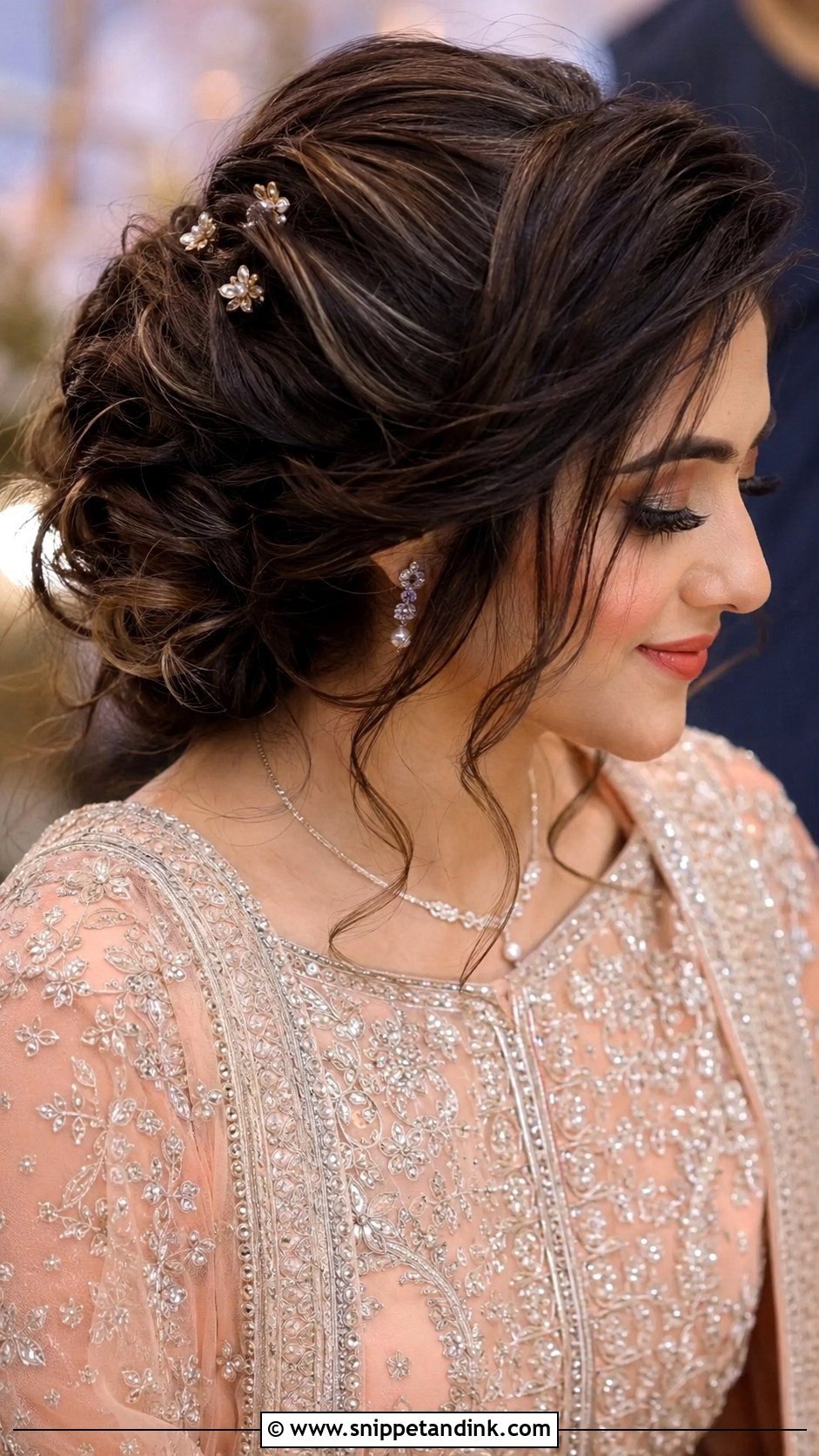
Nothing about a bridal messy bun is accidental. Every loose twist is placed, every strand by the face is chosen, and the pins underneath do the real work. It suits nikkah, engagement, mehndi and walima when a sleek bun would feel too severe. On fine hair I use padding or a clip-in piece, or the bun ends up small and flat. Pair it with a lighter dupatta drape, since a heavy one squashes the texture.
9. Pakistani Bridal Sleek Bun
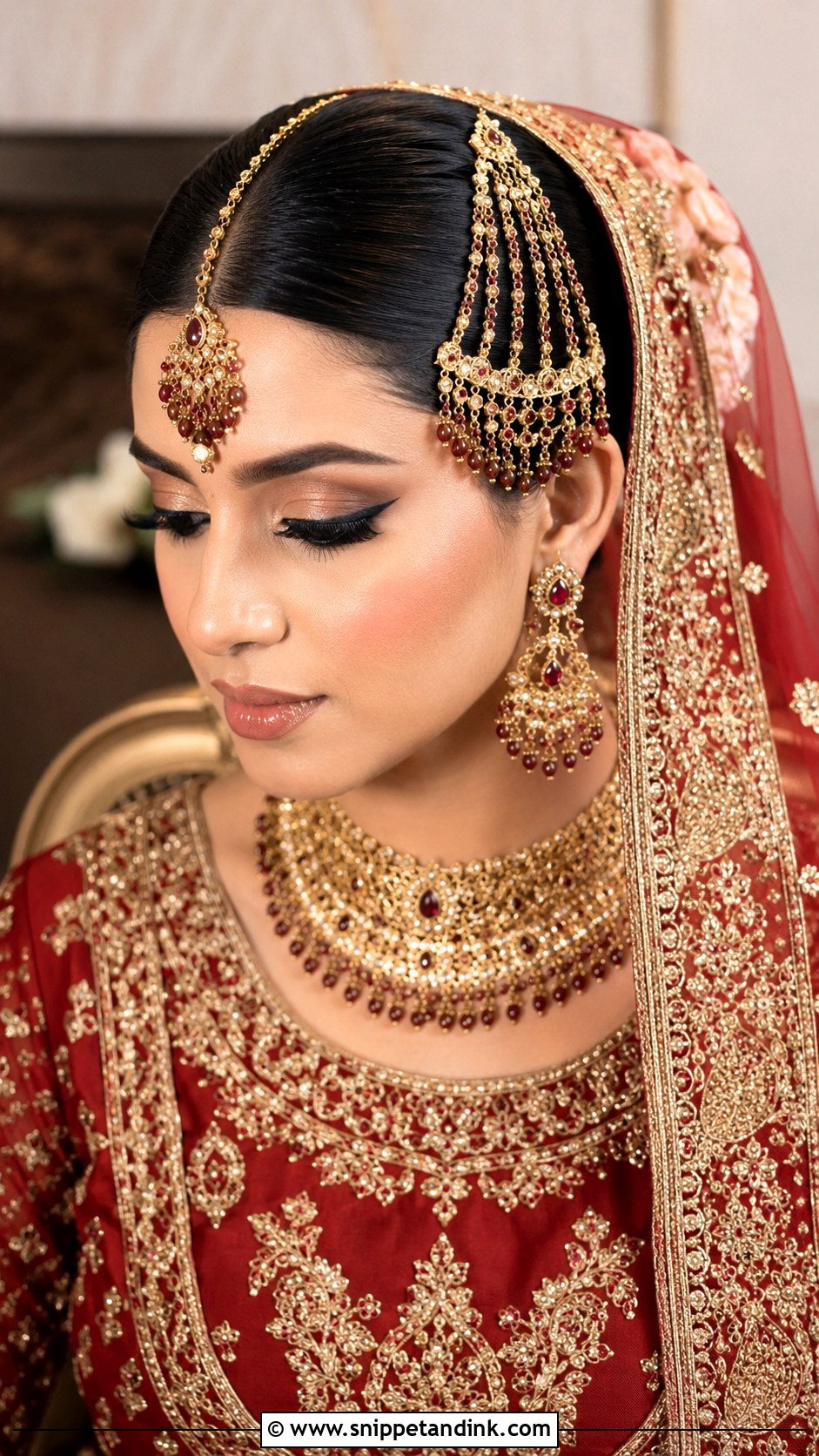
Smooth hair makes everything around it look sharper. A Pakistani bridal sleek bun pulls focus to the jewelry, makeup and embroidery, which is why it sits so well with a centre part and a tikka, matha patti or jhumar. Under a heavy dupatta the base stays firm and tidy all day. For shine I use a few drops of serum on the palms, pressed over the surface, because spray applied heavily turns greasy under bright lights. Round, twisted or slightly elongated, the shape matters less than the smoothness.
10. Pakistani Wedding Open Hair With Tikka
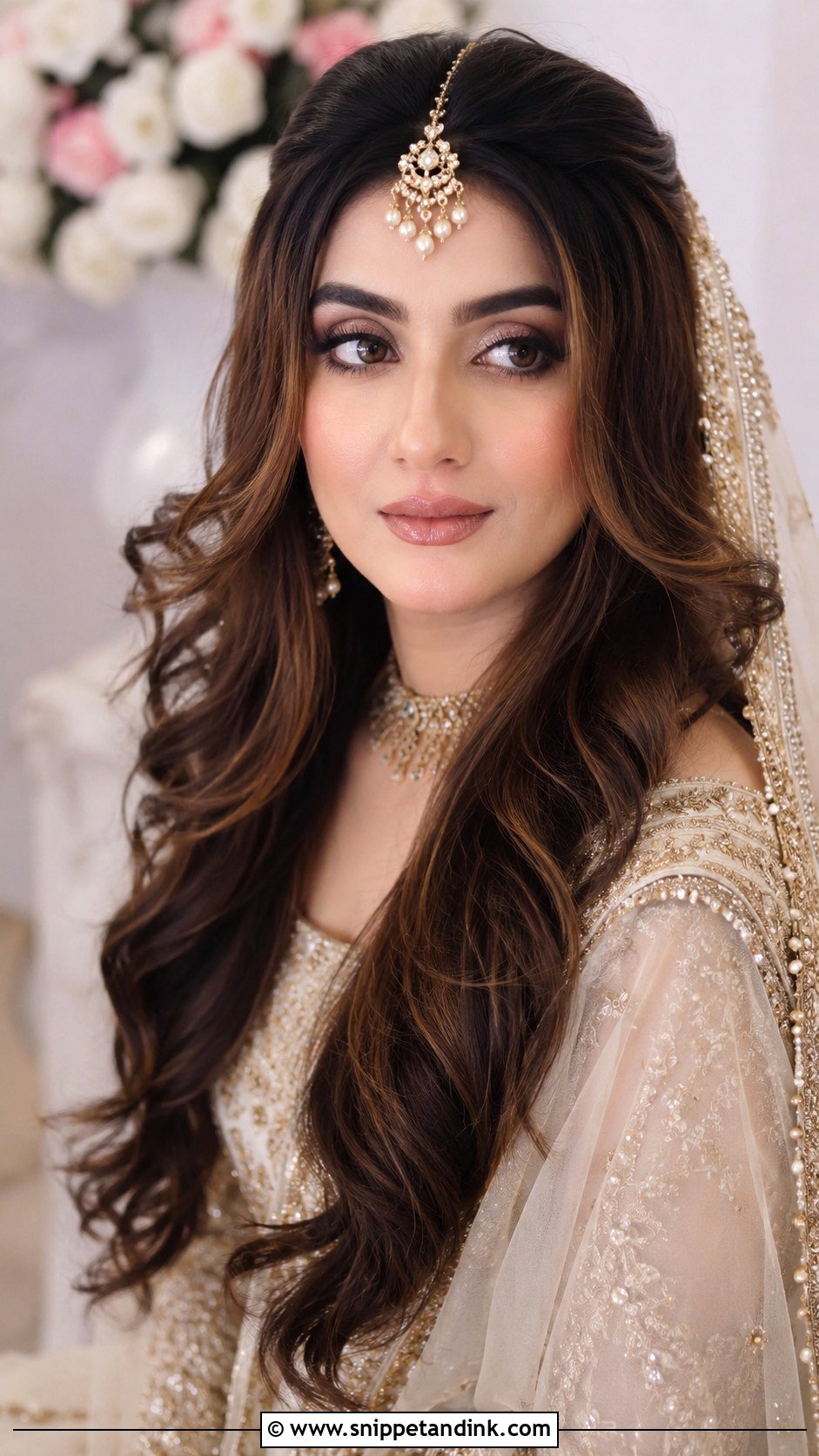
Open hair with a tikka is softer than any updo, but it’s more work to keep. The centre part has to be dead straight so the tikka hangs evenly, and the roots need volume, or the hair goes flat against the head within an hour. I curl, pin each curl to cool, then brush out right before you leave. I recommend it for walima, nikkah or engagement rather than long, crowded functions, where open hair gets hot and caught in jewelry. Keep the dupatta light or drape it behind the shoulders.
11. Pakistani Bridal Braided Bun
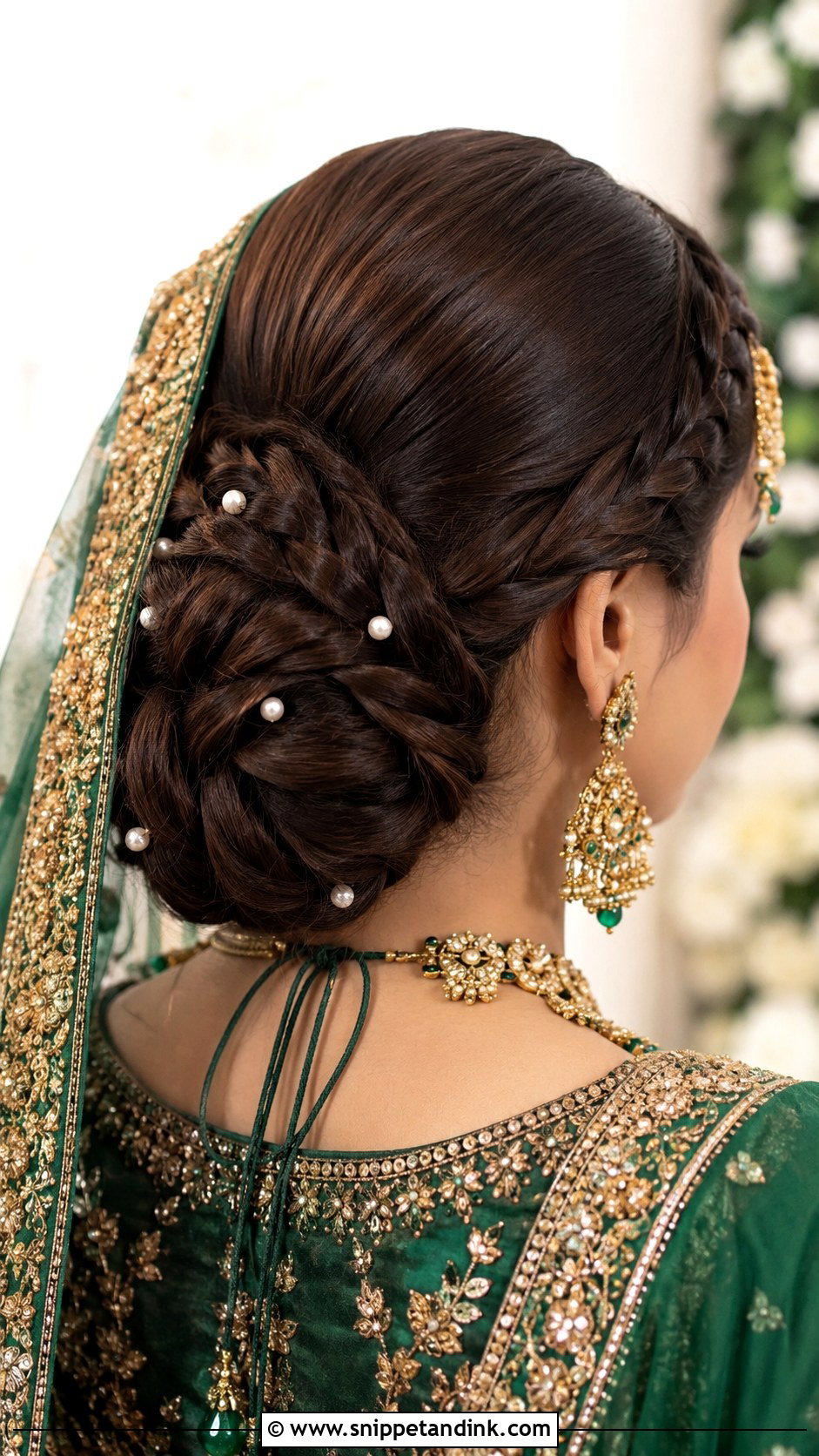
Plain buns can look unfinished from behind. Wrapping or weaving braids through the bun gives texture that shows in side and back photos, and the braid also grips pins better than smooth hair, so the dupatta holds more firmly. Small flowers or gold accessories can go in the gaps. With heavy jewelry I keep the front smooth; with lighter pieces, a couple of soft tendrils are fine.
12. Pakistani Mehndi Bubble Braid
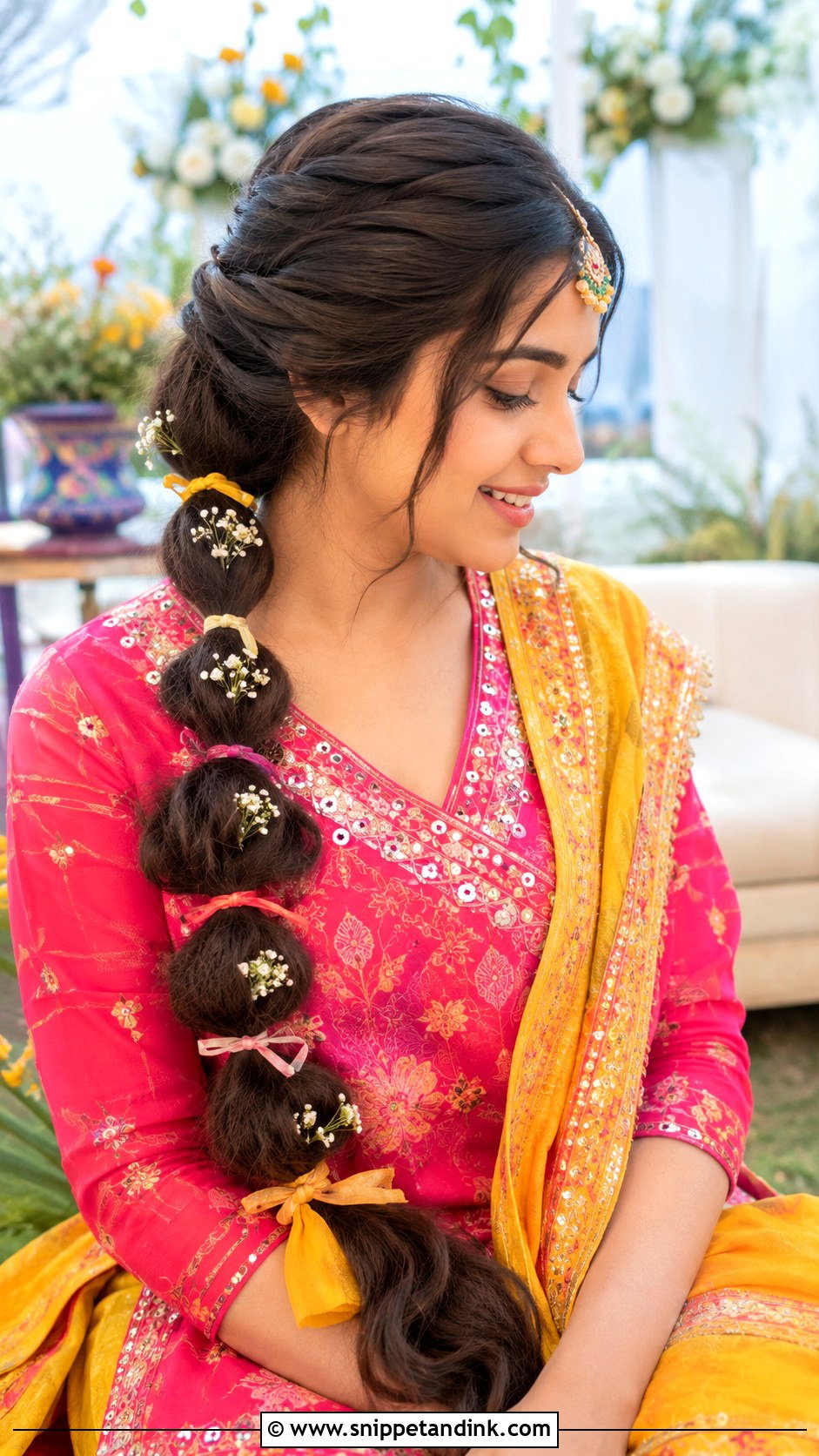
A bubble braid is quick to do and full-looking, which is why it’s become a mehndi favourite. Sections are tied off down the length with small elastics, then gently pulled wider. Flowers, ribbons or small paranda tassels can sit between bubbles. It needs length, so on shorter hair this is an extensions look. The front can carry a tikka or a soft twist. Spacing matters most: I keep the bubbles evenly sized, because one uneven section shows up immediately in photos.
13. Pakistani Nikkah Low Ponytail
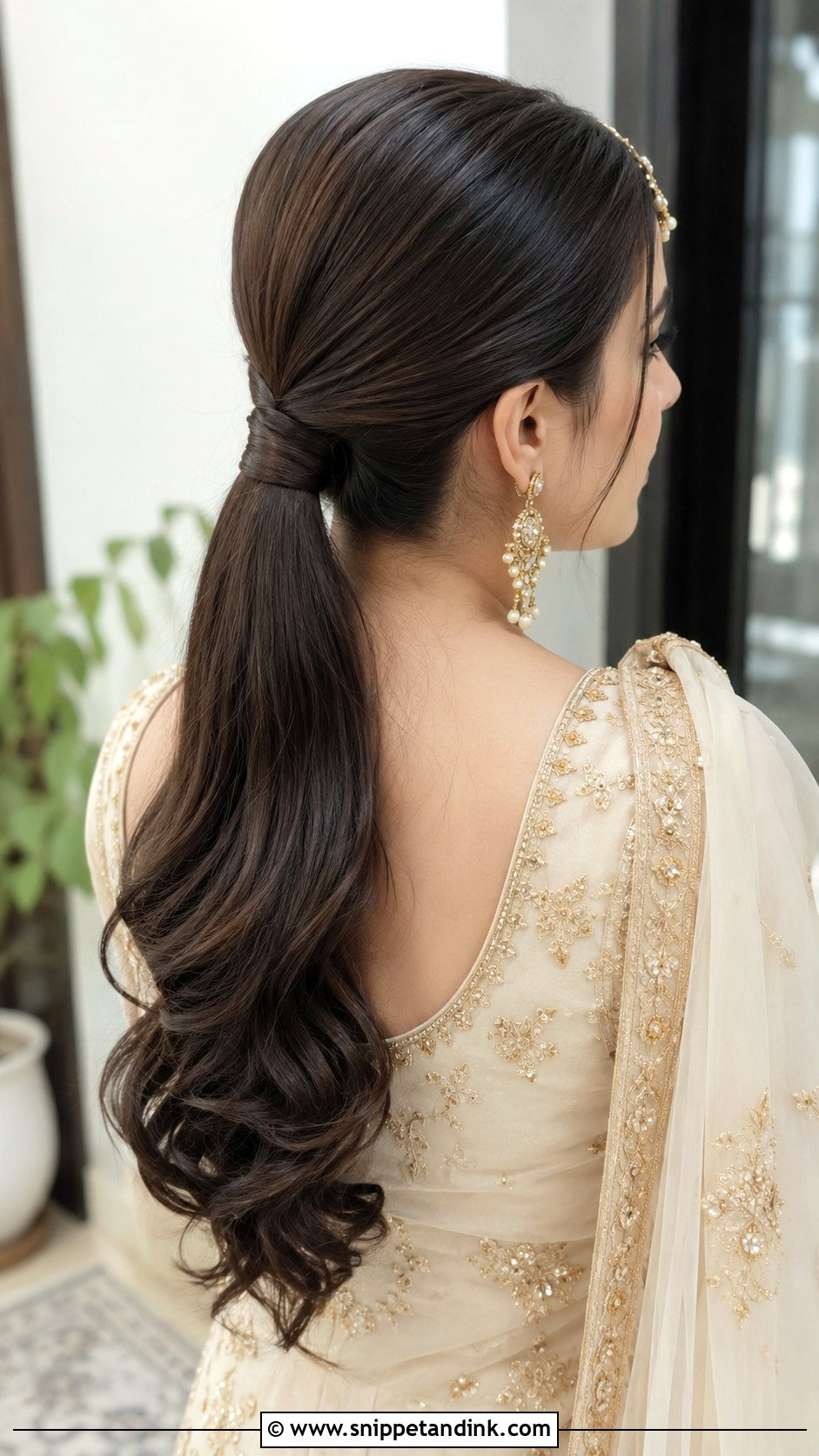
A low ponytail is the quietest style here, which suits a nikkah in ivory, champagne or blush where the fabric and jewelry are delicate. It sits at the nape and can be straight, waved or curled through the ends. Wrap a strand of hair around the elastic and pin it underneath so the band disappears. A centre part reads classic; a side part, modern. It’s also the most comfortable option under a light dupatta or veil.
14. Pakistani Wedding Side Swept Curls
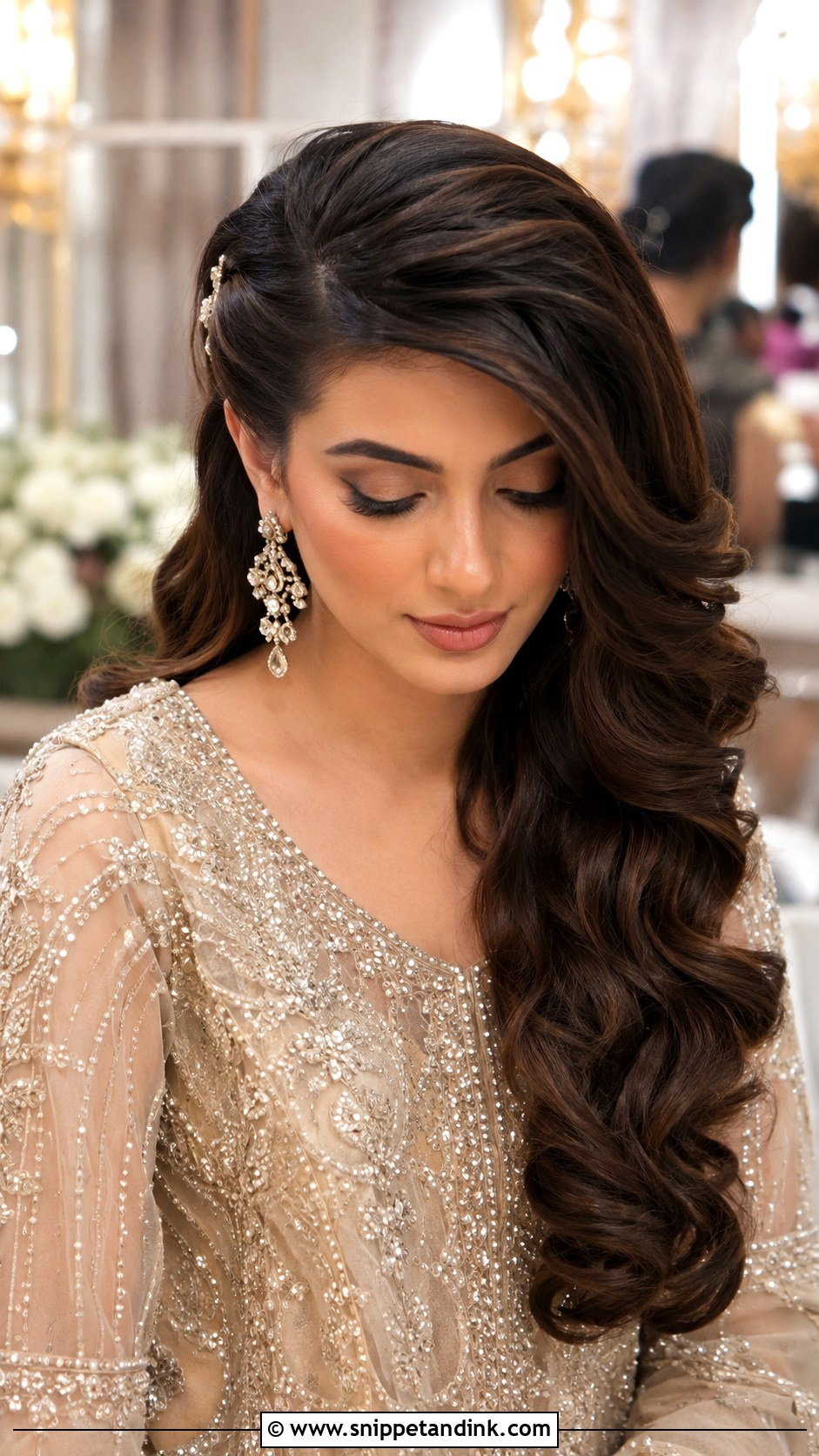
Side swept curls look simple but need the most anchoring of anything here. All the weight sits on one side, so I pin the hair firmly behind the far ear with crossed pins, otherwise it slides back to centre. It suits walima, engagement and reception outfits with one heavily worked side or a statement neckline, and the bare side shows off earrings or a jhumar. Soft curls, not crunchy ringlets. It reads fullest in front-facing photos.
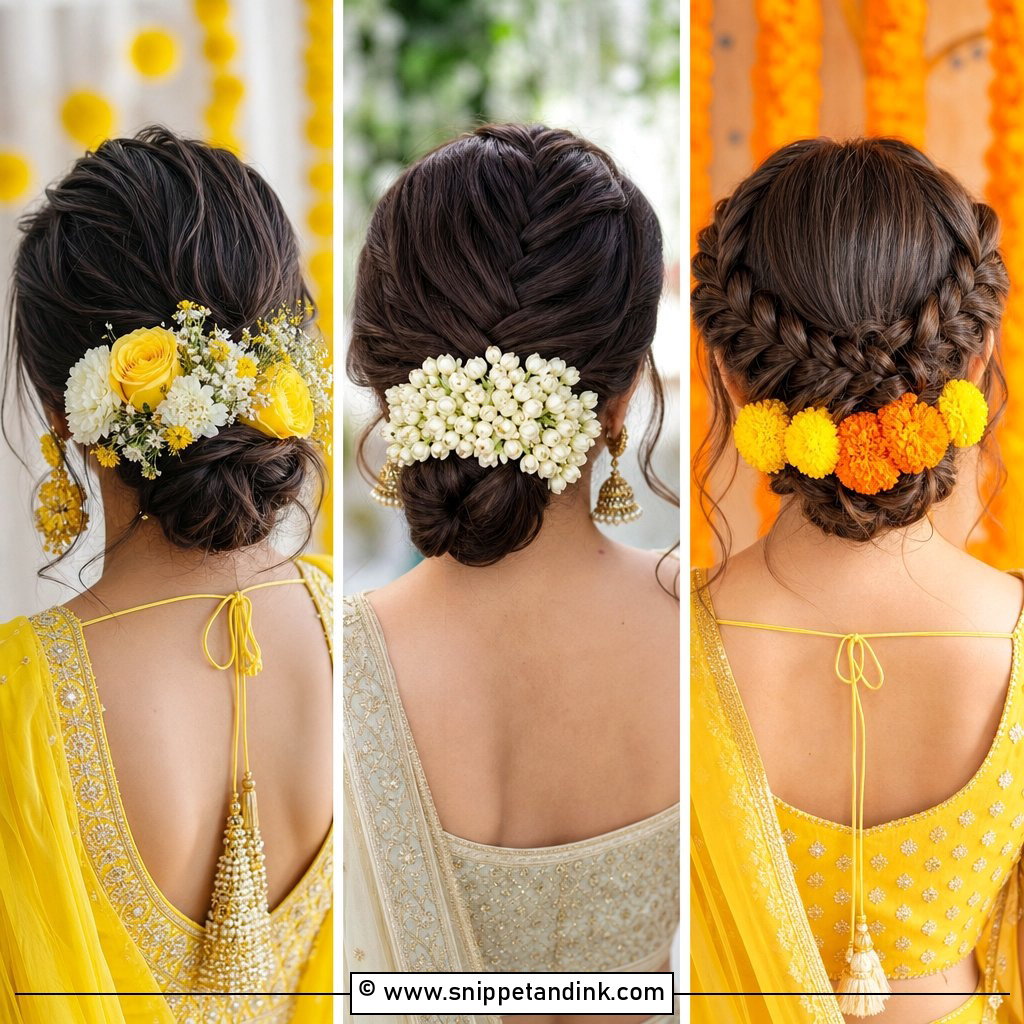
15. Pakistani Bridal Crown Braid
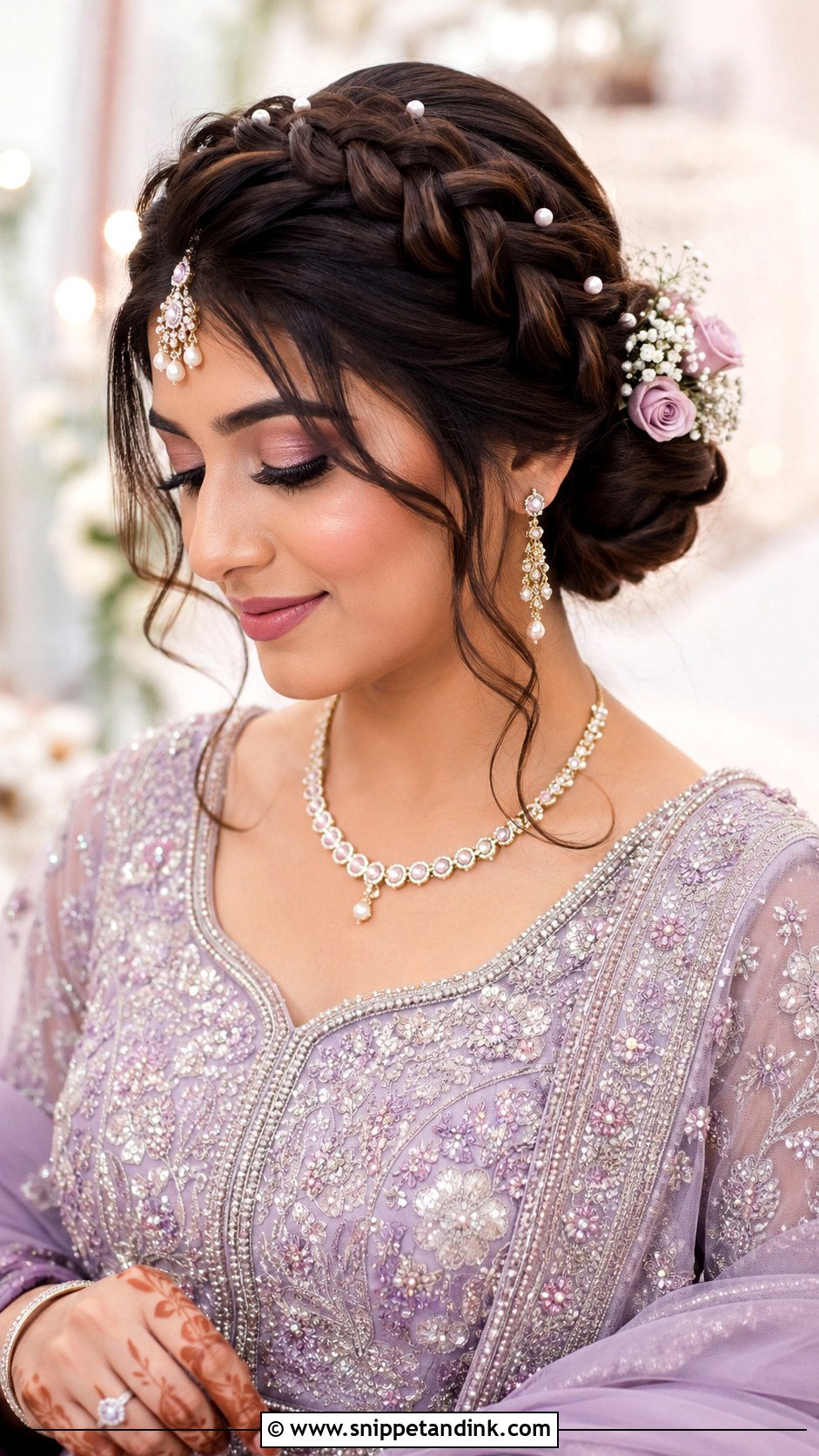
A crown braid frames the face and keeps every strand off it. The braid can run across the front like a halo or wrap into a low bun at the back. It’s a soft alternative to a sleek bun for mehndi or nikkah, and it suits floral jewelry or a small tikka. I braid it tight, pin it, then gently pull the outer loops so it looks full rather than rope-like. It holds well outdoors, since nothing hangs loose to catch the wind.
Curly, Rebonded or Very Fine Hair Needs Its Own Version
Most bridal inspiration photos show thick, straight, long hair. If yours isn’t, every look on this list can still work, but it needs adapting.
- Naturally curly hair holds braids and messy buns better than straight hair, so lean into those. For sleek styles, have it blow-dried smooth the day before rather than flat-ironed hard on the morning.
- Rebonded or keratin-treated hair is slippery and drops curls quickly. I prep it with a texturising spray and use more pins than usual, and I avoid relying on open curls for a long event.
- Fine hair needs padding inside buns and clip-in wefts for braids and ponytails. Without them, the shape looks thin from behind and a dupatta flattens it within minutes.
- Very thick hair takes longer to curl and is heavy to pin up. Book extra time and expect a low bun to be more comfortable than a high one.
Mention your hair type and any chemical treatment when you book, not at the trial. It changes how long the stylist needs and which products she’ll bring.
Every Pin, Tassel and Tikka Belongs at the Trial
Every style here depends on the full outfit: the dupatta, the jewelry, the neckline, the weather, how long you’ll be sitting. A sleek bun usually suits a heavy baraat look, soft curls a walima, braids and paranda the mehndi. Before the event, gather a few clear photos and tell your stylist your real hair length and texture, which accessories you’re wearing and how the dupatta will be pinned. Then wear it all together at your trial. If nothing pulls or slides after an hour, the hair will last through the celebration.
You'll Like These Ideas:


Leave a Reply