
Dressing a Kandyan bride’s hair is mostly engineering. The nalalpata across the forehead, the ira handa at either side of the parting, the hair ornaments and the jewelry all need somewhere solid to sit, and they have to stay there from the Poruwa ceremony through hours of photographs in the heat. A modern Kandyan bride hairstyle keeps that structure but softens what shows: smoother buns, cleaner braids, a little less height. The fifteen styles below range from the classic Sinhala konde to lighter reception looks, and I’ve noted where each one helps or fights the jewelry.
Nalalpata, Ira Handa and the Center Parting That Holds Them
Every Kandyan style starts at the same place: a clean center parting. The nalalpata runs along the hairline, the sun and moon of the ira handa sit on either side of that parting, and any wobble in the line shows straight away in front facing photos. I set the parting first, before any bun is built, and check it in a mirror held at arm’s length.
Here’s how I prepare the hair so the ornaments stay put:
- A thin section behind the hairline is lightly backcombed and pinned flat. This gives the nalalpata’s hooks and pins something to bite into instead of sliding on smooth hair.
- Pins for the ornaments go in crossed pairs, angled toward the back of the head, so the weight is pulled back rather than down onto the forehead.
- The bun or konde is fixed before the side ornaments go on, because the bun acts as the anchor at the back.
- Flowers go on last, once all the metal is in place.
Traditional sets can be heavy, and I’d rather you know that at the trial than discover it at the Poruwa. Wear the full set for at least an hour then. If the edges of the forehead start to ache, we can add pins, shift the weight or loosen the base before the day.
1. Kandyan Bride Low Bun
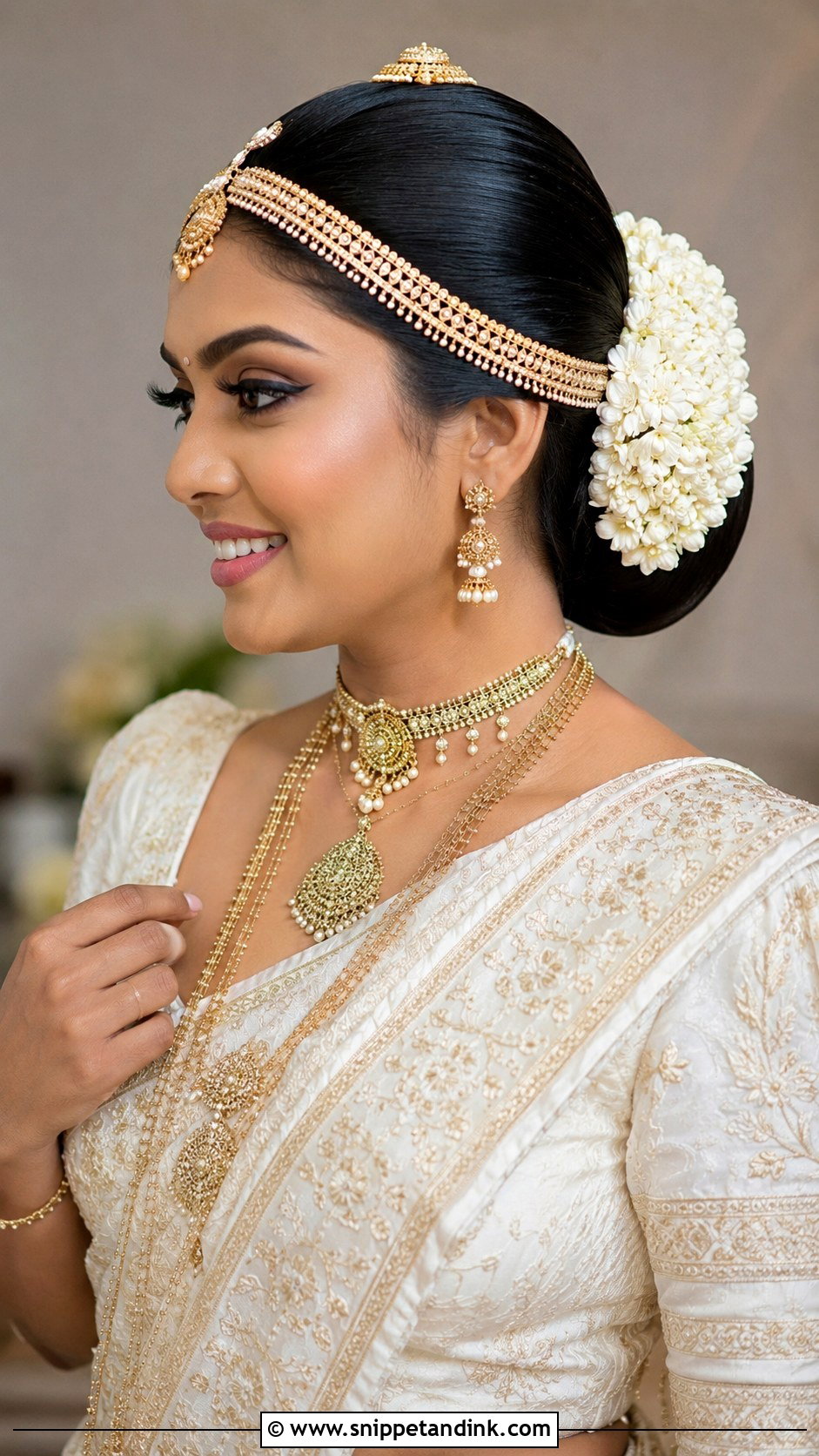
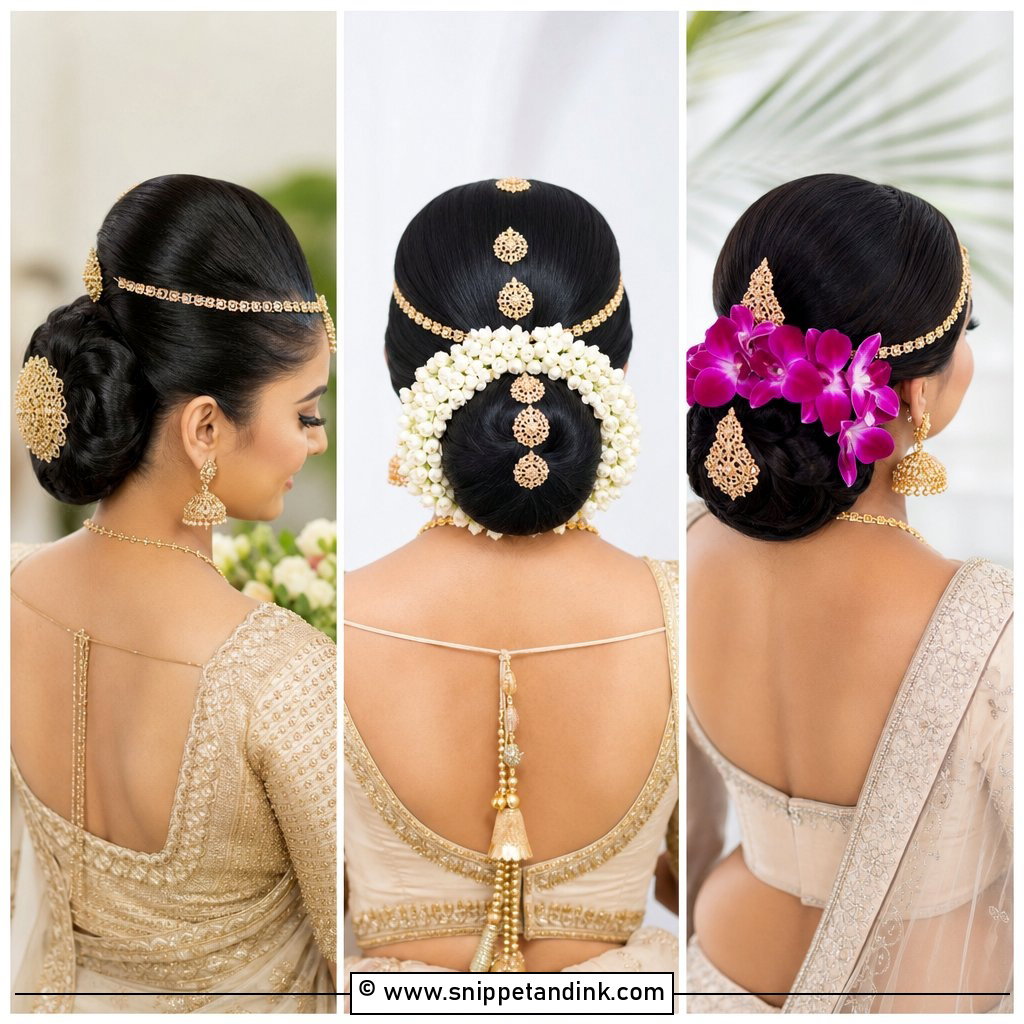
The low bun is where I start most Kandyan consultations, because it carries the ornaments without feeling heavy on the head. Sitting close to the nape, it gives the nalalpata a firm line to pin back toward, and it leaves the neck clear for layered necklaces. The osariya pleat over the shoulder stays visible too, so the saree drape isn’t hidden by hair. I lift the crown slightly rather than dragging everything flat. One or two soft pieces at the temples are fine, as long as they don’t slip under the forehead ornament.
2. Kandyan Bride Sinhala Konde
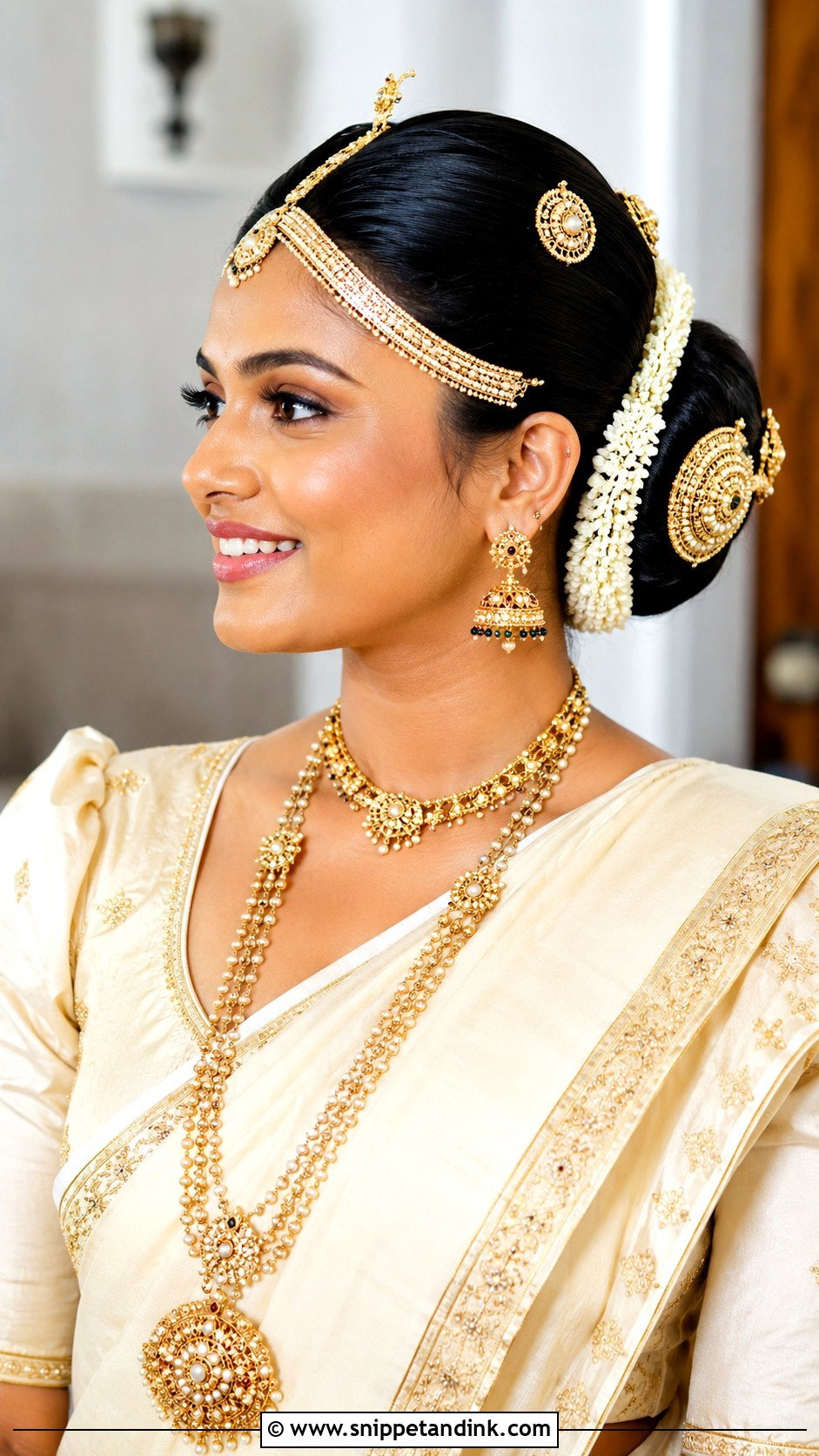
The Sinhala konde, the rounded bun at the back of the head, is the shape most families picture for a Kandyan bride. A modern version sits a touch lower and smoother, so it balances the forehead jewelry instead of competing with it. It’s also the sturdiest base on this list for traditional pins and ornaments, which matters when the ceremony runs long. From the side it gives a clear, recognisable outline in photos. Thick hair can fill the konde on its own; finer hair needs a padding, and I match the padding color to the hair so nothing shows through gaps.
3. Kandyan Bride Braided Bun
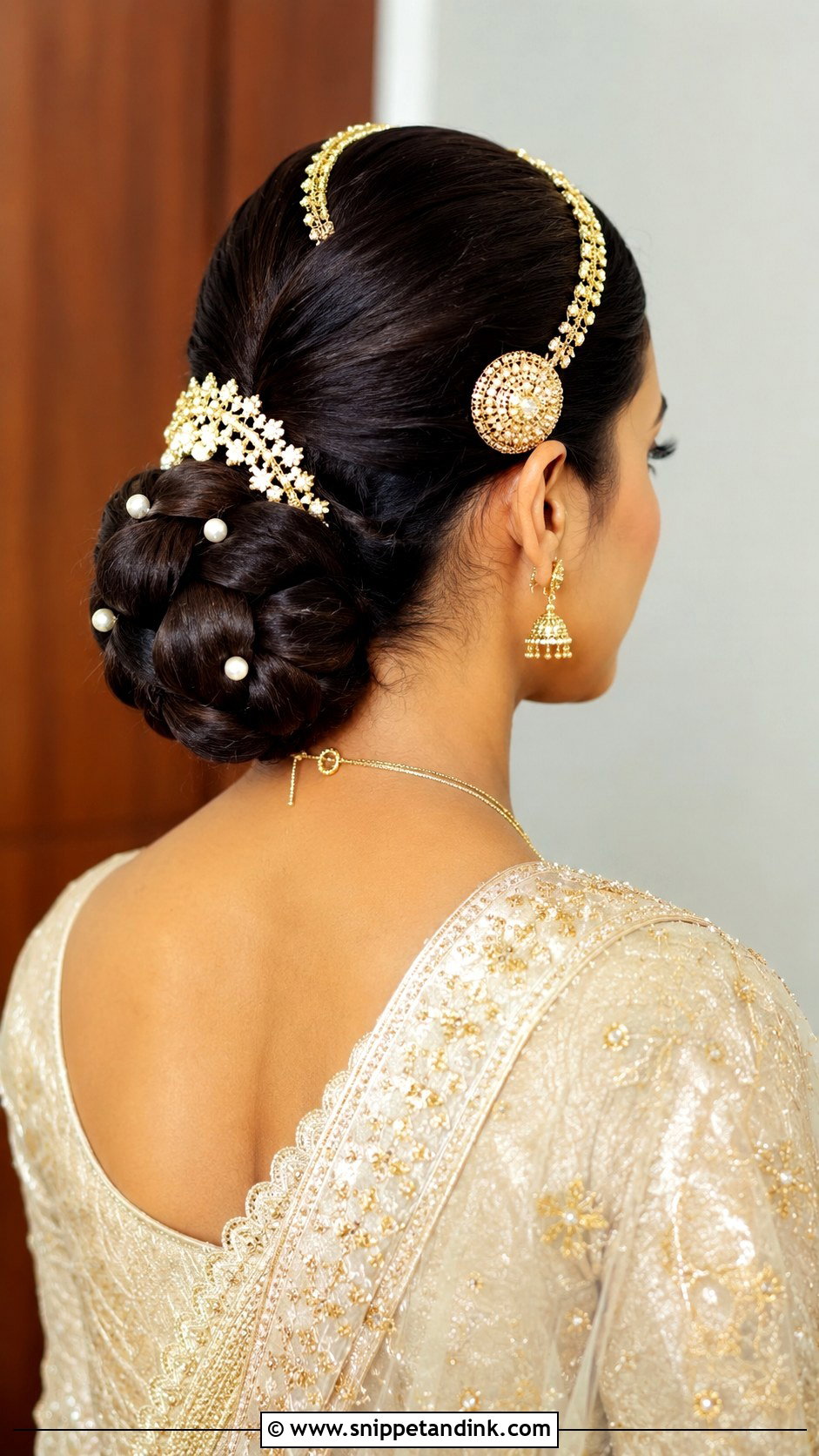
Braiding the length before wrapping it gives the bun texture and grip. A braid holds its coil far better than a twist, so the bun keeps its round shape through the whole ceremony. Close up, the woven detail reads clearly. Gold ornaments, fresh jasmine or small pearl pins sit neatly between the braid loops. I keep the front sleek so the nalalpata lies flat, and let the back carry all the decoration. It’s a good middle ground if the family wants tradition and you want something handmade looking.
4. Kandyan Bride Sleek Bun
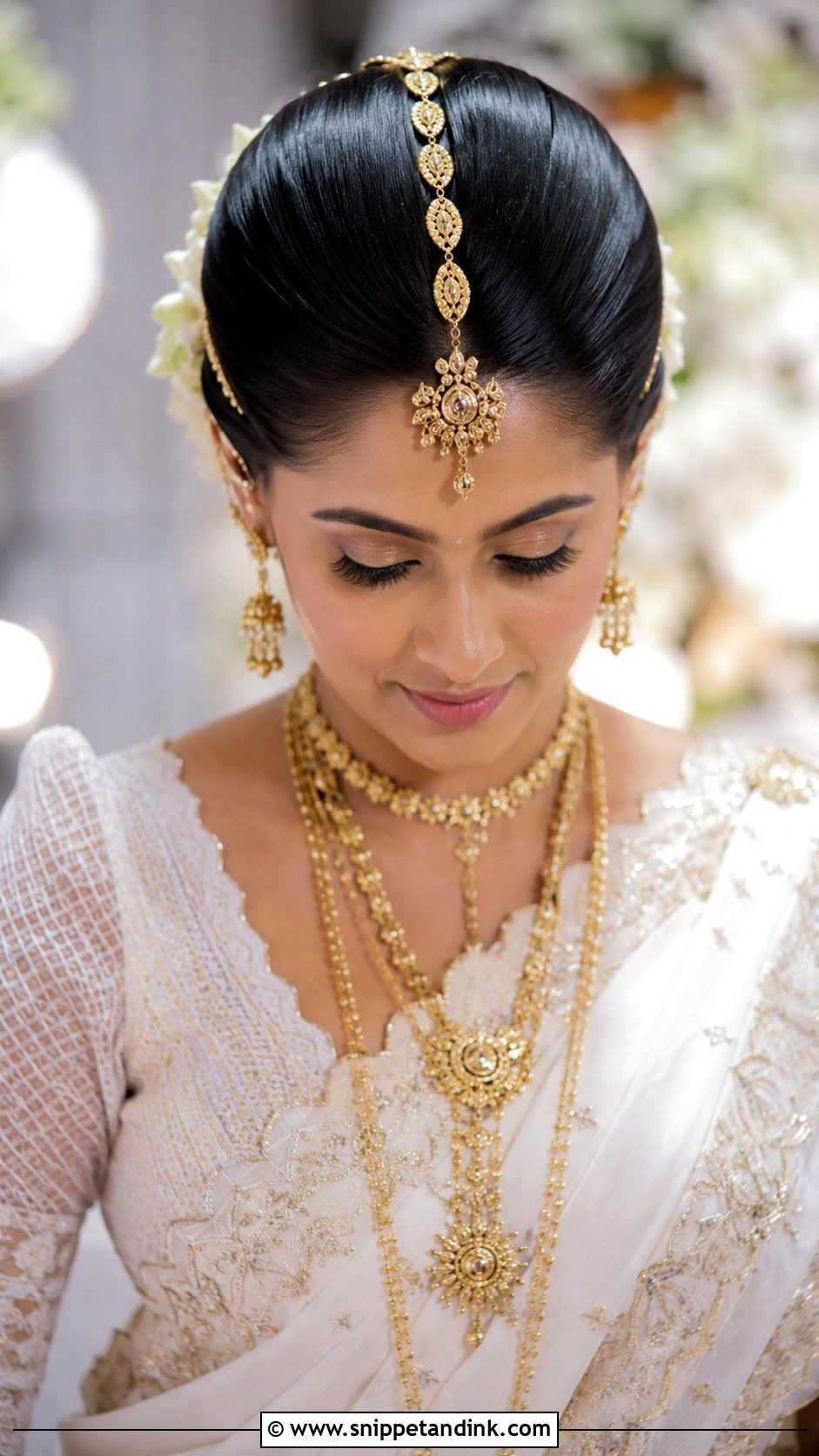
A sleek bun puts the face, makeup and jewelry in front. The hair is smoothed back and shaped into a compact bun that supports ornaments without adding bulk. In humid weather it’s one of the most reliable choices, because there are few loose ends to frizz. The danger is a flattened, helmet-like crown. I smooth the surface but keep the natural roundness of the head, especially toward the back, so the profile still looks soft in side portraits.
5. Kandyan Bride Flower Bun
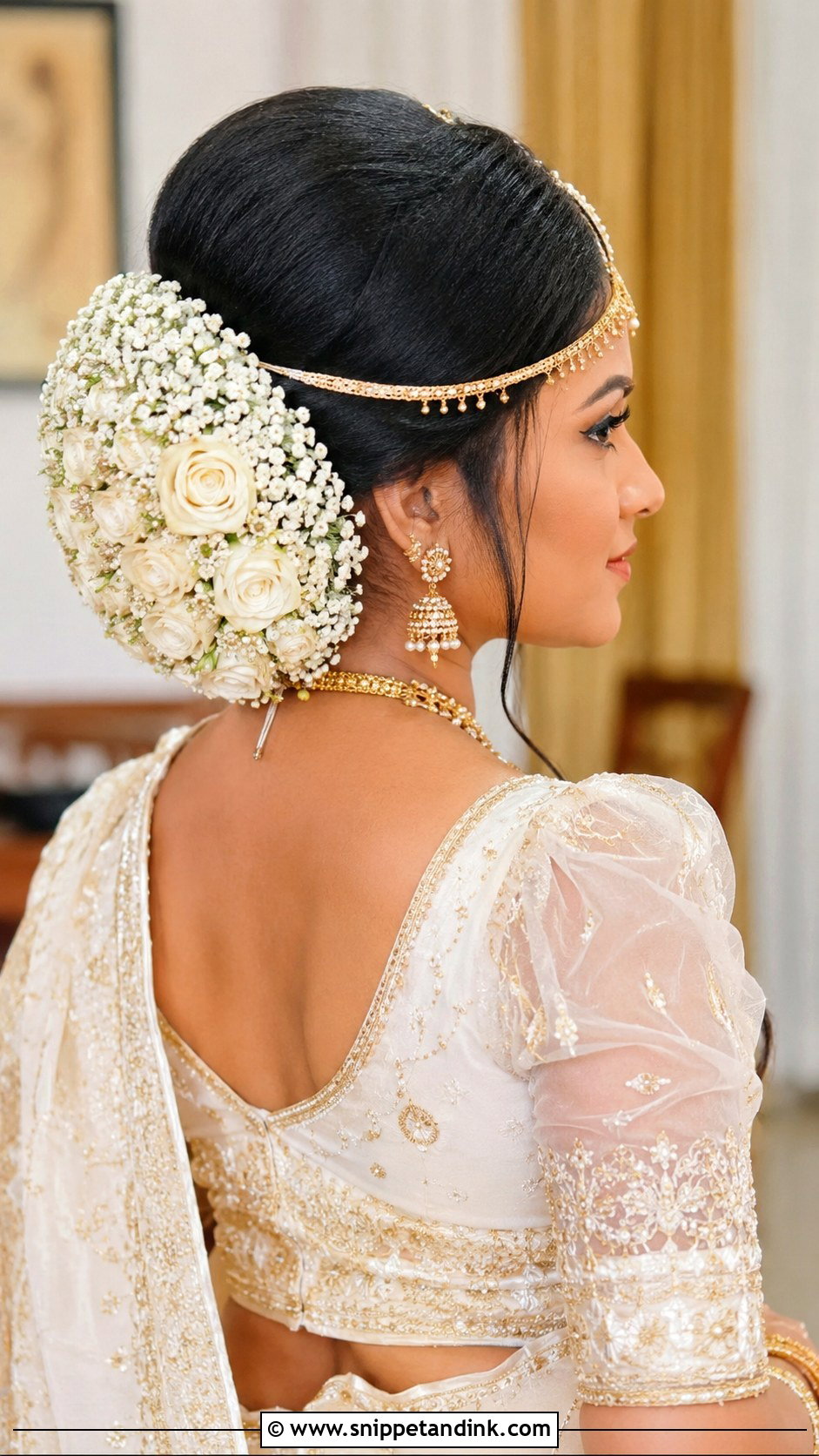
Flowers around a Kandyan bun add scent and softness, but they need restraint. Jasmine, small white roses or cream blooms should frame the bun’s outline, not bury it, and they shouldn’t climb up toward the nalalpata. Ivory, gold, champagne and pastel osariya colors all pick up white flowers well. I pin each flower string through the bun itself rather than just over the surface, so it stays put when you bend to greet elders. For a modern take, use one clean ring or crescent instead of flowers scattered everywhere.
6. Kandyan Bride Side Bun
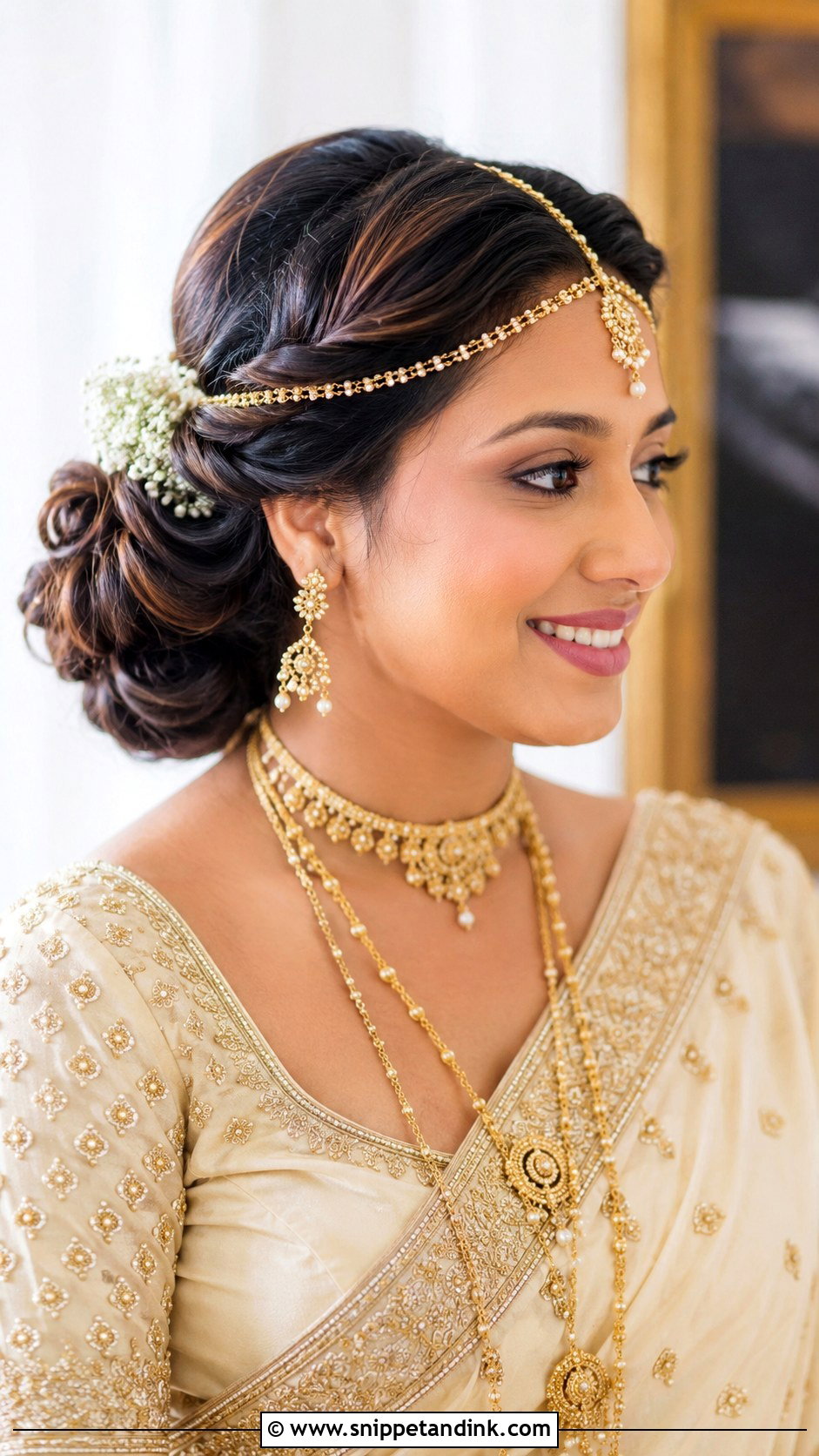
Setting the bun slightly off center softens the formality without losing it. I keep it low near the nape and only a little to one side; pushed too far, it fights the symmetry of the forehead jewelry, which always has to sit dead center. Waves or twists can lead into the bun for movement. Ask your photographer which side they’ll mostly shoot from, and place the bun on that side.
7. Kandyan Bride Twisted Bun
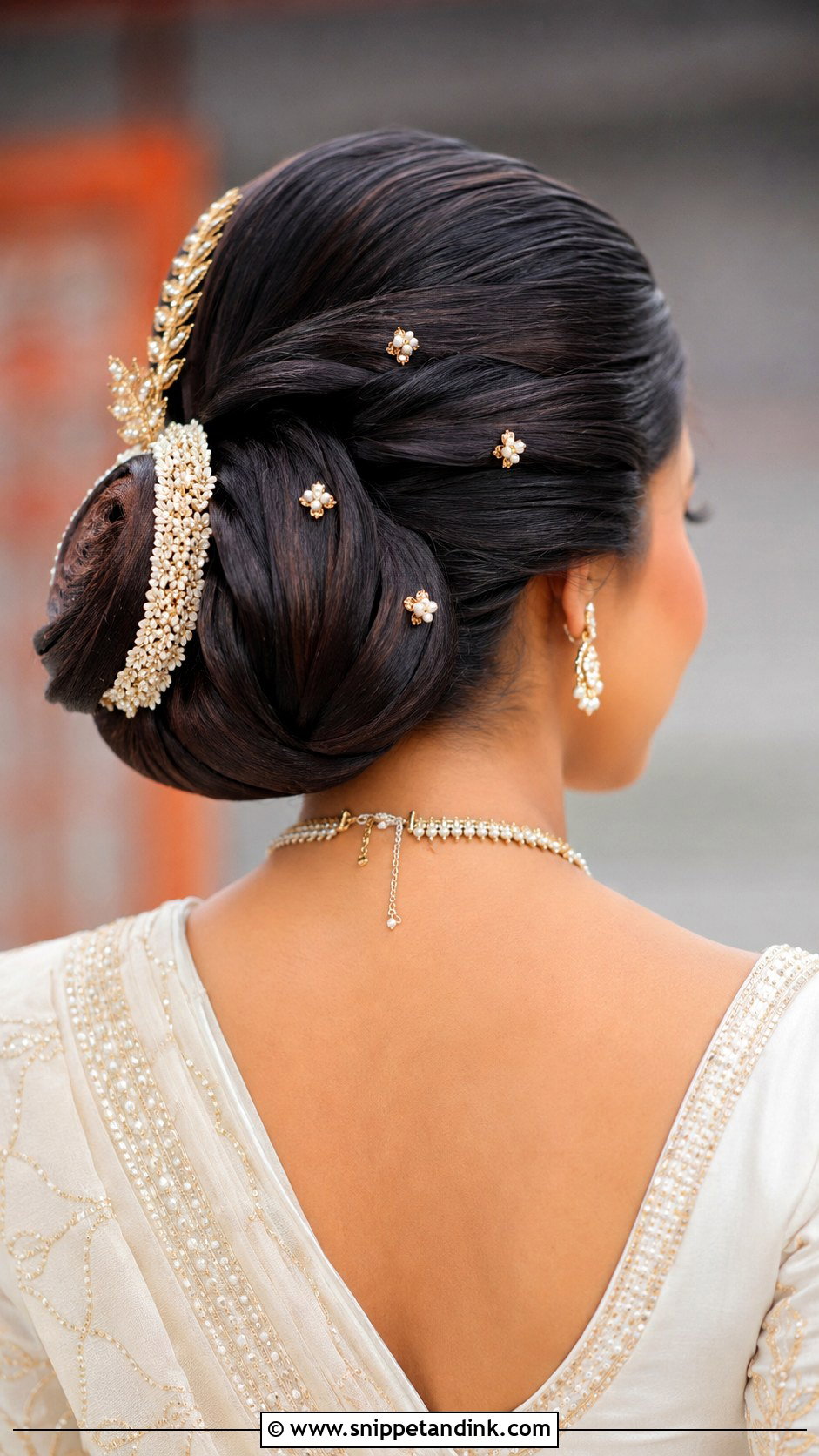
Twisted buns are kind to layered hair. Shorter layers that would poke out of a plain bun get caught up in each twist and tucked in, which keeps the ceremony look tidy. The hair is sectioned, twisted and pinned into a low shape, with movement but no loose ends. Around the forehead and temples it has to stay neat for the jewelry. Pearl pins, gold accents or a small flower cluster finish it. I push each pin in against the direction of its twist so the sections don’t unwind over the day.
8. Kandyan Bride High Bun
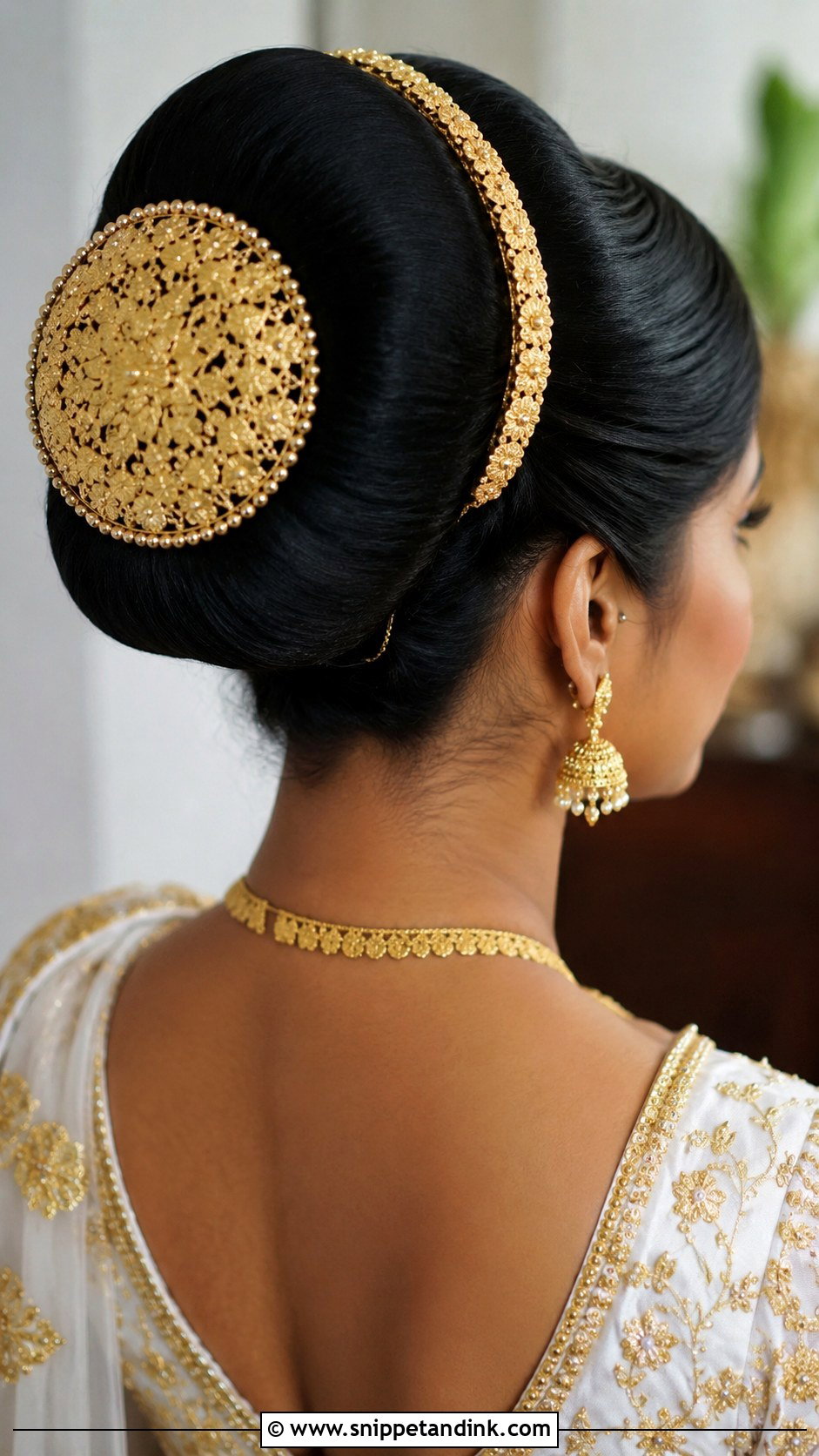
A high bun gives a Kandyan look drama and lift, and it can lengthen a round face in portraits. My honest caution is weight. The nalalpata pulls forward and a high bun pulls up and back, so a bride can end the day with a sore scalp if both are tight. I build the base firmly but not tight, and I’d skip this style altogether if you’re prone to tension headaches. A smooth base and a full, rounded bun look most regal.
9. Kandyan Bride Bun With Nalalpata
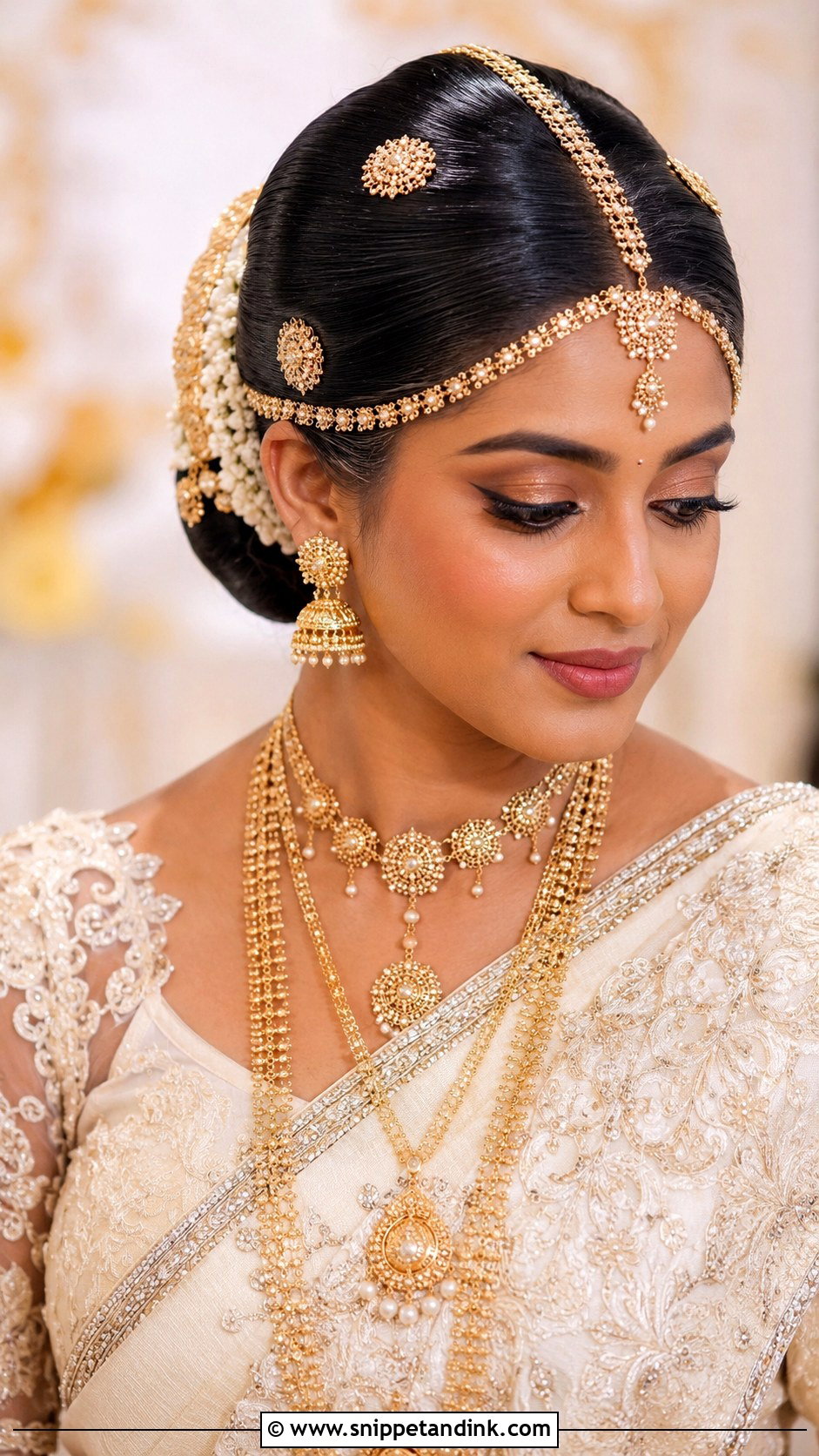
This style is built around the nalalpata, the forehead ornament most associated with a Kandyan bride. The bun can be low or centered, but the front has to be prepared for the jewelry before anything else. I smooth the hairline, add a little crown volume behind where the ornament ends, and remove any loose pieces near the forehead. Heavier jewelry needs stronger anchoring, so bring your actual pieces, or tell your stylist exactly what they weigh, well before the wedding. Done properly, the hair and the ornament look like one piece.
10. Kandyan Bride Bun With Jasmine
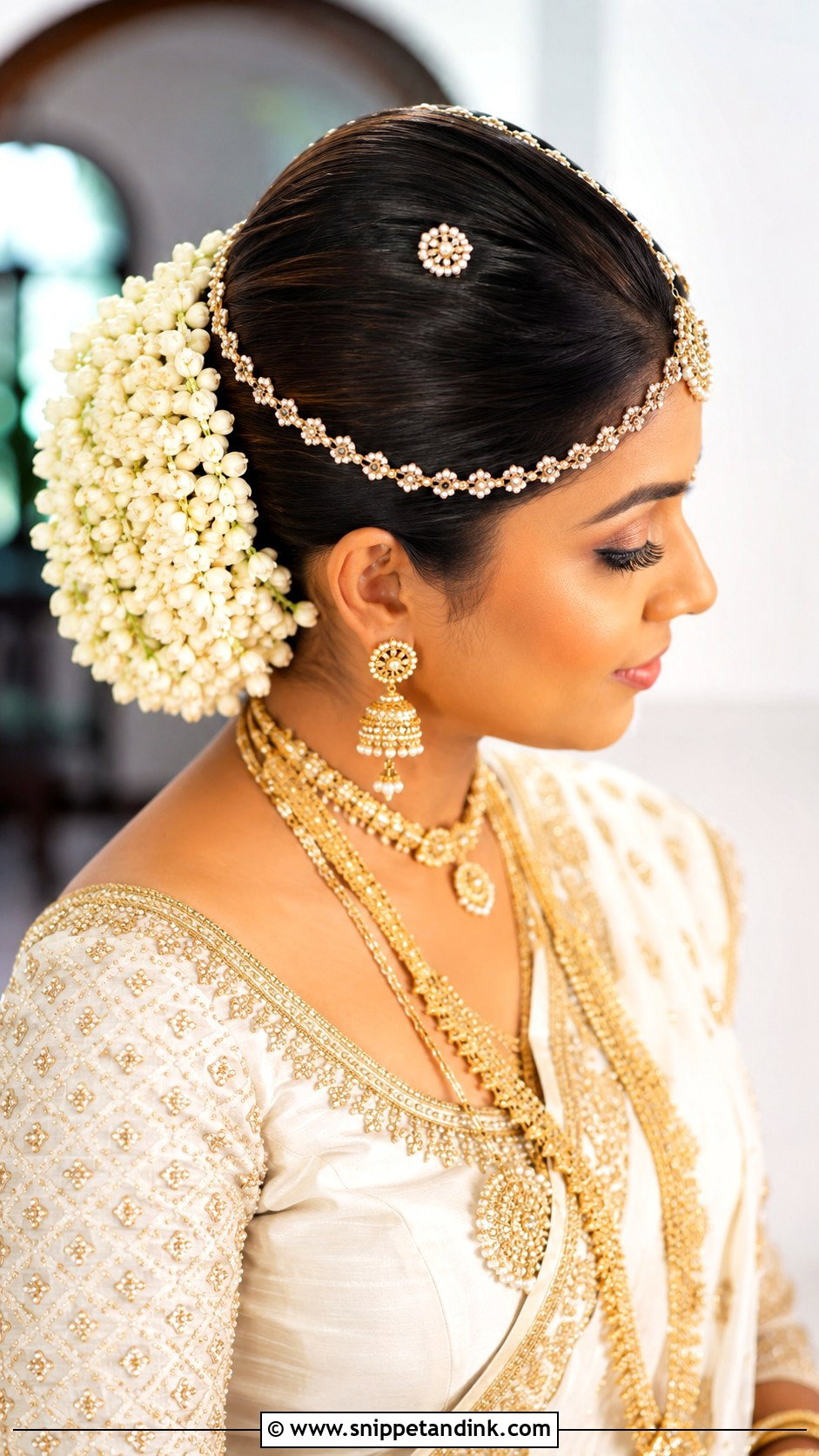
Jasmine is the flower most Sri Lankan brides reach for, and its scent alone makes it worth the effort. It can be wrapped around the bun, tucked to one side or set in a crescent. Morning ceremonies suit it well, since the buds are still fresh and white in soft light. The bun underneath must be firm, because jasmine strings are heavier than they look once there are several rounds. Gold jewelry and a cream or white osariya make the flowers stand out most.
11. Kandyan Bride Long Braid
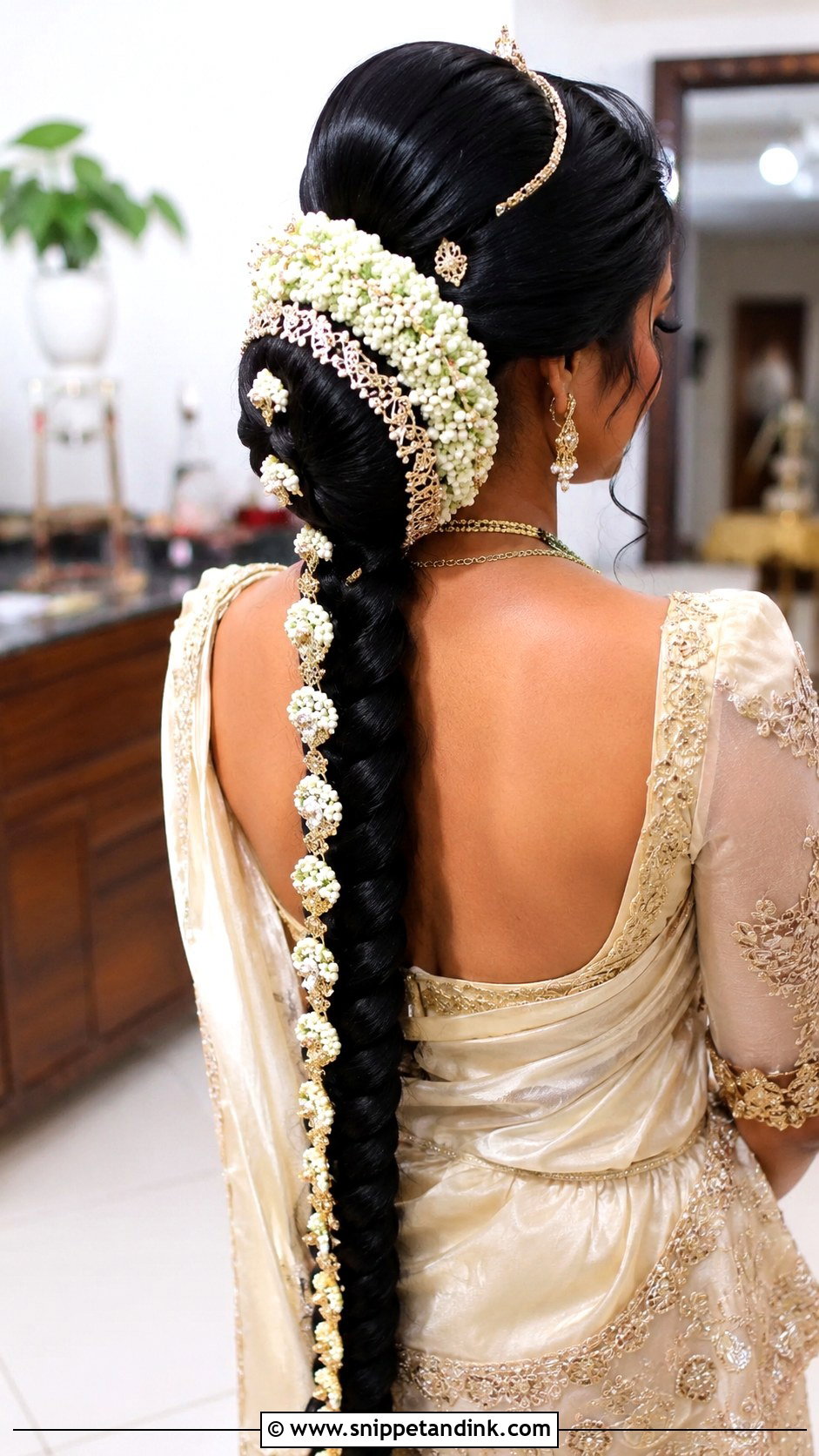
A long braid shows length and detail without a big bun. It can be thick and polished, and decorated with flowers or gold ornaments that echo the jewelry. Brides who want a traditional South Asian bridal feeling without a konde often land here. Extensions add fullness and can take the braid below the waist; I clip them in near the nape so the join hides under the first cross of the braid. The front still has to stay neat for the nalalpata.
12. Kandyan Bride Side Braid
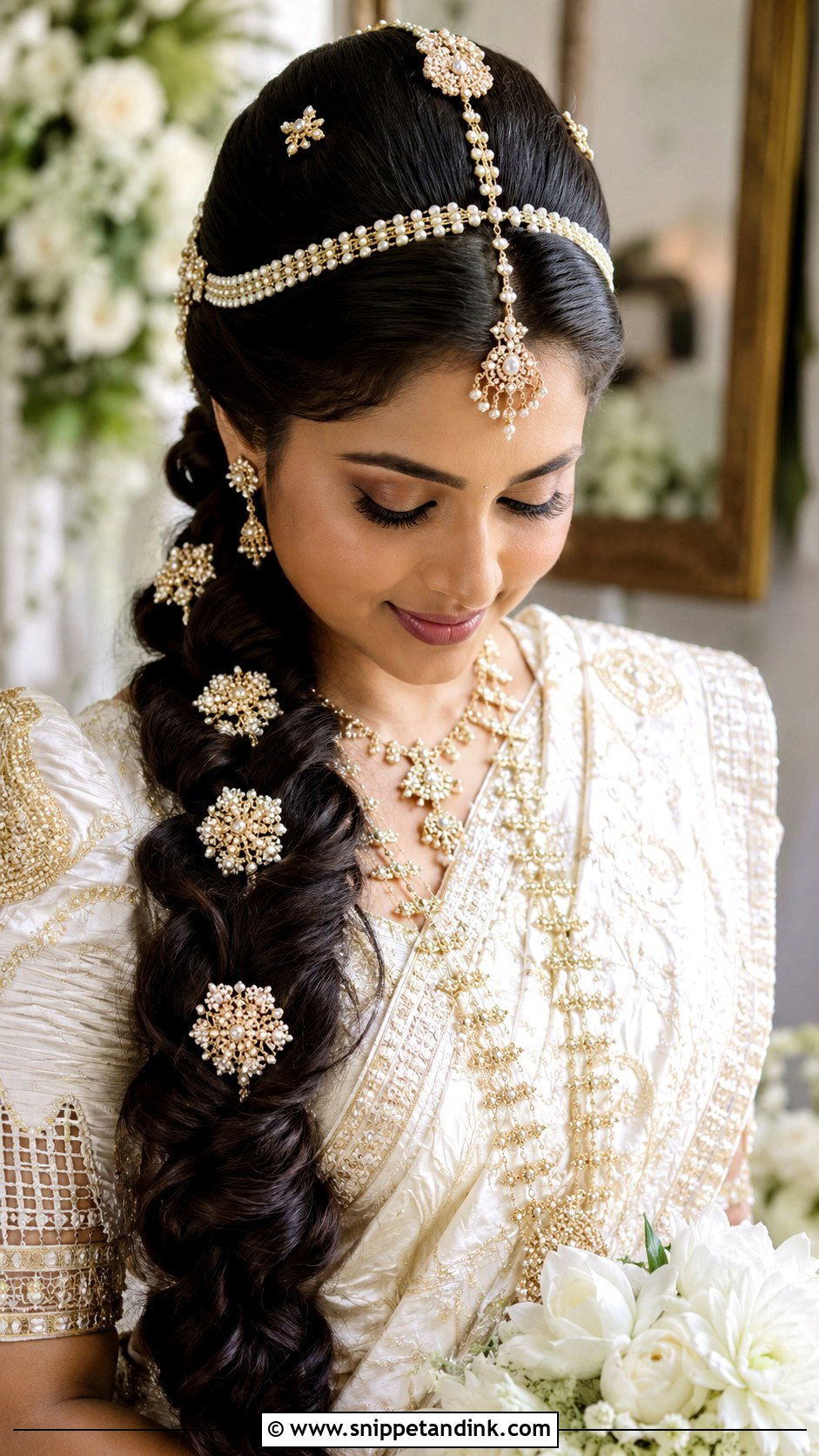
A side braid rests over one shoulder, so the detail shows from the front while the necklaces and osariya stay visible. I keep the sections smooth and full rather than loose and boho, which would look out of place with formal jewelry. Small flowers, pearl pins or gold accents can follow the length. It’s comfortable for a long day, and it looks slightly younger and lighter than a bun. Check that the braid doesn’t sit over a necklace you want photographed.
13. Kandyan Bride Half Up Hair
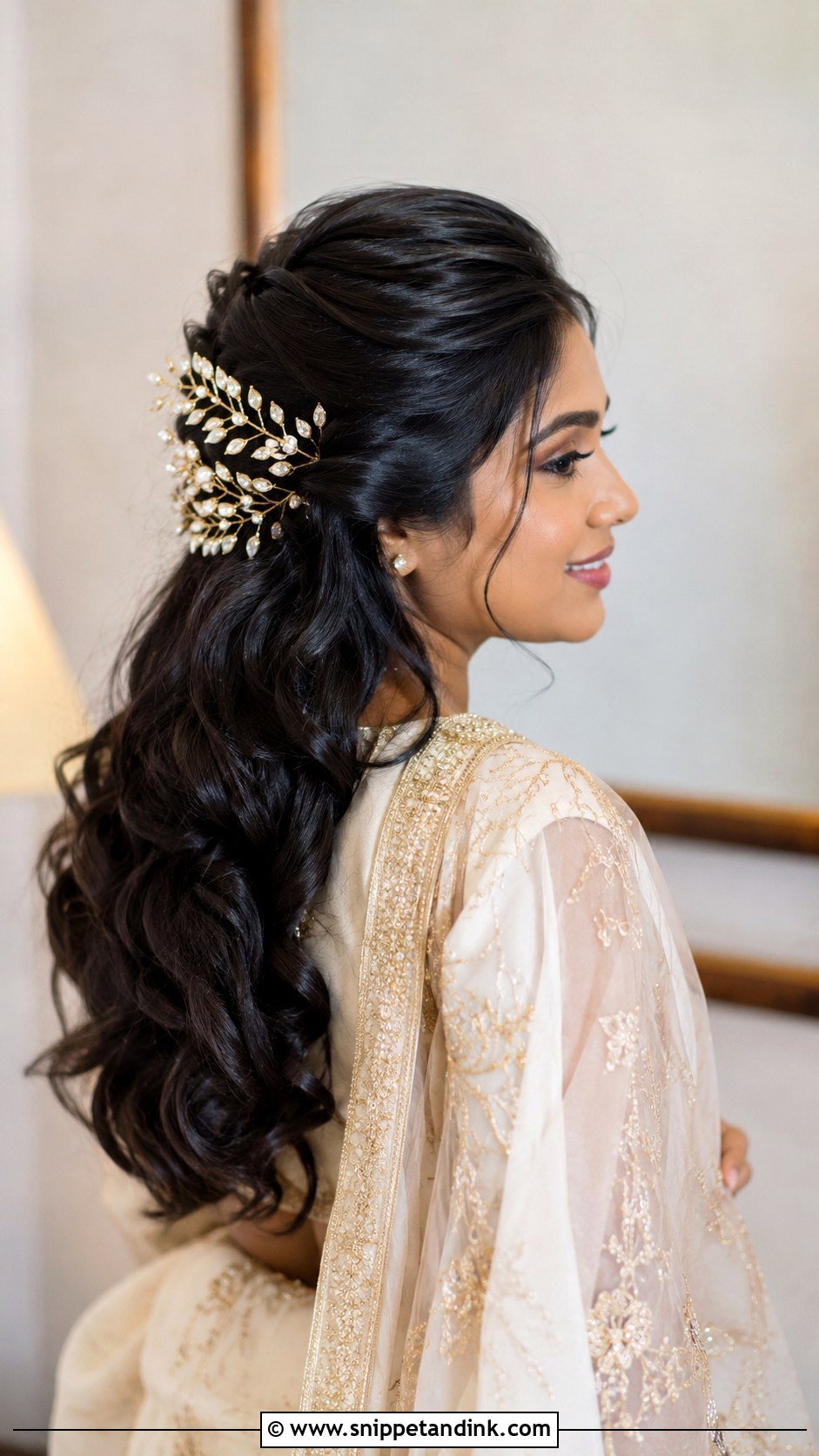
Half up hair suits a lighter Kandyan look, or the reception after the main ceremony. The crown is lifted and pinned, and the rest falls in smooth waves. The pinned section must be firm, since it’s what holds the nalalpata; a loose half up style lets the ornament slide forward onto the brow. Smaller jewelry sets and softer makeup work best with it. Long, thick hair can make the lengths heavy, so I set the curls slightly tighter than the final look.
14. Kandyan Bride Soft Waves
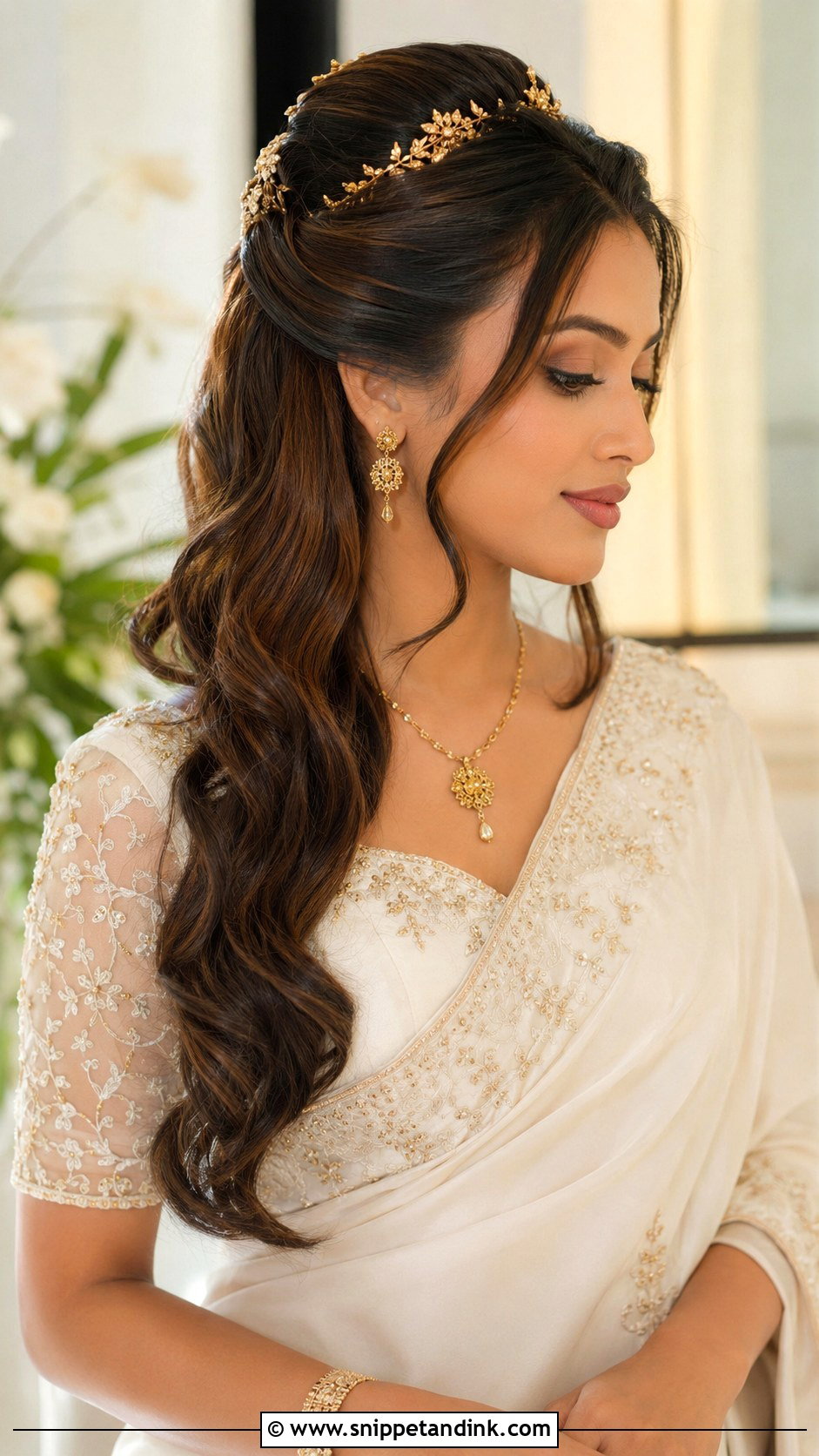
Soft waves are the least traditional option here, and I’d only suggest them with a simpler osariya and lighter jewelry. The waves are brushed smooth and directed away from the face, so the necklaces and earrings stay clear. A small pinned section at the crown anchors the nalalpata and keeps the look formal enough for the ceremony. In heat and humidity waves drop faster than any bun, which is why I like them more for reception photos and evening events.
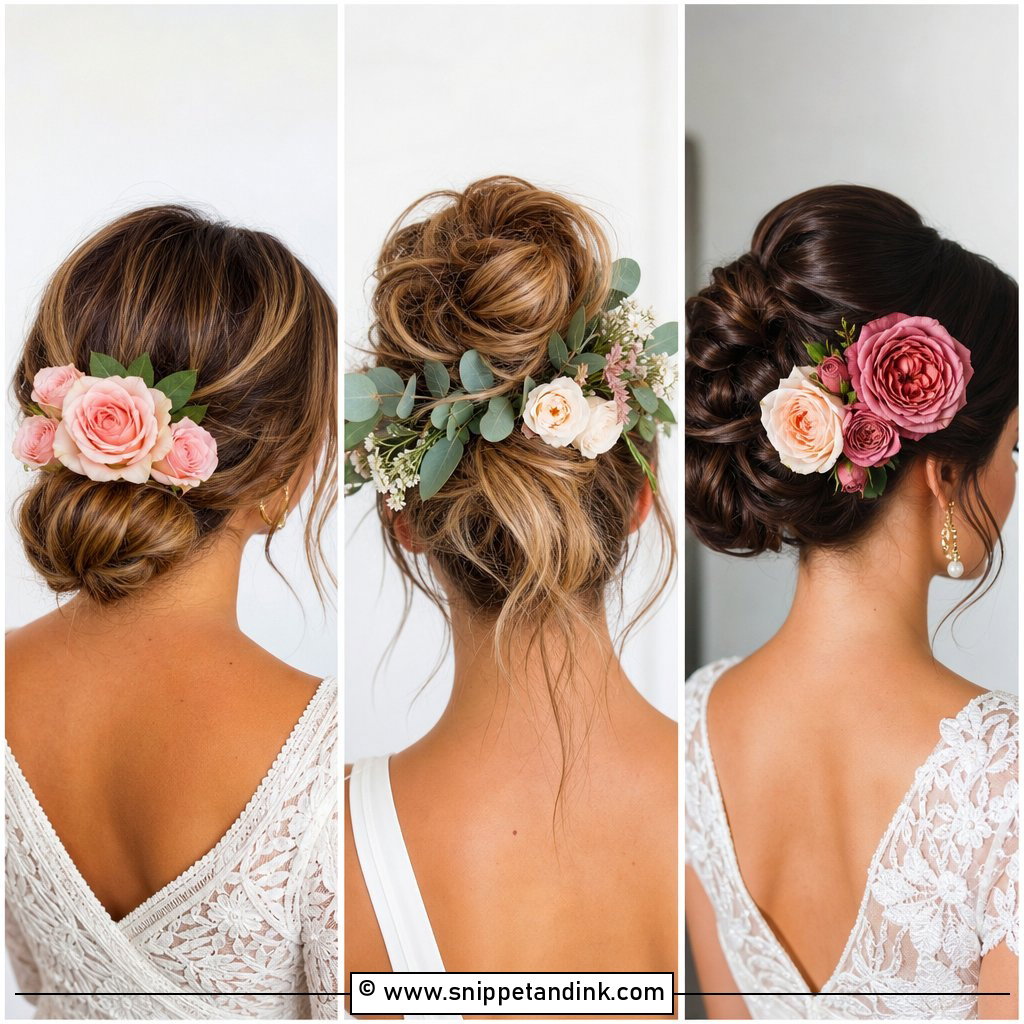
15. Kandyan Bride Reception Bun
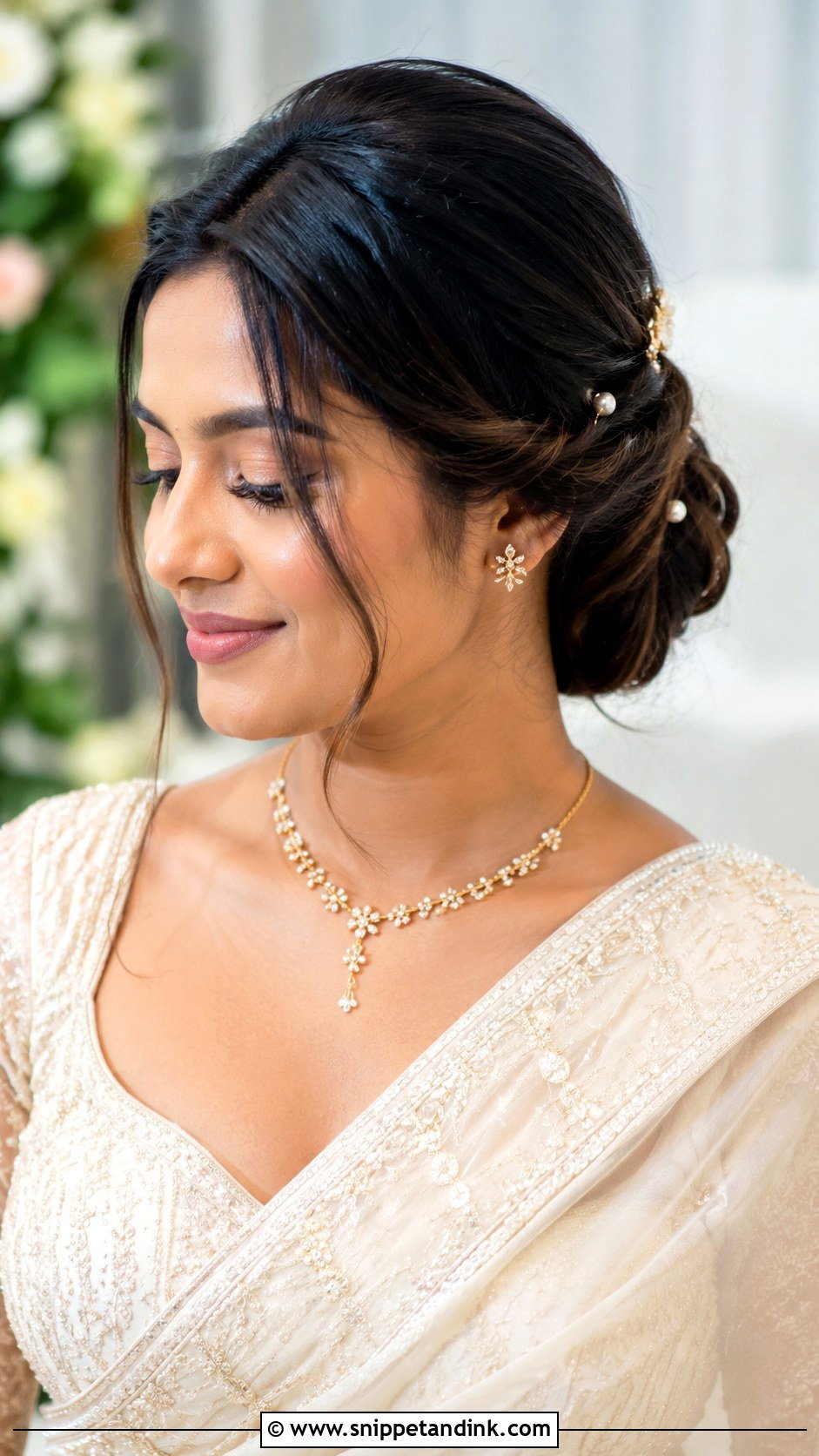
A reception bun gives you a change of feel for the second half of the day. It can be softer than the ceremony style, with gentle volume, loose twists or a couple of face pieces, and it no longer has to carry every traditional ornament. That makes dancing and greeting guests far easier. Lighter accessories, pearl pins or fresh flowers usually replace the heavier pieces. I often build it from the ceremony bun rather than starting again, which saves time and keeps your hair from being brushed out twice in one day.
Taking Off Ceremony Jewelry Without Losing the Hair
Most Kandyan brides change their look at least partly between the ceremony and the reception. Removing a nalalpata and side ornaments in a rush is how hair gets pulled and buns collapse, so I plan the switch at the trial.
Who should do it
Ideally your stylist stays on for the change. If that isn’t booked, show one calm person at the trial where every ornament pin sits. Pins come out in the reverse order they went in: flowers first, then the side ornaments, then the forehead piece.
What the hair needs afterwards
- Brush the backcombed section at the hairline lightly with a soft brush and smooth it with a little serum, so the dent from the ornament softens.
- Keep the bun or braid in place and just add lighter accessories, rather than taking everything down.
- Have a small comb, spare pins and a soft clip in a pouch for the change.
- Allow fifteen to twenty minutes in the schedule. It always takes longer than people think.
Store the jewelry in a lined box straight away. Heavy pieces taken off in a hurry and left on a dressing table are the ones that go missing.
Real Jewelry at the Trial Settles Most of This
Every style here works when the structure is planned around the jewelry, the saree, your face and how long the ceremony runs. The hair should honour Sri Lankan bridal tradition, hold the nalalpata and ornaments securely, and still feel like yours. A low bun, a Sinhala konde, a flower bun, a braid or soft waves can all be right for different brides. Book a trial, bring the actual pieces you’ll wear, and wear the finished hair for an hour or two before you decide. By the end of that hour you’ll know whether it feels secure, comfortable and like you.
You'll Like These Ideas:



Leave a Reply