
A crown or tiara changes how I build the whole hairstyle. It isn’t something I perch on top at the end; the hair underneath has to hold it level for twelve hours, through hugs, a veil coming off and a lot of dancing. So the questions start early: what neckline you’re wearing, where the veil goes, how fine or thick your hair is, and what shape and weight the piece itself is. A delicate tiara sits happily on soft waves or a low bun, while a taller crown needs a fuller updo or long curls to balance it. Below are fifteen ways to wear one, from classic to boho to sleek. Save the ones that match your crown, not just your mood board, and take them to your trial with the piece itself.
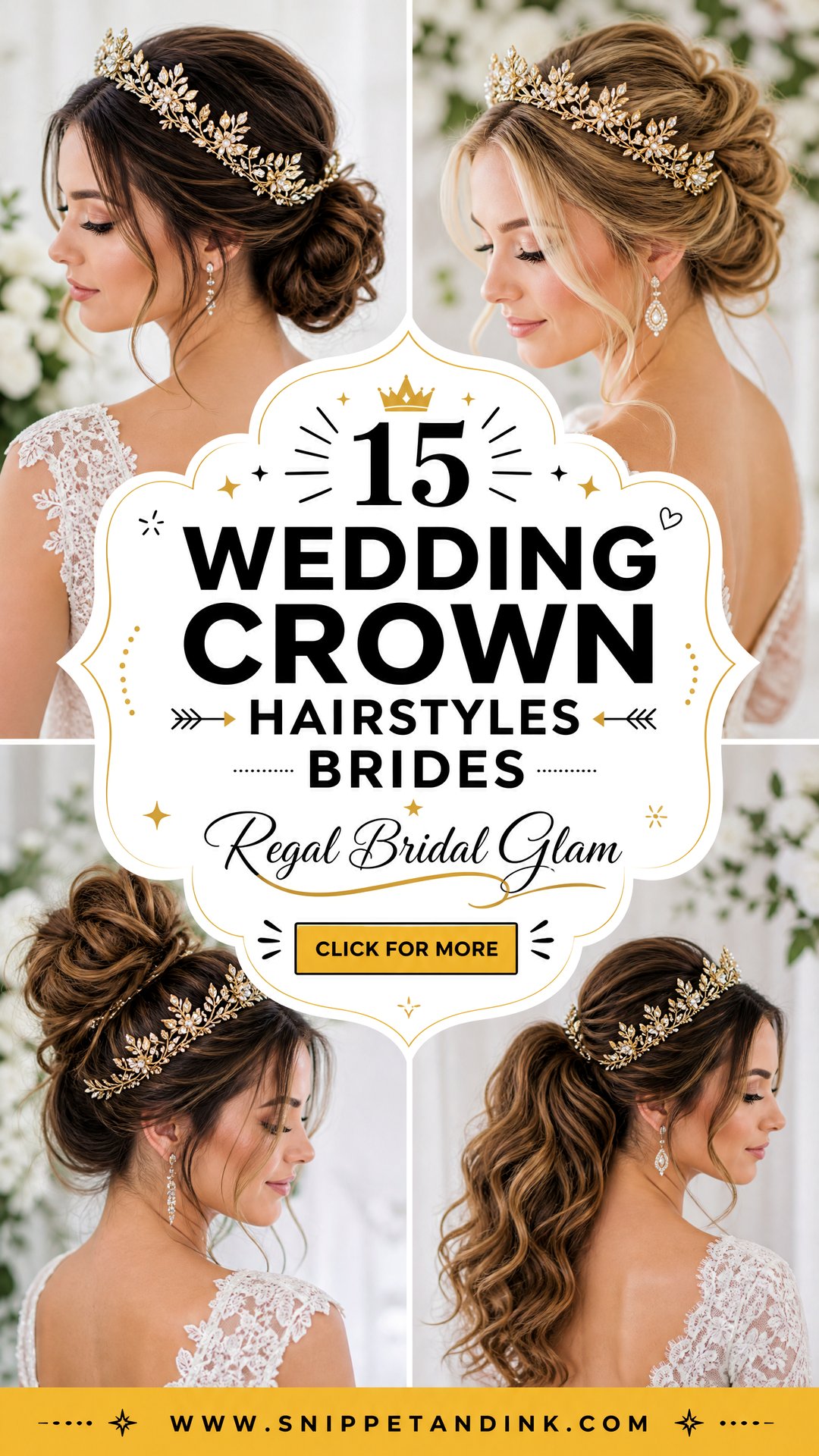
Where a Tiara Sits Changes Your Face
The same crown can look regal or awkward depending on a centimetre or two. Most brides try it on at home by setting it right on the hairline, and that’s rarely where I put it.
On the hairline
This is the traditional placement. It lengthens a round face and suits a strong, formal gown, but it can look dated with modern dresses and it shows every gap in a thin hairline.
Set back two or three centimetres
This is my default. A little hair in front of the band softens the face and hides the combs, and the crown reads as part of the style rather than placed on it.
Behind a lifted crown or around a bun
Taller pieces look less heavy here, and it frees the front for a veil worn over the face. It does need volume to rest against, so fine hair gets a backcombed base or a small padding.
1. Wedding Crown Low Bun
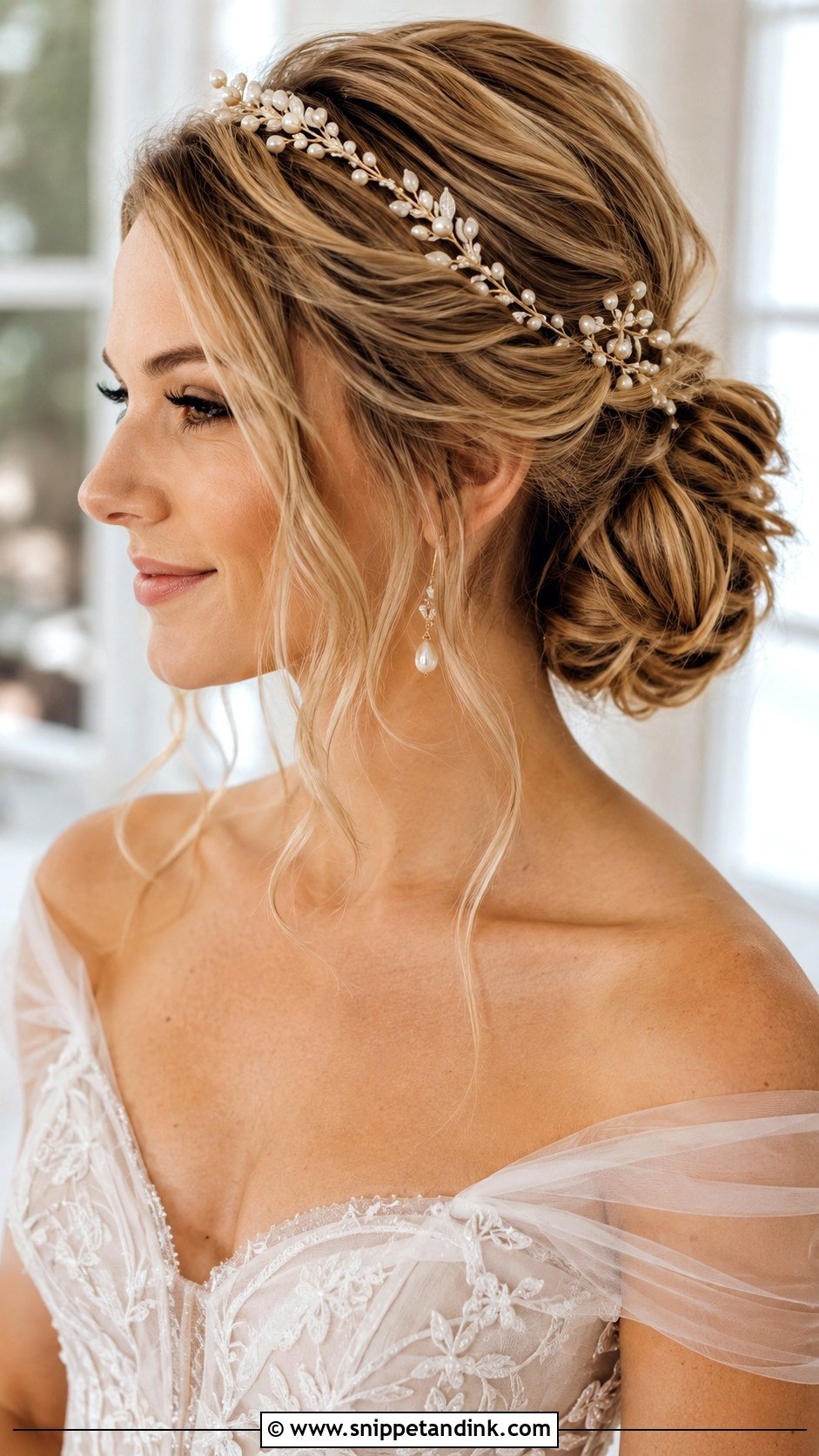
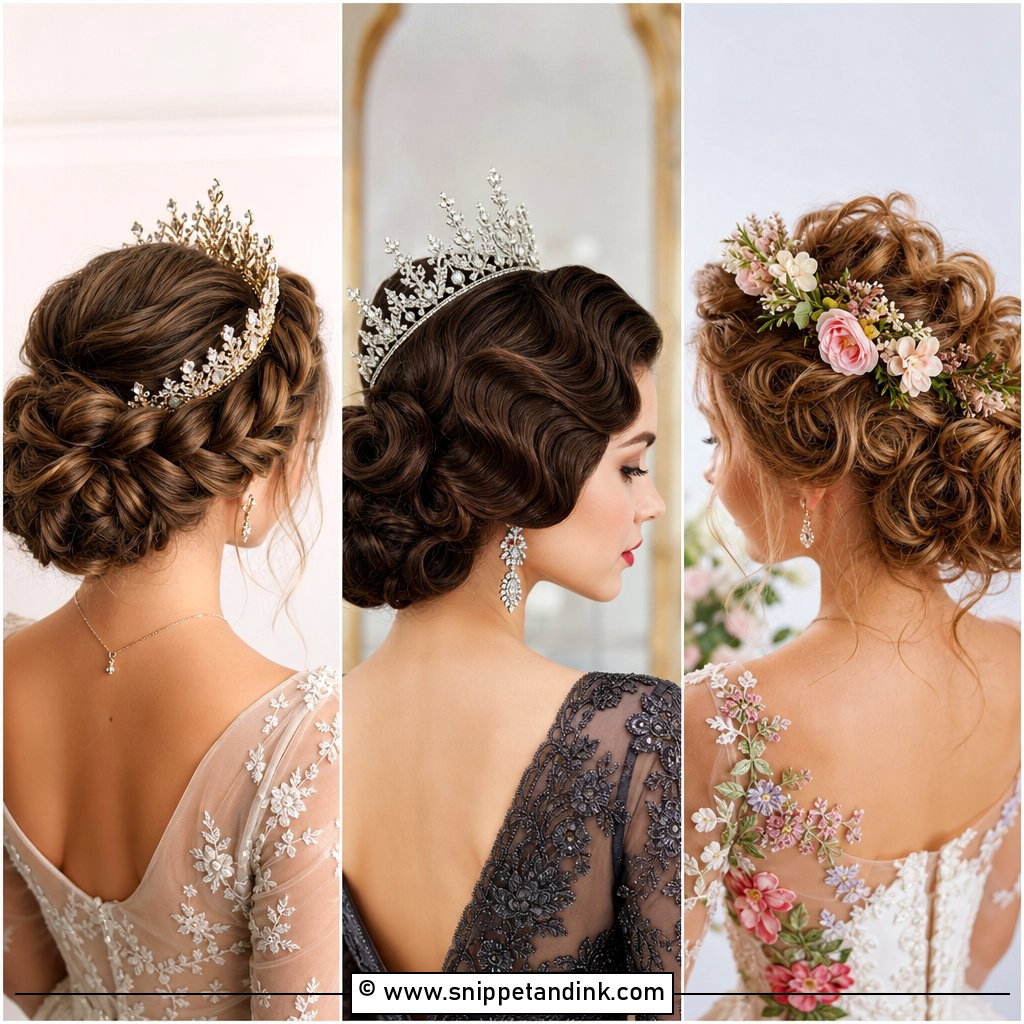
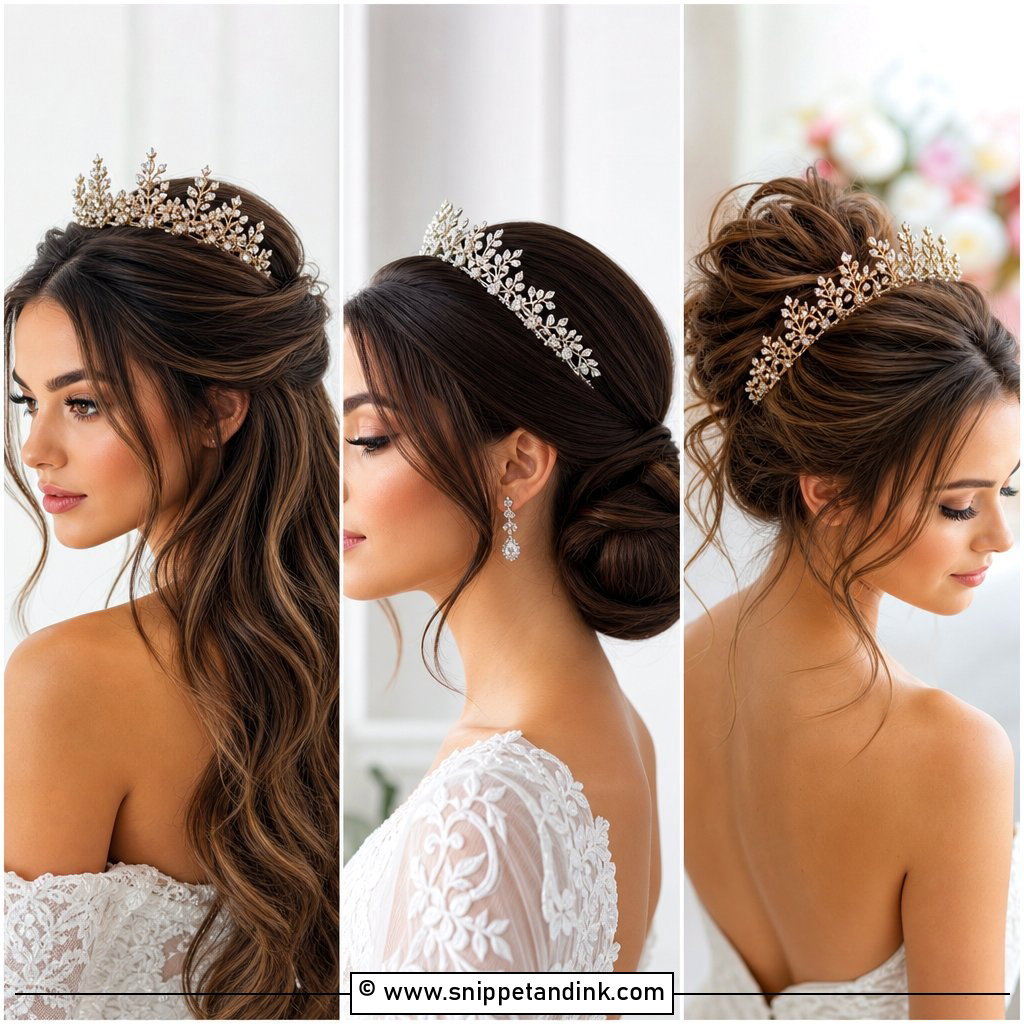
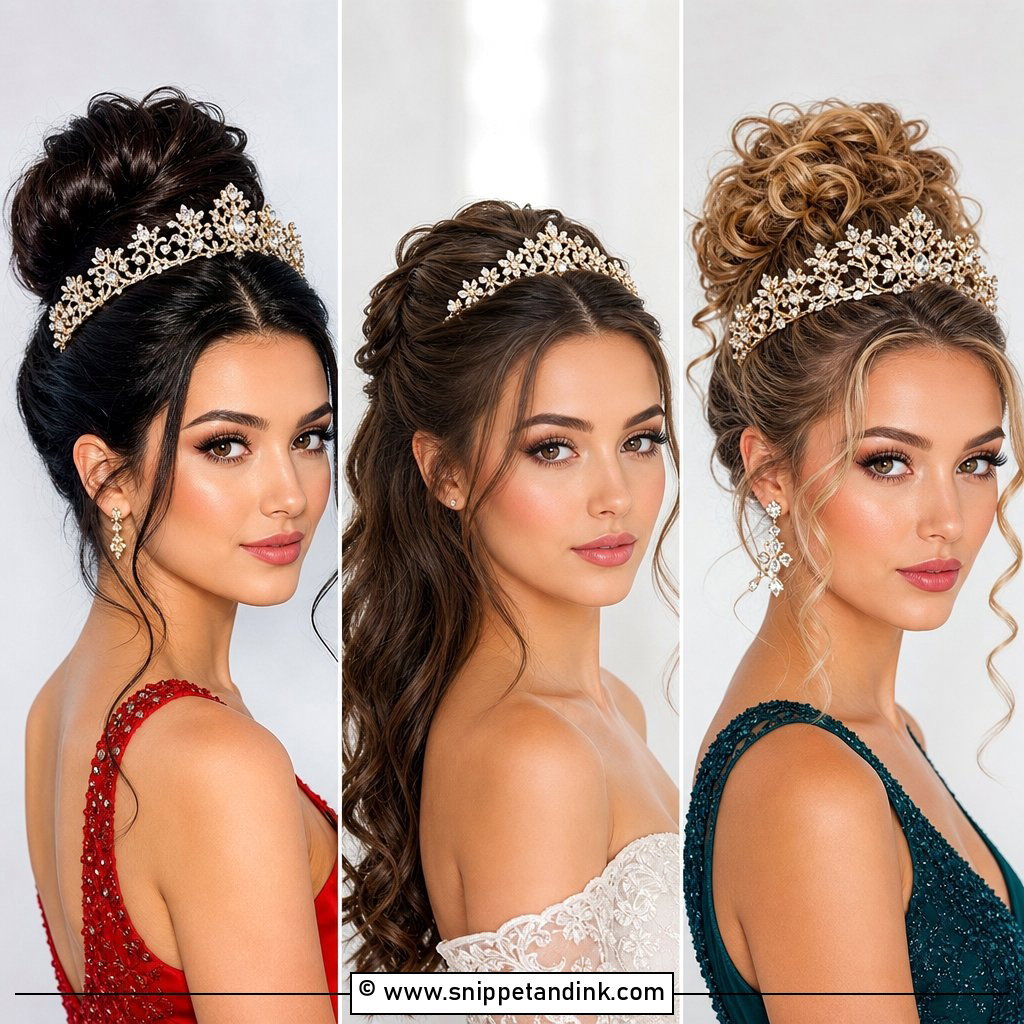
This is the most forgiving way to wear a crown. With the bun down at the nape, the headpiece is the only thing at the top of your head, so it reads clearly from the front and side. A veil can go underneath the bun or just behind the crown band. I keep the sides smooth and add only a little root lift, because too much height under a tiara makes it look like it’s floating. The pins I hide behind the crown ends are what keep it from sliding forward when you look down at your rings. Strapless, off-the-shoulder and lace sleeves all sit well with it.
2. Wedding Crown Half Up Half Down Hair
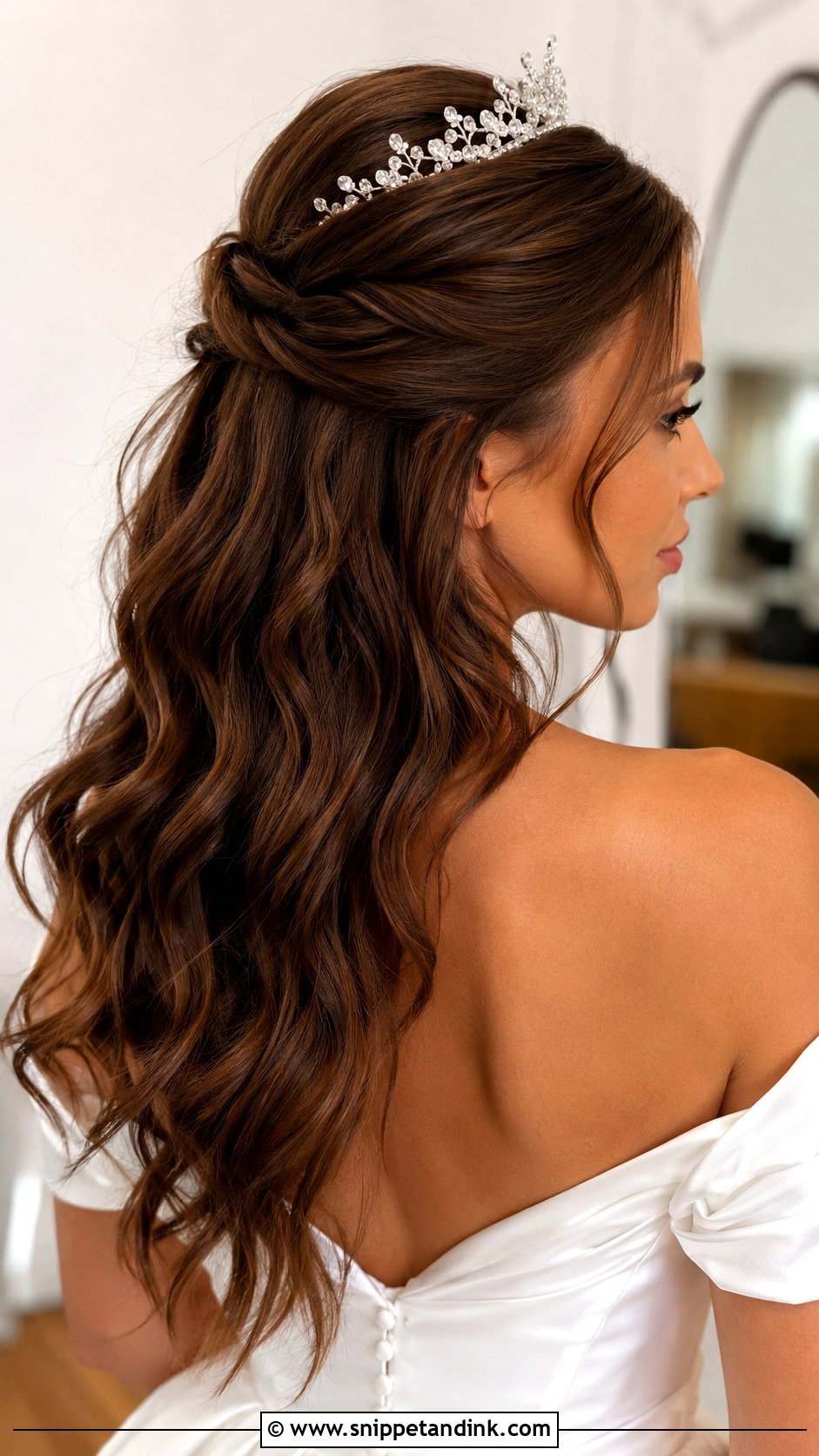
Half up hair gives a crown the stable base that fully loose hair can’t. I twist or braid the top section into a small flat anchor right where the crown ends land, then pin the band into it. Everything below stays free in waves or bends. You’ll want at least shoulder length, otherwise the pinned section eats most of the hair. It also leaves room for a veil comb under the anchor or a thin hair vine running behind the crown, so you can change the look after the ceremony without starting again.
3. Wedding Crown Loose Curls
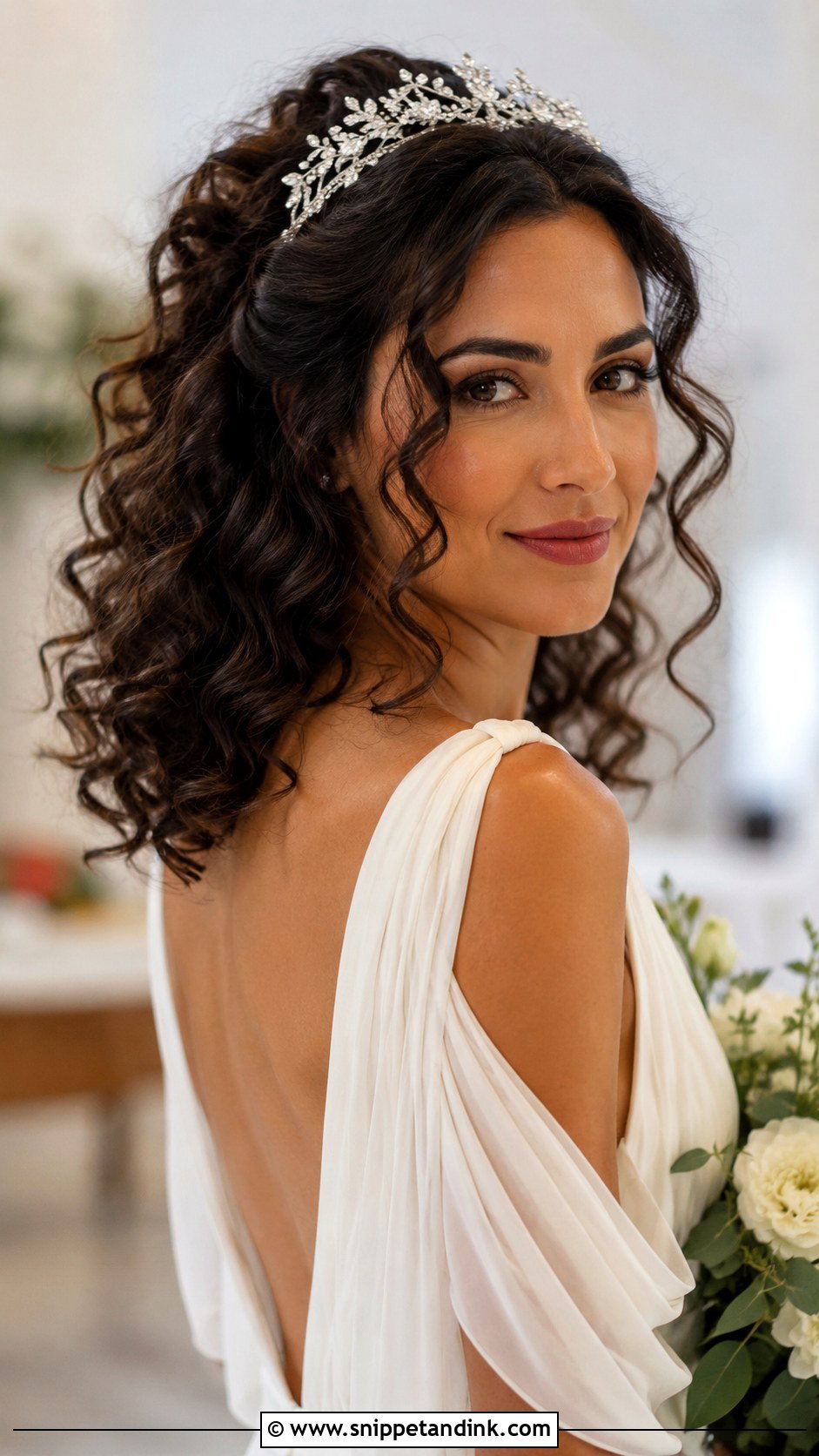
Loose curls under a crown are for the bride who never wears her hair up and would feel like someone else in a bun. The catch is grip. Fully loose hair gives a headpiece nothing to hold, so I go with a lightweight piece: a comb-style tiara or a crystal halo. I set firmer curls near the face so they don’t collapse around the band, and leave the ends softer. Anything heavy will slip backwards within the hour, no matter how much spray goes in.
4. Wedding Crown High Bun
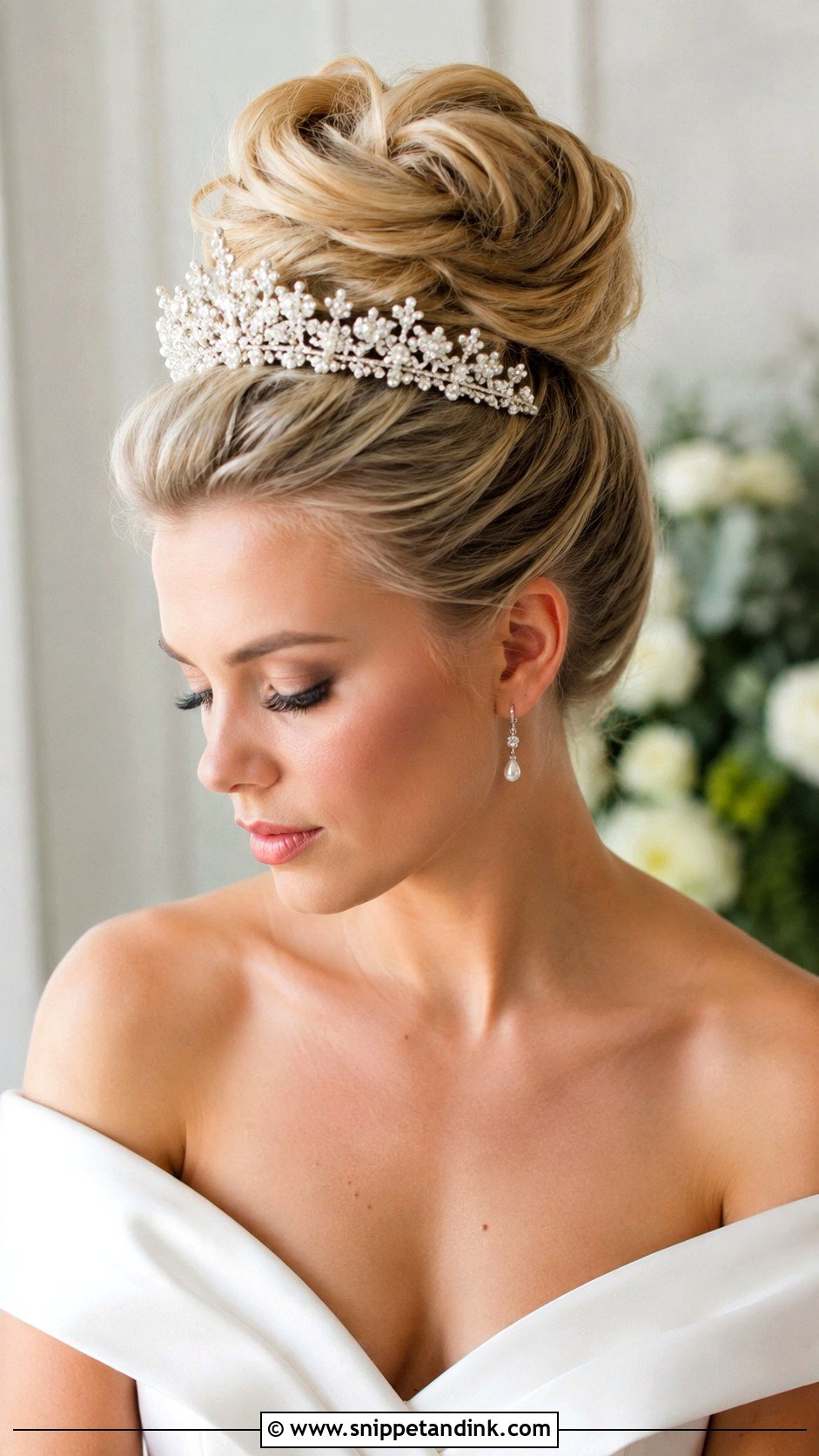
A high bun adds height, and the crown adds more, so I keep an eye on proportion. On a petite bride with a full skirt it balances things nicely; on someone very tall with a slim gown it can tip into costume. The crown can sit in front of the bun like a tiara or wrap around its base. Sleek suits a modern gown, a little texture suits a softer dress. I keep a touch of volume at the front so the band blends into the hair rather than sitting on a flat ledge. It’s the coolest option for a summer wedding, since nothing touches your neck.
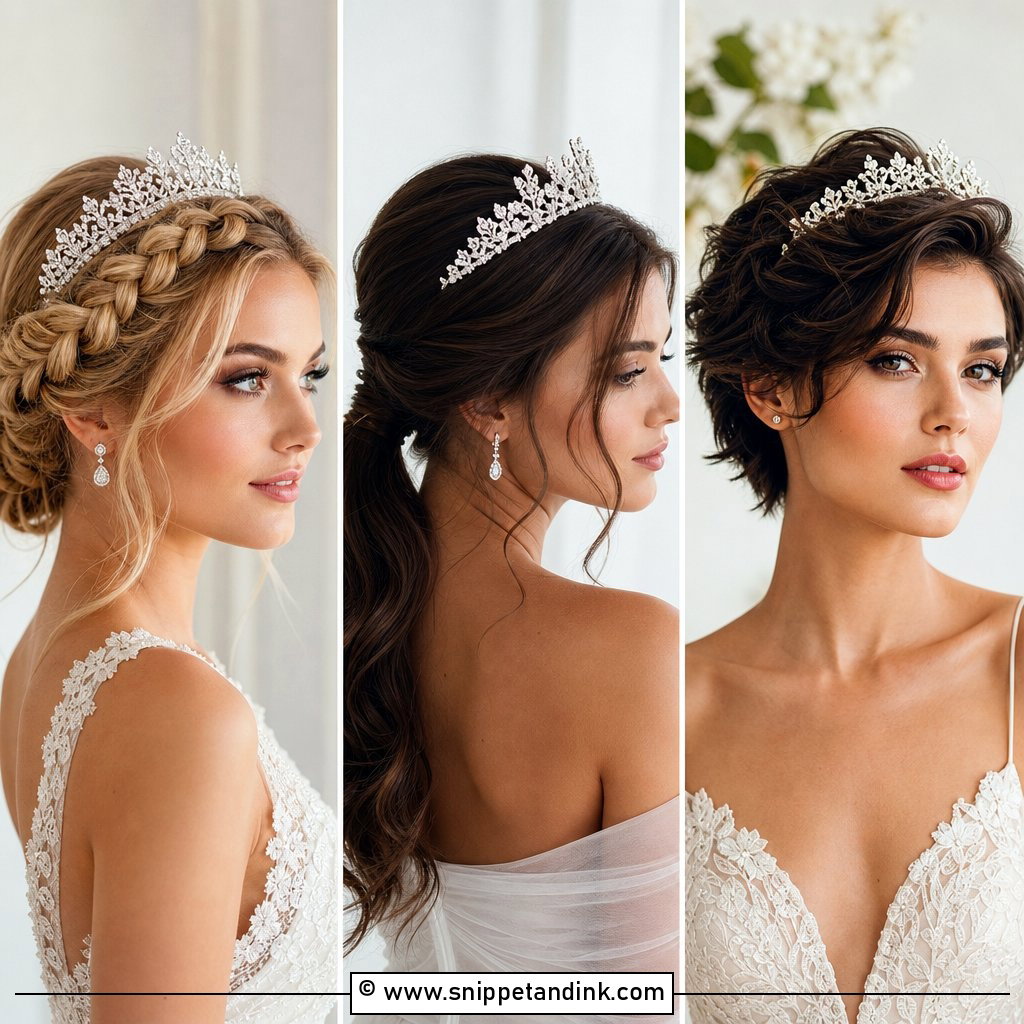
5. Wedding Crown Braided Updo
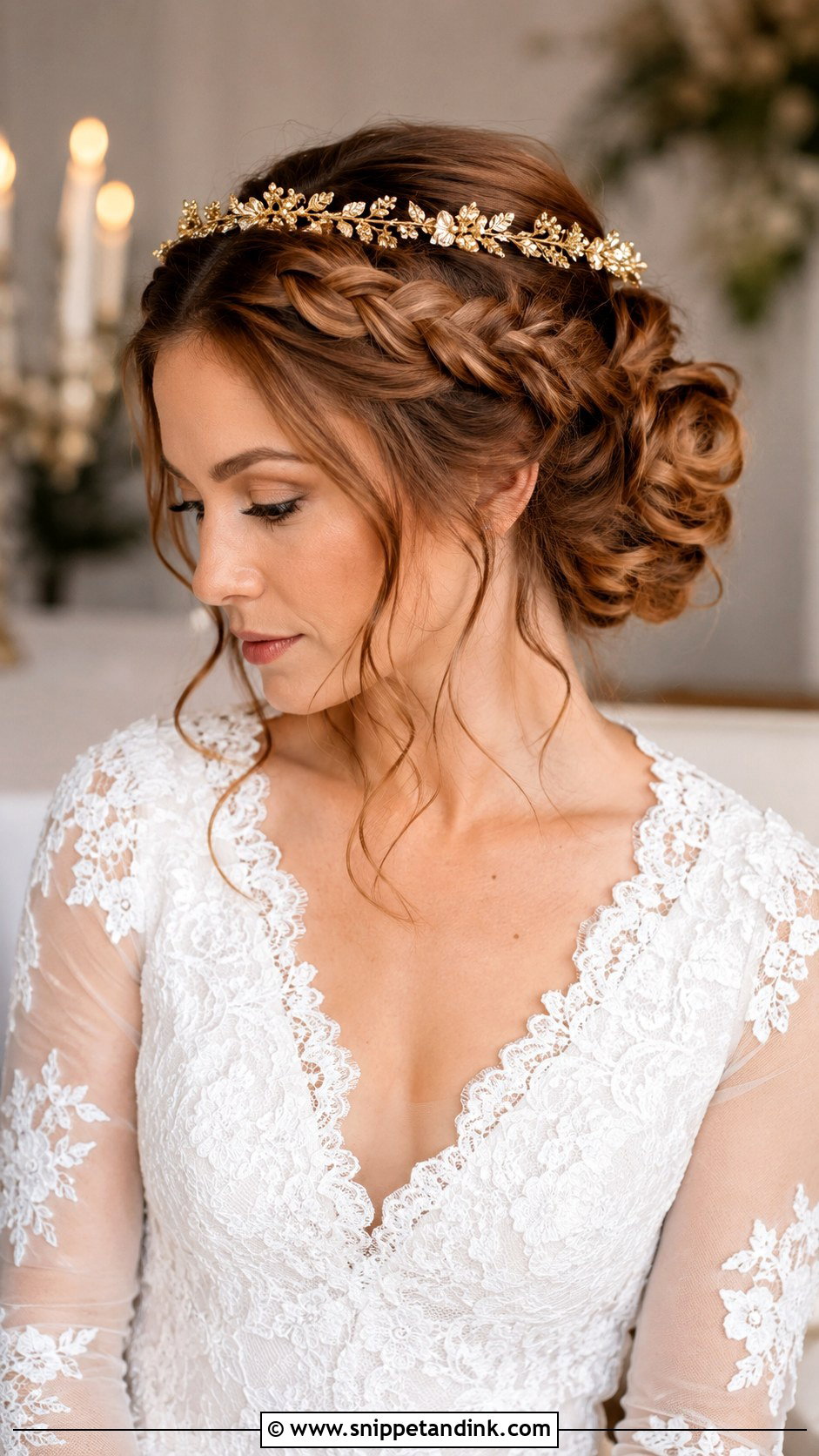
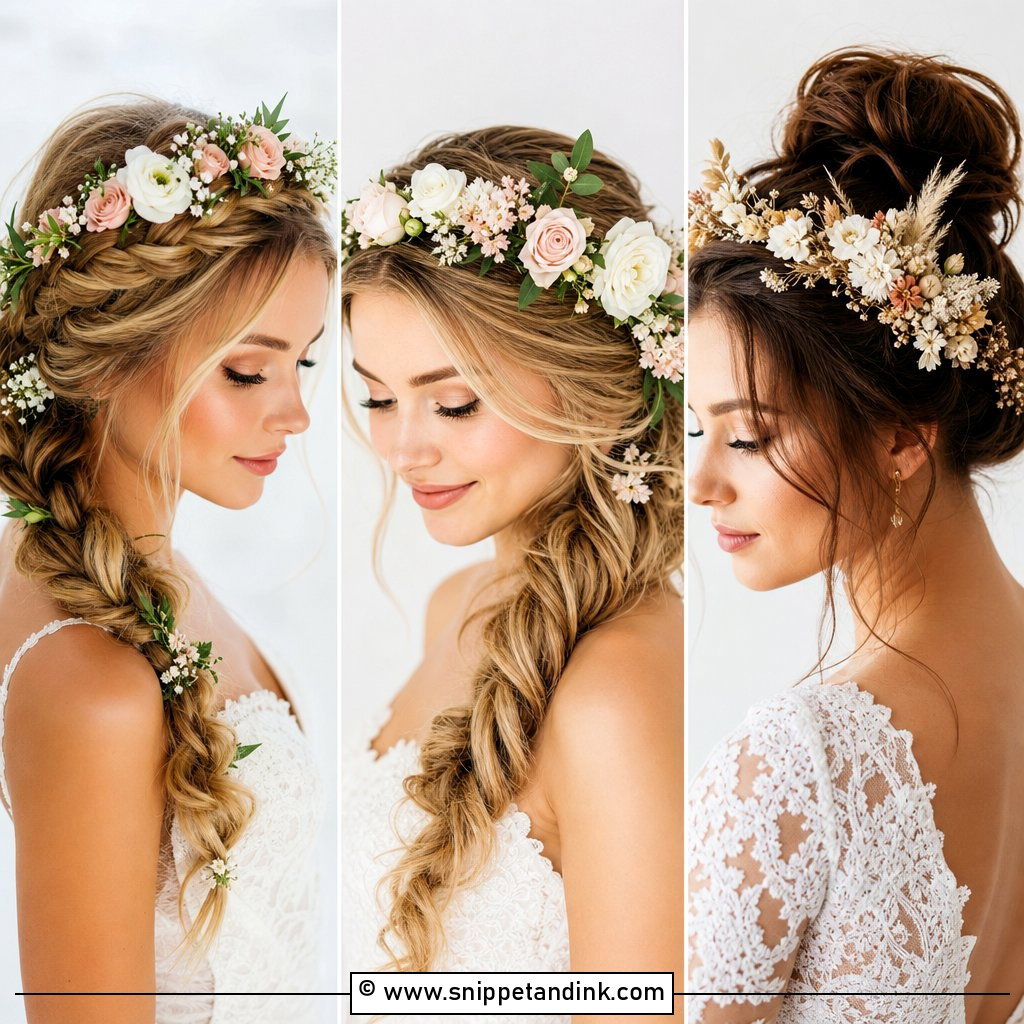
Braids give a crown something to hold onto. The plaits can run along the sides, wrap the bun or fold into a low updo, and their ridges stop a floral or pearl crown from shifting. I like it for garden and outdoor ceremonies, where wind can lift a smooth style. One thing I always do: pull the braids out gently after they’re pinned. A tight braid next to a fine headpiece makes the whole look stiff, while a looser braid looks softer and still holds.
6. Wedding Crown Hollywood Waves
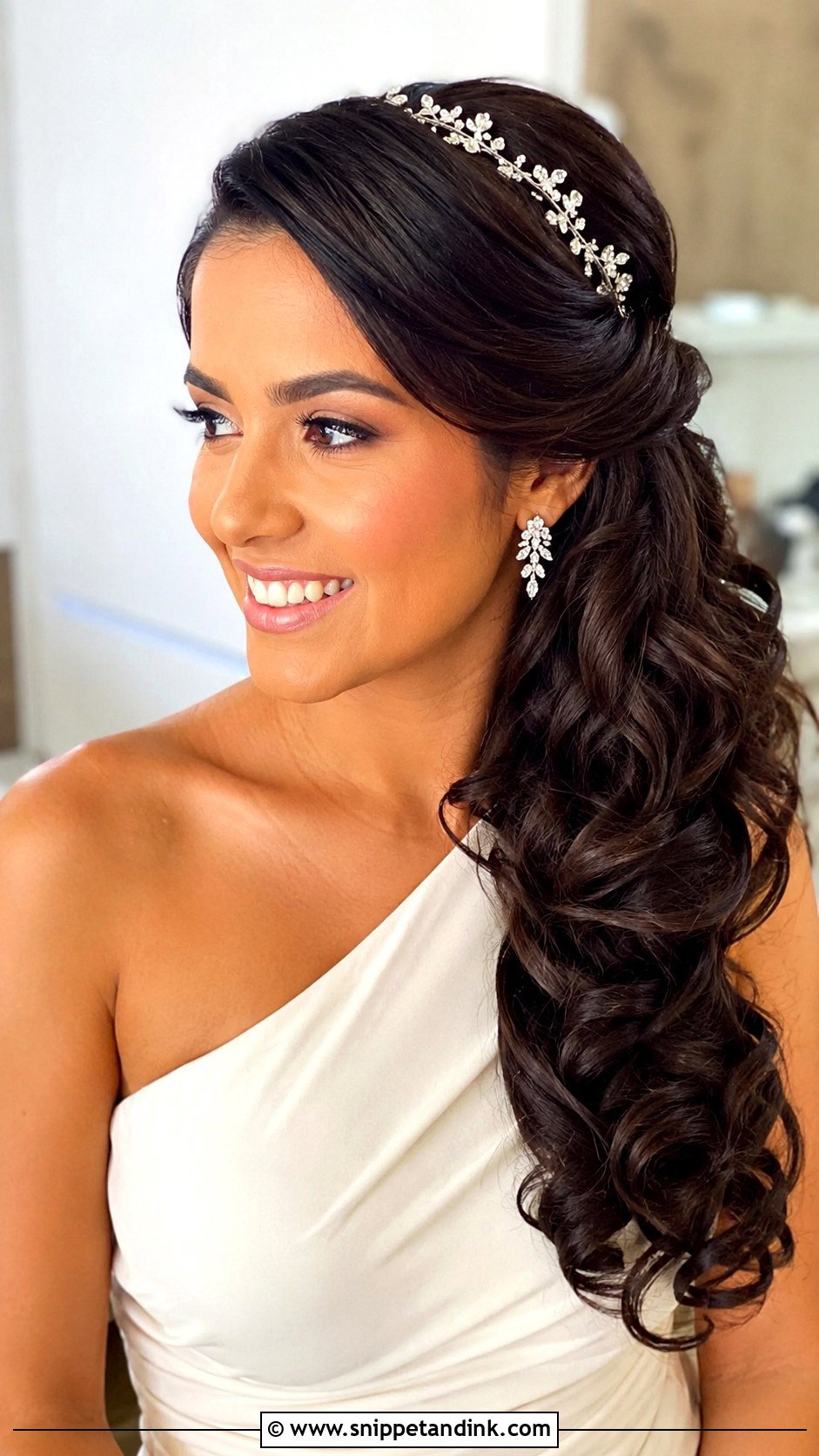
Hollywood waves are a sculpted pattern, so the crown should stay out of the way. A slim tiara set just behind a deep side part lets the shine of the wave do the work. Satin, fitted gowns and plain jewelry all sit right with it. If your curls usually fall out by lunchtime, tell your stylist at the trial. I set the waves with pin curls and let them cool fully before brushing, because a crown band pressing on a soft wave flattens it into a crease.
7. Wedding Crown Sleek Bun
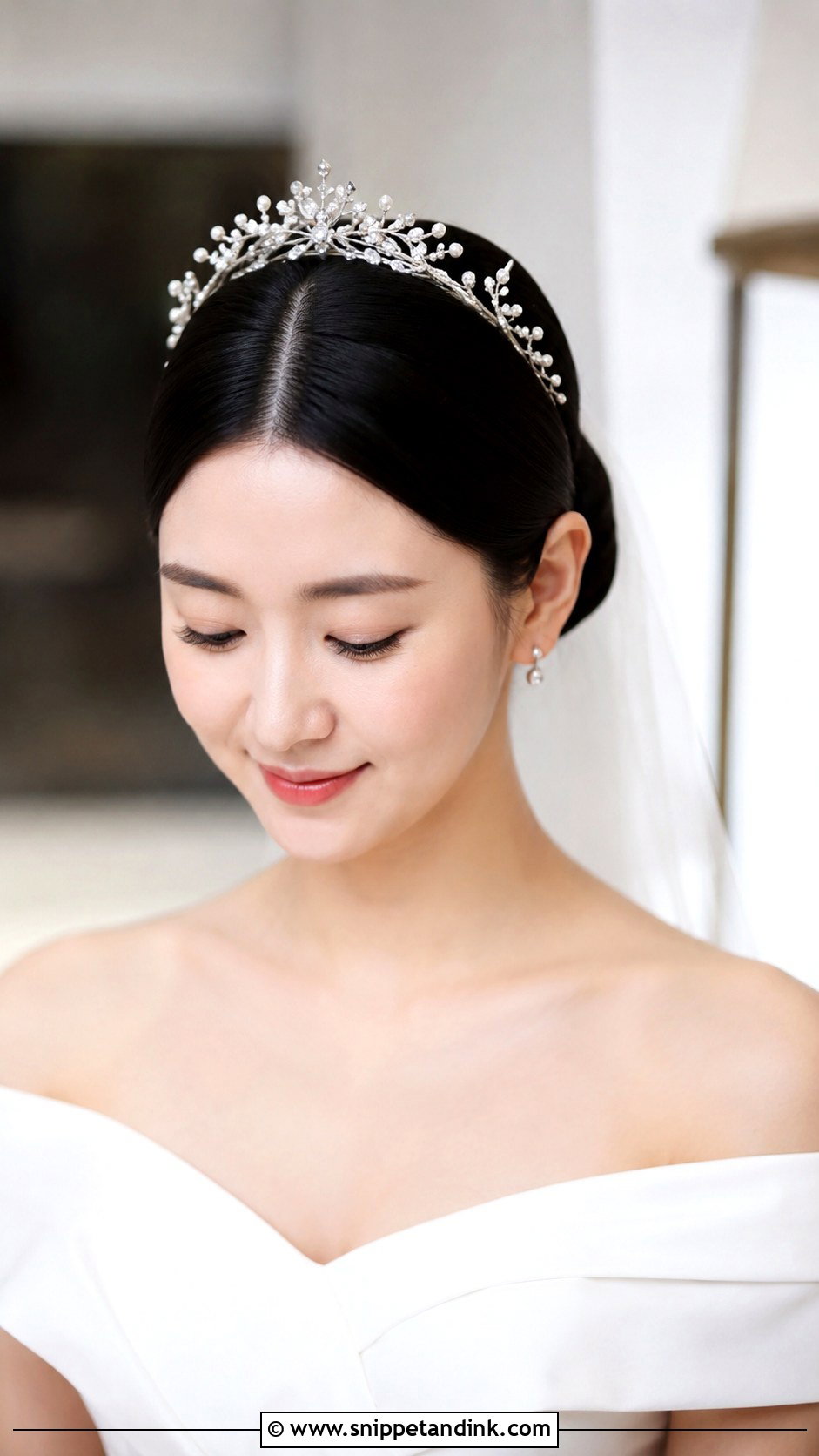
Nothing competes with the headpiece in a sleek bun, which is exactly why some brides want it. The hair is smoothed back or parted cleanly, then wound into a tight low or mid bun, and that tension gives a crystal crown, pearl tiara or minimalist metal headpiece a firm surface to grip. It suits contemporary gowns, square necklines and a stronger makeup look. The flaw is that every flyaway shows, so I prep with a smoothing cream and a fine-tooth comb, and finish with a light shine spray rather than a heavy one.
8. Wedding Crown Soft Updo
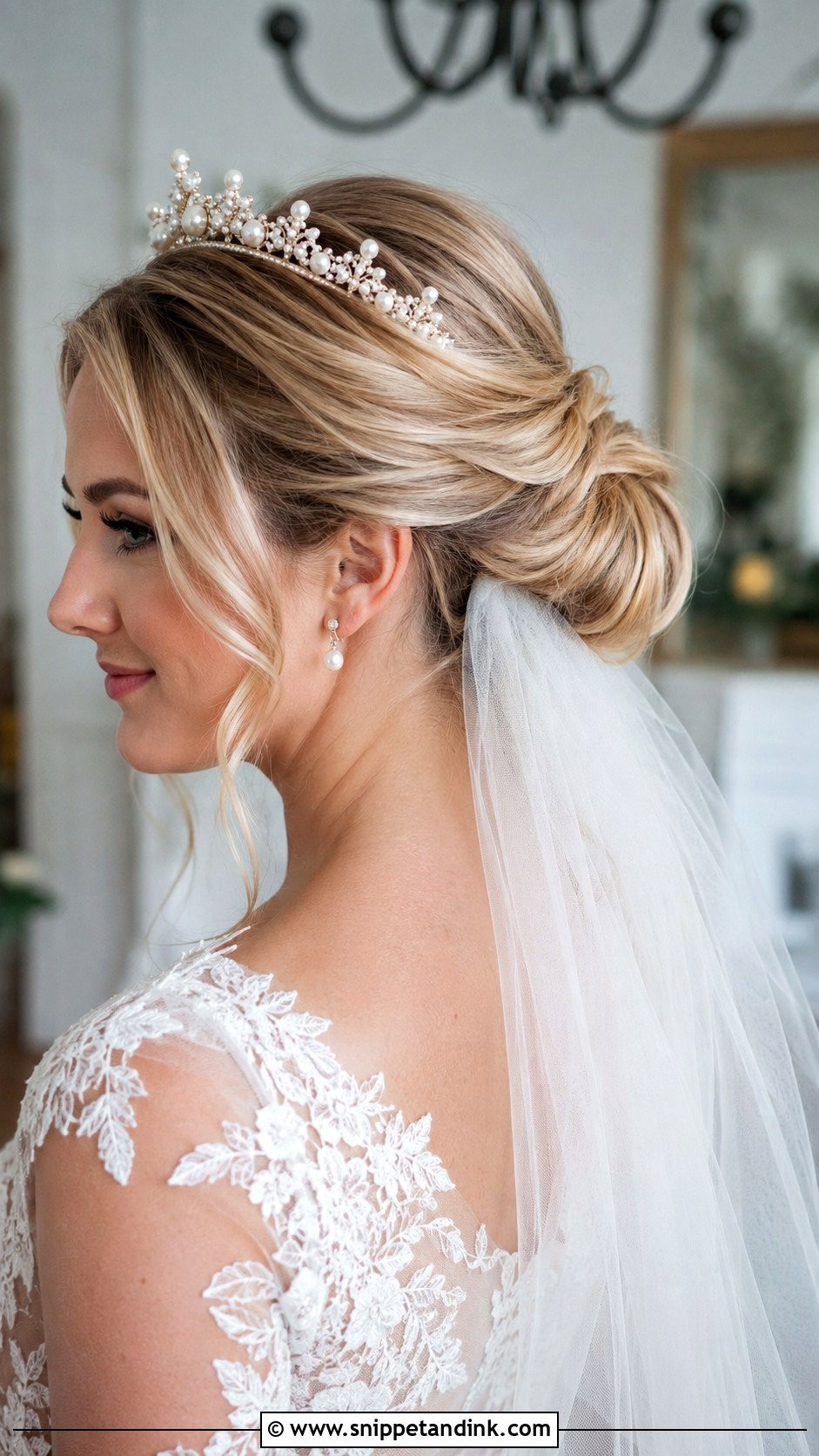
A soft updo is pinned loosely, with lifted roots, gentle bends and a few pieces left out around the face. The crown is what pulls that relaxed shape back into bridal territory. It sits naturally with lace, tulle and a garden setting. You need enough length to pin securely, which in practice means at least collarbone length. Ask for balance rather than perfection: if every fold is identical, it stops looking soft.
9. Wedding Crown Long Waves
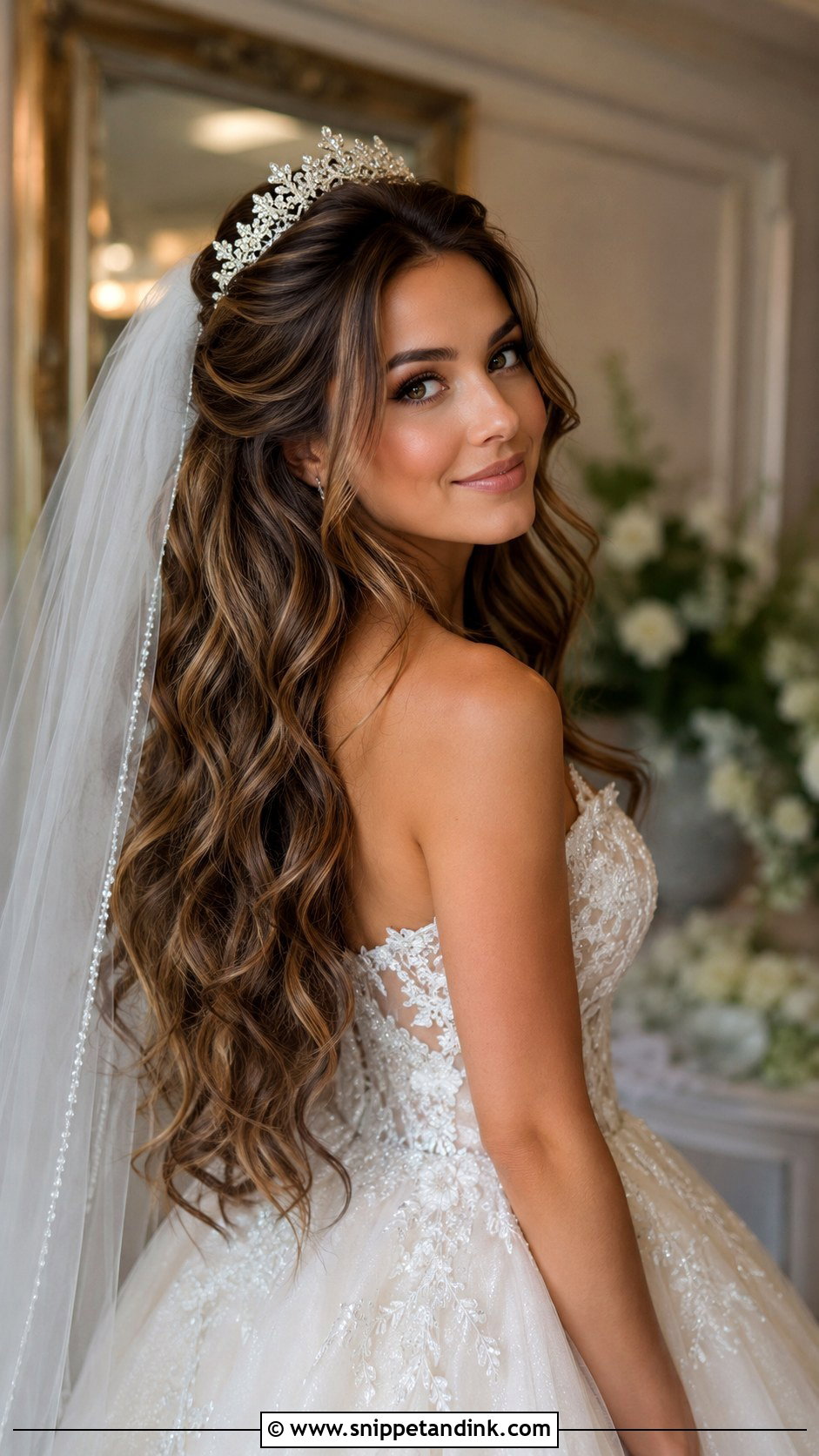
Long waves under a crown is the princess version, and it needs the most prep to survive the day. I use a texture spray and heat protection before curling, then a flexible hold so the waves still move. The crown can sit at the front hairline, a little behind the part, or over a hidden half-up section, which is where I’d put it if your hair is very silky. Volume at the crown area keeps the band from sinking. Cathedral veils and flowing dresses look right with it, and the waves catch natural light well outdoors.
10. Wedding Crown Side Swept Hair
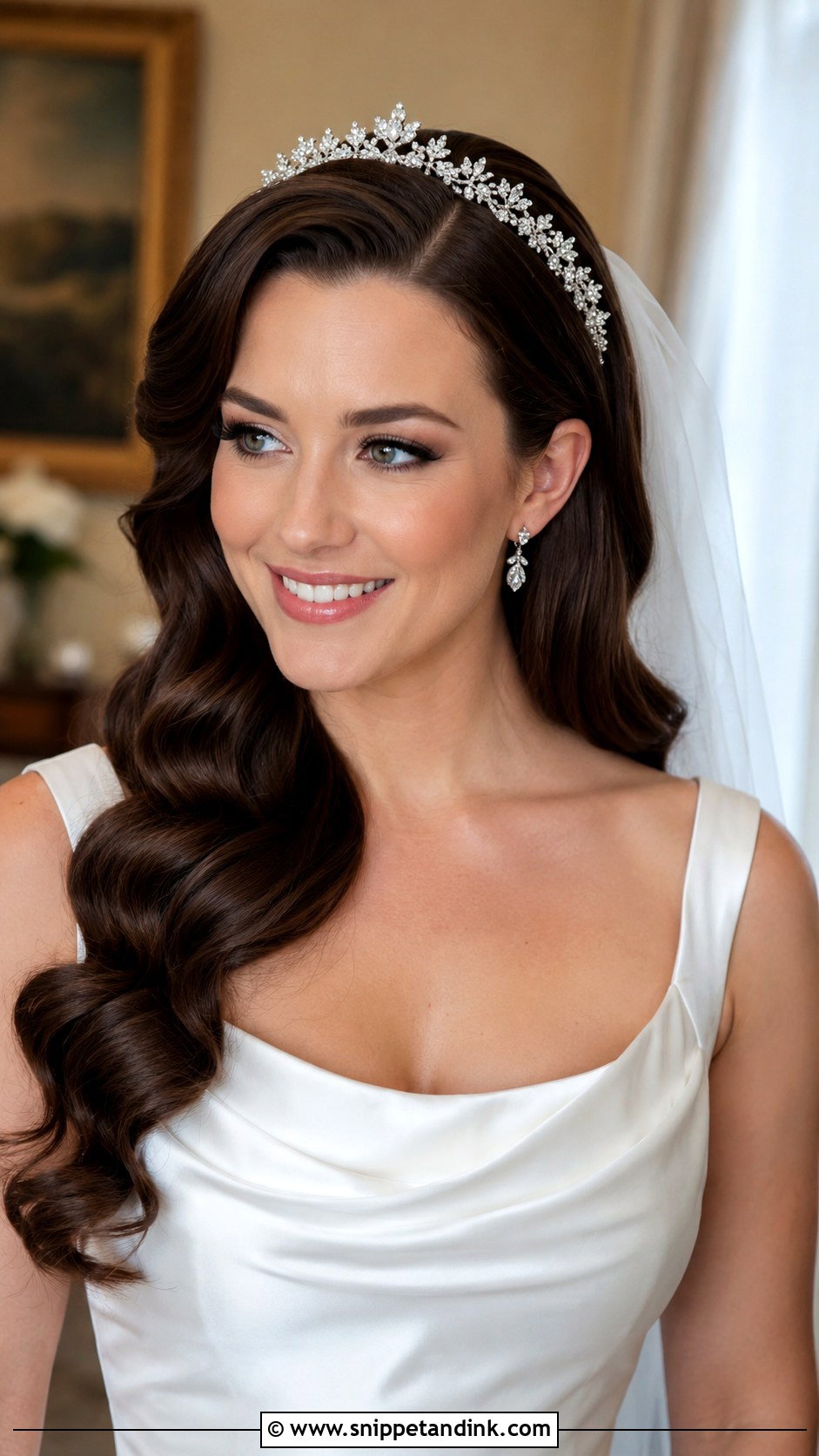
A side sweep pulls weight to one side, so the crown has to be pinned harder on the opposite side or it tilts. I gather the hair over one shoulder with crossed pins behind the ear, then anchor the crown ends into that pinned base. It suits one-shoulder gowns, asymmetric necklines and detailed backs. A smaller crown or a side tiara keeps the shape from getting heavy. Expect to touch it up after the hugs; the swept side gets pressed flat by every embrace.
11. Wedding Crown Curly Updo
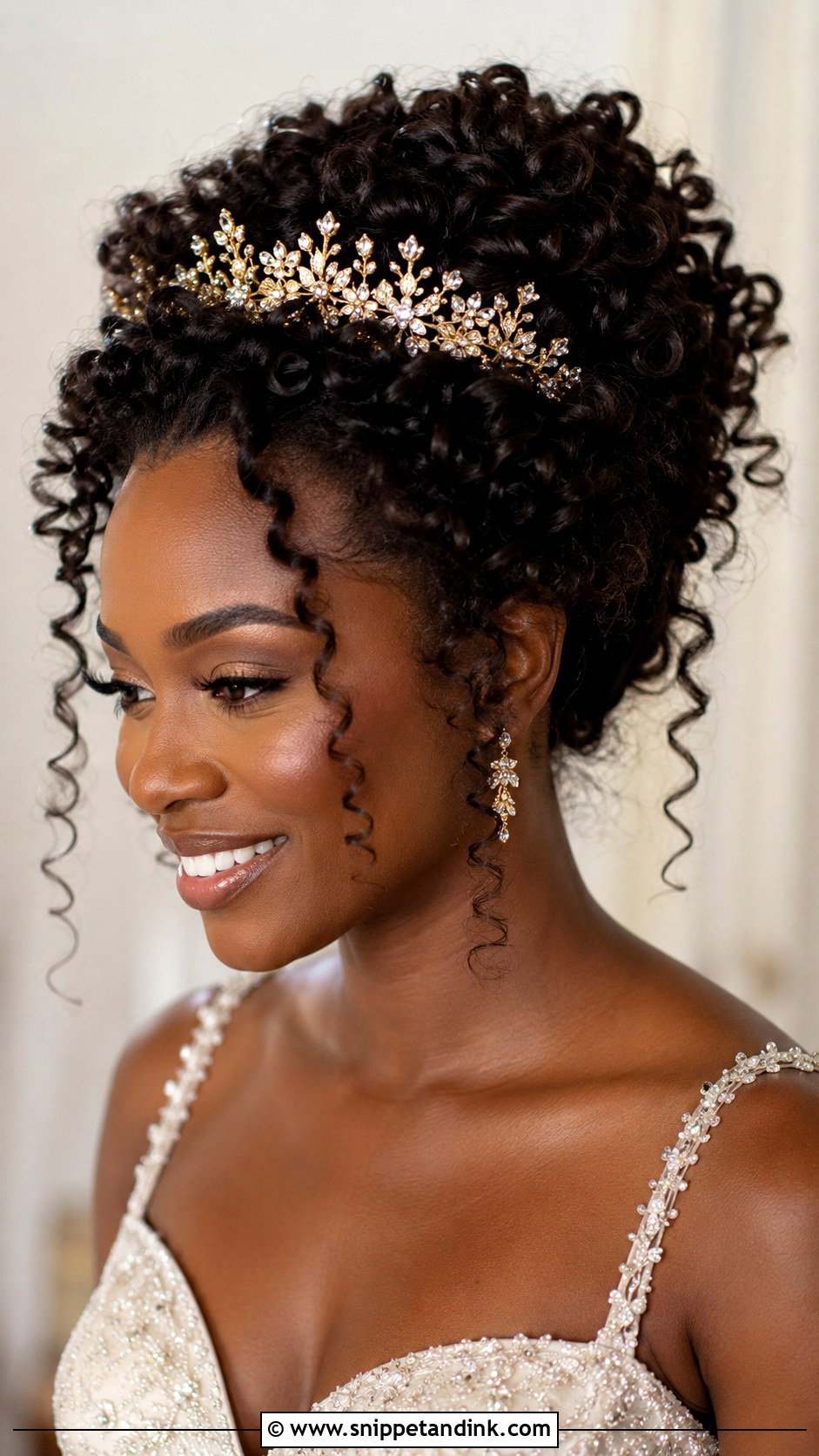
Curls and coils hold a crown better than almost any other texture, because the volume grips the band from both sides. I define and moisturize the curls first, then pin them high, low or slightly back, leaving a few pieces at the face. The crown settles into the curls rather than sitting on top, which keeps it level. Pick one with smooth inner edges and proper combs; rough metal or exposed wire catches on curls and pulls them out of shape when you take it off. The finished updo should look like your own hair, dressed up.
12. Wedding Crown Short Hair
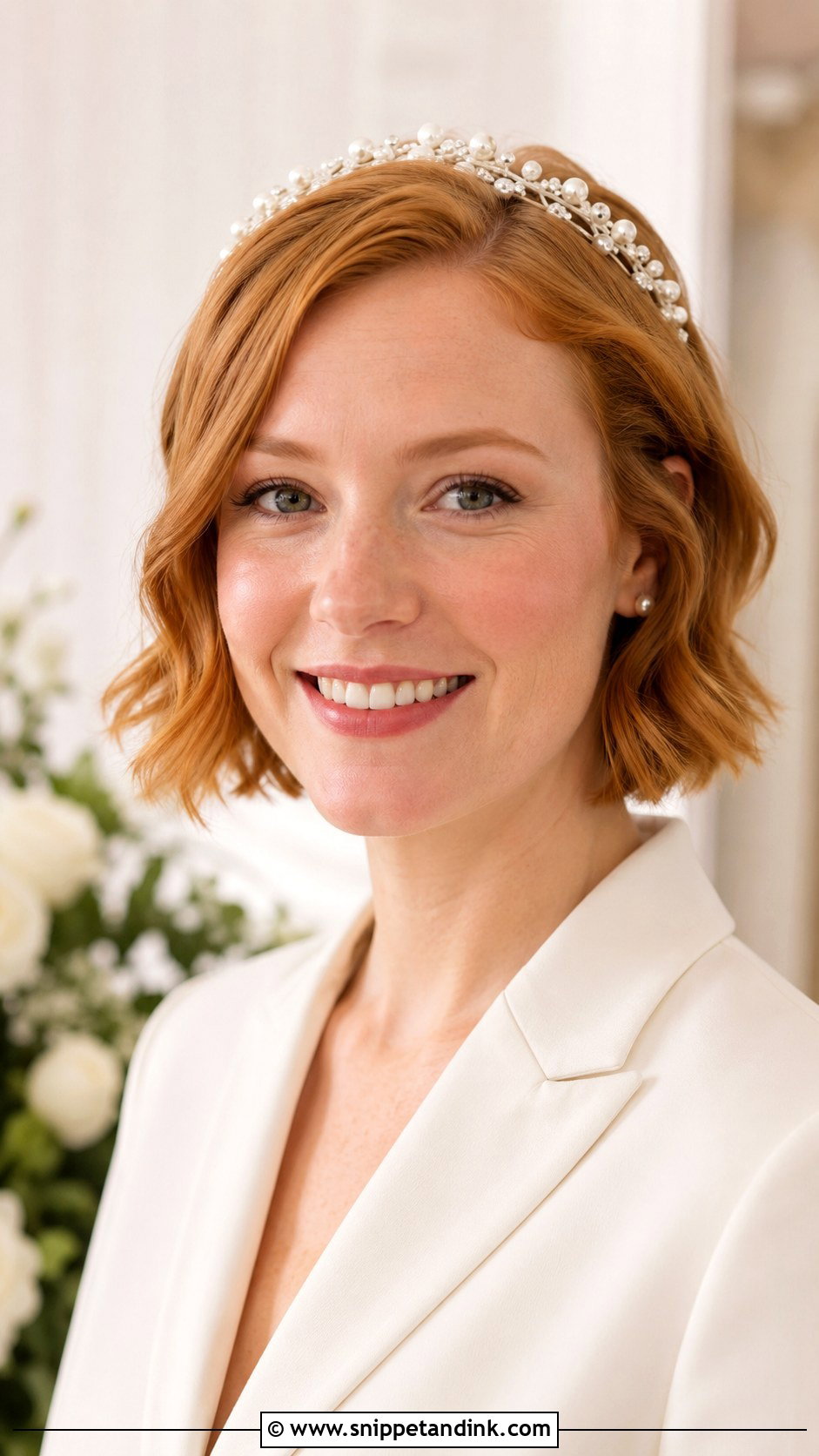
Short hair can carry a crown as well as long hair, and with less weight to fight. A bob, pixie, lob, or cropped cut just needs the right headpiece and the right placement. On a waved bob, I set the crown slightly back from the hairline and soften the texture around the face. On a sleek crop, a slim band that follows the curve of the head looks best. Very short pixies may need bobby pins slid through the crown’s loops, since combs need some hair length to grab. A light setting spray finishes it.
13. Wedding Crown Messy Bun
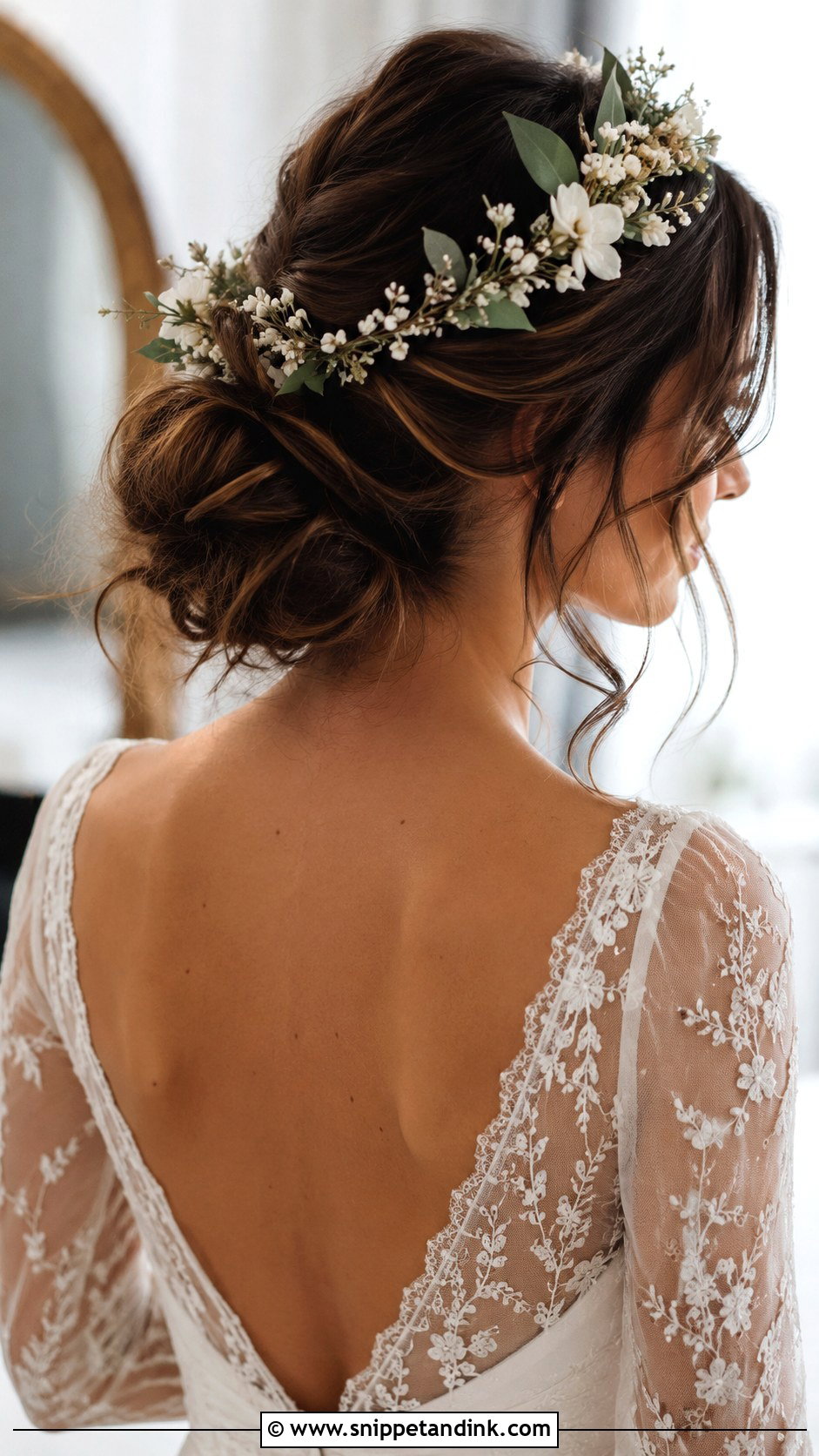
A messy bun still needs a careful build underneath, maybe more than a sleek one. I pin a secure base first, then pull out loose texture on top, so the bun can look relaxed without actually coming apart. The crown pulls it back into bridal territory. Boho weddings, beaches and outdoor venues suit it. Be honest with your stylist about how loose you want it: too much looseness looks unfinished in photos, especially next to a precise crystal tiara. A floral or vine crown sits more naturally in the texture.
14. Wedding Crown Ponytail
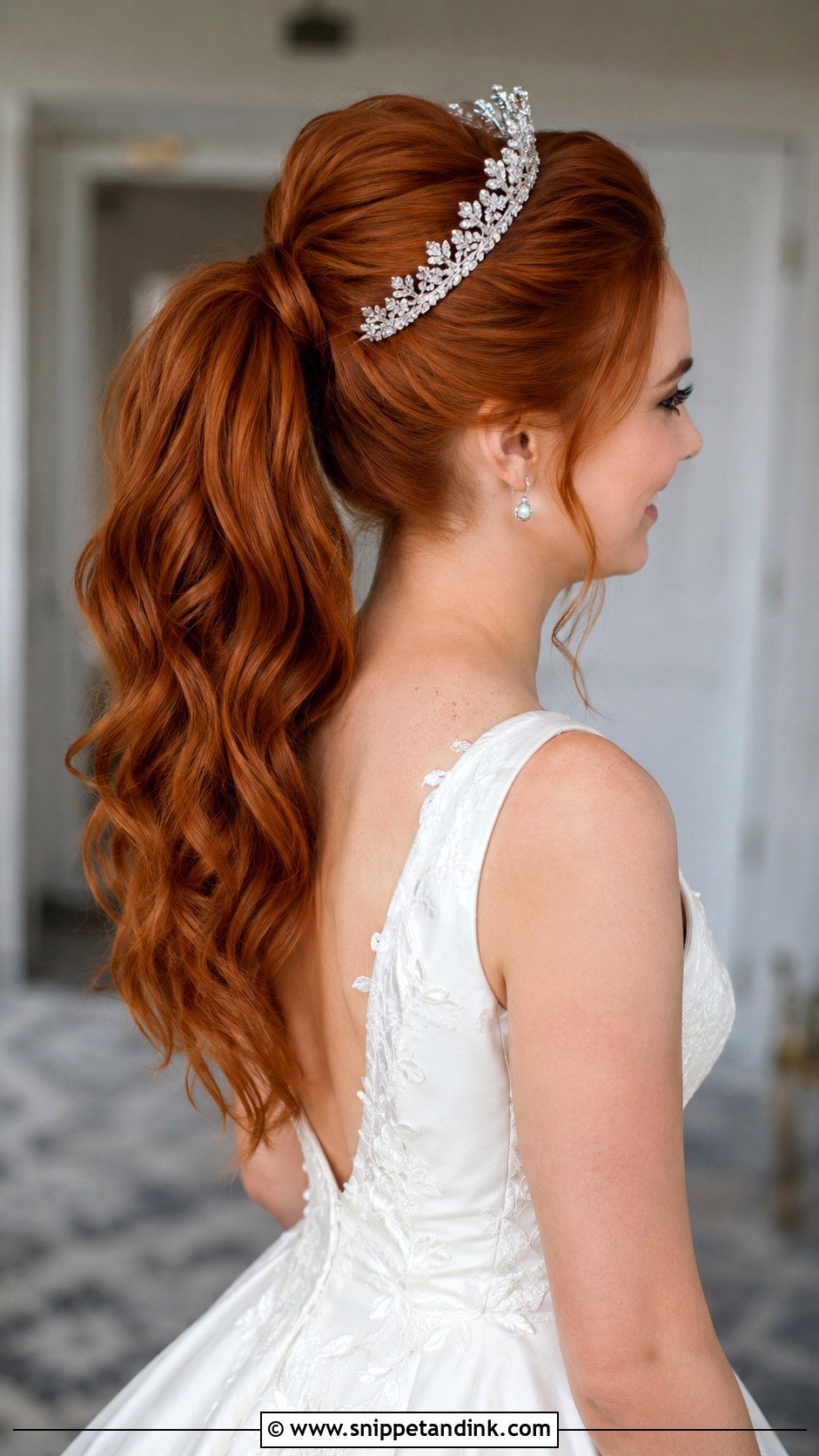
A ponytail with a crown reads modern, and it’s one of the easiest looks to dance in. The tail can be sleek, waved or curled, with the base wrapped in a strand of hair. A crown at the top makes it bridal instead of casual. It’s popular for reception changes, jumpsuits and minimalist gowns. I add volume at the crown area first, because a flat crown makes the tiara look like a headband. Medium to long hair works best, or extensions if the tail needs more weight to swing.


15. Wedding Crown Crown Braid
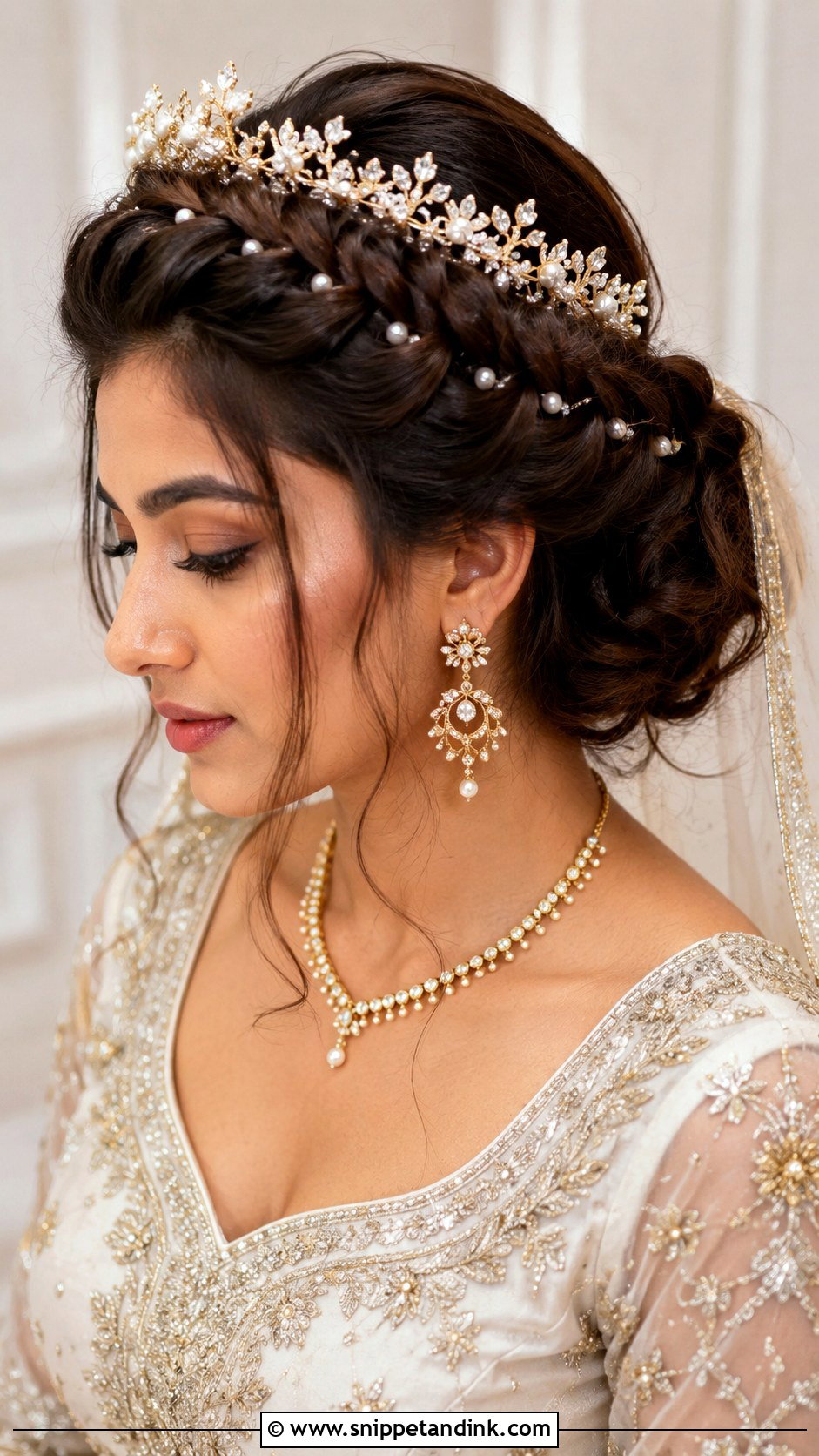
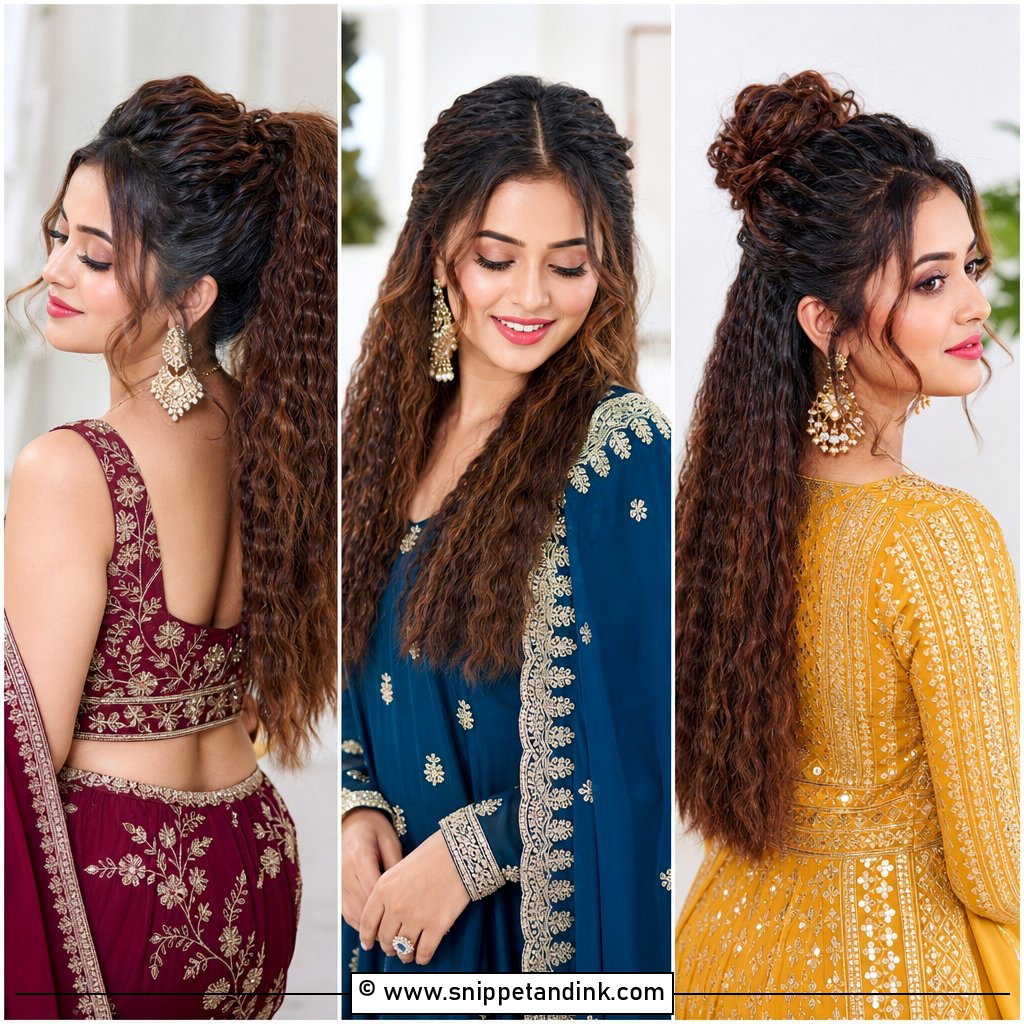
A crown braid already forms a halo, so layering a headpiece into it means the two have to agree. The braid wraps around the head or sits across the top, giving a slim tiara, floral crown or pearl piece a ready-made track to rest in. I slide the headpiece into the braid rather than in front of it, so the braid hides the combs. Rustic venues and garden weddings suit it, and it keeps the neck clear without a bun. Pull the braid apart a little for fullness, and leave a few soft tendrils if you want a gentler frame.
Securing a Headpiece That Came Without Combs
Plenty of crowns arrive as a bare band with two small loops at the ends, or nothing at all. That’s fixable. I build a flat anchor where each end will land, usually a tiny braid or a pin curl, then thread bobby pins through the loops and slide them into the anchor in an X. For a band with no loops, I wrap the ends with thin elastic in your hair color and pin through that.
Don’t bend a crown at home to make it fit. Some metal bands can be shaped slightly, but crystals and pearls can loosen from their settings. Bring it to the trial and let the stylist decide.
Will a Heavy Crown Give Me a Headache by the Reception?
It might, and it’s worth knowing before the day. The pain usually comes from the band ends pressing behind the ears, or from pins pushed in at a steep angle to stop a heavy piece sliding. At the trial, wear it for at least an hour and tell your stylist the moment anything presses.
- Spreading the weight over four or five pins instead of two takes pressure off any single spot.
- A taller crown can come off after the first dance; ask for a style that still looks finished without it.
- If you plan to wear it under a veil, test them together, because the veil adds pull on the same anchor.
Bring the Crown, Not a Picture of It
Crown styles range from classic to boho to sleek, and the difference comes down to how the hair is shaped and where the piece sits. Book a trial with your actual crown, your veil, your earrings and photos of the dress, so your stylist can check the balance, the comfort and the hold together. Think about the weather, your neckline and how you want the hair to look after hours of hugs and dancing. Wear it home after the trial if you can. When it still sits straight and still feels comfortable by evening, you’ve found your style.
You'll Like These Ideas:



Leave a Reply