
Dress shopping is exciting, emotional and, for most brides I dress, a bit overwhelming by the second appointment. There are clean satin gowns, lace with sleeves, short reception looks, bridal suits and soft-coloured dresses, and the right one is rarely the most dramatic on the rail. It’s the one that fits your body, your venue and your comfort level, and the way you’ll want to remember yourself. Minimal gowns, basque waists, bows, detachable sleeves, vintage shapes, pearls, floral appliqué and modern separates are all current. Below are 35 directions, each with the practical detail I’d want you to know before trying it on.
Walking Into a Bridal Appointment With a Plan
Most appointments run about an hour to ninety minutes, and the brides who get the most out of them arrive knowing a few things. Here’s what I’d ask you to bring and do.
- Wear smooth nude underwear and bring a strapless bra if you have one, so every neckline can be judged fairly.
- Bring shoes close to the heel height you plan to wear. Hems are pinned to them, and the whole silhouette changes with an inch.
- Save a handful of photos, and also a few of dresses you dislike. What you rule out tells me as much as what you love.
- Keep your group small. Two or three trusted people give clearer feedback than six opinions at once.
- Say your budget at the start, including alterations, so you don’t fall for something out of reach.
Samples in shops are usually one size, clipped to fit, so imagine the dress taken in or let out rather than judging how it hangs on the hanger. And try at least one shape you’re sure you’ll hate. I’ve watched plenty of brides change their minds the moment it’s on.
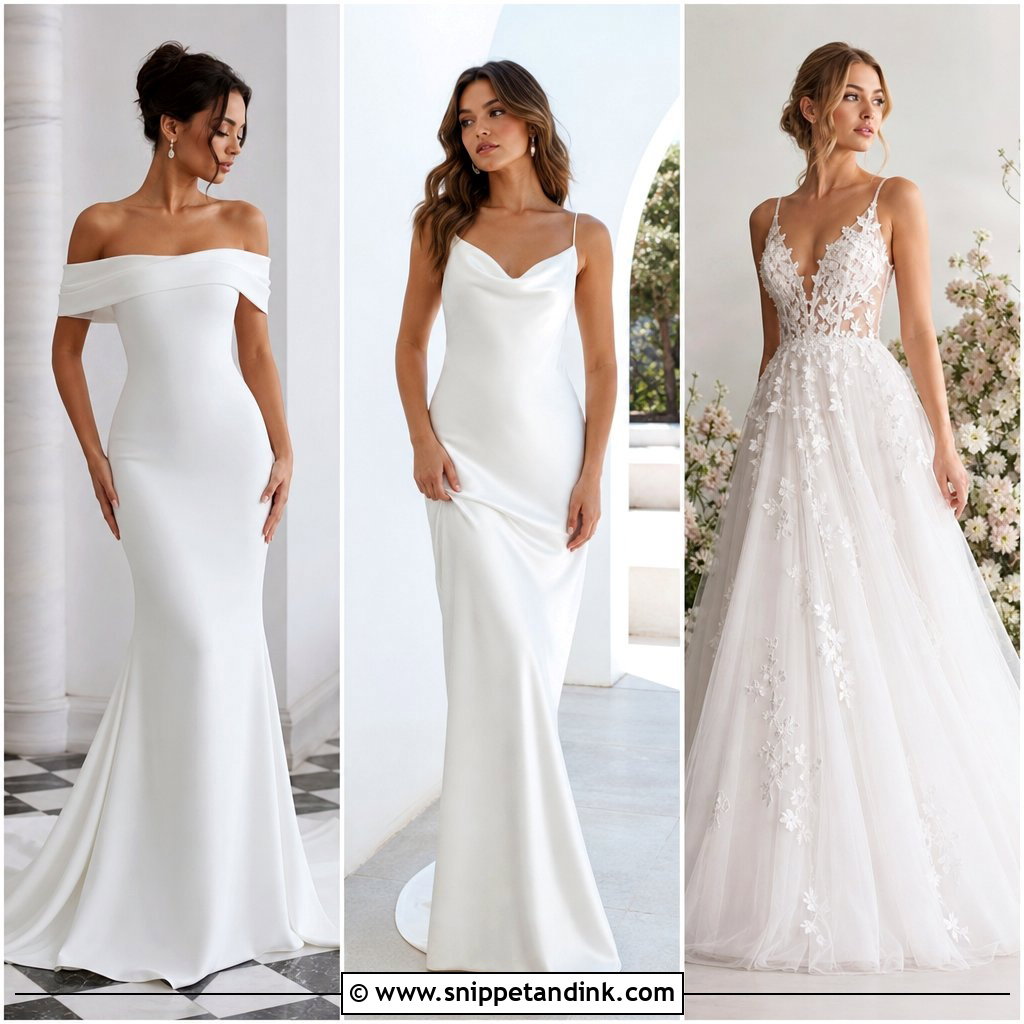
1. Satin A Line Wedding Dress
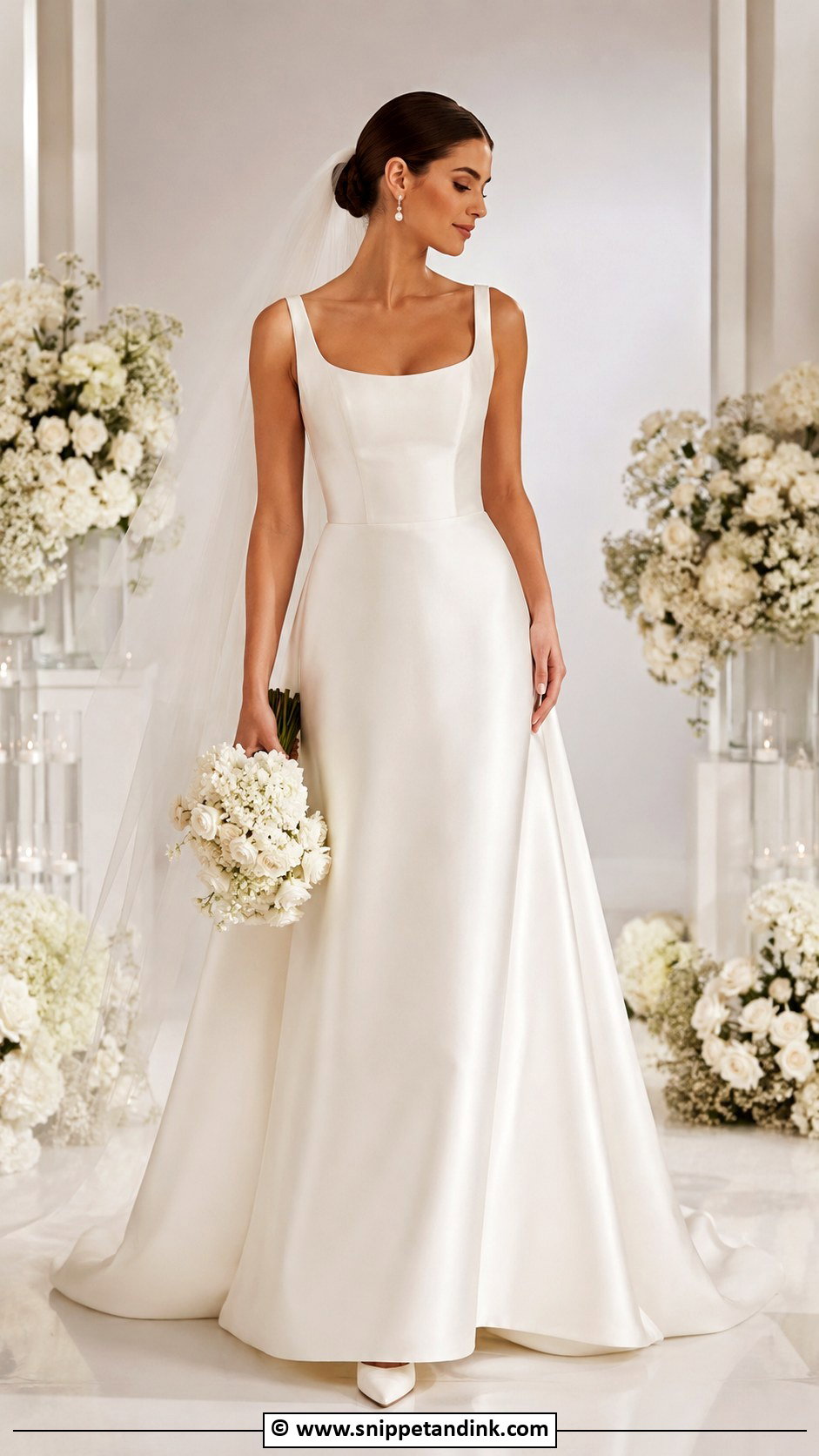
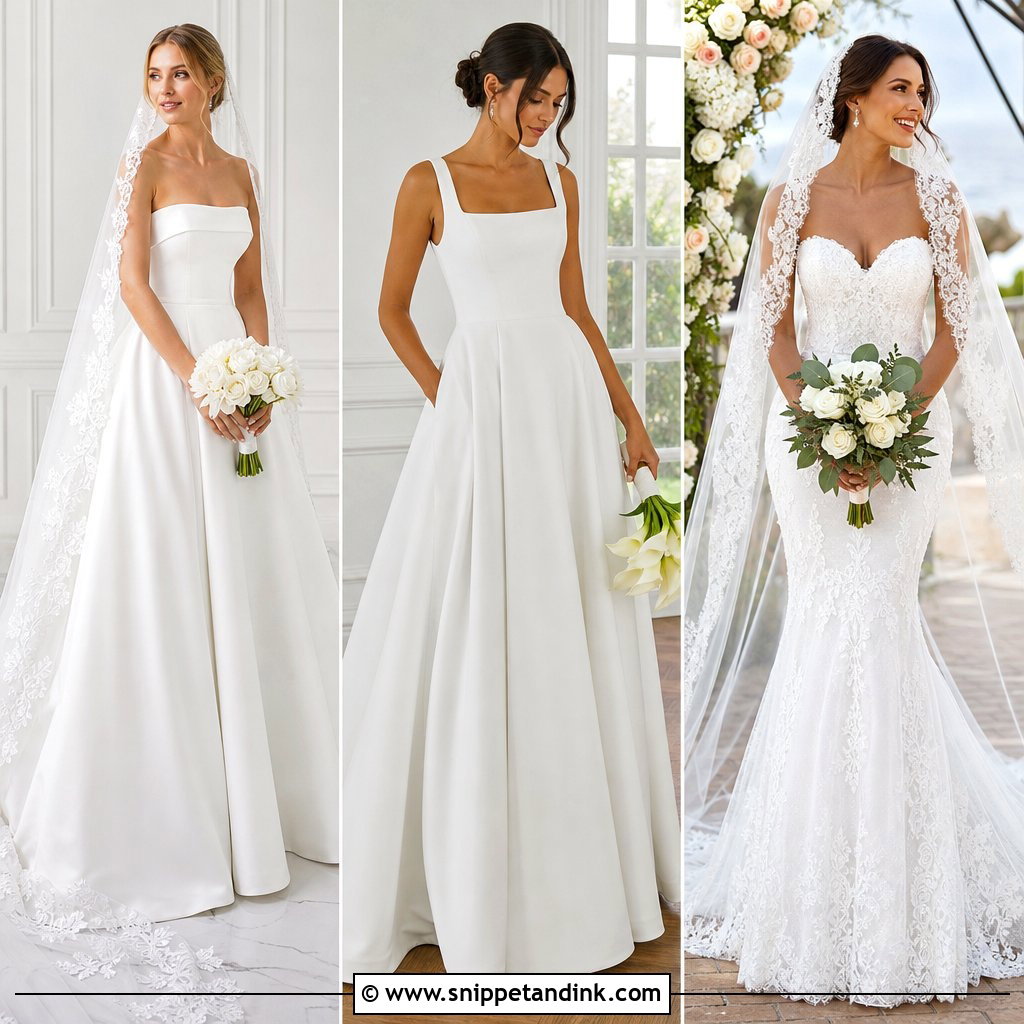
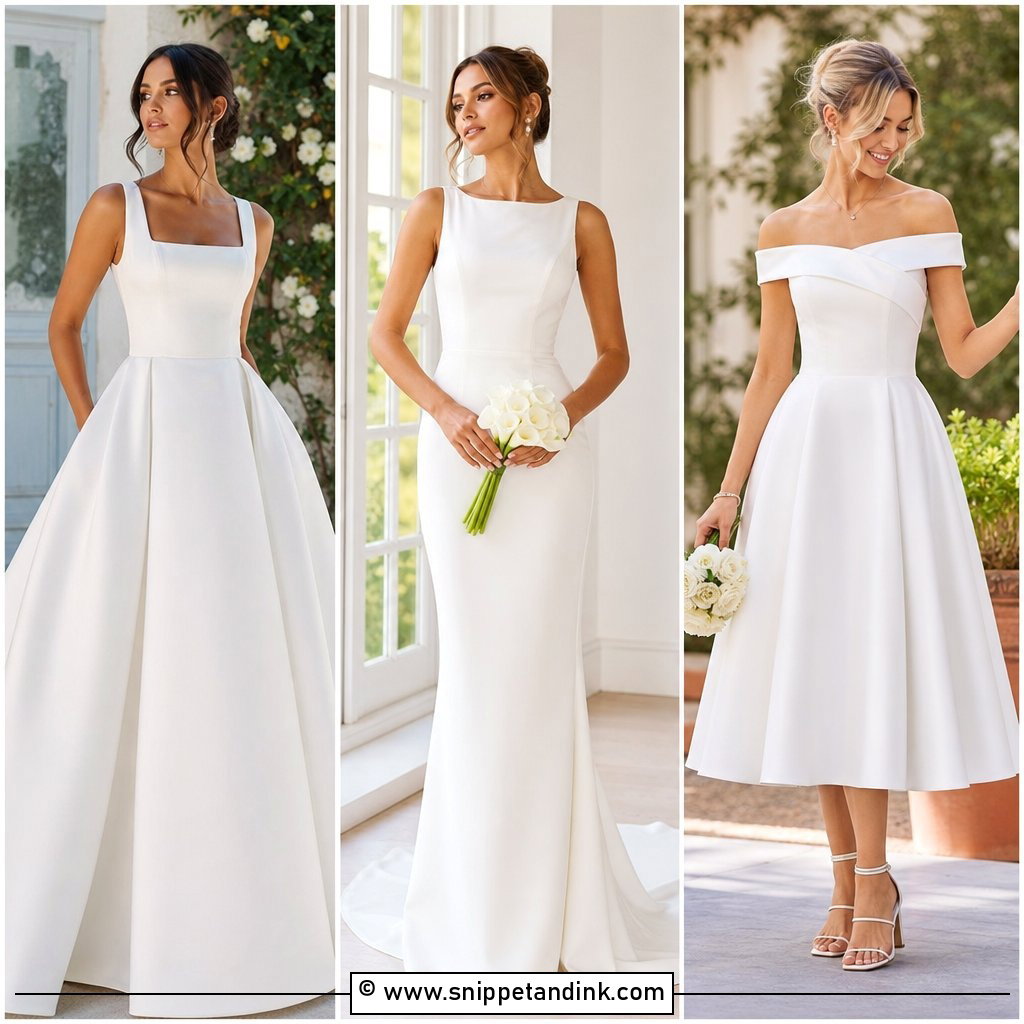
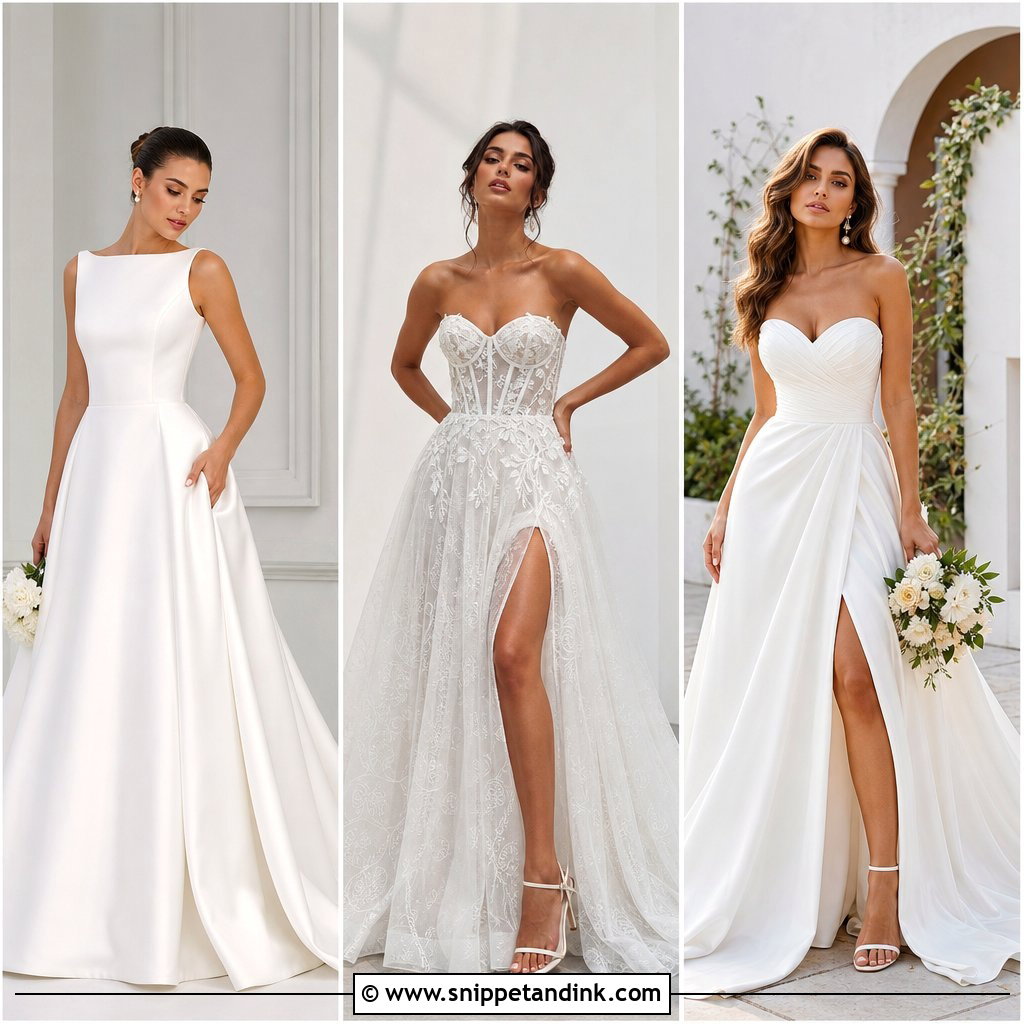
Satin A-lines are the dress I pull most often when a bride says she wants classic but not plain. The fitted bodice shapes the waist and the skirt opens enough to walk, sit and dance easily. Ivory satin reads traditional; a pearl white is brighter. Pointed ivory heels, pearl drops, a low bun and a smooth veil are plenty, with a structured bouquet. Want more drama? Add a long train or buttons down the back. Just remember satin creases where you sit, so a few minutes with a steamer before the ceremony makes a visible difference.
2. Lace Long Sleeve Wedding Dress
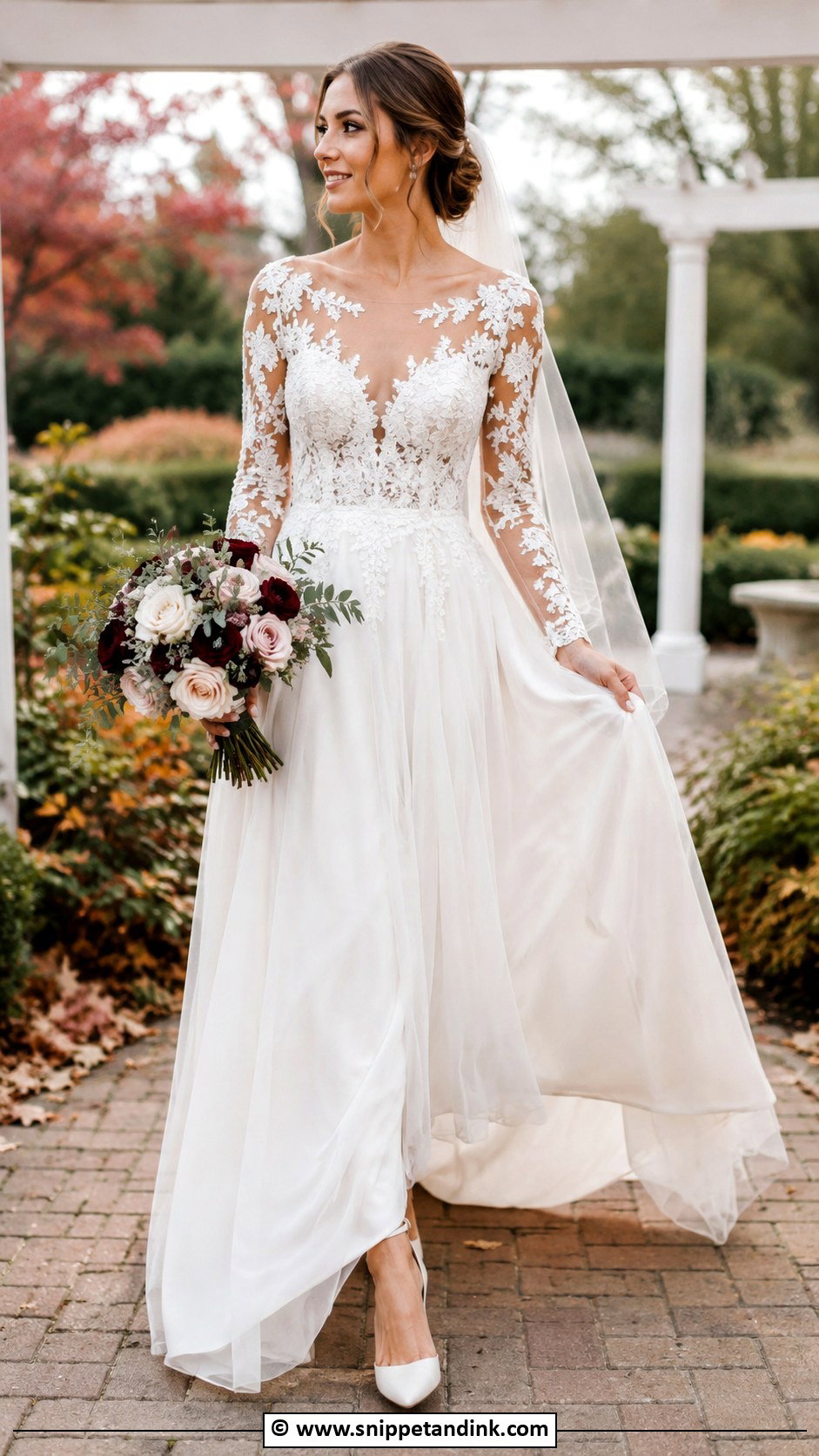
Lace sleeves carry so much detail that the dress barely needs accessories. Fall, winter, gardens, estates and formal indoor venues suit it. A fitted lace bodice over a soft skirt balances the look, and sheer sleeves keep it from feeling heavy. Floral lace is classic; vine-patterned lace looks more natural. Ivory heels, small pearl studs and a plain veil that won’t compete with the sleeves, plus a soft updo to show the neckline. Raise your arms at the fitting, because lace sleeves set too tight at the armhole limit every hug.
3. Minimalist Crepe Wedding Dress
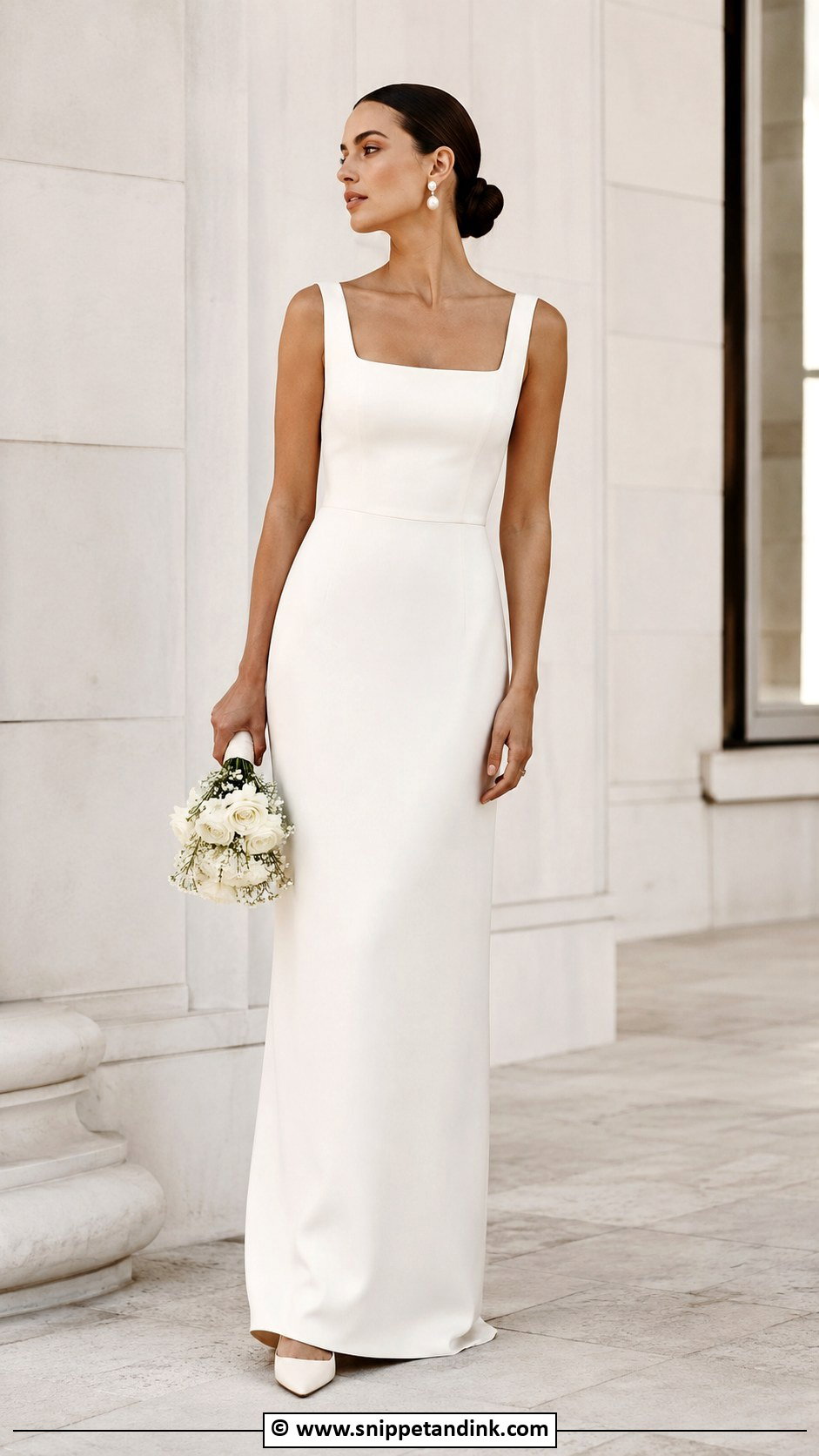
Crepe has a smooth matte finish and skims the body, so a minimalist crepe dress looks sculpted and expensive in person and on camera. A square, bateau or high neck sharpens it. Sleek pumps, a simple veil and one standout piece, pearl earrings or a sculptural cuff, are all it needs; hair in a bun, ponytail or soft waves tucked back. The honest drawback is that crepe shows everything underneath, so this is the dress where your underwear choice matters most. City weddings and modern venues suit it.
4. Strapless Ball Gown Wedding Dress
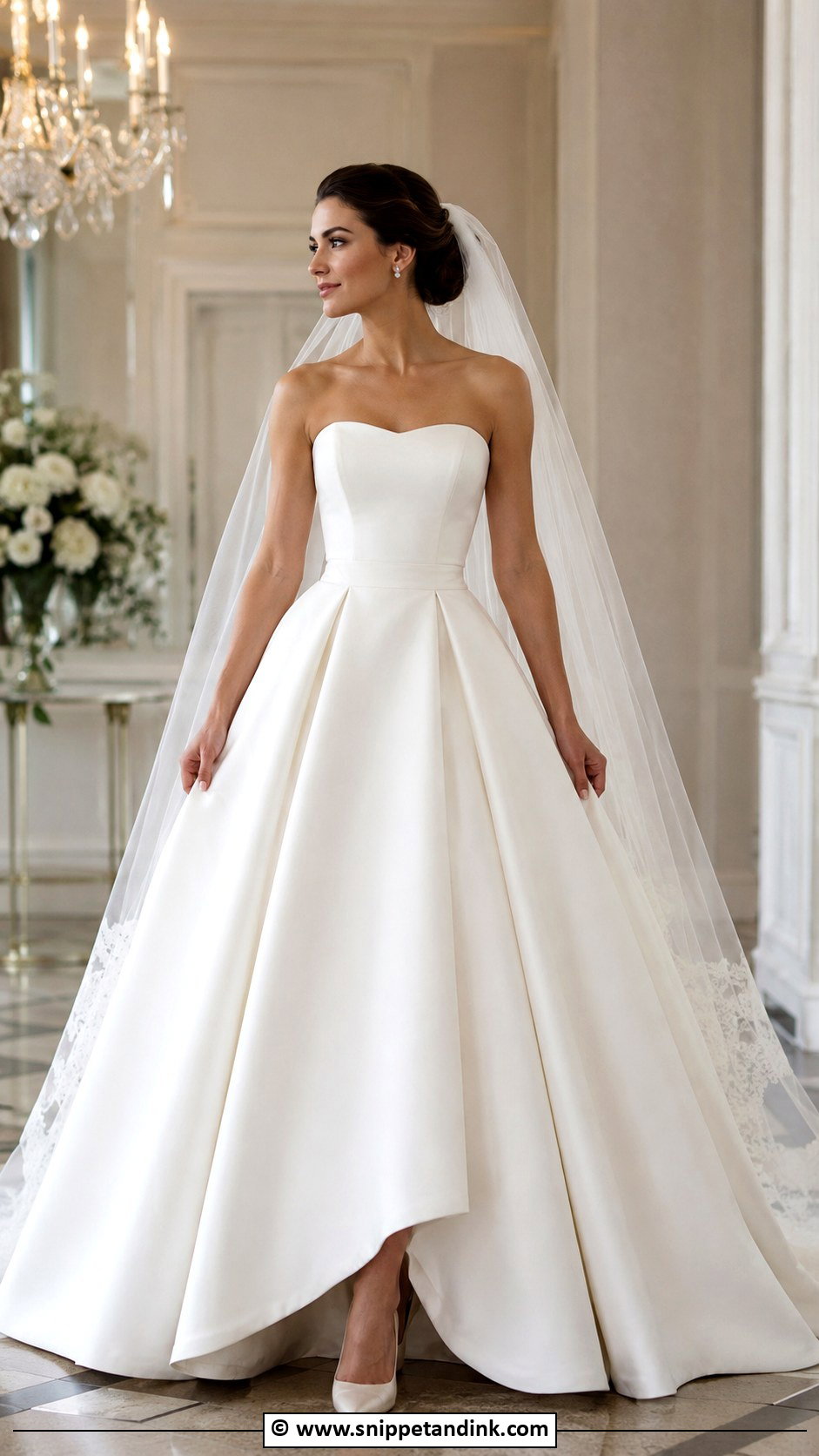
A strapless ball gown wedding dress is the classic bridal silhouette: a fitted bodice and a full skirt with real volume. It’s dressed-up with a clean, open neckline. Satin, mikado and organza give the most structure. Wear a cathedral veil for the ceremony and swap to a shorter veil or hair bow for the reception. Simple earrings and a polished necklace finish it. Full skirts are heavier than they look on a hanger, so ask the consultant to let you walk the length of the shop in one before you decide. Grand venues, hotels, museums and ballrooms suit it.
5. Off Shoulder Wedding Dress
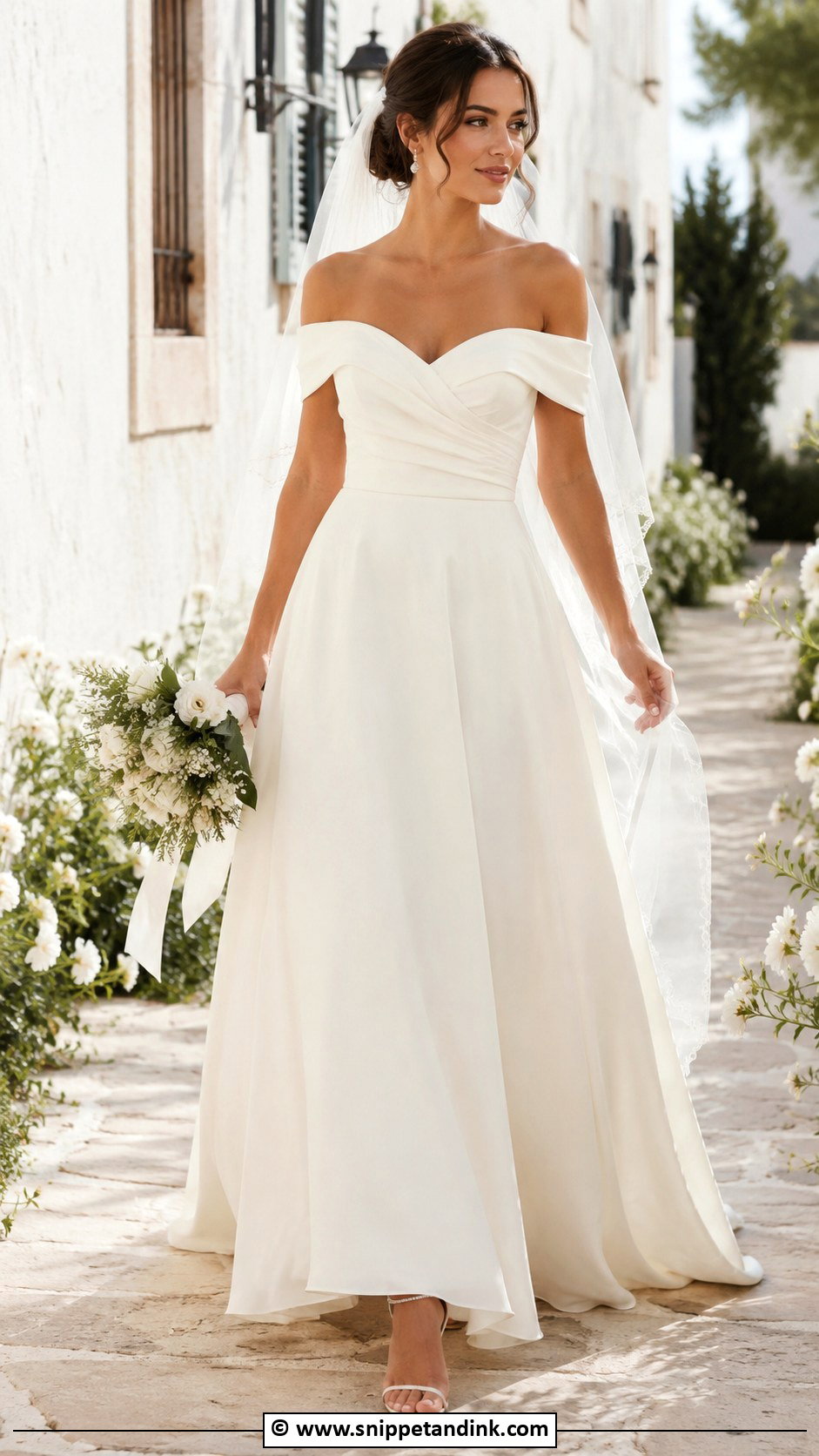
Off-shoulder necklines frame the collarbone and shoulders and work across many silhouettes, fitted mermaids to flowing A-lines. Satin or lace looks classic; tulle, chiffon or organza is softer. Drop earrings, a loose updo and a fingertip veil keep the neckline visible, with ivory heels or delicate sandals. It gives you a sleeve-like line while leaving the shoulders open. The band across your upper arms limits how high you can reach, which I always demonstrate at a fitting so it isn’t a surprise during the bouquet toss.
6. Square Neck Wedding Dress
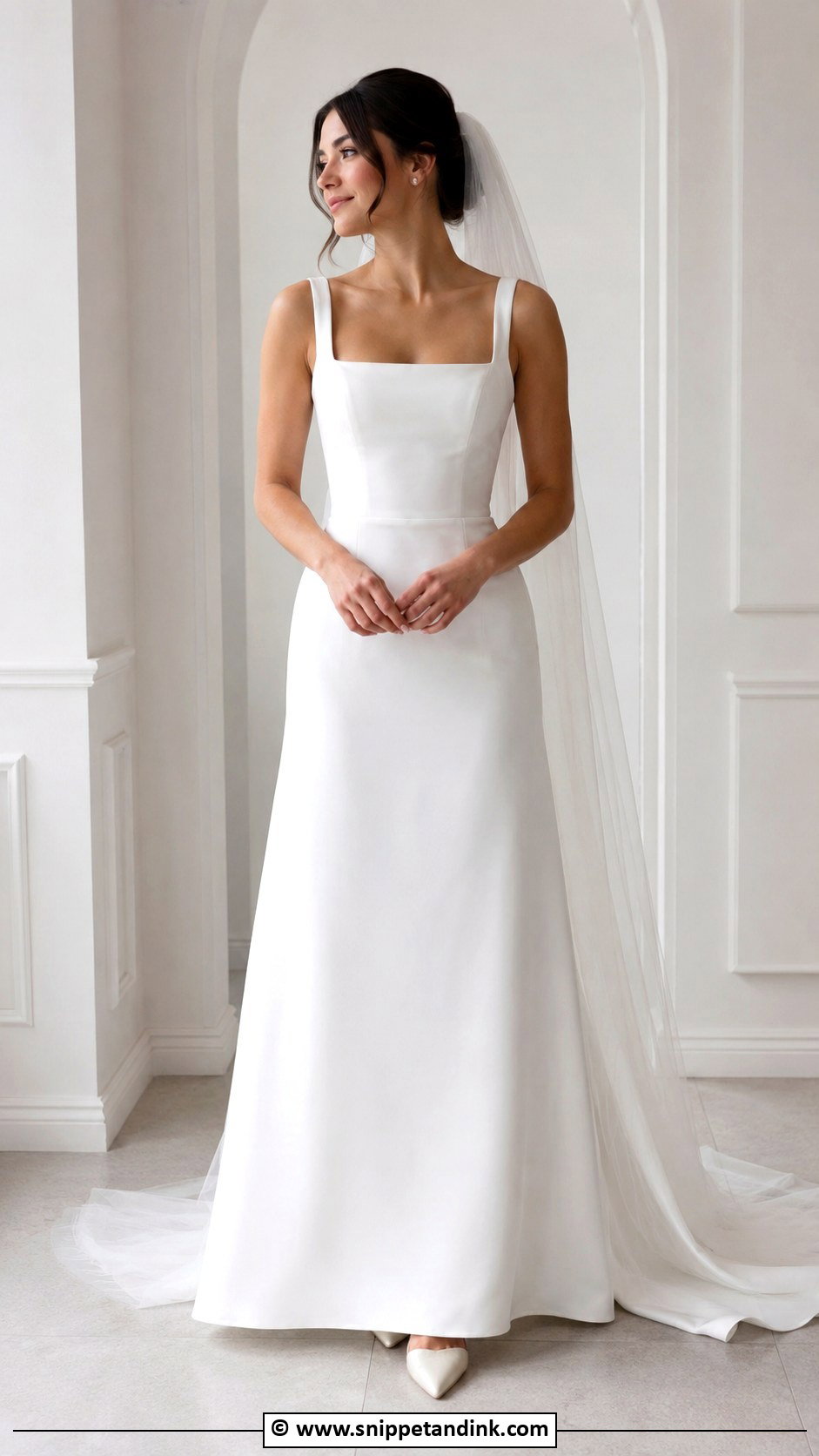
Square necks are simple and quietly modern, structured but soft. They suit satin, crepe, lace or a corset-style bodice, and they work with almost any hairstyle, from loose waves to a sleek bun. Pearl studs, a fine bracelet and a simple veil are enough. With a full skirt, keep shoes classic; with a slim column, try pointed pumps or strappy heels. It’s a neckline that won’t date quickly. Watch the corners: they should lie flat when you lean forward, otherwise they gape in side-on photos.
7. Basque Waist Wedding Dress
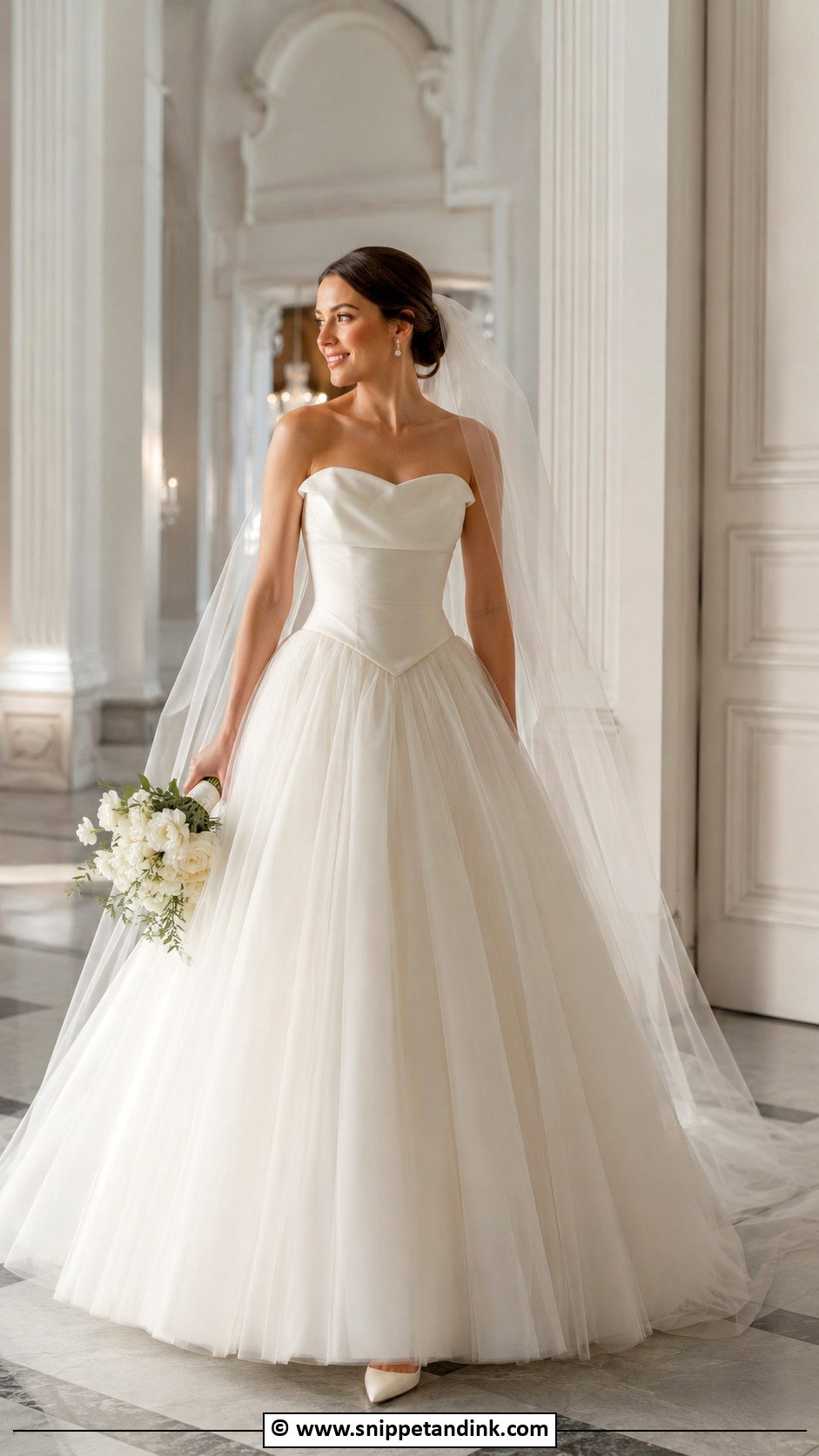
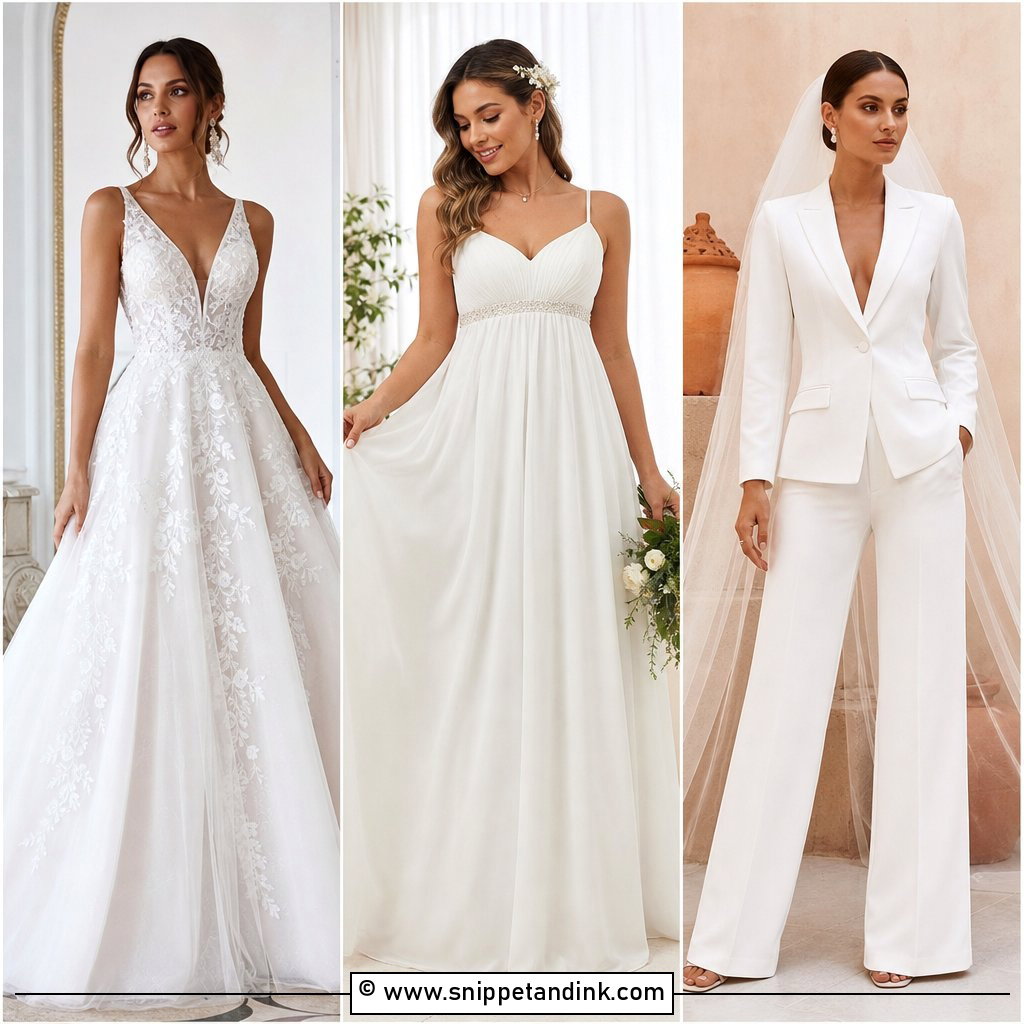
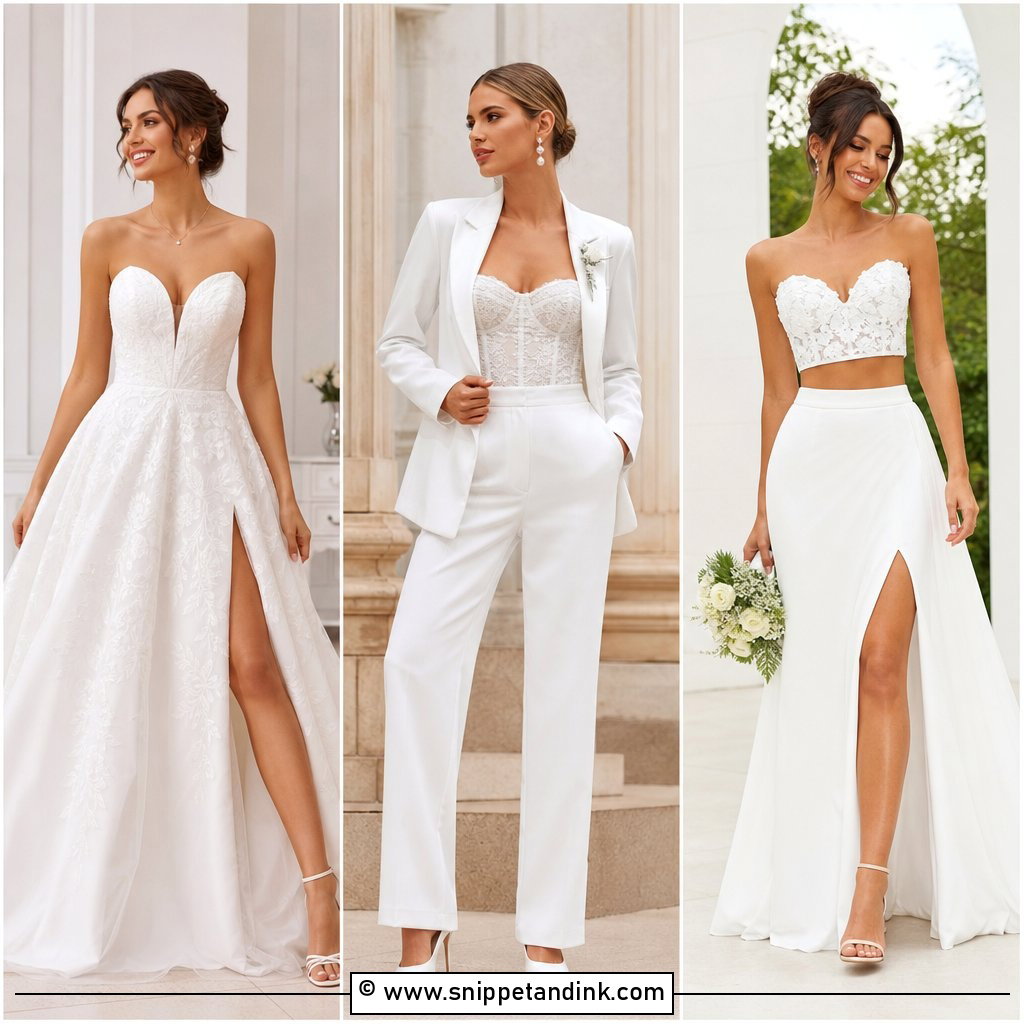
A basque waist wedding dress dips to a soft point at the front of the waist. It feels classic while looking current, and with a full skirt it lengthens the torso without turning costume-like. Satin, mikado or tulle give a structured finish. A long veil, pearl earrings and simple ivory heels suit it, and a corset-style bodice adds more definition. The point has to sit dead centre, so I check it from the front and side with the bride standing naturally.
8. Drop Waist Wedding Dress
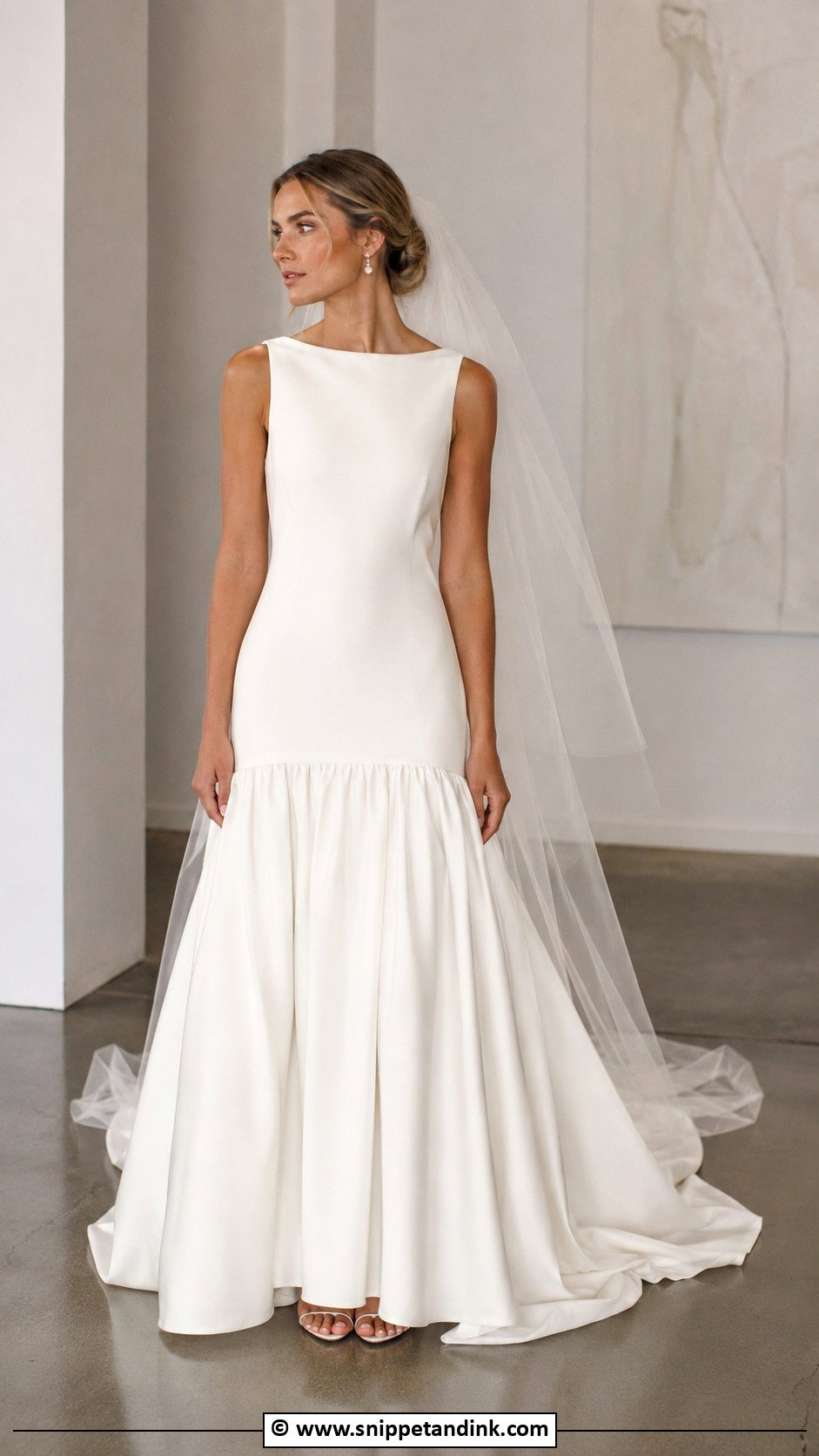
Drop waists move the seam down toward the upper hip, giving a long smooth line through the torso. Satin makes it polished, lace soft, tulle dreamy. Simple heels, a long veil, delicate earrings and a streamlined bouquet keep the proportions balanced. Be honest about your body here. It flatters a longer torso and straighter hips most, and on a short-waisted bride it can shorten the legs, so try it next to a natural-waist dress before deciding.
9. Pearl Embellished Wedding Dress
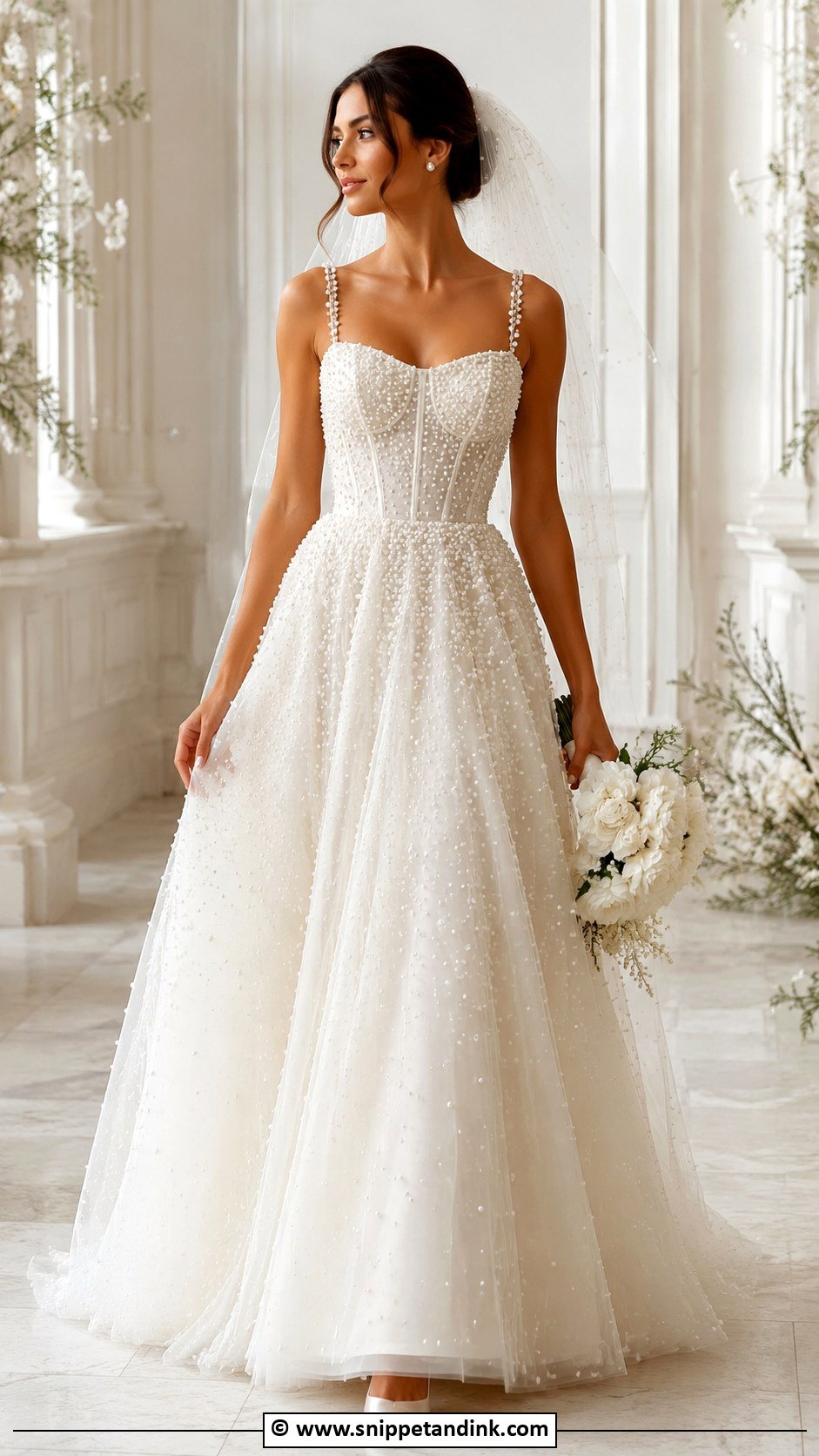
Pearls add texture and a soft glow without heavy sparkle, scattered across tulle, lace or crepe. A fitted gown with pearl straps or pearls along the neckline feels modern; a sheer overlay with tiny pearl accents feels romantic. Since the dress already has detail, pearl studs, satin shoes and a smooth veil are enough, with a low chignon or soft waves. I’d ask how the pearls are attached. Hand-sewn ones survive a day of hugs far better than glued ones.
10. Floral Applique Wedding Dress
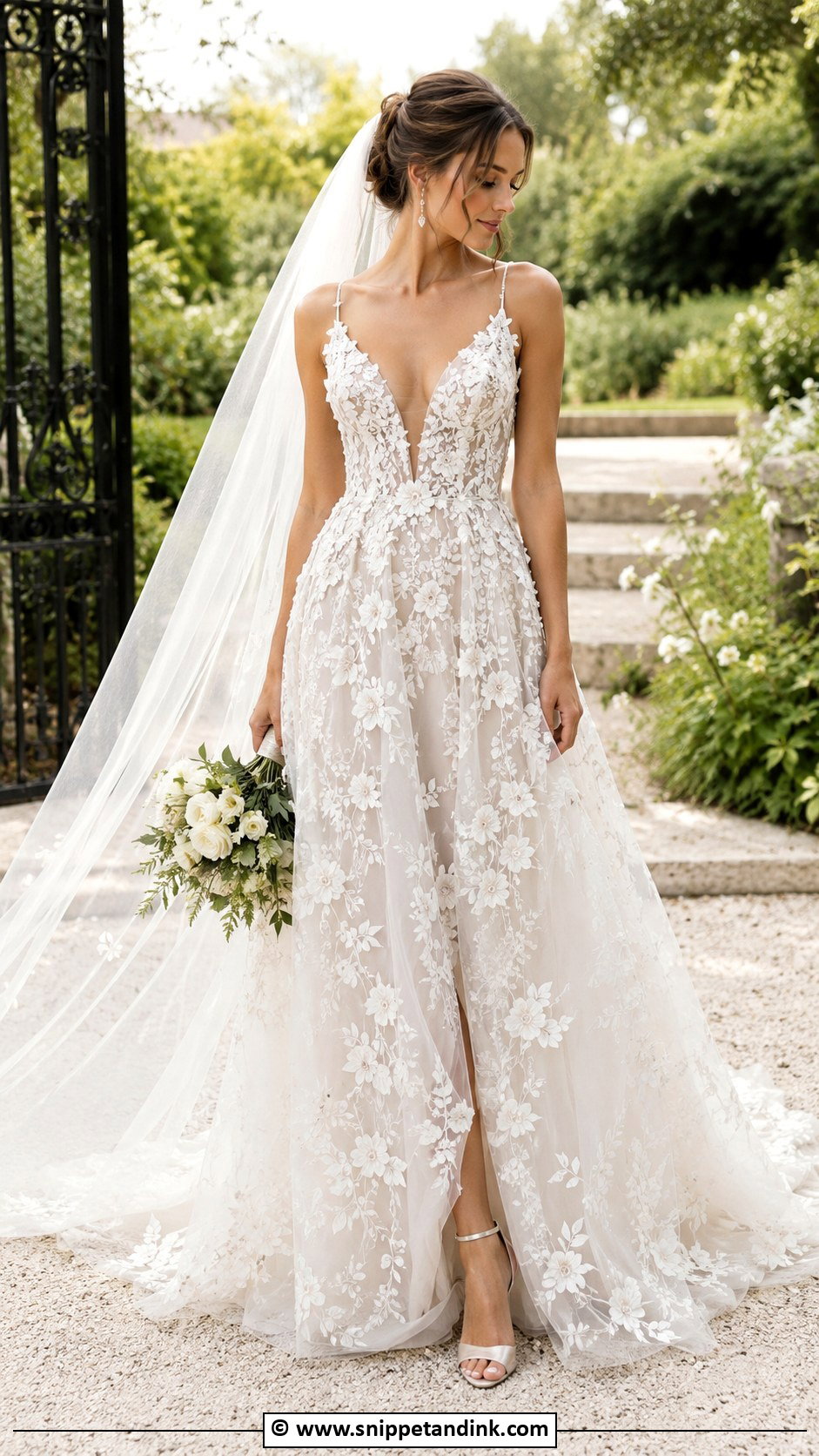
Floral appliqué brings raised texture and a garden feel. The flowers can be subtle or bold and dimensional, and they look best when they trail from a fitted bodice into the skirt. Spring, summer and outdoor venues suit it. Simple heels, soft earrings and a veil with minimal trim keep the flowers in focus, with a loose updo or half-up style. Large 3D flowers on the skirt get crushed when you sit and complicate the bustle, so ask how the train lifts before buying.
11. Tulle Princess Wedding Dress
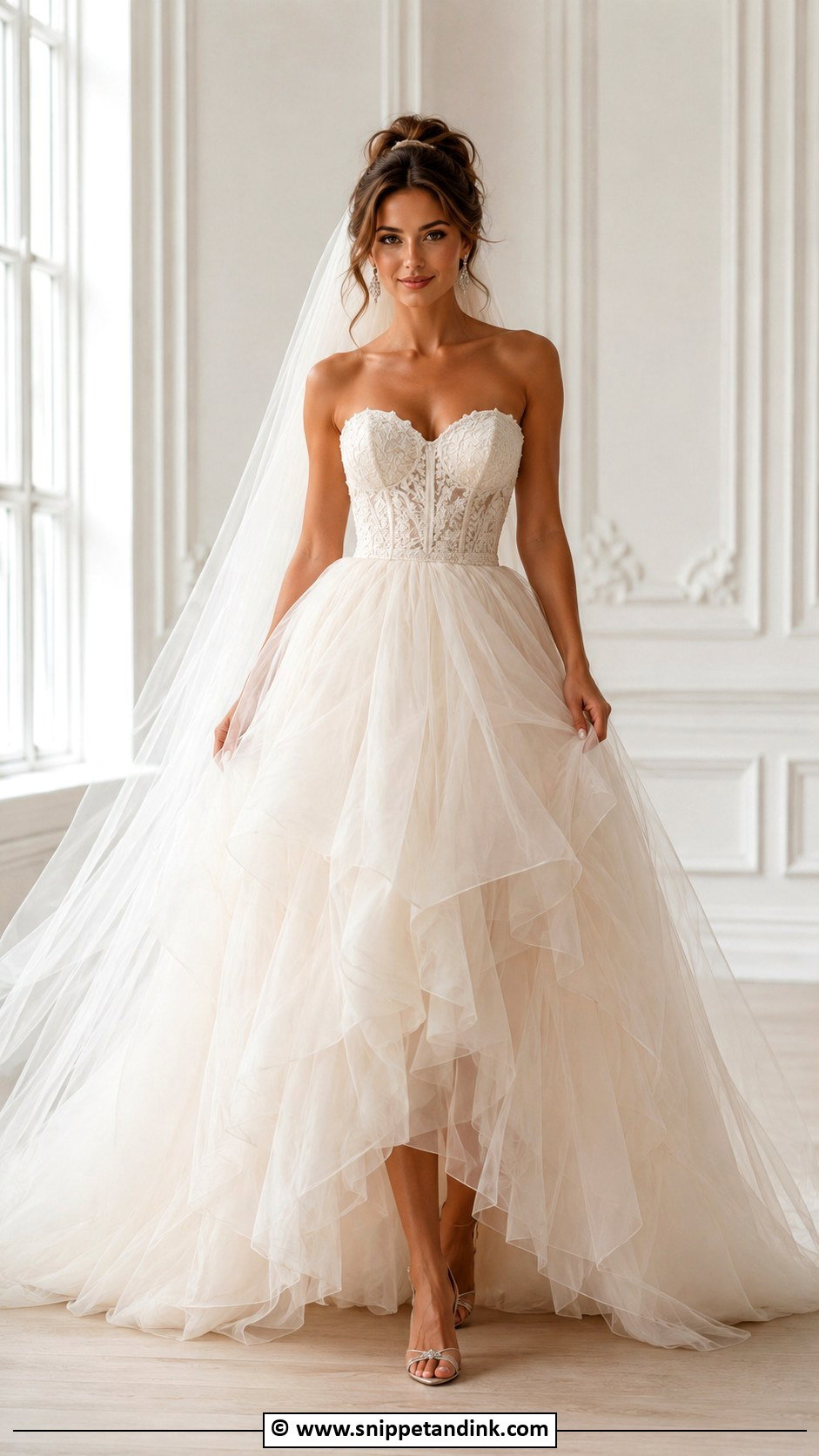
Tulle princess gowns give softness and volume while staying airy, since tulle is light even in a full skirt. A fitted bodice balances all that volume. Plain tulle reads clean; layered tulle with lace reads romantic. Delicate heels, a soft veil and earrings that catch the light suit it. Keep the bouquet medium-sized so it doesn’t hide the bodice. Tulle snags on rough stone, brick and bouquet wire, so it’s worth a quick look at the venue’s surfaces.
12. Simple Slip Wedding Dress
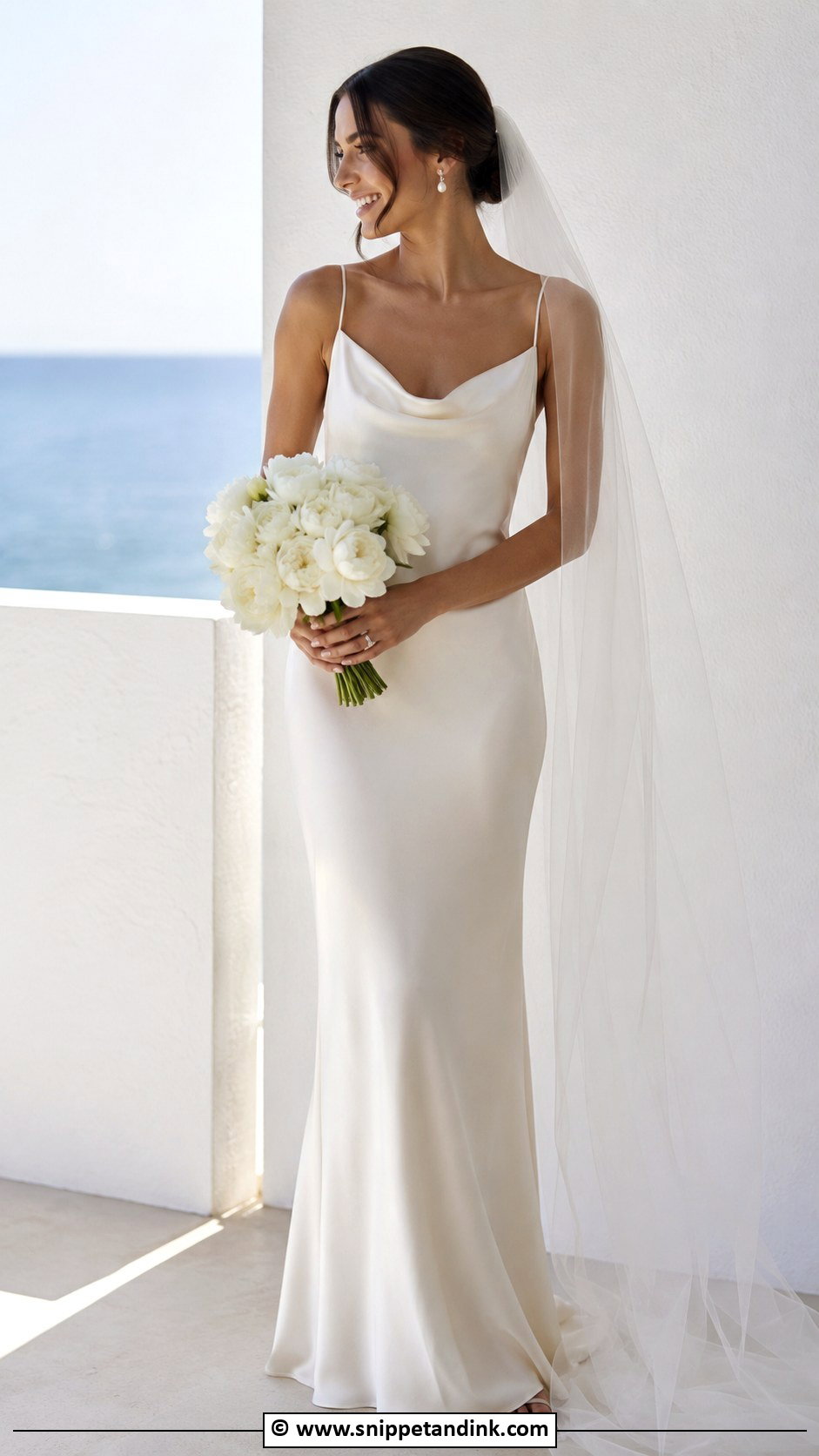
The slip is sleek and relaxed, with a 90s ease that suits beaches, courthouses and intimate celebrations. Silk or satin cut on the bias gives the most fluid movement and skims the body. Barely-there heels, pearl earrings and a soft veil or hair scarf finish it. For more coverage at the ceremony, add a tailored blazer or sheer cape. Long-stemmed or soft white flowers keep the bouquet simple. A bias-cut slip shows every line underneath, so plan smooth underwear before you shop for it.
13. High Neck Wedding Dress
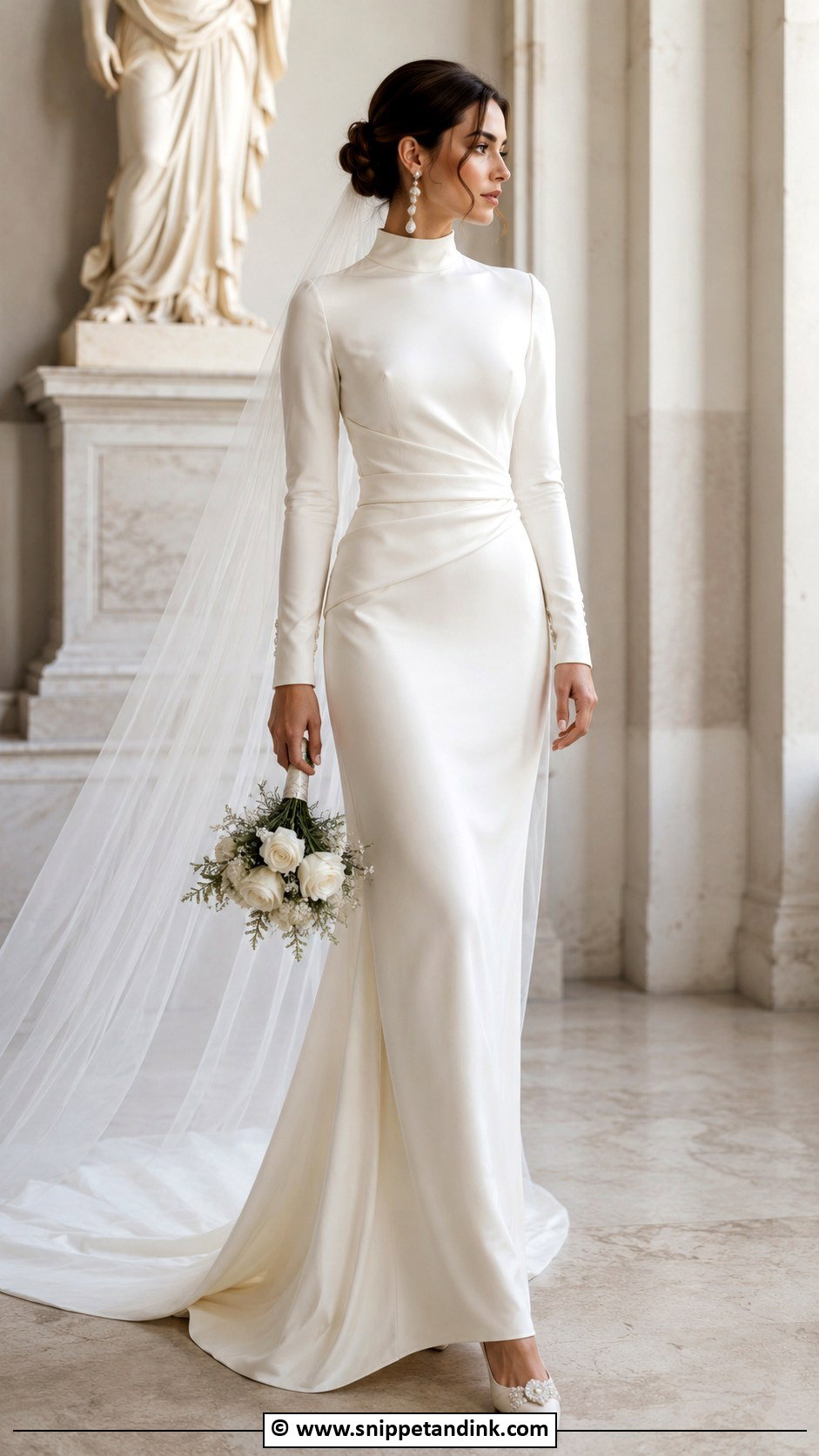
A high neck draws attention to the face and posture, so it suits an updo and statement earrings. It works with slim gowns, lace bodices or structured satin. With long sleeves, keep accessories minimal; sleeveless, a bracelet or fine ring stack is fine. Ivory pumps and a long veil finish it. Coverage up to the throat holds heat, though, so for a summer afternoon outdoors I’d steer you toward lace or illusion rather than solid satin.
14. Halter Neck Wedding Dress
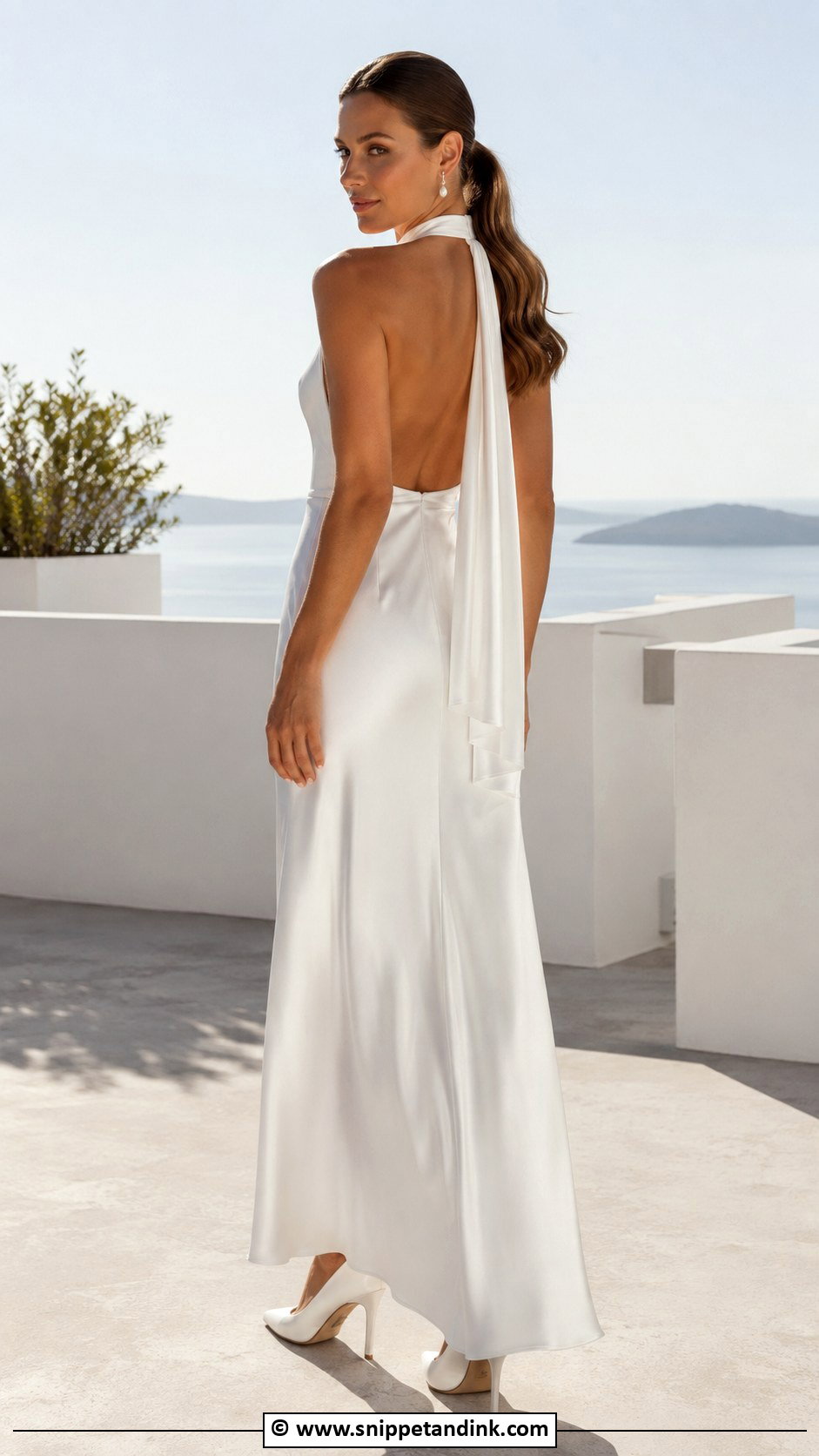
Halters highlight the shoulders while the bodice gives support, which makes them practical as well as sleek. Satin looks modern, lace softer. Wear a smooth bun or ponytail so the neckline shows, and earrings rather than a necklace. Strappy heels or pointed pumps depending on the venue. On heavier fabrics the neck strap carries weight, so ask whether it’s adjustable; a halter pulling at the back of the neck gets uncomfortable by the reception. Destination weddings and city ceremonies suit it.


15. Corset Bodice Wedding Dress
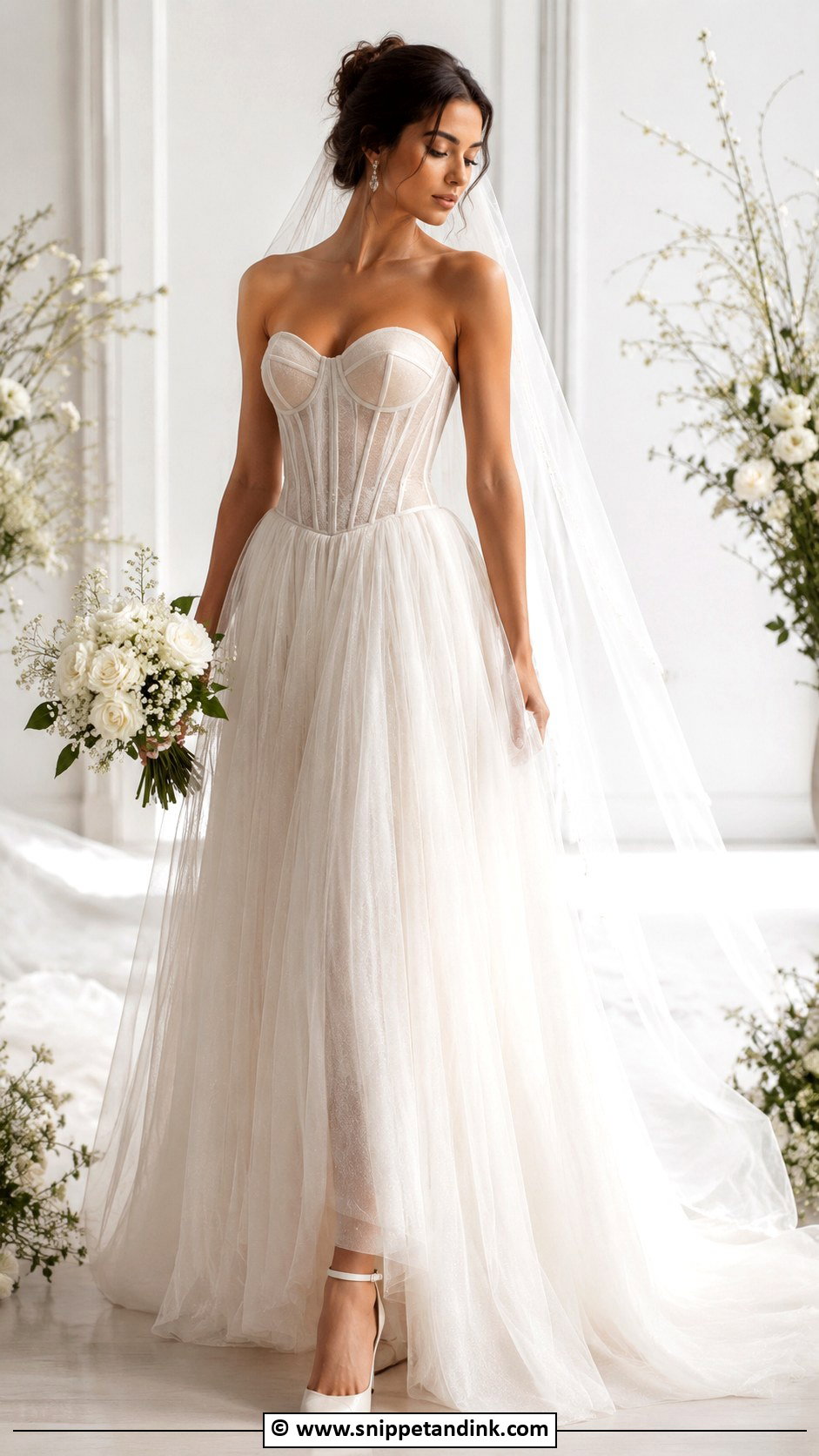
A corset bodice gives structure and a defined waist. With a full tulle skirt it feels soft; with satin or crepe, sculpted. Covered boning or subtle seams give support without looking too exposed. A veil, delicate earrings and classic heels finish it, with a soft updo or loose waves to balance the structure. A well-made corset should hold you without pinching, so sit through a meal-length conversation at the final fitting and see how it feels after twenty minutes.
16. Bow Back Wedding Dress
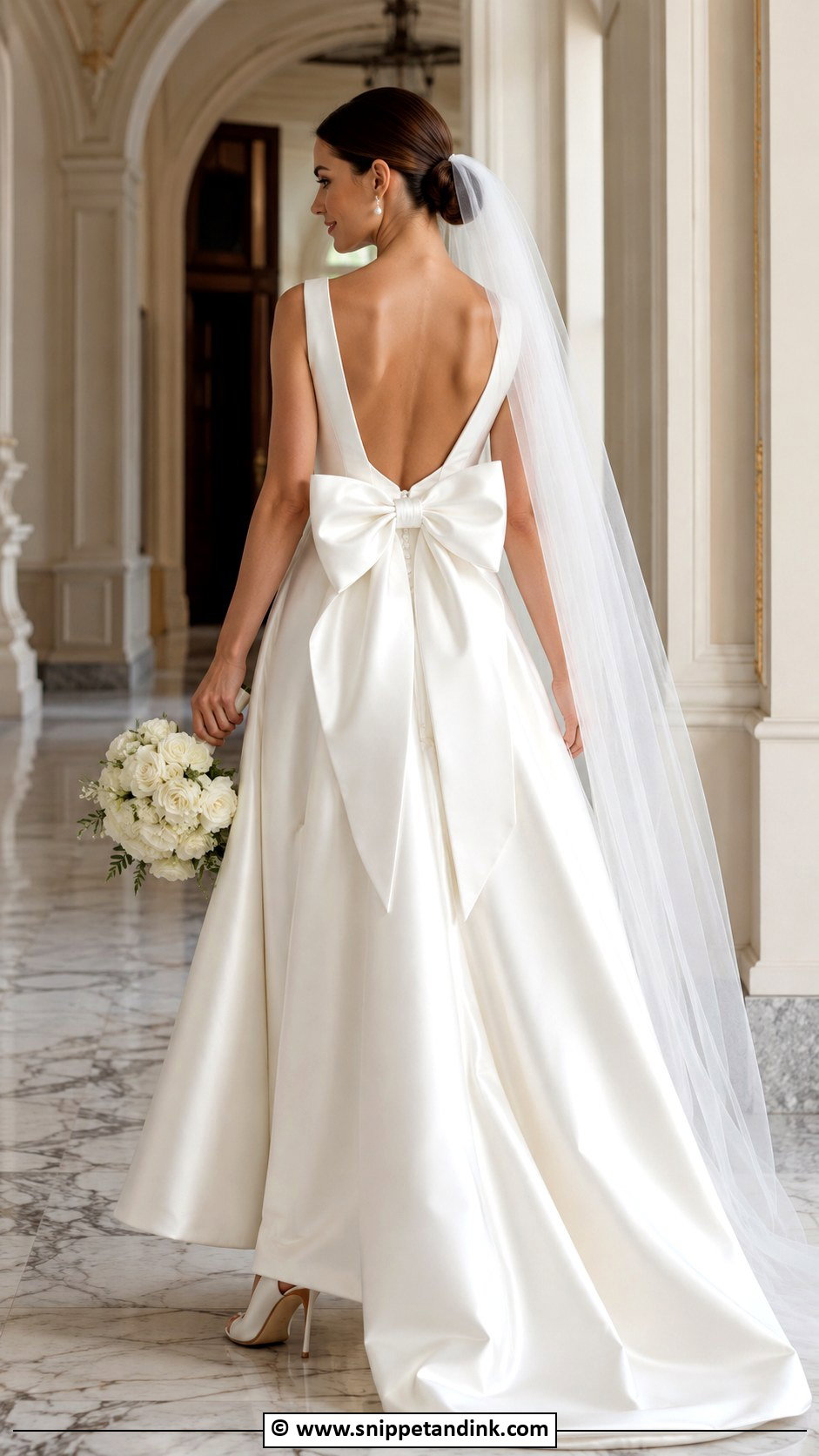
A bow at the back gives a surprise as you walk away. It can be small, oversized or detachable. Plain satin, mikado or crepe lets it stand out without lace or sparkle. Wear a clean veil for the ceremony, then remove it so the bow takes over. Minimal jewelry, sleek ivory heels and a low bun keep the back visible. A big structured bow gets crushed against a dinner chair, which is why I like detachable versions.
17. Detachable Sleeve Wedding Dress
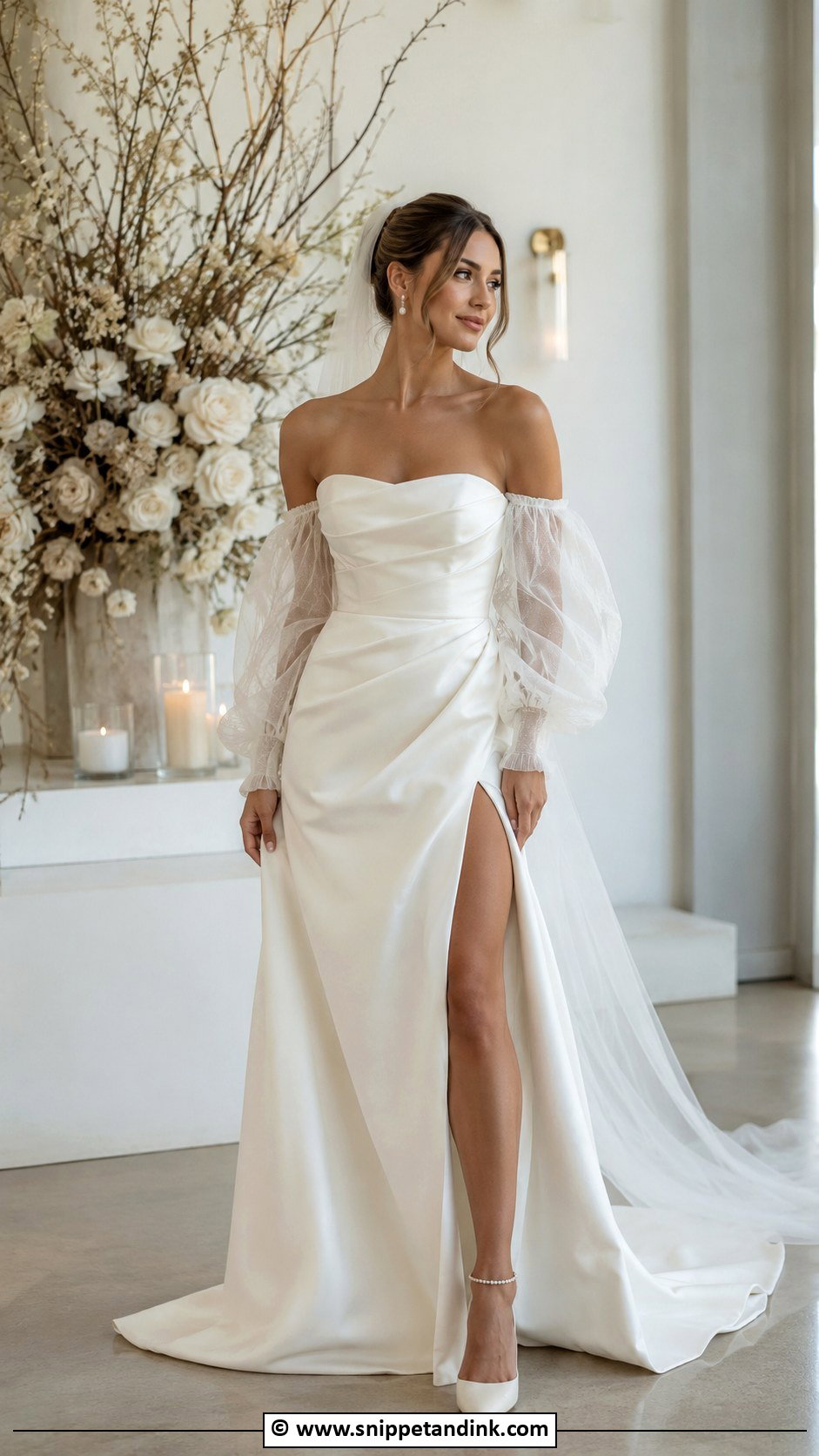
Detachable sleeves give two looks without buying two dresses. Wear them for the ceremony and take them off for the reception. Puff sleeves feel romantic, fitted lace classic, sheer tulle soft. Choose a gown with a clean bodice so the sleeves look deliberate. Pearl earrings, a veil and comfortable heels suit it, then add a bracelet or bolder earrings when the sleeves come off. Check the join at the armhole; it should sit flush with no gap.
18. Detachable Overskirt Wedding Dress
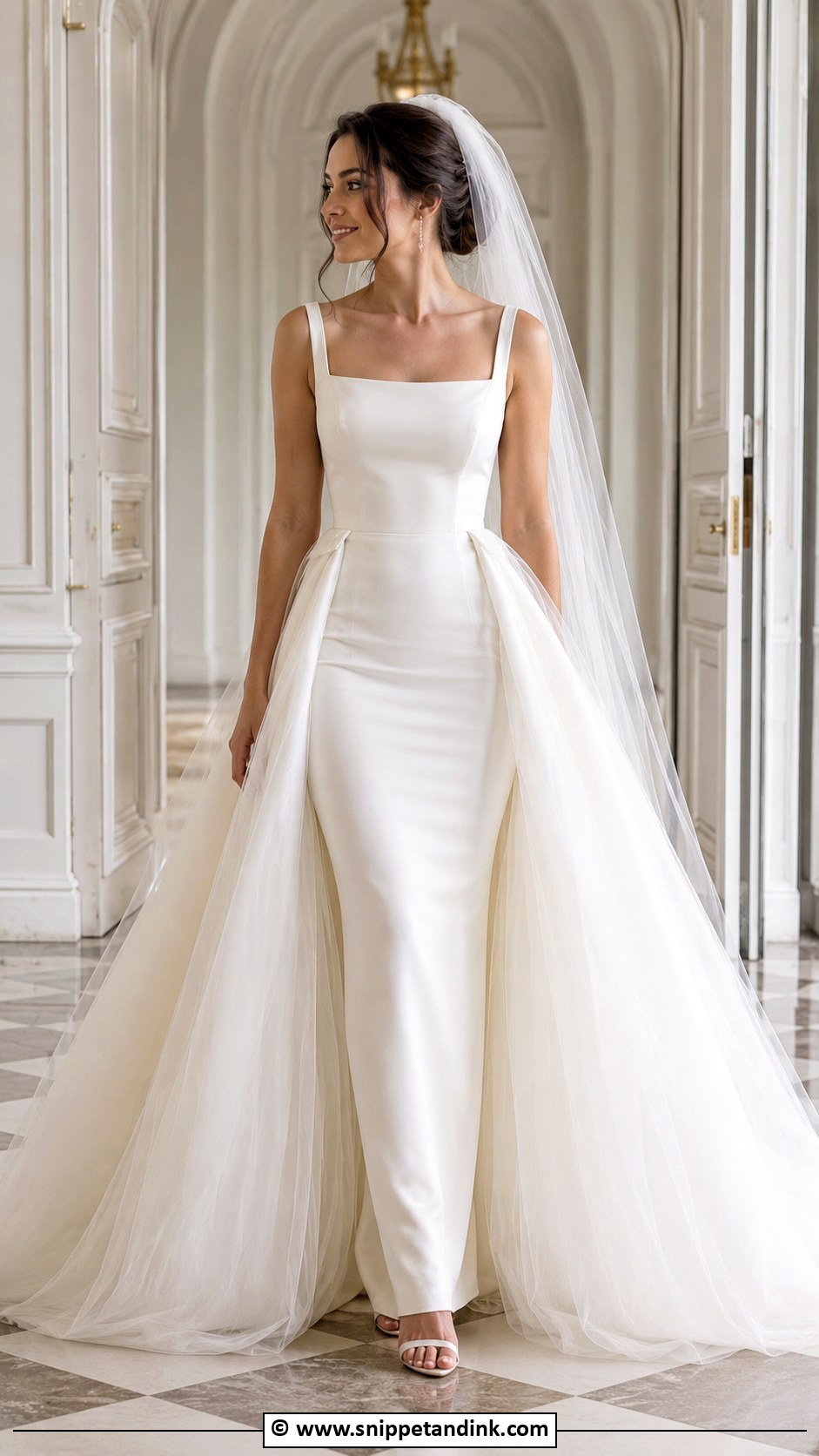
An overskirt gives a full gown for the ceremony, portraits and entrance, then comes off for dancing. It works over a fitted crepe, satin or lace dress, and it can be plain, layered, floral or softly sparkling. Simple heels and a veil suited to the ceremony look finish it. Overskirts fasten with hidden hooks or snaps around the waist, and taking one off neatly needs a second pair of hands, so show your helper how it works before the wedding.
19. Tea Length Wedding Dress
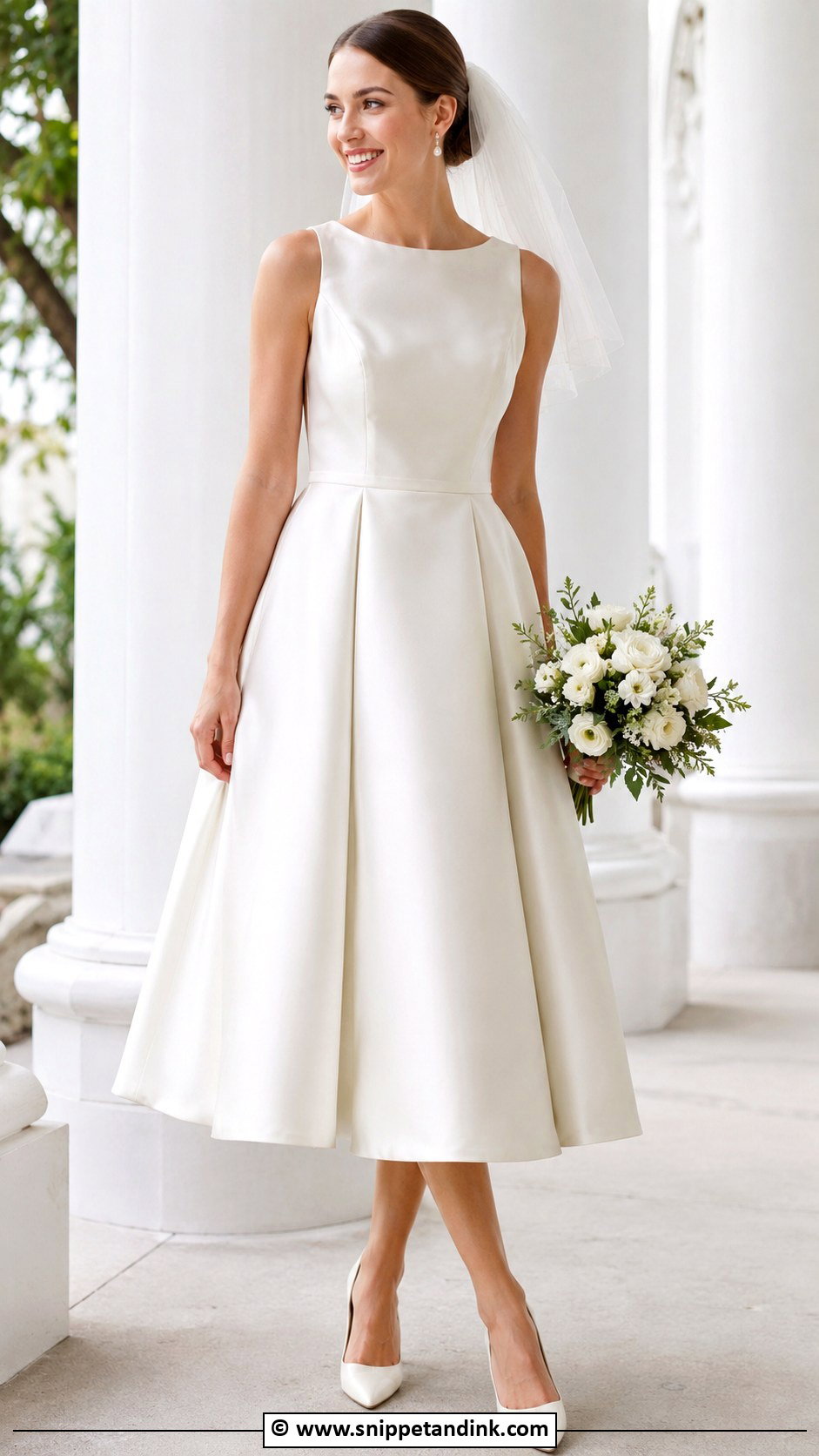
A tea length wedding dress falls between knee and ankle, a vintage-inspired shape that suits courthouses, gardens and brunch receptions, and it shows off your shoes. Satin gives structure, lace romance, tulle volume. Pointed pumps, block heels or embellished flats, a short veil, pearl earrings and a neat bouquet complete it. It’s a smart choice for petite brides because there’s no hem to drown in. The hem looks most deliberate when it ends at the narrowest part of the calf.



20. Short Wedding Dress
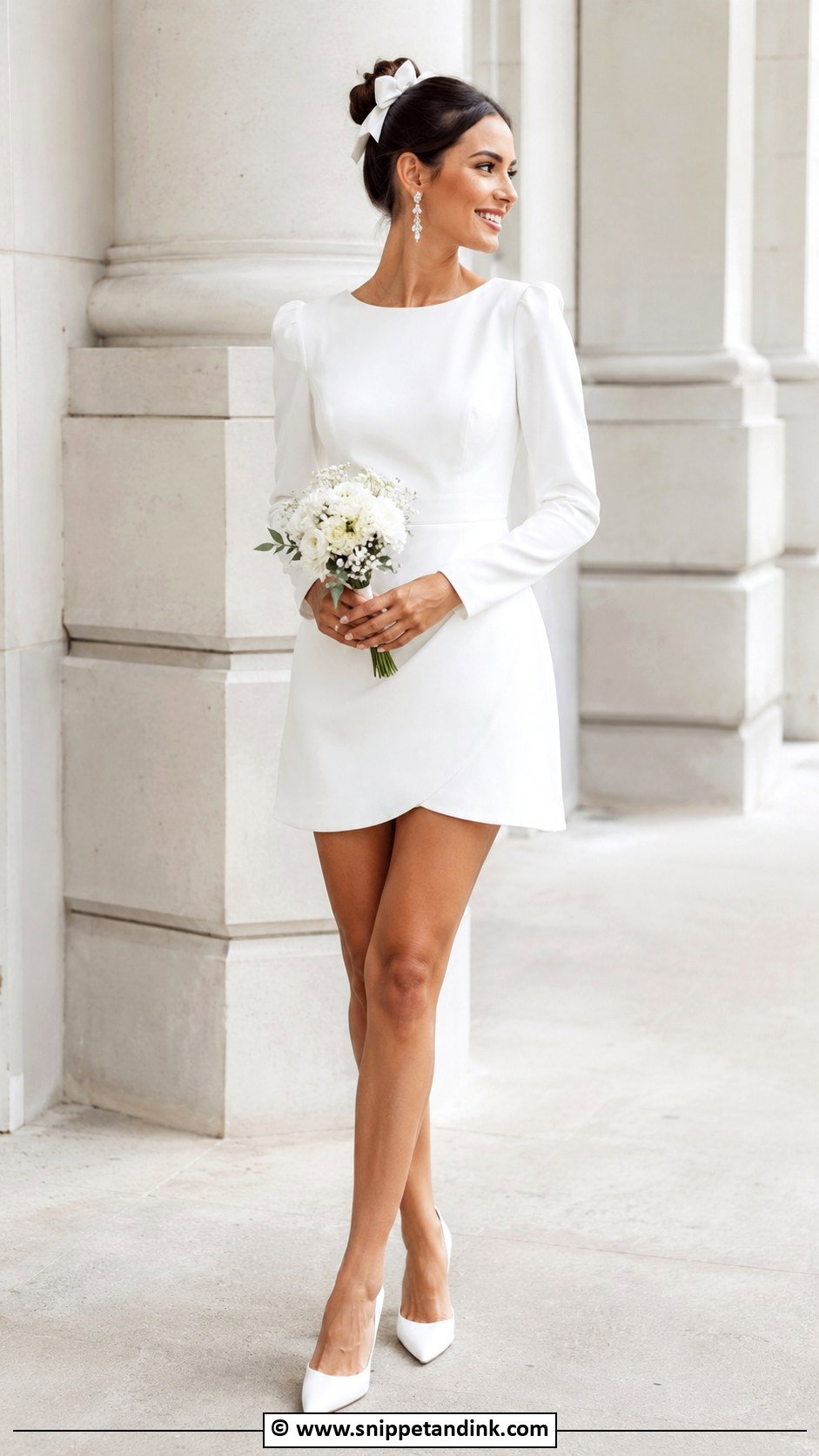
Short dresses suit a reception, civil ceremony or after-party. They can be sleek, pearl-covered, feather-trimmed or shaped with a structured bow. Accessories make them bridal: white heels, sparkling earrings, a small veil or hair bow, and a mini bouquet or clutch. Long sleeves or a sculpted neckline add polish. Fabric weight is what separates a wedding mini from a party dress, so choose crepe, duchess satin or a firm lace over thin, shiny fabric.
21. Bridal Pantsuit Wedding Outfit
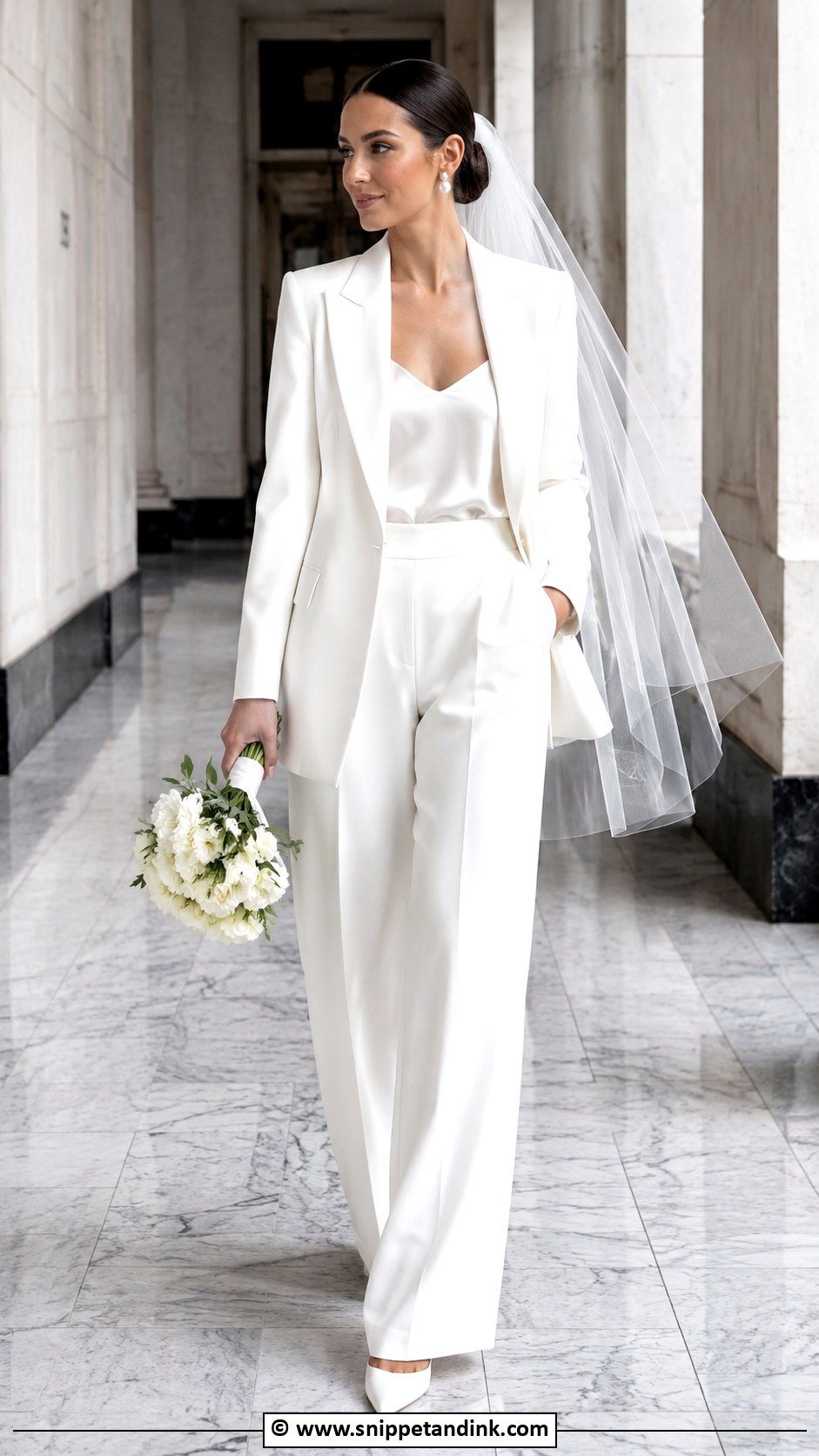
A bridal pantsuit is for brides who don’t feel like themselves in a gown. A tailored white blazer with wide-leg trousers looks sharp, and underneath you can wear a silk camisole, a lace top or just the buttoned blazer. Pointed heels, pearl earrings and a sleek low bun; a veil pinned under the bun makes it unmistakably bridal. Add a structured bouquet for balance. Trouser length is the alteration to get right: hem them to the exact heels so they just skim the floor. Courthouses, city ceremonies and minimalist venues suit it.
22. Bridal Jumpsuit Wedding Outfit
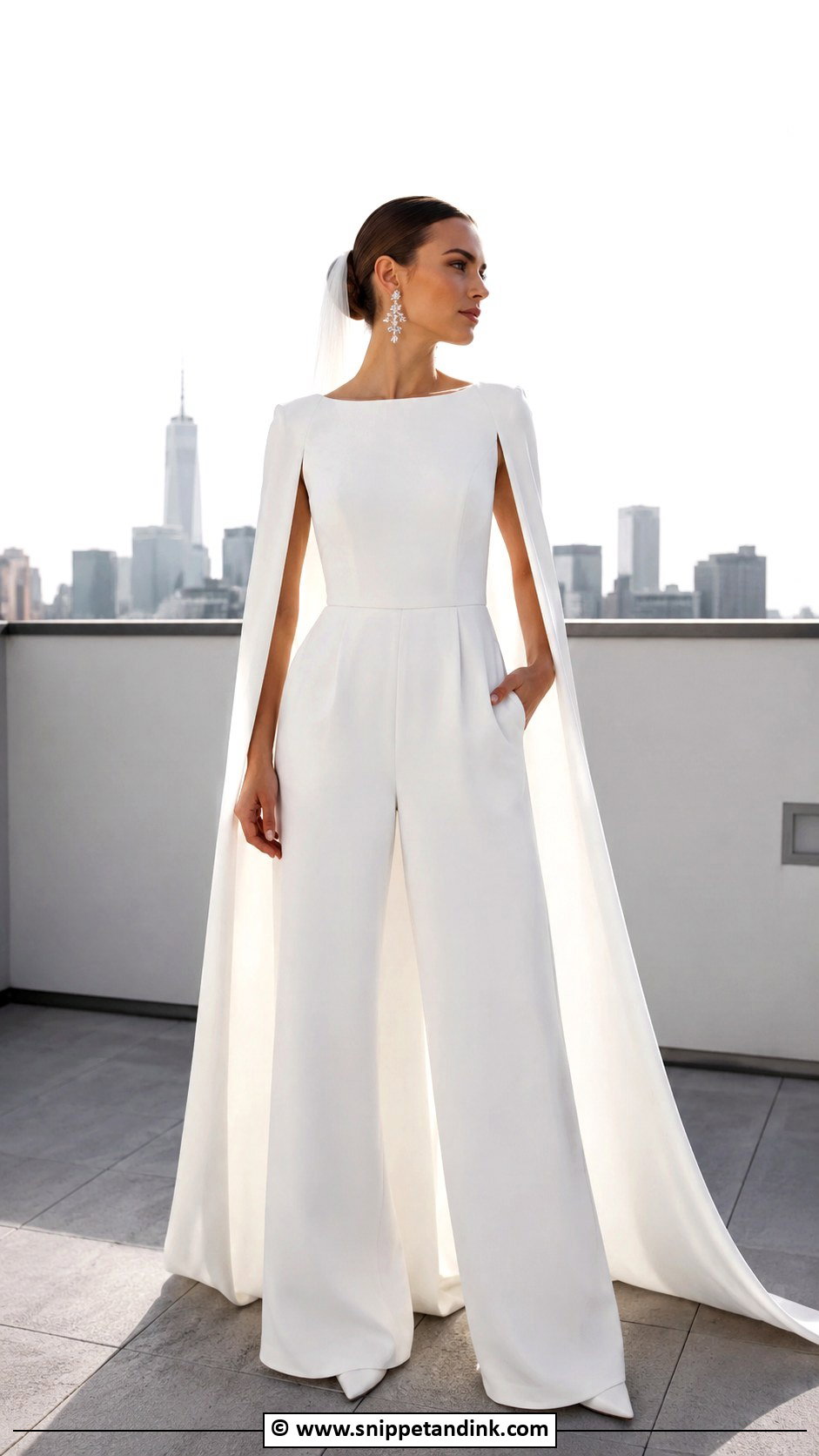
A bridal jumpsuit wedding outfit moves easily and still looks styled. Look for a fitted bodice, wide-leg pants or a draped overlay that moves like a gown. Crepe, satin or a structured fabric keeps it polished. Pointed heels, statement earrings and a short veil or pearl clip suit it, and a cape or detachable train adds ceremony drama before coming off. Think about the bathroom before you buy; a jumpsuit with a long back zip means asking for help every time. Courthouses, rooftops and reception changes suit it.
23. Two Piece Wedding Dress
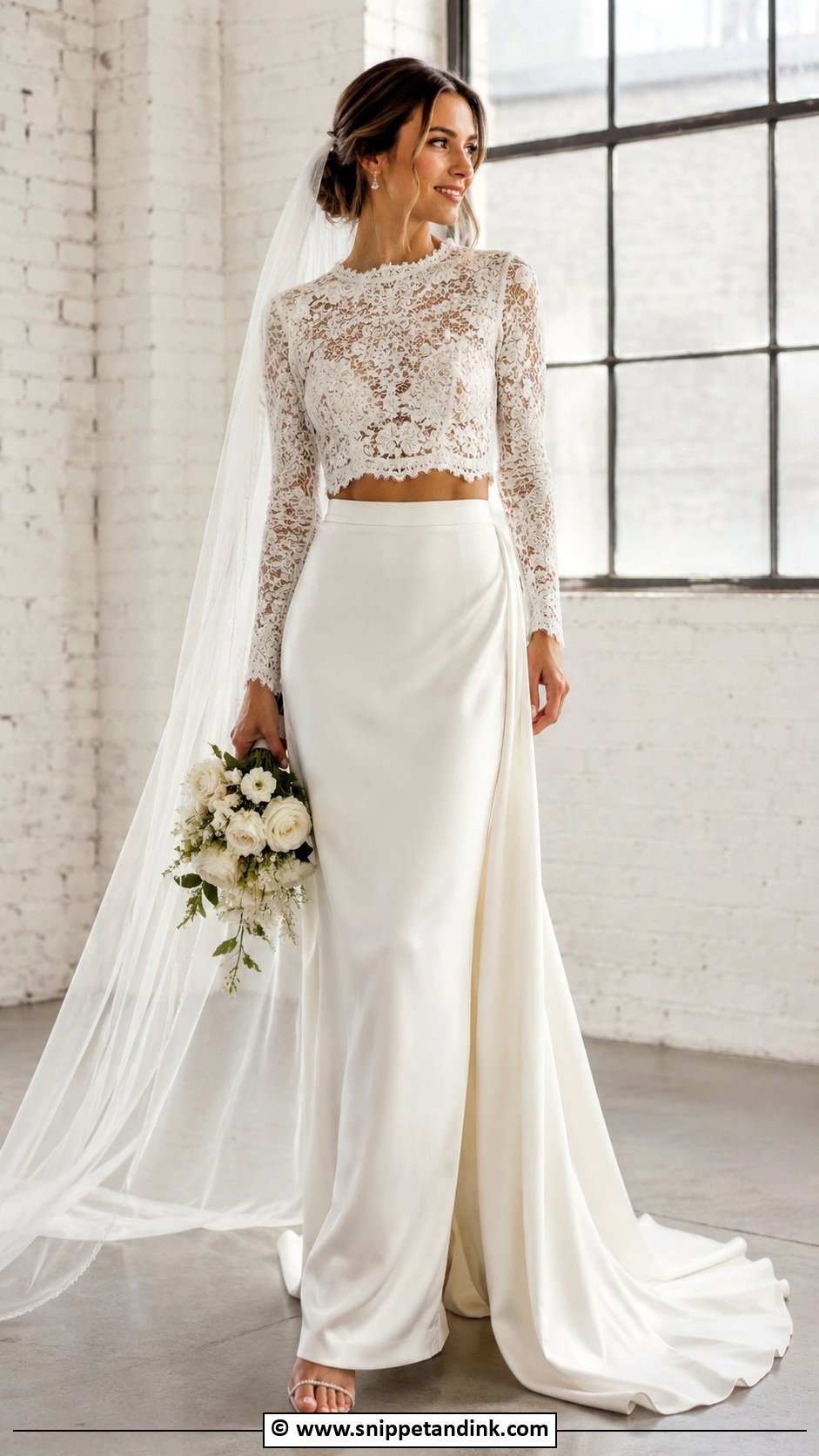
Two pieces give the look of a gown with more flexibility: a bridal top and a matching skirt. A lace crop top with a high-waist skirt feels romantic; a satin top and column skirt feel modern. For more coverage, choose a longline bodice that meets the skirt cleanly. Delicate heels, simple earrings and a veil tie the pieces together. Separates are easier to alter because each piece is fitted on its own, which helps if your top and bottom are different sizes.
24. Colored Wedding Dress
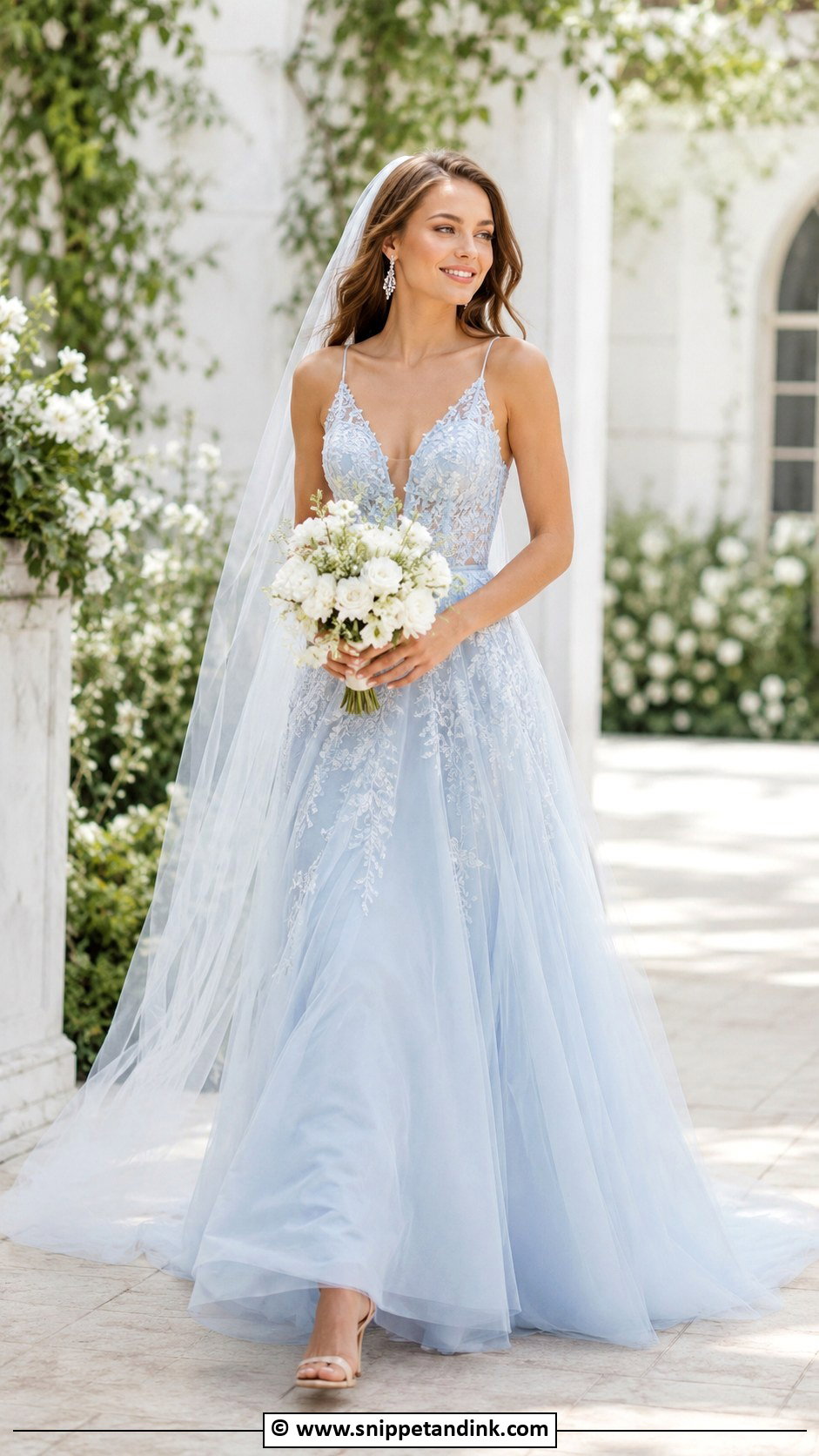
If white doesn’t feel like you, blush, champagne, pale blue, silver, buttercream or light lavender can all still read bridal. Keep the full look cohesive: neutral heels, soft jewelry and a bouquet that complements the shade. Blush suits ivory flowers, champagne suits pearls and gold, pale blue suits silver. A coloured gown also works well for a second wedding or a venue with a strong palette. Look at the shade in daylight before ordering, because shop lighting can make pastels look warmer than they are.



25. Champagne Wedding Dress
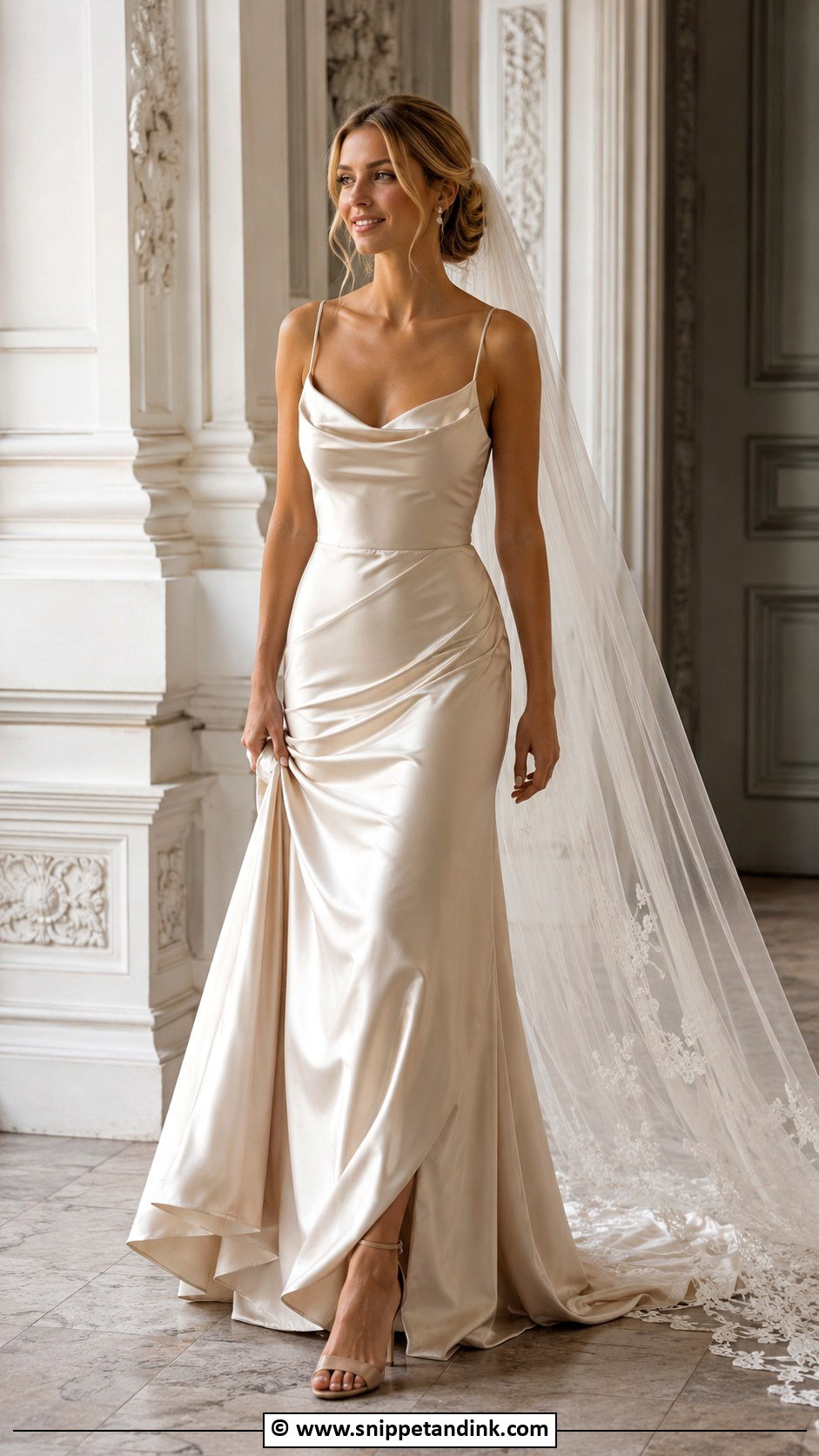
Champagne gives warmth and a soft glow, a richer, slightly vintage alternative to bright white. Champagne satin looks sleek; champagne tulle or lace looks romantic. Nude or ivory heels, pearl earrings and makeup that warms with the dress, plus an ivory or light champagne veil. It suits formal weddings, evening receptions and historic venues. Champagne flatters many skin tones, but on very fair or very warm skin it can blend in, so I hold the fabric up to the face before recommending it.
26. Blush Wedding Dress
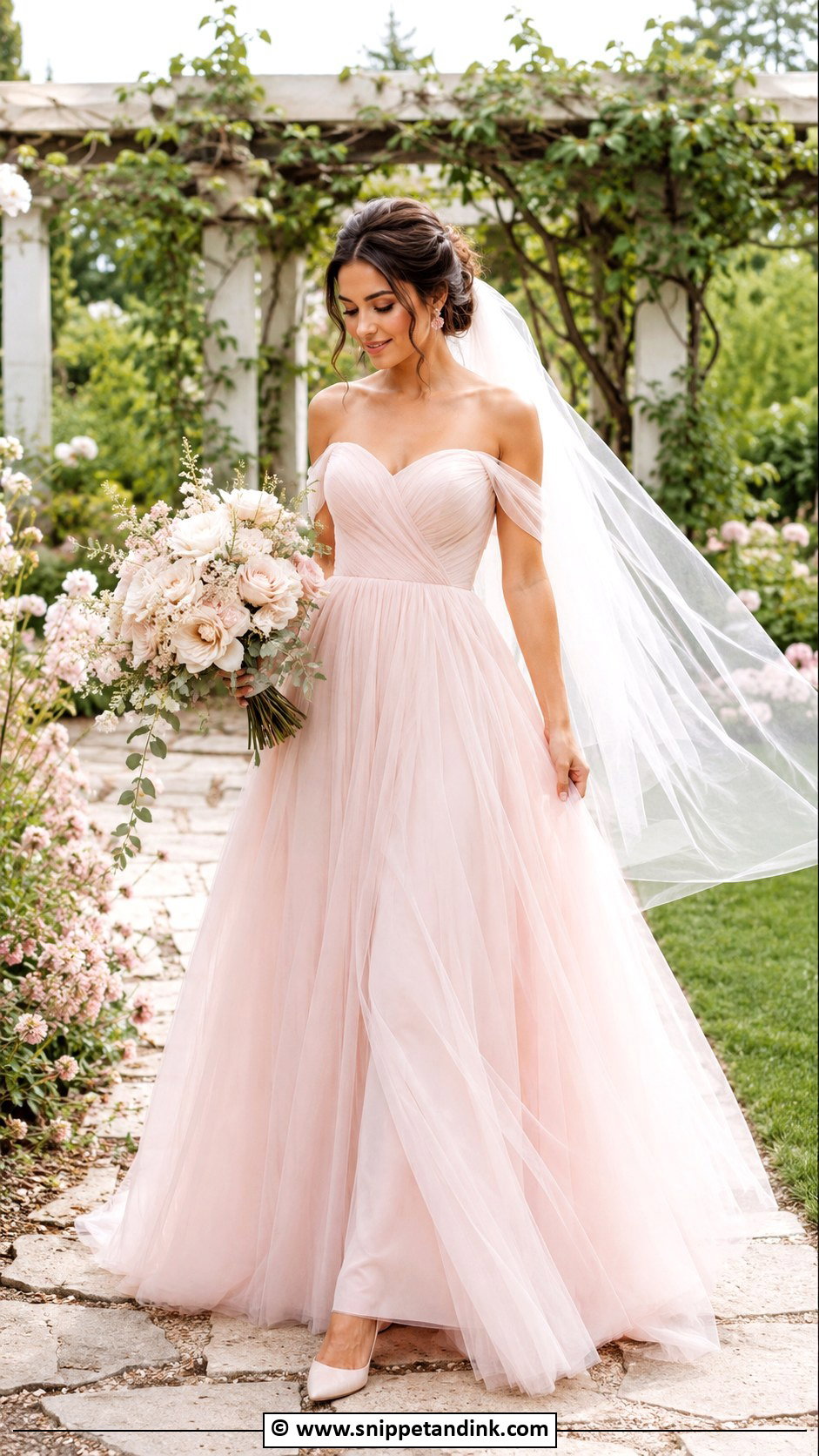
Blush can be barely there or clearly pink. Blush tulle feels dreamy; blush satin more polished. Ivory heels, rose-toned earrings and a bouquet of white, cream and pale pink flowers suit it, with a sheer ivory veil keeping it bridal. Gardens and spring weddings are its natural home, and it pairs well with floral appliqué, lace and layered skirts. A blush gown with an ivory lining underneath shifts colour slightly as layers move, which is part of its charm.
27. Vintage Inspired Wedding Dress
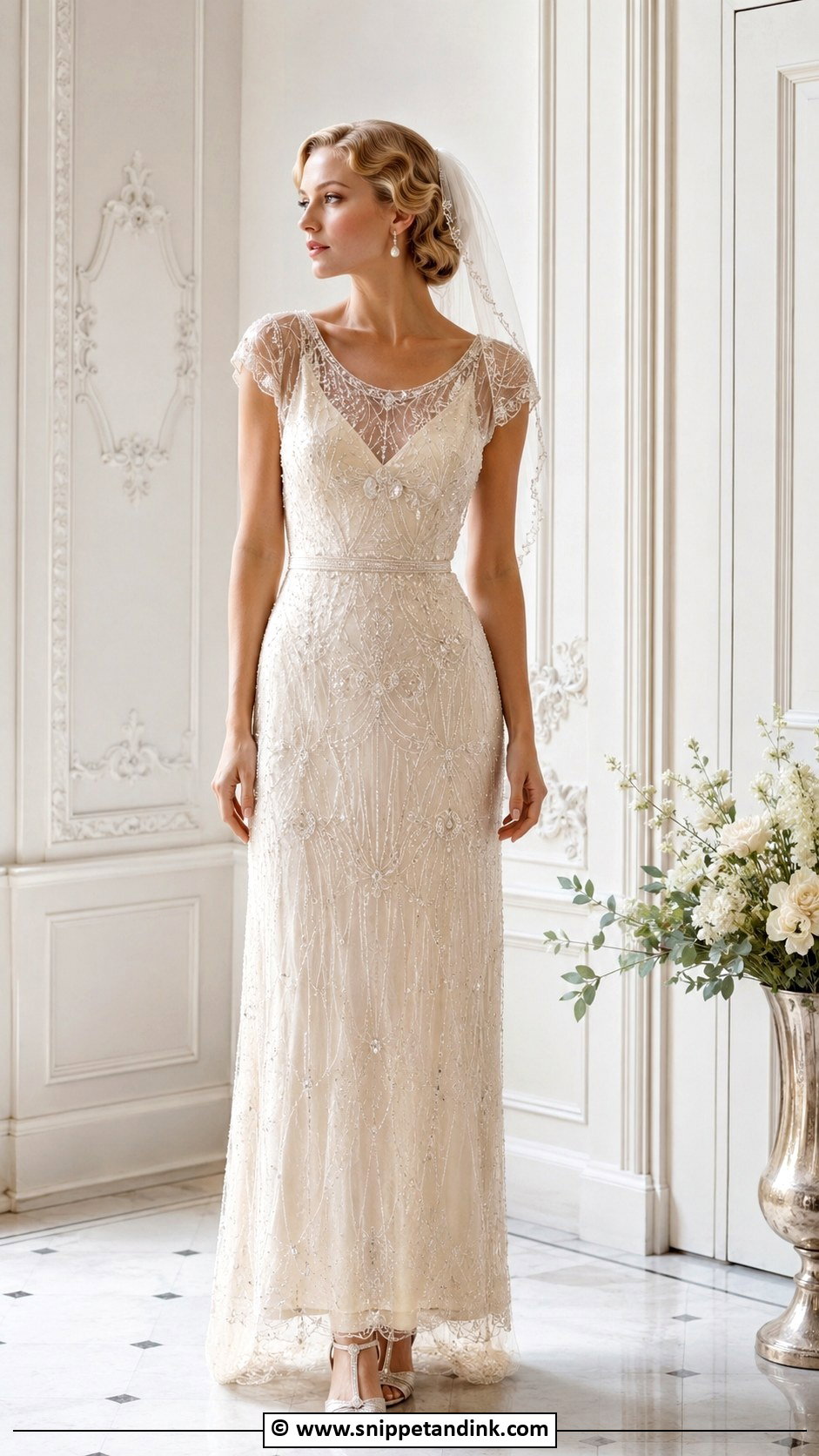
Vintage inspiration can mean 1920s beading, 1950s tea length shapes, 1970s sleeves or 1990s minimalism. Pick one era and keep the rest clean, so you look inspired rather than in costume. Classic heels, pearl or crystal earrings and a veil that nods to the period complete it; gloves or a vintage-style bouquet work if the dress is simple. If you’re buying a true vintage piece, have a specialist look at it early, because old fabric may need reinforcing before it’s altered.
28. Boho Lace Wedding Dress
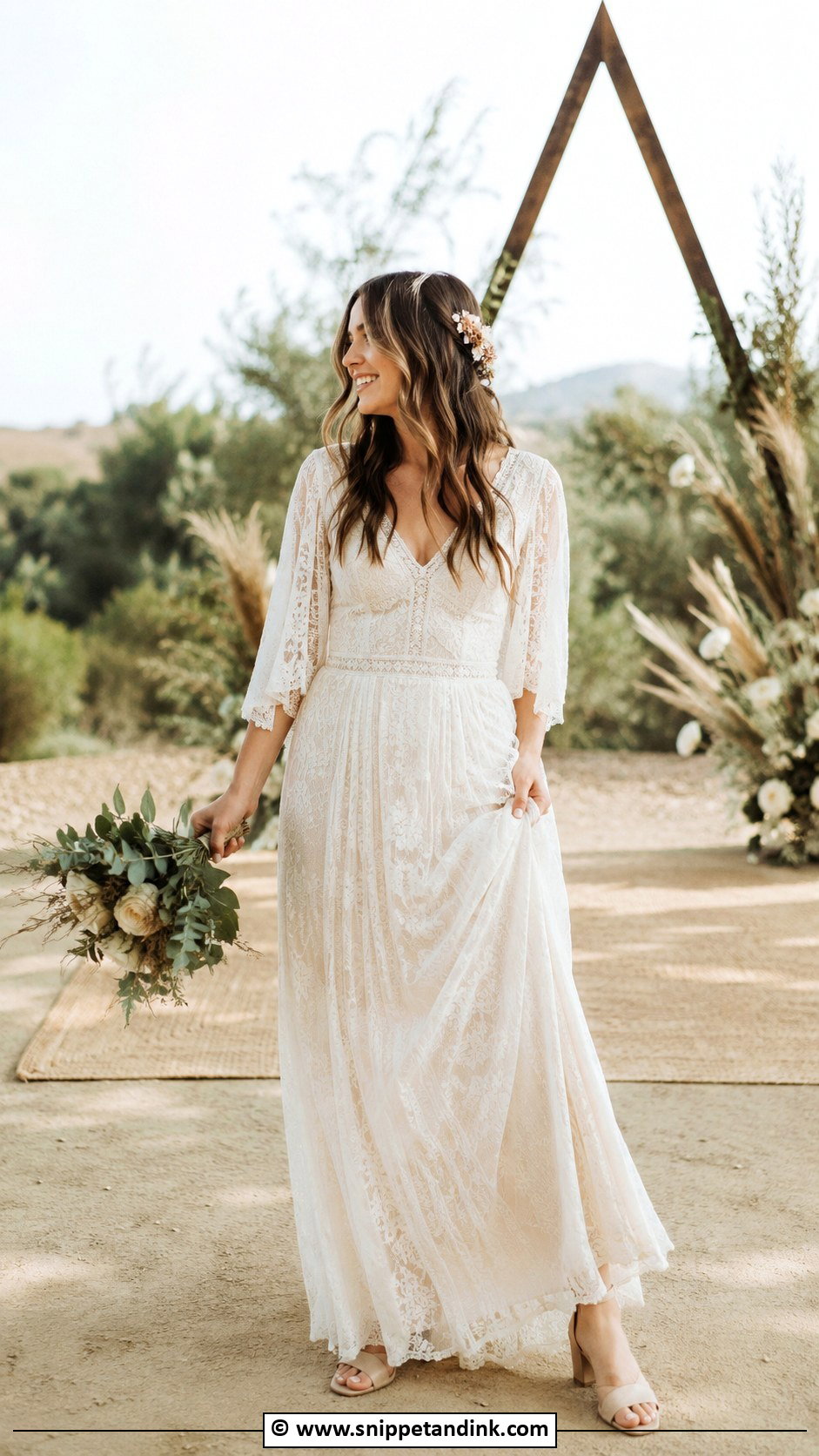
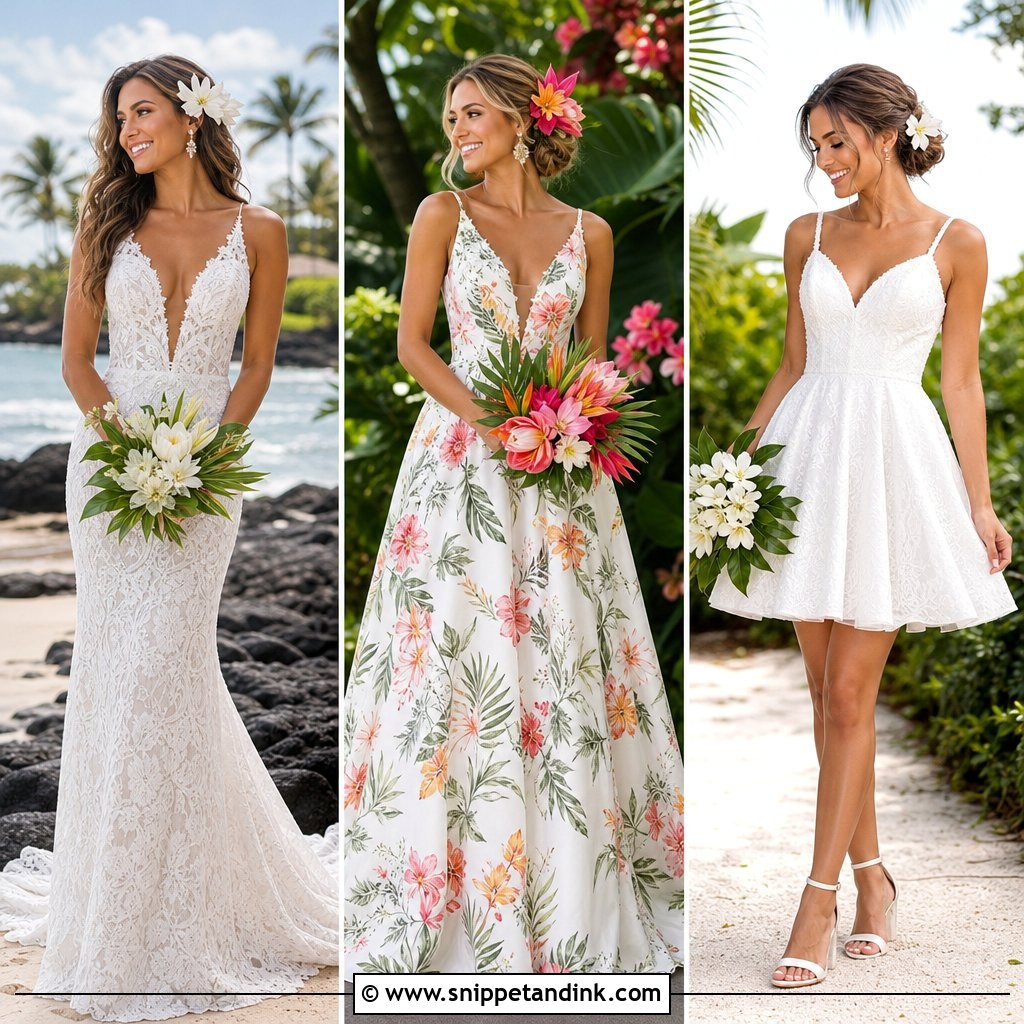
Boho lace is relaxed: soft lace, flowing skirts, bell sleeves, open backs and maybe gentle fringe. It should move easily rather than feel stiff. Block heels, flat sandals or ankle boots depending on the ground, loose waves, a floral comb and natural makeup. Keep jewelry delicate, small hoops or fine layered necklaces if the neckline allows. Unstructured lace can stretch and drop over a warm day, so I’d ask whether there’s a light inner support to hold the shape. Outdoor, beach, desert and woodland settings suit it.
29. Beach Wedding Dress
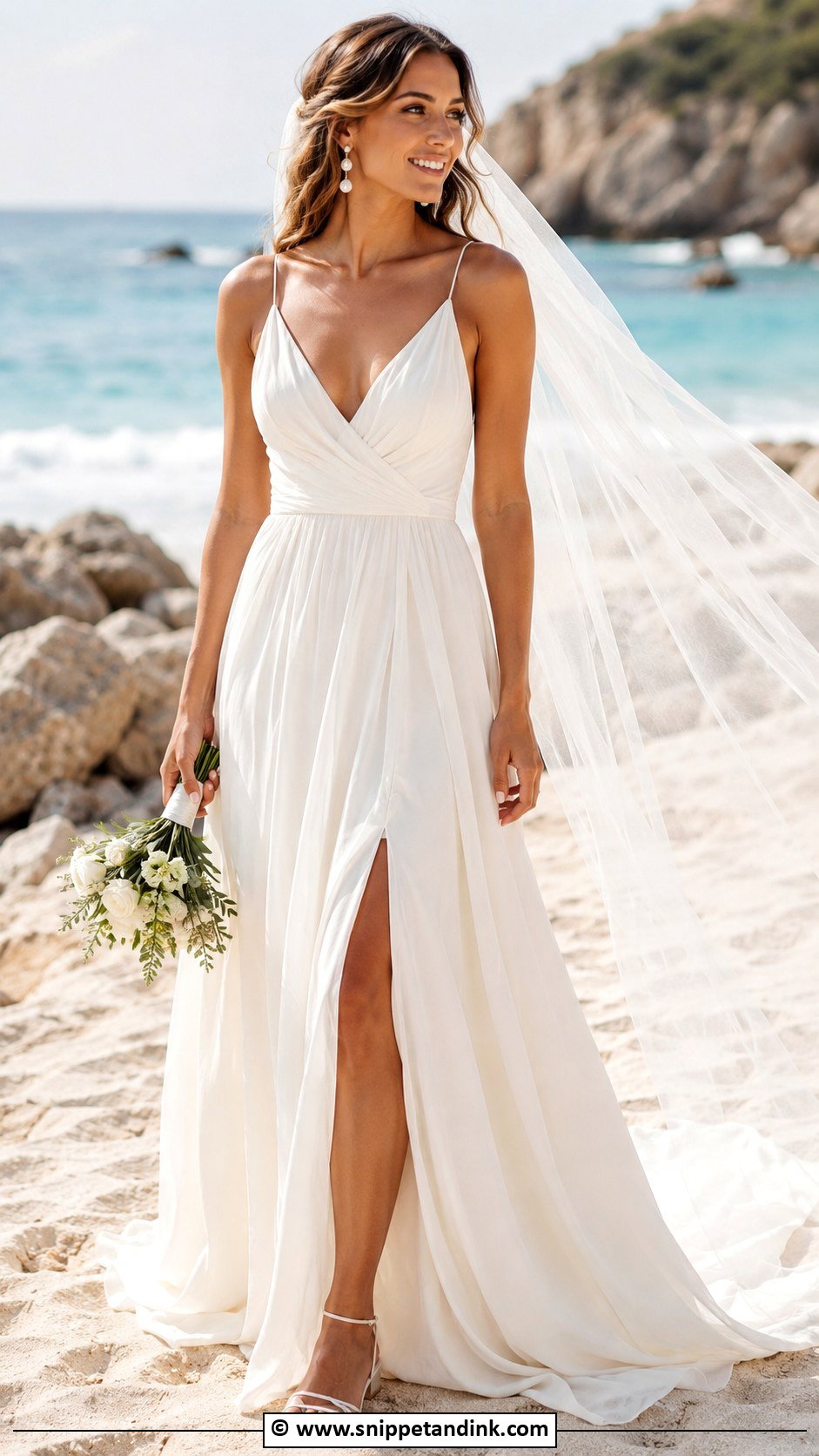
On a beach, a dress has to be light and easy to move in. Chiffon, silk, crepe and soft lace flow naturally, while heavy skirts drag in sand. A slip, A-line or simple halter works. Flat sandals or low block heels, or barefoot sandals if the setting allows. Pearl earrings, a light veil or a hair flower and a smaller bouquet keep it easy. Coastal wind lifts light fabrics and whips long veils, so I keep veils short and well pinned.
30. Courthouse Wedding Dress
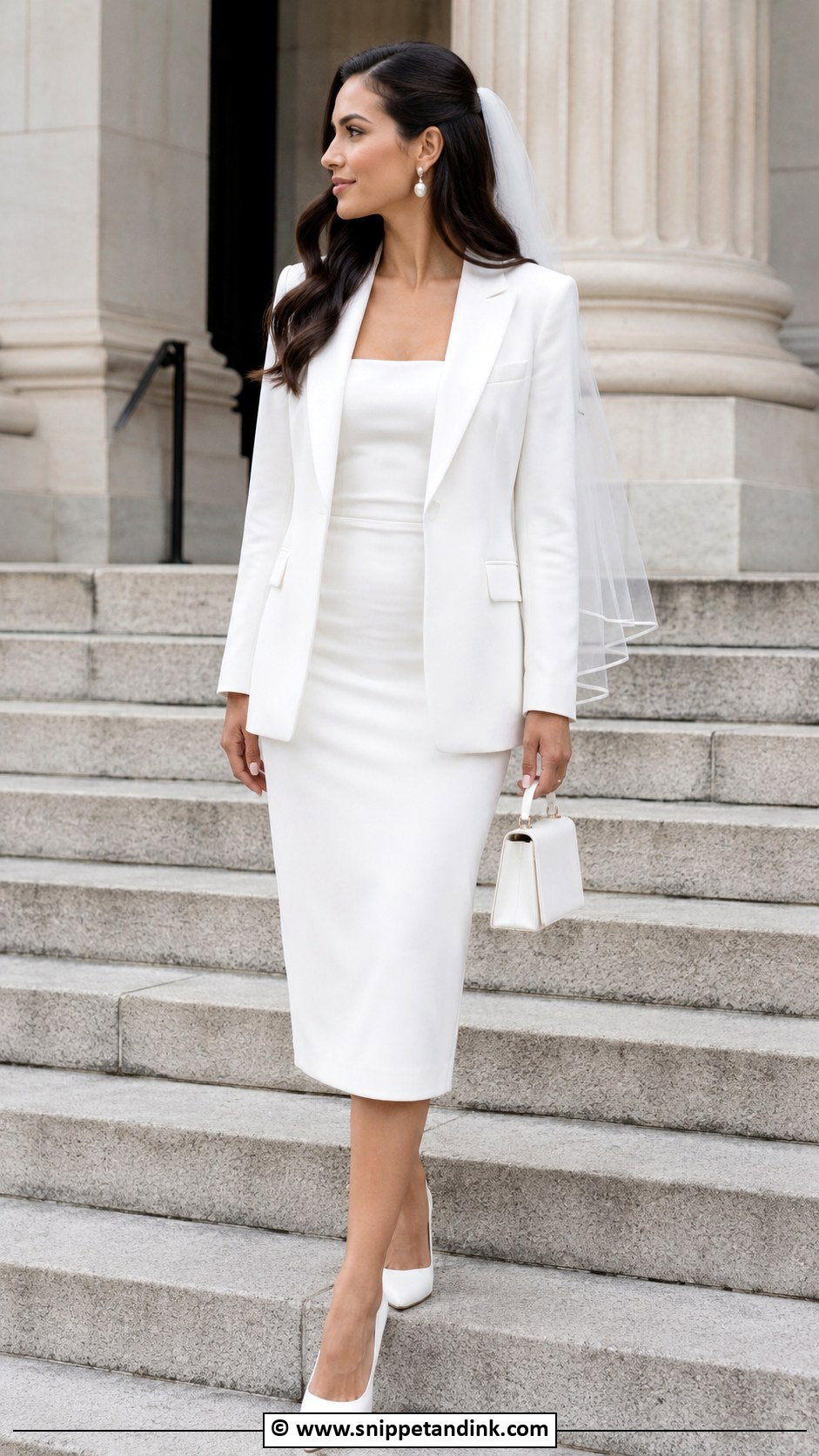
Courthouse outfits should look finished up close, since everyone stands near you. A short white dress, satin midi, tailored suit dress or sleek column all work. Pointed heels, a structured mini bag and pearl earrings finish it, with a short veil, headband or hair bow for a bridal touch. For coverage, a white blazer or cropped jacket. Check whether the courthouse limits guests or photography; it changes how formal you’ll want to look.
31. Plus Size Wedding Dress
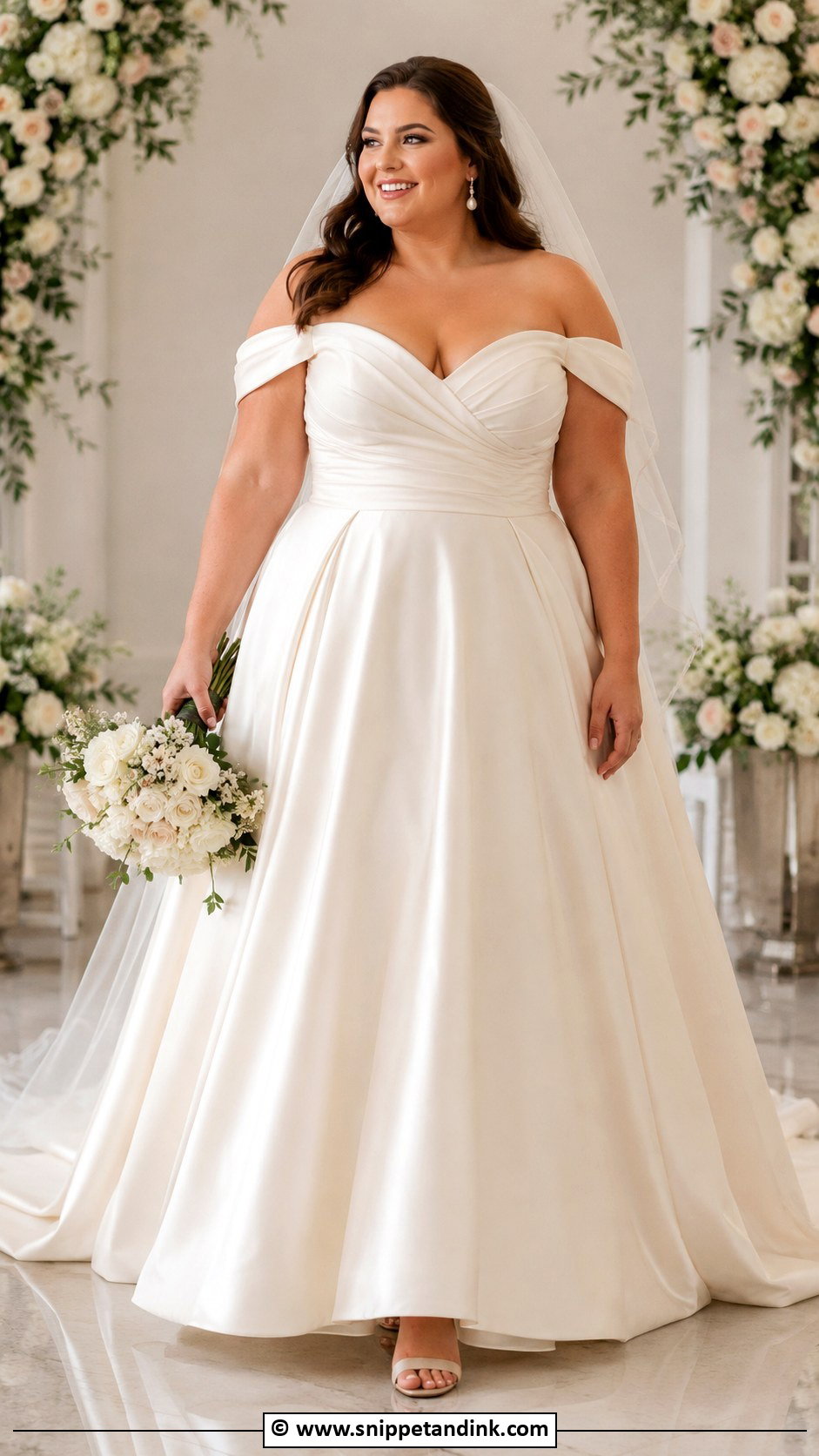
Choose a plus size dress for support, comfort and style, not to hide. A-line gowns, corset bodices, wrap shapes, off-shoulder necklines and structured crepe all flatter. Fit through the bust, waist and hips first, then tailor length and straps. Supportive lining, good fabric and an alterations plan matter more than the size on the tag. Sample dresses in many shops come in a limited size range, so ask in advance which samples can be tried in your size. Comfortable heels or embellished flats, earrings you love and a veil that suits your silhouette finish it.
32. Petite Wedding Dress
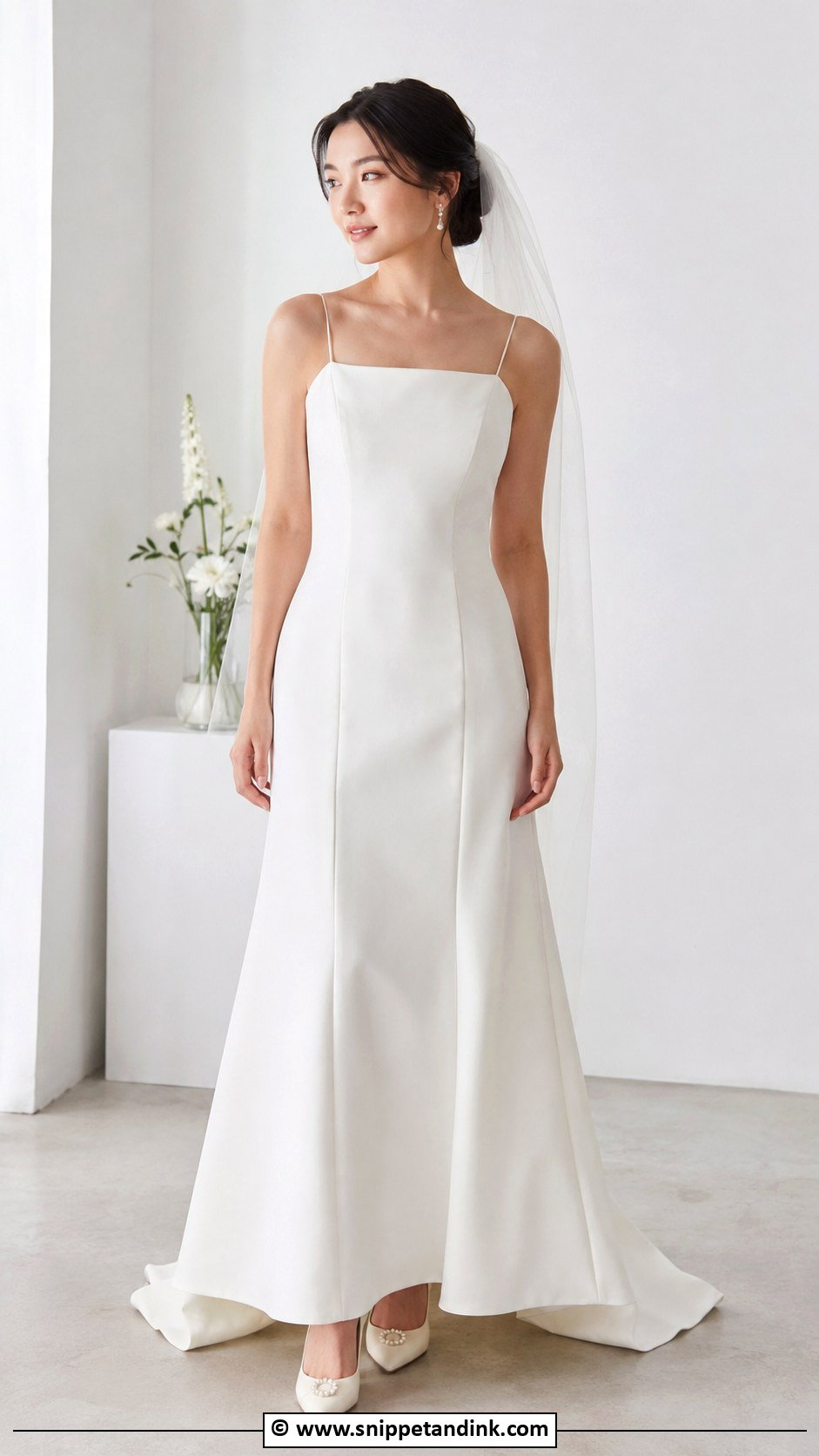
Petite brides do best with considered proportions. Slim A-lines, columns, tea lengths and high waists add length; very heavy skirts or oversized sleeves can swamp you unless they’re balanced. Vertical seams, a simple neckline and clean fabric make you look taller. Pointed heels, a soft veil and smaller-scale accessories suit you. Love volume? Choose light tulle over heavy fabric. Plan for hem, strap and bodice adjustments, and ask whether the dress can be taken up at the waist instead of the hem, which keeps lace borders intact.
33. Maternity Wedding Dress
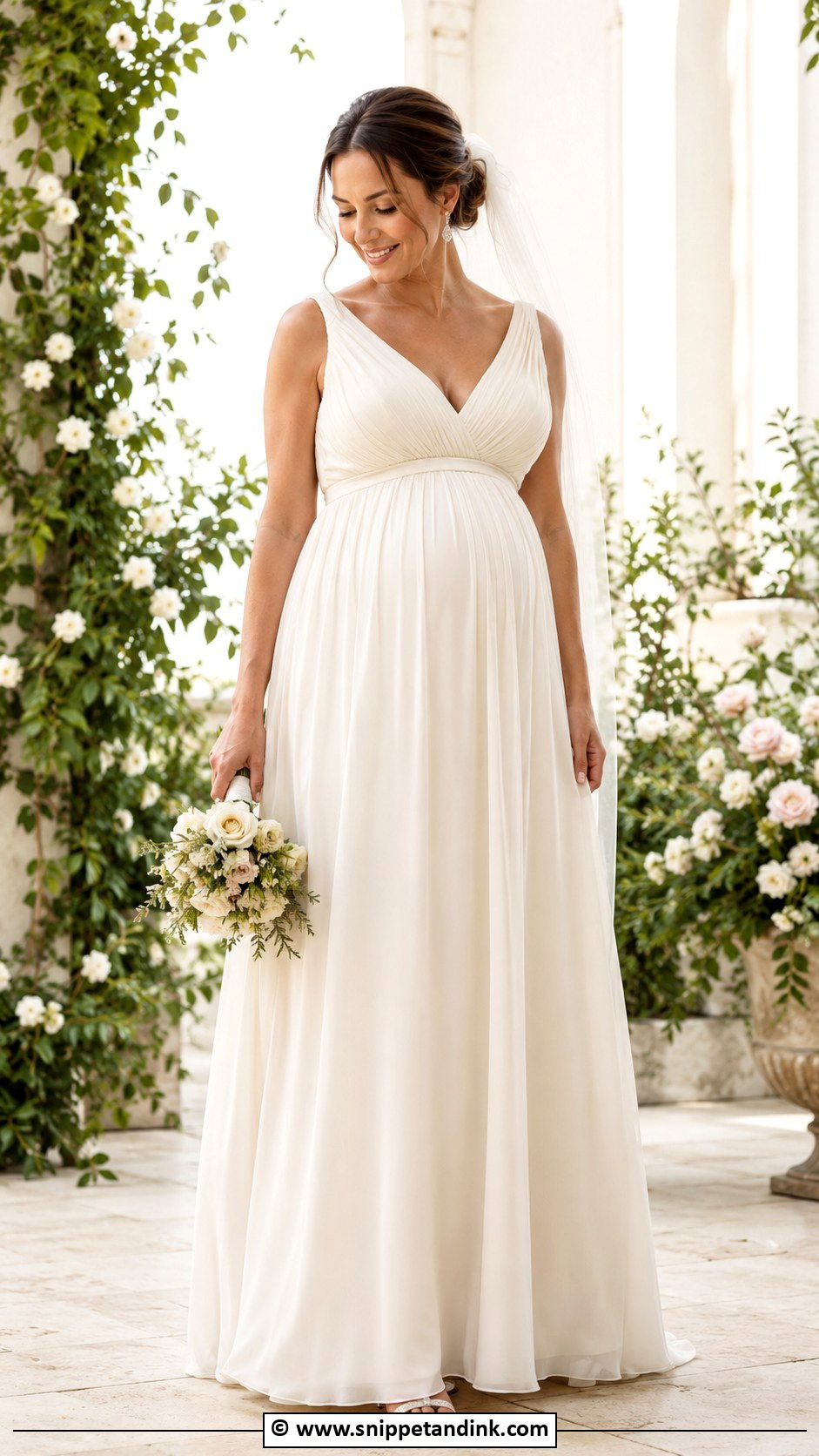
Maternity dresses need to be comfortable and supportive at once. Empire waists, soft A-lines, stretch crepe, chiffon and wrap bodices all give room. Look for fabric that moves and a bodice that supports the bust without squeezing. A soft sleeve, off-shoulder or V neckline adds shape. Low heels, cushioned sandals or embellished flats, a light veil and a small bouquet keep things easy. Book the final fitting as close to the date as your seamstress allows, since measurements can change in a fortnight.
34. Second Wedding Dress
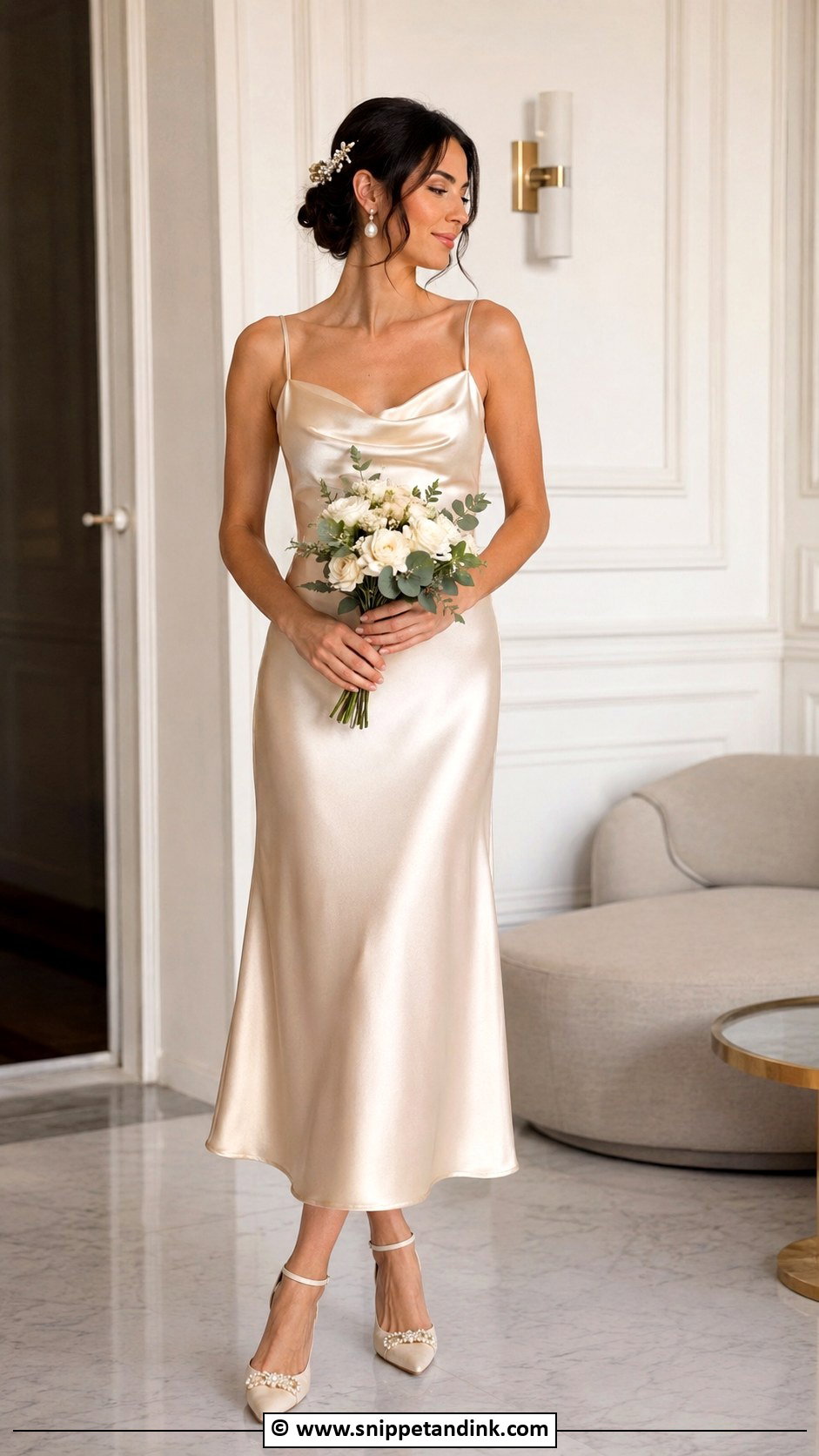
A second wedding dress can be whatever suits your life now: a sleek satin gown, a champagne dress, a tea length style, a pantsuit or a soft colour. There are fewer rules, so focus on confidence, comfort and the mood of the celebration. Pearl earrings, elegant heels and a simple bouquet feel polished without trying too hard. A veil, cape or hair comb adds a bridal touch if you want one. Many second-time brides tell me they want to look like themselves on a good day, and that’s the right brief.
35. Reception Wedding Dress
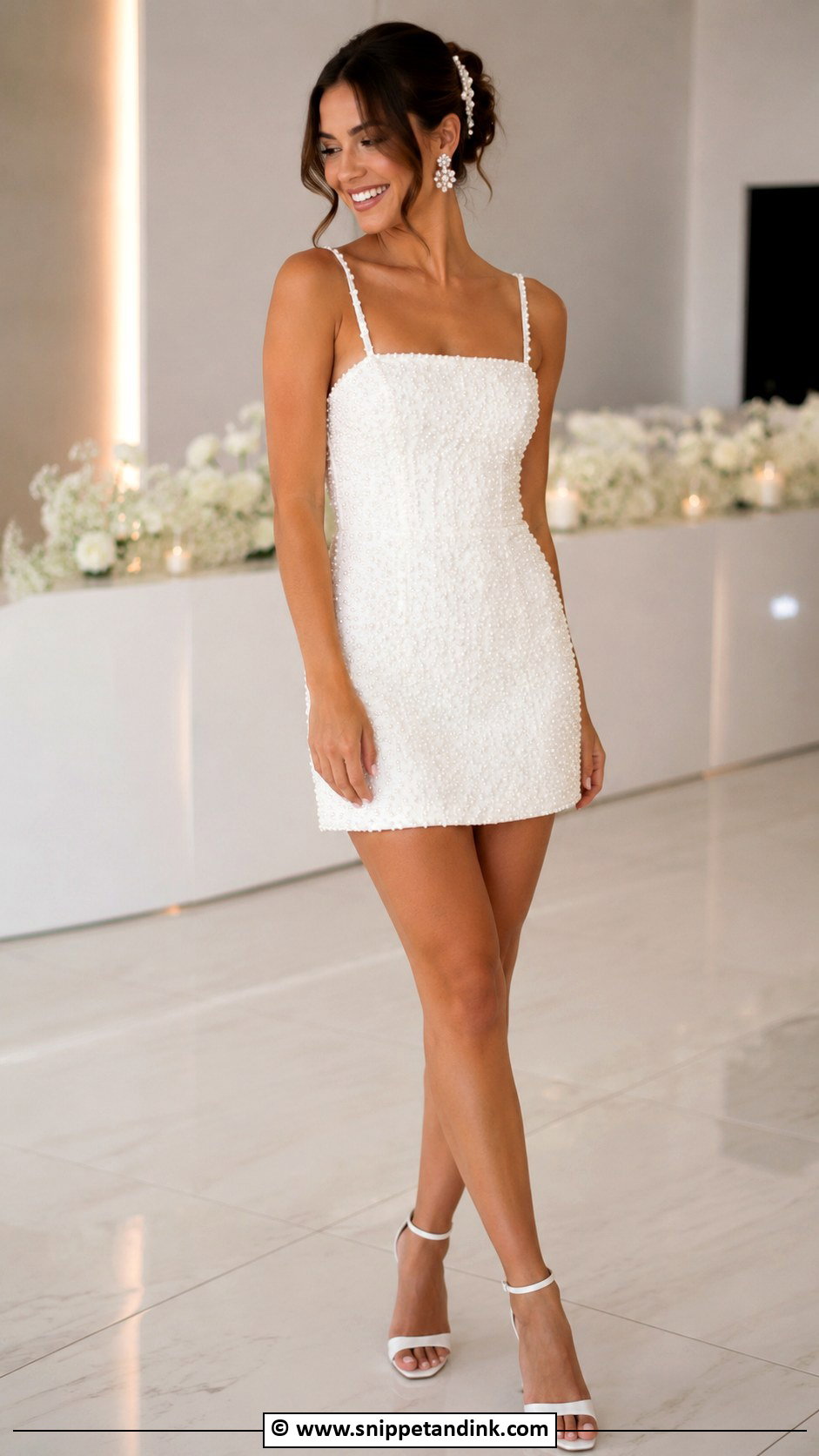
A reception dress lets you change into something lighter after the ceremony: a short dress, a simple slip, a feather-trimmed mini, a pearl dress or a fitted midi. The point is movement, so you can sit, dance and greet guests without managing a train. Comfortable heels, sparkling earrings and a fun bow or pearl clip suit it. Keep the makeup and bouquet the same so both looks connect. Have it fitted at the same appointments as your main gown, and plan where and with whom you’ll change, since that changeover takes longer than most brides expect.
Order Dates, Fitting Weeks and the Costs After the Gown
Most bridal gowns are made to order after you choose them, and production alone can take several months. Timelines vary by designer, so these are rough guides to plan around, not promises.
- Start shopping roughly nine to twelve months out if you want a made-to-order gown without rush fees.
- Order by around eight months before the wedding, sooner for heavily beaded or custom pieces.
- Expect the first alteration fitting about two to three months before, with a final fitting in the last couple of weeks.
- If you’re short on time, ask about off-the-rack or sample gowns, which can go home the same day.
The price tag is rarely the full cost. Alterations, a veil, the right underwear, steaming or pressing before the day, and professional cleaning afterward all add up, and alteration fees in particular vary widely with the fabric and the work needed. I’d ask the shop what’s included in the price and get an alterations estimate before you commit, so the dress you love is still the dress you can comfortably afford.
Trust the Dress That Lets You Breathe
Your dress doesn’t have to follow every trend or please every opinion. It should make you feel calm and like yourself. Try different silhouettes, move in each one, sit down, take photos, and notice how the fabric feels on your skin. A simple gown can be unforgettable; a dramatic one can still feel elegant; a pantsuit, short dress or coloured gown is just as bridal when it’s styled with care. Let your venue, season, comfort and personality steer you, and use the ideas above to sharpen what you’re looking for.
You'll Like These Ideas:







Leave a Reply