
The bridal hair I’m asked for now is softer and less sprayed than it was a few years ago. Brides want buns that move a little, curls that look like their own, and short cuts styled rather than hidden. The most complicated style is rarely the right one. What matters is that it frames your face, sits well with your dress and veil, and is still in place at the last song. I’ve grouped twenty looks I style regularly, from sleek and classic to textured and loose, with notes on what each needs from your hair and what tends to go wrong.
How These Styles Age From Ceremony to Last Song
A photo shows a hairstyle at minute one. A wedding runs ten or twelve hours, and the families of styles below hold up very differently over that time. This is roughly how I’d rank them for staying power, from most to least forgiving.
- Sleek buns, chignons and loc updos. Pinned close to the head, they barely change unless a veil is pulled out roughly.
- Braided styles. The braid grips itself, so even when loosened for fullness it rarely falls apart.
- Textured updos and messy buns. The look softens as pins settle, which usually works in its favor.
- Ponytails and half up styles. The secured part holds; the loose lengths relax and can frizz.
- Fully down waves and Hollywood waves. These are the most affected by humidity, hugs, wind and leaning back in a chair.
None of that means you should avoid down styles. It means you plan for them: tighter curls at the start, a small kit with a brush and a few pins, and ten minutes before the reception for a refresh.
1. Bridal Low Bun
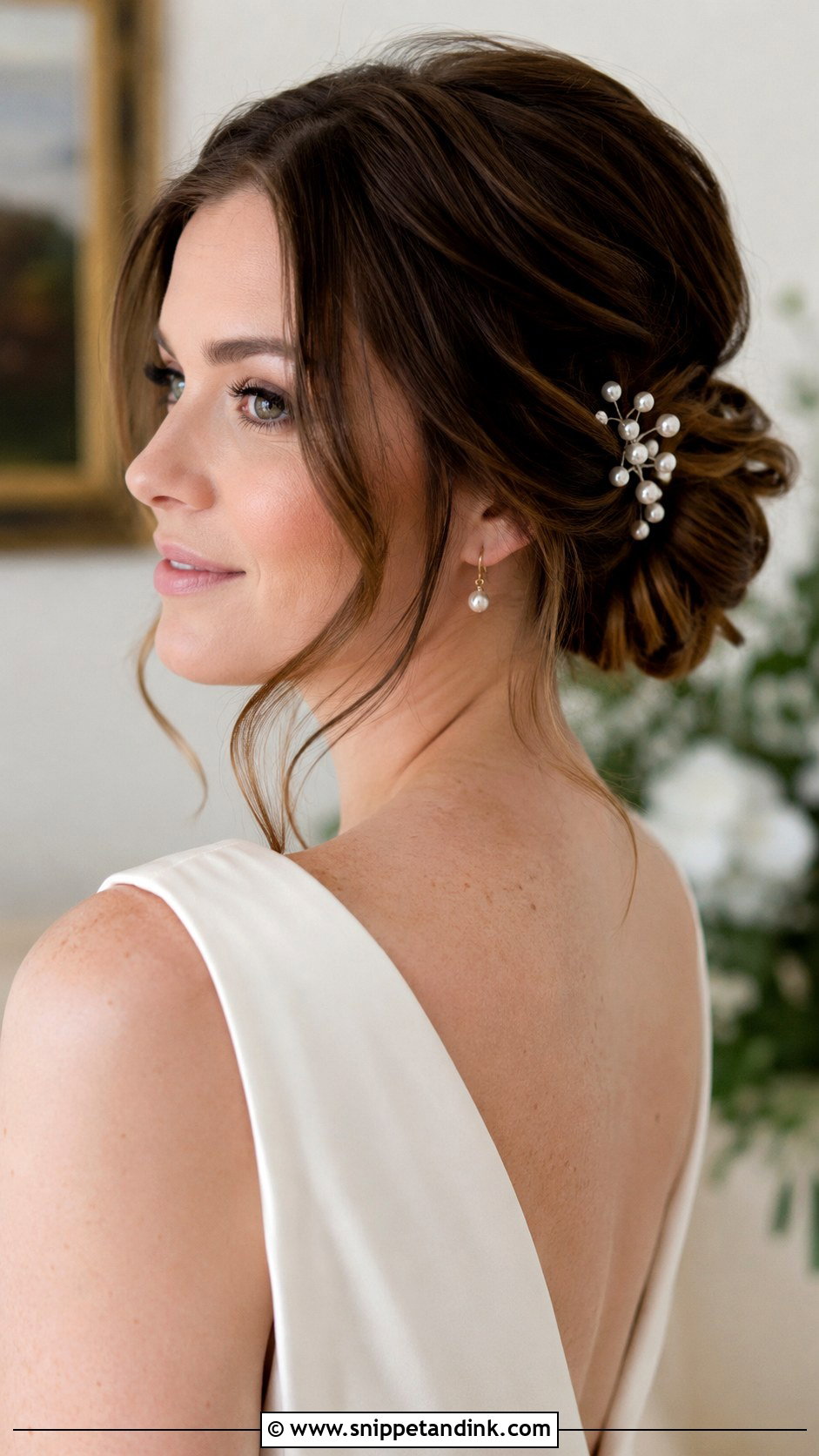
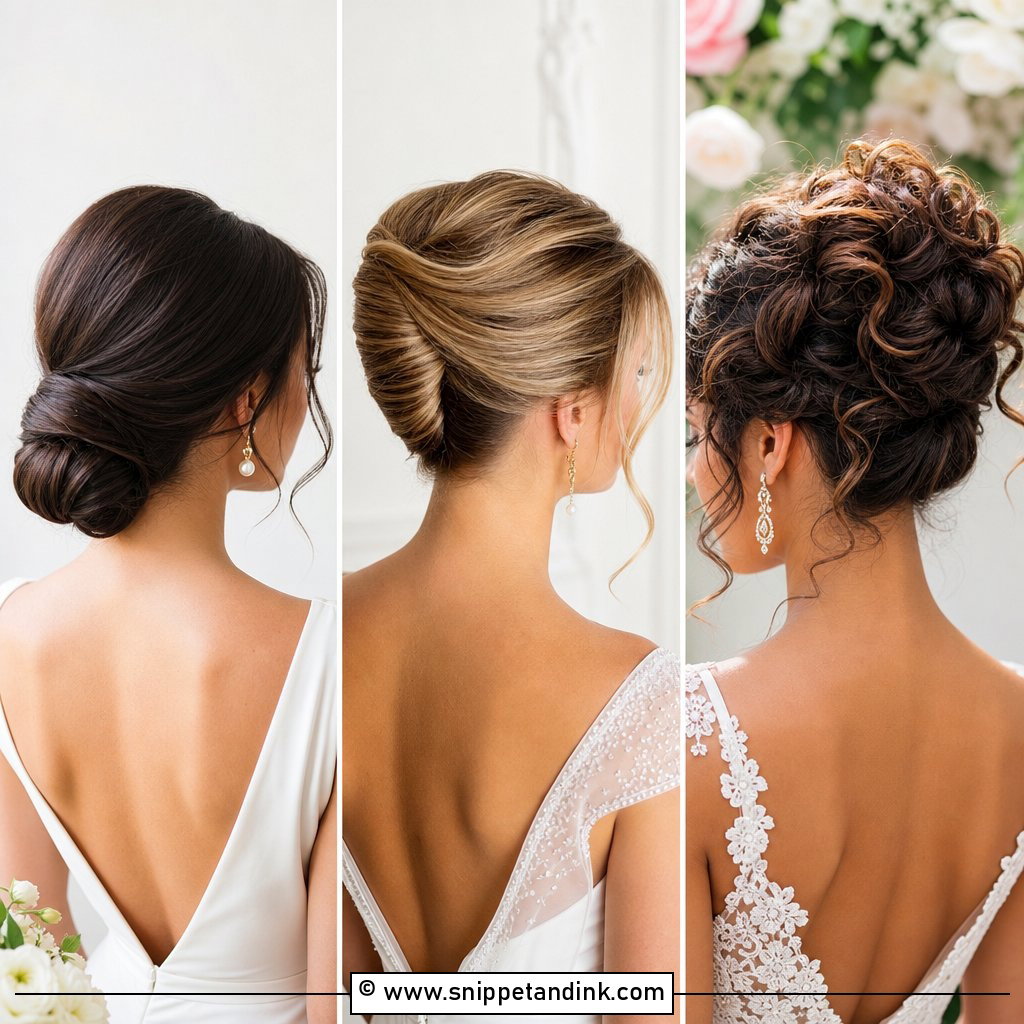
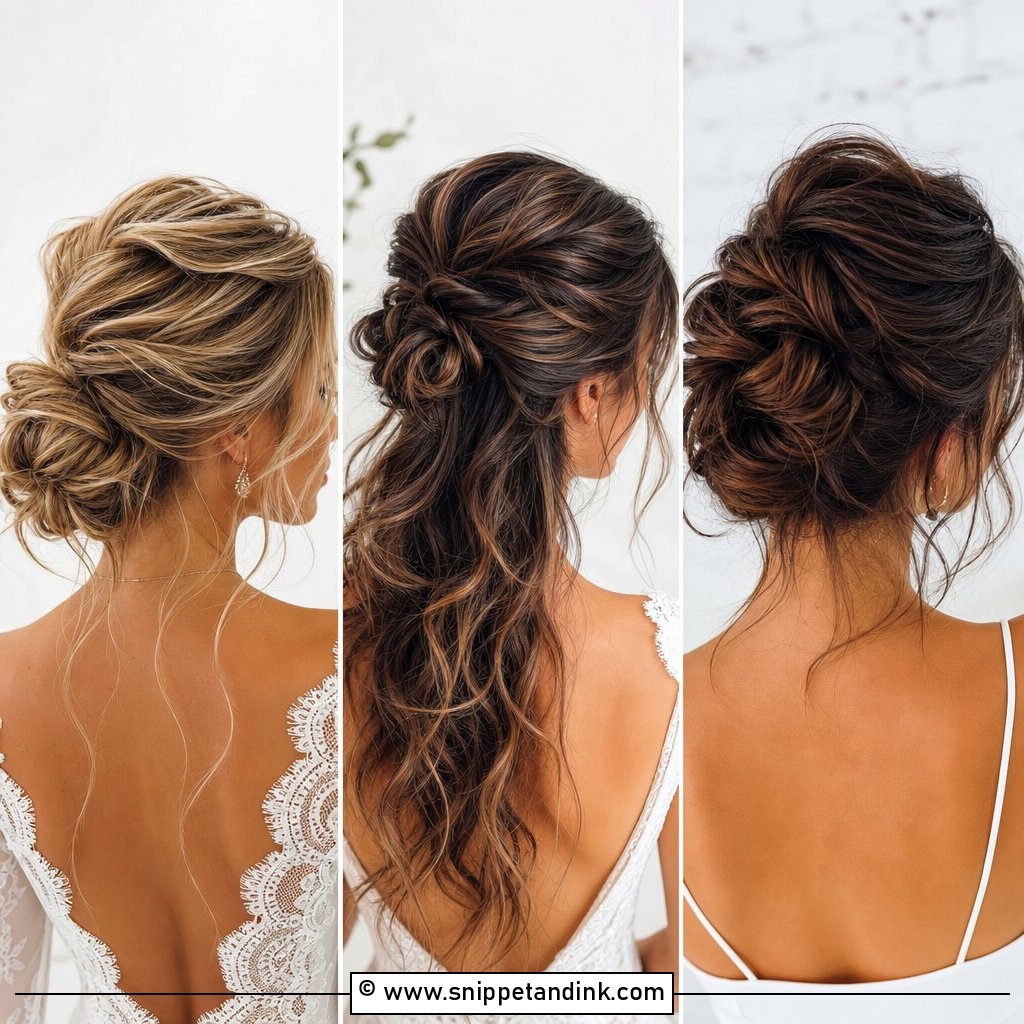
If a bride is nervous about her hair, I usually steer her here first, because a low bun is the style that gives elegance without stress. It sits at the nape, keeps everything off the face, and takes a veil comb directly above it. High necklines, off-shoulder gowns and open backs all benefit because nothing covers the dress. Decide early whether you want lift at the crown or a smooth, flat top; they look like different hairstyles in profile. Keep face-framing pieces fine, since thick ones go limp and stick to the cheek by the speeches.
2. Bridal Chignon
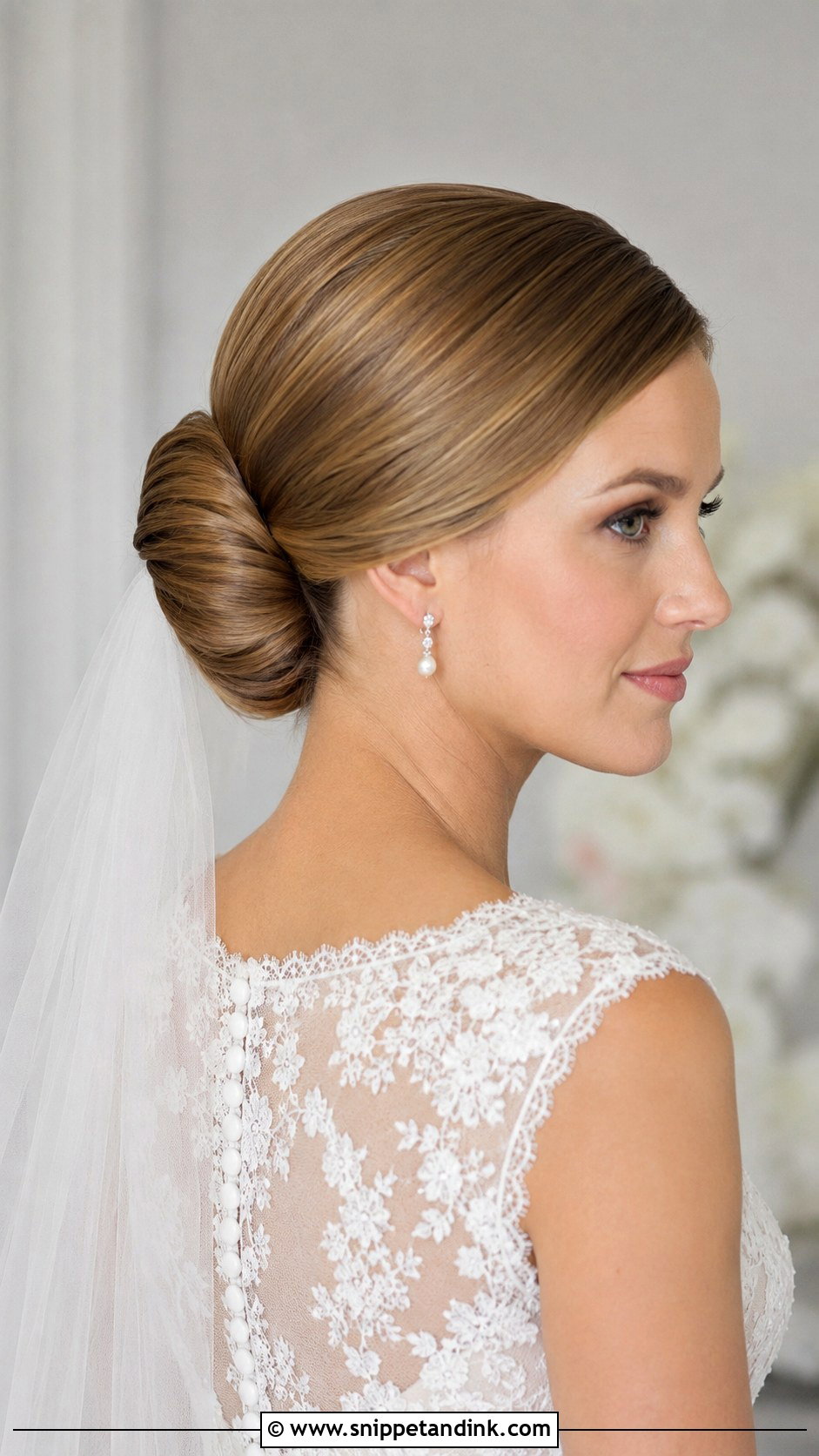
A bridal chignon is tucked, rolled or twisted low at the back, and it’s the formal cousin of the low bun. It belongs with satin, structured bodices and cathedral veils. On fine hair I build the shape over a small padding or add clip-in wefts, then cover them completely, because a chignon that’s too small looks thin from behind. A middle part reads modern; a side part leans old Hollywood. Of all the updos here, this is the one I trust most for long outdoor photo sessions.
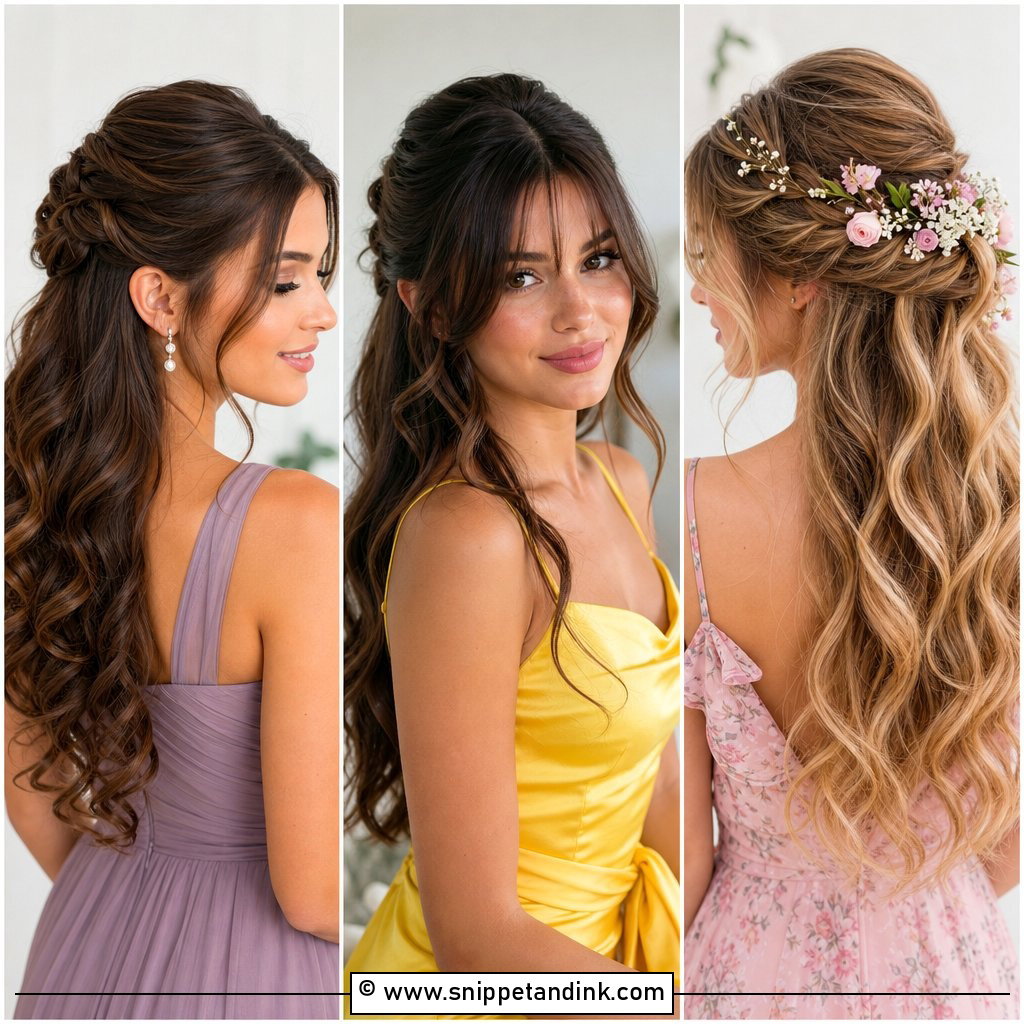
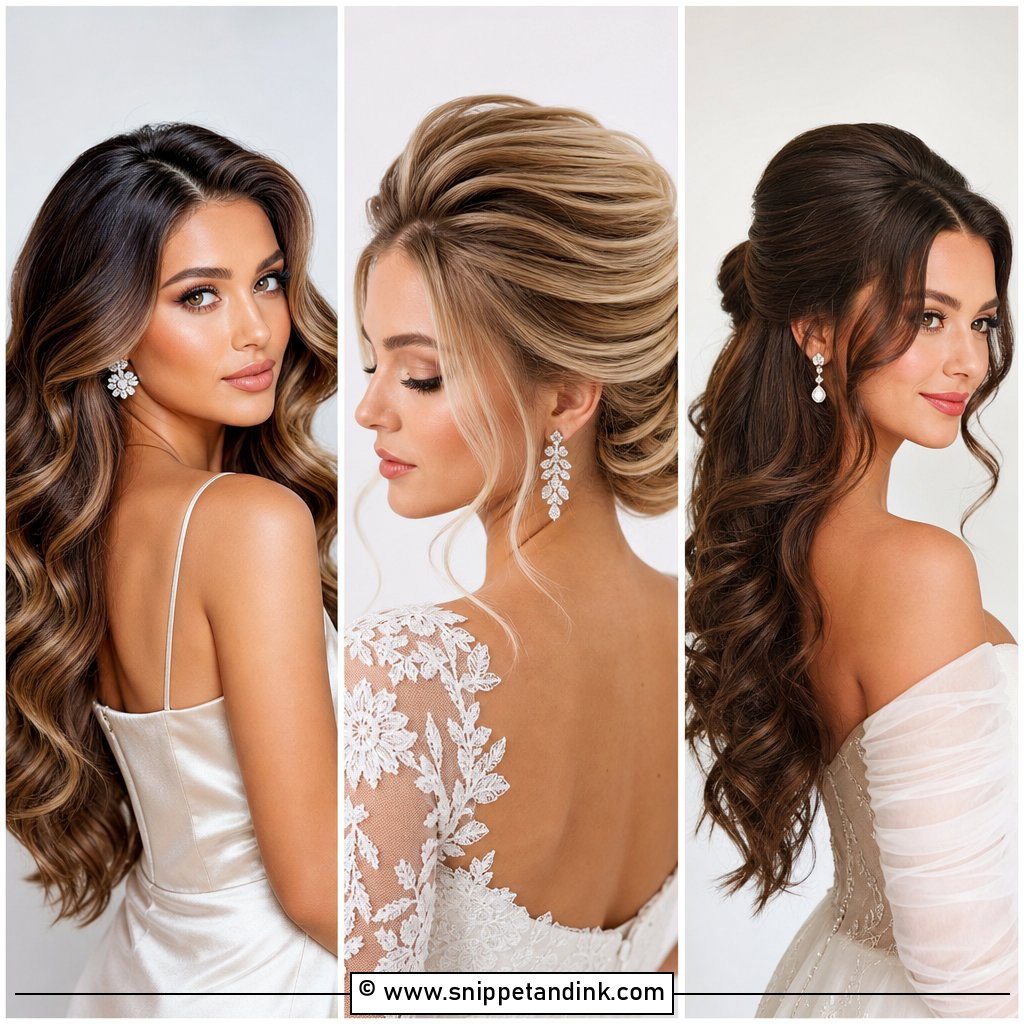
3. Bridal Half Up Half Down Hair
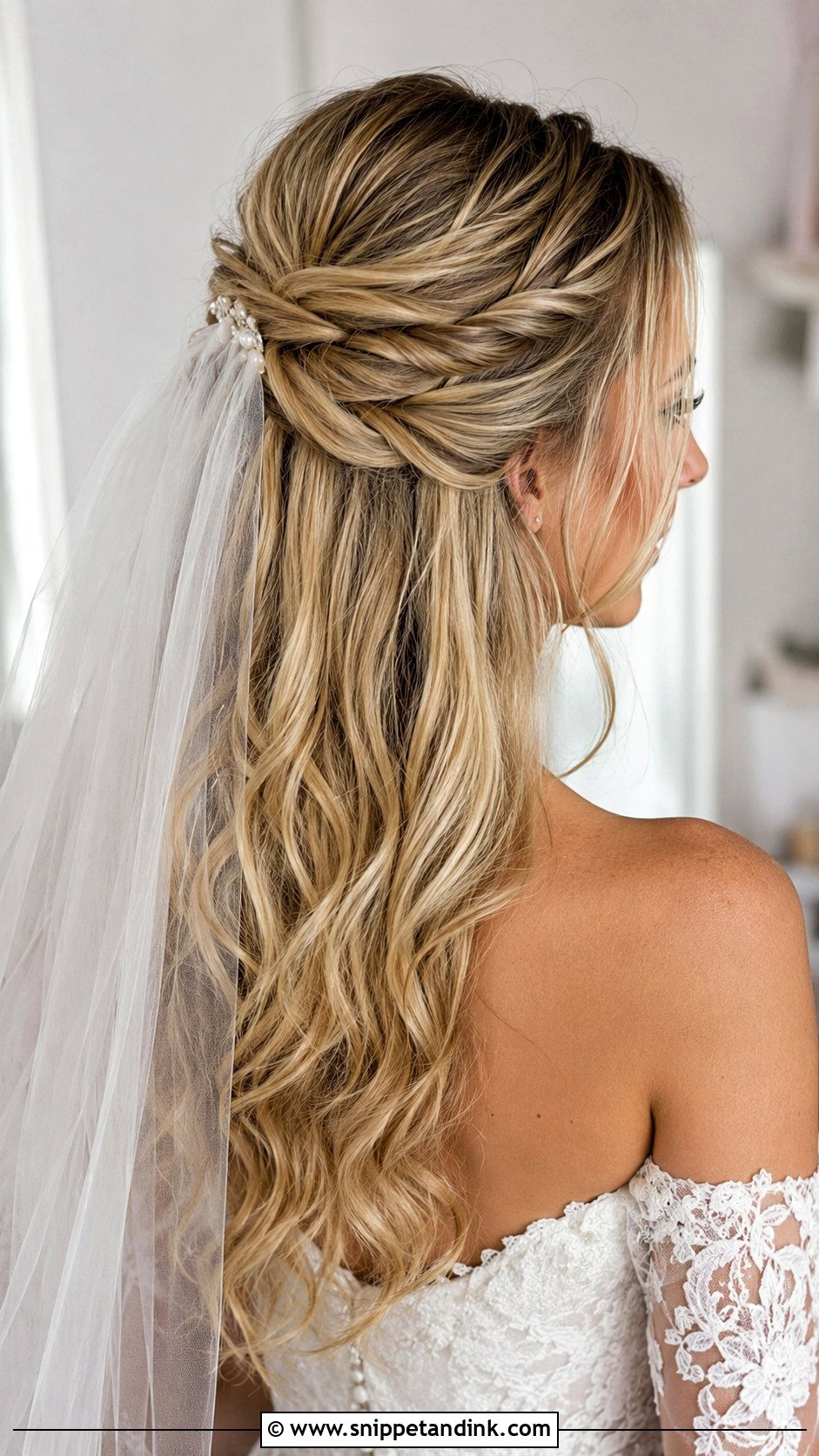
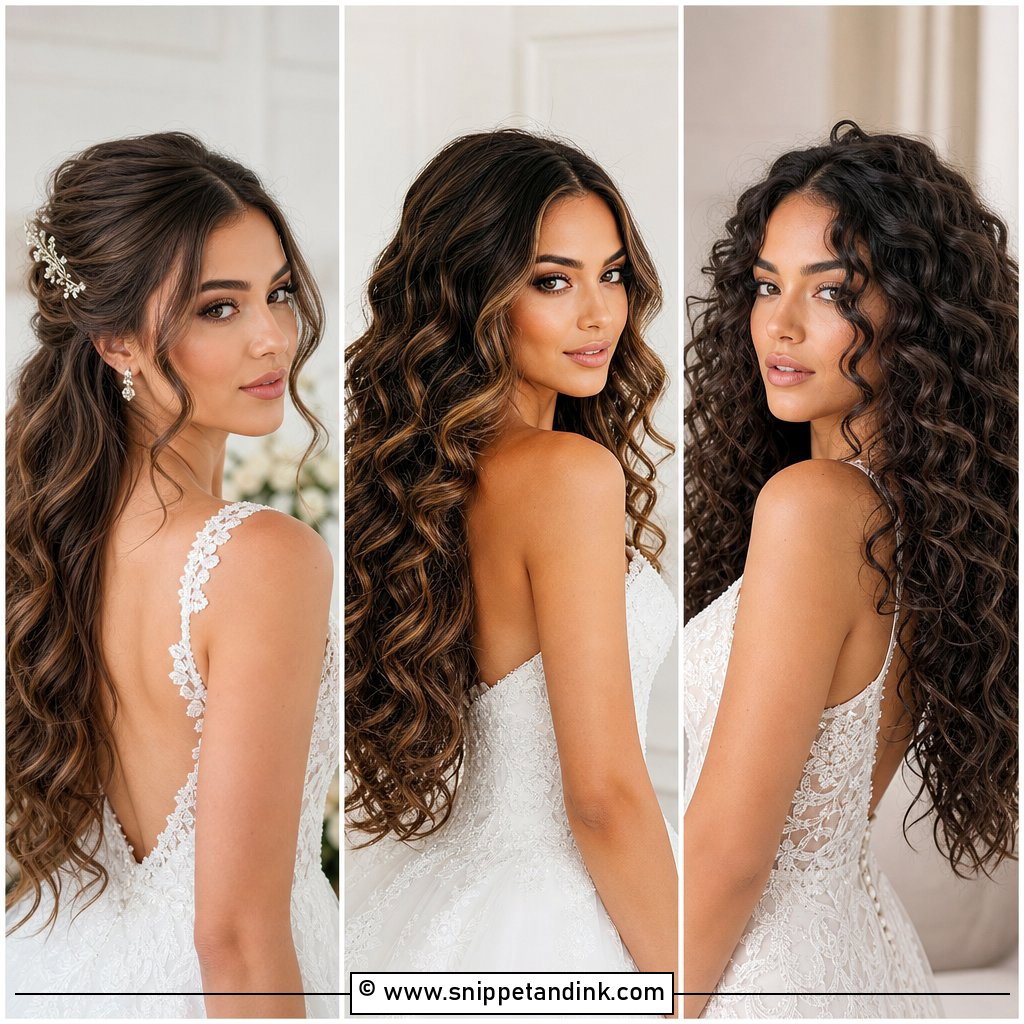
Half up, half down gives you loose lengths with a secured top section, and it suits medium to long hair best. The pinned crown can be twisted, braided or simply lifted, and a veil slides in neatly beneath it. Here’s the part brides don’t expect: the loose lengths are the weak point. I set curls tighter than the final look you want, because they will relax for hours. Fine, straight hair can lose its curl in damp weather by mid-afternoon, so I’d consider a fully pinned style there.
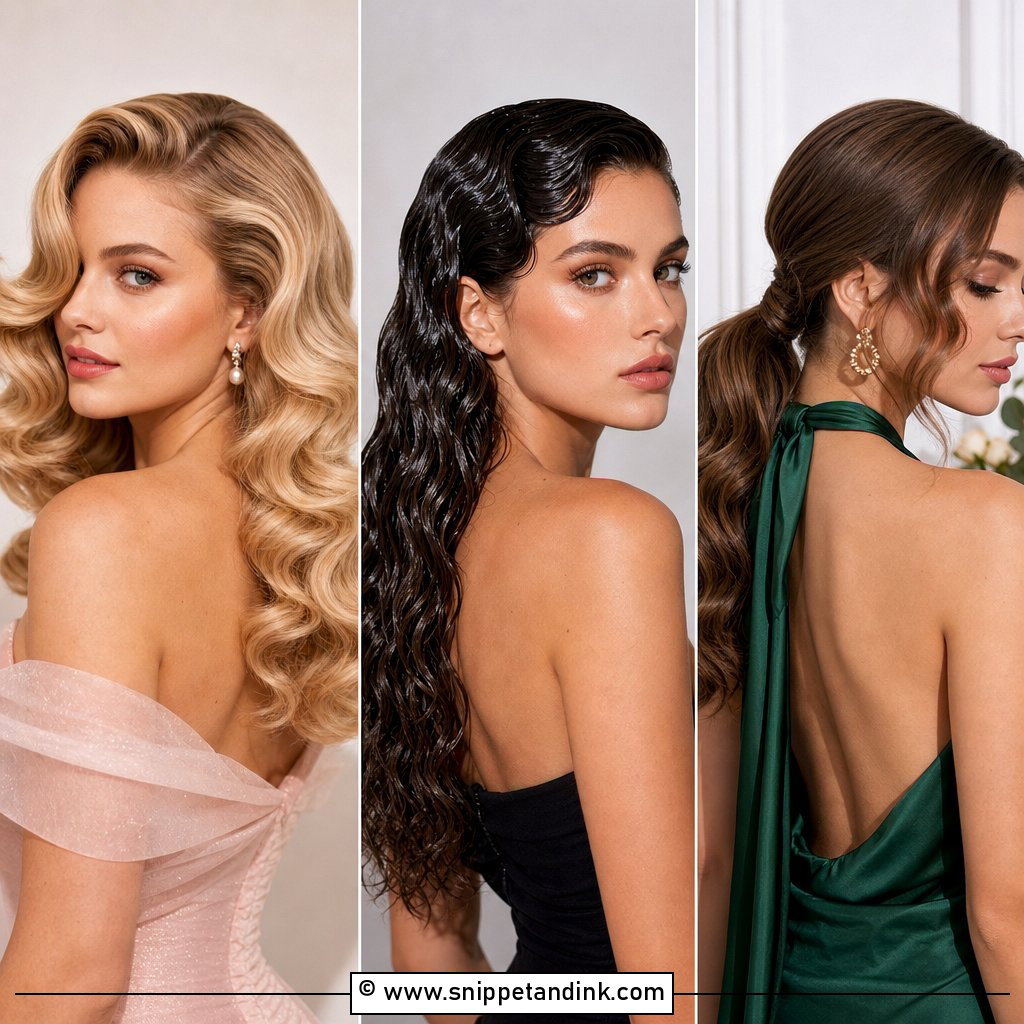
4. Bridal Hollywood Waves
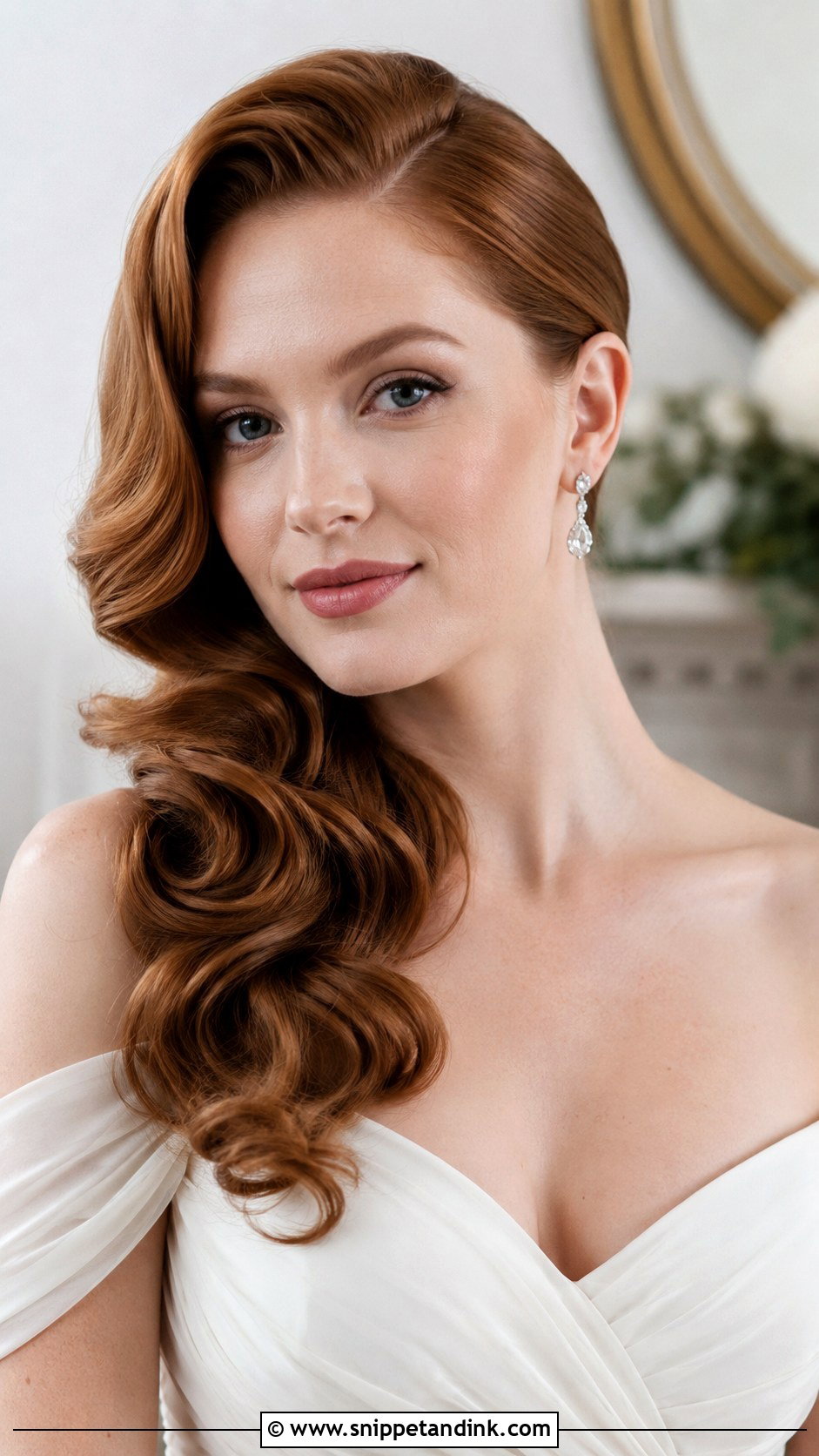
Old Hollywood waves are glossy, sculpted and swept into one direction from a deep part. They need careful prep: every curl is set the same way, brushed out into one continuous pattern, then clipped to cool before being sprayed. Because the surface is smooth, split ends show immediately, so book a trim a couple of weeks ahead. Pair them with a fitted gown or statement earrings. If you’re expecting wind on a cliff or beach, I’d think twice; once a wave pattern gets ruffled, it’s hard to restore without a brush and a mirror.
5. Bridal Loose Waves
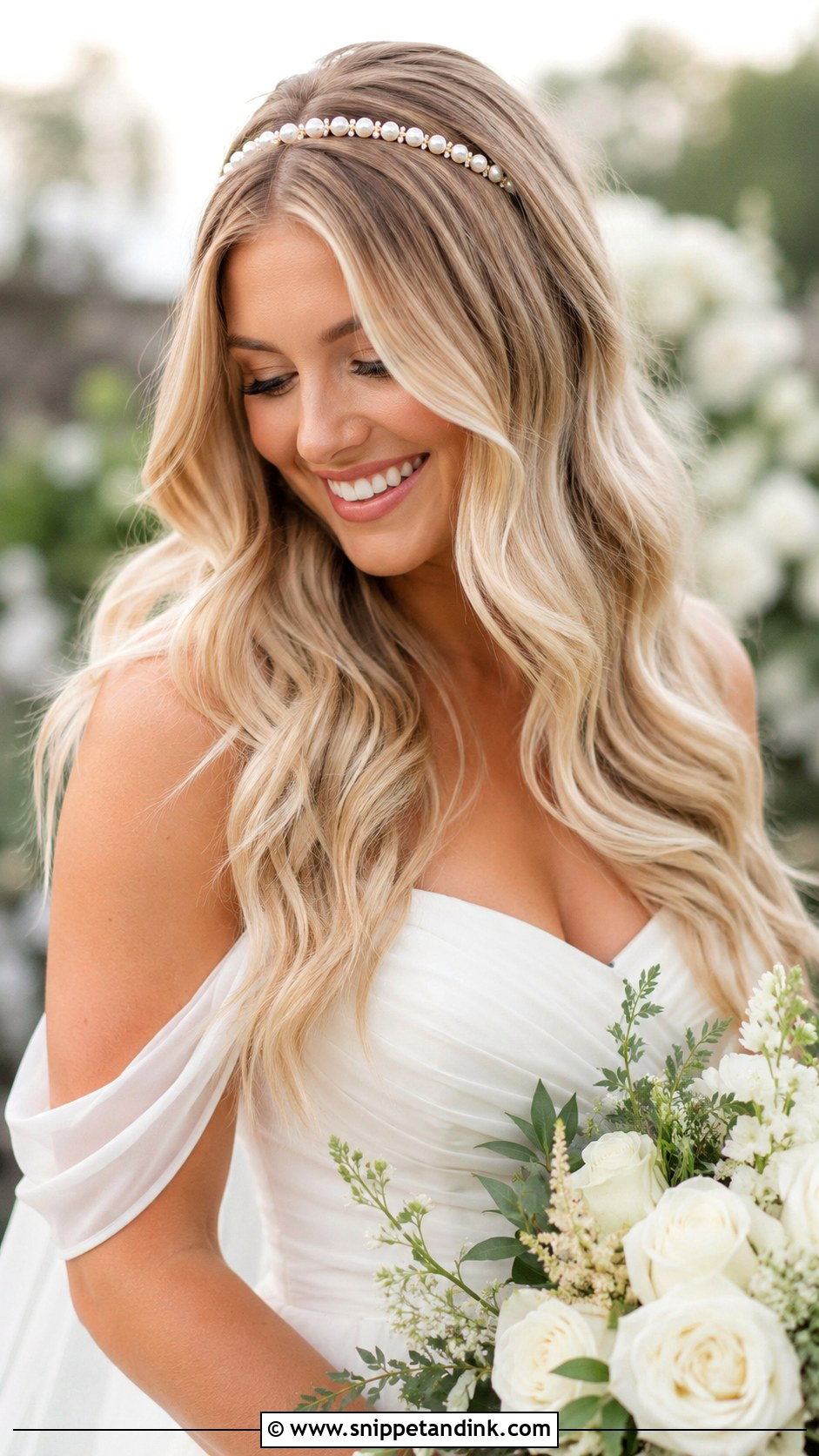
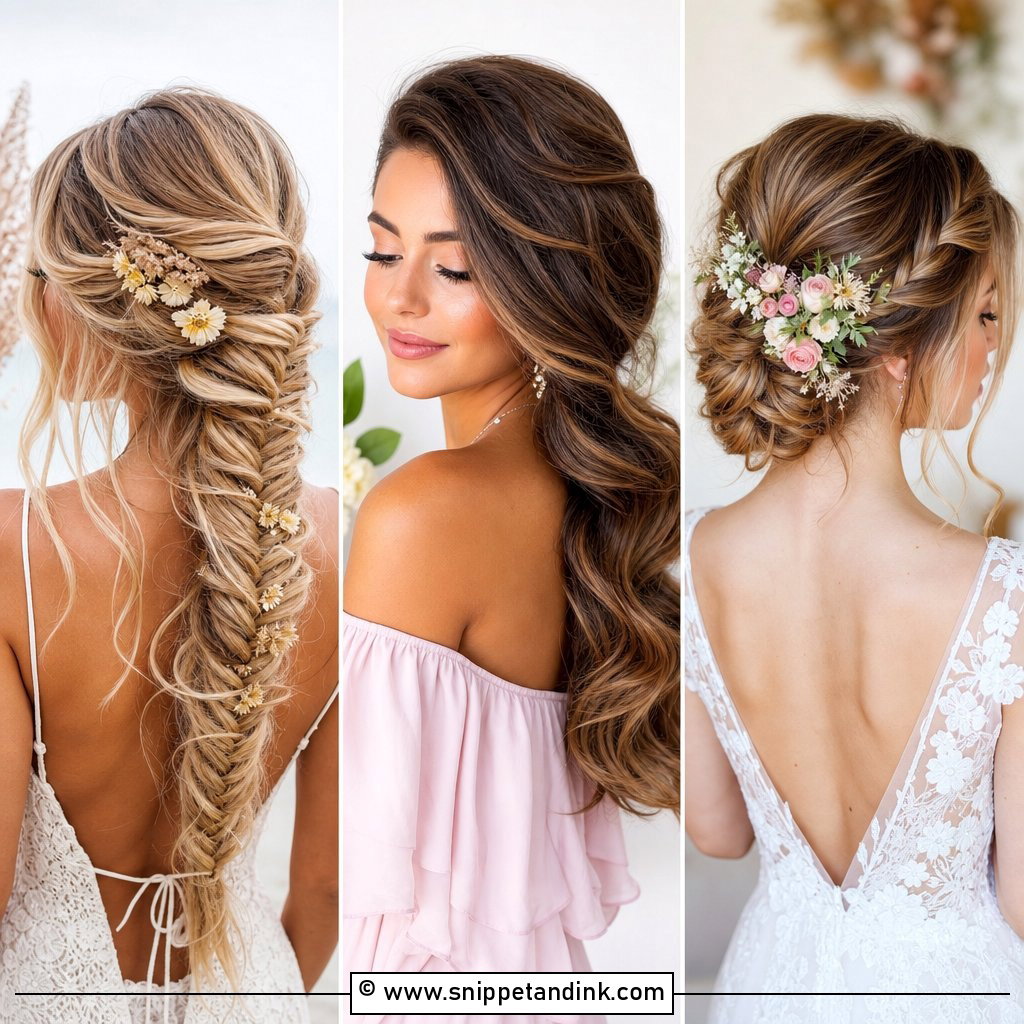
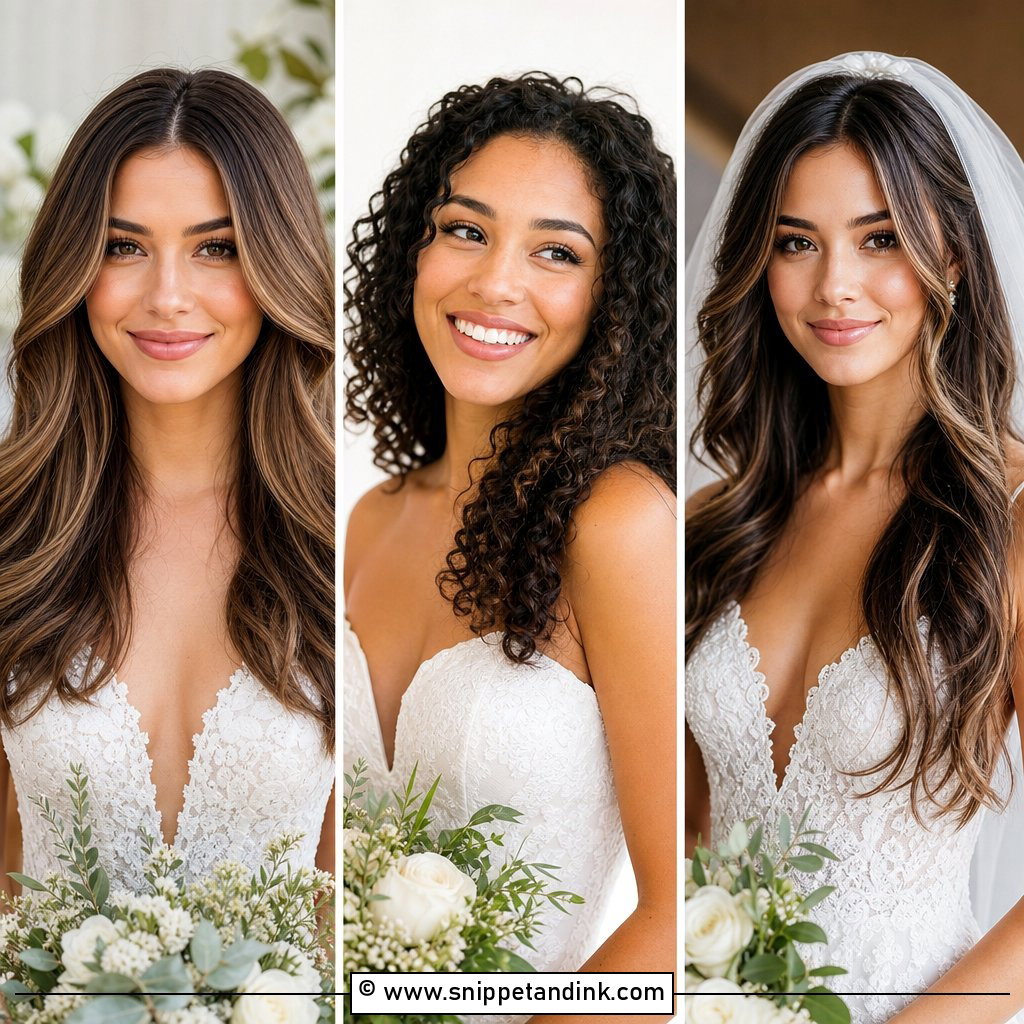
Loose waves are the style most likely to look unfinished if they aren’t built properly. I add root lift, set bends in alternating directions and finish with a light polish so the hair moves without frizzing. They suit beach and garden ceremonies, simple gowns and brides who don’t want anything formal. A veil, floral pins, pearl clips or a slim headband all sit well. If your hair drops curl within an hour on a normal day, it’ll do the same at the wedding; wefts or a firmer setting spray are worth discussing at the trial.
6. Bridal Textured Updo
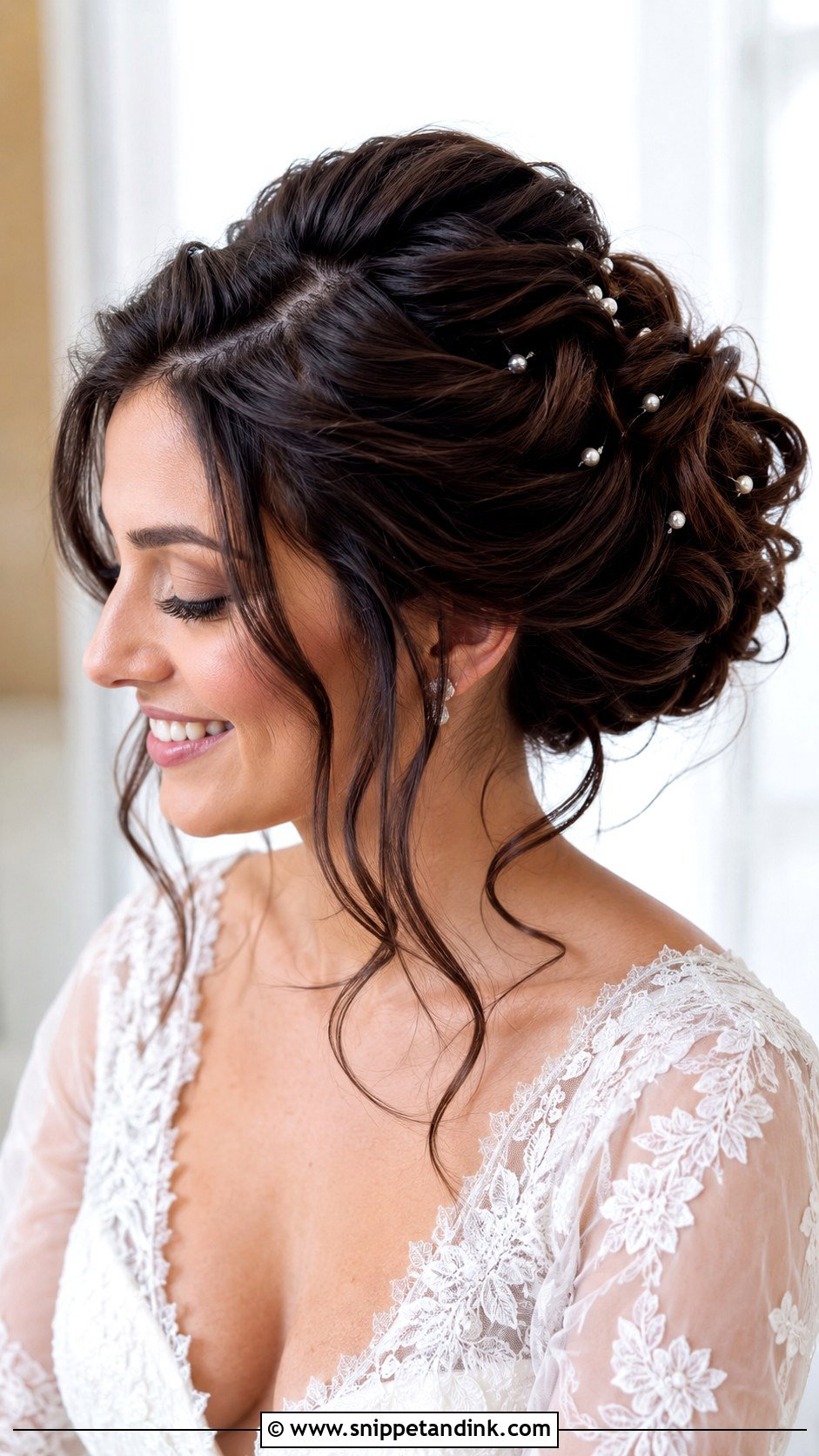
A textured updo is built from small pinned sections, loose twists and a few tendrils, which is also why it’s a great option for fine hair: lots of small pieces read as volume. It pairs naturally with lace, outdoor venues and delicate accessories. The skill is controlling how undone it looks. I ask brides to bring one photo that’s too messy for them and one that’s too neat, and we aim between them. Without that conversation, textured can easily tip into looking unfinished.
7. Bridal Sleek Bun
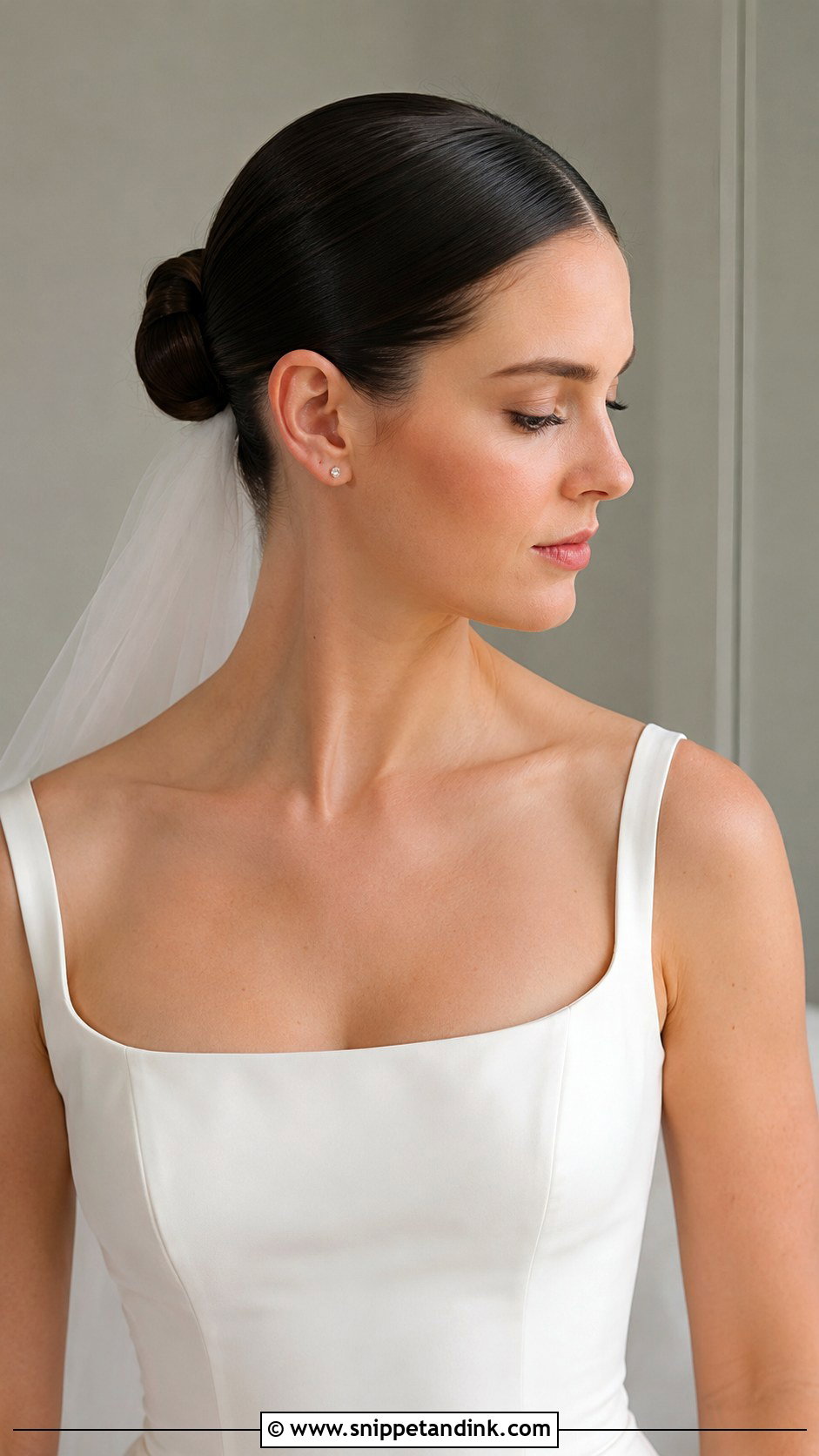
Clean lines and nothing to hide behind: that’s the sleek bun. The hair is smoothed back or sharply parted and secured tightly, so cheekbones, earrings and neckline detail take the attention. It suits minimal gowns and city weddings. I use a shine product sparingly, because too much reads as greasy in flash photos. The veil needs planning, as a comb pushed into a tight bun can create bumps; we test the placement at the trial and sometimes sew the comb in instead.
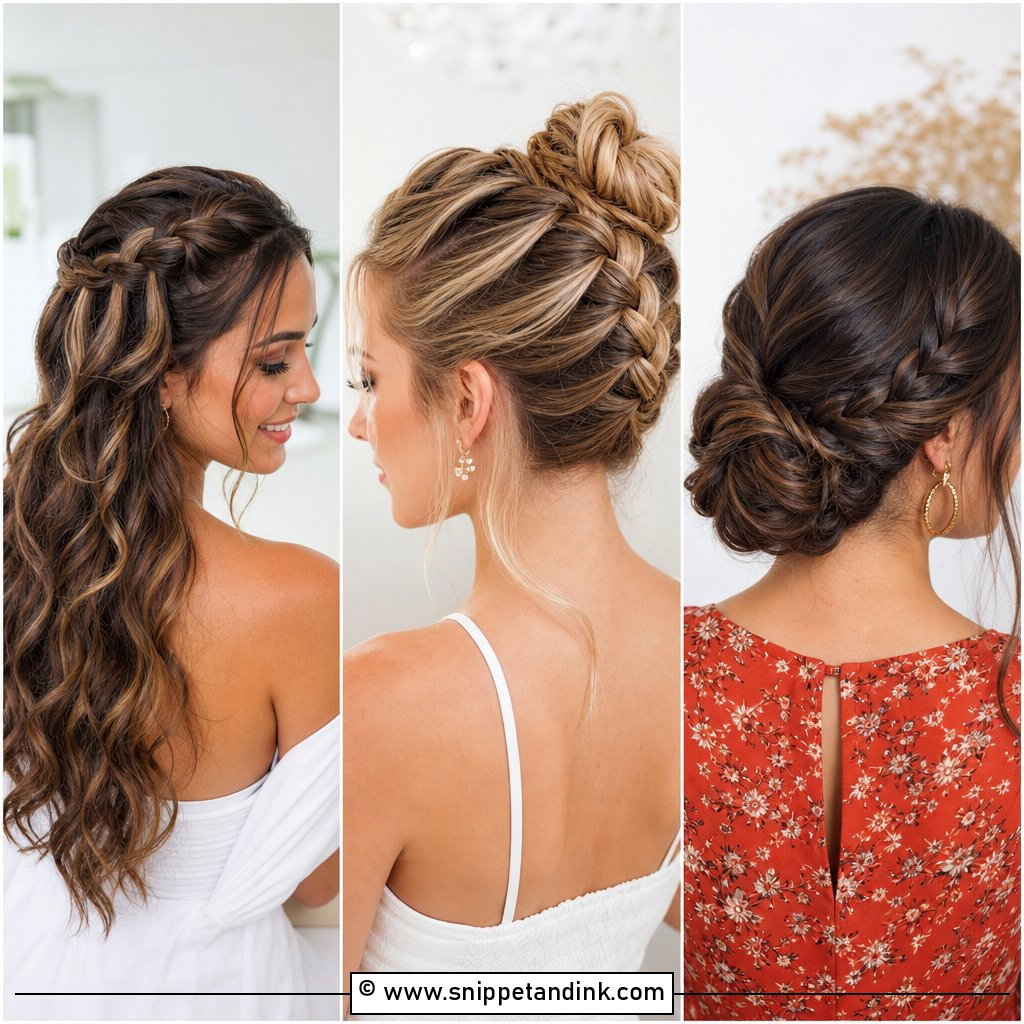
8. Bridal High Bun
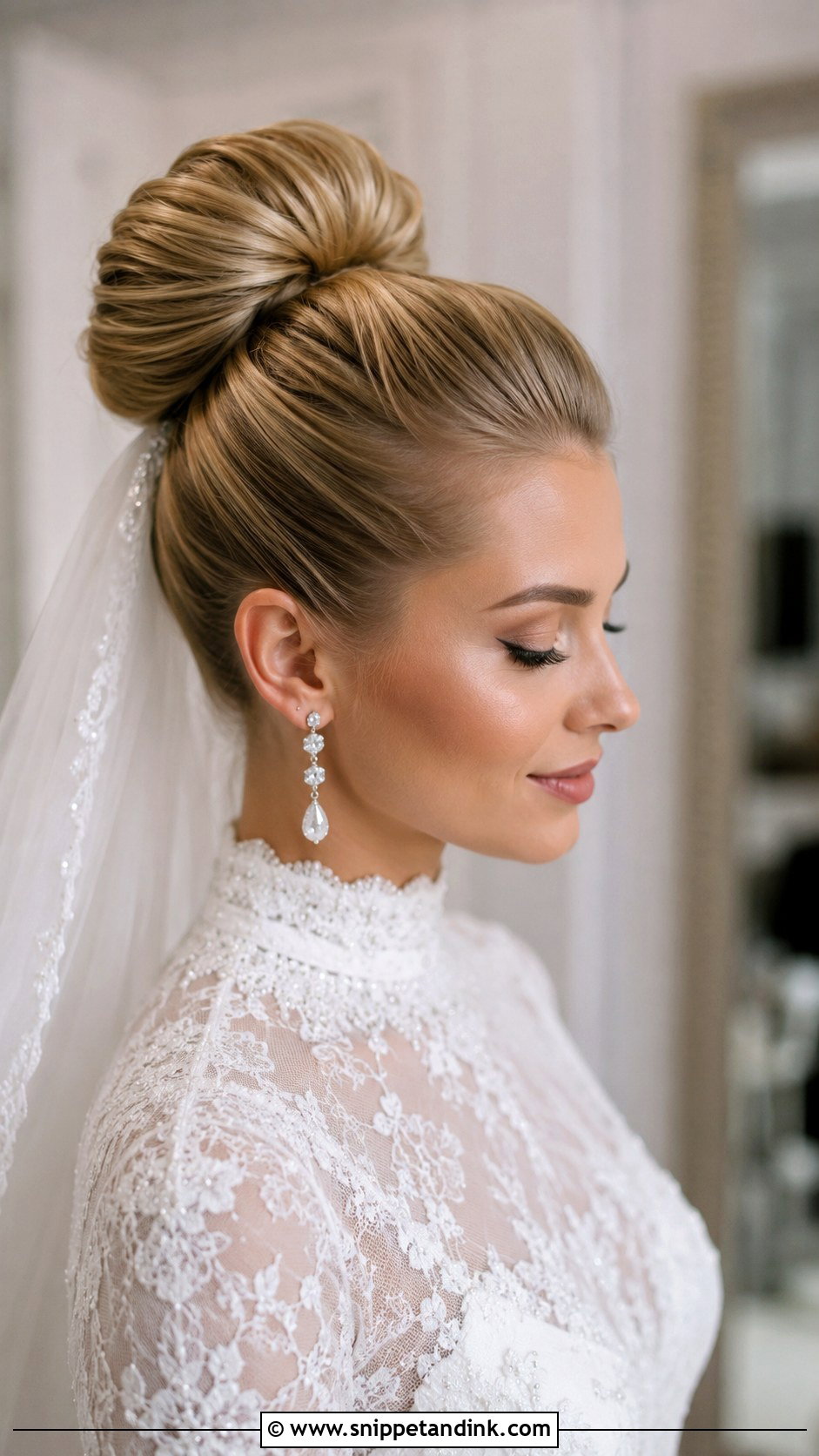
Height at the crown lengthens the neck, which is why I often suggest a high bun for petite brides or very high necklines. It can be smooth and balletic or textured and softer. Placement is the subtle part: a bun sitting right on top of the head can look severe, so I set it slightly back where it follows the curve of the skull. Fine hair may need padding; thick hair needs more pins, because the weight pulls down over the evening. Dramatic veils attach underneath it well.
9. Bridal Ponytail
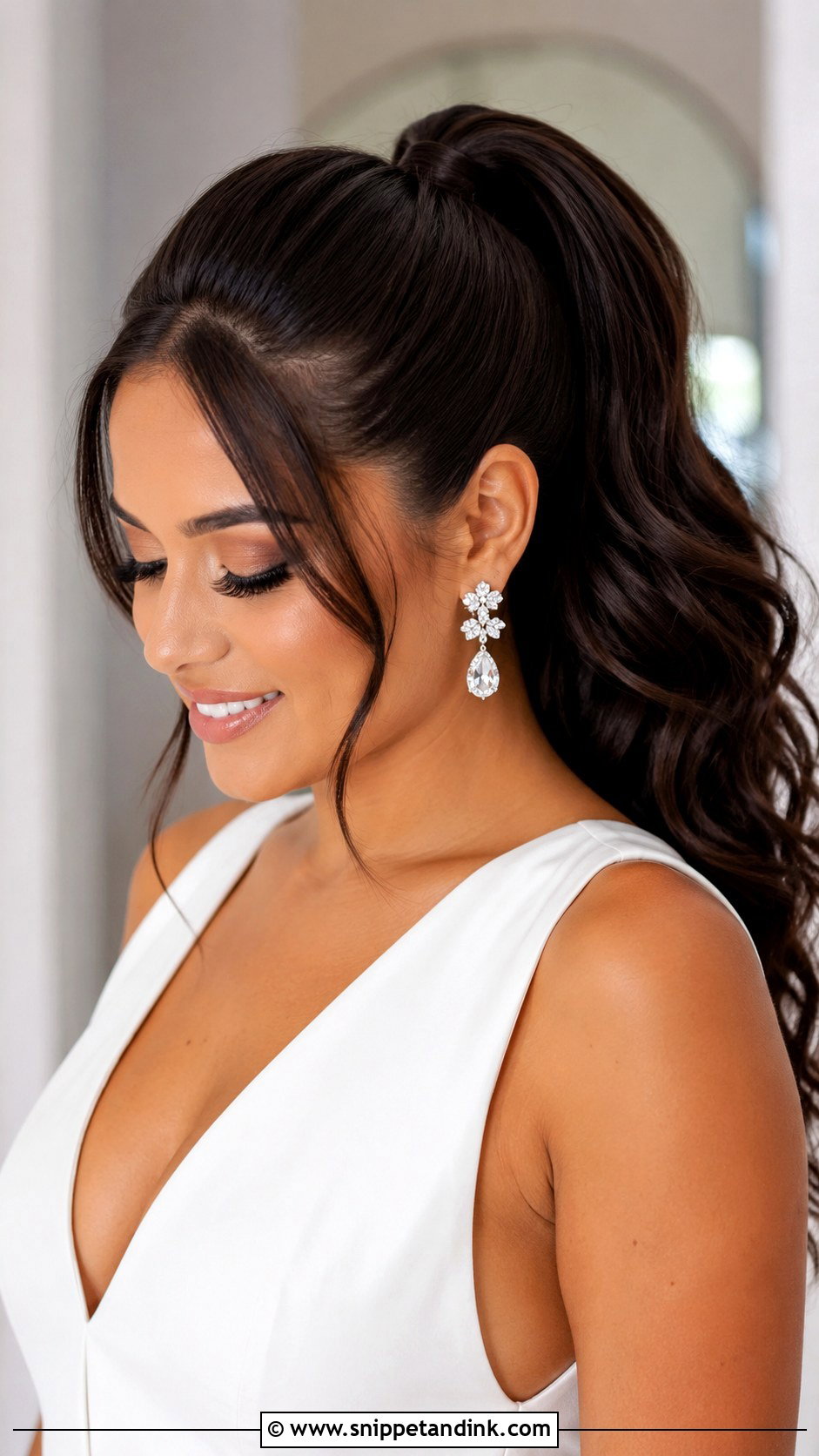
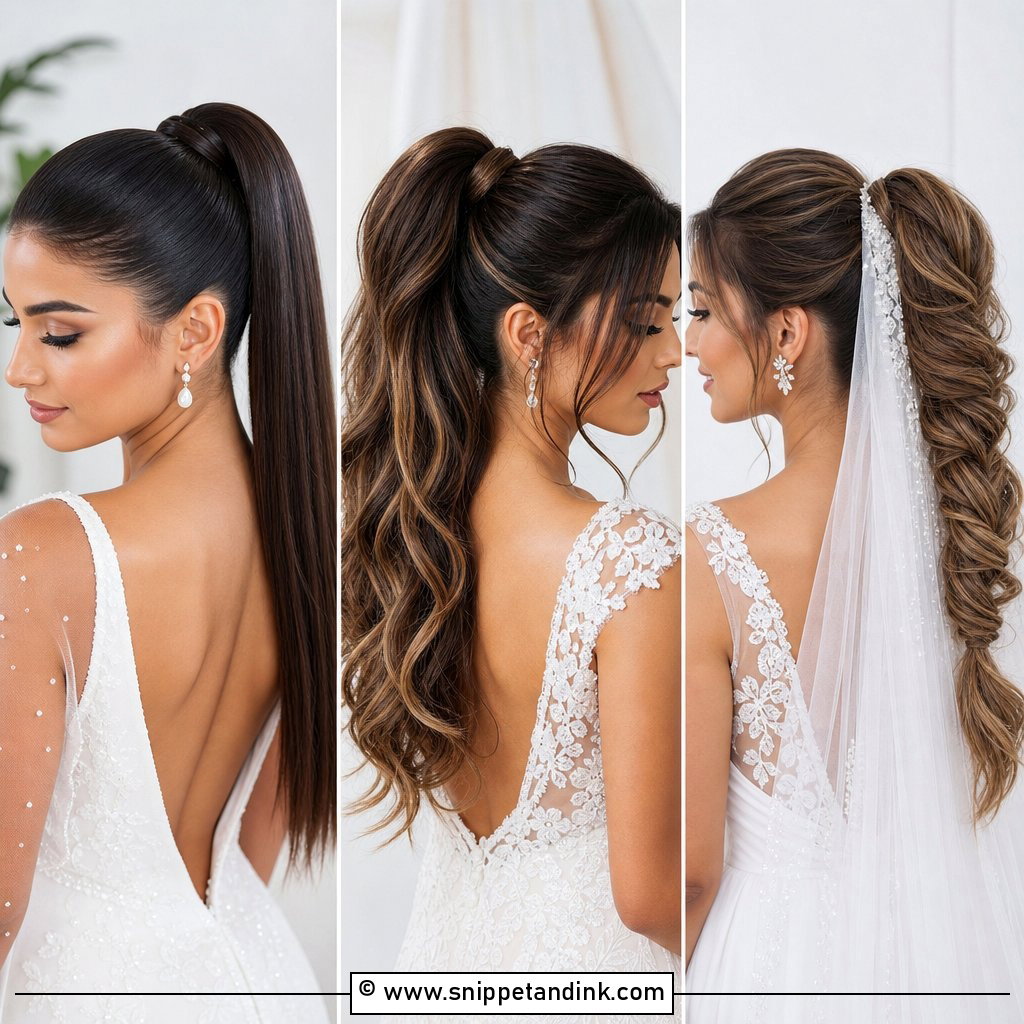
Ponytails surprise people with how formal they can look. Sleek or waved, high or low, they give movement without having all the hair loose, and they feel easy for dancing. A wrapped base hides the elastic and finishes the look. If the back of your dress is detailed, a higher ponytail keeps it visible. I secure the base with two elastics and crossed pins, since a single elastic loosens as the hair’s weight swings. Clip-in extensions add fullness without changing your own hair.
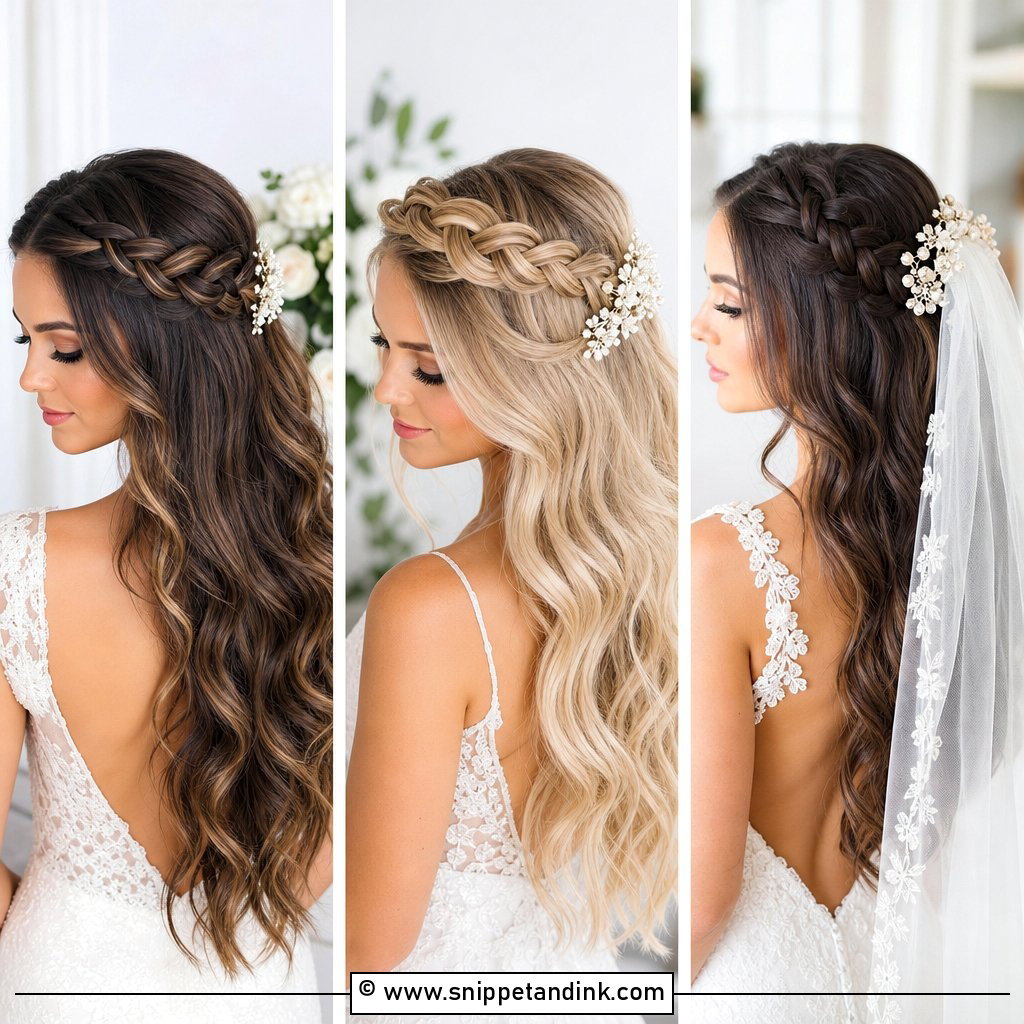
10. Bridal Braided Updo
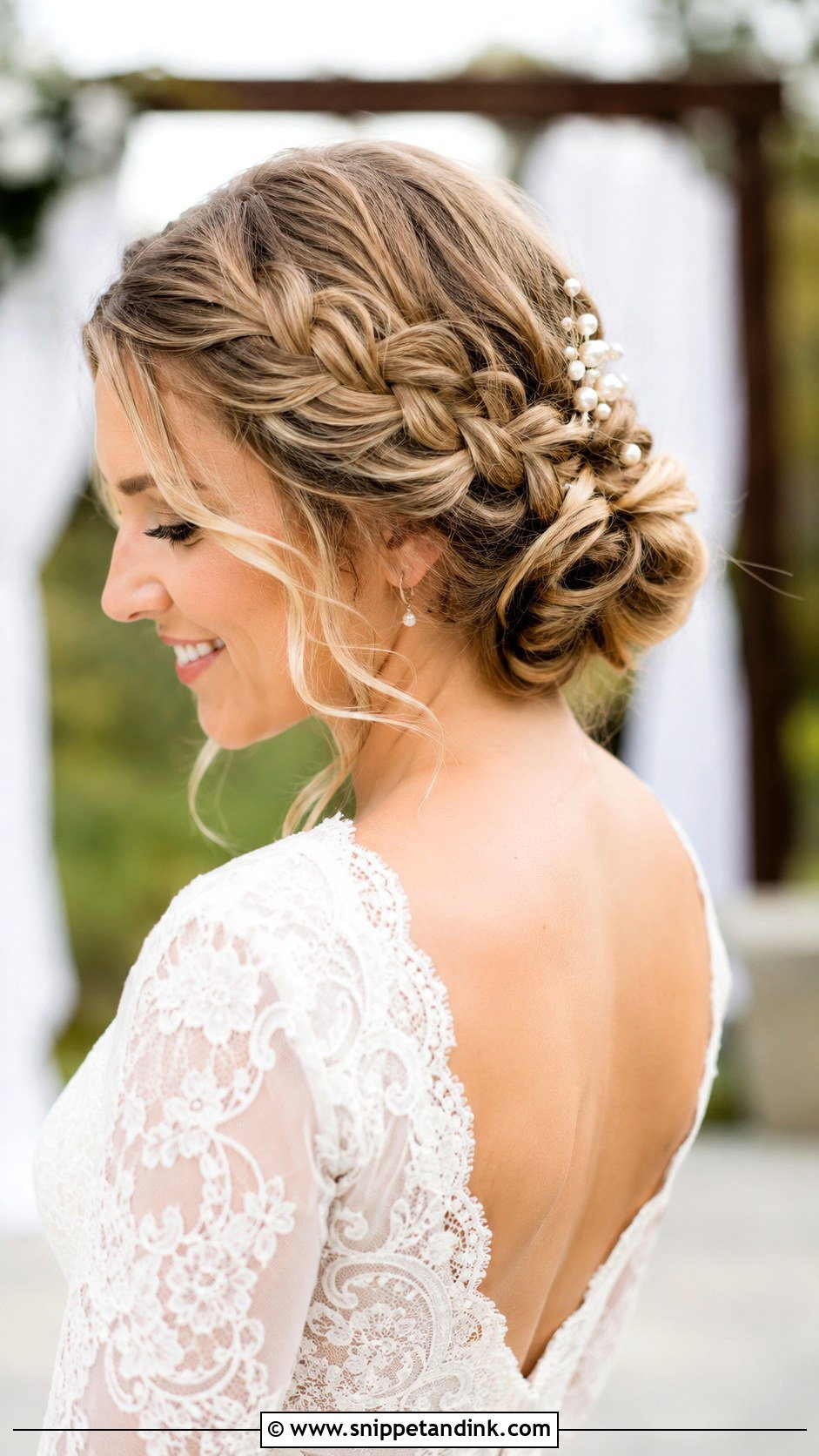
Braiding gives an updo built-in structure: crown braids, side plaits or braided sections tucked into a bun all grip each other, which makes them a good answer for layered hair with short pieces that escape. They suit rustic, garden and destination weddings. Slippery hair needs texture spray before I braid, or the braid loosens the moment I pull it wider. Check the shape from the front at your trial too. Plenty of braided updos look great from behind and disappear completely in face-on photos.
11. Bridal Side Swept Hair
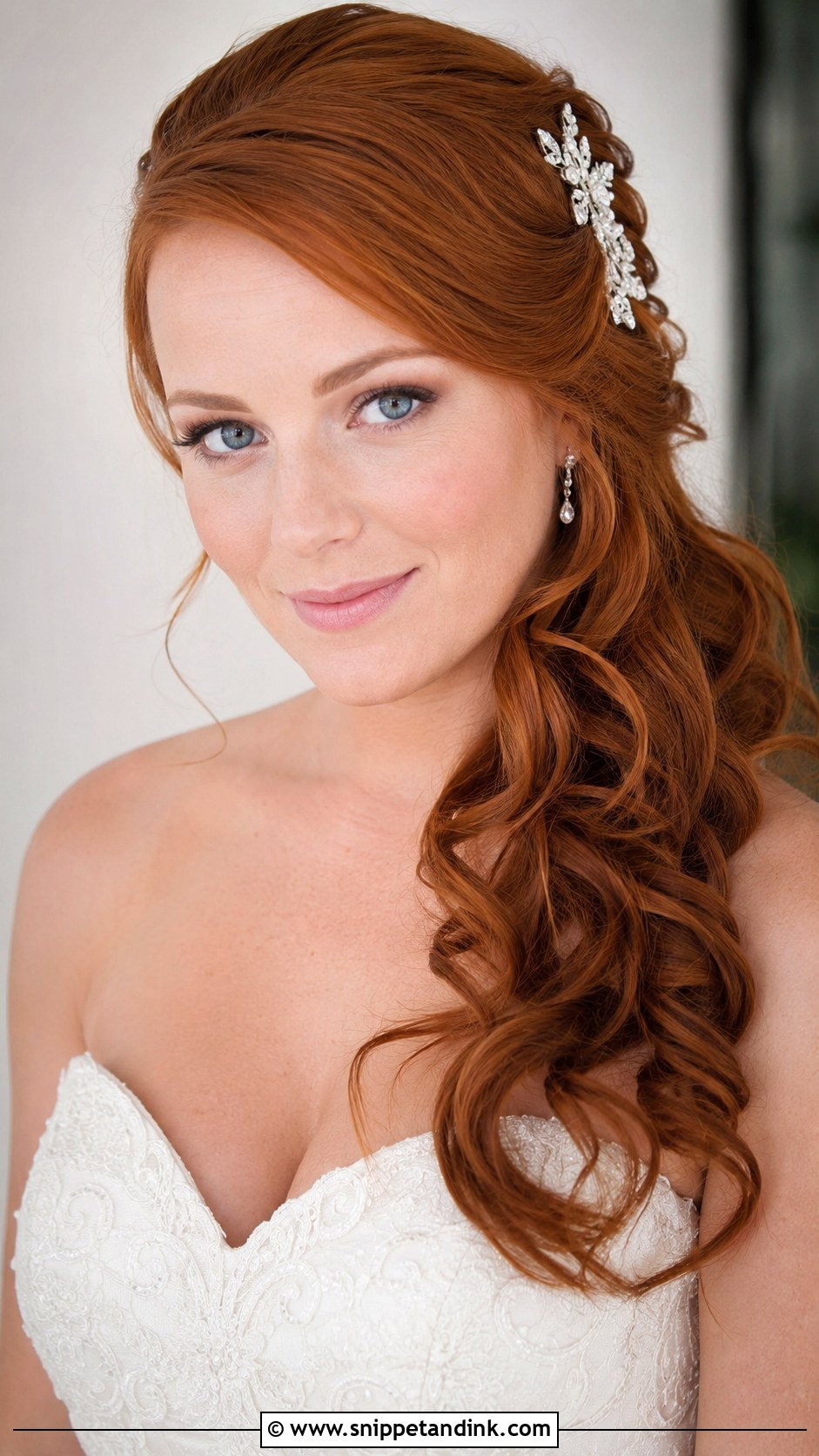
Swept to one shoulder, this style gives you loose hair with control over where it falls, which is ideal for one-shoulder gowns, sweetheart necklines and statement earrings. The hidden structure does the real work: I pin a small anchor behind the opposite ear, then direct the hair over it. Without that, it drifts back to center within hours. A vintage comb or pearl clip on the pinned side covers the anchor. Close-up portraits are where this style looks best.
12. Bridal Natural Curls
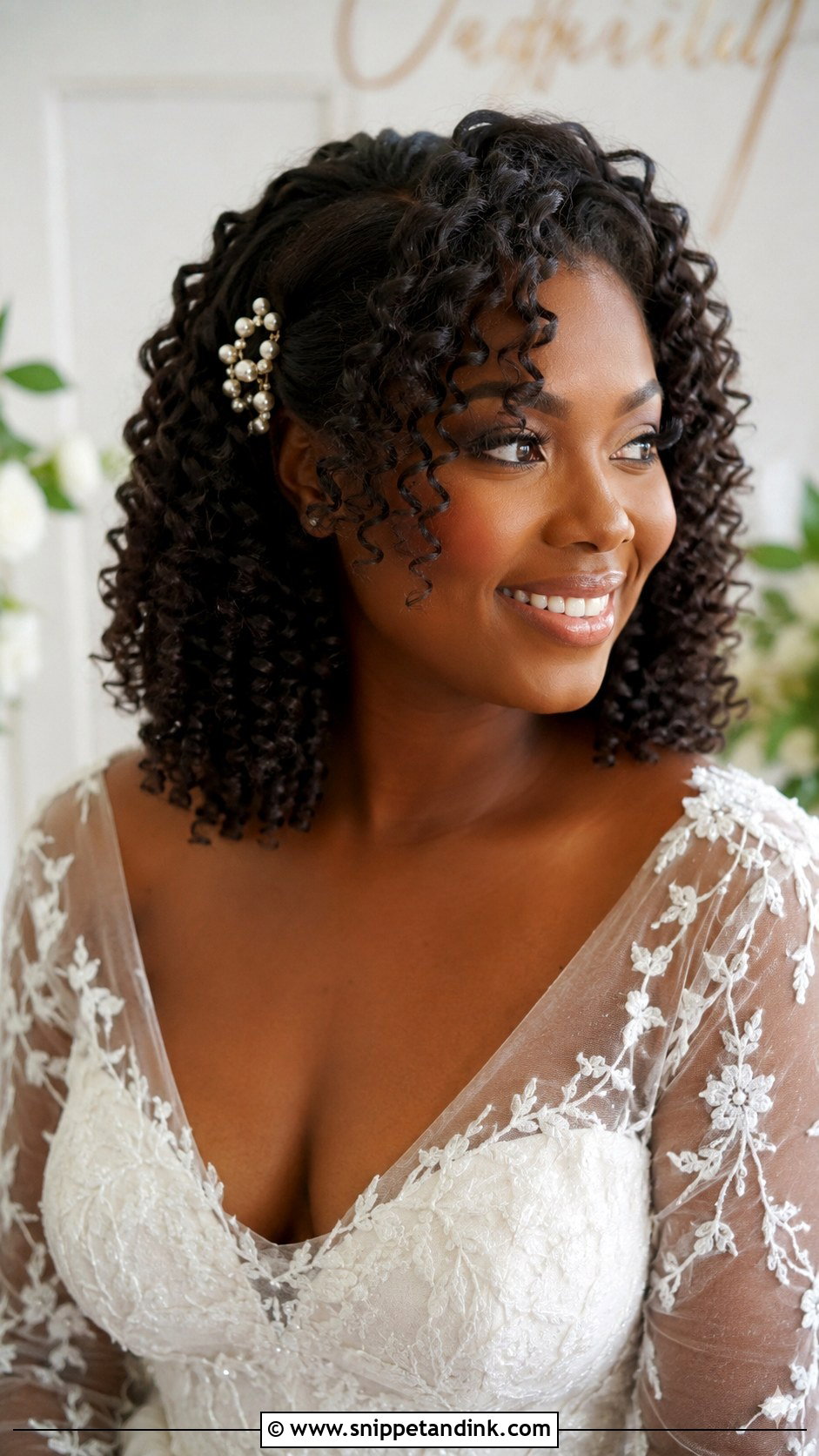
Natural curls deserve a stylist who knows how your curl pattern behaves, not one who’ll reach for a curling iron. I work with hydration and definition products, shape the curls by hand, and let drying time decide the schedule. Curls can stay down, be pinned to one side or shaped into a soft updo, and they take a veil well. Humidity changes everything, so the trial should happen with the products you’ll use on the day, ideally in similar weather.
13. Bridal Afro
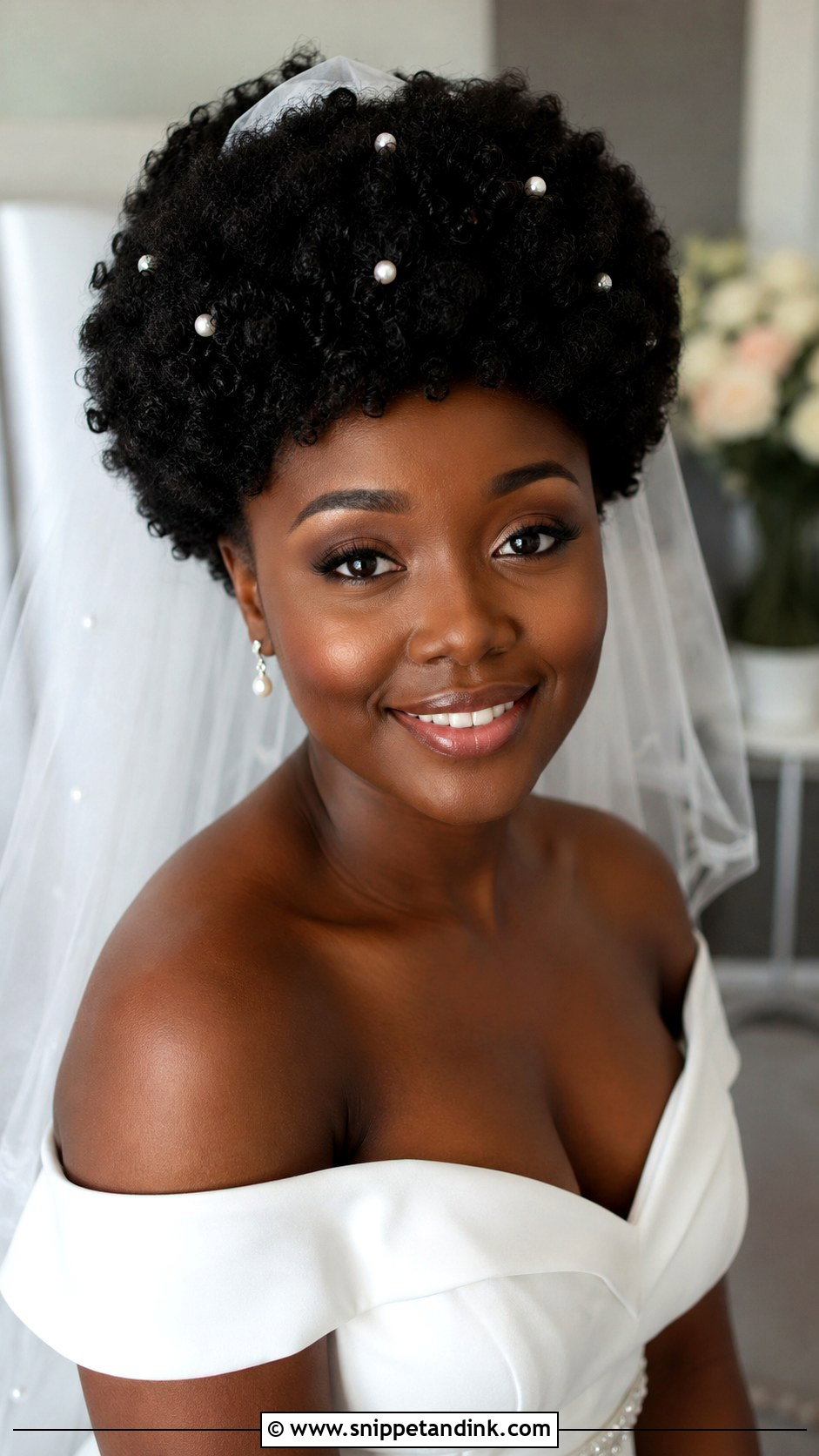
A bridal afro is all about shape. I pick it out, moisturize and sculpt it so the silhouette looks even from every angle, then decide on accessories: pearls, flowers, a tiara or a veil set at the crown. Preparation starts days earlier with deep conditioning, and stretching the hair beforehand is optional depending on the look you want. Holding products should keep the shape without stiffness. Next to a simple gown, the hair becomes the focal point, which is exactly the point of this style.
14. Bridal Loc Updo
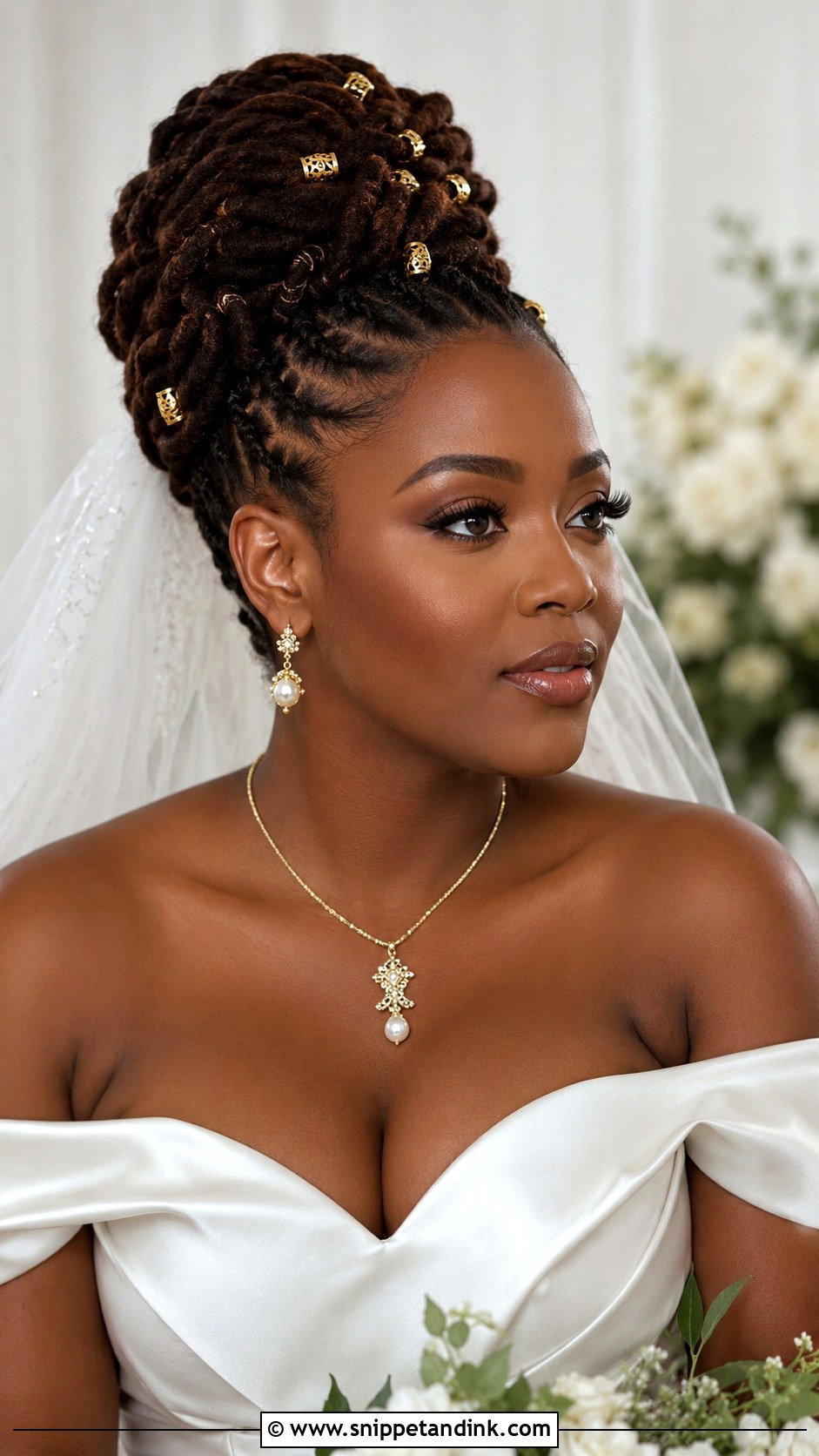
Locs can be wrapped, twisted, braided or stacked into a bridal loc updo that holds better than most updos because of the hair’s own weight and grip. Hair cuffs, pearl pins or gold accents slide into locs easily, and a veil sits under or behind the shape. Low reads classic; a high wrapped shape looks regal. My main concern is tension. Locs are heavy, and a style pulled too tight at the hairline will ache before dinner and can stress the roots, so we keep the edges relaxed.
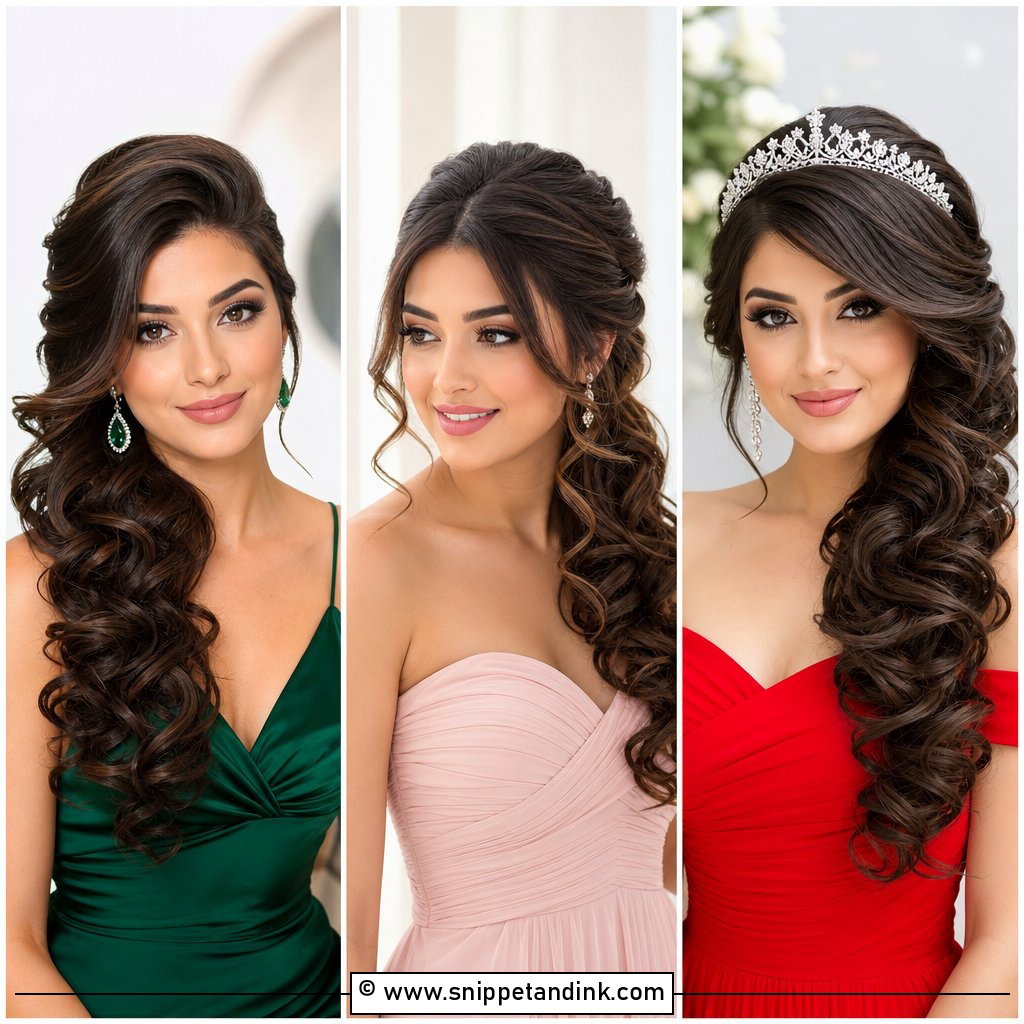
15. Bridal Bob Hair
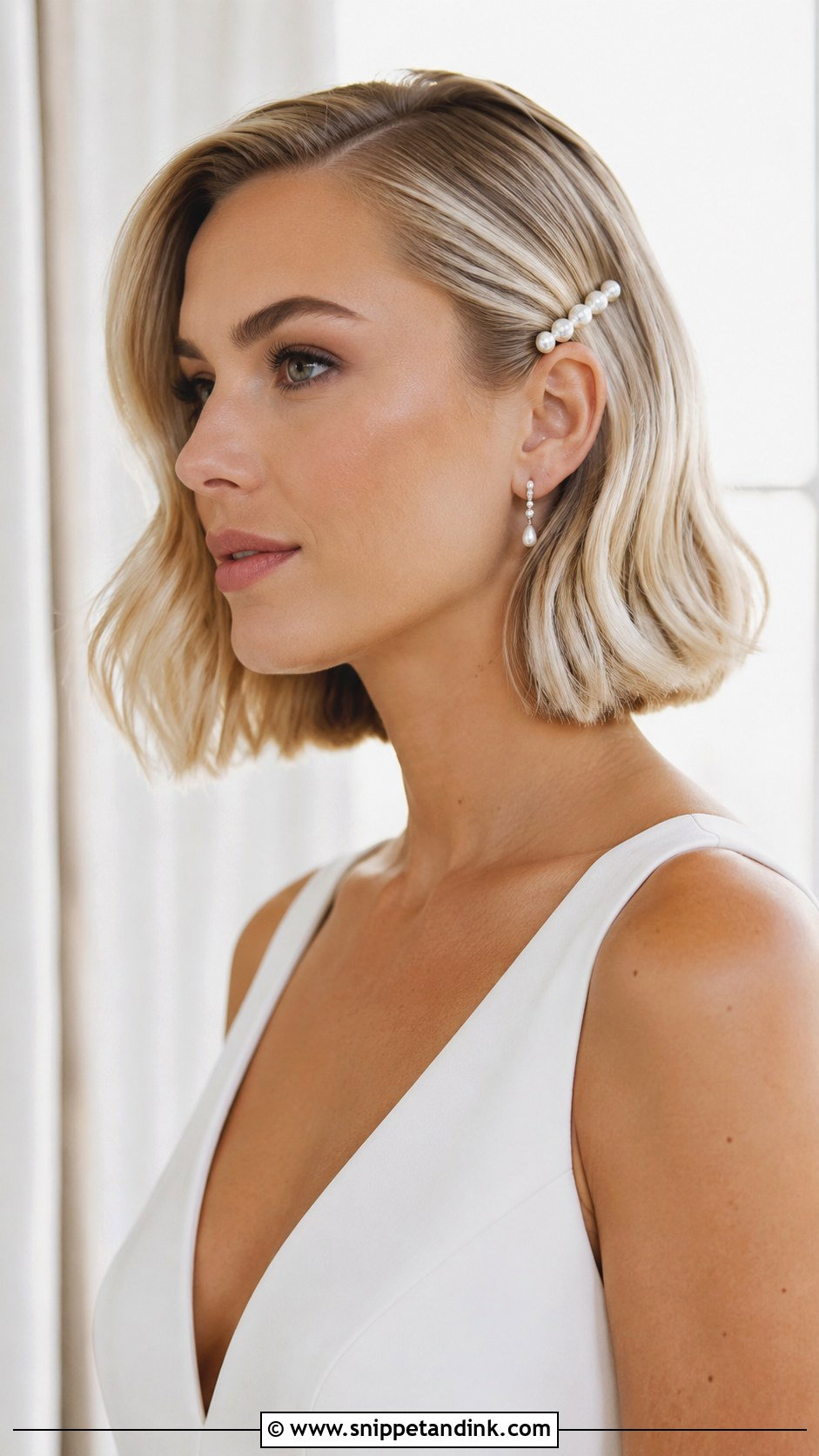
Short hair has its own toolkit. Bridal bob hair can be sleek, softly bent, tucked behind one ear or swept from a deep side part, and the clean length frames the face beautifully against a modern gown. Layered bobs take soft bends without looking casual; blunt bobs look best smooth. Scale accessories to the cut. A small comb or pearl barrette is plenty, and anything larger starts to look like it’s holding the haircut together.
16. Bridal Pixie Cut
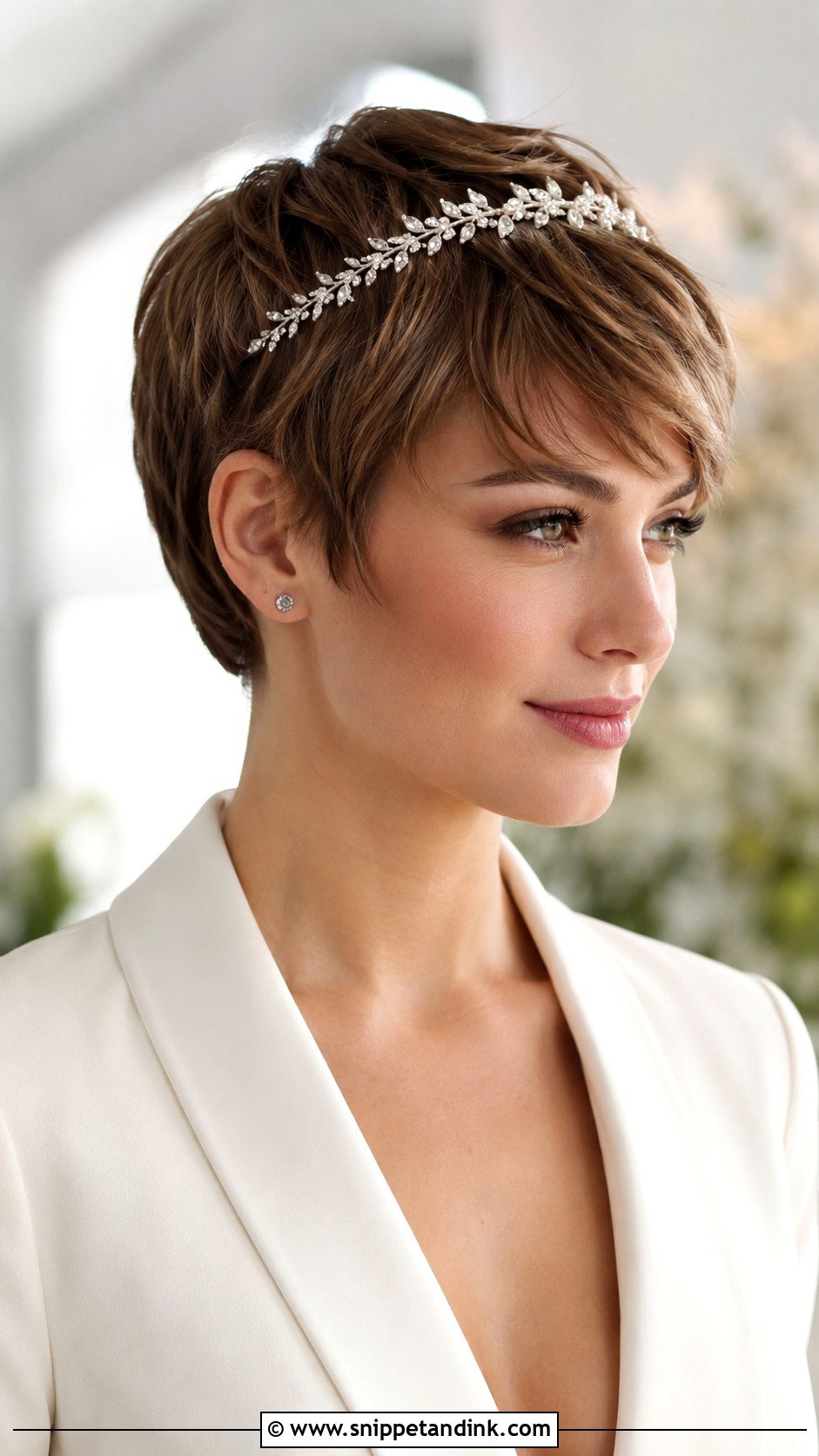
A pixie is where the haircut does most of the work, so book the trim close to the wedding, about a week ahead, so the shape is crisp but has had a few days to settle. Styling is about direction and shine: a side sweep, sculpted waves or a brushed-back finish. With nothing on the neck, earrings, makeup and the dress all show clearly. If you plan a veil, choose a short comb that can slide into the crown; long, heavy veils need more hair to grip.
17. Bridal Messy Bun
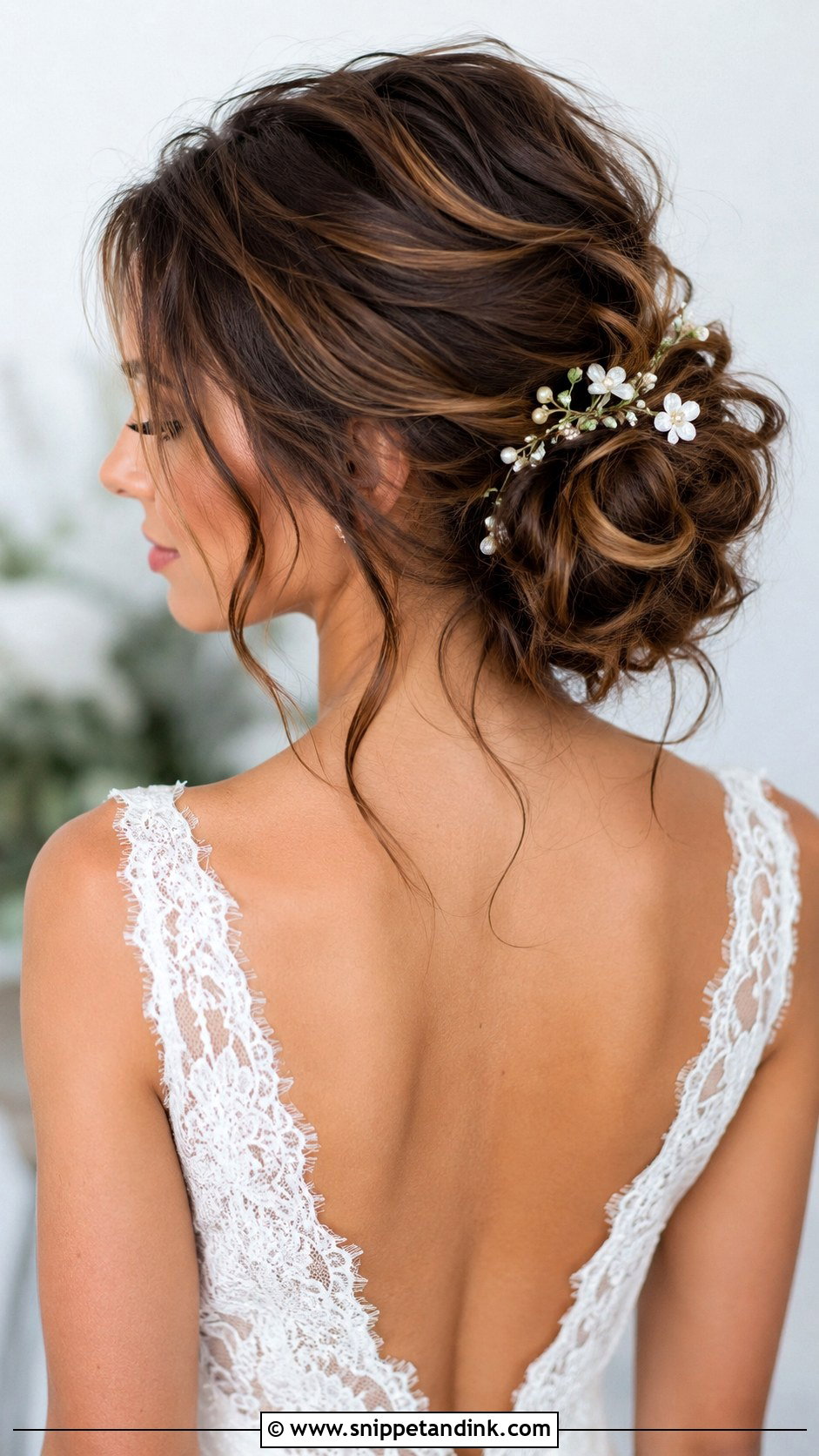
The messy bun is the most misunderstood style I do, because messy has to be planned. I build it from pinned curls and softly pulled sections so it holds while looking loose, then choose face-framing pieces one by one. Too many strands hide your makeup and blow across your mouth outdoors; two or three soft pieces frame the face. It sits well with airy gowns, lace sleeves and fine veils at relaxed outdoor weddings.
18. Bridal Crown Braid
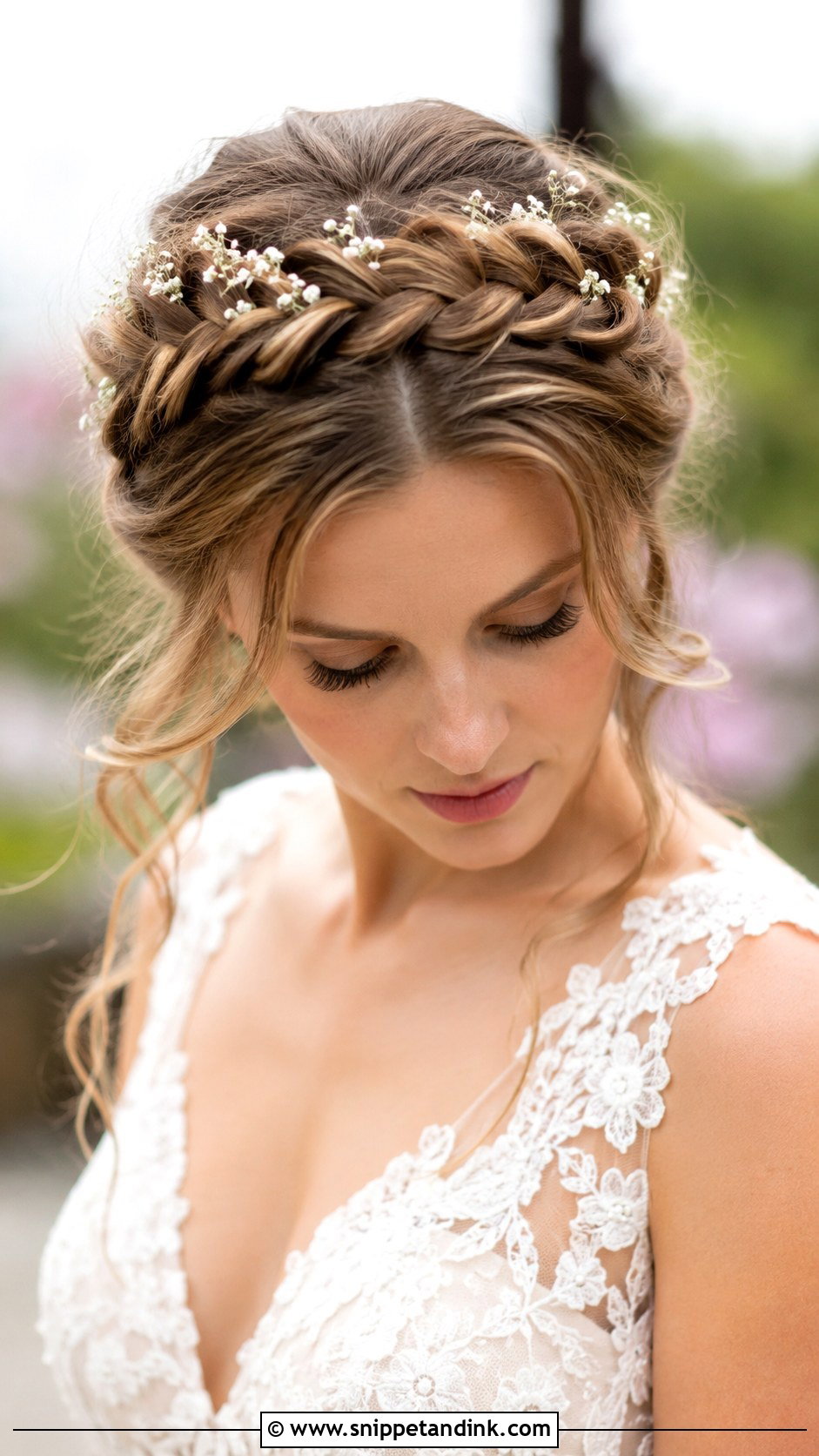
Wrapping fully around the head or blending into a low bun, the crown braid makes a halo out of your own hair. Hair length and thickness decide which version works; shoulder-length hair usually needs the braid to finish into a bun at the back. It keeps everything off the face, which matters in hot weather. I pull the braid wider for fullness after it’s pinned, never before. Small flowers or pearls can be added, though the braid already carries enough detail by itself.
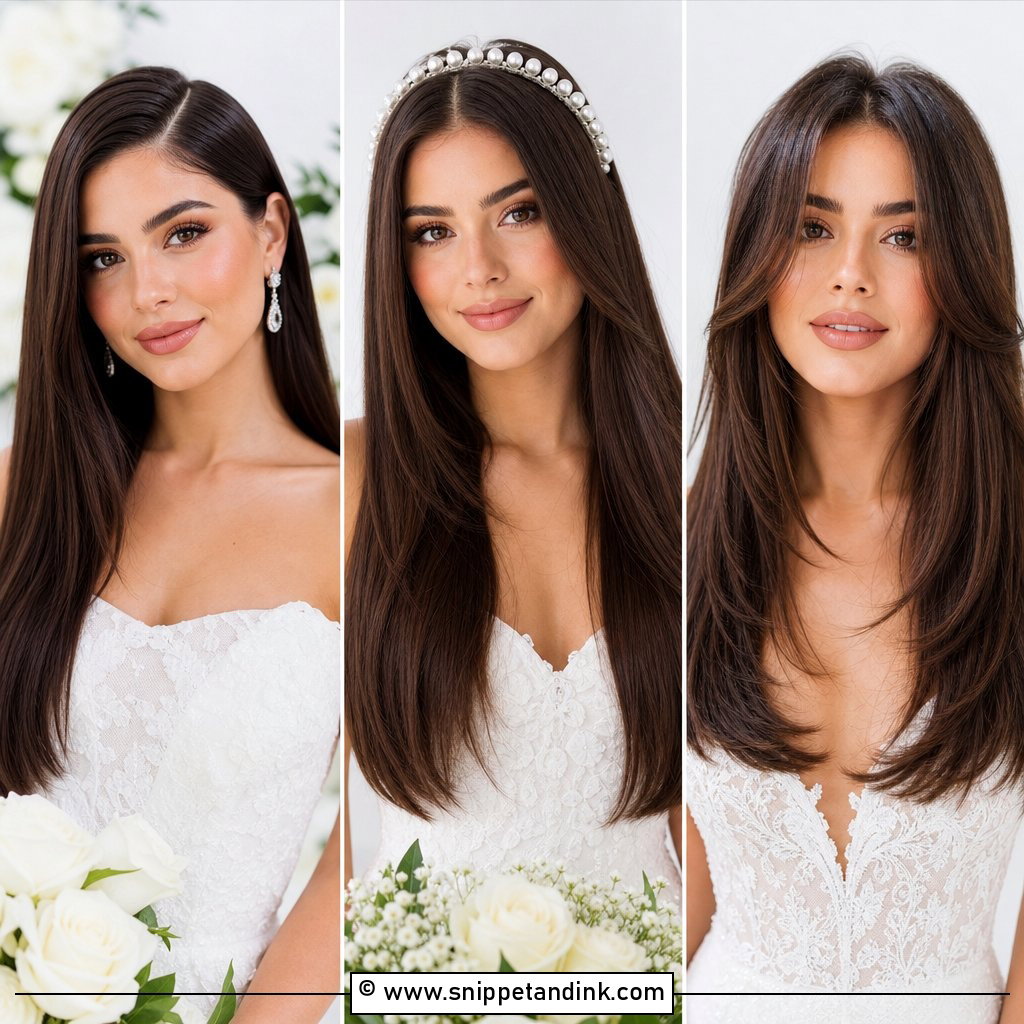
19. Bridal Middle Part Bun
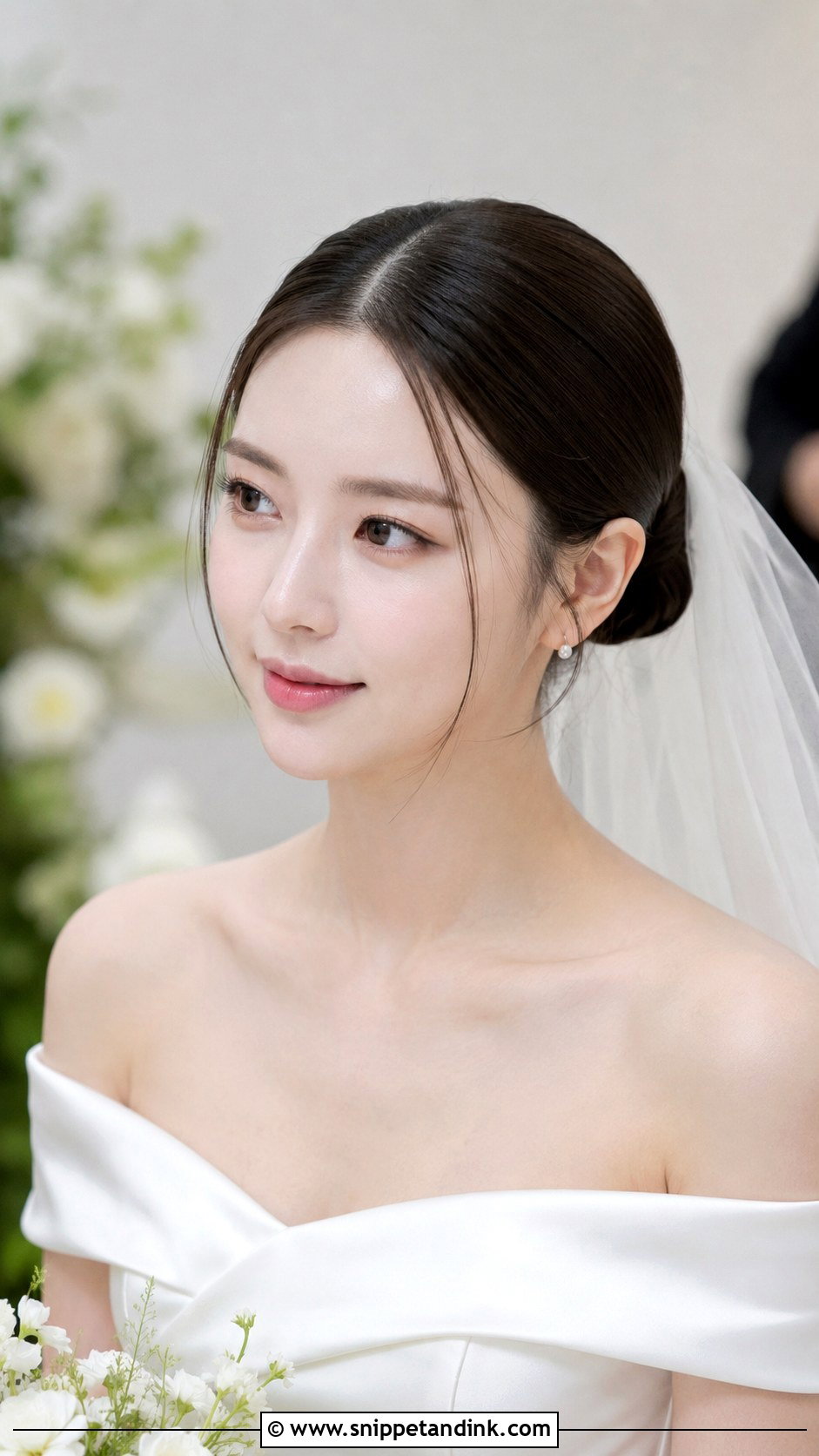
With a center part and a smooth bun, symmetry becomes the style, so flaws show. I check the part line under daylight because a crooked part is the first thing a camera catches. Flyaways get smoothed with a wax stick, not more hairspray. Minimal gowns, square necklines, long veils and clean makeup all suit it. Wear it low for calm, or slightly higher for lift, and leave two fine pieces near the cheekbones if you want it softer.
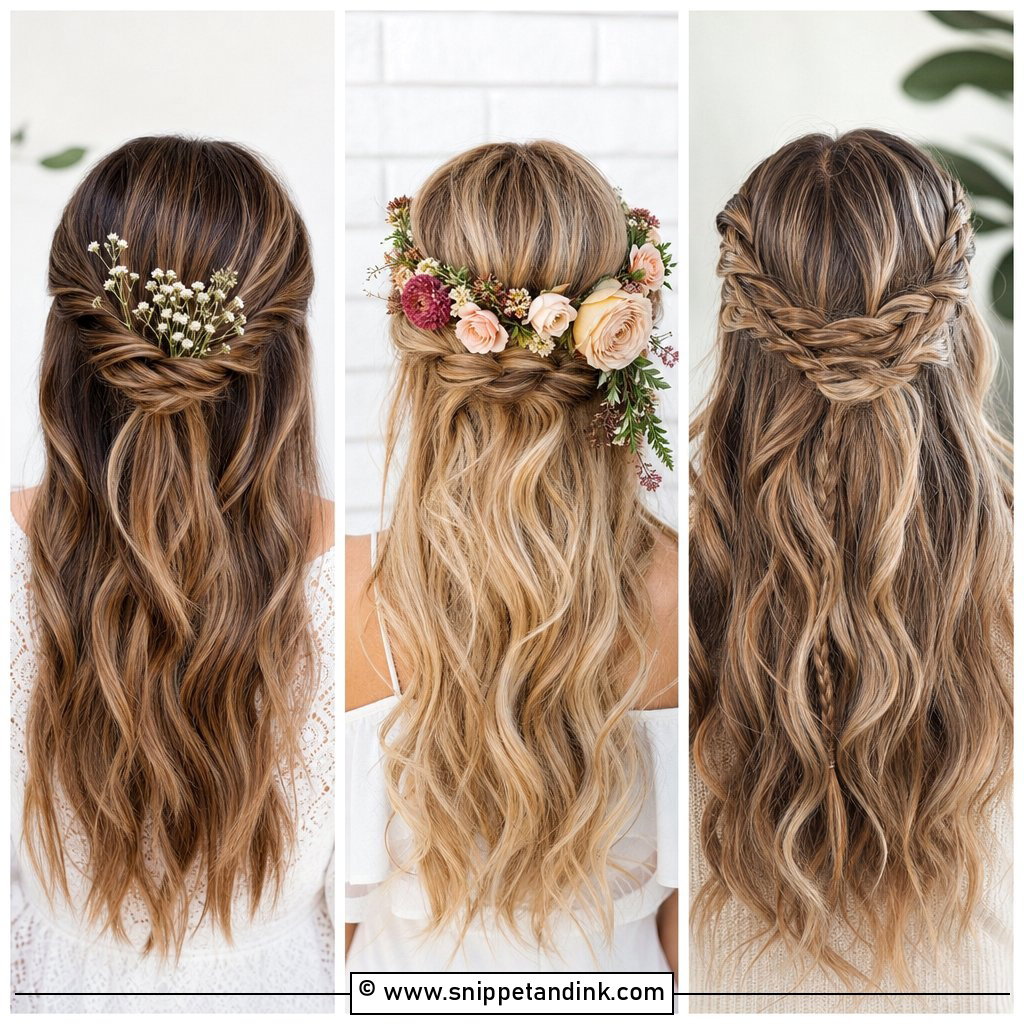
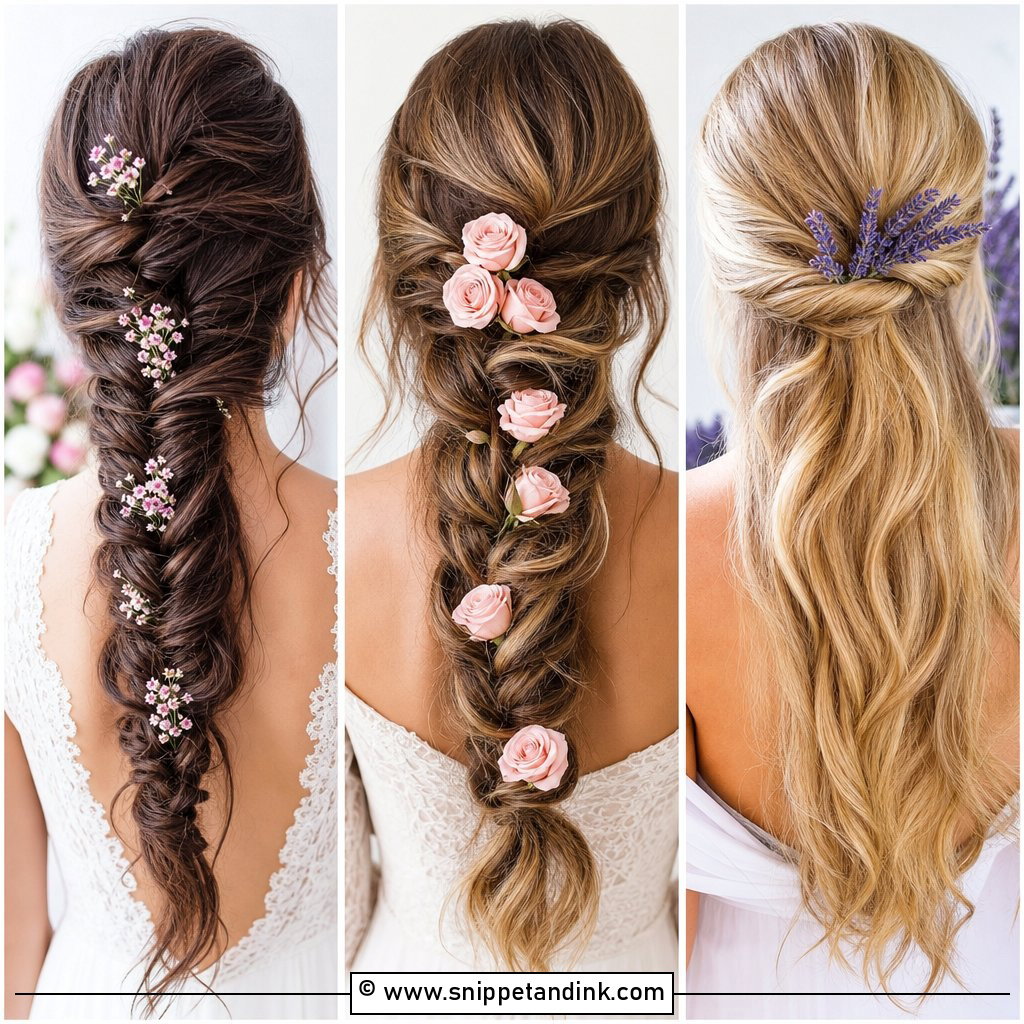
20. Bridal Floral Hair
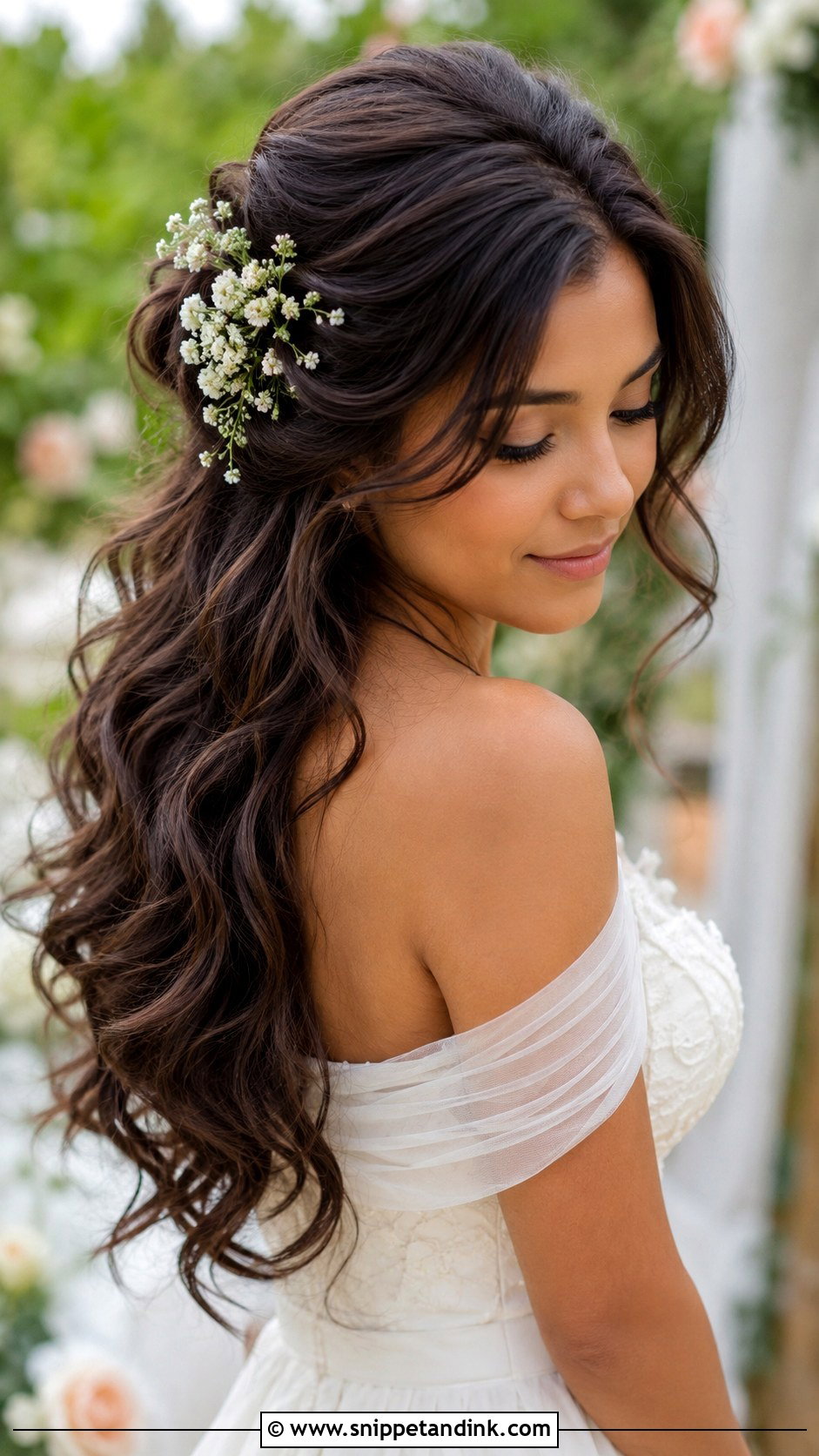
Flowers fit into nearly any style here: loose waves, buns, braids, ponytails or half up. Fresh flowers look natural; silk flowers last and stay in place. Size changes the mood, from tiny sprigs to a single large bloom. I ask brides to coordinate with their florist rather than buying separately, so the hair flowers match the bouquet, and to avoid fragile blooms like gardenias, which bruise and brown with handling. Garden, beach and countryside weddings are where floral hair feels most at home.
Your Texture Needs a Stylist Who Has Worked With It
The natural curls, afro and loc looks above are only as good as the stylist’s experience with that hair. Plenty of excellent bridal stylists have mainly worked on straight and wavy hair, and that’s fine for their clients, but it shows quickly with coils and locs. When you look at a portfolio, look for brides whose hair resembles yours, not just looks you like.
At the consultation, ask how she would prep your hair in the days before, which products she would bring, and how long the styling will take on the morning. Curly and coily hair often needs more time than a blowout, especially if it has to dry. A good stylist will also ask you questions back: how your hair reacts to humidity, whether you stretch it, what usually makes your scalp itch. If she doesn’t, keep looking.
Short Cuts Need a Slightly Different Plan
For bobs and pixies, the cut is the style. Book your last trim with the person who cuts it regularly, and let your wedding stylist know the date so she isn’t surprised by a new shape. Bring the accessories you want to the trial; on short hair, every pin placement is visible.
Start With the Dress, Then Find the Hair
Your hair should support the whole look rather than compete with it. Start from the dress neckline, the veil, the venue and the weather, then narrow to styles your own length and texture can actually hold. A trial is worth every minute: it shows how the hair holds, how it photographs and how it feels after a few hours of wear. Bring your inspiration photos, but listen when your stylist suggests a small change for your face or hair type. The style that keeps you relaxed all day will look better in photos than the one you keep checking in mirrors.
You'll Like These Ideas:


Leave a Reply