
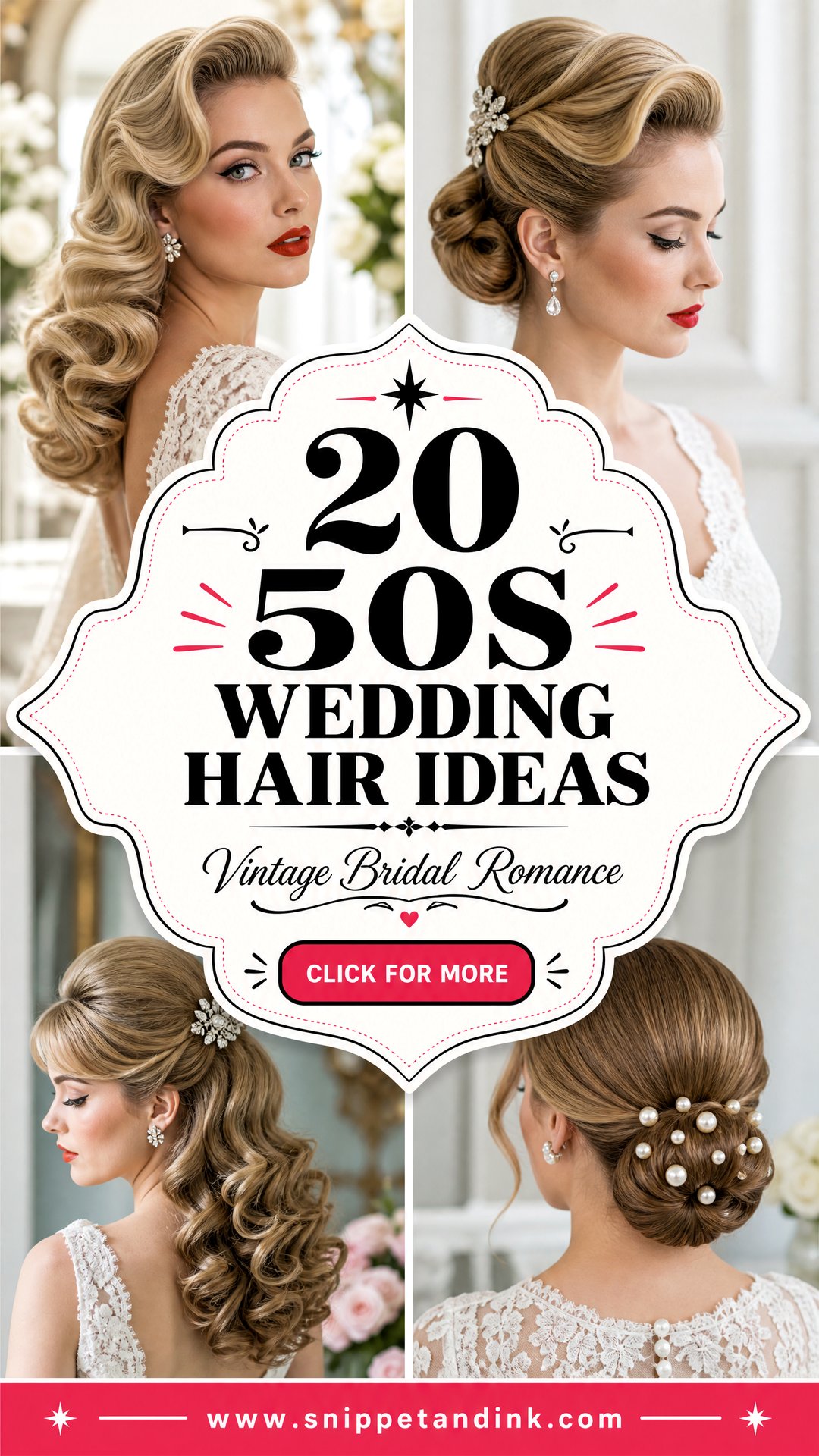
Nineteen-fifties bridal hair was built, not tousled. Women set their hair in pin curls or rollers the night before, brushed it out into sculpted waves and rolls, then pinned on a short veil, pearls or a flower. That structure is exactly why these styles still hold up at a wedding: a properly set 50s look survives hugs, dancing and a long photo session far better than loose beach waves. I’ve gathered twenty vintage wedding hair ideas below, from victory rolls to soft chignons, with notes on what length each one needs and how I’d adapt it to your hair.
The Set Is the Style: How Mid-Century Hair Actually Gets Built
Almost every look below starts with a set. Hair is curled section by section, either with pin curls, hot rollers or a curling iron, and each curl is pinned in place to cool before anything else happens. That cooling is what locks the shape in. If I brush out warm curls, the style drops within the hour.
The order on your wedding morning
- Arrive with hair washed the day before and fully dry. Hair that’s just been conditioned is too slippery to hold rolls and teasing.
- I apply a setting lotion or light mousse to each section, then set the whole head in one direction or in mirrored patterns depending on the style.
- Everything cools while your makeup is done, usually at least twenty to thirty minutes.
- The brush-out comes next, with a soft bristle brush, and this is where the waves join into a smooth ripple.
- Teasing and pinning come last, with a fine mist of hairspray, not a heavy coat.
Allow more time than you’d expect. A full 50s set with a brush-out and updo often takes longer than a modern loose style, so I schedule vintage brides first in the chair.
1. 1950s Side Part Chignon Updo
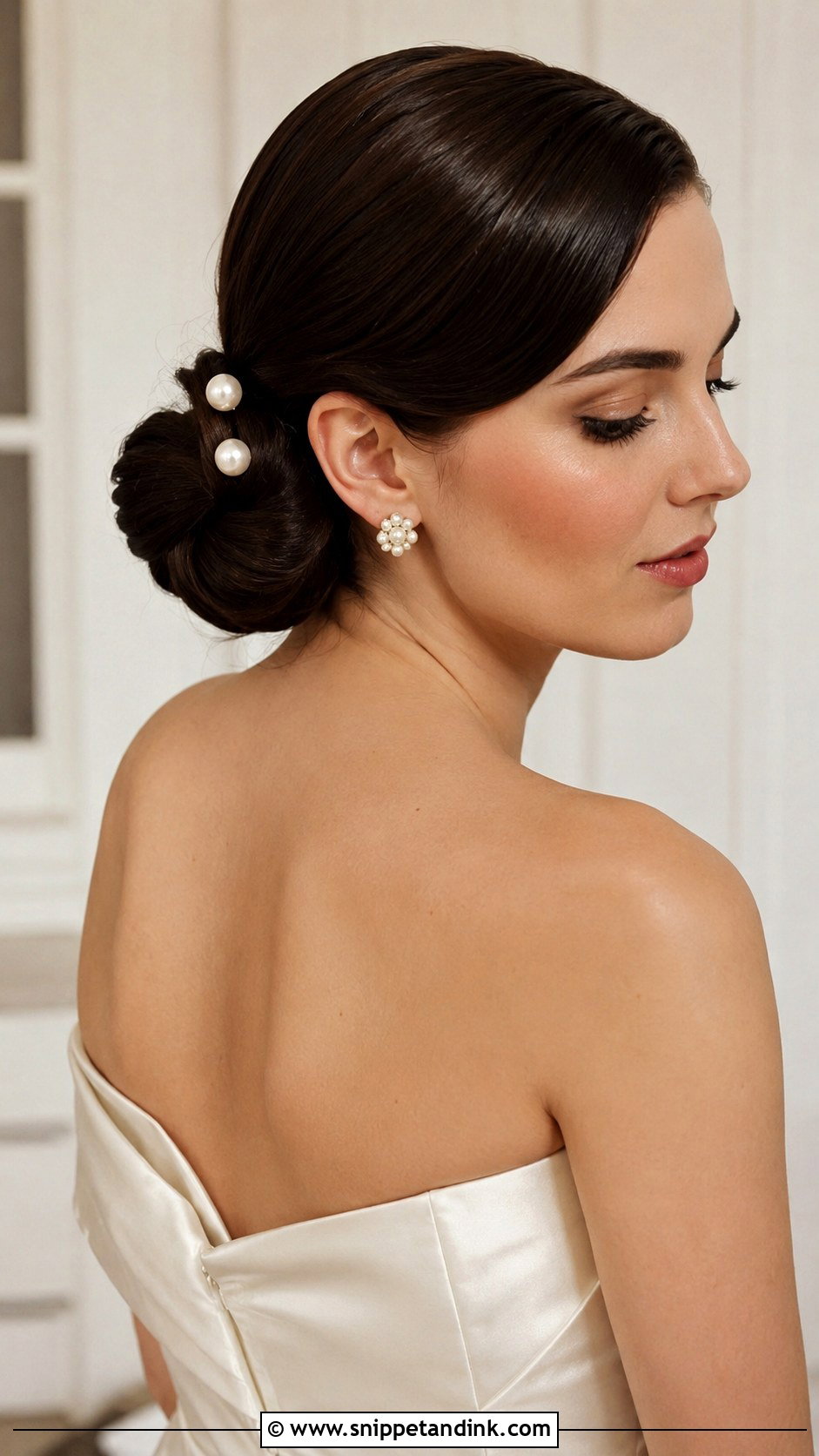
The side part chignon is the one I recommend most to brides who want the era without the drama. I set a deep side part, smooth the front across the forehead with a slight wave, then twist the back into a low bun at the nape and pin it from underneath so no grips show. The deep part does a lot of face-framing work. It sits comfortably under a fingertip veil and suits strapless and sweetheart necklines, where the bare neck balances the low bun. Because nothing is loose, it looks the same in the last dance photos as at the ceremony.
2. Victory Rolls Bridal Updo
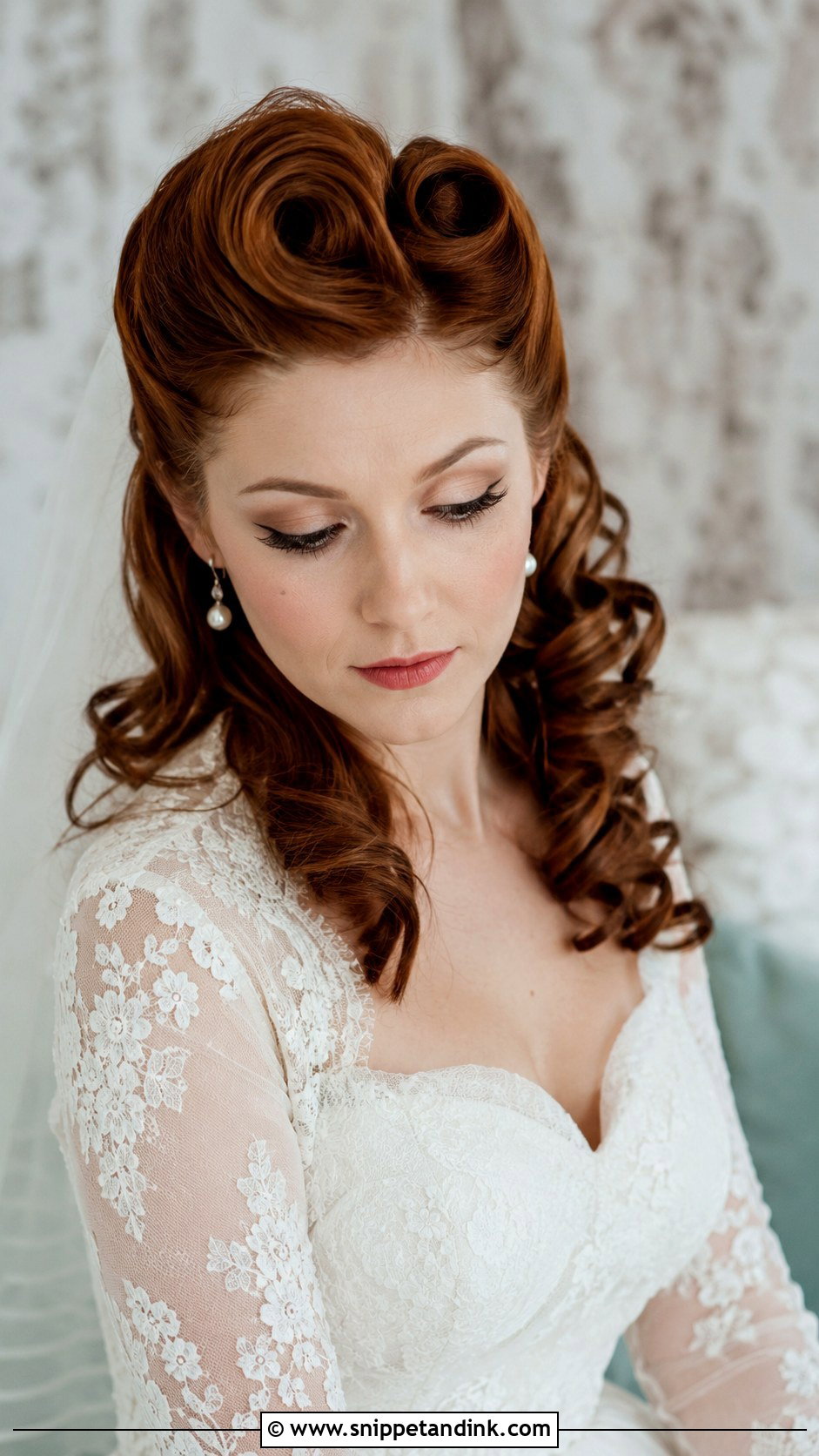
Victory rolls are the ultimate pin-up signal; the story goes that the name came from a fighter plane’s celebratory roll in the Second World War. Each roll is a section wrapped around two fingers, slid off and pinned into a hollow tube, and the trick is a firm set underneath, otherwise the rolls collapse into flat loops by the afternoon. For a bridal version I pair two rolls at the front with soft curls down the back. You’ll need at least shoulder-length hair with some body. A small flower or jeweled clip where the rolls meet, red lips and pearl studs complete it.
3. Soft Hollywood Waves
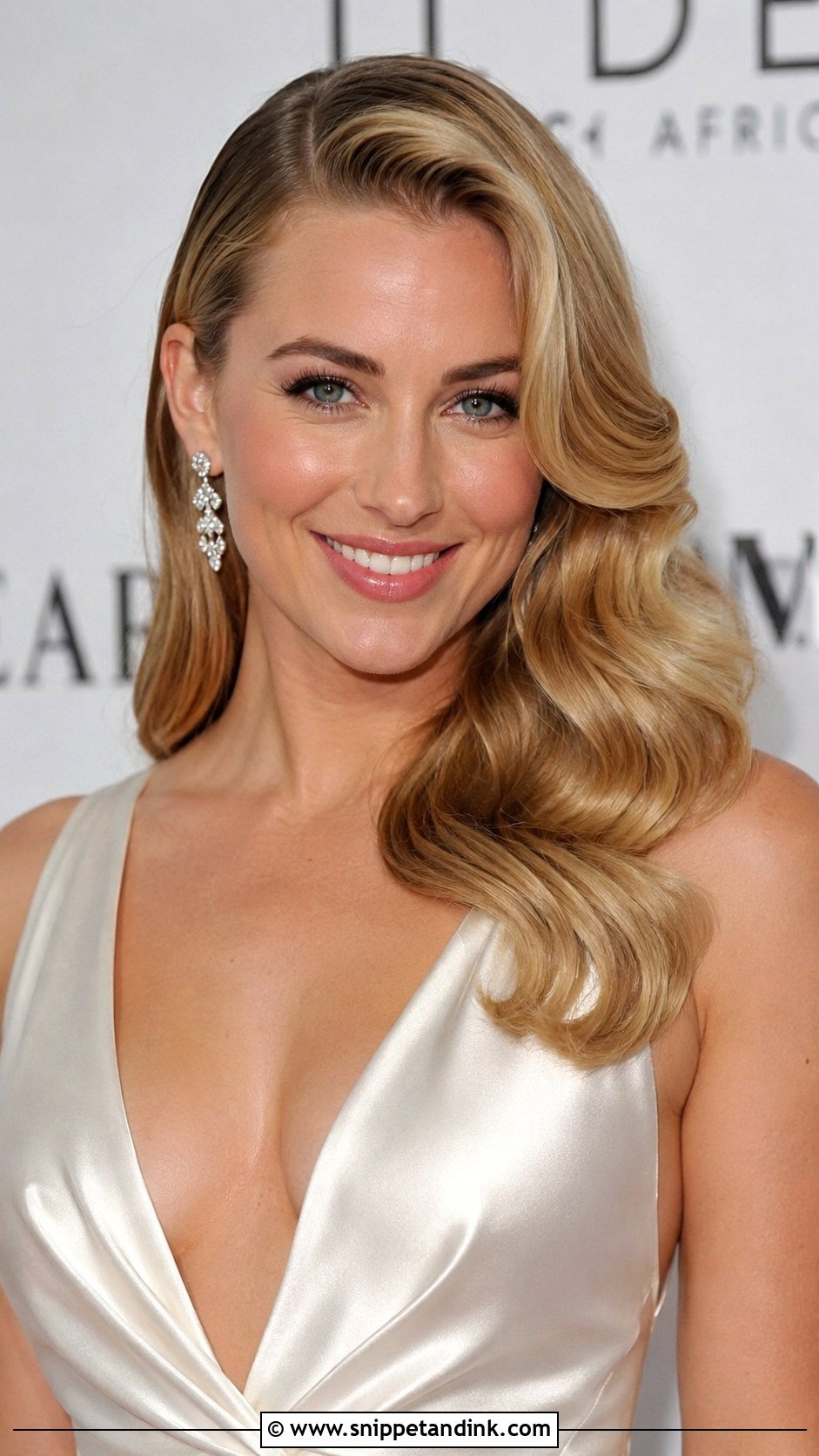
Glossy Hollywood waves come from a curl set, not from a flat iron. I curl every section in the same direction with a large barrel, pin each curl to cool, then brush the whole lot out with a soft bristle brush until the curls join into one continuous ripple. Shine is the point, so I use a light polish rather than a heavy oil. A deep side part makes it dramatic, and a sparkling comb can hold one side back. It needs medium to long hair. Fitted satin gowns are its natural partner, and the gloss reads best under warm, soft light.
4. Classic Beehive Updo
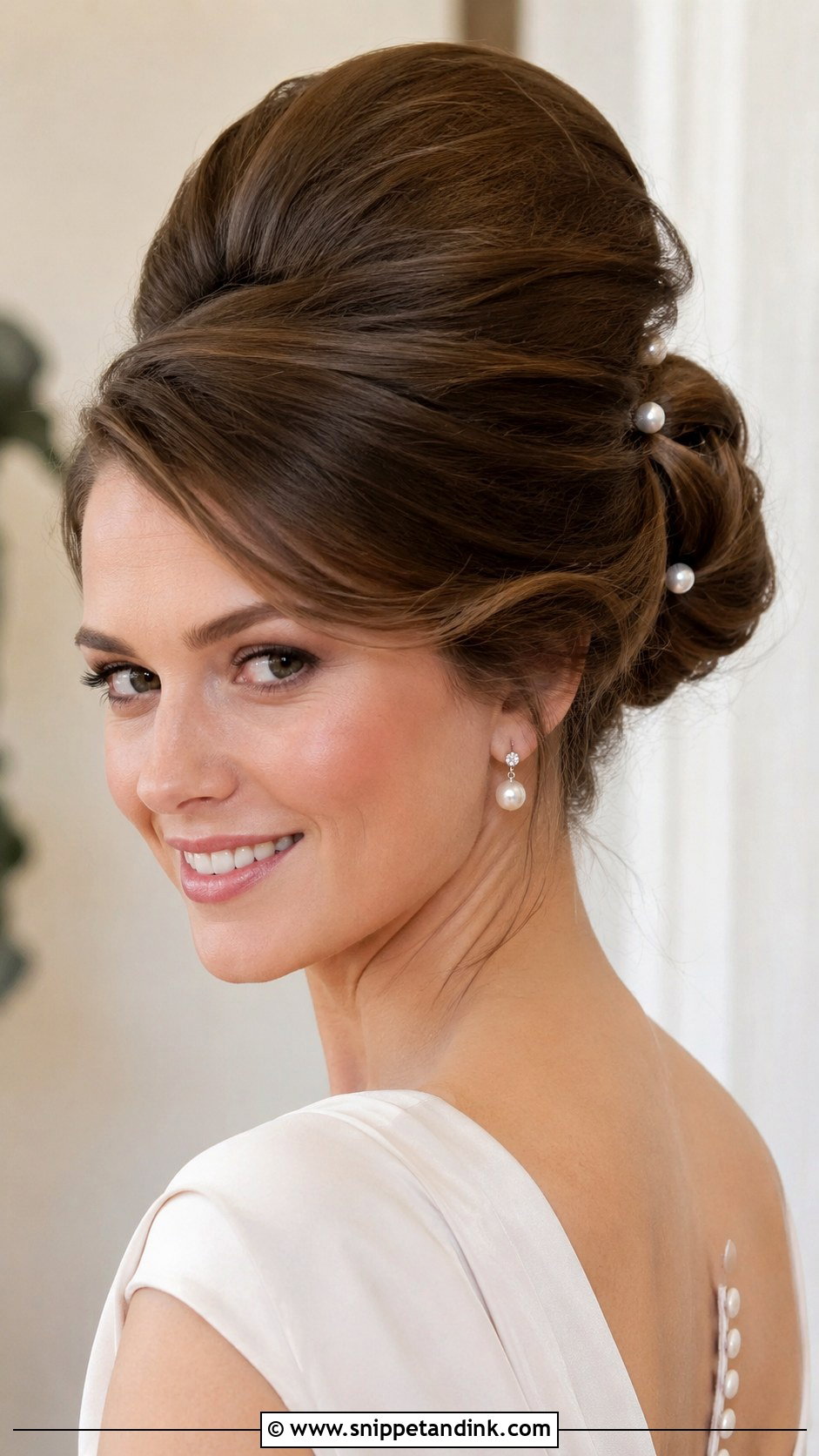
A beehive brings height and a bit of humour to a bridal look. I tease the crown in thin sections from underneath, smooth a clean top layer over it and shape the rounded dome before pinning; brides with fine hair often need a padding piece in their own color hidden inside. For a wedding I keep it to a soft beehive with a neat chignon at the back, which balances the height from the side. Strictly speaking, the full beehive is a very late 50s into 60s shape. Pearl pins or a small tiara suit it, on medium to long hair with plenty of volume.
5. Pin Curl Short Bridal Hairstyle
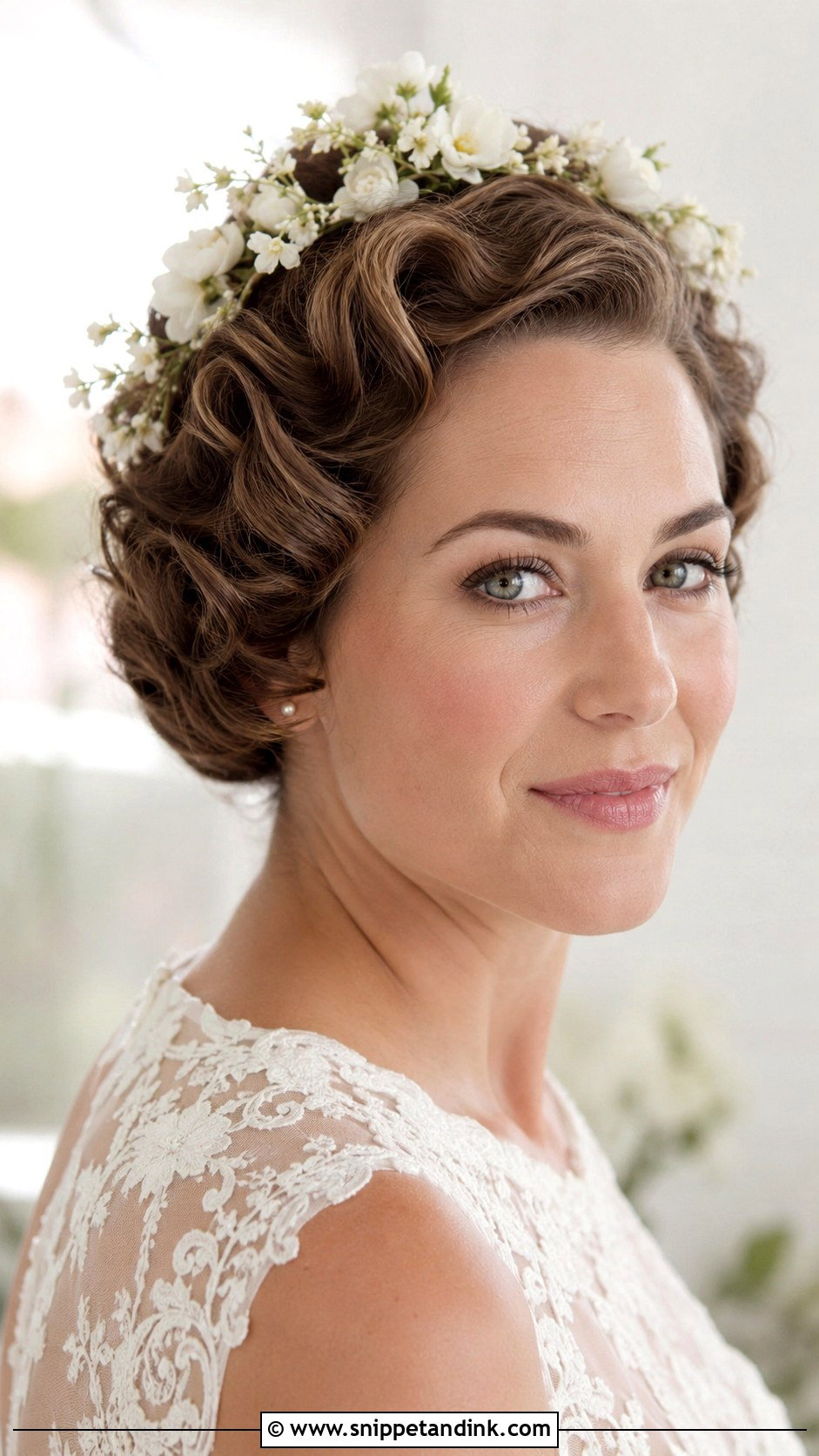
Short hair was everywhere in the 1950s, and pin curls were how it got its shape. Each small section is wound flat against the scalp, pinned and left to set completely, then brushed into soft, structured waves. On a cropped cut this gives a neat, feminine outline that frames the eyes. A slim flower halo or a few jeweled pins add the bridal touch without crowding short hair. I’d steer you toward a birdcage veil here rather than a long one, since a long veil comb needs more length to grip.
6. Birdcage Veil With Curls
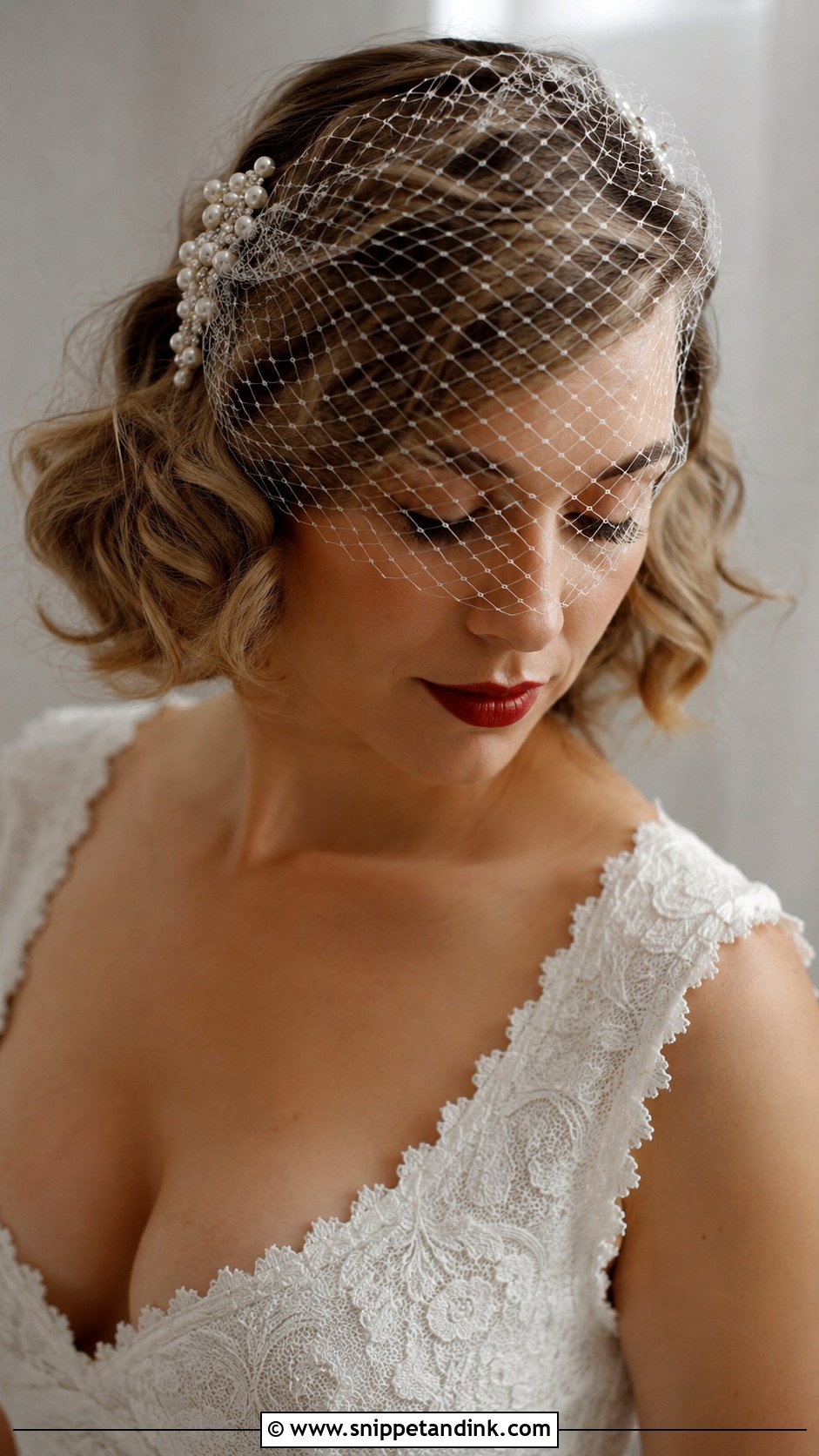
Nothing says the 1950s faster than a birdcage veil. The short netting covers part of the face and attaches with a comb or clips, usually trimmed with pearls or a small flower. What I check first is the angle: the netting should skim the eyebrow or the cheekbone on one side, not hang straight down like a curtain. I pin it into a firm set, either soft curls or a smooth chignon, because the comb needs structure to grip. It suits intimate ceremonies and city weddings, and photographs well from the front and three-quarter angle.
7. Low Twisted French Roll
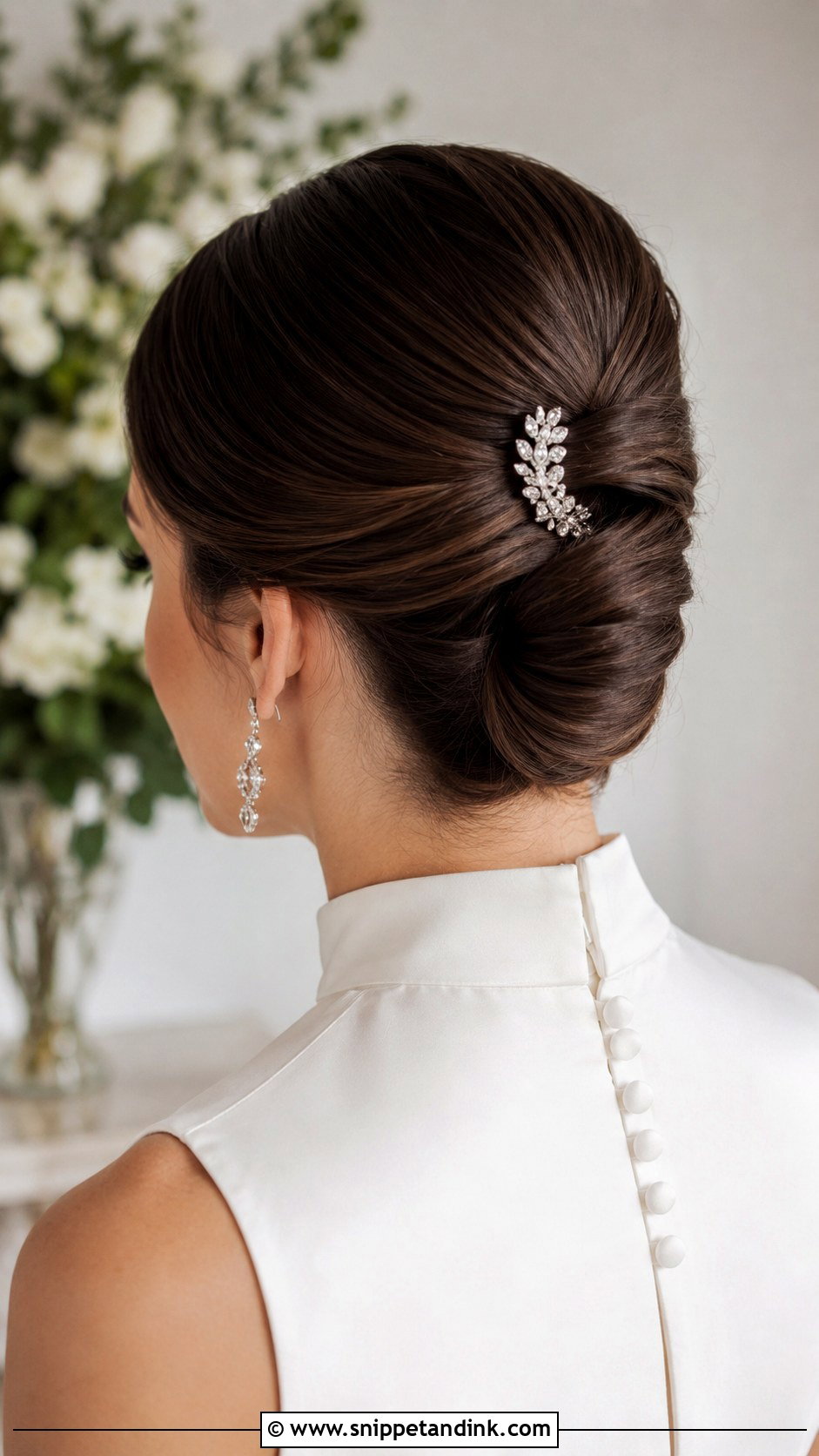
The French roll is quiet glamour. I gather the hair to one side, twist it vertically up the back of the head and tuck the ends inside the fold, pinning along the seam with fine pins that vanish into the twist. Slightly second-day hair grips far better than freshly washed hair for this one; silky, just-conditioned hair slides out of the roll within hours. A single sparkling pin or a few pearls are plenty. It sits well with high necklines and statement earrings, on medium to long hair.
8. Pompadour Bridal Updo
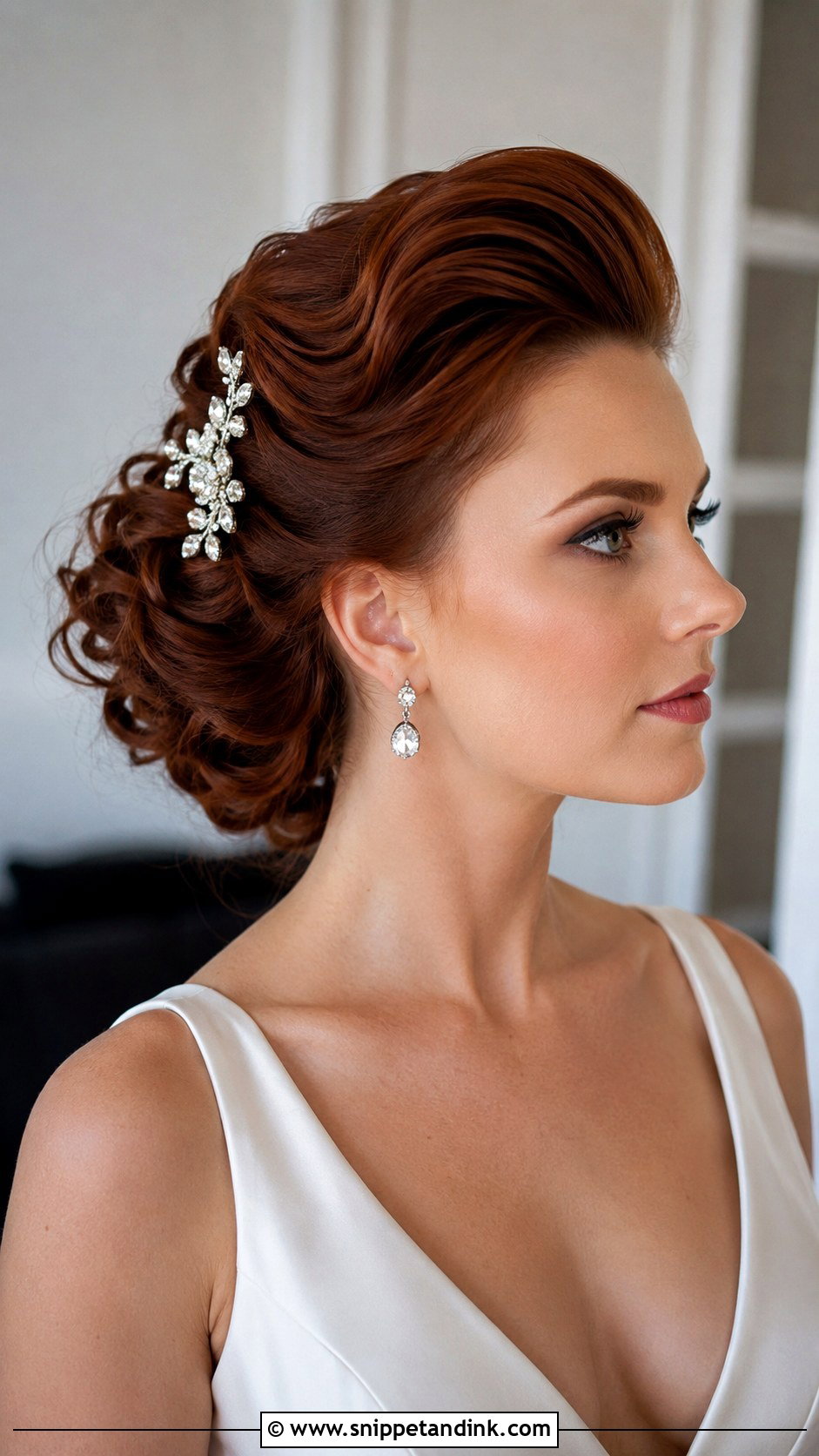
A pompadour puts the volume right at the hairline, so it’s a style for confident brides who don’t mind their forehead on show. I tease the front section from the roots, smooth it up and back, then anchor it with crossed hidden pins behind the lift so it doesn’t sink. Behind that, either soft curls or a neat bun. A jeweled barrette at the base of the lift adds sparkle. It flatters longer faces less than you might think, since height adds length, so I tend to suggest it for round and heart-shaped faces.
9. Half Up Bouffant With Curls
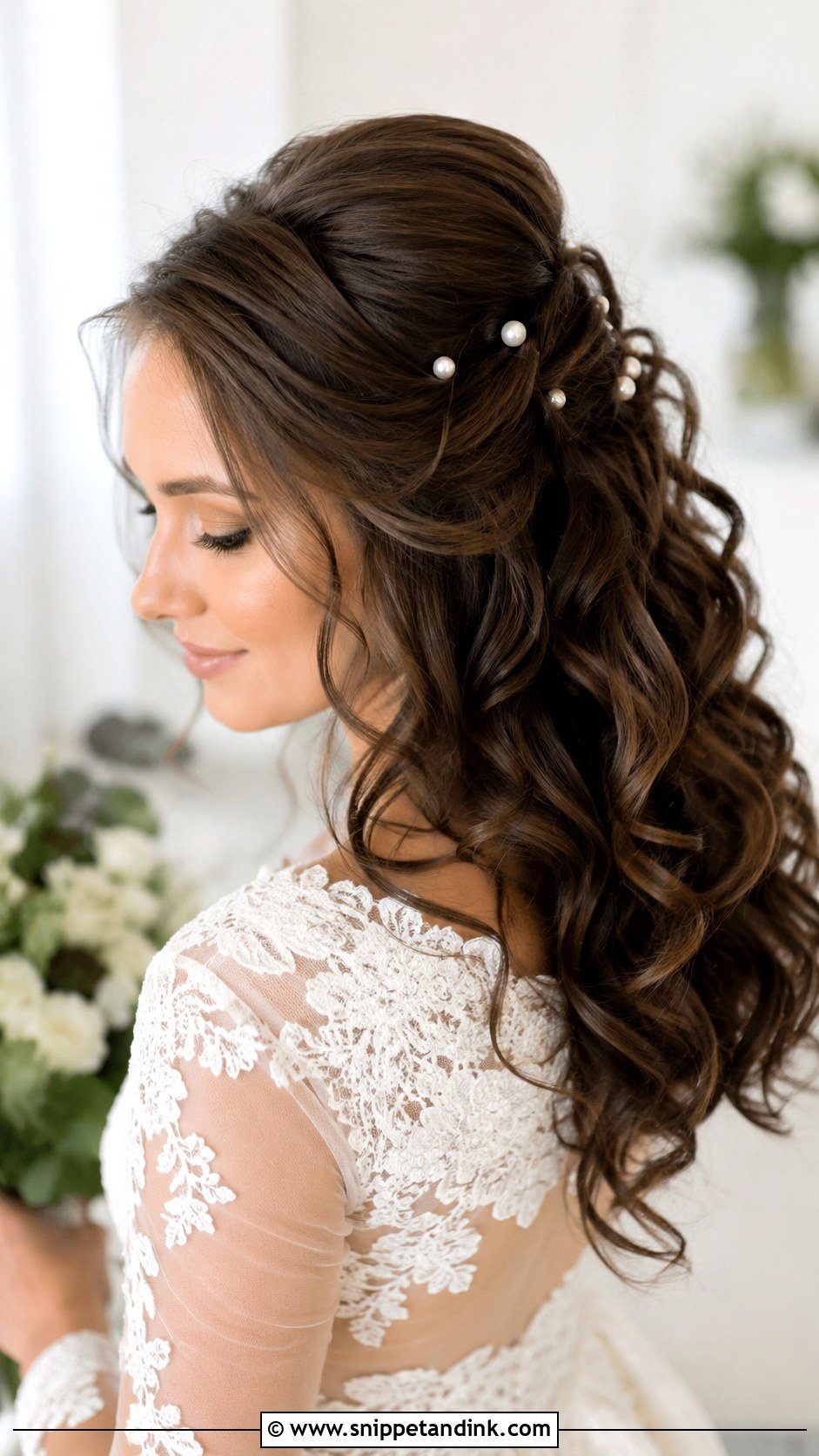
Half-up bouffant is the gentlest way into the era for a bride who hates the feeling of a full updo. The crown is teased and lifted, pinned with a decorative clip or pearl pins, and the rest falls in set curls. What usually goes wrong is the curls dropping while the bouffant stays, which looks lopsided by evening. I set the lower curls with rollers and let them cool fully before brushing them out. Medium to long hair, almost any dress.
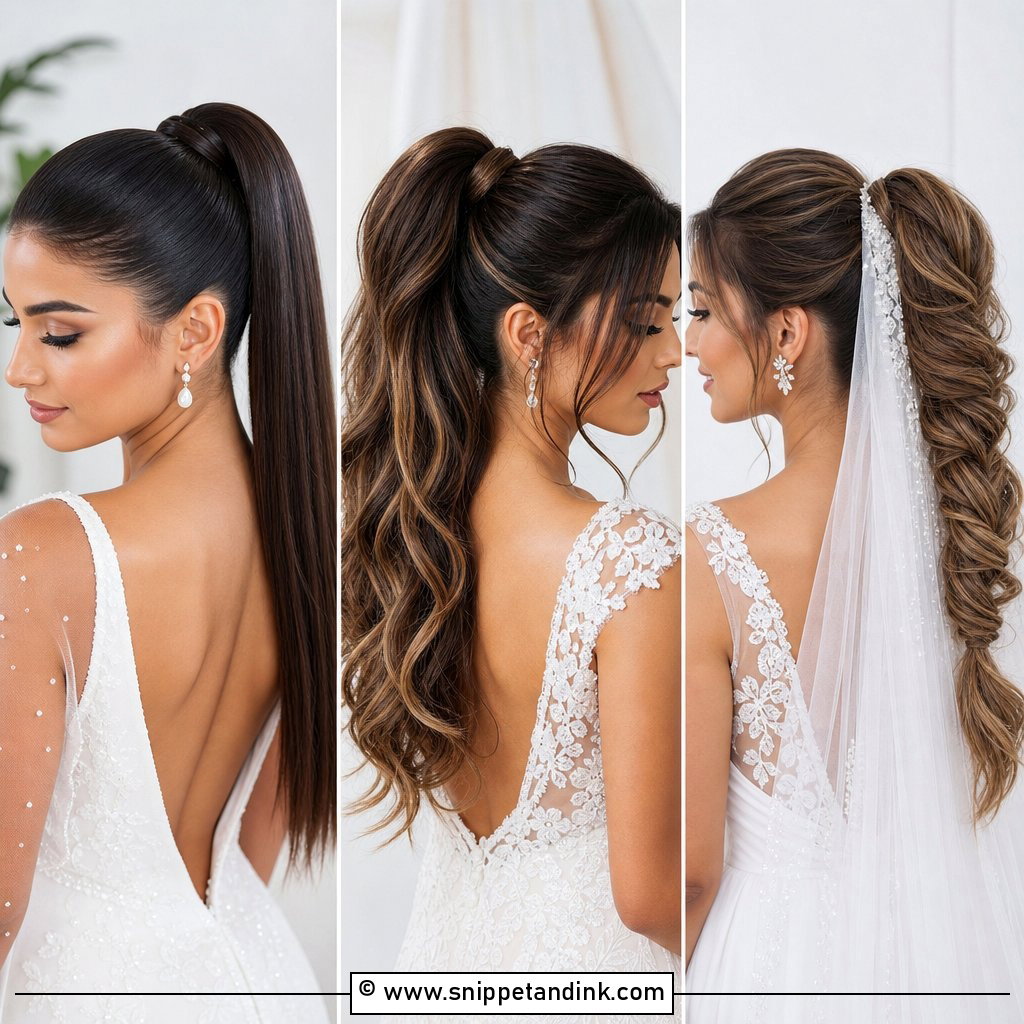
10. Sleek Ponytail With Volume
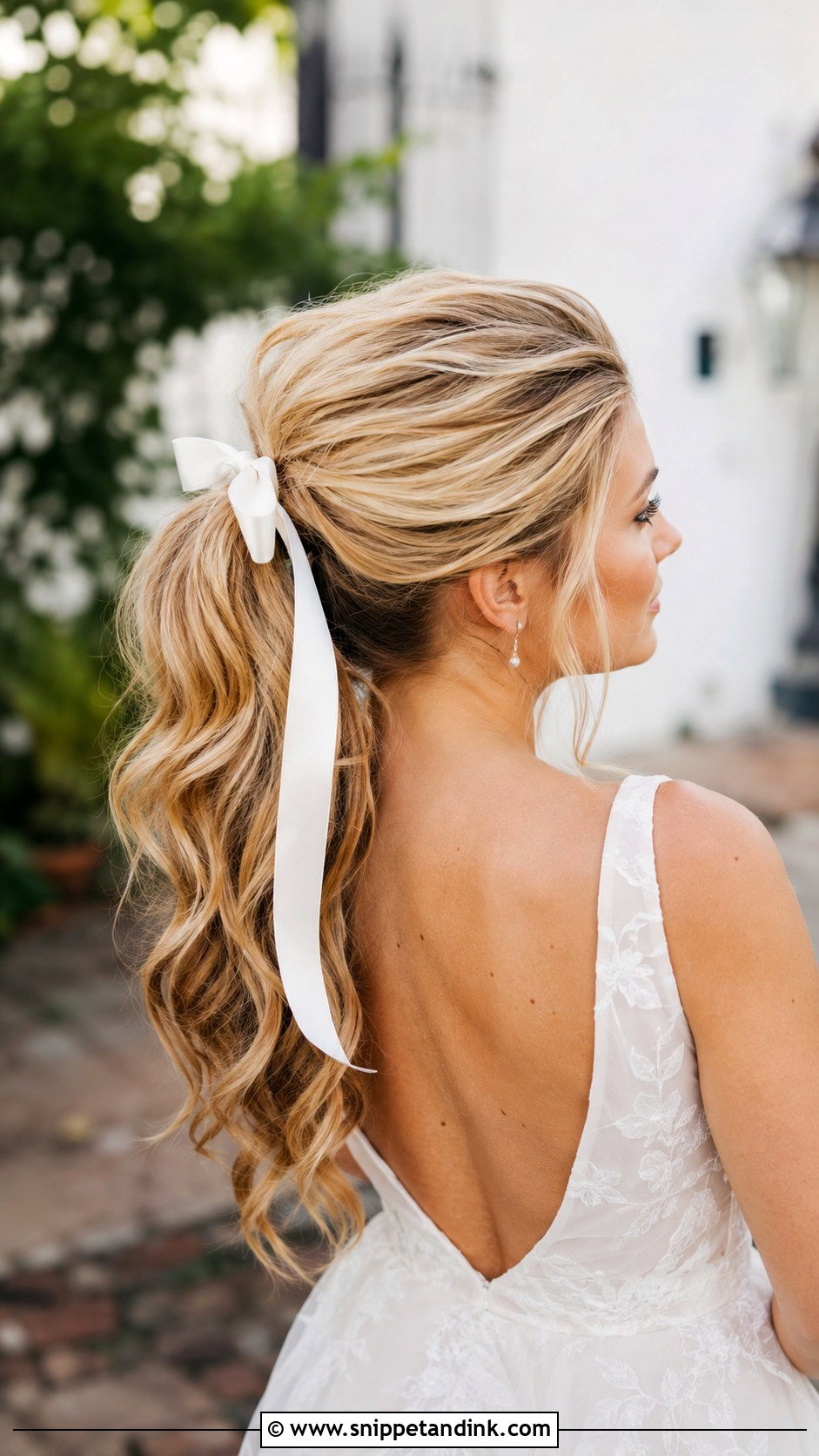
A high, bouncy ponytail is the playful end of the decade, more sock-hop than ballroom. I tease the crown for lift, set the length in rollers and brush it into big waves, then wrap a piece of hair around the base to hide the elastic. A silk ribbon tied over the wrap is the most era-correct finish. It keeps hair off the neck on a hot day. Ponytails pull at the crown over many hours, so I secure the base with pins as well as the elastic to spread the weight.
11. Flower Halo Crown Hairstyle
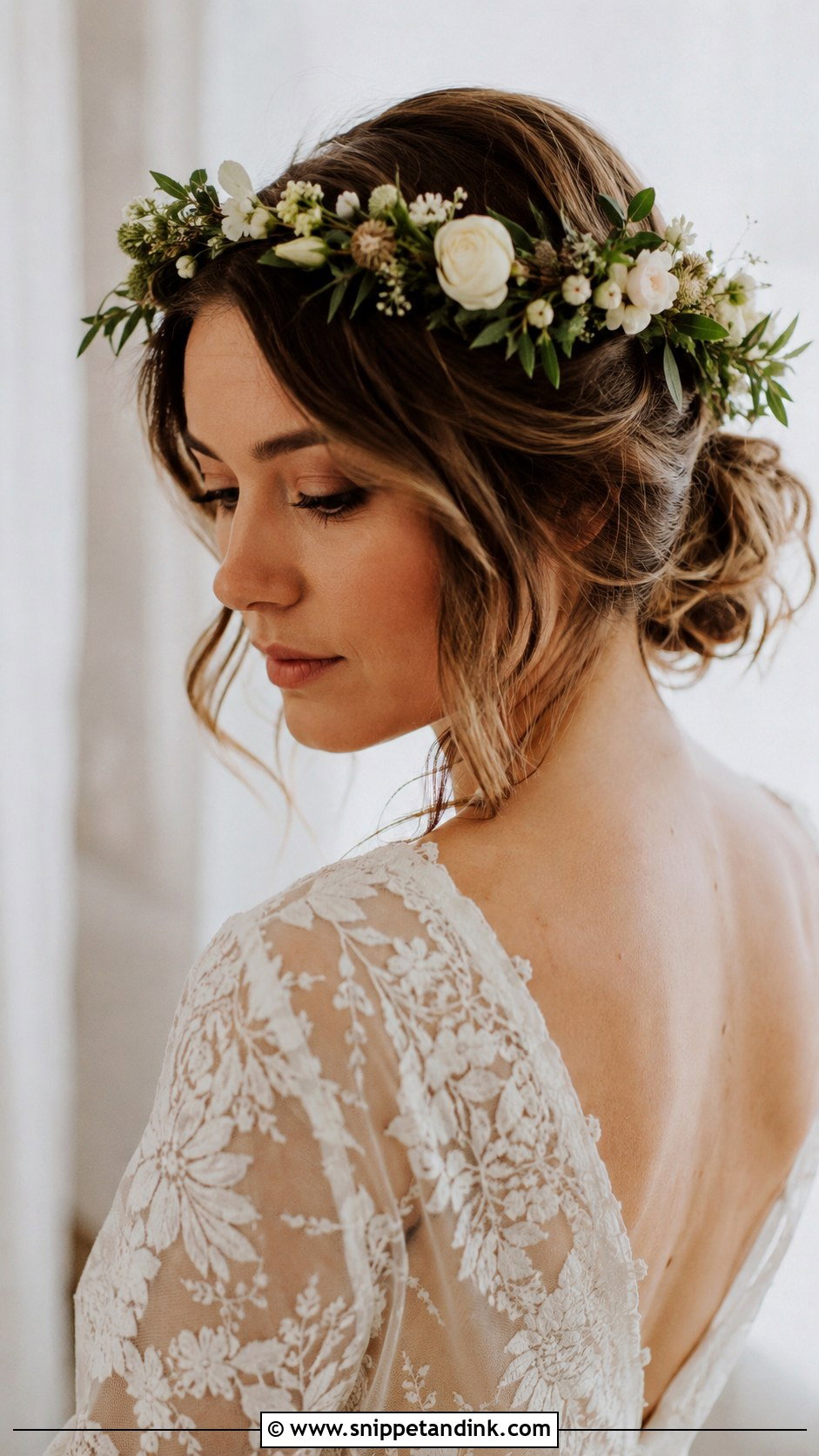
A flower halo brings whimsical, garden-inspired romance to a vintage look, though it leans more boho than strict 50s. Fresh or silk blooms circle the head over soft waves, a low bun or loose curls. I ask the florist to build fresh halos on wire with small, sturdy flowers, since big soft petals bruise and droop by the reception. Matching the halo to your bouquet ties it together. I pin the halo through to the hair at four points so it doesn’t drift backward during the ceremony.
12. Marcel Finger Waves
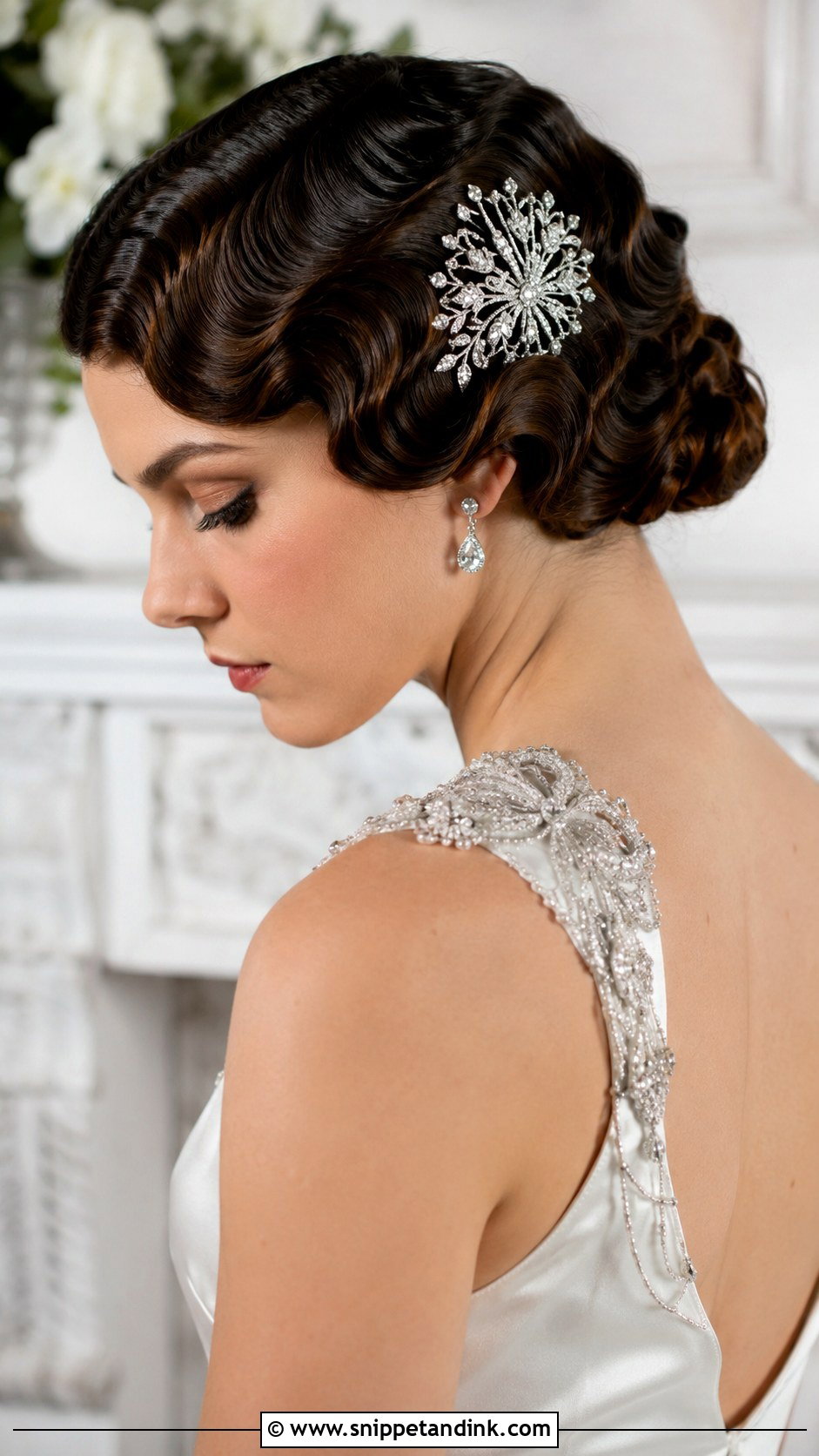
Marcel waves are really a 1920s and 30s technique, made with heated tongs, but their sculpted ripples sit happily alongside a 50s gown. The waves lie close to the head in a precise, uniform pattern, and they suit short to medium hair best. This is a skilled set; if your stylist hasn’t done Marcel or finger waves before, see a trial photo before the wedding. A jeweled comb or birdcage veil gives it the bridal finish. Gloss and crisp ridges are what the camera picks up.
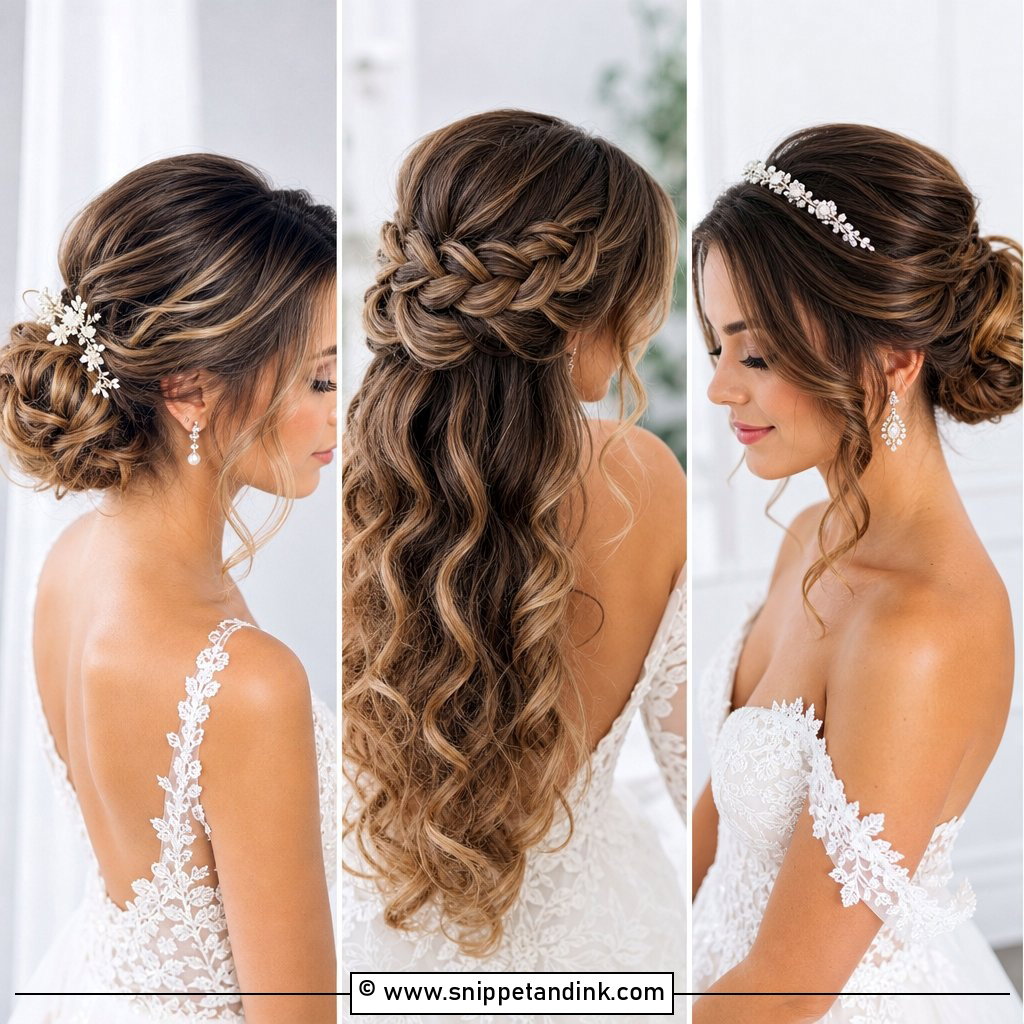
13. Soft Chignon With Side Curls
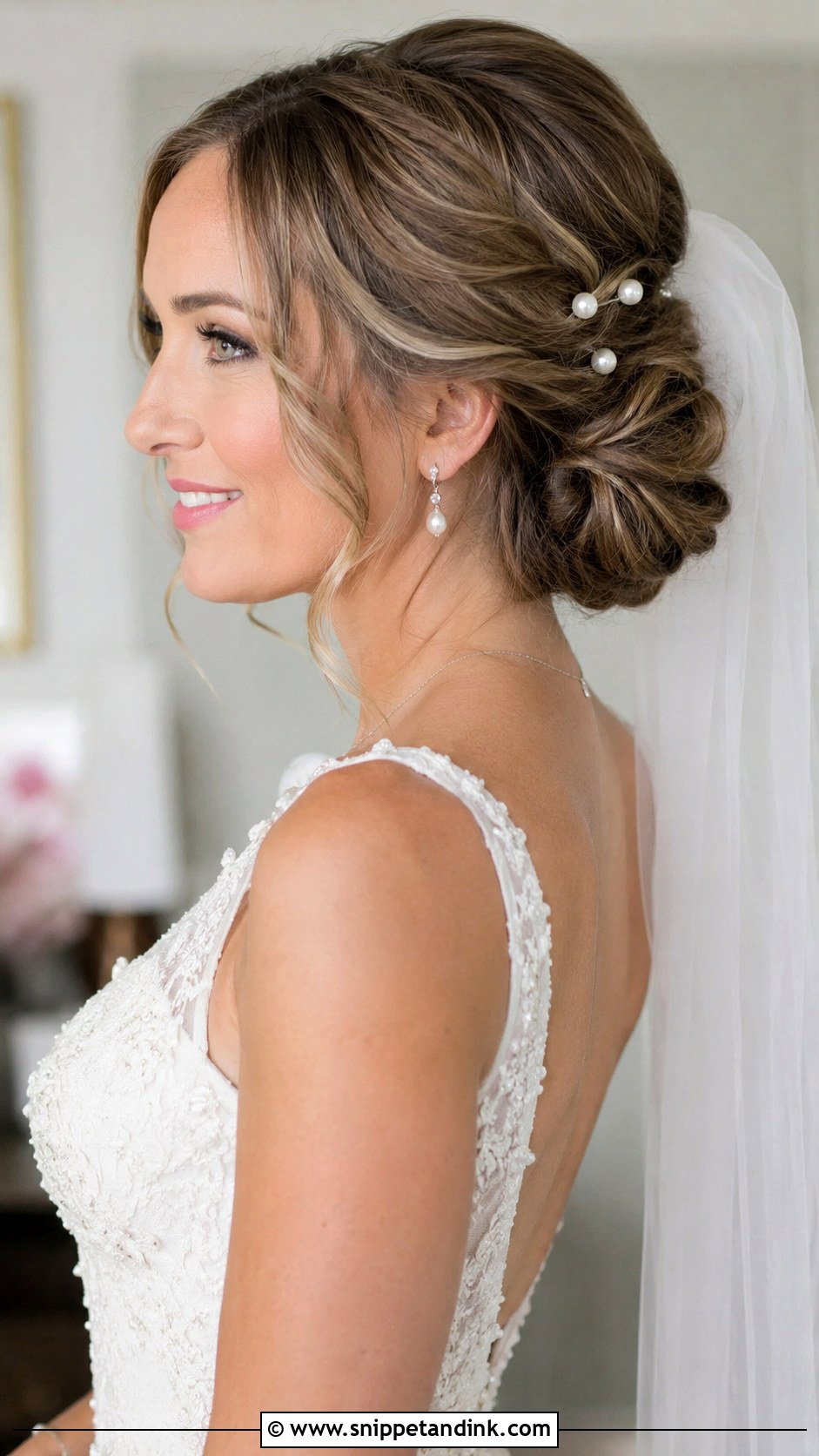
This chignon is the soft version of the classic: a smooth low bun with a few curled tendrils at the temples. The tendrils are what make or break it. I curl them separately and keep them few, two or three on each side, because a dozen limp pieces look like the updo has fallen apart. Pearl pins add a little sparkle at the bun. It takes any veil length from fingertip to cathedral, and suits nearly every face shape and neckline.
14. Bouffant Updo With Tiara
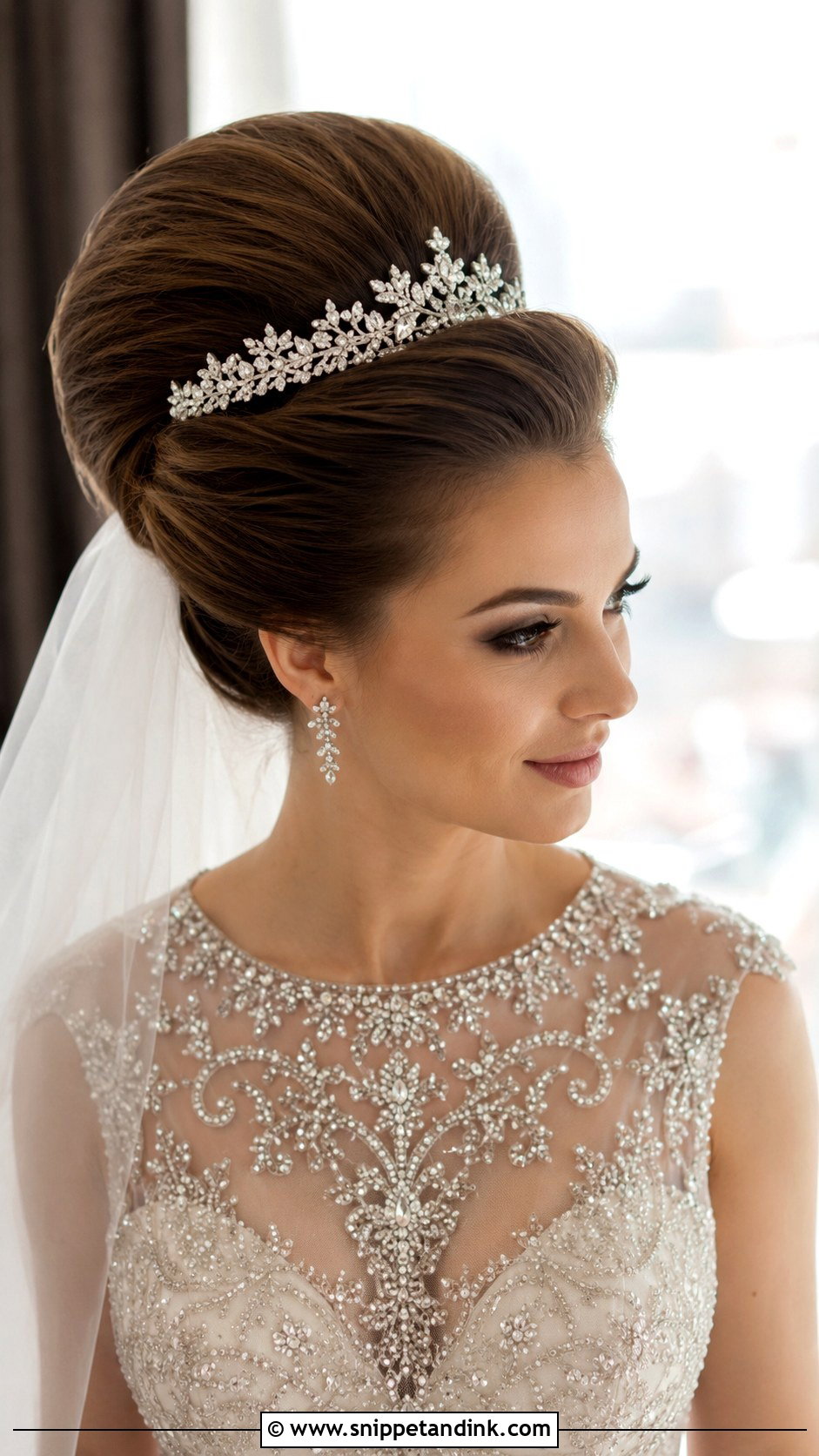
A bouffant updo with a tiara is the most formal look here, closer to royal wedding portraits than pin-up posters. I tease the crown for height, smooth it into a bun or twist, then seat the tiara in front of the lift so the volume supports it from behind. The tiara must be pinned through its loops into a teased base, or it slides forward as you move. Medium to long hair with real body suits it best. Save it for grand venues and formal gowns; in a barn it can feel overdressed.
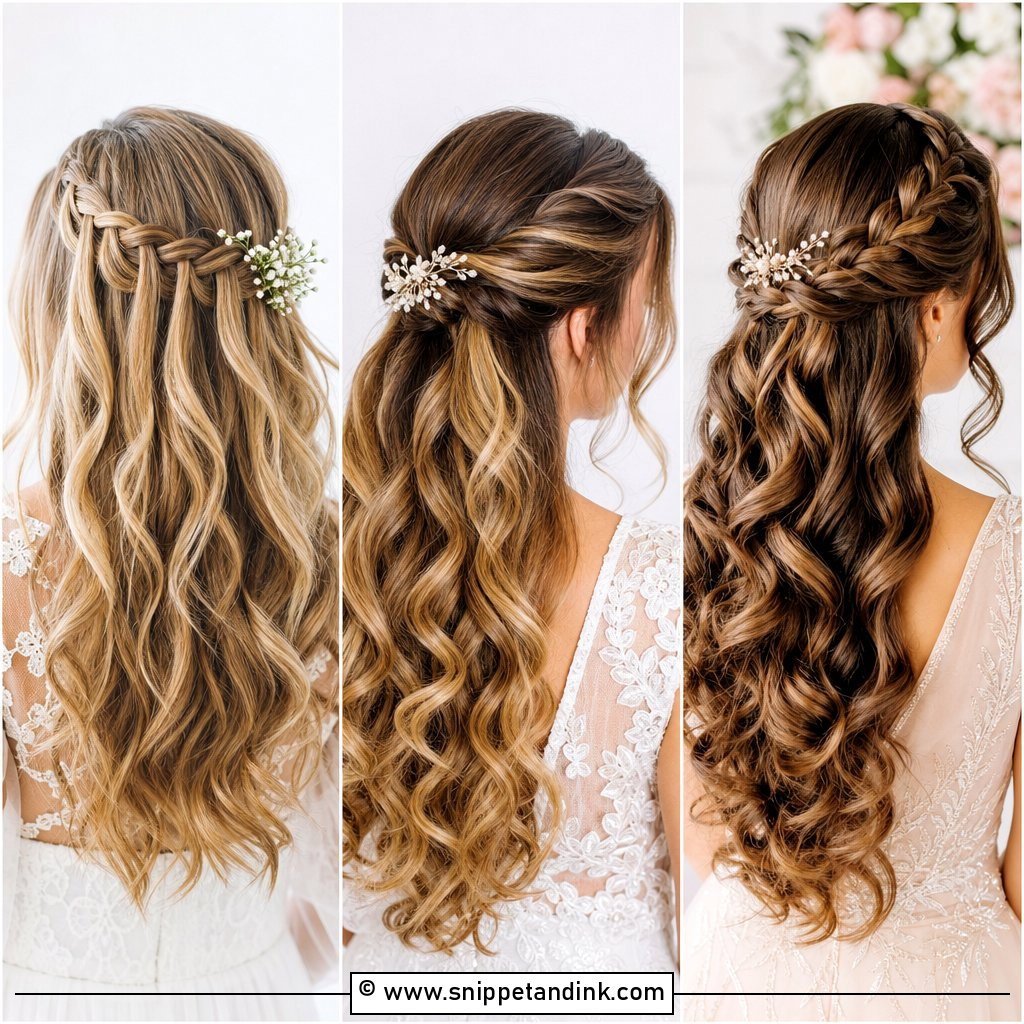
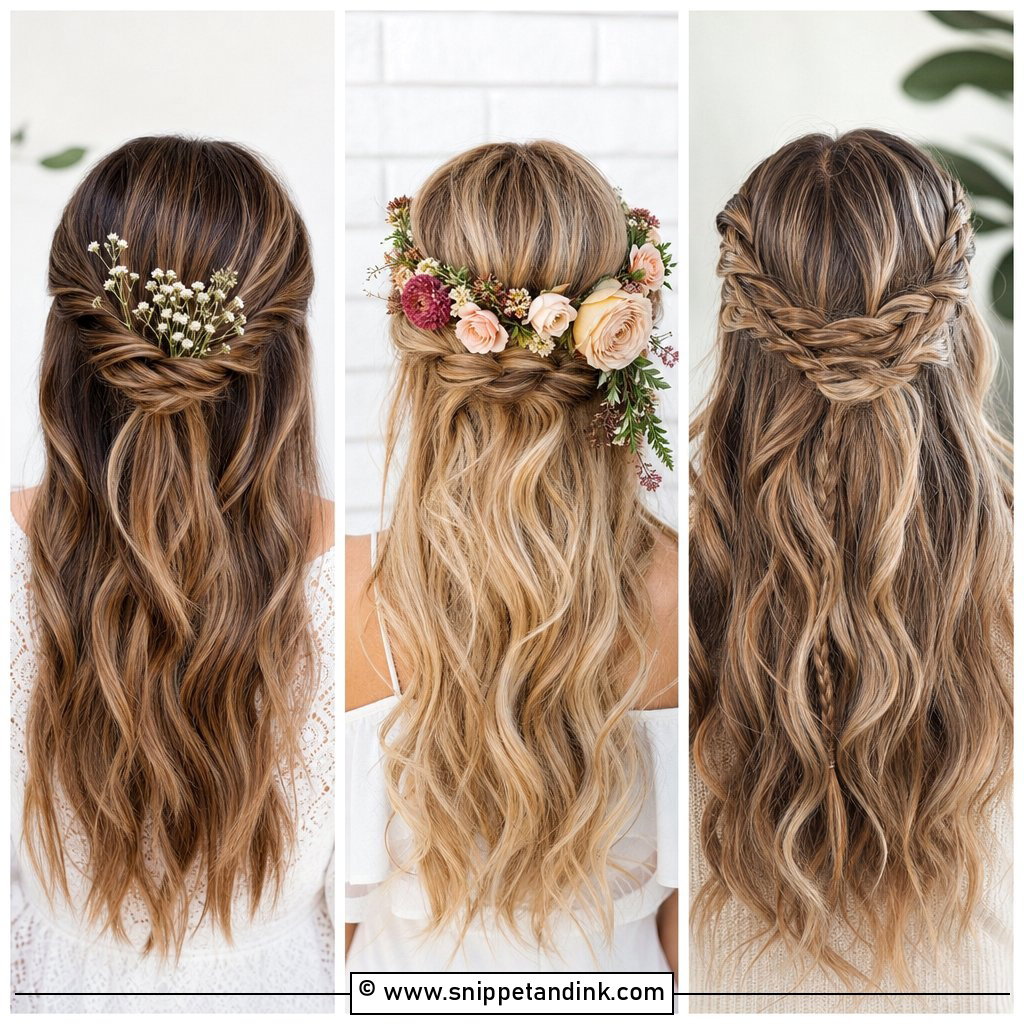
15. Curly Bob With Headband
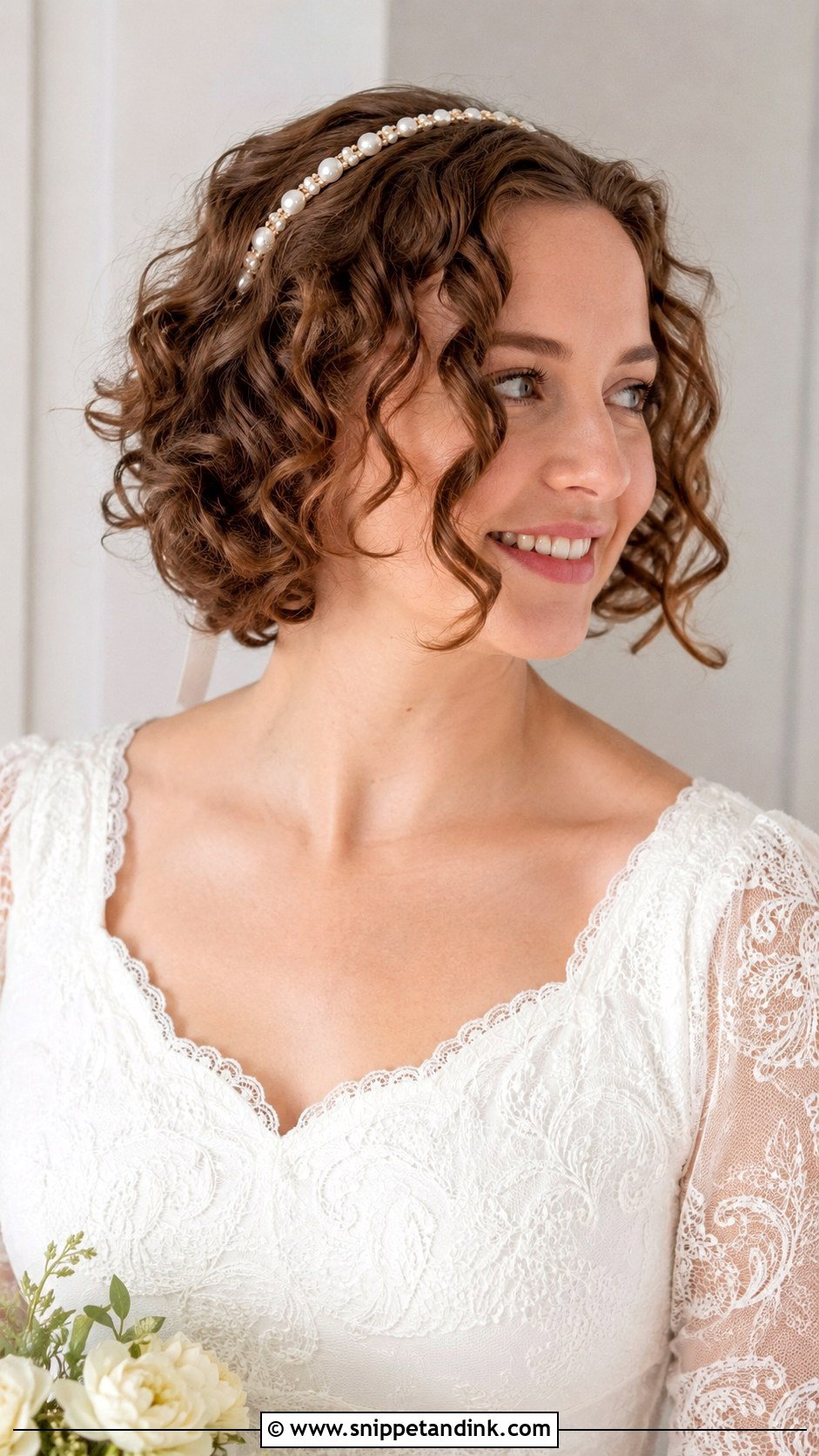
A curly bob is the easiest vintage style for a short-haired bride to wear. Set curls frame the face, and a pearl or jeweled headband keeps them tidy while adding sparkle. I set short curls a little tighter than the finished look, because they relax over the day. It pairs naturally with tea-length gowns and small ceremonies. Natural curl can be used as the base; I just define and shape it rather than resetting everything.
16. Twisted Crown Braid Updo
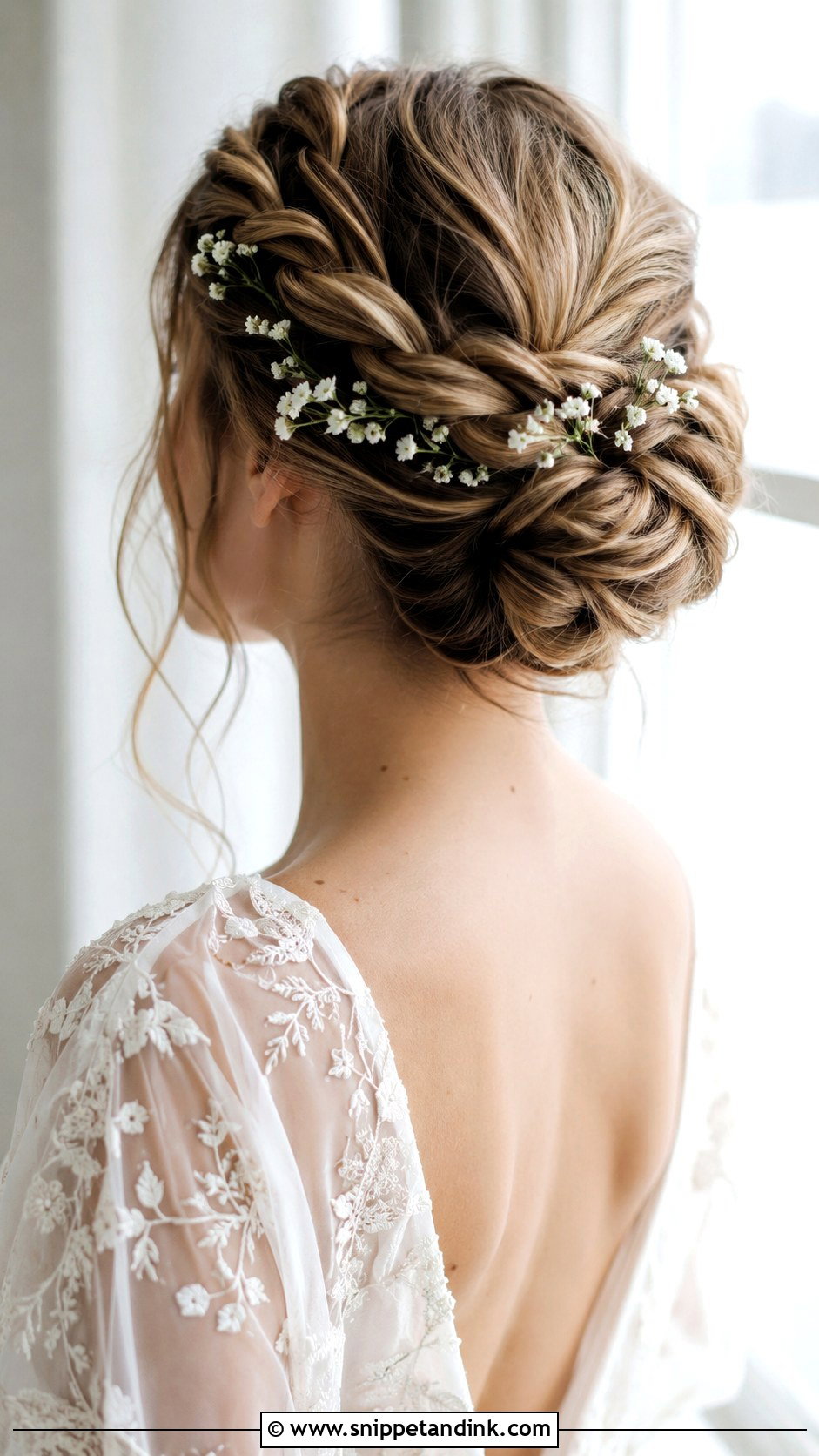
Twisted crowns aren’t strictly a 1950s shape, but they slip comfortably into a vintage wedding. I twist sections and pin them around the head in a ring rather than braiding, which gives a softer, rope-like edge. Long, thick hair makes the fullest crown; on fine hair the twists look thin unless I add a little padding. Small flowers or pearl pins tuck neatly into the twists. With everything off the neck, it’s a sensible choice for a warm-weather wedding.
17. Sleek Side Swept Updo
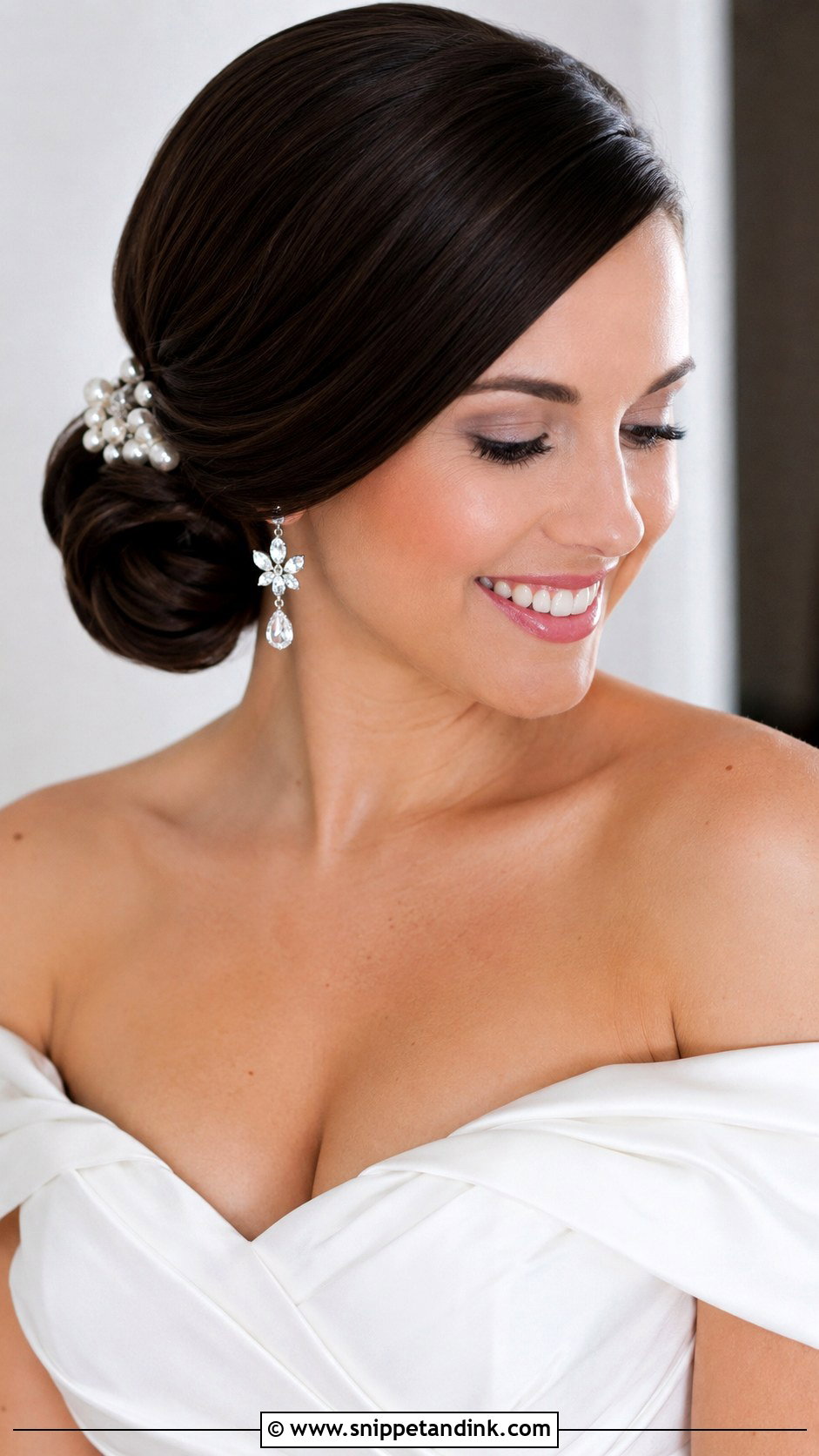
Sweeping all the hair to one side and pinning it into a smooth bun or twist gives a red-carpet asymmetry. I place the bun just behind the ear on the fuller side and put the comb or pearl cluster on the opposite side, so the head doesn’t look weighted. Off-shoulder gowns pair well, and the open side shows a statement earring. Because the weight sits to one side, I anchor it with more pins than a centered bun would need and test it with a few turns of the head.
18. Pearl Studded Low Bun
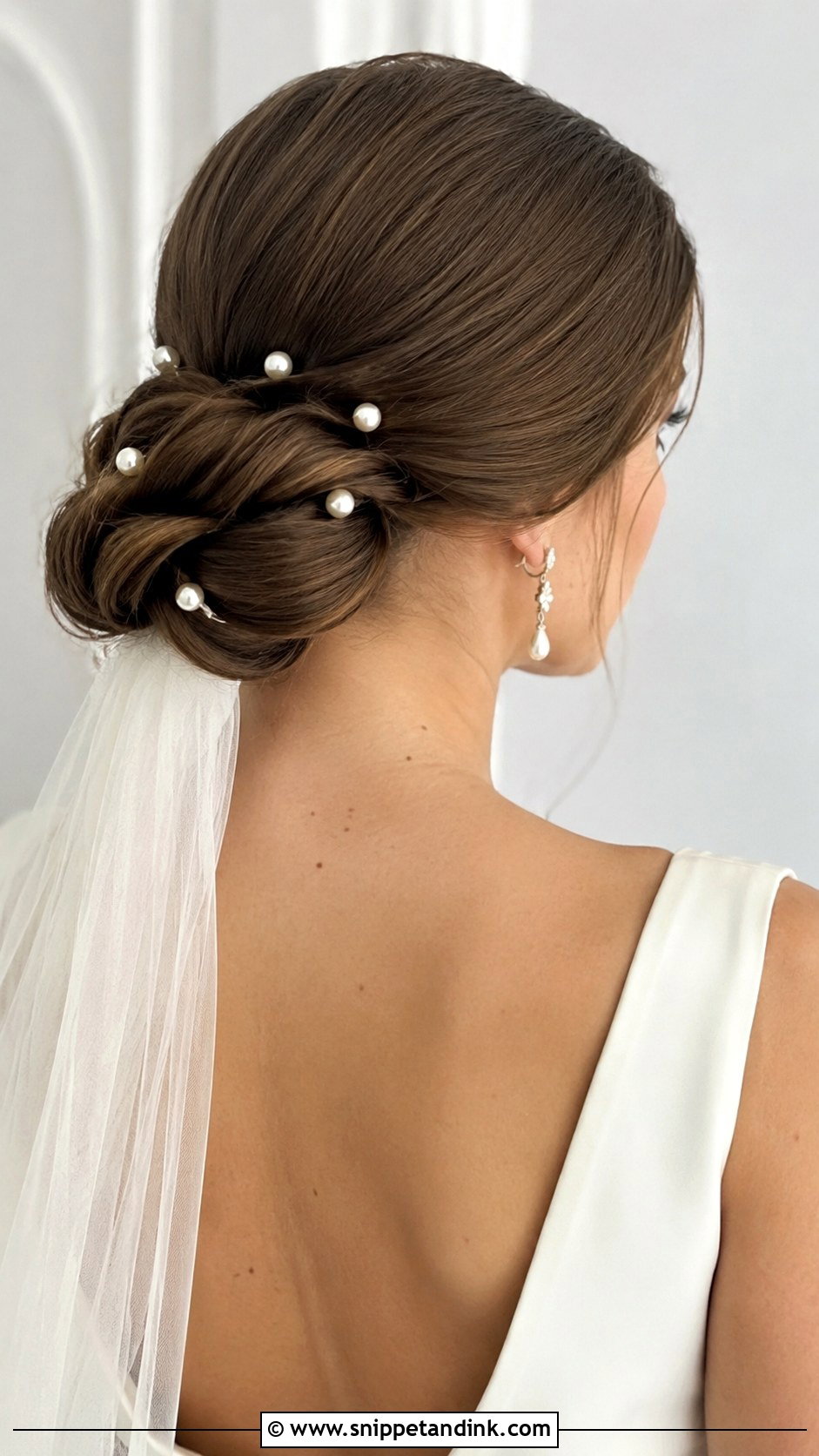
Pearls and a low bun are about as classic as bridal hair gets. I gather the hair smoothly at the nape, twist it into a neat bun and scatter pearl pins across it, spacing them unevenly so they look placed rather than stamped on. The bun needs to sit low enough that a veil comb can go above it. It’s minimal, and that suits a gown with heavy lace or a statement neckline. The pearls catch soft light without the glare of crystals.
19. Loose Vintage Waves With Side Comb
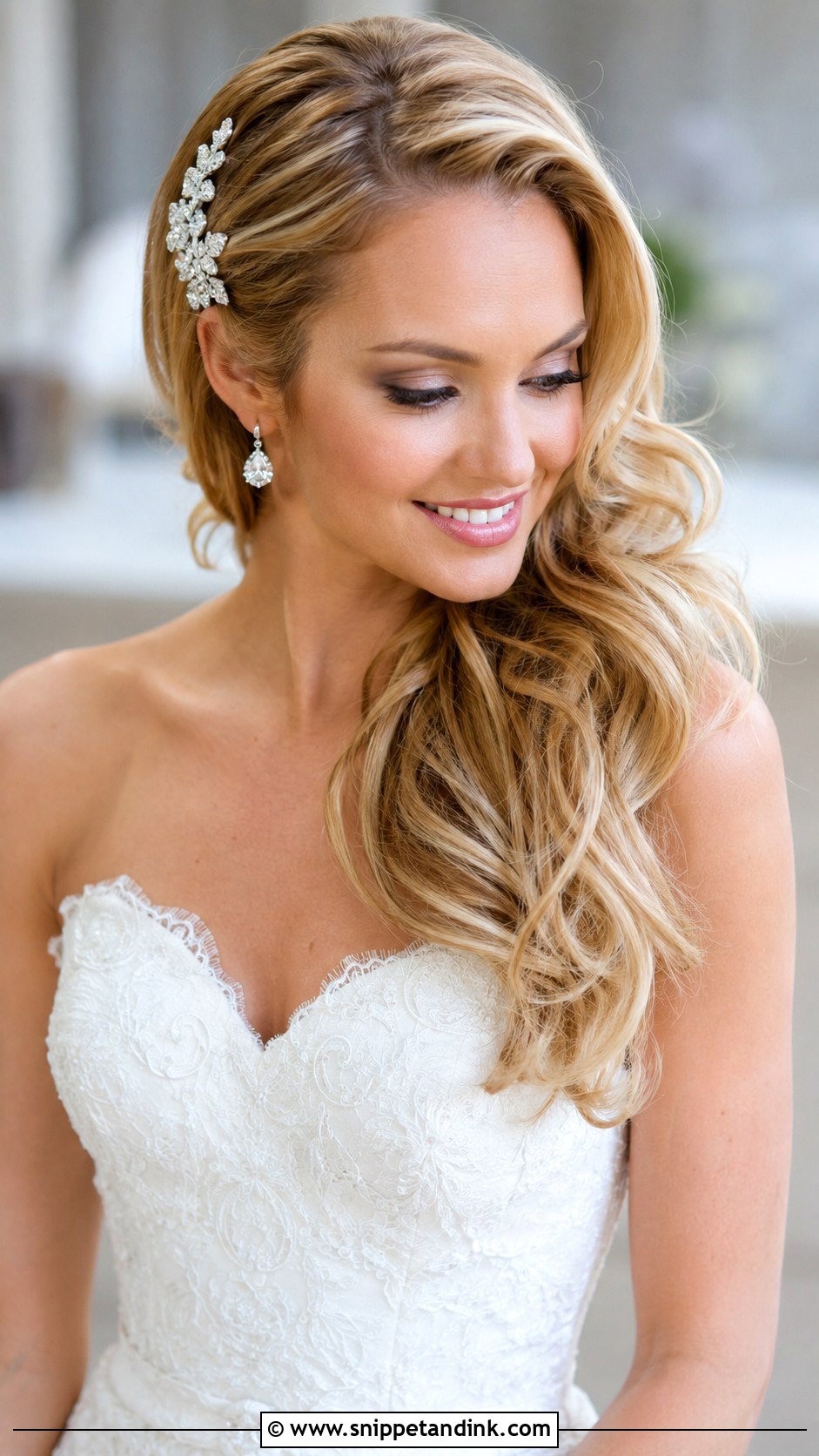
Loose waves with a side comb are the most relaxed option here, and also the one most likely to fall flat. Unset waves loosen fast, especially outdoors, so I still set them in rollers and brush them out softly rather than just tonging and leaving them. A sparkling comb holds one side back off the face. Long or medium hair suits it, and so do garden and outdoor weddings, as long as you accept the waves will soften as the evening goes on.
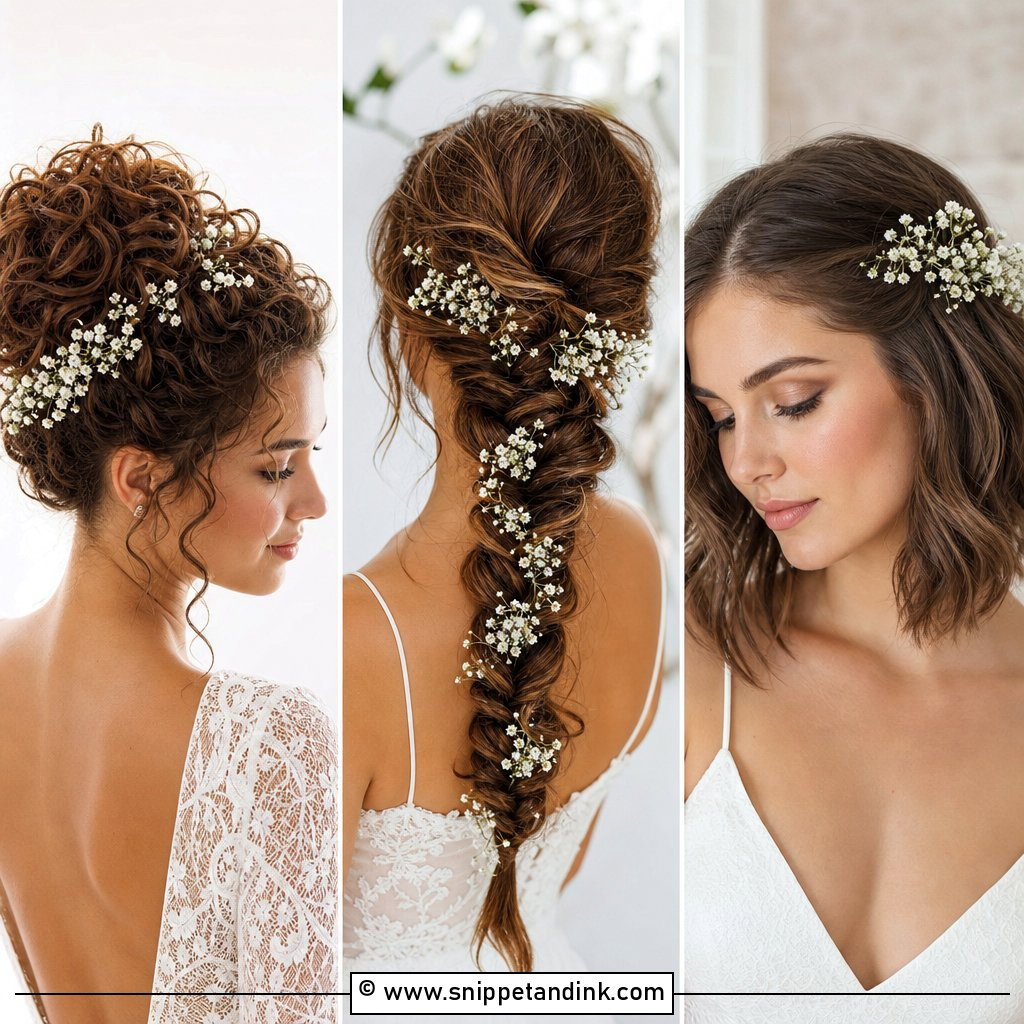
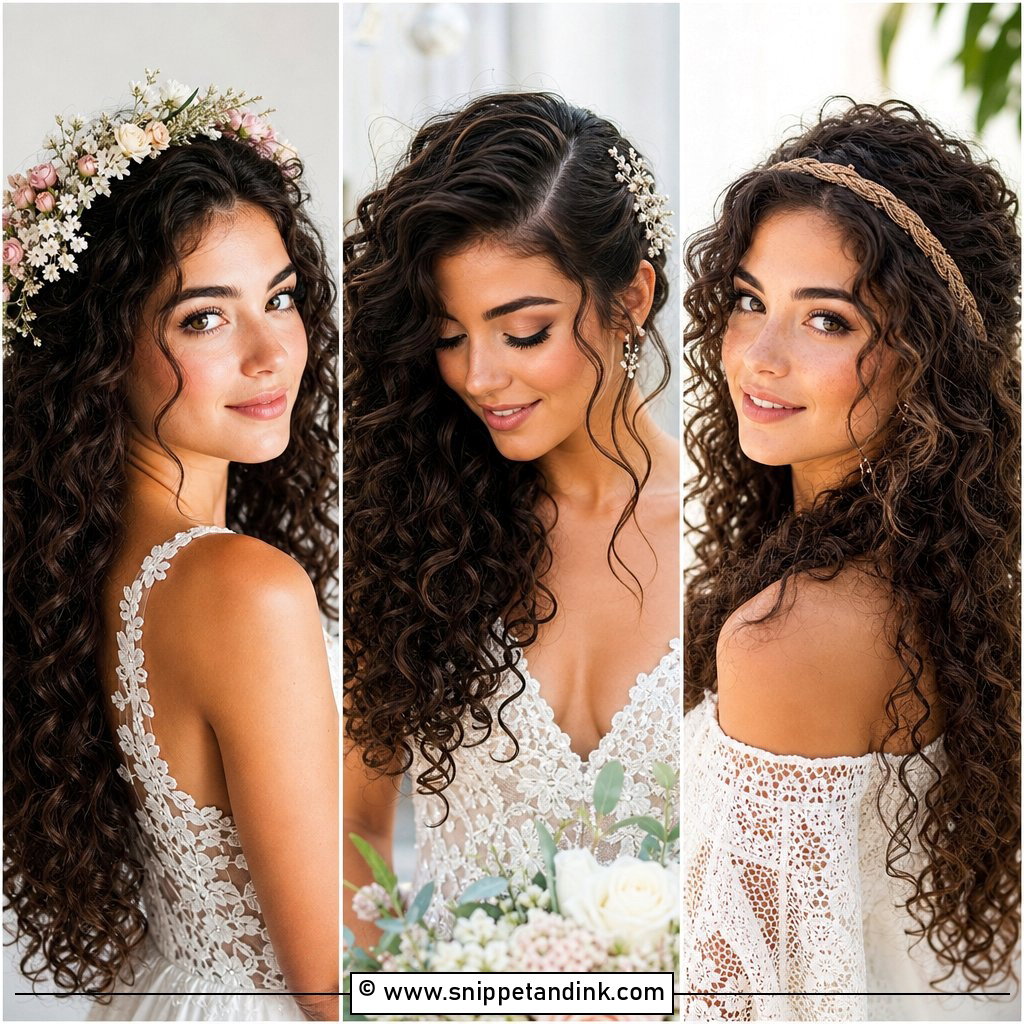
20. Retro Updo With Birdcage Veil
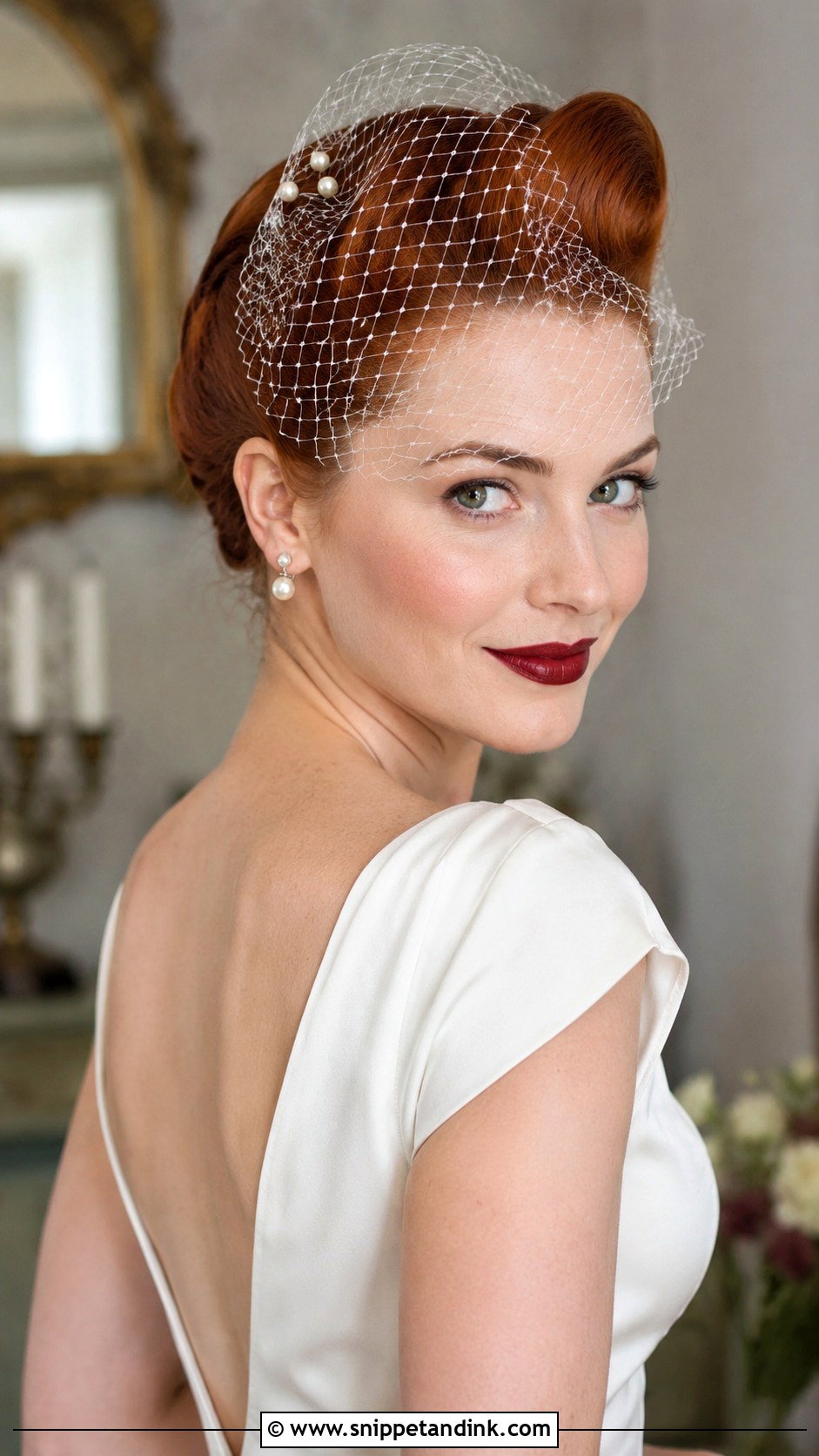
A structured updo under a birdcage veil is the most period-faithful look in this list. I sweep the hair into a smooth bun or French roll, then pin the comb of the netting just in front of it so the veil angles across one eye. The structure underneath matters, since a soft updo lets the comb tip forward. Pearl pins or a small flower finish it. The retro updo with birdcage veil works best for intimate and city ceremonies, fitted gowns and a bold lip.
Period-Correct or Period-Inspired? Matching Hair to the Gown and Veil
The fastest way to look like a costume is to stack every vintage signal at once: victory rolls, a birdcage, a flower, cat-eye liner, red lips and a petticoat. I’d rather you choose one or two strong period details and let the rest of the look stay current.
Let the dress lead
A tea-length dress with a full skirt can carry a structured set and a birdcage veil, because the silhouette is already period. A modern sheath or slip dress looks better with a softer nod to the era, like Hollywood waves or a pearl-studded low bun. A long cathedral veil needs a low anchor, so it pairs naturally with a chignon or French roll, not with a pompadour.
What each look needs from your hair
- Pin curls, curly bobs and Marcel waves: short to chin length is ideal.
- Victory rolls and Hollywood waves: at least shoulder length, ideally longer.
- Beehives and bouffants: plenty of density, or a padding piece matched to your color.
- Chignons and French rolls: medium to long hair, and second-day texture helps.
If your hair is very fine or naturally sleek, tell me early. I’ll plan a firmer set, add hidden padding where height is needed and choose shapes that look full without relying on huge teased volume that sinks by evening.
Red Lips, a Proper Set and One Vintage Detail
Every look in this list, from victory rolls to soft chignons, depends on the same thing: a set that has time to cool and a brush-out done with patience. Pick the style that suits your length and your gown, add one period accessory such as a birdcage veil, pearl pins, a flower or a comb, and let the rest of the look stay simple. Red lips are optional, though they do finish the picture. If you can, wear your trial set for a full evening, and you’ll know before the wedding exactly how your hair holds.
You'll Like These Ideas:


Leave a Reply