
For years the bridal default was to pin every front piece away. I’d much rather work with a fringe than against it, because a fringe frames the eyes and gives a veil, tiara or a few pearls something to balance against. What decides the right one is practical: your hair texture, any cowlick at the hairline, your neckline, and how much movement you can live with around your face for twelve hours. Below are twenty fringe looks, from the cut itself to the full style built around it, so you can bring the right reference to your trial.
Your Hairline Decides the Fringe More Than Your Face Shape
People often choose a fringe by face shape, but at the chair I look at the hairline first. A strong cowlick at the front pushes the hair up or sideways no matter how it’s cut. Very fine hair shows the forehead through a fringe; very thick hair makes a fringe sit heavy. Here’s how I match them:
- Strong cowlick at the centre: curtain or side fringe, which follow the hair’s direction instead of fighting it. A full fringe will split.
- Fine hair: wispy or curtain, with the fringe taken from a deeper triangle at the top so there’s more hair in it.
- Thick hair: full or bottleneck, with internal thinning so it doesn’t sit like a block.
- Tight curls: a curly fringe cut dry, left longer than you think.
- Oily skin: curtain or side, which rest less on the forehead.
If you’ve never had one, have it cut at least six weeks before the wedding. You need a few washes to learn what it does, and if you dislike it, there’s still time for it to grow to a curtain length.
1. Bridal Hair With Curtain Fringe
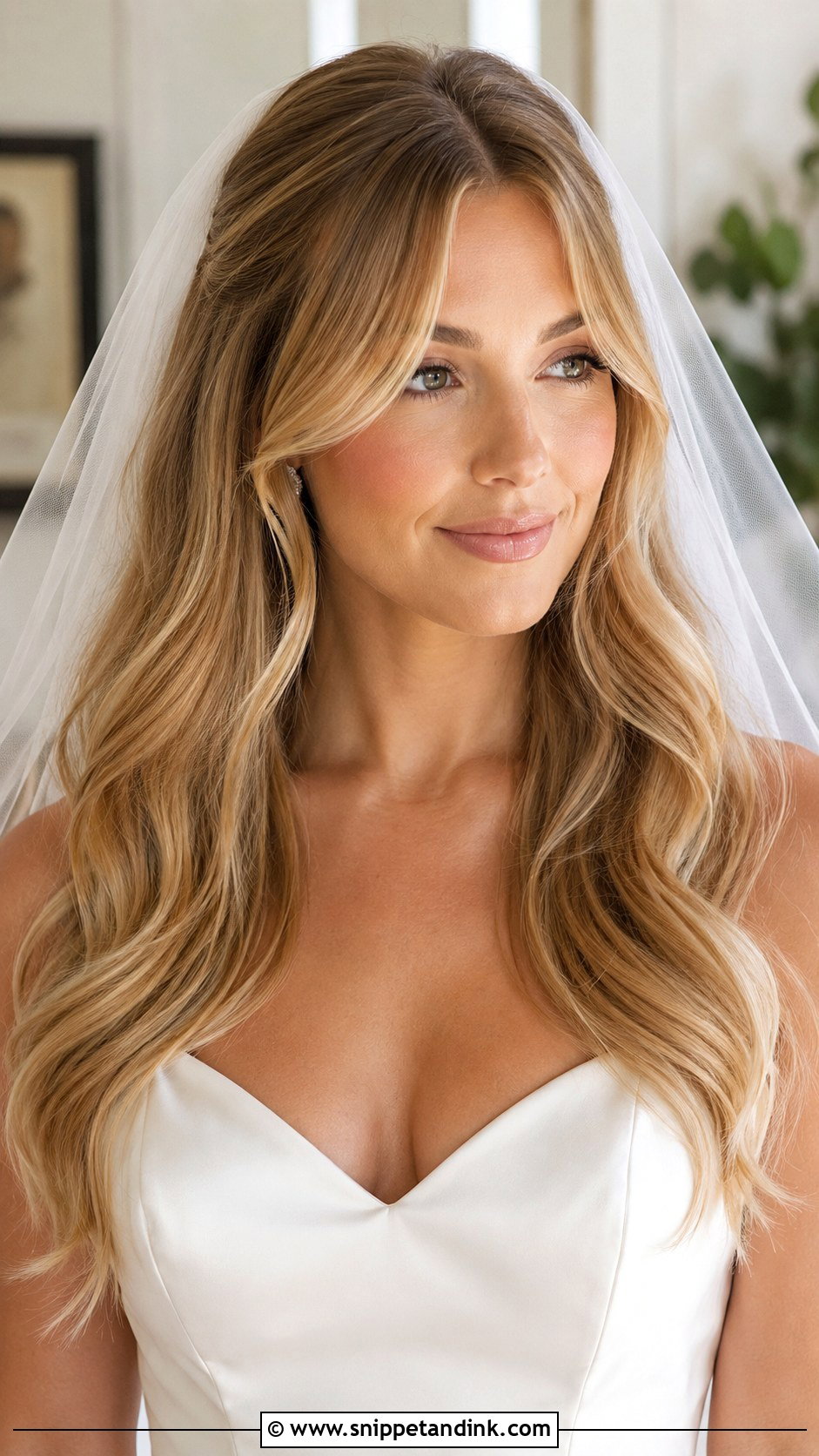
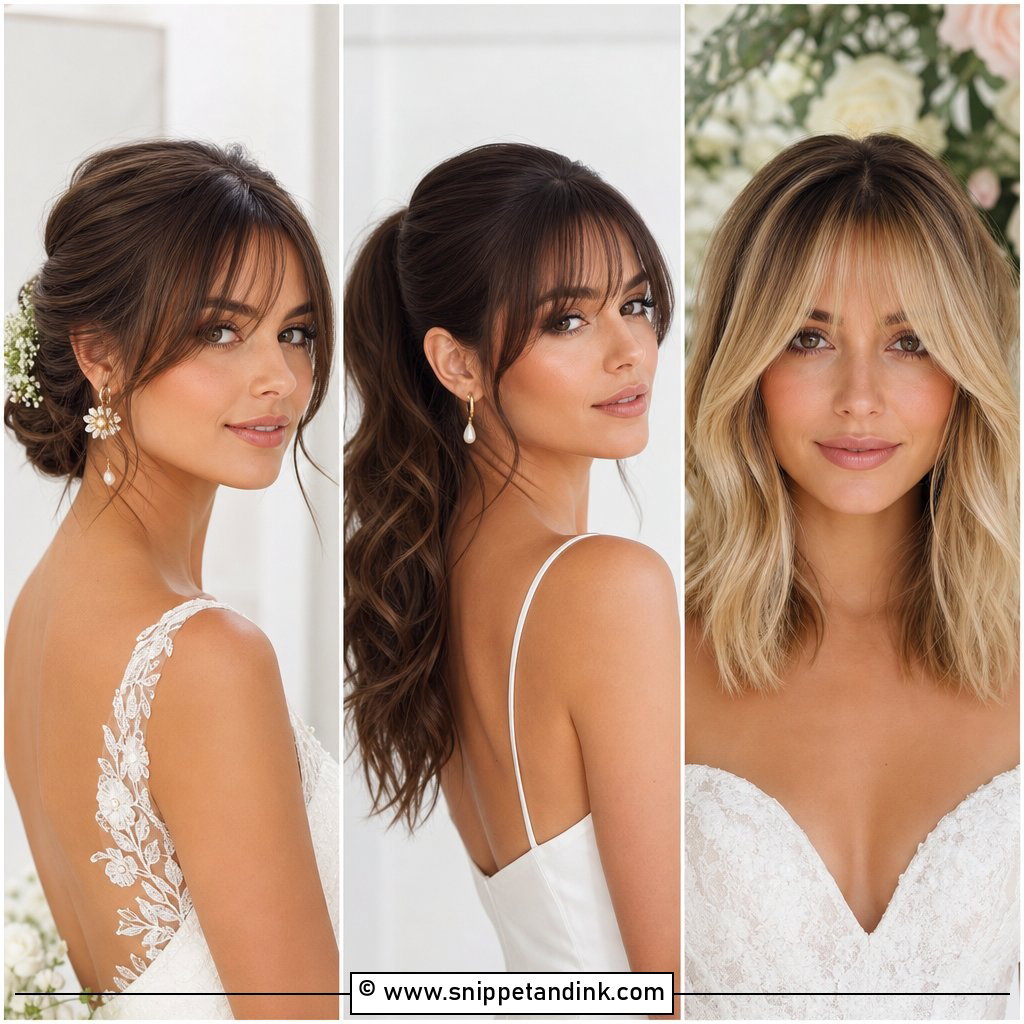
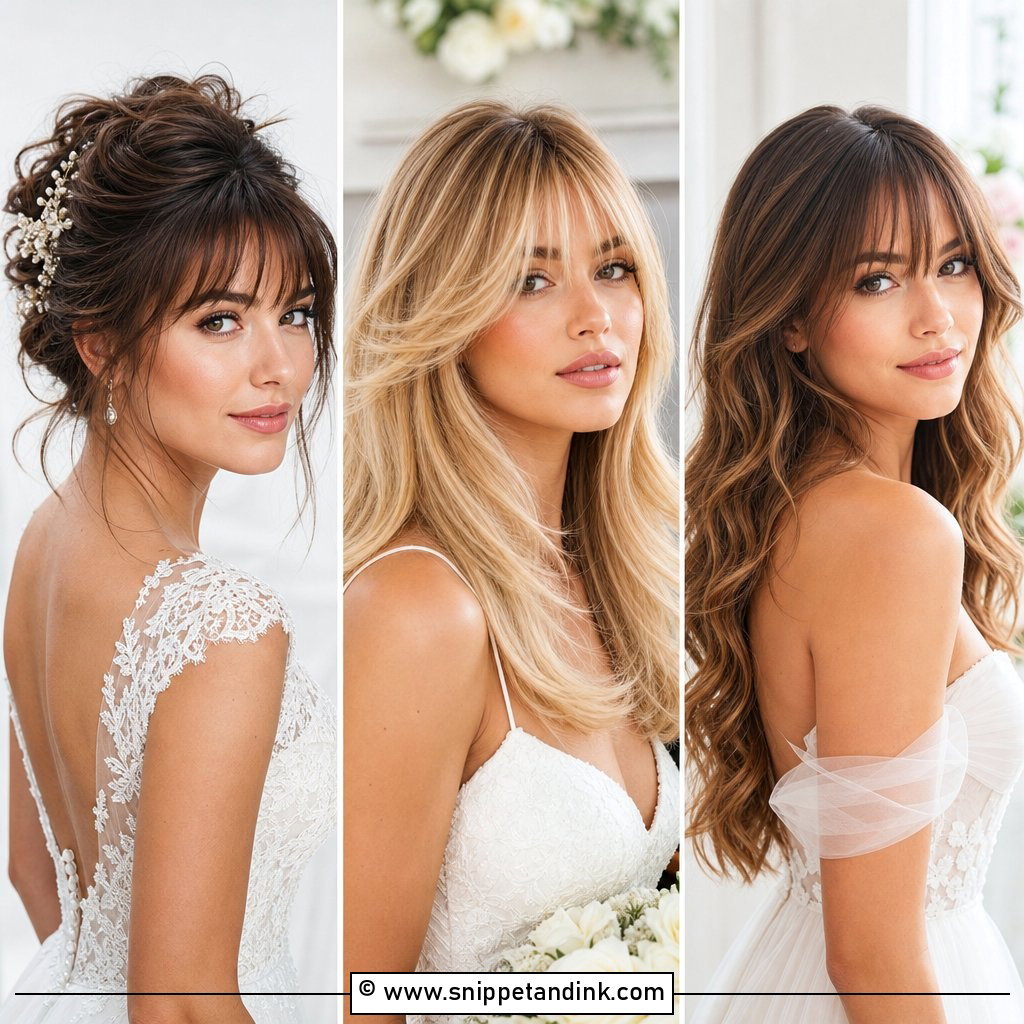
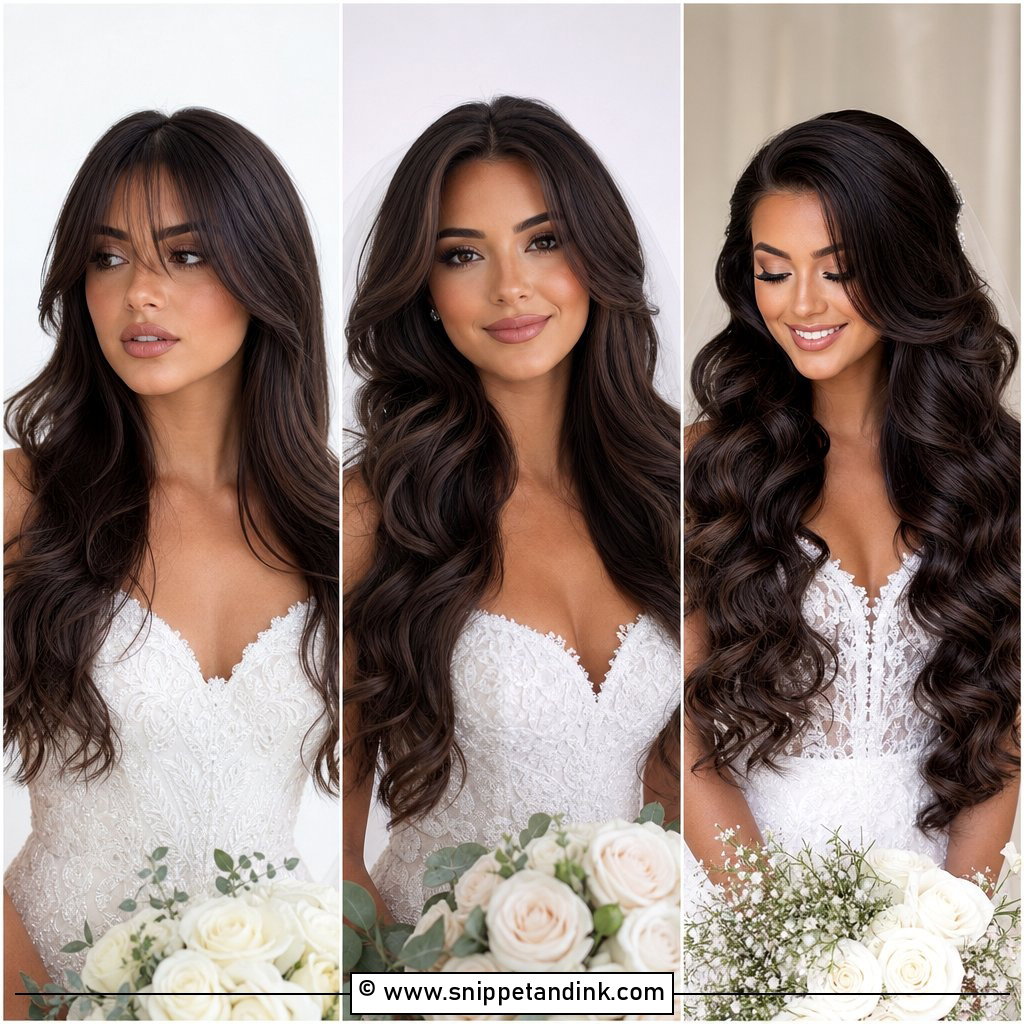
Curtain fringe is the easiest to wear because it parts in the middle and gets out of the way of your eyes. It blends into longer face-framing layers, so it suits waves, buns and half up styles equally. I dry it with the ends curved away from the face, which opens the features in photos instead of shadowing them. It also survives a veil well; when the veil comes off, the front still looks styled.
2. Bridal Hair With Wispy Fringe
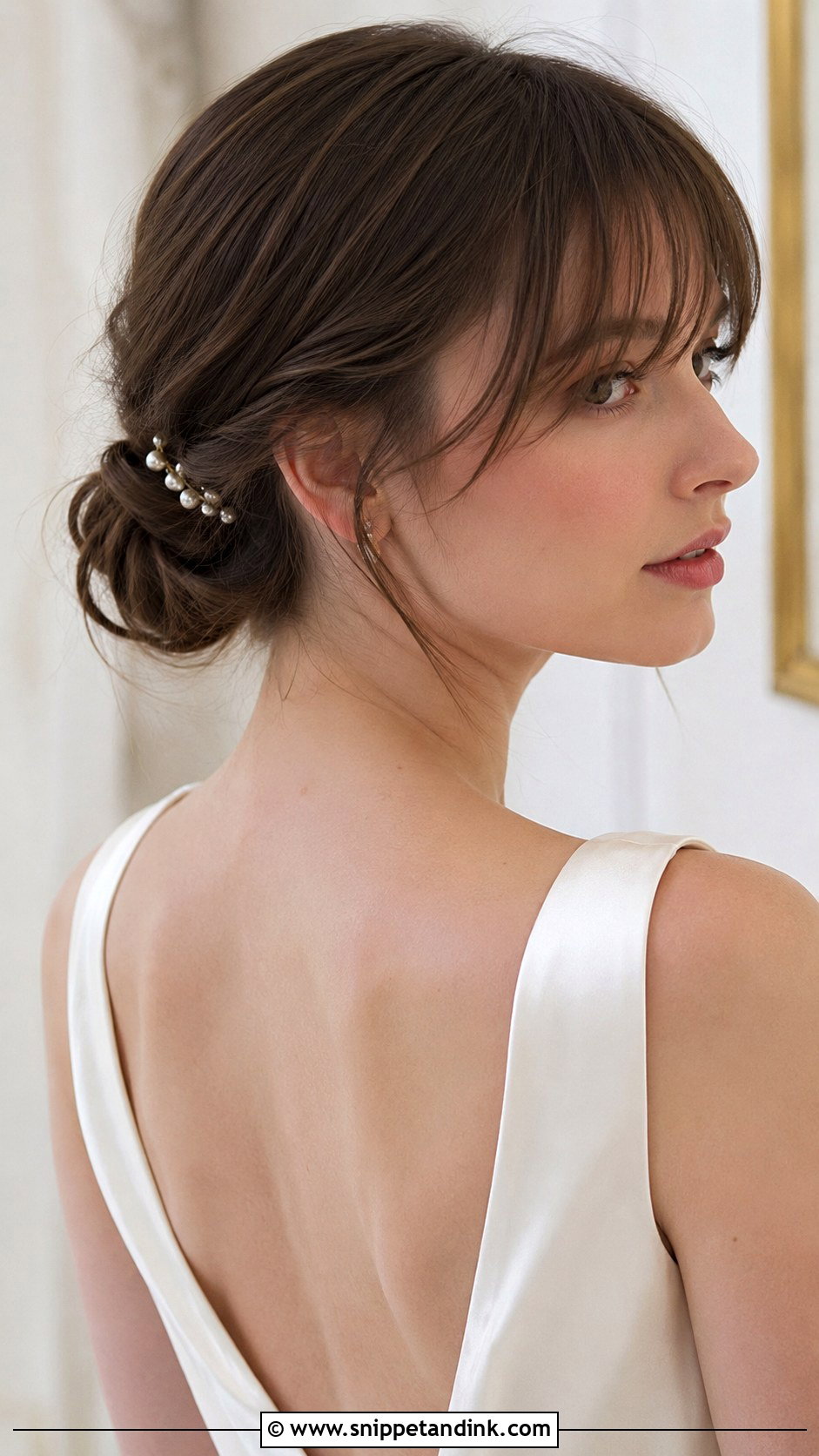
A wispy fringe is thinned out so the forehead shows through it, which is why fine and medium hair carry it better than thick hair. It skims the brows in light, separate pieces. Pair it with a low bun, a soft chignon or loose waves. The risk is that wispy pieces get stuck to skin once foundation goes on, so I set them with a tiny amount of flexible spray on a brush rather than spraying the whole front.
3. Bridal Hair With Full Fringe
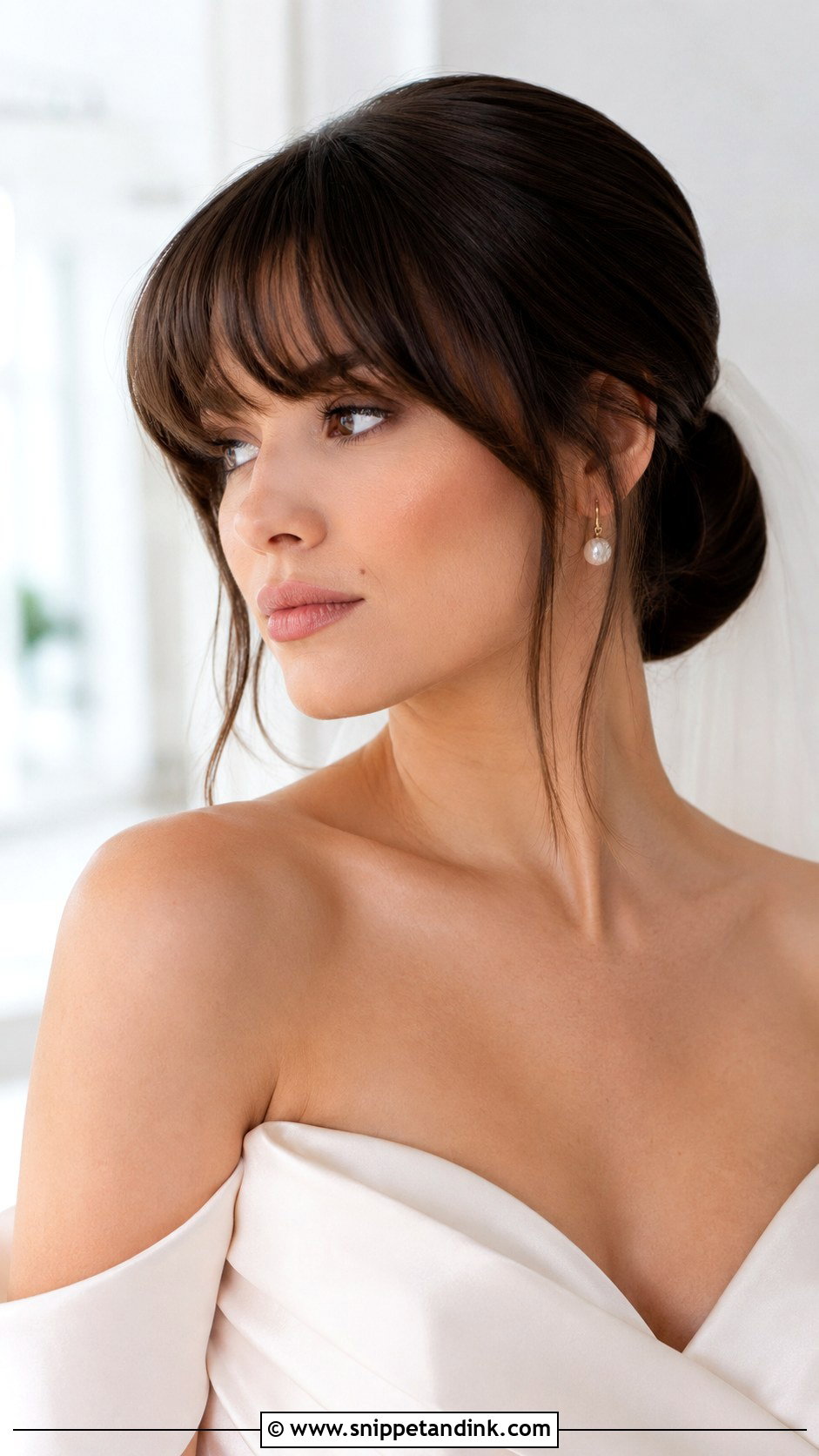
Full fringe is bold: a solid frame that makes the eyes the focus. Because it’s so strong, the rest of the style should be controlled, with a sleek low bun, smooth waves or a rounded blowout. Get it trimmed about a week before, never the day before; a full fringe cut on the morning of the wedding always ends up shorter than you planned. Ask for softened edges instead of a hard line. Pearl pins and a clean neckline suit it.
4. Bridal Hair With Side Fringe
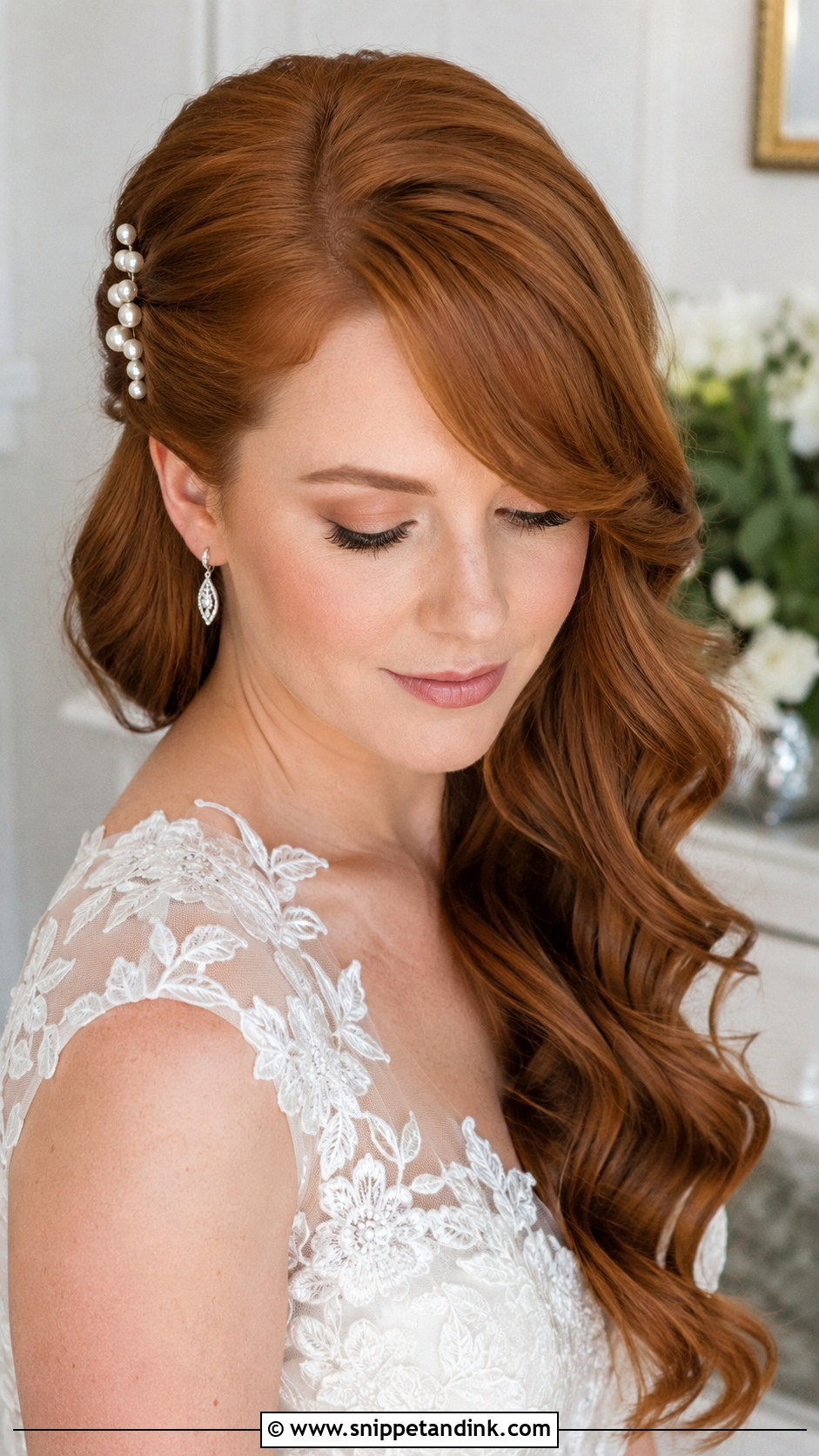
Side fringe sweeps across the forehead and suits brides who don’t want a centred shape. The weakness is the root: a side fringe that’s dried flat collapses during the ceremony. I blow dry it in the opposite direction first, then flip it over, which builds lift that lasts. It goes naturally with side parts, asymmetrical accessories and one-shoulder gowns.
5. Bridal Hair With Bottleneck Fringe
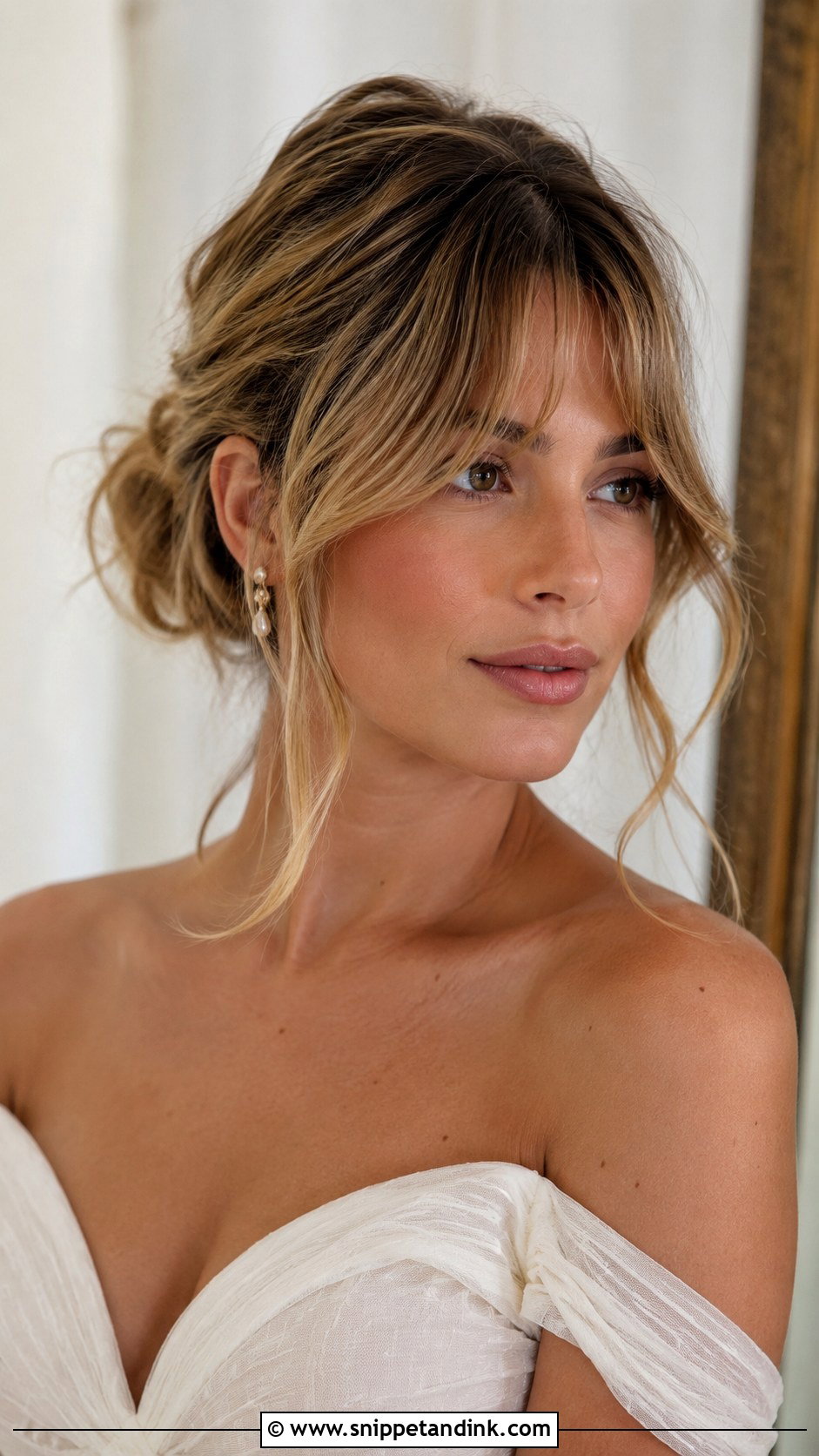
A bottleneck fringe is short in the centre and longer toward the cheekbones, a little like the shape of a bottle’s neck. That shape gives structure at the eyes while the longer edges blend into curls, waves or an updo. It needs medium to long hair so the side pieces have somewhere to go. A loose chignon or brushed-out waves suit it well, and it’s one of the easier fringes to grow out after the wedding.
6. Bridal Hair With Micro Fringe
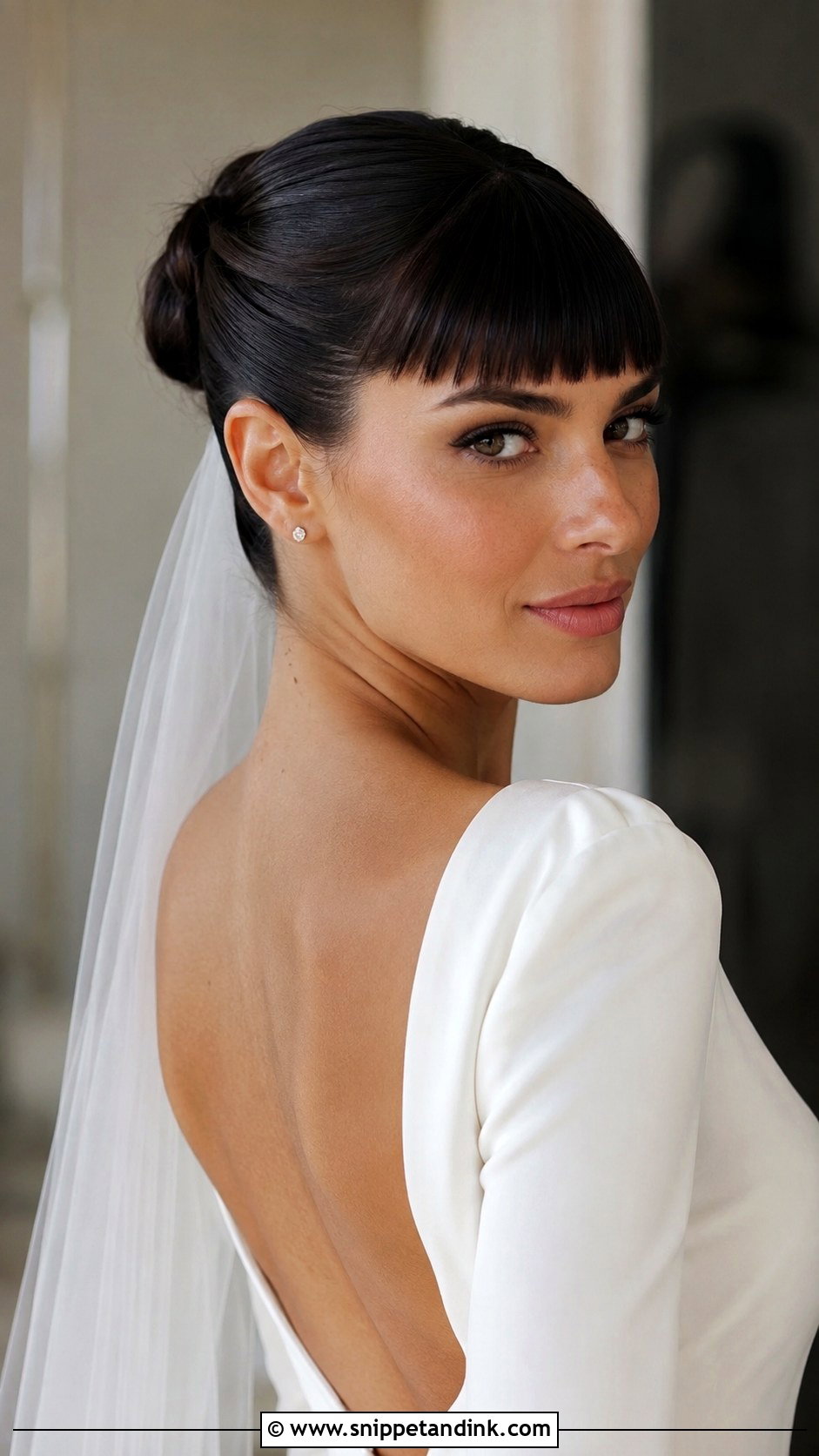
A micro fringe sits well above the brows. It’s a fashion choice rather than a soft one, and it puts the eyes, brows and makeup on full display, so your makeup artist should know about it. To keep it bridal, I’d pair it with smooth waves, a sculpted bun or a polished bob rather than anything messy. It needs a precise trim and confidence; if you’ve never worn one, don’t try it for the first time at your wedding.
7. Bridal Hair With Curly Fringe
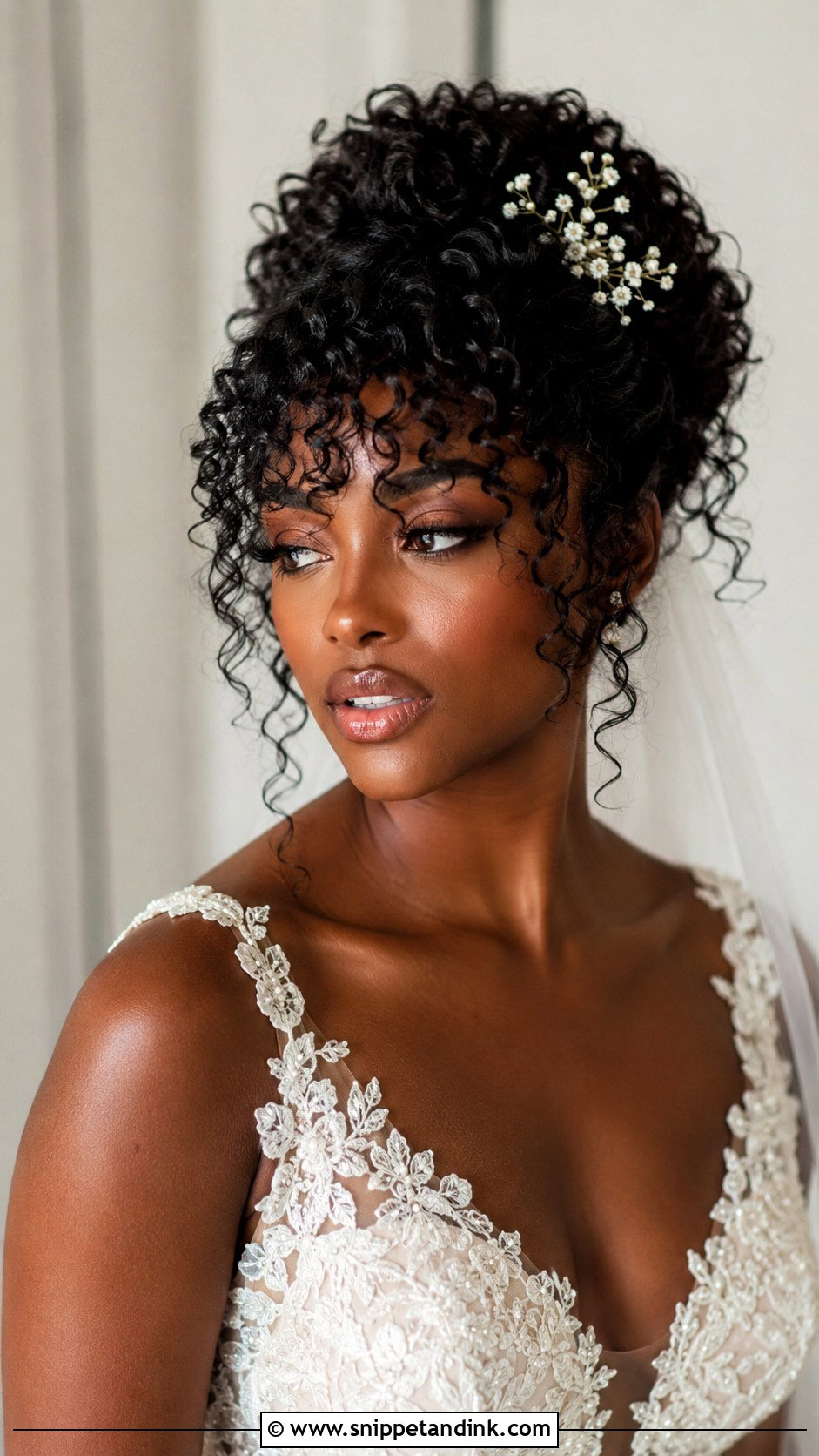
A curly fringe should be cut dry and in its natural pattern. Cut wet and straight, curls spring up much shorter than expected. The goal is defined, separated curls that frame the face, not a stretched-out fringe. It suits a textured updo, half up curls or long curls worn loose. Hydration and a curl cream matter, especially for outdoor photos in damp air, and any pins nearby should sit behind the fringe so they don’t flatten it.
8. Bridal Hair With Wavy Fringe
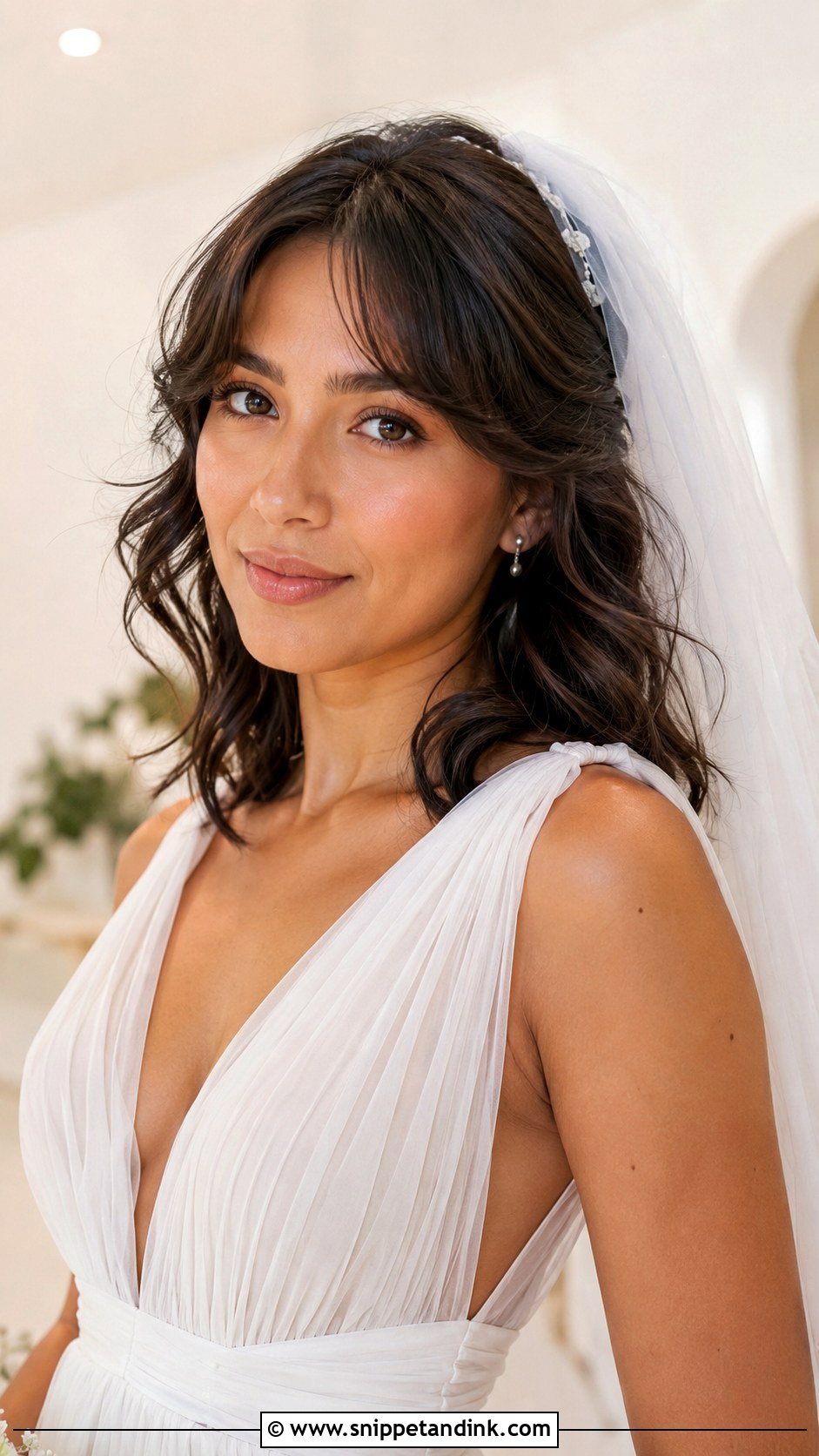
Wavy fringe has a soft bend that runs into the waves through the rest of the hair. It looks relaxed but holds through a long day if it’s set properly; a little mousse while damp gives the bend memory. Pair it with a half up twist, a low bun or long waves. It’s an easy match for simple veils and small pins.
9. Bridal Hair With Fringe And Low Bun
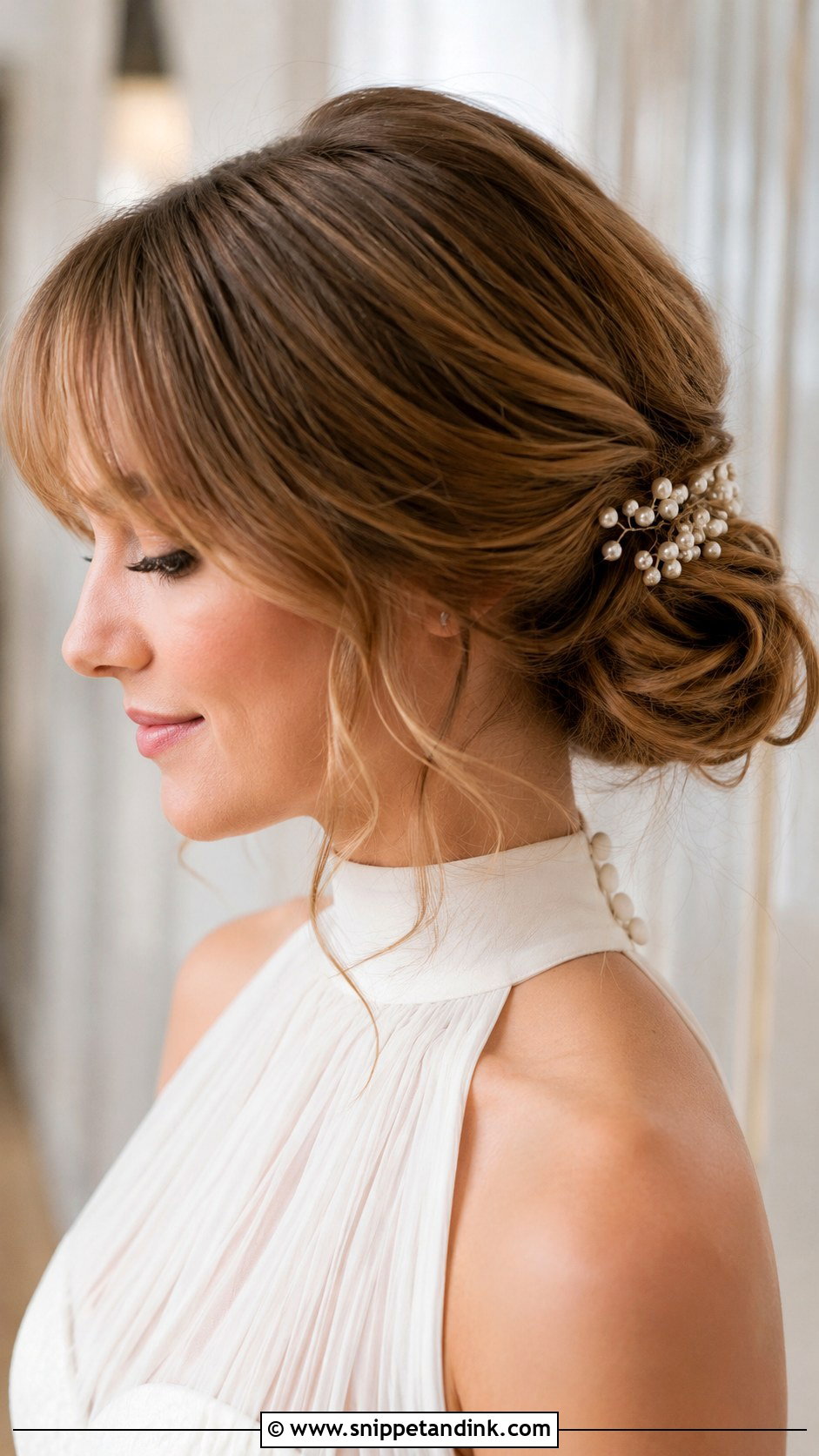
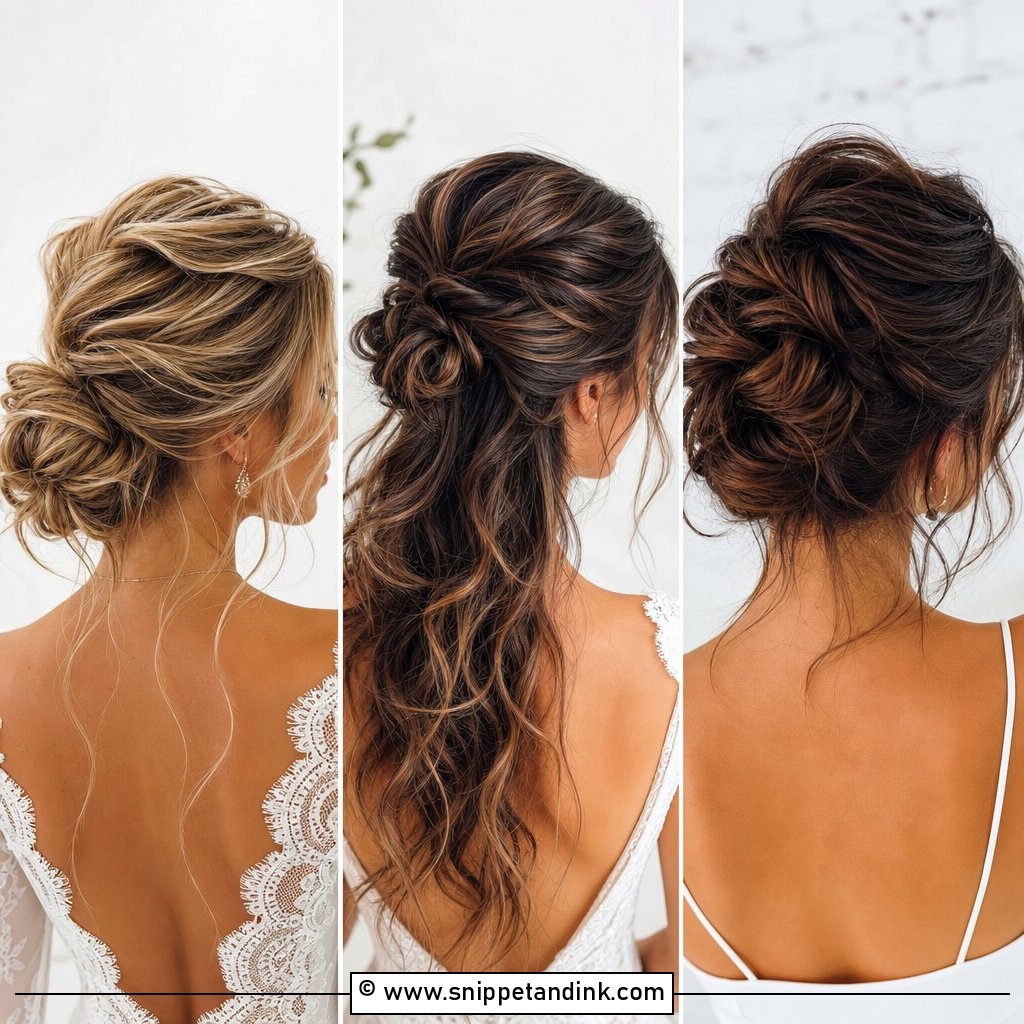
A low bun is the steadiest base to put behind a fringe. The bun controls the length, and the fringe stops the updo from looking strict. This works with curtain fringe, wispy bangs, side bangs or a fuller fringe. I keep the bun slightly soft at the nape and leave a couple of pieces to connect the fringe to the updo. The bun gives a veil a clear anchor, and it shows off a backless gown.
10. Bridal Hair With Fringe And Chignon
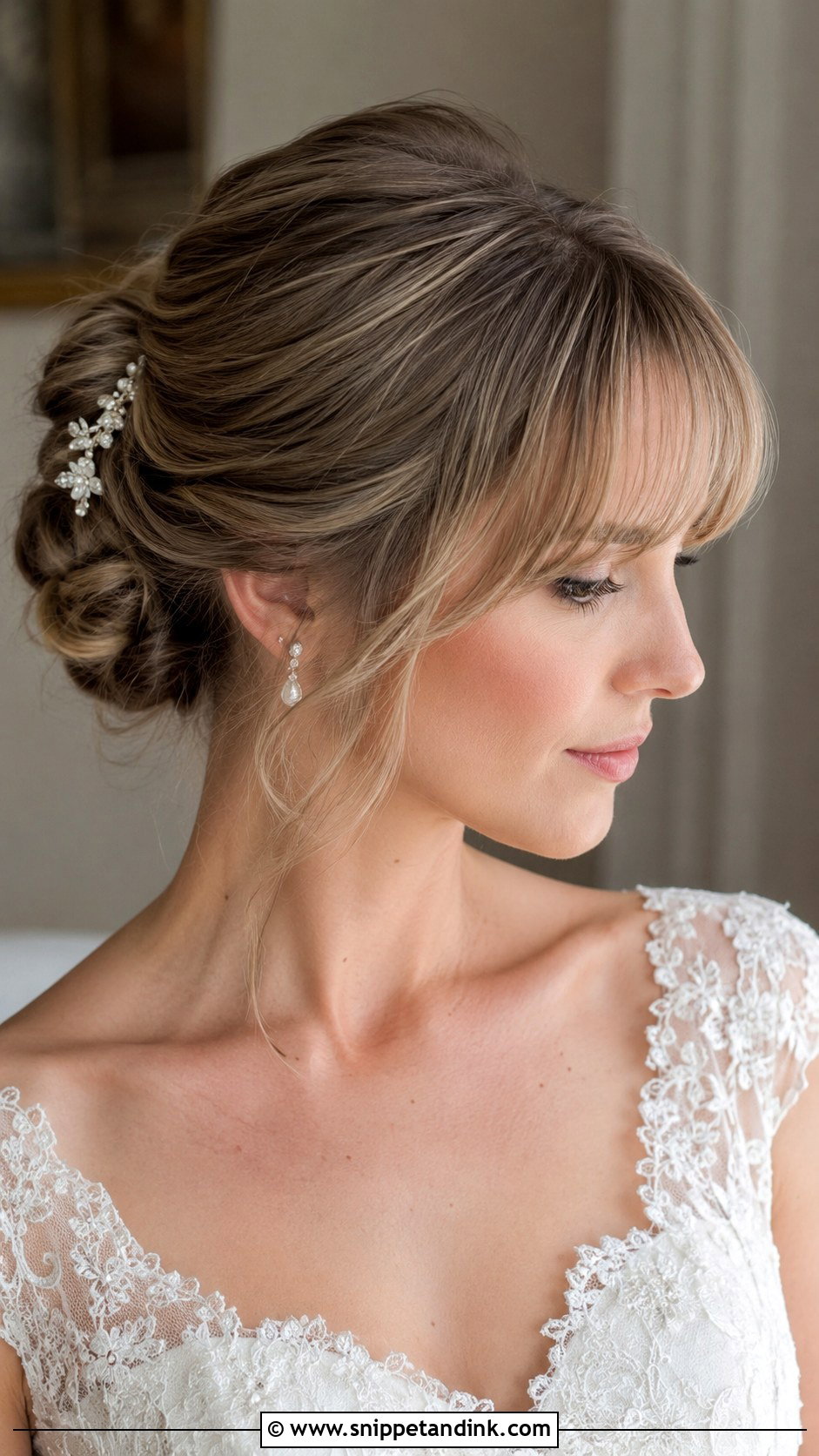
A chignon with a fringe is softer than a slicked-back chignon, which suits brides who find full pulled-back styles harsh on their face. It can sit low at the nape or a little to one side, depending on the dress and veil. A wispy or curtain fringe blends most naturally into the face-framing pieces. Pearl pins or a small comb above the chignon add detail.
11. Bridal Hair With Fringe And Half Up Hair
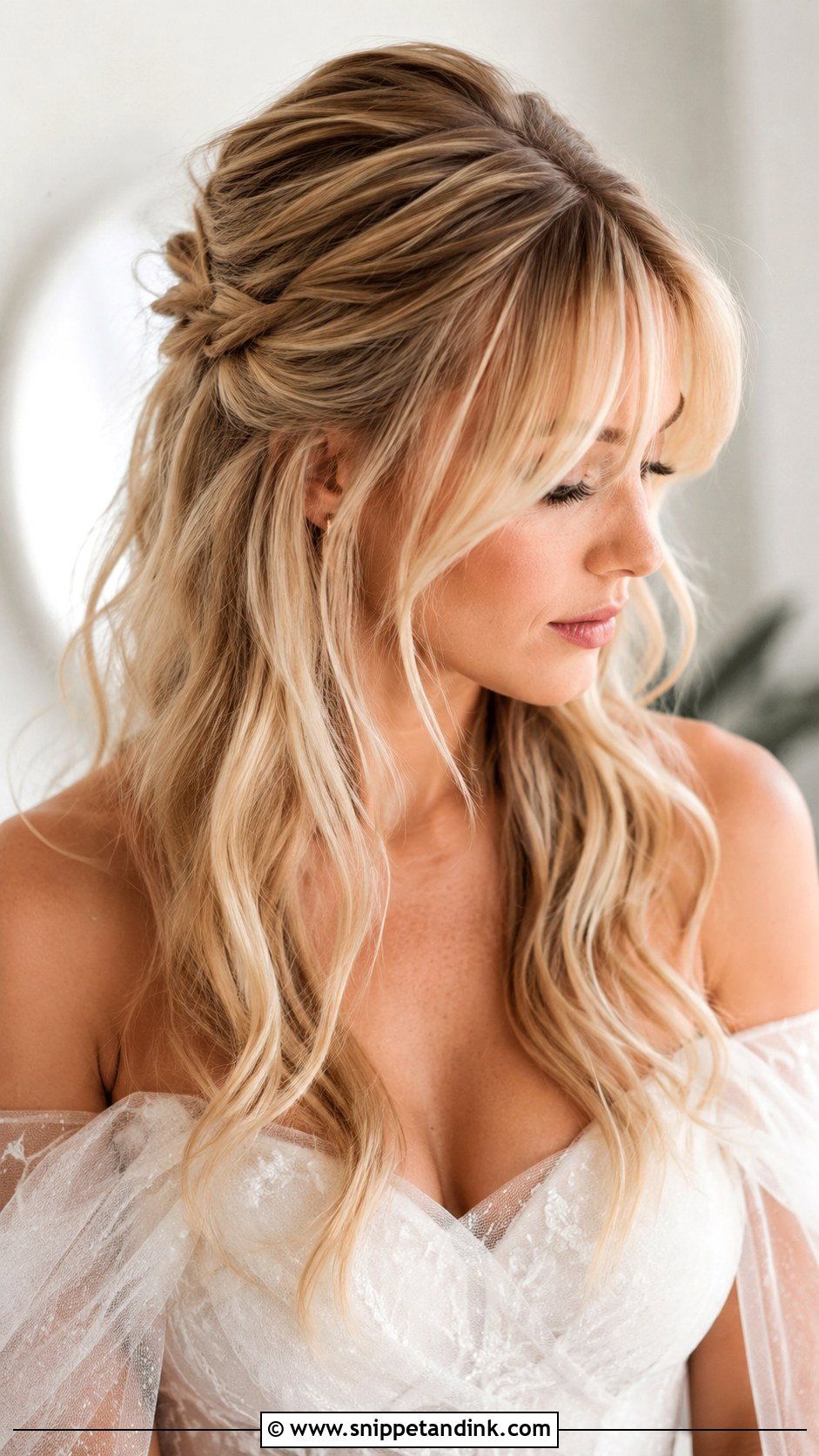
Half up with a fringe gives you loose hair and a pinned crown in one. The crown can be lifted, twisted, braided or pinned back, while the fringe stays forward. This works well with curtain or bottleneck fringe, or wispy bangs, since those edges blend into the loose lengths. I separate the fringe before I take the half up section, so it isn’t accidentally pulled back into the twist. A small comb, bow or floral pin covers where the sections meet.
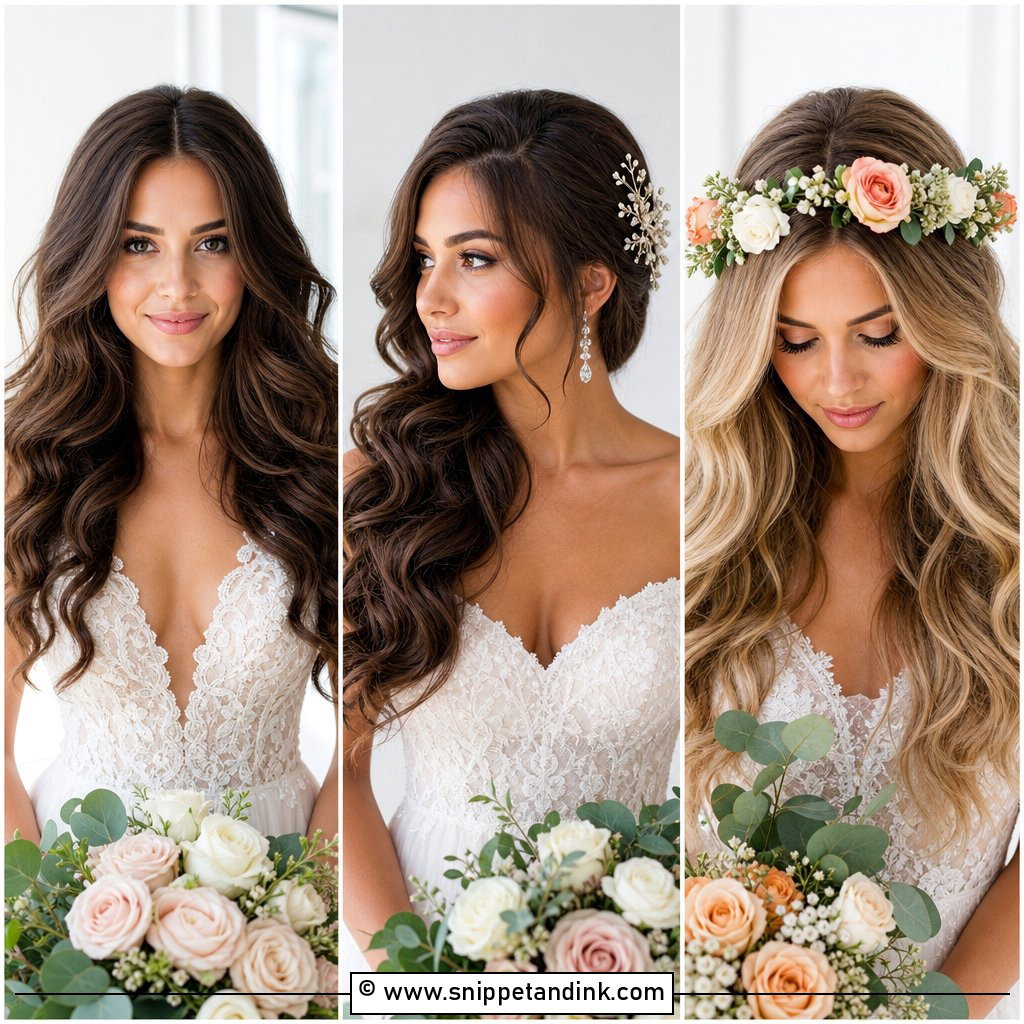
12. Bridal Hair With Fringe And Loose Waves
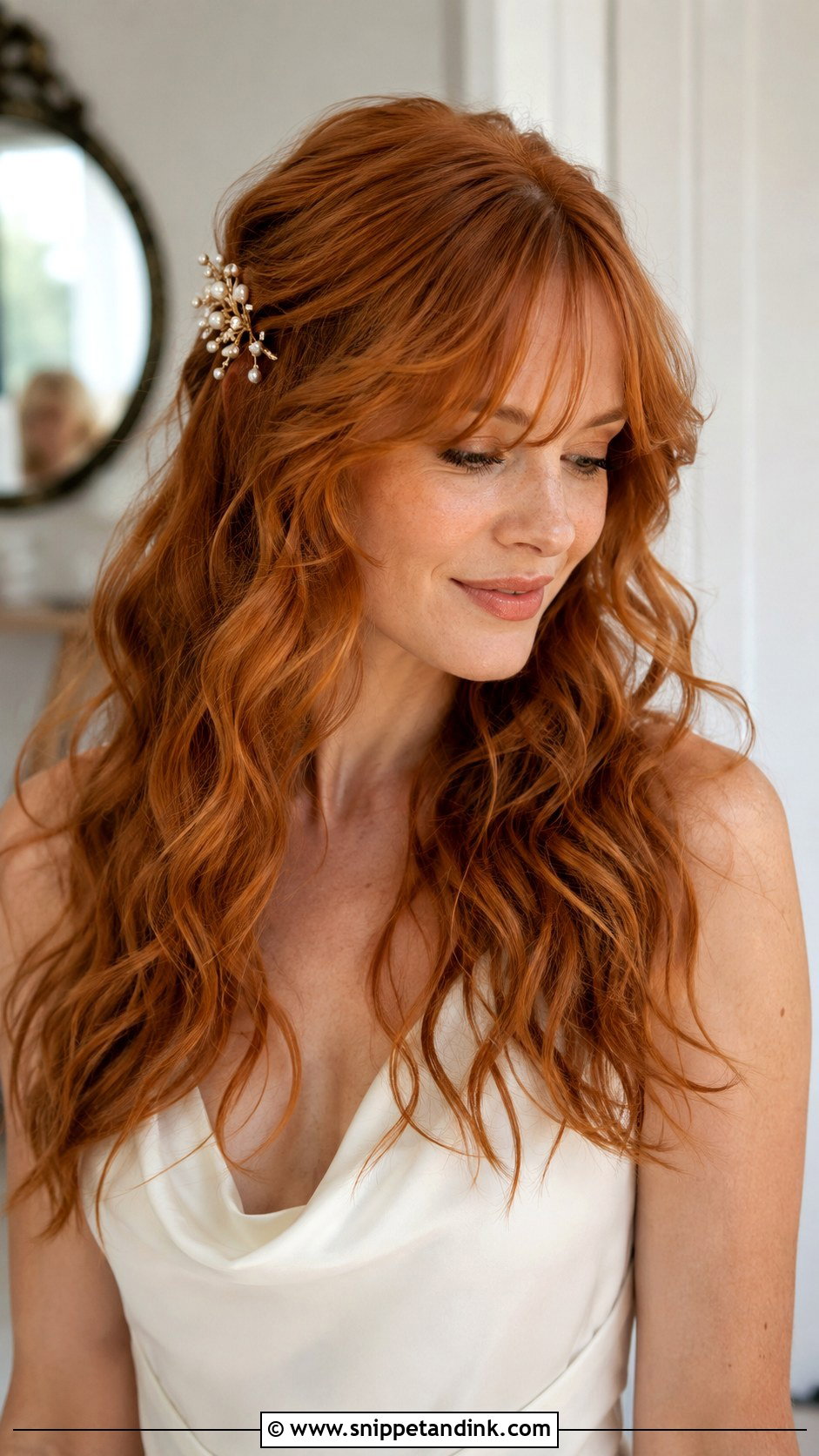
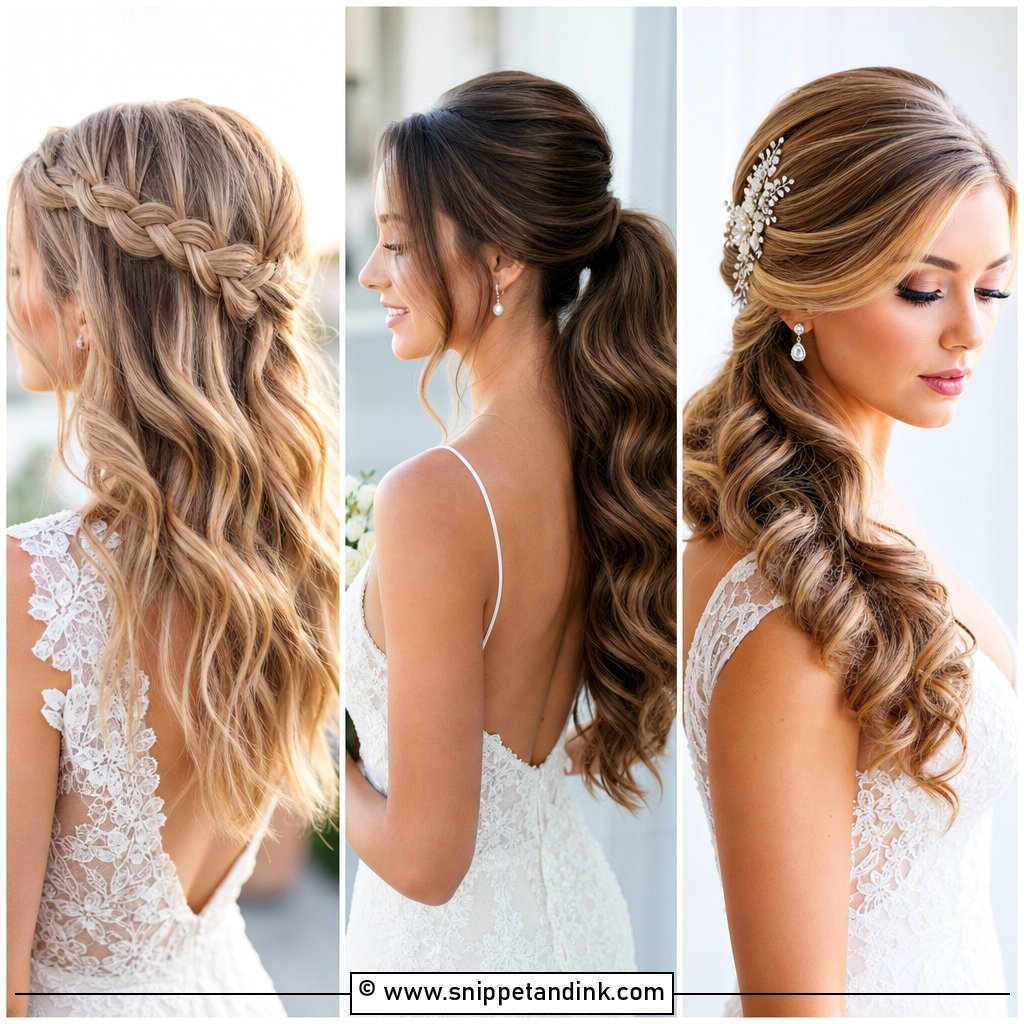
Loose waves with a fringe should be brushed and soft, never crunchy. The fringe can sit forward, part slightly, or curve away depending on its length. Keep oils and serums away from the fringe; a drop of shine product on the lengths is fine, but on the fringe it makes the hair clump into strands. Medium and long hair balance the shorter front best. Veils, floral crowns and pearl clips all suit it.
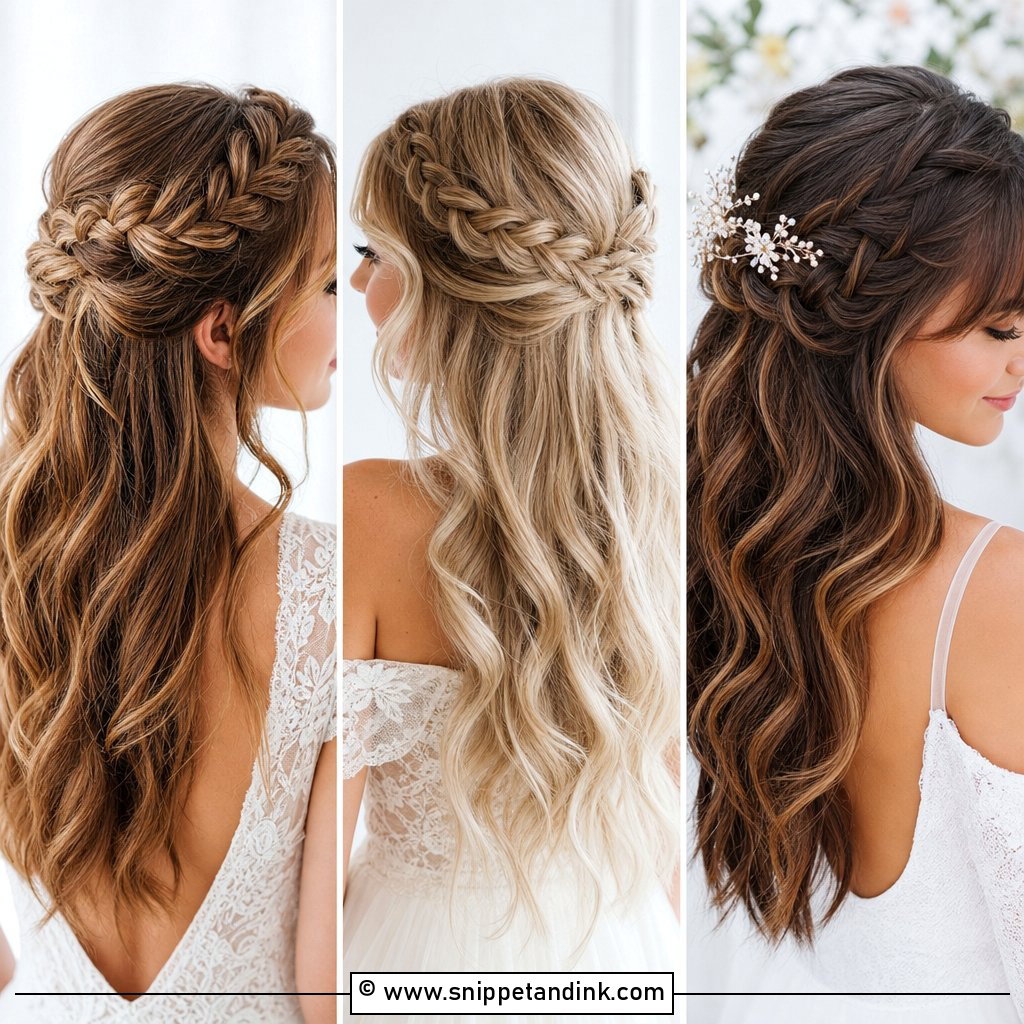
13. Bridal Hair With Fringe And Braided Crown
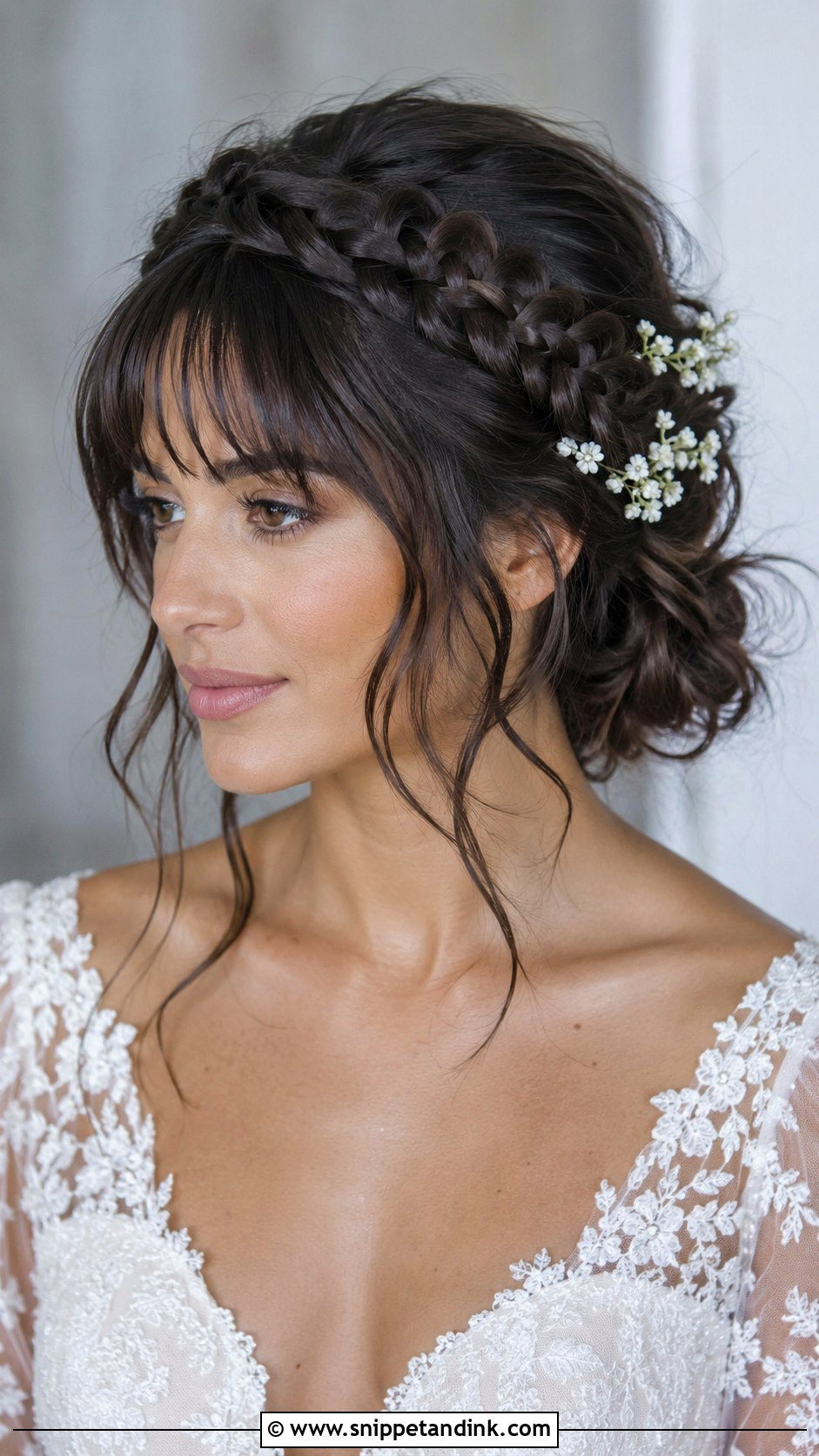
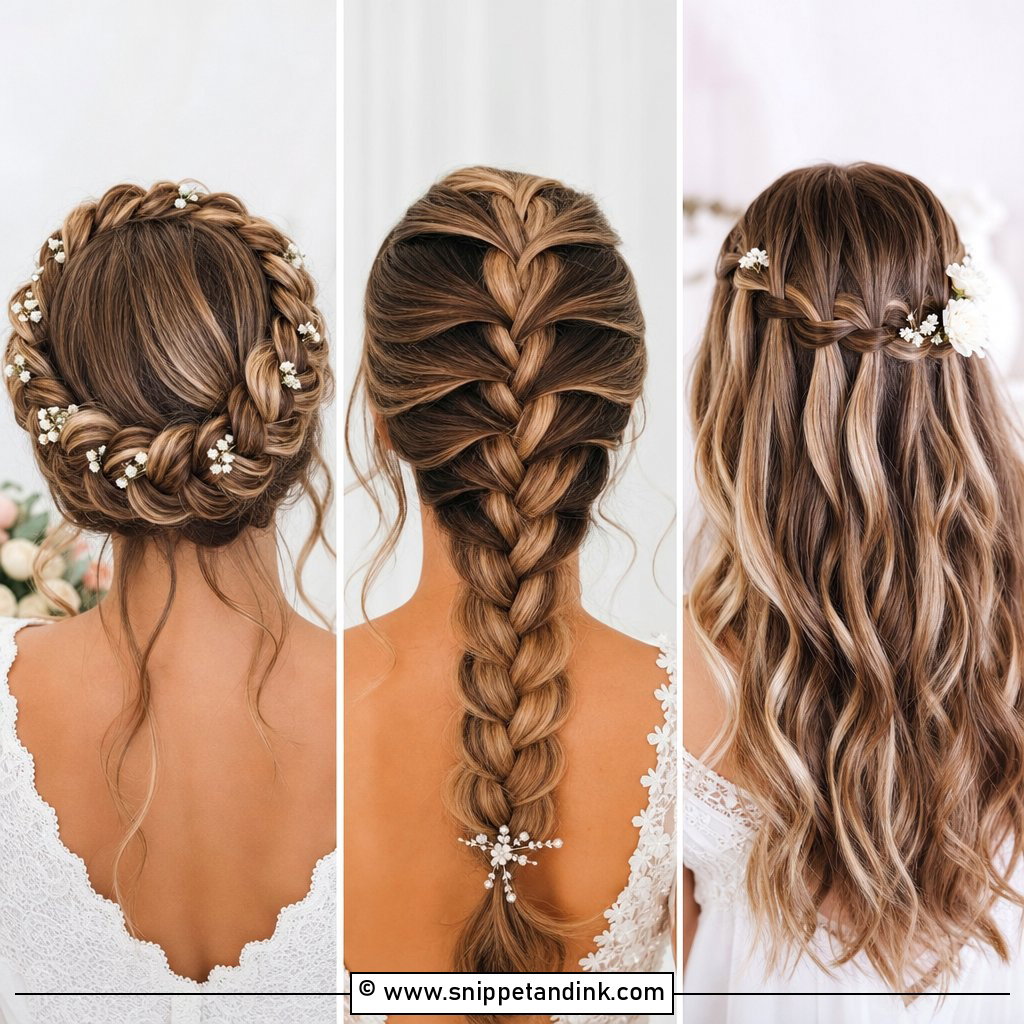
A braided crown and a fringe work because the fringe keeps the braid from looking too formal. I start the braid behind the fringe line so the front stays free. Loosen the braid slightly for volume, and leave a few pieces at the temples to link the two. It suits outdoor weddings, since the braid holds the length still in a breeze. Small flowers or pearl pins tuck into the braid.
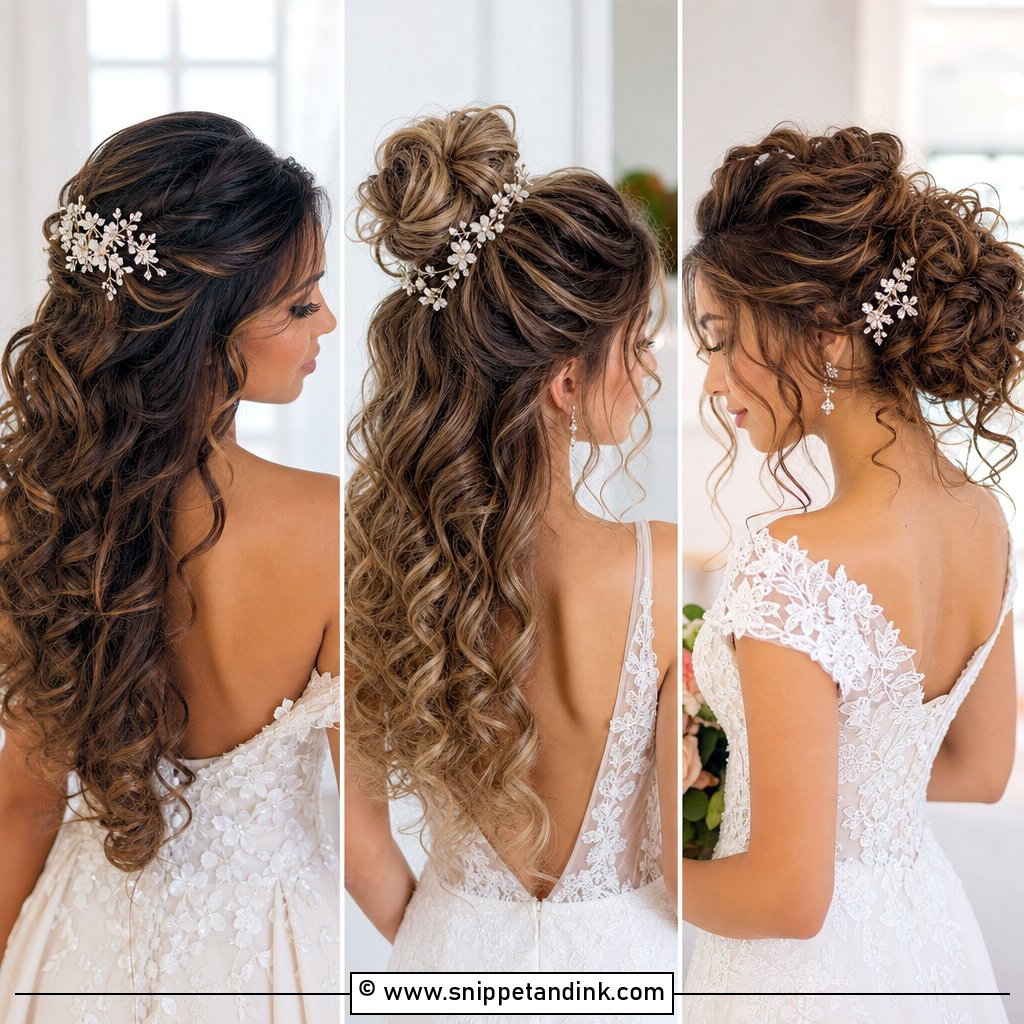
14. Bridal Hair With Fringe And High Bun
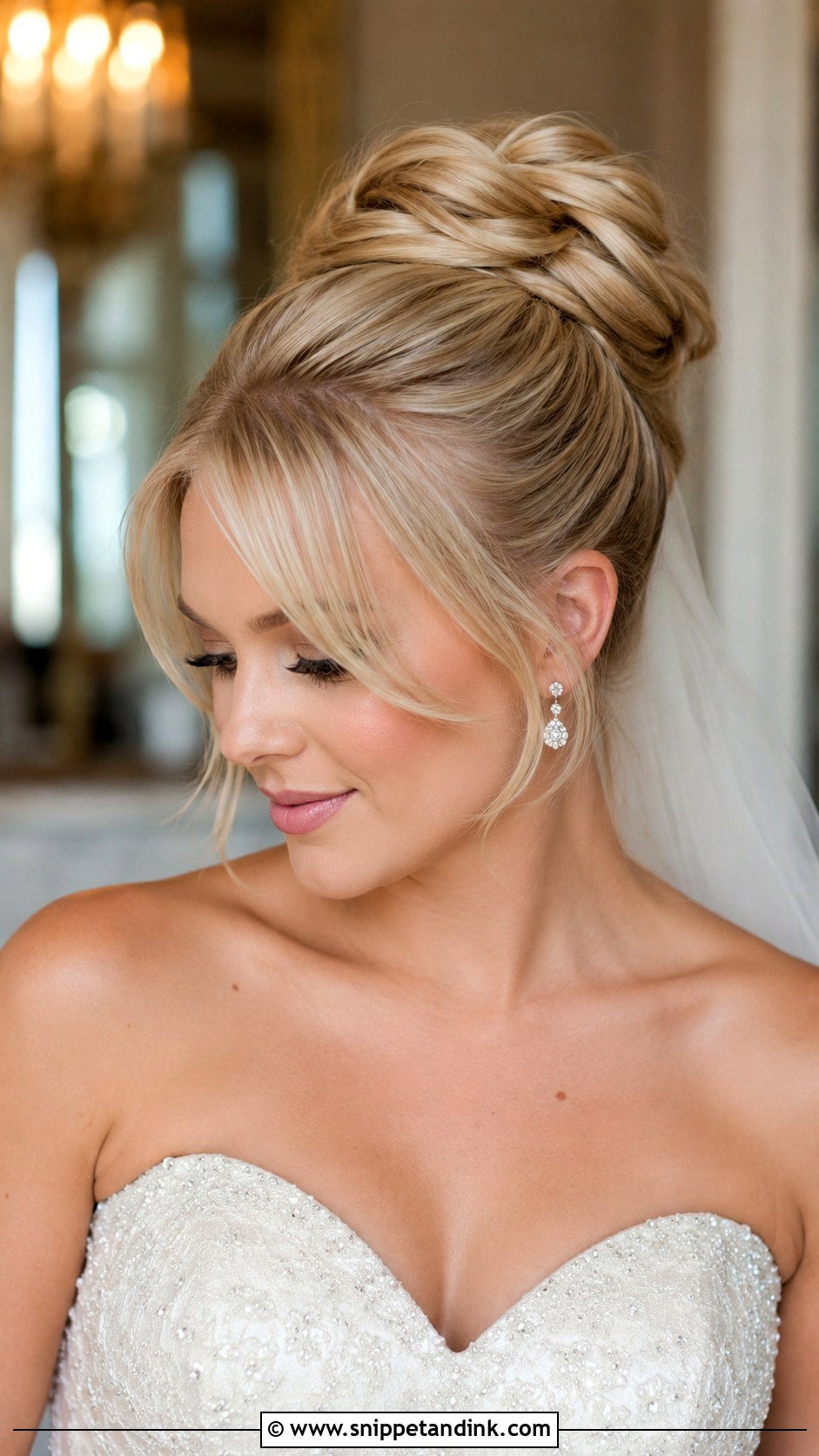
A high bun lifts everything off the neck to show earrings, shoulders and gown details. The fringe balances the height by bringing attention back to the eyes. The bun can be sleek, rounded or textured. Secure it firmly but not painfully; a bun that pulls at the crown gives a headache by mid-afternoon. A curtain, wispy or side fringe works especially well here. I finish with shine spray on the bun and a lighter, flexible hold on the fringe.
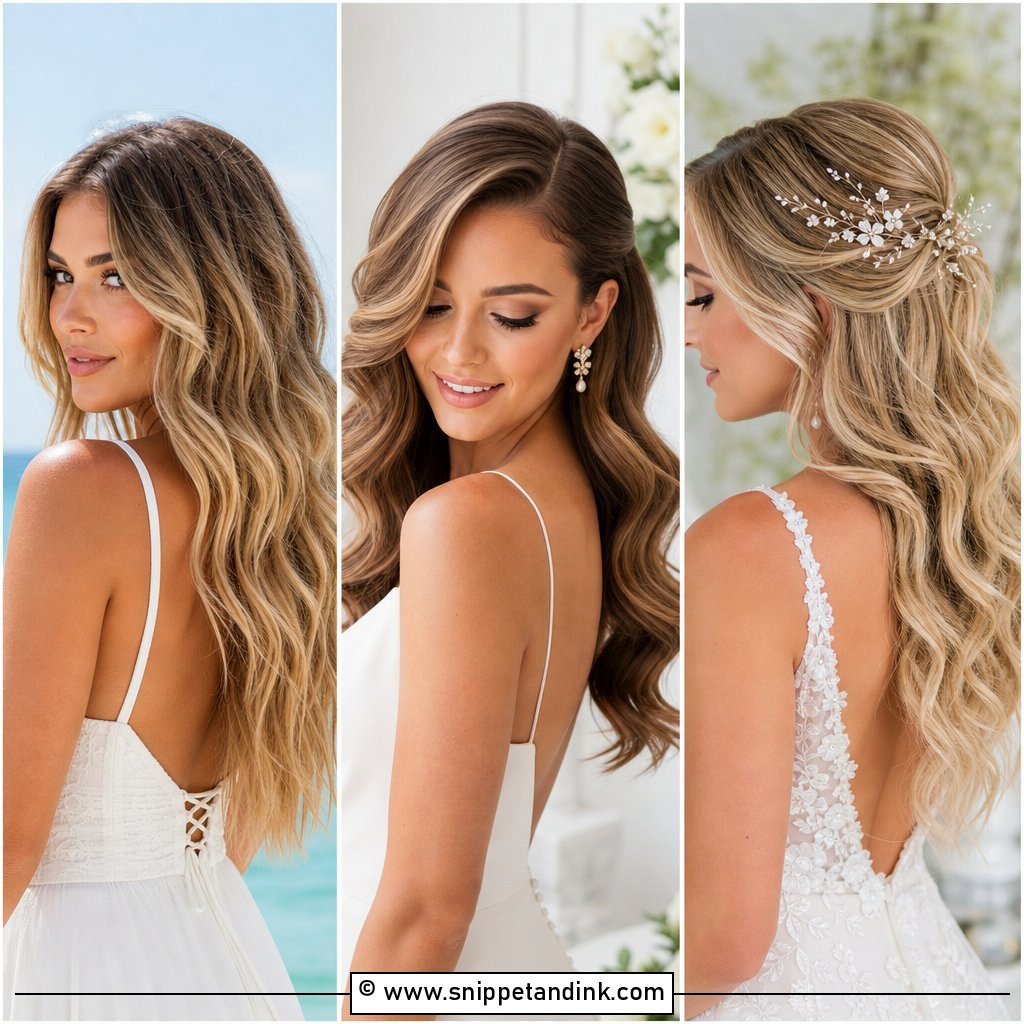
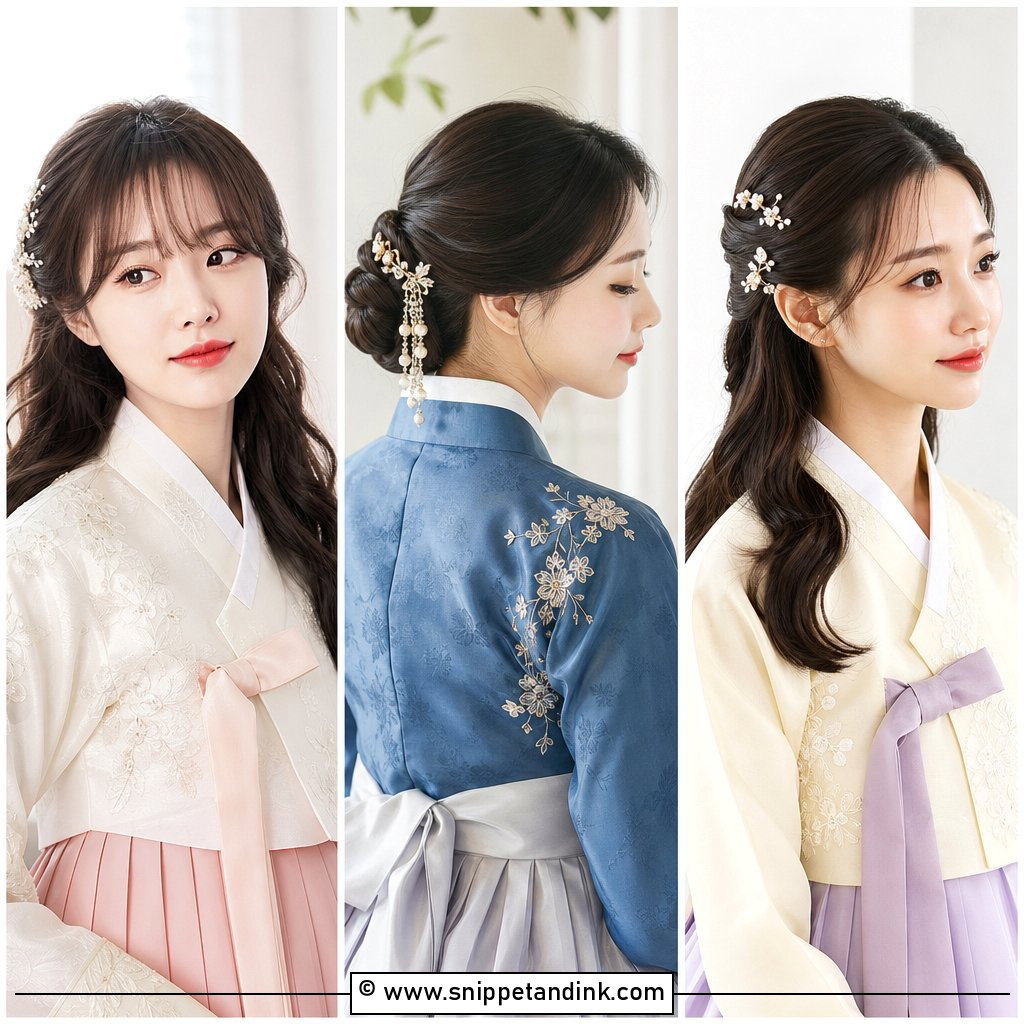
15. Bridal Hair With Fringe And Ponytail
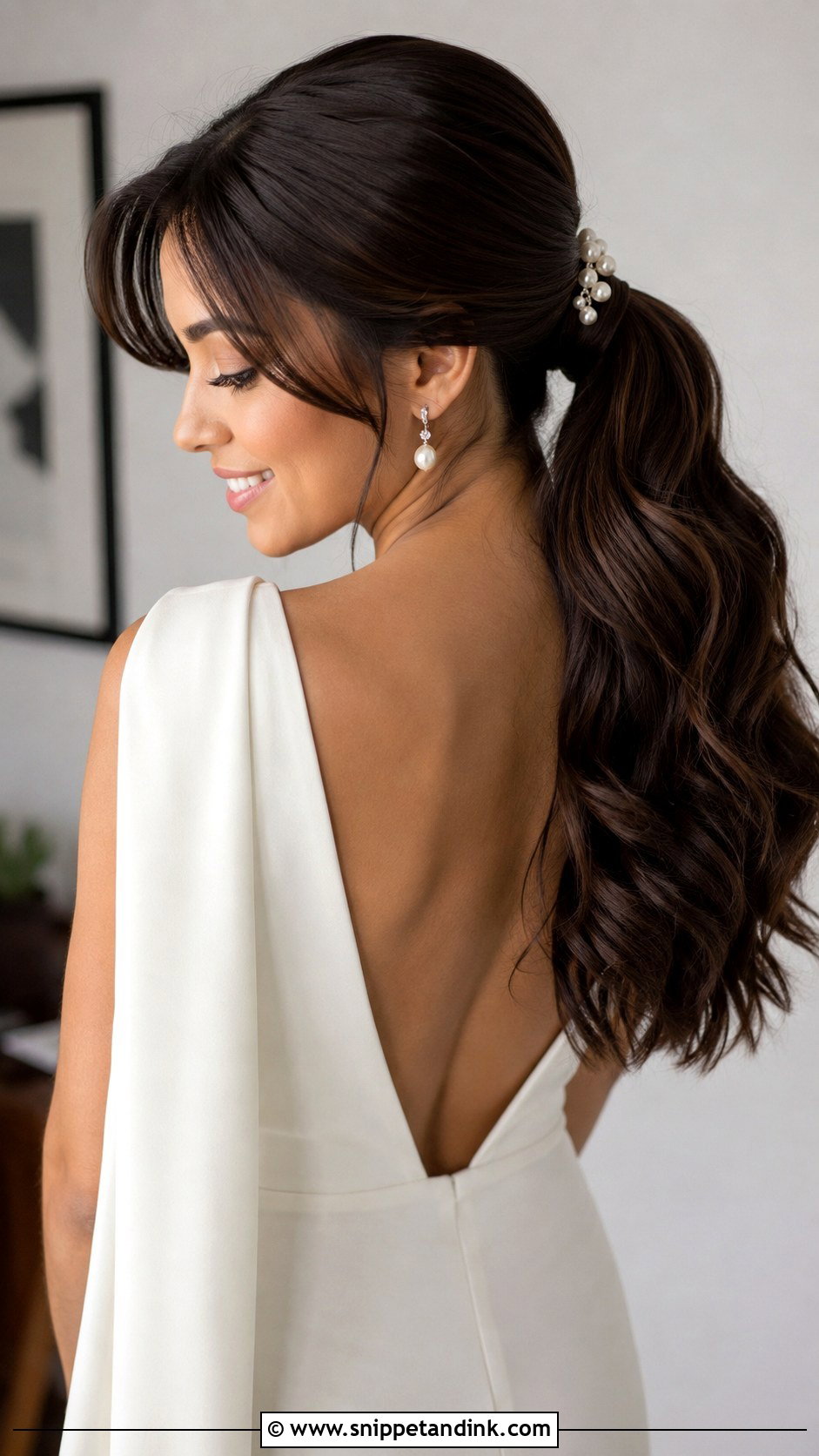
A ponytail with a fringe is modern but needs finishing to look bridal. The tail can be low and sleek, high, or waved through the ends, with a strand of hair wrapped around the elastic. Without the fringe, a ponytail can look too plain for a wedding; with it, the front has a shape. It’s practical for dancing and heat. Side or curtain fringes suit it, and wispy bangs soften it.
16. Bridal Hair With Fringe And Bob
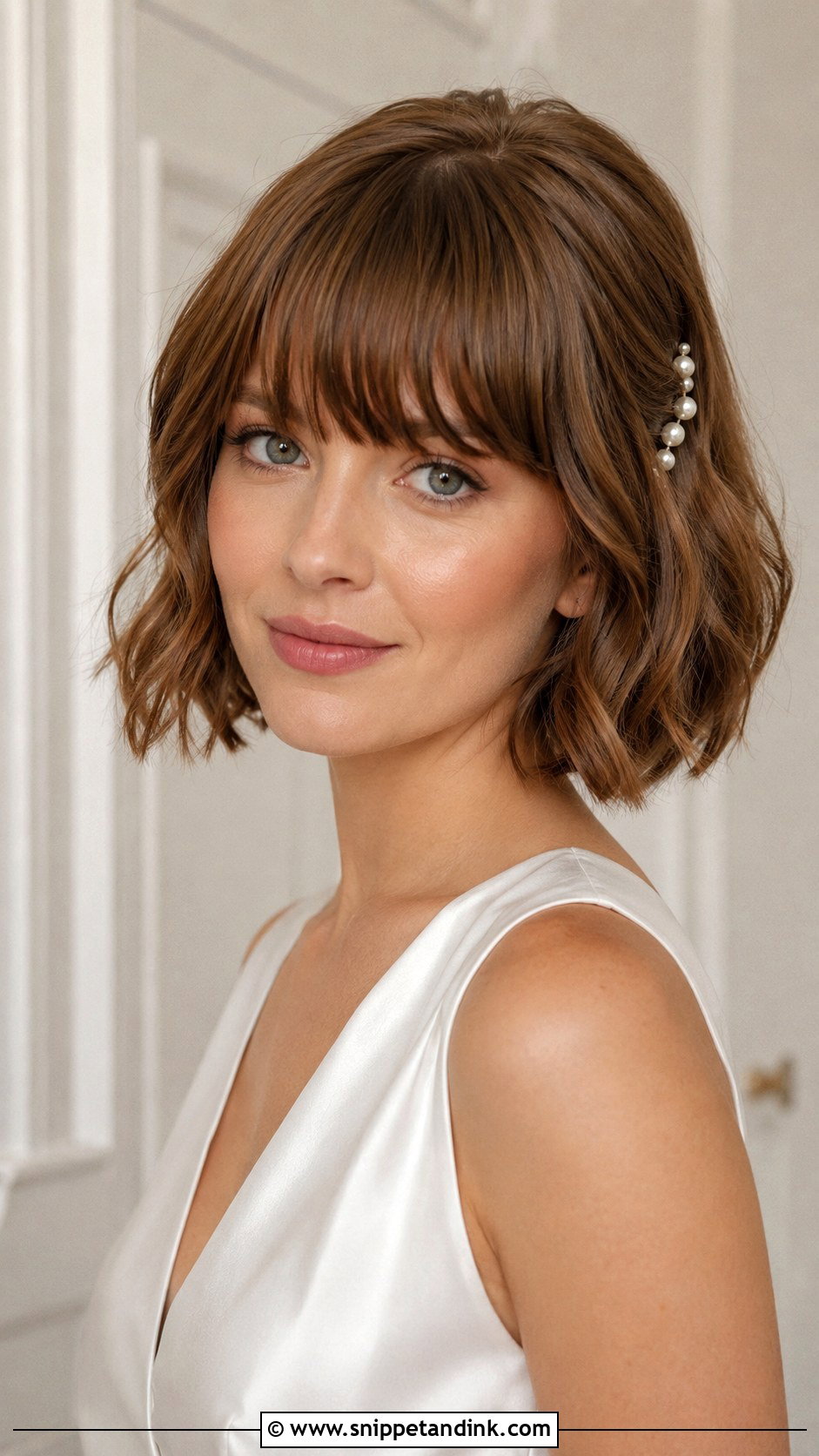
A bob with a fringe needs no extensions and no updo. The bob can be waved, tucked behind one ear, or smooth with rounded ends. The fringe adds personality in close-ups. Texture spray gives movement; shine product gives a sleek shape. A short cut leaves little room for heavy pieces, so small pearl pins, a thin headband or a short veil fit better. It suits city weddings, courthouse ceremonies and minimal gowns.
17. Bridal Hair With Fringe And Long Layers
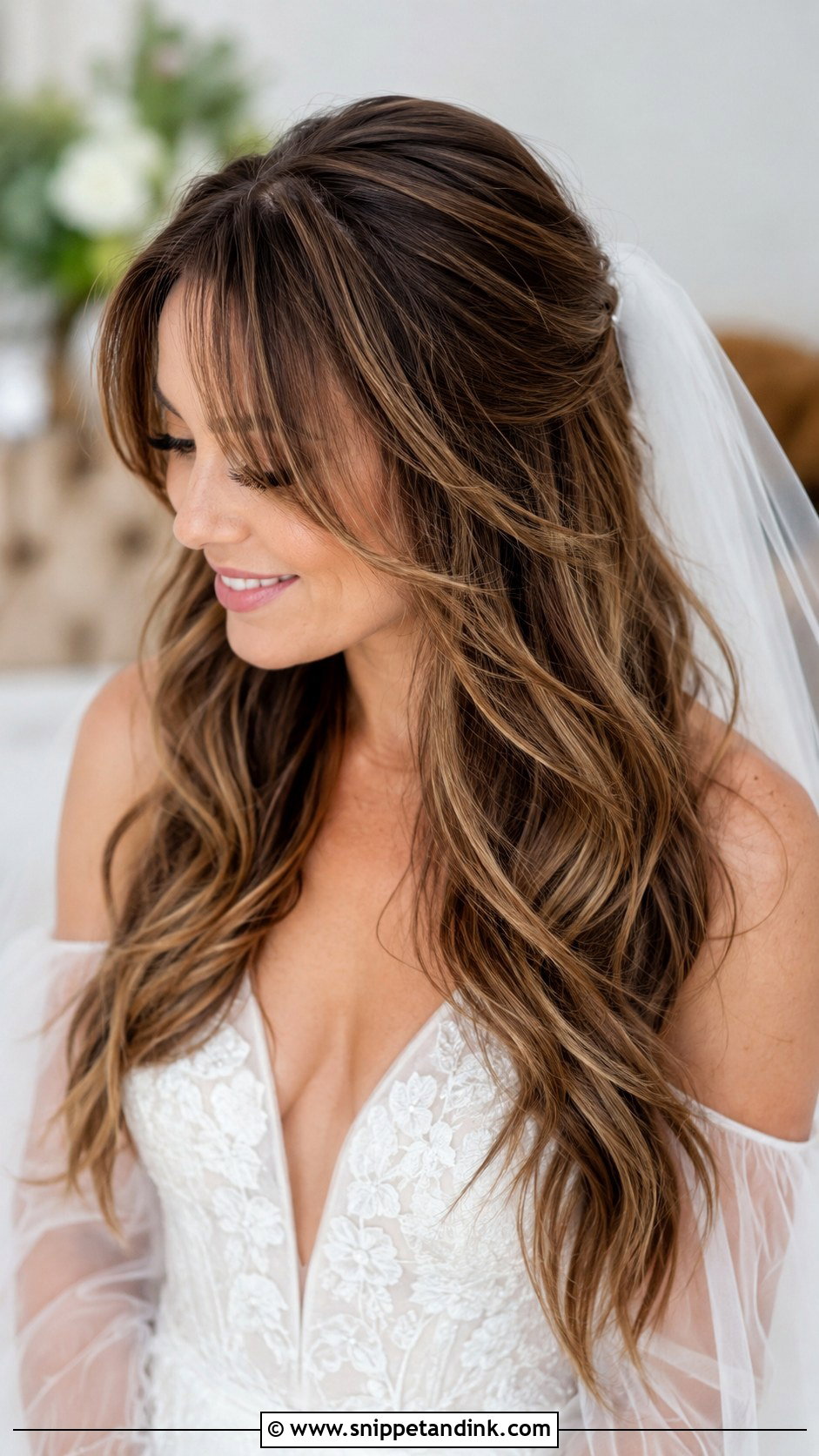
Long layers connect the fringe to the rest of the hair, so the front doesn’t look like a separate piece. They give movement without losing length and work with big waves, a blowout or a half up twist. A curtain, bottleneck, or wispy fringe melts into the side layers. I build volume through the crown and mid-lengths so it doesn’t fall flat by evening. A veil can sit at the crown or beneath a pinned section.
18. Bridal Hair With Fringe And Flower Pins
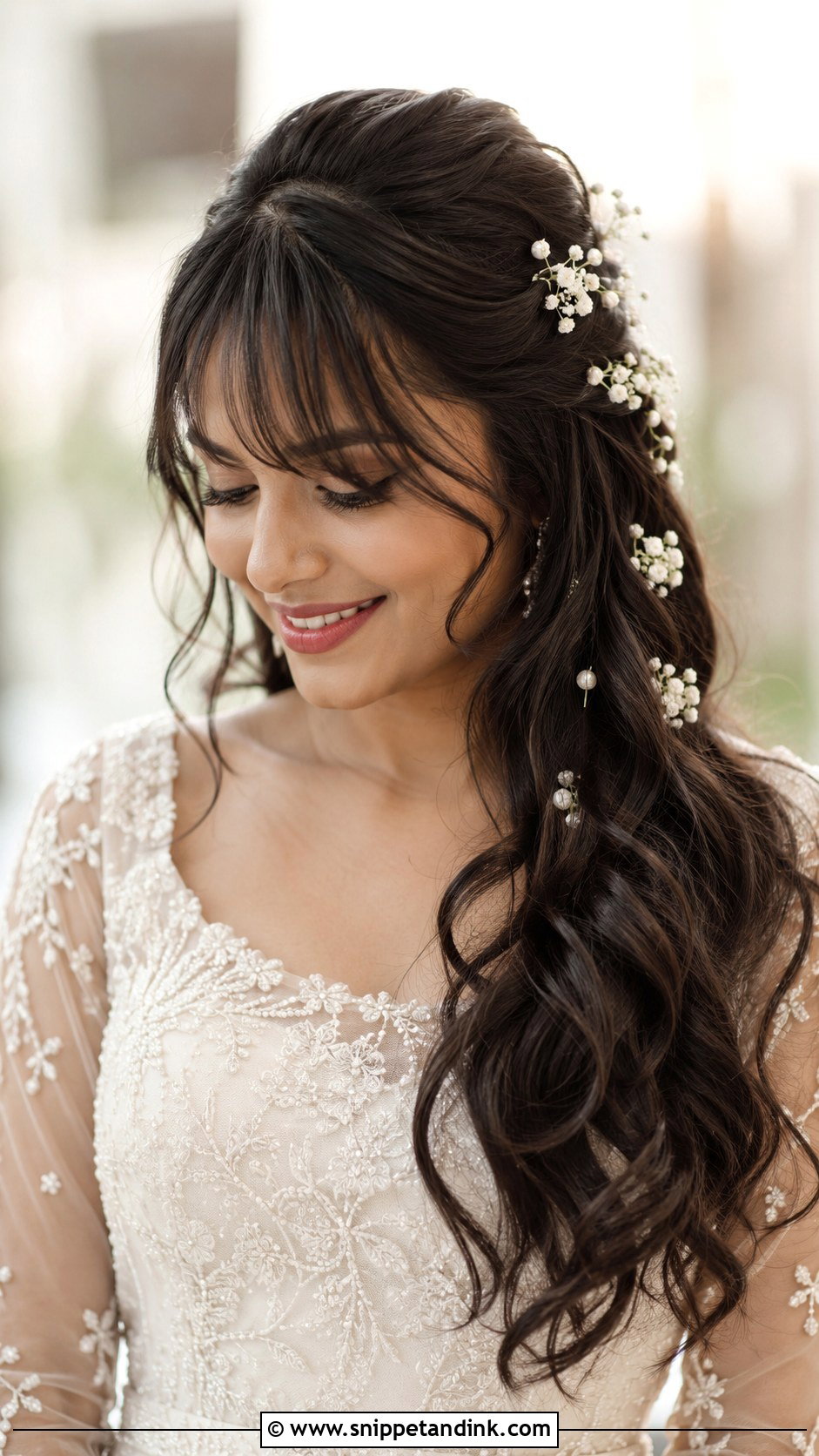
Flower pins add softness to almost any style with a fringe: around a low bun, along a braid, above a half up twist, or scattered through waves. Small blooms or realistic floral pins look best; big flowers crowd the face when there’s already a fringe there. Wavy, curtain and curly fringes suit them because the texture matches the flowers. Place them on one side or toward the back so they don’t compete with the fringe.
19. Bridal Hair With Fringe And Pearl Pins
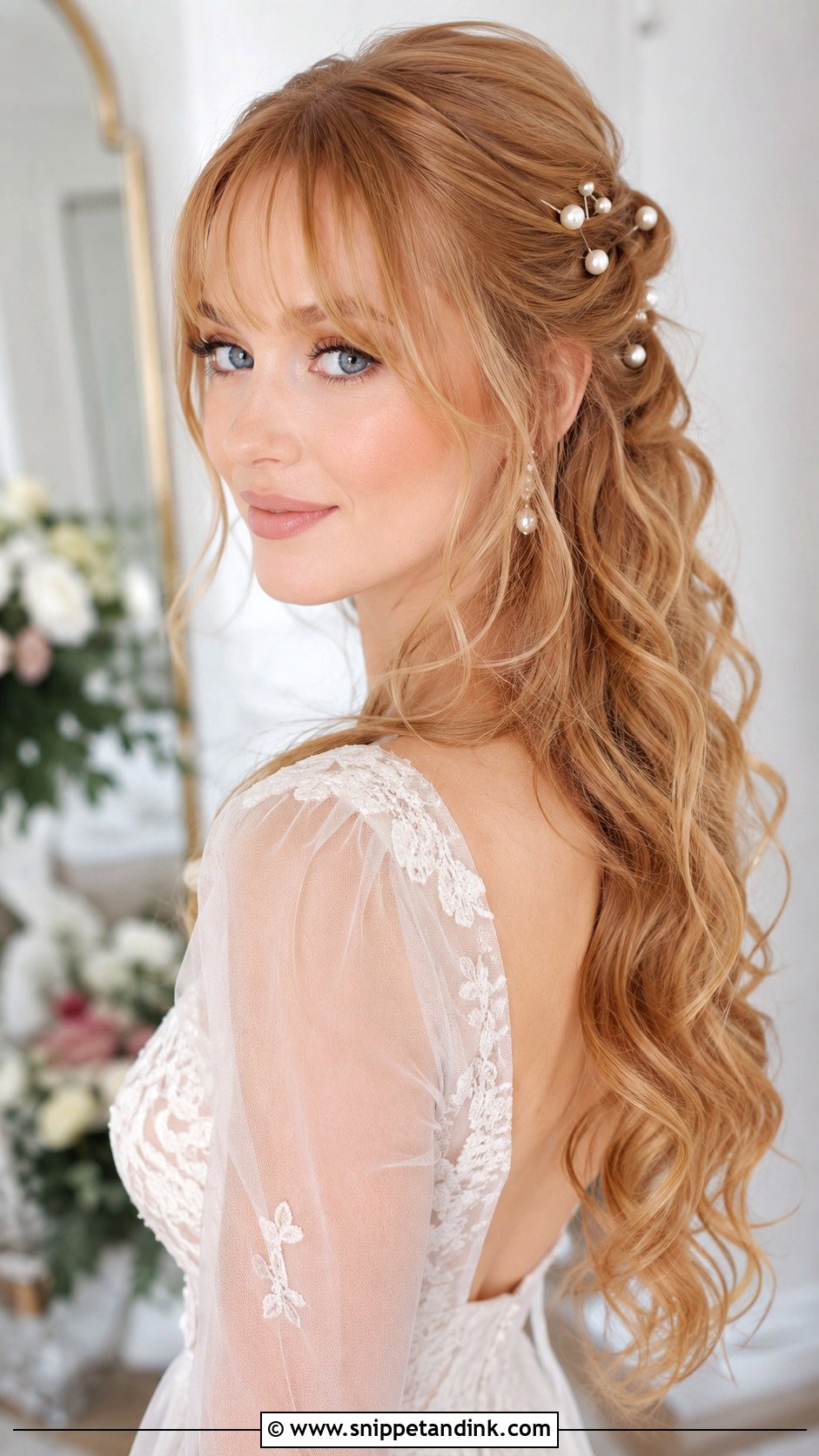
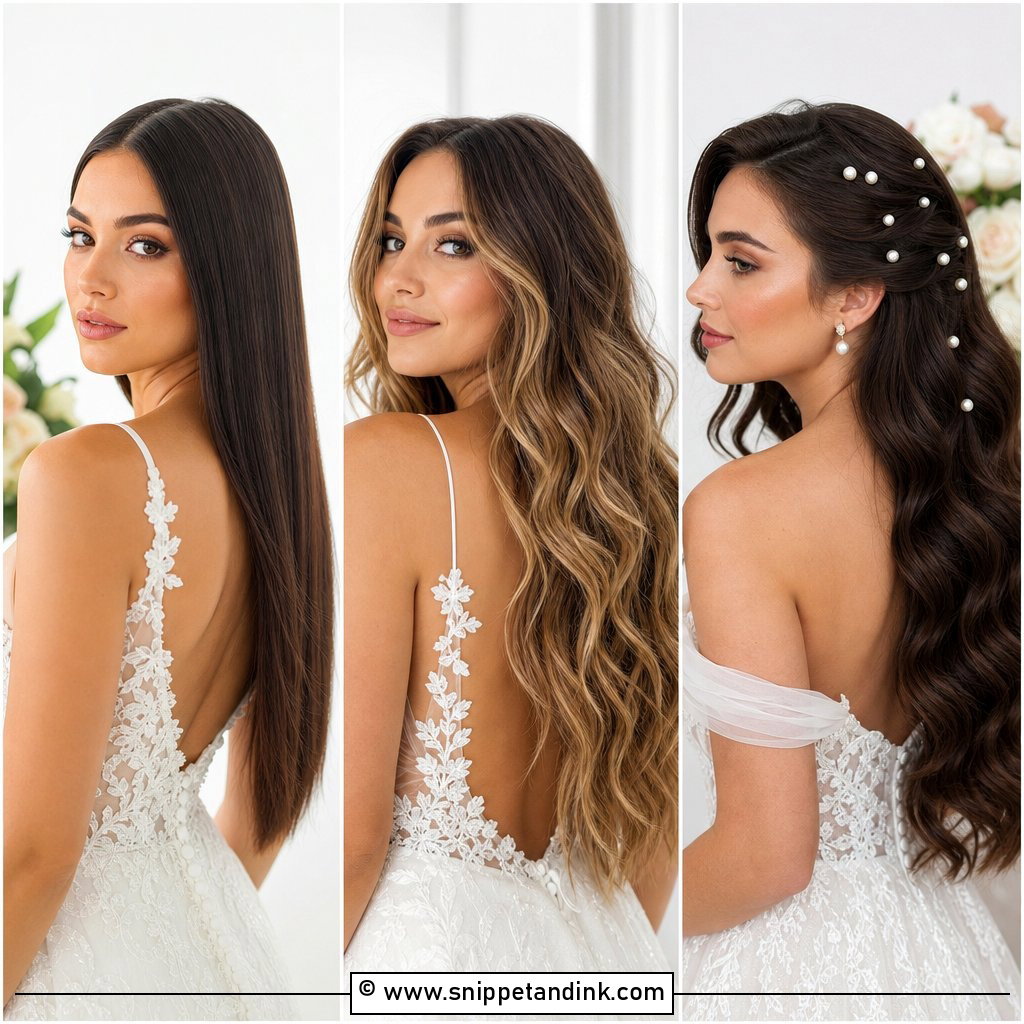
Pearl pins work with buns, bobs, ponytails, half up hair and waves. The fringe softens the face while the pearls add points of light through the rest of the hair. For a refined look, I cluster the pins in one area, like the side of a bun or the twist of a half up style; for a softer effect, scatter smaller pearls through waves or curls. Keep the fringe smooth so the front stays fresh.
20. Bridal Hair With Fringe And Veil
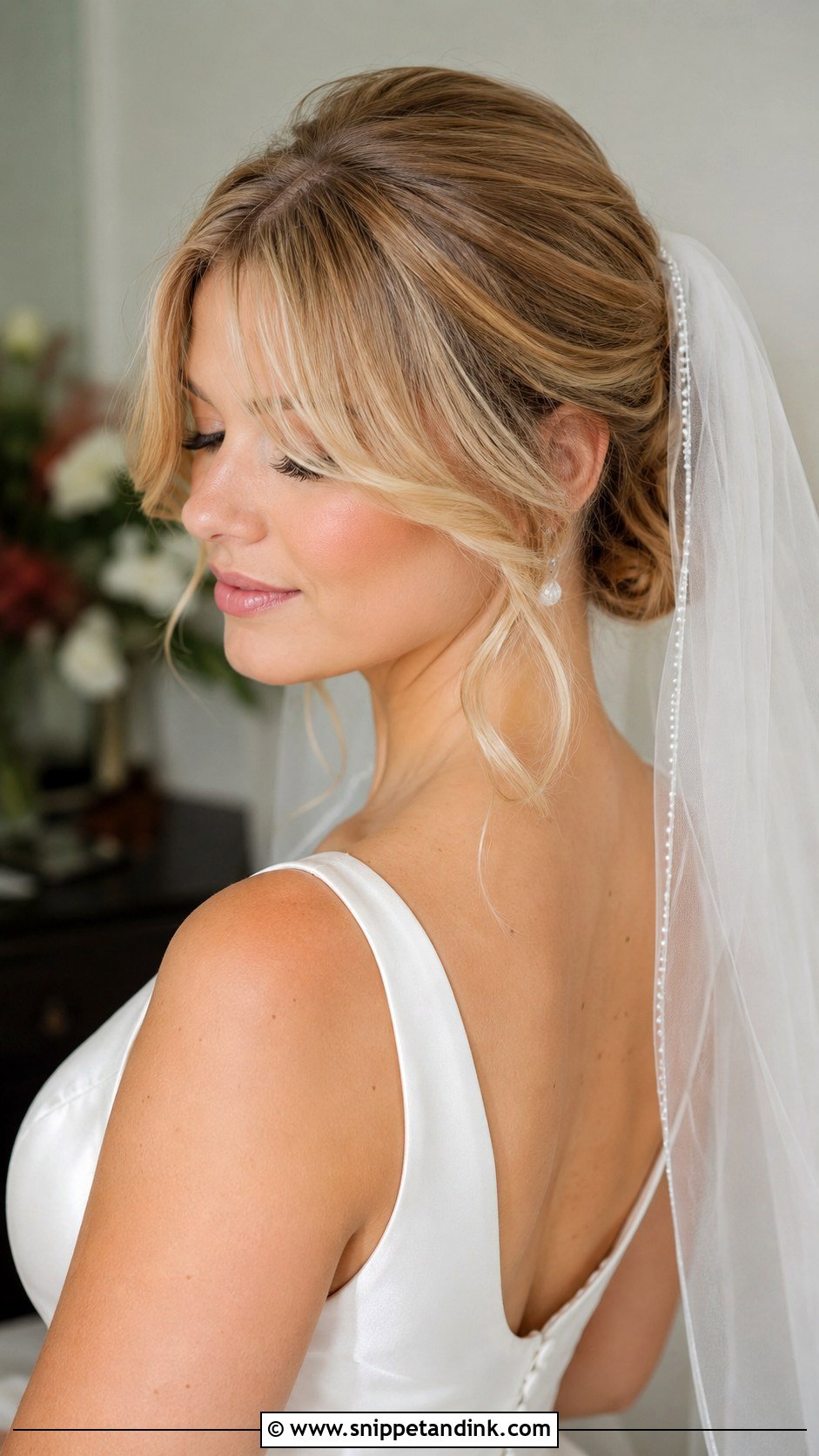
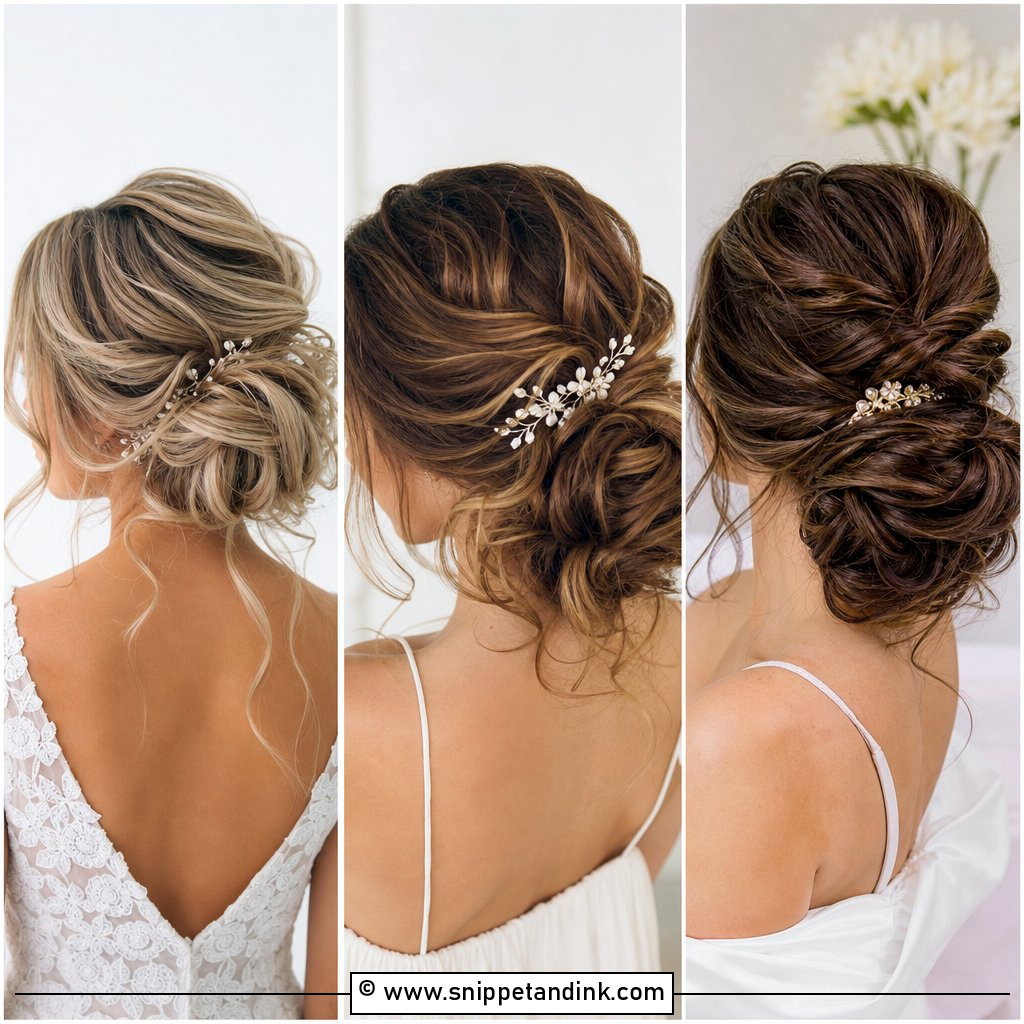
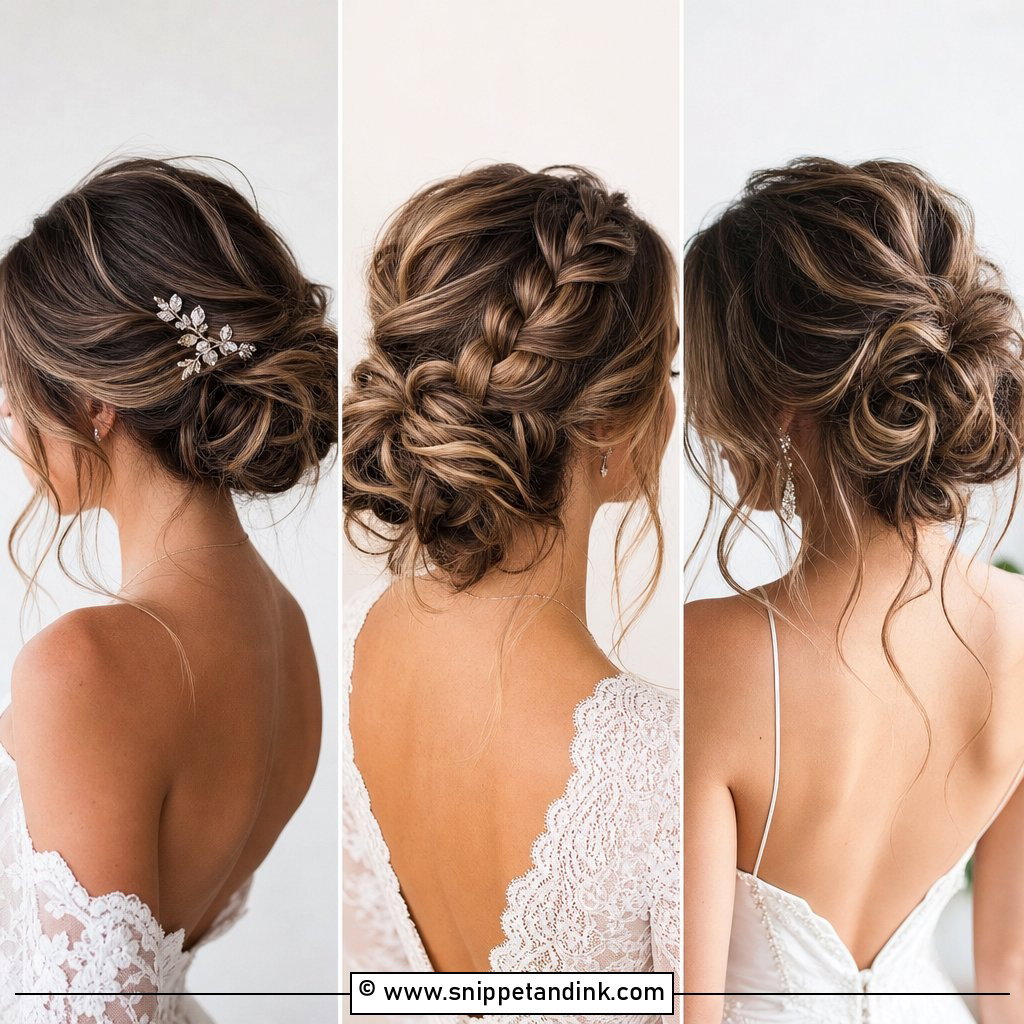
A veil with a fringe needs planning, because the front has to look right both before and after the veil comes off. The veil can sit above a low bun, under a chignon, at the crown of a half up style, or behind waves. I always style the fringe first, separately and with light hold, and then place the veil so it doesn’t press it flat. Any fringe type can work if the veil comb is placed securely. Bring your veil to the trial so we can test balance and comfort.
Rescuing a Fringe on the Wedding Day
Fringes misbehave faster than anything else in a bridal style. Most problems can be fixed in a few minutes if you know what to do.
It has split down the middle
Usually skin oil has reached the roots. Lift the fringe, press a blotting paper on the forehead, mist dry shampoo into the roots, and brush it back into place with a clean brow spoolie. A mini travel dryer on a low setting will reset the shape.
The trim went too short
Don’t try to cut it again. Sweep it sideways and secure it under a small pin or a pearl clip, or ask the stylist to blend it into a side part. Nobody will know it wasn’t the plan.
Rain or humidity flattened it
Rewet it lightly with a spritz of water, roll it into a velcro roller for ten minutes while photos happen elsewhere, then set it with flexible spray. Keep a roller and a few clips in the bridal party’s kit for exactly this.
Treat the Fringe as Part of the Haircut, Not an Extra
A fringe can be soft, bold, classic or modern, depending on how the style around it is built. Plan it as a feature from the start. Consider your face shape, texture, neckline and veil, and look at the style from the front, side and back. A trial is worth it, because a small change in fringe length or curve can change the whole result. Low bun, loose waves, a bob or a chignon: the fringe is what makes any of them look like yours.
You'll Like These Ideas:



Leave a Reply