
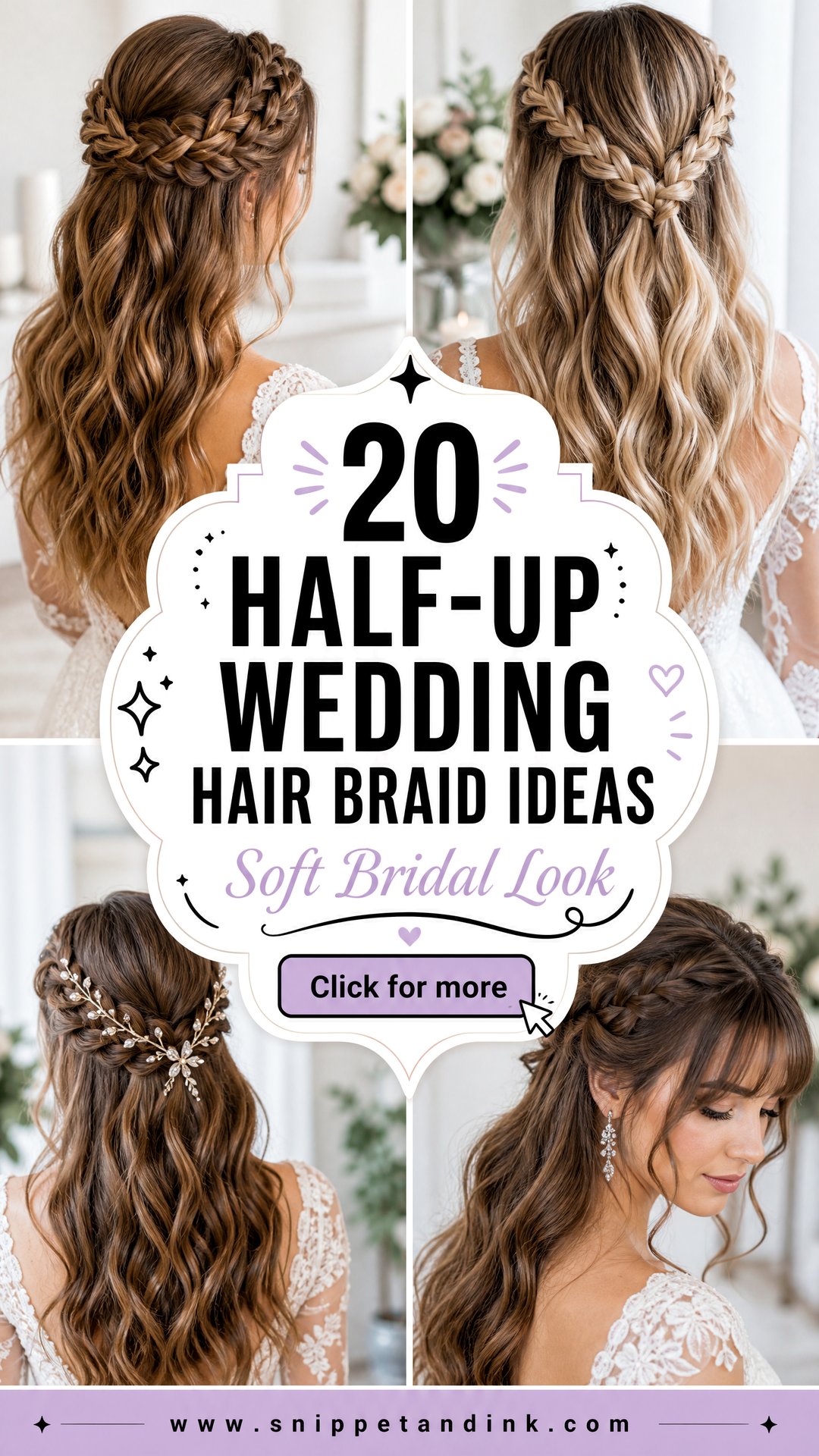
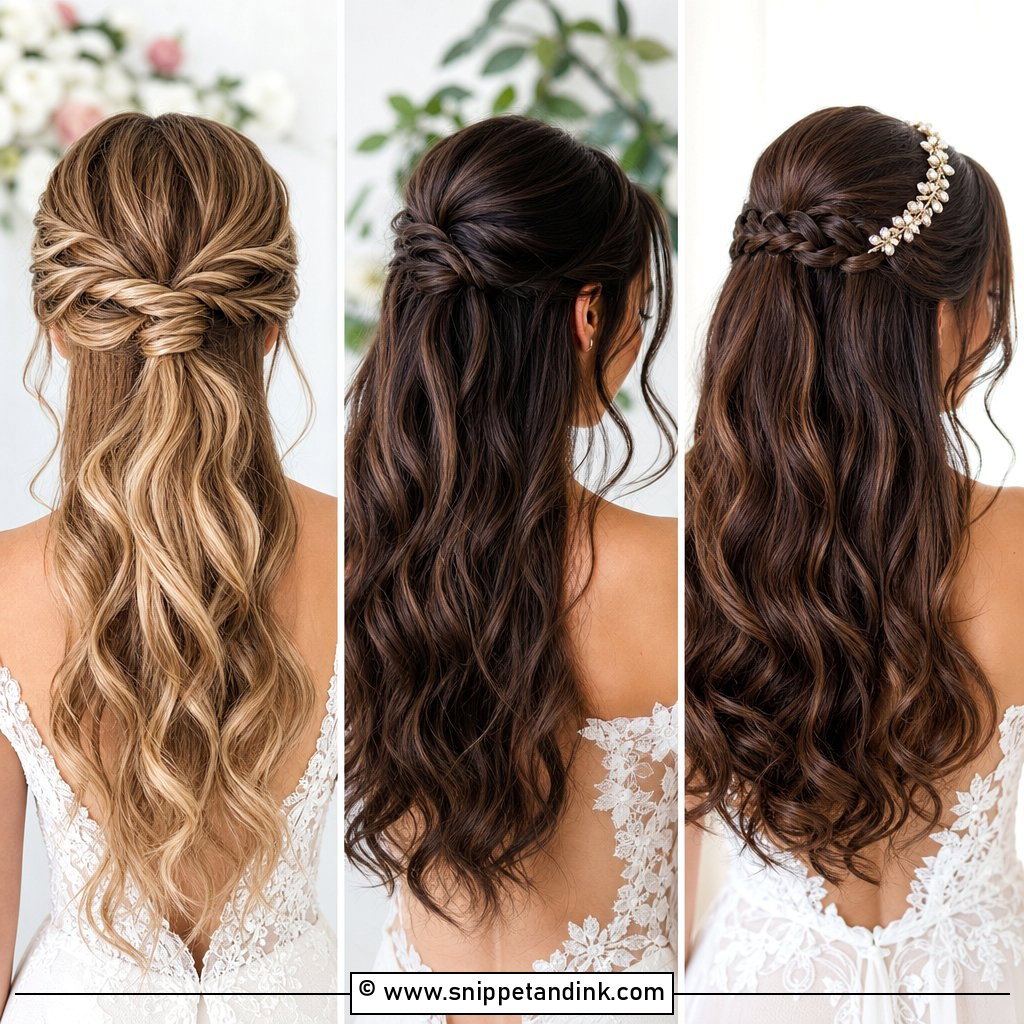
A half-up braid gives you two things at once: hair off your face for the vows, and length left down for movement. The braid is also doing a structural job most people never see. It’s the anchor I pin a veil, a vine or a sprig of flowers into, so the style you pick decides what you can wear with it. Below are 20 versions, from fine fishtails to thick crown braids, with my notes on how each one behaves on real hair across a long day.
Matching the Braid Technique to How Much Grip Your Hair Has
The look in a photo is only half the decision. The other half is whether your hair can hold that braid for ten hours. I sort brides into rough groups at the consultation, and it saves a lot of disappointment.
Fine or silky hair
Braids slide on smooth, fine strands. I prep with texture spray or a dry shampoo, braid on second-day hair if you can manage it, and choose Dutch braids or twists over fishtails. I’ll often add one or two clip-in wefts underneath the braided section so the plait looks fuller without pulling on your own hair.
Thick, coarse or curly hair
This hair holds a braid beautifully but tends to look bulky when every section is plaited. I braid smaller sections than you’d expect and leave more hair down. For natural curls I braid with your curl pattern rather than blowing it out first, using a cream or gel so the braid stays defined and your curls below match it.
Layered hair
Short layers poke out of a braid along its edges. Three-strand and Dutch braids hide them better than fishtails, and a light wax on my fingertips as I braid tucks the ends in. If you’re getting a cut before the wedding, ask for longer layers through the top section.
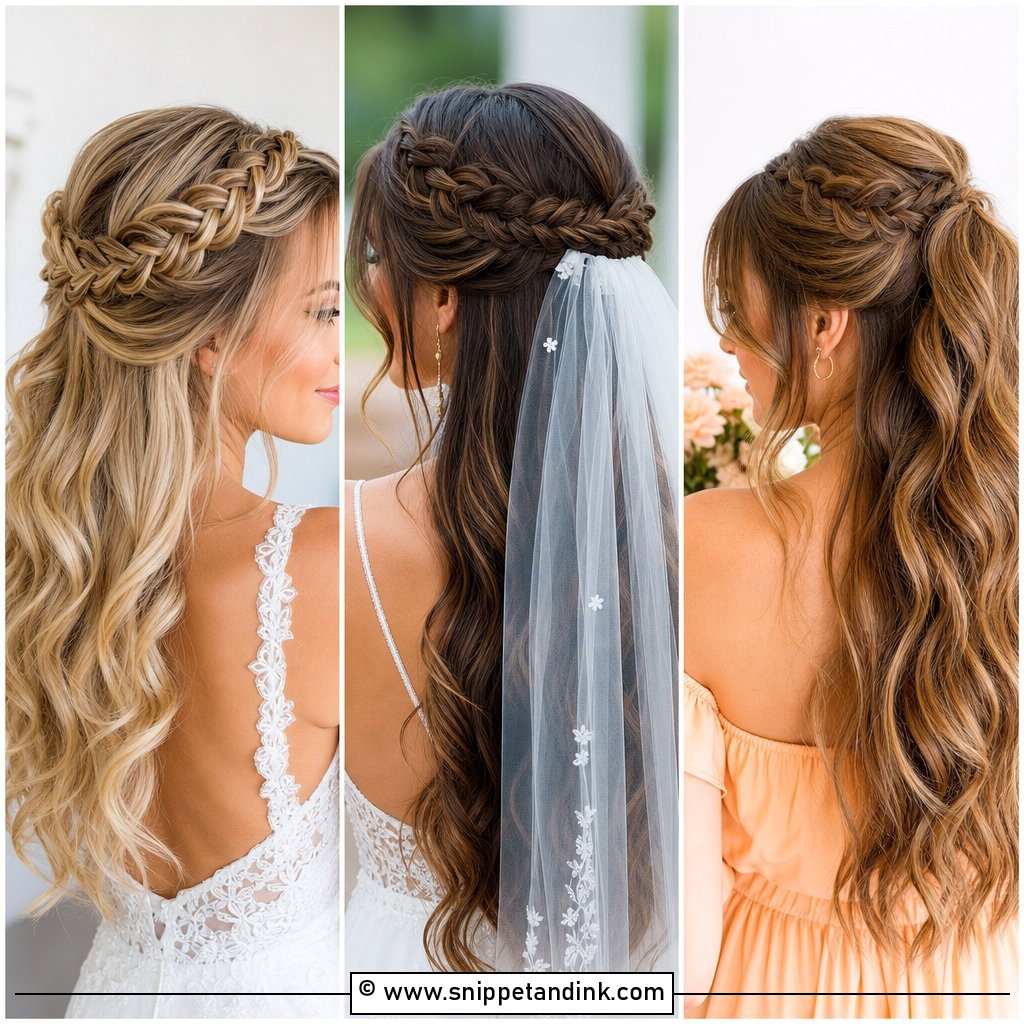
1. French Braid Half-Up Wedding Hairstyle
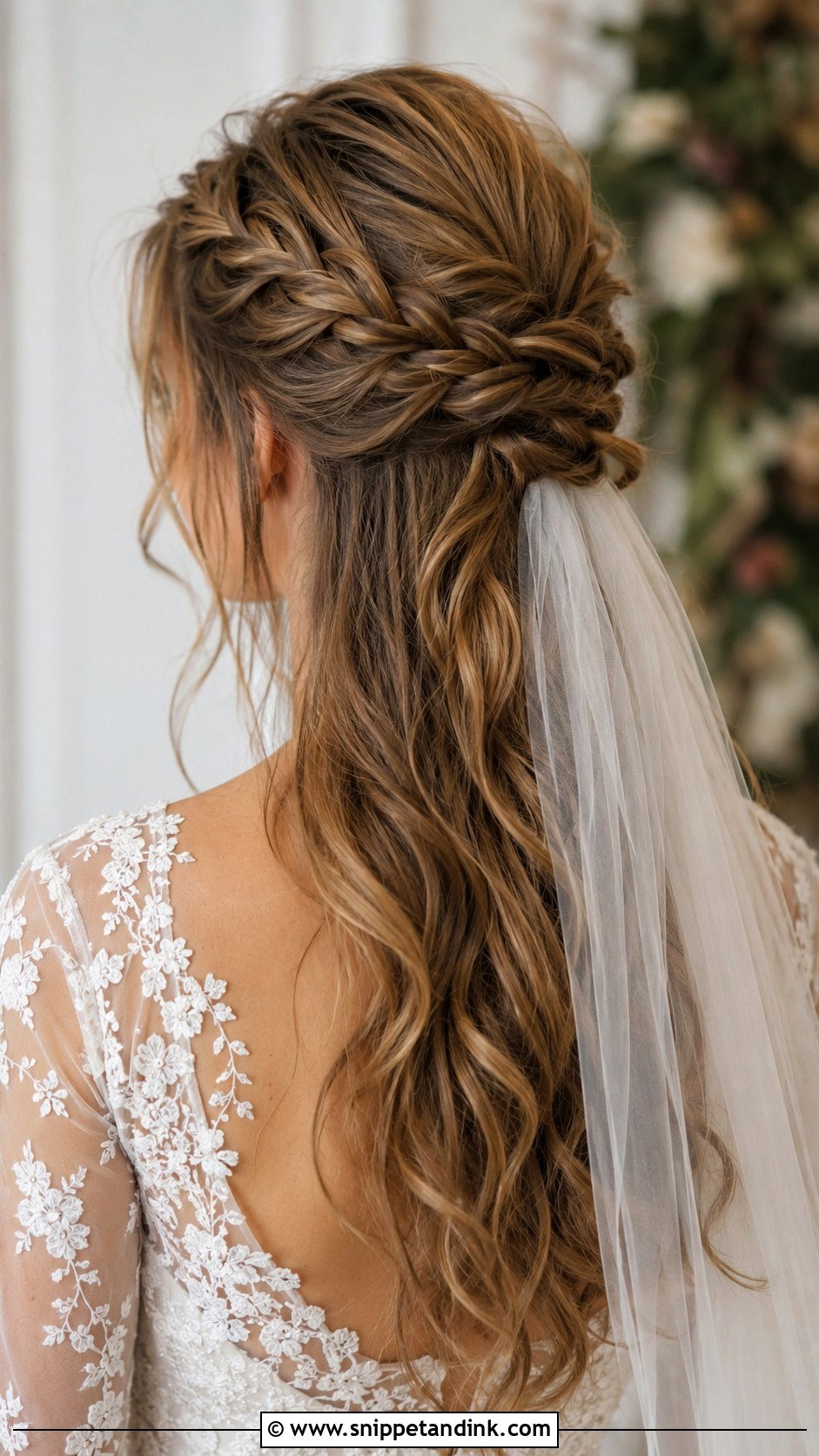
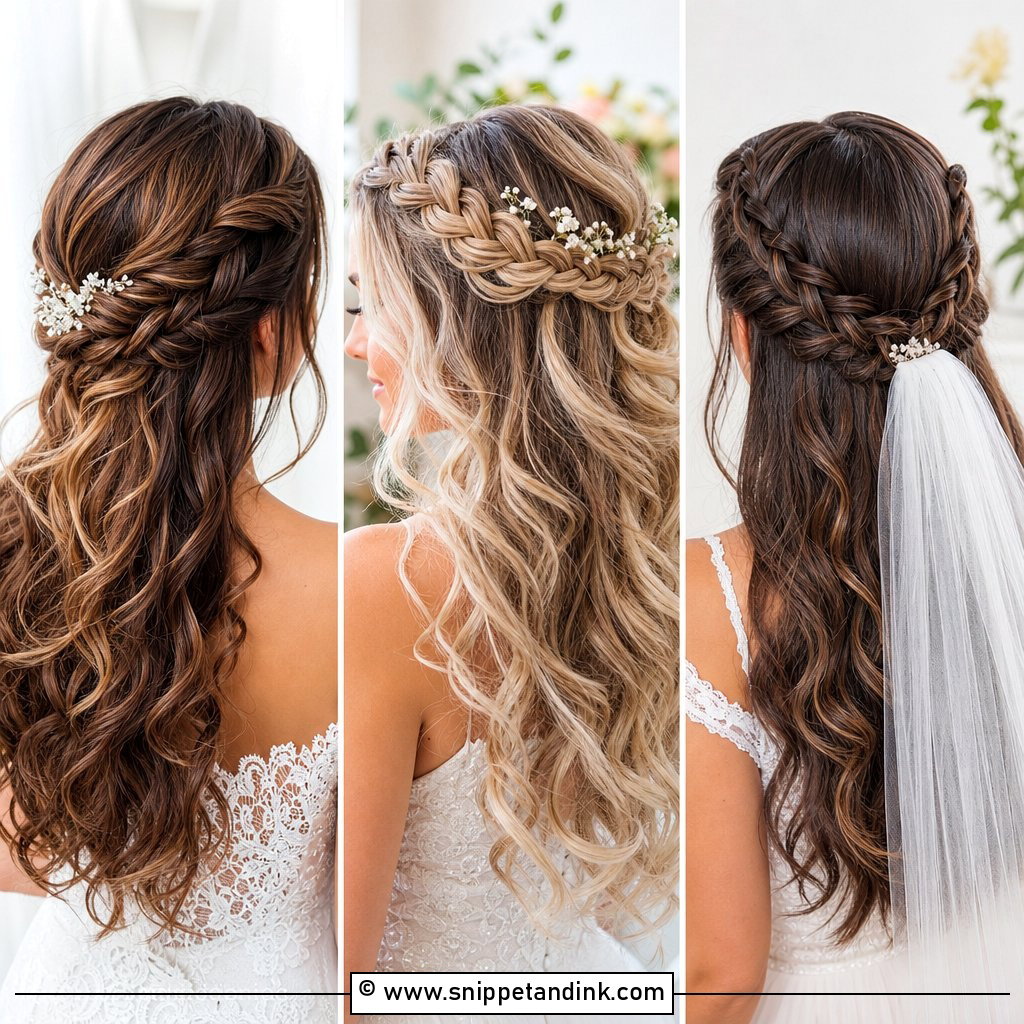
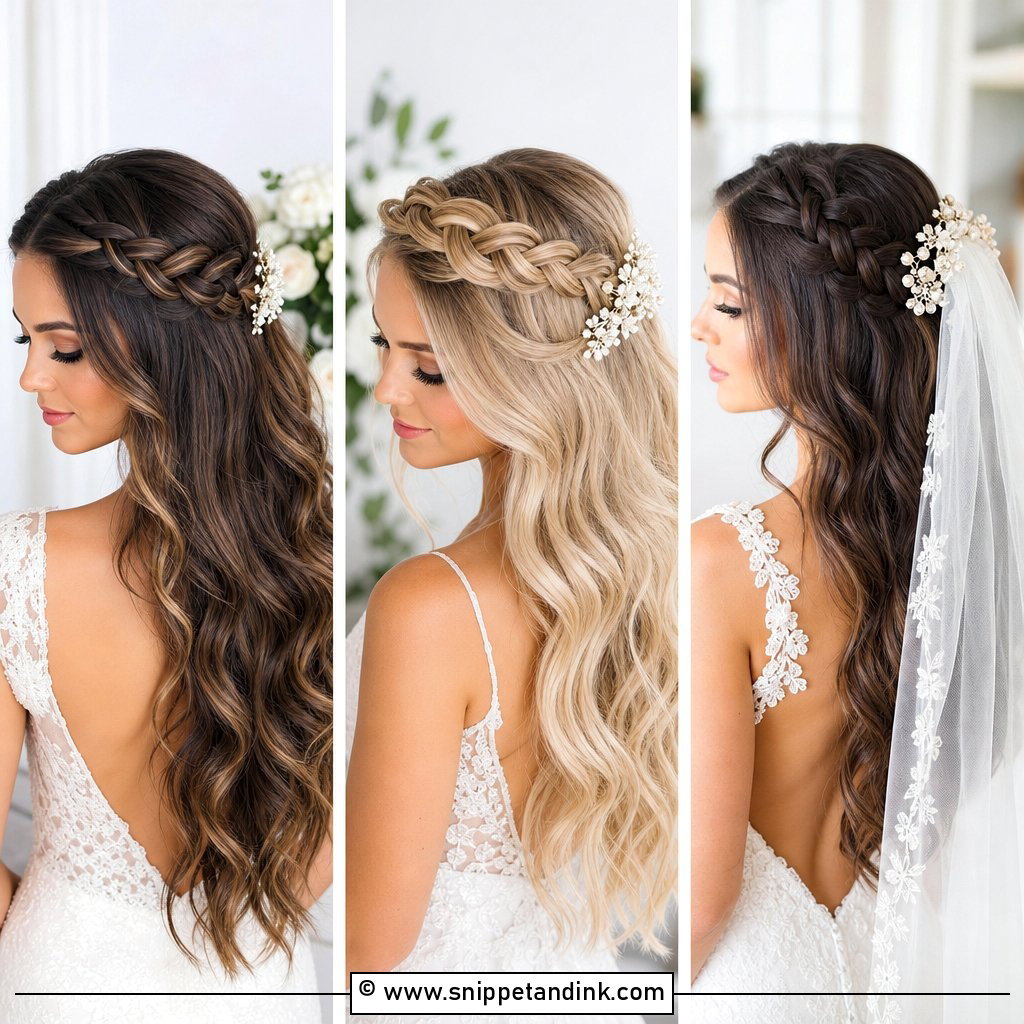
This is the braid I reach for when a bride wants something classic and quiet. I start it right at the crown, add hair as I travel back, and stop at the occipital bone so the loose lengths start below the widest part of the head, which keeps the back from looking flat. Kept tight, it reads tailored; pulled out a little at the edges, it softens. On very silky hair I prep the top section with texture spray first, or the braid slides apart before the photos are done. A sheer veil combs in neatly right underneath it.
2. Fishtail Braid Half-Up for Brides
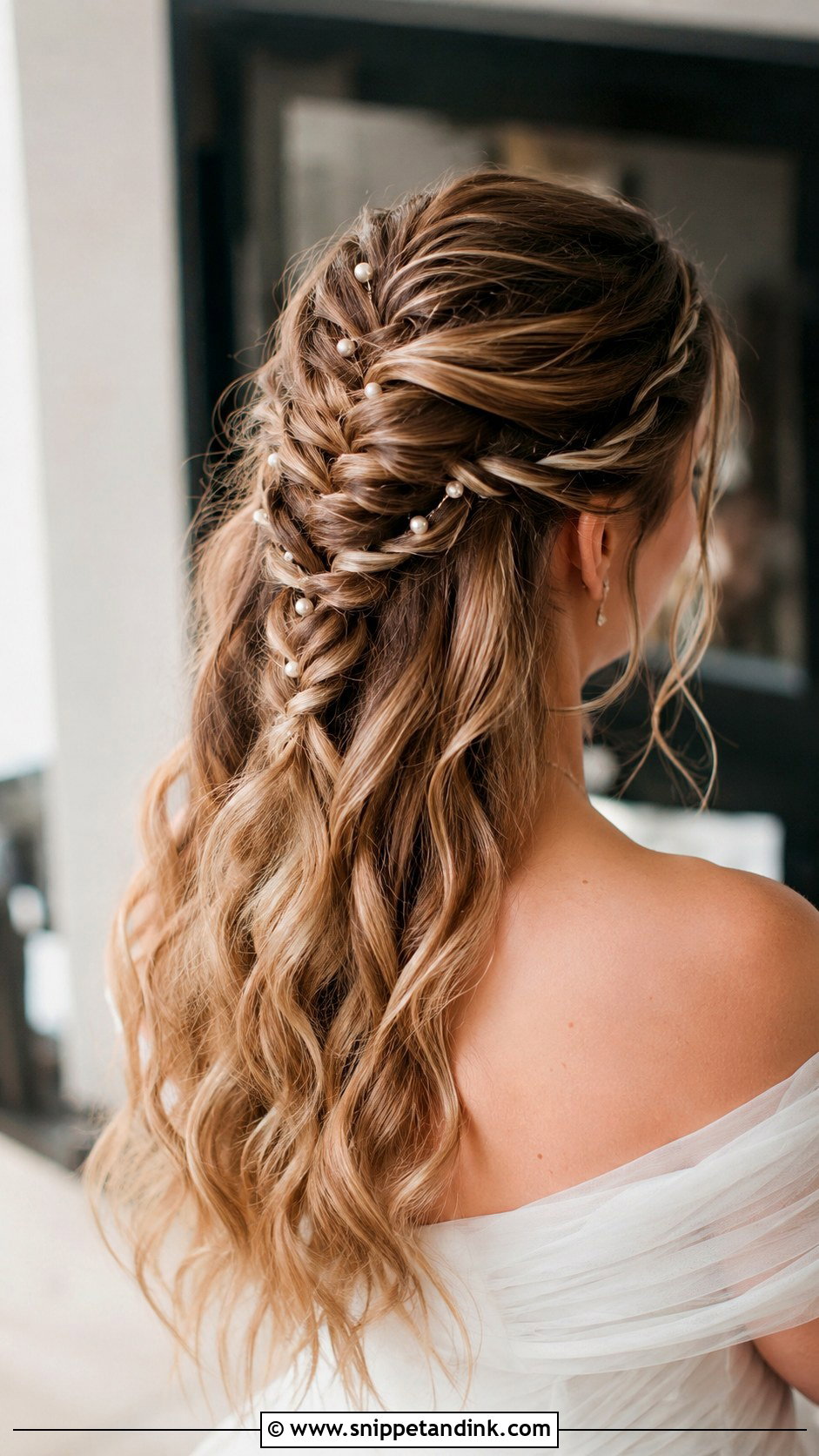
The fishtail splits the hair into two sections and crosses tiny pieces from one side to the other, so it looks woven rather than plaited. It’s slower to build than a three-strand braid, and the finer the pieces, the more detail shows up in close-up photos. I pancake it gently once it’s tied, pulling the outer loops wider, because an untouched fishtail looks narrow from the back. Tiny pearls or baby’s breath sit well in the gaps between crossings. Very layered hair is the one problem: short ends pop out along the edges.
3. Dutch Braid Half-Up Wedding Hair
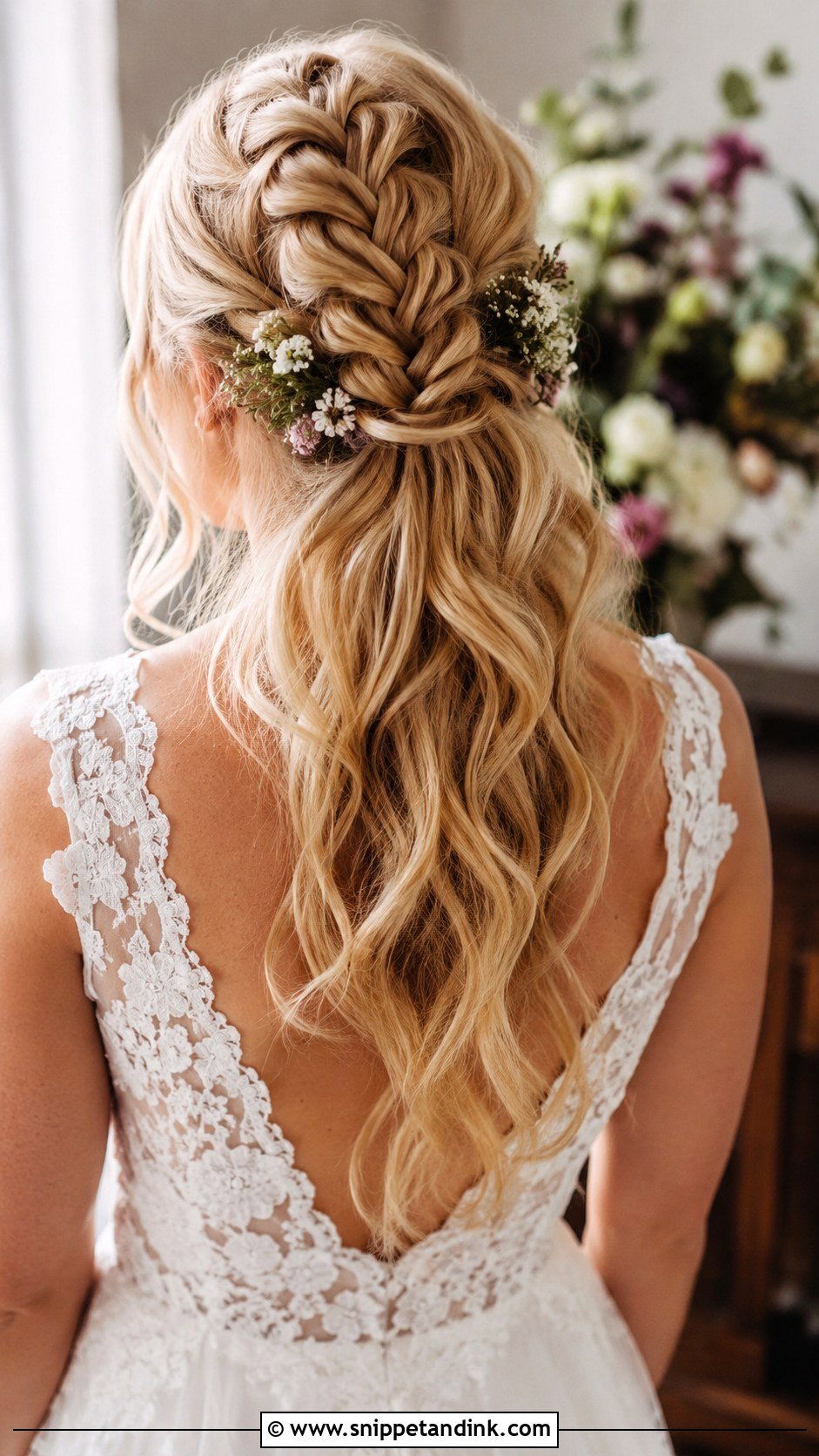
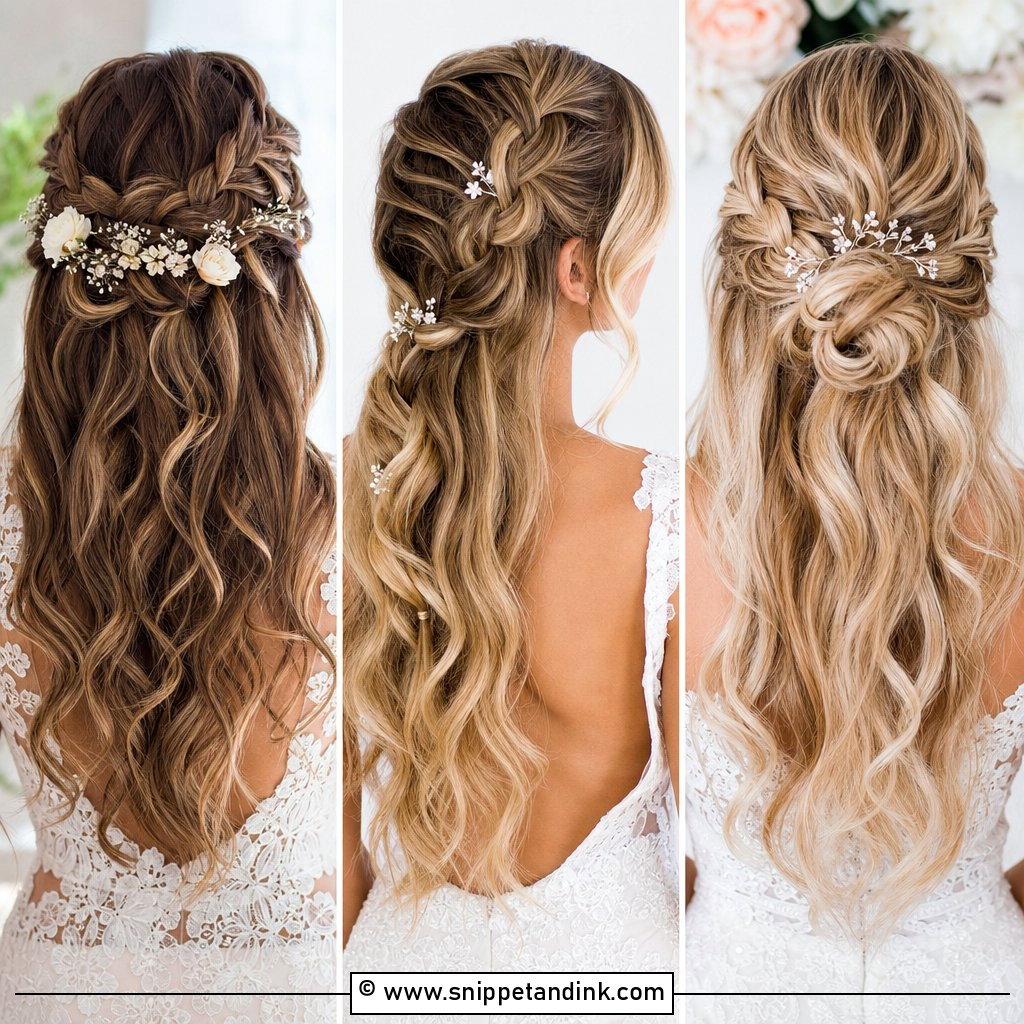
Want the braid to sit up off the head instead of lying flat? That’s a Dutch braid. The strands cross underneath rather than over, which pushes the plait forward so it catches light along its whole length. I like one down the centre, or two that meet in the half-up section, for boho and rustic weddings. Below it, loose, tousled waves keep the whole thing relaxed. It’s also the most forgiving braid for second-day hair, because the raised shape hides a bit of grip and frizz rather than showing it.
4. Crown Braid Half-Up Bridal Style
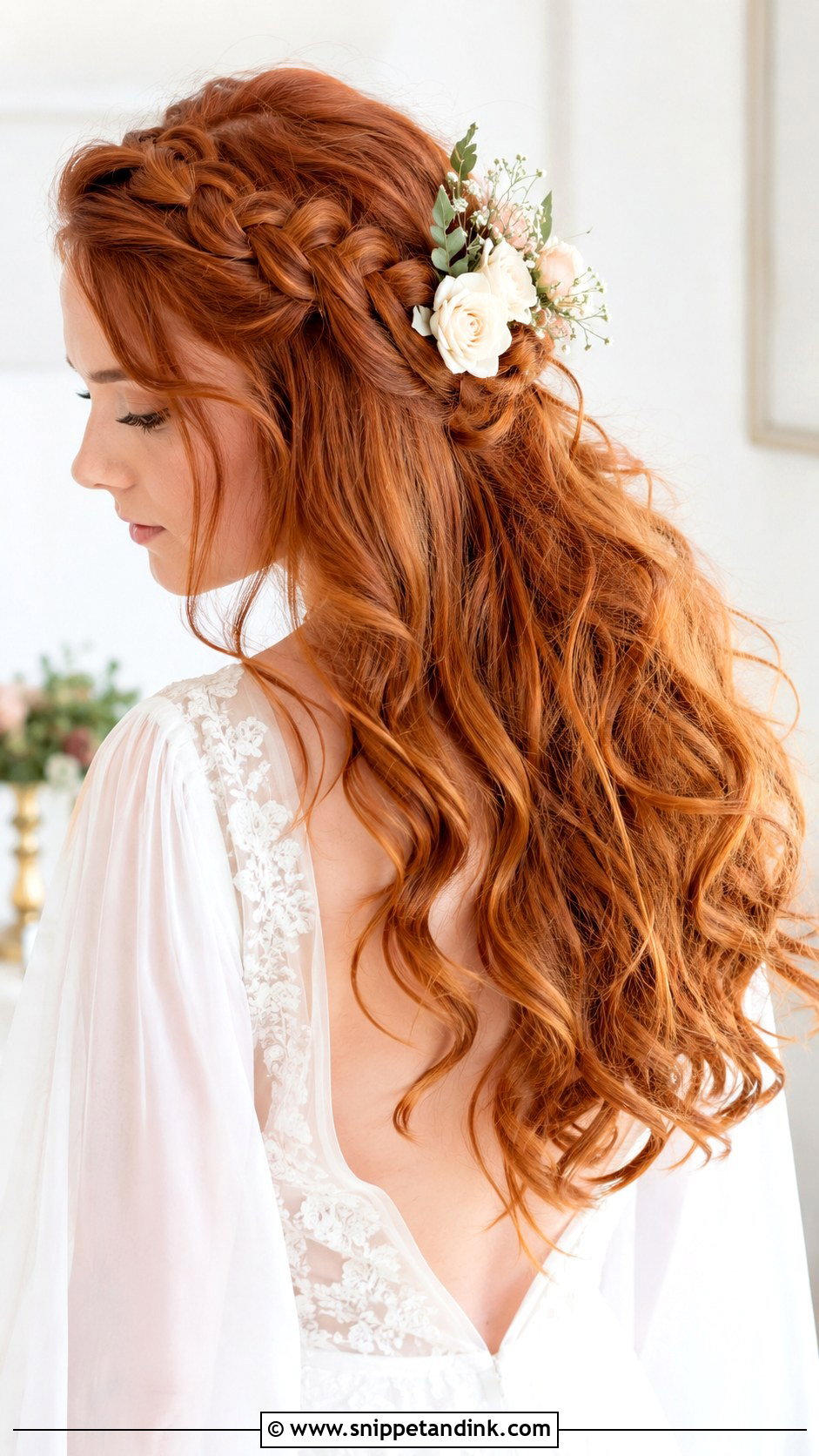
A crown braid wraps around the head like a band, and in a half-up version it stops behind the ears so the rest falls down the back. I build it in two halves that meet at the back rather than one long braid, since that gives me a clean join to hide under a comb or flowers. It holds a veil comb very securely. Thick, long hair makes the boldest crown; with shoulder-length hair I usually braid thinner and add a clip-in weft to fill it out. It has a natural fairytale quality, so I keep makeup and accessories simpler around it.
5. Waterfall Braid Half-Up Wedding Look
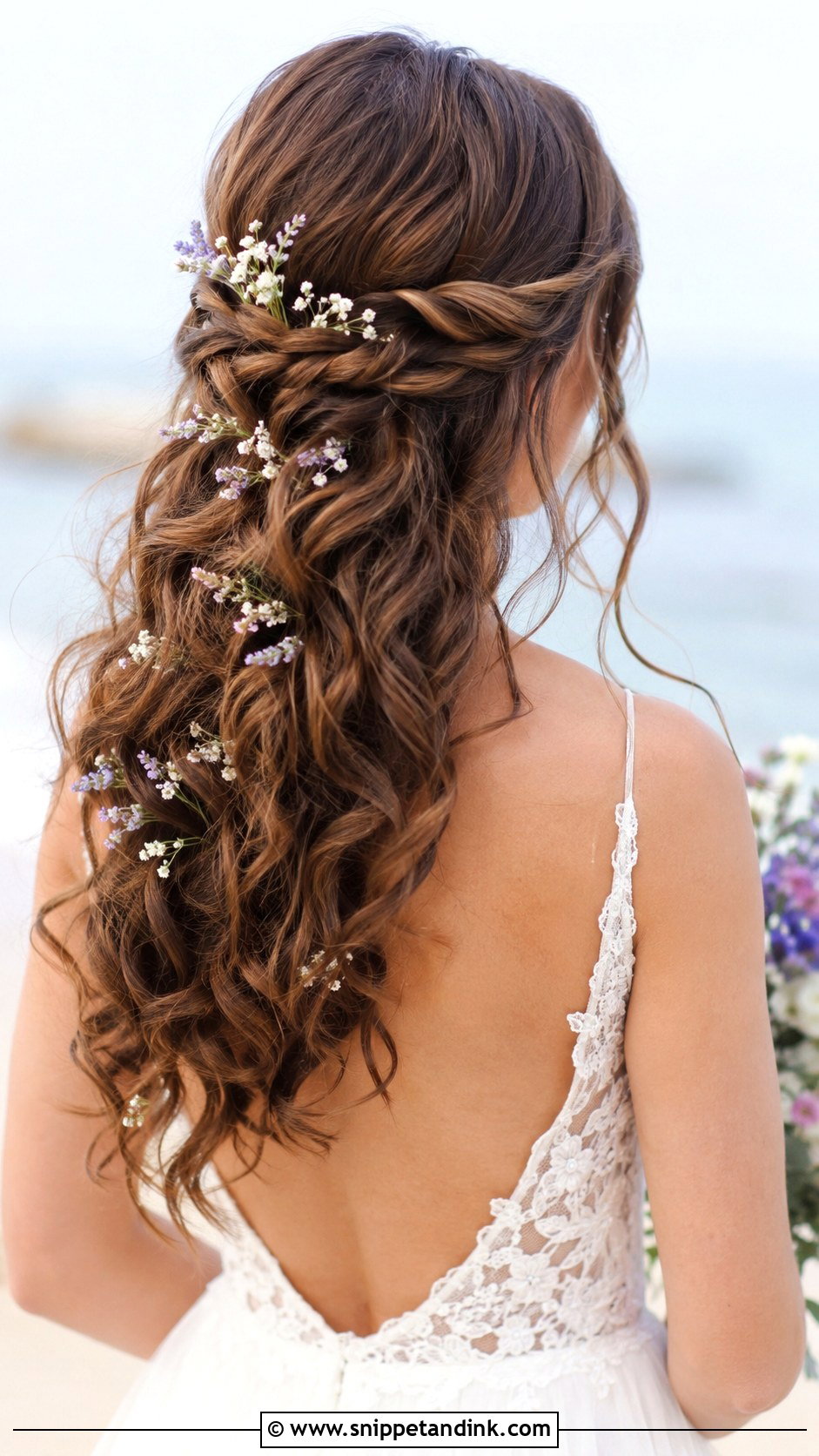
The waterfall braid is a half-French braid where I drop the top strand at each pass and pick up a new one, so pieces fall through and join the loose hair below. It looks airy, but those dropped strands are the part that falls out first. I curl them before braiding and set each curl with a pin until the hair cools, then release them. For a beach wedding with wind, I’d suggest another style; this one prefers a still day and a garden.
6. Boho Braided Half-Up With Flowers
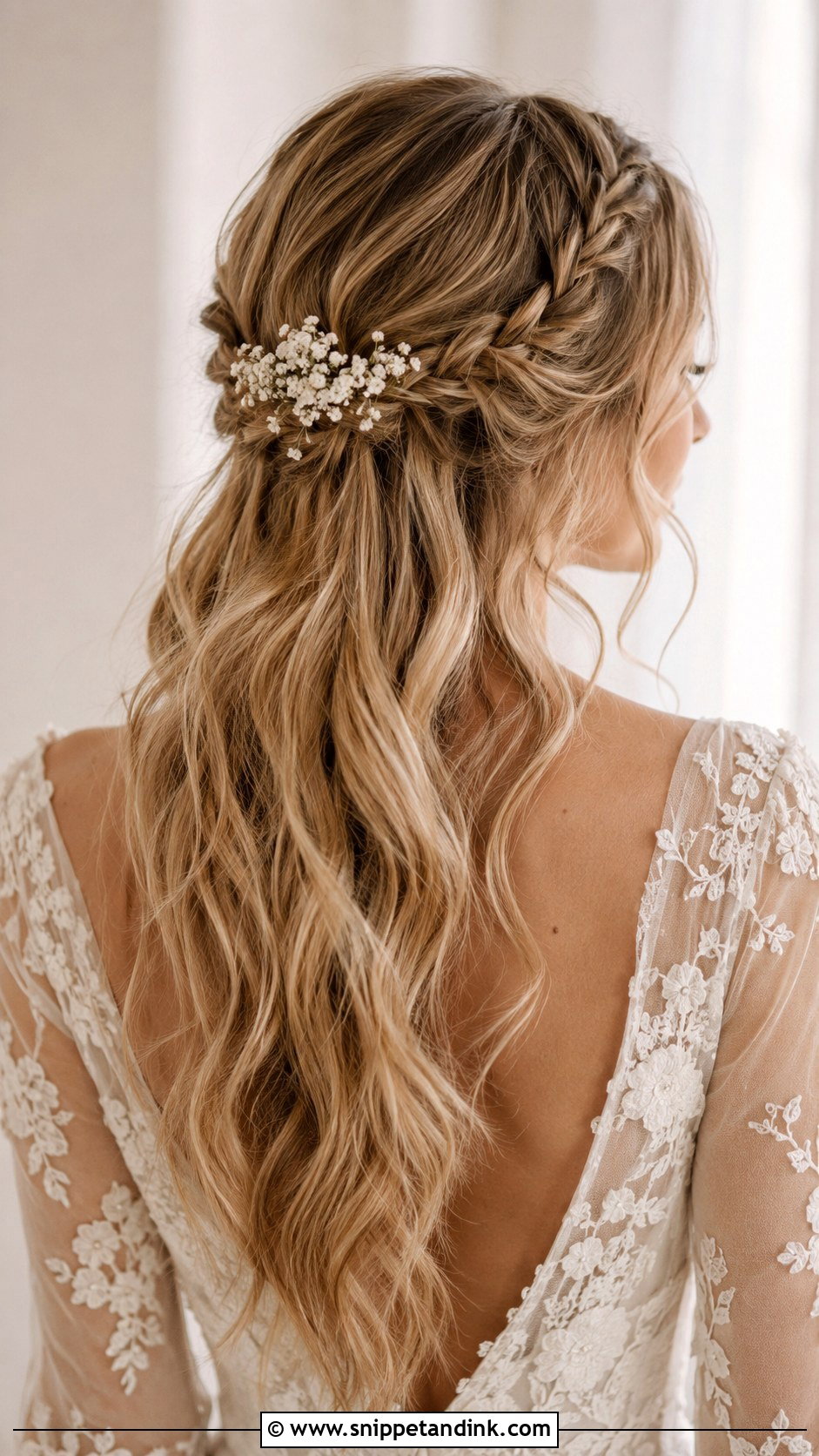
Boho brides tend to want this one, and it’s easier to wear than it looks. I braid a small section on each side, loosely, and join them at the back with a clear elastic hidden under a pin. The texture is supposed to be undone, so it forgives a few hours of hugging. Tuck in baby’s breath, wildflowers, or daisies near the join where the braids give stems something to grip. Daisies with soft stems wilt fast out of water, so I put those in last.
7. Double Braid Half-Up Wedding Hairstyle
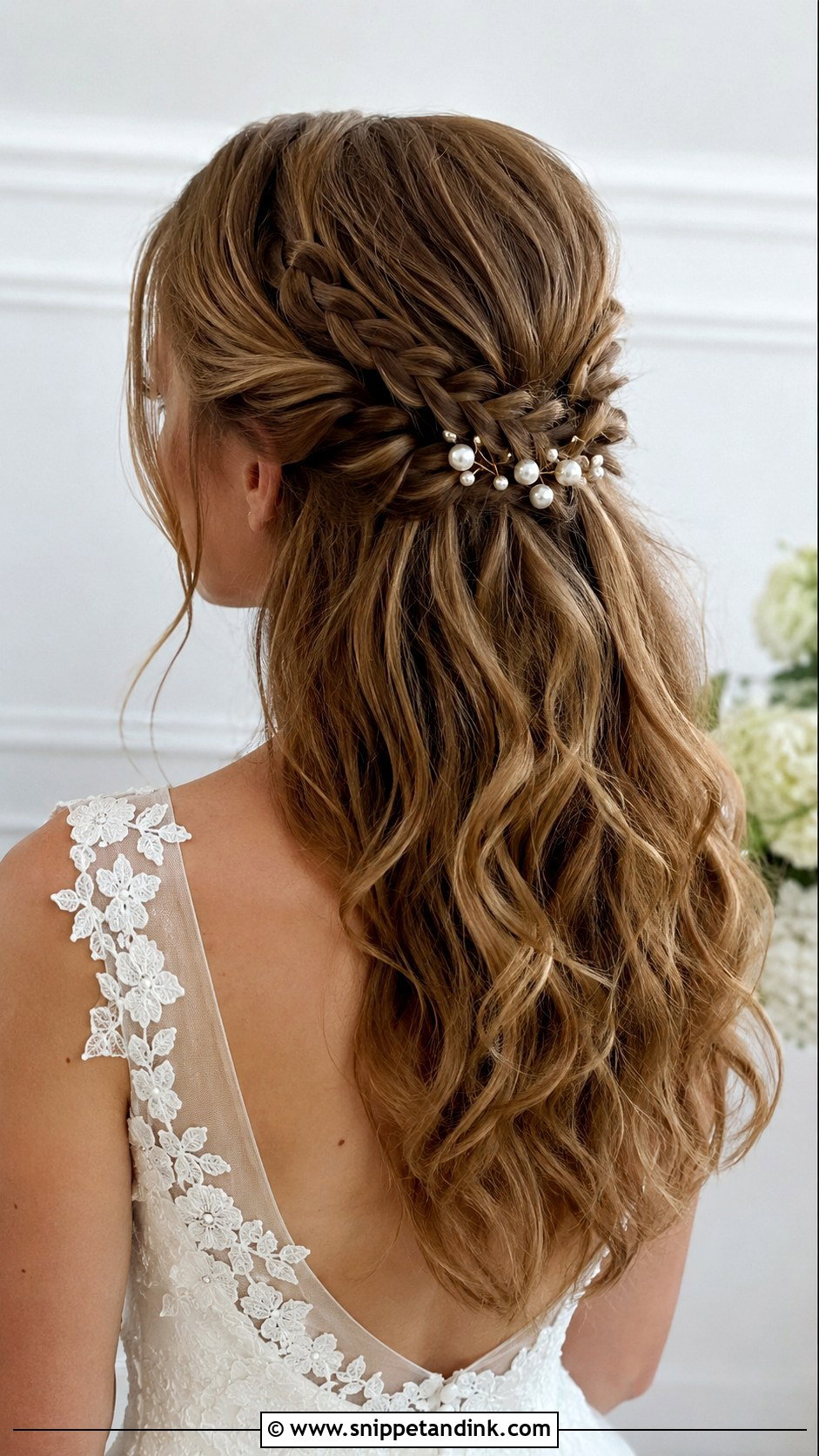
Two braids, one from each side, pulled back to meet in a half-up shape. The symmetry is the point, which is also its catch: if your parting isn’t truly centred, the two braids end up different thicknesses and it shows in front-on photos. I measure the sections before I start. French, Dutch or plain three-strand all work here; I choose by how much hair you have at the temples. Pearl pins where the braids meet hide the join and give the eye somewhere to land.
8. Twisted Half-Up Braid for Weddings
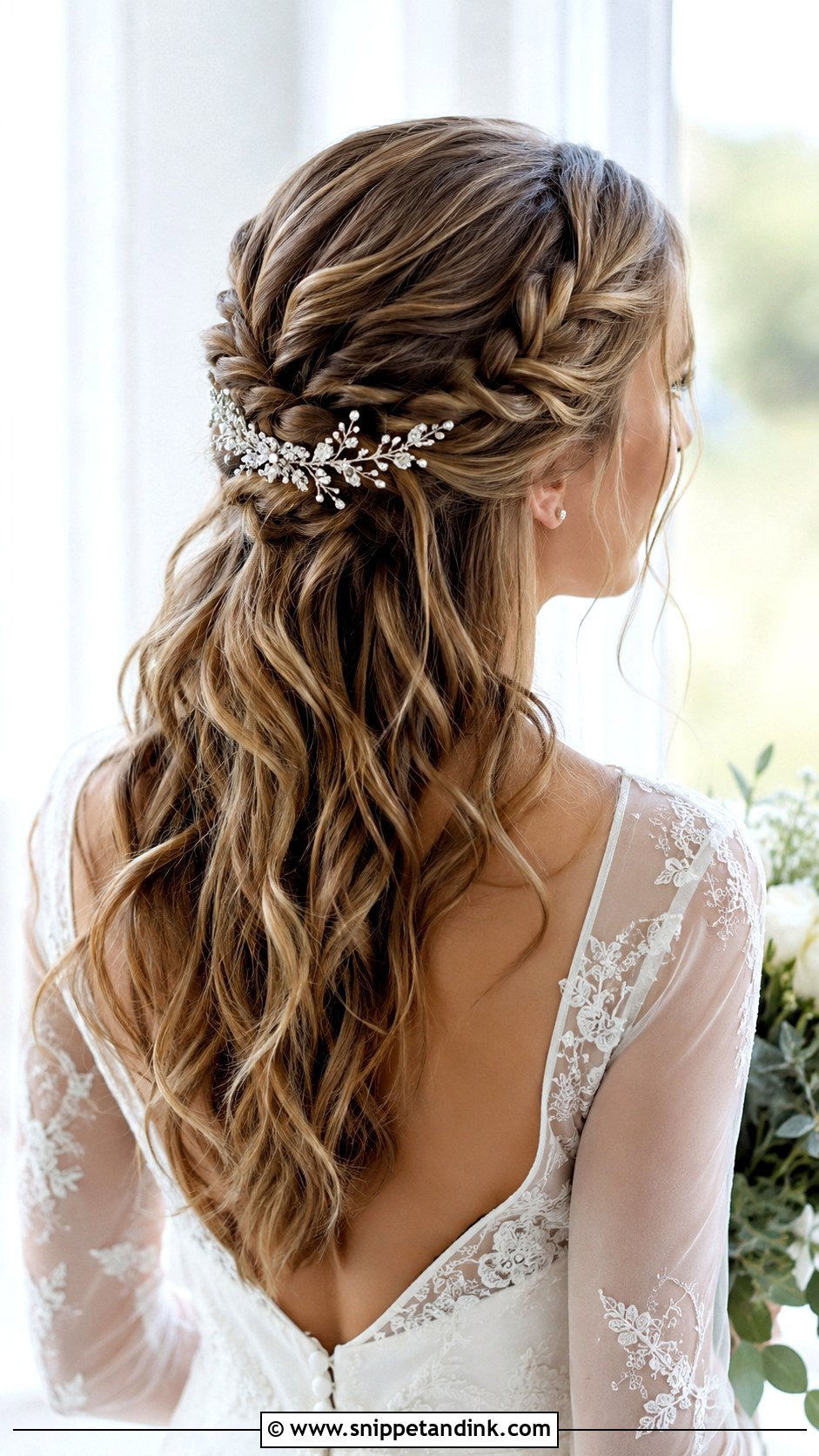
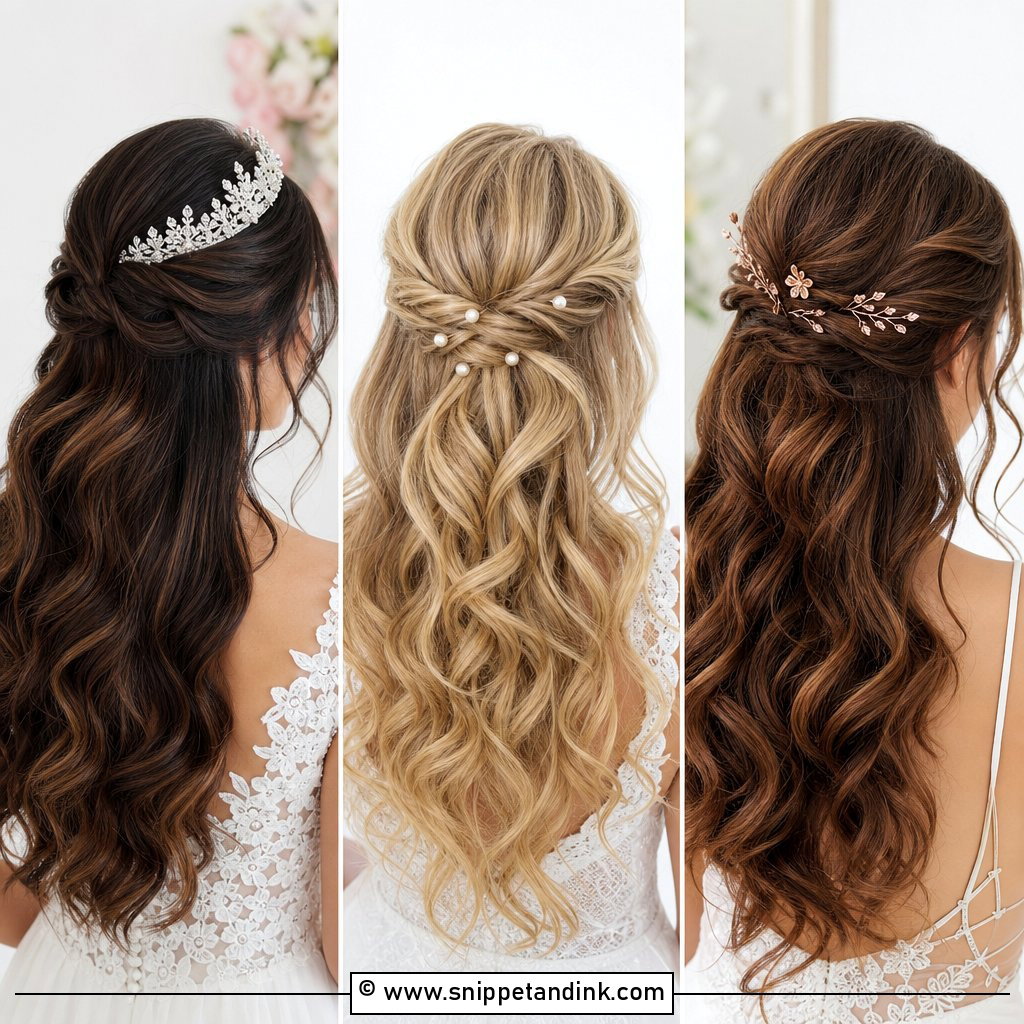
Twists are my fallback when a bride wants detail but her hair won’t hold a braid well, usually very fine or slippery hair. I twist each side section away from the face and secure the two at the back with crossed pins. It takes half the time of braiding. The trade-off: twists can loosen as hair relaxes in the evening, so I lock them with a small amount of strong-hold spray before pinning. A hair vine laid along the twists looks good and gives extra grip at the join.
9. Braided Half-Up With Veil
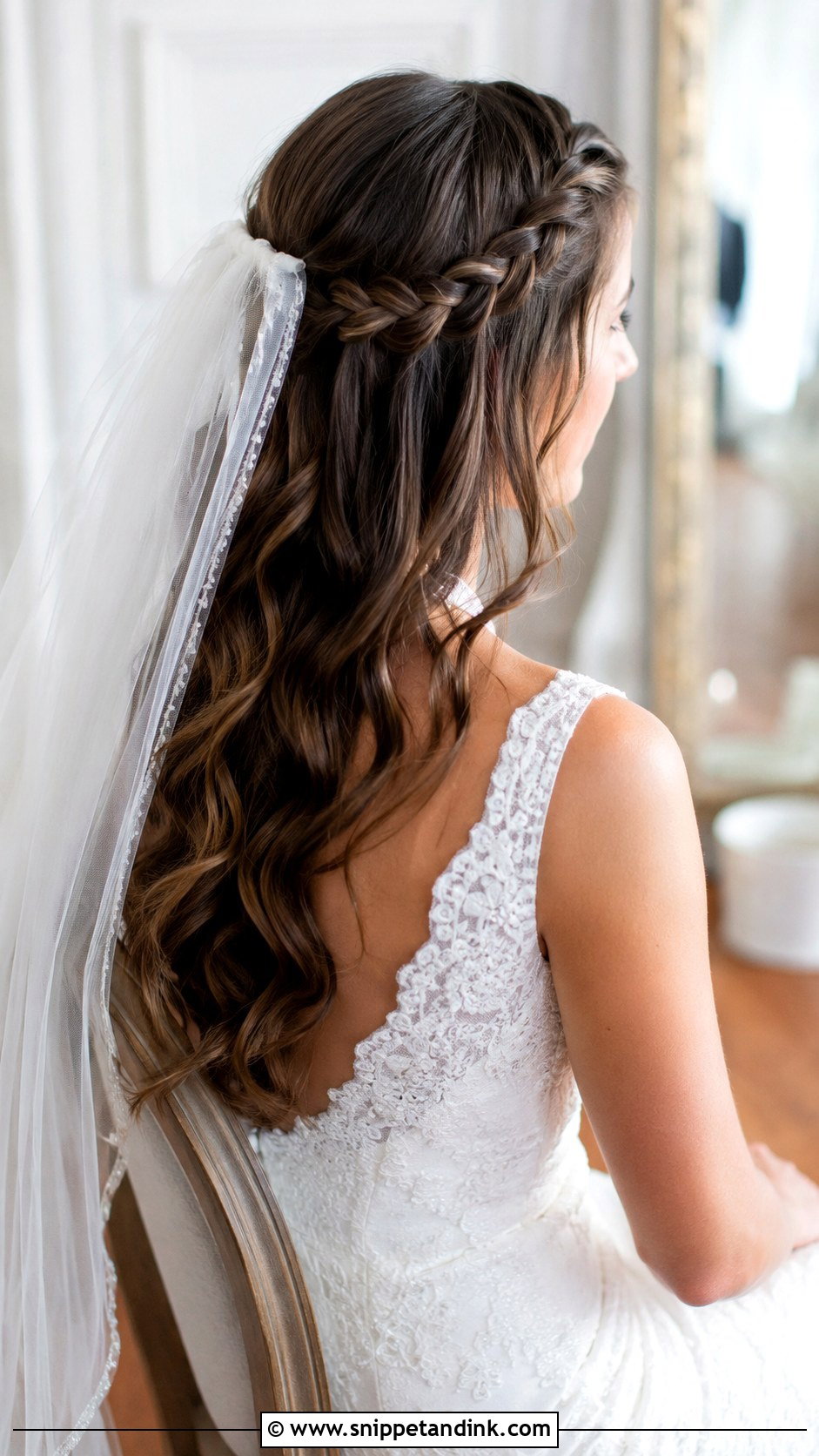
The braid is the best veil anchor in the whole style. A comb slid straight into loose, smooth hair can slip, while a comb pushed under a braid has something to bite into. I usually place it just under a French or crown braid at the back of the crown. After the ceremony I lift the veil out and the braid underneath is still intact, so there’s no gap or dent to fix before the first dance. I keep the lower hair in soft waves so the veil fabric drapes over smooth lengths rather than catching on tight curls.
10. Loose Braided Half-Up Bridal Hair
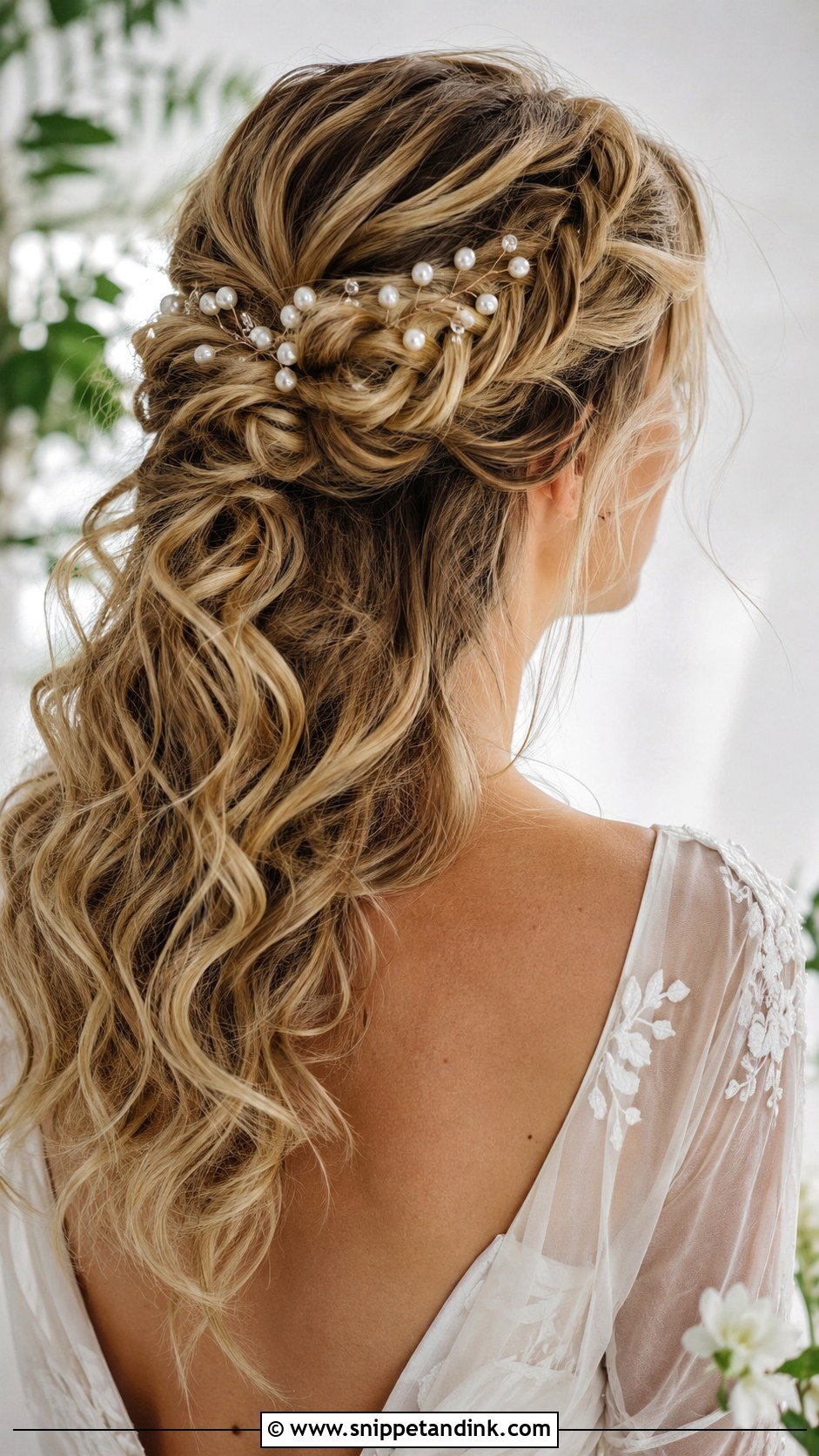
A loose braid is a normal braid I pull apart afterwards, piece by piece, to widen it. That stretching is where the softness comes from, and it takes longer than people expect. I braid the top section at medium tension first, tie it, then pancake the loops working from the bottom up. If the braid is loose from the start it collapses by the speeches. With tousled waves below, the whole look feels lived-in. A couple of pearl pins along one side are plenty.
11. Braided Half-Up Bun for Brides
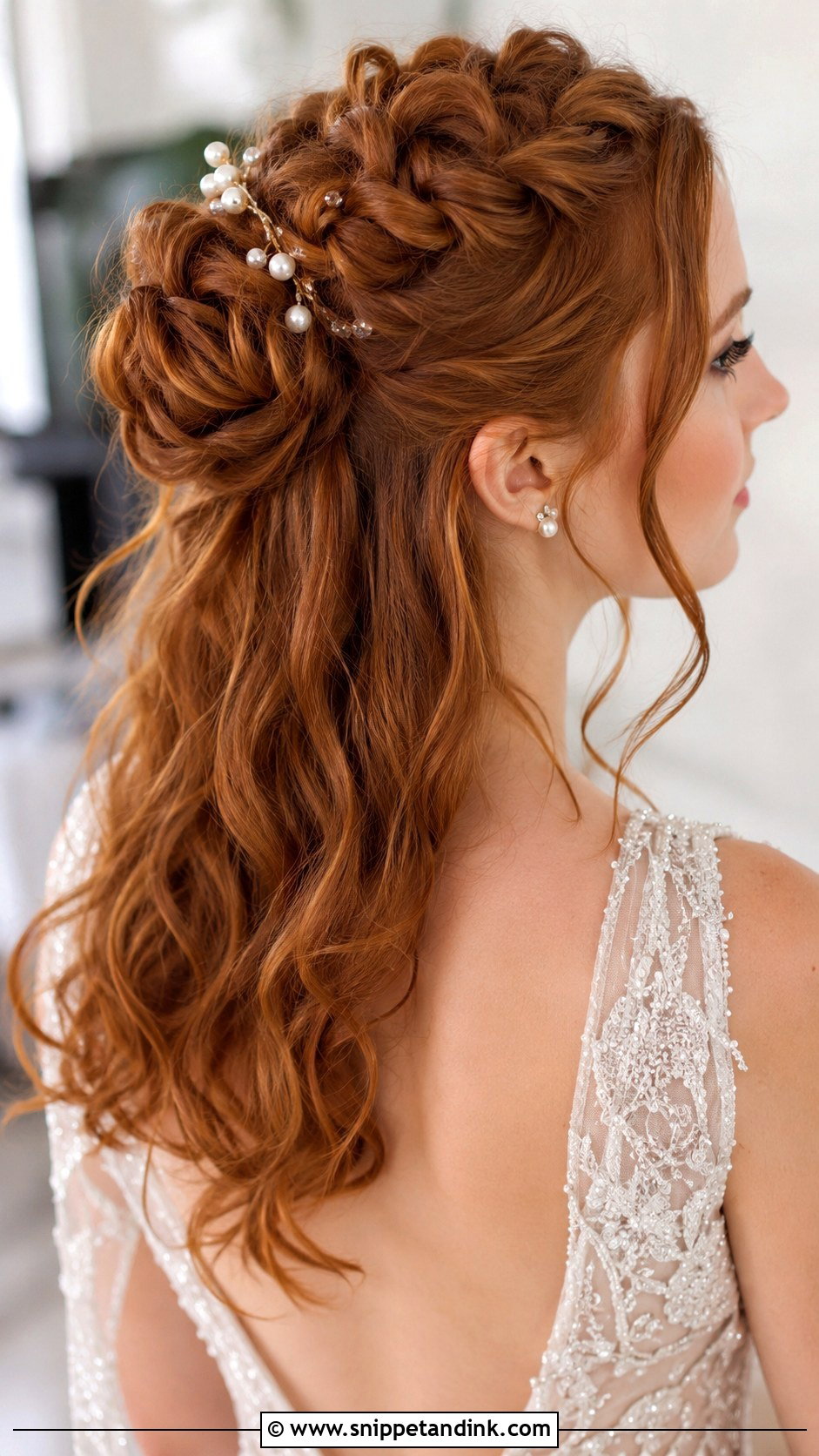
The top section gets braided, then wrapped into a small knot at the back of the crown, and everything below stays loose. That bun adds height and gives the half-up a little structure, which helps on long reception days. I pin the knot with U-pins rather than bobby pins, since they hold its shape without flattening it. Face-framing waves at the front stop it looking severe. Keep the decoration to pearls or one cluster of blooms on the side of the bun; the braid texture already gives plenty to look at.
12. Side Braid Half-Up Wedding Style
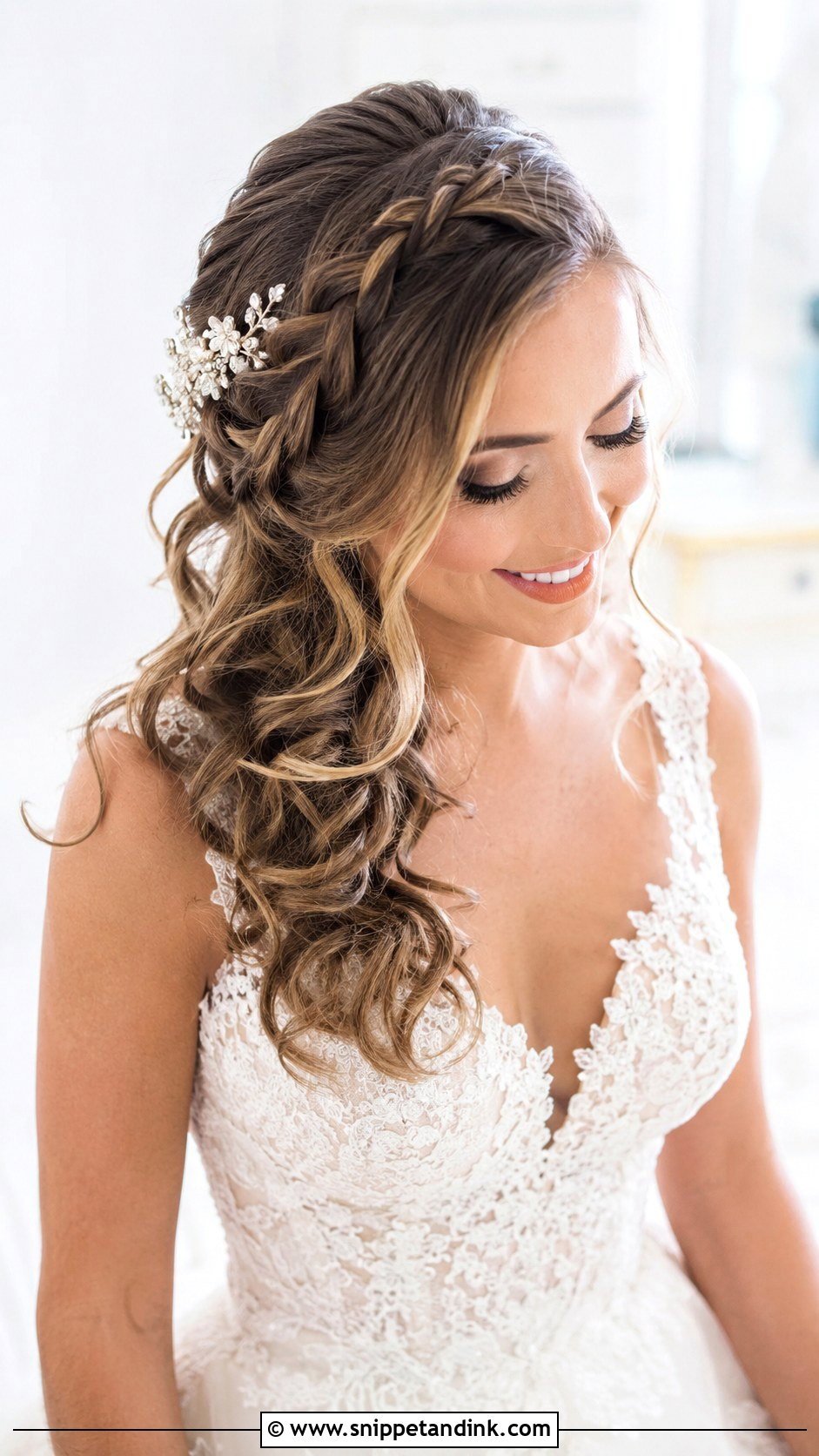
All the braiding sits on one side, and the loose curls fall over the opposite shoulder. Before I decide which side, I ask where you’ll stand at the ceremony, because the braid should face the guests and the camera, not your partner. It flatters a strong jawline and pulls attention towards your earrings on the open side. French, fishtail or three-strand all suit it. A sparkling clip at the end of the braid, near the ear, gives the asymmetry a finished point.
13. Braided Half-Up With Curls
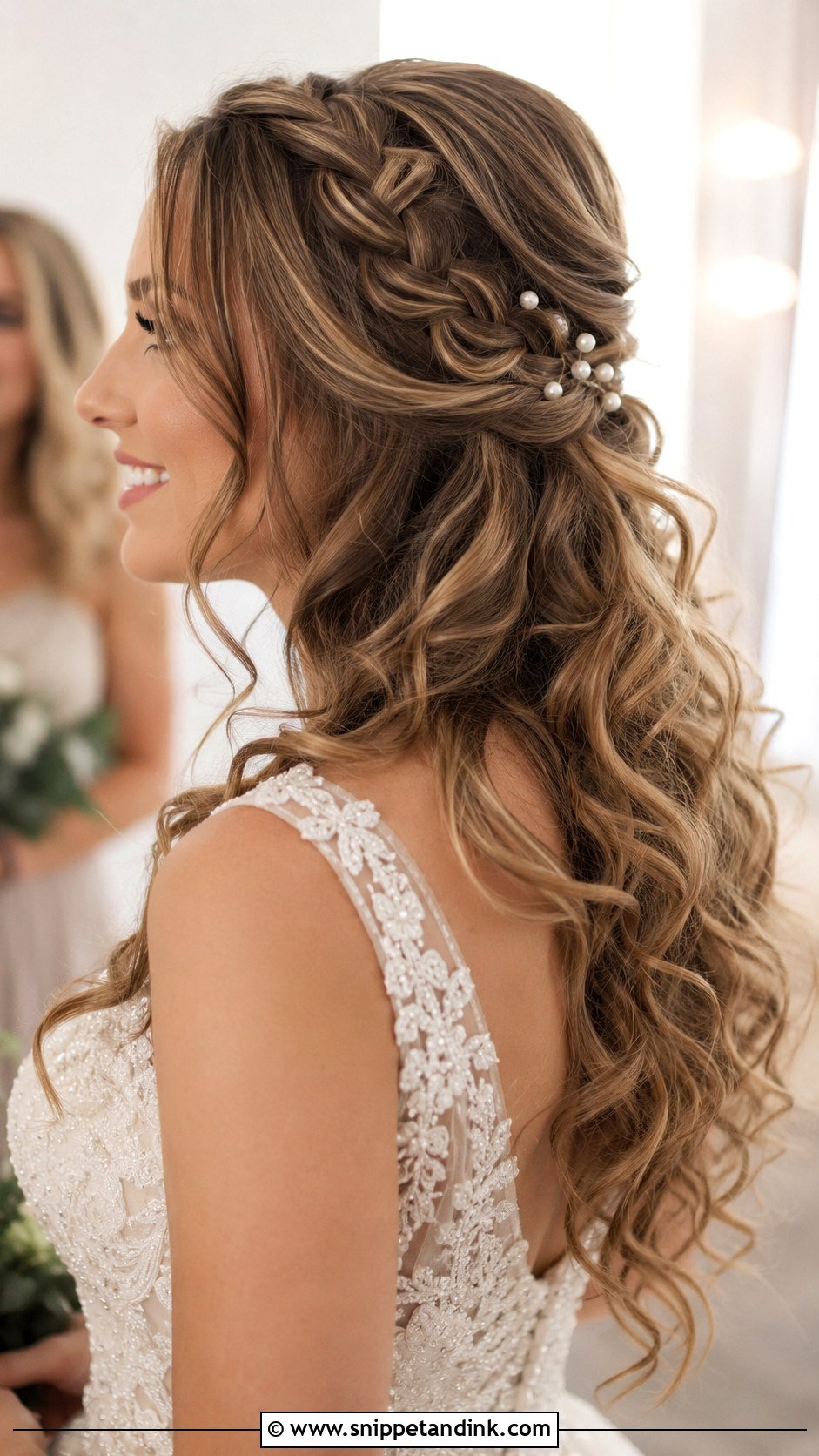
Here the top section is braided and the lower hair is curled for volume, so the style has both structure and bounce. The order matters: I curl first, let the curls set, then braid the crown section, otherwise the braid gets crushed by the tongs. I loosen the braid so its texture matches the curls rather than looking stiff above them. Curls drop with heat and humidity, so I set them with a little more hold than looks necessary in the morning. Pearl pins or a few blooms finish it.
14. Pearl-Embellished Braided Half-Up
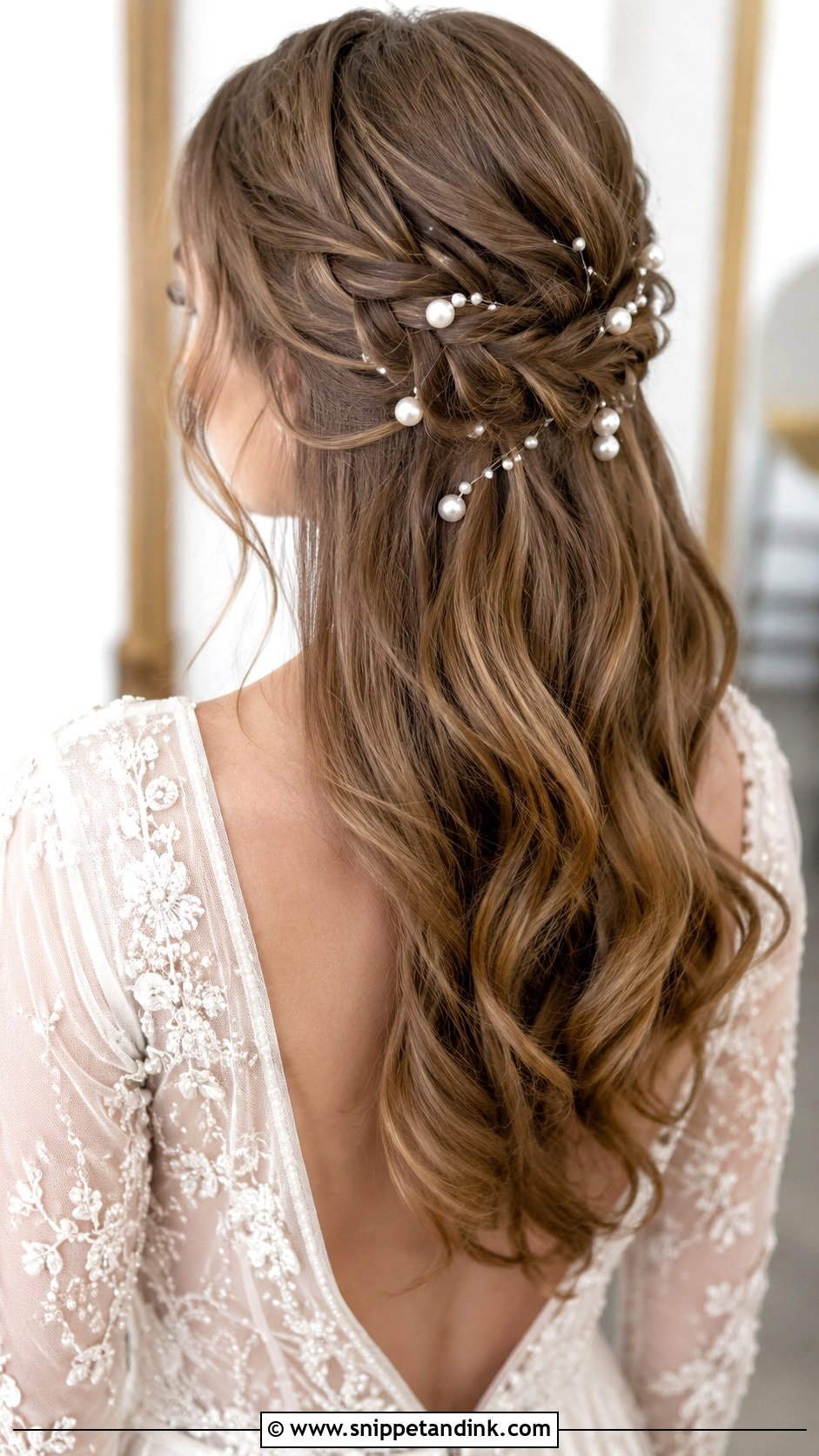
Pearls are the easiest way to dress a braid. I push pearl pins into the outer loops of a French or fishtail braid so they sit on top of the hair, not buried in it. Spacing matters more than number: I place them in a loose zigzag rather than a straight line, so the pattern looks random from a few feet away. If your dress has pearl or bead work, matching the pearl tone (white, ivory or champagne) keeps the hair and dress from fighting. The loose hair below can be waved or curled.
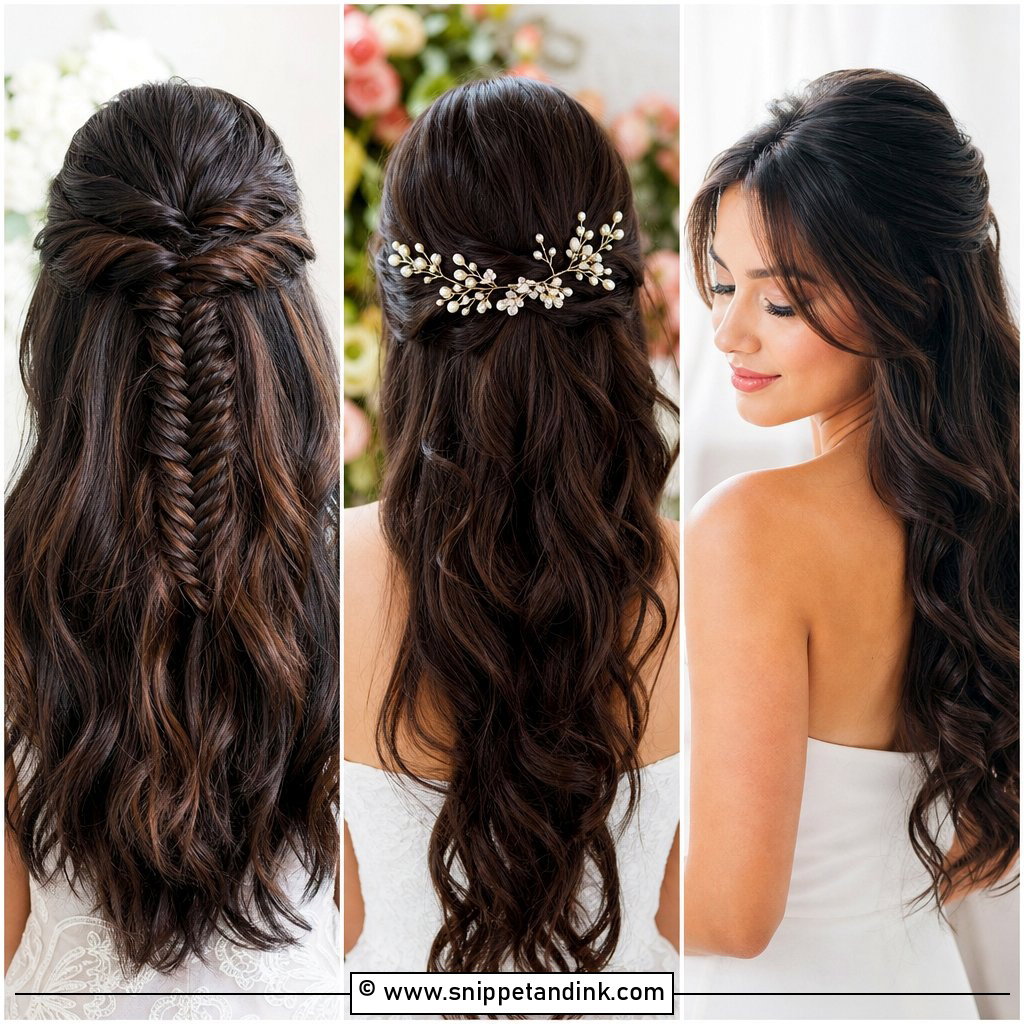
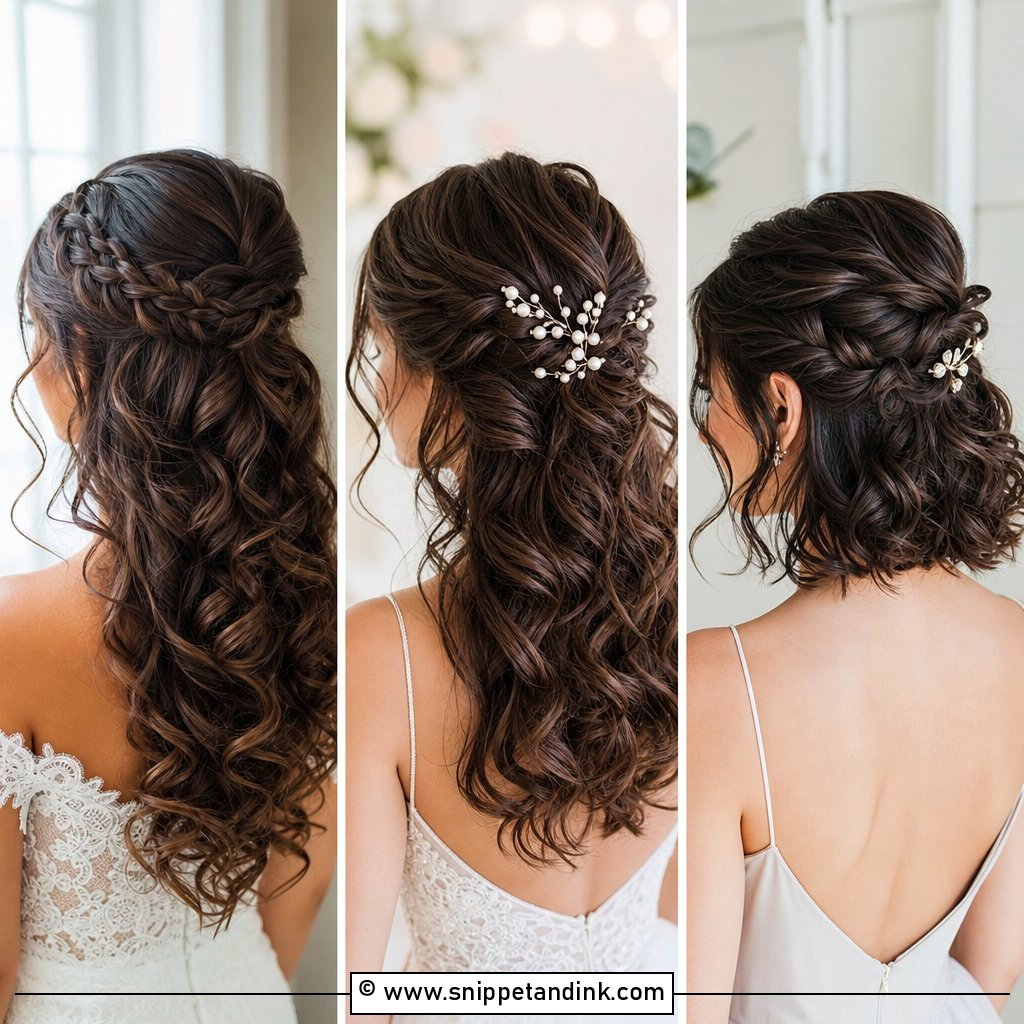
15. Braided Half-Up With Hair Vine
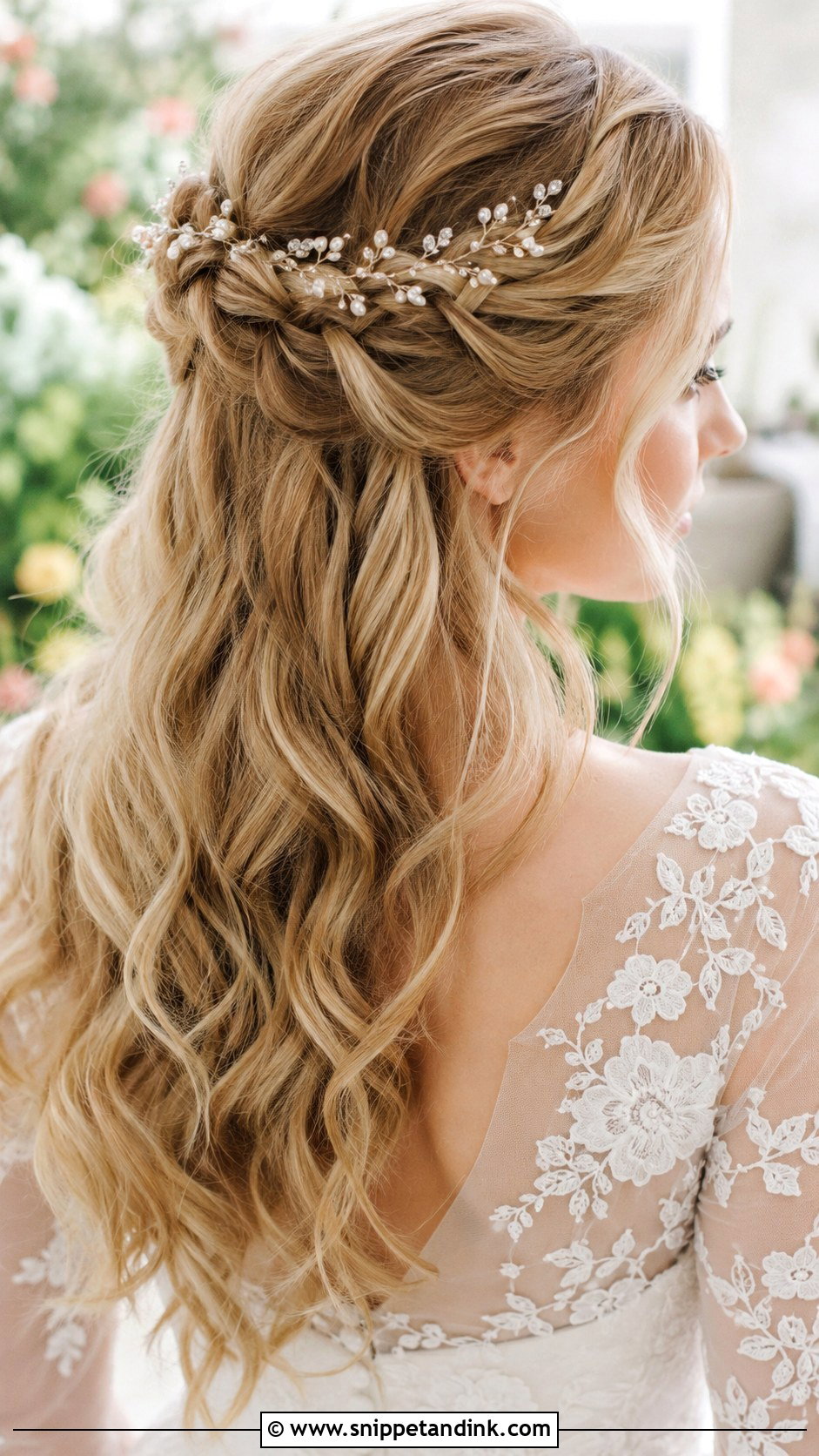
A delicate hair vine takes a plain braided half-up and adds sparkle as you move. I braid the top section first, then thread the vine through the outer loops of the braid and secure each end with a hidden pin. Vines come with pearls, crystals or tiny metal flowers; the wire ones bend to the shape of the head, which makes them easier to anchor. Waves or curls below keep it soft. Brides with very fine hair should choose a light vine, as a heavy one drags the braid down.
16. Messy Braided Half-Up Wedding Hair
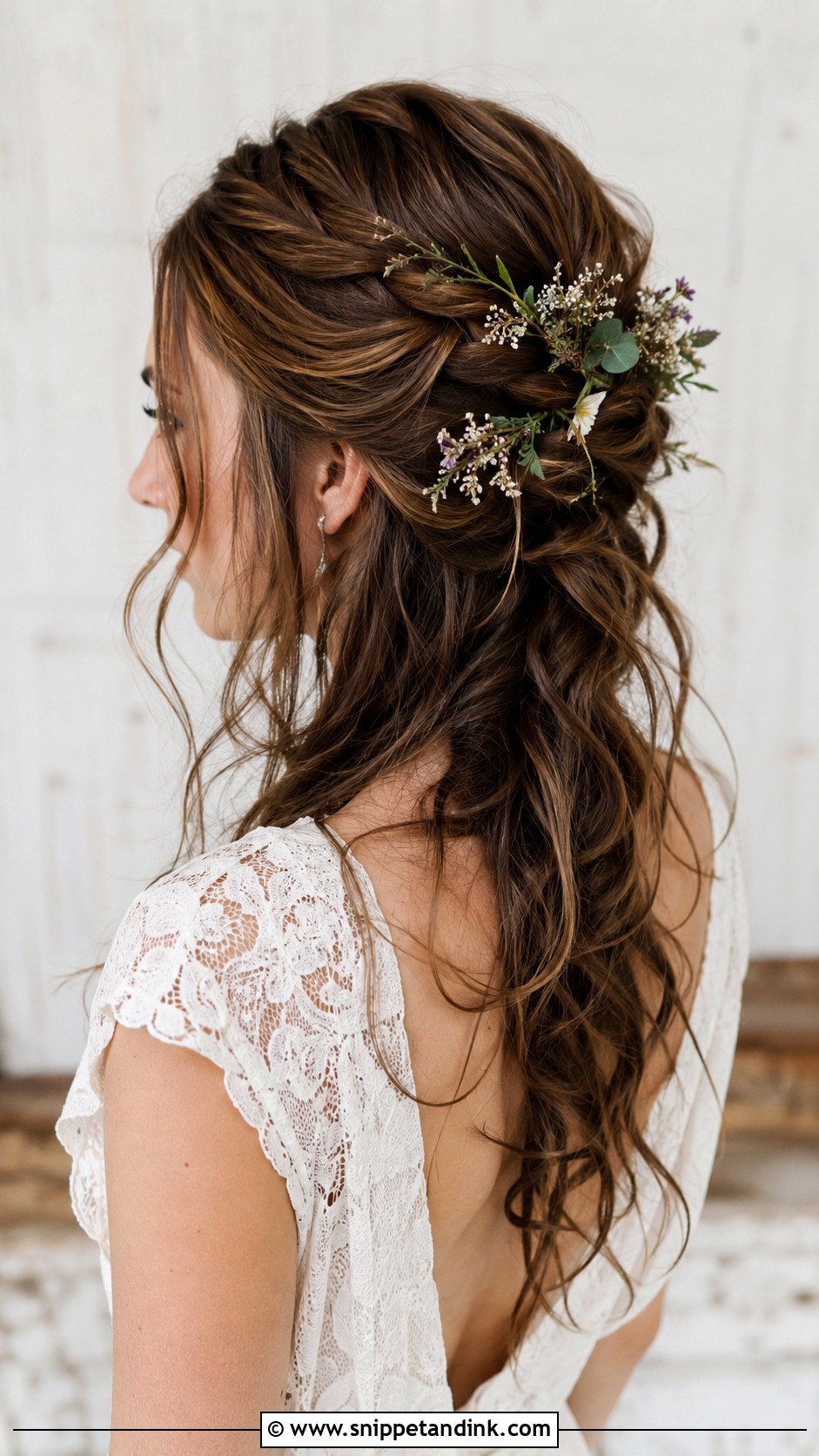
Messy is a finish, not a shortcut. The braid underneath still needs to be secure, and the softness comes from pulling out strands afterwards. I braid the crown section loosely, pin it, then pull a few pieces out around the hairline to look natural rather than placed. If the style is meant to look undone at 10pm, it has to start slightly tidier than you’d like at 10am, because hair loosens as the day goes on. Wildflowers or greenery suit it, and the lower hair stays in tousled waves.
17. Braided Half-Up With Bangs
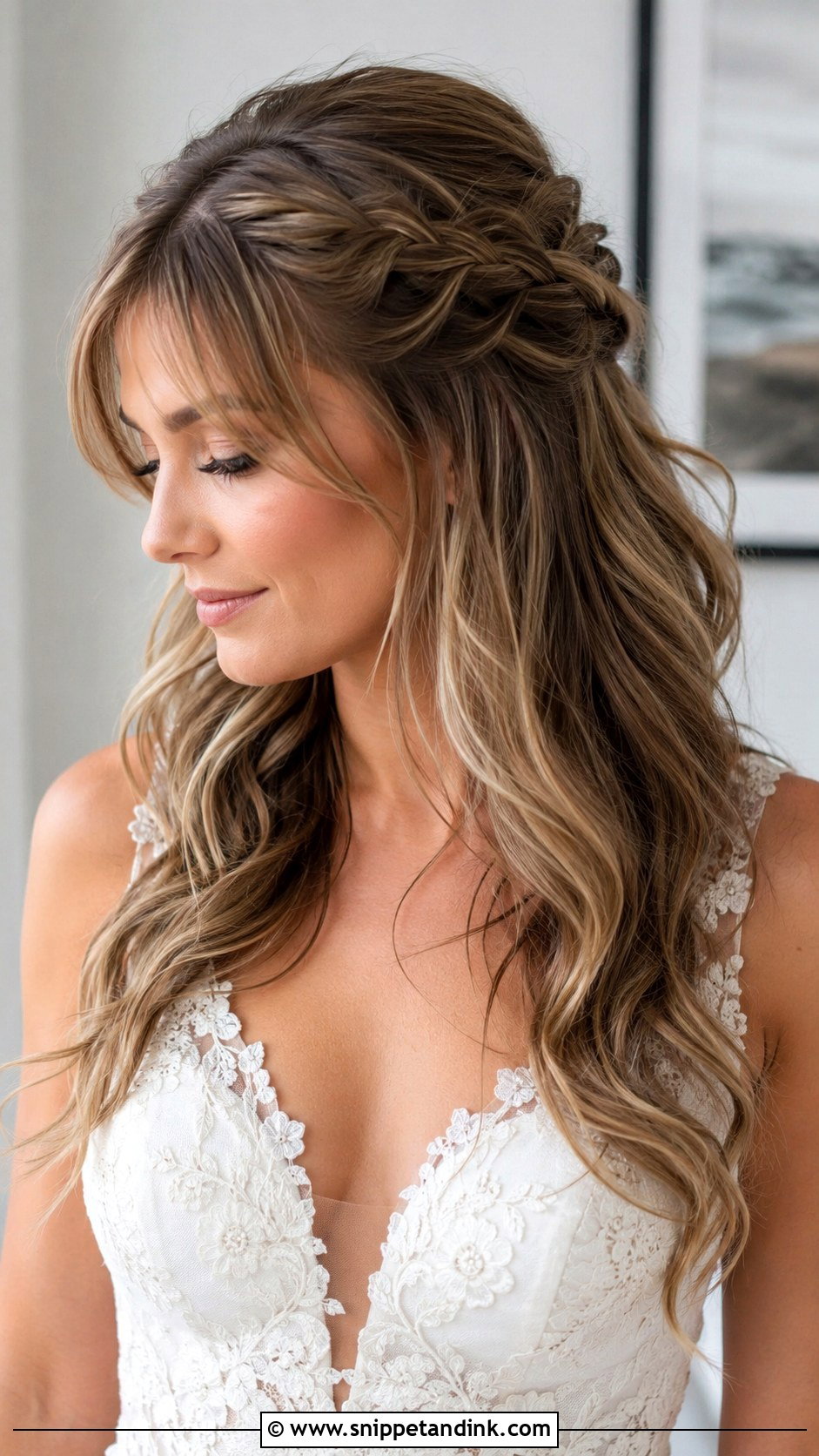
Got bangs or face-framing layers? Leave them out of the braid. I braid the top and sides behind the fringe and treat the bangs separately: a round brush and a little heat to give them a slight bend so they sit softly rather than flat. Fringe goes greasy faster than the rest of your hair, so I keep a small amount of dry shampoo or blotting powder in my kit for the evening. The rest of your hair can fall in waves, and a hair vine behind the bangs is enough decoration.
18. Halo Braid Half-Up for Brides
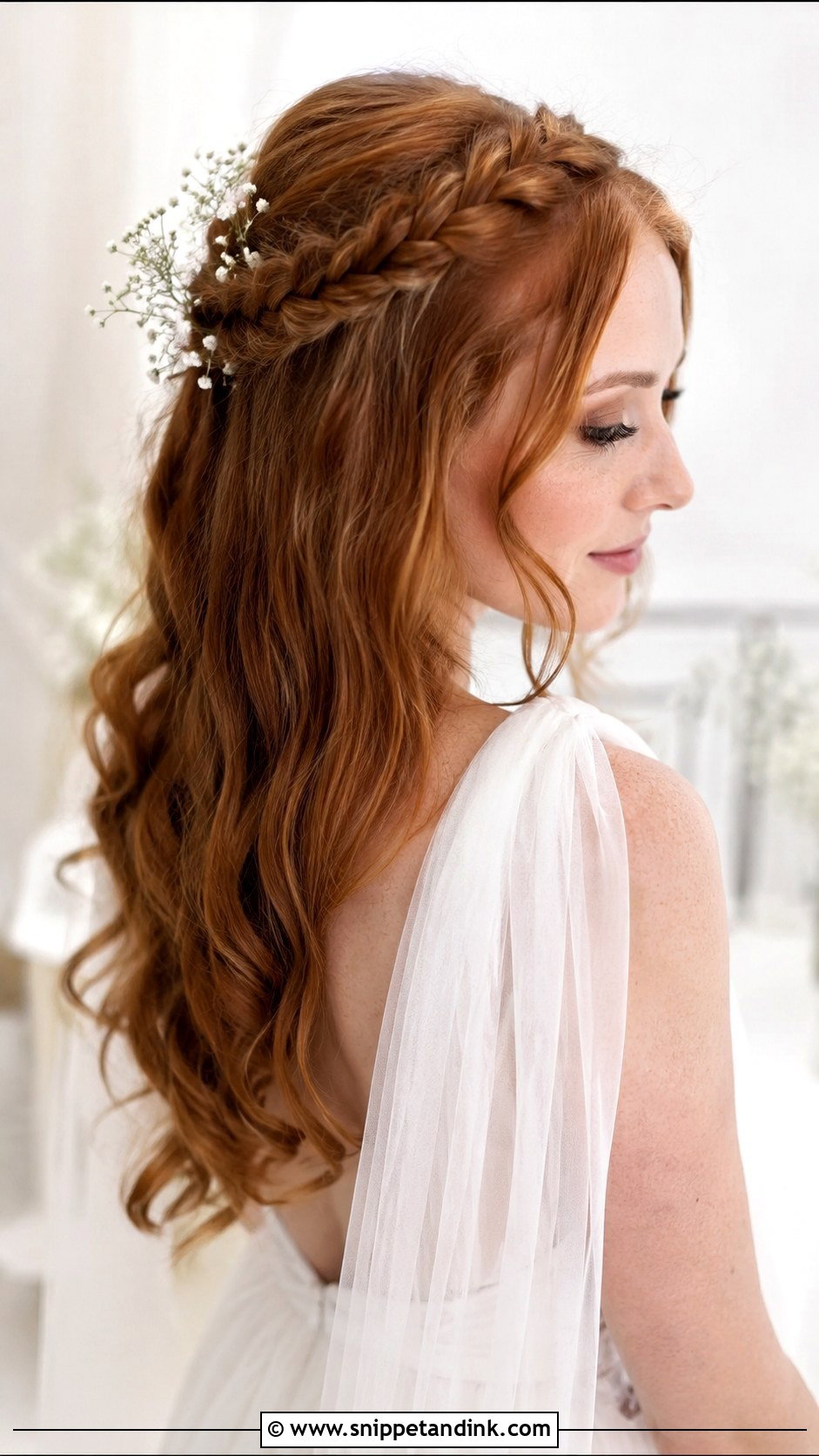
A halo braid half-up sits higher than a crown braid, wrapping across the top of the head like a ring while the lengths flow freely below. Because it sits so high, it’s the version I’m most careful with on fine hair: the braid needs enough hair at the front to stay full, or it looks thin in photos. A thin halo is lovely; a thick one is bolder. Tuck baby’s breath along it if you like, though sprigs are fragile and I add them near the end of the appointment.
19. Braided Half-Up With Greenery
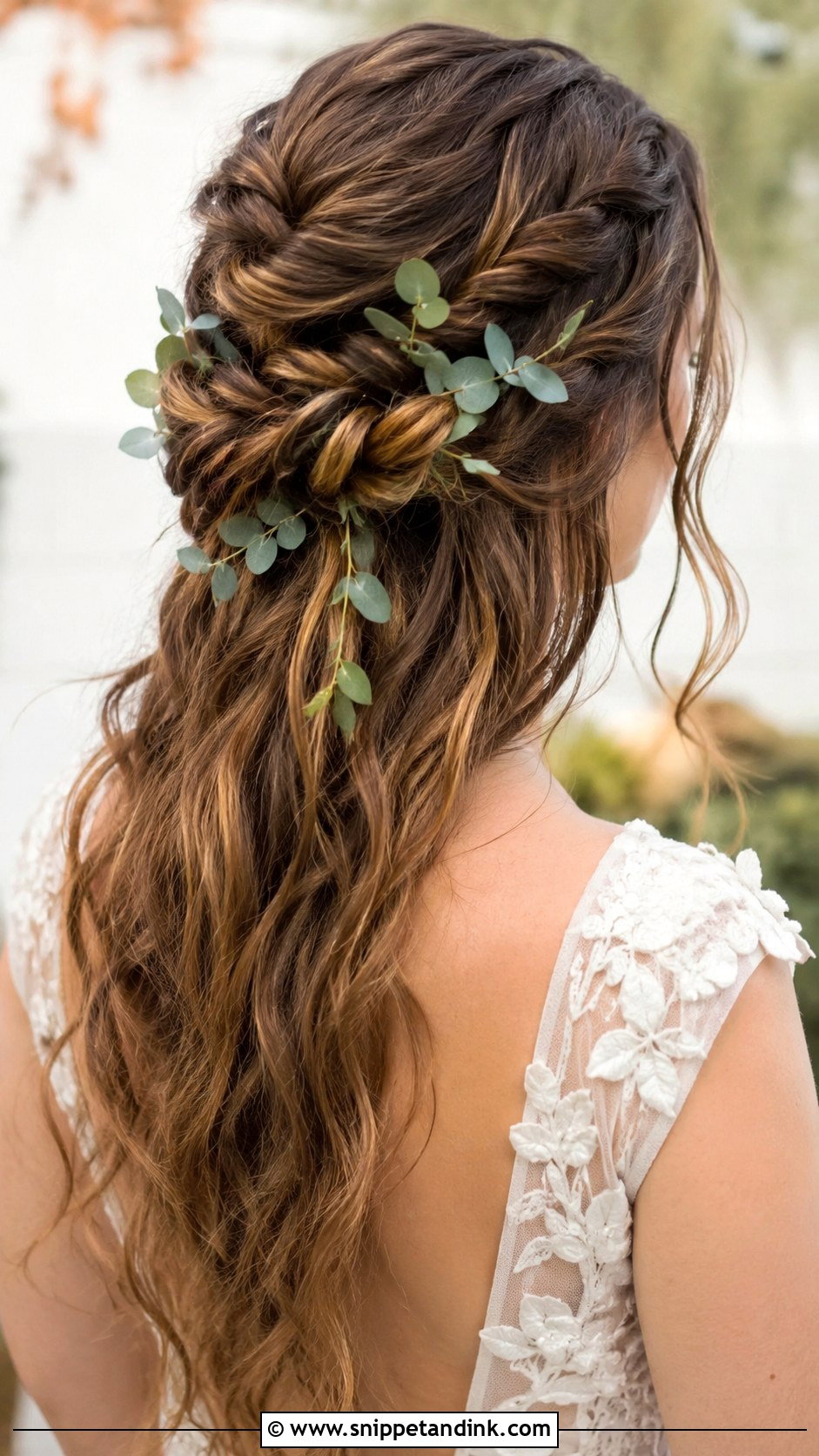
Eucalyptus, ferns and leafy sprigs threaded through a braid give an organic finish that suits garden and forest weddings. I braid first, then tuck stems between the loops at an angle so the leaves point backwards and don’t poke into your scalp. Not every green lasts: eucalyptus and ruscus hold out of water for hours, while soft ferns can wilt. I ask your florist to set aside a few stems and have them conditioned the day before. Loose waves below keep it soft.
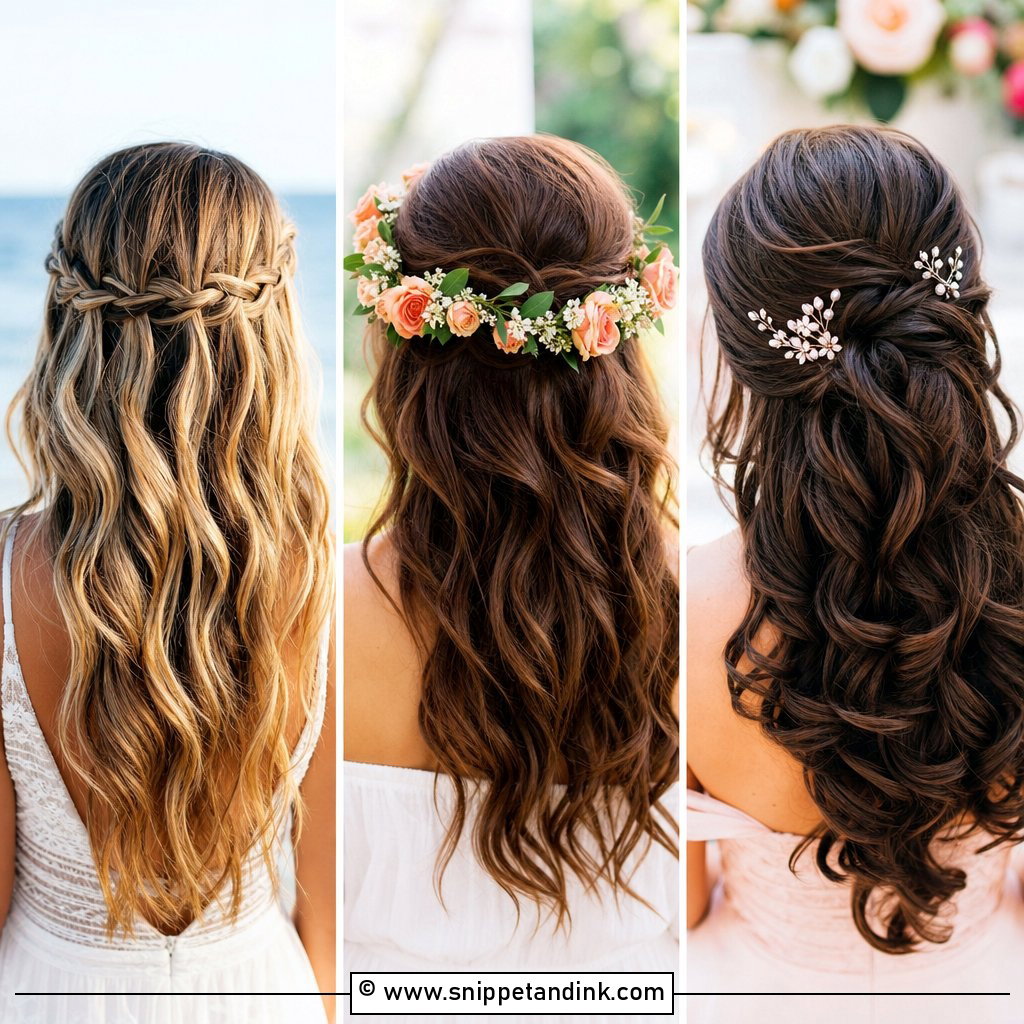
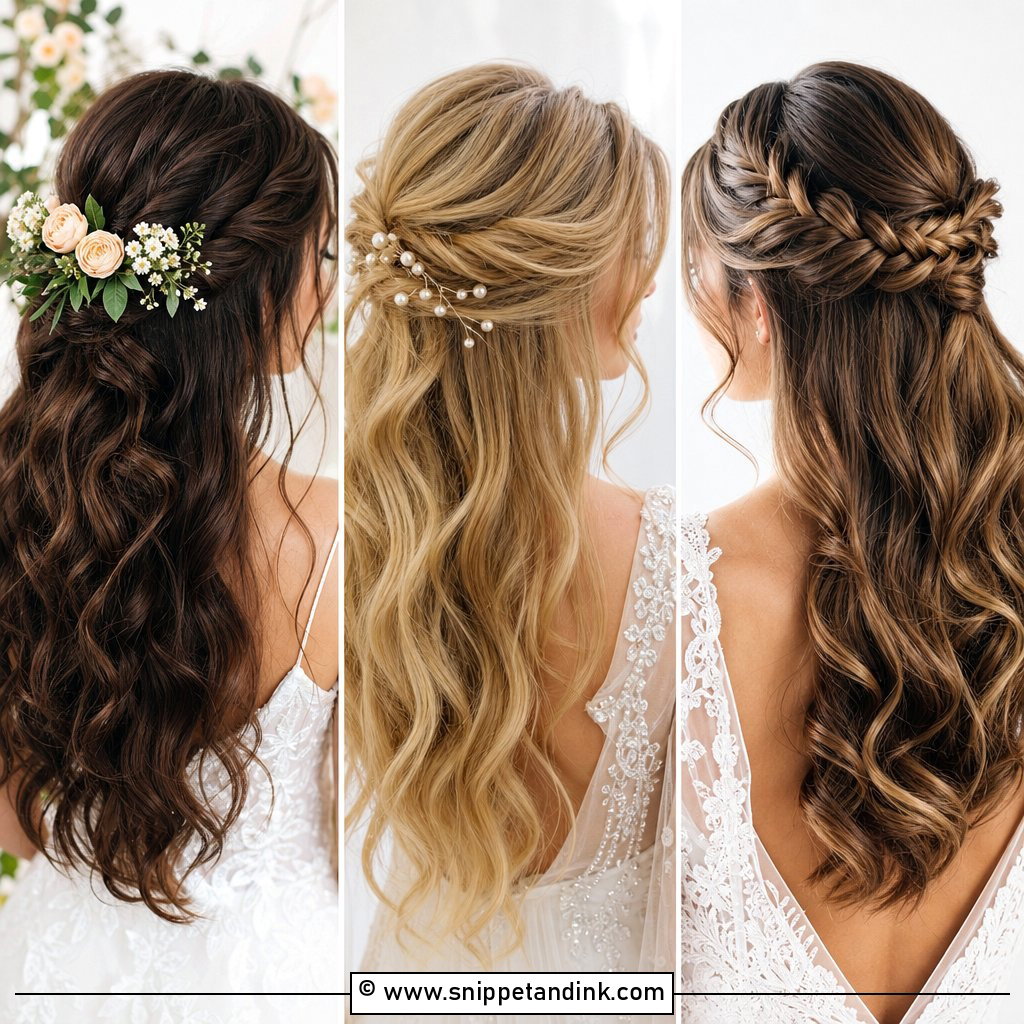
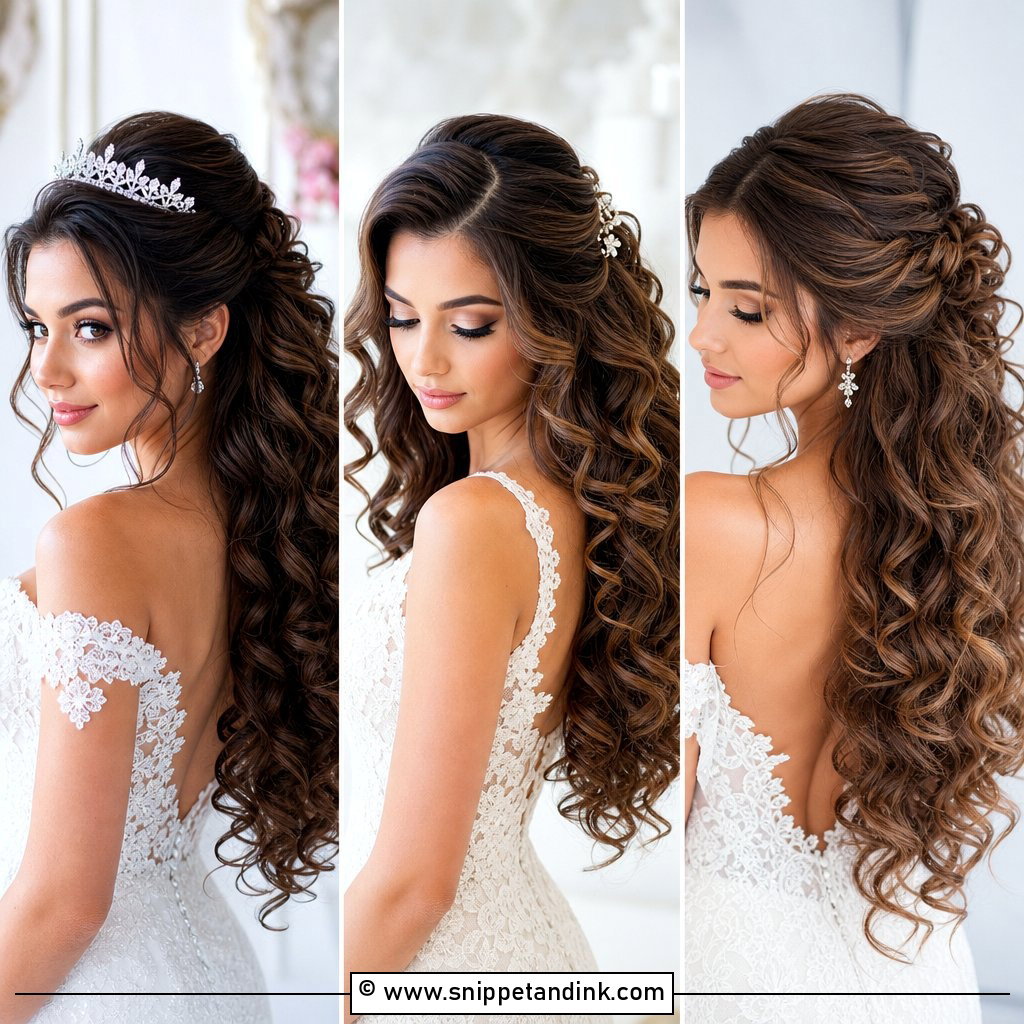
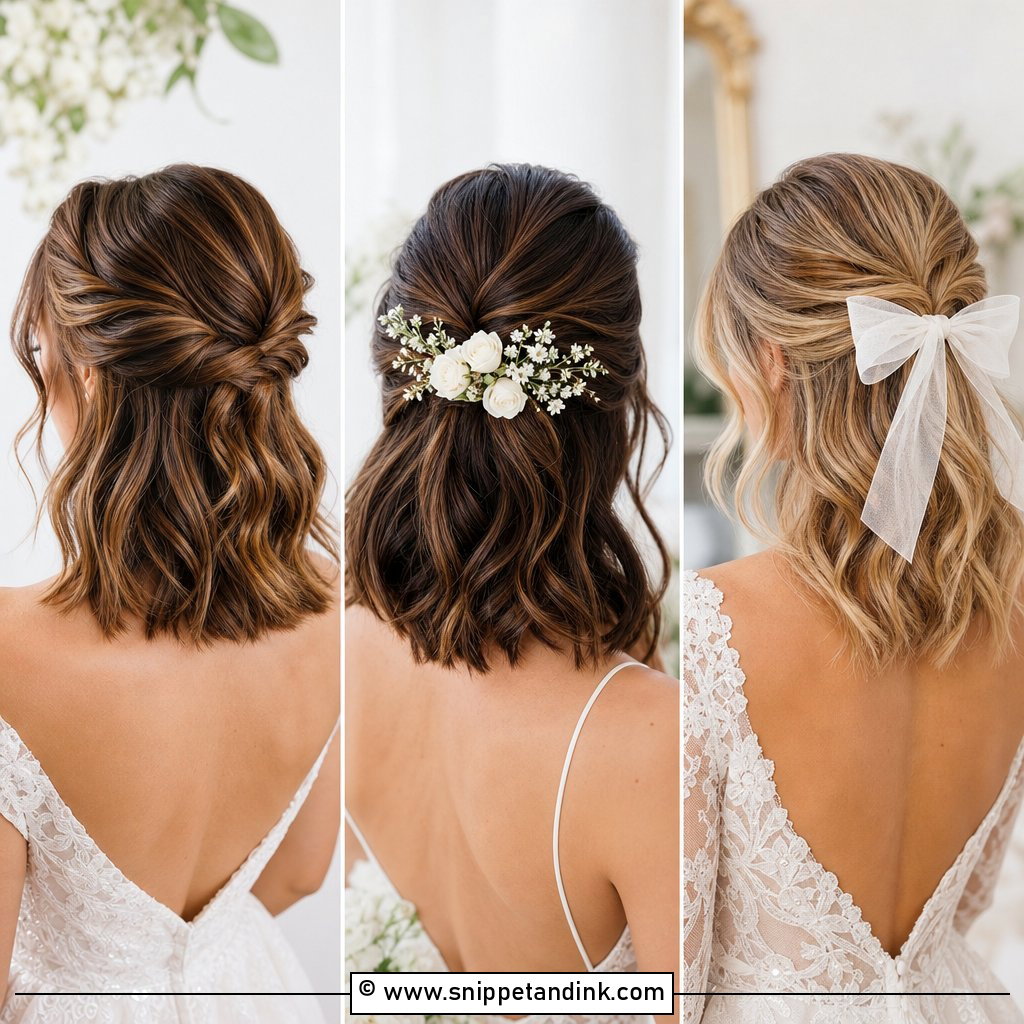
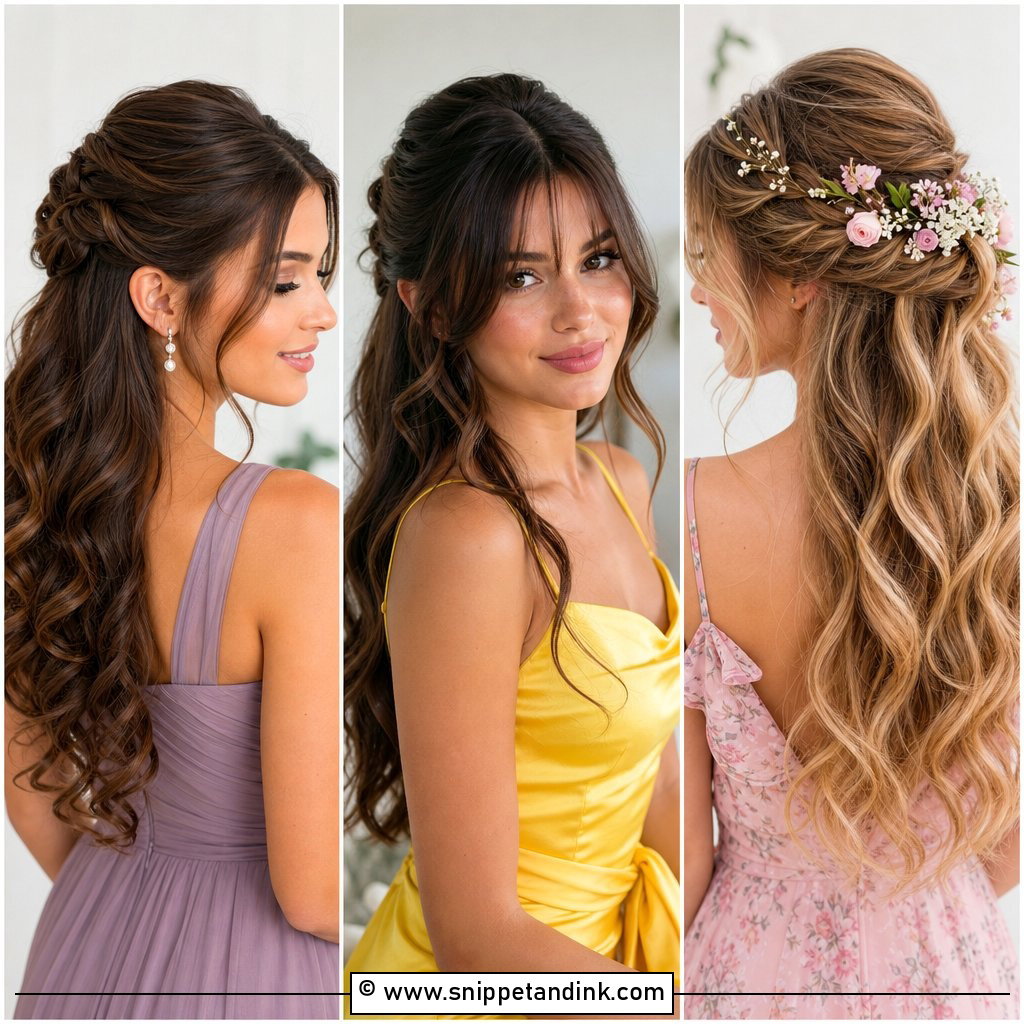
20. Braided Half-Up Updo for Weddings
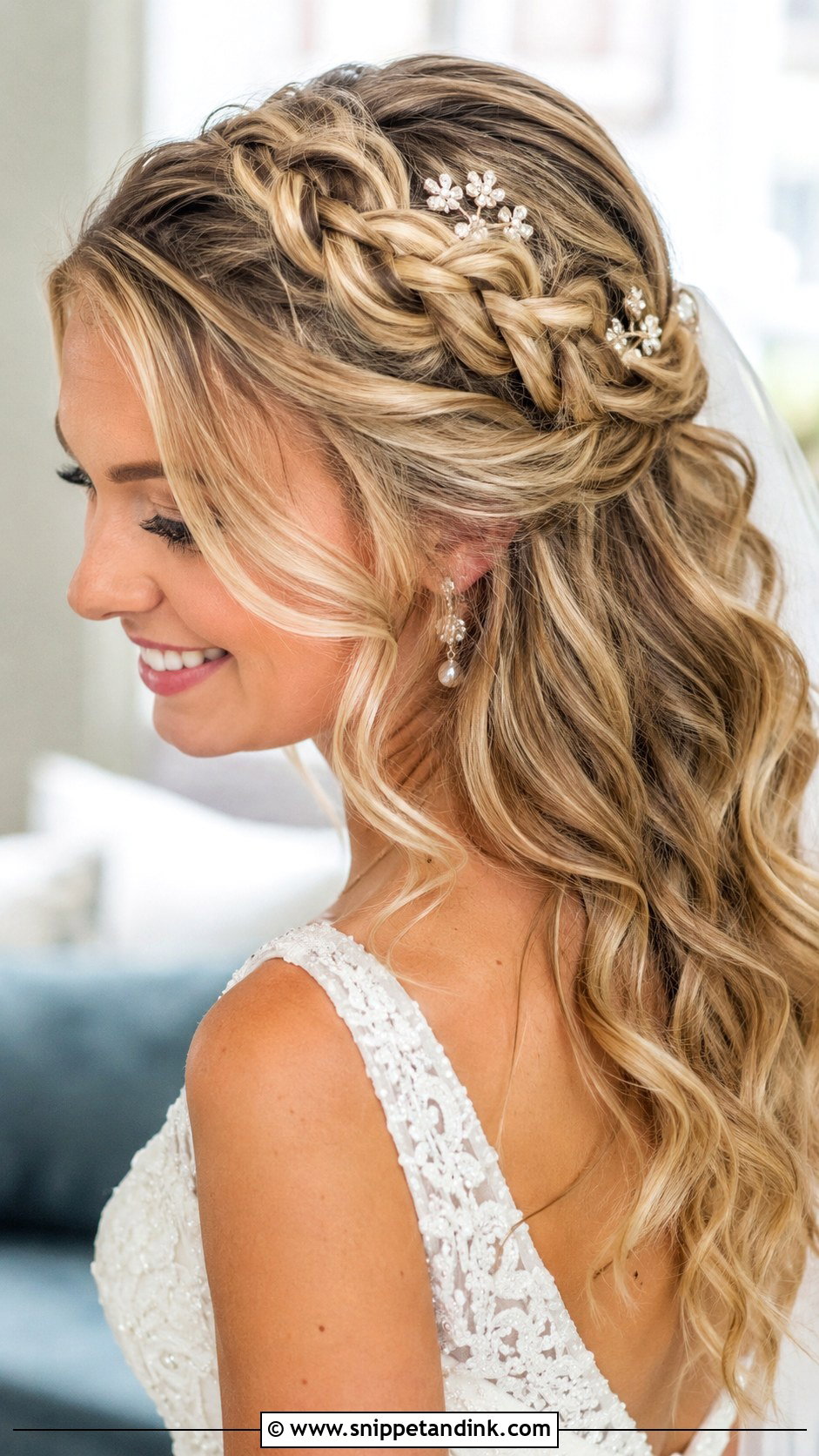
This is the most structured half-up on the list. The crown section is braided, then twisted and pinned into a raised shape, and the lengths below fall in waves. It has the polish of an updo without hiding your length. I tease lightly at the root before braiding to give the height something to sit on, then pin the shape with crossed pins so it doesn’t shift. A few face-framing pieces soften it. Pearls or sparkling pins suit the formal mood better than flowers here.
Why a Braid Can Look Thinner in Photos Than in the Mirror
A braid that looks full when you check it in a hand mirror can photograph flat, because cameras flatten depth and the detail sits in shadow. At a trial I always photograph the back with my phone flash on and off. If it disappears, I pancake the loops wider and sometimes add a weft.
Colour plays a part as well. Very dark hair hides braid detail, so I add a shine spray and choose a raised Dutch braid rather than a flat French one. Blonde and highlighted hair shows texture easily, and a fishtail is a safe choice there. Your photographer will mostly shoot the side and back, so those angles matter more than the front.
Fixing a Braid That Starts to Slip During the Reception
Most braids loosen a little by evening. That’s fine if it was planned for. What I hand to a bridesmaid or a parent for the reception:
- A few bobby pins in your hair colour and two U-pins, for re-securing the join where the braids meet.
- A travel can of flexible hairspray, sprayed onto a palm and smoothed over flyaways rather than sprayed straight at the head.
- A clear elastic, in case the end of a braid comes untied.
- A small comb with a tail, to lift a flattened crown without undoing anything.
If a whole section drops, don’t try to re-braid it in a bathroom. Twist it back along the line of the original braid and pin it. From a few feet away a twist and a braid look the same, and it takes a minute.
The Braid That Still Looks Like Yours at Midnight
Every one of these braids comes down to two things: how much grip your hair has and what you need the braid to hold. Take the shortlist to your trial with photos of the dress and any veil, and ask your stylist to test the braid with the accessories in place. Wear it for a few hours afterwards. If it’s still where it started by the evening, that’s your style.
You'll Like These Ideas:


Leave a Reply