
Most brides I dress arrive with a folder of screenshots and leave in something they never saved. That isn’t a failure of taste. A photo can’t tell you how heavy a skirt is, how a bodice feels after an hour of sitting, or whether a neckline keeps slipping when you hug someone. So I start with the venue, the season and how much you plan to move, and only then talk about details like basque waists, bows, pearls or sheer sleeves. The 25 ideas below are the silhouettes and finishes I pull most often, with the honest notes I’d give you in the fitting room.
Counting Back From the Wedding Date for Orders and Alterations
Most made-to-order gowns take somewhere around four to six months to arrive, and alterations usually need another six to eight weeks on top. That’s why I tell brides to start trying on dresses about nine months to a year before the wedding. Rush orders exist, but they often cost more, and they leave no slack if the gown comes in with a fault.
Expect two or three fittings. The first fitting is about structure: hem, bodice and anything that needs taking in. The second checks the changes. The final one, usually two or three weeks out, should be done in your actual shoes and underwear, with the person who will dress you on the day watching so they learn the bustle and the fastenings.
What to bring to your first appointment
- A strapless bra or bodysuit in a skin tone close to yours
- Shoes at roughly the heel height you plan to wear
- Photos of the venue, so the stylist can judge scale and formality
- One or two people whose opinion you trust, not six
1. Lace A Line Wedding Dress
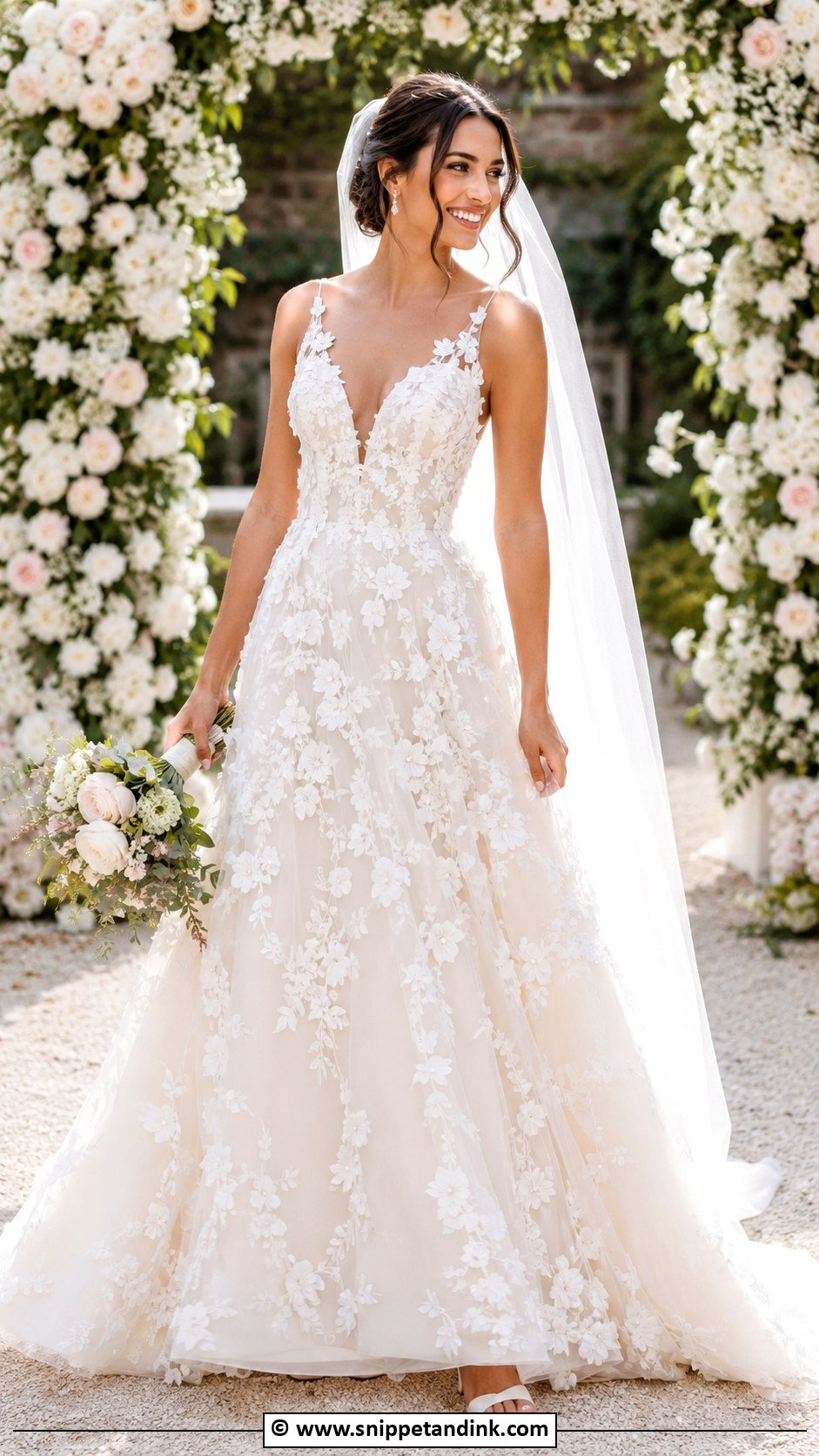
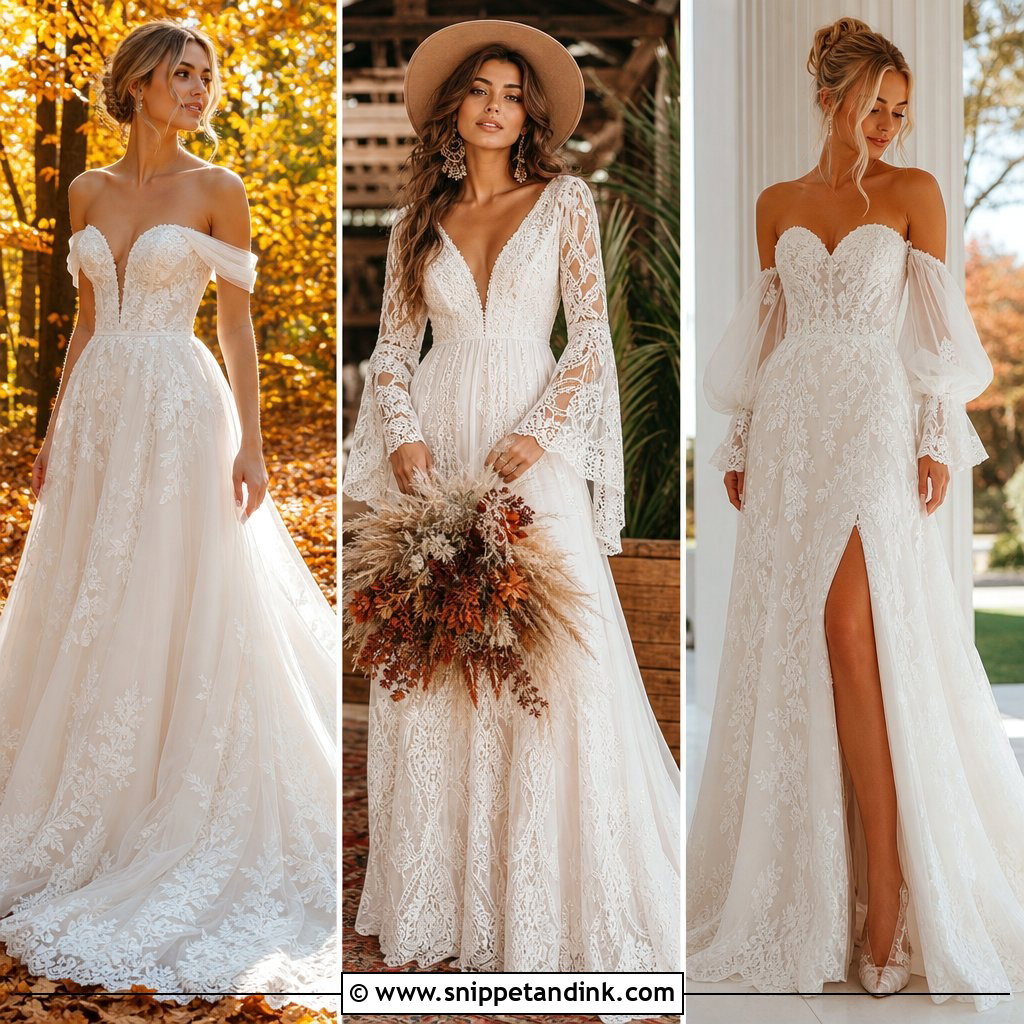
Lace over an A line skirt is the shape I reach for first when a bride has no idea where to start, because it forgives a lot: the skirt clears the hips without clinging, and you can sit, kneel for photos and climb stairs in it. What changes the mood is the lace itself. Fine Chantilly reads quiet and classic; heavy corded or guipure lace adds weight and shows up strongly on camera. At fittings I check where the lace motifs land after the side seams are taken in, since a good seamstress will hand-cut and overlap the lace so flowers don’t get chopped in half. Keep hair soft and the veil fingertip length so nothing sits on top of the pattern.
2. Satin Ball Gown Wedding Dress
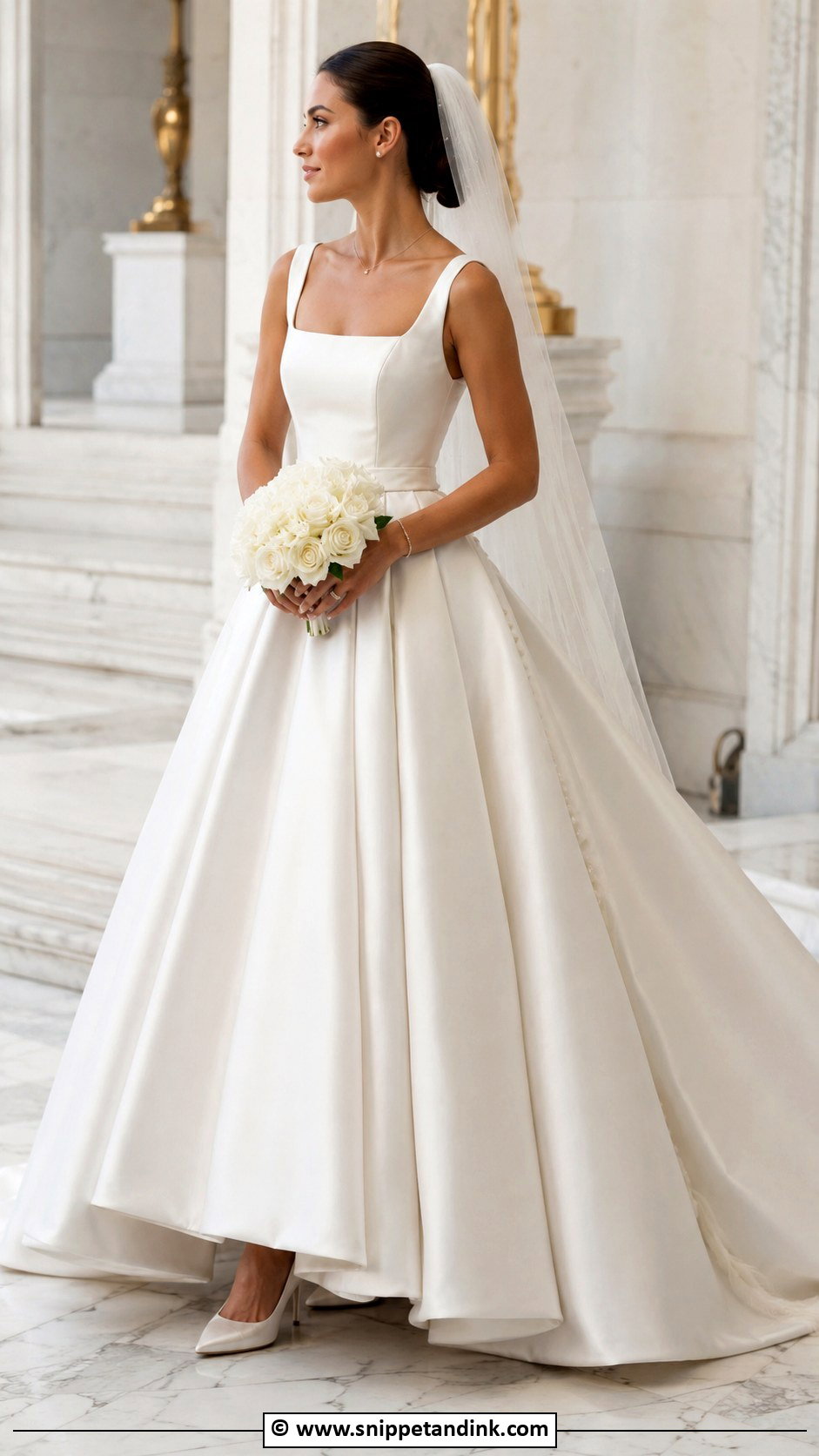
Satin holds its shape better than any other bridal fabric, which is why a full ball gown in it looks so composed. The catch is weight. A heavy duchess satin skirt over several petticoat layers can be tiring by evening, so I always ask brides to walk the length of the shop and sit down twice before deciding. Satin also shows every pull at the zip, so the bodice fit has to be exact. Keep jewelry minimal, wear a sleek bun and let a long plain-edged veil follow the skirt. Pearl buttons down the back are the one extra I’d consider.
3. Basque Waist Wedding Dress
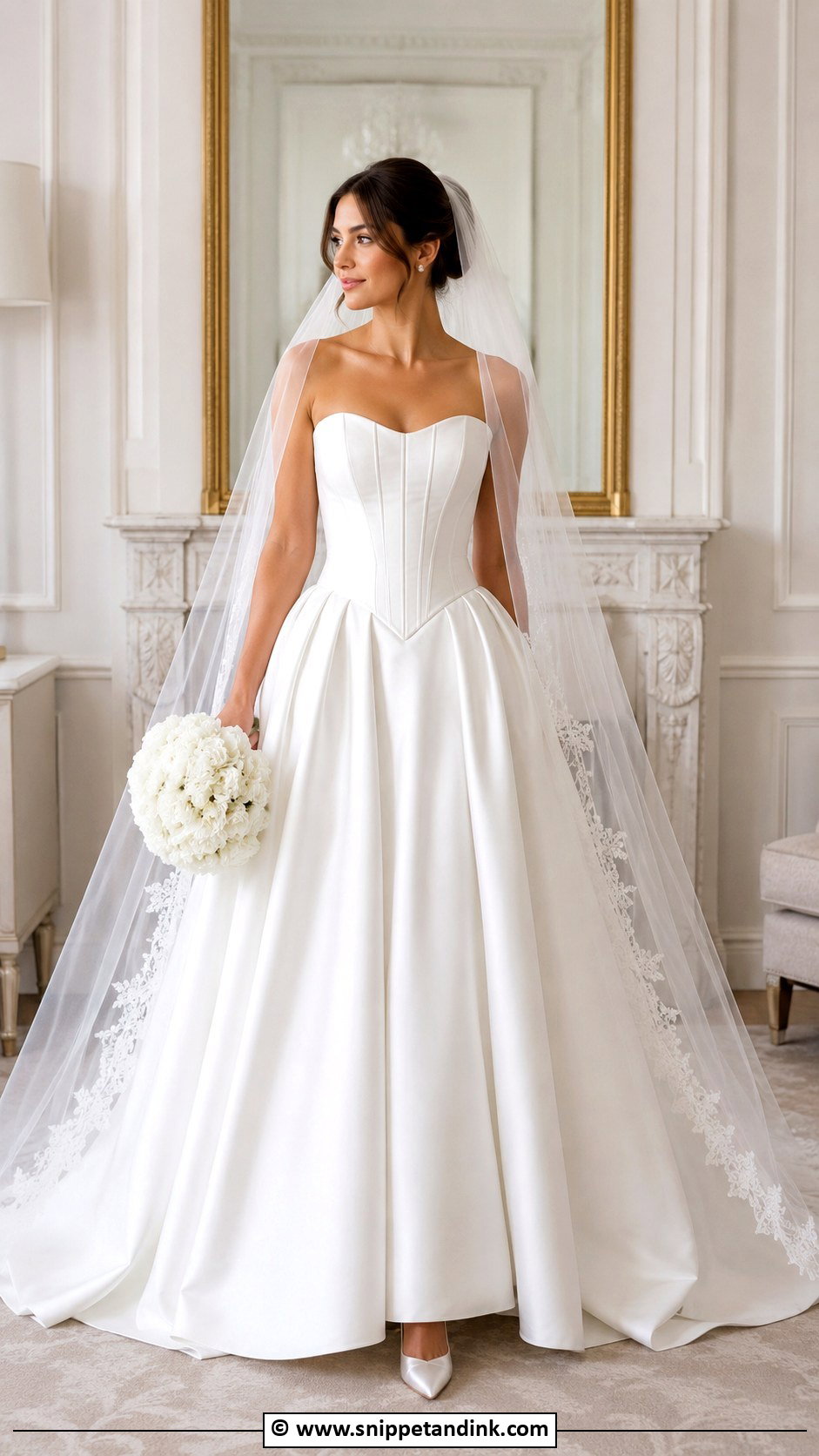
The basque point dips below your natural waist at the center front, so it draws the eye down and makes the torso look longer. It suits most brides, but I’d be careful with it if you’re very short-waisted, because a deep point can cut into the hip when you sit. Ask the shop to show you the gown seated in a mirror. Because the basque line is already shaping the bodice, I keep everything around it calm: pearl studs, low satin heels, a cathedral veil and a rounded bouquet held low enough that it doesn’t hide the point.
4. Drop Waist Wedding Dress
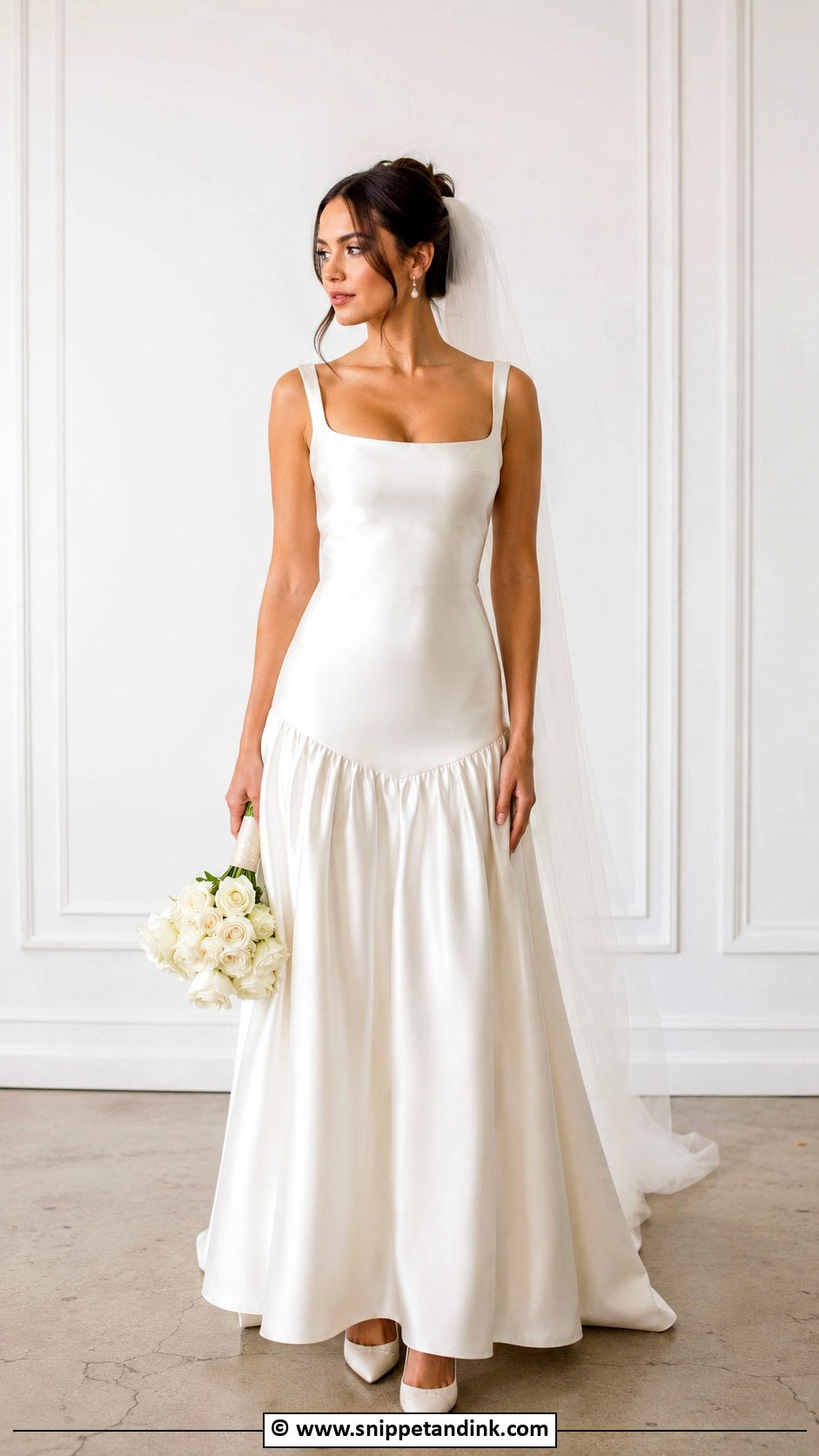
A dropped waist runs the fitted part of the bodice down past your natural waist before the skirt opens, so it lengthens the whole torso. It reads slightly 1920s in satin or organza and more sculptural in taffeta. Here’s my warning: if the drop sits at your widest point, the skirt can flare from the hip and look boxy, so the seam placement matters more than the fabric. With a full skirt I keep the neckline clean; with a slim one, a draped shoulder scarf or a long sheer veil softens the line. Skip oversized accessories either way.
5. Corset Wedding Dress
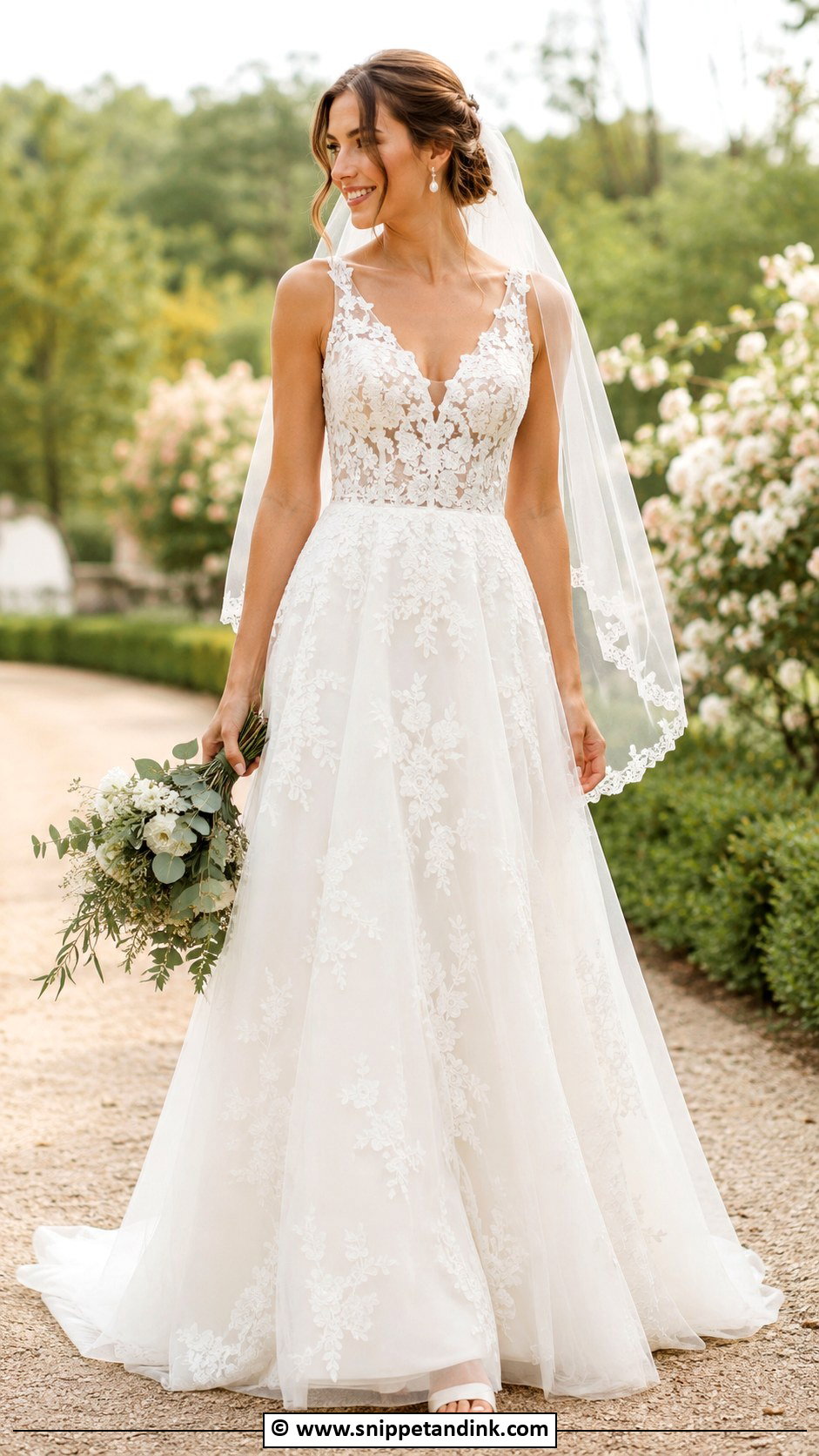
A corset wedding dress gets its shape from boning, and the boning is where fit lives or dies. Spiral steel bones bend with you; cheap plastic ones can warp and dig in under the ribs by the evening. I always check whether the corset laces up the back, because lacing gives you a little room to adjust on the day, while a zip doesn’t. Whether the bones show through or hide under lace is purely about mood. Leave the neckline bare of heavy necklaces and choose a soft updo or loose waves.
6. Off Shoulder Wedding Dress
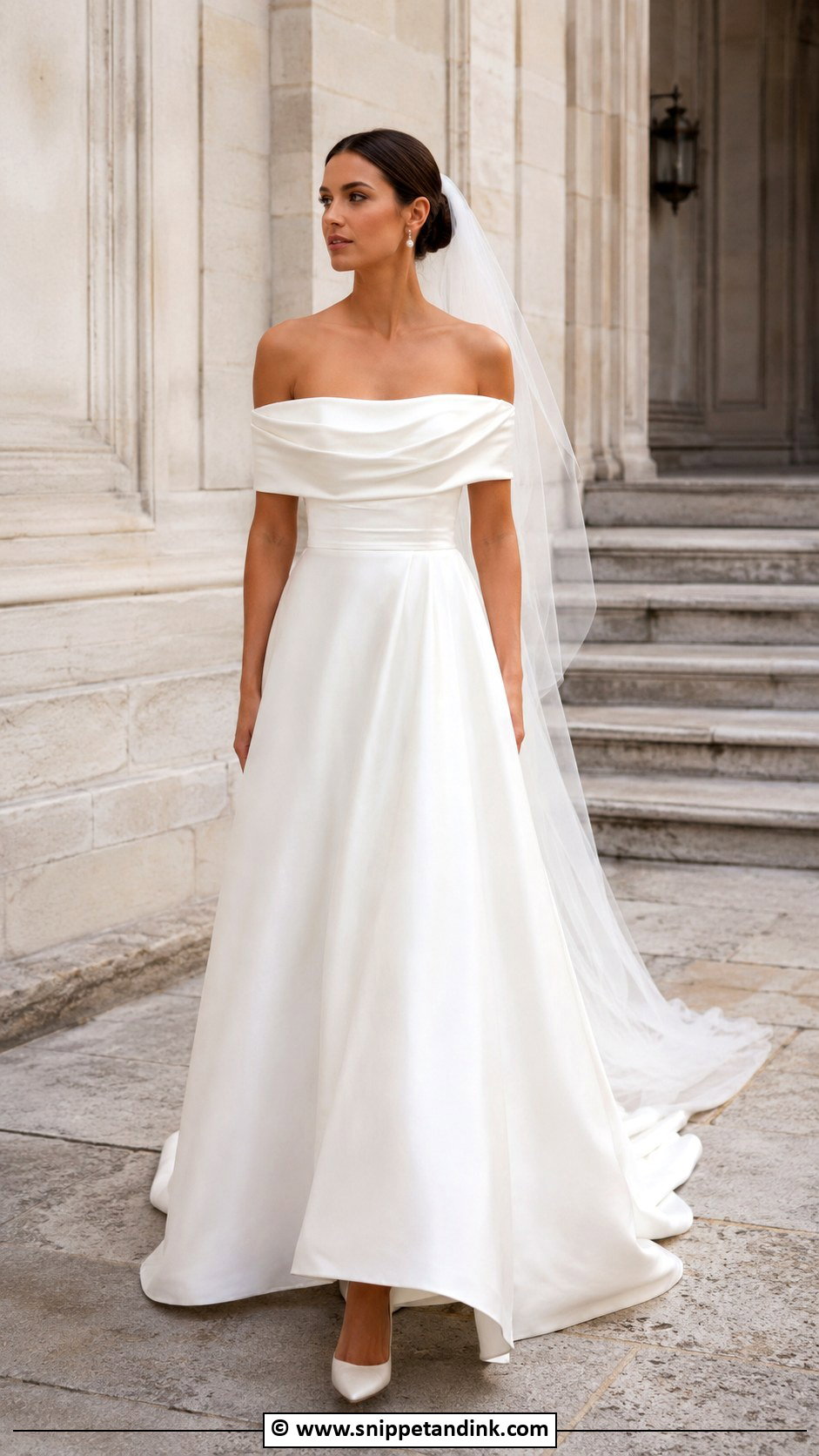
Off the shoulder necklines are pretty until you try to raise your arms. Fitted off shoulder sleeves restrict how far you can lift, so hugging and the bouquet toss need a quick test at your fitting. Ask your seamstress about silicone grip tape inside the band; it keeps the line from creeping up. Drape sleeves move more freely and read more editorial. I like pulled-back hair here, a veil anchored low at the back of the head and pearl earrings rather than a necklace.
7. Long Sleeve Lace Wedding Dress
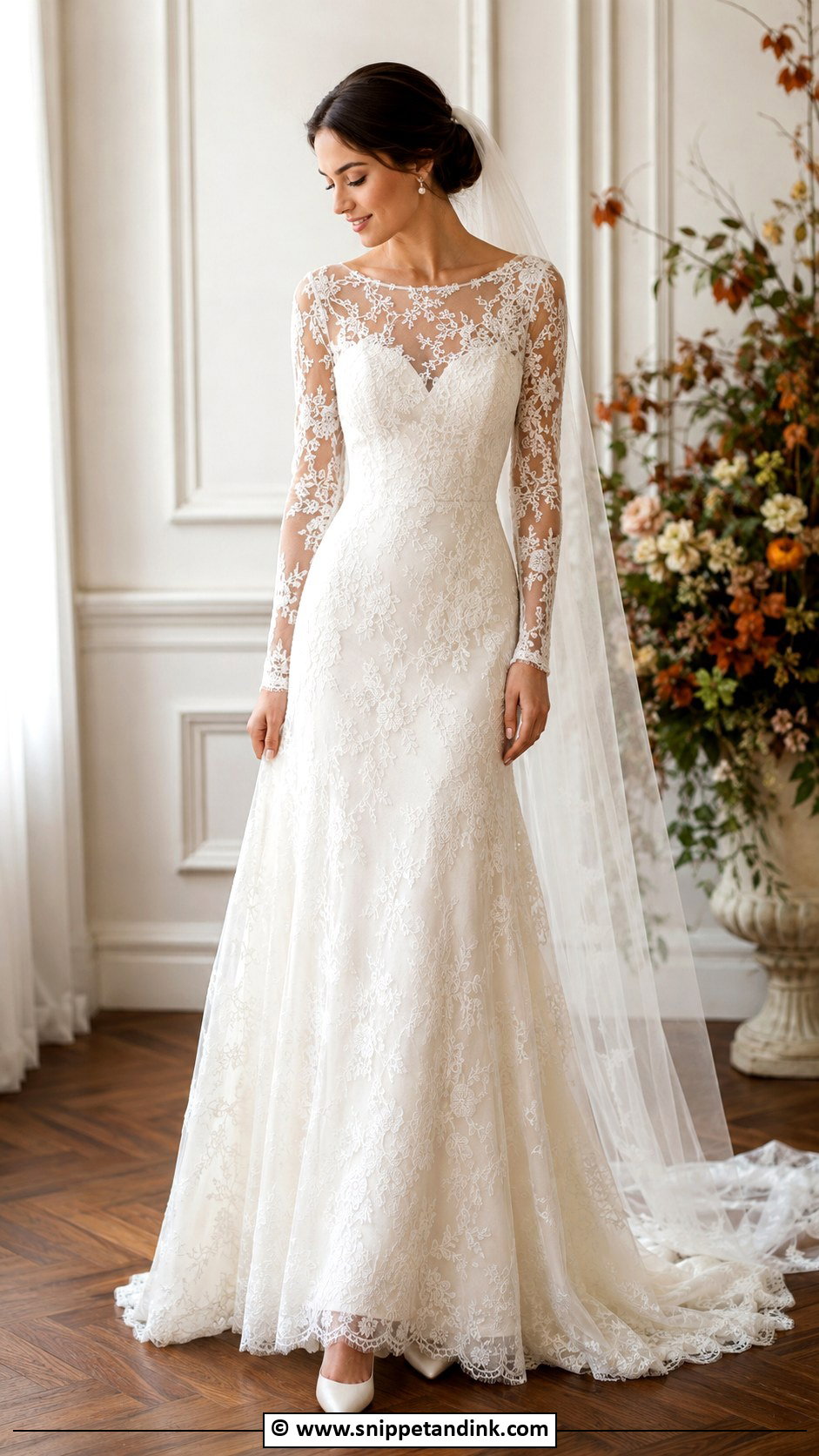
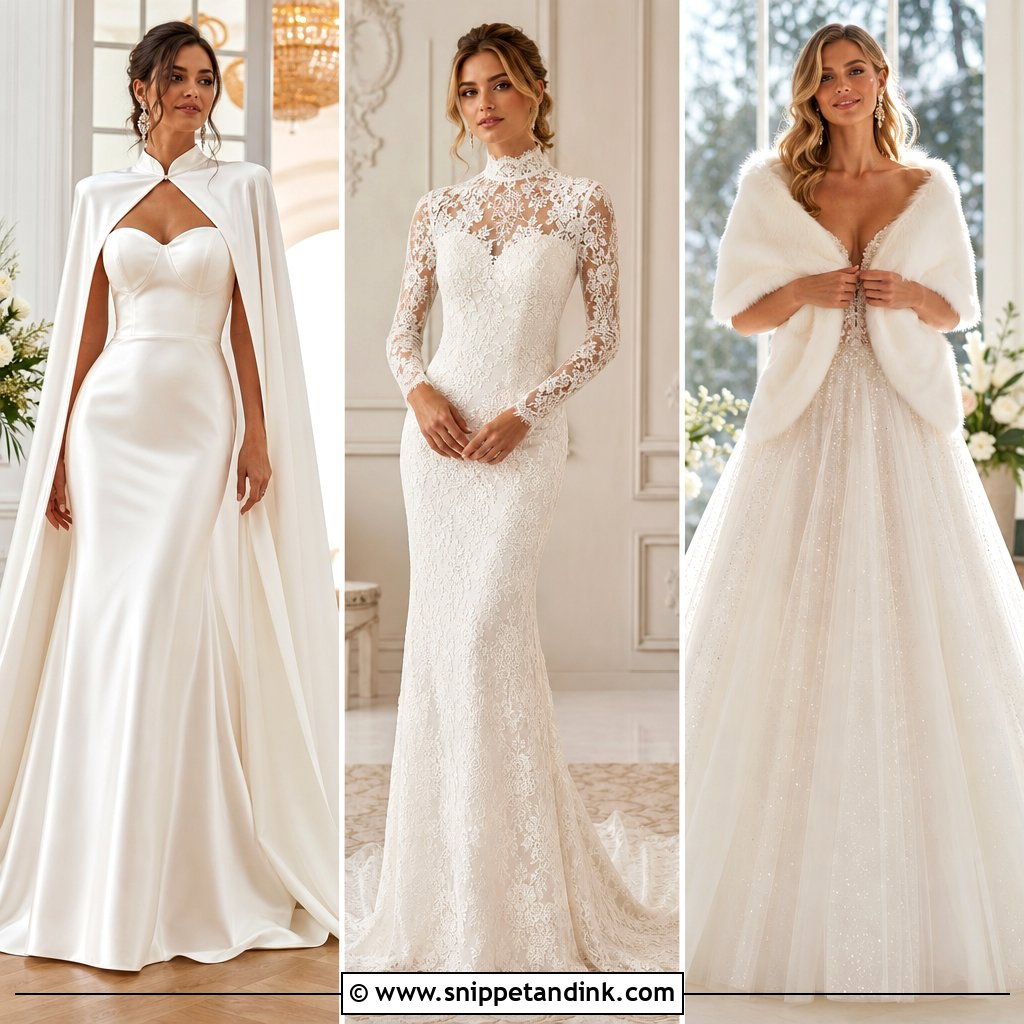
Sleeves change how a long sleeve lace wedding dress behaves more than people expect. Unlined lace sleeves are cooler and lighter; lined ones look more modest but can feel warm in a summer ceremony. The real test is reaching forward and lifting your arms over your head, since a sleeve set too tight in the armhole will pull the whole bodice up. With a high neck, skip the necklace altogether. With a V neck, a tiny pendant is enough, and a sheer veil keeps the lace visible.
8. Minimalist Satin Wedding Dress
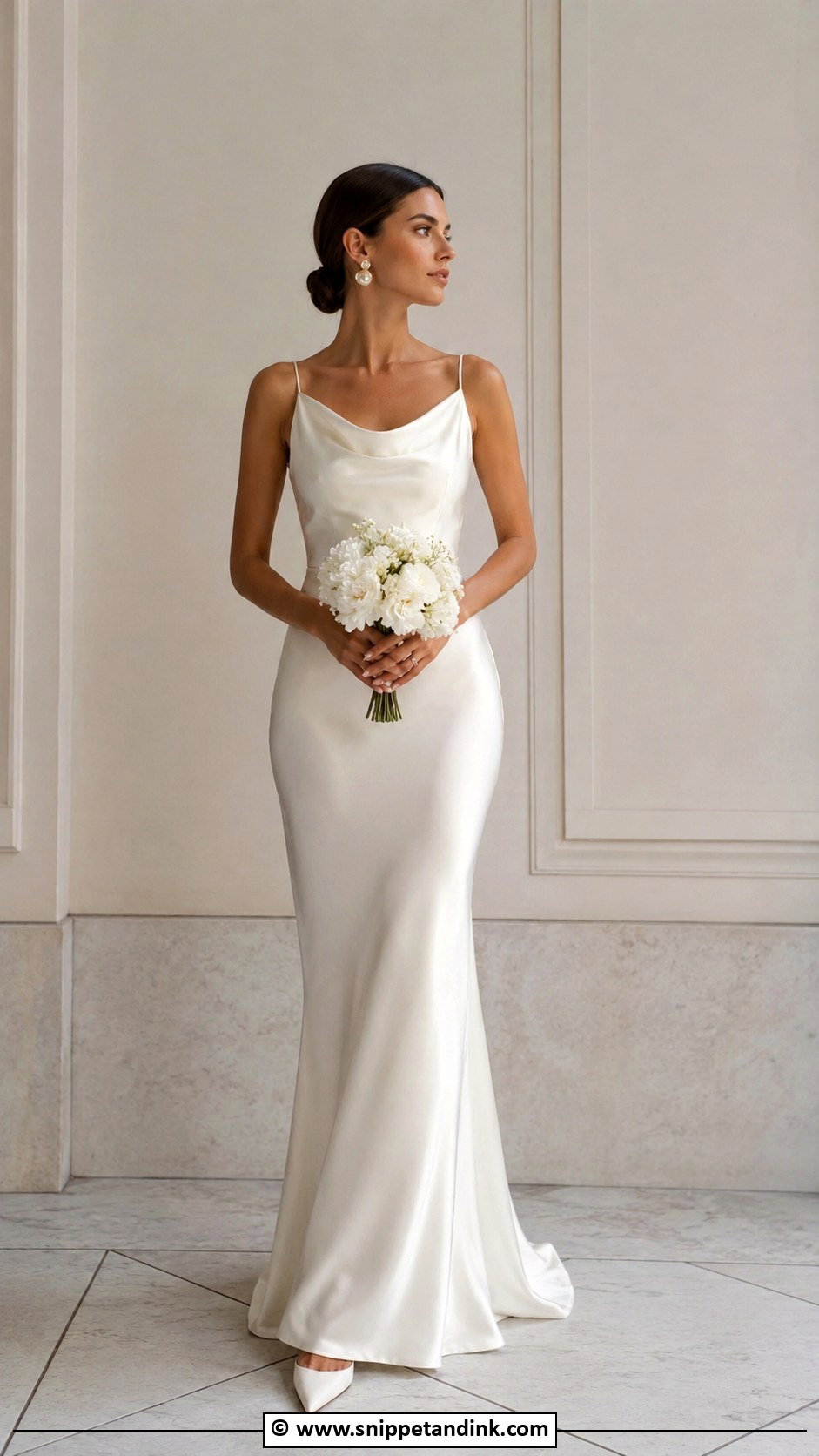
Plain satin is the least forgiving fabric in a bridal salon. With no lace or beading to distract the eye, every wrinkle at the hip and every bit of bunching under the bust shows, so I treat tailoring as half the cost of this dress. Weight matters too: a thin satin clings and shows underwear lines, while a heavier crepe-back satin hangs straight. Bias-cut slips need the most care because the fabric stretches as it drapes. Once the fit is right, keep the rest spare: sculptural earrings, a smooth bun and a small bouquet of white flowers.
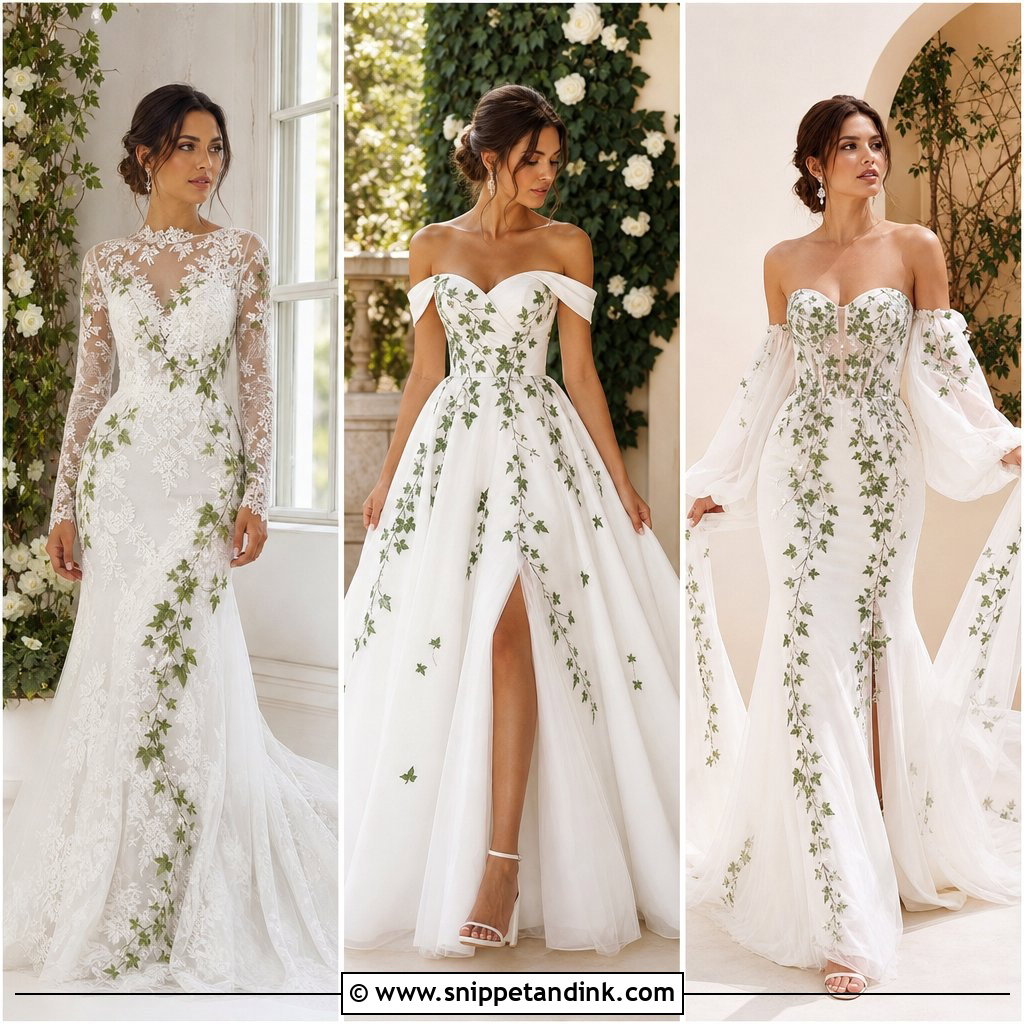
9. Floral Applique Wedding Dress
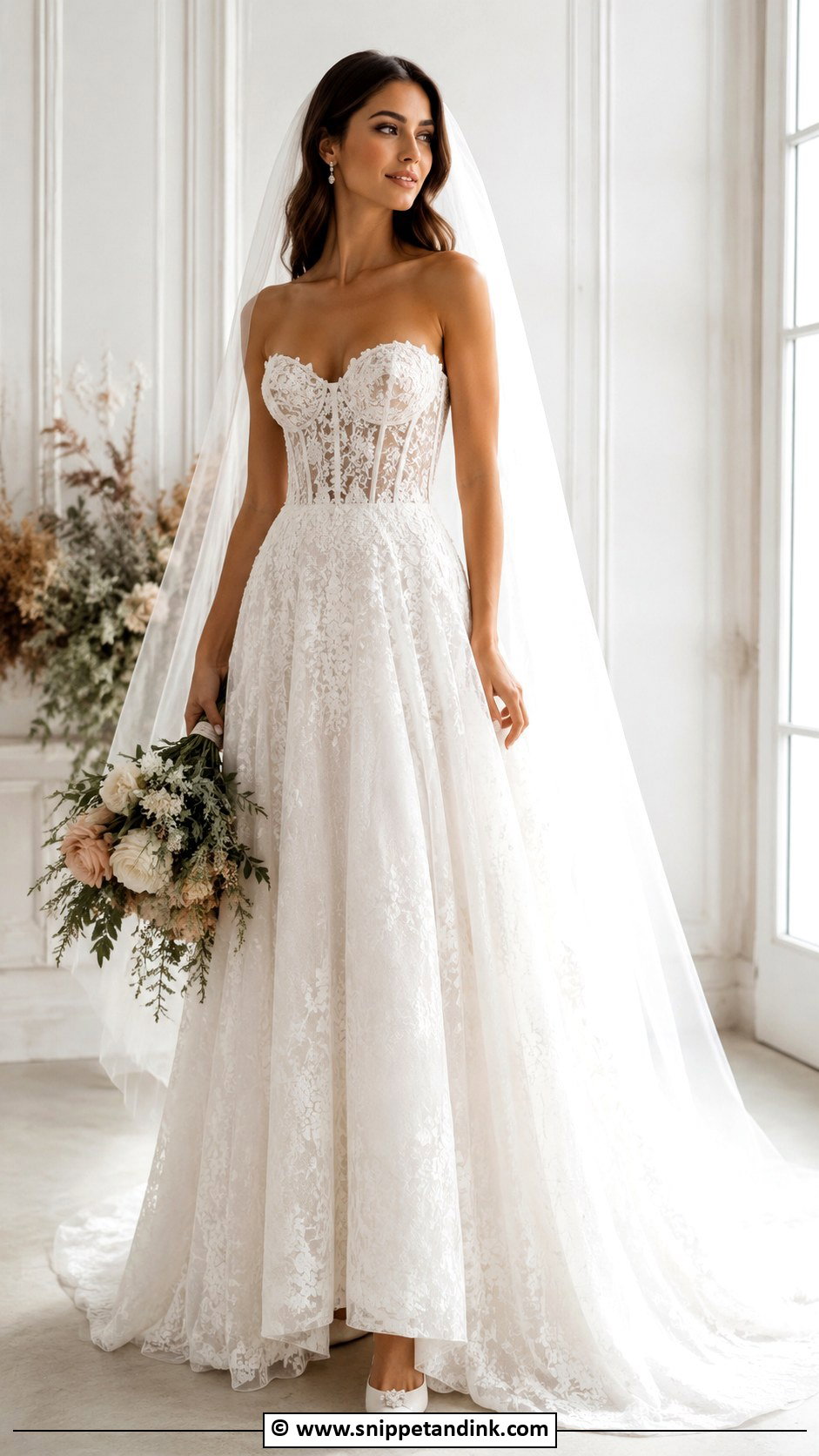
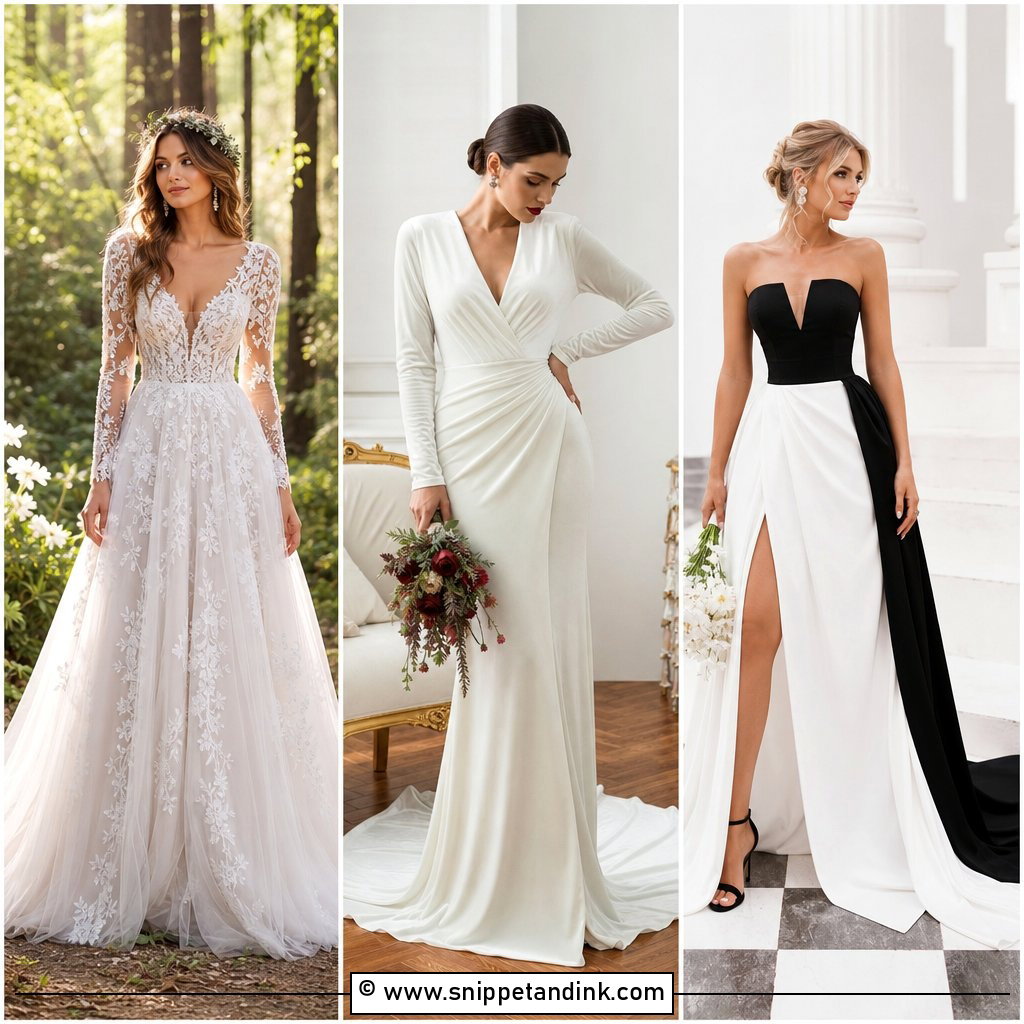
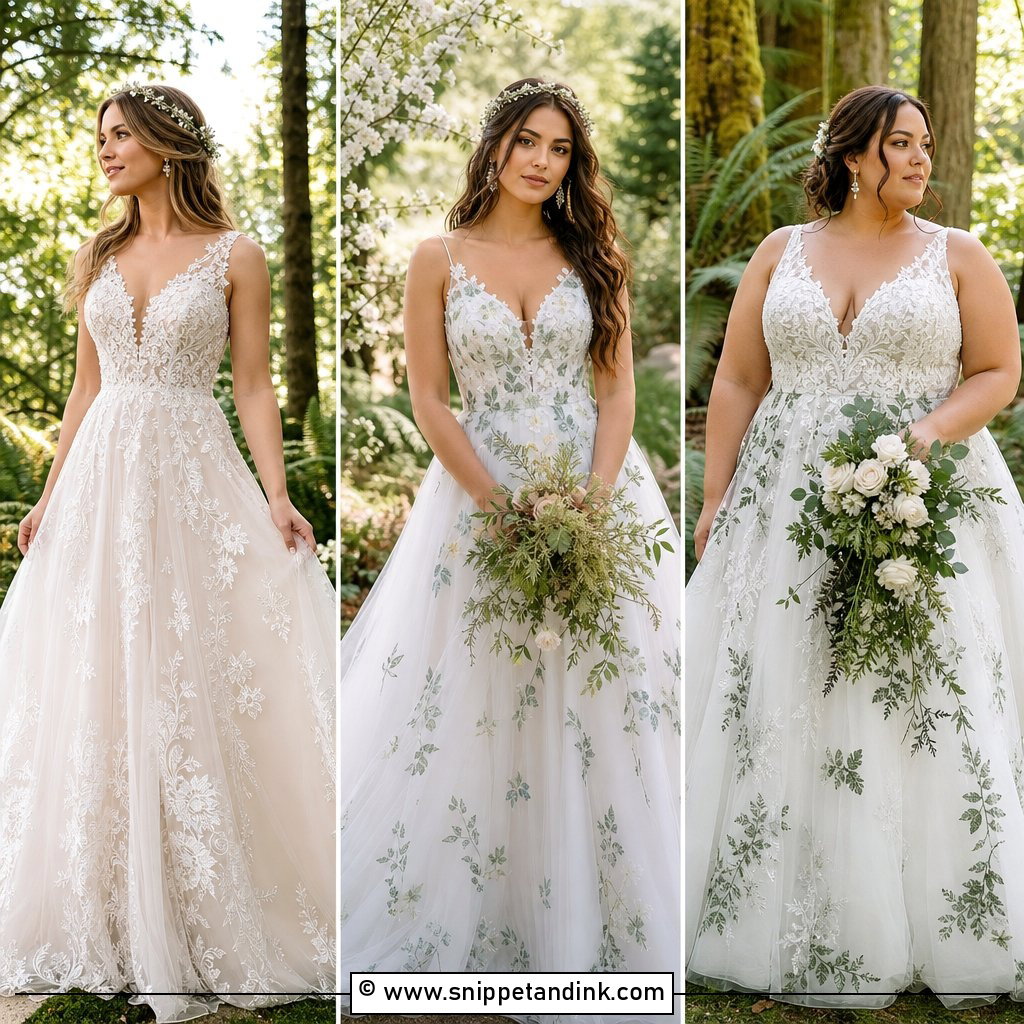
Three-dimensional flowers catch light from the side, which is why appliqué gowns look richer outdoors than under flat indoor lighting. I always check how firmly the petals are stitched on, since loose appliqués snag on bouquet stems, chair backs and the groom’s jacket buttons. Large flowers want clean hair and plain earrings. Tiny scattered flowers sit happily with soft curls or a loose bun. Pick a veil with no trim so the edges don’t fight the petals.
10. Pearl Wedding Dress
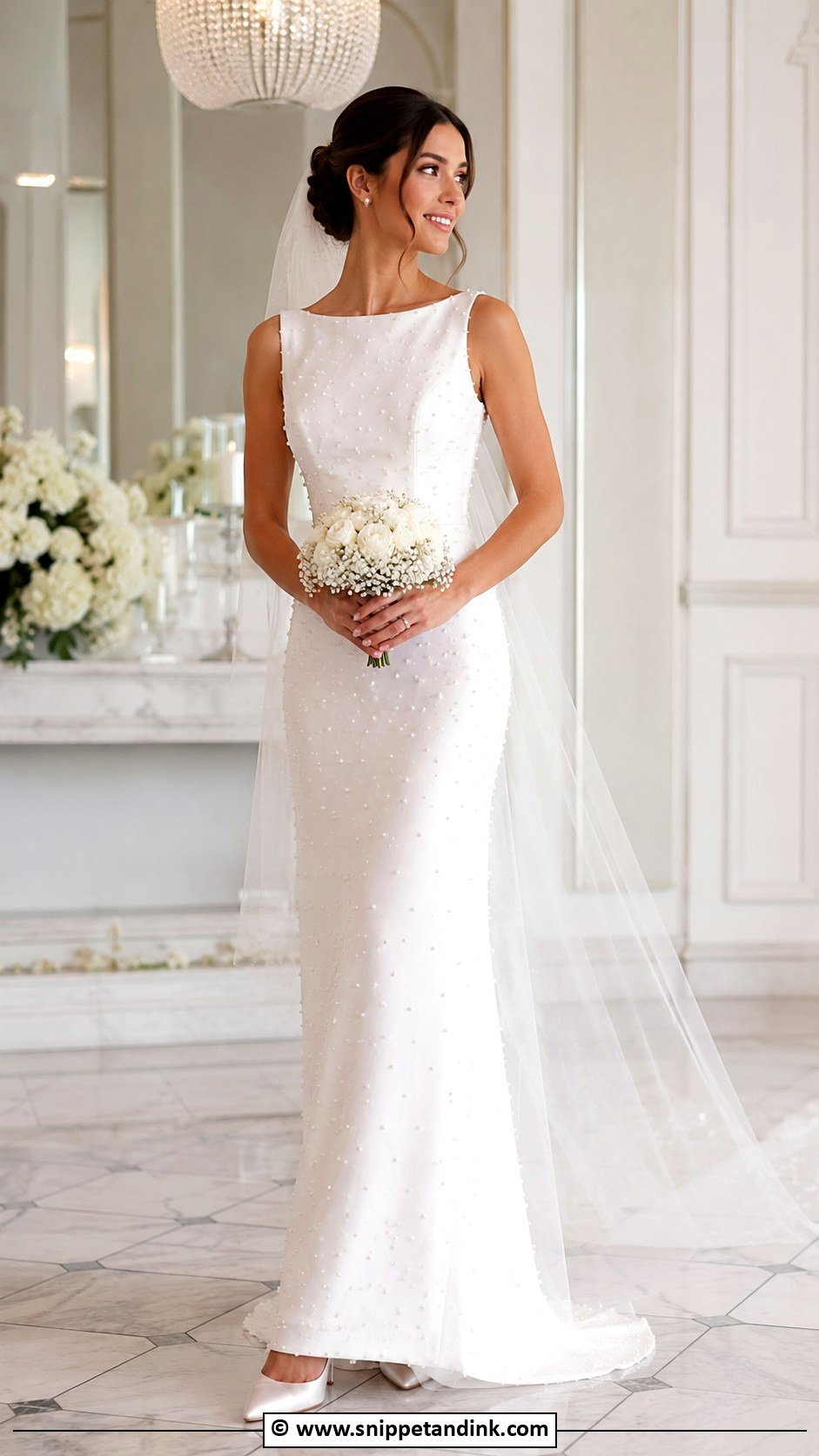
Pearls give a soft glow instead of sparkle, so a pearl gown photographs well in both daylight and candlelight without hot spots. Check the weight before you commit: a fully pearled bodice can be surprisingly heavy, and loose threads on hand-sewn pearls can unravel if one pulls. If the dress is heavily embellished, I’d go with plain studs and a sheer veil with no pearls on it. If the pearls only trim the neckline or cuffs, a pearl-edged veil ties the pieces together. A smooth bun or soft waves suits both.
11. Bow Back Wedding Dress
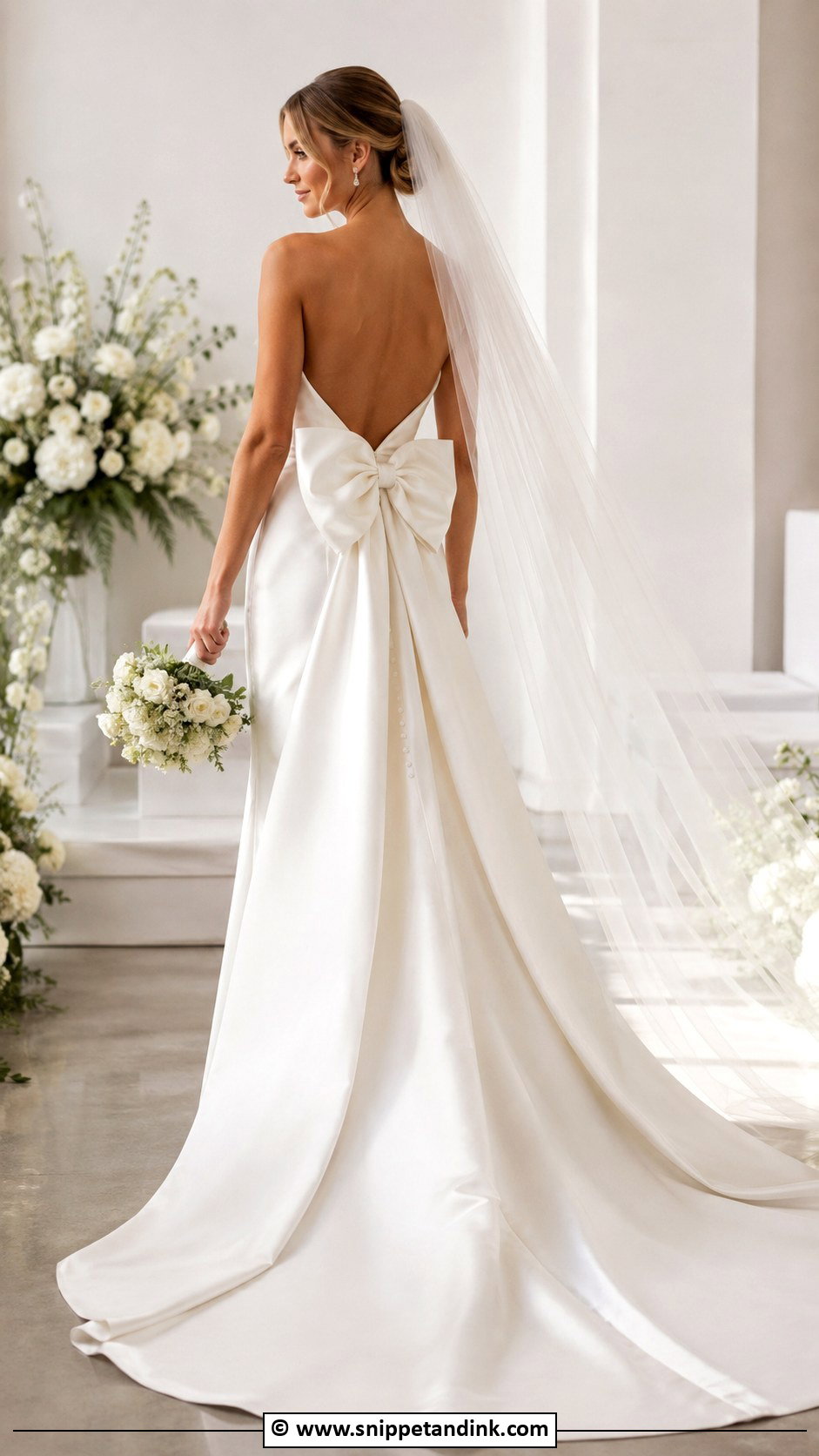
The bow is what guests see during the vows, so it deserves as much thought as the front. Satin, mikado and taffeta hold a bow’s shape; soft chiffon bows tend to collapse after a few hours of sitting. My main fitting question is where the veil ends in relation to it. A veil stopping just at the bow looks cluttered, so take it either above the bow or well past it. Keep the front simple and the earrings small. For dancing, ask whether the bow can be bustled out of the way or tacked down.
12. Statement Sleeve Wedding Dress
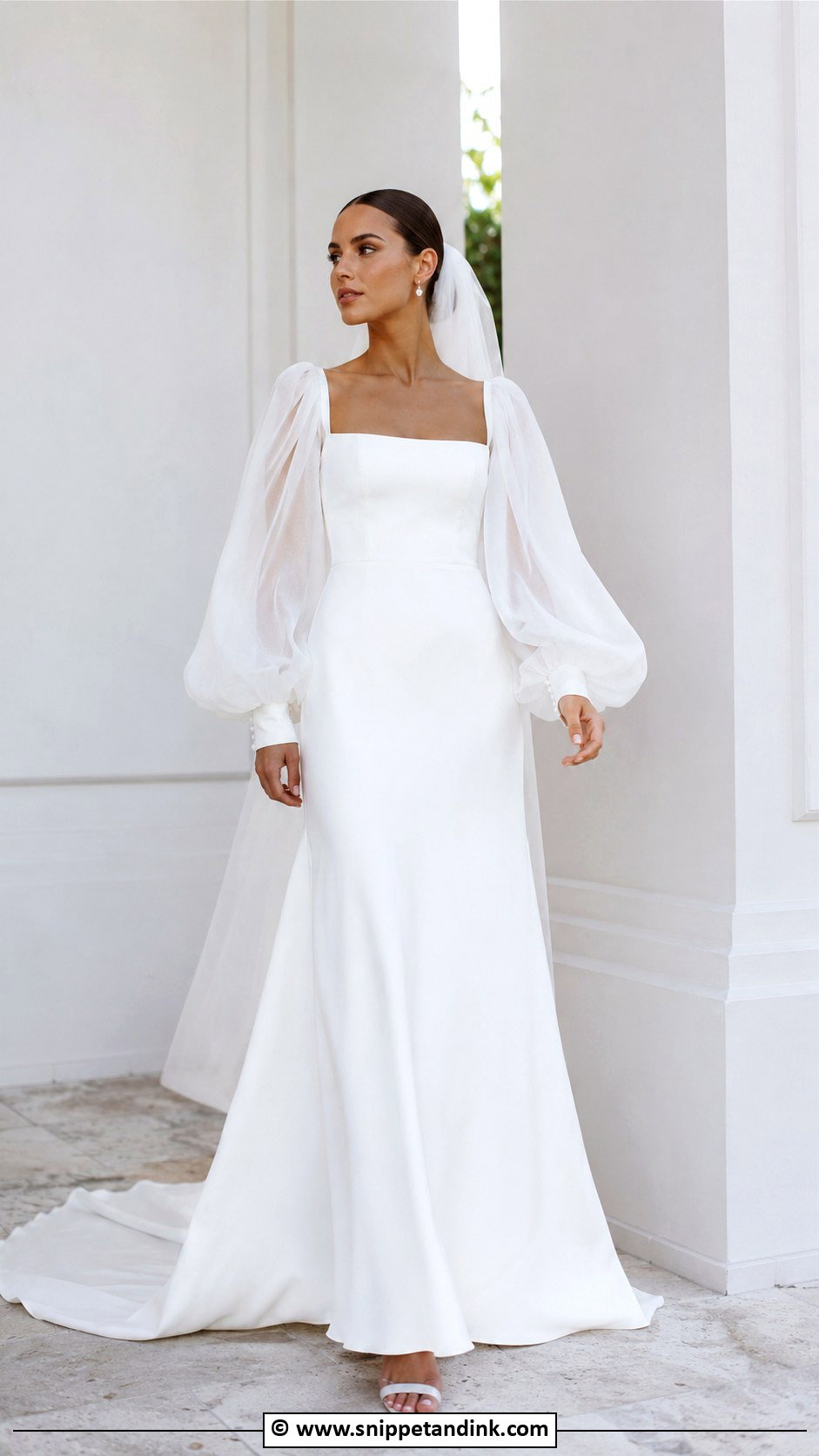
A statement sleeve wedding dress moves the drama to your arms, which means the rest of the outfit can stay plain. Puff and bishop sleeves need a fitted bodice to stay in proportion, otherwise the whole top half looks wide. I steer brides toward detachable sleeves if they’re unsure, because you can wear them for the ceremony and unclip them before dinner when cutlery and dancing get in the way. Keep jewelry minimal and the hair smooth so the sleeve shape stays clear in photos.
13. Square Neck Wedding Dress
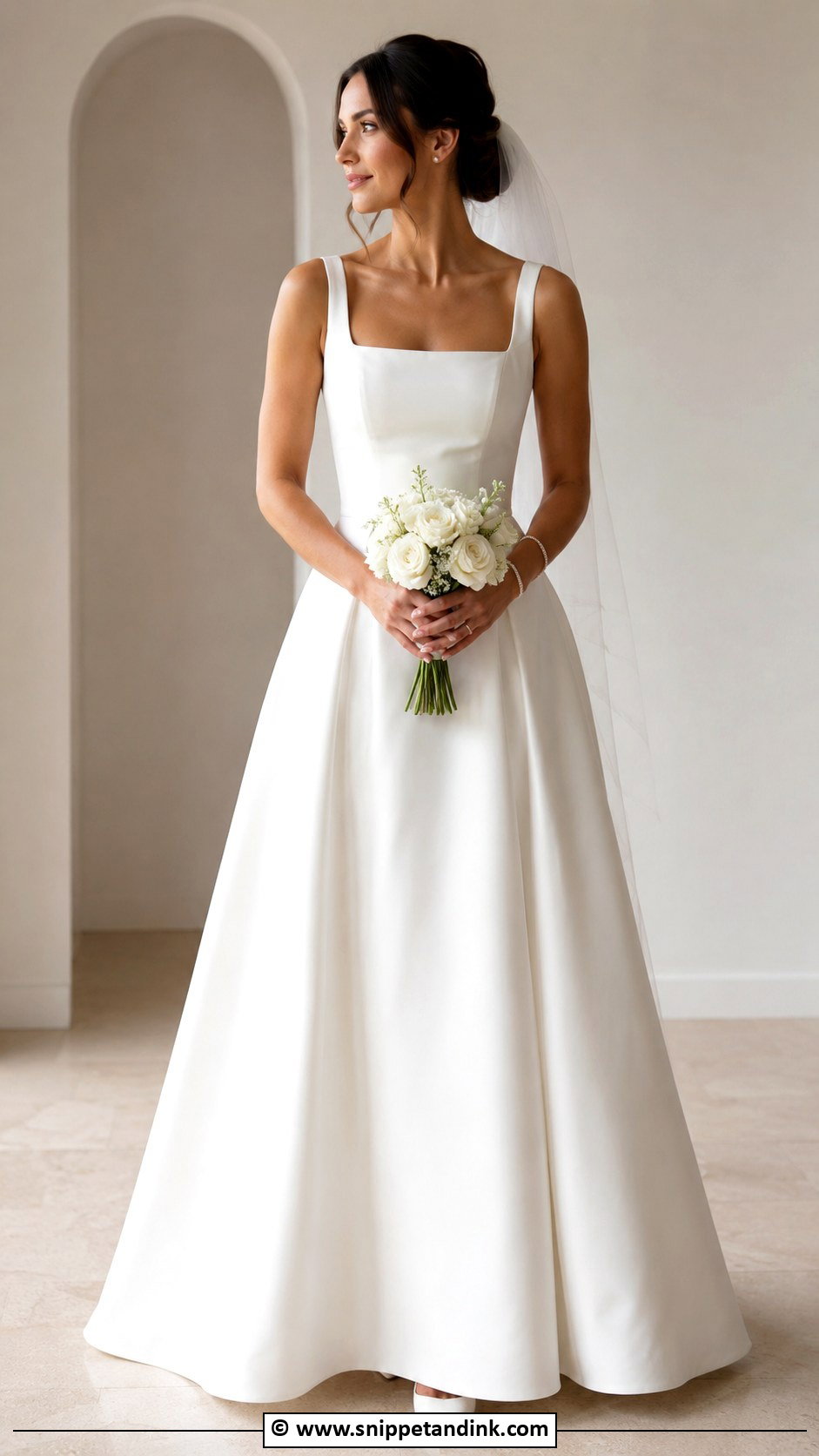
Square necklines frame the collarbone with straight lines, so they suit brides who want structure without a lot of skin. They’re also one of the easiest necklines to wear all day, because a straight edge doesn’t slide like a sweetheart. I rarely add a necklace here; it tends to sit awkwardly inside the square. Pearl studs and a fine bracelet are plenty. Choose the shoes by the floor: pointed pumps indoors, low sandals on grass.
14. High Neck Wedding Dress
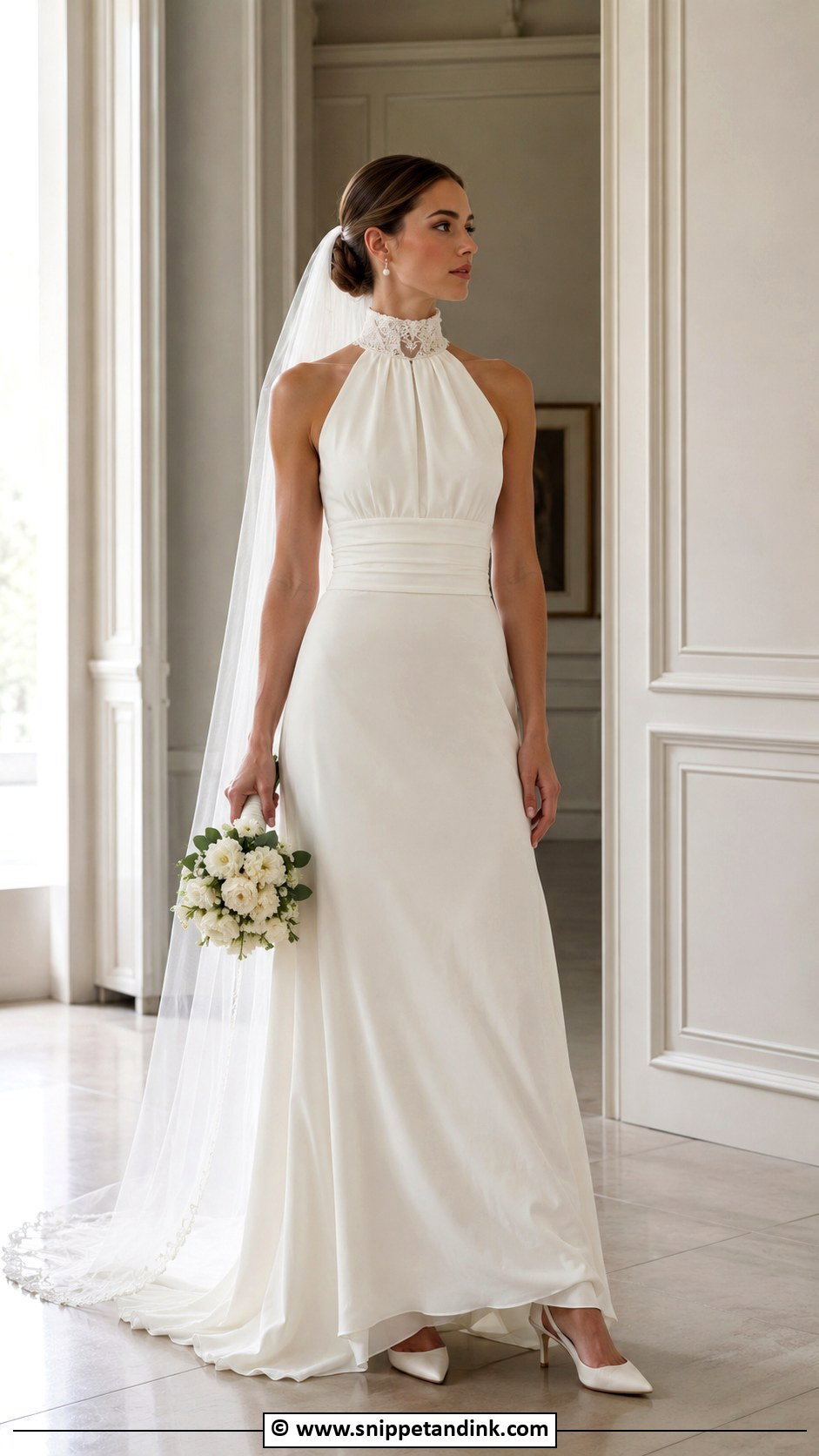
A high neck covers the area where you’d normally put jewelry, so the work shifts to earrings, hair and how the veil falls. Illusion tulle at the neck is lighter and cooler than a solid lace collar, which matters in a warm venue. My one practical check: sit down and look down at your lap. If the collar presses into your chin, ask for it to be lowered a fraction. A low bun keeps the neckline visible from behind, and plain ivory pumps or slingbacks finish it.
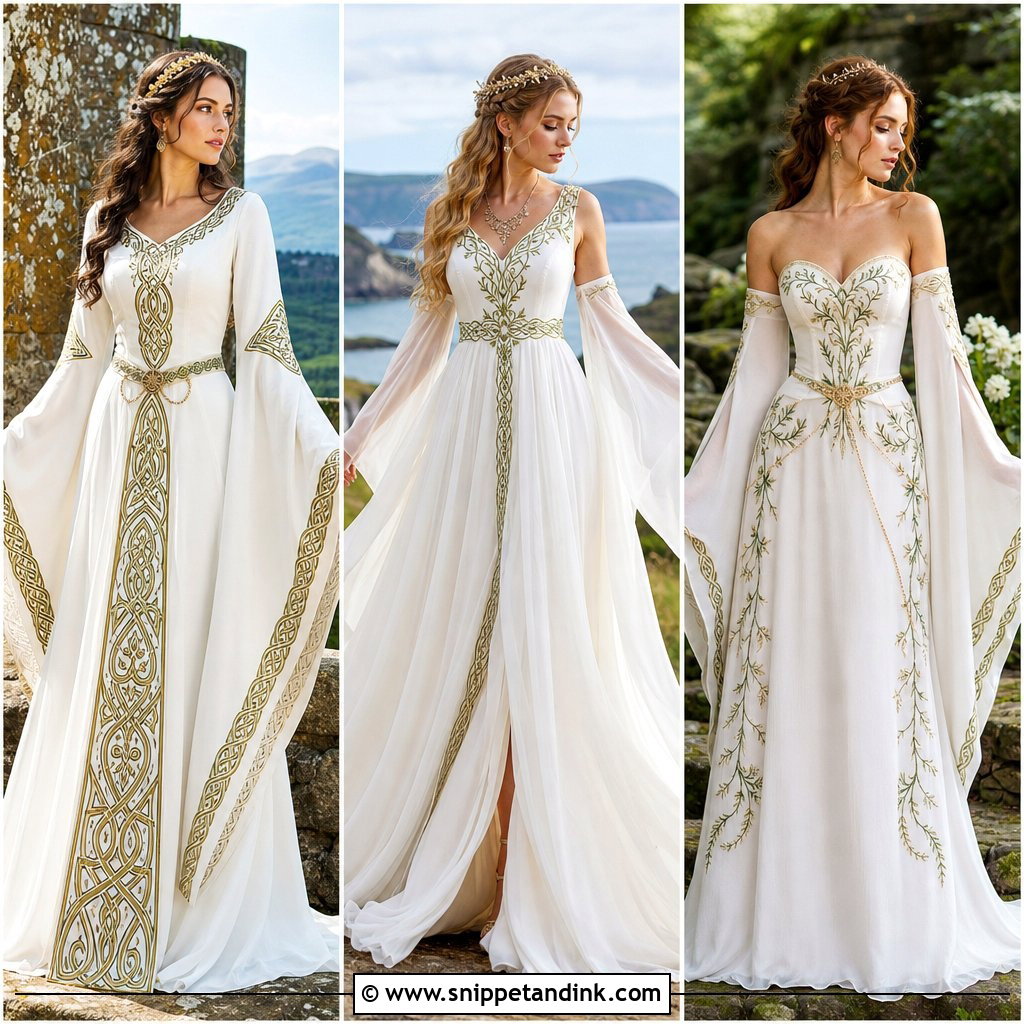
15. Strapless Wedding Dress
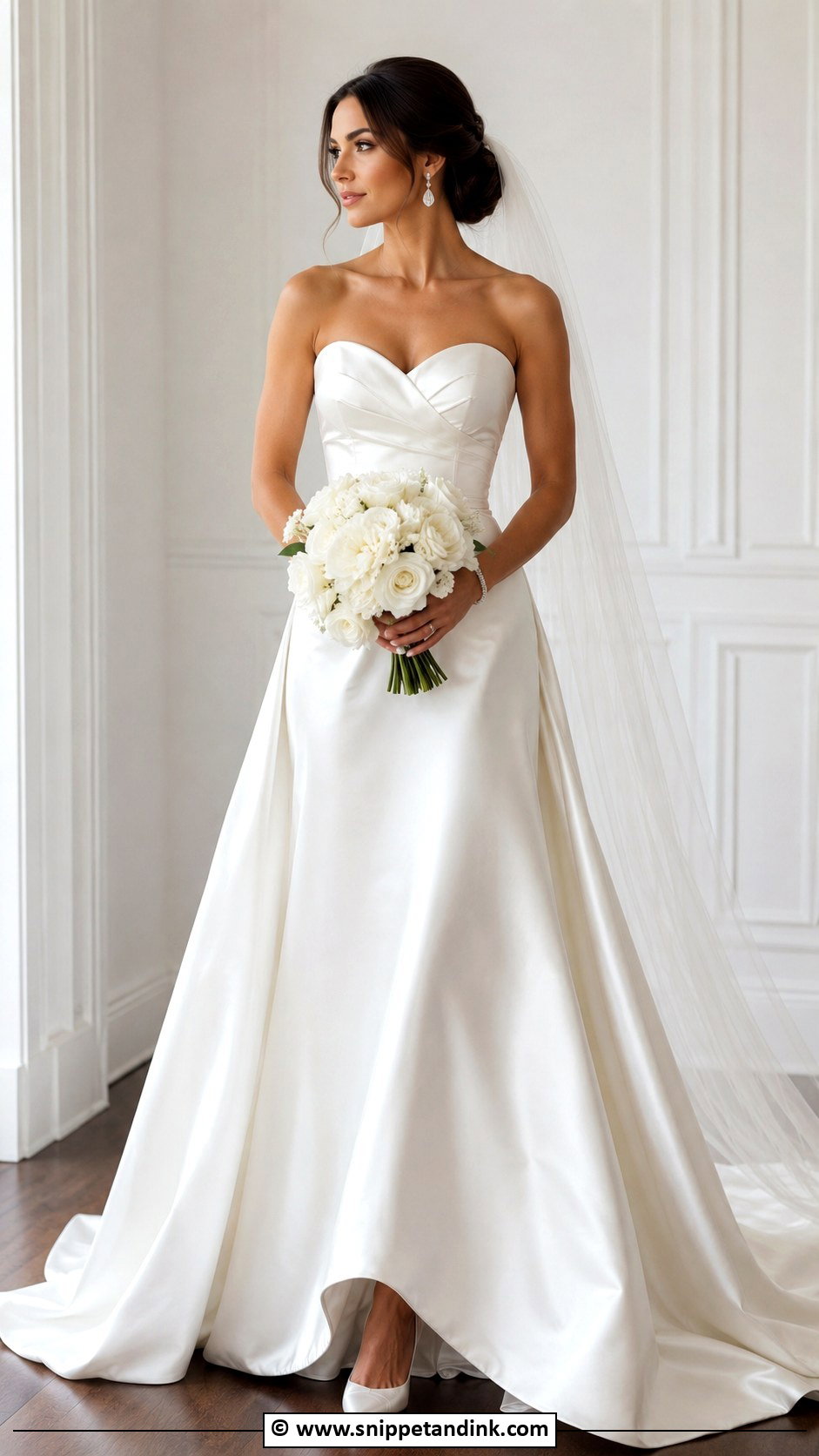
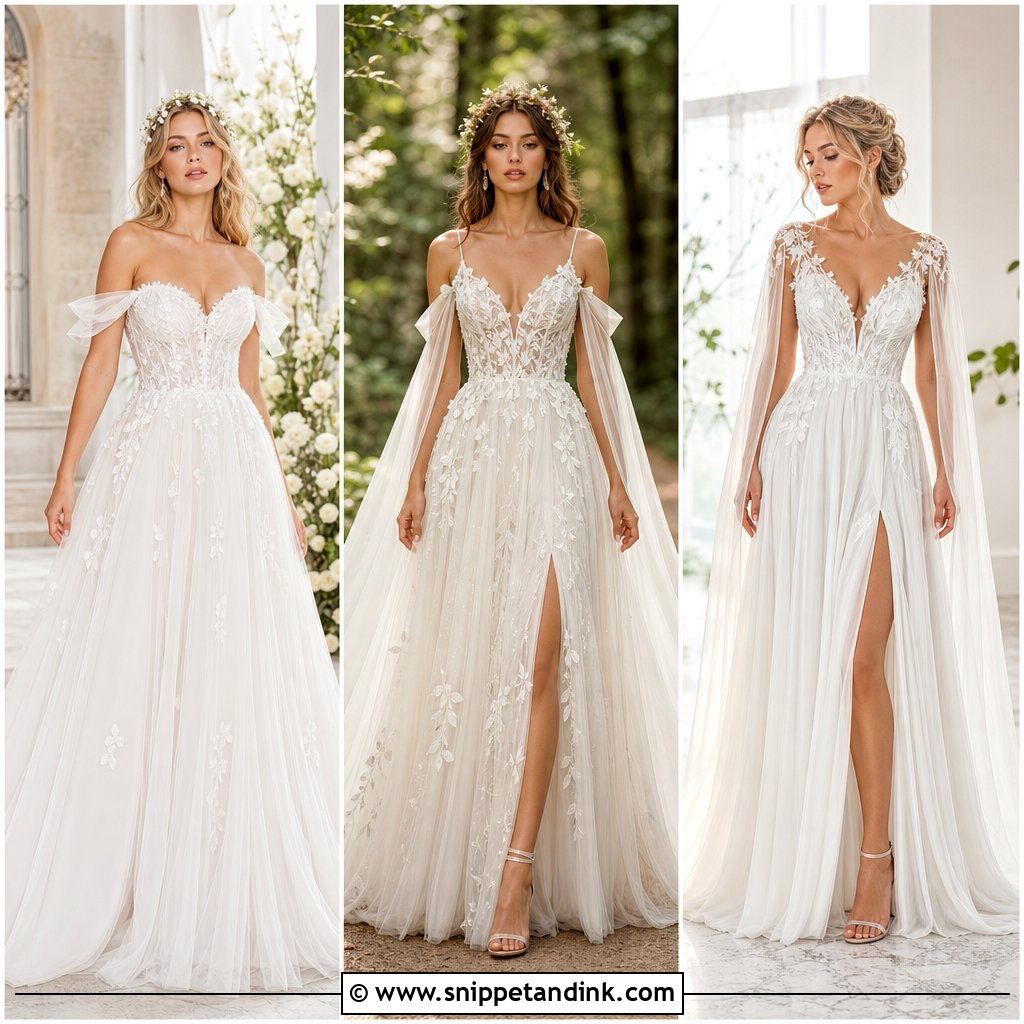
A strapless wedding dress only works if you stop thinking about it after the first hour. That comes from the internal structure, not from tightness. I look for a boned bodice with a grip waist stay inside, since the stay carries the weight of the skirt from your waist instead of your bust. Then I have the bride hug me and sit down; if she tugs the top up afterward, the fit isn’t done. Styling is flexible: a straight neckline takes a delicate necklace, while a sweetheart usually needs only earrings.
16. Mermaid Wedding Dress
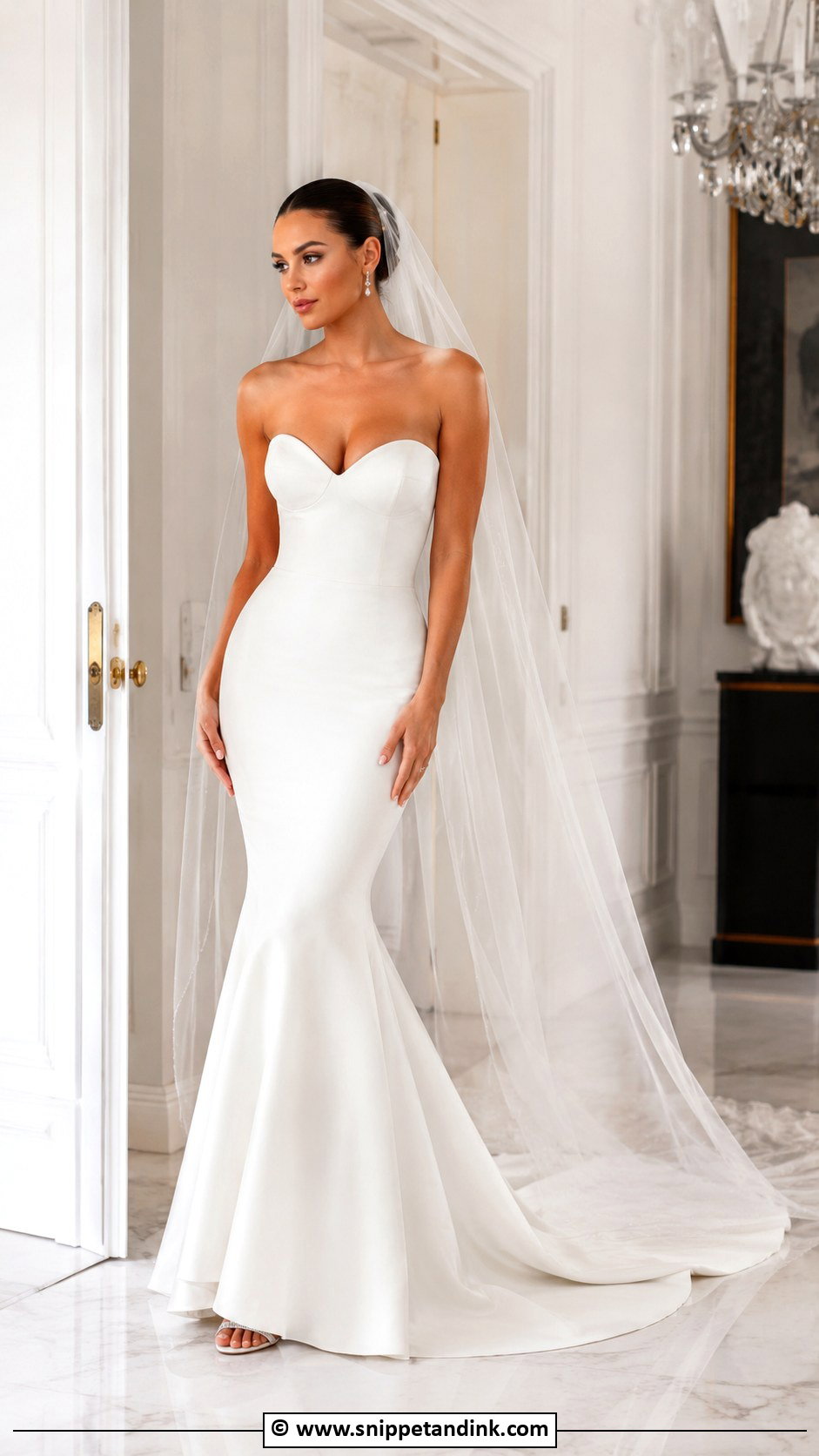
A mermaid shape is fitted all the way down to the knee or lower thigh, so the flare point decides whether you can walk. Too low and you shuffle; too high and you lose the drama. Practice stairs in your actual shoes, because the hem length is set to that heel height and changing shoes later changes everything. Crepe and mikado hold the line best. Keep accessories quiet, add a long veil, and plan for a bustle if the train is long, since mermaid trains are hard to manage on a dance floor.
17. Tea Length Wedding Dress
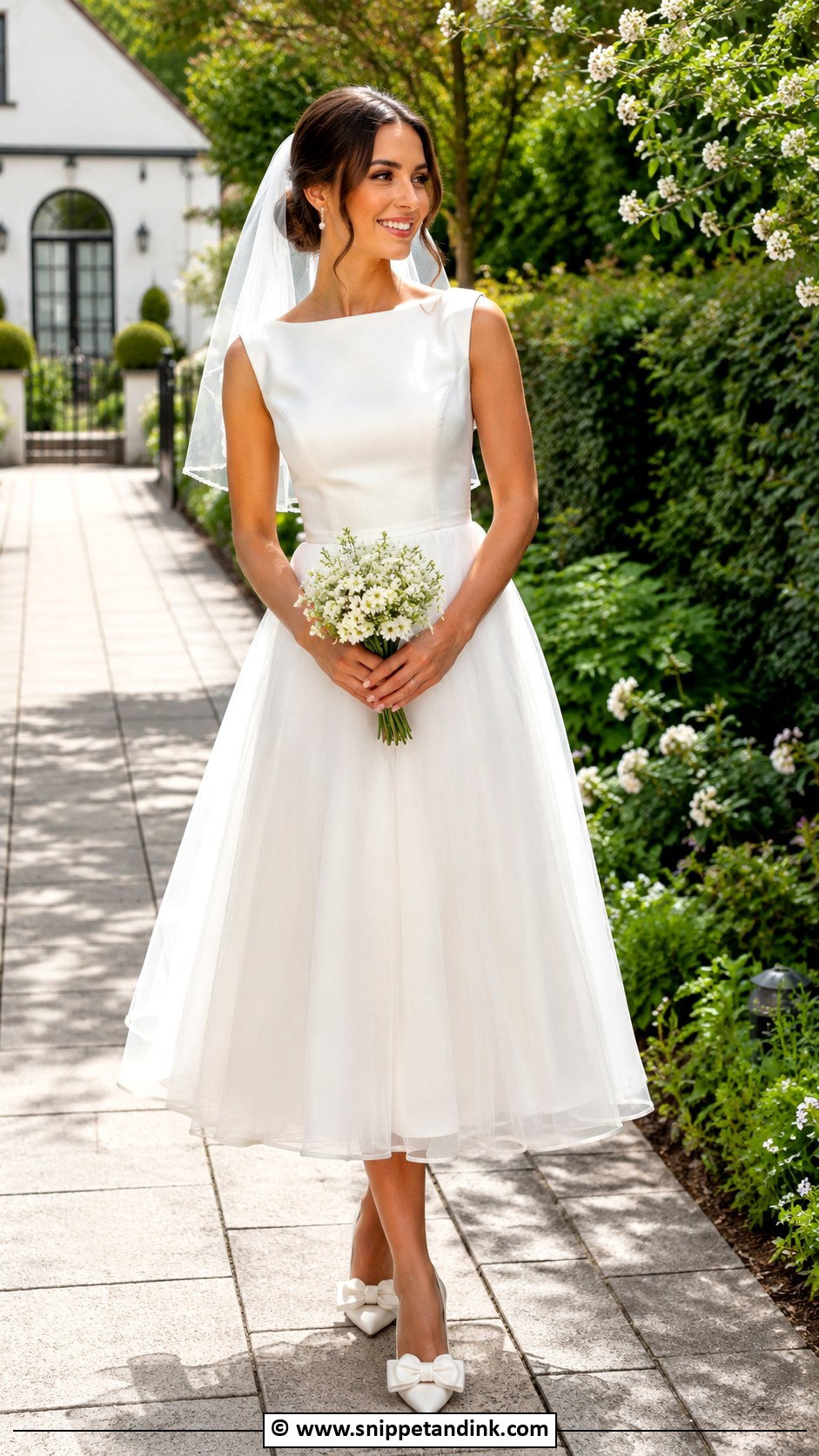
Tea length puts your shoes on show, so I tell brides to buy the shoes before the hem gets finished, never after. A hem between the knee and the ankle is easy to walk and dance in and won’t drag through wet grass at a garden ceremony. Tulle gives it a 1950s fullness, while satin looks sharper. Pointed pumps or a bow heel, pearl earrings and a short veil or ribbon are all it needs.
18. Wedding Mini Dress
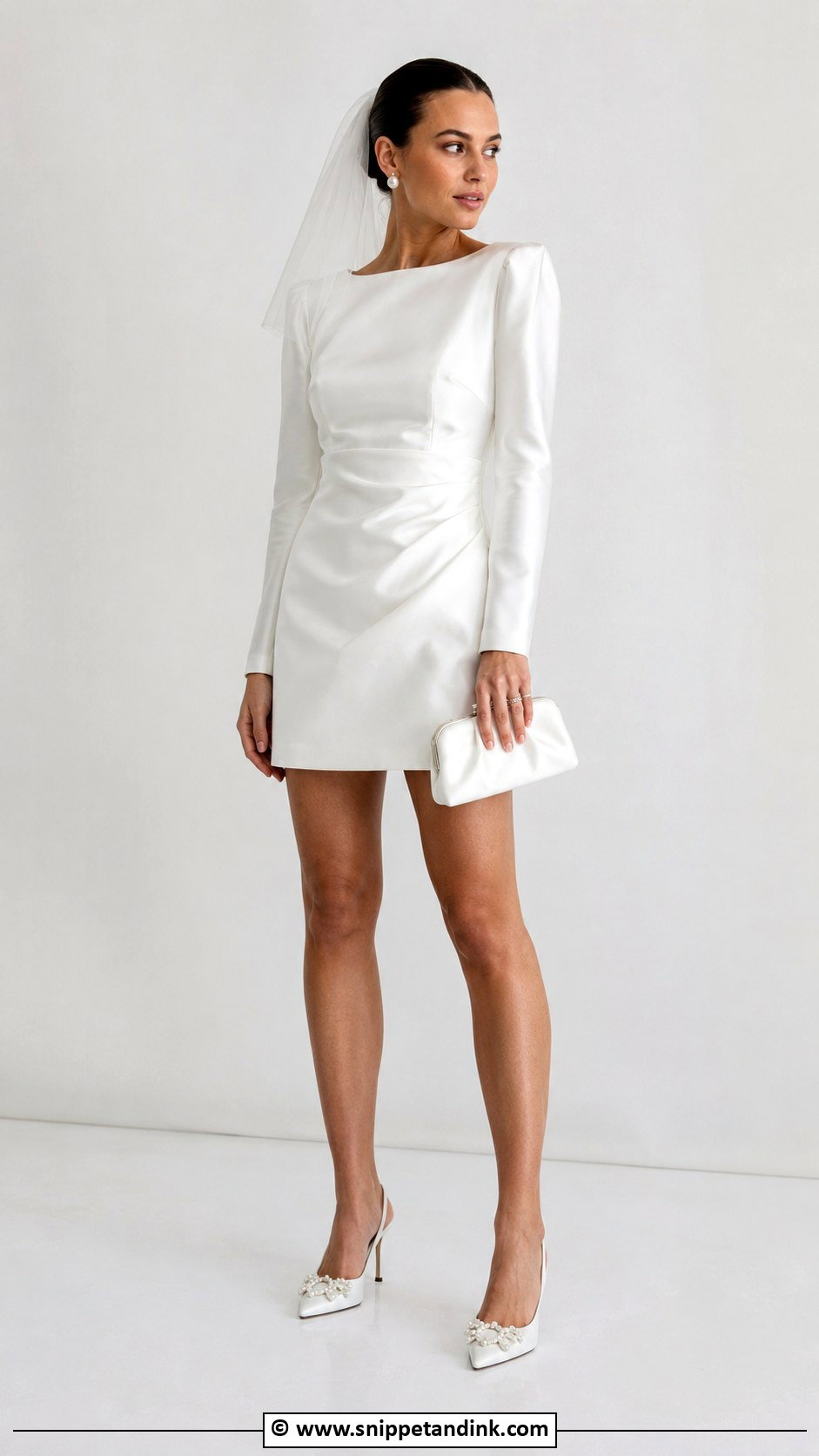
Minis come out most for second looks, courthouse ceremonies and after-parties. Sitting is the thing nobody tests: a short satin hem rides up a long way when you sit on a low chair, so check that in the shop. If the hem is very short, I balance it with long sleeves or a higher neck. Feathers or a tailored shape keep it bridal, and statement heels, pearl earrings, a short veil and a small structured clutch finish it.
19. Two Piece Wedding Dress
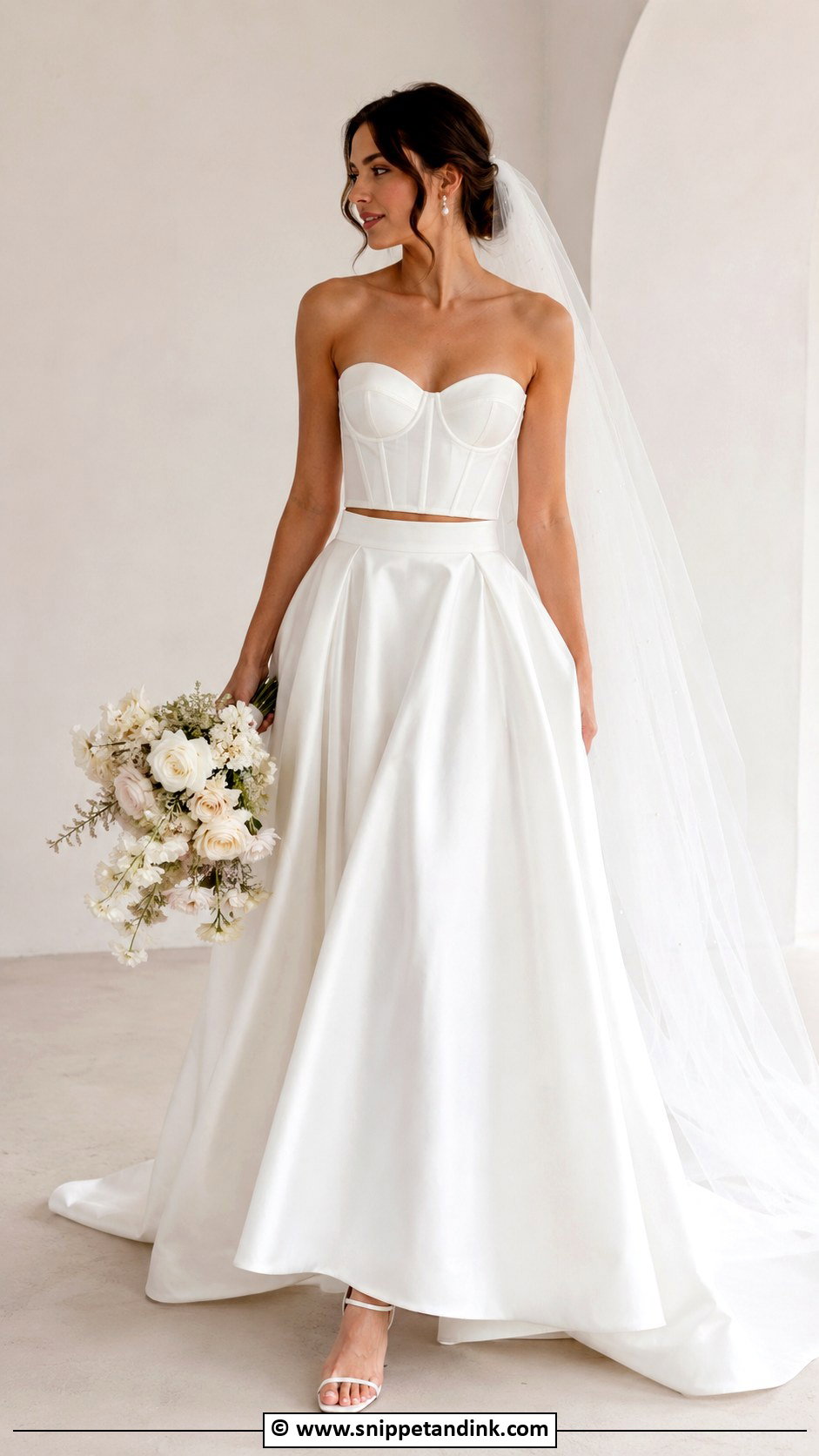
With a two piece, the whole outfit depends on the gap between top and skirt. A corset over a full skirt feels romantic, and a lace blouse with a satin skirt has a quieter, older charm. A cropped top with a high-waist skirt reads most current. My first job at the fitting is matching the waistband to the top’s hem, because a gap that looks neat standing can open up when you raise your arms. The skirt or top can be worn again afterward, which many brides appreciate.
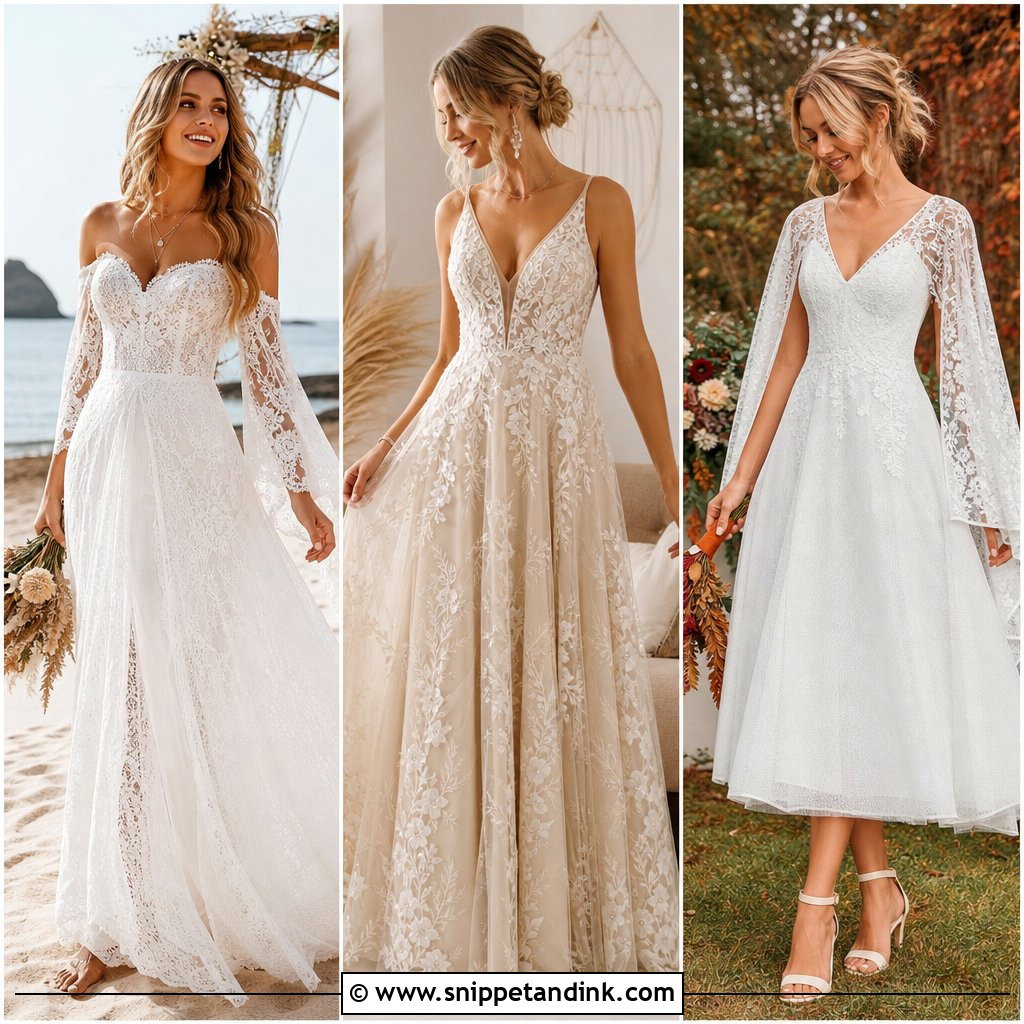
20. Detachable Overskirt Wedding Dress
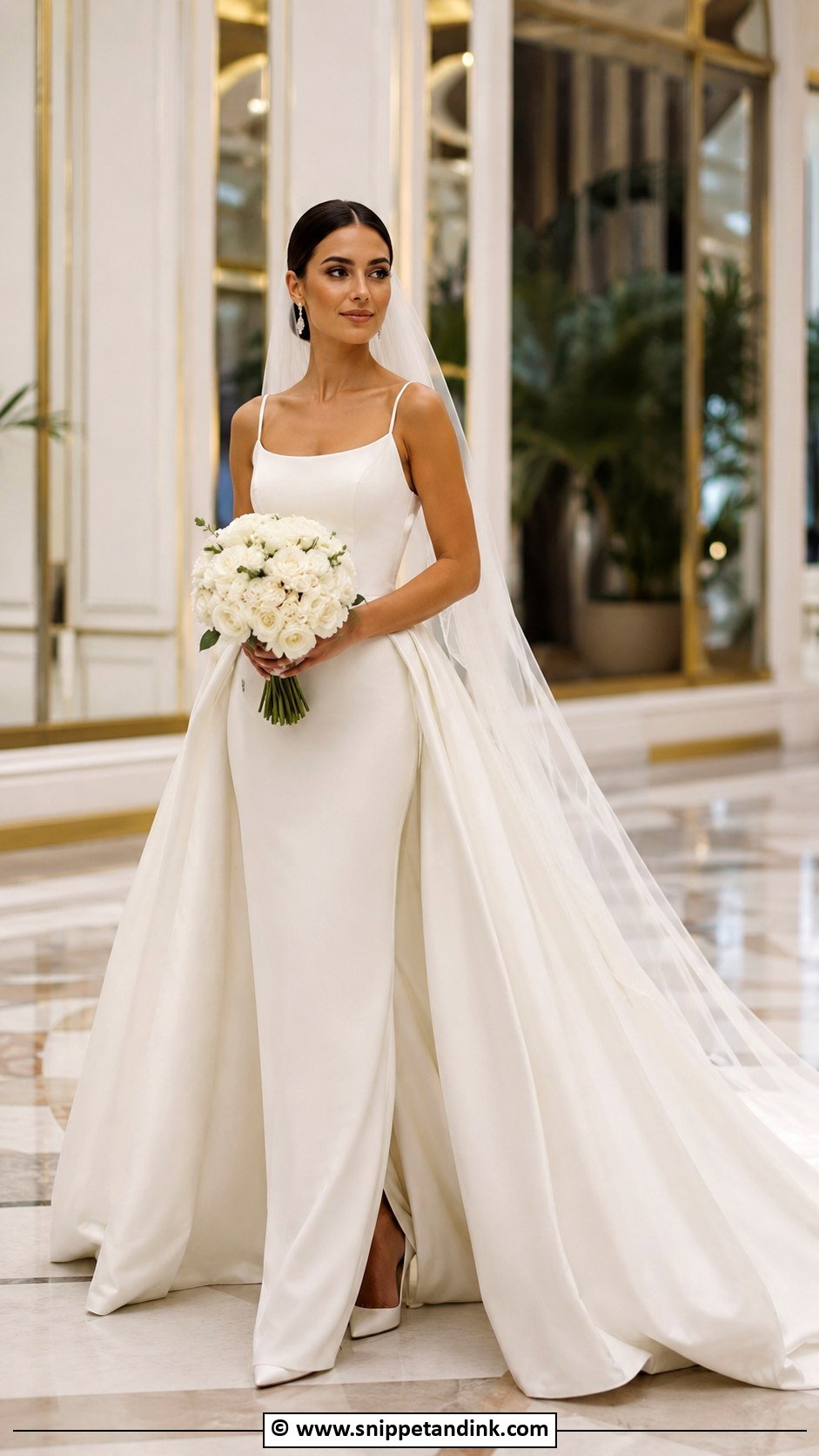
A detachable overskirt wedding dress lets you have a full ceremony skirt and a slimmer reception dress without changing your whole outfit. Overskirts fasten with hooks, snaps or a hidden button band at the waist. I check that the fastening sits flat and doesn’t twist when you walk, and I ask the bride to practice removing it with the person who’ll help on the day. Pair a long veil with the full version, then switch to statement earrings or a hair clip once the skirt comes off.
21. Sheer Bodice Wedding Dress
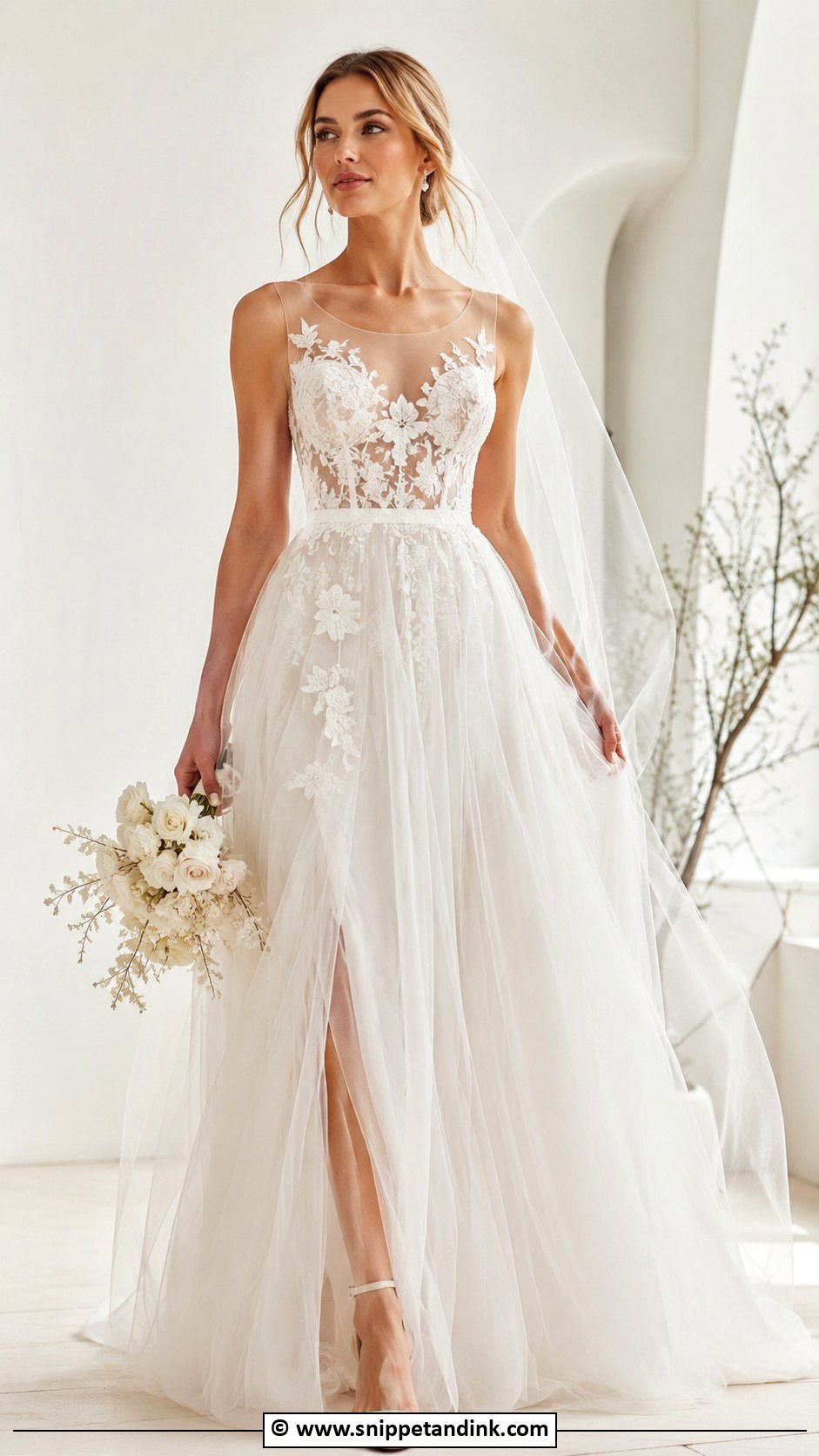
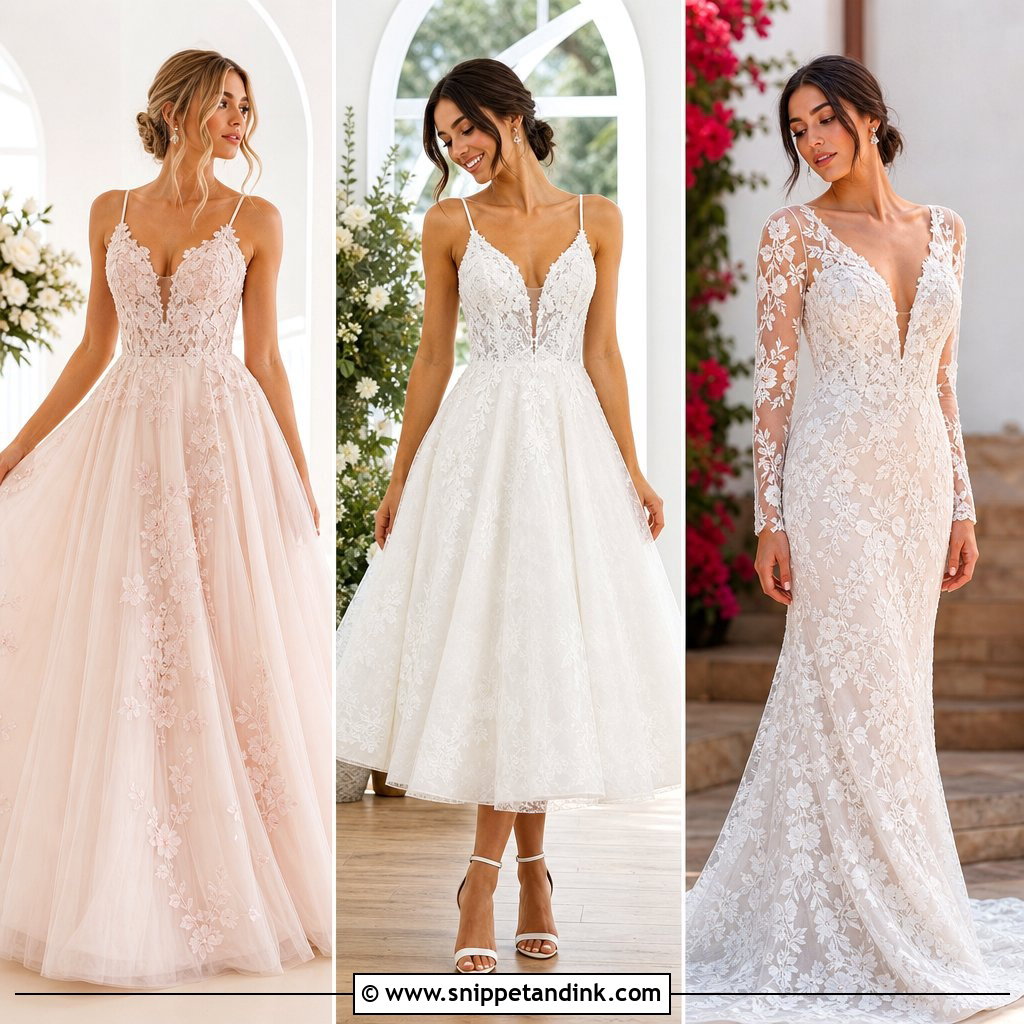
Illusion tulle is what makes lace look like it’s floating on the skin, and the quality of the tulle decides how real that looks. Cheaper tulle has a slight sheen that shows in flash photos, while softer tulle matched to your skin tone disappears. I always check the lining placement under the bust, since that’s where comfort and coverage both come from. If the bodice is busy, keep the skirt quiet. Simple earrings and neutral heels are enough.
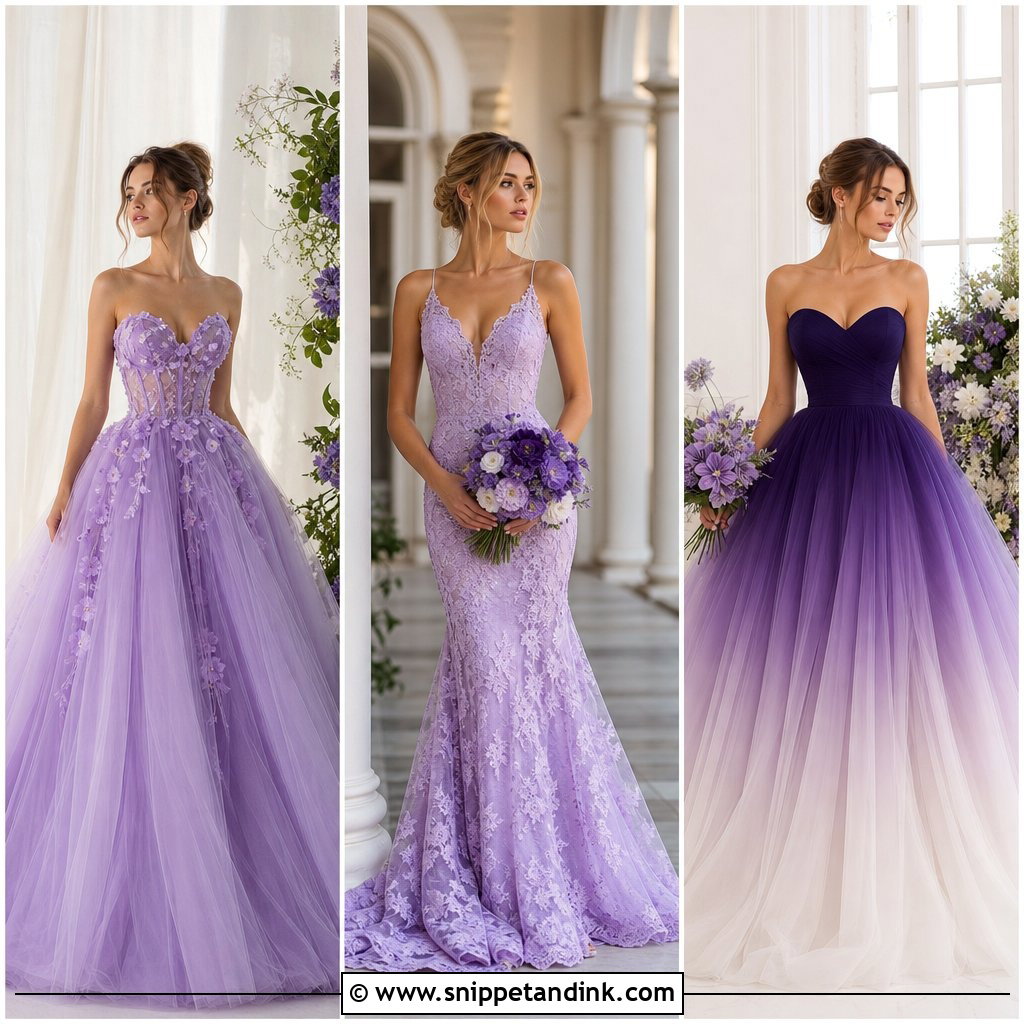
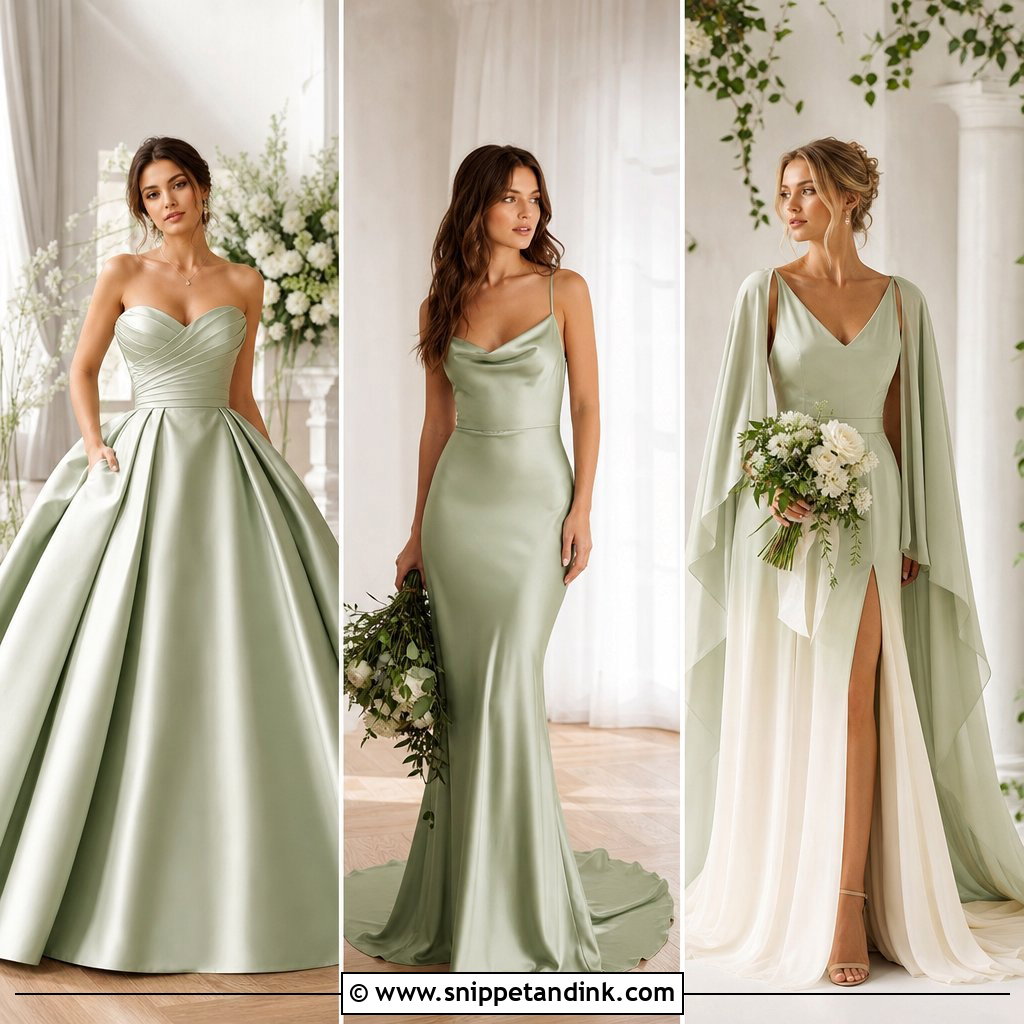
22. Colored Wedding Dress
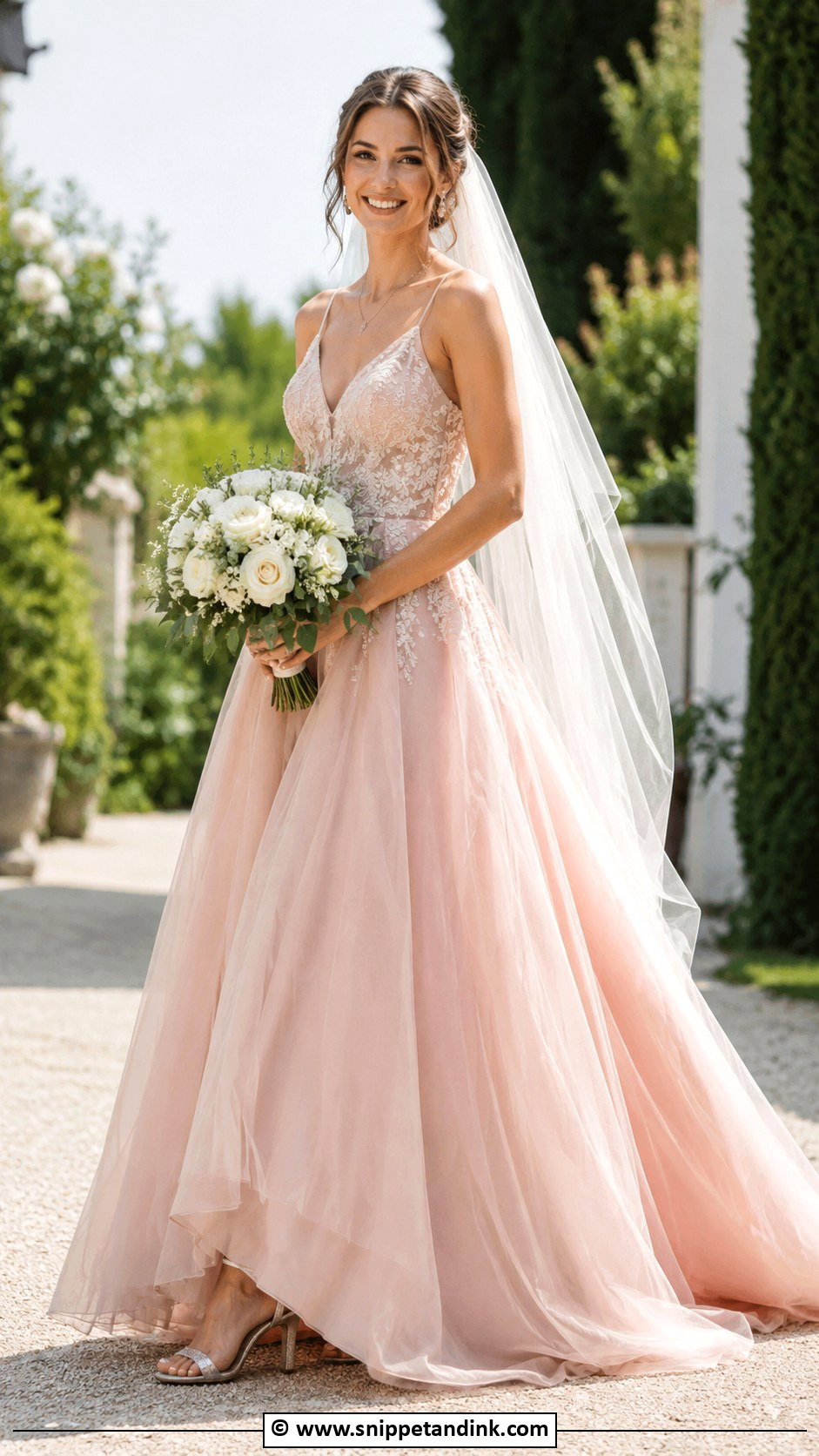
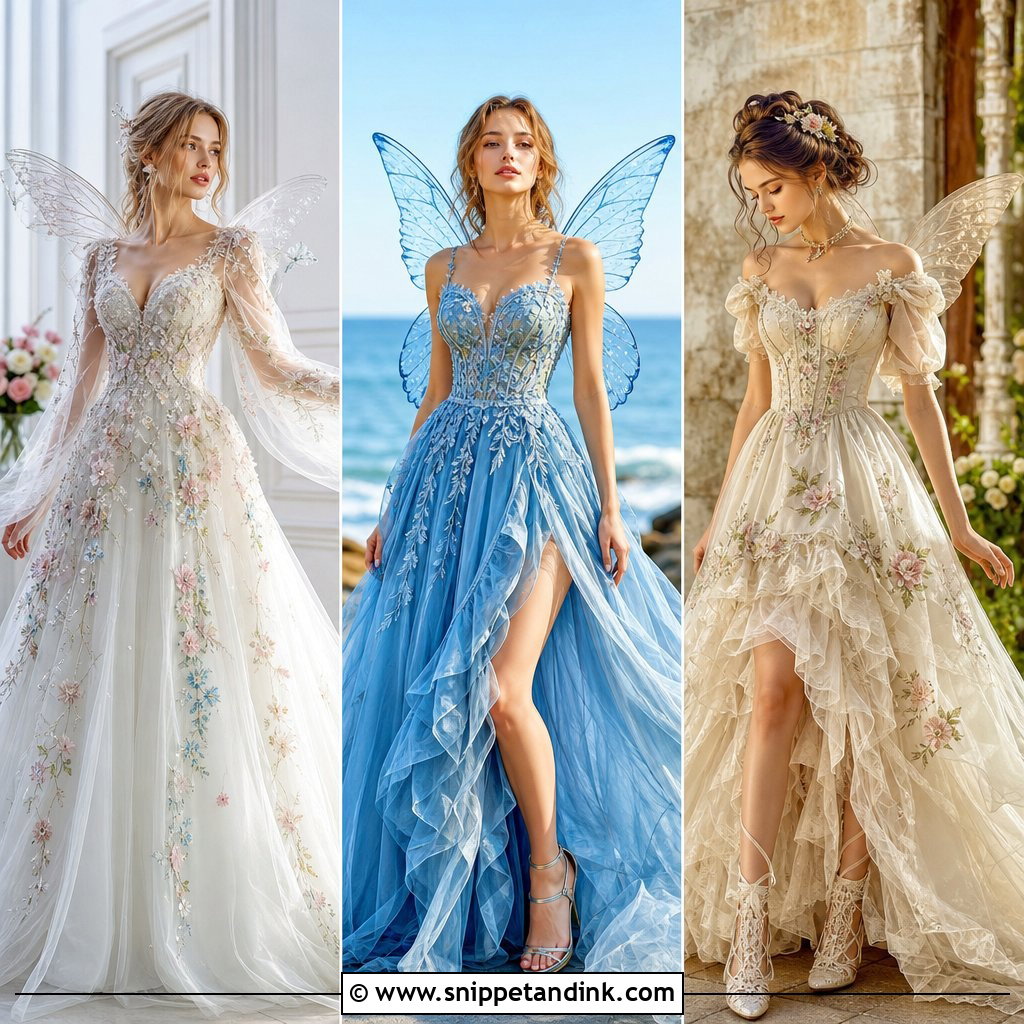
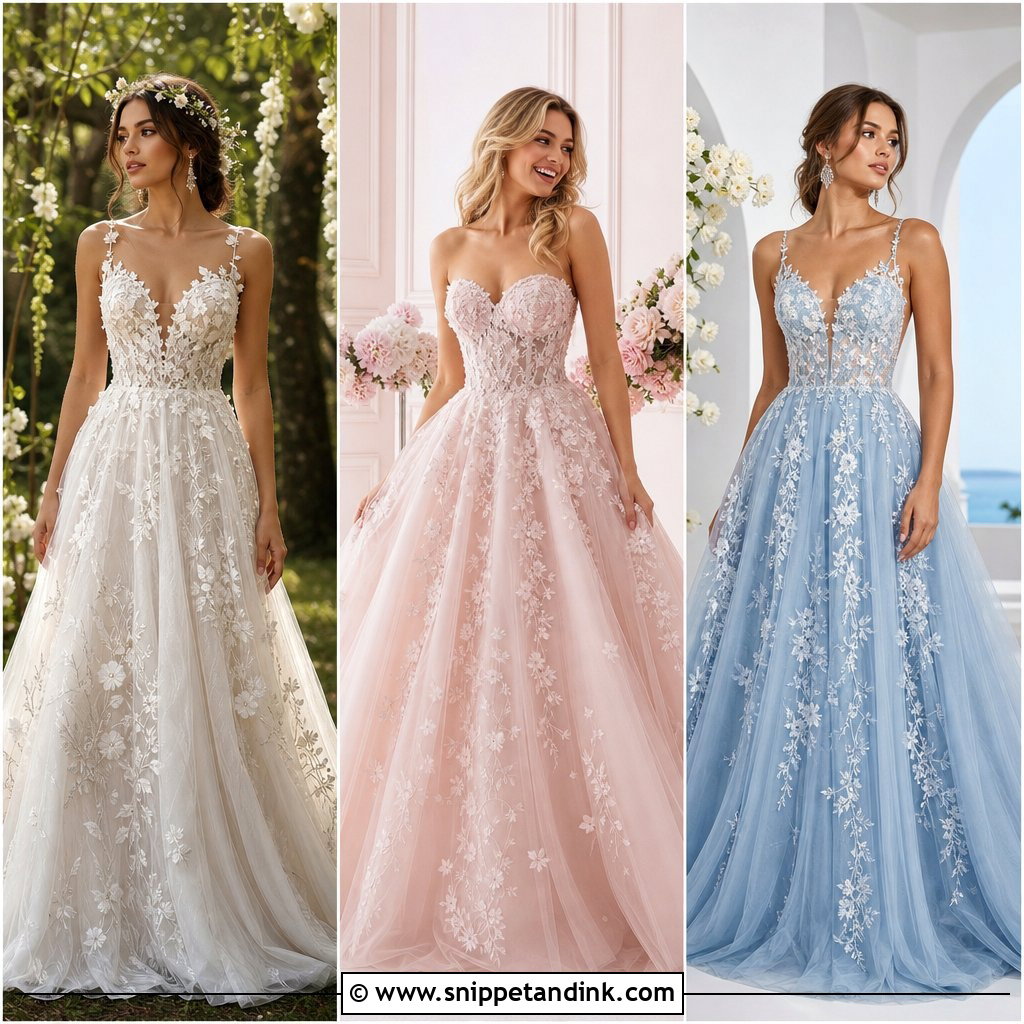
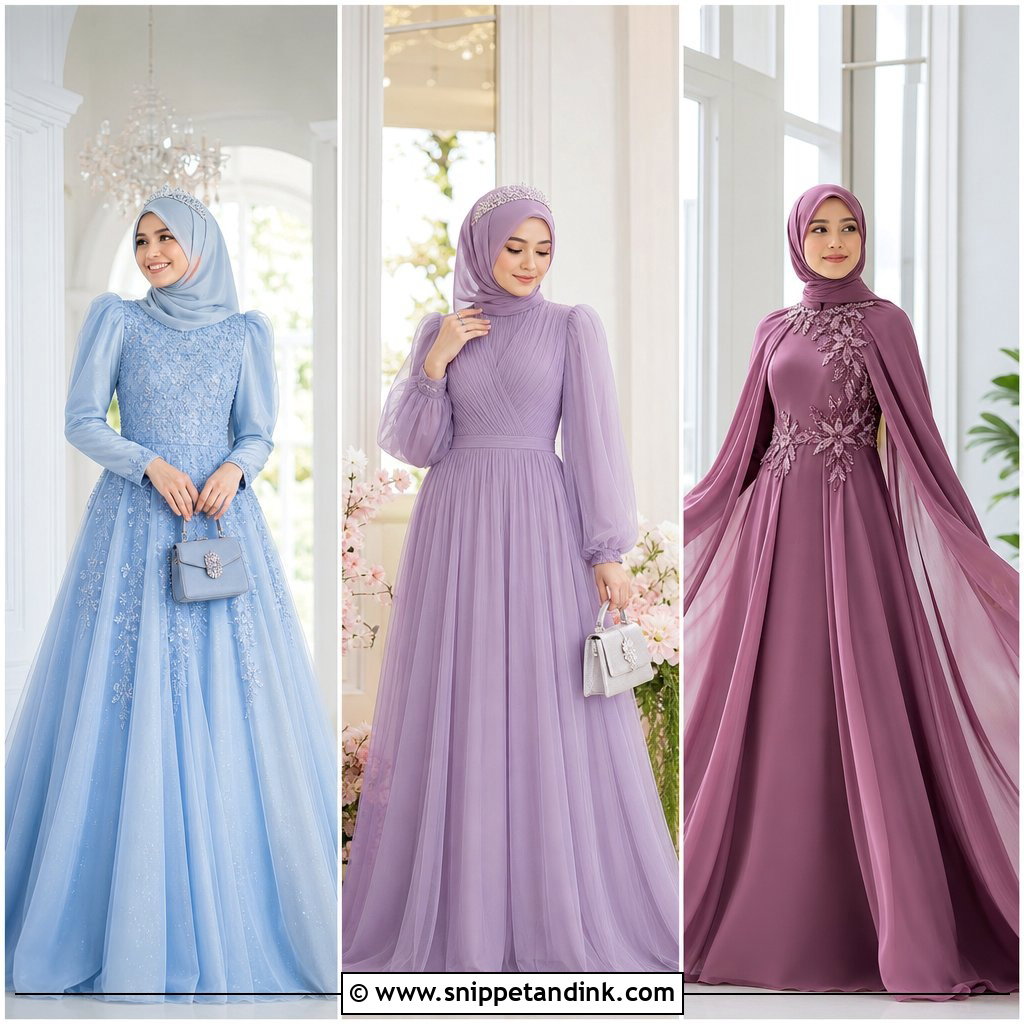
Color is much easier to wear than most brides think, as long as you test it in daylight. Blush and champagne can drift toward beige under warm reception lights, while pale blue can look grey on an overcast day. I always hold a swatch against the bride’s face near a window before ordering. Match the veil to the dress undertone rather than to pure white, otherwise the veil looks bright and the gown looks dull. Soft colors take white flowers well; stronger ones need a simple, tonal bouquet.
23. Vintage Inspired Wedding Dress
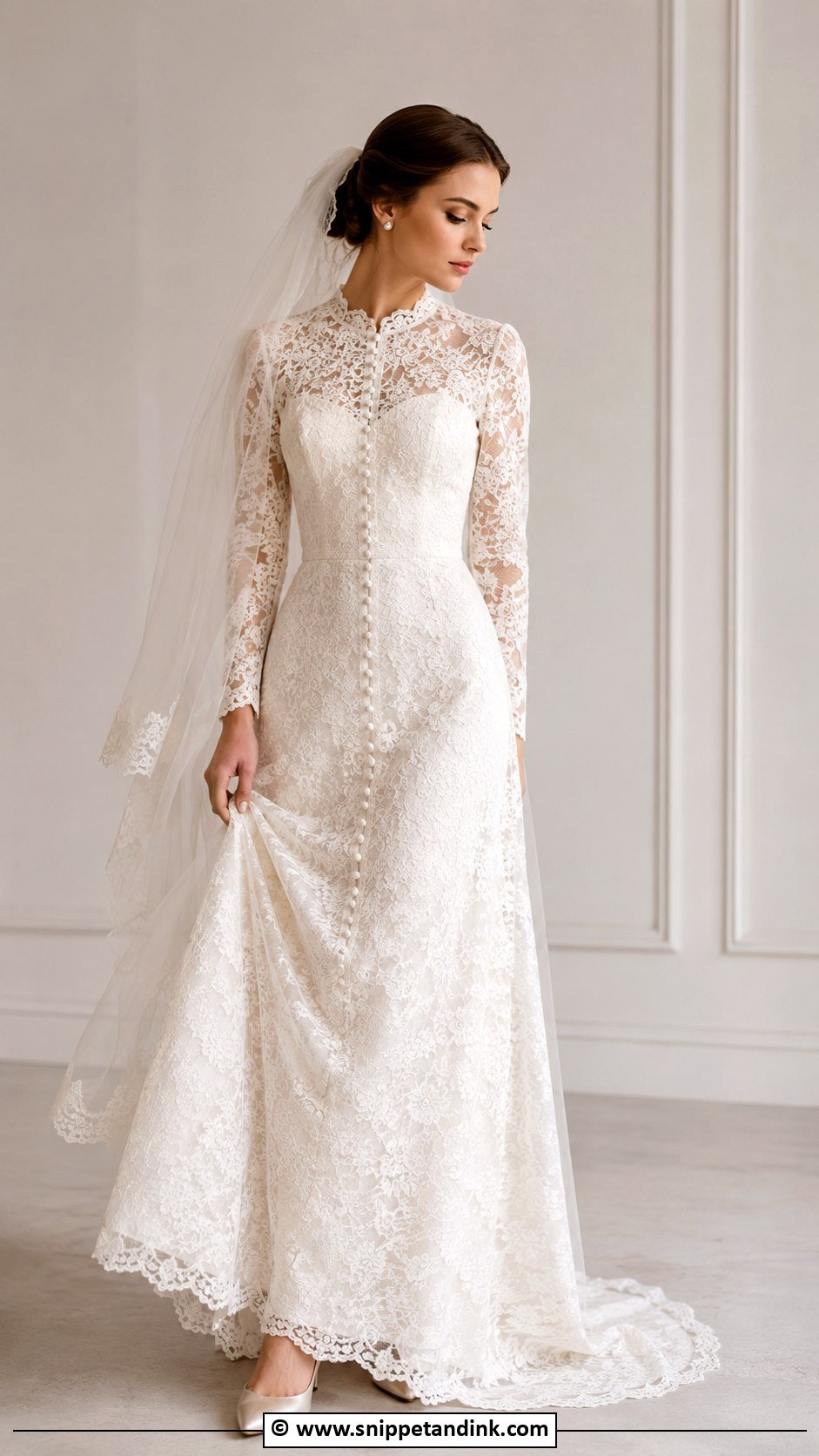
Vintage inspiration goes wrong when one dress tries to cover four decades. Pick a single era’s detail, such as covered buttons, a basque waist, a high lace collar or soft pleats, and let the rest stay modern. If you’re wearing a real vintage gown, have a seamstress check the seams and lace for brittle spots before any alterations, because old fabric can tear when stretched. Pearl earrings, a classic veil and a soft updo suit almost every version.
24. Simple Crepe Wedding Dress
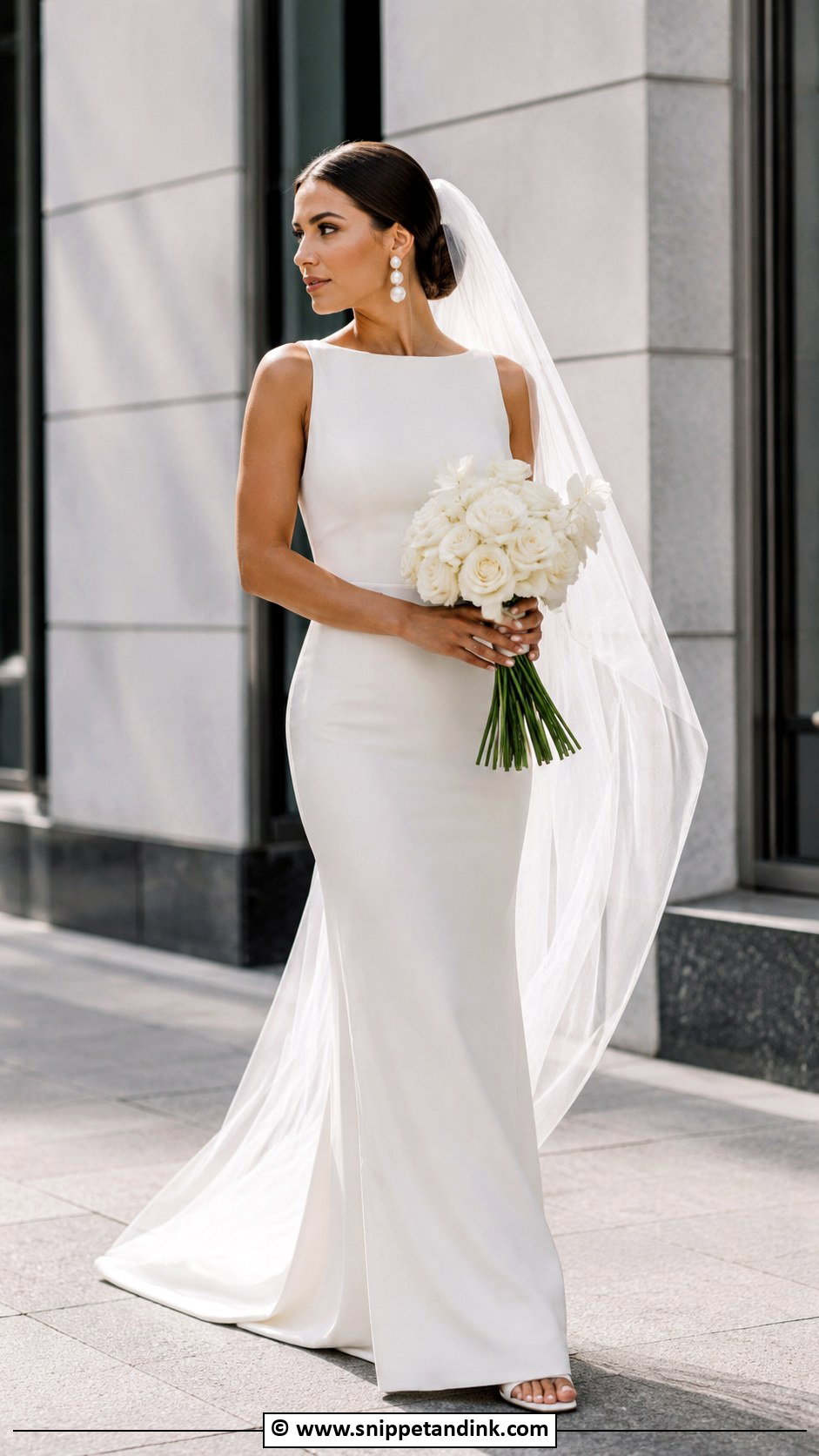
Crepe is matte and drapes close to the body, so it shows fit clearly, both good and bad. I tell brides to budget properly for alterations on this one, since a crepe sheath that’s a little loose at the back looks borrowed. Good crepe has enough weight to skim over the hips rather than clinging to them. With so little texture in the fabric, bold pearl earrings and a long veil give the outfit its interest, and a neat hairstyle keeps it sharp.
25. Reception Wedding Dress
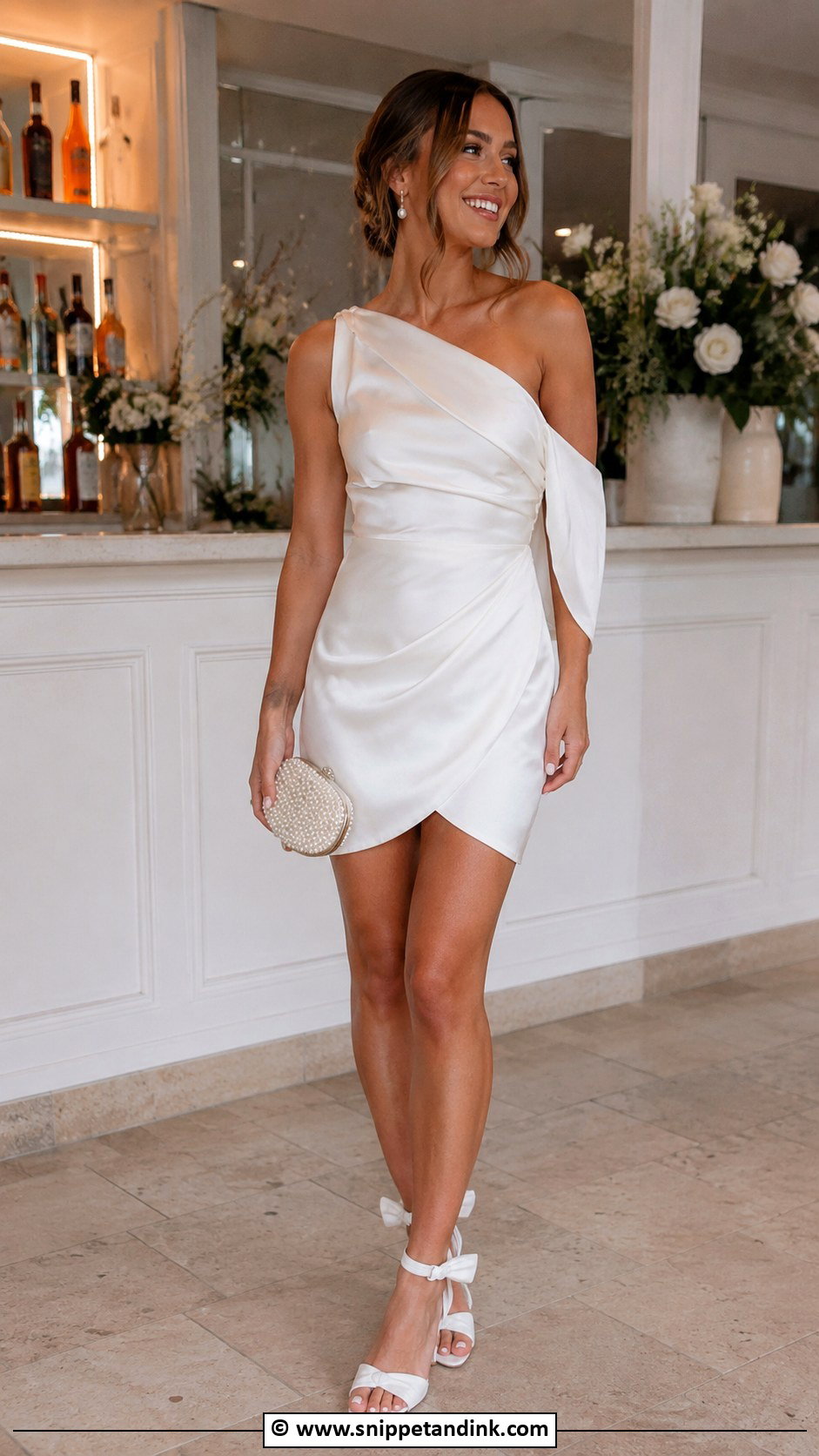
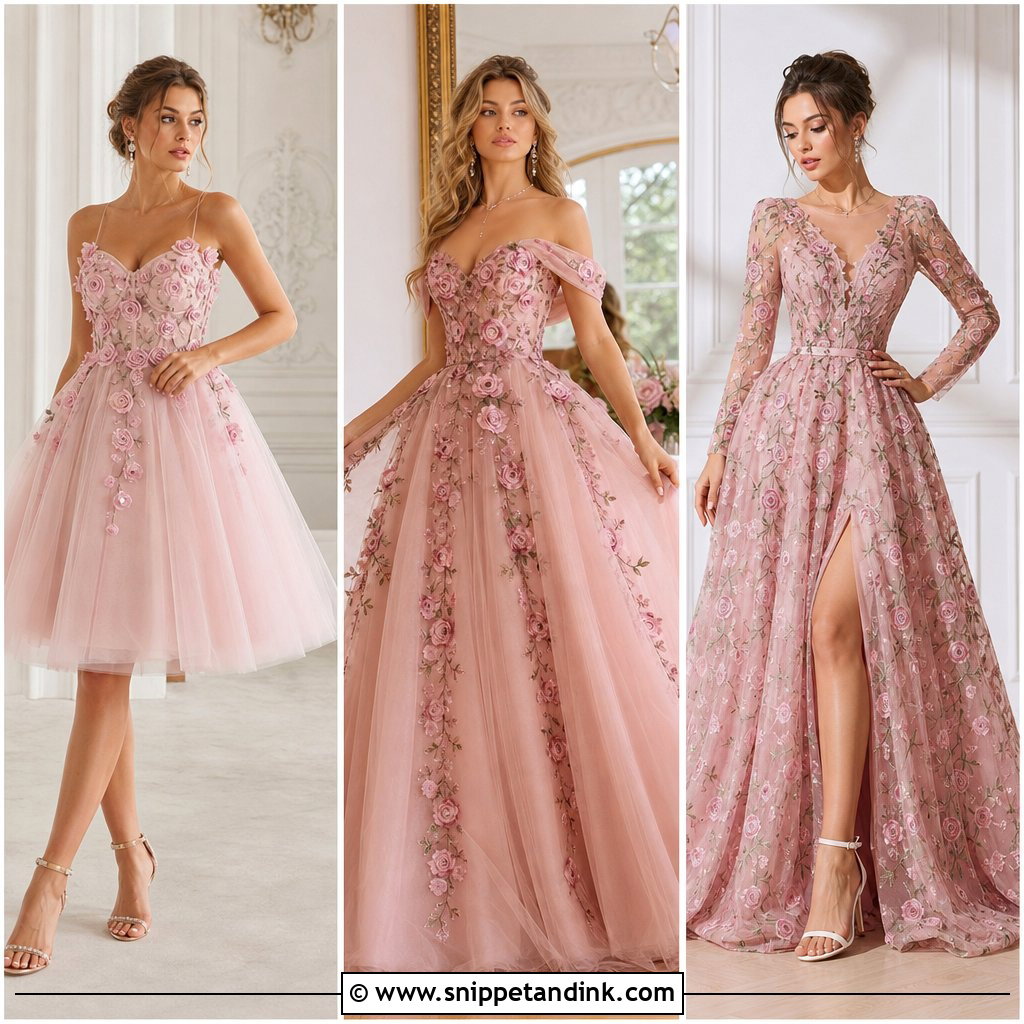
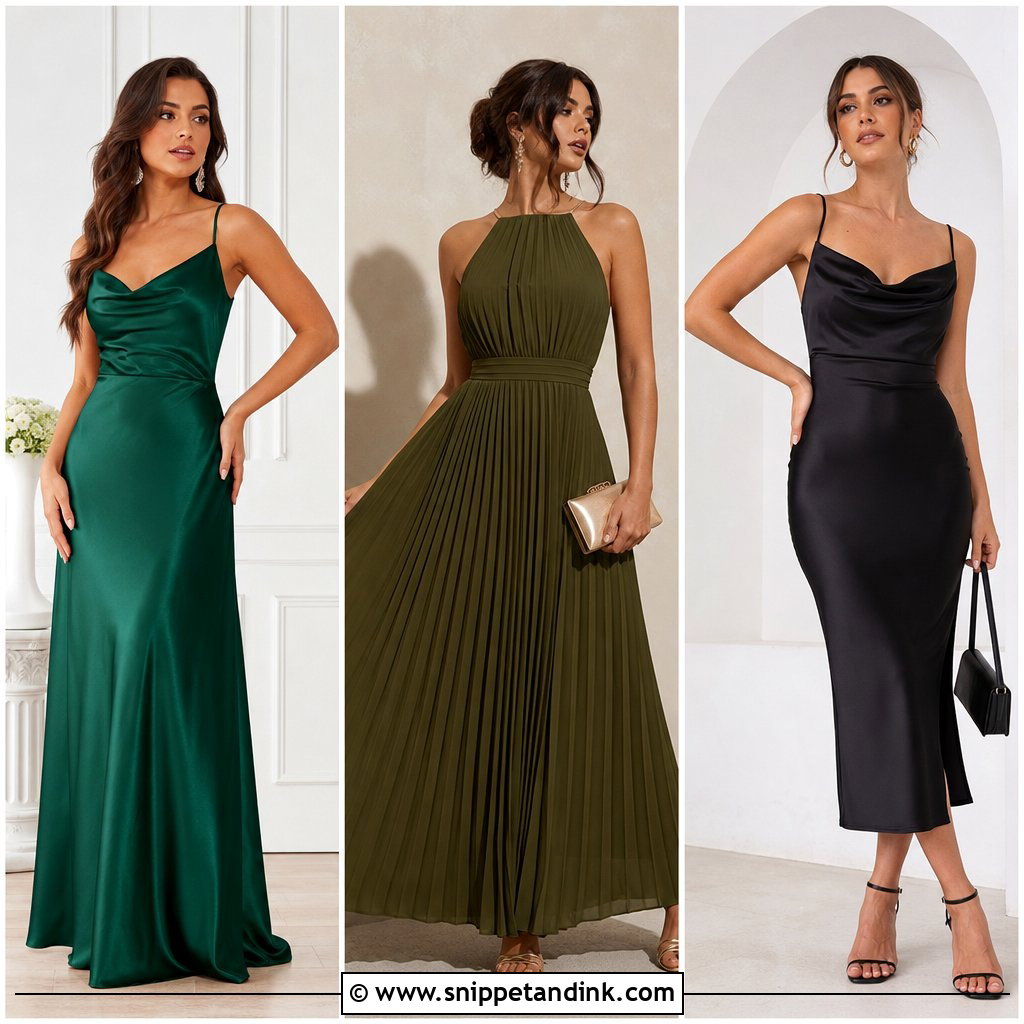
A reception dress has one job: let you dance, eat and sit without thinking about it. Brides usually change into a mini, a satin slip, a feather-trim dress or a short lace dress for the second look. Plan the change before the day, including who unlaces the gown and where it gets hung. Comfortable heels, statement earrings and a small clutch are enough. If the ceremony dress was dramatic, go lighter; if it was simple, this is where sparkle or a playful shape can come in.
Bustles, Steaming and Storing the Gown Afterward
A train that looks perfect in the ceremony photos becomes a trip hazard by the time dancing starts, so every long dress needs a bustle. An over bustle hooks the train up onto the back of the skirt; an under bustle tucks it beneath, which is often called a French bustle. Ask your seamstress which suits your fabric. Heavy lace often needs more pick-up points than satin.
On the morning, steam the gown on its hanger, never with an iron, and keep the steamer moving so water doesn’t spot satin or silk. Hang it from the internal loops rather than the straps, which stretch under the skirt’s weight.
After the wedding
Get the gown cleaned within a few weeks, even if it looks spotless. Sugar from champagne or cake dries clear and then yellows over time. Store it flat in an acid-free box or loosely folded with acid-free tissue in a cool, dark cupboard, never in the plastic bag it came home in, because plastic traps moisture and can cause discoloration.
The Dress You Forget You’re Wearing by the First Dance
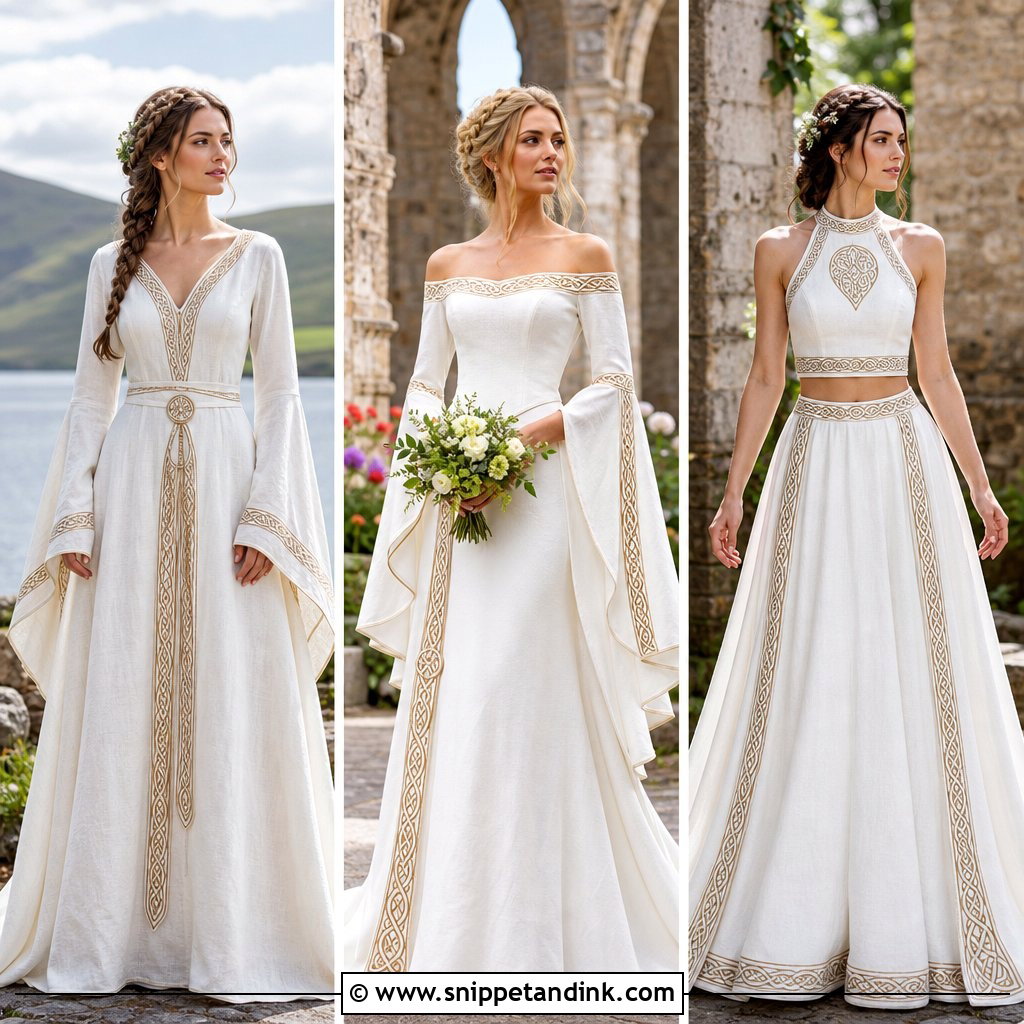
Trends point you toward interesting shapes, like basque waists, drop waists, bows, sleeves, pearls and floral appliqués, but they can’t tell you how a dress feels three hours in. Try at least one silhouette you’re sure you won’t like; it often surprises people. Then judge the whole outfit together, including veil, shoes, jewelry, bouquet and the dress you’ll dance in. If you can sit, hug and breathe in it and still recognise yourself in the mirror, you’ve found it.
You'll Like These Ideas:



Leave a Reply