
Twenties bridal style is built for dancing. The decade gave us dropped waists, straight fluid sheaths, Art Deco beading, soft satin, long pearls, cap and flutter sleeves, and hemlines that let a bride move. Modern versions keep the shimmer but use lighter linings and better fit, so they work at a courthouse, in a garden, in a hotel ballroom or as an after-party change. You can keep it subtle with a satin slip and a pearl comb, or go all in with fringe and geometric beading. These are 30 gowns I’d put on a vintage-loving bride, with how I’d finish each one.
Genuine 1920s Gown or a New Dress Cut in the Style?
Some brides want an authentic piece from the decade. I love that, but I’m honest about what it involves. Dresses from a hundred years ago were made for smaller frames on average, and many cannot be let out because there’s little seam allowance. Silk from that period can split along the grain, and old beading thread can break and shed beads when the dress moves.
- Hold the fabric up to light. Fine splits or very thin patches mean the silk may tear when you dance.
- Gently tug a few beads. If they come away easily, the dress will need restringing before the wedding.
- Check the underarms and waist for stains and old repairs.
- Take it to a seamstress who works with vintage before you pay, and ask what’s possible.
For most brides, a new dress made in the twenties style is the practical choice. It gives you the same straight lines and beading with modern sizing, stronger thread, linings and support. Some brides wear a new gown for the ceremony and carry an antique beaded bag or wear a vintage headpiece, which keeps a real piece of the era with far less risk.
1. 1920s Beaded Wedding Dress
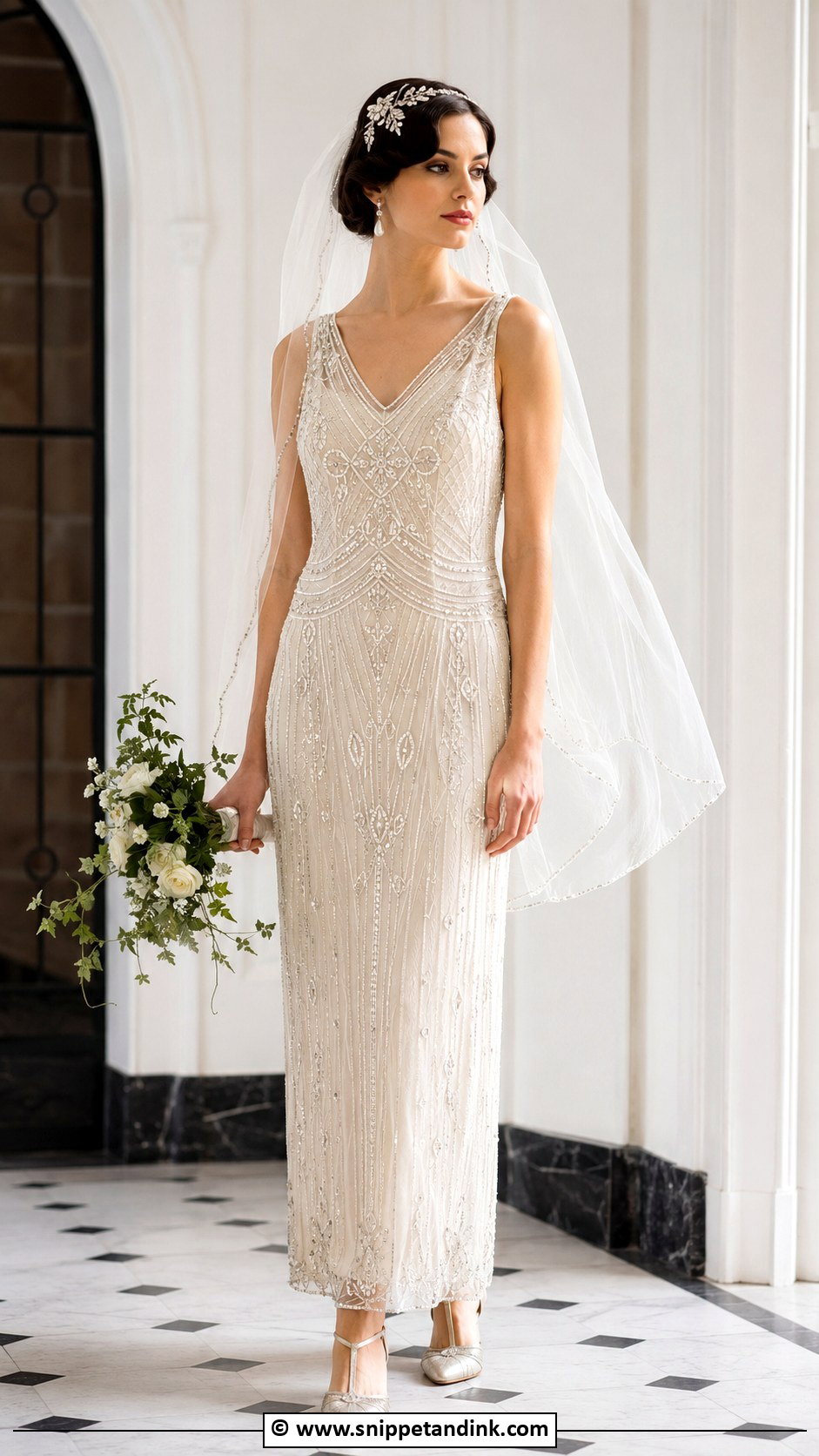
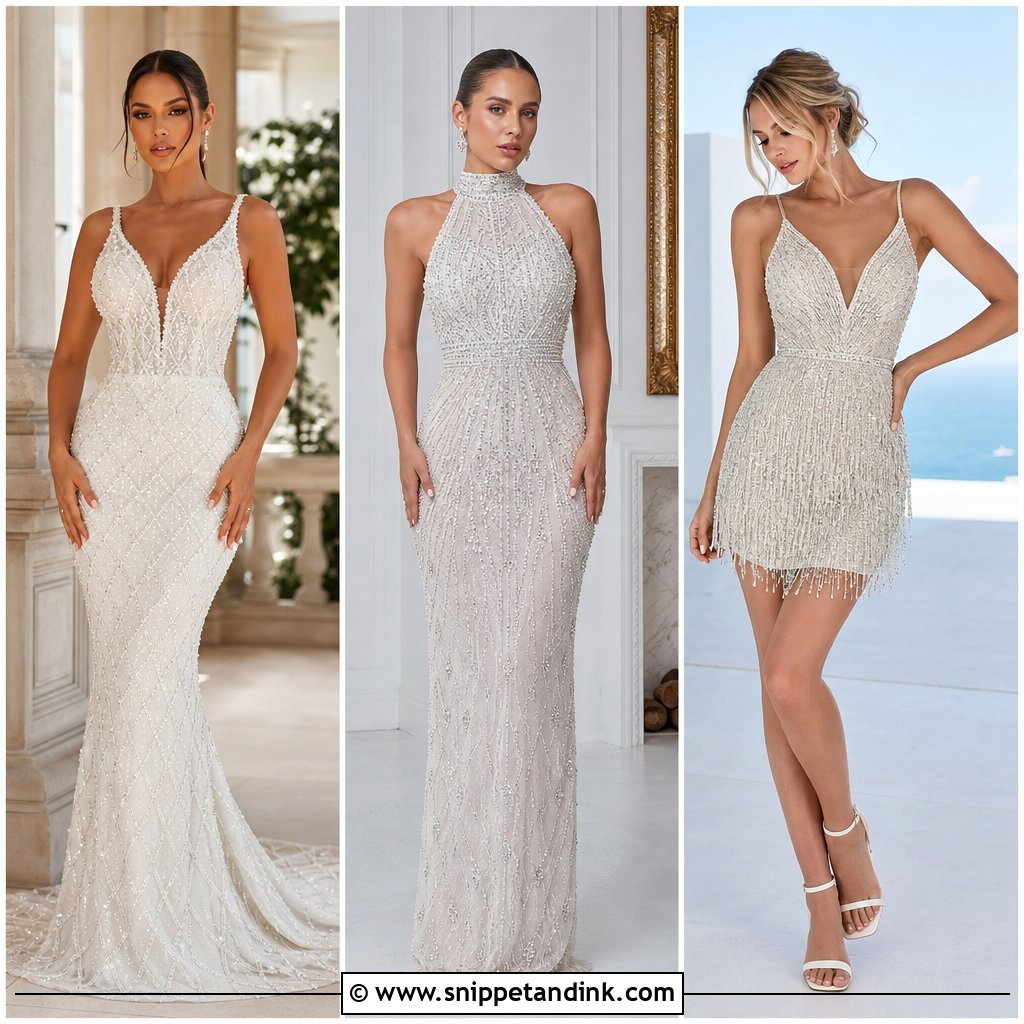
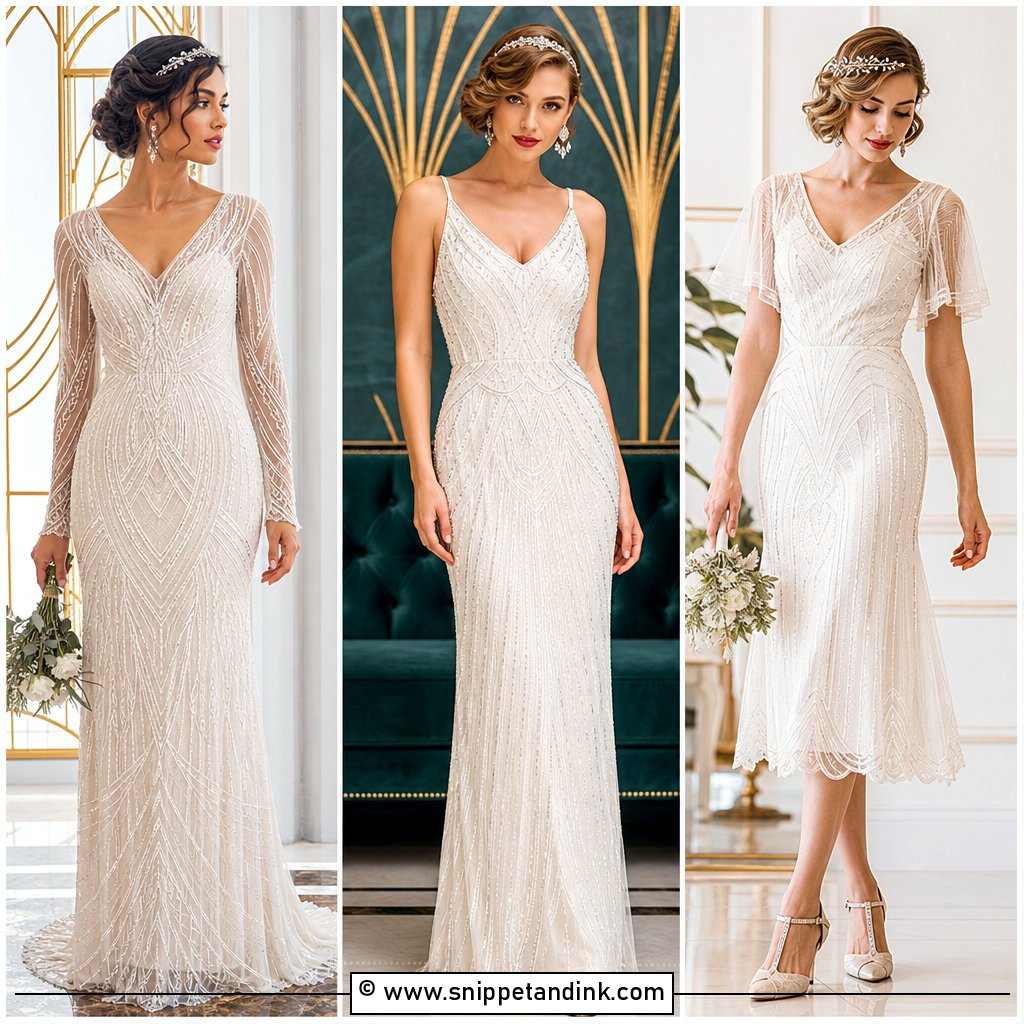
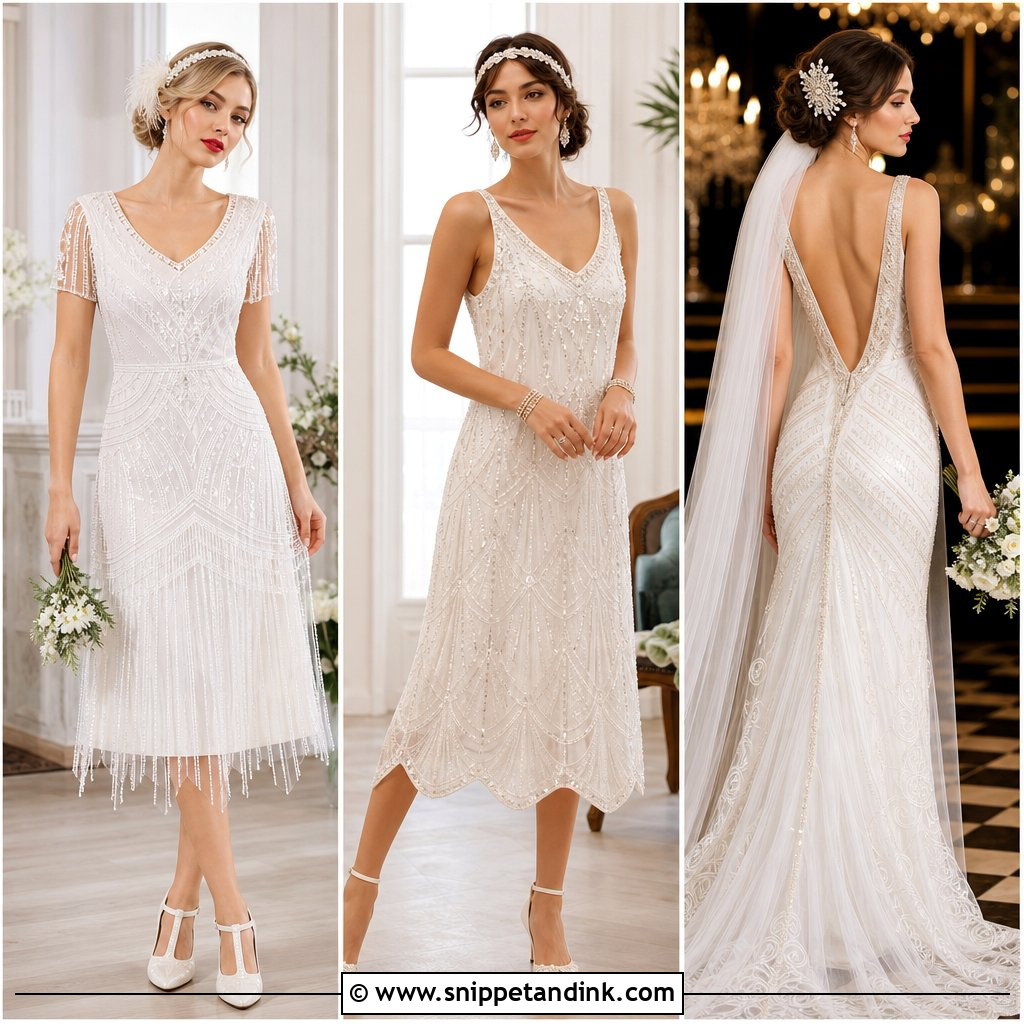
Hand beading is what makes this era recognizable, and a column or sheath gown shows it best because the surface stays flat. Look for geometric lines that follow the body and an ivory lining underneath. Beading is heavy, though, and a fully beaded dress can weigh more than you’d guess, so I check that the straps or shoulders are reinforced. A V or bateau neck, pearl drops, metallic low heels and soft finger waves finish it. Keep the veil to a plain fingertip tulle.
2. 1920s Flapper Wedding Dress
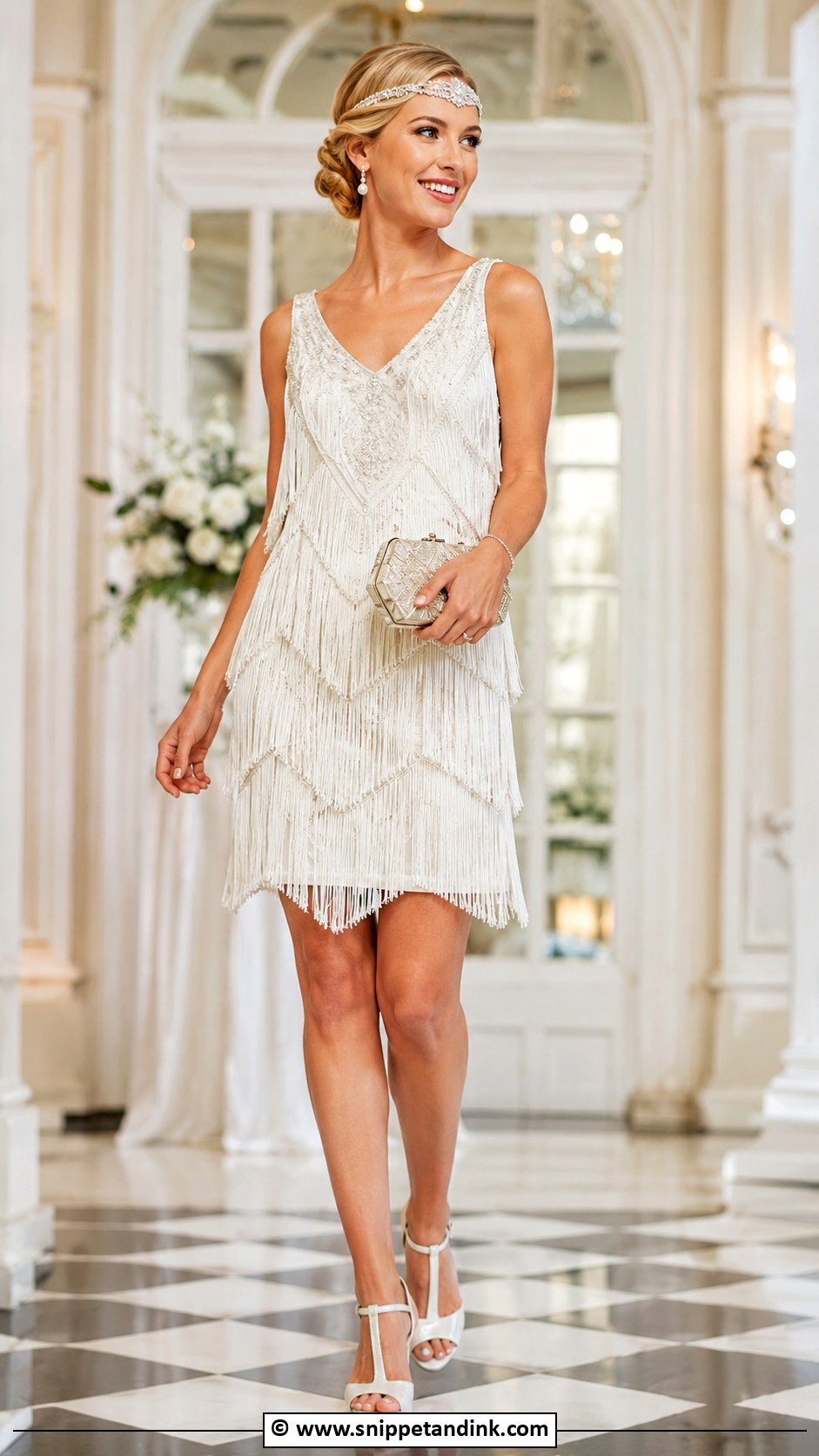
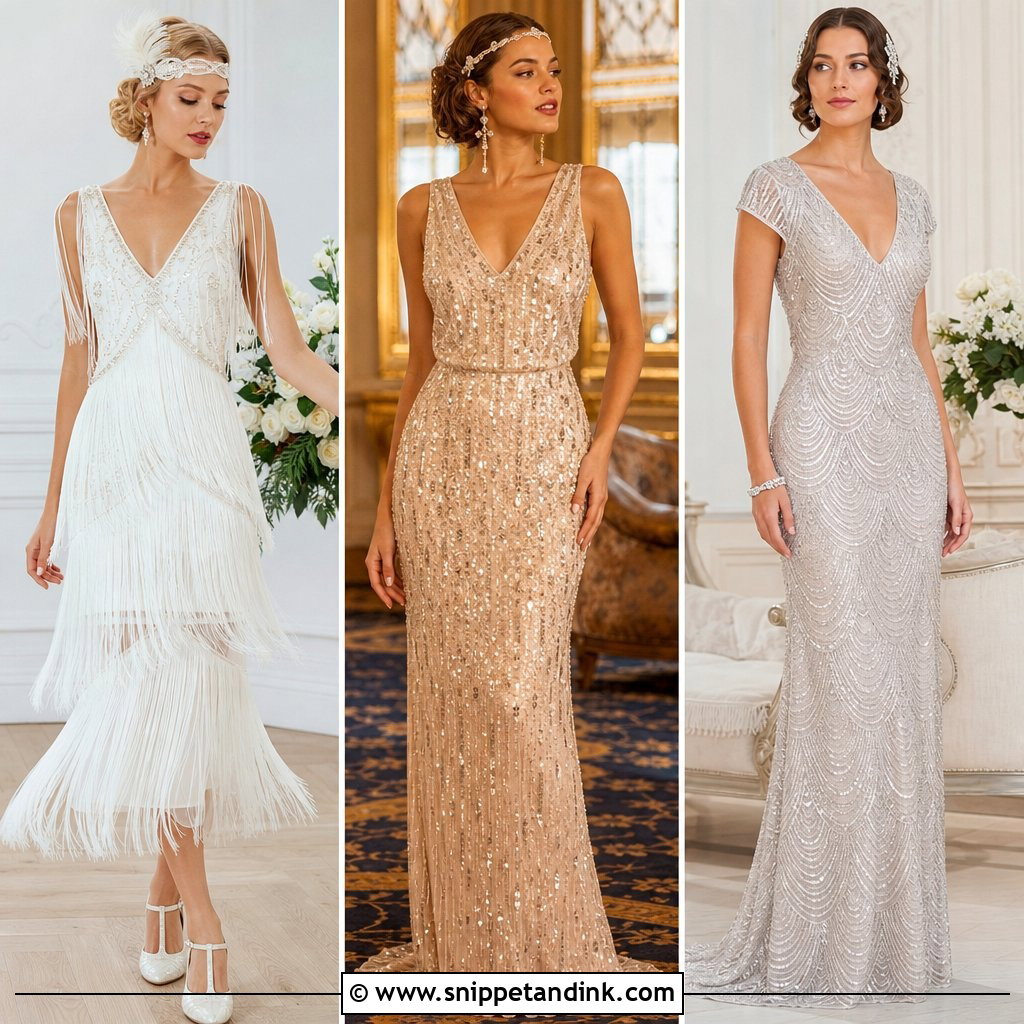
The flapper shape skims the body rather than hugging it, and that looseness is exactly what lets you dance. Knee or tea length with fringe, sequins or tiered beading is the classic version. If you’re used to fitted dresses, it can feel shapeless on the hanger; give it a proper try-on and a twirl before deciding. T-strap heels, a beaded headband, pearl earrings and a small structured bag complete it. Ivory, champagne or soft silver reads more bridal than bright white. It also makes a great reception change.
3. 1920s Art Deco Wedding Dress
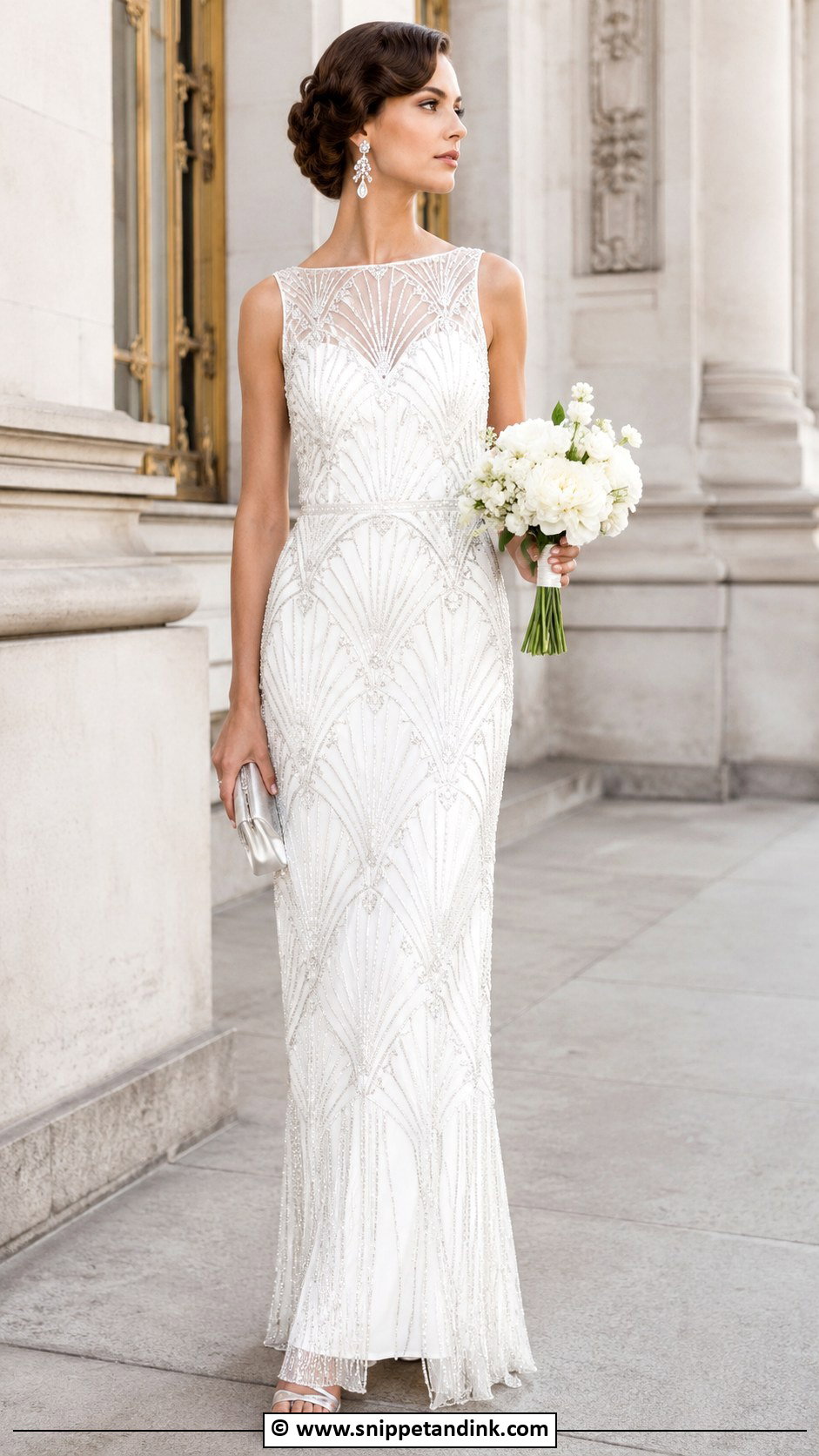
Fans, sunbursts, chevrons and metallic embroidery are pure Deco, and they need a clean surface to read clearly. A slim sheath or straight gown is the best canvas; ruching or gathers break up the pattern. I’d keep everything else geometric too: crystal earrings, a sleek low bun, silver sandals and a structured satin clutch. A cape veil adds drama without covering the design. Historic venues, hotel ballrooms and rooftops with old architecture suit it.
4. 1920s Lace Wedding Dress
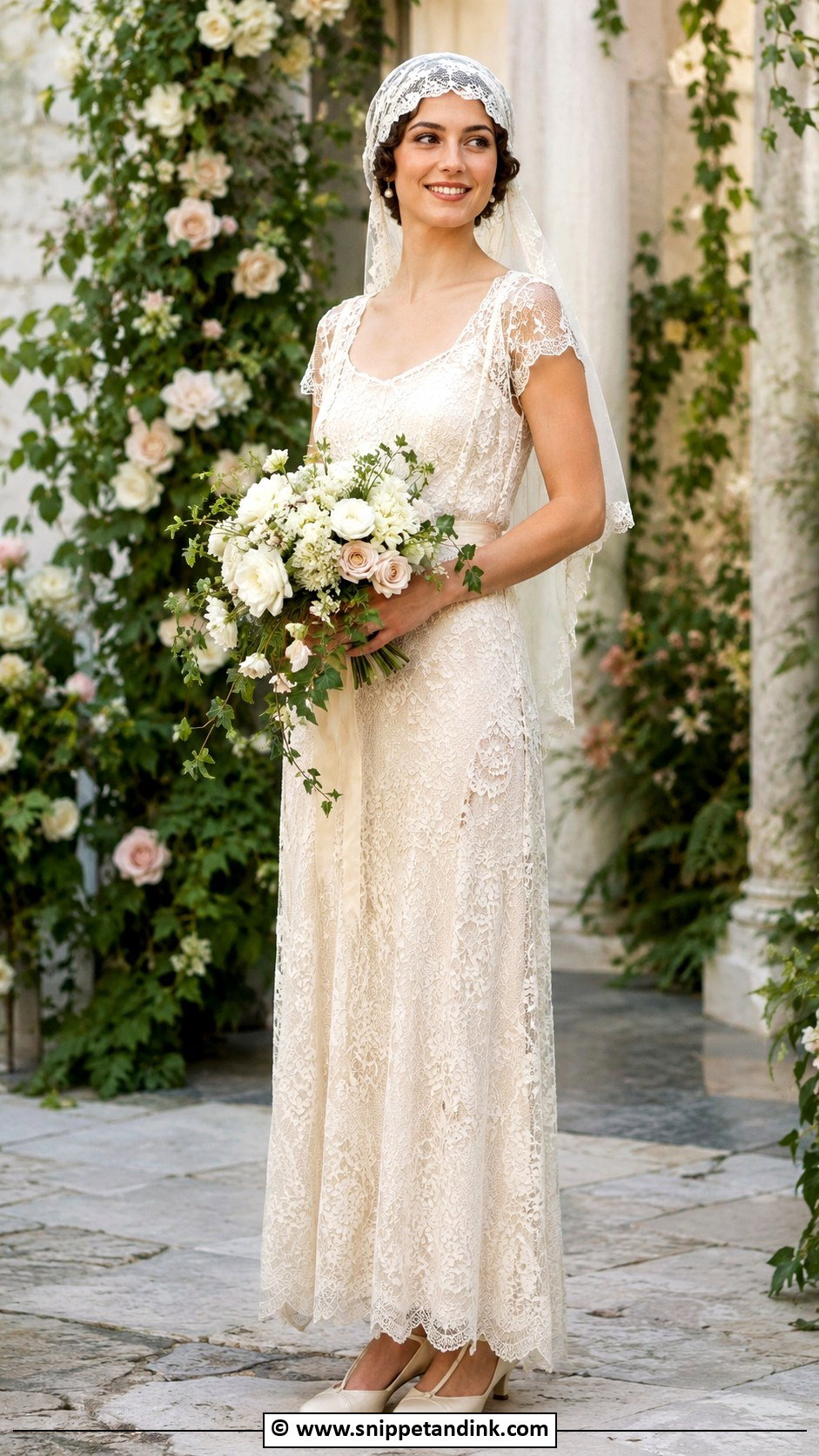
Lace gives the softer side of the decade. Skip a stiff lace ball gown and look for a relaxed column with scalloped edges, sheer sleeves or lace layered over satin, with a slight drop at the waist. Satin Mary Janes, pearl studs and a small comb keep it refined. A lace Juliet cap veil is the most period-correct finish I know. It’s the gentlest option here for brides who don’t want much sparkle.
5. 1920s Satin Wedding Dress
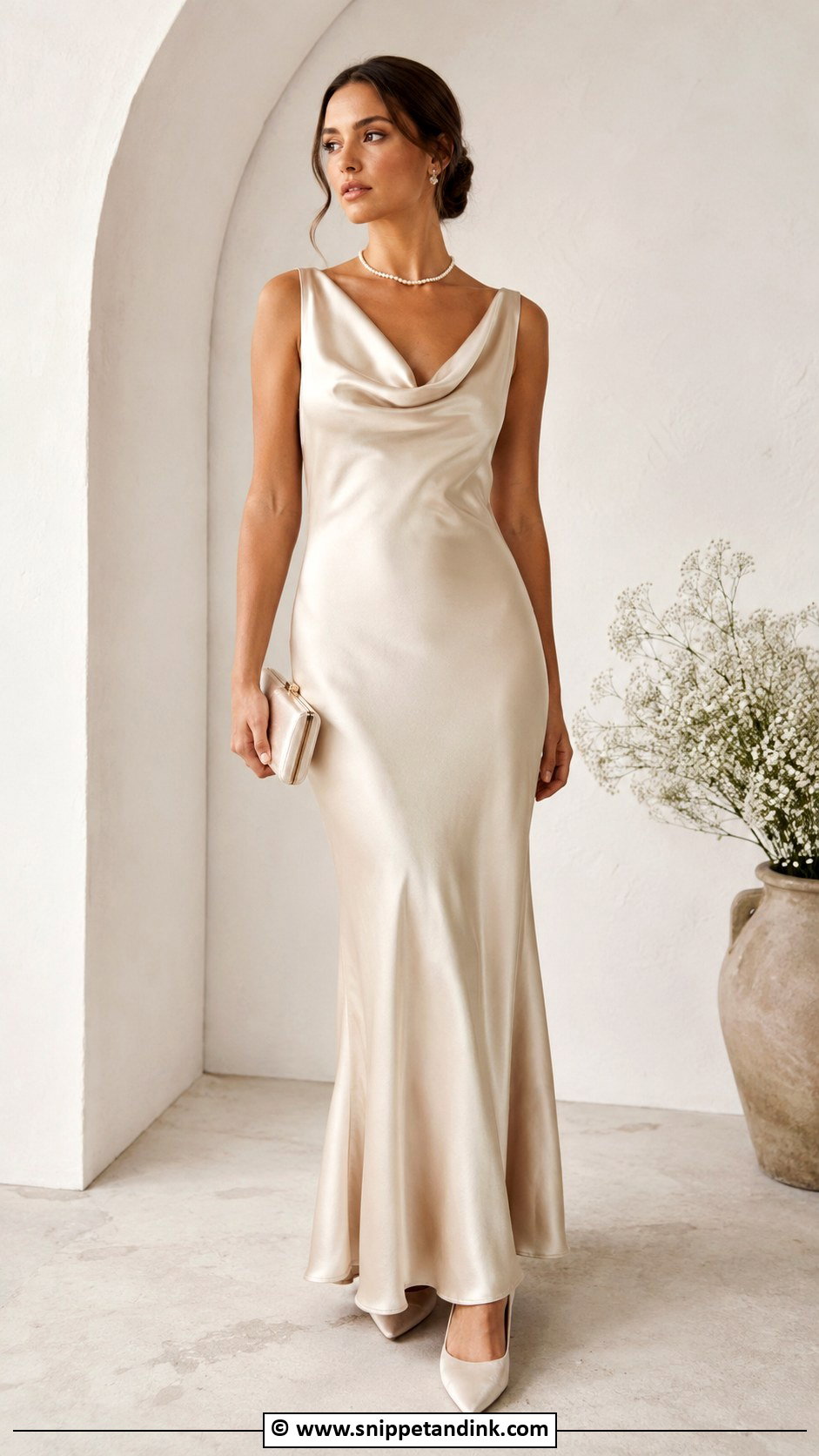
Satin carries this era with almost no decoration because it catches light on its own. A bias cut, cowl neck or simple slip shape drapes the way twenties evening dresses did. Bias-cut satin is honest about the body, though; it shows lines and creases, so I fit it with the exact underwear the bride will wear. Champagne, ivory or pearl white all suit the decade. Pointed satin heels, a pearl necklace and soft waves finish it.
6. 1920s Long Sleeve Wedding Dress
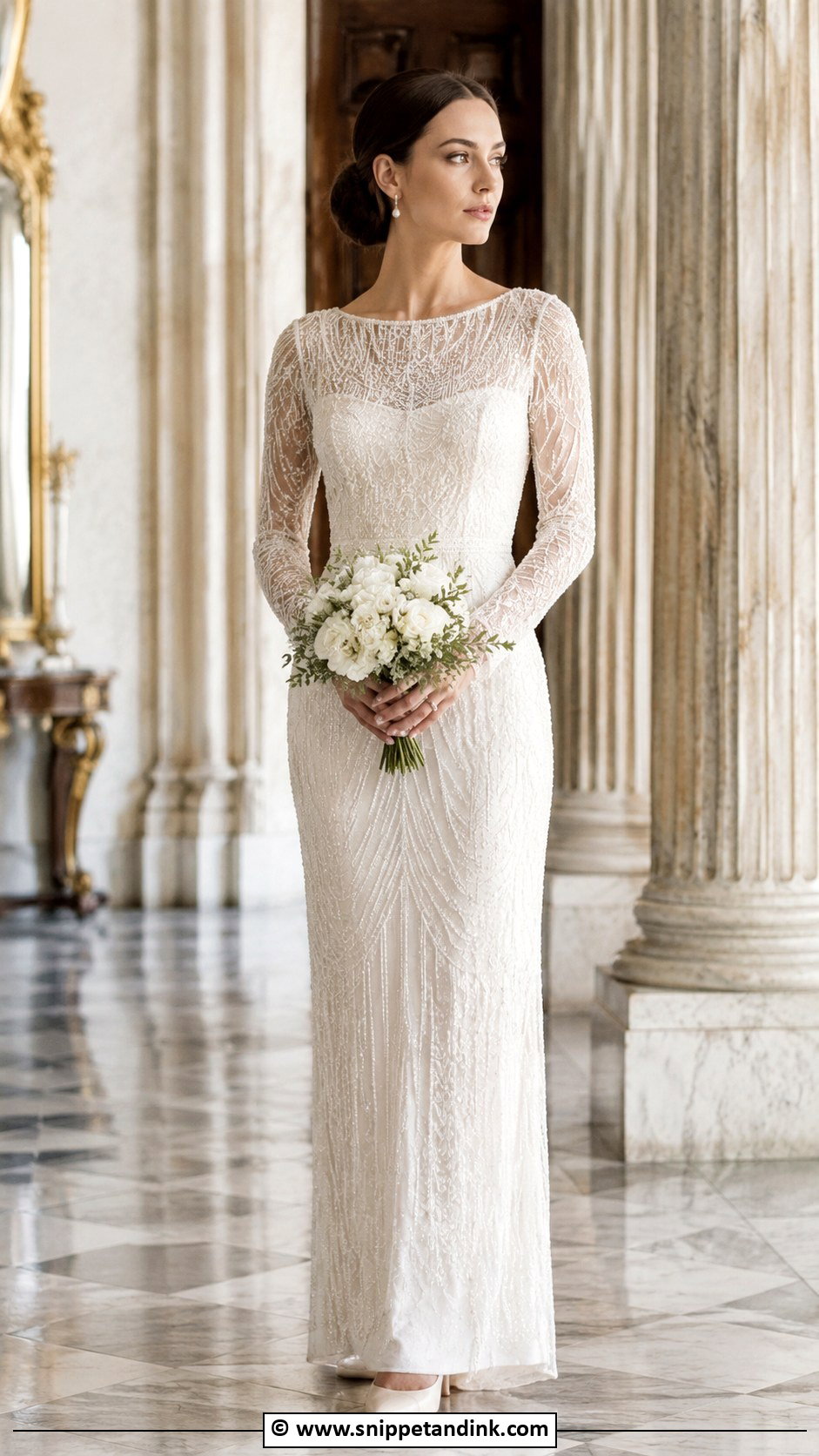
Sleeves in this decade were usually sheer, which keeps a long-sleeved gown light. Tulle, lace or beaded mesh over a straight silhouette with a low waist looks right for the era. Beaded mesh sleeves can be rough inside the elbow, so check the lining. Closed-toe heels, pearl earrings and a sleek updo show off the sleeve detail. It suits autumn, winter and formal indoor ceremonies, and brides who want extra coverage and timeless sophistication.
7. 1920s Tea Length Wedding Dress
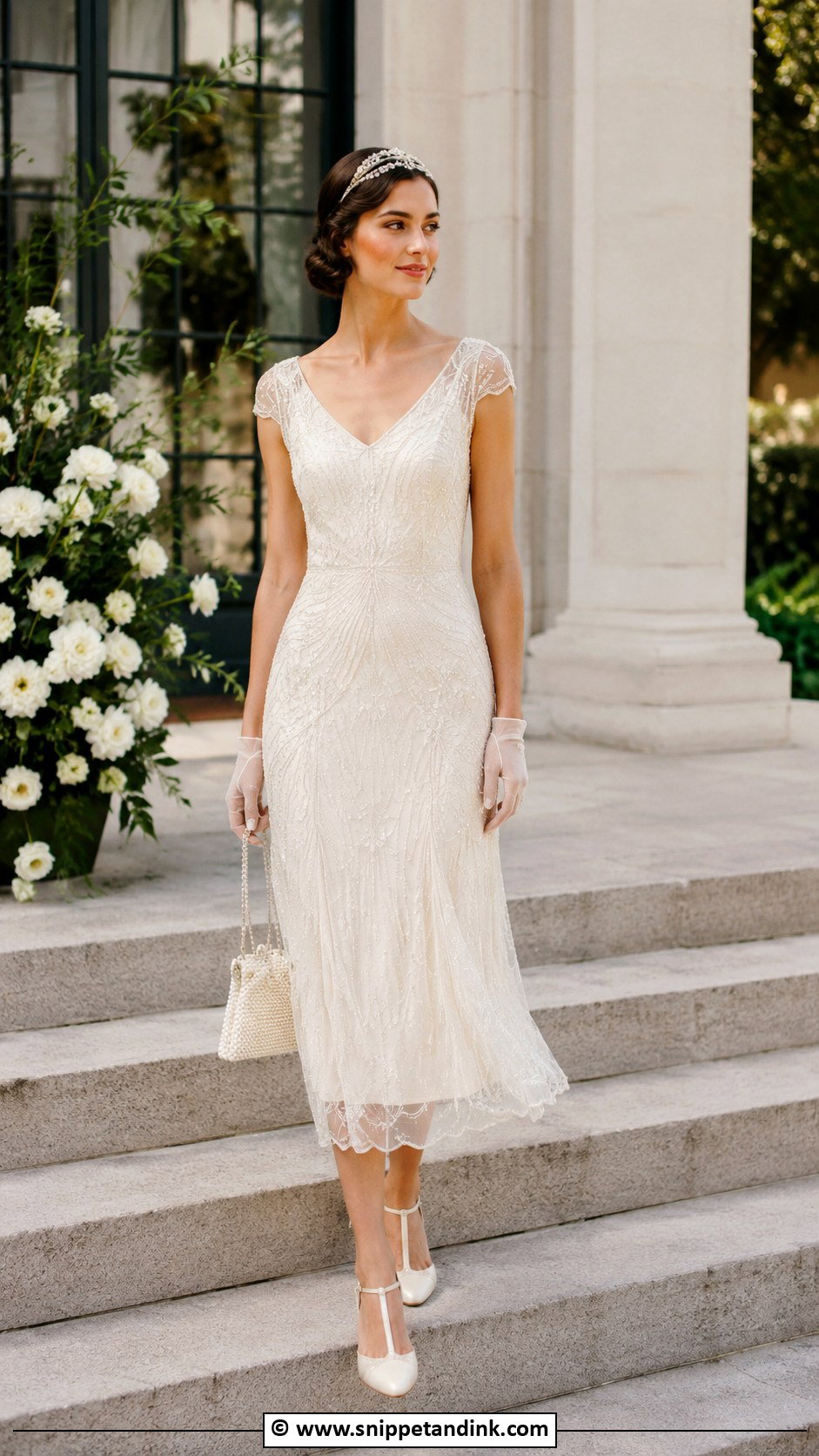
Tea length is the most wearable length from this era. The hem sits below the knee or mid-calf, so you walk, dance and show your shoes without lifting a skirt. Beaded tulle, lace overlay, flutter sleeves or a soft dropped waist all suit it. T-straps or Mary Janes are essential; I’d buy them before the final fitting so the hem is set to the right height. A small pearl bag and gloves finish it for a courthouse, brunch or garden wedding.
8. 1920s Drop Waist Wedding Dress
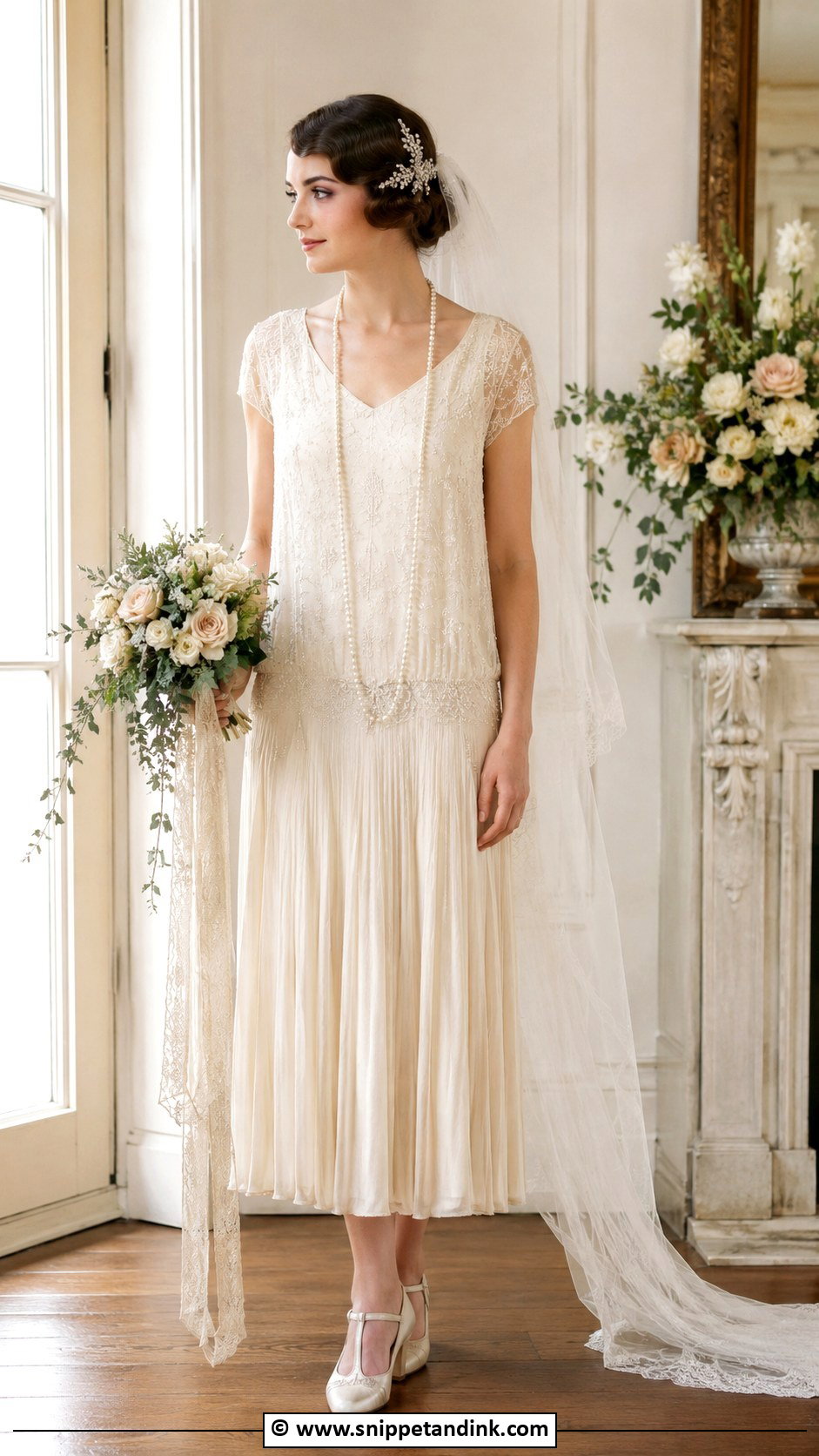
No silhouette says 1920s more clearly than a dropped waist. The seam sits on the hips and creates a long, relaxed line. It suits straight or slim figures most easily; on a curvy figure I look for a seam that sits slightly higher and a skirt with soft pleats, so the line flatters instead of cutting across the widest point. Choose a design that skims. A long pearl strand, low heels and a jeweled comb finish it.
9. 1920s Pearl Wedding Dress
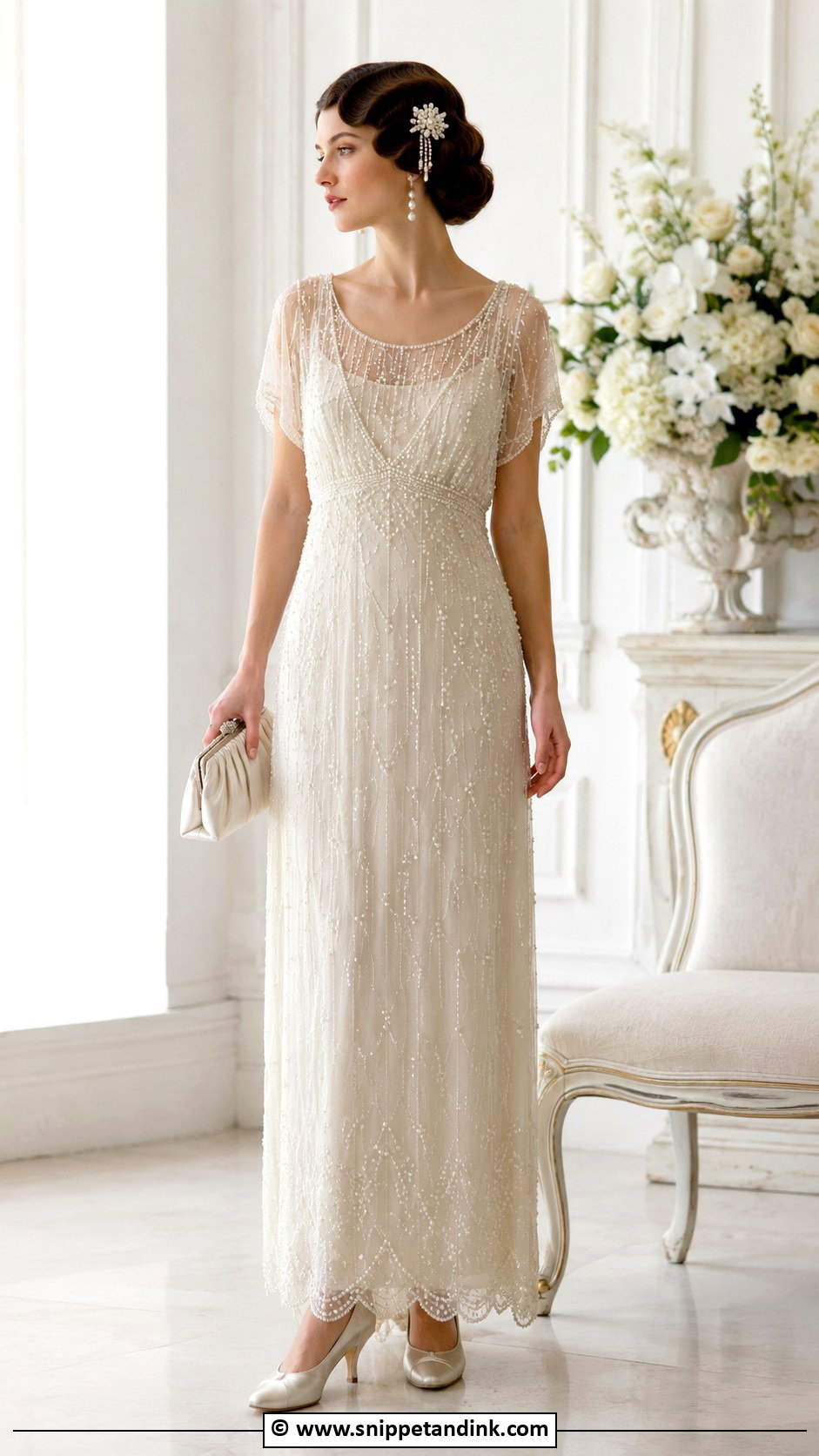
Pearls were everywhere in the twenties, and on a dress they glow rather than sparkle. Scattered beading, pearl-trimmed sleeves or an all-over pattern on sheer mesh all work. Keep the silhouette simple and don’t stack pearl accessories, since a pearl dress plus a pearl rope plus pearl earrings plus a pearl headband is too much. I’d pick two. Ivory pumps and a satin clutch keep it clean.
10. 1920s Sequin Wedding Dress
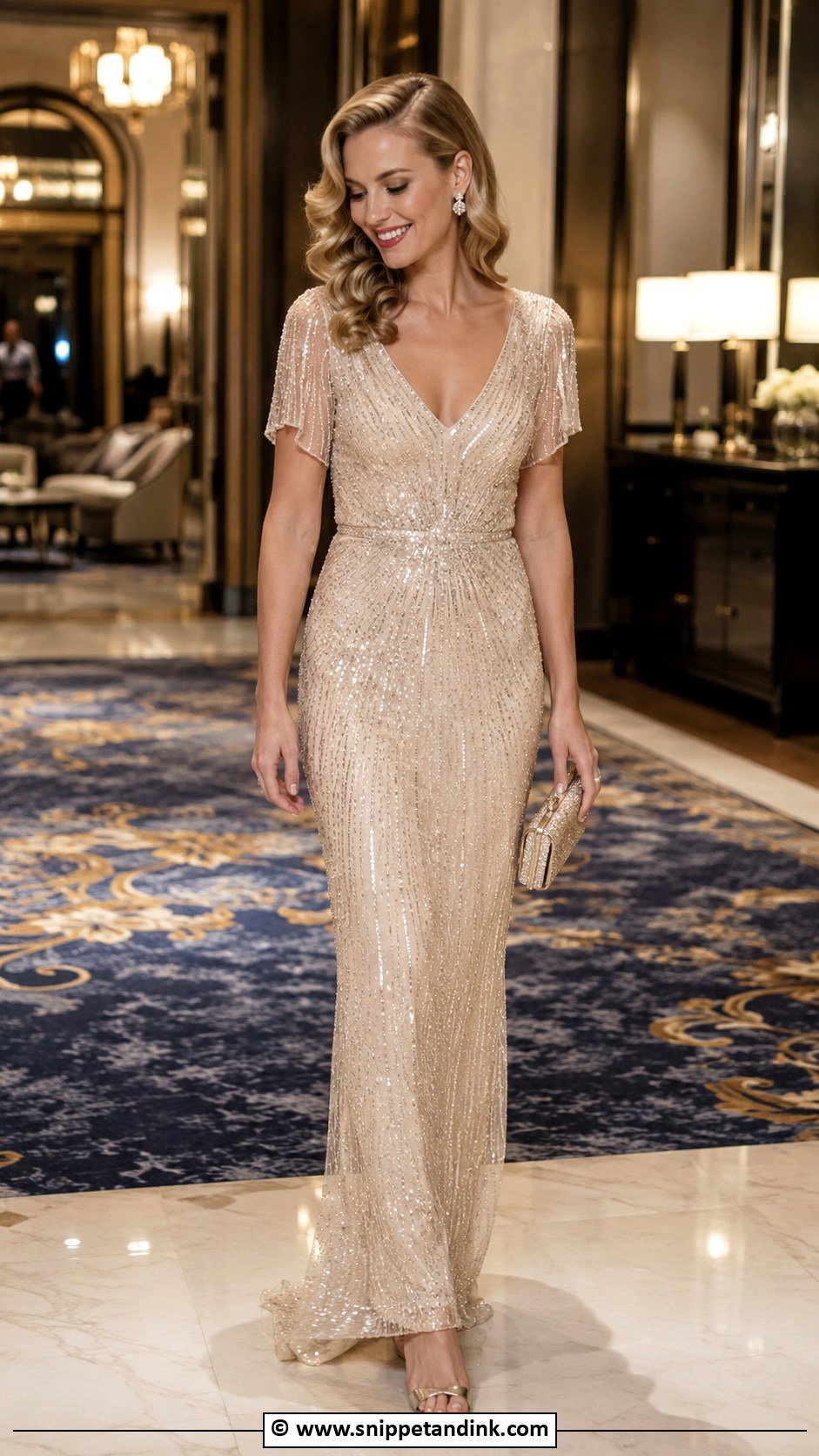
Sequins bring party energy, and choosing the color carefully keeps them bridal: ivory, champagne, silver or soft gold. A column with slim straps or cap sleeves lets the shimmer lead. Check the underarms and inner arms, where sequin edges rub over a long evening. Metallic heels and polished waves are enough. A sheer cape or satin wrap adds coverage for the ceremony. It’s strongest at evening receptions and city ceremonies.
11. 1920s Fringe Wedding Dress
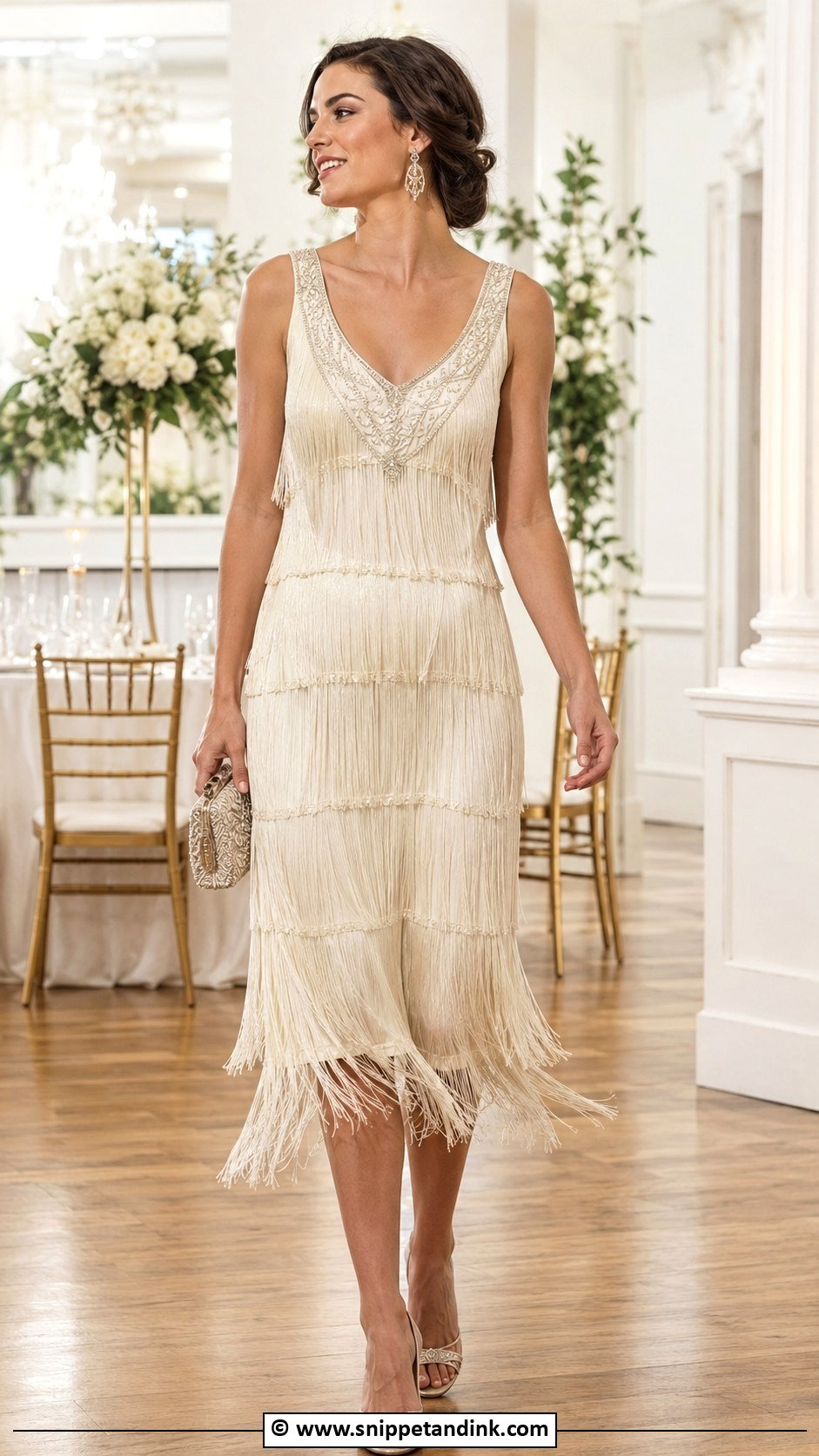
Fringe is the movement detail of the decade. It can be full-length and dramatic or short and dance-ready. For a bridal version, I like ivory fringe over a simple slip or a beaded bodice with fringe only on the skirt. Fringe tangles when it’s packed badly, so it should hang on a padded hanger until you dress. Simple heels and sleek earrings leave room for it to swing. A bold headband works only if it doesn’t fight the movement.
12. 1920s Champagne Wedding Dress
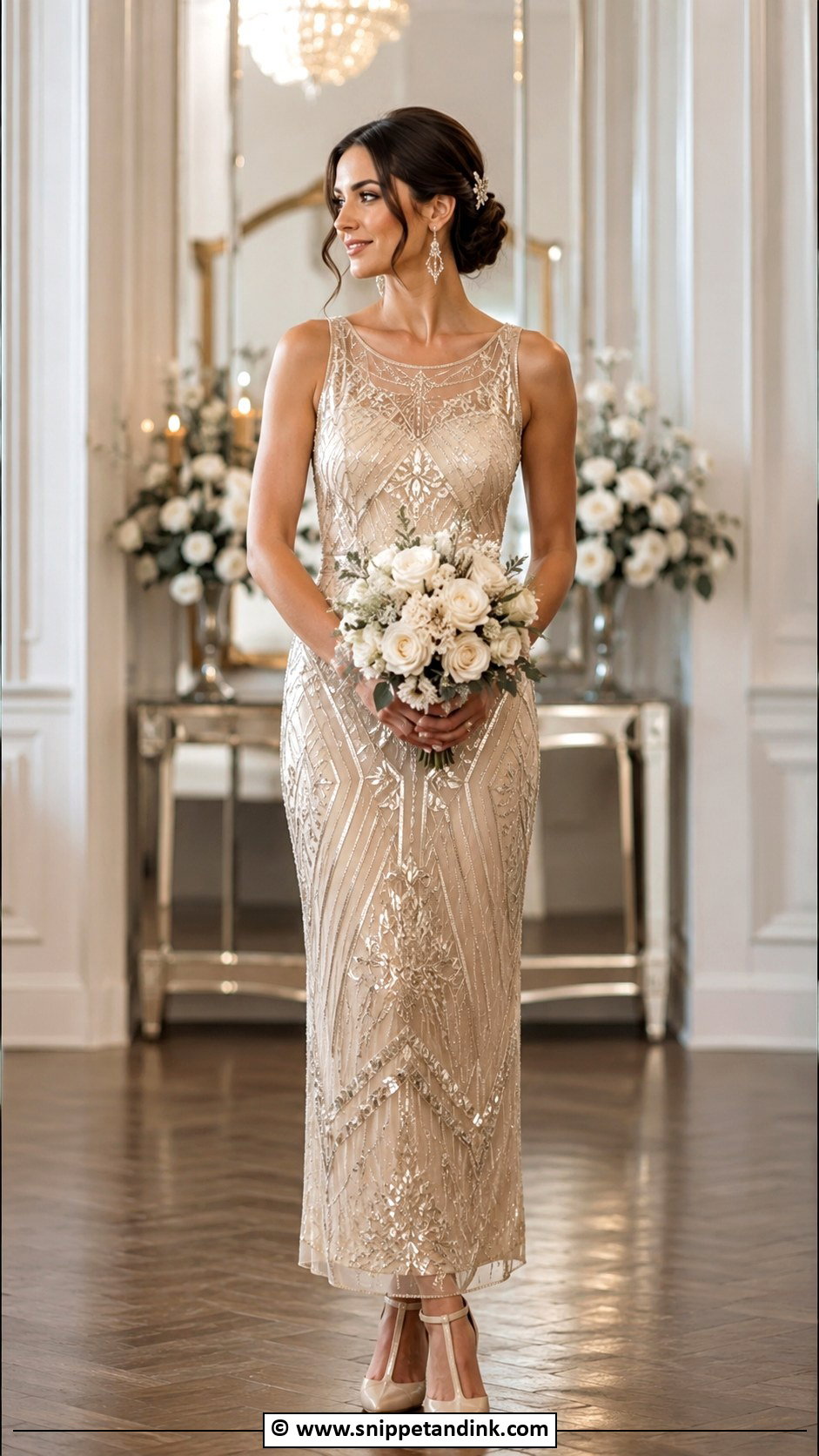
Champagne is warmer than white and makes beading, sequins and satin look richer. It flatters most skin tones, but pale skin can look washed out next to a very beige champagne, so check a swatch in daylight. A champagne sheath with Deco embroidery or pearl detail suits the era. Gold or nude heels, crystal earrings and an ivory bouquet balance it. The color suits vintage hair pieces because it already looks antique.
13. 1920s Silver Wedding Dress
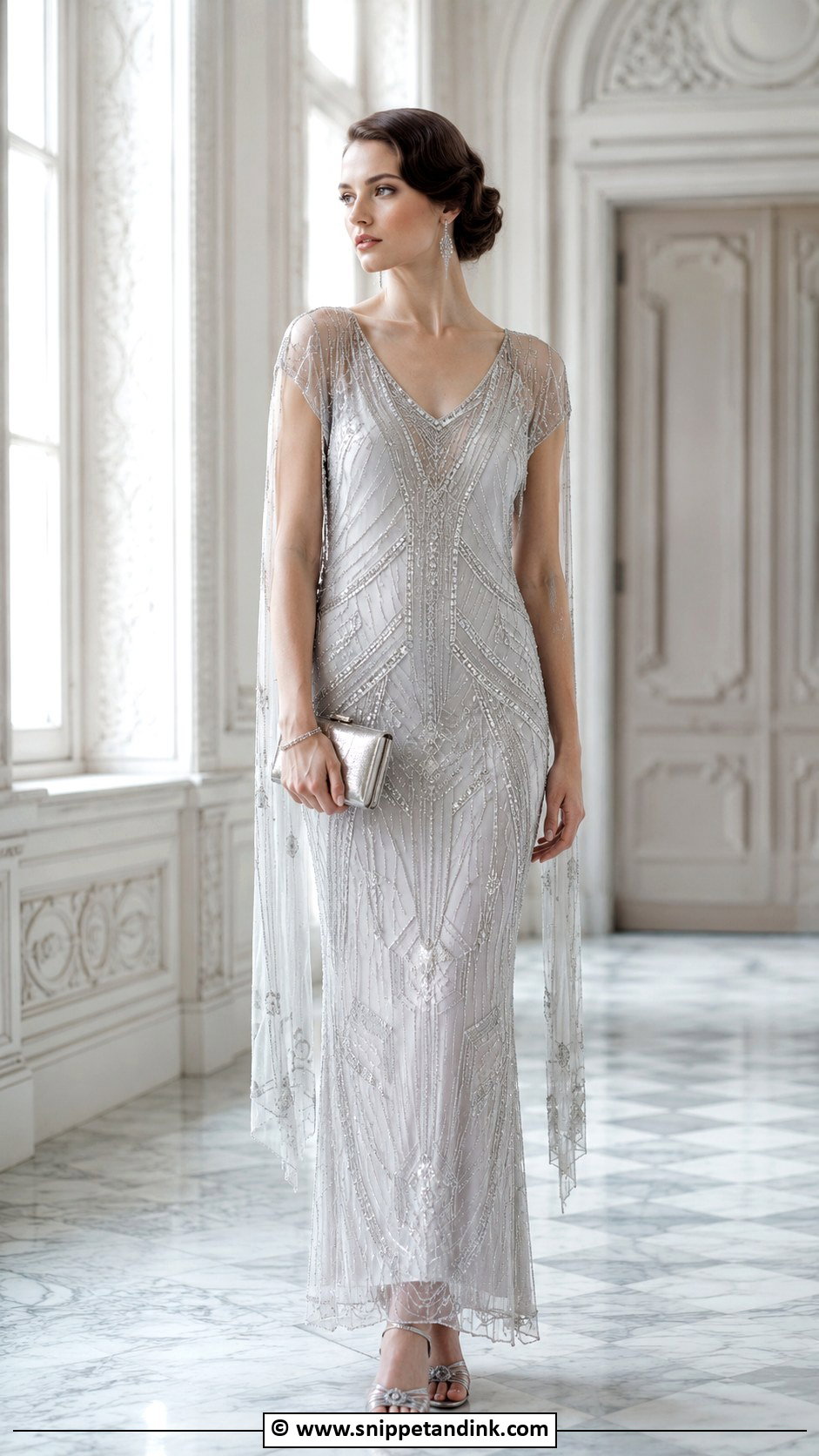
Silver is cool and glamorous, and it stays bridal when it’s soft: pale silver, platinum or icy grey. Beaded mesh, sequined tulle or lightly lustrous satin all suit it. Keep the silhouette smooth since the color already stands out. Silver sandals, crystal earrings and a sleek clutch finish it. Hollywood-style waves with a deep side part suit the cool tone. I’d suggest it for winter weddings and modern ballrooms.
14. 1920s Gold Wedding Dress
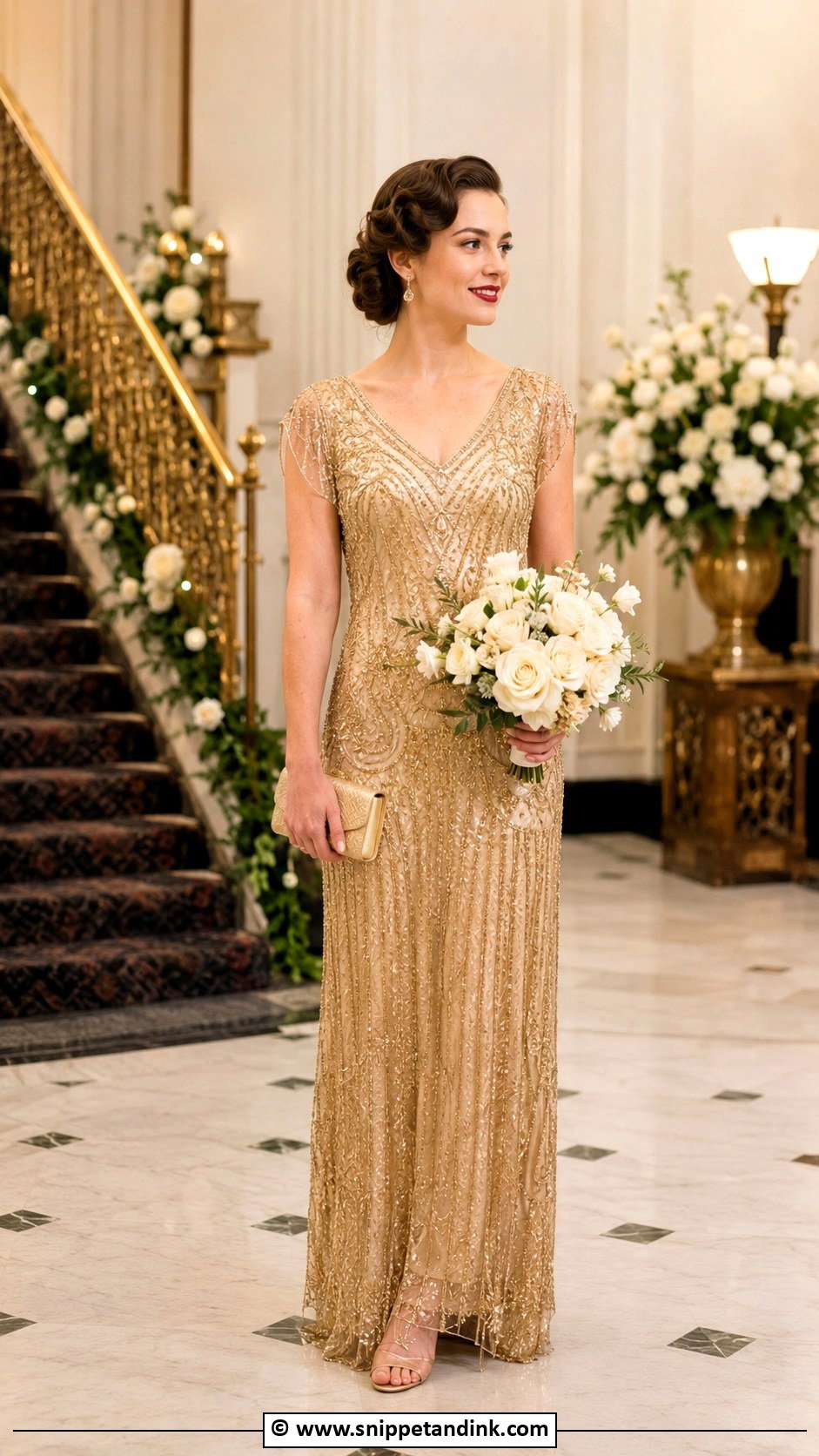
Gold works for the twenties when it’s pale, antique or champagne-gold rather than bright yellow. Beading, embroidery and metallic thread look rich on a straight or lightly draped gown. I’d hold the gold against your skin and your engagement ring before buying, because a mismatch between yellow gold jewelry and a cool gold dress shows in close-ups. Neutral heels, small gold earrings and ivory flowers keep it fresh. It suits evening receptions and historic venues.
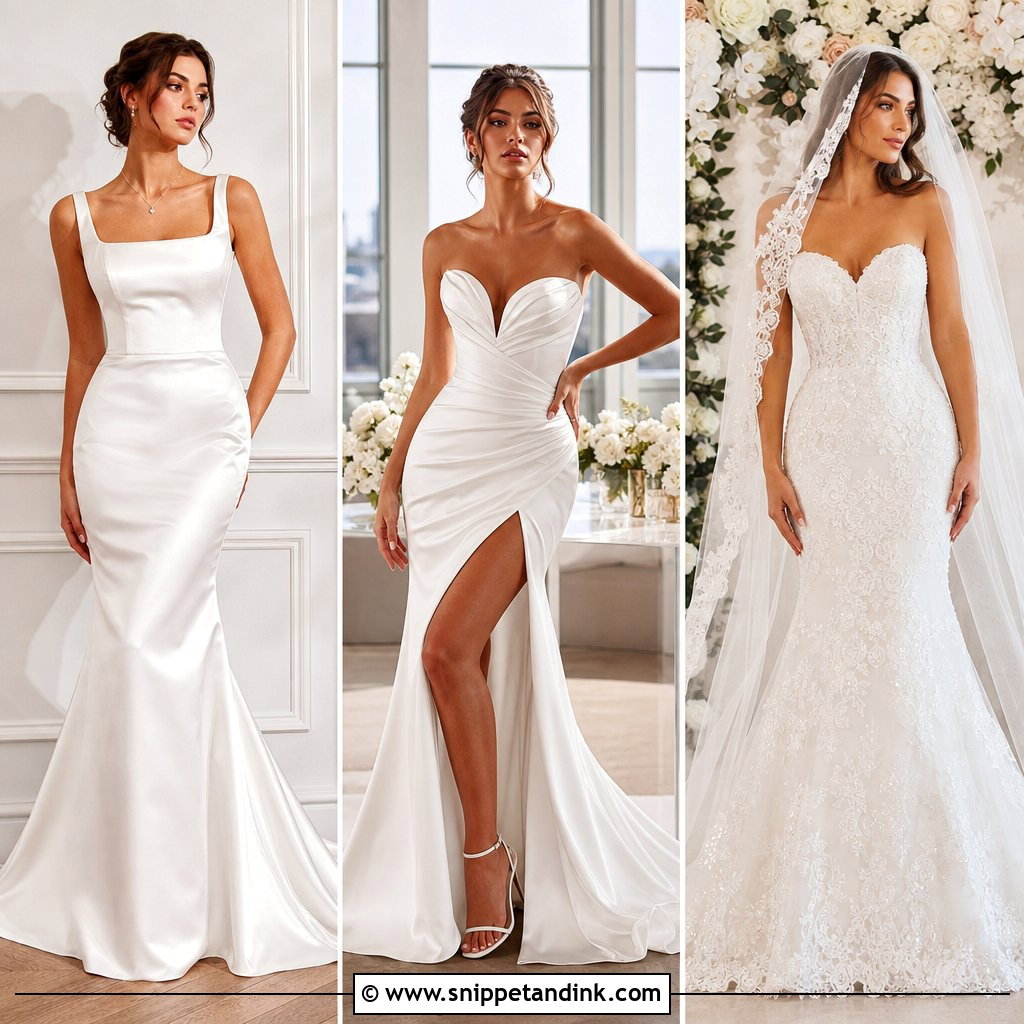
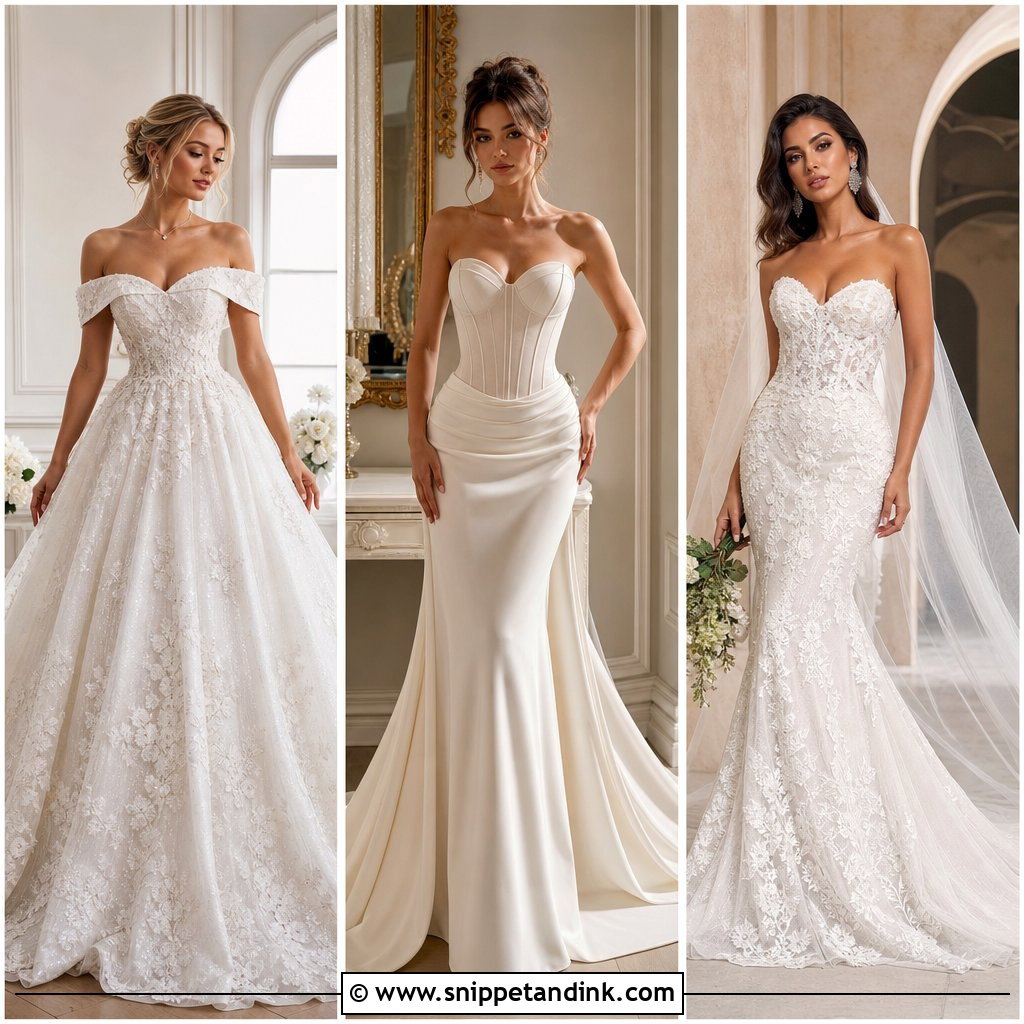
15. 1920s Sheath Wedding Dress
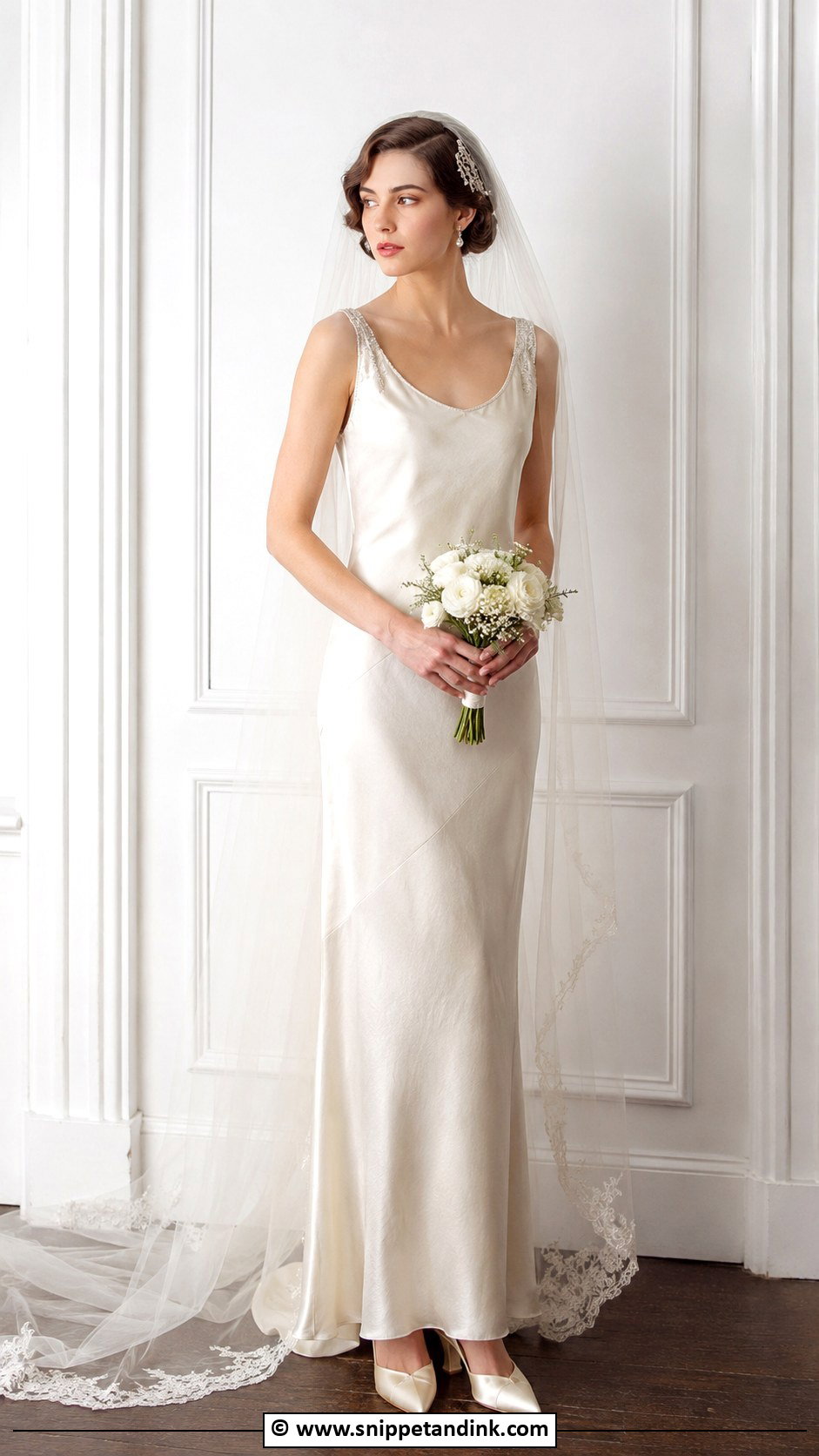
A sheath falls close to the body without gripping it, which gives the clean vintage line. Plain satin, beaded mesh or lace-covered versions all work. It suits petite brides well because there’s no volume to swallow them, and it packs easily for a destination wedding. Pointed heels, a long veil and delicate earrings give a classic finish. Make sure you can sit and climb steps; a narrow hem may need a small hidden slit.
16. 1920s Slip Wedding Dress
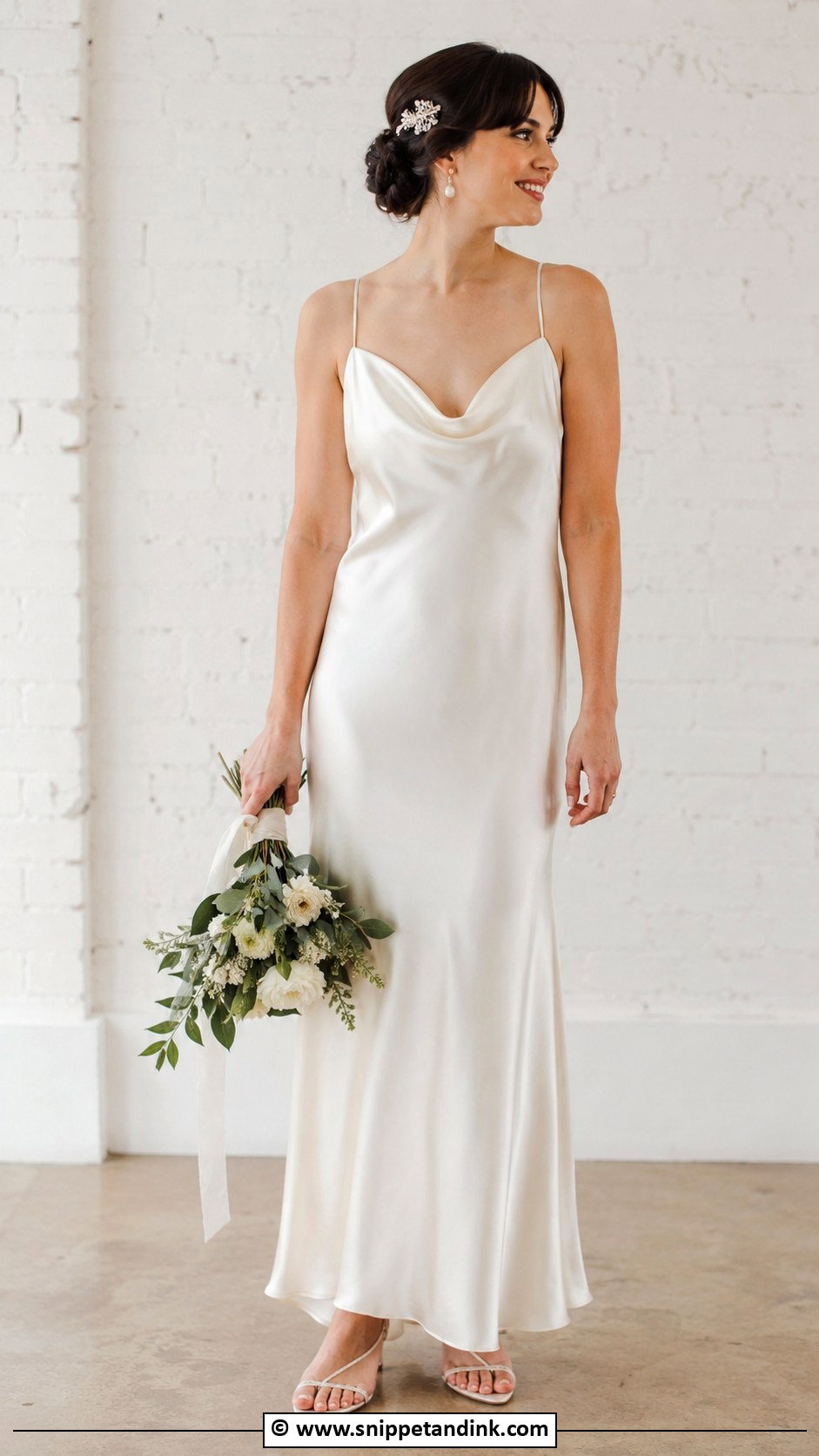
Fluid fabric was central to the decade, and a slip wedding dress in satin, silk or crepe honors it with a cowl neck, low back or bias skirt. It should skim and move. A slip shows everything underneath, so smooth, skin-toned underwear matters. A beaded comb, pearl earrings and strappy heels finish it. A sheer capelet or lace topper adds coverage for the ceremony and comes off for the party.
17. 1920s High Neck Wedding Dress
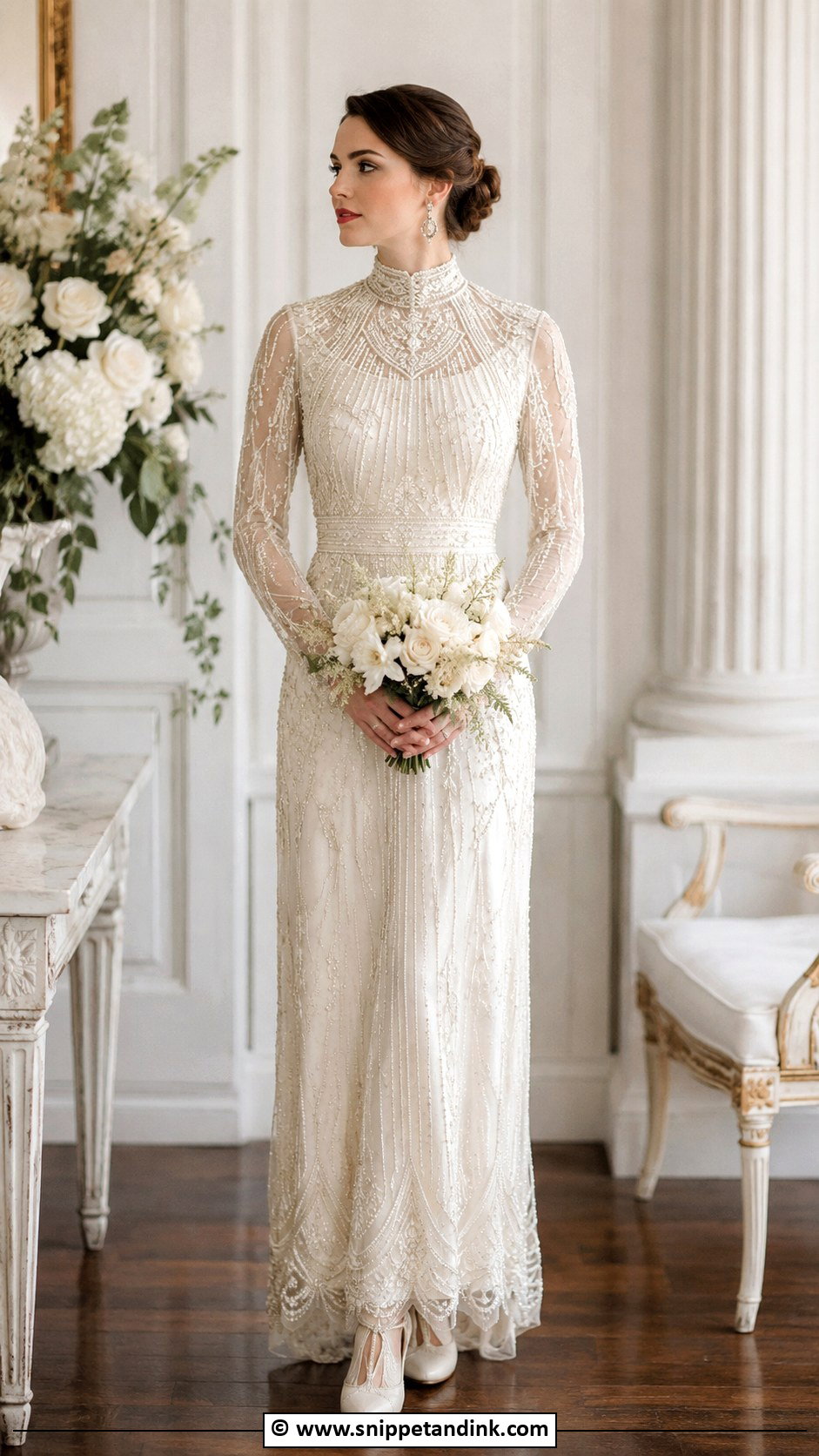
A high neck with beading or lace around the collar balances a straight skirt, sheer sleeves or an open back. Choose light fabrics so it doesn’t feel stiff. The collar should lie flat when you turn your head; a tight neckline feels tighter by the evening. Drop earrings, a neat bun and closed-toe heels suit it. Skip necklaces entirely and let earrings or a hair piece carry the jewelry.
18. 1920s Cap Sleeve Wedding Dress
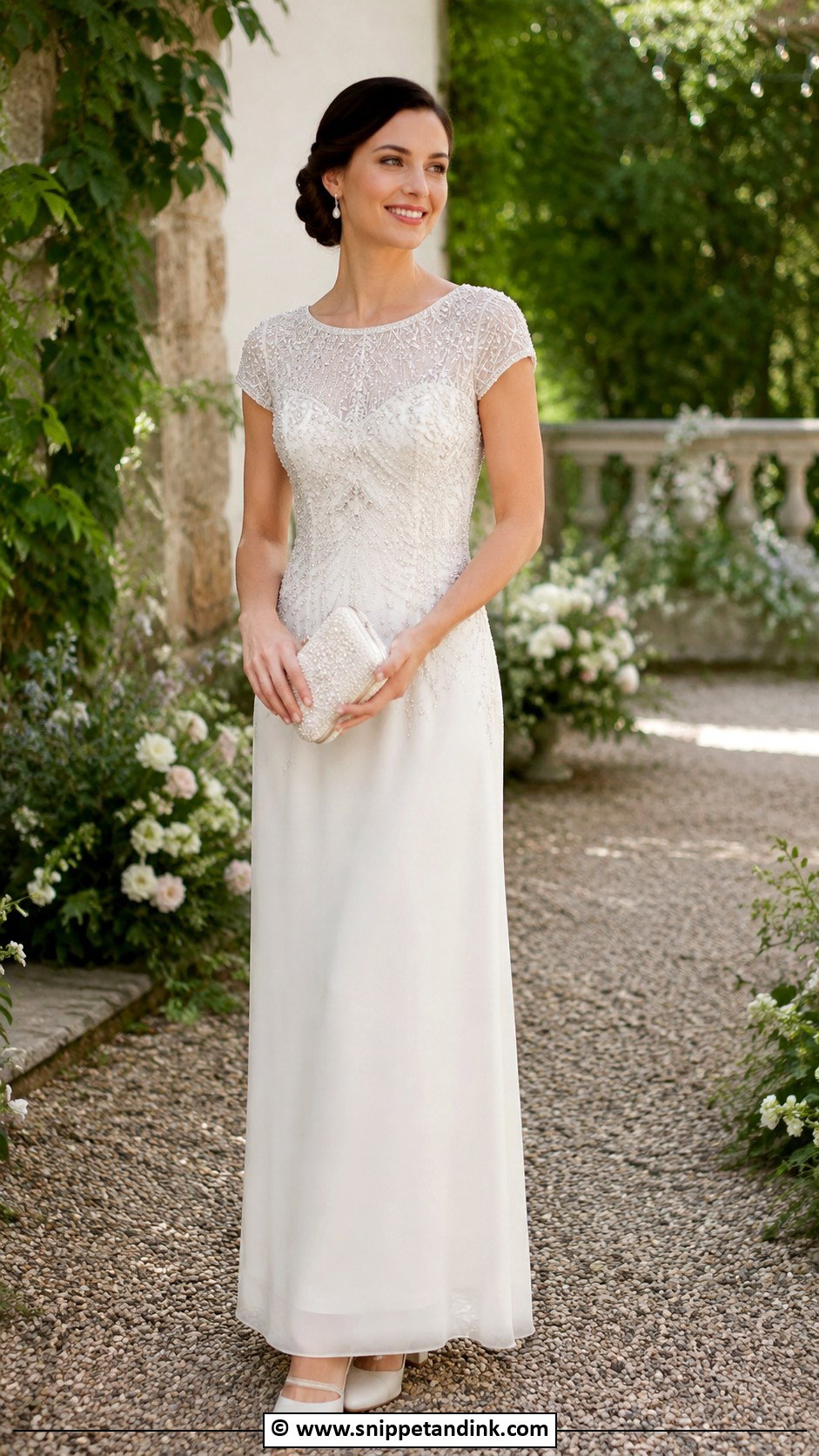
Cap sleeves cover the top of the shoulder and nothing more, which keeps the dress light and still gives a bit of structure for straps that won’t slip. They suit beaded bodices, lace overlays and soft satin columns. A relaxed waist and gentle skirt keep it period-true. Pearl earrings, low block heels and a beaded clutch finish it. A finger-wave or faux bob updo makes the era clear. It’s a spring and summer choice.
19. 1920s Flutter Sleeve Wedding Dress
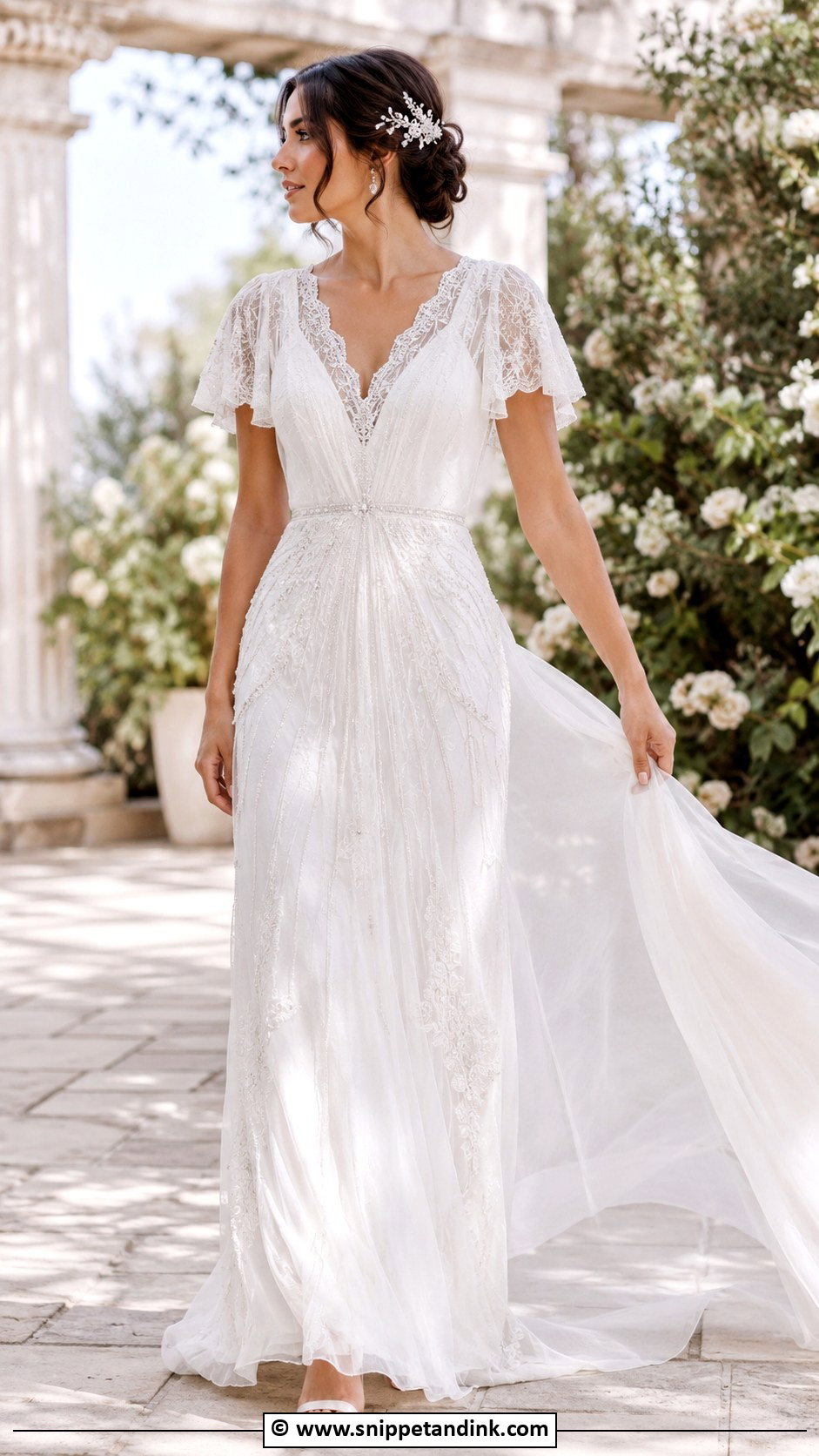
Flutter sleeves add movement to an otherwise straight dress. In chiffon, lace or sheer tulle they float as you walk. A V-neck with subtle beading or a lace overlay suits them. I’d choose a jeweled comb over a long veil, which can catch on the sleeves. Delicate earrings, satin heels and a soft updo finish it for a garden ceremony or an indoor wedding.
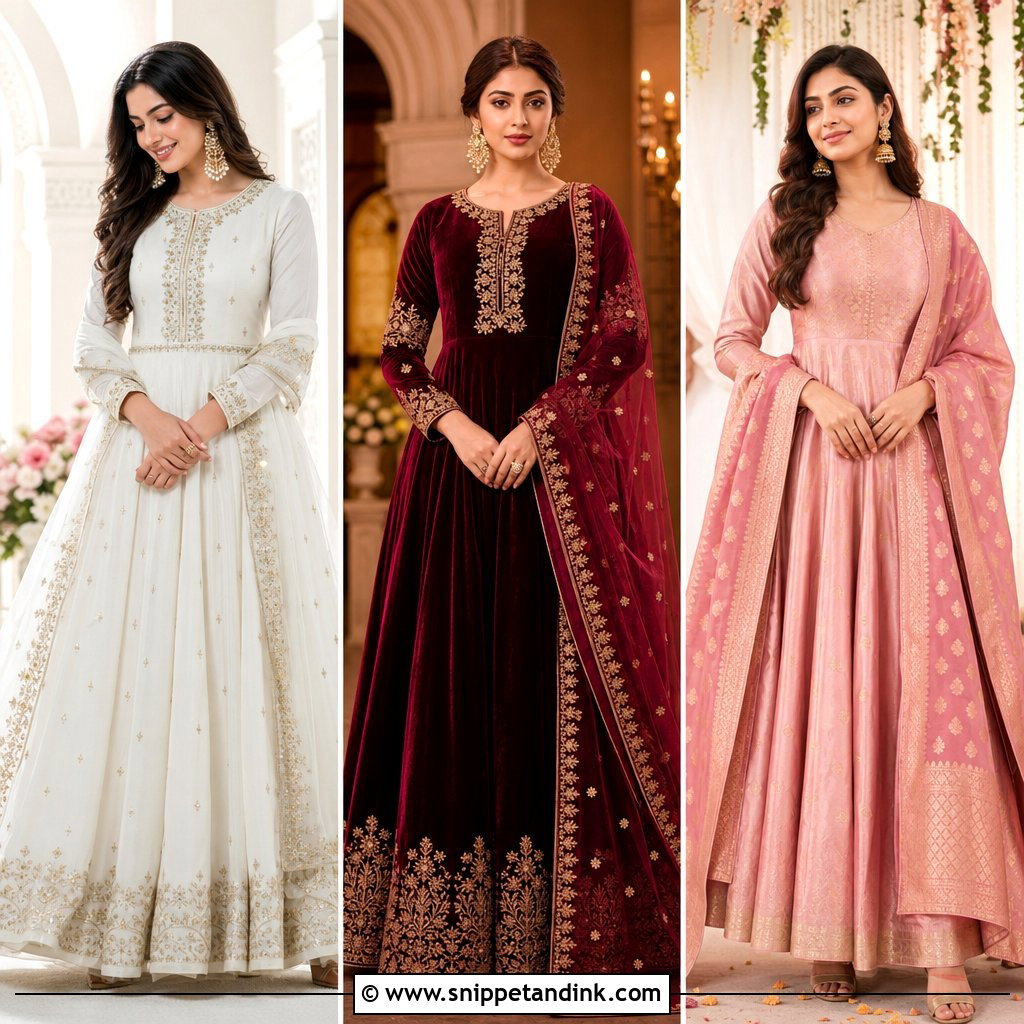
20. 1920s V Neck Wedding Dress
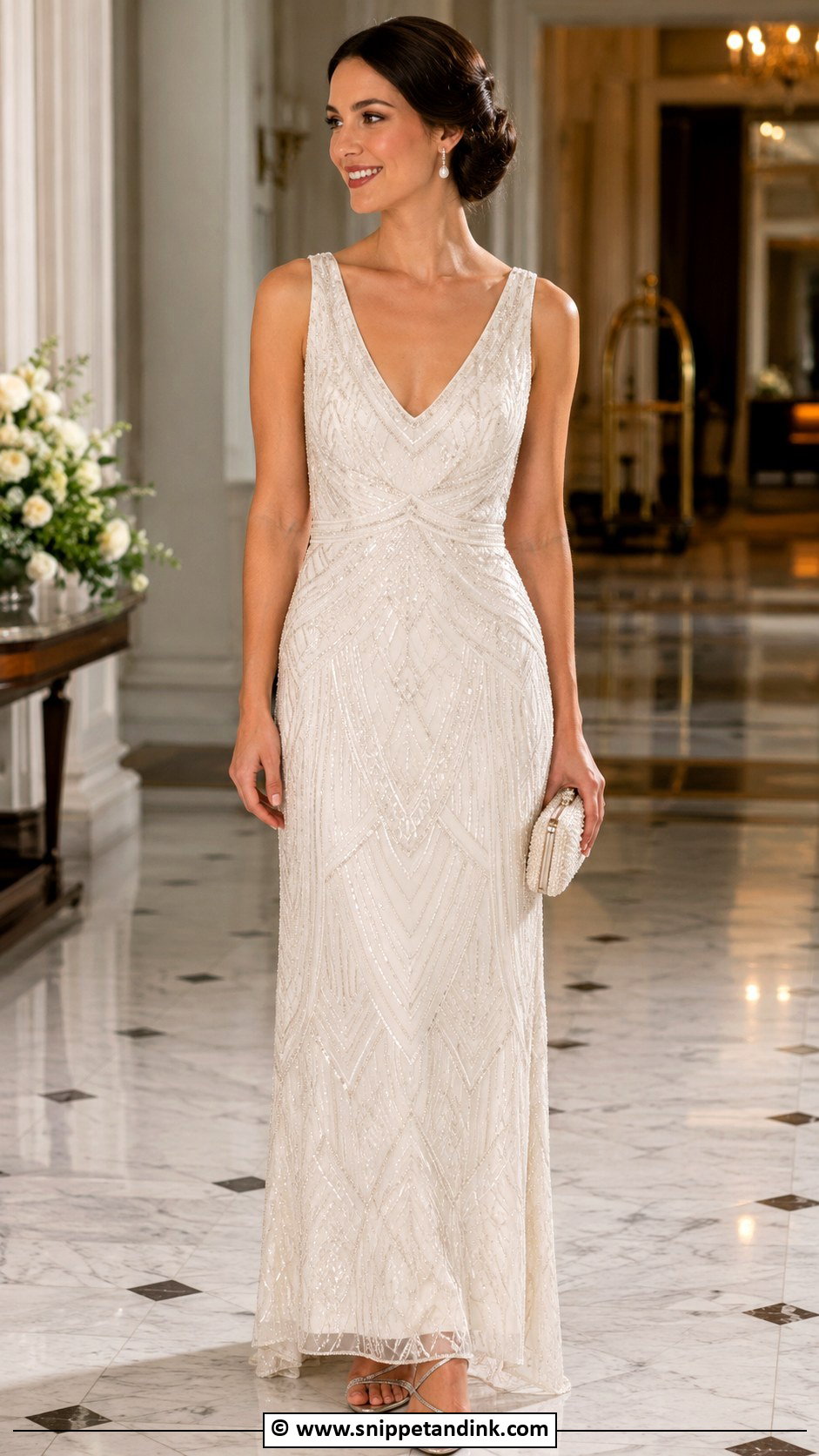
The V lengthens the torso, which pairs naturally with the straight lines of the decade. Depth is a matter of comfort; a modest V reads classic, a deep one dramatic. Beaded panels, satin draping, lace sleeves or a column skirt all suit it. If the dress is beaded, keep the neck bare; if it’s simple, a pendant works. T-straps, pearl earrings and a small clutch complete it.
21. 1920s Cowl Neck Wedding Dress
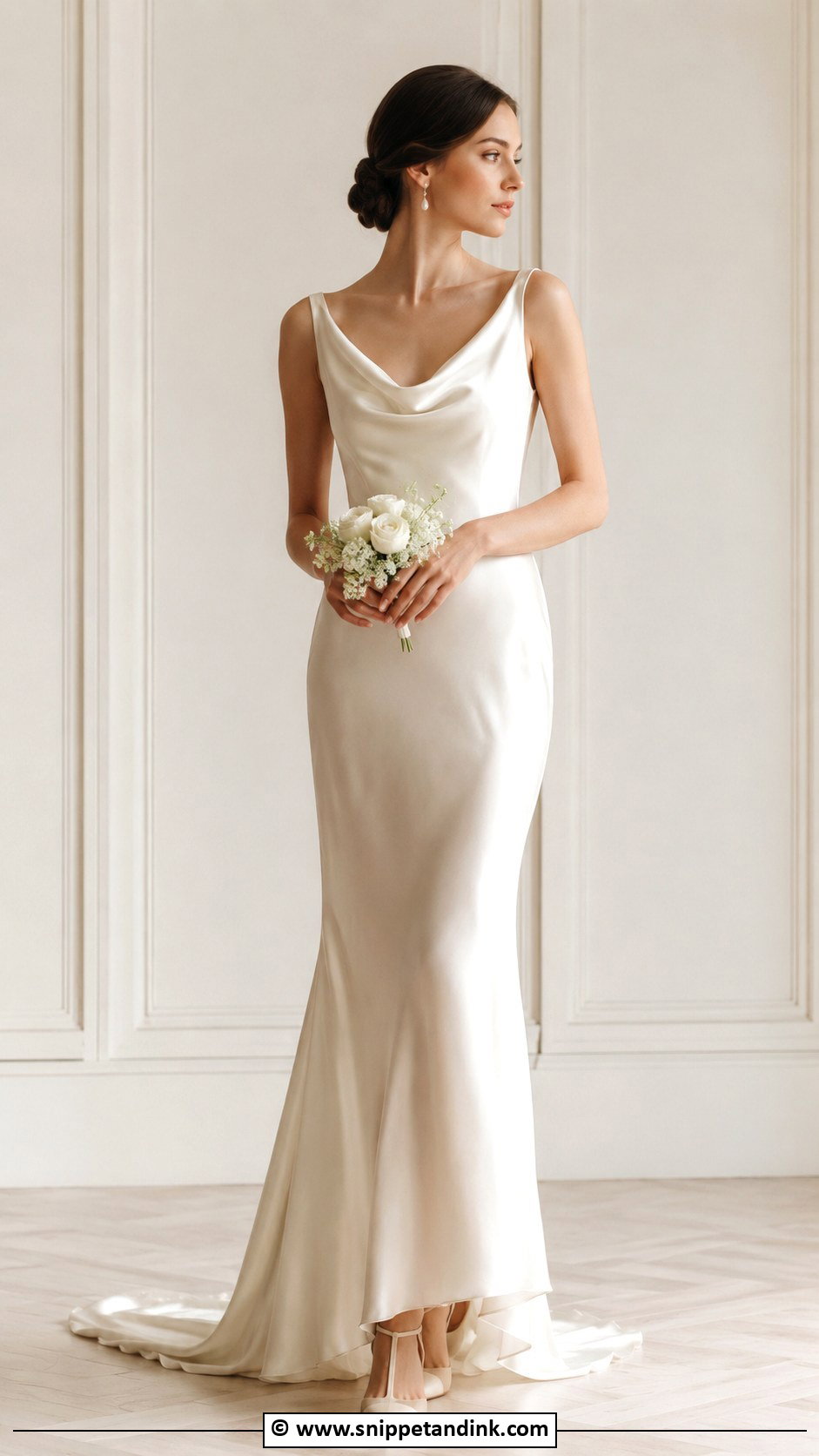
A cowl drape at the neck is soft and quietly romantic, and it depends on fabric that falls well: satin, silk or crepe. Stiffer fabric makes the drape stand out instead of falling. Keep the skirt straight or with a slight train. A cowl back gives drama from behind. Slim heels, pearl earrings and a low bun or soft waves finish it. I suggest it when someone wants the vintage feeling without any sparkle.
22. 1920s Backless Wedding Dress
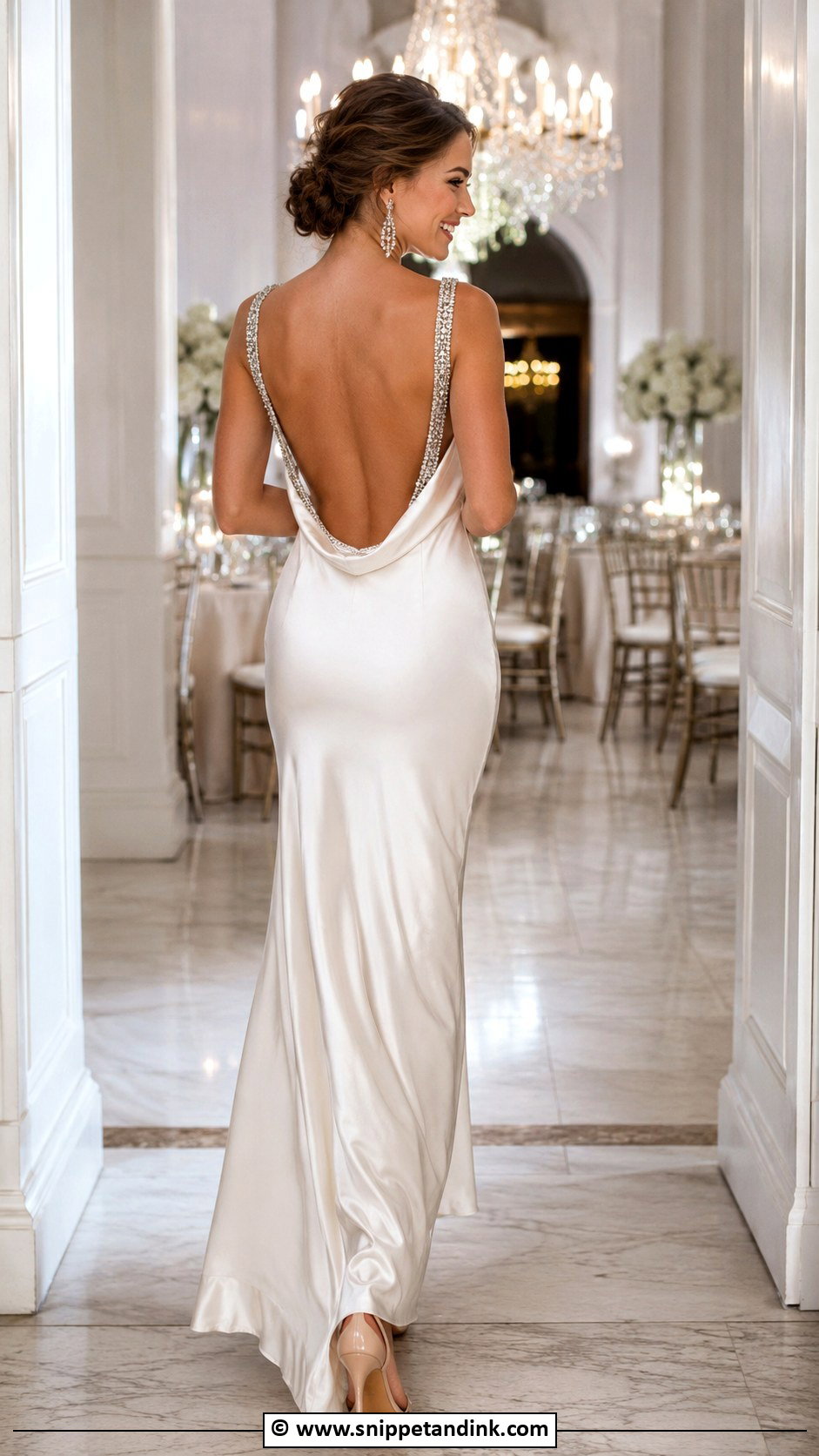
Twenties evening gowns often saved the drama for the back. A simple sheath or satin slip with a low scoop, V-back or cowl back, plus beaded straps or pearl chains, gives that effect. Keep the front minimal. A low back rules out most bras, so plan support early with your seamstress; cups can often be sewn into the dress. Statement earrings and a sleek updo suit it.
23. 1920s Beaded Cape Wedding Dress
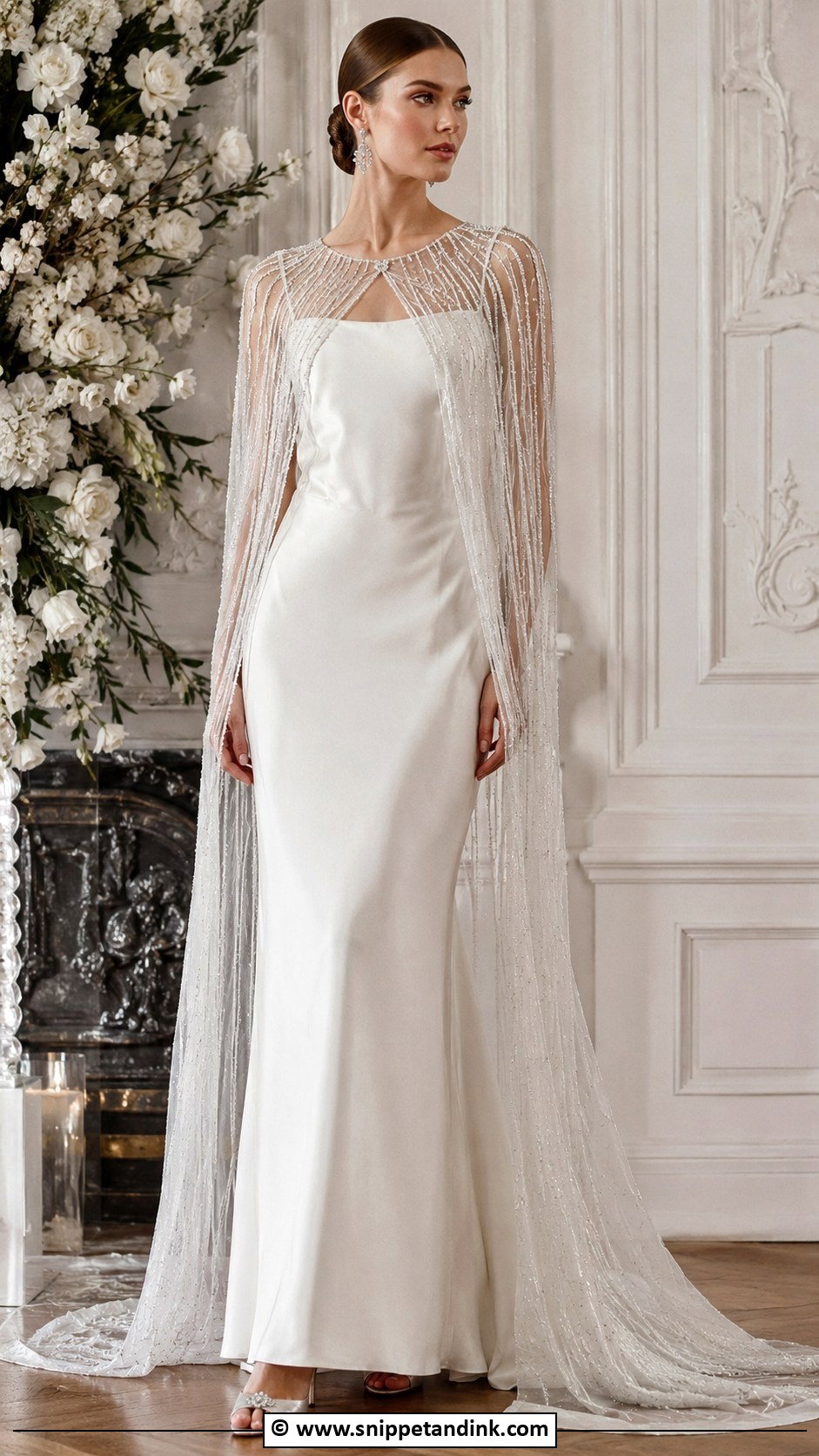
A beaded cape gives drama without a train. It can attach to the gown or sit separately over a simple sheath, in sheer tulle, chiffon or mesh with delicate beading over the shoulders. Beading at the shoulder is heavy, so a cape needs to anchor securely or it slides back and drags the neckline. Keep the dress straight and the hair simple underneath. It gives ceremony drama, then comes off for dancing.
24. 1920s Capelet Wedding Dress
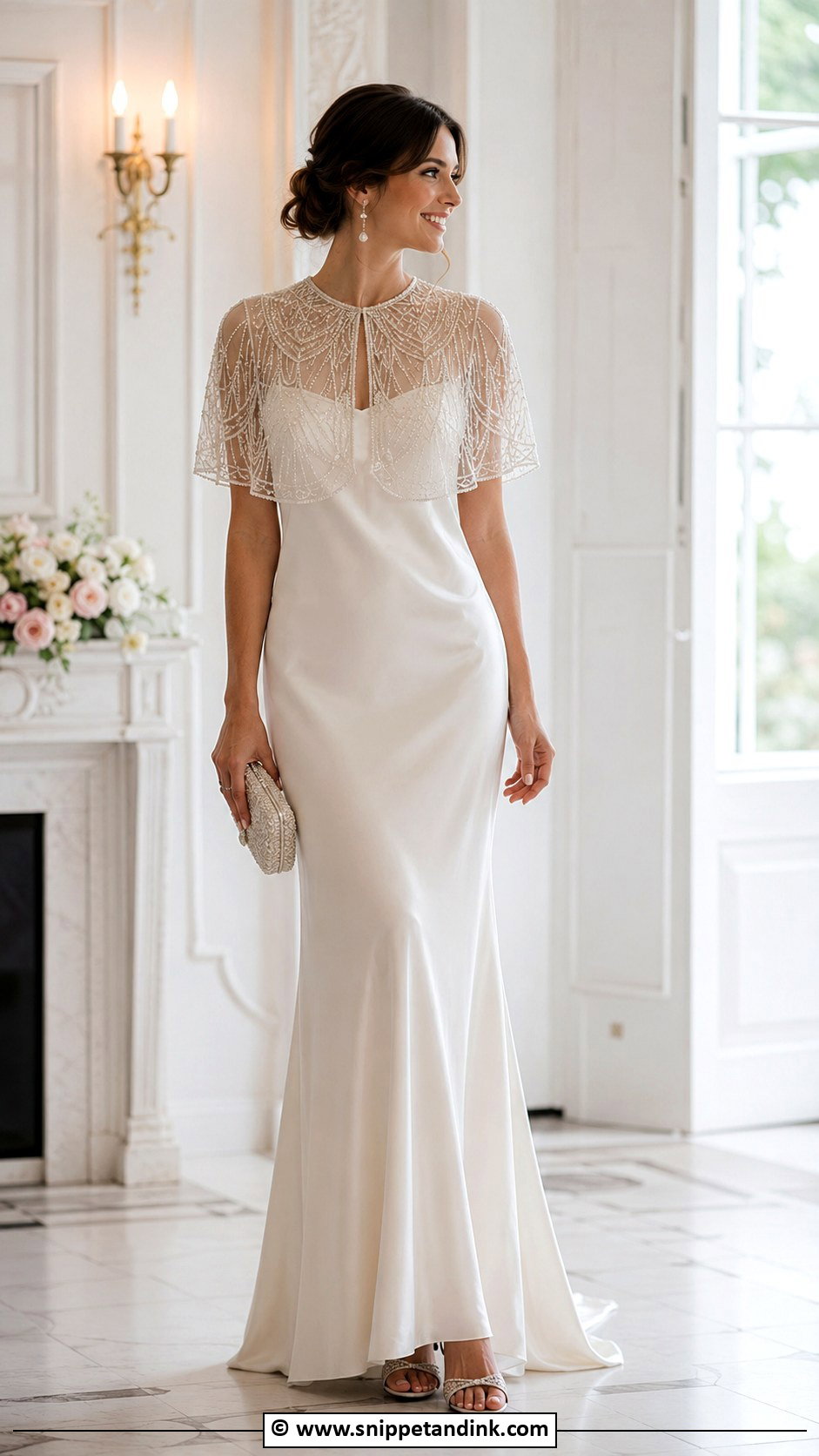
A capelet is shorter than a cape and gives light coverage around the shoulders. Lace, beaded mesh, tulle or satin capelets suit sheath and slip gowns. Wear it for the ceremony, then take it off later, which helps at religious venues and in cooler weather. Pearl earrings, low heels and a small clutch complete the look. Check that it closes with a hook rather than a tie that comes loose.
25. 1920s Two Piece Wedding Dress
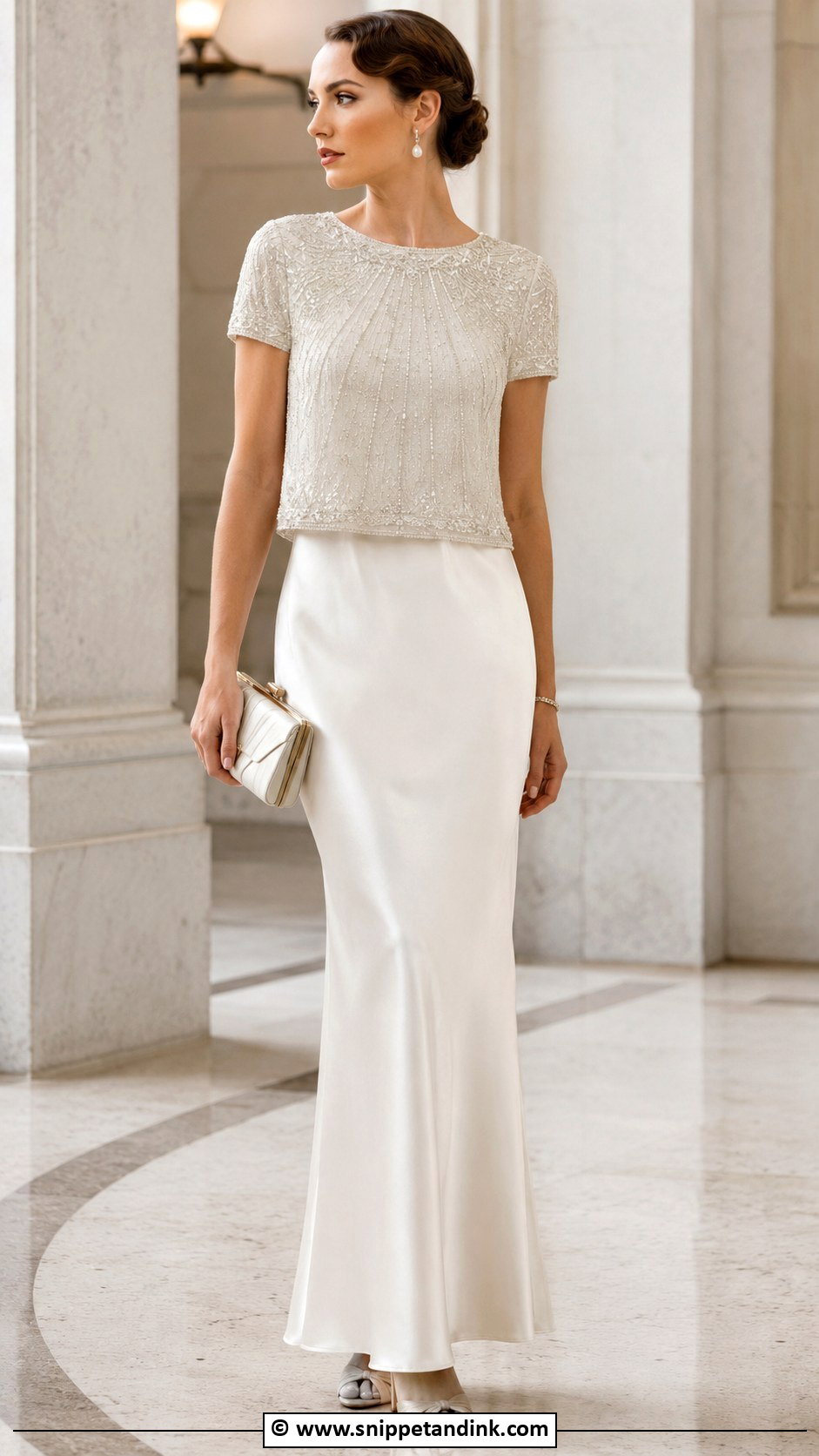
Separates work well for this era because the silhouette was straight and relaxed anyway. A beaded top with a straight satin skirt or a lace blouse with a crepe column suits it. Two pieces help brides who wear different sizes on top and bottom, and they’re easier to alter. Make sure the top and skirt sit smoothly together when you lift your arms. Vintage-style heels, pearl earrings and a sleek clutch finish it.
26. 1920s Short Wedding Dress
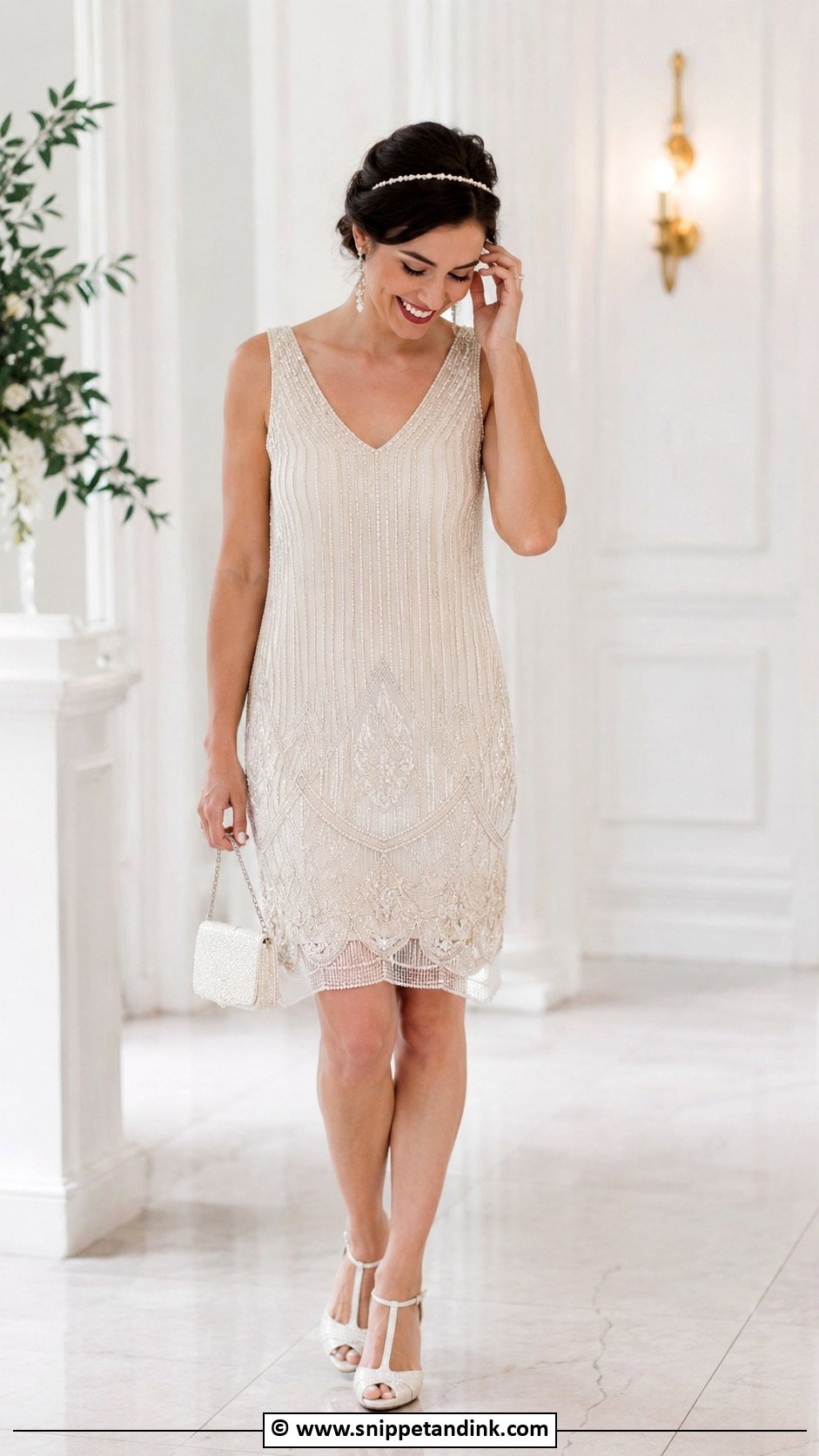
A short wedding dress is the most playful way to wear the decade. Knee length with fringe, sequins, lace or Deco beading, cut relaxed rather than fitted. T-strap heels, a pearl headband, a small bag and simple earrings complete it. It works for a second outfit, a city ceremony, a reception change or a shower. Your shoes are fully on show, so choose ones you can dance in.
27. 1920s Plus Size Wedding Dress
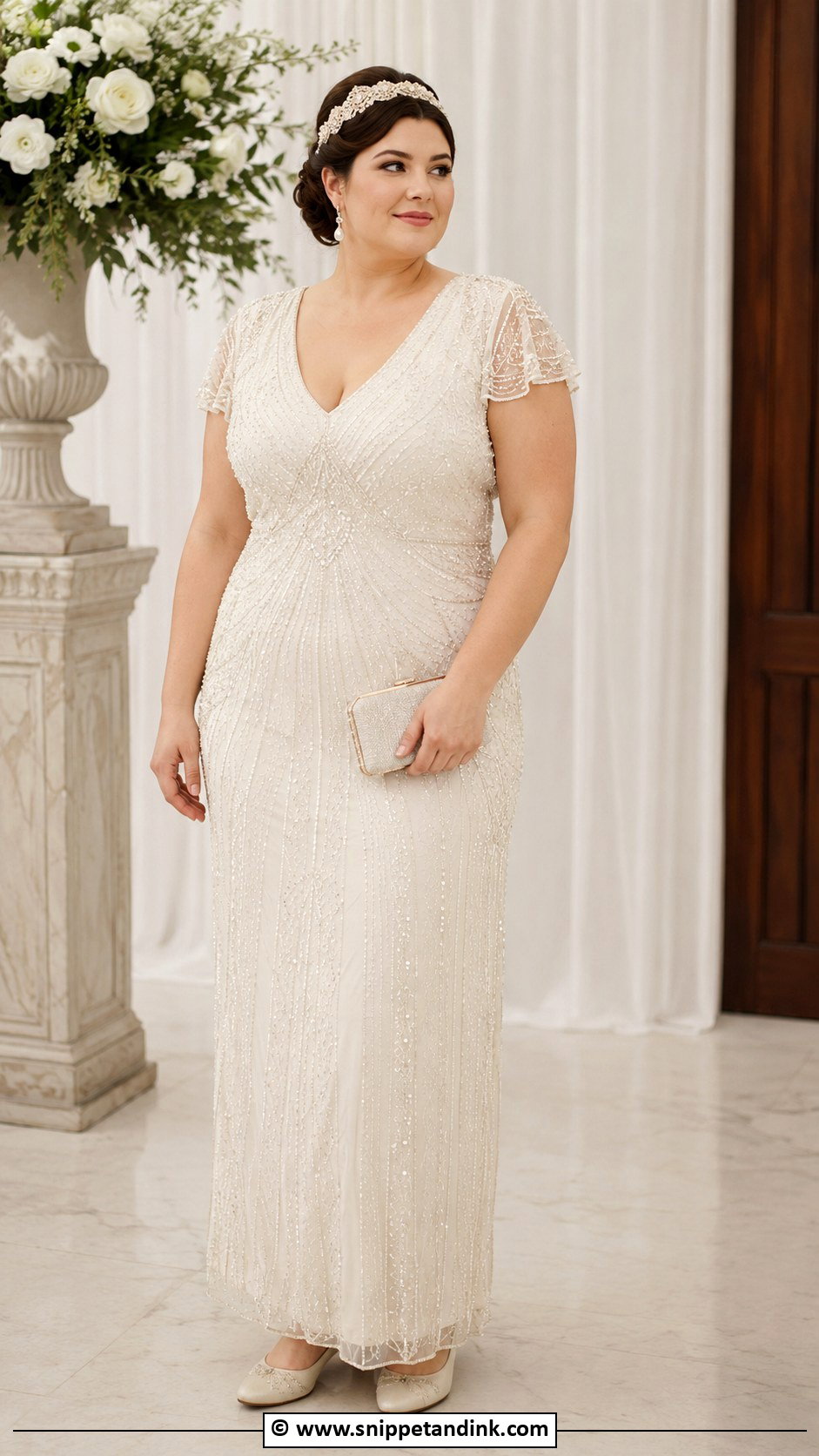
The twenties silhouette can be generous to plus-size brides when fit and beading work together. A dress that skims with soft structure looks better than one that hangs straight down. A V-neck, flutter sleeve or gentle column suits it. Vertical beading lengthens; a soft waistband or slightly raised drop waist adds period character without cutting across the hip. I’d check for inner support, since many vintage-style dresses are unstructured. Supportive low heels and pearl earrings finish it.
28. 1920s Courthouse Wedding Dress
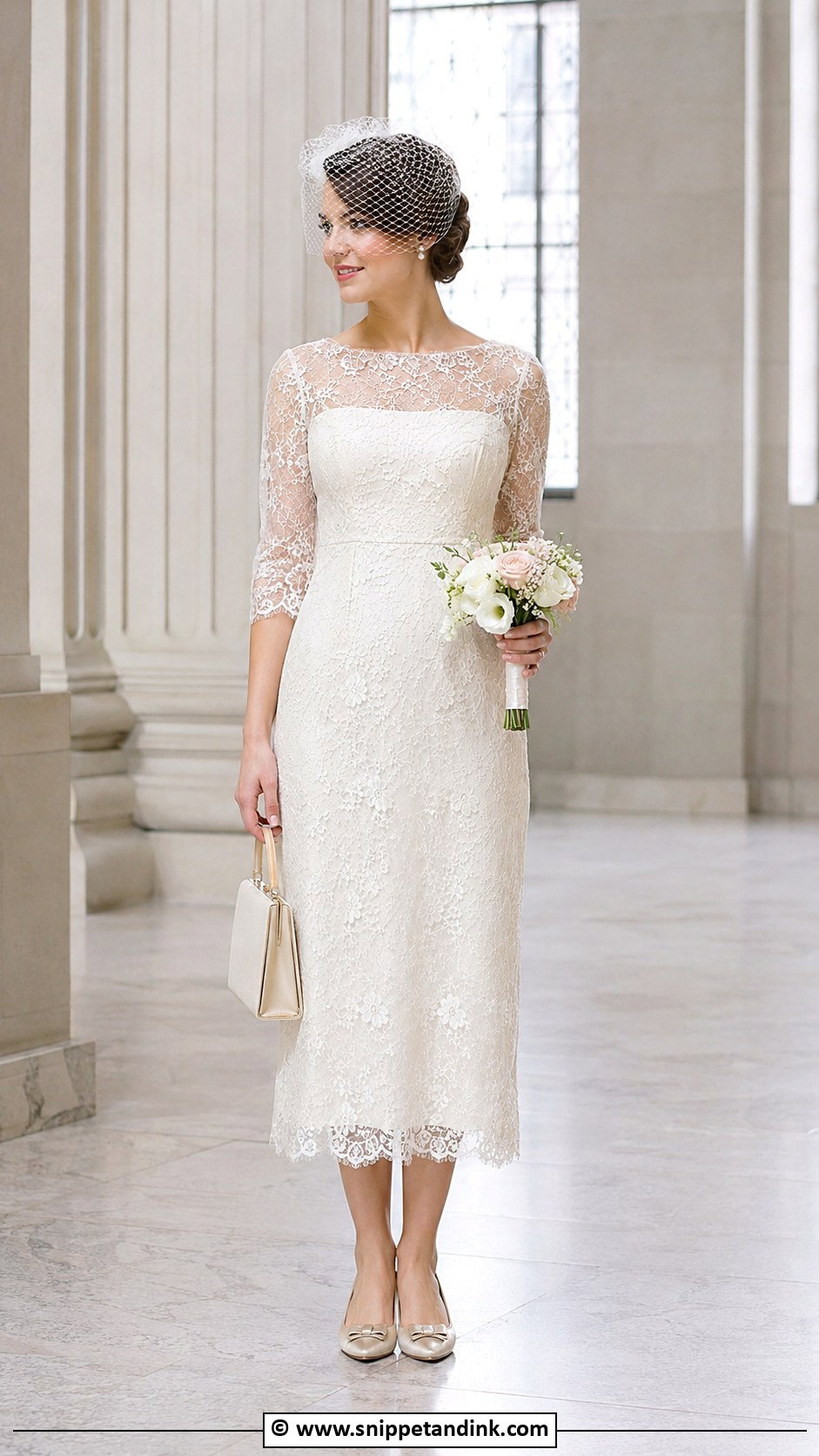
Civil ceremonies suit this era well, because so many twenties styles are short or tea length. A tea-length lace dress, short beaded gown or satin sheath is ideal. Low heels, pearl studs, a small bouquet and a structured bag keep it refined. A birdcage veil or simple headband adds vintage charm. Choose fabric that doesn’t crease badly, because you’ll likely sit in a car, walk through the city and have lunch in it.
29. 1920s Beach Wedding Dress
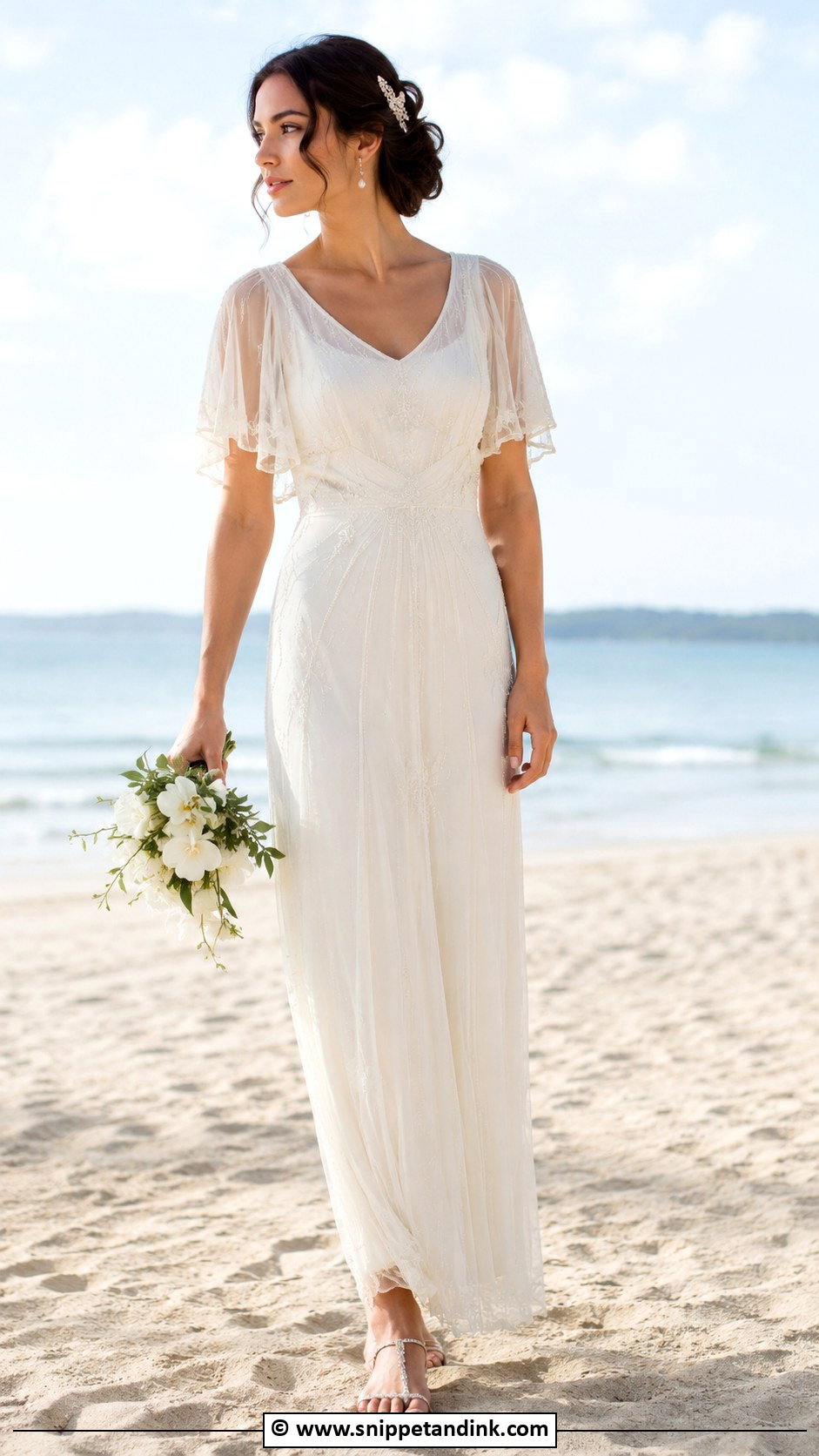
On the beach, keep the era’s shape and lose the weight. Soft chiffon, silk or crepe in a simple column with flutter sleeves or light beading breathes in the heat. Heavy beading drags and gets hot, and long trains collect sand. Flat sandals, pearl earrings and a hair comb are enough. A short veil or none at all suits a breeze. Champagne, ivory and soft pearl tones look good against sand and water.
30. 1920s Reception Wedding Dress
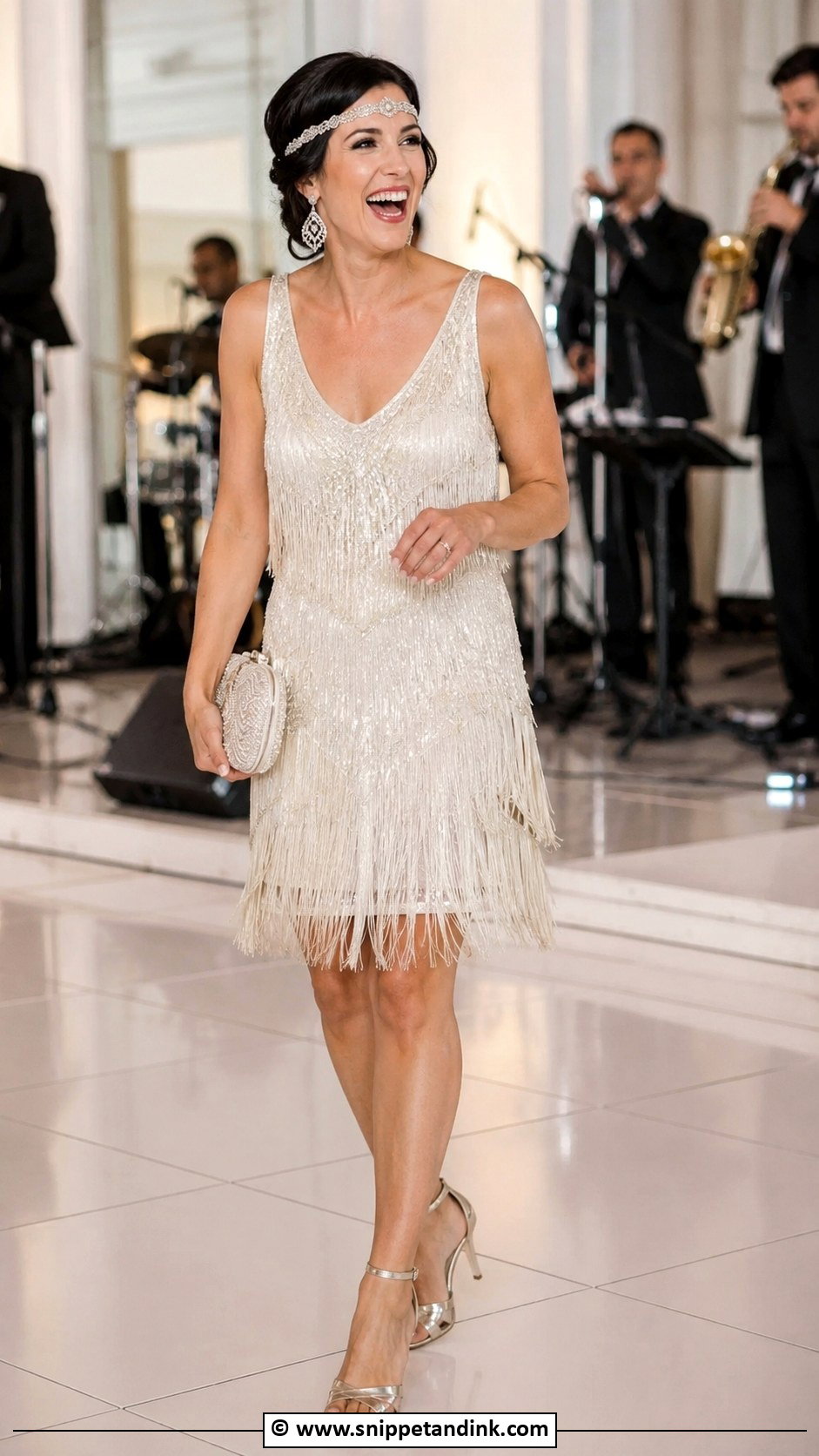
If your ceremony gown is formal, a reception change is where the twenties really shine. A shorter fringe dress, beaded tea-length gown or sequin slip is easier to dance in. Comfortable heels or elegant flats matter here. Statement earrings, a beaded clutch and a headband finish it. I’d keep the change connected to the first dress through color or detail, so the two looks belong to the same bride.
Juliet Caps, Faux Bobs and Beaded Headbands
The hair and headpiece make a twenties look read as twenties more than the dress does. A plain slip with finger waves and a beaded band is instantly period; the same dress with long loose curls looks modern.
The faux bob
Long hair can be curled, rolled under and pinned at the nape to look like a bob. It needs a firm setting product and a lot of pins, so do it at your trial and check how it feels after a few hours.
Juliet cap veils
A cap veil sits close over the crown and falls behind, the most typical bridal headwear of the era. It suits low buns and faux bobs. Ask how it fastens, since caps can shift without combs sewn in.
Headbands worn low
Twenties bands sat across the forehead or just above the brows, not on top of the head. Beaded or pearl bands with a small side ornament look right. Wear one for an hour at home; a tight band can cause a headache by the reception.
Dressing for the Dance Floor, Twenties Style
There are many ways into this decade: full Deco beading, soft satin, pearls, lace sleeves, fringe or a simple slip with a few period accessories. What matters is that the whole outfit fits your venue and your comfort. A twenties look should move well, let you dance and feel like you from the ceremony to the last song, whether you want quiet glamour or full sparkle.
You'll Like These Ideas:


Leave a Reply