
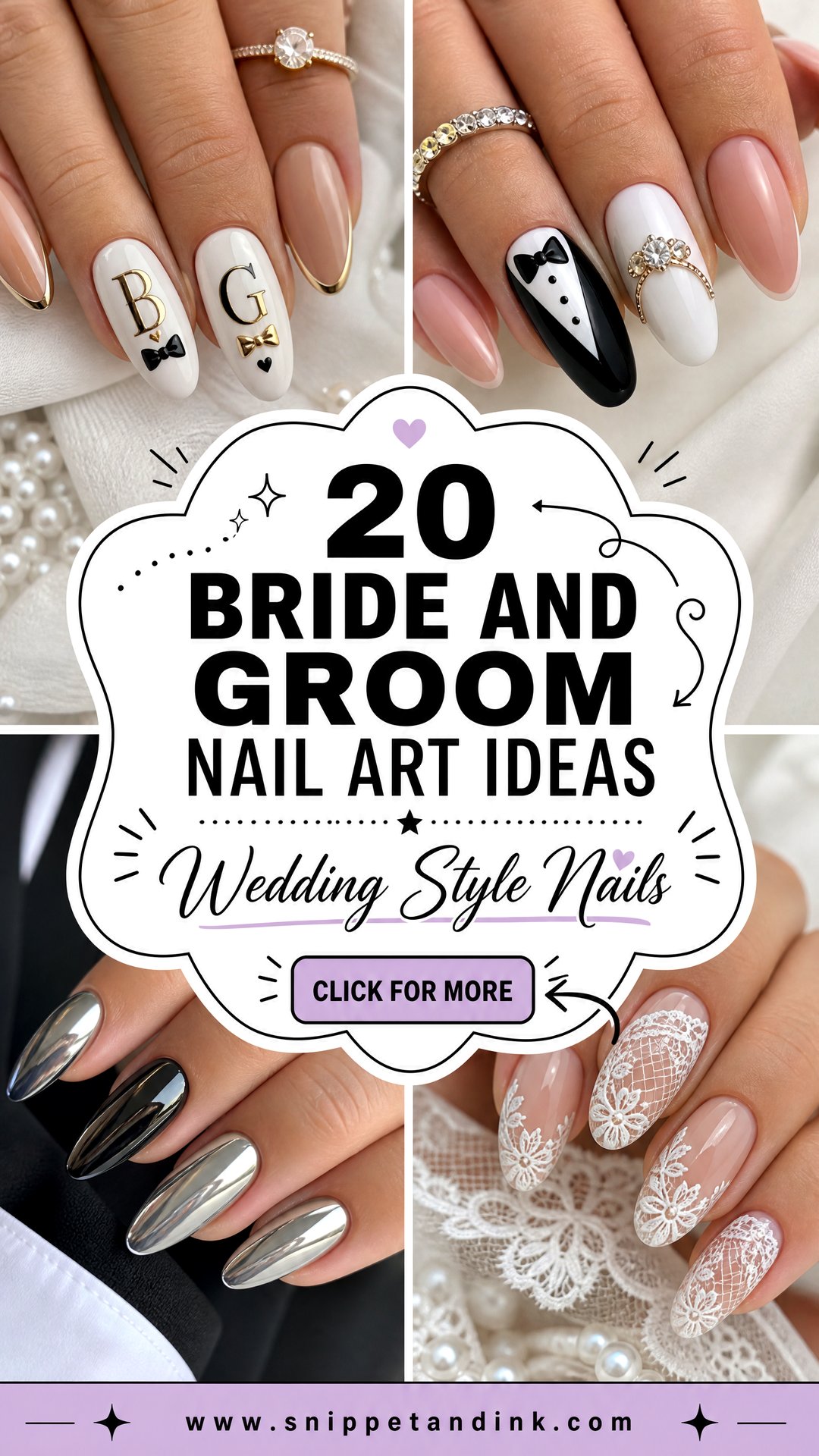
More grooms are sitting in my chair before weddings than ever, and it makes sense. The ring shot is a close-up of two hands, and a camera lens that close shows every ragged cuticle. Couple nails don’t need to match exactly. Usually the bride wears the detail and the groom wears a clean, well-groomed hand with one small nod to hers: an initial, a line of gold, a matte finish. Below are 20 ideas for coordinating the two, with notes from the table on how each one wears, lifts or photographs. Keep the gown, suit, rings and flowers in mind as you read; the nails should sit quietly beside all of them.
What a Groom’s Wedding Manicure Actually Involves
Most grooms arrive expecting polish and leave surprised by how little of the appointment is about colour. The real work is prep, and it’s the part the camera picks up.
- Soaking and pushing back the cuticles, then trimming only loose, dead skin
- Cutting and filing the nails short and even, usually a soft square
- Buffing the surface to remove ridges and give a natural sheen
- Hand massage with oil and cream, which helps dry knuckles too
- A matte or satin top coat, or nothing at all if he prefers
Start cuticle oil twice a day two or three weeks before the wedding. It costs very little and makes more difference than any appointment. Ask him to stop biting or picking, too. Torn skin around the nail takes a week or more to heal, and it shows in every ring shot.
When the groom doesn’t want polish at all
That’s fine. A buffed nail with no product matches nearly any bridal set. The coordination can live on the bride’s hand instead, with his initial on her ring finger.
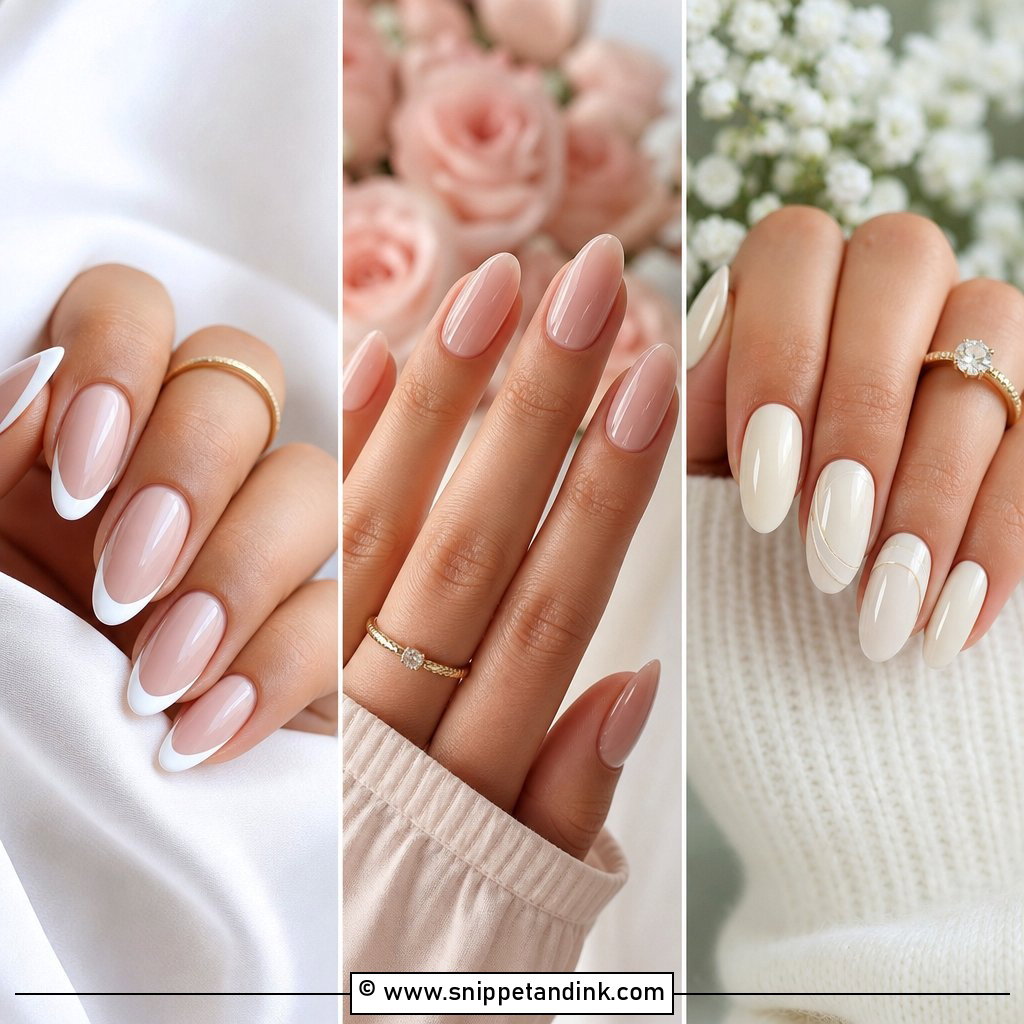
1. Bride And Groom French Tip Nails
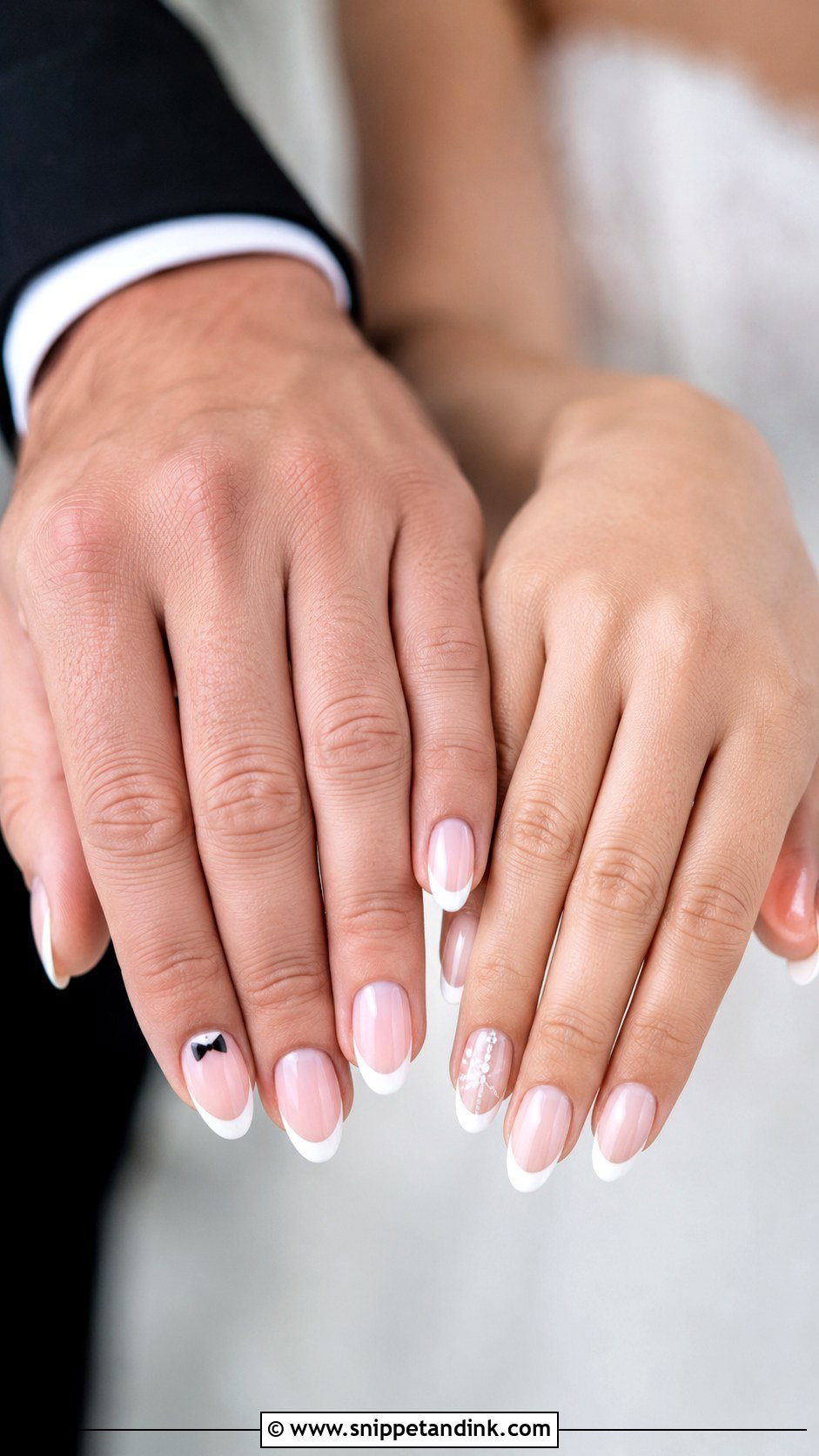
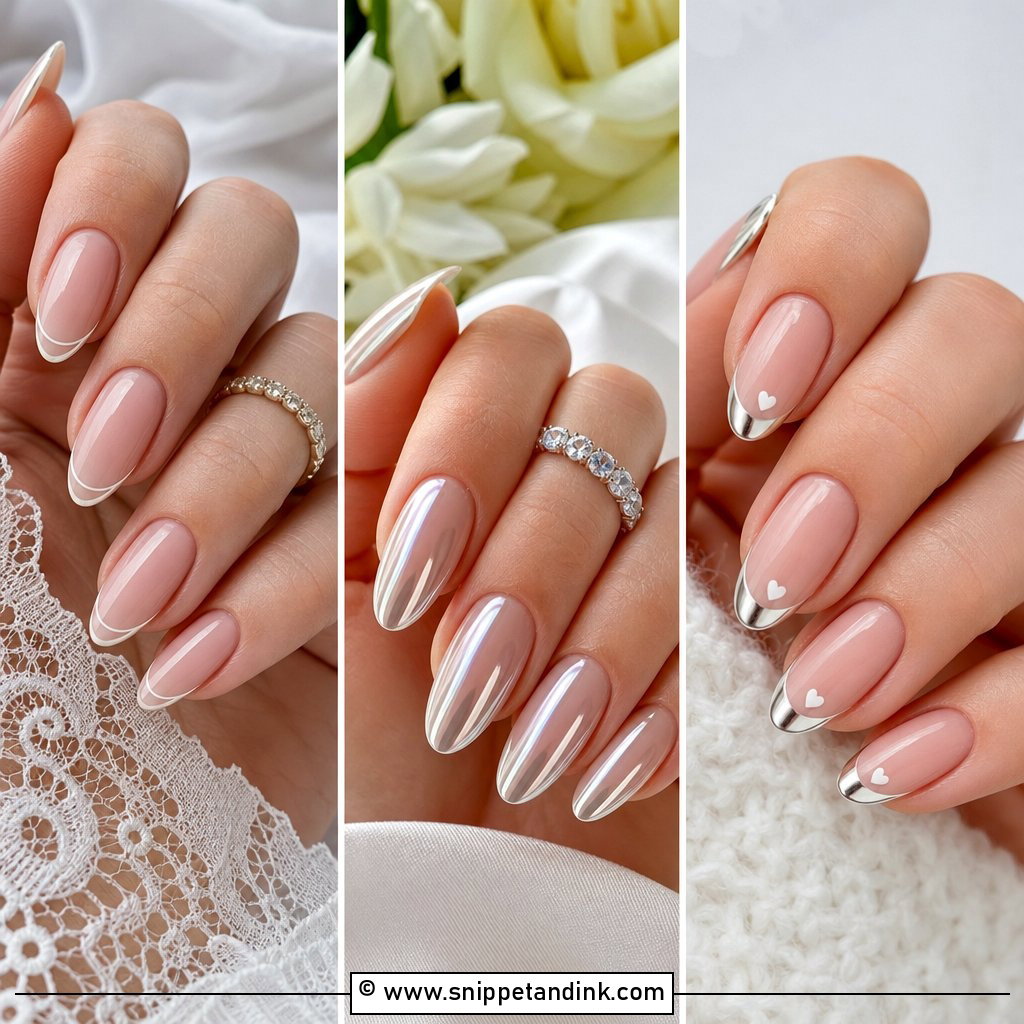
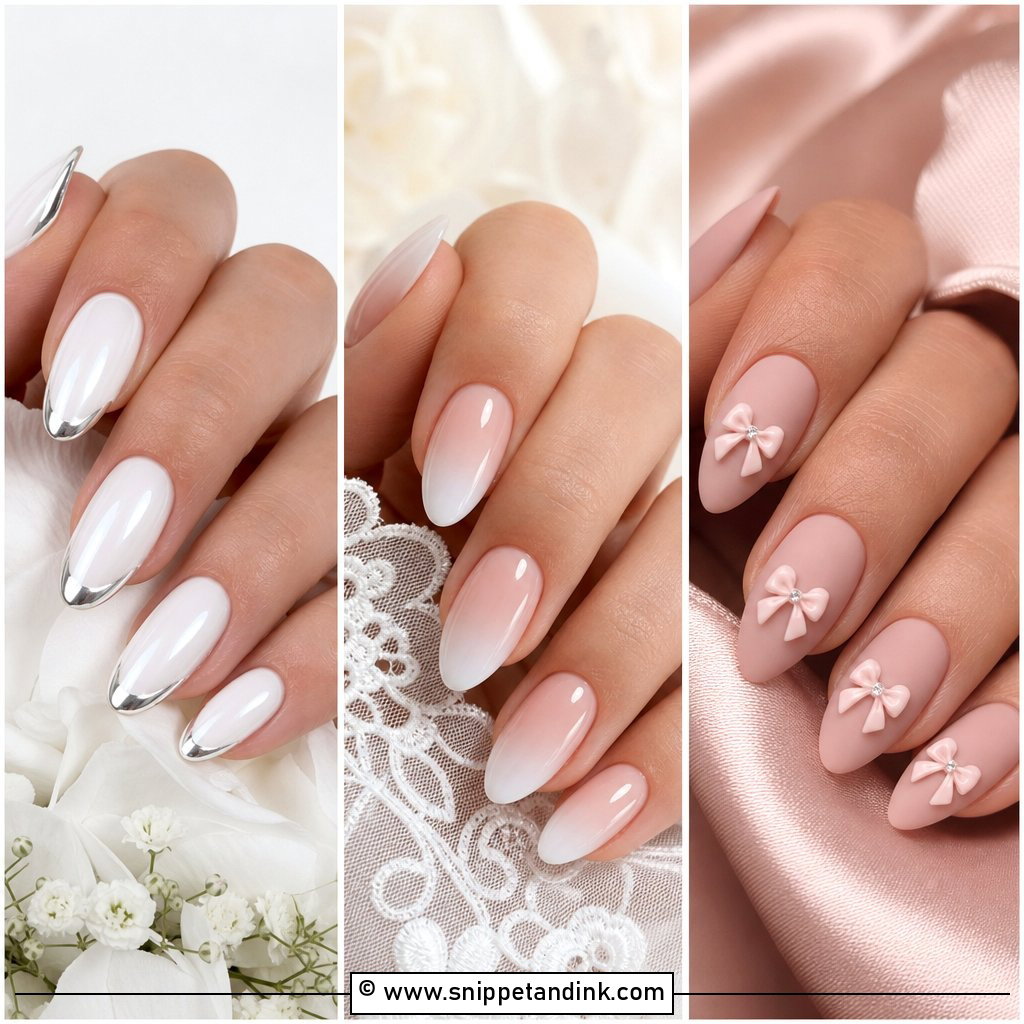
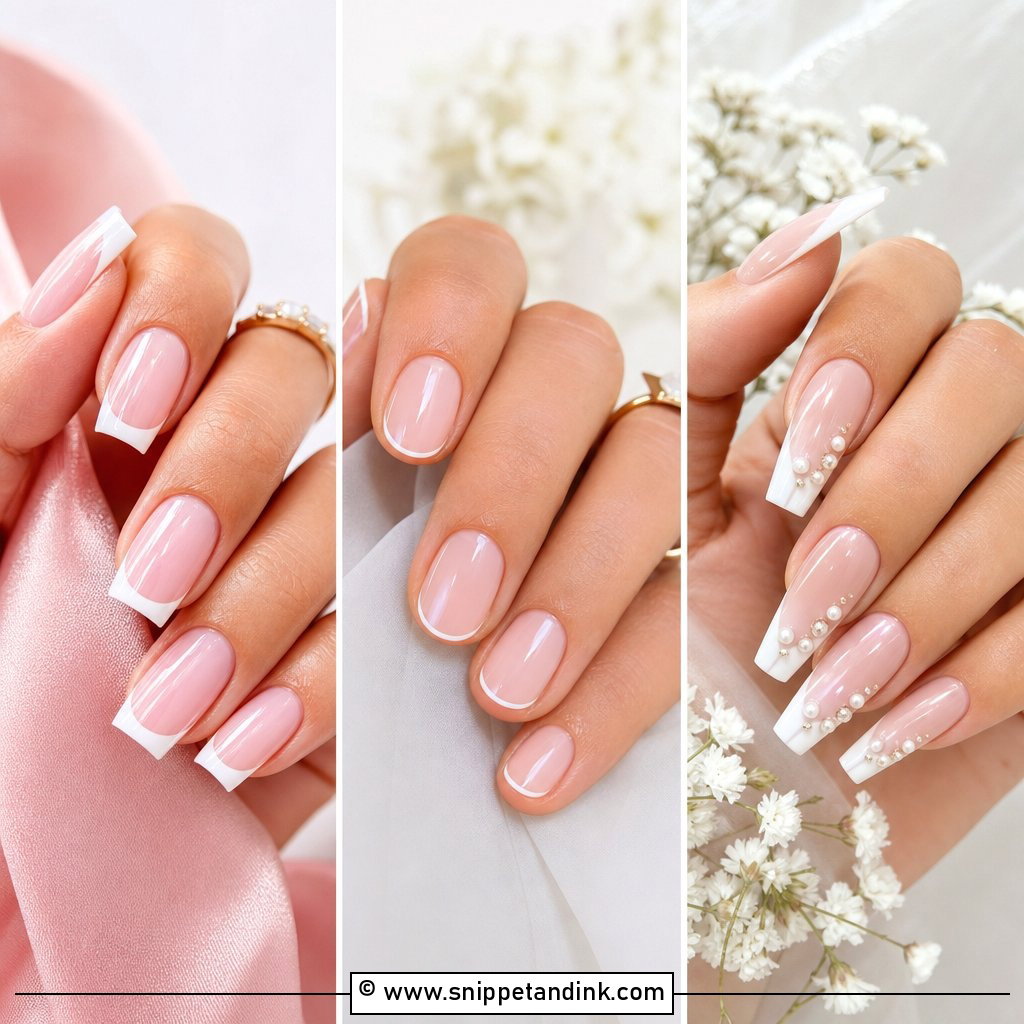
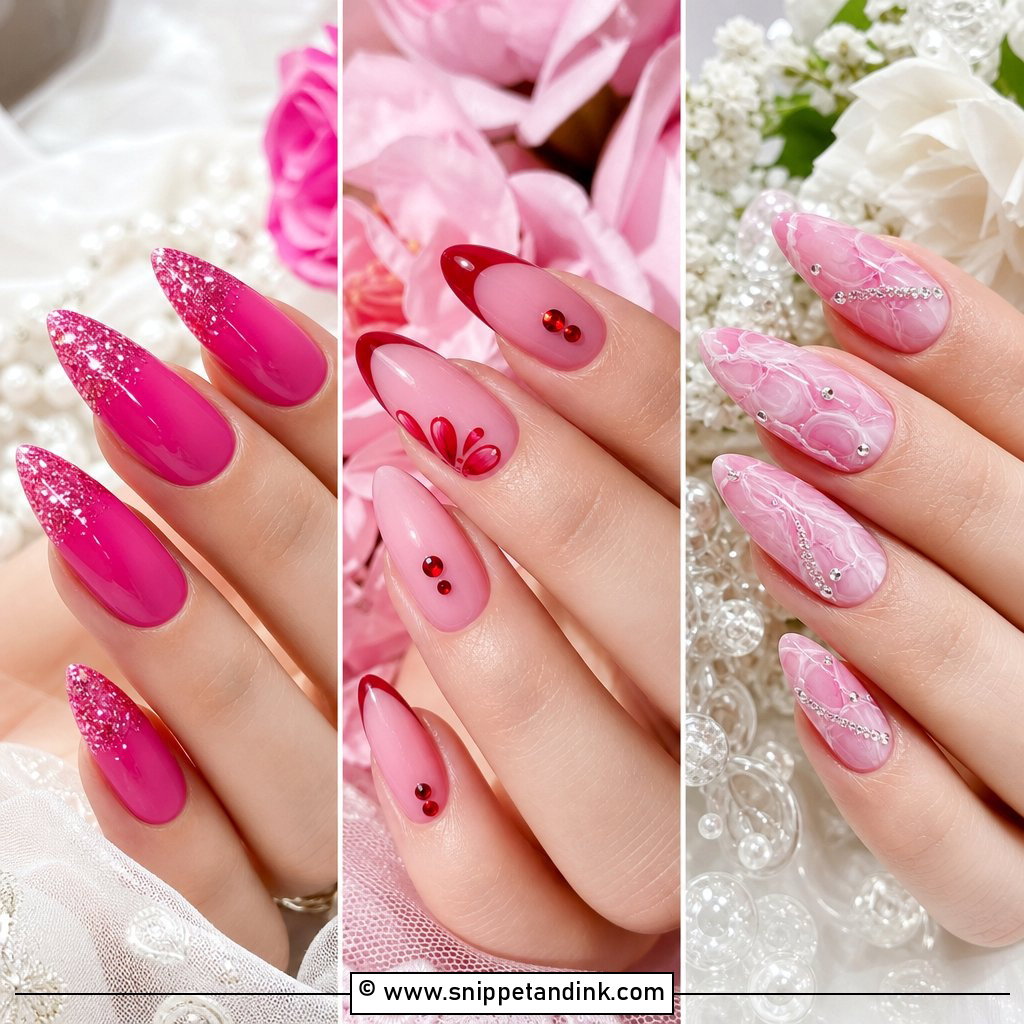
A French manicure is still the set I’m asked for most, and it pairs naturally with a groom’s plain buffed nail. The bride wears a sheer pink or milky nude base with soft white French tips, and one accent nail can carry a tiny bow or silhouette. For the groom I buff, shape and add a clear matte top coat, or paint one hair-thin white line near the free edge. The smile line is where a French set succeeds or fails, so on short square nails I keep it shallow; a deep curve on a short nail makes the nail bed look stubby.
2. Bride And Groom Initial Nails
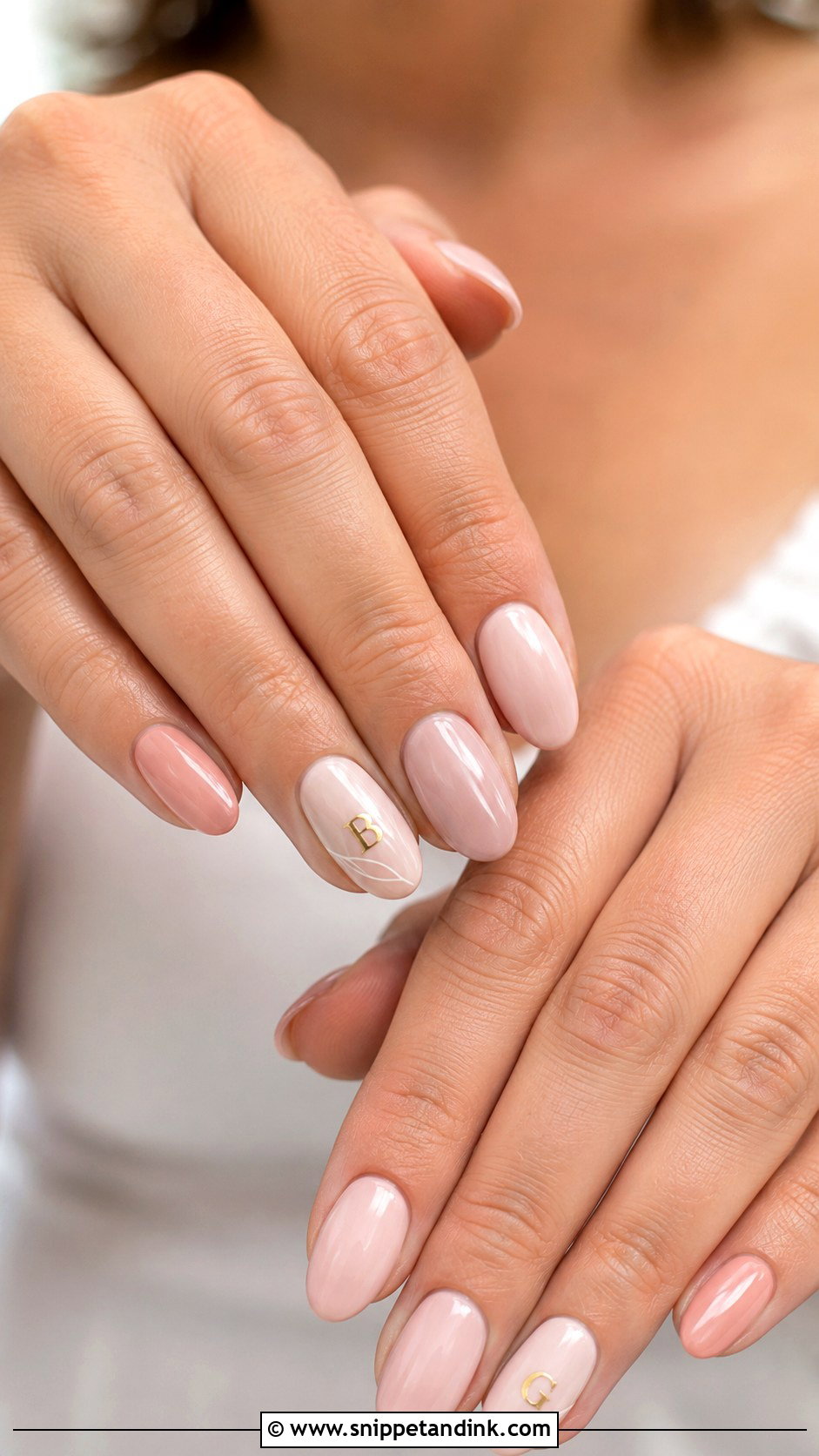
Bride and groom initial nails are personal without shouting. I paint the letters with a long, thin liner brush over a sheer nude, blush or milky white base, in gold, silver, black or white to suit the palette. Brides often split the two initials across two accent nails or set both on the ring finger. The groom usually wears one letter on one nail. Lettering under a top coat can drag if the top coat is too thick, so I let the art cure first and seal it with a thin layer.
3. Bride And Groom Ring Finger Nails
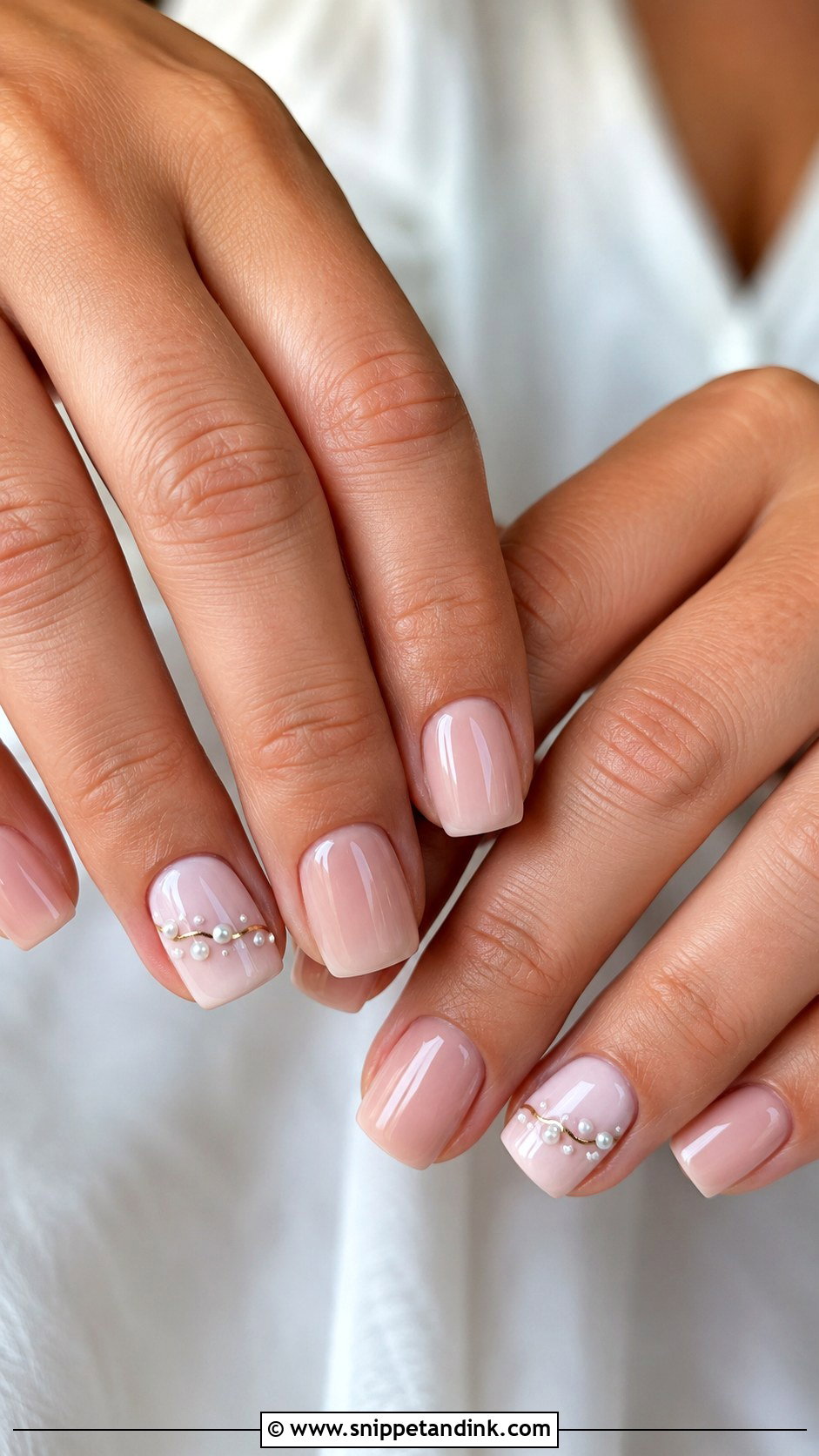
Putting the detail on the ring finger makes sense, because that’s the finger every ring photo is framed around. The rest of the set stays simple, with nude, soft pink or sheer white across the other nails. The bride’s ring finger might carry a tiny veil, a pearl line or a heart. The groom’s might get a fine metallic stripe or a matte black accent that picks up his suit. Keep the art small enough that it doesn’t compete with the band itself; the ring should still be the first thing you see.
4. Bride And Groom Tuxedo Nails
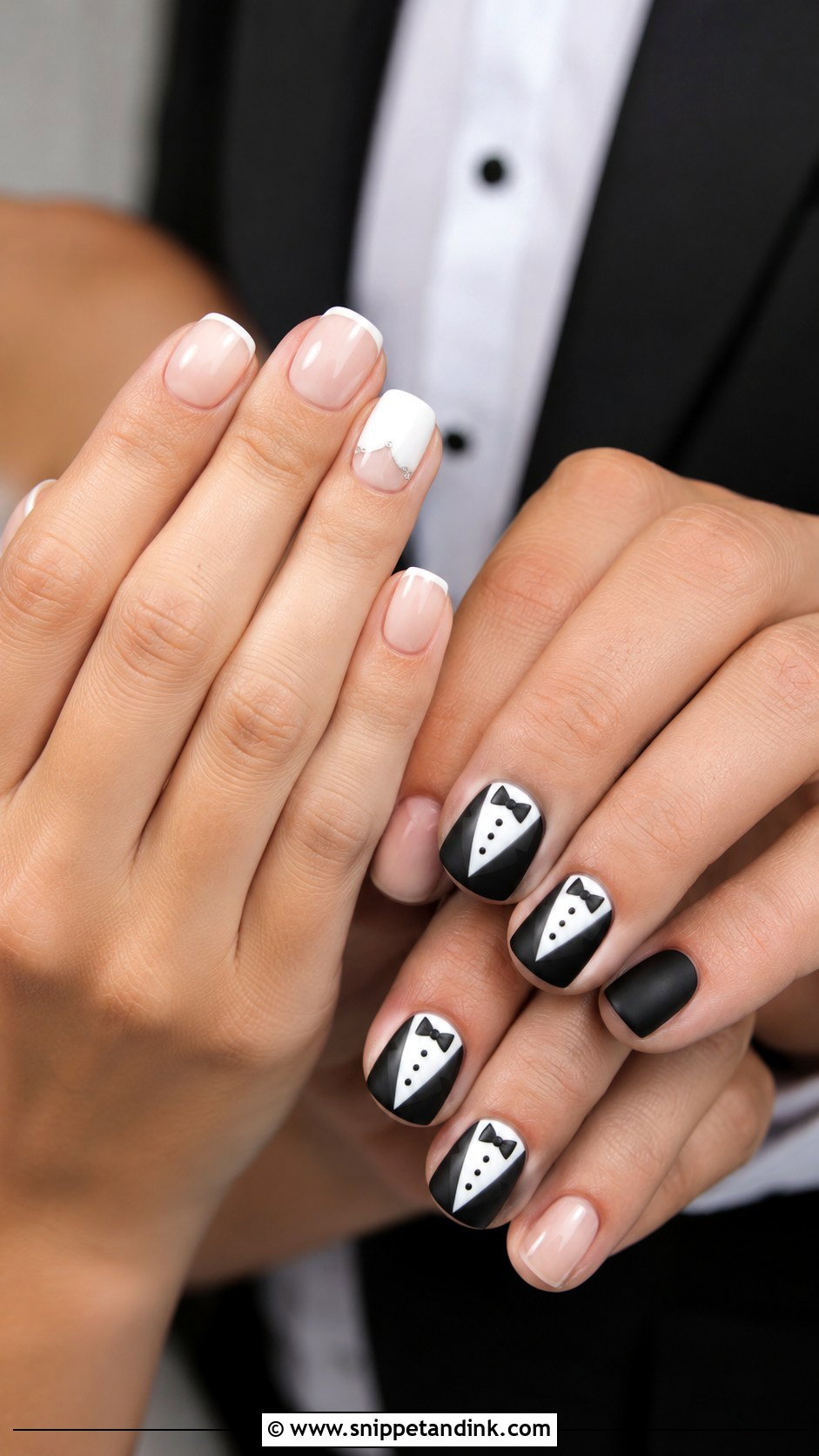
Tuxedo art is the playful option, and it only stays elegant if it’s confined to one or two nails. The bride wears a nude or pale pink set with a tiny jacket, bow tie or button on an accent nail. The groom keeps short, tidy nails in a clear matte finish with one small black bow. Black on a pale base is unforgiving; a wobbly edge is obvious from across the room, so I do these lines with a striper and clean the edges with a small brush dipped in remover before curing. It suits black-tie and city weddings.
5. Bride And Groom Wedding Ring Nails
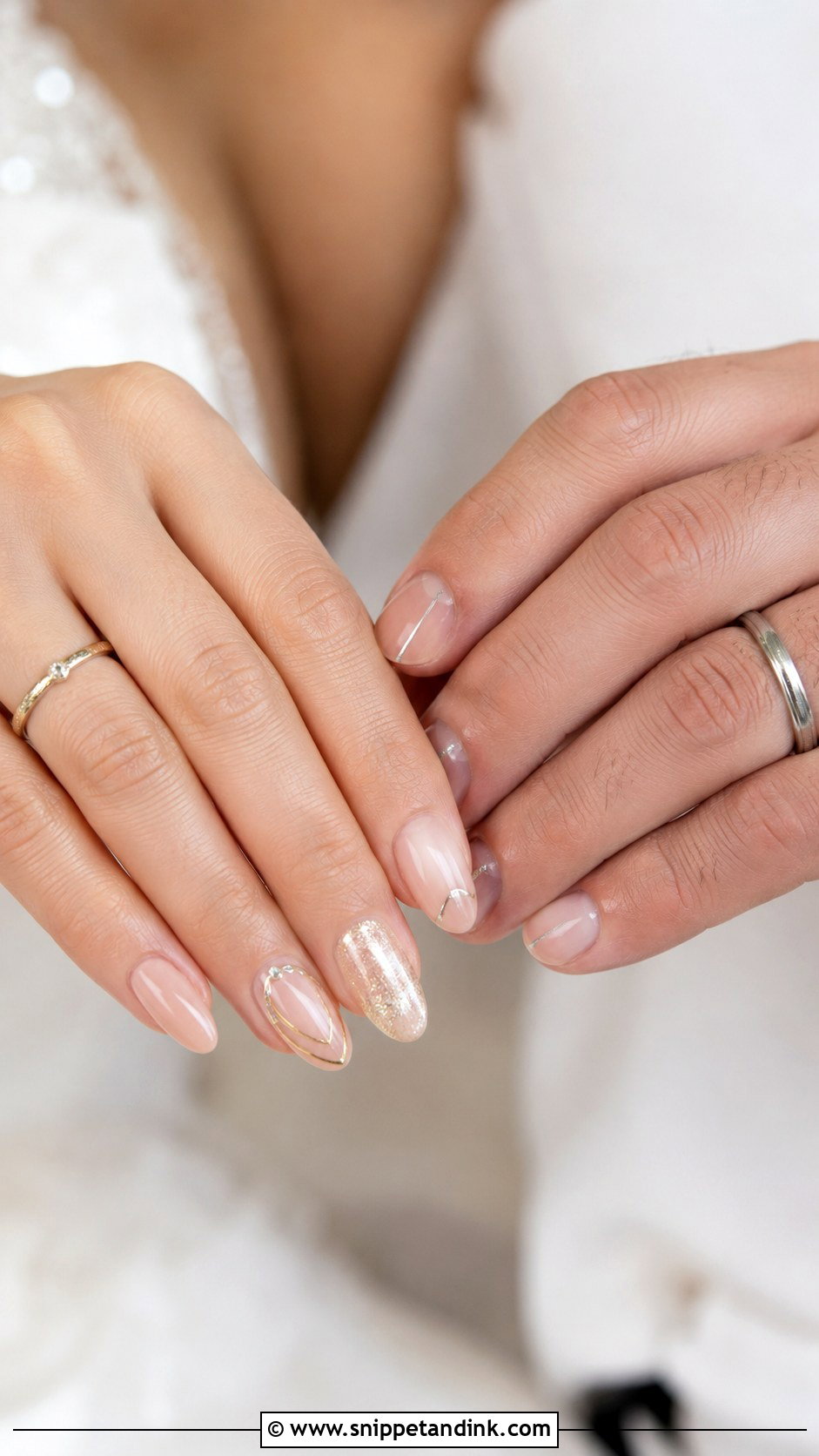
Ring art echoes the ceremony without overdoing it. Over a sheer pink, beige, milky white or nude base, I paint a thin gold or silver circle, a band line, or a tiny gem-style dot near the cuticle or on the ring finger. The bride can add pearl shimmer or a chrome glaze, and the groom wears one metallic line over a natural nail. Match the metal to the actual rings. Bring them, or a photo in daylight, because yellow gold and platinum next to the wrong nail metal look obviously mismatched up close.
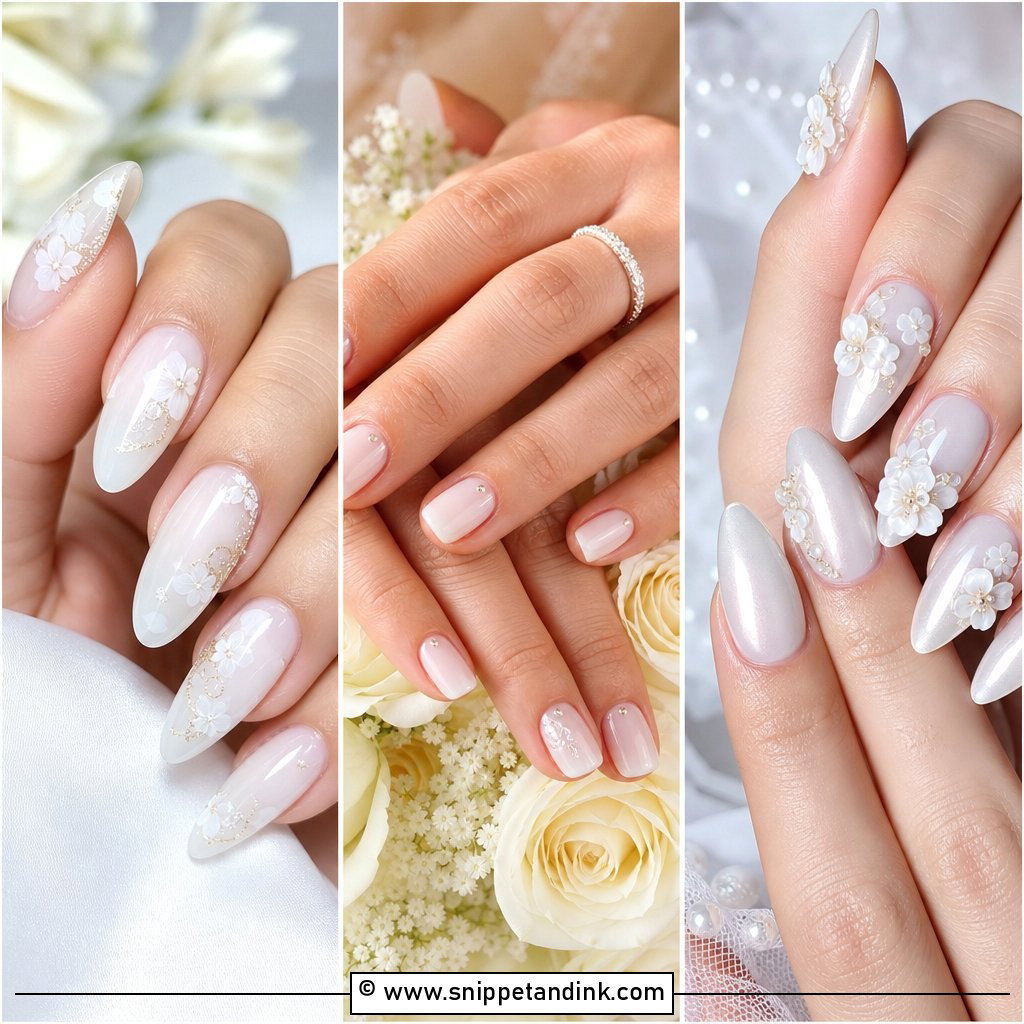
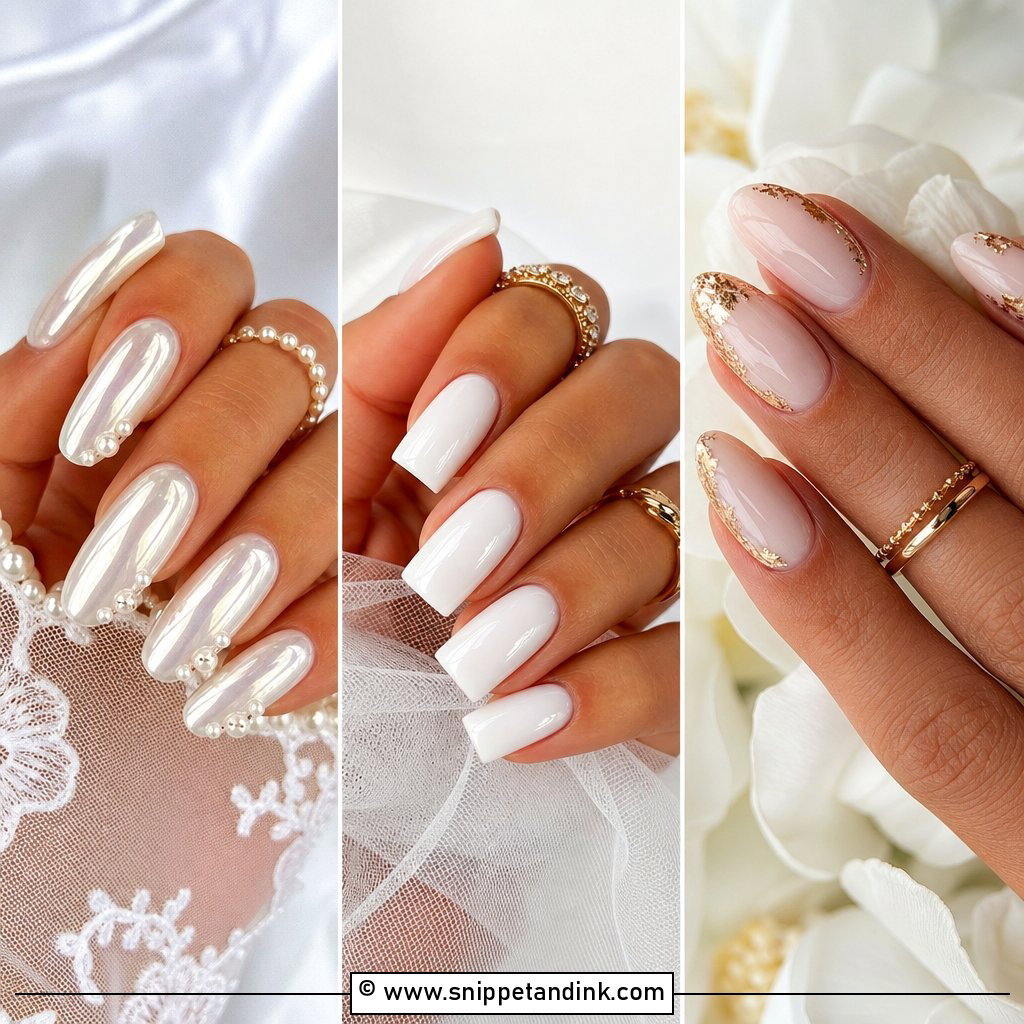
6. Bride And Groom Pearl Nails
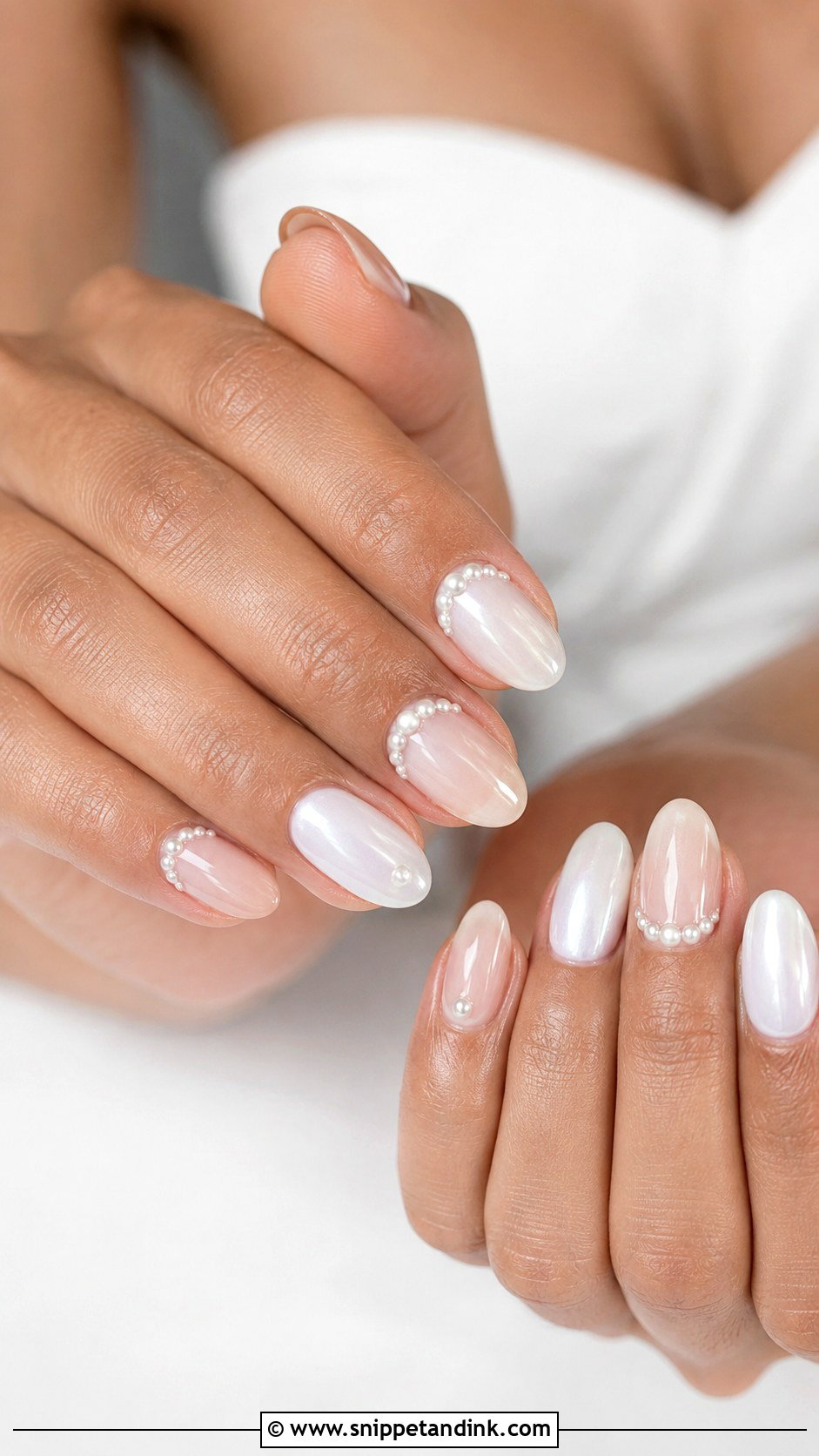
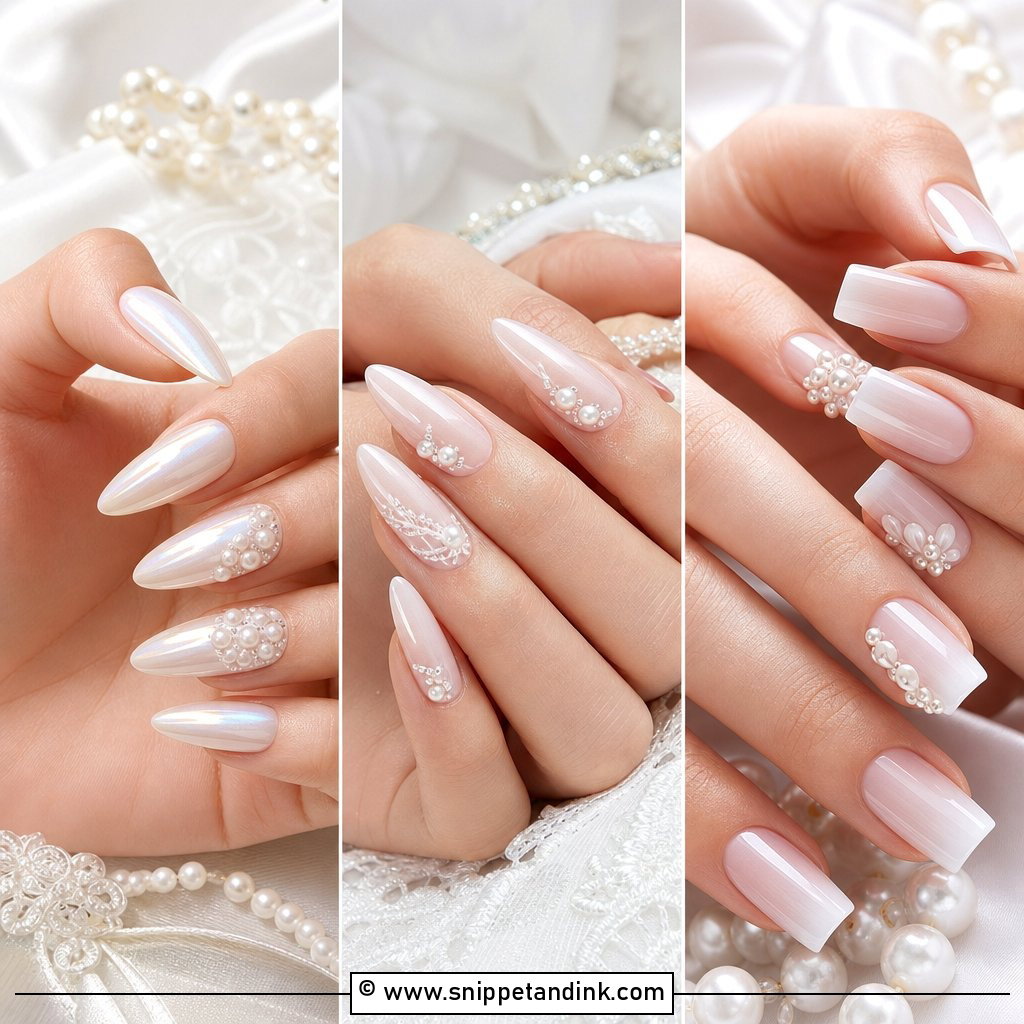
Pearls suit lace, satin and pearl jewellery. A milky white or sheer pink base with a few tiny pearls is the classic bridal version, and the groom can wear a natural matte finish with one tiny pearl dot. Placement does all the work: a row at the cuticle, a single accent nail or a light scatter. I use flat-backed pearls set into gel and capped around the edges. Domed pearls catch on veils and lace, which is the last thing you want as the veil goes up.
7. Bride And Groom Chrome Nails
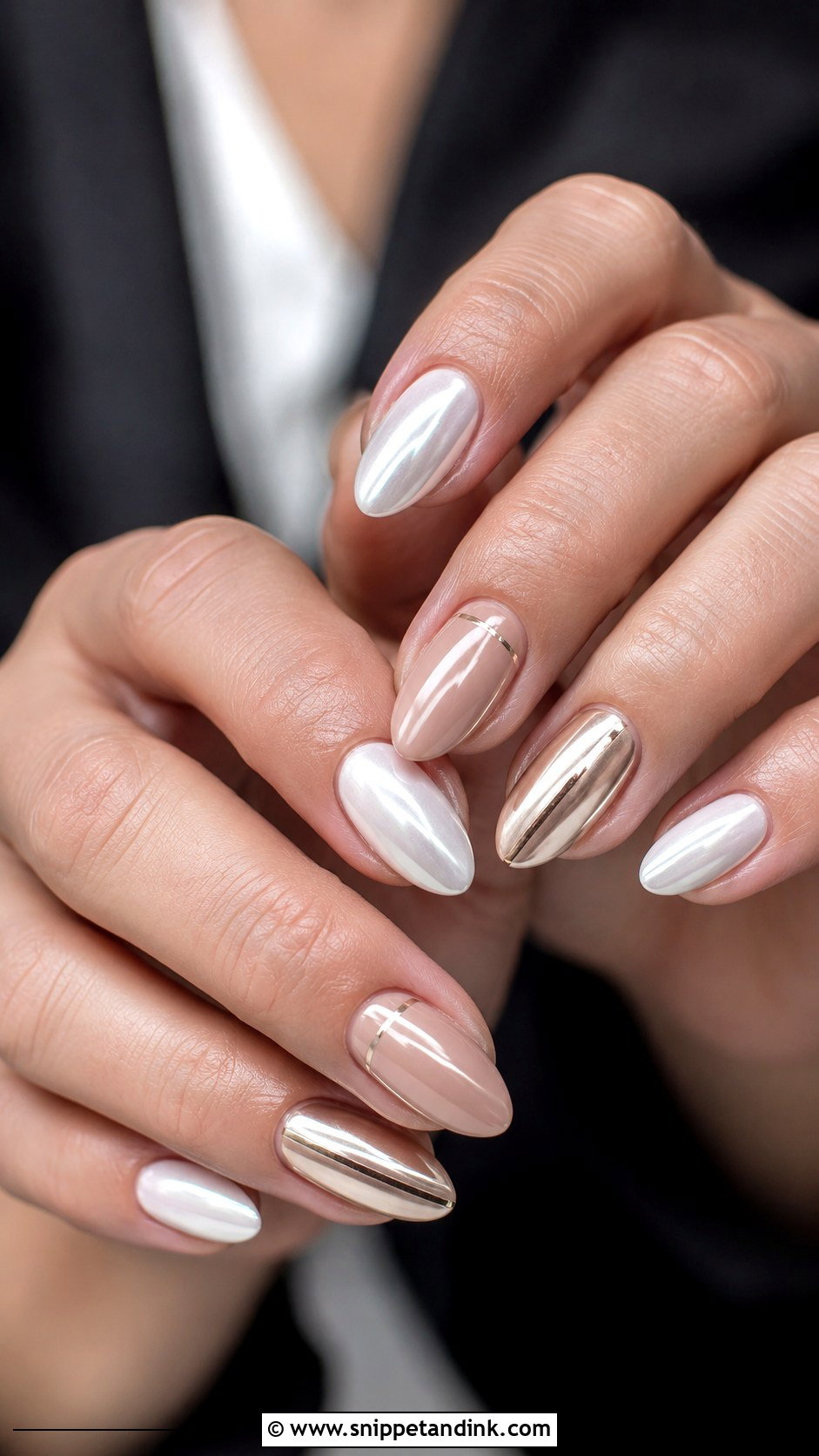
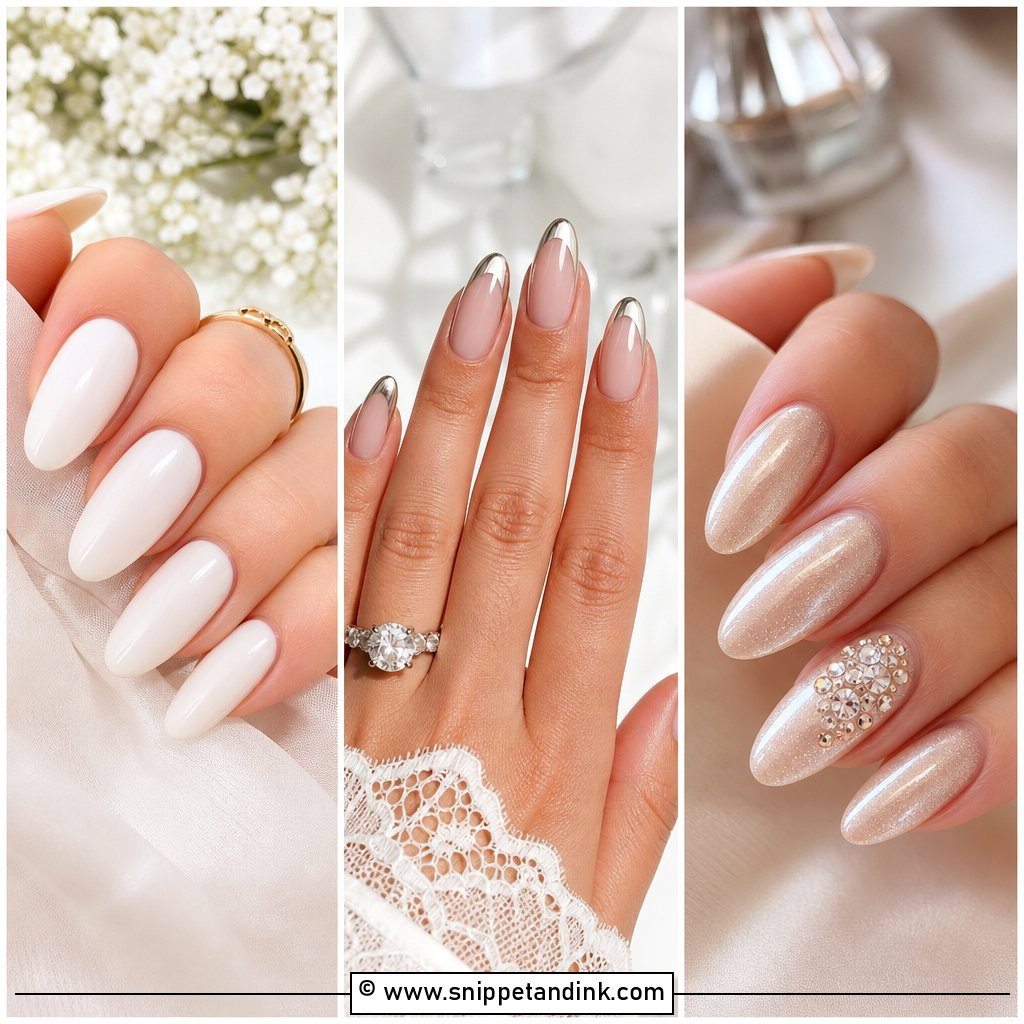
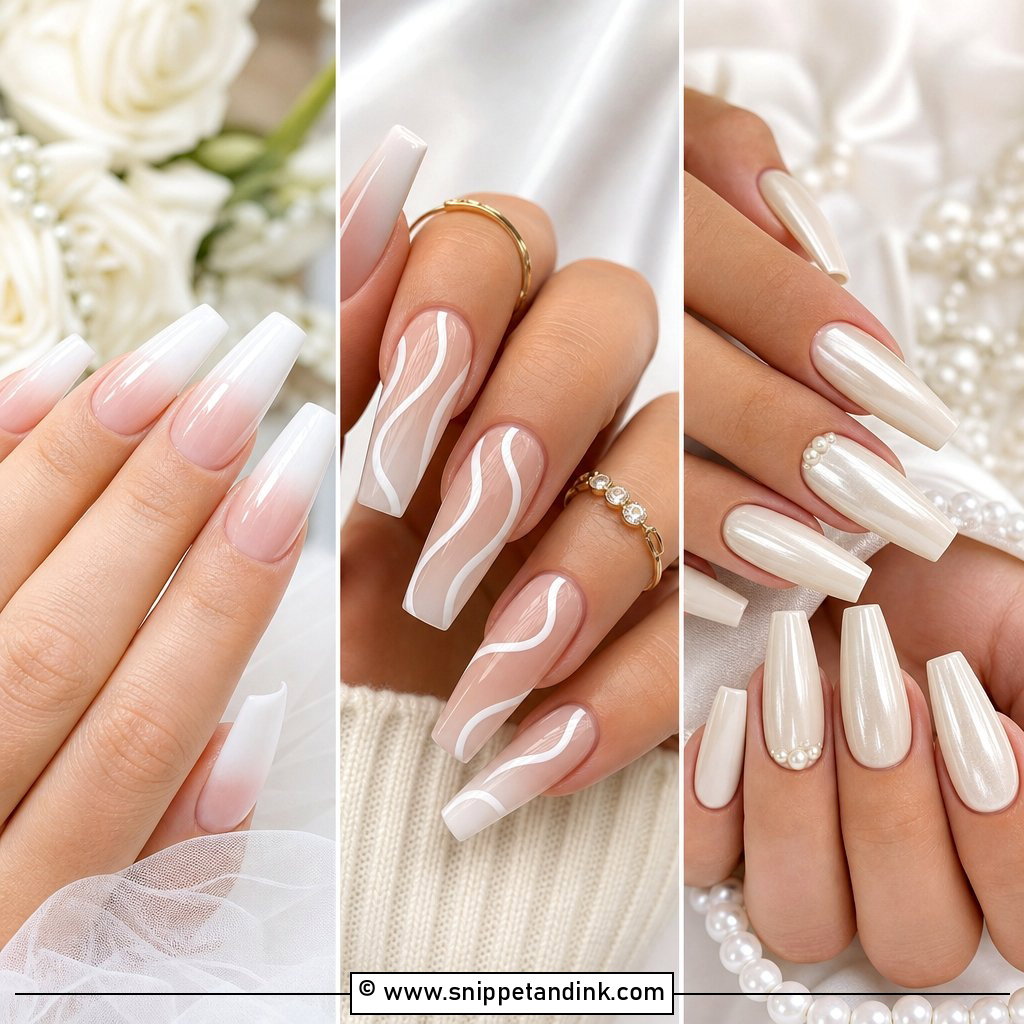
Chrome gives a soft glow that suits the bride’s nails without any artwork at all. I rub the powder over a cured top coat and seal it, so the finish is smooth and catches light from every angle. White, pearl and champagne chrome read bridal; a full mirror finish reads more like party nails. The groom can wear a clear gloss with a single silver stripe. Chrome shows every ridge in the nail underneath, so the base has to be built level first.
8. Bride And Groom Minimalist Nails
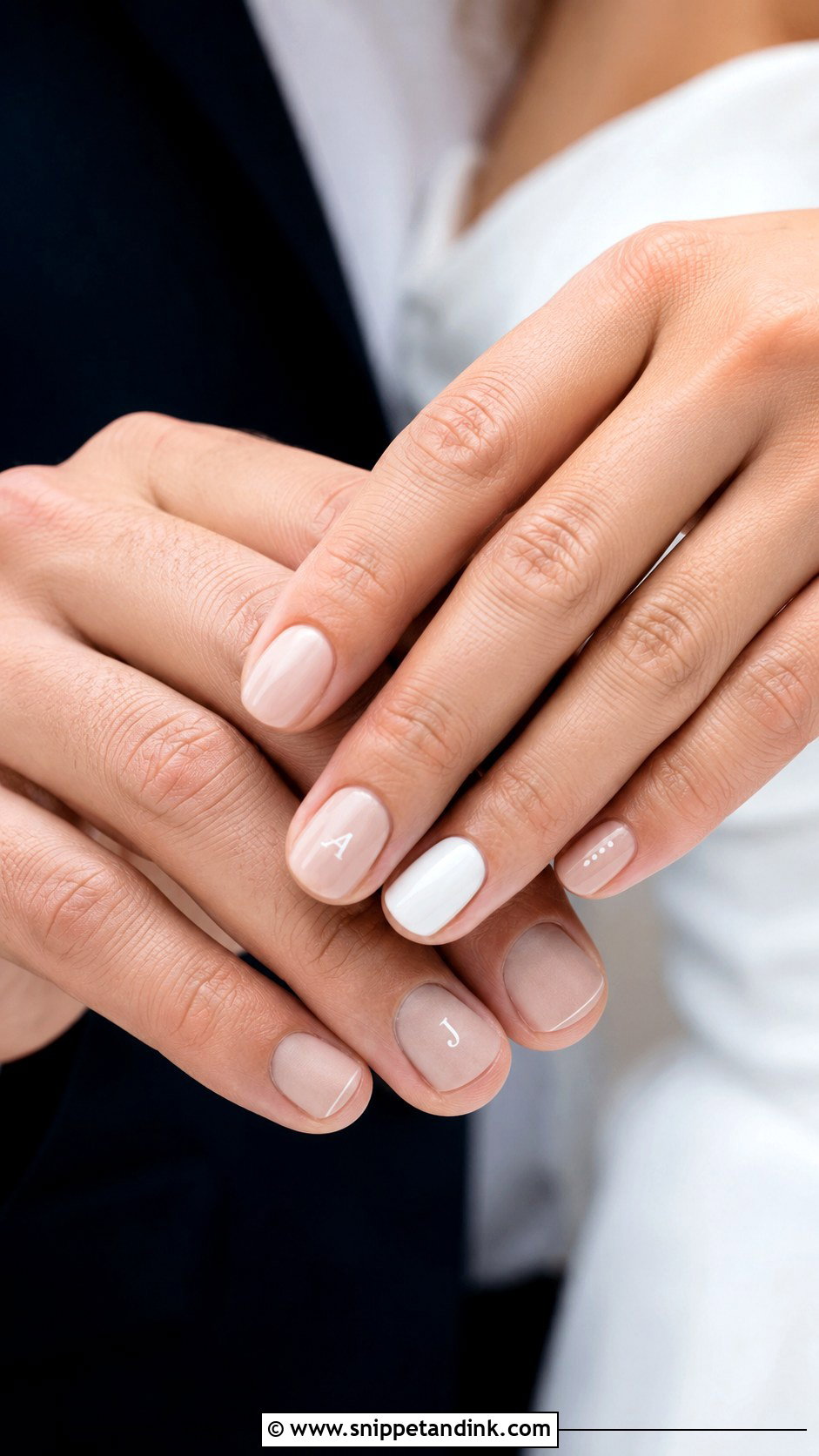
Minimal sets are the easiest sell for grooms who have never worn anything on their nails. The bride wears a sheer nude or milky base with tiny dots, thin lines or small initials. The groom gets a buffed nail, a matte top coat or one fine line on the thumb or ring finger. It goes with any outfit or theme. Most of the result here comes from prep rather than polish: clean cuticles and well-shaped edges are what make it look finished.
9. Bride And Groom Floral Nails
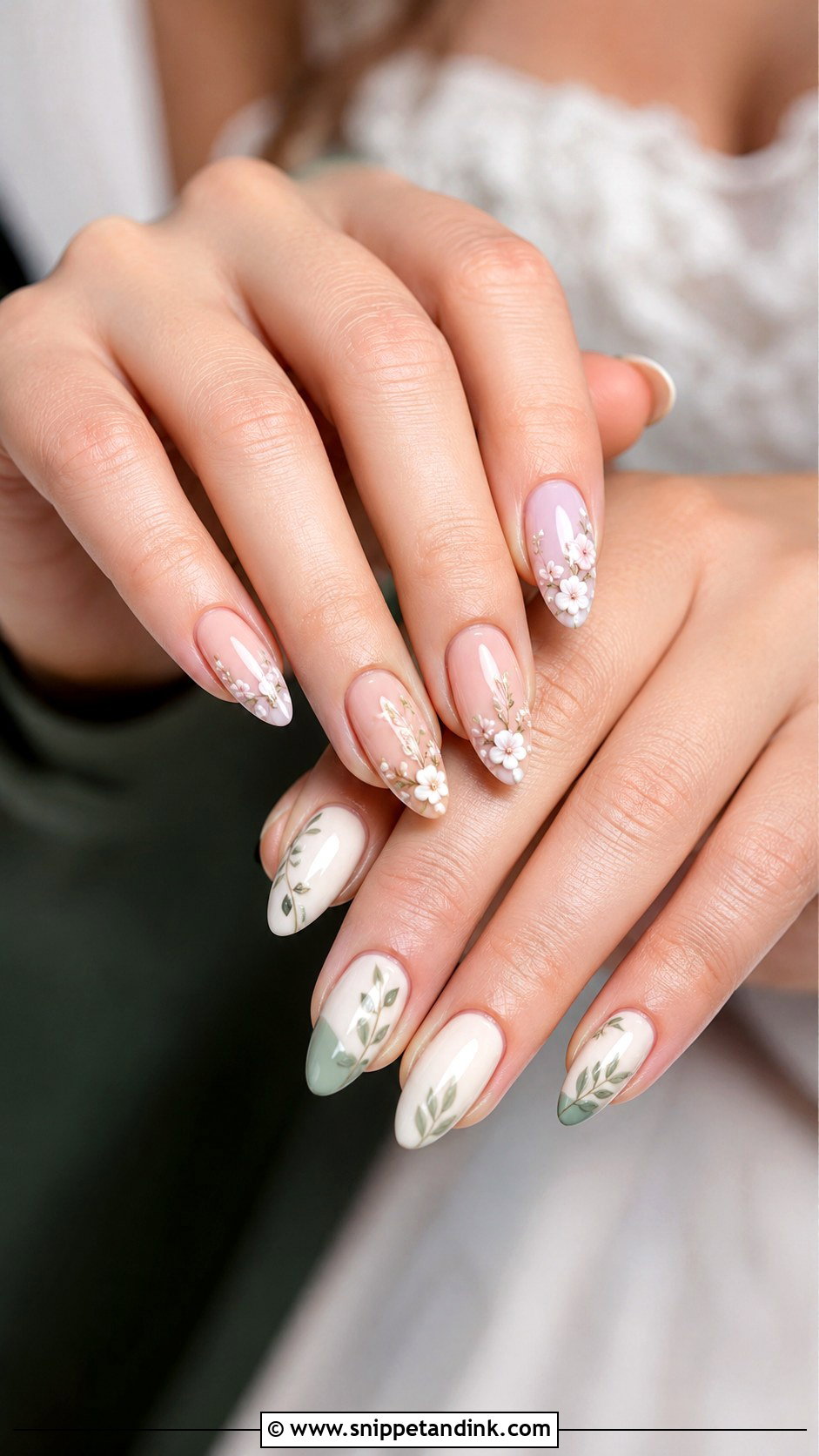
Small florals suit spring and garden weddings. Over a sheer blush or nude base I paint tiny white flowers, a little greenery, or use real pressed flowers sealed under gel. The groom wears one small leaf or a fine botanical line on one nail. Pull the colours from the bouquet: ivory, pale pink, sage, lavender or dusty blue. I space the flowers out rather than covering the nail, because a fully painted floral nail looks busy in close-up and hides the shape.
10. Bride And Groom Heart Nails
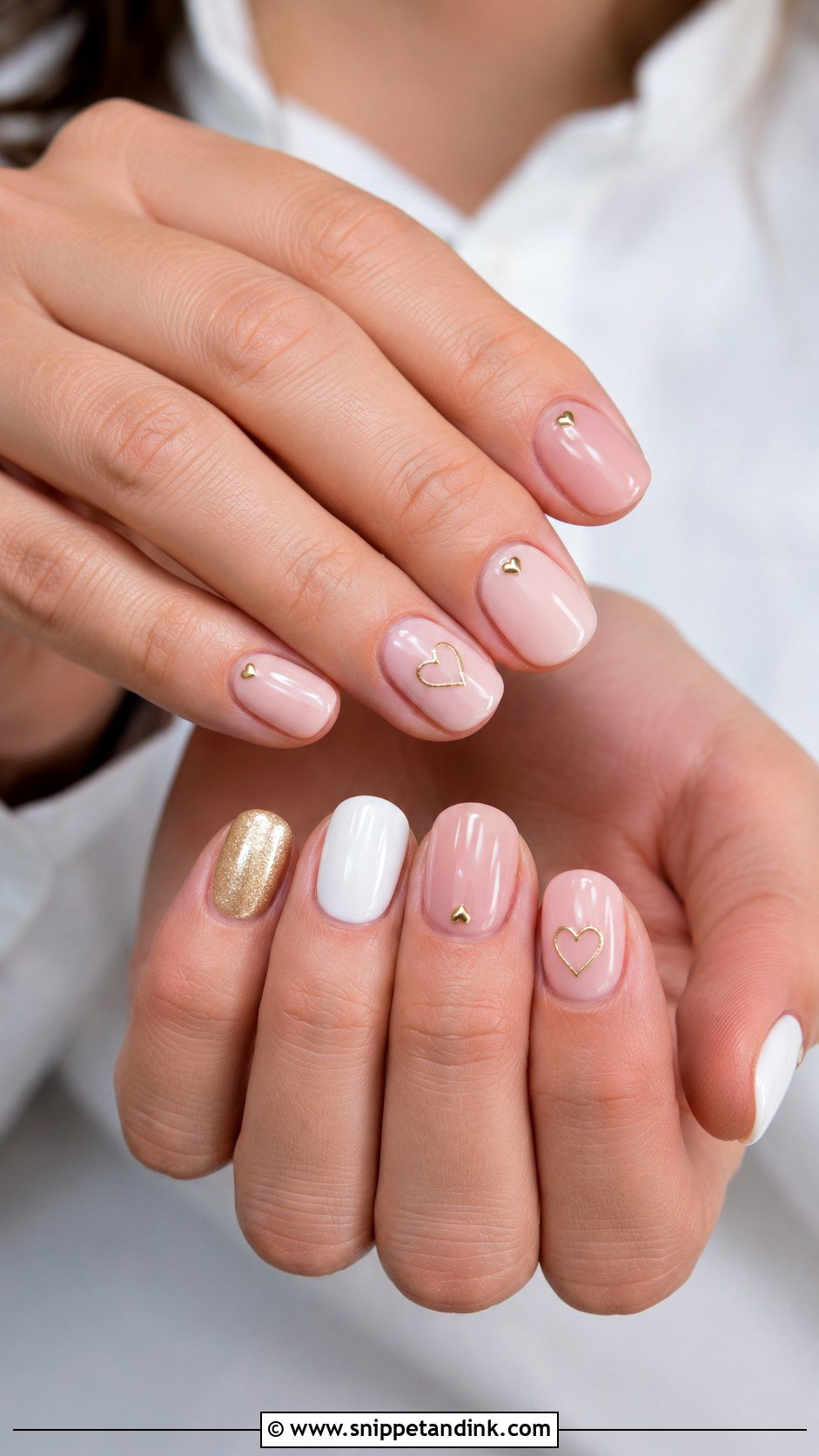
Hearts can go childish quickly, so I keep them tiny and soft: white, gold, blush or nude over a sheer base, never big red ones for a wedding. The bride wears them on one or two accent nails; the groom gets one mini heart near the cuticle or along the sidewall where it’s almost a secret. They suit engagement shoots, courthouse ceremonies and elopements. They’re also one of the few designs that fit comfortably on very short nails, because the art takes so little space.
11. Bride And Groom Lace Nails
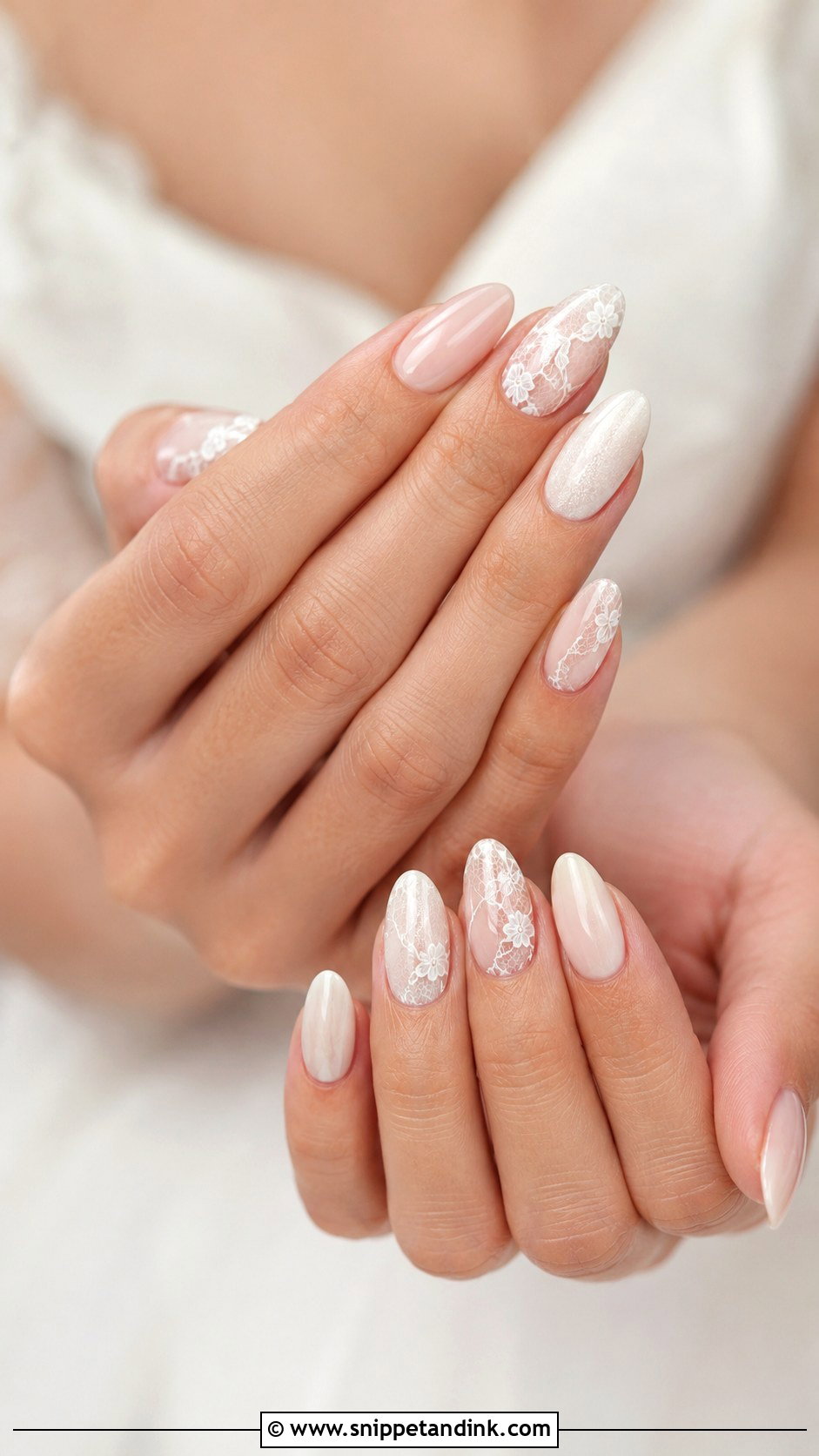
Lace nails pair naturally with a gown that has lace sleeves, an edged veil or embroidery. On a sheer nude or milky pink base, I paint white lace-style patterns on the tips or an accent nail. The groom stays natural with one small white line or a matte finish. Bring a photo of the actual lace if you can; copying the shape of the motif makes the nails feel tied to the dress. Keep it airy. Heavy, dense lace art just looks like a white smudge in photos.
12. Bride And Groom Gold Accent Nails
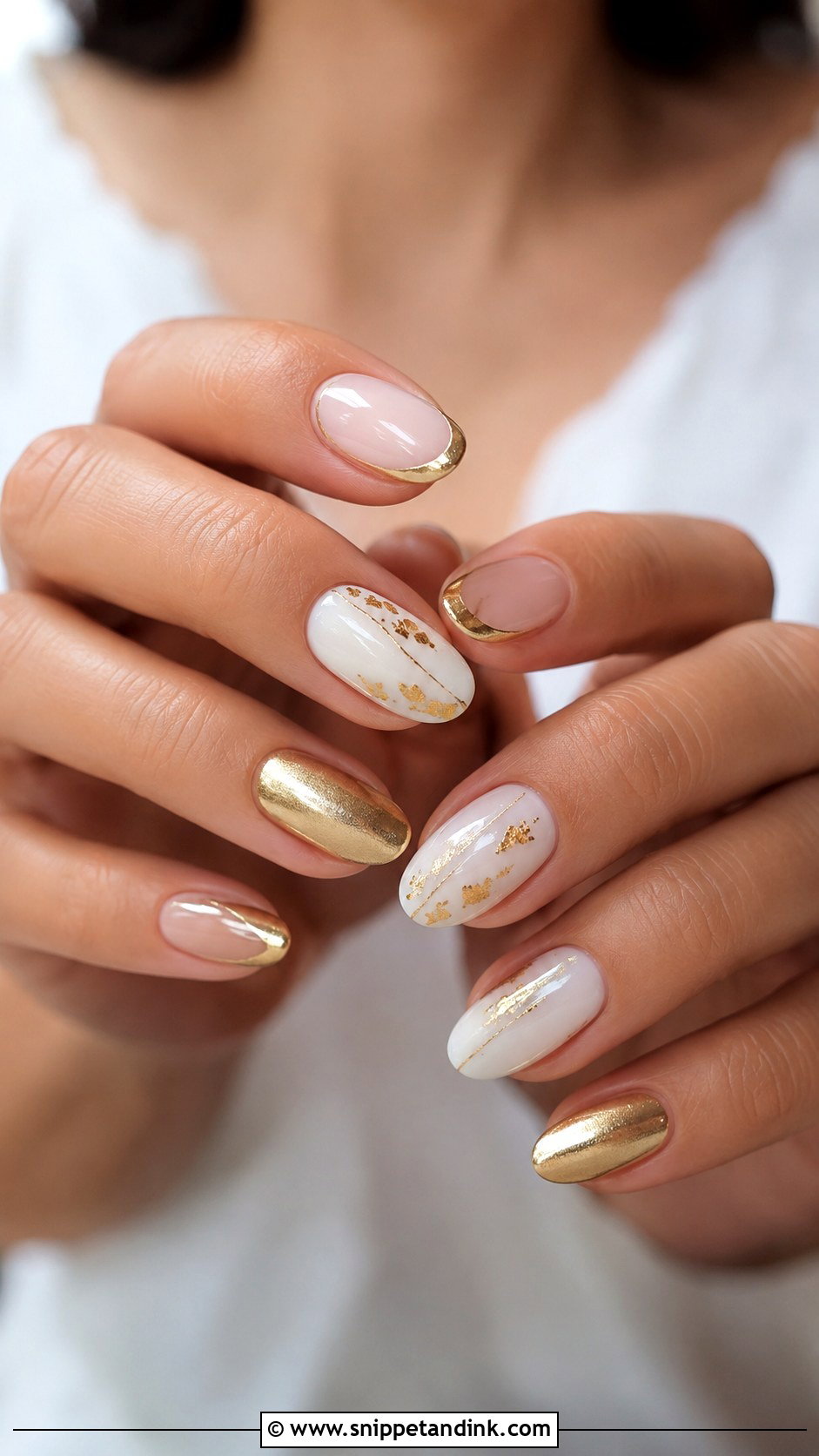
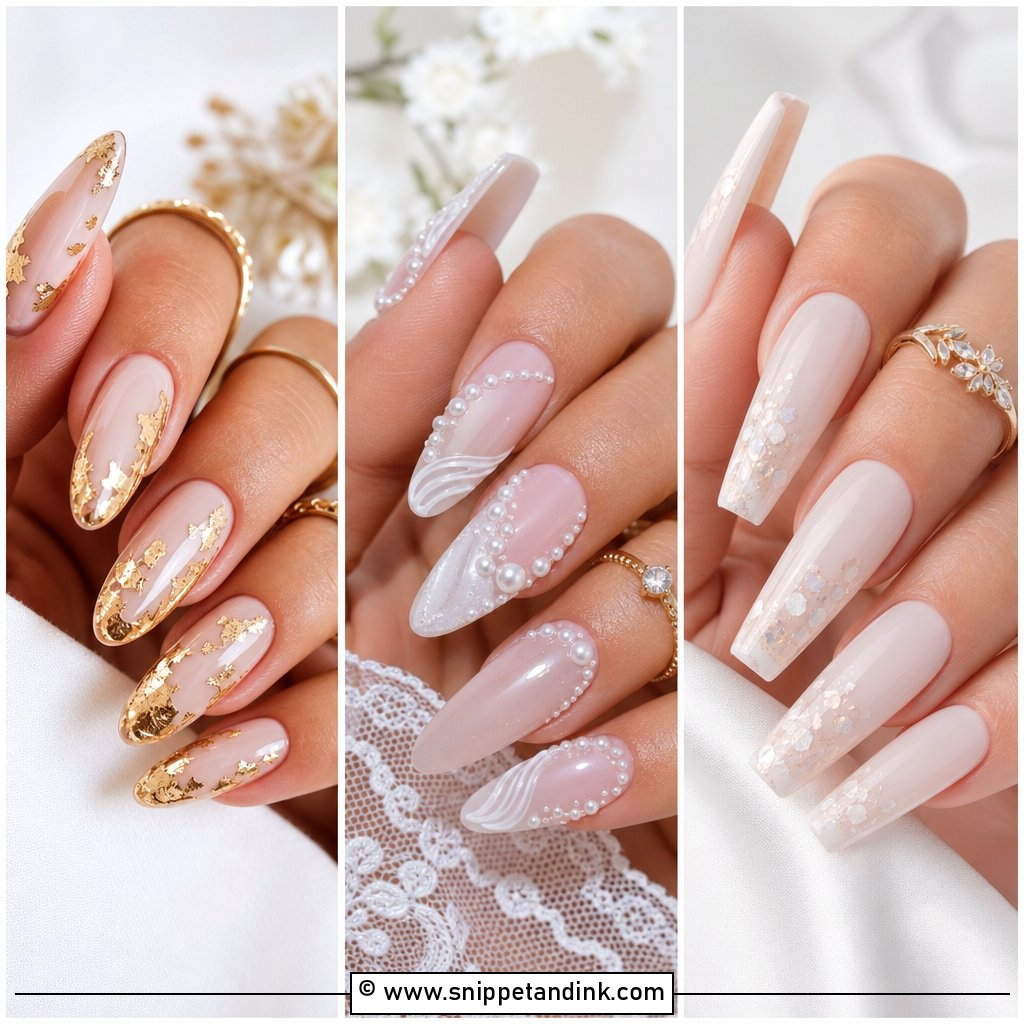
Gold accents warm up the hands and sit well beside gold bands. The bride can wear a nude, ivory or blush base with thin gold lines, foil flakes, tiny initials or a gold French edge; the groom wears one slim gold stripe over a clear or matte base. Gold flatters a wide range of skin tones because it reads warm rather than bright. My rule is one gold detail per nail, or one accent nail per hand. Past that, it starts to look costume rather than considered.
13. Bride And Groom Silver Accent Nails
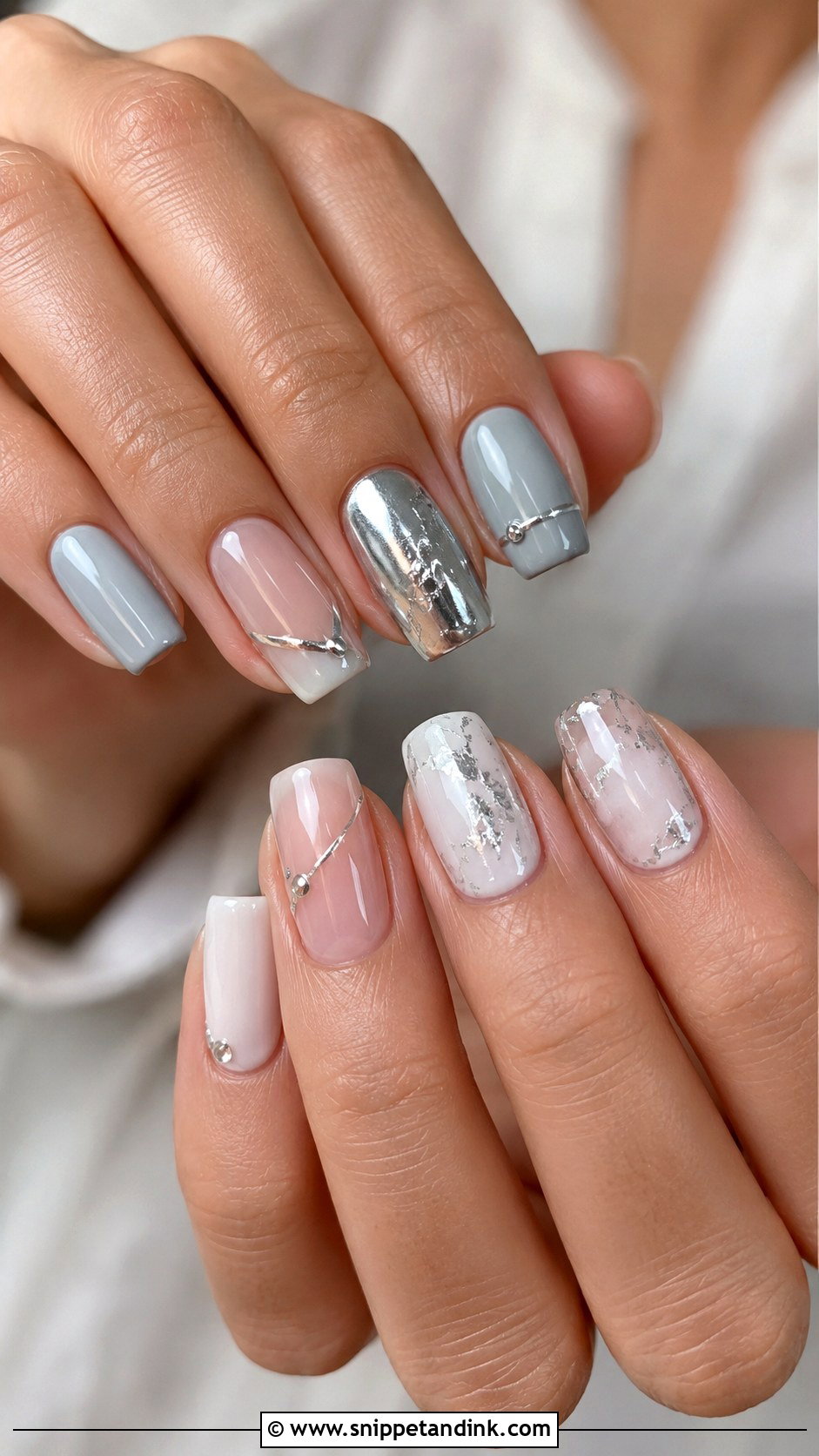
Silver belongs with platinum, white gold and cool palettes. The bride’s base can be sheer pink, soft grey or milky white with fine foil, chrome lines or tiny crystals; the groom wears a single silver stripe or dot, or just a glossy clear finish. It suits winter weddings and black-and-white schemes. Next to a diamond, a thin silver line looks crisp. A thick one competes with the stone for light, so I keep silver detail fine.
14. Bride And Groom Black And White Nails
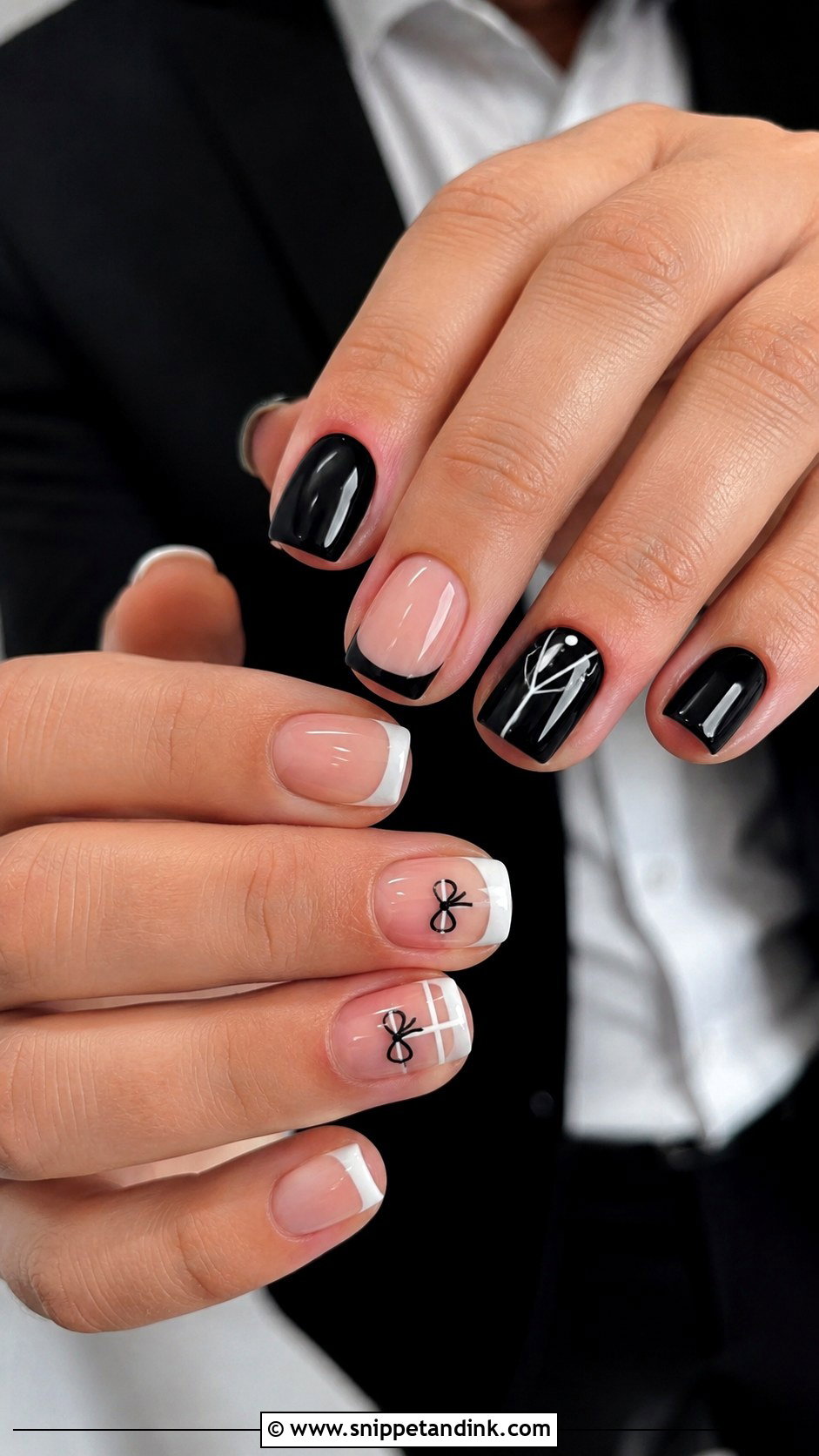
Black and white is the formal choice, made for a tuxedo. The bride wears a soft nude base with white tips and one black bow, heart or line; the groom wears clear matte nails with one small black detail. Use black sparingly. As a full colour on a bride, it pulls focus from the ring and the dress, unless the whole wedding is styled that boldly. As an accent, it looks sharp, provided the linework is clean.
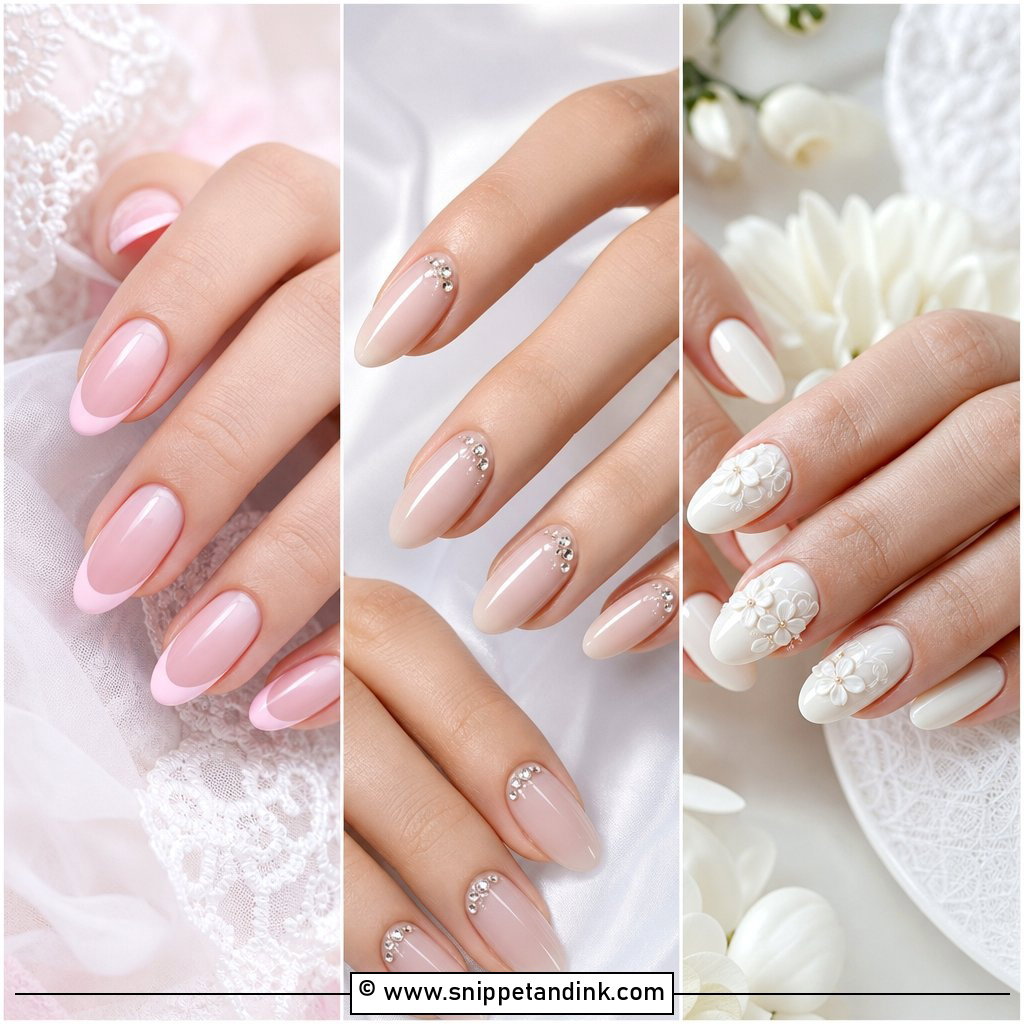
15. Bride And Groom Nude Nails
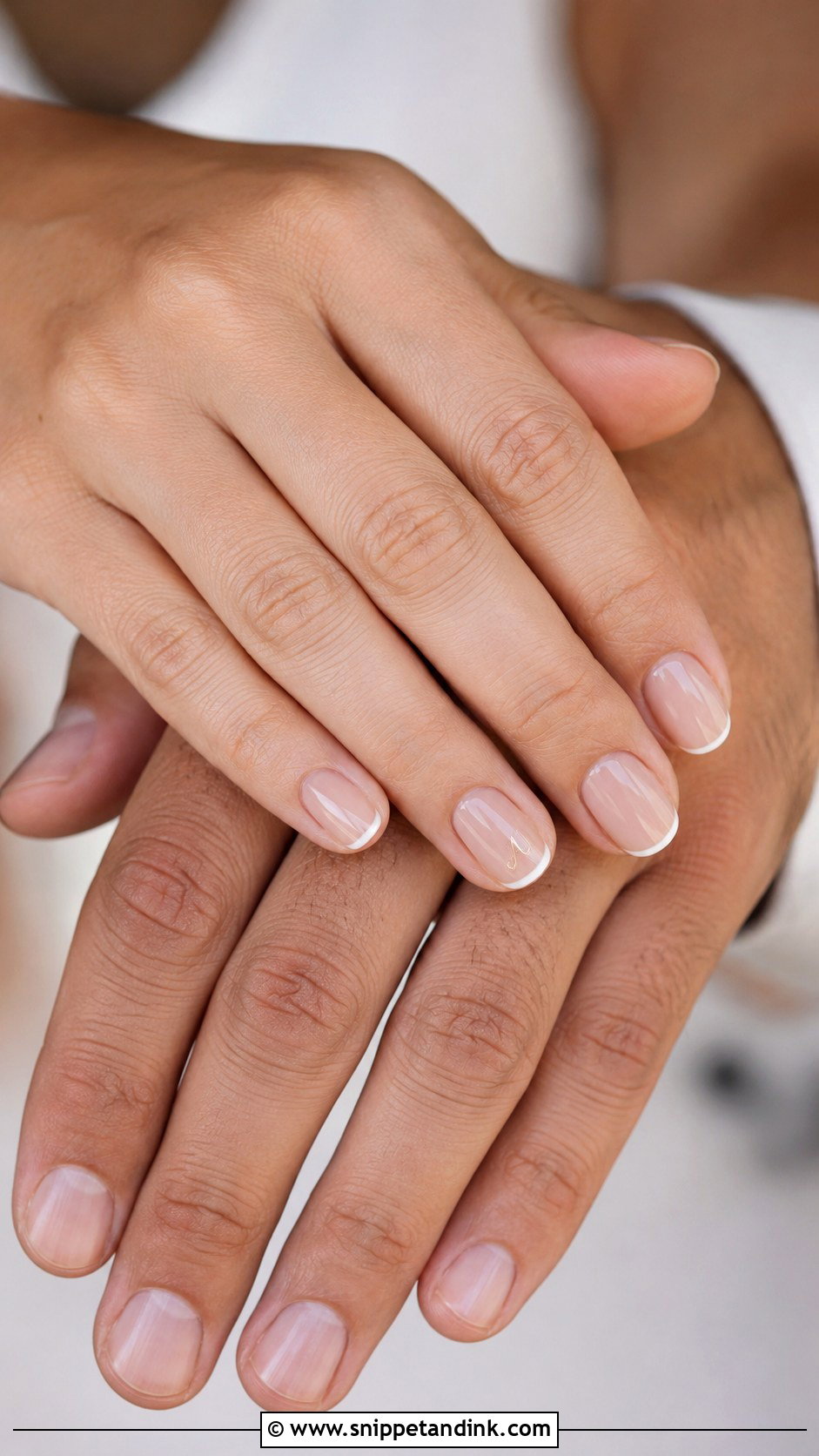
Nude is the easiest way to coordinate two people with very different tastes. The bride chooses a nude matched to her undertone and adds gloss, a micro French tip, or a tiny initial; the groom wears a buffed natural nail or a sheer nude tint. The hard part is the shade. Too pale and the hands look washed out, too warm and they look orange against a white dress. I swatch three or four shades on the nail at a trial and check them in daylight.
16. Bride And Groom Milky White Nails
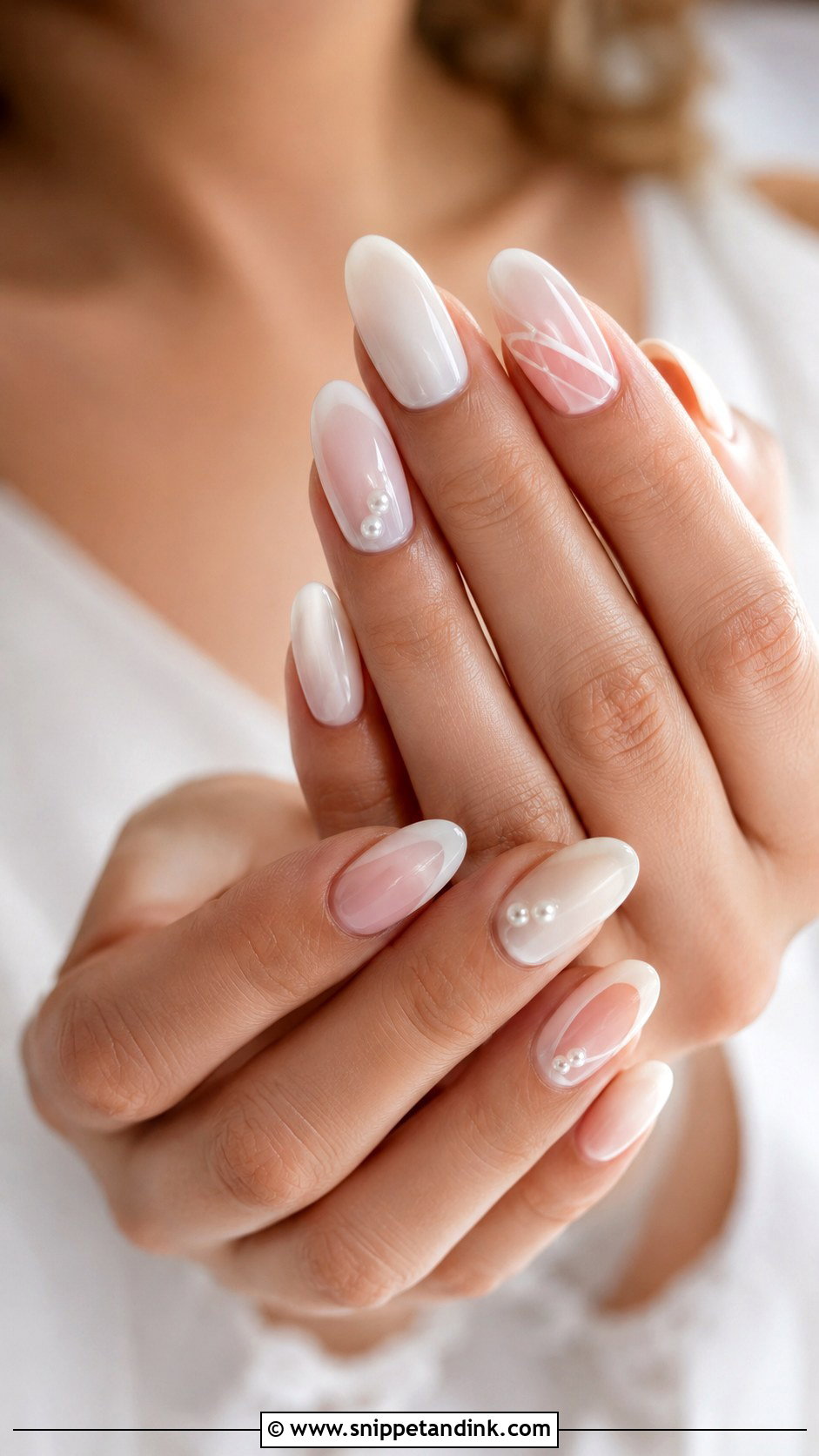
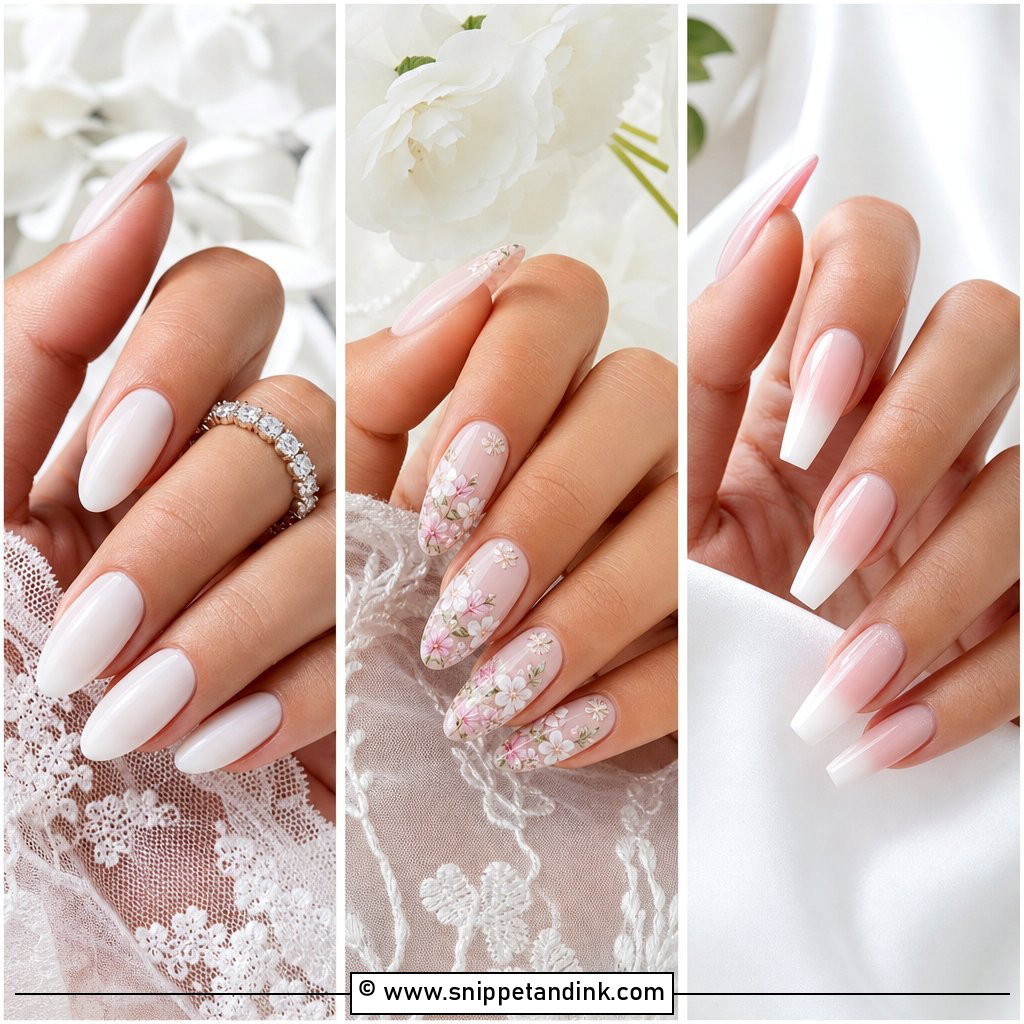
Milky white is softer than opaque white and much easier to wear. It’s a translucent base with a gentle sheen, and it can take tiny pearls or delicate initials on top. The groom matches with a clear or matte finish and one faint white line. It flatters more skin tones than solid white and sits well beside diamonds, pearls, silver, gold and most bouquets. Layer it thinly; two sheer coats look like glass, while three can turn streaky and dense.
17. Bride And Groom Ombre Nails
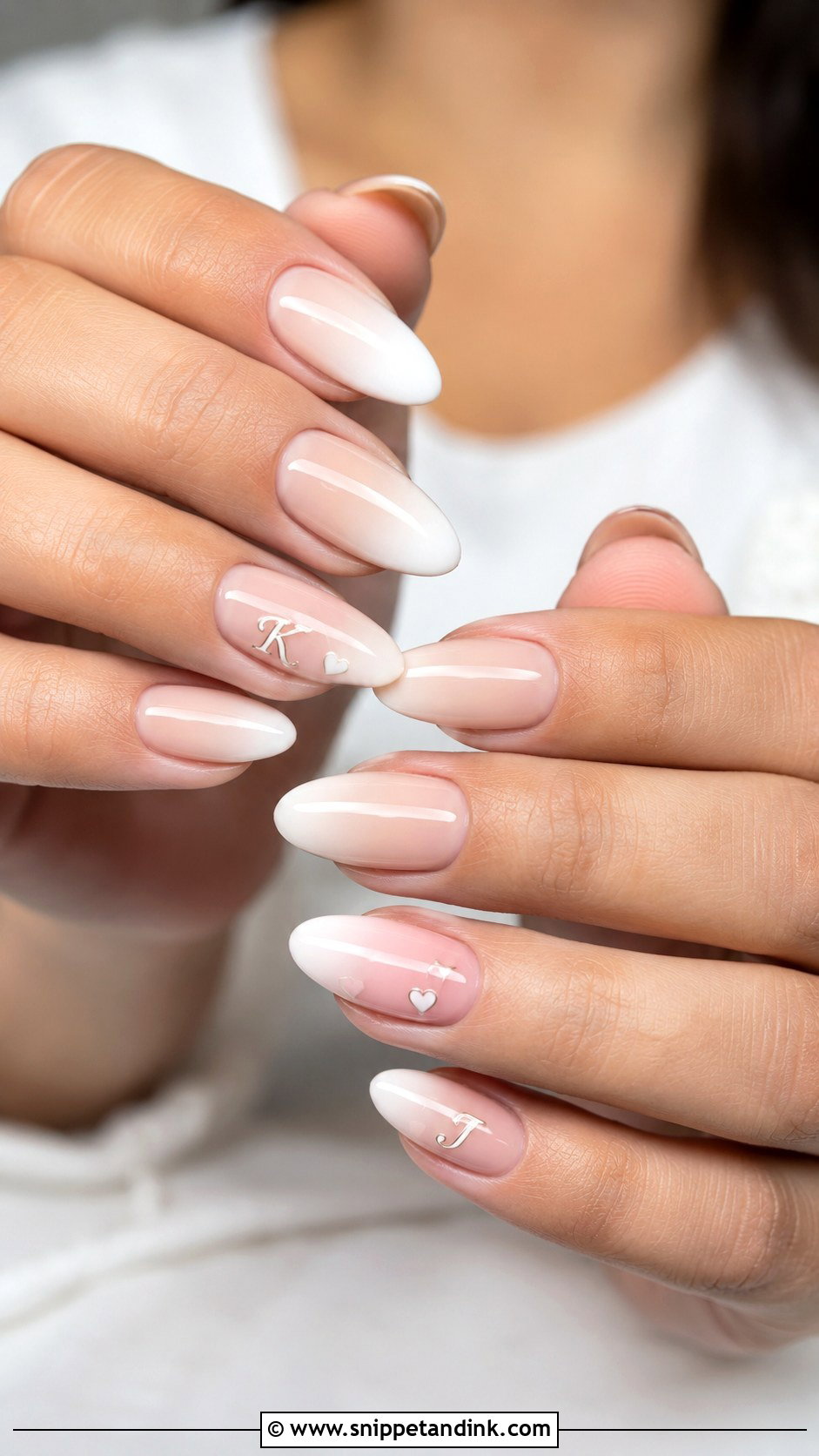
A fade needs almost no extra art to look finished. The bride wears a baby boomer ombre that blends from nude or pink into white tips, with initials, a ring or a tiny heart on one accent nail. The groom can wear a natural manicure and one subtle nude or grey gradient. On almond, oval and coffin shapes the fade makes the fingers look longer. I build the blend in thin sheer layers; a heavy white tip breaks the gradient and ends up looking like a thick French.
18. Bride And Groom Matte Nails
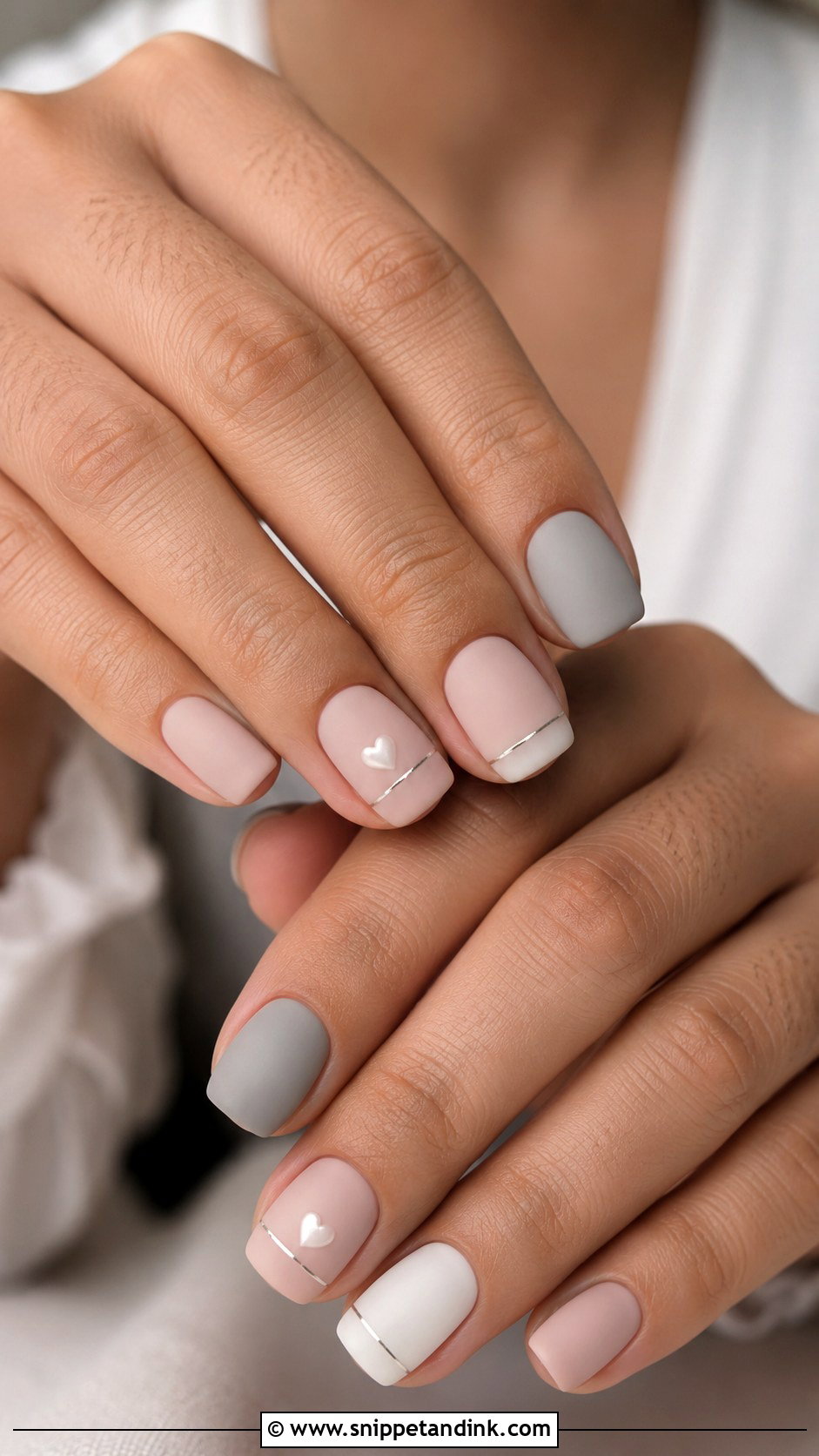
Matte sets look modern, and they’re also the finish most grooms like best. The bride can choose a soft nude, blush, ivory or pale grey matte base with one glossy heart, pearl dot or metallic line on top, and the groom wears clear or neutral matte. The contrast between matte and gloss gives depth without clutter. The catch is wear: matte top coat picks up oils, lotion and makeup and can look scuffed within days. Book it as close to the wedding as you can and avoid oily hand cream that morning.
19. Bride And Groom Blue Accent Nails
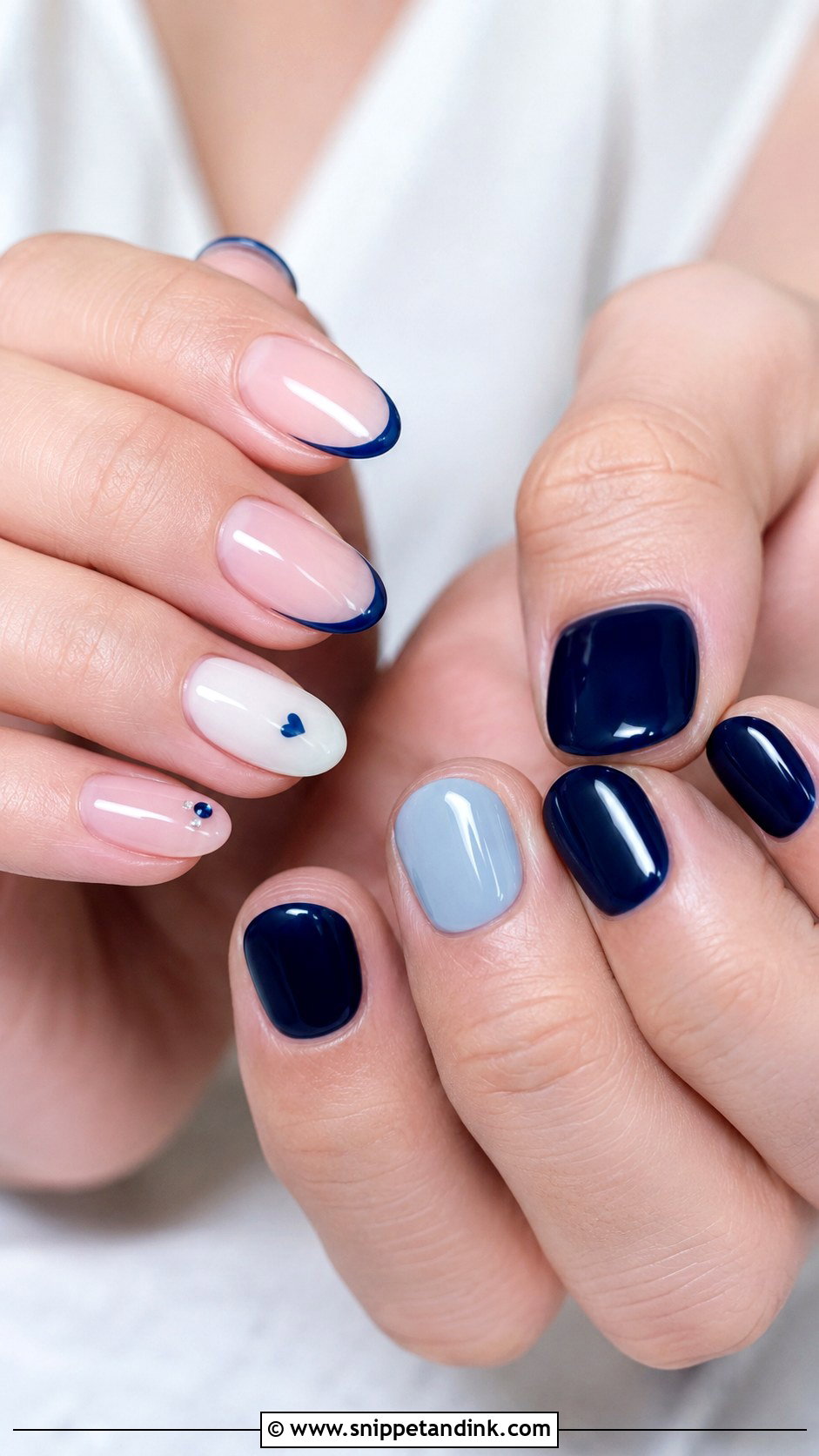
A blue accent is an easy way to carry your something blue. The bride wears sheer pink, nude or milky white nails with one tiny blue heart, flower, tip or dot; the groom wears a small navy or powder blue line on one nail. Powder blue keeps it romantic and navy picks up a suit. If the bouquet, shoes, pocket square or decor already have blue in them, pull the exact shade from there so it doesn’t clash in photos.
20. Bride And Groom Matching Nails
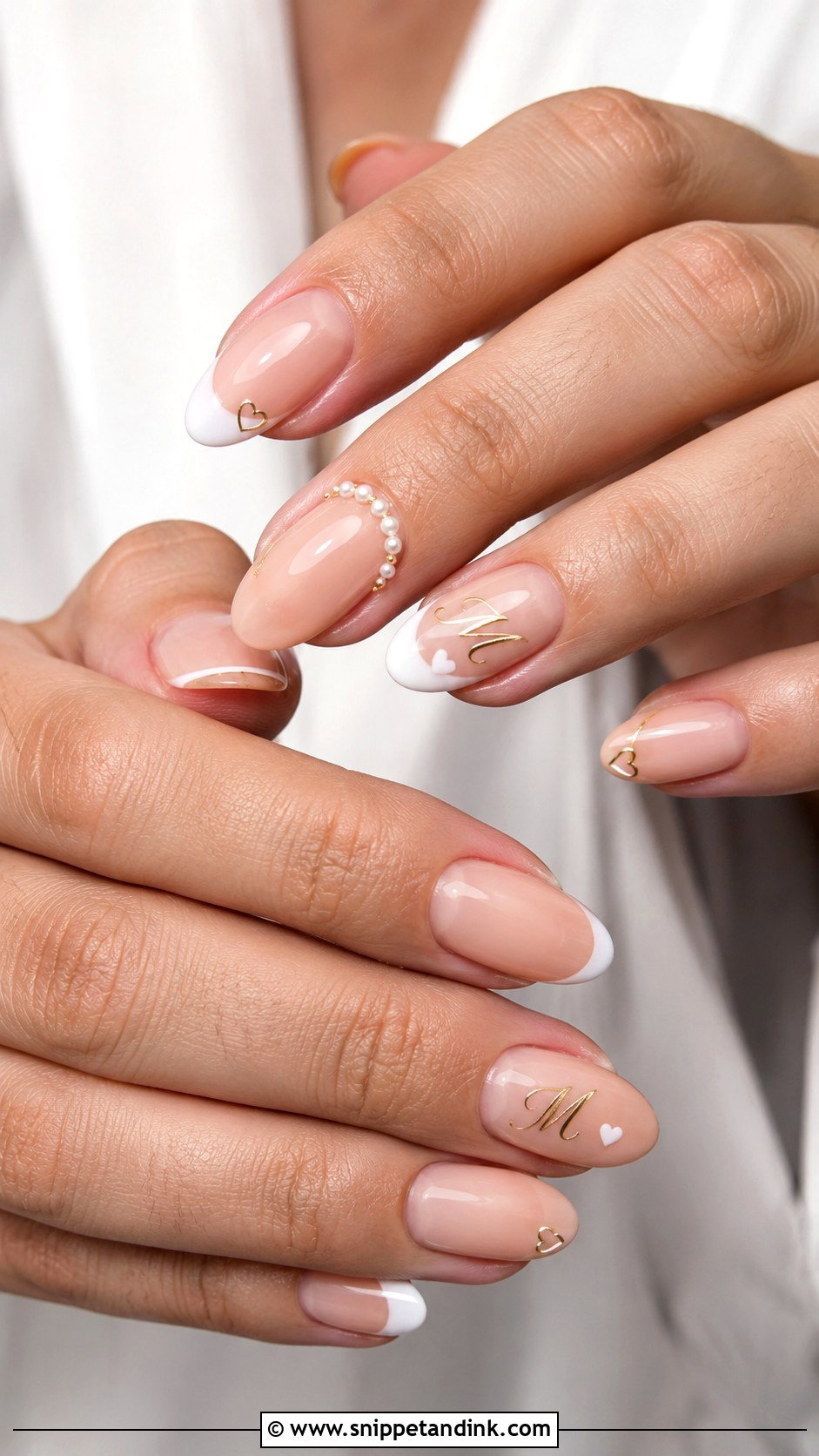
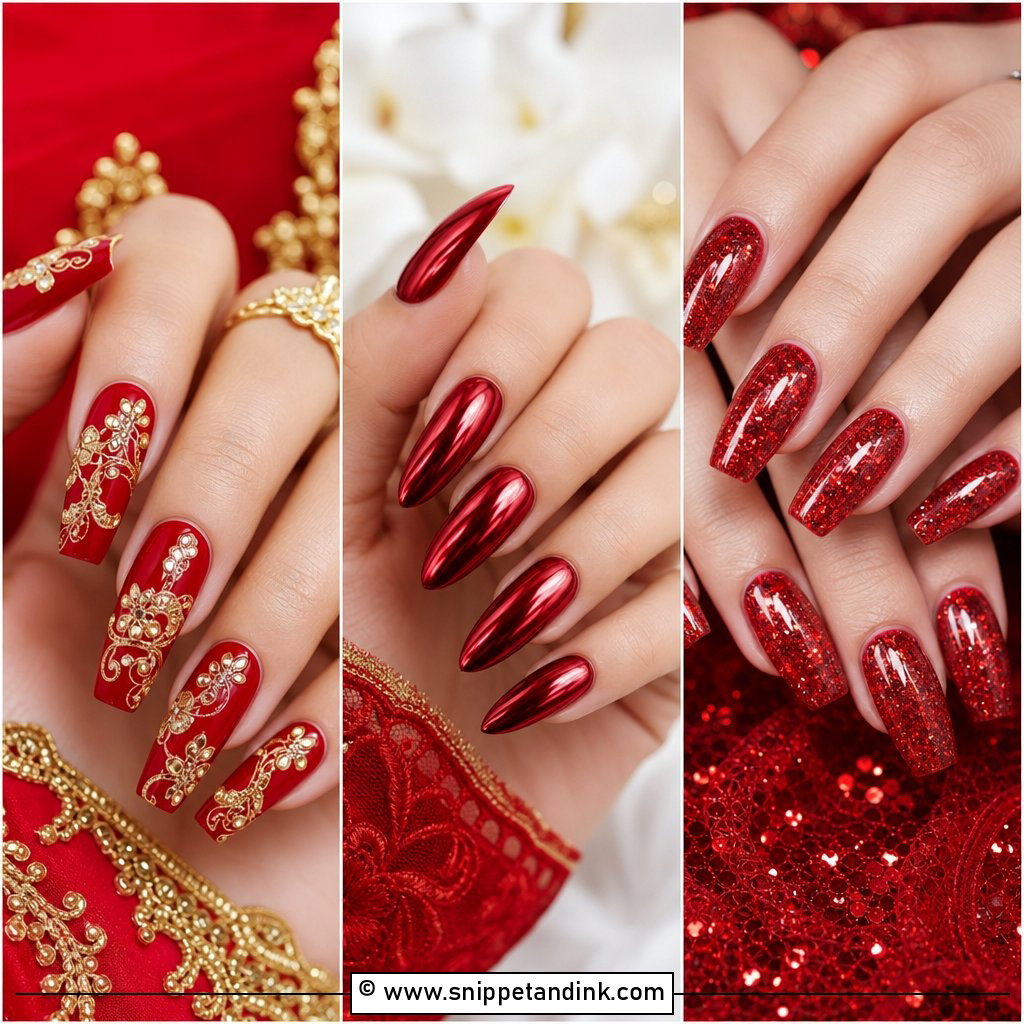
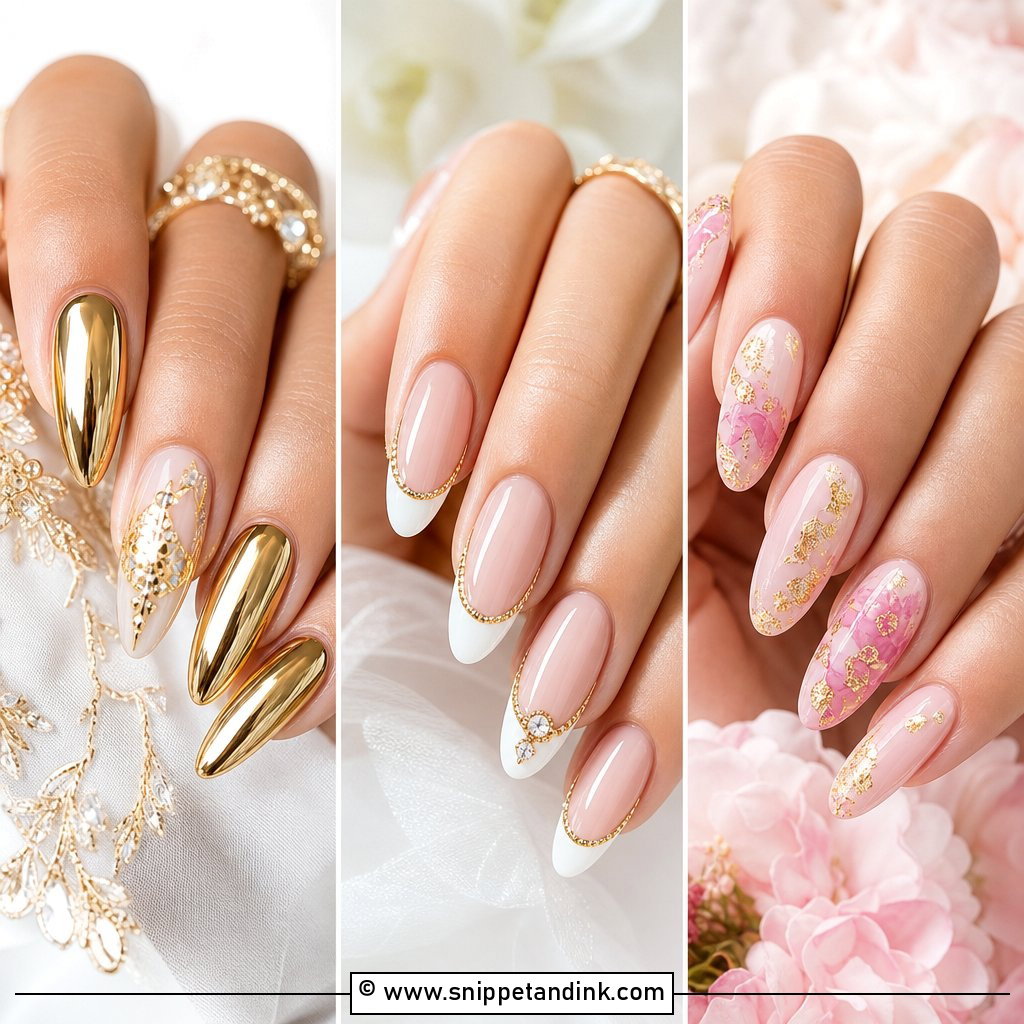
Matching sets work when they share one element rather than copying each other. The bride’s version is more detailed, maybe a glossy nude with initials, tiny hearts, pearls or a fine French tip. The groom wears the same colour family, or the same symbol, on a natural nail. Pick one link between the two and keep it obvious: a colour, a metal or a motif. That single repeated detail is what reads as matching when your hands are side by side.
Timing the Set So It Looks Fresh at the Ring Exchange
A gel set looks its best in the first week, before any growth shows at the cuticle. I book brides one to three days before the wedding. That leaves time to fix a chip or a lifted corner and still means no visible regrowth at the ceremony. Regular polish chips faster, so if you prefer it, have it done the day before.
If you’re travelling for the wedding, choose gel or a gel overlay over regular polish; packing, carrying bags and hotel showers are hard on a fresh manicure. Leave a matte finish until last, since it marks most easily.
If a Nail Breaks the Morning Of
It happens more than people think, usually zipping a garment bag or opening a gift box. A small kit in the bridal bag handles almost all of it: nail glue, a fine file, a bottle of your base shade and a clear top coat. File the break smooth first so it doesn’t catch on lace or tulle, then glue any split and cover it with the shade. From a few feet away nobody will notice, and a photographer can angle one repaired nail out of the ring shot.
Two Hands in One Photograph
Couple nails work when one person carries the detail and the other carries the polish, with one shared element tying them together. French tips, nudes, milky whites, pearls, chrome, initials and ring art all suit that approach, because they stay quiet in close-up. Book a trial if you can and bring your rings, swatches of the outfits and a photo of the flowers. Both of you should leave that appointment knowing exactly what the ring shot will look like.
You'll Like These Ideas:


Leave a Reply