
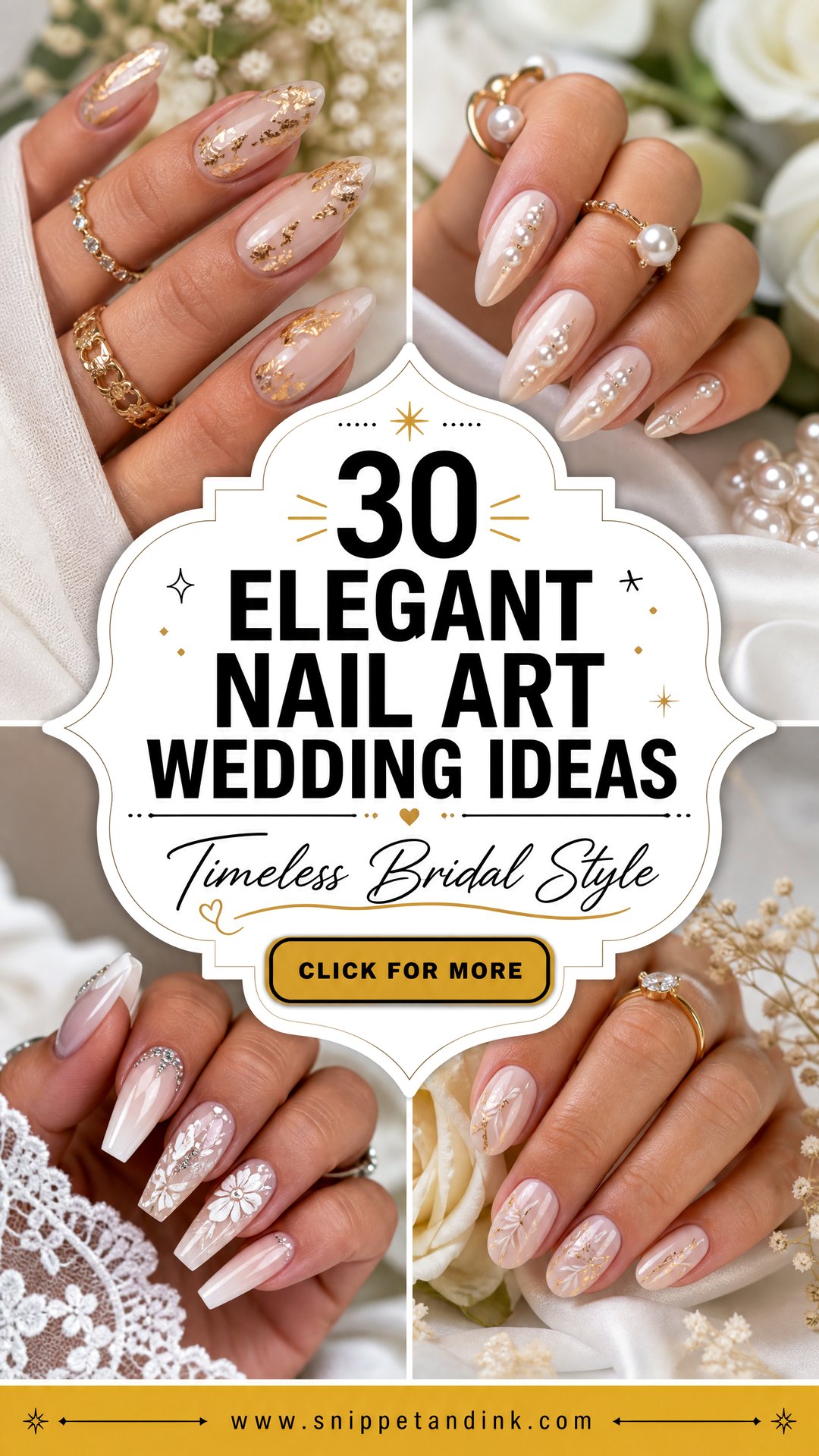
Wedding nail art has two audiences: the guest across the table and the photographer’s macro lens two inches from your ring. A design that looks delicate at arm’s length can look messy in a close-up, and the reverse is true too. When I plan a wedding set, I think about both, plus how the art will sit next to your dress fabric and your metal. These thirty ideas run from plain French tips and milky neutrals to pearls, chrome, lace, swirls and a little blue, for brides and for the bridal party, on short natural nails or longer extensions.
Reading Your Dress White Before You Pick a Polish
Bridal whites vary more than people expect. A gown labeled ivory can lean yellow, cream or almost pink, and diamond white has a cool, slightly blue cast. Put a bright white nail next to an ivory dress and the dress can look dingy. So the first thing I ask for at a consultation is a fabric swatch, or at least a daylight photo of the dress.
- Pure or diamond white gown: bright white tips, milky white or sheer white all sit well.
- Ivory or cream gown: ivory tips, champagne shimmer or a warm nude are safer than stark white.
- Blush or champagne gown: sheer pink, rose nude or pearl chrome tie the tones together.
- Colored or non-white outfit: pick the nude that suits your skin first, then add one accent that echoes the outfit.
Metal matters as much as fabric. Gold and rose gold rings look best with warm nudes and warm accents; platinum and white gold suit cool pinks, milky whites and silver details. Mixing is fine, but I keep the metallic nail art in the same family as the engagement ring.
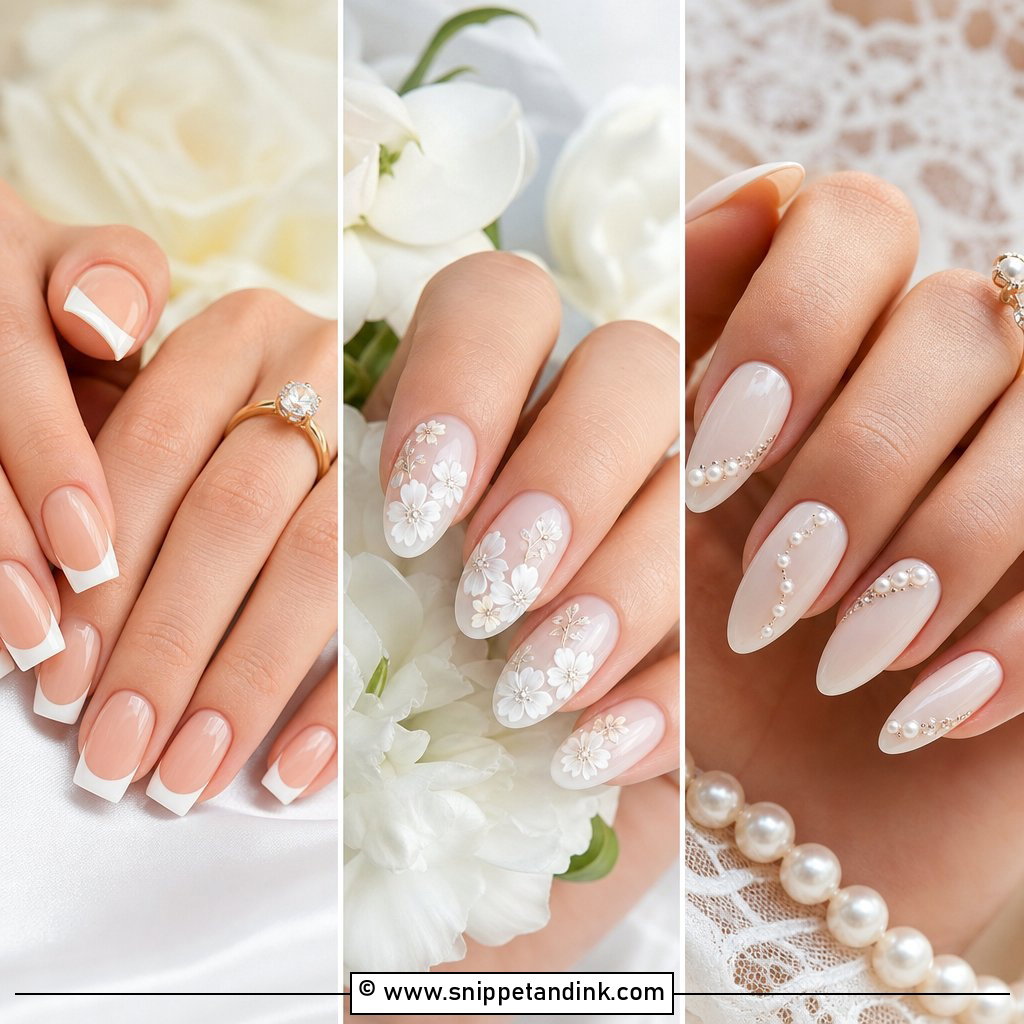
1. Classic French Tip Wedding Nails
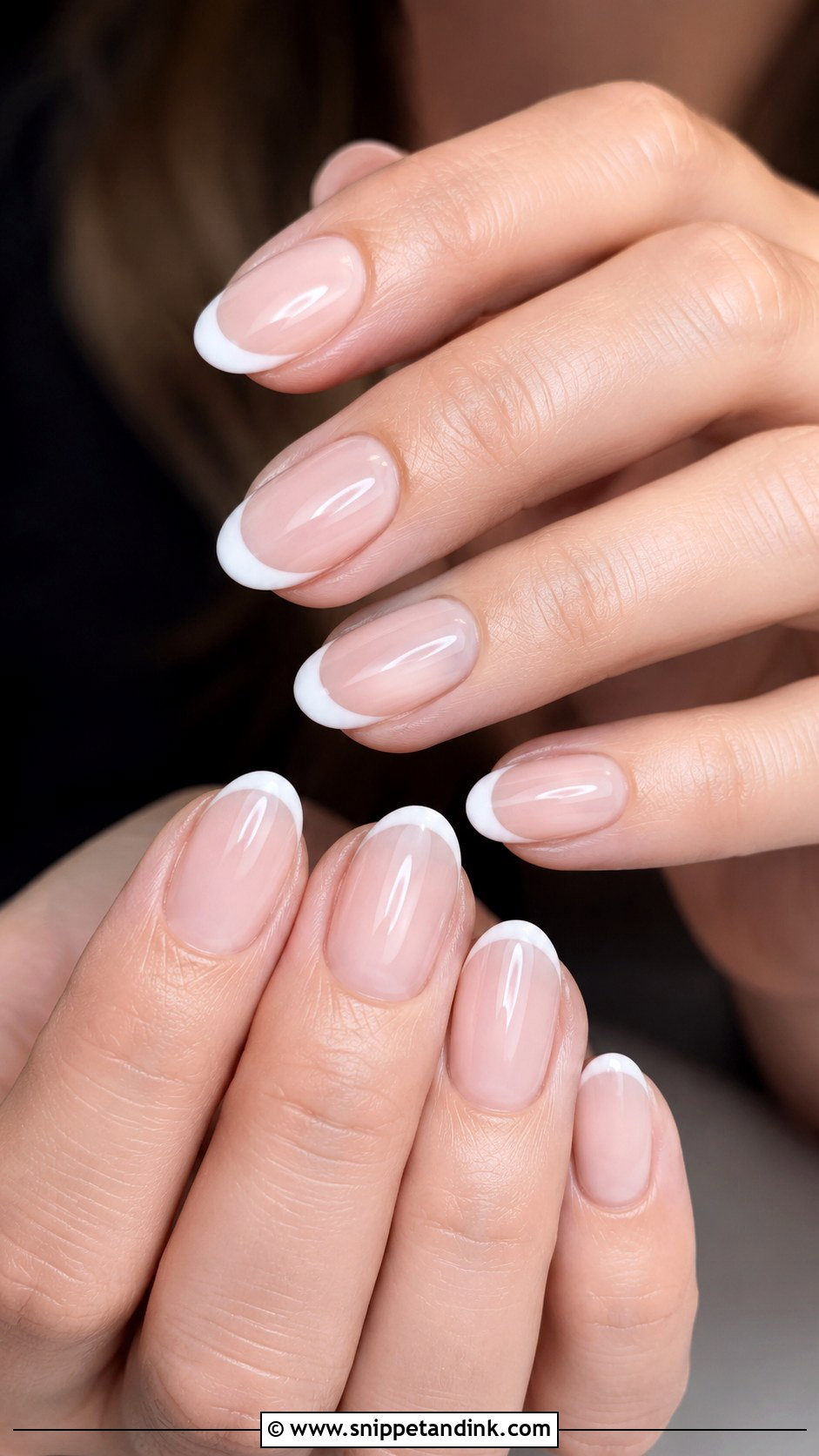
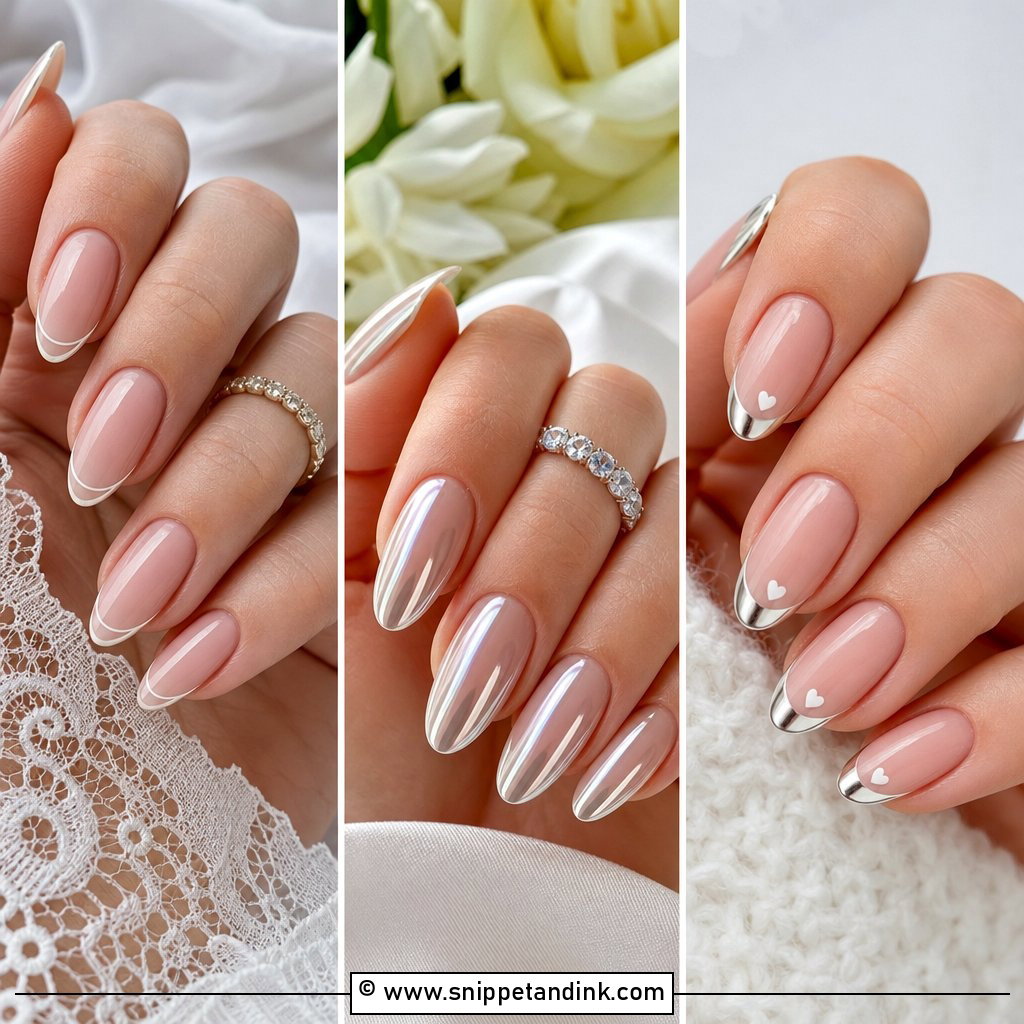
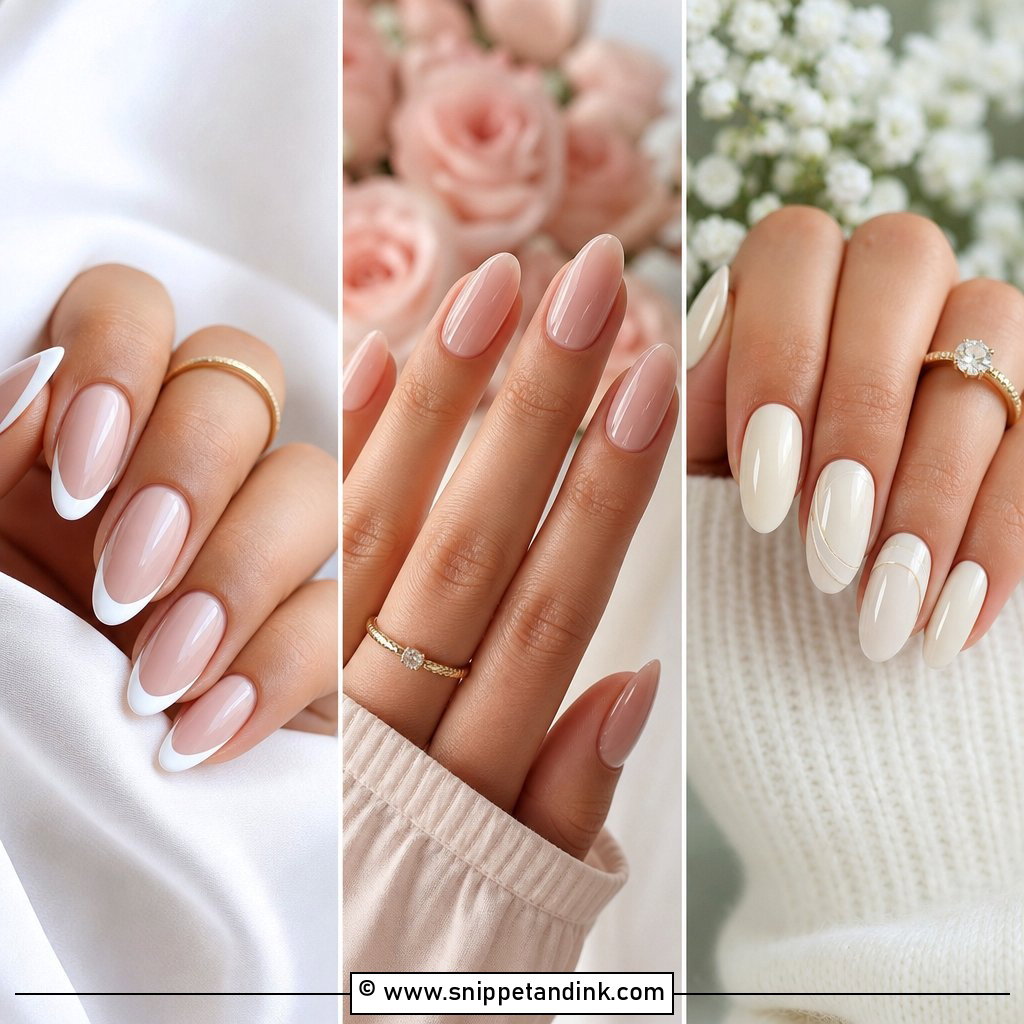
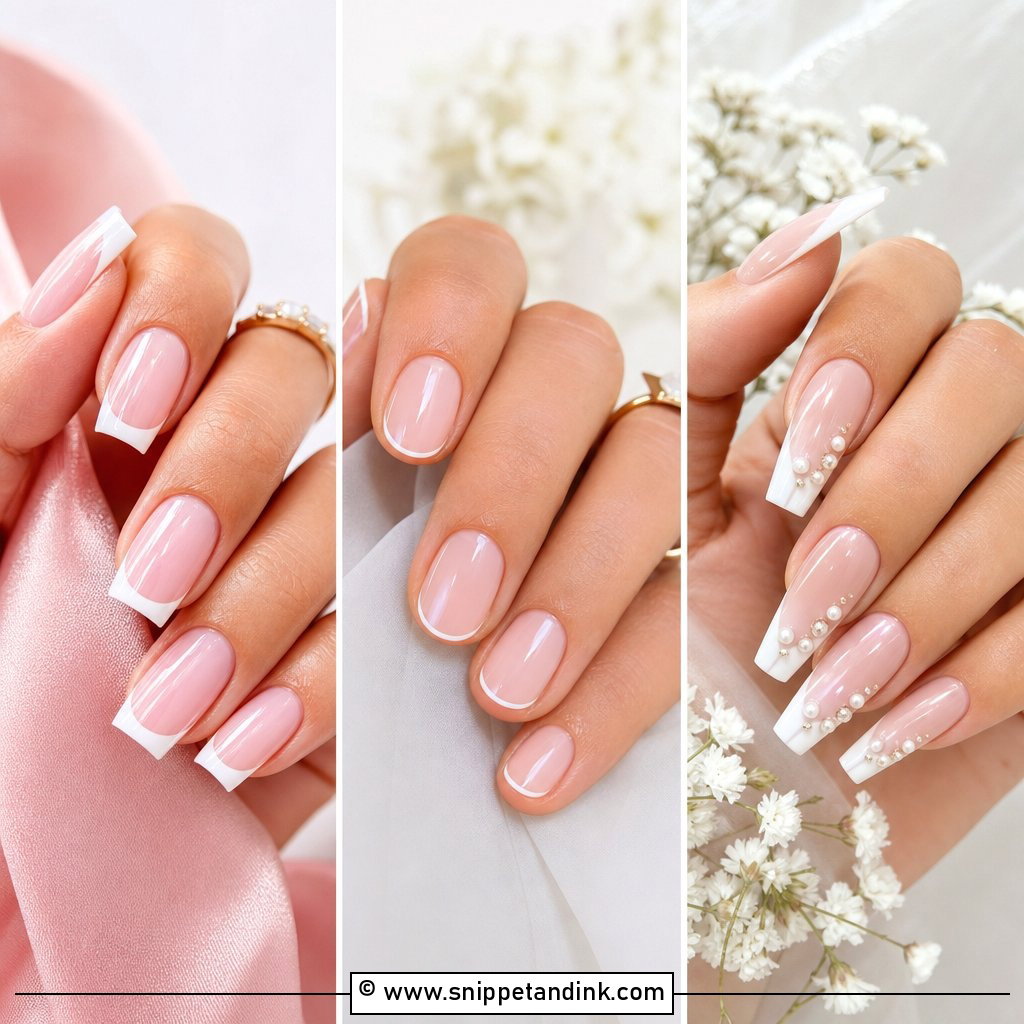
Classic French tip wedding nails stay popular because they don’t argue with anything: not satin, not lace, not a busy bouquet. The modern adjustment is a thinner smile line over a sheer pink, rather than a thick tip on an opaque nude that can look a little dated. What I watch for is the smile line depth matching across all ten nails, even when the nail beds are different lengths. Almond, oval and squoval all carry it.
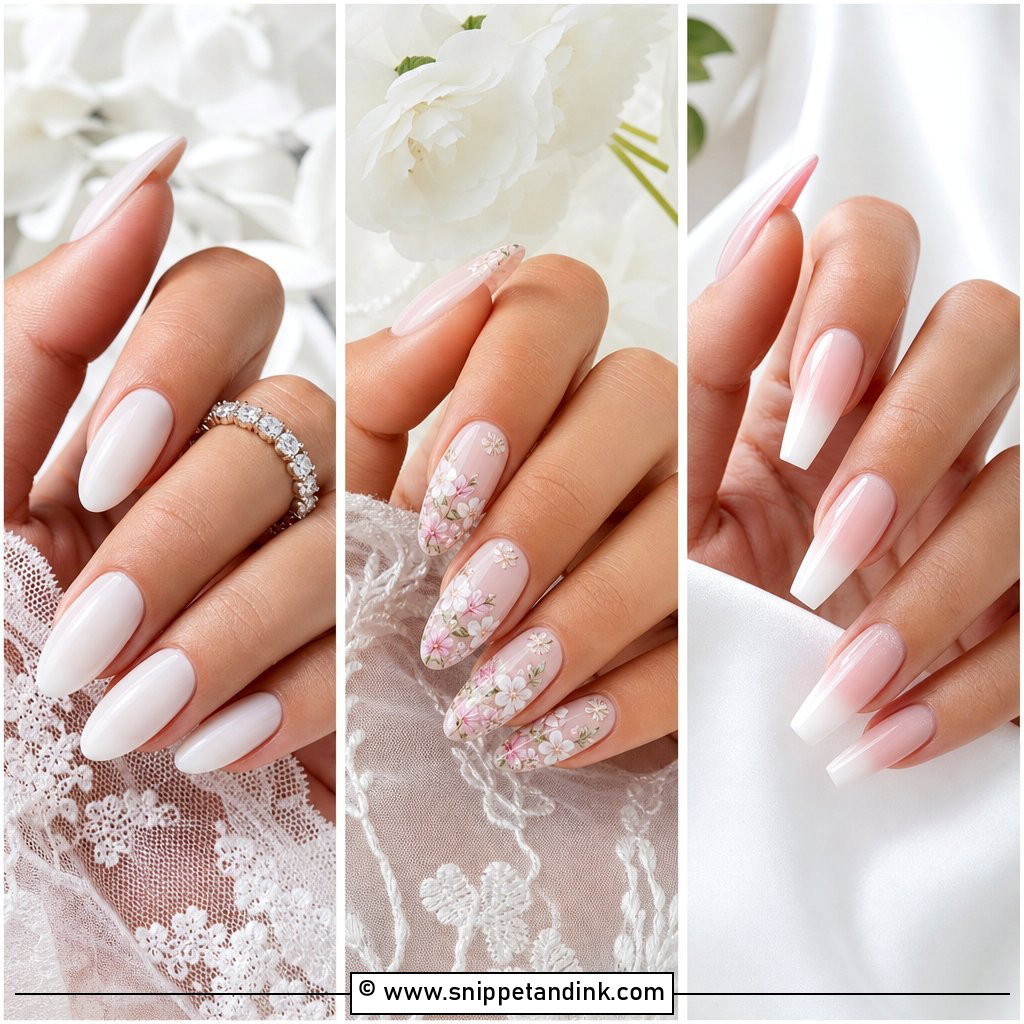
2. Milky White Wedding Nails
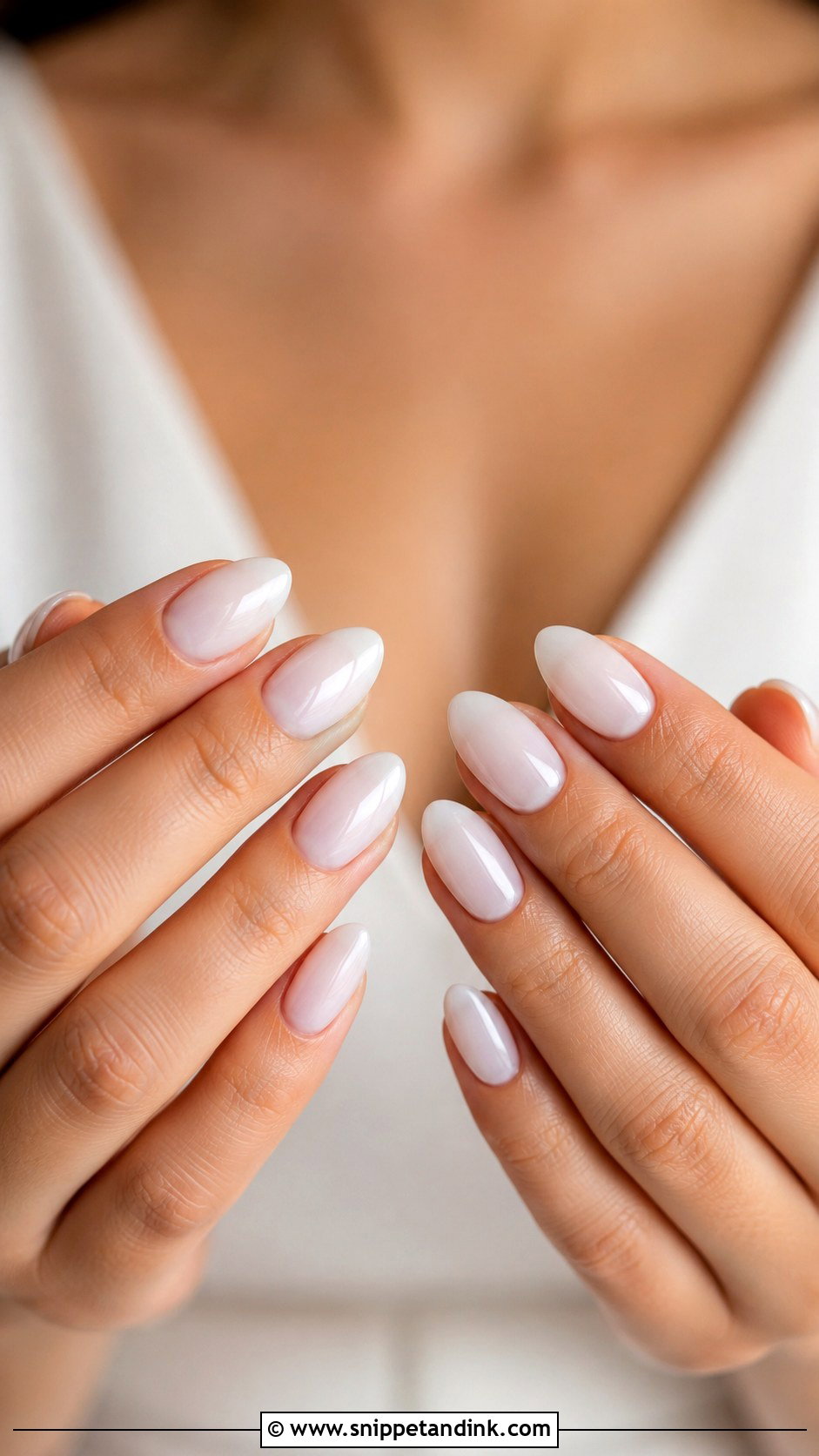
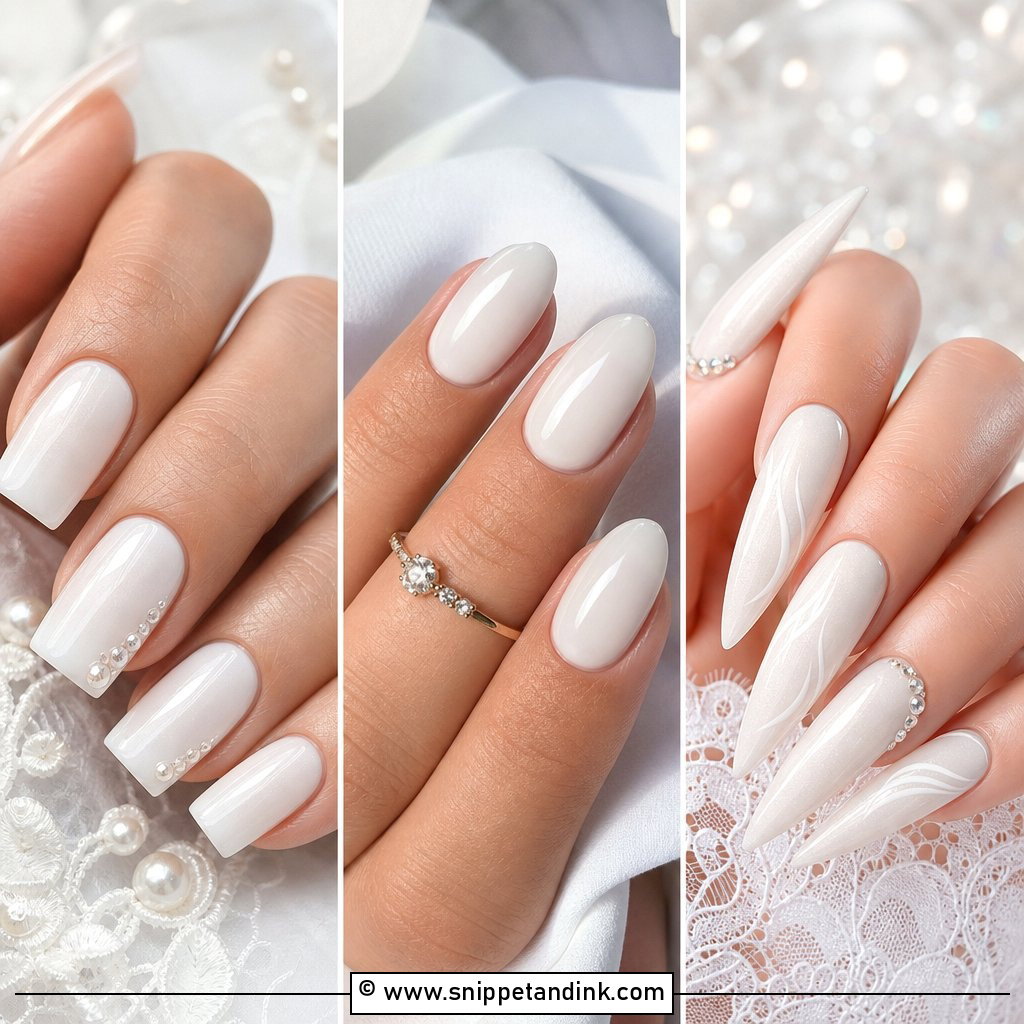
Milky white is semi-sheer, so it gives a white manicure without the stark, flat look of an opaque white that can read as correction fluid on camera. Natural light flatters it most. I’d test it next to your actual dress, because a milky white with a blue undertone can look cold against a cream gown. Short oval or medium almond keeps it simple, with no art needed.
3. Nude Pink Wedding Nails
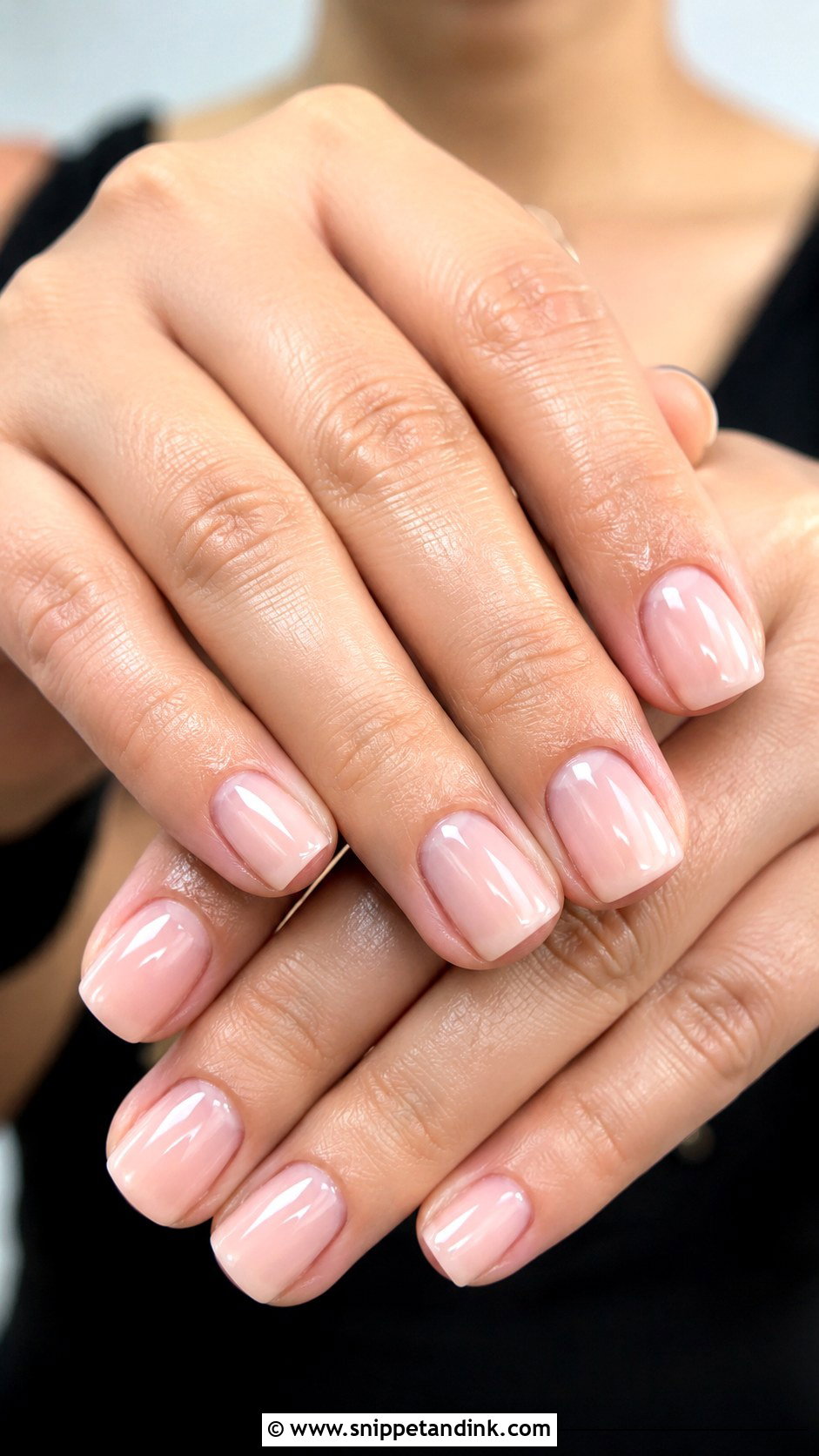
The right nude pink should look like your nails on a very good day. I swatch three shades side by side on the client’s nails: one sheer blush, one rose beige, one soft peach pink, and the right one usually becomes obvious in daylight. Too pale and the fingers look bloodless in photos; too dark and it reads as a color rather than a nude. It suits every length and leaves the ring completely alone.
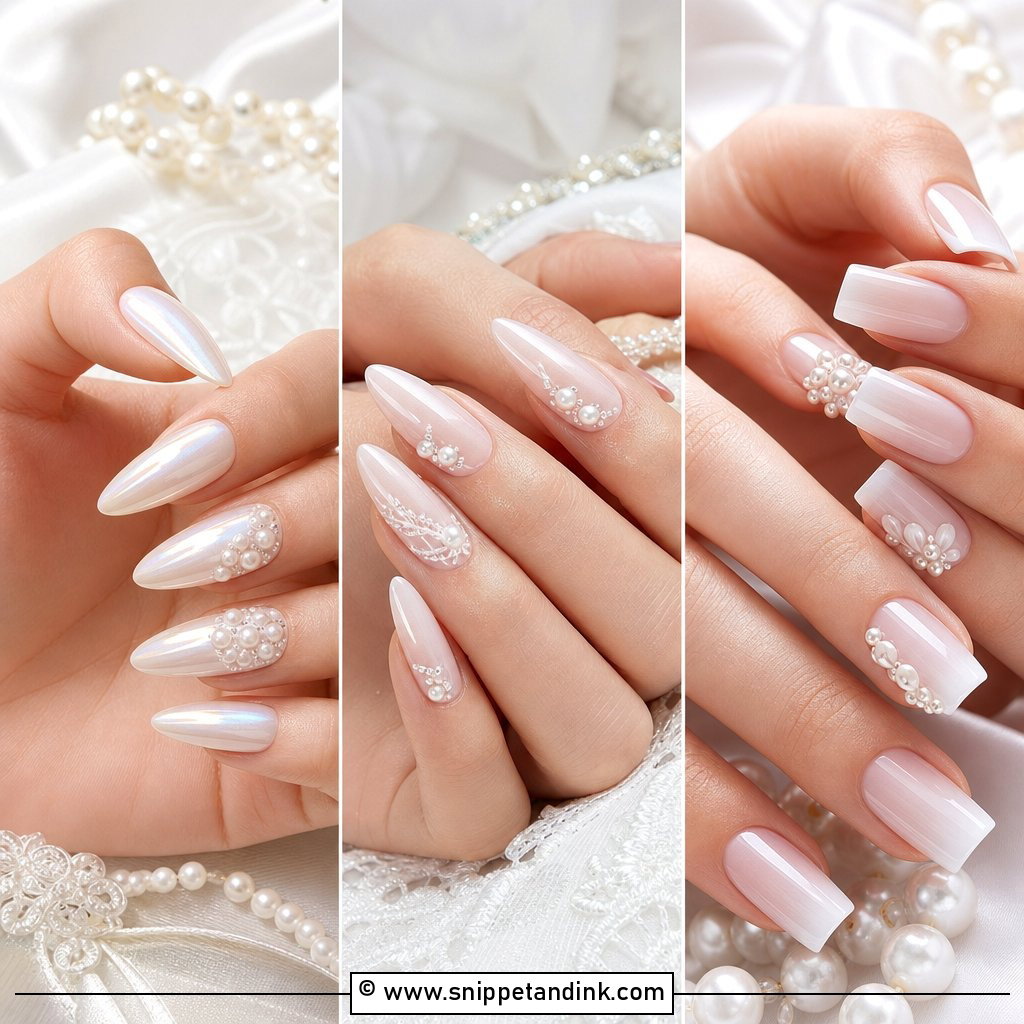
4. Pearl Accent Wedding Nails
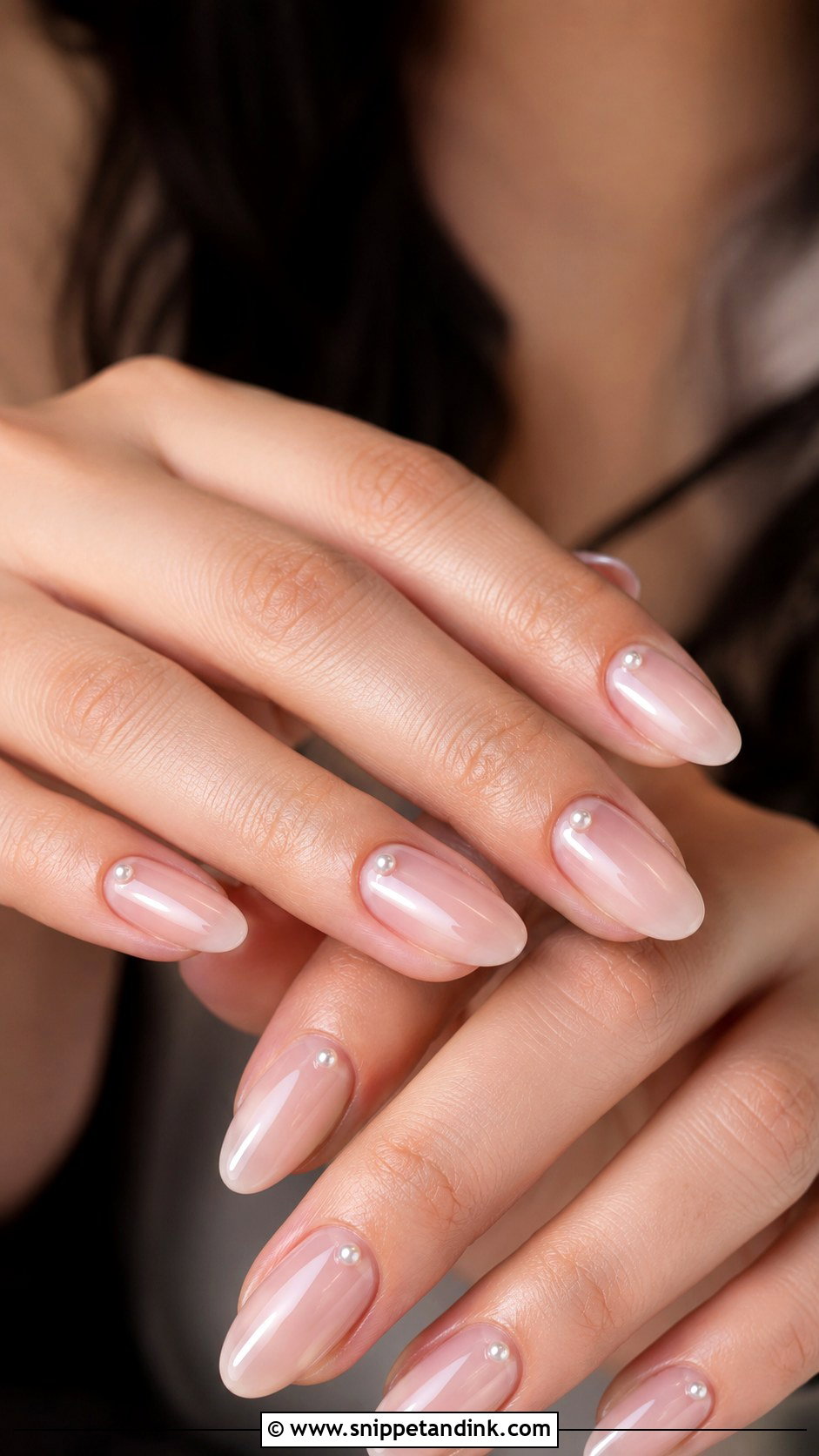
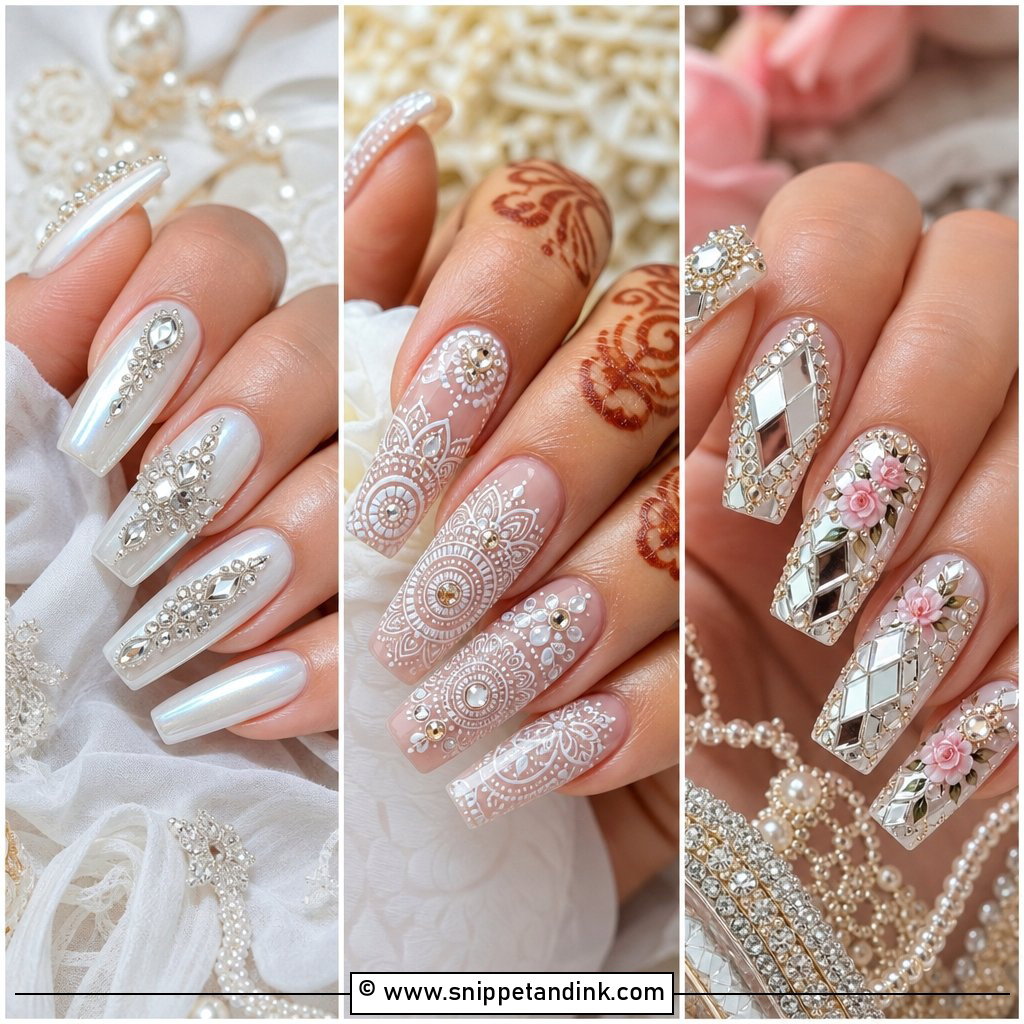
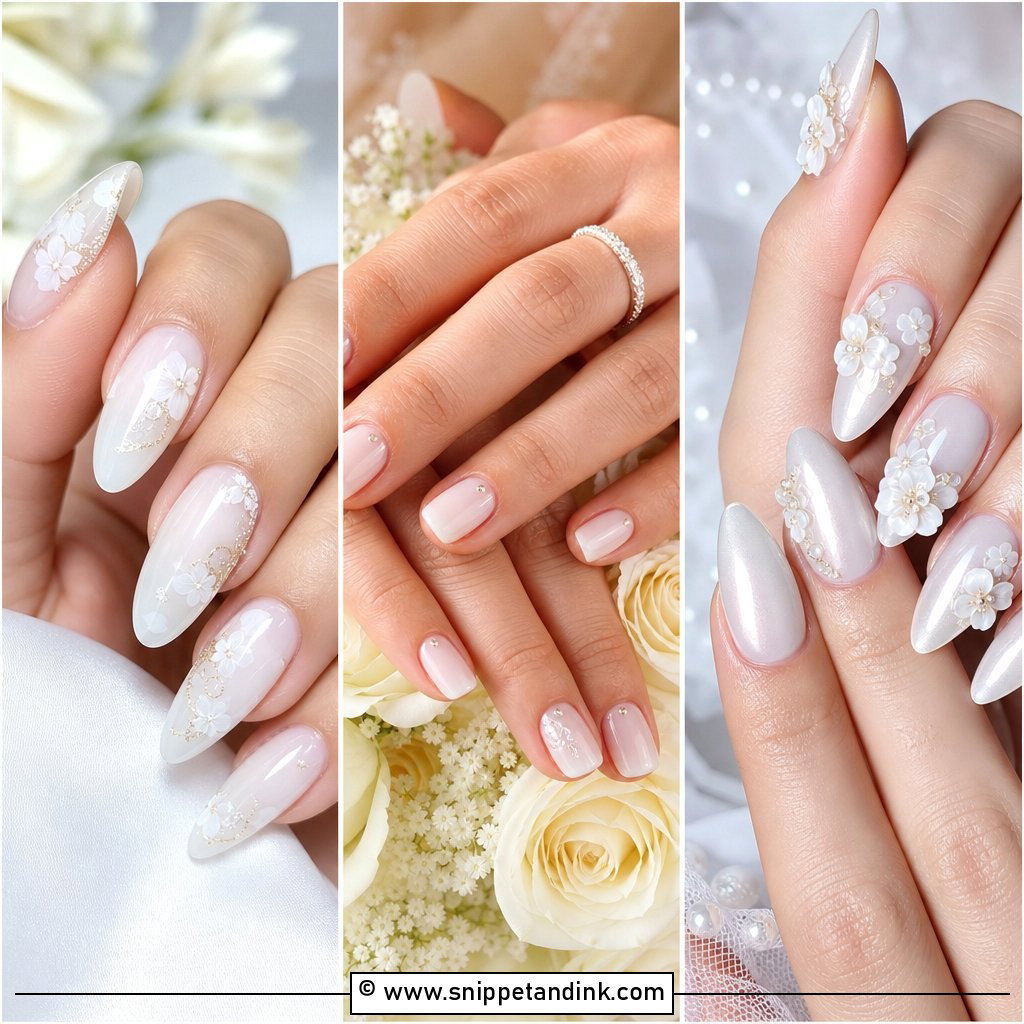
Pearls are the bridal detail I’m asked about most, and the one I’m most cautious with. A few flat-back pearls near the cuticle or along a French tip look refined; a full nail of them catches every thread of lace and tulle. I secure each pearl in builder gel and cap it with top coat so there’s no edge to snag. Pair them with pearl earrings or a beaded gown and keep the base sheer.
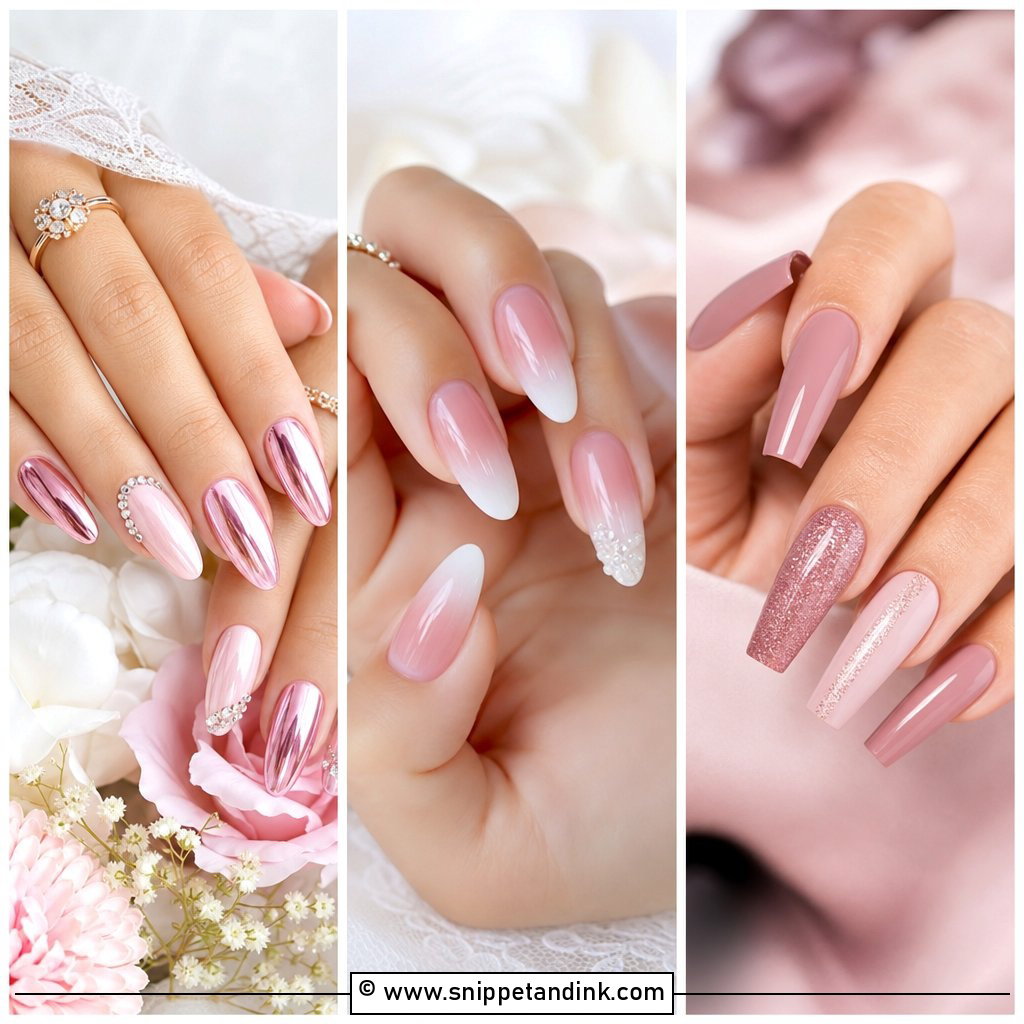
5. Chrome Glazed Wedding Nails
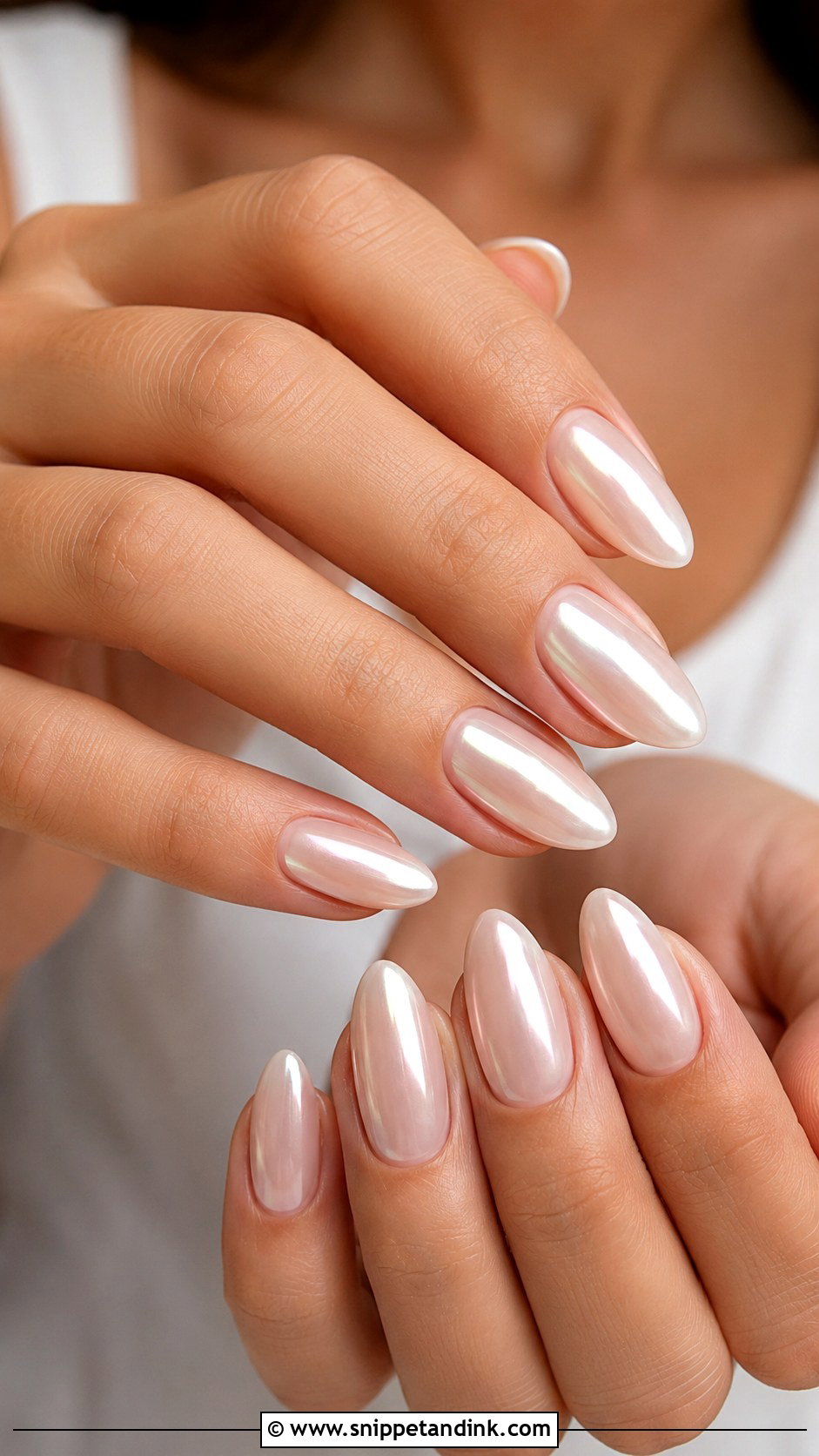
Chrome glazed wedding nails start with a sheer nude, pink or milky base, then a fine pearl powder is buffed into a no-wipe top coat. The glazed effect follows the curve of the nail, so almond and oval shapes show it best. I keep the color light, pearl, champagne or blush, rather than silver. Chrome does exaggerate texture, so any ridges get filled with a leveling base first.
6. Soft Ombre Wedding Nails
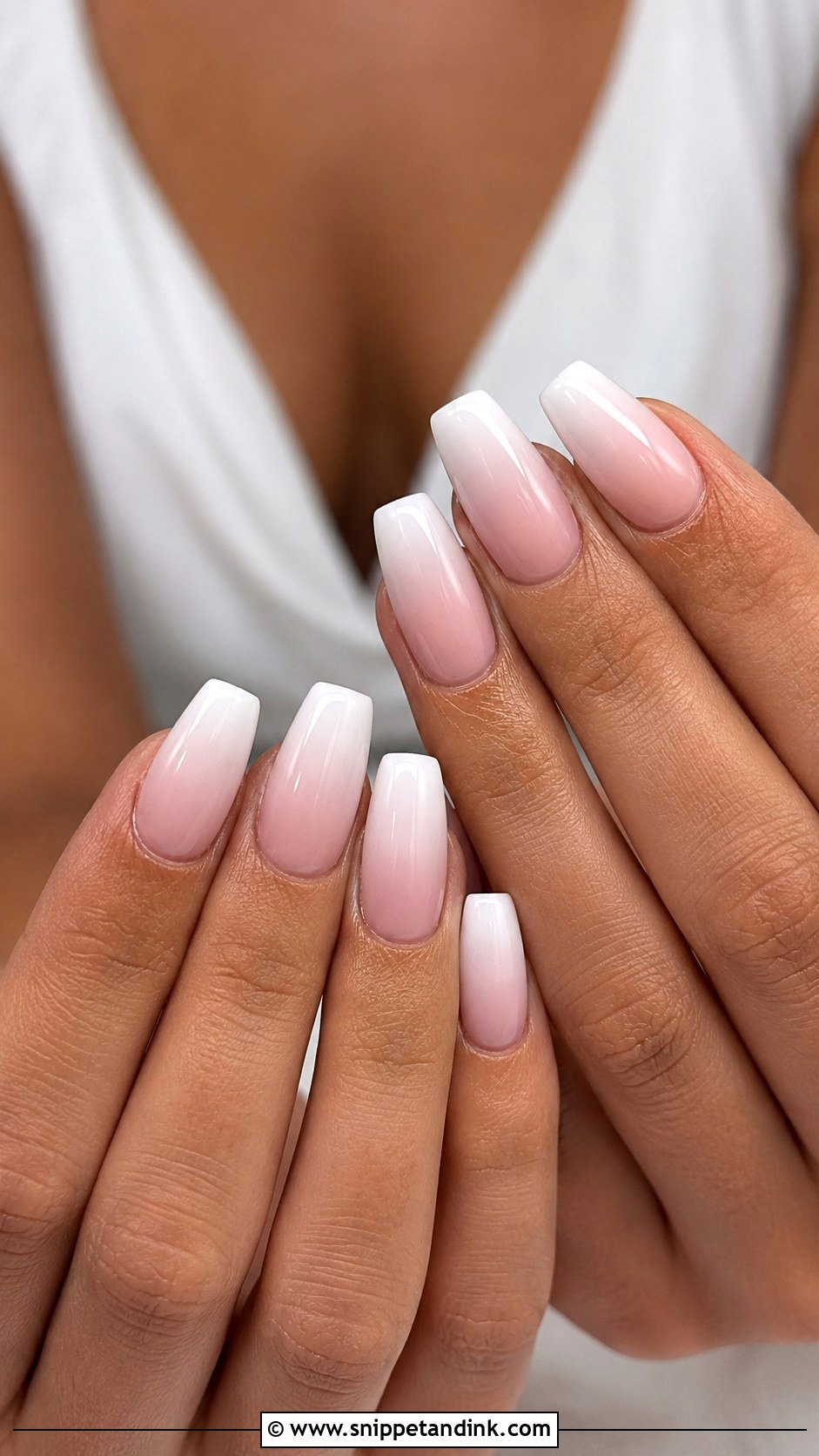
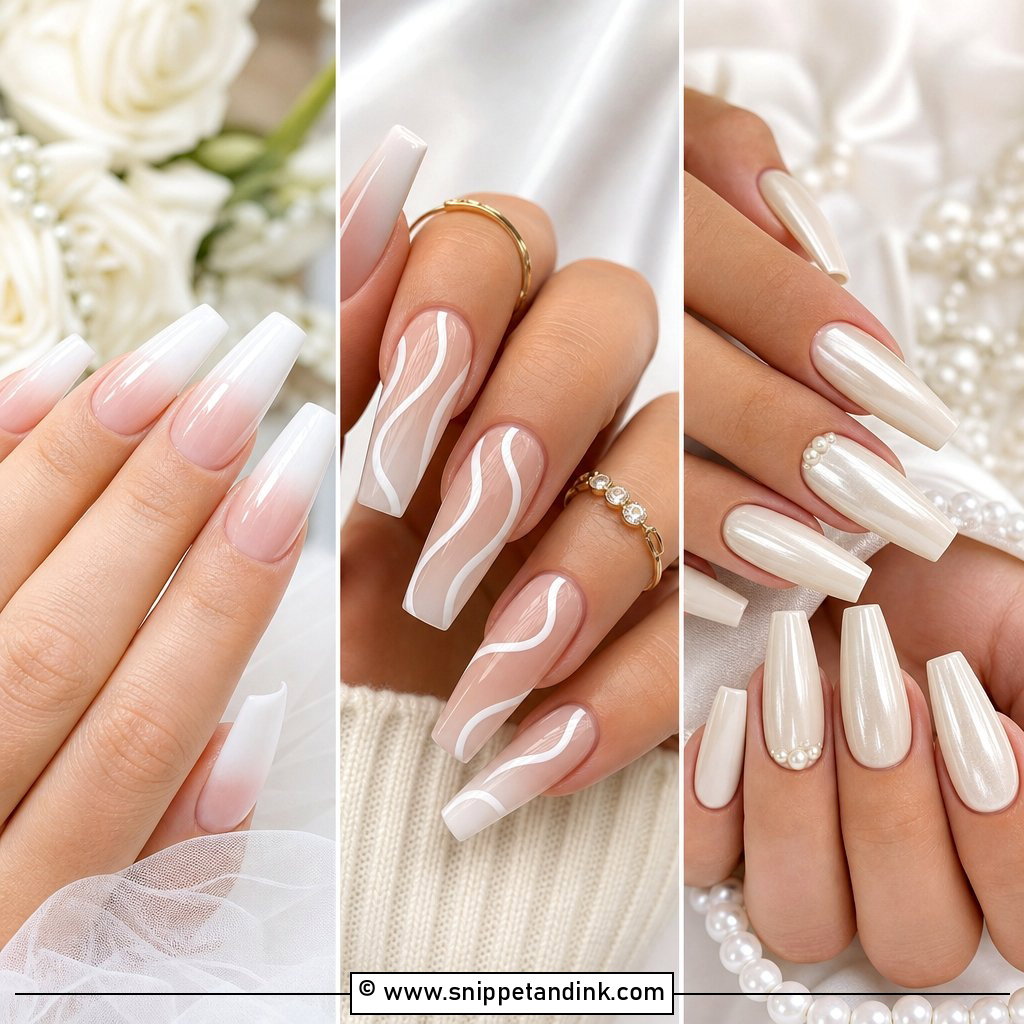
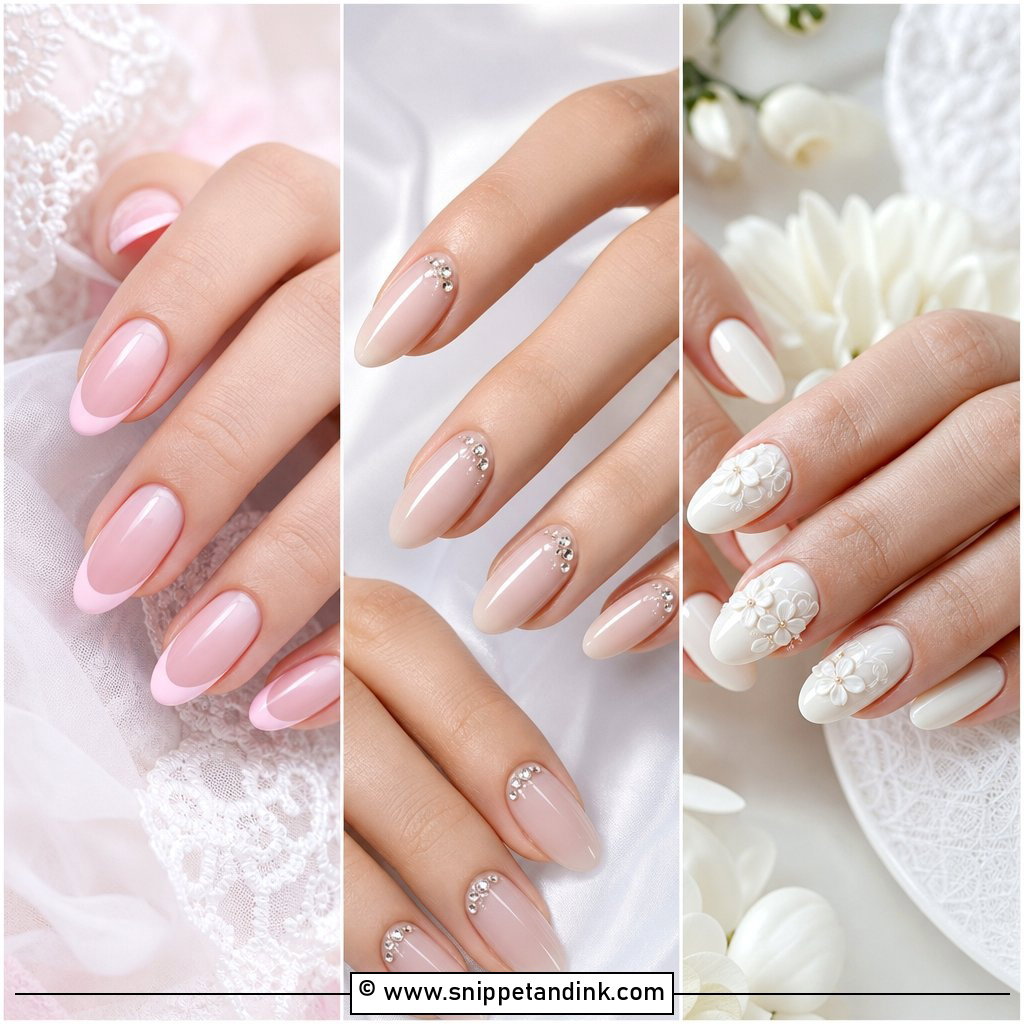
Soft ombre, often called baby boomer nails, fades from nude or pink into white with no tip line. Because there’s no sharp edge, it looks lighter than a French and makes medium almond and coffin shapes look longer. I build the fade in several thin layers rather than one heavy sponge pass, which keeps it smooth instead of grainy. A whisper of shimmer on top works for an evening ceremony.
7. Lace Wedding Nails
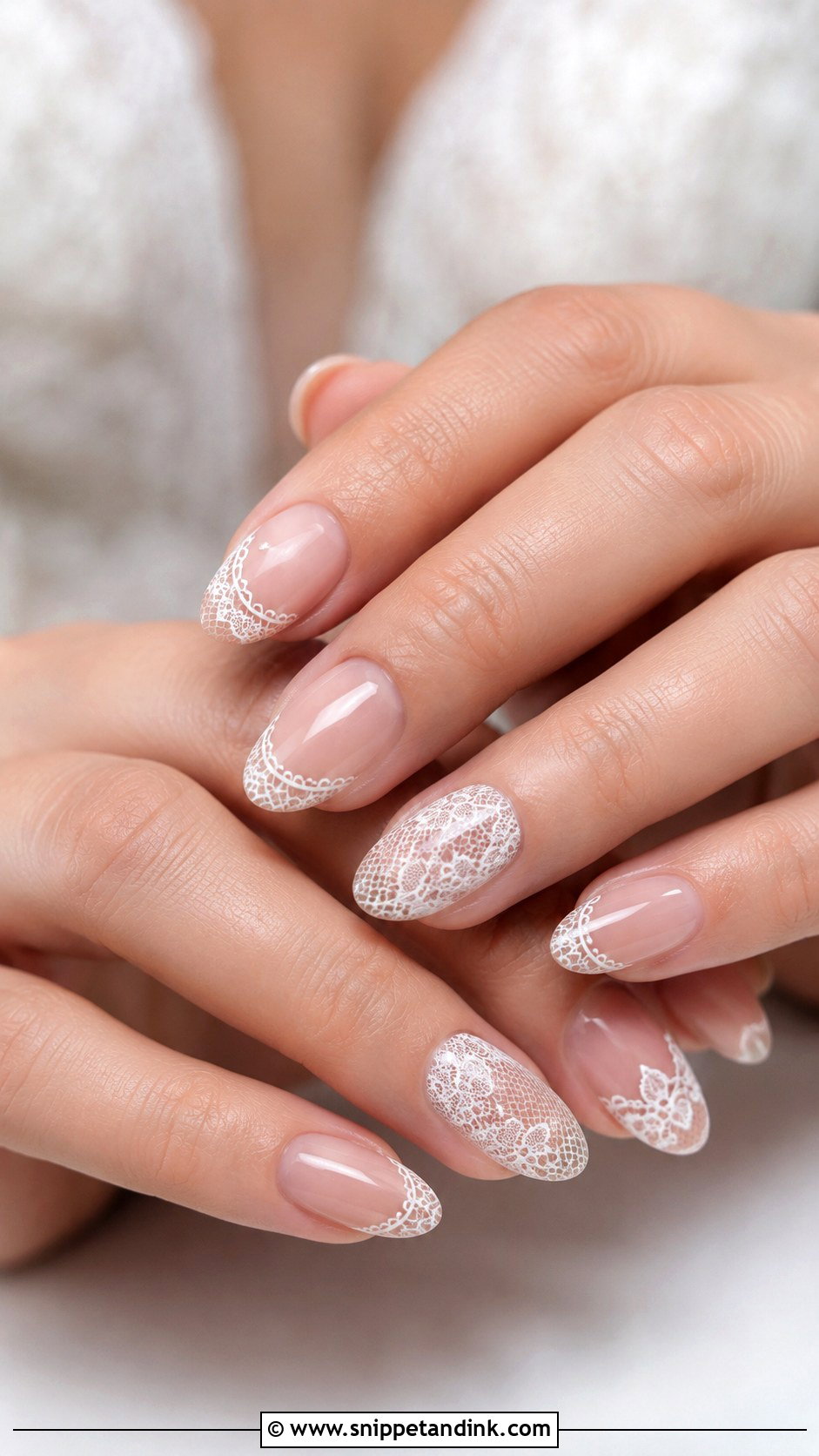
Lace nails come out best when I can see the actual dress lace. I’ll copy a scallop edge or a small floral repeat from your gown in thin white lines over a sheer base, usually on two accent nails per hand. A full set of lace art looks heavy and takes a long time to paint well. Almond, oval and coffin nails leave enough surface for the detail.
8. White Floral Wedding Nails
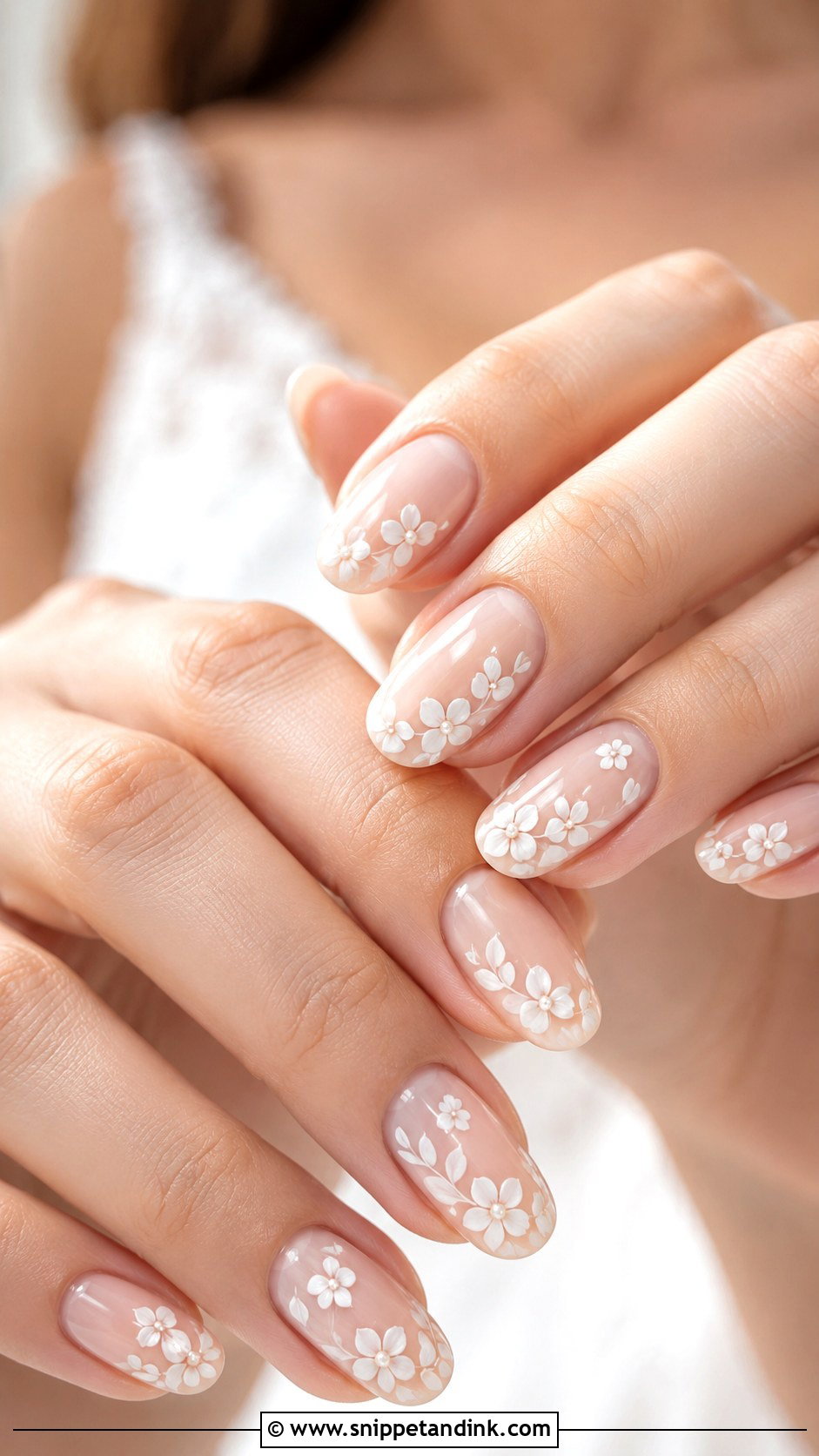
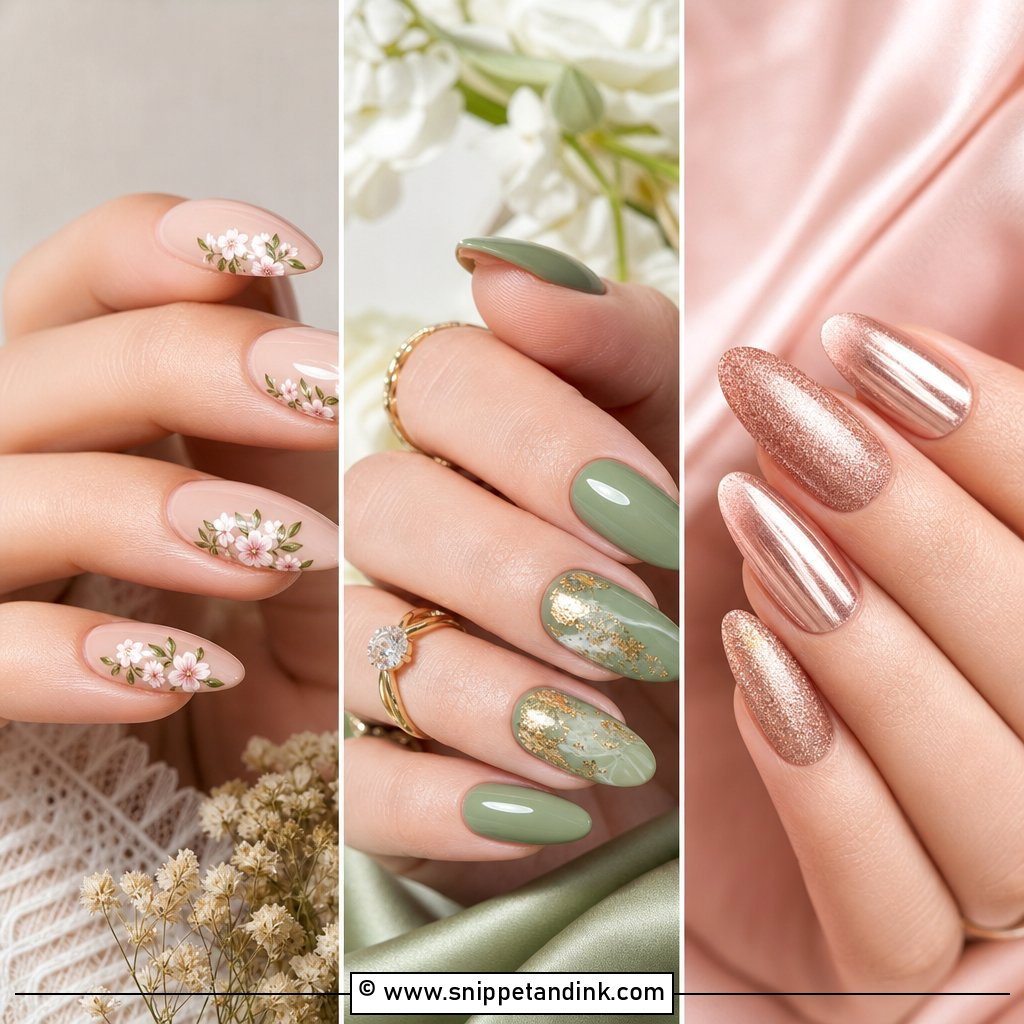
Small white flowers over a sheer nude or pink are what I’d suggest for a garden or outdoor wedding, though they work in any season if they’re kept small. One or two accent nails per hand is my usual limit. Tiny pearl centers or a dot of gold turn the flowers dressier for an evening reception. Curved almond and oval nails suit the flowing shapes best.
9. Blush Pink French Wedding Nails
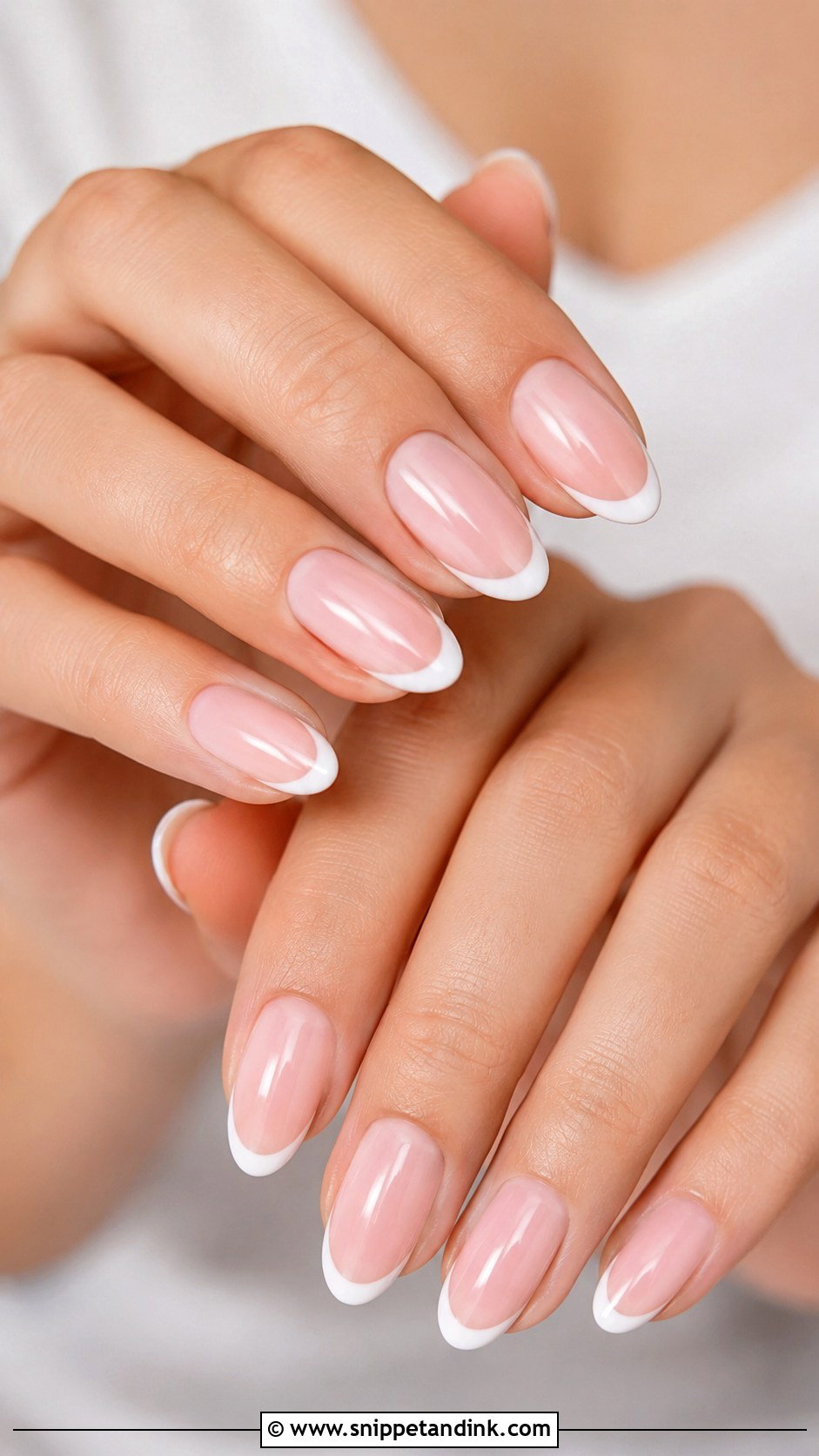
Using a sheer blush instead of a clear base makes a French manicure warmer and more forgiving of uneven nail beds. The tip can be soft white, creamy ivory or very pale pink for a blended look. I keep the tip thin so it reads natural rather than painted. Rose gold jewelry and soft makeup suit it, and medium almond or short squoval keeps it practical.
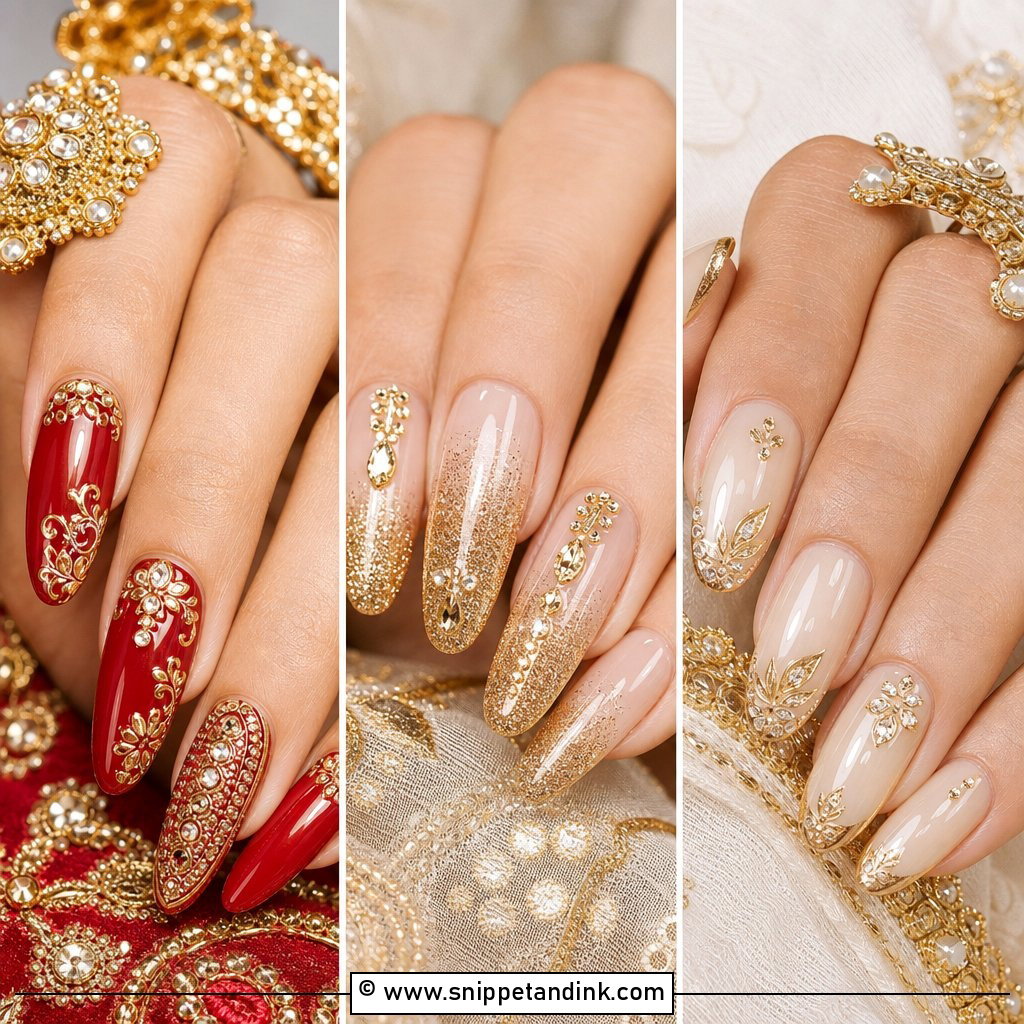
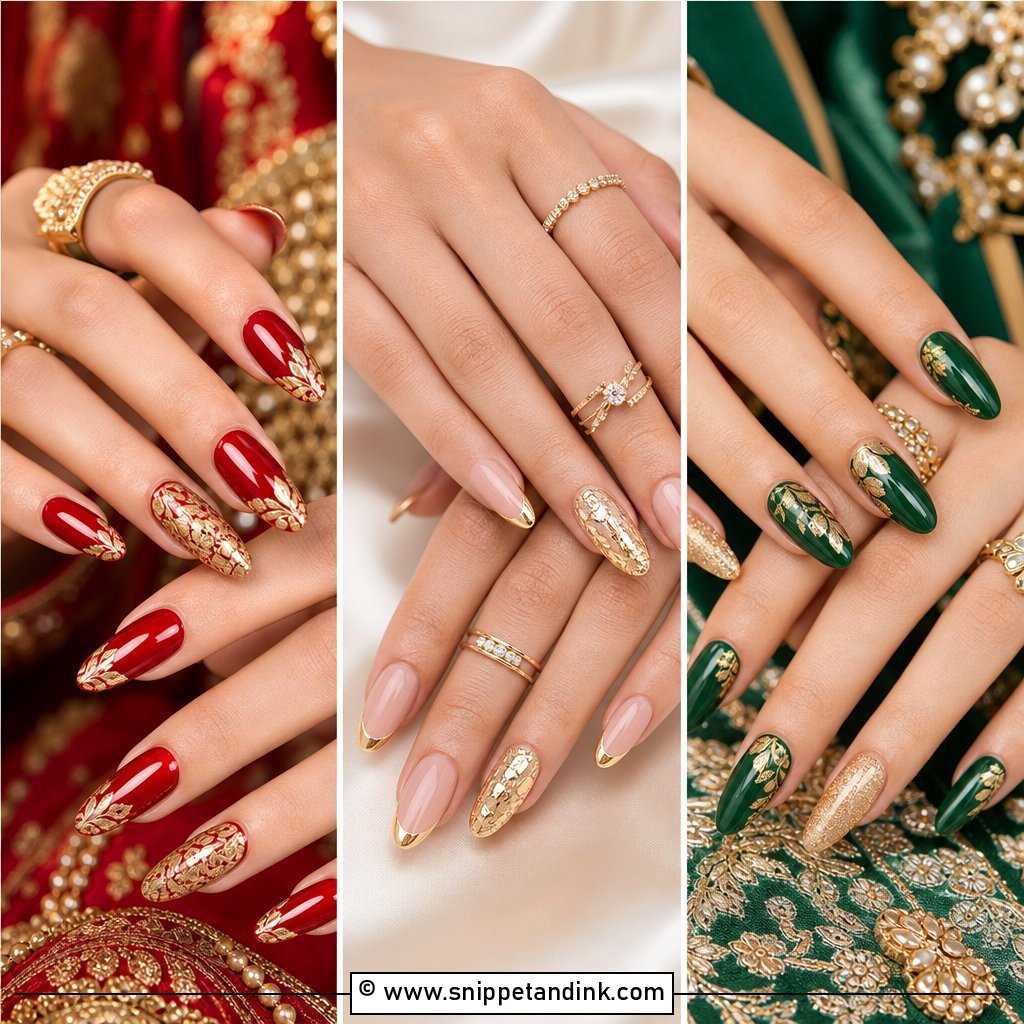
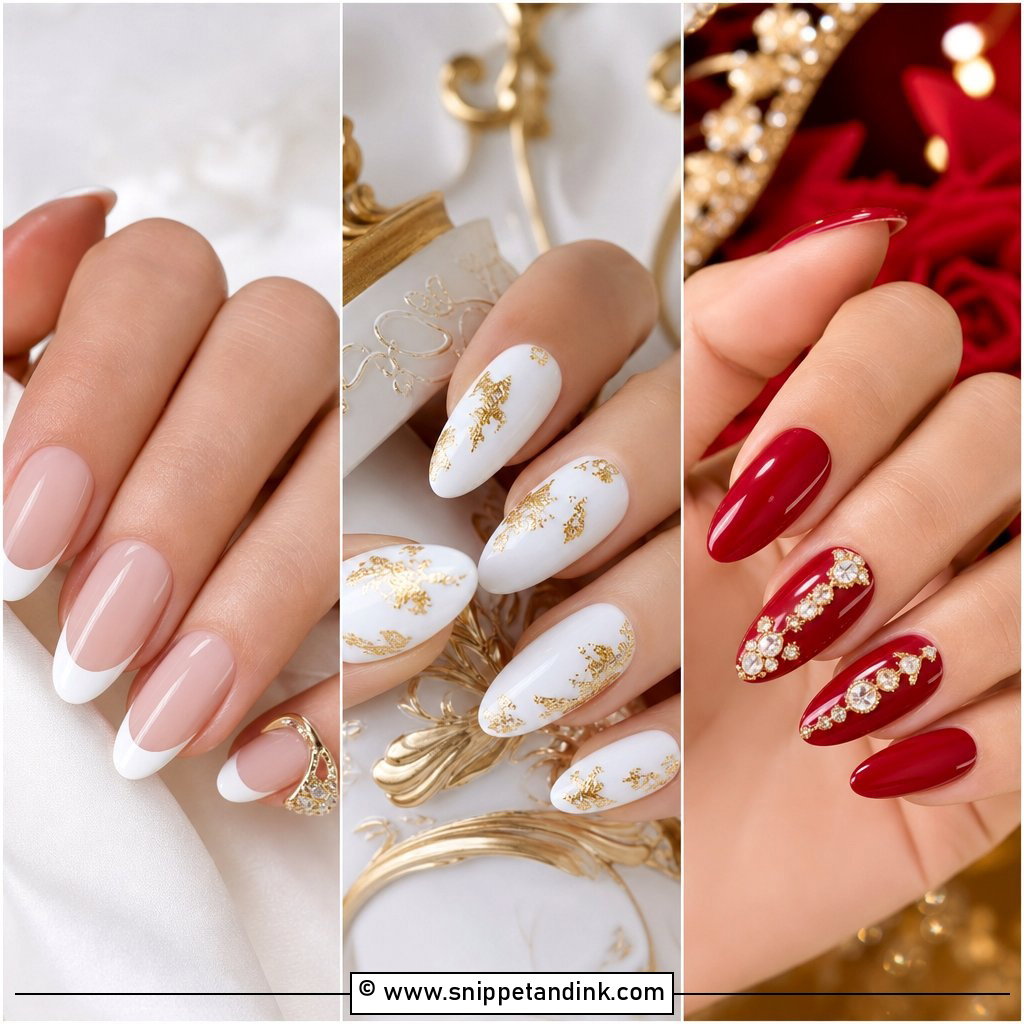
10. Gold Foil Wedding Nails
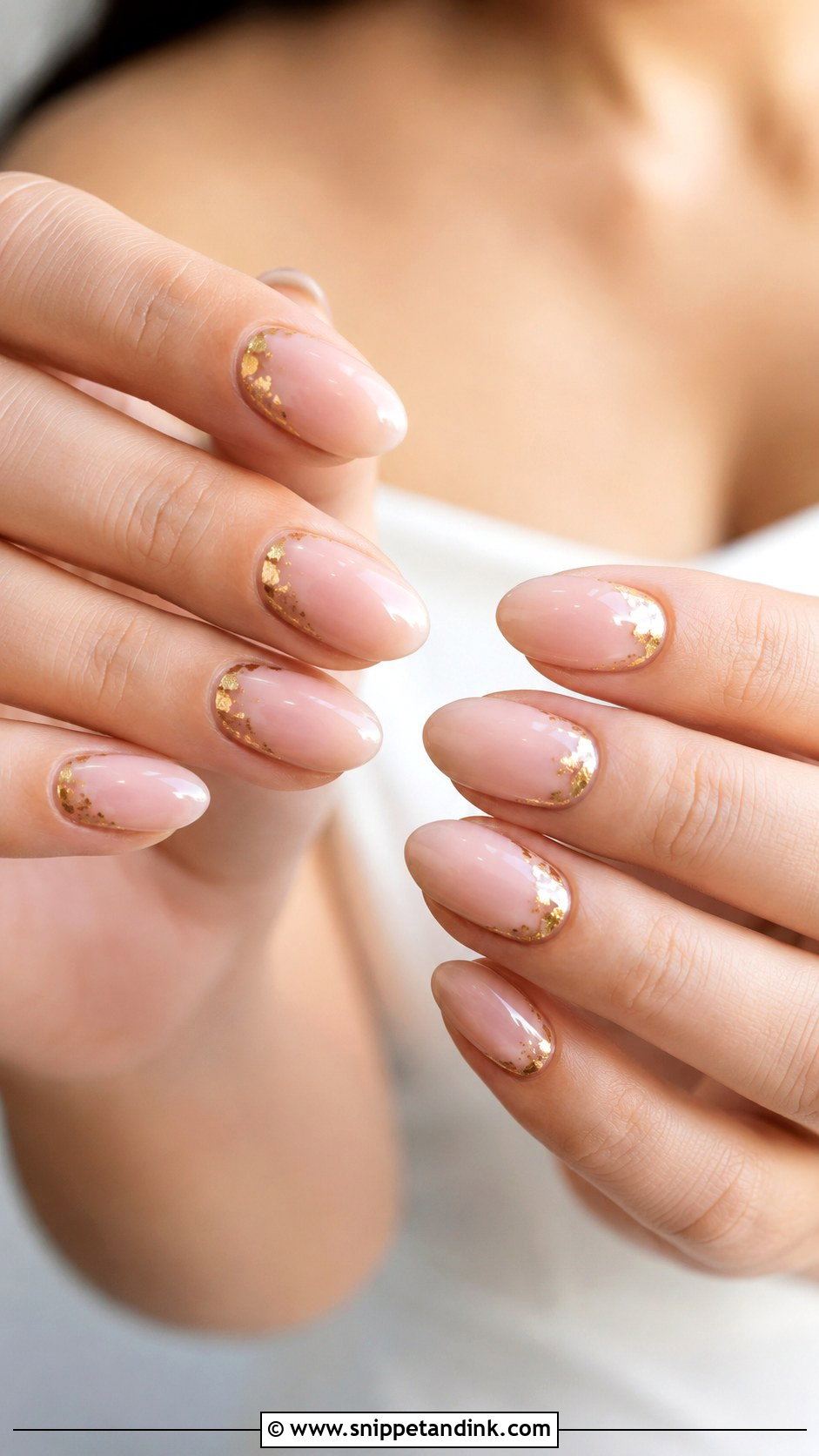
Gold foil looks bridal when it’s sparse. I tear small pieces and press them near the cuticle or along the sides of a sheer nude, milky or pale pink base, leaving most of the nail clear. A full-foil nail looks costume-like and cracks at the free edge within days. With gold rings, warm-toned dresses and champagne accessories, a little foil goes a long way.
11. Silver Glitter Wedding Nails
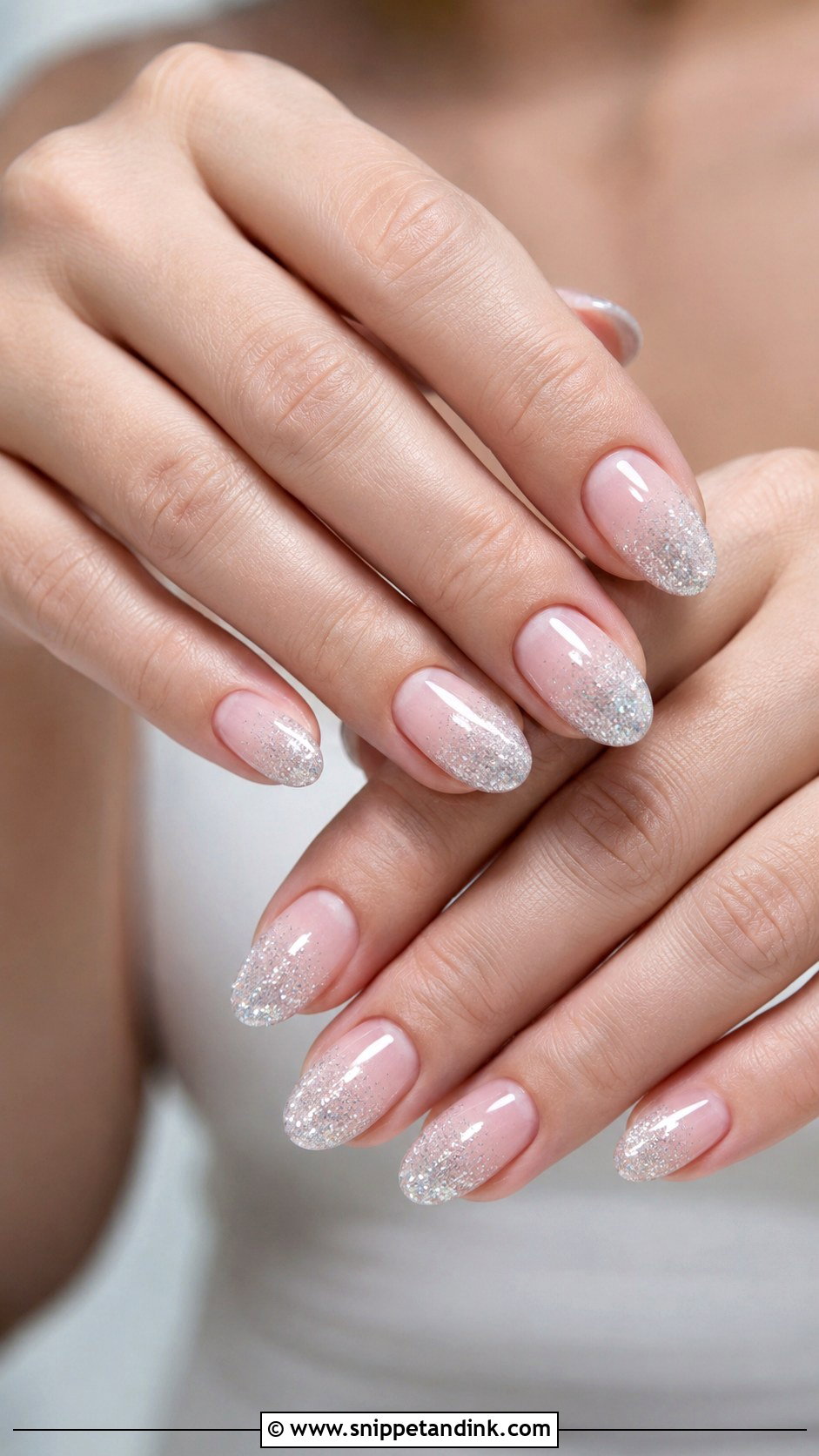
Silver glitter works for a wedding when it’s micro-fine and placed with purpose, faded up from the tip or down from the cuticle over a nude or milky base. Chunky glitter is hard to smooth and catches hair. It suits winter weddings, evening receptions and gowns with crystal beading, and it pairs naturally with platinum, white gold and diamonds. Keep the rest of the set plain.
12. Minimal Line Art Wedding Nails
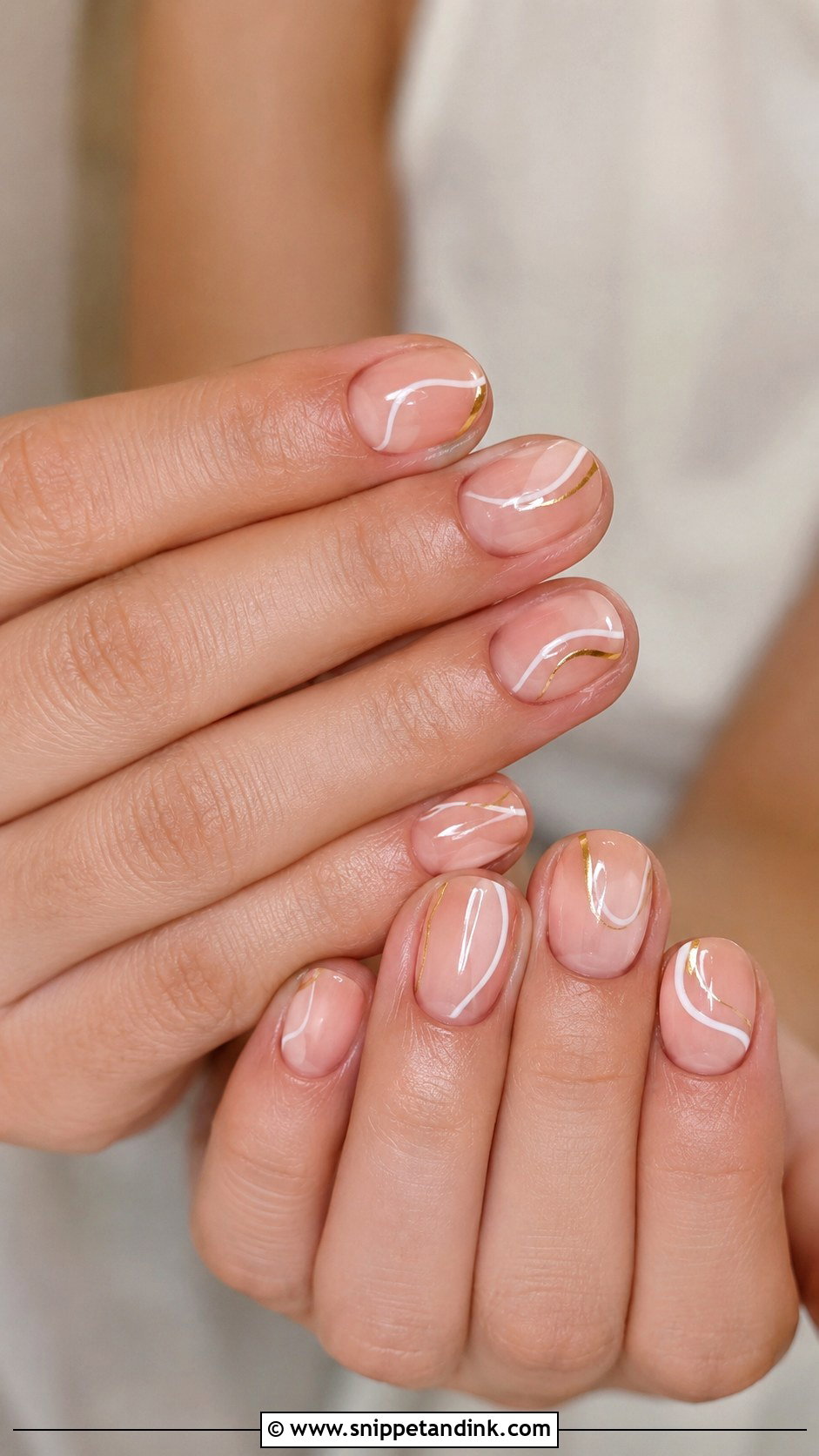
Line art is fine brushwork in white, gold or silver over a nude or sheer pink base. I use a long, thin striping brush and paint each line in one stroke, because a stopped and restarted line always shows. Negative space is the design here, so it’s limited to a few accent nails. It looks just as good on short nails as on almond or oval shapes, which makes it a practical option.
13. Sheer White Wedding Nails
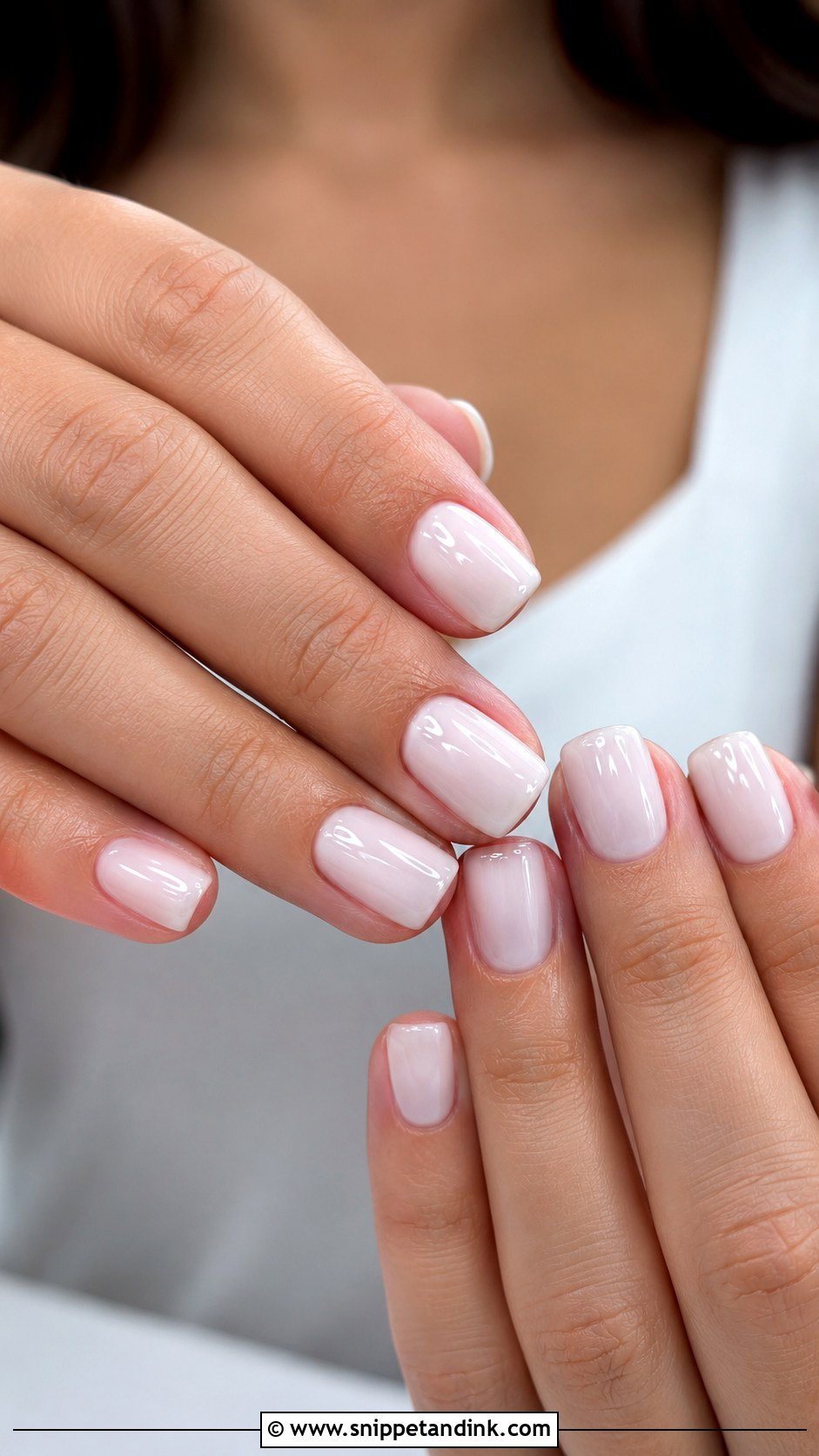
Sheer white lays a veil of white over the natural nail. It’s understated but clearly bridal, and it suits lace, satin, tulle and pearls alike. The challenge is streaking: sheer whites streak more than any other color, so I apply thin layers and let each one level before curing. Finish with a high-gloss top coat. Short rounded, soft square and medium almond shapes all suit it.
14. Champagne Shimmer Wedding Nails
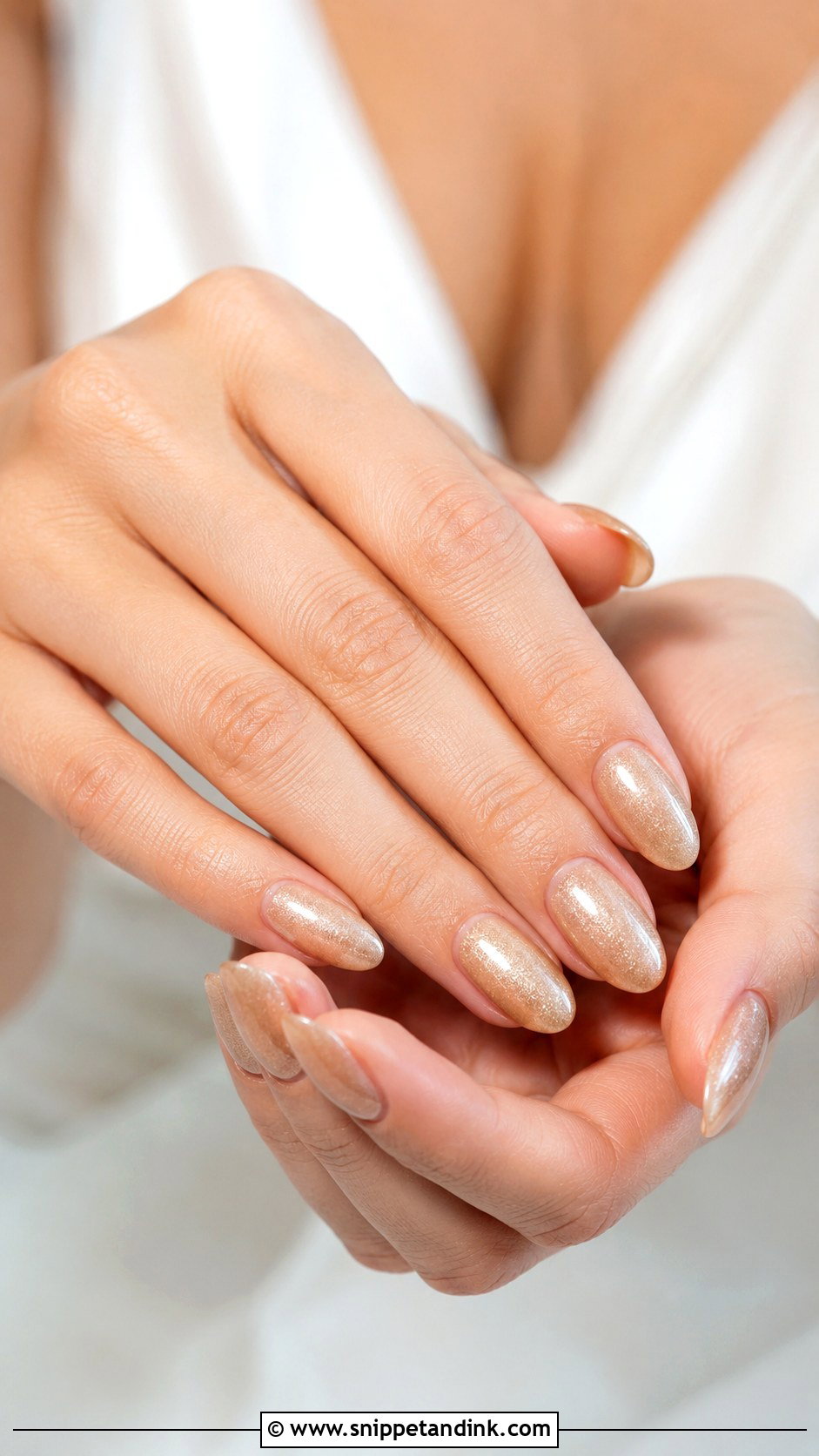
Champagne shimmer is softer than gold and warmer than a plain nude, and it sits between beige, gold and soft peach, which is why it flatters so many skin tones. I choose polishes with very fine shimmer; it gives a smooth, glowing finish rather than visible sparkle. It goes with ivory or champagne gowns and gold jewelry, as a full set or mixed with nude nails.
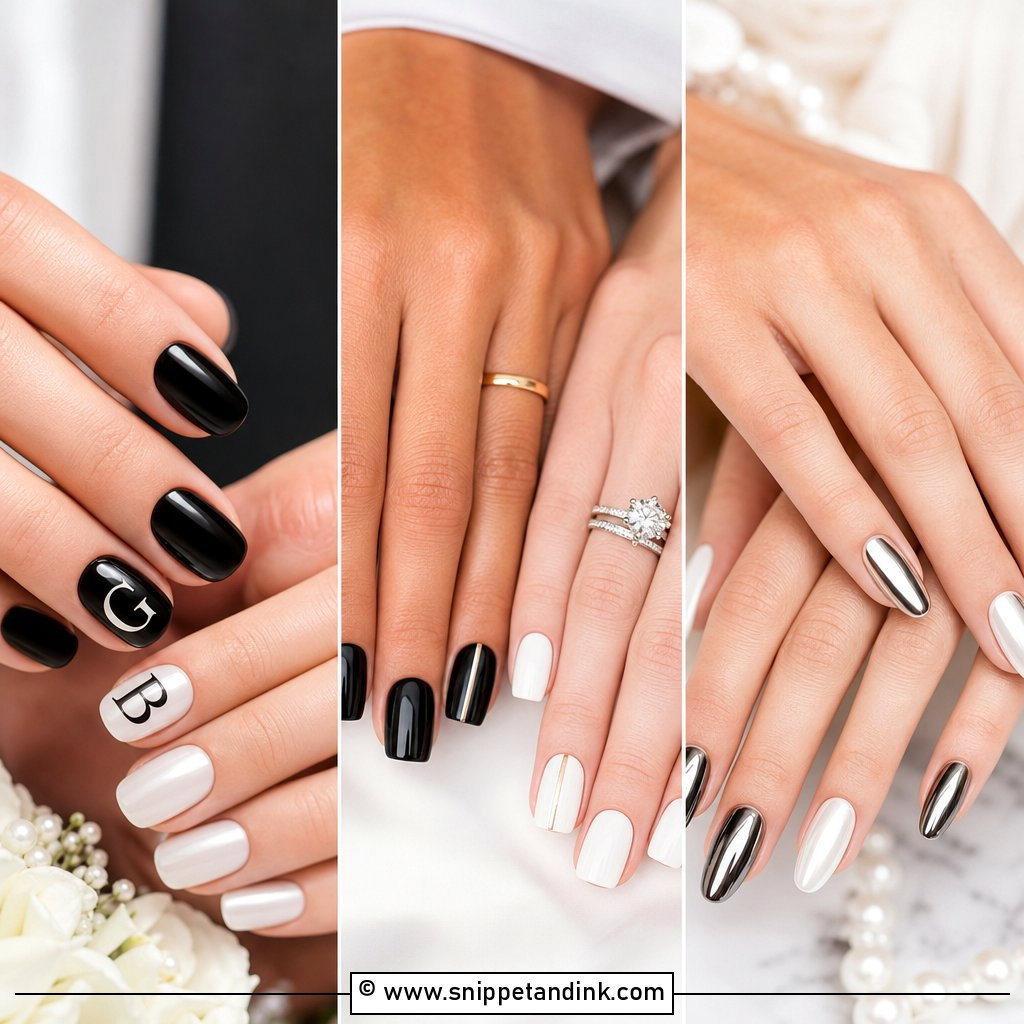
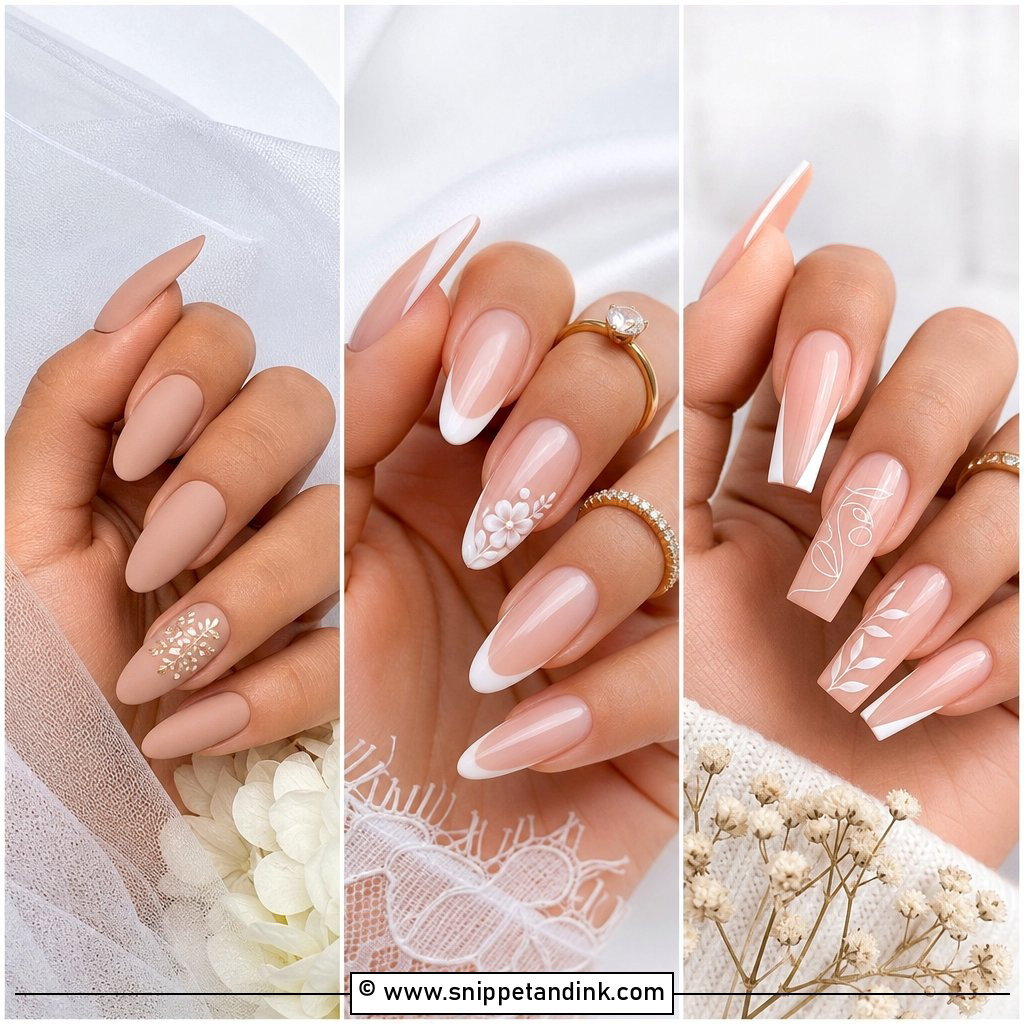
15. Ivory French Tip Wedding Nails
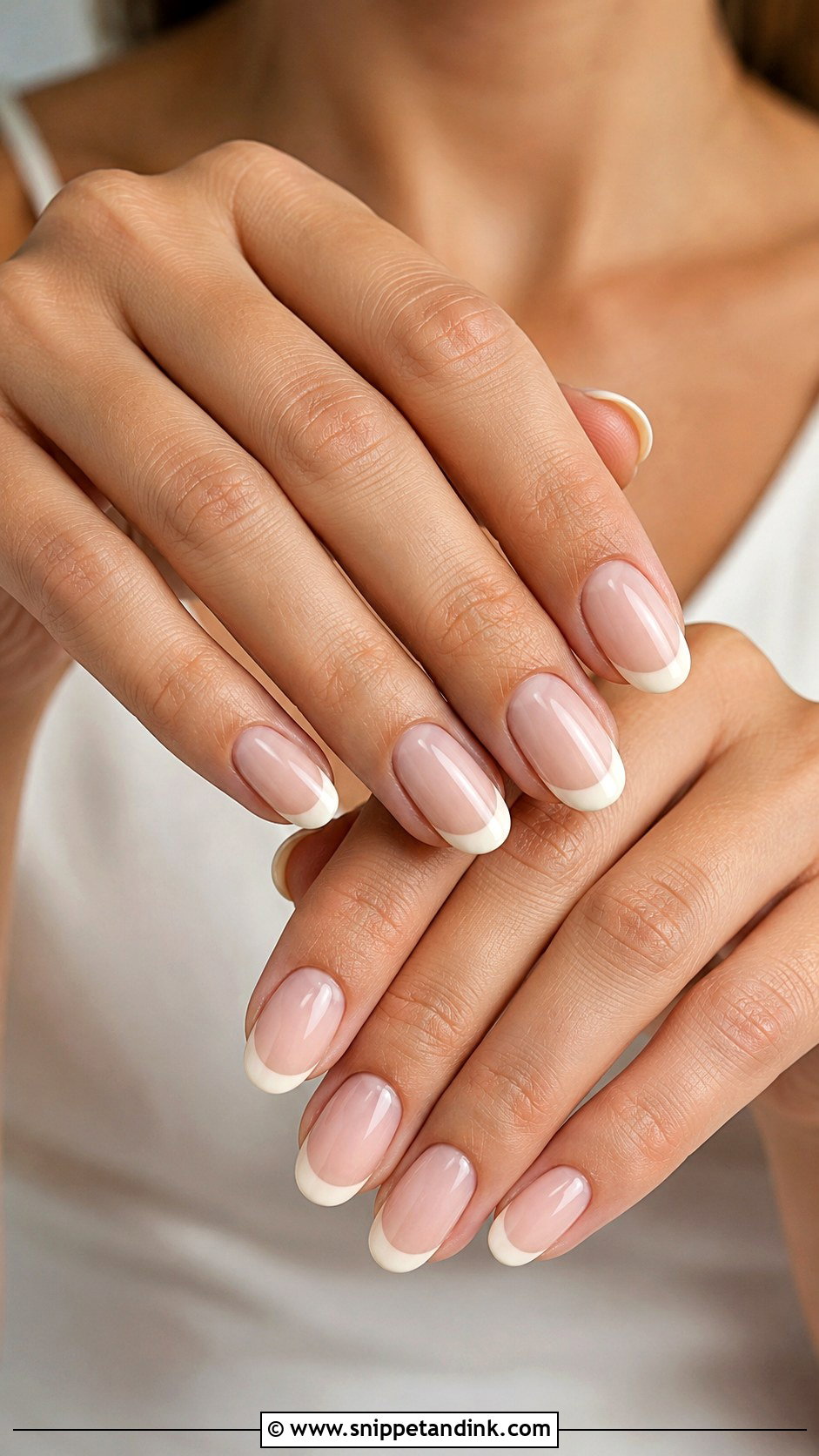
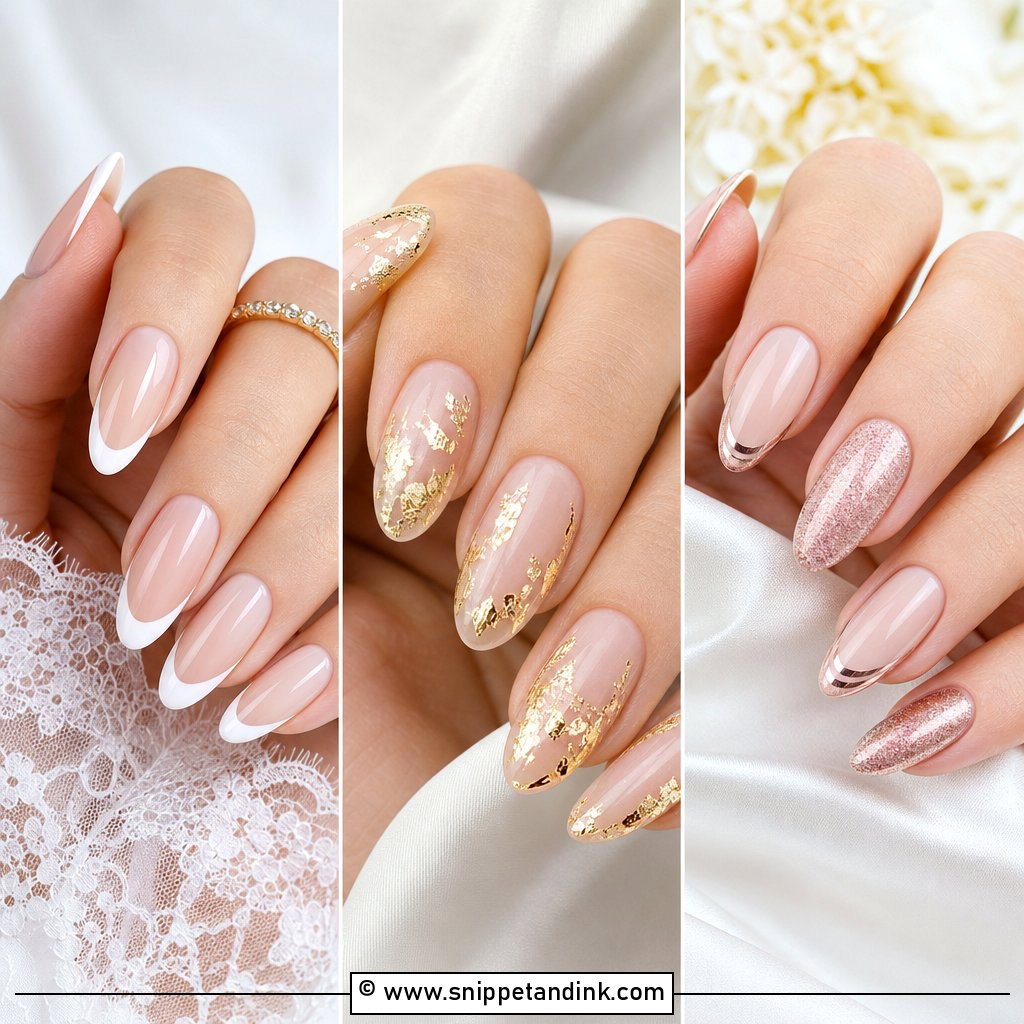
Bright white tips can look harsh next to an off-white or cream gown, and that’s where ivory tips come in. They keep the French structure but soften the contrast. A sheer nude or pale pink base keeps the nail natural. Make the tip thin for a modern look or a deeper curve for a more traditional one.
16. Almond Wedding Nails With Pearls
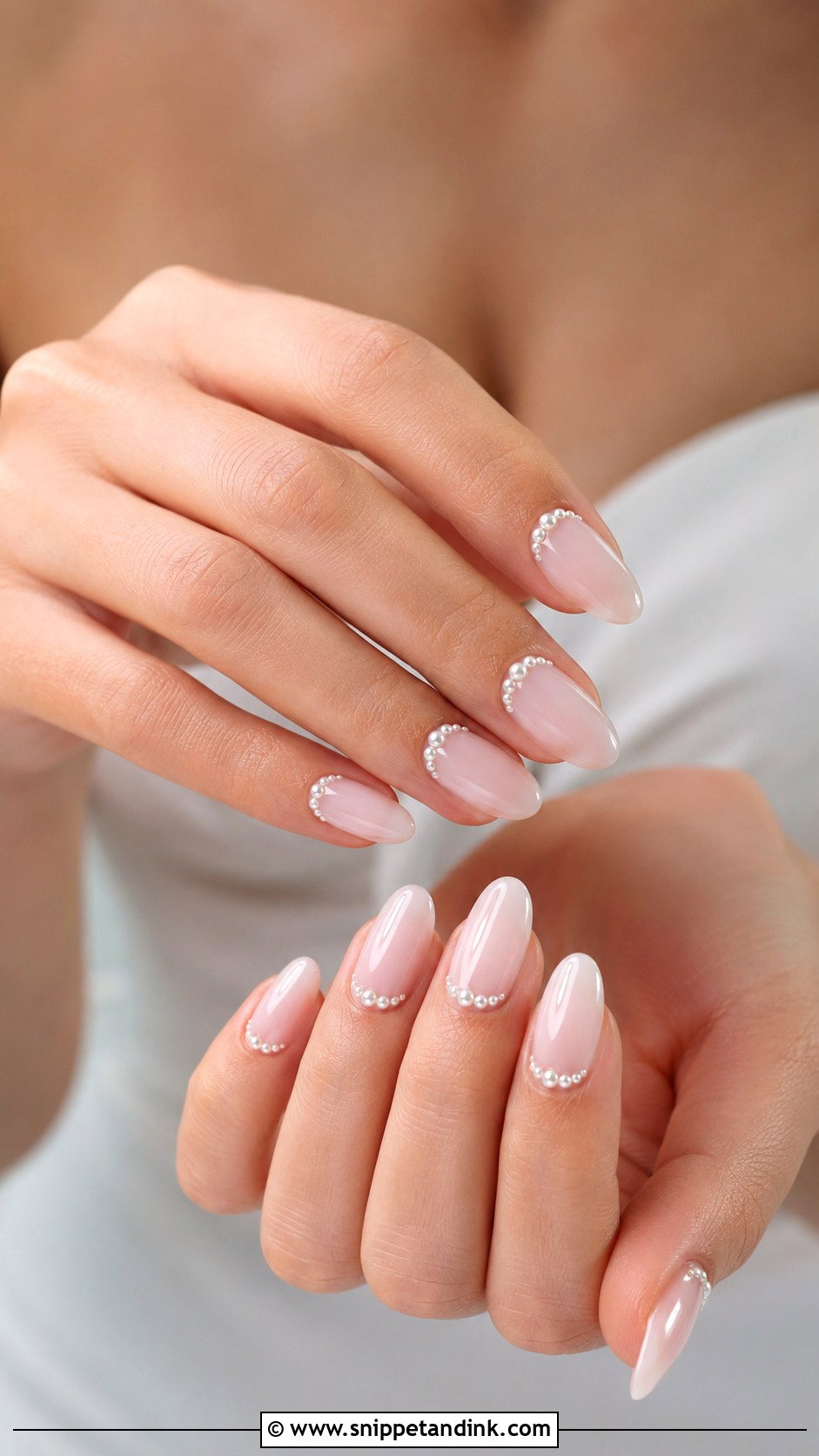
Almond wedding nails with pearls combine a shape that lengthens the fingers with a bridal accent. A sheer pink, milky white or nude base works best, with pearls placed near the cuticle, along one side or on a single accent nail. I usually recommend medium length rather than long; it’s easier to handle dress fastenings, a bouquet and your own phone. Pearl veils and beaded dresses make a natural partner.
17. Short Wedding Nails
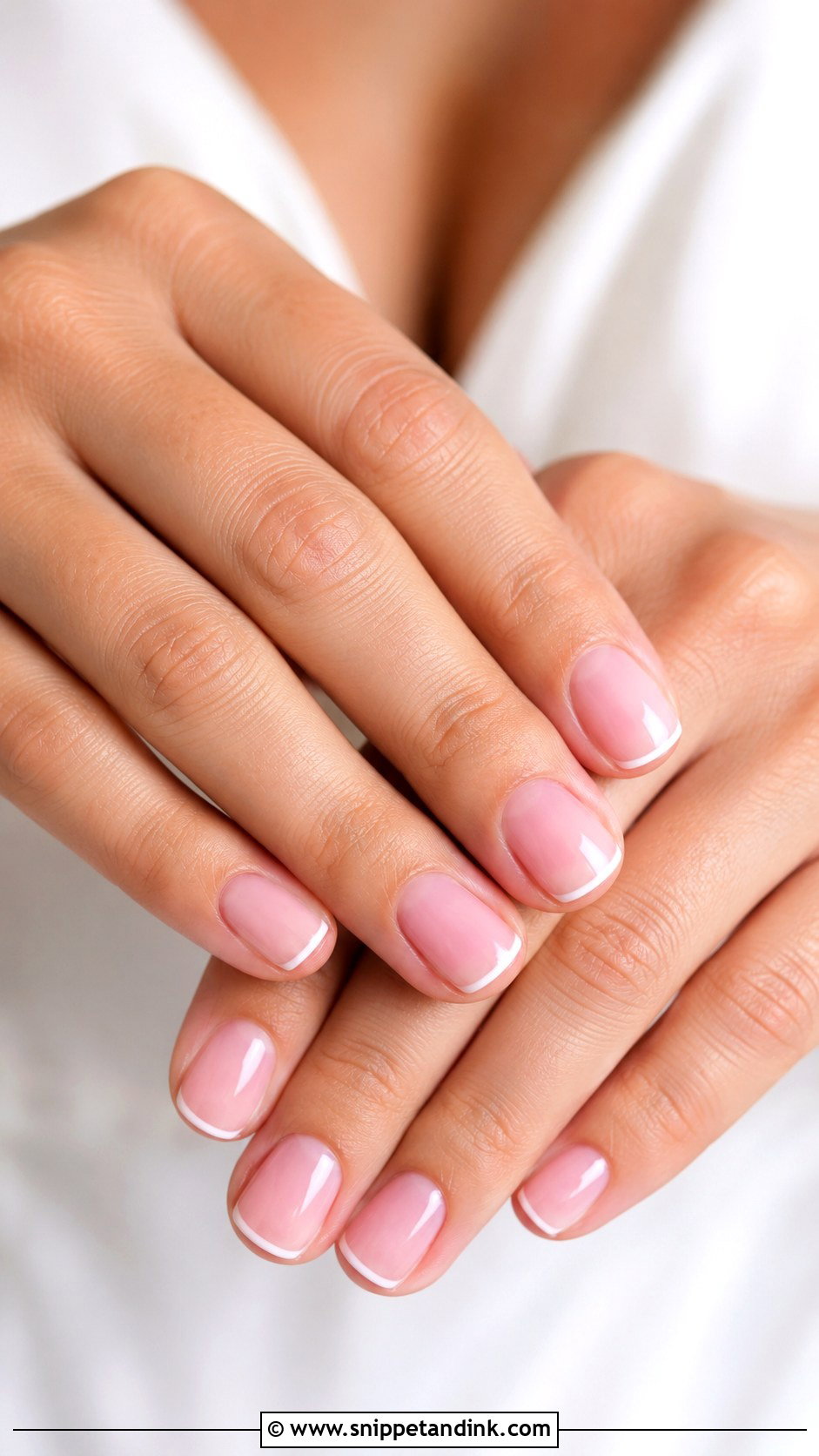
Short nails aren’t a second choice. A short oval, round or soft square is comfortable, easier to live with if you rarely wear length, and less likely to snag fabric or hair. Milky pink, sheer nude, soft white and micro French tips all suit short nails. I make sure the free edge is filed evenly on every finger, since on short nails any difference in length is very visible.
18. Coffin Wedding Nails
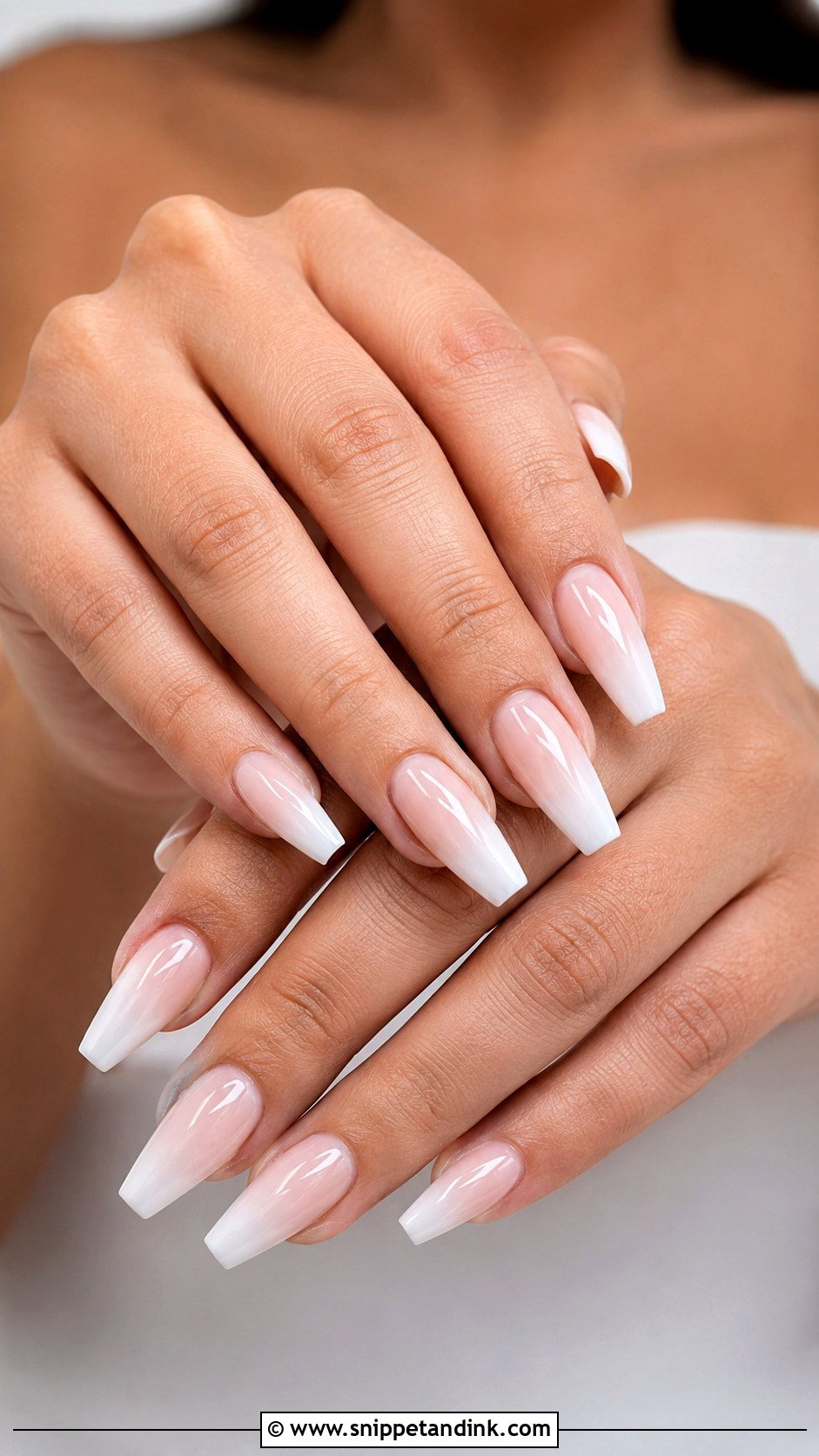
Coffin nails have tapered sides and a flat tip, and they take ombre, French, chrome or lace well. For a wedding I keep the colors soft: blush, nude, ivory or milky white. Medium length is more wearable than very long, especially for holding flowers, adjusting your dress and sliding rings on. Coffin edges can chip at the corners, so I make sure the tip is well sealed.
19. Oval Wedding Nails
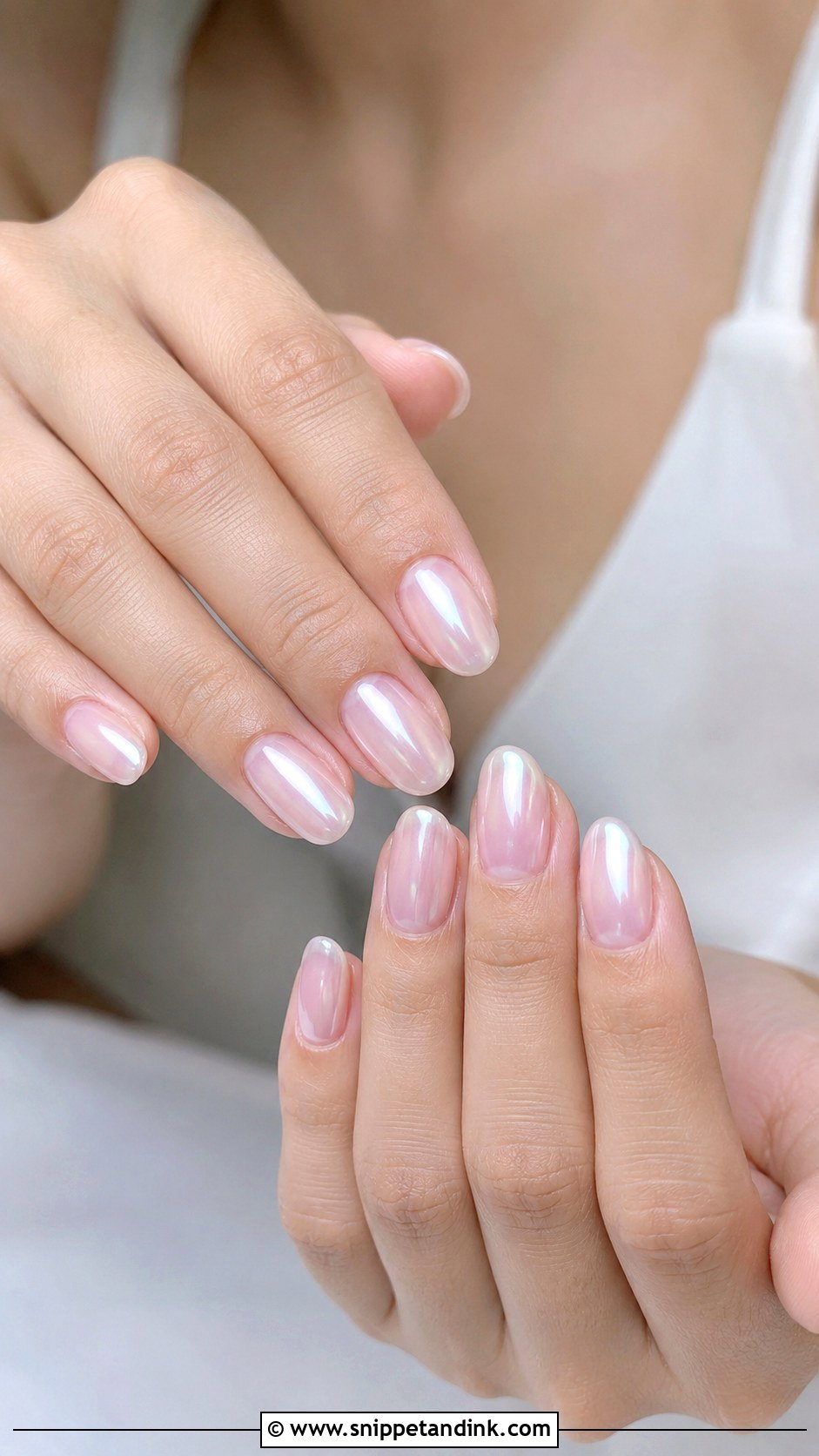
Oval is the shape I’d recommend to a bride who isn’t sure. It softens the hands, has no corners to catch on lace, and works at short and medium lengths. It takes French tips, milky white, sheer pink, pearl chrome and delicate florals equally well. On wide nail beds, a slightly narrower oval makes the fingers look slimmer.
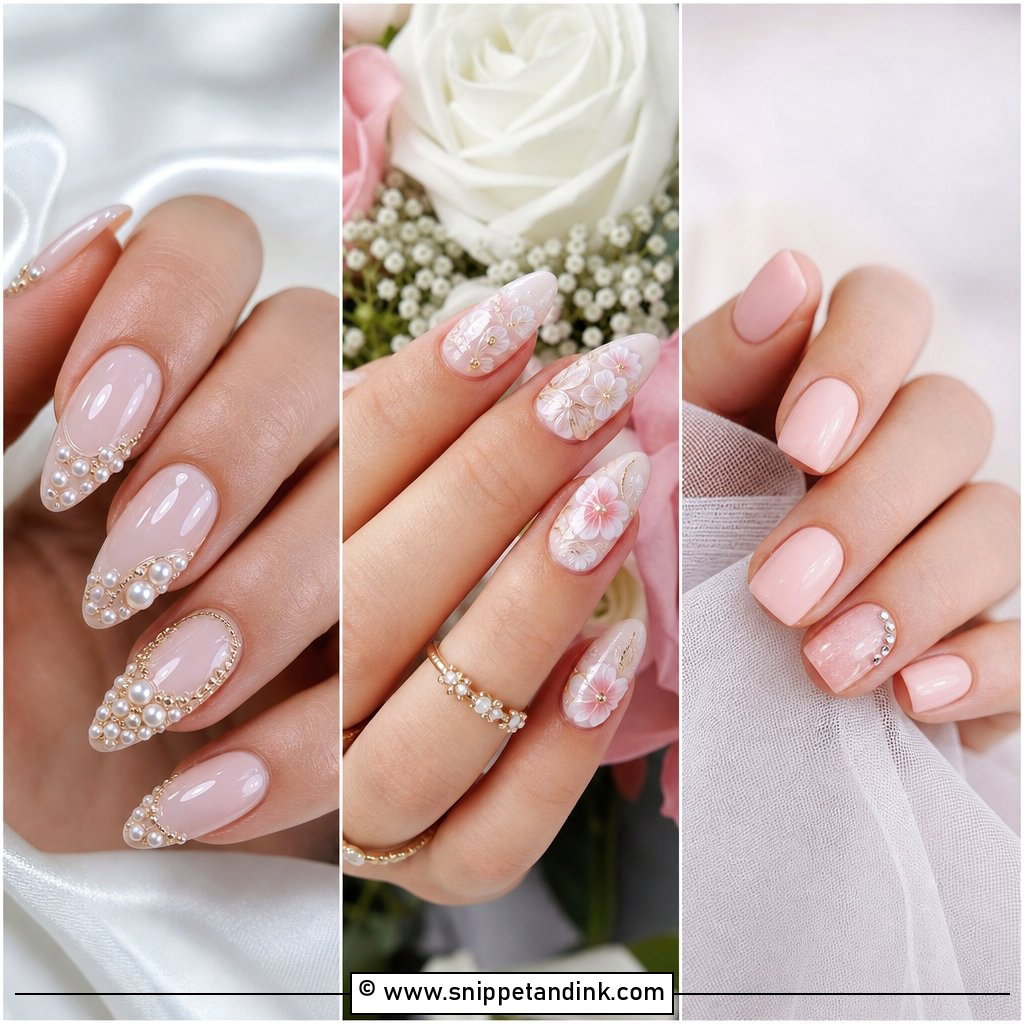
20. Square Wedding Nails
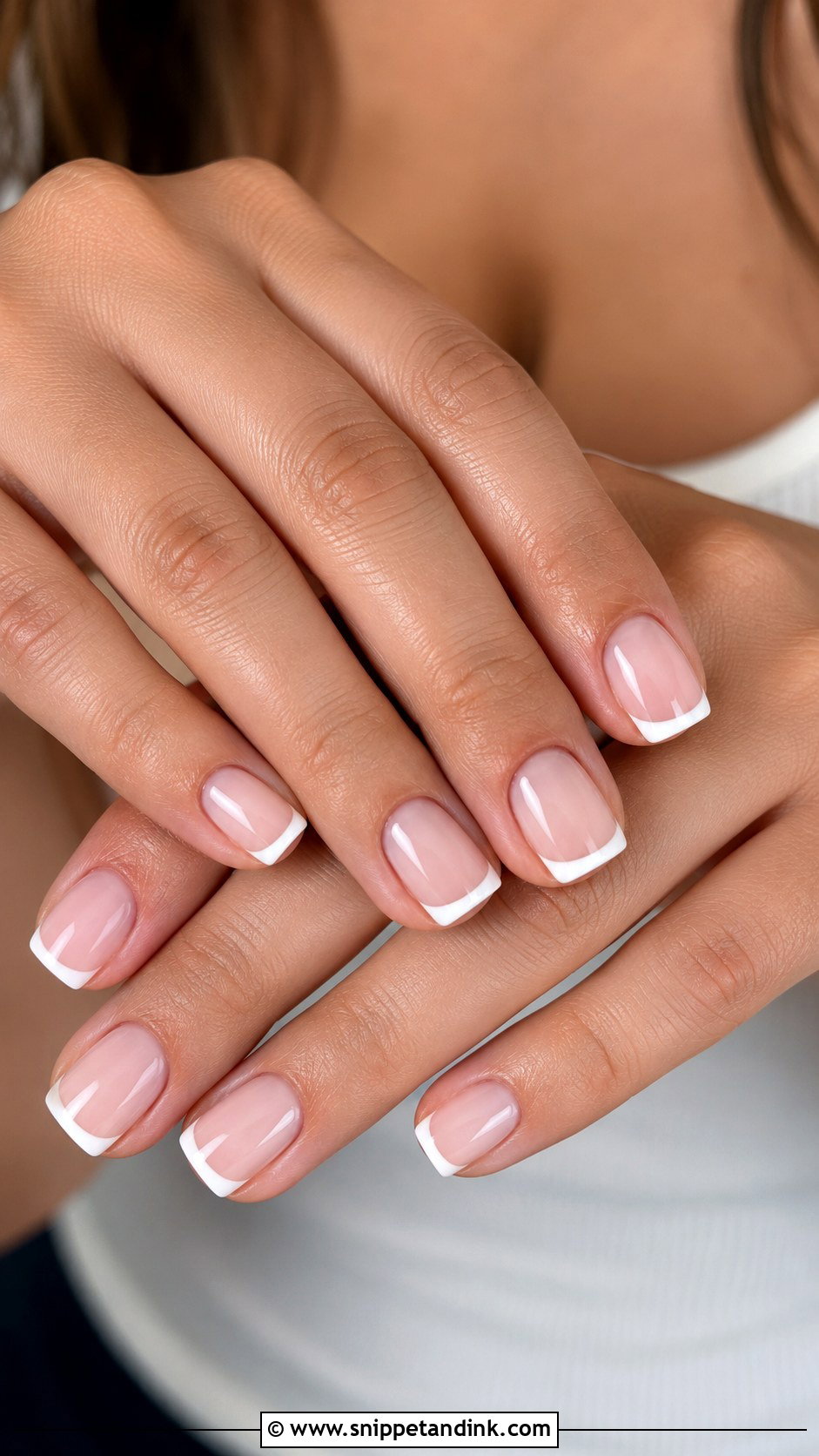
A square tip gives a crisp line, and it’s the natural shape for French manicures, micro French tips and sheer nudes. Square corners can catch on fabric, so I usually soften them slightly into a soft square. Short and medium lengths keep it practical, which is why bridesmaids and guests often choose it. Blush pink, milky white or ivory tips make it bridal.
21. Something Blue Wedding Nails
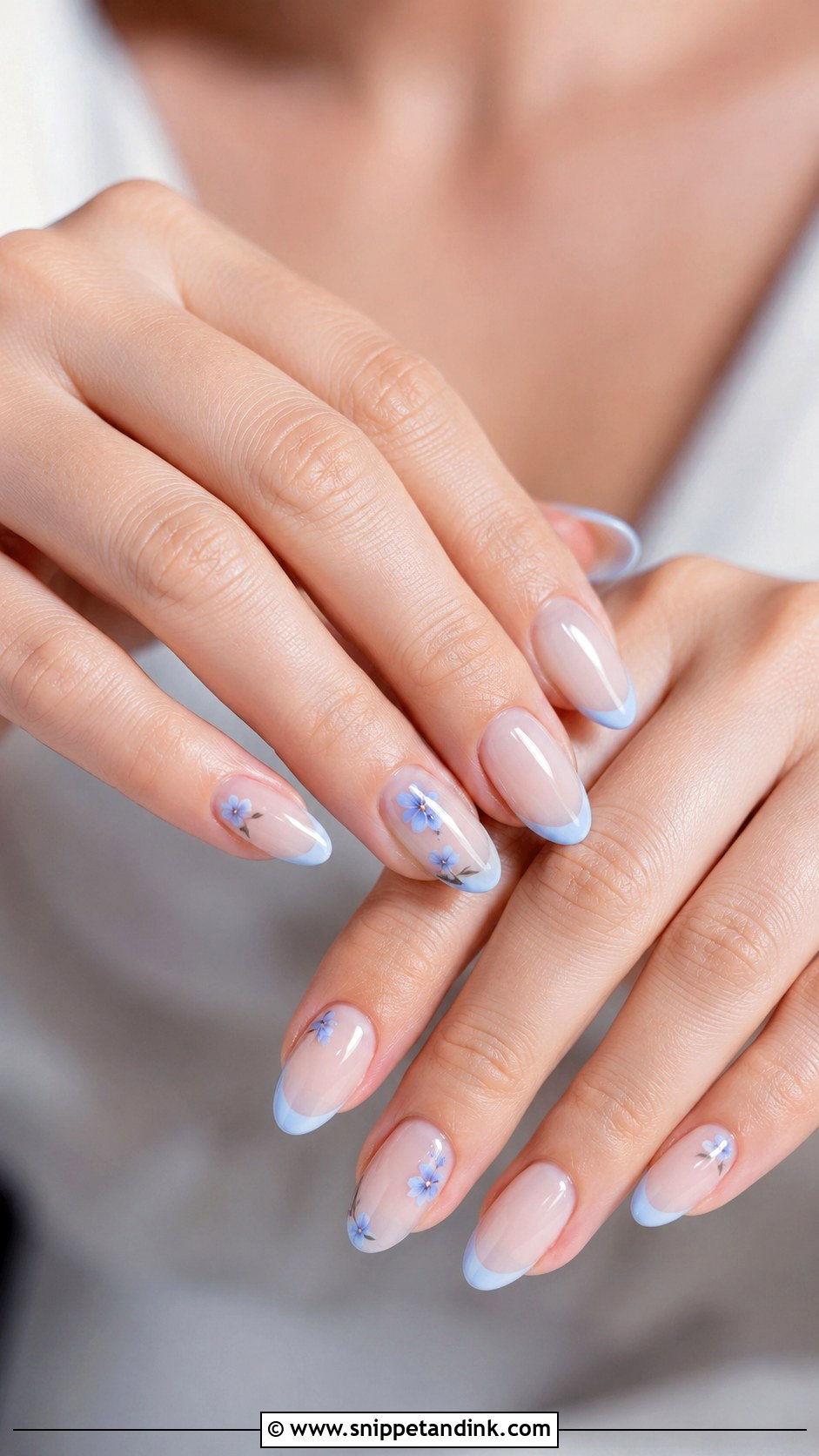
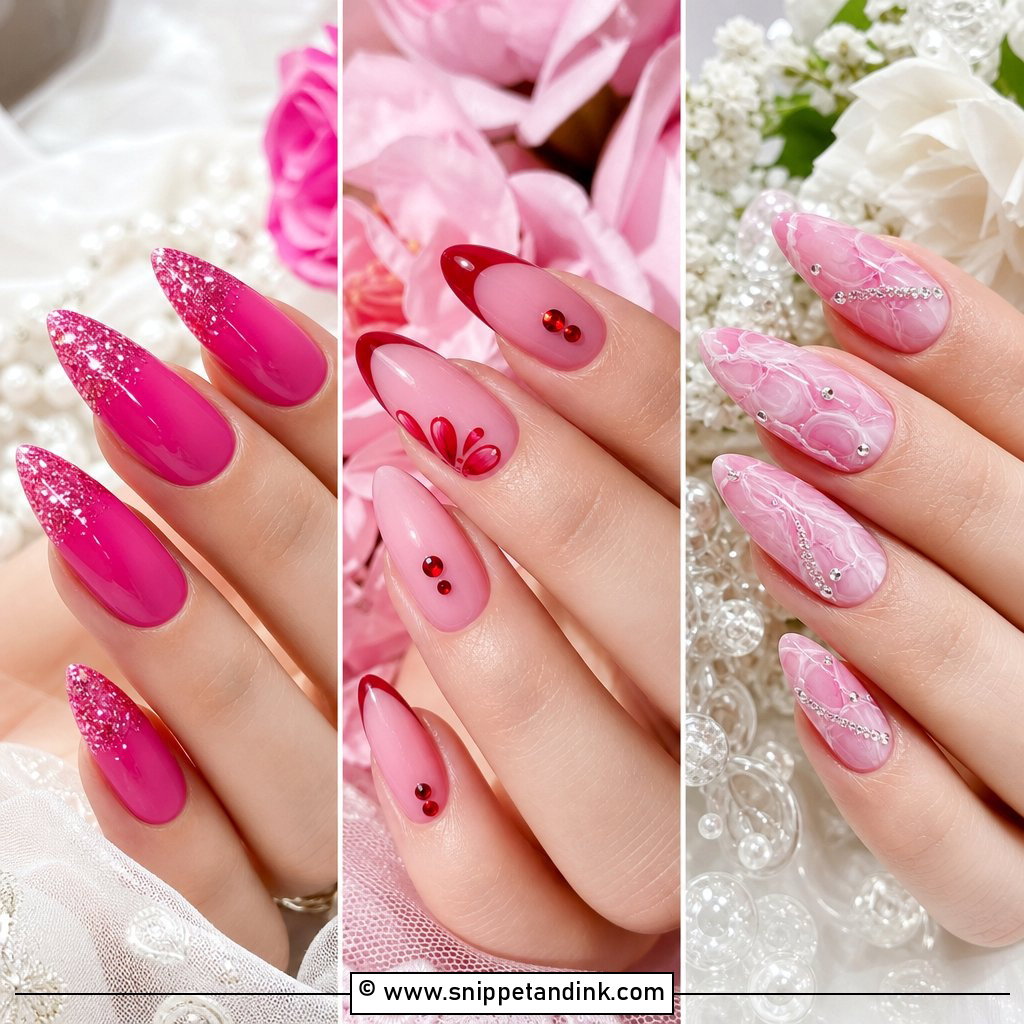
Something blue can be a tiny blue flower on a sheer nude base, a soft blue French tip or one delicate accent nail. Baby blue, powder blue and blue-gray are the most refined tones. Bright or royal blue tends to look navy in photos and draws attention from the ring. For extra subtlety, put the blue on the ring finger or under a sheer shimmer layer.
22. White Swirl Wedding Nails
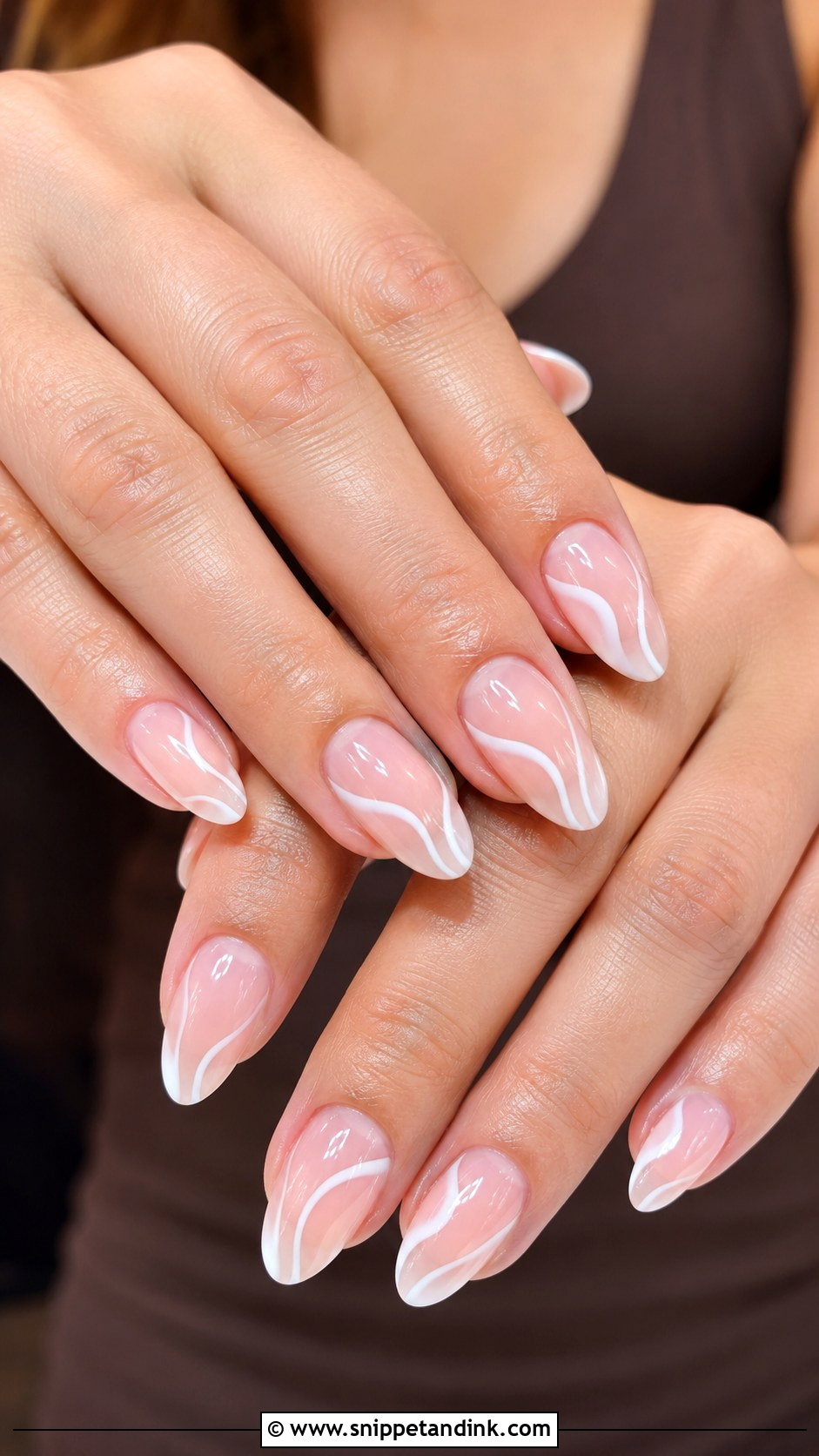
White swirl wedding nails use thin, flowing lines over a sheer nude or pale pink base, a bit like ribbon or silk. I suggest them when a bride asks for nail art but dislikes flowers, pearls and glitter. Spacing makes or breaks it: too many swirls look busy. I let the curves follow the nail shape, which is why almond, oval and coffin nails suit them best.
23. Rhinestone Wedding Nails
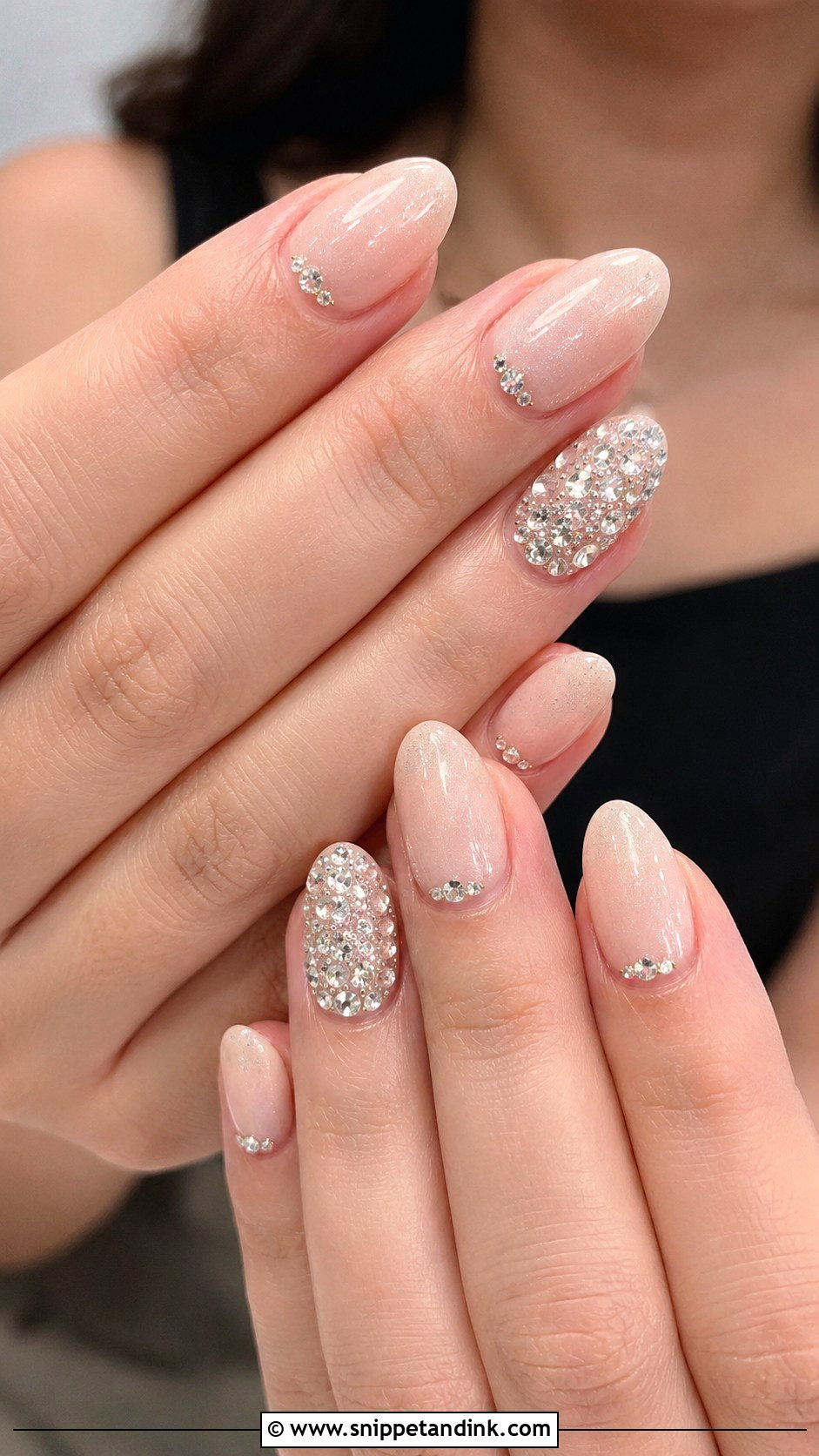
Rhinestones look refined when they’re small and placed with intent: a single stone near the cuticle, a tiny cluster on an accent nail or a delicate line along a French tip. I set them flat in gel and avoid large raised gems, which catch on veils and hair and pop off. Clear stones over a nude, blush or milky base suit gowns with crystal beading and sparkly shoes.
24. Matte Nude Wedding Nails
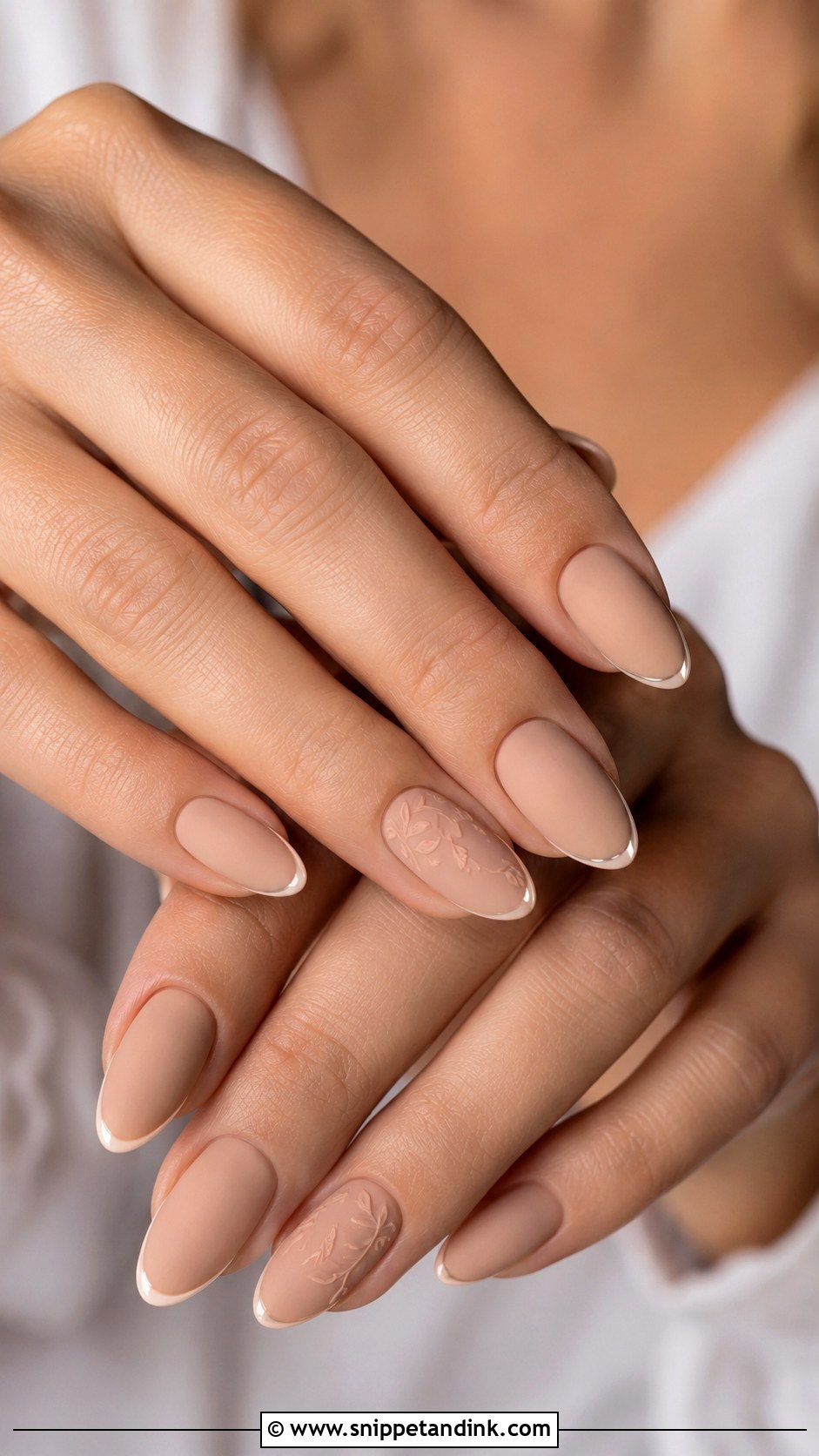
Matte nude has a velvety, modern finish that looks very different from a glossy bridal set. It needs a clean shape and a shade well matched to your skin. Be aware that matte top coats can look slightly dusty in close-up photos and pick up oils from lotion and makeup. A glossy French tip or fine line art over the matte base adds contrast and keeps it from looking flat.
25. Baby Boomer Wedding Nails
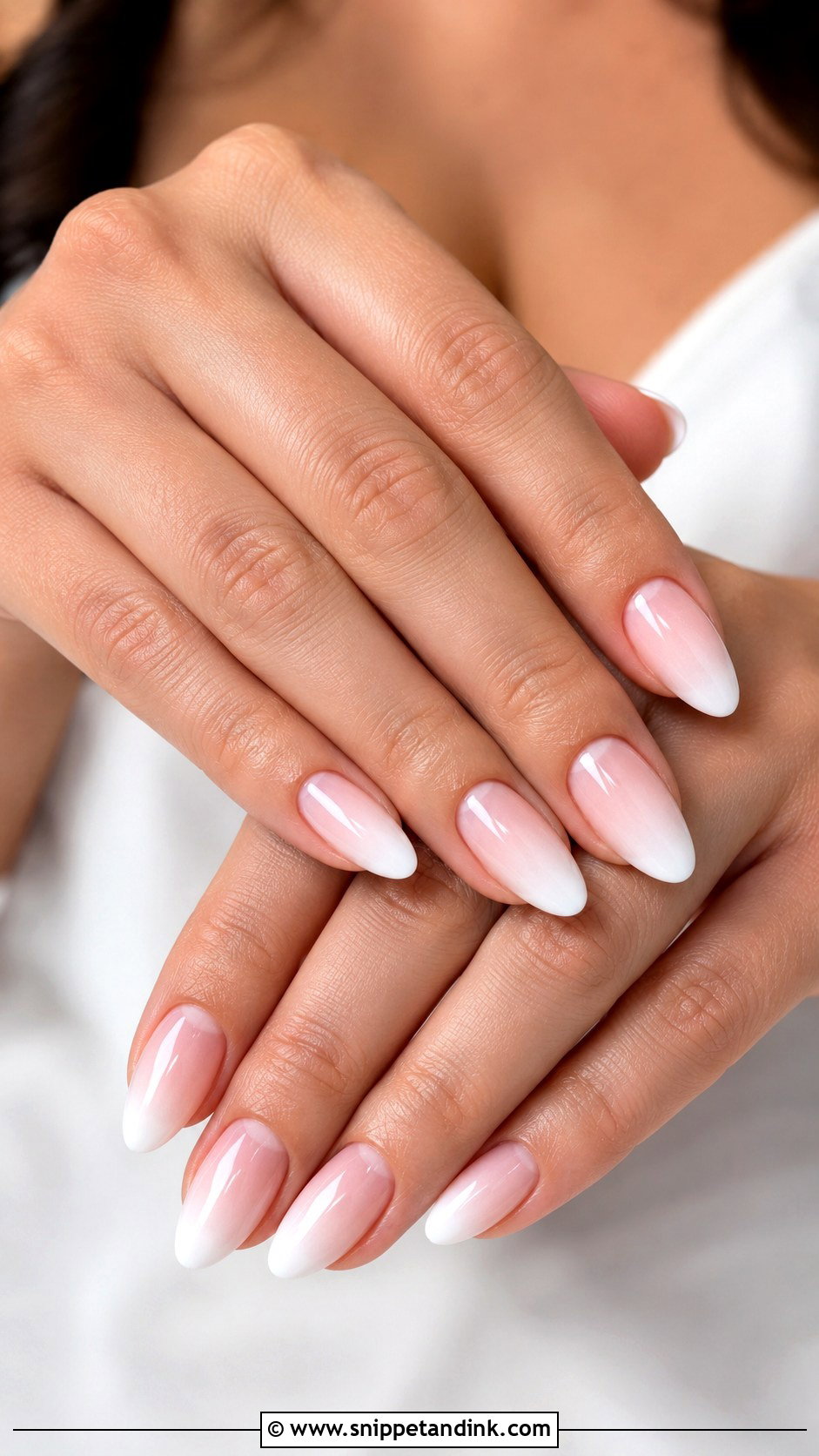
Baby boomer sets fade from pink to white with an airbrushed look, giving the elegance of a French without a hard line. The fade creates an illusion of length on almond, oval and coffin nails. You can wear baby boomer nails glossy for a traditional look or add a pearl chrome overlay for extra glow. They also grow out more gracefully than a sharp French if your wedding falls late in the life of the manicure.
26. Rose Gold Wedding Nails
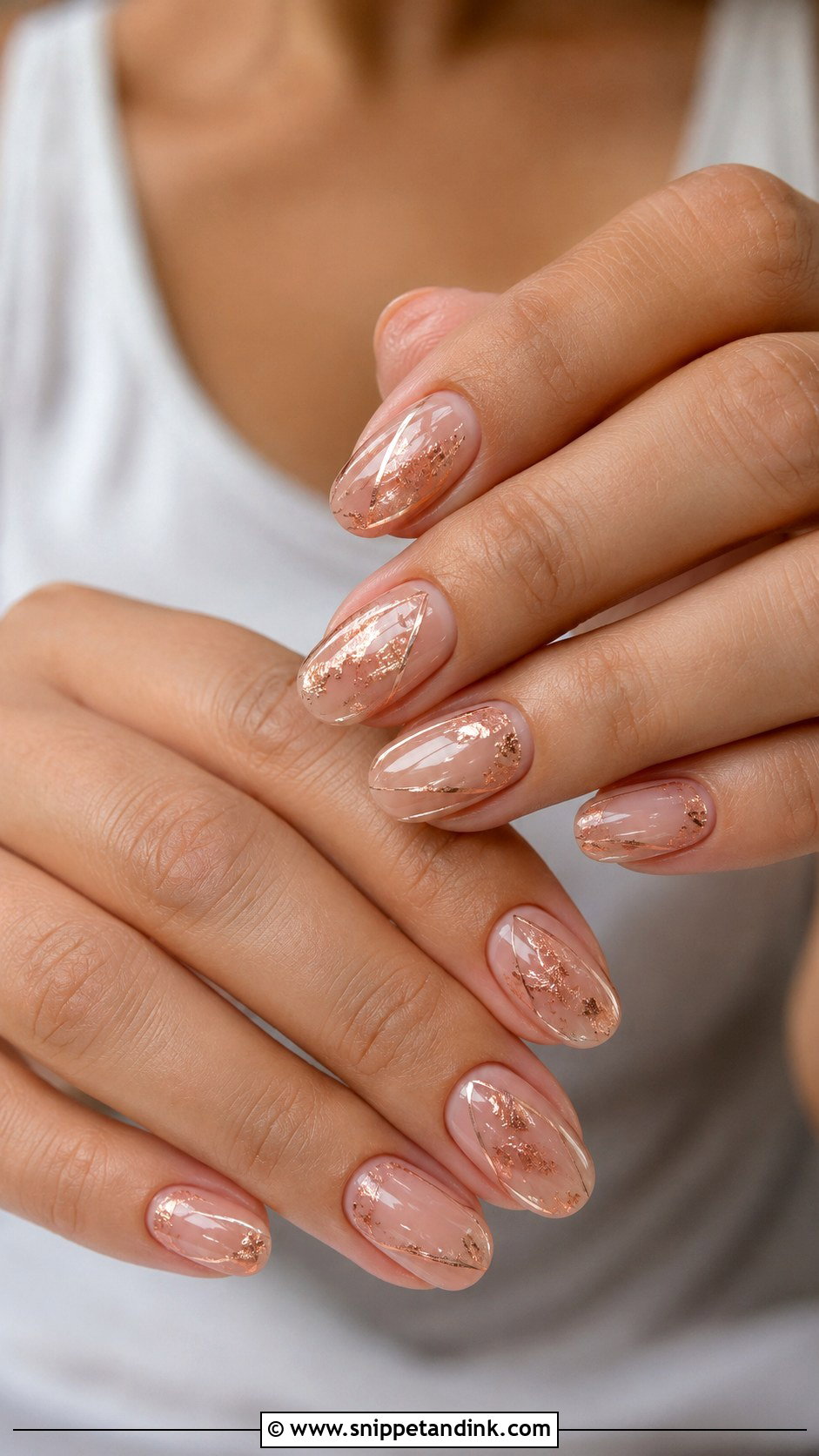
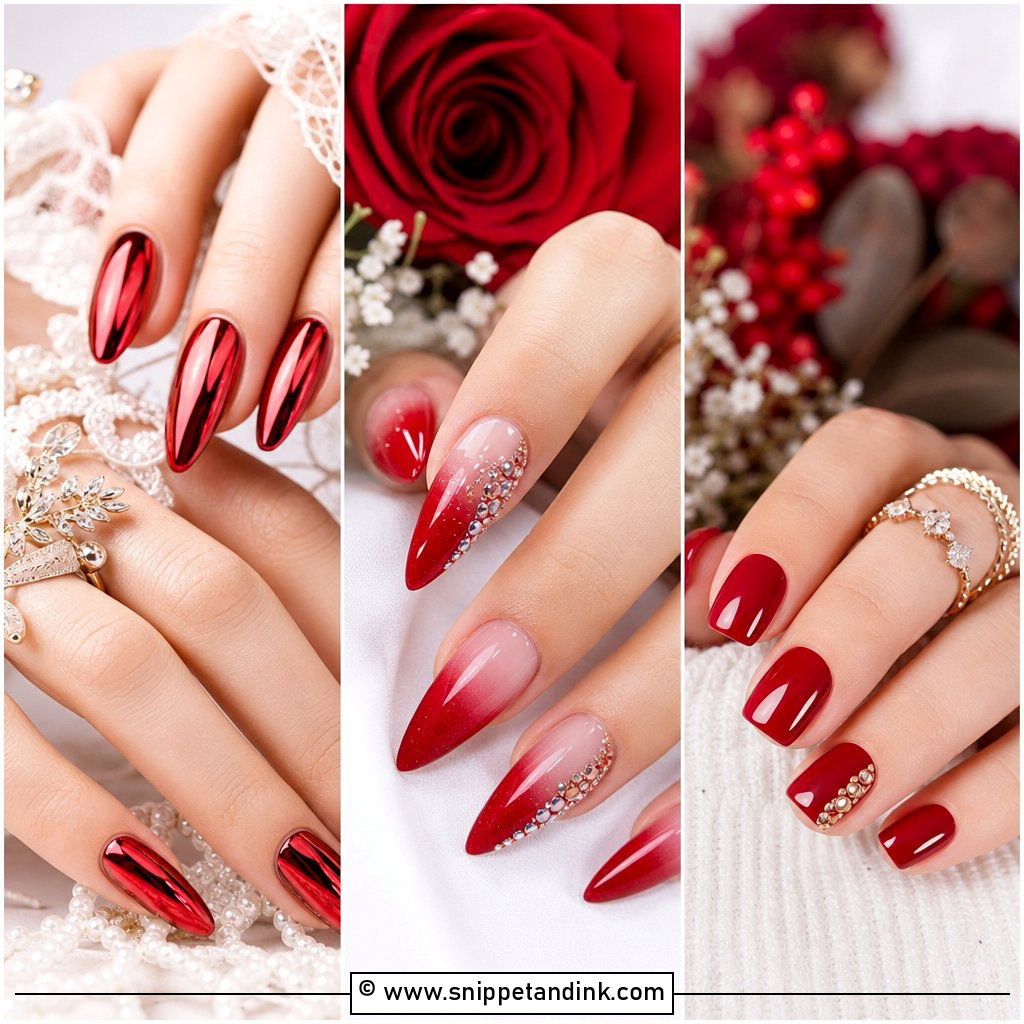
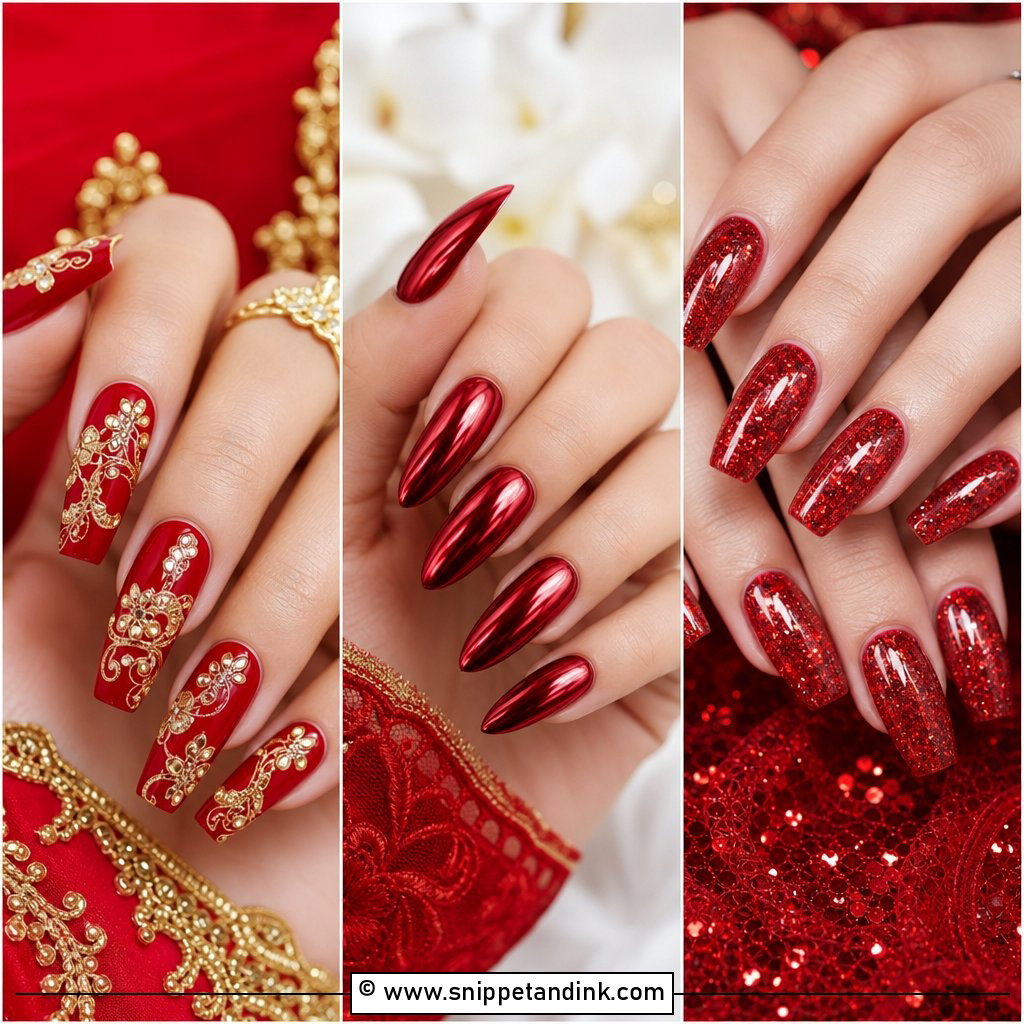
Rose gold is softer than yellow gold and warmer than silver, which suits many skin tones. As a fine foil detail, micro French tip or thin line art over a nude base, it’s subtle and bridal. A full rose gold chrome set can work if the finish is soft rather than mirror-like, but it can clash with yellow gold rings. Rose gold rings, blush flowers and warm neutral makeup are the natural match.
27. Floral French Wedding Nails
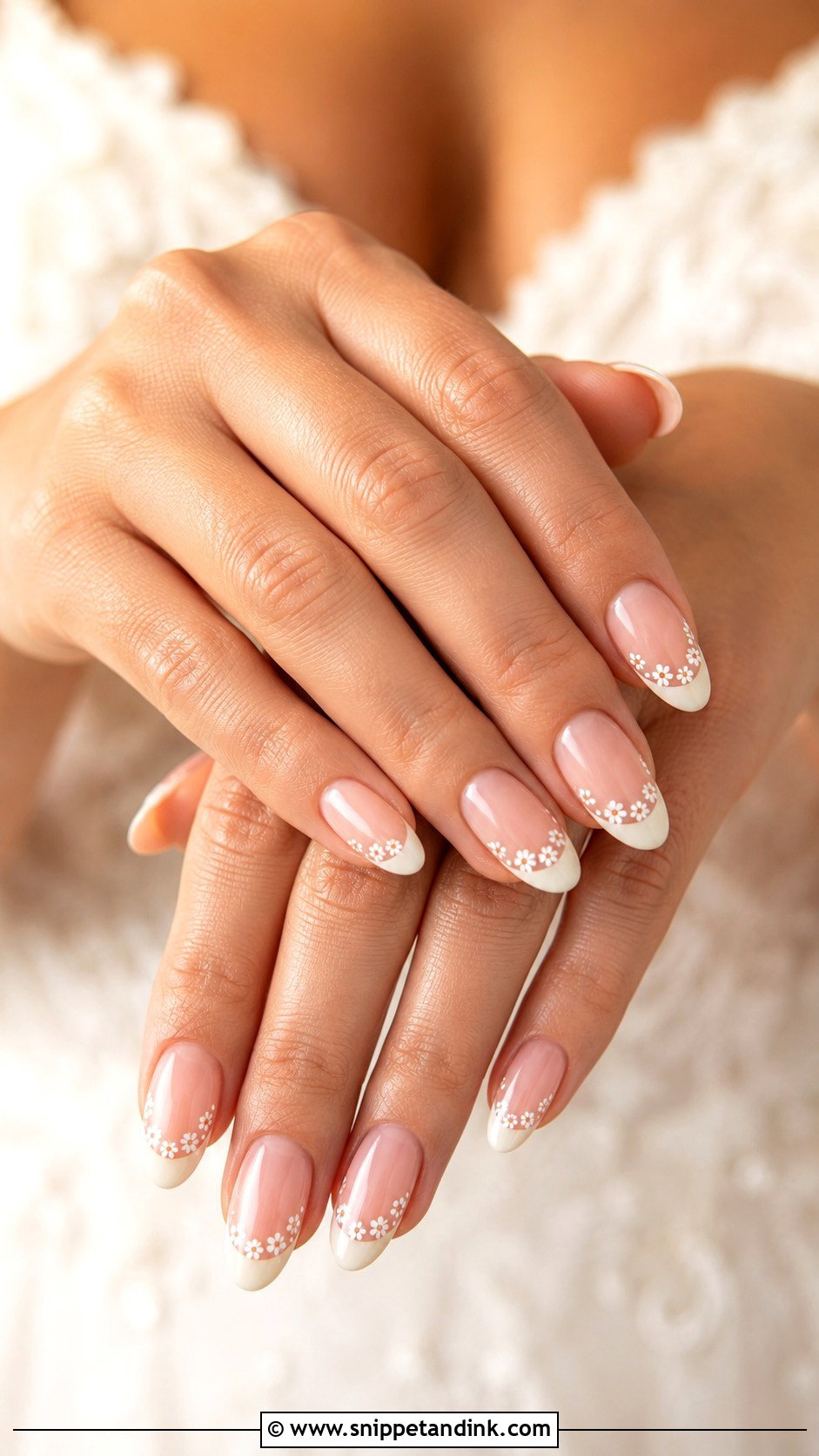
Adding tiny flowers along the smile line or at the corner of each tip combines a French and floral art in one set. The base stays sheer pink or nude, with white, ivory or soft blush tips. I keep the flowers small and in white or pale pink. Garden ceremonies and spring weddings suit it, and almond or oval shapes make the florals look soft while square gives a crisp finish.
28. Marble Wedding Nails
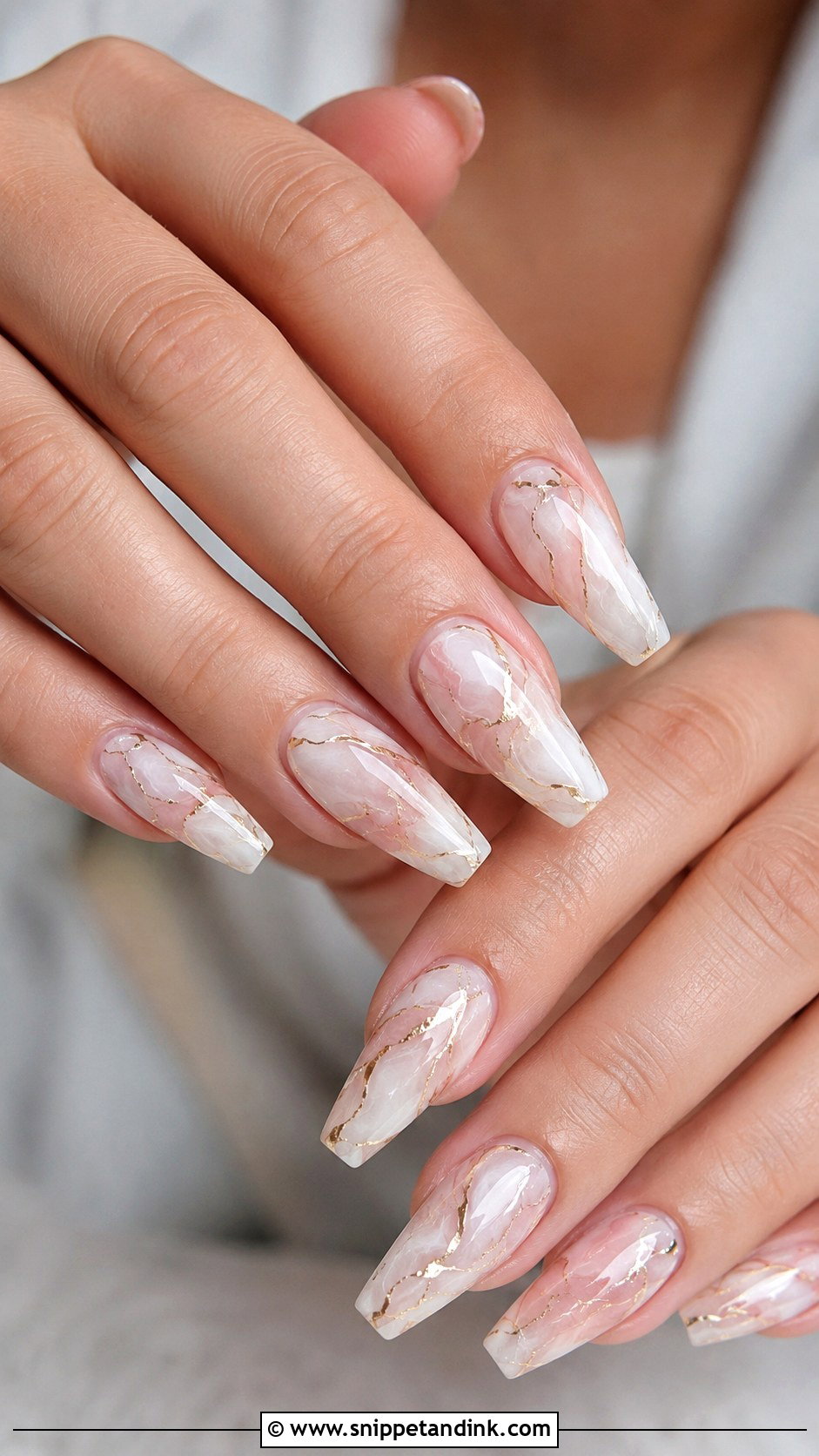
Marble art is made by blending white, ivory or pale pink into a sheer base while it’s still wet, then tracing a few fine veins. I keep it airy, never dark or heavy, and add gold or silver sparingly. Every nail can be marbled for a modern look, or just two accent nails for a subtle one. It pairs with satin dresses, modern venues and minimal jewelry.
29. Micro French Wedding Nails
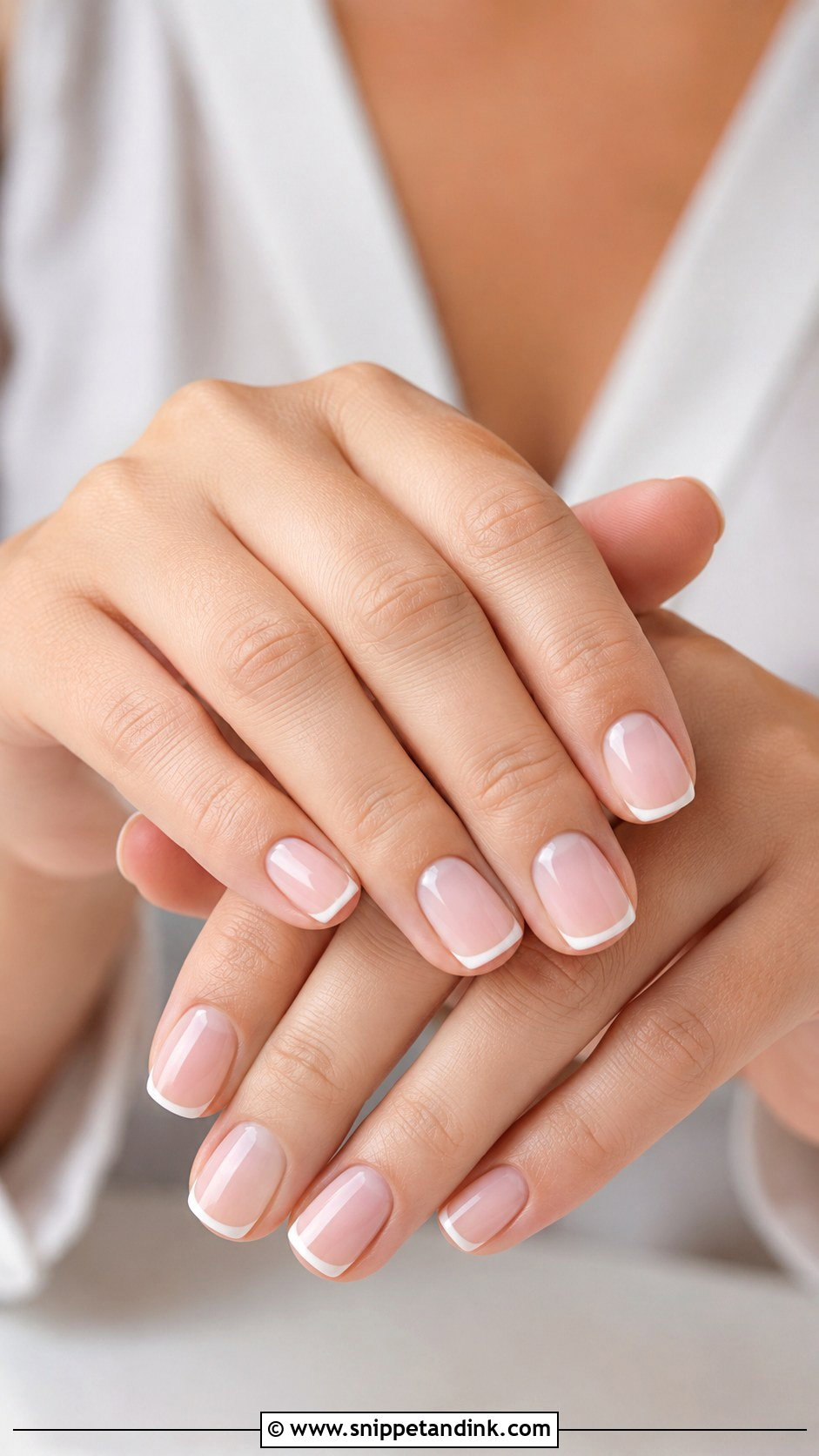
Micro French is a very thin tip line that gives definition without strong contrast. It suits short natural nails particularly well, since a full French would swallow a short nail bed. The base can be sheer pink, nude or milky beige; the tip white, ivory, pearl or pale champagne. Because the tip is so thin, regrowth and small chips are hard to spot, which makes it one of my choices for the bridal party too.
30. Pearl Chrome Wedding Nails
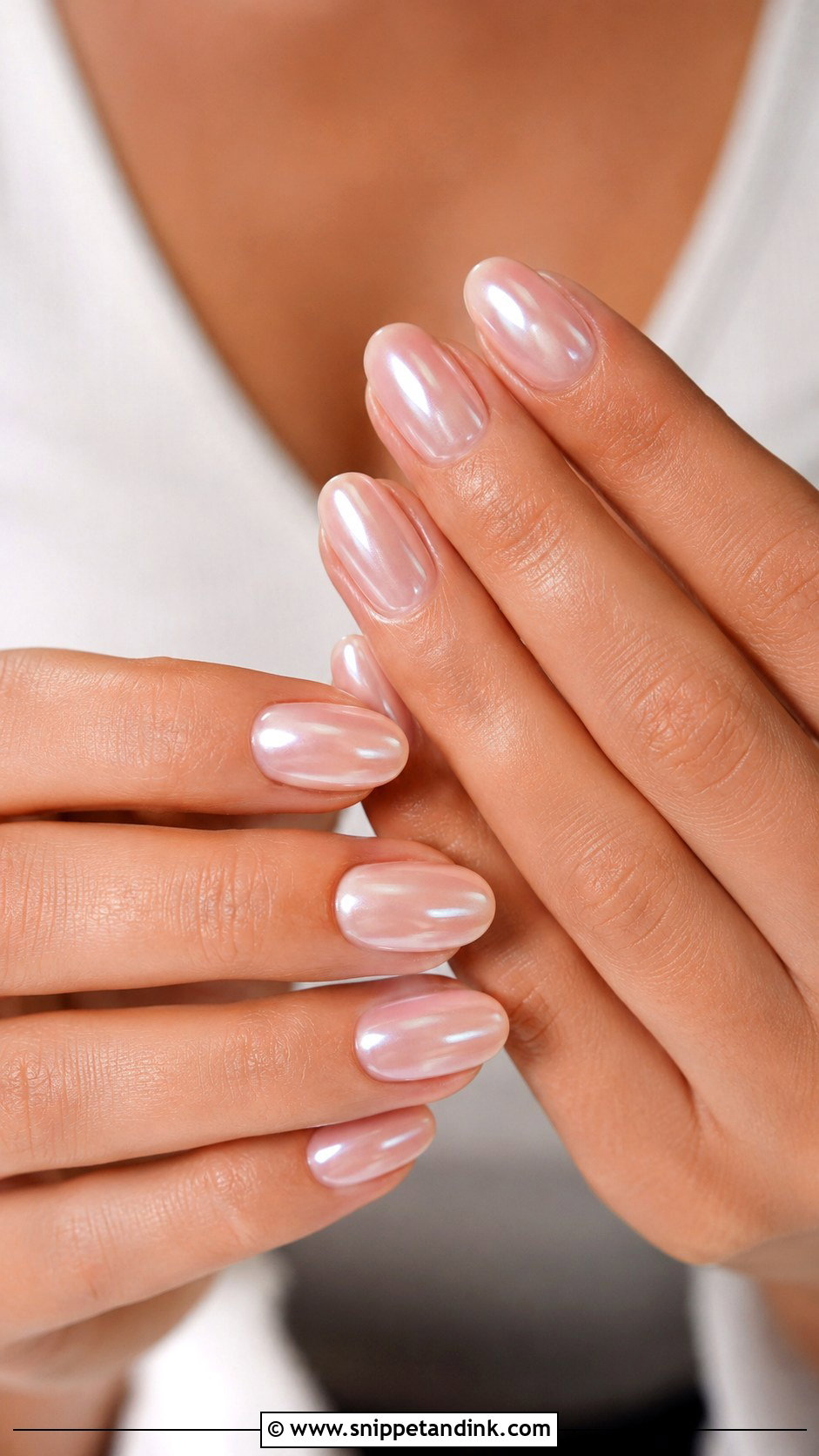
Pearl chrome gives a soft glow over milky white, blush or sheer nude, with a glazed surface that reflects light without looking flashy. Unlike mirror chrome, it’s subtle enough for a full bridal set. Almond and oval shapes enhance the shine, while short nails look clean and polished with the same finish. It complements pearl jewelry, satin gowns and dewy makeup.
Coordinating Bridesmaids Without Ten Identical Sets
Matching every bridesmaid to the bride rarely works, because nail beds, lengths and skin tones differ. A soft family of colors looks more polished in a group photo than identical nails. My usual approach is to give the bridal party one shared base, such as a sheer pink or nude chosen for each person’s skin, and keep accents for the bride alone: the pearls, the lace, the chrome.
If the group is large, ask each bridesmaid to arrive with nails clipped short and free of old gel. Removal takes time, and scheduling several sets on the same morning is where delays usually start. Mothers of the couple often prefer a simple sheer or a micro French, which also wears well over a long day.
How Fine Art Holds Up Over a Wedding Week
Hand-painted lines and tiny embellishments are the first things to wear. Lace, swirl and floral art sit under top coat and are well protected, but raised pearls and stones take knocks every time you grab a bag or open a door. I’d book the final set two or three days before, wear gloves for any packing or cleaning, and keep a small bottle of top coat in your kit to reseal an edge. If a stone pops off, it’s better to remove its partner on the other hand than leave one gap.
Ring First, Dress Second, Nail Art Last
The order I plan in is the ring, then the dress, then the nails. A classic French, milky white, pearl detail, soft ombre or delicate floral set can all work if the color, shape and finish suit your hands and stay in the background. Test your shade in daylight and indoor light, and take a photo with flash. If you rarely wear long nails, keep the length moderate. Short and simple or detailed pearl chrome, your nails should look like part of the outfit, not a separate feature.
You'll Like These Ideas:


Leave a Reply