
When two women marry, nobody is assigned the gown or the tux, and that freedom is the best part of styling these weddings. Each partner can wear what fits her identity, her body and how she wants to feel walking in. One might choose a structured suit while the other wears a flowing dress; both might wear tailoring, or two gowns with completely different shapes. Jumpsuits, gender-inclusive tailoring and color are all on the table. What I work on with couples is the link between the two outfits: shared fabric, color, accessories or level of formality, so they look like one wedding in photographs without dressing as twins. The pairings below show how that works in practice.
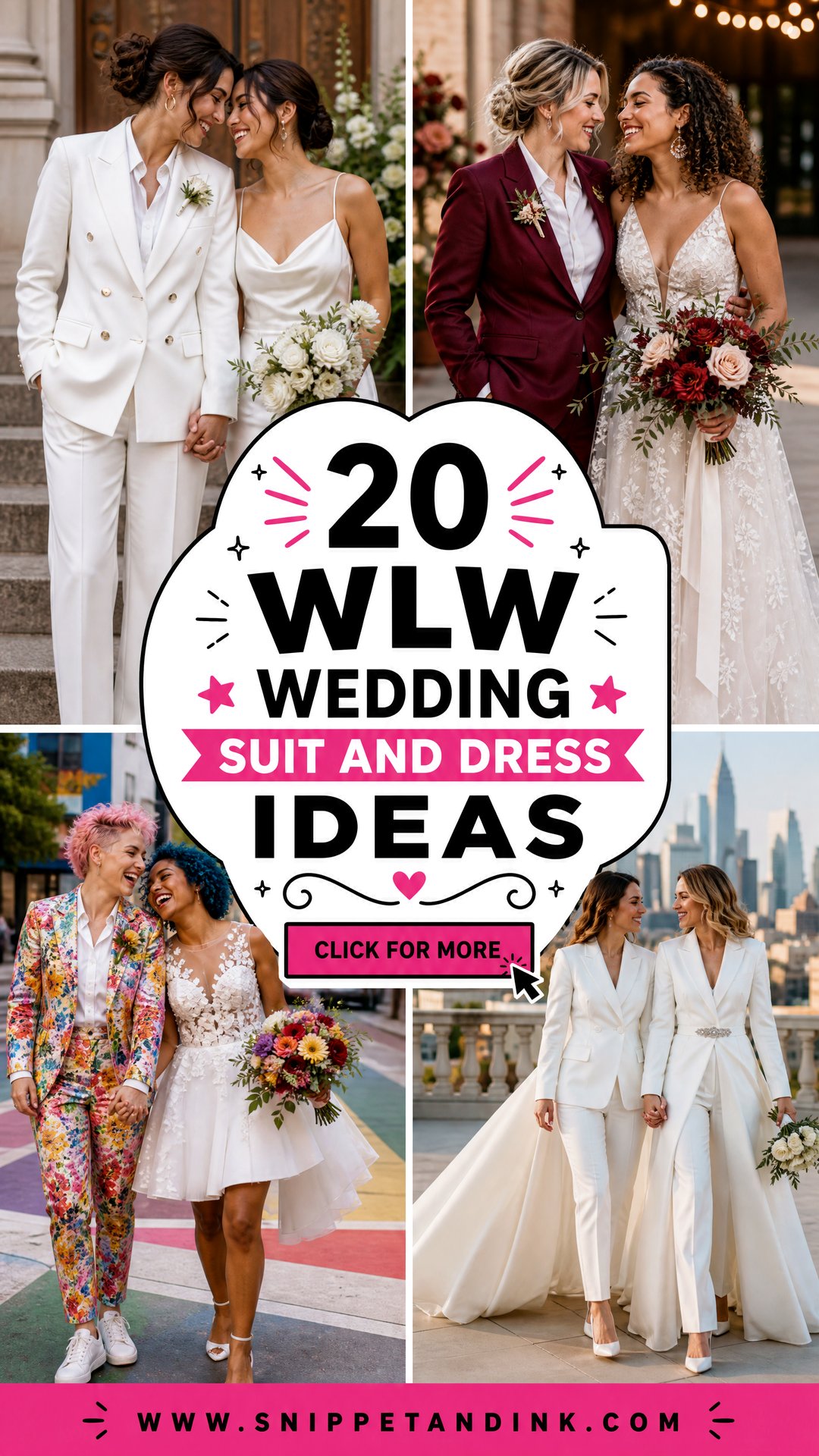
A Suit Cut Around Hips, Bust and Shoulders
Most suits on the rack are still drafted for one of two bodies, and neither may be yours. A jacket cut for a man often fits the shoulders and gapes at the bust; a women’s jacket fits the bust and pinches across a broad back. Knowing what a tailor can and can’t change saves a lot of money.
- Shoulders are the hardest thing to alter. Buy the jacket that fits your shoulders and let the tailor handle the rest.
- Sleeve length, trouser hems and waist suppression are routine changes and usually inexpensive.
- Bust room can be added only if there’s seam allowance inside. Ask the tailor to look before you buy.
- Trouser rise can’t really be changed. If a men’s trouser sits wrong on your hips, try a women’s cut or a made-to-measure pair.
When I shop for a suit with a client, I have her button the jacket and hug herself. If the fabric pulls into an X around the button, it’s too tight across the bust or back, and no amount of pressing fixes that. A made-to-measure suit avoids these compromises, but it needs extra weeks for the cloth and at least one fitting, so start it as early as the dress.
1. White Tuxedo And Satin Wedding Dress
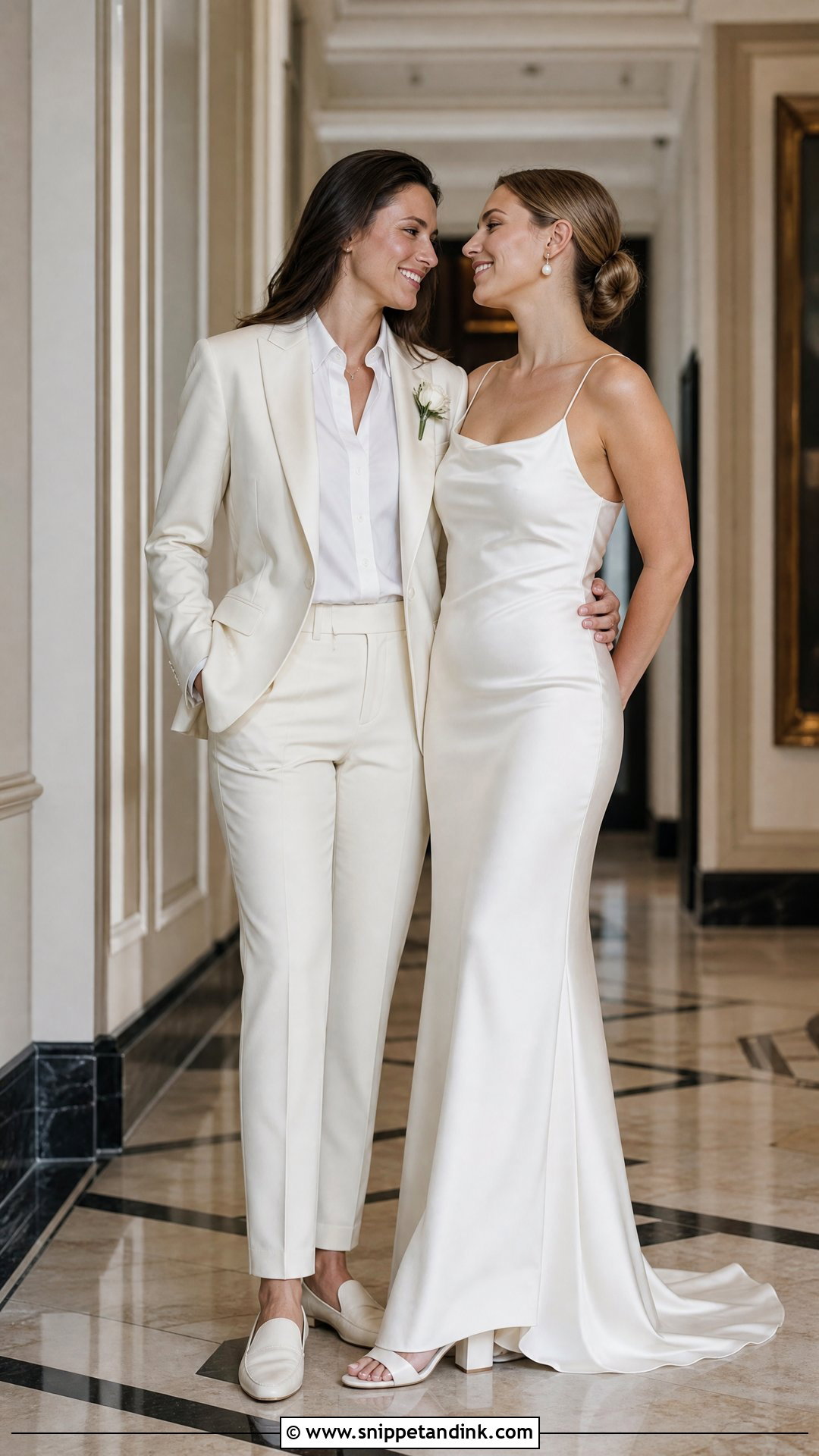
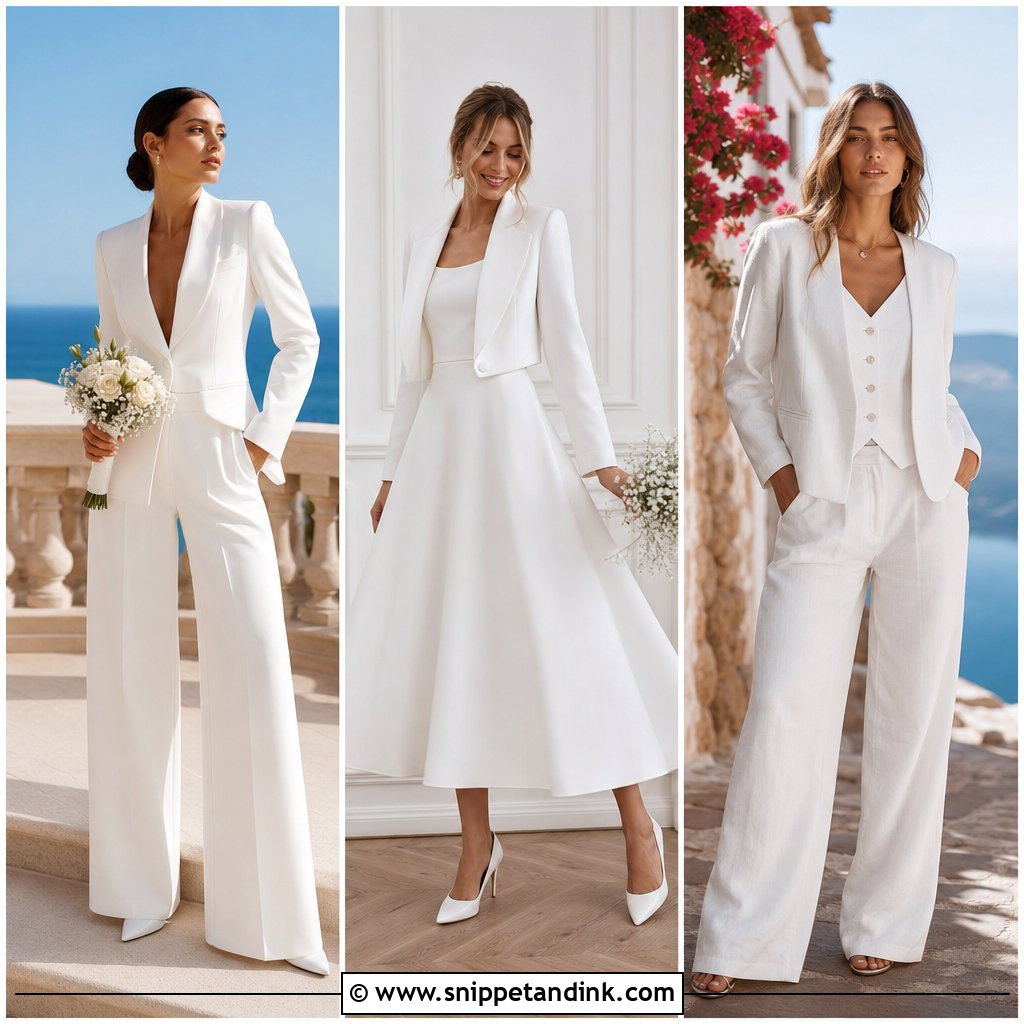
White on white is the hardest pairing to get right, because two different whites side by side make one of them look dingy. I match undertones, not shades: an ivory or bright-white tuxedo with a fitted jacket, straight-leg trousers and a crisp shirt or silk camisole, beside a clean satin gown with a cowl, square or bateau neckline, both checked together in daylight. Satin lapels echo the dress fabric. Pointed pumps, leather loafers or low block heels keep everyone comfortable. Keep the jewelry spare and repeat one detail, pearl earrings with pearl cuff links. Hotels, lofts, galleries and polished indoor venues suit it.
2. Black Suit And White Lace Wedding Dress
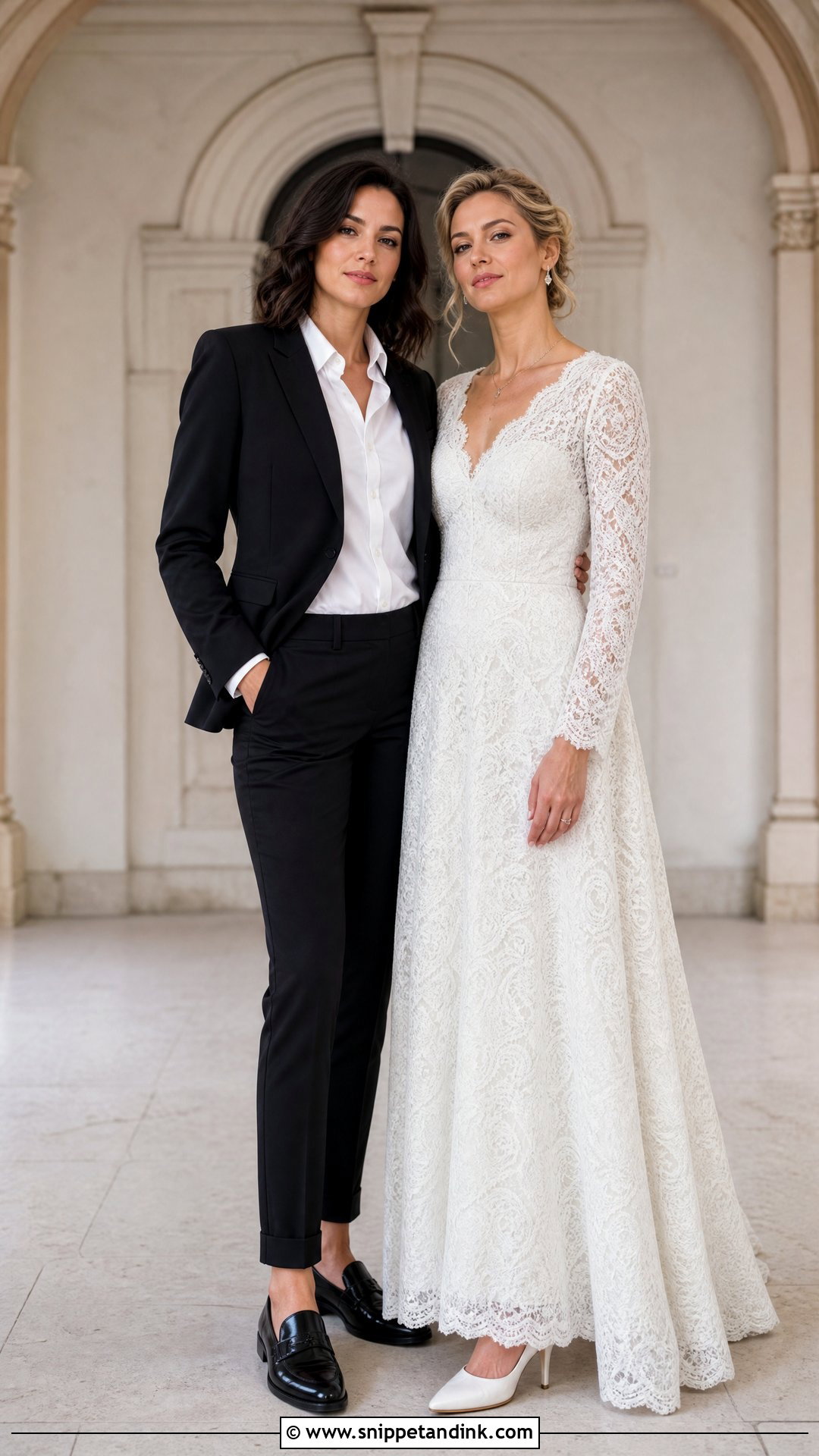
Black and white is the most graphic pairing on this list, and it photographs cleanly only against a calm background. A sharply tailored black suit with tapered trousers, a one-button jacket, a white open-collar shirt and polished black loafers or lace-ups sits beside a lace dress with long sleeves, a fitted bodice and an A-line or column skirt. Tie them together with matching flowers, a black ribbon detail or jewelry in one metal. Black cloth absorbs light while white lace reflects it, so ask your photographer how they’ll expose for both. Ballrooms, historic buildings and evening celebrations all suit it.
3. Ivory Pantsuit And A-Line Wedding Dress
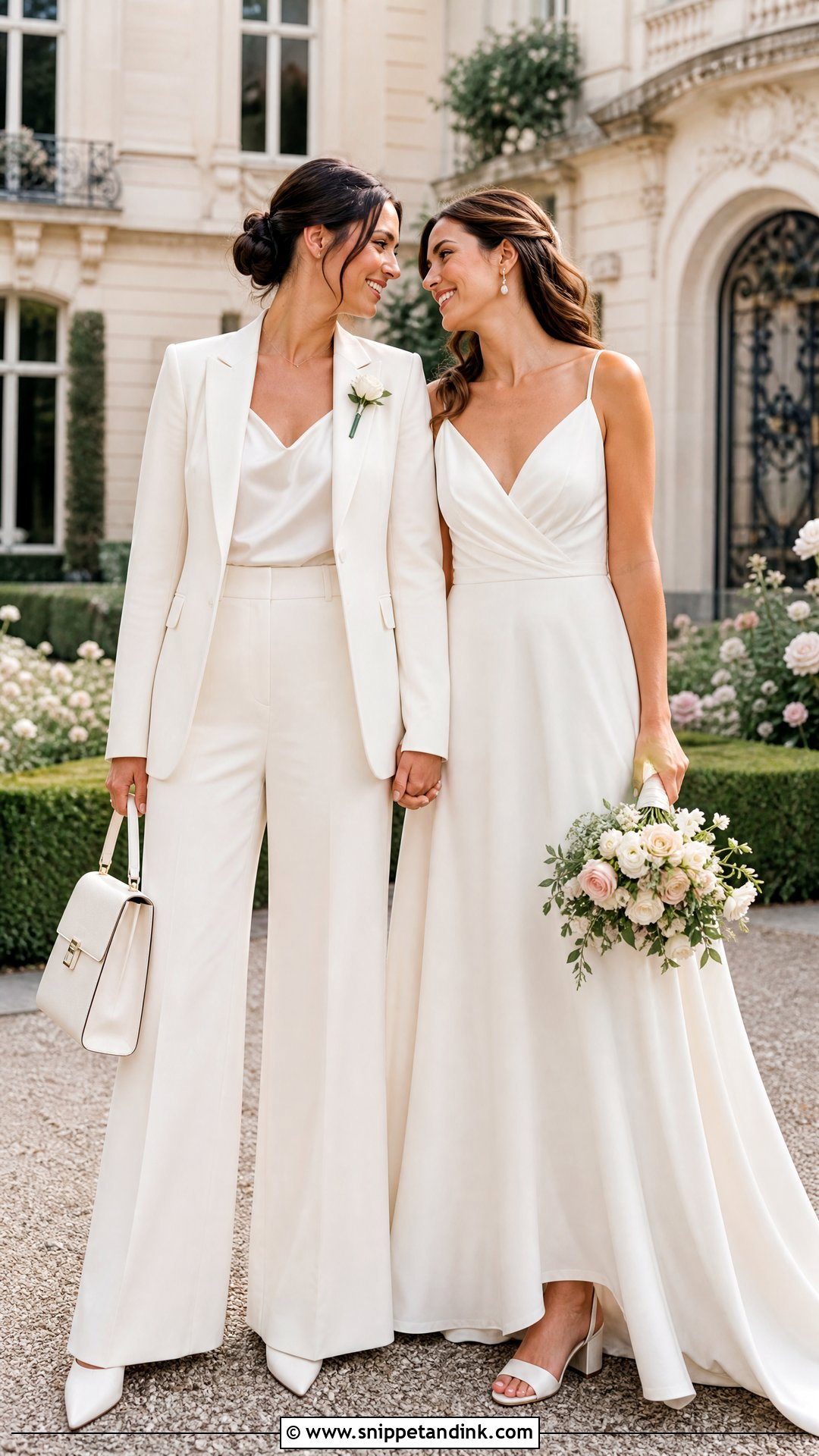
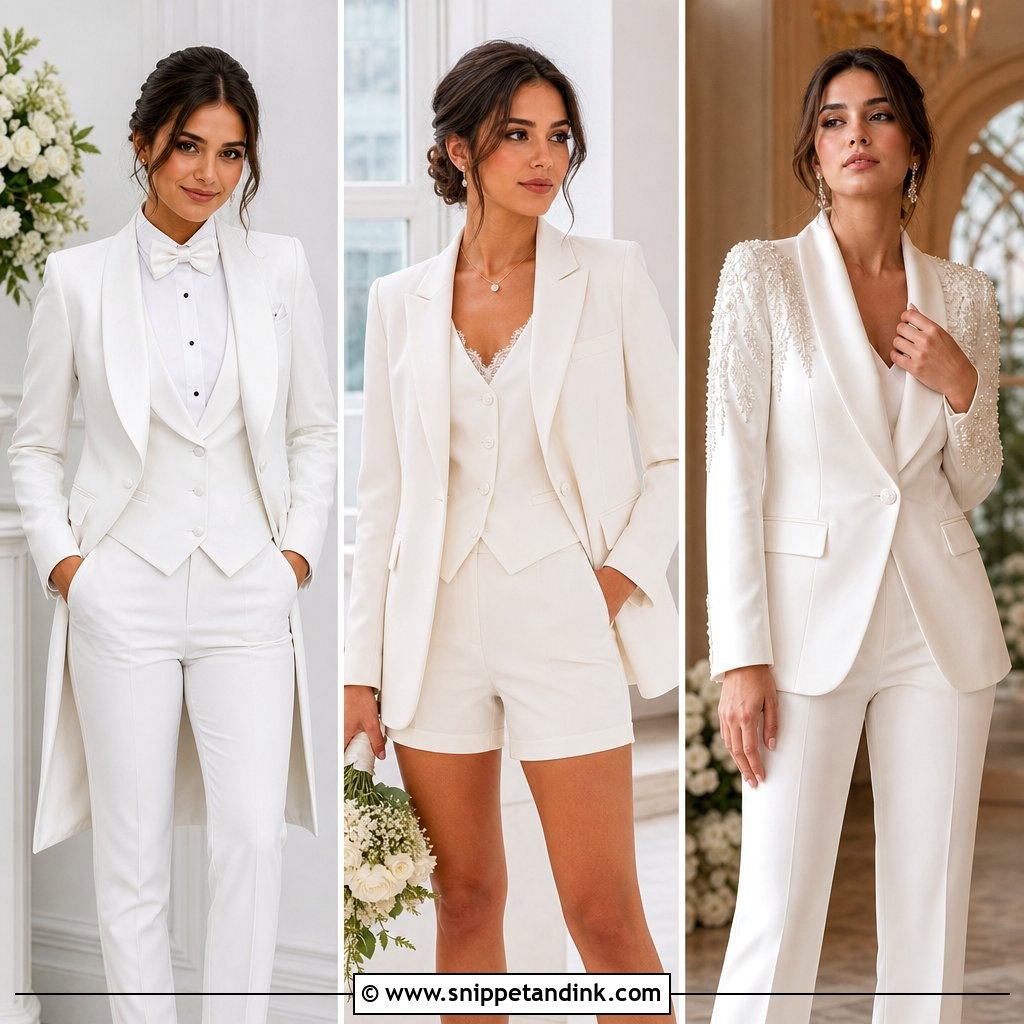
Ivory tailoring and an ivory A-line connect through color while the textures do the contrasting. The pantsuit works best with high-waisted trousers, a slightly relaxed blazer and a silk shell or lace top; the dress with a defined waist and lightweight chiffon, organza or satin layers. A relaxed blazer still needs fitting at the shoulder seam, which should end where your shoulder ends, not past it. Sleek ankle boots for one partner, block-heel sandals or pumps for the other, and a shared bouquet color, matching earrings or coordinated hair pieces to tie it together. Natural daylight, gardens and spring estates flatter it most.
4. Velvet Tuxedo And Long-Sleeve Wedding Dress
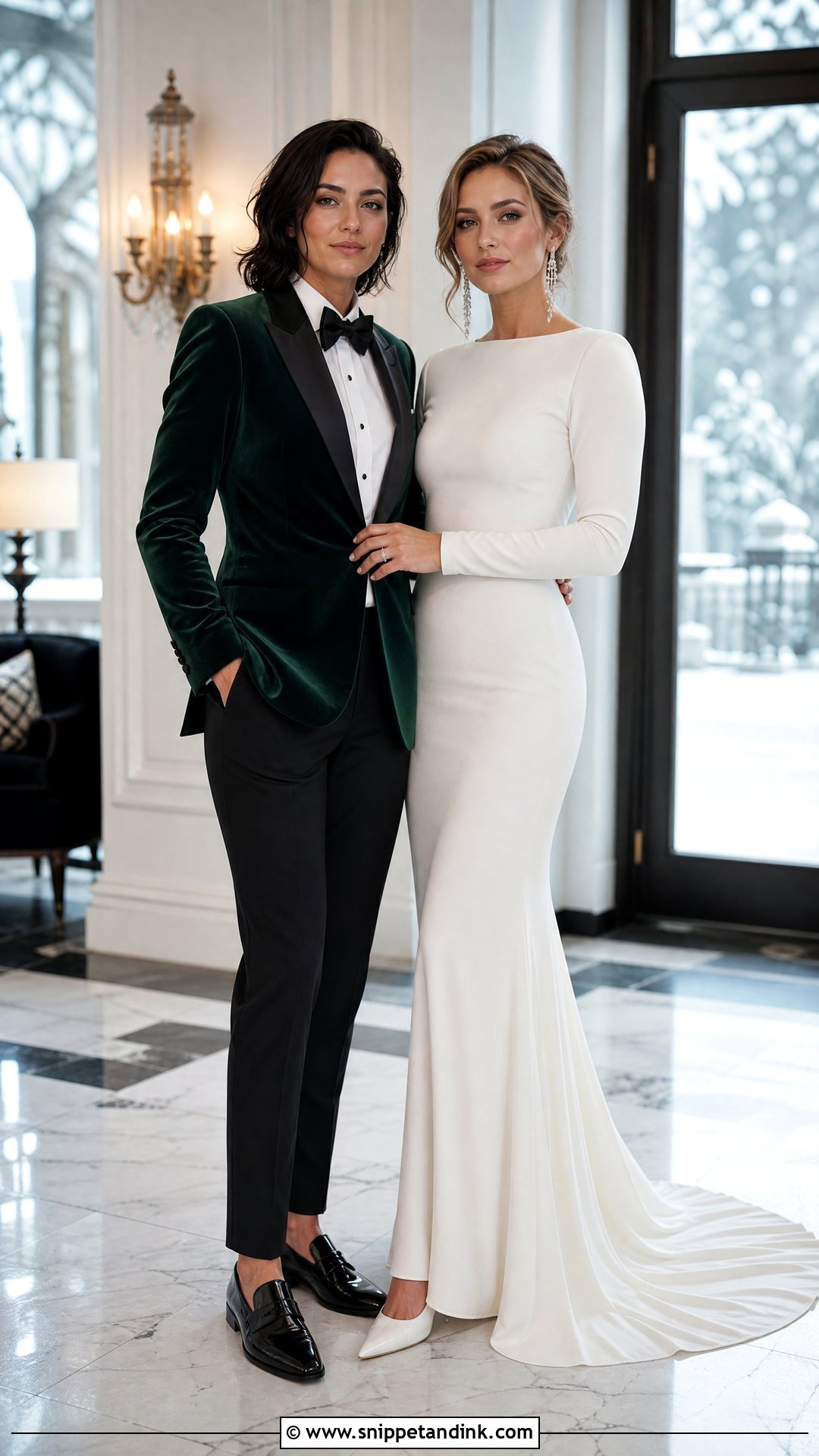
Velvet is a cold-weather cloth, so this pairing belongs to winter. Choose a tuxedo jacket in black, navy, burgundy or deep green and keep the trousers plain, with a white shirt, a bow tie and patent loafers. The dress beside it should be refined: fitted lace or crepe sleeves, a structured waist and a floor-length skirt. Two heavy textures together look like upholstery, so I let the velvet lead and keep the dress detail quiet. Silver cuff links and delicate silver earrings make a small, deliberate link. Winter venues, historic hotels and black-tie evenings suit it.
5. Sage Green Suit And Boho Wedding Dress
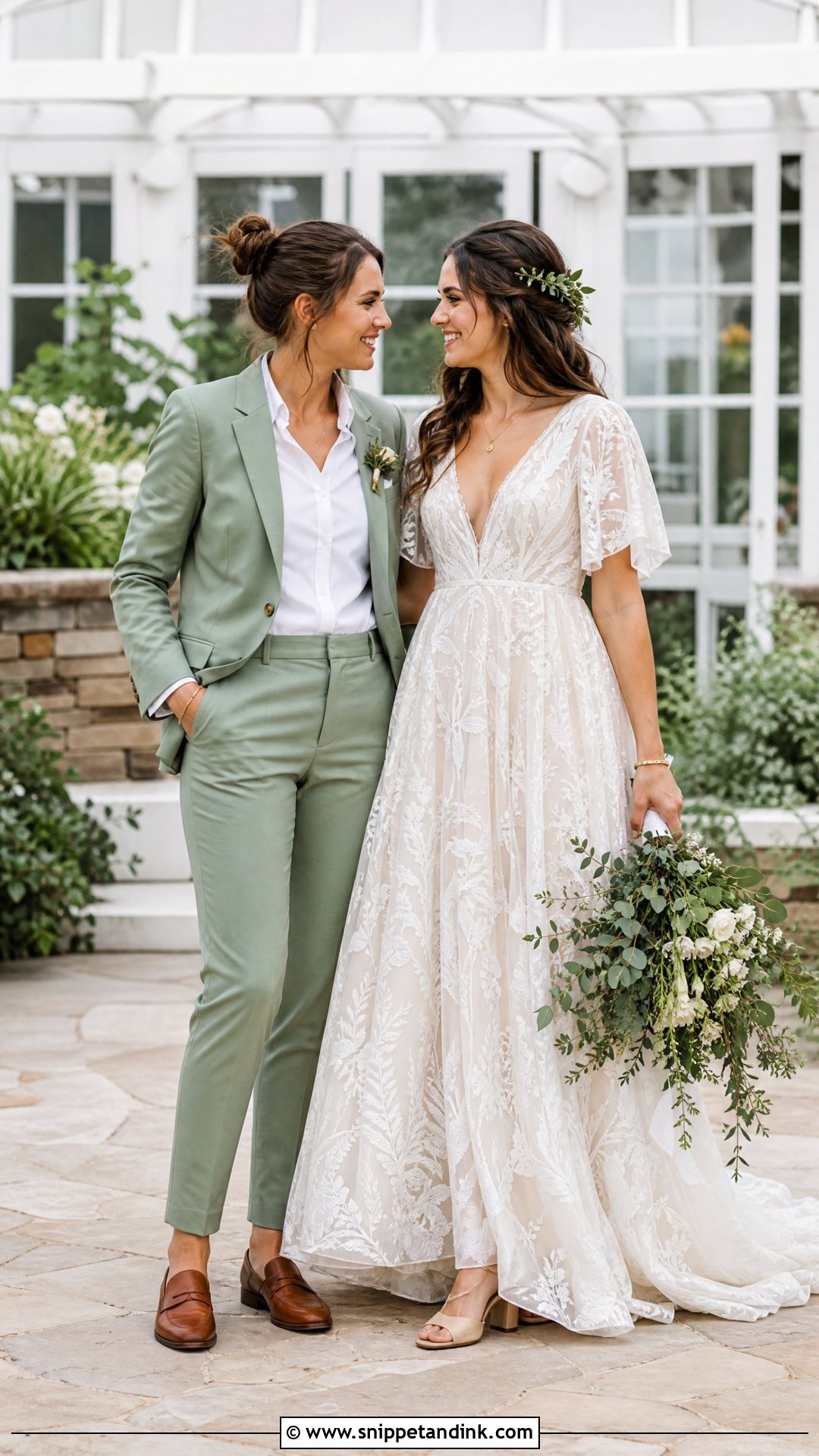
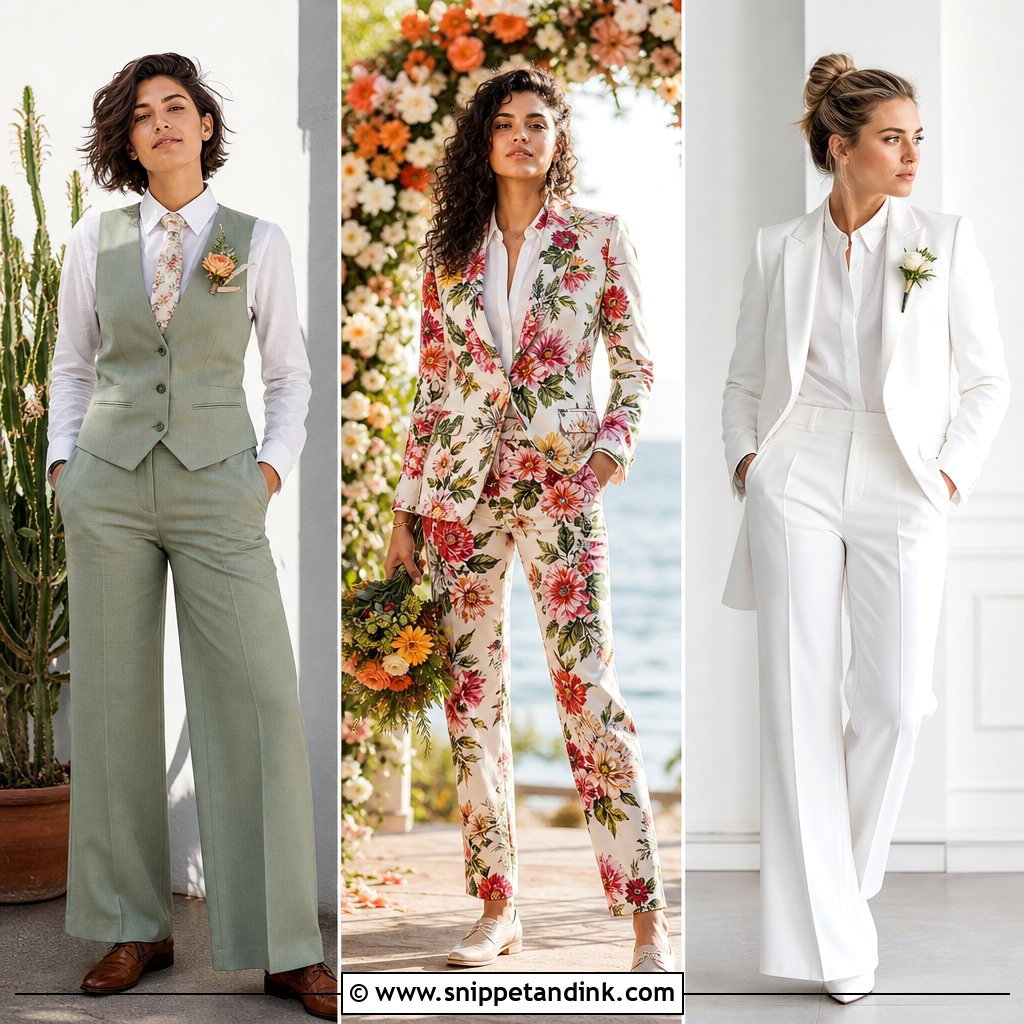
Sage is one of the easiest suit colors to wear outdoors because it sits beside greenery instead of competing with it. A softly structured blazer, ankle-length trousers and an ivory open-collar shirt with brown loafers or neutral shoes pair with a flowing dress featuring flutter sleeves, botanical lace or a lightly layered skirt. Dried-flower accessories, greenery or warm gold jewelry can be shared between you. Match the visual weight of the fabrics, a light breathable wool next to matte chiffon, or the suit looks heavy in photos. Gardens, vineyards and woodland ceremonies suit it, and both outfits handle uneven ground.
6. Navy Suit And Minimalist Wedding Dress
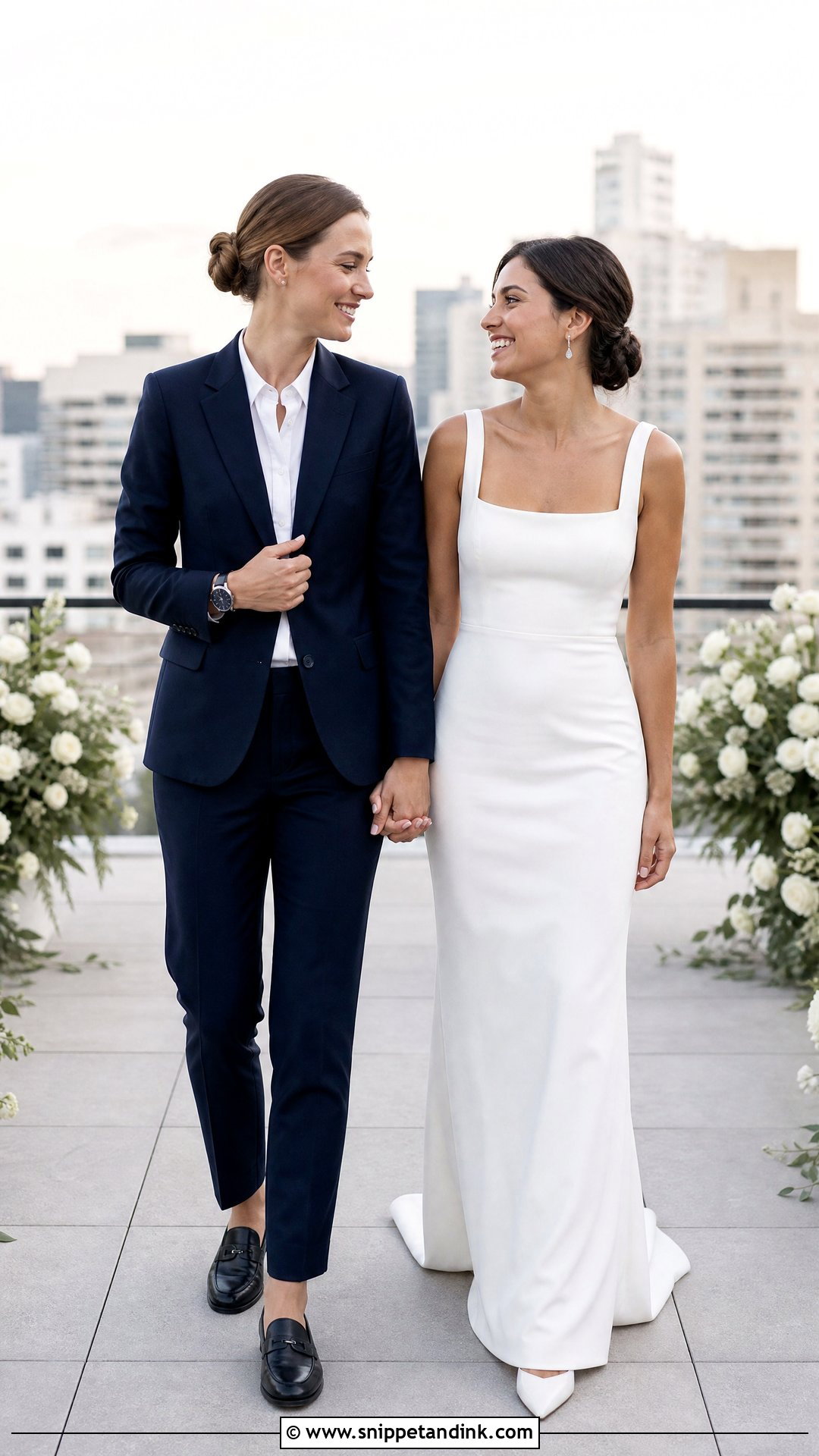
Navy and a minimalist dress are for couples who want formal without the frills. A tailored navy jacket with slim or straight trousers, a white button-down, an optional tonal tie and dark loafers stand beside a simple crepe column with a square neckline and clean seams. With no decoration to distract, fit and fabric quality are everything, so I’d spend the budget on alterations for both outfits. Repeat navy somewhere on the dress side, a ribbon, a manicure, a bouquet wrap or a small embroidered detail. Courthouses, coastal venues, rooftops and modern spaces all suit it.
7. Blush Suit And Champagne Wedding Dress
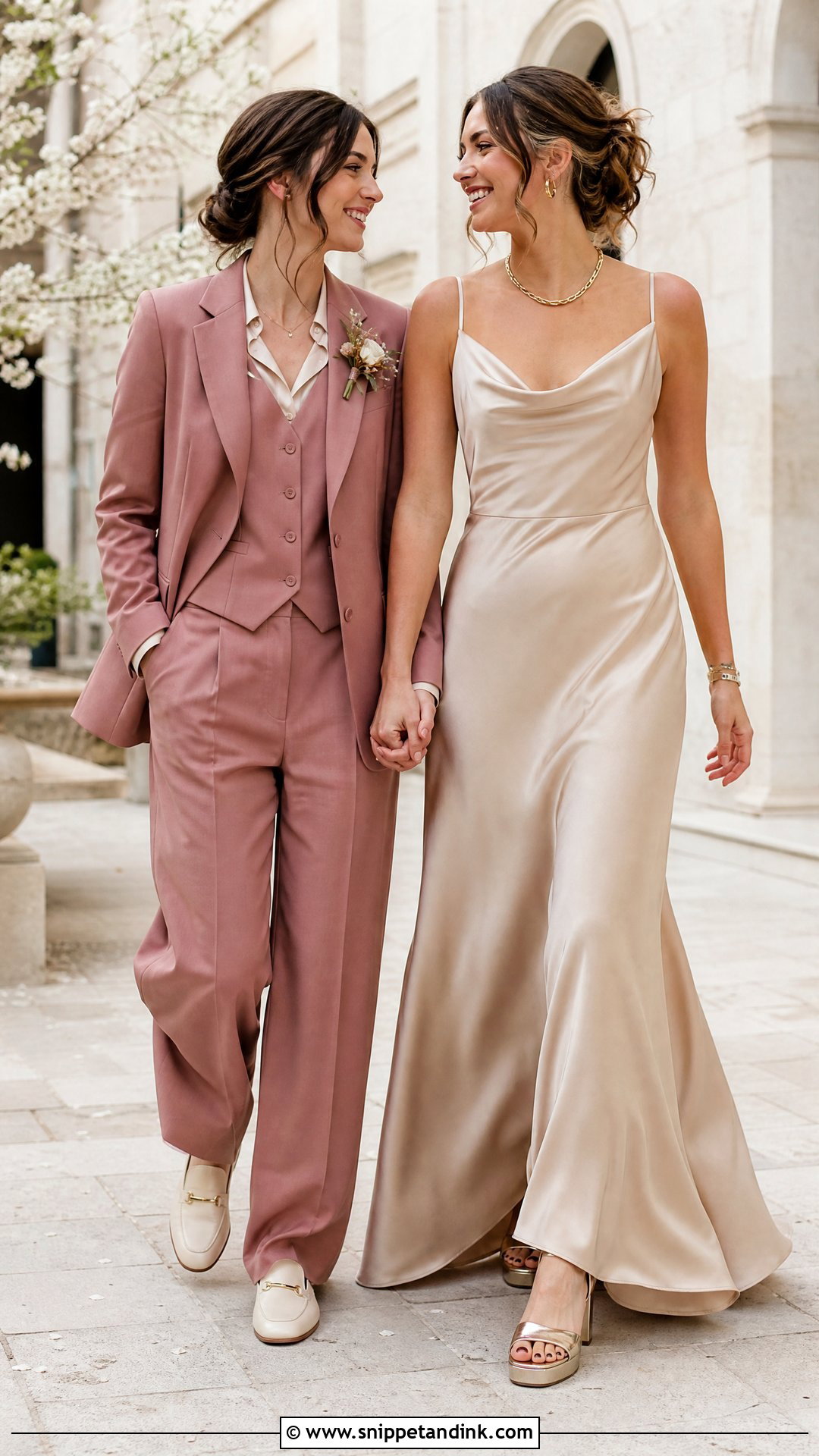
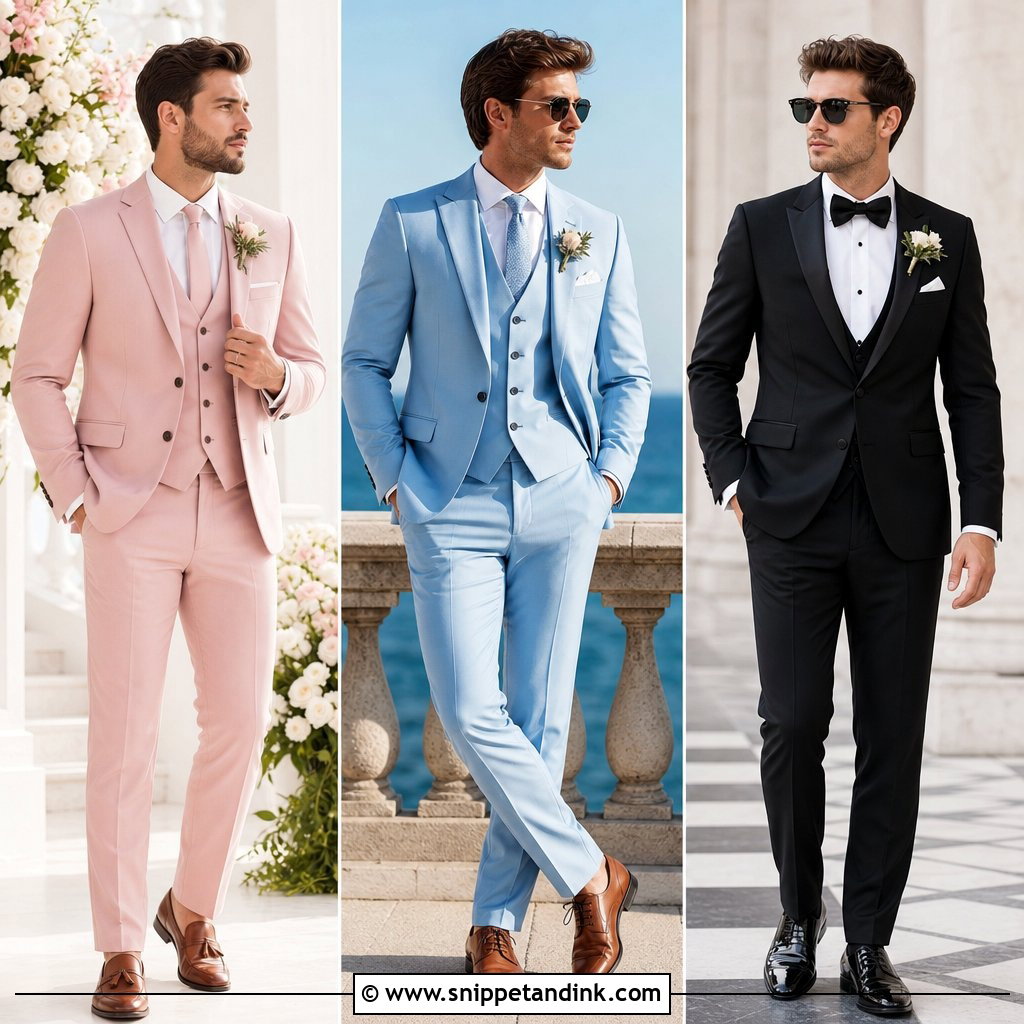
Blush and champagne sit close on the color wheel, which is exactly why they need a little distance in shade. Choose a dusty blush or muted rose suit, never bright pink, with wide-leg trousers, a fitted vest and a single-breasted blazer, next to a champagne gown in satin, tulle or embroidered lace. If the two blur together at arm’s length in daylight, go a step deeper on the suit. Nude pumps, cream loafers or metallic block heels keep the palette light, and gold jewelry with bouquets of ivory, peach and muted pink carries it through. Spring weddings, brunch ceremonies and venues with pale stone or natural wood suit it.
8. Double-Breasted Suit And Slip Wedding Dress
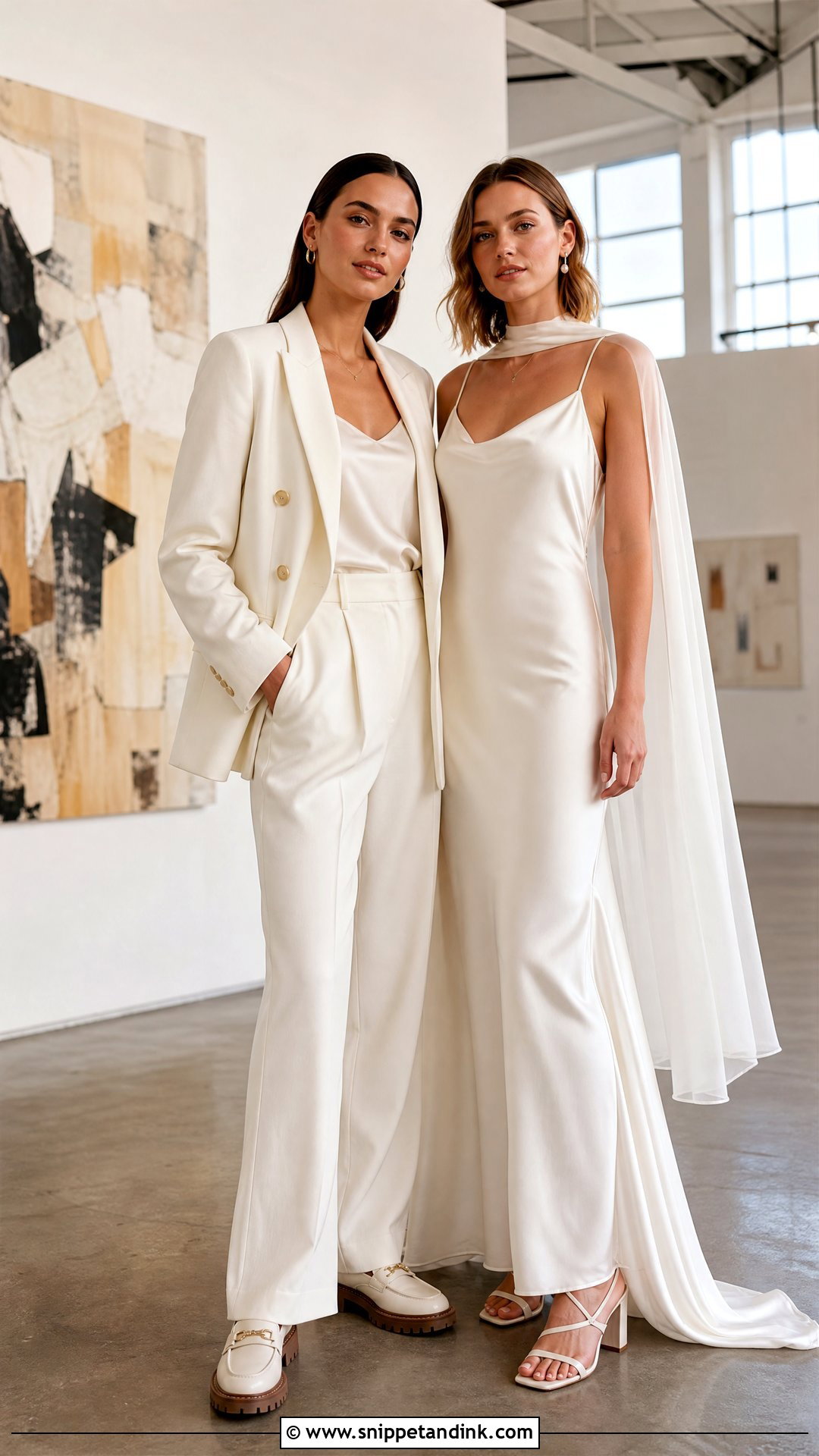
Structure against liquid fabric: the double-breasted suit brings strong lapels, slightly relaxed trousers and a fitted shirt or smooth knit top, and the satin slip dress brings drape. White, ivory, black or deep navy all work depending on the dress code. I steer slip-dress brides toward wider straps and a softly draped neckline, because a bias-cut slip shows every bra line and needs built-in support. A detachable cape or lightweight overskirt adds ceremony drama without changing the sleek base. One metal across both outfits, chunky loafers for the suit and strappy block heels for the dress. Lofts, galleries, restaurants and small city weddings suit it.
9. White Three-Piece Suit And Tea-Length Wedding Dress
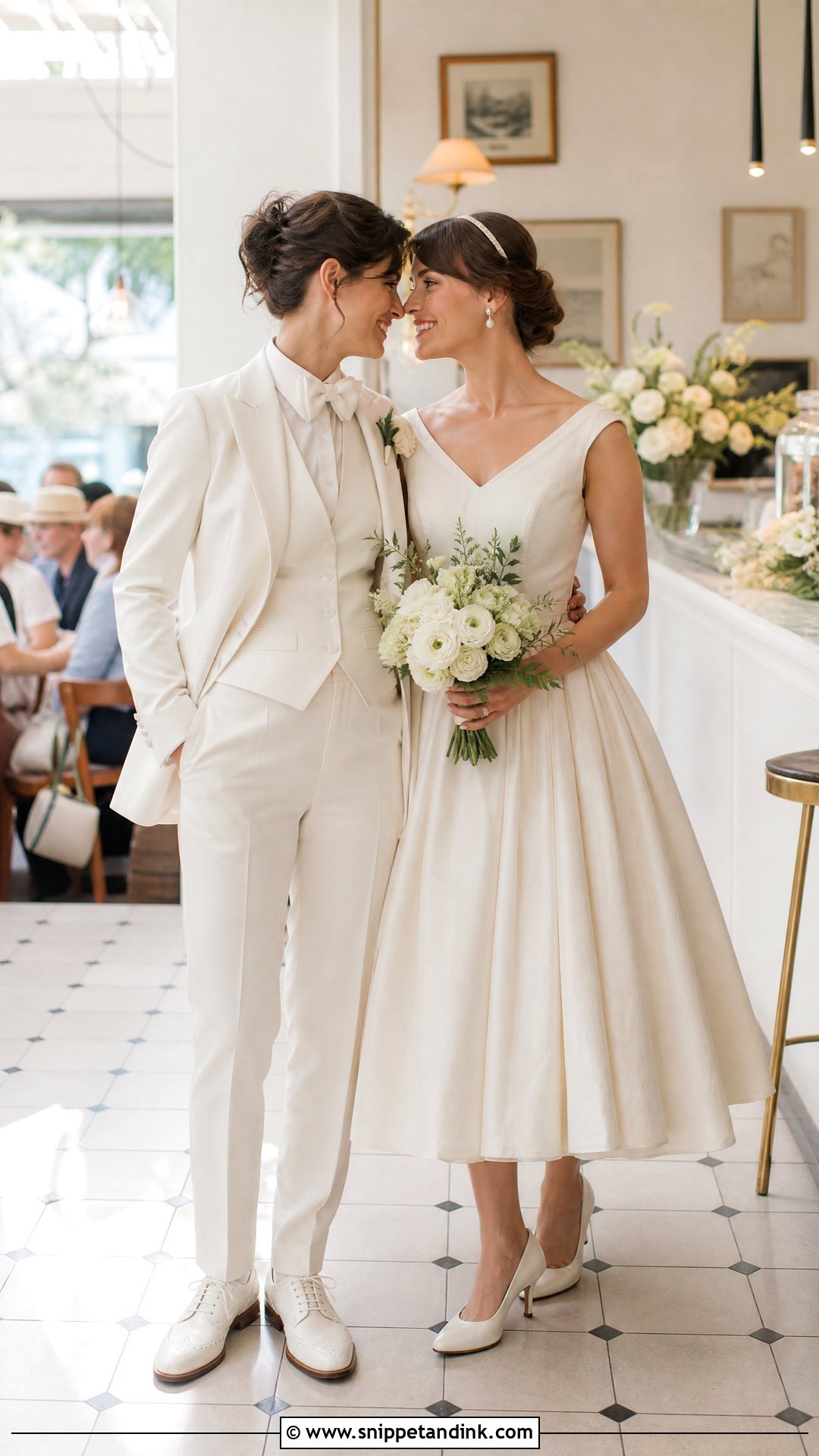
A white three-piece and a tea-length dress have a vintage feel, and both are made for dancing. The suit should have a well-fitted vest so it still looks complete when the jacket comes off at the reception; style it with a tie, a bow tie or an open collar. The tea-length dress works with a fitted bodice and full skirt landing between knee and ankle. White shoes keep it bridal, though colorful ones add character. Repeating one fabric, satin lapels on the suit and a satin waistband on the dress, is my favorite link here. Daytime ceremonies, retro receptions and courthouse weddings suit it.
10. Burgundy Suit And Ivory Wedding Dress
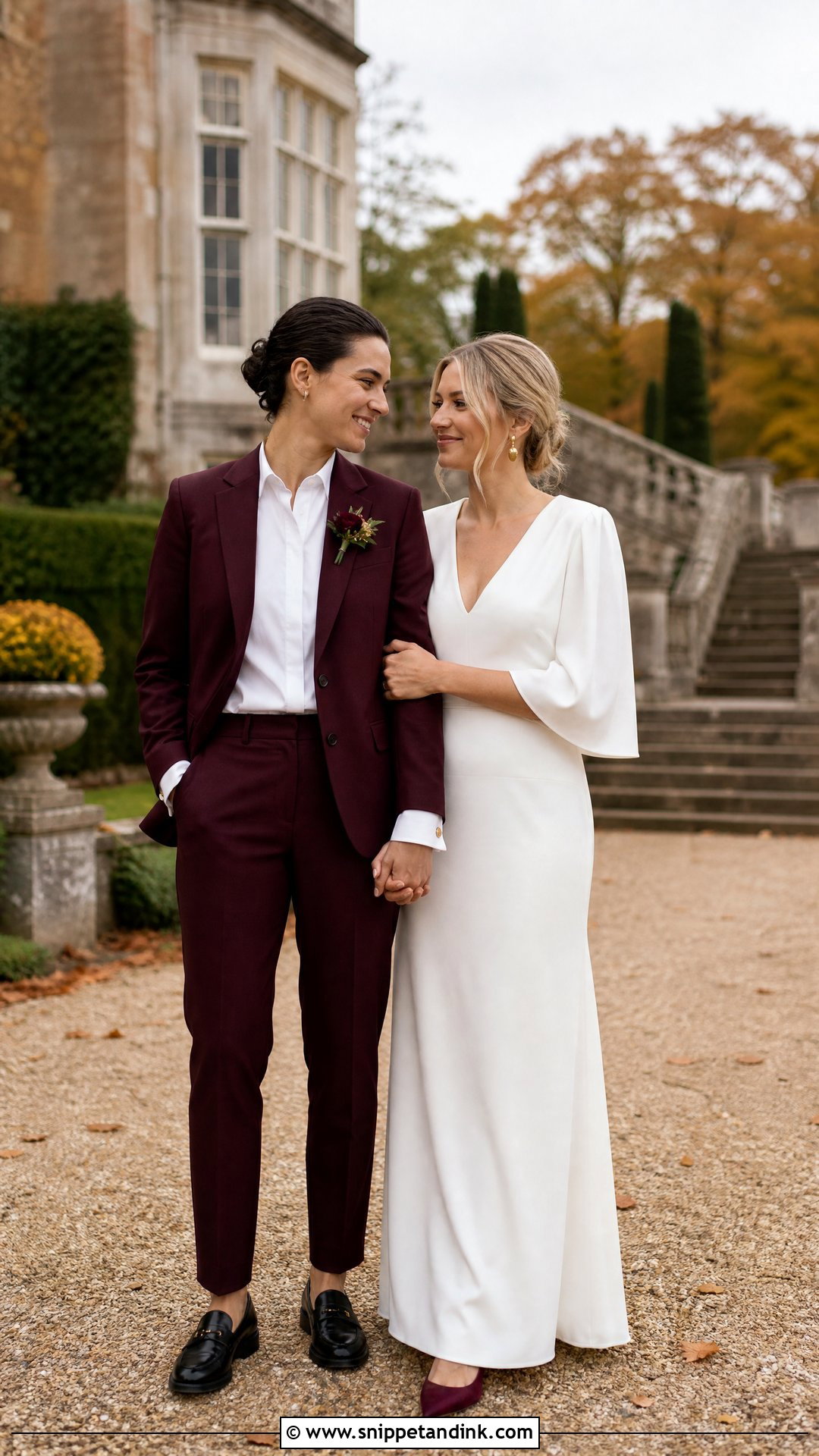
Burgundy gives the suit depth and lets an ivory dress glow beside it. Wear matching burgundy jacket and trousers for full impact, or the jacket with black trousers for a more traditional finish, and choose an ivory shirt so the suit connects to the gown. The dress can be a fitted crepe silhouette, soft sleeves or an uncomplicated A-line. A touch of burgundy on the dress side, pumps, a floral accent or a narrow waist ribbon, repeats the color without looking matched. Gold jewelry suits the warm palette. I keep everything else simple, since a strong color contrast looks expensive only when it’s left alone. Fall weddings, evening ceremonies and historic estates suit it.
11. Linen Suit And Chiffon Wedding Dress
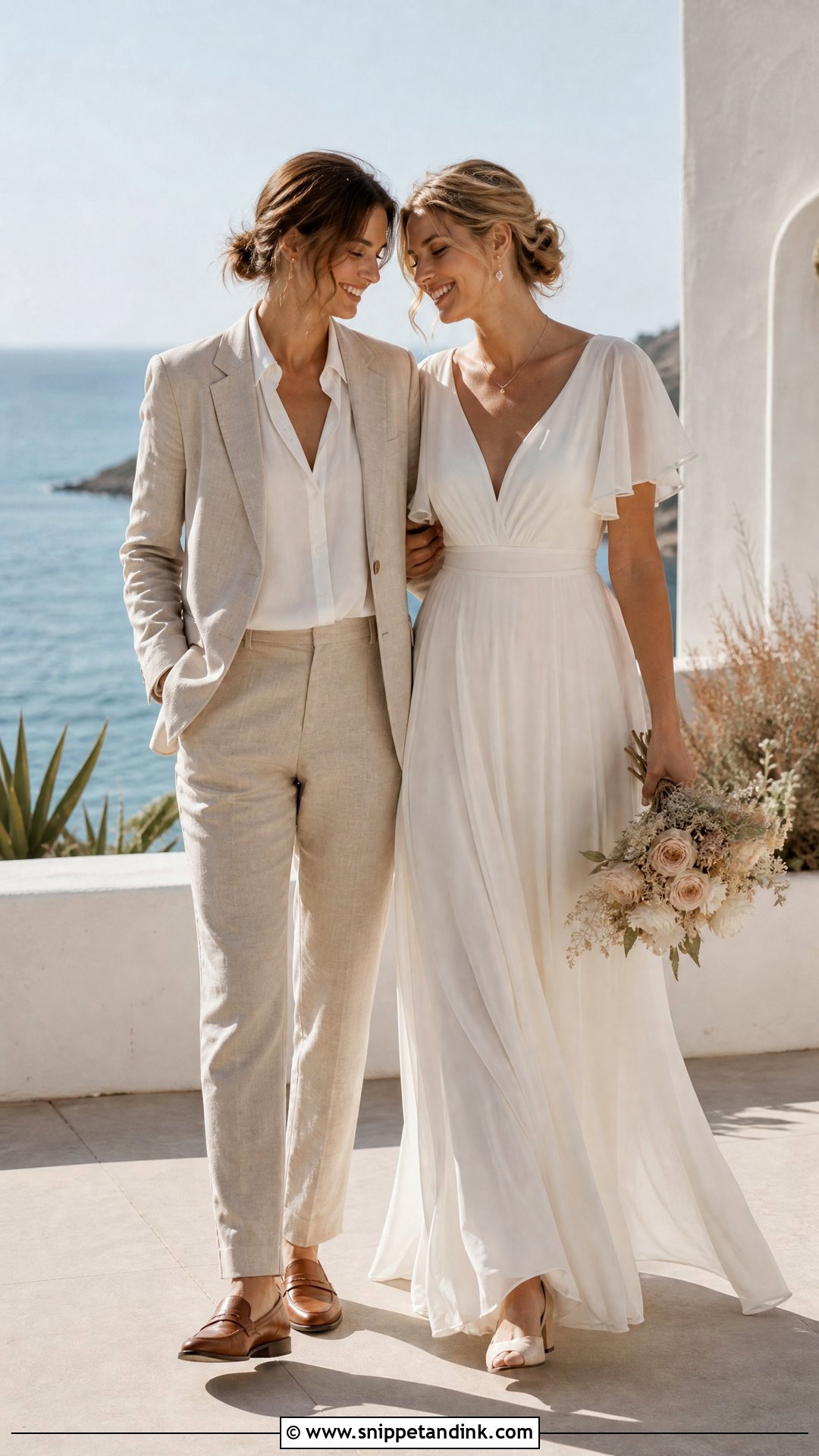
Linen creases within an hour, and no amount of steaming changes that, so choose it only if you like the lived-in look. A breathable suit in sand, light gray, pale blue or soft ivory with a relaxed blazer, straight-leg trousers and an open-neck shirt pairs with a chiffon dress with a softly gathered waist, flutter sleeves or a flowing floor-length skirt. Flat leather sandals, loafers or low block heels handle sand and grass. Coordinate through neutral undertones and light accessories. A linen blend with a little wool or silk wrinkles less if the creases bother you. Beaches, destination weddings and gardens are where it belongs.
12. White Suit And Floral Wedding Dress
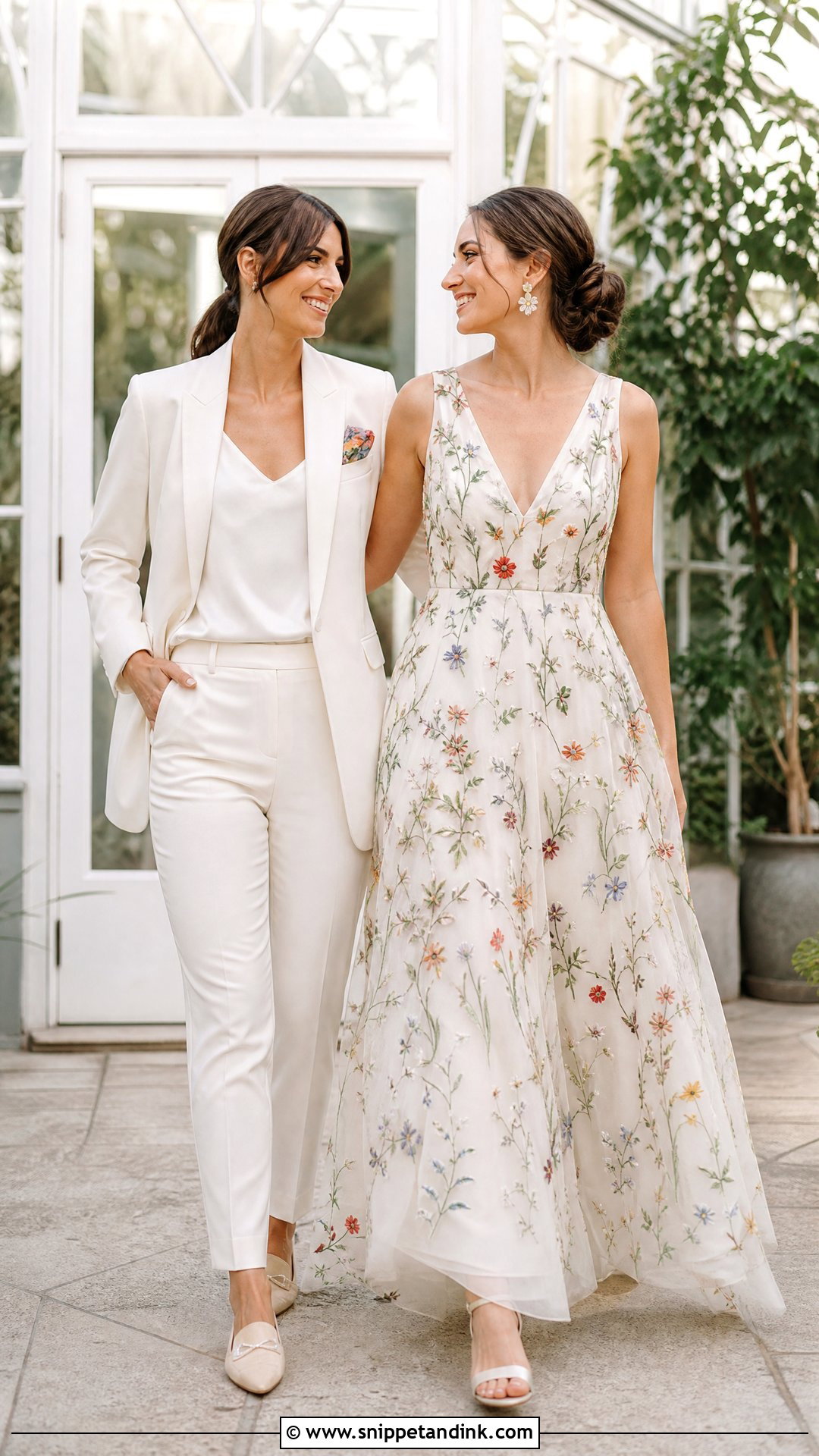
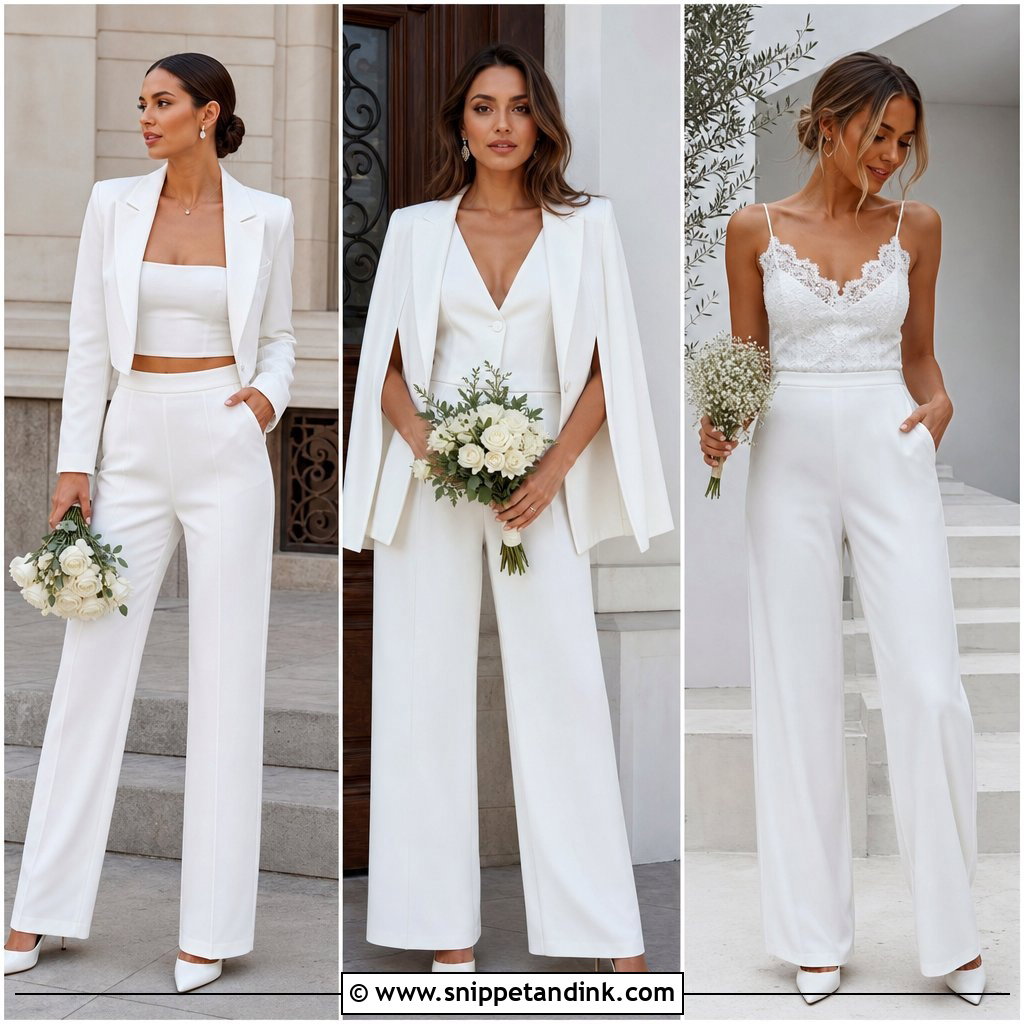
Here the dress carries the color and the suit stays white. Choose a clean white or ivory suit with a lightly fitted jacket and wide-leg or tapered trousers, worn over a silk tank, a button-down or a lace blouse, beside a dress with embroidered flowers, a printed botanical pattern or dimensional appliqués on a white base. Pull one shade from the florals into the suit side: a pocket square, shirt, shoes or boutonniere. Matching every color looks forced; one or two shared tones look natural. Spring and summer weddings, conservatories and botanical gardens suit it, and so do bright, personal bouquets.
13. Jumpsuit And Tulle Wedding Dress
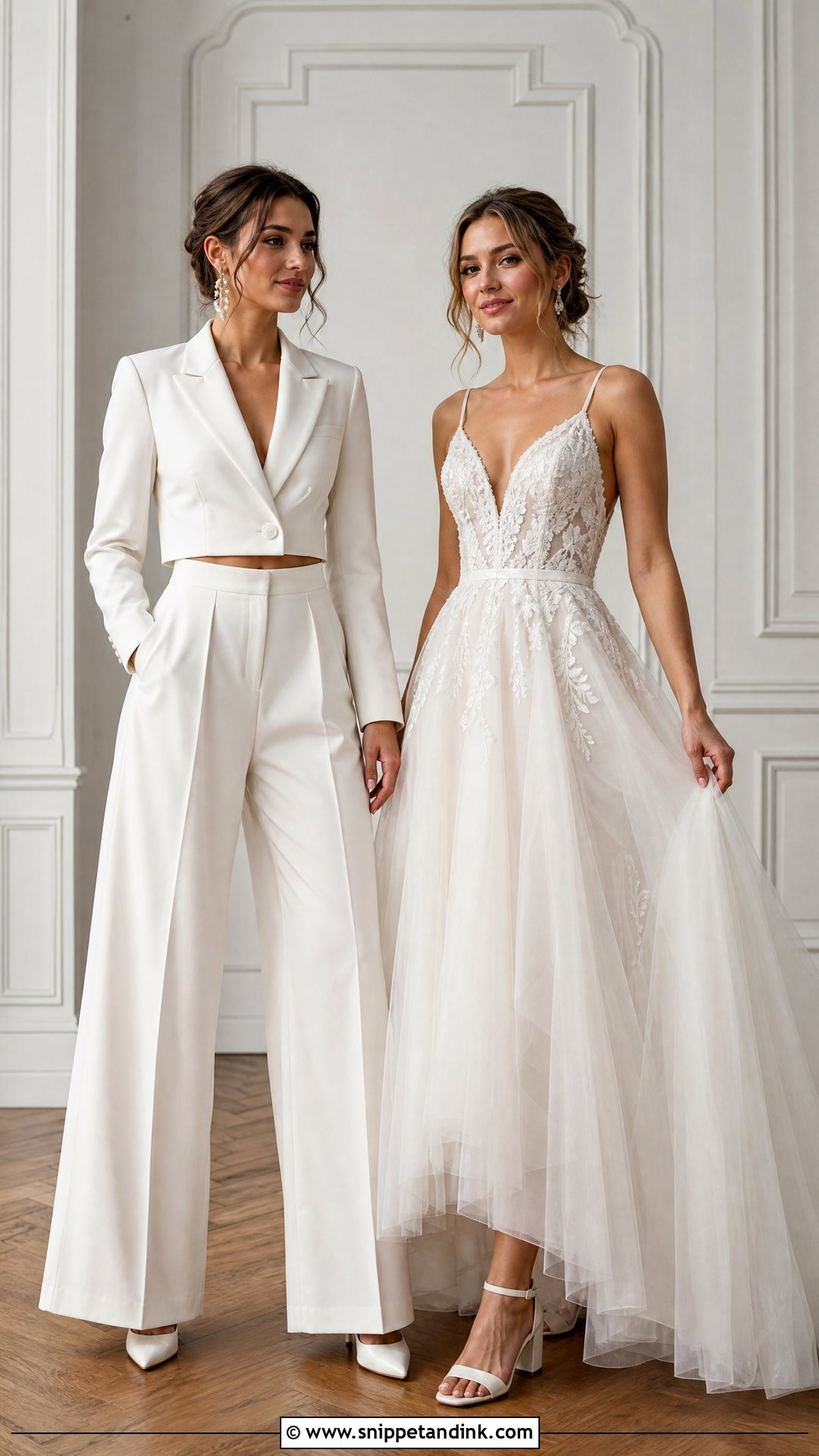
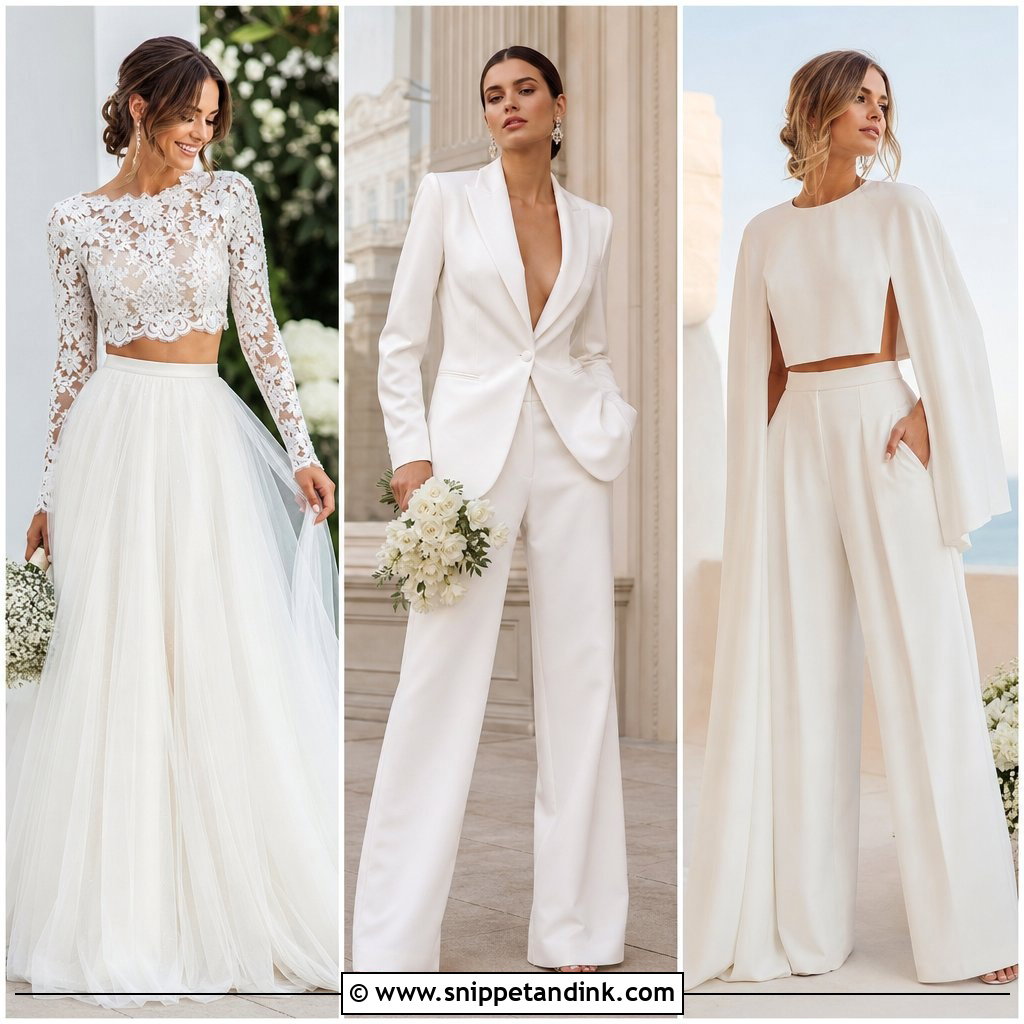
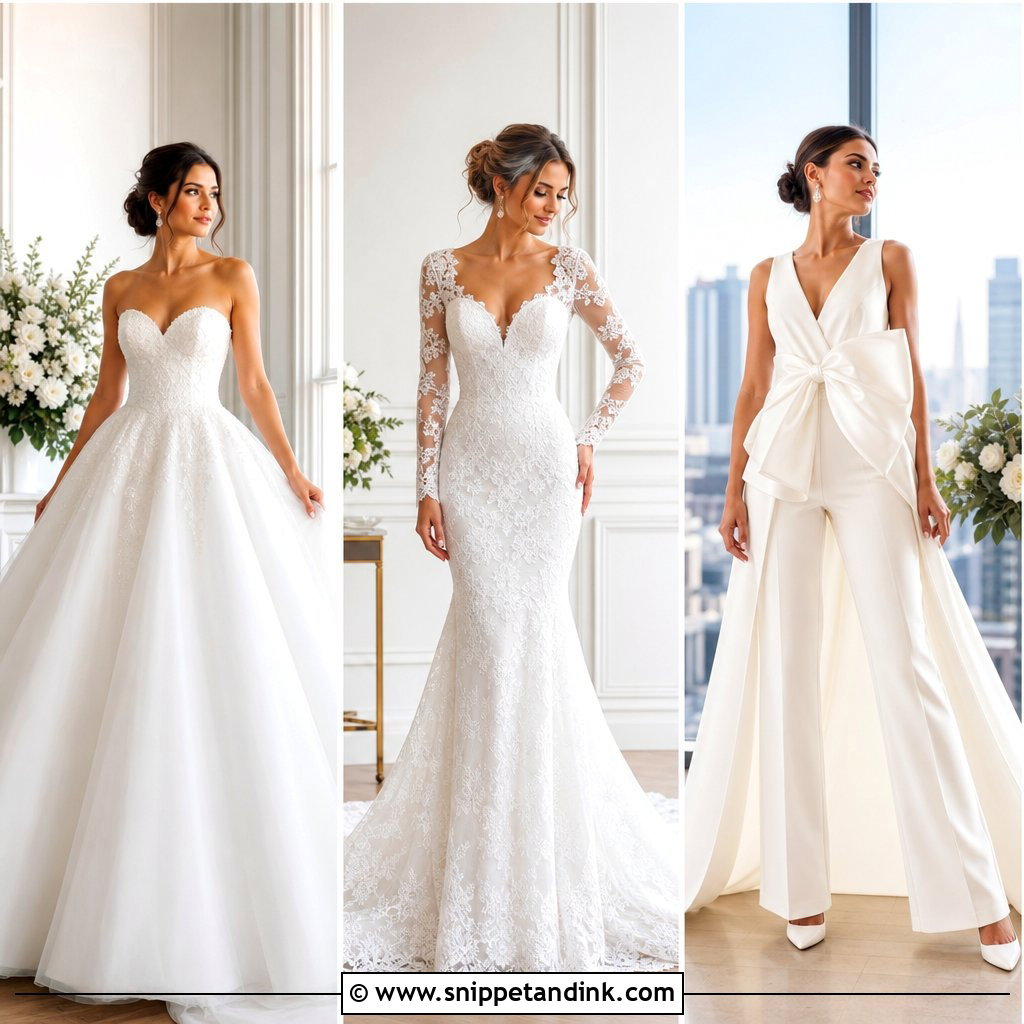
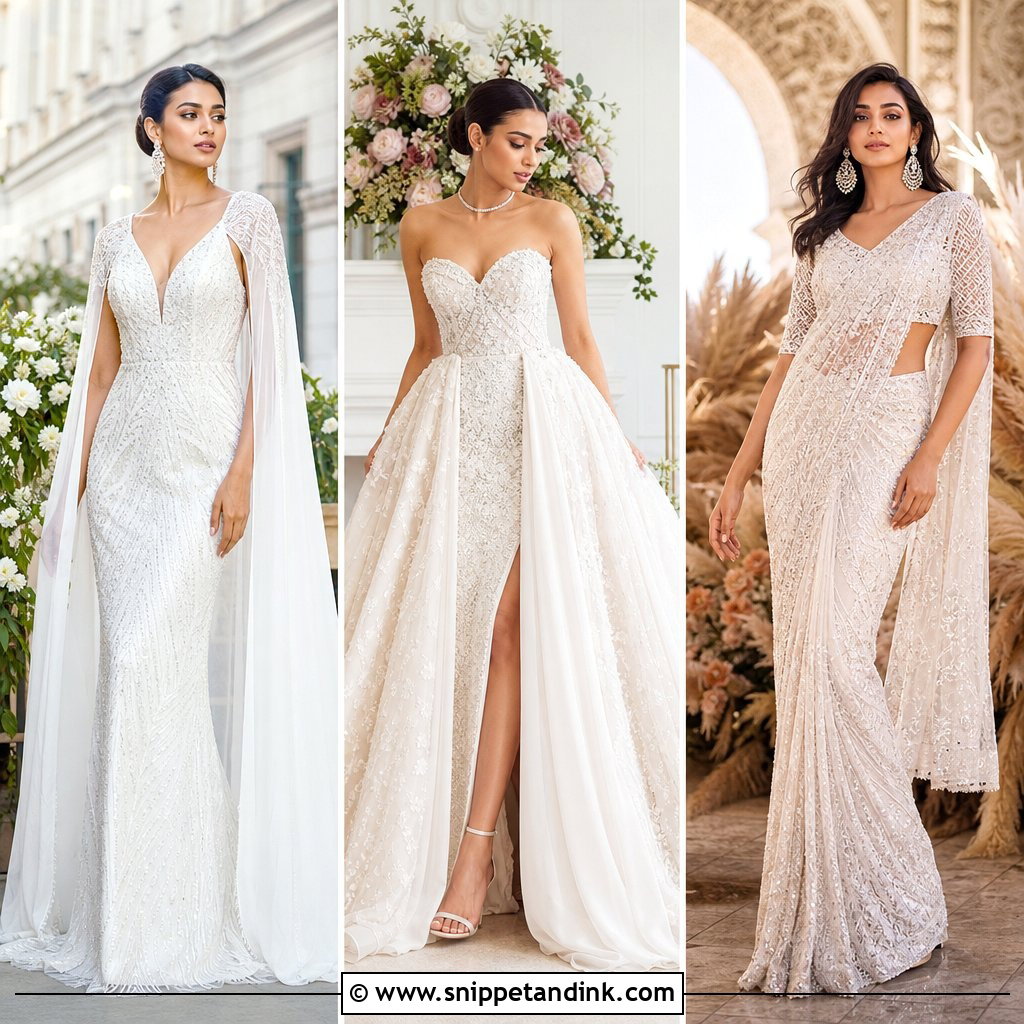
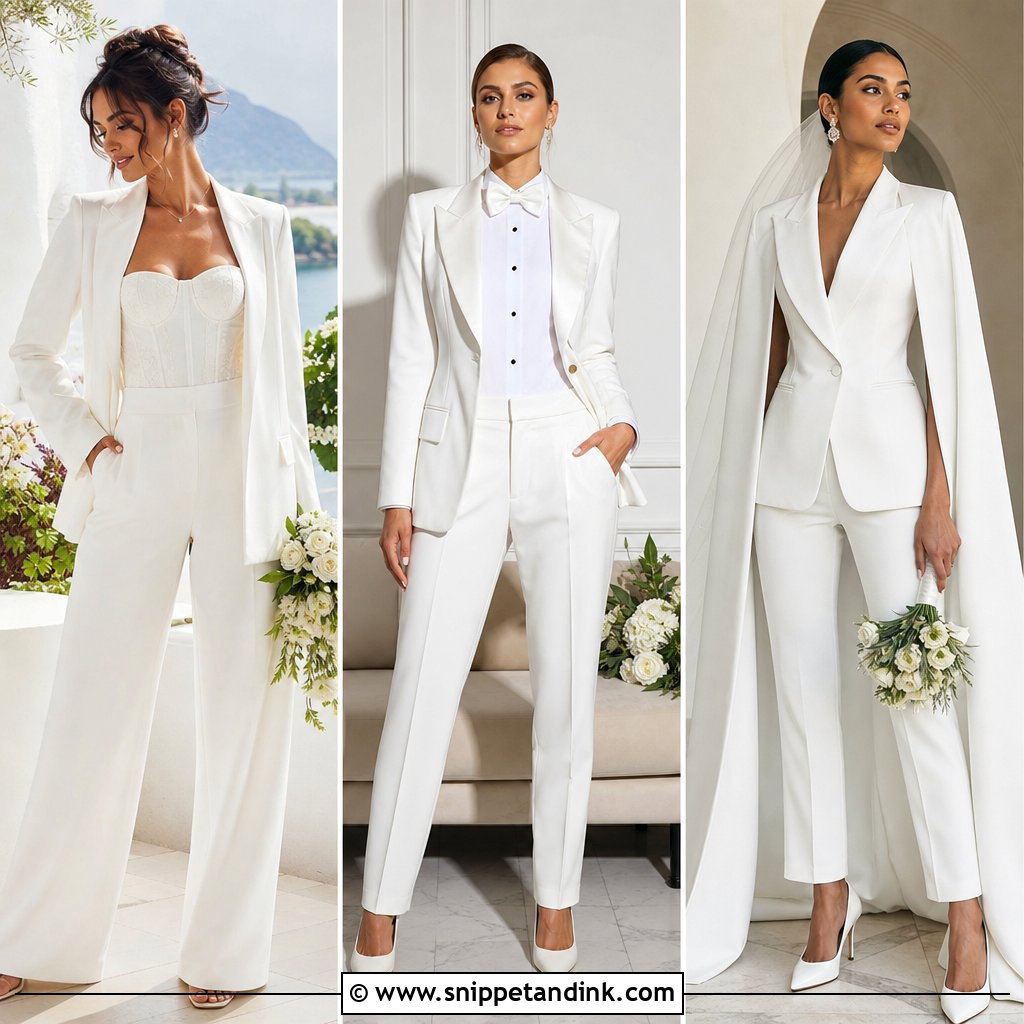
A bridal jumpsuit next to a tulle gown gives one streamlined outline and one full one. The jumpsuit works with a structured bodice, defined waist and wide-leg trousers that read like formal tailoring, plus a cropped blazer or detachable cape for the ceremony that comes off for dancing. Jumpsuits have one practical catch: bathroom trips mean undressing, so I look for a back zip that’s easy to reach or a two-piece that looks like one. The tulle gown can have an A-line skirt, subtle embroidery or a simple fitted top, in the same white or ivory. Coordinated statement earrings finish both.
14. Tuxedo Dress And Tailored Wedding Suit
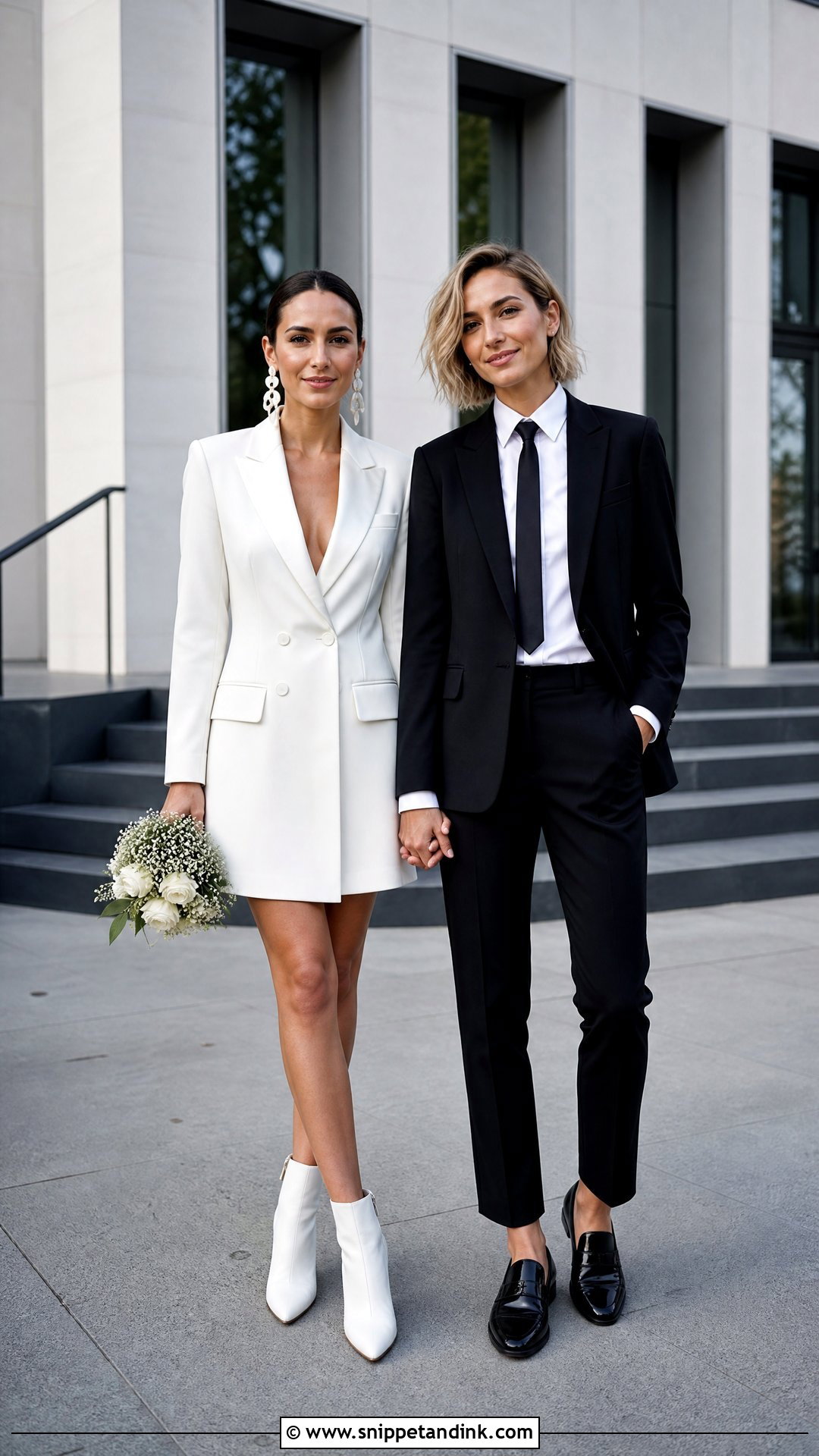
For two partners who both love tailoring, a tuxedo dress beside a classic suit keeps the sharp lines while giving each a different silhouette. The blazer dress needs satin lapels, a secure wrap front and a hem you can sit and dance in; sit down in it at the fitting, because a wrap front can gape when seated. Pumps, ankle boots or polished flats suit it. The second partner wears a full-length suit with straight trousers and a crisp shirt. Share the color, fabric or lapel treatment, but let something differ. Ivory for both, or a white tuxedo dress against a black suit, both work for city halls, hotels and rooftops.
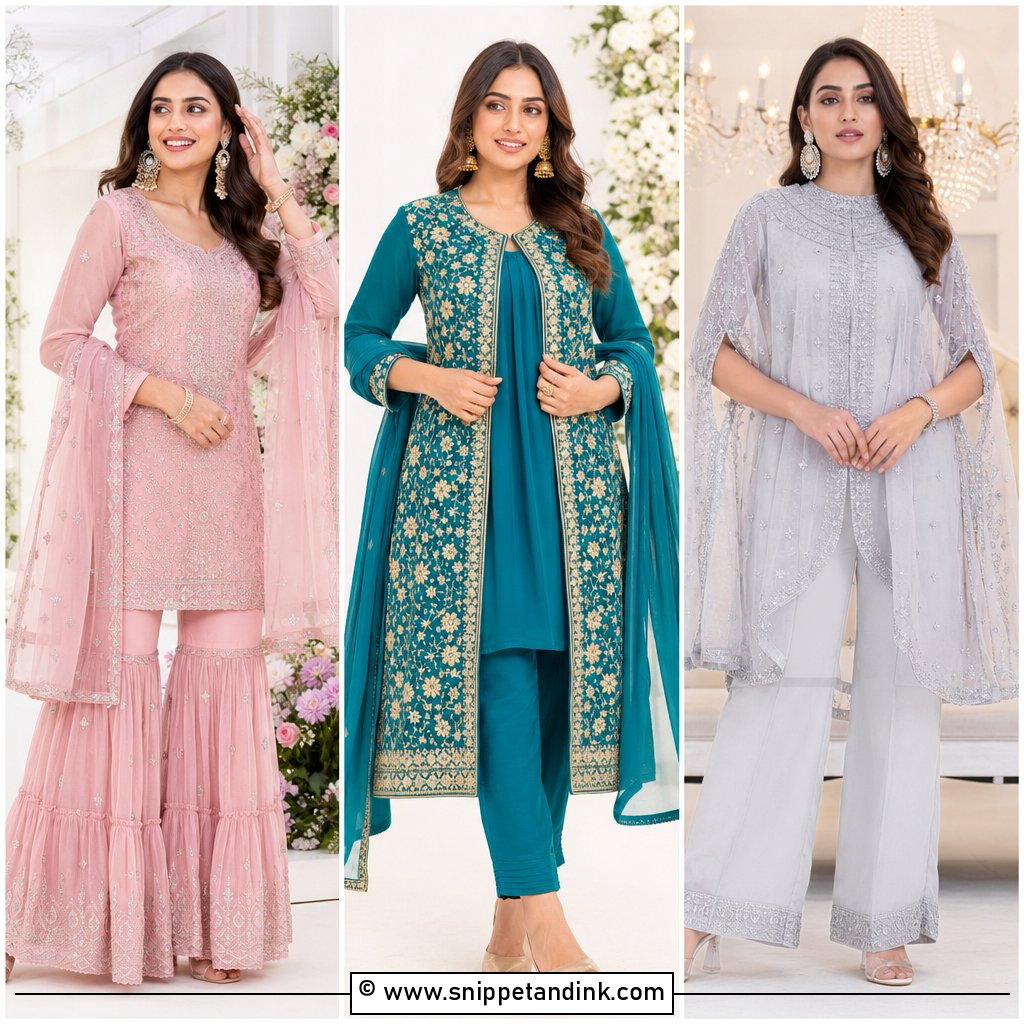
15. Skirt Suit And Column Wedding Dress
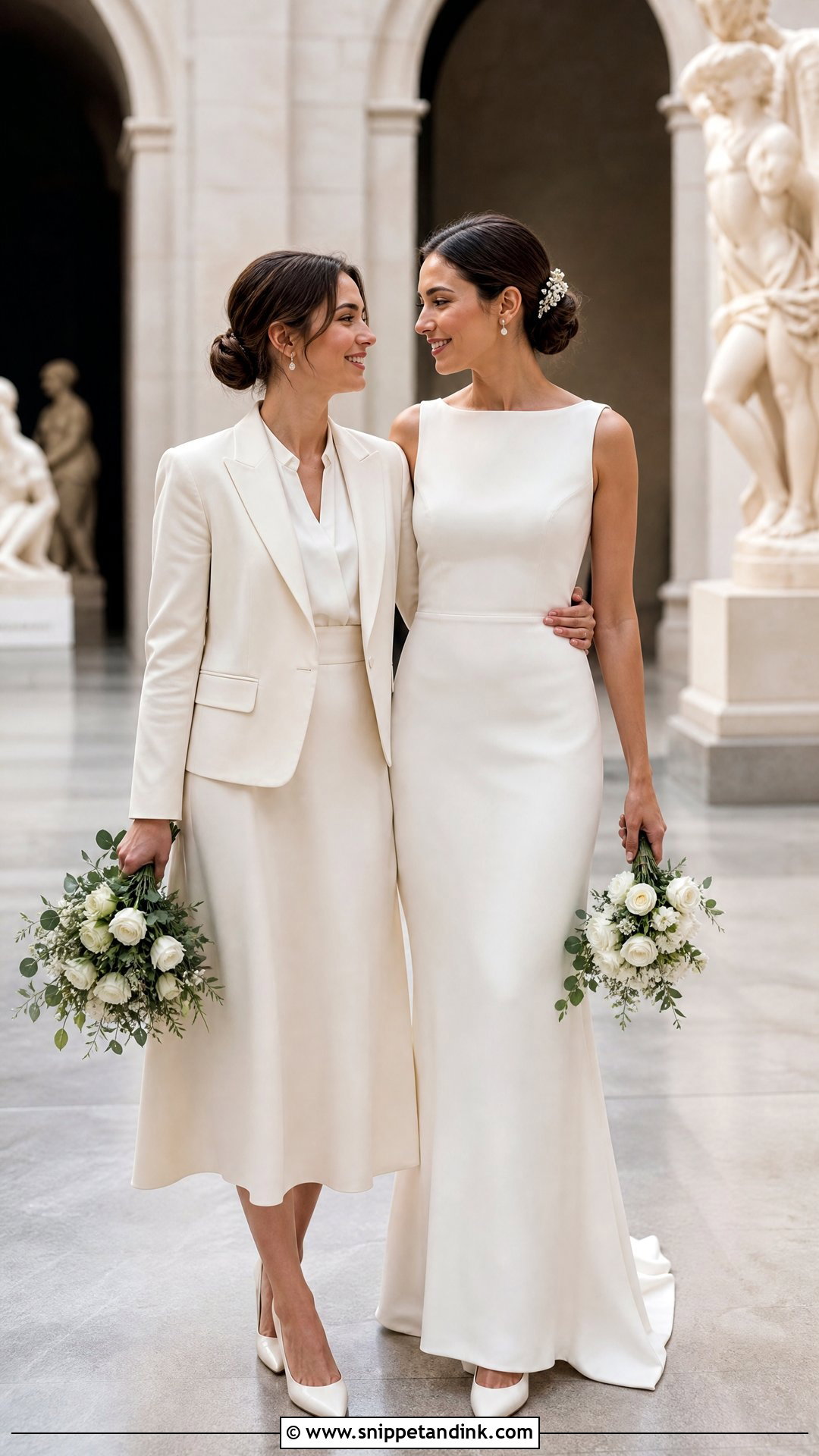
A skirt suit and a column gown are two takes on clean bridal dressing. The suit pairs a fitted jacket with a midi pencil skirt, a flowing ankle-length skirt or a soft pleated A-line, plus a silk blouse and closed-toe pumps. The column dress should follow the body without restricting the stride, with a bateau neckline, cap sleeves or a low back. A pencil skirt needs a back vent or slit you can climb steps in, which I check at every fitting. Match finishes, matte crepe beside lightly textured wool. Skip matching veils: a sculptural hair piece for one, a short veil for the other. Courthouses, restaurants and museums suit it.
16. Plaid Suit And Simple Wedding Dress
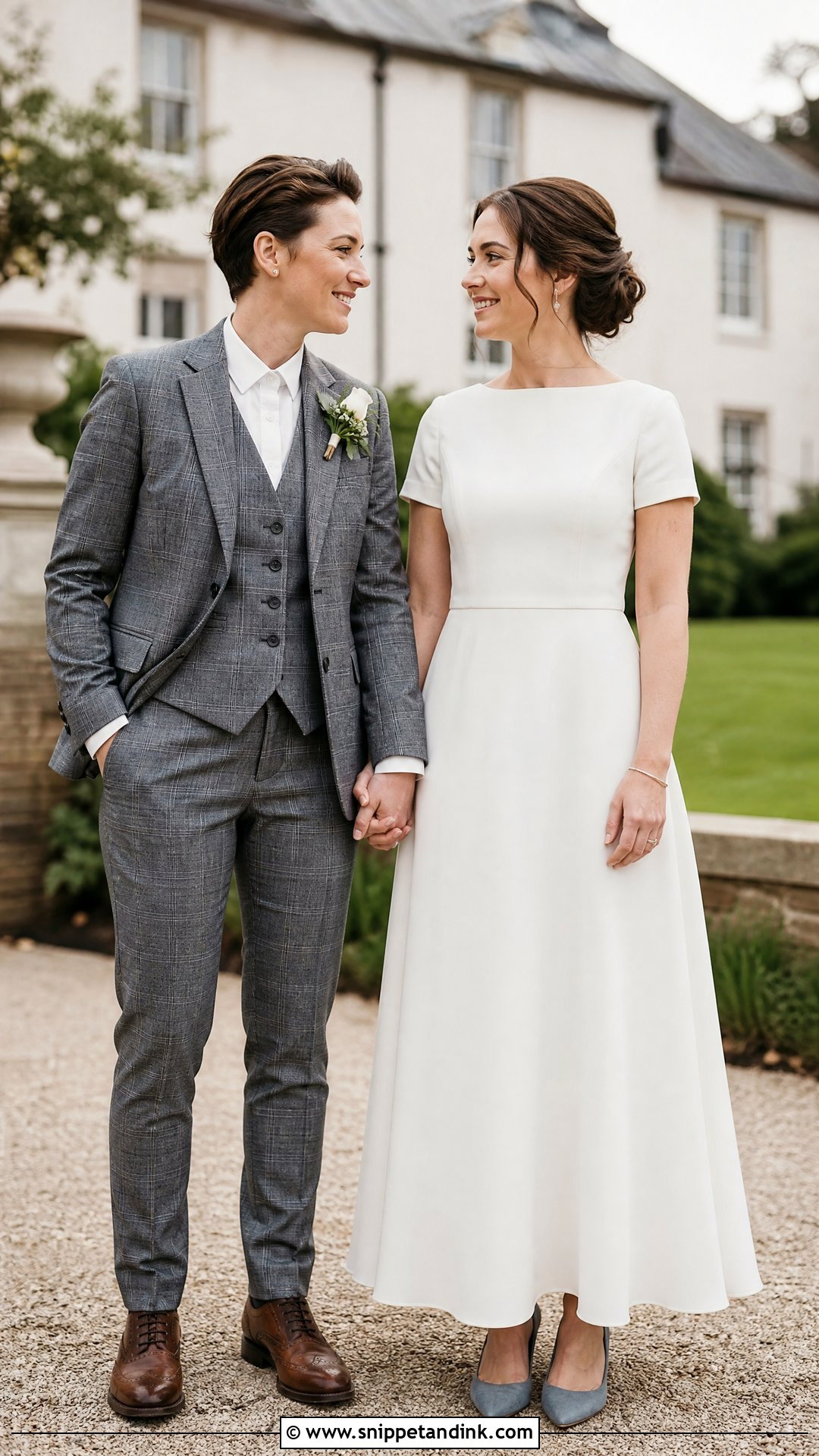
Pattern brings personality to one outfit as long as the other stays plain. A subtle plaid suit in a small-scale gray, navy, brown or muted green check looks formal; a matching vest makes it ceremonial and a crisp ivory shirt ties it to the bridal palette. Beside it, a clean A-line or sheath with little decoration. Pick one plaid color and repeat it in the dress partner’s shoes, bouquet ribbon or earrings. Leather brogues and classic pumps finish both. Countryside venues, fall ceremonies and rustic estates suit it.
17. Pastel Blue Suit And Off-Shoulder Wedding Dress
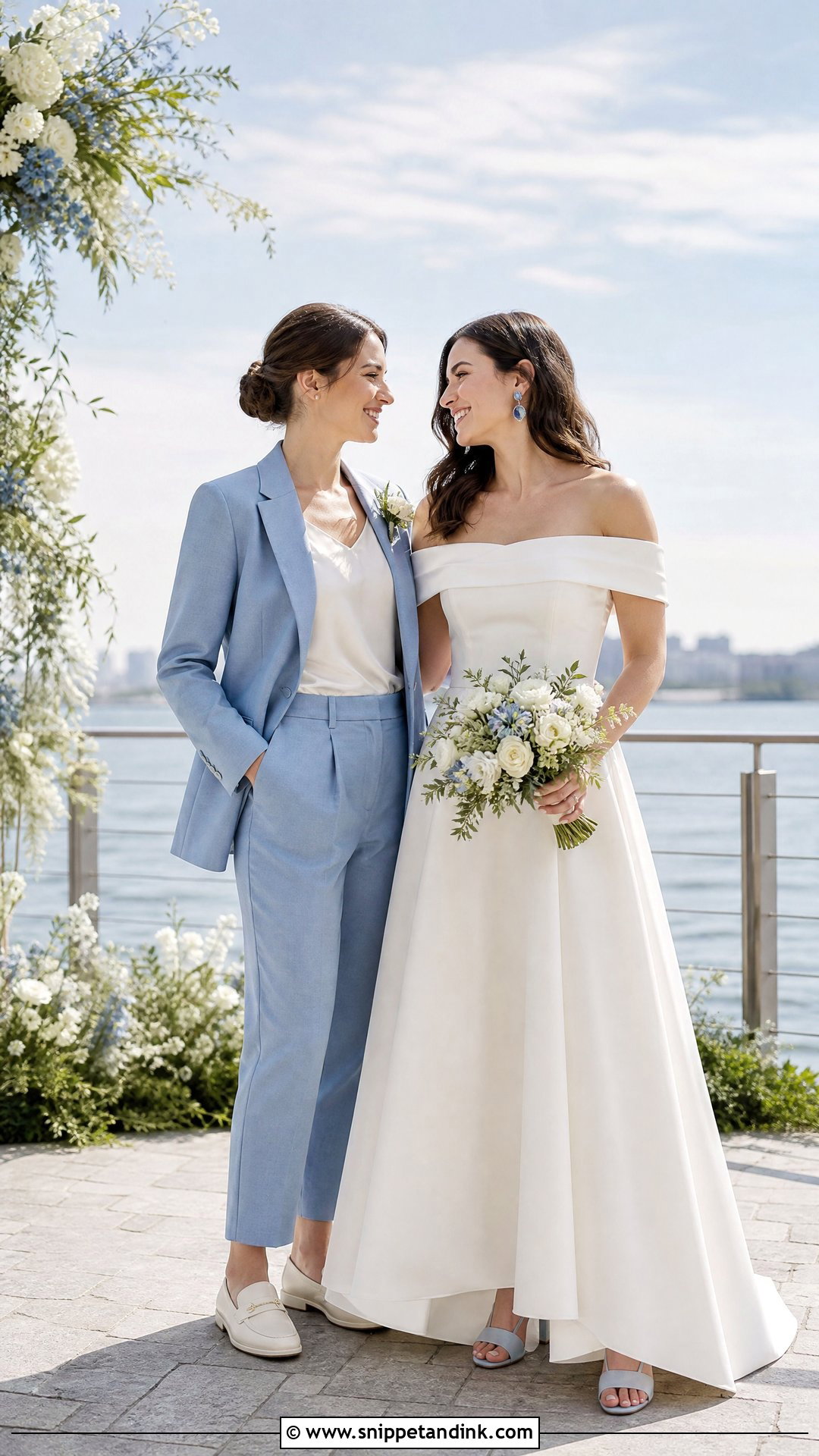
Powder and mist blues look gentle on almost every skin tone, while a brighter sky blue can make some complexions look sallow, so hold the fabric to your face in daylight first. Tailored ankle-length trousers and a single-breasted jacket keep the pastel grown-up, worn with an ivory shirt or silk top and cream loafers, or white sneakers for a casual ceremony. The off-shoulder dress beside it works with a fitted bodice and soft A-line skirt. Blue earrings, shoe details or bouquet ribbon connect the two. Spring celebrations, waterfronts and gardens with white flowers and pale greenery suit it.
18. Cream Suit And Cape Wedding Dress
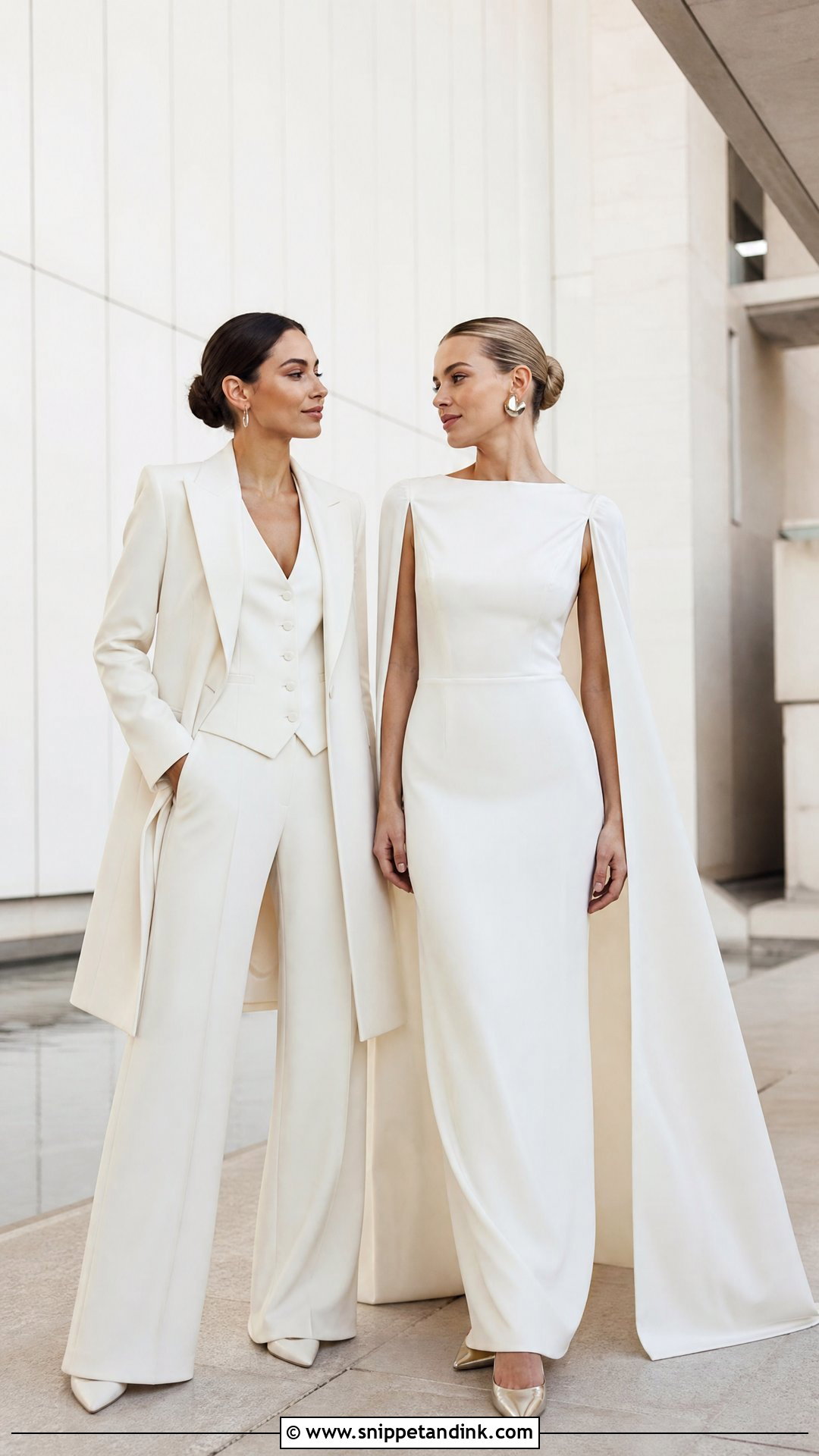
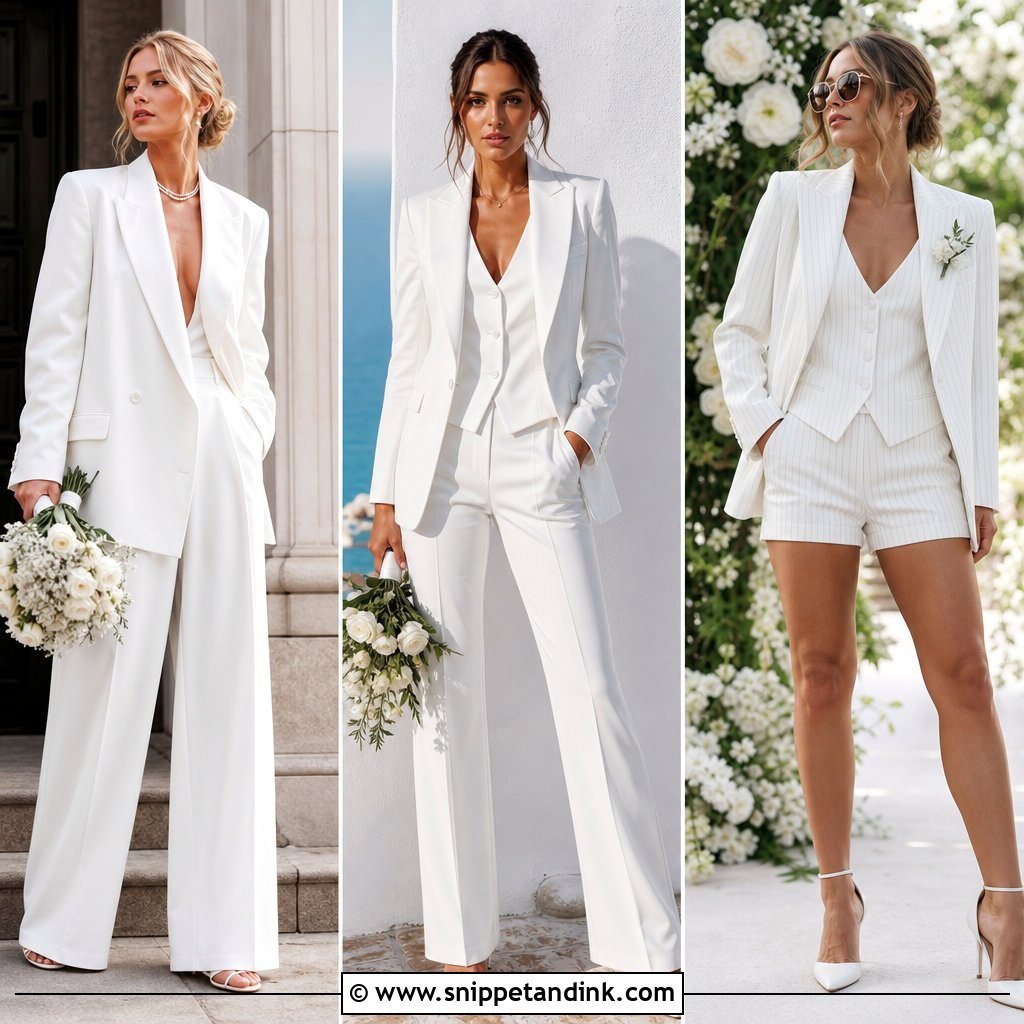
Shape does the work here, not decoration. The cream suit has wide-leg trousers, a fitted vest and a longline blazer with clean lapels, with tonal cream shoes and minimal jewelry for a single-color effect. The dress is a simple sheath or A-line with a detachable shoulder cape, lightweight for warm settings or structured for a formal indoor ceremony. Cream undertones must match; the fabrics needn’t. Wide-leg trousers need hemming with the exact shoes, since an inch too long and they drag, an inch too short and they flap. Statement earrings and sleek hair keep shoulders and tailoring visible. Formal hotels and art venues suit it.
19. Colorful Suit And Short Wedding Dress
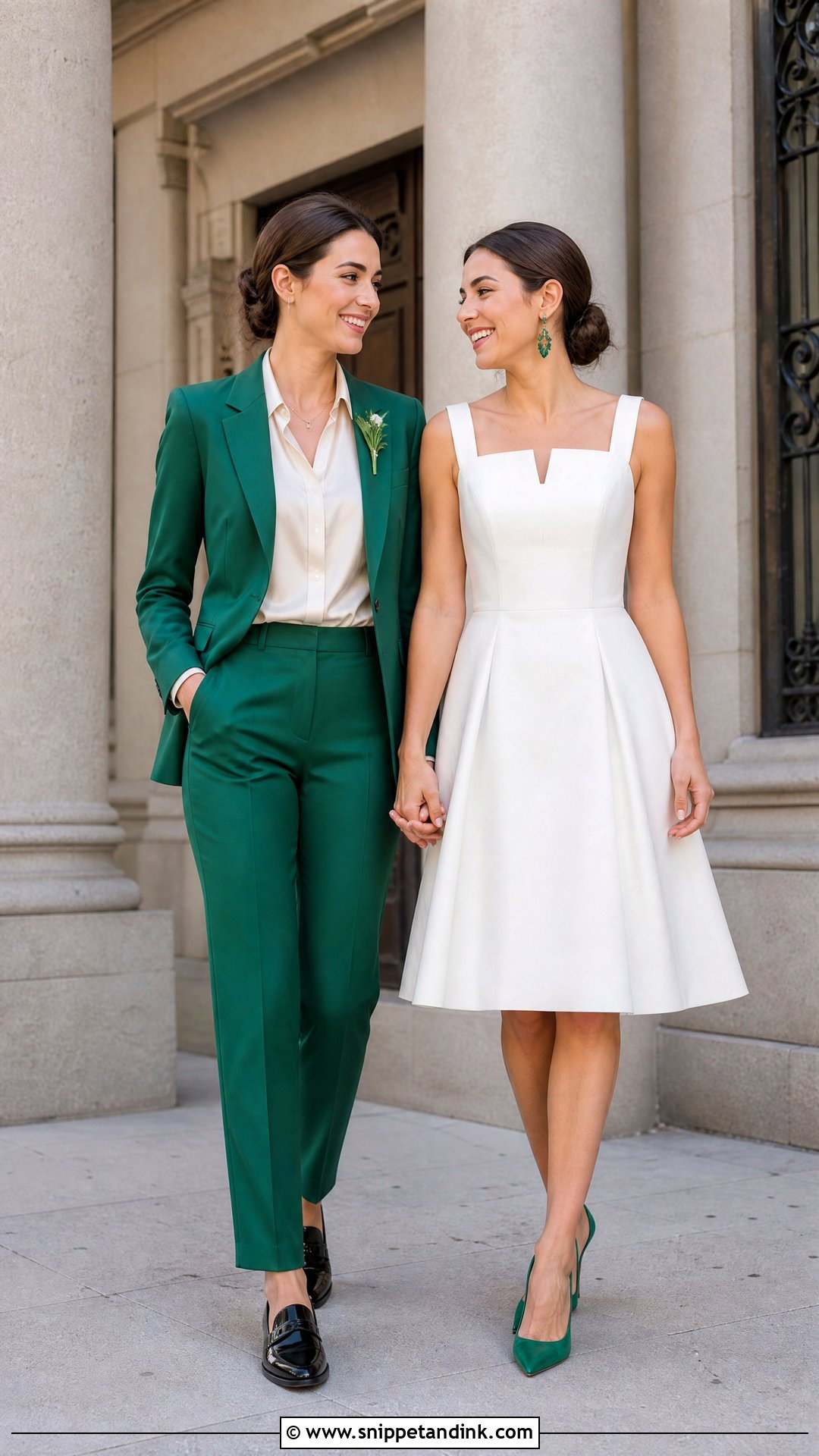
Color and a short hem make for a playful wedding. The suit can be emerald, cobalt, lavender, terracotta or any shade from your palette, cut crisply with matching jacket and trousers, a neutral shirt and polished shoes. The short dress can be a structured mini, a flared knee-length skirt or a modern high neckline. The thing to match is formality: satin lapels on the suit with a satin dress, or the suit color repeated in the dress partner’s shoes and earrings. Bold color on a suit shows every pucker at a seam, so a good press before the ceremony matters. Courthouses, daytime receptions and after-parties suit it.
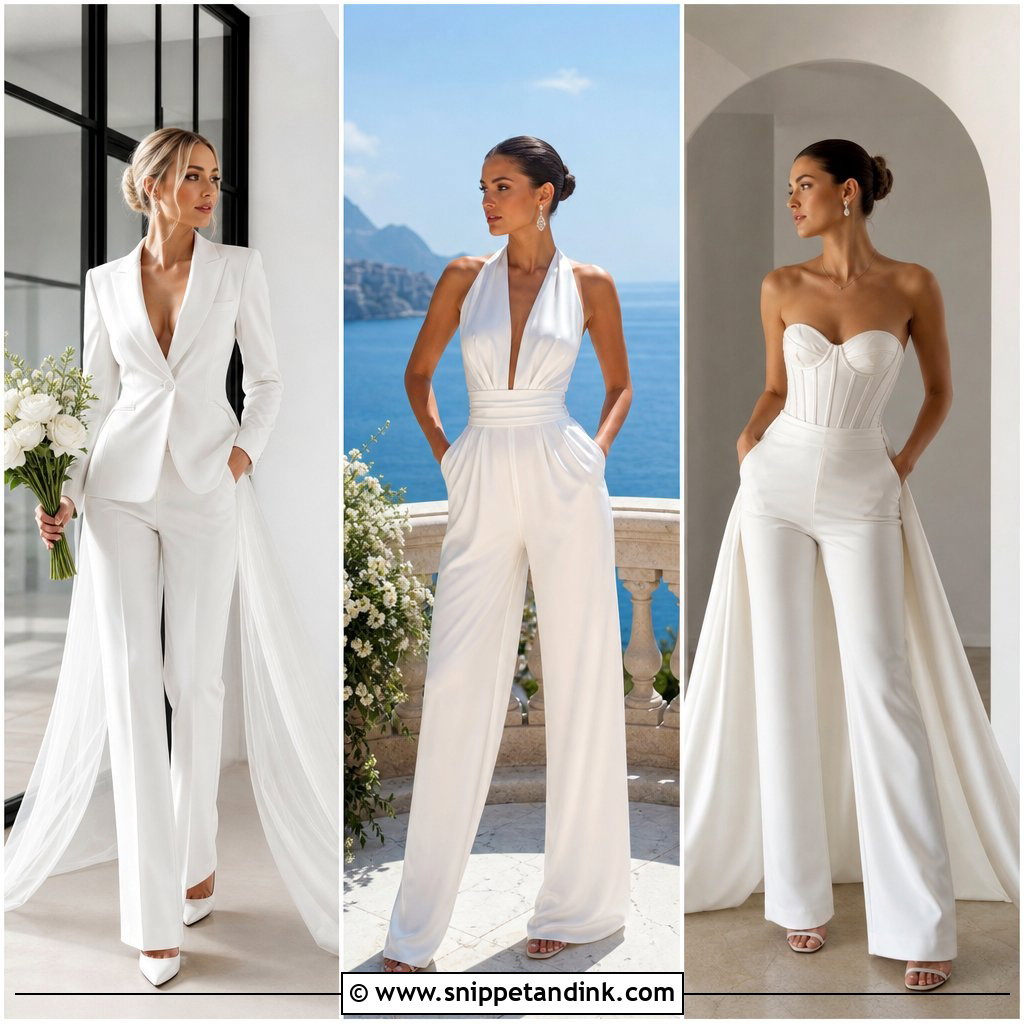

20. Matching White Suits And Detachable Overskirt
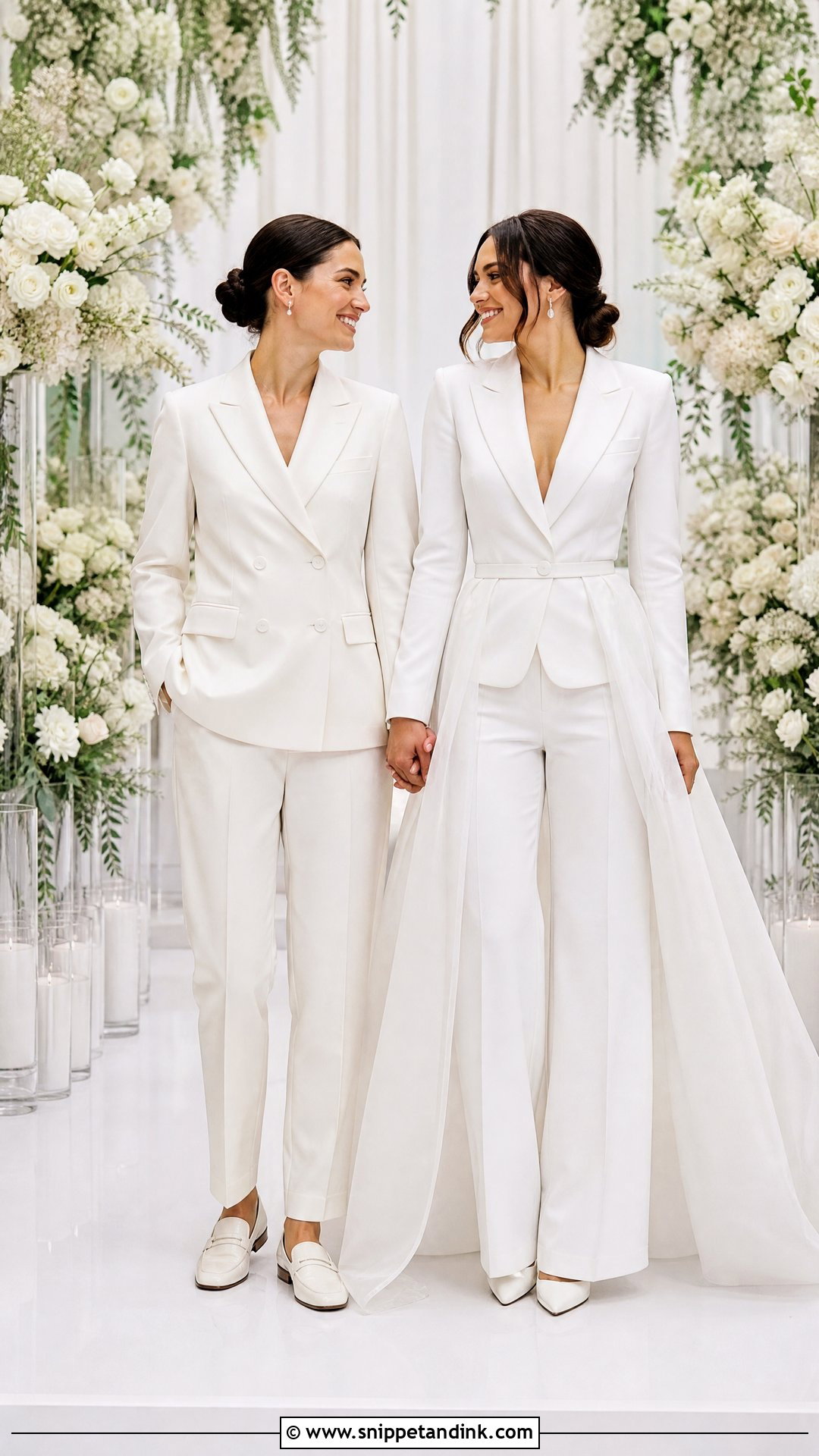
Two white suits can look like uniforms unless the cuts differ, so I give each partner her own: a double-breasted jacket with straight trousers for one, a fitted blazer with wide-leg pants for the other. Then one or both add a removable tulle, satin or organza overskirt for the ceremony, which brings the movement of a gown with trousers underneath. Practise fastening and unfastening the overskirt; a hook-and-bar closure at the side is quicker than buttons when someone’s helping you in a corridor. Match lapel fabrics, share embroidery or coordinate shoes, and take the overskirts off before the reception.
Shopping at a Bridal Salon and a Tailor at the Same Time
When one partner wears a gown and the other a suit, the two outfits usually come from different places on different schedules. Wedding dresses ordered from a salon often take several months to arrive, while a suit can be ready in weeks. That gap is the reason couples end up with a suit bought late that doesn’t quite match the dress.
How I Keep the Two Outfits Talking to Each Other
- Ask the bridal salon for a fabric swatch the day you order, even if you’re keeping the dress a secret.
- Take that swatch to the suit fittings and compare it with the cloth outside in daylight, not under shop lights.
- Agree on one metal and one accent color early, then buy shoes, cuff links and jewelry against that.
- Book both final fittings in the same week so a late change on one side can still be matched on the other.
Some couples want the full reveal and some shop together. If you’re keeping the outfits secret, let one trusted person see both, a friend or your stylist, so someone can say early on that two whites clash or that one outfit is far more formal than the other.
Two Looks That Still Read as One Wedding
The right pairing lets both of you feel like yourselves. Your outfits don’t have to match to look connected: a shared undertone, fabric, flower, metal or accessory color does that quietly while each outfit stays your own. Think about the venue, season, dress code, how much you’ll move and how the photos will be lit. Above all, fit both outfits properly, and ignore any rule that makes either of you feel disguised. Black and white, color, convertible separates: any of them can work when both partners recognize themselves in the mirror.
You'll Like These Ideas:




Leave a Reply